THE MOST UNFORGETTABLE WEEK IN US HISTORY – FEBRUARY 21-27, 1972

THE MOST UNFORGETTABLE WEEK IN US HISTORY – FEBRUARY 21-27, 1972

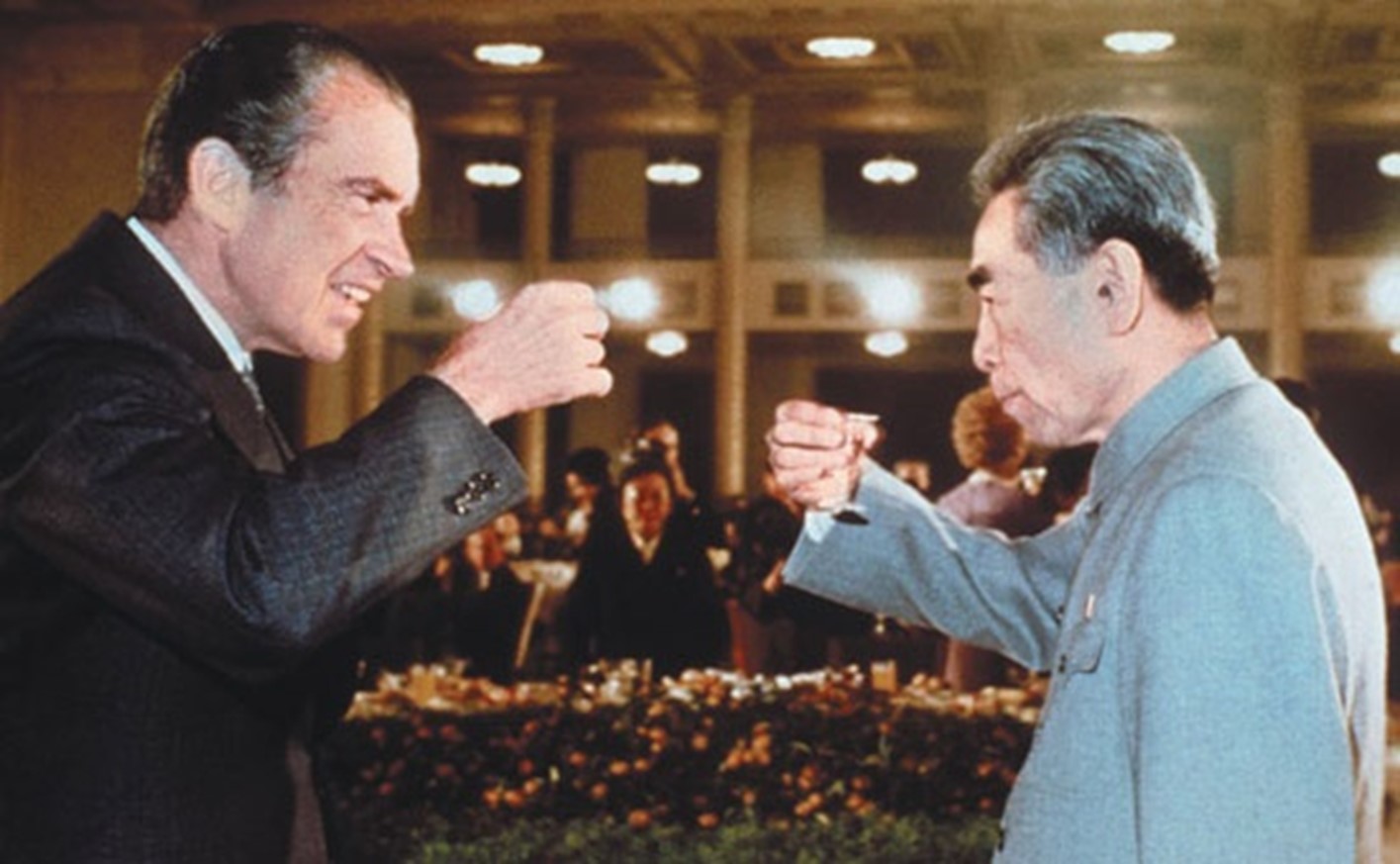
While the US troops fight the biggest battle on February 25, 1972, near Saigon in Vietnam, the US President Richard Nixon spent time in Peking befriending the adversary, giving care and comfort to the Enemy while Americans bled on the battlefield.

Rudranarasimham Rebbapragada

SPECIAL FRONTIER FORCE

U.S. troops fight the biggest battle in nearly a year – HISTORY

Clipped from: https://www.history.com/this-day-in-history/u-s-troops-fight-biggest-battle-in-nearly-a-year

U.S. troops clash with North Vietnamese forces in a major battle 42 miles east of Saigon, the biggest single U.S. engagement with an enemy force in nearly a year. The five-hour action around a communist bunker line resulted in four dead and 47 wounded, almost half the U.S. weekly casualties.


CHINA ‘RESOLUTELY OPPOSES’ THE US-TIBET RELATIONS

CHINA ‘RESOLUTELY OPPOSES’ THE US-TIBET RELATIONS

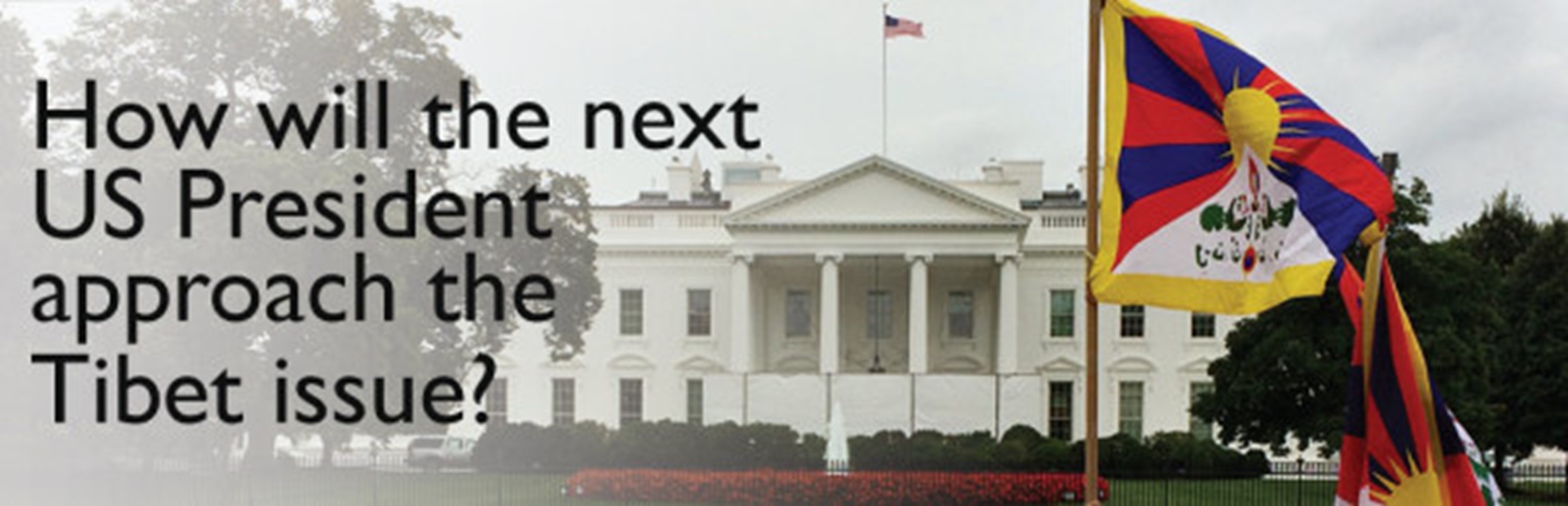
China ‘Resolutely Opposes’ the US-Tibet Relations.

In my analysis, the ‘Tibet Crisis’ began with the Communist takeover of mainland China in 1949. Communist Party Chairman Mao Zedong took the blessings of the Soviet Union to launch a military attack on Tibet for China wanted to resolutely oppose the US-Tibet relations formulated by the US President Franklin D. Roosevelt.

Rudranarasimham Rebbapragada

SPECIAL FRONTIER FORCE

https://wholedude.com/2018/08/08/foreign-relations-of-the-united-states-status-on-tibetan-operations/

China ‘Resolutely Opposes’ New US Law on Tibet

Clipped from: https://www.voanews.com/a/china-resolutely-opposes-new-us-law-on-tibet/4710398.html

China ‘Resolutely Opposes’ the US-Tibet Relations.

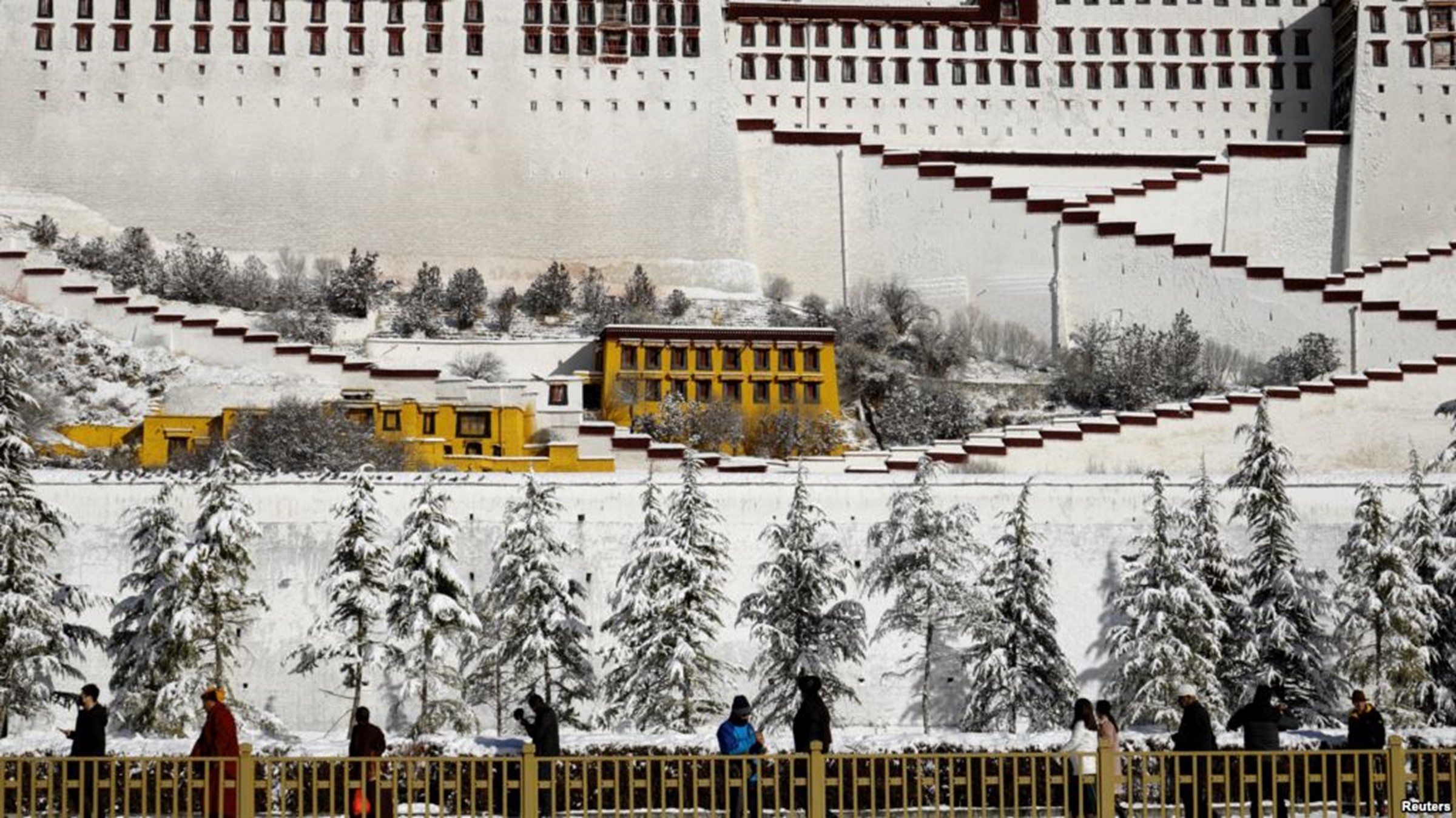
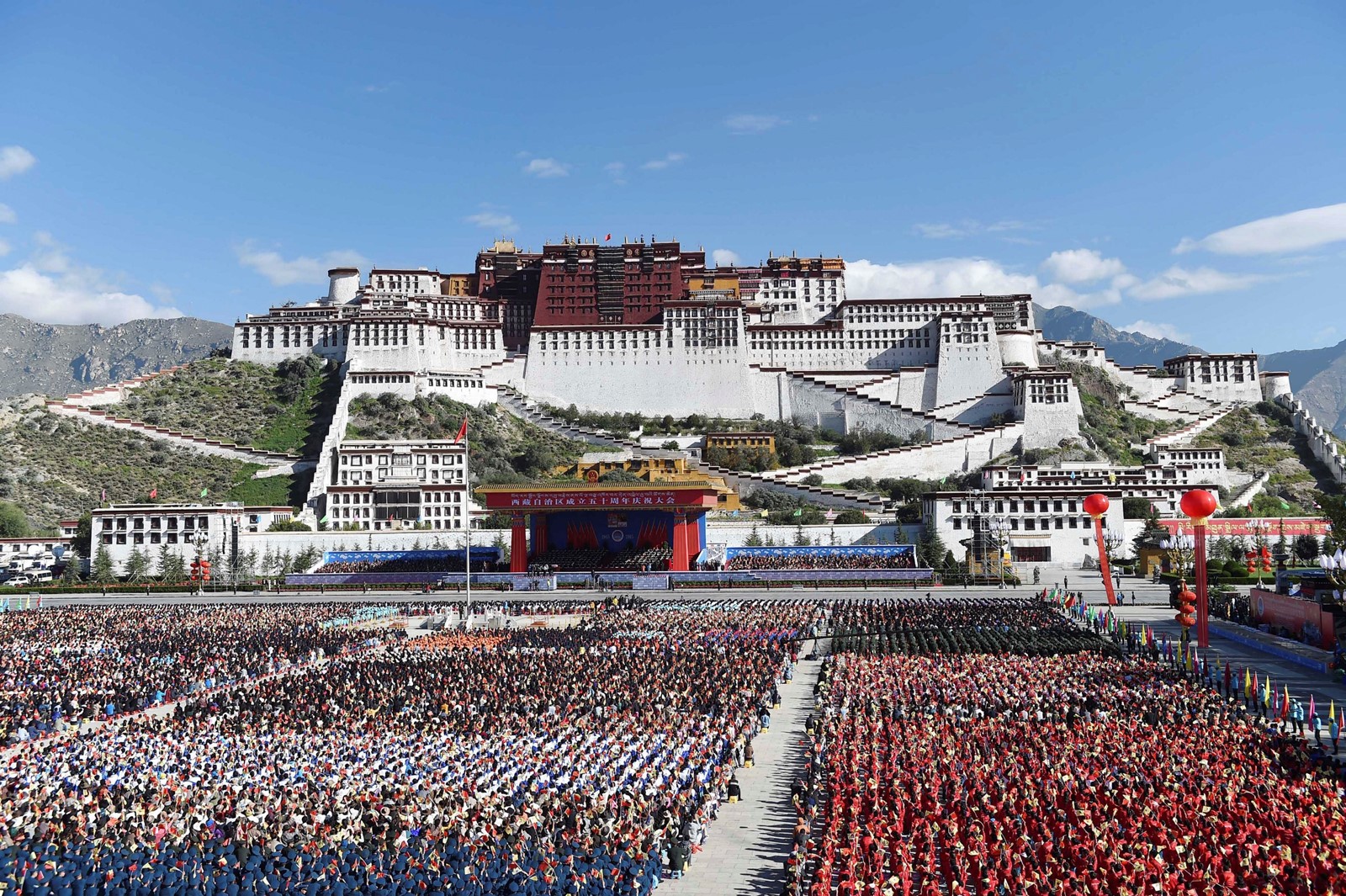
People walk past snow-covered trees outside the Potala Palace in Lhasa, Tibet Autonomous Region, China, Dec. 19, 2018.

BEIJING —

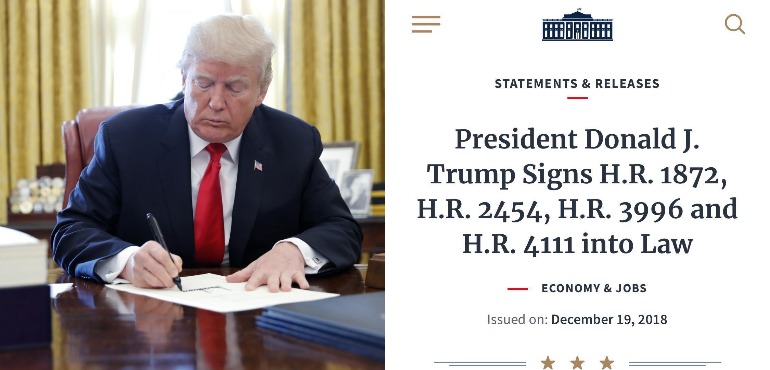
President Trump signs Reciprocal Access to Tibet into Law: “A Message of hope and justice to Tibetans in Tibet….”

China ‘Resolutely Opposes’ the US-Tibet Relations.

China ‘Resolutely Opposes’ the US-Tibet Relations.

China ‘Resolutely Opposes’ the US-Tibet Relations.

Lobsang Sangay
‏@Drlobsangsangay
Following @Drlobsangsangay

I extend profound appreciation to the President Donald Trump for signing the Reciprocal Access to Tibet Act into law,” CTA President said.

Dharamshala: US President Donald Trump has signed into law the Reciprocal Access to Tibet Act of 2018, which will impose a visa ban on Chinese officials who deny American citizens, government…
tibet.net

China denounced the United States on Thursday for passing a new law on restive Tibet, saying it was “resolutely opposed” to the U.S. legislation on what China considers an internal affair, and it risked causing “serious harm” to their relations.

U.S. President Donald Trump on Wednesday signed into law the Reciprocal Access to Tibet Act.

The law seeks to promote access to Tibet for U.S. diplomats and other officials, journalists and other citizens by denying U.S. entry for Chinese officials deemed responsible for restricting access to Tibet.

Beijing sent troops into remote, mountainous Tibet in 1950 in what it officially terms a peaceful liberation and has ruled there with an iron fist ever since.

China: wrong signals

Chinese foreign ministry spokeswoman Hua Chunying told a daily briefing that the law “sent seriously wrong signals to Tibetan separatist elements,” as well as threatening to worsen bilateral ties strained by trade tension and other issues.

“If the United States implements this law, it will cause serious harm to China-U.S. relations and to the cooperation in important areas between the two countries,” Hua said.

The United States should be fully aware of the high sensitivity of the Tibet issue and should stop its interference, otherwise the United States would have to accept responsibility for the consequences, she added, without elaborating.

Difficult life in Tibet

Rights groups say the situation for ethnic Tibetans inside what China calls the Tibet Autonomous Region remains extremely difficult. The U.N. High Commissioner for Human Rights said in June conditions were “fast deteriorating” in Tibet.

All foreigners need special permission to enter Tibet, which is generally granted to tourists, who are allowed to go on often tightly monitored tours, but very infrequently to foreign diplomats and journalists.

Hua said Tibet was open to foreign visitors, as shown by the 40,000 American visitors to the region since 2015.

At the same time, she said it was “absolutely necessary and understandable” that the government-administered controls on the entry of foreigners given “local geographic and climate reasons.”

Rights groups welcome law

Tibetan rights groups have welcomed the U.S. legislation. The International Campaign for Tibet said the “impactful and innovative” law marked a “new era of American support” and was a challenge to China’s policies in Tibet.

“The U.S. let Beijing know that its officials will face real consequences for discriminating against Americans and Tibetans and has blazed a path for other countries to follow,” the group’s president, Matteo Mecacci, said in a statement.

Next year marks the sensitive 60th anniversary of the flight into exile in India of the Dalai Lama, the highest figure in Tibetan Buddhism, after a failed uprising against Chinese rule.

China routinely denounces him as a dangerous separatist, although the Dalai Lama says he merely wants genuine autonomy for his homeland.

China ‘Resolutely Opposes’ the US-Tibet Relations.


ANTISLAVERY CAMPAIGN OF 2018 – THE ROLE OF GOD IN THE US GOVERNMENT

ANTISLAVERY CAMPAIGN OF 2018 – THE ROLE OF GOD IN THE US GOVERNMENT

Antislavery Campaign of 2018. Special Frontier Force reviews the Role of God in the US Government.

Special Frontier Force, the military organization based in India is the byproduct of American War on Communism. Living Tibetan Spirits because of their lifetime affiliation to Special Frontier Force have the right to review the role of God in the US Government.

Antislavery Campaign of 2018. Special Frontier Force reviews the Role of God in the US Government.

Most US historians agree that the US founding fathers embraced the principles of Natural Law because of its Divine Sanction.

Antislavery Campaign of 2018. Special Frontier Force reviews the Role of God in the US Government.

During the American Civil War 1861 to 1865, Union advocates invoked God to reject Slavery as immoral.

Antislavery Campaign of 2018. Special Frontier Force reviews the Role of God in the US Government.

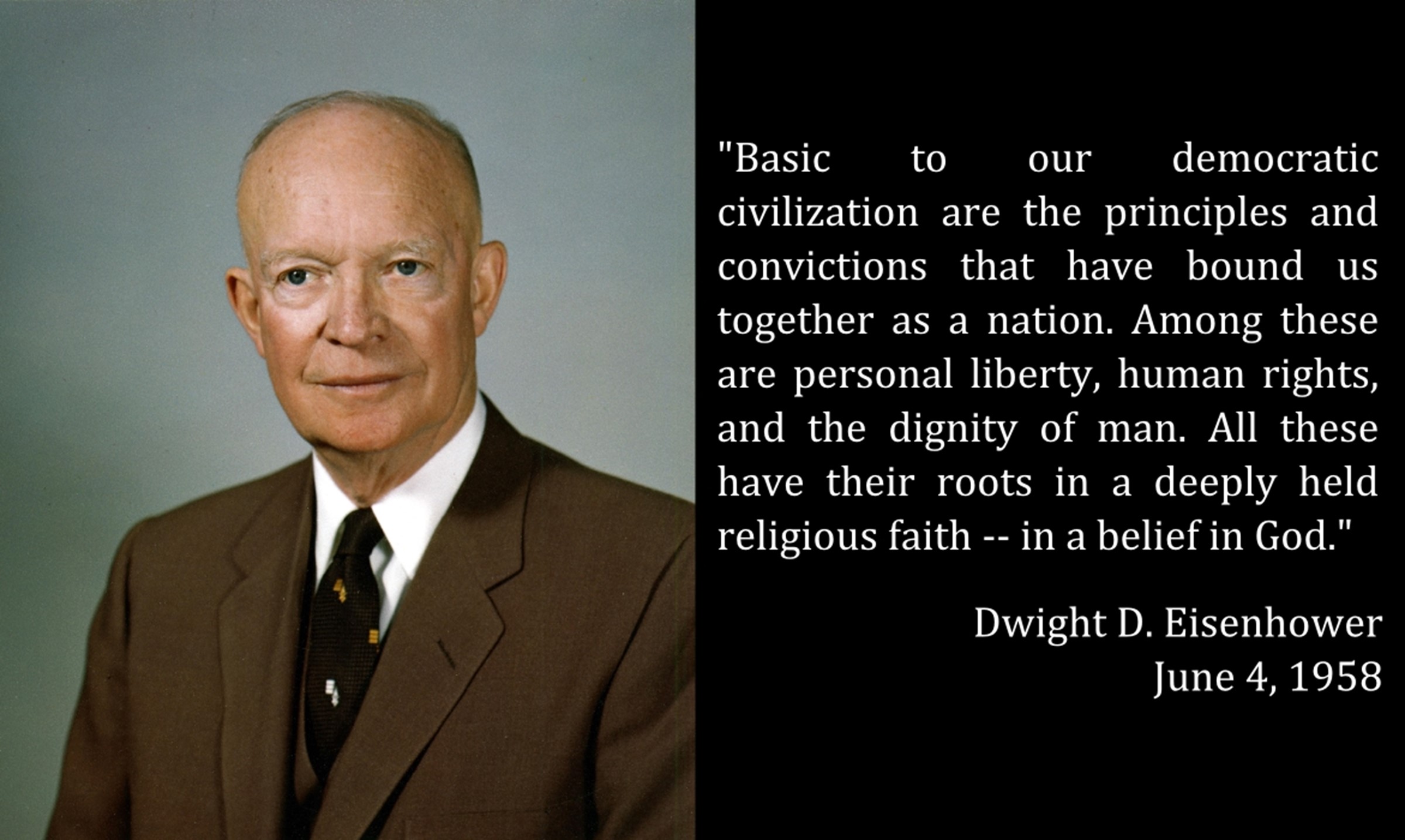
Americans opposed Communism for the political doctrine of Dialectical Materialism is not consistent with trust, belief, or faith in God. American War on Communism includes the driving force generated by Trust in God. Special Frontier Force represents Tibetan Resistance Movement initiated by the US Presidents Harry Truman and Dwight Eisenhower.

Antislavery Campaign of 2018. Special Frontier Force reviews the Role of God in the US Government.

Americans cannot refute the role of God in the US Government. The Official Motto, “IN GOD WE TRUST” directly inspires the US Policy to engage, confront, and contain Communism.

Antislavery Campaign of 2018. Special Frontier Force reviews the Role of God in the US Government.

Rudranarasimham Rebbapragada

SPECIAL FRONTIER FORCE

PRESIDENT EISENHOWER SIGNS “IN GOD WE TRUST” INTO LAW – JULY 30, 1956

Clipped from: https://www.history.com/this-day-in-history/president-eisenhower-signs-in-god-we-trust-into-law

Presidential

1956

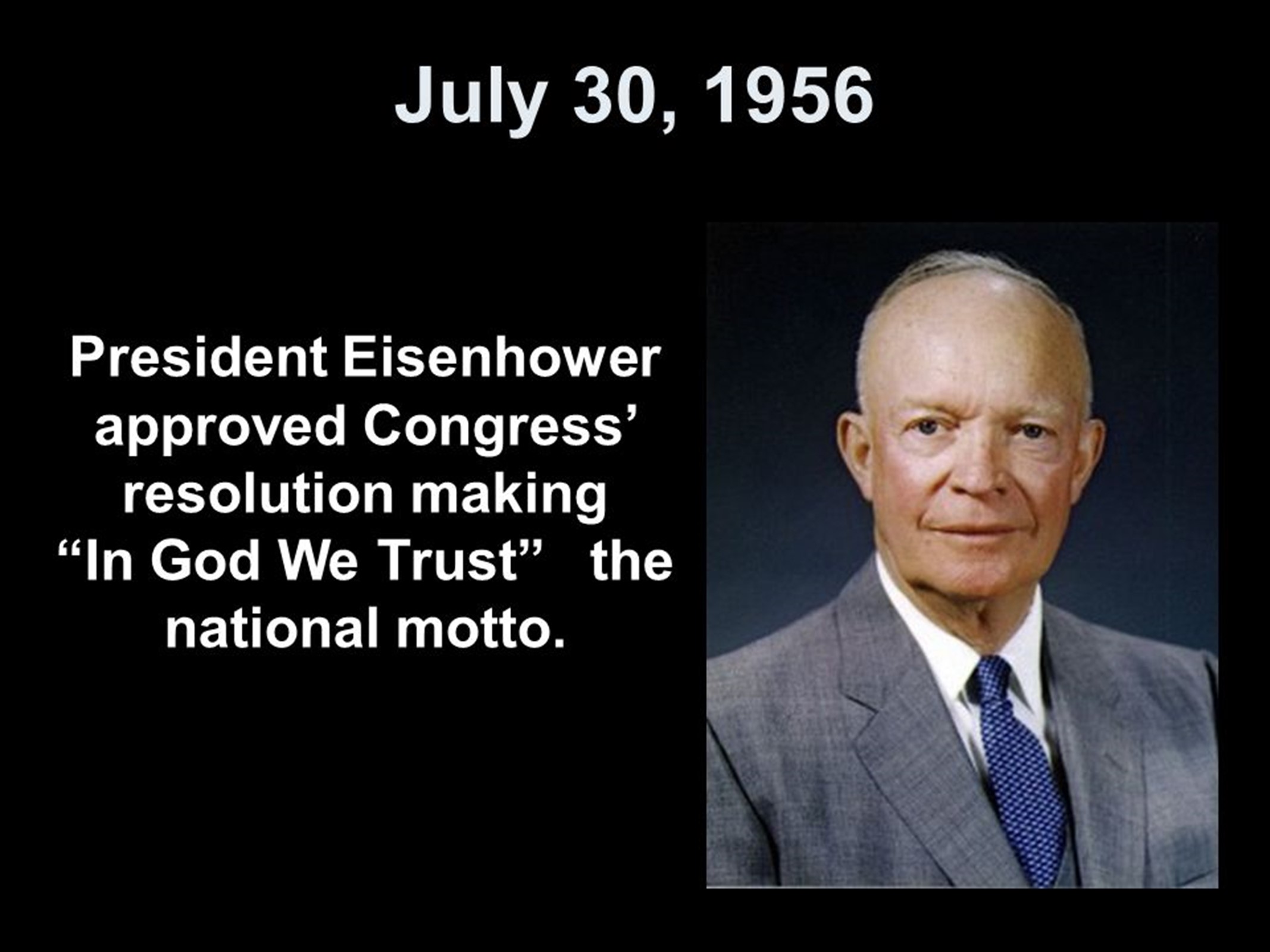
On this day in 1956, two years after pushing to have the phrase “under God” inserted into the pledge of allegiance, President Dwight D. Eisenhower signs a law officially declaring “In God We Trust” to be the nation’s official motto. The law, P.L. 84-140, also mandated that the phrase be printed on all American paper currency. The phrase had been placed on U.S. coins since the Civil War when, according to the historical association of the United States Treasury, religious sentiment reached a peak. Eisenhower’s treasury secretary, George Humphrey, had suggested adding the phrase to paper currency as well.

Although some historical accounts claim Eisenhower was raised a Jehovah’s Witness, most presidential scholars now believe his family was Mennonite. Either way, Eisenhower abandoned his family’s religion before entering the Army and took the unusual step of being baptized relatively late in his adult life as a Presbyterian. The baptism took place in 1953, barely a year into his first term as president.

Although Eisenhower embraced religion, biographers insist he never intended to force his beliefs on anyone. In fact, the chapel-like structure near where he and his wife Mamie are buried on the grounds of his presidential library is called the “Place of Meditation” and is intentionally inter-denominational. At a Flag Day speech in 1954, he elaborated on his feelings about the place of religion in public life when he discussed why he had wanted to include “under God” in the pledge of allegiance: “In this way we are reaffirming the transcendence of religious faith in America’s heritage and future; in this way we shall constantly strengthen those spiritual weapons which forever will be our country’s most powerful resource in peace and war.”

The first paper money with the phrase “In God We Trust” was not printed until 1957. Since then, religious and secular groups have argued over the appropriateness and constitutionality of a motto that mentions “God,” considering the founding fathers’ dedication to maintaining the separation of church and state.

Also on this day

1965

Johnson signs Medicare into law

On this day in 1965, President Lyndon B. Johnson signs Medicare, a health insurance program for elderly Americans, into law. At the bill-signing ceremony, which took place at the Truman Library in Independence, Missouri, former President Harry Truman was enrolled as Medicare’s first beneficiary.

IN GOD WE TRUST” REAFFIRMED AS NATIONAL MOTTO… AGAIN. GOD IN AMERICA

Clipped from: https://www.pbs.org/wgbh/frontline/article/in-god-we-trust-reaffirmed-as-national-motto-again/

Antislavery Campaign of 2018. Special Frontier Force reviews the role of God in the US Government.

On Wednesday, November 09, 2011 the House of Representatives voted 396 to 9 to reaffirm the U.S. national motto: “In God We Trust.”

“Some public officials have stated incorrectly that there are different national mottoes. We heard the president make that mistake,” explained Rep. Randy Forbes (R-Va.), who sponsored the bill. Forbes was referring to a speech President Obama delivered in Indonesia last year in which said, “In the United States, our motto is E Pluribus Unum — out of many, one.” (Forbes and a number of other members of the Congressional Prayer Caucus, including current presidential candidate Rep. Michele Bachmann (R-Minn.) sent a letter to the president, taking him to task for the error.)

As The Washington Post noted, Congress has reaffirmed the motto several times in recent years:

The motto has withstood legal challenges from groups that said it violated the separation of church and state. Courts have held that the motto is “ceremonial Deism,” not an official endorsement of religion.

Still, just to be sure, Congress voted to reaffirm the motto in 2002. In essence, it passed a new law that said the old law should not be changed one bit. “Make no change in Section 302, Title 36, United States Code,” it ordered then, citing the passage that created the motto.

Then, in 2006, the Senate voted another time, to reaffirm “the concept embodied in the motto.”

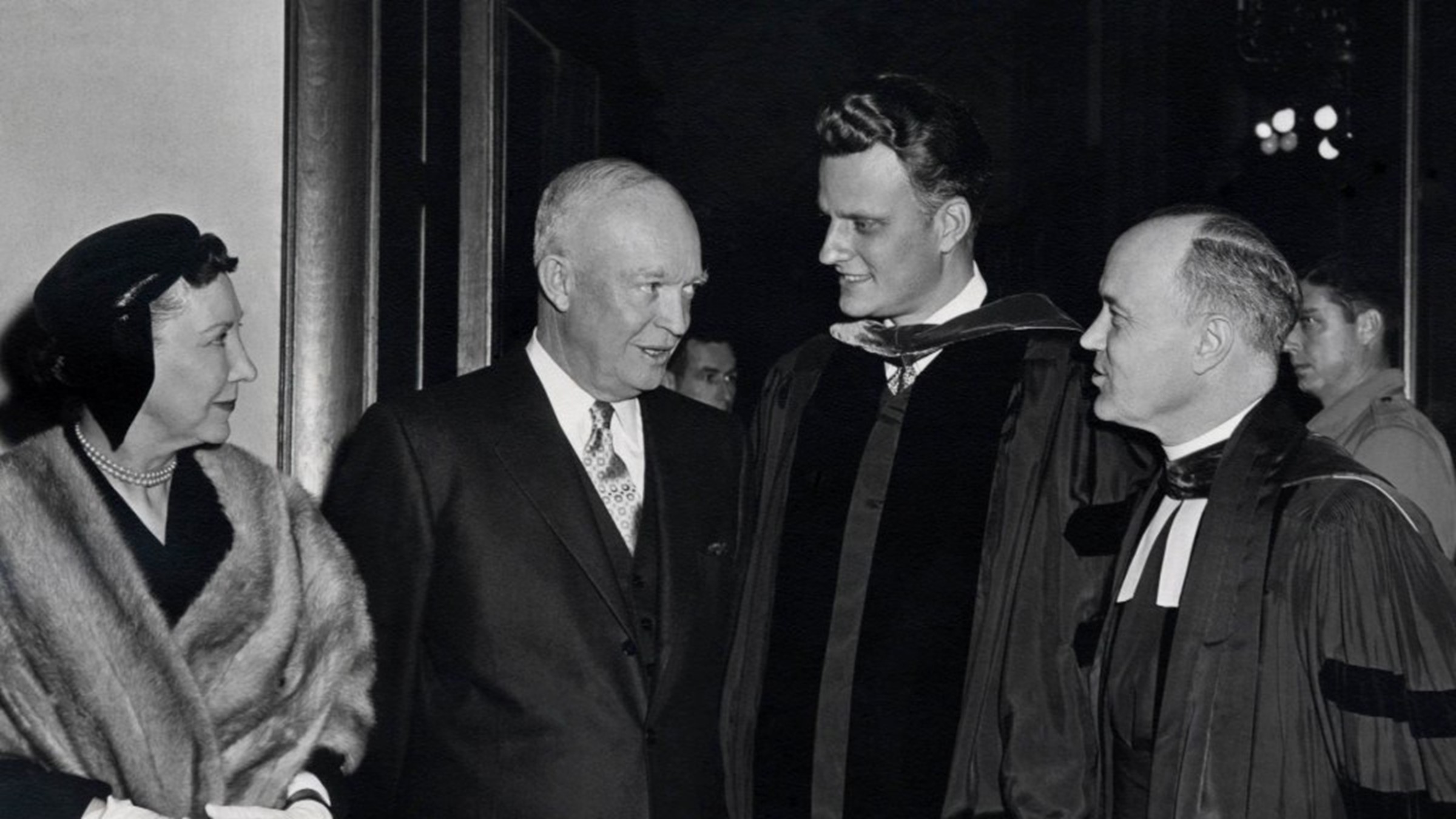
Last fall in God in America, our joint production with AMERICAN EXPERIENCE, we examined how “In God We Trust” came to be our national motto in 1956. At the heart of the story is an alliance between Rev. Billy Graham and Dwight Eisenhower, who together melded Christianity and patriotism into a weapon to be used against “godless Communism” during the Cold War. 

The motto, explains historian Frank Lambert, “reclaims this notion that we’re a chosen people and that we were conceived under God and that we flourish under God, and we turn our backs on God at our own peril.”

Antislavery Campaign of 2018. Special Frontier Force reviews the Role of God in the US Government.


TIBETAN NATIONAL SECURITY PLAN – NEGOTIATE WITH A TYRANT FOR PEACE

TIBETAN NATIONAL SECURITY PLAN – NEGOTIATE WITH A TYRANT FOR PEACE

Tibetan National Security Plan – Negotiate with a Tyrant for Peace.

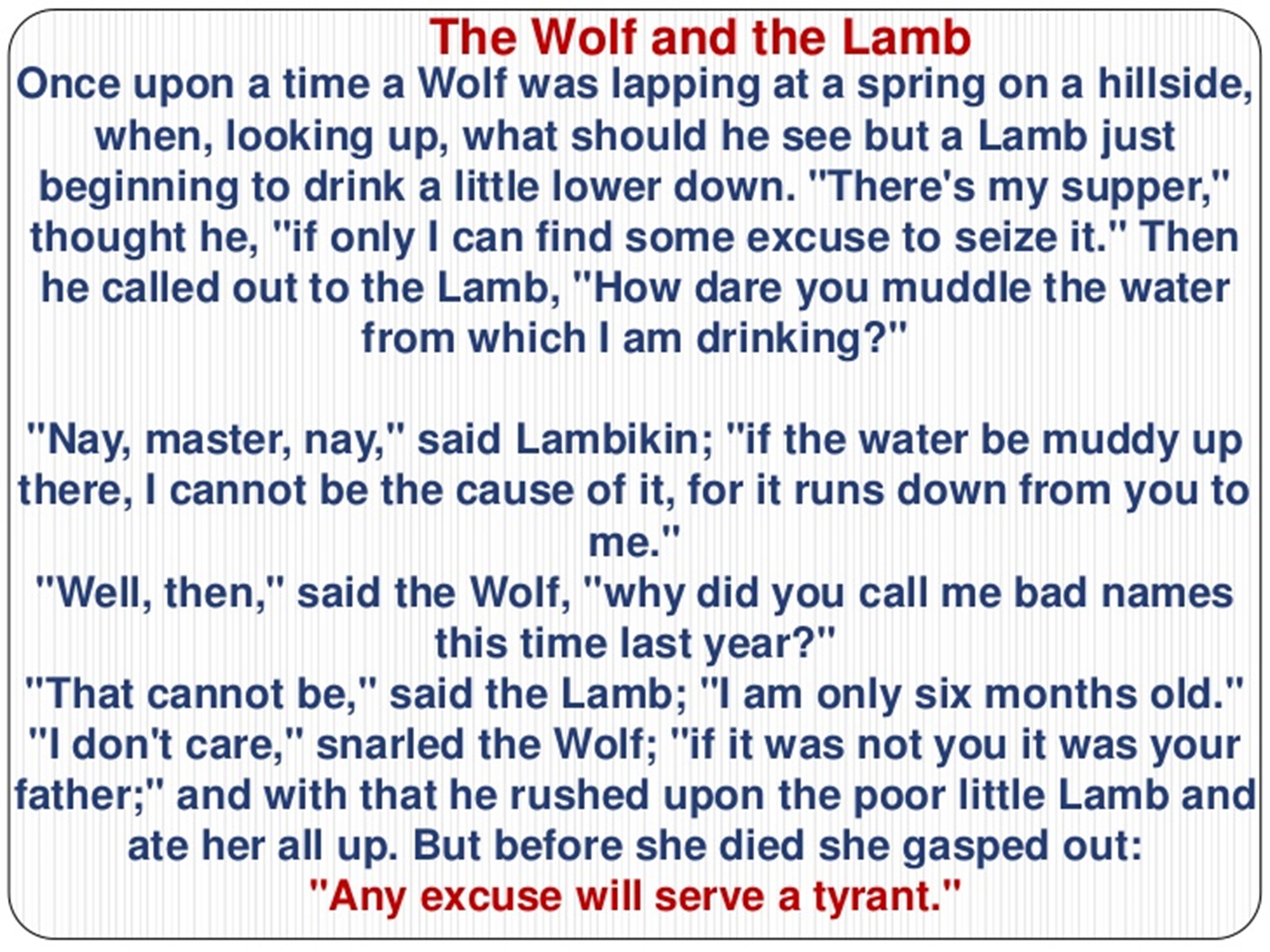
In the absence of Tibetan National Security Plan, Tibetans are left with no choice. To keep their mortal existence, the Tibetan people may have to negotiate with a Tyrant for Peace.

Rudranarasimham Rebbapragada

SPECIAL FRONTIER FORCE

DALAI LAMA SAYS TIBETANS NOT ASKING FOR INDEPENDENCE, CAN LIVE WITH CHINA

Clipped from: https://www.thestatesman.com/india/dalai-lama-says-tibetans-not-asking-for-independence-can-live-with-china-1502671592.html

Tibetan spiritual leader the Dalai Lama courted controversy by stating that Tibet is ready to be part of China provided Beijing agrees to guarantee certain rights.

Tibetan National Security Plan. Negotiate with a Tyrant for Peace.

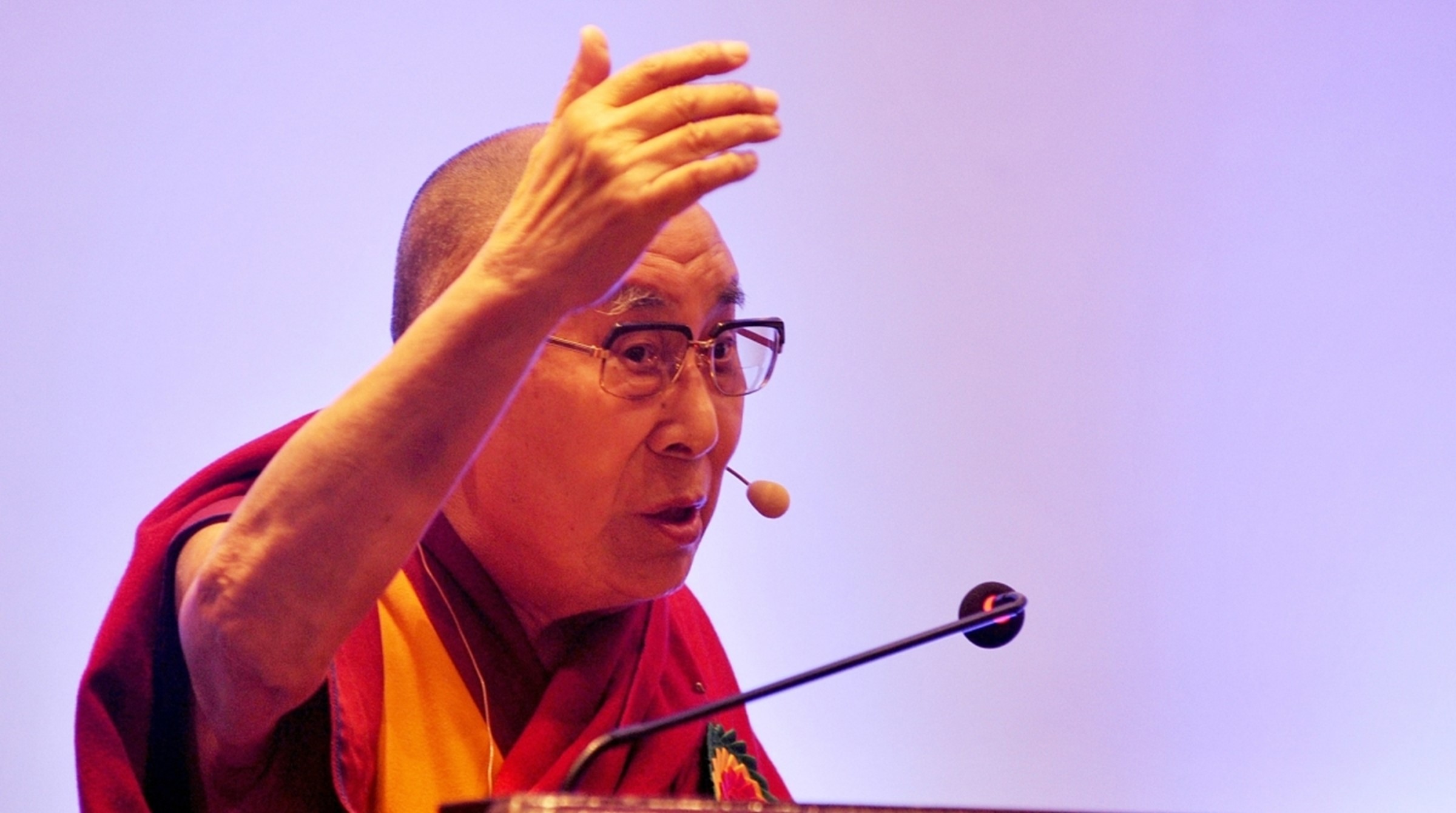
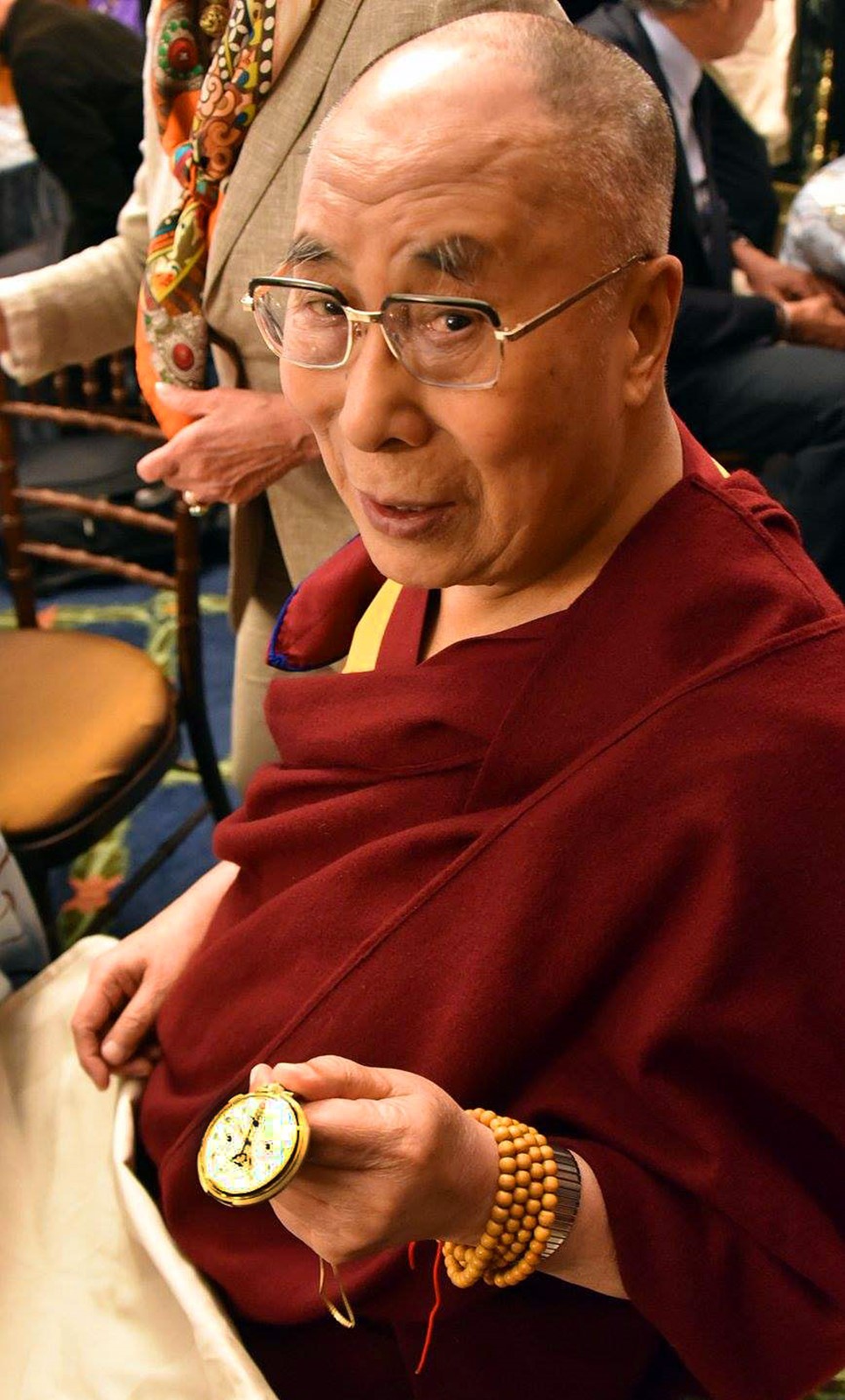
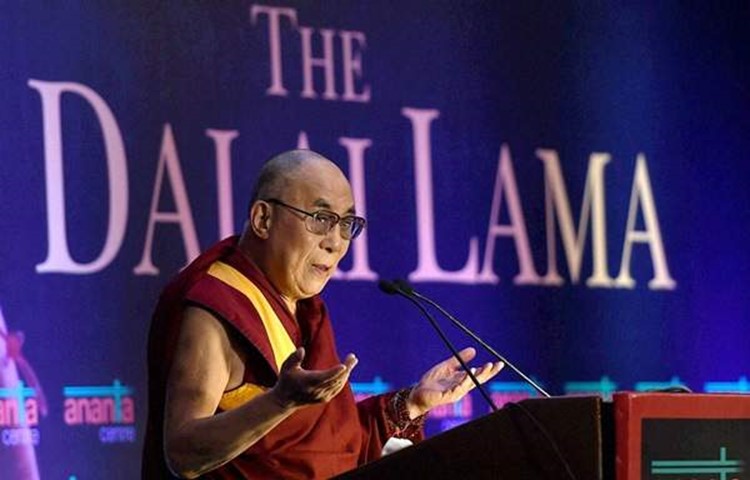
Tibetan spiritual leader the Dalai Lama addresses during “Thank You Karnataka” an event to mark the 60th year of Tibetan arrival to India, in Bengaluru on Aug 10, 2018. (Photo: IANS)

Two days after he triggered a major controversy by praising Muhammed Ali Jinnah over Jawaharlal Nehru, Tibetan spiritual leader the Dalai Lama stoked a political flame by stating that Tibet is ready to be part of China provided Beijing agrees to guarantee certain rights.

Speaking at an event organized by the Central Tibetan Administration (CTA) in Bengaluru, the Dalai Lama said, “Tibetans are not asking for independence. We are okay with remaining with the People’s Republic of China, provided we have full rights to preserve our culture.”

At the “Thank You Karnataka” event, the 83-year-old Nobel Peace laureate said, “Several of Chinese citizens practicing Buddhism are keen on Tibetan Buddhism as it is considered scientific.”

Only two days ago, the 14th Dalai Lama enraged many by saying that India would not have been partitioned had Pakistan’s founding father Muhammed Ali Jinnah become the Prime Minister instead of Jawaharlal Nehru.

During an interaction with students in Goa, the Dalai Lama said, “Mahatma Gandhi wanted to give the prime ministership to (Mohammad Ali) Jinnah. But Nehru refused. He was self-centered. He said, ‘I wanted to be Prime Minister’. India and Pakistan would have been united (had Jinnah been made Prime Minister at the time). Pandit Nehru was wise and experienced. But mistakes do happen.”

As his remarks triggered outrage, the Dalai Lama on Thursday tendered an apology. “My statement has created controversy, I apologize if I said something wrong,” he said.

“I had a close relationship with Nehru, who suggested having separate schools to preserve the Tibetan thought. He (Nehru) supported the Tibetans’ cause,” the 14th Dalai Lama said.

Born in Taktser hamlet in northeastern Tibet, the Dalai Lama was recognized at the age of two as the reincarnation of the 13th Dalai Lama, Thubten Gyatso. He fled to India from Tibet after a failed uprising against the Chinese rule in 1959.

China annexed Tibet in 1950, forcing thousands of Tibetans, including monks, to flee the mountain country and settle in India as refugees.

Since then, India has been home to over 100,000 Tibetans majorly settled in Karnataka, Himachal Pradesh among other states.

Tibetan National Security Plan – Negotiate with a Tyrant for Peace.


NATIONAL SECURITY BILL FOR TIBET – GOD HAS A PLAN FOR TIBET

NATIONAL SECURITY BILL FOR TIBET – GOD HAS A PLAN FOR TIBET

August 10, 1949. National Security Bill for Tibet. God has a Plan for Tibet. In the absence of National Security Plan or Strategy, Tibet has become dependent upon The US National Security Bill and its execution by different US Administrations.

On August 10, 1949, the US President Harry Truman signed The National Security Bill creating The Department of Defense to prepare the United States for Cold War as containment of Communist Expansionism requires a complex strategy.

Tibet declared full independence on February 13, 1913, taking advantage of the downfall of the Qing Dynasty or Ch’ing, or Manchu Chinese Empire during 1911-1912.

Tibet never had a National Security Plan or Security Strategy to defend its existence. During 1948-49, Tibet experienced the first major threat to existence with the spread of Communism to mainland China during World War II. It is no surprise to find Tibetans unprepared. In the absence of National Security Plan or Strategy, Tibet has become dependent upon The US National Security Bill and its execution by different US Administrations. 

Tibetans are very fearful of Chinese people as Chinese ruled over Tibet with the utmost brutality, unlike the Mongols who had earlier ruled over Tibet for a long time. Tibetans are not concerned about the political ideology of Chinese people. Tibetans are simply afraid of the Chinese race known for their arrogance and unjustified use of power to subjugate innocent, undefended Tibetan people.

August 10, 1949. National Security Bill for Tibet. God has a Plan for Tibet. For Tibet has no Security Plan or Strategy, Tibet has become dependent upon the US National Security Bill and its execution by different US Administrations.

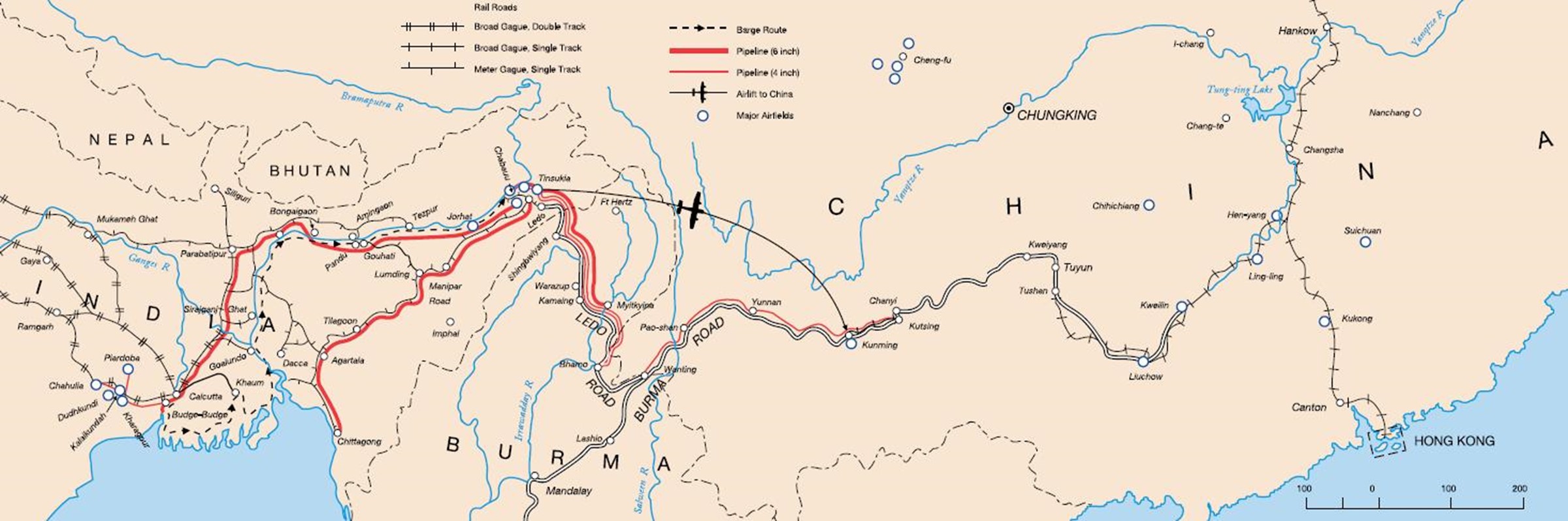
Living Tibetan Spirits trace their American Support from the period of Hump Airlift Operations from April 1942 to November 1945 in China Burma India Theater (CBI) of World War II. While the British fought against the Japanese invasion of Burma, the US worked to extend support to Nationalist forces engaged in bitter Civil War to oppose the Communist takeover of mainland China. Apart from the use of Tibetan airspace, some Hump Airlift Operations delivered weapons and ammunition to Tibet.

For both Tibet and India have no Security Plan or Strategy to defend Tibet from military conquest, they used the opportunity provided by the US President Harry Truman who signed The National Security Bill with plans to fight against Communist Expansionism.

Tibet, India, and the United States agreed to work together in support of the US Plan to contain the spread of Communism. But, as we have seen, it is not good enough. In fact, Communist China consolidated her tight grip over Tibet.

August 10, 1949. National Security Bill for Tibet. God has a Plan for Tibet. In the absence of National Security Plan or Strategy, Tibet has become dependent upon The US National Security Bill and its execution by different US Administrations.

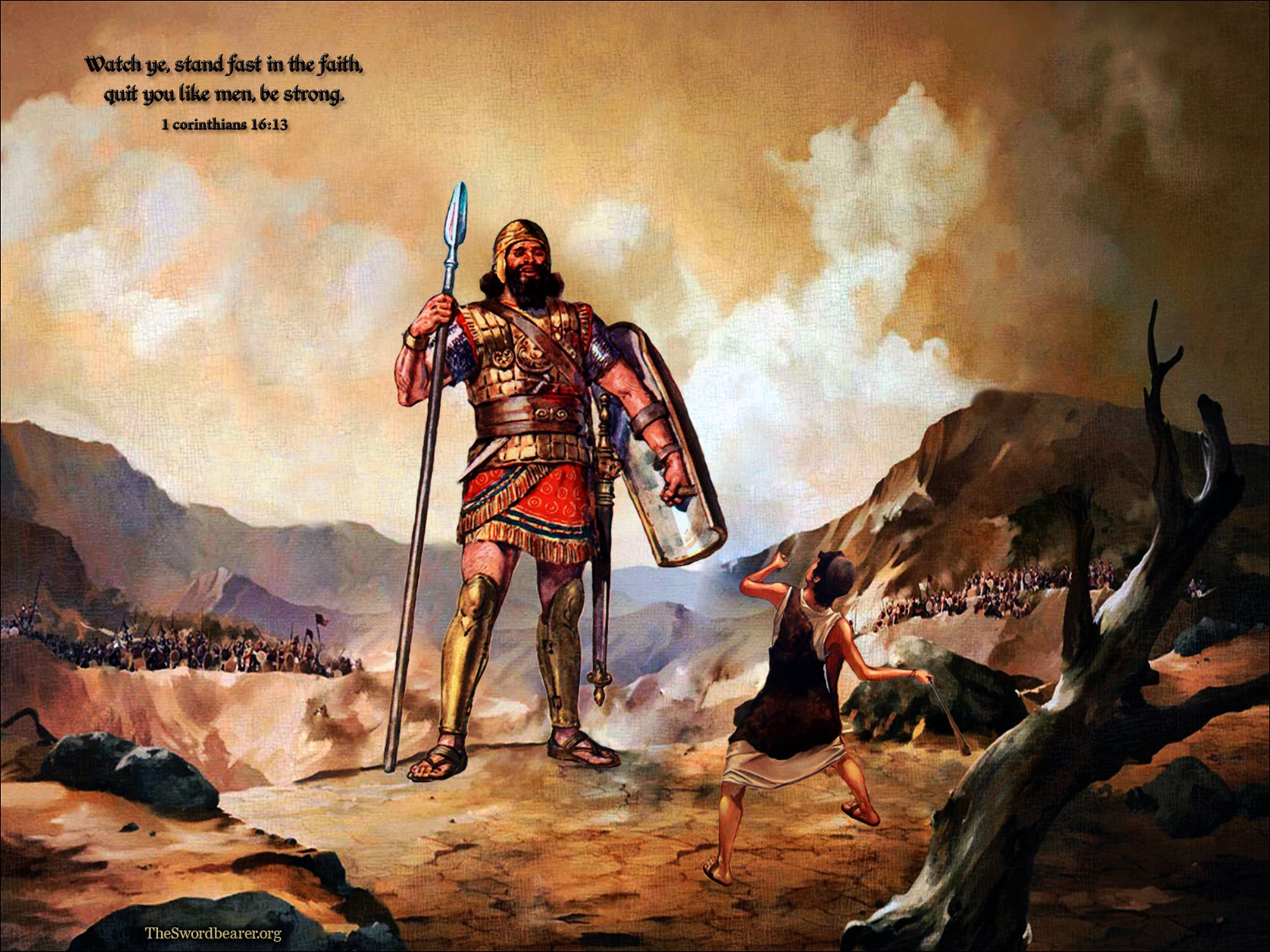
For countries of the World have no Security Plan for Tibet, I asked God for His Security Plan for Tibet. God referred me to the story of David and Goliath described in The Old Testament Book, 1 SAMUEL, Chapter 17. God assures me that it takes only a single ‘Sling Shot’ to utterly defeat Tibet’s Enemy. Beijing’s Downfall is just a ‘Stone’s Throw Away’. I call God’s Plan as ‘The Sling Shot’ Option for Tibet’s Security.

Rudranarasimham Rebbapragada

SPECIAL FRONTIER FORCE

TRUMAN SIGNS NATIONAL SECURITY BILL – AUGUST 10, 1949

Clipped from: https://www.history.com/this-day-in-history/truman-signs-national-security-bill

Cold War

1949

President Harry S. Truman signs the National Security Bill, which establishes the Department of Defense. As the Cold War heated up, the Department of Defense became the cornerstone of America’s military effort to contain the expansion of communism.

In 1947, the National Security Act established the Cabinet-level position of secretary of defense, which oversaw a rather unwieldy umbrella military-defense agency known as the National Military Establishment. The secretary of defense, however, was just one of a number of military-related cabinet positions, including the pre-existing secretaries for the Army, Navy, and Air Force. The growing complexity of the Cold War, a war in which the mishandled application of military force could lead to a world war of cataclysmic proportions, convinced U.S. officials that the 1947 act needed to be revised.

In 1949, the National Security Bill streamlined the defense agencies of the U.S. government. The 1949 bill replaced the National Military Establishment with the Department of Defense. The bill also removed the cabinet-level status of the secretaries of the Army, Navy, and Air Force, who would henceforth be subordinate to the Secretary of Defense. The first person to hold this position was Louis Johnson. Finally, the bill provided for the office of chairman of the Joint Chiefs of Staff in an effort to bring to end to the inter-service bickering that had characterized the Joint Chiefs in recent years. World War II hero General Omar Bradley was appointed the first Chairman of the Joint Chiefs of Staff.

The National Security Bill of 1949 was the result of the realization that more coordination and efficiency were needed for America’s military-defense bureaucracy, which had experienced tremendous growth during and after World War II. The Cold War was a new and dangerous kind of war for America, and the 1949 reorganization was recognition of the need for a different approach to U.S. defense.

August 10, 1949. National Security Bill for Tibet. God has a Plan for Tibet. I describe God’s Plan as ‘The Sling Shot’ Option.


FOREIGN RELATIONS OF THE UNITED STATES–STATUS ON TIBETAN OPERATIONS

Foreign Relations of the United States.

Status on Tibetan Operations. 

Foreign Relations of the United States. Status on Tibetan Operations.

On behalf of Living Tibetan Spirits, I can review the status on Tibetan Operations because of my lifetime affiliation with the military organization called Special Frontier Force. In my review of foreign relations of the United States, I conclude making amendments to the US policy which essentially aims to contain the threat of the spread of Communism to mainland China. 1. In the present times of ‘The Information Era’, there is no need for The Cold War Era of secret diplomacy and covert operations. Information is the most important tool to decide the outcome of the battle between Democracy and Communism. 2. The United States must seek Direct Dialogue with Tibet and Tibetan Institutions of Government and, 3. The United States must recognize Tibet as the third largest nation of Asia. This country because of its size and location is vital to the US interests to maintain The Balance of Power.

Rudranarasimham Rebbapragada

#SPECIALFRONTIERFORCE


Foreign Relations of the United States, 1964-1968,

Volume XXX, China. Office of The Historian


Clipped from: https://history.state.gov/historicaldocuments/frus1964-68v30/d342

342. Memorandum for the 303 Committee1

Washington, January 26, 1968.

SUBJECT

  • Status Report on Tibetan Operations

1. Summary—The CIA Tibetan program, parts of which were initiated in 1956 with the cognizance of the Committee, is based on U.S. Government commitments made to the Dalai Lama in 1951 and 1956. The program consists of political action, propaganda, paramilitary and intelligence operations, appropriately coordinated with and supported by [less than 1 line of source text not declassified]. This program was last reviewed and endorsed by the Committee on 20 February 1964. Current activities have been coordinated with and have the approval of [1 line of source text not declassified], Mr. William Bundy, Assistant Secretary of State for East Asian and Pacific Affairs, and Mr. Lucius Battle, Assistant Secretary of State for Near East and South Asian Affairs. 2. Program Objectives—In the political action and propaganda field, Tibetan program objectives are aimed toward lessening the influence and capabilities of the Chinese regime through support, among Tibetans and among foreign nations, of the concept of an autonomous Tibet under the leadership of the Dalai Lama; toward the creation of a capability for resistance against possible political developments inside Tibet; and the containment of Chinese Communist expansion—in pursuance of U.S. policy objectives stated initially in NSC 5913/1.2 [6 lines of source text not declassified] 3.

Appraisal of Current Programs—The cultural revolution in China expanded into Tibet bringing with it tremendous disturbances including the disruption of internal transportation, communication, travel and, to a significant extent, peace and order. Unfortunately, there are no apparent signs that the Tibetan people are capitalizing upon this internal chaos to seek further autonomy. Chinese security has shown no signs of deterioration [Page 740]and their control over Tibet, both political and military remains as pervasive as ever. Tibetan leadership has been purged, leaving the Chinese in direct control of the local administration, and a large number of underground assets have been uncovered and neutralized.

The Tibetan program has a potential for operational success based on a reservoir of trained agent material, the location in a safe-haven of the Dalai Lama together with the nucleus of new young leaders, widespread sympathy for the Tibetan cause, indications of a more positive Indian attitude toward the political aspirations of the Tibetan government, and evidence of considerable disarray among the Chinese stationed in Tibet.

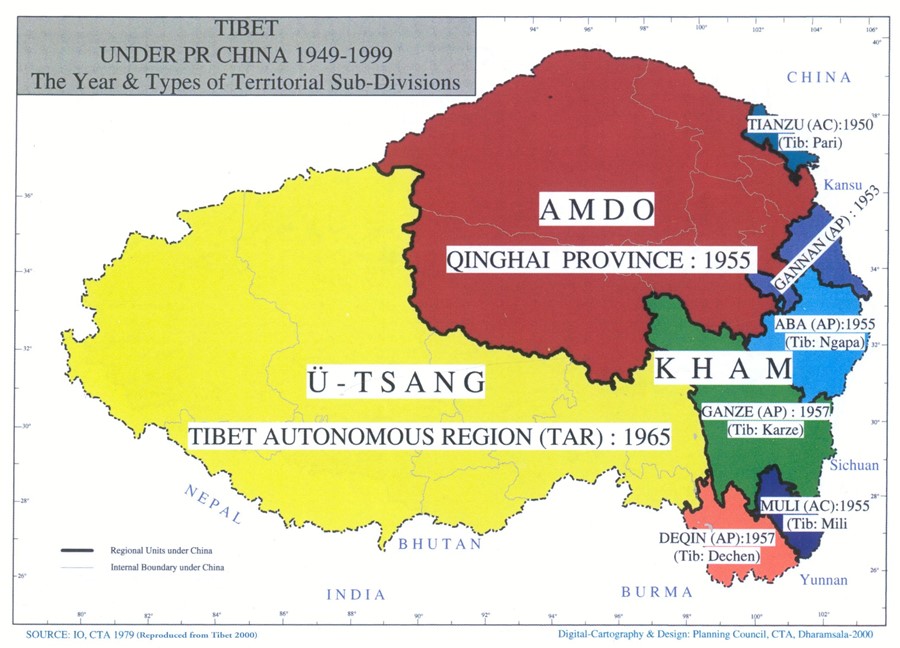
a. At present, there are no radio teams remaining inside Tibet. Radio teams continue to function [less than 1 line of source text not declassified] although much of their information comes from the debriefing of traders and refugees. Singleton resident agent operations in Tibet, regarded as being the long-range replacement of the black radio teams, have not progressed as planned due to continued tightening of Chinese security in the border areas. Intelligence reporting from all sources deals primarily with military, political and construction activities along the Tibetan border. b. The Tibetan paramilitary unit, a remnant of the 1959 resistance force, is dispersed in 15 camps [less than 1 line of source text not declassified]. The Tibetan leadership views the force as the paramilitary arm of its “government-in-exile” [2 lines of source text not declassified]. Because of the diplomatic sensitivity occasioned by the presence of the Tibetan force [less than 1 line of source text not declassified], it has been enjoined from offensive action which might invite Chinese [less than 1 line of source text not declassified] retaliation. Joint efforts to disperse the force to other uninhabited areas [less than 1 line of source text not declassified] have not been successful because of Chinese [less than 1 line of source text not declassified] reaction or of difficulties in resupply. c. [1 line of source text not declassified] responsible for radio contact with and operational direction of the radio teams, the paramilitary resistance force, and the support mechanism [less than 1 line of source text not declassified] continue to serve their intended purpose with a minimum of problems. d. Bi-lateral CIA-Tibetan intelligence collection operations into Tibet, [less than 1 line of source text not declassified] have increased significantly, both in number and in value during the past few years. e. Activities designed to develop a dynamic political program [less than 1 line of source text not declassified] to weld the refugee communities into a cohesive whole under the leadership of the Dalai Lama and his brother, Gyalo Thondup, continue. These include: (1) The Geneva, New York and [less than 1 line of source text not declassified] “Tibet houses” continue in operation. The Geneva office serves as [Page 741]the coordinating point for the resettlement of some 500 Tibetan refugees in Switzerland and other European countries and maintains contact with the international agencies concerned with Tibetan relief. Although time has dimmed some of the effectiveness of its pleas, the New York office continues to lobby among the U.N. delegations for legal and moral support for the Tibetan cause, guided in their efforts by a sitting former U.S. delegate to the U.N. who is also a well-known international lawyer. [2 lines of source text not declassified] (2) The covert training program conducted in the U.S. under which some 250 Tibetans were trained, ended in November 1964. (3) Twenty selected Tibetan junior officers studied at Cornell University, over a three year period. Due to the Katzenbach strictures, this program was concluded in July 1967; CIA is considering a continuation of the program, on a limited scale, [less than 1 line of source text not declassified]. (4) The Tibetan organizational party, the Cho Kha Sum, (i.e. the Defense of Religion by the Three Regions: Kham, Amdo, and U-Tsang), which was established in India in April 1964 by Gyalo Thondup, now has an active press and publications arm. While the future potential of the party is still in question, the Tibetans are making an effort to mold it into an effective organization, aimed at halting a drift towards disunity among the refugees, developing a political consciousness and a political program with which to challenge the Communist efforts inside Tibet.

4.

Significant Previous 303 Committee Approvals—

a. September 1958—initial endorsement of CIA covert support to Tibetan resistance; b. 20 May 1959—initial approval of covert support to the Dalai Lama; c. 14 February 1961—endorsed continuation of the covert program; d. 13 December 1962—approved training of Tibetan guerrilla force; e. 20 February 1964—reviewed and endorsed continuation of covert program; f. 9 April 1965—approved relocation of Tibetan paramilitary force; g. 8 July and 25 November 1966—endorsed the covert paramilitary program [1 line of source text not declassified].

These landmark reviews were interspersed with status reports and briefings of the Committee, in one period at monthly intervals. The basic decisions listed above in several instances were reviewed with Higher Authority.

5. Coordination— a. Department of State—Since the project’s inception, appropriate officials of the Department have approved various elements of the program. [Page 742]Department officers who have been briefed on aspects of this project include Elmer Falk and Clement J. Sobotka, Director and Deputy Director, respectively, of the Office of Refugee and Migration Affairs; Harald Jacobson, Director, Office of Asian Communist Affairs; William Gleysteen, Deputy Director, Office of U.N. Political Affairs; William Bundy, Assistant Secretary of State for East Asian and Pacific Affairs; and Lucius Battle, Assistant Secretary of State for Near East and South Asian Affairs. b. Ambassadors—The past and present Ambassadors to Nepal and India have approved the Tibetan program, [1 line of source text not declassified]. c. [2–1/2 lines of source text not declassified] 6. Projected and Planned Programs— a. On the political front during 1967, the Dalai Lama began what is hoped will be a long-range program of projecting himself and Tibetan affairs on an international basis. He is contemplating visits to Ceylon, Burma, and Cambodia, having visited Japan and Thailand in late 1967. Invitations have also been extended from several European countries having active Tibetan refugee programs or interests. b. Gyalo Thondup, acting for the Tibetan partnership in our liaison with the Indians, has proposed the establishment of a Tibetan Operations Center to represent Tibetan interests [less than 1 line of source text not declassified]. This Tibetan center would conceivably provide greater efficiency in the Tibetan handling of existing operations and in the relegation of operational tasks to Tibetan assets. [1 line of source text not declassified] c. Some elements of the basic covert program remain to be implemented. They include the deployment of landline wiretap teams to selected priority targets within Tibet; the activation of special refugee debriefing teams; a census of some 70,000 Tibetan refugees spread throughout India and its neighboring countries which may locate additional operational assets; and the resupply of arms and ammunition to the Mustang force. 7. Costs—At the time of the February 1964 review by the Committee, the projected annual cost for all Tibetan operations was $1,735,000. With the discontinuation of the training programs in the U.S., [1 line of source text not declassified] a reduction of $570,000 in this estimate for FY68 has been achieved. The remainder of $1,165,000 has been programmed in the CIA budget for FY68 for the activities described in this paper. Of this amount, $650,000 was approved by the 303 Committee on 25 November 1966 in its review of the [less than 1 line of source text not declassified].

  • Source: Department of State, INR Historical Files, Tibet, 1967–1968. Secret; Eyes Only. The source text bears no drafting information. A March 4 memorandum from Battle to Bohlen describes it as a CIA memorandum. (Ibid.) It was discussed at a March 19 meeting of the 303 Committee. According to Peter Jessup’s memorandum for the record of the meeting, CIA representative James Critchfield stated that “achievements inside Tibet were minimal—outside more substantial.” He observed that “the Tibetans by nature did not appear to be congenitally inclined toward conspiratorial proficiency.” Jessup records no action by the 303 Committee at the meeting. (Johnson Library, National Security File, Intelligence File, 303 Committee)
  • The text of NSC 5913/1, approved September 25, 1959, is printed in Foreign Relations, 1958–1960, vol. XVI, pp. 133 144. Also, see the record of the NSC discussion of NSC 5913 on September 17, 1959, ibid., pp. 116–127.

    Foreign Relations of the United States. The Status on Tibetan Operations.


TIBETAN RESISTANCE MOVEMENT FAILED BECAUSE OF COVERT ACTIONS


TIBETAN RESISTANCE MOVEMENT

FAILED BECAUSE OF COVERT ACTIONS

Tibetan Resistance Movement failed because of Covert Actions.

In my analysis, American actions in support of the Tibetan Resistance Movement failed because of the choice of covert operations to accomplish their mission. On behalf of Living Tibetan Spirits, I demand direct dialogue between the US and Tibet after due recognition of Tibetan Government-in-Exile as the sole representative of Tibetan people.

Rudranarasimham Rebbapragada

#SpecialFrontierForce

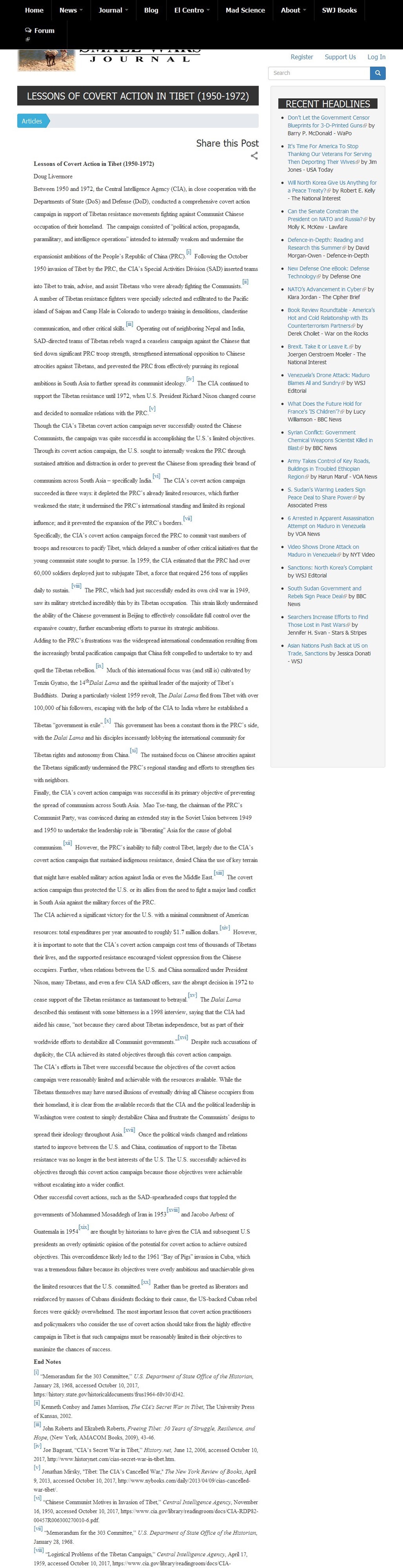
LESSONS OF COVERT ACTION IN

TIBET (1950-1972) –

Small Wars Journal

Tibetan Resistance Movement failed because of Covert Actions.

Clipped from: http://smallwarsjournal.com/index.php/jrnl/art/lessons-covert-action-tibet-1950-1972

TIBETAN RESISTANCE MOVEMENT FAILED BECAUSE OF COVERT ACTIONS.

Tibetan Resistance Movement Failed Because of Covert Actions. Living Tibetan Spirits Demand US-Tibet Direct Dialogue.

THE COLD WAR IN ASIA – INDIA RESPECTS SOVEREIGNTY OF TIBET AND BHUTAN

THE COLD WAR IN ASIA – INDIA RESPECTS SOVEREIGNTY OF TIBET AND BHUTAN
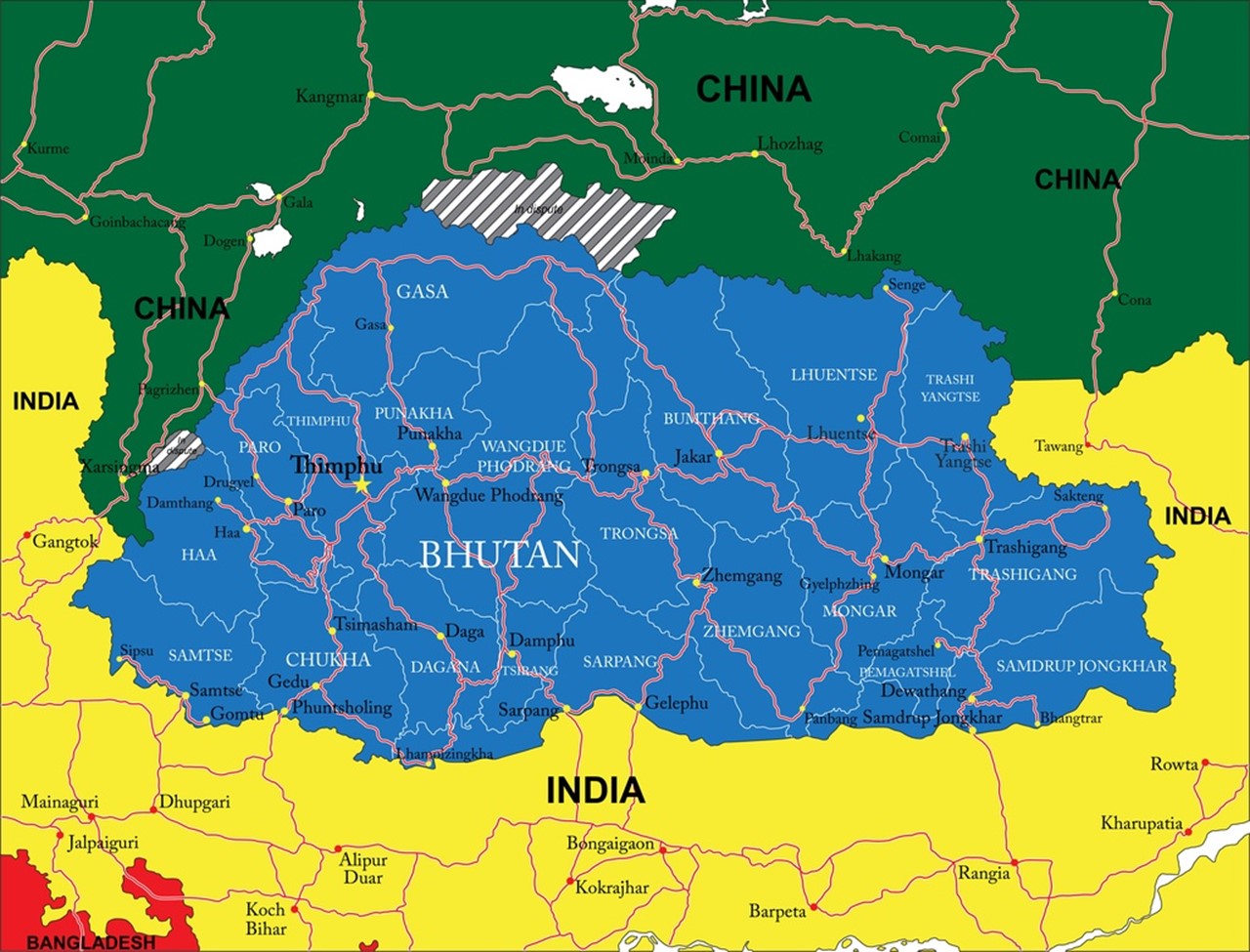
My ‘CIA CONNECTION’ is byproduct of ‘The Cold War in Asia’. In 1950s, India’s external relations along Himalayan Frontier were shaped by the fear of Communism spreading in Asia. For centuries, people of India, Tibet, and Bhutan lived with no major concerns about boundaries between these countries. Communist China’s Doctrine of Expansionism came into focus when Red China made claims of her sovereignty over territories of her neighbors.

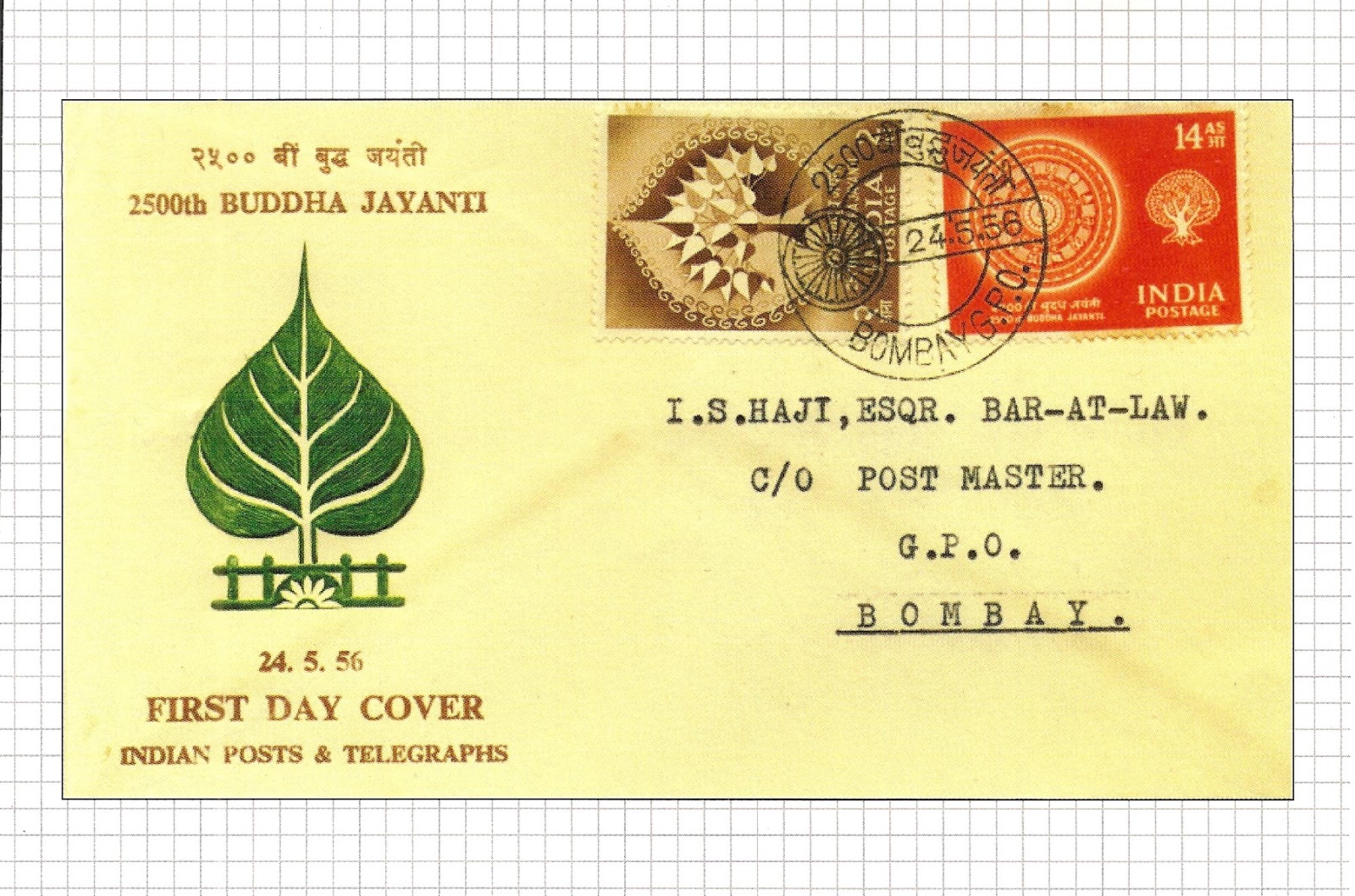
In May 1956, the 14th Dalai Lama visited New Delhi not to celebrate 2,500 Birth Anniversary of Gautama Buddha. He came to seek help and support for Tibet is the first victim of Red China’s Expansionism. Both India, and Tibet share this fear of Communism. In September 1958, Indian Prime Minister Jawaharlal Nehru visited Bhutan to forge relationships driven by fear of Communist Expansionism. India respects sovereignty of Tibet and Bhutan not because of religious or philosophical doctrine of Gautama Buddha but on account of fear of Expansionist Doctrine of Red China.

Rudranarasimham Rebbapragada

SPECIAL FRONTIER FORCE
DOKLAM STANDOFF: BHUTAN’S SOVEREIGNTY


Clipped from: https://thewire.in/159651/doklam-standoff-india-china-bhutan/

Today, as two Asian powers face off with Bhutan at the center of this delicate situation, the outcome will show whether the Asian century has a chance to be a peaceful one, or whether it will replay the violence of the colonial period.
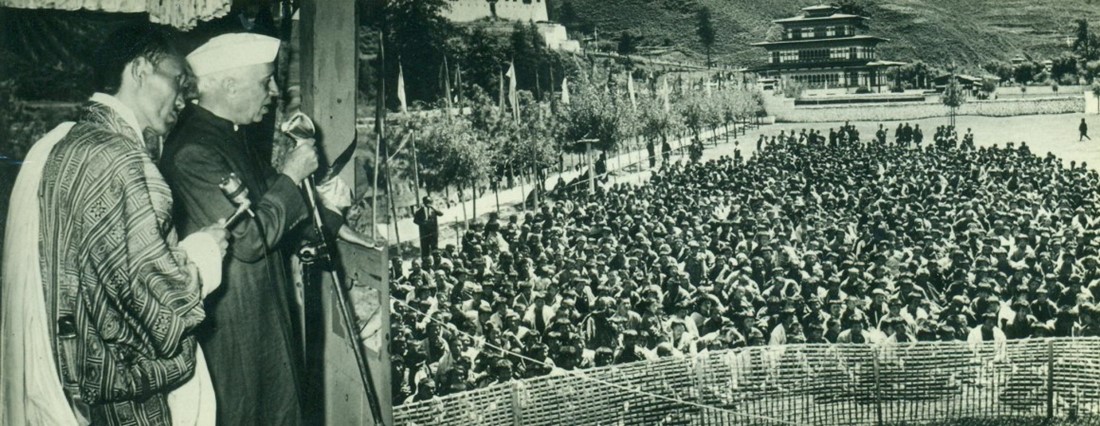
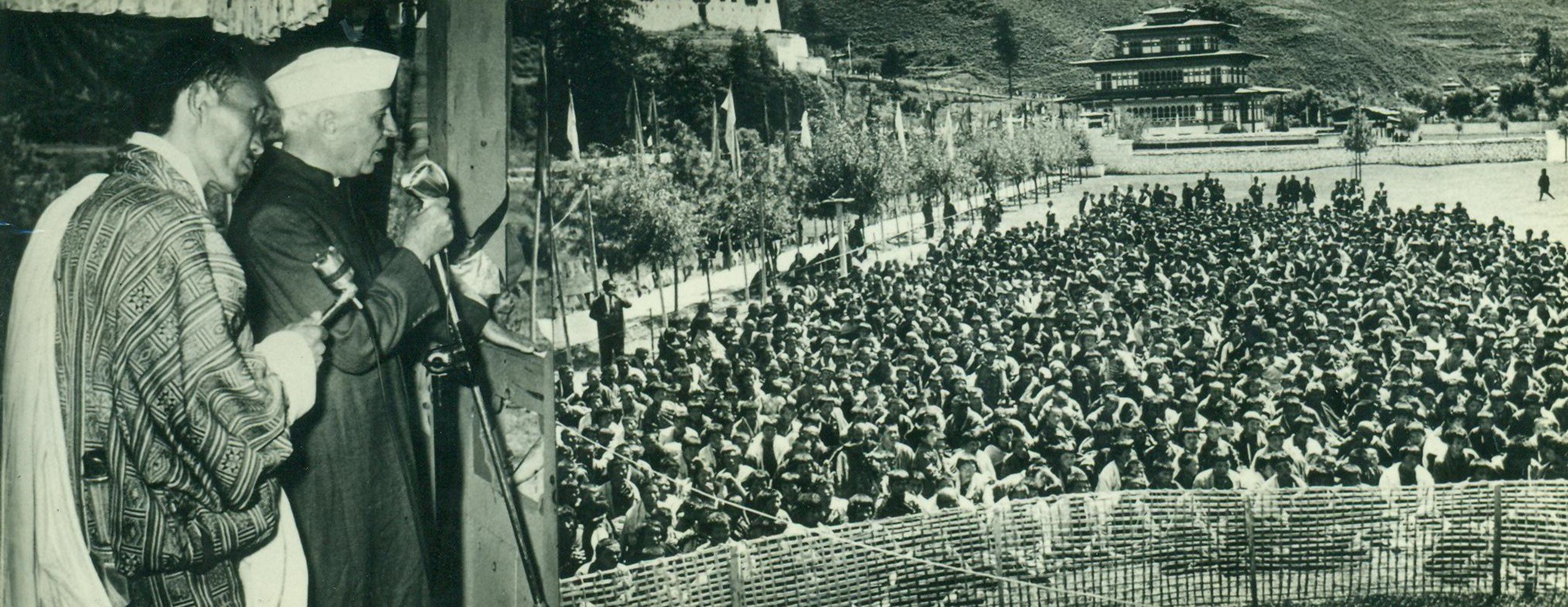
Jawaharlal Nehru at Paro 1958. Credit: India House, Thimphu

As the Doklam plateau stand-off continues well into its second month, analysts in India, China and globally have focused primarily on the India-China interaction. Those that have mentioned Bhutan – the Doklam plateau dispute is between Bhutan and China – have characterized Bhutan as either a protectorate, a state whose relationship with India limits its sovereign actions, or merely as a vassal state being bullied by India. These characterizations ignore Bhutan’s long history of fighting for its sovereignty as well the reasons (and context) in which Bhutan has pursued its special relationship with India.

The India-Bhutan relationship is often characterized by the grants and aid that India has extended to the small country, principally to the hydropower plants that provide Bhutan its largest single source of revenue. The political relationship, though, precedes the hydropower projects by decades, and is best seen in the context of Tibetan issues. The first official meeting between the leaders of the two countries after Independence took place after Jawaharlal Nehru, accompanied by a young Indira Gandhi, travelled to Bhutan via Sikkim, by plane, jeep, horseback and yak in 1958. Although the Chinese accorded a welcoming reception, and gave Nehru’s party an honor guard while passing through Chinese administered territory, the clouds of future conflict were already there.

In 1956, on a visit to India to commemorate the 2,500 birth anniversary of the Buddha, the 14th Dalai Lama had asked for refuge. In 1959, he and his entourage would flee Tibet, setting in place a conflict that continues today.

Bhutan would not have been unaware of these issues. The Haa Drung (administrator of Haa), Jigme Palden Dorji, who also acted as the prime minister of Bhutan, was in touch with Major General Enaith Habibullah, the first Commandant of the National Defence Academy, who was also quite close to Nehru. Furthermore the pressure on the monastic orders being brought to bear by the Chinese in Tibet would have been relayed very quickly to Bhutan, whose monastic order was closely linked to Tibet’s.

The relations between Tibet and Bhutan have historically been about monks. The establishment of Bhutan as a separate domain, Druk Yul, in the 17th Century under the Zhabdrung Ngawang Namgyal, was set off by the rejection of his claims to be the head of the monastic order headed by his Gyare clan. This claim was rejected by the 5th Dalai Lama, which led to the Zhabdrung being offered shelter in Bhutan and a series of battles that would end up establishing Bhutan’s independence.

In 1864 another war erupted, this time with the British. Ashley Eden, who had negotiated an agreement with Sikkim that stripped the Chogyal of his powers and utterly eviscerated the sovereignty of the Himalayan kingdom, was sent to negotiate a similar treaty with the Bhutanese. Instead he encountered Jigme Namgyal, the Black Regent. Namgyal forced Eden to sign a different treaty – one which committed the British to return the Assamese Duars already forcibly occupied by them.

Eden’s treatment was used as a pretext for war for Britain to forcibly capture the territory they wanted – ideal for growing tea, an enormously costly cash crop of that time, one for which the Opium Wars against China had also been launched. The ensuing Duar Wars are considered victories by both Bhutan and Britain. Bhutan lost the Duars, but retained its independence, even being paid a rent (though a small amount) by the British Empire for the Duars.
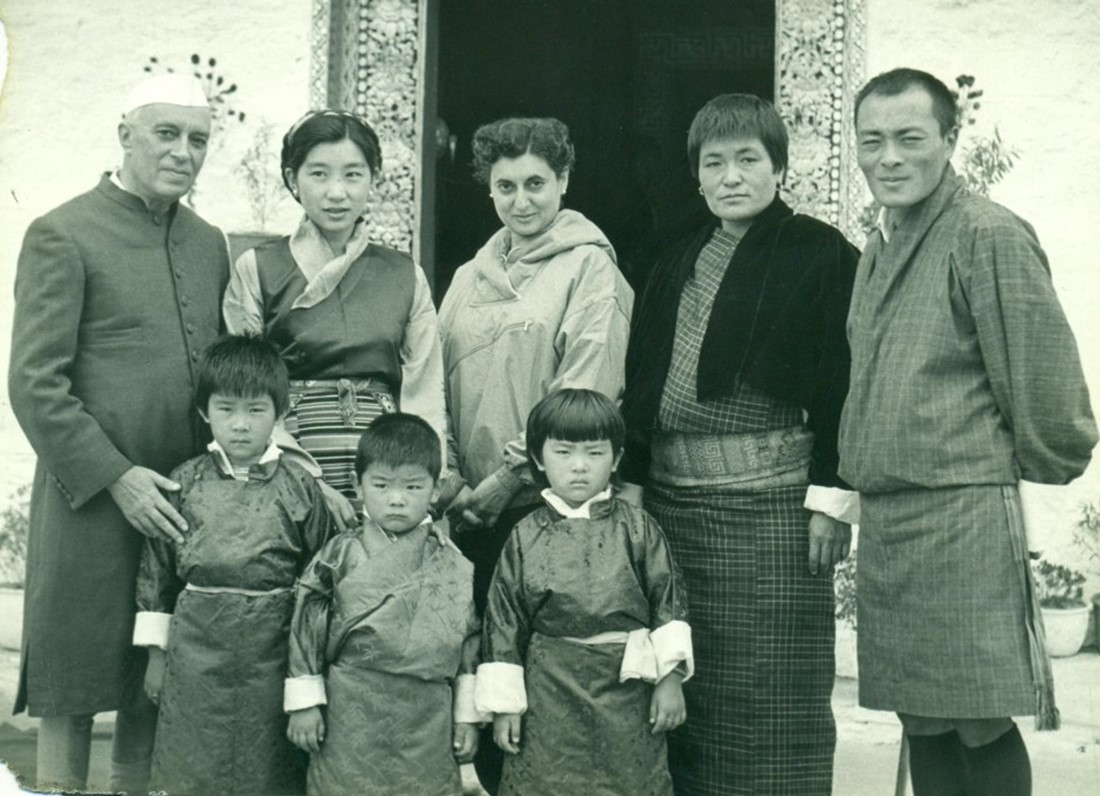
Jawaharlal Nehru, Indira Gandhi with the 3rd king’s family. Credit: India House, Thimphu

In 1903 another war loomed when the British wanted to send the Younghusband expedition to Tibet. Caught between the two powers, Ugyen Wangchuck, the son of Jigme Namgyal, initially prepared for war against the British. It was his cousin and close advisor, Ugyen Dorji, a well-established trader based out of Kalimpong, who advised against this. Ugyen Wangchuck’s father-in-law also advised against it. Listening to their advice, Ugyen Wangchuck became the key facilitator for the Younghusband expedition, negotiating on behalf of both the Tibetans and British. He was one of the few that tried to keep some semblance of order in an expedition in which the British machine gunned Tibetans armed with muzzle loaders, some of whom were just trying to get away from the field of battle at Chumik Shenko.

It was this expedition, and the laurels that Ugyen Wangchuck won as a negotiator for both the power in the north – Tibet – and the power in the South – Britain – that set the stage for him being formally invested with kingship in 1907. The Tibetans, who had never in their history turned to Bhutan for help, offered him new ceremonial headgear in a mark of great respect. The British offered him knighthood, making him a Knight Commander of the Indian Empire.

This is the history of independence that the 3rd King of Bhutan, the Druk Gyalpo Jigme Wangchuck, carried forward when he welcomed Nehru to Bhutan in 1958. The King would have been well aware of what was going on in Tibet and its potential ramifications for Bhutan, which Mao claimed as part of Tibet. This was partially based on the defeat of Bhutanese forces by the Tibetan ruler Pholhanas in 1730 and 1732, invited into the country by the then Penlop (Governor) of Paro Valley, and the subsequent dispatch of Bhutanese leaders to kowtow before the Qing throne.

It is therefore why Nehru’s promise to Bhutan in September 1958, at his first speech to the Bhutanese public in Paro, was so important:

“Some may think that since India is a great and powerful country and Bhutan a small one, the former might wish to exercise pressure on Bhutan. It is therefore essential that I make it clear to you that our only wish is that you should remain an independent country, choosing your own way of life and taking the path of progress according to your will.”

It was based on this promise that Indian assistance to Bhutan, initially by helping fund Bhutan’s Five Year Plans, began. At that time Bhutan had no currency of its own, and was the country with the lowest per capita GDP in South Asia. Today Bhutan’s per capita GDP is $2,870 while India’s is $1,850. That growth has been facilitated by Indian assistance, but is based on Bhutan’s freedom to develop the way it wanted.

In recent times that freedom has been what has come under strain, most obviously when the Indian state abruptly, and without any explanation, stopped a subsidy for LPG in Bhutan in 2013, between the first and second round of the Bhutanese general elections. The LPG subsidy had an immediate impact, the ruling party lost, and the LPG subsidy was resumed, again without any real explanation. This was seen by many Bhutanese as undue interference. But while the action may have generated much talk, evidence of its efficacy – if that is what one can call so ham-handed a move – is slight.
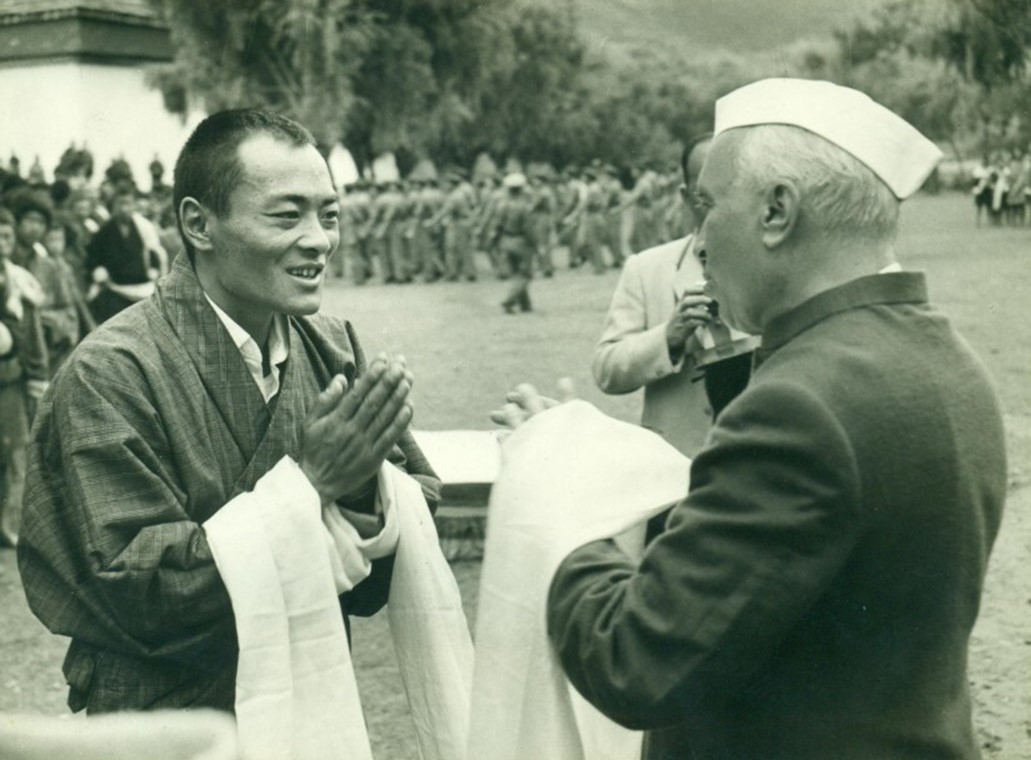
Nehru with Jigme Dorji Wangchuk. Credit: India House, Thimphu

Bhutan has two rounds of elections, with a run off between two leading parties in the second round. (In 2008 there were only two parties registered, so there was no run off.) In the first round of the 2013 elections, the Druk Phuensum Tshogpa, the governing party, received 44.5% of the vote, with the three Opposition parties, two of whom merged together after the first round, received the rest. In the second round, after the withdrawal of the subsidy, the DPT received 45% of the votes. The impact of the subsidy removal may have had more impact on commentary than voter share, much of which is determined by local issues. Bhutan experienced a painful currency crisis that had deeply eroded the DPT’s popularity. After the elections the former Bhutanese prime minister first accused the Bhutanese Election Commission of misconduct, and when directed by the king to direct those complaints to the chief election commission, resigned his post as a member of parliament. Such moves indicate that issues within Bhutan – as in every other country – have a greater impact on politics than any external meddling.

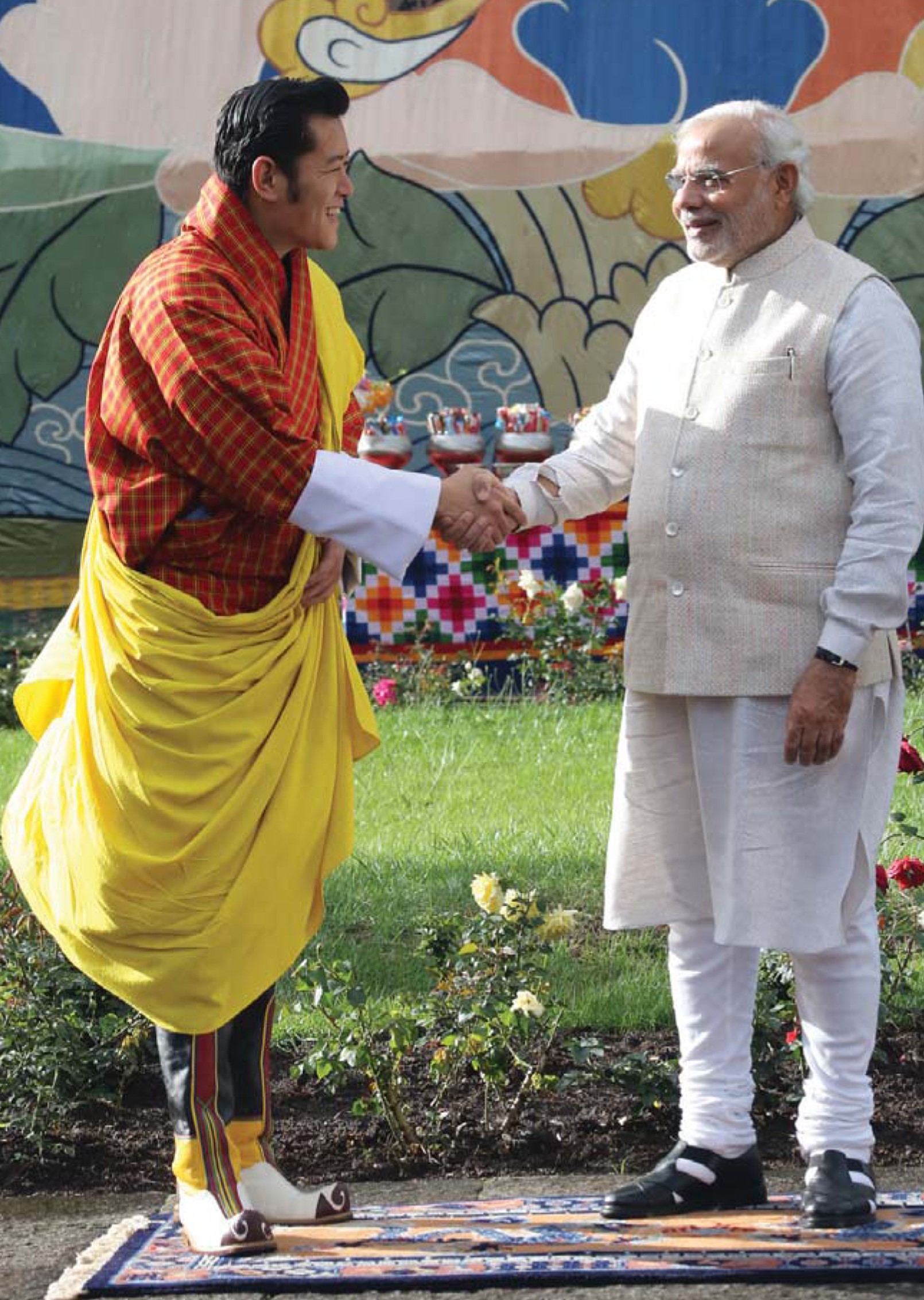
None of this should be used as an excuse for Indian high-handedness vis-à-vis Bhutan, but just goes to show that Bhutan has acted based on its own self-interest. It has done so as well when it comes to managing its foreign relations. The security and diplomatic support that Bhutan receives from India allows it to focus on issues of its core concern. The 4th King, Jigme Singye Wangchuck, who abdicated in 2006 in favor of his son after ruling for 34 years, had all the necessary weight to conduct foreign policy differently if he wanted to. He could have been a very prominent actor on the world stage, and certainly has enough personal connections with high-ranking diplomats to play that role even now, instead he focused almost entirely on internal issues. His son, the 5th King, Jigme Khesar Wangchuck, became one of the few heads of state to address the joint houses of parliament in Japan in 2011. He too, could easily be an important international actor, and yet both father and son have chosen to play their roles in a low key manner, and Bhutan has avoided international entanglements, while strengthening the country internally. Part of that strengthening is the hydropower dams, built by grant and aid by India, which supply India with cheap electricity and Bhutan with much needed revenue. Neither of these actions, of diplomacy, or economic planning, are examples of “vassalage”, of a state forced into a subservience by its larger neighbor. Instead it has been a complex and delicate furtherance of Bhutanese sovereignty that keep Bhutan secure and prosperous, leaving it free of the meddling that has compromised the sovereignty and security of its Himalayan neighbors – Sikkim, Tibet and Nepal.
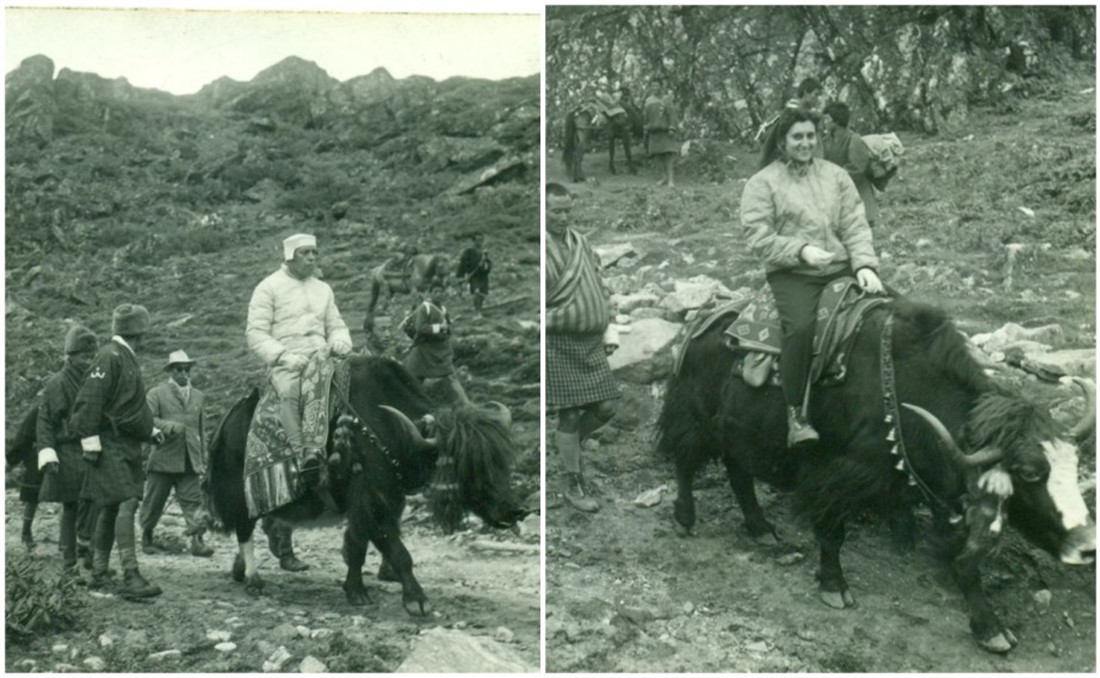
Nehru and Indira Gandhi on yaks. Credit: India House, Thimphu

The key question for those following the stand-off at Doklam is going to be this one: how will Bhutan continue to exercise its sovereignty? The challenge that China is throwing is not a merely military one, but rather the question of whether Bhutan’s old deal with India, or whether Chinese partnership will allow Bhutan greater freedom, and greater sovereignty.

One answer to this is obvious. In Tibet the Potala palace has been reduced to a tourist attraction. The 14th Dalai Lama cannot visit, and is regularly vilified in the domestic press. Monasteries are severely constrained. Over the last few years more than a hundred Tibetans have immolated themselves. Although this has drawn scant criticism by global actors, such actions have their impact in Bhutan, where the monastic order is an important actor. Just this last week, the Nobel Laureate and long advocate for democracy, Liu Xiaobo, died in Chinese incarceration.

Yet the news from China is not all bad, nor is the news from India all good. As China invests in the grand Belt and Road Initiative (BRI), and Bhutan’s neighboring mountain state, Nepal, dreams of using BRI to link with the world, many admirers of China’s development model in Bhutan compare this to the situation in India’s northeast, where annual floods displace millions of poor, and atrocities by state forces and militants are as common as the entrenched poverty. Today Bhutan faces the challenge of managing its two gigantic neighbors, both of whom face massive internal challenges themselves. In the 18th Century, Prithvi Narayan Shah, the Gorkha King who unified Nepal, described this challenge as being like a yam between two boulders. Bhutan chose a different path, one that now means it stands as a peaceful anomaly in the midst of the contested border between the giants of Asia.

It will take great skill and wisdom to resolve this challenge from the power in the north and the power in the south. Bhutan has done this before, becoming not a yam to be crushed, but a bridge of understanding between vastly different cultures and polities. Nevertheless that incident led to massacres and was based on aggression, an outcome of colonial policies and fears. Today, as two Asian powers face off with Bhutan at the center of this delicate situation, the outcome will show whether the Asian century has a chance to be a peaceful one, or whether it will replay the violence of the colonial period. Much of that depends on how India and China, as well as Bhutan itself, manages its sovereignty. It is no small thing, and should not be ignored. To misquote George W. Bush, it would not be wise to underestimate Bhutan.


THE COLD WAR IN ASIA – INDIA AND TIBET ARE MILITARY PARTNERS TO CONTAIN COMMUNISM

THE COLD WAR IN ASIA – INDIA AND TIBET ARE MILITARY PARTNERS TO CONTAIN COMMUNISM

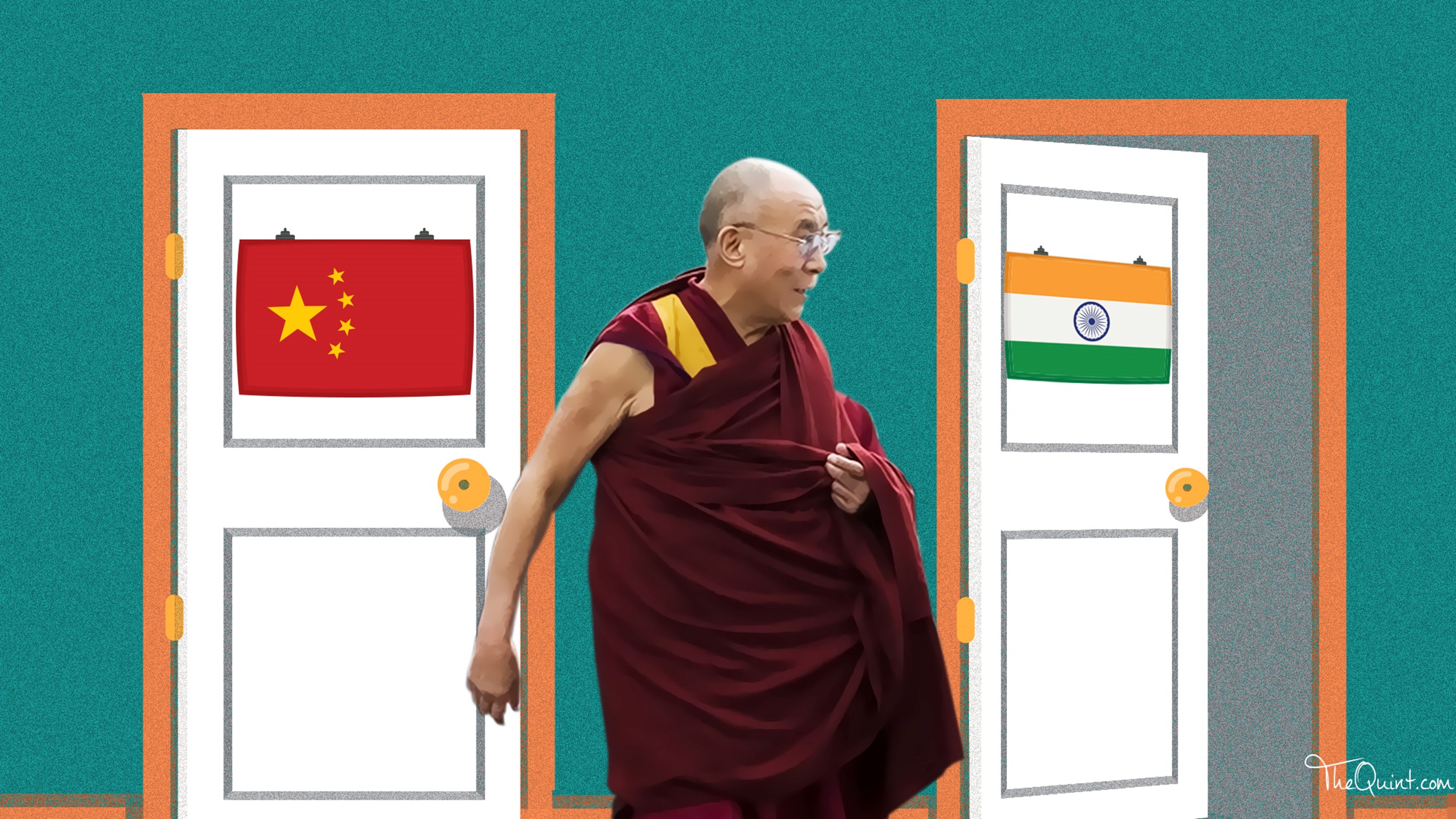
I warmly appreciate His Holiness the Dalai Lama’s remarks about India and China living side by side as “Brothers(Bhai-Bhai).”

The Standoff between China and India inside Bhutan’s territory called Doklam is not really serious. The real issue is that of dangers posed by spread of Communism in Asia. Both India, and Tibet recognized this real danger to foster military partnership or alliance to checkmate, to engage, to confront, to contain, to resist, and to battle against dark, and evil forces of Communism. To that extent, both India, and Tibet must consider deployment of Reserve Duty Brigade (Mobile Reserve Force or MRF) of Special Frontier Force to defend their shared values.

Rudranarasimham Rebbapragada

SPECIAL FRONTIER FORCE

DALAI LAMA INVOKES ‘HINDI CHINI BHAI BHAI’, SAYS DOKLAM STANDOFF NOT VERY SERIOUSOFF NOT


Clipped from: http://www.newindianexpress.com/nation/2017/aug/09/dalai-lama-invokes-hindi-chini-bhai-bhai-says-doklam-standoff-not-very-serious-1640716.html

Tibetan spiritual leader Dalai Lama. (File photo | PTI)

NEW DELHI: Describing the ongoing Doklam standoff as “not very serious”, the Dalai Lama today invoked “Hindi Chini Bhai Bhai”, a catch phrase that defined Sino-India ties in the 1950s, stressing that the two neighbors have to live side by side in peace.     

Asserting that any problem has to be resolved through talks, the 81-year-old Tibetan spiritual leader said the theme of 21st century should be dialogue.

“That’s the only away. One side’s retreat and defeat is an old-time thinking. In modern times, every country is dependent on each other,” he said, speaking at the Rajendra Mathur Memorial Lecture organized by the Editors Guild of India here.     

The spiritual leader, who calls himself a “chela” (disciple) of India, also needled China saying he can do more in India, which has freedom.

“Where there is no freedom, I don’t like. There is some tension, but I do not think it is very serious. We need to make distinction between people and governments. The other day, I mentioned that Hindi-Chini Bhai is the only way. India and China have to live side by side,” the Dalai Lama said, even as he added that “propaganda and wrong information make things complicated”.     

The Dalai Lama, who had fled a Chinese State crackdown in Lhasa and took shelter in India in 1959, said occasionally the two neighbors use “harsh words”, and added as a reminder that the Chinese forces eventually withdrew though they had reached Bomdila in 1962.     

Queried about any possible resumption of talks between the Central Tibetan Authority and the Chinese side, he said it may take place after the 19th national congress of the Communist Party of China, which is slated later this year. “But nothing is definite,” he said.     

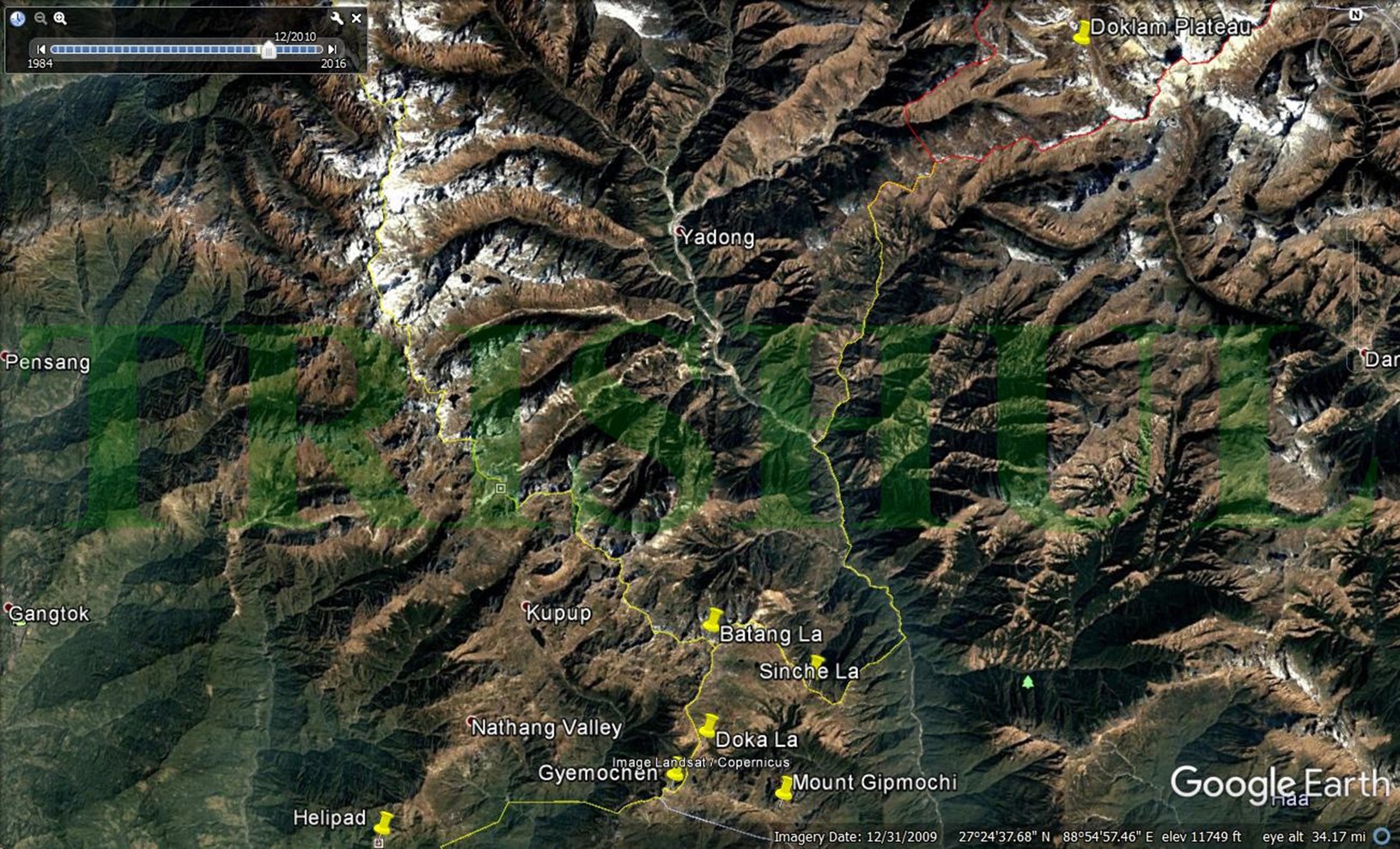
India and China have been locked in a face-off in the Doklam area of the Sikkim sector for more than 50 days after Indian troops stopped the Chinese Army from building a road in the area. China claimed it was constructing the road within its territory and has been demanding immediate withdrawal of the Indian troops from the disputed Doklam plateau.     

Bhutan says Doklam belongs to it but China claims it to be its territory and says Thimphu has no dispute with Beijing over it.     

External Affairs Minister Sushma Swaraj had recently said both sides should first pull back their troops for any talks to take place, favoring a peaceful resolution of the border standoff. 


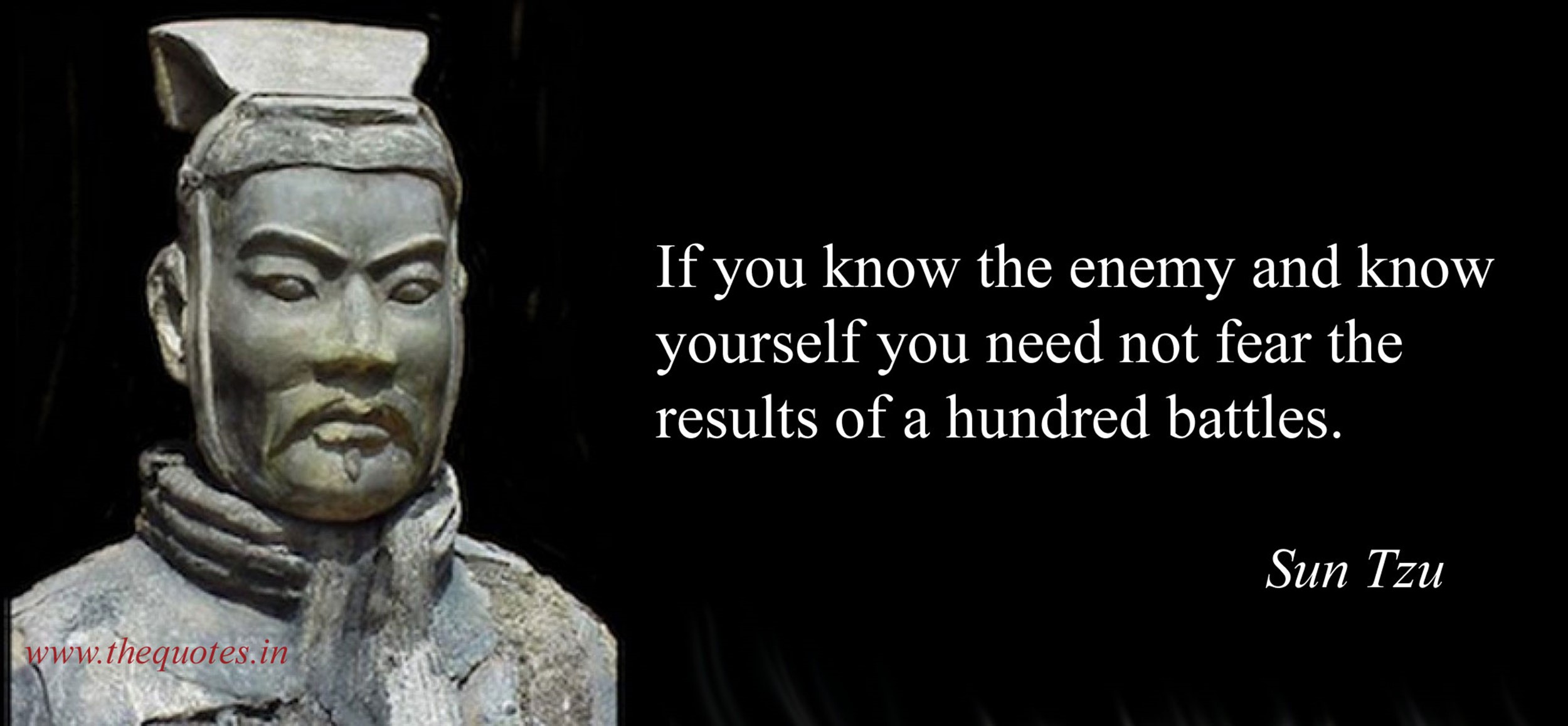
UNFINISHED VIETNAM WAR – THE ART OF KNOWING YOUR ENEMY – AMERICA’S ENEMY IN VIETNAM

 UNFINISHED VIETNAM WAR – THE ART OF KNOWING YOUR ENEMY – AMERICA’S ENEMY IN VIETNAM

Unfinished Vietnam War – The Art of Knowing Your Enemy – America’s Enemy in Vietnam. The Enemy remains Undefeated. The Enemy is alive in Tibet.


In my analysis, Vietnam War remains “Unfinished.” Firstly, the United States must define the term “ENEMY” to Know Enemy. United States recognized the threat posed by Communism to wage War to arrest the spread of Communism in South Asia. For that reason, United States began Vietnam War in response to threat posed by Soviet Union and People’s Republic of China.


Unfinished Vietnam War – The Art of Knowing Your Enemy – America’s Enemy in Vietnam. The Enemy remains Undefeated. The Enemy is alive in Tibet.

Unfinished Vietnam War – The Art of Knowing Your Enemy – America’s Enemy in Vietnam. The Enemy remains Undefeated. The Enemy is alive in Tibet.

Unfinished Vietnam War – The Art of Knowing Your Enemy – America’s Enemy in Vietnam. The Enemy remains Undefeated. The Enemy is alive in Tibet.

The threat posed by Communism in Asia endures as Communists are still governing Tibet, the second largest nation of South Asia. United States has no choice other than that of Knowing People’s Republic of China as “ENEMY.” The Enemy remains Undefeated. The Enemy is alive, not in Vietnam, but in Tibet.

Rudranarasimham Rebbapragada

SPECIAL FRONTIER FORCE

NORTH VIETNAM AND PEOPLE’S REPUBLIC OF CHINA SIGN AID AGREEMENT ON AUGUST 07, 1967

Clipped from: http://www.history.com/this-day-in-history/north-vietnam-and-peoples-republic-of-china-sign-aid-agreement?

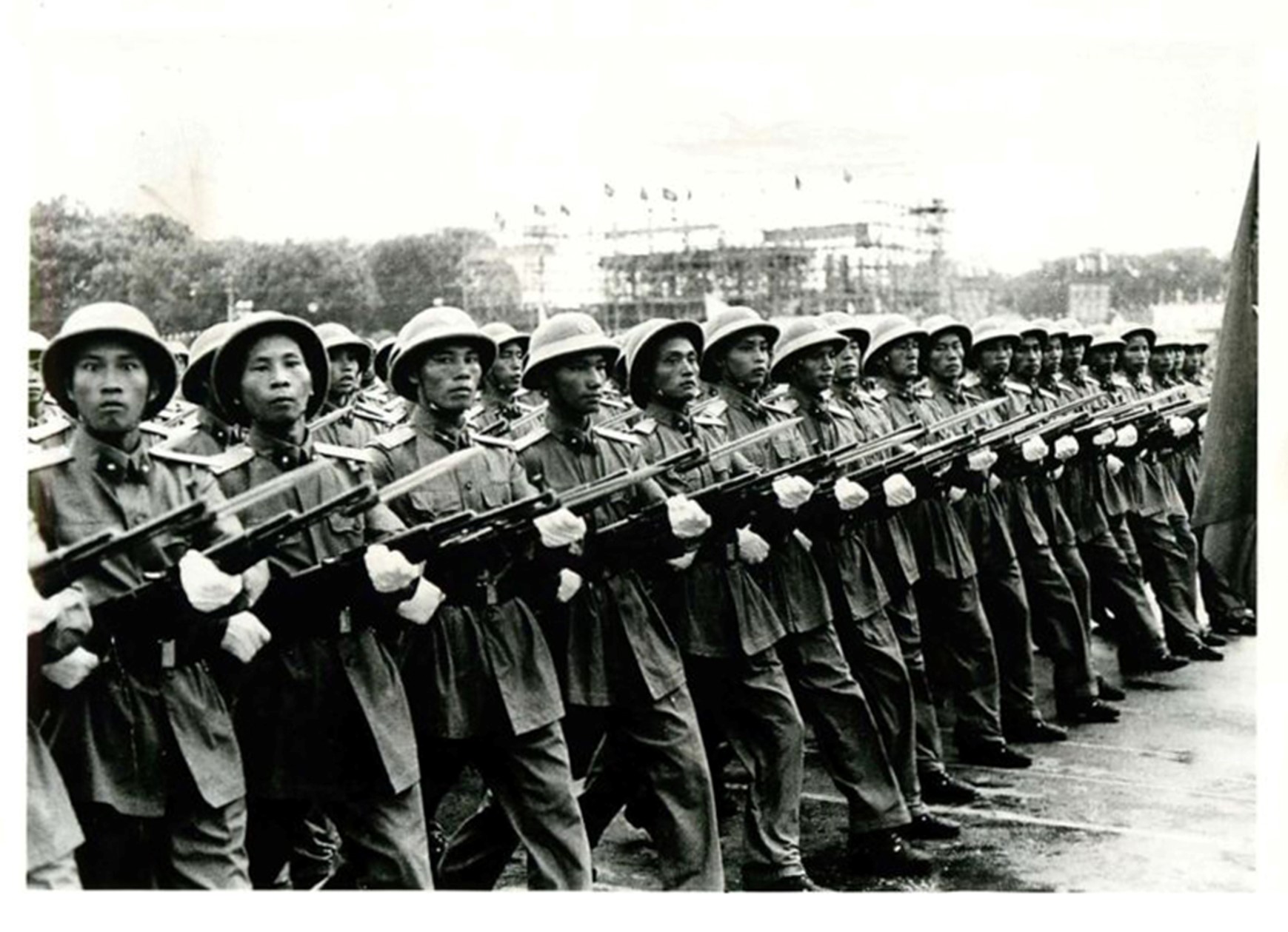
Unfinished Vietnam War – The Art of Knowing Your Enemy – America’s Enemy in Vietnam. The faces of these North Vietnamese Soldiers do not truly depict the Face of Enemy in Vietnam. The Enemy remains Undefeated. The Enemy is alive in Tibet.

The North Vietnamese newspaper Nhan Dan reports that the People’s Republic of China (PRC) has signed a new agreement to give Hanoi an undisclosed amount of aid in the form of an outright grant.

Chinese support to the Communists in Vietnam had begun with their backing of the Vietminh in their war against the French. After the French were defeated, the PRC continued its support of the Hanoi regime. In April 1965, the PRC signed a formal agreement with Hanoi providing for the introduction of Chinese air defense, engineering, and railroad troops into North Vietnam to help maintain and expand lines of communication within North Vietnam. China later claimed that 320,000 of its troops served in North Vietnam during the period 1965 to 1971 and that 1,000 died there. It is estimated that the PRC provided over three-quarters of the total military aid given to North Vietnam during the war.

Cold War

1964

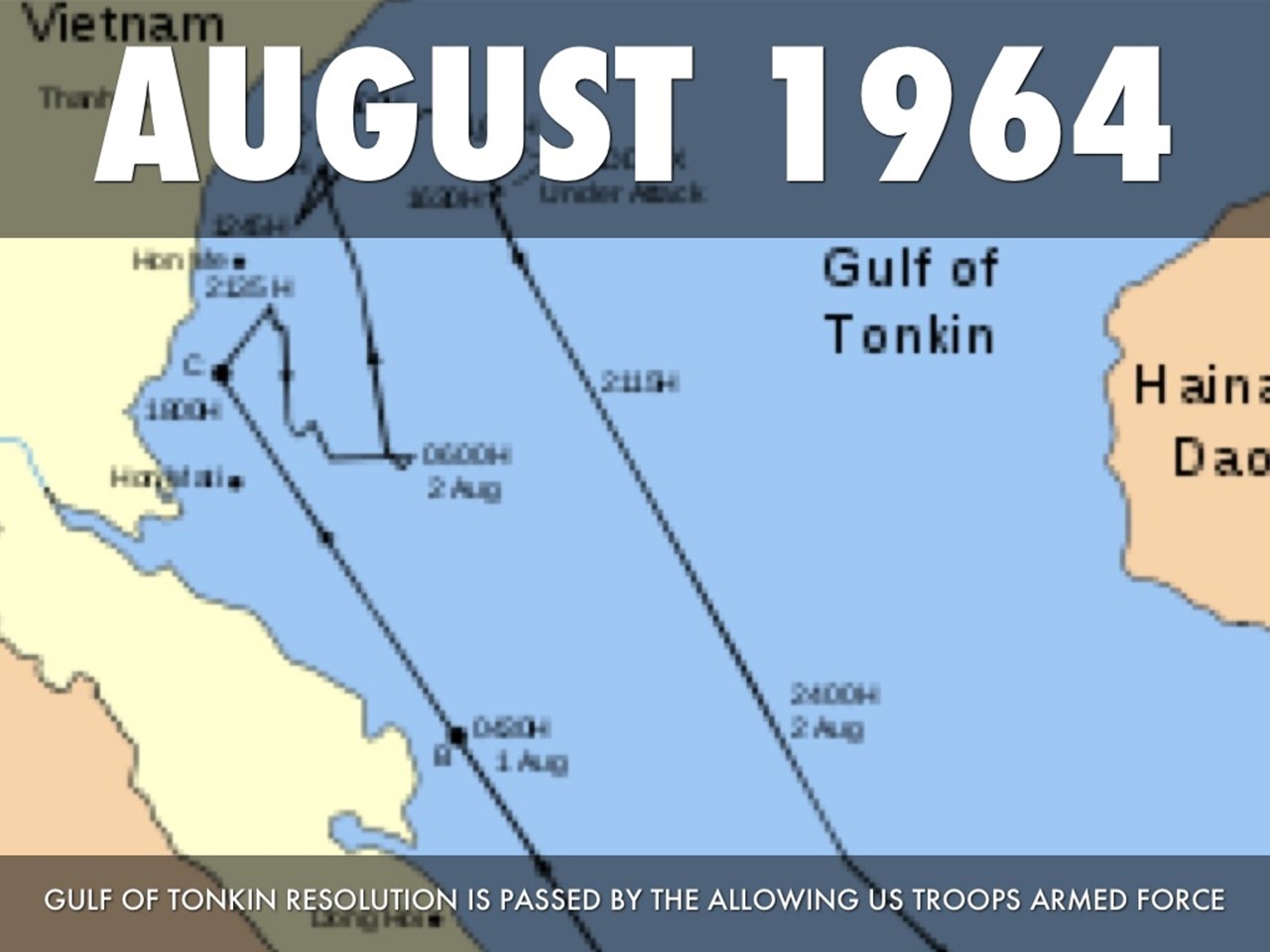
Congress passes Gulf of Tonkin Resolution

Vietnam War


Tonkin Gulf Resolution is passed

Unfinished Vietnam War – The Art of Knowing Your Enemy – America’s Enemy in Vietnam. The Enemy remains Undefeated. The Enemy is alive in Tibet.

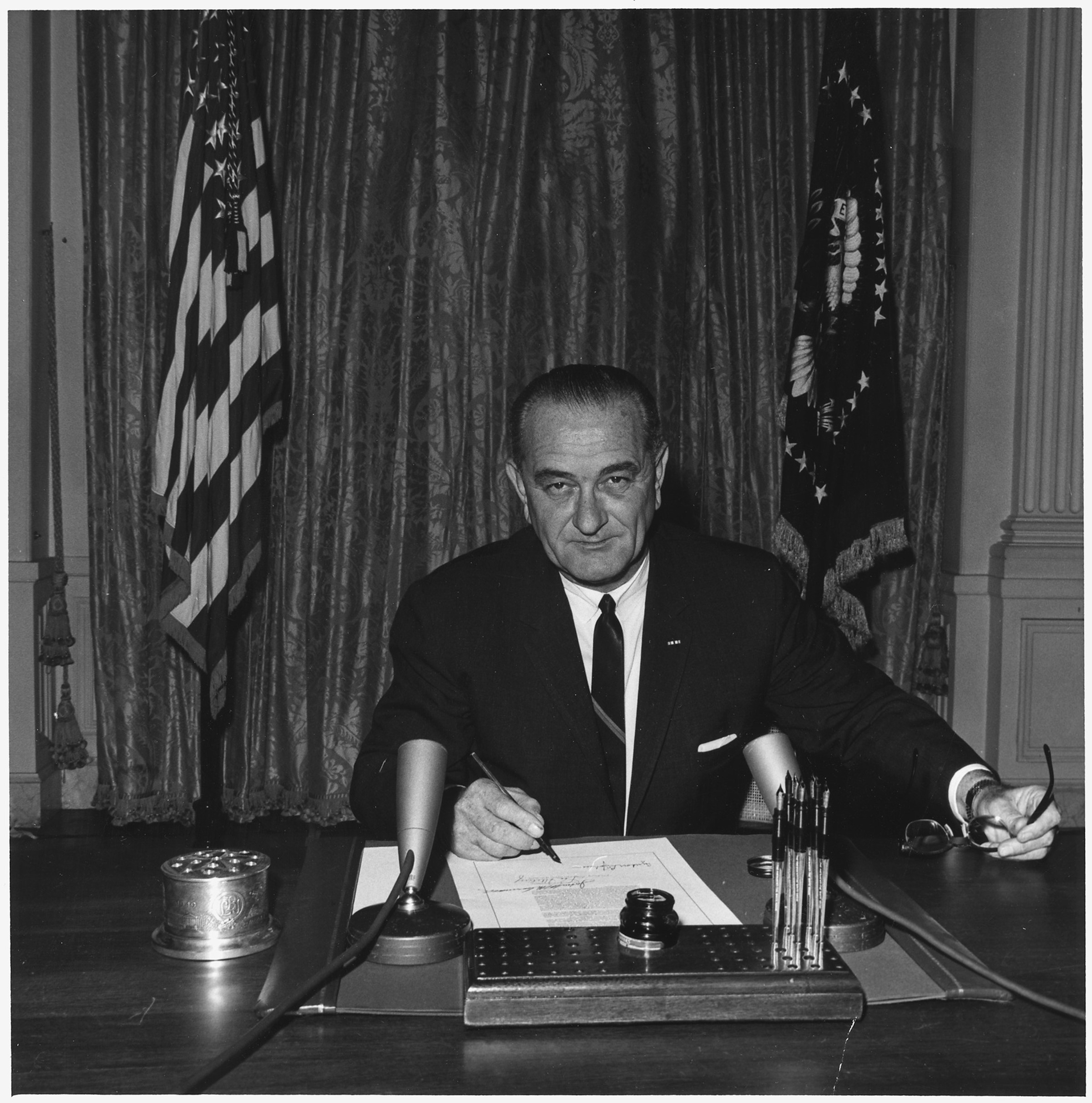
Unfinished Vietnam War – The Art of Knowing Your Enemy – America’s Enemy in Vietnam. On August 07, 1964 US President Lyndon B. Johnson signed into Law, Gulf of Tonkin Resolution. The Enemy remains Undefeated. The Enemy is alive in Tibet.
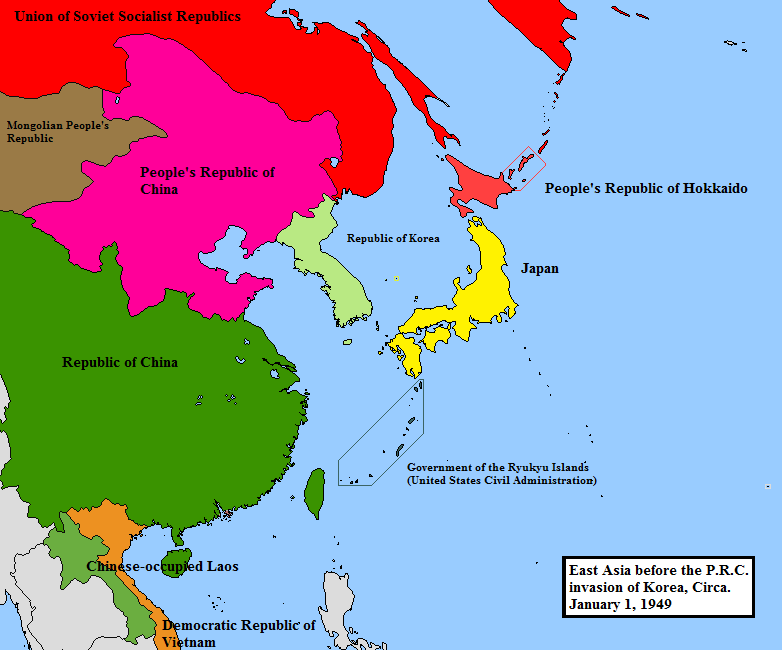
The U.S. Congress passes Public Law 88-408, which becomes known as the Tonkin Gulf Resolution, giving President Johnson the power to take whatever actions he deems necessary to defend Southeast Asia including “the use of armed force.” The resolution passed 82-2 in the Senate.

Unfinished Vietnam War – The Art of Knowing Your Enemy – America’s Enemy in Vietnam. The Enemy remains Undefeated. The Enemy is alive in Tibet.