THE EVIL RED EMPIRE – RED CHINA – POLLUTER

THE EVIL RED EMPIRE – RED CHINA – POLLUTER

The word ‘pollute’ means to make unclean, impure, corrupt, defile, contaminate, dirty by releasing harmful ideas, wicked practices, immoral and unethical conduct apart from the usual meaning of a harmful chemical or waste material recklessly discharged into water, land, and air. Red China is guilty of both kinds of pollution and hence I acknowledge Red China as a “POLLUTER.”

My concern is not about Karl Marx’s philosophy called ‘Dialectical Materialism’. My concern is about Red China’s immoral conduct and behavior. My concern is about Red China’s use of Intimidation, Infiltration, and Internal Subversion to inject her Communist Doctrine into Land of Tibet which she had illegally occupied since 1950s using her superior military power. Red China constantly intimidates Tibetan people to make them afraid, to make them timid, and to force them or deter them with threats and use of brutal violence. Red China uses the policy of Intimidation to completely undermine ability of Tibetans to resist military occupation. The policy of Intimidation is not working and Tibetans responded with patience and perseverance to resist Red China’s military occupation.

Red China, A Jackal, knows several tricks or ruses to conquer her opponents. Red China is using a strategy called ‘Infiltration’ to subjugate Tibetan people. Infiltration involves penetrating a group or a region gradually or stealthily so as to attack or to seize control from within. In military strategy, Infiltration describes passing through weak places in the defense lines in order to attack defender’s flanks or rear. Red China used a frontal attack and had overcome opposition to her military power when she occupied Tibet in 1950. However, Red China failed to exercise control or influence the minds of Tibetan people. Tibetan National Identity and Tibetan National Character is resisting corrupting influences introduced by Foreign Conqueror. Tibet is displaying strength, and resilience in refusing to embrace evil, wicked, depraved, dishonest dealings and behavior of Communists. The word ‘CORRUPTION’ means a change from sound condition to an unsound condition. The effect or consequence of Corruption is described as rotten, spoiled, contaminated, deteriorated, debased, perverted, venal, or depraved condition as compared to normal standards and perceptions of morality and ethical behavior.

Red China is a Seven-headed Scarlet Beast and in her passionate desire to possess Tibet; to dominate, to control, and to influence Tibetan people Red China is using a Communist tactic called “Internal Subversion.” Subversion is a mechanism used to ruin, destroy, or overthrow an established government, institution, belief, etc., using the tool called Corruption. Red China is using Subversion as a means to undermine or corrupt established social, cultural, religious, political, and belief ‘Systems’ of Tibet to overthrow, destroy, and ruin Tibetan National Identity, Tibetan National Character that continues to resist Red China’s Communist Doctrine and Ideology.

The controversy about Tibetan Panchen Lama is evidence of Red China’s wicked practice called ‘Internal Subversion’.

Rudranarasimham Rebbapragada
Ann Arbor, MI 48104-4162, USA
The Spirits of Special Frontier Force

image
The Spirits of Special Frontier ForceSpecial Frontier Force is a military organization of India, Tibet, United States to resist Red…
View on www.Facebook.com Preview by Yahoo
  • China’s Panchen Lama promises Xi he will uphold national unity

Reuters

Gyaltsen Norbu, the 11th Panchen Lama, speaks with a delegate ahead of the opening of the third plenary meeting of Chinese People's Political Consultative Conference in Beijing

Gyaltsen Norbu (R), the 11th Panchen Lama, speaks with a delegate ahead of the opening of the third plenary …

BEIJING (Reuters) – A youth named by China as the second-highest figure in Tibetan Buddhism, but reviled as a fake by many Tibetans, on Wednesday told President Xi Jinping he backed national unity and would strive to meet the Communist Party’s expectations.

Although officially atheist, China selected Gyaltsen Norbu as the 11th Panchen Lama in 1995, in a drive to win the hearts and minds of Tibetans.

Tibet’s current spiritual leader, the Dalai Lama, had announced his own choice of a six-year-old boy, but he was taken away by authorities and has since vanished from public view.
This year marks not only the 20th anniversary of the boy’s disappearance, but also the 80th birthday of the Dalai Lama, who has lived in exile in India since fleeing Tibet in 1959 following an abortive uprising against Chinese rule.

It is also the 50th anniversary of the founding of what China calls the Tibet Autonomous Region.

At a meeting in the party’s Zhongnanhai leadership compound in central Beijing, China’s Panchen Lama told Xi he would “resolutely uphold the unity of the motherland and its people”, state television said in its main evening news bulletin.

He would “not fail to live up to the ardent expectations of the party and people”, the report added.

Xi said the party paid great attention to events in Tibet, and would send a delegation to mark 50 years of the founding of the autonomous region.

“Tomorrow will be even better for all the people of Tibet,” Xi said, adding that he hoped China’s Panchen Lama would promote patriotism and uphold national unity.
China has gradually exposed its Panchen Lama in public roles in the hope he will achieve the respect commanded by the Dalai Lama among Tibetans and globally, and in 2012 he made his first trip outside mainland China when he visited Hong Kong.

Chinese troops marched into Tibet in 1950. After the Dalai Lama fled, the 10th Panchen Lama stayed on and was initially seen as a collaborator, but it later emerged that his criticism of Beijing had earned him more than a decade spent either in prison or under house arrest.
Freed in 1977, he was politically rehabilitated the following year, and died in 1989.

Activists say China has violently tried to stamp out religious freedom and culture in Tibet, which remains under heavy security. China rejects the criticism, saying its rule has ended serfdom and brought development to a backward region.

(Reporting by Ben Blanchard; Editing by Clarence Fernandez)

  • Panchen Lama
  • Dalai Lama
  • China
  • Xi Jinping

(c) Copyright Thomson Reuters 2015. Click For Restrictions – http://about.reuters.com/fulllegal.asp

Yahoo – ABC News Network

Whole Evil – Red China – Subjugator of Tibet

Red China – Subjugator of Tibet

red china subjugator occupation tibet
Red China – Subjugator of Tibet

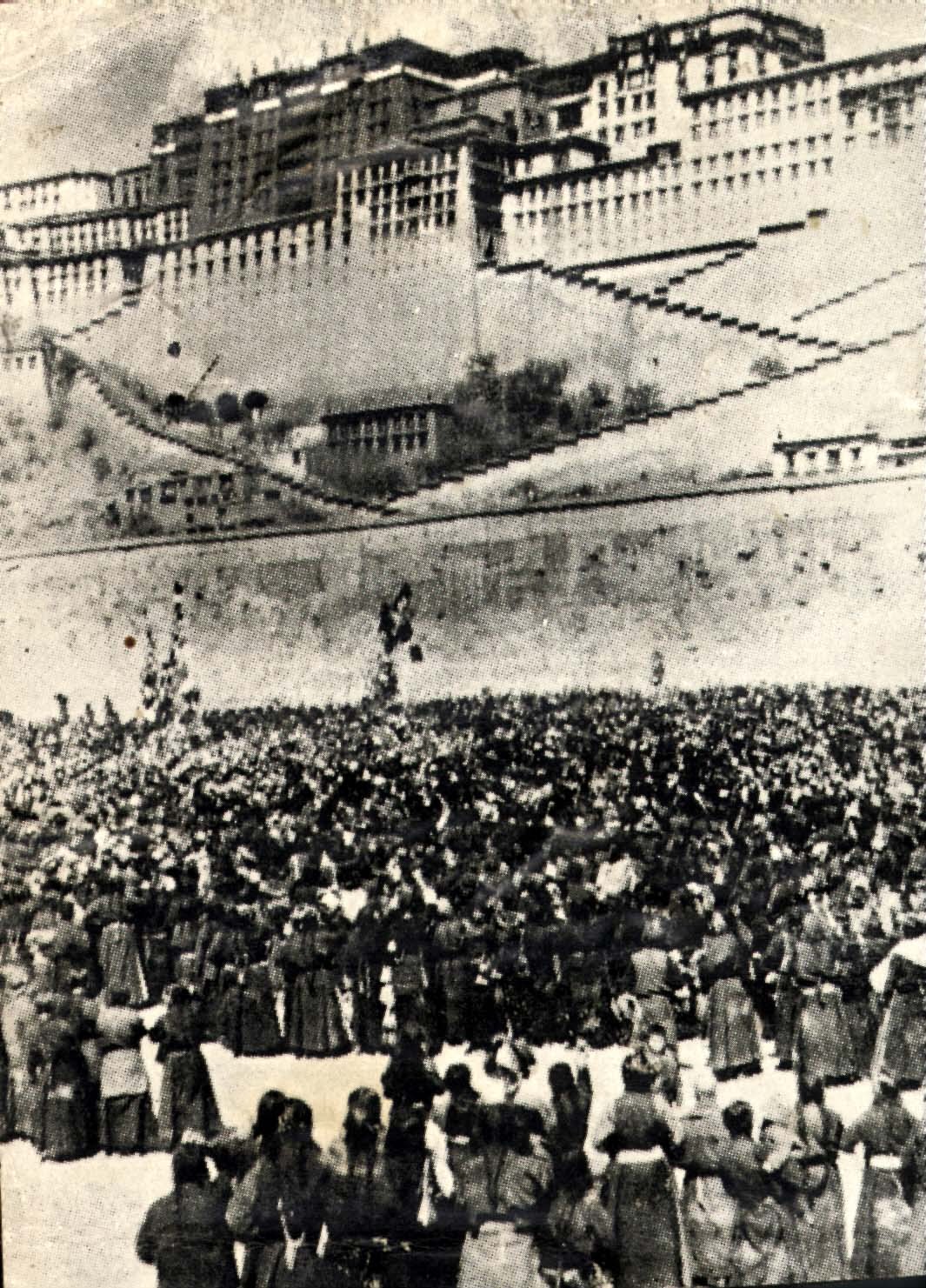
The word “SUBJUGATE” means to bring under control, or subjection, conquer, to cause to become subservient, subdue, and to bring under yoke. Subjugation is the exact opposite of ‘Liberation’, or ‘Emancipation’. Subjugation is associated with tyranny, oppressive and unjust government, very cruel and unjust use of power or authority. Subjugation is the symptom of loss of Freedom. Red China with her military conquest of Tibet in 1950 imposed her authority with harshness, rigor, severity and uses her power in arbitrary manner using coercion. Red China is a Tyrant, one who seizes sovereignty of another nation illegally, Usurper, and a Subjugator of Tibet.

red china subjugator of tibet
Red China – Subjugator of Tibet. The 17-point Plan signed on May 23, 1951 represents a plan for Subjugation of Tibet and not of Peaceful Liberation of Tibet.

Very often, Red China makes reference to Seventeen-Point Agreement, or 17-Point Plan, or 17-Article Agreement between the Central People’s Government and the Local Government of Tibet on Measures for the Peaceful Liberation of Tibet. Five Tibetan delegates headed by Ngapoi Ngawang Jigmei and Representatives of the Central People’s Government met in Peking(Beijing) and signed an Agreement on May 23, 1951 in presence of Red China’s Vice President Zhu De, Vice President Li Jishena, and Vice-Premier Chen Yi. This 17-Point Plan promised that there should be no coercion on the part of the Central Government of China in implementing any of its measures. During the following years, 1951-1956, Tibet recognized Red China’s true ‘evil’ intentions to subject Tibetan people to her military occupation. Both Tibet, and Republic of India conducted a series of diplomatic negotiations with Red China to loosen her military grip over Tibet. By 1957, it became very apparent that Red China is using her authority to eliminate any opposition to her direct rule. Red China has taken measures to control every aspect of Tibetan Nation giving no chance or opportunity to Tibetan people to live their lives with a natural right to freedom, an independent way of living that Tibet enjoyed during centuries of foreign rule by Mongols, and Manchu China’s Qing Dynasty(1644-1911). Seventeen-Point Agreement of 1951 is a phony agreement with lies, empty assurances and it is evidence of Red China’s treachery, cunningness, craftiness, and wickedness for which I name Red China a ‘Jackal’.

red china subjugator pla chinese army 1951
Red China – Subjugator of Tibet. The military conquest of Tibet.

At Special Frontier Force, I recognized that Red China has violated 17-Article Agreement signed on May 23, 1951. The history of Tibetan Resistance Movement that formulated the finding of Special Frontier Force bears testimony to the fact of Tibet’s subjugation under a tyrannical rule imposed by Red China.

Top Chinese officer pays visit to US: Pentagon

Fan Changlong (R), vice chairman of China’s Central Military Commission, meets with U.S. Army Chief of Staff General Raymond Odierno in Beijing, capital of China, Feb. 21, 2014. (Xinhua/Li Tao)

US army Chief of Staff General Ray Odierno (L) meets with Fan Changlong, Deputy Chairman of the Central Military Commission at Bayi Building in Beijing on February 21, 2014 (AFP Photo/Lintao Zhang)

Washington (AFP) – A top Chinese military officer began a six-day visit to the United States on Monday amid rising tensions over Beijing’s assertive stance in the South China Sea.

General Fan Changlong, vice-chairman of China’s Central Military Commission, started his tour in San Diego with a stop at the USS Ronald Reagan aircraft carrier and will hold talks on Thursday at the Pentagon with US Defense Secretary Ashton Carter, officials said.

Carter and other top US officials have recently castigated China over its push to build artificial islands in the disputed waters of the South China Sea.
At a recent security conference in Singapore, Carter called for an immediate end to land reclamation by countries in the region, and accused China of being out of step with international rules.

“Turning an underwater rock into an airfield simply does not afford the rights of sovereignty or permit restrictions on international air or maritime transit,” the Pentagon chief said at the International Institute for Strategic Studies conference.

President Barack Obama earlier this month also warned Beijing over its tactics, saying territorial disputes could not be solved by “throwing elbows.”
Before heading to Washington, Fan was due to visit a Boeing factory in Seattle and a US Army base at Fort Hood in Texas.

Fan is considered a counterpart to Carter, US officials said.

The general’s visit is part of a years-long effort to build a regular dialogue between the American and Chinese armed forces to defuse potential tensions and avoid miscalculations.
Carter’s predecessor, Chuck Hagel, paid a visit to China in 2014 in a trip that was marked by friction, with each side trading sharply worded criticism.

© 2015 AFP

Yahoo – ABC News Network

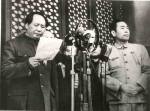
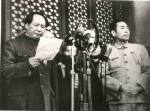
Mao Zedong proclaims the founding of the People's Republic of China in Beijing on Oct. 1, 1949.
Mao Zedong proclaims the founding of the People’s Republic of China in Beijing on Oct. 1, 1949.
THE  EVIL  RED  EMPIRE  -  RED  CHINA  -  SUBJUGATOR  OF  TIBET .
THE EVIL RED EMPIRE – RED CHINA – SUBJUGATOR OF TIBET .
red china subjugator may231951 beijing
Red China Subjugator of Tibet –  May 23, 1951 – PEKING ( Beijing)
red china subjugator 17 point plan
Red China Subjugator of Tibet: 17-Point Plan of May 23, 1951.
red china subjugator 17 article agreement
Red China Subjugator of Tibet. 17 Article Agreement of May 23, 1951
red china subjugator banquet in beijing
Red China Subjugator of Tibet – Banquet in PEKING ( Beijing).
red china subjugator 17 point agreement beijing
Red China Subjugator of Tibet – 17- Point Agreement, May 1951 – PEKING( Beijing).
red china subjugator march12 1959
Red China Subjugator of Tibet – Tibetan Uprising – March 12,  1959.
red china oppression in tibet1
Red China – Oppression in Tibet

THE EVIL RED EMPIRE – RED CHINA – CYBER CRIMINAL

THE EVIL RED EMPIRE – RED CHINA – CYBER CRIMINAL

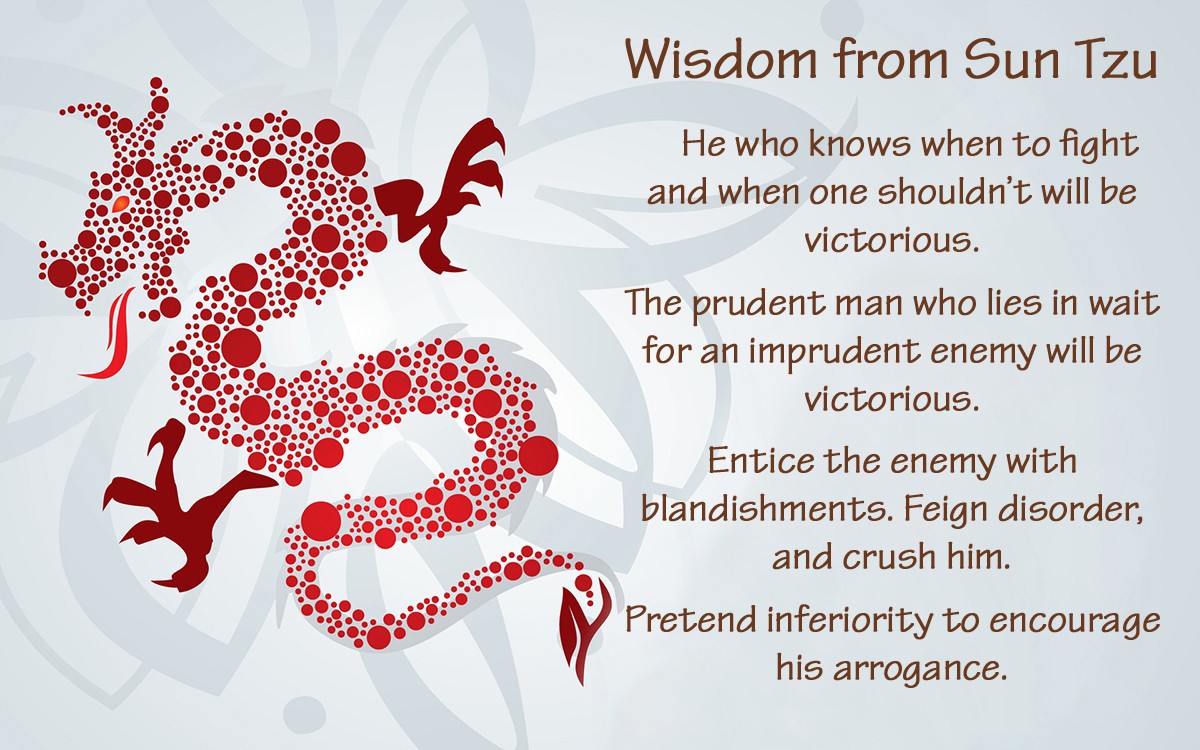
red china espionage sun tzu wisdom

Espionage is described as ‘Intelligence’ gathering, securing of information about one nation for the benefit of another. Spying is a term used to describe clandestine intelligence gathering activity. Spying involves the use of spies or agents by a government to learn the secrets of other nations. Espionage involves obtaining information using spies, secret agents, and illegal monitoring devices.

red china espionage sun tzu the art of war

In government operations, intelligence involves evaluated information concerning the strength, activities and probable course of action of its opponents. The concept of intelligence is not new. The military treatise “Ping-fa”(The Art of War) written c.400 B.C. by military philosopher Sun-tzu mentions the use of secret agents and importance of good intelligence. To obtain knowledge of enemy’s intentions, intelligence systems have been in use from ancient times. The Intelligence Service of Red China belongs to Ministry of State Security.

At Special Frontier Force, I am familiar with Red China’s espionage and her intelligence gathering operations which often target individuals serving in Special Frontier Force to identify them with specificity. Intelligence gathering in cyberspace or cyberespionage is manifestation of digital age. At Special Frontier Force, I am trained to recognize Red China as an adversary, an opponent, and an enemy. I would not expect Red China to extend her cooperation to apprehend those criminals who with a series of computer hacks have stolen vast amounts of data from a database maintained by the Office of Personnel Management in the United States. While nations may face the compulsion to gather intelligence, stealing private information of millions of civilian employees is unfair, unethical, and is totally unwarranted. As such, I would recognize Red China as a Cyber Criminal and Red China has to bear full responsibility for criminal actions of her employees or agents she hired.

Rudranarasimham Rebbapragada
Ann Arbor, MI 48104-4162, USA
SPECIALFRONTIERFORCE.ESTABLISHMENT22

The Washington Post

With a series of major hacks, China builds a database on Americans


AP7800370634461370635261-1616.jpg?uuid=uKJWxPmaEeShPBk7EkHVGg

American and Chinese flags are adjusted before a press conference in Beijing in 2012. (Feng Li/ASSOCIATED PRESS)

By ELLEN NAKASHIMA June 5 at 5:55 PM

China is building massive databases of Americans’ personal information by hacking government agencies and U.S. health-care companies, using a high-tech tactic to achieve an age-old goal of espionage: recruiting spies or gaining more information on an adversary, U.S. officials and analysts say.

Groups of hackers working for the Chinese government have compromised the networks of the Office of Personnel Management(OPM) which holds data on millions of current and former federal employees, as well as the health insurance giant Anthem, among other targets, the officials and researchers said.

“They’re definitely going after quite a bit of personnel information,” said Rich Barger, chief intelligence officer of ThreatConnect, a Northern Virginia cybersecurity firm. “We suspect they’re using it to understand more about who to target [for espionage], whether electronically or via human ­recruitment.”

The targeting of large-scale data­bases is a relatively new tactic and is used by the Chinese government to further its intelligence-gathering, the officials and analysts say. It is government espionage, not commercial espionage, they say.

China hacked into the federal government’s network, compromising four million current and former employees’ information. The Post’s Ellen Nakashima talks about what kind of national security risk this poses and why China wants this information. (Alice Li/The Washington Post)

“This is part of their strategic goal — to increase their intelligence collection via big data theft and big data aggregation,” said a U.S. government official, who, like others, spoke on condition of anonymity to discuss a sensitive topic. “It’s part of a strategic plan.”

One hack of the OPM, which was disclosed by the government Thursday, dates at least to December, officials said. Earlier last year, the OPM discovered a separate intrusion into a highly sensitive database that contains information on employees seeking or renewing security clearances and on their background investigations.

Once harvested, the data can be used to glean details about key government personnel and potential spy recruits, or to gain information useful for counter­intelligence. Records in OPM’s database of background investigations, for instance, could contain a complete history of where an individual has lived and all of his or her foreign contacts in, say, China. “So now the

Chinese counterintelligence authorities know which American officials are meeting with which Chinese,” a China cyber and intelligence expert said.
The data could help Chinese analysts do more effective targeting of individuals, said a former National Security Agency official. “They can find specific individuals they want to go after, family members,” he said.

The trend has emerged and accelerated over the past 12 to 18 months, the official said. An increase in Chinese capability has opened the way “for bigger data storage, for bigger data theft,” he said. “And when you can gain it in bulk, you take it in bulk.”

The Chinese government, he said, is making use of Chinese companies that specialize in aggregating large sets of data “to help them in sifting through” the information for useful details. “The analogy would be one of our intelligence organizations using Google, Yahoo, Accenture to aggregate data that we collected.”

China on Friday dismissed the allegation of hacking as “irresponsible and unscientific.”

Chinese Foreign Ministry spokesman Hong Lei said Beijing wanted to cooperate with other nations to build a peaceful and secure cyberspace.
“We wish the United States would not be full of suspicions, catching wind and shadows, but rather have a larger measure of trust and cooperation,” he told a regular news briefing,

The OPM disclosed that the latest hack of one of its systems exposed personal data of up to 4 million current and former employees — the largest hack of federal employee data in recent years.

U.S. officials privately said China was behind it. The stolen information included Social Security numbers and performance evaluations.

“This is an intelligence operation designed to help the Chinese government,” the China expert said. “It’s a new phase in an evolution of what they’re doing. It certainly requires greater sophistication on their part in terms of being able to take out this much data.”

Barger’s firm has turned up technical evidence that the same Chinese group is behind the hacks of Premera Blue Cross and Empire BlueCross, which were discovered at roughly the same time earlier this year.

The first OPM incident has been linked to the health-care hacks by Barger and another security researcher, John Hultquist, senior manager for cyberespionage threat intelligence at iSight Partners. Hultquist said the same group is responsible for all of them, and for other intrusions into commercial databases containing large sets of Americans’ personal information.
“They would leverage this data to get to diplomatic, political, military and economic intelligence that they typically target,” said Hultquist, who declined to comment on who was behind the attacks.

Though much Chinese cyber­espionage is attributed to the People’s Liberation Army, these hacks, Barger said, appeared to be linked to the Ministry of State Security, which is a spy agency responsible for foreign espionage and domestic counterintelligence.

Other Chinese entities, including the military, may also be involved in the campaign, analysts said.

Chinese government hackers “are like a vacuum cleaner” in sucking up information electronically, said Robert “Bear” Bryant, a former top counterespionage official in the government. “They’re becoming much more sophisticated in tying it all together. And they’re trying to harm us.”

Security researchers have pointed to a cyber tool or family of malicious software called Derusbi that has been linked exclusively to Chinese actors. One group that has used Dersubi is Deep Panda, a name coined by the firm CrowdStrike, which has linked that group to the Anthem hack.

Disclosed in February, that incident exposed the Social Security numbers, addresses, phone numbers, e-mail addresses and member IDs of tens of millions of customers. No medical data such as diagnosis or treatment information was compromised, the company said.

Researchers note that in contrast to the hacks of Home Depot and Target, personal data that might have been stolen from the OPM, Anthem and the other companies have not shown up on the black market, where it can be sold to identity thieves. That is another sign, they said, that the intrusions are not being made for commercial purposes.
“Usually if there’s a criminally or financially motivated breach like that, we see the data making its way into the black market soon after that,” Barger said.

The big data approach being taken by the Chinese might seem to mirror techniques used abroad by the NSA, which has come under scrutiny for its data-gathering practices under executive authority. But in China, the authorities do not tolerate public debate over the proper limits of large-scale spying in the digital age.

“This is what all intelligence services do if they’re good,” said the China cyber expert. “If you want to find a needle, first you have to gather a haystack of needles.”
The massive data harvesting “reflects a maturity in Chinese” electronic intelligence gathering, the expert said. “You have to put in place structured data repositories. You have to have big data management tools to be able to store and sift and analyze.”

Barger said that “with a large pool of data, they can prioritize who is the best to target electronically and who is the best to target via human recruitment.”
The U.S. official noted that the Chinese “would not take [the data] if they did not have the opportunity to aggregate it.” And, he added, “they are taking it.”

Simon Denyer in Beijing contributed to this report.

nakashimaem.jpg?ts=1432642558011&w=180&h=180

Ellen Nakashima is a national security reporter for The Washington Post. She focuses on issues relating to intelligence, technology and civil liberties.

AP7800370634461370635261-1612.jpgAP7800370634461370635261-1612.jpg

  • © 1996-2015 The Washington Post

THE EVIL RED EMPIRE – RED CHINA – A JACKAL

THE EVIL RED EMPIRE – RED CHINA – A JACKAL :

THE  EVIL  RED  EMPIRE  -  RED  CHINA  -  A  JACKAL .
THE EVIL RED EMPIRE – RED CHINA – A JACKAL .

Jackals are wild dogs of Asia and North Africa. The word Jackal is often used to describe a person who does dishonest or humiliating tasks for one’s own gain. Jackal is the other name for a cheat or a swindler. I am specifically using the term ‘JACKAL’ to describe the nature of Red China’s statecraft or statesmanship. It helps my readers to recognize Red China’s sly, secretive, or wily nature. Sly implies a working to achieve one’s ends by evasiveness, insinuation, furtiveness, duplicity, circumvention, plot, subterfuge, stratagem, craftiness, subtle blandishments, ruses, cunning underhandedness, mischievous or roguish behavior. Red China could be called “FOXY” for its tricks are sharpened by experience. Red China deals with her neighbors using her proficiency in deception. Red China is subtly deceitful for she knows to defraud others by deliberately misleading them to obtain their rights and property. Red China often takes pleasure in demonstrating the gullibility of her victims.

At Special Frontier Force, we have personal experience of Red China’s sly, wily, cunning, dishonest, and deceitful nature.

Rudranarasimham Rebbapragada
Ann Arbor, MI 48104-4162, USA
The Spirits of Special Frontier Force

Pentagon chief criticizes Beijing’s South China Sea
moves

Associated Press

By LOLITA C. BALDOR and MATTHEW PENNINGTON

SINGAPORE — China’s land reclamation in the South China Sea is out of step
with international rules, and turning underwater land into airfields won’t
expand its sovereignty, Defense Secretary Ash Carter told an international
security conference Saturday, stepping up America’s condemnation of the
communist giant as Beijing officials sat in the audience.

Carter told the room full of Asia-Pacific leaders and experts that the U.S.
opposes “any further militarization” of the disputed lands.

His remarks were immediately slammed as “groundless and not constructive” by
a Chinese military officer in the audience.

Carter’s comments came as defense officials revealed that China had put two
large artillery vehicles on one of the artificial islands it is creating in the
South China Sea. The discovery, made at least several weeks ago, fuels fears in
the U.S and across the Asia-Pacific that China will try to use the land
reclamation projects for military purposes.

The weaponry was discovered at least several weeks ago, and two U.S.
officials who are familiar with intelligence about the vehicles say they have
been removed. The officials weren’t authorized to discuss the intelligence and
spoke only on condition of anonymity.

The Pentagon would not release any photos to support its contention that the
vehicles were there.

China’s assertive behavior in the South China Sea has become an increasingly
sore point in relations with the United States, even as President Barack Obama
and China’s President Xi Jinping have sought to deepen cooperation in other
areas, such as climate change.

Pentagon spokesman Brent Colburn said the U.S. was aware of the artillery,
but he declined to provide other details. Defense officials described the
weapons as self-propelled artillery vehicles and said they posed no threat to
the U.S. or American territories.
© AP Photo/Wong Maye-E U.S. Secretary of Defense Ashton

Carter delivers his speech about “The United States and Challenges to
Asia-Pacific Security” during the 14th International Institute for Strategic
Studies Shangri-la Dialogue, or IISS, Asia Security Summit, Saturday, May 30,
2015, in Singapore.

While Carter did not refer directly to the weapons in his speech, he told the
audience that now is the time for a diplomatic solution to the territorial
disputes because “we all know there is no military solution.”

“Turning an underwater rock into an airfield simply does not afford the
rights of sovereignty or permit restrictions on international air or maritime
transit,” Carter told the audience at the International Institute for Strategic
Studies summit.

China’s actions have been “reasonable and justified,” said Senior Col. Zhao
Xiaozhuo, deputy director of the Center on China-America Defense Relations at
the People’s Liberation Army’s Academy of Military Science.

Zhao challenged Carter, asking whether America’s criticism of China and its
military reconnaissance activities in the South China Sea “help to resolve the
disputes” and maintain peace and stability in the region.

Carter responded that China’s expanding land reclamation projects are
unprecedented in scale. He said the U.S. has been flying and operating ships in
the region for decades and has no intention of stopping.

While Carter’s criticism was aimed largely at China, he made it clear that
other nations who are doing smaller land reclamation projects also must
stop.

One of those countries is Vietnam, which Carter is scheduled to visit during
this 11-day trip across Asia. Others are Malaysia, the Philippines and
Taiwan.

Asked about images of weapons on the islands, China’s Foreign Ministry
spokeswoman Hua Chunying said she was “not aware of the situation you
mention.”

She also scolded Carter, saying the U.S. should be “rational and calm and
stop making any provocative remarks, because such remarks not only do not help
ease the controversies in the South China Sea, but they also will aggravate the
regional peace and stability.”

Carter appeared to strike back in his speech, saying that the U.S. is
concerned about “the prospect of further militarization, as well as the
potential for these activities to increase the risk of miscalculation or
conflict.” And he said the U.S. “has every right to be involved and be
concerned.”

But while Carter stood in China’s backyard and added to the persistent
drumbeat of U.S. opposition to Beijing’s activities, he did little to give
Asia-Pacific nations a glimpse into what America is willing to do to achieve a
solution.

He said the U.S. will continue to sail, fly and operate in the region, and
warned that the Pentagon will be sending its “best platforms and people” to the
Asia-Pacific. Those would include, he said, new high-tech submarines,
surveillance aircraft, the stealth destroyer and new aircraft carrier-based
early-warning aircraft.

U.S. Sen. John McCain, R-Ariz., who also is attending the Singapore
conference, told reporters that the U.S. needs to recognize that China will
continue its activities in the South China Sea until it perceives that the costs
of doing so outweigh the benefits.

He said he agreed with Carter’s assertion that America will continue flights
and operations near the building projects, but “now we want to see it translated
into action.”
© AP Photo/Wong Maye-E U.S. Secretary of Defense Ashton

Carter delivers his speech about “The United States and Challenges to
Asia-Pacific Security” during the 14th International Institute for Strategic
Studies Shangri-la Dialogue (IISS) Asia Security Summit, Saturday, May 30, 2015,
in Singapore.

One senior defense official has said the U.S. is considering more military
flights and patrols closer to the projects in the South China Sea, to emphasize
reclaimed lands are not China’s territorial waters. Officials also are looking
at ways to adjust the military exercises in the region to increase U.S. presence
if needed. That official was not authorized to discuss the options publicly and
spoke on condition of anonymity.

One possibility would be for U.S. ships to travel within 12 miles of the
artificial islands, to further make the point that they are not sovereign
Chinese land. McCain said it would be a critical mistake to recognize any
12-mile zone around the reclamation projects.

The U.S. has been flying surveillance aircraft in the region, prompting China
to file a formal protest.

U.S. and other regional officials have expressed concerns about the island
building, including worries that it may be a prelude to navigation restrictions
or the enforcement of a possible air defense identification zone over the South
China Sea. China declared such a zone over disputed Japanese-held islands in the
East China Sea in 2013.

China has said the islands are its territory and that the buildings and other
infrastructure are for public service use and to support fishermen.

Pennington reported from Washington. AP news assistant Liu Zheng in Beijing
contributed to this report.

THE EVIL RED EMPIRE – RED CHINA – COLONIAL RULE OVER TIBET

THE EVIL RED EMPIRE – RED CHINA – COLONIAL RULE OVER TIBET:

THE  EVIL  RED  EMPIRE  -  RED  CHINA  -  COLONIAL  RULE  OVER  TIBET .
THE EVIL RED EMPIRE – RED CHINA – COLONIAL RULE OVER TIBET .

Neocolonialism describes the revival of Colonialist exploitation by a foreign power of a region that has achieved independence. Colonialism is the system or policy by which a country maintains foreign colonies especially in order to exploit them economically. Colonization refers to  extension of political and economic control over an area by an occupying state that has organizational or technological superiority. Imperialism has been a major colonizing force. The Colony’s population is subdued to assimilate them to the Colonizer’s way of life.

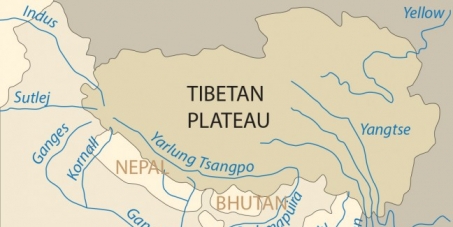
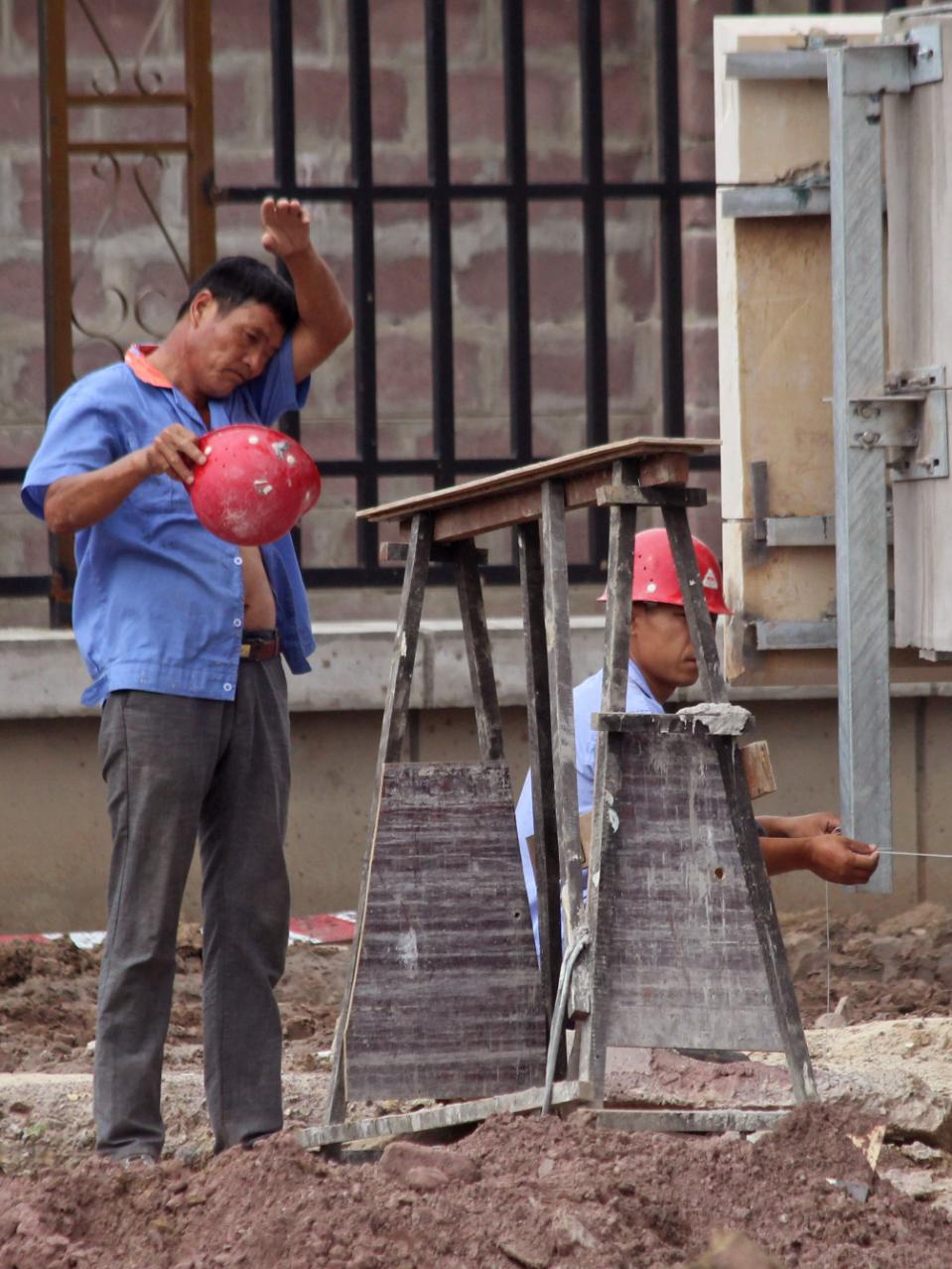
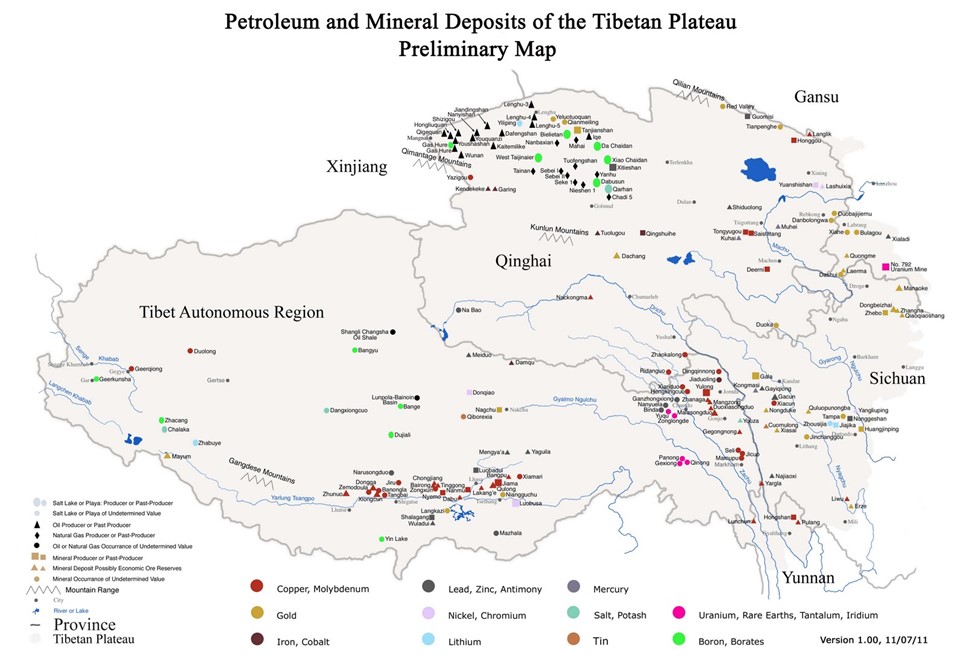
The Great 13th Dalai Lama of Tibet declared Tibet’s independence from Manchu China(Qing or Ch’ing Dynasty) on February 13, 1913. Tibet expelled Manchu China’s diplomats and its military contingent posted in Lhasa, Tibet’s Capital. For centuries, Tibet came under foreign conquests by Mongols and Manchu China but Tibet was never colonized. Red China’s military invasion of Tibet in 1950 describes the typical features of Colonialism. Tibet’s population is repressed by brutal force in an attempt to fully assimilate Tibetans to the Colonizer’s way of life. Red China’s Colonial Rule is a direct threat to  existence of Tibetan way of life shaped by centuries of Natural Freedom. Apart from wiping out Tibetan System of Governance known as Ganden Phodrang, The Institution of Dalai Lama at Potala Palace, Lhasa, the tyrannical rule of Red China is destroying every attribute of Tibetan Culture including Tibetan language, and Tibetan religious institutions putting Tibetan Identity at a great peril. Red China’s colonization of Tibet is defacing and degrading Tibetan territory and its fragile environment totally upsetting its delicate ecological balance. The Land of Tibet is scarred by Red China’s reckless mining activities, deforestation, diversion of rivers, and dumping of toxic chemical and nuclear wastes.

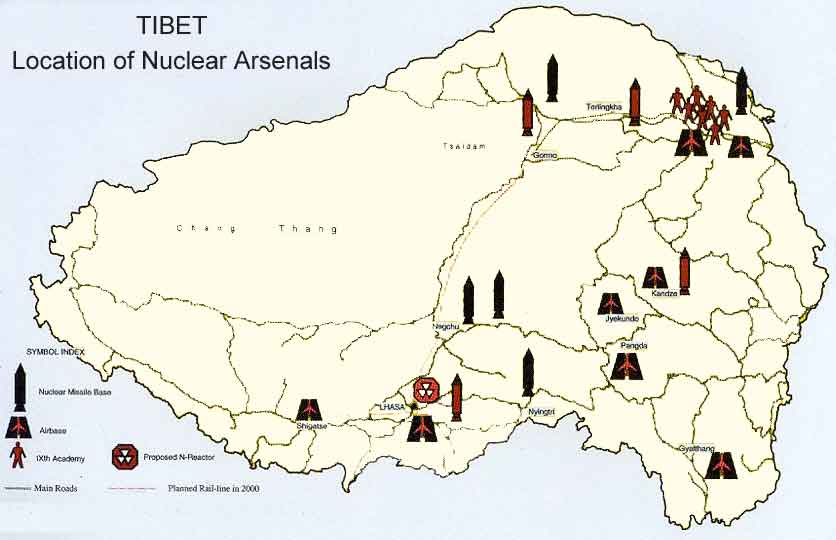
THE  EVIL  RED  EMPIRE  -  RED  CHINA  -  COLONIAL  RULE  OVER  TIBET :  TIBET  IS  POISONED  WITH  LONGLIVING  NUCLEAR  WASTE  FROM  RED  CHINA'S  NUCLEAR  EXPANSIONISM .
THE EVIL RED EMPIRE – RED CHINA – COLONIAL RULE OVER TIBET : TIBET IS POISONED WITH LONG LIVING NUCLEAR WASTE FROM RED CHINA’S NUCLEAR EXPANSIONISM .

Colonization was the vehicle of European expansion from the 15th century into Africa, the Americas, and Asia. The Spanish, Portuguese, English, French, and Dutch established Colonies worldwide that have for the most part obtained independence from imperial system only in the 20th century.

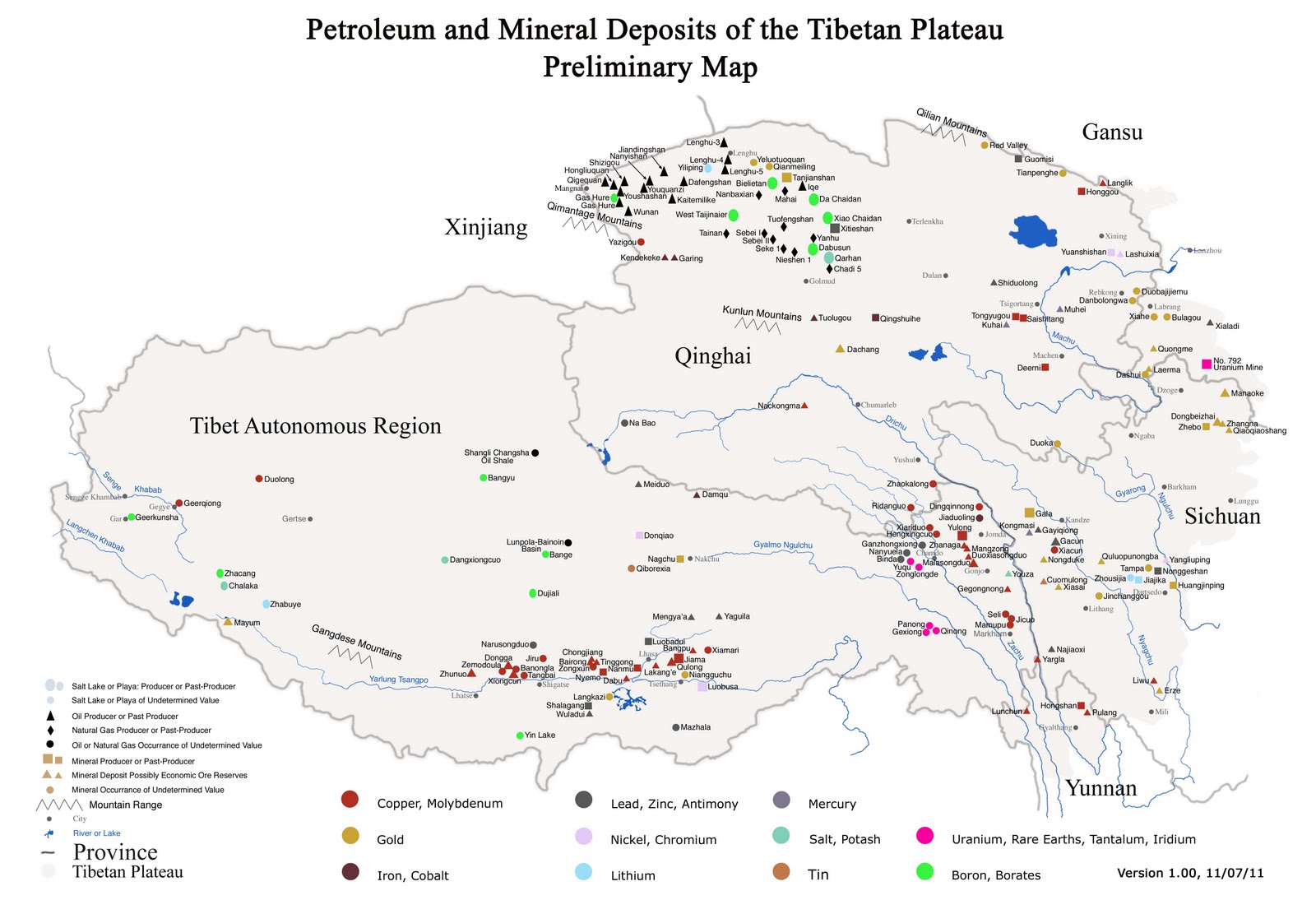
red china neocolonialist mineral deposits tibet
red china neocolonialist mineral deposits Tibet

red china neocolonialist canadian mining projects tibet
red china neocolonialist Canadian mining projects Tibet

Red China determines the economic development of other countries from which it extracts vast amounts of raw materials. With the sole exception of Tibet, Red China is able to get raw materials and flood world markets with Made in China products without the need to fight the wars of the previous Colonial Era. With threats of its muscle power, Red China has entered a new era of Colonialism. People of the World have to awaken to the threat imposed by Red China – Neocolonialist.

Rudranarasimham Rebbapragada
Ann Arbor, MI 48104-4162, USA
The Spirits of Special Frontier Force

image
The Spirits of Special Frontier ForceSpecial Frontier Force is a military organization of India, Tibet, United States to resist Red…
View on www.facebook.com Preview by Yahoo

CONGO ASSESSES $6.7 BILLION CONTRACTS WITH CHINESE

Congo assesses $6.7 billion contracts with Chinese

By SALEH MWANAMILONGO

In this photo taken on May 20, 2015, Chinese workers travel on the back of a trailer pulled by a tractor on their way to work in Kinshasa, Democratic Republic of Congo. Congo’s government is bringing in outside experts including officials from the World Bank and the United Nations, to investigate the long-term impact of some $6.7 billion in contracts with Chinese companies that critics have said could exploit the central African nation’s mineral riches.(AP Photo/John Bompengo)
.

  • In this photo taken on May 20, 2015, Chinese workers travel on the back of a trailer pulled by a tractor  on their way to work in Kinshasa, Democratic Republic of Congo.  Congo’s government is bringing in outside experts including officials from the World Bank and the United Nations, to investigate the long-term impact of some $6.7 billion in contracts with Chinese companies that critics have said could exploit the central African nation’s mineral riches.(AP Photo/John Bompengo)
    In this photo taken on May 20, 2015, Chinese workers travel on the back of a trailer pulled by a tractor on their way to work in Kinshasa, Democratic Republic of Congo. Congo’s government is bringing in outside experts including officials from the World Bank and the United Nations, to investigate the long-term impact of some $6.7 billion in contracts with Chinese companies that critics have said could exploit the central African nation’s mineral riches.(AP Photo/John Bompengo)

    .

  • In this photo taken on May 20, 2015, Chinese workers inside a new hotel being built for the use by  Congo government officials when completed in Kinshasa, Democratic Republic of Congo.  Congo’s government is bringing in outside experts including officials from the World Bank and the United Nations, to investigate the long-term impact of some $6.7 billion in contracts with Chinese companies that critics have said could exploit the central African nation’s mineral riches.(AP Photo/John Bompengo)
    In this photo taken on May 20, 2015, Chinese workers inside a new hotel being built for the use by Congo government officials when completed in Kinshasa, Democratic Republic of Congo. Congo’s government is bringing in outside experts including officials from the World Bank and the United Nations, to investigate the long-term impact of some $6.7 billion in contracts with Chinese companies that critics have said could exploit the central African nation’s mineral riches.(AP Photo/John Bompengo)

    In this photo taken on May 20, 2015, Chinese workers at the building site of a new hotel to be used by Congo government officials when completed in Kinshasa, Democratic Republic of Congo. Congo’s government is bringing in outside experts including officials from the World Bank and the United Nations, to investigate the long-term impact of some $6.7 billion in contracts with Chinese companies that critics have said could exploit the central African nation’s mineral riches. (AP Photo/John Bompengo)
    In this photo taken on May 20, 2015, Chinese workers at the building site of a new hotel to be used by Congo government officials when completed in Kinshasa, Democratic Republic of Congo. Congo’s government is bringing in outside experts including officials from the World Bank and the United Nations, to investigate the long-term impact of some $6.7 billion in contracts with Chinese companies that critics have said could exploit the central African nation’s mineral riches. (AP Photo/John Bompengo)
  • In this photo taken on May 20, 2015, Chinese workers travel on the back of a trailer pulled by a tractor on their way to work in Kinshasa, Democratic Republic of Congo. Congo’s government is bringing in outside experts including officials from the World Bank and the United Nations, to investigate the long-term impact of some $6.7 billion in contracts with Chinese companies that critics have said could exploit the central African nation’s mineral riches.(AP Photo/John Bompengo)
    In this photo taken on May 20, 2015, Chinese workers travel on the back of a trailer pulled by a tractor on their way to work in Kinshasa, Democratic Republic of Congo. Congo’s government is bringing in outside experts including officials from the World Bank and the United Nations, to investigate the long-term impact of some $6.7 billion in contracts with Chinese companies that critics have said could exploit the central African nation’s mineral riches.(AP Photo/John Bompengo)

    KINSHASA, Congo (AP) — Congo’s government is bringing in outside experts to investigate the long-term impact of some $6.7 billion in contracts with Chinese companies that critics say could exploit the central African nation’s mineral riches.

Congo’s government has a 32 percent stake while China has 68 percent in the mining project called Sicomines. It was created in 2008 but construction did not officially start until three years later, said Jean Nzenga Kongolo, deputy general manager of Sicomines.

It now employs about 3,000 people, of whom 70 percent are Congolese, said Kongolo.

To assess the project’s impact, officials from the World Bank and the United Nations visited the mines this week.

The project “is truly in the right lines and objectives of the World Bank which is to fight against poverty,” said World Bank representative Ahmadou Moustapha Ndiaye. The U.N. official also praised the project.

However, critics say a more thorough evaluation of the contract still must be done.

In this photo taken on May 20, 2015, Chinese workers at the building site of a new hotel to be used by Congo government officials when completed in Kinshasa, Democratic Republic of Congo. Congo’s government is bringing in outside experts including officials from the World Bank and the United Nations, to investigate the long-term impact of some $6.7 billion in contracts with Chinese companies that critics have said could exploit the central African nation’s mineral riches.(AP Photo/John Bompengo)

In this photo taken on May 20, 2015, Chinese workers at the building site of a new hotel to be used by Congo government officials in Kinshasa.

“The Chinese contract was never a win-win … It was badly negotiated,” said civil society leader Jonas Tshiombela.

As part of the deal, China’s Railway Engineering Corporation and Sinohydro Corp. are constructing about 3,000 kilometers of roads and railways in Congo. Universities, hospitals and health centers are also being built, according to the agreement.

Tshiombela said the quality of the construction work “leaves much to be desired.” One road in the capital of Kinshasa — Sendwe Boulevard — already has potholes just a year after it was completed, he said.

Sun Rui Wen, the director general representing China’s interest in Sicomines, defended the project, saying it is based on “equality and mutual benefit.”

The deal also allows the Chinese companies to mine copper, cobalt and gold, according to the agreement seen by The Associated Press.

Congo should be able to repay the investment after 25 years, said Moise Ekanga Lushyma, executive secretary coordinating the project for the Congolese government. At that point they will pay management fees or negotiate another loan — not necessarily with the Chinese — to produce minerals, he said.

  • KINSHASA, Congo

World Bank

Copyright 2015 The Associated Press. All rights reserved. This material may not be published, broadcast, rewritten or redistributed.

Yahoo – ABC News Network

Whole Evil – Red China – Neocolonialist

The Evil Red Empire – Red China – Neocolonialist

THE EVIL RED EMPIRE - RED CHINA - NEOCOLONIALIST.
THE EVIL RED EMPIRE – RED CHINA – NEOCOLONIALIST.

Neocolonialism describes the revival of Colonialist exploitation by a foreign power of a region that has achieved independence. Colonialism is the system or policy by which a country maintains foreign colonies especially in order to exploit them economically. Colonization refers to extension of political and economic control over an area by an occupying state that has organizational or technological superiority. Imperialism has been a major colonizing force. The Colony’s population is subdued to assimilate them to the Colonizer’s way of life.

The Great 13th Dalai Lama of Tibet declared Tibet’s independence from Manchu China(Qing or Ch’ing Dynasty) on February 13, 1913. Tibet expelled Manchu China’s diplomats and its military contingent posted in Lhasa, Tibet’s Capital. For centuries, Tibet came under foreign conquests by Mongols and Manchu China but Tibet was never colonized. Red China’s military invasion of Tibet in 1950 describes the typical features of Colonialism. Tibet’s population is repressed by brutal force in an attempt to fully assimilate Tibetans to the Colonizer’s way of life. Red China’s Colonial Rule is a direct threat to the existence of Tibetan way of life shaped by centuries of Natural Freedom. Apart from wiping out Tibetan System of Governance known as Ganden Phodrang, The Institution of Dalai Lama at Potala Palace, Lhasa, the tyrannical rule of Red China is destroying every attribute of Tibetan Culture including Tibetan language, and Tibetan religious institutions putting Tibetan Identity at a great peril. Red China’s colonization of Tibet is defacing and degrading Tibetan territory and its fragile environment totally upsetting its delicate ecological balance. The Land of Tibet is scarred by Red China’s reckless mining activities, deforestation, diversion of rivers, and dumping of toxic chemical and nuclear wastes.

Colonization was the vehicle of European expansion from the 15th century into Africa, the Americas, and Asia. The Spanish, Portuguese, English, French, and Dutch established Colonies worldwide that have for the most part obtained independence from imperial system only in the 20th century.

Red China determines the economic development of other countries from which it extracts vast amounts of raw materials. With the sole exception of Tibet, Red China is able to get raw materials and flood world markets with Made in China products without the need to fight the wars of the previous Colonial Era. With threats of its muscle power, Red China has entered a new era of Colonialism. People of the World have to awaken to the threat imposed by Red China – Neocolonialist.

Whole Evil: Red China Neocolonialist exploiting mineral deposits in Tibet

THE EVIL RED EMPIRE – RED CHINA – ECONOMIC EXPANSIONISM

THE EVIL RED EMPIRE – RED CHINA – ECONOMIC EXPANSIONISM :

THE  EVIL  RED  EMPIRE  -  RED  CHINA  -  ECONOMIC  EXPANSIONISM  :  AT  SPECIAL  FRONTIER  FORCE  WE  ARE  TRAINED  TO  RECOGNIZE  RED  CHINA  AS  AN  ADVERSARY,  AN  OPPONENT,  AN  ENEMY  WITH  WHOM  WE  ARE  ENGAGED  IN  A  PROLONGED  CONFLICT .
THE EVIL RED EMPIRE – RED CHINA – ECONOMIC EXPANSIONISM : AT SPECIAL FRONTIER FORCE WE ARE TRAINED TO RECOGNIZE RED CHINA AS AN ADVERSARY, AN OPPONENT, AN ENEMY WITH WHOM WE ARE ENGAGED IN A PROLONGED CONFLICT .

Bill Powell published a story in Newsweek magazine predicting a prolonged geopolitical struggle between the United States and Red China and named it Cold War-2. In his analysis, Red China is a tough adversary because of its economic power. He makes no mention about adversarial relationship between Tibet and Red China since 1950s. At Special Frontier Force, an alliance between the US, India, and Tibet, we have always recognized Red China as an adversary, an enemy, an opponent, and a party with which we are engaged in a prolonged conflict with a potential to secure our mission fighting a battle that aims to evict the occupier of Tibet. Special Frontier Force is a product of Cold War-1 and we are not waiting for the dawn of a “New Cold War” or “Cold War-2.”

Economics is the Science that deals with the production, distribution, and consumption of wealth. Red China’s economy is managed by a system of government that is involved in all the aspects of production, distribution, and consumption of its national wealth. A capitalist is a person who has capital, owner of wealth used in business. Capitalism is the economic system in which all or most of the means of production and distribution are privately owned and operated for profit. Communism is an economic theory or system in which a one-party political structure has the ownership of all property and manages the production and distribution of economic goods. In a Communist State, the economy is just another tool in the hands of one-party that governs the Land. Unlike capitalists in the West, Red China’s concern for earning profits is translated into implementing its Policy of Expansionism of which Economic Expansionism is one dimension.

Red China while expanding private ownership of property, its one-party government remains as the ultimate manager who makes decisions about production, distribution, and consumption of wealth. Red China brings raw materials and finds new markets for its manufactured products. Red China is able to get raw materials and flood the world markets with Made in China products with great ease without the need to conquer other countries fighting costly battles. American and other capitalists who directly or indirectly invest in Red China have no control over the one-party government that manages all the parts of its economic system. American and other foreign investors are primarily concerned about the profits they earn by giving Red China the power of production and distribution of goods. The one-party government of Red China is empowered by this capital inflow and by its ability to acquire raw materials from other nations without waging wars or by simply occupying territory of its weaker neighbors like Tibet.

Red China has steadily expanded its Economic Power which it uses to exert its political influence over weaker nations and even over developed nations in the West. Nixon-Kissinger US administration in 1972 formulated trade and commerce relations with Red China not knowing the nature of its one-party government. Red China is earning profits from its worldwide trade and those profits directly benefit to accomplish its goal of Expansionism to become a true Imperial Power.

In the years ahead, the United States and others will be left with no political alternatives to face the challenges posed by Expansionist Red China. The capitalists who invest in Red China have the only option of Economic Disinvestment.

Rudranarasimham Rebbapragada
Ann Arbor, MI 48104-4162, USA
SPECIALFRONTIERFORCE.ESTABLISHMENT22

A NEW COLD WAR, YES. BUT IT’S WITH CHINA, NOT RUSSIA

Newsweek

Bill Powell

THE  EVIL  RED  EMPIRE  -  RED  CHINA  -  ECONOMIC  EXPANSIONISM : PEOPLE'S  REPUBLIC  OF  CHINA  CAME  INTO  ITS  EXISTENCE  ON  OCTOBER  01,  1949 .  AFTER  ITS  MILITARY  INVASION  AND  OCCUPATION  OF  TIBET  IN  1950,  A  GEOPOLITICAL  STRUGGLE  TOOK  BIRTH  TO  EVICT  THE  OCCUPIER  OF  TIBET .
THE EVIL RED EMPIRE – RED CHINA – ECONOMIC EXPANSIONISM : PEOPLE’S REPUBLIC OF CHINA CAME INTO ITS EXISTENCE ON OCTOBER 01, 1949 . AFTER ITS MILITARY INVASION AND OCCUPATION OF TIBET IN 1950, A GEOPOLITICAL STRUGGLE TOOK BIRTH TO EVICT THE OCCUPIER OF TIBET .

© Saul Loeb/Reuters Secretary of State John Kerry and Chinese Foreign Minister Wang Yi shake hands prior to meetings at the Ministry of Foreign Affairs in Beijing, May 16, 2015. The Soviet system failed because it didn’t work; China will be a tougher adversary.

Something that as recently as a decade ago was almost never discussed in polite company—the prospect for a prolonged geopolitical struggle between the United States and China (Cold War 2.0)—is now Topic A in the foreign policy salons of both Washington and Beijing. In the United States, the centrist Council on Foreign Relations issued a lengthy report calling for the U.S. to “revise” its “grand strategy” toward China. In Beijing, Liu Mingfu, a colonel in the People’s Liberation Army and one of its most influential strategists, wrote in his recent book, The China Dream, “In the 21st century China and the United States will square off and fight to become the champion among nations.’’

The current tension in the South China Sea, where Beijing is building artificial islands in the Spratlys, a contested chain claimed by six countries, certainly sounds like a Cold War in the making. The U.S. Defense Department let it be known in mid-May that it was considering sending surveillance aircraft and warships to within 12 nautical miles of the chain, as a signal to Beijing to back off. The Chinese Foreign Affairs Ministry immediately condemned Washington for even thinking about it.

Meanwhile, nine Chinese and Russian warships came together for joint exercises in the Mediterranean Sea—the most recent evidence of the warmer ties between the two historical antagonists. A month earlier, Vietnam, deeply distrustful of Beijing, hosted a dozen U.S. defense contractors for meetings in Hanoi. They came just eight days before celebrations marking the 40th anniversary of Vietnam’s defeat of the United States.

War games, prospective weapons sales, a war of words over contested real estate in some far-flung part of the world. That’s all pretty much standard Cold War fare, familiar to anyone in Moscow or Washington who fought the last one. But a Washington vs. Beijing Cold War 2.0—should it prove to be unavoidable—would be very different from its predecessor.
The fundamental, obvious difference is that Beijing would bring far more economic power to the contest than the Soviet Union ever did. Indeed, for Soviet citizens, the enduring image from the last days of Communism is empty shelves at the food store. And pretty much everywhere the Soviets exerted their influence—from Eastern Europe to Africa to Latin America—economic calamity ensued. The command and control, state-dominated form of economic management didn’t work, and that—more than how many nuclear weapons Moscow possessed—was what mattered in the end.

Contrast that with China. Already the second-largest economy in the world, it may well surpass the United States as the biggest in a decade or so. While the state controls the commanding heights of the economy—banking, telecommunications, energy—it tries to do so in a market-friendly way, and it allows unfettered private enterprise in a range of industries (including, critically, high technology) that have helped drive China’s extraordinary three-decade-long ascent from poverty. Alibaba is but one recent example of a private Chinese company with an increasingly global footprint. Remember all those great Soviet companies with initial public offerings of billions of dollars on the NASDAQ or the New York Stock Exchange? Right. You don’t. Because there weren’t any.
China is in the business of deploying its economic power abroad in a big way. It invests heavily in infrastructure projects in Africa. It uses its massive foreign exchange reserves to buy up resources—oil, gas and minerals—throughout Africa and Latin America. This is often—inaccurately—described as “soft” power. Economic power is not the same as soft power. Soft power has to do with lots of things—the form of government, the transparency of government, the accountability of elites to the broad citizenry, what a country stands for and stands against. The projection of economic power means the ability to put money in local pockets. Beijing is doing that aggressively, and, given its enormous accumulation of foreign exchange reserves, it is in a position to continue to do so for quite some time, even as its frantic economic growth now slows.

The United States, in the view of many analysts, is in a different and arguably more difficult place. Its hard power—its military assets—still dwarfs China’s, even though Beijing has rapidly increased its defense spending in recent years. But the prospect of a Cold War between the two countries was—and to a certain extent still is—dismissed by many China hands in the U.S. because, as former National Security Council staffer Aaron Friedberg wrote last year in his book A Contest for Supremacy, “the enormous advantages the United States now enjoys are the product of its long-standing lead in the development and deployment of new technologies, and the unmatched ability of its huge and dynamic economy to carry the costs of military primacy.”

Is the United States still more technologically advanced than China? Absolutely. Is it still more innovative. Yes. But those leads are narrowing, and the U.S. plainly faces a host of domestic economic issues—from debt to demographics to an economy seemingly stuck at stall speed—that are daunting. As Friedberg wrote, “Whether [the United States] will continue to enjoy [its
economic advantages] in a long-term strategic rivalry with China is by no means obvious.”

The other critical difference between Cold War 1.0 and the Cold War 2.0 that now looms is the simple fact that China is the most important market in the world for the Fortune 500. By contrast, the Soviet Union, for 99.5 percent of America’s biggest companies, simply didn’t exist. Beijing can use access to its market as leverage in geopolitical disputes, and in so doing will be playing to a core establishment constituency in the United States: big business. As long as China avoids an economic crisis that upends the current economic reality, that reality is going to be difficult for Washington to finesse as geopolitical competition intensifies.

There is, of course, tremendous irony in that. For decades, U.S. policy was to help China succeed economically. We had convinced ourselves that through trade and prosperity, political change would come in Beijing (just as it had in South Korea and Taiwan, former authoritarian economic success stories turned vibrant democracies). That notion is now long gone. The
Chinese Communist Party, and its one-party rule, doesn’t appear to be going anywhere. It’s also playing a long game; its military is just a regional player now, but by 2049, when the party expects to celebrate its 100th anniversary in power, it may well be able to project force globally. That, anyway, is the intention of the more hawkish elements of the party and its military.

Washington had earnestly hoped that the days of a global struggle against a powerful adversary were gone, the stuff of history books. That it’s now waking up and acknowledging a different reality is step one in what Liu Mingfu calls the central “fight” for the 21st century.

THE  EVIL  RED  EMPIRE  -  RED  CHINA  -  ECONOMIC  EXPANSIONISM :  RED  CHINA  HAS  DRAINED  THE  ECONOMIC  POWER  OF  AMERICAN  AND  FOREIGN  CAPITALIST  WHO  INVEST  IN  RED  CHINA .  THEY  HAVE  NO  POLITICAL  OPTIONS . THE  ONLY  CHOICE  IS  THAT  OF  ECONOMIC  DISINVESTMENT .
THE EVIL RED EMPIRE – RED CHINA – ECONOMIC EXPANSIONISM : RED CHINA HAS DRAINED THE ECONOMIC POWER OF AMERICAN AND FOREIGN CAPITALIST WHO INVEST IN RED CHINA . THEY HAVE NO POLITICAL OPTIONS . THE ONLY CHOICE IS THAT OF ECONOMIC DISINVESTMENT .

THE EVIL RED EMPIRE – TERRITORIAL EXPANSIONISM

THE EVIL RED EMPIRE – TERRITORIAL EXPANSIONISM:

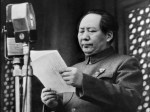
Mao Zedong proclaims the founding of the People's Republic of China in Beijing on Oct. 1, 1949.
Mao Zedong proclaims the founding of the People’s Republic of China in Beijing on Oct. 1, 1949.

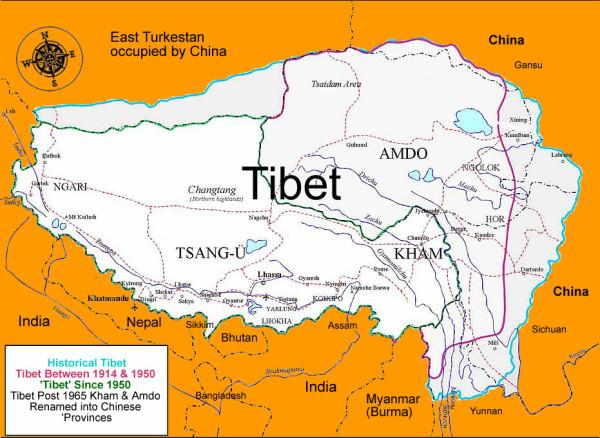
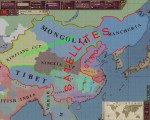
The Evil Red Empire called Red China or People’s Republic of China(Mandarin. Zhonghua Renmin Gongheguo) was proclaimed at Peking( now Beijing) by Communist Party Chairman Mao Zedong or Mao Tse-Tung on October 01, 1949. He formulated a vision of Empire building using a Policy of Expansionism during the late 1940s. Red China expanded its territory after the Communist victory in all of China. Apart from keeping territories gained by China in its historical past, Red China during 1950 attacked Tibet which had declared its independence after the downfall of Manchu China( the Ch’ing or Manchu dynasty) that ruled China from 1644 to 1912. The following Provinces and Autonomous Regions of Red China bear mute testimony to the great problem of its Territorial Expansionism:

the evil red empire the dragon covets the arctic2

1. Tibet, Xizang Autonomous Region.
2. Sichuan Province(Szechwan, annexed Tibetan territory).
3. Qinghai Province(Tsinghai annexed Tibetan territory).
4. Xinjiang Uygur Autonomous Region( Sinkiang Uigur)
5. Inner Mongolian Autonomous Region(Nei Monggol).
6. Liaoning Province, Jilin Province(Kirin), and Heilongjiang Province(Heilungkiang) which together represent Manchuria.

the evil red empire map of tibet1

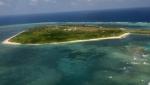
The problem of Red China’s Expansionism in South China Sea must be studied in conjunction with the above problems of annexed territory. The United States will not succeed in its efforts to address the problem of Red China’s land reclamation activities in South China Sea without resolving The Great Problem of Tibet.

Rudranarasimham Rebbapragada
Ann Arbor, MI 48104-4162, USA
SPECIALFRONTIERFORCE.ESTABLISHMENT22

US, China remain at odds over South China Sea activity

Associated Press

By MATTHEW LEE, AP Diplomatic Writer

© Provided by Associated Press S. Secretary of State John Kerry speaks during a joint press conference following meetings with Chinese Foreign Minister Wang Yi at the Ministry of Foreign Affairs in Beijing, China, Saturday, May 16, 2015. Kerry is in China to press Beijing to halt increasingly assertive actions it is taking in the South China Sea that have alarmed the United States and China’s smaller neighbors. (Saul Loeb/Pool Photo via AP)

BEIJING — The United States and China held firm Saturday to deep disagreements over increasingly assertive Chinese activity in disputed areas of the South China Sea, as Beijing politely but pointedly rejected U.S. Secretary of State John Kerry’s push for it to reduce tensions.

After meeting in the Chinese capital, both Kerry and China’s Foreign Minister Wang Yi stressed the importance of dialogue to resolve the competing claims, but neither showed any sign of bending in their positions over Chinese land reclamation projects that have alarmed the United States and China’s smaller neighbors. The U.S. and most members of the Association of Southeast Asian Nations want a halt to the projects, which they suspect are aimed at building islands and other land features over which China can claim sovereignty.

“We are concerned about the pace and scope of China’s land reclamation in the South China Sea,” Kerry said, urging China to speed up talks with ASEAN on binding guidelines on how maritime activity in disputed areas should be handled. “And, I urged China, through Foreign Minister Wang, to take actions that will join with everybody in helping to reduce tensions and increase the prospect of diplomatic solutions.”

“I think we agree that the region needs smart diplomacy in order to conclude the ASEAN-China code of conduct and not outposts and military strips,” Kerry told reporters at a joint news conference with Wang.

But Wang signaled that while China was prepared to talk, it would not back down on the construction which he said “is something that falls fully within the scope of China’s sovereignty.”
“The determination of the Chinese side to safeguard our own sovereignty and territorial integrity is as firm as a rock, and it is unshakable,” he said. “It has always been our view that we need to find appropriate solutions to the issues we have through communications and negotiations that we have among the parties directly concerned with peaceful and diplomatic means on the basis of respecting historical facts and international norms. This position will remain unchanged in the future.”

Wang added that the differences between China and the U.S. could be managed “as long as we can avoid misunderstanding and, even more importantly, avoid miscalculation.”
The Chinese claims and land reclamation projects have rattled the region where South China Sea islands and reefs are contested by China and five other Asian governments and activities have led to clashes, accompanied by nationalistic protests and occasional serious diplomatic implications.

The U.S. says it takes no position on the sovereignty claims but insists they must be negotiated. Washington also says ensuring maritime safety and access to some of the world’s busiest commercial shipping routes is a U.S. national security priority.

China has bristled at what it sees as U.S. interference in the region and wants to negotiate with the ASEAN countries individually, something those much smaller nations fear will not be fair.
In one disputed area, the Spratly Islands, U.S. officials say China has reclaimed about 2,000 acres of dry land since 2014 that could be used as airstrips or for military purposes. The U.S. argues that man-made constructions cannot be used to claim sovereignty.

Obama administration officials have declined to comment on reports that it may deploy military assets, or that it is considering a demonstration of freedom of navigation within 12 nautical miles of the islands’ notional territorial zone. But they have said many of the features claimed by China in the disputed Spratlys are submerged and do not carry territorial rights, and said that China cannot “manufacture sovereignty.”

Despite the clear disagreements over the South China Sea, Kerry and Wang said they were on track to make progress in other areas, notably on climate change, the fight against violent extremism and preparations for the next round of the U.S.-China Strategic and Economic Dialogue in June and Chinese President Xi Jinping’s visit to Washington in September. They expressed pleasure with their cooperation in the ongoing Iran nuclear talks, their solidarity in trying to denuclearize North Korea and combat diseases such as the deadly Ebola virus.
Kerry will wrap up the China portion of his Asia trip in meetings with Xi, Chinese State Councilor Yang Jiechi and the country’s top military officer.

On Sunday, Kerry heads to Seoul where he will be meeting senior South Korean officials and deliver a speech on cyber security and related issues.
Kerry will return to Washington after delivering a speech on a proposed Trans-Pacific trade agreement in Seattle on Tuesday.

1 of 5 © Provided by Associated Press

S. Secretary of State John Kerry, left, talks with Chinese Foreign Minister Wang Yi after their joint press conference at the Ministry of Foreign Affairs in Beijing Saturday, May 16, 2015. Kerry is in China to press Beijing to halt increasingly assertive actions it is taking in the South China Sea that have alarmed the United States and China’s smaller neighbors. (Saul Loeb/Pool Photo via AP)

2 of 5 © Provided by Associated Press

S. Secretary of State John Kerry speaks during a joint press conference following meetings with Chinese Foreign Minister Wang Yi at the Ministry of Foreign Affairs in Beijing, China, Saturday, May 16, 2015. Kerry is in China to press Beijing to halt increasingly assertive actions it is taking in the South China Sea that have alarmed the United States and China’s smaller neighbors. (Saul Loeb/Pool Photo via AP)

3 of 5 © Provided by Associated Press

S. Secretary of State John Kerry at the Ministry of Foreign Affairs in Beijing, China, Saturday, May 16, 2015. Kerry is in China to press Beijing to halt increasingly assertive actions it is taking in the South China Sea that have alarmed the United States and China’s smaller neighbors. (Saul Loeb/Pool Photo via AP)

4 of 5 © Provided by Associated Press

S. Secretary of State John Kerry, left, and Chinese Foreign Minister Wang Yi hold a joint press conference following meetings at the Ministry of Foreign Affairs in Beijing Saturday, May 16, 2015. Kerry is in China to press Beijing to halt increasingly assertive actions it is taking in the South China Sea that have alarmed the United States and China’s smaller neighbors. (Saul Loeb/Pool Photo via AP)

5 of 5 © Provided by Associated Press

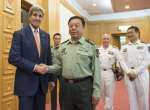
S. Secretary of State John Kerry, left, and Chinese Vice Chairman of the Central Military Commission General Fan Changlong, right, shake hands prior to a meeting at the Ministry of
National Defense in Beijing Saturday, May 16, 2015. Kerry is in China to press Beijing to halt increasingly assertive actions it is taking in the South China Sea that have alarmed the United States and China’s smaller neighbors. (Saul Loeb/Pool Photo via AP)

5 of 5