“I think, therefore I am” is a Whole Thought as it is beyond skeptical doubt. Rene Descartes( Ren-ay, Day-kart ) b. March 31, 1596, d. February 11, 1650 the 17th century French Mathematician and Father of Modern Philosophy advanced a Philosophy based on certitude. Whole Dude is a Whole Person who will think for himself to formulate his opinion after verification using the Cartesian Principle.
French philosopher, Rene Descartes adopts the strategy of withholding his belief from anything that is not entirely certain and indubitable. He proposes a method for guaranteeing knowledge and devises a method of inquiry for reaching the truth. He argues that in order to provide a secure foundation for knowledge it is necessary to discover clear and distinct ideas that could not be doubted and could serve as a basis for deriving further truths. He stresses that a world of metaphysical truths that could be discovered by reason. He subjects his beliefs to a series of skeptical hypotheses. As per his conclusion, “I think, therefore I am,” (Cogito, ergo sum) is beyond skeptical doubt. He invokes skepticism only as a means of reaching certainty.
Whole Dude or Whole Person has the ability to think for himself and formulate his own opinion which he subjects to verification using the Cartesian Philosophy. Dr. William James in his book, The Principles of Psychology has said, “True ideas are those we can assimilate, validate, corroborate, and verify.”
I say, “Hey Dude, let us verify this statement, ‘I think, therefore I am’ and what do you want to say???
Whole Dude – Whole Thought: DR WILLIAM JAMES (1842 – 1910), PSYCHOLOGIST AND PHILOSOPHER WHO TEACHED AT HARVARD UNIVERSITY. HE STATES THAT THE TRUTH OF A PROPOSITION IS JUDGED BY ITS PRACTICAL OUTCOME
Whole Dude and Whole Flavor: The true flavor of a Whole Person is described in the Gospel According to Saint Matthew, Chapter 5, verse 13 in which Jesus speaks, "You are the Salt of the earth. But, if the Salt loses its saltiness, how can it be made salty again? It is no longer good for anything except to be thrown out and trampled by men."
Whole Dude is a Whole Person of Whole Flavor. The Flavor represents qualities of character such as Loyalty, Honesty, Truthfulness, and Trustworthiness.
In the Gospel According to John, Chapter 3, verse 15, and 16 read, "That whosoever believeth in Him should not perish but have eternal life. For God so loved the world, that He gave His only begotten Son, that whosoever believeth in Him should not perish, but have everlasting life."
God has created man in His image and hence death is understood as an imperfection. In the Second Epistle of Apostle Paul to Timothy, Chapter 1, verse 10 claims that our Savior Jesus Christ has abolished death, and has brought Life and Immortality to light through the Gospel. Similarly, the First Epistle of Apostle Paul to the Corinthians, Chapter 15, verse 26 affirms that the last enemy that shall be destroyed is death. Whole Dude must aspire for a ticket to Whole Life or Everlasting Life.
Whole Dude – Wholesome Attitude: New York – Hyde Park: Franklin D. Roosevelt Presidential Library – Winston Churchill Portrait (Photo credit: wallyg)
Attitude refers to an expression of the way one feels. Behavior is the way that someone acts. Although the two are related, they are distinct from one another as attitude focuses on how one feels, and behavior deals with one’s actions. However, one’s attitude is often expressed through their behavior.
Whole Dude – A Dude with Whole Attitude:
Whole Dude – Wholesome Attitude: The Right Honourable Sir Winston Leonard Spencer Churchill, the British Prime Minister (1940-1945 and 1951-1955) who won the Nobel Prize in Literature. A Whole Person with a Wholesome Attitude.
Whole Dude is pleased to share this photo image of Sir Winston Churchill as representative of a Whole Dude with a Whole Attitude, an attitude that is wholesome and is rewarding. He said, “You make a living by what you get. You make a life by what you give.” Life is all about The Art of Receiving and The Art of Giving and by the actions and behavior that we display in getting and giving, we show our true colors and it is all about Wholesome Attitude.
Whole Dude- Whole Self: SPIRITUALISM : THE UNITY OF MAN IN BODY, MIND, AND SOUL. Spiritualism describes the relation between a changing object and its unchanging spiritual nature. This baby which started its existence as a single, fertilized Egg-Cell will continue to grow and develop undergoing a series of changes in physical appearance or Identity and yet will retain the same Individuality during the entire course of Life’s Journey.
“EKAM EVA ADVITIYAM” – This statement in Sanskrit language is from Chandogya Upanishad (6:2:1) and it means: “I, one alone and there is no second.” The original intent of this statement is that of seeking the unity of the Objective Reality of Man known as ‘ATMA’ (the Individual Soul) and the Ultimate Reality known as ‘PARAMATMA’ or Supersoul. There is no Duality between the two and there is no disunity between Man and God.
However, God is not an object which is under Man’s control and the views about God are subjective opinions. I am quoting this statement to find the Unity of Man in body, mind, and soul. Man’s greatest need is not only to know the world around him but also to know himself better. Man must understand what it is to be a substance and what it is to exist. We need to establish knowledge about Man on a firm basis and the information it provides must be tested for its accuracy and consistency with external reality. Dr. William James in his book, The Principles of Psychology, has observed: “True ideas are those we can assimilate, validate, corroborate, and verify.” The separation of man into body, mind, and soul is not supported by scientific study of man.
Whole Dude – Whole Self: It is impossible to describe the concept called “SOUL”, or “SPIRIT” if it is never associated with its human body. If “SOUL” is defined as the vital, animating, Life Principle, Spiritualism demands the existence of a Living Soul or Spirit.
Man comes into existence from a single fertilized Egg Cell. This Man cannot be separated into two distinct entities like insentient material being and sentient spiritual being. The physical being and the conscious being are one and the same. The division of Man into a physical substance and a thinking substance or that of a physical body and a thinking mind is not valid as they have no independent existence of their own. The division of Man into physical body and an immortal, non-material or immaterial Soul is not also valid as the Soul is described as the vital, animating principle that is the chief characteristic of Life.
Whole Dude – Whole Self: The Egg Cell is the source of Man’s Life. The Spiritual Nature of Man could be discovered and could be described from the biological properties, characteristics and nature of the corporeal substance found in the Egg Cell.
The Spiritual Nature of Man is not a mental function. The Spiritual Nature of Man could be discovered and could be described from the biological properties, characteristics and nature of Man’s corporeal substance found in the fertilized Egg Cell. This substance is Conscious. This Single Egg Cell grows, divides, develops, and builds the cells, the tissues, and the organ systems that constitute the Human Individual. The Spiritual Nature of the substance present in the Single, fertilized Egg Cell brings the functional unity of all the cells, tissues, and organ systems to establish the Physical Reality called Man.
Whole Dude – Whole Self: Human Embryo Implantation at about six days after Conception. The Single, fertilized Egg Cell and the Human Embryo that develops from it is Conscious of its existence reflecting its Spiritual Nature.
About six days after Conception, the developing Human Embryo implants itself into maternal tissues by establishin an anatomical connection called Placenta. The implantation of Human Embryo does not involve any human thought and the Mother has no cortical awareness of the fact of implantation. The implantation demonstrates the Consciousness of the Human Embryo which is aware of the fact of its own existence. Spiritualism defines the internal, mutually beneficial relationship, partnership, association, and connection between the cells, tissues, and organ systems for the benefit of the Human Person who exists because of their living functions. The Subject that is born from the Single, fertilized Egg Cell is always a new, original, distinctive, unique, one of its own kind of Object that exists because of the innate Spiritual Nature of the material substance. Being born relates Man to the Subjective and Objective Realities of his biological existence. There is structural and functional unity between Man and his Body, Mind, and Soul. There is no Life, and there is no Human Existence if these entities are separated. Spiritualism is the potency that brings Man’s Essence and Man’s Existence to come together to provide Man the Subjcetive and Objective Reality of his own biological existence in the physical, and material world. Man is not an embodied Soul and Man is a Living Soul.
What is Man?
Whole Dude – Whole Self: This painting the Vitruvian Man (c. 1492) by Leonardo da Vinci displays a spirit of scientific inquiry. What is Man? The understanding of human nature will help to promote man’s well-being.
I will be repeatedly asking this same question in several of my blog posts on the subject of Spiritualism. I want to remind myself that the motivation for asking this question comes from a statement expressed in Sanskrit language: “Sarvesham Swastir Bhavatu”, a statement which seeks the well-being of all humans, of all races, of all cultures, of all religions, and of all nations. The meaning and purpose of human life are affected by whatever we think is the real or true nature of man. It is more important to recognize that our efforts to support the well-being of man would require correct understanding and knowledge of the real or true man.
Self and The Knowing-Self:
Whole Dude – Whole Self: FACIAL RECOGNITION-IDENTITY AND INDIVIDUALITY-THE SELF and THE KNOWING-SELF: Identity describes the external reality of man and it helps to know the man as a specific Individual. This Individual exists with unchanging Individuality which describes the internal reality of man. Identity provides awareness of the Self and Individuality involves the Knowledge of the Knowing-Self.
To know about Man, we can observe the various activities that describe the Man. The Physical being known as Man is known from the living functions performed by the tissues and organ systems of his body. This Physical being has Identity or identifying features such as age, gender, race, ethnicity and other biometrical information to know the person as a specific Individual. Factors like language, religion, culture, education, social occupation, nationality, and sexual orientation are also used to describe the Man. The Mental being known as Man is described from mental functions such as intellect, thoughts, moods, feelings, cravings, and self-pride. Man, the Social being is known from his social interactions and much of human action and behavior involves interacting with other individuals present in his social environment. Man, the Moral being is known from the choices he makes in the performance of his actions where discernment plays a role to distinguish right from wrong, and good from evil. Man, the Spiritual being is known from the nature of his existence seeking peace, harmony, and tranquility within himself and with others in his environment and community. I designate the term ‘SELF’ to describe Man as a Physical, Mental, Social, Moral, and Spiritual being. I have also observed that the Physical being is in reality consists of about 100 trillion individual living cells that show complex structural differentiation and functional organization. The corporeal substance is of spiritual nature and hence Man, the Physical being has no choice other than that of existing as a Spiritual being. The question is not that of, How Man knows himself? The question that I would like to ask is, How does the body know the Identity of the Man who lives? If the body knows its Owner, there is an anatomical structure that is associated with the function called Knowing-Self.
The Function of Knowing-Self:
Whole Dude – Whole Self: Self and The Knowing-Self
The Reticular Formation (RF) is located in the central Brain Stem and extends from Medulla to Thalamus. It consists of more than about 100,000 Brain Stem nuclei. It is estimated that a single neuron in this network may have synapses with as many as 25,000 other neurons. The RF has connections with almost all other parts of the Central Nervous System including Spinal Cord, Cranial Nerve nuclei, Cerebellum, Hypothalamus, Thalamus, Corpus Striatum, Limbic System, and Cerebral Cortex. Thus, the RF helps to coordinate and integrate actions of different parts of the Central Nervous System such as 1. regulation of muscle and reflex activity, 2. central transmission of sensory impulses, 3. respiration, 4. cardiovascular responses, 5. behavioral Arousal, and 6. Alert/Sleep Cycle.
Whole Dude – Whole Self: Self and The Knowing-Self.
There are two distinct aspects of human Consciousness namely, 1. the Capacity for Consciousness and 2. the Content of Consciousness. When Consciousness is viewed as a psychological or strictly as a mental function, it is represented by the Content of Consciousness called Cortical Awareness which is a function of the Cerebral Cortex. When Consciousness is understood as a biological function that includes the maintenance of vital functions like respiration, and circulation apart from various homeostatic mechanisms to preserve a constant internal environment, it is represented by the aspect of Capacity for Consciousness.
Whole Dude – Whole Self: Self and The Knowing-Self
The Knowing-Self is located in the Reticular Formation of the Brain Stem and its functions are of critical importance in the clinical diagnosis of Brain Death. During Life, the cells, tissues, and various organ systems of the human body work together for the benefit of ‘SELF’ which is known and recognized by this Knowing-Self.
Man is a Mortal Being:
Man’s greatest need is not only to know the world around him but also to know himself better. Man must understand what it is to be a substance and what it is to exist. Man is a physical being or thing with matter and form. The corporeal body of man is composite of two principles; matter, and form. What is called matter is potentiality, and what is called form is actuality. The corporeal substance called protoplasm becomes actuality and is recognized as a living person because of the uniqueness of its genome that operates its living functions and defines its size, shape, color, and external form or morphological appearance. However, life comes into existence only when matter or substance has the ability to acquire energy from its external environment. The human being comes to life when his corporeal substance uses its potential ability and power called ‘Nutrition’ to acquire energy and material from its environment. Life begins with fertilization, the union of sperm with egg cell, and this event called conception proceeds to develop a human being after an important event called implantation. The life journey after conception continues if there is a connection between the energy seeking embryo and its maternal energy provider. To exist means that the substance is maintaining a relationship, a partnership, a connection, or association with its source of energy. Man leads energy dependent existence deriving energy and material from nature which supports other living forms with a similar corporeal substance called protoplasm. The mortality of man must be understood as the dissolution of man’s physical form. The dissolution of living man into non-living molecules and physical elements would not alter that potentiality of protoplasm to acquire energy and material to create its own substance. Things in Nature change with Time; but what is called Nature remains unchanged even under the influence of Time. As per The Laws of Conservation of Mass and Energy as described in classical Physics, mass or energy remain constant. The potentiality of living substance to acquire energy and material to form its own kind of substance has remained unchanged or unaffected by major natural calamities and other cataclysmic events. Life forms perish and yet life continues as new life forms. During the billions of years of existence, planet Earth has experienced several minor, and major Extinction Events described in its geological history. The Science of Paleontology offers scientific evidence to support an argument based upon theoretical and practical grounds to propose that the substance called protoplasm could be eternal, immovable, immutable, and indestructible. At a fundamental level, it could be stated that man is a mortal or materialistic being who derives his physical form because of its association with an imperishable substance. During any stage of his existence, the form called man cannot be separated from the eternal nature of its substance.
Identity and Individuality:
Whole Dude – Whole Self: The Eternal Reality of Soul’s Immortality is described in The Bhagavad Gita, Chapter II, verse 12. Lord Krishna spoke to the Pandava Prince Arjuna :”Na tv evaham jatu nasam na tvam neme JanadhipaH;Na chaiva na bhavisyamaH, sarve vayam ataH param.” For each of us our Individuality existed in the past and our Individuality will continue in the future without interruption. Certainly, never at any time did I not exist, nor you, nor all these Kings and certainly never shall we cease to exist in the future.
The issue of spirituality, the nature of Soul and consciousness must be explored in the context of arriving at an understanding of man’s Identity and Individuality.
If man is viewed as an association of trillions of cells, we need to know the Identity of that Subject who lives because of the functions of the trillions of cells. The purpose of consciousness at cellular level is to foster functional unity of the multicellular organism and to establish it as an Individual. In a multicellular organism, cells have short lives as individuals. The Subject or the whole organism has a life span of its own and it has effects on individual cells. Multicellularity is accompanied by adaptive subordination of all cells to the requirements of the organism as a whole. To achieve proper numerical balance between functionally related cell groups, the death of many cells is necessary for other cells to reach maturity. This programmed cell death plays an important role in embryological development. Such programmed cell death events are essential if the organism as a whole is to develop its normal final form. Waves of genetically driven cell deaths are critical to the proper modeling of organs and organ systems.
We need to know and understand that death of cells is a must to establish the Identity and to sustain the Individuality of the human being. The dying process helps man to understand his Individuality. The Individuality is preserved while death is a daily event at the cellular level. The phenotype or the morphological appearance of the human Subject undergoes constant change during the Life journey and yet the Individuality remains unchanged. We recognize the death of this human Subject when his Soul departs from his body. Soul may be stated as an entity which is regarded as being immortal or spiritual part of the person. The Spirit of a dead person generally refers to a principle separate from the body and leading an existence of its own. If Soul is viewed as a Non-thing or Nothingness, it comes into the world of existence by entering the physical being at its conception which becomes conscious or aware of its existence. This consciousness has also existed in a previously existing Living Egg Cell which is the Mother of Life, Energy, and Knowledge.
Consciousness by its very nature is immortal, it is eternal, and it has no birth or death. We recognize the arrival and departure of the new product during the Life-Death continuum where the Individuality is unaffected by the changes that are caused by the powerful influence of Time.
Whole Dude – Whole Self: The Rudi-Grant Connection examines the complex issues of identity and individuality in the multicellular human organism. THE NEWBORN BABY ALWAYS ARRIVES INTO THE WORLD WITH AN ORIGINAL, UNIQUE, DISTINCT, AND ONE OF ITS OWN KIND OF GENOME THAT HAS NEVER EXISTED IN THE PAST AND WILL NEVER EXIST AGAIN IN THE FUTURE.
“EKAM EVA ADVITIYAM” – This statement in Sanskrit language is from Chandogya Upanishad( 6:2:1 ) and it means: “I, one alone and there is no second.” The original intent of this statement is that of seeking the unity of the Objective Reality of Man known as ‘ATMA’ ( the Individual Soul ) and the Ultimate Reality known as ‘PARAMATMA’ or Supersoul. There is no Duality between the two and there is no disunity between Man and God. However, God is not an object which is under Man’s control and the views about God are subjective opinions. I am quoting this statement to find the Unity of Man in body, mind, and soul. Man’s greatest need is not only to know the world around him but also to know himself better. Man must understand what it is to be a substance and what it is to exist. We need to establish knowledge about Man on a firm basis and the information it provides must be tested for its accuracy and consistency with external reality. Dr. William James in his book, The Principles of Psychology, has observed: “True ideas are those we can assimilate, validate, corroborate, and verify.” The separation of man into body, mind, and soul is not supported by scientific study of man.
SPIRITUALISM – THE UNITY OF MAN IN BODY, MIND, AND SOUL – HUMAN LIFE AND HUMAN EXISTENCE BEGINS WITH CONCEPTION.
Man comes into existence from a single fertilized Egg Cell. This Man cannot be separated into two distinct entities like insentient material being and sentient spiritual being. The physical being and the conscious being are the same. The division of Man into a physical substance and a thinking substance or that of a physical body and a thinking mind is not valid as they have no independent existence of their own. The division of Man into physical body and an immortal, non-material or immaterial Soul is not also valid as the Soul is described as the vital, animating principle that is the chief characteristic of Life.
The Egg Cell is the source of Man’s Life. The Spiritual Nature of Man could be discovered and could be described from the biological properties, characteristics and nature of the corporeal substance found in the Egg Cell.
The Spiritual Nature of Man is not a mental function. The Spiritual Nature of Man could be discovered and could be described from the biological properties, characteristics and nature of Man’s corporeal substance found in the fertilized Egg Cell. This substance is Conscious. This Single Egg Cell grows, divides, develops, and builds the cells, the tissues, and the organ systems that constitute the Human Individual. The Spiritual Nature of the substance present in the Single, fertilized Egg Cell brings the functional unity of all the cells, tissues, and organ systems to establish the Physical Reality called Man.
Human Embryo Implantation at about six days after Conception. The Single, fertilized Egg Cell and the Human Embryo that develops from it is Conscious of its existence reflecting its Spiritual Nature.
About six days after Conception, the developing Human Embryo implants itself into maternal tissues by establish in an anatomical connection called Placenta. The implantation of Human Embryo does not involve any human thought and the Mother has no cortical awareness of the fact of implantation. The implantation demonstrates the Consciousness of the Human Embryo which is aware of the fact of its own existence. Spiritualism defines the internal, mutually beneficial relationship, partnership, association, and connection between the cells, tissues, and organ systems for the benefit of the Human Person who exists because of their living functions. The Subject that is born from the Single, fertilized Egg Cell is always a new, original, distinctive, unique, one of its own kind of Object that exists because of the innate Spiritual Nature of the material substance. Being born relates Man to the Subjective and Objective Realities of his biological existence. There is structural and functional unity between Man and his Body, Mind, and Soul. There is no Life, and there is no Human Existence if these entities are separated. Spiritualism is the potency that brings Man’s Essence and Man’s Existence to come together to provide Man the subjective and Objective Reality of his own biological existence in the physical, and material world. Man is not an embodied Soul and Man is a Living Soul.
Man comes into existence in the physical, material world as a new object. To know and understand the real or true Man, I seek the structural and functional Unity of Man in Body, Mind, and Soul.
MAN IS A SPIRITUAL BEING :
Man is a Spiritual Being – The Great Banyan Tree of Kolkata – Adhyatma Vidya – The Knowledge of the Spiritual Self.
The Banyan Tree offers the unusual appearance. It has roots that appear growing from its branches and the roots are located upwards and away from the ground; it has trunks and branches growing downwards apart from the normal branches that grow upwards and outwards. Because of its adventitious roots, Banyan Tree spreads to cover a wide area and lives for a long time. Knowing and understanding this Asvattha Tree is important to gain the Knowledge of Vedas, the Hindu Scriptures that reveal the Knowledge of the Spiritual Self or Adhyatma Vidya.
THE KNOWLEDGE OF THE BANYAN TREE :
The Hindu Scripture of The Bhagavad Gita, Chapter XV known as Purusottama Yoga speaks about the nature of the Supreme Person. It metaphorically compares the Supreme Being to the popularly known Fig Tree called Ficus benghalensis. The first verse reads as follows:Sri Bhagavan Uvacha : “Urdhva-mulam adhah-sakham Asvattham prahur avyayam, Chandamsi yasya parnani yas tam veda sa Veda vit.”The Supreme Lord Krishna said: There is a Banyan Tree which has its roots upwards and its branches down and metaphorically it is imperishable; and the Vedic hymns are its leaves. One who knows this Tree is the Knower of the Vedas( the person attains the Knowledge of the Ultimate Reality or the Supreme being). When we know the Banyan Tree and its apparent imperishable quality, we may understand the true nature of Man. Man is a spiritual being. The truth or falsity of this proposition depends on the fact of man’s having a substance that is of spiritual nature. Such a substance of spiritual kind is perceptible to the senses, is amenable to direct observation, and could be subjected to verification by experimental science. To establish the fact of man’s spiritual nature, it needs reasoning based upon scientific validity. The structure and the behavior of things contribute to their individual being and function. If man has a set of defining features based upon his structure( Human Anatomy ), function( Human Physiology ), and behavior( Human Behavioral Science ), the spiritual nature of man could be proved on theoretical and practical grounds and could be verified by scientific experiments. I am not seeking to discover a soul or spirit that could have existence independent of man’s physical being. However, it will be important to note that it is not possible to conceive of a soul or spirit if it is never associated with its human body. My purpose is that of describing the spiritual nature of human organism and of other living beings. To understand the true nature of human being, we need to ascertain the validity of Knowledge that pertains to the Spiritual Self. MAN IS A MORTAL BEING :Man’s greatest need is not only to know the world around him but also to know himself better. Man must understand what it is to be a substance and what it is to exist. Man is a physical being or thing with matter and form. The corporeal body of man is composite of two principles; matter, and form. What is called matter is potentiality, and what is called form is actuality. The corporeal substance called protoplasm becomes actuality and is recognized as a living person because of the uniqueness of its genome that operates its living functions and defines its size, shape, color, and external form or morphological appearance. However, life comes into existence only when matter or substance has the ability to acquire energy from its external environment. The human being comes to life when his corporeal substance uses its potential ability and power called ‘Nutrition’ to acquire energy and material from its environment. Life begins with fertilization, the union of sperm with egg cell, and this event called conception proceeds to develop a human being after an important event called implantation. The life journey after conception continues if there is a connection between the energy seeking embryo and its maternal energy provider. To exist means that the substance is maintaining a relationship, a partnership, a connection, or association with its source of energy. Man leads energy dependent existence deriving energy and material from nature which supports other living forms with a similar corporeal substance called protoplasm. The mortality of man must be understood as the dissolution of man’s physical form. The dissolution of living man into non-living molecules and physical elements would not alter that potentiality of protoplasm to acquire energy and material to create its own substance. Things in Nature change with Time; but what is called Nature remains unchanged even under the influence of Time. As per The Laws of Conservation of Mass and Energy as described in classical Physics, mass or energy remain constant. The potentiality of living substance to acquire energy and material to form its own kind of substance has remained unchanged or unaffected by major natural calamities and other cataclysmic events. Life forms perish and yet life continues as new life forms. During the billions of years of existence, planet Earth has experienced several minor, and major Extinction Events described in its geological history. The Science of Paleontology offers scientific evidence to support an argument based upon theoretical and practical grounds to propose that the substance called protoplasm could be eternal, immovable, immutable, and indestructible. At a fundamental level, it could be stated that man is a mortal or materialistic being who derives his physical form because of its association with an imperishable substance. During any stage of his existence, the form called man cannot be separated from the eternal nature of its substance.
Sequoia gigantea is a massive tree. A living thing has a form and has matter. We often recognize the form and give it a name. What about the “MATTER” that constitutes the substance of this Living Thing? We need to understand the ‘potentiality’ of the Matter to know the nature of the Form. The Form has no independent existence of its own. The Form lives if and only if it has Matter that is living.
WHAT IS SOUL OR SPIRIT ? :
Traditionally, man has been divided into two parts; body, and soul. In common usage, the term soul represents the immaterial aspect of a human being. Soul is further defined as that part of the individual which is considered to survive the death of the body. The term spirit is often used to describe a disembodied soul. On separation from the human body, the soul or spirit has a life of its own, a capacity for independent existence or self-subsistence which describes its immortality. THE CONCEPTIONS OF SOUL : There are a variety of conceptions about soul or spirit. Some of the traditional conceptions of soul are the following:1. Soul is the immaterial substance, form, or principle of self-motion, vitality, life force, or life in living things. The insentient body is completely distinct from the sentient soul.2. Soul describes the Doctrine of the Self, and is considered to be synonymous with the True-Self. In a human being, soul confers the Individuality and its nature of humanity.3. Soul is often described as a thinking substance and is equated with mind. The soul has knowledge of itself by reflection of its acts. The soul is the knower and it knows the physical, and mental acts of the human body where it resides.4. Soul is important to maintain, and to preserve life. Soul may not directly participate in the activities of the human body. However, the activities of the human body may have a polluting effect on soul. If the soul is tainted or contaminated by the sinful acts of the body, the soul may obtain purification by its release from the body. Some form of human effort, activity, attitude, and behavior is essential to keep the soul in its natural, pure, and perfect condition.5. The soul that has experienced the polluting effects by its association with a human body would be forced to experience perpetual reincarnation by a process called transmigration. The soul continues to reside as a prisoner in different bodies until such time it attains its original state or condition of purity and perfection.6. Soul is a transcendental or noumenal object that is real but not visible and could not be detected by human sensory perception. The human body that is visible is in fact unreal or is a product of sensory illusion. THE RELATIONSHIP BETWEEN SOUL AND HUMAN BODY : Most religions and cultures speak about soul and describe it as some incorporeal or immaterial substance/principle of human life that is distinct from the body. Despite the frequent acceptance of the existence of a soul, different religions and philosophers have developed a variety of theories as to the nature of the soul and its relationship to the human body. There are divergent views about the origin of the soul, when and how it gets implanted into the human body, and the mortality or when and if the soul dies. I would like to share the view that is attributed to Lord Krishna, the avatar or reincarnation of Hindu God Lord Vishnu. ADHYATMA VIDYA – THE BHAGAVAD GITA :The word ‘vidya’ is related to acquired knowledge derived from studies. The term ‘adhyatma’ pertains to the individual soul, atma, or atman which describes the Spiritual Self. The phrase ‘Adhyatma Vidya’ could be described the Knowledge of the Spiritual Self. The legendary Indian Sage Veda Vyasa also known as Krishna Dvaipayana was the author of the epic ‘The Mahabharata'( Great Epic of the Bharata Dynasty ). Veda Vyasa is recognized as the compiler of ancient Hindu texts known as Vedas. In the Book VI of Mahabharata, Lord Krishna had a conversation with Prince Arjuna while the warring parties of Pandavas, and Kauravas had assembled at the battlefield of Kurukshetra. Lord Krishna revealed His views about soul, human body and their relationship in “The Song of the Lord” known as ‘The Bhagavad Gita’. These poems of The Bhagavad Gita give a synopsis of the religious thought and experience of India through the ages. The Chapter X of The Bhagavad Gita is titled ‘Vibhuti-Vistara Yoga’ and it describes the divine or transcendental attributes of the Supreme Lord. In verse #39, the Lord claims, “I am the generating seed of all existences. There is no being, moving or unmoving( “Chara-acharam” ) that can exist without Me.” In verse #32, the Lord proclaims, “….of all the branches of Learning and Knowledge, I am the Knowledge of the Spiritual Self( “Adhyatma Vidya” ). In verse #22, the Lord describes the nature of His connection with the living beings that He has generated, “…. and in living beings, I am Consciousness( “Bhutanam asmi Chetana” ).” He had also clarified that Consciousness or Chetana as a different characteristic and has separated it from mind, intellect and sense perception. Mind is traditionally viewed as the major organ of sense perception, seat of thoughts, intellect, emotions, feelings, and self-ego. Chetana is associated with the characteristics of a living being. The Lord had also cited The Vedanta Sutra to make the distinction between the body, the soul, and the Supersoul. The Vedanta, the insights from Vedic Scriptures describe three manifestations of the Supreme Lord’s Energy. These are 1. Annamoya or dependence upon Food for existence, 2. Pranamoya or the manifestation of the living symptoms and life forms, and 3. Jnanamoya or the Knowledge of the distinction between the body the field of activity and the Knower who resides in the body. If a living being needs food for its existence, and performs its living functions in a state or condition called awareness or consciousness, it could be described as the manifestation of the Supreme Lord’s Energy. In Chapter VII titled ‘Paramahamsa Vijnana Yoga’ or Knowledge of the Ultimate Truth, in verse #9 Lord Krishna claims: “I am the life( “Jivanam” ) of all that lives.” He had demonstrated a connection between life and consciousness to describe the spiritual nature of Self. The Chapter XIII of The Bhagavad Gita titled ‘Kshetra – Kshetrajna Vibhaga Yoga’ deals with the dichotomy or distinction between the material body, immortal soul, and the Supersoul. It states the view that the material body is called the field of activity or Kshetra. One who knows this body, the field of activity is called the Knower of the Field or Kshetrajna. The Knower of the Field is the Owner of the body. The Supreme Lord is also the Knower of the field of activity in all bodies( verse #3 ). In this human body, there is another indwelling observer, a sanctioner, a preserver, an enjoyer, and indeed ultimate Controller called ‘Paramatama’ or Supersoul. The Supreme Lord or Paramesvaram is residing equally in all living entities( verses # 23, 27, and 28 ). Just like the Sun who illuminates the entire living world, the soul within the body illuminates the entire field of activity of the physical body by Chetana or Consciousness( verse #34 ). This view as stated suggests that consciousness is the proof or the symptom of the presence of the soul. A similar view is shared in Chapter II titled ‘Sankhya Yoga’. The imperishable or indestructible soul pervades or permeates(“tatam” ) the entire physical body( verse #7 ). What is spread all over the body? Consciousness could be described as spread over the entire body and it leads to the interpretation that the symptom of the soul’s presence is perceived as individual consciousness. The final Chapter XVIII of The Bhagavad Gita titled ‘Moksha-Opadesa Yoga’ comes to an interesting conclusion about the Single Reality that pervades all existence that is divided into innumerable forms. Verse #20 reads as follows:”Sarva bhutesu yenaikam bhavam avyayam iksate avibhaktam vibhaktesu taj jnanam viddhi Sattvikam.””Understand that Knowledge by which one undivided, imperishable( “Avyayam” )reality is seen within all diverse living entities is in the nature of goodness( Sattvikam” ). What is that undivided reality that is imperishable that connects all the diverse, living entities? THE BODY-SOUL DICHOTOMY : In the Indian tradition, the individual soul is known as Atma or Atman. The Supreme Soul or the Supersoul is known as Paramatma, Paramesvaram, or Brahman, the Ultimate Truth and the Reality.
However, the concepts about Atma or individual soul vary and Hindus belong to different schools of thought. While the concepts about individual soul are different, there is general agreement among various Indian thinkers and philosophers about the distinction between the material, insentient, and perishable human body and the immaterial, sentient, and imperishable or immortal soul. Soul is independent, and is not attached and it still requires the substance of the corporeal body. However, I am not able to draw that distinction and make that separation from the substance and its function. To describe function, I need the substance. Man lives and functions with consciousness because of the fundamental nature of the corporeal substance called protoplasm, and this substance is apparently imperishable, indestructible, and immortal. We could destroy the physical form of man and several other living forms, but man or nature and the influence of Time have not demonstrated an ability to destroy this living substance which has survived on planet Earth continuously over billions of years. Man cannot create life and man cannot destroy life. Man can only live or exist because of the spiritual nature of his corporeal substance with which he can not seek separation until the time of his death. The substance has a life of its own and continues to create new substance of its own kind and becomes visible as a living life form with a different identity or morphological appearance. Please also review my earlier post titled “Spirituality,Soul, Consciousness, and the God Connection” which is reproduced below this post.
THE STATUS OF MAN IN NATURE :
The First Book of Moses, The Old Testament Book of Genesis describes the story of Creation; in Chapter 2, verse 7, it narrates man’s creation: “And the LORD God formed man of the dust of the ground, and breathed into his nostrils the breath of life; and man became a living soul.”
The Book of Genesis, Chapter 1, verse 27:”So God created man in His own image; in the image of God He created him; male and female He created them.”
MAN IS A CREATED BEING :
Man is a created being. Spirituality explores the connection between man and his Creator. The Trimurti at Elephanta Island Cave Temples near Mumbai, India represents God as the Creator(Brahma), the Preserver(Vishnu) and the Destroyer(Shiva).
MAN IS A SPIRITUAL BEING :
The status of man in nature describes man as a created object; a new object, one of its own kind, distinctive, and unique. The principle of Creation involves the use of inspiration and imagination as opposed to the view proposed by the Theory of Evolution. The fundamental issue is about understanding man’s status in nature. Did man come into existence by gradual changes caused by random and unguided events called genetic mutations? Or, does man actually exist in nature because of his relationship with other objects present in his living environment? What defines man’s existence? What establishes the reality of man’s physical existence? Should we focus on the changing form? Alternately, should we give attention to an unchanging relationship that is a prerequisite for the existence of all life forms? If an object cannot come into its state of existence, how could that object get a shape or form? In the context of a discussion about man’s existence in nature, I state that man is a created object, and hence man exists as a Spiritual being. The term Spirituality describes the nature of this connection between man and His Creator. Soul is the immortal part of man as distinguished from his body; it is the vital principle which moves and animates all Life. Soul may represent the essence of a human being, it could be the quality which confers individuality, humanity, and the moral nature of man. I divide man into two categories; the first category is called the ‘SELF’ which represents man as a physical, mental, and social being; and the second category is called the ‘KNOWING-SELF’ which represents man as a moral, and spiritual being. These two categories function together and the functional unity of the human person is an attribute of a neurobiological function called Consciousness. Man’s physical being is represented by a changing external or morphological appearance and while the physical Identity is constantly changing, the unchanging Individuality is supported by man’s spirituality or the nature of his constant spiritual relationship.
THE ETERNAL REALITY OF SOUL’S IMMORTALITY :
Ajanta Caves near Aurangabad, Maharashtra State, India, Fresco-type wall painting – Man’s spiritual dimension describes man’s humanity, moral nature, individuality, and Consciousness.
Religious thinkers have further defined Soul as that part of the individual which partakes of divinity. People of all races, cultures and religions would like to investigate the nature of this God-Connection as they perceive the world and the universe in which they exist as a fact of Creation. I need to find evidence that would fundamentally deny the fact of Creation.
MAN IS A SOCIAL BEING :
French philosopher Auguste Comte(1798-1857) coined the term Sociology. He believed that the scientific study of social organization would make possible a reconstitution of the social order based on principles of moral progress.
Apart from being a created Physical being, man is recognized as a Social being as he displays social instincts and social behaviors in all of his activities. A rudimentary understanding of Sociology or Theories of Social Science would clarify this matter. Social instincts and Social Behaviors are seen in all animals including bacteria. At a cellular level, the social function is called ‘Association’. Man is an association of trillions of cells. Each human organ and organ system represents an association of cells that display functional subordination to perform selective tasks. Life is just impossible without social structure and organization.
MAN IS A MORAL BEING :
Man is a Spiritual being and is endowed with Moral nature. James Tissot in his painting captures the essence of man. The Book of Matthew, Chapter 27 verses 3-5 narrate the story of Apostle Judas Iscariot and his moral failing that caused the dissolution of his biological existence-“When Judas who had betrayed Him, saw that Jesus was condemned, he was seized with remorse and returned the thirty silver coins to the chief priests and the elders. “I have sinned,” he said,”for I have betrayed innocent blood.” So Judas threw the money into the temple and left. Then he went away and hanged himself.”
Man is an individual who exists in a social group. At the same time, man is a Moral being, as he displays moral behavior even when he is corrupt. Man displays the ability of Repentance for his thoughts, for his actions of commission and omission. Man has the ability to admit his sins, express remorse and may often punish himself for his sinful conduct. Man experiences grief for his actions that are sinful. Man actively searches for solutions for his sinful conduct. Man cannot sustain his biological existence if he had morally failed. A famous example would be that of Apostle Judas Iscariot, the betrayer of Jesus.
MATTER, ENERGY, AND KNOWLEDGE :
Greek philosopher Aristotle had observed that corporeal substances are composite of two principles, form and matter. What is called matter is potentiality, what is called form is actuality. The totality of things have been divided in various ways. The three fundamental distinctions are 1. the distinction between the natural and the supernatural, 2. the distinction between the material and the spiritual, and 3. the distinction between the lifeless and the living. When we make the distinction animate/inanimate, living/non-living, and inorganic/organic, a question arises about the nature of that distinction. The difference, is that one of kind or degree? The Mechanistic View claims the continuity of nature in terms of the universality of purely mechanical principles. I have defined Life as ‘Knowledge in Action’. Please view the blog post at
I define Life as organization of matter with implanted supernatural Knowledge. The establishment of supernatural Knowledge in matter describes the operation of ‘God Principle’, Spirit, or Soul. Life comes into existence when matter and energy come together with the establishment of ‘God Connection’.
LIFE AND CONSCIOUSNESS :
Amoeba proteus, unicellular, protozoan organism is conscious or aware of its own state of existence. It has the abilities of Motion, Nutrition, and Reproduction. All of its living functions are goal-oriented. It responds to its environment and survives adverse environmental conditions by a process called encystment.
The basic characteristic of a Living Cell or organism is the presence of consciousness. I recognize a cell as a Living Cell if it displays functions that characterize the presence of awareness or consciousness. The Living Cell or Living Object need not be aware or conscious of the Subject who may be investigating or observing the properties of that Object. The Living Object need to be aware of its own existence and its condition called Living. Atoms and molecules display their properties and interact according to the Laws of Physics and Chemistry. Living organic molecules show individualistic behaviors under experimental conditions that could be repeated and be verified. The Living Cell is very selective and it responds in a variable manner to physical and chemical stimuli. It can communicate or send signals to other Living Cells present in its environment. It responds according to its internal condition in relation to the environment in which it exists. The interactions of non-living physical matter are not goal-oriented. The interactions of Living matter are goal-oriented and they specifically achieve the purpose of sustaining, preserving, defending, and continuing the Living functions.
MAN IS A MORTAL, PHYSICAL BEING :
Man is a mortal being who must eventually die. When Lazarus died and was laid in a tomb for four days, Jesus performed a miracle and Lazarus came back to life from death. The Book of John, Chapter 11, narrates this event. In verses 41 and 42, Jesus said,”Father, I thank You that You have heard Me. And I know that You always hear Me, but I said this for the benefit of the people who are standing here, that they may believe that You sent Me.” The risen Lazarus had eventually died.
LIFE AND DEATH IS A CONTINUOUS PROCESS :
When does Life begins? When does Life ends? Life always comes into a state of existence from a previously existing Living Cell. Life and Death is a continuous process and is recognized by the presence of Consciousness and Individuality.
When does Life begins? When does Life ends? Every Living Cell is derived from a previously existing Living Cell. Life has not experienced the final event called DEATH. Life continues its act of Living through a function called Reproduction. A given species is considered to be totally extinct only if there is no surviving member to represent that particular species. Death is a programmed event and it gives meaning to the Identity of a Living Object. The dissolution of a single Living Object should not obscure the fact that Life is a continuous process. Life continues as Living Objects get new Identities. It is very reasonable to expect that Life would continue after the death of a given Living Object. People all over the world are a witness to that simple and direct observation. During the Life-Death continuum, the connection between the Creator and the created Living Object is manifested by the biological function called awareness or consciousness. The presence of Soul is evidenced by the presence of consciousness. As long as the Soul is functioning and is united with the physical being, the presence of consciousness could be detected and could be verified.
THE SOUL AND GOD CONNECTION :
All types of Living Cells with or without nucleus represent thermodynamically unstable systems. Without a continuous input of energy a Living Cell will degrade spontaneously into a nonliving collection of molecules. Biological existence is possible because of an association or connection, or partnership between energy seeker and energy provider.
There has been no clearly defined and universally accepted metaphysical conception of the term Soul. It is a term rarely used with precise definition in philosophy, religion, or common life. In this discussion we face the problem of using words to which no definitive meaning is attached. If I make an attempt to define the word ‘God’, you may even speculate that I may belong to a new religious order. We need to come to a consensus even if an entity called ‘God’ does not exist. We need to formulate a view, a hypothetical view about Soul and test that hypothesis by countering it with a skeptical hypothesis. The Science called Physics deals with the properties, changes, interactions, etc. of matter and energy in which energy is considered to be continuous. In the ultimate analysis, matter is a representation of its energy content. The Science called Biology deals with Life and Life processes. While Life is made up of physical matter, Life processes are not explained by simple mechanistic interactions. However, I am willing to use the principles, the methods, and the tools used by Physics. Molecular Biology explains biological events by studying the molecules within cells; the molecular basis of genetics – Nucleic Acids and its relationship to energy cycling and replication. If this universe is seen as matter and energy, I would define God as the Controller of Force/Power/Energy. All living things are essentially made up of the same kind of living matter and yet they appear to be different. Life could be attributed to ONE common principle which has the ability to be simultaneously different. Each living object comes into a state of existence as a new object, as an original object, one of its own kind, unique, and distinctive. This morphological variation is an attribute of the organic molecules that establish the phenotype or the physical identity of that living organism. Physics provides those powerful tools to see the molecules and to recognize their individualistic behavior. Life comes into existence using a creative principle, and creative mechanisms that need inspiration, and imagination apart from the use of simple mechanistic laws. If Life is governed by the Law of Individuality, I would define God as a Creative Force/Power/Energy.
Life is a condition that describes Synchronized Existence, the synchronization of activities, the connection between energy dependent life functions and its Source of Power.
A majority of these life forms that we know and have studied, have synchronized their state of existence with an event that produces alternating periods of light and darkness while that source of light is not being turned ‘on’ and ‘off’. Rather we are forced to experience the effects of an illusion. Sunrise and Sunset is the reality that governs a majority of Biological Rhythms that control the life processes. Illusion is the necessary condition for the biological existence of Life. If Earth’s rotational spin generates this illusion, God uses Force/Power/Energy to cause illusion. In the universe that exists today, to the extent we have verified; there are no two identical celestial objects that exhibit the same rotational spin. In this context, it may be said that the Force/Power/Energy called God has created Earth to provide a home to the life forms that He has created as Individuals. These life forms have the ability called reproduction and yet lack the ability of producing two identical new objects. Sexual or Asexual reproduction always results in the production of new Individuals which could be easily verified by using the Biometric Identification Technology. Even the clones, sharing identical genomes, in reality exist as individuals. This Individuality when investigated by the tools supplied by Physics, it is discovered that the organic molecules behave as Individuals and man is not able to modify that behavior. Under the same experimental conditions, the molecules behave as individuals. When we examine the nature of this biological existence, it indicates that life processes are supported by the provision of energy from an external source. The Living Cell is a thermodynamically unstable system. This means that without a continuous input of energy a Living Cell will degrade spontaneously into a nonliving collection of molecules. This lack of energy independence would direct us to define God as the Power/Force/Energy which delivers Compassion/Mercy/Grace which helps energy acquisition by energy dependent living organisms. Life forms on planet Earth exist depending upon an extraterrestrial source of energy or Cosmic Power/Force/Energy. Life exists because of its ability called ‘Association’. The act of associating, the state of being associated; the companionship, the fellowship, and the partnership is the defining feature of the State or Condition, or Act of Living. Association or partnership between energy seeker and energy provider could be described as God-Connection. Organisms that are single do not live as single cells but develop association with other single cells to form distinct Colonies. Organisms that are multicellular represent an organization of individual cells that are associated having common interests, purposes, sensations, etc., Since association has a purpose, in the context of biological existence, the association or connection, or partnership between the energy seeker, and the energy provider is a meaningful event and not a simple, mechanical, physical event governed by the Laws of Interactions between Matter and Energy. There are Four Fundamental Interactions and they do not regulate or define this Interaction between Living matter and the Cosmic Force/Power/Energy. Living matter uses and exploits energy in a creative manner to build organic molecules and to break down organic molecules. The life processes are very similar and yet the results are totally different. While using energy mostly following a similar metabolic pathway, each organism supports its identity and individuality.
WHO HAS ESTABLISHED THE CONNECTION BETWEEN AUTOTROPHS AND HETEROTROPHS? The creative mechanism to trap Solar Energy describes implanted Knowledge to formulate the connection between autotrophs and heterotrophs.
In mitochondria, many substances(food) are oxidized and ATP, the energy-storing chemical of the Cell is produced. The most important equations for living things are mutually inverse. Respiration of humans, and Cellular Respiration represents the reverse of Photosynthesis.
SOUL AND DEATH :
The idea of ‘Soul’ always comes in the context of Death. If man is immortal, we will not be spending our time and energy discussing to verify the existence of an immortal principle. The human subject has a limited life span and it arouses a sense of curiosity about the existence of something that could defy Death. I am trying to define the word ‘Soul’ in a manner to promote an understanding that ‘Soul’ is immortal if we look at man as an Association of individual living cells. We need to establish the Identity of that Individual for whose purpose or interest this Association of Individual living cells exists. If we think of Death as a final event, it is not supported by factual evidence. In this Association, death is a daily event. We simply fail to acknowledge this daily event as there is an immortal principle that is escaping this death experience. The Individual thinks that he is alive and sustains his Individuality without getting overwhelmed by the dying process that is continuous. While the human organism is changing its external appearance and identity all the time, the Individuality survives if ‘Soul’ the vital, or operating immortal principle is functioning. The issue or question about ‘transmigration’ of Soul would not arise if every living organism exists strictly as an Individual with an Individuality. As stated before,man has no choice and he must always exist as an Individual even when we use Reproductive Genetic Engineering Technology to produce identical clones with the same genome. The dissolution of matter may not change the Law of Conservation of Energy. If Soul is defined as the God Connection that gives the ability of energy acquisition, the Soul when removed from a physical object to which it has given Individuality, would operate as per the commands of the Controller of Force/Power/Energy. It provides the possibility of carrying the impressions of a previous state of existence into a new state of existence with a new identity and Individuality. During the life span of a given Individual, an association of cells in which death is a daily event, Soul is a continuous principle as its purpose and interest is to maintain Individuality of that Individual.
SOUL AND THE LIVING CELL :
I define man as a physical, mental, social, moral, and spiritual being as I define the term ‘health’ as the physical, mental, social, moral, and spiritual well-being of the man in his environment and community and not merely as absence of disease. This definition of ‘health’ would help me to provide ‘comprehensive health care’ in my role as a Primary Care physician. Specialists and Super specialists provide health care in specific areas involving an organ or an organ system.
Jean Paul Sartre had stated that Nothingness(Non-thing or Neant) is a condition of not having Being and yet it is supported by Being. Nothingness comes into the world by the Being-for-itself. The Conscious Knowing-Self or the Essence of man is preceded by the Subjective Reality of physical Existence.
I attach my ideas to some ideas expressed by others. Sartre is a well-known person. He had won the Nobel Prize for literature but declined to accept it. I may not totally agree with him and his views about consciousness. He had stated his view in a manner that people can easily understand. He makes a distinction between objective things and human consciousness. He claims that consciousness is a ‘non-thing'(‘neant’ or nothingness ) and its reality consists in standing back from things and taking a point of view on them. Because consciousness is a non-thing, it does not have any of the causal involvements that things have with other things. If you stand before a mirror, the reflection exists only if it is supported by the presence of a physical being or thing. If the physical thing is taken away, the reflected image is gone but the reflective surface retains its ability to reflect the images of things.
THE BIOLOGICAL MEMBRANE AND CONSCIOUSNESS :
The Biological Membrane is not a simple physical barrier separating the Living Cell from its environment. The Protoplasm or Cytoplasm, the Living Matter uses its Biological Membrane with a sense of awareness or consciousness which recognizes the fact of its existence and the fact of something present in its environment.
In a Living Cell, consciousness reflects its external environment and its internal condition or internal environment. The Living Cell knows, it is aware of its state, fact, and act of its Living. The Living Cell makes contact with its environment by using a cell membrane, a biological membrane, or a bio-membrane. If you carefully look at some of the functions of this membrane, you would discern that the Living Cell has consciousness or awareness of these functions. The Biological Membrane behaves in a conscious manner and it is not a simple, physical barrier between the Protoplasm, the Living Substance and its environment. If the term ‘soul’ describes a vital principle, or a source of Knowledge, it provides the information with which these functions could be performed. Some molecules and ions can freely move across this Bio-membrane and some are actively pumped in or out of the Cell that involves expenditure of energy. The Living Cell has the ability to recognize the condition of its nucleus, if the DNA is damaged, the Cell can initiate a process and cause its own dissolution.
Red Blood Cells display functional subordination to serve the purpose of the Whole Organism. Functional differentiation, and Functional Unity are important to support the existence of the Subject or Individual who is in reality an association of trillions of cells.
In multicellular organism, the consciousness works both at the level of each individual cell and to establish the functioning of the organism as an individual unit. Without functional unity, the organism cannot maintain its biological existence. Cell differentiation is the process by which the individual cells use adaptation to perform specific tasks. Red Blood Cells perform specific tasks.
THE NEURO-BIOLOGICAL ASPECTS OF CONSCIOUSNESS :
Reticular Formation of Brain Stem has connections with almost all other parts of the Central Nervous System and it helps to coordinate and integrate actions of different parts of the CNS. It is important for Behavioral Arousal, and the Capacity for Consciousness.
In the human Brain Stem, several neurons, and nuclei which are in an area called Reticular Formation are functionally adapted to compose the contents of human consciousness. The Reticular Formation gives the Capacity for Consciousness. The contents of this consciousness are read in the cortical areas of the cerebral hemispheres and described as Cortical awareness. Most philosophers, most of the psychologists, and several of the religious thinkers pay attention to this Cortical awareness and describe that as human consciousness. We tend to ignore the fact that there would be no Cortical awareness unless there is a Capacity for Consciousness. Most recently, the surgeons had removed the complete left cerebral hemisphere from a child to stop convulsive seizures. The child is alive, fully conscious, and hopefully would continue to live in future with some neurological deficits. Just like the human heart which has four different muscular chambers and each has a function of its own; we need to understand consciousness by knowing its components. We need to use separate terms to distinguish these different components. There would be confusion if a term is used without attaching a specific meaning. Cortical awareness is important and is very interesting and yet man can exist and survive with minimal cortical awareness. We have seen children with severe degrees of mental retardation, and they can keep their biological existence if they retain the ability to Compose Consciousness. I want to designate the upper Brain Stem as the Seat of Consciousness and the word consciousness itself must describe the functions of the Brain Stem which are most important for man’s biological existence. A man is clinically dead in the absence of these Brain Stem functions involved in the Capacity of Consciousness. In Clinical Medicine, the term conscious is often used to measure the degree of Arousal or Cortical awareness and hence this subject matter would remain confusing for a long time. If a subject is unconscious, I would not issue a ‘death certificate’. In Clinical Medicine, the term used is ‘Brain Death’ and when Brain Death is diagnosed, the human person for all practical purposes is dead. I would suggest that we must use the term ‘Unconscious’ specifically to indicate the Brain Death which is diagnosed by testing the Brain Stem Reflexes. If the human person is viewed as a single physical thing or object, the integration of functions is achieved at the Brain Stem( Reticular Formation), and he maintains his individuality throughout his physical existence only when this part of the brain is functioning. If you like the term individual soul or Jeeva Atma, its existence is a reflection of this function. To see a reflection, we need two things; the physical object and a reflective surface. The quality of reflecting objects may depend upon presence of Knowledge. It is not known if this particular kind of knowledge exists as organic molecules; however, it is very well understood that most of the knowledge to perform a variety of biological functions is contained in organic molecules and the most well-known group of these organic molecules are known as DNA. There are Viruses which can function with RNA. Hence, there is still a possibility of finding organic molecules that could be associated with the functional ability called consciousness, awareness, cognition, recognition, responsiveness, perception, memory, intelligence, and association. The most important aspect of ‘association’ is ‘God Connection’ and without this function of ‘association’ man cannot keep his biological existence.
Consciousness is awareness of existence, the facts that relate to the state or condition of existence. Behavioral Arousal and Cortical awareness of thoughts, feelings, and sensations is an important component of total Biological Existence.
IDENTITY AND INDIVIDUALITY :
The Eternal Reality of Soul’s Immortality is described in The Bhagavad Gita, Chapter II, verse 12. Lord Krishna spoke to the Pandava Prince Arjuna :”Na tv evaham jatu nasam na tvam neme JanadhipaH;Na chaiva na bhavisyamaH, sarve vayam ataH param.” For each of us our Individuality existed in the past and our Individuality will continue in the future without interruption. Certainly, never at any time did I not exist, nor you, nor all these Kings and certainly never shall we cease to exist in the future.
The issue of spirituality, the nature of Soul and consciousness must be explored in the context of arriving at an understanding of man’s Identity and Individuality. If man is viewed as an association of trillions of cells, we need to know the Identity of that Subject who lives because of the functions of the trillions of cells. The purpose of consciousness at cellular level is to foster functional unity of the multicellular organism and to establish it as an Individual. In a multicellular organism, cells have short lives as individuals. The Subject or the whole organism has a life span of its own and it has effects on individual cells. Multicellularity is accompanied by adaptive subordination of all cells to the requirements of the organism as a whole. To achieve proper numerical balance between functionally related cell groups, the death of many cells is necessary for other cells to reach maturity. This programmed cell death plays an important role in embryological development. Such programmed cell death events are essential if the organism as a whole is to develop its normal final form. Waves of genetically driven cell deaths are critical to the proper modeling of organs and organ systems. We need to know and understand that death of cells is a must to establish the Identity and to sustain the Individuality of the human being. The dying process helps man to understand his Individuality. The Individuality is preserved while death is a daily event at the cellular level. The phenotype or the morphological appearance of the human Subject undergoes constant change during the Life journey and yet the Individuality remains unchanged. We recognize the death of this human Subject when his Soul departs from his body. Soul may be stated as an entity which is regarded as being immortal or spiritual part of the person. The Spirit of a dead person generally refers to a principle separate from the body and leading an existence of its own. If Soul is viewed as a Non-thing or Nothingness, it comes into the world of existence by entering the physical being at its conception which becomes conscious or aware of its existence. This consciousness has also existed in a previously existing Living Egg Cell which is the Mother of Life, Energy, and Knowledge. Consciousness by its very nature is immortal, it is eternal, and it has no birth or death. We recognize the arrival and departure of the new product during the Life-Death continuum where the Individuality is unaffected by the changes that are caused by the powerful influence of Time.
Rudra N. Rebbapragada/ R. Rudra Narasimham, B.Sc., M.B.B.S.,
The Vitruvian Man c. 1492. The painting by Leonardo da Vinci displays the spirit of scientific inquiry. Could we know and understand Human Nature or Man’s Essence by investigating man’s mind using the Psychoanalytic principles? How does Man Exist? What is the basis for Man’s Existence? If there are hidden mental entities, how could they help or support Man’s Existence? How could Man display Essence if his Existence is not supported? Spiritualism is that potency that sustains Human Existence and is reflected as Human Nature in the structure and functions of the human being.
What is man? The tradition of knowing oneself is a longer tradition than any other Science. This is a study in which the Knower and the Known are one. The object of the scientific inquiry is the nature of the scientist. The motivation to know man comes from a statement expressed in the Sanskrit language, “Sarvesham Swastir Bhavatu” which seeks the well-being of all humans of all races, of all cultures, of all religions, and of all nations. Our efforts to support the well-being of man would be affected by our ability to discover the universal principles that describe the ‘real’ or ‘true’ nature of man. All human literary, philosophical, religious, and scientific traditions make assumptions about human nature. The basic assumption about human nature is that of finding it displayed in feelings, thoughts, moods, and mental states of the human individual from where human actions and behavior proceed. All such actions and behaviors that emanate from mental states show individualistic variations. It will not be easy to discover universal principles that could clearly establish the basis of true and real human nature by simply studying human mind and its functions.
The structure and behavior of things contribute to their individual being and function. To understand human behavior, we may have to know the structure and behavior of the human living matter or substance to which we attach human identity and recognize it as human person. I explore human nature from the functional characteristics that are observable in biotic interactions of cells, tissues, organs and organ systems formed and developed by the human living matter and constitute the human organism. If man is viewed as a multicellular organism, I discover human nature of a subject who objectively exists because of the living functions of cells, tissues, organs and organ systems that provide the biological basis for that existence. In this context, I have explored the theories shared by biologist Konrad Lorenz, psychologist Dr. B.F. Skinner, philosopher Jean Paul Sartre and now I would like to review the Theory of psychoanalysis formulated by Dr. Sigmund Freud. It must be noted that all of them and several others have explained human nature without explaining the connection between the nature that is observed and the biological basis for the existence of the human individual whose behavior and actions they have studied.
Psychoanalysis and the Principle of Determinism:
Whole Dude – Whole Analysis: Dr. Sigmund Freud (1856 to 1939) claims, “No knowledge can be obtained from Revelation, Intuition, or Inspiration.” However, he reasons that knowledge could be obtained from unseen and unobservable mental entities whose existence cannot be tested empirically.
Dr. Sigmund Freud is known as the creator of Psychoanalysis. He is the author of several books; The Interpretation of Dreams (1900), The Psychopathology of Everyday Life (1901), Three Essays on the Theory of Sexuality (1905), Five Lectures on Psycho-Analysis (1909), Introductory Lectures on Psycho-Analysis (1915 -1917), Beyond the Pleasure Principle (1920), The Ego and the Id (1923), The Future of an Illusion (1927), An Outline of Psycho-Analysis (1938), and others. He assumes that all phenomena are determined by the laws of Physics and Chemistry. He considers that man is a product of Natural Evolution and is subject to the same laws of mechanistic principles. According to Freud, every event has preceding sufficient causes within the realm of the mind. He investigates for hidden causes in a person’s mind. Freud suggests that there are uncontrollable causes in every individual’s mind that determine the choices the individual makes. Freud contends that the mind includes ‘unconscious’ items of which the person has no ordinary knowledge. Freud postulates that the ‘unconscious’ mental state is dynamic in nature and that it actively exerts pressures and influences on what a person is and what he does. Freud coined the term Psychoanalysis to describe both the theories of Personality and the method of treating mental illness.
Freud profoundly influences man’s view of himself. Psychoanalysis involves the possibility of ‘unconscious’ mental states which have causal effects on people’s mental life. Psychoanalysis is based upon the idea that people could suffer from some idea or memory or emotion of which they are not conscious, but from which they could be cured by somehow bringing it into consciousness. Freud applied Psychoanalytic theory to the whole of normal mental life, not just to pathological conditions. He evolved a method of treatment to address the problems of neurotic mental disorders. The Freudian concept thus describes the powerful influence of the ‘unconscious’ mind on conscious thought and behavior and the equally powerful influence of the apparently forgotten past on the present. Apart from using terms such as ‘unconscious’, ‘preconscious’, and ‘conscious’, he distinguished three major structural systems within the human mind or personality; the ‘id’ which contains all the instinctual drives seeking immediate satisfaction, the ‘ego’ which deals with the real world outside the person, mediating between ‘ego’ and the ‘id’, and the ‘superego’, a special part of the ‘ego’ which contains the conscience, the social norms acquired in childhood. Whatever can become ‘conscious’ or items that could be ‘preconscious’ is in the ‘ego’ and everything in the ‘id’ is permanently ‘unconscious’. Freud’s concept of man includes his theory of the ‘instincts’ or ‘drives’, the motive forces within the mind. Freud also shares the historical theory of individual human character and the adult character depends upon the experience of infancy and childhood.
Freud says that individual well-being or mental health depends on a harmonious relationship between the various parts of the mind and between the person and the real world in which man has to live. When we apply the Psychoanalytic theory to verify the contents of man’s ‘conscious’ or ‘unconscious’ mind, the basic assumption of Freud that man is governed by laws of Physics and Chemistry gets disproved. Human beings are vastly different from the entities studied by Physics and Chemistry. Psychoanalysis could only have individualistic applications. Psychoanalysis does not provide data that could be further tested empirically. We cannot test the usefulness or judge the efficacy of Psychoanalytic treatment in the same manner that is used to evaluate other therapeutic interventions.
Spiritualism and Consciousness:
Whole Dude – Whole Analysis: Dr. Sigmund Freud uses terms such as ‘preconscious’, ‘conscious’, and ‘unconscious’ without explaining the anatomical and physiological basis to describe the mental function. Consciousness has two components, 1. The Contents of Consciousness, and 2. The Capacity of Consciousness. Freud is concerned with only consciousness that is projected to the cortical areas of the brain and ignores as to how consciousness is composed by the Reticular Formation and other nuclei in the Brain Stem. Apart from being a neurological function, each living individual cell is conscious and is aware of the fact of its existence, it knows its internal condition and it reacts and responds to the conditions of its external environment.
I explain ‘Spiritualism’ as the potency that is evidenced as the presence of consciousness in any given living organism or living cell. It is the chief biological characteristic of living matter. Spiritualism is the power that causes consciousness and awareness that is exhibited in the biological properties of living matter; biological properties such as Motion, Nutrition, and Reproduction by Cell Division.
Whole Dude – Whole Analysis: The Ground Substance of Spiritualism and Spirituality. The vital characteristics, the animating principles of Protoplasm could be known by observing Amoeba proteus. The Living Substance works as an organ of Motion or Movement, as an organ of Nutrition, and as an organ of Reproduction to generate new cells which have a life span of their own. In these physiological functions, I describe the characteristics such as Cognition, Consciousness, Memory, and Intelligence which have a Spiritual role as they bring functional unity and harmony in the interactions between different parts of the same individual organism while it exists in an environment as a member of a biological community.
Spiritualism is the biological basis for human existence and it explains human nature which is expressed as an internal, mutually beneficial partnership, relationship, association, connection, and bonding between the cells, the tissues, organs and the organ systems of the human organism and the Whole Organism that represents the Human Person in the world he lives.
Clinical Medicine provides the opportunities to promote the well-being of all people as it includes the principle of verification of the objective, biological basis of human existence.
Whole Dude – Whole Analysis: SPIRITUALITY MEDICINE: The integration of Structure and Function describes the Spiritual Basis for Health and Human Existence. By knowing the structure and function of the Red Blood Cell or Erythrocyte, we can establish the facts of Blood Circulation, the reason for the structure of the Heart and Lungs, their motions and their relation to each other and their relation to the Human Being who exists as an Individual with Individuality.
Dr. Freud may explain as to why a man may choose to drink alcohol or use tobacco. But, his Psychoanalysis will not determine the behavior, action, and response of the man’s liver, heart, lungs, blood vessels and other cells, tissues, organs and organ systems to the choices that the man makes. While man makes mental choices for his actions and behavior, he has no freedom, no free will to make choices on behalf of his cells, tissues, organs and organ systems. While Freud lays the emphasis on a harmonious relationship between the various parts of the mind and between the person, I speak about harmonious relationships in the Whole Person and not simply between a few unobservable mental entities. We need a theory that recognizes the spiritual nature of man’s living matter and the spiritual relationships that it formulates while developing and building the very complex multicellular human organism.
Whole Dude – Whole Analysis: SPIRITUALITY SCIENCE – ESSENCE – IDENTITY – UNITY – EXISTENCE: THIS FERTILIZED HUMAN OVUM OR EGG CELL BEGINS THE LIFE JOURNEY OF MAN. FROM THE BEGINNING, THERE IS UNITY BETWEEN, BODY, MIND, SOUL, AND GOD.
The Vitruvian Man c. 1492. The painting by Leonardo da Vinci displays the spirit of scientific inquiry. We must investigate the biological basis of Human Existence to know about Human Nature. The Nature is a reflection of the potency that keeps the human Object existing
What is man? The motivation for asking this question comes from a statement expressed in the Sanskrit language, “Sarvesham Swastir Bhavatu,” which seeks the well-being of all humans, of all races, of all religions, of all cultures, and of all nations. Our efforts to support the well-being of man would be affected by our understanding the ‘real’ or ‘true’ nature of man.
All human traditions, including religious, cultural, literary, philosophical, and scientific traditions make assumptions about human nature. The basic assumption about human nature is that of finding it displayed in thoughts, feelings, moods, and the actions and the behaviors that proceed from such mental states of the human individual. Human nature could be discovered by understanding the biological basis for human existence. Human nature is a reflection of that potency that keeps the human object existing. To describe human nature from mental life or mental states of an individual causes Subject-Object Dualism.
I must know human nature by knowing the characteristics of the substance that exists. The substance when it performs its functions, the characteristics of its behavior could be observed in biotic interactions, the interactions of the cells, the tissues, the organs and the organ systems that constitute the human organism. I discover human nature of a subject who objectively exists because of the functions of the cells, the tissues, organs and organ systems that provide the basis for that existence.
I coined the phrase Whole Existence to examine the complexity of Time and Life interactions. Life is always derived from previously existing Life and Life by its very nature has the ability to reproduce and perpetuate its existence displaying its inherent capacity for a future existence or future Life.
The Mortal Being called Man has to be studied giving attention to the Cyclical Flow of Time which can make it possible for Man to have a Past Life, a Present Life, and a Future Life. Whole Existence includes the former state of existence or Past Birth, and a future state of existence or Rebirth apart from the Present Birth.
Existentialism – The Philosophy of Human Existence:
Jean Paul Sartre ( 1905 – 1980 ), French novelist, playwright, and exponent of Existentialism.
The philosophical focus of Existentialism is concerned with the uniqueness of the individual human being, the meaning or purpose of human life as a subjective experience, and with the freedom of human individual. Sartre believes in the ability of every person to choose for himself his attitudes, purposes, values, and a way of life. Sartre’s thesis is that humans are essentially free, free to choose (though not free not to choose)and free to negate the given features of the world. In his novel, “Being and Nothingness” (1943), Sartre expresses an opinion that the only ‘authentic’ and genuine way of life is that freely chosen by each individual for himself. Sartre’s driving belief in Radical Freedom involves the ability to choose not only a course of action but also what one would become. According to Sartre, man is truly free, the world, whether material or social can place no constraints on him, not even to the extent of determining what would or would not be good reasons for following a given course of action. Sartre thinks that there are no transcendent or objective values set for human beings and that there is no ultimate meaning or purpose inherent in human life. Sartre insists that the only foundation for values is human freedom and that there can be no external or objective justification for the values anyone chooses to adopt.
Human Consciousness and Human Existence:
Sartre divides the being, the existing realities into two categories;1. one category is called being – in – itself (L’etre – en – soi) which comprises inanimate things such as rocks, and 2. the second category is being – for – itself (L’etre – pour – soi) which comprises beings that have feelings such as human beings. Sartre effectively excludes a vast majority of living organisms from the category that he calls being – for – itself. Sartre understands consciousness as an ability to know or be aware of feelings. His view is only partly correct. The true function of consciousness is awareness of the state, the condition, and the fact of living. Hence, this Amoeba proteus is a conscious entity while it is living in its given environment.
Sartre makes a radical distinction between consciousness (L’etre – pour – soi, being – for – itself) and non-conscious objects (L’etre – en – soi, being – in – itself). Though it is correct that human beings have emotional feelings, thoughts, and moods, the nature of consciousness is the same in all living entities. The presence or absence of feelings is of no consideration to make the fundamental distinction between inanimate and animate beings. His focus is on the opposition between objective things and human consciousness. This basic dualism is shown by the fact that consciousness necessarily has an object; it is always consciousness of something which is not itself. Consciousness makes the distinction between itself and its object. Sartre makes a conceptual connection between consciousness and nothingness. Human consciousness is a non-thing as its reality consists in standing back from things and taking a point of view on them. Because consciousness is a non-thing (Sartre’s “neant” literally means “nothingness”), it does not have any of the causal involvements that things have with other things. This means that consciousness and thus humans themselves are essentially free. In Sartre’s view, to pretend that we are not free is that of self-deception or bad faith (mauvaise foi). According to Sartre, the freedom of human consciousness is experienced by humans as a burden and it causes anguish. Sartre’s most basic point is that to be conscious is to be ‘free’. Sartre’s concept of human freedom is a simple mental entity and it involves the freedom of imagination. However, man has a very limited freedom to convert his imagination into actuality. Man lacks total freedom and has no true freedom as he does not directly rule or govern even a single cell in his body which comprises of trillions of individual, living cells which have functional autonomy and are independent entities while being part of a group.
Human Consciousness and Human Freedom:
Human Consciousness and Human Freedom – Sartre contends that we can never be just objects to be observed and accurately described. However, Biology describes man as a multicellular organism, man can view a cell from his own body and then the Subject viewing the Object and the Object that is viewed are the same and the Subject can accurately describe the Object. I observe cell structure and functions to understand human consciousness and human freedom.
I disagree with the view shared by Sartre and various others about the nature of human consciousness. The problem involves the description of consciousness as a mental function. Consciousness is a neurobiological function, and more importantly it is the basic living function. The living cell is aware or conscious of the fact of its own existence; it is conscious of itself and its internal condition, and it is conscious of its external environment and objects found in its external environment. Hence, consciousness must be described as a biological characteristic of living cells and living organisms.
Consciousness describes the nature of the substance that is living, the matter that lives and is known as living matter. The living matter is conscious of its internal condition, a condition that demands the supply of energy from an external source to keep its existence. The biological properties of motion, and nutrition come into play because of this biological characteristic called consciousness. Hence it is a vital, or animating principle of all living cells and living organisms. The living cell because of its consciousness knows its nature of energy dependent existence and uses its power of motion and nutrition to attract substances found in its external environment to perform all other living functions to support its growth and maintenance. The fact of energy dependent existence and the consciousness of that conditioned existence displays the lack of human freedom in matters that pertain to human existence.
Whole Dude – Whole Existence: The integration of Structure and Function describes the Spiritual Basis for Health and Human Existence. By knowing the structure and function of the Red Blood Cell or Erythrocyte, we can establish the facts of Blood Circulation, the reason for the structure of the Heart and Lungs, their motions and their relation to each other and their relation to the Human Being who exists as an Individual with Individuality.
A complex human living system exists because of harmonious interactions, partnership, relationship, and association between the cells, the tissues, the organs and the organ systems that constitute the human individual. These biotic interactions display behavioral characteristics such as mutual assistance, mutual cooperation, mutual tolerance, mutual subservience, mutual functional subordination to provide benefits to each other to support the survival and reproductive success of each other. There is sympathy, compassion, and understanding for the needs of each other among the participants of a biotic or biological community or association of living cells that comprise the human person. I observe the human organism and I can accurately describe that Spiritualism is the chief attribute of human existence and human nature. Man has no freedom and man has no choice other than that of existing as a Spiritual Being.
It is ironic that man has no cortical or mental awareness of the spiritual nature of his own body and the substance that lives because of its nature. By seeking awareness of the underlying spiritual nature, man will be able to live in harmony and peace within himself and with others in his environment.
I agree with the view of Sartre and suggest that man’s existence precedes his essence. Sartre has failed to contemplate upon the biological basis of human existence and hence could not describe the reality of human essence and human nature. The Subjective Reality of physical existence precedes and defines the nature of human being. Who you are (your Essence) is defined by what you do (your Existence). To know man’s essence, to describe human nature, we need a man who is existing. If there is no living, physical being called man, it would serve us no purpose to know its nature or essence. In Spiritualism, man’s essence and existence come together to establish the purpose of man in Life.
The Art of Receiving and the Art of Giving:
Ecology is the Science that deals with the relations between living organisms and their environment. Humans as individuals and as social or national groups have to make adjustments to their geographical, social, and biotic environments to live in peace and harmony. The Art of Receiving and The Art of Giving is inescapable and is inevitable consequence of human living and human life.
Sir Winston Churchill said, “You make a living by what you get. You make a life by what you give.” To add clarity to this quote, I say that human existence depends upon receiving energy from an external source. Human nature involves sharing that energy with others. The human person comprises of about 100 trillion individual, living cells and at the same time there are about 10 times 100 trillion microorganisms that inhabit the human gastrointestinal tract. There is a mutually beneficial relationship between man the host and the microbes that inhabit the gastrointestinal tract. These microbes receive a fair share of energy and material that man consumes as food and drink. This relationship persists during the entire course of man’s life. If receiving is inescapable, giving is inevitable consequence of human living and human life. Spiritualism is the potency that gives the man the ability to Receive and to Give to others.
Whole Dude – Whole Form: Greek Philosophers Plato and Aristotle – To understand Human Nature, I explore the Human Form, its actions and behavior.
What is man? The motivation to ask this question comes from a statement expressed in the Sanskrit language, ‘Sarvesham Swastir Bhavatu’, which seeks the well-being of all humans, of all races, of all cultures, of all religions, and of all nations. Our efforts to support the well-being of man would be affected by our understanding the ‘real’ or ‘true’ nature of man. Aristotle describes corporeal substances are composite of two principles, form and matter. It is important to seek proper understanding of human form and to know the truth about human nature by describing the form. Being born relates man to the Subjective Reality of his physical existence and human nature is related to the fact of man’s existence in the physical world and universe. If the Objective Reality of man is non-material, we still need to know as to what exists in the world, and as to how it exists.
Plato’s Theory of Forms – The Dualism of Body and Soul:
Whole Dude – Whole Form: What a great Scene in the history of Man? If Plato and Aristotle come together, Reason and Faith also come together. The Scene at the Athenian Academy of Plato depicts the confluence of Religion, Philosophy, and Science.
Greek philosopher Plato (427 B.C. to 347 B.C.) describes human nature by his Theory of Forms. He describes four aspects of human being; 1. The Logical Form, 2. The Epistemological Form, 3. The Moral Form, and 4. The Metaphysical Form.
The Logical Form: It describes the physical being, the physical form and its identity. Each human being has characteristic physical features using which he can be identified as a member of the genus Homo and he has very specific features that establishes his identity that is shared by all the members of a species known as Homo sapiens sapiens. Each member of this species could be further identified as an individual using the present Identification technology. This specific human individual will not exist with the same identifying features during his entire duration of his physical existence. The Logical Form of human is impermanent and is subject to change and eventual death. However, the existence of this physical form is important to support the existence of man and to know his nature. Existence precedes human nature or Essence. The Essence (Who You Are) is defined and is preceded by the Reality of Existence. The human being belongs to a social group, and always exists as an Individual with Individuality while his physical form changes and passes through various stages such as infancy, boyhood, teenage, adult and old age. The Logical Form is subject to change, decay, and death. Hence, the reality of this Form is often doubted. It must be noted that Plato has not known man as a multicellular organism and his description of the Logical Form is not based upon study of Human Anatomy and Human Physiology.
The Epistemological Form: The term epistemology deals with the Theory of Knowledge. It describes the possible kinds of knowledge and the degrees of certainty for each kind of knowledge. Plato describes the knowledge that human being can acquire through education, a process of learning from sensory experiences, and teaching imparted by others. Plato expects to obtain full knowledge of human forms through proper education. Such knowledge is important to know the Metaphysical Form of man. Self-Knowledge leads to the understanding of man’s true or real nature. The perception of impermanent, material, human body is described by Plato as only opinion or belief and he considers that such perception is not true knowledge of human form.
Plato has not given attention to knowledge that is innate or that is not acquired by the learning process. To perform the living functions in support of his existence, man uses biological information that is inherited and not knowledge that has to be acquired through learning.
The Moral Form: It describes qualities such as Courage and Justice, the observable aspects of human nature that could be described from human action and human behavior.
The Metaphysical Form: Plato claims that the Metaphysical Form is not perceivable by any of the senses. The Metaphysical Form is the real form of the human being as compared to the Logical Form which is considered to be unreal. The Metaphysical Form is not present in space or time, as it is beyond the world of changeable and destructible things. It belongs to the realm of unchanging, eternal forms. This form being true can be fully known through knowledge.
Plato’s Theory of Body-Soul Dualism:
Plato divides human being into two categories; 1. Body – a material entity, and 2. Mind or Soul – a non-material entity which can exist apart from the Body. Plato maintains that the Mind or Soul is indestructible, it existed eternally before birth and will exist eternally after death. He further describes the three parts of Soul as 1. Appetite – the seat of desires and passion such as hunger, thirst, and sexual desire, 2. Reason – the seat of discernment that chooses right from wrong and makes distinctions between good and evil, and 3. Spirit – the seat of self-assertion, self-interest, anger, indignation, and self-pride. Plato considers that the well-being of man depends upon harmonious interactions of the three aspects of the Soul. Plato thinks that such harmonious interactions would only be possible when Reason controls both Spirit and Appetite. To strike this balance and to maintain harmony, man has to obtain knowledge of the eternal, unchanging form. Plato thinks that Justice is revealed as a principle of each thing performing the function most appropriate to its nature, a principle of the proper adjudication of activity and being. The principle of Justice is revealed or discovered in the individual human Soul when each part of the Soul performs its proper and appropriate function. Plato believed that the Human Soul rules the Human Body. The Rule of Reason is required to combine the virtue of temperance with self-mastery and harmony results when all elements agree as to which should do what.
The Seven Dimensions of Human Existence:
Whole Dude – Whole Form: The Seven Dimensions of the Singularity recognized as Human Form
I describe the Seven Dimensions of the Singularity recognized as Human Form and each Form can be identified by its own behavior;1. The Physical Form as described by Human Anatomy and Human Physiology, 2. The Mental Form as described by sciences such as Psychology and Psychiatry, the Form that has intellectual and emotional aspects, 3. The Social Form as described by Social Sciences, the social aspects of man, his activities, and the structure and organization of all human institutions, apart from the social dimensions of man viewed as a multicellular organism hosting trillions of microbes, 4. The Moral Form as described by man’s power of discernment or conscience to make moral and ethical choices, 5, The Spiritual Form, the aspect that formulates harmonious interactions between the cells, the tissues, and the organs of the human body whose individual functions support the well-being of man, 6. The Creative Form, the existence of man as an Individual with Individuality without any choice of his own, and 7. The Rational Form, man’s use of the faculty of reasoning for his own existence.
Man’s existence would be at risk if any of these seven dimensions is adversely impacted. Unless we seek clear, visual images of Human Form in all its aspects, we will fail to understand man and his purpose in life.
Whole Dude – Whole Form: SPIRITUALITY SCIENCE – THE KNOWER – THE KNOWING-SELF: MAN, THE ENTIRE HUMAN ORGANISM IS DERIVED FROM A SINGLE FERTILIZED EGG CELL. HOW IS THE IDENTITY AND INDIVIDUALITY IS ESTABLISHED AND IS KNOWN IN THIS COMPLEX MULTICELLULAR ORGANISM?
The Vitruvian Man c. 1492. The painting by Leonardo da Vinci displays the spirit of scientific inquiry. We must know the distinction between Human Nature and Human Behavior.
What is man? The motivation for asking this question comes from a statement expressed in Sanskrit language : “Sarvesham Swastir Bhavatu”, which seeks the well-being of all humans, of all races, of all religions, of all cultures, and of all nations. Our efforts to support the well-being of man would be affected by our understanding the ‘real’ or ‘true’ nature of man. I recognize that man exists with the following five forms, 1. the Physical Being as described by Human Anatomy, Human Physiology and other Medical Sciences, the human being in health and sickness, 2. the Mental Being, the intellect and emotional aspects as described by Psychology and Psychiatry, 3. the Social Being as described by Social Sciences, 4. the Moral Being as described by Morals and Ethics, the power of discernment used by man to make the distinction between good and evil, and right and wrong, and 5. the Spiritual Being as described by the spiritual nature of man’s corporeal substance that develops and builds the cells, the tissues, the organs, and the organ systems of the human body. While most religious and philosophical traditions explore spirituality by understanding human thoughts, and feelings, I try to know this spiritual aspect of human nature by observing the functional behavior that is displayed in the interactions of cells, tissues, and organs that constitute the human organism. If man is viewed as a multicellular organism, human behavior must be observed in the biotic interactions of cells, tissues, and organs because of whose functions man lives in the world. The five aspects of man contribute to the five kinds of behavior of man; the physical, mental, social, moral, and spiritual behavior. A muscle cell displays the behavior of contraction in response to a stimulus and it is able to contract because of its contractile nature which gives it the power of contracting.
In my view, Spiritualism is the human nature that gives the man the power or ability to perform his living functions and display his characteristic behaviors like feeding, breathing and reproduction. I remind my readers to be very careful to make the distinction between Human Nature and Human Behavior. For example, the power of Nutrition described by Human Physiology is not the same as the eating behavior that manifests as the problem of obesity.
Human Behavior and Environment:
Whole Dude – Whole Behavior: Burrhus Frederick Skinner (1904 – 1990), Professor of Psychology at Harvard University (1948 – 1974) proposes that the empirical study of human behavior is the only way to arrive at a true theory of human nature. He had published several books, The Behavior of Organisms:An Experimental Analysis (1938), Science and Human Behavior (1953), and Verbal Behavior (1957).Whole Dude – Whole Behavior: The relationship between Man and Nature (Environment) that conditions human behavior.
B. F. Skinner studied behavior and the environmental causes of behavior mediated through conditioning mechanisms. In his opinion, all behavior is a function of environmental variables. He proposed a thesis of Universal Determinism, and thinks that every human event including all human choices has a set of preceding environmental causes.
In the Indian tradition, the Bhagavad Gita also explains the relation between human behavior and environment or ‘Prakriti’. Chapter XIV, verse 5 states : “Sattvam, rajas, tama iti gunah prakriti sambhavah”, the modes of human behavior such as Sattva (the mode of goodness), Rajas (the mode of passion), and Tamas (the mode of ignorance) are generated by the interactions between human body and the environment in which he lives.
Whole Dude – Whole Behavior: A thing comprises of two categories, 1. Matter, and 2. Form. Behavior pertains to the actions performed by the Form and Nature pertains to the material nature of Matter, the Living Matter or the corporeal substance.
At the same time, Indian tradition makes a very clear distinction between true human nature and the three modes of human behavior. The real, or true man is described by the spiritual characteristic of human nature. The Bhagavad Gita in Chapter XVIII, verse 20 claims that all living entities share a single reality even while they are divided into innumerable forms (Sarva bhutesu yenaikam bhavam avyayam iksate) and directs us to recognize that spiritual nature as the true reality that is common among different living forms. B.F. Skinner paid attention to the external causes or influences that generate or modify human behavior and has totally avoided the study of innate or inner cause of behavior. He did not give any importance to the role of heredity in human behavior. This internal influence on an organism’s behavior is not directly observable and an experimenter cannot manipulate such internal influences to conduct experimental studies of behavior. Skinner’s findings about external influences and environmental conditioning mechanisms explain several aspects of human behavior but they do not explain the relationship between human behavior and human existence. To understand human existence, we have to learn about the nature of man’s substance and the behavior of the cells, tissues, and organs that provide the structural and functional basis of the human organism.
Man is a very complex living organism that shows structural differentiation and the functional organization of various tissues and organ systems. The specialized functions of tissues and organs is possible because of the functional subordination of the cells to the requirements of the organism as a whole. In other words, the specialized functions of tissues and organs could be described as ‘altruistic’ behavior, a behavior that promotes the well-being and appears to favor the individual’s chances of survival and reproduction. Man may exhibit behavior under the influence of environment and may act in the modes of behavior such as goodness (Sattva), passion (Rajas), or ignorance (Tamas), but his existence is made possible by his innate human nature which acts as an internal influence and determines the characteristics of the biotic interactions between the cells, the tissues, and organs of his own body.
Whole Dude – Whole Behavior: The integration of Structure and Function describes the Spiritual Basis for Health and Human Existence. By knowing the structure and function of the Red Blood Cell or Erythrocyte, we can establish the facts of Blood Circulation, the reason for the structure of the Heart and Lungs, their motions and their relation to each other and their relation to the Human Being who exists as an Individual with Individuality.


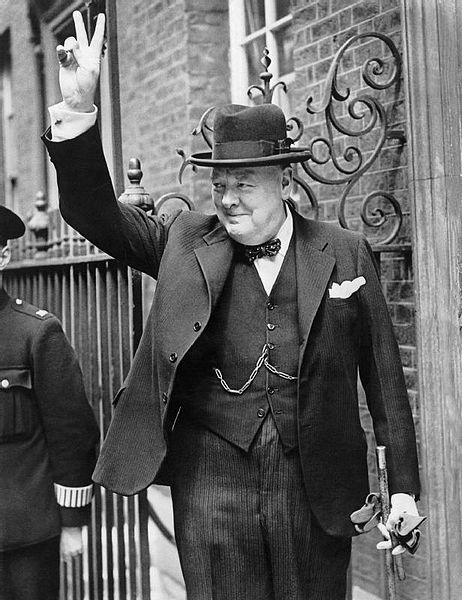


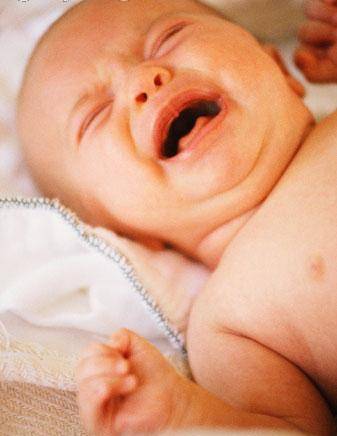







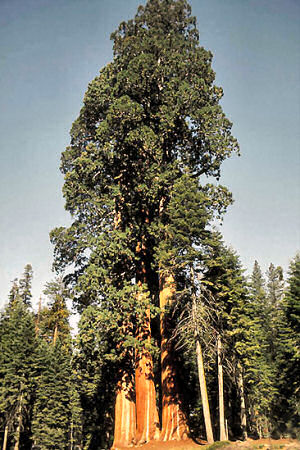
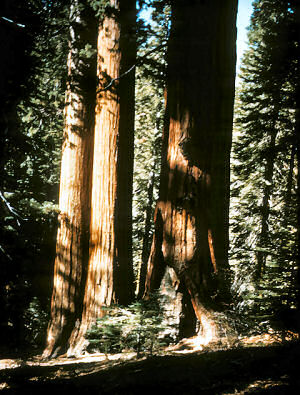
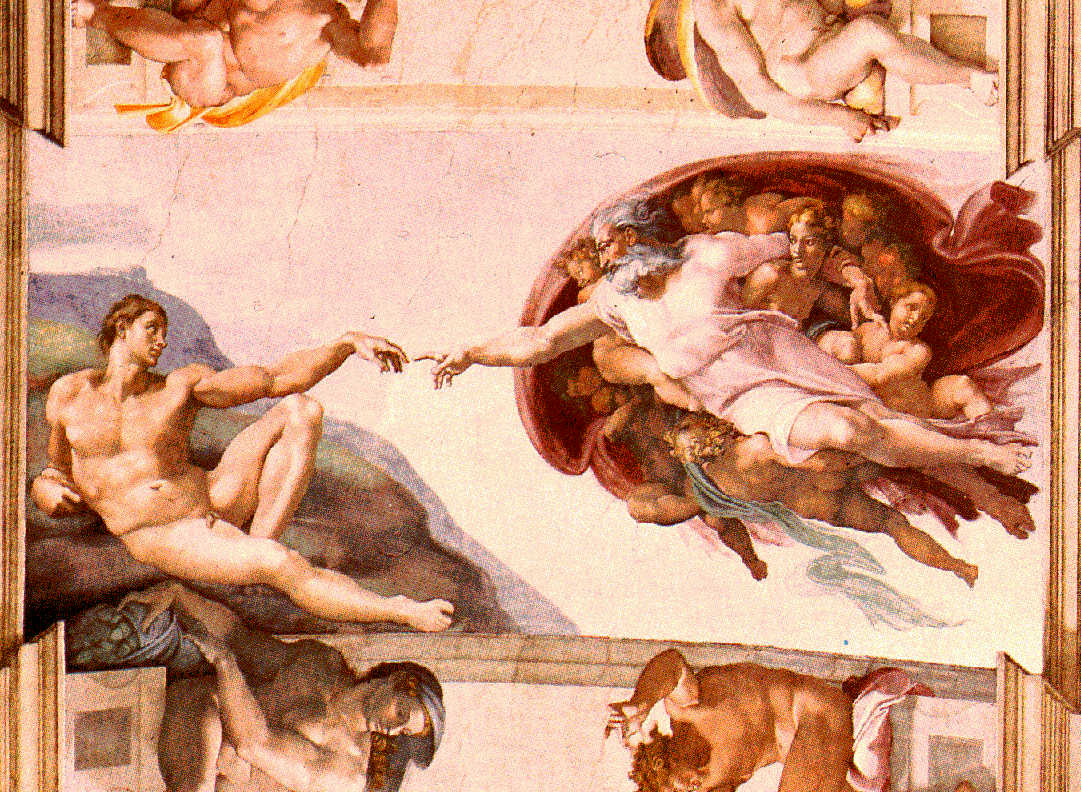
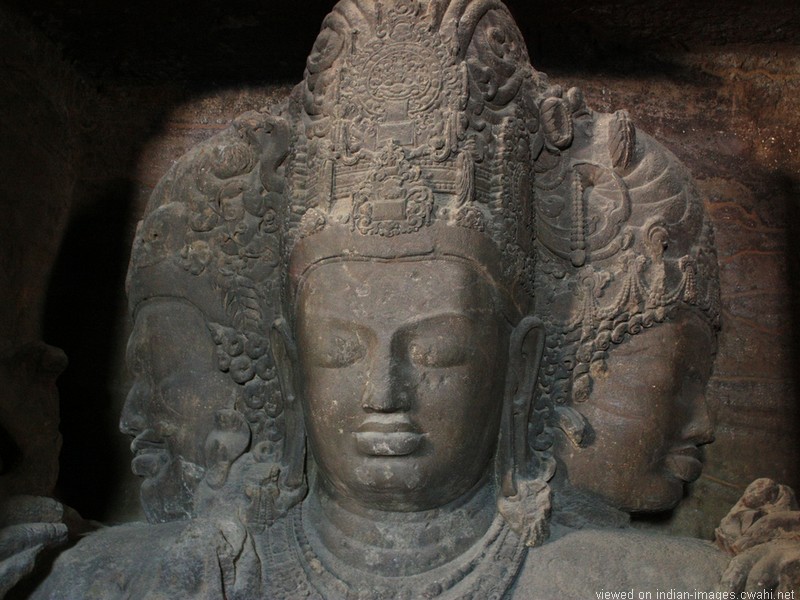


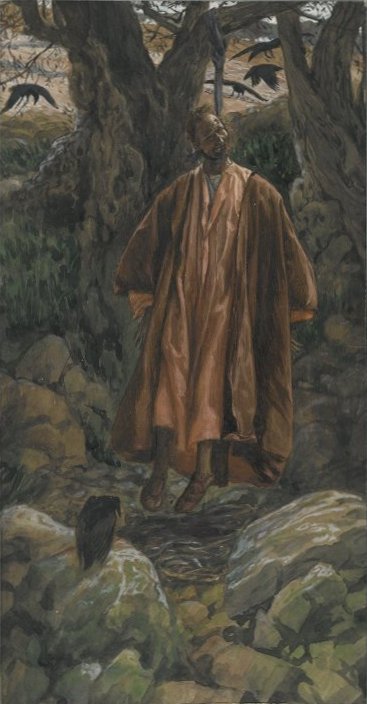


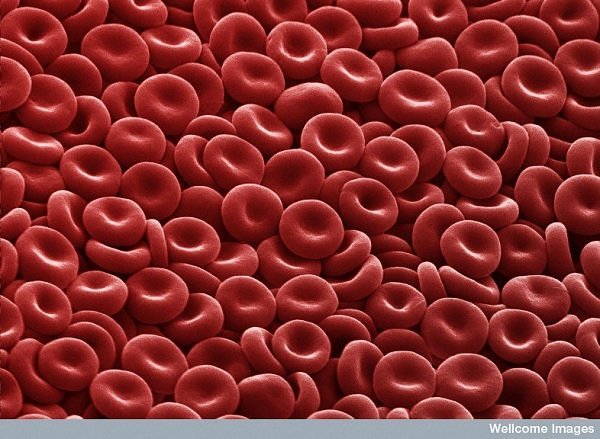


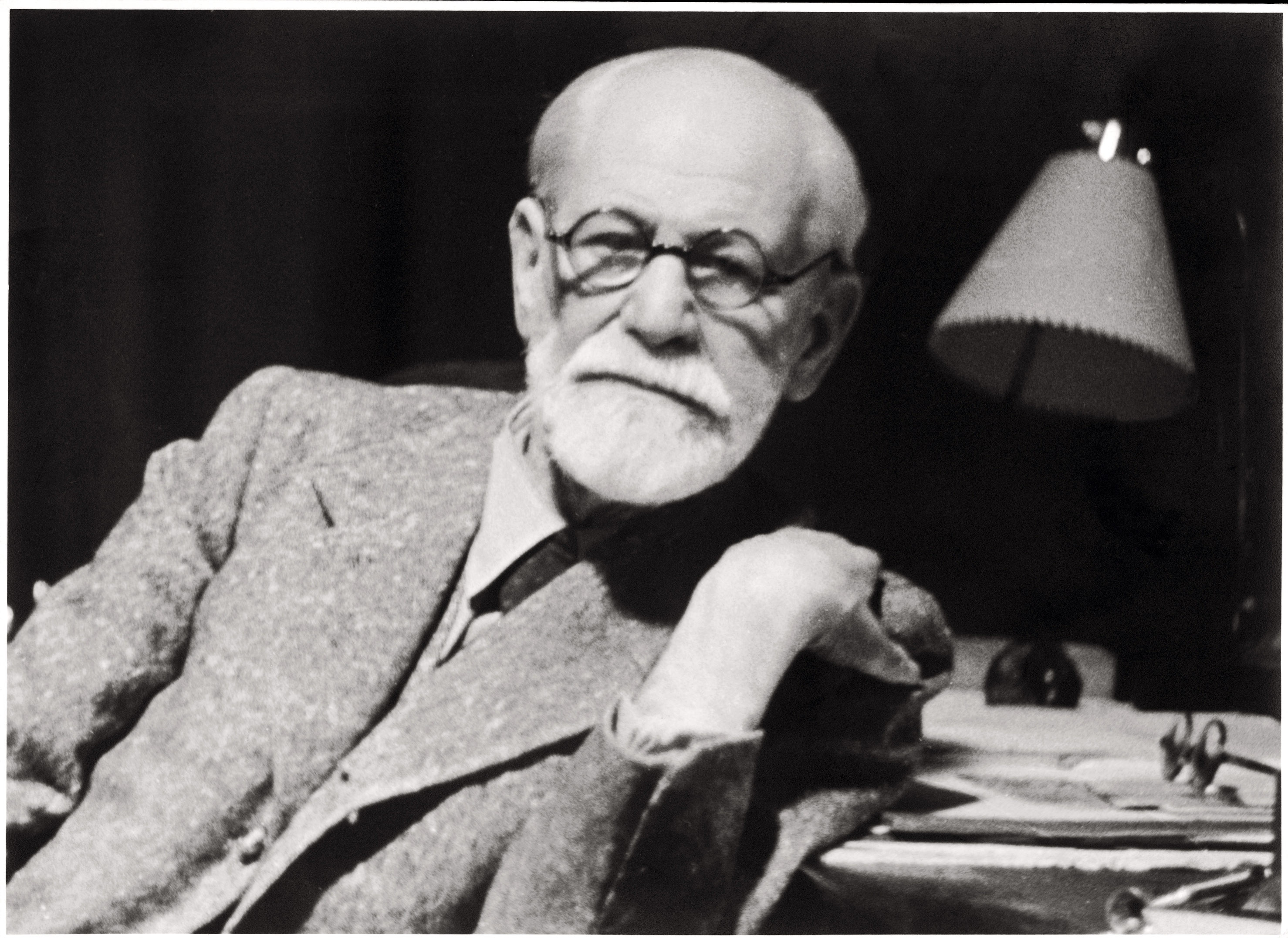
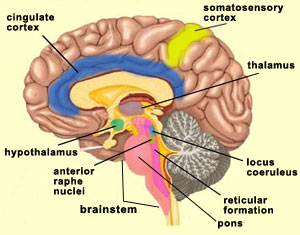


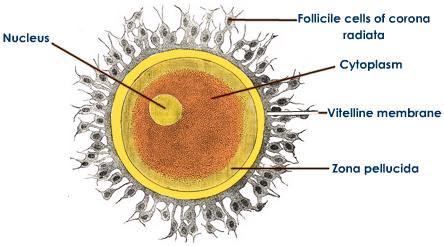


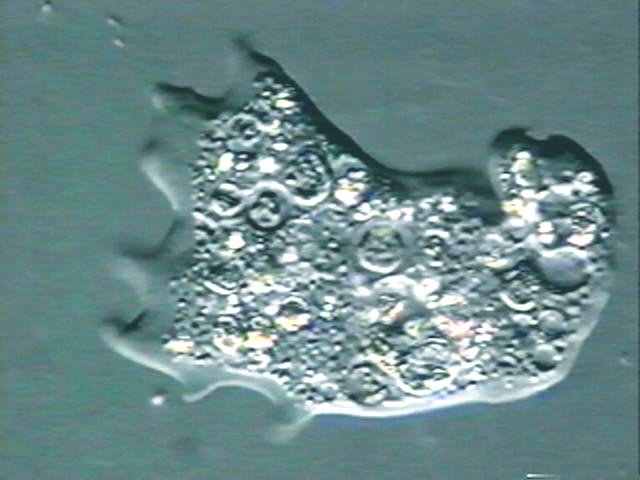
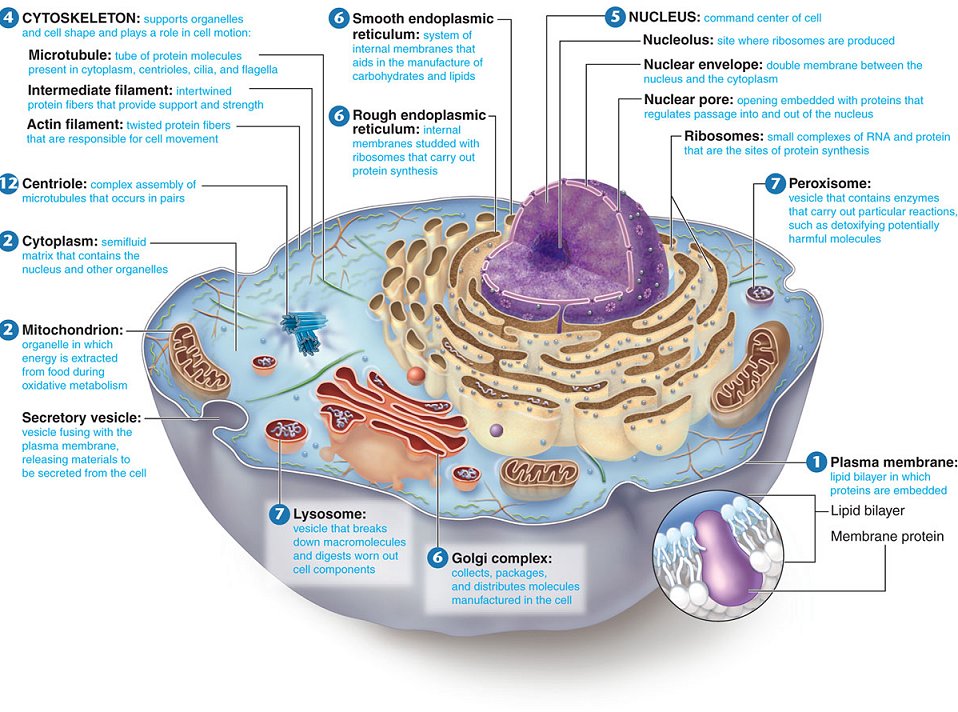

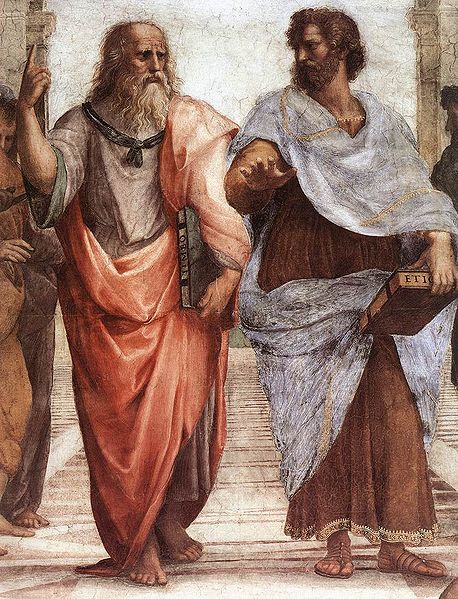
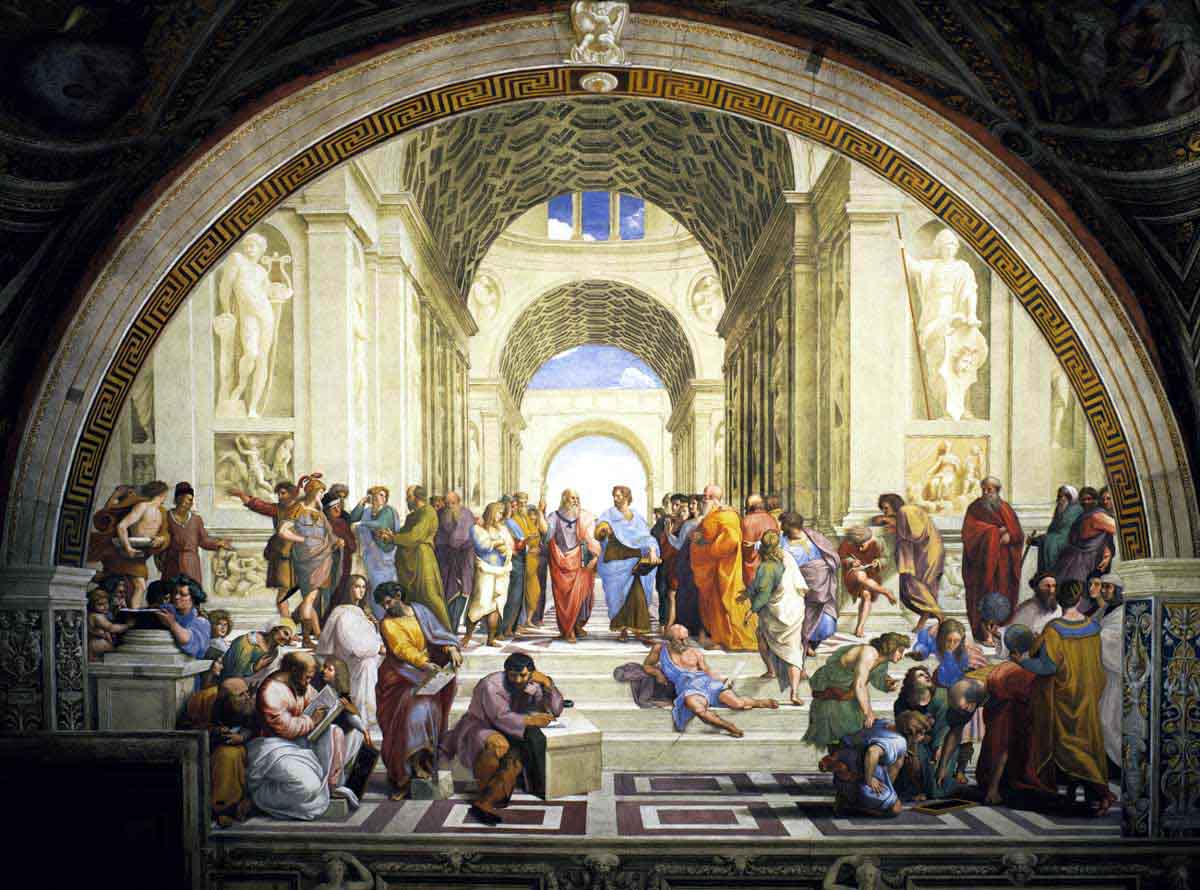

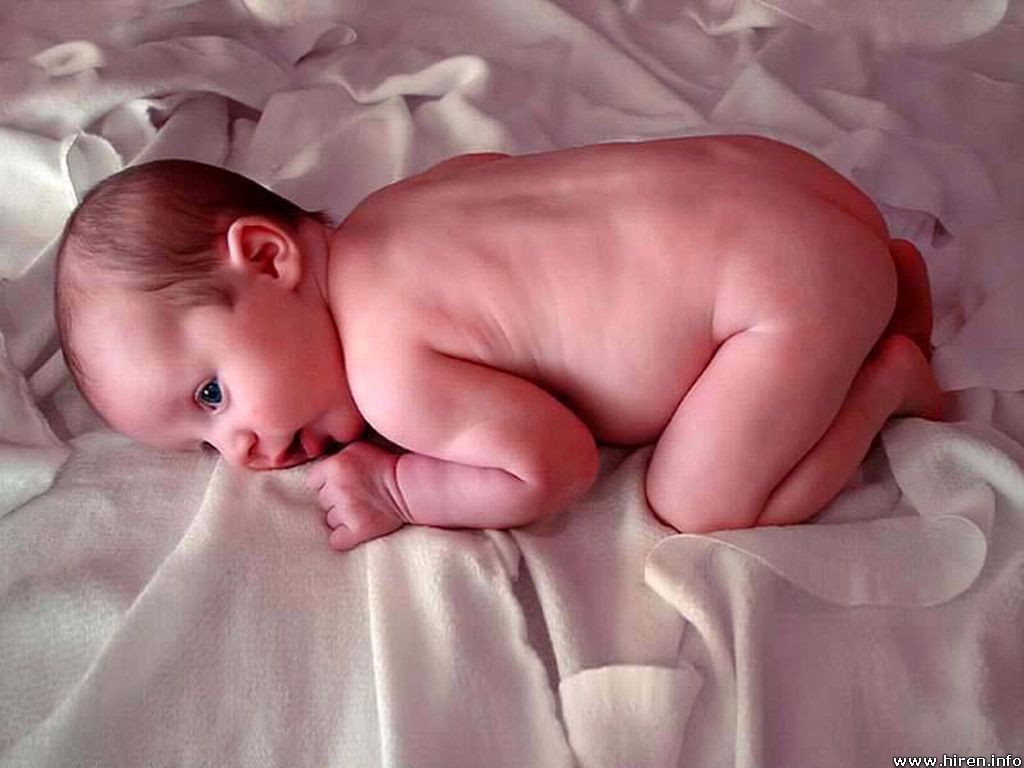


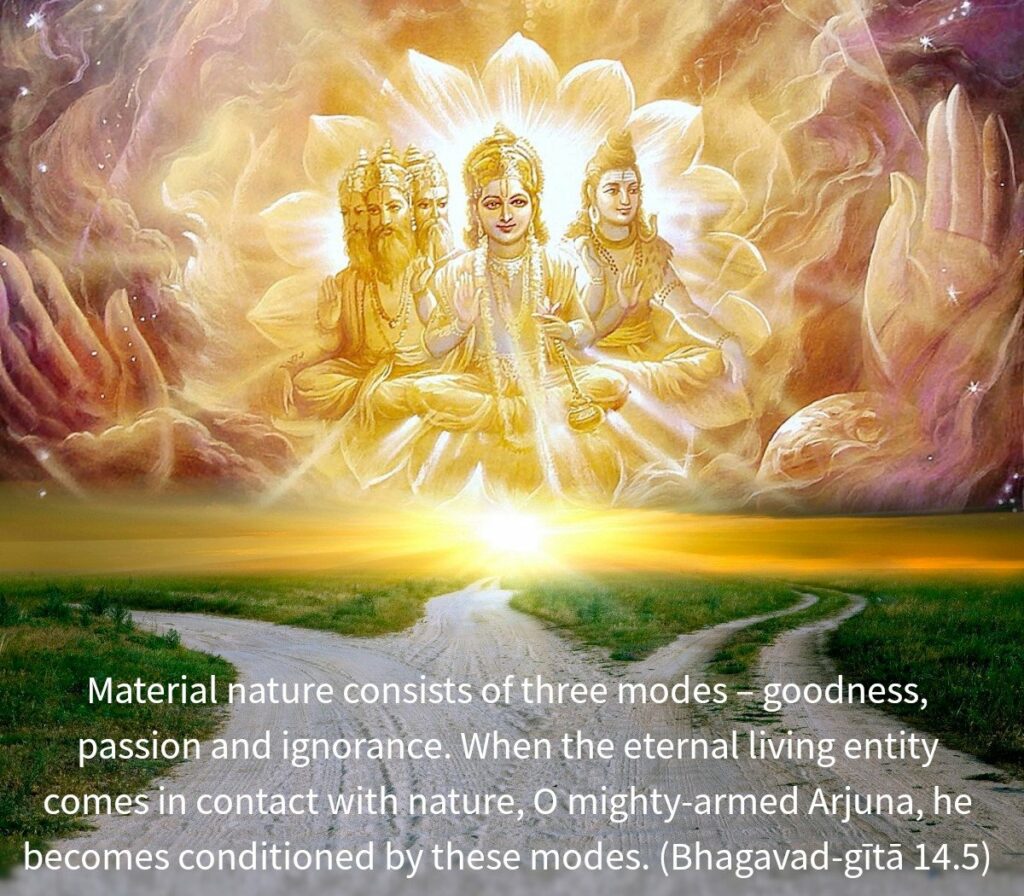

 Whole Dude - Whole Concept