The Material Basis of Spirituality Science. The Living Tibetan Spirits and the Science of Consciousness

The Material Basis of Spirituality. I host the Living Tibetan Spirits in my consciousness. What is Matter? and What is Spirit? If materialism is about the influence of material wealth, I would like to use the Power/Force/Energy called Money to talk about Life and Death. The Laws of Conservation are applicable to both the living, and the non-living matter. Hence, it can be stated that “Life can neither be created nor destroyed.” If any person can refute my claim using valid, scientific information, I would give the person a US $1,000 bill as a reward.

Matter is an actual substance that has properties such as mass or weight, and occupies space. Matter has other attributes like motion, size, shape, and a form by which it may be recognized. Matter makes up all visible objects in the universe, and it can be neither created nor destroyed. There is no such agreement about the term ‘Spirit’.

In my view, man will not be able to define his purpose in life if there is a separation of matter and spirit. Man is a physical being with matter and form. To define the goals, or values of human life, man must understand what it is to be a substance and what it is to exist. If matter and spirit are separated, and if there is no unity between matter and spirit, human life would be simply impossible. The word or term ‘Spirit’ is associated with characteristics such as immutable, immortal, immovable, imperishable, indestructible, immaterial, eternal, and unchanging, or constant nature of a substance which withstands the influence of time.

If God is uncreated and is eternal, Spirit is a natural extension of God’s nature and shares the same attributes. To recognize the spiritual potential of a substance, we have to understand the nature of matter.

The Material Basis of Spirituality Science. I host the Living Tibetan Spirits in my consciousness.. My Body is Indian but spiritually I’ am Tibetan.

TIBETAN BUDDHISM AND THE LIVING TIBETAN SPIRITS OF SPECIAL FRONTIER FORCE

The Material Basis of Spirituality Science. I host the Living Tibetan Spirits in my consciousness. In Tibetan Buddhism, Bodhisattva-Avalokitesvara is physically manifested as His Holiness The Dalai Lama.

In the beginning, I submit to all of my readers that this conversation is not about the principles of Tibetan Buddhism. I ask my readers to know that I am not speaking about Tibetan traditional belief in reincarnation. In Tibetan Buddhism, a “TULKU” is a particularly high-ranking Lama who can choose the manner of his (or her) rebirth or reincarnation. I have no personal knowledge of rebirth or reincarnation of any high-ranking Lama including the Tibetan spiritual leader His Holiness the 14th Dalai Lama. This conversation is not about reincarnation or rebirth.

I am sharing my personal experience, my association, and my contact with non-clergy members among Tibetan exiles, the laity, the peasants, and other ordinary folks of Tibet. The Tibetan Spirits that I know are not supernatural beings and they do not claim to possess any kind of supernatural powers. I am exclusively speaking on behalf of  ‘The Living Tibetan Spirits’ that inhabit my consciousness. I would like to carefully define each term that I may use in this conversation to avoid confusion and misrepresentation of facts or information that pertain to Tibetan Identity and Tibetan Culture. It must be clearly noted that traditional Tibetan Buddhism supports the concept of “ANATMA” and proclaims the non-existence of the human soul or spirit. Having studied, Human Anatomy, and Human Physiology, I would like to share my understanding of the human soul and spirit. I would not be surprised if a majority of Tibetan Buddhists reject my views about the human soul and spirit.

WHAT IS SPIRIT?  WHAT IS THE LIVING SPIRIT?

The Human Organism is an association of trillions of individual living cells. Consciousness serves the purpose of Functional Unity and all the cells display adaptive functional subordination to serve the purpose of the Whole Organism or the Individual. There are two distinct aspects of human Consciousness;1. The Capacity for Consciousness, and 2. The Contents of Consciousness.

I use the term ‘soul’ to refer to the animating, vital, Life Principle found in all living things. The term ‘spirit’ is often used to refer to the intelligent, or immaterial part of a man as distinguished from the human body, and mind. The traditional Indian belief systems may describe the ‘spirit’ as the immaterial reality that is imperceptible to the organs of sense perception. I describe consciousness as the fundamental characteristic of all living things and I describe consciousness as a spiritual function; a function that requires the operation of the soul, and spirit. I claim that consciousness is the absolute nature of living things or living objects. Consciousness is the natural principle by which a living thing knows and experiences its external and internal environment. Being conscious means recognizing the existence, the fact of something. Consciousness is the biological characteristic which is the evidence of a living thing knowing the fact of its own existence; it knows as to where it exists and knows as to how it is existing. A dead, or non-living thing has no consciousness and the dead object has no awareness of the world in which it may be found. I cannot describe soul and spirit as entities that may exist independently of living matter. Hence, I would like to suggest that soul, and spirit is known because of its association with a living person. I have no personal experience of a disembodied spirit. I am intentionally using the term, ‘The Living Spirits’ as I am not aware of the existence of ‘Dead Spirits’. Spiritism or Spiritualism is a belief that natural, living objects have indwelling spirits. When used as an adjective, the term ‘spiritual’ means, relating to or concerned with the spirit or soul. This term is often used to describe human relationships. The term ‘spiritual’ in the context of human relationships describes the nature of a relationship, a partnership, an association, a connection, or bonding between two or more living people based upon thoughts, or feelings of sympathy, and understanding.

THE LIVING TIBETAN SPIRITS OF SPECIAL FRONTIER FORCE

Personal Number: MS-8466/MR-03277 K. Rank: Captain. Name: R Rudra Narasimham (R R Narasimham), Branch: Army Medical Corps/Short Service Regular Commission (1969), Direct Permanent Commission (1973). Unit: Headquarters Establishment Number. 22, Vikas Regiment, C/O 56 APO. Designation: Medical Officer from September 22, 1971, to December 18, 1974. Organization: SPECIAL FRONTIER FORCE.
The Material Basis of Spirituality Science. I host the Living Tibetan Spirits in my consciousness. I served in Special Frontier Force from September 22, 1971, to December 18, 1974. I was not a mercenary for I was employed by the US government to accomplish the goals of the US policy in South Asia apart from serving the purpose of the US Central Intelligence Agency. I was fully involved and was prepared to operate across the legitimate border between India and Tibet as established by the McMahon Treaty and the Simla Agreement of 1914 between India and Tibet. We as an organization defended our own territory to defend our natural rights. We were fully ready to conduct offensive operations against our Enemy if the Enemy attacks us during the conduct of our military mission.

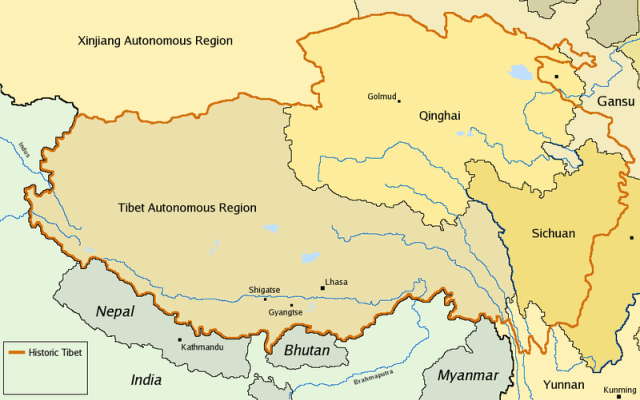
I was granted Short Service Regular Commission to serve in the Indian Army Medical Corps during 1969 and joined the Service on July 26, 1970, in the rank of Lieutenant. On completion of basic military training at Lucknow and professional training at Military Hospital, Ambala, I was posted to Headquarters Establishment Number. 22, C/O 56 APO (Vikas Regiment) which is formally known as Special Frontier Force. This organization is primarily concerned about operating across the legitimate border between India and Tibet as established by the McMahon Treaty and the Simla Agreement of 1914 and its purpose is that of ending the military occupation of Tibet by the People’s Republic of China. This organization was conceived by the 35th U.S. President, John Fitzgerald Kennedy during 1962.  President Kennedy pursued the U.S. Foreign Policy that was initiated by the 33rd U.S. President, Harry S Truman (1949-1952). President Truman founded the North Atlantic Treaty Organization or ‘NATO’ on 04 April 1949. NATO is a multinational defense plan to defend Europe in response to tensions with the Soviet Union (USSR). The Truman Doctrine of 1947 was formulated to protect Greece and Turkey from Communist domination. The 34th U.S. President, Dwight David Eisenhower (1953-1961), and his Secretary of State John Foster Dulles continued Truman administration’s policy of containing Communism.

The Material Basis of Spirituality Science. I host the Living Tibetan Spirits in my consciousness.

Eisenhower Doctrine of 1957 was designed to protect the Middle East from Communist aggression. At that time, the U.S. administration and the U.S. Central Intelligence Agency (CIA) started playing an increasing role to defend the Tibetan interests and provided training and equipment to the Tibetan freedom fighters to resist the military occupation of Tibet by the People’s Liberation Army of Communist China.

The Material Basis of Spirituality Science. I host the Living Tibetan Spirits in my consciousness. Special Frontier Force – Tribute to Fallen Soldiers. Camp Hale, Colorado, USA.

During October 1962, after a massive, and brutal attack on India’s Himalayan Frontier, India recognized the military threat posed by Communist China. India needed urgent foreign assistance as it had faced critical shortages in its defense preparedness. Indian Prime Minister Jawaharlal Nehru who embraced the policy of political neutralism accepted the US military assistance while India officially continued its adherence to the Non-Alignment Policy. Similarly, Tibetan Exile Leader, His Holiness the 14th Dalai Lama continued Tibet’s policy of political isolationism, and agreed to participate in a military alliance or pact with the United States and India to respond to the military threat and military occupation of Tibet by Communist China without publicly disclosing the military agreement and cooperation between these three nations. The Cold War Era of secret diplomacy made it easy to give birth to a secretive military organization called Special Frontier Force where the identity of the Employer remains concealed. The Government of India and Tibetan Government-in-Exile have administered the oaths of secrecy to all of their participating members of Special Frontier Force. The U.S. Central Intelligence Agency provided the necessary military instructors to train the personnel in the use of U.S. military equipment and stores. The U.S. Congress makes the budgetary provision to provide the funds to this organization which primarily uses U.S. military equipment. However, the Officers and the men who serve in this military establishment are not mercenaries who may join the battle to provide some exclusive benefit to a foreign government or Agency. The men and the Unit are motivated to perform their duties to defend their rights and their own territory. The United States participates in the operational activities of Special Frontier Force to collect intelligence about Communist China’s military preparedness.

OPERATION EAGLE-THE MILITARY OPERATION IN THE CHITTAGONG HILL TRACTS IN 1971-72. SPIRITUALISM AND THE LIVING TIBETAN SPIRITS.

Special Frontier Force launched a difficult military operation called Operation Eagle to initiate the Liberation of Bangladesh in the Chittagong Hill Tracts during 1971.

SPIRITUALISM-THE LIVING TIBETAN SPIRITS: The “POORVI STAR” is the evidence for my participation in the Bangladesh Liberation War of 1971. We fought this battle and buried or cremated our dead in the Chittagong Hill Tracts.

I witnessed the loss of the lives of some young Tibetan soldiers during this battle. Since I have a spiritual relationship with the men of my Unit, I was not a simple witness to the fact of their death. Without any recognizable sense perception, my consciousness has given a home to the Tibetan Spirits. At that time, I had no particular mental awareness of this fact. We returned to India during January 1972 on completion of our Bangladesh operations.

The Material Basis of Spirituality Science. I host the Living Tibetan Spirits in my consciousness. This is a photo image taken in 1972 while I served in the Special Frontier Force. We serve wearing the Indian Army uniforms as the US employer wants to conceal his involvement. Before this photo was taken, we were joking about the Intelligence Service of Communist China. We defend India’s Himalayan Frontier along the McMahon Line and patrol the territory that China illegally claims and has occupied. China’s Intelligence Service has the Policy to obtain photo images of all Indian Army Officers who may enter the disputed Himalayan territory. Our response to China was; “COME AND GET US ON THE BATTLEFIELD.”

We returned from Bangladesh with a sense of pride for our successful execution of the military campaign. I served in Special Frontier Force until December 1974 and lost contact with the men of my Unit. The events of 1971-72 got buried in my memory. In January 1984, I left India with my family to begin our lives away from the country of our origin. In practical terms, I began my life as an exile and I had no direct contact with my Indian relatives or Tibetan exiles who continue to live in India.

THE JOY OF EMPTINESS – THE DISCOVERY OF THE LIVING TIBETAN SPIRITS:

SPIRITUALISM – THE JOY IN EMPTINESS – THE DISCOVERY OF THE LIVING TIBETAN SPIRITS: His Holiness The Dalai Lama visited Ann Arbor, Michigan during April 2008 and had explained the concept of finding “JOY” by simply emptying the Mind.

I arrived in Ann Arbor, Michigan with my family during July 1986 and started leading a life of voluntary simplicity. I maintain very minimal indirect contacts with my relatives who live in India. Apart from the fact of physical separation, there is mental separation from all the events and experiences that shaped my life in India before I left the country. While I live in Ann Arbor, it came as a big surprise to me when His Holiness the 14th Dalai Lama visited Ann Arbor to speak at a function organized by The University of Michigan. He explained the concept of finding “JOY” in Emptiness or the emptying of the mind in which the mind has been emptied of all particular objects and images. Emptiness is created by casting aside the attachment to everyday things and worries. While I practiced the emptying of my mind, I recognized that I cannot remove the desire for Freedom in the Land of Tibet. On careful introspection, I discovered that this desire is attached to The Living Tibetan Spirits who inhabit my consciousness. I have no personal attachment to the Land of Tibet. I have no personal attachment to the Tibetan Identity. I have no personal attachment to Tibetan Culture. I have no personal attachment to Tibetan Buddhism. I believe in God as the Creator of man, this world, and the universe. But, I find myself attached to this desire that seeks Freedom in the Land of Tibet. I can remove all my desires and break my attachment to impermanent things or thoughts. This desire for Tibetan Freedom is not a thought that I have imagined in my mind. This concern for Tibetan Freedom is evidence for the existence of The Living Tibetan Spirits in my consciousness. There are two aspects of consciousness that are registered by a living individual; 1. Consciousness is a state of knowing or awareness of what goes on around an individual, and 2. Consciousness is a state of knowing or awareness of what goes on within the individual. In my Consciousness, there is the existence of Freedom in Tibet. In the world that I am conscious and aware of today, there is no Freedom in Tibet. So, I have decided to fight the sense of fear and darkness that has enveloped my mind and tell the people around that I demand Freedom in Tibet. I want to give a sense of “JOY” to The Living Tibetan Spirits. I want to share these photo images that have captured the moments of pride and victory in War. These photo images were illegally obtained by the Enemy. This Enemy Agent who took these photo images killed himself for his act of betrayal. However, The Living Tibetan Spirits recognize a moment of glory in their sacrifice. They were not alive on June 03, 1972 and could not personally witness the event shown in these photo images. The Living Tibetan Spirits can easily identify all the objects shown in these images and are pleased by viewing these images. The Enemy unintentionally served a purpose while he engaged in acts of espionage. I am not surprised. At Special Frontier Force, we as an organization have always accepted the challenge and are willing to meet the Enemy on the battlefield.

SPIRITUALISM-THE LIVING TIBETAN SPIRITS: His Holiness The Dalai Lama visited my Unit on June 03, 1972, to conduct a Worship Service at a local Buddhist Temple known as Gompa or Gonpa. It is a military tradition to present a Guard of Honor to a visiting dignitary; His Holiness is a dignitary who represents Tibet as its Spiritual and Temporal Leader. The Commander of Special Frontier Force at that time was Major General Sujan Singh Uban, AVSM. As a simple security precaution, photography was prohibited at this event. The Enemy agent who served as a Buddhist monk illegally captured this photo image and distributed the same. The spy killed himself when his act got discovered.
SPIRITUALISM-THE LIVING TIBETAN SPIRITS: This photo image was illegally captured by a spy who worked for Communist China’s Intelligence Service. China spies upon His Holiness the 14th Dalai Lama all the time and watches all of his movements. He is seen in this photo while delivering a spiritual message on June 03, 1972 in the presence of Major General Sujan Singh Uban, AVSM, the Inspector General of Special Frontier Force. The Enemy agent felt remorse for his own behavior and killed himself while being interrogated about his spying activities..
SPIRITUALISM – THE LIVING TIBETAN SPIRITS – OLD FLAMES NEVER DIE: The butter lamps lit in my Unit Gompa or Gonpa to pay tribute to the departed souls, the people who gave their precious lives to defend the Freedom of people.
SPIRITUALISM-THE LIVING TIBETAN SPIRITS: BEWARE OF COMMUNIST CHINA’S INTELLIGENCE SERVICE: In this photo taken on September 28, 2012, at Dharamshala, India, His Holiness The Dalai Lama gestures as he jokingly asks an elderly Tibetan waiting among journalists if he is a cameraman. Fortunately, the man is not a Communist spy. But, I will not be surprised if a spy has actually taken this photo.

THE FUTURE OF FREEDOM IN TIBET:

Spiritualism-The Living Tibetan Spirits: FREEDOM IN TIBET: Freedom is a natural condition that is given by God. It is a gift and it is not a desire or craving. When the Freedom is taken away, the disturbance makes the man search for Peace, Harmony, and Tranquility in his Living Condition. It is natural that Tibetans demand this Freedom in their occupied Land.

In conclusion, I suggest that without effort and struggle, there can be no real upward movement in our lives, or in the lives of people, or in the history of a Nation. The people of Tibet need to struggle to realize the hope of regaining their natural Freedom. The darkness of military occupation has enveloped the Land of Tibet. When the oppressor intends to be unjust, he would use any excuse and he will always find a pretext for his tyranny. It is useless for the innocent to try reasoning to get justice from a tyrant. Let us all join and work together to Fight the Battle of Right against Might.

The Unknown Soldier of America

Spiritualism-The Living Tibetan Spirits : On September 02, 1960, the first members of the First Tibetan Parliament-in-Exile took their Oath of office. Tibetans most recently celebrated 52nd Democracy Day. As per their Charter, they convened a Special General Meeting of Tibetans for the purpose of responding to the current tragic situation in Tibet. This Meeting was held for four days from September 25, to September 28, 2012. The Living Tibetan Spirits were not present at the Meeting. They inhabit my Consciousness. I intend to speak on their behalf and express their desire for Tibetan Freedom.
The Material Basis of Spirituality Science. I host the Living Tibetan Spirits in my consciousness. What is Matter? and What is Spirit? If materialism is about the influence of material wealth, I would like to use the Power/Force/Energy called Money to talk about Life and Death. The Laws of Conservation are applicable to both the living, and the non-living matter. Hence, it can be stated that “Life can neither be created nor destroyed.” If any person can refute my claim using valid, scientific information, I would give the person a US $1,000 bill as a reward

The Material Basis of Spirituality Science. Spiritual Well Being demands the support for Material Well Being.

The Material Basis of Spirituality Science. Repeal PRWORA Project denounces the contempt of the Supreme Law of the Land by President Clinton. I am upholding the Human Rights of Simon Cyrene, an alien or noncitizen.

In my view, the Soul or the Spirit is a material principle. Simon Cyrene, the bearer of the Cross is a physical, mortal being just like the Son of Man. Simon Cyrene, an alien or noncitizen could not avoid the burden of carrying the Cross. The concept of Spiritual well being always includes the dimension of the physical or the material well being of the man. In the present times, the physical or the material well being of the man always includes the concern about fair and just access to the economic resources to provide for the daily necessities of life particularly during old age after the attainment of the legally determined full retirement age.

The Material Basis of Spirituality Science. Repeal PRWORA Project denounces the contempt of the Supreme Law of the Land by President Clinton. I am upholding the Human Rights of Simon Cyrene, an alien or noncitizen.

THE REPEAL MOVEMENT DENOUNCES CONTEMPT OF THE US CONSTITUTION

The Material Basis of Spirituality Science. Repeal PRWORA Project denounces the contempt of the Supreme Law of the Land by President Clinton. I am upholding the Human Rights of Simon Cyrene, an alien or noncitizen.

WHERE IS THE PROTECTION FOR SOCIAL SECURITY RETIREMENT INCOME?

The Material Basis of Spirituality Science. Repeal PRWORA Project denounces the contempt of the Supreme Law of the Land by President Clinton. I am upholding the Human Rights of Simon Cyrene, an alien or noncitizen.

THE GREAT AWAKENING MOVEMENT DENOUNCES PRESIDENT CLINTON’S DISDAIN OF THE CONSTITUTIONAL LAW

The Material Basis of Spirituality Science. Repeal PRWORA Project denounces the contempt of the Supreme Law of the Land by President Clinton. I am upholding the Human Rights of Simon Cyrene, an alien or noncitizen.


PRESIDENT CLINTON’S NEW BEGINNING IN 1996 – TRAVESTY OF SOCIAL SECURITY ACT

On August 22, 1996, US President Bill Clinton (Democrat) signed into Law that reintroduced Slavery, Involuntary Servitude, Serfdom and Forced Labor in the pretext of making ‘A New Beginning’. Welfare Reform Act or Personal Responsibility and Work Opportunity Reconciliation Act (PRWORA) is unjust and unfair as it violates the Constitutional Law that defends the natural rights of all people living in the United States. All US taxpayers must be treated as equals for receiving the retirement income benefits for which they paid taxes. President Clinton’s action constitutes transgression of President Abraham Lincoln’s Emancipation Proclamation that saved the US Noncitizens or Aliens from the burden of Slavery.

GIVING VOICE TO A HIDDEN PROBLEM – TRAVESTY OF THE EMANCIPATION PROCLAMATION

The Material Basis of Spirituality Science. Repeal PRWORA Project denounces the contempt of the Supreme Law of the Land by President Clinton. I am upholding the Human Rights of Simon Cyrene, an alien or noncitizen.

NATURAL LAW vs MAN MADE LAW – SLAVERY IS CONTEMPT OF NATURAL LAW

The Material Basis of Spirituality Science. Repeal PRWORA Project denounces the contempt of the Supreme Law of the Land by President Clinton. I am upholding the Human Rights of Simon Cyrene, an alien or noncitizen.

US CONGRESS SLAVE DRIVER

The Material Basis of Spirituality Science. Repeal PRWORA Project denounces the contempt of the Supreme Law of the Land by President Clinton. I am upholding the Human Rights of Simon Cyrene, an alien or noncitizen.

US CONGRESS SLAVE DRIVER – THE 150th ANNIVERSARY OF THE 13th AMENDMENT. PRESIDENT BARACK OBAMA SPOKE IN EMANCIPATION HALL ON CAPITOL HILL ON WEDNESDAY, DECEMBER 09, 2015.

At a ceremony held in Emancipation Hall of the United States Capitol Visitor Center on Wednesday, December 09, 2015, President Barack Obama and leaders of Congress commemorated the 150th Anniversary of the 13th Amendment to the US Constitution. House Speaker Paul Ryan in his remarks stated that the Constitution is Supreme Law of the Land. The 13th Amendment is just 43 words long. I want to examine if those 43 words govern, rule, and operate the lives of all inhabitants of this Land.

The Material Basis of Spirituality Science. Repeal PRWORA Project denounces the contempt of the Supreme Law of the Land by President Clinton. I am upholding the Human Rights of Simon Cyrene, an alien or noncitizen.

December 9, 2015|Speaker Ryan’s Press Office

WASHINGTON – Earlier today, at a ceremony in Emancipation Hall of the United States Capitol Visitor Center, President Obama and leaders of Congress commemorated the 150th anniversary of the 13th amendment to the Constitution. Following are House Speaker Paul Ryan’s (R-WI) remarks at the ceremony, as prepared for delivery:
The Thirteenth Amendment is just 43 words long. It is so short that, when you read it, you can almost miss the whole significance. You have to stop and remind yourself that 600,000 people died in the Civil War—600,000 died over 43 words. Or to be more precise, they died in a war that decided whether those 43 words would ever be written.

And not everyone supported the Thirteenth Amendment. There was fierce opposition. But I think it is telling that when the state of Maryland held a referendum to abolish slavery, it was the votes of Union soldiers that put it over the top. It was the men who had been in the field and heard the battle cries and seen heroic deeds. They knew, better than most, that everyone in that field was an American.
A private in the 89th Illinois put it best. He wrote, “I have often [heard] of men say that they would not fight beside a negro soldier but . . . the whites and blacks charged together and they fell just as well as [we] did. . . . I have seen a great [many] fighting for our country. Then why should they not be free[?]”
It took a war for us to answer that question. We should be honest with ourselves. It took centuries of cruelty and injustice. But today we celebrate the moment when our country decided: Yes, they should be free. They would be free. And we thought this decision was so important that for the first time in half a century, we amended the Constitution. From then on, it would be the supreme law of the land.
And so today we celebrate this 43-word amendment, this “new birth of freedom.” “It is altogether fitting and proper that we should do this.” And we should remember all that it took: the historic battles, the great generals, yes—but also the men in the ranks, the names we have forgotten, especially the men who had once been enslaved: men like William H. Carney and Andrew Jackson Smith.
These men were segregated. They were mistreated. And yet they still fought. They fought for a country that had denied them their freedom. They fought for all of us. And so when we read those 43 short and simple words, we should remember these men and what they did. We should realize those words, like their acts, are gallant, noble, profound. We have witnessed true greatness in this country. And when we ratified the Thirteenth Amendment, we committed ourselves to building a country just as great.
That is what those 43 words mean. That is what they represent. And that is more than worthy of celebration. Thank you.

Tags: U.S. Capitol, Ceremony, Constitution
Contact

H-232 The Capitol
Washington D.C. 20515
P: (202) 225-0600
F: (202) 225-5117

Copyright © 2015 Office of the Speaker of the House

US CONGRESS SLAVE DRIVER – THE 150th ANNIVERSARY OF THE 13th AMENDMENT. THIS STATUE OF FREEDOM BEARS MUTE TESTIMONY TO THE ACTS OF THE CONGRESS.

US CONGRESS SLAVE DRIVER – THE 150th ANNIVERSARY OF THE 13th AMENDMENT. THE AMENDED SOCIAL SECURITY ACT FUNDAMENTALLY VIOLATES THE PRINCIPLES SHARED BY 43 WORDS OF THE 13th AMENDMENT.

My readers should not be surprised if I describe the US Congress as “Slave Driver.” The reason for my claim is based on PRWORA enacted by the US Congress in 1996 that amended US Social Security Act of 1935. This legal provision enacted by the Congress is incorporated as Section 202(y) of the Social Security Act. It mandates that no Retirement Income benefits shall be payable to registered alien (noncitizen) taxpayers in the United States without showing proof of lawful residency as determined by the Attorney General. In my view, unexpired Employment Authorization Document (EAD) must not be demanded if the alien or noncitizen worker has attained the full retirement age as determined by law.

Social Security Act, Section 202(y) violates the principle enshrined in those 43 words called the 13th Amendment. This 1996 amendment to the Social Security Act is fundamentally flawed for it is unconstitutional. It takes away property rights (earnings, wages and retirement income) of individuals who paid Federal, State, Local, Social Security and Medicare Taxes working in this country to attain the full retirement age.

The Material Basis of Spirituality Science. Repeal PRWORA Project denounces the contempt of the Supreme Law of the Land by President Clinton. I am upholding the Human Rights of Simon Cyrene, an alien or noncitizen.

The Emancipation Proclamation issued by President Abraham Lincoln (Republican) in September 1862 came into effect on January 01, 1863 freeing slaves in all territory still at War with the Union. These slaves were not citizens of the Land and had no political rights of their own. In Law, Servitude or Slavery refers to the burden imposed upon property of a person by a specified right another has in its use. Servitude involves labor in which the person who performs labor has no right to his earnings from labor. The Emancipation Proclamation specifically protects, defends, preserves and safeguards the human rights of aliens or non citizens residing in the United States.

The amended Social Security Act gives power to the Social Security Administration to withhold property (wages, earnings, monthly retirement income benefits) of non citizen workers who are not convicted by any US Court of Law. In my analysis, the Social Security Act of 1935 amended in 1996 does not uphold the US Constitution as the Supreme Law of the Land.

I ask my readers to make a distinction between Social Security Tax and Monthly Retirement Benefit. The first represents tax paid to government and the second represents earning or wage entitled to retired person to provide income and security during old age.

The Material Basis of Spirituality Science. Repeal PRWORA Project denounces the contempt of the Supreme Law of the Land by President Clinton. I am upholding the Human Rights of Simon Cyrene, an alien or noncitizen.

President Clinton guilty of Contempt of Law.

The Material Basis of Spirituality Science. Repeal PRWORA Project denounces the contempt of the Supreme Law of the Land by President Clinton. I am upholding the Human Rights of Simon Cyrene, an alien or noncitizen.

The US Social Security Administration must either obtain a criminal conviction or designate the US taxpayer as “SLAVE” to withhold the payment of monthly retirement income benefit of citizen or noncitizen US taxpayer.

The Material Basis of Spirituality Science. Repeal PRWORA Project denounces the contempt of the Supreme Law of the Land by President Clinton. I am upholding the Human Rights of Simon Cyrene, an alien or noncitizen.

The US Congress can levy taxes but cannot deprive any person of Life, Liberty and Property without the due process of Law (14th amendment).

The Material Basis of Spirituality Science. Repeal PRWORA Project denounces the contempt of the Supreme Law of the Land by President Clinton. I am upholding the Human Rights of Simon Cyrene, an alien or noncitizen.

The US Congress Slave Driver for it enacted legislation Section.202(y) of Social Security Act imposing Slavery and Involuntary Servitude by denying the opportunity to noncitizens to retire from work after paying taxes until the attainment of full retirement age.

The Repeal movement exposes President Clinton’s contemptuous violation of the Constitutional Principles of equal protection, equal justice and equal treatment under Law of both citizens and noncitizens present in the US.

Simon Cyrene

The Material Basis of Spirituality Science. Repeal PRWORA Project denounces the contempt of the Supreme Law of the Land by President Clinton. I am upholding the Human Rights of Simon Cyrene, an alien or noncitizen.


Life can neither be created nor destroyed by man. The Law of Conservation of Matter and Spirit

What is Matter? and What is Spirit? If materialism is about the influence of material wealth, I would like to use the Power/Force/Energy called Money to talk about Life and Death. The Laws of Conservation are applicable to both the living, and the non-living matter. Hence, it can be stated that “Life can neither be created nor destroyed.” If any person can refute my claim using valid, scientific information, I would give the person a US $1,000 bill as a reward

What it is to be a Substance? and What it is to Exist? We need to establish knowledge about the man on a firm basis and the information it provides must be tested for its accuracy and consistency with an external reality. We have to make the fundamental distinction between the living and the non-living matter. The scientific advances of the 19th and 20th centuries reinforced the materialistic position concerning the basic similarity of organic living and inorganic physical matter. The man is viewed as a product of natural evolution and is thought to be subject to the same laws of Physics and Chemistry or mechanistic principles.

We need a methodology to study philosophy and to understand philosophical statements. Logical Positivism, also known as Scientific Empiricism aims to clarify concepts in both everyday and scientific language. It describes analysis of language as the function of philosophy. This analysis of language and of concepts is important to understand questions of belief and ideology which affect what we think we ought to do individually and socially. I would use this method of ‘Applied Philosophy’ to analyze the philosophical doctrine of ‘Materialism’ and to study the views and philosophy of Baruch Spinoza and his efforts to interpret human nature and human existence.

WholeDude - WholeDesigner - Matter and Spirit: Baruch(Benedict) Spinoza(1632-1677) Dutch philosopher taught that there is but one infinite substance called God or Nature having infinite attributes. He held that mind, and body as merely different aspects of a single substance. In his view, God is Nature in its fullness.
What is Matter? and What is Spirit? Baruch (Benedict) Spinoza (1632-1677) Dutch philosopher taught that there is but one infinite substance called God or Nature having infinite attributes. He held that mind, and body as merely different aspects of a single substance. In his view, God is Nature in its fullness.

Matter is an actual substance that has properties such as mass or weight, and occupies space. Matter has other attributes like motion, size, shape, and a form by which it may be recognized.

Materialism is defined as a system of thought that explains the nature of the world as entirely dependent on “matter” the final reality. Materialism as a philosophical doctrine deals with matter as the only reality and that everything in the world, including thought, will, and feeling can be explained only in terms of matter.

Baruch (Benedict) Spinoza, Dutch philosopher taught that there is but one infinite substance, God or Nature, having infinite attributes of which only thought and extension are knowable. He was excommunicated from his Jewish community.

Spinoza held that mind and body as merely different aspects of a single substance. In his view, God is Nature in its fullness. The Matter is immutable or indestructible, and Spinoza explained the indestructibility of matter is established by the uncreated and eternal nature of God. “By Body”, Spinoza writes, “I understand a mode which expresses in a certain and determinate manner the essence of God in so far as He is considered as the thing extended.”

This philosophical doctrine of Materialism is used in modern times to explain that comfort, pleasure, and wealth are the only goals or values of human life and human existence. The idea of materialism is used to contrast it with the spiritual, or intellectual goals, or values of human life.

In my view, man will not be able to define his purpose in life if there is a separation of matter and spirit. Man is a physical being with matter and form. To define the goals, or values of human life, man must understand what it is to be a substance and what it is to exist. If matter and spirit are separated, and if there is no unity between matter and spirit, human life would be simply impossible. The word or term ‘Spirit’ is associated with characteristics such as immutable, immortal, immovable, imperishable, indestructible, immaterial, eternal, and unchanging, or constant nature of a substance which withstands the influence of time.

If God is uncreated and is eternal, Spirit is a natural extension of God’s nature and shares the same attributes. To recognize the spiritual potential of a substance, we have to understand the nature of matter.

THE LAWS OF CONSERVATION – “LIFE IS NEITHER CREATED NOR DESTROYED”:

WHOLEDUDE - WHOLEDESIGNER - MATTER AND SPIRIT: If materialism is about the influence of money and material wealth, I would like to use the Power/Force/Energy called Money to talk about Life and Death. The Law of Conservation is applicable to both living, and non-living matter. If any person can refute my claim using valid, scientific information, I would give the person a US $1,000 bill as a reward.
What is Matter? and What is Spirit? If materialism is about the influence of material wealth, I would like to use the Power/Force/Energy called Money to talk about Life and Death. The Laws of Conservation are applicable to both the living, and the non-living matter. Hence, it can be stated that “Life can neither be created nor destroyed.” If any person can refute my claim using valid, scientific information, I would give the person a US $1,000 bill as a reward.

If materialism is about the influence of material wealth, I would like to use the Power/Force/Energy called Money to talk about Life and Death. The Laws of Conservation are applicable to both the living, and the non-living matter. Hence, if matter can neither be created nor destroyed, it can be stated that “Life can neither be created nor destroyed.” If any person can refute my claim using valid, scientific information, I would give the person a US $1,000 bill as a reward.

THE LAWS OF CONSERVATION OF MATTER:

WholeDude - WholeDesigner - Matter and Spirit: Antoine Laurent Lavoisier(1743-1794) French chemist and physicist, the founder of modern Chemistry. He gave the name Oxygen to the gaseous chemical element discovered by Joseph Priestley. He discovered the composition of Water molecule. He formulated the Law of Conservation of Mass.
What is Matter? and What is Spirit? Antoine Laurent Lavoisier(1743-1794) French chemist and physicist, the founder of modern Chemistry. He gave the name Oxygen to the gaseous chemical element discovered by Joseph Priestley. He discovered the composition of Water molecule. He formulated the Law of Conservation of Mass.

Chemical elements are the fundamental materials of which all matter is composed. There are about 107 known chemical elements. Chemical elements can combine with one another to form a wide variety of more complex substances called compounds. The number of possible compounds is infinite; perhaps a million chemical compounds are known.

When two or more elements combine to form a compound, they lose their separate identities and the product has characteristics quite different from those of the constituent elements. The gaseous elements hydrogen and oxygen with quite different properties can combine to form the compound water which has altogether different properties from either hydrogen or oxygen. Most of the naturally occurring matter represents physical mixtures of compounds.

The indestructibility of matter was explained by Lavoisier as the Law of Conservation. “We may lay it down as an incontestible axiom,” Lavoisier writes, “that in all the operations of art and nature, nothing is created; an equal quantity of matter exists both before and after the experiment.” What appears to be the destruction of a body is merely the transformation of its matter into another physical condition, without loss of mass unless there is an equivalent gain in energy. The total quantity of matter and energy remains constant throughout all physical changes. Material substances undergo changes when they interact with other material substances, but this “change” cannot be described as the permanent reality. The permanent reality describes the unchanging, or constant nature of chemical elements and molecules in spite of their tendency to interact with other elements and molecules.

WHOLEDUDE - WHOLEDESIGNER - MATTER AND SPIRIT: Water is the simplest and most abundant of all the molecules found in all living matter. The chemical composition of living matter reveals 70 to 80 percent as that of water. At the same time, water can exist as simple, physical, or non-living matter. I claim that water molecule has the potentiality to constitute living matter because of its spiritual nature.
What is Matter? and What is Spirit? Water is the simplest and most abundant of all the molecules found in all living matter. The chemical composition of living matter reveals 70 to 80 percent water. At the same time, water can exist as a simple, physical, or non-living matter. I claim that water molecule has the potentiality to constitute living matter because of its spiritual nature. Under the influence of time, living matter is transformed into molecules of non-living matter and yet the properties of molecules is fundamentally conserved allowing the change to proceed in either direction.

The Laws of Conservation are any of the several principles applied in Physics and Chemistry that state that certain properties of an isolated system remain constant with time. Each Law signifies that the nature of a substance or thing that does not change with the passage of time.

However, it must be noted that change is the pervasive phenomenon of the natural world. It is said that “Things in Nature Change with Time.” Although matter may change its form, or shape under the influence of time, its mass always remains the same. The Law of Conservation of Mass implies that matter can be neither created nor destroyed, that is, processes that change the physical, or chemical properties of substances within an isolated system leave the total mass unchanged. Similarly, The Law of Conservation of Energy implies that energy can be neither created nor destroyed, although it can be changed from one form (mechanical, kinetic, chemical, etc.,) into another form such as heat, or the energy consumed in the performance of work. In an isolated system, the sum of all forms of energy, therefore, remains constant. Every conservation law concerns a collection of two, or more objects, isolated from external influence, for which some physical quantity remains unchanged in time, or is conserved, quite apart from the details of what goes on between the interacting particles within the system. An important function of conservation laws is that they make it possible to predict the macroscopic behavior of a system without having to consider the microscopic details of the course of a physical process or chemical reaction. The fundamental character of these conservation laws is evident in the fact that each law may be deduced from or related to a symmetry property of space and time. The symmetry property of space and time determines the periodic frequency with which a natural change occurs while the nature or properties of things is conserved to allow the change to repeat itself in an expected manner.    

 SPIRIT-UNCHANGING NATURE IN A CHANGING WORLD:

WholeDude - WholeDesigner - Matter and Spirit: Many important biological processes involve Redox or Oxidation and Reduction Chemical Reactions. These chemical reactions reveal a dynamic process that is the characteristic of both Life and Death. If Life is explained by a series of chemical reactions, the same process continues into Death.
What is Matter? and What is Spirit? Many important biological processes involve Redox or Oxidation and Reduction Chemical Reactions. These chemical reactions reveal a dynamic process that is the characteristic of both Life and Death. If Life is explained by a series of chemical reactions, the same process continues into Death.

Natural Science, and Natural History is about the natural phenomenon called change. The systematized knowledge of Biological Sciences provide us with information about extinction which is the most common phenomenon in planet Earth’s Natural History. Earth has witnessed several major, and minor episodes called extinction during which certain life forms got wiped out.

While extinction is driven by climate change and its associated environmental change, life continues to exist on Earth without any apparent change in the chemical composition of living matter. Extinction involves the loss of forms and it does not involve a change in the nature of the corporeal substance that has the potential called Life and is known as Living Matter. In other words, it may be stated that if a change is observed in the natural world, it is always supported by an underlying, unchanging principle. While living things are born and die at the end of their lifetime, the matter or the corporeal substance which has the potential to establish Life remains unchanged and its nature is conserved and is not affected by time.

Under the influence of the cyclical flow of time, individual, living things are born and are dying while the Principle of Conservation maintains the unchanging nature of things that constitute Life or Living Matter. Life is established by a vital, animating principle called Spirit; the presence of Spirit can be related to the unchanging or immutable nature of Matter that gets the nature called Eternal, or Immortal, or Imperishable or Indestructible that overcomes the limitations imposed by Time and Space.

The Magic of Creation involves the use of a design, or plan to introduce the abilities such as thought, will, feelings, and cognition into the matter that reveals their presence or absence while passing through stages like Life and Death. The same chemical elements, chemical compounds, and chemical reactions operate in the state called living and death and both are maintained by the same unchanging nature of Matter and Spirit.

In my opinion, it may not be correct to regard Spirit as separate from Matter. It will not be correct to separate man into a physical body or matter, thinking substance or mind, and an immaterial substance called Spirit. There is no human existence if there is disunity or separation of Matter, Spirit, the Body, and the Mind. The uncreated, Eternal, Spiritual nature of God that is shared by Spirit and Matter would lead us to claim: “Life can neither be created nor destroyed.”

What is Matter? and What is Spirit? If materialism is about the influence of material wealth, I would like to use the Power/Force/Energy called Money to talk about Life and Death. The Laws of Conservation are applicable to both the living, and the non-living matter. Hence, it can be stated that “Life can neither be created nor destroyed.” If any person can refute my claim using valid, scientific information, I would give the person a US $1,000 bill as a reward.

Simon Cyrene

What is Matter? and What is Spirit? If materialism is about the influence of material wealth, I would like to use the Power/Force/Energy called Money to talk about Life and Death. The Laws of Conservation are applicable to both the living, and the non-living matter. Hence, it can be stated that “Life can neither be created nor destroyed.” If any person can refute my claim using valid, scientific information, I would give the person a US $1,000 bill as a reward.

Tibet Equilibrium 2021. Defining America’s Mission on the Sixth Day of February

Tibet Equilibrium 2021. Defining America’s Mission on the Sixth Day of February.
Tibet Equilibrium 2021. Defining America’s Mission on the Sixth Day of February.

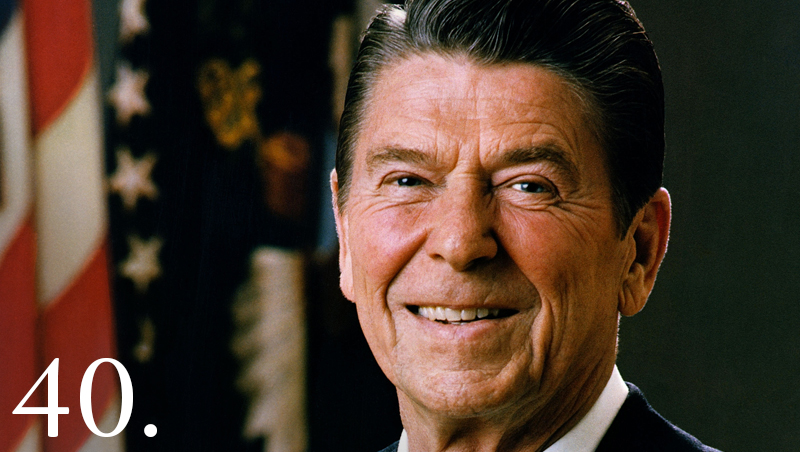
The Special Frontier Force which represents The Tibetan Resistance Movement to contain, to resist, to engage, to counteract, to “Roll-Back” the Spread of Communism, asks Americans to define their Mission on February 06, 2021 to restore Tibetan Equilibrium using the guidance provided by ‘The Reagan Doctrine of 1985’. Using President Reagan’s words, I ask Americans to do what is “Morally Right.”

Rudra Narasimham Rebbapragada
Special Frontier Force-Establishment No. 22-Vikas Regiment

Tibet Equilibrium 2021. Defining America’s Mission on the Sixth Day of February.T

FEBRUARY 06, 1985. THE REAGAN DOCTRINE

Tibet Equilibrium 2021. Defining America’s Mission on the Sixth Day of February.

The “Reagan Doctrine” was used to characterize  the Reagan administration’s (1981-1988) policy of supporting anti-Communist insurgents wherever they might be. In his 1985 State of the Union address, President Ronald Reagan called upon Congress and the American people to stand up to the Soviet Union, what he had previously called the “Evil Empire”:

Reagan began his foreign policy comments with the dramatic pronouncement that, “Freedom is not the sole prerogative of a chosen few; it is the universal right of all God’s children.” America’s “mission” was to “nourish and defend freedom and democracy.” More specifically, Reagan declared that, “We must stand by our democratic allies. And we must not break faith with those who are risking their lives—on every continent, from Afghanistan to Nicaragua—to defy Soviet-supported aggression and secure rights which have been ours from birth.” He concluded, “Support for freedom fighters is self-defense.”

“We must stand by all our democratic allies. And we must not break faith with those who are risking their lives—on every continent, from Afghanistan to Nicaragua—to defy Soviet-supported aggression and secure rights which have been ours from birth.”

Breaking with the doctrine of “Containment,” established during the Truman administration—President Ronald Reagan’s foreign policy was based on John Foster Dulles’ “Roll-Back” strategy from the 1950s in which the United States would actively push back the influence of the Soviet Union. Reagan’s policy differed, however, in the sense that he relied primarily on the overt support of those fighting Soviet dominance. This strategy was perhaps best encapsulated in NSC National Security Decision Directive 75. This 1983 directive stated that a central priority of the U.S. in its policy toward the Soviet Union would be “to contain and over time reverse Soviet expansionism,” particularly in the developing world. As the directive noted:

“The U.S. must rebuild the credibility of its commitment to resist Soviet encroachment on U.S. interests and those of its Allies and friends, and to support effectively those Third World states that are willing to resist Soviet pressures or oppose Soviet initiatives hostile to the United States, or are special targets of Soviet policy.”

To that end, the Reagan administration focused much of its energy on supporting proxy armies to curtail Soviet influence. Among the more prominent examples of the Reagan Doctrine’s application, in Nicaragua, the United States sponsored the contra movement in an effort to force the leftist Sandinista government from power. And in Afghanistan, the United States provided material support to Afghan rebels—known as the mujahadeen—helping them end Soviet occupation of their country.

Tibet Equilibrium 2021. Defining America’s Mission on the Sixth Day of February.
Tibet Equilibrium 2021. Defining America’s Mission on the Sixth Day of February.


India-China Himalayan Frontier Standoff-To Play or Not to Play the ‘Tibet Card’

India-China Himalayan Frontier Standoff-To Play or Not to Play the ‘Tibet Card’. Public funeral ceremony for Company Leader Nyima Tenzin of Special Frontier Force-Vikas Regiment in Leh, Ladakh on Monday, September 07, 2020.

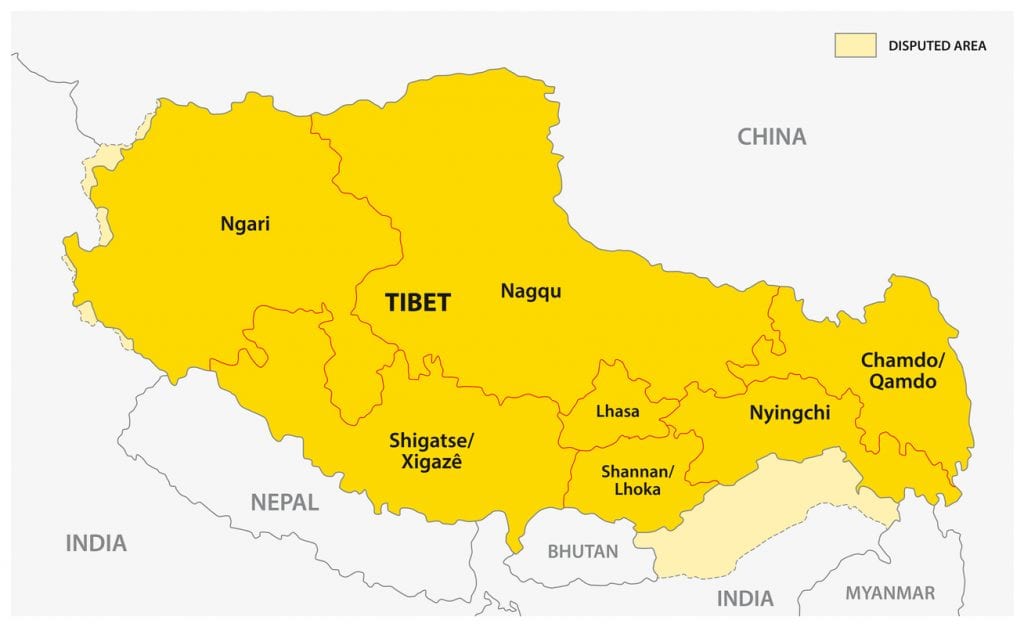
In my analysis, India-China Standoff across the Himalayan Frontier involves the territory of Tibet, an independent nation under military occupation. Any kind of dispute across the Himalayan Frontier involves Tibet as the Natural Force that created Tibet is still at work forcing the Indian Landmass to collide with the Asian Landmass. The reality of Tibet cannot be ignored as Mother Nature nurtures the Tibetan Identity.

Rudra Narasimham Rebbapragada

Special Frontier Force-Establishment No.22-Vikas Regiment

India waving SFF and Tibet cards won’t scare China. Can’t pull levers you don’t have

Bending foreign policy to serve domestic politics is proving to be costly for India. Hyping the use of the Tibetan-majority SFF against China is one such example.

Shyam Saran, September 14, 2020.

India-China Standoff across the Himalayan Frontier-To Play or Not to Play the ‘Tibet Card’.

The Tibet issue played a major role in precipitating the India-China war of 1962. There were localized skirmishes along the border, but these began to be seen in a more ominous light by China in the wake of the Tibetan revolt of 1959 followed by the exile of His Holiness the Dalai Lama to India. The setting up of Indian posts and increased patrolling on our borders were seen as part of a sinister Indian design to subvert Chinese rule in Tibet. The status of the Dalai Lama and the Tibetan issue have remained a shadow over India-China relations even though New Delhi has recognized Chinese sovereignty over Tibet and has under-played official relations with the Dalai Lama.

The Tibet government-in-exile is allowed to function at Dharamsala but is not recognized by the Indian government. For China, Tibet is a “core issue” just as Taiwan and Xinjiang are.

A changing relationship

During the tenure of the Narendra Modi government, there have been instances of open courtship of the Tibetan government-in-exile.

Its ‘Prime Minister’ Lobsang Sangay was an invitee to the swearing-in ceremony of Prime Minister Modi in 2014. The Chief Minister of Arunachal Pradesh, Pema Khandu, declared that his state had a border with Tibet and not with China, in 2017.

But after the Modi-Xi Jinping summit in Wuhan in April 2018, there appeared a rethink on the Tibet issue with the Ministry of External Affairs reissuing instructions to government functionaries to avoid public association with the Dalai Lama and Tibetan representatives of the government-in-exile. An international Buddhist conference, which the Dalai Lama had been encouraged to convene, was cancelled. The Tibetans were advised that the 60th anniversary, in 2019, of the Dalai Lama’s entry into India, should be a low-key affair.

The second Modi-Xi summit in Mamallapuram in October 2019 reinforced this trend. The Modi government was signalling that it was prepared to put the Tibet issue in cold storage while advancing bilateral relations with China.

The wrong card

During the recent clashes between the Indian and Chinese armed forces on the border in eastern Ladakh, the Tibet issue has resurfaced and will add to mutual distrust and suspicion. A deliberately leaked report to the media revealed that the secretive Special Frontier Force (SFF), recruited mainly from the Tibetan community in India, was used in the operations in southern Pangong Tso. One of its soldiers, Tenzin Nyima, died in a mine blast and at his funeral, independent Tibet’s flags were displayed. BJP leader Ram Madhav attended the funeral and tweeted about it. He subsequently took it down, presumably at the behest of the Ministry of External Affairs.

Several commentators were quick to welcome the report on the SFF, no longer secret, as a reminder to China that India still held the “Tibet card” and would be ready to use it to bring it to heel. Like much of the bizarre fantasizing that seems to have taken hold in India, this, too, may only heighten mistrust and hostility in Beijing without inflicting any real pain. In any negotiations with an adversary, one should never provoke a confrontation over an issue where the other side has greater equity and stake than oneself. This is clearly the case here. It is also intriguing that this story was highlighted on the eve of External Affairs Minister S. Jaishankar’s meeting with his Chinese counterpart Wang Yi in Moscow. At the very least, it would have made his interaction more challenging.

The SFF has been in existence for several years. Its efficacy lies in its rigorous training, high morale and professionalism. It should not have become yet another pawn in a political game to convince public opinion that India has more levers of influence than it actually has. In doing so, the potential efficacy of the SFF has been undermined and Chinese suspicions over India’s intentions regarding Tibet would have been aroused to a new intensity.

A crisis of credibility

The tactical use of the Tibetan issue and of the Dalai Lama is both cynical and counter-productive. Ever since his arrival in India, he has enjoyed respect and reverence across the Indian political spectrum as a religious leader. We have consistently maintained the position that he is our welcome guest as a high religious personage and that we do not endorse political activities engaged in by him or the Tibetan community. This has helped manage Tibet as an issue in India-China relations, reducing its salience as an irritant. Unfortunately, this consistent and longstanding position has been severely compromised.

In any India-China border settlement, an understanding over Tibet will need to be arrived at. The best-case scenario for India would be a reconciliation between the Dalai Lama and the Chinese regime, and this seemed possible during the first few years of Xi Jinping’s rule. In our informal conversations with Chinese counterparts, we have conveyed that their assumption of the Tibetan issue being permanently resolved once the Dalai Lama was no longer in the scene was misplaced. In fact, we pointed out, the situation may become even more fraught once the restraining hand of the Dalai Lama was no longer available. The Tibetan community in India, particularly the youth, could become more radicalized.

In Tibet, reconciliation between its people and the Chinese state would be more likely with the blessings of the Dalai Lama rather than in his absence. Both countries, we conveyed, need to have an early and quiet dialogue on this issue and not allow it to become a festering problem for the future. There was receptivity on the Chinese side to these views. However, this waving of the Tibet card, which serves only to irritate and annoy, puts paid to any such engagement on a sensitive issue, with serious implications for the future. It undermines the immense goodwill and gratitude that New Delhi has all along enjoyed with the Dalai Lama and the Tibetan community in India and abroad. The community is disturbed by the manner in which the Indian government plays hot and cold towards it and has become anxious about its future.

The bending of foreign policy issues to serve domestic political ends is proving to be costly for India. The most valuable asset a country and its political leadership possess is credibility with both friends and adversaries alike. When image-making gets unlatched from reality, credibility is the first casualty. And India indeed faces a crisis of credibility.

India-China Standoff across the Himalayan Frontier-To Play or Not to Play the ‘Tibet Card’. Shyam Saran, India’s former Foreign Secretary.

The author is a former Foreign Secretary, and a Senior Fellow at CPR.  

India-China Standoff across the Himalayan Frontier-To Play or Not to Play the ‘Tibet Card’.

India-China Standoff is driven by the illegal military occupation of Tibet

India-China Standoff is driven by the illegal military occupation of Tibet.

AP Explains: What’s driving India-China military standoff

By AIJAZ HUSSAIN, Associated Press  

SRINAGAR, India (AP) — Tensions along the disputed India-China border seem to be getting worse, three months after their deadliest confrontation in decades.

India-China Standoff is driven by the illegal military occupation of Tibet. In this July 20, 2011 file photo, tourists ride double hump camels at Nubra valley, in Ladakh, India. Tensions along the disputed India-China border seem to be getting worse rather than better, three months after their deadliest confrontation in decades in June. The Asian giants accused each other this week of sending soldiers into each other’s territory and fired warning shots for the first time in 45 years, raising the specter of full-scale military conflict. (AP Photo/Channi Anand, File)

The Asian giants accused each other this week of sending soldiers into the other’s territory and fired warning shots fired for the first time in 45 years, raising the specter of full-scale military conflict.

India-China Standoff is driven by the illegal military occupation of Tibet. In this June 18, 2020 file photo, Indian army officers walk past the pyre of their colleague Colonel B. Santosh Babu, who was killed during a clash with Chinese soldiers in Ladakh region, during his funeral at Suryapet, about 140 kilometres (87.5 miles) from Hyderabad, India. Tensions along the disputed India-China border seem to be getting worse rather than better, three months after their deadliest confrontation in decades in June. The Asian giants accused each other this week of sending soldiers into each other’s territory and fired warning shots for the first time in 45 years, raising the specter of full-scale military conflict. (AP Photo/Mahesh Kumar A, File)

Their foreign ministers are expected to discuss the simmering dispute in Moscow on Thursday on the sidelines of a regional security and economic meeting.

The high-altitude standoff along the eastern section of what’s known as the Line of Actual Control — a loose demarcation — risks dramatically altering the already fraught relationship between the nuclear-armed neighbors.

India-China Standoff is driven by the illegal military occupation of Tibet. In this June 22, 2020 file photo, Indian traders burn Chinese products and a poster president Xi Jinping during a protest in New Delhi, India. Tensions along the disputed India-China border seem to be getting worse rather than better, three months after their deadliest confrontation in decades in June. The Asian giants accused each other this week of sending soldiers into each other’s territory and fired warning shots for the first time in 45 years, raising the specter of full-scale military conflict. (AP Photo/Manish Swarup, File)

The face-off began in early May with a fierce brawl before exploding into hand-to-hand combat with clubs, stones and fists on June 15 that left 20 Indian soldiers dead. China is believed to have taken casualties, but has given no numbers.

DECADES OF MISTRUST

India and China inherited their territorial disputes from the period of British colonial rule.

Three years after India’s independence in 1947 and a year after the communists came to power in China, the new government in Beijing began strongly asserting its claims and repudiating earlier treaties it says were signed under duress, but which India says are fixed.

Beijing’s approach has strengthened under Xi Jinping, China’s most powerful leader in decades who has sworn not to surrender even an inch of territory.

In the 1950s, China started building a strategic road on the uninhabited Aksai Chin Plateau to connect its restive regions of Tibet and Xinjiang. India objected and claimed Aksai Chin as part of Ladakh, itself belonging to the former principality of Kashmir now divided between India and Pakistan.

India-China Standoff is driven by the illegal military occupation of Tibet. In this July 10, 2020 file photo, members of the Tibetan Youth Congress participate in a street protest calling for the boycott of Chinese goods in Dharmsala, India. Tensions along the disputed India-China border seem to be getting worse rather than better, three months after their deadliest confrontation in decades in June. The Asian giants accused each other this week of sending soldiers into each other’s territory and fired warning shots for the first time in 45 years, raising the specter of full-scale military conflict. (AP Photo/Ashwini Bhatia, File)

Relations were further strained after India allowed Tibet’s spiritual leader, the Dalai Lama, to establish a self-declared government-in-exile in the northern Indian town of Dharmsala after he fled his homeland in 1959 during an abortive uprising against Chinese rule.

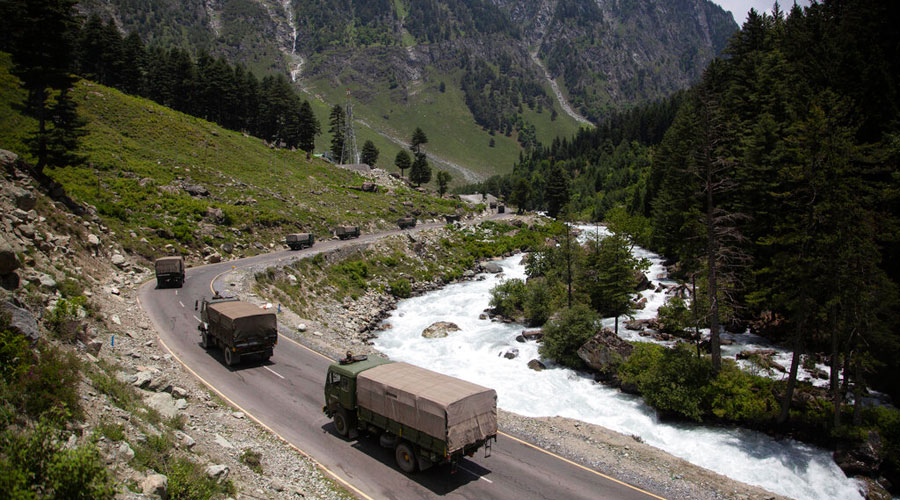
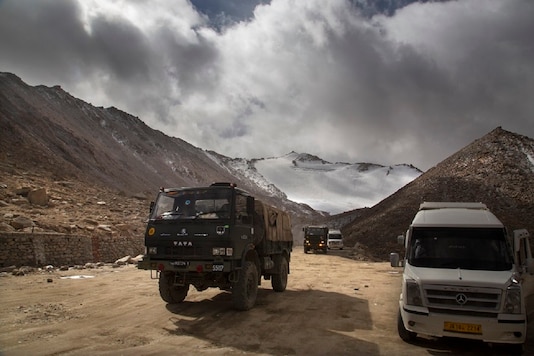
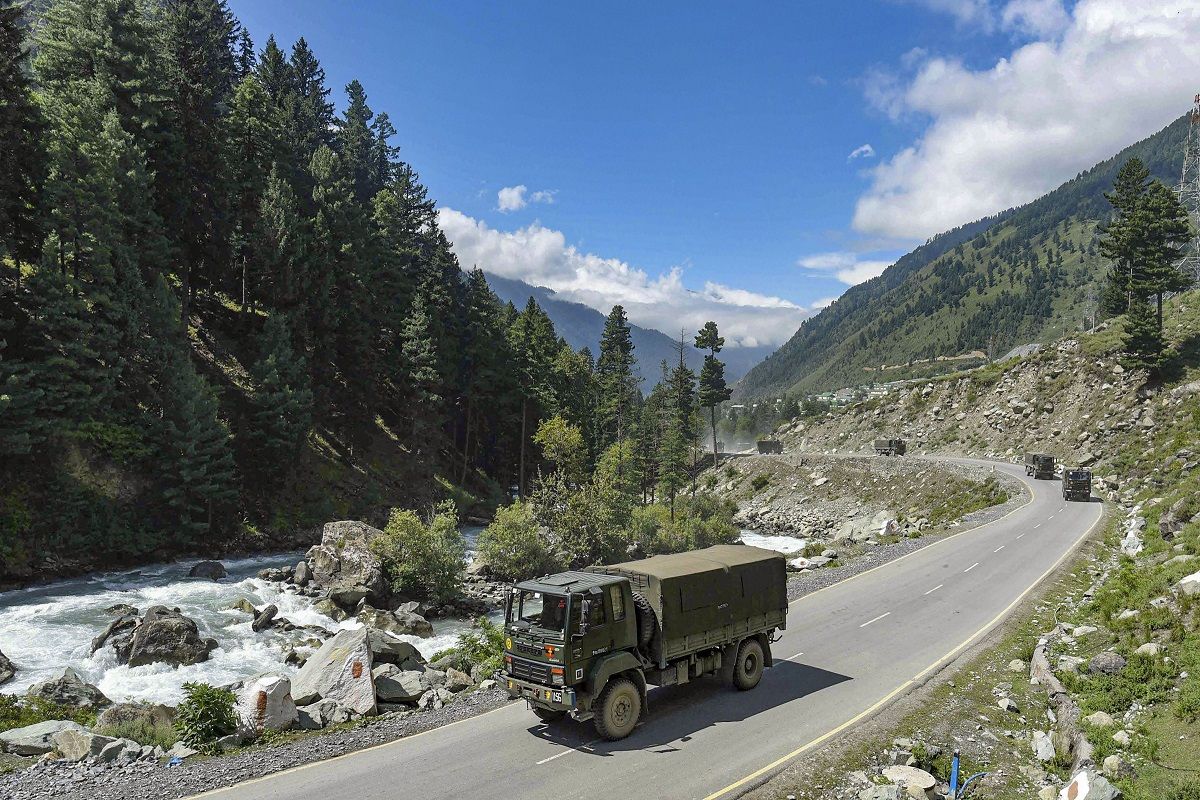
India-China Standoff is driven by the illegal military occupation of Tibet. An Indian army convoy moves on the Srinagar- Ladakh highway at Gagangeer, northeast of Srinagar, Indian-controlled Kashmir, Wednesday, Sept. 9, 2020. Tensions along the disputed India-China border seem to be getting worse rather than better, three months after their deadliest confrontation in decades in June. The Asian giants accused each other this week of sending soldiers into each other’s territory and fired warning shots for the first time in 45 years, raising the specter of full-scale military conflict. (AP Photo/ Dar Yasin)

The differences led to a bitter month-long war in 1962. Firefights broke out again in 1967 and 1975, leading to more deaths on both sides. They’ve since adopted protocols, including an agreement not to use firearms, but those protocols have fractured in this year’s clashes.

China, in the meantime, began cementing its relations with India’s arch-rival Pakistan and backing it on the issue of Kashmir.

India-China Standoff is driven by the illegal military occupation of Tibet. In this file photo taken Friday, Sept. 4, 2020, China’s Minister of National Defence Wei Fenghe, left, Russian Defense Minister Sergei Shoigu, center, and Indian Defense Minister, Rajnath Singh, right, pose for a photo with their colleagues at a Joint Meeting of Defense Ministers of Shanghai Cooperation Organisation, Commonwealth of Independent States and Collective Security Treaty Organization Member States in Moscow, Russia. India and China are accusing each other of violating agreements along their disputed mountain border, even as they engage in talks to end increasing military tensions. (Host Photo Agency sco-russia2020.ru via AP, File)

THE LINE OF ACTUAL CONTROL

The fiercely contested LAC separates Chinese and Indian held territories from Ladakh in the west to India’s eastern state of Arunachal Pradesh, which China claims in its entirety. It is broken in parts where the Himalayan nations of Nepal and Bhutan border China.

India-China Standoff is driven by the illegal military occupation of Tibet. Map shows Ladakh region in disputed area between India and China, where the countries accused each other of firing warning shots;

According to India, the de facto border is 3,488 kilometres (2,167-mile) long, although China promotes a considerably shorter figure. As its name suggests, it divides the areas of physical control rather than territorial claims.

In all, China claims some 90,000 square kilometres (35,000 square miles) of territory in India’s northeast, including Arunachal Pradesh with its mainly Buddhist population.

India says China occupies 38,000 square kilometres (15,000 square miles) of its territory in the Aksai Chin Plateau, which India considers part of Ladakh, where the current face-off is happening.

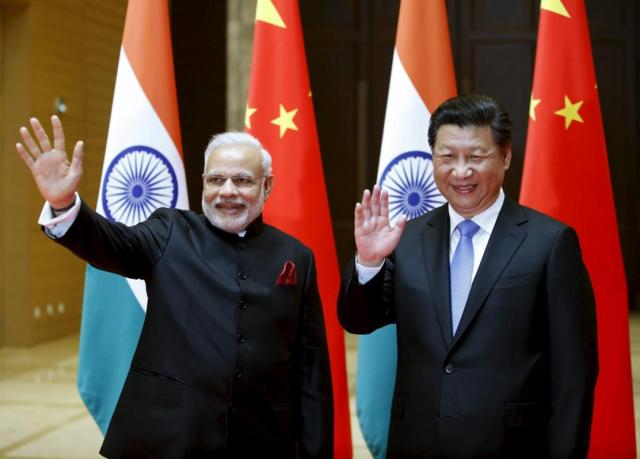
Despite more than three dozen rounds of talks over the years, and multiple meetings between Indian Prime Minister Narendra Modi and Chinese President Xi Jinping, they are nowhere near settling their dispute.

ECONOMIC AND STRATEGIC RIVALRY

Since the 1962 war, both economies have grown substantially, but China has far outpaced India while enjoying a large trade surplus with its neighbor.

The growing economic rivalry has added to territorial and geostrategic differences. India has tried to capitalize on China’s rising labor costs, and deteriorating ties with the United States and Europe, to become a new base for foreign manufacturers.

India grew concerned after China recently built a road through Pakistani-controlled Kashmir as part of Xi’s signature foreign policy push, the multi billion-dollar Belt and Road Initiative, which India has vehemently opposed.

Meanwhile, India’s growing strategic alliance with the U.S. has ruffled feathers in Beijing, which sees the relationship as a counterweight against China’s rise. Indian fears of Chinese territorial expansion are bolstered by the growing presence of the Chinese navy in the Indian Ocean and Beijing’s efforts to strengthen ties with not only Pakistan but also Sri Lanka and Nepal.

India is jockeying for strategic parity with China, massively ramping up its military infrastructure along the LAC. China for its part has been building roads and defensive positions in the disputed Doklam region and in recent weeks has conducted high-altitude parachute drops and stationed strategic bombers in Tibet.

Adding to the tension, India unilaterally declared Ladakh a federal territory and separated it from disputed Kashmir in August 2019, ending its semi-autonomous status.

Shortly after, lawmakers in India’s ruling party began advocating taking control of some China-run areas, alarming Beijing.

FEARS OF WIDER CONFLICT

Border tensions have persisted despite talks at military, diplomatic and political levels. With strong nationalists leading both countries, the border has taken on a prominence not seen in years.

Having emerged relatively unscathed from the COVID-19 pandemic, China is also perceived regionally as ramping up military ambitions against its neighbors, particularly through the use of “salami slicing” tactics to incrementally gain territory.

While Chinese soldiers remain in what India says is its territory in Ladakh, India occupied at least one unmanned mountain top last week, leading Beijing to furiously demand that New Delhi vacate the area.

Experts warn that if military hostilities are not stopped, war could be next.

“If diplomacy fails, guns talk. That is the natural culmination of what we have been witnessing during last four months,” said Lt. Gen. D.S. Hooda, who was head of the Indian military’s Northern Command from 2014 to 2016. “Things are fast escalating out of control unless there is a breakthrough in talks.”

Wang Lian of Peking University’s international relations department considers the possibility of a wider conflict less likely, despite preparations being made on both sides.

“China has shown restraint in bilateral relations with India, and India may restrain itself from overdoing it in the future,” Wang said.

India-China Standoff is driven by the illegal military occupation of Tibet.The Indian Army will continue to sit it out along the 1,597 km Line of Actual Control in East Ladakh till China restores status quo ante. The PLA, a senior army officer said, wants India to move back from its traditional points where it has had an advantage before it vacates locations where it had moved in April-May.(HT Photo)

Special Frontier Force Begins the Eviction of the military occupier of Tibet

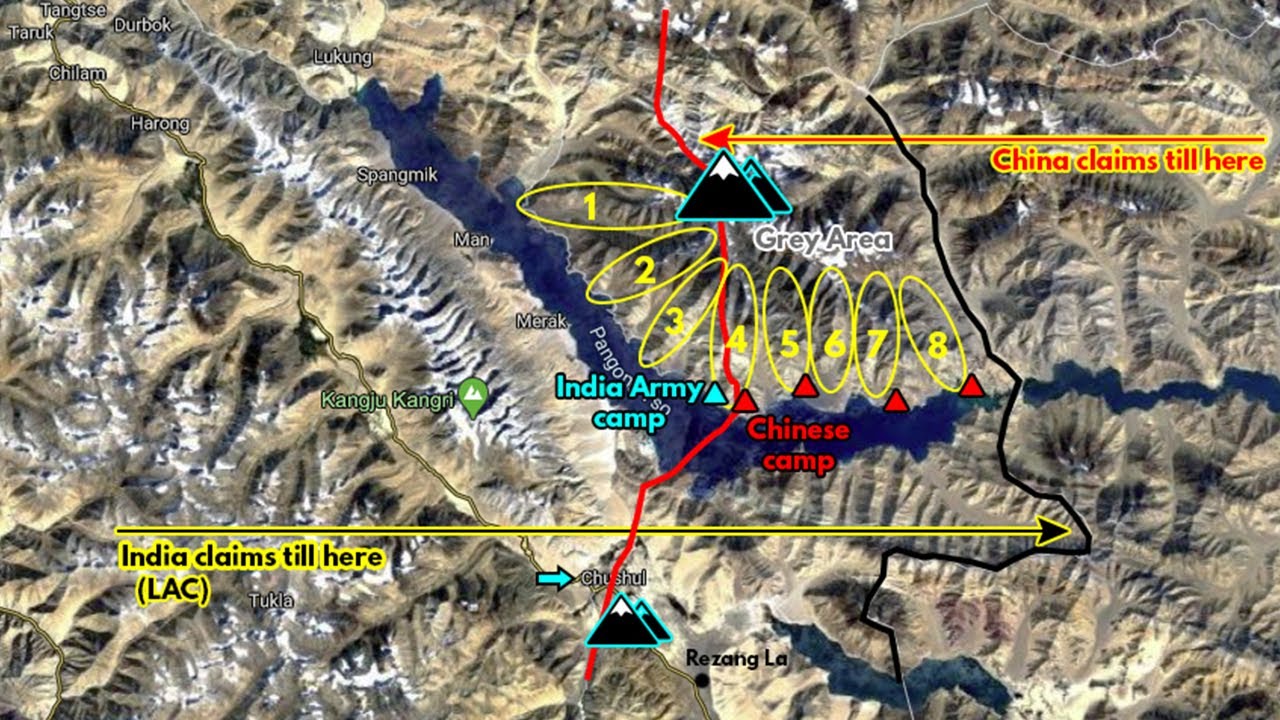
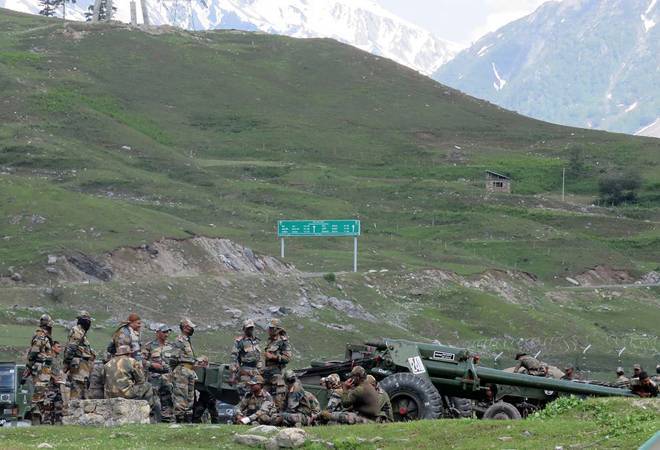
Special Frontier Force personnel were used  by Indian Army to occupy these strategic peaks in the Southern banks of Pangong Tso. This took the Chinese army by surprise. The occupation of these heights has shown Indian resolve to take the fight to the Chinese side. 

Special Frontier Force begins the eviction of the military occupier of Tibet with action in the Pangong Tso Lake Sector, Ladakh, Kashmir, India.

India thwarts another Chinese incursion in Ladakh

DECCAN CHRONICLE | PAWAN BALI

PublishedSep 1, 2020.

Pre-emptive move by Indian Army to secure another LAC position signals its intent to dig in for the winter.

Special Frontier Force Begins the Eviction of the military occupier of Tibet

The Pangong Tso lake in Ladakh on the banks of which India and China have been engaged in a standoff for four months. India claimed on Monday that it pre-empted a move by the Chinese army to occupy Indian territory at a new point in the region. (AP file photo)

New Delhi: The Indian army said on Monday that it “pre-empted” an attempt by Chinese troops to transgress and grab land on the southern banks of Pangong Tso on the intervening night of 29-30 August 2020.

This was an attempt by the Chinese to open a new front in the Ladakh sector. India and China were until now in a standoff  in the “Finger area” on the northern banks of the Pangong Tso. But now they are also looking to infiltrate in the Chushul sector.

In a statement issued on Monday, the Indian Army said PLA troops carried out provocative military movements to change the status quo on the night of 29-30 August 2020. “Indian troops pre-empted this PLA activity on the Southern Bank of Pangong Tso Lake, undertook measures to strengthen our positions and thwart Chinese intentions to unilaterally change facts on the ground,” it said.

The statement added that the Indian Army is committed to maintaining peace and tranquility through dialogue, but is also equally determined to protect India’s territorial integrity.

 A brigade commander level flag meeting was held at Chushul to resolve the issue.

As per initial reports, the Army had received information that the Chinese started building up forces to occupy Indian territory on the southern banks of Pangong Tso. The Indian Army physically occupied the area as soon as the PLA tried its transgression. There was no physical clash between the troops.

The Indian Army’s “pre-emptive” move comes days after Chief of Defense staff (CDS) Gen. Bipin Rawat warned that India has “military options” to deal with Chinese transgression in Ladakh if talks between the countries at the military and diplomatic level don’t yield any result.

The Chinese army’s Western Theater Command accused India of crossing the Line of Actual Control and deliberately launching provocations. “China strongly opposes the acts and urges India to immediately withdraw the troops that have illegally crossed the LAC,” it said.

It said that Chinese troops are taking necessary measures in response to Indian troops provocations and will closely follow the situation and resolutely safeguard national sovereignty, peace and stability at the border area.

The military standoff between India and China in Ladakh will complete four months this week. The two armies are involved in a standoff in Pangong Tso, Hot Springs area and Despang-DBO sector in Ladakh.

A series of military and diplomatic talks between India and China have failed to persuade China to disengage. Instead China has used this time of negotiations with India to bring in more forces at the LAC, position heavy weaponry, construct helipads, build air defense systems, and deploy missiles at new positions.

In the Northern Bank of Pangong Tso, China has illegally occupied 8 km of Indian territory between finger 4 and 8. Despite a series of diplomatic and military dialogues China has refused to vacate the area between finger 5 and 8 which it had illegally occupied in May 2020. China has built up bunkers, gun positions and brought heavy artillery in the finger area.     

The Chinese attempt to occupy new areas comes despite a series of engagements at the diplomatic and military level to disengage and deescalate the situation in the Ladakh sector.  The latest confrontation means that the situation is unlikely to deescalate any time soon and will continue in the winter too. India has already started preparations for winter and is stocking up supplies required for thousands of new troops deployed in the area. 

Special Frontier Force personnel were used  by Indian Army to occupy these strategic peaks in the Southern banks of Pangong Tso. This took the Chinese army by surprise. The occupation of these heights has shown Indian resolve to take the fight to the Chinese side. 

Special Frontier Force Begins the Eviction of the military occupier of Tibet. The 1962 India-China War Memorial, Chushul, Ladakh, Kashmir, India.

Communist China’s Sinister Plan of Sinicization of Tibet

Communist China’s Sinister Plan of Sinicization of Tibet.

India is facing the inevitable consequences of Communist China’s Sinister Plan of Sinicization of Tibet using its military power since 1950.

Rudra Narasimham Rebbapragada

Special Frontier Force-Establishment No. 22-Vikas Regiment

Special Frontier Force personnel were used  by Indian Army to occupy these strategic peaks in the Southern banks of Pangong Tso. This took the Chinese army by surprise. The occupation of these heights has shown Indian resolve to take the fight to the Chinese side. 

The Pangong Tso lake in Ladakh on the banks of which India and China have been engaged in a standoff for four months. India claimed on Monday that it pre-empted a move by the Chinese army to occupy Indian territory at a new point in the region. (AP file photo)

India says troops hold Himalayan hilltops after face-off with Chinese forces

By Devjyot Ghoshal  

Communist China’s Sinister Plan of Sinicization of Tibet. Reuters/Mukesh Gupta FILE PHOTO: A view of Pangong Tso lake in Ladakh region

NEW DELHI (Reuters) – A senior Indian official said on Tuesday Indian troops had deployed on four strategic hilltops after what New Delhi called an attempted Chinese incursion along the disputed Himalayan border, underlining simmering tensions between the Asian giants.

China denied that it had moved first, with an embassy spokeswoman in New Delhi accusing Indian troops of trespassing across the Line of Actual Control (LAC) – the de facto border – and conducting “flagrant provocations”.

Indian and Chinese troops have been locked in a high-altitude border confrontation for months in the western Himalayan region of Ladakh. The two sides have disputed the course of the frontier for more than half a century.

The Indian official, who was briefed on the latest incident, said the Indian troop move responded to an attempt by a large number of Chinese infantry to push through a key mountain pass late on Saturday.

“We mobilized and occupied the four heights,” the official said, adding all four hilltops were on India’s side of the LAC.

The Indian official said the Chinese soldiers were backed up by military vehicles and drew close enough to engage Indian troops in verbal arguments, but there were no clashes.

He said the incident occurred on the southern bank of Pangong Tso, a picturesque lake in the snow desert region where Indian and Chinese troops have been facing off since April.

The Indian official said the Chinese had also been consolidating positions on the northern bank of the lake with what appeared to be new defensive positions.

But Ji Rong, a spokeswoman for the Chinese embassy in New Delhi, said Indian troops had violated the LAC at Pangong Tso’s southern bank and near another mountain pass.

“What India has done runs counter to the efforts made by both sides for a period of time to ease and cool down the situation on the ground, and China is resolutely opposed to this,” she said.

“India … said it pre-empted Chinese military activity,” China’s state-backed Global Times said in an editorial. “The word ‘pre-empt’ shows it was Indian troops that first took destructive action, and the Indian troops initiated the stand-off this time.”

In June, 20 Indian soldiers were killed in hand-to-hand combat with Chinese troops in Ladakh’s Galwan area, the most serious clash between the two countries in 50 years.

Both sides then agreed to pull back with military chiefs in the region holding five rounds of talks. But the Indian military said this week Beijing had reneged on the deal by carrying out “provocative military movements to change the status quo”.

(Reporting by Devjyot Ghoshal; Editing by Sanjeev Miglani and Mark Heinrich)

In this June 17, 2020, file photo, an Indian army convoy moves on the Srinagar- Ladakh highway at Gagangeer, north-east of Srinagar.
AP
An Indian Army truck crosses Chang la pass near Pangong Lake in Ladakh region, India. (AP File Photo)
Indian Army thwarts fresh attempts by China’s PLA to change status quo in Pangong lake area in Ladakh
Indian Army is committed to maintaining peace and tranquility through dialogue, but is also equally determined to protect India’s territorial integrity: Spokesperson
PTI
Chinese troops carried out fresh “provocative action” in Pangong Tso Lake areas in Eastern Ladakh on Monday
Chinese armoured vehicles and battle tanks are positioned near the foothills of ‘Kala Top’, which is occupied by Indian forces
China took provocative action 31 August as talks were on, says India
Ladakh Clash: A Brigade Commander level flag meeting is in progress at Chushul. (File)

https://www.indiatoday.in/video/India/embed/MTcxNzA5NA==

The latest skirmish between the two sides took place along the Southern bank of the Pangong Tso, a glacial lake at 14,000 feet. This photo taken on September 14, 2018, shows a general view of Pangong Lake from the Indian-controlled side.
Indian Border Security Force (BSF) soldiers guard a highway leading towards Leh, bordering China, in Gagangir on June 17, 2020.
Communist China’s Sinister Plan of Sinicization of Tibet.

President Xi Jinping’s Plan for Tibet vs Nature’s Plan for Tibet

President Xi Jinping’s Plan for Tibet vs Nature’s Plan for Tibet

In my analysis, President Xi Jinping’s Plan for Tibet is not consistent with Mother Nature’s Plan for Tibet. Besides geographical isolation, Mother Nature nurtured a sense of Freedom giving the Tibetan people the experience of Peace, Harmony, and Tranquility in their daily lives. The military occupation of Tibet is fundamentally inconsistent with the Nature’s Plan for Tibet.

Rudra Narasimham Rebbapragada

Special Frontier Force-Establishment No. 22-Vikas Regiment

Sinicize Tibetan Buddhism, build fortress around Tibet, says Xi Jinping

Exiled Tibetan groups, led by exiled spiritual leader the Dalai Lama, and rights groups say Beijing’s rule amounts to “cultural genocide”.

Sutirtho Patranobis | Edited by Sohini Sarkar
Hindustan Times, Beijing

President Xi Jinping’s Plan for Tibet vs Nature’s Plan for Tibet. Chinese President Xi Jinping was addressing the country’s top leadership at a two-day forum on future governance in Tibet in Beijing, which concluded on Saturday.(REUTERS PHOTO.)

It is important to promote the “sinicization” of Tibetan Buddhism and build an “impregnable fortress” to maintain stability in Tibet, President Xi Jinping said on Saturday.

Xi added it was necessary to strengthen border defense and frontier security of the Tibet Autonomous Region (TAR), which borders India and Bhutan, adding it was necessary to educate Tibetans to strengthen the struggle against separatism.

The Chinese President was addressing the country’s top leadership at a two-day forum on future governance in Tibet in Beijing, which concluded on Saturday.

Beijing seized control over Tibet in 1950, in what is described in the Chinese narrative as a “peaceful liberation”, which aided the high-altitude Himalayan region to throw off its “feudalistic” past.

Exiled Tibetan groups, led by exiled spiritual leader the Dalai Lama, and rights groups say Beijing’s rule amounts to “cultural genocide”.

Political and ideological education needed to be strengthened in Tibet’s schools in order to “plant the seeds of loving China in the depths of the hearts of every youth”, Xi said in remarks published by state news agency Xinhua.

Xi was quoted as calling for efforts to ensure national security and enduring peace and stability, steadily improve people’s lives, maintain a good environment, solidify border defense and ensure frontier security.

“It is necessary to strengthen the education and guidance of the masses, extensively mobilize the masses to participate in the struggle against separatism, and form a copper wall and iron wall (which translates as ‘impregnable fortress” in Mandarin) for maintaining stability,” he said.

“Efforts must be made to build a new modern socialist Tibet that is united, prosperous, culturally advanced, harmonious and beautiful,” Xi said.

“It is necessary to actively guide Tibetan Buddhism to adapt to the socialist society and promote the Sinicization of Tibetan Buddhism,” he said.

Sinicization of religion could be broadly defined as an effort to mold religious beliefs and doctrine to bring them in line with the Communist Party of China’s principles and objectives, and with the culture of the majority Han community. Xi in 2015 spoke about sinicising the five major religions practiced in China: Catholicism, Protestantism, Islam, Buddhism and Daoism.

In 2019, Chinese state media announced that China had drawn up an outline to sinicize Islam by 2022 in an effort to redefine the practice of the religion and align the beliefs of Muslims with the CPC.

China’s policies towards Tibet have come under the spotlight again this year amid Beijing’s deteriorating ties with Washington.

In July, US Secretary of State Mike Pompeo said the US would restrict visas for some Chinese officials involved in blocking diplomatic access to Tibet and engaging in “human rights abuses”, adding that Washington supported “meaningful autonomy” for Tibet.

In a retaliatory move, China said it would impose visa restrictions on US citizens who have engaged in what it called “egregious” behavior over Tibet.

President Xi Jinping’s Plan for Tibet vs Nature’s Plan for Tibet

India vs China Dispute. Tibet is not a part of China

India vs China Dispute. Tibet is not a part of China.TIBET EQUILIBRIUM.

In my analysis, the dispute between India and China relates to the status of Tibet. China is in Tibet. But, Tibet is not a part of China. The dispute can be resolved by the eviction of the military occupier of Tibet.

Rudra Narasimham Rebbapragada

Special Frontier Force-Establishment No. 22-Vikas Regiment

A border dispute with China may push India closer to some of Beijing’s top rivals

CNN June 18, 2020, 12:59 AM EDT

Relations between China and India have always been complicated.

During British colonialism, India was the source of opium foreign traders forced onto Chinese markets, sparking war between the UK and the Qing Empire that ended in humiliation for China. Since independence, India’s relations with its largest neighbor have been tested by issues such as Tibet, Pakistan and the countries’ shared Himalayan border.

This week, that border blew up into renewed conflict, in the bloodiest engagement in 40 years, which left more than 20 soldiers dead after a brutal fight with fists and clubs high in the mountains amid freezing temperatures and scant oxygen.

While both governments are now scrambling to deescalate, the conflict could provide the final push for a pivot already begun by New Delhi, away from Beijing and towards China’s traditional rivals, the United States and Japan, as well as a growing regional one, Australia. As India seeks to push back against what many in the country view as Chinese aggression, it will rely on these allies more than ever.

“The sacrifice made by our soldiers will not go in vain,” Indian Prime Minister Narendra Modi said Wednesday. “India’s integrity and sovereignty is supreme for us, and no one can stop us from defending it. Nobody should have an iota of doubt about this. India wants peace. But when provoked, India will give a befitting reply.”

Rahul Gandhi, leader of the main opposition Congress Party, put it more bluntly: “How dare China kill our soldiers? How dare they take our land?”

India vs China Dispute. Tibet is not a part of China. Indian Prime Minister Narendra Modi (L) and Chinese President Xi Jinping wave to journalists before they hold a meeting in Xian, Shaanxi province, China, May 14, 2015. REUTERS/Kim Kyung-Hoon

Encircling China

In an editorial Wednesday, the influential Hindustan Times said that “China wants to limit New Delhi’s power and ambition; it wants India to accept Beijing’s primacy in Asia and beyond.”

In response, the newspaper urged, New Delhi should “double down on its partnership with the US, make Quad … a more permanent arrangement, and be a part of any club that seeks to contain Chinese power.”

The Quad, or Quadrilateral Security Dialogue, is an informal strategic forum for the US, Japan, Australia and India, featuring semi-regular summits, information exchanges and military drills. While not a formal military alliance like NATO, it is seen by some as a potential counterweight to growing Chinese influence and alleged aggression in Asia-Pacific.

While members have emphasized the more benign aspects of the relationship, such as recent cooperation on the coronavirus pandemic, the potential for military encirclement by countries has not gone unnoticed by Beijing.

As early as 2007, when the first Quad meetings were proposed, China issued formal diplomatic protests to all parties involved, and later that year Australia pulled out over fears of offending Beijing, and the alliance was put on hold until 2017, when meetings resumed, in large part due to growing concerns over Chinese advances in the South China Sea.

Potentially, an anti-China bloc led by the US could be far larger than the Quad. During a telephone call earlier this month between Modi and US President Donald Trump, the American leader invited India to join the next G7 summit. They also, according to White House spokeswoman Kayleigh McEnany, discussed “the situation on the India-China border.”

Trump has previously spoken of wanting to expand the traditional grouping of mostly European and North American states to include Washington’s allies Australia and South Korea, as well use this year’s planned meeting to “discuss China’s future.”

India has traditionally been wary of getting too close to the US, seeking to balance that relationship with strong economic — if not always diplomatic — ties to Beijing. Amid growing pressure on its border, however, and what appears to be a strong personal bond between Trump and Modi, this could be the perfect time for such a pivot.

Greater Indian participation in both the Quad and other military alliances with the US would have benefits for Washington, according to foreign affairs analyst Amrita Jash, who wrote this week that “India’s strong foothold in the Indo-Pacific provides a counterbalance to China’s growing footprint in the Indian Ocean.”

Not without cost

Both Delhi and Beijing have spoken of the desire to deescalate and preserve a peaceful relationship following this week’s clash in the Himalayas, but many experts are skeptical about how feasible, or sustainable this is.

Aidan Milliff, an expert on political violence and South Asia at the Massachusetts Institute of Technology, predicted this month that the latest conflict could “portend the development of a Sino-Indian situation that reflects an ‘ugly stability’ between India and Pakistan: persistent low-level conflicts and political-military crises that simmer below the threshold of conventional war.”

Already shaky ties between Beijing and Delhi had already been harmed by the coronavirus pandemic, with many in India blaming China for its initial mishandling of the crisis and Chinese officials frustrated by their Indian counterparts’ perceived failure to express support for Beijing at the World Health Organization and other international forums.

Any major shift towards the Quad or Washington alone would likely only take place if Delhi believes relations with Beijing are beyond repair, however, as they could come with high costs for both India and China.

Under Modi, India’s economic engagement with China has been increasing. Together, the two countries account for 17.6% of the global economy. But although China is India’s largest trading partner, their estimated $84 billion bilateral trade in 2017/18 was a mere fraction of the US-China trade volume, which stood at almost $600 billion.

Before the coronavirus pandemic, China was gradually emerging as a major foreign investor in the growing Indian market, but that trend has been halted by new investment rules passed by Delhi widely seen as aimed at Chinese firms.

Economic pain is not the only thing that will be jointly shared. While Beijing may be loathe to see India cosying up to the US and Japan, it can respond by increasing support for Delhi’s major rival: Pakistan.

China has close economic, diplomatic and military ties with Pakistan, making it one of the nation’s closest allies in the region. Between 2008 and 2017, Islamabad purchased more than $6 billion of Chinese arms, according to think tank CSIS. China has also invested billions in the China-Pakistan Economic Corridor, an integral part of Xi’s Belt and Road trade and infrastructure mega-project.

Protecting that corridor was seen by some analysts as a driving factor behind the recent spat in the Himalayas, another factor in which was recent Indian moves over Kashmir, in which China supported Pakistan in a failed attempt to censure Delhi at the United Nations.

Similarly, China has made diplomatic and economic inroads in countries traditionally considered as within Delhi’s sphere of influence, including Nepal, Sri Lanka and Bangladesh.

India’s South Asian neighbors have also increasingly looked to China for assistance during the coronavirus pandemic, accelerating a trend that seen Beijing invest heavily in the region.

The willingness of Nepal, in particular, to work with Beijing has led to concerns in Delhi of potential geopolitical realignment. Nepal, which is sandwiched between India and China, and has recently butted heads with its southern neighbor over a decision to approve a revised map that includes areas claimed by Delhi.

Part of the problem in the region are the messy, widely disputed borders that many of the countries share. If relations continue to worsen between Beijing and Delhi, however, they may seem like nothing compared to the nightmare of geopolitical complications that could arise across all of Asia-Pacific.

India vs China Dispute. Tibet is not a part of China.