THE BATTLE OF RIGHT AGAINST MIGHT – TIBETAN UPRISING DAY

56th ANNIVERSARY OF TIBETAN NATIONAL UPRISING DAY ON MARCH 10, 2015 :

THE  BATTLE  OF  RIGHT  AGAINST  MIGHT  :  SEEKING  SOLIDARITY  OF  GLOBAL  COMMUNITY  IN  SUPPORT  OF  FREEDOM  IN  OCCUPIED  TIBET .
THE BATTLE OF RIGHT AGAINST MIGHT : SEEKING SOLIDARITY OF GLOBAL COMMUNITY IN SUPPORT OF FREEDOM IN OCCUPIED TIBET .
THE  BATTLE  OF  RIGHT  AGAINST  MIGHT  : 56TH  ANNIVERSARY  OF  TIBETAN  NATIONAL  UPRISING  DAY .  SEEKING  JUSTICE  IN  OCCUPIED  TIBET .  OCCUPATION  IS  UNJUST,  ILLEGAL , AND  IS  A  LIE  IMPOSED  BY  CHINA .
THE BATTLE OF RIGHT AGAINST MIGHT : 56TH  ANNIVERSARY  OF  TIBETAN  NATIONAL UPRISING DAY . SEEKING JUSTICE IN OCCUPIED TIBET . OCCUPATION IS UNJUST, ILLEGAL , AND IS A LIE IMPOSED BY CHINA .
THE  BATTLE  OF  RIGHT  AGAINST  MIGHT : 56TH  ANNIVERSARY  OF  TIBETAN  NATIONAL  UPRISING  DAY,  MARCH 10,  2015.  SEEKING  PEACE  AND  HARMONY  IN  OCCUPIED  TIBET .
THE BATTLE OF RIGHT AGAINST MIGHT : 56TH ANNIVERSARY OF TIBETAN NATIONAL UPRISING DAY, MARCH 10, 2015. SEEKING PEACE AND HARMONY IN OCCUPIED TIBET .
THE  BATTLE  OF  RIGHT  AGAINST  MIGHT  : 56TH  ANNIVERSARY  OF  TIBETAN  NATIONAL  UPRISING  DAY,  MARCH  10,  2015.  THE  BATTLE  WILL  CONTINUE  TILL  THE  OCCUPIER  IS  EVICTED  FROM  TIBET .
THE BATTLE OF RIGHT AGAINST MIGHT : 56TH ANNIVERSARY OF TIBETAN NATIONAL UPRISING DAY, MARCH 10, 2015. THE BATTLE WILL CONTINUE TILL THE OCCUPIER IS EVICTED FROM TIBET .


WholeDude's avatarWhole Dude - Whole Spirituality

THE  WOLF  AND  THE  LAMB : 

THE TYRANT WILL ALWAYS FIND AN EXCUSE FOR HIS TYRANNY.

This story was told by Aesop, the legendary Greek story-teller. Once upon a time, a Wolf was lapping at a stream. When looking up, the Wolf saw a Lamb just beginning to drink a little down the stream. “There’s my supper,” thought the Wolf. The Lamb looked so very helpless and innocent. The Wolf felt he ought  to have  an excuse for taking its life. Then he called out to the Lamb, “How dare you muddle the water from which I am drinking?” “No, Master, No,” said the Lamb; “if the water be muddy up there, I cannot be the cause of it, for it runs down from you to me.” “Well then,” said the Wolf, “Why did you call me bad names this time last year?” “That cannot be,” said the Lamb, “I am…

View original post 685 more words

WHOLE PLAN – WHOLE MANTRA – DIVIDE AND RULE

WHOLE PLAN – WHOLE MANTRA – DIVIDE AND RULE :

To maintain its supremacy as the world’s Superpower, United States unveils its plan to Divide and Rule India.
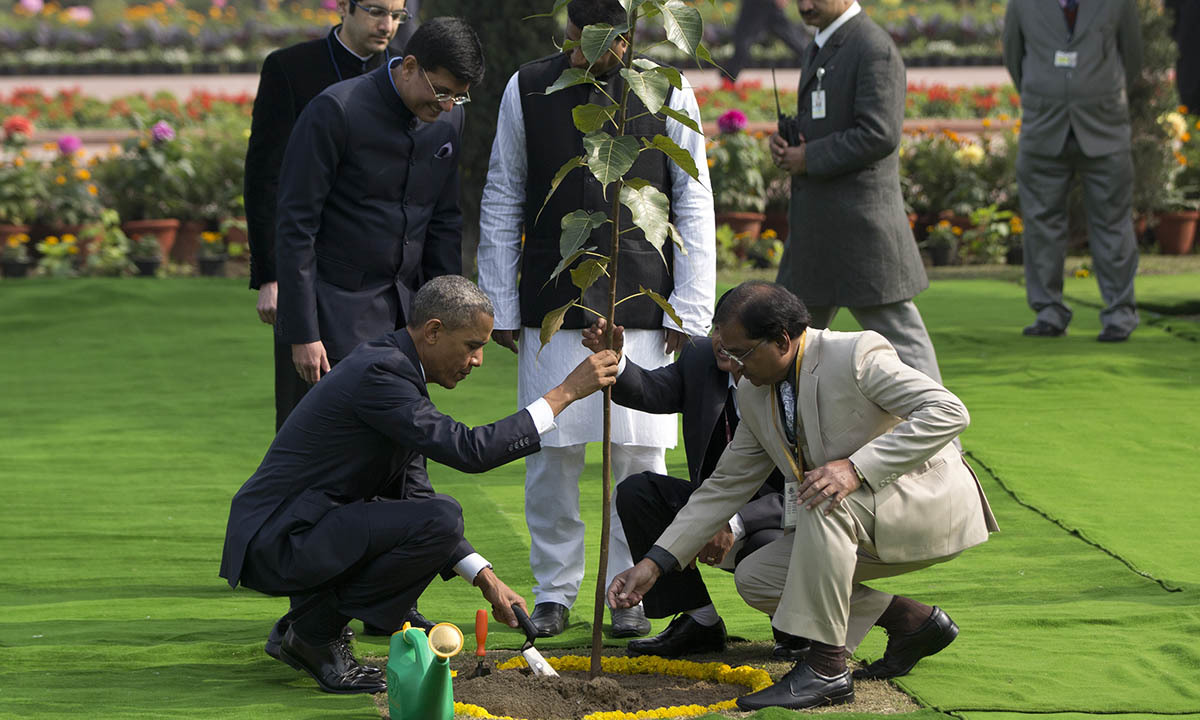
THE UNITED STATES UNVEILS ITS PLAN FOR PARTITION OF INDIA : THE US PRESIDENT BARACK OBAMA WHO PLANTED A TREE AT RAJGHAT, MAHATMA GANDHI MEMORIAL DEMANDED IN A PRESS CONFERENCE THAT INDIA MUST SUPPORT RELIGIOUS FREEDOM WHICH CALLS FOR THE RIGHT TO SELF-DETERMINATION AS DEMANDED BY SIKH SEPARATISTS AND KASHMIR SEPARATISTS . RELIGIOUS FREEDOM IS THE "MANTRA" FOR PARTITION OF INDIA USING RELIGION AS A TRUMP CARD .
THE UNITED STATES UNVEILS ITS PLAN FOR PARTITION OF INDIA : THE US PRESIDENT BARACK OBAMA WHO PLANTED  A  TREE  AT  RAJGHAT, MAHATMA  GANDHI  MEMORIAL DEMANDED  IN  A  PRESS  CONFERENCE  THAT  INDIA  MUST  UPHOLD  RELIGIOUS FREEDOM . THIS  IS  THE  WHOLE  MANTRA  WHICH  CALLS  FOR  THE  RIGHT  TO  SELF-DETERMINATION  AS  DEMANDED  BY  SIKH  SEPARATISTS  AND  KASHMIR  SEPARATISTS . RELIGIOUS FREEDOM  IS  THE  “MANTRA”  FOR  PARTITION  OF  INDIA  USING  RELIGION  AS  A  TRUMP  CARD .

I want to share my opinion on President Barack Obama’s diabolical demand for “Religious Freedom” in the Republic of India. A radical Sikh organization called “The Dal Khalsa’ stated that it is happy with US President Obama’s call to India to uphold Religious Freedom.  I am sharing this opinion on behalf of Special Frontier Force – Establishment Number. 22, a military organization affiliated to the US, India, and Tibet. The US has never demanded that Christian Missionaries be given free access to preach their Gospel inside Occupied Tibet. In fact, President Obama has not spoken about Religious Freedom in Tibet while he is fully aware of  Tibetan Government-in-Exile’s existence at Dharamshala, India. President Obama has unveiled the plan of United States and United Kingdom to seek the Partition of the Republic of India on lines similar to  partition of India in 1947. Religious Freedom is the “MANTRA” for Partition of India.The strategy followed by the British Raj and the US administration is the same.  In 1947, it was very important to defend the rights of Muslims as without partition, Muslims cannot have access to political power and without political power, Muslims would lose their Religious Freedom. In democracy, there is separation of State and Church. In opinion of the West, India can never have true Democracy as a majority of its people may belong to Hindu religion. To counteract the Hindus, the British have formulated the governance policy called “Divide and Rule.” The collapse of the Soviet Union, the breakup of Czechoslovakia, the US sponsored dismemberment of Republic of Yugoslavia, and  creation of Kosovo are often cited as examples of bringing “Regime Change” in countries considered to be hostile to the US Foreign Policy Agenda. The 105th US Congress in its First Session passed Resolution # 37 which demands the formation of an Independent Sikh Nation called “KHALISTAN” and the resolution demands the Right to Self-Determination for people who profess or follow the religion called Sikhism. Western powers like Great Britain, United States, Canada, France, Belgium, Australia and others have formulated a political strategy to take full advantage of the religious sentiments of the people of Sikhism to dismember the Republic of India. There is a fundamental hostility for the very existence of India which is known as “BHARAT” because of Hindu religion that  many of its people adhere. In a world full of competing religions, Hindus are not allowed to desire any identity of their own. In other words, India’s adherence to the principles of DEMOCRACY is of no consequence and Indian people  be separated taking advantage of the differences in religion, language, and history of regional affiliations. The concept of an independent, sovereign Khalistan, the Sikh Homeland was announced on October 7, 1987. These Sikh Separatists claim that Government of India murdered over a million Sikh people and accuse Government of India violates their Rights to Religious Freedom. The annual Sikh March for Khalistan is held on BAISAKHI(Vaisakhi) Day during the month of April. Sikhs living in Washington DC, New York, London, Vancouver(Canada) and other places parade on streets. The US supports these political activities and allows Sikh nationals of India to apply for asylum in the United States for it endorses their claims about religious persecution of Sikhs by Government of India. These Sikh Separatists claim that without political power, religion cannot flourish, their repression will continue and that their Sikh Nation will perish. A similar argument is made by Muslim Separatists who live in the Indian State of Jammu and Kashmir. The advocates of Khalistan do not mention about  persecution of Sikhs in Kashmir, and it appears that they have no recollection of the killing of Sikhs at the time of India’s Partition in 1947. When the United States President spoke about Religious Freedom, he did not mention about the Right to Self-Determination of Sikhs in Punjab, and of Muslims in Kashmir. However, Indian people must recognize that the issue of Religious Freedom is not simply about the Rights of Christians to practice their religion. It is important to know that the United States is not demanding Pakistan to support the rights of Christians living in Pakistan. The US is not asking Sikh Separatists and Kashmir Separatists to embrace Christianity or to grant full access to Christian Missionaries to operate in their communities. The fundamental concern is not about religion or Freedom of Religion. The goal of this US Policy is to breakup India and not to allow its people to find Peace, Justice, and Prosperity by choosing DEMOCRACY.

Rudranarasimham Rebbapragada
Special Frontier Force.Establishment22

OPEN LETTER TO PRESIDENT BARACK OBAMA ON RELIGIOUS FREEDOM :

This letter was written by an unknown author and I was asked to comment on it. The author had failed to acknowledge the US support for Sikh Separatists and Kashmir Separatists in the name of promoting Religious Freedom. The US deliberately undermined the ideal of Democracy and is endorsing Religious Fundamentalism to defend its vested interests, and to maintain its status of a Superpower at any cost without any concern for its own national values.

Barack Obama

261
SHARES
FacebookTwitterSubscribeGoogleLinkedin

Dear President Barack Obama,

You spoke of religious freedom and in favor of the right to proselytize during your recent visit to India. Your words reflect the Christian West’s obsession with religious freedom. We Hindus have little doubt that when you talk of religious freedom you have the freedom of Christians to proselytize Hindus and not the freedom of Hindus to practice Hinduism in mind. In many Islamic countries such as Saudi Arabia, a Hindu cannot even carry pictures of Hindu deities to worship in the confines of one’s home. You have never pontificated to the Saudis about the virtues of religious freedom. In the Christian Greece, it was illegal for a Hindu to cremate the dead until 2007 yet no American president pontificated to the Greeks. So, we rightly conclude that the religious freedom of Hindus is nowhere on your radar.

However, we are not asking you to stand up for our religious freedom. We are, instead, challenging your obsession with religious freedom. Let us begin by talking about some fundamental teachings of Christianity which you are presumably familiar with.
I did not render service. I have been responsible for genocide. It took me 18 years to realize that.

Christianity requires a groom to drag his bride on the nuptial night to her father’s doorstep and stone her to death on the suspicion that she may not be a virgin. It urges onlookers to participate in this violent orgy (Deuteronomy 22:13-21). Jesus sanctified and vowed to fulfill such terrible, misogynistic teachings (Matthew 5:17). We Hindus view the feminine as sacred and will not allow anyone the freedom to spread misogyny. We will not protect the alleged freedom of a misogynist at the expense of the dignity of a woman. We understand that you are not eagerly defending the freedom of the Taliban to spread Islamic misogyny in the USA. We are pleased to inform you that we Hindus will apply the same yardstick to Christian misogyny as well.

The Second Coming of Jesus is a core and fundamental Christian belief. On this occasion, Jesus would torture millions of Hindus for a period of five months, massacre them, and put them on the hell-bound cargo to be condemned to eternal torture (Revelations 9:4-5). Jesus also promises to make the Hindus kneel before the Christians in abject submission (see Hartung, John: Love Thy Neighbor – The Evolution of In-group Morality, pp. 15-16). We Hindus value human rights and will not grant anyone the freedom to spread genocidal hatred or subjugate others. You should be able to relate to our stance because you too aren’t advocating the freedom of Al Qaeda to spread genocidal hatred against Americans, are you?

Jesus Christ on the Cross
Misogyny, a craving to subjugate others, and genocidal hatred are poisonous. Giving them a religious sanctity doesn’t make them desirable. Karl Popper cautioned against the tendency to tolerate the intolerant because such a misplaced tolerance would result in the demise of the tolerant and eventually lead to the demise of tolerance itself. His sage advice applies to intolerant, hateful, and misogynistic religious beliefs such as Christianity and Islam. According such religious beliefs even a modicum of freedom would eventually degrade the feminine and extinguish freedom itself.

More on Religious Freedom

70x70.png
Analysis of the USCIRF India Chapter report, 2014

70x70.jpg
The USCIRF testimony of Kamal Mitra Chenoy

70x70.jpg
Narendra Modi’s visa denial still an unhealed wound

70x70.jpg
Exclusivist faiths, fundamental rights and the consequences of fundamentalism

70x70.jpg
How John Dayal helps break India

70x70.jpg
Atrocity literature as a tool to defang Hindus and Christianize India

70x70.jpg
proselytization in India: A critique from a Dharmic perspective

70x70.jpg
The Religious Crusades of the CIA

We Hindus value freedom; not merely freedom of religion as Western Christians mistakenly value. In our reasonable worldview, only freedom is a fundamental right whereas religious freedom is a privilege that is earned only when the religious teachings do not subvert freedom. A religion that subverts the very foundation of freedom and human dignity by advocating misogyny and genocidal hatemongering cannot be accorded that privilege.

In The Religious Crusades of the CIA, Arvind Kumar shows that ‘religious freedom’ is a euphemism for the CIA-led initiatives to destabilize Hindu society. The Tamil writer Jeyamohanshows how the Ford Foundation acted as the front for this imperial agenda by funding Christian missionaries in India’s northeast. These missionaries facilitated the entry of other western-funded groups which sowed division and hatred among the various ethnic groups that had hitherto coexisted for millennia. These imperial-funded and orchestrated initiatives resulted in gruesome riots, bloodshed, and massacre of many a thousand besides sinking the entire northeast into abject poverty. One of the missionaries that had facilitated the pillage eventually had a moment of realization and confessed to Jeyamohan, “I did not render service. I have been responsible for genocide. It took me 18 years to realize that.”

President Obama, we will not allow another genocide by facilitating the spread of imperial-funded Christianity. Instead, we will initiate every measure to curb it. We will bring forth legislation to prevent the CIA and its front agencies such as the Ford Foundation from destabilizing India. We will also prevent western powers from controlling the churches in India by nationalizing India’s churches and NGOs and by empowering the government to nominate priests. In the true spirit of democracy and freedom, and in the spirit of Indian pluralism, these priests would hail from all communities and religions as well as from among the ranks of atheists.
You may also anticipate legislative measures which would protect indigenous religions such as Hinduism, Buddhism, Sikhism, and the various tribal religions. We would reverse the existing system which discriminates against indigenous religions while favoring Christianity and Islam. The state would fund institutions belonging to indigenous religions. We hope this idea would resonate with you; after all, the UK protects the Church of England and funds its educational institutions. America’s Christian churches are the leading beneficiaries of faith-based initiatives. So, this idea is no stranger to westerners.

We hope that not only Hindus and Indians but reasonable Americans too would laud these forthcoming initiatives. After all, a vibrant, democratic, and multicultural India is in the best interests of America as well. On the other hand, an India laid waste to by the predation of Christianity can only harm Indian as well as American interests. A patriotic American should be appalled by the fact that American textbooks indoctrinate defenseless children in Christianity. These textbooks portray Jesus as an embodiment of compassion. One would never tolerate a sanitized portrayal of a terrorist such as Osama bin Laden as compassionate. Yet, Jesus, who isindistinguishable from Osama bin Laden, is hailed as compassionate in textbooks. Such indoctrination is an abuse of the trust children place in adults. It is not only the mind of the American child that is abused. Defenseless children are subject to physical abuse as well because of their parents’ beliefs in biblical teachings. The Bible mandates the circumcision of the male child (Genesis 17). As a result, despite the progress in scientific knowledge, over 58 percent of American male children are subject to genital mutilations. These are examples of serious violation of a child’s freedom.

We hope that America ends such discriminatory practices by emulating the Indian example of curbing Christianity (as well as Islam) through legislation. We look forward to the day when America respects the freedom of a child to grow up unmolested in an environment nourished by reason. We hope you realize that the freedom of a child cannot be sacrificed to propagate Bronze Age superstitions.

Our ghar wapasi program is ready to embrace America’s recovering Christians.

Yours truly,

An imaginary Indian politician

PS: How I wish an Indian politician wrote such a letter! Alas, in all likelihood, an Indian politician or a lay Hindu is likely to appease the Western bully by pleading that India is doing a lot to ensure religious freedom and will do even more. They would then grant more freedom to the rapacious missionaries and foreign NGOs until India becomes another Philippines.

Related Article:

MY THOUGHTS ON PRESIDENT BARACK OBAMA’S INDIA VISIT

SPECIAL FRONTIER FORCE AT RASHTRAPATI BHAVAN

MY THOUGHTS ON PRESIDENT BARACK OBAMA’S INDIA VISIT :

Indian Prime Minister Narendra Modi and the US President Barack Obama shared their views in a radio conversation titled “MAAN KI BAAT”(Mindful Conversation) that was broadcast on January 27, 2015. I am sharing the transcript of this radio conversation. Both the leaders speak about shared values and the basis for friendly relations between both countries in very general terms. They want to speak directly from the heart and share some personal thoughts on issues without specifically touching issues such as foreign policy. It is claimed that enough information on policy matters was shared in the joint press conference. However, I am of the opinion that there is no transparency in their conversation. There is no Peace, there is no Freedom, there is no Justice, there is no democratic governance, and there is no free flow of information in the occupied territories of TIBET and the problem is of great concern since early 1950s. When the 34th President of the United States, Dwight David Eisenhower made his five-day visit to India from 09 December to 14 December, 1959, he expounded the need for relentless effort to secure Peace through promoting Freedom. He used the term “CRUSADE” to communicate the intensity of struggle and sacrifice that is involved if people have to find Peace in their personal lives. There is really no Peace until man enjoys his Natural Right to Freedom. Since 1959, India has been hosting the Tibetan Government-in-Exile, and I am totally surprised to note that these two leaders have not said a word about the plight of Tibetans and their military oppression.

Rudranarasimham Rebbapragada
Ann Arbor, MI 48104-4162, USA
SPECIALFRONTIERFORCE.ESTABLISHMENT22

Mann ki baat: Modi, Obama Jan. 27, 2015

1-Sliders-Banner.jpg
http://www.narendramodi.in/transcript-of-the-special-episode-of-mann-ki-baat-pm-shri-narendra-modi-and-us-president-shri-barack-obama-share-their-thoughts-on-radio/

Transcript of the special episode of ”Mann ki Baat”: PM Shri Narendra Modi and US President Shri Barack Obama share their thoughts on Radio

(Hon’ble Shri Narendra Modi):

Today, Shri Barack Obama, President of the United States, joins us in a special programme of Mann Ki Baat. For the last few months, I have been sharing my “Mann Ki Baat” with you. But today, people from various parts of the country have asked questions.
But most of the questions are connected to politics, foreign policy, economic policy. However, some questions touch the heart. And I believe if we touch those questions today, we shall be able to reach out to the common man in different parts of the country. And therefore, the questions asked in press conferences, or discussed in meetings – instead of those – if we discuss what comes from the heart, and repeat it, hum it, we get a new energy. And therefore, in my opinion, those questions are more important. Some people wonder, what does “Barack” mean? I was searching for the meaning of Barack. In Swahili language, which is spoken in parts of Africa, Barack means, one who is blessed. I believe, along with a name, his family gave him a big gift.
African countries have lived by the ancient idea of ‘Ubuntu’, which alludes to the ‘oneness in humanity’. They say – “I am, because we are”. Despite the gap in centuries and borders, there is the same spirit of Vasudhaiva Kutumbakam, which speak of in India. This is the great shared heritage of humanity. This unites us. When we discuss Mahatma Gandhi, we remember Henry Thoreau, from whom Mahatma Gandhi learnt disobedience. When we talk about Martin Luther King or Obama, we hear from their lips, respect for Mahatma Gandhi. These are the things that unite the world.
Today, Barack Obama is with us. I will first request him to share his thoughts. Then, I and Barack will both answer the questions that have been addressed to us.

I request President Barack Obama to say a few words.

(Hon’ble Shri Barack Obama):

Namaste! Thank you Prime Minister Modi for your kind words and for the incredible hospitality you have shown me and my wife Michelle on this visit and let me say to the people of India how honoured I am to be the first American President to join you for Republic Day; and I’m told that this is also the first ever Radio address by an Indian Prime Minister and an American President together, so we’re making a lot of history in a short time. Now to the people of India listening all across this great nation. It’s wonderful to be able to speak you directly. We just come from discussions in which we affirmed that India and the United States are natural partners, because we have so much in common. We are two great democracies, two innovative economies, two diverse societies dedicated to empowering individuals. We are linked together by millions of proud Indian Americans who still have family and carry on traditions from India. And I want to say to the Prime Minister how much I appreciate your strong personal commitment to strengthening the relationship between these two countries.

People are very excited in the United States about the energy that Prime Minister Modi is bringing to efforts in this country to reduce extreme poverty and lift people up, to empower women, to provide access to electricity, and clean energy and invest in infrastructure, and the education system. And on all these issues, we want to be partners. Because many of the efforts that I am promoting inside the United States to make sure that the young people get the best education possible, to make sure that the ordinary people are properly compensated for their labour, and paid fair wages, and have job security and health care. These are the same kinds of issues that Prime Minister Modi, I know cares so deeply about here. And I think there’s a common theme in these issues. It gives us a chance to reaffirm what Gandhi ji reminded us, should be a central aim of our lives. And that is, we should endeavour to seek God through service of humanity because God is in everyone. So these shared values, these convictions, are a large part of why I am so committed to this relationship. I believe that if the United States and India join together on the world stage around these values, then not only will our peoples be better off, but I think the world will be more prosperous and more peaceful and more secure for the future. So thank you so much Mr. Prime Minister, for giving me this opportunity to be with you here today.

(Hon’ble Shri Narendra Modi):

Barack the first question comes from Raj from Mumbai

His question is, the whole world knows about your love for your daughters. How will you tell your daughters about youre experience of India? Do you plan to do some shopping for them?

(Hon’ble Shri Barack Obama):

Well first of all they very much wanted to come. They are fascinated by India, Unfortunately each time that I have taken a trip here, they had school and they couldn’t leave school. And in fact, Malia, my older daughter, had exams just recently. They are fascinated by the culture, and the history of India, in part because of my influence I think, they are deeply moved by India’s movement to Independence, and the role that Gandhi played, in not only the non-violent strategies here in India, but how those ended up influencing the non-violent Civil Rights Movement in the United States. So when I go back I am going to tell them that India is as magnificent as they imagined. And I am quite sure that they are going to insist that I bring them back the next time I visit. It may not be during my Presidency, but afterwards they will definitely want to come and visit.
And I will definitely do some shopping for them. Although I can’t go to the stores myself, so I have to have my team do the shopping for me. And I’ll get some advice from Michelle, because she probably has a better sense of what they would like.

(Hon’ble Shri Narendra Modi):

Barack said he will come with his daughters. I extend an invitation to you. Whether you come as President, or thereafter, India looks forward to welcoming you and your daughters.

Sanika Diwan from Pune, Maharashtra has asked me a question. She asks me, whether I have sought assistance from President Obama for the Beti Bachao, Beti Padhao Mission

Sanika you have asked a good question. There is a lot of worry because of the sex ratio in India. For every 1000 boys, the number of girls is less. And the main reason for this is that, there is a defect in our attitudes towards boys and girls.
Whether or not I seek help from President Obama, his life is in itself an inspiration. The way he has brought up his two daughters, the way he is proud of his two daughters.
In our country too, I meet many families who have only daughters. And they bring up their daughters with such pride, give them such respect, that is the biggest inspiration. I believe that inspiration is our strength. And in response to your question, I would like to say, to save the girl child, to educate the girl child, this is our social duty, cultural duty, and humanitarian responsibility. We should honour it.

Barack, there is a question for you. The second question for President Obama comes through e-mail: Dr. Kamlesh Upadhyay, a Doctor based in Ahmedabad, Gujarat – Your wife is doing extensive work on tackling modern health challenges like obesity and diabetes. These are increasingly being faced in India as well. Would you and the First Lady like to return to India to work on these issues after your Presidency, just like Bill and Melinda Gates?

(Hon’ble Barack Obama):

Well, we very much look forward to partnering with organizations, and the government and non-governmental organizations here in India, around broader Public Health issues including the issue of obesity. I am very proud of the work that Michelle has done on this issue. We’re seeing a world-wide epidemic of obesity, in many cases starting at a very young age. And a part of it has to do with increase in processed foods, not naturally prepared. Part of it is a lack of activity for too many children. And once they are on this path, it can lead to a life time of health challenges. This is an issue that we would like to work on internationally, including here in India. And it is a part of a broader set of issues around global health that we need to address. The Prime Minister and I have discussed, for example, how we can do a better job in dealing with issues like pandemic. And making sure that we have good alert systems so that if a disease like Ebola, or a deadly flu virus, or Polio appears, it is detected quickly and then treated quickly so that it doesn’t spread. The public health infrastructure around the world needs to be improved. I think the Prime Minister is doing a great job in focusing on these issues here in India. And India has a lot to teach many other countries who may not be advancing as rapidly in improving this public health sector. But it has an impact on everything, because if children are sick they can’t concentrate in school and they fall behind. It has a huge economic impact on the countries involved and so we think that there is a lot of progress to be made here and I am very excited about the possibilities of considering this work even after I leave office.

(Hon’ble Shri Narendra Modi):

Mr. Arjun asks me a question. An interesting question. He says he has seen an old photo of me as a tourist outside the White House. He asks me what touched me when I went there last September.

It is true that when I first went to America, I was not lucky enough to visit the White House. There is an iron fence far from the White House. We stood outside the fence and took a photograph. White House is visible in the background. Now that I have become Prime Minister, that photo too has become popular. But at that time, I had never thought that sometime in my life, I would get a chance to visit the White House. But when I visited the White House, one thing touched my heart. I can never forget that. Barack gave me a book, a book that he had located after considerable effort. That book had become famous in 1894. Swami Vivekananda, the inspiration of my life, had gone to Chicago to participate in the World Religions Conference. And this book was a compilation of the speeches delivered at the World Religions Conference. That touched my heart. And not just this. He turned the pages of the book, and showed me what was written there. He had gone through the entire book! And he told me with pride, I come from the Chicago where Swami Vivekananda had come. These words touched my heart a lot. And I will treasure this throughout my life. So once, standing far from the White House and taking a photo, and then, to visit the White House, and to receive a book on someone whom I respect. You can imagine, how it would have touched my heart.

Barack there is a question for you. Himani from Ludhiana, Punjab. Question is for you ……:

(Hon’ble Shri Barack Obama):

Well the question is “Did you both imagine you would reach the positions that you’ve reached today?”

And it is interesting, Mr. Prime Minister, your talking about the first time you visited White House and being outside that iron fence. The same is true for me. When I first went to the White House, I stood outside that same fence, and looked in, and I certainly did not imagine that I would ever be visiting there, much less living there. You know, I think both of us have been blessed with an extraordinary opportunity, coming from relatively humble beginnings. And when I think about what’s best in America and what’s best in India, the notion that a tea seller or somebody who’s born to a single mother like me, could end up leading our countries, is an extraordinary example of the opportunities that exist within our countries. Now I think, a part of what motivates both you and I, is the belief that there are millions of children out there who have the same potential but may not have the same education, may not be getting exposed to opportunities in the same way, and so a part of our job, a part of government’s job is that young people who have talent, and who have drive and are willing to work for, are able to succeed. And that’s why we are emphasizing school, higher education. Making sure that children are healthy and making sure those opportunities are available to children of all backgrounds, girls and boys, people of all religious faiths and of all races in the United States is so important. Because you never know who might be the next Prime Minister of India, or who might be the next President of United States. They might not always look the part right off the bat. And they might just surprise you if you give them the chance.

(Hon’ble Shri Narendra Modi):

Thank you Barack.

Himani from Ludhiana has also asked me this question – did I ever imagine I would reach this high office?

No. I never imagined it. Because, as Barack said, I come from a very ordinary family. But for a long time, I have been telling everyone, never dream of becoming something. If you wish to dream, dream of doing something. When we do something, we get satisfaction, and also get inspiration to do something new. If we only dream of becoming something, and cannot fulfil the dream, then we only get disappointed. And therefore, I never dreamt of becoming something. Even today, I have no dream of becoming something. But I do dream of doing something. Serving Mother India, serving 125 crore Indians, there can be no greater dream than this. That is what I have to do. I am thankful to Himani.

There is a question for Barack from Omprakash. Omprakash is studying Sanskrit at JNU. He belongs to Jhunjunu, Rajasthan. Om Prakash is convener of special centre for Sanskrit Studies in JNU.

(Hon’ble Shri Barack Obama):

Well this is a very interesting question. His question is, the youth of the new generation is a global citizen. He is not limited by time or boundaries. In such a situation what should be the approach by our leadership, governments as well as societies at large.

I think this is a very important question. When I look at this generation that is coming up, they are exposed to the world in ways that you and I could hardly imagine. They have the world at their fingertips, literally. They can, using their mobile phone, get information and images from all around the world and that’s extraordinarily powerful. And what that means, I think is that, governments and leaders cannot simply try to govern, or rule, by a top-down strategy. But rather have to reach out to people in an inclusive way, and an open way, and a transparent way. And engage in a dialogue with citizens, about the direction of their country. And one of the great things about India and the United States is that we are both open societies. And we have confidence and faith that when citizens have information, and there is a vigorous debate, that over time even though sometimes democracy is frustrating, the best decisions and the most stable societies emerge and the most prosperous societies emerge. And new ideas are constantly being exchanged. And technology today I think facilitates that, not just within countries, but across countries. And so, I have much greater faith in India and the United States, countries that are open information societies, in being able to succeed and thrive in this New Information Age; than closed societies that try to control the information that citizens receive. Because ultimately that’s no longer possible. Information will flow inevitably, one way or the other, and we want to make sure we are fostering a healthy debate and a good conversation between all peoples.

(Hon’ble Shri Narendra Modi):

Omprakash wants me too, to answer the question that has been asked to Barack.

Barack has given a very good answer. It is inspiring. I will only say, that once upon a time, there were people inspired primarily by the Communist ideology. They gave a call: Workers of the world, Unite. This slogan lasted for several decades. I believe, looking at the strength and reach of today’s youth, I would say, Youth, Unite the world. I believe they have the strength and they can do it.

The next question is from CA Pikashoo Mutha from Mumbai, and he asks me, which American leader has inspired you

When I was young, I used to see Kennedy’s pictures in Indian newspapers. His personality was very impressive. But your question is, who has inspired me. I liked reading as a child. And I got an opportunity to read the biography of Benjamin Franklin. He lived in the eighteenth century. And he was not an American President. But his biography is so inspiring – how a person can intelligently try to change his life.
If we feel excessively sleepy, how can we reduce that?
If we feel like eating too much, how can we work towards eating less?
If people get upset with you that cannot meet them, because of the pressure of work, then how to solve this problem?
He has addressed such issues in his biography. And I tell everyone, we should read Benjamin Franklin’s biography. Even today, it inspires me. And Benjamin Franklin had a multi-dimensional personality. He was a politician, he was a political scientist, he was a social worker, he was a diplomat. And he came from an ordinary family. He could not even complete his education. But till today, his thoughts have an impact on American life. I find his life truly inspiring. And I tell you too, if you read his biography, you will find ways to transform your life too. And he has talked about simple things. So I feel you will be inspired as much as I have been.

There is a question for Barack, from Monika Bhatia.
(Hon’ble Shri Barack Obama):

Well the question is “As leaders of two major economies, what inspires you and makes you smile at the end of a bad day at work?”
And that is a very good question. I say sometimes, that the only problems that come to my desk are the ones that nobody else solves. If they were easy questions, then somebody else would have solved them before they reached me. So there are days when it’s tough and frustrating. And that’s true in Foreign Affairs. That is true in Domestic Affairs. But I tell you what inspires me, and I don’t know Mr. Prime Minister if you share this view – almost every day I meet somebody who tells me, “You made a difference in my life.”
So they’ll say, “The Health-Care law that you passed, saved my child who didn’t have health insurance.” And they were able to get an examination from a Physician, and they caught an early tumour, and now he is doing fine.
Or they will say “You helped me save my home during the economic crisis.”
Or they’ll say, “I couldn’t afford college, and the program you set up has allowed me to go to the university.”
And sometimes they are thanking you for things that you did four or five years ago. Sometimes they are thanking you for things you don’t even remember, or you’re not thinking about that day. But it is a reminder of what you said earlier, which is, if you focus on getting things done as opposed to just occupying an office or maintaining power, then the satisfaction that you get is unmatched. And the good thing about service is that anybody can do it. If you are helping somebody else, the satisfaction that you can get from that, I think, exceeds anything else that you can do. And that’s usually what makes me inspired to do more, and helps get through the challenges and difficulties that we all have. Because obviously we are not the only people with bad days at work. I think everybody knows what it is like to have a bad day at work. You just have to keep on working through it. Eventually you make a difference.
(Hon’ble Shri Narendra Modi):

Indeed Barack has spoken words from the heart (Mann Ki Baat). Whatever position we may hold, we are human too. Simple things can inspire us. I also wish to narrate an experience. For many years, I was like an ascetic. I got food at other people’s homes. Whoever invited me, used to feed me as well. Once a family invited me over for a meal, repeatedly. I would not go, because I felt they are too poor, and if I go to eat at their place, I will become a burden on them. But eventually, I had to bow to their request and love. And I went to eat a meal at their home. It was a small hut, where we sat down to eat. They offered me roti made of bajra (millet), and mik. Their young child was looking at the milk. I felt, the child has never even seen milk. So I gave that small bowl of milk to the child. And he drank it within seconds. His family members were angry with him. And I felt that perhaps that child has never had any milk, apart from his mother’s milk. And maybe, they had bought milk so that I could have a good meal. This incident inspired me a lot. A poor person living in a hut could think so much about my well-being. So I should devote my life to their service. So these are the things that serve as inspiration. And Barack has also spoken about what can touch the heart.
I am thankful to Barack, he has given so much time. And I am thankful to my countrymen for listening to Mann Ki Baat. I know radio reaches every home and every lane of India. And this Mann Ki Baat, this special Mann Ki Baat will echo forever.
I have an idea. I share it with you. There should be an e-book made of the talk between Barack and me today. I hope the organizers of Mann Ki Baat will release this e-book. And to you all, who have listened to Mann Ki Baat, I also say, do participate in this. And the best hundred thoughts that emerge out of this, will also be added to this e-book. And I want you to write to us on Twitter, on Facebook, or online, using the hashtag #YesWeCan.

• Eliminate Poverty – #YesWeCan
• Quality Healthcare to All – #YesWeCan
• Youth empowered with Education – #YesWeCan
• Jobs for All – #YesWeCan
• End to Terrorism – #YesWeCan
• Global Peace and Progress – #YesWeCan

I want you to send your thoughts, experiences and feelings after listening to Mann Ki Baat. From them, we will select the best hundred, and we will add them to the book containing the talk that Barack and I have had. And I believe, this will truly become, the Mann Ki Baat of us all.

Once again, a big thank you to Barack. And to all of you. Barack’s visit to India on this pious occasion of 26th January, is a matter of pride for me and for the country.

Thank you very much.

Click here to see Transcript

http://pib.nic.in/archieve/others/2015/jan/d2015012703.pdf

January 27, 2015

https://www.youtube.com/watch?v=DAsG7YPR6AQ&x-yt-ts=1422327029&x-yt-cl=84838260

__._,

.

stime=1422376285

Whole Celebration – The celebration of the Indian Army Chief who served as the Inspector General of Special Frontier Force

Special Frontier Force Celebrates its Partnership with the Indian Armed Forces

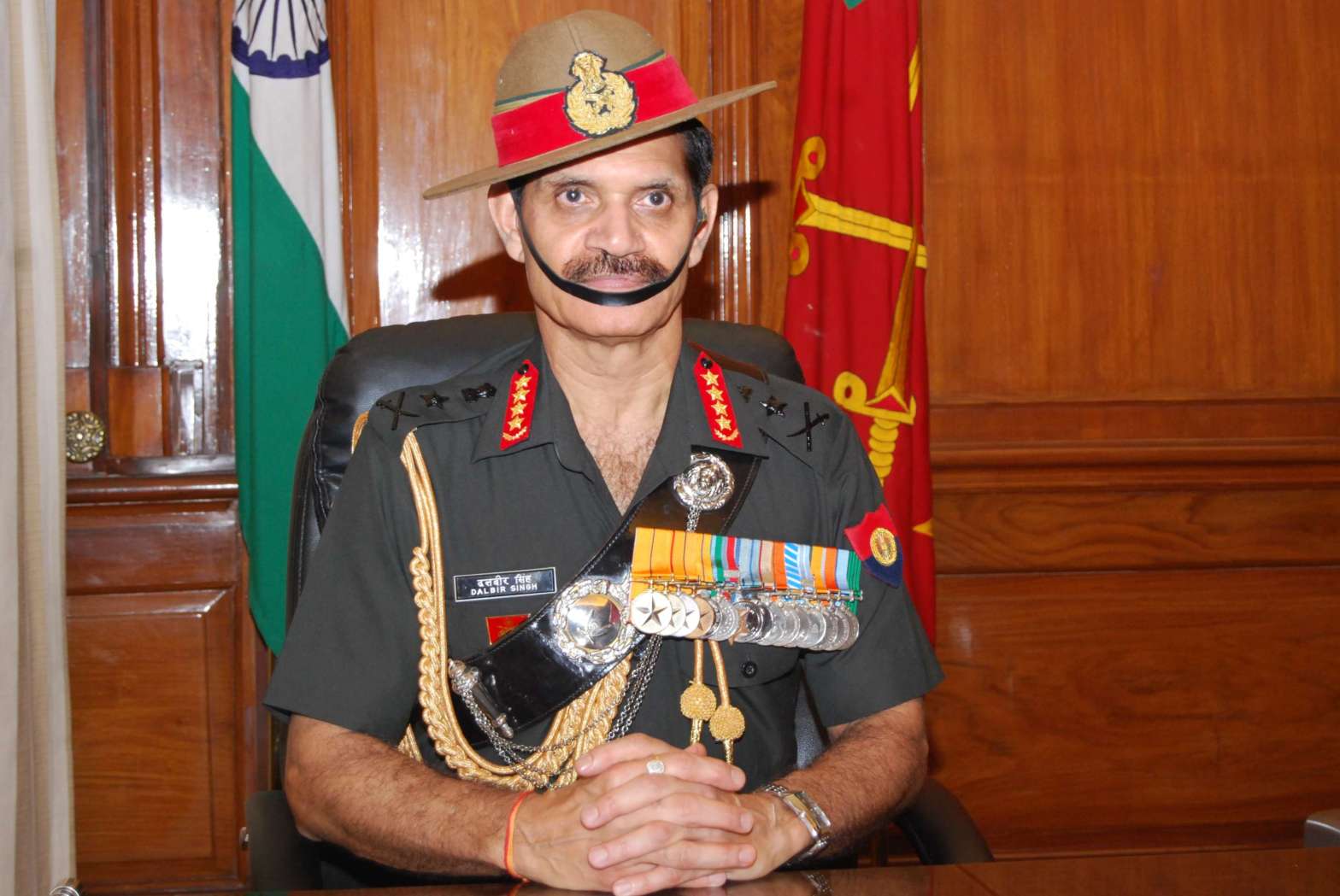
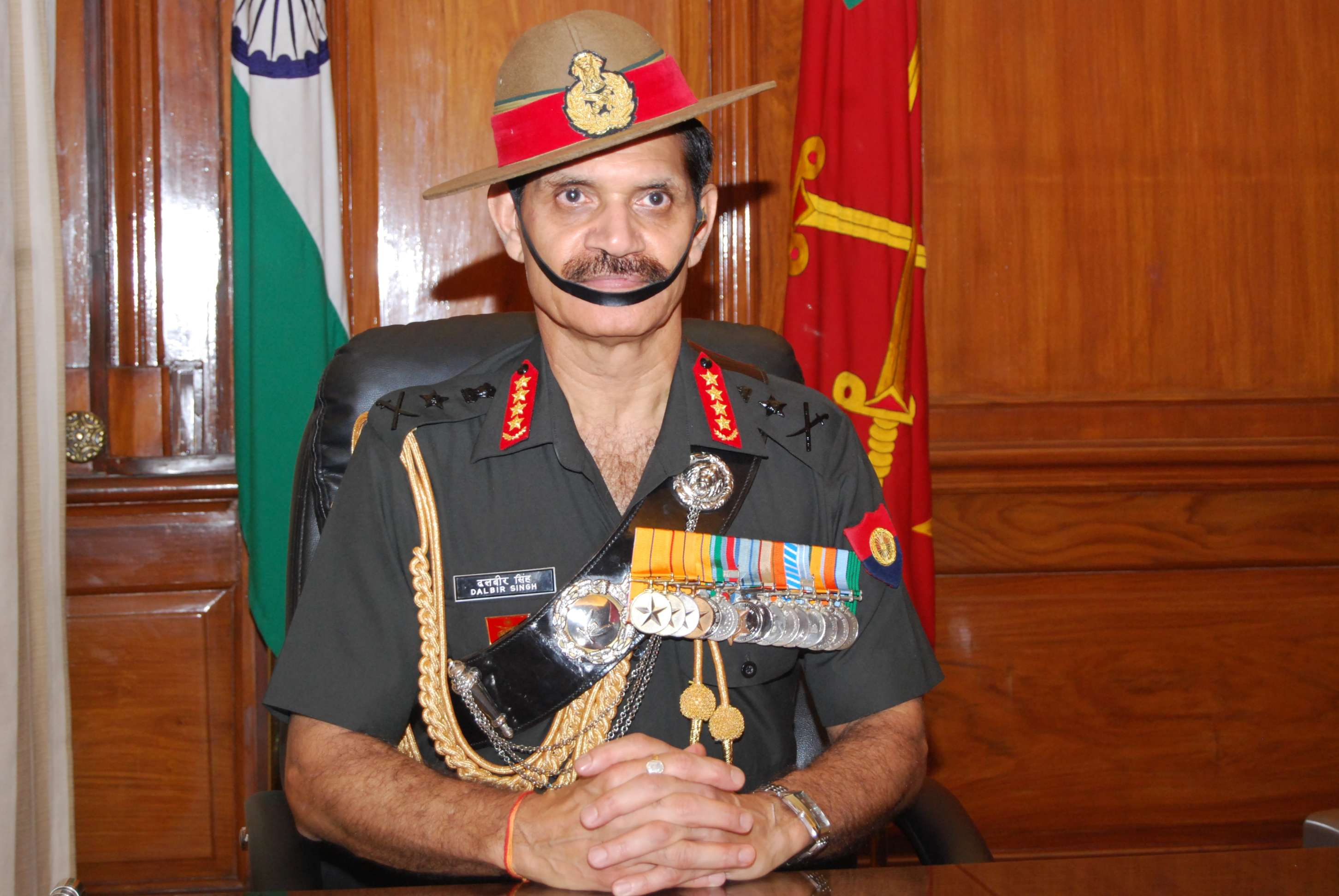
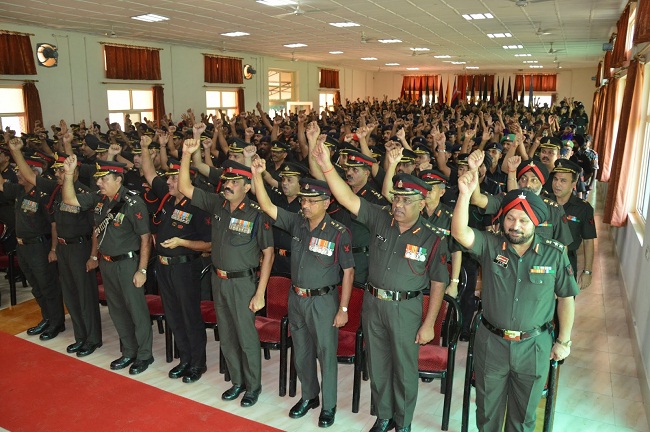
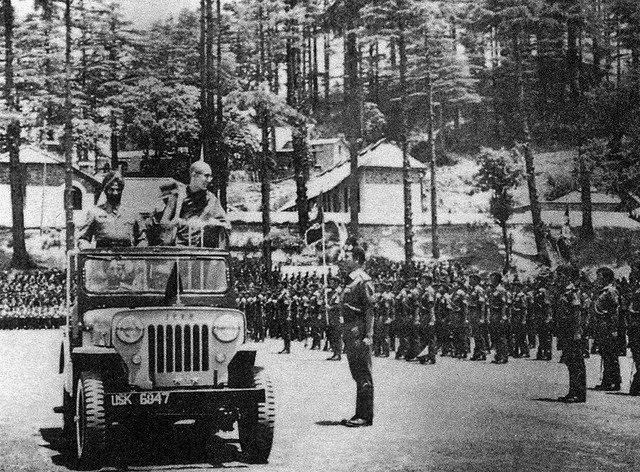
SPECIAL  FRONTIER FORCE  IS CELEBRATING  ITS PARTNERSHIP  WITH  INDIAN  ARMED FORCES : INDIA'S TOP MILITARY COMMANDER, GENERAL DALBIR SINGH SUHAG, AVSM VSM  SERVED  AS  THE  INSPECTOR  GENERAL  OF  SPECIAL  FRONTIER  FORCE  FROM  APRIL  2009  TO  MARCH  2011.  INDIA  CELEBRATES  ITS 66th  REPUBLIC  DAY  ON  26 JANUARY 2015.
SPECIAL FRONTIER FORCE IS CELEBRATING ITS PARTNERSHIP WITH INDIAN ARMED FORCES : INDIA’S TOP MILITARY COMMANDER, GENERAL DALBIR SINGH SUHAG, AVSM VSM SERVED AS THE INSPECTOR GENERAL OF SPECIAL FRONTIER FORCE FROM APRIL 2009 TO MARCH 2011. INDIA CELEBRATES ITS 66th REPUBLIC DAY ON 26 JANUARY 2015.

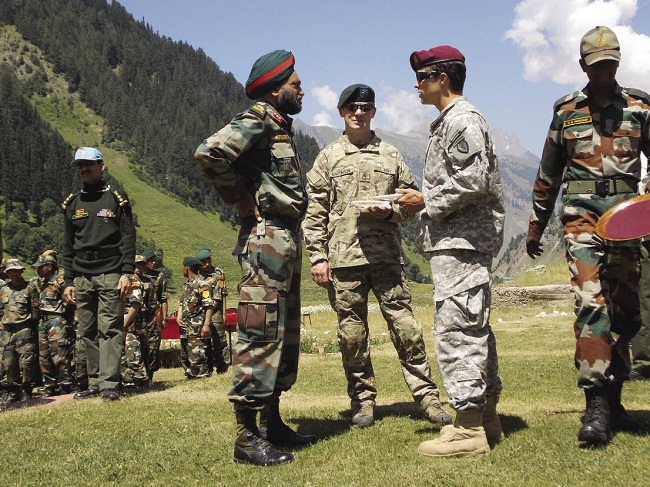
On behalf of Special Frontier Force. Establishment 22, Vikas Regiment, I am very pleased to share this post on the Indian Armed Forces.

Rudra Narasimham Rebbapragada
Ann Arbor, MI 48104-4162, USA
Special Frontier Force, Establishment 22, Vikas Regiment

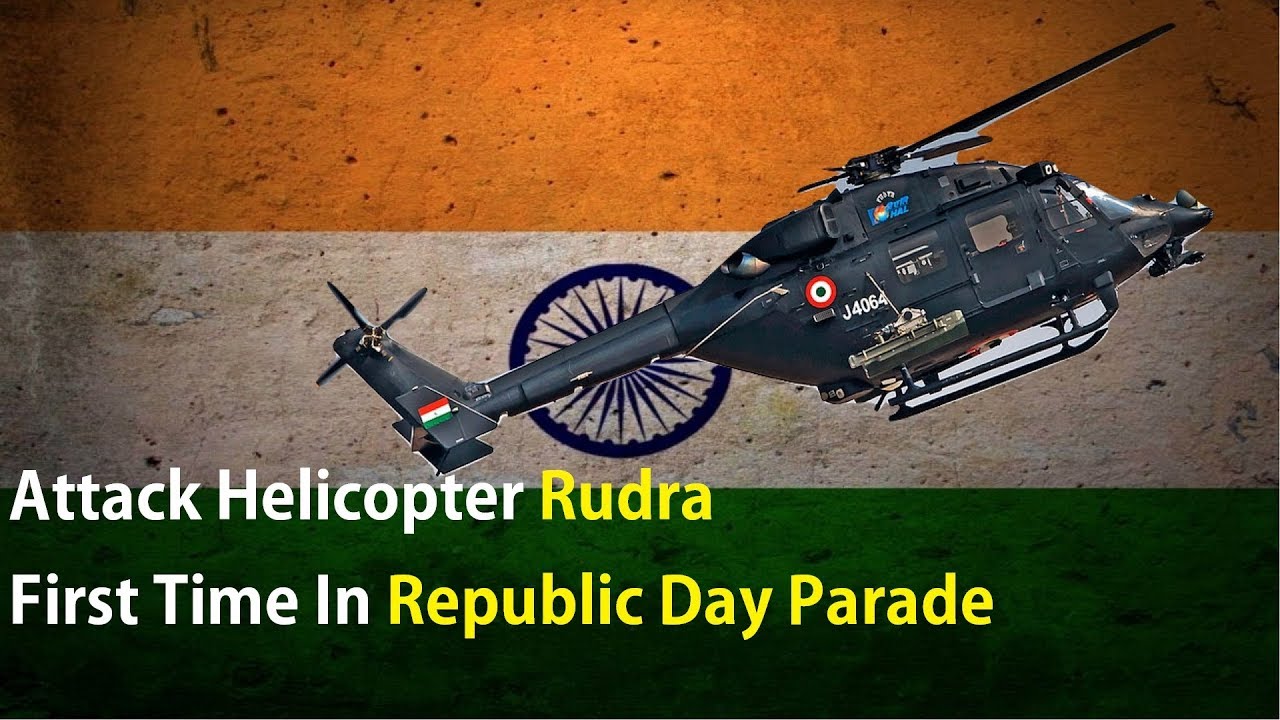
From Rudra About Rudra’s Maiden Appearance at 69th Republic Day Parade.

Indian Armed Forces

India covertly tested its nuclear arsenal in the early 1970s and late 1990s without the CIA even knowing what was happening. Till date, it is considered to be one of the CIA’s biggest failures in espionage and detection.

Facts About The Indian Armed Forces That’ll Make You Respect
Them Even More

The Indian Armed Forces, consisting of the Indian Army, the Indian Air Force, the Indian Navy and the Indian Coast Guard are India’s shield and sword, which keep our interests safe, our enemies at bay and the people of our country secure and free. They are respected and adored for their valor and sense of duty by the entire country. Many of us would know about their triumphs and stellar contributions to civilian life. But here are a few facts which will increase your respect for the Indian military ten-fold.

1. India controls the highest battlefield in the world, the Siachen glacier, at 5000 meters above Mean Sea Level (MSL).

2. India has the biggest “voluntary” army in the world.

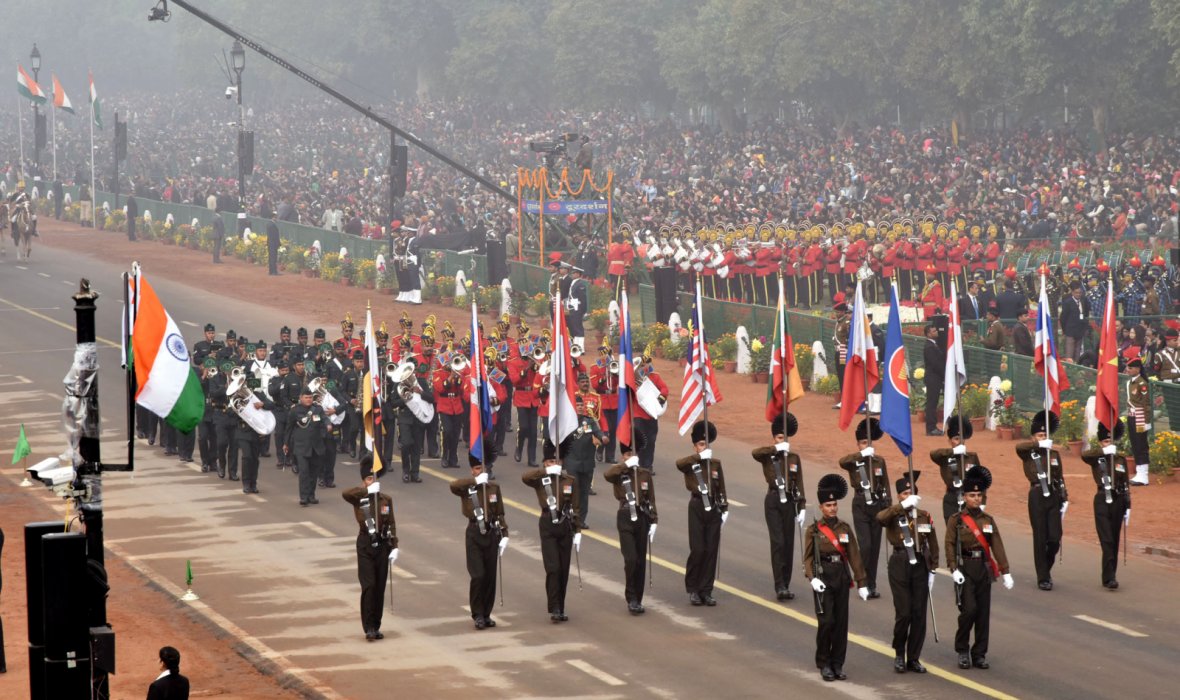
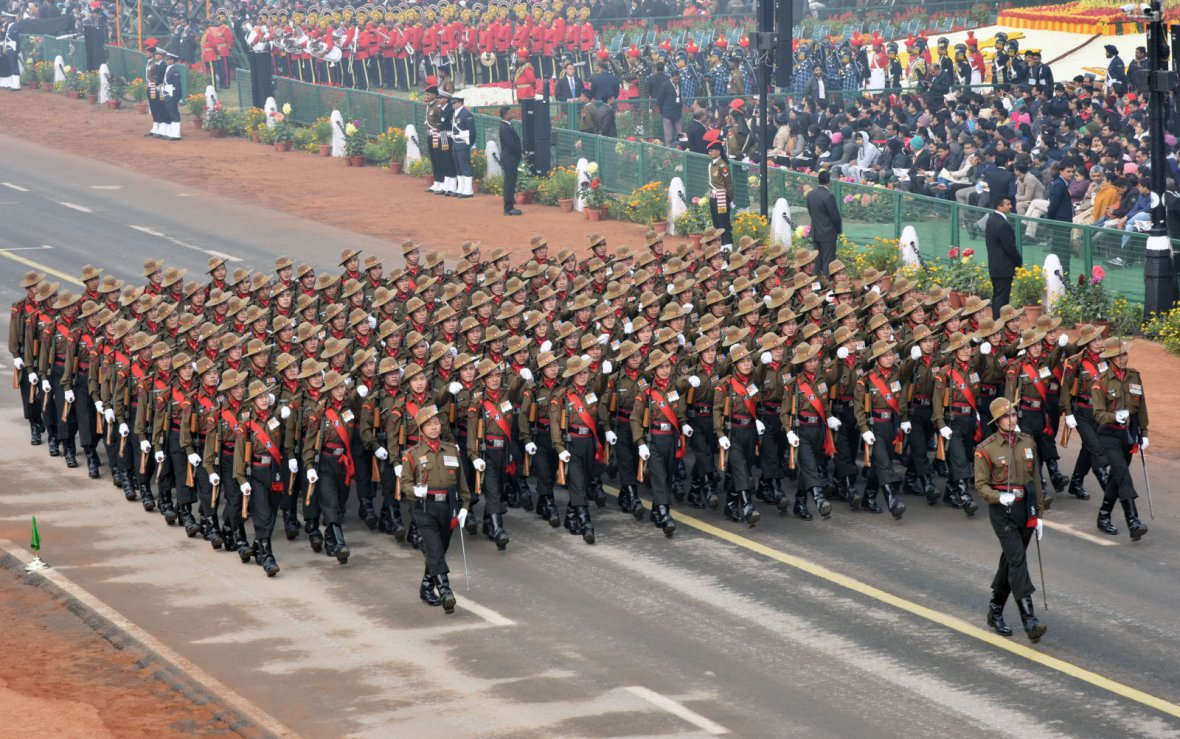
Septuagenarian of Special Frontier Force celebrates 69th Republic Day of India. Indian Army Band with ASEAN Nation Flag Bearer contingent marching in Republic Day Parade.

All serving and reserve personnel have actually “opted” for service. There is a provision for conscription (forced recruitment) in the constitution, but it has never been used.

3. Indian soldiers are considered among the very best in high altitude and mountain warfare.

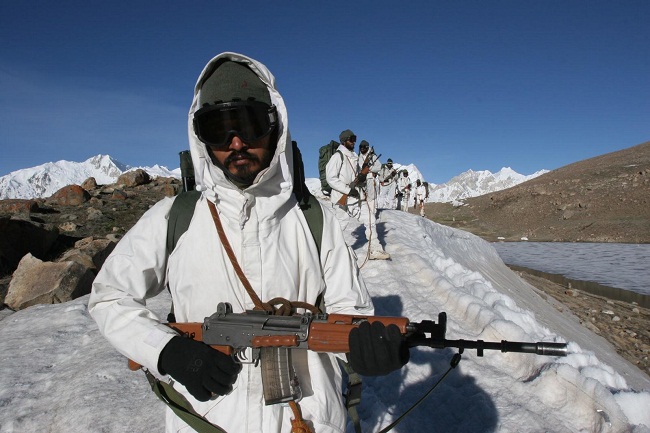
Special Frontier Force Defends Jammu and Kashmir. Indian Army, Siachen.

The Indian army’s High Altitude Warfare School (HAWS) is one of the most elite military training centers in the world and is frequented by Special Ops teams from the U.S, U.K & Russia. U.S Special Forces trained at HAWS before their deployment during the invasion of Afghanistan.

4. India covertly tested its nuclear arsenal in the early 1970s and late 1990s without the CIA even knowing what was happening.

Whole Dude – Whole Smile: Smiling Buddha at Giriraj Government Arts College, Nizamabad, India. Till date, it is considered to be one of the CIA’s biggest failures in espionage and detection.
Till date, it is considered to be one of the CIA’s biggest failures in espionage and detection.

5. Unlike other government organizations and institutions in India, there are no provisions for reservations based on caste or religion.

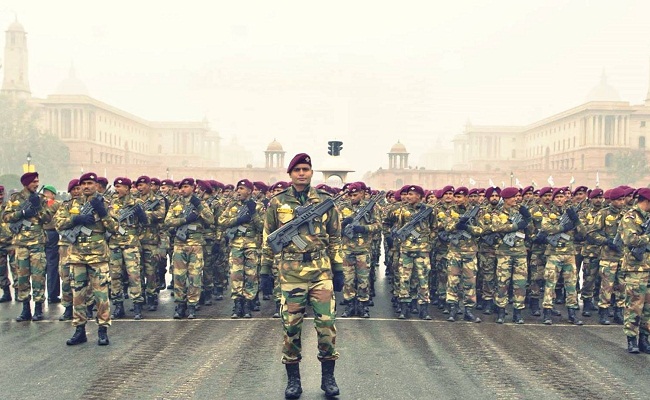
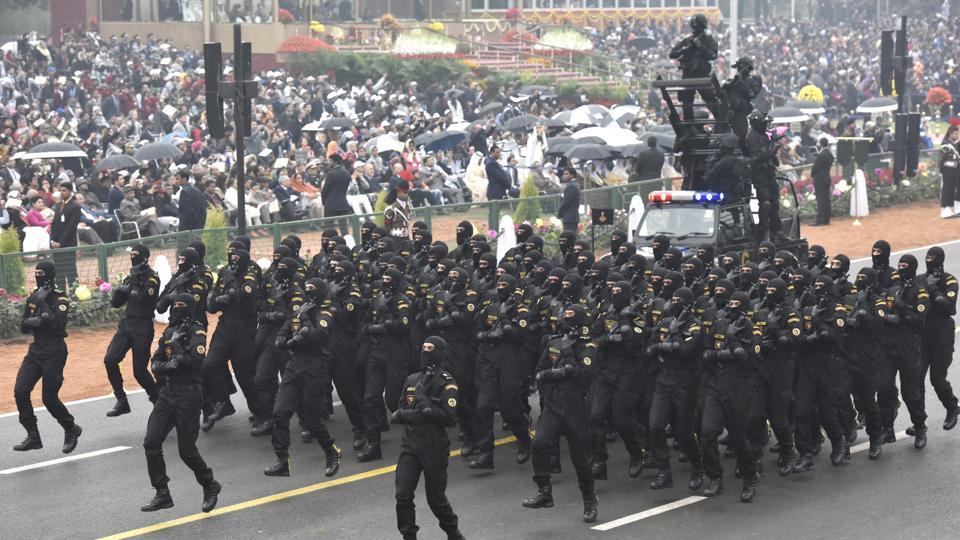
Septuagenarian of Special Frontier Force celebrates 69th Republic Day of India. National Security Guard(NSG) Commandos marching contingent passes through Rajpath.

Soldiers are recruited based on their overall merit and fitness based on stringent tests and trials. And once a citizen of India joins the forces, he/she becomes a soldier. Nothing else. Nothing more.

6. In the Battle of Longewala, on which the famous Bollywood movie “Border” is based, there were only two casualties on the Indian side.

The Battle of Longewala was fought in December 1971 between India and Pakistan, in which just 120 Indian Soldiers with 1 jeep mounted M40 recoilless rifle held the fort against 2000 Pakistani soldiers backed by 45 tanks and 1 mobile infantry brigade. Despite being heavily out-numbered, the Indian soldiers held their ground throughout the night and with the help of the Air Force, were able to completely rout the aggressors.

Septuagenarian of Special Frontier Force celebrates 69th Republic Day of India. Ladakh Scouts Marching contingent passes through Rajpath.

7. Operation Rahat (2013) was one of the biggest civilian rescue operations ever carried out in the world.

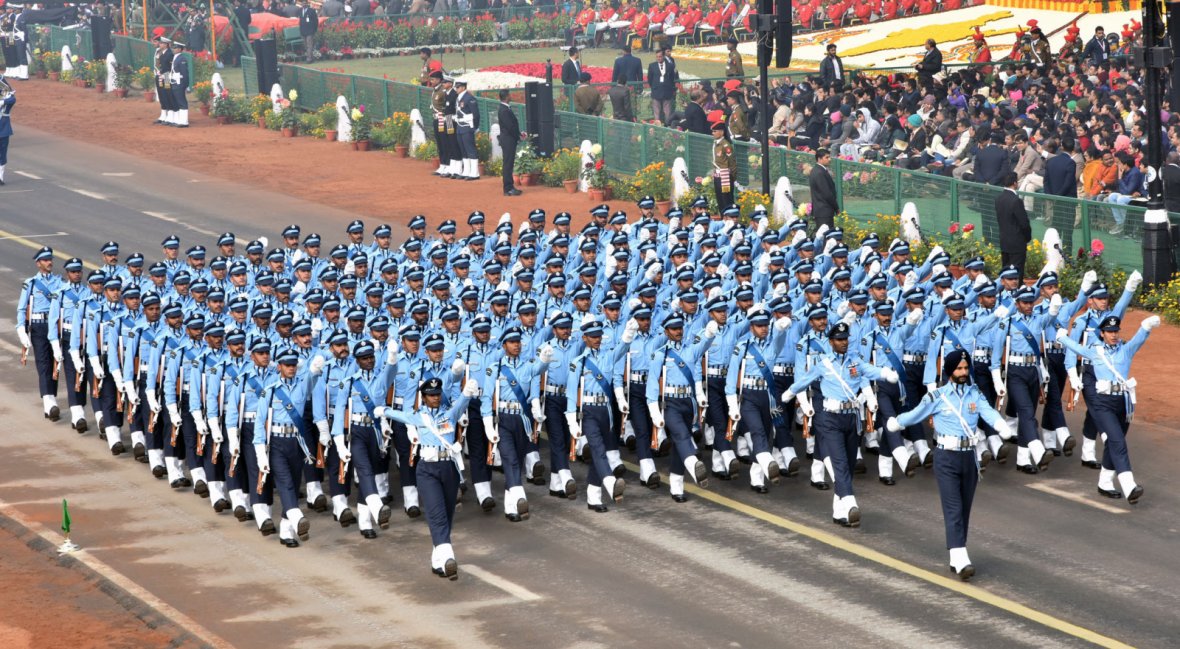
Septuagenarian of Special Frontier Force Celebrates 69th Republic Day of India. Indian Air Force marching contingent.

It was carried out by the Indian Air Force to evacuate civilians affected by the floods in Uttarakhand in 2013. It was the biggest civilian rescue operations in the world carried out by any Air Force using helicopters. During the first phase of the operation from 17 June 2013, the IAF airlifted a total of about 20,000 people; flying a total of 2,140 sorties and dropping a total of 3,82,400 kg of relief material and equipment.

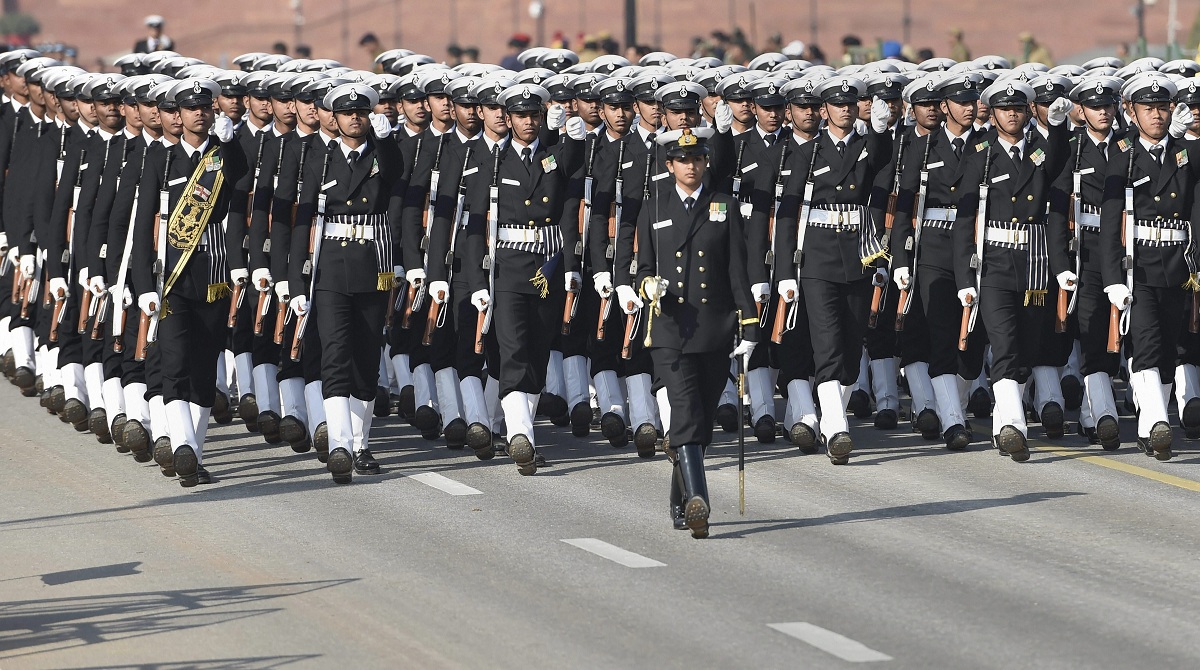
8. The Ezhimala Naval Academy in Kerala is the largest of its kind in Asia.

New Delhi: Marching contingent of the India Navy during the Republic Day parade rehearsal at Rajpath in Delhi on Sunday. (PTI Photo by Ravi Choudhary) (PTI1_21_2018_000064B)

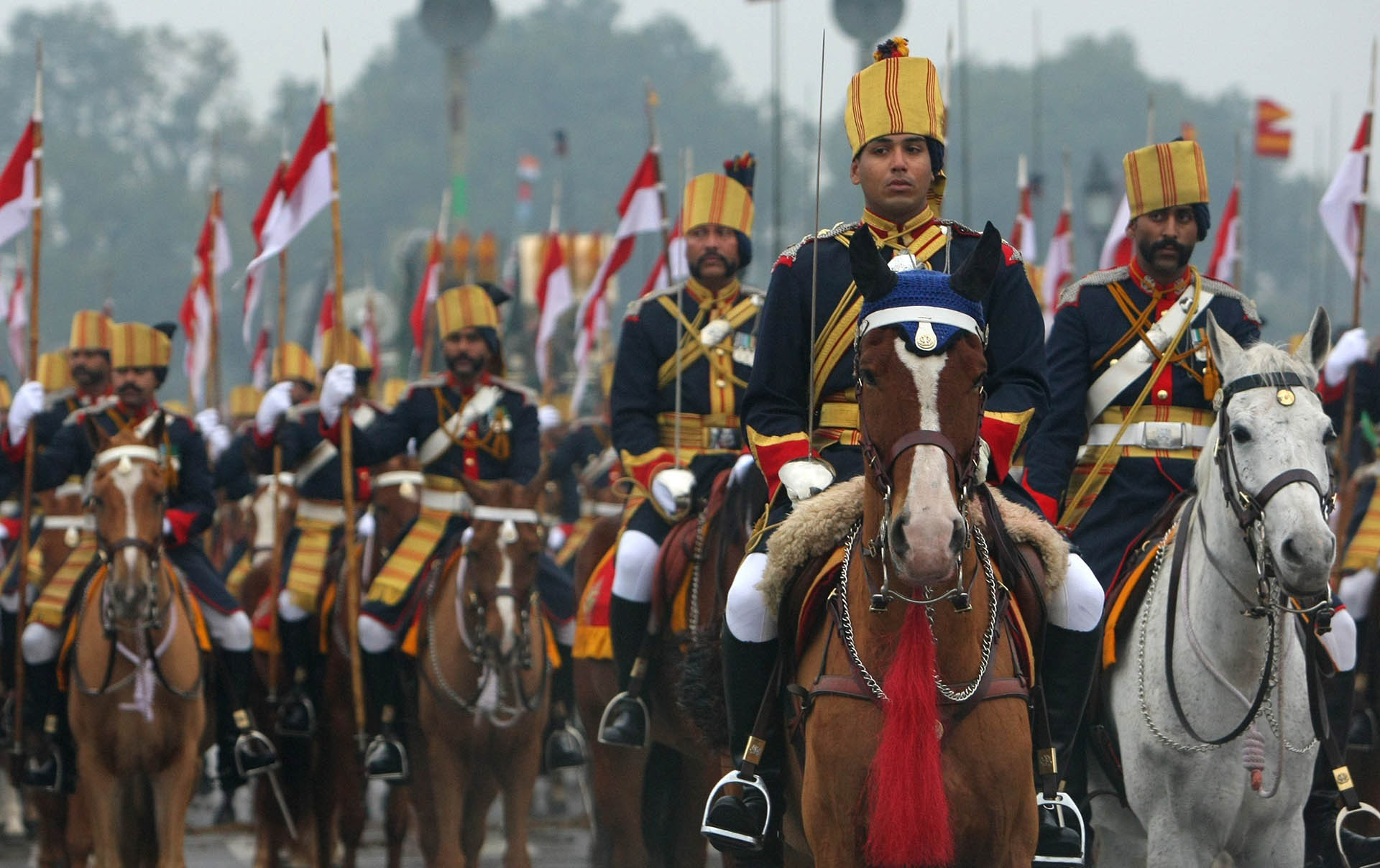
9. The Indian army has a horsed cavalry regiment. It is among one of the last 3 such regiments in the world.

Septuagenarian of Special Frontier Force celebrates 69th Republic Day of India. 61 Cavalry Regiment contingent passes through Rajpath.

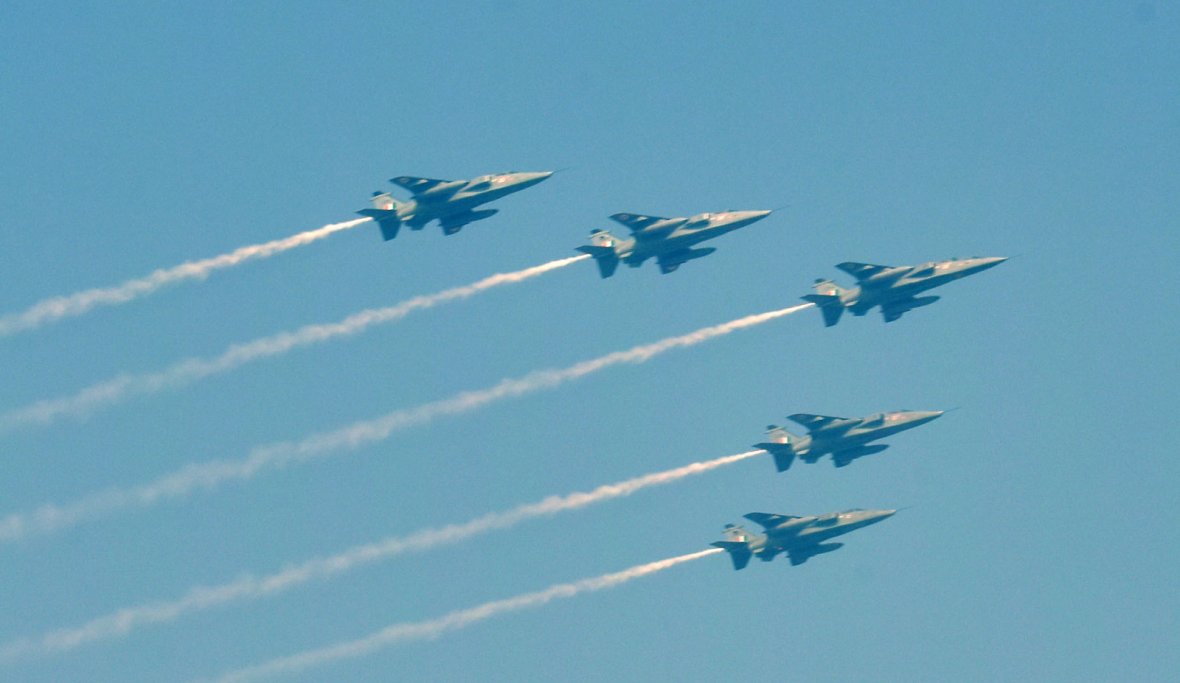
10. The Indian Air Force has an out-station base in Tajikistan and is seeking another in Afghanistan.

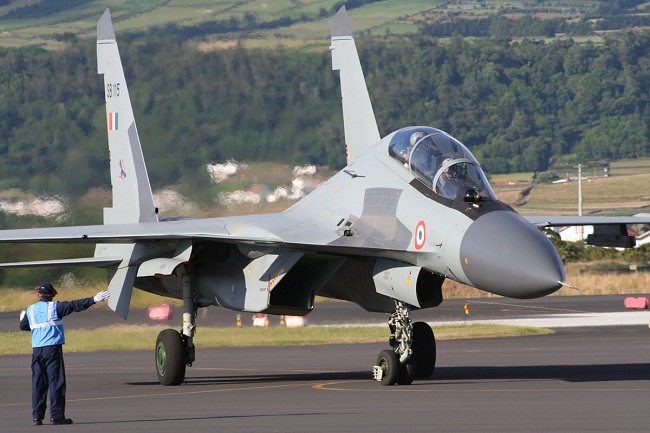
Septuagenarian of Special Frontier Force celebrates 69th Republic Day of India. Five Jaguar Fighter planes fly over Rajpath.

11. The Indian Army built the highest bridge in the world.

The Bailey Bridge is the highest bridge in the world. It is located in the Ladakh valley between Dras and Suru rivers in the Himalayan mountains. It was built by the Indian Army in August 1982.

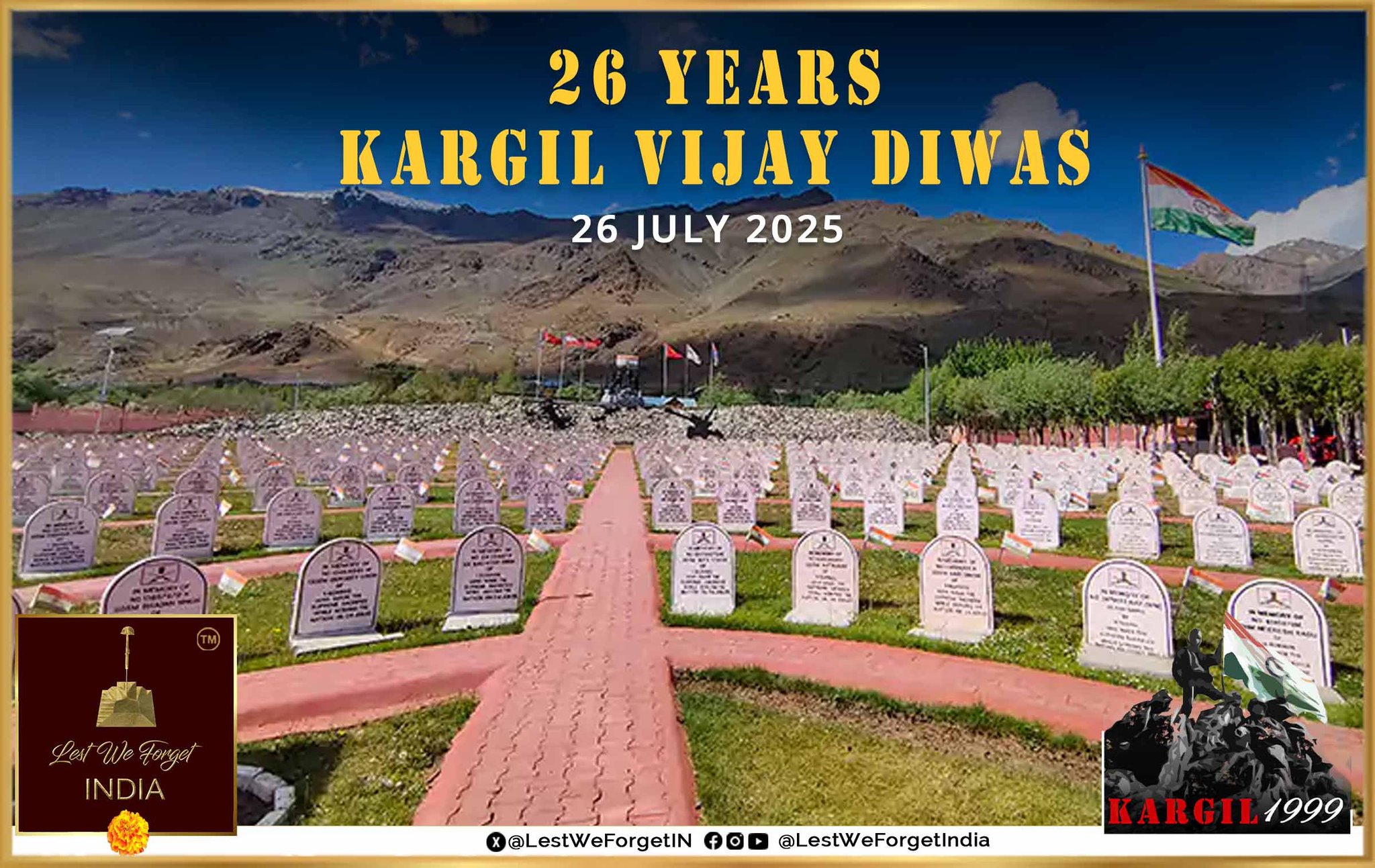
Saturday, July 26, 2025. Special Frontier Force commemorates the Victory in Kargil War of 1999. The 26th Anniversary of Kargil Vijay Diwas.

12. The Military Engineering Services (MES) is one of the biggest construction agencies in India.

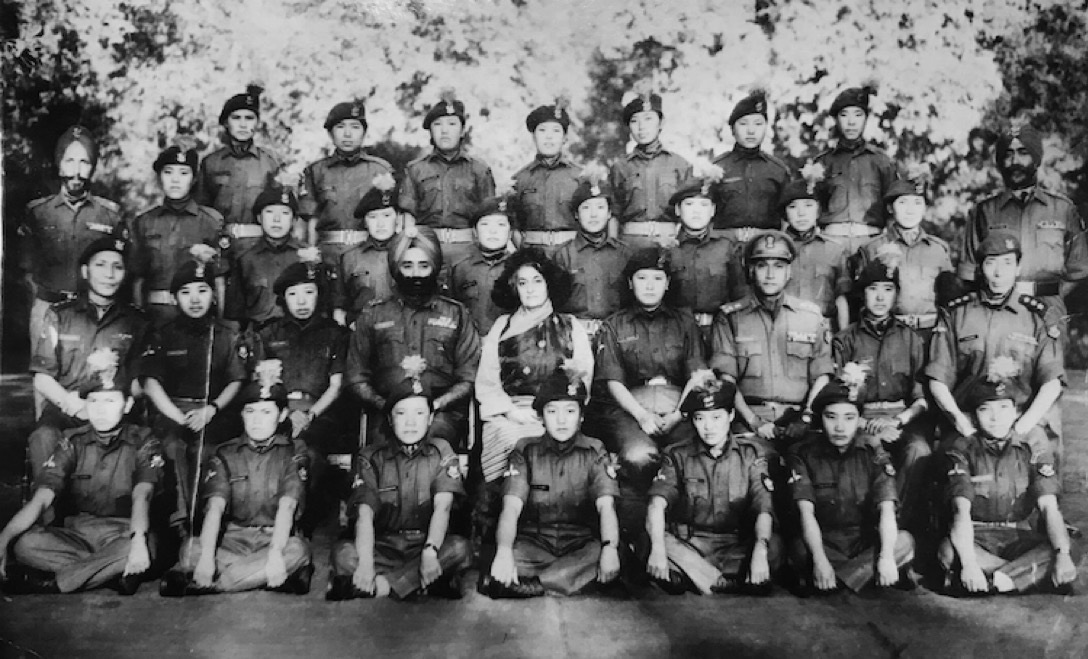
Special Frontier Force – Lohit River: I was based at Dum Duma(Doom Dooma) Airfield during 1972-73.

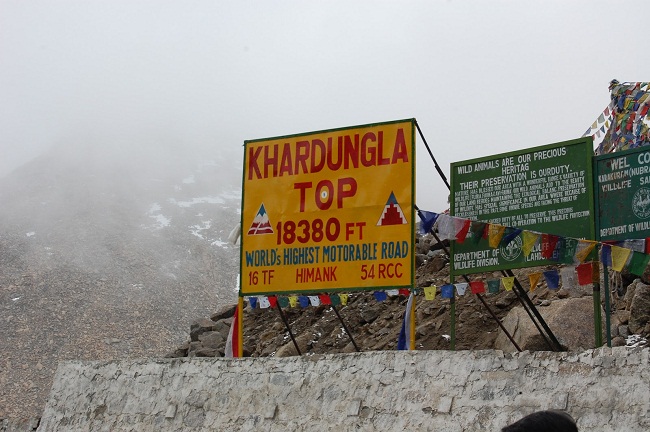
The MES and Border Roads Organisation (BRO) are together responsible for the construction and maintenance of some of the most awesome roads and bridges ever to have been built. To name a few, the Khardungla Pass (the highest motorable road in the world), the Magnetic Hill in Leh, etc.

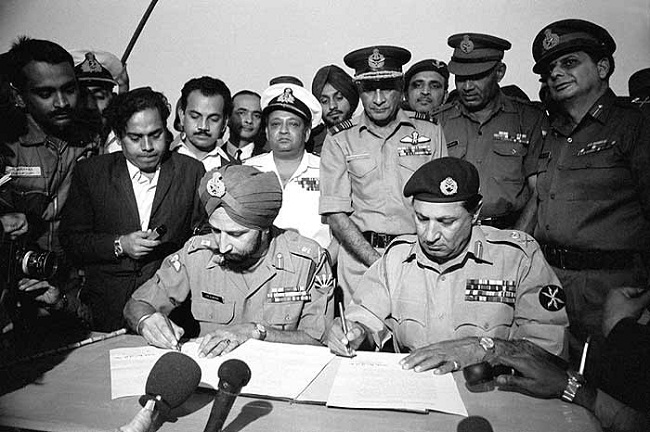
13. The Indo Pakistan War of 1971 came to end with the surrender of about 93,000 combatants and officials of the Pakistani Army.

16 December, Vijay Diwas. New Delhi: I pay tribute to fallen heroes of the 1971 Bangladesh Liberation War.

This is the largest number of POWs taken into custody since World War II. The war resulted in the creation of the independent state of Bangladesh.

I WISH TO ADD THE FOLLOWING AS AN HONORARIUM TO ALL OUR SOLDIERS (RECEIVED FROM A FRIEND)

On behalf of Special Frontier Force. Establishment 22, Vikas Regiment, I am very pleased to share this post on the Indian Armed Forces.

THE FINAL INTERVIEW WITH GOD.

MOST TOUCHING THE FINAL INSPECTION

The soldier stood and faced God,
which must always come to pass.
He hoped his shoes were shining,
Just as brightly as his brass.

‘Step forward now, you soldier,
How shall I deal with you?
Have you always turned the other cheek?
To My Church have you been true?’

The soldier squared his shoulders and said,
‘No, Lord, I guess I isn’t.
Because those of us who carry guns,
Can’t always be a saint.

I’ve had to work most Sundays,
And at times my talk was tough.
And sometimes I’ve been violent,
Because the world is awfully rough.

But, I never took a penny,
That wasn’t mine to keep…
Though I worked a lot of overtime,
When the bills got just too steep.

And I never passed a cry for help,
Though at times I shook with fear.
And sometimes, God, forgive me,
I’ve wept unmanly tears.

I know I don’t deserve a place,
Among the people here.
They never wanted me around,
Except to calm their fears.

If you’ve a place for me here, Lord,
It needn’t be so grand.
I never expected or had too much,
But if you don’t, I’ll understand.

There was a silence all around the throne,
Where the saints had often trod.
As the soldier waited quietly,
For the judgment of his God.

‘Step forward now, you soldier,
You’ve borne your burdens well.
Walk peacefully on Heaven’s streets,
You’ve done your time in Hell.’

Author Unknown~

Don’t Break This – Without Apology

Thinking of all the soldiers of the free world.

I’m not breaking this one. If I get it a 1000 times, I’ll forward it a 1000 times! Let us pray

A Prayer chain for our military… Don’t break it!
Send this on after a short prayer for our soldiers – Please Don’t break it!

GOD BLESS YOU FOR PASSING IT ON!

JAI HIND

TODAY IS THE OLDEST YOU’VE EVER BEEN,YET THE YOUNGEST YOU’LL EVER BE,SO ENJOY THIS DAY WHILE IT LASTS AND LIVE LIFE TO THE FULLEST WHILE YOU CAN……..

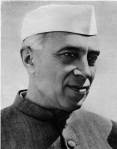
November 14, 1962. First Prime Minister of India shares his birth date with Special Frontier Force.

SPECIAL FRONTIER FORCE vs CHINA’S MILITARY MIGHT

SPECIAL FRONTIER FORCE vs CHINA’S MILITARY MIGHT:

Special Frontier Force vs China - Military Might: Mr. Harsh V Pant, Department of Defence Studies, King's College, London discussed the problem of increased defence spending by China.
Special Frontier Force vs China – Military Might: Mr. Harsh V Pant, Department of Defence Studies, King’s College, London discussed the problem of increased defence spending by China.

Special Frontier Force is a military organization founded by the United States, India, and Tibet to contain the military threat posed by Communist China’s military occupation of Tibet since 1950. Its military mission visualizes the eviction of the military occupier of Tibet through military action. In my opinion, China’s military power, military strategy and military tactics will not assure the inevitability of peace that is imposed by China by its occupation of Tibet. Peace and War are conditions that prevail in relationship with an external reality called Natural Order. Tibetan Resistance is the symptom of the absence of Natural Order. Tibetan Resistance will prevail and Resistance will endure if Natural Order is not restored in Tibet. It is true that China rules Tibet with an Iron Fist. Resistance will endure, and Resistance will prevail to break the knuckles of the military grip over Tibet. I am pleased to share this article written by Mr. Harsh V Pant, Department of Defence Studies, King College, London on the problem of China’s military spending.

https://twitter.com/wholedude

BRACE FOR CHINESE MILITARY MIGHT

By Harsh V Pant

Special Frontier Force vs China's Military Might: Mr. Harsh V Pant, Department of Defence Studies, King's College, London expressed his serious concern about China's growing military spending.
Special Frontier Force vs China’s Military Might: Mr. Harsh V Pant, Department of Defence Studies, King’s College, London expressed his serious concern about China’s growing military spending.

Published: 13th February 2014 06:00 AM

The author is a reader in international relations, department of defence studies, King’s College, London.

It is being estimated that China’s defence budget will reach a whopping US $148 billion in 2014, second only to the defence budget of the USA and leaving behind the combined defence budgets of western nations such as Germany, France and the United Kingdom.
China’s defence budget has risen each year for two decades and the trend shows no sign of abating. Thanks to rapidly rising defence expenditures by China and Russia, global defence spending is rising for the first time in five years. Across Asia-Pacific, there is an arms race brewing as nations try to secure their interests at a time of geopolitical transition. The region is likely to account for nearly 28 per cent of global defence spending by 2020.

Last year China had hiked its defence budget by 10.7 per cent to USD 115.7 billion, well above India’s defence spending of USD 37.4 billion. While its civilian leadership has tried to downplay the increase suggesting much of it will go to human resources development, infrastructure and training, it is the response of the Chinese military that should be a matter of concern. The military has been unambiguous in suggesting when it comes to military spending, there is no need for China “to care about what others may think”.

Divisions within China about the future course of the nation’s foreign policy are starker than ever before. It is now being suggested that much like young Japanese officers in the 1930s, young Chinese military officers are increasingly taking charge of strategy with the result that rapid military growth is shaping the nation’s broader foreign policy objectives.

Civil-military relations in China are under stress with the PLA asserting its pride more forcefully than even before and demanding respect from other states. Not surprisingly, China has been more aggressive in asserting its interests not only vis-à-vis India but also vis-à-vis the US, the EU, Japan and Southeast Asian states. There is a sense that China can now prevail in conflicts with its regional adversaries. Some voices have openly called for wars.

The Air Force Colonel, Dai Xu, has argued that in light of China’s disputes with Japan in the East China Sea and Vietnam and the Philippines in the South China Sea, a short, decisive war, like the 1962 border clash with India, would deliver long-term peace. This would be possible, as Washington would not risk war with China over these territorial spats, according to this assessment.

The increasing assertion by the Chinese military and changing balance of power in the nation’s civil-military relations is a real cause of concern for China’s neighbours. The pace of Chinese military modernisation has already taken the world by surprise and it is clear that the process is going faster than many had anticipated. China launched its first aircraft carrier last year as well as several versions of new fighter jets including a stealth fighter bracing to deal with big US military push into Asia-Pacific.

A growing economic power, China is now concentrating on the accretion of military might so as to secure and enhance its own strategic interests. China, which has the largest standing army in the world with more than 2.3 million members, continues to make the most dramatic improvements in its nuclear force among the five nuclear powers, and improvements in conventional military capabilities are even more impressive.
What has been causing concern in Asia and beyond is the opacity that seems to surround China’s military build-up, with an emerging consensus that Beijing’s real military spending is at least double the announced figure. Tensions are escalating between China and its neighbours. Japanese prime minister Shinzo Abe has suggested the two countries are “in a similar situation” to Germany and Britain just before the outbreak of World War One.

At this critical juncture in the regional strategic landscape, India’s own defence modernisation programme is faltering despite this being at a time when India is expected to spend $112 billion on capital defence acquisitions over the next five years in what is being described as “one of the largest procurement cycles in the world”. Indian military planners are shifting their focus away from Pakistan as China takes centre-stage in future strategic planning.

Over the past two decades, the military expenditure of India has been around 2.75 per cent but since India has been experiencing significantly higher rates of economic growth over the last decade compared to any other time in its history, the overall resources that it has been able to allocate to its defence needs has grown significantly. The armed forces for long have been asking for an allocation of 3% of the nation’s GDP to defence.

The Indian Parliament has also underlined the need to aim for the target of 3% of the GDP. Yet as a percentage of the GDP, the annual defence spending has declined to one of its lowest levels since 1962. And now with a slow-down in the Indian economy, the Indian prime minister has suggested that the golden age of defence modernisation is already over.

But defence expenditure alone will not solve all the problems plaguing Indian defence policy. More damagingly, for the last several years now the defence ministry has been unable to spend its budgetary allocation. The defence acquisition process remains mired in corruption and bureaucratese. India’s indigenous defence production industry has time and again made its inadequacy to meet the demands of the armed forces apparent. The Indian armed forces keep waiting for arms while the finance ministry is left with unspent budget year after year. Most large procurement programmes get delayed resulting in cost escalation and technological or strategic obsolescence of the budgeted items. The present defence minister has been one of the most ineffective leaders of India’s defence establishment.

The Indian government is yet to demonstrate the political will to tackle the defence policy paralysis that is rendering all the claims of India’s rise as a military power increasingly hollow. The capability differential between China and India is rising at an alarming rate. Without a radical overhaul of the national security apparatus, Indian defence planners will not be able to manage China’s rise.

An effective defence policy is not merely about deterring China. But if not tackled urgently, India will lose the confidence to conduct its foreign policy unhindered from external and internal security challenges.

IN GOD WE TRUST – BHAVANAJAGAT – 2013 IN REVIEW

The WordPress.com stats helper monkeys prepared a 2013 annual report for this blog.

BhavanaJagat is inspired by Goddess Sarasvati who personifies Pure Knowledge and Perfect Wisdom.

Here’s an excerpt:

The Louvre Museum has 8.5 million visitors per year. This blog was viewed about 160,000 times in 2013. If it were an exhibit at the Louvre Museum, it would take about 7 days for that many people to see it. My blog post titled “What is Life – Life is Knowledge in Action” has attracted the most number of views.

http://BhavanaJagat.com/2010/08/05/What-is-Life-Life-is-Knowledge-in-Action/

Click here to see the complete report.

https://twitter.com/wholedude

Whole Dude – Whole Tweet

Whole Dude – Whole Tweet. When there is no sound, there is no echo.

Whole Dude – Whole Tweet

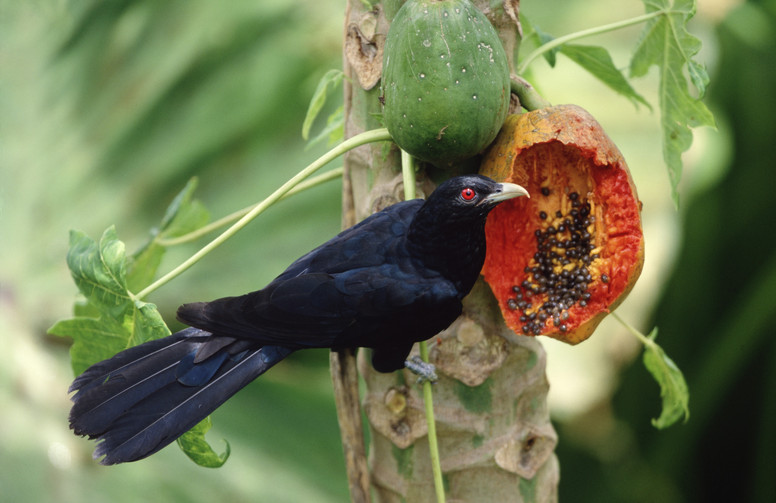
Whole Dude-Whole Tweet: The Cuckoo of India called “KOEL”, Eudynamys scolopacea symbolizes the thoughts that I “Tweet.”

I only want to be heard and I do not want to be seen. I speak about the relation between sound and echo, the song and the singer, the Creator, and the created.

Whole Dude – Whole Tweet

Whole Dude – Whole Fight

Whole Dude – Whole Fight: Special Frontier Force Defends Jammu and Kashmir
Whole Dude – Whole Fight: The Supreme Ruler of Tibet cannot be chosen by any foreign government.

I am pleased to share the essay, ‘Lesson from an Unsettled Boundary’, written by Manoj Joshi (a Distinguished Fellow at the Observer Research Foundation, New Delhi) that is published in India’s national newspaper ‘The Hindu’ in its edition dated April 27, 2013 with my readers. It is not a big surprise that the boundary between India and China is not settled. It should remain undecided as India cannot reconcile with People’s Republic of China’s military occupation of Tibet. India has no border with China. There is a border dispute between Tibet and China and that is an issue that could be resolved when Special Frontier Force, the military alliance/pact between the United States, India, and Tibet accomplishes its primary mission of evicting the occupier from the Land and territories of Tibet.

Service Information:

R. Rudra Narasimham, B.Sc., M.B.B.S.,
Personal Numbers:MS-8466/MR-03277K. Rank: Major
Branch:Army Medical Corps/Short Service Regular Commission (1969-1972); Direct Permanent Commission (1973-1984).
Designation: Medical Officer.
Unit: Establishment No.22 (1971-1974)/South Column,Operation Eagle (1971-1972).

Organization: Special Frontier Force

Lesson from an unsettled boundary

Manoj Joshi – The Hindu April 27, 2013

The reality is that the Line of Actual Control between India and China is notional and has not been put down on any mutually agreed map
(The writer is a Distinguished Fellow at the Observer Research Foundation, New Delhi)
In 1950, the Survey of India issued a map of India showing the political divisions of the new republic. While the border with Pakistan was defined as it is now, including the Pakistan-occupied Kashmir area, the borders with China were depicted differently. In the east, the McMahon Line was shown as the border, except in its eastern extremity, the Tirap subdivision, where the border was shown as “undefined.” In the Central sector of what is now Uttarakhand and Himachal Pradesh and the eastern part of Jammu & Kashmir, including Aksai Chin, the boundary was depicted merely by a colour wash and denoted as “boundary undefined.”

Unilateral act

In March 1954, the Union Cabinet met and decided to unilaterally define the border of India with China. The colour wash was replaced by a hard-line, and the Survey of India issued a new map, which depicts the borders as we know them today. All the old maps were withdrawn and the depiction of Indian boundaries in the old way became illegal. Indeed, if you seek out the White Paper on Indian States of 1948 and 1950 in the Parliament library, you will find that the maps have been removed because they too showed the border as being “undefined” in the Central and Western sectors.
What was the government up to? Did it seriously think it could get away with such a sleight of hand? Or was there a design that will become apparent when the papers of the period are declassified? Not surprisingly, the other party, the People’s Republic of China, was not amused and, in any case, there are enough copies of the old documents and maps across the world today to bring out the uncomfortable truth that the boundaries of India in these regions were unilaterally defined by the Government of India, rather than through negotiation and discussions with China.
It is not as though the Chinese have a particularly good case when it comes to their western boundary in Tibet. The record shows that the Chinese empire was unclear as to its western extremities, and rejected repeated British attempts to settle the border. The problem in the Aksai Chin region was further compounded by the fact that this was an uninhabited high-altitude desert, with few markers that could decide the case in favour of one country or the other. But there was cause for the two countries to sit down and negotiate a mutually acceptable boundary. This as we know was not to be and, since then, the process has gone through needless tension and conflict.
In the initial period, India’s focus was on the McMahon Line which defines the boundary with China in what is now Arunachal Pradesh. It tended to play down the issue of Aksai Chin because it was a remote area and of little strategic interest to India. But for China, the area was vital. Indeed, according to John W. Garver, it was “essential to Chinese control of western Tibet and very important to its control of all of Tibet.” In other words, in contrast to India’s legalistic and nationalistic claims over the region, for China, control over Aksai Chin had a geopolitical imperative.
For this reason, it entered the area, built a road through it and undertook a policy to expand westward to ensure that the road was secure. India woke up to the issue late and when it sought to confront the Chinese through its forward policy in 1961, it was already too late. And the 1962 war only saw a further Chinese advance westward which led to almost the entire Galwan River coming under the Chinese control.
We can only speculate on the causes of their present westward shift in the Daulat Beg Oldi area. But one thing is clear: the central locomotive of Chinese policy remains Tibet. Despite massive investments in the region, large numbers of Tibetans remain disaffected. No country in the world, including India, recognises Tibet as being a disputed territory yet, for two reasons. The Chinese constantly seek reassurance from New Delhi about its intentions. First, because of the past support that Tibetan separatist guerrillas got from the U.S. and India, and second, because of the presence of the Dalai Lama and the Tibetan government-in-exile in India. Despite the massive growth of Chinese power, their insecurities remain high. In great measure, they are due to Beijing’s own heavy-handed policies and only China can resolve the issues through accommodation and compromise with its own people. But typical of governments, Beijing seeks to deflect the blame of its own shortcomings on outsiders.
There could be other drivers of the tension as well. In the past five years, the Chinese have been generally assertive across their periphery and this could well be an outcome of policy decisions taken by the top military and political leadership of the country or, as some speculate, because of an inner-party conflict. Exaggerated Chinese maritime boundary claims have brought them into conflict with the ASEAN countries, principally the Philippines, Vietnam and Malaysia. A separate order of tension has arisen with Japan over the Senkaku islands in the East China Sea. In the case of India, an important initiative to resolve the border dispute through Special Representatives has been allowed to run aground.
Another possible explanation for the Chinese behaviour could be the steps India is taking with regard to its military on its borders with China. India’s border infrastructure and military modernisation schemes have been delayed by decades. But in recent years, there have been signs that New Delhi may be getting its act together. In any case, the cumulative impact of the huge defence expenditures since 2000 is beginning to show in terms of better border connectivity and modernisation programmes. This momentum could see Indian forces’ confrontation with China become even stronger when you take into account new manpower and equipment such as mountain artillery, attack helicopters, missiles and rocket artillery.
Overlapping claims
Even so, it would be hazardous to speak definitively about Chinese motivations. After being lambasted by the Indian media for occupying “Indian territory,” the Chinese might be concerned about losing face with a hasty retreat. The fact of the matter is that the boundary in the region is defined merely by a notional Line of Actual Control, which is neither put down on mutually agreed maps, let alone defined in a document through clearly laid out geographical features. While both sides accept most of the LAC and respect it, there are some nine points where there are overlapping claims and both sides patrol up to the LAC, as they understand it. In such circumstances, the Chinese could well withdraw after a decent interval.
This more benign interpretation of Chinese behaviour is also in tune with the statements that the new leadership in Beijing has been making. As has been noted, following his meeting with Prime Minister Manmohan Singh on the sidelines of the BRICS conference in Durban, the new supremo of China, Xi Jinping, was quoted in the Chinese media as saying that Beijing regarded its ties with New Delhi as “one of the most important bilateral relationships.” Belying the belief that the Chinese were dragging their feet on the border issue, Mr. Xi declared that the Special Representative mechanism should strive for “a fair, rational solution framework acceptable to both sides as soon as possible.” This last sentence is significant because a week earlier, he was quoted as making the standard formulation that the border problem “is a complex issue left from history and solving the issue won’t be easy.”
2013 is not 1962 and the Indian media and politicians should not behave as though it was, by needlessly raising the decibel level and trying to push the government to adopt a hawkish course on the border. But what the recent controversy does tell us is unsettled borders are not good for two neighbours because they can so easily become the cause of a conflict that neither may be seeking.
(The writer is a Distinguished Fellow at the Observer Research Foundation, New Delhi)

Whole Past – Operation Eagle cannot be buried as Dead History

Operation Eagle – The Past is Never Dead

GOLDEN EAGLE-OPERATION EAGLE-SPIRITUALISM-THE PAST IS NEVER DEAD: THE SPIRITUAL RELATIONSHIP BETWEEN MYSELF AND THE MEN WHO PARTICIPATED IN OPERATION EAGLE IS NOT DEAD. THE SPIRITS LIVE IN MY CONSCIOUSNESS.

The term ‘Spiritual’ describes the nature of a relationship, a partnership, an association, a connection, or bonding between two or more living entities based upon thoughts or feelings of sympathy and understanding. When I participated in the military action called ‘Operation Eagle’ that initiated the Liberation of Bangladesh in the Chittagong Hill Tracts during 1971, I formulated a spiritual relationship with the men of my Unit. I describe ‘Spiritualism’ as the relation between a changing object and its unchanging spiritual nature. Operation Eagle is a past event but because of the unchanging nature of the spiritual relationship, I have to claim: “The past is never dead and it’s not even past.”( Nobel Laureate William Faulkner )

I am happy to speak about the kind support extended by Dr. B. V. Ramarao, PhD, IRSE(Retd) to seek recognition for my participation in Operation Eagle and I am happy to publish this letter he submitted to Dr. M. M. Pallam Raju, Honourable Union Minister of State for Defence, Raksha Rajya Mantri, Government of India:

DR. MALLIPUDI MANGAPATHI PALLAM RAJU, UNION MINISTER OF STATE FOR DEFENCE, RAKSHA RAJYA MANTRI, 108-B, SOUTH BLOCK, MINISTRY OF DEFENCE, GOVERNMENT OF INDIA, NEW DELHI: OPERATION EAGLE – THE PAST IS NEVER DEAD.

Special Frontier Force – Operation Eagle -Gallantry Award:

RESPECTED Dr. M M PALLAM RAJU garu,

I had written to you in the past about the need to suitably honour
Dr. R. Rudra Narasimham, of Army Medical Corps, who did
exemplary work beyond the call of duty in the Bangla Desh War in
1971, called OPERATION EAGLE, directly handled at that time by
late Prime Minister, Smt. INDIRA GANDHI.

PETITION REFERENCE: case: CABST/E/2012/00154

A brief summary is as follows:

1. Dr. R. Rudra Narasimham, served in the Special Frontier Force from 22nd September 1971 to 18th December 1974. He was posted to Headquarters Establishment Number. 22 C/O 56 APO as Medical Officer. He served under the Command of Brigadier T S Oberoi. Under a Battle Operation Plan called Operation Eagle sanctioned and approved by the Prime Minister of India and her Cabinet Secretariat, he was posted to the South Column Unit of Operation Eagle under the Command of Lieutenant Colonel B K Narayan.

2. During 1971, Operation Eagle initiated the Liberation of Bangladesh with military action in the Chittagong Hill Tracts. In a written statement, his South Column Unit Commander Lieutenant Colonel B K Narayan had stated that this doctor had displayed a great sense of devotion to duty, maturity, physical toughness, and bravery beyond call of duty during Operation Eagle for which he had recommended the doctor for a gallantry award. In his Annual Confidential Report (Officers) for the year 1971-72, Lieutenant Colonel B K Narayan had written: “A very conscientious and Tough MO who worked hard during the Bangladesh Ops. He did very well and showed Maturity, which was beyond the call of duty. I have recommended this Officer for a gallantry award for which he deserves eminently. He is physically tough and cheerful. Is a fresh entrant with less than 2 years of Service and yet he displayed capability and confidence.” This written Annual Confidential Report(Officers) was forwarded by the Office of Inspector General Special Frontier Force to Military Secretary’s Branch (Army), MS 4(CR), MoD on 13th May 1972.

3. The citation for gallantry award initiated by Lieutenant Colonel B K Narayan was duly reviewed and recommended by Brigadier T S Oberoi and Major General Sujan Singh Uban, Inspector General, Special Frontier Force. This citation recommending the gallantry award was sent to the Medical Directorate, Medical Branch, Adjutant General’s Branch, Army Headquarters. The Director of Medical Services (Army), MoD did not take any further action to obtain the sanction for the recommended award. It is not known as to why the Director of Medical Services (Army) did not forward the citation to the Military Secretary’s Branch (Army) MoD. As such it seems that the Medical Branch had blocked or prevented the sanction of gallantry award.

4. In a written testimonial given by Lieutenant General T S Oberoi PVSM VrC, General Officer in Commanding-in-Chief, Headquarters Southern Command, Pune – 411001, dated 14th February 1983, General Oberoi had stated that this doctor deserves befitting recognition for the Service he had rendered to the Nation during the time of a national crisis. The Southern Army Commander had categorically stated that the doctor was recommended for a gallantry award for display of gallant qualities in the face of the enemy.

5. The Prime Minister of India and her Cabinet Secretariat have established the eligibility criteria for grant of Service Medals, Decorations, and Awards to the participants of Operation Eagle 1971-72. This doctor is eligible to receive the gallantry award that was duly recommended by his South Column Unit Commander Lieutenant Colonel B K Narayan, and it was duly reviewed and recommended by Force Commander Brigadier T S Oberoi and approved by Major General Sujan Singh Uban, Inspector General Special Frontier Force.

6. To serve the purpose of Justice and Fairness, I would ask that this doctor should be given the gallantry award that was duly recommended following the rules and procedures established by the Prime Minister of India for her Battle Plan of Operation Eagle.

7. Particulars of the above Officer are as follows:

Dr. R. Rudra Narasimham, B.Sc., M.B.B.S.,
Service Number. MS-8466 Rank Lieutenant/Captain AMC/SSC,
Medical Officer, South Column, Operation Eagle (1971-72),
Service Number. MR-03277K Rank Captain/Major AMC/DPC
Medical Officer, Headquarters Establishment No. 22 C/O 56 APO (1971-74),
Directorate General of Security,
Office of Inspector General Special Frontier Force,
East Block V, Level IV, R. K. Puram,
New Delhi – 110 022

Thanking You,

(Sd. BVRR)

Yours Faithfully,

B V Ramarao, PhD, IRSE (Retd.),
Retired GM (Railways),
10, Prince Apartments, Balaji Nagar,
VISAKHAPATNAM – 530 003
Tel. (0891) 2755691,
eMail: rbodapati
Dated 29 June 2012

Biographical Information:

R. Rudra Narasimham, Son of Shri. R. Suryanarayana Murthy,

13-92, First Cross Road, Prakasam Nagar, Rajahmundry, East Godavari District, Andhra Pradesh, India.

Student of Danavaipeta Municipal/Corporation High School, Rajahmundry (S.S.L.C.-  MARCH/APRIL, 1961.)

SPECIAL FRONTIER FORCE. REMARKS OF LIEUTENANT GENERAL TS OBEROI PVSM VrC., GOC -in- C, HQ SOUTHERN COMMAND, PUNE.