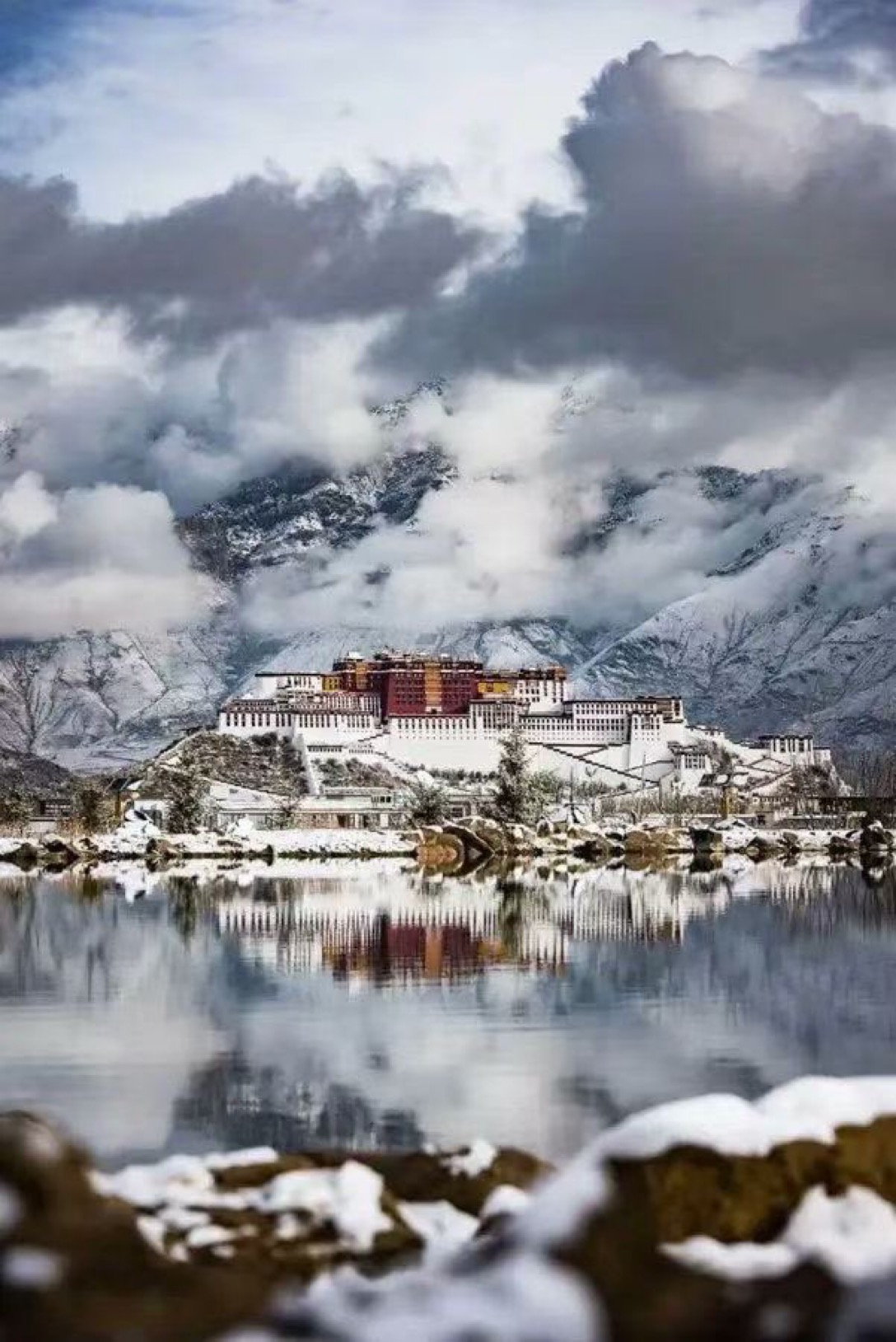
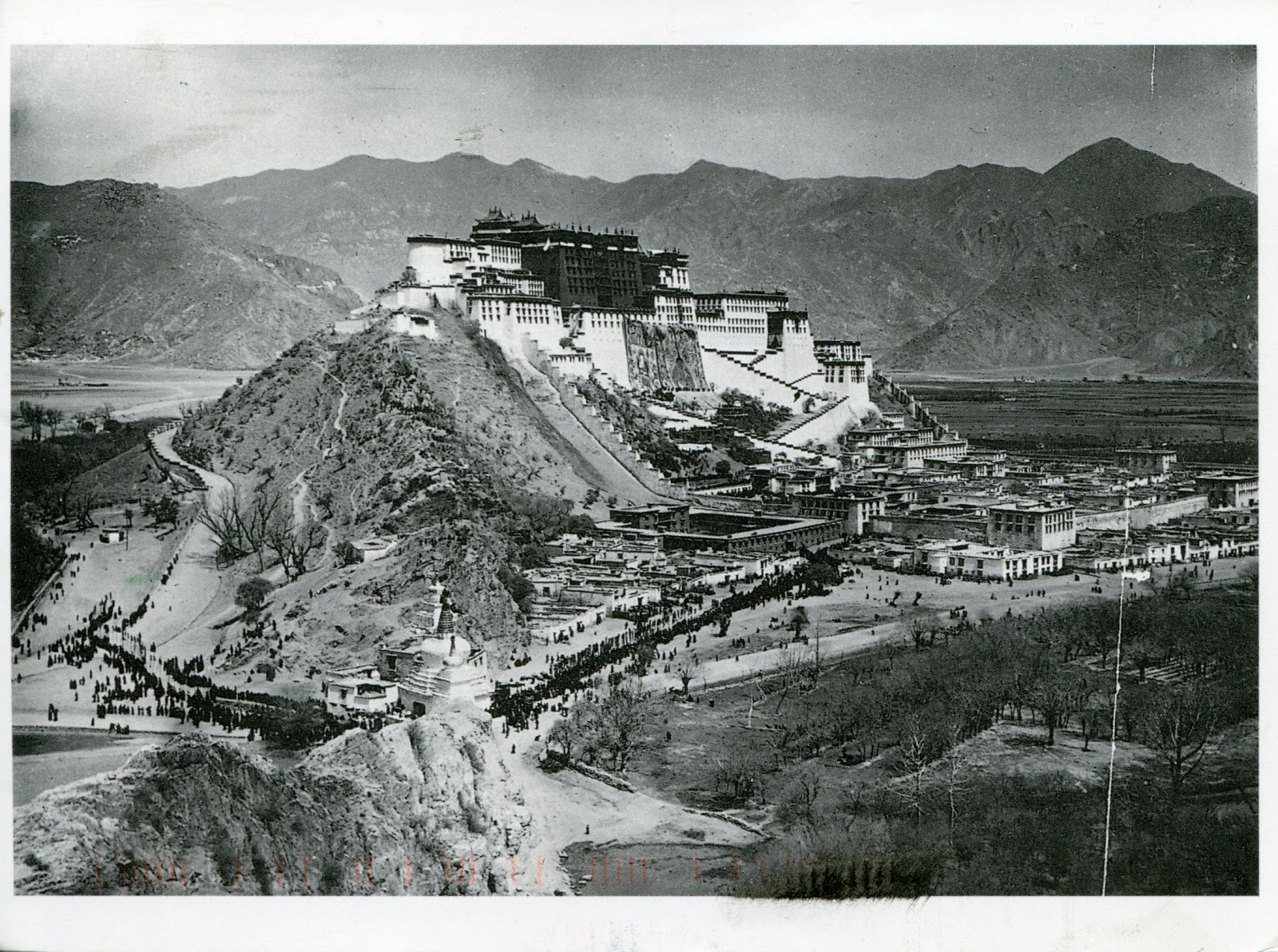
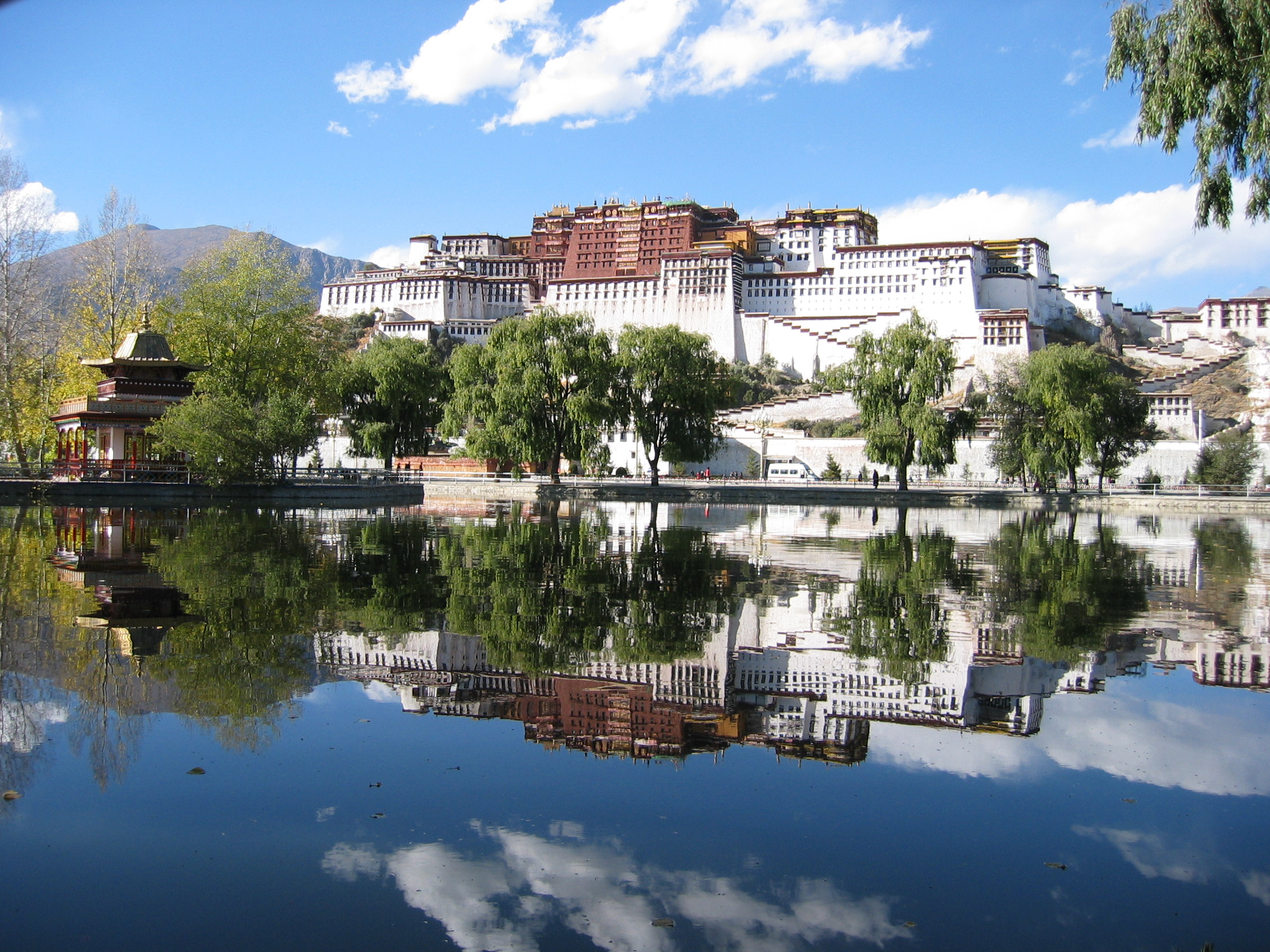
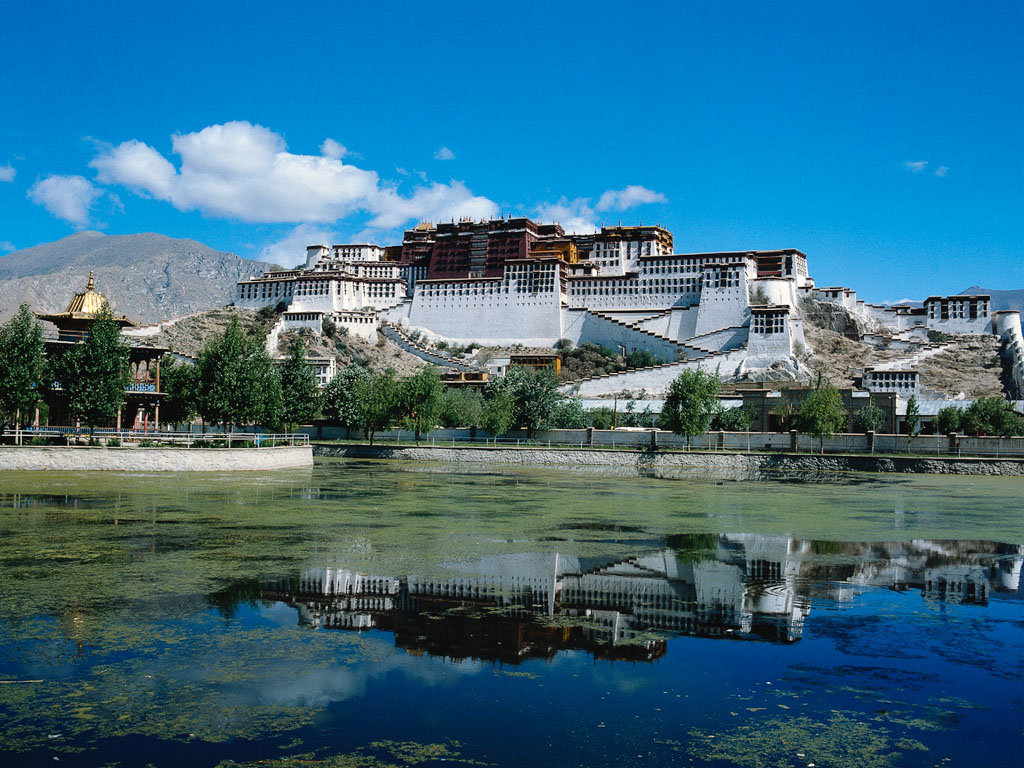
Whole Dude – Whole Supreme: The White House of Supreme Ruler of Tibet.
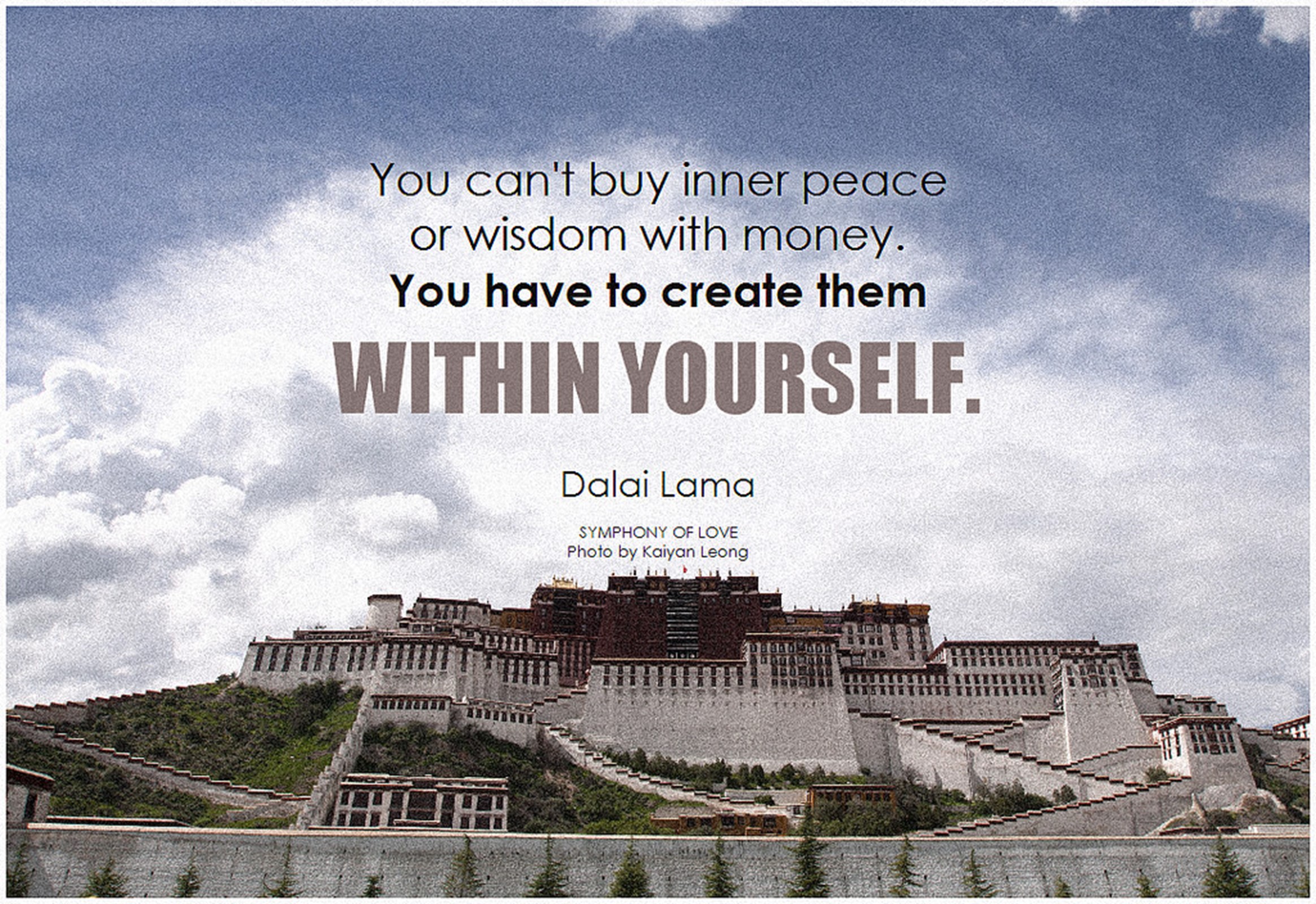
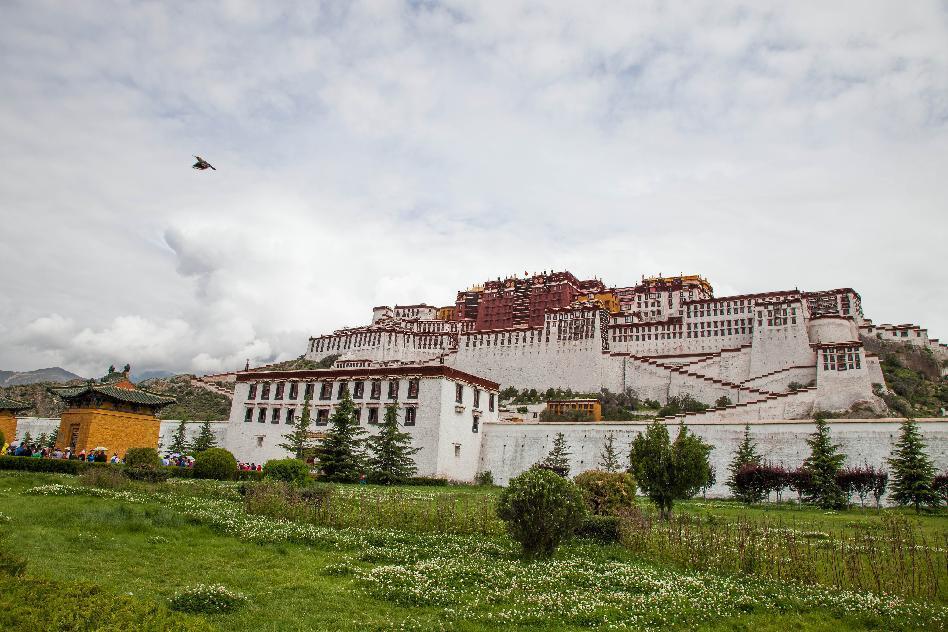
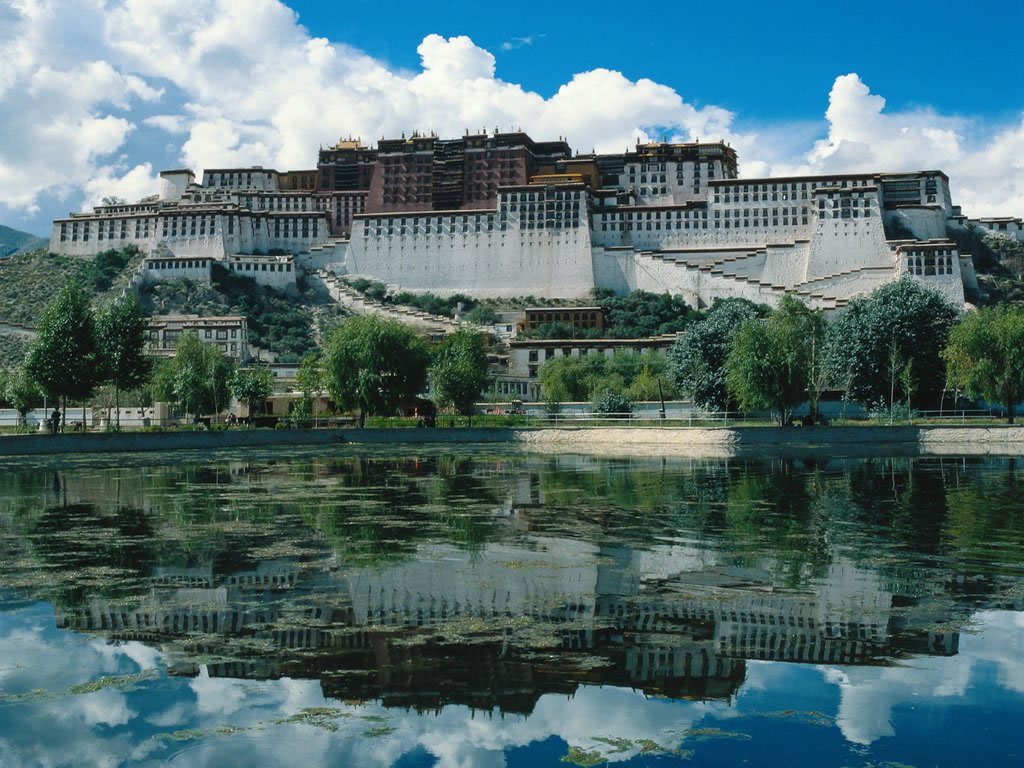
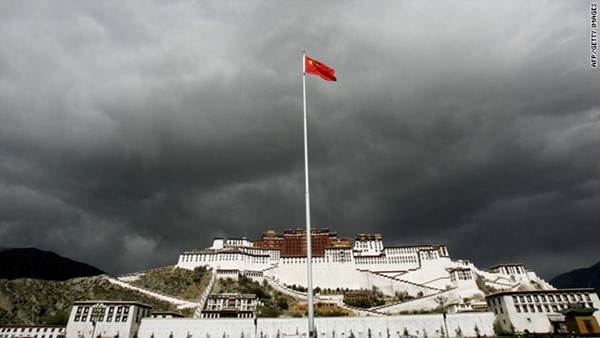
Living Tibetan Spirits present a guide to Potala Palace, Lhasa, Tibet. Potala Palace serves the same purpose as The White House of the US President.
The Potala Palace on the Red Hill in Lhasa was built during the reign of Lobsang Gyatso (1617-1682), the Great Fifth Dalai Lama. The Sovereign Authority of the Dalai Lama as the Ruler of Tibet was established before the US President became the Chief Executive of the United States.
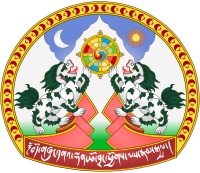
Whole Supreme – The Supreme Ruler of Tibet: The political institution of Dalai Lama is formally known as ‘Ganden Phodrang’ and this is the Official Seal of the Tibetan Government.
Potala is the Seat of Tibetan Government called The Dalai Lama Institution of Tibet.
Whole Supreme – The Supreme Ruler of Tibet: The White House of Supreme Ruler of Tibet.
A GUIDE TO POTALA PALACE, LHASA, TIBET
Whole Supreme – The Supreme Ruler of Tibet: The White House of Supreme Ruler of Tibet
Potala Palace is one of the most well-known spiritual sanctums in the world
Whole Supreme: His Holiness the 14th Dalai Lama, Supreme Ruler of Tibet lives in exile to defend Freedom in Tibet. Potala Palace in Lhasa is witness to the long history of Tibetan Independence.
At 12,139 feet above sea level, Potala is the highest palace in the world. The 1,300-year-old structure was originally built as a gesture of love, commissioned by Tibetan king Songtsen Gambo for his marriage to Princess Wencheng of the Chinese Tang Dynasty. Eventually, monks came to rule Tibet and the palace was expanded and converted into the winter residence for the Dalai Lama. But when the Dalai Lama was exiled to India in 1959, the Chinese government took over and made the grounds into a museum.
Whole Supreme – The Supreme Leader of Tibet: Lhasa, Potala und Medizinberg von Osten. My Prayers to Lhasa River.
Still, the Potala Palace remains an iconic part of the region and a mecca for Buddhists around the world. The name Potala is a nod to a sacred mountain in India, where the Buddha of compassion is said to dwell. Year-round, thousands of religious pilgrims circle the perimeter of the palace with prayer wheels and beads to ask for a blessing. Many have traveled thousands of miles by foot just to pay their respects.
Whole Supreme – The Supreme Leader of Tibet: TIBET AWARENESS – HISTORY OF TIBET’S UNREST. POTALA PALACE, LHASA, TIBET.
With more than a thousand rooms, 10,000 painted scrolls, 698 murals, and thousands of exquisite statues made from precious alloys and jewels, the structure has become one of the most famous spiritual sanctums in the world. Inside are the tombs of eight Dalai Lamas, hundreds of sacred Buddhist scrolls, and numerous shrines. Butter lamps light the hallways and watchful monks are stationed in nearly every public room to ensure that decorum is maintained.
Whole Supreme – The Supreme Leader of Tibet: The Potala Palace on the Red Hill in Lhasa was built during the reign of Lobsang Gyatso (1617-1682), the Great Fifth Dalai Lama. The Sovereign Authority of the Dalai Lama as the Ruler of Tibet was established before the US President became the Chief Executive of the United States.
The building is divided into two sections—the Red Palace and the White Palace. The former serves as the religious section and the latter as the administrative area. They are literally colored red and white; a fresh coat of paint made up of milk, honey, and sugar is applied every autumn.
Whole Supreme – The Supreme Leader of Tibet: Potala Palace is the symbol of Tibets Independence
The Potala Palace was named a World Heritage site in 1994 by UNESCO, and the neighboring Jokhang Temple and Norbulingka and were added on as extensions in 2000 and 2001, respectively. The Jokhang Temple is considered the most sacred temple in Tibet and the Norbulingka was the former summer residence of the Dalai Lama. All three structures are outstanding embodiments of Tibetan culture and despite waves of natural and human-induced damage, they are international icons that have remained spiritually relevant and intact over the centuries.
How to get there
Whole Supreme – The Supreme Leader of Tibet: Potala Palace is the Institution of Tibetan National Identity
Fly into the Lhasa Gonggar Airport or take a train into the city. Visitors must obtain a Tibet Tourism Bureau permit through a local tour agency in advance (allow up to 14 days) to enter Tibet by plane or train.
How to visit
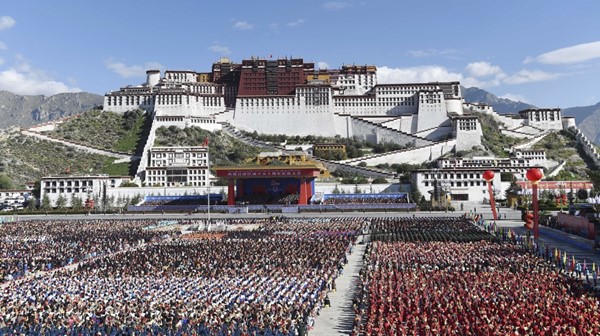
Whole Supreme – The Supreme Leader of Tibet: In this July 12, 2013, photo, the Potala Palace, once the residence of the Dalai Lama, is seen in Lhasa, Tibet, China. Tibet has been a source of controversy ever since Beijing sent troops to occupy the Himalayan region following the 1949 communist revolution. It says the region has been part of Chinese territory for centuries, while many Tibetans say it has a long history of independence under a series of Buddhist leaders. (AP Photo/Penny Yi Wang)
All visitors must visit the Potala Palace with a tour group. Groups are allocated an hour inside the premises and photos are not allowed. While the palace and its adjacent temples are very much tourist attractions, many of the guests are Tibetan pilgrims who have come to the sacred sites to pray.
When to visit
Whole Supreme – The Supreme Leader of Tibet: Potala Palace represents the Institution of Dalai Lama known as Ganden Phodrang
As one of the highest cities in the world, Lhasa can get quite frosty during the winter. Summer is the best time to visit. June to August is peak tourist season.
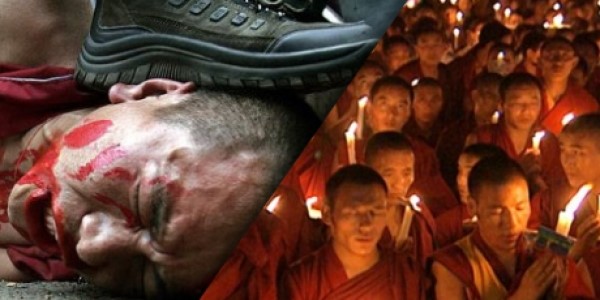
Whole Supreme – The Supreme Leader of Tibet: The White House of Supreme Ruler of Tibet. These Tibetans are not pilgrims visiting the Potala Palace. They came to defend their Political Rights.
The term ‘sin’ is portrayed using a variety of terms. The biblical writers describe sin as that condition and activity of human beings that is offensive to God. Sin is revolt against holiness and sovereign will of God. It is both a condition of the heart, mind, will, affections and the practical outworking of that condition in thoughts, words, and deeds that offend God and transgress His holy law. In secular terms, sin means any offense against good morals, any offense against established law of the Land, and any violation of standard code for human behavior and action.
Whole Dude – Whole Declaration:
WHOLE DUDE REPORTS WHOLE SIN : Sin is that condition of the heart, mind, will, affections and the practical outworking of that condition in thoughts, words, and deeds that offend this Declaration of Independence and sin is any action that transgress the intent of this Declaration of Independence upon which the nation called the United States of America is created.
The Declaration of Independence adopted July 04, 1776 to pronounce the creation of the United States spells in very clear, and transparent terms the American ideal of Government based on the Theory of Natural Rights. This Declaration states the philosophy of Human Freedom and the Nation and its Government is formed by Social Contract. United States and its elected officials who represent the entity called Government have to adhere to these founding principles and they must be guided by the Laws of Nature which guarantee unalienable rights of man. Governments are instituted among men to secure their unalienable rights and Governments derive their just powers from the consent of the governed. And for the support of this Human Freedom, we must mutually pledge to each other our Lives, our Fortunes, and our sacred Honor.
I define the term “Whole Sin” as a condition of the heart, mind, will, affections and the practical outworking of that condition in thoughts, words, and deeds that offend the Declaration of Independence and transgress the Laws of Nature.
Memorial is anything that serves to help people to remember some person or event. I would like to share the photo images of the Vietnam Veterans War Memorials to remind people that we fought these wars to contain the threat posed by Communism to the doctrine of Human Freedom, and the Rule of Governance called Democracy.
Whole Dude Reports Whole Sin: Remember the Vietnam War. America called its sons and daughters to pledge their Lives, their Fortunes and their sacred Honor to fight the Enemy called Communism.WHOLE DUDE REPORTS WHOLE SIN: SAN ANTONIO, TEXAS VIETNAM VETERANS MEMORIAL . This monument reminds people that the sons and daughters of the United States of America have pledged their Lives, their Fortunes, and their sacred Honor to defend Human Freedom, and Democracy and fought the Enemy called Communism.
Whole Dude Reports Whole Sin: The Original Sin of Nixon and Kissinger:
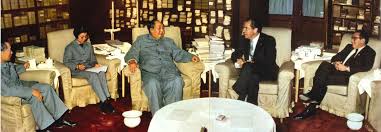
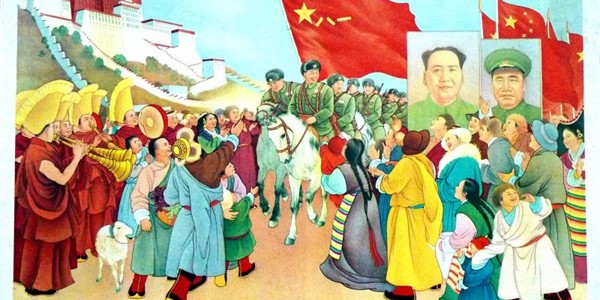
WHOLE DUDE REPORTS WHOLE SIN: The prophesy revealed by Father Moses in The Old Testament, The Fifth Book of Moses, The Book of Deuteronomy, Chapter 28, verses 47 to 50 has come true in the lives of American people. The RED DRAGON, The People’s Republic of China, The Communist nation is the Enemy that Americans will be forced to serve like slaves.WHOLE DUDE REPORTS WHOLE SIN: This photo image is the evidence for the “Original Sin.” Chairman Mao Zedong, and Prime Minister Zhou-Enlai are guilty of the crime called “GENOCIDE.” The UN Convention of 1949 defined the crime of Genocide; the systematic destruction by government of a racial, religious, or ethnic group. Dr. Henry Alfred Kissinger of National Security Affairs is guilty of the crime called the misuse and abuse of power. His sinful actions represent the violation of the Supreme Law established by the Constitution of The United States of America. He usurped the powers entitled to the Secretary of State. He conducted secret diplomacy before he was administered the oath to the Office and before he pledged his allegiance to the Constitution.
In the history of the nation called The United States of America, President Richard Milhous Nixon (37th president of the US 1969-1974), and Dr. Henry Alfred Kissinger (initially appointed by President Nixon in 1969 as an adviser, National Security Affairs and later the Secretary of State from September 1973-1977) are guilty of the offense called ‘The Original Sin’ for they transgressed the Supreme Law of this nation.
We have to recognize China’s Cultural Revolution of 1966 – 1969 as a mass campaign sponsored by the Communist government to commit Genocide. Many thousands died and there was no proper accounting of the atrocities committed and there was never a full inquiry of this human tragedy. The Cultural Revolution officially ended in 1969, but we all know that many of its excesses continued until the death of Communist Party leader Mao – TseTung in 1976.
Whole Dude Reports Whole Sin: The Original Sin of Nixon-Kissinger
In the words that I choose from The Old Testament, The Fifth Book of Moses, The Book of Deuteronomy, Chapter 28, verses 47 to 50, I describe their actions of “Whole Sin” and its consequences as follows:
Whole Dude Reports Whole Sin: The Original Sin of Nixon-Kissinger
“Because you did not serve the LORD your God joyfully and gladly in the time of prosperity, therefore in hunger and thirst, in nakedness and dire poverty, you will serve the enemies the LORD sends against you. The LORD will bring a nation against you from far away, from the ends of the Earth, like an eagle swooping down, a nation whose language you will not understand, a fierce-looking nation without respect for the old or pity for the young.”
I would like to share some of these photo images that reveal the transgression of Natural Law and its consequences. The people of The United States of America having failed to serve the LORD GOD joyfully and gladly in the time of prosperity, will now serve the Enemy that LORD sent against them.
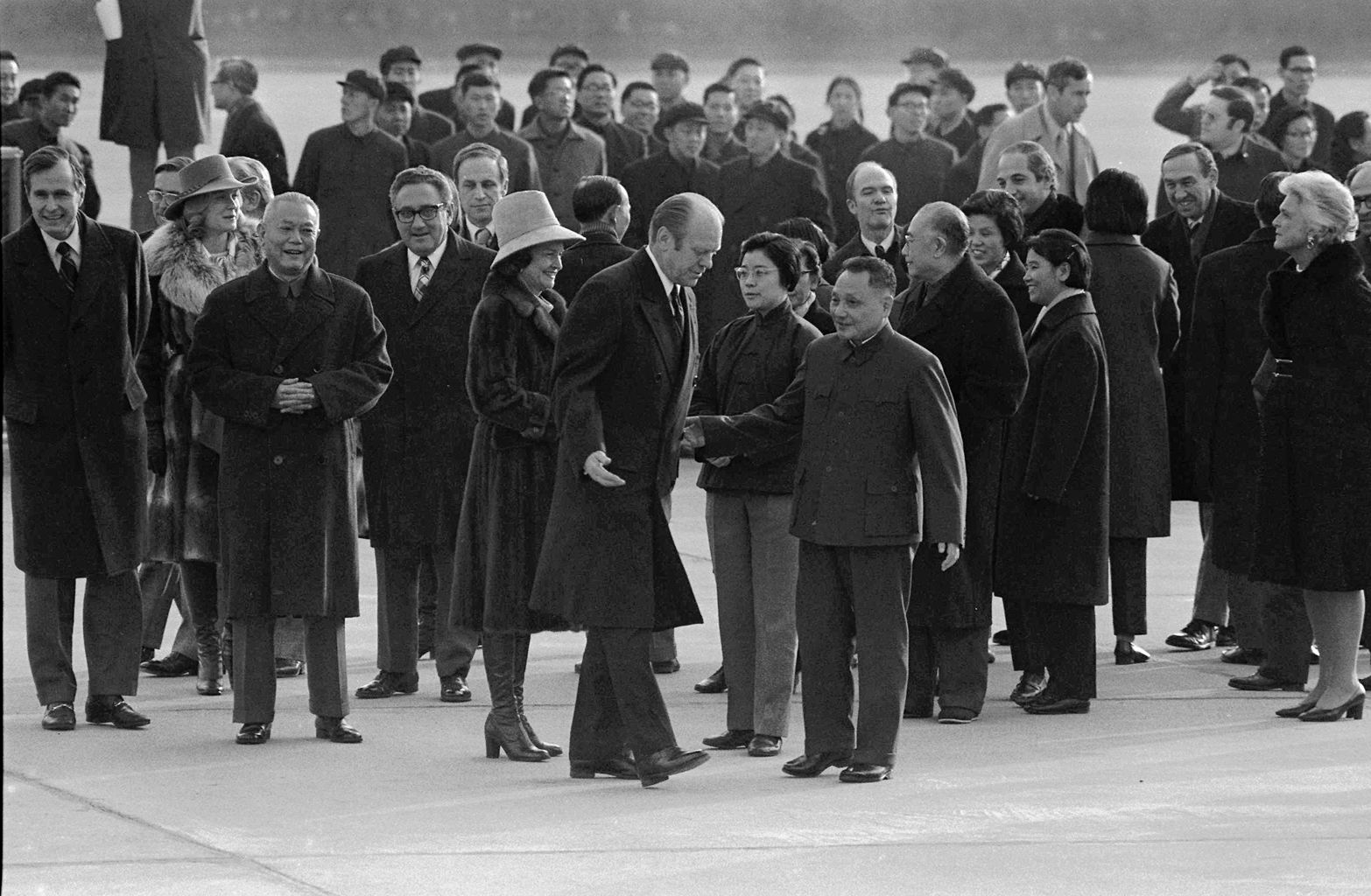
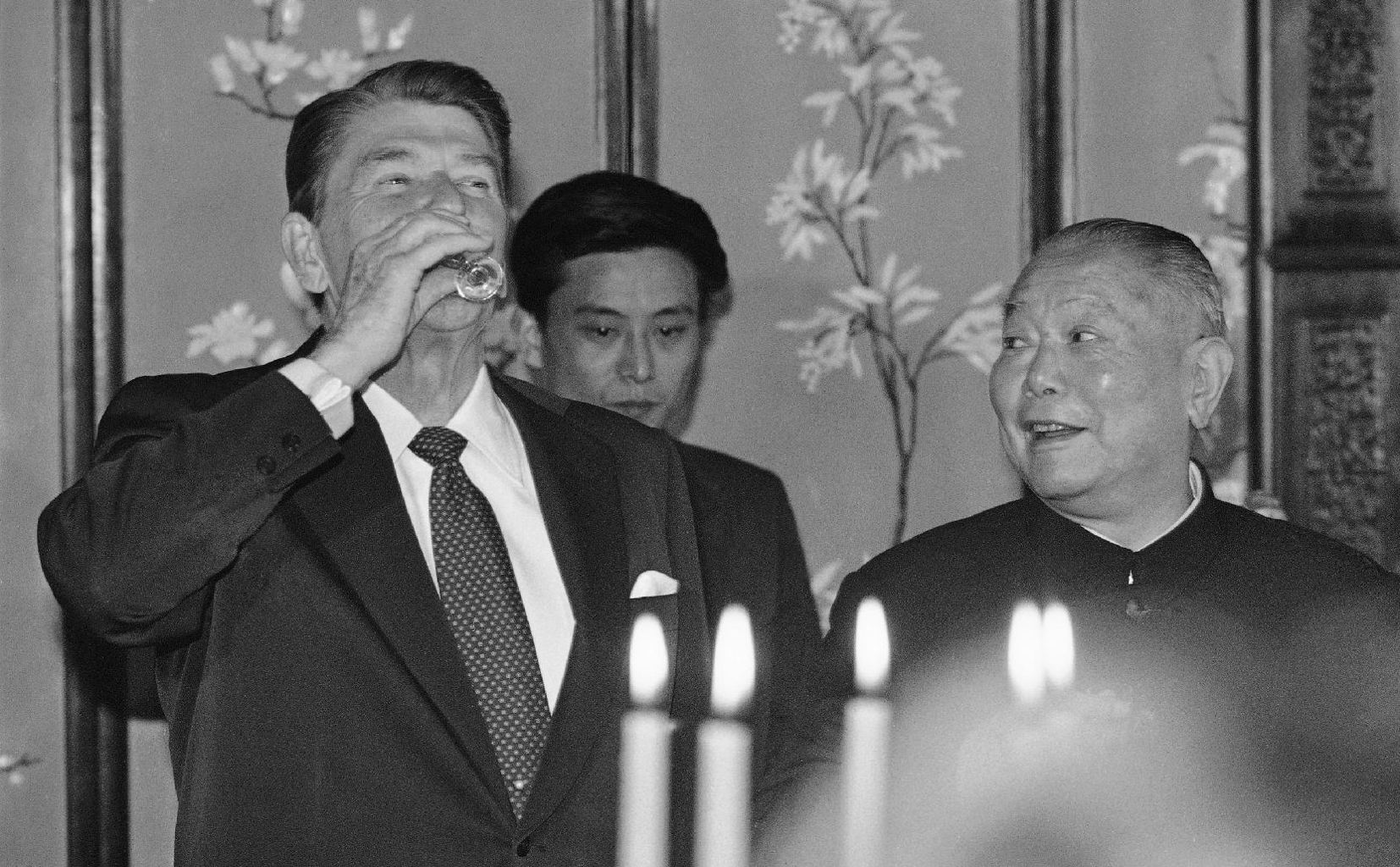
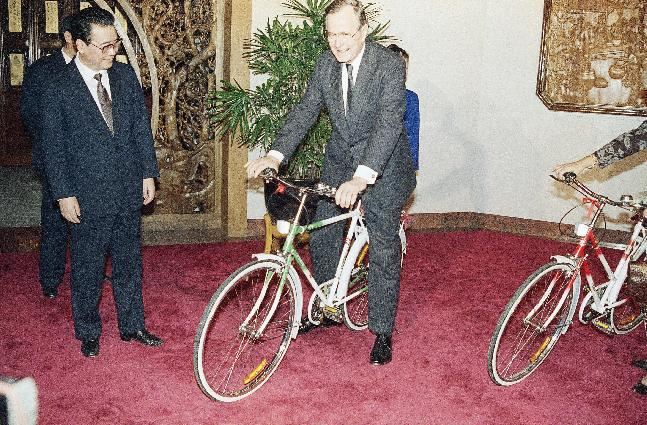
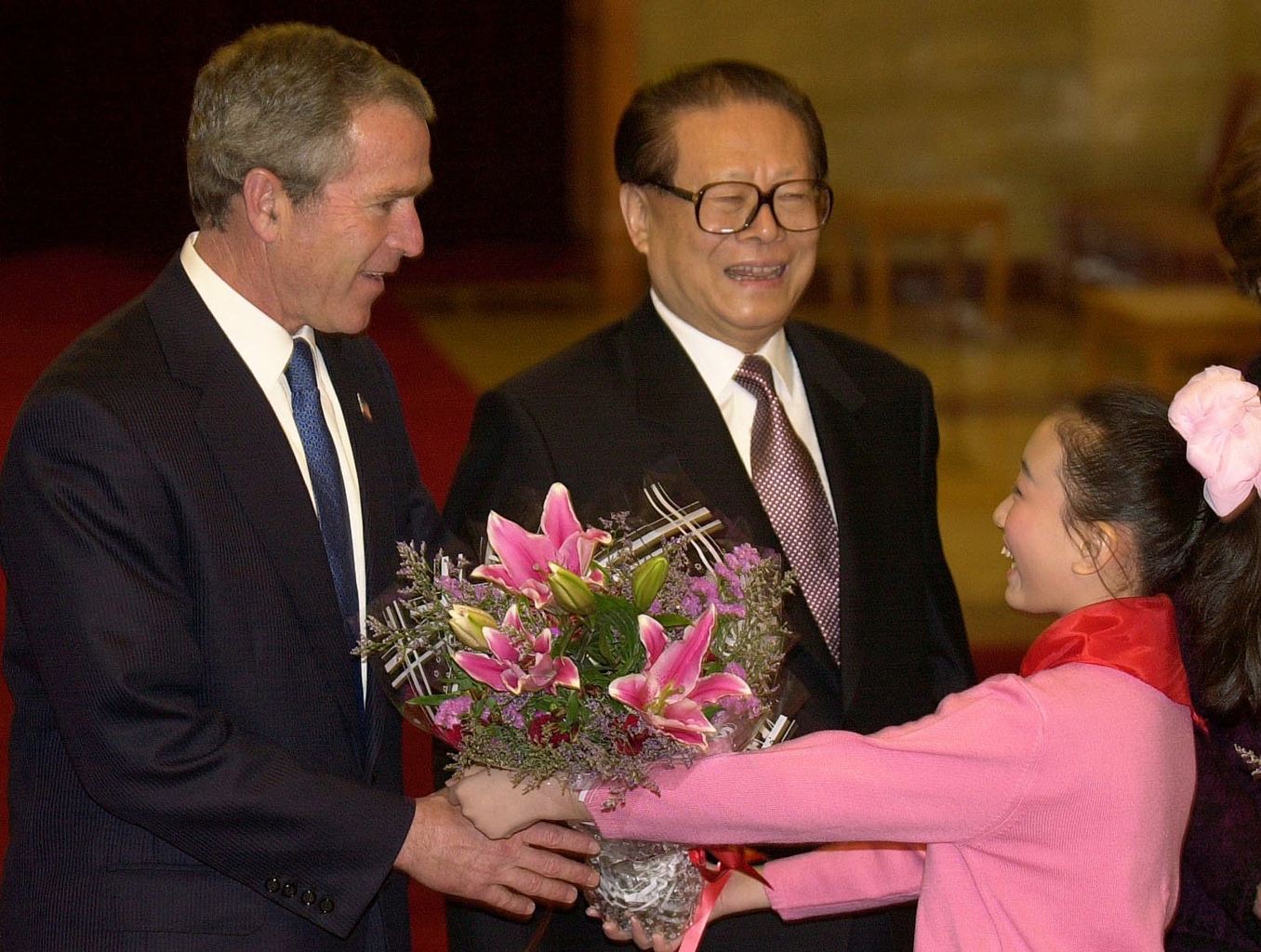
WHOLE DUDE REPORTS WHOLE SIN: February 21, 1972. President Richard Nixon with Communist leader Mao-Tse Tung in Peking(Beijing). Chairman Mao represents the Face of Crimes Against Humanity. The UN Convention of 1949 has defined the crime of Genocide as a systematic destruction by a government of a racial, religious, or ethnic group. When this photo was taken, the United States was officially engaged in a battle in Vietnam to contain the direct threat posed by Communism. China’s Communist Party leader is the face of that Enemy.WHOLE DUDE REPORTS WHOLE SIN: Communist China’s Premier Zhou En-Lai and the US National Security Adviser Dr. Henry Alfred Kissinger are the faces that represent the Original Sin, they are guilty of the offense called transgression of Law. William P. Rogers was the Secretary of State from 1969 to 1973. Dr. Kissinger had usurped the powers of the Secretary of State and had misused and had abused his office to conduct secret diplomatic negotiations with the Enemy while the United States was openly fighting a grim battle to contain the threat of Communism in Vietnam.WHOLE DUDE REPORTS WHOLE SIN: December 01, 1975. President Gerald Ford with China’s Communist leader Deng Xiaoping in Beijing. George Herbert Walker Bush who later became CIA’s Director on January 30, 1976 is also seen in this photo. Both President Ford and George Bush were fully aware of America’s partnership with India, and Tibet to fight the military threat posed by Communism.Whole Dude Reports Whole Sin: January 30, 1979. The White House Ceremony. President James Earl Carter (39th president of the US 1977-1981) with Chinese Communist Party leader Teng Hsiao Ping. Does the Declaration of Independence envisage friendly relations with the Communists?Whole Dude Reports Whole Sin: April 26, 1984. President Ronald Wilson Reagan (40th president of the US 1981-1989) with China’s Communist Party leader and President Li Xiannian. President Reagan, who demanded the tearing down of the ‘Berlin Wall’, could not be a friend of the Communists.Whole Dude Reports Whole Sin: February 25, 1989. President George Herbert Walker Bush (41st president of the US 1989-1993) riding the bike given by China’s Communist Party leader, Premier Li Pang in Beijing. President Bush who had earlier served as the Director of CIA is fully aware of the US military alliance/pact with India, and Tibet to face the military threat posed by Communist China’s occupation of Tibet since 1950.Whole Dude Reports Whole Sin: June 27, 1998. President William Jefferson Clinton (42nd president of the US 1993-2001) with China’s Communist Party leader and Premier Li Peng in Beijing. A willingness to serve the Enemy.Whole Dude Reports Whole Sin: February 21, 2002. President George W. Bush (43rd president of the US) with China’s Communist Party leader, President Jiang Zemin in Beijing. Communist China’s lack of respect for Human Rights should deter the United States from pursuing this path of self-destruction.Whole Dude Reports Whole Sin: Friday, June 07, 2013. President Barack Obama with China’s Communist Party leader and President Xi Jinping. The prophesy predicted in the Book of Deuteronomy, Chapter 28, verses 47-50 is coming true.Whole Dude Reports Whole Sin: Saturday, June 08, 2013. Rancho Mirage, California. President Barack Obama with China’s Communist Party leader, President Jiang Zemin. The word ‘Mirage’ describes an Optical Illusion, something that falsely appears to be real. American Citizens have to wake up to the reality of the Enemy who has arrived on their shores from a distant land. (The Book of Deuteronomy, Chapter 28, verses 47-50)
The Supreme Law of the United States of America is called The Constitution of The United States of America. The Constitution was preceded by The Declaration of Independence, the written document that pronounced the creation of the nation called The United States of America. I am respectfully claiming that the elected representatives and other officials that constitute the Government have transgressed the Laws of the nation when they began the unholy relationship with Communist China which is opposed to Human Freedom, and the principle of governance by Social Contract called Democracy.
Whole Dude Reports Whole Sin: The Original Sin of Nixon-Kissinger
Tibet Awareness – Military conquest of Tibet is not a done deal
Tibet Awareness – Annexation of Tibet by China. It’s Not a Done Deal. In fact, there is no deal between Tibet and China on the border issue.
The Border called the McMahon Line between India and Tibet is not my primary concern. In 1913-14, Tibet and China had the opportunity to negotiate a deal to determine and demarcate the border between China and Tibet. They failed to do so. In fact, there is no deal between Tibet and China on the border issue.
Representatives of Tibet, Great Britain, and China at Simla Accord 1914. Front row, from left: an assistant to Ivan Chen; Sekyong Trulku, Prince of Sikkim; Ivan Chen, Chinese plenipotentiary; Sir Henry McMahon, British Plenipotentiary; Lonchen Shatra, Tibetan Plenipotentiary; Teji Trimon, assistant; Nedon Khanchung, Secretary.
I contest the occupation of Tibet by the People’s Republic of China since 1950. In my analysis, annexation of Tibet by China is not a done deal. Tibetans have never agreed to submit their territory to be ruled over by the Communist Party of China. Tibet is never a part of China. In fact, there is no deal between China and Tibet on the demarcation of their border.
Tibet Awareness – Annexation of Tibet by China. It’s Not a Done Deal. In fact, there is no deal between Tibet and China on the border issue.
BOOK EXCERPT
How the McMahon Line came to be the border between India and Tibet (and, later, China)
Tibet Awareness – Annexation of Tibet by China. It’s Not a Done Deal. In fact, there is no deal between Tibet and China on the border issue. Contested Lands: India, China and the Boundary Dispute, Maroof Raza, Westland Non-Fiction.
An excerpt from ‘Contested Lands: India, China and the Boundary Dispute’, by Maroof Raza.
Maroof Raza
Tibet Awareness – Annexation of Tibet by China. It’s Not a Done Deal. In fact, there is no deal between Tibet and China on the border issue. The original draft of the MacMohan Line in 1914: West (left) and East (right)
Lt Col Arthur Henry McMahon was formally nominated to represent the British government at the Simla Conference. With the rank of “secretary” in the foreign department of the British Government of India, McMahon was “empowered to sign any Convention, Agreement or Treaty, which may be concluded at the Conference”.
As a young captain, he had spent two years demarcating the Durand Line that separates Pakistan from Afghanistan today. He was moulded “in the furnace of responsibility and the anvil of self-reliance and relished the creation and laying down of boundaries.” His task at the Simla Conference, however, was neither enjoyable nor easy.
…China, wary of a Britain-Tibet deal, took a while to announce their representative or plenipotentiary for the Simla Conference. Eventually, when they did so, the Chinese first stated that Ivan Chen, an experienced diplomat, and Hu Hanmin would be their representatives. However, China decreed that they would be called pacificators, and would carry “no territorial powers.”
The British objected. It was only after threats and prodding that a Chinese presidential order was signed appointing Ivan Chen as their plenipotentiary and authorizing him “to sign articles that may be agreed upon in order that all difficulties which have existed in the past may be dissolved.” He just about made it in time for the opening convention of the conference.
In contrast, the Dalai Lama was decisive and swift in appointing Lonchen Shatra Paljor Dorje, his Prime Minister who later impressed everybody with his quiet dignity, as his choice for the tripartite talks. Shatra was described as “a man of great ability and patriotism.” Moreover, an official statement from the Grand Lama stated “the Chief Minister Shatra Paljor Dorje is hereby authorized to decide on all questions which may benefit Tibet and to seal all documents relating thereto.”
Both sides made their positions known in the very first meeting held at Simla on 13 October 1913. With the Chinese defeated and evicted from Tibet, Lhasa made it known that it had an “independent” status and placed a document to this effect. But the Chinese still insisted that Tibet formed an integral part of the Chinese territory and no attempts shall be made by Tibet or by Great Britain to interrupt the continuity of this territorial integrity.
For China, unlike the British Government of India, Tibet’s precise boundaries weren’t important. The British hosting the conference wanted a defined boundary for Tibet, not just with India, but also with China. This was the primary reason for the Simla Conference to have dragged on for over six months, with contestable results.
The Chinese also made a range of ridiculous claims over Tibet, most notably over its territories from the Kunlun Mountains, southeast and south of the River Tsangpo (Brahmaputra) on to the River N’Maikha in Burma (now Myanmar). Even though McMahon was prepared for some surprises, he didn’t expect this cartographic aggression based on inconsistent and vague historical assertions.
However, there were factors that restrained McMahon from defining the boundaries. For one, a draft prepared by officials at Britain’s India Office had only envisaged a two-party meeting between representatives of Peking and Delhi. With Tibet’s entry in the deliberations, McMahon had to put up appearances to hide his limitations.
In reality, in the absence of clarity about the southern limits of Tibet, McMahon was awaiting some survey reports from the expeditions along the Himalayas, particularly from India’s northeast and the tri-junction between India, Tibet and Bhutan. This region had many unsurveyed “grey areas” along a frontier of over 1,000 kilometres and was often covered with mist or clouds with many snow-covered mountains that couldn’t be easily accessed from the Indian side. This prevented McMahon from presenting a clear proposal to the conference plenipotentiaries on this part of the boundary.
Thus McMahon opened the “second meeting” of the conference on 18 November 1913 by sharing his dilemma with colleagues. He placed a skeleton map of what should be “Tibet”, admitting – after both sides had made widely divergent claims – that he was “at a loss as to what really was Tibet”.
Thereafter, he conveyed to both the Chinese and the Tibetans that without an agreement on the “limits of Tibet”, further progress was not possible. China’s Chen first said he’d have to refer the matter to Peking and then he took to bed after the meeting, claiming he was ill! Thus, with no hope of an immediate headway and with the winter in Simla bringing life to a virtual standstill, the conference venue was shifted to Delhi. It was over subsequent meetings in Delhi, both formal and informal, that there was some movement forward.
The Tibetans brought to these meetings more than ninety records and documents and backed their boundary claims with historical records in their original form, including fifty-six different registers, with numbers of monasteries and details of families, “where the writ of the Dalai Lama was unquestioned”. The Chinese, on the other hand, made historically refutable claims based on scanty evidence.
Moreover, the Tibetans’ statements were extremely critical of the “scorched earth” policies of the Chinese, especially its military commander Zhao Erfeng, who had destroyed many of their temples and villages and massacred hundreds of lamas and people. Erfeng was known to have made paper shoe soles from the leaves of Buddhist scriptures containing the teachings of Lord Buddha!
The Tibetans were thus unwilling to accept Chinese claims based on the ruthless military campaigns by Erfeng, stating that “Chao Erh-feng had been guilty of such glaring misdeeds and that even if he had a hundred lives he should forfeit every one of them to the law…”
Thus, the hotly contested territorial claims of the Chinese and Tibetans put McMahon in a spot in his attempts to find common ground, to end their “state of war” and to move the conference towards its conclusion. However, given his vast experience in map-making, McMahon proposed the division of Tibet into two zones – with the approval of Whitehall in London – by drawing lines on a map to mark: Inner (by a blue line) and Outer (by a red line) Tibet.
But the Chinese were unwilling to accept the concept of Inner or Outer Tibet. Even then, McMahon was hopeful of a settlement at the fifth conference in Delhi that was to be held on 11 March 1914. At the fifth conference, McMahon, apprehensive that China–Tibet hostilities would stall his best efforts, warned both parties that any attempts to change the ground realities to attain a favourable deal at the conference would have grave consequences. He demanded instead statesmanship from Ivan Chen and Lochen Shatra.
There was, however, a quiet spoiler lurking on the sidelines. Lu Hsing Chi was a Chinese spy at the conference, who set alarm bells ringing in China about a possible outcome that would put China at a disadvantage vis-à-vis Tibet, and thus, Peking virtually rejected the entire draft that McMahon and his team had painfully put together, demanding a better deal. Sensing that the conference might collapse, McMahon threatened to present proposals that were more stringent. This kept the Chinese team on board until the conference shifted back to Simla in April 1914, when McMahon had a private chat with Chen.
McMahon warned that if Chen failed to initial the documents in the final meetings, it would be withdrawn. Deep inside he was also prepared for the conference to end without any results even though McMahon had hoped that this was to be a decisive phase of the conference. Thus, he resorted to theatricals.
He began with a summary of earlier conference proceedings and when he ran into resistance by the Chinese and then by the Tibetans, his patience ran out. As a shocker to those in attendance, he ordered the withdrawal of the convention “with as much ceremony as possible”, as recorded by observers, to drive home his frustration with the negotiations.
This unnerved Ivan Chen, the Chinese plenipotentiary in Simla. However, in one last attempt, the conference was reconvened the next day, to give them a final chance to reconsider their positions. Facing the distinct possibility of China being left out of the border arrangements, Chen made up his mind to initial the draft and the map and, much to the relief of all, proceeded with the formalities.
However, Chen announced that he was still “bound to await definite authority from his government in Peking before the convention was formally signed and sealed.” Even as it appeared that matters had finally come to a successful conclusion, this was not to be. Chen informed McMahon’s office that his government had refused to accept – “repudiated” – his signing of the convention! McMahon was disappointed, given his multiple attempts to accept Chinese demands.
It soon became known that the man who influenced Peking to put the brakes was Lu Hsing, their Calcutta-based spy, who was elevated to an official position to negotiate with Lhasa. London was brought into these talks and soon Chinese officials suggested that Chen had been forced to agree to the terms of the convention, whereby its venue should be shifted to Peking or London. There is a view that this process reflects a conflict of interest as McMahon was both the arbitrator and the interested party here.
On the brighter side, however, the conference yielded another outcome. After Peking and Lhasa had presented enough documentation to back their conflicting territorial claims on the Sino-Tibetan frontiers, which had led to no agreement, the focus of the conference shifted to the Indo-Tibetan boundary. On this, the Chinese delegate opted to stay out, as he claimed he wasn’t authorised to discuss it.
Thus, McMahon and the Tibetan delegate agreed on an Indo-Tibet boundary on 24-25 March 1914. To that effect, McMahon drew a line on a small-scale map and this line came to be known as the McMahon Line. This boundary was marked in red ink along the crest of the Himalayas—the watershed that gave northeast India a defined boundary with Tibet. This was a major outcome after many months of negotiations, even though this was a secondary objective of the Simla Conference.
Tibet Awareness – Annexation of Tibet by China. It’s Not a Done Deal. In fact, there is no deal between Tibet and China on the border issue.
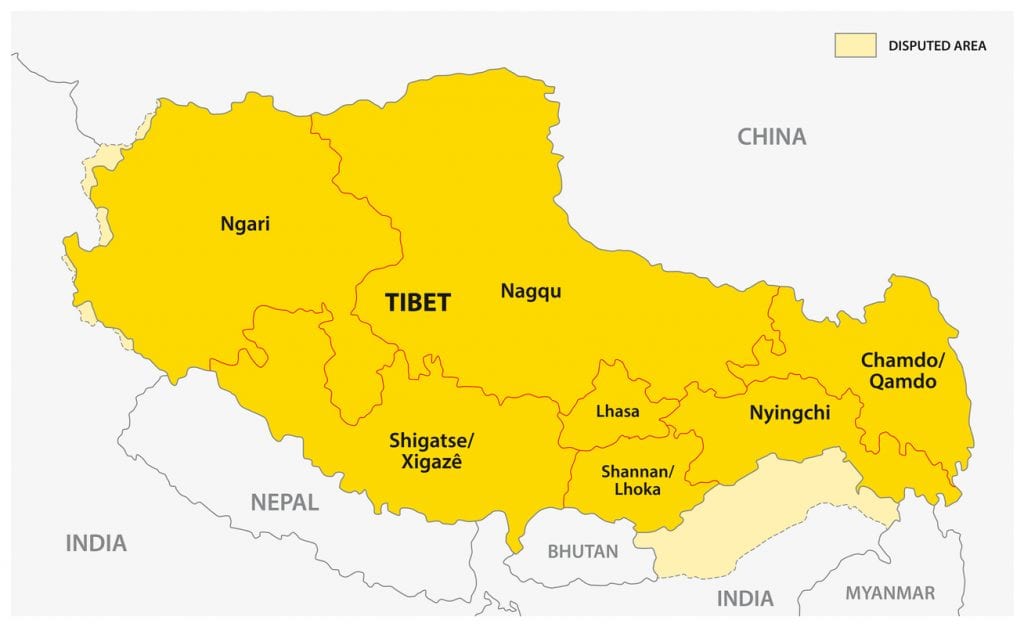
Recent events in Tibet have intensified the dispute over its legal status. The People’s Republic of China (PRC) claims that Tibet is an integral part of China. The Tibetan government-in-exile maintains that Tibet is an independent state under unlawful occupation.
India asks China to pull back troops, arms in Ladakh region
By ASHOK SHARMA, Associated Press
NEW DELHI (AP) — India’s defense minister said Thursday the country faces challenges in its border dispute with China and urged Beijing to sincerely implement an understanding they reached previously to completely disengage forces from the Ladakh region.
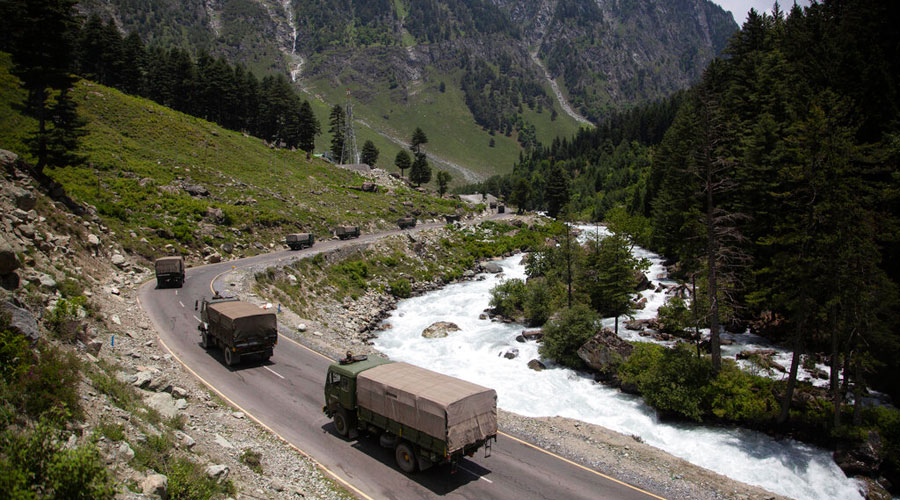
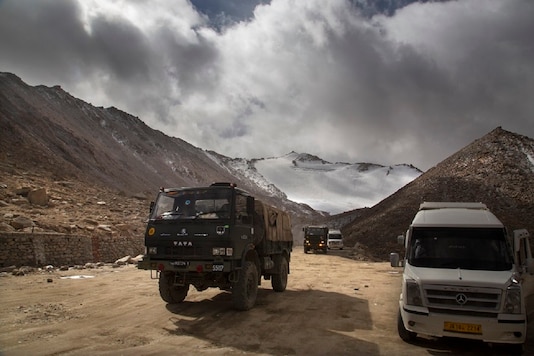
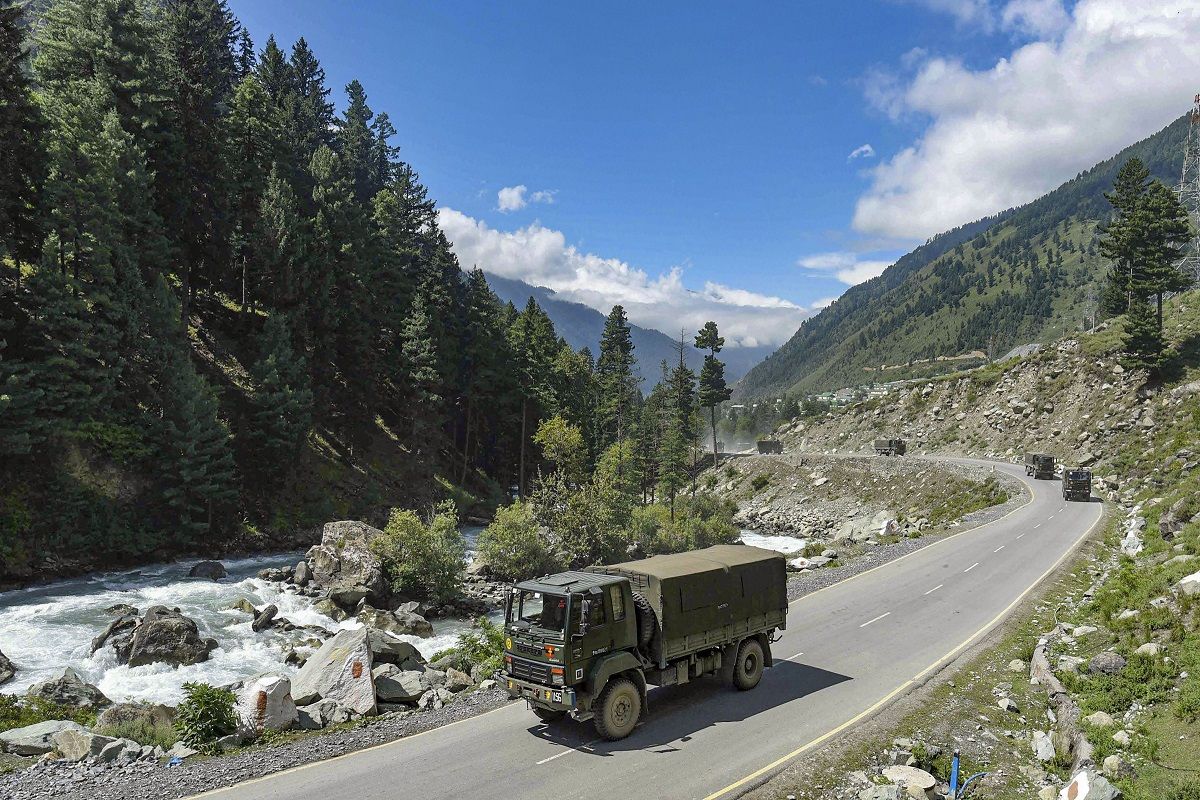
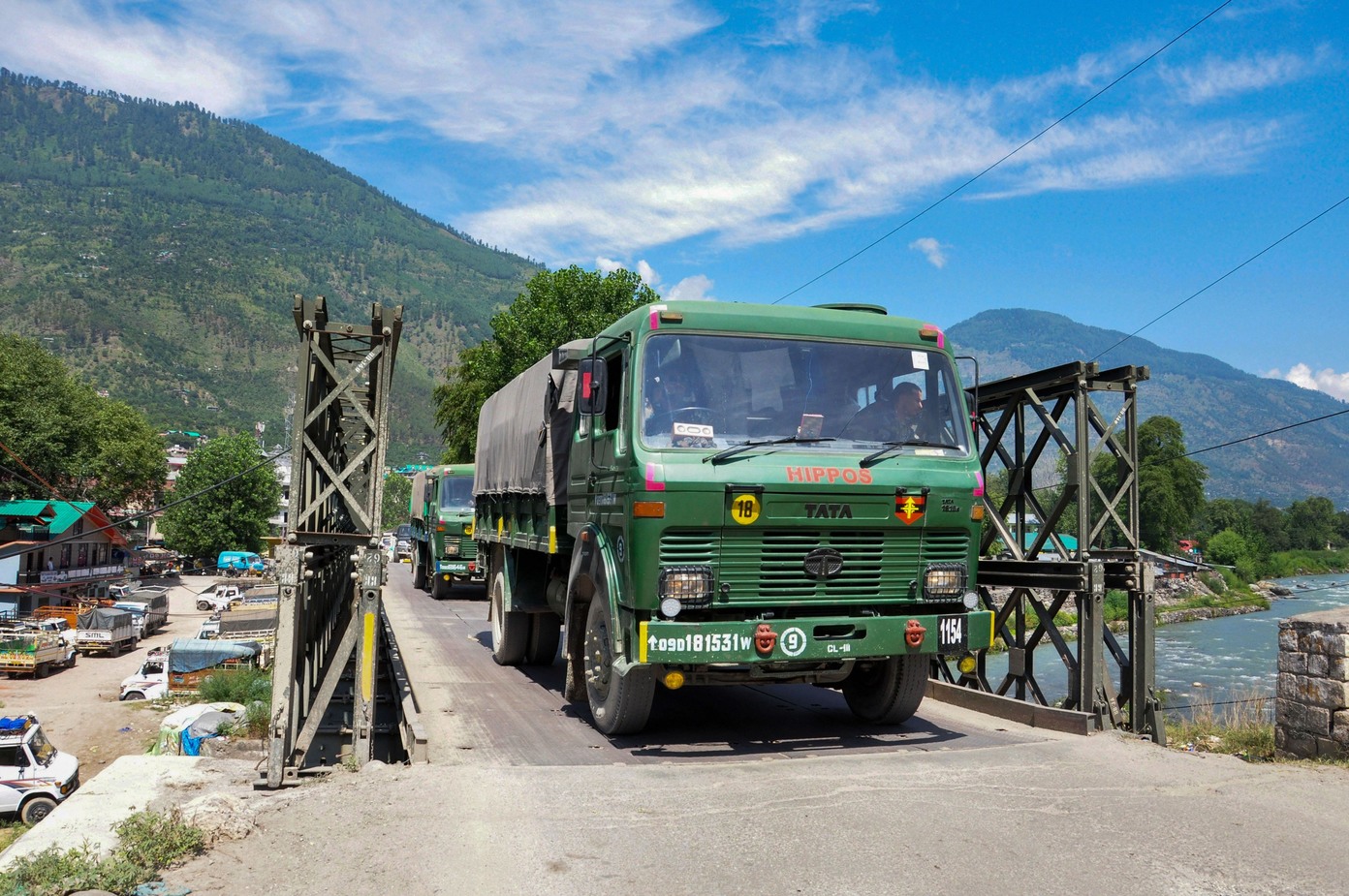
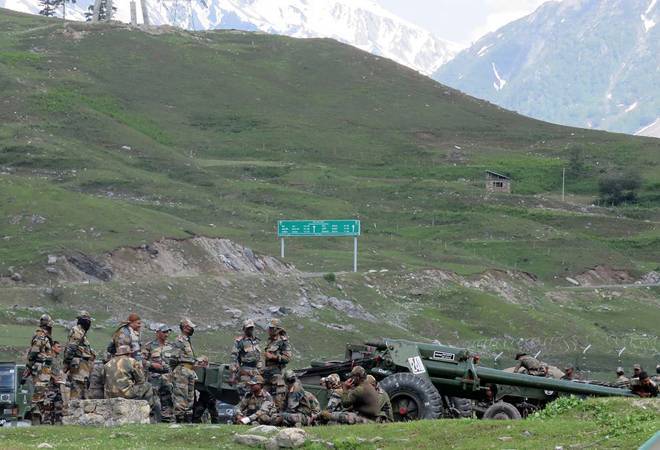
What is China’s Status in Tibet? An Indian army convoy moves on the Srinagar- Ladakh highway at Gagangeer, northeast of Srinagar, Indian-controlled Kashmir, Wednesday, Sept. 9, 2020. India’s defense minister said Thursday, Sept. 17, the country faces challenges in its border dispute with China and urged Beijing to sincerely implement an understanding they reached previously to completely disengage forces in the Ladakh region. Rajnath Singh said in a statement in the upper house of Parliament that China has amassed troops and armaments in Ladakh in violation of bilateral agreements reached in 1990s and it was creating friction by trying unilaterally to alter the status quo in the region through aggressive postures. (AP Photo/ Dar Yasin)What is China’s Status in Tibet? In this Sept. 14, 2017, file photo, a banner erected by the Indian army stands near Pangong Tso lake near the India-China border in India’s Ladakh area. India’s defense minister said Thursday, Sept. 17, 2020, the country faces challenges in its border dispute with China and urged Beijing to sincerely implement an understanding they reached previously to completely disengage forces in the Ladakh region. Rajnath Singh said in a statement in the upper house of Parliament that China has amassed troops and armaments in Ladakh in violation of bilateral agreements reached in 1990s and it was creating friction by trying unilaterally to alter the status quo in the region through aggressive postures. (AP Photo/Manish Swarup, File)
Rajnath Singh told the upper house of Parliament that China has amassed troops and weapons in Ladakh in violation of agreements reached in the 1990s and is trying to alter the status quo in the region through aggressive actions.
He said that was not acceptable and that India is seeking a peaceful resolution through talks.
The two countries’ foreign ministers met in Moscow a week ago and agreed to deescalate tensions in Ladakh, but Singh’s words to Parliament suggested they have not significantly declined and that settling the impasse will be a long process.
He also said India has counter-deployed troops that have foiled “transgression attempts by China.”
“We should be confident that our armed forces will handle the situation successfully,” Singh said.
He said it was “apparent from Chinese activities that their words don’t match their actions.”
In Beijing, Chinese foreign ministry spokesperson Wang Wenbin again laid the onus on India to relieve the tensions and said Chinese border troops have “always strictly abide by the (agreements) between the two countries and are committed to safeguarding China’s territorial sovereignty and maintaining peace and tranquility in the border areas.”
“What is pressing now is that the Indian side should immediately correct its mistake, disengage on the ground as soon as possible and take concrete actions to ease the tension and lower the temperature along the border,” Wang said at a daily briefing.
Relations between the two countries have often been strained, partly due to their undemarcated border.
They fought a border war in 1962 that spilled into Ladakh and ended in an uneasy truce. Since then, troops have guarded the undefined border area, occasionally brawling. The standoff escalated to a deadly clash on a high ridge on June 15 that left 20 Indian soldiers dead.
Singh said India inflicted “heavy” casualties on Chinese forces, but did not provide any numbers. China has not given any details on its casualties.
After that clash, the two countries partially disengaged from the site in the Galwan Valley and at least two other places, but the crisis has continued in at least three other areas, including glacial Pangong Lake.
He said the impasse was due to differing perceptions of the fiercely contested Line of Actual Control that separates Chinese and Indian-held territories from Ladakh in the west to India’s eastern state of Arunachal Pradesh.
Singh said India has doubled its budget on building roads, bridges and other infrastructure along the border to match the Chinese infrastructure to accelerate mobility of forces.
“We are fully prepared to protect the sovereignty and territorial integrity of our country,” he said, adding that China continued to occupy nearly 38,000 square kilometres (14,670 square miles) of Indian land in Ladakh.
Special Frontier Force personnel were used by Indian Army to occupy these strategic peaks in the Southern banks of Pangong Tso. This took the Chinese army by surprise. The occupation of these heights has shown Indian resolve to take the fight to the Chinese side.
The Pangong Tso lake in Ladakh on the banks of which India and China have been engaged in a standoff for four months. India claimed on Monday that it pre-empted a move by the Chinese army to occupy Indian territory at a new point in the region. (AP file photo)
India says troops hold Himalayan hilltops after face-off with Chinese forces
By Devjyot Ghoshal
Communist China’s Sinister Plan of Sinicization of Tibet. Reuters/Mukesh Gupta FILE PHOTO: A view of Pangong Tso lake in Ladakh region
NEW DELHI (Reuters) – A senior Indian official said on Tuesday Indian troops had deployed on four strategic hilltops after what New Delhi called an attempted Chinese incursion along the disputed Himalayan border, underlining simmering tensions between the Asian giants.
China denied that it had moved first, with an embassy spokeswoman in New Delhi accusing Indian troops of trespassing across the Line of Actual Control (LAC) – the de facto border – and conducting “flagrant provocations”.
Indian and Chinese troops have been locked in a high-altitude border confrontation for months in the western Himalayan region of Ladakh. The two sides have disputed the course of the frontier for more than half a century.
The Indian official, who was briefed on the latest incident, said the Indian troop move responded to an attempt by a large number of Chinese infantry to push through a key mountain pass late on Saturday.
“We mobilized and occupied the four heights,” the official said, adding all four hilltops were on India’s side of the LAC.
The Indian official said the Chinese soldiers were backed up by military vehicles and drew close enough to engage Indian troops in verbal arguments, but there were no clashes.
He said the incident occurred on the southern bank of Pangong Tso, a picturesque lake in the snow desert region where Indian and Chinese troops have been facing off since April.
The Indian official said the Chinese had also been consolidating positions on the northern bank of the lake with what appeared to be new defensive positions.
But Ji Rong, a spokeswoman for the Chinese embassy in New Delhi, said Indian troops had violated the LAC at Pangong Tso’s southern bank and near another mountain pass.
“What India has done runs counter to the efforts made by both sides for a period of time to ease and cool down the situation on the ground, and China is resolutely opposed to this,” she said.
“India … said it pre-empted Chinese military activity,” China’s state-backed Global Times said in an editorial. “The word ‘pre-empt’ shows it was Indian troops that first took destructive action, and the Indian troops initiated the stand-off this time.”
In June, 20 Indian soldiers were killed in hand-to-hand combat with Chinese troops in Ladakh’s Galwan area, the most serious clash between the two countries in 50 years.
Both sides then agreed to pull back with military chiefs in the region holding five rounds of talks. But the Indian military said this week Beijing had reneged on the deal by carrying out “provocative military movements to change the status quo”.
(Reporting by Devjyot Ghoshal; Editing by Sanjeev Miglani and Mark Heinrich)
After invading Tibet with brute military force, Chinese Propaganda is using the native Tibetan Culture as a façade to attract tourists and to promote tourism related commercial enterprises.
Rudranarasimham Rebbapragada
SPECIAL FRONTIER FORCE
Tibetan Culture Survives in Chinese Propaganda.
From language to medicine, Tibet’s ancient culture thrives in Chinese Propaganda
Tibetan Identity Survives in Chinese Propaganda.Tibetan Identity Survives in Chinese Propaganda.
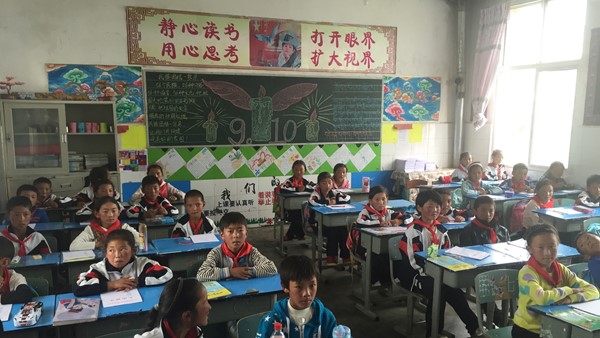
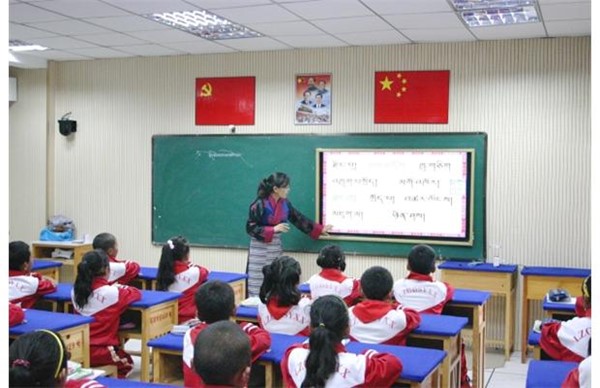
Respect for local culture: more than half the classes at this primary school are taught in Tibetan Credit: Wang Jing / China Daily
Tibet has seen rapid growth in its cultural and related industries
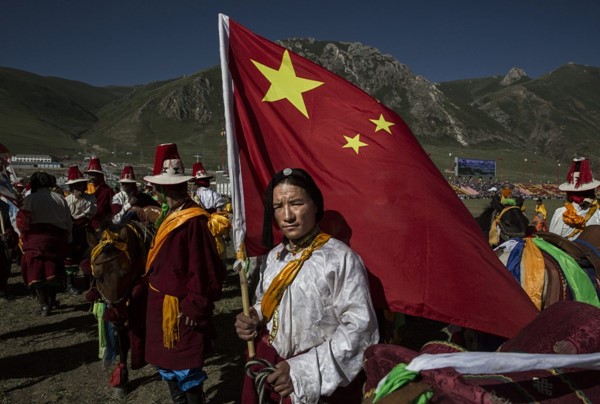
As a part of Chinese culture, Tibetan culture has been well preserved and developed by a sophisticated system covering many areas.
The Tibetan language in the written form, for instance, is an alphabetic system. It has a long history and is widely used in the Tibet autonomous region.
Qumig Yudron is a teacher from the No 2 Primary School of Nyingchi, who teaches the Tibetan language in grade 3.
In Tibet, the language is taught through primary school to university, Qumig Yudron said.
Tibetan culture has been well preserved and developed by a sophisticated system covering many areas
“The language should be learned and passed down as it is the essence of the local culture and the basic way of communication of the people.”
The primary school currently has a total of 44 classes with 24 taught in Tibetan and 20 in Mandarin Chinese. It has also set up courses related to Tibetan culture including dancing and music.
Traditional Tibetan medicine is also a major part of the Tibetan culture. Historical documents showed that the medicine has a history of at least 1,300 years. Nowadays, there are Tibetan medical hospitals in each city, prefecture and county within Tibet. The region has more than 90 Tibetan medicine clinics.
Tseten Namgyal is an attending physician at the traditional therapy centre of the Hospital of Traditional Tibetan Medicine. He said traditional Tibetan medicine consists of 18 main techniques including diagnosis and therapy.
The theoretical basis of Tibetan medicine is all in the Tibetan language. Traditional Tibetan medical methods are passed down through traditional therapies, he said.
Established in 1916, the hospital has more than 60 Tibetan medical professionals. It has introduced modern facilities including laboratories and medical equipment.
“I knew about Tibetan medicine in my childhood and have studied the course in university,” he said.
With the support of the State, many traditional techniques have been preserved and inherited, he said.
In 2018, Tseten Namgyal was selected as one of the national- level Tibetan medical inheritors, which requires three years of study and training.
“Tibetan medicine has unique advantages with its long history and profound theories,” Tseten Namgyal said.
In 2018, the autonomous region had more than 6,000 cultural companies with about 50,000 employees
“We have also innovated and developed the medicines by improving equipment and formulas,” he said.
The autonomous region has also seen rapid growth in its cultural and related industries.
Norbu Tsering, head of the industrial and resources development at the Tibet Culture Department, said Tibetan culture attracts worldwide attention with its distinct features.
In 2018, the autonomous region had more than 6,000 cultural companies with about 50,000 employees. The annual output value of the cultural industry reached 4.6 billion yuan (£532.25 million), according to Norbu Tsering.
“We are committed to developing more creative cultural products in a bid to adapt Tibetan culture to an innovative growth path,” he said.
This article was originally produced and published by China Daily. View more articles at chinadaily.com.cn
TIBET UNDER SUBJUGATION BY THE PEOPLE’S LIBERATION ARMY
Whole Subjugation: Tibet in Trouble. Tibet is under subjugation by the People’s Liberation Army.
Tibet is under subjugation by the People’s Liberation Army. There is no indication to suggest the slackening of China’s military grip over Tibet. I am sharing a story titled ‘Tibet in Turmoil Again’ published in The Tribune, Ambala.
Whole Subjugation: Tibet in Trouble. Tibet is under subjugation by the People’s Liberation Army.
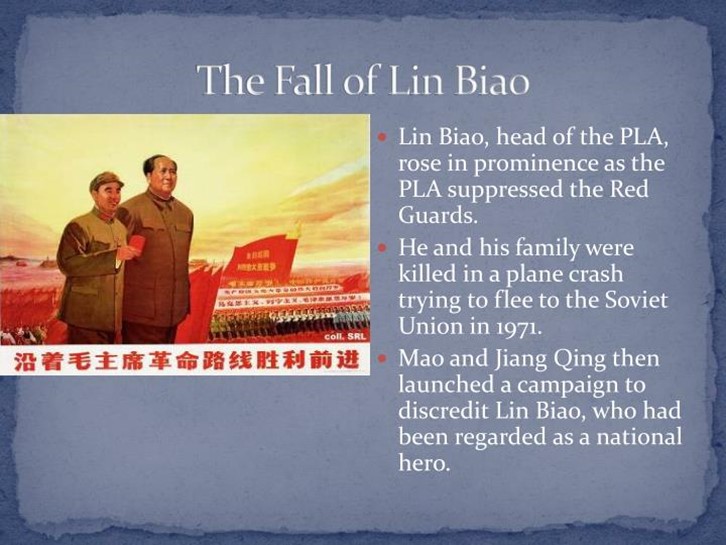
There was indeed a great turmoil in the People’s Liberation Army during 1971 which resulted in the murder of Defense Secretary Lin Biao on September 13, 1971 while he tried to escape from China.
Whole Subjugation: Tibet in Trouble. Tibet is under subjugation by the People’s Liberation Army.Whole Subjugation: Tibet in Trouble. Tibet is under subjugation by the People’s Liberation Army.
China’s military grip continues to suffocate Tibetans and the story about rivalry between Red Guard factions gives me no comfort.
China’s military grip continues to suffocate Tibetans and the story about rivalry between Red Guard factions gives me no comfort.
Posted at: Jul 12, 2019, 6:44 AM; last updated: Jul 12, 2019, 6:44 AM (IST)AMBALA, SATURDAY, JULY 12, 1969
HONG KONG, July 11 (AP)—Tibet is in turmoil again as rival Red Guard factions battle each other and hostility spreads among Army troops, Tibetan leaders, military commanders, revolutionary committees and mass organisations, a Hong Kong newspaper reported yesterday. The anti-Communist Chinese language organ “Tin Tin Yatpo”, attributing its report to “well-informed exclusive sources”, said all signs point to a further deteriorating situation in that vital region bordering India.
The paper said two powerful rival Red Guard organizations — the “Great Alliance Headquarters” and the “Lhasa Revolutionary Rebels’ Headquarters’— are battling each other. Both are opposed to the Maoist Tibet Revolutionary Committee. The Lhasa organization is trying to seize power in Tibet.
Whole Subjugation: Tibet in Trouble. Tibet is under subjugation by the People’s Liberation Army.
The Government of China and it’s Communist Party committed numerous Crimes against Humanity in the name of the Cultural Revolution.
I ask the US citizens to demand the investigation of President Nixon’s Foreign Policy that initiated the US-China relations in 1971-72 without concern for the Crimes Against Humanity described by Communist China as ‘Cultural Revolution’. The Never Ending Saga of Cultural Genocide in Tibet remains as the most important threat to Tibetan National Identity and Tibetan Existence.
Whole Evil – Red China’s Never Ending Saga of Cultural Genocide in TibetCultural Revolution was designed by Mao Zedong to preserve true Communist ideology by removing capitalist and traditional elements from society in China. Was a move to recover political power by Mao. The movement insisted that revisionists, people in China who promoted capitalism, had to be removed through violent class struggle. Red Guard was a movement of Chinese Youth to perpetuate these goals. Millions of people were persecuted, cultural icons were destroyed, religious sites were ransacked.
Cultural Revolution – HISTORY
Whole Evil: The Never Ending Saga of Cultural Genocide in Occupied Tibet.
In 1966, China’s Communist leader Mao Zedong launched what became known as the Cultural Revolution in order to reassert his authority over the Chinese government. Believing that current Communist leaders were taking the party, and China itself, in the wrong direction, Mao called on the nation’s youth to purge the “impure” elements of Chinese society and revive the revolutionary spirit that had led to victory in the civil war 20 decades earlier and the formation of the People’s Republic of China. The Cultural Revolution continued in various phases until Mao’s death in 1976, and its tormented and violent legacy would resonate in Chinese politics and society for decades to come.
The Cultural Revolution Begins
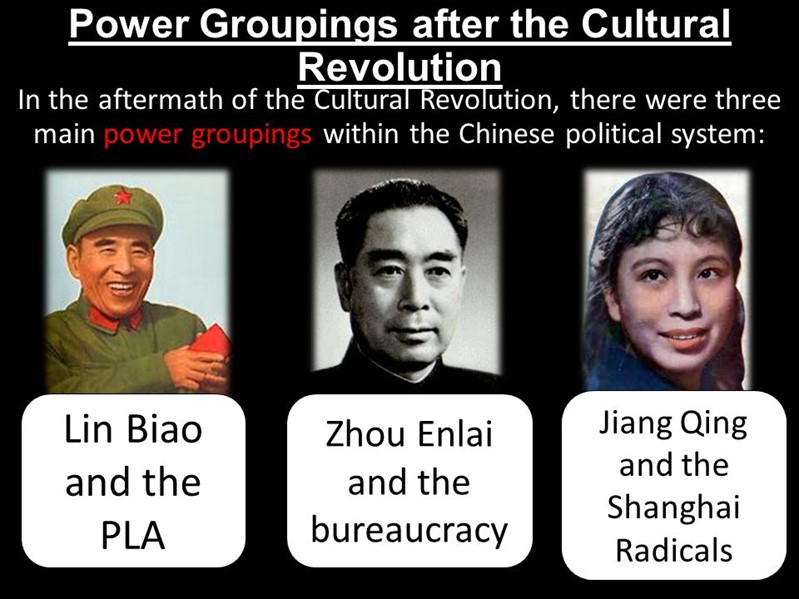
In the 1960s, Chinese Communist Party leader Mao Zedong came to feel that the current party leadership in China, as in the Soviet Union, was moving too far in a revisionist direction, with an emphasis on expertise rather than on ideological purity. Mao’s own position in government had weakened after the failure of his “Great Leap Forward” (1958-60) and the economic crisis that followed. Mao gathered a group of radicals, including his wife Jiang Qing and defense minister Lin Biao, to help him attack current party leadership and reassert his authority.
Mao launched the so-called Cultural Revolution (known in full as the Proletarian Cultural Revolution) in August 1966, at a meeting of the Plenum of the Central Committee. He shut down the nation’s schools, calling for a massive youth mobilization to take current party leaders to task for their embrace of bourgeois values and lack of revolutionary spirit. In the months that followed, the movement escalated quickly as the students formed paramilitary groups called the Red Guards and attacked and harassed members of China’s elderly and intellectual population. A personality cult quickly sprang up around Mao, similar to that which existed for Josef Stalin, with different factions of the movement claiming the true interpretation of Maoist thought.
Lin Biao’s Role in the Cultural Revolution
WHOLE VILLAIN: Defense Minister and Communist Party Vice Chairman, the successor of Chairman Mao Tsetung was apparently assassinated by Prime Minister Chou En-lai and Chairman Mao Tsetung on September 13, 1971, as he tried to escape from the country. After his killing, most of the People’s Liberation Army’s Generals of high command were purged. It totally amazes me to know that the US National Security Adviser Henry Kissinger would request Prime Minister Chou En-Lai to launch a military attack on India during that time to stop India from taking military action to resolve the humanitarian crisis in East Pakistan.
During this early phase of the Cultural Revolution (1966-68), President Liu Shaoqi and other Communist leaders were removed from power. (Beaten and imprisoned, Liu died in prison in 1969.) With different factions of the Red Guard movement battling for dominance, many Chinese cities reached the brink of anarchy by September 1967, when Mao had Lin send army troops in to restore order. The army soon forced many urban members of the Red Guards into rural areas, where the movement declined. Amid the chaos, the Chinese economy plummeted, with industrial production for 1968 dropping 12 percent below that of 1966.
In 1969, Lin was officially designated Mao’s successor. He soon used the excuse of border clashes with Soviet troops to institute martial law. Disturbed by Lin’s premature power grab, Mao began to maneuver against him with the help of Zhou Enlai, China’s premier, splitting the ranks of power atop the Chinese government. In September 1971, Lin died in an airplane crash in Mongolia, apparently while attempting to escape to the Soviet Union. Members of his high military command were subsequently purged, and Zhou took over greater control of the government. Lin’s brutal end led many Chinese citizens to feel disillusioned over the course of Mao’s high-minded “revolution,” which seemed to have dissolved in favor of ordinary power struggles.
Cultural Revolution Comes to an End
Tibet Consciousness – Undying Hope for Freedom. US President Richard M Nixon can be best described as Backstabber of Tibet.
Zhou acted to stabilize China by reviving the educational system and restoring numerous former officials to power. In 1972, however, Mao suffered a stroke; in the same year, Zhou learned he had cancer. The two leaders threw their support to Deng Xiaoping (who had been purged during the first phase of the Cultural Revolution), a development opposed by the more radical Jiang and her allies, who became known as the Gang of Four. In the next several years, Chinese politics teetered between the two sides. The radicals finally convinced Mao to purge Deng in April 1976, a few months after Zhou’s death, but after Mao died that September, a civil, police and military coalition pushed the Gang of Four out. Deng regained power in 1977 and would maintain control over the Chinese government for the next 20 years.
Some 1.5 million people were killed during the Cultural Revolution, and millions of others suffered imprisonment, seizure of property, torture or general humiliation. The Cultural Revolution’s short-term effects may have been felt mainly in China’s cities, but its long-term effects would impact the entire country for decades to come. Mao’s large-scale attack on the party and system he had created would eventually produce a result opposite to what he intended, leading many Chinese to lose faith in their government altogether.
Whole Villain – Original Sin: The mockery of the US Constitution. The US National Security Adviser, Dr. Henry A.Kissinger misused and abused his official position to meet foreign Heads of State to develop US foreign relations without the participation of the US Secretary of State. I call this villainous act as Original Sin. Both Chairman Mao Tsetung and Prime Minister Chou En-Lai were leaders of the “Cultural Revolution” during 1966-69 to unleash crimes against humanity.Whole Evil – Red China’s Never Ending Saga of Cultural Genocide in Tibet. THE SUBJUGATION OF TIBET: RED CHINA’S ILLEGAL, AND UNJUST OCCUPATION OF TIBET IS A CRIME AGAINST HUMANITY.
Tibet Awareness. Red China, a Liar. Red China has no justification for her Tyranny, Oppression, and Suppression of Tibetan Freedom.
Red China’s military invasion and occupation of Tibet is illegal, and it has nothing to do with the Tibetan Institution of Governance called the Dalai Lama. Red China has no justification for her Tyranny, Oppression, and Suppression of Tibetan Freedom.
Tibet Awareness. Red China, a Liar. Red China has no justification for her Tyranny, Oppression, and Suppression of Tibetan Freedom.
China denies Tibet support for Dalai Lama | Daily Mail Online
Tibet Awareness. Red China, a Liar. Red China has no justification for her Tyranny, Oppression, and Suppression of Tibetan Freedom.
There is no widespread support for the Dalai Lama in Tibet and ordinary people are grateful to the Communist Party for “bringing them a happy life”, Chinese officials insisted Wednesday.
This week marks the 60th anniversary of a failed uprising which led to Tibet’s Buddhist spiritual leader, the Dalai Lama, fleeing into exile in India.
Beijing — which claims it “peacefully liberated” the Himalayan area — stands accused of political and religious repression in the region.
But China insists that Tibetans enjoy extensive freedoms and argues it has brought economic growth.
“Since defecting, the Dalai Lama has not done a single good thing for the Tibetan people,” Tibet party boss Wu Yingjie said during a meeting at the sidelines of China’s annual parliamentary meeting.
“Tibetan people have gratitude in their hearts. They are grateful to the Communist Party for bringing them a happy life.”
At least 150 Tibetans have set themselves on fire since 2009 to protest Beijing’s presence in Tibet, most of whom have died from their injuries.
Tibet Awareness. Red China, a Liar. Red China has no justification for her Tyranny, Oppression, and Suppression of Tibetan Freedom.
China had reached out to the Dalai Lama in 2002 to negotiate but after nine rounds of dialogue that lasted through till 2010, many believed that Beijing was intentionally dragging on pointless talks, hoping international pressure over Tibet would end with the passing of the Dalai Lama.
At 83, the Nobel Peace Prize winner enjoys rapturous crowds around the world.
Many Tibetan Buddhists fear Beijing may seek to impose their choice of spiritual leader after the Dalai Lama’s death.
It is unclear how, or even whether, his successor will be named — the centuries-old practice requires senior monks to interview sometimes hundreds of young boys to see whether they recognize items that belonged to the Dalai Lama and pick one as a reincarnation.
But the 14th Dalai Lama announced in 2011 that he may be the last, seeking to preempt any attempt by China to name its own successor.
China’s officially atheist Communist Party has repeatedly said it has the right to control the process of reincarnation.
Tibet Awareness. Red China, a Liar. Red China has no justification for her Tyranny, Oppression, and Suppression of Tibetan Freedom.
Red China’s Journey from Imperialism to Neocolonialism
Red China’s Journey from Imperialism to Neocolonialism
Tibet escaped from the clutches of Qing Empire during 1911-12 to declare full independence on February 13, 1913. From the ashes of the Qing Empire, Red China emerged as the new Imperialistic Power on October 01, 1949 when the Communists took over mainland China defeating the Nationalists. For Tibet, the new era of political domination, cultural subjugation, and colonialist exploitation began with Red China’s military invasion in 1950.
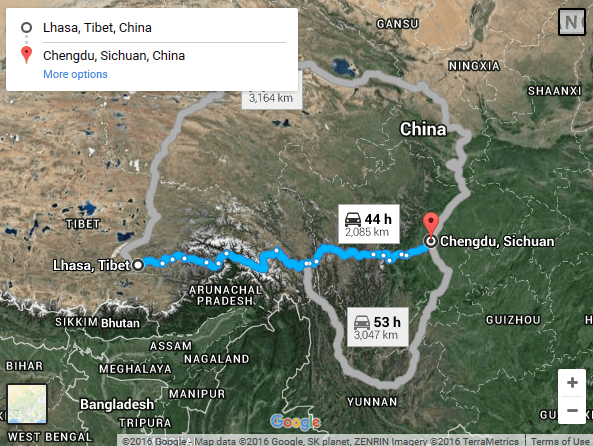
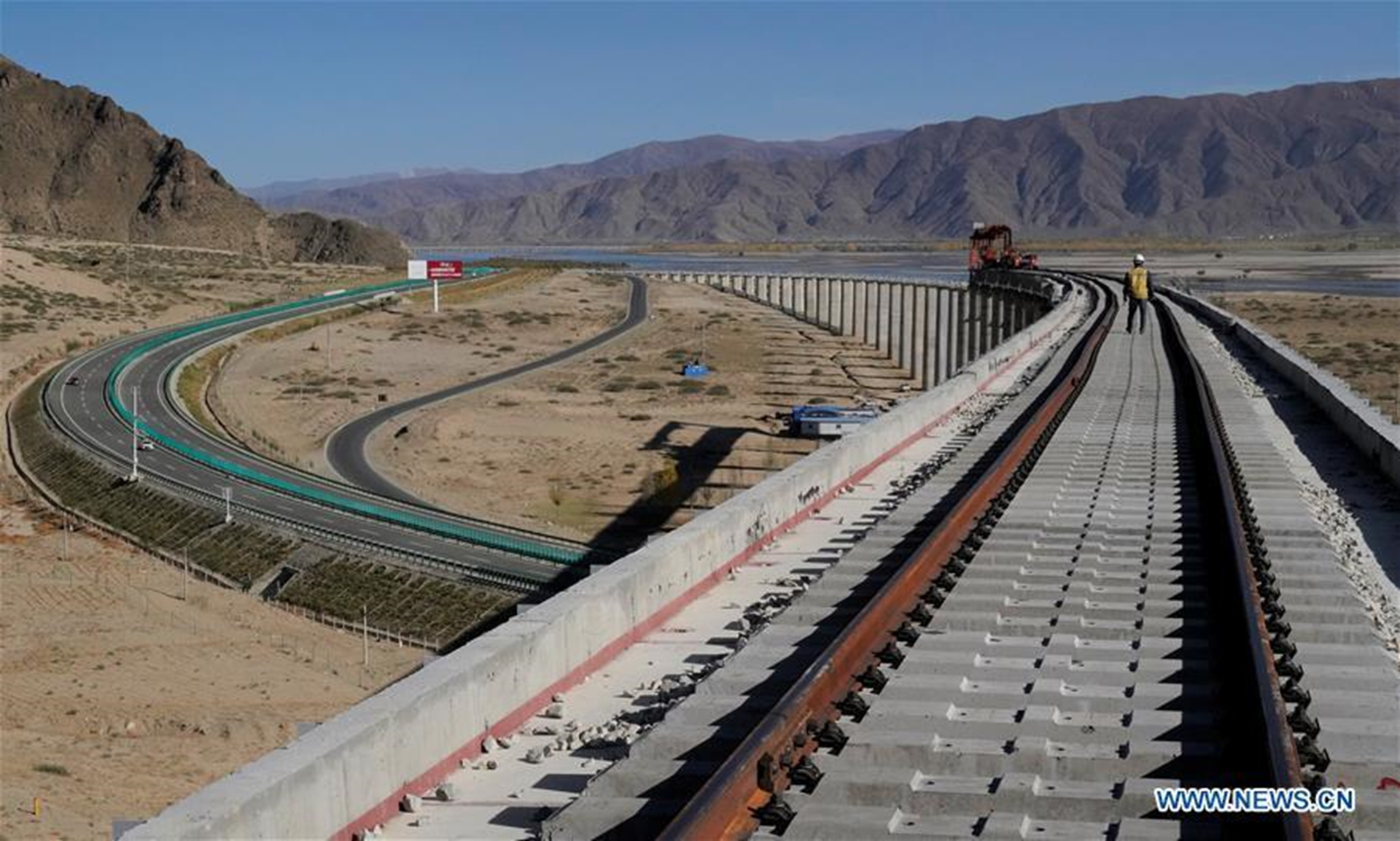
The railway construction projects across the Tibetan Plateau are mere symptoms of Neocolonialism, a facet of Red China’s Doctrine of Expansionism.
Red China’s Journey from Imperialism to Neocolonialism.
CHINA TO STRENGTHEN RAILWAY CONSTRUCTION IN OCCUPIED TIBET
Red China’s Journey from Imperialism to Neocolonialism.
Staff members work at the construction site of the Lhasa-Nyingchi section of the Sichuan-Tibet Railway in Occupied Tibet, on Nov. 26, 2018. In 2018, an investment of 4.2 billion yuan (623 million U.S. dollars) was made in railway construction in the region. (Xinhua/Purbu Zhaxi)
Red China’s Journey from Imperialism to Neocolonialism.
Staff members work at the construction site of the Lhasa-Nyingchi section of the Sichuan-Tibet Railway in Occupied Tibet, on Nov. 26, 2018. In 2018, an investment of 4.2 billion yuan (623 million U.S. dollars) was made in railway construction in the region. (Xinhua/Purbu Zhaxi)
Red China’s Journey from Imperialism to Neocolonialism.
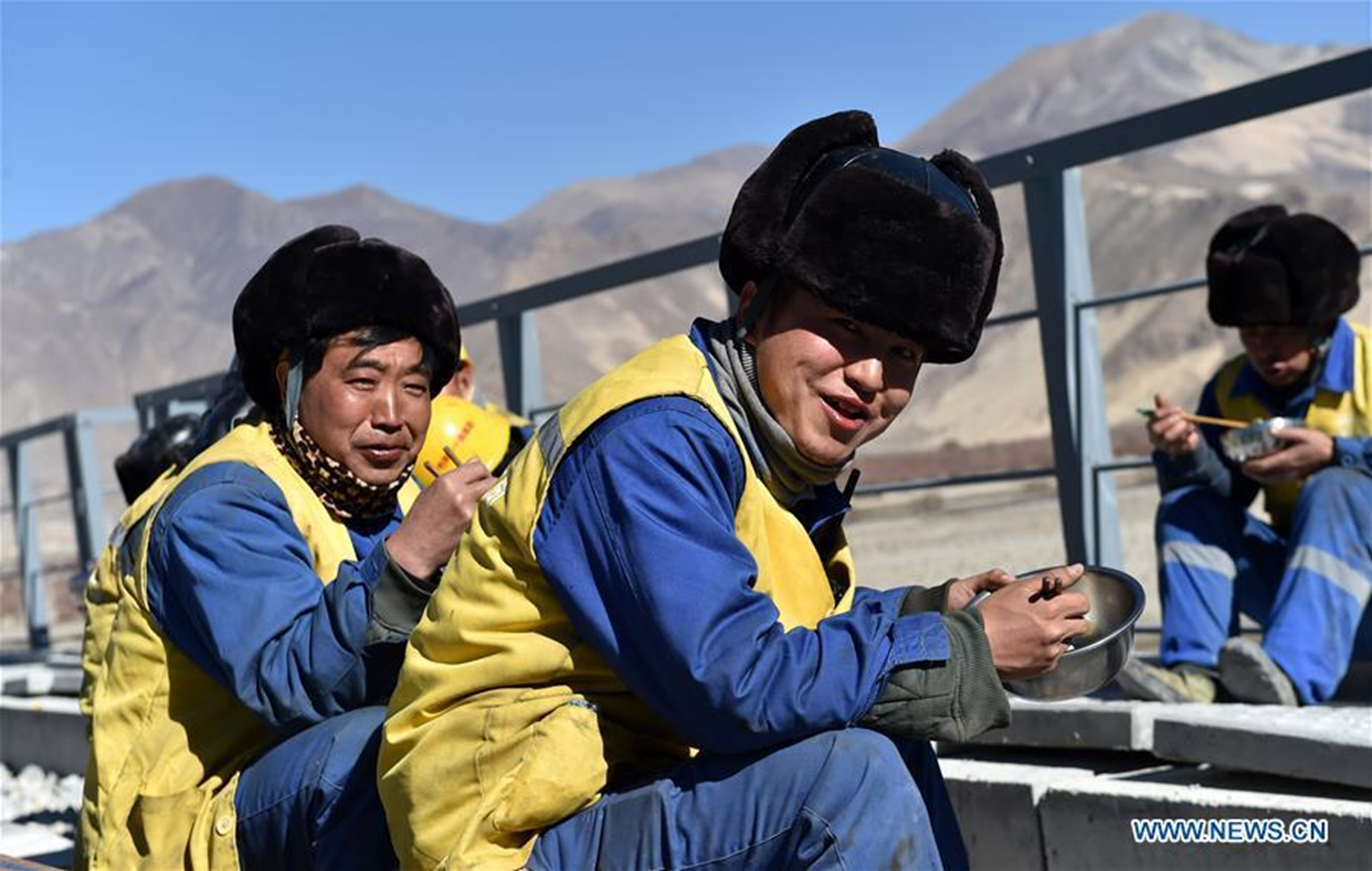
Workers have lunch at the construction site of the Lhasa-Nyingchi section of the Sichuan-Tibet Railway in Occupied Tibet, on Nov. 26, 2018. In 2018, an investment of 4.2 billion yuan (623 million U.S. dollars) was made in railway construction in the region. (Xinhua/Chogo)
Red China’s Journey from Imperialism to Neocolonialism.
Workers at the construction site of the Lhasa-Nyingchi section of the Sichuan-Tibet Railway in Occupied Tibet, on Nov. 26, 2018. In 2018, an investment of 4.2 billion yuan (623 million U.S. dollars) was made in railway construction in the region. (Xinhua/Chogo)
Red China’s Journey from Imperialism to Neocolonialism.
Photo taken on Dec. 23, 2018, shows the construction site of the Lhasa-Nyingchi section of the Sichuan-Tibet Railway in Occupied Tibet. In 2018, an investment of 4.2 billion yuan (623 million U.S. dollars) was made in railway construction in the region. (Xinhua/Purbu Zhaxi)
Red China’s Journey from Imperialism to Neocolonialism.