Tibet Awareness – Tibetan Resistance of Foreign Power
Tibet Awareness – Tibetan Resistance of Foreign Power
News reports indicate that Tibetans are resisting ban on displaying the Dalai Lama’s image. Tibetans are displaying Dalai Lama’s image giving expression to Tibet’s resistance of military occupation by Red China.
Rudra Narasimham Rebbapragada Ann Arbor, MI 48104-4162 USA Special Frontier Force-Establishment 22-Vikas Regiment
UCANEWS.COM
Tibetans resist ban on displaying Dalai Lama’s image
China attempts to control image as spiritual leader enters his twilight
In this photo taken on Dec. 9, a group of Tibetans spin a prayer wheel under a portrait of the Dalai Lama at Kirti Monastery in Aba, a Tibetan area of China’s Sichuan province. A ban on displaying the spiritual leader’s image has been met with resistance in the autonomous region. (Photo by AFP/Benjamin Haas)
ucanews.com reporter, Beijing.
February 24, 2016
Police and the Bureau for Religious Affairs issued a notice across the Tibetan county of Drango in January making a rare admission.
About 40 percent of the shops in this mountainous area of 50,000 people in western Sichuan province were selling pictures of the Tibetan spiritual leader the Dalai Lama. These were ordered removed by Feb. 2. Announcing the campaign was to eliminate “pornography and illegal publications” ahead of the Chinese New Year, the nationalist Global Times said hanging the Dalai Lama’s image “was the same as displaying Saddam Hussein’s image would be for Americans.” Ordinary Tibetans have fought cyclical campaigns banning the Dalai Lama’s image for decades since he went into exile in 1959. As his reincarnation moves ever closer — a source of dispute between the Dalai Lama and Beijing — propaganda and control of his image has only intensified. In open defiance of the recent ban, thousands of Tibetan Buddhists held a prayer ceremony in Drango to pray for the spiritual leader’s health while he was being treated in Minnesota on Jan. 25. A video circulated online showed people standing and kneeling, hands pressed together, in front of a giant image of the Dalai Lama in this remote corner of Sichuan province. “While this doesn’t breach the letter of the ban — which applied to the sale of his image — it clearly breaches the spirit, which local residents will have known,” said Alistair Currie, campaigns manager of the London-based Free Tibet. Later, police arrested two high-ranking monks from Chongri Monastery in Drango for organizing the event. Barely a month goes by without someone being arrested in the administrative region of Tibet and surrounding Tibetan areas in the neighboring western provinces of Sichuan, Qinghai and Gansu. In December, a video showed a young man walking through the streets of Ngaba county carrying a portrait of the Tibetan spiritual leader and its former flag. He was later arrested, reported Free Tibet. A month earlier, two monks were reportedly sentenced to four and three-and-a-half years in prison for separate, similar protests displaying the Dalai Lama’s image while calling for a free Tibet. A symbol of Tibetan aspirations for more autonomy than Beijing is willing to allow, the Dalai Lama’s image has taken on political as well as spiritual meanings. And signs are that Chinese security forces plan to expunge the Tibetan spiritual leader’s image from every corner of the Tibetan plateau, part of the end game to crush resistance as he moves toward the twilight of his life. Beijing clearly hopes that if it can seize control of the Dalai Lama’s image, it may eventually win hearts and minds — at least after Tibet’s spiritual leader dies. In June last year, China announced it had finished installing televisions in every one of Tibet’s nearly 1,800 Buddhist monasteries, a policy that took three-and-a-half years to implement. Many monks were required to ship television sets on horseback across high Himalayan passes. Far from providing Tibetan monks with entertainment, the move was designed to prevent televisions from displaying images of the Dalai Lama inside monasteries. “By listening to the radio and watching television, monks and nuns have a more intuitive understanding of the party and country’s policies, laws and regulations, ethnic policies and religious policies,” reported the state-run Tibet Daily. During the same period, authorities posted notices in monasteries warning of fines of 5,000 yuan (US$800) to those that did not get rid of old satellite television systems. Many were able to pick up Tibetan news from exiled broadcasters based outside of China including Radio Free Asia — funded by the U.S. government — which began its first satellite bulletin during the Tibetan New Year last February. “The Chinese government is trying really hard to try to stop Tibetans from getting any information from outside,” Tsering Tsomo, director of the Tibetan Center for Human Rights and Democracy based in Dharamsala, India, told ucanews.com during the campaign last year. Instead of displaying images of the Dalai Lama, Buddhist monasteries have recently been ordered to display images of Communist Party leaders and Chinese flags instead. Earlier this month, 70-year-old monk Trigyal died in detention after being accused of throwing Chinese flags into a river instead of installing them on a monastery in Driru County. He served two years of a 13-year prison sentence. “Making the Tibetan people choose between the Dalai Lama and the Communist Party when there is space and opportunity to coexist only leads to deepening the wound in the hearts of the Tibetan people,” said Bhuchung Tsering, vice president of the International Campaign for Tibet based in Washington D.C. “China does not care about the Tibetan way of life.” On occasions authorities have proven unusually tolerant of the Dalai Lama’s image, however. In mid-2013, international media and campaign groups started reporting that authorities had started to allow veneration of the Dalai Lama in monasteries including in Lhasa, Tibet’s capital, for the first time in 17 years — a move denied by authorities in Beijing. Then in July last year, his image was “generally well tolerated” as Tibetan’s marked the spiritual leader’s 80th birthday, Currie said. With so little information coming out of Tibet and a lack of transparency from authorities, it remains difficult to know why enforcement of a ban on the Tibetan spiritual leader’s image has been so erratic, he added. “Trying to prevent celebrations would simply cause more trouble for local authorities that it was worth,” said Currie. It’s a point that highlights the extent to which Beijing has tried to calibrate a policy that tries to diminish the influence of the exiled Tibetan spiritual leader without inciting ordinary people into cyclical rioting that has been a feature of 70 years of rule by the Chinese Communist Party. This policy has been a total failure, said Golog Jigme, an exiled Tibetan monk who managed a long and arduous escape to India in May 2014. In mid-February, he appeared in Berlin and met with members of Germany’s parliament to warn of “appalling Chinese policies in Tibet.” The reason he decided to flee — thereby creating yet another propaganda disaster for Beijing — was straightforward: Chinese military raided his monastery in Qinghai province, smashing and burning images of the Dalai Lama, he said. “After each and every experience of these crackdowns there will be even bigger pictures of the Dalai Lama, even better frames and more beautiful portraits that we will hang on our walls,” he added. “Because this really strengthens our determination to show that, actually, we are not afraid.”
Related Reports
Religious rights in China deteriorate further in 2015 Tibetan leader criticizes China’s ‘Living Buddha’ list Beijing’s plans for Tibetan Buddhism condemned
News reports indicate that Tibetans are resisting ban on displaying the Dalai Lama’s image. Tibetans are displaying Dalai Lama’s image giving expression to Tibet’s resistance of military occupation by Red China.
Poverty in Tibet – A Petition to the Colonial Masters
Hundreds of Tibetans signed a petition to the Colonial Masters to secure improvement of their living conditions. Red China’s propaganda claiming economic development and improvement of quality of Tibetan lives is not supported by hard evidence. Poverty in Tibet is real. Modern Face of Trouble in Tibet. Ugly Face of Occupation has New Dimension.
Hundreds of Tibetans signed a petition to the Colonial Masters to secure improvement of their living conditions. Red China’s propaganda claiming economic development and improvement of quality of Tibetan lives is not supported by hard evidence. Poverty in Tibet is real.
Rudra Narasimham Rebbapragada Ann Arbor, MI 48104-4162 USA Special Frontier Force-Establishment 22-Vikas Regiment
Hundreds of Tibetans signed a petition to the Colonial Masters to secure improvement of their living conditions. Red China’s propaganda claiming economic development and improvement of quality of Tibetan lives is not supported by hard evidence. Poverty in Tibet is real. Modern Face of Trouble in Tibet. Ugly Face of Occupation has New Dimension.
Hundreds sign petition for improvement of living condition in Tibet
Tuesday, 24 May 2016 19:07 Kalsang Sherab, Tibet Post International
Hundreds of Tibetans signed a petition to the Colonial Masters to secure improvement of their living conditions. Red China’s propaganda claiming economic development and improvement of quality of Tibetan lives is not supported by hard evidence. Poverty in Tibet is real. Modern Face of Trouble in Tibet. Ugly Face of Occupation has New Dimension.
Dharamshala — Hundreds of Tibetans in Khanya Township (Ch: Kaniang), Drakgo County (Ch: Luhuo), just signed a petition to plead with the local government to investigate the severe living condition in the township of Kham region, eastern Tibet. The latest development indicates clearly that Tibetans who live in rural areas are still facing deepening poverty in the face of China’s so-called economic prosperity.
The collective petition also urges the government to solve local troubles as soon as possible, including deteriorate transportation, insufficiency of electricity, difficult water access, backward in public health and education, and forest destruction, etc.
According to local contact, the Chinese government has deliberately ceased poverty alleviation and construction projects in Khanya Township since 2008, which has left the township in extreme poverty ever since. Collapsed road in the raining season, and snow-sealed mountain passes in the winter had trapped villagers in the mountains for several times. Food and accommodation in the township was in serious shortage during these natural disasters, while the government remains unresponsive.
Besides this, due to the lack of water and electricity, inconvenient communication, and malfunctioning transportation, schoolteachers were unwilling to stay. The only school in the township becomes the ’empty house’, and children in the township were thus deprived of educational opportunities, sources told the Tibet Post International (TPI).
By contrast, the local government started to deforest without constraints, which facilitated water and soil loss as well as natural disasters. Regarding this, local Tibetans have reported to the relevant higher authorities for several times, but no response was given. They now hope to call for attention from institutions inside and outside of Tibet through media report.
Multiple pictures of the local situation, include the signed petition received by the RFA Mandarin service showed that the Chinese government propagates their achievement in economic development and improvement of people’s livelihood; but in fact, the difficult situation in Khanya Township is a valid evidence to debunk this claim. One local source pointed out six needs; Our Khanya Township has 400 households, and is 80 kilometers away from the Drakgo County. Due to the terrible road condition, collapse commonly happens along the way, and many car accidents thus occur; this is the first problem. Secondly, the government constructed a small power station, which is almost derelict nowadays. Thus the electricity for living and production in this township has also been paralyzed. The seriously damaged electricity pole and low quality electricity cables have resulted in multiple accidents. During these accidents, some people died and some other were permanently disabled, but no compensation was provided. Thirdly, the issue of water access is still not solved by the government, which has seriously impacted the health of both villagers and livestock. Fourth, the telephone facility was not well built by the government. Almost in half of the full year, the telephone cannot be connected, but villagers have been required to pay for the telephone fee for the full year. Fifth, the only school in the township is an empty shell, without teachers or students. This directly affects kids’ study and future. Sixth, the housing quality and public health in our township are largely lagged behind, and remain insecure. The so-called house-construction compensation, poverty alleviation subsidy, and health insurance allowance are not broadly implemented. Villagers are complaining a lot about this.
In order to solve the issues above, 400 households in Khanya Township appealed again to the relevant authorities of the government, but no response was given.
The informant reflected, ‘On December 23 last year, all of the villagers signed the letter appealing to the local government, calling for relevant officials to investigate whether CCP’s beneficiation policy has been implemented. However, no response has been given ever since. Thus, we recently submitted a collective petition to the County’s government, calling for the government taking steps to alleviate the severe situation at the moment.’ According to another local contact, this time, the collective case of appeal mainly mentions the problems of water and electricity, transportation, and deforestation, and so on.
The sources also revealed, ‘in our Khanya Township, trans-village roads, local power station, and mobile communication equipment are all jerry-built projects. For example, the tap water only works at summer, and it is almost gone in the winter. The quality of the road is poor, and once it rains or snows, even motorbike cannot go through. The electricity and communication facility is usually cut off for long intervals.
‘The facility is terrible, and even it breaks down, no people are sent to repair them. It caused accidents including, Jigme Wangchuk, a Khanya villager from Gyeda Village (Ch: Jizha, Luhuo county in Garzê Tibetan Autonomous Prefecture, Sichuan Province, China), was shocked to death by high-tension electricity cable; and Konchok Gyaltsen, another Khanya villager from Khanya Village, was disabled by mobile communication cables, and Metok Dolma, a Khanya villager from Lharo Village was crippled by deforestation; and so on. And those people who are killed or disabled did not receive any compensation from the government.’
The informant added, ‘the cow-stealing cases are becoming more and more serious in our township. It often happens, but the government has no response despite of our report. Deforestation is becoming more and more severe. Recently, the government cut down overtly amount of trees in our holy mountain, and reaped exorbitant profits. The whole mountain has been devastated, and forestry resource has severely damaged, which may result further water and soil loss, and frequent natural disasters.’
The informant told TPI that after submitting the signed statement again, the government has promised to take measurements. However, based upon past experience, in order to urge the Chinese government to improve the current situation of Khanya Township, Khanya villagers still wish for external attention and support.
Hundreds of Tibetans signed a petition to the Colonial Masters to secure improvement of their living conditions. Red China’s propaganda claiming economic development and improvement of quality of Tibetan lives is not supported by hard evidence. Poverty in Tibet is real. Modern Face of Trouble in Tibet. Ugly Face of Occupation has New Dimension.
The Future of Tibet – Can Red China Save herself from the consequences of Evil plans?
The Future of Tibet – Can Red China Save herself from the consequences of Evil plans?
Doom Dooma Doomsayer understands the problems faced by Tibetans; the Great Trouble in Tibet following Tibet’s military conquest. I am not a monk, a priest, or a member of clergy. I am not a prophet. However, my rational analysis of events leads me to announce Beijing’s Doom. Without recourse to any kind of human intervention, Red China faces Eviction From Occupied Tibet.
The Future of Tibet – Can Red China Save herself from the consequences of Evil plans?
TIBET – THE PLATEAU, UNPACIFIED
Tibetans’ culture is changing, by their own will as well as by force
Sep 17th 2016 | YUSHU
Doom Dooma Doomsayer understands the problems faced by Tibetans; the Great Trouble in Tibet following Tibet’s military conquest. I am not a monk, a priest, or a member of clergy. I am not a prophet. However, my rational analysis of events leads me to announce Beijing’s Doom. Without recourse to any kind of human intervention, Red China faces Eviction From Occupied Tibet.
An elderly woman with long, grey plaits, wearing a traditional Tibetan apron of wool in colorful stripes, has spent her day weaving thread outside her home near the southern end of Qinghai Lake, high on the Tibetan plateau. She is among hundreds of thousands of Tibetan nomads who have been forced by the government in recent years to settle in newly built villages. She now lives in one of them with her extended family and two goats. Every few months one of her sons, a red-robed monk, visits from his monastery, a place so cut off from the world that he has never heard of Donald Trump. Her grandson, a 23-year-old with slick hair and a turquoise rain jacket, is more clued in. He is training to be a motorcycle mechanic in a nearby town. Theirs is a disorienting world of social transformation, sometimes resented, sometimes welcome.
Chinese and foreigners alike have long been fascinated by Tibet, romanticizing its impoverished vastness as a haven of spirituality and tranquility. Its brand of Buddhism is alluring to many Chinese—even, it is rumored, to Peng Liyuan, the wife of China’s president, Xi Jinping. Many Tibetans, however, see their world differently. It has been shattered by China’s campaign to crush separatism and eradicate support for the Dalai Lama, their spiritual leader who fled to India after an uprising in 1959. The economic transformation of the rest of China and its cities’ brash modernity are seductive, but frustratingly elusive.
The story of political repression in Tibet is a familiar one. The Dalai Lama accuses China’s government of “cultural genocide”, a fear echoed by a tour guide in Qinghai, one of five provinces across which most of the country’s 6m Tibetans are scattered (the others are Gansu, Sichuan, Yunnan and the Tibet Autonomous Region, or TAR—see map). “We know what happened to the Jews,” he says. “We are fighting for our existence.” Less commonly told is the despair felt by many young Tibetans who feel shut out of China’s boom. They are victims of Tibet’s remote and forbidding topography as well as of racial prejudice and the party’s anti-separatist zeal. They often cannot migrate to coastal factories, and few factories will come to them. Even fluent Mandarin speakers rarely find jobs outside their region.
Doom Dooma Doomsayer understands the problems faced by Tibetans; the Great Trouble in Tibet following Tibet’s military conquest. I am not a monk, a priest, or a member of clergy. I am not a prophet. However, my rational analysis of events leads me to announce Beijing’s Doom. Without recourse to any kind of human intervention, Red China faces Eviction From Occupied Tibet.
Yet Tibetans are not cut off from the rapidly evolving culture of the rest of China, where more than 90% of the population is ethnic Han. Mayong Gasong Qiuding, a 26-year-old hotel worker in Yushu in southern Qinghai, listens to Mandarin, Tibetan and Western pop music in tandem. He can rattle off official slogans but can recite only short Tibetan prayers. His greatest wish, he says, is to go to the Maldives to see the sea. Tibetan women in Qinghai use skin-whitening products, following a widespread fashion among their Han counterparts; a teenager roller-skates anticlockwise around a Buddhist stupa, ignoring a cultural taboo. Young nomads frustrate their elders by forsaking locally-made black, yak-hair tents for cheaper, lighter canvas ones produced in far-off factories.
Han migration, encouraged by a splurge of spending on infrastructure, is hastening such change. Although Tibetans still make up 90% of the permanent population of the TAR, its capital Lhasa is now 22% Han, compared with 17% in 2000. Many Tibetans resent the influx. Yet they are far more likely to marry Han Chinese than are members of some of China’s other ethnic groups. Around 10% of Tibetan households have at least one member who is non-Tibetan, according to a census in 2010. That compares with 1% of households among Uighurs, another ethnic minority whose members often chafe at rule by a Han-dominated government.
Core features of Tibetan culture are in flux. Monasteries, which long ago played a central role in Tibetan society, are losing whatever influence China has allowed them to retain. In recent years, some have been shut or ordered to reduce their populations (monks and nuns have often been at the forefront of separatist unrest). In July buildings at Larung Gar in Sichuan, a sprawling center of Tibetan Buddhist learning, were destroyed and thousands of monks and nuns evicted. Three nuns have reportedly committed suicide since. Of the more than 140 Tibetans who have set fire to themselves since 2011 in protest against Chinese rule, many were spurred to do so by repressive measures at their own monastery or nunnery.
Cloistered life is threatened by social change, too. Families often used to send their second son to a monastery, a good source of schooling. Now all children receive nine years of free education. “The young think there are better things to do,” says a monk at Rongwo monastery in Tongren, a town in Qinghai, who spends his days “praying, teaching [and] cleaning”. New recruits often come from poorly educated rural families.
Mind your language
In the TAR (which is closed to foreign journalists most of the time), the Tibetan language is under particular threat. Even nursery schools often teach entirely in Mandarin. A generation is now graduating from universities there who barely speak Tibetan. Some people have been arrested for continuing to teach in the language. In April last year Gonpo Tenzin, a singer, was sentenced to three-and-a-half years in prison for his album, “No New Year for Tibet”, encouraging Tibetans to preserve their language and culture.
In some areas outside the TAR, however, the government is less hostile to Tibetan. Since the early 2000s, in much of Qinghai, the number of secondary schools that teach in Tibetan has risen, according to research there by Adrian Zenz of the European School of Culture and Theology at Korntal, Germany. The range of degrees taught in Tibetan has expanded too. Unlike elsewhere, someone who has studied mainly in Tibetan can still get a good job in Qinghai. A third of all government roles advertised there between 2011 and 2015 required the language. Despite this, many parents and students chose to be taught in Mandarin anyway, Mr. Zenz found. They thought it would improve job prospects.
Doom Dooma Doomsayer understands the problems faced by Tibetans; the Great Trouble in Tibet following Tibet’s military conquest. I am not a monk, a priest, or a member of clergy. I am not a prophet. However, my rational analysis of events leads me to announce Beijing’s Doom. Without recourse to any kind of human intervention, Red China faces Eviction From Occupied Tibet.
But work can be difficult to get, despite years of huge government aid that has helped to boost growth. Government subsidies for the TAR amounted to 111% of GDP in 2014 (see chart), according to Andrew Fischer of Erasmus University Rotterdam. Eleven airports serve Qinghai and the TAR—they will have three more by 2020. A 156-mile train line from Lhasa (population 560,000) to Shigatse (population 120,000), which was completed in 2014, cost 13.3 billion yuan ($2.16 billion). A second track to Lhasa is being laid from Sichuan, priced at 105 billion yuan.
Better infrastructure has fueled a tourism boom—domestic visitors to the TAR increased fivefold between 2007 and 2015—but most income flows to travel agents elsewhere. Tourists stay in Han-run hotels and largely eat in non-Tibetan restaurants (KFC opened its first Lhasa branch in March). Tibetan resentment at exclusion from tourism- and construction-related jobs was a big cause of rioting in Lhasa in 2008 that sparked plateau-wide protests. Other big money-spinners—hydropower and the extraction of minerals and timber—are controlled by state-owned firms that employ relatively few Tibetans. The Chinese name for Tibet, Xizang, means “western treasure house”. But Tibetans have little share in its spoils. The rehousing of nomads has helped provide some with building jobs, but has also brought suffering: those relocated sometimes find it harder to make a living from herding.
In most other parts of China, villages have been rapidly emptying as people flock to work in cities. In the country as a whole, the agricultural population dropped from 65% to 48% as a share of the total between 2000 and 2010. On the plateau it fell only slightly, from 87% to 83%. It is hard for Tibetans to migrate to places where there are more opportunities. Police and employers treat them as potential troublemakers. In 2010 only about 1% of Tibetans had settled outside the plateau, says Ma Rong of Peking University. They cannot move abroad either. In 2012 Tibetans in the TAR had to surrender their passports (to prevent them joining the Dalai Lama); in parts of Qinghai officials went house-to-house confiscating them.
Doom Dooma Doomsayer understands the problems faced by Tibetans; the Great Trouble in Tibet following Tibet’s military conquest. I am not a monk, a priest, or a member of clergy. I am not a prophet. However, my rational analysis of events leads me to announce Beijing’s Doom. Without recourse to any kind of human intervention, Red China faces Eviction From Occupied Tibet.
For university graduates, the prospects are somewhat better. There are few prospects for secure work in private firms on the plateau. But to help them, the government has been on a hiring spree since 2011. Almost all educated Tibetans now work for the state. A government job is a pretty good one: salaries have been rising fast. Few Tibetans see such work as traitorous to their cause or culture. But the government may not be able to keep providing enough jobs for graduates, especially if a slowdown in China’s economy, which is crimping demand for commodities, has a knock-on effect on the plateau.
Many of the problems faced by Tibetans are common in traditional pastoral cultures as they modernize. But those of Tibetans are compounded by repression. They are only likely to increase when the Dalai Lama, now 81, dies. The central government will try to rig the selection of his successor, and no doubt persecute Tibetans who publicly object.
In private, officials say they are playing a waiting game: they expect the “Tibetan problem” to be more easily solved when he is gone. They are deluding themselves. They ignore his impact as a voice of moderation: he does not demand outright independence and he condemns violence. Tibetan culture may be under duress, but adoration of the Dalai Lama shows no sign of diminishing. Poverty, alienation and the loss of a beloved figurehead may prove an incendiary cocktail.
Doom Dooma Doomsayer understands the problems faced by Tibetans; the Great Trouble in Tibet following Tibet’s military conquest. I am not a monk, a priest, or a member of clergy. I am not a prophet. However, my rational analysis of events leads me to announce Beijing’s Doom. Without recourse to any kind of human intervention, Red China faces Eviction From Occupied Tibet.
Red China’s Colonial War in Tibet: Red China’s Fate is Sealed. Beijing Doomed. Red China will fall into the grave she prepared to bury Tibetan Identity.Red China’s Colonial War in Tibet: Red China’s Fate is Sealed. Beijing Doomed. Red China will fall into the grave she prepared to bury Tibetan Identity.
Red China’s Colonial War against Tibet is doomed to fail and Tibet will declare ‘Victory Through Patience’. Tibetans have demonstrated the quality of endurance under trials. Their patience gives them freedom from cowardice or despondency. Patience is mainly an attitude of mind with respect to external events. Longsuffering imparts patience by changing attitude with respect to people. Patience best develops under trials or trying times. Tibetans are waiting calmly for something they deeply cherish. They are bearing suffering and trouble with self-control, steadiness and fortitude. Tibetans are showing restraint under great provocation and are refraining from retaliation, tolerating repressive measures used by Red China. Tibetan endurance of suffering without flinching will ensure their victory over Red China’s Colonial War.
Red China’s Colonial War in Tibet: Red China’s Fate is Sealed. Beijing Doomed. Red China will fall into the grave she prepared to bury Tibetan Identity.
Red China with her passionate desire to colonize Tibet, started preparing graves to bury Tibetan Culture, Tibetan Religion, and Tibetan Identity. As the saying goes, people who dig graves for others are at risk of falling into the pits they prepare. Red China is digging her own grave and has set herself on a path of Self-Destruction.
Red China’s Colonial War in Tibet: Red China’s Fate is Sealed. Beijing Doomed. Red China will fall into the grave she prepared to bury Tibetan Identity.
Rudra Narasimham Rebbapragada Ann Arbor, MI 48104-4162, USA Special Frontier Force-Establishment 22-Vikas Regiment
XI’S TIBET POLICY IS NOTHING NEW, BUT AN OLD COLONIAL WAR AGAINST TIBET – CNN iREPORT
By SHAMBALA Posted August 28, 2015. McLeod Ganj, India
Red China’s Colonial War in Tibet: Red China’s Fate is Sealed. Beijing Doomed. Red China will fall into the grave she prepared to bury Tibetan Identity.
More from Shambala
World must pressure China on human rights violations in Tibet Genocide in the 20th Century: Massacres in Tibet: 1966-76 Is China wittingly replacing temples in Tibet with propaganda centers? Tibet and the global economy: is today’s China poisoning the West? Tibetans and Chinese in Tibet: Who are the real terrorist?
CNN PRODUCER NOTE
Dharamshala — The Chinese President Xi Jinping’s commitment to “Ethnic Unity”, “Economy Development” and “Social Stability” in Tibet under the banner of “Peaceful Liberation”, which nether seeks a peaceful solution nor a signal for a new reform of more openness. But it clearly shows China is further strengthening an integral element of another “cultural revolution” project in Tibet. One must say Xi is revealing the true nature of a Communist regime in Tibet, a similar sense of strategic inviolability characterized the 20th century’s greatest mass murderer, Mao Zedong.
Invaded by China in 1949, the independent country of Tibet was forced to face the direct loss of 1.2 million lives that comes from military invasion and, soon after, the loss of universal freedoms that stemmed from Communist ideology and its programs such as the Cultural Revolution (1966-76). However, it is erroneous to believe that the worst has passed. The fate of Tibet’s unique national, cultural and religious identity is seriously threatened and manipulated by the Chinese authorities in the past six decades.
Chinese government’s policy of occupation and oppression has resulted in no more or less than the destruction of Tibet’s national independence, culture and religion, environment and the universal human rights of its people. Time and time again, the infliction of this destruction sees China break international laws with impunity, while attempting to transform Tibet’s 2.5 million square kilometers into complete China.
On the 50th anniversary of the so-called “peaceful liberation”, Chinese President Xi Jinping called more the government’s efforts in “Promoting Economic,” “Ethnic Unity” and “Social Development” in Tibet, shows no different claims, revealing the unpredictable nature of a regime bent on maintaining stability even through terror, exposing the depth of China’s present illness.
Xi’s concepts of repressive policies reflect the deep uncertainty that aiming at the core of the another “Cultural Revolution” strategy in further colonizing Tibet, showing the whole world once again the real terror nature of the Communist regime.
Ever since its colonial project was set in motion, the “Cultural Revolution” has insisted that it seeks to colonize Tibet “peacefully”, indeed that its colonization of the country will not only not harm the Tibetan population, but that it was successful to be of benefit to millions of illegal Chinese settlers.
The main reasons behind the dirty politics of why Xi is “calling for more educational campaigns to promote ethnic unity and a sense of belonging to the same Chinese nationality,” is that Tibetans would become real Chinese and must speak Mandarin, allowing coexistence with the Chinese settlers who would be happy and grateful for being colonized and civilized by the communist regime; and a secret, logistical and practical strategy to vanquish the Tibetan population from Tibet, which threatens the very existence of Tibetan culture, religion and national identity.
The impacts of mass immigration of Ethnic Chinese into Tibet was and is a barbaric act with aim to destroy Tibet completely— a target for the worst excesses of the Chinese regime. Tibetan exiles claim 7.5 million Chinese now live in Tibet overwhelming the six million Tibetans. These figures are unconfirmed, but recent Chinese figures suggest this trend is accurate.
Mass murder Mao Zedong killed an estimated 49-78 million people during China’s Cultural Revolution between 1966 and 1976. From Mao to Hu Jintao, one after another, the Chinese dictators have taken full control over the lives of their citizens. The similarities shared with previous dictators from Mao to Hu, Xi’s approach of declaring peaceful intentions for “Ethnic Unity and “Economy Development” behind which he sought to hide Mao’s “Marxism” inherited from “Sovietism”, a violent strategy of conquering and terrorizing the land of Tibet into pieces, adopting wholesale thenceforward, which continues to be the cornerstone of the repressive policy to the present.
Chinese hard-line policies in creating a new socialist paradise, seeking hearts and minds with Tibetan people will never fulfill its dreams. Indeed, within the framework of the 17 Point Agreement between China and Tibet, the PLA troops marching into Tibet shall abide by all the above-mentioned policies and shall also be fair in all buying and selling and shall not arbitrarily take a single needle or thread from the people. However, in the past six decades, Tibetans are denied of the basic rights of expression, speech, movement, and religion under the hard-line policies, including political repression, economic marginalization, environmental destruction, cultural assimilation and denial of religious freedom.
As China became the 3rd of the top ten militaries in the world, according to “Global Firepower”, why China’s strategists have increasingly acknowledged that the stability in Tibet is central to China’s national interest, and particularly as present as the early 1980s. The term “Economy Development” and “Stability” has nothing to do with Tibetan people. But the Tibetan plateau, dubbed the “Third Pole”, holds the third largest store of water-ice in the world and is the source of many of Asia’s rivers. The glaciers, snow peaks, rivers, lakes, forest and wetlands of Tibet provide major environmental services to Asia, from Pakistan to Vietnam to northern China.The climate in Tibet generates and regulates monsoon rains over Asia. An estimated 70% of water in China is heavily polluted from uncontrolled dumping of chemicals. Instead of dealing with this the Chinese regime is diverting water from Tibet to north and west China to supply over 300 million Chinese people. It is also damming rivers to generate hydroelectricity which is in turn used to power industrial developments in China. Dams on rivers and their major tributaries cause massive interruptions to wild mountain rivers and the ecosystems dependent on them. They also give China strategic power over neighboring countries.
Chinese state-owned mining companies are quickening their extraction of copper, gold and silver in Tibet. These mines are usually based close to rivers. Tibet is also rich in other resources including lead, zinc, molybdenum, asbestos, uranium, chromium, lithium and much more. Tibet is China’s only source of chromium and most of its accessible lithium is in Tibet. These raw materials are used in manufacturing of household goods, computers and smart phones, among much else.
China is the world’s largest producer of copper and the world’s second biggest consumer of gold. The World Gold Council predicts that the consumption in China will double within a decade. Tibet’s reserves of copper and gold are worth nearly one trillion dollars. Chinese companies have traditionally mined on a small-scale but now large-scale extractions are taking place, mainly by large companies, owned by or with close links to the State.
More importantly, in connection with the size of Tibet it needs to be pointed out that the so-called ‘Tibet Autonomous Region’ – which is what the some parts of world mistakenly see as ‘Tibet’ – is only the truncated half of Tibet. The North-Eastern Province of Amdo; has been separated from the rest of Tibet and renamed ‘Qinghai.’ Also; large parts of Eastern Tibet; the traditional Kham Province; have been incorporated into neighboring Chinese Provinces.
Economic growth mostly benefits The Chinese settlers and businesses and workers, as most workers in Tibet mines are Chinese and the extraction takes place without regard to the local environment and areas of religious significance. Most of Tibet is vulnerable to earthquakes and highly volatile. Threats posed by this instability are exacerbated by mining and damming projects. In 2013 a landslide in the Gyama Valley is a great example, which highlighted the fatal destruction of Tibet’s environment. In almost all areas in Tibet, Tibetans have frequently protested against Chinese government, where there are mining projects in Tibet, particularly in recent years. China has recently drilled a 7 km bore hole, to reach and explore Tibet’s oil and natural gas resources. China National Petroleum Corporation estimates the basin’s oil reserves at 10 billion tons.
As well as global climate change, industrial projects such as mining, damming and deforestation are leading to the Tibetan glacier melting at a faster rate, contributing in turn to further global warming. Before the Chinese occupation there was almost no Tibetan industrialization, damming, draining of wetlands, fishing and hunting of wildlife. Tibet remained unfenced, its grasslands intact, its cold climate able to hold enormous amounts of organic carbon in the soil.
China has now moved millions of Tibetan nomads from their traditional grasslands to urban settlements, opening their land for the extraction of resources and ending traditional agricultural practices which have sustained and protected the Tibetan environment for centuries.
The mining companies also benefit from state financing of railways, power stations and many other infrastructure projects. Much of China’s significant transport infrastructure developments in Tibet have been intended to facilitate the movement of military forces into the country and the removal of natural resources from it. companies also benefit from finance at concessional rates to corporate borrowers, tax holidays, minimal environmental standards and costs, no requirement to compensate local communities and subsidized rail freight rates to get concentrates to smelters or metal to markets.These above valid reasons for saying Tibetans inside Tibet will never sense happier life in a so-called “Maoist socialist paradise.” Instead, we have, and always had the fears and sense of the totalitarian nature of Chinese regime.
However, the authoritarians in Beijing always have popularised the expression of Tibet as a “Peaceful Liberation” since the occupation in 1949— the totalitarianism understood well that its colonial strategy depended on a deliberate and insistent confusion of the binary terms “Liberation” and “Unity”, so that each of them hides behind the other as one and the same strategy: “Unity” will always be the public name of a colonial war, and “Liberation”, once it became necessary and public in the form of total invasions, would be articulated as the principal means to achieve the sought after “ethnic unity”.
Why Xi said the country should “firmly take the initiative” in the fight against separatism, vowing to crack down on all activities seeking to separate the country and destroy social stability. Waging colonial war under banner of “Unity” is so central to totalitarianism and Chinese propaganda that China’s 1949 invasion of Tibet, which killed 1.2 million Tibetans and destroyed over six thousand monasteries and temples and historical structures looted and all beyond repair, was termed the “Peaceful Liberation of Tibet”. “Liberation” and “Ethnic Unity”, therefore, are the same means whose only and ultimate strategic goal is Chinese colonization of Tibet and the subjugation and expulsion of Tibetan population.
To bring about the expulsion of the Tibetans and the establishment of the Chinese settler colony, the CCP sought the patronage of the powers that controlled the fate of Tibet. Mao to Xi whereas their assiduous efforts to court the Mao’s old leadership and persuade to grant them a charter failed, however the soviet style leadership after Mao adopted the same strategy under various banners and successfully secured the patronage of world, and became the master of Tibet.
Tibet remained largely isolated from the rest of the world’s civilizations. After 1949, the CCP successfully secured support for their colonial project. After more than 40 years the world recognize that Mao was responsible for genocide of millions of Chinese, Tibetans, Mongolians and Uyghurs. Even Deng Xiaoping actually believed that Mao was about 80% wrong, prove not only that mass massacre happened from 1959-61 but also that these were mainly the result of policy errors that the current regime continues to draw from.
None of these, however, meant morally justifiable and acceptable, but a true nature that the deadly ideology of communism while abandoned their public claims that their “peaceful liberation” colonization of Tibet would not be harmful to the Tibetan people while employing, at the same time, the most violent means to evict the Tibetans off their land.
The totalitarian leader, Mao, following Stalin’s strategy of securing the patronage of major world powers articulated the Soviet position thus. Soviet type colonization must either stop, or else proceed regardless of the native population. Which means that it can proceed and develop only under the protection of a power that is independent of the native population -behind an iron wall, which the native population cannot breach. That is repressive policy; not what it should be, but what it actually is, whether we admit it or not. We clearly understand why Xi is calling for more “patriotic education campaigns” to promote “ethnic unity” and a sense of belonging to the same “Chinese nationality”.
Despite officially introducing more environment-friendly policies in recent years, China continues to flood Tibet with potentially destructive mega development projects such as railway routes, oil and gas pipelines, petrochemical complexes, hydro dams, construction of airports, highways, military bases and new cities for migrants from Mainland China. Is this for a sense of belonging to the same “Chinese nationality”?
What need we have, otherwise, of the Peaceful Liberation? Or of the Mandate? Their value to us is that outside Power has undertaken to create in the country such conditions of administration and security that if the native population should desire to hinder our work, they will find it impossible.It was, in fact, this regime’s commitment to “peaceful liberation” with the Tibetans, whose land they sought to total control, that provoked the ire of terror group that gradually transformed the CCP. The CCP leaders’ assumption that the Tibetans were bribe-able, that they could be bought, and that they would accept Chinese domination in exchange for nominal economic benefits was challenged by Mao. He once stated that the communist army’s “only foreign debt” was that incurred to the Tibet and its people while on the Long March in 1930s.
As the idea of peaceful liberation of Tibet as a means to establish more colonial conquests continued to be entrenched in Maoist considerations, it would be pursued alongside invisible war even after 1949, as evidenced by the multiple invasions of Tibet in the 1950s, and in the new century. These wars would be waged explicitly as part of China’s pursuit of “peaceful liberation” to achieve its colonial aims, and Nor-eastern Tibet capitulated completely to Chinese colonialism, while continuing the war against those Tibetans who continued to resist Maoist colonial logic.
Human rights monitoring and protection has become an unusual challenge to the de facto impunity of the government system. Acquiring accurate information from the so-called ethnic minority regions of Tibet had become extremely difficult due to the secretive nature of operations and so-called lack of transparency. Tibetans in their own home country have become victims of deep-seated prejudice. A carefully chiseled policy has led to a cultural genocide in Tibet due to denial of basic fundamental rights, freedoms and justice over a period of 60 years. The Human Rights situation has not improved in Tibet.
The ongoing suppression of the Tibetan people has been openly carried out whether intentionally or unintentionally. The Chinese government continues to accelerate the political, economic, social and geographical integration of Tibet into China. There is no let-up on many unpopular measures of control imposed by China on the Tibet region such as the “Patriotic re-education Campaign” under policy of “Unity and Peace,” despite how-many-ever protests from Tibetans. This Chinese policy with the active support of the military presence in Tibet, at least a quarter of a million strong, strictly governs the territory, after all China still claims a “peaceful liberation” of Tibet and President Xi Jinping vowed to follow same old way. Is this what China really wanted the whole world to witness in an occupied Tibet in the 21st century?
The Chinese President Xi Jinping’s commitment to “Ethnic Unity”, “Economy Development” and “Social Stability” in Tibet under the banner of “Peaceful Liberation”, which nether seeks a peaceful solution nor a signal for a new reform of more openness. But it clearly shows China is further strengthening an integral element of another “cultural revolution” project in Tibet. One must say Xi is revealing the true nature of a Communist regime in Tibet, a similar sense of strategic inviolability characterized the 20th century’s greatest mass murderer, Mao Zedong.
Photo caption: China’s aggressive Violence Against Tibetan People in their homeland, in 2012. Photo: file
The Chinese President Xi Jinping’s commitment to “Ethnic Unity”, “Economy Development” and “Social Stability” in Tibet under the banner of “Peaceful Liberation”, which nether seeks a peaceful solution nor a signal for a new reform of more openness. But it clearly shows China is further strengthening an integral element of another “cultural revolution” project in Tibet. One must say Xi is revealing the true nature of a Communist regime in Tibet, a similar sense of strategic inviolability characterized the 20th century’s greatest mass murderer, Mao Zedong.The Chinese President Xi Jinping’s commitment to “Ethnic Unity”, “Economy Development” and “Social Stability” in Tibet under the banner of “Peaceful Liberation”, which nether seeks a peaceful solution nor a signal for a new reform of more openness. But it clearly shows China is further strengthening an integral element of another “cultural revolution” project in Tibet. One must say Xi is revealing the true nature of a Communist regime in Tibet, a similar sense of strategic inviolability characterized the 20th century’s greatest mass murderer, Mao Zedong.The Chinese President Xi Jinping’s commitment to “Ethnic Unity”, “Economy Development” and “Social Stability” in Tibet under the banner of “Peaceful Liberation”, which nether seeks a peaceful solution nor a signal for a new reform of more openness. But it clearly shows China is further strengthening an integral element of another “cultural revolution” project in Tibet. One must say Xi is revealing the true nature of a Communist regime in Tibet, a similar sense of strategic inviolability characterized the 20th century’s greatest mass murderer, Mao Zedong.The Chinese President Xi Jinping’s commitment to “Ethnic Unity”, “Economy Development” and “Social Stability” in Tibet under the banner of “Peaceful Liberation”, which nether seeks a peaceful solution nor a signal for a new reform of more openness. But it clearly shows China is further strengthening an integral element of another “cultural revolution” project in Tibet. One must say Xi is revealing the true nature of a Communist regime in Tibet, a similar sense of strategic inviolability characterized the 20th century’s greatest mass murderer, Mao Zedong.The Chinese President Xi Jinping’s commitment to “Ethnic Unity”, “Economy Development” and “Social Stability” in Tibet under the banner of “Peaceful Liberation”, which nether seeks a peaceful solution nor a signal for a new reform of more openness. But it clearly shows China is further strengthening an integral element of another “cultural revolution” project in Tibet. One must say Xi is revealing the true nature of a Communist regime in Tibet, a similar sense of strategic inviolability characterized the 20th century’s greatest mass murderer, Mao Zedong.The Chinese President Xi Jinping’s commitment to “Ethnic Unity”, “Economy Development” and “Social Stability” in Tibet under the banner of “Peaceful Liberation”, which nether seeks a peaceful solution nor a signal for a new reform of more openness. But it clearly shows China is further strengthening an integral element of another “cultural revolution” project in Tibet. One must say Xi is revealing the true nature of a Communist regime in Tibet, a similar sense of strategic inviolability characterized the 20th century’s greatest mass murderer, Mao Zedong.
Whole Demand -Tibet Wants China to Return the Real Panchen LamaWhole Subversion -Red China’s appointment of 11th Panchen Lama. Red China’s Panchen Lama is a political appointee. Gyaltsen Norbert, the False 11th Panchen Lama symbolizes Red China’s Policy of Subversion. 20 years after Disappearance, Tibet wants China to Return True or Real Panchen Lama.
Red China is a ‘Jackal’ for she is dishonest, a cheat, swindler, and practices deception. Red China has deliberately acted dishonestly to deprive Tibetans of their property, their rights, and their cultural beliefs. Red China uses ‘stratagem’ to deceive others and she uses tricks or ruses in deceiving others. Red China apart from destroying Tibet’s established government called ‘The Institution of Dalai Lama’ is undermining Tibet’s established cultural institutions and belief systems that Tibetan people use to recognize figures of authority and of importance. 20 years after Disappearance, Tibet wants China to Return True or Real Panchen Lama.
Supreme Ruler of Tibet on his Europe’s Visit urges constructive criticism of China. Red China’s Real Face is Exposed; Rabid Jackal
Dalai Lama Calls for More Research into Panchen Lama Disappearance
Dalai Lama Calls for More Research into Panchen Lama Disappearance
FILE – Tibet’s exiled government and Buddhist spiritual leader, the Dalai Lama, on stage before making a speech at the ESS Stadium in Aldershot, southern England, June 29, 2015.
Reuters
September 14, 2015 6:53 PM
OXFORD, ENGLAND—
The Dalai Lama said on Monday more research was needed to settle the fate of the man he named as the Panchen Lama, the second-highest figure in Tibetan Buddhism, who vanished two decades ago but is said by the Chinese to be living a normal life.
Gendun Choekyi Nyima, now 26, disappeared shortly after he was declared by the exiled spiritual leader of Tibet to be the reincarnation of the Panchen Lama when he was six years old. His fate, which is just one area of contention between China and the Dalai Lama over Tibet, continues to be a deep concern to many Tibetans and he remains one of China’s most zealously guarded state secrets.
A senior Chinese official said earlier this month Gendun Choekyi Nyima was “being educated, growing up healthily and does not want to be disturbed”. The Chinese Communist Party has long maintained that Gendun Choekyi Nyima is not the real Panchen Lama, and in 1995, the government selected Gyaltsen Norbu as the 11th Panchen Lama.
The Chinese government sees the appointment of the next Dalai Lama as key to consolidating state control over Tibet, where separatist movements have flared since the 1950s, and to undermining the present Dalai Lama’s influence. “I think the Chinese government is more concerned with the Dalai Lama institution than myself,” the Dalai Lama said on Monday at a news conference at Oxford University.
The Dalai Lama acknowledged reports on Gendun Choekyi Nyima, but said evidence was needed to make them credible. “Some friends say that my Panchen Lama is still alive … and he has also had the opportunity to make a family,” he said. But he added: “We need more research. Unless we do the research, [it’s] no use to make a comment like that.”
The 80-year-old Dalai Lama fled to India after a failed uprising against Chinese rule in 1959. Beijing says he is a violent separatist but the Buddhist monk denies espousing violence and says he only wants genuine autonomy for Tibet.
He has not met British Prime Minister David Cameron during this visit, which comes a month before Chinese president Xi Jinping is due to make his first official state visit to Britain. A meeting between Cameron and the Dalai Lama in 2013 triggered a diplomatic spat between Britain and China.
Whole Demand: 30 years after Disappearance, Tibet wants China to Return True or Real Panchen Lama.
Modern Face of Trouble in Tibet. Ugly Face of Occupation.
Sichuan-Tibet Railroad is a sign and symptom of ‘Trouble in Tibet’, Trouble called Occupation. This Railroad poses threat for it represents military infrastructure used to sustain Tibet’s Oppression.
Rudra Narasimham Rebbapragada Ann Arbor, MI 48104-4162 USA SPECIAL FRONTIER FORCE
Modern Face of Trouble in Tibet. Ugly Face of Occupation has New Dimension.
CHINA TOPIX
WORK ON SICHUAN-TIBET RAILWAY SPEEDS UP
By ALEXIS VILLARIAS Jan 30, 2016 10:08 AM EST
The railway aims to decrease the travel time between Chengdu and Lhasa to 15 hours instead of 42 hours on a train or three days on road.
China will speed up the construction of the ambitious Sichuan-Tibet railway project this year, according to officials from the two regions. The railway aims to connect Lhasa with Chengdu, including Tibet in China’s transportation corridor to Europe.
During the fourth session of the 10th People’s Congress of Tibet in Lhasa, Losang Jamcan, chairman of the Tibet autonomous region government said that authorities will start preliminary survey and research of the Kanting-Lyi railway project this year. He hopes that this will speed up the construction of the Sichuan-Tibet railway in the 13th Five-Year Plan period, reports China Daily.
The acting governor of Sichuan, Yin Li, voiced the same sentiment during the fourth session of the 12th People’s Congress of Sichuan in Chengdu.
The construction of the west and east sections of the railway already started last year. The project is expected to be fully completed in the early 2030s.
The railway project, which will connect Lhasa and Chengdu will be divided into three sections: Lhasa-Lyingchi, Lyingchi-Kangting, and Kangting-Chengdu. Almost 1,000 km of the railway will be in Tibet.
The railway is designed around and through the mountains with the highest point at over 7,000 meters. More than 74 percent of its length will run on bridges and tunnels. The railway will be constructed 3,000 meters above the sea level.
The railway will also cross the major rivers in Minjiang, Jinshajiang, and Yarlung Zangbo, according to a senior civil engineer at China Railway Corp.
The railway has been dubbed as the longest rollercoaster in the world with a design service life of 100 years. It is believed to be one of the most difficult railway projects of all time, Lin Shijin added. It currently takes 42 hours to travel from Chengdu to Lhasa via train and three days via road. The new project hopes to shorten travel time to less than 15 hours.
Whole Trouble – Troubles of Tibet – Red China’s Cyberspace Expansionism
In my analysis, Communist China’s Beidou Satellite Navigation Network may succeed in the invasion of Tibetan Cyberspace but will utterly fail in defending China from an attack from Heavenly Domain.
Rudra Narasimham Rebbapragada
SPECIAL FRONTIER FORCE
Red China – Evil Empire-Isaiah 47: 10 and 11
Big data system keeps real-time track of visitors in Tibet – Global Times
Whole Trouble – Troubles of Tibet – Red China’s Cyberspace Expansionism
Whole Trouble – Troubles of Tibet – Red China’s Cyberspace Expansionism
A Tibetan opera competition held in a park during the traditional Shoton Festival in Lhasa, Tibet Autonomous Region, on August 12, 2018, attracts numerous Tibetan people and tourists from home and abroad. Photo: VCG
Whole Trouble – Troubles of Tibet – Red China’s Cyberspace Expansionism
Tibet University installs a real-time monitoring electronic screen which can display the number of tourists in a given period and the specific number at any tourist attraction. Photo: Courtesy of Nyima Tashi
Whole Trouble – Troubles of Tibet – Red China’s Cyberspace Expansionism
This big data screen made its debut at this year’s Tourism and Culture Expo that kicked off in Lhasa, the capital of Tibet, in early September. The screen shows the distribution of Tibet’s natural resources including lakes, lands and rare wild species. Photo: Courtesy of Wang Sheng
As China enters the era of big data, a key university in Southwest China’s Tibet Autonomous Region is using this technical method to monitor the flow of tourists.
Analysts said the move will not only boost the tourism industry but also help safeguard regional stability and promote national unity.
Tibet University, the largest university in the region with an internationally renowned department of Tibetan studies, has established a big data center based on tourism information.
The center was jointly built by the university’s information and technology school and Beijing-based Wiseweb Technology Company, one of China’s leading companies that provide big data smart software and services. It was officially launched in early September.
Nyima Tashi, dean of the school, told the Global Times on Friday that the center aims to provide data support for the regional government to boost the local tourism industry and further accelerate the region’s openness to the world.
Nyima said the school installed a real-time monitoring electronic screen which could display the number of tourists in a given period and the specific number at any tourist attraction.
Moreover, it can show the background information of local tourist attractions and exhibit any trends of changing tourist preferences.
“In near future, the screen could also show more information about tourists, such as the origin of domestic and overseas tourists and their preferences of scenic spots, as long as the information does not invade personal privacy,” Nyima noted.
The big data screen made its debut at this year’s tourism and culture expo that kicked off in Lhasa, the capital of Tibet, in early September.
Wang Sheng, deputy manager of Wiseweb, told the Global Times on Thursday that the data aims to provide a reference for the regional government to monitor tourism market dynamics.
For example, the screen could display important events held in Tibet, ticket information, and the number of tourists in different scenic spots, he said.
“The real-time monitoring could give a warning to the government on negative social events,” Wang noted.
According to Wang, some data is captured from open sources on the internet while other data is purchased from tourist companies. For the next step, the company will obtain more data from different levels of government. “Possibly, the screen will show more information about overseas tourists,” said Wang.
The big data center impressed foreign visitors. Han Woo-duck, director of South Korea Central Daily China Institute, said in an article published on its website on September 18 that what marveled him most during his four-day visit to Tibet was not the Potala Palace or the Jokhang Monastery, but the big data center at Tibet University.
Han said the university’s staff led him to the center, and the changing data on the screen, shown as pie charts and bar graphs, could demonstrate the changes of tourists in real-time.
“It means that the Tibet University, in the deep heart of China, is building up a big data center. It marks a clear comparison with South Korea, where there is not any real-time information about the number of tourists in scenic spots or the major gathering spots of overseas tourists,” Han said in the article.
Tibet received a record 25.6 million domestic and foreign tourists in 2017, up 10.6 percent compared with the previous year, the Xinhua News Agency reported in January, citing regional authorities.
Tourism has become one of the pillar industries in the region. Tourism revenue during 2017 reached 37.9 billion yuan ($5.9 billion), with a year-on-year increase of 14.7 percent. Statistics showed that for the past five years, total tourism revenue in the region topped 130 billion yuan, said Xinhua.
Due to special ethnic traditions and environmental protection concerns, overseas tourists must get a permit from the regional tourist bureau before entering into Tibet.
From January to April, Tibet received nearly 40,000 foreign tourists, up 50.5 percent compared with the previous year.
“A big data system incorporating tourism information will help local governments manage the industry in a more orderly way and avoid accidents,” Xiong Kunxin, a professor of ethnic studies at the Minzu University of China in Beijing, told the Global Times on Friday.
In addition to sharing the beautiful scenery and cultural heritage with the outside world, developing tourism in Tibet is also an important move to safeguard regional stability, promote national unity, and guard against separatist forces, said Xiong.
Whole Trouble – Troubles of Tibet – Red China’s Cyberspace Expansionism
TIBET CONSCIOUSNESS – GLOBAL WARMING: GRASSLANDS FAIL TO THRIVE DUE TO WARMING AND LACK OF PRECIPITATION.
It is with a sense of deep pain I share an article titled “TROUBLE IN TIBET” published by NATURE, international weekly Journal of Science. Tibetans are paying a heavy price for Tibetan Plateau shoulders the burden of environmental degradation contributed by Red China’s industrial growth and advancement. Red China is responsible for reckless land management policies and for disrupting traditional lifestyles of Tibetan nomads.
Trouble in Tibet troubles my heart. I have several serious concerns about Tibet, the Land, the people, and the Government. The Institution of Dalai Lama is Tibet’s Government and it was forced into exile in March, 1959. Tibetans living in exile have the opportunity to participate in elections and choose their own representatives who run Tibetan Government-in-Exile. Tibetans living in occupied Tibet have no access to Government that represents Tibetan people. The global community of nations should not waste any more time and take action to uplift Tibetans from their troubles.
Rudra Narasimham Rebbapragada Ann Arbor, MI 48104-4162 USA SPECIAL FRONTIER FORCE
Rapid changes in Tibetan grasslands are threatening Asia’s main water supply and the livelihood of nomads.
JANE QIU 13 January 2016
TIBET CONSCIOUSNESS – TIBET IN TROUBLE. TIBETAN GRASSLANDS ARE DISAPPEARING RAPIDLY AND RED CHINA IS ACCOUNTABLE FOR THIS ENVIRONMENTAL CATASTROPHE.
Photo Credit. Kevin Frayer/Getty
A group of young Tibetan monks huddles on a degraded pasture on the Tibetan Plateau.
In the northern reaches of the Tibetan Plateau, dozens of yaks graze on grasslands that look like a threadbare carpet. The pasture has been munched down to bare soil in places, and deep cracks run across the snow-dusted landscape. The animals’ owner, a herder named Dodra, emerges from his home wearing a black robe, a cowboy hat and a gentle smile tinged with worry.
“The pastures are in a bad state and lack the kind of plants that make livestock strong and grow fat,” says Dodra. “The yaks are skinny and produce little milk.” His family of eight relies on the yaks for most of its livelihood — milk, butter, meat and fuel. Dodra was forced to give up half of his animals a decade ago, when the Chinese government imposed strict limits on livestock numbers. Although his family receives financial compensation, nobody knows how long it will last.
“We barely survive these days,” he says. “It’s a hand-to-mouth existence.” If the grasslands continue to deteriorate, he says, “we will lose our only lifeline”.
The challenges that face Dodra and other Tibetan herders are at odds with glowing reports from Chinese state media about the health of Tibetan grasslands — an area of 1.5 million square kilometres — and the experiences of the millions of nomads there. Since the 1990s, the government has carried out a series of policies that moved once-mobile herders into settlements and sharply limited livestock grazing. According to the official account, these policies have helped to restore the grasslands and to improve standards of living for the nomads.
But many researchers argue that available evidence shows the opposite: that the policies are harming the environment and the herders. “Tibetan grasslands are far from safe,” says Wang Shiping, an ecologist at the Chinese Academy of Sciences’ (CAS) Institute of Tibetan Plateau Research (ITPR) in Beijing. “A big part of the problem is that the policies are not guided by science, and fail to take account of climate change and regional variations.”
The implications of that argument stretch far beyond the Tibetan Plateau, which spans 2.5 million square kilometres — an area bigger than Greenland — and is mostly controlled by China. The grasslands, which make up nearly two-thirds of the plateau, store water that feeds into Asia’s largest rivers. Those same pastures also serve as a gigantic reservoir of carbon, some of which could escape into the atmosphere if current trends continue. Degradation of the grasslands “will exacerbate global warming, threaten water resources for over 1.4 billion people and affect Asian monsoons”, says David Molden, director general of the International Centre for Integrated Mountain Development (ICIMOD) in Kathmandu, Nepal.
Such concerns propelled me to make a 4,700-kilometre journey last year from Xining, on the northeastern fringe of the plateau, to Lhasa in the Tibetan heartland (see ‘TREK ACROSS TIBET’). Meeting with herders and scientists along the way, I traversed diverse landscapes and traced the Yellow and Yangtze Rivers to their sources. The trip revealed that Tibetan grasslands are far less healthy than official government reports suggest, and scientists are struggling to understand how and why the pastures are changing.
TIBET CONSCIOUSNESS – TIBET IN TROUBLE. TIBETAN GRASSLANDS FACING RAPID DECLINE; CHINESE MISMANAGEMENT CAUSED ENVIRONMENTAL DISASTER.
Fenced in
It began to drizzle soon after we set off from the city of Xining on a stretch of newly built highway along the Yellow River. As our Land Cruiser climbed onto a 3,800-metre-high part of the plateau, the vista opened to reveal rolling hills blanketed by a thick layer of alpine meadow, resembling a gigantic golf course. We passed herds of sheep and yaks, white tents and nomads in colourful robes — along with barbed-wired fences that cut the rangeland into small blocks.
This part of the Tibetan Plateau, in a region known as Henan county, is blessed with abundant monsoonal rains every summer. The herders who live here are able to maintain healthy livestock and can make a decent living. “We have plenty to go around, and the livestock are well taken care of,” says herder Gongbu Dondrup.
But life has been different since the government began to fence up grasslands around a decade ago, says Dondrup. Before that, he took his herd to the best pastures at high elevations in the summer, and then came back down in the winter. Now, he must keep the yaks in an 80-hectare plot that the government assigned to his family. The pasture looks worn, and he is being pressed by the government to further downsize his herd. “I don’t know how long it can keep us going,” he says.
The fencing initiative is the latest of a string of Chinese grassland policies. After annexing Tibet in 1950, the young revolutionary Chinese republic turned all livestock and land into state properties. Large state farms competed with each other to maximize production, and livestock numbers on the plateau doubled over two decades, reaching nearly 100 million by the late 1970s. But in the 1980s, as China moved towards a market-based economy, Beijing swung to the other extreme: it privatized the pastures and gave yaks back to individual households, hoping that the move would push Tibetans to better manage their land and so boost its productivity.
Despite the privatization, nomads continued to use the rangeland communally — often in groups led by village elders. Then the government began to limit herds, and it built fences to separate households and villages. “This has totally changed the way livestock are traditionally raised on the plateau, turning a mobile lifestyle into a sedentary existence,” says Yang Xiaosheng, director of Henan county’s rangeland-management office.
The fencing policy does have merits when applied in moderation, says Yönten Nyima, a Tibetan policy researcher at Sichuan University in Chengdu. Because an increasing number of nomads now lead a settled life — at least for parts of the year — it helps to control the level of grazing in heavily populated areas, he says. “Fencing is an effective way to keep animals out of a patch of meadow.” Many herders also say that it makes life much easier: they do not have to spend all day walking the hills to herd their yaks and sheep, and if they go away for a few days, they don’t worry about the animals running off.
But the convenience comes at a cost, says Cao Jianjun, an ecologist at Northwest Normal University in Lanzhou. Fenced pastures often show signs of wear after a few years. In a 2013 study, Cao and his colleagues measured growth of the sedge species preferred by livestock in two scenarios: enclosed pastures and much larger patches of land jointly managed by up to 30 households. Despite similar livestock densities in both cases, the sedge grew twice as fast in the larger pastures, where animals could roam and plants had more opportunity to recover1. That matches the experience of Henan county herders, who say that their land sustains fewer animals than it has in the past.
Water worries
The future of the grasslands looked even bleaker as we left relatively well-to-do Henan county and ventured into the much higher, arid territory to the west. After 700 kilometres, we reached Madoi county, also known as qianhu xian (‘county of a thousand lakes’), where the Yellow River begins. Although this region gets only 328 millimetres of rain on average each year, about half of what Henan receives, Madoi was once one of the richest counties on the plateau — famous for its fish, high-quality livestock and gold mines.
Now, the wetlands are drying up and sand dunes are replacing the prairies, which means that less water flows into the Yellow River. Such changes on the plateau have contributed to recurring water shortages downstream: the Yellow River often dries up well before it reaches the sea, an event not recorded before 1970.
In 2000, China sought to protect this region, along with adjacent areas that give rise to the Yangtze and Mekong Rivers, by establishing the Sanjiangyuan (or Three-Rivers’ Headwaters) National Nature Reserve, an area nearly two-thirds the size of the United Kingdom.
Nearly one-tenth of the reserve area falls into core zones in which all activities, including herding, are prohibited. The government spends hundreds of millions of US dollars each year on moving nomads out of those core areas, constructing steel meshes to stabilize the slopes and planting artificially bred grass species to restore the eroded land. Outside the core regions, officials have banned grazing on ‘severely degraded grasslands’, where vegetation typically covers less than 25% of the ground. Land that is ‘moderately degraded’, where vegetation coverage measures 25–50%, can be grazed for half of the year.
TIBET CONSCIOUSNESS – TIBET IN TROUBLE. TIBETAN PLATEAU GRASSLANDS REPLACED BY DRY, BARREN LAND.
Jonas Bendiksen/Magnum
Near the headwaters of the Yellow River, lush grasslands have given way to sand dunes.
Such policies — and related initiatives to limit livestock numbers and fence off areas of pasture — have not been easy on the herders, says Guo Hongbao, director of the livestock-husbandry bureau in Nagchu county in the southern Tibetan Plateau. “The nomads have made sacrifices for protecting the grasslands,” he says. But he also says that the strategies have paid off. Guo and other officials point to satellite studies showing that the plateau has grown greener in the past three decades2. This increase in vegetation growth, possibly the result of a combination of grazing restrictions and climate change, “has had a surprisingly beneficial effect on climate by dampening surface warming”, says Piao Shilong, a climate modeller at Peking University.
But ecologists say that such measurements look only at surface biomass and thus are not a good indicator of grassland health. “Not all vegetation species are equal,” says Wang. “And satellites can’t see what’s going on underground.”
This is particularly important in the case of the sedge species that dominate much of the Tibetan Plateau, and that are the preferred food of livestock. These species, part of the Kobresia genus, grow only 2 centimetres above the surface and have a dense, extensive root mat that contains 80% of the total biomass. Studies of pollen in lake sediments show that Kobresia and other dominant sedges emerged about 8,000 years ago, when early Tibetans began burning forests to convert them to grasslands for livestock3. The prehistoric grazing helped to create the thick root mat that blankets the vast plateau and that has stored 18.1 billion tonnes of organic carbon.
But Kobresia plants are being driven out by other types of vegetation, and there is a risk that the locked-up carbon could be released and contribute to global warming. Every now and then on the trip to Lhasa, we passed fields blooming with the beautiful red and white flowers of Stellera chamaejasme, also known as wolf poison. “It’s one of a dozen poisonous species that have increasingly plagued China’s grasslands,” says Zhao Baoyu, an ecologist at the Northwest Agriculture and Forestry University in Yangling. Zhao and his colleagues estimated that poisonous weeds have infested more than 160,000 square kilometres of the Tibetan grasslands, killing tens of thousands of animals a year4.
Herders also report seeing new grass species and weeds emerge in recent years. Although most are not toxic, they are much less nutritious than Kobresia pastures, says Karma Phuntsho, a specialist on natural-resource management at ICIMOD. “Some parts of the plateau may seem lush to an untrained eye,” he says. “But it’s a kind of ‘green desertification’ that has little value.”
In one unpublished study of the northeastern Tibetan Plateau, researchers found that Kobresia pastures that had gone ungrazed for more than a decade had been taken over by toxic weeds and much taller, non-palatable grasses: the abundance of the sedge species had dropped from 40% to as low as 1%. “Kobresia simply doesn’t stand a chance when ungrazed,” says Elke Seeber, a PhD student at the Senckenberg Natural History Museum in Görlitz, Germany, who conducted the field experiment for a project supported by the German Research Foundation (DFG).
“The policies are not guided by science, and fail to take account of climate change and regional variations.”
The changes in vegetation composition have important implications for long-term carbon storage, says project member Georg Guggenberger, a soil scientist at Leibniz University of Hanover in Germany. In moderately grazed Kobresia pastures, up to 60% of the carbon that is fixed by photosynthesis went into the roots and soil instead of the above-ground vegetation — three times the amount seen in ungrazed plots5. This underground organic carbon is much more stable than surface biomass, which normally decomposes within a couple of years and releases its stored carbon into the air. So a shift from Kobresia sedge to taller grasses on the plateau will ultimately release a carbon sink that has remained buried for thousands of years, says Guggenberger.
Critics of the grazing restrictions in Tibet say that the government has applied them in a blanket way, without proper study and without taking on board scientific findings. In some cases, they make sense, says Tsechoe Dorji, an ecologist at the ITPR’s Lhasa branch, who grew up in a herder family in western Tibet. “A total grazing ban can be justified in regions that are severely degraded”, he says, but he objects to the simple system used by the government to classify the health of the grasslands. It only considers the percentage of land covered by vegetation and uses the same threshold for all areas, without adjusting for elevation or natural moisture levels.
“Pastures with 20% vegetation cover, for instance, could be severely degraded at one place but totally normal at another,” says Dorji. This means that some of the grasslands that are classified as severely degraded are actually doing fine — and the grazing ban is actually hurting the ecosystem. “Having a sweeping grazing policy regardless of geographical variations is a recipe for disasters,” he says.
Fast forward
China’s grazing policy is only one of several factors responsible for such damaging changes, say the researchers. Pollution, global warming and a rash of road-building and other infrastructure-construction projects have all taken a toll on the grasslands.
Ten days after leaving Xining, we caught a glimpse of Tibet’s future when we arrived at Nam Tso, a massive glacial lake in the southern part of the plateau. Here Dorji and Kelly Hopping, a graduate student at Colorado State University in Fort Collins, have been turning the clock forward by surrounding small patches of grassland with open-topped plastic chambers that artificially raise the temperature. These experiments are important because Tibet is a hotspot in terms of climate change; the average temperature on the plateau has soared by 0.3–0.4 °C per decade since 1960 — about twice the global average. In trials over the past six years, they found that Kobresia pygmaea, the dominant sedge species, develops fewer flowers and blooms much later under warming conditions6. Such changes, says Dorji, “may compromise its reproductive success and long-term competitiveness”.
“Having a sweeping grazing policy regardless of geographical variations is a recipe for disasters.”
At the experimental site, the artificially warmed pastures have been taken over by shrubs, lichens, toxic weeds and non-palatable grass species, says Hopping. But when the researchers added snow to some heated plots, Kobresia did not lose out to the other plants, which suggests that the loss of soil moisture might be driving the shift in species. Higher temperatures increase evaporation, which can be especially potent at high elevations. “This is not good news for species with shallow roots”, such as the Kobresia favoured by livestock, she says. Piao says that “this interplay between temperature and precipitation illustrates the complexity of ecosystem responses to climate change”. But researchers have too little information at this point to build models that can reliably predict how global warming will affect the grasslands, he says. To fill that gap, Wang and his colleagues started a decade-long experiment in 2013 at Nagchu, where they are using heat lamps to warm patches of grassland by precise amounts, ranging from 0.5 °C to 4 °C. They are also varying the amount of rainfall on the plots, and they are measuring a host of factors, such as plant growth, vegetation composition, nutrient cycling and soil carbon content. They hope to improve projections for how the grasslands will change — and also to determine whether there is a tipping point that would lead to an irreversible collapse of the ecosystem, says Piao.
Plateau prognosis
A fortnight into the trip, we finally arrived at the outskirts of Lhasa. At the end of the day, herders were rounding up their sheep and yaks in the shadows cast by snow-capped peaks. They and the other pastoralists across the plateau will have a difficult time in coming decades, says Nyima. Climate change was not a consideration when grassland polices were conceived over a decade ago, and so “many pastoralists are ill prepared for a changing environment”, he says. “There is a pressing need to take this into account and identify sound adaptation strategies.”
As a start, researchers would like to conduct a comprehensive survey of plant cover and vegetation composition at key locations across different climate regimes. “The information would form the baseline against which future changes can be measured,” says Wang. Many scientists would also support changes to the grazing ban and fencing policies that have harmed the grasslands. Dorji says that the government should drop the simplistic practice of ‘one policy fits all’ across the plateau and re-evaluate whether individual regions are degraded enough to merit a ban on grazing. “Unless the pastures are severely degraded, moderate grazing will help to restore the ecosystems,” he says.
But scientists are not banking on such reforms happening soon. Policies in Tibet are driven less by scientific evidence than by bureaucrats’ quest for power and funds, says a Lhasa-based researcher who requests anonymity for fear of political repercussions. Local officials often lobby Beijing for big investments and expensive projects in the name of weiwen (meaning ‘maintaining stability’). Because resistance to Chinese control over Tibet continues to flare up, the government is mostly concerned with maintaining political stability, and it does not require local officials to back up plans with scientific support, says the researcher. “As long as it’s for weiwen, anything goes.”
But officials such as Guo say that their policies are intended to help Tibet. “Although there is certainly room for improvement in some of the policies, our primary goals are to promote economic development and protect the environment,” he says.
Far away from Lhasa, herders such as Dodra say that they are not seeing the benefits of government policies. After we finish our visit at his home, Dodra’s entire family walks us into the courtyard — his mother in-law spinning a prayer wheel and his children trailing behind. It has stopped snowing, and the sky has turned a crystal-clear, cobalt blue. “The land has served us well for generations,” says Dodra as he looks uneasily over his pasture. “Now things are falling apart — but we don’t get a say about how best to safeguard our land and future.”
Journal name: Nature Volume: 529, Pages: 142–145 Date published: (14 January 2016) DOI: doi :10.1038/529142a A related story at SciDev.Net explores how climate change will affect Tibetan herders.
References
Cao, J., Yeh, E. T., Holden, N. M., Yang, Y. & Du, G. J. Arid Environ. 97, 3–8 (2013). Article Shen, M. et al. Proc. Natl Acad. Sci. USA 112, 9299–9304 (2015). Article PubMed ChemPort Miehe, G. et al. Quat. Sci. Rev. 86, 190–209 (2014). Article Lu, H., Wang, S. S., Zhou, Q. W., Zhao, Y. N. & Zhao, B. Y. Rangeland J. 34, 329–339 (2012). Article Hafner, S. et al. Glob. Chang. Biol. 18, 528–538 (2012). Article Dorji, T. et al. Glob. Chang. Biol. 19, 459–472 (2013). Article PubMed
Related stories and links
From nature.com
Droughts threaten high-altitude Himalayan forests 27 January 2015 Tibetan plateau gets wired up for monsoon prediction 01 October 2014 Double threat for Tibet 19 August 2014 Floods spur mountain study 04 September 2013 Thawing permafrost reduces river runoff 06 January 2012 China: The third pole 23 July 2008 Nature Geoscience Nature Climate Change
From elsewhere
Third Pole Environment International Centre for Integrated Mountain Development Institute of Tibetan Plateau Research
Author information
Affiliations
Jane Qiu is a freelance writer in Beijing. Her trip across the Tibetan Plateau was supported by the SciDev.Net Investigative Science Journalism Fellowship for the Global South, which was funded by a grant from the International Development Research Centre, Ottawa, Canada.
TIBET CONSCIOUSNESS – TIBET IN TROUBLE. SUGE LA PASS AT 5440 METERS IN ELEVATION. GRASSLANDS DESTROYED.
TIBET CONSCIOUSNESS – TROUBLE IN TIBET. PLATEAU GRASSLANDS DISAPPEARING AT RAPID PACE.
TIBET CONSCIOUSNESS – TIBET IN TROUBLE. YAKS GRAZING ON THE TIBETAN PLATEAU. GRASSLANDS DISAPPEARING DUE TO MANAGEMENT FAILURE.TIBET CONSCIOUSNESS – TIBET IN TROUBLE. GRASSLANDS OF TIBETAN PLATEAU IN SERIOUS TROUBLE.
Trouble in Tibet – Tibetans Under Constant Surveillance
TROUBLE IN TIBET – TIBETANS UNDER SURVEILLANCE. HUMAN RIGHTS VIOLATIONS IN OCCUPIED TIBET.
Red China extended indefinitely a village-based Tibet Surveillance Program which in its essence is a continuous Human Rights violation.
Rudra Narasimham Rebbapragada Ann Arbor, MI 48104-4162 USA SPECIAL FRONTIER FORCE
CHINA DIGITAL TIMES
Tibet: Surveillance & Living Buddhas
Human Rights Watch reports that authorities in Tibet are extending a village-based surveillance scheme that was originally scheduled to end in 2014, creating a permanent system of cadre teams to maintain political stability in the region:
“The Chinese government’s decision to extend its Tibet surveillance program indefinitely is nothing less than a continuous human rights violation,” said Sophie Richardson, China director. “The new normal is one of permanent surveillance of Tibetans.”
[…] The purpose of the village-based cadre teams was initially described as improving services and material conditions in the villages, but, according to the Party leader of the TAR in 2011, their primary requirement was to turn each village into “a fortress” in “the struggle against separatism,” a reference to support for Tibetan independence and the Dalai Lama.
This was done by setting up new Communist Party organizations in each village, establishing local security schemes, gathering information about villagers, and other measures. The teams were also required to carry out re-education with villagers on “Feeling the Party’s kindness” and other topics.
[…] The village-based teams also “screen and mediate social disputes,” which involves acting to settle and contain any disputes among villagers or families, because of official concerns in China that small disputes might lead to wider unrest or “instability.” One objective is to prevent villagers from presenting petitions to higher level officials.
[…] In August 2015, a statement posted on a government Tibetan-language website said that the TAR authorities had called for work teams “to be constantly stationed at their village committees.” It added that “on hearing that village-based-cadre work was to continue, the rural masses were overjoyed, saying that this was one of the Party and government’s best policies to benefit rural areas.”
Read Human Rights Watch’s 2013 report on the surveillance grid in Tibet, the reported use of monks’ cellphones as monitoring devices, and more on surveillance in the region, via China Digital Times.
Meanwhile, the BBC reports that the Chinese State Administration for Religious Affairs has established the country’s first database of “authentic living buddhas,” complete with photos, personal details, and license numbers, that has been made available to the public for verification purposes.
Beijing has taken the unusual step of concerning itself with matters of reincarnation by releasing the names, photographs and locations of 870 “verified” buddhas on the website of the State Administration for Religious Affairs, Xinhua news agency reports. It’s a move that’s been praised by one of the men who features on the list. “As a living buddha, I feel genuinely happy about it,” Drukhang Thubten Khedrup tells the state-run news agency.
According to China’s religious affairs agency, the system has been inaugurated to counter “fake” buddhas who are undermining Tibetan Buddhism by cheating believers out of cash. However, the spiritual cataloguing scheme has already been criticised as a means of further controlling Tibetan affairs. “This living Buddha database and the whole policy toward reincarnation is clearly a pre-emptive move by the government to control what happens after this Dalai Lama,” Amnesty International’s Nicholas Bequelin told Time magazine in December 2015, when the list was first announced. It’s also seen as a means of confirming state choices for other religious appointments.
At China Real Time, Olivia Geng and Josh Chin note that fake living buddhas were described as a national security threat on state broadcaster CCTV last year.They also point out that the Dalai Lama is not among those on the new register, despite Beijing’s repeated insistence that he must reincarnate, and that it has the right to identify his reincarnation.
Elsewhere, Jane Qiu looks at the negative impacts that a series of government grazing restrictions and fencing policies have had on the Tibetan grasslands and the health of the surrounding environment. From Nature:
The challenges that face Dodra and other Tibetan herders are at odds with glowing reports from Chinese state media about the health of Tibetan grasslands — an area of 1.5 million square kilometres — and the experiences of the millions of nomads there. Since the 1990s, the government has carried out a series of policies that moved once-mobile herders into settlements and sharply limited livestock grazing. According to the official account, these policies have helped to restore the grasslands and to improve standards of living for the nomads.
But many researchers argue that available evidence shows the opposite: that the policies are harming the environment and the herders. “Tibetan grasslands are far from safe,” says Wang Shiping, an ecologist at the Chinese Academy of Sciences’ (CAS) Institute of Tibetan Plateau Research (ITPR) in Beijing. “A big part of the problem is that the policies are not guided by science, and fail to take account of climate change and regional variations.”
The implications of that argument stretch far beyond the Tibetan Plateau, which spans 2.5 million square kilometres — an area bigger than Greenland — and is mostly controlled by China. The grasslands, which make up nearly two-thirds of the plateau, store water that feeds into Asia’s largest rivers. Those same pastures also serve as a gigantic reservoir of carbon, some of which could escape into the atmosphere if current trends continue. Degradation of the grasslands “will exacerbate global warming, threaten water resources for over 1.4 billion people and affect Asian monsoons”, says David Molden, director general of the International Centre for Integrated Mountain Development (ICIMOD) in Kathmandu, Nepal. [
Read more on threats to grasslands in Tibet and elsewhere, including a 2013 Human Rights Watch report on the forced settlement of Tibetan herders, via China Digital Times.
TROUBLE IN TIBET – TIBETANS UNDER SURVEILLANCE – HUMAN RIGHTS VIOLATION IN OCCUPIED TIBET.TROUBLE IN TIBET – TIBETANS UNDER SURVEILLANCE – HUMAN RIGHTS VIOLATION IN OCCUPIED TIBET.TROUBLE IN TIBET – TIBETANS UNDER SURVEILLANCE. RED CHINA’S PROPAGANDA AGENTS MOVE INTO EVERY TIBETAN VILLAGE.
TROUBLE IN TIBET – TIBETANS UNDER SURVEILLANCE. HUMAN RIGHTS VIOLATIONS N OCCUPIED TIBET.
Tibet is in deep trouble; the trouble called ‘Climate Change’ is no Secret, the trouble caused by Communist Regime occupying Tibet is indeed the bigger of the two troubles confronting Tibet. Regime Change in Tibet will resolve the problem of ‘Climate Change’.
Tibet is in deep trouble; the trouble called ‘Climate Change’ is no Secret, the trouble caused by Communist Regime occupying Tibet is indeed the bigger of the two troubles confronting Tibet. Regime Change in Tibet will resolve the problem of ‘Climate Change’.
Rudra Narasimham Rebbapragada Ann Arbor, MI 48104-4162 USA SPECIAL FRONTIER FORCE
Tibet is in deep trouble; the trouble called ‘Climate Change’ is no Secret, the trouble caused by Communist Regime occupying Tibet is indeed the bigger of the two troubles confronting Tibet. Regime Change in Tibet will resolve the problem of ‘Climate Change’.
EURASIA REVIEW – A JOURNAL OF ANALYSIS AND NEWS
NEW METHOD UNLOCKS CLIMATE CHANGE SECRETS FROM TIBETAN ICE
ISSN 2330-717x
The Qinghai-Tibetan Plateau lies between the Himalayan range to the south and the Kunlun Range to the north. Map by Lencer, Wikipedia Commons.
The Qinghai-Tibetan Plateau lies between the Himalayan range to the south and the Kunlun Range to the north. Map by Lencer, Wikipedia Commons.
By EURASIA REVIEW December 19, 2015
Identifying forest fire molecules in the Tibetan ice could give us an insight into how human activity is contributing to climate change and melting glaciers. A new study published in Talanta presents a method to help scientists identify forest fire molecules in Tibet.
The researchers behind the new method, from the Institute of Tibetan Plateau Research in China, say their work will enable scientists to spot the molecules produced by burning forests more easily. This will help them understand the history of fires in the region, adding to the picture of how humans are contributing to climate change.
The Tibetan Plateau is one of the cleanest regions in the world. It is a huge area, covering around 1000km north to south and 2500km west to east, in western China and India. The glaciers supply water to people in surrounding countries and are critical for people’s survival. However, they’re retreating at an alarming rate, putting the water supply in jeopardy for more than 1 billion people.
Climbing temperatures are contributing to the disappearance of the glaciers. But previous research has also pointed to molecules in the air called carbonaceous aerosols as another cause of the glaciers melting. Carbonaceous aerosols are commonly produced by burning fossil fuels. However, almost half of the carbonaceous aerosols in south Asia are produced when people burn biomass, such as trees.
Studying the aerosols trapped in the ice of the glaciers can give scientists insights into the history of biomass burning and how it is related to climate change and glacial melting. For the new study, the researchers developed a method to help scientists identify a molecule called levoglucosan, which can identify carbonaceous aerosols that came from biomass burning. Researchers often look for levoglucosan in snow and ice in Antarctica and the Arctic. However, ice from the Tibetan Plateau contains many more complex molecules, such as sugar and sugar alcohol, making it much harder to spot the levoglucosan.
“Carbonaceous aerosols can tell the story of biomass burning in a region, helping us understand more about how human activity has shaped glaciers over time,” explained Mr. Chao You, lead author of the study from the Institute of Tibetan Plateau Research. “But it’s quite difficult to identify the molecules that tell us when these aerosols were released, so we wanted to come up with a better method to use in Tibet.”
Usually, researchers use a technique called High Performance Liquid Chromatography (HPLC) to identify levoglucosan in snow and ice samples. However, because of the insoluble particles in the Tibetan ice, using this method without pre-treating the samples can actually harm the system. Furthermore, levoglucosan is present at such low concentrations in the Tibetan ice that standard methods often can’t identify the molecules.
Mr. You and his colleagues developed a method that can detect levoglucosan at tiny concentrations in snow and ice samples. The researchers first melted the ice, filtered it and mixed it with acetonitrile. They then analyzed the mixture using chemistry analysis called ultra-performance liquid chromatography combined with triple tandem quadrupole mass spectrometry. They then analyzed the levoglucosan in the sample.
The method is very sensitive: the team could identify levoglucosan at a concentration of only 110 nanograms per liter of ice. They could use the method with small samples of only 0.5ml. Also, the method is not just suitable for Tibetan ice, but for samples from any low and middle latitude glaciers around the world.
“I am interested in finding more evidence of biomass burning in Tibetan glacier snow and ice. To do this, we improved and tested this new method for identifying levoglucosan quickly and accurately in Tibetan ice and snow,” explained Mr. You. “Our method can reveal more detailed information about the environmental process and changes that happened in Tibetan glaciers.”
This research was supported by the National Scientific Foundation of China.
Copyright 2015 | By Eurasia Review(ISSN 2330-717x)
Tibet is in deep trouble; the trouble called ‘Climate Change’ is no Secret, the trouble caused by Communist Regime occupying Tibet is indeed the bigger of the two troubles confronting Tibet. Regime Change in Tibet will resolve the problem of ‘Climate Change’.


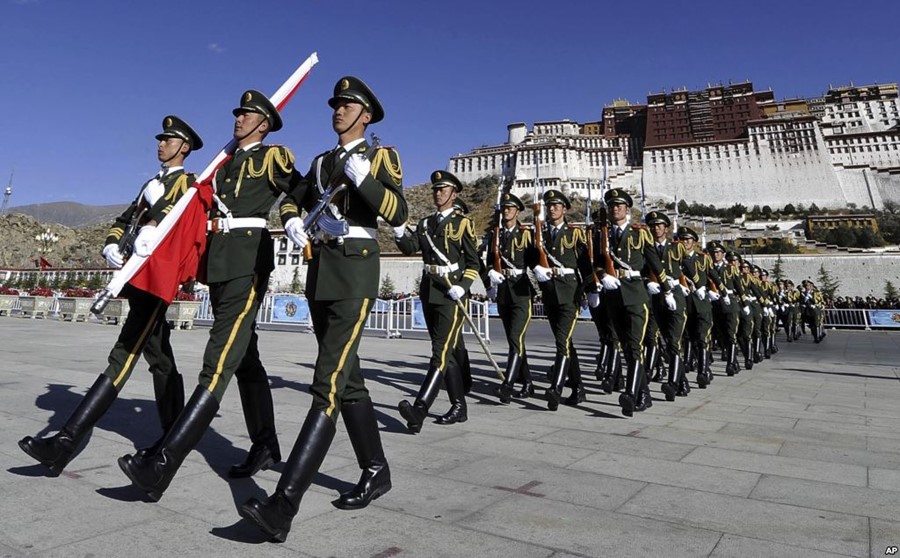
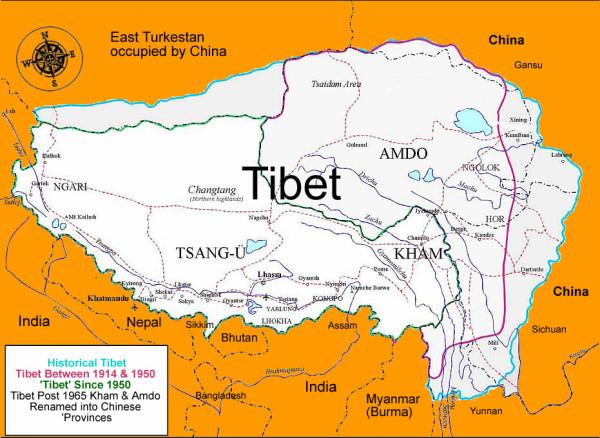
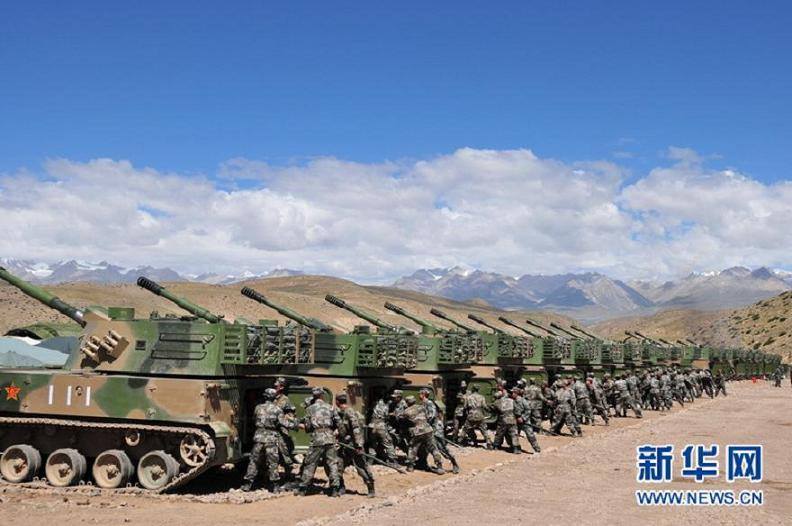



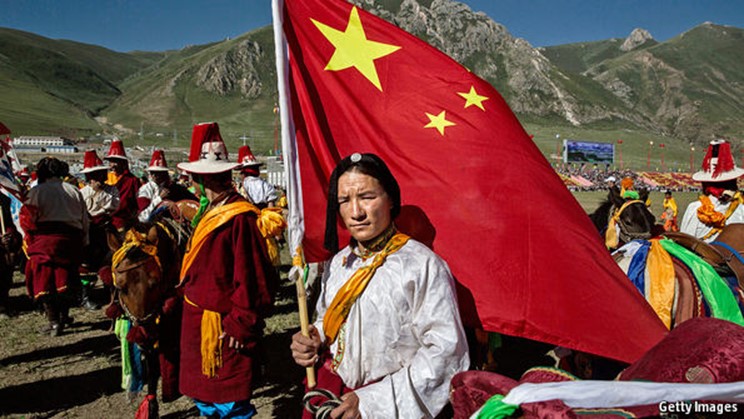




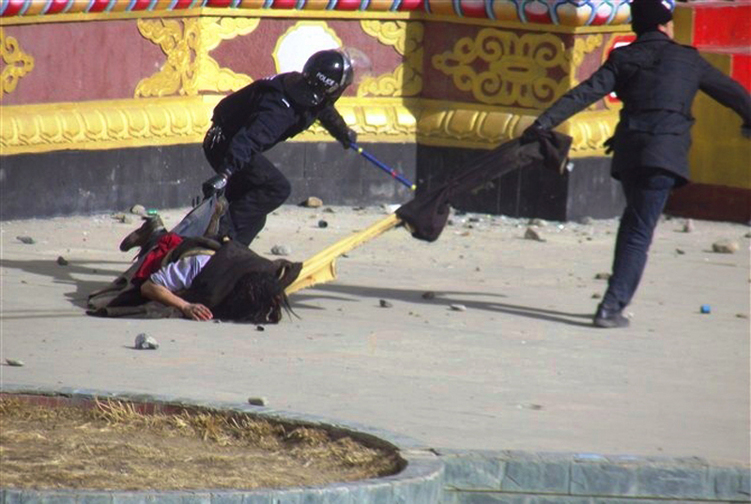
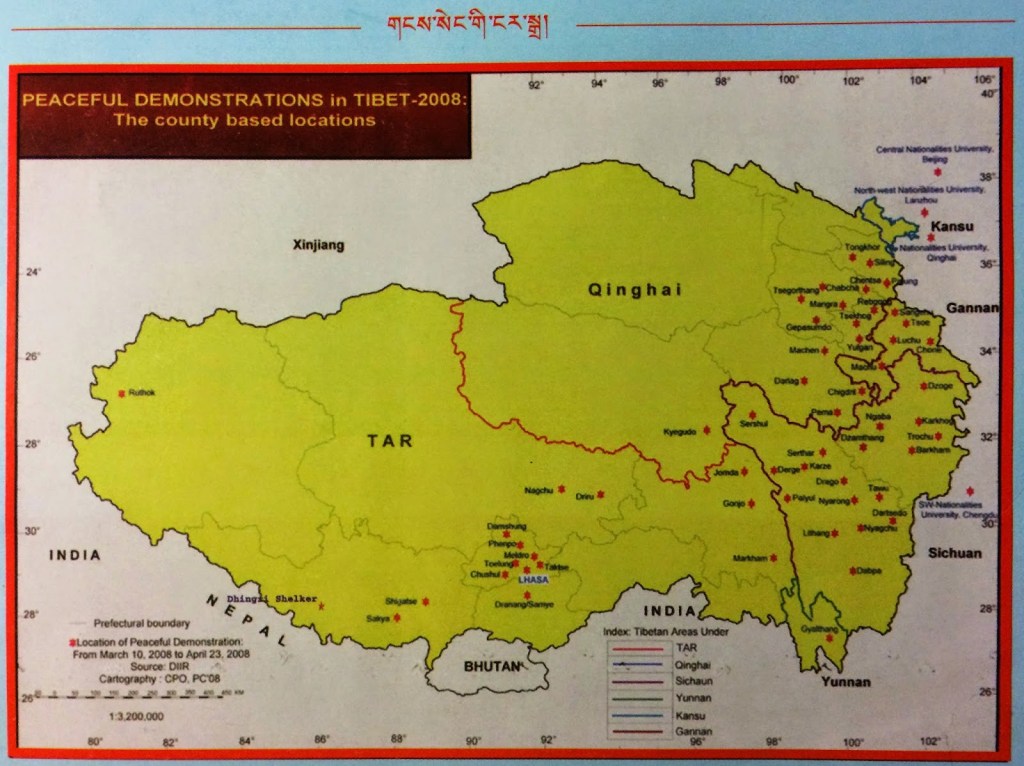
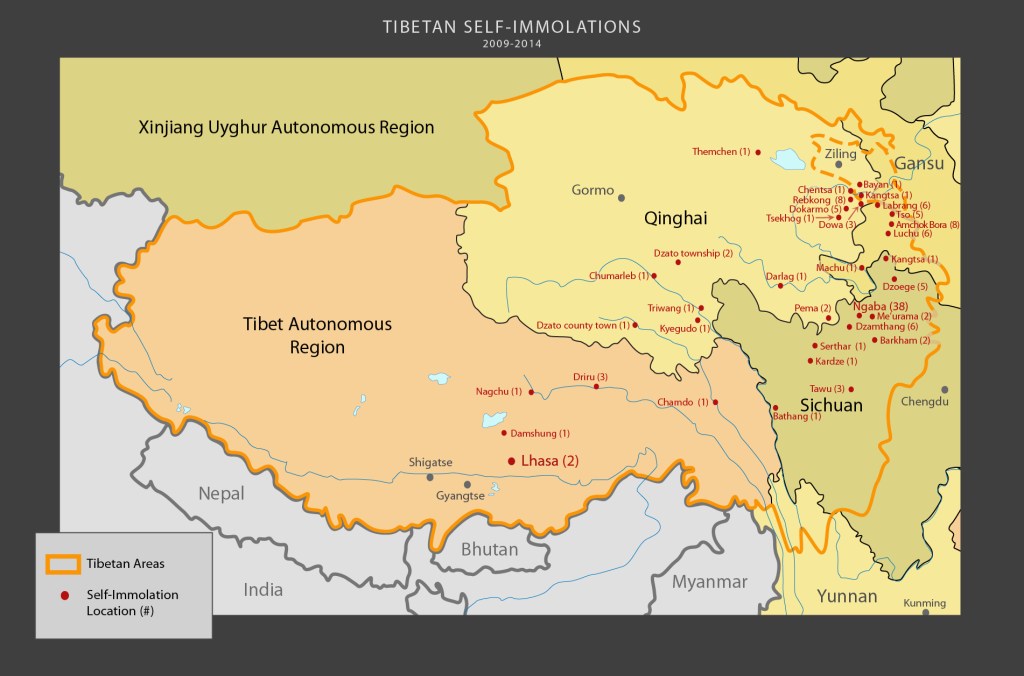


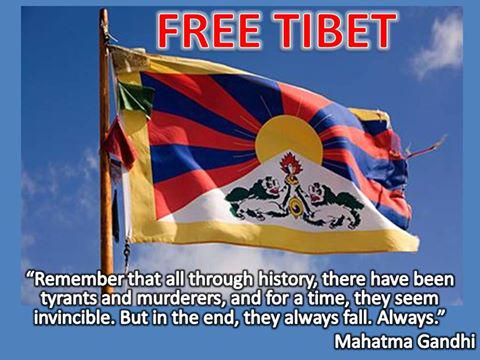
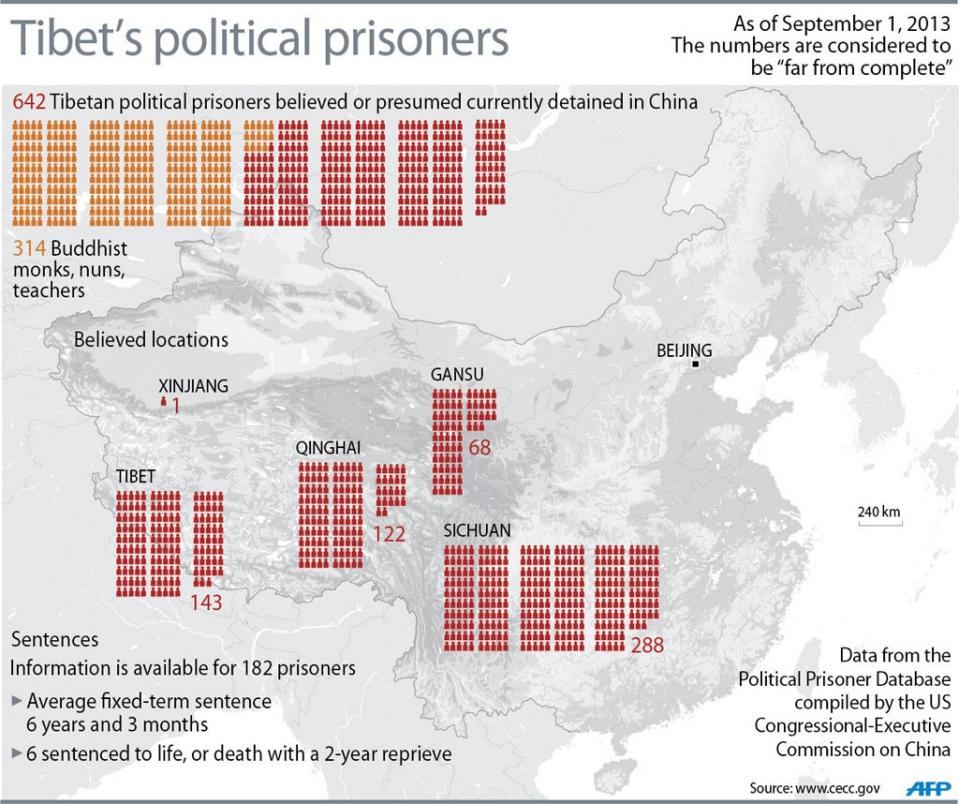

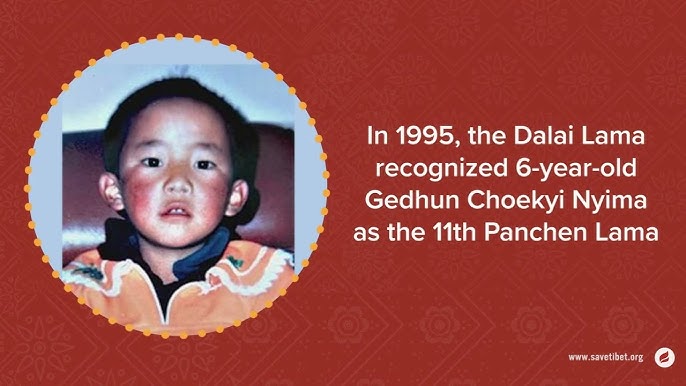
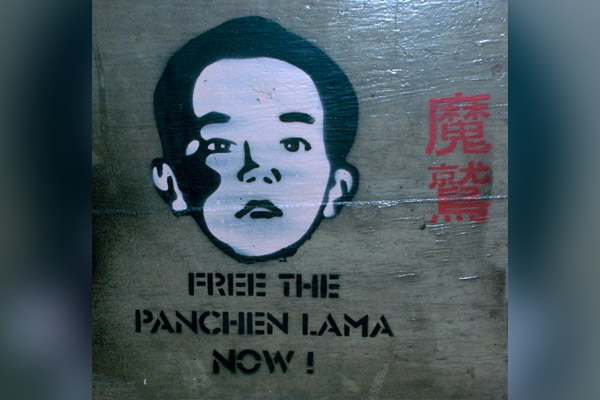


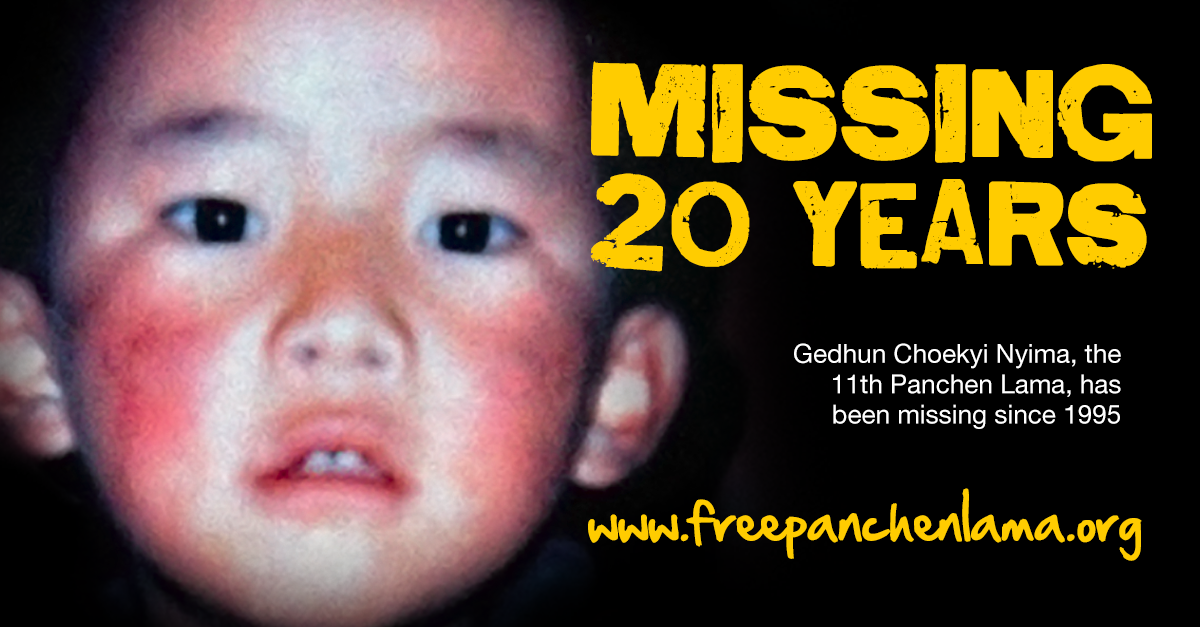


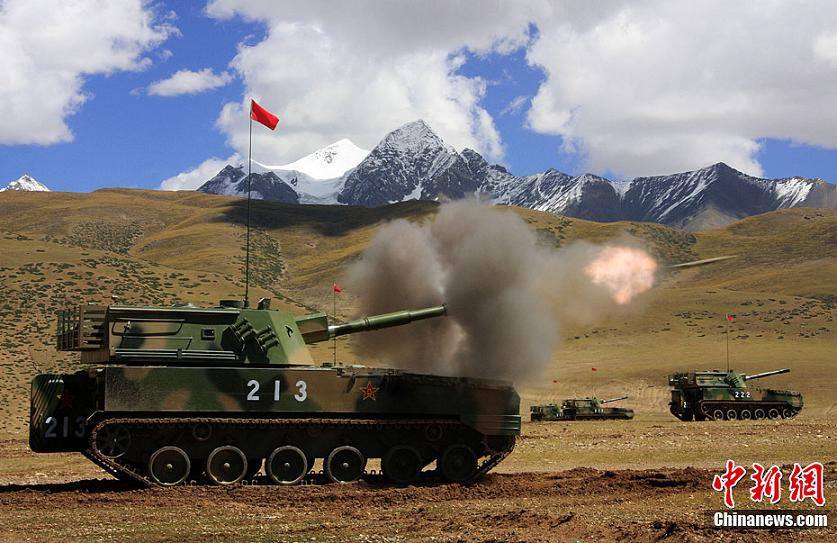


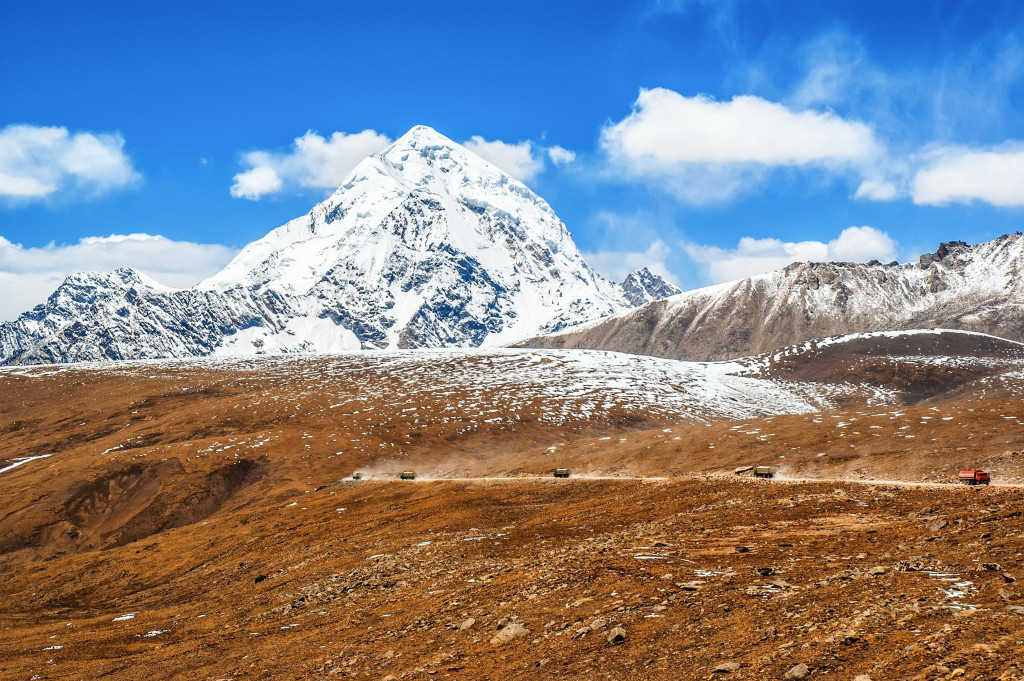
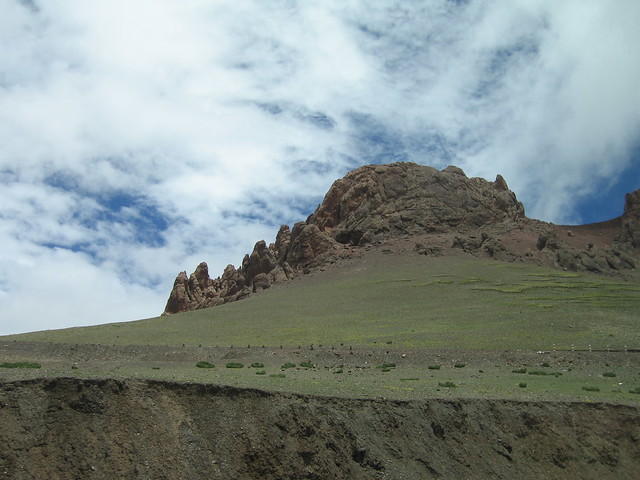


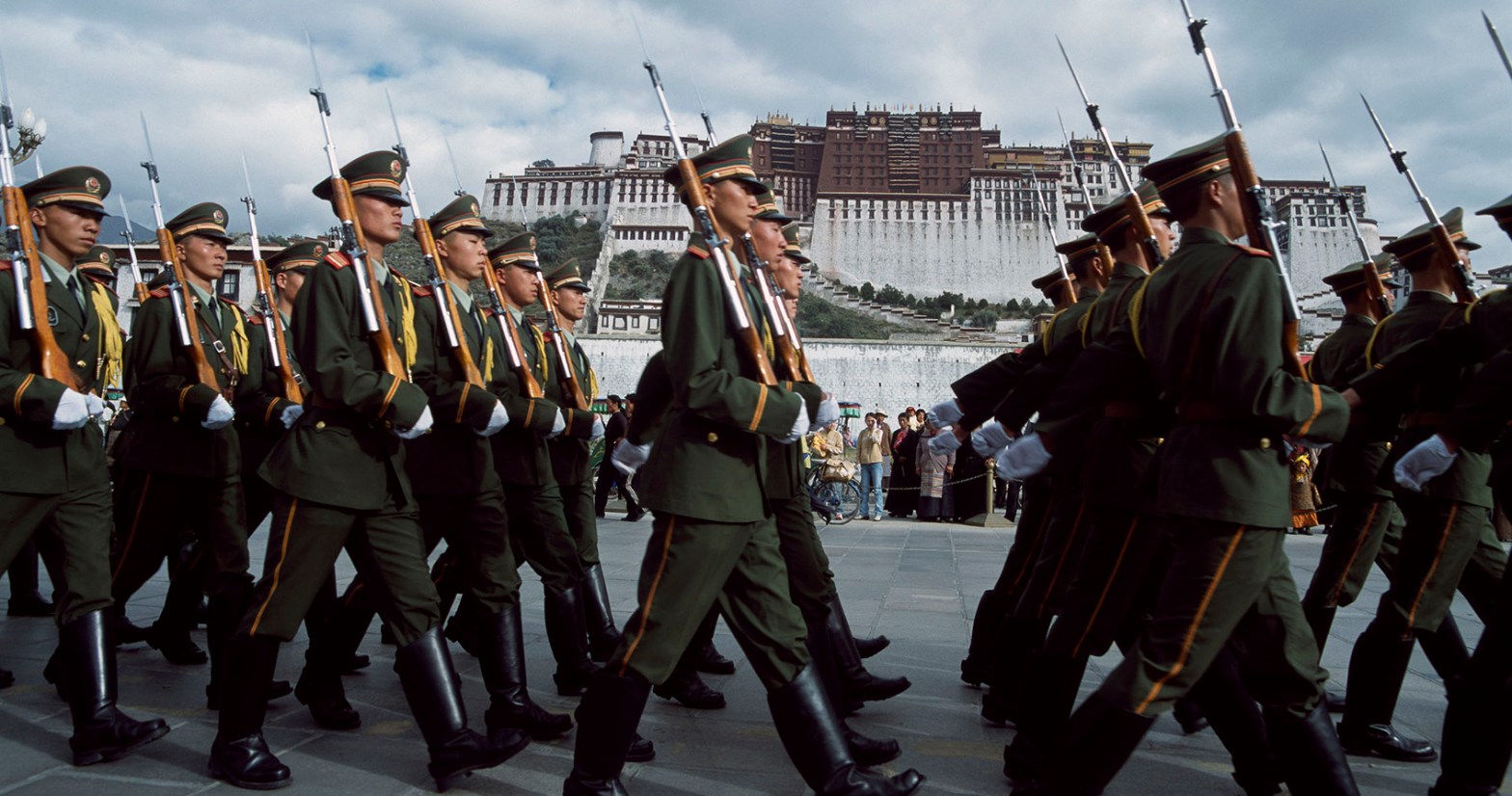



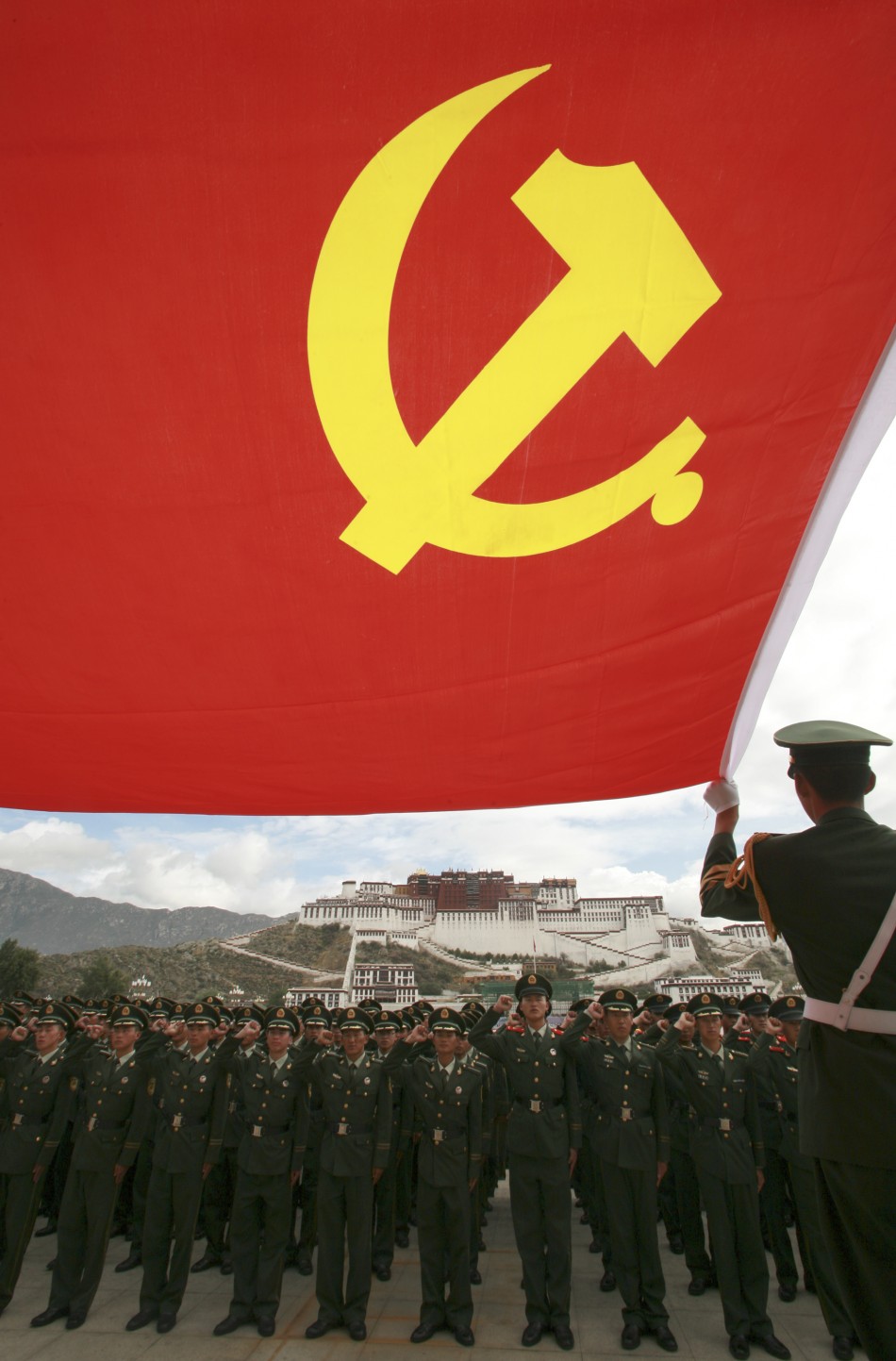
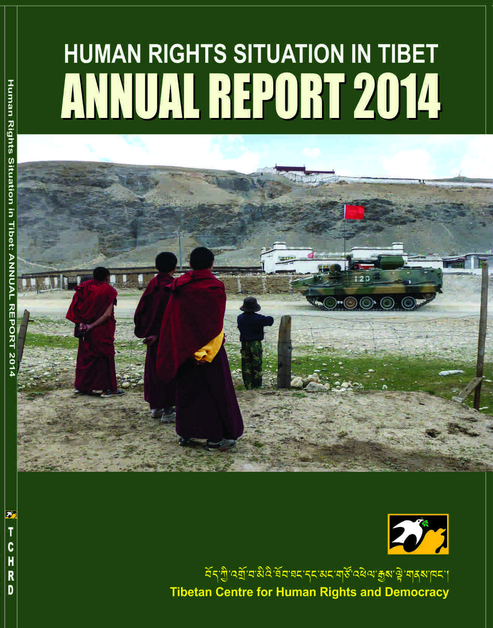

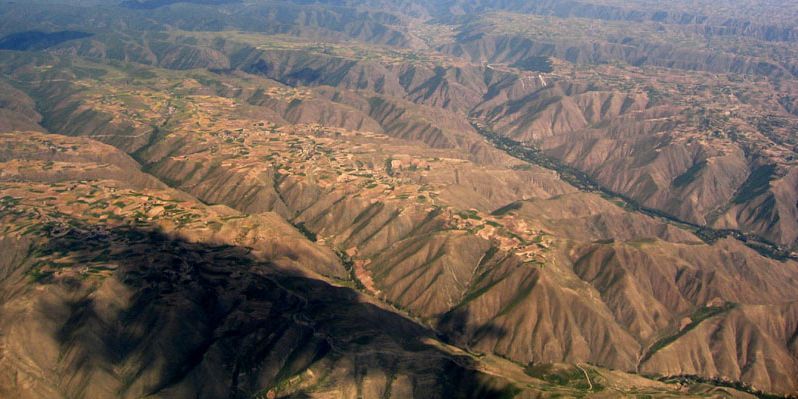
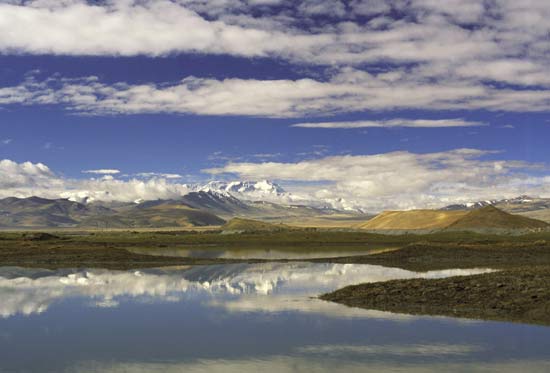


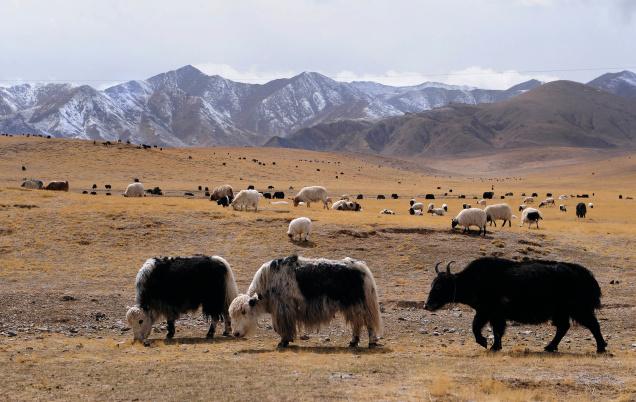
 Whole Dude - Whole Concept