THE COLD WAR IN ASIA. THE SPREAD OF COMMUNISM TO TIBET

THE COLD WAR IN ASIA. THE SPREAD OF COMMUNISM TO TIBET

The Cold War in Asia. The Spread of Communism to Tibet.

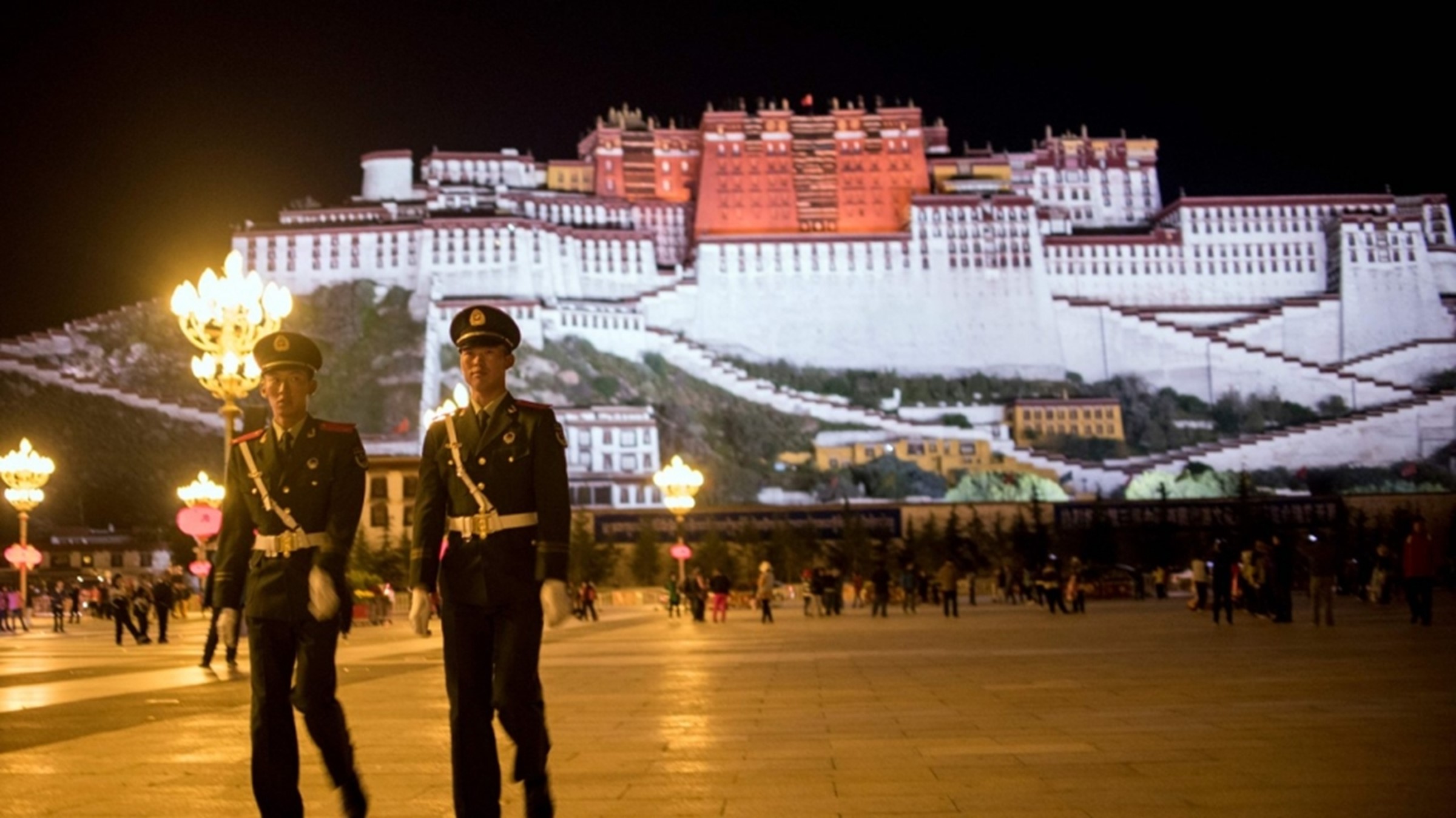
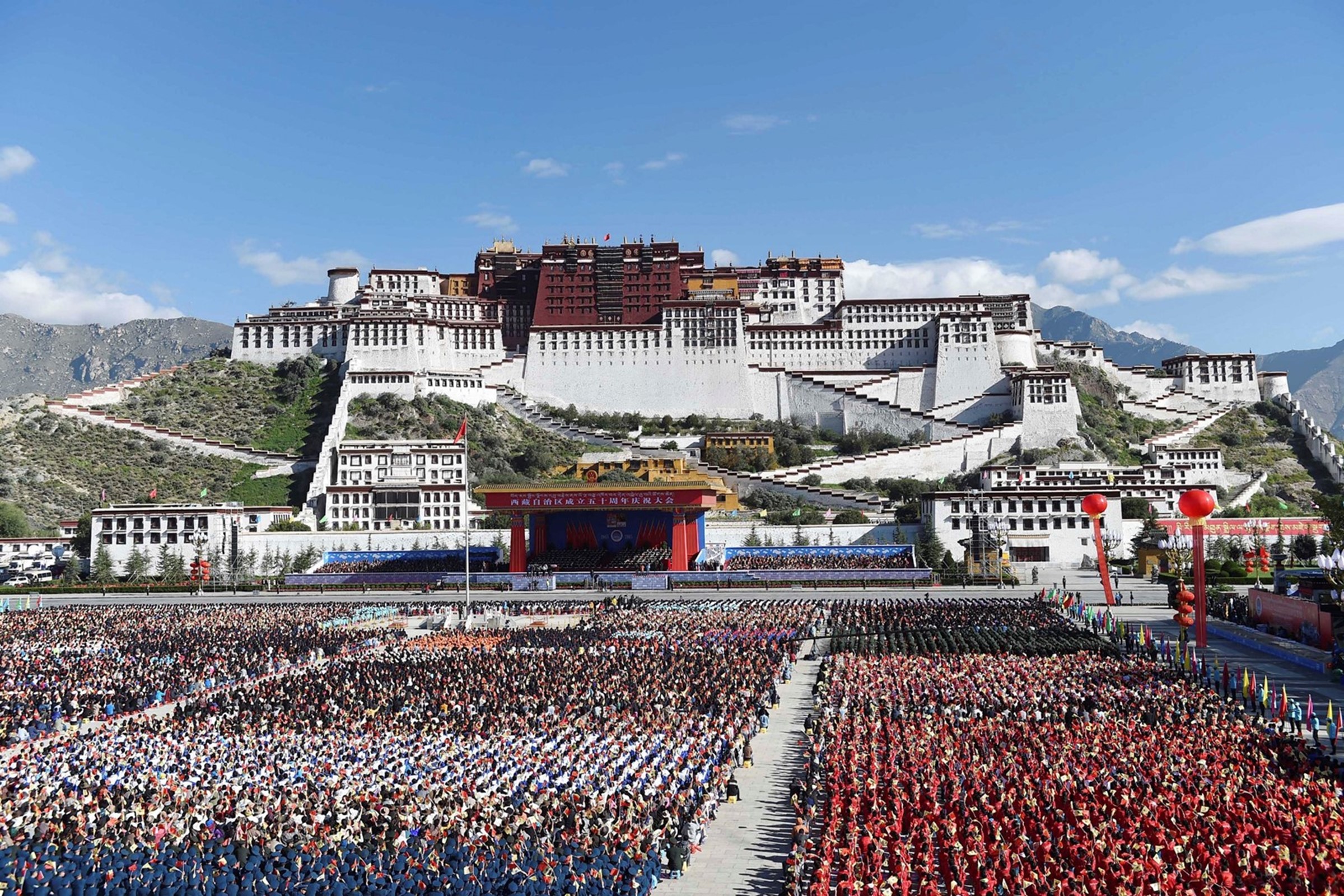
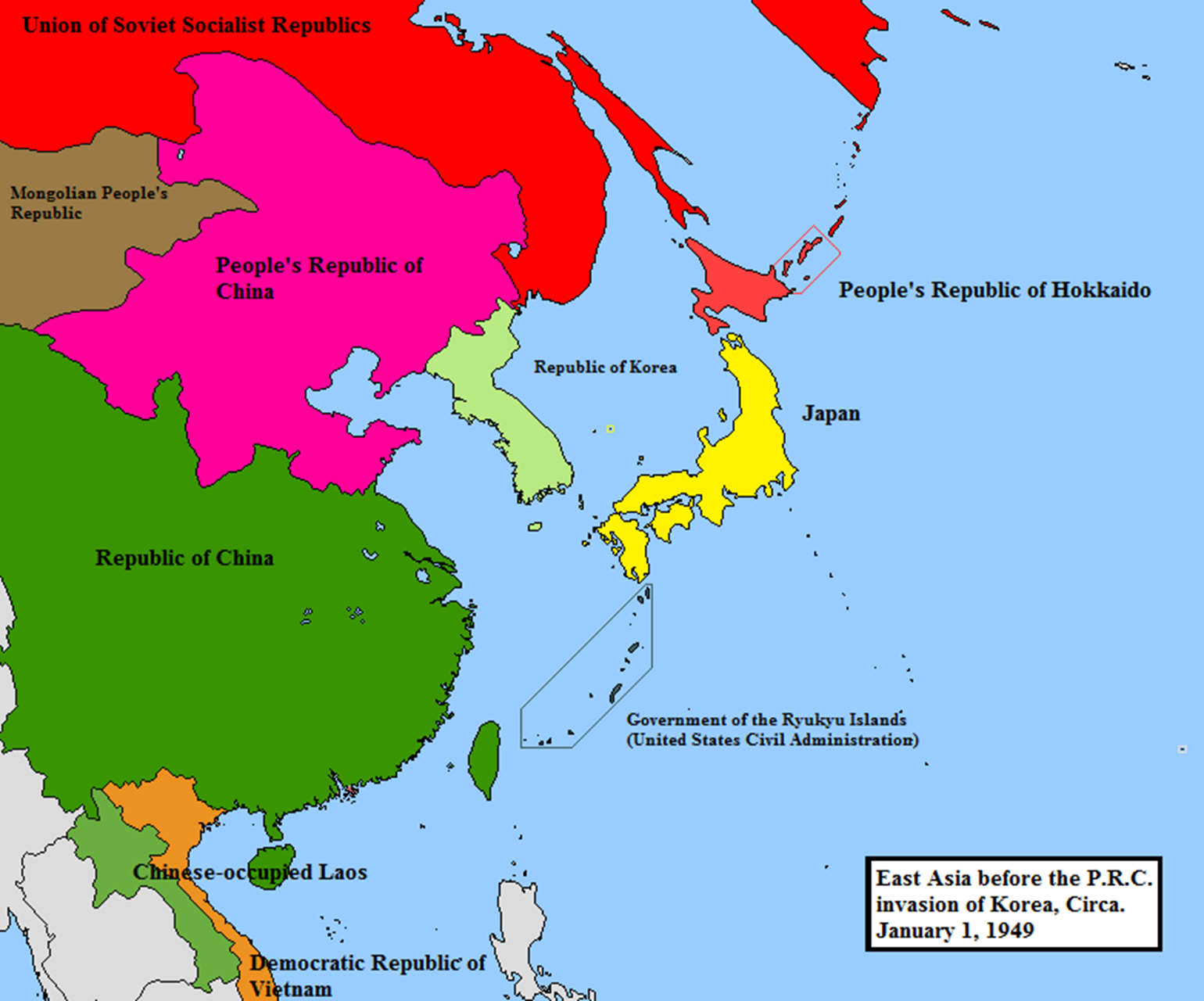
The Cold War in Asia began in 1949 with the spread of Communism to mainland China. The spread of Communism has not stopped. For Tibetans, there is no hope for “Meaningful Autonomy” if The Communist Party of China rules over their daily lives.

Rudranarasimham Rebbapragada

SPECIAL FRONTIER FORCE

China cracks down on Tibet CPC officials over links with Dalai Lama

Clipped from: https://www.tribuneindia.com/news/world/china-cracks-down-on-tibet-cpc-officials-over-links-with-dalai-lama/723050.html

The Cold War in Asia. The Spread of Communism to Tibet.

Beijing, February 2

China’s ruling Communist Party is cracking down on its officials who are taking part in religious activities violating party’s ideology of adhering to atheism and secretly maintaining contacts with Tibetan spiritual leader the Dalai Lama, who has been branded as “separatist” by Beijing.

A video produced by the Tibetan provincial government has revealed cases in the region where local Communist Party of China (CPC) members violated the CPC regulations on religion, anti-separatism and anti-corruption, state-run Global Times reported on Saturday.

So far, three officials have been expelled from the party and 10 others received a warning, the report said.

The Tibetan authority attaches great importance to the party discipline consistent with a nationwide campaign to strengthen the party management. It regulated 46 violations by local CPC members, including religious beliefs, according to the video produced by the publicity department of the regional commission for discipline inspection of Tibet and Tibet television.

The video, part of a four-episode series featuring the region’s efforts on anti-corruption and regulating the party members, was aired from January 28 to 31 on Tibet television, the report said.

Buddhism is a widely popular religion in Tibet, which is governed by the CPC ever since China took control of it in 1950. Despite his exile in India since 1959, the Dalai Lama remains the most revered religious figure in the Himalayan region.

The CPC remains an atheist organization. Thus, CPC members are banned from religious beliefs, because they can only believe in Marxism and believing in other religions means betrayal of their chosen belief and it will shake their belief in Marxism and separate them from the party, Xiong Kunxin, an ethnic studies professor at Tibet University in Lhasa, told the Global Times. — PTI

The Cold War in Asia. The Spread of Communism to Tibet.


THE RECIPROCAL ACCESS TO TIBET ACT IS NOT FOR BOOSTING TOURISM

THE RECIPROCAL ACCESS TO TIBET ACT IS NOT FOR BOOSTING TOURISM

The Reciprocal Access to Tibet Act is not for boosting Tourism.

The Reciprocal Access to Tibet Act is not for promoting Tibetan Tourism. The ‘Access’ is demanded to monitor Human Rights violations in the Occupied Tibetan territory.

Rudranarasimham Rebbapragada

SPECIAL FRONTIER FORCE

The Reciprocal Access to Tibet Act is not for boosting Tourism.

China pledges easier foreign tourist access to Tibet amid U.S. pressure 

The Reciprocal Access to Tibet Act is not for boosting Tourism.

BEIJING (Reuters) – The Chinese government in Tibet said it will boost numbers and cut waiting times for foreign tourists visiting the highly restricted region, amid renewed pressure from the United States for greater access for U.S. officials and journalists.

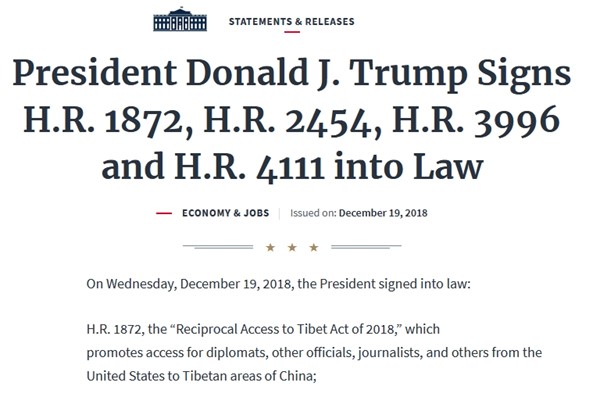
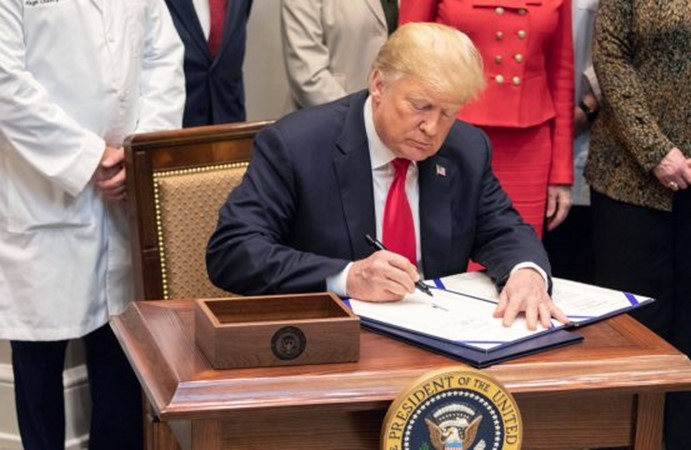
U.S. President Donald Trump signed into law the Reciprocal Access to Tibet Act in December, which seeks to press China to open the region by denying U.S. entry for officials deemed responsible for restricting access to Tibet.

Beijing denounced the law at the time as interference in China’s internal affairs, risking “serious harm” to ties with Washington.

China and the United States are engaged in talks to try to hammer out a deal to end a festering trade dispute that has threatened to sour the relationship across the board, including on issues such as security, influence and human rights.

The Tibetan government will shorten the time required for foreign tourists to gain access to the region by half and boost numbers by fifty percent, Qizhala, chairman of the regional government, said in an annual work report published by the official Tibet Daily newspaper on Friday.

Non-Chinese visitors must apply for a special permit to travel to remote, mountainous Tibet, which is usually granted for tourists provided they travel with approved tour companies but rarely for journalists and diplomats.

Beijing has ruled Tibet with an iron fist since Chinese Communist Party troops marched into the region in 1950 in what it terms a “peaceful liberation”.

Qizhala also pledged that the government in Tibet would “take a clear-cut stance in the fight against the Dalai clique”, a reference to exiled spiritual leader the Dalai Lama.

“We must improve the monastery management and service mechanisms to defend the bottom line of Tibetan Buddhism not being manipulated by foreign forces,” he said, and management of religious activities must prevent another “upsurge” of religion.

Rights groups and overseas activists say ethnic Tibetans face widespread restrictions under Chinese rule and the U.N. High Commissioner for Human Rights said in June conditions were “fast deteriorating”.

This year marks the 60th anniversary of a Tibetan uprising against Chinese rule in 1959. Supporters of Tibetan independence and of the Dalai Lama have staged protests in the past to mark the uprising’s anniversary, angering China.

China views the Dalai Lama, Tibet’s Buddhist spiritual leader who fled into exile in India after the failed uprising, as a dangerous separatist.

The Nobel Peace laureate denies espousing violence and says he only wants genuine autonomy for Tibet.

Reporting by Christian Shepherd; Editing by Paul Tait

The Reciprocal Access to Tibet Act is not for boosting Tourism.

ASIA REASSURANCE INITIATIVE ACT SYMBOLIZES THE COLD WAR IN ASIA


ASIA REASSURANCE INITIATIVE ACT SYMBOLIZES THE COLD WAR IN ASIA


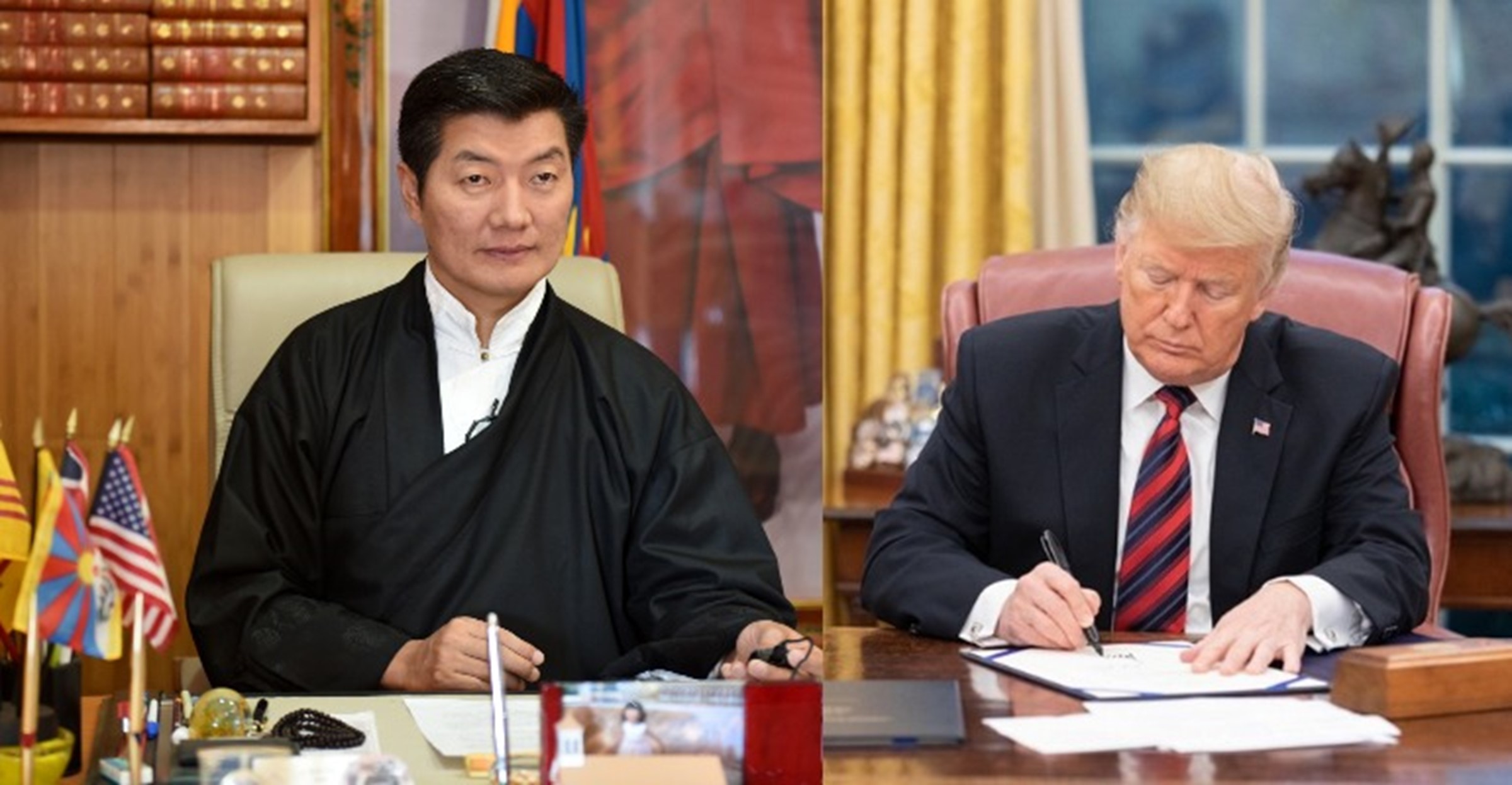
In my analysis, the Asia Reassurance Initiative Act symbolizes the reality of ‘The Cold War in Asia’. President of Tibet and the President of the United States have acknowledged the threat posed by the Enemy’s presence in Tibet.


Rudranarasimham Rebbapragada

SPECIAL FRONTIER FORCE


CTA President welcomes the enactment of Asia Reassurance Initiative Act (ARIA) | Central Tibetan Administration


Clipped from: https://tibet.net/2019/01/cta-president-welcomes-the-enactment-of-asia-reassurance-initiative-act-aria/


CTA President hails the Asia Reassurance Initiative Act.

Dharamshala: President Dr Lobsang Sangay of Central Tibetan Administration hailed the enactment of the Asia Reassurance Initiative Act (ARIA) on Tuesday, saying that the passage is a much-welcomed move. US President Donald Trump signed the ARIA Act into law on 31 December 2018, having passed the Senate and the House on 4 and 12 December respectively. 

President Dr Sangay thanked the US Congress for passing the Asia Reassurance Initiative Act, which references Tibet in terms of supporting “activities preserving cultural traditions and promoting sustainable development, education, and environmental conservation in Tibetan communities in the Tibet Autonomous Region and in other Tibetan communities in China, India, and Nepal.”

CTA President, in recent years, has made multiple visits to the United States and held high-level meetings in the Senate as well as the House of Representatives. During those meetings, he has relentlessly tabled the issue of prioritizing Tibet at the core of US policy. The Office of Tibet in Washington DC has also made tremendous efforts towards this.

“ARIA ensures that the US will continue to support Tibet by authorizing funds for Tibet-related programs and by highlighting Chinese human rights abuses against the Tibetan people,” said Senators Cory Gardner (R-Colo.) and Ed Markey (D-Mass.), the lead sponsors of the Act.

Matteo Mecacci, president of the International Campaign for Tibet said: “This Act rightly places the issue of Tibet within the parameters of US security interests. Tibet occupies an Asian fault zone of clashing cultures and big-power politics.”

The Act, known as ARIA, aims at enhancing American leadership in the Indo-Pacific region and strengthening cooperation with regional partners, including India and Taiwan. It says, “The United States has a fundamental interest in defending human rights and promoting the rule of law in the Indo-Pacific region.”

Following is the reference to Tibet in the Act.
SEC. 409. AUTHORIZATION OF APPROPRIATIONS.

(a) Promotion of Democracy in the Indo-Pacific Region.–
(1) In general.–There is authorized to be appropriated $210,000,000, for each of the fiscal years 2019 through 2023, to promote democracy, strengthen civil society, human rights, rule of law, transparency, and accountability in the Indo- Pacific region, including for universities, civil society, and multilateral institutions that are focusing on education awareness, training, and capacity building.

(2) Democracy in china. –Amounts appropriated pursuant to paragraph (1) shall be made available for United States Government efforts, led by the Assistant Secretary of State for Democracy, Human Rights, and Labor, to promote democracy, the rule of law, and human rights in the People’s Republic of China.

(3) Tibet. –Amounts appropriated pursuant to paragraph (1) shall be made available for nongovernmental organizations to support activities preserving cultural traditions and promoting sustainable development, education, and environmental conservation in Tibetan communities in the Tibet Autonomous Region and in other Tibetan communities in China, India, and Nepal.

The Act also recognizes India as a major Defense partner, the vital role of the strategic partnership between the United States and India in promoting peace and security in the Indo-Pacific region. Section 204 of the Act calls for strengthening and broadening of diplomatic, economic, and security ties between the two countries. 

The Indo-Pacific is a biogeographic region, comprising the Indian Ocean and the western and central Pacific Ocean, including the South China Sea. 


THE NEHRU LEGACY – THE COLD WAR IN ASIA

THE NEHRU LEGACY – THE COLD WAR IN ASIA

The Nehru Legacy. The Cold War in Asia.

Prime Minister Jawaharlal Nehru’s foreign policy during the Cold War Era is often misunderstood as nations were forced to use secret diplomatic negotiations in the conduct of foreign policy. In my analysis, the Indian Prime Minister took appropriate action not only to defend India’s security interests but also to help Tibet to the extent possible.

I hold the People’s Republic of China completely responsible and accountable for her acts of military aggression during 1950 and later in 1962. I find no reason to blame either Indian Prime Minister or Tibet for China’s misconduct.

I ask my readers to give attention to Indian support to Nationalist China during the concluding years of World War II. Apart from delivering weapons and military supplies to Nationalist China, the US with Indian assistance supplied weapons to Tibet prior to the Communist takeover of the mainland China. This military intervention in Tibet provided an excuse to Communist China to invade Tibet in 1950. I do not find fault with either India or Tibet. Their combined military power is not adequate to maintain the Balance of Power in South Asia. There is nothing wrong if weaker nations use diplomatic negotiations to resolve problems with stronger and powerful nations. It is indeed a practical and rational approach and I would not ridicule such attempts as an appeasement policy.

I uphold the valid concerns shared by India’s former Deputy Prime Minister, but I would not use his concerns to find fault with Prime Minister Nehru’s Foreign Policy Legacy. India has not yet changed the course of the foreign policy direction set up by Nehru.

Rudranarasimham Rebbapragada

SPECIAL FRONTIER FORCE

https://wholedude.com/2014/11/24/special-frontier-force-the-nehru-legacy/

The Nehru Legacy. The Cold War in Asia.

Opinion, Op Ed

Claude Arpi

The writer is based in South India for the past 40 years. He writes on India, China, Tibet, and Indo-French relations.

Patel-Nehru rift over Tibet & China was deep

Published Nov 8, 2018, 7:46 am IST

Updated Nov 8, 2018, 7:46 am IST

The most serious cause of discord was the invasion of Tibet by the Chinese “Liberation Army” in October 1950.

The Nehru Legacy. The Cold War in Asia.

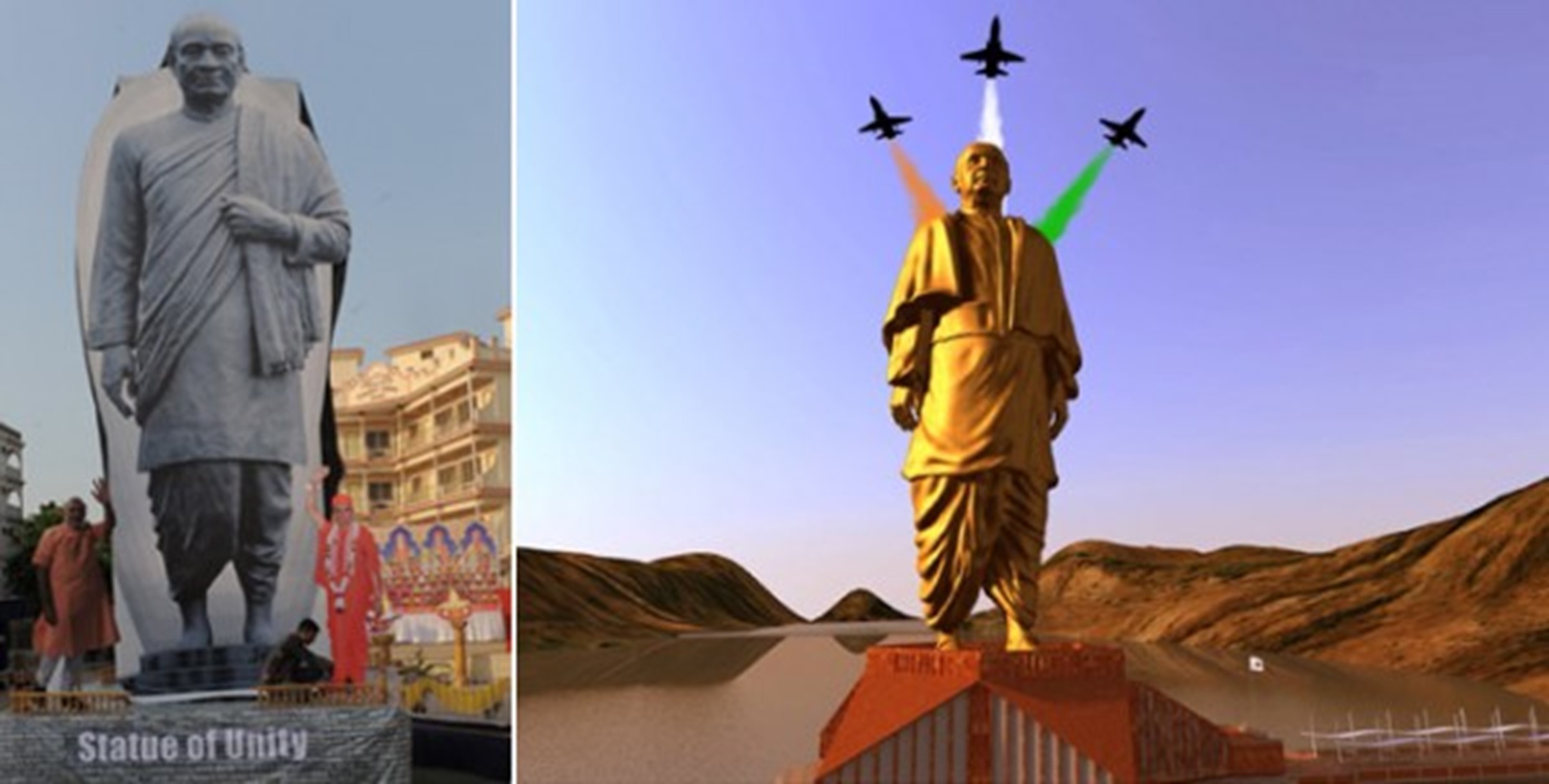
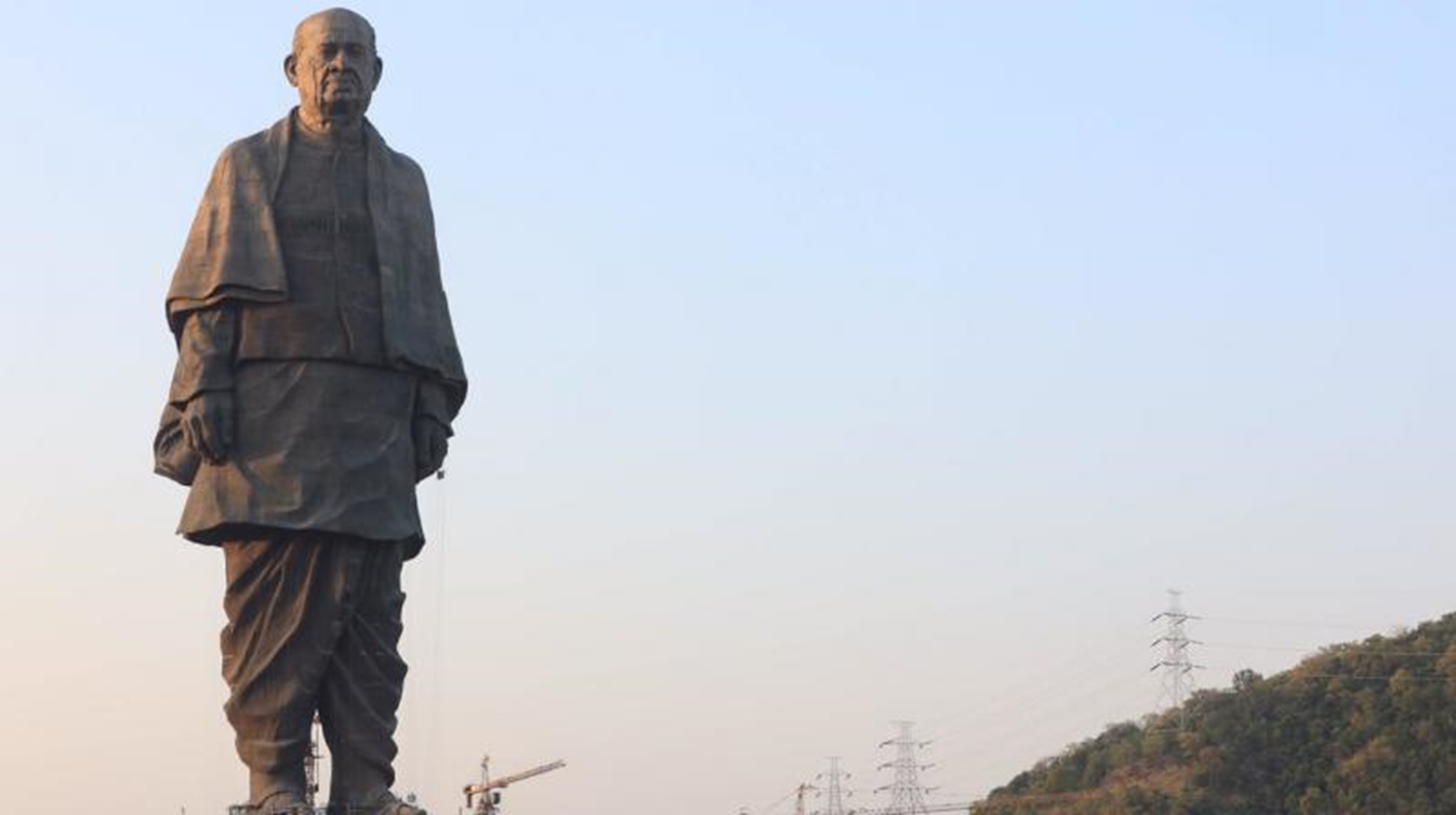
On October 31, the world’s tallest statue, the Statue of Unity dedicated to Sardar Vallabhbhai Patel, was unveiled by Prime Minister Narendra Modi. (Photo: @narendramodi/Twitter)

On October 31, the world’s tallest statue, the Statue of Unity dedicated to Sardar Vallabhbhai Patel, was unveiled by Prime Minister Narendra Modi. The work on the 182-meter tall statue has been completed after round the clock work by 3,400 laborers and 250 engineers at Sadhu Bet island on Narmada river in Gujarat. Sadhu Bet, located some 3.5 km away from the Narmada Dam, is linked by a 250-meter-long long bridge.

Unfortunately, for several reasons, scarce scholarly research has been done on the internal history of the Congress; the main cause is probably that a section of the party would prefer to keep history under wraps. Take the acute differences of opinion between Sardar Patel, the deputy prime minister, and “Panditji”, as Nehru was then called by Congressmen. In the last weeks of Patel’s life (he passed away on December 15, 1950), there was a deep split between the two leaders, leading to unilateral decisions for the PM, for which India had to pay the heaviest price.

The most serious cause of discord was the invasion of Tibet by the Chinese “Liberation Army” in October 1950. In the course of recent researches in Indian archives, I discovered several new facts. Not only did several senior Congress leaders, led by Patel, violently oppose Nehru’s suicidal policy, but many senior bureaucrats too did not agree with the Prime Minister’s decisions and objected to his policy of appeasement with China, which led India to lose a peaceful border.
On November 11, 1950, the deputy prime minister of India addressed a meeting organized by the Central Aryan Association to commemorate the 67th death anniversary of Swami Dayanand Sarasvati. It was to be his last speech. What did he say? The Sardar spoke of the potential dangers arising from what was happening in Tibet and Nepal, and he exhorted his countrymen: “It was incumbent on the people to rise above party squabbles and unitedly defend their newly won freedom.” He cited the example of Gandhi and Swami Dayanand.

Sardar Patel then criticized the Chinese intervention in Tibet; he asserted that to use the “sword” against the traditionally peace-loving Tibetan people was unjustified: “No other country in the world was as peace-loving as Tibet. India did not believe, therefore, that the Chinese government would actually use force in settling the Tibetan question.” He observed that the Chinese government did not listen to India’s advice to settle the Tibetan issue peacefully: “They marched their armies into Tibet and explained this action by talking of foreign interests intriguing in Tibet against China.” The deputy prime minister added that this fear was unfounded; no outsider was interested in Tibet. The Sardar continued by saying that “nobody could say what the outcome of Chinese action would be. But the use of force ultimately created more fear and tension. It was possible that when a country got drunk with its own military strength and power, it did not think calmly over all issues.” He strongly asserted that the use of arms was wrong: “In the present state of the world, such events might easily touch off a new world war, which would mean disaster for mankind.”

Did he know that it was his last message? “Do not let cowardice cripple you. Do not run away from danger. The three-year-old freedom of the country has to be fully protected. India today is surrounded by all sorts of dangers and it is for the people today to remember the teachings of the two great saints and face fearlessly all dangers.”

The deputy prime minister concluded: “In this kalyug, we shall return ahimsa for ahimsa. But if anybody resorted to force against us, we shall meet it with force.” He ended his speech citing Swami Dayananda: “People should also remember that Swamiji did not get a foreign education. He was the product of Indian culture. Although it was true that they in India had to borrow whatever was good and useful from other countries, it was right and proper that Indian culture was accorded its due place.” Who is ready to listen to this, even today?

Days earlier, Patel had written a “prophetic” letter to Nehru, detailing the implications for India of Tibet’s invasion. In fact, Patel used a draft done by Sir Girja Shankar Bajpai, the secretary-general of the ministry of external affairs and Commonwealth relations. However, Nehru decided to ignore Patel’s letter.
Witnessing the nefarious influence of K.M. Panikkar, the Indian ambassador to China, who ceaselessly defended China’s interests, Bajpai, the most seasoned Indian diplomat, had lost his cool. On October 31, in an internal note, he detailed the sequence of events which followed Tibet’s invasion and the role of Panikkar, whose attitude was compared to Sir Neville Chamberlain’s towards Hitler.

Bajpai’s anger demonstrates the frustration of many senior officers; the account starts on July 15, when the governor of Assam informed Delhi that, according to the information received by the local intelligence bureau, Chinese troops, “in unknown strength, had been moving towards Tibet from three directions.” Not only was Panikkar unable to get any confirmation, but he virtually justified Beijing’s military action by writing: “In view of frustration in regard to Formosa, the Tibetan move was not unlikely.” During the next three months, the Indian ambassador would systematically take the Chinese side.

After receiving Bajpai’s note, Patel wrote back: “I need hardly say that I have read it with a great deal of interest and profit to myself and it has resulted in a much better understanding of the points at issue and general, though serious, nature of the problem. The Chinese advance into Tibet upsets all our security calculations. … I entirely agree with you that a reconsideration of our military position and a redisposition of our forces are inescapable.”

Some more details of the seriousness of the situation filter through Inside Story of Sardar Patel: The Diary of Maniben Patel, the daughter of the Sardar. In an entry on November 2, 1950, Maniben wrote: “Rajaji and Jawaharlal had a heated altercation about the Tibet policy. Rajaji does not at all appreciate this policy. Rajaji very unhappy — Bapu (Patel) did not speak at all.”

Later in the afternoon, “Munshi complained about Tibet policy. The question concerns the whole nation — said he had written a personal letter to Panditji on Tibet.”

Later, Patel told K.M. Munshi: “Rajaji, you (Munshi), I (Patel), Baldev Singh, (C.D.) Deshmukh, Jagjivan Ram, and even Sri Prakash are on one side, while Gopalaswamy, Rafi, Maulana (Azad) are on his side.” There was a vertical split in the Cabinet, and it was not only about Tibet. The situation would deteriorate further during the following weeks.

On December 12, Patel was divested on his portfolios. Nehru wrote: “In view of Sardar Vallabhbhai Patel’s ill-health it is absolutely necessary that he should have complete rest and freedom from worry, so as to be able to recuperate as rapidly as possible. …no work should be sent to him and no references made to him in regard to the work of these ministries.”

Gopalaswami Ayyangar, from the “other side”, was allotted the ministry of states and Nehru kept the ministry of home. The Sardar was only informed after the changes were made. He was a dejected man. Three days later he passed away.

Tags: Sardar Vallabhbhai Patel, Jawaharlal Nehru

Copyright © 2015 – 2018 Deccan Chronicle.

The Nehru Legacy. The Cold War in Asia.


FBI Director’s threat assessment demands US-Tibet Direct Dialogue

FBI Director’s threat assessment demands US–Tibet Direct Dialogue

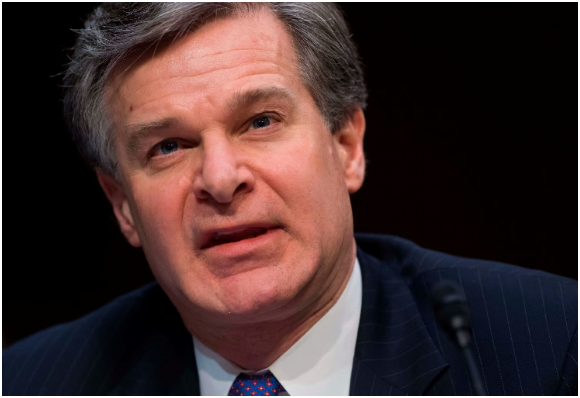
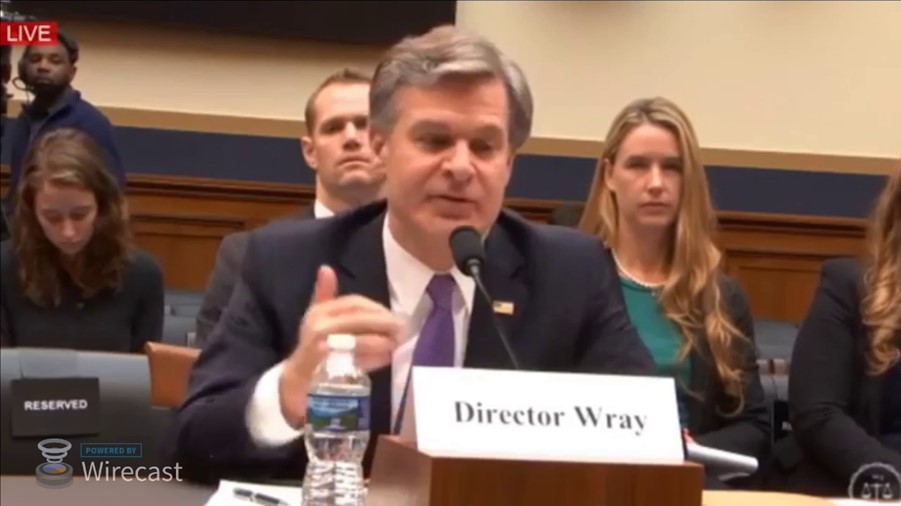
In FBI Director Christopher Wray’s evaluation, China is ‘most significant’ threat to US. In my analysis, the threat posed by Communist China requires an immediate response. On behalf of Living Tibetan Spirits, I recommend US-Tibet Direct Dialogue to confront threats arising from spread of Communism to mainland China. It must be said, Tibetans understand China’s deception better than any other people in our world.

Rudranarasimham Rebbapragada

SPECIAL FRONTIER FORCE

FBI Director Chris Wray says China is ‘most significant’ threat to US – Business Insider

Clipped from: http://www.businessinsider.com/fbi-director-says-china-is-the-broadest-most-significant-threat-to-the-us-2018-7

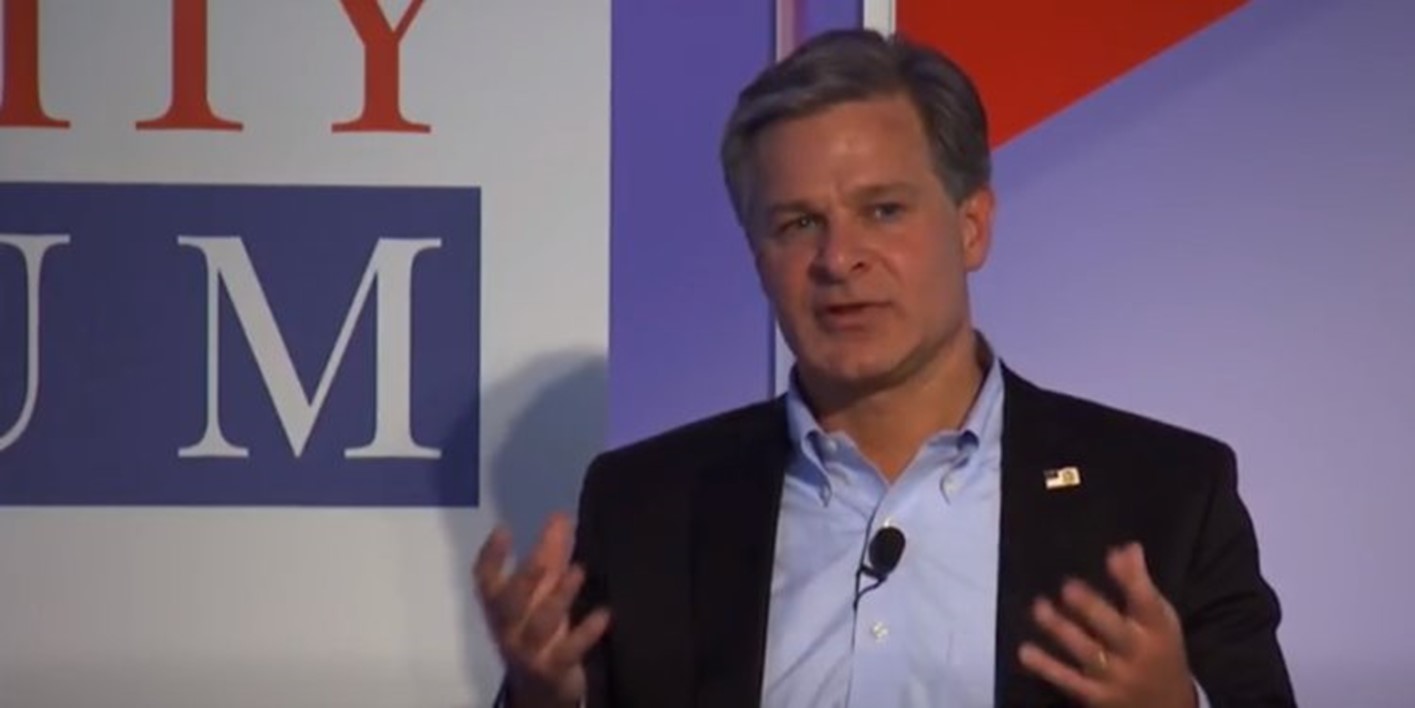
FBI Director Christopher Wray at the Aspen Security Forum. Screenshot/Aspen Security Forum

Amid rampant discussion about Russian election interference and espionage, FBI Director Christopher Wray has deemed China the largest, most concerning threat to the US.

Speaking at the Aspen Security Forum on Wednesday, Wray was asked whether he saw China as an adversary and, if so, to what level.

“I think China, from a counterintelligence perspective, in many ways represents the broadest, most challenging, most significant threat we face as a country,” Wray answered.

“And I say that because for them it is a whole of state effort. It is economic espionage as well as traditional espionage; it is nontraditional collectors as well as traditional intelligence operatives; it’s human sources as well as cyber means.

“We have economic-espionage investigations in every state, all 50 states, that trace back to China. It covers everything from corn seeds in Iowa to wind turbines in Massachusetts and everything in between. So the volume of it, the pervasiveness of it, the significance of it, is something I think this country cannot underestimate.”

The comments follow a 2017 report by the US trade representative that accused China of “trade secret theft, rampant online piracy and counterfeiting, and high levels of physical pirated and counterfeit exports.” The report found intellectual-property theft by China was costing the US up to $600 billion annually.

It seems a far more strategic and wide-ranging effort than Russia’s ongoing interference efforts, which dominated headlines in the US this week amid President Donald Trump’s widely panned summit with President Vladimir Putin.

Wray said Russia needed to be dealt with “aggressively,” but he seemed far more concerned with what he called China’s efforts to position itself as “the sole dominant superpower, the sole dominant economic power.”

“They’re trying to replace the US in that role, and so theirs is a long-term game that’s focused on just about every industry, every quarter of society in many ways,” Wray said. “It involves academia, it involves research and development, it involves everything from agriculture to high-tech. And so theirs is a more pervasive, broader approach but in many ways more of a long-term threat to the country.”

This isn’t the first time China’s patience and willingness to play the long game have been described as reasons its interference campaigns are more successful than those of Russia.

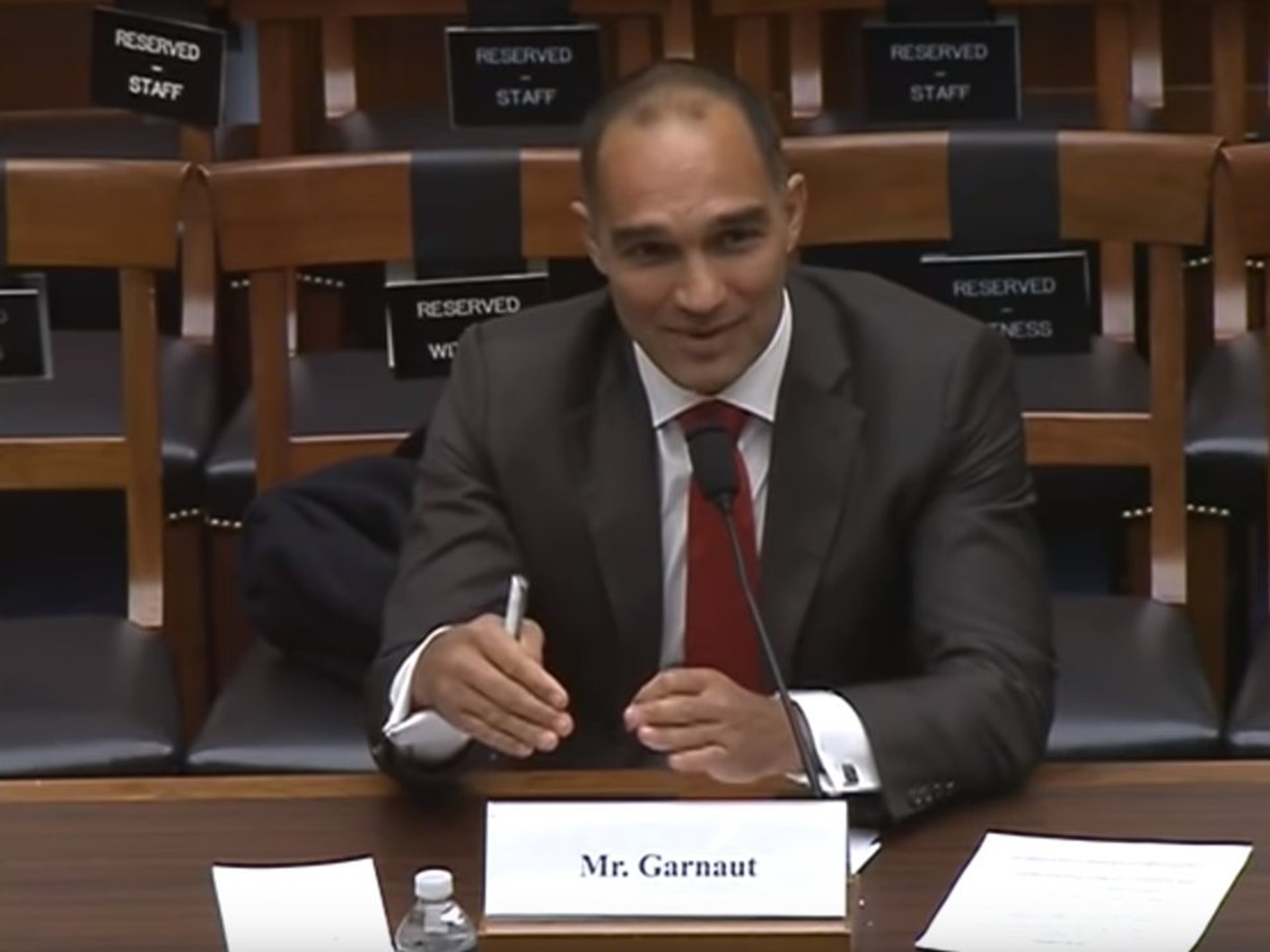
John Garnaut. Screenshot

Earlier this year, John Garnaut, who led a secret government inquiry into China’s political influence in Australia, told the US House Armed Services Committee that Russia preferred “focused, sharp strikes,” while Beijing’s actions were more incremental.

“Unlike Russia, which seems to be as much for a good time rather than a long time, the Chinese are strategic, patient, and they set down foundations of organizations and very consistent narratives over a long period of time,” Garnaut told the committee.

Garnaut’s report found China had attempted to influence politics at all levels in Australia. The Australian government has since introduced new foreign-interference laws— much to Beijing’s ire — and the issue is frequently discussed and debated in the public sphere.

It’s this widespread shift toward a consensus on China’s influence and interference attempts that Wray described as “one of the bright spots” since he became FBI director just over 10 months ago.

“It’s one of the few things I’ve seen that, in a country where it feels like some people can’t even agree on what day of the week it is, on this I think people are starting to come together,” Wray said.

“I see it in the interagency, I see it up on the Hill when I’m talking to the intelligence committees across the spectrum. I think people are starting to wake up and rub the cobwebs, or sleep, out of their eyes. And my hope is we’re in a moment where we can pivot and start to take this much more seriously.”


TIBET’S PROBLEMS RESULT OF SPREAD OF COMMUNISM TO MAINLAND CHINA


TIBET’S PROBLEMS RESULT OF SPREAD OF COMMUNISM TO MAINLAND CHINA

In my analysis, Tibet’s problems result of spread of Communism to mainland China in 1949. I view Tibet’s problems as mere symptoms of The Cold War in Asia. Most unfortunately, the US efforts to contain spread of Communism to mainland China failed. This setback does not mean that the world can ignore Tibet’s problems.


Rudranarasimham Rebbapragada

SPECIAL FRONTIER FORCE


TIBET’S PROBLEMS RESULT OF OLD CAUSES: DALAI LAMA


Clipped from: https://www.thestatesman.com/cities/tibets-problems-result-old-causes-dalai-lama-1502653227.html

Dalai Lama (PHOTO: AFP)

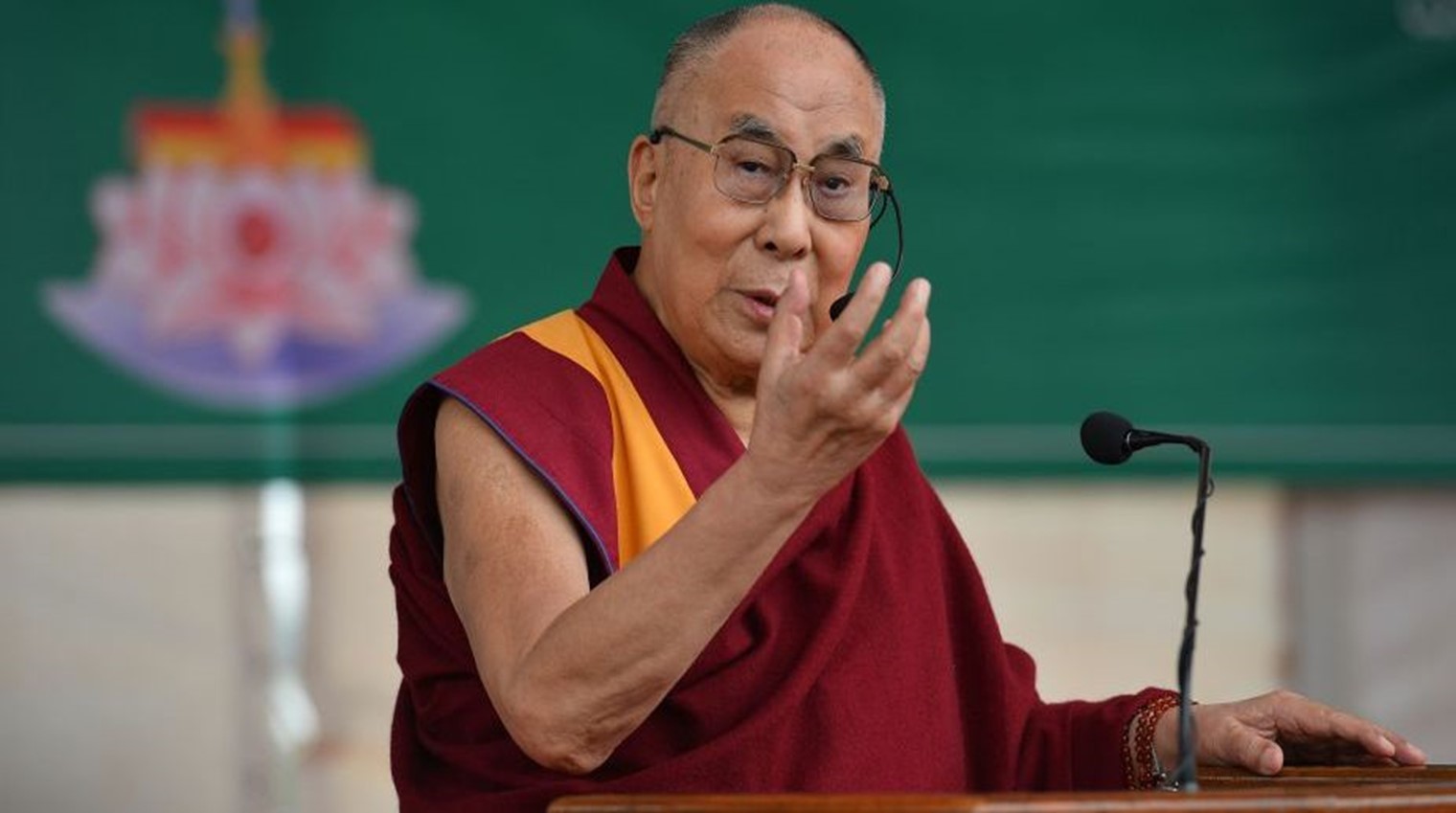
Tibetan spiritual leader Dalai Lama on Monday said Tibetans believed in the law of causality and the Tibetan problem was a consequence of old causes that had ripened.

Talking to Australian audience in Sydney through video conferencing, Dalai Lama said according to Chinese history book, in 7th, 8th and 9th century, there were three major empires: the Chinese, Mongol and the Tibetan empire.

In the 9th century, due to some quarrel among the Tibetan emperor, Tibet disintegrated. The problem started during that century. After that I think Tibetans paid attention to their own small circle, including the lamas, locals and landlords in different parts of Tibet, resulting in disintegration, he said.

“History had produced that way. Old causes have already there, so there will be consequences. Nobody can change that,” Dalai Lama said.

He said Tibet remained as one entity because of the Tibetan Buddhist tradition. “300 volumes of Buddhist texts translated from India and the language that covered the whole Tibetan area was what kept Tibetans as one entity. Otherwise in the political matter, for several centuries, we really neglected” he further stated.

Talking about global conflicts and lack of moral consciousness in societies, the Nobel laureate pressed for the need for a more complete education system that caters to the overall well being of a human being.

“Every 7 billion human being have every right to be a happy human being. Now the concern is the existing modern education. It is very much oriented towards material value.

Therefore the generation who receive that kind of education eventually goes on to create materialist life and materialistic culture. When they are faced with mental level problems, they are helpless,” he said.

Talking about mistakes in his life, he said ‘I think in political matter I feel there have been no major mistakes. At the age 16, I took the responsibility.

Then Tibet’s situation was very difficult and delicate so the Regent asked me to take the responsibility. The previous Dalai Lama took the responsibility at the age of 18. I told him that 16 was too early but the circumstances forced me to take the responsibility.

So I lost my own freedom.

At 24, I lost my country, then there were a lot of problems. But I think, now looking back, during those difficult periods, no major mistakes. I think all my major decisions eventually seem very correct, he added.

His Holiness mentioned an old Tibetan official who remained skeptical of His Holiness’ decision to flee Lhasa in 1959, but after the events of the Cultural Revolution, he concluded that the decision was correct.


LIVING TIBETAN SPIRITS – THE COLD WAR IN ASIA

LIVING TIBETAN SPIRITS – THE COLD WAR IN ASIA

Living Tibetan Spirits – The Cold War in Asia. Infantry weapon of US Army and US Marine Corps.

Living Tibetan Spirits initiated Tibetan Resistance Movement during late 1950s with hope for defeating military occupation of Tibet using Infantry Weapons of Warfare. Indeed, there was such possibility of seriously degrading Enemy’s war machine during Vietnam War. Unfortunately, due to Nixon-Kissinger treason, Vietnam War remains unfinished. From military point of view, due to change in circumstances, ‘The Cold War in Asia’ may not be determined by tactics used in Infantry Warfare due to Enemy’s use of enhanced military capabilities.

Living Tibetan Spirits – The Cold War in Asia. Tibetan Resistance uses military tactic called patience and perseverance.

In my analysis, the outcome in any war is not always determined by relative military power and military tactics used by parties engaged in conflict. The Cold War in Asia will come to its natural conclusion when Nature exercises Force/Power to influence human behavior and actions.

Rudranarasimham Rebbapragada

SPECIAL FRONTIER FORCE

Living Tibetan Spirits – The Cold War in Asia. Chinese Stealth fighter jet at Yading airport, Tibet.

CHINA’S MILITARY IS WAGING A COLD WAR IN TIBET – THE NATIONAL INTEREST BLOG

Clipped from: http://nationalinterest.org/blog/the-buzz/chinas-military-waging-cold-war-tibet-25744

Living Tibetan Spirits – The Cold War in Asia.

In 2011, Beijing shelled out some 1.5 billion yuan (US$236 million) for the construction of an airport to serve the frigid wilderness of the Tibetan Plateau, saying it wanted to boost the local tourism industry.

Completed in 2013, Yading Airport has since handled no more than 150,000 passengers a year, equivalent to three or four daily flights carrying 400 travelers brave enough to enter the remote backwater. Little wonder: at elevation of 4,411 meters, the airport in southwestern Sichuan’s Daocheng county is the world’s highest, almost one kilometer above the gateway to Tibetan capital Lhasa.

With the air supply about 30% less than you would expect at sea level, it is said that oxygenators are one of the most vital pieces of equipment for airport ground staff to avoid medical complications such as acute mountain sickness. Aircraft flying into the rarefied air must also be equipped with oxygenators before each flight.

Yet this inhospitable airport’s location next to the Tibetan Autonomous Region does appeal to another group of travelers. The People’s Liberation Army has found a number of important roles for the facility, ranging from the testing of a new generation of jet-fighters to fending off missile threats from the Indian Ocean.

It is an open secret that  Yading Airport was one of several testing grounds used for the locally built J-20 stealth fighter when it was plying the air route between Yading and Chengdu, capital of Sichuan province, where the jets were manufactured.

Analysts say the alpine climate, steep terrain and high elevation of the airport and its surroundings are ideal for reliability tests on the J-20 and similar warplanes. This is the same reason that the F-22 Raptor, the spearhead of the US Air Force, was tested in Alaska.

But Yading Airport’s significance also lies in the tactical advantages offered by its location at the roof of the world. The Chinese military can observe every movement at Indian installations in the Bay of Bengal, 1,000 kilometers to the southwest, as there is no mountain range blocking the view from Yunnan province across Myanmar.

Hong Kong-based military commentator Leung Kwok-leung noted that the PLA must have installed long-range early warning radars at the airport and it could also host an anti-missile shield at an elevation that would be the envy of other military services.

Chinese observers are undoubtedly monitoring movements by US nuclear submarines in and around the Bay of Bengal, and New Delhi’s construction of a nuclear submarine base there. As a result, Beijing is getting antsy about threats lurking on its southwestern front.

Yading could be the location for the world’s highest mid-range anti-ballistic missile defense system: using the elevation and low latitude, interceptors launched from the plateau could “hitch a ride” on the centrifugal force of the Earth’s rotation.

Leung said this would mean that the PLA could use anti-ballistic missiles launched from Yading to put down Indian or US missiles fired either from bases onshore or from vessels in the Bay of Bengal area while they were still ascending, in a “blocked shot manner”.

This article originally appeared on Asia Times.

Image: Reuters

Living Tibetan Spirits – The Cold War in Asia. YADING, TIBET.


RED CHINA’S INFORMATION WARFARE – INFILTRATION OF AMERICAN ACADEMIC INSTITUTIONS

RED CHINA’S INFORMATION WARFARE – INFILTRATION OF AMERICAN ACADEMIC INSTITUTIONS

Red China’s Information Warfare – Infiltration of American Academic Institutions.

Red China deploys Communist Tactics of Deception, Infiltration, and Subversion to undermine American Academic Institutions

Rudranarasimham Rebbapragada

SPECIAL FRONTIER FORCE

WAKING UP TO CHINA’S INFILTRATION OF AMERICAN COLLEGES – THE WASHINGTON POST

Clipped from: https://www.washingtonpost.com/opinions/global-opinions/waking-up-to-chinas-infiltration-of-american-colleges/2018/02/18/99d3bee8-13f7-11e8-9570-29c9830535e5_story.html?utm_term=.2f7f2220ca8d

Red China’s Information Warfare – Infiltration of American Academic Institutions. FBI Director testifies.

Red China’s Information Warfare – Infiltration of American Academic Institutions. FBI Director testifies.

FBI Director Christopher A. Wray testifies during a Senate Intelligence Committee hearing on Capitol Hill on Feb. 13. (Saul Loeb/AFP/Getty Images)

China’s massive foreign influence campaign in the United States takes a long view, sowing seeds in American institutions meant to blossom over years or even decades. That’s why the problem of Chinese financial infusions into U.S. higher education is so difficult to grasp and so crucial to combat.

At last, community of U.S. officials, lawmakers and academics focused on resisting Chinese efforts to subvert free societies is beginning to respond to Beijing’s presence on America’s campuses. One part of that is compelling public and private universities to reconsider hosting Confucius Institutes, the Chinese government-sponsored outposts of culture and language training.

With more than 100 universities in the United States now in direct partnership with the Chinese government through Confucius Institutes, the U.S. intelligence community is warning about their potential as spying outposts. But the more important challenge is the threat the institutes pose to the ability of the next generation of American leaders to learn, think and speak about realities in China and the true nature of the Communist Party regime.

“Their goal is to exploit America’s academic freedom to instill in the minds of future leaders a pro-China viewpoint,” said Sen. Marco Rubio (R-Fla.), co-chair of the Congressional-Executive Commission on China. “It’s smart. It’s a long-term, patient approach.”

This month, Rubio asked all Florida educational institutions that host Confucius Institutes to reconsider those arrangements in light of a growing body of evidence that China seeks to constrain criticism on American campuses, exert influence over curriculum related to China and monitor Chinese students in the United States.

One of the schools Rubio contacted, the University of West Florida, had already decided not to renew its contract with Hanban, the Chinese government entity that manages the institutes. Western Florida joins a growing list of universities that are rejecting the Faustian bargain that comes with accepting Chinese government funding and management for programs meant to expose students to China, including the University of Chicago, Penn State University and Ontario’s McMaster University. West Florida President Martha Saunders told me the decision was primarily due to a lack of student interest, but the rising concerns also contributed.

FBI Director Christopher A. Wray articulated those concerns in testimony last week before the Senate Intelligence Committee. He said the FBI is “watching warily” and even investigating some Confucius Institutes. He said “naiveté” in the academic sector was exacerbating the problem and called out the Chinese government for planting spies in American schools.

“They’re exploiting the very open research and development environment that we have, which we all revere. But they’re taking advantage of it,” Wray said.

For Rep. Christopher H. Smith (R-N.J.), that’s a long-awaited acknowledgment. The majority of the institutes’ activity may be benign, and it’s difficult to determine how much self-censorship participating institutions engage in, Smith said. He has commissioned a study of the institutes by the Government Accountability Office to collect data to support his call for their closure.

“They are nests of influence, reconnaissance,” he said. “They keep tabs on Chinese students, and those who attend their classes are getting a Pollyannaish take on what China is about today.”

To understand what Confucius Institutes are really about, it’s necessary to understand their connections to the Communist Party and its history. Peter Mattis, a former U.S. intelligence analyst now with the Jamestown Foundation, said Confucius Institutes can be directly linked to the Communist Party’s “united front” efforts, still described in Maoist terms: to mobilize the party’s friends to strike at the party’s enemies.

For example, Liu Yandong, the Communist Party official who launched the Confucius Institutes and served as chairwoman, was the head of the United Front Work Department when the program began.

“They are instrument of the party’s power, not a support for independent scholarship,” Mattis said. “They can be used to groom academics and administrators to provide a voice for the party in university decision-making.”

At a minimum, Confucius Institutes must be required to provide more transparency, yield full control over curriculum to their American hosts and pledge not to involve themselves in issues of academic freedom for American or Chinese students. If they don’t do this voluntarily, Congress will likely act to compel them. Both Rubio and Smith are working on new legislation to do just that.

More broadly, if we as a country don’t want Confucius Institutes to control discussion of China on campus, we must provide better funding for the study of China and Chinese languages. If we are really headed into a long-term strategic competition with China, there is no excuse for not investing in educating our young people about it — or for letting the Chinese government do it for us.

Red China’s Information Warfare – Infiltration of American Academic Institutions.

CHINESE ‘STRING OF PEARLS’ TIGHTENS NOOSE AROUND SRI LANKAN NECK

CHINESE’ STRING OF PEARLS’ TIGHTENS NOOSE AROUND SRI LANKAN NECK
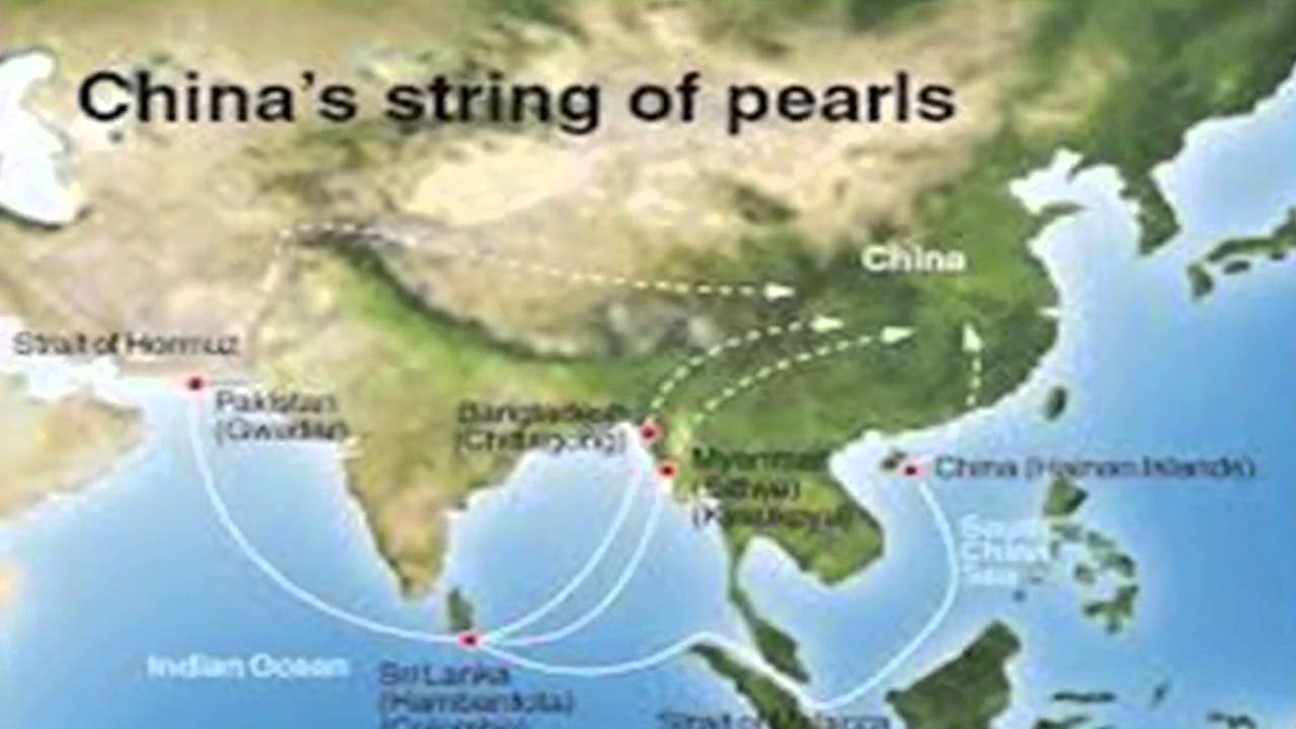
China’s Neocolonialism is tightening the noose around necks of cash-strapped economies of countries in Asia and Africa while the United States watches helplessly as a silent spectator.

Rudranarasimham Rebbapragada

SPECIAL FRONTIER FORCE

WITH SRI LANKAN PORT ACQUISITION, CHINA ADDS ANOTHER ‘PEARL’ TO ITS ‘STRING’ – CNN

Clipped from: https://www.cnn.com/2018/02/03/asia/china-sri-lanka-string-of-pearls-intl/index.html
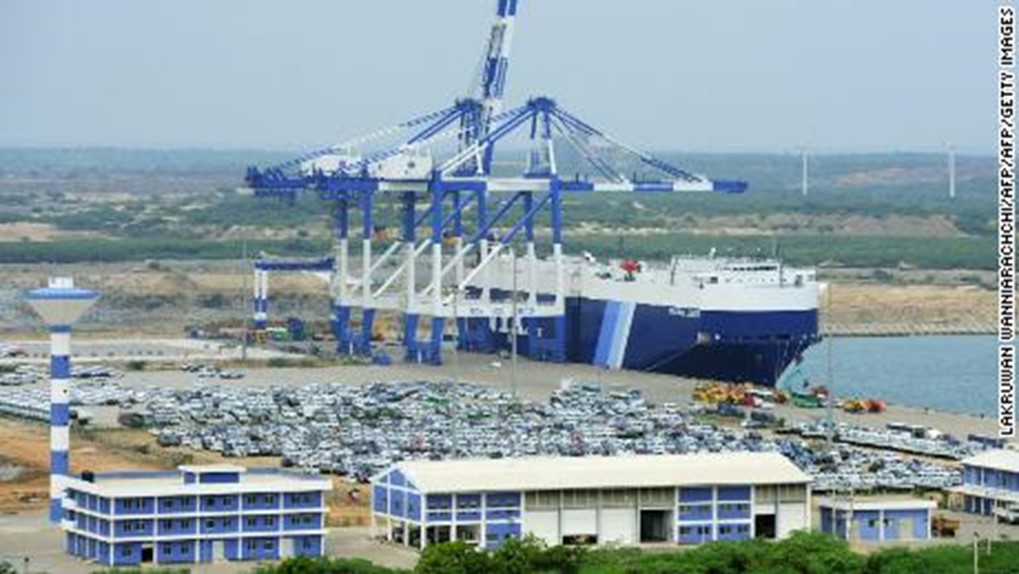
The Hambantota port facility, 2015

(CNN)When Sri Lanka’s government first looked to develop a port on its southern coast that faced the Indian Ocean, it went not to China, but to its neighbor, India.

The venture was considered economically unviable and indeed, in the years that followed, the port sat empty and neglected, and Sri Lanka’s debt ballooned.

But India’s economic foresight might have cost it in terms of strategic geopolitics, since the debt incurred on the port and the surrounding infrastructure undertakings now belong to its great rival.

China’s official licensing of the port in December last year gives it yet another point of access over a key shipping route, and the prospect of providing it with a sizeable presence in India’s immediate backyard and traditional sphere of influence, bringing China closer to India’s shores than New Delhi might like.
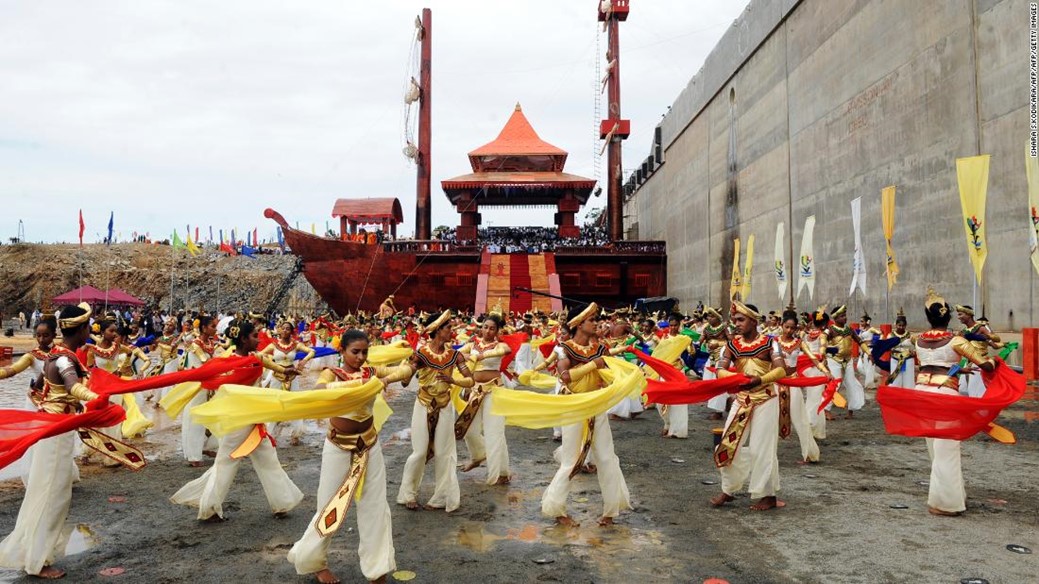
Sri Lankan dancers perform at the site of the Hambantota port during a ceremony marking the first phase of construction, August 15, 2010.

Moreover, Sri Lanka’s decision to sign a 99-year lease with a Chinese state-owned company for the Hambantota port to service some of the billions it owes to Beijing has some observers concerned other developing nations doing business with China as part of China’s One Belt One Road initiative might fall into similar financial straits.

A trap, they warn, that may well have them owing more than just money to Beijing.

“China is, in many cases, the only party with the interest and the capital to deliver on these projects,” said Jeff Smith, a research fellow on South Asia at the Heritage Foundation in Washington DC. “The relevant question for everyone is: at what cost?”

‘A determined strategy by China’

China has for decades invested in Sri Lanka, particularly during moments in recent history when much of the international community held off.

As the European Union sought to punish Sri Lanka over human rights abuses during the decades-long civil war between government forces and the Tamil Tigers, China acted on its behalf diplomatically at the United Nations. It also supplied the Rajapaksa government with military aid and it promised to spend to rebuild the country’s damaged infrastructure. India had also sent in military help, but nowhere near the levels Beijing dispatched.

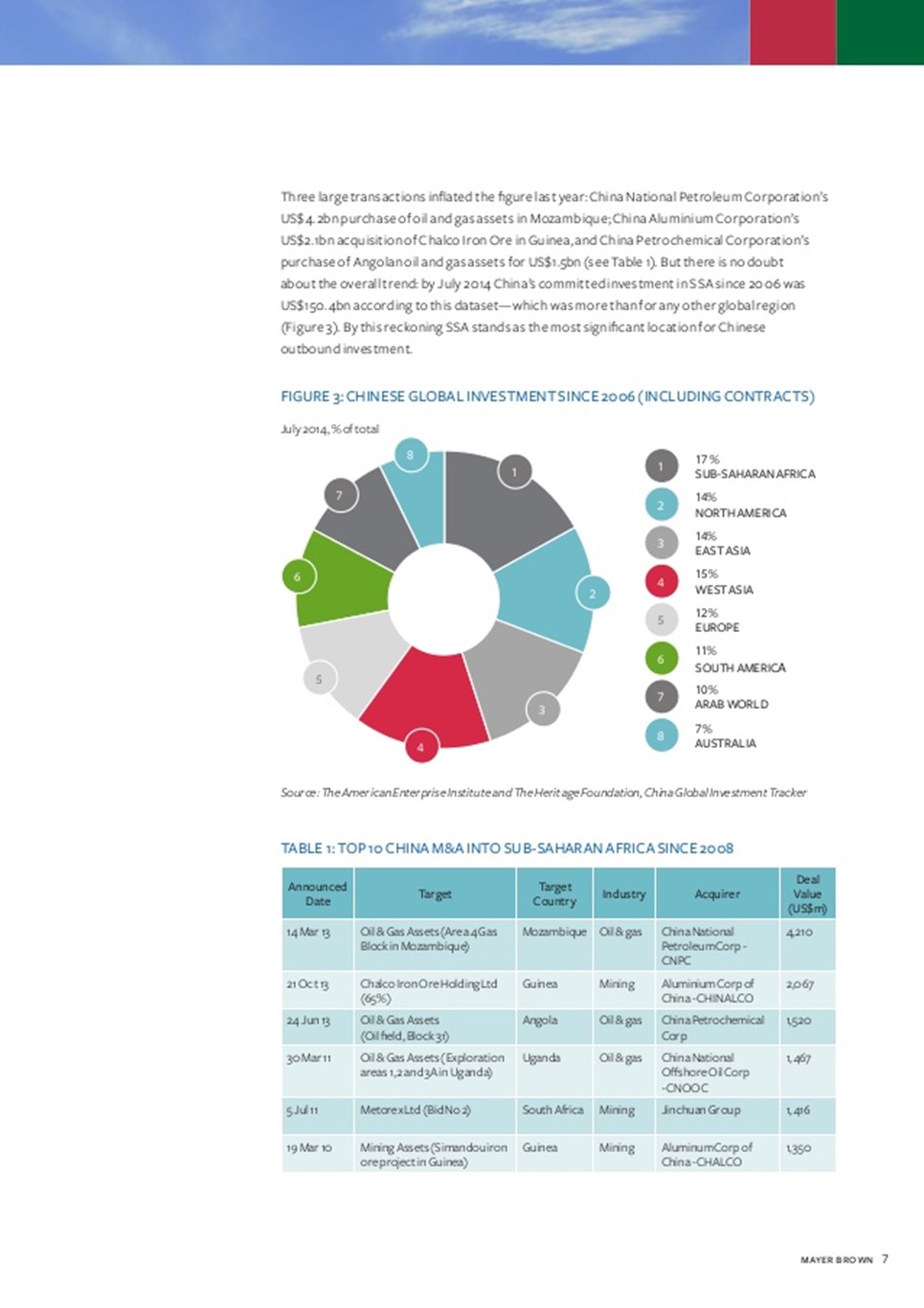
The civil war ended in 2009. Between 2005 and 2017, China spent nearly $15 billion in Sri Lanka. By comparison, the International Finance Corporation, which is part of the World Bank group, says that between 1956 and 2016, it invested over $1 billion.
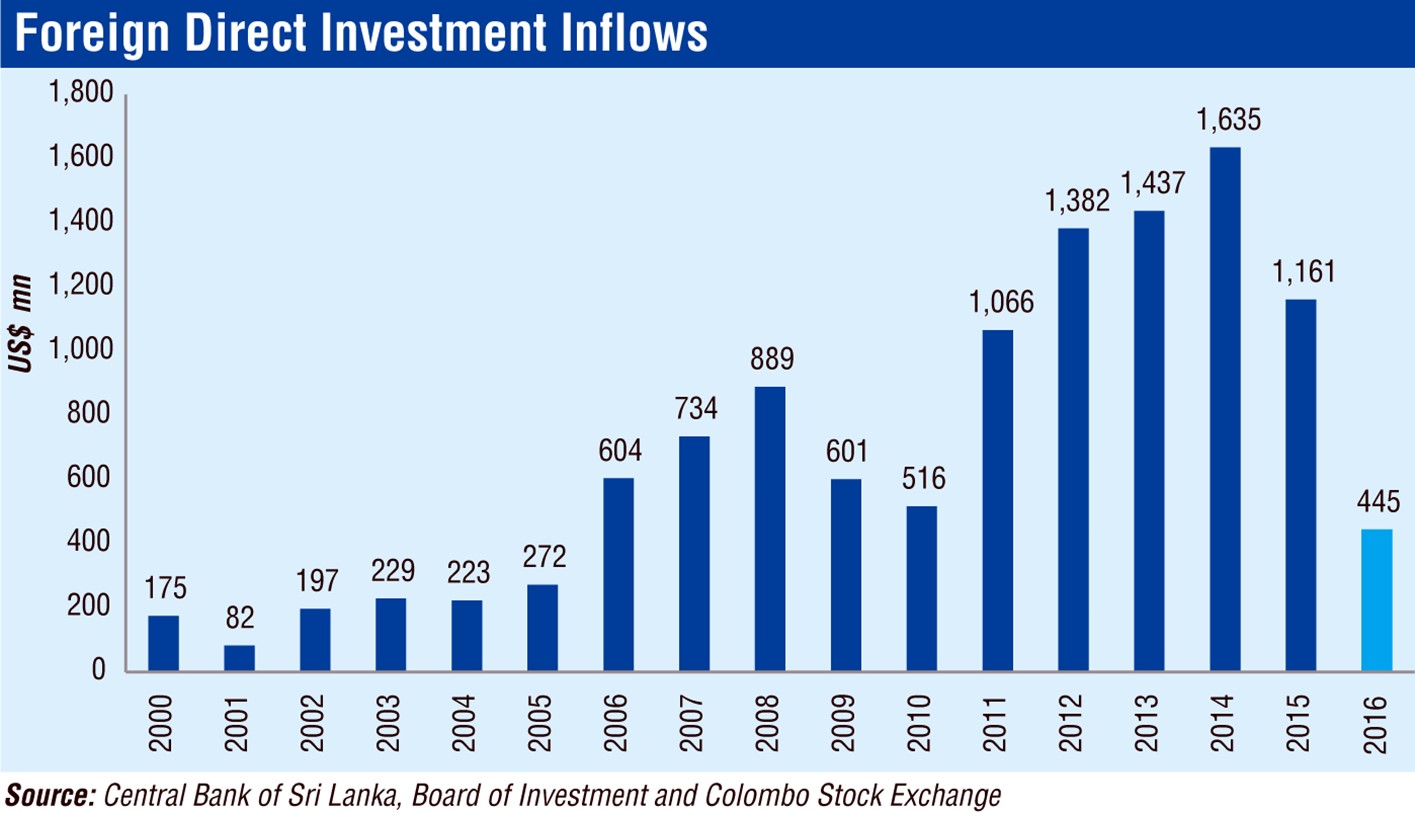
Jeff Smith points out that along with the Hambantota port investments, Beijing loaned Sri Lanka $200 million in 2010 for a second international airport and a year later a further $810 million for the “second phase of the port project.”

There was more. $272 million for a railway in 2013 and more than $1 billion for the Colombo Port City project, ventures that hired mostly Chinese workers (one Sri Lankan report put the number of Chinese workers dedicated to projects in 2009 at 25,000), and all with money Sri Lanka could barely afford to repay.

By 2015, Sri Lanka owed China $8 billion, and Sri Lankan government officials predicted that accumulated foreign debt — both owed to China and other countries — would eat up 94% of the country’s GDP.

After an equity swap, an IMF bailout and more control over the projects ceded to Beijing, the terms of the debt were restructured, giving Sri Lanka some breathing space.

In 2017, however, the Hambantota port proved too costly for Sri Lanka to sustain.

“They (the Chinese) called in the debt, and the debt has been paid by Sri Lanka giving them the (Hambantota) port. That port then gives them not only a strategic access point into India’s sphere of influence through which China can deploy its naval forces, but it also gives China an advantageous position to export its goods into India’s economic sphere, so it’s achieved a number of strategic aims in that regard,” said Malcolm Davis, senior analyst at the Australian Strategic Policy Institute in Sydney.

“This is part of a determined strategy by China to extend its influence across the Indian Ocean at the expense of India and it’s using Sri Lanka to achieve it,” he said.

Details of the new agreement between China and Sri Lanka have not been made public.

The port is an “important project aimed at spurring local economic growth based on equality and mutual benefits,” according to the Chinese Ministry of Foreign Affairs. It declined to answer further when asked by reporters.
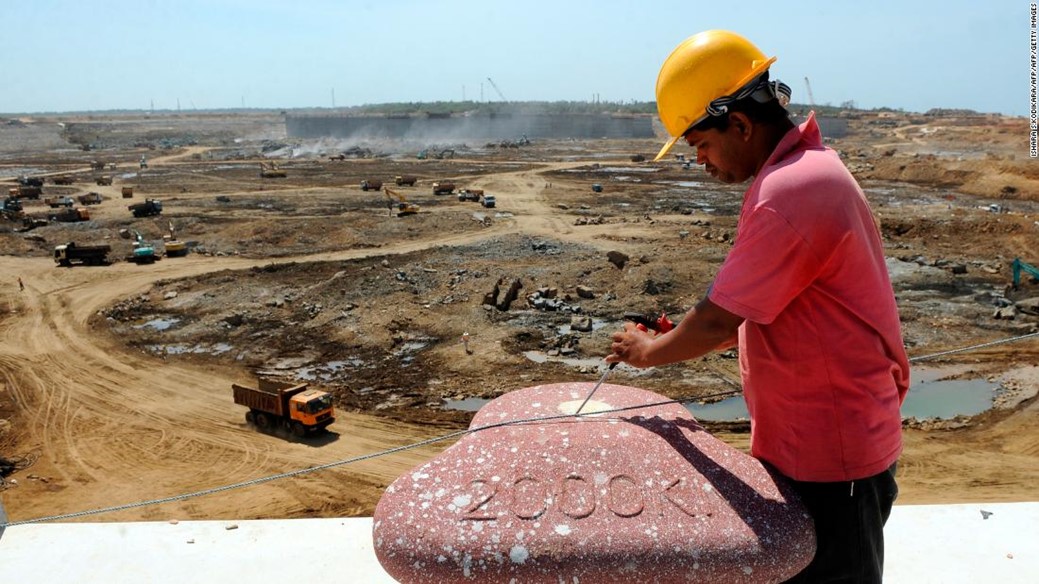
Construction workers operate heavy equipment at the base of Sri Lanka’s Hambantota port August 1, 2010. Some 350 Chinese staff helped in the first phase of construction.

‘Creating demand for Chinese goods’

China’s claiming of controlling stakes in strategic ports along critical shipping lanes — what analysts have taken to referring to as its “string of pearls” — beginning at the Straits of Malacca and dotting the Indian Ocean, should signal Beijing’s ultimate ambitions, said Davis.

“There’s a bigger picture here, that the more you invest in the Belt and Road initiative, the more the Chinese are in a position to force your country to align politically in terms of policy,” Davis told CNN.

“So you become dependent on their investment and their largesse, and you’re less likely to be critical of them and you’re more likely to accommodate their interests strategically.”

China launched its ambitious One Belt One Road (OBOR) development strategy in 2013, investing in projects that include thousands of miles of highways in Pakistan, an international airport in Nepal and a rail link between China and Laos. The initiative would come to span more than 68 countries and encompass 4.4 billion people and up to 40% of global GDP. Consisting of two distinct parts, the Silk Road Economic Belt would stretch from China to Europe and include a host of trade and infrastructure projects, and the 21st Century Maritime Silk Road would be a sea-based network of shipping lanes and port developments throughout Asia and the Pacific.

Beijing’s other potential partners are finding difficulty with some of their own joint projects.

Last November the government in Nepal scrapped a $2.5 billion deal with a Chinese company to build the biggest hydropower plant in the Himalayan country because of “irregularities” in the award process. The current Nepalese government, which had replaced the cabinet that had approved the earlier deal, announced the contract would instead go to a state-owned Nepali company.

In Myanmar, a $3.6 billion dam project has stalled. The then-military backed government suspended work on the Myitsone dam in the north of the country in 2011, with talks regarding its future ongoing.

Pakistan withdrew from a $14 billion agreement with China for a dam last November because the conditions of the deal included China taking ownership of the project and were “not doable and against our interests,” Pakistan’s Water and Power Development Authority chairman Muzammil Hussain was quoted as saying. Like Nepal, Pakistan has since indicated it would also look to shoulder the cost of the dam rather than go to an outside investor.

China’s Ministry of Foreign Affairs claimed to be unaware of this when asked about the situation by reporters in Beijing in December. The country’s top economic planning agency later said that the two countries were discussing cooperating on the dam project but that there’d been no discussion of proposals to move it forward. The agency said “Pakistan media’s reporting on this project has been inaccurate, or only represented the views of certain officials.”

But China is still spending in Pakistan. It is building a hydroelectric power station in the Rawalpindi district, and it is developing the port of Gwadar, strategically located on the Arabian Sea.

In Malaysia, China is spending $7.2 billion on a new deep sea port in the Straits of Malacca and working on infrastructure projects on the country’s eastern seaboard.

China’s trade deal with the Maldives government included investments in developing the international airport and a bridge, but the Maldives in return has taken on a significant number of controversial loan obligations.

Last July, former President Mohamed Nasheed said the loan interest the traditionally Indian ally pays to service its foreign debt to China is more than 20% of the country’s budget. He said that part of the deal included China’s receipt of 16 “strategically located islands” in navigation sea-lanes.
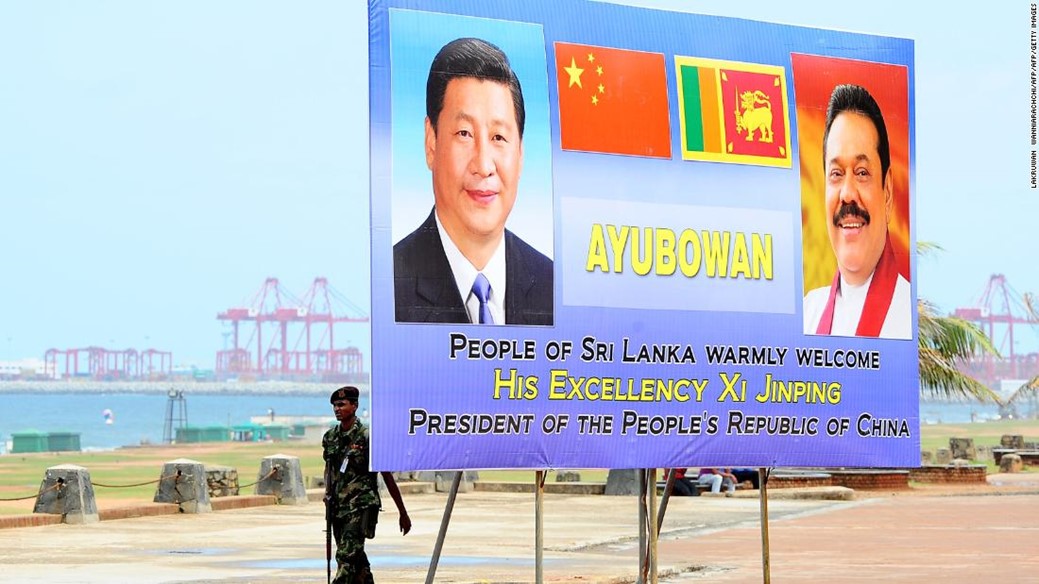
A Sri Lankan soldier walks past a billboard bearing portraits of Chinese President Xi Jinping and Sri Lankan President Mahinda Rajapaksa, ahead of Xi’s visit to the Sri Lankan capital Colombo, September 15, 2014.

Dean Cheng, a senior fellow at the Heritage Foundation in Washington, DC, said that the initial wave of Chinese investments in the Indian Ocean, the so-called string of pearls, was largely driven by economic considerations. The investments, he said, “would facilitate economic growth, which would benefit Chinese companies. Moreover, the construction projects would entail Chinese workers (a feature of most Chinese projects abroad, bringing their own work force), and create a demand base for Chinese goods.”

At the same time, he said the Chinese are clearly intent on creating a friendly political network of states. “There’s nothing inherently dangerous about political considerations in economic investments,” he told CNN. “It would be foolish to think that any state is wholly driven by economic considerations.”
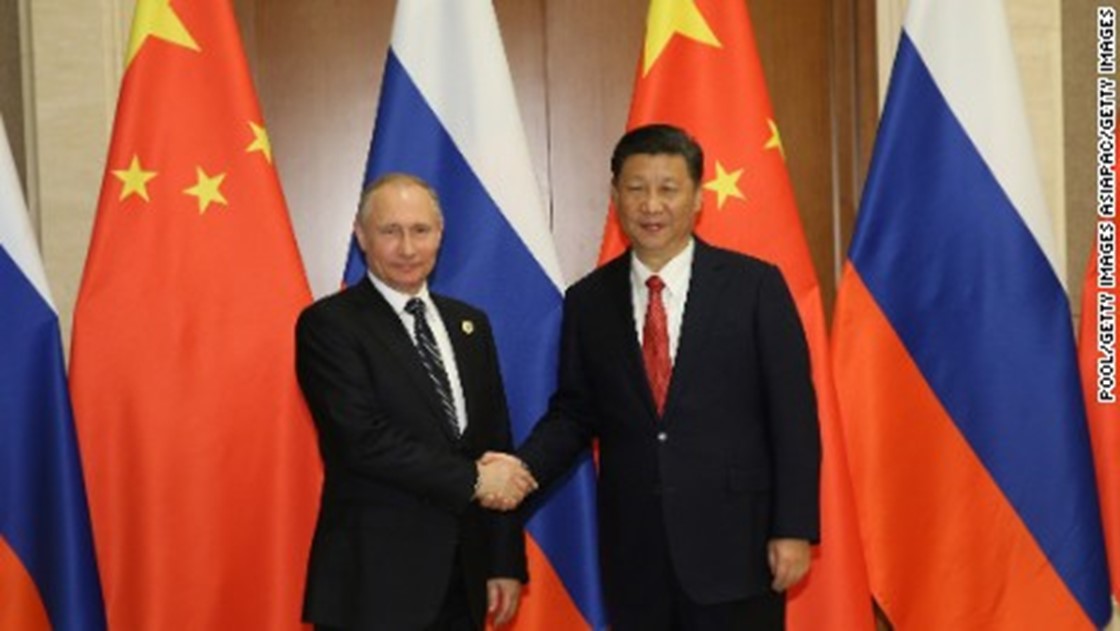
Leaders attend China’s Belt and Road Forum

Whither India?

The ever-encroaching Chinese presence into India’s sphere of political and economic influence has been noted, but so far, says Manoj Joshi, New Delhi purports to be unruffled, as long as Hambantota remains a commercial port, and no Chinese naval vessels suddenly appear in the vicinity.

“In 2014 a Chinese submarine was spotted in Colombo harbor and that was the first time we saw that and the Indian side was a bit concerned,” said Joshi, a distinguished fellow at the Observer Research Foundation in New Delhi. At the time Indian defense officials expressed “serious concern” to their Sri Lankan counterpart, and naval chiefs from both countries met to discuss the incidents. Then-Defense Minister Arun Jaitley said the government “keeps a constant watch on all developments concerning our national security and economic interests and takes necessary measures to safeguard them.”

A Chinese submarine and a Chinese warship were allowed to dock at the Colombo port in November 2014, just under two months after another Chinese submarine called into the same port. At the time both China and Sri Lanka dismissed New Delhi’s concerns, saying the vessels were on refueling stops during anti-piracy missions. Colombo port regularly hosts ships from numerous navies, including the US. But as China’s own navy becomes more ‘blue water’ [as in, able to move in open oceans around the world and not just in its own surrounding waters] these appearances will be more commonplace.
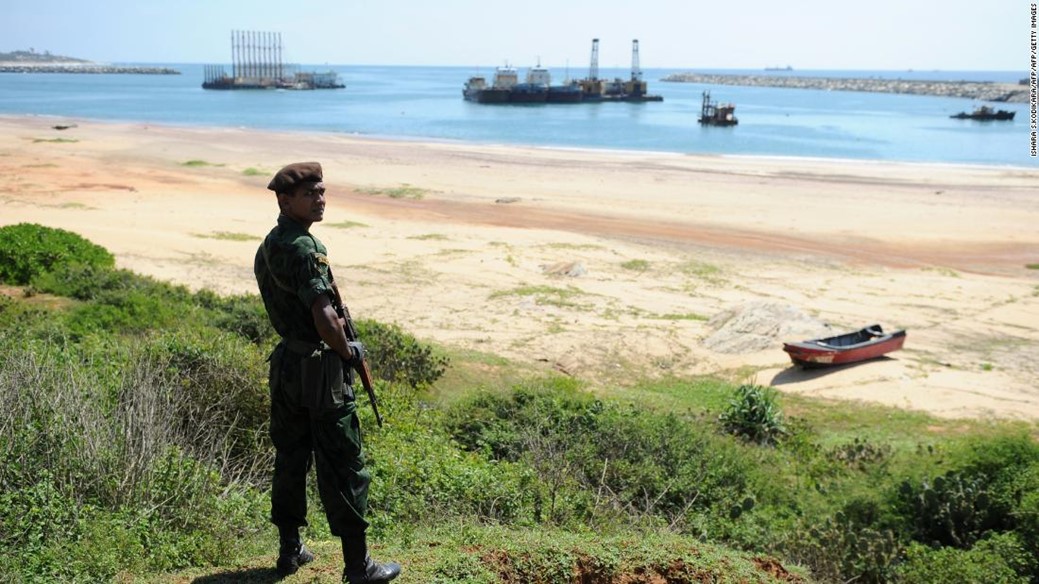
A Sri Lankan commando stands guard on the Hambantota construction site, November 18, 2010.

“It’s geopolitical competition and India sees itself as the foremost nation in Asia and with the Chinese building a port, building and airport, building roads in Sri Lanka, they’ve emerged as big investors there and the Indians are obviously feeling somewhat nervous because India doesn’t have those kind of resources to compete with,” Joshi told CNN.

“What we worry about is, we already have a border problem with China and now that competition goes to the Indian Ocean region. That could be against our interests.”

India and China share a 2,500 mile-long border, and have regularly faced off over perceived intrusions on each other’s terrain as well as activity in uninhabited territory claimed by China and Bhutan, an Indian ally.

“Everybody talks about China and India being major rivals, I think China doesn’t see India as a genuine long-term rival, I think it looks at India and sees a classic case of democracy gone wrong,” said Yvonne Chiu, assistant professor in the politics department at the University of Hong Kong.

“India is incredibly corrupt, its infrastructure is terrible, and it is riddled with religious and demographic problems,” she told CNN. “Except it is very large. It does have a big population as well and it’s on the border. So it’s a regional rival, but I don’t think they take India seriously as a global rival.”
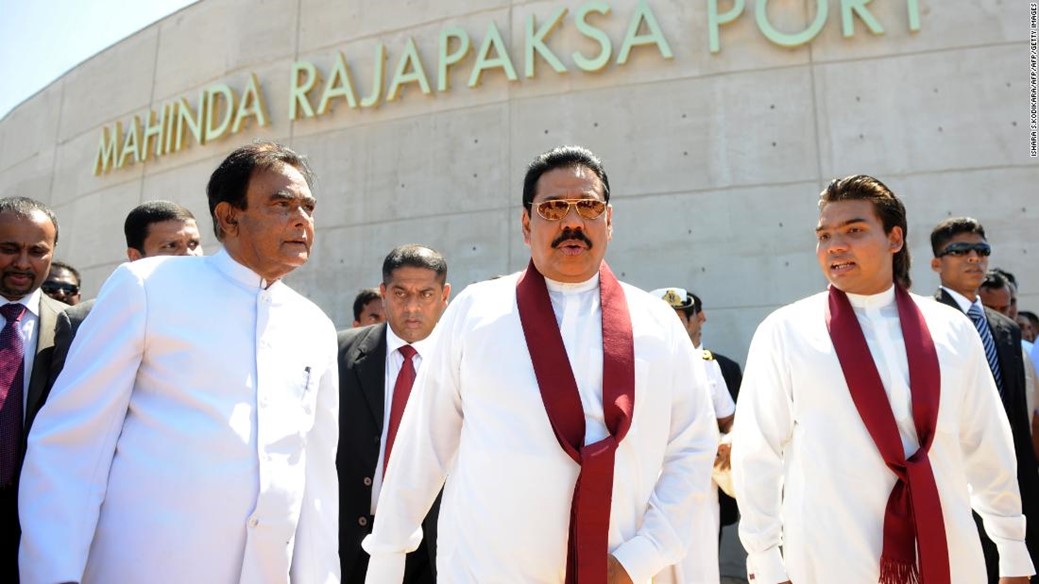
Sri Lanka’s President Mahinda Rajapaksa, center, flanked by his eldest son and parliamentarian Namal Rajapaksa, right, and Prime Minister D. M. Jayaratne, left, tour the Hambantota construction site, November 18, 2010.

For its part, India is now taking an active interest in Hambantota. The government of Prime Minister Narendra Modi is reported to be in talks with Sri Lanka about taking over the airport near the port, which was built using Chinese funds that Beijing itself wants to manage and is pushing for control with the Sri Lankan government. During a media briefing last November, Raveesh Kumar, an official spokesperson for the Ministry of External Affairs, would only say that New Delhi has “a lot of developmental projects” going on in Sri Lanka and declined to elaborate further. Colombo has yet to make a decision involving the airport.

And New Delhi continues to actively participate in large-scale naval exercises in regional waters alongside allies Japan, and the US, and into the future, possibly Australia too, all to Beijing’s continued consternation.

Last year’s Malabar exercises in the Bay of Bengal involving the US, Japan and India were the largest the region has seen in more than two decades.

“India, of course, remains highly influential in Sri Lanka, and would not look kindly on any effort to pressure the government on matters related to defense and national security,” said Jeff Smith. “Nor would the Sri Lankan military, which values its exchanges with the US.”

Modi will be in Singapore in June, attending the Shangri-La dialogue, an annual meeting of defense ministers, military chiefs and defense officials from the Asia-Pacific. His keynote address will be carefully watched for words on China’s maritime expansion.
A White House unable to compete with China

South Asia’s problems are not on Washington’s radar right now, says Hong Kong University professor Chiu. The White House has much of its focus — along with a substantial naval presence — directed towards the Korean Peninsula and the ongoing crisis there. And while the US is distracted, China is slowly and incrementally changing the seascape in the Asia Pacific. China claims disputed islands in the South China Sea as part of its territory and has been militarizing some of those islands, reclaiming land on others and turning sandbars into islands to assert sovereignty over the area.

“Everything that they do, like building these islands (in the South China Sea) and stuff that is illegal internationally, but nobody wants to get into a conflict over, it adds up and you have a new status quo and it’s too late to do anything about it,” Chiu said.

“China can’t afford to go to war over anything … it would most likely lose against a major power … but these kind of small incremental things, people will let them get away with. As long as they’re patient, it could have the same effect as going to war.”

Even as China has taken the long view, Dean Cheng argues it’s never too late for the US and its allies to do something to counter Beijing’s ambitions.

“The US, in cooperation with India, Japan and possibly the European Union, could offer alternative financing,” Cheng said. “They could help train local officials, lawyers, etc., to become better negotiators. They can push for transparency, especially in Chinese-sponsored institutions to make clear the terms of the loans, payback processes, as well as how contracts are rewarded.”
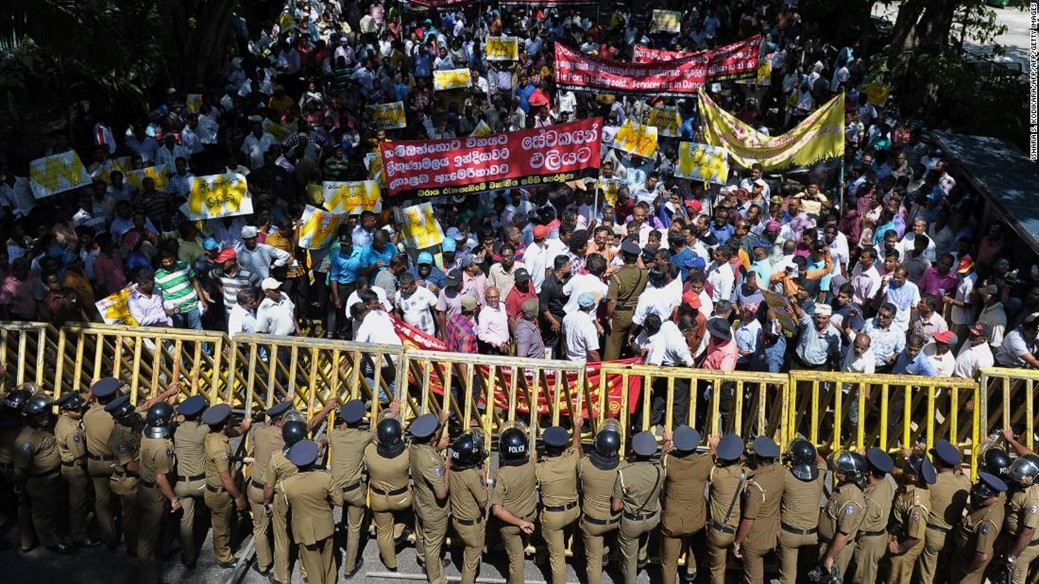
Sri Lankan police stand guard during a protest in Colombo against the lease of the loss-making Hambantota port to China, February 1, 2017.

Last October US Secretary of State Rex Tillerson gave a speech on the US relationship with India. Tillerson said it was up to New Delhi and Washington to “do a better job leveraging our collective expertise to meet common challenges while seeking even more avenues of cooperation.”

“We must also recognize that many Indo-Pacific nations have limited alternatives when it comes to infrastructure investment programs and financing schemes, which often fail to promote jobs or prosperity for the people they claim to help,” Tillerson said. “It’s time to expand transparent, high-standard regional lending mechanisms, tools that will actually help nations instead of saddle them with mounting debt.”

Tillerson told reporters that during the East Asia ministerial summit in August that the US had started “a quiet conversation with others about what they were experiencing, what they need.”

However, he also admitted Washington’s constraints. “We will not be able to compete with the kind of terms that China offers,” said Tillerson. “But countries have to decide, what are they willing to pay to secure their sovereignty and their future control of their economies? And we’ve had those discussions with them as well.”

China’s resources are nowhere near as limited as the US and its allies, says Yvonne Chiu from the University of Hong Kong.

“Right now, it can play on multiple fronts at once,” Chiu notes. “And they take a very long view. If you’re a power like the US, you’re really far away. That distance is going to limit how much attention you can pay to the region. The US has to pick and choose and it’s chosen East Asia. So, unless something really major happens, that’s probably where their attention is going to stay.”

A Chinese worker at the construction site of a Chinese-funded $1.4 billion reclamation project in Colombo, Sri Lanka in October 2017.

As 2017 wrapped up, the Chinese state news agency Xinhua published a dispatch from Colombo, describing how the Hambantota port was “now racing along a developmental fast-track.”

Chinese and Sri Lankan workers were building a highway north of the port, along with a bridge, and the Chinese Harbor Engineering Company is negotiating with the Sri Lankan government to develop a Logistics Zone that will include a natural gas power plant and refineries, the agency reported.

On the first day of the new year, the Chinese flag flew beside Sri Lanka’s at the port for the first time ever.

The Chinese Harbor Engineering Company began 2018 with a $1 billion investment to build three 60-story office towers in Colombo.

Rather than resist getting into further debt, Sri Lanka’s government appears to be making more deals with China that it will may yet struggle to pay back.
 

Whole Dude – Whole Thanks

Special Frontier Force pays tribute to Jimmy Carter on President’s Day 2024
Whole Dude – Whole Thanks: Special Frontier Force – Establishment 22. This Shoulder Badge represents a military alliance/pact between India, Tibet and the United States of America.

Special Frontier Force Celebrates President Jimmy Carter’s Birthday

Special Frontier Force celebrates President Jimmy Carter’s Birthday.

On Monday, February 19, 2024 President’s Day, Special Frontier Force celebrates 39th US President’s birthday which falls on October 01. President Jimmy Carter, in 1977, lifted Visa and Travel Restrictions imposed upon His Holiness the 14th Dalai Lama by 37th and 38th US Presidents.

Special Frontier Force Celebrates President Jimmy Carter’s Birthday.

Clipped from: http://www.history.com/this-day-in-history/jimmy-carter-is-born?

Presidential

Special Frontier Force celebrates President Jimmy Carter’s birthday.

October 01, 1924

On this day in 1924, future President James Earl Carter is born in Plains, Georgia. Carter, who preferred to be called “Jimmy,” was the son of a peanut farmer and was the first president to be born in a hospital. Carter was raised a devoted Southern Baptist and graduated from the Naval Academy in Annapolis, Maryland, in 1946. He married Rosalynn Smith later that year.

After graduation, Carter served in the Navy’s new nuclear submarine program and was looking forward to a career in the Navy when his father passed away in 1953. The Carters dutifully returned to Georgia and took over the family farm. Back in Plains, Carter became involved in local politics, serving first on the school board and working his way up to a seat on the George State Planning Commission. In 1962, he was elected to the George Senate and, nine years later, he became governor.

A liberal Democrat, Carter launched a campaign against Republican presidential incumbent Gerald Ford in 1974, when the American electorate was still reeling from the Vietnam War, which ended in 1973, and former President Richard Nixon’s involvement in the Watergate scandal. Ford, who assumed office immediately upon Nixon’s resignation in 1974, pardoned his former boss, enraging many who thought Nixon should have had to stand trial. Carter’s “Washington outsider” persona helped him win the White House in 1976.

Carter’s tenure as president was most notable for his alternative-energy policies, racial-equality programs and friendly overtures toward Russia. He was instrumental in brokering a peace treaty between Israel and Egypt and signed an arms-reduction treaty with the Soviet Union (SALT II). These triumphs, however, were overshadowed by his inability to lead the nation out of a crippling energy crunch caused by the OPEC oil embargo of 1973.

On top of his administration’s failure to effectively combat the energy crisis, which in turn contributed to rapidly rising inflation, Carter’s administration was forced to deal with another crisis. In 1979, an Islamist student group in Iran stormed the U.S. embassy in Teheran, holding 70 Americans hostage for 444 days. Carter’s failure to secure the release of the hostages, the ongoing recession and a growing movement toward conservatism in America contributed to Carter’s loss to Ronald Reagan in the 1980 presidential campaign.

The Carters have since stayed active in national and international affairs. In 1982, they founded the Carter Center in Atlanta to advocate for human rights and to alleviate “unnecessary human suffering” around the world. Since 1984, the Carters have given their time each year to build homes and raise awareness of homelessness with the international charitable organization Habitat for Humanity. In 2002, Carter won the prestigious Nobel Prize for his efforts to find peaceful solutions to international conflicts, to advance democracy and human rights and to promote economic and social development.

Special Frontier Force Celebrates President Jimmy Carter’s Birthday.