SEPTEMBER 07, 2017 – THE COLD WAR IN ASIA – UNCLE SAM’S UNFINISHED KOREA-VIETNAM WAR

SEPTEMBER 07, 2017 – THE COLD WAR IN ASIA – UNCLE SAM’S UNFINISHED KOREA-VIETNAM WAR

SEPTEMBER 07, 2017 – THE COLD WAR IN ASIA – UNCLE SAM’S UNFINISHED KOREA-VIETNAM WAR

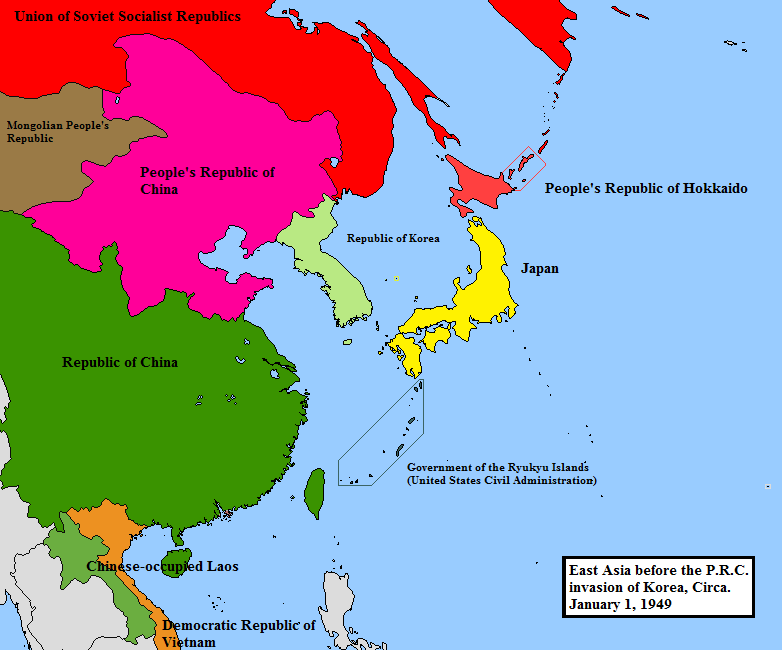
On September 07, 2017 Uncle Sam’s Korea-Vietnam War remains unfinished. Uncle Sam’s real Enemy is neither Korea nor Vietnam. The real Enemy is the threat of spread of Communism in Asia. Nixon-Kissinger paved the way for Communist China’s admission to the United Nations and as Permanent Member of UN Security Council. Uncle Sam will never get the opportunity again to pass resolution in the United Nations for the use of force to repel the Communist North Korea.

Rudranarasimham Rebbapragada

DOOM DOOMA DOOMSAYER

UNITED NATIONS DEFEATS SOVIET MOTION – SEPTEMBER 07, 1950

Clipped from: http://www.history.com/this-day-in-history/united-nations-defeats-soviet-motion?

Cold War

1950

Slightly more than two months after the United Nations approved a U.S. resolution calling for the use of force to repel the communist North Korean invasion of South Korea, the Security Council rejects a Soviet resolution that would condemn the American bombing of North Korea. The Security Council action was another victory for the United States in securing U.N. support for the war in Korea.

In June 1950, armed forces from communist North Korea attacked South Korea. Days after the invasion, the United States secured approval in the U.N.’s Security Council for a resolution calling for the use of force to repel the communists. The Soviet Union could have vetoed the resolution, but its representatives were boycotting the Security Council because of the U.N. decision not to seat the communist government of the People’s Republic of China. Just a few days after the Security Council resolution was passed, President Harry S. Truman ordered U.S. military forces into South Korea. The introduction of the U.S. forces turned the tide of the war, and by September 1950, the North Korean forces were in retreat and U.S. planes were bombing military targets inside North Korea. On September 7, the Soviet representative on the Security Council proposed a resolution condemning the United States for its “barbarous” bombing of North Korea. Referring to U.S. policies in Korea as “Hitlerian,” the Russian representative called the bombings “inhuman.” The U.S. representative responded by charging the North Koreans with numerous war crimes, including murdering prisoners of war. He also denied that the bombings were “inhuman,” insisting that the United States was using every effort to warn North Korean civilians to stay away from the military targets being hit. He concluded by stating, “The moral is plain: Those who sow the wind will reap the whirlwind. Moral guilt rests heavily upon the aggressors.” By a vote of 9 to 1, the Security Council defeated the Soviet resolution, with only the Russian representative voting to support it.

The Security Council defeat of the Russian resolution was another victory for the United States in securing U.N. support for the war effort in Korea. This war marked the first time the United Nations had ever approved the use of force, and U.S. officials were determined to maintain U.N. support for what was, in effect, a U.S. military effort. America supplied the vast majority of the ground, air, and sea forces that responded to the Security Council’s resolution calling for the use of force in Korea. The Soviets, sensing the grave consequences of their absence from the vote on that resolution, now desperately tried to attack U.S. actions in Korea. As they discovered with the crushing defeat of their resolution condemning the U.S. bombings, it was too late.

Also on this day

1813

United States nicknamed Uncle Sam

On this day in 1813, the United States gets its nickname, Uncle Sam. The name is linked to Samuel Wilson, a meat packer from Troy, New York, who supplied barrels of beef to the United States Army during the War of 1812.Wilson (1766-1854) stamped the barrels with “U.S.” for United…

Vietnam War

1965

Marines launch Operation Piranha

U.S. Marines and South Vietnamese forces launch Operation Piranha on the Batangan Peninsula, 23 miles south of the Marine base at Chu Lai. This was a follow-up to Operation Starlight, which had been conducted in August. During the course of the operation, the Allied forces stormed a stronghold…

1967

McNamara Line announced

U.S. Secretary of Defense Robert S. McNamara announces plans to build an electronic anti-infiltration barrier to block communist flow of arms and troops into South Vietnam from the north at the eastern end of the Demilitarized Zone (DMZ). The “McNamara Line,” as it became known, would employ state-of-the-art, high-tech…

Created with Microsoft OneNote 2016.

SEPTEMBER 08, 2017 – THE COLD WAR IN ASIA – UNFINISHED KOREA-VIETNAM WAR

SEPTEMBER 08, 2017 – THE COLD WAR IN ASIA – UNFINISHED KOREA-VIETNAM WAR

File:President Ford announces his decision to pardon ...
On en.wikipedia.org

President Ford And Watergate | www.imgarcade.com - Online ...
On imgarcade.com

American troops arrive in Korea to partition the country ...
On www.history.com

41 best images about Watergate Scandal on Pinterest ...
On www.pinterest.com

.: Gerald R. Ford Presidential Library in Ann Arbor, Michigan
On walkaboutwithwheels.blogspot.com

SEPTEMBER 08, 2017 – THE COLD WAR IN ASIA – UNFINISHED KOREA-VIETNAM WAR

All About America
On blogs.voanews.com

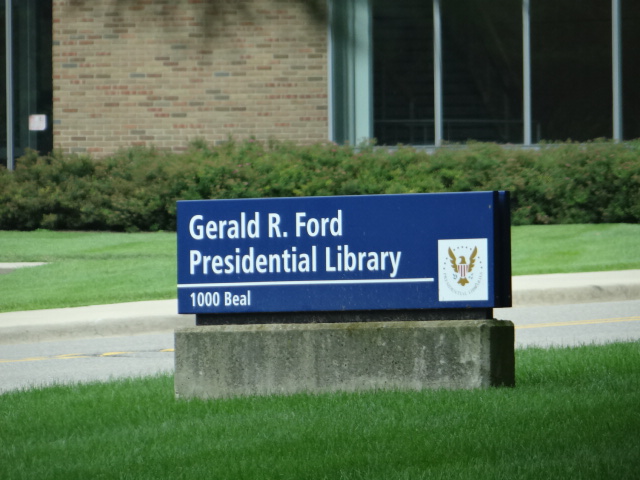
On September 08, 2017, I live in Ann Arbor, Michigan which hosts President Gerald R. Ford’s Presidential Library on the University of Michigan North Campus. I was serving US President Ford on September 08, 1974 as member of Special Frontier Force while Ford granted pardon to Nixon.
The United States missed an opportunity to investigate Nixon-Kissinger Vietnam Treason. The Cold War in Asia was placed on the backburner without resolving the problem posed by spread of Communism in Asia.

Rudranarasimham Rebbapragada
DOOM DOOMA DOOMSAYER

FORD PARDONS NIXON – SEPTEMBER 08, 1974

Clipped from: http://www.history.com/this-day-in-history/ford-pardons-nixon?

September 08, 1974: Ford pardons Nixon.... : History.com ...
On howldb.com

In a controversial executive action, President Gerald Ford pardons his disgraced predecessor Richard M. Nixon for any crimes he may have committed or participated in while in office. Ford later defended this action before the House Judiciary Committee, explaining that he wanted to end the national divisions created by the Watergate scandal.
The Watergate scandal erupted after it was revealed that Nixon and his aides had engaged in illegal activities during his reelection campaign–and then attempted to cover up evidence of wrongdoing. With impeachment proceedings underway against him in Congress, Nixon bowed to public pressure and became the first American president to resign. At noon on August 9, Nixon officially ended his term, departing with his family in a helicopter from the White House lawn. Minutes later, Vice President Gerald R. Ford was sworn in as the 38th president of the United States in the East Room of the White House. After taking the oath of office, President Ford spoke to the nation in a television address, declaring, “My fellow Americans, our long national nightmare is over.”
Ford, the first president who came to the office through appointment rather than election, had replaced Spiro Agnew as vice president only eight months before. In a political scandal independent of the Nixon administration’s wrongdoings in the Watergate affair, Agnew had been forced to resign in disgrace after he was charged with income tax evasion and political corruption. Exactly one month after Nixon announced his resignation, Ford issued the former president a “full, free and absolute” pardon for any crimes he committed while in office. The pardon was widely condemned at the time.
Decades later, the John F. Kennedy Library Foundation presented its 2001 Profile in Courage Award to Gerald Ford for his 1974 pardon of Nixon. In pardoning Nixon, said the foundation, Ford placed his love of country ahead of his own political future and brought needed closure to the divisive Watergate affair. Ford left politics after losing the 1976 presidential election to Democrat Jimmy Carter. Ford died on December 26, 2006, at the age of 93.

Also on this day

Cold War
1945

The Korean War
On alphahistory.com

American troops arrive in Korea to partition the country
U.S. troops land in Korea to begin their postwar occupation of the southern part of that nation, almost exactly one month after Soviet troops had entered northern Korea to begin their own occupation. Although the U.S. and Soviet occupations were supposed to be temporary, the division of Korea quickly became permanent.

Presidential
1974
President Ford pardons former President Nixon
On this day in 1974, President Gerald Ford, who assumed office on the heels of President Richard M. Nixon’s resignation, pardons his predecessor for his involvement in the Watergate scandal. Congress had accused Nixon of obstruction of justice during the investigation of the Watergate scandal, which began in 1972.

Vietnam War

Southeast Asia Treaty Organization - Wikipedia
On en.wikipedia.org

1954
SEATO established
Having been directed by President Dwight D. Eisenhower to put together an alliance to contain any communist aggression in the free territories of Vietnam, Laos, and Cambodia, or Southeast Asia in general, Secretary of State John Foster Dulles forges an agreement establishing a military alliance that becomes the Southeast Asia Treaty Organization.
1968

Keith Lincoln Ware, Major General, United States Army
On www.arlingtoncemetery.net

Vietnam War
ARVN general killed
Troung Quang An becomes the first South Vietnamese general killed in action when his aircraft is shot down. The commander of the U.S. 1st Infantry Division (more popularly known as the ‘Big Red One”), Maj. Gen. Keith L. Ware, suffered a similar fate when his helicopter was shot down…

Virtual Vietnam Veterans Wall of Faces | KEITH L WARE | ARMY
On www.vvmf.org

Chilling: North Korea Drops Nuclear Surprise For President ...
On myrightamerica.com

North Korean Threat Intensifies Exponentially - Not Liberal
On www.notliberal.com

vintage everyday: Amazing Vintage Photos of Korean War
On www.vintag.es

Korean War Slideshow | Article | The United States Army
On army.mil

Created with Microsoft OneNote 2016.

STAND UP FOR NATURAL RIGHTS OF JEWS AND TIBETANS

STAND UP FOR NATURAL RIGHTS OF JEWS AND TIBETANS

STAND UP FOR NATURAL RIGHTS OF JEWS AND TIBETANS IN THEIR HOMELANDS.

I stand up for Natural Rights of Jews to live in Judea and Samaria; and I stand up for Natural Rights of Tibetans to their ancestral Homeland. I support His Holiness the Dalai Lama’s Five-Point Peace Plan to stop Communist China’s Colonization of Tibet.

Rudranarasimham Rebbapragada

DOOM DOOMA DOOMSAYER

STAND UP FOR NATURAL RIGHTS OF JEWS AND TIBETANS. I SUPPORT DALAI LAMA’S FIVE-POINT PEACE PLAN. UNITE TIBET. STOP HAN CHINESE COLONIZATION OF TIBET.
STAND UP FOR NATURAL RIGHTS OF JEWS AND TIBETANS. STOP HAN CHINESE COLONIZATION OF TIBET.

BLOG: UN: JEWS CAN’T LIVE IN JUDEA AND SAMARIA, BUT 7.5 MILLION CHINESE CAN COLONIZE TIBET

STAND UP FOR NATURAL RIGHTS OF JEWS TO LIVE IN JUDEA AND SAMARIA.

http://www.americanthinker.com/blog/2017/08/un_jews_cant_live_in_judea_and_samaria_but_75_million_chinese_can_colonize_tibet.html

August 31, 2017

By Ezequiel Doiny

On August 30, 2017 Bloomberg reported,

“United Nations Secretary-General Antonio Guterres called on Israel to stop settlement construction in the West Bank…. We believe that settlement activity is illegal under international law.”

Why has United Nations Secretary-General Antonio Guterres never made similar statements about Tibet?

Stand Up for Natural Rights of Tibetans. Stop Han Chinese Tibet Colonization.

Tibetan students in New Delhi demonstrate at UN Information Center (photo: R.T.Y Rohini)

In his 5-point peace plan, the Dalai Lama called to stop Chinese colonization of Tibet.

“When the newly formed People’s Republic of China invaded Tibet in 1949/50, it created a new source of conflict.  This was highlighted when, following the Tibetan national uprising against the Chinese and my flight to India in 1959, tensions between China and India escalated into the border war in 1962.  Today large numbers of troops are again massed on both sides of the Himalayan border and tension is once more dangerously high.

“The real issue, of course, is not the Indo-Tibetan border demarcation.  It is China’s illegal occupation of Tibet, which has given it direct access to the Indian sub-continent.  The Chinese authorities have attempted to confuse the issue by claiming that Tibet has always been a part of China.  This is untrue.  Tibet was a fully independent state when the People’s Liberation Army invaded the country in 1949/50.

“Since Tibetan emperors unified Tibet, over a thousand years ago, our country was able to maintain its independence until the middle of this century.  At times Tibet extended its influence over neighboring countries and peoples and, in other periods, came itself under the influence of powerful foreign rulers – the Mongol Khans, the Gorkhas of Nepal, the Manchu Emperors and the British in India.

“It is, of course, not uncommon for states to be subjected to foreign influence or interference.  Although so-called satellite relationships are perhaps the clearest examples of this, most major powers exert influence over less powerful allies or neighbours.  As the most authoritative legal studies have shown, in Tibet’s case, the country’s occasional subjection to foreign influence never entailed a loss of independence.  And there can be no doubt that when Peking’s communist armies entered Tibet, Tibet was in all respects an independent state…

“Human rights violations in Tibet are among the most serious in the world.  Discrimination is practiced in Tibet under a policy of ‘apartheid’ which the Chinese call ‘segregation and assimilation’.  Tibetans are, at best, second class citizens in their own country.  Deprived of all basic democratic rights and freedoms, they exist under a colonial administration in which all real power is wielded by Chinese officials of the Communist Party and the army.

“Although the Chinese government allows Tibetans to rebuild some Buddhist monasteries and to worship in them, it still forbids serious study and teaching of religion.  Only a small number of people, approved by the Communist Party, are permitted to join the monasteries.

“While Tibetans in exile exercise their democratic rights under a constitution promulgated by me in 1963, thousands of our countrymen suffer in prisons and labor camps in Tibet for their religious or political convictions…

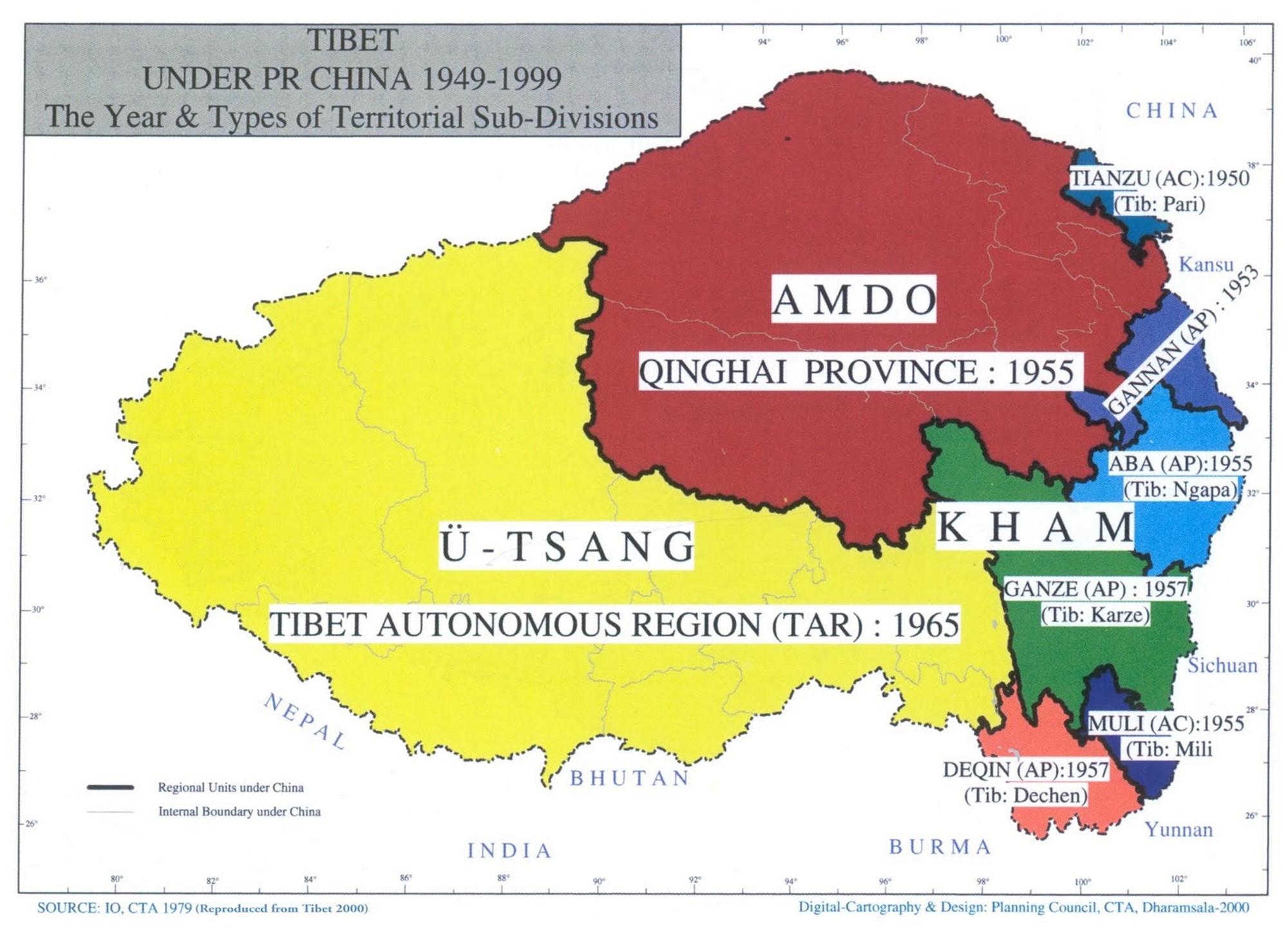
“The massive transfer of Chinese civilians into Tibet in violation of the Fourth Geneva Convention (1949), threatens the very existence of the Tibetans as a distinct people.  In the eastern parts of our country, the Chinese now greatly outnumber Tibetans.  In the Amdo province, for example, where I was born, there are, according to the Chinese statistics, 2.5 million Chinese and only 750,000 Tibetans.  Even in the so-called Tibet Autonomous Region (i.e., central and western Tibet), Chinese government sources now confirm that Chinese outnumber Tibetans.

“The Chinese population transfer policy is not new.  It has been systematically applied to other areas before.  Earlier in this century, the Manchus were a distinct race with their own culture and traditions.  Today only two to three million Manchurians are left in Manchuria, where 75 million Chinese have settled.  In Eastern Turkestan, which the Chinese now call Sinkiang, the Chinese population has grown from 200,000 in 1949 to 7 million, more than half of the total population of 13 million.  In the wake of the Chinese colonization of Inner Mongolia, Chinese number 8.5 million, Mongols 2.5 million.

“Today, in the whole of Tibet 7.5 million Chinese settlers have already been sent, outnumbering the Tibetan population of 6 million.  In central and western Tibet, now referred to by the Chinese as the “Tibet Autonomous Region”, Chinese sources admit the 1.9 million Tibetans already constitute a minority of the region’s population.  These numbers do not take the estimated 300,000-500,000 troops in Tibet into account – 250,000 of them in so-called Tibet Autonomous Region.

“For the Tibetans to survive as a people, it is imperative that the population transfer is stopped and Chinese settlers return to China.  Otherwise, Tibetans will soon be no more than a tourist attraction and relic of a noble past. “

Why has United Nations Secretary-General Antonio Guterres never complained about Chinese settlements in Tibet as he complains against Jewish settlements?

In a better analogy of the Arab-Israeli conflict, Israel plays the role of Tibet, the dozens of Arab countries that surround it are like China. The Palestinian Arabs serve as the spearhead of the dozens of Arab Nations that are trying to engulf the world’s only Jewish State (smaller than New Jersey) the same way gigantic China is trying to absorb Tibet.

Since United Nations Secretary-General Antonio Guterres is not planning to go to the Tibet to condemn the Chinese presence there as illegal, he should not come to Israel to call for the ethnic cleansing of Jews from Judea and Samaria.

Stand Up for Natural Rights of Tibetans. Stop Han Chinese Colonization of Tibet, Inner Mongolia, Manchuria, and East Turkestan.

THE COLD WAR IN ASIA – TIBETAN RESISTANCE FROM 1950s TO 2017

THE COLD WAR IN ASIA – TIBETAN RESISTANCE FROM 1950s TO 2017

The Cold War in Asia – Tibetan Resistance From 1950s To 2017. Communism is the root cause of ‘The Cold War in Asia’. Tibet and India’s attempts to befriend Communist China utterly failed.
The Cold War in Asia – Tibetan Resistance From 1950s To 2017. Communist Party of China imposes dictatorial regime with no transparency and public accountability.

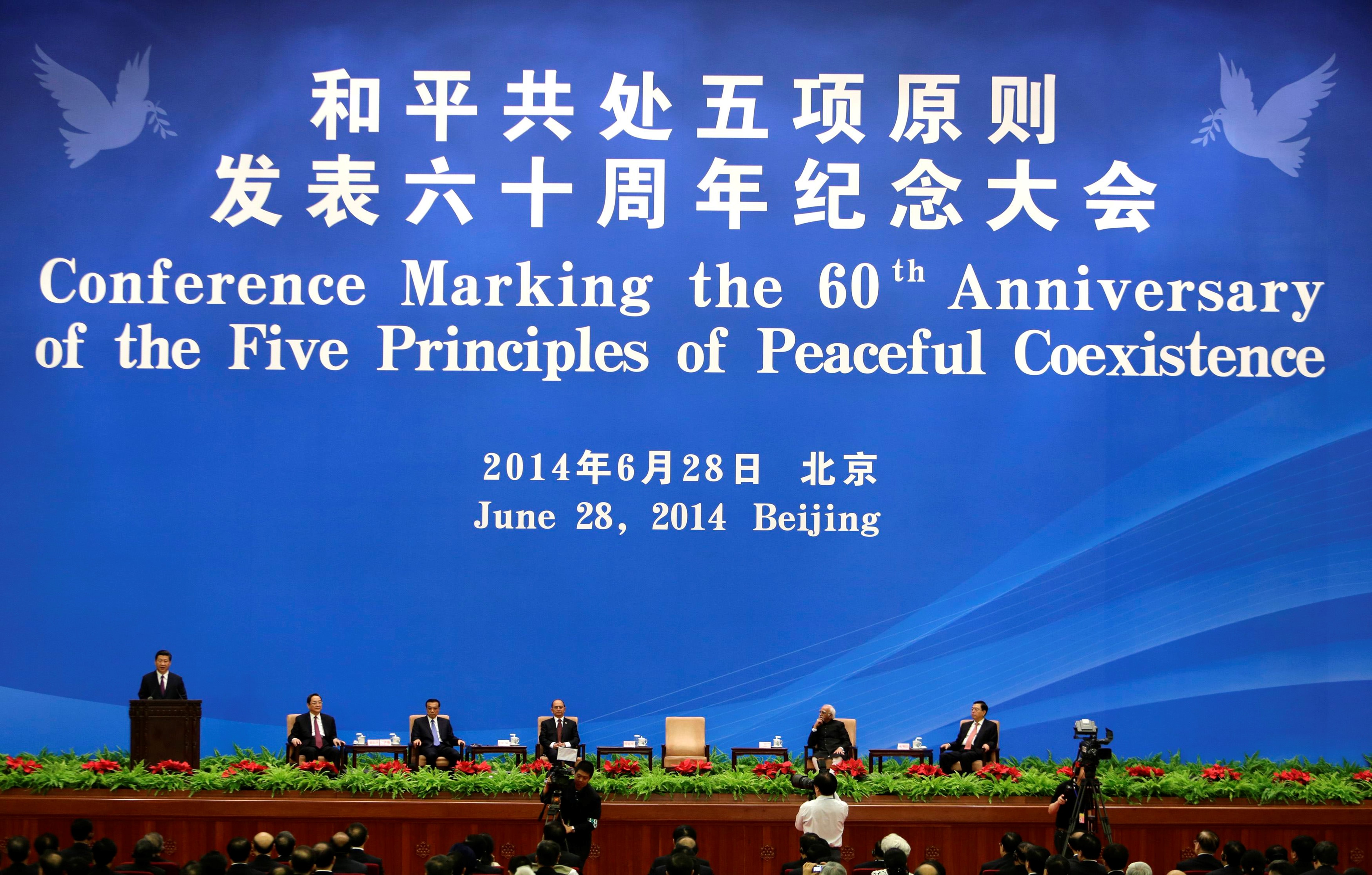
Introduction of Communism to mainland China on October 01, 1949 is the reason for ‘The Cold War in Asia’. Communism introduced dictatorial regime with no transparency and public accountability. On May 23, 1951, Tibet and Communist China signed Seventeen-Point Plan or 17-Point Agreement to ensure meaningful Tibetan Autonomy under Chinese Communist Party Governance. Further, India, and Communist China signed Panchsheel Agreement on April 29, 1954 to formalize international relations on Five-Principles of Peaceful Coexistence. Adherence to the Five-Principles of Peaceful Coexistence would indeed let China and India live together side by side with ‘Brotherly Love’ to declare “Hindi Chini Bhai Bhai.”

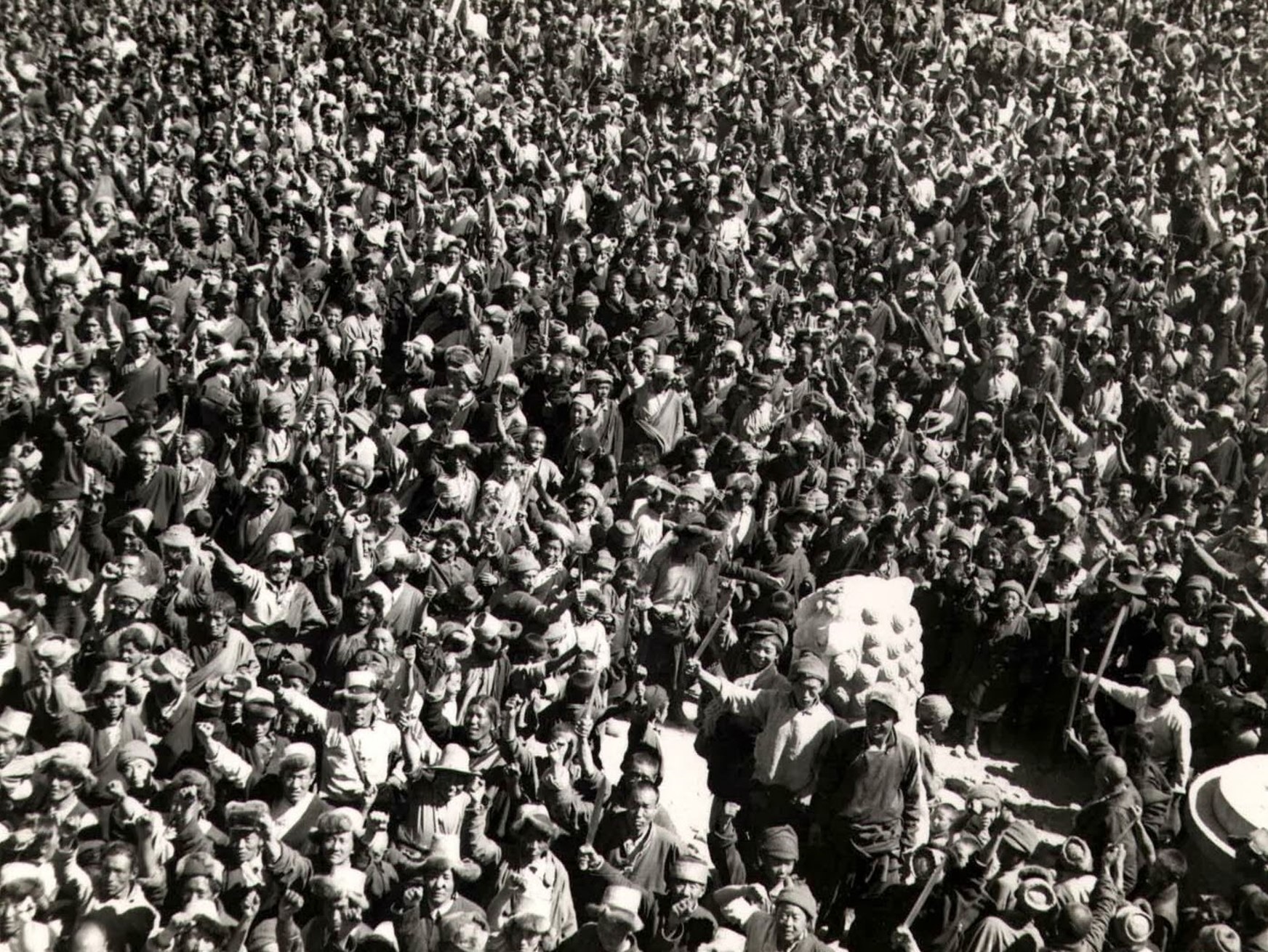
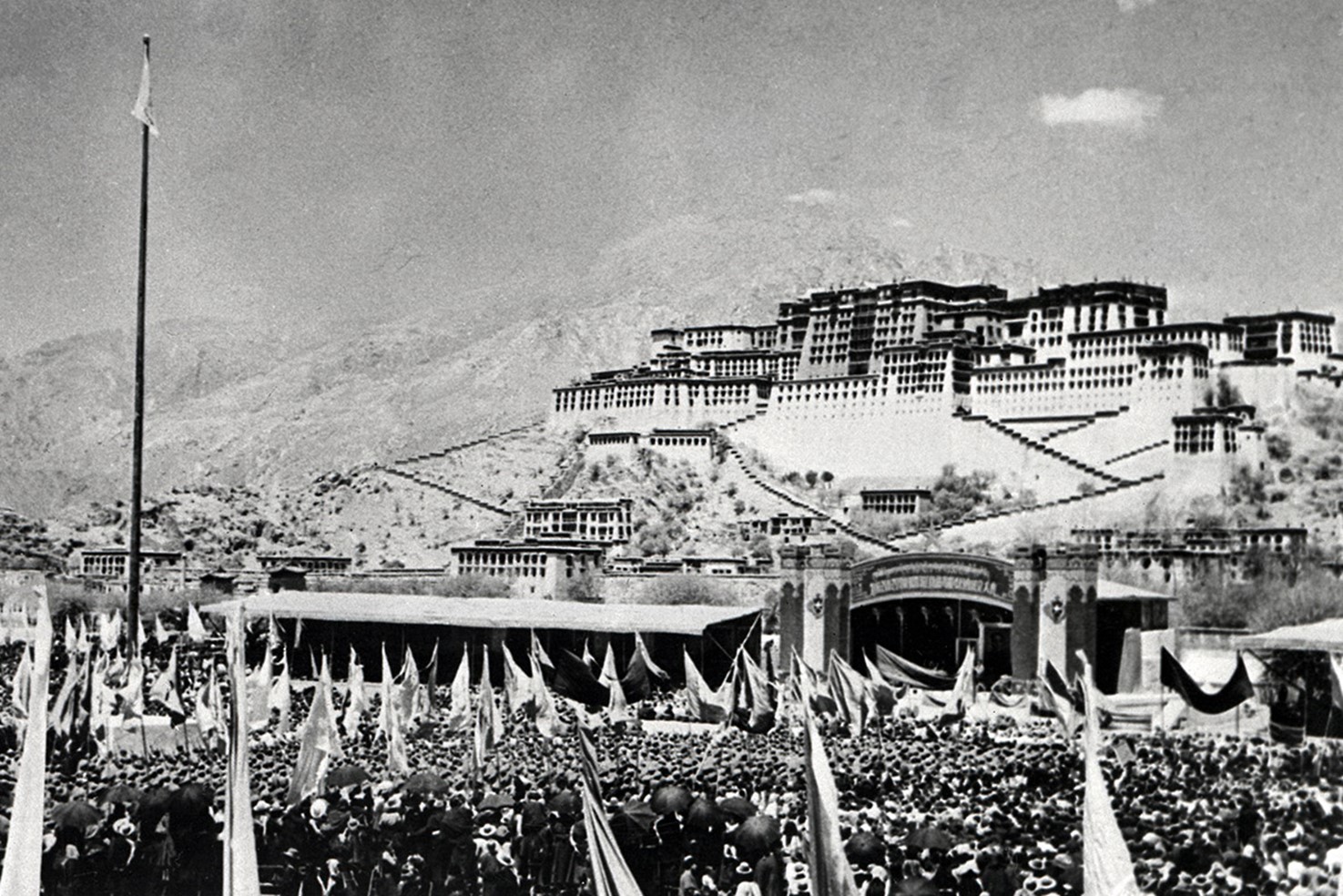
The Cold War in Asia – Tibetan Resistance From 1950s To 2017. Massive Tibetan National Uprising on March 10, 1959 is evidence for failed 17-Point Plan between Communist China and Tibet.
The Cold War in Asia – Tibetan Resistance From 1950s To 2017. Massive Tibetan National Uprising on March 10, 1959 is evidence of broken 17-Point Agreement between Communist China and Tibet.
The Cold War in Asia – Tibetan Resistance From 1950s To 2017. Introduction of Communism into mainland China on October 01, 1949 caused massive Tibetan Revolt against Communist Rule. Tibetans protesting in Lhasa on March 10, 1959.

Tibetan Resistance began in 1950s and continues in 2017 because of unwillingness of Communist Party of China to implement the 17-Point Plan as agreed. Republic of India adheres to principles of Democracy, Socialism, and Secularism. While Chinese people may embrace Buddhism, their system of Communist Party Governance with no transparency and public accountability will keep Tibetan Resistance alive. Buddhism may encourage and promote tourism but it cannot be used as the basis for formulating international relations by Secular Republic of India.

Rudranarasimham Rebbapragada

SPECIAL FRONTIER FORCE

INDIA, CHINA CANNOT DEFEAT EACH OTHER: DALAI LAMA

Clipped from: http://indianexpress.com/article/india/india-china-cannot-defeat-each-other-dalai-lama-4796446/

“India should develop a pilgrimage for Chinese people who follow Buddhism. These people can come to places like Bodh Gaya and can come closer to India emotionally as well,” he said.

The Cold War in Asia – Tibetan Resistance From 1950s To 2017. Tibet and India failed to befriend Communist China in spite of signing Agreements in 1951 and 1954.

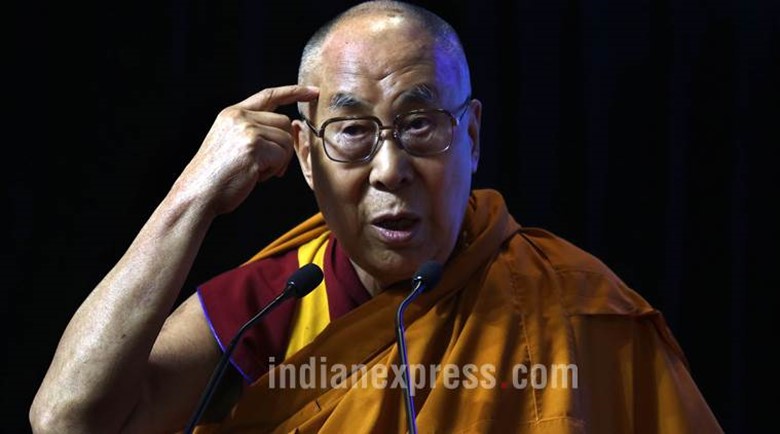
Tibetan spiritual leader the Dalai Lama gestures as he speaks during a ‘world peace and harmony conclave’ in Mumbai on Sunday. (Express photo By Pradip Das)

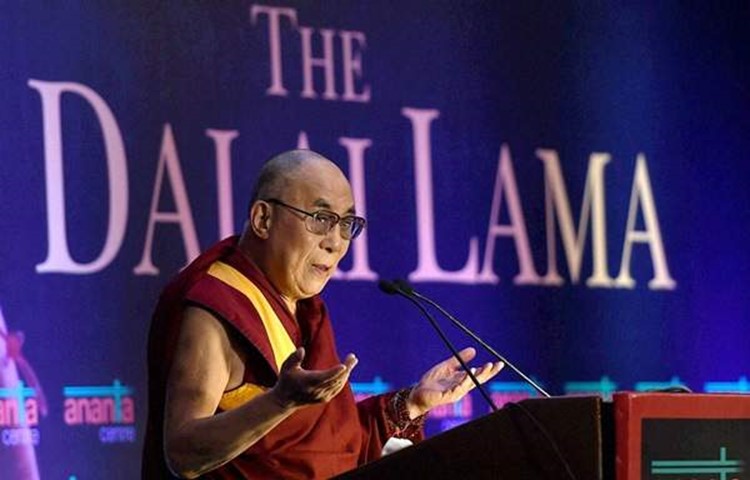
Tibetan spiritual leader the Dalai Lama on Monday said India and China cannot defeat each other and both the countries will have to live together as neighbours. The spirit of “Hindi-Chini Bhai Bhai” is the only way forward, he stressed. “In the current border situation, neither India nor China can defeat the other. Both countries are militarily powerful,” the Dalai Lama said. Both the countries will have to live together as neighbours, he said.

“There may be some incidents of cross-border firing. It does not matter,” he said. The Dalai Lama was responding to questions by reporters at an event here.

He said, “In 1951, a 17-point agreement was signed between the Local Government of Tibet and People’s Republic of China for peaceful liberation of Tibet. Today China is changing and has become a country with the highest Buddhist population. They (India and China) should go back to ‘Hindi Chini Bhai Bhai’ again.”

It is a Communist government but Buddhism is widely accepted, he said.

“Earlier, the Dalai Lama used to be the head of spiritual and political movements in Tibet, but in 2011, I totally retired from politics. It was a way of democratizing the institutions, because it had some feudal elements in it,” said the 14th Dalai Lama.

He suggested that India should “develop pilgrimage for Chinese” people who are followers of Buddhism.

“We must understand that the followers of Buddhism in China are actually following the line of Indian Buddhism that came from Nalanda (Indian seat of learning) and Sanskrit,” said the spiritual leader.

“India should develop a pilgrimage for Chinese people who follow Buddhism. These people can come to places like Bodh Gaya and can come closer to India emotionally as well,” he said.

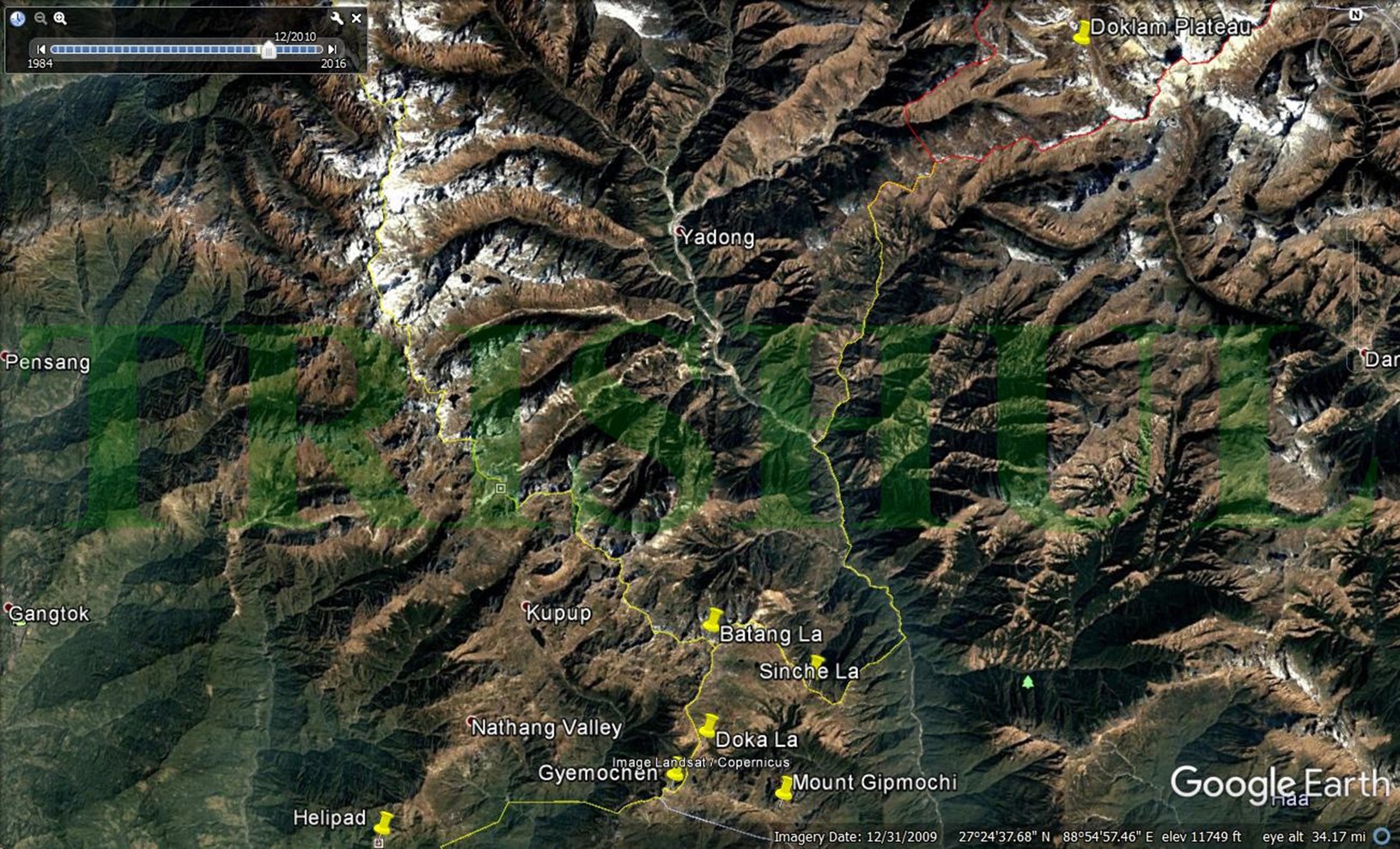
India and China have been locked in a standoff in the Doklam area since June 16 after Chinese troops began constructing a road near the Bhutan trijunction.

Commenting on the definition of secularism in the Indian context, the Dalai Lama said, “Respect for all religions and even the non-believers too. This is the definition of secularism in Indian context.”

“During the French Revolution and the Bolshevik movement, people opposed the exploitation by their kings and queens. Then religious institutions were supporting the feudal lords; hence the revolution also went against them. That’s why in the western context, secularism has become a word expressing disrespect to religion,” he said.

“Even an Indian communist leader had once told me that as a communist party worker, he does not believe in God. But for the people who he works for, they do believe in God and it is his duty to respect their feelings. I welcome such a mature approach,” the Dalai Lama said.

The Cold War in Asia – Tibetan Resistance From 1950s To 2017. Tibetans remain opposed to Communist Party of China and resist its dictatorial regime.
The Cold War in Asia – Tibetan Resistance From 1950s To 2017. Tibetans resist Communist Party of China’s dictatorial regime.

THE COLD WAR IN ASIA – INDIA AND TIBET ARE MILITARY PARTNERS TO CONTAIN COMMUNISM

THE COLD WAR IN ASIA – INDIA AND TIBET ARE MILITARY PARTNERS TO CONTAIN COMMUNISM

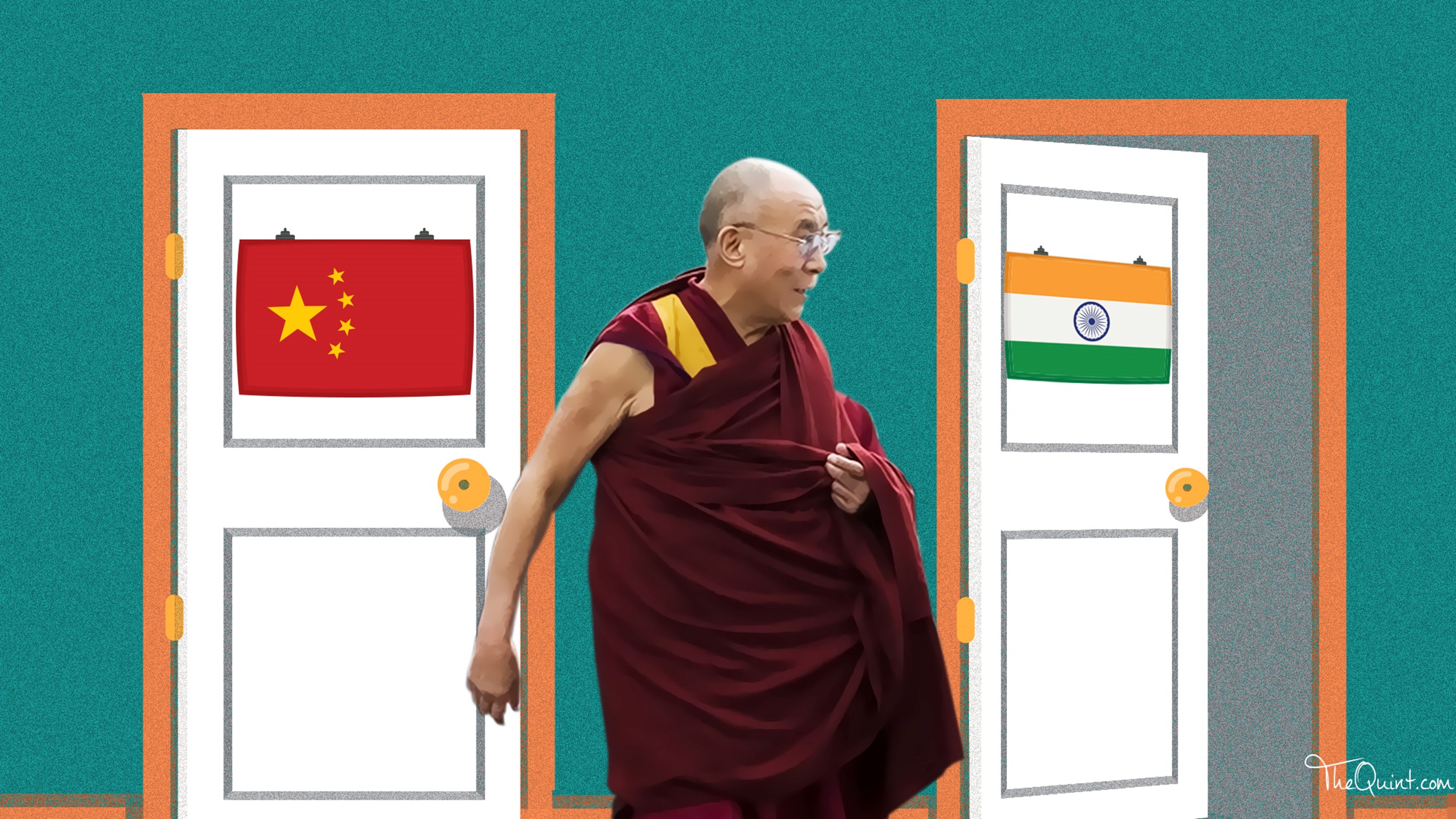
I warmly appreciate His Holiness the Dalai Lama’s remarks about India and China living side by side as “Brothers(Bhai-Bhai).”

The Standoff between China and India inside Bhutan’s territory called Doklam is not really serious. The real issue is that of dangers posed by spread of Communism in Asia. Both India, and Tibet recognized this real danger to foster military partnership or alliance to checkmate, to engage, to confront, to contain, to resist, and to battle against dark, and evil forces of Communism. To that extent, both India, and Tibet must consider deployment of Reserve Duty Brigade (Mobile Reserve Force or MRF) of Special Frontier Force to defend their shared values.

Rudranarasimham Rebbapragada

SPECIAL FRONTIER FORCE

DALAI LAMA INVOKES ‘HINDI CHINI BHAI BHAI’, SAYS DOKLAM STANDOFF NOT VERY SERIOUSOFF NOT


Clipped from: http://www.newindianexpress.com/nation/2017/aug/09/dalai-lama-invokes-hindi-chini-bhai-bhai-says-doklam-standoff-not-very-serious-1640716.html

Tibetan spiritual leader Dalai Lama. (File photo | PTI)

NEW DELHI: Describing the ongoing Doklam standoff as “not very serious”, the Dalai Lama today invoked “Hindi Chini Bhai Bhai”, a catch phrase that defined Sino-India ties in the 1950s, stressing that the two neighbors have to live side by side in peace.     

Asserting that any problem has to be resolved through talks, the 81-year-old Tibetan spiritual leader said the theme of 21st century should be dialogue.

“That’s the only away. One side’s retreat and defeat is an old-time thinking. In modern times, every country is dependent on each other,” he said, speaking at the Rajendra Mathur Memorial Lecture organized by the Editors Guild of India here.     

The spiritual leader, who calls himself a “chela” (disciple) of India, also needled China saying he can do more in India, which has freedom.

“Where there is no freedom, I don’t like. There is some tension, but I do not think it is very serious. We need to make distinction between people and governments. The other day, I mentioned that Hindi-Chini Bhai is the only way. India and China have to live side by side,” the Dalai Lama said, even as he added that “propaganda and wrong information make things complicated”.     

The Dalai Lama, who had fled a Chinese State crackdown in Lhasa and took shelter in India in 1959, said occasionally the two neighbors use “harsh words”, and added as a reminder that the Chinese forces eventually withdrew though they had reached Bomdila in 1962.     

Queried about any possible resumption of talks between the Central Tibetan Authority and the Chinese side, he said it may take place after the 19th national congress of the Communist Party of China, which is slated later this year. “But nothing is definite,” he said.     

India and China have been locked in a face-off in the Doklam area of the Sikkim sector for more than 50 days after Indian troops stopped the Chinese Army from building a road in the area. China claimed it was constructing the road within its territory and has been demanding immediate withdrawal of the Indian troops from the disputed Doklam plateau.     

Bhutan says Doklam belongs to it but China claims it to be its territory and says Thimphu has no dispute with Beijing over it.     

External Affairs Minister Sushma Swaraj had recently said both sides should first pull back their troops for any talks to take place, favoring a peaceful resolution of the border standoff. 


THE COLD WAR IN ASIA – UNFINISHED VIETNAM WAR

THE COLD WAR IN ASIA – UNFINISHED VIETNAM WAR

The Cold War in Asia – Unfinished Vietnam War. Spread of Communism to Asia undermines Natural Freedom, Natural Balance, and Natural Equilibrium shaping living experience of people.

In my analysis, the border tensions between India and Communist China are mere symptoms of ‘The Cold War in Asia’.

Nations of ‘Free World’ were alarmed by the spread of Communism into Asia. United States spent billions of dollars to prevent Communist takeover of China. Having failed to do so, United States pursued a policy of containing the spread of Communism in Asia. In the battles of Korean Peninsula, and Vietnam, Communists prevailed with support from Soviet Union and Communist China.

India’s border tension problems began with Red China’s illegal occupation of Tibet since 1950. During 1960s and 1970s, the United States and India had opportunity to launch Tibet Campaign to defend Freedom, Democracy, Peace, and Justice in Asia. Most unfortunately, during 1971-72, Nixon-Kissinger Vietnam Treason placed ‘The Cold War in Asia’ on ‘back-burner’.

The Cold War in Asia – Unfinished Vietnam War. United States, India, and Tibet missed a golden opportunity to drive Communism out of Tibet. US President Eisenhower’s Visit to India during December 1956.
The Cold War in Asia – Unfinished Vietnam War. Both Tibet, and India hoped to contain threat posed by Communism through negotiations.

I am not surprised by Communist China’s military assertiveness for the US withdrew without accomplishing ‘War for Peace’ Mission fervently advocated by US President Dwight D. Eisenhower in December 1956 while on visit to India.

Rudranarasimham Rebbapragada

SPECIAL FRONTIER FORCE

CHINA’S TOUGH STANCE ON INDIA DISPUTE RAISING CONCERN ACROSS SOUTHEAST ASIA, ANALYSTS SAY

Clipped from: http://www.scmp.com/news/china/diplomacy-defence/article/2104093/chinas-tough-stance-india-dispute-raising-concern

Beijing’s handling of protracted conflict in Himalayas has had a spillover effect in the region and fueled suspicion

The Cold War in Asia – Unfinished Vietnam War. Border tensions, Border Conflicts along Himalayan Frontier are symptoms of spread of Communism in Asia.

Vehicles travel along a mountain road near the Nathu La Pass, an open trading post in the Himalayas between India and China, in Sikkim, India. Photo: Bloomberg

The protracted border dispute between China and India in the Himalayas has created a “spillover effect” as China’s neighbors become unsettled by its tough handling of the escalating conflict between the two Asian giants, foreign policy experts have said.

China’s Foreign Minister Wang Yi and his Indian counterpart Smt. Sushma Swaraj are scheduled to attend the Asean foreign ministers’ meeting in Manila later this week. And while the North Korean nuclear crisis and South China Sea disputes are expected to dominate the meeting, analysts will also be keeping a close eye on how members of the 10-nation group interact with China and India.

Hostile border dispute with India could damage China’s global trade plan, experts warn

The Association of Southeast Asian Nations generally regards a robust Indian presence in the region as a useful deterrent against China, which has been increasingly assertive in its approach to handling territorial issues, as has been the case in the Himalayas.

The Cold War in Asia – Unfinished Vietnam War. Border tensions and Border Conflicts along Himalayan Frontier are symptomatic of Communist domination in Asia.

The disputed Doklam region (called Donglang by China) on the India, Bhutan and China tri-border. Graphic: SCMP

Are China-India trade ties turning sour amid border standoff?

China and India last week held their first substantial talks since the dispute broke out more than a month ago in the Doklam region, where the pair shares a border with Bhutan. Chinese State Councilor Yang Jiechi met Indian National Security Adviser Ajit Doval in Beijing, though neither showed any signs of backing down and tensions remain high.

Also last week, China’s Defence ministry issued its strongest warning yet to India, with a spokesman saying Beijing had stepped up its deployment along the unmarked border and would protect its sovereignty “at all costs”.

Richard Javad Heydarian, a political scientist at the Manila-based De La Salle University, said the stand-off in Doklam had had a “spillover effect” by fueling suspicion among countries that are caught in separate territorial disputes with China.

Dispatch from Doklam: Indians dig in for the long haul in standoff with China

“People are asking, if China is really peaceful, why are there so many countries having disputes with China?” he said.

Such sentiment may create fertile ground for Southeast Asian countries to leverage China’s influence with engagement with India.

Vietnam’s foreign minister and deputy prime minister, Pham Binh Minh, has called on India to play a greater role in the region and to partner with Southeast Asian countries on strategic security and promoting freedom of navigation in South China Sea.

The Cold War in Asia – Unfinished Vietnam War. Border Tensions, and Border Conflicts along Himalayan Frontier are symptomatic of spread of Communism in Asia.

India Prime Minister Narendra Modi and President Xi Jinping at a BRICS leaders’ meeting with the bloc’s Business Council in Goa last October 16. Photo: AFP

A few days after Minh spoke, Vietnam granted Indian Oil firm ONGC Videsh a two-year extension on its plan to explore a Vietnamese oil block in an area of the South China Sea contested by China and Vietnam.

Analysts said recent developments have wide strategic implications – pointing to how Asia is increasingly defined by the China-India rivalry and the renewed tensions between the two Asian giants.

How India border stand-off gives China a chance to burnish its global image

Nisha Desai Biswal, former US assistant secretary of state for South and Central Asia, was quoted by Indian media PTI as saying that China needs to acknowledge that “there is growing strategic and security capability across Asia” and that “India is a force to be reckoned with”.

Wang Yi on Tuesday backed Philippines President Rodrigo Duterte’s idea of forming joint energy ventures in the disputed South China Sea, warning that unilateral action could cause problems and damage both sides.

The Cold War in Asia – Unfinished Vietnam War. Border Tensions and Border Conflicts along Himalayan Frontier are symptomatic of spread of Communism in Asia.

A Chinese soldier, left, is shown next to an Indian soldier at the Nathu La border crossing between India and China in India’s northeastern Sikkim state. Photo: AFP

Duterte on Monday said a partner had been found to develop oil fields and exploration, and exploitation would restart this year.

However, analysts warn that India’s strong position in the standoff has strengthened the hawkish voices in the Philippines who seize opportunities to criticize Duterte’s détente policy towards China and “push forward the narrative that the Philippines needs to be careful on how to approach China and its territorial expansion”, Heydarian said.

Explore the China-India border standoff

Under Indian Prime Minister Narendra Modi’s “Act East” policy, India in recent years has formed strategic partnerships with Southeast Asian countries including Vietnam, Indonesia, Malaysia and Singapore, and Northeast Asian countries including Japan and South Korea.

During the “India-Asean Delhi Dialogue IX” early this month, Indian External Affairs Minister Sushma Swaraj said New Delhi remained committed to enhancing maritime cooperation with Asean as well as upholding freedom of navigation and respect for international law in the region.

The Cold War in Asia – Unfinished Vietnam War. Border Tensions, and Border Conflicts along Himalayan Frontier are symptomatic of spread of Communism in Asia.

A Chinese soldier gestures as he stands near an Indian soldier on the Chinese side of the ancient Nathu La border crossing between India and China. Photo: AFP

Heydarian suggests that India’s upgrading of its strategic partnership with Asean and increasing its strategic presence in the South China Sea could be a way of pushing back against China.

Even a non-claimant Southeast Asian state such as Thailand “would see the benefit of China being challenged in the South Asia theatre”, said Thitinan Pongsudhirak, an international relations scholar at Bangkok-based Chulalongkorn University.

“India’s standing up to China can only be a boon for Southeast Asian countries even when they don’t say so openly,” he said, “Any major power keeping China in check can only yield geopolitical benefits to Southeast Asia as the region is wary of China’s growing assertiveness.”

China is being ‘unusually aggressive’ in border row

But Pongsudhirak also said that India, a “latecomer to Southeast Asia’s geopolitics”, still lacks strategic depth in terms of military reach and economic wherewithal. “But in combination with other middle powers like Japan, India can have a significant impact in Southeast Asia’s power dynamics,” he said.

Despite Southeast Asian countries’ welcoming attitude, India has remained cautious towards more strongly engaging with the region, observers said.

The Cold War in Asia – Unfinished Vietnam War. Border Tensions, and Border Conflicts along Himalayan Frontier represent Communist Expansionism in Asia.

An Indian Soldier stands at the Nathu La border crossing between India and China in India’s northeastern Sikkim state. Photo: Handout

“Southeast Asia is a natural extension of India’s security horizons in light of its growth as a regional power,” said Rajesh Manohar Basrur, a South Asia specialist with Nanyang Technological University.

Basrur said that while competition with China is a major driver of India’s engagement with Southeast Asia, India’s commitment to the region remains limited with measures amounting to no more than “symbolic acts such as military exercises, [to] generate a strategic environment aimed at building up political-psychological pressure on [China].”

Why India is cool towards China’s Belt and Road

Sourabh Gupta, a senior specialist at the Institute for China-America Studies in Washington, said that as India tries to limit fallout from its Doklam intervention, it will not want to expand the theatre of conflict or widen the geography of competition in the short-term.

“But I can foresee India making a qualitatively greater effort, albeit quietly, to build up Vietnam’s naval and law enforcement capacity to confront and deter Chinese assertiveness,” he said.

Gupta also warned that the situation in the South China Sea could lapse into even further conflict.

The Cold War in Asia – Unfinished Vietnam War. Border Tensions, and Border Conflicts along Himalayan Frontier are symptomatic of Communist Expansionism in Asia.

Chinese troops hold a banner which reads, “You’ve crossed the border, please go back.”

“India and China have a fairly rich menu of boundary management protocols which effectively translate into engagements between very lightly armed personnel from either side when a standoff breaks out,” he said.

“That is different from the situation in the South and East China Sea where engagement protocols are still very rudimentary and could see sharp escalatory spirals.”

The Cold War in Asia – Unfinished Vietnam War. Armed Conflicts in China, Korea, Vietnam, and Tibet could not checkmate spread of Communism in Asia.

MAN vs NATURE – THE BATTLE FOR QINGHAI-TIBET PLATEAU

MAN vs NATURE – THE BATTLE FOR QINGHAI-TIBET PLATEAU


Natural Forces, Natural Mechanisms patiently worked over thousands of years to create Natural Conditions that shaped Tibetan experience of Natural Freedom, Natural Equilibrium, Natural Peace, Natural Harmony, and Natural Tranquility. Tibetans maintained their frugal lifestyles in accordance with Laws of Nature.


Communist China after her illegal occupation of Tibet, continues to apply Physical Force to subjugate Tibet and Nature that operates Tibetan existence. The Battle for Qinghai-Tibet Plateau has commenced and is far from over.


Rudranarasimham Rebbapragada

DOOM DOOMA DOOMSAYER


CHINA OPENS $4 BILLION EXPRESSWAY ON PERMAFROST OF QINGHAI-TIBET PLATEAU

Clipped from: http://www.livemint.com/Politics/CWjlzpI5eEQcPUgYjIVRcM/China-opens-4-billion-expressway-on-permafrost-of-QinghaiT.html

China took six years to construct the road, at a total cost of nearly 27 billion yuan. Photo: Reuters

Beijing: China has opened an expressway on the permafrost of Qinghai-Tibet Plateau, the world’s highest, at a total cost of $4 billion.

The 634.8km expressway section, which connects Gonghe County with the city of Yushu in northwest China’s Qinghai Province, was built at an average altitude of over 4,000 meters. Up to 36% of the road is built on permafrost that could become unstable due to temperature changes caused by vehicles. Advanced technology was developed to keep the ground surface stable for the construction and operation of the expressway, said Niu Jiangzhong, from Electrical Engineering Co. Ltd of China Railway 12th Bureau Group.

Construction of the road took over six years, at a total cost of nearly 27 billion yuan ($4 billion). To protect the local environment, vegetation was removed during construction and later replanted along the roadside. The expressway has shortened the travel time between the provincial capital Xining and Yushu from 12 to just eight hours, state-run Xinhua news agency reported. PTI

First Published: Tue, Aug 01 2017. 05 03 PM IST


NIXON-KISSINGER VIETNAM TREASON – THE CIA’S CANCELLED WAR

NIXON-KISSINGER VIETNAM TREASON – THE CIA’S CANCELLED WAR

NIXON-KISSINGER VIETNAM TREASON – THE CIA’S CANCELLED WAR.

‘TIBET: THE CIA’S CANCELLED WAR’ fails to describe Nixon-Kissinger Vietnam Treason during 1971-72 when Americans were fighting a bloody War in Vietnam against Communists supported by the Soviet Union and Red China. As I was part of this CIA Mission in Tibet, I knew that Tibet and India were willing to help the US by fighting against Communists inside Tibet rather than directly engaging Communists in Vietnam. Tibet and India want to choose their Battlefield in full support of the US Policy to engage and contain the spread of Communism. The Central Intelligence Agency or CIA has no vested powers to wage or fight wars. “The Cancelled War” is simply an act of Treason. The 37th President of the United States chose to provide support and comfort to the Enemy during War waged on behalf of the United States.

In 1971-72, CIA Mission in Tibet never ended. The Mission continued without direct participation of American nationals. I can appreciate CIA’s unwillingness to divulge the truth about its Mission which is always sanctioned by the executive powers vested in the US President. In my analysis, this War will be fought to restore Balance of Power in Southern Asia.

Rudranarasimham, Rebbapragada

DOOM DOOMA DOOMSAYER

TIBET: THE CIA’S CANCELLED WAR

JONATHAN MIRSKY

NIXON-KISSINGER VIETNAM TREASON – CIA’S CANCELLED WAR

Lhamo Tsering Collection

Resistance fighters on the Tibetan border during the early years of the CIA’s Tibet program

For much of the past century, US relations with Tibet have been characterized by kowtowing to the Chinese and hollow good wishes for the Dalai Lama. As early as 1908, William Rockhill, a US diplomat, advised the Thirteenth Dalai Lama that “close and friendly relations with China are absolutely necessary, for Tibet is and must remain a portion of the Ta Ts’ing [Manchu] Empire for its own good.” Not much has changed with the Fourteenth Dalai Lama one hundred years later. After a meeting in 2011 with President Obama in the White House Map Room—the Oval Office being too official—the Dalai Lama has ushered out the back door, past the garbage cans. All this, of course, is intended to avoid condemnation from Beijing, which regards even the mildest criticism of its Tibet policy as “interference.”

However, there was one dramatic departure from the minimalist approach. For nearly two decades after the 1950 Chinese takeover of Tibet, the CIA ran a covert operation designed to train Tibetan insurgents and gather intelligence about the Chinese, as part of its efforts to contain the spread of communism around the world. Though little known today, the program produced at least one spectacular intelligence coup and provided a source of support for the Dalai Lama. On the eve of Richard Nixon’s historic 1972 meeting with Mao, the program was abruptly canceled, thus returning the US to its traditional arms-length policy toward Tibet. But this did not end the long legacy of mistrust that continues to color Chinese-American relations. Not only was the Chinese government aware of the CIA program; in 1992, it published a white paper on the subject. The paper included information drawn from reliable Western sources about the agency’s activities, but laid the primary blame for the insurgency on the “Dalai Lama clique,” a phrase Beijing still uses today.

The insurgency began after the People’s Liberation Army invaded Tibet following its defeat of the Nationalists, and after Beijing forced the Dalai Lama’s government to recognize Chinese administration over the region. In 1955, a group of local Tibetan leaders secretly plotted an armed uprising, and rebellion broke out a year later, with the rebels besieging local government institutions and killing hundreds of government staff as well as Han Chinese people. In May 1957, a rebel organization and a rebel fighting force were founded and began killing communist officials, disrupting communication lines, and attacking institutions and Chinese army troops stationed in the region.

By that point, the rebellion had gained American backing. In the early 1950s, the CIA began to explore ways to aid the Tibetans as part of its growing campaign to contain Communist China. By the second half of the decade, “Project Circus” had been formally launched, Tibetan resistance fighters were being flown abroad for training, and weapons and ammunition were being airdropped at strategic locations inside Tibet. In 1959, the agency opened a secret facility to train Tibetan recruits at Camp Hale near Leadville, Colorado, partly because the location, more than 10,000 feet above sea level, might approximate the terrain of the Himalayas. According to one account, some 170 “Kamba guerrillas” passed through the Colorado program.

While the CIA effort never produced a mass uprising against the Chinese occupiers, it did provide one of the greatest intelligence successes of the Cold War, in the form of a vast trove of Chinese army documents captured by Tibetan fighters and turned over to the CIA in 1961. These revealed the loss of morale among Chinese soldiers, who had learned of the vast famine that was wracking China during The Great Leap Forward. Over the next decade, however, there was growing disagreement in Washington over the CIA’s activities in Tibet, and in 1971, as Henry Kissinger prepared for Nixon’s meeting with Mao, the program was wound down.

“Although Tibet may not have been on the table in the Beijing talks, the era of official US support for the Tibetan cause was over,” recalled John Kenneth Knaus, a forty-year CIA veteran, in his 1999 book Orphans of the Cold War: America and the Tibetan Struggle for Survival. “There was no role for Tibet in Kissinger’s new equation.” By 1975, President Gerald Ford could say to a skeptical Deng Xiaoping, China’s future leader, “Let me assure you, Mr. Vice-Premier, that we oppose and do not support any [United States] governmental action as far as Tibet is concerned.”

Many friends of Tibet and admirers of the Dalai Lama, who has always advocated nonviolence, believe he knew nothing about the CIA program. But Gyalo Thondup, one of the Dalai Lama’s brothers, was closely involved in the operations, and Knaus, who took part in the operation, writes that “Gyalo Thondup kept his brother the Dalai Lama informed of the general terms of the CIA support.” According to Knaus, starting in the late 1950s, the Agency paid the Dalai Lama $15,000 a month. Those payments came to an end in 1974.

In 1999, I asked the Dalai Lama if the CIA operation had been harmful to Tibet. “Yes, that is true,” he replied. The intervention was harmful, he suggested because it was primarily aimed at serving American interests rather than helping the Tibetans in any lasting way. “Once the American policy toward China changed, they stopped their help,” he told me. “Otherwise our struggle could have gone on. Many Tibetans had great expectations of CIA [air] drops, but then the Chinese army came and destroyed them. The Americans had a different agenda from the Tibetans.”

This was exactly right, and the different goals of the Agency and the Tibetans are explored fully by the Tibetan-speaking anthropologist Carole McGranahan in her Arrested Histories: Tibet, the CIA, and Memories of a Forgotten War (2010). Although sometimes clouded by anthropological jargon, her account fascinatingly explores how differently from their American counterparts the Tibetan veterans remember the CIA operation. A striking example is the matter of the Chinese army documents, whose capture in a Tibetan ambush of a high-ranking Chinese officer is depicted in grisly detail in a huge painting in the CIA’s museum in Washington. In addition to revealing low Chinese morale, the documents disclosed the extent of Chinese violence in Tibet. “This information was the only documentary proof the Tibetan government [in exile] had of the Chinese atrocities and was therefore invaluable,” McGranahan notes. Yet the documents and their capture rarely came up during her long interview sessions with the veterans. “Why is it that this achievement, so valued by the US and Tibetan governments, is not remotely as memorable for [the] soldiers?”

One reason is that the Tibetan fighters were told nothing about the value of the documents, which they couldn’t read. One veteran explains to her:

Our soldiers attacked Chinese trucks and seized some documents of the Chinese government. After that, the Americans increased our pay scale. Nobody knew what the contents of those documents were. At that time, questions weren’t asked. If you asked many questions, then others would be suspicious of you.

The leader of the ambush tells her that “as a reward, the CIA gave me an Omega chronograph,” but he, too, had little knowledge of the documents’ importance. As McGranahan shows in extensive detail, the veterans were preoccupied above all by their devotion to the Dalai Lama, whom they wanted to resume his position as supreme leader of an independent Tibet.

After the CIA mission was ended, Tibet became increasingly marginal to Washington’s China policy, as Knaus has now made clear in a second book, Beyond Shangri-la: America and Tibet’s Move into the Twenty-First Century. The reality is that American presidents now face a world power in Beijing. In language that sums up the cats-cradle of American justifications for ignoring Tibet, ex-Assistant Secretary of State for East Asia Marshall Green recalls to Knaus, “there was nothing we could do to help the Tibetans except by improving our relations with the Chinese Communists so that we might be in a position to exert pressure on them to moderate their policies towards the Tibetans.” Green “admitted that this was ‘perhaps a rationalization.'”

President Obama will soon meet the new Chinese leader, Xi Jinping. His advisers will have reminded him of the encounter between his predecessor, Bill Clinton, and then-Chinese president Jiang Zemin on June 27, 1998. In that meeting, Clinton assured Jiang that, “I agree that Tibet is a part of China, an autonomous region of China. And I can understand why the acknowledgment of that would be a precondition of dialog with the Dalai Lama.” Banking on his well-known charm, Mr. Clinton added, “I have spent time with the Dalai Lama. I believe him to be an honest man, and I believe if he had a conversation with President Jiang, they would like each other very much.” Jiang, it is reported, threw back his head and laughed. Clinton’s suggestion was omitted from the official Chinese transcript.

April 9, 2013, 2:29 pm


© 1963-2017 NYREV, Inc. All rights reserved.

NIXON-KISSINGER VIETNAM TREASON – CIA’S CANCELLED WAR.

Special Service Award without Service Weapon

Silver Plate presented by all Officers, D-Sector, Establishment 22 in appreciation of my Service in the North East Frontier Agency/Arunachal Pradesh in January 1973

Excerpt: I love the Service Award I earned at Doom Dooma without using any Service Weapon. I love Doom Dooma for the opportunity it gave to me to demonstrate my commitment to serve the men who serve our country without any concern for my personal safety.

Sainya Seva Medal. Service Award without Service Weapon.

SAINYA  SEVA MEDAL

The Government of India awards Sainya Seva  Medal to Service Personnel serving in Indian Armed Forces in recognition of ‘non-operational’ services under conditions of special hardship and severe climate. The bar or clasp shows the words ” NEFA ” in Hindi. To qualify for this award, an aggregate of one- year service in the North-East Frontier Agency (NEFA) is required. The Medal shows an image of Nanda Devi Himalayan mountain peak with a bamboo stand in the foreground.

REMEMBERING A WAR:THE 1962 INDIA-CHINA WAR: This is a photo image taken in 1972, ten years after the 1962 War, while I had proudly served the Nation in North East Frontier Agency. There was no schism or division among the Officers Corps. The Men and the Officers were totally united and were fully motivated to fight the Enemy and we had patrolled the border along the McMahon Line and went beyond the border for Operational reasons. There was no Fear and we were Prepared for the Challenge.

I am proud of my military service in North East Frontier Agency (renamed Arunachal Pradesh) for several reasons. These are;

Special Frontier Force – Sainya Seva Medal – Service Award without Service Weapon

In 1962, Communist China’s War of  Aggression across Himalayan Frontier motivated me to Resist, to Oppose and to Fight against Red China’s military threat posed from Occupied Tibet. 54 Years after the 1962 War, India is unwilling to part with her territory. India lost control of her territory in the Ladakh region as Tibet still remains under Chinese occupation.

REMEMBERING THE 1962 INDIA – CHINA WAR: The McMahon Line in India’s North East Frontier Agency or the State of Arunachal Pradesh. The Top Secret of 1962 War is the number of Chinese soldiers that were killed and injured during their military attack. Communist China must take courage and admit the true numbers. This War was not a total loss. India learned its lesson. We had a spectacular Military Victory in 1971 during our Bangladesh Liberation War.

Fortunately, in the North-East Himalayan Sector, India retains control over territory which we initially lost in the 1962 War. In 1972, I was very glad to serve in this area for one complete year and I could personally witness the fact that India is fully prepared to fight against Red China one more time. We are willing to do our best to keep ‘NEFA’ (Arunachal Pradesh) under our control whatever may be the Chinese threats protests, and claims to territory she calls “Southern Tibet.” China, apart from the illegal military occupation of Tibet, claims Indian territory publishing maps showing international borders. In recent years, China refused to issue a visa to an Officer of the Indian Administrative Service who had earlier served in this region.

Special Frontier Force – Sainya Seva Medal – Service Award without Service Weapon

The tensions still exist and I am glad for we are better prepared now and if war is inevitable, we welcome that challenge. To serve in NEFA, I was stationed at Doom Dooma, Tinsukia District, Assam. When I first arrived in Doom Dooma to join my Unit, the first thing that I was told by my Unit Adjutant was, ” Rudra, if you need a copy of your most recent photo, ask the Chinese Intelligence, and they could provide you one.” The Chinese Intelligence operatives or spies keep tabs on each Officer who is entering this area while keeping a close watch on our movements.

To my utter surprise, my Indian Army Picture ID Card stolen during 1972 resurfaces in the Indian Movie titled TE3N. Doomsayer of Doom Dooma earns Sainya Seva Medal – Service Award Without Service Weapon.

We are neither threatened nor intimidated by this kind of Chinese surveillance. We want to assure China that we will not be deterred by their superior Intelligence capabilities.

Special Frontier Force – Sainya Seva Medal. Service Award without Service Weapon.

I arrived in Doom Dooma without my Service Weapon issued by Indian Army as I am expected to participate in operations not known to Indian Army.

Special Frontier Force – Sainya Seva Medal – Service Award without Service Weapon. Doomed Gun of Doom Dooma

My Unit in Doom Dooma is fully armed and equipped by the United States. While I arrived in Doom Dooma, US President Richard M. Nixon arrived in Peking seeking Communist Party Chairman Mao Zedong’s hand in friendship.

Special Frontier Force – Sainya Seva Medal – Service Award without Service Weapon. Richard Nixon Visits China. The Last Week of February 1972 My Life Doomed.

I was not amused. I had no choice, no alternative for providing Military Service using the US Infantry Weapon for my personal protection. At Doom Dooma, I am predestined to oppose Red China without access to any Service Weapon. I moved around in NEFA performing military tasks sanctioned by my Unit without carrying any Military Weapon.

Indian Army’s Commitment to its Men:

In the Indian Army, we take pride in looking after our men and very often we stretch ourselves to do our best to safeguard the welfare of our men even under the most difficult circumstances. And we maintain this attitude while extending help to others who may not be members of our Service.

I remember my visit to a Forward Company location when a Sub-Inspector of Police came to me asking for medical attention. He belonged to the Central Reserve Protection Force and was dispatched to this difficult area without any prior health screening. I will not be surprised if the same thing is happening today. We deploy police personnel to work in remote areas and we do not care and value their services. This Police Officer was not medically fit to serve in this area and no attempt was made to ascertain his physical fitness to perform the task for which he was sent. Fortunately, he survived the long trek and the very difficult and physically challenging climb to reach the Village where I am camping. The Village has a Government Clinic and as there was no Doctor posted at the Clinic, I was voluntarily providing services to all civilians residing in that area.

I examined him and found his blood pressure to be very high and he was at great risk of suffering from a stroke which could be fatal or cause paralysis. Apparently, he had undiagnosed high blood pressure for a long time and I could also find evidence that his kidneys were already damaged. To bring his blood pressure under control, he needed immediate hospital treatment and required emergency medical evacuation.

His Police Department never cared to inquire about his well-being before giving him the posting order. Whereas in the Armed Forces, we routinely interview the men and get them medically examined before they are sent to difficult areas.

I prepared a note about his medical condition and the Signal Company Operators immediately dispatched this message. Within minutes, my request for Emergency Medical Evacuation was approved. Doom Dooma Air Force Station was asked to send a helicopter. After a short while, I received a call from the helicopter pilot who spoke to me on his radio and informed me that he was sitting in his helicopter and was ready to take off as soon as the weather permits. That was a particularly, rainy and cloudy day with very poor visibility and the mission was really challenging. The pilot had assured me that he would fly in spite of all odds and would pick up my patient. The control tower was closely monitoring the clouds and they were waiting for a window of opportunity to make this trip while the cloud system moves through the mountain valley. He had asked me to keep the patient ready at the helipad and that he would not be able to spend even an extra minute on the ground. 

Special Frontier Force – Sainya Seva Medal – Service Award without Service Weapon. Mi- 4 Helicopter provided airlift service for our operations in NEFA (Arunachal Pradesh)

Instantly, the whole scenario at my Company location got transformed. The day started on a very dull note. It was raining and there was dense fog. Suddenly, everybody got busy. As per standing orders, armed men were sent to secure our landing strip, weather signs were posted, the helipad was marked with fresh paint. Equipment for Fire-Fighting and Smoke Signaling were positioned on the ground. We erected a small shelter for the patient to rest while awaiting evacuation. A Sub-Inspector of Police suddenly became the focus of attention literally transforming him into a ‘VIP’ or Very Important Person. He was worried about his senior officers who dispatched him to this station. He was concerned that he might offend them by leaving his duty station without their prior permission. I reassured him and told him that the Indian Army would accept total responsibility for sending him to the hospital. I informed him that we value him and care for his well-being and that we would not expect any person to perform duty when their personal health is at risk. 

The pilot made the bold trip as promised and safely transported him to Service Hospital at Air Force Station, Jorhat. The Sub-Inspector of Police told me that he would never forget this particular day of his life on which he could directly experience the sense of urgency with which we acted and treated him as if he is the most precious thing on earth.

I love the Service Award I earned at Doom Dooma without using any Service Weapon. I love Doom Dooma for the opportunity it gave to me to demonstrate my commitment to serve the men who serve our country without any concern for my personal safety.

Doomsayer of Doom Dooma Earns Bharat Sarkar, Indian Army Sainya Seva Medal -Service Award for Military Service Without Military Service Weapon.
Doomsayer of Doom Dooma Earns Sainya Seva Medal – Service Award Without Service Weapon.
Doomsayer of Doom Dooma Earns Sainya Seva Medal – Service Award Without Service Weapon. Walong War Memorial.
Special Frontier Force – Sainya Seva Medal – Service Award without Service Weapon.
During 1962 Chinese aggression Indian Army had valiantly resisted the enemy’s attack in a historical battle at Namti Plains, near Walong, Arunachal Pradesh.
Special Frontier Force – Lohit River: “WALONG WILL NEVER FALL AGAIN.”
Special Frontier Force – Sainya Seva Medal – Service Award without Service Weapon

UNENDING STORY OF RED TERROR IN TIBET – 1961 INTERVIEW WITH THE DALAI LAMA

UNENDING STORY OF RED TERROR IN TIBET – 1961 INTERVIEW WITH THE DALAI LAMA

UNENDING STORY OF RED TERROR IN TIBET  DALAI LAMA LIVES IN EXILE SINCE MARCH 1959.

US News interviewed the Dalai Lama in 1961 in which he shared aspects of Red Terror in Tibet. Tibetans suffered lot more during the years of Cultural Revolution which may have concluded in China after death of Communist Party Chairman Mao Zedong. As far as Tibetans are concerned, the story of Red Terror has remained the same with new dimensions that Dalai Lama could not foresee in 1961.

Rudranarasimham Rebbapragada
Ann Arbor, MI 48104-4162 USA
SPECIAL FRONTIER FORCE

usn-logo-large.svg

The Red Terror in Tibet: 1961 Interview With the Dalai Lama

In a 1961 Q&A with U.S. News, the Dalai Lama described Red China’s movements in Tibet.

By U.S. NEWS STAFF June 15, 2016, at 12:42 p.m.

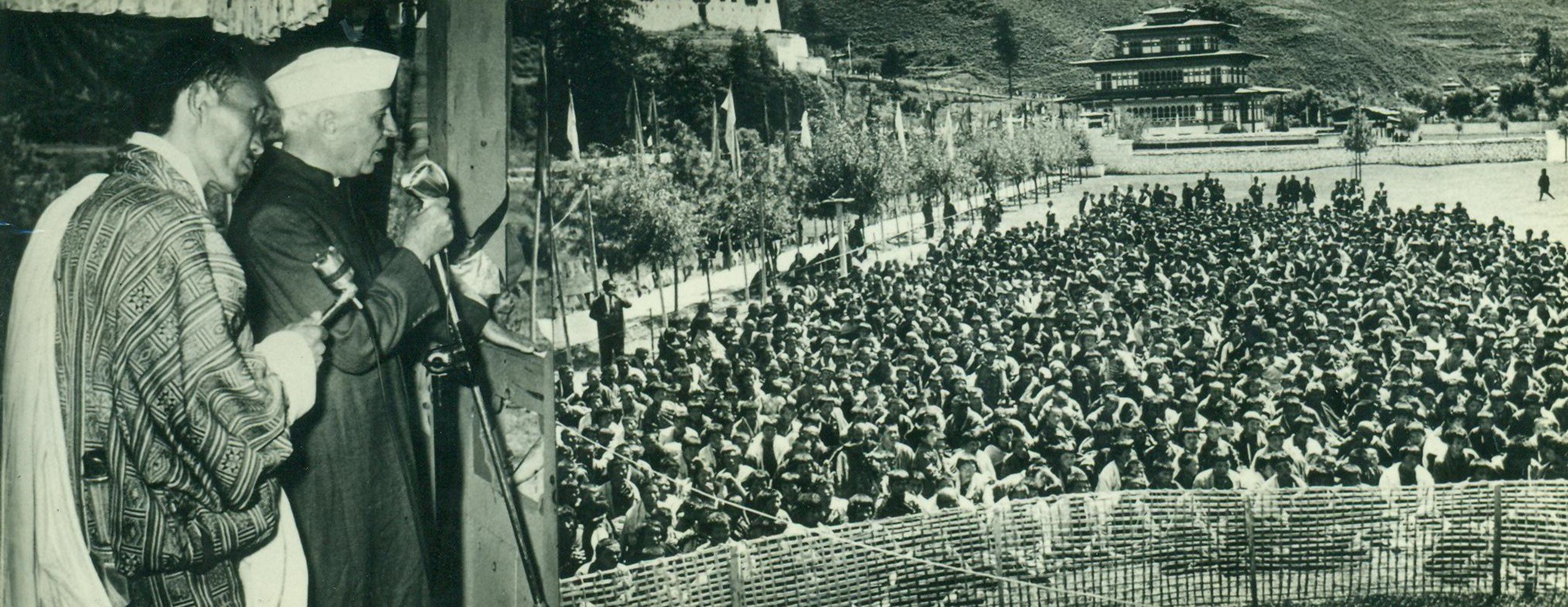
UNENDING STORY OF RED TERROR IN TIBET. DALAI LAMA WITH INDIAN PRIME MINISTER JAWAHARLAL NEHRU ON APRIL 22, 1961.

Prime Minister Jawaharlal Nehru clasps hands as he and the Dalai Lama, god-king of Tibet, meet at Nehru’s New Delhi, India, residence on April 22, 1961, to discuss rehabilitating an estimated 50,000 refugees who fled Tibet when red China took over in 1959. The Dalai Lama is now living in exile in India. (AP)


This article originally appeared in the April 24, 1961, edition of U.S. News & World Report.

At a time when Communists are denouncing “colonialism” and “imperialism”—

Take a look at what Red China is doing in its captive “colony” of Tibet.

Communists shot their way in, now are systematically “absorbing” that ancient land.

To get the story of what Red colonizers are doing, a member of the staff of “U. S. News & World Report” journeyed into the highlands of Northern India for this exclusive interview with the Dalai Lama, Tibet’s spiritual ruler—now a refugee from the Communists.

DHARMSALA, India—

Q Your Holiness, are Tibetans being forced out of Tibet?

A In some places, yes—in Northern and Eastern Tibet.

Q How many have been deported?

A I cannot give you an exact figure, but it would run to at least 15,000.

Dalai Lama and Obama to Meet Wednesday, Amid Chinese Criticism

The Chinese foreign ministry vociferously objected to the meeting.

Q Have they been replaced by Chinese settlers?

A Many more Chinese settlers than that have come into Tibet.

Q What sort of settlers?

A All types, but mostly soldiers. Tibetans usually divide them into two types—”yellow” Chinese and “blue” Chinese. “Blue” Chinese are officials and villagers. “Yellow” Chinese are troops. Recently some Tibetans came here from Lhasa and they told me there were more “yellow” Chinese in Tibet.

Q What’s taking place inside the country?

A People are all frightened and tense—always afraid they won’t finish tasks the Chinese have given them to do. The worry about famine.

There’s a saying in Tibet, “We are sitting on a thorn.” Now all Tibet is sitting on a thorn—and anyone who moves is hurt. It’s not just a matter of political rights. Their human right are being suppressed, too.

Q In what way?

A They’re having to undergo all types of forced labor. For 20 hours a day, people in Tibet must work and listen to Communist propaganda. Two or three men have to do the work that once was done by two mules, hauling stones in mule carts—

Q Do you mean people instead of mules now pull carts?

A Yes, as a form of torture. Some haul stones, others have to carry baskets of dirt. The normal quota for one day is 250 baskets, but some have to carry 300 baskets a day. Many of these people have developed sores on their backs. This is something that was never known in Tibet before.

Q What kind of food are Tibetan people getting?

A They get worse food than the animals do. People who come from Lhasa have brought samples of the food they get—a mixture of grains and meal which they mix with water and form into a cake. They get about two small teacups of this per day. Sometimes in place of grain they get two teacups of beans.

10 Things You Didn’t Know About the Dalai Lam

Compiled by the U.S.News & World Report library staff.

Q What kinds of military activities are going on in Tibet?

A They’ve built very good roads—a network of roads. In some areas of Western Tibet they’ve built airfields.

Q Have you heard any reports of restlessness among the Chinese troops?

A I believe this to be true. The reason is that, since 1958, some Chinese soldiers and officers have joined resistance troops in Tibet.

Q Is the resistance underground operating effectively?

A Yes. Out of sheer desperation—as long as oppression goes on, out of sheer desperation there will be resistance.

Q What do they fight with? How are they armed?

A The only weapons they possess are those they’ve managed to capture from the Chinese. They have guns, but they’ve even been using slingshots, spears, knives and swords.

Q Have there been any pitched battles?

A Yes, there have been many.

Q What’s happening to religion inside Tibet?

A The Chinese are using two principal methods against religion:

Firstly, they’re trying to obliterate the existing ancient religion by attacking religious leaders; they’ve murdered several and sent others to forced labor. You may have heard of our famous monasteries—Drepung, Sera, Ganden. At one of these, Sera, there used to be about 8,000 monks. Now there are only two or three hundred left. Where have the others gone? Some to forced labor, some to China, some killed, some to prison.

Secondly, as regards our sacred texts and images, only some have been preserved in Lhasa to show foreign visitors. Images made of brass or gold or silver have been melted. Those made of clay have been thrown away. Sacred texts have been used as shoe soles or burned. So religion is being destroyed.

Copyright 2016 © U.S. News & World Report L.P.

Unending story of Red Terror in Tibet. Dalai Lama in Exile since 1959.


Unending Story of Red Terror in Tibet. Dalai Lama lives in Exile since March 1959. His Journey into Exile.

Unending Story of Red Terror in Tibet. Dalai Lama Lives in Exile Since March 1959.


Unending Story of Red Terror in Tibet. Dalai Lama Lives in Exile Since March 1959. Picture taken in 1967.


Unending Story of Red Terror in Tibet. Dalai Lama Lives in Exile Since March 1959.

Unending Story of Red Terror in Tibet. Dalai Lama’s Journey into Exile began in March 1959.

Unending Story of Red Terror in Tibet. Dalai Lama Lives in Exile Since March 1959.


Unending Story of Red Terror in Tibet. Dalai Lama Lives in Exile Since March 1959. Photo taken in May 1959.

Unending Story of Red Terror in Tibet. Dalai Lama Lives in Exile since March 1959. Photo taken in 1959 with Indian President Dr. Babu Rajendra Prasad.

Unending Story of Red Terror in Tibet. Dalai Lama Lives in Exile since March 1959.

Unending Story of Red Terror in Tibet. Dalai Lama Lives in Exile Since March 1959.

Unending Story of Red Terror in Tibet. Dalai Lama’s Journey into Exile began in March 1959.

Unending Story of Red Terror in Tibet. Dalai Lama Lives in Exile Since March 1959.

Unending Story of Red Terror in Tibet. Dalai Lama Lives in Exile Since March 1959.

Unending Story of Red Terror in Tibet. Dalai Lama Lives in Exile Since March 1959.


Unending Story of Red Terror in Tibet. Dalai Lama Lives in Exile Since March 1959.

Unending Story of Red Terror in Tibet. Dalai Lama Lives in Exile Since March 1959. Seen with Indian Prime Minister Jawaharlal Nehru.

Unending Story of Red Terror in Tibet. Dalai Lama Lives in Exile Since 1959. Seen with Maharaja of Sikkim.

Unending Story of Red Terror in Tibet. Dalai Lama Lives in Exile Since March 1959.


Unending Story of Red Terror in Tibet. Dalai Lama Lives in Exile Since march 1959.

Unending Story of Red Terror in Tibet. Chinese Vive-Premier Chen Yi with Dalai Lama and Panchen Lama. Dalai Lama forced into Exile in March 1959.

Unending Story of Red Terror in Tibet. Dalai Lama’s Journey into Exile began in March 1959.

Unending Story of Red Terror in Tibet. Dalai Lama Lives in Exile Since National Tibetan Uprising of March 1959. 

Unending Story of Red Terror in Tibet. Dalai Lama Lives in Exile Since March 1959.

Unending Story of Red Terror in Tibet. Dalai Lama forced into Exile in March 1959.

Unending Story of Red Terror in Tibet. Dalai Lama’s Journey into Exile began in March 1959.

Unending Story of Red Terror in Tibet. Dalai Lama Lives in Exile Since March 1959.

Unending Story of Red Terror in Tibet. Dalai Lama Lives in Exile Since March 1959.

Unending Story of Red Terror in Tibet. Dalai Lama’s Journey into Exile began in March 1959.

Unending Story of Red Terror in Tibet. Dalai Lama Lives in Exile Since March 1959.

Unending Story of Red Terror in Tibet. Dalai Lama Lives in Exile Since March 1959.

Unending Story of Red Terror in Tibet. Dalai Lama Lives in Exile Since March 1959.

Unending Story of Red Terror in Tibet. Dalai Lama’s Journey into Exile began in March 1959.

Unending Story of Red Terror in Tibet. Dalai Lama Forced to Live in Exile Since March 1959.

Unending Story of Red Terror in Tibet. Dalai Lama’s Journey into Exile began in March, 1959.

Unending Story of Red Terror in Tibet. Dalai Lama Lives in Exile Since March 1959.

Unending Story of Red Terror in Tibet. Dalai Lama Lives in Exile Since March 1959.


Unending Story of Red Terror in Tibet. Dalai Lama’s Journey into Exile began in March 1959.

Unending Story of Red Terror in Tibet. Dalai Lama Lives in Exile Since March 1959. Seen with Indian Vice President Dr Sarvepalli Radhakrishnan.On wholedude.com

Unending Story of Red Terror in Tibet. Dalai Lama was forced into exile after failed Tibetan Uprising of March 1959.

Unending Story of Red Terror in Tibet. Dalai Lama’s Journey into Exile began in March 1959.

Unending Story of Red Terror in Tibet. Dalai Lama’s Journey into Exile began in March 1959.

UNENDING STORY OF RED TERROR IN TIBET. THE DALAI LAMA (TENZIN GYATSO) LIVING IN EXILE SINCE MARCH 1959.