Whole Trouble – Pakistan and China North Indus River Cascade – Illegal Bartering

Tibet Equilibrium – Pakistan and China North Indus River Cascade is illegal Bartering

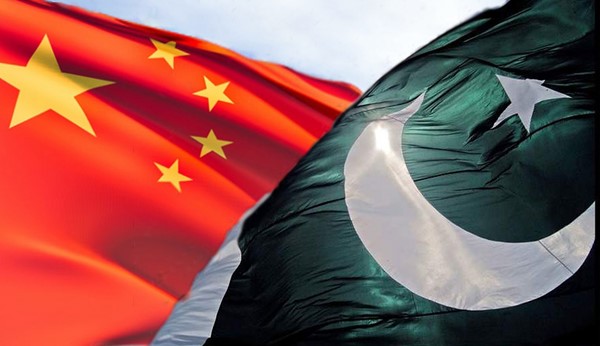
Tibet Equilibrium – Pakistan and China North Indus River Cascade – Illegal Bartering. Two thieves sharing stolen assets.

The five dams forming the ‘North Indus River Cascade’ that Communist China plans to build in Pakistan-Occupied Indian territory represents Illegal Bartering. Firstly, Communist China’s Tibet Occupation is illegal for it violates Natural Law, Natural Balance, Natural Order, Natural Equilibrium, Natural Harmony, and Natural Tranquility that formulates connections between man and Nature. Tibet Equilibrium gives Indus River the ability to flow down to reach Arabian Sea.
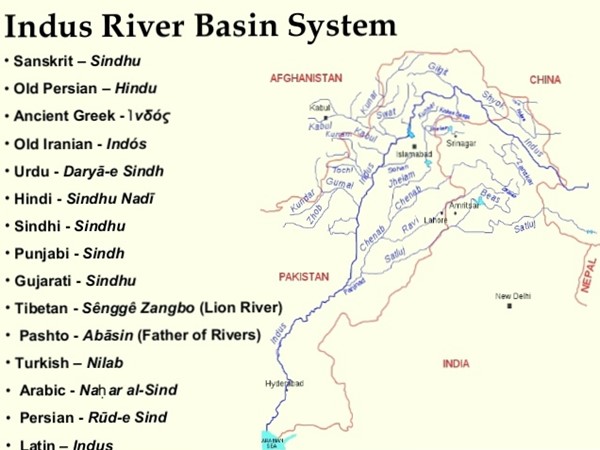
Tibet Equilibrium – Pakistan and China North Indus River Cascade – Illegal Bartering. Two thieves sharing stolen assets.

China’s doctrine of Neocolonialism drives her capital investment projects to develop infrastructure and exploit natural resources to ensure her political, economic, and military domination of world.  North Indus River Cascade in its essence represents the actions of two thieves sharing stolen assets. In my analysis, Communist China sponsored Indus River Projects bring no Joy, no Peace, no Harmony, and no Tranquility in the lives of people for Beijing is Doomed.
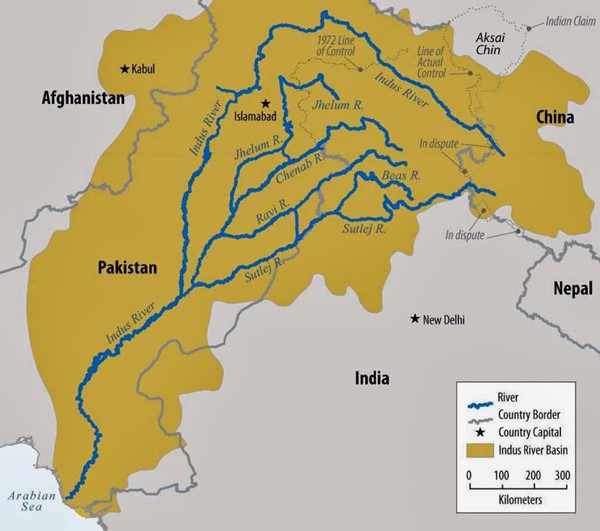
Tibet Equilibrium – Pakistan and China North Indus River Cascade – Illegal Bartering. Two thieves sharing stolen assets.

Pakistan’s Indus Cascade, a China Sponsored Himalayan Blunder

Tibet Equilibrium – Pakistan and China North Indus River Cascade – Illegal Bartering. Two thieves sharing stolen assets.

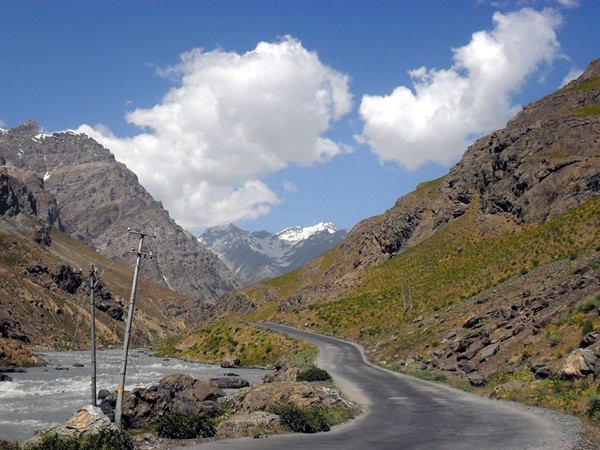
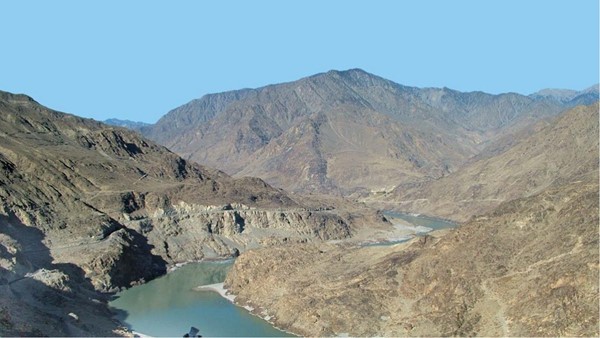
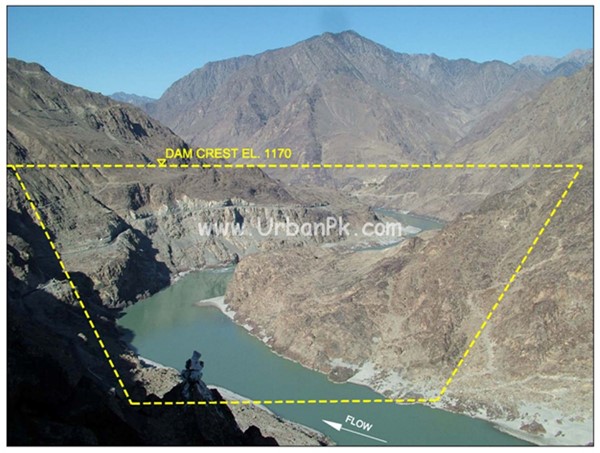
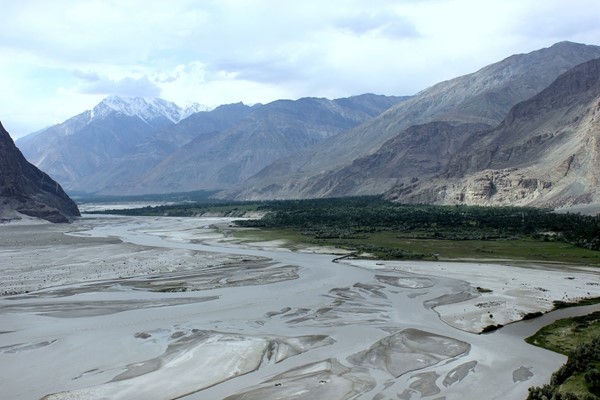
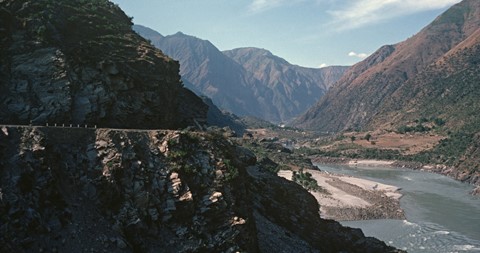
The Indus River in Diamer District of Pakistan’s Gilgit-Baltistan. (Photo Courtesy: Wikimedia Commons)

Joydeep Gupta

Updated: 22 May 2017 4:27 PM IST

The five dams forming the ‘North Indus River Cascade’ that China has just promised to finance and build in Pakistan – including Pakistan-administered Kashmir – has the potential to generate over 22,000 MW in an energy-starved country.
But the dams will also stop the flow of silt which is the lifeline of agriculture downstream. In non-monsoon months from October to June, they may also reduce the flow of water down the Indus to Pakistan’s Punjab and Sindh provinces.

Climate change is making water flow along rivers more erratic – especially rivers like the Indus, that flow from the Himalayas.
Pakistan’s entire water supply for agriculture, factories, and homes is dependent on rivers in the Indus basin. Water availability is already below the 1,000 cubic meters per person per year level at which a country is described as water-scarce, according to the global norm followed by most UN agencies.
In this situation, it is critical to look at food, energy and water together, as a nexus. Instead, the planners of Pakistan appear to be looking at energy alone.

Money, CPEC, OBOR
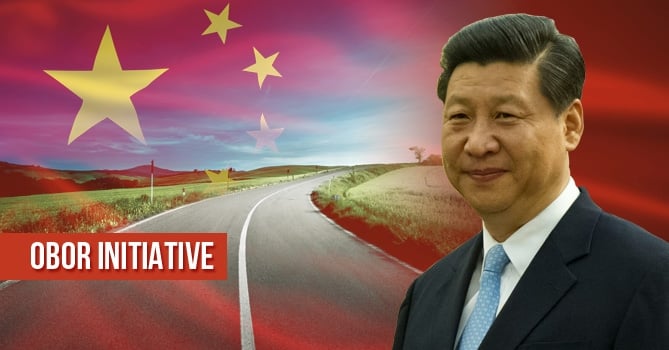
China is providing Pakistan with US $50 billion for the Indus Cascade. A Memorandum of Understanding (MoU) was signed to this effect during the recent Belt and Road Initiative (BRI) – previously known as One Belt, One Road (OBOR) – conference in Beijing. China’s National Energy Administration (NEA) will oversee the funding.
China Three Gorges Corporation – which runs the world’s largest hydroelectricity project at the Three Gorges Dam – is the frontrunner to build the five dams that will form the cascade.
The MoU was signed by Pakistan’s Water and Power Secretary Yousuf Naseem Khokhar and Chinese Ambassador to Pakistan Sun Weidong in presence of Prime Minister Nawaz Sharif.
This is in addition to the US $57 billion China is providing to Pakistan for a series of infrastructure projects along the China-Pakistan Economic Corridor (CPEC), a part of the BRI. The infrastructure projects include the building of coal-fired power stations and the port at Gwadar on the Arabian Sea
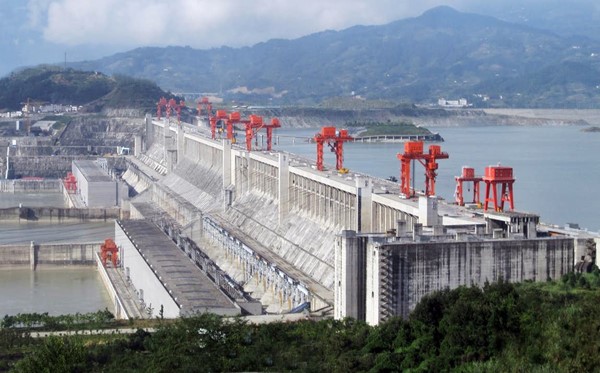
Tibet Equilibrium – Pakistan and China North Indus River Cascade – Illegal Bartering. Two thieves sharing stolen assets. Stealing assets originating in Tibet.

The Three Gorges Dam on the Yangtze River in China (Photo Courtesy: Wikimedia Commons)

The Indus Cascade
The cascade plans all the way down the Indus from Gilgit-Baltistan to the existing Tarbela dam near Islamabad. It will effectively turn this huge transboundary river into a series of lakes in the last part of its journey through the Hindu Kush Himalayas to the plains of South Asia.
The uppermost of the five dams is planned at Bunji near Skardu in Pakistan administered Kashmir. The former princely state of Jammu & Kashmir is a disputed territory claimed in its entirety by both India and Pakistan, though both only control parts of it, with China also controlling some.
The 7,100 MW Bunji Hydropower Project has been described by Pakistan’s Water and Power Development Authority (WAPDA) as a run-of-the-river (RoR) project. But the same promotional video (for the entire cascade) which provides this description also indicates that:
This project will have a reservoir that will spread along a 22-km stretch of the Indus and inundate a 12-km stretch of the road between Gilgit and Skardu – the two main towns of Gilgit-Baltistan. So, despite the description, this may not be an RoR project.

The next dam in the cascade is the big one – Diamer-Basha – with a planned live storage of 6.4 million-acre feet (MAF) of water and a hydropower generating potential of 4,500 MW.
From Diamer-Basha, the projects run along the Karakoram Highway, which China built in the 1960s through Pakistan administered Kashmir despite strenuous objections from India. The reservoir that will form behind the Diamer-Basha dam will submerge 104 km of the Karakoram Highway and displace about 30,000 people, according to WAPDA.
The Diamer-Basha dam is promoted by WAPDA as a sediment trap and therefore good for downstream hydropower projects. But the same sediment – mainly silt – rejuvenates the soil downstream every year and has been the main reason sustaining agriculture in the Indus valley for over a millennium.
Building the Diamer-Basha dam is estimated to cost US $15 billion. For years, Pakistan has been seeking the money from multilateral funding agencies. Experts at the World Bank and the Asian Development Bank have advised Pakistani planners to think of smaller dams instead. Now China has promised funding.
Just downstream of Diamer-Basha is the third dam in the cascade – the 4,320 MW Dasu Hydropower Project. This will have a reservoir that will stretch upstream for 74 km along the Indus, all the way to the Diamer-Basha dam, according to WAPDA. It will also submerge 52 km of the Karakoram Highway.
Some of the peripheral work for this project has started, and people have already been displaced, with WAPDA seeking contracts for resettlement and providing free transport to resettlement sites.
And immediately downstream of that, WAPDA has planned the 2,200 MW Patan Hydropower Project, with a 35-km long reservoir that goes up to the Dasu dam.
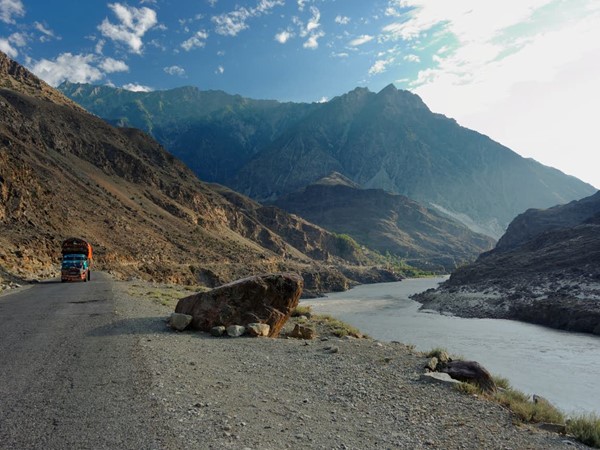
Tibet Equilibrium – Pakistan and China North Indus River Cascade – Illegal Bartering. Two thieves sharing stolen assets.

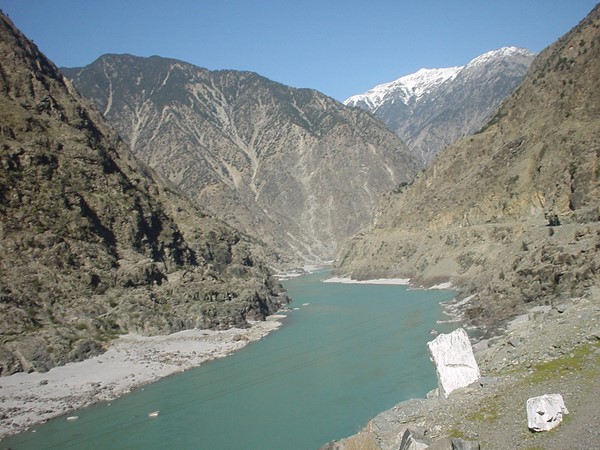
The Indus River from the Karakoram Highway (Photo Courtesy: Wikimedia Commons)

Once again, the fifth dam in the cascade is just a little downstream – the 4,000 MW Thakot Hydropower Project in which the plan is to divert the Indus waters through four headrace tunnels to generate electricity.
By the time the Indus emerges from the tunnels, it will be close to the existing dam at Tarbela, which has been in operation since 1976.

The Plan, the Effect
The electricity that will potentially be generated by the five new projects forming the Indus Cascade adds up to a little over 22,000 MW. Officials in Pakistan’s Ministry of Water and Power have been telling the domestic media that experts from the Chinese NEA conducted feasibility study of the entire cascade this February and satisfied about feasibility of the project.
The officials say that now, after the signing of the MoU, the Chinese experts will conduct a more detailed study for three months to finalize both financing and execution of the projects. In 2015, China Three Gorges Corporation had said it wanted to be part of a financing consortium with a US $50 billion fund to build hydroelectric power projects in Pakistan.
The corporation may be the frontrunner to build the dams, but it is not the only competitor. After the MoU was signed in Beijing, several Chinese power sector companies showed willingness to join the project. This will be the first large-scale private sector hydroelectricity project in Pakistan.
At the MoU signing ceremony, Nawaz Sharif spoke glowingly of cooperation between the two governments to overcome Pakistan’s energy crisis.
“Development of the Indus Cascade is a major focus of my government and the construction of Diamer-Basha Dam is the single most important initiative in this regard.” Nawaz Sharif, Prime Minister, Pakistan
He also said, “Water and food security are of paramount importance for Pakistan, keeping in view the challenges posed by climate change.”
The Indus Cascade will reduce water and food security in Pakistan instead.
One proven effect of climate change is intensification of the water cycle. In lay terms, it means fewer rainy or snowy days but more intense rainfall or snowfall in those days. Pakistan is already suffering the effects.
For the first nine years in this century, the Indus failed to reach the sea. Then there was such a cloudburst in 2010 flooding a fifth of the country. The floods also brought down, and continue to bring down, huge sediment loads that reduce the working lives of dams. To build more large dams in this situation appears dangerously short-sighted.
A side effect of the cascade project will be the need to rebuild large parts of the Karakoram Highway. Building a road in the mountains always has a strong negative effect on the environment and increases the risk of landslides manifold.
India has already boycotted the BRI conference because many of the CPEC projects are in Kashmir. Addition of a project as big as the Indus Cascade to that list is likely to lead to more protests from India and to raise tension in the region.

(This article was originally published in ThirdPole.net)
First published: 22 May 2017 4:27 PM IST
2017 © Copyright TheQuint

Inserted from <https://www.thequint.com/world/2017/05/22/indus-river-dam-project-china>
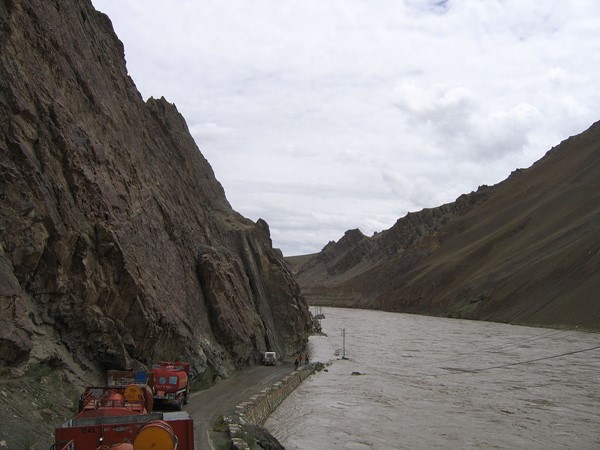
Tibet Equilibrium – Pakistan and China North Indus River Cascade – Illegal Bartering. Two thieves sharing stolen assets.
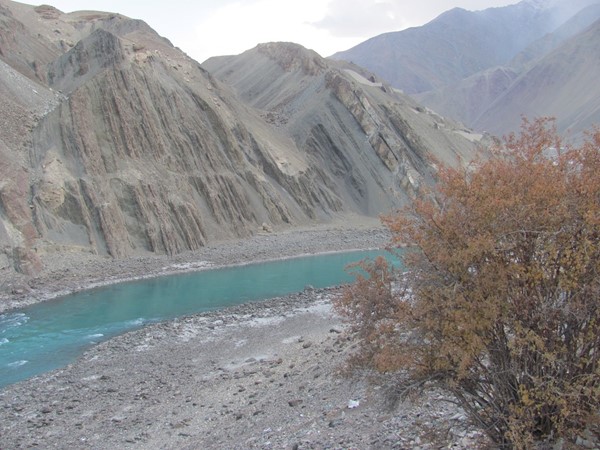
Tibet Equilibrium – Pakistan, China North Indus River Cascade – Illegal Bartering. Two thieves sharing stolen assets. Indus River flows down Indian territory.
Tibet Equilibrium – Pakistan, China North Indus River Cascade – Illegal Bartering. Two thieves sharing stolen assets.
Tibet Equilibrium – Pakistan, China North Indus River Cascade – Illegal Bartering. Two thieves sharing stolen assets. Indus River originates in Tibet and flows down India.

Whole Evil – The Downfall of Mighty Red Empire

Beijing invites her Doom by Evil action in Tibet

BEIJING INVITES HER DOOM BY EVIL ACTION IN TIBET.
Beijing invites her doom by evil action in Tibet.

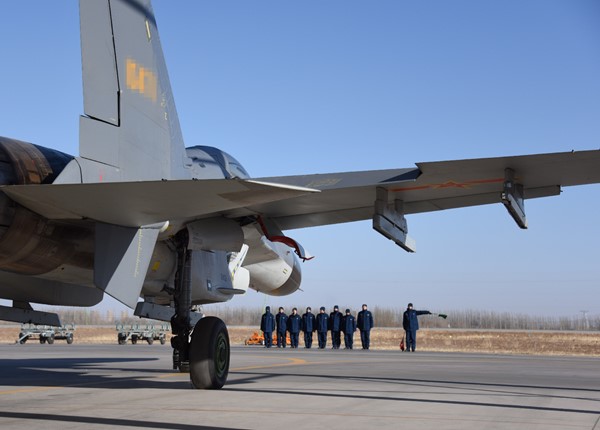
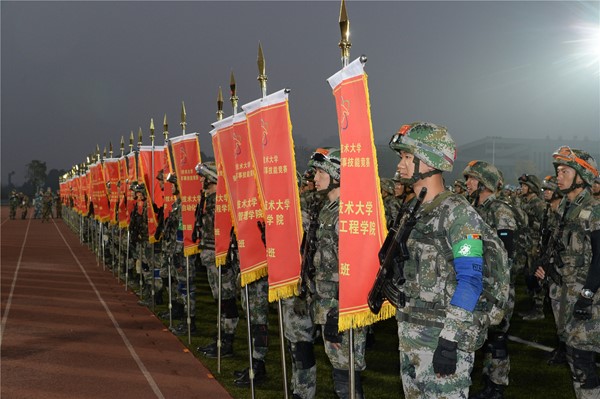
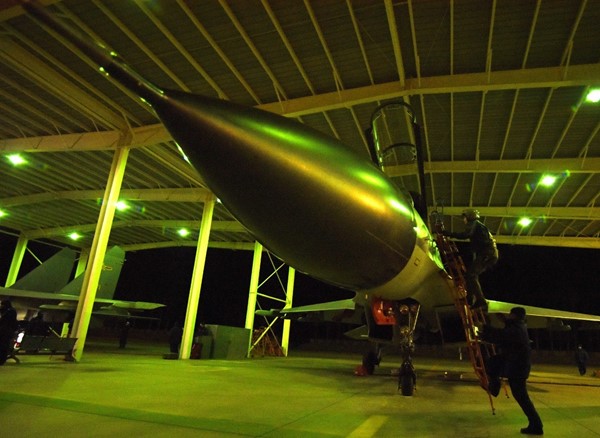
Red China finds comfort and security in her military power and thinks that there is no power besides her own. Red China’s action of using military force to subjugate Tibet is Evil action. Beijing sealed her fate for she invited Doom by her own actions.

CHINA FLEXES ITS MILITARY MUSCLE IN TIBET, CLOSE TO BORDER DISPUTE WITH INDIA – SOUTH CHINA MORNING POST

Clipped from: http://www.scmp.com/news/china/diplomacy-defence/article/2102965/china-flexes-its-military-muscle-tibet-close-border

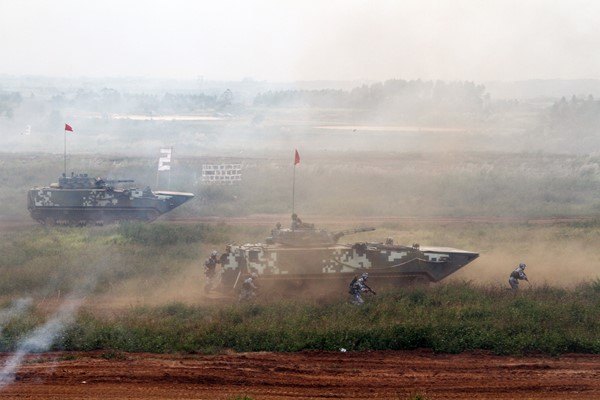
Armed forces take part in live ammunition drill that one observer says was intended as a clear warning to India

Beijing invites her doom by evil action in Tibet.

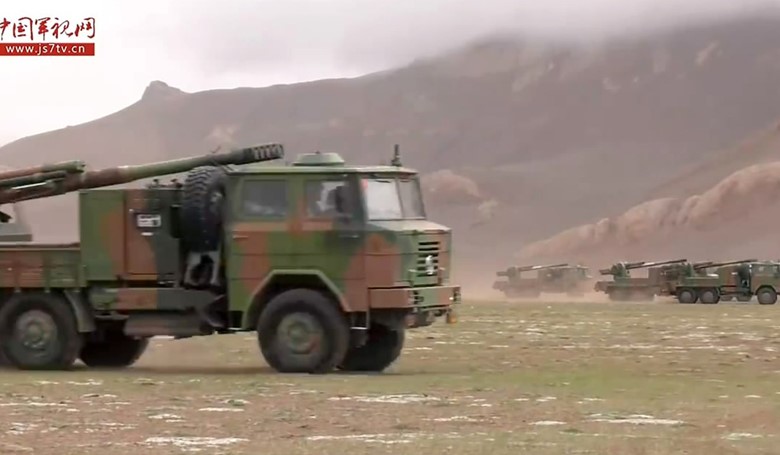
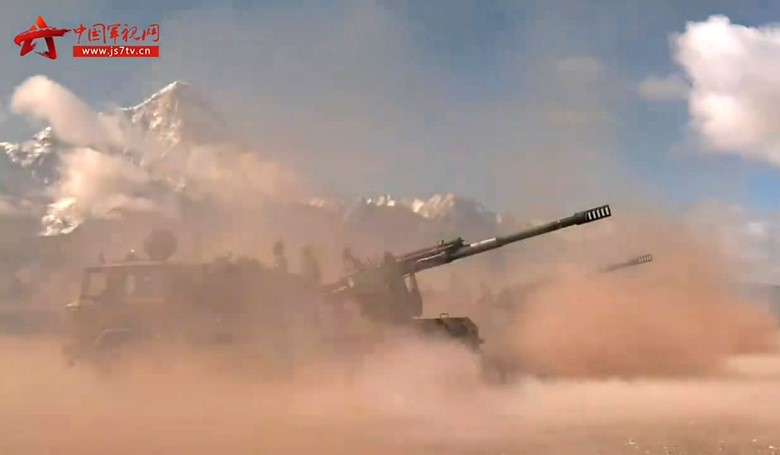
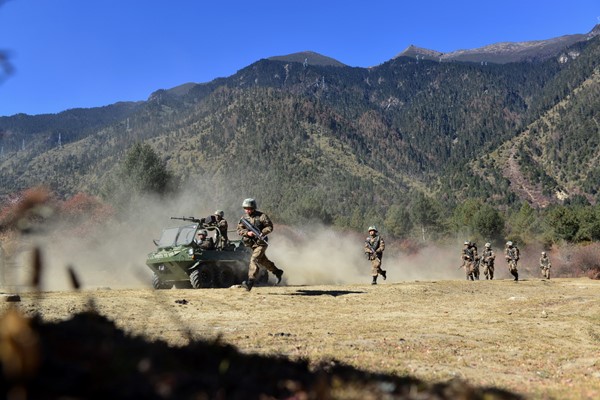
A fully staffed and equipped brigade engaged in various drills involving the rapid movement of troops, use of digital devices and combined attacks by multiple forces on the 5,000m high plateau, China Central Television said over the weekend.

How a road on China and India’s border led to the two powers’ worst stand-off in decades

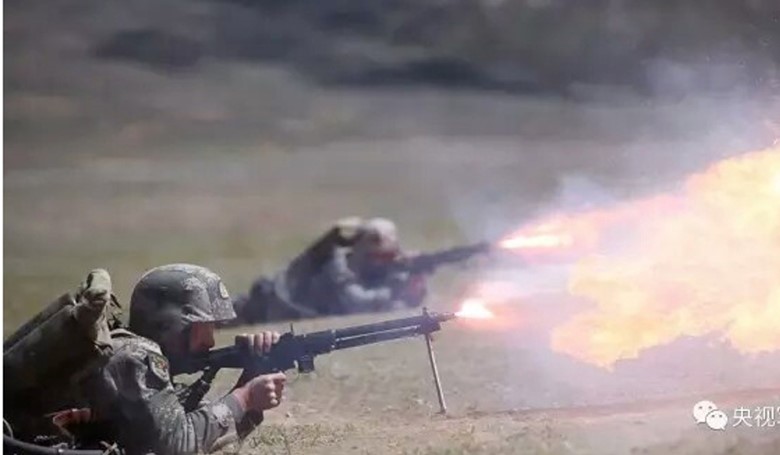
In video clip shown on CCTV over the weekend, soldiers armed with machine guns, rocket launchers and mortars were seen launching an assault on an “enemy position”.

They used radar to target “enemy planes” with anti-aircraft guns and also employed anti-tank grenades, the report said. One brigade of soldiers was involved, which under the structure of the People’s Liberation Army, consists of between 4,000 and 7,000 soldiers.

Beijing invites her doom by evil action in Tibet.

A large amount of military hardware was on show during the exercise. Photo: Handout

“The 11-hour exercise covering a dozen elements was testimony to the PLA’s [Chinese military’s] combined strike capability,” it said.

Down on the border, simmering China-India stand-off raises fears for local lifeline

The report did not give precise details of where or when the exercise was held, though it came as Chinese and Indian troops remain locked in their worst stand-off in decades, on the tri-junction with Bhutan.

Beijing invites her doom by evil action in Tibet.

An observer said the drills were meant as a warning to India. Photo: Handout

One observer said the show of strength was likely intended as a warning to India.

“The PLA wanted to demonstrate it could easily overpower its Indian counterparts,” said Beijing-based military commentator Zhou Chenming.

China-India border dispute could hurt summit of five emerging economies, analysts warn

The Chinese force that took part in the drill is stationed in the Linzhi region of eastern Tibet, close to the stand-off. It is one of only two Chinese plateau mountain brigades in Tibet, the report said.

Beijing invites doom by evil action in Tibet.

A fully staffed and equipped brigade took part in the drills, which lasted 11 hours, CCTV reported. Photo: Handout

In comparison, India has nearly 200,000 troops stationed in the areas it disputes with China, outnumbering its neighbor’s forces by as much as 15 or 20 to one, it said.

Nonetheless, China has a clear advantage in terms of speed of movement, firepower, and logistics, Zhou said.

“[By staging] a small-scale drill, China wants to control the problem and lower the risk of shots being fired,” he said.

China and India fought a border war in 1962, partly because India’s then leader Jawaharlal Nehru took China’s dovish stance as a green light for him to advance without retaliation, said Wang Dehua, South Asia studies experts at Shanghai Institutes for International Studies.

“Showing an opponent that you are combat ready is more likely to prevent an actual battle,” he said, adding that broadcasting the drill on CCTV was also likely designed to keep the public happy.

“It could also reassure the Chinese people that a strong PLA force is there, capable and determined to defend Chinese territory,” Wang said.

Beijing invites her doom by evil action in Tibet.
Beijing invites doom by evil action in Tibet.
Beijing invites her doom by evil action in Tibet.
Beijing invites doom by evil action in Tibet.
BEIJING INVITES HER DOOM BY EVIL ACTION IN TIBET.
BEIJING DOOMED BY EVIL ACTION IN TIBET.

Whole Trouble – Red China invents Border disputes to justify Occupation

Red China invents Border Disputes to perpetuate Tibet’s Occupation

Red China invents these Border Disputes to legitimize illegal Occupation of Tibet

The root cause of territorial disputes in Himalayan Plateau is an Unnatural event called ‘Occupation’ that shattered Tibet’s experience of Natural Balance, Natural Order, Natural Equilibrium, Natural Harmony, Natural Peace, and Natural Freedom. India and Bhutan must primarily focus upon return of Tibet to its Natural State or Condition, a condition that never threatened the existence of its immediate neighbors. Red China invents these Border Disputes to legitimize illegal Occupation of Tibet

Red China invents these Border Disputes to legitimize illegal Occupation of Tibet

Clipped from: https://www.washingtonpost.com/world/asia_pacific/china-pushes-hard-in-border-dispute-with-india/2017/07/06/52adc41e-619b-11e7-80a2-8c226031ac3f_story.html?utm_term=.9bc54d806201

Red China invents these Border Disputes to legitimize illegal Occupation of Tibet

China pushes hard in border dispute with India

The Washington Post

Red China invents these Border Disputes to legitimize illegal Occupation of Tibet


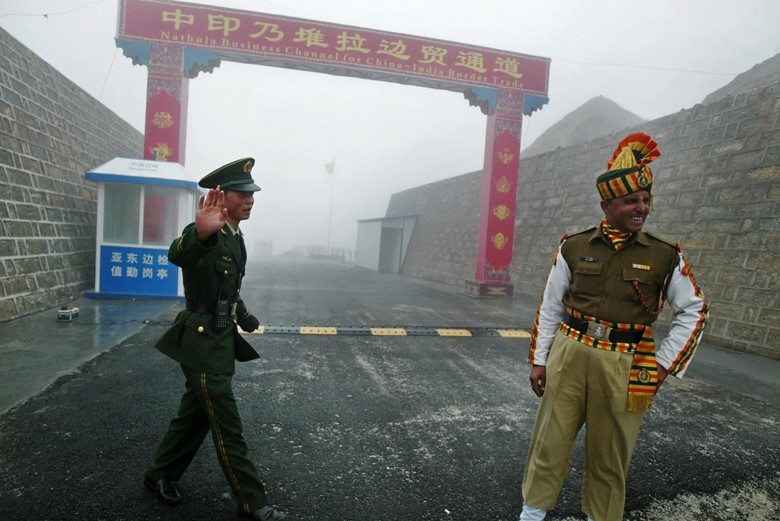
This photo from 2008 shows a Chinese soldier, left, next to an Indian soldier at the Nathu La border crossing between India and China. (Diptendu Dutta/Agence France-Presse via Getty Images)

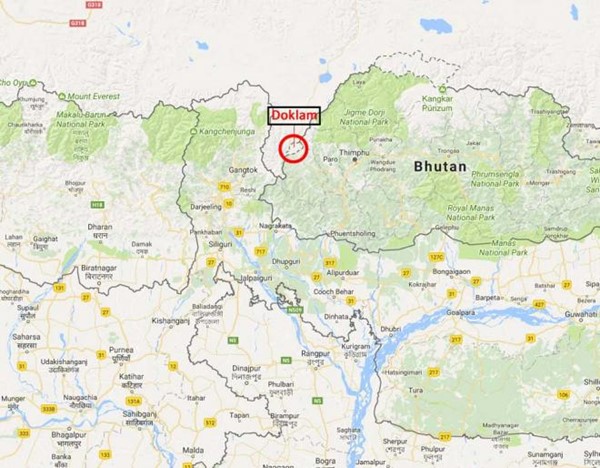
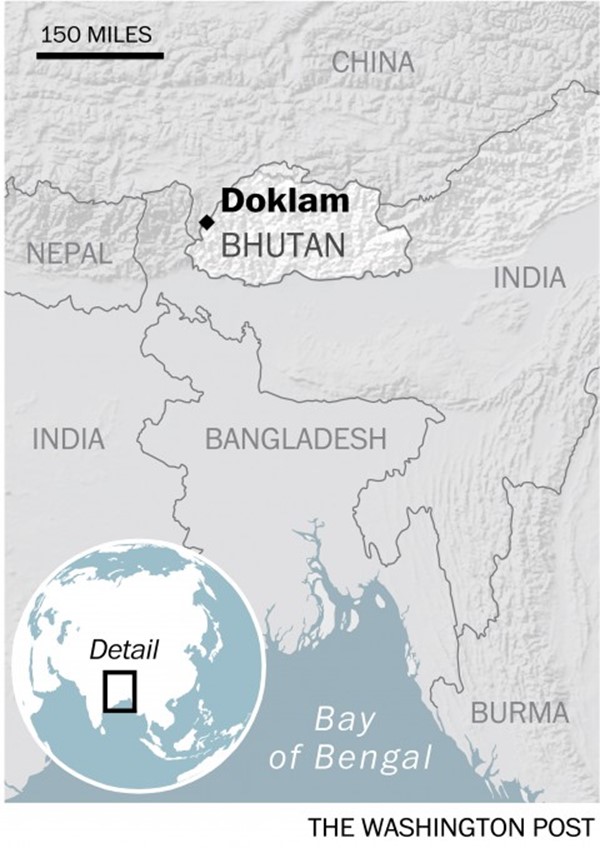
NEW DELHI — Their meeting is likely to be all smiles and polite handshakes, as world leaders look on. But as Indian Prime Minister Narendra Modi and his Chinese counterpart Xi Jinping left for Friday’s Group of 20 summit in Hamburg, tensions between the rising Asian powers had escalated over a patch of disputed territory claimed by both China and the tiny Himalayan kingdom of Bhutan.

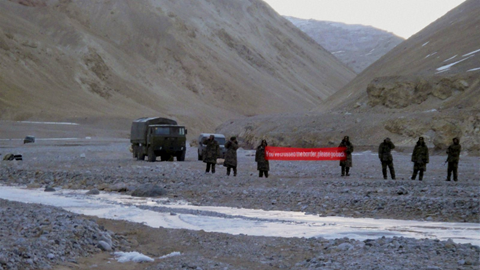
Border scuffles between India and China have simmered in the past, but analysts from both sides said the latest spat has the potential to spiral into conflict between the two nuclear-armed nations. So far, the countries’ troops, who are usually unarmed to avoid provocation, have engaged in what is known as “jostling,” when soldiers attempt to physically push rivals back.

The standoff began at the end of June, while Modi was meeting President Trump, prompting some Indian analysts to wonder whether the timing had anything to do with China’s disdain for India’s increasingly close ties to the United States.

“The Chinese are making their unhappiness clear on India and America’s relationship,” said Sameer Patil, director at an India-based foreign policy think tank called Gateway House.

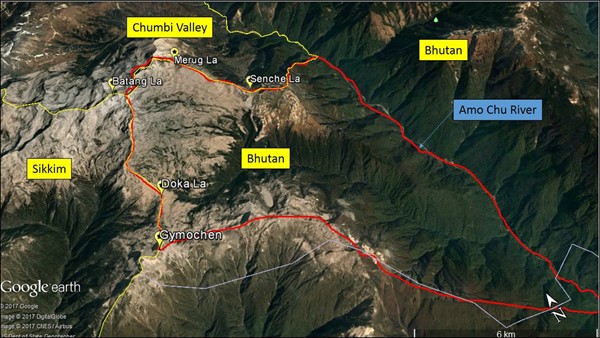
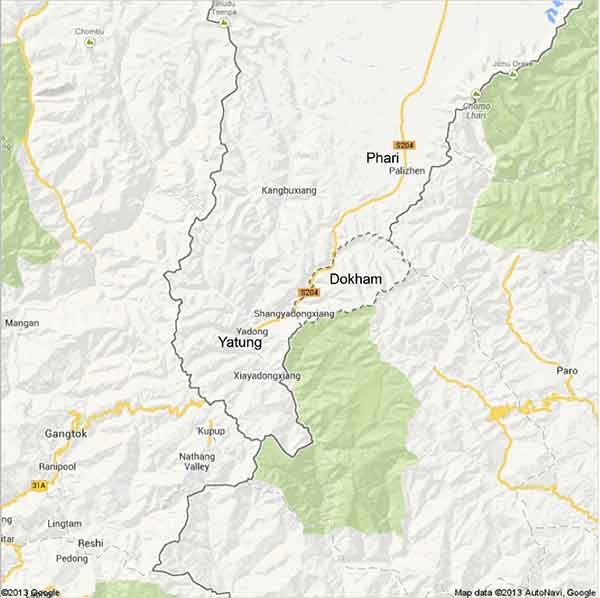
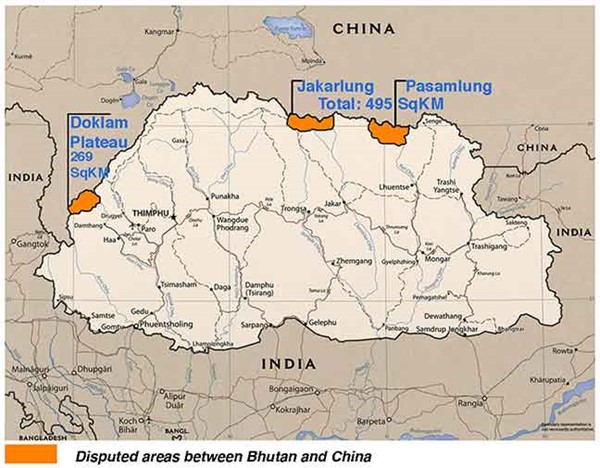
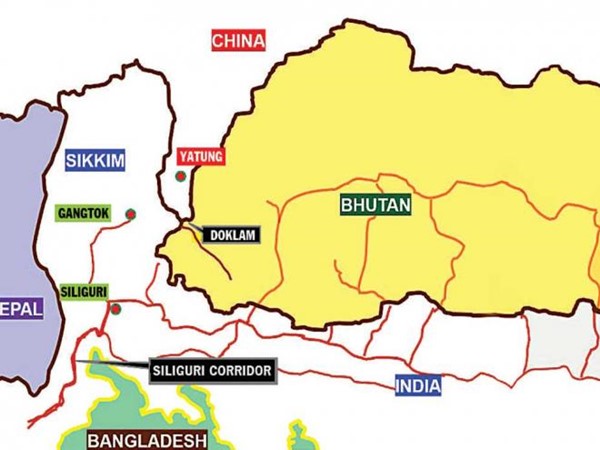
The dispute started after Chinese construction trucks, accompanied by soldiers, rolled south in the disputed region of Doklam to build a road. India and Bhutan consider the region to be Bhutanese territory; China claims the land as its own. The countries disagree on the exact location of the “tri-junction,” where the three borders meet.

Red China invents these Border Disputes to legitimize illegal Occupation of Tibet

The argument bears some of the hallmarks of China’s efforts to fortify islands in the disputed South China Sea, where it has riled the Philippines and Vietnam and risked confrontation with the U.S. Navy.

India and Bhutan have traditionally been close allies; India often provides the small country with financial and military assistance. It was the first country Modi visited after being elected.

Indian analysts say China’s move in Doklam threatens a narrow sliver of strategically important land, known as the “chicken’s neck,” which connects central India to its remote northeast. In response to what it believed was extraterritorial Chinese road-building, New Delhi sent reinforcements supporting Bhutan — according to ex-Indian army officials, at Bhutan’s request.

Chinese officials say India’s intervention amounted to a provocation, violating an 1890 treaty with Britain that appears to grant China access to the region. According to Chinese Foreign Ministry spokesman Geng Shuang, the pact was affirmed by Indian leaders after independence.

“As to the boundary negotiation between China and Bhutan,” he said Wednesday, “we have repeatedly stated that Doklam has always been part of China’s territory and under China’s effective jurisdiction without disputes.”

The government’s messages were bolstered by stern statements in China’s state-run media. The Global Times newspaper printed a furious editorial warning India of China’s military might. “The Indian military can choose to return to its territory with dignity, or be kicked out of the area by Chinese soldiers,” it said.

Wang Dehua, from the Shanghai Municipal Center for International Studies, said, “By continuing to increase deployment of troops at the border, India once again underestimates China’s capability and determination to safeguard its territory. It also fails to estimate the cost of confrontation.”

Hopes for a discussion between Modi and Xi on the Doklam dispute on the sidelines of the G-20 summit were scuppered after Indian media reported that the government had not requested a one-on-one meeting. Instead, Xi and Modi will meet among leaders from other G-20 countries to discuss international issues.

“China has taken a very stubborn attitude, and there is little appetite in India to accommodate China’s behavior,” Patil said.

Modi had come into office with high hopes of building Sino-
Indian relations; experts called him the most pro-China prime minister since the two countries’ 1962 border war. Xi met Modi in India in 2014 shortly after the latter was elected, in the first visit by a Chinese leader in eight years.

Instead, the two nations have become increasingly suspicious of one another. During Modi’s recent visit to the United States, a deal was struck to buy surveillance drones that could be used to monitor Chinese naval activity in the Indian Ocean. In April, China fulminated over the Dalai Lama’s tour of Arunachal Pradesh in northeast India, known in China as south Tibet. China considers the Dalai Lama an opponent and a separatist whose power threatens its control over Tibet.

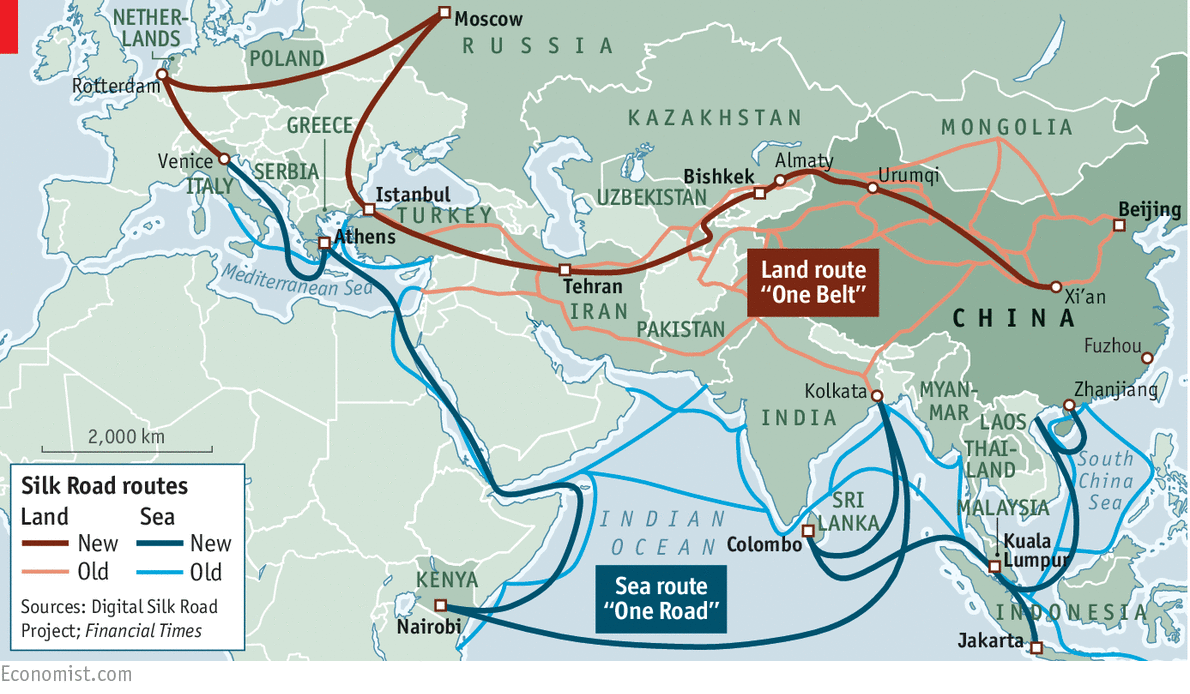
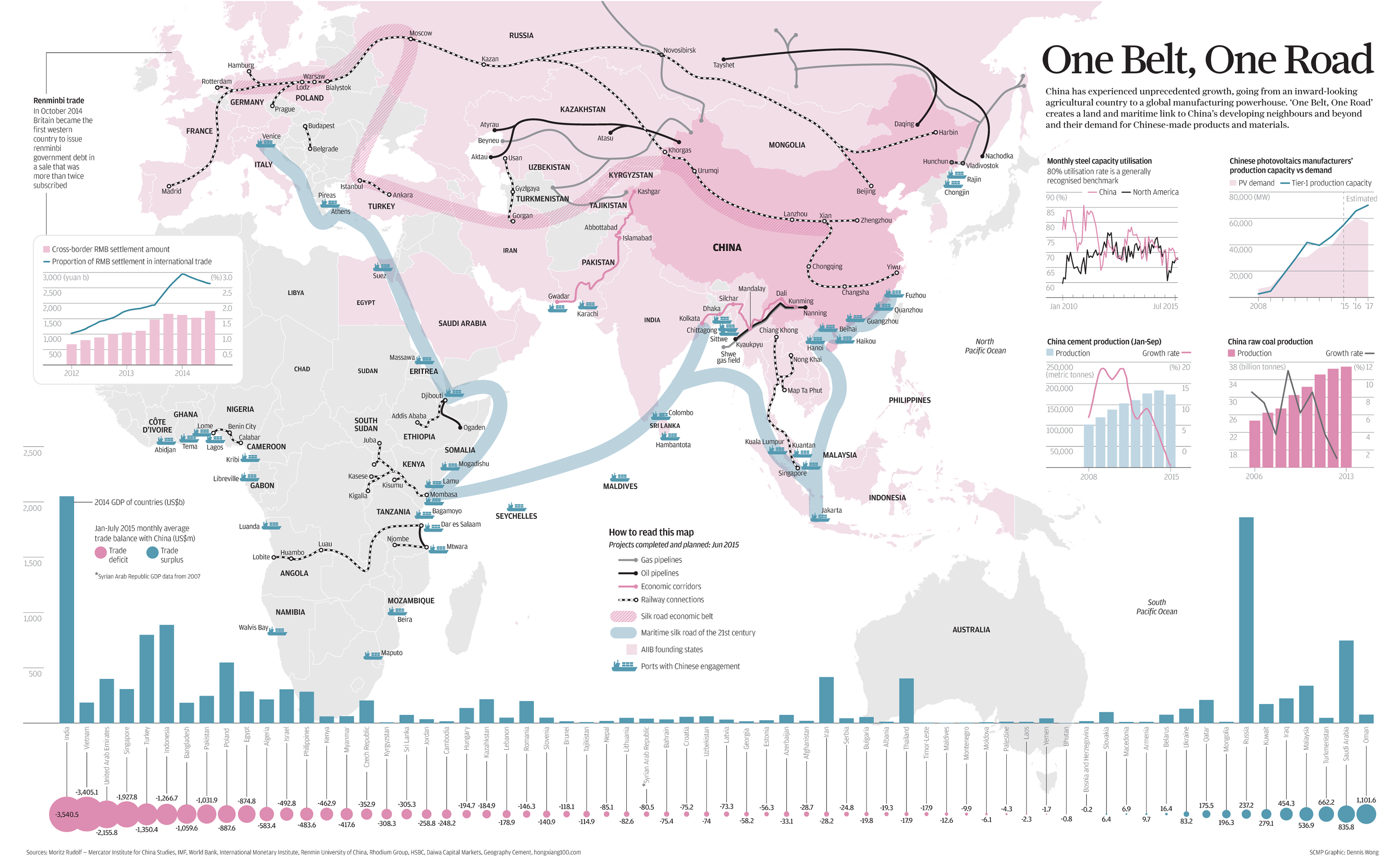
India also refused to join China’s “One Belt, One Road” program, a massive infrastructure project involving 70 countries aimed at reviving old Silk Road trade routes. Plans include an improved connection between China and Pakistan and would allow Pakistan access to other countries in Central Asia.

China, on the other hand, blocked efforts to designate a Pakistan-based militant outfit, Jaish-e-Muhammad, as a terrorist organization. It has also stood in the way of India’s bid for membership in the Nuclear Suppliers Group, an organization of countries that supply — and control — the export of nuclear materials, equipment and technology.

China has billions of dollars in investment deals with Sri Lanka and Nepal and this year took part in a joint military training exercise with Nepal. India considers both neighbors to be allies.

“I think the root cause is that the Chinese feel that their moment has arrived and that they do not need to accommodate Indian interests in any way, given the huge power differential in their favor,” said India expert Ashley Tellis, senior fellow at the Carnegie Endowment for International Peace. “Chinese suspicion that India was casting its lot entirely with the United States has only intensified Beijing’s determination to be even less accommodative towards New Delhi.”

Politically, neither Modi nor Xi can be seen to be giving in to the other’s demands. Modi’s nationalist government has insisted upon maintaining the integrity of Indian borders, banning maps and representations of disputed regions in the north. Xi, too, cannot be seen to be relenting on what the Global Times called “unruly provocations” from India, as he prepares to face a Chinese Communist Party conference in the fall.

Denyer reported from Beijing.

China demands India leave Himalayan plateau in rising spat

Red China invents these Border Disputes to legitimize illegal Occupation of Tibet

THE FUTURE OF RED CHINA’S EXPANSIONISM – BEIJING DOOMED

THE FUTURE OF RED CHINA’S EXPANSIONISM – BEIJING DOOMED

THE FUTURE OF RED CHINA’S EXPANSIONISM – BEIJING DOOMED.

People’s Republic of China in 1949 embraced Communism as State Doctrine and lost no time to announce ambitious plan of Territorial, Maritime, Economic, and Political Expansionism. While others painfully reflect upon ‘The Future of the Tibetan Resistance Movement’, I express optimism by announcing Beijing’s Doom, sudden downfall, as consequence of her own evil actions. This predestined Disaster, Catastrophe, Cataclysm, Calamity, Apocalypse, Doom will bring Regime Change and The Evil Red Empire cannot ward it off by paying ransom.

THE FUTURE OF RED CHINA’S EXPANSIONISM. BEIJING DOOMED.

Rudranarasimham Rebbapragada

DOOM DOOMA DOOMSAYER

TIBETAN PROTEST MOVEMENT – THE NEWS LENS INTERNATIONAL EDITION

Friday, May 26, 2017

PODCAST: Tibet, Protest and China; The Future of the Tibetan Protest Movement

The Future of Red China’s Expansionism. Beijing Doomed.

Photo Credit: Reuters

TNL Staff

These small acts have reverberations and impact way beyond what we can see through the media and numbers. – Tenzin Dorjee.

Earlier this month, Radio Free Asia reported that a Tibetan monk, Jamyang Losal, had died after setting himself on fire in China’s northwestern Qinghai province. Losal was the 150th Tibetan to self-immolate since 2009 when Tibetan monks started taking their own lives in protest of China’s rule. But it seems these desperate protests are having little impact on China as it continues to crack down on any signs of dissent in Tibet.

In this episode of The News Lens Radio, we are bringing you the views of three Tibetan leaders to discuss the efforts to keep the protest movement alive both inside and outside Tibet. They say not only is the Chinese government continuing to rule Tibet with an iron fist, it is also increasingly working beyond its own borders to shut down the movements calling for Tibetan autonomy or independence from China.

About today’s guests

Tenzing Jigme is the president of the Tibetan Youth Congress, an international organization with about 30,000 members advocating for Tibetan independence.

Pema Yoko is the interim executive director of the New York-headquartered Students for a Free Tibet.

Tenzin (Tendor) Dorjee is a U.S.-based author and program director with the Tibet Action Institute. He is also the former executive director of Students for a Free Tibet.

This podcast is available via SoundCloud, Stitcher and iTunes apps.

Editor: Olivia Yang

2017/05/22

Cold Shoulder: Why Beijing Snubbed Singapore at the Belt and Road Summit

The Future of Red China’s Expansionism. Beijing Doomed. Singapore was not invited to ‘Belt and Road’ event hosted by Beijing.

ANGELA HAN

Angela Han is a Research Associate in the Polling Program. She holds a Masters in European and International Studies from the University of Trento and a Graduate Diploma in Transnational Governance from Scuola Superiore Sant’Anna. She has also spent six months abroad learning Mandarin at the China University of Political Science and Law in Beijing. Prior to undertaking her Masters, Angela spent two years as a researcher of labor and economic policies in her home country of Singapore.

Beijing did not invite Singapore’s Prime Minister to attend the Belt and Road event in Beijing this week, signifying strain in Sino-Singapore relations.

Among the 29 Heads of State who converged on Beijing for the Belt and Road Summit earlier this week were leaders of seven of the ten ASEAN states. One leader was noticeably missing: Singapore’s Prime Minister Lee Hsien Loong.

Various observers have noted this absence, including Hugh White, who suggested it was no co-incidence that, like others – Japan, India, Australia and “most western countries” – who had not sent their national leaders to Beijing, Singapore was aligned with the U.S. and uneasy about China’s rise – “or perceived to be so.”

However, it has since emerged that Singapore was never given the choice. China had not invited Singapore’s prime minister in the first place.

This is surprising, especially as Singapore has been one of the biggest advocates of the Belt and Road Initiative (BRI). While many other states were initially hesitant in signing up to BRI, including some of its ASEAN neighbors, Singapore’s support has been unequivocal from the beginning. Many high-level cooperation talks between China and Singapore on the subject have taken place, with both sides warmly welcoming cooperation on BRI.

In light of this past co-operation, Beijing’s snub is significant. It is fair to conclude that, if China continues to freeze out Singapore, there could be significant implications on at least three levels.

What it might mean for Sino-Singapore relations

First, this marks a low point in Sino-Singapore relations. Since its independence 50 years ago, managing the U.S.-China dichotomy has been a key tenet of Singapore’s foreign policy. Despite close defense partnerships with the U.S., China has referred to Singapore as an “important partner and a special friend of China.” This long-standing relationship has been fostered not only by historical and cultural linkages, but also the deep bond that existed between former leaders, Lee Kuan Yew and Deng Xiaoping. When Lee Kuan Yew died in 2015 there were video tributes on Chinese state media, and he was described as “an old friend of the Chinese people” by President Xi Jinping.

Of late, however, the bilateral relationship has been less than smooth, particularly since remarks made by the Singaporean prime minister at a White House state dinner in August last year. At that event, Lee Hsien Loong praised the U.S. rebalance and endorsed the arbitral tribunal ruling on the South China Sea. In a separate incident, a Chinese tabloid accused Singapore of bringing up the tribunal ruling at the Non-Aligned Movement Summit, which led to a very public spat between the Global Times editor and Singapore’s Ambassador to China.

Singapore is not a claimant state but the fear that China might extend its reach in the South China Sea is nevertheless acute for the tiny island-state. Given its trade volumes are 3.5 times its GDP, any instability in the region would affect Singapore’s trade routes, and therefore its economy. When Singapore advocates for a rules-based order, it is not just values that it seeks to defend but its economic lifeblood.

Singapore’s stance on the South China Sea did not please China. In November nine of Singapore’s armored troop carriers were impounded in Hong Kong on their way back from Taiwan. At the time, many saw Beijing’s heavy hand at work behind the scenes and believed the incident reflected China’s displeasure with Singapore’s joint military exercises with Taiwan, even though these dates back decades.

In their usual quiet diplomatic style, Singapore diplomats worked hard behind the scenes to eventually secure the vehicles’ return after two months. This was then quickly followed up by a high-level bilateral cooperation forum, postponed the previous year due to strained ties. Yet, China still raises the South China Sea matter at bilateral forums.

Implications for other middle powers

China’s snub is yet another example of the narrowing diplomatic space that small states like Singapore have in which to maneuver. Relying on its hard-nosed pragmatism has, for half a decade, served Singapore well. But with most of its ASEAN neighbors increasingly willing to set aside the South China Sea disputes in return for a massive influx of Chinese investment, it is increasingly difficult for Singapore to both protect its national interest and maintain an independent foreign policy of not picking sides.

This has implications for other countries like Australia, which occupy a very similar position in the world. Like Singapore, Australia has strong historical, security and defense ties to the United States, while China is now far and away from its biggest trading partner. Perhaps one lesson from this incident is that it is becoming harder to compartmentalize politics and economics.

Implications for China’s role in the world

Finally, what does the incident say about the Belt and Road Initiative and more broadly, China’s role as architect of global initiatives? Although the BRI is as much about geoeconomics as geopolitics, it is undeniable that just on the basis of scale, access to and participation in Chinese initiatives have a tendency to draw lines in the sand; clearly distinguishing between who is a friend of China, and who is not.

The snub demonstrates Beijing now has another diplomatic tool in its arsenal. Such “sanctions with Chinese characteristics” are proving to be increasingly effective at asserting dominance and deterring actions counter to China’s interest. It is clear that China’s already considerable diplomatic and economic clout is increasing and its reach is becoming more pervasive. This too makes it more difficult for states that seek to steer a middle course.

This article originally appeared in the Lowy Interpreter. The News Lens has been authorized to republish this article.

TNL Editor: Edward White

NEWS WORTH KNOWING, VOICES WORTH SHARING

Copyright © 2016 The News Lens
Inserted from <https://international.thenewslens.com/article/69284>
THE FUTURE OF RED CHINA’S EXPANSIONISM – BEIJING DOOMED.

DOOMED AMERICAN CHINA FANTASY – ONE BELT, ONE ROAD TO OPPRESSION

DOOMED AMERICAN CHINA FANTASY – ONE BELT, ONE ROAD TO OPPRESSION

DOOMED AMERICAN CHINA FANTASY – ONE BELT, ONE ROAD TO OPPRESSION.

America’s participation in Red China’s One Belt, One Road Initiative accomplishes continued Occupation, Oppression, and Suppression in Tibet undermining American core values of Freedom, Peace, Democracy, and Natural Justice.

Rudranarasimham Rebbapragada
Ann Arbor, MI 48104-4162 USA
SPECIAL FRONTIER FORCE


Doomed American China Fantasy – One Belt, One Road to Oppression.


http://m.dailyhunt.in/news/india/english/oneindia-epaper-oneindia/us+u+turn+on+china+puts+india+in+a+fix-newsid-67592793?ss=twt&s=wi

US U-turn on China puts India in a fix

Doomed American China Fantasy – One Belt, One Road to Oppression.

In a step which could see India put under tremendous pressure, the United States of America has decided to take a U-Turn from its initial position and is set to participate in China’s One Belt, One Road (OBOR) initiative, being organised in Beijing.

The event, is to showcase and build momentum for its new 21st-century silk route, both land and maritime, and other similar initiatives which would lead to increasing connectivity with Asian and European countries and solidify its place in the world as a major trading partner.
In India, along with concerns over its sovereignty, it is also seen as a continuation of Chinese strategy of ‘strings of pearls’ which China uses to flex its muscle in India’s neighbourhood.

The step of the US has put India in a dilemma as the change in its stance is early signal that the Trump administration is reframing the US-China relationship, according to Jagannath Panda, from the Institute for Defense Studies and Analysis, New Delhi.

India, which is still undecided on whether to send its representatives to the event to be held this Sunday and Monday, maintains that China has not built an environment of trust to carry out the belt and road projects.

The country’s concerns on the Chinese project stem from what it perceives to be a lack of regard shown to issues raised by it that projects which are part of OBOR impinge its sovereignty.

For example, the China-Pakistan Economic Corridor, which is a part of the larger project, by which China is set to link the Xinjiang province with the Gwadar port in Pakistan and is to be built-in Balochistan, passes through Gilgit-Baltistan region which India claims as its own.

Concerns such as these have led to the serious thoughts whether to send representatives to the event or not and if yes, officials of what level are to attend. Reports have claimed that the country may be represented by junior embassy level officials.
The thinking is that even if it does not attend, it may not lead to any immediate material loss to it as OBOR is not a membership-based organisation, and may even get India praise in certain quarters for taking a principled stand.

Other than officials, academics from India may be present at the meet which is to see representation from over 50 countries including organisations such the World Bank.

The US has now decided to send senior representation to the event, with an inter-agency delegation led by Matthew Pottinger, a top adviser to the Trump administration and National Security Council senior director for East Asia to take part.

But many see it to be a trade-off between the country and China after the latter’s commitment to buy American beef as part of the Donald Trump’s 100-day plan’ agreement, and in return, the US will not only attend the event but also allow Chinese banks to expand their operation in the US.

The decision seems to be a direct result of the meeting between Trump and the Chinese President Xi Jinping when the Chinese leader visited the US last month. Chinese vice-finance minister Zhu Guangyao is reported to have said, ‘We welcome all countries to attend. And we welcome the United States’ attendance as the world’s largest economy.’

Out of the representatives of different countries, head of state’s of more than 29 countries are to be present for the programme. And now with the entry of the US into the fray, along with countries like Britain and Germany, China’s dominant position in the programme may be somewhat diluted.

Other countries that are taking part include Japan and South Korea, which have military differences with China, as well as other countries engaged in territorial disputes with China over the South China Sea issue, including Vietnam and Indonesia. Pakistan, Nepal and Sri Lanka will also take part.

China may be put under pressure on the issue of transparency as other developed countries may ask for more details related to its plans, and whether it would follow internationally accepted standards on environment and labour in the projects which include six economic corridors but have not seen any reliable map made available.

According to reports, Tom Miller, author of a recent book, China’s Asian Dream, said, ‘What actually gets built will depend on what deals Chinese companies or the government make with other countries, abroad or on the deals that the Chinese government makes with other governments abroad, and no one knows exactly what those are going to be.’

OneIndia News

Doomed American China Fantasy – One Belt, One Road to Oppression. On tibettruth.com

Doomed American China Fantasy – One Belt, One Road to Oppression. On forcechange.com


Whole Colonialism – Red China’s Road to Conquest and Subjugation

The Evil Red Empire – The Road to Conquest and Subjugation

Whole Colonialism – Red China’s Road to Conquest and Subjugation

Red China, often recognized as ‘The Evil Red Empire’ is reshaping the world as per its doctrine of Neocolonialism. In the historical past, Colonial Powers of Europe conquered countries using military power to establish Colonies with intent to dominate Land, People and their economic resources. Red China’s Neocolonialism involves use of Economic Power to gain acceptance of other countries to its plan of Expansionism. Red China achieved this military and economic power after her successful military conquest of Tibet in 1950s. Red China’s ‘One Belt-One Road’ (OBOR) simply reflects the reality of Military Conquest and Political Subjugation of Tibet.

The Evil Red Empire – The Road to Conquest and Subjugation

Xi’s $500 billion push to reshape the World in China’s image

Clipped from: http://www.msn.com/en-us/money/markets/xis-dollar500-billion-push-to-reshape-the-world-in-chinas-image/ar-BBB26Nn?li=BBmkt5R&ocid=spartandhp

China is one of the few countries in the world today with money to spend, and Xi Jinping is ready to write some checks.

China’s president will host some 28 world leaders in Beijing on Sunday at the first Belt and Road Forum, the centerpiece of a soft-power push backed by hundreds of billions of dollars for infrastructure projects. More than 100 countries on five continents have signed up, showing the demand for global economic cooperation despite rising protectionism in the U.S. and Europe.

For Xi, the initiative is designed to solidify his image as one of the world’s leading advocates of globalization while U.S. President Donald Trump cuts overseas funds in the name of “America First.” The summit aims to ease concerns about China’s rise and boost Xi’s profile at home, where he’s become the most powerful leader since Deng Xiaoping died in 1997.

The Belt and Road Initiative “will likely be Xi’s most lasting legacy,” said Trey McArver, the London-based director of China research for TS Lombard, an investment research company. “It has the potential to remake global — particularly Asian — trade and economic patterns.”

The strategy also carries risks. The initiative is so far little more than a marketing slogan that encompasses all sorts of projects that China had initiated overseas for years, and major world leaders like Trump, Angela Merkel and Shinzo Abe are staying away. How Xi answers a range of outstanding questions will go a long way in determining its success.

Key to reducing uncertainty will be addressing the concerns of strategic rivals like India, Russia and the U.S., particularly as China’s growing military prowess lets it be more assertive over disputed territory. Chinese moves to spend more than $50 billion on an economic corridor in Pakistan, build a port in Djibouti and construct oil pipelines in central Asia are all creating infrastructure that could be used to challenge traditional powers.

“China needs to recognize that the way it perceives the Belt and Road Initiative is not necessarily the same way others will,” said Paul Haenle, a former China director on the U.S. National Security Council who now heads the Carnegie-Tsinghua Center in Beijing. For countries like the U.S., he said, “it’s impossible not to view the BRI through a geopolitical lens — a Chinese effort to build a sphere of influence.”

Xi’s $500 billion push to reshape the World in China’s image

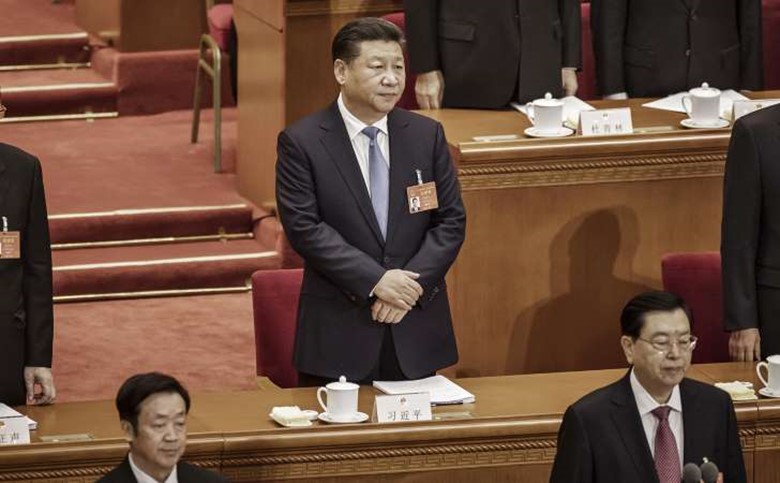
© Bloomberg News Chinese president Xi Jinping

Excess Capacity

In September 2013, when Xi first pitched the plan at an obscure Kazakhstan university, he focused on the Eurasia landmass. Since then, it has repeatedly changed names and expanded to include the entire world, with the main goal of rebuilding the ancient trading routes from China to Europe overland and by sea.

One key driver was economic: China wants to spur growth in underdeveloped hinterlands and find more markets for excess industrial capacity. With more than $3 trillion in international reserves — more than a quarter of the world’s total — China has more resources than developed economies struggling to hit budget targets.

The plan gained steam last year when populist movements spurred a backlash against trade and immigration in the U.S. and Europe. Brexit raised questions about the European Union’s viability, while Trump’s withdrawal from the Trans-Pacific Partnership gutted the biggest U.S. push to shape global economic rules.

Trade Champion

“It was very disappointing, and it makes us feel that there is a big vacuum that Belt and Road can help to fill,” Cheah Cheng Hye, chairman and co-chief investment officer at the Hong Kong-based Value Partners Group. “So all of sudden, we begin to appreciate this Chinese initiative.”

Xi wasted no time filling the void. With exporting nations looking for a free-trade champion, he told the global elite in Davos, Switzerland, to resist protectionism and join China in boosting global commerce.

The U.S. and Europe “almost unwittingly” created space for Xi to push China’s interests, according to Peter Cai, research fellow at the Lowy Institute for International Policy.

“China is offering an alternative to the U.S. version of globalization,” Cai said. “In the Chinese case, it’s globalization paved by concrete: railways, highways, pipelines, ports.”

Related gallery: 33 giant Chinese infrastructure projects that are reshaping the world (provided by Business Insider)

Xi’s $500 billion push to reshape the World in China’s image

33 giant Chinese infrastructure projects that are reshaping the world

Draft Communique

This year, five European countries — Denmark, Finland, Switzerland, France and Italy — openly voiced support for the initiative. On trips to China in February, Italian President Sergio Mattarella proposed plans for the ports of Genoa and Trieste, while French Prime Minister Bernard Cazeneuve attended the arrival ceremony of a freight train from Lyon.

The summit will feature the likes of Russia’s Vladimir Putin, Greece’s Alexis Tsipras and the Philippines’ Rodrigo Duterte. The U.S. and most Western countries are expected to send lower-level representatives.

A draft communique circulated before the event combined a commitment to open markets with endorsements of China’s diplomatic goals, Bloomberg reported Wednesday, citing people familiar with the document. It also generated some controversy among Beijing-based diplomats who said they didn’t have enough time to vet the document, underscoring the initiative’s potential to cause conflict.

$500 Billion

China has invested more than $50 billion in Belt and Road countries since 2013, according to the official Xinhua News Agency. Credit Suisse Group AG said this month that China could pour more than $500 billion into 62 countries over five years.

China’s state-run companies like China National Petroleum Corp. and China Mobile Ltd. — the world’s largest wireless carrier — are positioned to reap the rewards. Executives from six of China’s largest state-run firms sought to reassure the public this week that the risks were manageable.

China’s three development banks, its Silk Road Fund and China-led Asian Infrastructure Investment Bank were involved in $143 billion of lending outside of the country last year, up more than 140 percent from 2014, according to data compiled by Bloomberg.

Read More: Chinese Largesse Lures Countries to Its Belt and Road Initiative

Still, financial hurdles are starting to appear. China’s slowing economic growth has left fewer resources to spend overseas. Its international reserves have fallen about 6 percent over the past year, and China needs a healthy amount to defend the yuan.

Some previous Chinese ventures abroad have turned sour. While China’s no-strings-attached approach to investment is generally welcomed by developing countries, they often have poor credit ratings and questionable governance. China has struggled to recoup loans in Venezuela and Africa, and several projects in Central Asia have spurred protests. Announcements with big dollar signs often fail to materialize.

Nonetheless, Chinese scholars see the sum of Xi’s plan as bigger than any individual project. It represents a “profound change” in how China interacts with the world, according to Wang Yiwei, director of at Renmin University’s Institute of International Affairs in Beijing, who has written three books on the initiative.

“China has moved from a participant of globalization to a main leader,” he said. “It’s Globalization 2.0.”

To contact Bloomberg News staff for this story: Ting Shi in Hong Kong at tshi31@bloomberg.net, Miao Han in Beijing at mhan22@bloomberg.net.  To contact the editors responsible for this story: Daniel Ten Kate at dtenkate@bloomberg.net, Brendan Scott 

Xi’s $500 billion push to reshape the World in China’s image

Whole Trouble – Stop the Cultural Genocide in Tibet

Trouble in Tibet – Stop the Cultural Genocide

TROUBLE IN TIBET - STOP THE CULTURAL GENOCIDE.
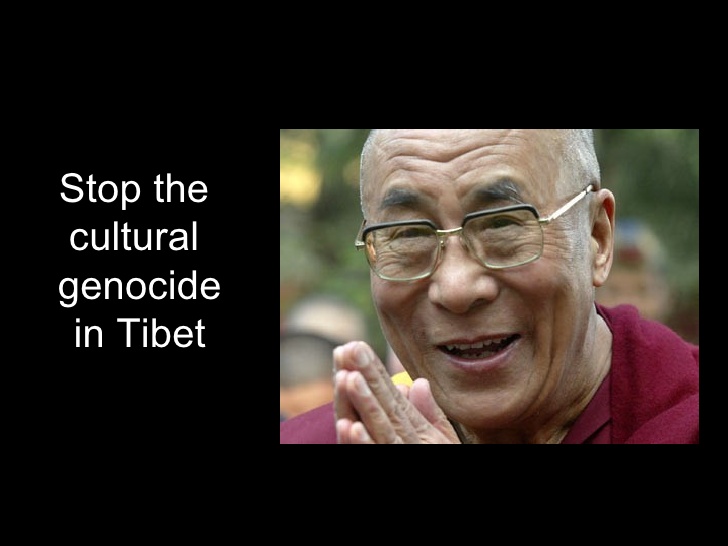
TROUBLE IN TIBET – STOP THE CULTURAL GENOCIDE. Disorienting social and economic change is under way in Tibet. The exiled Dalai Lama accuses China of “cultural genocide” (monasteries are being harassed, and in some parts of the plateau Chinese-language education erodes traditional ways).

The Exiled Supreme Ruler of Tibet His Holiness the 14th Dalai Lama expressed deep concern about Cultural Genocide in Occupied Tibet.

TROUBLE IN TIBET – STOP THE CULTURAL GENOCIDE: Disorienting social and economic change is under way in Tibet. The exiled Dalai Lama accuses China of “cultural genocide” (monasteries are being harassed, and in some parts of the plateau Chinese-language education erodes traditional ways).

UNPACIFIED PLATEAU: TIBET

Disorienting social and economic change is under way in Tibet. The exiled Dalai Lama accuses China of “cultural genocide” (monasteries are being harassed, and in some parts of the plateau Chinese-language education erodes traditional ways).

Government infrastructure investment in the Tibetan Autonomous Region has spurred mass tourism, but Tibetan resentment at missing out on tourism – and construction-related jobs was a big cause of rioting in Lhasa and elsewhere in 2008. Nor do the 6 million Tibetans (seen as troublemakers by China) migrate much to places with more opportunities: only around 1% have settled outside the plateau. The few private-sector jobs in Tibet mostly go to Han Chinese, so educated Tibetans mostly work for the government. The Chinese name for Tibet, Xizang, means “western treasure house” but Tibetans have little share in its spoils.

Disorienting social and economic change is under way in Tibet. The exiled Dalai Lama accuses China of “cultural genocide” (monasteries are being harassed, and in some parts of the plateau Chinese-language education erodes traditional ways).

Whole Trouble – A Total Wake-Up Call for Regime Change in Tibet

Trouble in Tibet – Regime Change through Meditation

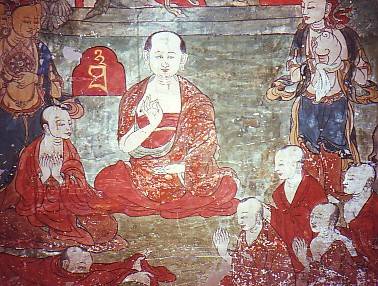
Whole Trouble – A Total Wake-Up Call for Regime Change in Tibet. How to change the Regime in Occupied Tibet? The Role of Meditation. The Great Masters of Nalanda. Acharya Kamalashila explained Three Stages of Meditation.

The problem of military occupation in Tibet needs resolution which demands a ‘Regime Change’. If military occupation poses problem, it exists outside the mind of a person experiencing the problem of occupation. Meditation may bring about some change in electrical activity of the brain and that change in activity can only be experienced by the person who practices meditation. However, there is no reason to suggest or expect any change in electrical activity of brain of a person who imposes the burden called military occupation. Can I hope to change the mental activity of Red China’s President through the practice of very rigorous meditation?

Meditation helps to bring Regime Change if the practitioner of meditation takes full advantage of changes in the electrical activity of his brain induced by the practice of meditation to perform specific physical actions to vacate the problem of occupation by evicting the Occupier.

Trouble in Tibet – Regime Change through Meditation. Can I hope to change the mental activity of Red China’s President through the practice of very rigorous meditation?

“Since you cannot tame the minds of others, until you have tamed your own, begin by taming your own mind.” – Acharya Atisha.

Neuroscientist Richie Davidson Says Dalai Lama Gave Him ‘a Total Wake-Up Call’ that Changed His Research Forever

By Lauren Effron

Jul 27, 2016, 2:00 PM ET

TROUBLE IN TIBET – REGIME CHANGE THROUGH MEDITATION. Dr. RICHIE DAVIDSON, NEUROSCIENTIST INVESTIGATES EFFECTS OF MEDITATION ON HUMAN BRAIN.

Dr. Richie Davidson, a neuroscientist at the University of Wisconsin-Madison, has been meditating for more than 40 years, but it was the Dalai Lama himself who convinced him to dedicate his life to researching the effects of meditation on the brain.

“He challenged me, saying, ‘You’ve been using the tools of modern neuroscience to mostly study anxiety, depression and fear, all these negative feelings. Why can’t you use these same tools to study qualities like kindness and compassion and equanimity?’ And I didn’t have a very good answer for him,” Davidson said. “It was a total wake-up call for me and really was a pivotal catalyst.”

Davidson, who founded the Center for Healthy Minds, met the Dalai Lama in 1992 and has since gone on to conduct multiple studies on mindfulness, compassion and cognitive therapy training. He talked about his research and personal meditation practice with ABC News’ Dan Harris for his “10% Happier” live stream/podcast show.

Early in his career, Davidson said he “became a closet meditator and didn’t talk to any of my colleagues about my interest in meditation … [the Dalai Lama] played a major role in me coming out of the closet and encouraging serious scientific research in this area.”

His relationship with His Holiness led to Davidson and his colleagues to conduct a study a few years ago looking at the brain scans of Buddhist monks as they meditated. The Dalai Lama had granted permission for his monks to have their brains studied at the University of Wisconsin-Madison, home to one of the most renowned brain labs in the world.

Davidson’s team flew in monks from Tibet and Nepal for the study and asked them to meditate while undergoing EEG, MRI and FMRI (functional magnetic resonance imaging) scans. When they first looked at the scans, Davidson said the results were so shocking, he thought the equipment was malfunctioning.

“What we saw in these individuals, not a burst of gamma, but a long duration [of activity] for minutes while they were meditating, which is crazy,” Davidson said. “This had never been seen in a human brain before.” Typically in an “untrained mind,” Davidson said, a burst of activity would last for about one second, but the monks could sustain it.
“And [they] can turn it on pretty much at will,” he said. “Any of us can have it and we may not be able to sustain it, that’s the difference … a thought will come into our mind and we’ll get lost in it for a few minutes, and so the ability to sustain it I think really requires much more practice.”

As a scientist, Davidson has been criticized in the past for his close relationship with the Dalai Lama, a religious figure. Davidson also has been questioned about whether he is biased toward a certain outcome in his research because he has been practicing meditation for decades. But Davidson argued that his personal practice and the Dalai Lama’s support are beneficial to his work.

“I understand the concern and really my push back is simply that we are trying to do the science at the highest possible level with the most integrity,” Davidson said. “And I actually believe that if you’re going to study meditation scientifically then you’ve got to meditate yourself…. It would be like telling a cardiologist that they can’t do any physical exercise for the rest of their active career because they’re biased.”

Every morning, Davidson said he will do a period of meditation and then take two to three minutes to scan his calendar for meetings. Then for a few seconds, Davidson said he pauses to reflect on how he can bring “the right stuff” to each meeting in order to “be present and be most helpful.”

“I can go through a day where I have 10 straight hours of meetings and at the end of that period feel totally nourished and refreshed,” he said.

His advice for those who want to start meditating was to commit to a daily practice for at least 30 days, but set a reasonable amount of time.

“There are published studies which show as little as eight minutes of meditation can actually produce a measurable objective change, but again it says nothing about how long these changes will last,” Davidson said. “It doesn’t matter how small that number is, but do it every day.”

Whole Trouble – A Total Wake-Up Call for Regime Change in Tibet. How to change the Regime in Occupied Tibet? Tibetan Resistance: The Doctrine and the Philosophy of Tibetan Resistance to China’s War of Occupation is based on the Force or Power of an Idea that concludes that the Enemy has no Power over your Mind and the Enemy cannot exercise authority over your Mind. Resistance begins when man sets his Mind Free. Resistance is Freedom in Action without any sense of Fear.
Whole Trouble – A Total Wake-Up Call for Regime Change in Tibet. How to change the Regime in Occupied Tibet? Tibetan Resistance: The Doctrine and the Philosophy of Tibetan Resistance to China’s War of Occupation is based on the Force or Power of an Idea that concludes that the Enemy has no Power over your Mind and the Enemy cannot exercise authority over your Mind. Resistance begins when man sets his Mind Free. Resistance is Freedom in Action without any sense of Fear. Great Masters of Nalanda. Acharya Atisha.

Whole Trouble – The Legacy of the Biggest Mass Murderer of the World

Trouble in Tibet – The Legacy of the Biggest Mass Murderer of the World

TROUBLE IN TIBET – LEGACY OF THE BIGGEST MASS MURDERER OF THE WORLD.

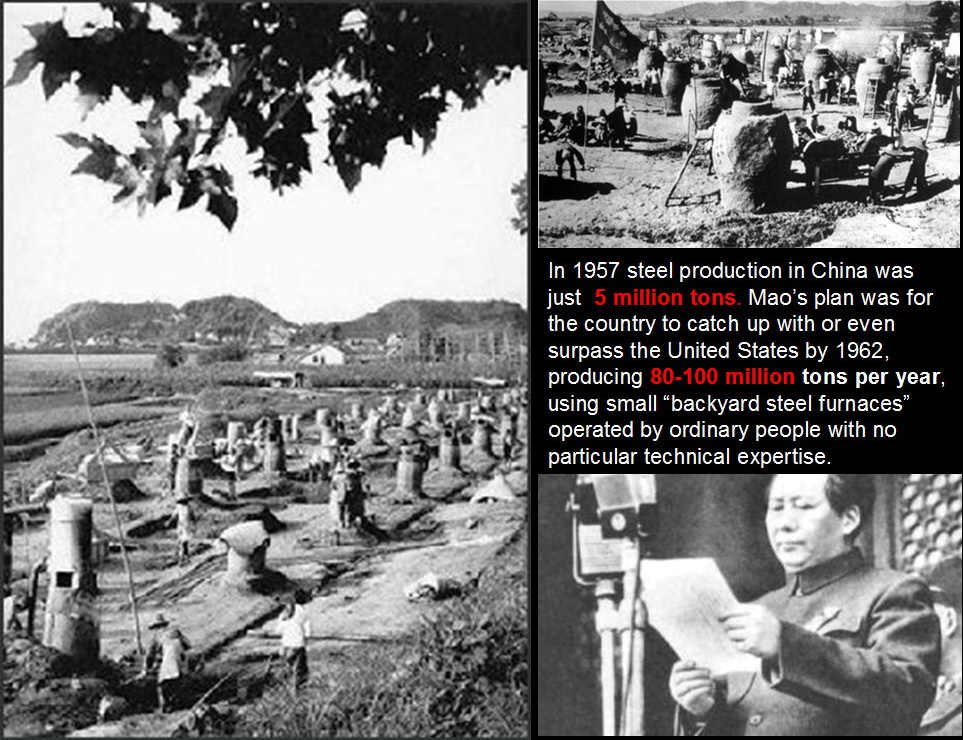
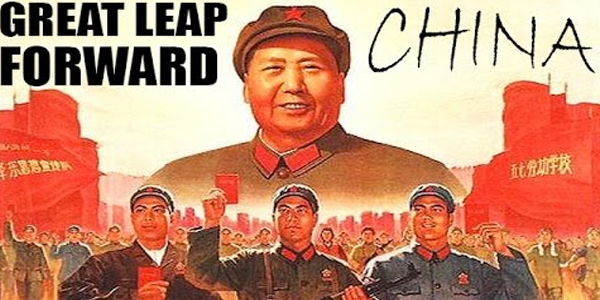
Trouble in Tibet stands for Legacy of the Biggest Mass Murderer of the world. It is not a past historical event. His Legacy is alive today for the Monster that he created lives in pursuit of the Doctrine of Expansionism.

The Washington Post

Remembering the biggest mass murder in the history of the world

BY ILYA SOMIN AUGUST 03

Victims of the Great Leap Forward.
Remembering the biggest mass murder in the history of the world. Chinese peasants suffering from the effects of the Great Leap Forward.

Chinese peasants suffering from the effects of the Great Leap Forward.

Who was the biggest mass murderer in the history of the world? Most people probably assume that the answer is Adolf Hitler, architect of the Holocaust. Others might guess Soviet dictator Joseph Stalin, who may indeed have managed to kill even more innocent people than Hitler did, many of them as part of a terror famine that likely took more lives than the Holocaust. But both Hitler and Stalin were outdone by Mao Zedong. From 1958 to 1962, his Great Leap Forward policy led to the deaths of up to 45 million people – easily making it the biggest episode of mass murder ever recorded.
Historian Frank Dikötter, author of the important book Mao’s Great Famine recently published an article in History Today, summarizing what happened:

Mao thought that he could catapult his country past its competitors by herding villagers across the country into giant people’s communes. In pursuit of a Utopian paradise, everything was collectivised. People had their work, homes, land, belongings and livelihoods taken from them. In collective canteens, food, distributed by the spoonful according to merit, became a weapon used to force people to follow the party’s every dictate. As incentives to work were removed, coercion and violence were used instead to compel famished farmers to perform labour on poorly planned irrigation projects while fields were neglected.

A catastrophe of gargantuan proportions ensued. Extrapolating from published population statistics, historians have speculated that tens of millions of people died of starvation. But the true dimensions of what happened are only now coming to light thanks to the meticulous reports the party itself compiled during the famine….
What comes out of this massive and detailed dossier is a tale of horror in which Mao emerges as one of the greatest mass murderers in history, responsible for the deaths of at least 45 million people between 1958 and 1962. It is not merely the extent of the catastrophe that dwarfs earlier estimates, but also the manner in which many people died: between two and three million victims were tortured to death or summarily killed, often for the slightest infraction. When a boy stole a handful of grain in a Hunan village, local boss Xiong Dechang forced his father to bury him alive. The father died of grief a few days later. The case of Wang Ziyou was reported to the central leadership: one of his ears was chopped off, his legs were tied with iron wire, a ten kilogram stone was dropped on his back and then he was branded with a sizzling tool – punishment for digging up a potato.

The basic facts of the Great Leap Forward have long been known to scholars. Dikötter’s work is noteworthy for demonstrating that the number of victims may have been even greater than previously thought, and that the mass murder was more clearly intentional on Mao’s part, and included large numbers of victims who were executed or tortured, as opposed to “merely” starved to death. Even the previously standard estimates of 30 million or more,would still make this the greatest mass murder in history.

While the horrors of the Great Leap Forward are well known to experts on communism and Chinese history, they are rarely remembered by ordinary people outside China, and has had only a modest cultural impact. When Westerners think of the great evils of world history, they rarely think of this one. In contrast to the numerous books, movies, museums, and and remembrance days dedicated to the Holocaust, we make little effort to recall the Great Leap Forward, or to make sure that society has learned its lessons. When we vow “never again,” we don’t often recall that it should apply to this type of atrocity, as well as those motivated by racism or antisemitism.

The fact that Mao’s atrocities resulted in many more deaths than those of Hitler does not necessarily mean he was the more evil of the two. The greater death toll is partly the result of the fact that Mao ruled over a much larger population for a much longer time. I lost several relatives in the Holocaust myself, and have no wish to diminish its significance. But the vast scale of Chinese communist atrocities puts them in the same general ballpark. At the very least, they deserve far more recognition than they currently receive.

I. Why We so Rarely Look Back on the Great Leap Forward

What accounts for this neglect? One possible answer is that the most of the victims were Chinese peasants – people who are culturally and socially distant from the Western intellectuals and media figures who have the greatest influence over our historical consciousness and popular culture. As a general rule, it is easier to empathize with victims who seem similar to ourselves.

But an even bigger factor in our relative neglect of the Great Leap Forward is that it is part of the general tendency to downplay crimes committed by communist regimes, as opposed to right-wing authoritarians. Unlike in the days of Mao, today very few western intellectuals actually sympathize with communism. But many are reluctant to fully accept what a great evil it was, fearful – perhaps – that other left-wing causes might be tainted by association.

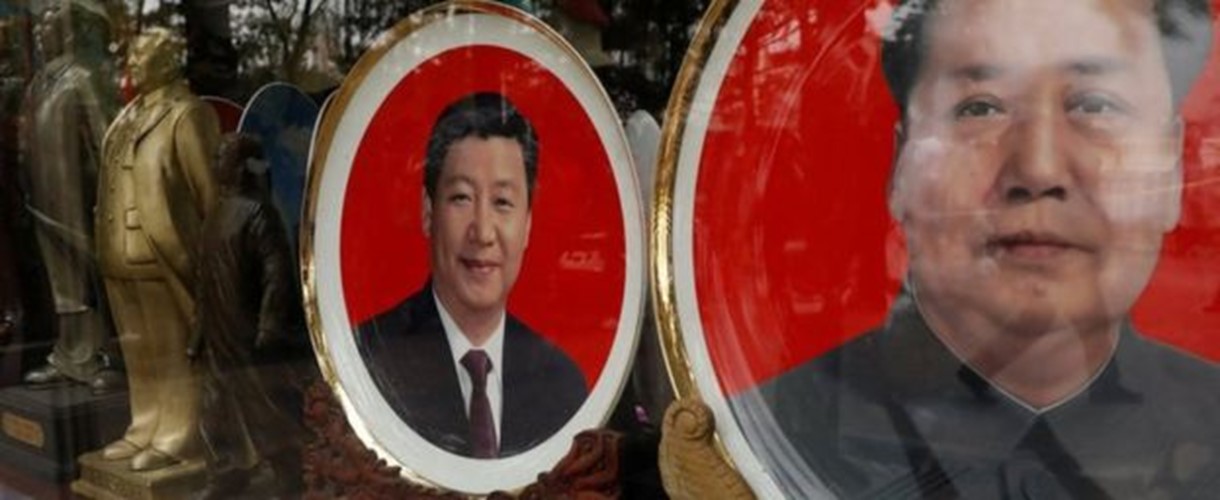
The social-political movement launched in May 1966 by Mao Zedong followed a botched industrialization campaign where millions starved. It’s a sensitive period in modern China’s history. That’s why this museum filled with relics from China’s “Red Era”, is one of a kind. From busts to badges, plates to posters – Chairman Mao and his vision are everywhere. (Reuters)

In China, the regime has in recent years admitted that Mao made “mistakes” and allowed some degree of open discussion about this history. But the government is unwilling to admit that the mass murder was intentional and continues to occasionally suppress and persecute dissidents who point out the truth.

This reluctance is an obvious result of the fact that the Communist Party still rules China. Although they have repudiated many of Mao’s specific policies, the regime still derives much of its legitimacy from his legacy. I experienced China’s official ambivalence on this subject first-hand, when I gave a talk about the issue while teaching a course as a visiting professor at a Chinese University in 2014.

II. Why it Matters.

For both Chinese and westerners, failure to acknowledge the true nature of the Great Leap Forward carries serious costs. Some survivors of the Great Leap Forward are still alive today. They deserve far greater recognition of the horrible injustice they suffered. They also deserve compensation for their losses, and the infliction of appropriate punishment on the remaining perpetrators.

In addition, our continuing historical blind spot about the crimes of Mao and other communist rulers, leads us to underestimate the horrors of such policies, and makes it more likely that they might be revived in the future. The horrendous history of China, the USSR, and their imitators, should have permanently discredited socialism as completely as fascism was discredited by the Nazis. But it has not – so far – fully done so.

Just recently, the socialist government of Venezuela imposed forced labor on much of its population. Yet most of the media coverage of this injustice fails to note the connection to socialism, or that the policy has parallels in the history of the Soviet Union, China, Cuba, and other similar regimes. One analysis even claims that the real problem is not so much “socialism qua socialism,” but rather Venezuela’s “particular brand of socialism, which fuses bad economic ideas with a distinctive brand of strongman bullying,” and is prone to authoritarianism and “mismanagement.” The author simply ignores the fact that “strongman bullying” and “mismanagement” are typical of socialist states around the world. The Scandinavian nations – sometimes cited as examples of successful socialism- are not actually socialist at all, because they do not feature government ownership of the means of production, and in many ways have freer markets than most other western nations.

Venezuela’s tragic situation would not surprise anyone familiar with the history of the Great Leap Forward. We would do well to finally give history’s largest episode of mass murder the attention it deserves.


Somin_Ilya_90x90.jpg&w=180&h=180
Ilya Somin is Professor of Law at George Mason University. His research focuses on constitutional law, property law, and popular political participation. He is the author of “The Grasping Hand: Kelo v. City of New London and the Limits of Eminent Domain” and “Democracy and Political Ignorance: Why Smaller Government is Smarter.”

1163

© 1996-2016 The Washington Post On http://www.glogster.comOn http://www.telegraph.co.uk

Trouble in Tibet – The Legacy of the Biggest Mass Murderer of the World.

Whole Tyrant – The Problem of Transparency in Communist Governance

Red China – The Problem of Transparency in Communist Governance

Red China – The Problem of Transparency in Communist Governance

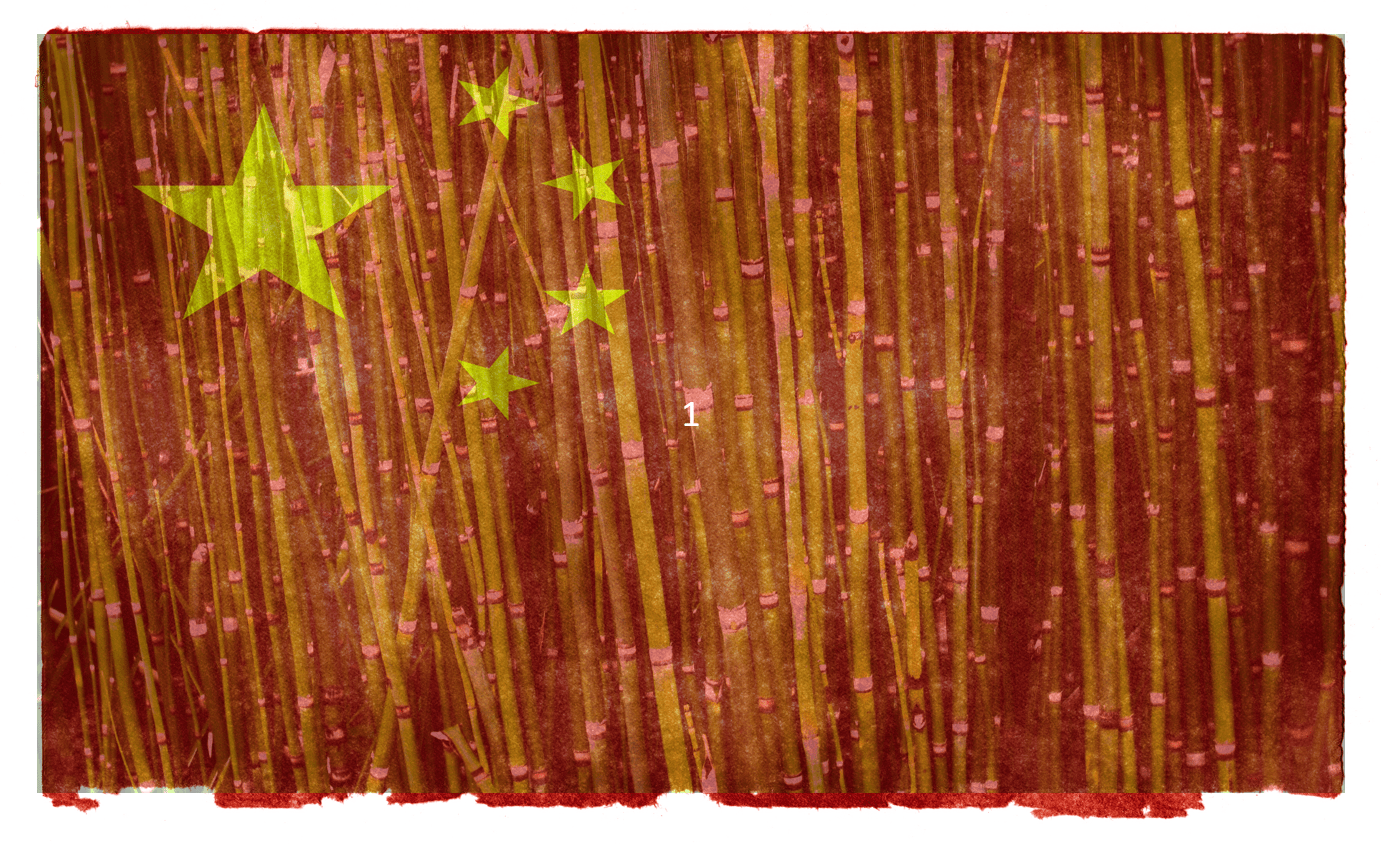
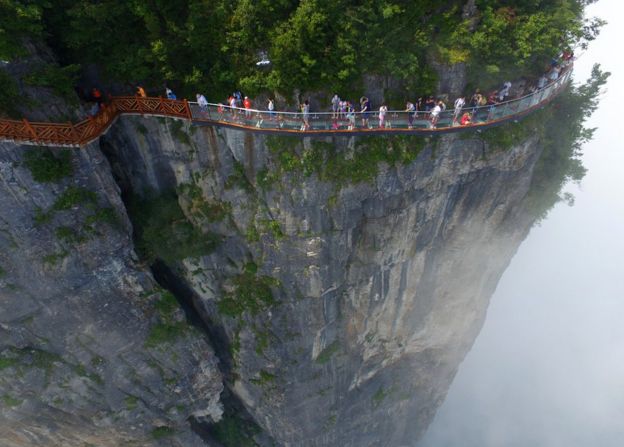
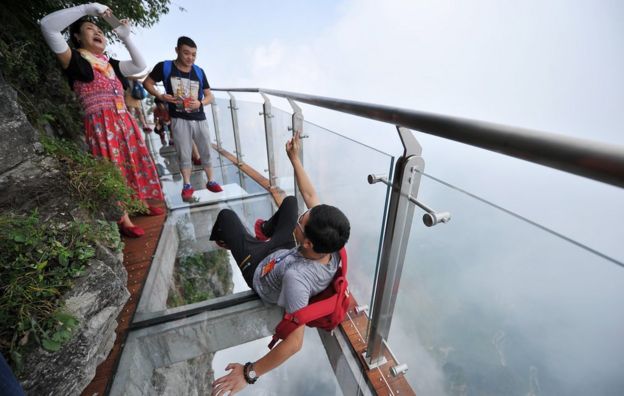
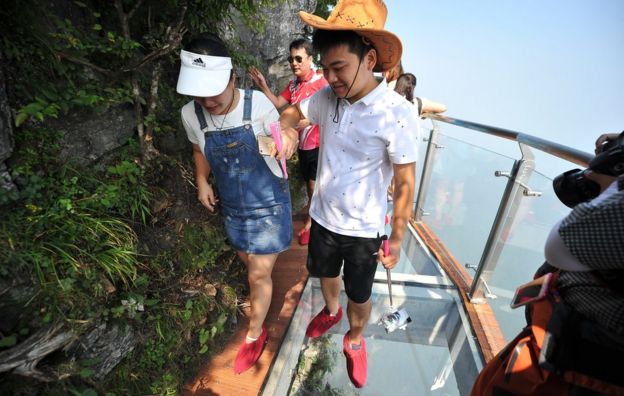
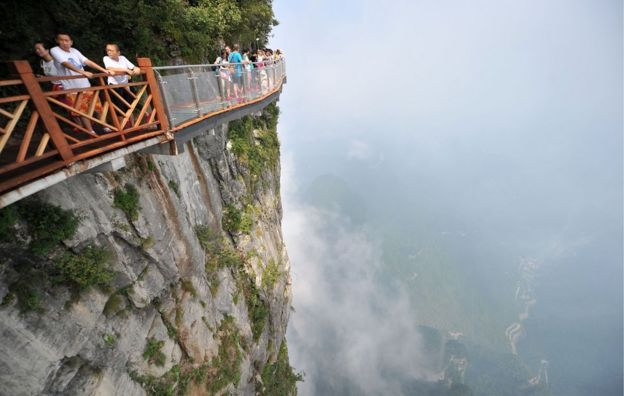
Communist China showcases her technological advancement by erecting structures such as Glass Walkway in Tianmen Mountain. Such use of technology is not resolving the problem of transparency in Communist Governance. In fact, the Glass Walkway symbolizes the lack of transparency of the dictatorial regime in Beijing. Red China must remove the Bamboo Curtain to reveal the full range of its oppressive measures to destroy Tibetan Culture and Identity.

TROUBLE IN TIBET - TRANSPARENCY IN COMMUNIST GOVERNANCE.  MOUNTAIN SYMBOLIZES PROBLEM.
Red China – The Problem of Transparency in Communist Governance: The Glass Walkway in Tianmen Mountain symbolizes the lack of transparency of the dictatorial regime in Beijing.

Glass walkway opens in Tianmen mountain, China

Red China – The Problem of Transparency in Communist Governance: The Glass Walkway in Tianmen Mountain symbolizes the lack of transparency of the dictatorial regime in Beijing.

This terrifying construction is part of the latest addition to China’s glass bridge craze.

Red China – The Problem of Transparency in Communist Governance: The Glass Walkway in Tianmen Mountain symbolizes the lack of transparency of the dictatorial regime in Beijing.

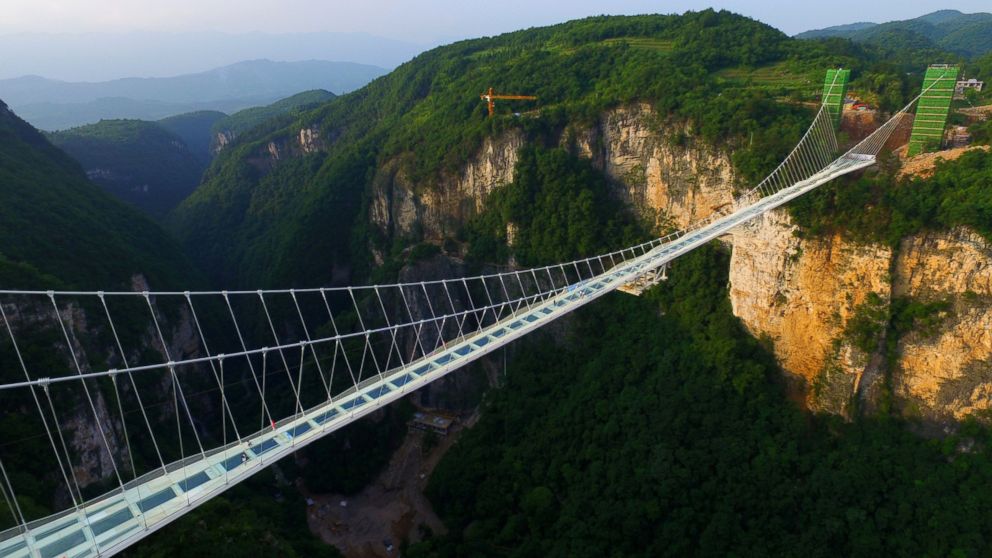
The Coiling Dragon path is in Zhangjiajie National Forest Park in Hunan province, and a new section opened to tourists on Monday.

Red China – The Problem of Transparency in Communist Governance: The Glass Walkway in Tianmen Mountain symbolizes the lack of transparency of the dictatorial regime in Beijing.

The 100-m walkway has 99 turns around the side of the sheer cliff face of Tianmen Mountain. For those immune to the terror of a vertical drop, it’s a perfect photo opp.

Red China – The Problem of Transparency in Communist Governance: The Glass Walkway in Tianmen Mountain symbolizes the lack of transparency of the dictatorial regime in Beijing.

Reassuringly some tourists, in their protective shoes, appeared more keen to cling to the walls and just get it over with.

Red China – The Problem of Transparency in Communist Governance: The Glass Walkway in Tianmen Mountain symbolizes the lack of transparency of the dictatorial regime in Beijing.

Braver tourists can enjoy spectacular views across the Hunan countryside. No, we’re not sure how this picture was taken either.

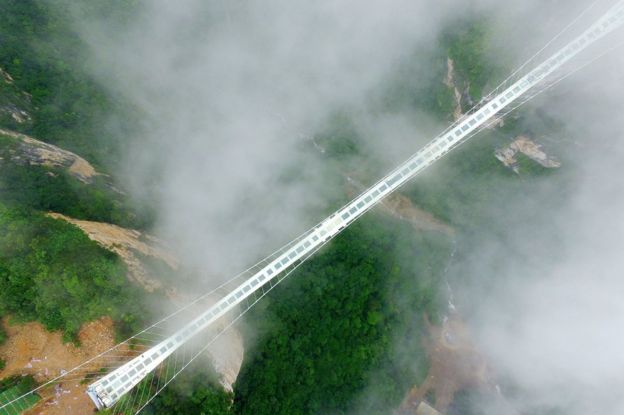
The Zhangjiajie park already offers tourists this – at 430 m (1,410 ft) and suspended over a 300 m-deep valley it is billed as the world’s longest glass bridge.

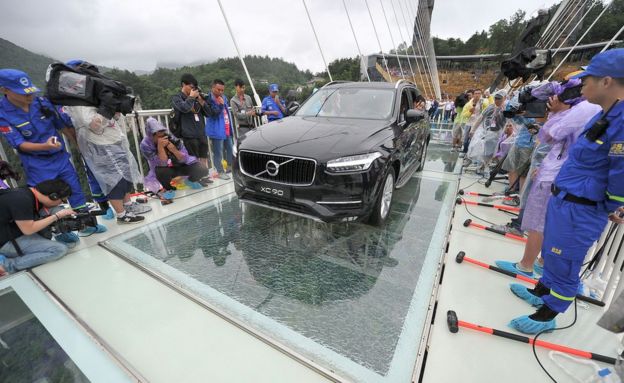
Glass Bridge in Zhangjiajie National Forest Park, Hunan Province. Red China – The Problem of Transparency in Communist Governance: The Glass Walkway in Tianmen Mountain symbolizes the lack of transparency of the dictatorial regime in Beijing. Glass Bridge in Zhangjiajie National Forest Park Showcases Unsafe Face of Communist Governance.

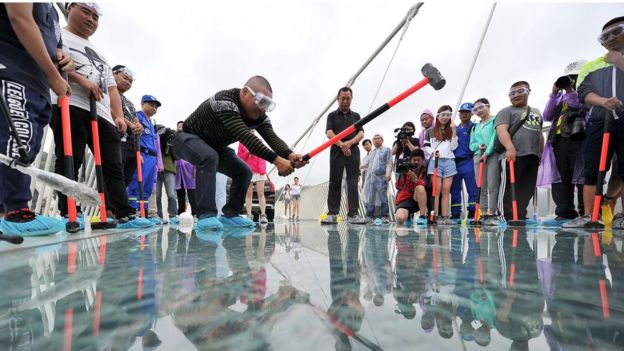
To assuage fears about safety, in June the park authorities deliberately cracked the glass then drove a car full of people over it. It was fine.

Red China – The Problem of Transparency in Communist Governance: The Glass Walkway in Tianmen Mountain symbolizes the lack of transparency of the dictatorial regime in Beijing. Sledgehammer Red Dragon to Crack Open its Secrets. Glass Bridge in Zhangjiajie National Forest Park, Hunan Province. Glass Bridge Showcases Unsafe Communist Governance.

And for good measure, they hit it with a sledgehammer.

Red China – The Problem of Transparency in Communist Governance: The Glass Walkway in Tianmen Mountain symbolizes the lack of transparency of the dictatorial regime in Beijing. Glass Bridge in Zhangjiajie National Forest Park Showcases Unsafe Face of Communist Governance.
stime=1470202722
Red China – The Problem of Transparency in Communist Governance: The Glass Walkway in Tianmen Mountain symbolizes the lack of transparency of the dictatorial regime in Beijing. Glass Bridge in Zhangjiajie National Forest Park Showcases Unsafe Face of Communist Governance.