THE EVIL RED EMPIRE – RED CHINA VS VIETNAM – SOUTH CHINA SEA DISPUTE.
People of Vietnam fought prolonged battles with French and later United States. In my assessment, Vietnamese people are driven by a sense of nationalism and they never belonged to either Soviet or Red China brand of Communism. Vietnam is getting ready to face the military challenge imposed by Red China’s Expansionist Policy. Special Frontier Force wanted to support United States during Vietnam War and it is not a desire to engage people of Vietnam in a battle. Vietnam War represented an opportunity to engage Red China in a battle and weaken her ability to supply arms and ammunition to North Vietnam across a border they share. As Vietnam prepares to defend against Red China’s aggressive behavior, Special Frontier Force will be willing to join hands with people of Vietnam in a confrontation that will halt Red China’s empire building activity.
Vietnam fishermen ‘attacked by Chinese boats’: state media
A Vietnamese fishing crew said they were attacked by a Chinese vessel using water cannon in disputed waters near the flash point Paracel Islands, Vietnam’s state media reported Monday.
The wooden Vietnamese fishing boat from central Quang Ngai province was near the Paracels — known as Hoang Sa in Vietnamese — on June 7 when it was attacked by a red-and-white painted Chinese vessel, the Lao Dong newspaper said.
“The crew signalled to the (Chinese) boat not to use water cannon as they feared their boat would sink, but they fired the water directly at them,” the report said. One of the 13-man crew was knocked over and broke his leg during the altercation, the report said, quoting the crew.
A number of Vietnamese state-run newspapers ran photos of the sailor with his leg in plaster. In a separate incident, on June 10, another Vietnamese fishing boat in the same area was surrounded by four Chinese boats and had their equipment and catch stolen, the Lao Dong newspaper said.
Fishermen unload a catch in port in the Vietnamese central coastal city of Da Nang (AFP Photo/)
The communist neighbours are locked in a longstanding maritime dispute over islands and fishing rights in the South China Sea.
Last year, tensions came to a head when Beijing moved a deep water oil rig into waters claimed by Hanoi, triggering deadly anti-China riots in Vietnam. Swept along by nationalist sentiment and forced to venture further out to sea to fill their nets, Vietnam’s commercial fishing fleet have often found themselves on the front lines of the maritime dispute.
Both Vietnam and China claim full sovereignty over the Paracel Islands, which Beijing have controlled since 1974 after seizing them from the then-South Vietnam regime in a brief battle. China’s claim to almost the entire South China Sea conflicts with those of the Philippines, Vietnam, Malaysia and Taiwan.
Vietnam’s Ministry of Foreign Affairs did not immediately respond to a request for comment.
It surprises me to note that news media give attention to threats posed to national entities like Taiwan, Japan, Philippines, Indonesia, Malaysia, Vietnam, and Brunei but pay no attention to ‘The Great Problem of Tibet’. To provide some perspective on this issue, I ask my readers to compare the land area of these nations:
THE EVIL RED EMPIRE – RED CHINA – THE GREAT PROBLEM OF TIBET : TIBET HAS LAND AREA OF 870, 000 SQUARE MILES. TIBET IS LARGER IN SIZE COMPARED TO ASIAN NATIONS LIKE JAPAN, TAIWAN, PHILIPPINES, INDONESIA, MALAYSIA, VIETNAM, AND BRUNEI. TIBET IS THREE-TIMES LARGER THAN TEXAS STATE OF UNITED STATES .
Land area of Tibet includes Tibet Autonomous Region(TAR) and Tibetan territory annexed to Qinghai, Gansu, Sichuan, and Yunnan Provinces of People’s Republic of China. To give a better understanding of the size of Tibet, it may be compared to Texas, largest State in the coterminous United States. Land area of Texas is 268, 820 square miles. Tibet is larger than three States of Texas combined.
Special Frontier Force welcomes attention given to security risks posed by Red China to countries of Asia and those threats cannot be resolved without including solution to ‘The Great Problem of Tibet.’
TAIWAN COAST GUARD LAUNCHES NEW SHIPS AS SOUTH CHINA SEA TENSIONS RISE
Taiwan coast guard launches new ships as South China Sea tensions rise
By J.R. Wu June 6, 2015
Taiwan Coast Guard’s new patrol ship, the 3000-ton “Ilan” (L), is seen during a commissioning …
Taiwan Coast Guard patrol ships are seen during a drill held about 4 nautical miles out of the port of Kaohsiung, southern Taiwan, June 6, 2015. Taiwan’s coast guard on Saturday commissioned its biggest ships for duty, in the form of two 3,000 ton patrol vessels, as Taipei boosts its defences amid concerns about China’s growing footprint in the disputed South China Sea. REUTERS/Pichi Chuang
By J.R. Wu
KAOHSIUNG, Taiwan (Reuters) – Taiwan’s coast guard on Saturday commissioned its biggest ships for duty in the form of two 3,000-ton patrol vessels, as the island boosts defenses amid concerns about China’s growing footprint in the disputed South China Sea.
The new vessels will be able to dock at a new port being constructed on Taiping Island, the largest of the naturally occurring Spratly Islands in the South China Sea, before the end of this year.
Taiwan’s coast guard has had direct oversight of the 46-ha (114-acre) island, also known as Itu Aba, since 2000.
“Taiping Island’s defense capabilities will not be weak,” said Wang Chung-yi, minister of the Coast Guard Administration, referring to recent upgrading done on the 1,200-metre (yards) long airstrip on Taiping and the building of a new port, which he said could be completed as early as October this year.
“As far as Taiping Island is concerned, we still maintain not so much a military as a civil role,” Wang told Reuters in an interview in Taipei. Taiwan will not create conflict, but if it is provoked “we will not concede,” he said.
Taiwan Coast Guard patrol ships are seen during a drill held about 4 nautical miles out of the port of Kaohsiung, southern Taiwan, June 6, 2015. Taiwan’s coast guard on Saturday commissioned its biggest ships for duty, in the form of two 3,000 ton patrol vessels, as Taipei boosts its defences amid concerns about China’s growing footprint in the disputed South China Sea. REUTERS/Pichi Chuang
Taiwan Coast Guard patrol ships and helicopters from National Airborne Service Corps are seen during …
Unlike the Philippines and Vietnam, Taiwan has largely avoided becoming ensnared in public disputes with China over the South China Sea, through which $5 trillion in ship-borne trade passes every year.
Beijing claims most of the South China Sea, while the Philippines, Brunei, Malaysia, Taiwan and Vietnam also have overlapping claims.
Rival claims by Taiwan and China go back to before defeated Nationalists fled to Taiwan after losing a civil war with the Communists in 1949. Beijing sees self-ruled Taiwan as a renegade province to be retaken one day and bans actions that would confer sovereignty, such as negotiating territorial disputes in the South China Sea.
Taiwan President Ma Ying-jeou boarded one of the new ships on Saturday, observing rescue drills in waters off the southern Taiwan port city of Kaohsiung. One of the vessels will be sent to the South China Sea, while the other will be assigned to waters north of Taiwan where it has overlapping claims with Japan.
Japan’s Yomiuri newspaper reported on Saturday that Group of Seven leaders meeting in Germany on Sunday would express their concern over any unilateral action to change the status quo in the East and South China Seas.
China has been criticized for extensive reclamation work and moves to turn submerged rocks into man-made structures. The United States last week said Beijing had placed mobile artillery systems in contested territory.
Red China Territorial and Maritime Claims in South China Sea
Red China – Land Reclamation Activity in South China Sea.
Taiwan Coast Guard patrol ships are seen during a drill held about 4 nautical miles out of the port of Kaohsiung, southern Taiwan, June 6, 2015. Taiwan’s coast guard on Saturday commissioned its biggest ships for duty, in the form of two 3,000 ton patrol vessels, as Taipei boosts its defences amid concerns about China’s growing footprint in the disputed South China Sea. REUTERS/Pichi Chuang
Taiwan Coast Guard patrol ships are seen during a drill held about 4 nautical miles out of the port of Kaohsiung, southern Taiwan, June 6, 2015. Taiwan’s coast guard on Saturday commissioned its biggest ships for duty, in the form of two 3,000 ton patrol vessels, as Taipei boosts its defences amid concerns about China’s growing footprint in the disputed South China Sea. REUTERS/Pichi Chuang
Special Frontier Force Joins Tibetan Prayers for Unity and Solidarity. Tibetan Territory is fragmented by Red China – Subjugator – Occupation of Tibet
The Evil Red Empire – Red China – Land, Sea, and Airspace Expansionism – South China Sea.
THE EVIL RED EMPIRE – RED CHINA – THE GREAT PROBLEM OF TIBET : TIBET HAS LAND AREA OF 870, 000 SQUARE MILES. TIBET IS LARGER IN SIZE COMPARED TO ASIAN NATIONS LIKE JAPAN, TAIWAN, PHILIPPINES, INDONESIA, MALAYSIA, VIETNAM, AND BRUNEI. TIBET IS THREE-TIMES LARGER THAN TEXAS STATE OF UNITED STATES .
Filipino environmental activists aim water guns at mock Chinese flags as they stage a rally outside the Chinese Consulate in suburban Makati, south of Manila, Philippines on Monday, May 11, 2015 to protest against the continued building of infrastructures along a disputed group of islands known as the Spratlys in the South China Sea. The group is accusing the Chinese military of destroying the fragile ecosystem and livelihood of fishermen during their reclamation projects in the area which both countries have claimed ownership. (AP Photo/Aaron Favila)
I am sharing this story about dispute between Red China and Philippines as there are no stories written about dispute between Red China and Tibet. There is a territorial dispute between Red China and Tibet which I often refer to as ‘The Great Problem of Tibet’. Red China has a State Policy known as “EXPANSIONISM” and she extends her territory and her influence by using her superior military power over her weak neighbors. Philippines is resisting threat imposed by Red China taking help from other nations like Japan, and the United States. Filipino people have demonstrated their resolve to oppose Red China’s claims in South China Sea. Tibetans have to join this issue and learn the principles of warfare. To fight a stronger opponent, Tibet like Philippines needs partners to give strength to their demands for Justice in Occupied Tibet.
PHILIPPINES AIRS PROGRAM ABOUT SEA DISPUTES WITH CHINA
Philippines airs program about sea disputes with China
By JIM GOMEZ
MANILA, Philippines (AP) — The Philippine government broadcast a television program on Friday aimed at boosting public opposition to China’s increasingly assertive moves to press its territorial claims in the disputed South China Sea.
The broadcast of the first episode of a three-part series, titled “Freedom,” on the state-run TV network coincided with the Philippines’ independence day.
The 22-minute video, which was also posted on government websites, focuses on the economic impact of China’s actions, including its 2012 seizure of a disputed shoal where Chinese coast guard ships have chased away Filipino fishermen.
The broadcast reflects increased enmity among claimants in the South China Sea, which Beijing claims virtually in its entirety. The U.S. military has increased surveillance flights over the waters to reassure allies territorially at odds with Beijing.
Rising military deployments in the disputed region have heightened fears of possible confrontations and accidental clashes that could escalate into a major conflict. Also Friday, about 200 left-wing and nationalist protesters staged rallies at the Chinese Consulate and the U.S. Embassy in Manila to condemn Beijing’s actions, including the construction of artificial islands in the disputed Spratly Islands, and oppose what they called U.S. intervention in the dispute.
Protesters face the Chinese Consulate to display their anti Chinese message during a Philippines Independence Day rally in the financial district of Makati city east of Manila, Philippines, Friday, June 12, 2015. The protesters condemned the recent reclamation of land by China in the disputed Spratlys group of islands on the South China Sea. (AP Photo/Bullit Marquez)
Protesters carry placards as they march in a Philippines Independence Day rally toward the Chinese Consulate.
Waving red flags and holding placards that read, “U.S.-China, hands off the Philippines,” the protesters called on Filipinos to join efforts to defend the country’s sovereignty and territory. “These two powerful countries are increasingly conniving and challenging each other in their quest for dominance in the Asia-Pacific region,” the protesters said in a statement.
The broadcast features interviews with Filipino fishermen who say they lost a key source of income after China began preventing them from sailing to Scarborough Shoal, which effectively came under Chinese control at the end of a tense standoff with Philippine ships in 2012.
A Philippine diplomat, Henry Bensurto, says in the video that China’s territorial claims include areas where coastal states like the Philippines have exclusive rights to fish and explore for other resources under the United Nations Convention on the Law of the Sea.
Chinese Embassy officials did not immediately react to the program. Beijing has steadfastly defended its right to pursue island-building and other activities in areas it says have belonged to it since ancient times.
“If we won’t get involved and take action, we may not have anything to bequeath to the next generation,” popular TV personality Lourd de Veyra says in the program. “The problem is we have a neighbor who sneaks in and out of our territory and takes away all the resources. This belongs to us.”
Copyright 2015 The Associated Press. All rights reserved. This material may not be published, broadcast, rewritten or redistributed.
Yahoo – ABC News Network
THE EVIL RED EMPIRE – RED CHINA VS PHILIPPINES – FILIPINO PROTEST ON MAY 11, 2015.Environmental activists display placards as they march towards the Chinese Embassy in Makati City, Metro Manila May 11, 2015. The activists demanded that Chinese authorities immediately put a stop to the ecological destruction caused by the reclamation activities of China in the South China Sea, which the Philippines calls West Philippine Sea. They also condemned what they say is the bullying by Chinese naval and coast guard forces of Filipino fishermen in the disputed seas, an environmental activist said. REUTERS/Romeo RanocoTHE EVIL RED EMPIRE – RED CHINA VS PHILIPPINES – A DISPUTE IMPOSED BY RED CHINA’S EXPANSIONIST POLICY.
RED CHINA VS PHILIPPINES :United States joint military exercise. April 20, 2015
Filipino activists hold anti China slogans as they march towards the Chinese Consulate during a rally at the financial district of Makati, south of Manila, Philippines Thursday, June 4, 2015. More than 100 left wing Filipino activists demanded that China stop its increasingly assertive actions in the disputed South China Sea Thursday, warning during a rally that they can target “Chinese economic interests” with protests. (AP Photo/Aaron Favila)
In this photo taken May 16, 2015, Filipino fishermen sit at a meeting in Masinloc municipality in the northwestern province of Zambales where they, along with foreign journalists and local officials, attended the forum organized by Zambales and Masinloc officials on the South China Sea territorial disputes. Many Filipino fishermen in Masinloc say their livelihoods were affected over the disputed Scarborough Shoal off Zambales in 2012, affecting Filipino fishermen’s access to fishing waters. A group of 15 foreign journalists traveled to Masinloc under a study tour organized by the Hawaii based East West Center last month to look into the impact of the South China Sea territorial disputes on fishermen like Mula. (AP Photo/Jim Gomez)
Protesters face the Chinese Consulate to display their anti Chinese message during a Philippines Independence Day rally in the financial district of Makati city east of Manila, Philippines, Friday, June 12, 2015. The protesters condemned the recent reclamation of land by China in the disputed Spratlys group of islands on the South China Sea. (AP Photo/Bullit Marquez)
Protesters carry placards as they march in a Philippines Independence Day rally toward the Chinese Consulate in the financial district of Makati city east of Manila, Philippines, Friday, June 12, 2015. The protesters condemned the recent reclamation of land by China in the disputed Spratlys group of islands on the South China Sea. (AP Photo/Bullit Marquez)
Filipino environmental activists aim water guns at mock Chinese flags as they stage a rally outside the Chinese Consulate in suburban Makati, south of Manila, Philippines on Monday, May 11, 2015 to protest against the continued building of infrastructures along a disputed group of islands known as the Spratlys in the South China Sea. The group is accusing the Chinese military of destroying the fragile ecosystem and livelihood of fishermen during their reclamation projects in the area which both countries have claimed ownership. (AP Photo/Aaron Favila)
THE EVIL RED EMPIRE – RED CHINA VS PHILIPPINES – FILIPINO PROTEST ON MAY 11, 2015.
Environmental activists display placards as they march towards the Chinese Embassy in Makati City, Metro Manila May 11, 2015. The activists demanded that Chinese authorities immediately put a stop to the ecological destruction caused by the reclamation activities of China in the South China Sea, which the Philippines calls West Philippine Sea. They also condemned what they say is the bullying by Chinese naval and coast guard forces of Filipino fishermen in the disputed seas, a environmental activist said. REUTERS/Romeo Ranoco
THE EVIL RED EMPIRE – RED CHINA VS PHILIPPINES – A DISPUTE IMPOSED BY RED CHINA’S EXPANSIONIST POLICY.
The U.S. Office of Personnel Management building in Washington June 5, 2015. In the latest in a string of intrusions into U.S. agencies’ high tech systems, the Office of Personnel Management (OPM) suffered what appeared to be one of the largest breaches of information ever on government workers. The office handles employee records and security clearances. REUTERS/Gary Cameron
Archenemy is a chief or important enemy. In Biblical literature, the Archenemy is called ‘SATAN’ or ‘THE DEVIL’. The term enemy refers to a nation or force hostile to another, a military adversary. For most people, the word enemy describes an unfriendly person. Red China stole personal information of millions of American citizens and those victims would be offended by that unfriendly act. Red China may have a reason to conduct spying missions or espionage to defend her national interests. But, most Americans whose personal information is stolen, would recognize Red China’s actions as unfriendly. Red China qualifies to the title of “ARCHENEMY” for her unfriendly actions that victimized millions of people in her own territory and in territories she occupied using her military power.
UNION: HACKERS HAVE PERSONNEL DATA ON EVERY FEDERAL EMPLOYEE
THE EVIL RED EMPIRE – RED CHINA – ARCHENEMY : RED CHINA’S CYBERSPYING IS UNFRIENDLY ACT AND MILLIONS OF AMERICAN VICTIMS WOULD VIEW RED CHINA AS “ENEMY.”
Union: Hackers have personnel data on every federal employee
By KEN DILANIAN
WASHINGTON (AP) — Hackers stole personnel data and Social Security numbers for every federal employee, a government worker union said Thursday, saying that the cyber theft of U.S. employee information was more damaging than the Obama administration has acknowledged.
Sen. Harry Reid, the Democratic leader, said on the Senate floor that the December hack into Office of Personnel Management data was carried out by “the Chinese” without specifying whether he meant the Chinese government or individuals. Reid is one of eight lawmakers briefed on the most secret intelligence information. U.S. officials have declined to publicly blame China, which has denied involvement.
J. David Cox, president of the American Federation of Government Employees, said in a letter to OPM director Katherine Archuleta that based on OPM’s internal briefings, “We believe that the Central Personnel Data File was the targeted database, and that the hackers are now in possession of all personnel data for every federal employee, every federal retiree, and up to one million former federal employees.”
The OPM data file contains the records of non-military, non-intelligence executive branch employees, which covers most federal civilian employees but not, for example, members of Congress and their staffs.
The union believes the hackers stole military records and veterans’ status information, address, birth date, job and pay history, health insurance, life insurance and pension information; and age, gender and race data, he said. The letter was obtained by The Associated Press.
The union said it is basing its assessment on internal OPM briefings. The agency has sought to downplay the damage, saying what was taken “could include” personnel file information such as Social Security numbers and birth dates.
“We believe that Social Security numbers were not encrypted, a cybersecurity failure that is absolutely indefensible and outrageous,” Cox said in the letter. The union called the breach “an abysmal failure on the part of the agency to guard data that has been entrusted to it by the federal workforce.”
Samuel Schumach, an OPM spokesman, said that “for security reasons, we will not discuss specifics of the information that might have been compromised.” The central personnel data file contains up to 780 separate pieces of information about an employee.
Cox complained in the letter that “very little substantive information has been shared with us, despite the fact that we represent more than 670,000 federal employees in departments and agencies throughout the executive branch.”
The union’s release and Reid’s comment in the Senate put into sharper focus what is looking like a massive cyber espionage success by China. Sen. Susan Collins, an intelligence committee member, has also said the hack came from China.
The U.S. Office of Personnel Management building in Washington June 5, 2015. In the latest in a string of intrusions into U.S. agencies’ high tech systems, the Office of Personnel Management (OPM) suffered what appeared to be one of the largest breaches of information ever on government workers. The office handles employee records and security clearances. REUTERS/Gary Cameron
The U.S. Office of Personnel Management building in Washington June 5, 2015.
Mike Rogers, the former chairman of the House intelligence committee, said last week that Chinese intelligence agencies have for some time been seeking to assemble a database of information about Americans. Those personal details can be used for blackmail, or also to shape bogus emails designed to appear legitimate while injecting spyware on the networks of government agencies or businesses Chinese hackers are trying to penetrate.
U.S. intelligence officials say China, like the U.S., spies for national security advantage. Unlike the U.S., they say, China also engages in large-scale theft of corporate secrets for the benefit of state-sponsored enterprises that compete with Western companies. Nearly every major U.S. company has been hacked from China, they say.
The Office of Personnel Management is also a repository for extremely sensitive information assembled through background investigations of employees and contractors who hold security clearances. OPM’s Schumach has said there is “no evidence” that information was taken. But there is growing skepticism among intelligence agency employees and contractors about that claim.
In the Senate on Thursday, Democrats blocked a Republican effort to add a cybersecurity bill to a sweeping defense measure. The vote was 56-40, four votes short of the number necessary.
Democrats had warned of the dangers of cyberspying after the theft of government personnel files, but Democrats voted against moving ahead on the legislation, frustrated with the GOP-led effort to tie the two bills together. President Barack Obama has threatened to veto the defense legislation over budget changes by the GOP.
“The issue of cybersecurity is simply too important to be used as a political chit and tucked away in separate legislation.” said Sen. Chris Coons, D-Del.
Associated Press writers Donna Cassata and Eric Tucker contributed to this report.
Office of Personnel Management
Social Security numbers
federal employee
Sen. Harry Reid
China
Copyright 2015 The Associated Press. All rights reserved. This material may not be published, broadcast, rewritten or redistributed.
The U.S. Office of Personnel Management building in Washington June 5, 2015. In the latest in a string of intrusions into U.S. agencies’ high tech systems, the Office of Personnel Management (OPM) suffered what appeared to be one of the largest breaches of information ever on government workers. The office handles employee records and security clearances. REUTERS/Gary Cameron
THE EVIL RED EMPIRE – RED CHINA – ARCHENEMY : RED CHINA’S CYBERSPYING IS UNFRIENDLY ACT AND MILLIONS OF AMERICAN VICTIMS WOULD VIEW RED CHINA AS “ENEMY.”
The word ‘pollute’ means to make unclean, impure, corrupt, defile, contaminate, dirty by releasing harmful ideas, wicked practices, immoral and unethical conduct apart from the usual meaning of a harmful chemical or waste material recklessly discharged into water, land, and air. Red China is guilty of both kinds of pollution and hence I acknowledge Red China as a “POLLUTER.”
My concern is not about Karl Marx’s philosophy called ‘Dialectical Materialism’. My concern is about Red China’s immoral conduct and behavior. My concern is about Red China’s use of Intimidation, Infiltration, and Internal Subversion to inject her Communist Doctrine into Land of Tibet which she had illegally occupied since 1950s using her superior military power. Red China constantly intimidates Tibetan people to make them afraid, to make them timid, and to force them or deter them with threats and use of brutal violence. Red China uses the policy of Intimidation to completely undermine ability of Tibetans to resist military occupation. The policy of Intimidation is not working and Tibetans responded with patience and perseverance to resist Red China’s military occupation.
Red China, A Jackal, knows several tricks or ruses to conquer her opponents. Red China is using a strategy called ‘Infiltration’ to subjugate Tibetan people. Infiltration involves penetrating a group or a region gradually or stealthily so as to attack or to seize control from within. In military strategy, Infiltration describes passing through weak places in the defense lines in order to attack defender’s flanks or rear. Red China used a frontal attack and had overcome opposition to her military power when she occupied Tibet in 1950. However, Red China failed to exercise control or influence the minds of Tibetan people. Tibetan National Identity and Tibetan National Character is resisting corrupting influences introduced by Foreign Conqueror. Tibet is displaying strength, and resilience in refusing to embrace evil, wicked, depraved, dishonest dealings and behavior of Communists. The word ‘CORRUPTION’ means a change from sound condition to an unsound condition. The effect or consequence of Corruption is described as rotten, spoiled, contaminated, deteriorated, debased, perverted, venal, or depraved condition as compared to normal standards and perceptions of morality and ethical behavior.
Red China is a Seven-headed Scarlet Beast and in her passionate desire to possess Tibet; to dominate, to control, and to influence Tibetan people Red China is using a Communist tactic called “Internal Subversion.” Subversion is a mechanism used to ruin, destroy, or overthrow an established government, institution, belief, etc., using the tool called Corruption. Red China is using Subversion as a means to undermine or corrupt established social, cultural, religious, political, and belief ‘Systems’ of Tibet to overthrow, destroy, and ruin Tibetan National Identity, Tibetan National Character that continues to resist Red China’s Communist Doctrine and Ideology.
The controversy about Tibetan Panchen Lama is evidence of Red China’s wicked practice called ‘Internal Subversion’.
China’s Panchen Lama promises Xi he will uphold national unity
Gyaltsen Norbu (R), the 11th Panchen Lama, speaks with a delegate ahead of the opening of the third plenary …
BEIJING (Reuters) – A youth named by China as the second-highest figure in Tibetan Buddhism, but reviled as a fake by many Tibetans, on Wednesday told President Xi Jinping he backed national unity and would strive to meet the Communist Party’s expectations.
Although officially atheist, China selected Gyaltsen Norbu as the 11th Panchen Lama in 1995, in a drive to win the hearts and minds of Tibetans.
Tibet’s current spiritual leader, the Dalai Lama, had announced his own choice of a six-year-old boy, but he was taken away by authorities and has since vanished from public view.
This year marks not only the 20th anniversary of the boy’s disappearance, but also the 80th birthday of the Dalai Lama, who has lived in exile in India since fleeing Tibet in 1959 following an abortive uprising against Chinese rule.
It is also the 50th anniversary of the founding of what China calls the Tibet Autonomous Region.
At a meeting in the party’s Zhongnanhai leadership compound in central Beijing, China’s Panchen Lama told Xi he would “resolutely uphold the unity of the motherland and its people”, state television said in its main evening news bulletin.
He would “not fail to live up to the ardent expectations of the party and people”, the report added.
Xi said the party paid great attention to events in Tibet, and would send a delegation to mark 50 years of the founding of the autonomous region.
“Tomorrow will be even better for all the people of Tibet,” Xi said, adding that he hoped China’s Panchen Lama would promote patriotism and uphold national unity.
China has gradually exposed its Panchen Lama in public roles in the hope he will achieve the respect commanded by the Dalai Lama among Tibetans and globally, and in 2012 he made his first trip outside mainland China when he visited Hong Kong.
Chinese troops marched into Tibet in 1950. After the Dalai Lama fled, the 10th Panchen Lama stayed on and was initially seen as a collaborator, but it later emerged that his criticism of Beijing had earned him more than a decade spent either in prison or under house arrest.
Freed in 1977, he was politically rehabilitated the following year, and died in 1989.
Activists say China has violently tried to stamp out religious freedom and culture in Tibet, which remains under heavy security. China rejects the criticism, saying its rule has ended serfdom and brought development to a backward region.
(Reporting by Ben Blanchard; Editing by Clarence Fernandez)
Supporters of the Dalai Lama watch as his motorcade passes by them after he spoke at wellness convention at Sydney’s Luna Park, June 10, 2015. The Dalai Lama is in Australia on an extended speaking tour. REUTERS/Jason Reed
Gyaltsen Norbu (R), the 11th Panchen Lama, speaks with a delegate ahead of the opening of the third plenary meeting of Chinese People’s Political Consultative Conference (CPPCC) at the Great Hall of the People in Beijing, March 11, 2015. REUTERS/Kim Kyung Hoon
Exiled Tibetan spiritual leader the Dalai Lama acknowledges the audience at a school in Katoomba, west of Sydney, during his first public appearance on his current visit to Australia June 8, 2015. REUTERS/Jason Reed
Tibetan spiritual leader the Dalai Lama listens to a debate on Tibetan Buddhist dialectics presented by students at the Tibetan Children’s Village School in Dharmsala, India, Wednesday, May 27, 2015. Every year Dalai Lama gives teachings to young Tibetans at the school. (AP Photo/Ashwini Bhatia)
Tibetan spiritual leader the Dalai Lama smiles as he arrives to give a religious talk at the Tibetan Children’s Village School in Dharmsala, India, Thursday, May 28, 2015. Every year he gives teachings to young Tibetans at the school. (AP Photo/Ashwini Bhatia)
THE EVIL RED EMPIRE – RED CHINA – OPPRESSOR : TIBET IS NOT A PART OF RED CHINA . HOWEVER, IT IS CORRECT TO STATE THAT TIBETANS ARE OPPRESSED BY RED CHINA’S TYRANNY .
Oppressor refers to a person or group that oppresses people. Oppressor is related to terms like tyrant, despot, persecutor, and,subjugator. Oppressor is a person who uses power or authority in a cruel, unjust, or harmful way. Red China is an Oppressor for she persecutes people in Occupied Tibet. In recent times, news media in the United States have shared a number of stories to focus public attention of people about problems faced by people of Philippines and other weak neighbors of Red China because of China’s Maritime Expansionism. Not even a single word is mentioned about Red China’s oppressive rule over Occupied Tibet.
THE EVIL RED EMPIRE – RED CHINA – OPPRESSOR : TIBET IS NOT A PART OF RED CHINA . RED CHINA EXPANDED HER TERRITORY THROUGH MILITARY CONQUEST .
Tibet is the first victim of Red China’s Expansionist Policy. The problems of South China Sea demand proper evaluation of Red China’s tyranny, despotism, subjugation, persecution, suppression, and oppression of Tibetan people living their miserable lives in Occupied Tibet.
MASINLOC, Philippines — When nations duel over reefs, rocks and islets, people are going to get hurt, and in the South China Sea dispute, that means the fishermen here who once wrested a living from the contested waters.
Gunmen in a Chinese speedboat drove Macario Forones, for instance, away from a favorite spot called Scarborough Shoal, and now his boat, the Marvin-1, sits useless in the grass and weeds above the high-tide line, and he sells someone else’s fish from a stall in the local market. Efrim Forones now dives for clams in the bay, making about one-tenth of what he earned when he fished the sea. Viany Mula says he was set upon with a Chinese water cannon when he ventured out to the shoal in his boat, and now he makes deliveries around town on a motorbike, barely earning enough each day, as he p
“I really want to fish the shoal,” Mula said one recent day. “It’s a very rich fishing ground. But that’s not possible now.”
For generations, the South China Sea was a regional common. Fishing boats from all of the surrounding countries would roam its waters, pausing now and then to trade cigarettes or potatoes or gossip.
But then Vietnam, followed by the Philippines, began staking claims to some of the islands, and now China is moving in, in a big way. Beijing is building up the outposts it has established, enlarging islands that it controls and claiming exclusive rights to fishing grounds.
The smaller, poorer nations can’t put up a real fight for the access to the sea that they long enjoyed. “That’s not for us,” Mula said. “We have nothing.”
But the Philippines does have the United States behind it, after a fashion. The Americans are making more visits here, and stepping up naval patrols and overflights — and in the process, the South China Sea dispute becomes something bigger than a contest for fish. It looks more and more like a geostrategic confrontation between the two great powers, China and the United States; that’s certainly how the Chinese characterize it.
The U.S. military has long been a source of anguish, self-doubt and defiance for the Philippines, a former U.S. colony. Many Filipinos are encouraged by recent U.S. attention to the maritime dispute, but they wonder whether the Americans give much thought to the Philippines and the people who are paying a price as the dispute deepens. One in three residents of Masinloc have depended over the years on fishing for their livelihoods, said Mayor Desiree Edora. Scarborough Shoal, a half-day’s sail from shore, was a refuge from storms, a gathering place for fishermen from all over and a home to abundant grouper and giant clams. Now, the Chinese have barred foreign boats. It is like being thrown out of your own house, she said.
“We can’t replicate what Scarborough Shoal can provide,” she said.
The Philippines took China to court — an international tribunal in The Hague — two years ago over competing claims in the sea. China refused to participate; a decision is expected next year, but it probably will be unenforceable. The Philippine move may have provoked the Chinese into trying to cement their claims by occupying and building up as many spots in the sea as they can, but officials in the Philippines say they had no choice after efforts to negotiate came to nothing.
The governor of Zambales province, Hermogenes E. Ebdane Jr., said he wonders what China’s ultimate goal is. “No one’s going to war over fish,” he said. His constituents, the fishermen, will have to find something else to do. But if this confrontation is about something bigger, Ebdane said, it’s unclear what role the Philippines might have. There’s a new defense agreement with the United States, but, he said, neither side seems to have thought through the implications for the murky weeks and months ahead.
A legacy of deep ambivalence
At the Defense College in Quezon City, on the outskirts of Manila, an entire wall in the lobby is given over to a painting that depicts the massacre of four dozen U.S. soldiers by Filipino insurgents at Balangiga in 1901. A diorama up a staircase shows Filipinos battling Spanish conquistadors, and fighting against the Japanese in World War II — alongside Americans. The United States seized the Philippines from Spain in 1898 and held it until 1946. The U.S. military continued to keep permanent bases here until 1991.
The legacy is a deep ambivalence toward the United States. But the U.S. Navy is the one force that is willing to challenge the Chinese and keep up regular patrols in the region. An agreement signed last year would allow the U.S. military standing presence here, rotating forces onto Philippine bases. The agreement is held up by a lawsuit in the Philippine Supreme Court.
Washington has stepped up visits and patrols, and it has made much of joint training exercises and the donation of used military equipment. “That is not to protect the Philippines but to protect their own turf,” said Roilo Golez, a member of the country’s House of Representatives. U.S. military aid, worth about $40 million a year, is nothing but a token, he said.
The Philippine armed forces, in this nation of 100 million, remain in woeful shape. It is an article of faith that the government was caught napping when China began making its moves in the South China Sea.
“We remain quite dependent on allied help, and that is not good,” said Rafael Alban III, former secretary of the interior. “The focus of the Philippine government has been on politics, politics, politics, at the expense of national security. China is taking advantage of our inertia and lack of assertiveness. We are presenting ourselves as unworthy before friend and foe.” Walden Bello, founding director of a group called Focus on the Global South, said his country “is right back to its role in the Cold War, when it played the part of handmaiden to the United States.”
But military officials here say they are unsure of the U.S. commitment if hostilities should break out. The United States and the Philippines have a mutual defense treaty pledging assistance if either is attacked, but Washington doesn’t recognize any nation’s territorial claims in the South China Sea, including the Philippines’. Naval analysts in Washington say the U.S. response to conflict there would depend entirely on the circumstances.
“We may have overestimated how the United States will come to the rescue,” said Chito Santa Romana, an expert on China. “We may have underestimated Chinese resolve.”
Water-borne civil disobedience
The two biggest vessels in the Philippine navy are former U.S. Coast Guard cutters, retrofitted with deck guns, and of little use in standing up to the Chinese. The government, in any case, has no desire to provoke China into a military confrontation.
That leaves the fishing fleet as the country’s best means of maintaining a presence in the parts of the South China Sea that Beijing claims. Philippine — and Vietnamese — boats challenge the Chinese when and where they can, until the Chinese coast guard drives them off. It is water-borne civil disobedience.
“These are small, subsistence fishermen,” said Evan P. Garcia, undersecretary for policy in the Philippines Department of Foreign Affairs. “They’re not a threat to anybody. And it’s not as if they just went there yesterday.”
The fish they’re after may be the other big casualty of the dispute. The tensions over the years have kept anyone from getting good data on fish stocks or devising a conservation plan. Hundreds of millions of people live around the South China Sea and eat its fish. The Marine Stewardship Council, with an office in Singapore, says that the humpback wrasse and bluefin tuna populations are close to collapse. Edgardo Gomez, a marine biologist in Manila, said that the Chinese have wiped out the giant clams on Scarborough and that their construction work is destroying reefs that support the bottom rungs of the sea’s food chain.
“You have tons and tons of marine life in and around those reefs that are now gone,” he said. The hatch is being shut on a way of life. The United States and China are either pursuing strategic advantage or practicing destructive gamesmanship, depending on the perspective. Filipinos have to live with that — with the “odd detour,” as Garcia put it, that brought them here.
Viany Mula would trade his motorbike in the blink of an eye for a chance to return to sea. But that is not going to happen.
Englund visited the Philippines on a Jefferson Fellowship, supported by the East-West Center.
THE EVIL RED EMPIRE – RED CHINA – OPPRESSOR : TIBET IS NOT A PART OF RED CHINA . HOWEVER, IT IS CORRECT TO STATE THAT TIBETANS ARE OPPRESSED BY RED CHINA’S TYRANNY .
THE EVIL RED EMPIRE – RED CHINA – OPPRESSOR : Filipino fisherman’s personal story .
THE EVIL RED EMPIRE – RED CHINA – OPPRESSION IN TIBET – ON MAY 23, 1951, TIBETAN DELEGATES GAVE CONSENT TO A 17-POINT PLAN WHICH PROMISED THAT RED CHINA WILL NOT USE COERCION TO IMPLEMENT HER MEASURES INSIDE TIBET . RED CHINA VIOLATED THIS AGREEMENT .
THE EVIL RED EMPIRE – RED CHINA – OPPRESSOR : TIBET IS NOT A PART OF RED CHINA . RED CHINA EXPANDED HER TERRITORY THROUGH MILITARY CONQUEST .
Espionage is described as ‘Intelligence’ gathering, securing of information about one nation for the benefit of another. Spying is a term used to describe clandestine intelligence gathering activity. Spying involves the use of spies or agents by a government to learn the secrets of other nations. Espionage involves obtaining information using spies, secret agents, and illegal monitoring devices.
red china espionage sun tzu the art of war
In government operations, intelligence involves evaluated information concerning the strength, activities and probable course of action of its opponents. The concept of intelligence is not new. The military treatise “Ping-fa”(The Art of War) written c.400 B.C. by military philosopher Sun-tzu mentions the use of secret agents and importance of good intelligence. To obtain knowledge of enemy’s intentions, intelligence systems have been in use from ancient times. The Intelligence Service of Red China belongs to Ministry of State Security.
At Special Frontier Force, I am familiar with Red China’s espionage and her intelligence gathering operations which often target individuals serving in Special Frontier Force to identify them with specificity. Intelligence gathering in cyberspace or cyberespionage is manifestation of digital age. At Special Frontier Force, I am trained to recognize Red China as an adversary, an opponent, and an enemy. I would not expect Red China to extend her cooperation to apprehend those criminals who with a series of computer hacks have stolen vast amounts of data from a database maintained by the Office of Personnel Management in the United States. While nations may face the compulsion to gather intelligence, stealing private information of millions of civilian employees is unfair, unethical, and is totally unwarranted. As such, I would recognize Red China as a Cyber Criminal and Red China has to bear full responsibility for criminal actions of her employees or agents she hired.
With a series of major hacks, China builds a database on Americans
American and Chinese flags are adjusted before a press conference in Beijing in 2012. (Feng Li/ASSOCIATED PRESS)
By ELLEN NAKASHIMA June 5 at 5:55 PM
China is building massive databases of Americans’ personal information by hacking government agencies and U.S. health-care companies, using a high-tech tactic to achieve an age-old goal of espionage: recruiting spies or gaining more information on an adversary, U.S. officials and analysts say.
Groups of hackers working for the Chinese government have compromised the networks of the Office of Personnel Management(OPM) which holds data on millions of current and former federal employees, as well as the health insurance giant Anthem, among other targets, the officials and researchers said.
“They’re definitely going after quite a bit of personnel information,” said Rich Barger, chief intelligence officer of ThreatConnect, a Northern Virginia cybersecurity firm. “We suspect they’re using it to understand more about who to target [for espionage], whether electronically or via human recruitment.”
The targeting of large-scale databases is a relatively new tactic and is used by the Chinese government to further its intelligence-gathering, the officials and analysts say. It is government espionage, not commercial espionage, they say.
China hacked into the federal government’s network, compromising four million current and former employees’ information. The Post’s Ellen Nakashima talks about what kind of national security risk this poses and why China wants this information. (Alice Li/The Washington Post)
“This is part of their strategic goal — to increase their intelligence collection via big data theft and big data aggregation,” said a U.S. government official, who, like others, spoke on condition of anonymity to discuss a sensitive topic. “It’s part of a strategic plan.”
One hack of the OPM, which was disclosed by the government Thursday, dates at least to December, officials said. Earlier last year, the OPM discovered a separate intrusion into a highly sensitive database that contains information on employees seeking or renewing security clearances and on their background investigations.
Once harvested, the data can be used to glean details about key government personnel and potential spy recruits, or to gain information useful for counterintelligence. Records in OPM’s database of background investigations, for instance, could contain a complete history of where an individual has lived and all of his or her foreign contacts in, say, China. “So now the
Chinese counterintelligence authorities know which American officials are meeting with which Chinese,” a China cyber and intelligence expert said.
The data could help Chinese analysts do more effective targeting of individuals, said a former National Security Agency official. “They can find specific individuals they want to go after, family members,” he said.
The trend has emerged and accelerated over the past 12 to 18 months, the official said. An increase in Chinese capability has opened the way “for bigger data storage, for bigger data theft,” he said. “And when you can gain it in bulk, you take it in bulk.”
The Chinese government, he said, is making use of Chinese companies that specialize in aggregating large sets of data “to help them in sifting through” the information for useful details. “The analogy would be one of our intelligence organizations using Google, Yahoo, Accenture to aggregate data that we collected.”
China on Friday dismissed the allegation of hacking as “irresponsible and unscientific.”
Chinese Foreign Ministry spokesman Hong Lei said Beijing wanted to cooperate with other nations to build a peaceful and secure cyberspace.
“We wish the United States would not be full of suspicions, catching wind and shadows, but rather have a larger measure of trust and cooperation,” he told a regular news briefing,
The OPM disclosed that the latest hack of one of its systems exposed personal data of up to 4 million current and former employees — the largest hack of federal employee data in recent years.
U.S. officials privately said China was behind it. The stolen information included Social Security numbers and performance evaluations.
“This is an intelligence operation designed to help the Chinese government,” the China expert said. “It’s a new phase in an evolution of what they’re doing. It certainly requires greater sophistication on their part in terms of being able to take out this much data.”
Barger’s firm has turned up technical evidence that the same Chinese group is behind the hacks of Premera Blue Cross and Empire BlueCross, which were discovered at roughly the same time earlier this year.
The first OPM incident has been linked to the health-care hacks by Barger and another security researcher, John Hultquist, senior manager for cyberespionage threat intelligence at iSight Partners. Hultquist said the same group is responsible for all of them, and for other intrusions into commercial databases containing large sets of Americans’ personal information.
“They would leverage this data to get to diplomatic, political, military and economic intelligence that they typically target,” said Hultquist, who declined to comment on who was behind the attacks.
Though much Chinese cyberespionage is attributed to the People’s Liberation Army, these hacks, Barger said, appeared to be linked to the Ministry of State Security, which is a spy agency responsible for foreign espionage and domestic counterintelligence.
Other Chinese entities, including the military, may also be involved in the campaign, analysts said.
Chinese government hackers “are like a vacuum cleaner” in sucking up information electronically, said Robert “Bear” Bryant, a former top counterespionage official in the government. “They’re becoming much more sophisticated in tying it all together. And they’re trying to harm us.”
Security researchers have pointed to a cyber tool or family of malicious software called Derusbi that has been linked exclusively to Chinese actors. One group that has used Dersubi is Deep Panda, a name coined by the firm CrowdStrike, which has linked that group to the Anthem hack.
Disclosed in February, that incident exposed the Social Security numbers, addresses, phone numbers, e-mail addresses and member IDs of tens of millions of customers. No medical data such as diagnosis or treatment information was compromised, the company said.
Researchers note that in contrast to the hacks of Home Depot and Target, personal data that might have been stolen from the OPM, Anthem and the other companies have not shown up on the black market, where it can be sold to identity thieves. That is another sign, they said, that the intrusions are not being made for commercial purposes.
“Usually if there’s a criminally or financially motivated breach like that, we see the data making its way into the black market soon after that,” Barger said.
The big data approach being taken by the Chinese might seem to mirror techniques used abroad by the NSA, which has come under scrutiny for its data-gathering practices under executive authority. But in China, the authorities do not tolerate public debate over the proper limits of large-scale spying in the digital age.
“This is what all intelligence services do if they’re good,” said the China cyber expert. “If you want to find a needle, first you have to gather a haystack of needles.”
The massive data harvesting “reflects a maturity in Chinese” electronic intelligence gathering, the expert said. “You have to put in place structured data repositories. You have to have big data management tools to be able to store and sift and analyze.”
Barger said that “with a large pool of data, they can prioritize who is the best to target electronically and who is the best to target via human recruitment.”
The U.S. official noted that the Chinese “would not take [the data] if they did not have the opportunity to aggregate it.” And, he added, “they are taking it.”
Simon Denyer in Beijing contributed to this report.
Ellen Nakashima is a national security reporter for The Washington Post. She focuses on issues relating to intelligence, technology and civil liberties.
Jackals are wild dogs of Asia and North Africa. The word Jackal is often used to describe a person who does dishonest or humiliating tasks for one’s own gain. Jackal is the other name for a cheat or a swindler. I am specifically using the term ‘JACKAL’ to describe the nature of Red China’s statecraft or statesmanship. It helps my readers to recognize Red China’s sly, secretive, or wily nature. Sly implies a working to achieve one’s ends by evasiveness, insinuation, furtiveness, duplicity, circumvention, plot, subterfuge, stratagem, craftiness, subtle blandishments, ruses, cunning underhandedness, mischievous or roguish behavior. Red China could be called “FOXY” for its tricks are sharpened by experience. Red China deals with her neighbors using her proficiency in deception. Red China is subtly deceitful for she knows to defraud others by deliberately misleading them to obtain their rights and property. Red China often takes pleasure in demonstrating the gullibility of her victims.
At Special Frontier Force, we have personal experience of Red China’s sly, wily, cunning, dishonest, and deceitful nature.
Pentagon chief criticizes Beijing’s South China Sea
moves
Associated Press
By LOLITA C. BALDOR and MATTHEW PENNINGTON
SINGAPORE — China’s land reclamation in the South China Sea is out of step
with international rules, and turning underwater land into airfields won’t
expand its sovereignty, Defense Secretary Ash Carter told an international
security conference Saturday, stepping up America’s condemnation of the
communist giant as Beijing officials sat in the audience.
Carter told the room full of Asia-Pacific leaders and experts that the U.S.
opposes “any further militarization” of the disputed lands.
His remarks were immediately slammed as “groundless and not constructive” by
a Chinese military officer in the audience.
Carter’s comments came as defense officials revealed that China had put two
large artillery vehicles on one of the artificial islands it is creating in the
South China Sea. The discovery, made at least several weeks ago, fuels fears in
the U.S and across the Asia-Pacific that China will try to use the land
reclamation projects for military purposes.
The weaponry was discovered at least several weeks ago, and two U.S.
officials who are familiar with intelligence about the vehicles say they have
been removed. The officials weren’t authorized to discuss the intelligence and
spoke only on condition of anonymity.
The Pentagon would not release any photos to support its contention that the
vehicles were there.
China’s assertive behavior in the South China Sea has become an increasingly
sore point in relations with the United States, even as President Barack Obama
and China’s President Xi Jinping have sought to deepen cooperation in other
areas, such as climate change.
Carter delivers his speech about “The United States and Challenges to
Asia-Pacific Security” during the 14th International Institute for Strategic
Studies Shangri-la Dialogue, or IISS, Asia Security Summit, Saturday, May 30,
2015, in Singapore.
While Carter did not refer directly to the weapons in his speech, he told the
audience that now is the time for a diplomatic solution to the territorial
disputes because “we all know there is no military solution.”
“Turning an underwater rock into an airfield simply does not afford the
rights of sovereignty or permit restrictions on international air or maritime
transit,” Carter told the audience at the International Institute for Strategic
Studies summit.
China’s actions have been “reasonable and justified,” said Senior Col. Zhao
Xiaozhuo, deputy director of the Center on China-America Defense Relations at
the People’s Liberation Army’s Academy of Military Science.
Zhao challenged Carter, asking whether America’s criticism of China and its
military reconnaissance activities in the South China Sea “help to resolve the
disputes” and maintain peace and stability in the region.
Carter responded that China’s expanding land reclamation projects are
unprecedented in scale. He said the U.S. has been flying and operating ships in
the region for decades and has no intention of stopping.
While Carter’s criticism was aimed largely at China, he made it clear that
other nations who are doing smaller land reclamation projects also must
stop.
One of those countries is Vietnam, which Carter is scheduled to visit during
this 11-day trip across Asia. Others are Malaysia, the Philippines and
Taiwan.
Asked about images of weapons on the islands, China’s Foreign Ministry
spokeswoman Hua Chunying said she was “not aware of the situation you
mention.”
She also scolded Carter, saying the U.S. should be “rational and calm and
stop making any provocative remarks, because such remarks not only do not help
ease the controversies in the South China Sea, but they also will aggravate the
regional peace and stability.”
Carter appeared to strike back in his speech, saying that the U.S. is
concerned about “the prospect of further militarization, as well as the
potential for these activities to increase the risk of miscalculation or
conflict.” And he said the U.S. “has every right to be involved and be
concerned.”
But while Carter stood in China’s backyard and added to the persistent
drumbeat of U.S. opposition to Beijing’s activities, he did little to give
Asia-Pacific nations a glimpse into what America is willing to do to achieve a
solution.
He said the U.S. will continue to sail, fly and operate in the region, and
warned that the Pentagon will be sending its “best platforms and people” to the
Asia-Pacific. Those would include, he said, new high-tech submarines,
surveillance aircraft, the stealth destroyer and new aircraft carrier-based
early-warning aircraft.
U.S. Sen. John McCain, R-Ariz., who also is attending the Singapore
conference, told reporters that the U.S. needs to recognize that China will
continue its activities in the South China Sea until it perceives that the costs
of doing so outweigh the benefits.
Carter delivers his speech about “The United States and Challenges to
Asia-Pacific Security” during the 14th International Institute for Strategic
Studies Shangri-la Dialogue (IISS) Asia Security Summit, Saturday, May 30, 2015,
in Singapore.
One senior defense official has said the U.S. is considering more military
flights and patrols closer to the projects in the South China Sea, to emphasize
reclaimed lands are not China’s territorial waters. Officials also are looking
at ways to adjust the military exercises in the region to increase U.S. presence
if needed. That official was not authorized to discuss the options publicly and
spoke on condition of anonymity.
One possibility would be for U.S. ships to travel within 12 miles of the
artificial islands, to further make the point that they are not sovereign
Chinese land. McCain said it would be a critical mistake to recognize any
12-mile zone around the reclamation projects.
The U.S. has been flying surveillance aircraft in the region, prompting China
to file a formal protest.
U.S. and other regional officials have expressed concerns about the island
building, including worries that it may be a prelude to navigation restrictions
or the enforcement of a possible air defense identification zone over the South
China Sea. China declared such a zone over disputed Japanese-held islands in the
East China Sea in 2013.
China has said the islands are its territory and that the buildings and other
infrastructure are for public service use and to support fishermen.
Pennington reported from Washington. AP news assistant Liu Zheng in Beijing
contributed to this report.
red china shangri la carter
red china shangri la may302015
red china reclamation may112015
red china sun jianguo pla navy shangri la
red china south china sea thitu island spratly group
red china us secretary of defense ashton carter
THE EVIL RED EMPIRE – RED CHINA – A JACKAL .
the evil red empire theexpansionist south china sea
the evil red empire chairman mao zedong premier zhou en lai5
the evil red empire the expansionist4
the evil red empire airspace nine dash expansionism5
56th ANNIVERSARY OF TIBETAN NATIONAL UPRISING DAY ON MARCH 10, 2015 :
THE BATTLE OF RIGHT AGAINST MIGHT : SEEKING SOLIDARITY OF GLOBAL COMMUNITY IN SUPPORT OF FREEDOM IN OCCUPIED TIBET .THE BATTLE OF RIGHT AGAINST MIGHT : 56TH ANNIVERSARY OF TIBETAN NATIONAL UPRISING DAY . SEEKING JUSTICE IN OCCUPIED TIBET . OCCUPATION IS UNJUST, ILLEGAL , AND IS A LIE IMPOSED BY CHINA .THE BATTLE OF RIGHT AGAINST MIGHT : 56TH ANNIVERSARY OF TIBETAN NATIONAL UPRISING DAY, MARCH 10, 2015. SEEKING PEACE AND HARMONY IN OCCUPIED TIBET .THE BATTLE OF RIGHT AGAINST MIGHT : 56TH ANNIVERSARY OF TIBETAN NATIONAL UPRISING DAY, MARCH 10, 2015. THE BATTLE WILL CONTINUE TILL THE OCCUPIER IS EVICTED FROM TIBET .
THE TYRANT WILL ALWAYS FIND AN EXCUSE FOR HIS TYRANNY.
This story was told by Aesop, the legendary Greek story-teller. Once upon a time, a Wolf was lapping at a stream. When looking up, the Wolf saw a Lamb just beginning to drink a little down the stream. “There’s my supper,” thought the Wolf. The Lamb looked so very helpless and innocent. The Wolf felt he ought to have an excuse for taking its life. Then he called out to the Lamb, “How dare you muddle the water from which I am drinking?” “No, Master, No,” said the Lamb; “if the water be muddy up there, I cannot be the cause of it, for it runs down from you to me.” “Well then,” said the Wolf, “Why did you call me bad names this time last year?” “That cannot be,” said the Lamb, “I am…
MY THOUGHTS ON PRESIDENT BARACK OBAMA’S INDIA VISIT :
Indian Prime Minister Narendra Modi and the US President Barack Obama shared their views in a radio conversation titled “MAAN KI BAAT”(Mindful Conversation) that was broadcast on January 27, 2015. I am sharing the transcript of this radio conversation. Both the leaders speak about shared values and the basis for friendly relations between both countries in very general terms. They want to speak directly from the heart and share some personal thoughts on issues without specifically touching issues such as foreign policy. It is claimed that enough information on policy matters was shared in the joint press conference. However, I am of the opinion that there is no transparency in their conversation. There is no Peace, there is no Freedom, there is no Justice, there is no democratic governance, and there is no free flow of information in the occupied territories of TIBET and the problem is of great concern since early 1950s. When the 34th President of the United States, Dwight David Eisenhower made his five-day visit to India from 09 December to 14 December, 1959, he expounded the need for relentless effort to secure Peace through promoting Freedom. He used the term “CRUSADE” to communicate the intensity of struggle and sacrifice that is involved if people have to find Peace in their personal lives. There is really no Peace until man enjoys his Natural Right to Freedom. Since 1959, India has been hosting the Tibetan Government-in-Exile, and I am totally surprised to note that these two leaders have not said a word about the plight of Tibetans and their military oppression.
Transcript of the special episode of ”Mann ki Baat”: PM Shri Narendra Modi and US President Shri Barack Obama share their thoughts on Radio
(Hon’ble Shri Narendra Modi):
Today, Shri Barack Obama, President of the United States, joins us in a special programme of Mann Ki Baat. For the last few months, I have been sharing my “Mann Ki Baat” with you. But today, people from various parts of the country have asked questions.
But most of the questions are connected to politics, foreign policy, economic policy. However, some questions touch the heart. And I believe if we touch those questions today, we shall be able to reach out to the common man in different parts of the country. And therefore, the questions asked in press conferences, or discussed in meetings – instead of those – if we discuss what comes from the heart, and repeat it, hum it, we get a new energy. And therefore, in my opinion, those questions are more important. Some people wonder, what does “Barack” mean? I was searching for the meaning of Barack. In Swahili language, which is spoken in parts of Africa, Barack means, one who is blessed. I believe, along with a name, his family gave him a big gift.
African countries have lived by the ancient idea of ‘Ubuntu’, which alludes to the ‘oneness in humanity’. They say – “I am, because we are”. Despite the gap in centuries and borders, there is the same spirit of Vasudhaiva Kutumbakam, which speak of in India. This is the great shared heritage of humanity. This unites us. When we discuss Mahatma Gandhi, we remember Henry Thoreau, from whom Mahatma Gandhi learnt disobedience. When we talk about Martin Luther King or Obama, we hear from their lips, respect for Mahatma Gandhi. These are the things that unite the world.
Today, Barack Obama is with us. I will first request him to share his thoughts. Then, I and Barack will both answer the questions that have been addressed to us.
I request President Barack Obama to say a few words.
(Hon’ble Shri Barack Obama):
Namaste! Thank you Prime Minister Modi for your kind words and for the incredible hospitality you have shown me and my wife Michelle on this visit and let me say to the people of India how honoured I am to be the first American President to join you for Republic Day; and I’m told that this is also the first ever Radio address by an Indian Prime Minister and an American President together, so we’re making a lot of history in a short time. Now to the people of India listening all across this great nation. It’s wonderful to be able to speak you directly. We just come from discussions in which we affirmed that India and the United States are natural partners, because we have so much in common. We are two great democracies, two innovative economies, two diverse societies dedicated to empowering individuals. We are linked together by millions of proud Indian Americans who still have family and carry on traditions from India. And I want to say to the Prime Minister how much I appreciate your strong personal commitment to strengthening the relationship between these two countries.
People are very excited in the United States about the energy that Prime Minister Modi is bringing to efforts in this country to reduce extreme poverty and lift people up, to empower women, to provide access to electricity, and clean energy and invest in infrastructure, and the education system. And on all these issues, we want to be partners. Because many of the efforts that I am promoting inside the United States to make sure that the young people get the best education possible, to make sure that the ordinary people are properly compensated for their labour, and paid fair wages, and have job security and health care. These are the same kinds of issues that Prime Minister Modi, I know cares so deeply about here. And I think there’s a common theme in these issues. It gives us a chance to reaffirm what Gandhi ji reminded us, should be a central aim of our lives. And that is, we should endeavour to seek God through service of humanity because God is in everyone. So these shared values, these convictions, are a large part of why I am so committed to this relationship. I believe that if the United States and India join together on the world stage around these values, then not only will our peoples be better off, but I think the world will be more prosperous and more peaceful and more secure for the future. So thank you so much Mr. Prime Minister, for giving me this opportunity to be with you here today.
(Hon’ble Shri Narendra Modi):
Barack the first question comes from Raj from Mumbai
His question is, the whole world knows about your love for your daughters. How will you tell your daughters about youre experience of India? Do you plan to do some shopping for them?
(Hon’ble Shri Barack Obama):
Well first of all they very much wanted to come. They are fascinated by India, Unfortunately each time that I have taken a trip here, they had school and they couldn’t leave school. And in fact, Malia, my older daughter, had exams just recently. They are fascinated by the culture, and the history of India, in part because of my influence I think, they are deeply moved by India’s movement to Independence, and the role that Gandhi played, in not only the non-violent strategies here in India, but how those ended up influencing the non-violent Civil Rights Movement in the United States. So when I go back I am going to tell them that India is as magnificent as they imagined. And I am quite sure that they are going to insist that I bring them back the next time I visit. It may not be during my Presidency, but afterwards they will definitely want to come and visit.
And I will definitely do some shopping for them. Although I can’t go to the stores myself, so I have to have my team do the shopping for me. And I’ll get some advice from Michelle, because she probably has a better sense of what they would like.
(Hon’ble Shri Narendra Modi):
Barack said he will come with his daughters. I extend an invitation to you. Whether you come as President, or thereafter, India looks forward to welcoming you and your daughters.
Sanika Diwan from Pune, Maharashtra has asked me a question. She asks me, whether I have sought assistance from President Obama for the Beti Bachao, Beti Padhao Mission
Sanika you have asked a good question. There is a lot of worry because of the sex ratio in India. For every 1000 boys, the number of girls is less. And the main reason for this is that, there is a defect in our attitudes towards boys and girls.
Whether or not I seek help from President Obama, his life is in itself an inspiration. The way he has brought up his two daughters, the way he is proud of his two daughters.
In our country too, I meet many families who have only daughters. And they bring up their daughters with such pride, give them such respect, that is the biggest inspiration. I believe that inspiration is our strength. And in response to your question, I would like to say, to save the girl child, to educate the girl child, this is our social duty, cultural duty, and humanitarian responsibility. We should honour it.
Barack, there is a question for you. The second question for President Obama comes through e-mail: Dr. Kamlesh Upadhyay, a Doctor based in Ahmedabad, Gujarat – Your wife is doing extensive work on tackling modern health challenges like obesity and diabetes. These are increasingly being faced in India as well. Would you and the First Lady like to return to India to work on these issues after your Presidency, just like Bill and Melinda Gates?
(Hon’ble Barack Obama):
Well, we very much look forward to partnering with organizations, and the government and non-governmental organizations here in India, around broader Public Health issues including the issue of obesity. I am very proud of the work that Michelle has done on this issue. We’re seeing a world-wide epidemic of obesity, in many cases starting at a very young age. And a part of it has to do with increase in processed foods, not naturally prepared. Part of it is a lack of activity for too many children. And once they are on this path, it can lead to a life time of health challenges. This is an issue that we would like to work on internationally, including here in India. And it is a part of a broader set of issues around global health that we need to address. The Prime Minister and I have discussed, for example, how we can do a better job in dealing with issues like pandemic. And making sure that we have good alert systems so that if a disease like Ebola, or a deadly flu virus, or Polio appears, it is detected quickly and then treated quickly so that it doesn’t spread. The public health infrastructure around the world needs to be improved. I think the Prime Minister is doing a great job in focusing on these issues here in India. And India has a lot to teach many other countries who may not be advancing as rapidly in improving this public health sector. But it has an impact on everything, because if children are sick they can’t concentrate in school and they fall behind. It has a huge economic impact on the countries involved and so we think that there is a lot of progress to be made here and I am very excited about the possibilities of considering this work even after I leave office.
(Hon’ble Shri Narendra Modi):
Mr. Arjun asks me a question. An interesting question. He says he has seen an old photo of me as a tourist outside the White House. He asks me what touched me when I went there last September.
It is true that when I first went to America, I was not lucky enough to visit the White House. There is an iron fence far from the White House. We stood outside the fence and took a photograph. White House is visible in the background. Now that I have become Prime Minister, that photo too has become popular. But at that time, I had never thought that sometime in my life, I would get a chance to visit the White House. But when I visited the White House, one thing touched my heart. I can never forget that. Barack gave me a book, a book that he had located after considerable effort. That book had become famous in 1894. Swami Vivekananda, the inspiration of my life, had gone to Chicago to participate in the World Religions Conference. And this book was a compilation of the speeches delivered at the World Religions Conference. That touched my heart. And not just this. He turned the pages of the book, and showed me what was written there. He had gone through the entire book! And he told me with pride, I come from the Chicago where Swami Vivekananda had come. These words touched my heart a lot. And I will treasure this throughout my life. So once, standing far from the White House and taking a photo, and then, to visit the White House, and to receive a book on someone whom I respect. You can imagine, how it would have touched my heart.
Barack there is a question for you. Himani from Ludhiana, Punjab. Question is for you ……:
(Hon’ble Shri Barack Obama):
Well the question is “Did you both imagine you would reach the positions that you’ve reached today?”
And it is interesting, Mr. Prime Minister, your talking about the first time you visited White House and being outside that iron fence. The same is true for me. When I first went to the White House, I stood outside that same fence, and looked in, and I certainly did not imagine that I would ever be visiting there, much less living there. You know, I think both of us have been blessed with an extraordinary opportunity, coming from relatively humble beginnings. And when I think about what’s best in America and what’s best in India, the notion that a tea seller or somebody who’s born to a single mother like me, could end up leading our countries, is an extraordinary example of the opportunities that exist within our countries. Now I think, a part of what motivates both you and I, is the belief that there are millions of children out there who have the same potential but may not have the same education, may not be getting exposed to opportunities in the same way, and so a part of our job, a part of government’s job is that young people who have talent, and who have drive and are willing to work for, are able to succeed. And that’s why we are emphasizing school, higher education. Making sure that children are healthy and making sure those opportunities are available to children of all backgrounds, girls and boys, people of all religious faiths and of all races in the United States is so important. Because you never know who might be the next Prime Minister of India, or who might be the next President of United States. They might not always look the part right off the bat. And they might just surprise you if you give them the chance.
(Hon’ble Shri Narendra Modi):
Thank you Barack.
Himani from Ludhiana has also asked me this question – did I ever imagine I would reach this high office?
No. I never imagined it. Because, as Barack said, I come from a very ordinary family. But for a long time, I have been telling everyone, never dream of becoming something. If you wish to dream, dream of doing something. When we do something, we get satisfaction, and also get inspiration to do something new. If we only dream of becoming something, and cannot fulfil the dream, then we only get disappointed. And therefore, I never dreamt of becoming something. Even today, I have no dream of becoming something. But I do dream of doing something. Serving Mother India, serving 125 crore Indians, there can be no greater dream than this. That is what I have to do. I am thankful to Himani.
There is a question for Barack from Omprakash. Omprakash is studying Sanskrit at JNU. He belongs to Jhunjunu, Rajasthan. Om Prakash is convener of special centre for Sanskrit Studies in JNU.
(Hon’ble Shri Barack Obama):
Well this is a very interesting question. His question is, the youth of the new generation is a global citizen. He is not limited by time or boundaries. In such a situation what should be the approach by our leadership, governments as well as societies at large.
I think this is a very important question. When I look at this generation that is coming up, they are exposed to the world in ways that you and I could hardly imagine. They have the world at their fingertips, literally. They can, using their mobile phone, get information and images from all around the world and that’s extraordinarily powerful. And what that means, I think is that, governments and leaders cannot simply try to govern, or rule, by a top-down strategy. But rather have to reach out to people in an inclusive way, and an open way, and a transparent way. And engage in a dialogue with citizens, about the direction of their country. And one of the great things about India and the United States is that we are both open societies. And we have confidence and faith that when citizens have information, and there is a vigorous debate, that over time even though sometimes democracy is frustrating, the best decisions and the most stable societies emerge and the most prosperous societies emerge. And new ideas are constantly being exchanged. And technology today I think facilitates that, not just within countries, but across countries. And so, I have much greater faith in India and the United States, countries that are open information societies, in being able to succeed and thrive in this New Information Age; than closed societies that try to control the information that citizens receive. Because ultimately that’s no longer possible. Information will flow inevitably, one way or the other, and we want to make sure we are fostering a healthy debate and a good conversation between all peoples.
(Hon’ble Shri Narendra Modi):
Omprakash wants me too, to answer the question that has been asked to Barack.
Barack has given a very good answer. It is inspiring. I will only say, that once upon a time, there were people inspired primarily by the Communist ideology. They gave a call: Workers of the world, Unite. This slogan lasted for several decades. I believe, looking at the strength and reach of today’s youth, I would say, Youth, Unite the world. I believe they have the strength and they can do it.
The next question is from CA Pikashoo Mutha from Mumbai, and he asks me, which American leader has inspired you
When I was young, I used to see Kennedy’s pictures in Indian newspapers. His personality was very impressive. But your question is, who has inspired me. I liked reading as a child. And I got an opportunity to read the biography of Benjamin Franklin. He lived in the eighteenth century. And he was not an American President. But his biography is so inspiring – how a person can intelligently try to change his life.
If we feel excessively sleepy, how can we reduce that?
If we feel like eating too much, how can we work towards eating less?
If people get upset with you that cannot meet them, because of the pressure of work, then how to solve this problem?
He has addressed such issues in his biography. And I tell everyone, we should read Benjamin Franklin’s biography. Even today, it inspires me. And Benjamin Franklin had a multi-dimensional personality. He was a politician, he was a political scientist, he was a social worker, he was a diplomat. And he came from an ordinary family. He could not even complete his education. But till today, his thoughts have an impact on American life. I find his life truly inspiring. And I tell you too, if you read his biography, you will find ways to transform your life too. And he has talked about simple things. So I feel you will be inspired as much as I have been.
There is a question for Barack, from Monika Bhatia. (Hon’ble Shri Barack Obama):
Well the question is “As leaders of two major economies, what inspires you and makes you smile at the end of a bad day at work?”
And that is a very good question. I say sometimes, that the only problems that come to my desk are the ones that nobody else solves. If they were easy questions, then somebody else would have solved them before they reached me. So there are days when it’s tough and frustrating. And that’s true in Foreign Affairs. That is true in Domestic Affairs. But I tell you what inspires me, and I don’t know Mr. Prime Minister if you share this view – almost every day I meet somebody who tells me, “You made a difference in my life.”
So they’ll say, “The Health-Care law that you passed, saved my child who didn’t have health insurance.” And they were able to get an examination from a Physician, and they caught an early tumour, and now he is doing fine.
Or they will say “You helped me save my home during the economic crisis.”
Or they’ll say, “I couldn’t afford college, and the program you set up has allowed me to go to the university.”
And sometimes they are thanking you for things that you did four or five years ago. Sometimes they are thanking you for things you don’t even remember, or you’re not thinking about that day. But it is a reminder of what you said earlier, which is, if you focus on getting things done as opposed to just occupying an office or maintaining power, then the satisfaction that you get is unmatched. And the good thing about service is that anybody can do it. If you are helping somebody else, the satisfaction that you can get from that, I think, exceeds anything else that you can do. And that’s usually what makes me inspired to do more, and helps get through the challenges and difficulties that we all have. Because obviously we are not the only people with bad days at work. I think everybody knows what it is like to have a bad day at work. You just have to keep on working through it. Eventually you make a difference. (Hon’ble Shri Narendra Modi):
Indeed Barack has spoken words from the heart (Mann Ki Baat). Whatever position we may hold, we are human too. Simple things can inspire us. I also wish to narrate an experience. For many years, I was like an ascetic. I got food at other people’s homes. Whoever invited me, used to feed me as well. Once a family invited me over for a meal, repeatedly. I would not go, because I felt they are too poor, and if I go to eat at their place, I will become a burden on them. But eventually, I had to bow to their request and love. And I went to eat a meal at their home. It was a small hut, where we sat down to eat. They offered me roti made of bajra (millet), and mik. Their young child was looking at the milk. I felt, the child has never even seen milk. So I gave that small bowl of milk to the child. And he drank it within seconds. His family members were angry with him. And I felt that perhaps that child has never had any milk, apart from his mother’s milk. And maybe, they had bought milk so that I could have a good meal. This incident inspired me a lot. A poor person living in a hut could think so much about my well-being. So I should devote my life to their service. So these are the things that serve as inspiration. And Barack has also spoken about what can touch the heart.
I am thankful to Barack, he has given so much time. And I am thankful to my countrymen for listening to Mann Ki Baat. I know radio reaches every home and every lane of India. And this Mann Ki Baat, this special Mann Ki Baat will echo forever.
I have an idea. I share it with you. There should be an e-book made of the talk between Barack and me today. I hope the organizers of Mann Ki Baat will release this e-book. And to you all, who have listened to Mann Ki Baat, I also say, do participate in this. And the best hundred thoughts that emerge out of this, will also be added to this e-book. And I want you to write to us on Twitter, on Facebook, or online, using the hashtag #YesWeCan.
• Eliminate Poverty – #YesWeCan
• Quality Healthcare to All – #YesWeCan
• Youth empowered with Education – #YesWeCan
• Jobs for All – #YesWeCan
• End to Terrorism – #YesWeCan
• Global Peace and Progress – #YesWeCan
I want you to send your thoughts, experiences and feelings after listening to Mann Ki Baat. From them, we will select the best hundred, and we will add them to the book containing the talk that Barack and I have had. And I believe, this will truly become, the Mann Ki Baat of us all.
Once again, a big thank you to Barack. And to all of you. Barack’s visit to India on this pious occasion of 26th January, is a matter of pride for me and for the country.
SPIRITUALITY SCIENCE – AHAM BRAHMASMI – UNITY VS IDENTITY :
SPIRITUALITY SCIENCE – THE ART OF KNOWING : WHICH HAS COME FIRST ??? THE CHICK OR THE EGG ??? SPIRITUALITY IS NOT ABOUT KNOWING THE BEGINNING OR THE ENDING OF THINGS. IT IS ABOUT THINGS THAT EXIST IN THE PRESENT.
SPIRITUALITY SCIENCE – THE ART OF KNOWING : THE HUMAN ORGANISM RUNS ITS LIVING FUNCTIONS AS IF OPERATED BY A PRECISE TIMEKEEPING DEVICE OR BIOLOGICAL CLOCK. MAN’S EXPERIENCE OF TIME IS RELATED TO SUN’S APPARENT MOTIONS IN THE SKY. MAN KNOWS THE REALITY OF TIME BECAUSE OF AN ILLUSION THAT CAUSES DAY AND NIGHT GIVING MAN THE PERCEPTION OF SUN’S APPARENT MOTION WHILE CONCEALING THE REALITY OF SUN’S MOTION IN THE MILKY WAY GALAXY.
SPIRITUALITY SCIENCE – THE ART OF KNOWING : HOW DO PLANTS KNOW WHAT THEY KNOW ??? PLANTS KNOW ABOUT LIGHT, THE LENGTH OF DAY, AND THE DURATION OF DARKNESS CALLED NIGHT. THERE IS NO “INTELLECT” INVOLVED IN THIS PROCESS OF KNOWING. THE ABILITY OF KNOWING LIGHT OR PHOTORECEPTION IS EXPLAINED BY PHOTOCHEMISTRY.
SPIRITUALITY SCIENCE – THE ART OF KNOWING : AT A FUNDAMENTAL LEVEL, LIFE AND LIVING IS ABOUT KNOWING MATTER AS SELF OR NON-SELF. THIS IDENTIFICATION OF MATTER INVOLVES THE ABILITY TO RECOGNIZE MOLECULES OF MATTER . TO LEARN THE ART OF KNOWING, MAN HAS TO KNOW ABOUT THE MOLECULAR BASIS FOR EXISTENCE.
SPIRITUALITY SCIENCE – WHOLE YOGA : SPIRITUALITY IS ABOUT FINDING PEACE, HARMONY, AND TRANQUILITY IN THE LIVING, HUMAN CONDITION. THE SPIRITUAL PRACTICE CALLED YOGA WILL GIVE PEACE AND HARMONY IF MAN IS “YOKED” WITH THE GOOD SHEPHERD.
SPIRITUALITY SCIENCE – THE ART OF KNOWING : HOW DOES THE HUMAN ORGANISM KNOWS ABOUT ITS OWN LIFETIME ??? THE AGING PHENOMENON IS RELATED TO MAN’S PERCEPTION OF TIME. HOW IS TIME CONTROLLING OR OPERATING LIFE EXPERIENCE ???
SPIRITUALITY SCIENCE – THE ART OF KNOWING : BLAISE PASCAL(1623 – 1662), FRENCH SCIENTIST AND RELIGIOUS PHILOSOPHER CLAIMED THAT MAN IS INFINITELY REMOVED FROM COMPREHENDING THE EXTREMES ; THE END OF THINGS AND THEIR BEGINNINGS ARE HIDDEN.


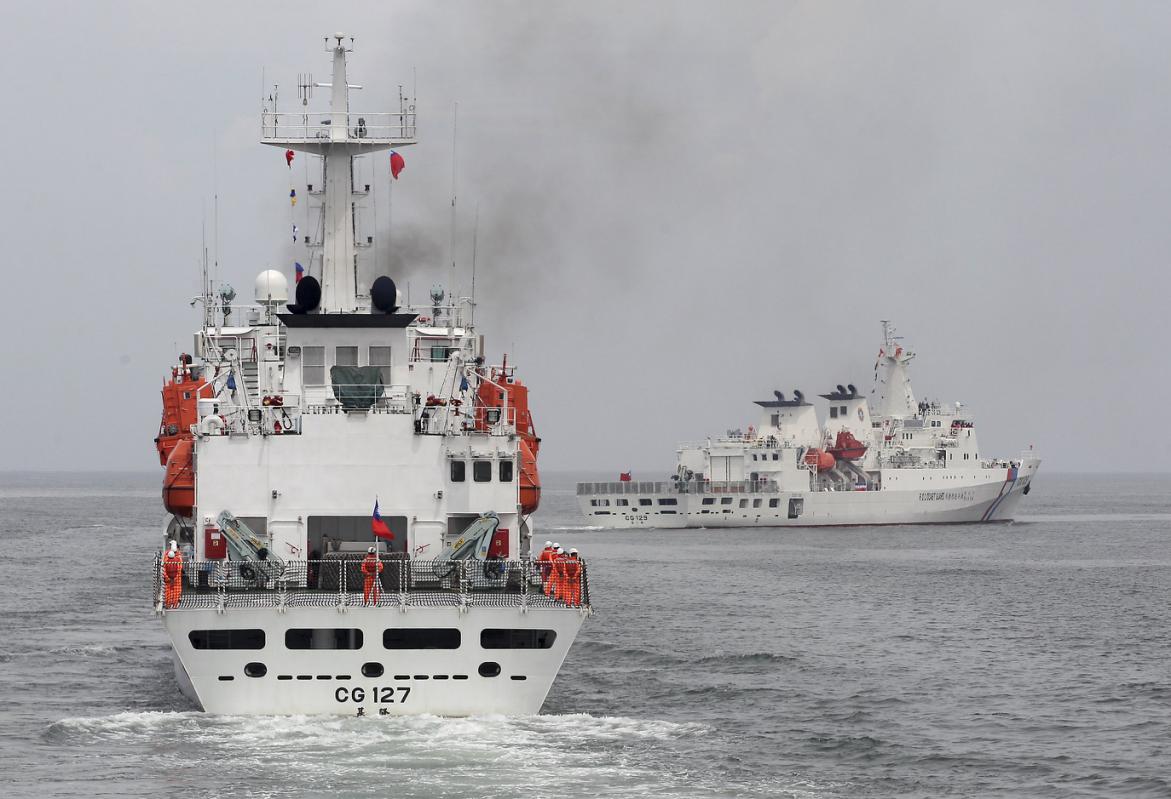
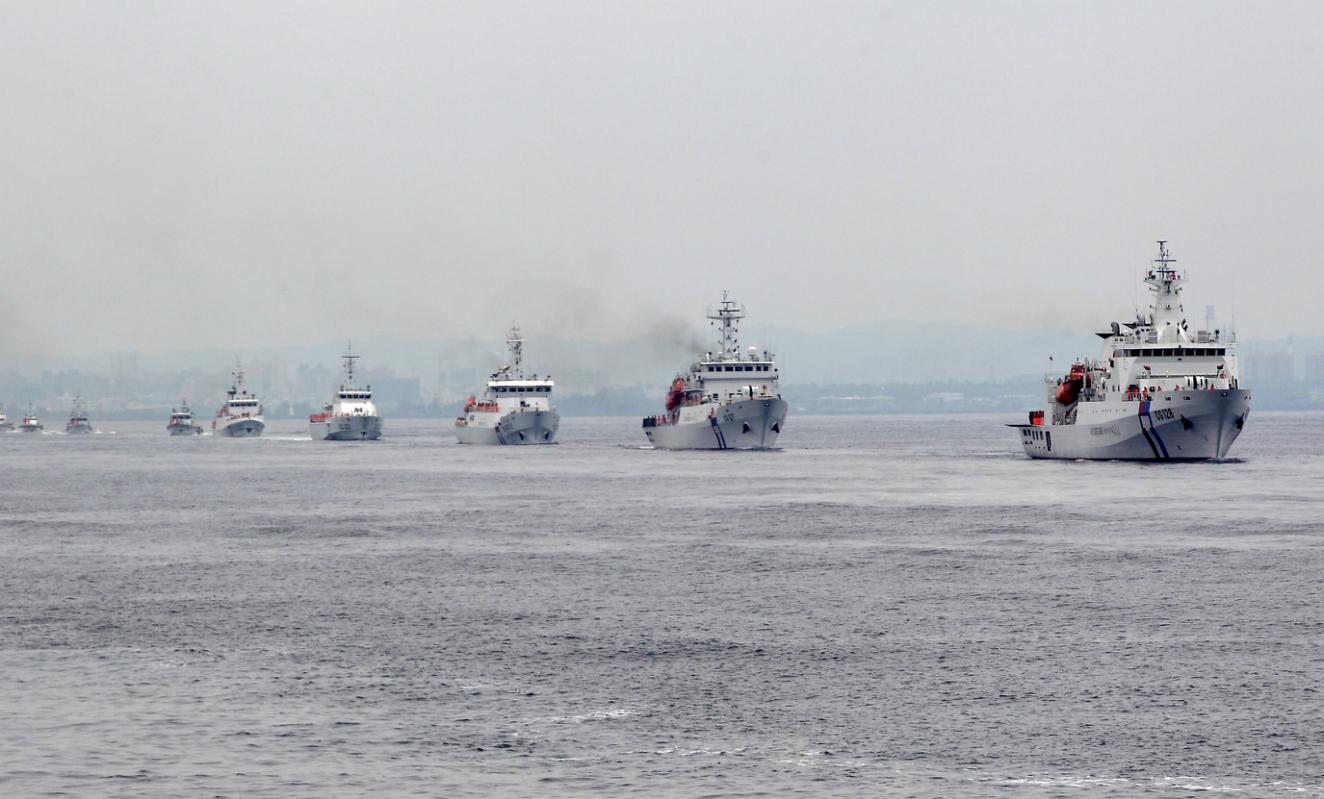






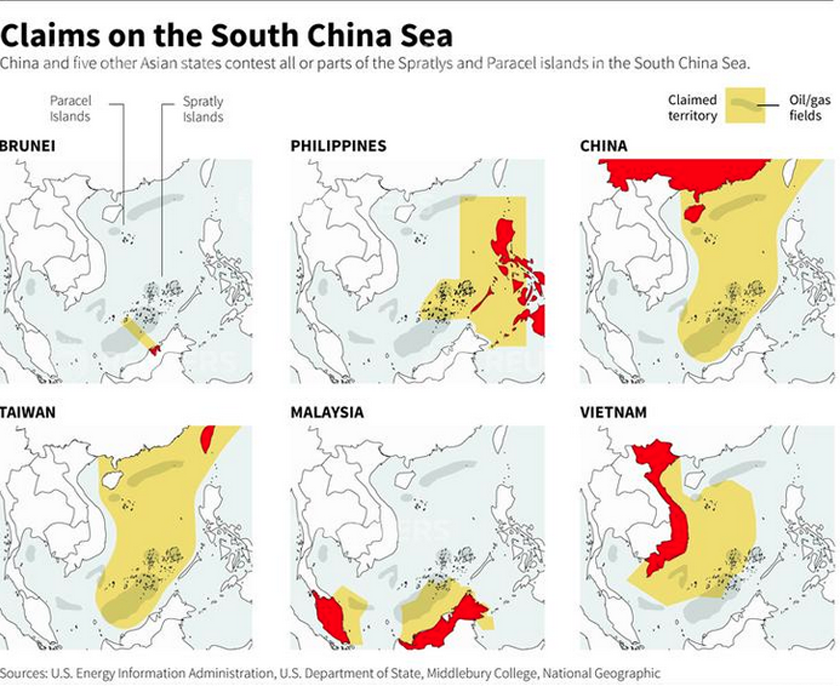





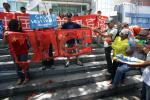

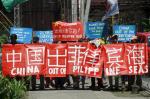
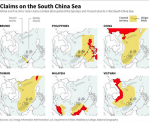

















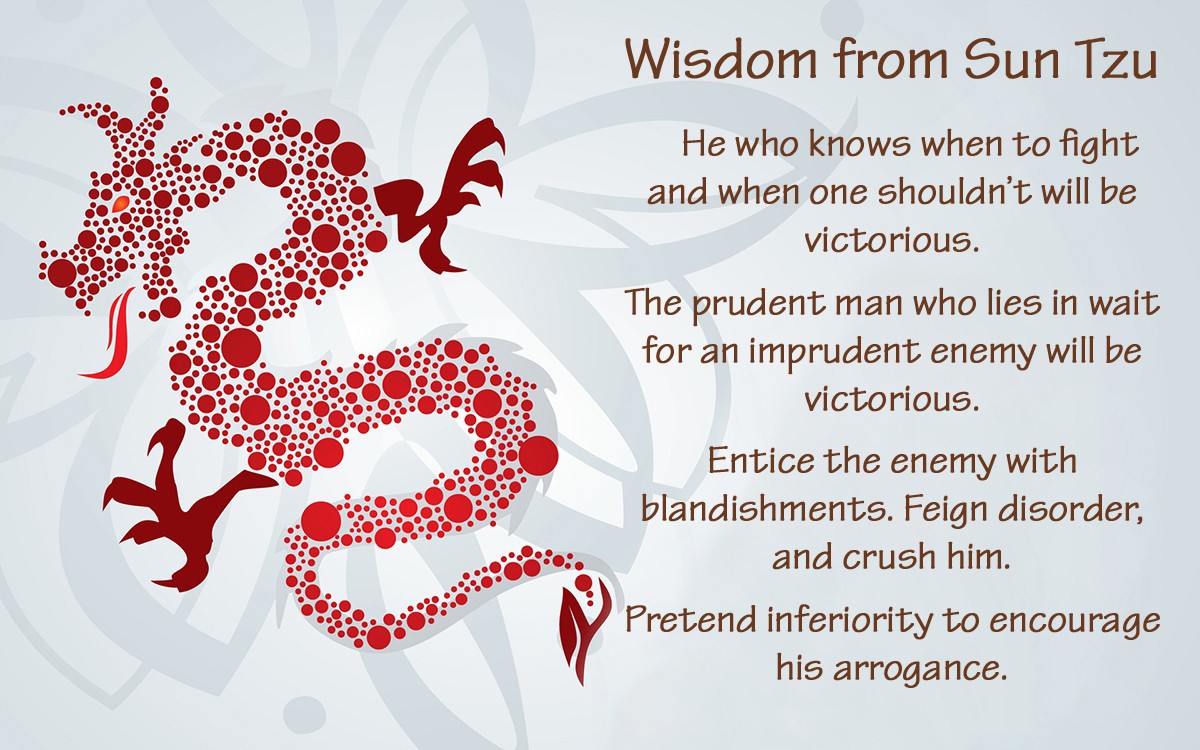


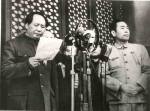







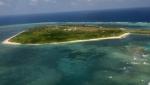





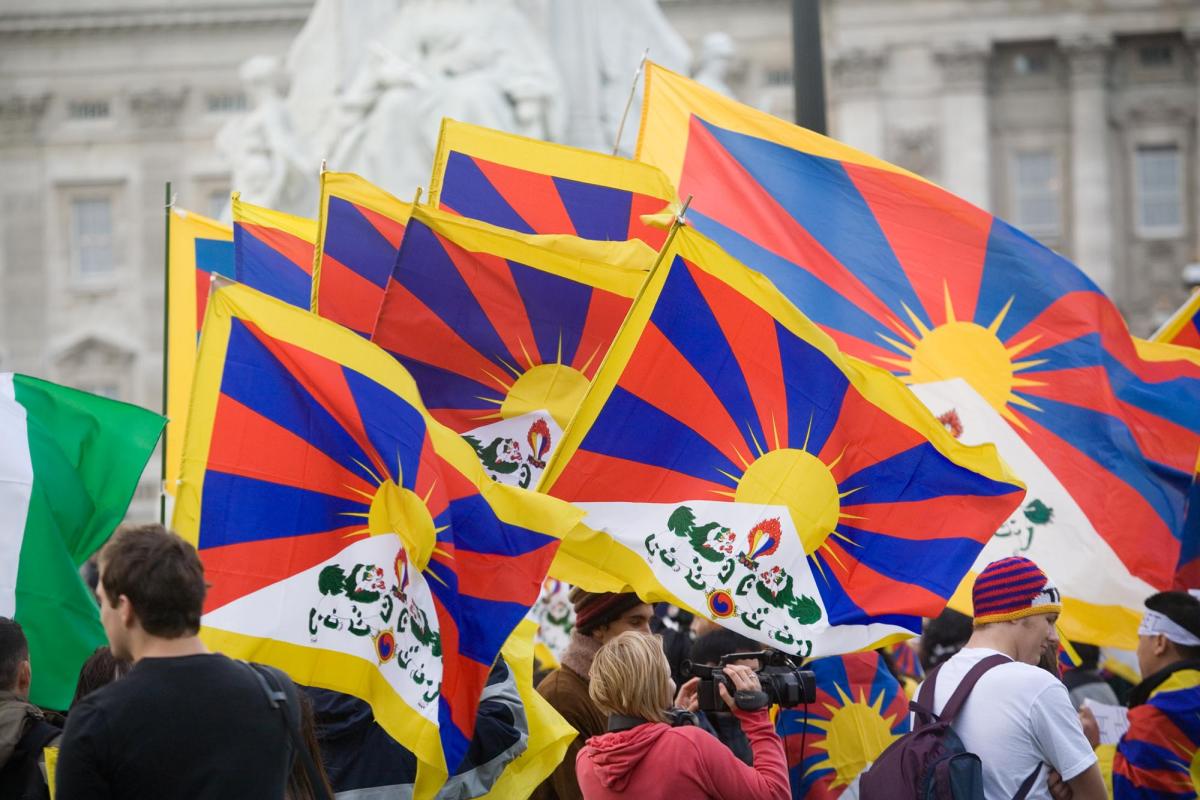

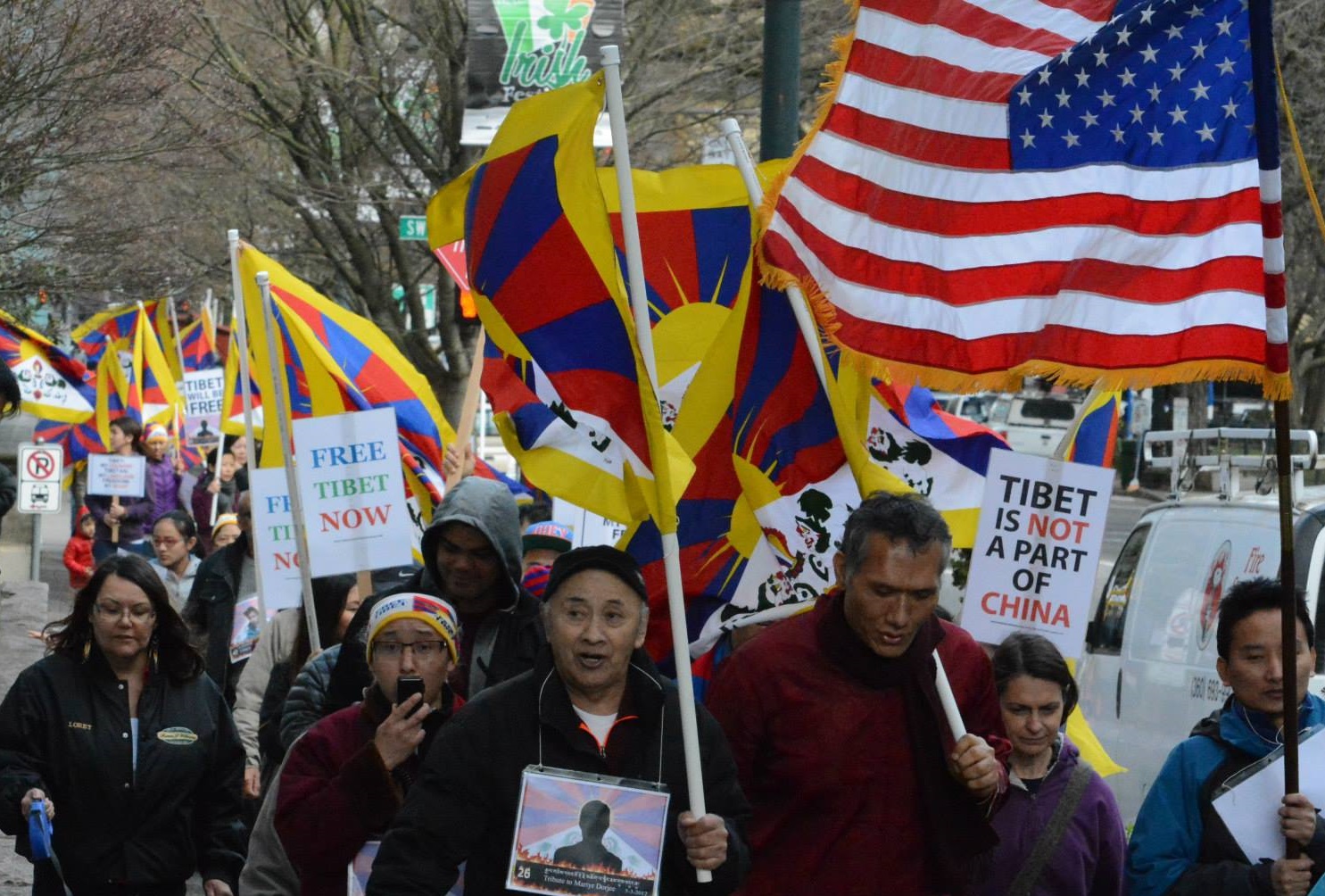







 Whole Dude - Whole Concept