SPECIAL FRONTIER FORCE AT RASHTRAPATI BHAVAN

MY THOUGHTS ON PRESIDENT BARACK OBAMA’S INDIA VISIT :

Indian Prime Minister Narendra Modi and the US President Barack Obama shared their views in a radio conversation titled “MAAN KI BAAT”(Mindful Conversation) that was broadcast on January 27, 2015. I am sharing the transcript of this radio conversation. Both the leaders speak about shared values and the basis for friendly relations between both countries in very general terms. They want to speak directly from the heart and share some personal thoughts on issues without specifically touching issues such as foreign policy. It is claimed that enough information on policy matters was shared in the joint press conference. However, I am of the opinion that there is no transparency in their conversation. There is no Peace, there is no Freedom, there is no Justice, there is no democratic governance, and there is no free flow of information in the occupied territories of TIBET and the problem is of great concern since early 1950s. When the 34th President of the United States, Dwight David Eisenhower made his five-day visit to India from 09 December to 14 December, 1959, he expounded the need for relentless effort to secure Peace through promoting Freedom. He used the term “CRUSADE” to communicate the intensity of struggle and sacrifice that is involved if people have to find Peace in their personal lives. There is really no Peace until man enjoys his Natural Right to Freedom. Since 1959, India has been hosting the Tibetan Government-in-Exile, and I am totally surprised to note that these two leaders have not said a word about the plight of Tibetans and their military oppression.

Rudranarasimham Rebbapragada
Ann Arbor, MI 48104-4162, USA
SPECIALFRONTIERFORCE.ESTABLISHMENT22

Mann ki baat: Modi, Obama Jan. 27, 2015

1-Sliders-Banner.jpg
http://www.narendramodi.in/transcript-of-the-special-episode-of-mann-ki-baat-pm-shri-narendra-modi-and-us-president-shri-barack-obama-share-their-thoughts-on-radio/

Transcript of the special episode of ”Mann ki Baat”: PM Shri Narendra Modi and US President Shri Barack Obama share their thoughts on Radio

(Hon’ble Shri Narendra Modi):

Today, Shri Barack Obama, President of the United States, joins us in a special programme of Mann Ki Baat. For the last few months, I have been sharing my “Mann Ki Baat” with you. But today, people from various parts of the country have asked questions.
But most of the questions are connected to politics, foreign policy, economic policy. However, some questions touch the heart. And I believe if we touch those questions today, we shall be able to reach out to the common man in different parts of the country. And therefore, the questions asked in press conferences, or discussed in meetings – instead of those – if we discuss what comes from the heart, and repeat it, hum it, we get a new energy. And therefore, in my opinion, those questions are more important. Some people wonder, what does “Barack” mean? I was searching for the meaning of Barack. In Swahili language, which is spoken in parts of Africa, Barack means, one who is blessed. I believe, along with a name, his family gave him a big gift.
African countries have lived by the ancient idea of ‘Ubuntu’, which alludes to the ‘oneness in humanity’. They say – “I am, because we are”. Despite the gap in centuries and borders, there is the same spirit of Vasudhaiva Kutumbakam, which speak of in India. This is the great shared heritage of humanity. This unites us. When we discuss Mahatma Gandhi, we remember Henry Thoreau, from whom Mahatma Gandhi learnt disobedience. When we talk about Martin Luther King or Obama, we hear from their lips, respect for Mahatma Gandhi. These are the things that unite the world.
Today, Barack Obama is with us. I will first request him to share his thoughts. Then, I and Barack will both answer the questions that have been addressed to us.

I request President Barack Obama to say a few words.

(Hon’ble Shri Barack Obama):

Namaste! Thank you Prime Minister Modi for your kind words and for the incredible hospitality you have shown me and my wife Michelle on this visit and let me say to the people of India how honoured I am to be the first American President to join you for Republic Day; and I’m told that this is also the first ever Radio address by an Indian Prime Minister and an American President together, so we’re making a lot of history in a short time. Now to the people of India listening all across this great nation. It’s wonderful to be able to speak you directly. We just come from discussions in which we affirmed that India and the United States are natural partners, because we have so much in common. We are two great democracies, two innovative economies, two diverse societies dedicated to empowering individuals. We are linked together by millions of proud Indian Americans who still have family and carry on traditions from India. And I want to say to the Prime Minister how much I appreciate your strong personal commitment to strengthening the relationship between these two countries.

People are very excited in the United States about the energy that Prime Minister Modi is bringing to efforts in this country to reduce extreme poverty and lift people up, to empower women, to provide access to electricity, and clean energy and invest in infrastructure, and the education system. And on all these issues, we want to be partners. Because many of the efforts that I am promoting inside the United States to make sure that the young people get the best education possible, to make sure that the ordinary people are properly compensated for their labour, and paid fair wages, and have job security and health care. These are the same kinds of issues that Prime Minister Modi, I know cares so deeply about here. And I think there’s a common theme in these issues. It gives us a chance to reaffirm what Gandhi ji reminded us, should be a central aim of our lives. And that is, we should endeavour to seek God through service of humanity because God is in everyone. So these shared values, these convictions, are a large part of why I am so committed to this relationship. I believe that if the United States and India join together on the world stage around these values, then not only will our peoples be better off, but I think the world will be more prosperous and more peaceful and more secure for the future. So thank you so much Mr. Prime Minister, for giving me this opportunity to be with you here today.

(Hon’ble Shri Narendra Modi):

Barack the first question comes from Raj from Mumbai

His question is, the whole world knows about your love for your daughters. How will you tell your daughters about youre experience of India? Do you plan to do some shopping for them?

(Hon’ble Shri Barack Obama):

Well first of all they very much wanted to come. They are fascinated by India, Unfortunately each time that I have taken a trip here, they had school and they couldn’t leave school. And in fact, Malia, my older daughter, had exams just recently. They are fascinated by the culture, and the history of India, in part because of my influence I think, they are deeply moved by India’s movement to Independence, and the role that Gandhi played, in not only the non-violent strategies here in India, but how those ended up influencing the non-violent Civil Rights Movement in the United States. So when I go back I am going to tell them that India is as magnificent as they imagined. And I am quite sure that they are going to insist that I bring them back the next time I visit. It may not be during my Presidency, but afterwards they will definitely want to come and visit.
And I will definitely do some shopping for them. Although I can’t go to the stores myself, so I have to have my team do the shopping for me. And I’ll get some advice from Michelle, because she probably has a better sense of what they would like.

(Hon’ble Shri Narendra Modi):

Barack said he will come with his daughters. I extend an invitation to you. Whether you come as President, or thereafter, India looks forward to welcoming you and your daughters.

Sanika Diwan from Pune, Maharashtra has asked me a question. She asks me, whether I have sought assistance from President Obama for the Beti Bachao, Beti Padhao Mission

Sanika you have asked a good question. There is a lot of worry because of the sex ratio in India. For every 1000 boys, the number of girls is less. And the main reason for this is that, there is a defect in our attitudes towards boys and girls.
Whether or not I seek help from President Obama, his life is in itself an inspiration. The way he has brought up his two daughters, the way he is proud of his two daughters.
In our country too, I meet many families who have only daughters. And they bring up their daughters with such pride, give them such respect, that is the biggest inspiration. I believe that inspiration is our strength. And in response to your question, I would like to say, to save the girl child, to educate the girl child, this is our social duty, cultural duty, and humanitarian responsibility. We should honour it.

Barack, there is a question for you. The second question for President Obama comes through e-mail: Dr. Kamlesh Upadhyay, a Doctor based in Ahmedabad, Gujarat – Your wife is doing extensive work on tackling modern health challenges like obesity and diabetes. These are increasingly being faced in India as well. Would you and the First Lady like to return to India to work on these issues after your Presidency, just like Bill and Melinda Gates?

(Hon’ble Barack Obama):

Well, we very much look forward to partnering with organizations, and the government and non-governmental organizations here in India, around broader Public Health issues including the issue of obesity. I am very proud of the work that Michelle has done on this issue. We’re seeing a world-wide epidemic of obesity, in many cases starting at a very young age. And a part of it has to do with increase in processed foods, not naturally prepared. Part of it is a lack of activity for too many children. And once they are on this path, it can lead to a life time of health challenges. This is an issue that we would like to work on internationally, including here in India. And it is a part of a broader set of issues around global health that we need to address. The Prime Minister and I have discussed, for example, how we can do a better job in dealing with issues like pandemic. And making sure that we have good alert systems so that if a disease like Ebola, or a deadly flu virus, or Polio appears, it is detected quickly and then treated quickly so that it doesn’t spread. The public health infrastructure around the world needs to be improved. I think the Prime Minister is doing a great job in focusing on these issues here in India. And India has a lot to teach many other countries who may not be advancing as rapidly in improving this public health sector. But it has an impact on everything, because if children are sick they can’t concentrate in school and they fall behind. It has a huge economic impact on the countries involved and so we think that there is a lot of progress to be made here and I am very excited about the possibilities of considering this work even after I leave office.

(Hon’ble Shri Narendra Modi):

Mr. Arjun asks me a question. An interesting question. He says he has seen an old photo of me as a tourist outside the White House. He asks me what touched me when I went there last September.

It is true that when I first went to America, I was not lucky enough to visit the White House. There is an iron fence far from the White House. We stood outside the fence and took a photograph. White House is visible in the background. Now that I have become Prime Minister, that photo too has become popular. But at that time, I had never thought that sometime in my life, I would get a chance to visit the White House. But when I visited the White House, one thing touched my heart. I can never forget that. Barack gave me a book, a book that he had located after considerable effort. That book had become famous in 1894. Swami Vivekananda, the inspiration of my life, had gone to Chicago to participate in the World Religions Conference. And this book was a compilation of the speeches delivered at the World Religions Conference. That touched my heart. And not just this. He turned the pages of the book, and showed me what was written there. He had gone through the entire book! And he told me with pride, I come from the Chicago where Swami Vivekananda had come. These words touched my heart a lot. And I will treasure this throughout my life. So once, standing far from the White House and taking a photo, and then, to visit the White House, and to receive a book on someone whom I respect. You can imagine, how it would have touched my heart.

Barack there is a question for you. Himani from Ludhiana, Punjab. Question is for you ……:

(Hon’ble Shri Barack Obama):

Well the question is “Did you both imagine you would reach the positions that you’ve reached today?”

And it is interesting, Mr. Prime Minister, your talking about the first time you visited White House and being outside that iron fence. The same is true for me. When I first went to the White House, I stood outside that same fence, and looked in, and I certainly did not imagine that I would ever be visiting there, much less living there. You know, I think both of us have been blessed with an extraordinary opportunity, coming from relatively humble beginnings. And when I think about what’s best in America and what’s best in India, the notion that a tea seller or somebody who’s born to a single mother like me, could end up leading our countries, is an extraordinary example of the opportunities that exist within our countries. Now I think, a part of what motivates both you and I, is the belief that there are millions of children out there who have the same potential but may not have the same education, may not be getting exposed to opportunities in the same way, and so a part of our job, a part of government’s job is that young people who have talent, and who have drive and are willing to work for, are able to succeed. And that’s why we are emphasizing school, higher education. Making sure that children are healthy and making sure those opportunities are available to children of all backgrounds, girls and boys, people of all religious faiths and of all races in the United States is so important. Because you never know who might be the next Prime Minister of India, or who might be the next President of United States. They might not always look the part right off the bat. And they might just surprise you if you give them the chance.

(Hon’ble Shri Narendra Modi):

Thank you Barack.

Himani from Ludhiana has also asked me this question – did I ever imagine I would reach this high office?

No. I never imagined it. Because, as Barack said, I come from a very ordinary family. But for a long time, I have been telling everyone, never dream of becoming something. If you wish to dream, dream of doing something. When we do something, we get satisfaction, and also get inspiration to do something new. If we only dream of becoming something, and cannot fulfil the dream, then we only get disappointed. And therefore, I never dreamt of becoming something. Even today, I have no dream of becoming something. But I do dream of doing something. Serving Mother India, serving 125 crore Indians, there can be no greater dream than this. That is what I have to do. I am thankful to Himani.

There is a question for Barack from Omprakash. Omprakash is studying Sanskrit at JNU. He belongs to Jhunjunu, Rajasthan. Om Prakash is convener of special centre for Sanskrit Studies in JNU.

(Hon’ble Shri Barack Obama):

Well this is a very interesting question. His question is, the youth of the new generation is a global citizen. He is not limited by time or boundaries. In such a situation what should be the approach by our leadership, governments as well as societies at large.

I think this is a very important question. When I look at this generation that is coming up, they are exposed to the world in ways that you and I could hardly imagine. They have the world at their fingertips, literally. They can, using their mobile phone, get information and images from all around the world and that’s extraordinarily powerful. And what that means, I think is that, governments and leaders cannot simply try to govern, or rule, by a top-down strategy. But rather have to reach out to people in an inclusive way, and an open way, and a transparent way. And engage in a dialogue with citizens, about the direction of their country. And one of the great things about India and the United States is that we are both open societies. And we have confidence and faith that when citizens have information, and there is a vigorous debate, that over time even though sometimes democracy is frustrating, the best decisions and the most stable societies emerge and the most prosperous societies emerge. And new ideas are constantly being exchanged. And technology today I think facilitates that, not just within countries, but across countries. And so, I have much greater faith in India and the United States, countries that are open information societies, in being able to succeed and thrive in this New Information Age; than closed societies that try to control the information that citizens receive. Because ultimately that’s no longer possible. Information will flow inevitably, one way or the other, and we want to make sure we are fostering a healthy debate and a good conversation between all peoples.

(Hon’ble Shri Narendra Modi):

Omprakash wants me too, to answer the question that has been asked to Barack.

Barack has given a very good answer. It is inspiring. I will only say, that once upon a time, there were people inspired primarily by the Communist ideology. They gave a call: Workers of the world, Unite. This slogan lasted for several decades. I believe, looking at the strength and reach of today’s youth, I would say, Youth, Unite the world. I believe they have the strength and they can do it.

The next question is from CA Pikashoo Mutha from Mumbai, and he asks me, which American leader has inspired you

When I was young, I used to see Kennedy’s pictures in Indian newspapers. His personality was very impressive. But your question is, who has inspired me. I liked reading as a child. And I got an opportunity to read the biography of Benjamin Franklin. He lived in the eighteenth century. And he was not an American President. But his biography is so inspiring – how a person can intelligently try to change his life.
If we feel excessively sleepy, how can we reduce that?
If we feel like eating too much, how can we work towards eating less?
If people get upset with you that cannot meet them, because of the pressure of work, then how to solve this problem?
He has addressed such issues in his biography. And I tell everyone, we should read Benjamin Franklin’s biography. Even today, it inspires me. And Benjamin Franklin had a multi-dimensional personality. He was a politician, he was a political scientist, he was a social worker, he was a diplomat. And he came from an ordinary family. He could not even complete his education. But till today, his thoughts have an impact on American life. I find his life truly inspiring. And I tell you too, if you read his biography, you will find ways to transform your life too. And he has talked about simple things. So I feel you will be inspired as much as I have been.

There is a question for Barack, from Monika Bhatia.
(Hon’ble Shri Barack Obama):

Well the question is “As leaders of two major economies, what inspires you and makes you smile at the end of a bad day at work?”
And that is a very good question. I say sometimes, that the only problems that come to my desk are the ones that nobody else solves. If they were easy questions, then somebody else would have solved them before they reached me. So there are days when it’s tough and frustrating. And that’s true in Foreign Affairs. That is true in Domestic Affairs. But I tell you what inspires me, and I don’t know Mr. Prime Minister if you share this view – almost every day I meet somebody who tells me, “You made a difference in my life.”
So they’ll say, “The Health-Care law that you passed, saved my child who didn’t have health insurance.” And they were able to get an examination from a Physician, and they caught an early tumour, and now he is doing fine.
Or they will say “You helped me save my home during the economic crisis.”
Or they’ll say, “I couldn’t afford college, and the program you set up has allowed me to go to the university.”
And sometimes they are thanking you for things that you did four or five years ago. Sometimes they are thanking you for things you don’t even remember, or you’re not thinking about that day. But it is a reminder of what you said earlier, which is, if you focus on getting things done as opposed to just occupying an office or maintaining power, then the satisfaction that you get is unmatched. And the good thing about service is that anybody can do it. If you are helping somebody else, the satisfaction that you can get from that, I think, exceeds anything else that you can do. And that’s usually what makes me inspired to do more, and helps get through the challenges and difficulties that we all have. Because obviously we are not the only people with bad days at work. I think everybody knows what it is like to have a bad day at work. You just have to keep on working through it. Eventually you make a difference.
(Hon’ble Shri Narendra Modi):

Indeed Barack has spoken words from the heart (Mann Ki Baat). Whatever position we may hold, we are human too. Simple things can inspire us. I also wish to narrate an experience. For many years, I was like an ascetic. I got food at other people’s homes. Whoever invited me, used to feed me as well. Once a family invited me over for a meal, repeatedly. I would not go, because I felt they are too poor, and if I go to eat at their place, I will become a burden on them. But eventually, I had to bow to their request and love. And I went to eat a meal at their home. It was a small hut, where we sat down to eat. They offered me roti made of bajra (millet), and mik. Their young child was looking at the milk. I felt, the child has never even seen milk. So I gave that small bowl of milk to the child. And he drank it within seconds. His family members were angry with him. And I felt that perhaps that child has never had any milk, apart from his mother’s milk. And maybe, they had bought milk so that I could have a good meal. This incident inspired me a lot. A poor person living in a hut could think so much about my well-being. So I should devote my life to their service. So these are the things that serve as inspiration. And Barack has also spoken about what can touch the heart.
I am thankful to Barack, he has given so much time. And I am thankful to my countrymen for listening to Mann Ki Baat. I know radio reaches every home and every lane of India. And this Mann Ki Baat, this special Mann Ki Baat will echo forever.
I have an idea. I share it with you. There should be an e-book made of the talk between Barack and me today. I hope the organizers of Mann Ki Baat will release this e-book. And to you all, who have listened to Mann Ki Baat, I also say, do participate in this. And the best hundred thoughts that emerge out of this, will also be added to this e-book. And I want you to write to us on Twitter, on Facebook, or online, using the hashtag #YesWeCan.

• Eliminate Poverty – #YesWeCan
• Quality Healthcare to All – #YesWeCan
• Youth empowered with Education – #YesWeCan
• Jobs for All – #YesWeCan
• End to Terrorism – #YesWeCan
• Global Peace and Progress – #YesWeCan

I want you to send your thoughts, experiences and feelings after listening to Mann Ki Baat. From them, we will select the best hundred, and we will add them to the book containing the talk that Barack and I have had. And I believe, this will truly become, the Mann Ki Baat of us all.

Once again, a big thank you to Barack. And to all of you. Barack’s visit to India on this pious occasion of 26th January, is a matter of pride for me and for the country.

Thank you very much.

Click here to see Transcript

http://pib.nic.in/archieve/others/2015/jan/d2015012703.pdf

January 27, 2015

https://www.youtube.com/watch?v=DAsG7YPR6AQ&x-yt-ts=1422327029&x-yt-cl=84838260

__._,

.

stime=1422376285

SPECIAL FRONTIER FORCE vs CHINA’S MILITARY MIGHT

SPECIAL FRONTIER FORCE vs CHINA’S MILITARY MIGHT:

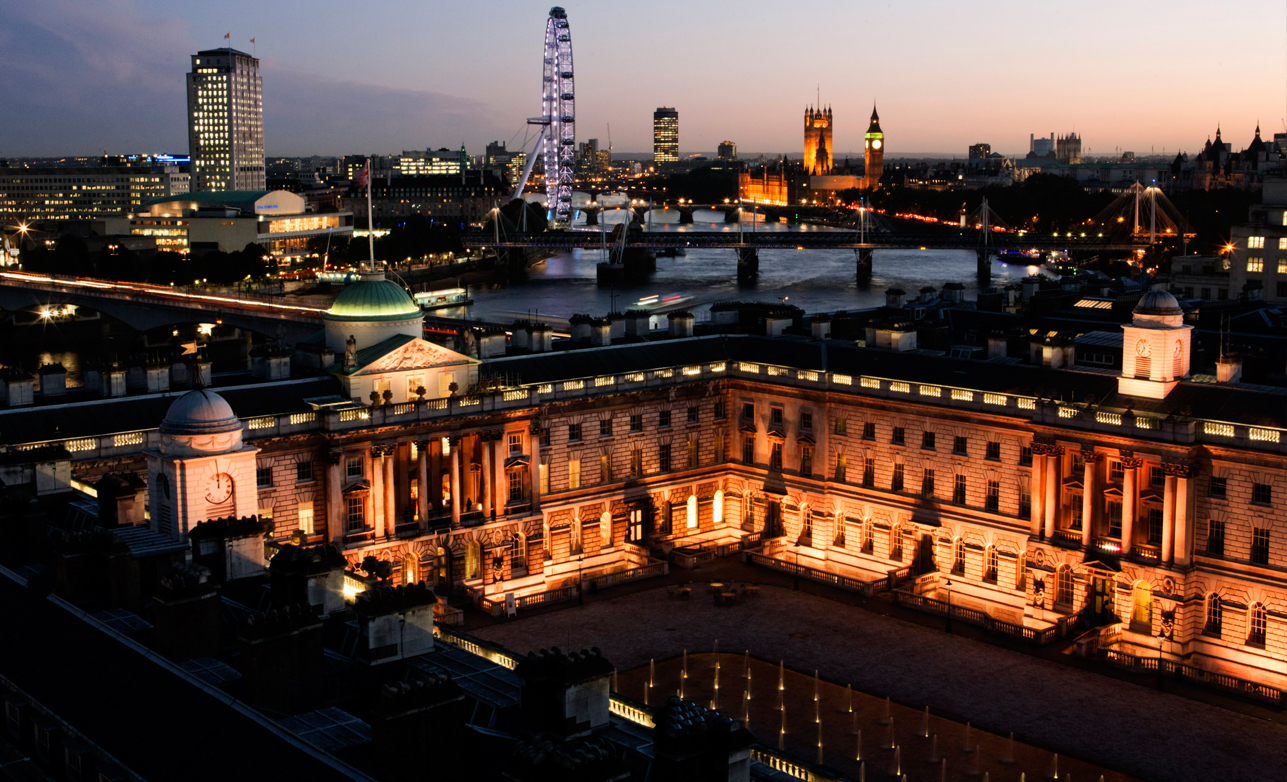
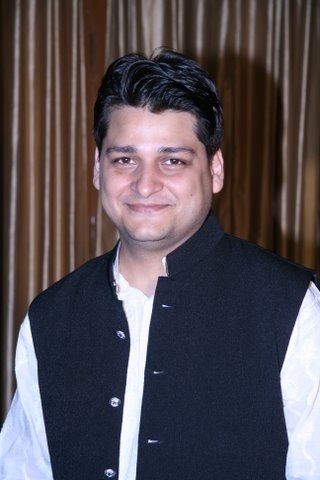
Special Frontier Force vs China - Military Might: Mr. Harsh V Pant, Department of Defence Studies, King's College, London discussed the problem of increased defence spending by China.
Special Frontier Force vs China – Military Might: Mr. Harsh V Pant, Department of Defence Studies, King’s College, London discussed the problem of increased defence spending by China.

Special Frontier Force is a military organization founded by the United States, India, and Tibet to contain the military threat posed by Communist China’s military occupation of Tibet since 1950. Its military mission visualizes the eviction of the military occupier of Tibet through military action. In my opinion, China’s military power, military strategy and military tactics will not assure the inevitability of peace that is imposed by China by its occupation of Tibet. Peace and War are conditions that prevail in relationship with an external reality called Natural Order. Tibetan Resistance is the symptom of the absence of Natural Order. Tibetan Resistance will prevail and Resistance will endure if Natural Order is not restored in Tibet. It is true that China rules Tibet with an Iron Fist. Resistance will endure, and Resistance will prevail to break the knuckles of the military grip over Tibet. I am pleased to share this article written by Mr. Harsh V Pant, Department of Defence Studies, King College, London on the problem of China’s military spending.

https://twitter.com/wholedude

BRACE FOR CHINESE MILITARY MIGHT

By Harsh V Pant

Special Frontier Force vs China's Military Might: Mr. Harsh V Pant, Department of Defence Studies, King's College, London expressed his serious concern about China's growing military spending.
Special Frontier Force vs China’s Military Might: Mr. Harsh V Pant, Department of Defence Studies, King’s College, London expressed his serious concern about China’s growing military spending.

Published: 13th February 2014 06:00 AM

The author is a reader in international relations, department of defence studies, King’s College, London.

It is being estimated that China’s defence budget will reach a whopping US $148 billion in 2014, second only to the defence budget of the USA and leaving behind the combined defence budgets of western nations such as Germany, France and the United Kingdom.
China’s defence budget has risen each year for two decades and the trend shows no sign of abating. Thanks to rapidly rising defence expenditures by China and Russia, global defence spending is rising for the first time in five years. Across Asia-Pacific, there is an arms race brewing as nations try to secure their interests at a time of geopolitical transition. The region is likely to account for nearly 28 per cent of global defence spending by 2020.

Last year China had hiked its defence budget by 10.7 per cent to USD 115.7 billion, well above India’s defence spending of USD 37.4 billion. While its civilian leadership has tried to downplay the increase suggesting much of it will go to human resources development, infrastructure and training, it is the response of the Chinese military that should be a matter of concern. The military has been unambiguous in suggesting when it comes to military spending, there is no need for China “to care about what others may think”.

Divisions within China about the future course of the nation’s foreign policy are starker than ever before. It is now being suggested that much like young Japanese officers in the 1930s, young Chinese military officers are increasingly taking charge of strategy with the result that rapid military growth is shaping the nation’s broader foreign policy objectives.

Civil-military relations in China are under stress with the PLA asserting its pride more forcefully than even before and demanding respect from other states. Not surprisingly, China has been more aggressive in asserting its interests not only vis-à-vis India but also vis-à-vis the US, the EU, Japan and Southeast Asian states. There is a sense that China can now prevail in conflicts with its regional adversaries. Some voices have openly called for wars.

The Air Force Colonel, Dai Xu, has argued that in light of China’s disputes with Japan in the East China Sea and Vietnam and the Philippines in the South China Sea, a short, decisive war, like the 1962 border clash with India, would deliver long-term peace. This would be possible, as Washington would not risk war with China over these territorial spats, according to this assessment.

The increasing assertion by the Chinese military and changing balance of power in the nation’s civil-military relations is a real cause of concern for China’s neighbours. The pace of Chinese military modernisation has already taken the world by surprise and it is clear that the process is going faster than many had anticipated. China launched its first aircraft carrier last year as well as several versions of new fighter jets including a stealth fighter bracing to deal with big US military push into Asia-Pacific.

A growing economic power, China is now concentrating on the accretion of military might so as to secure and enhance its own strategic interests. China, which has the largest standing army in the world with more than 2.3 million members, continues to make the most dramatic improvements in its nuclear force among the five nuclear powers, and improvements in conventional military capabilities are even more impressive.
What has been causing concern in Asia and beyond is the opacity that seems to surround China’s military build-up, with an emerging consensus that Beijing’s real military spending is at least double the announced figure. Tensions are escalating between China and its neighbours. Japanese prime minister Shinzo Abe has suggested the two countries are “in a similar situation” to Germany and Britain just before the outbreak of World War One.

At this critical juncture in the regional strategic landscape, India’s own defence modernisation programme is faltering despite this being at a time when India is expected to spend $112 billion on capital defence acquisitions over the next five years in what is being described as “one of the largest procurement cycles in the world”. Indian military planners are shifting their focus away from Pakistan as China takes centre-stage in future strategic planning.

Over the past two decades, the military expenditure of India has been around 2.75 per cent but since India has been experiencing significantly higher rates of economic growth over the last decade compared to any other time in its history, the overall resources that it has been able to allocate to its defence needs has grown significantly. The armed forces for long have been asking for an allocation of 3% of the nation’s GDP to defence.

The Indian Parliament has also underlined the need to aim for the target of 3% of the GDP. Yet as a percentage of the GDP, the annual defence spending has declined to one of its lowest levels since 1962. And now with a slow-down in the Indian economy, the Indian prime minister has suggested that the golden age of defence modernisation is already over.

But defence expenditure alone will not solve all the problems plaguing Indian defence policy. More damagingly, for the last several years now the defence ministry has been unable to spend its budgetary allocation. The defence acquisition process remains mired in corruption and bureaucratese. India’s indigenous defence production industry has time and again made its inadequacy to meet the demands of the armed forces apparent. The Indian armed forces keep waiting for arms while the finance ministry is left with unspent budget year after year. Most large procurement programmes get delayed resulting in cost escalation and technological or strategic obsolescence of the budgeted items. The present defence minister has been one of the most ineffective leaders of India’s defence establishment.

The Indian government is yet to demonstrate the political will to tackle the defence policy paralysis that is rendering all the claims of India’s rise as a military power increasingly hollow. The capability differential between China and India is rising at an alarming rate. Without a radical overhaul of the national security apparatus, Indian defence planners will not be able to manage China’s rise.

An effective defence policy is not merely about deterring China. But if not tackled urgently, India will lose the confidence to conduct its foreign policy unhindered from external and internal security challenges.

IN GOD WE TRUST – BHAVANAJAGAT – 2013 IN REVIEW

The WordPress.com stats helper monkeys prepared a 2013 annual report for this blog.

BhavanaJagat is inspired by Goddess Sarasvati who personifies Pure Knowledge and Perfect Wisdom.

Here’s an excerpt:

The Louvre Museum has 8.5 million visitors per year. This blog was viewed about 160,000 times in 2013. If it were an exhibit at the Louvre Museum, it would take about 7 days for that many people to see it. My blog post titled “What is Life – Life is Knowledge in Action” has attracted the most number of views.

http://BhavanaJagat.com/2010/08/05/What-is-Life-Life-is-Knowledge-in-Action/

Click here to see the complete report.

https://twitter.com/wholedude

Whole Dispute – Resolve Tibet-China Border Dispute

Resolve Tibet-China Border Dispute

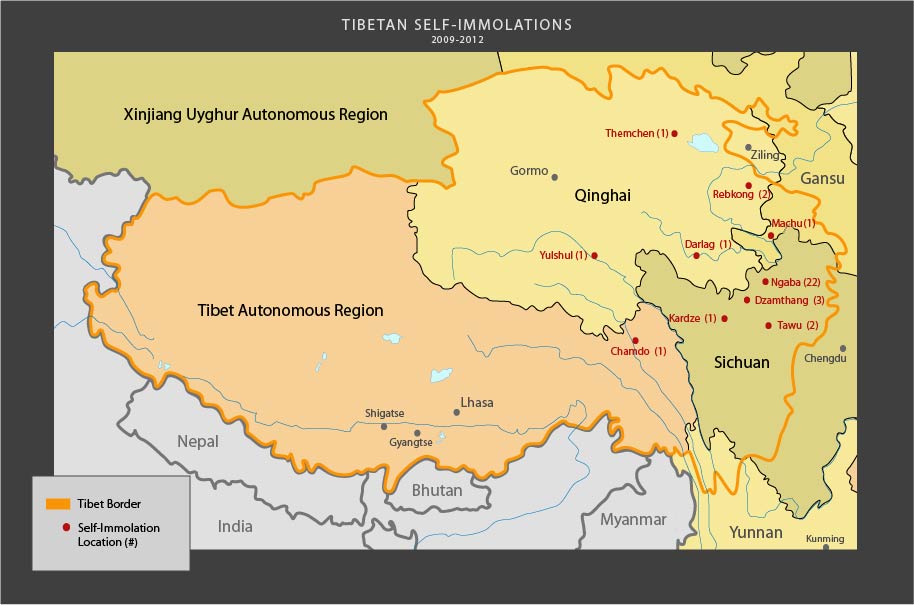
People's Republic of China's province called Tibetan Autonomous Region or "TAR" was established in 1965 after Communist China had annexed Tibetan territory and illegally added it to adjoining Chinese provinces. Hence, there is a valid dispute about China-Tibet boundaries.
Whole Dispute: People’s Republic of China’s province called Tibetan Autonomous Region or “TAR” was established in 1965 after Communist China annexed Tibetan territory and illegally added it to adjoining Chinese provinces. Hence, there is a valid dispute about China-Tibet boundaries. Tibet Protests Map 2008-2009.

It is surprising to note that people who write about the Sino-Indian border conflict make no reference to the history of Tibet. To state very briefly, the Great Fifth Dalai Lama founded the Ganden Phodrang Government of Tibet in 1642. The successive Dalai Lamas have headed the Tibetan State for nearly four centuries. From 1279 to 1368 Tibet was under the nominal control of the Yuan or Mongol dynasty of China, but subsequently regained its independence. In 1644, the Manchu or Qing dynasty was established in China and Tibet came under its nominal protection although for the most part the country retained control over its internal affairs. With the downfall of the Qing or Ching dynasty, the Great 13th Dalai Lama declared Tibet’s Independence on 13th February, 1913. For 39 years, from 1911 to 1950, Tibet was an independent nation. In Political Science, when states are called free and independent, their autonomy or sovereignty means that they have full power to levy war, conclude peace, contract alliances, establish commerce, and do all other acts and things which independent states may have the right to do. In its capacity as an independent nation, Tibet signed a treaty called the McMahon Treaty (following the Simla Agreement) which established the border between India and Tibet. The Republic of India after gaining its full independence during 1947 did not annul or revoke this treaty. As such, for all legal purposes, this treaty is valid. People’s Republic of China came into its existence after the Communists took over mainland China during 1949 and forced the Nationalist Party (Kuomintang) establish the Republic of China in Formosa or Taiwan. Both the Nationalists, and the Communists seek the reunification of Taiwan with the mainland. That issue is not yet decided. Meantime, Communist China invaded Tibet during 1950 and occupied it. In 1951, a defeated Tibet signed a treaty making Tibet a part of China. However, most Tibetans do not recognize this treaty and do not accept its legitimacy. In 1959, after a failed, massive Tibetan uprising, the 14th Dalai Lama and about 100, 000 of his followers escaped to India. Tibetans have established the Tibetan Government-in-Exile, and on September 02, 1960, the first members of the First Tibetan Parliament-in-Exile took their oath of office. In September, 2012, Tibetans have celebrated 52nd Democracy Day. During 1965, People’s Republic of China formed a province that it named as Tibetan Autonomous Region or “TAR.” In doing so, Communist China annexed several parts of Tibet and added them to its own territory. Tibetans have not agreed for this seizure of their territory. One of the central demands of the Tibetan Government-in-Exile is that of unifying all the Tibetan territory that is now under Chinese military occupation.

We have to very important issues; 1. Unification of Republic of China with People’s Republic of China and establish a national entity called China, and 2. demarcating the border between the new “One-China” and its neighbor, Tibet. Tibetans have not surrendered their claims for independence, freedom, and self-determination. As such, Tibet is not a part of China and the borders of China’s province called “TAR” do not establish the legitimate borders between Tibet and China.

India forgets that China cannot be trusted
G.PARTHASARATHY

December 5, 2012:

One cannot but be surprised by the statement of the National Security Advisor (NSA) Shivshankar Menon brushing aside the serious implications of Chinese actions, while voicing optimism that “we are in the process of agreeing on a framework to settle the boundary”.

Have we forgotten that after agreeing to delineate the Line of Actual Control, the Chinese backed off on the entire process?

In 2005, Premier Wen Jiabao agreed that “in reaching a border settlement, the two sides shall safeguard due interests of their settled populations in border areas”.

This clearly signaled that there was no question of transferring territories containing settled populations and addressed Indian concerns on Chinese claims to Tawang in Arunachal Pradesh. Within a year, however, China was laying claim not merely to Tawang, but the entire state of Arunachal Pradesh.

One can only conclude that the new “framework” the NSA spoke of to settle the boundary issue would be about as successful as the much-touted “Joint anti-Terror Mechanism” with Pakistan, which came apart with the 26/11 attacks.

Just a day before the NSA spoke, Army Chief General Bikram Singh described bilateral relations with China as “absolutely perfect” and added that mechanisms were now in place to solve any issues
between the two countries. This was an astonishing comment, at a time when the army wants additional strike formations, apart from vastly improved communications on the border with China.

Was it because Singh feels the army is unlikely to get its needs fulfilled soon, and needs to sound conciliatory to the Chinese? Do the other two Service Chiefs and the Defence Minister share this
optimism? All these issues need to be debated now that Parliament is in session.

INTERNAL RUMBLINGS

China can now be described as a “dynastic dictatorship,” after its 18th Party Congress. Outgoing leader Hu Jintao voiced concern at the growing dissatisfaction in China over political corruption.

The Party Congress had been preceded by the downfall of its rising star Bo Xilai, whose lavish and flamboyant lifestyle had led to the conviction of his wife for murdering a British businessman and
revelations of the billions of dollars of assets that Bo and his family had acquired.

This was followed by a a well documented leak, quite evidently by Bo’s supporters, about ill-gotten wealth accumulated by Prime Minister Wen Jiabao and his family.

China’s worst kept secrets about dynastic politics in the Communist Party became public when it emerged that four of the seven members of its highest decision-making body, the Standing Committee of the Politburo, were “Princelings,” or descendants of first generation, Mao-era political leaders. Most “Princelings”, including Party Chief Xi Jinping, lead lavish life styles, with families having extensive business interests. The contradictions between having an open economy linked to foreign markets on the one hand and a one-party, authoritarian political structure perceived to be unresponsive to pubic grievances on the other, are coming to the forefront in China.

China will continue to seek new ways to further open up its economy and maintain a high growth rate. But the “Princelings” are unlikely to bring any changes in the basic authoritarian nature of the State apparatus. Tutored by Deng Xiao Ping, who was determined not to follow the glasnost and perestroika path of Gorbachev in the Soviet Union, the new dispensation will be averse to increasing democratization.

TERRITORIAL AGGRESSION

With jingoistic propaganda, evidently to divert public opinion away from domestic issues like high level corruption, China is obviously in no mood to show any flexibility on its territorial claims along the Sino-Indian border. As Chinese passports are generally valid for ten years, there can logically be no change in China’s territorial claims in this period.

China will continue on its path of rapid military modernization, combined with an assertive line on its maritime and land boundary claims.

China’s recent decision to depict the entire South China Sea, together with Arunachal Pradesh and parts of Ladakh as Chinese territory in maps on Chinese passports, has to be seen in the light of this
growing Chinese readiness to use force and military coercion to enforce its territorial claims. One has recently witnessed aggressive Chinese postures resulting in a virtual naval takeover around the
disputed Scarborough Shoal, claimed by the Philippines.

A similar aggressive approach has been taken on recent tensions with Japan, with Chinese naval vessels entering territorial waters, adjacent to the disputed Diaoyu/Senkaku Islands.

China has evidently been emboldened by the American assertion that while the US does have a stand on freedom and maintenance of peace and stability in the South China Sea, it “does not take sides in (maritime) disputes”.

ECONOMIC CONCERNS

New Delhi is now talking of getting superfast trains and rail equipment from China, at a time when there is growing concern at our over dependence on second rate Chinese power equipment.

There are also concerns about dangers to cyber security and communications infrastructure posed by imports from China. Should we not insist on co-production, together with transfer or technology, in such strategic sectors, with preference for cooperation with friendly countries like Japan, France and Germany?

(The author is former High Commissioner to Pakistan.)

Comments:
Dear Mr GP, Many thanks for this caution. Will the ears listen to and the eyes see the ground realities instead of indulging in this ‘all is well’ kind of assumption and self assurance? . The present atmosphere is somewhat similar to the one that prevailed in early 1960s when our leaders wrongly assumed that China would never attack India. Reference is invited to the recent interview granted by Dai Bingguo Chinese Negotiator to PTI (covered by this publication) covering China – Pakistan relationships and China’s territorial claims. We need to exercise extra caution, think and act carefully. I held the view earlier that China will think twice before attacking India once again. But am forced to rethink. Camradely with China can wait. Recent bonhomie in the form of financial assistance, collaboration in power and infrastructure may not be entirely and mutually beneficial. One may need to read the fine print very carefully! Thanks for this opportunity to interact.

Regards

from: Dr.Guru.Raghavan
Posted on: Dec 5, 2012 at 23:08 IST

Tibet declared its independence on February 13, 1913 and had signed the McMahon Treaty with India after the Simla Agreement of 1914. Republic of India has not annulled or voided this Treaty and holds it as a valid agreement between two neighboring States. However, Tibetans do not agree the boundaries of the present Tibetan Autonomous Region and are demanding the unification of the three provinces, 1. U-Tsang, 2. Kham, and 3. Amdo of Tibet nation as it existed before China's illegal military occupation since 1950.
Tibet declared its independence on February 13, 1913 and signed the McMahon Treaty with British India after the Simla Agreement of 1914. Republic of India has not annulled or voided this Treaty and holds it as a valid agreement between two neighboring States. However, Tibetans dispute the boundaries of the present Tibetan Autonomous Region and are demanding the unification of the three provinces, 1. U-Tsang, 2. Kham, and 3. Amdo of Tibet nation as it existed before China’s illegal military occupation since 1950.

Whole Challenge – Uprising in the Land of Rising Sun

Tibet Awareness – Uprising in the Land of Rising Sun

WHOLE CHALLENGE: UPRISING IN THE LAND OF RISING SUN (1959) AND UPRISING IN MY HEART (1962)

I am happy to share the Guest Column titled ‘Dragon’s Familiar Dance’ published in India Today, November 07, 2011. Brahma Chellaney, the author of this article is Professor of Strategic Studies at the Centre for Policy Research, New Delhi.

The word uprising describes the action of rising up and specifically it means an outbreak against a ruler or power or the act of revolt. Tibetans witnessed an Uprising in the Land of Rising Sun. Tibetans are conscious of the fact of the flight of His Holiness the Dalai Lama to India to lead a life in exile. I am conscious of the fact of Communist China’s attack on India during 1962. Communist China’s brutal aggression provoked an uprising in my heart. It has stirred me, it caused an intense swelling of emotions and it gave birth to a desire to resist Communist China as best as possible. Tibetans and myself have experienced similar emotions and feelings and share a common desire to resist Communist China and the threat it imposed upon our consciousness. During 1962, I was a young student at Giriraj Government Arts College, Nizamabad, Nizamabad District, Telangana, India. The students of Giriraj College spontaneously reacted to China’s attack and expressed their sense of resentment. We joined hands and walked on the City streets to express our Unity and Solidarity to defend India. This desire to oppose Communist China helped me to find an opportunity to join the ranks of Indian Army. On completion of my Basic Medical Officers Command Training Course (BMOC 20/70 ) at Officers Training School, Army Medical Corps Centre, Lucknow, and professional training at Military Hospital Ambala, during my first military assignment, I joined others who share my desire to fight the Red Dragon. We all know that it is a Challenge that needs preparation. While getting trained to gain the ability to move upwards to face the enemy, some people have fallen down. They have fallen with a desire still living in their hearts.

My consciousness is aware of this desire for Freedom and it keeps the Spirits alive in the form of a desire to resist the enemy and to end the illegal occupation of the Land of Rising Sun. The desire to resist your enemy causes feelings of sorrow or dukha like all other human desires. But, the condition called Freedom is not a desire. Freedom is the natural state or condition of human beings and military occupation is a violation or transgression of this natural condition of human existence. There is no choice other than that of revolting against occupation. So, we have accepted the desire to revolt against the enemy seeking the Compassion of Buddha to uplift us from the feelings of sorrow or Dukha.

Whole Challenge: The Red Dragon’s Lust for Global Supremacy poses a great danger to Freedom and Democracy all over the world.

DRAGON’S FAMILIAR DANCE:

http://chellaney.net/2011/10/29/dragon%e2%80%99s-familiar-dance/

With the 50th anniversary of the 1962 invasion approaching, history is in danger of repeating itself.

Brahma Chellaney
The writer is professor of strategic studies at the Centre for Policy Research, New Delhi
GUEST COLUMN
India Today, November 7, 2011

As the 50th anniversary of China’s invasion approaches, history is in danger of repeating itself, with Chinese military pressures and aggressive designs against India not only mirroring the pre-1962 war situation but also extending to Pakistan-occupied Kashmir (PoK) and the oceans around India. China’s expanding axis of evil with Pakistan, including a new troop presence in PoK, heightens India’s vulnerability in Jammu and Kashmir, even as India has beefed up its defences in Arunachal Pradesh.
By muscling up to India, what is China seeking to achieve? The present situation, ominously, is no different in several key aspects from the one that prevailed in the run-up to the 1962 war.
● The aim of “Mao’s India war” in 1962, as Harvard scholar Roderick MacFarquhar has called it, was largely political: to cut India to size by demolishing what it represented—a democratic alternative to China’s autocracy. The swiftness and force with which Mao Zedong defeated India helped discredit the Indian model, boost China’s international image, and consolidate Mao’s internal power. The return of the China-India pairing decades later riles Beijing.
● Just as the Dalai Lama’s flight to India in 1959 set the stage for the Chinese military attack, the exiled Tibetan leader today has become a bigger challenge for China than ever. The continuing security clampdown across the Tibetan plateau since the March 2008 Tibetan uprising parallels the harsh Chinese crackdown in Tibet during 1959-62.
● The prevailing pattern of cross-frontier incursions and other border incidents is no different from the situation that led up to the 1962 war. Yet, India is repeating the same mistake by playing down the Chinese intrusions. Gratuitously stretching the truth, Indian officials say the incursions are the result of differing perceptions about the line of control. But which side has refused to define the line of control? It speaks for itself that China hasn’t offered this excuse. The fact is that Chinese forces are intruding even into Utttarakhand—the only sector where the line of control has been clarified by an exchange of maps—and into Sikkim, whose 206-km border with Tibet is recognized by Beijing.
● The 1962 war occurred against the backdrop of China instigating and arming insurgents in India’s northeast. Although such Chinese activities ceased after Mao’s death, China has come full circle today, with Chinese-made arms increasingly flowing into guerrilla ranks in northeast India via Burmese front organisations. In fact, Pakistan-based terrorists targeting India also rely on Chinese arms.
● China’s pre-1962 psychological war is returning. In recent years, Beijing has employed its state-run media and nationalistic websites to warn of another armed conflict. It is a throwback to the coarse rhetoric China had used in its build-up to the 1962 war. Its People’s Daily, for example, has warned India to weigh “the consequences of a potential confrontation with China.” China merrily builds strategic projects in an internationally disputed area like Pak Occupied Kashmir but responds with crude threats when others explore just for oil in the South China Sea.
● Just as India in the early 1960s retreated to a defensive position in the border negotiations after having undermined its leverage through a formal acceptance of the “Tibet region of China,” the spotlight now is on China’s revived Tibet-linked claim to Arunachal rather than on the core issue, Tibet itself. India, with its focus on process than results, has remained locked in continuous border negotiations with China since 1981—the longest and the most-fruitless process between any two nations post-Second World War. This process has only aided China’s containment-with-engagement strategy.
● In the same way that India under Nehru unwittingly created the context to embolden Beijing to wage aggression, New Delhi is again staring at the consequences of a mismanagement of relations. The more China’s trade surplus with India has swelled—jumping from $2 billion in 2002 to more than $30 billion now—the greater has been its condescension toward India. To make matters worse, the insidious, V.K. Krishna Menon-style shadow has returned to haunt Indian defence management and policy. India has never had more clueless defence and foreign ministers or a weaker Prime Minister with a credibility problem than it does today.
In fact, as it aims to mould a Sino-centric Asia, China is hinting that its real geopolitical contest is more with India than with the distant United States. The countries around India have become battlegrounds for China’s moves to encircle India. From a military invasion in 1962 and a subsequent cartographic aggression, China is moving towards a hydrological aggression and a multipronged strategic squeeze of India. China’s damming of rivers flowing from Tibet to India are highlighting Indian vulnerability on the water front even before India has plugged its disadvantage on the nuclear front by building a credible but minimal deterrent.
Whether Beijing actually sets out to teach India “the final lesson” by launching a 1962-style attack will depend on several factors. They include India’s domestic political situation, its defence preparedness, and the availability for China of a propitious international timing of the type the Cuban missile crisis provided in 1962. If India does not want to be caught napping again, it has to come out of the present political paralysis and inject greater realism into its China policy, which today bears a close resemblance to a studied imitation of an ostrich burying its head in the sand.
(c) India Today.

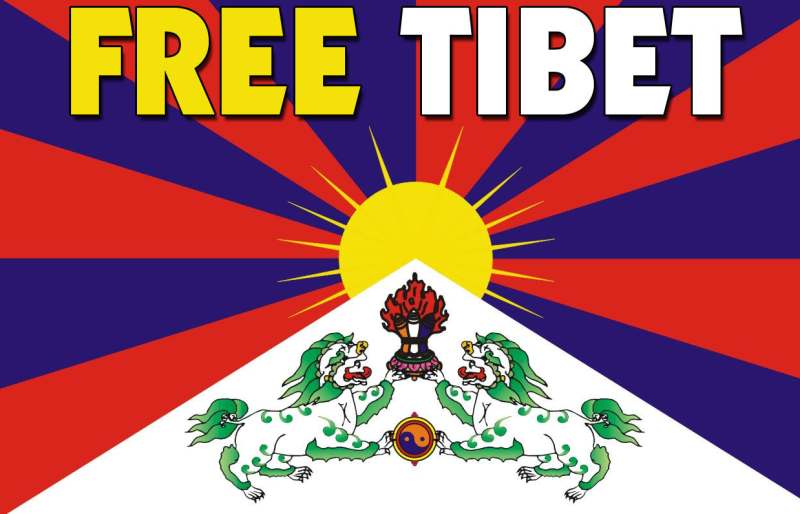
WHOLE CHALLENGE – FREEDOM IN THE LAND OF RISING SUN: FREE TIBET. IF NOT NOW, WHEN?

Whole Right – The Fight against Red China’s Tyranny

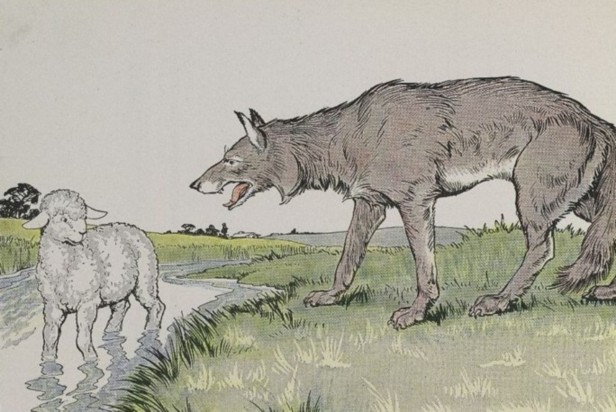
The Wolf and The Lamb: 

THE TYRANT WILL ALWAYS FIND AN EXCUSE FOR HIS TYRANNY.

This story is attributed to Aesop, the legendary Greek story-teller. Once upon a time, a Wolf was lapping at a stream. When looking up, the Wolf saw a Lamb just beginning to drink a little down the stream. “There’s my supper,” thought the Wolf. The Lamb looked so very helpless and innocent. The Wolf felt he ought  to have  an excuse for taking its life. Then he called out to the Lamb, “How dare you muddle the water from which I am drinking?” “No, Master, No,” said the Lamb; “if the water be muddy up there, I cannot be the cause of it, for it runs down from you to me.” “Well then,” said the Wolf, “Why did you call me bad names this time last year?” “That cannot be,” said the Lamb, “I am only six months old.” “I don’t care,” snarled the Wolf, “If it was not you, it was your father,” and with that he rushed upon the poor little Lamb, seized him and ate him up, saying,”Well I won’t stay supper less even though you refute every one of my imputations.” 

A tyrant will always find a pretext for his tyranny. When the oppressor is unjust, the innocent cannot get justice by reasoning. The unjust will not listen to the reasoning of the innocent. 

The Battle of Right Against Might: 

Mahatma Gandhi’s Battle Strategy – Nonviolent Non-Cooperation

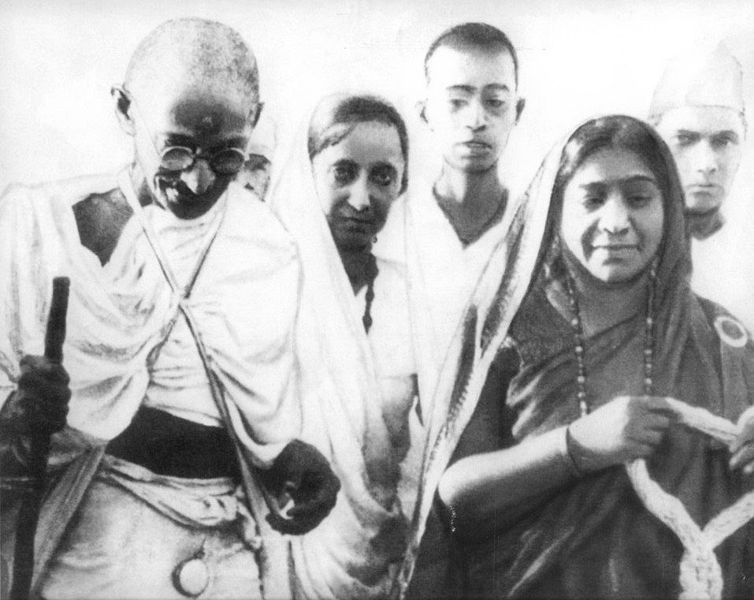
Mahatma Gandhi had challenged the mighty British Empire with a Battle Strategy of his own. On the morning of March 12, 1930, Gandhi and about 78 of his followers had set out to oppose the unjust British Rule. He started marching from Sabarmati Ashram, Ahmedabad toward the village of Dandi on the Arabian Sea. 

GANDHI’S SALT MARCH FROM MARCH 12 TO APRIL 6, 1930
MAHATMA GANDHI AND SAROJINI NAIDU DURING SALT SATYAGRAHA OF 1930.

At that time, under the British Rule, it was forbidden to make salt or even pick it up. It was illegal to collect even natural deposits of salt. Gandhi wanted to attack this unjust Salt Act. He went to the Sea to break the Law. He had inspired people to break the Law. He had marched 240 miles to resist the British Power. The Salt March which is popularly described as Salt Satyagraha was one of Mahatma Gandhi’s most successful Campaigns in the Indian Nationalist Movement for Independence and to overthrow the British Rule. 

GANDHI RESISTED THE MIGHTY BRITISH EMPIRE WITH THIS VERY SIMPLE ACT – A BRILLIANT BATTLE PLAN AND THINKING.

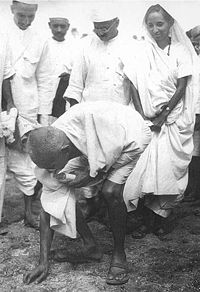
When he got to the Sea, Gandhi broke the Salt Law by the simple act of picking up a tiny lump of soil with some natural salt at Dandi beach. And, he had forced the British to repeal the unjust Salt Law. Gandhi did not reach Dandi in a bus or a car. He had marched all the way on foot. He got the attention that he had wanted. He had shown the way to the people. Injustice could be resisted. Tyranny is not acceptable. People can change unjust laws and get rid of unjust rulers. 

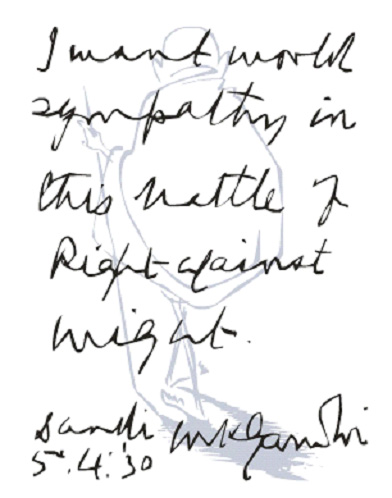
GANDHI’S APPEAL FOR SYMPATHY FOR HIS BATTLE – A STRUGGLE FOR JUSTICE

March 10 – Tibetan National Uprising Day 

TIBET AWARENESS DAY – MARCH 10 – TIBETANS OBSERVE THIS DAY AS TIBETAN NATIONAL UPRISING DAY

H.H. Dalai Lama fled into exile after the Tibetan National Uprising on March 10, 1959 was brutally crushed by Communist China. The illegal and unjust military occupation of Tibet should be challenged and should be opposed. The Chinese Rule in Tibet must be resisted. Mahatma Gandhi had demonstrated the Power of Touch. We can easily resist Chinese military occupation of Tibet. We should resolve and refuse to touch Made in China products. Gandhi won his Battle Campaign by the sheer Power of innocent people who had peacefully joined in opposition to tyranny. Tibet’s  Battle of Right against Might deserves World’s Sympathy.

The Living Tibetan Spirits

I am a witness and my consciousness got exposed to the spirits of young Tibetan men who had given their lives while dreaming about the eviction of the illegal occupier from the Land of Tibet. 

Trulku Tenzin Delek Rinpoche is a revered philanthropist and a religious leader. He is a visionary and consistent advocate of Tibetan Identity and Culture. He was sentenced to life imprisonment on January 26, 2005. He is a soldier in this ‘Battle of Right against Might.
Yeshi Jinpa is a monk of Sog Tsenden Monastery in Sog County of Nagchu Prefecture in Tibet occupied by Communist China. He was arrested on December 02, 2009. He is a soldier in this ‘Battle of Right against Might’.