In my analysis, the ‘Invitation’ asking this Refugee to return to China simply represents an Agreement to accept imprisonment rather than living the life of a Slave in the host nation. It is like choosing between the Devil and the Deep Blue Sea.
I claim that I am a ‘Refugee’ for I host ‘The Living Tibetan Spirits’ in my Consciousness. Living Tibetan Spirits represent the young Tibetan Soldiers who gave their precious lives during the Bangladesh Ops of 1971-72. They live in the hope of securing Freedom in Occupied Tibet.
Refugee is a person who is not entitled to the benefits of the Citizenship status in the country that hosts the Refugee. Very often, the Refugee Status may impose several conditions or terms under which it is approved. A Refugee can be deemed to be a ‘Slave’ if the Refugee has only the permission to live in bondage performing labor to earn his living. For example, the Refugee or Slave or Serf or Servant is not entitled to receive monetary benefits paid to citizens if they get old or disabled.
In my analysis, the ‘Invitation’ asking this Refugee to return to China simply represents an Agreement to accept imprisonment rather than living the life of a Slave in the host nation. It is like choosing between the Devil and the Deep Blue Sea.
In my analysis, the ‘Invitation’ asking this Refugee to return to China simply represents an Agreement to accept imprisonment rather than living the life of a Slave on in Bondage in the host nation. It is like choosing between the Devil and the Deep Blue Sea.
Rudra Narasimham Rebbapragada
Special Frontier Force-Establishment 22-Vikas Regiment
In my analysis, the ‘Invitation’ asking this Refugee to return to China simply represents an Agreement to accept imprisonment rather than living the life of a Slave in the host nation. It is like choosing between the Devil and the Deep Blue Sea.
In my analysis, the ‘Invitation’ asking this Refugee to return to China simply represents an Agreement to accept imprisonment rather than living the life of a Slave in the host nation. It is like choosing between the Devil and the Deep Blue Sea.
Give up: The Dalai Lama has been asked to ‘relinquish all attachment to life’ and ‘live among Tibetans even though it may seem humbling. In my analysis, the ‘Invitation’ asking this Refugee to return to China simply represents an Agreement to accept imprisonment rather than living the life of bondage in the host nation. It is like choosing between the Devil and the Deep Blue Sea.
JAYADEVA RANADE President, Centre for China Analysis and Strategy
In the midst of mounting pressure from the US and steadily growing dissatisfaction with Chinese President Xi Jinping inside China, Beijing appears to be making a strategic overture to the exiled 84-year-old spiritual leader of Tibetan Buddhists, the Dalai Lama. This coincides with the increasing apprehension in the higher echelons of the Chinese Communist Party (CCP) that the US and the West plan to resume support to the Tibetans and stir up trouble in China’s Tibetan-majority border province. It coincides, too, with the persistent rumor that has been circulating for months in Beijing that the Dalai Lama is rather unwell.
The first indicator of renewed thinking about reaching out to the Dalai Lama was an article authored by Zhu Weiqun and published on June 9 in the Global Times, a subsidiary of the official CCP mouthpiece, People’s Daily. Zhu is a senior recently retired Chinese Communist cadre who has stayed in close touch with Tibetan affairs and is well regarded in Beijing for his knowledge of Tibet-related affairs. The article assumes added significance as Zhu is a former executive vice-minister of the CCP Central Committee’s (CC) united front work department and till last year held a national-level post as chairman of the ethnic and religious affairs committee of the Chinese People’s Political Consultative Conference (CPPCC). He has participated in all 10 rounds of the ‘negotiations’ between the Dalai Lama’s representatives and the Chinese communist authorities between 2002 and 2010, when they were suspended, and has intimate knowledge of the CCP’s position on the Dalai Lama. Zhu seldom writes in the Chinese media.
Quite unusually, he stated in his article that he was responding to the US ambassador’s recent remark after a visit to Tibet, urging resumption of talks with the Dalai Lama and accused him of ‘interference in China’s internal affairs’. He also asserted that the CC ‘has not closed its door of contacts and negotiation with the Dalai Lama’. With this, he indirectly confirms that while contacts have been maintained with the Dalai Lama, negotiations of the type held earlier could now possibly be contemplated. He also reiterated China’s consistent position that it doesn’t recognize the ‘Tibetan government-in-exile’ or ‘Central Tibetan Administration’ and that the talks that have been held are neither ‘Tibetan-Han talks’ or ‘Tibetan-China talks’. He clarified that ‘the Dalai Lama must accept Tibet as an integral part of China, abandon all attempts about so-called Tibet independence, stop all separatist and destructive activities, and recognize Taiwan as an integral part of China’. Stating that the above issues ‘underline that there is no so-called Tibet issue’, he underscored it is ‘just the problem of the Dalai Lama’. These points reflected China’s position during the negotiations nine years ago between the Dalai Lama’s envoys and the united front work department that they were only discussing the Dalai Lama’s return to China!
Zhu’s article was followed by a more direct and blunt communication. This was the 680-word letter, published by the Korea Times on June 22, and addressed to the Dalai Lama by the Venerable Dongbong, head monk of the ninth-ranked Daegaksa Temple of the Jogye Order of Buddhism of South Korea. The Jogye Order, incidentally, has thus far not joined other Buddhist sects in requesting permission for the Dalai Lama’s visit to South Korea because of its sensitivity to China. In the unprecedented letter, which is being studied in the Dalai Lama’s office, Dongbong advised him to ‘go back to your Tibetan homeland so your body may be interred there’. Adding that ‘at the age of 83, Your Holiness has lived longer than the Buddha’, it asked him to ‘relinquish all attachment to life as the Buddha taught’ and ‘to live among Tibetans is the way you should walk to the end of your life, even though it may seem humbling to you’. During an interview with Korea Times, he said: ‘Time is running against’ the Dalai Lama. ‘If he dies outside his old Tibet home, not being able to reach his people and hold their hands, his death will be the death of a great religious leader and nothing more. It will not bring any difference in Tibetan independence history.’
In the months leading up to these overtures to the Dalai Lama, the Chinese communist authorities have stepped up security measures in the Tibet Autonomous Region (TAR) and adjoining Tibetan areas. The annual budget of the TAR’s public security apparatus was enhanced by the National People’s Congress in March 2019 by 8.3 per cent. Party surveillance has been expanded with a party cadre presently deployed in each of the 5,453 villages and a distinct focus on ‘political education’ and propaganda, especially among monks and nuns in monasteries. The concerns of the senior party echelons were articulated late last year by Wu Sikang, director of the policy research office of Shenzhen municipal government, in an ‘internal’ document. He warned that the US had increased financial aid to Tibetans from this year to $17 million and that the amount allocated for Tibet-related activities in India and Nepal have been doubled. Beijing has long apprehended that Nepal would be used by ‘hostile foreign powers’ as a launch pad for anti-China activities.
A positive response to these overtures by the Dalai Lama would bring some relief for Jinping from the pressure being exerted by the US, troubles in Hong Kong and spreading domestic dissatisfaction. Tibet has long been portrayed as one of China’s ‘core issues’ and Jinping would be able to claim a degree of success in achieving the ‘reunification of the great Chinese nation’ projected in the China Dream. The question is, what can the Dalai Lama hope to get if he returns?
In my analysis, the ‘Invitation’ asking this Refugee to return to China simply represents an Agreement to accept imprisonment rather than living the life of a Slave in the host nation. It is like choosing between the Devil and the Deep Blue Sea.
Tibet Equilibrium – The Future of the Evil Power in Occupied Tibet
THE FUTURE OF RED CHINA’S EVIL POWER IN OCCUPIED TIBET – I SHARE THE PROPHECY OF BEIJING’S DOOM.TIBET EQUILIBRIUM – BALANCE OF POWER – THE FUTURE OF RED CHINA’S EVIL POWER. DOOMSAYER OF DOOM DOOMA SHARES PROPHECY OF ISAIAH 47:10 & 11.
Red China wants to sustain her military occupation of Tibet by controlling and manipulating Tibetan cultural practices that play a role in the selection of the next Dalai Lama. In my analysis, the future of Red China’s Evil Power is already decided by prophecy shared by Prophet Isaiah in The Old Testament Book, Isaiah, Chapter 47, verses 10 and 11:
“You have trusted in your wickedness and have said, ‘No one sees me.’ Your wisdom and knowledge mislead you when you say to yourself, ‘I am, and there is none beside me.’
Disaster will come upon you, and you will not know how to conjure it away. A calamity will fall upon you that you cannot ward off with a ransom; a catastrophe you cannot foresee will suddenly come upon you.”
At Special Frontier Force, I am known as ‘Doomsayer of Doom Dooma’ for I predict Beijing’s Doom. There is no one to save Red China when this catastrophe suddenly comes upon her.
Rudra Narasimham Rebbapragada Ann Arbor, MI 48104-4162 USA
BROWN POLITICAL REVIEW
RULE BY REINCARNATION : CHINA AND THE NEXT DALAI LAMA
BY MILI MITRA, NOVEMBER 1, 2015
TIBET EQUILIBRIUM – BALANCE OF POWER – FUTURE OF RED CHINA’S EVIL POWER. RED CHINA WANTS TO PERPETUATE HER RULE OVER TIBET BY CONTROLLING AND MANIPULATION REINCARNATION OF DALAI LAMA. BEIJING IS DOOMED FOR HER INTENTIONS ARE EVIL.
In the last decade, China has become a juggernaut in international politics. It is undoubtedly the dominant force in Asia and faces scant challenge from other regional powers. However, Beijing still faces internal opposition from dissidents, especially in Xinjiang Province and Tibet. The autonomous region of Tibet in particular is known for its robust and lasting resistance to Chinese rule. The Chinese Communist Party (CCP) has attempted to control the region since 1951. Now, China’s most recent efforts have taken an unexpected form: They are relying on the reincarnation of the Dalai Lama. Beijing seems to subscribe to the belief that a more cooperative Dalai Lama would help undercut Tibetan opposition and gain hegemony over the region. Needless to say, this plan is as unrealistic as it is absurd.
Beijing’s historical relationship with Tibet is conflicted and troubled. Tibet was incorporated into CCP-led China in 1951. CCP leader Mao Zedong wished to unite China after a turbulent century of weak Qing emperors, feuding warlords and the Japanese invasion. In October 1950, the Chinese army crossed into Tibet and defeated its Tibetan counterparts. Tenzin Gyatso, the current Dalai Lama, sent representatives to Beijing to negotiate, leading to the signing of the 17-Point Agreement for the Peaceful Liberation of Tibet. The pact made Tibet a part of China but gave it a measure of autonomy. There was some oversight from the national government, but the Tibetan government had more power than any other provincial government.
The Tibetan aristocracy and government were funded in part by China. The CCP also funded the development of infrastructure and organized land reforms. It seemed to be a mutually beneficial treaty, but many of these advantages failed to materialize for Tibet due to Chinese duplicity. Despite these promises, the CCP remained uncomfortable with Tibet’s partial autonomy and unique cultural heritage. Chinese leaders feared that Tibetan spirituality — and indeed, loyalty to the Dalai Lama — would undermine their own power. They endeavored to dilute the local culture, a process now known as the “Sinicization of Tibet.” Rituals and traditions are integral to Tibetan society, but the Chinese government worked to suppress local festivals and religious customs.
To counter the dominance of Tibetan Buddhists in the region, Beijing also sent thousands of Han Chinese, the largest ethnic group in the country, to intermarry with Tibetans. As one would expect, these decisions only exacerbated cultural tensions. Overall, the CCP’s overbearing attempts to control Tibet won them few supporters and antagonized the majority of the local population. Ultimately, the Tibetan people tired of these oppressive tactics and launched the 1959 Tibetan Uprising. The rebellion failed, resulting in at least 10,000 deaths and the exile of the Dalai Lama to northern India.
Ever since, China’s rule in Tibet has been fraught with instability and local opposition. The Chinese government has tried a variety of tactics to win Tibetan support but has finally come to the conclusion that it needs the support of the Dalai Lama. And since it can’t win the approval of the current Dalai Lama, it wants to collaborate with his next incarnation. This plan may sound far-fetched, but China’s schemes are based on a shrewd — if misguided — premise. Beijing has long realized that the Dalai Lama holds an unparalleled sway over the Tibetan people, even in exile. His influence as a spiritual and political leader cannot be overstated. The current Dalai Lama would never agree to cooperate with Beijing; he has long demanded Tibetan independence and is a figurehead for dissidents in the region. Even in exile, the Dalai Lama is an omnipresent figure in the Tibetan cultural and political consciousness. But as he ages, the Chinese government believes his successor might be more compliant.
Since China can’t win the approval of this Dalai Lama, they want to collaborate with his next incarnation.
In fact, China is reluctant to leave this to chance. The boy selected to be the next Dalai Lama will be reared in Tibetan Buddhist traditions and will likely feel the same way as the present Dalai Lama. To ensure that the next spiritual leader will align with its goals, Beijing wishes to oversee the selection process; in other words, it wants to select a Dalai Lama more sympathetic to its goals. In a morbid twist, it sees the Dalai Lama’s passing as an opportunity to instate a puppet leader, a figurehead who would be raised in Beijing and taught to adhere to the party line.
The process to identify the next Dalai Lama is complex and intriguing. A group of senior monks, called High Lamas of the Gelugpa tradition, and the Tibetan government are responsible for identifying their next spiritual leader. The search begins with the High Lamas interpreting their dreams or visions. If the previous Dalai Lama was cremated, as is generally the case, the smoke from his cremation might indicate the direction in which they should look. They then use these signals to find boys born around the time of death of the previous leader. The boys are then asked to identify objects that belonged to the former Dalai Lama. If several boys are found who satisfy the conditions, as is typically the case, they consult the servants of the former Dalai Lama. In the rare case when there are still multiple boys that pass all these tests, they place the names in an urn and hold a public draw.
The Dalai Lama — along with the majority of Tibetans — believes that Beijing’s involvement in the selection process would undermine the sanctity of the religion and lead to further conflict. This is substantiated by a similar case in 1995: the selection of the Panchen Lama. The Panchen Lama is the second highest ranking in Tibetan Buddhism and is “found” in much the same way as the Dalai Lama. The committee of high monks had selected a candidate, Gedhun Choekyi Nyima, and the Dalai Lama endorsed their decision. However, the Chinese government insisted on holding a draw after which Gyaincain Norbu was chosen as the 11th Panchen Lama. Gedhun Choekyi Nyima was immediately taken away by Chinese officials and has been missing ever since. Tibetans were horrified by the Chinese ploy and have refused to accept Gyaincain Norbu as the Panchen Lama. There are still calls from the international community to free Gedhun Choekyi Nyima, but China has disregarded these requests. As a result of Chinese intervention, Tibet’s “true” Panchen Lama has not been seen in over 20 years.
Perhaps with an eye on the past, the current Dalai Lama once again chose to defy the Chinese government. He has announced that he will consider whether he will reincarnate and continue the tradition in 2024. As he told the BBC, he would rather have no Dalai Lama than a “stupid” one. He went on to explain that it might be better to dissolve the influential position rather than to wait for a future Dalai Lama who could “disgrace” himself. His comments imply that he is aware of the prospect of Chinese intervention in selecting his successor and is reluctant to leave his legacy in such hands. He also acknowledged that his role might become less relevant in time. In response, Beijing has hit out at his statements, claiming his attitude was “frivolous.” Not one to shy away from a war of words, the Dalai Lama pointed out, “Chinese officials [seem] more concerned with the future Dalai Lama than me.” The Chinese government’s fixation with the next Dalai Lama is certainly questionable, but it is wrong to assume that the Dalai Lama has not given the matter much thought. He is a shrewd political player and knows how to bring out the worst in the Communist Party. There are several possible motivations behind the Dalai Lama weighing whether or not to reincarnate. Some see it as a means of ensuring the position’s prestige and spiritual authority is not tainted by dirty politics. Others, including Jia Xiudong of the China Institute of International Studies in Beijing, believe he is “playing a political game.” They see his announcement as a way to put pressure on China and ensure that it respects Tibetan traditions and autonomy.
Nonetheless, the Chinese government has emerged from this episode looking ridiculous — a common outcome in their dealings with the Dalai Lama. Regardless of whether the Dalai Lama decides to reincarnate or not, it will be interesting to see how the Free Tibet movement — and indeed, Tibet-China relations — progresses without the Dalai Lama leading the international conversation. Despite his apparent humility, he has shaped Tibetan identity over the last half-century and has become virtually synonymous with the Free Tibet movement. His passing would leave a power vacuum in Tibetan politics for at least a decade, simultaneously making the region more vulnerable to Chinese influence and more volatile to shocks and triggers.
If Beijing wants to maintain regional peace, it should tread very carefully in its positions with the current and future Dalai Lama. A senior Obama Administration official predicted that this process of transition would be reminiscent of the Avignon Papacy, a period of conflict between different Catholic authorities that almost destabilized all of Europe in the fourteenth century. If Beijing intervenes and selects its own candidate, it will likely cause widespread dissent and conflict in Tibet. The Tibetan people are wary of Chinese involvement and will distrust any decision in which Beijing has the upper hand. The Communist Party might believe that they would reduce hostility by choosing a cooperative Dalai Lama, but their intrusion could quite well incite outright rebellion. Either way, the selection of the next Dalai Lama, if it takes place at all, will undoubtedly be a dramatic turning point in Tibetan history. All we can do is wait and watch as the spectacle unfolds.
Copyright 2015 Brown Political Review
TIBET EQUILIBRIUM – BALANCE OF POWER – FUTURE OF RED CHINA’S EVIL POWER. BEIJING IS DOOMED. NO ONE INCLUDING THE NEXT DALAI LAMA CAN SAVE RED CHINA.TIBET EQUILIBRIUM – BALANCE OF POWER – FUTURE OF RED CHINA’S EVIL POWER. BEIJING IS DOOMED. BODHISATTVA AVALOKITESVARA IS UNWILLING TO SAVE RED CHINA FOR SHE IS EVIL.Tibet Consciousness – Red China Slays Tibet with the Sword – Red China Must be Killed with the Sword. No Exceptions to the Golden Rule – The Book of Revelation 13:10THE FUTURE OF RED CHINA’S EVIL POWER IN OCCUPIED TIBET – I SHARE THE PROPHECY OF BEIJING’S DOOM.THE FUTURE OF RED CHINA’S EVIL POWER IN OCCUPIED TIBET – I SHARE THE PROPHECY OF BEIJING’S DOOM.THE FUTURE OF RED CHINA’S EVIL POWER IN OCCUPIED TIBET – I SHARE THE PROPHECY OF BEIJING’S DOOM.THE FUTURE OF RED CHINA’S EVIL POWER IN OCCUPIED TIBET – I SHARE THE PROPHECY OF BEIJING’S DOOM.
TIBET EQUILIBRIUM – BALANCE OF POWER IN OCCUPIED TIBET. THE GREAT TIBET PROBLEM WILL EXIST UNTIL THE BALANCE OF POWER IS RESTORED IN OCCUPIED TIBET.TIBET EQUILIBRIUM – BALANCE OF POWER IN TIBET. US PRESIDENT DWIGHT DAVID EISENHOWER WITH INDIAN PRESIDENT DR BABU RAJENDRA PRASAD AT RASHTRAPATI BHAVAN, NEW DELHI. TIBET, INDIA, AND THE US WORK TOGETHER TO RESTORE BALANCE OF POWER IN OCCUPIED TIBET. PHOTO TAKEN IN DECEMBER 1959.
Balance of Power refers to the distribution of military and economic power among nations that is sufficiently even to keep any one of them from being too strong or dangerous. The term ‘Balance’ describes a state of equilibrium or equipoise, equality in power between two nations. Red China’s economic and military power is far greater than power of Tibet and hence there is no equilibrium in Tibet. Red China’s overwhelming economic and military power has serious consequences to all nations in her neighborhood. To restore this Balance of Power, Tibet has willingly joined a larger group by allying with India, and the United States. Special Frontier Force is a military organization that represents Tibet’s alliance with India and USA. While Red China demands “stability” in Occupied Tibet, Tibet and the alliance partners reject Red China’s demand for it will not resolve the problem of Balance of Power. To the same extent, Red China has rejected Tibet’s demand for meaningful autonomy or “Middle Way” as a means to restore Tibet Equilibrium.
Most of my readers know that CIA takes orders from the Executive Branch of Power called US Presidency. The other two branches of Power are known as the US Congress (Legislative Power) and the US Supreme Court (Judicial Power) and the Balance of Power between these three branches is maintained by the US Constitution. CIA has no external source of funding for its activities. The US Congress approves National Budget for funding requests submitted by the Executive Branch. Hotel Mount Annapurna in Nepal that supported CIA operation, was funded by US President Richard M Nixon and American citizens, the taxpayers who provide funds to the Government for further use as allocated by a Budget plan duly approved by representatives of elected by people and signed into a Law by the US President. I categorically affirm that all CIA operations to help Tibetan freedom fighters are funded by the US Congress and Budget Laws signed by the US President. I thank US President Dwight David Eisenhower and the US Congress for supporting Tibetan Resistance Movement to counteract Red China’s Evil Power.
Rudra Narasimham Rebbapragada Ann Arbor, MI 48104-4162 USA Special Frontier Force-Establishment 22-Vikas Regiment
The CIA’s Secret Himalayan Hotel for Tibetan Guerillas
TIBET EQUILIBRIUM – BALANCE OF POWER IN TIBET. I THANK US PRESIDENT DWIGHT DAVID EISENHOWER AND THE US CONGRESS FOR THEIR SUPPORT TO RESTORE BALANCE OF POWER IN OCCUPIED TIBET. Photo. Nolan Peterson. The Daily Signal.
TIBET EQUILIBRIUM – BALANCE OF POWER IN TIBET. HOTEL MOUNT ANNAPURNA IN NEPAL OPENED IN 1973, WITH FUNDING SANCTIONED BY US PRESIDENT RICHARD M NIXON.
The Hotel Mount Annapurna was opened in 1973 as part of a CIA program to rehabilitate former Tibetan guerillas. (Photo: Nolan Peterson/The Daily Signal)
POKHARA, Nepal—It’s been 43 years since the CIA cut off support to the Tibetan guerillas that the agency trained and armed to fight a covert war against China. Yet, a monument to the CIA’s secret war in Tibet is still standing in Pokhara, Nepal.
The former Hotel Mount Annapurna building sits on a quiet side street off the Pokhara airport. Established in 1972 with CIA funds, the hotel was meant to give former Tibetan resistance fighters based in Nepal’s nearby Mustang region a livelihood and a future as they laid down their arms and transitioned to life as refugees.
Tibetan guerillas and their families ran the hotel until it closed in 2010. Today, the Hotel Mount Annapurna building is a nursing school. The aging concrete structure with 1960s lines looks tired and nondescript. Paint is peeling off the exterior walls. The once lush and well manicured landscaping is overgrown and wilted. This relic of the CIA’s secret Cold War guerilla campaign in Tibet is now locked behind a rusting metal gate and easily overlooked. It is in a part of town into which tourists rarely venture.
The area around the Pokhara airport was prime real estate in the 1970s. But business slowly dried up as Pokhara’s tourism center of gravity shifted to the Phewa Lake shoreline to accommodate waves of hippies and trekkers. The Lodrik Welfare Fund—an NGO that former Tibetan resistance fighters created in 1983 to provide welfare for veterans and their families—currently owns the property and rents it out to the Gandaki Medical College.
TIBET EQUILIBRIUM – BALANCE OF POWER IN TIBET. HOTEL MOUNT ANNAPURNA WAS FUNDED BY US PRESIDENT RICHARD M NIXON in 1973. NOW IS RENTED TO A MEDICAL SCHOOL. Photo. Nolan Peterson. The Daily Signal.
The former hotel is now a nursing school. (Photo: Nolan Peterson/The Daily Signal)
“This used to be the best spot, but we shut down because there was no business,” said Tsultrim Gyatso, chairman of the Lodrik Welfare Fund and former manager of the Hotel Mount Annapurna. His father was a Mustang resistance fighter. Gyatso was born in Pokhara in 1972. He worked at the Hotel Mount Annapurna from 1989 to 2010 and was the hotel’s manager at the time it shut down.
Gyatso currently works next door to the former hotel property out of the same offices that were a command center for the Mustang resistance in the 1960s and 1970s—the office he works in was opened in 1962 for the resistance movement. “My father worked in this very office when he was an intelligence officer for the resistance,” Gyatso said.
OVERLOOKED LEGACY
Today there are few visible clues to the former hotel’s guerilla heritage. In the lobby there is a framed poster of Mt. Kailas (the most holy mountain in Tibet), which is hanging next to a painting of the hotel in its glory days. There is also a painted mural on the wall of the main stairwell, the imagery of which pays homage to the fighting spirit of Tibet’s resistance fighters.
The security guard at the gate offered a confused look when asked about the building’s Cold War history. Younger shop owners on the adjacent street shrugged their shoulders politely and said they knew nothing about Tibetan resistance fighters. A few older shop owners, however, acknowledged the hotel used to be run by “Khampas”—a reference to Tibet’s Kham region, which is known for its warriors and bandits and was the birthplace of Tibet’s guerilla campaign after the 1950 Chinese invasion.
Those who knew about the hotel’s past, however, were reluctant to talk about it. Questions about the CIA and Tibetan resistance movement spurred worried looks and anxious body language. One older shop owner, a Sherpa from the Solukhumbu region near Mt. Everest, offered an explanatory hint when he claimed pressure from Maoist rebels during Nepal’s civil war (1996-2006) forced the hotel to shut down. As proof, he pointed to Maoist graffiti on a wall across from the hotel’s entrance. “They’re bullies,” the old Sherpa said, speaking about Maoist rebels. “And they didn’t get along with the Khampas.”
Maoist rebel graffiti outside the former Hotel Mount Annapurna. (Photo: Nolan Peterson/The Daily Signal)
Gyatso disputes the claim, however, and insists that a struggling bottom line forced the hotel’s closure. “We have a friendly relationship with the Maoists,” Gyatso said. “Some of them stayed in the hotel. I know many old Tibetans think communists are the enemy, but we never had a problem with them.”
Gyatso did acknowledge, however, that Communist labor unions contributed to the hotel’s demise. The hotel initially employed only Tibetans, but pressure from unions spurred the hotel to ultimately employ a mix of Tibetans and Nepalese. At its height, the hotel had about 40 employees. But as business tapered in the 1990s and early 2000s, Gyatso said the unions tied his hands when he tried to streamline staff and cut down on expenses.
“The Unified Marxist-Leninist Party workers union gave us a lot of trouble,” he said. “They demanded a lot and basically put us out of business.”
The Lodrik Welfare Fund is an evolution of the Mustang resistance bureaucracy, which is now dedicated to welfare, not armed insurgency. While the hotel was operational, it generated revenue for the Lodrik Welfare Fund to finance schools and public works for Tibetan refugees around Pokhara and to provide benefits for Tibetan resistance veterans. Now only a thin slice of revenue from the building’s rent goes toward the NGO’s welfare projects. The majority of funding comes from foreign sponsors—many of whom are anonymous Americans.
The CIA did not immediately respond to a request for comment on whether it was still providing any support for the veterans of the Mustang resistance living around Pokhara. But Gyatso said there was no ongoing U.S. government support for the guerilla fighter veterans or their descendants.
“There’s no official U.S. support,” Gyatso said. “But of course the U.S. should help us. They used us to fight China for them and then they dropped us on the spot. They should do something for us.”
NO MORE BAD BLOOD
The CIA began training and arming Tibetan guerillas in 1957. Initially, the Tibetan resistance fighters, called the Chushi-Gangdruk, were based inside Tibet. But in the 1960s groups of fighters also set up bases in Nepal’s Mustang region, from which they conducted raids across the border into China.
The Mustang resistance, as the Nepal-based fighters came to be known, were supported by CIA funds until 1972, when President Richard Nixon normalized relations with China and the CIA’s Tibetan operation (in Nepal) ended. The Mustang resistance continued without U.S. support until 1974, when Nepal, bowing to pressure from China, sent soldiers into the arid Himalayan region to root out the Tibetan guerillas.
The Hotel Mount Annapurna was the CIA’s olive branch to the Mustang fighters, attempting to give the former guerrillas (many of whom had no education or professional skills beyond soldiering) a chance to make a livelihood as they transitioned to (their former) life as refugees.
TIBET EQUILIBRIUM – BALANCE OF POWER IN TIBET. TSULTRIM GYATSO, FORMER MANAGER OF HOTEL MOUNT ANNAPURNA FUNDED BY US PRESIDENT RICHARD M. NIXON. Photo. Nolan Peterson. The Daily Signal.
Tsultrim Gyatso, chairman of the Lodrik Welfare Fund and former manager of the Hotel Mount Annapurna. (Photo: Nolan Peterson/The Daily Signal)
“After surrender, it took at least 15 years before the soldiers could finally reintegrate into normal life,” Gyatso said. “The CIA was good in the beginning, but they abandoned us.”
Today, resistance fighter veterans and their descendants still do not have Nepalese citizenship, and most do not have paperwork identifying them as refugees—making it impossible to travel abroad, get a driver’s license, open a bank account or start a business. They live in refugee camps around Pokhara and are largely dependent on welfare for their survival. “Babies don’t even have birth certificates,” Gyatso said. “We just need a paper to identify ourselves so we can work.”
The Mustang resistance raids ultimately did little to seriously damage China’s occupation of Tibet, but the intelligence Tibetan fighters gathered was sometimes of great value to the United States. A raid on a Chinese convoy in 1961, for example, killed a Chinese regimental commander and provided the CIA with what it later referred to as the “bible” on Chinese military intelligence.
A faction of Mustang resistance fighters under the command of Baba Yeshi collaborated with Nepal in 1974 by giving up their compatriots’ positions, clearing the way for an operation that killed many Tibetan guerillas, including their CIA-trained commander, General Gyato Wangdu. Yeshi’s Tibetan collaborators went on to create prosperous carpet-making enterprises in Kathmandu. And unlike the descendants of the Mustang resistance fighters around Pokhara, the descendants of the Tibetan collaborators enjoy Nepalese citizenship, according to Gyatso.
Yet, Gyatso added, there is no more bad blood between the descendants of the Mustang resistance and those who betrayed them. “There are no more divides between factions of the Mustang resistance,” Gyatso said. “We are all Tibetan. The history is there, yes. But we are all against the Chinese. Bad things happened, and His Holiness (the Dalai Lama) has forgiven them.”
Nolan Peterson, a former special operations pilot and a combat veteran of Iraq and Afghanistan, is The Daily Signal’s foreign correspondent based in Ukraine.
TIBET EQUILIBRIUM – BALANCE OF POWER IN OCCUPIED TIBET. US PRESIDENT DWIGHT DAVID EISENHOWER APPROVED FUNDING OF TIBETAN RESISTANCE MOVEMENT WITH INDIA AND TIBET AS US PARTNERS.TIBET EQUILIBRIUM – BALANCE OF POWER IN TIBET. 34th US PRESIDENT DWIGHT DAVID EISENHOWER SANCTIONED FUNDS FOR SUPPORTING TIBETAN RESISTANCE MOVEMENT TO RESTORE BALANCE OF POWER IN TIBET.TIBET EQUILIBRIUM – BALANCE OF POWER IN OCCUPIED TIBET. RED CHINA’S ECONOMIC AND MILITARY POWER IMPOSES A HUGE IMBALANCE OF POWER IN SOUTHEAST ASIA. US PRESIDENT DWIGHT DAVID EISENHOWER TOOK EXECUTIVE ACTION TO CORRECT THIS IMBALANCE.TIBET EQUILIBRIUM – BALANCE OF POWER IN OCCUPIED TIBET. A SPECIAL TRIBUTE TO 34th US PRESIDENT DWIGHT DAVID EISENHOWER FOR HIS PARTNERSHIP WITH TIBET AND INDIA TO RESTORE BALANCE OF POWER IN TIBET.Photo by Bachrach. 1952.TIBET EQUILIBRIUM – BALANCE OF POWER IN OCCUPIED TIBET. THE GREAT TIBET PROBLEM WILL EXIST UNTIL THE BALANCE OF POWER IS RESTORED IN OCCUPIED TIBET.
On the 36th Anniversary of Tiananmen Square Massacre, the Living Tibetan Spirits regret Tibet’s Policy of Isolationism
The Living Tibetan Spirits revisit the past on the 36th Anniversary of Tiananmen Square Massacre. Tibet’s unwillingness to openly resist Communism in 1943 is a crucial factor contributing to the loss of human rights in mainland China.The Living Tibetan Spirits revisit the past on the 36th Anniversary of Tiananmen Square Massacre. Tibet’s unwillingness to openly resist Communism in 1943 is a crucial factor contributing to the loss of human rights in mainland China.
On Wednesday, June 4, 2025, the 36th Anniversary of Tiananmen Square Massacre, The Living Tibetan Spirits revisit the past; the spread of Communism to mainland China in 1949.
The Living Tibetan Spirits revisit the past on the 36th Anniversary of Tiananmen Square Massacre. Tibet’s unwillingness to openly resist Communism in 1943 is a crucial factor contributing to the loss of human rights in mainland China.
Today, on Wednesday, June 04, 2025 The Living Tibetan Spirits regret Tibet’s decision to pursue the policy of Isolationism while confronting the grave threat posed by Communist takeover of mainland China. In 1943, Tibet had the opportunity to establish formal diplomatic relationships with the United States and other countries of Free World to prevent the spread of Communism to Asia.
The Living Tibetan Spirits revisit the past on the 36th Anniversary of Tiananmen Square Massacre. Tibet’s unwillingness to openly resist Communism in 1943 is a crucial factor contributing to the loss of human rights in mainland China.
Tibet’s unwillingness to openly resist Communism in 1943 is a crucial factor contributing to the loss of human rights in mainland China.
The Living Tibetan Spirits revisit the past on the 36th Anniversary of Tiananmen Square Massacre. Tibet’s unwillingness to openly resist Communism in 1943 is a crucial factor contributing to the loss of human rights in mainland China.
Special Frontier Force-Establishment No. 22-Vikas Regiment regrets Tibet’s Policy of Isolationism in 1943
The Living Tibetan Spirits revisit the past on the 36th Anniversary of Tiananmen Square Massacre. Tibet’s unwillingness to openly resist Communism in 1943 is a crucial factor contributing to the loss of human rights in mainland China.
CALLS FOR CHINA TO FACE GHOSTS OF ITS PAST ON TIANANMEN ANNIVERSARY
The Living Tibetan Spirits revisit the past on the 36th Anniversary of Tiananmen Square Massacre. Tibet’s unwillingness to openly resist Communism in 1943 is a crucial factor contributing to the loss of human rights in mainland China.
FILE – A Chinese man stands alone to block a line of tanks heading east on Beijing’s Cangan Boulevard in Tiananmen Square, June 5, 1989.
BEIJING —
The United States has added its voice to international calls for China’s communist-led government to give a full public accounting of those who were killed, detained or went missing during the violent suppression of peaceful demonstrations in and around Tiananmen Square on June 4, 1989.
In a bold statement from Washington to mark the 29th anniversary of a bloody crackdown that left hundreds — some say thousands — dead, Secretary of State Mike Pompeo called on Chinese authorities to release “those who have been jailed for striving to keep the memory of Tiananmen Square alive; and to end the continued harassment of demonstration participants and their families.”
The Living Tibetan Spirits revisit the past on the 36th Anniversary of Tiananmen Square Massacre. Tibet’s unwillingness to openly resist Communism in 1943 is a crucial factor contributing to the loss of human rights in mainland China.
University students place flowers on the “Pillar of Shame” statue, a memorial for those injured and killed in the Tiananmen crackdown, at the University of Hong Kong, June 4, 2018.
To this day, open discussion of the topic remains forbidden in China and the families of those who lost loved ones continue to face oppression. Chinese authorities have labeled the protests a counter-revolutionary rebellion and repeatedly argued that a clear conclusion of the events was reached long ago.
In an annual statement on the tragedy, the group Tiananmen Mothers urged President Xi Jinping in an open letter to “re-evaluate the June 4th massacre” and called for an end to their harassment.
“Each year when we would commemorate our loved ones, we are all monitored, put under surveillance, or forced to travel” to places outside of China’s capital, the letter said. The advocacy group Human Rights in China released the open letter from the Tiananmen Mothers ahead of the anniversary.
“No one from the successive governments over the past 29 years has ever asked after us, and not one word of apology has been spoken from anyone, as if the massacre that shocked the world never happened,” the letter said.
The Living Tibetan Spirits revisit the past on the 36th Anniversary of Tiananmen Square Massacre. Tibet’s unwillingness to openly resist Communism in 1943 is a crucial factor contributing to the loss of human rights in mainland China.
FILE – A woman reacts during a candlelight vigil to mark the 28th anniversary of the crackdown of the pro-democracy movement at Beijing’s Tiananmen Square in 1989, at Victoria Park in Hong Kong, China June 4, 2017.
In his statement, Pompeo also said that on the anniversary “we remember the tragic loss of innocent lives,” adding that as Liu Xiaobo wrote in his 2010 Nobel Peace Prize speech, “the ghosts of June 4th have not yet been laid to rest.”
The Living Tibetan Spirits revisit the past on the 36th Anniversary of Tiananmen Square Massacre. Tibet’s unwillingness to openly resist Communism in 1943 is a crucial factor contributing to the loss of human rights in mainland China.
FILE – Liu Xia, wife of deceased Chinese Nobel Peace Prize-winning dissident Liu Xiaobo and other relatives attend his sea burial off the coast of Dalian, China, in this photo released by Shenyang Municipal Information Office July 15, 2017.
Liu was unable to receive his Nobel prize in person in 2010 and died in custody last year. The dissident writer played an influential role in the Tiananmen protests and was serving an 11-year sentence for inciting subversion of state power when he passed.
At a regular press briefing on Monday, Foreign Ministry spokeswoman Hua Chunying said China had lodged “stern representations” with the United States over the statement on Tiananmen.
“The United States year in, year out issues statements making ‘gratuitous criticism’ of China and interfering in China’s internal affairs,” Hua said. “The U.S. Secretary of State has absolutely no qualifications to demand the Chinese government do anything,” she added.
In a statement on Twitter, which is blocked in China like many websites, Hu Xijin, the editor of the party-backed Global Times, called the statement a “meaningless stunt.”
In another post he said: “what wasn’t achieved through a movement that year will be even more impossible to be realized by holding whiny commemorations today.”
Commemorations for Tiananmen are being held across the globe to mark the anniversary and tens of thousands are expected to gather in Hong Kong, the only place in China such large-scale public rallies to mark the incident can be held.
The Living Tibetan Spirits revisit the past on the 36th Anniversary of Tiananmen Square Massacre. Tibet’s unwillingness to openly resist Communism in 1943 is a crucial factor contributing to the loss of human rights in mainland China.
A man wipes the face of a statue of the Goddess of Democracy at Hong Kong’s Victoria Park Monday, June 4, 2018.
Exiled Tiananmen student protest leader Wu’Er Kaixi welcomed the statement from Pompeo.
However, he added that over the past 29 years western democracies appeasement of China has nurtured the regime into an imminent threat to freedom and democracy.
“The world bears a responsibility to urge China, to press on the Chinese regime to admit their wrongdoing, to restore the facts and then to console the dead,” he said. “And ultimately to answer the demands of the protesters 29 years ago and put China on the right track to freedom and democracy.”
Wu’er Kaixi fled China after the crackdown and now resides in Taiwan where he is the founder of Friends of Liu Xiaobo. The group recently joined hands with several other non-profit organizations and plans to unveil a sculpture in July — on the anniversary of his death — to commemorate the late Nobel laureate. The sculpture will be located near Taiwan’s iconic Taipei 101 skyscraper.
In Taiwan, the self-ruled democracy that China claims is a part of its territory, political leaders from both sides of the isle have also urged China’s communist leaders to face the past.
On Facebook, Taiwan’s President Tsai Ing-wen noted that it was only by facing up to its history that Taiwan has been able to move beyond the tragedies of the past.
“If authorities in Beijing can face up to the June 4th incident and acknowledge that at its roots it was a state atrocity, the unfortunate history of June 4th could become a cornerstone for China to move toward freedom and democracy,” Tsai said.
Tsai’s predecessor, Ma Ying-jeou, a member of the opposition Nationalist Party or KMT, who saw close ties with China while in office, also urged Beijing to face up to history and help heal families’ wounds.
“Only by doing this can the Chinese communists bridge the psychological gap between the people on both sides of the [Taiwan] Strait and be seen by the world as a real great power,” Ma said.
The Living Tibetan Spirits revisit the past on the 36th Anniversary of Tiananmen Square Massacre. Tibet’s unwillingness to openly resist Communism in 1943 is a crucial factor contributing to the loss of human rights in mainland China. The Living Tibetan Spirits revisit the past on the 36th Anniversary of Tiananmen Square Massacre. Tibet’s unwillingness to openly resist Communism in 1943 is a crucial factor contributing to the loss of human rights in mainland China. Special Frontier Force Reviews Hump Airlift Operation 1942 – 1945. The Legacy of the Hump Operation lives to this day.
India is not a US ally for the US-India relations exist as a trilateral partnership with Tibet
Human Misery Formulates India-US-Tibet Trilateral Relationship. India is not a US ally for the US-India relations exist as a trilateral partnership with Tibet. These three Strange Bedfellows come together to give identity to a military partnership called Special Frontier Force – Establishment 22 – Vikas Regiment.
“Strange bedfellows” is an idiom that refers to an unlikely or unusual combination of people, ideas, or things who are associated or working together, often in a way that is unexpected. It suggests that the individuals or entities involved would not typically be seen together.
Human Misery Formulates India-US-Tibet Trilateral Relationship. India is not a US ally for the US-India relations exist as a trilateral partnership with Tibet. These three Strange Bedfellows come together to give identity to a military partnership called Special Frontier Force – Establishment 22 – Vikas Regiment.
The phrase “strange bedfellows” is adapted from a line in Shakespeare’s play, The Tempest: “Misery acquaints a man with strange bedfellows”. It describes an unusual or unexpected alliance or combination of people or things, often due to circumstances. The original context in The Tempest is a jester finding shelter with a monster, but the phrase has evolved to have a metaphorical meaning, like in the common saying “Politics makes strange bedfellows”.
Human Misery Formulates India-US-Tibet Trilateral Relationship. India is not a US ally for the US-India relations exist as a trilateral partnership with Tibet. These three Strange Bedfellows come together to give identity to a military partnership called Special Frontier Force – Establishment 22 – Vikas Regiment.In 2007, His Holiness the 14th Dalai Lama received the Congressional Gold Medal. He represents the third face of Strange Bedfellows. Human Misery Formulates India-US-Tibet Trilateral Relationship. India is not a US ally for the US-India relations exist as a trilateral partnership with Tibet. These three Strange Bedfellows come together to give identity to a military partnership called Special Frontier Force – Establishment 22 – Vikas Regiment.
It is entirely true to claim that India is not a US ally. Soon after India’s independence in 1947, the US and the UK joined forces to instigate an unprovoked attack to occupy Kashmir illegally while India was waiting with patience to obtain the merger of Kashmir with India using the due process. The First Kashmir War of 1947-48 provides the evidence to show that India is not a US ally.
Special Frontier Force – Establishment 22 – Vikas Regiment represents the three faces of “Strange Bedfellows.” Human Misery Formulates India-US-Tibet Trilateral Relationship. India is not a US ally for the US-India relations exist as a trilateral partnership with Tibet. Special Frontier Force – Establishment No. 22 – Vikas Regiment – Photo image taken at Chakrata, India on June 03, 1972.
But, it is indeed true to claim that the convergence of interests govern relationships between nations. In 1949, with the birth of Communist China on October 01, the Indian Prime Minister visited the US seeking friendship to formulate a trilateral relationship between the US, India, and Tibet. Since then, the relationship has endured strictly as a trilateral relationship and not a bilateral relationship.
Special Frontier Force at the White House: On April 16, 1991, the 14th Dalai Lama met with US President George H.W. Bush during his first visit to The White House. Human Misery Formulates India-US-Tibet Trilateral Relationship. India is not a US ally for the US-India relations exist as a trilateral partnership with Tibet. These three Strange Bedfellows come together to give identity to a military partnership called Special Frontier Force – Establishment 22 – Vikas Regiment.Special Frontier Force at the White House: The 14th Dalai Lama met with US President Bill Clinton on June 20, 2000 at The White House. Human Misery Formulates India-US-Tibet Trilateral Relationship. India is not a US ally for the US-India relations exist as a trilateral partnership with Tibet. These three Strange Bedfellows come together to give identity to a military partnership called Special Frontier Force – Establishment 22 – Vikas Regiment.Special Frontier Force at The White House: His Holiness the 14th Dalai Lama speaking with US President George Bush during their meeting in The White House on September 10, 2003. Human Misery Formulates India-US-Tibet Trilateral Relationship. India is not a US ally for the US-India relations exist as a trilateral partnership with Tibet. These three Strange Bedfellows come together to give identity to a military partnership called Special Frontier Force – Establishment 22 – Vikas Regiment.Special Frontier Force at The White House: His Holiness the 14th Dalai Lama speaking with US President Barack Obama during their meeting in the Map Room of The White House in Washington, DC on July 16, 2011. Human Misery Formulates India-US-Tibet Trilateral Relationship. India is not a US ally for the US-India relations exist as a trilateral partnership with Tibet. These three Strange Bedfellows come together to give identity to a military partnership called Special Frontier Force – Establishment 22 – Vikas Regiment.HISTORY OF THE US-INDIA-TIBET RELATIONS : BRUCE WALKER , FORMER OFFICIAL OF CIA . Human Misery Formulates India-US-Tibet Trilateral Relationship. India is not a US ally for the US-India relations exist as a trilateral partnership with Tibet. These three Strange Bedfellows come together to give identity to a military partnership called Special Frontier Force – Establishment 22 – Vikas Regiment.HISTORY OF THE US-INDIA-TIBET RELATIONS : FORMER CIA OFFICIALS KENNETH KNAUS AND JOHN GREANEY SHARED THEIR PERSONAL EXPERIENCES OF THE US-INDIA-TIBET RELATIONS . Human Misery Formulates India-US-Tibet Trilateral Relationship. India is not a US ally for the US-India relations exist as a trilateral partnership with Tibet. These three Strange Bedfellows come together to give identity to a military partnership called Special Frontier Force – Establishment 22 – Vikas Regiment.The history of Special Frontier Force-Establishment No. 22 can be traced back to 1957-58 when the CIA launched Operation ST CIRCUS. This Commemoration on September 10, 2010 was the first time that US had officially acknowledge the CIA operation with the Tibetans and it includes the Mustang(Nepal) Operation. Human Misery Formulates India-US-Tibet Trilateral Relationship. India is not a US ally for the US-India relations exist as a trilateral partnership with Tibet. These three Strange Bedfellows come together to give identity to a military partnership called Special Frontier Force – Establishment 22 – Vikas Regiment.The quest for Freedom in Tibet. A military training Camp known as Camp Hale was established in Colorado under the supervision of CIA officers Roger E. McCarthy and John Reagan. Human Misery Formulates India-US-Tibet Trilateral Relationship. India is not a US ally for the US-India relations exist as a trilateral partnership with Tibet. These three Strange Bedfellows come together to give identity to a military partnership called Special Frontier Force – Establishment 22 – Vikas Regiment.
If the third partner of this relationship is excluded for any reason, the US-India relationship just dissipates as the US continues to support the plan to dismember the Republic of India in the name of advocating the human rights of Muslims, Sikhs, and other ethnic minorities of India.
Rudra Narasimham Rebbapragada,
Special Frontier Force – Establishment No. 22 – Vikas Regiment
Special Frontier Force – Establishment No. 22 – Vikas Regiment: This badge represents a military alliance/pact between India, Tibet, and the United States of America. Its first combat mission was in the Chittagong Hill Tracts which unfolded on 03 November 1971. It was named Operation Eagle. It accomplished its mission of securing peace in the region that is now known as the Republic of Bangladesh.Human Misery Formulates India-US-Tibet Trilateral Relationship. India is not a US ally for the US-India relations exist as a trilateral partnership with Tibet. These three Strange Bedfellows come together to give identity to a military partnership called Special Frontier Force – Establishment 22 – Vikas Regiment.
India Is Not a U.S. Ally—and Has Never Wanted to Be
Human Misery Formulates India-US-Tibet Trilateral Relationship. India is not a US ally for the US-India relations exist as a trilateral partnership with Tibet. These three Strange Bedfellows come together to give identity to a military partnership called Special Frontier Force – Establishment 22 – Vikas Regiment.
BY ALYSSA AYRES
JUNE 21, 2023 6:00 AM EDT
Ayres is dean and professor of history and international affairs at the George Washington University Elliott School of International Affairs, and adjunct senior fellow for India, Pakistan, and South Asia at the Council on Foreign Relations. She is the author of OurTimeHasCome: HowIndia is Making Its Place in the World.
With Indian Prime Minister Narendra Modi slated for a June 22 State Visit to Washington, India will, if briefly, be front-page news in the United States. Since President Clinton ended a chill in U.S.-India relations almost 25 years ago, successive American and Indian administrations across political parties have worked to strengthen ties. So it’s fair to ask: how robust is this relationship today? As with the blind men and the elephant, the answer varies. Is India a bad bet, or is it, as the White House senior Asia policy official said recently, “the most important bilateral relationship with the United States on the global stage”?
Despite careful nurturing by Washington over the years, many aspects of U.S. ties with India remain challenging. Bilateral trade has grown tenfold since 2000, to $191 billion in 2022, and India became the ninth-largest US trading partner in 2021. But longstanding economic gripes persist, meriting 13 pages in the 2023 ForeignTradeBarriers report from the U.S. Trade Representative. Multilaterally, India’s role in the fast-consolidating “Quad” consultation (comprised of the United States, Australia, India, and Japan) has brought shared purpose to Washington and New Delhi, both of which harbor concerns about China. But New Delhi also champions alternative non-Western groupings like the BRICS, and it remains outside bodies central to U.S. diplomacy like the U.N. Security Council and the G7.
Today, U.S.-India cooperation spans defense, global health, sustainable development, climate, and technology, among other things. But deep differences remain, including concerns in Washington about India’s democratic backsliding under Modi, and India’s failure to condemn the Russian invasion of Ukraine. In other words, the U.S.-India relationship has been transformed over the past quarter-century, but that transformation has not delivered a partnership or alignment similar to the closest U.S. alliances
This shouldn’t surprise anyone. India is not a U.S. ally, and has not wanted to become one. To see relations with rising power India as on a pathway that culminates in a relationship like that the United States enjoys with Japan or the United Kingdom creates expectations that will not be met. Indian leaders across parties and over decades have long prioritized foreign policy independence as a central feature of India’s approach to the world. That remains the case even with Modi’s openness to the United States.
For India’s first Prime Minister, Jawaharlal Nehru, protecting his country’s hard-fought independence was a guiding principle for foreign policy. Speaking in the Indian Parliament in March 1951, Nehru noted that “By aligning ourselves with any one Power, you surrender your opinion, give up the policy you would normally pursue because somebody else wants you to pursue another policy.” Twelve years later, evaluating his country’s nonalignment policy in the pages of Foreign Affairs, Nehru went on to observe that it had not “fared badly,” and that “essentially, ‘non-alignment’ is freedom of action which is a part of independence.”
American President Harry S. Truman shakes hands with Indian Prime Minister Jawaharlal Nehru on the tarmac as Nehru’s sister, diplomat Vijaya Pandit, and daughter, future Indian Prime Minister Indira Gandhi, stand with them, in Washington D.C., on October 11, 1949. Human Misery Formulates India-US-Tibet Trilateral Relationship. India is not a US ally for the US-India relations exist as a trilateral partnership with Tibet. These three Strange Bedfellows come together to give identity to a military partnership called Special Frontier Force – Establishment 22 – Vikas Regiment. PhotoQuest/Getty Images)
For famously allied Washington, nonalignment in the 20th century was a bridge too far; in 1956 then-Secretary of State John Foster Dulles proclaimed that neutrality was “an obsolete conception…immoral and shortsighted.” It did not help matters that the United States had entered an alliance with India’s arch-rival Pakistan in 1954, and sided with the Pakistani military in the bloody civil war that gave birth to Bangladesh in 1971. Nor, too, when Indian Prime Minister Indira Gandhi signed a “Treaty of Peace, Friendship, and Cooperation” with the USSR in 1971, definitively tilting India toward the Soviet Union even as the United States had tilted toward Pakistan.
Especially since the end of the Cold War, Indian leaders have sought to improve ties with Washington, but not by curtailing India’s independent approach to foreign policy. Former Prime Minister Atal Bihari Vajpayee proclaimed India and the United States “natural allies” in a landmark 1998 speech in New York. Yet this was perhaps more a term of art than a call for an alliance as it occurred against the backdrop of India’s nuclear tests, underscoring New Delhi’s willingness to upset global nuclear nonproliferation conventions, which it never joined. Indian Prime Minister Manmohan Singh, whose 10 years at the helm greatly improved Indo-U.S. relations, pursued a civil-nuclear agreement with Washington and ushered in new cooperation in high technology, defense, and clean energy. But his government too defended its principle of “strategic autonomy” as a redline for its foreign policy even as it moved closer to Washington than ever in the past. Defending the civil-nuclear deal with Washington before Parliament in 2008, Singh twice asserted that “Our strategic autonomy will never be compromised.”
In important ways, Prime Minister Modi represents a break with India’s past, most notably in his emphasis on India’s Hindu, rather than syncretic and secular, cultural heritage. But his approach to the United States remains consistent with the history of his country’s foreign policy independence.
Modi has deepened ties with the United States, now across three U.S. presidents, through increased partnership in defense, in advanced technology, and in energy, just to name a few, as well as through moments of high symbolism, like his 2015 RepublicDay invitation to former President Barack Obama, the first time an American president joined this day honoring India’s constitution. Even so, Modi has leaned into the United States while leaning into many other partners around the world. The Modi government invokes a Sanskrit saying, the “world is one family” (vasudhaiva kutumbakam), to frame Indian diplomacy. This approach has been termed “multialignment,” a theory of seeking positive ties as far and as widely as possible, without seeing contradictions in this approach.
In practice, New Delhi has carefully managed its relationships with Saudi Arabia as well as Iran; with Israel as well as the Palestinian Territories; with the United States as well as Russia. India’s G20 presidency this year encapsulates this orientation, with its Sanskritic theme of “One Earth, One Family, One Future,” and its twin efforts to lead the forum for the world’s 20 largest economies while self-consciously presenting itself as the “Voice of the Global South.”
With this history in mind, it’s easier to perceive that momentum in the U.S.-India relationship does not necessarily imply a path to a formal alliance or mutual defense treaty. In the United States, the mental model for positive international cooperation defaults to seeing “ally” as the ultimate endpoint. For India, that suggests a curtailment of independence. And with India, even as cooperation becomes more extensive than ever in the past, consequential differences remain.
For many in Washington, the dramatic growth of coordination and joint activities under the Quad consultative group fills a growing need in light of China’s rise, encompassing subjects as far-flung as maritime security, infrastructure, climate and resilience, vaccines, technology standards, and higher education—all underlining Indian strategic convergence with the United States in the Indo-Pacific. Yet strategic convergence there does not mean everywhere: Russia’s invasion of Ukraine and its year-long war has elicited a tepid tut-tut from New Delhi, while India has escalated its purchases of cheap Russian oil at a time Washington seeks to isolate Moscow.
On closer examination this foreign policy independence and desire to define its own path so prized by India may offer lessons for U.S. foreign policy. The unipolar moment has passed; in its place we have more actors with their own perspectives, and a rising China with global ambitions and its own priorities increasingly shaping the priorities of others. The array of special relationships and alliances nurtured by the United States over decades are still in place, but many of these are now inflected by divergences with Washington. Take Turkey, or France, or Egypt, Pakistan, or Brazil. These U.S. allies do not always see their alliance relationship with Washington as barriers to taking decisions that contradict U.S. preferences. Indeed, President Emmanuel Macron too invokes “strategicautonomy.”
It’s here that India’s ambivalence offers a lens onto the world Washington is likely to encounter on a growing scale. In this world of more diffused power—a world with more diverse actors taking more distinctive foreign policy steps—partnerships and even alliances marked by substantial disagreements might be the new normal. In fact, managing ambivalence may be the central skill for American foreign policy in the years ahead.
THE EAGLE CONNECTION: THE BALD EAGLE – THE GOLDEN EAGLE – OPERATION EAGLE – WHAT IS THE CONNECTION?The Institution of Dalai Lama is important to preserve Tibetan Political Identity. The Government of Tibet is represented by this Seal of Ganden Phodrang.Human Misery Formulates India-US-Tibet Trilateral Relationship. India is not a US ally for the US-India relations exist as a trilateral partnership with Tibet. These three Strange Bedfellows come together to give identity to a military partnership called Special Frontier Force – Establishment 22 – Vikas Regiment.
A pilgrim in search of a free nation. I am a refugee and who is my refuge?
On Monday, May 12, 2025, I am searching for possibilities within, not contrary to God’s Will. For I give shelter to the Living Tibetan Spirits in my consciousness, I exist as a slave in a free country. I consciously experience the problem of occupation, the lack of independent existence.
On Monday, May 12, 2025, I am searching for possibilities within, not contrary to God’s Will. For I give shelter to the Living Tibetan Spirits in my consciousness, I exist as a slave in a free country. I consciously experience the problem of occupation, the lack of independent existence.
On Monday, May 12, 2025, I am searching for possibilities within, not contrary to God’s Will. For I give shelter to the Living Tibetan Spirits in my consciousness, I exist as a slave in a free country. I consciously experience the problem of occupation, the lack of independent existence.On Monday, May 12, 2025, I am searching for possibilities within, not contrary to God’s Will. For I give shelter to the Living Tibetan Spirits in my consciousness, I exist as a slave in a free country. I consciously experience the problem of occupation, the lack of independent existence.
Buddha Purnima, is an auspicious day that marks the birth anniversary of Gautam Buddha, the founder of Buddhism. It is believed that this was also the day he attained enlightenment. Buddha Purnima falls on a full moon night, usually between April and May. This year it will be observed on Monday, May 12. Also known as Buddha Jayanti or Vaisakhi Buddha Purnima or Vesak.
On Monday, May 12, 2025, I am searching for possibilities within, not contrary to God’s Will. For I give shelter to the Living Tibetan Spirits in my consciousness, I exist as a slave in a free country. I consciously experience the problem of occupation, the lack of independent existence.
Buddha Purnima is based on the Asian lunisolar calendar. It is celebrated with great fervour in India, Sri Lanka, Nepal, Bhutan, Tibet and numerous other South East Asian countries including Thailand, China, Korea, Laos, Vietnam, Mongolia, Cambodia and Indonesia.
What is the difference between refuge and refugee?
On Monday, May 12, 2025, I am searching for possibilities within, not contrary to God’s Will. For I give shelter to the Living Tibetan Spirits in my consciousness, I exist as a slave in a free country. I consciously experience the problem of occupation, the lack of independent existence.
As nouns the difference between refuge and refugee is that refuge being a state of safety, protection or shelter while refugee is a person seeking refuge in a foreign country out of fear of political persecution or the prospect of such persecution in his home country, i.e., a person seeking a political asylum. Some persons who need safety, protection or shelter may live in a foreign country without applying for political asylum.
My Musings on Buddha Purnima. I am a Refugee. Who is my Refuge?On Monday, May 12, 2025, I am searching for possibilities within, not contrary to God’s Will. For I give shelter to the Living Tibetan Spirits in my consciousness, I exist as a slave in a free country. I consciously experience the problem of occupation, the lack of independent existence.On Monday, May 12, 2025, I am searching for possibilities within, not contrary to God’s Will. For I give shelter to the Living Tibetan Spirits in my consciousness, I exist as a slave in a free country. I consciously experience the problem of occupation, the lack of independent existence.
On May 24, 1956, I was in Mylapore, Madras, Chennai, India. I went to the Indian Posts & Telegraphs Office on Kutchery Street to buy the First Day Cover issued in celebration of 2500th Buddha Jayanti.
On Monday, May 12, 2025, I am searching for possibilities within, not contrary to God’s Will. For I give shelter to the Living Tibetan Spirits in my consciousness, I exist as a slave in a free country. I consciously experience the problem of occupation, the lack of independent existence.
On that Day, I was not aware that I would fail to see the brightness of the Full Moon on Monday, May 12, 2025. I see darkness. I see gloom. I learned the art of controlling my mind. I learned the art of self-discipline. Yet, I do not experience freedom while living in a free country.
On Monday, May 12, 2025, I am searching for possibilities within, not contrary to God’s Will. For I give shelter to the Living Tibetan Spirits in my consciousness, I exist as a slave in a free country. I consciously experience the problem of occupation, the lack of independent existence.
My Life’s Journey began in Mylapore, Madras, Chennai, India. Amongst other places, my Service in the Indian Army Medical Corps took me to Establishment-22 at Chakrata, Dehradun District, Uttarakhand on September 22, 1971. After successful execution of a military operation in the Chittagong Hill Tracts during October 1971 to January 1972, I was posted Delta Sector of Vikas Regiment. I performed this Journey in a transport plane shared by the US and landed in a US built airfield in Doom Dooma, Tinsukia District, Assam, India during February 1972 prior to the US President Richard M Nixon’s visit to Peking. While I was serving in D Sector, Establishment-22 in Doom Dooma, I got married in January 1973. I served in Vikas Regiment during the presidency of Richard Nixon and Gerald Ford. Eventually, I arrived in Ann Arbor, Michigan in 1986 without knowing that the US President Gerald Ford lived in Ann Arbor as a student. It’s not the end of the story. It’s the beginning of my journey as a slave in a free country.
On Monday, May 12, 2025, I am searching for possibilities within, not contrary to God’s Will. For I give shelter to the Living Tibetan Spirits in my consciousness, I exist as a slave in a free country. I consciously experience the problem of occupation, the lack of independent existence.
I find myself living and surviving inside the belly of a Big Fish or a Great Whale. Prophet Jonah survived his ordeal just for three days and three nights. The Son of Man remained in the heart of the earth just for three days, and three nights. For me the end is not in sight for I am living under a very dark shadow, inside the belly of a Big Fish or a Great Whale without the hope of seeing light at the end of the tunnel.
On Monday, May 12, 2025, I am searching for possibilities within, not contrary to God’s Will. For I give shelter to the Living Tibetan Spirits in my consciousness, I exist as a slave in a free country. I consciously experience the problem of occupation, the lack of independent existence.
In my analysis, I am a person in need of Refuge, Shelter, or Protection. I performed my Life Journey under shadow, the darkness of secrecy seeking a false sense of security. I need to break the shackles of secrecy to declare that I am a Refugee. As I am trapped, I can’t go to the Buddha for refuge, I can’t go the Dhamma for refuge, and I can’t go the Sangha for refuge. Who is my Refuge? To Whom, I should address my Petition? If I have no refuge, I ask God to take this cup of agony from me.
On Monday, May 12, 2025, I am searching for possibilities within, not contrary to God’s Will. For I give shelter to the Living Tibetan Spirits in my consciousness, I exist as a slave in a free country. I consciously experience the problem of occupation, the lack of independent existence.
On Monday, May 12, 2025, I am searching for possibilities within, not contrary to God’s Will. If I have no refuge, I ask God to take this cup away from me.
On Monday, May 12, 2025, I am searching for possibilities within, not contrary to God’s Will. For I give shelter to the Living Tibetan Spirits in my consciousness, I exist as a slave in a free country. I consciously experience the problem of occupation, the lack of independent existence.
Buddha Purnima: Significance of Buddha’s Teachings
On Monday, May 12, 2025, I am searching for possibilities within, not contrary to God’s Will. For I give shelter to the Living Tibetan Spirits in my consciousness, I exist as a slave in a free country. I consciously experience the problem of occupation, the lack of independent existence.
Buddha Purnima : Significance of Buddha’s Teachings
Buddha Purnima or Buddha Jayanti is celebrated with great enthusiasm among the Buddhist community as it is one of their most important and sacred festivals. The festival also known as Vesak as it is observed on a full moon in the month Vaisakha, marks the birth of Buddha, the day of his enlightenment as well as the day he entered nirvana and left his human body form.
On Monday, May 12, 2025, I am searching for possibilities within, not contrary to God’s Will. For I give shelter to the Living Tibetan Spirits in my consciousness, I exist as a slave in a free country. I consciously experience the problem of occupation, the lack of independent existence.
This year, Buddha Purnima falls on May 12, which is a Monday.
However, it should be noted that different Buddhist communities may celebrate Buddha Purnima on different dates provided there are two full moons in the month of May.
The significance of this day can be understood by the events it upholds. Legend has it that Buddha’s wife Yashodhara, his first disciple Ananda and the Bodhi tree, the holy place under which Buddha attained enlightenment were all born or created on this very day. It is also believed that on this day Gautam Buddha chose to preach his first sermon in Varanasi or Banaras in India.
By the evidence found in history, Gautam Buddha was born between sixth and fourth century BCE.
Buddha was a firm believer of Karuna (meaning compassion) and Ahimsa (meaning non-violence). He spent his life searching for peace and truth. He believed that the material pleasures held little significance in life, and dedicated his life to spirituality and religion.
Since Buddha was born in a Hindu family, the festival holds a lot of significance for the Hindu community. In Hinduism, Lord Buddha is believed to be the ninth avatar of Lord Vishnu. Therefore, Buddha Purnima is an auspicious day for devotees of Lord Vishnu and is observed with full fervor in India.
Buddha Purnima has a lot of astrological significance as well. Buddha was born with Cancer Ascendant and Moon in Libra, and with the Sun positioned in the mighty Mars. In His Horoscope, the Moon is also aspected by five planets-Sun, Jupiter, Venus, Mars, and Saturn, and these made Him mentally strong.
On Monday, May 12, 2025, I am searching for possibilities within, not contrary to God’s Will. For I give shelter to the Living Tibetan Spirits in my consciousness, I exist as a slave in a free country. I consciously experience the problem of occupation, the lack of independent existence.
In Buddhism, it is believed that for you to be able to enjoy good health, bring happiness to your family, and enjoy peace in life, you must first master control over your mind. In Hinduism, devotees of Lord Ganesh practice a similar belief; that by gaining control over one’s mind, one can find the way to enlightenment. Astrologers believe that to gain control of your mind, you should strengthen the Moon in your horoscope.
How to Celebrate Buddha Purnima
On Monday, May 12, 2025, I am searching for possibilities within, not contrary to God’s Will. For I give shelter to the Living Tibetan Spirits in my consciousness, I exist as a slave in a free country. I consciously experience the problem of occupation, the lack of independent existence.
If you want to achieve mental peace and bliss this Vesak, you should follow Buddha’s “Eightfold path”. It is the only true way to celebrate the festival.
According to Buddha, the Eightfold path included-
Having the Right View or Understanding, by knowing the truth,
Having the Right Intention, by freeing your mind of bad thoughts,
Having the Right Speech, which does not hurt others,
Having the Right Action, by working for the good of others,
Having the Right Livelihood, by maintaining an ethical standard in life,
Having the Right Effort, by resisting evil,
Having the Right Mindfulness, by practicing meditation,
Having the Right Concentration, by controlling your thoughts.
It is believed that by following this path, you can be free from your sufferings, bring harmony and peace, and even bring in more positivity and optimism in your life.
For those who may be suffering from malefic effects of Planet Saturn, following the Eightfold Path can help you release mental pressure and also boost confidence in your life.
Devotees celebrate the festival by serving others and feeding the hungry while they themselves keep a fast and do charitable work.
On Monday, May 12, 2025, I am searching for possibilities within, not contrary to God’s Will. For I give shelter to the Living Tibetan Spirits in my consciousness, I exist as a slave in a free country. I consciously experience the problem of occupation, the lack of independent existence.
Lanterns are also a special part of the celebrations. Mostly seen in Sri Lanka and South Korea, people light colorful electric lanterns, which signifies happiness and enlightenment. Happiness is believed to be the result of the individual becoming more mindful in their life.
On Monday, May 12, 2025, I am searching for possibilities within, not contrary to God’s Will. For I give shelter to the Living Tibetan Spirits in my consciousness, I exist as a slave in a free country. I consciously experience the problem of occupation, the lack of independent existence.
On Monday, May 12, 2025, I am searching for possibilities within, not contrary to God’s Will. If I have no refuge, I ask God to take this cup away from me.
On Monday, May 12, 2025, I am searching for possibilities within, not contrary to God’s Will. For I give shelter to the Living Tibetan Spirits in my consciousness, I exist as a slave in a free country. I consciously experience the problem of occupation, the lack of independent existence.
Trouble in Tibet – Compassion delivers a Heavenly Strike on the Evil Empire
Whole Disaster – Occupation of Tibet is a Disaster and Heavenly Strike will come as a Blessing. The Fall of Babylon. Revelation, Chapter 19.
Trouble in Tibet. World can be changed in three or four decades through education. I speak of ‘Compassion’ as an instinctual response in recognition of pain and suffering of another human being.
Whole Disaster – Occupation of Tibet is a Disaster and Heavenly Strike will come as a Blessing. The Fall of Babylon. Revelation, Chapter 19.
Compassion acts like a Physical Force and it can transform man and the world in which man exists. To uplift Tibetans from pain and suffering, Compassion Strikes the Evil Empire to change her heart and mind.
Whole Disaster – Occupation of Tibet is a Disaster and Heavenly Strike will come as a Blessing. The Fall of Babylon. Revelation, Chapter 19.
Beijing is Doomed. Evil Empire’s Fate is Sealed. Doom, Disaster, Calamity, or Cataclysmic Event to Strike the Evil Empire is destined as an act of Compassion for it is purposive, goal-Oriented, and not a random, unguided collision event.
Rudra Narasimham Rebbapragada Ann Arbor, MI 48104-4162 USA SPECIAL FRONTIER FORCE
LESSONS FROM THE DALAI LAMA
Trouble in Tibet – Which Type of Force Can Evict China? Dalai Lama Opens California Temple With Message of Compassion.
Tenzin Gyatso, His Holiness the 14th Dalai Lama, visited Boulder for two talks on compassion, education, and training the mind.
By KIRAN HERBERT June 24 2016, 10:45 AM
“We are all the same human beings—mentally, physically, and emotionally,” says the Dalai Lama, beginning the first of two sold-out appearances at the University of Colorado Boulder’s Coors Events Center. For someone who carries the title His Holiness, it might seem an interesting place to start, but not if you’re familiar with the 14th Dalai Lama and his major tenets.
The 80-year-old monk was born Tenzin Gyatso on a straw mat in rural Tibet. In Tibetan Buddhist culture, which believes in reincarnation, there exists a select subset of enlightened individuals who are said to be able to control the time and place of their future births. The Dalai Lamas are the most famous example and are believed to be manifestations of the Bodhisattva of Compassion, continually eschewing nirvana in order to serve humanity—Gyatso was discovered at the age of two, after an extensive process that included consulting an oracle and interpreting numerous signs.
For non-Buddhists, the Dalai Lama still serves as a spiritual leader, touting a message of secular ethics, peace, non-violence, inter-religious harmony, and the preservation of Tibetan culture. He touched on all those themes during his two talks: “Eight Verses for Training the Mind” (which was heady and focused on Buddhist dharma) and “Educating the Heart and the Mind” (where the Dalai Lama answered audience questions). Throughout, he spoke with a sense of humor, approachability, and humility seldom associated with world leaders. Colorado has about 300 Tibetans living in exile and that community’s children kicked off the day’s events with traditional costumes, dancing, and song. After introductions from
Congressman Jared Polis (who earned a standing ovation after announcing he was returning to D.C. for the sit in ) and Boulder Mayor Suzanne Jones (who fittingly gifted the Dalai Lama a bike helmet and jersey), the Dalai Lama began speaking with an accent, occasionally using a translator to ruminate on everything from globalization and materialism to analytical thinking and forgiveness.
When the talks concluded, the audience—old Tibetan women, folks in Burning Man garb, college students—were left with a lot to digest. Here are our takeaways.
The Dalai Lama meets with students. It was the Dalai Lama’s third visit to the university campus and his first in nearly 20 years. (Photo courtesy of the University of Colorado-Boulder, Glenn Asakawa)
A NEW REALITY
“Reality has changed, but our thinking is old and dated: In order to gain you destroy the other,” says the Dalai Lama. “The new reality: the destruction of your neighbor is the destruction of yourself.” In a globalized world, he continued, things like climate change and the global economy have no national boundaries, and we’re in for “the same miserable century,” filled with starvation, poverty, and death, unless we ignite change.
Change Begins With One
Small transformations have a butterfly effect—as one individual becomes more compassionate she spreads it to a friend and then more friends, until gradually thousands have been drawn into the fold.
A More Compassionate Humanity
“We need to make an effort through education so that we can achieve a happier, more compassionate world,” says the Dalai Lama, calling on politicians, the media, and educational institutions to lead the charge. Again and again, the Dalai Lama stressed the importance of cultivating tolerance, contentment, and forgiveness in order to practice altruism. “If we think one goal—a happier, more compassionate world—then I think it’s possible the second half of the century will be a happier world.”
Take the High Road
“Our enemies are our greatest teachers,” says the Dalai Lama, expounding on the need to always practice humility in dealing with others and be aware of our own afflictions in order to counter them. When others are negative, be tolerant and patient, remaining unperturbed.
Mind Your Materialism Inner beauty trumps outer beauty. Technology used only for temporary entertainment is a waste of time. We need to move away from an emphasis on materialism in our lives and culture.
Our Only Hope is Education
“Our only hope is through education—to change our thinking and our way and life,” says the Dalai Lama, emphasizing the importance of dialectical thought, as well as the use of both the head and the heart. “We need teaching and education in the existing secular education field which covers the entirety of humanity.” Maybe then, in three or four decades, our children will be born into a better world.
Trouble in Tibet – Have Hope – Compassion Will Strike The Evil Red Empire. Whole Disaster – Occupation of Tibet is a Disaster and Heavenly Strike will come as a Blessing. The Fall of Babylon. Revelation, Chapter 19.
Whole Hope – Tibet’s March of Living Hope – In March 1959, Tibetans marched with a sense of Hope.
‘Trouble in Tibet’ dates back to 1950 and Tibetans began their very long “March of Living Hope” in March 1959 following National Uprising against Red China’s military occupation. Tibetan Journey is far from over. If words can give any comfort, I ask Tibetans to continue this Journey with Patience and Perseverance until their “March of Living Hope” reaches its final destination.
Whole Hope – Tibet’s March of Living Hope – In March 1959, Tibetans marched with a sense of Hope.
“March of Living Hope” – Remarks by the US President at National Prayer Breakfast:
U.S. President Barack Obama takes the stage to speak at the National Prayer Breakfast in Washington, February 5, 2015. Flanking Obama are Pennsylvania Senator Robert Casey (L) and Mississippi Senator Roger Wicker. REUTERS/Kevin Lamarque
On behalf of Special Frontier Force I thank The White House (whitehouse.gov) for sharing with me ‘Remarks by the President at National Prayer Breakfast’. We join the President in this “March of Living Hope” to resolve ‘Trouble in Tibet’.
Rudra Narasimham Rebbapragada
Ann Arbor, MI 48104-4162 USA SPECIAL FRONTIER FORCE
THE WHITE HOUSE PRESIDENT BARACK OBAMA
The White House Office of the Press Secretary For Immediate Release February 05, 2015 Remarks by the President at National Prayer Breakfast Washington Hilton Washington, D.C. 9:13 A.M. EST
THE PRESIDENT: Thank you. Well, good morning. Giving all praise and honor to God. It is wonderful to be back with you here. I want to thank our co-chairs, Bob and Roger. These two don’t always agree in the Senate, but in coming together and uniting us all in prayer, they embody the spirit of our gathering today. I also want to thank everybody who helped organize this breakfast. It’s wonderful to see so many friends and faith leaders and dignitaries. And Michelle and I are truly honored to be joining you here today. I want to offer a special welcome to a good friend, His Holiness the Dalai Lama — who is a powerful example of what it means to practice compassion, who inspires us to speak up for the freedom and dignity of all human beings. (Applause.) I’ve been pleased to welcome him to the White House on many occasions, and we’re grateful that he’s able to join us here today. (Applause.) There aren’t that many occasions that bring His Holiness under the same roof as NASCAR. (Laughter.) This may be the first. (Laughter.) But God works in mysterious ways. (Laughter.) And so I want to thank Darrell for that wonderful presentation. Darrell knows that when you’re going 200 miles an hour, a little prayer cannot hurt. (Laughter.) I suspect that more than once, Darrell has had the same thought as many of us have in our own lives — Jesus, take the wheel. (Laughter.) Although I hope that you kept your hands on the wheel when you were thinking that. (Laughter.) He and I obviously share something in having married up. And we are so grateful to Stevie for the incredible work that they’ve done together to build a ministry where the fastest drivers can slow down a little bit, and spend some time in prayer and reflection and thanks. And we certainly want to wish Darrell a happy birthday. (Applause.) Happy birthday.I will note, though, Darrell, when you were reading that list of things folks were saying about you, I was thinking, well, you’re a piker. I mean, that — (laughter.) I mean, if you really want a list, come talk to me. (Laughter.) Because that ain’t nothing. (Laughter.) That’s the best they can do in NASCAR? (Laughter.) Slowing down and pausing for fellowship and prayer — that’s what this breakfast is about. I think it’s fair to say Washington moves a lot slower than NASCAR. Certainly my agenda does sometimes. (Laughter.) But still, it’s easier to get caught up in the rush of our lives, and in the political back-and-forth that can take over this city. We get sidetracked with distractions, large and small. We can’t go 10 minutes without checking our smartphones — and for my staff, that’s every 10 seconds. And so for 63 years, this prayer tradition has brought us together, giving us the opportunity to come together in humility before the Almighty and to be reminded of what it is that we share as children of God. And certainly for me, this is always a chance to reflect on my own faith journey. Many times as President, I’ve been reminded of a line of prayer that Eleanor Roosevelt was fond of. She said, “Keep us at tasks too hard for us that we may be driven to Thee for strength.” Keep us at tasks too hard for us that we may be driven to Thee for strength. I’ve wondered at times if maybe God was answering that prayer a little too literally. But no matter the challenge, He has been there for all of us. He’s certainly strengthened me “with the power through his Spirit,” as I’ve sought His guidance not just in my own life but in the life of our nation.
Now, over the last few months, we’ve seen a number of challenges — certainly over the last six years. But part of what I want to touch on today is the degree to which we’ve seen professions of faith used both as an instrument of great good, but also twisted and misused in the name of evil. As we speak, around the world, we see faith inspiring people to lift up one another — to feed the hungry and care for the poor, and comfort the afflicted and make peace where there is strife. We heard the good work that Sister has done in Philadelphia, and the incredible work that Dr. Brantly and his colleagues have done. We see faith driving us to do right. But we also see faith being twisted and distorted, used as a wedge — or, worse, sometimes used as a weapon. From a school in Pakistan to the streets of Paris, we have seen violence and terror perpetrated by those who profess to stand up for faith, their faith, professed to stand up for Islam, but, in fact, are betraying it. We see ISIL, a brutal, vicious death cult that, in the name of religion, carries out unspeakable acts of barbarism terrorizing religious minorities like the Yezidis, subjecting women to rape as a weapon of war, and claiming the mantle of religious authority for such actions.
We see sectarian war in Syria, the murder of Muslims and Christians in Nigeria, religious war in the Central African Republic, a rising tide of anti-Semitism and hate crimes in Europe, so often perpetrated in the name of religion.
So how do we, as people of faith, reconcile these realities — the profound good, the strength, the tenacity, the compassion and love that can flow from all of our faiths, operating alongside those who seek to hijack religious for their own murderous ends?
SPECIAL FRONTIER FORCE AT NATIONAL PRAYER BREAKFAST : HIS HOLINESS THE 14TH DALAI LAMA, THE EXILED TIBETAN LEADER WITH MS. VALERIE JARRETT, SENIOR ADVISER TO PRESIDENT BARACK OBAMA AT NATIONAL PRAYER BREAKFAST HELD AT WASHINGTON HILTON ON THURSDAY FEBRUARY 05, 2015.
So this is not unique to one group or one religion. There is a tendency in us, a sinful tendency that can pervert and distort our faith. In today’s world, when hate groups have their own Twitter accounts and bigotry can fester in hidden places in cyberspace, it can be even harder to counteract such intolerance. But God compels us to try. And in this mission, I believe there are a few principles that can guide us, particularly those of us who profess to believe.
And, first, we should start with some basic humility. I believe that the starting point of faith is some doubt — not being so full of yourself and so confident that you are right and that God speaks only to us, and doesn’t speak to others, that God only cares about us and doesn’t care about others, that somehow we alone are in possession of the truth.
Our job is not to ask that God respond to our notion of truth — our job is to be true to Him, His word, and His commandments. And we should assume humbly that we’re confused and don’t always know what we’re doing and we’re staggering and stumbling towards Him, and have some humility in that process. And that means we have to speak up against those who would misuse His name to justify oppression, or violence, or hatred with that fierce certainty. No God condones terror. No grievance justifies the taking of innocent lives, or the oppression of those who are weaker or fewer in number.
And so, as people of faith, we are summoned to push back against those who try to distort our religion — any religion — for their own nihilistic ends. And here at home and around the world, we will constantly reaffirm that fundamental freedom — freedom of religion — the right to practice our faith how we choose, to change our faith if we choose, to practice no faith at all if we choose, and to do so free of persecution and fear and discrimination.
There’s wisdom in our founders writing in those documents that help found this nation the notion of freedom of religion, because they understood the need for humility. They also understood the need to uphold freedom of speech, that there was a connection between freedom of speech and freedom of religion. For to infringe on one right under the pretext of protecting another is a betrayal of both.
But part of humility is also recognizing in modern, complicated, diverse societies, the functioning of these rights, the concern for the protection of these rights calls for each of us to exercise civility and restraint and judgment. And if, in fact, we defend the legal right of a person to insult another’s religion, we’re equally obligated to use our free speech to condemn such insults — (applause) — and stand shoulder-to-shoulder with religious communities, particularly religious minorities who are the targets of such attacks. Just because you have the right to say something doesn’t mean the rest of us shouldn’t question those who would insult others in the name of free speech. Because we know that our nations are stronger when people of all faiths feel that they are welcome, that they, too, are full and equal members of our countries.
So humility I think is needed. And the second thing we need is to uphold the distinction between our faith and our governments. Between church and between state. The United States is one of the most religious countries in the world — far more religious than most Western developed countries. And one of the reasons is that our founders wisely embraced the separation of church and state. Our government does not sponsor a religion, nor does it pressure anyone to practice a particular faith, or any faith at all. And the result is a culture where people of all backgrounds and beliefs can freely and proudly worship, without fear, or coercion — so that when you listen to Darrell talk about his faith journey you know it’s real. You know he’s not saying it because it helps him advance, or because somebody told him to. It’s from the heart.
That’s not the case in theocracies that restrict people’s choice of faith. It’s not the case in authoritarian governments that elevate an individual leader or a political party above the people, or in some cases, above the concept of God Himself. So the freedom of religion is a value we will continue to protect here at home and stand up for around the world, and is one that we guard vigilantly here in the United States.
Last year, we joined together to pray for the release of Christian missionary Kenneth Bae, held in North Korea for two years. And today, we give thanks that Kenneth is finally back where he belongs — home, with his family. (Applause.)
Last year, we prayed together for Pastor Saeed Abedini, detained in Iran since 2012. And I was recently in Boise, Idaho, and had the opportunity to meet with Pastor Abedini’s beautiful wife and wonderful children and to convey to them that our country has not forgotten brother Saeed and that we’re doing everything we can to bring him home. (Applause.) And then, I received an extraordinary letter from Pastor Abedini. And in it, he describes his captivity, and expressed his gratitude for my visit with his family, and thanked us all for standing in solidarity with him during his captivity.
And Pastor Abedini wrote, “Nothing is more valuable to the Body of Christ than to see how the Lord is in control, and moves ahead of countries and leadership through united prayer.” And he closed his letter by describing himself as “prisoner for Christ, who is proud to be part of this great nation of the United States of America that cares for religious freedom around the world.” (Applause.)
We’re going to keep up this work — for Pastor Abedini and all those around the world who are unjustly held or persecuted because of their faith. And we’re grateful to our new Ambassador-at-Large for International Religious Freedom, Rabbi David Saperstein — who has hit the ground running, and is heading to Iraq in a few days to help religious communities there address some of those challenges. Where’s David? I know he’s here somewhere. Thank you, David, for the great work you’re doing. (Applause.)
Humility; a suspicion of government getting between us and our faiths, or trying to dictate our faiths, or elevate one faith over another. And, finally, let’s remember that if there is one law that we can all be most certain of that seems to bind people of all faiths, and people who are still finding their way towards faith but have a sense of ethics and morality in them — that one law, that Golden Rule that we should treat one another as we wish to be treated. The Torah says “Love thy neighbor as yourself.” In Islam, there is a Hadith that states: “None of you truly believes until he loves for his brother what he loves for himself.” The Holy Bible tells us to “put on love, which binds everything together in perfect harmony.” Put on love.
Whatever our beliefs, whatever our traditions, we must seek to be instruments of peace, and bringing light where there is darkness, and sowing love where there is hatred. And this is the loving message of His Holiness, Pope Francis. And like so many people around the world, I’ve been touched by his call to relieve suffering, and to show justice and mercy and compassion to the most vulnerable; to walk with The Lord and ask “Who am I to judge?” He challenges us to press on in what he calls our “march of living hope.” And like millions of Americans, I am very much looking forward to welcoming Pope Francis to the United States later this year. (Applause.)
His Holiness expresses that basic law: Treat thy neighbor as yourself. The Dalai Lama — anybody who’s had an opportunity to be with him senses that same spirit. Kent Brantly expresses that same spirit. Kent was with Samaritan’s Purse, treating Ebola patients in Liberia, when he contracted the virus himself. And with world-class medical care and a deep reliance on faith — with God’s help, Kent survived. (Applause.)
And then by donating his plasma, he helped others survive as well. And he continues to advocate for a global response in West Africa, reminding us that “our efforts needs to be on loving the people there.” And I could not have been prouder to welcome Kent and his wonderful wife Amber to the Oval Office. We are blessed to have him here today — because he reminds us of what it means to really “love thy neighbor as thyself.” Not just words, but deeds.
Each of us has a role in fulfilling our common, greater purpose — not merely to seek high position, but to plumb greater depths so that we may find the strength to love more fully. And this is perhaps our greatest challenge — to see our own reflection in each other; to be our brother’s keepers and sister’s keepers, and to keep faith with one another. As children of God, let’s make that our work, together.
As children of God, let’s work to end injustice — injustice of poverty and hunger. No one should ever suffer from such want amidst such plenty. As children of God, let’s work to eliminate the scourge of homelessness, because, as Sister Mary says, “None of us are home until all of us are home.” None of us are home until all of us are home.
As children of God, let’s stand up for the dignity and value of every woman, and man, and child, because we are all equal in His eyes, and work to send the scourge and the sin of modern-day slavery and human trafficking, and “set the oppressed free.” (Applause.)
If we are properly humble, if we drop to our knees on occasion, we will acknowledge that we never fully know God’s purpose. We can never fully fathom His amazing grace. “We see through a glass, darkly” — grappling with the expanse of His awesome love. But even with our limits, we can heed that which is required: To do justice, and love kindness, and walk humbly with our God.
I pray that we will. And as we journey together on this “march of living hope,” I pray that, in His name, we will run and not be weary, and walk and not be faint, and we’ll heed those words and “put on love.”
May the Lord bless you and keep you, and may He bless this precious country that we love.
Thank you all very much. (Applause.)
END 9:37 A.M. EST
SPECIAL FRONTIER FORCE AT NATIONAL PRAYER BREAKFAST : PRESIDENTIAL PRAYER BREAKFAST WAS RENAMED AS NATIONAL PRAYER BREAKFAST IN 1970. SINCE 1980s THE EVENT IS HELD AT WASHINGTON HILTON AT 1919 CONNECTICUT AVENUE.SPECIAL FRONTIER FORCE AT NATIONAL PRAYER BREAKFAST :SPECIAL FRONTIER FORCE AT NATIONAL PRAYER BREAKFAST :SPECIAL FRONTIER FORCE AT NATIONAL PRAYER BREAKFAST :SPECIAL FRONTIER FORCE AT NATIONAL PRAYER BREAKFAST : HIS HOLINESS THE 14TH DALAI LAMA, THE EXILED TIBETAN LEADER WITH MS. VALERIE JARRETT, SENIOR ADVISER TO PRESIDENT BARACK OBAMA AT NATIONAL PRAYER BREAKFAST HELD AT WASHINGTON HILTON ON THURSDAY FEBRUARY 05, 2015.
TIBETAN RESISTANCE MOVEMENT – A DAY TO REMEMBER – MARCH 10, 1959
TIBETAN RESISTANCE MOVEMENT – A DAY TO REMEMBER – MARCH 10, 1959.
Tibetans remember March 10, 1959 as Tibetan National Uprising Day. Tibetans are not asking for “SEPARATION” from Red China. Tibetans claim that Tibet is Never Part of China. The issue of concern is illegal Occupation of Tibet. The purpose of Tibetan Resistance Movement is that of resisting illegal Occupation and to Evict Occupier of Tibet.
Tibetan Resistance Movement. A Day to Remember, March 10, 1959.
TIBETAN RESISTANCE MOVEMENT. A DAY TO REMEMBER, MARCH 10, 1959. TIBETAN NATIONAL UPRISING DAY.
Author History.com Staff
On this day in 1959, Tibetans band together in revolt, surrounding the summer palace of the Dalai Lama in defiance of Chinese occupation forces.
China’s occupation of Tibet began nearly a decade before, in October 1950, when troops from its People’s Liberation Army (PLA) invaded the country, barely one year after the Communists gained full control of mainland China. The Tibetan government gave into Chinese pressure the following year, signing a treaty that ensured the power of His Holiness the Dalai Lama, the country’s spiritual leader, over Tibet’s domestic affairs. Resistance to the Chinese occupation built steadily over the next several years, including a revolt in several areas of eastern Tibet in 1956. By December 1958, rebellion was simmering in Lhasa, the capital, and the PLA command threatened to bomb the city if order was not maintained.
The March 1959 uprising in Lhasa was triggered by fears of a plot to kidnap the Dalai Lama and take him to Beijing. When Chinese military officers invited His Holiness to visit the PLA headquarters for a theatrical performance and official tea, he was told he must come alone, and that no Tibetan military bodyguards or personnel would be allowed past the edges of the military camp. On March 10, 300,000 loyal Tibetans surrounded Norbulingka Palace, preventing the Dalai Lama from accepting the PLA’s invitation. By March 17, Chinese artillery was aimed at the palace, and the Dalai Lama was evacuated to neighboring India. Fighting broke out in Lhasa two days later, with Tibetan rebels hopelessly outnumbered and outgunned. Early on March 21, the Chinese began shelling Norbulingka, slaughtering tens of thousands of men, women and children still camped outside. In the aftermath, the PLA cracked down on Tibetan resistance, executing the Dalai Lama’s guards and destroying Lhasa’s major monasteries along with thousands of their inhabitants.
China’s stranglehold on Tibet and its brutal suppression of separatist activity has continued in the decades following the unsuccessful uprising. Tens of thousands of Tibetans followed their leader to India, where the Dalai Lama has long maintained a government-in-exile in the foothills of the Himalayas.
WORLD TIBET DAY IS OBSERVED ON MONDAY, JULY 06, 2015. FREE TIBET – LONDON PROTEST ON MARCH 10, 2015.
Remembering historical events of March 10, 1959, I am very happy to share J. Norbu’s tribute to Tibetan official photographer Jigme Taring.
The Mystery of the March 10 Photographer
By J. Norbu
Last year, when putting together the March 10th Memorial website, a major problem I encountered was obtaining photographs and film footage for this critical period in our modern history. Three black-&-white photographswere all there was of the public demonstration on the morning of March 10th.
REMEMBERING MARCH 10, 1959. TRIBUTE TO TIBETAN OFFICIAL PHOTOGRAPHER JIGME TARING.
Possibly the most reproduced of these three photos is that of the enormous crowd gathered before the eastern gate of the Norbulingka palace. A snow lion statue is in the right foreground with the scene extending back to somewhere near the Chango bridge on the Norbulingka–Lhasa road.
REMEMBERING MARCH 10, 1959. TRIBUTE TO TIBETAN OFFICIAL PHOTOGRAPHER JIGME TARING.
The second photo gives us an even further view of the crowd and shows people from Lhasa streaming to joining the gathering. You also get a glimpse of the Chakpori in the distance. The third photo is disturbing. We have a partial view of the mutilated body of Phakpala Khenchung Sonam Gyaltsen behind one of the two snow lion statues in front of the main gate, surrounded by people brandishing daggers, swords and even a hatchet.
Remembering March 10, 1959. Tribute to Tibetan Official Photographer Jigme Taring.
A few of the people are looking up at the photographer who evidently took his picture from one of the two squarish turrets on either side of the main gate, most likely the one on the right as the head of the snow-lion is turned to the left. All three photographs have most likely been taken by the same photographer as the vantage point of all three images appear to be the same.
Remembering March 10, 1959. Tribute to Tibetan Official Photographer Jigme Taring.
My guess is that the photographer was probably Jigme Taring. The people knew him as the Dalai Lama’s official photographer and perhaps that’s why don’t appear particularly hostile to him. We know the public was otherwise very angry, even violent that day. Of course, we cannot be certain that Taring took these photographs, but so far, I have not come across any mention of another official in the Norbulingka that day who might have taken these photographs.
Remembering March 10, 1959. Tribute to Tibetan Official Photographer Jigme Taring.
It is further possible that Jigme Taring also took the two photographs we have of the women’s demonstrations before the Potala Palace at the Dribu Yukhai Thang (where government barley was threshed).
Remembering March 10, 1959. Tribute to Tibetan Official Photographer Jigme Taring.
Photo of Jigme Taring shooting a cine-camera, with his still-camera and flash by his side. Photo by Chen Zonglie, Xinhua News Agency.
Jigme Taring was in and out of Norbulingka in the subsequent days, but during the night of the artillery barrage and the next day of the PLA attack he was inside the Summer Palace. It is therefore more than possible that the color images below of armed Tibetan volunteer fighters inside and outside the Norbulingka walls were taken by Jigme Taring. These scenes were shot on color film, most probably on the “official” cine-camera that Jigme Taring had earlier used to film the Dalai Lama’s Geshe examinations.
Remembering March 10, 1959. Tribute to photographer Jigme Taring. H.H. The Dalai Lama at his Geshe examination.
The Dalai Lama debating at his Geshe examination. From the official film shot by Jigme Taring.
He had probably used what was left of his color film stock to record the scenes at the Norbulingka. We now know that in the chaos Taring left the cine-camera behind in Norbulingka with a young official, and it is almost certain that the Chinese later obtained the camera and film. Some of the footage taken by Taring later appeared (in black& white) in the Chinese propaganda film Putting Down the Rebellion in Tibet. The Chinese Propaganda Department was then using black and white film, and only a few years later used color film for their documentary, By The Lhasa River. The color footage of the Taring film have also appeared in other documentaries and are probably now available somewhere in Beijing.
The following images are screenshots taken off a video made from the color film. In the first image the person sitting in the foreground, right, looks very much like a young Juchen Thupten Namgyal of Derge, who in his 22 volume (!) autobiography mentions that he was a volunteer defender at the Norbulingka.
Remembering March 10, 1959. Tribute to photographer Jigme Taring.Remembering March 10, 1959. Tribute to photographer Jigme Taring.Remembering March 10, 1959. Tribute to photographer Jigme Taring.Remembering March 10, 1959. Tribute to photographer Jigme Taring.
We cannot be sure but the next three images are possibly scenes inside and outside the Norbulingka. The neat walls in the second and third image could be the outer wall of the Norbulingka and the yellow wall in the fourth image could be that of the interior compound, which was traditionally painted yellow.
The Chinese also shot some black & white footage of Tibetan volunteers outside the Norbulingka though it was understandably taken from a distance. A Chinese journalist Shan Chao [1] accompanied some PLA officers in a convoy of three armored cars on Monday the 16th to survey the trenches and fortifications the “rebels” were building at the northern end of the Norbulingka. A cameraman from the propaganda department recorded the scene on film.
Remembering March 10, 1959. Tribute to Photographer Jigme Taring.Remembering March 10, 1959. Tribute to Photographer Jigme Taring.
In conclusion, I would like to dedicate this post to the memory of Jigme Taring – photographer and man of courage. In March 1959, he went to the Norbulingka to serve and protect the Dalai Lama and remained there through the period of the Dalai Lama’s escape, and during the subsequent fighting. In his autobiography, the monk official (tsedrung) Tenpa Soepa [2] mentions meeting Jigme Taring during an intense artillery bombardment.
Taring Dzasak who asked me for help, and we went inside the Phodrang Sarpa (New Palace). All the window panes were broken and the floor was filled with shards of glass. Taring Dzasak took out a (cine?) camera and a few rolls of film from a room below the Phodrang and said, pointing his gun to his head said, ‘Let’s get going, If worse comes to worst, this is the way’. He clearly meant that if nothing worked, we would have to take our own lives. As we came out of the Phodrang, a shell landed near us and exploded; when the smoke cleared, Taring Dzasak was nowhere to be seen.”
Remembering March 10, 1959. Tribute to Photographer Jigme Taring.
According to Mrs. Taring [1] her husband told her (in exile) that he had taken the official cine-camera from the Dalai Lama’s palace and shot scenes of the fighting and artillery bombardments. He then gave the camera to a junior official to look after, but never met him again. He then took a rifle from an official who did not know how to handle it and joined in the fighting. Finally, he and a soldier, Pasang Thondup, attempted to escape. “To avoid being tortured by the Chinese they made a pact that if either of them was hit by a shell, then the injured one should be shot dead by the other.” But both of them managed to escape. “His only possessions when he fled was a camera, some film, a pair of binoculars and a revolver.”
On his way, south he was stopped by Chushigangdruk fighters but convinced them that he was Taring Dzasak and that the photographs in his camera were invaluable and should reach the Dalai Lama. They let him go. This camera was most likely his still camera with which he took the three black-&-white photographs (and the women’s rally photos) discussed at the beginning of this article – which have immeasurably benefited our history and struggle.
Notes:
[1] Tenpa Soepa, 20 Years of My Life in China’s Death Camp, Author House, Bloomington IN, 2008, p.30
[2] Shan Chao, “Sunshine After Rain: From a Lhasa Diary”, Peking Review May 5, 1959 No:18, Special Tibet Number.
Dolma
[3] Rinchen Taring, Daughter of Tibet, John Murray, London, 1970. p.297-298


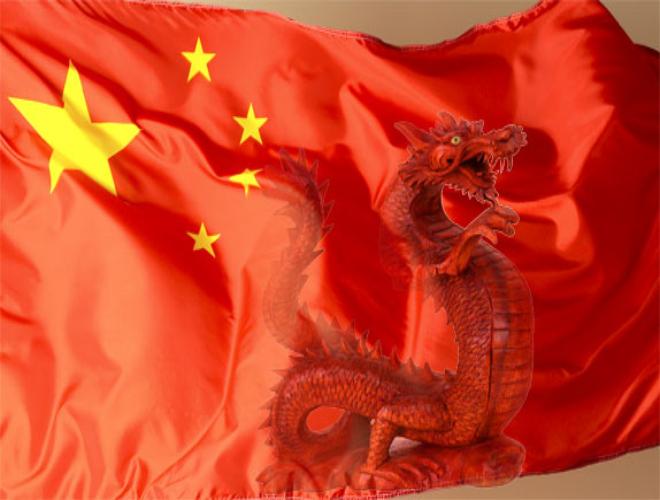
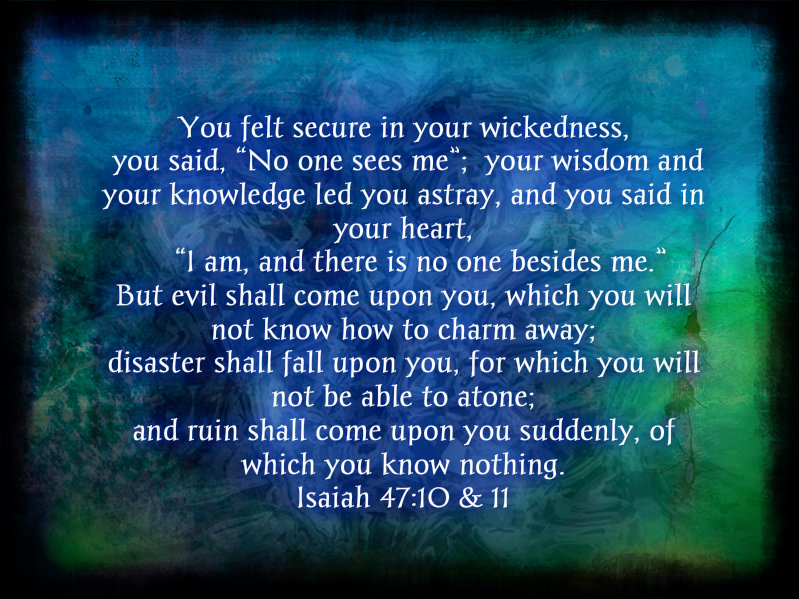


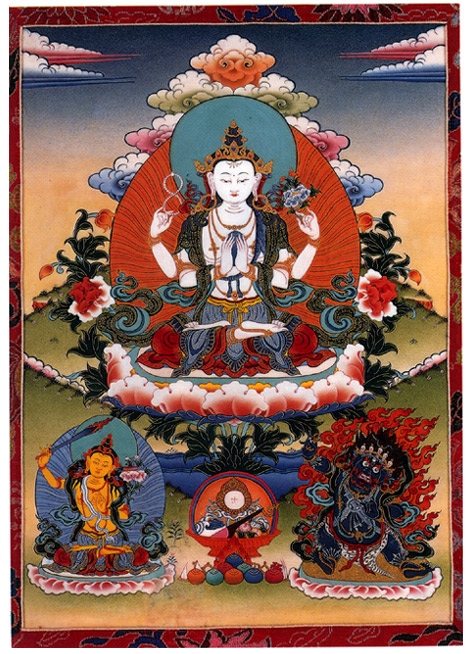



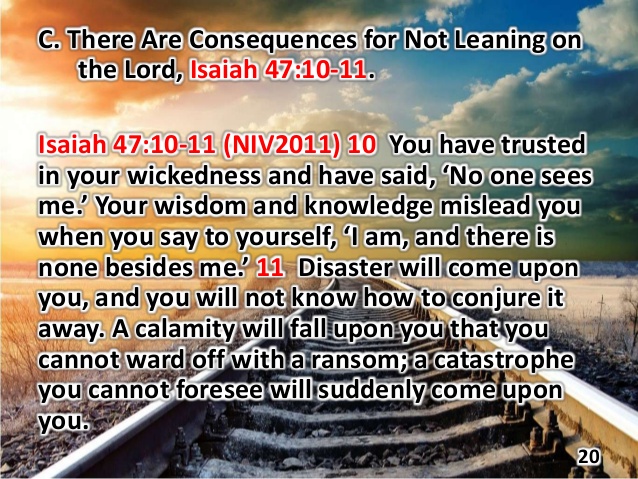


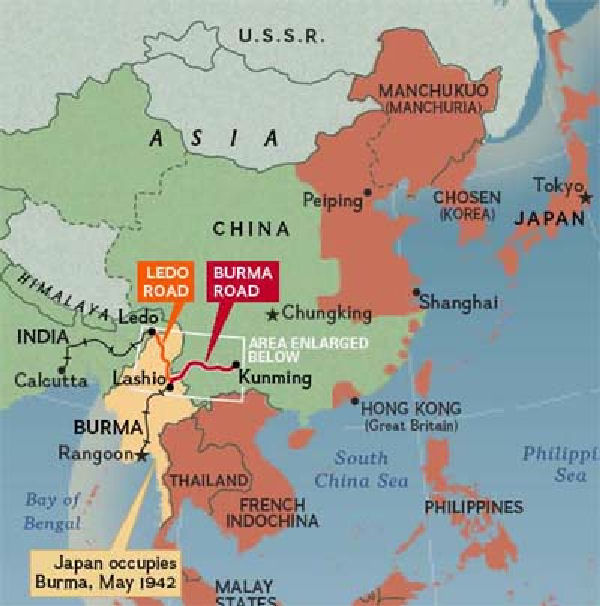


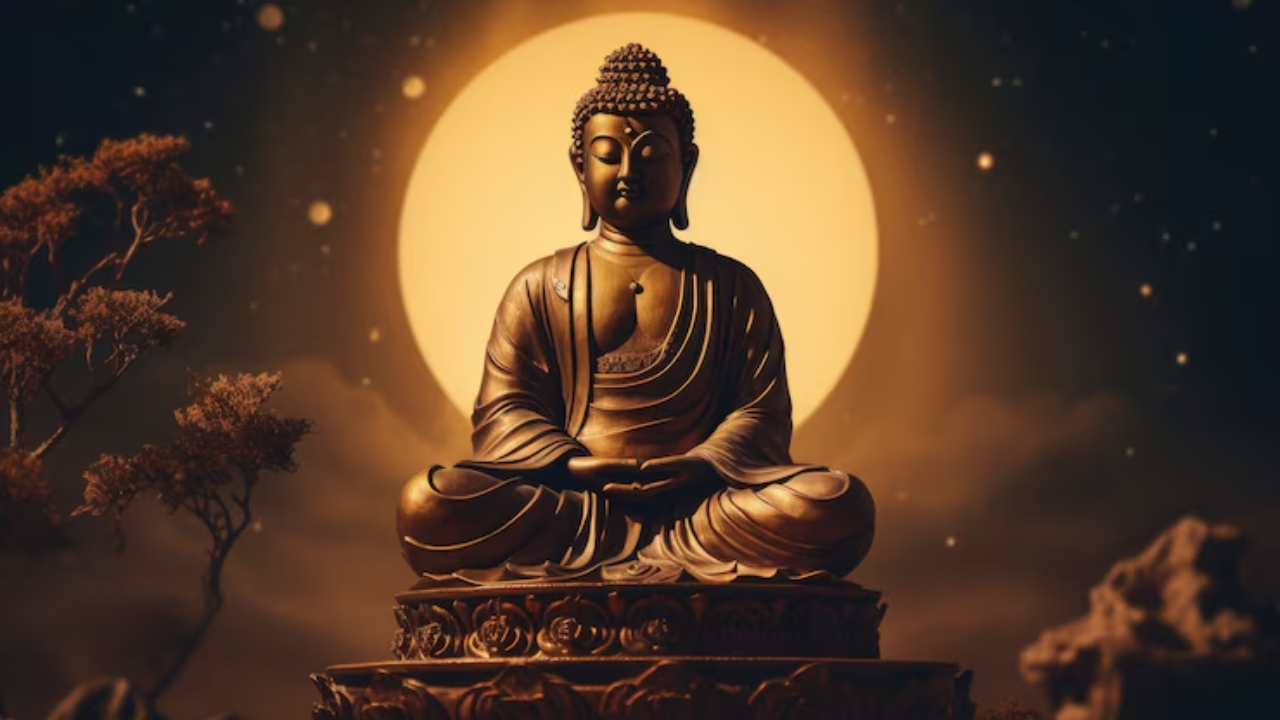


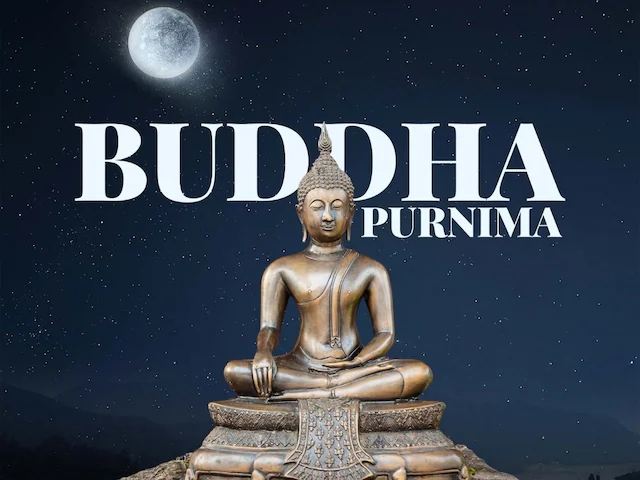


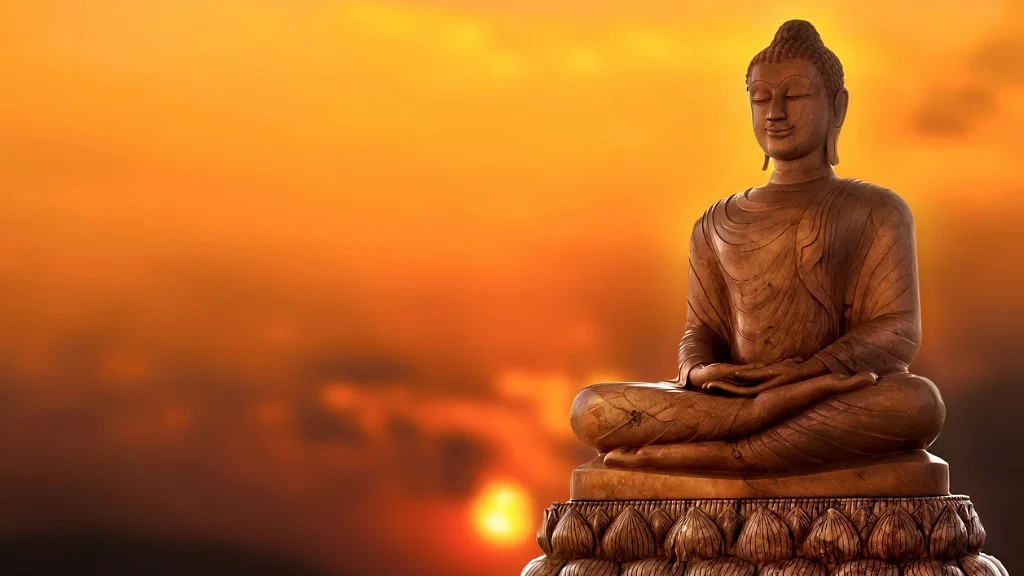
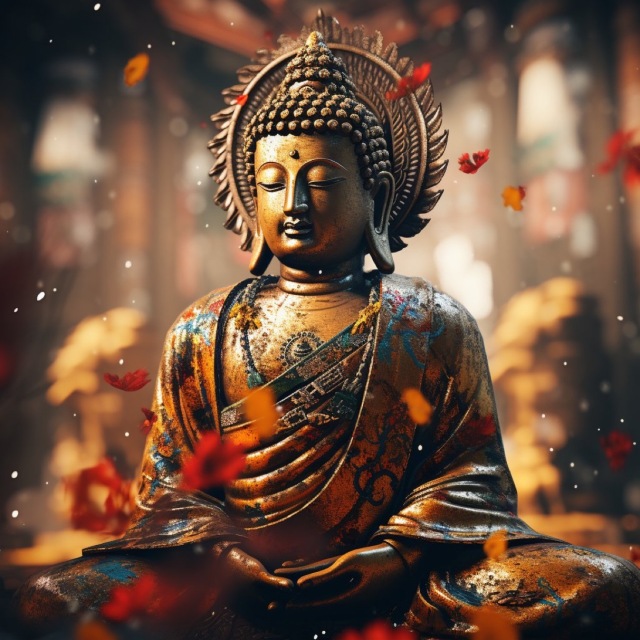


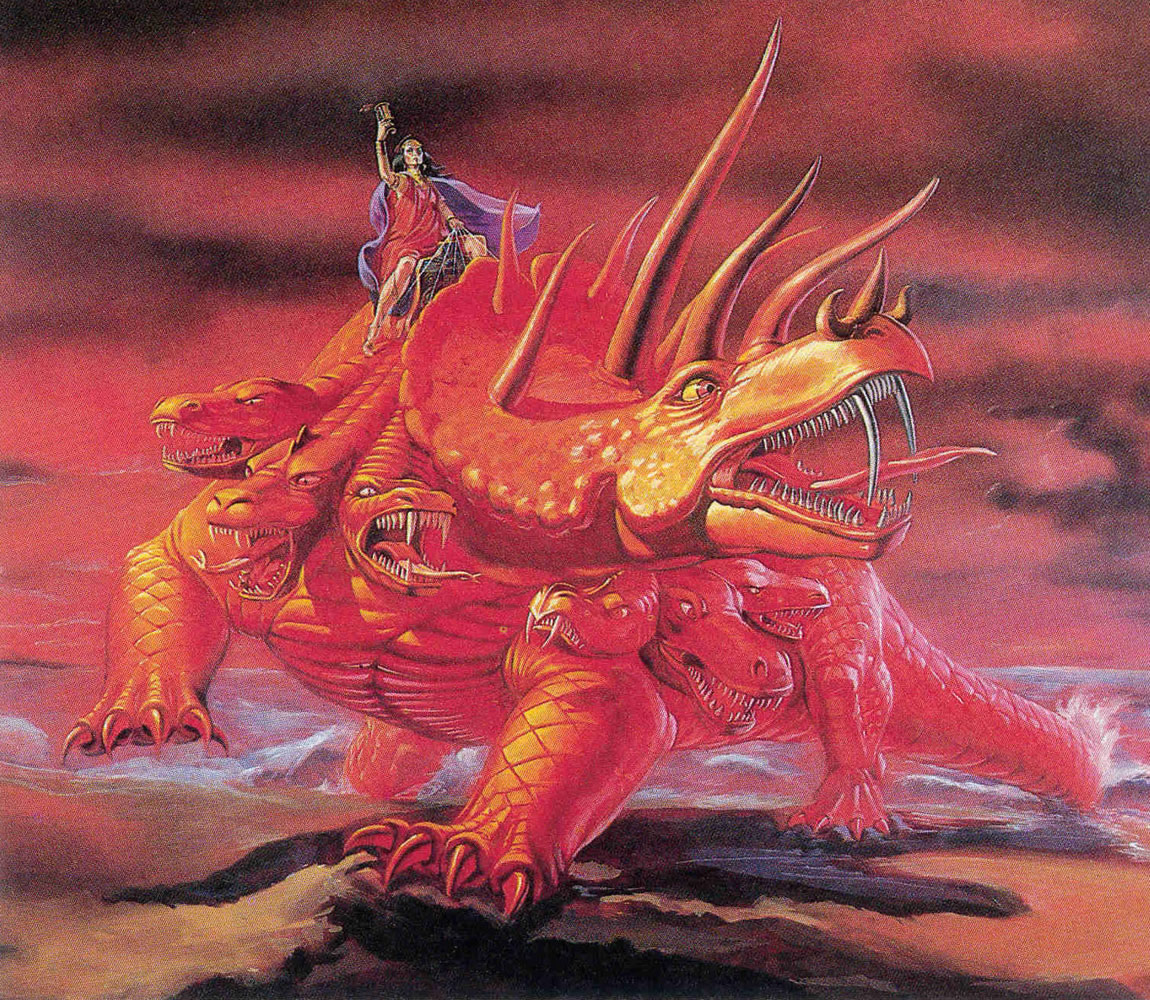
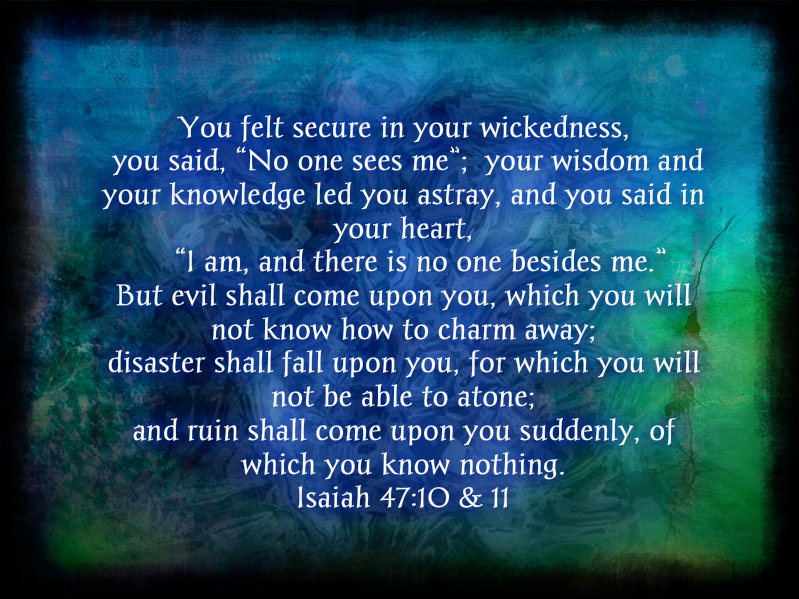


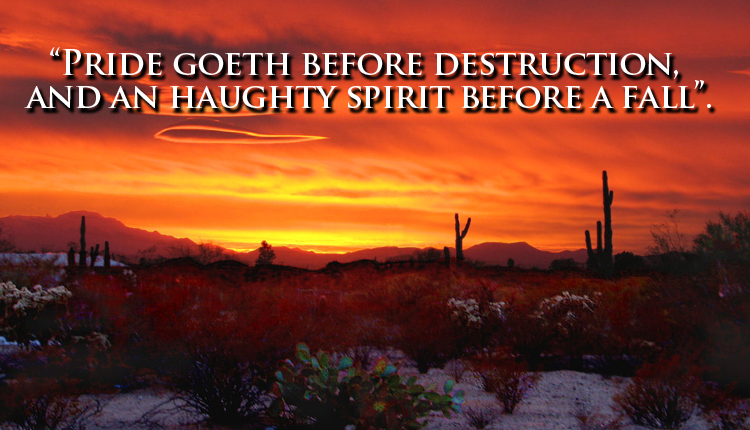
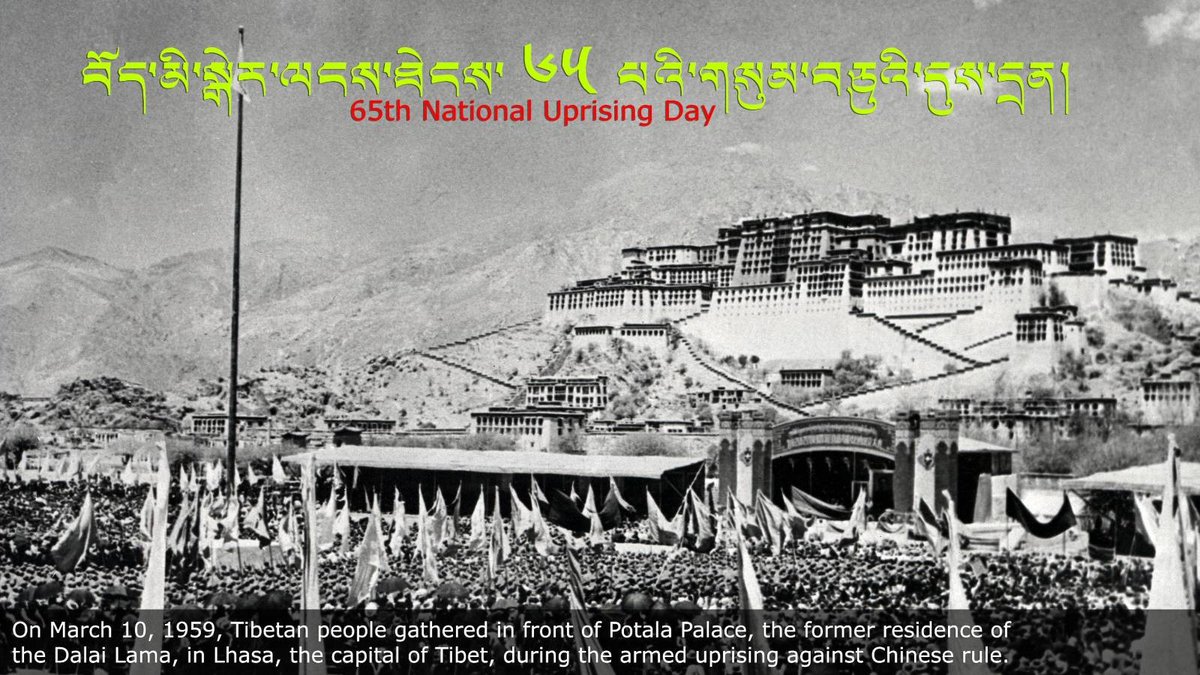
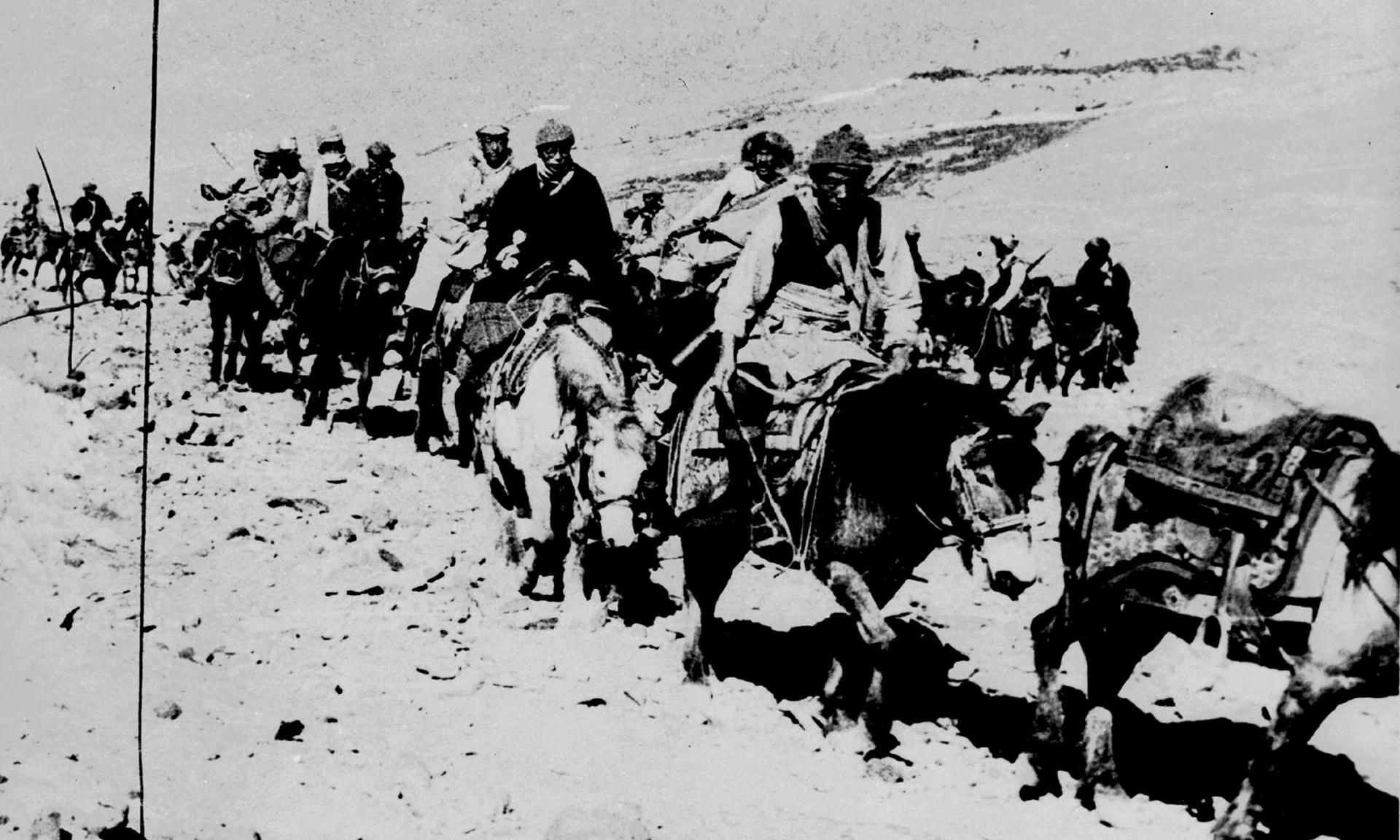

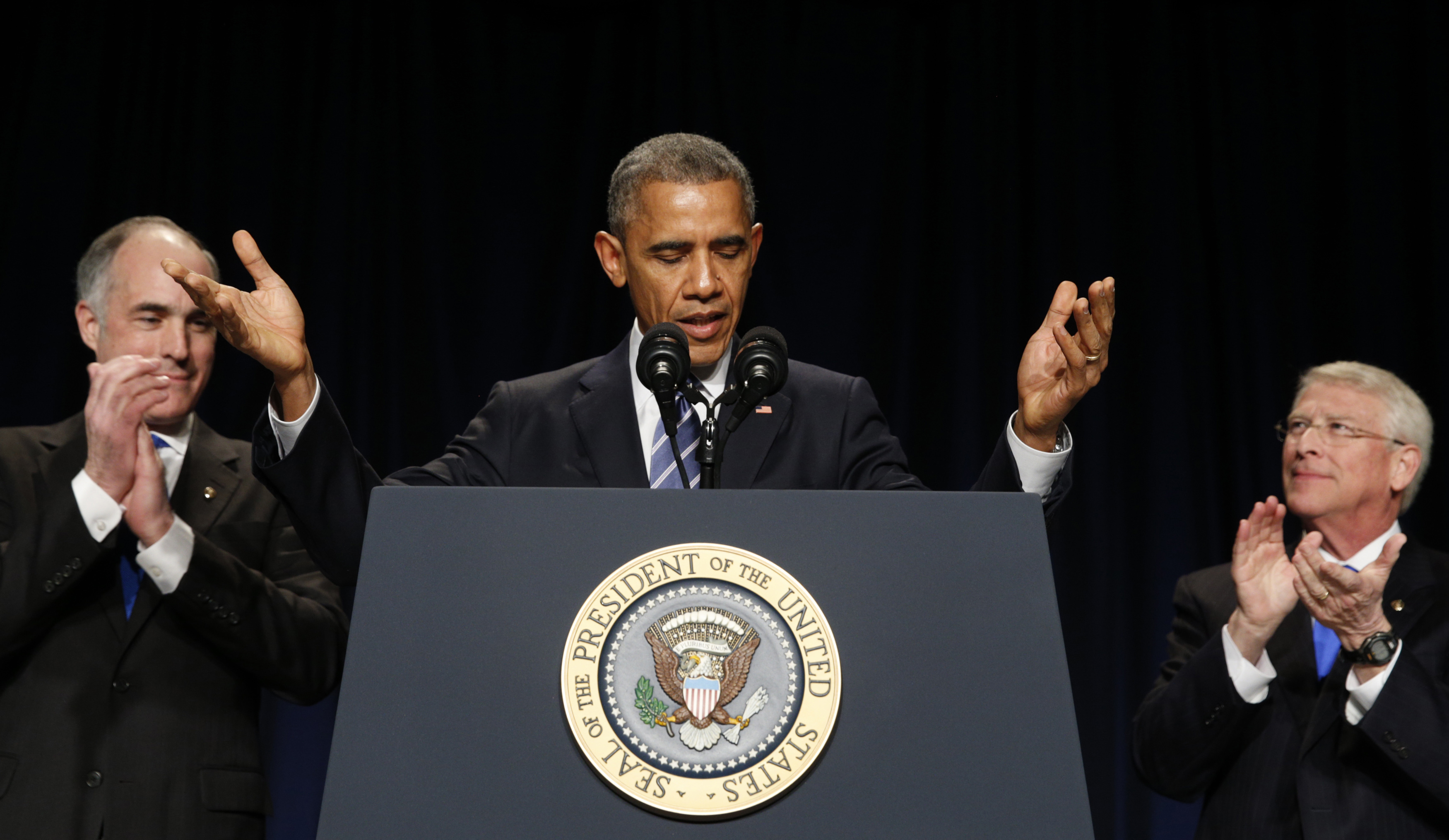


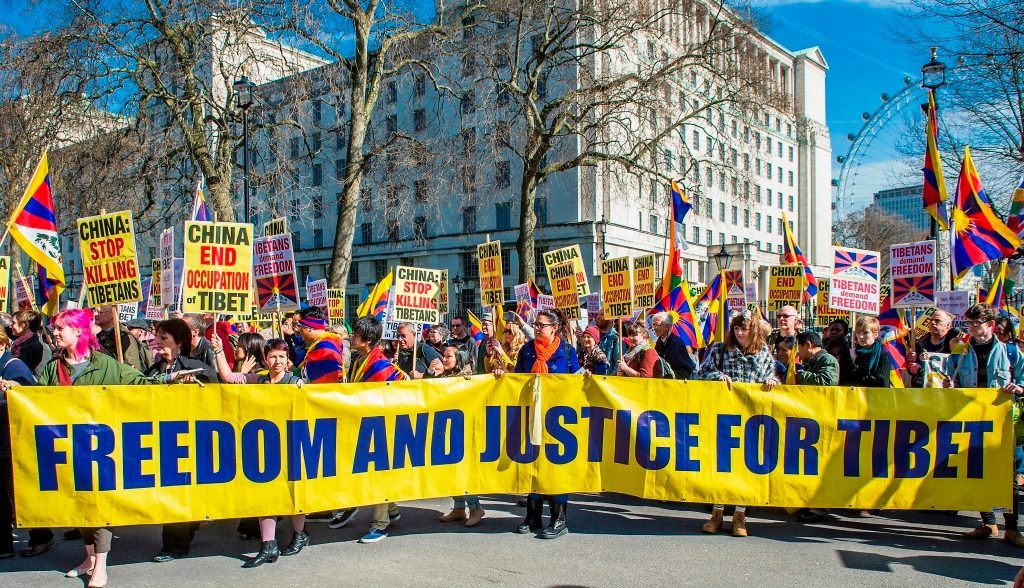
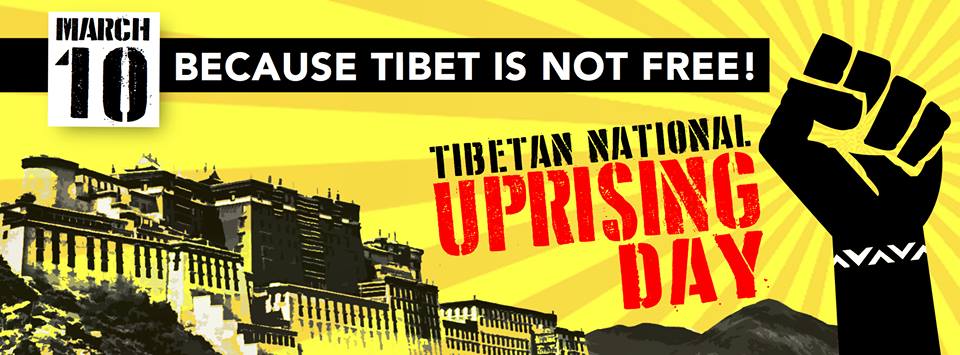
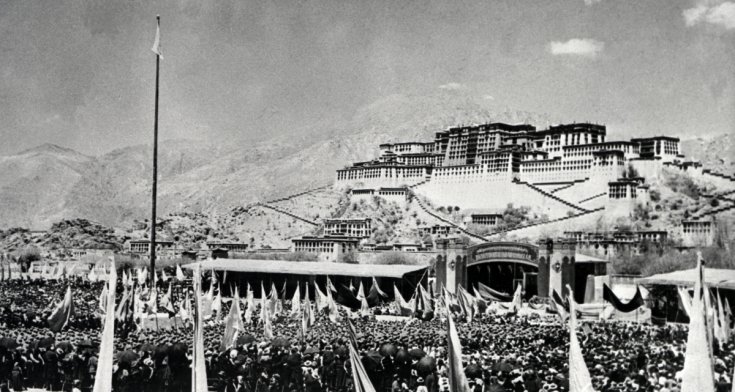
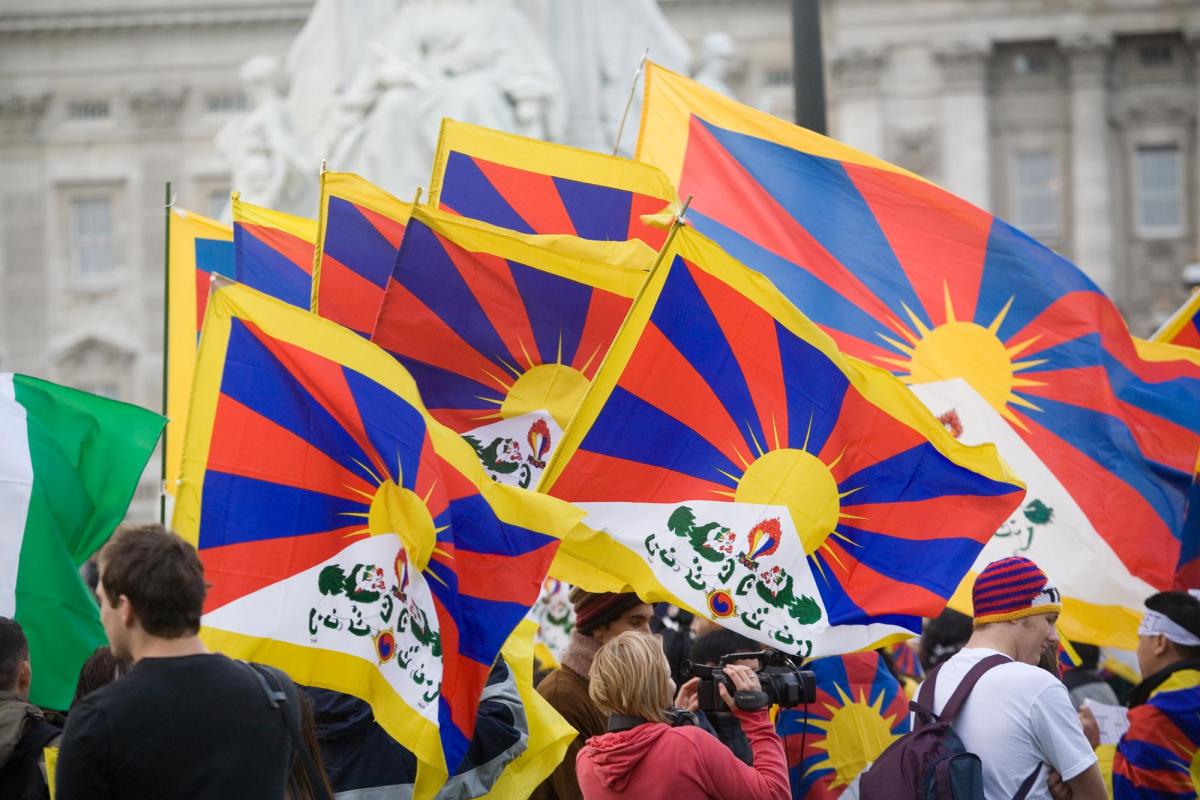
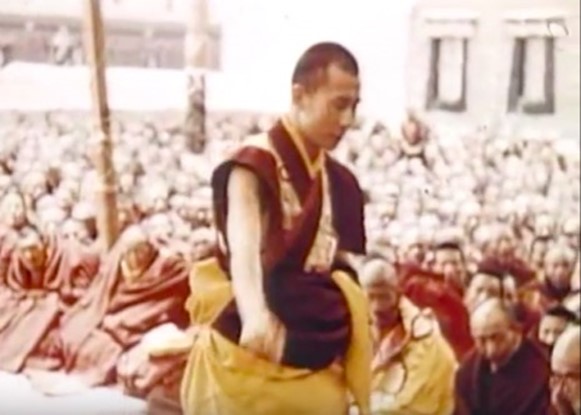
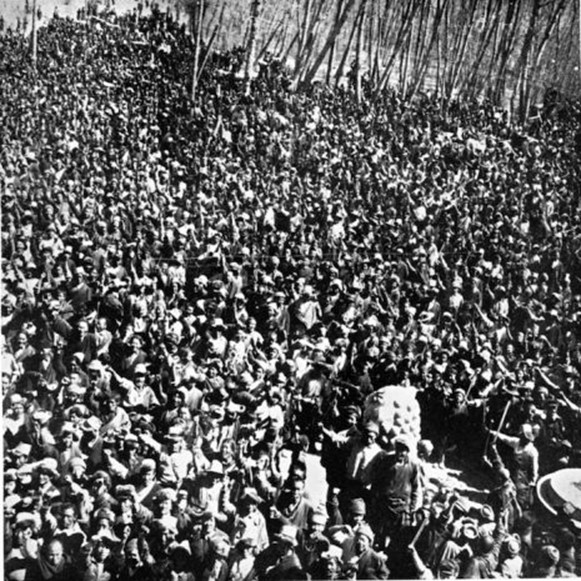
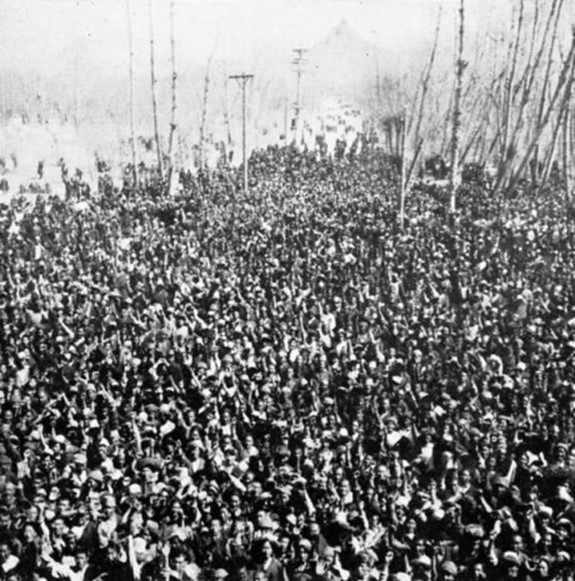
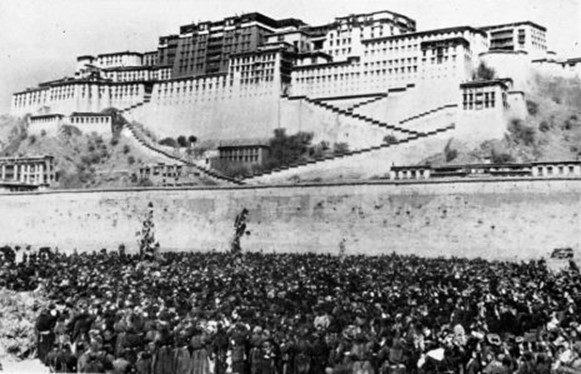
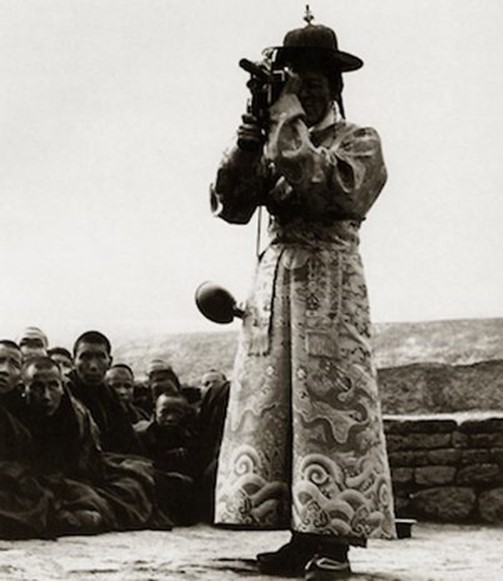
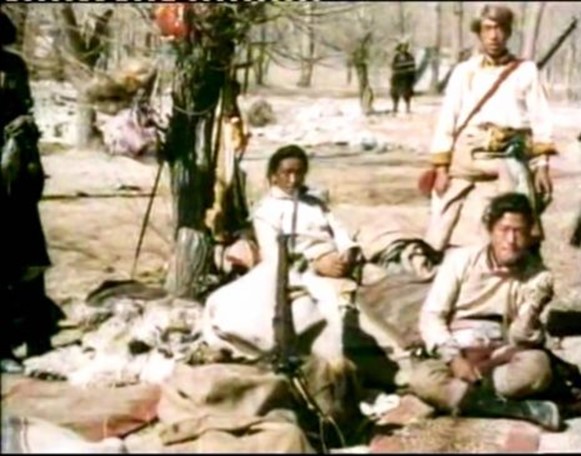

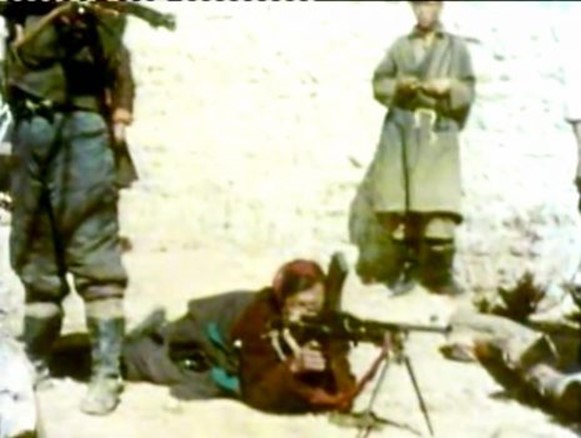
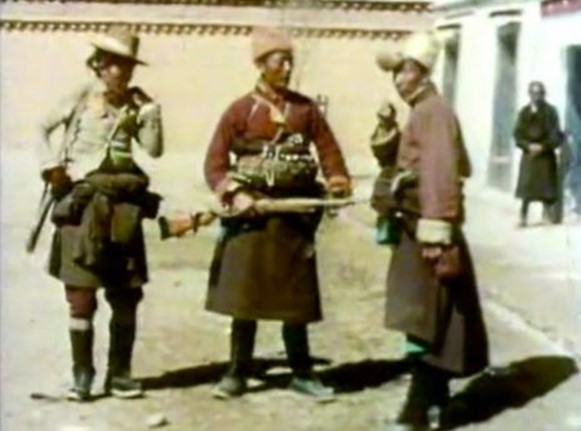
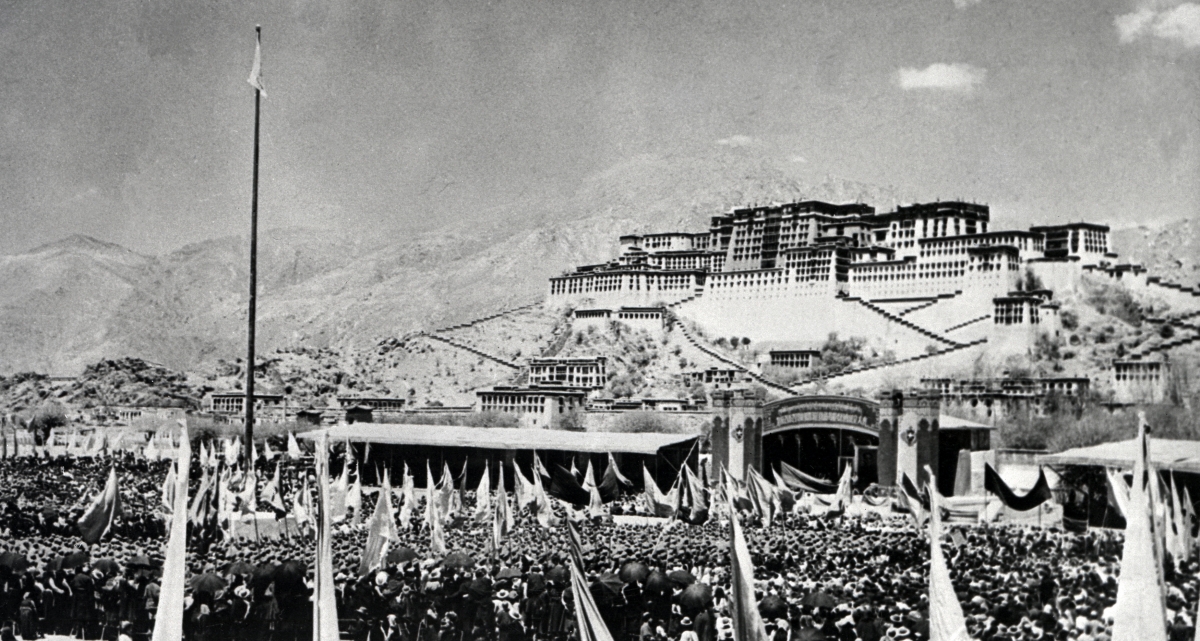
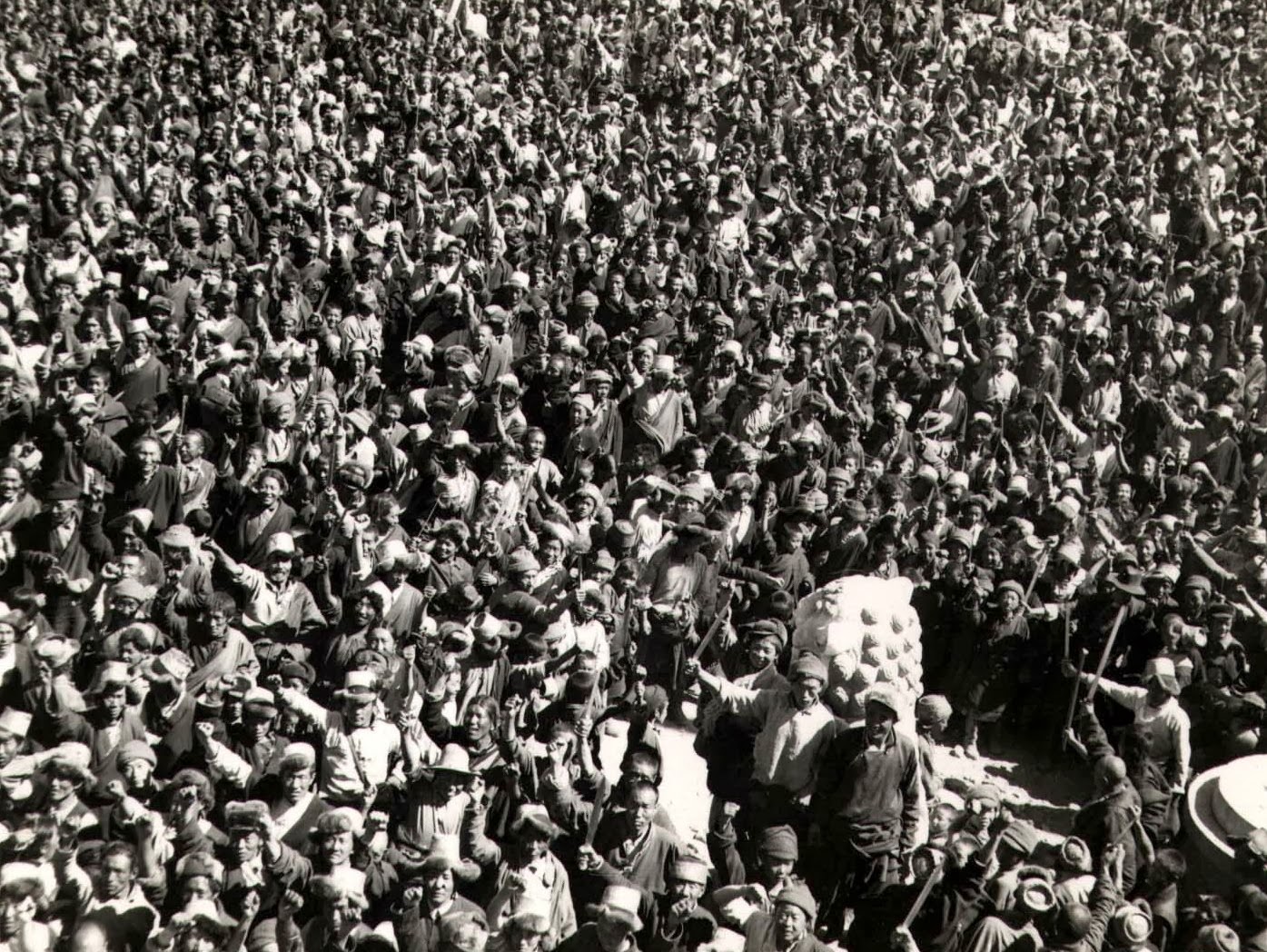
 Whole Dude - Whole Concept