Red China Poses Red Alert – Freedom in Tibet is at Extreme Danger
Whole Alert – Red China poses Red Alert – Freedom in Tibet is at Extreme DangerWhole Alert – Red China poses Red Alert -Freedom in Tibet is at Extreme Danger
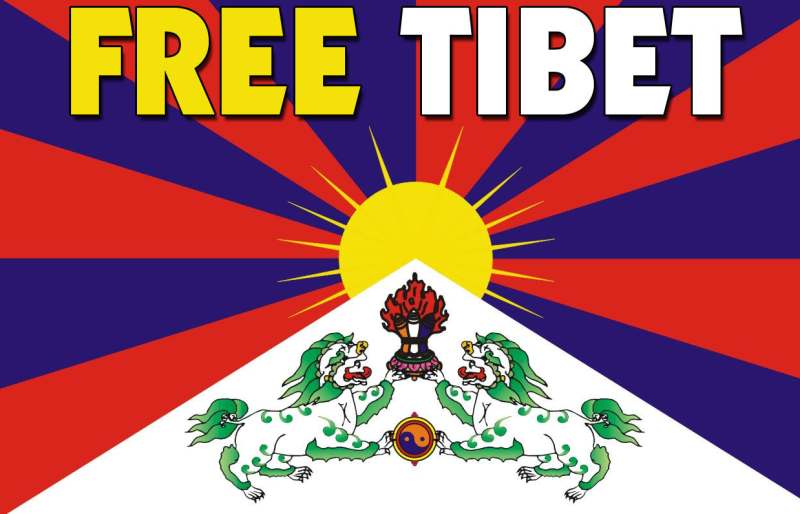
On behalf of Special Frontier Force I share my concern about Tibet’s Freedom. Decades of military occupation and repressive rule by Red China could not wipe out Tibetan Identity. As long as Tibetan Identity lives, Tibetans will continue to resist military occupation and will continue to seek their natural rights. The problem is indeed about the loss of American Identity. Americans have lost connection with values that shaped founding of their nation. Democracy, Freedom, Human Rights, and Peace do not continue to inspire the minds of American people. Tibet’s Freedom is at risk as American Values have evaporated.
Whole Alert – Red China poses Red Alert – Freedom in Tibet is at Extreme Danger
Tibet Isn’t Free Yet; That Doesn’t Mean the Dalai Lama Has Failed
Freya Putt, Human rights activist & Deputy Director at Tibet Action Institute: Tibet Isn’t Free Yet; That Doesn’t Mean the Dalai Lama Has Failed
Posted: 06/25/2015 3:38 pm EDT
In recent years, I’ve noticed an increasing trend of articles and commentaries examining the Dalai Lama’s life and legacy that conclude Tibetans, and he as their leader, have failed in their cause to restore freedom to Tibet. Having worked for this movement for 18 years, I can understand having doubts about what the future holds. But really? Failed? It’s a done deal?
Tibet Isn’t Free Yet; That Doesn’t Mean the Dalai Lama Has Failed
Some voiced similar sentiments in the 1960s and 1970s, when most people had never heard of Tibet, and certainly no countries were bothering to advocate for Tibetan political prisoners or other rights. China had been “lost” by the west and Tibetans were unfortunate casualties.
But the gloom-and-doom analysis proved to be misguided then, as the mere handful of Tibetan refugees who had resettled globally built awareness and inspired activism. Huge protests in Lhasa in the late 1980s, as well as the Dalai Lama’s Nobel Peace Prize, Hollywood and the Tibetan Freedom Concerts, drove Tibet into international public consciousness. Likewise, this frame of analysis is misguided now.
Tibet Isn’t Free Yet; That Doesn’t Mean the Dalai Lama Has Failed
Perhaps I’m just too invested to acknowledge that the cause is lost. But I don’t think so.
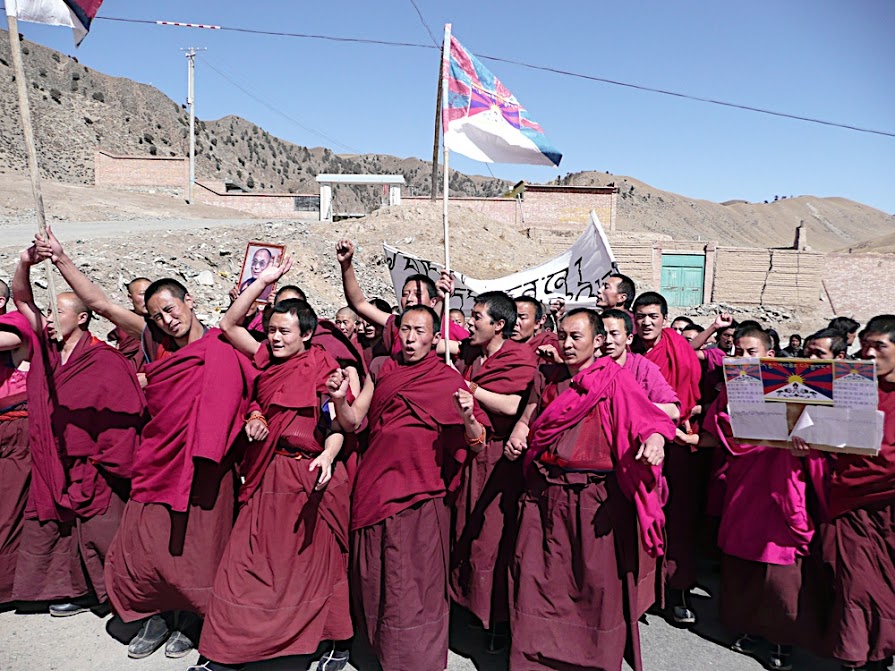
First of all, it’s human nature that where there’s injustice, there’s struggle. People don’t just give up trying to make their lives better because the odds are against them; the daily effort to resist indignities and oppose oppression continues regardless of what the endgame might be. Tibetans demonstrate this constantly, showing their opposition to China’s occupation by wearing traditional clothes, patronizing Tibetan-owned shops, holding onto their language and fighting for its use in schools, deploying art, music and poetry to express themselves and rally each other, using blockades and other direct action to protect lands, and even making the extreme choice to light themselves on fire in defiance of Chinese rule.
In fact, while state oppression has increased in recent years, resistance in Tibet has grown and deepened. A decade ago, opposition to Chinese rule seemed to manifest mainly through small, unplanned protests, which though symbolically powerful, are easily countered by China. Today, resistance is constant, sophisticated, and waged on many fronts.
Tibet Isn’t Free Yet; That Doesn’t Mean the Dalai Lama Has Failed
And while our collective memory is short, it shouldn’t be too much of a stretch to remember that many — perhaps most — conflicts about rights, territory and self-governance have taken decades or centuries to resolve. Think slavery and civil rights in the U.S.A., Irish independence, the anti-apartheid struggle in South Africa, Indian independence and decolonization the world over.
The conditions affecting rights and freedom for Tibet are daunting, to say the least. China has steadily gained economic clout and countries increasingly react in fear when it flexes its economic muscle. Tibetans number roughly six million, Chinese 1.3 billion. Tibet’s high, mountainous plateau has kept it isolated and made it easier for China to severely limit both physical and virtual interaction between Tibetans and the outside world. And Tibet’s mineral and water resources and strategic location in the heart of Asia make it an economic and geopolitical prize.
Looking at these factors, it shouldn’t be a big surprise that the Tibetan struggle hasn’t yet been won.
But not having yet won a struggle is very different from having lost it. Bill Moyer, an American theorist and activist, developed a strategic model for explaining the progress of social movements and used case studies to illustrate eight distinct phases. He emphasized that after substantial gains, such as building a mass movement, achieving popular support and defining an issue as a problem on society’s agenda, movements often find themselves mired in a sense of despair and powerlessness based on a misperception of their progress.
Tibetan freedom movement has made significant strides toward its goals: establishing the legitimacy of Tibetans’ claims to freedom, building a mass base of popular global support, overpowering China’s propaganda factory in the media, and making Tibet a constant challenge to China’s reputation on the global stage. There is much more to be done, clearly, but the critical foundation has already been built.
Tibet Isn’t Free Yet; That Doesn’t Mean the Dalai Lama Has Failed
In fact, amidst all the tragedy, suffering and daily hardship that Tibetans face, there is much to celebrate. Far from having failed, the Dalai Lama should be recognized as one of the global leaders of the 20th and 21st century who has made an indelible, positive impact on the world.
The Dalai Lama brought the issue of Tibet to the world and inspired tens if not hundreds of thousands of people to support the cause. He bridged the various religious, regional and other divides within the Tibetan community to unify Tibetans behind a strategic approach to the struggle that included making it visible internationally — despite China’s constant objections and best efforts
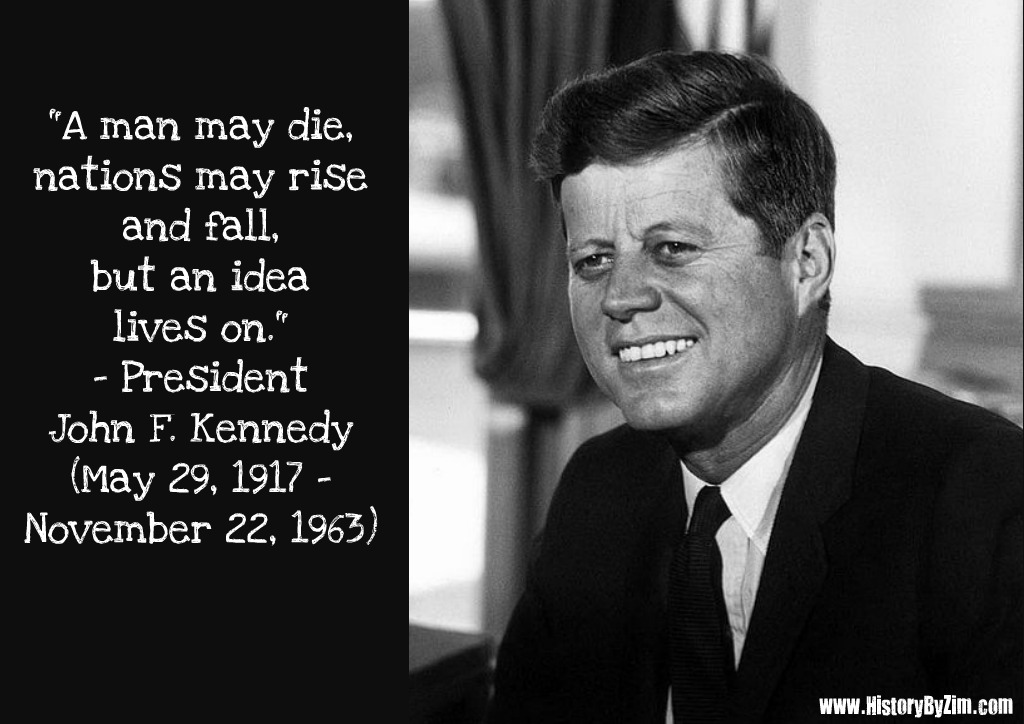
RED CHINA – RED ALERT – TIBET’S FREEDOM: TIBET’S NATURAL RIGHT TO FREEDOM IS AT RISK. WHERE ARE THOSE VALUES ENSHRINED IN THE DECLARATION OF INDEPENDENCE?RED CHINA – RED ALERT – TIBET’S FREEDOM : AMERICA HAS TO REDISCOVER HER OWN VALUES THAT DEFINE HER NATIONAL IDENTITY.RED CHINA – RED ALERT – TIBET’S FREEDOM: AMERICANS HAVE TO RECALL THEIR PAST TO REDISCOVER VALUES THAT DEFINE AMERICAN NATION.RED CHINA – RED ALERT – TIBET’S FREEDOM: I ASK AMERICANS TO RECALL PRESIDENT KENNEDY’S VITAL CONTRIBUTION TO TIBETAN RESISTANCE MOVEMENT.RED CHINA – RED ALERT – TIBET’S FREEDOM: TIBET’S FREEDOM IS AT RISK. IT IS TIME TO REVITALIZE AMERICANS.Whole Alert – Red China poses Red Alert – Freedom in Tibet is at Extreme Danger
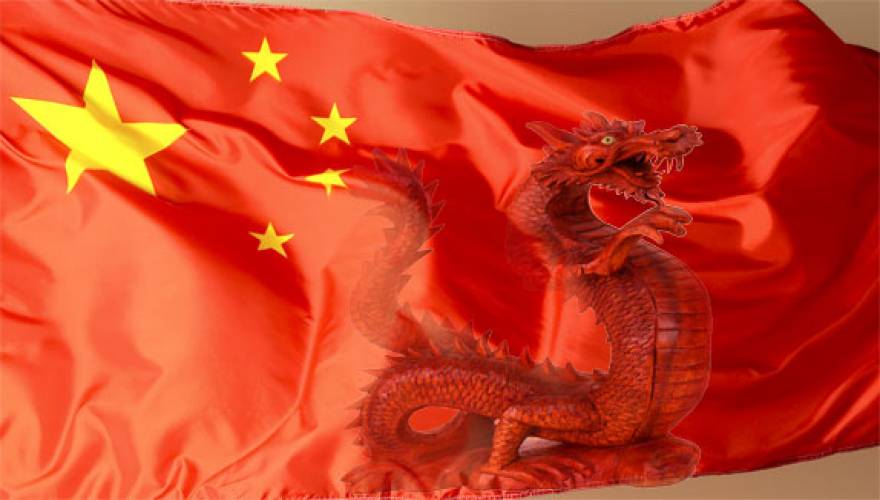
RED DRAGON – RED CHINA – RED ALERT – HEGEMONIST : UNITED STATES IN RECOGNITION OF RED CHINA’S HEGEMONISM MUST COUNTERACT AND CONTAIN RED CHINA’S INFLUENCE OVER HER WEAK NEIGHBORS.
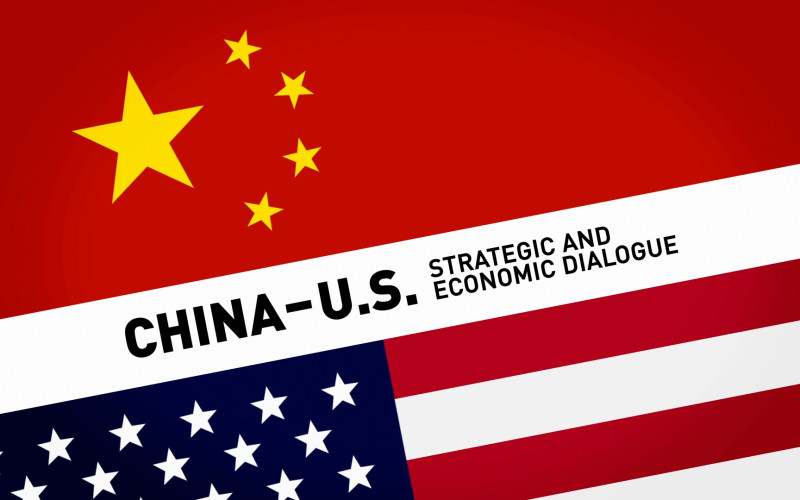
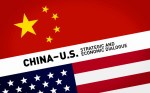
On behalf of Special Frontier Force I issuing a ‘RED ALERT’ to warn US citizens of imminent danger as United States holds three days of cabinet-level meetings with more than 400 Chinese officials. Under the wide-ranging Strategic and Economic Dialogue(S &ED)framework, eight US Cabinet Secretaries are involved in these talks and consultations with Chinese officials. The top Chinese officials meet US President Barack Obama at The White House on Wednesday, June 24, 2015.
RED DRAGON – RED CHINA – RED ALERT – HEGEMONIST : THIS SEVENTH STRATEGIC AND ECONOMIC DIALOGUE BETWEEN UNITED STATES AND CHINA MUST ADDRESS THE PROBLEM OF RED CHINA’S HEGEMONISM.
The term ‘HEGEMONY’ describes dominance of one state or nation over others. Hegemonism is the Policy or Practice of a nation in aggressively expanding its influence over other nations. Red China formulated her Hegemonistic Policy in 1950 when she conquered Tibet bringing Tibetan people under her control or subjection. Red China subdued Tibetan Government and forced Tibet’s Head of State to live in exile. Red China’s Hegemonic Practice forces Tibetan people to become subservient to Peking(or Beijing). United States has to recognize Red China as “HEGEMONIST” and counteract to contain Red China’s growing political, economic, military power which she uses to expand her influence over other nations of our world.
U.S. AND CHINA OPEN ANNUAL DIALOGUE WITH ‘CANDID, TO-THE-POINT’ TALKS
BY DAVID BRUNNNSTROM
The United States and China held “candid and to-the-point” talks at the start of three days of cabinet-level meetings aimed at managing the highly complex relationship between the world’s two biggest economies, a senior U.S. official said.
The U.S. side, led on Monday by Deputy Secretary of State Antony Blinken, reiterated U.S. concerns about China’s pursuit of territorial claims in the South China Sea, the official said.
U.S. worries about cybersecurity following massive attacks on government computers that U.S. officials have blamed on Chinese hackers would also be addressed “in very direct terms,” the official said.
RED DRAGON – RED CHINA – RED ALERT – HEGEMONIST: US and Chinese flags at Tiananmen Square President Obama’s Peking(Beijing) Visit.
More than 400 Chinese officials are in Washington for the annual talks under the wide-ranging Strategic and Economic Dialogue (S&ED) framework, which will involve eight U.S. cabinet secretaries.
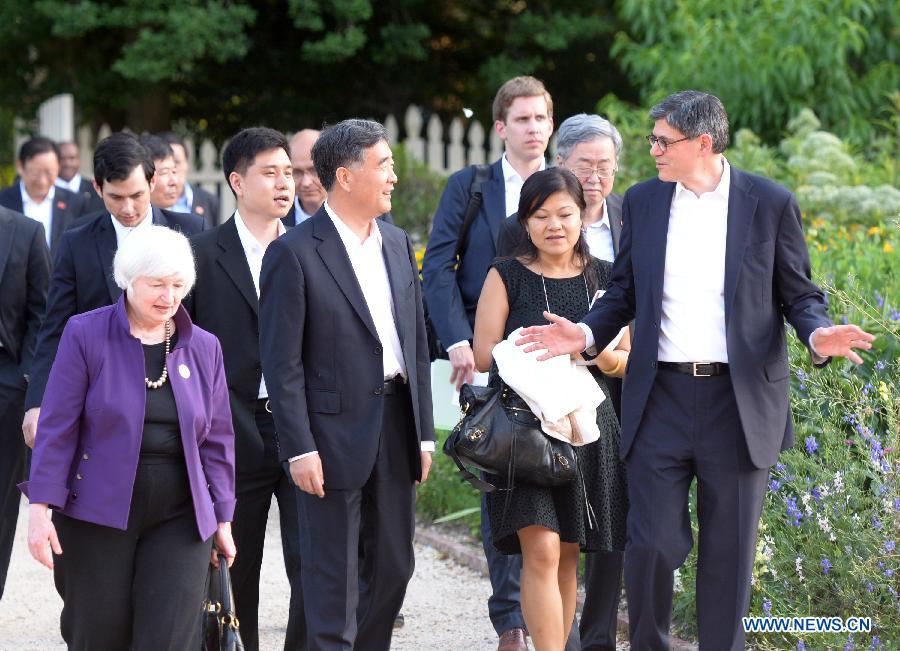
RED DRAGON – RED CHINA – RED ALERT – HEGEMONIST : RED CHINA’S VICE PREMIER WANG YANG IN MT VERNON, VIRGINIA.
The meetings come at a time of waning trust and widening differences between the two countries, even though they maintain robust economic ties worth $590 billion in two-way trade last year.
U.S. concerns have been mounting about Beijing’s challenge to its dominance of global finance and about restrictions on U.S. businesses in China.
U.S. President Barack Obama is struggling to secure backing from Congress for legislation needed to speed a 12-nation trade deal, which is the economic plank of his Asia policy intended as a counterweight to China’s growing influence.
The two sides will try to ease tensions by stressing areas of cooperation, including climate change, shared concerns about Iran and North Korea’s nuclear programs, the fight against Islamist militancy, and support for global development.
“We have agreed with the Chinese that we are going to try to expand those areas where our interests overlap and expand cooperation in those areas,” the U.S. official said. But the aim was not to “paper over” contentious issues, or to “agree to disagree,” but to narrow differences to avoid miscalculations.
Despite the considerable areas of tension, China is hoping for a smooth set of meetings to prepare for a visit to Washington by President Xi Jinping in September. Prospects for substantial outcomes from the cabinet-level meetings appeared slim, with any scant progress likely to be held over for announcement during Xi’s visit, analysts said.
The sides are expected to discuss a Bilateral Investment Treaty that has been seven years in discussion but has been held up by restrictions on both sides, while China is likely to press its bid to add the yuan to the International Monetary Fund’s basket of reserve currencies.
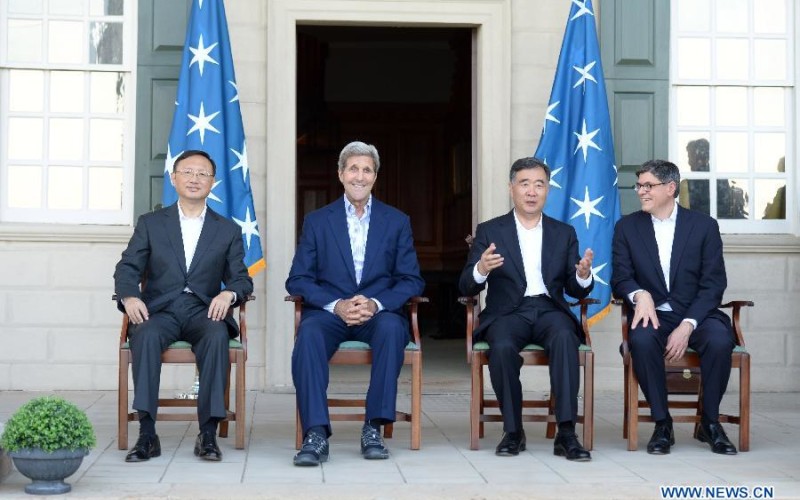
Blinken and Secretary of State John Kerry will chair the security side of the talks with State Councillor Yang Jiechi and Vice Foreign Minister Zhang Yesui on the Chinese side.
RED DRAGON – RED CHINA – RED ALERT – HEGEMONIST: BEAWARE OF RED CHINA’S HEGEMONISM.
U.S. Treasury Secretary Jack Lew and Chinese Vice Premier Wang Yang will chair the economic elements, and the top Chinese officials will meet Obama at the White House on Wednesday.
(Reporting by David Brunnstrom; Additional reporting by Jason Lange, Krista Hughes, Anna Yukhananov, Megan Cassella and Idrees Ali in Washington and Michael Martina in Beijing; Editing by Christian Plumb)
Red Dragon – Red Alert. US and Chinese flags at Tiananmen Square – President Obama -Peking-Beijing visit
Red Alert Chinese J- 11 Fighter jet flying near a us navy p 8 poseidon
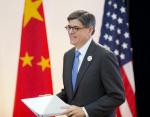
U.S. Treasury Secretary Jack Lew walks to the podium before speaking at the 7th US China Strategic and Economic Dialogue (S&ED) and 6th Consultation on People-to-People (CPE) at the U.S. State Department in Washington, Tuesday, June 23, 2015.(AP Photo/Pablo Martinez Monsivais)
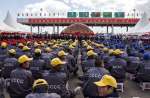
Red Alert- Ethiopian and Chinese workers – China Communication Construction Company- Addis Ababa – Adama toll road
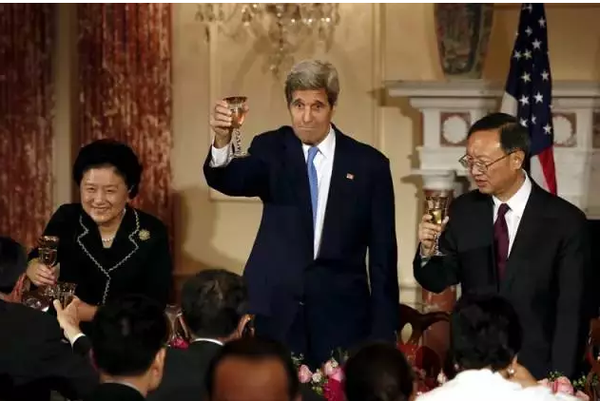
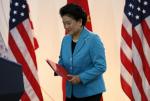
Chinese Vice Premier Liu Yandong arrives to speak at the Strategic and Economic Dialogue (S&ED) at the State Department in Washington June 23, 2015. More than 400 Chinese officials are in Washington for annual talks under the wide-ranging Strategic and Economic Dialogue (S&ED) framework, which will involve eight U.S. cabinet secretaries. REUTERS/Yuri Gripas
RED DRAGON – RED CHINA – RED ALERT – HEGEMONIST : UNITED STATES IN RECOGNITION OF RED CHINA’S HEGEMONISM MUST COUNTERACT AND CONTAIN RED CHINA’S INFLUENCE OVER HER WEAK NEIGHBORS.
RED DRAGON – RED CHINA – RED ALERT – HEGEMONIST : THIS SEVENTH STRATEGIC AND ECONOMIC DIALOGUE BETWEEN UNITED STATES AND CHINA MUST ADDRESS THE PROBLEM OF RED CHINA’S HEGEMONISM.
RED DRAGON – RED CHINA – RED ALERT – HEGEMONIST : RED CHINA’S VICE PREMIER WANG YANG IN MT VERNON, VIRGINIA.
RED DRAGON – RED CHINA – RED ALERT – HEGEMONIST: BEAWARE OF RED CHINA’S HEGEMONISM.
THE EVIL RED EMPIRE – RED CHINA – RED DRAGON ALERT
THE EVIL RED EMPIRE – RED CHINA – RED DRAGON ALERT: COUNTRIES OF ASIA ARE FINALLY RESPONDING TO THREATS POSED BY RED CHINA’S EXPANSIONISM.
Countries that share South and East China Sea have sighted the Red Dragon and started responding to threat the Beast poses. It is very unfortunate to note that these nations practically had no ability to respond when Red Dragon attacked Tibet and occupied that nation in 1950. Since Red Dragon has a policy of extending her territory in all directions, Red Dragon must be confronted from all directions.
PHILIPPINES IN US, JAPAN NAVAL DRILLS AMID CHINA SEA ROW
U.S. Navy Rear Admiral William Merz delivers a statements during the opening ceremony of Cooperation Afloat Readiness and Training (CARAT) 2015 at navy headquarters in Puerto Princesa city, Palawan, west Philippines June 22, 2015. The Philippines will hold separate naval exercises with U.S. and Japanese forces this week on a Philippine island that is not far from the disputed Spratly archipelago, where China’s rapid creation of seven island outposts is stoking regional tensions. REUTERS/Romeo Ranoco
Philippines in US, Japan naval drills amid China sea row
.
Puerto Princesa (Philippines) (AFP) – The Philippines Monday began separate but simultaneous naval exercises with the United States and Japan, amid shared and growing concern at Chinese island-building in the disputed South China Sea.
Manila has been holding the naval drills with its longtime ally Washington since 1995. But the exercise with Tokyo, a World War II foe, is only its second ever after one earlier this year. This week’s Cooperation Afloat Readiness and Training (CARAT) drill with Washington will include a P-3 Orion aircraft, of the type used by the US to monitor the South China Sea.
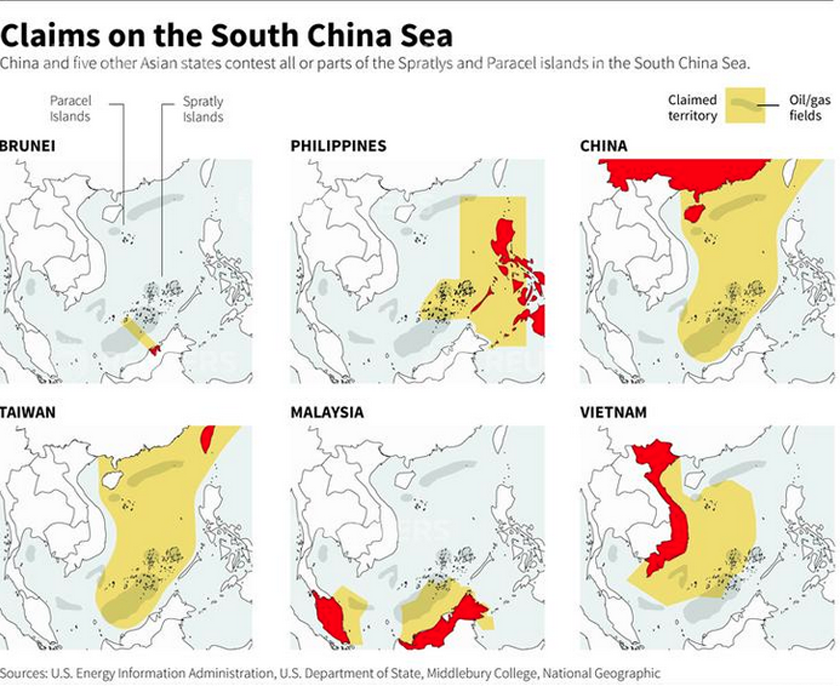
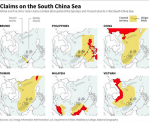
China claims almost the entire Sea despite competing claims from the Philippines, Brunei, Malaysia, Taiwan and Vietnam, and has been taking strong action including reclamation to assert sovereignty.
“CARAT remains a practical way to address shared maritime security priorities, enhance our capabilities, and improve interoperability between our forces,” the US exercise commander, Rear Admiral William Merz, said at the opening ceremony in Puerto Princesa city on the southwestern Philippine island of Palawan.
Rear Admiral Leopoldo Alano, commander of the Philippine Fleet, described the drill as a great opportunity “to gain valuable experience and increase our interoperability.”
THE EVIL RED EMPIRE – RED CHINA – RED DRAGON – ALERT : US AND PHILIPPINES ARE CONDUCTING NAVAL DRILLS IN RESPONSE TO “RED ALERT.”
US Marines board on an amphibious assault vehicle after a mock beach assault drill with their Philippines partners …
The drills will also feature for the first time the littoral combat ship USS Fort Worth, and involve the rescue and salvage ship USNS Safeguard. While it does not take sides in the dispute, the US has in recent weeks intensified its criticism of China’s reclamation work, which has created new islands including airstrips on reefs and shoals also claimed by its neighbours.
The US says the activities could pose a threat to freedom of navigation.
China said last week its land reclamation in the disputed Spratly islands would finish soon but be followed by “facility construction”.
The Philippines has asked a United Nations tribunal to reject China’s claims to most of the Sea, a move angrily rejected by Beijing which says the world body has no authority in the matter.
This week’s naval exercise will be held both on Palawan, the closest land mass to the disputed reefs and waters, and in the Sulu Sea to the east of the island. The Filipino forces in the drills, including the US-acquired frigates BRP Ramon Alcaraz and BRP Gregorio del Pilar, also regularly patrol the South China Sea.
The exercise will focus on combined maritime operations, mobile dive and salvage training, coastal riverine operations and maritime patrol and reconnaissance along with seminars ashore, the US Navy said.
Japan, which has its own maritime dispute with China in the East China Sea, has also expressed concern at Beijing’s reclamation further south. On Monday it began three days of drills with the Philippine Navy involving a Japanese P-3C patrol aircraft.
The drills, which will also include a Philippine Navy aircraft, will focus on joint search and rescue operations on the high seas, the Philippine Navy said. They will take place in international airspace and outside Philippine territorial waters, it said in a statement. South China Sea Philippines
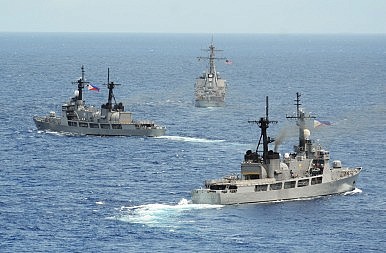
RED CHINA – RED DRAGON – RED ALERT – Philippines joins US and Japan in military drills.
RED CHINA – RED DRAGON – RED ALERT – Japan and Philippines naval exercise.
U.S. Navy Rear Admiral William Merz delivers a statements during the opening ceremony of Cooperation Afloat Readiness and Training (CARAT) 2015 at navy headquarters in Puerto Princesa city, Palawan, west Philippines June 22, 2015. The Philippines will hold separate naval exercises with U.S. and Japanese forces this week on a Philippine island that is not far from the disputed Spratly archipelago, where China’s rapid creation of seven island outposts is stoking regional tensions. REUTERS/Romeo Ranoco
THE EVIL RED EMPIRE – RED CHINA – RED DRAGON – ALERT : US AND PHILIPPINES ARE CONDUCTING NAVAL DRILLS IN RESPONE TO “RED ALERT.”
THE EVIL RED EMPIRE – RED CHINA – RED DRAGON ALERT: COUNTRIES OF ASIA ARE FINALLY RESPONDING TO THREATS POSED BY RED CHINA’S EXPANSIONISM.
SPECIAL FRONTIER FORCE JOINS PRAYERS FOR TIBETAN UNITY AND TIBETAN SOLIDARITY
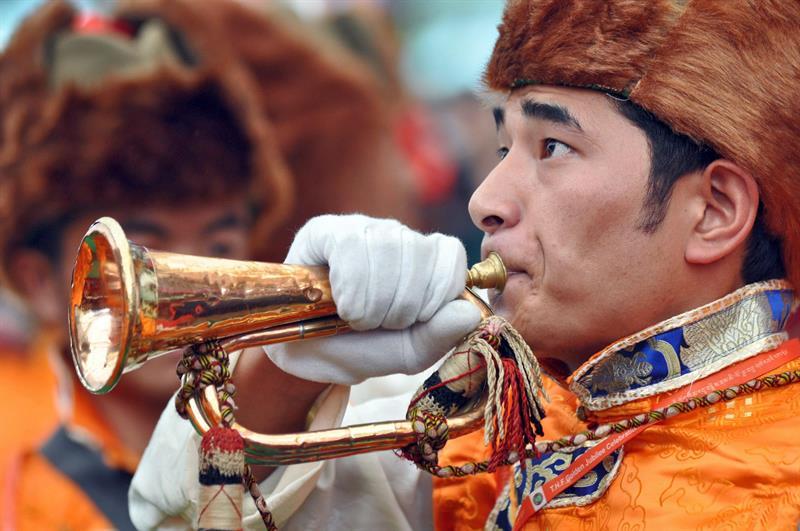
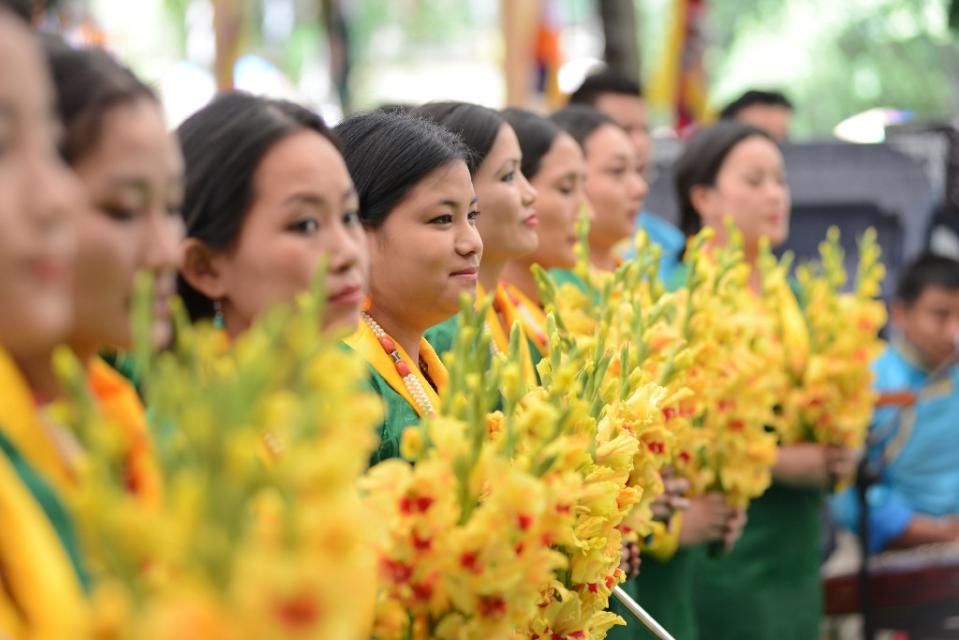
SPECIAL FRONTIER FORCE JOINS PRAYERS FOR TIBETAN UNITY AND TIBETAN SOLIDARITY : TIBETAN SPIRITUAL LEADER HIS HOLINESS THE 14th DALAI LAMA CELEBRATED HIS 80th BIRTHDAY ON JUNE 21, 2015 AT MCLEOD GANJ, DHARAMSALA, INDIA. HE IS LIVING IN EXILE FOR 56 YEARS SINCE MARCH 31, 1959.
Special Frontier Force joins Tibetan Prayers for His Holiness the 14th Dalai Lama at his 80th Birthday Celebration held on June 21, 2015 at McLeod Ganj, Dharamsala, India.
SPECIAL FRONTIER FORCE JOINS PRAYERS FOR TIBETAN UNITY AND TIBETAN SOLIDARITY. ON HIS HOLINESS THE 14th DALAI LAMA’S 80th BIRTHDAY, SPECIAL FRONTIER FORCE EXTENDS ITS WARMEST GREETINGS TO ALL TIBETAN PEOPLE DEMANDING UNITY OF FRAGMENTED TIBETAN TERRITORY.
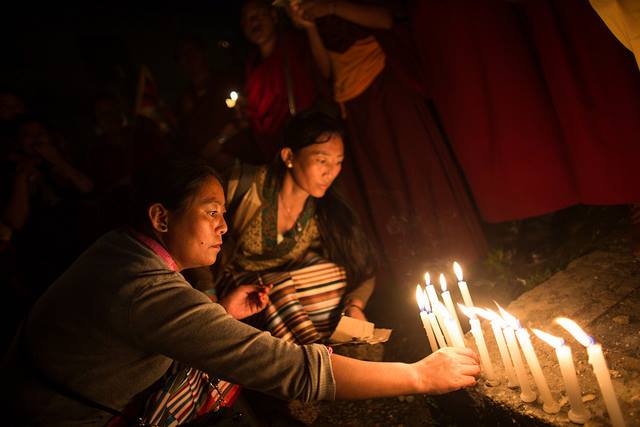
On this happy occasion, on behalf of Special Frontier Force, I join Tibetan Prayers seeking Tibetan Unity and Tibetan Solidarity. Unity is the quality of being one in spirit, sentiment, purpose, and feelings. Unity brings the complete agreement of opinion, purpose, interest, and actions. Unity leads to perfect concord, harmony, and establishes fact of being a totality to make a group or body of people to work together with constancy, continuity, or fixity of purpose. Tibetan Solidarity demands combination or agreement of all citizens of Tibet; and it includes Tibetans residing in Occupied Tibet and Tibetan Exile community living in different parts of world.
Special Frontier Force Joins Tibetan Prayers for Unity and Solidarity. Tibetan Territory is fragmented by Red China – Subjugator – Occupation of Tibet
Tibetan Land is fragmented and my foremost concern is that of Unity of Place, Uniting broken Tibetan Territory and bring it together as a single Unit or Province, or Region while Tibet remains under military occupation. I ask my readers and the rest of global community to extend support for uniting Tibetan regions occupied by People’s Republic of China.
TIBETANS PRAY FOR DALAI LAMA AT 80th BIRTHDAY CELEBRATION
BY LOBSANG WANGYAL WITH CLAIRE COZENS IN NEW DELHI.
Dharamsala (India) (AFP) – The Dalai Lama marked his official 80th birthday on Sunday, with prayers and celebrations at his hometown in exile but little to show for decades of lobbying seeking greater Tibetan autonomy.
The Nobel laureate will be in the United States when he turns 80 on July 6, but Sunday is his official birthday according to the Tibetan lunar calendar, and he celebrated with his family, fans and followers in Dharamsala.
The jovial Tibetan spiritual leader told fellow exiles and Indian and foreign dignitaries that he expected to live another 20 years and would continue to work for the promotion of compassion and religious harmony.
“I hope you will join me again to celebrate my 90th birthday,” he said in a speech at the Tsuglakhang Temple in Dharamsala, the north Indian hill town where he has lived since fleeing Tibet in 1959 after a failed uprising against Chinese rule.
The leader of the government-in-exile wished the Dalai Lama a happy birthday on behalf of all Tibetans, thanking him for his lifelong commitment to safeguarding Tibet and its culture and for his teachings on “universal responsibility to foster religious harmony worldwide”.
“You have empowered us with democracy and hope… for the people around the world, you are the beacon of hope and light to all the people,” Lobsang Sangay told an 8,000-strong crowd.
SPECIAL FRONTIER FORCE JOINS TIBETAN PRAYERS FOR TIBETAN UNITY AND TIBETAN SOLIDARITY IN CELEBRATION OF HIS HOLINESS THE 14th DALAI LAMA’S 80th BIRTHDAY AT TSUGLAKHANG TEMPLE, McLEOD GANJ, DHARMSALA, INDIA ON JUNE 21, 2015.
The Dalai Lama (R) greets thousands of his followers at his 80th birthday celebrations at Tsuglakhang Temple.
“For Tibetans, you are the life and the soul of Tibet.”
The event included traditional dancing and a special long-life prayer for the Buddhist spiritual leader, who shows no sign of slowing down. Although he has officially given up his political role, the Dalai Lama maintains a hectic schedule of foreign travel and is due to visit Britain this month before travelling on to the United States.
But his retirement from politics in 2011 was a reminder to exiled Tibetans that the man who remains the universally recognised face of the movement will not be around forever.
“The two big questions are what will happen after he’s gone and whether Tibetans inside and outside China will look to his replacement in the same way,” said Jayadeva Ranade, president of the Centre for China Analysis and Strategy in New Delhi.
SPECIAL FRONTIER FORCE JOINS TIBETAN PRAYERS AND CELEBRATION OF HIS HOLINESS THE 14th DALAI LAMA’S 80th BIRTHDAY AT TSUGLAKHANG TEMPLE.
Exile Tibetans prepare to sing to the Dalai Lama at his 80th birthday celebrations at Tsuglakhang temple.
Sunday’s ceremony in Dharamsala — home to thousands of Tibetan refugees — is a time for celebration, but also for reflection on the Dalai Lama’s push for greater autonomy for Tibet under Chinese rule.
The elderly monk’s promotion of non-violence along with his ready laugh have made him a global peace icon and kept Tibet firmly in the global spotlight. He has been a unifying force for Tibetans inside and outside the mountainous region, but has little to show for his decades of lobbying.
Formal negotiations with Beijing broke down in 2010 after making no headway, and many exiled Tibetans remain deeply sceptical about renewing them.
– Questions over succession –
SPECIAL FRONTIER FORCE JOINS TIBETAN PRAYERS FOR UNITY AND SOLIDARITY WHILE ENDURING MILITARY OCCUPATION SINCE 1950.
The Dalai Lama, pictured in Copenhagen in February. The exiled Tibetan spiritual leader maintains a …
Beijing accuses the Dalai Lama of trying to split Tibet from the rest of China and has called him a “wolf in sheep’s clothing”. In 2011 the Dalai Lama delegated his political responsibilities to a prime minister elected by Tibetan exiles in an attempt to lessen his own totemic status and secure the movement’s future after his death.
But he remains the most powerful rallying point for Tibetans, both in exile and in their homeland. Last year he told German newspaper Welt am Sonntag that doctors had told him he could live to 100, adding, “in my dreams I will die at the age of 113 years.”
Nonetheless advancing years have raised succession questions. The soul of a senior lama is believed to be reincarnated after death in the body of a child.
Traditionally the search for a new Dalai Lama is conducted by high lamas — senior monks who fan out across Tibet to look for the child who shows signs of being the reincarnation. China however has indicated it will have the final say over the appointment of a new Tibetan spiritual leader — raising fears of two competing Dalai Lamas. This happened in 1995 when Beijing rejected the Dalai Lama’s choice to be the next Panchen Lama, the second-highest ranking Tibetan Buddhist, and instead picked its own.
The 14th Dalai Lama has repeatedly said he may not be reincarnated — to the apparent frustration of Beijing. “The Dalai Lama institution will cease one day,” he told the BBC in December.
“Much better that a centuries-old tradition cease at the time of a popular Dalai Lama.”
Tibetan Unity Tibetan Solidarity at Tsuglakhang Temple McLeod Ganj, Dharamsala,India.
Tibetan Unity Tibetan Solidarity at Dharamsala, India: Singers performing at the celebration of His Holiness the 14th Dalai Lama’s 80th Birthday on June 21, 2015.
Tibetan Unity Tibetan Solidarity symbolized by Mani Prayer Wheels.
Tibetan spiritual leader the Dalai Lama greets devotees as he arrives to attend an official prayer ceremony to mark his 80th birthday in Dharmsala, India, Sunday, June 21, 2015. The Dalai Lama was born on July 6 according to the Gregorian calendar but his birthday this year falls on June 21 according to the lunar calendar followed traditionally by Tibetans. (AP Photo/Ashwini Bhatia)
Tbetan Unity Tibetan Solidarity : Happy Birthday to His Holiness the 14th Dalai Lama.
SPECIAL FRONTIER FORCE JOINS PRAYERS FOR TIBETAN UNITY AND TIBETAN SOLIDARITY. ON HIS HOLINESS THE 14th DALAI LAMA’S 80th BIRTHDAY, SPECIAL FRONTIER FORCE EXTENDS ITS WARMEST GREETINGS TO ALL TIBETAN PEOPLE DEMANDING UNITY OF FRAGMENTED TIBETAN TERRITORY.
Tibetan spiritual leader the Dalai Lama speaks to a crowd of devotees gathered to mark his 80th birthday in Dharmsala, India, Sunday, June 21, 2015. The Dalai Lama was born on July 6 according to the Gregorian calendar but his birthday this year falls on June 21 according to the lunar calendar followed traditionally by Tibetans. (AP Photo/Ashwini Bhatia)
Tibetan Unity Tibetan Solidarity: A Prayer for Democracy, Freedom, and Peace in Occupied Tibet.
Tibetan Unity Tibetan Solidarity: A PRAYER ON 80th Birthday of His Holiness the 14th Dalai Lama.
SPECIAL FRONTIER FORCE JOINS PRAYERS FOR TIBETAN UNITY AND TIBETAN SOLIDARITY : TIBETAN SPIRITUAL LEADER HIS HOLINESS THE 14th DALAI LAMA CELEBRATED HIS 80th BIRTHDAY ON JUNE 21, 2015 AT MCLEOD GANJ, DHARAMSALA, INDIA. HE IS LIVING IN EXILE FOR 56 YEARS SINCE MARCH 31, 1959.
The Evil Red Empire – Who can make War against Red China?
The Evil Red Empire – Who can make War against Red China?
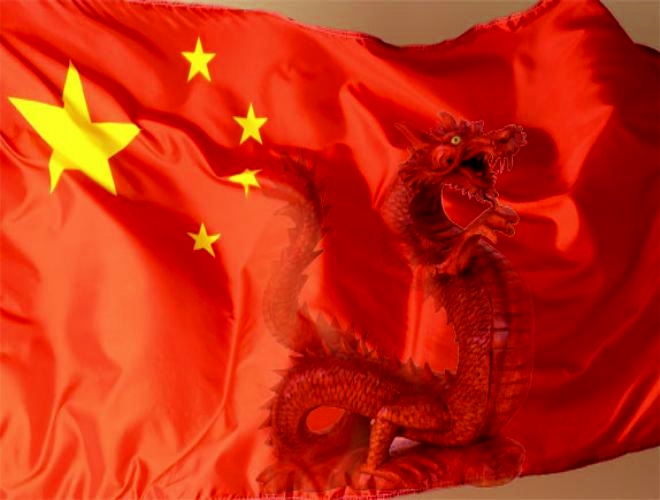
Red Dragon is impressing nations of this world by expanding her military power. The New Testament Book Revelation, Chapter 13 describes a scenario which is relevant to the rising power of Red Dragon. I am quoting verses 1,2, and 4 from Revelation, Chapter 13:
The Evil Red Empire – Who can make War against Red China?
1. And the Dragon stood on the shore of the sea. And I saw a Beast coming out of the sea. He had ten horns and seven heads, with ten crowns on his horns, and on each head a blasphemous name.
2. The Beast I saw resembled a leopard, but had feet like those of a bear and a mouth like that of a lion. The Dragon gave the Beast his power and his throne and great authority.
4. Men worshiped the Dragon because he had given authority to the Beast, and they also worshiped the Beast and asked, “Who is like the Beast? Who can make war against him?”
The Evil Red Empire – Who can make War against Red China? Red China vs Tibet – David vs Goliath – Who can make War against the Beast?The Evil Red Empire – Who can make War against Red China? Red China vs Tibet – David vs Goliath – Who can make War against the Beast?
At Special Frontier Force, we do not worship The Dragon or The. We are trained to recognize Red China, Red Dragon, Scarlet Beast, and The Beast as our Adversary, Opponent, or Enemy. We describe War against Red China as a ‘Battle of Right Against Might’. Red Dragon used her military power and great authority to illegally occupy Tibet, her weak neighbor. If a War against Red China is the only solution to wipe out injustice in Tibet, we will confront Red China just like David challenged Goliath with a sling and a smooth pebble as his weapon of War.
The Evil Red Empire – Who can make War against Red China? Red China vs Tibet – David vs Goliath – Who can make War against the Beast?The Evil Red Empire – Who can make War against Red China? Red China vs Tibet – David vs Goliath – Who can make War against the Beast?
China: Milestones in the Dragon’s Rise
BY JOSEPH V. MICALLEF
JOSEPH V. MICALLEF
Best Selling Military History and World Affairs Author and Keynote Speaker
Posted: 06/20/2015 8:29 am EDT Updated: 06/20/2015 1:59 pm
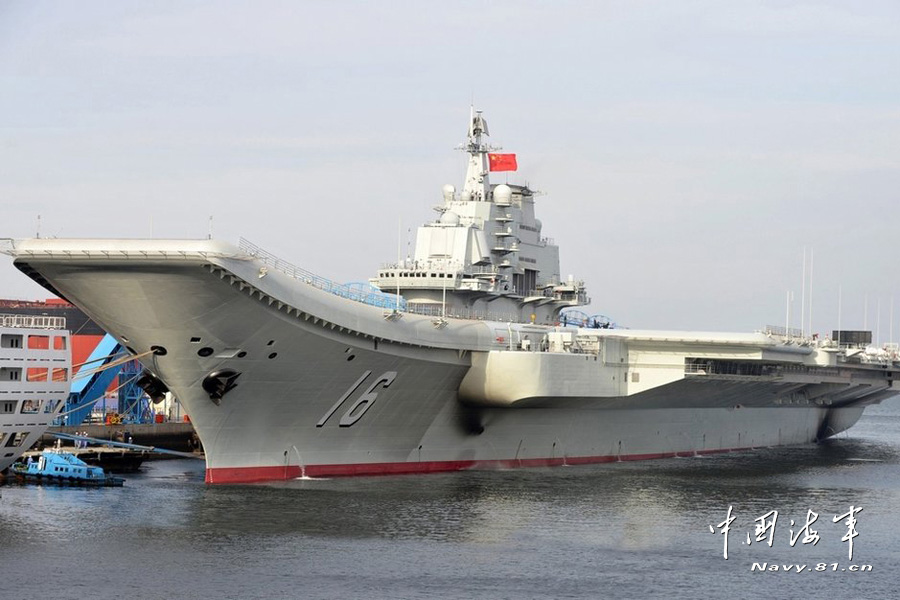
The Evil Red Empire – Who can make War against Red China? Red China vs Tibet – David vs Goliath – Who can make War against the Beast? China’s First Aircraft Carrier
The passage of history is often marked by milestones whose significance lies less in the events they commemorate then it does in the underlying trends that they confirm and validate. These last weeks, were punctuated by a series of such milestones. By themselves, these events mark noteworthy developments in China’s contemporary history. Collectively, they underscore the far reaching changes that are transforming China and its growing role on the international stage.
Last week, the collective valuation of China’s publicly traded equity exceeded 10 trillion dollars for the first time in its history. Considering that forty odd years ago China’s equity markets were moribund, the benchmark is astonishing.
The Amsterdam, now part of the Euronext, and London stock exchanges, the world’s oldest, both of which have been around since the seventeenth centuries, are well below this level. The combined European exchanges, at 15 trillion dollars in valuation, and the combined value of the U.S. stock exchanges at 20 trillion, however, still, at least for now, exceed the capitalization of China’s public equity market by a considerable margin.
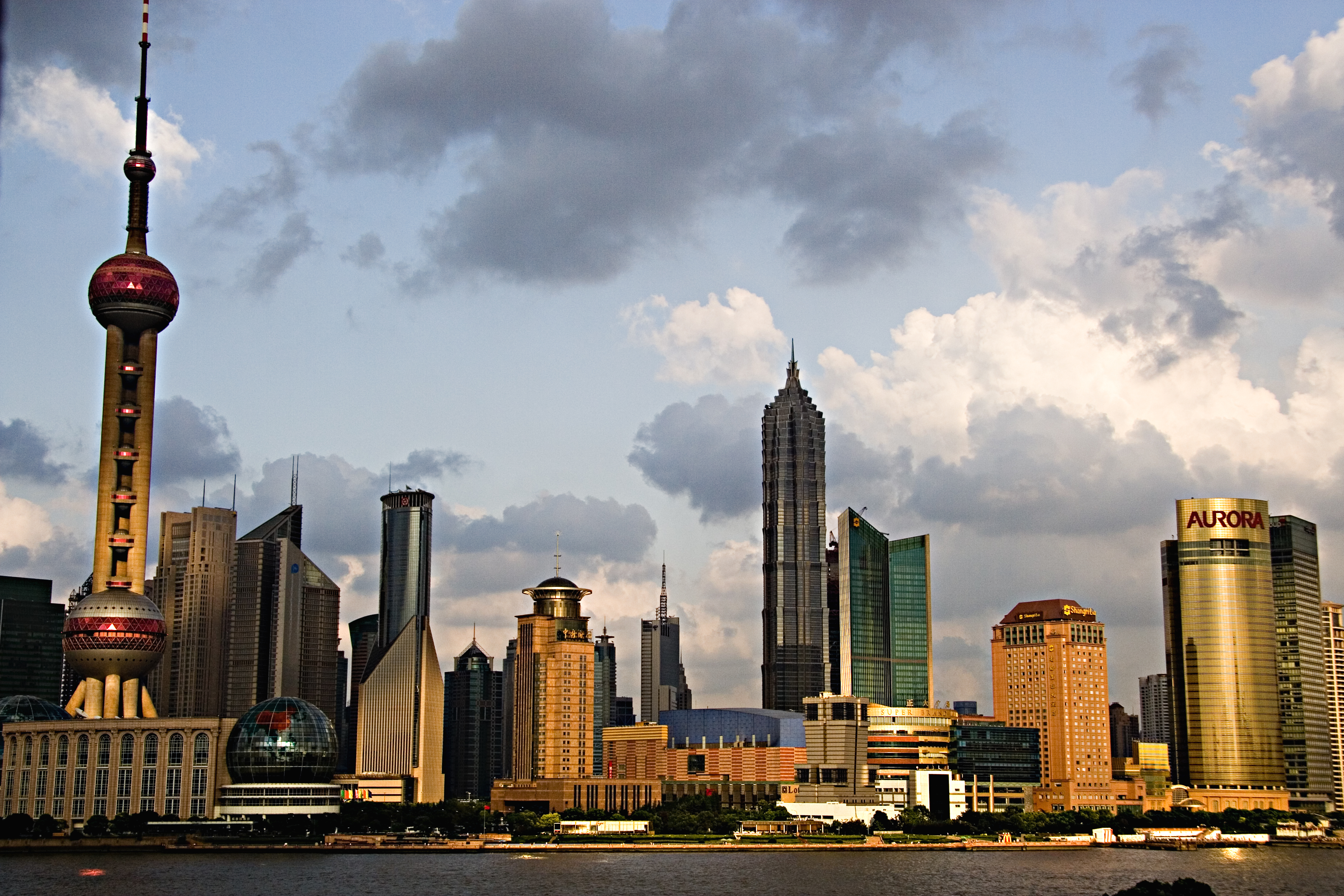
The Evil Red Empire – Who can make War against Red China? Red China vs Tibet – David vs Goliath – Who can make War against the Beast? Shanghai, Pudong Skyline
No doubt the “loose” monetary policies pursued by the major central banks has facilitated the rise in the value of China’s stock markets. Since the introduction of “quantitative easing” by the U.S. Federal reserve Bank in 2008 and similar policies by other central banks, the value of the world’s stock markets have doubled. China’s markets have more than quadrupled. Collectively, the world’s stock markets now represent about a quarter of the world’s combined financial assets.
In one sense the fact that China, the world’s second largest economy, should also have the world’s second highest valued equity market should not come as a big surprise. The two, while not inexorably linked, do tend to proceed in tandem. The rise in China’s economic power, which the rise in its stock markets underscore, however, has also fuelled a concomitant rise in China’s international military and political ambitions. Those ambitions and their consequences were driven home last week by a number of other events.
On June 6, Hungary became the first European nation to formally sign a cooperation agreement for China’s new “Silk Road” initiative to develop trade and transport infrastructure across Asia. The historic “silk road” was a system of overland caravan routes across central Asia that linked China, via the Black Sea and the Caspian Sea, with the Middle East, Russia and Europe. The trade route flourished in particular during the 13th and 14th century as a result of the Mongol conquest of much of Central Asia and China and resulted in the first significant and sustained contact between Medieval Europe and China.
This new initiative, first unveiled in 2014, represents a far more ambitious undertaking and consists of a number of far-ranging infrastructure projects including a network of railways, highways, oil and gas pipelines, power grids, Internet networks, maritime and other infrastructure links across Central, West and South Asia extending from the coastal cities of the South and East China Seas as far as Greece, Russia and Oman,
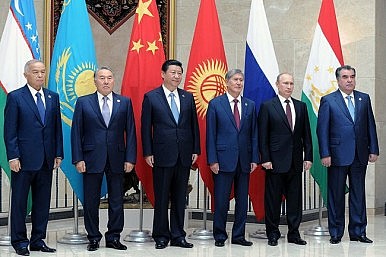
The Evil Red Empire – Who can make War against Red China? Red China vs Tibet – David vs Goliath – Who can make War against the Beast? Chinese Russian Summit, March 2015
This multi-trillion dollar investment program would represent an unprecedented expansion of Chinese political and economic influence across Central Asia resulting in trillions of dollars in trade and facilitate the expansion of Chinese exports to Europe. It would allow China to further cement its economic and trade relationships in the oil and mineral rich countries of Central Asia. Many of these nations, former Soviet Republics, are also being heavily wooed by Moscow to become part of Russia’s Eurasian Economic Union.
In the meantime along the South China Sea littoral, two other developments underscore the far reaching ripples of China’s ambitions. In recent months, Beijing has undertaken a massive land reclamation project designed to increase the surface area of a number of contested shoals in the South China Sea and allow the construction of air fields and permanent military facilities. The shoals are part of two island groups, the Paracel and the Spratly Islands.
Control of these islands has been disputed by the nations surrounding the South China Sea since at least the 3rd century BC. At stake, are fishing rights and the potential for vast untapped hydrocarbon reserves below the seafloor. The region also contains key maritime transit routes that are vital to the countries that border the South China Sea or its peripheral areas.
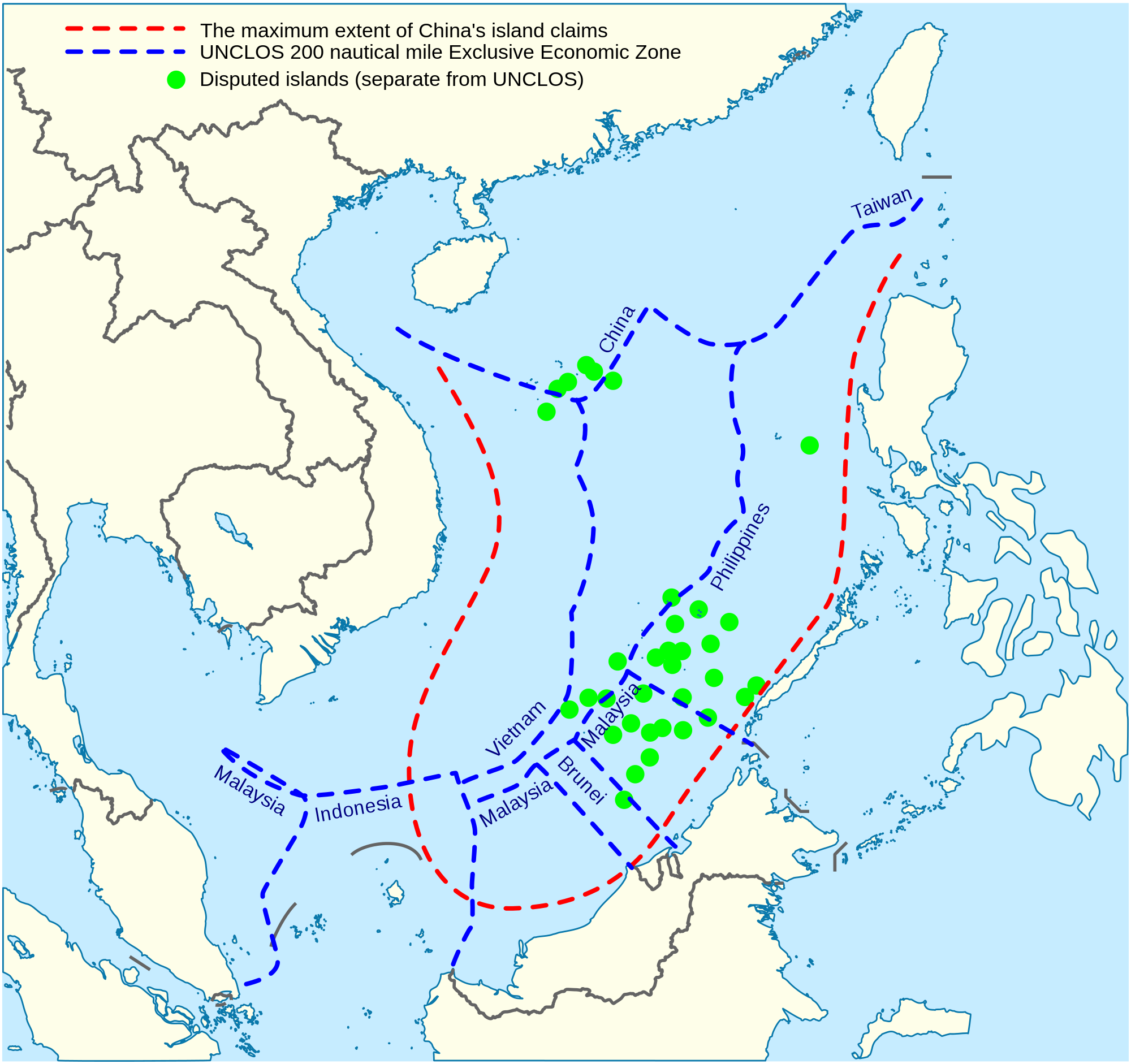
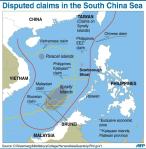
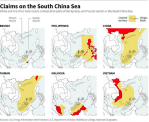
The Evil Red Empire – Who can make War against Red China? Red China vs Tibet – David vs Goliath – Who can make War against the Beast? Competing Territorial Claims in the South China Sea
Ironically, the practice of building up the shoals to allow permanent facilities was a practice that began with the Philippine and Vietnamese governments. China was late to the party but is now making up for its tardiness with an unprecedented program of land reclamation. Should Beijing succeed in enforcing its claims, the South China Sea would become a virtual Chinese lake and allow China to project military force from a string of newly created islands along its periphery.
China’s ambitions to control the South China Sea and its potential resources has raised concerns among the other countries that border the region. Two events in recent weeks, marking unprecedented cooperation among former enemies, underscore the gravity of those concerns.
On June 5, Japanese and Philippine media disclosed that from June 22 through the 26th Japan and the Philippines planned to hold a joint maritime drill in the South China Sea. This was the second such drill in as many months although Philippine government sources described this drill as the first “official” joint exercise between the two countries since the end of the Second World War.
The Evil Red Empire – Who can make War against Red China? Red China vs Tibet – David vs Goliath – Who can make War against the Beast? Japanese and Philippine Naval Forces Conduct Joint Drills in the South China Sea, May 2015
More significantly, in addition to pledging to strengthening security cooperation between the two countries and to concluding an agreement for the transfer of “defense equipment and technology and expanding bilateral and multilateral trainings and exercises”, the two countries also agreed to open discussions on a visiting forces agreement that would allow Tokyo access to Philippine military bases.
This is the first time that Japanese forces would have ongoing access to Philippine military facilities since the end of WW II. While the agreement stops short of a permanent Japanese military presence in the Philippines it does allow for a continuous rotation of Japanese Military Self Defense Forces (JMSDF) that would result in much the same thing.
The presence of Japanese military forces on the Philippines is not without some controversy. Eighty years of Philippine-Japanese cooperation have not entirely healed the scars of Japan’s brutal occupation of the Philippines during the Second World War.
In the meantime, on the opposite end of the South China Sea, two other historic enemies, Vietnam and the United States, announced that in July, Nguyen Phu Trong, the General Secretary of the Communist Party of Vietnam was expected to visit the United States.
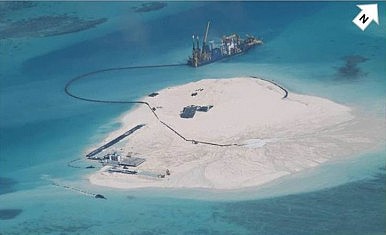
The Evil Red Empire – Who can make War against Red China? Red China vs Tibet – David vs Goliath – Who can make War against the Beast? Chinese Island Building in the South China Sea
The visit caps a process of reconciliation between the two former combatants that began in 1995 when Washington finally opened diplomatic relations with Hanoi and which has seen the execution of a broad range of agreements between the two countries including, significantly, in 2014, the lifting of the U.S. embargo against supplying military hardware to Vietnam.
More significantly, Vietnam’s growing cooperation with the United States heralds a profound realignment of Hanoi’s foreign policy from an “unofficial” strategic partnership with China to a defacto strategic alignment with the United States. The fact that Hanoi is prepared to undertake such a realignment, notwithstanding its still broad ideological differences with Washington, underscores how significantly its attitude towards its former “strategic protector” and “big brother has changed.
Three events, none of which elicited more than a ripple of interest in the western media and which individually are unlikely to merit much more than a footnote in the broad sweep of China’s history. Collectively however, they underscore the profound, far-reaching changes that are realigning the political and strategic landscape of East Asia.
The Evil Red Empire – Who can make War against Red China? Red China vs Tibet – David vs Goliath – Who can make War against the Beast?The Evil Red Empire – Who can make War against Red China? Red China vs Tibet – David vs Goliath – Who can make War against the Beast?The Evil Red Empire – Who can make War against Red China? Red China vs Tibet – David vs Goliath – Who can make War against the Beast?The Evil Red Empire – Who can make War against Red China? Red China vs Tibet – David vs Goliath – Who can make War against the Beast?
THE EVIL RED EMPIRE – RED CHINA – CYBERSPACE INVASION
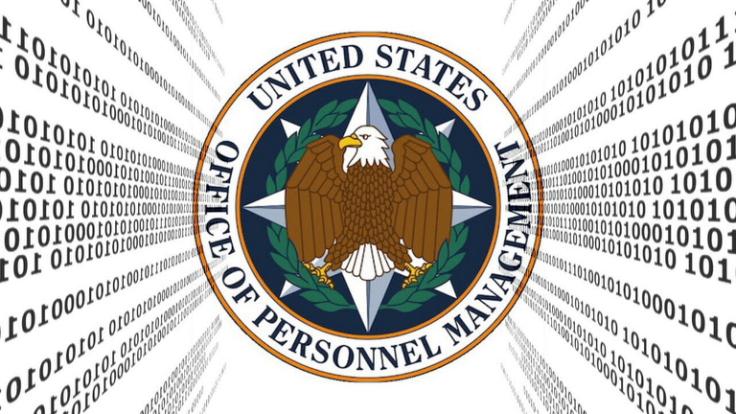
THE EVIL RED EMPIRE – RED CHINA – CYBERSPACE INVASION :The U.S. Office of Personnel Management building in Washington June 5, 2015. In the latest in a string of intrusions into U.S. agencies’ high tech systems, the Office of Personnel Management (OPM) suffered what appeared to be one of the largest breaches of information ever on government workers. The office handles employee records and security clearances. REUTERS/Gary Cameron
Red China has successfully launched a ‘Cyberspace Invasion’ and has stolen US assets without need for Land, Air, or Sea Invasion. Red China has to be recognized as “AGGRESSOR” and her aggressive actions and behavior demand a meaningful response and not diplomatic negotiations about cybersecurity. To describe ‘Cyberspace Invasion’ as “DATA BREACH” will compromise Homeland Security.
U.S. EMPLOYEE DATA BREACH TIED TO CHINESE INTELLIGENCE
By Joseph Menn
SAN FRANCISCO (Reuters) – The Chinese hacking group suspected of stealing sensitive information about millions of current and former U.S. government employees has a different mission and organizational structure than the military hackers who have been accused of other U.S. data breaches, according to people familiar with the matter.
While the Chinese People’s Liberation Army typically goes after defense and trade secrets, this hacking group has repeatedly accessed data that could be useful to Chinese counter-intelligence and internal stability, said two people close to the U.S. investigation.
Washington has not publicly accused Beijing of orchestrating the data breach at the U.S. Office of Personnel Management (OPM), and China has dismissed as “irresponsible and unscientific” any suggestion that it was behind the attack.
Sources told Reuters that the hackers employed a rare tool to take remote control of computers, dubbed Sakula, that was also used in the data breach at U.S. health insurer Anthem Inc last year.
The Anthem attack, in turn, has been tied to a group that security researchers said is affiliated with China’s Ministry of State Security, which is focused on government stability, counter-intelligence and dissidents. The ministry could not immediately be reached for comment.
THE EVIL RED EMPIRE – RED CHINA – CYBERSPACE INVASION :Employees of the U.S. Office of Personnel Management return to their building during the lunch hour in Washington June 5, 2015. In the latest in a string of intrusions into U.S. agencies’ high tech systems, the Office of Personnel Management (OPM) suffered what appeared to be one of the largest breaches of information ever on government workers. The office handles employee records and security clearances. REUTERS/Gary Cameron
Employees of the U.S. Office of Personnel Management return to their building during the lunch hour …
In addition, U.S. investigators believe the hackers registered the deceptively named OPM-Learning.org website to try to capture employee names and passwords, in the same way that Anthem, formerly known as Wellpoint, was subverted with spurious websites such as We11point.com, which used the number “1” instead of the letter “l”.
Both the Anthem and OPM breaches used malicious software electronically signed as safe with a certificate stolen from DTOPTOOLZ Co, a Korean software company, the people close to the inquiry said. DTOPTOOLZ said it had no involvement in the data breaches.
The FBI did not respond to requests for comment. People familiar with its investigation said Sakula had only been seen in use by a small number of Chinese hacking teams.
“Chinese law prohibits hacking attacks and other such behaviors which damage Internet security,” China’s Foreign Ministry said in a statement. “The Chinese government takes resolute strong measures against any kind of hacking attack. We oppose baseless insinuations against China.”
MANY UNKNOWNS
THE EVIL RED EMPIRE – RED CHINA – CYBERSPACE INVASION OF UNITED STATES OFFICE OF PERSONNEL MANAGEMENT .
Most of the biggest U.S. cyber attacks blamed on China have been attributed, with varying degrees of certitude, to elements of the Chinese army. In the most dramatic case two years ago, the U.S. Justice Department indicted five PLA officers for alleged economic espionage.
Far less is known about the OPM hackers, and security researchers have differing views about the size of the group and what other attacks it is responsible for.
People close to the OPM investigation said the same group was behind Anthem and other insurance breaches. But they are not yet sure which part of the Chinese government is responsible.
“We are seeing a group that is only targeting personal information,” said Laura Gigante, manager of threat intelligence at FireEye Inc, which has worked on a number of the high-profile network intrusions.
CrowdStrike and other security companies, however, say the Anthem hackers also engaged in stealing defense and industry trade secrets. CrowdStrike calls the group “Deep Panda,” EMC Corp’s RSA security division dubs it “Shell Crew,” and other firms have picked different names.
THE EVIL RED EMPIRE – RED CHINA – CYBERSPACE INVASION :The Homeland Security Department headquarters in northwest Washington, Friday, June 5, 2015. China based hackers are suspected once again of breaking into U.S. government computer networks, and the entire federal workforce could be at risk this time. The Department of Homeland Security said in a statement that data from the Office of Personnel Management the human resources department for the federal government and the Interior Department had been compromised. (AP Photo/Susan Walsh)
The Homeland Security Department headquarters in northwest Washington, Friday, June 5, 2015. China-b …
The OPM breach gave hackers access to U.S. government job applicants’ security clearance forms detailing past drug use, love affairs, and foreign contacts that officials fear could be used for blackmail or recruiting.
In contrast to hacking outfits associated with the Chinese army, “Deep Panda” appears to be affiliated with the Ministry of State Security, said CrowdStrike co-founder Dmitri Alperovitch.
Information about U.S. spies in China would logically be a top priority for the ministry, Alperovitch said, adding that “Deep Panda’s” tools and techniques have also been used to monitor democracy protesters in Hong Kong.
An executive at one of the first companies to connect the Anthem and OPM compromises, ThreatConnect, said the disagreements about the boundaries of “Deep Panda” could reflect a different structure than that in top-down military units.
“We think it’s likely a cohort of Chinese actors, a bunch of mini-groups that are handled by one main benefactor,” said Rich Barger, co-founder of ThreatConnect, adding that the group could get software tools and other resources from a common supplier.
“We think this series of activity over time is a little more distributed, and that is why there is not a broad consensus as to the beginning and end of this group.”
(The story corrects third paragraph to remove erroneous reference to Department of Homeland Security)
(Reporting by Joseph Menn in San Francisco; Additional reporting by Jeremy Wagstaff in Singapore, and Ben Blanchard and Paul Carsten in Beijing; Editing by Tiffany Wu)
THE EVIL RED EMPIRE – RED CHINA – CYBERSPACE INVASION :Employees of the U.S. Office of Personnel Management return to their building during the lunch hour in Washington June 5, 2015. In the latest in a string of intrusions into U.S. agencies’ high tech systems, the Office of Personnel Management (OPM) suffered what appeared to be one of the largest breaches of information ever on government workers. The office handles employee records and security clearances. REUTERS/Gary Cameron
THE EVIL RED EMPIRE – RED CHINA – CYBERSPACE INVASION :The U.S. Office of Personnel Management building in Washington June 5, 2015. In the latest in a string of intrusions into U.S. agencies’ high tech systems, the Office of Personnel Management (OPM) suffered what appeared to be one of the largest breaches of information ever on government workers. The office handles employee records and security clearances. REUTERS/Gary Cameron
THE EVIL RED EMPIRE – RED CHINA – CYBERSPACE INVASION :The Homeland Security Department headquarters in northwest Washington, Friday, June 5, 2015. China based hackers are suspected once again of breaking into U.S. government computer networks, and the entire federal workforce could be at risk this time. The Department of Homeland Security said in a statement that data from the Office of Personnel Management the human resources department for the federal government and the Interior Department had been compromised. (AP Photo/Susan Walsh)
THE EVIL RED EMPIRE – RED CHINA – CYBERSPACE INVASION OF UNITED STATES OFFICE OF PERSONNEL MANAGEMENT .
THE EVIL RED EMPIRE – RED CHINA VS VIETNAM – SOUTH CHINA SEA DISPUTE.
People of Vietnam fought prolonged battles with French and later United States. In my assessment, Vietnamese people are driven by a sense of nationalism and they never belonged to either Soviet or Red China brand of Communism. Vietnam is getting ready to face the military challenge imposed by Red China’s Expansionist Policy. Special Frontier Force wanted to support United States during Vietnam War and it is not a desire to engage people of Vietnam in a battle. Vietnam War represented an opportunity to engage Red China in a battle and weaken her ability to supply arms and ammunition to North Vietnam across a border they share. As Vietnam prepares to defend against Red China’s aggressive behavior, Special Frontier Force will be willing to join hands with people of Vietnam in a confrontation that will halt Red China’s empire building activity.
Vietnam fishermen ‘attacked by Chinese boats’: state media
A Vietnamese fishing crew said they were attacked by a Chinese vessel using water cannon in disputed waters near the flash point Paracel Islands, Vietnam’s state media reported Monday.
The wooden Vietnamese fishing boat from central Quang Ngai province was near the Paracels — known as Hoang Sa in Vietnamese — on June 7 when it was attacked by a red-and-white painted Chinese vessel, the Lao Dong newspaper said.
“The crew signalled to the (Chinese) boat not to use water cannon as they feared their boat would sink, but they fired the water directly at them,” the report said. One of the 13-man crew was knocked over and broke his leg during the altercation, the report said, quoting the crew.
A number of Vietnamese state-run newspapers ran photos of the sailor with his leg in plaster. In a separate incident, on June 10, another Vietnamese fishing boat in the same area was surrounded by four Chinese boats and had their equipment and catch stolen, the Lao Dong newspaper said.
Fishermen unload a catch in port in the Vietnamese central coastal city of Da Nang (AFP Photo/)
The communist neighbours are locked in a longstanding maritime dispute over islands and fishing rights in the South China Sea.
Last year, tensions came to a head when Beijing moved a deep water oil rig into waters claimed by Hanoi, triggering deadly anti-China riots in Vietnam. Swept along by nationalist sentiment and forced to venture further out to sea to fill their nets, Vietnam’s commercial fishing fleet have often found themselves on the front lines of the maritime dispute.
Both Vietnam and China claim full sovereignty over the Paracel Islands, which Beijing have controlled since 1974 after seizing them from the then-South Vietnam regime in a brief battle. China’s claim to almost the entire South China Sea conflicts with those of the Philippines, Vietnam, Malaysia and Taiwan.
Vietnam’s Ministry of Foreign Affairs did not immediately respond to a request for comment.
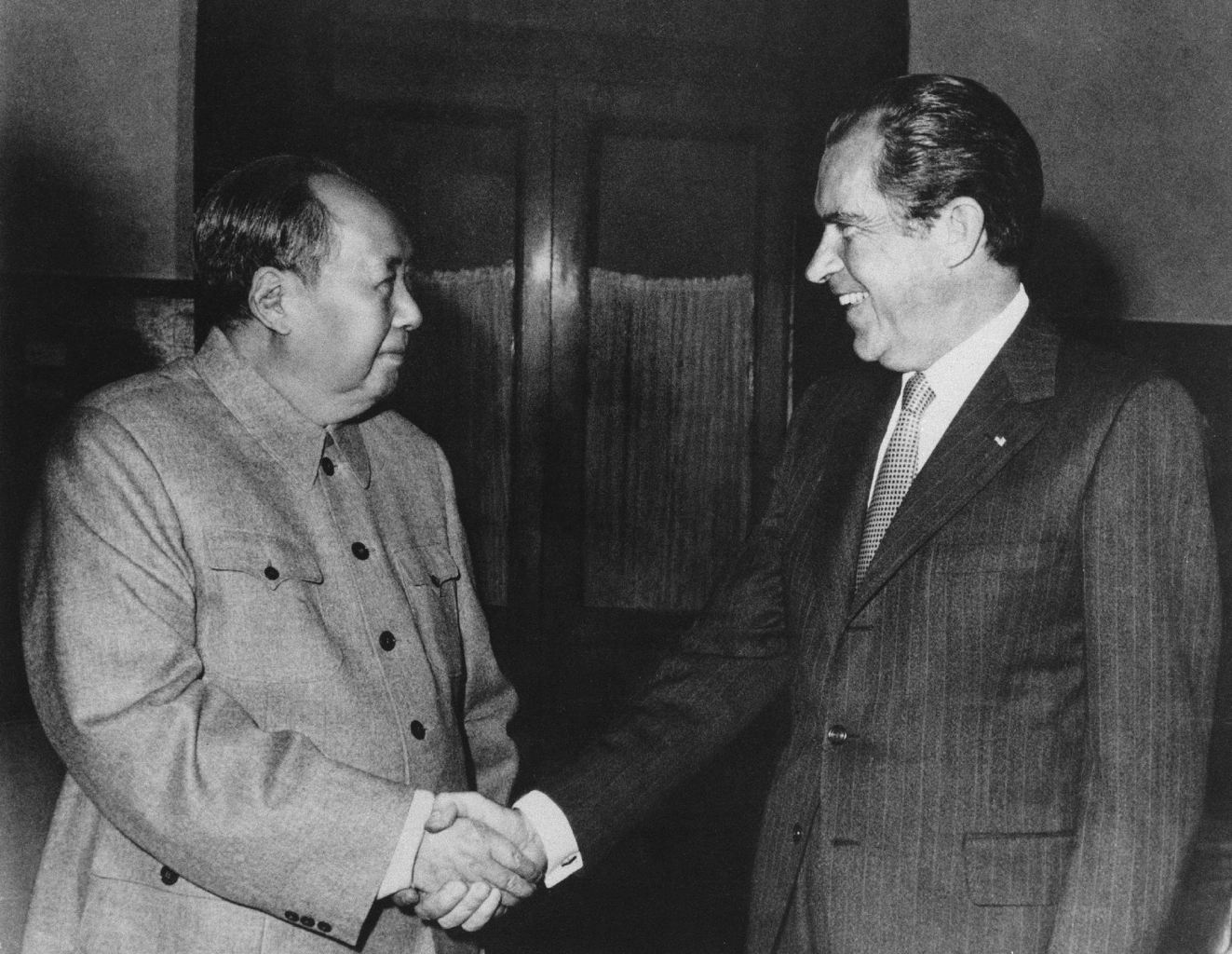
Nixon-Kissinger US administration in 1971-72 took advantage of the split between Soviet Union and Red China to formulate US foreign policy that initiated trade and commerce relations with Red China.
Red China openly confessed its sense of deep fear about Western Democratic Ideals. In her view, Internet poses a grave challenge to her one-party governance inspired by Communist ideology. This fear of Democracy, Freedom, and Individual Liberties shaped the split between Red China and Soviet Union during late 1950s.
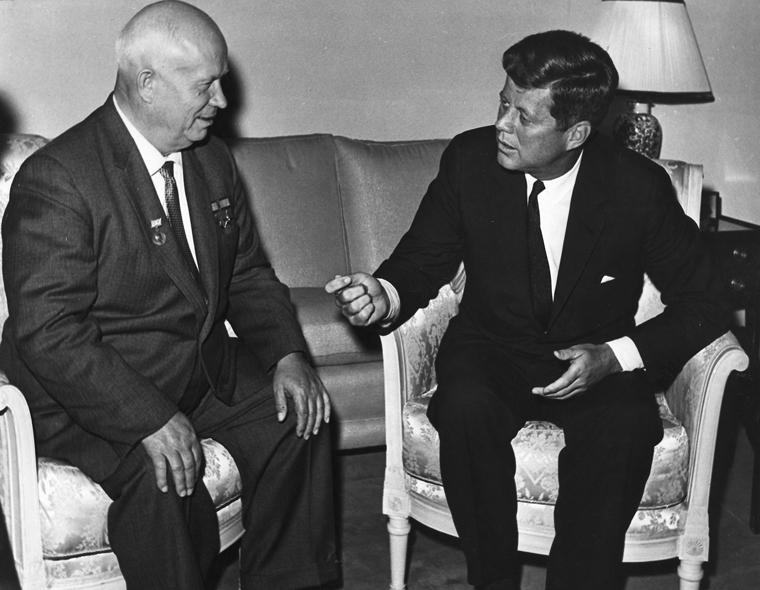
The Evil Red Empire – Red China – Whole Villain: President Eisenhower welcomes Premier Nikita Khrushchev. This Policy is important to contain and isolate Red China’s Imperialism.
Nikita Sergeyevich Khrushchev (April 17, 1894 – September 11, 1971), leader of the USSR from 1956 (Premier from 1958) to 1964 traveled to United States in 1959 and 1960. His insistence on “peaceful coexistence” with the West contributed to a rupture with Communist government of Red China. Khrushchev stopped assisting Chinese nuclear program on June 20, 1959. Red China’s Chairman Mao Tse-Tung criticized Khrushchev as a “palm-singing buffoon who underestimated the nature of Western Imperialism.”
Nikita Sergeyevich Khrushchev (April 17, 1894 – September 11, 1971), leader of the USSR from 1956 (Premier from 1958) to 1964 traveled to United States in 1959 and 1960.Nikita Sergeyevich Khrushchev (April 17, 1894 – September 11, 1971), leader of the USSR from 1956 (Premier from 1958) to 1964 traveled to United States in 1959 and 1960.Khrushchev agreed for the first Nuclear Test-Ban Treaty of 1963. The Moscow Agreement banned testing nuclear weapons in the atmosphere, in outer space, and under water
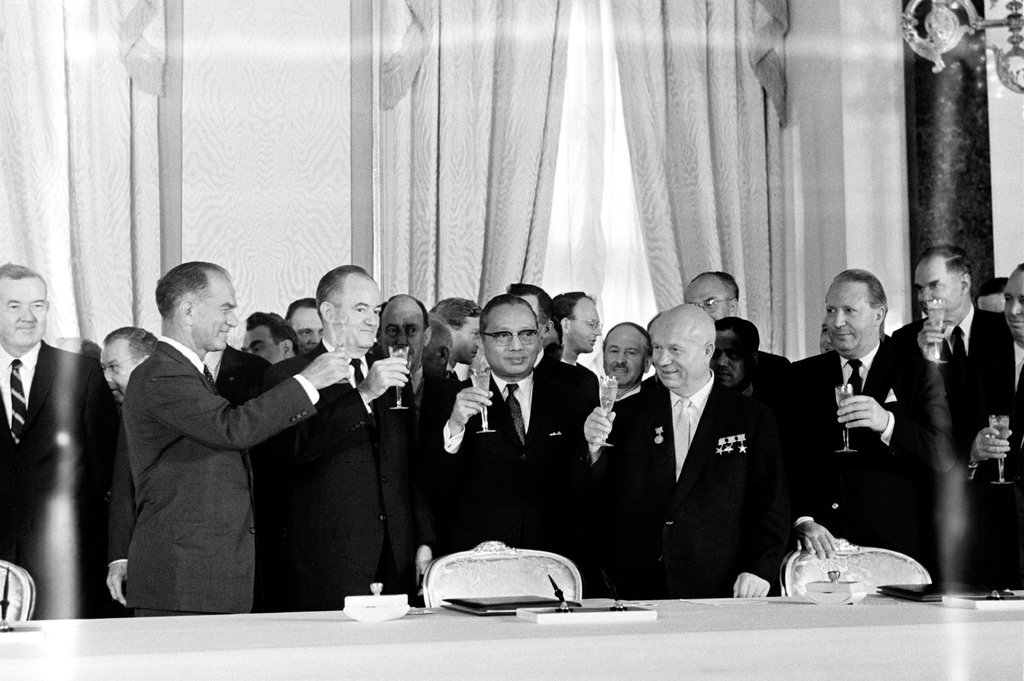
The Evil Red Empire – Red China – Whole Villian: Moscow, August 05 ,1963. It was a very good beginning that has full potential to curb Red China’s Expansionist Policy.
Khrushchev agreed for the first Nuclear Test-Ban Treaty of 1963. The Moscow Agreement banned testing nuclear weapons in the atmosphere, in outer space, and under water
Khrushchev agreed for the first Nuclear Test-Ban Treaty of 1963. The Moscow Agreement banned testing nuclear weapons in the atmosphere, in outer space, and under water. It paved the way to 1968 Nuclear Non-Proliferation Treaty or The Limited Test-Ban Treaty that tried to restrict the size of the “Nuclear Club.” Khrushchev further eased relations with the West by agreeing to limit central strategic forces. Strategic Arms Limitation Talks (SALT) began in 1969 and SALT I Treaty was signed in May 1972. Two arms-control agreements were made, 1. The Anti-Ballistic Missile (ABM) Treaty that agreed to limit antiballistic missiles, and 2. Interim Agreement on Offensive Nuclear Weapons that imposed freeze on long-range land- and sea-based ballistic missile launchers. Soviet Union did not violate provisions of these treaties.
Nixon-Kissinger US administration in 1971-72 took advantage of the split between Soviet Union and Red China to formulate US foreign policy that initiated trade and commerce relations with Red China. Nixon-Kissinger had clearly underestimated the nature of Red China’s Imperialism and failed to recognize threats posed to Peace and Freedom by Red China’s Policy of Expansionism.
The rupture between Soviet Union and Red China initiated by Premier Khrushchev in 1959 is in the interests of promoting Western Values of Democracy, Freedom, and Peace. The current US foreign policy of containing and isolating Russia is driving Russia to seek healing of rupture of 1959 and is forcing Russia to rebuild broken relations with Red China.
China has taken up Russia’s Deepest Fear
By Linette Lopez
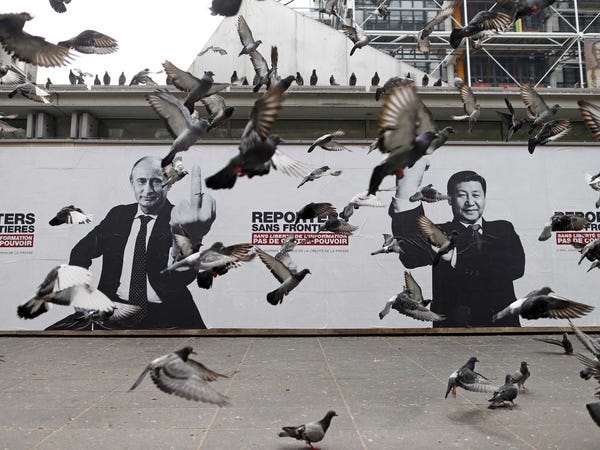
(Reuters) A poster depicting Russian President Vladimir Putin and his Chinese counterpart Xi Jinping pasted on the Brancusi Atelier by activists from Reporters Without Borders to mark the 20th annual World Press Freedom day in Paris in 2013.
(Reuters) A poster depicting Russian President Vladimir Putin and his Chinese counterpart Xi Jinping pasted on the Brancusi Atelier by activists from Reporters Without Borders to mark the 20th annual World Press Freedom day in Paris in 2013.
President Xi Jinping wants his people to know that the greatest threat to China is an insidious export from the West — ideas that could lead to a color revolution. “The one non-neglectable factor [in the development of] color revolutions in these countries is the spreading of Western ideology, especially from the US,” Xu Songwen of the Chinese Academy of Social Sciences wrote Sunday in The People’s Daily(via The South China Morning Post).
The People’s Daily is a Chinese Communist Party paper known to reflect the sentiments of Jinping’s regime. Songwen wasn’t alone either. In the same issue, four other academics also shared their thoughts on the dangers of color revolutions. The message was clear. There will be no nonviolent political movements in China. There will be no regime change. This will not be Lebanon or Ukraine in 2005. This will not be the Middle East in 2011.
Don’t even think about it.
That’s where the danger is, after all — in the thinking.
China has been systematically shutting out Western ideals from research centers, school curriculums, and higher learning for some time now, but this is the first time a government mouthpiece has made it clear that these thoughts are an intentional aggression from the West.
The basic gist of all of the papers in Sunday’s People’s Daily is fairly simple. It’s like this: The proliferation of Western democratic ideals are a Cold War tactic that helped bring about the end of the Soviet Union.
The ideas bring unrest and discontent to populations and ultimately lead to bloodshed. They also tend to end in failure (see: Arab Spring). Those who foment this kind of unrest are enemies of the state.
There is “a high price to pay for nations that fall into the trap of color revolutions,” one article said, according to the South China Morning Post. Besides, a People’s Daily commentary that ran Friday said, the Chinese Communist Party is “rigid enough to protect against threats, and resilient against internal problems and external shocks.”
So don’t even try it.
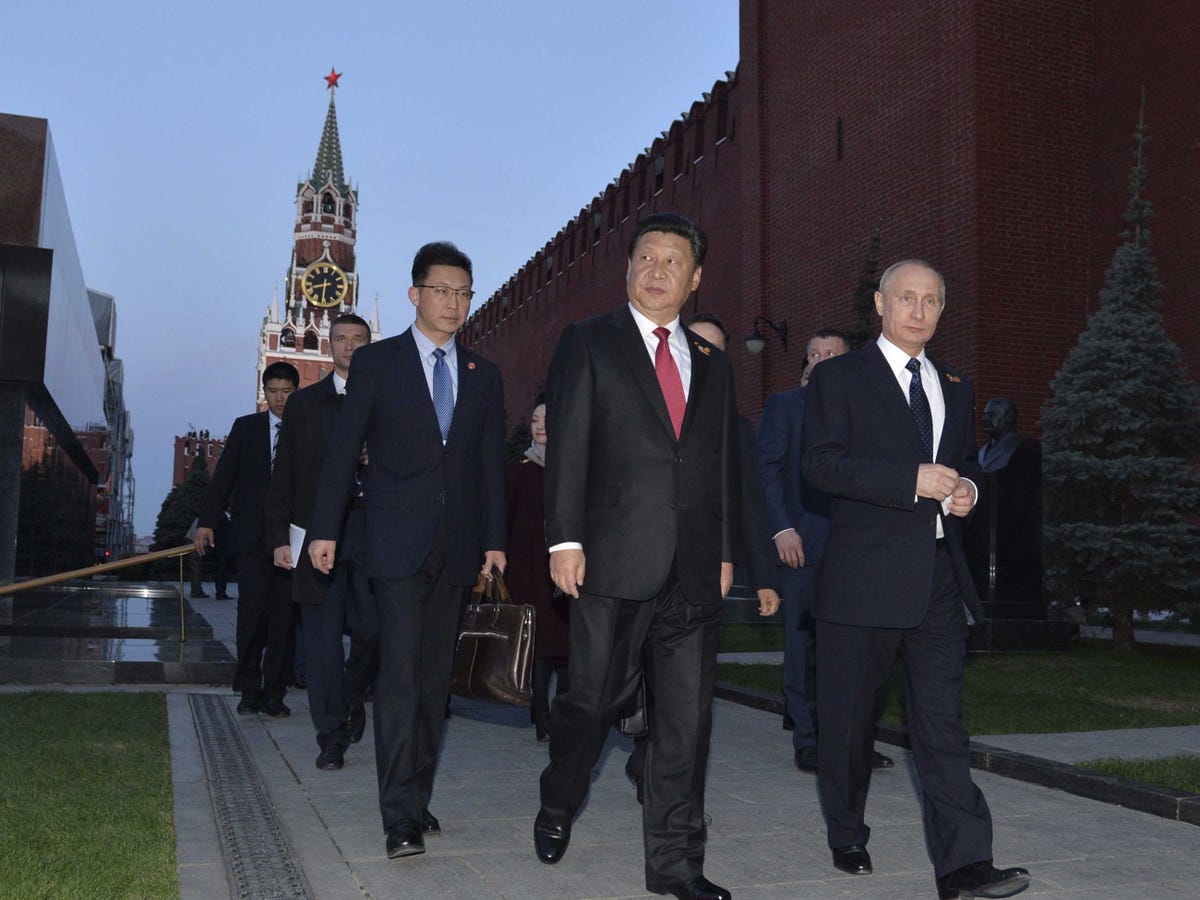
(Reuters) Putin and Xi arriving for a festive concert marking the 70th anniversary of the end of World War II in Europe, at Red Square in Moscow on May 9, 2015.
China is taking a play right out of Russia’s book with this one. In March, Security Council of Russia railed against the US security strategy, writing: “In relation to Russia, there is a high probability of the US using extensively advanced means for ‘color revolutions’ to eliminate unwanted political regimes.”
So where do color revolutions start?
Aside from schools and research centers, they start on the internet. The People’s Liberation Army knows that all too well, having released a chilling memo last month that said “the internet has become the main battlefront for struggle in the ideological area.”
Western hostile forces and a small number of “ideological traitors” in our country use the network, and relying on computers, mobile phones and other such information terminals, maliciously attack our Party, blacken the leaders who founded the New China, vilify our heroes, and arouse mistaken thinking trends of historical nihilism, with the ultimate goal of using “universal values” to mislead us, using “constitutional democracy” to throw us into turmoil, use “color revolutions” to overthrow us, use negative public opinion and rumours to oppose us, and use “de-partification and depoliticization of the military” to upset us.
Hours after these papers appeared in The People’s Daily, Hong Kong authorities said they had taken nine people into custody for potentially attempting to plan an attack on a legislative building on the island. Officials think they may advocate “localism,” or the belief that the mainland should stay out of Hong Kong affairs, according to The New York Times.
Bad timing.
Nixon-Kissinger US administration in 1971-72 took advantage of the split between Soviet Union and Red China to formulate US foreign policy that initiated trade and commerce relations with Red China.
It surprises me to note that news media give attention to threats posed to national entities like Taiwan, Japan, Philippines, Indonesia, Malaysia, Vietnam, and Brunei but pay no attention to ‘The Great Problem of Tibet’. To provide some perspective on this issue, I ask my readers to compare the land area of these nations:
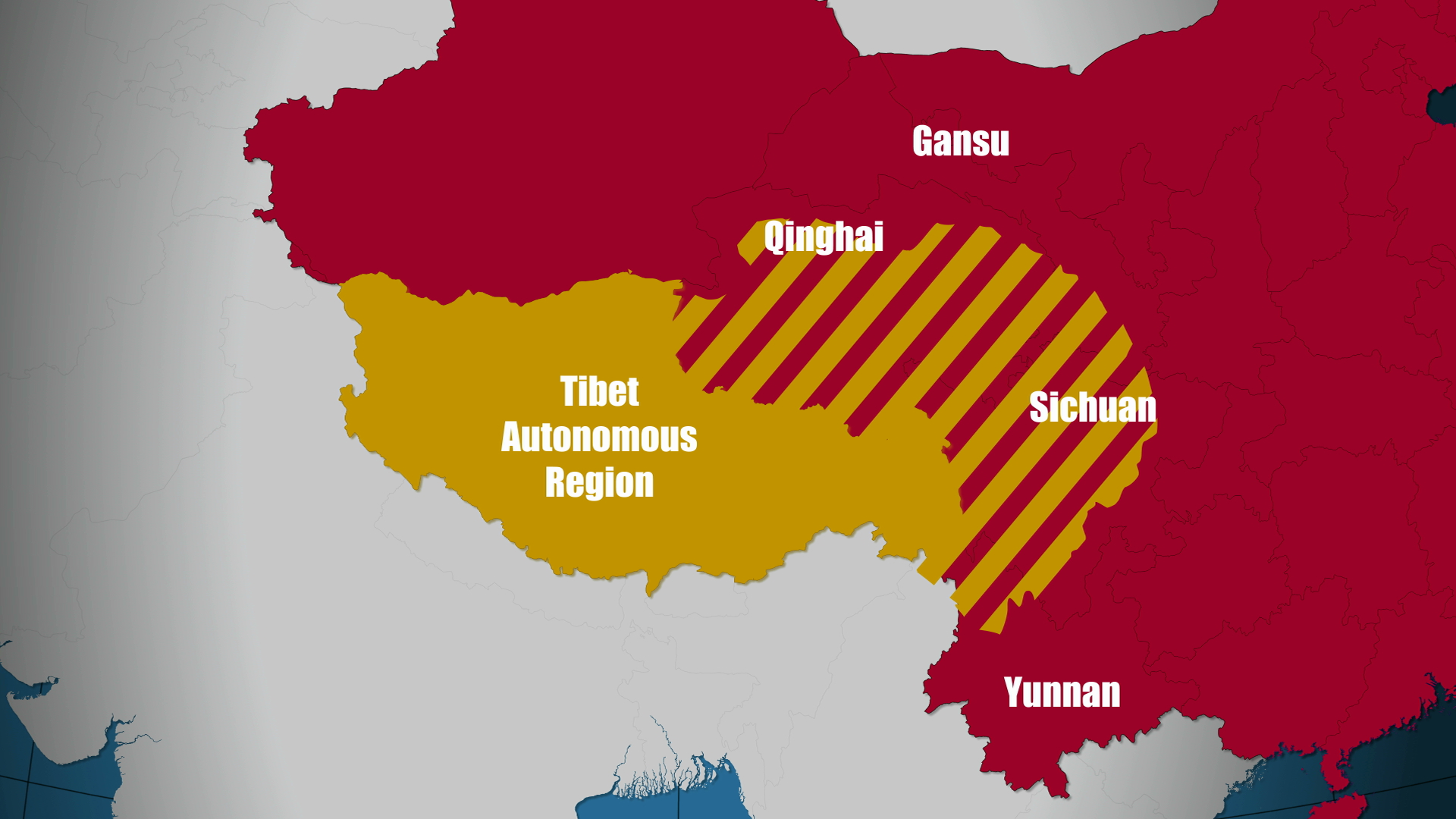
THE EVIL RED EMPIRE – RED CHINA – THE GREAT PROBLEM OF TIBET : TIBET HAS LAND AREA OF 870, 000 SQUARE MILES. TIBET IS LARGER IN SIZE COMPARED TO ASIAN NATIONS LIKE JAPAN, TAIWAN, PHILIPPINES, INDONESIA, MALAYSIA, VIETNAM, AND BRUNEI. TIBET IS THREE-TIMES LARGER THAN TEXAS STATE OF UNITED STATES .
Land area of Tibet includes Tibet Autonomous Region(TAR) and Tibetan territory annexed to Qinghai, Gansu, Sichuan, and Yunnan Provinces of People’s Republic of China. To give a better understanding of the size of Tibet, it may be compared to Texas, largest State in the coterminous United States. Land area of Texas is 268, 820 square miles. Tibet is larger than three States of Texas combined.
Special Frontier Force welcomes attention given to security risks posed by Red China to countries of Asia and those threats cannot be resolved without including solution to ‘The Great Problem of Tibet.’
TAIWAN COAST GUARD LAUNCHES NEW SHIPS AS SOUTH CHINA SEA TENSIONS RISE
Taiwan coast guard launches new ships as South China Sea tensions rise
By J.R. Wu June 6, 2015
Taiwan Coast Guard’s new patrol ship, the 3000-ton “Ilan” (L), is seen during a commissioning …
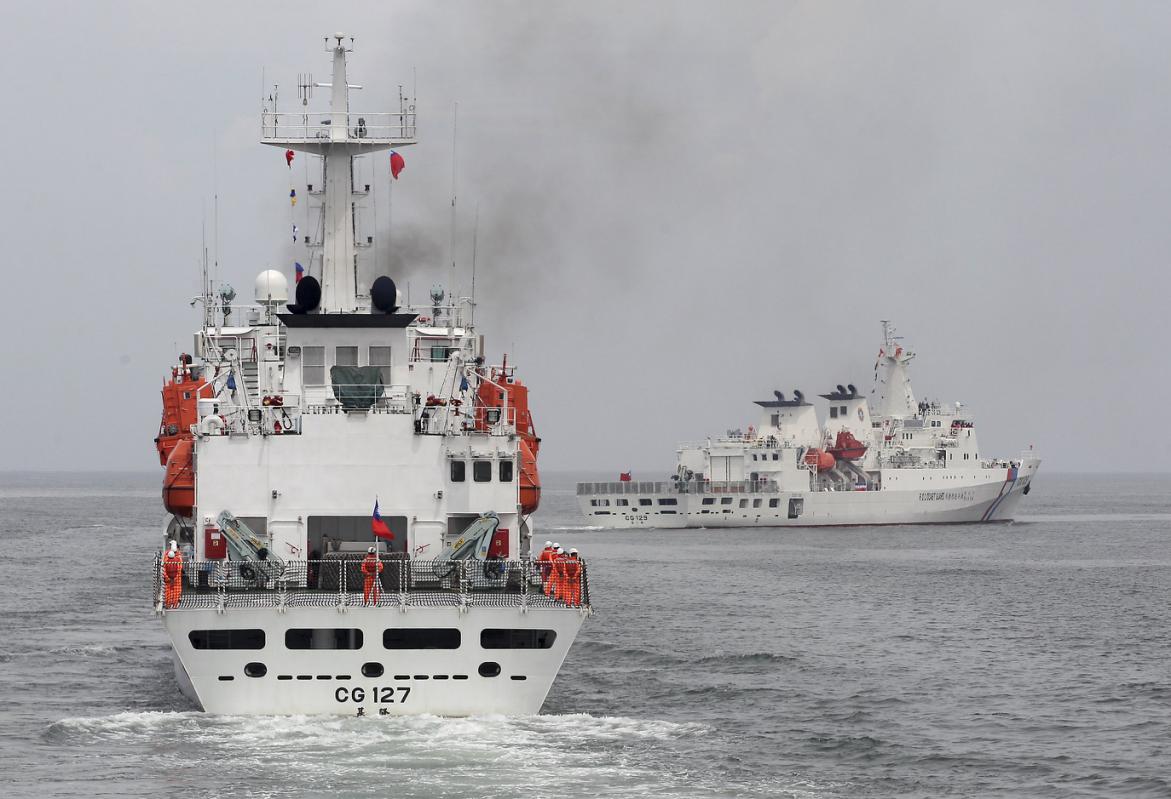
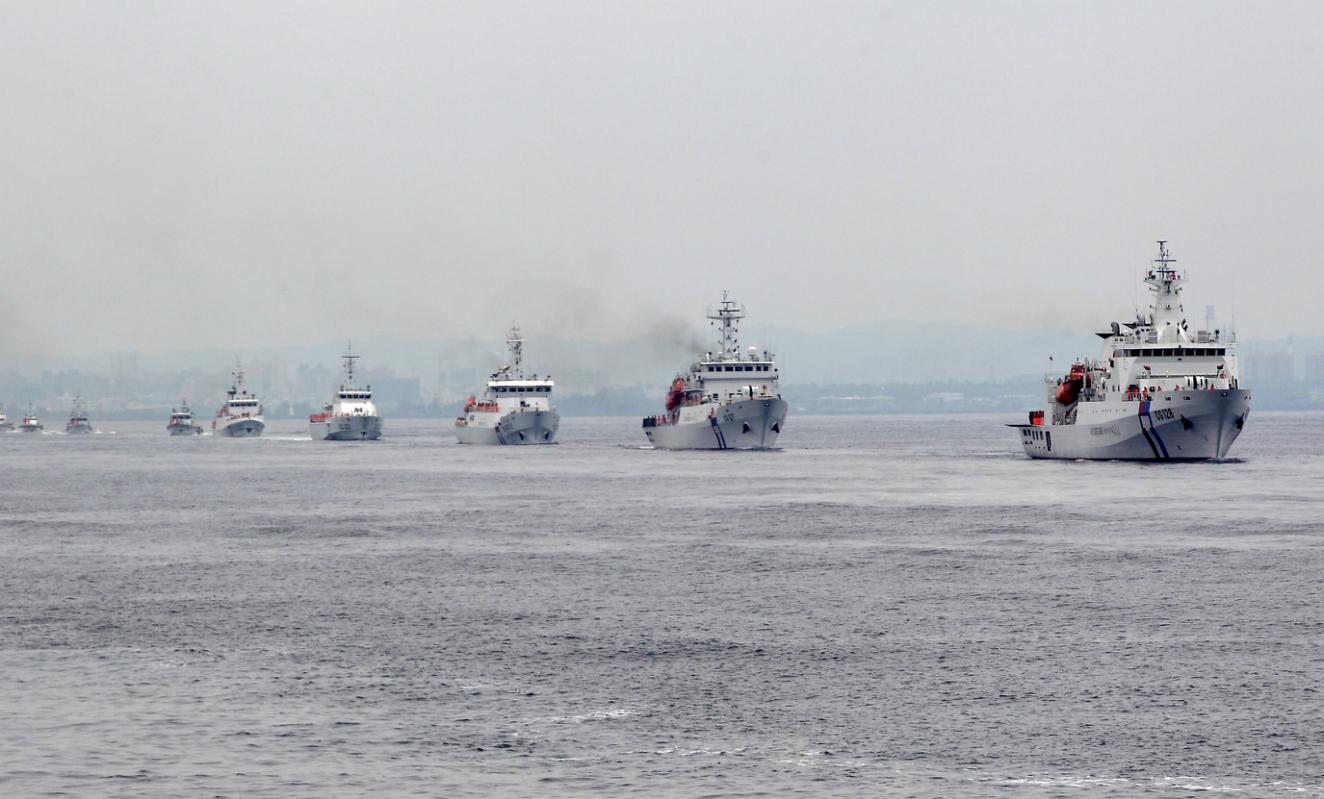
Taiwan Coast Guard patrol ships are seen during a drill held about 4 nautical miles out of the port of Kaohsiung, southern Taiwan, June 6, 2015. Taiwan’s coast guard on Saturday commissioned its biggest ships for duty, in the form of two 3,000 ton patrol vessels, as Taipei boosts its defences amid concerns about China’s growing footprint in the disputed South China Sea. REUTERS/Pichi Chuang
By J.R. Wu
KAOHSIUNG, Taiwan (Reuters) – Taiwan’s coast guard on Saturday commissioned its biggest ships for duty in the form of two 3,000-ton patrol vessels, as the island boosts defenses amid concerns about China’s growing footprint in the disputed South China Sea.
The new vessels will be able to dock at a new port being constructed on Taiping Island, the largest of the naturally occurring Spratly Islands in the South China Sea, before the end of this year.
Taiwan’s coast guard has had direct oversight of the 46-ha (114-acre) island, also known as Itu Aba, since 2000.
“Taiping Island’s defense capabilities will not be weak,” said Wang Chung-yi, minister of the Coast Guard Administration, referring to recent upgrading done on the 1,200-metre (yards) long airstrip on Taiping and the building of a new port, which he said could be completed as early as October this year.
“As far as Taiping Island is concerned, we still maintain not so much a military as a civil role,” Wang told Reuters in an interview in Taipei. Taiwan will not create conflict, but if it is provoked “we will not concede,” he said.
Taiwan Coast Guard patrol ships are seen during a drill held about 4 nautical miles out of the port of Kaohsiung, southern Taiwan, June 6, 2015. Taiwan’s coast guard on Saturday commissioned its biggest ships for duty, in the form of two 3,000 ton patrol vessels, as Taipei boosts its defences amid concerns about China’s growing footprint in the disputed South China Sea. REUTERS/Pichi Chuang
Taiwan Coast Guard patrol ships and helicopters from National Airborne Service Corps are seen during …
Unlike the Philippines and Vietnam, Taiwan has largely avoided becoming ensnared in public disputes with China over the South China Sea, through which $5 trillion in ship-borne trade passes every year.
Beijing claims most of the South China Sea, while the Philippines, Brunei, Malaysia, Taiwan and Vietnam also have overlapping claims.
Rival claims by Taiwan and China go back to before defeated Nationalists fled to Taiwan after losing a civil war with the Communists in 1949. Beijing sees self-ruled Taiwan as a renegade province to be retaken one day and bans actions that would confer sovereignty, such as negotiating territorial disputes in the South China Sea.
Taiwan President Ma Ying-jeou boarded one of the new ships on Saturday, observing rescue drills in waters off the southern Taiwan port city of Kaohsiung. One of the vessels will be sent to the South China Sea, while the other will be assigned to waters north of Taiwan where it has overlapping claims with Japan.
Japan’s Yomiuri newspaper reported on Saturday that Group of Seven leaders meeting in Germany on Sunday would express their concern over any unilateral action to change the status quo in the East and South China Seas.
China has been criticized for extensive reclamation work and moves to turn submerged rocks into man-made structures. The United States last week said Beijing had placed mobile artillery systems in contested territory.
Red China Territorial and Maritime Claims in South China Sea
Red China – Land Reclamation Activity in South China Sea.
Taiwan Coast Guard patrol ships are seen during a drill held about 4 nautical miles out of the port of Kaohsiung, southern Taiwan, June 6, 2015. Taiwan’s coast guard on Saturday commissioned its biggest ships for duty, in the form of two 3,000 ton patrol vessels, as Taipei boosts its defences amid concerns about China’s growing footprint in the disputed South China Sea. REUTERS/Pichi Chuang
Taiwan Coast Guard patrol ships are seen during a drill held about 4 nautical miles out of the port of Kaohsiung, southern Taiwan, June 6, 2015. Taiwan’s coast guard on Saturday commissioned its biggest ships for duty, in the form of two 3,000 ton patrol vessels, as Taipei boosts its defences amid concerns about China’s growing footprint in the disputed South China Sea. REUTERS/Pichi Chuang
Special Frontier Force Joins Tibetan Prayers for Unity and Solidarity. Tibetan Territory is fragmented by Red China – Subjugator – Occupation of Tibet
The Evil Red Empire – Red China – Land, Sea, and Airspace Expansionism – South China Sea.
THE EVIL RED EMPIRE – RED CHINA – THE GREAT PROBLEM OF TIBET : TIBET HAS LAND AREA OF 870, 000 SQUARE MILES. TIBET IS LARGER IN SIZE COMPARED TO ASIAN NATIONS LIKE JAPAN, TAIWAN, PHILIPPINES, INDONESIA, MALAYSIA, VIETNAM, AND BRUNEI. TIBET IS THREE-TIMES LARGER THAN TEXAS STATE OF UNITED STATES .
Filipino environmental activists aim water guns at mock Chinese flags as they stage a rally outside the Chinese Consulate in suburban Makati, south of Manila, Philippines on Monday, May 11, 2015 to protest against the continued building of infrastructures along a disputed group of islands known as the Spratlys in the South China Sea. The group is accusing the Chinese military of destroying the fragile ecosystem and livelihood of fishermen during their reclamation projects in the area which both countries have claimed ownership. (AP Photo/Aaron Favila)
I am sharing this story about dispute between Red China and Philippines as there are no stories written about dispute between Red China and Tibet. There is a territorial dispute between Red China and Tibet which I often refer to as ‘The Great Problem of Tibet’. Red China has a State Policy known as “EXPANSIONISM” and she extends her territory and her influence by using her superior military power over her weak neighbors. Philippines is resisting threat imposed by Red China taking help from other nations like Japan, and the United States. Filipino people have demonstrated their resolve to oppose Red China’s claims in South China Sea. Tibetans have to join this issue and learn the principles of warfare. To fight a stronger opponent, Tibet like Philippines needs partners to give strength to their demands for Justice in Occupied Tibet.
PHILIPPINES AIRS PROGRAM ABOUT SEA DISPUTES WITH CHINA
Philippines airs program about sea disputes with China
By JIM GOMEZ
MANILA, Philippines (AP) — The Philippine government broadcast a television program on Friday aimed at boosting public opposition to China’s increasingly assertive moves to press its territorial claims in the disputed South China Sea.
The broadcast of the first episode of a three-part series, titled “Freedom,” on the state-run TV network coincided with the Philippines’ independence day.
The 22-minute video, which was also posted on government websites, focuses on the economic impact of China’s actions, including its 2012 seizure of a disputed shoal where Chinese coast guard ships have chased away Filipino fishermen.
The broadcast reflects increased enmity among claimants in the South China Sea, which Beijing claims virtually in its entirety. The U.S. military has increased surveillance flights over the waters to reassure allies territorially at odds with Beijing.
Rising military deployments in the disputed region have heightened fears of possible confrontations and accidental clashes that could escalate into a major conflict. Also Friday, about 200 left-wing and nationalist protesters staged rallies at the Chinese Consulate and the U.S. Embassy in Manila to condemn Beijing’s actions, including the construction of artificial islands in the disputed Spratly Islands, and oppose what they called U.S. intervention in the dispute.
Protesters face the Chinese Consulate to display their anti Chinese message during a Philippines Independence Day rally in the financial district of Makati city east of Manila, Philippines, Friday, June 12, 2015. The protesters condemned the recent reclamation of land by China in the disputed Spratlys group of islands on the South China Sea. (AP Photo/Bullit Marquez)
Protesters carry placards as they march in a Philippines Independence Day rally toward the Chinese Consulate.
Waving red flags and holding placards that read, “U.S.-China, hands off the Philippines,” the protesters called on Filipinos to join efforts to defend the country’s sovereignty and territory. “These two powerful countries are increasingly conniving and challenging each other in their quest for dominance in the Asia-Pacific region,” the protesters said in a statement.
The broadcast features interviews with Filipino fishermen who say they lost a key source of income after China began preventing them from sailing to Scarborough Shoal, which effectively came under Chinese control at the end of a tense standoff with Philippine ships in 2012.
A Philippine diplomat, Henry Bensurto, says in the video that China’s territorial claims include areas where coastal states like the Philippines have exclusive rights to fish and explore for other resources under the United Nations Convention on the Law of the Sea.
Chinese Embassy officials did not immediately react to the program. Beijing has steadfastly defended its right to pursue island-building and other activities in areas it says have belonged to it since ancient times.
“If we won’t get involved and take action, we may not have anything to bequeath to the next generation,” popular TV personality Lourd de Veyra says in the program. “The problem is we have a neighbor who sneaks in and out of our territory and takes away all the resources. This belongs to us.”
Copyright 2015 The Associated Press. All rights reserved. This material may not be published, broadcast, rewritten or redistributed.
Yahoo – ABC News Network
THE EVIL RED EMPIRE – RED CHINA VS PHILIPPINES – FILIPINO PROTEST ON MAY 11, 2015.
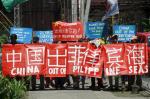
Environmental activists display placards as they march towards the Chinese Embassy in Makati City, Metro Manila May 11, 2015. The activists demanded that Chinese authorities immediately put a stop to the ecological destruction caused by the reclamation activities of China in the South China Sea, which the Philippines calls West Philippine Sea. They also condemned what they say is the bullying by Chinese naval and coast guard forces of Filipino fishermen in the disputed seas, an environmental activist said. REUTERS/Romeo Ranoco
THE EVIL RED EMPIRE – RED CHINA VS PHILIPPINES – A DISPUTE IMPOSED BY RED CHINA’S EXPANSIONIST POLICY.
RED CHINA VS PHILIPPINES :United States joint military exercise. April 20, 2015
Filipino activists hold anti China slogans as they march towards the Chinese Consulate during a rally at the financial district of Makati, south of Manila, Philippines Thursday, June 4, 2015. More than 100 left wing Filipino activists demanded that China stop its increasingly assertive actions in the disputed South China Sea Thursday, warning during a rally that they can target “Chinese economic interests” with protests. (AP Photo/Aaron Favila)
In this photo taken May 16, 2015, Filipino fishermen sit at a meeting in Masinloc municipality in the northwestern province of Zambales where they, along with foreign journalists and local officials, attended the forum organized by Zambales and Masinloc officials on the South China Sea territorial disputes. Many Filipino fishermen in Masinloc say their livelihoods were affected over the disputed Scarborough Shoal off Zambales in 2012, affecting Filipino fishermen’s access to fishing waters. A group of 15 foreign journalists traveled to Masinloc under a study tour organized by the Hawaii based East West Center last month to look into the impact of the South China Sea territorial disputes on fishermen like Mula. (AP Photo/Jim Gomez)
Protesters face the Chinese Consulate to display their anti Chinese message during a Philippines Independence Day rally in the financial district of Makati city east of Manila, Philippines, Friday, June 12, 2015. The protesters condemned the recent reclamation of land by China in the disputed Spratlys group of islands on the South China Sea. (AP Photo/Bullit Marquez)
Protesters carry placards as they march in a Philippines Independence Day rally toward the Chinese Consulate in the financial district of Makati city east of Manila, Philippines, Friday, June 12, 2015. The protesters condemned the recent reclamation of land by China in the disputed Spratlys group of islands on the South China Sea. (AP Photo/Bullit Marquez)
Filipino environmental activists aim water guns at mock Chinese flags as they stage a rally outside the Chinese Consulate in suburban Makati, south of Manila, Philippines on Monday, May 11, 2015 to protest against the continued building of infrastructures along a disputed group of islands known as the Spratlys in the South China Sea. The group is accusing the Chinese military of destroying the fragile ecosystem and livelihood of fishermen during their reclamation projects in the area which both countries have claimed ownership. (AP Photo/Aaron Favila)
THE EVIL RED EMPIRE – RED CHINA VS PHILIPPINES – FILIPINO PROTEST ON MAY 11, 2015.
Environmental activists display placards as they march towards the Chinese Embassy in Makati City, Metro Manila May 11, 2015. The activists demanded that Chinese authorities immediately put a stop to the ecological destruction caused by the reclamation activities of China in the South China Sea, which the Philippines calls West Philippine Sea. They also condemned what they say is the bullying by Chinese naval and coast guard forces of Filipino fishermen in the disputed seas, a environmental activist said. REUTERS/Romeo Ranoco
THE EVIL RED EMPIRE – RED CHINA VS PHILIPPINES – A DISPUTE IMPOSED BY RED CHINA’S EXPANSIONIST POLICY.










































































 Whole Dude - Whole Concept