RED CHINA – RED ALERT – TIBETAN LAMA TENZIN DELEK RINPOCHE DIES IN PRISON:
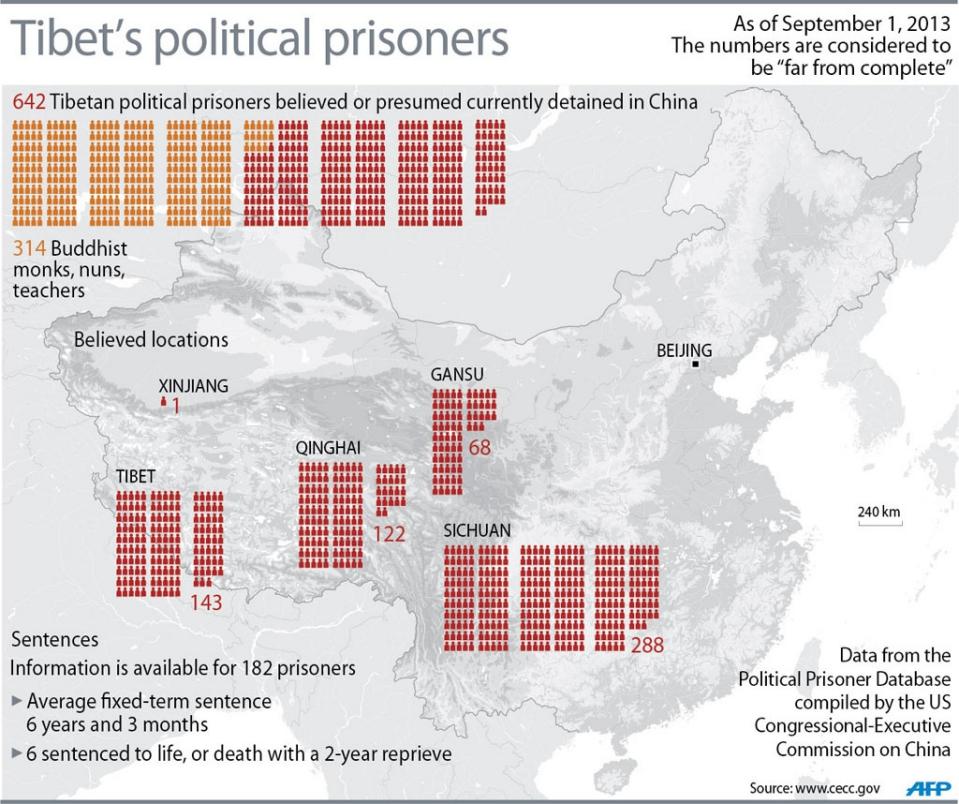
I regret to share this news about death of Tenzin Delek Rinpoche in a Chinese prison after he was denied medical parole. Red China fails to acknowledge the fact of detaining Tibetans for their political beliefs and this incident demands an independent inquiry by an international organization to investigate the living conditions of Tibetan political prisoners held in Chinese prisons.

Tibetan Buddhist master lama Tenzin Delek Rinpoche dies in Chinese prison
THE ASSOCIATED PRESS
Monday, July 13, 2015
AP
Tibetan lama Tenzin Delek Rinpoche in his home in Nyagqu County in 1999. Relatives of Tenzin Delek Rinpoche were informed Sunday that he has died in prison 13 years into serving a sentence.
BEIJING — Tibetan lama Tenzin Delek Rinpoche has died in prison 13 years into serving a sentence for what human rights groups say were false charges that he was involved in a bombing in a public park. He was 65.
Relatives were informed of the death Sunday, New York-based Students for a Free Tibet said Monday. Police in Sichuan province in southwestern China confirmed the death but declined to give further details.
Tenzin Delek was arrested in 2002 in relation to an April 3, 2002, blast in Chengdu city that injured three people. He was sentenced to death on charges of terror and incitement of separatism a few months later. His death sentence was commuted to life in prison in 2005, and later to 20 years’ imprisonment. He continued to maintain his innocence.
He was being held in a prison in Dazhu county in Sichuan province, which borders the Tibetan region.
A woman from the Public Security Bureau in Dazhu confirmed that Tenzin Delek died Sunday. She refused to identify herself.
Ashwini Bhatia/AP
Exile Tibetans carry placards as they participate in a candlelit vigil Monday to remember Tibetan lama Tenzin Delek Rinpoche, in Dharmsala, India. Tenzin Delek has died in prison 13 years into serving a sentence.
Students for a Free Tibet said his family members had been informed by police in Chengdu city, the capital of Sichuan province, on Sunday, but were not told how he died.
Last year, they had applied for medical parole for him on the grounds that he suffered from a heart condition, high blood pressure, dizzy spells and problems with his legs that had caused him to fall on a number of occasions.
Born in 1950 in a Tibetan area of Sichuan, Tenzin Delek stayed in India from 1982 to 1987 to study under the Dalai Lama.
During that time, the Dalai Lama recognized Tenzin Delek as a tulku, or a reincarnated lama.
GAUTAM SINGH/AP
Activists of the Regional Tibetan Youth Congress shout slogans in 2004 demanding the release of Tibetan religious leader Tenzin Delek Rinpoche, in Bangalore, India.
In 1987 he returned to China, where he worked to establish monasteries, health clinics, small schools and orphanages, rising in prominence.
Human rights groups have said his relationship with Chinese officials took a turn for the worse when he rolled back attempts to clear forests and because of his support for the Dalai Lama, who is considered a separatist by the government.
In India, exiled Tibetans marched Monday in New Delhi and in Dharmsala, where the Dalai Lama has lived since fleeing Tibet in 1959, carrying placards reading, “We want justice,” and “Murdered in Prison.”
His family called for authorities to release his body.
Tsering Topgyal/AP
An exile Tibetan man lights butter lamps during a candle light vigil and prayer Monday to remember Tibetan lama Tenzin Delek Rinpoche, in New Delhi, India.
“Tenzin Delek Rinpoche was an innocent monk who suffered over 13 years of unjust imprisonment, torture and abuse in a Chinese prison for simply advocating for the rights and well-being of his people and for expressing his devotion to His Holiness the Dalai Lama,” his India-based cousin, Geshe Nyima, said in a statement released by Students for a Free Tibet.
“The Chinese government must immediately release his body so that our family and community may perform the last Buddhist religious rites,” the statement said.
The U.S. State Department said it was saddened to learn of the death of the political prisoner.
“The United States had consistently urged China to release Tenzin Delek Rinpoche, most recently out of concern for his health,” department spokesman John Kirby said in a statement. “We hope Chinese authorities will investigate and make public the circumstances surrounding his death.”
SPECIAL FRONTIER FORCE AT BIKANER HOUSE ANNEXE SHAHJAHAN ROAD, NEW DELHI
SPECIAL FRONTIER FORCE AT BIKANER HOUSE ANNEXE, SHAHJAHAN ROAD, NEW DELHI. MY GRIEVANCE APPLICATION IS WITH SHRI. BASANT SWAROOP, DIRECTOR & GRIEVANCE OFFICER, CABINET SECRETARIAT(SR) SINCE 26 MAY 2012.
My grievance application submitted to Department of Administrative Reforms & Public Grievances had reached Shri. Basant Swaroop, Director & Grievance Officer, Cabinet Secretariat(SR), Bikaner House Annexe, Shahjahan Road, New Delhi on 26 May 2012. Director Basant Swaroop has not contacted my Unit(Special Frontier Force) to verify my Service Information and my Record of Service to ascertain my role during Bangladesh Ops of 1971. I request my readers to speak to Grievance Officer Swaroop(Phone Number. 23387030) and ask him to process my petition at an early date.
SPECIAL FRONTIER FORCE AT BIKANER HOUSE ANNEXE, SHAHJAHAN ROAD, NEW DELHI. MY GRIEVANCE APPLICATION REACHED SHRI. BASANT SWAROOP, DIRECTOR & GRIEVANCE OFFICER, CABINET SECRETARIAT(SR) ON 26 MAY 2012.
:: Grievance Status ::
PORTAL FOR PUBLIC GRIEVANCES
Brought to you by Department of Administrative Reforms & Public Grievances
Government of India
Grievance Status
Status as on 11 Jul 2015
Registration Number : CABST/E/2012/00154
Name Of Complainant : R.Rudra Narasimham
Date of Receipt : 26 May 2012
Received by : Cabinet Secretariat(SR)
Officer name : Mr Basant Swaroop
Officer Designation : Director & Grievance Officer
Contact Address : Bikaner House (Annexe), Shahjahan Road, New Delhi
Contact Number : 23387030
Grievance Description :
Dear Sir,
I had served in capacity of Medical Officer in the rank of Lieutenant and Captain in Special Frontier Force from 22 September 1971 to 18 December 1974.
I was posted at Headquarters Establishment Number. 22 C/O 56 APO. Brigadier T S Oberoi was the Commandant at Hq Establishment No. 22.
Under the plans approved by the Prime Minister of India, Cabinet Secretariat, I was issued a Movement Order and was dispatched to serve in the South Column Unit under the Command of Lieutenant Colonel B K Narayan for the execution of Operation Eagle which during 1971 had initiated the Liberation of Bangladesh with military action conducted in the Chittagong Hill Tracts.
Lieutenant Colonel B K Narayan in a written communication dated 13 May, 1972 had stated that I have displayed a great sense of devotion to duty, maturity, physical toughness, and bravery beyond call of duty during Operation Eagle. The South Column Unit Commander had also stated that he had recommended my name for a gallantry award and had submitted a citation to the Director of Medical Services(Army) for his further action. In his written remarks, Lieutenant Colonel B K Narayan gave his appreciation and commended me and said:”A very conscientious and Tough MO who worked hard during the Bangladesh Ops. He did very well and showed Maturity, which was beyond the call of duty. I have recommended this Officer for a gallantry award for which he deserves eminently. He is physically Tough and cheerful. Is a fresh entrant with less than 2 years of Service and yet he displayed capability and confidence.”
These remarks were duly reviewed by Commandant Brigadier T S Oberoi and the Annual Confidential Report(Officers) for the year 197-72 was duly forwarded to Military Secretary’s Branch, MS Branch 4(CR) MoD(Army).
In a written testimonial given by Lieutenant General T S Oberoi, PVSM, Vrc, General Officer Commanding-in-Chief, Headquarters Southern Command Pune-411001, dated 14th February, 1983. General Oberoi had stated that I deserve befitting recognition for the Service that I had rendered to the Nation during the time of a crisis. The Southern Army Commander had categorically stated that I was recommended for a gallantry award for display of gallant qualities in the face of the enemy.
It is not known as to why the Director of Medical Services(Army) had failed to take action to forward the citation for gallantry award to the MS Branch(Army), MoD.
Justice and fairness demand that action must be completed to grant the gallantry award as recommended by my Unit Commander Lieutenant Colonel B K Narayan, Brigade Commander T S Oberoi and Major General Sujan Singh Uban, Inspector General Special Frontier Force who had commanded the men deployed for Operation Eagle during 1971-72.
As per the decision made by the Prime Minister of India, the Battle Plan of Operation Eagle had included the eligibility criteria for receiving Service Medals, Decorations, and Awards. The Prime Minister of India had not imposed any restrictions or time limits and as such I am still entitled to receive the gallantry award that was duly recommended following the rules and procedures given to us after approval by the Prime Minister of India and her Cabinet Secretariat.
Service Number. MS-8466; Rank. Lieutenant/Captain; Branch. Army Medical Corps/Short Service Regular Commission;
Service Number. MR-03277K; Rank. Captain/Major; Branch. Army Medical Corps/Direct Permanent Commission.
Current Status : RECEIVED THE GRIEVANCE
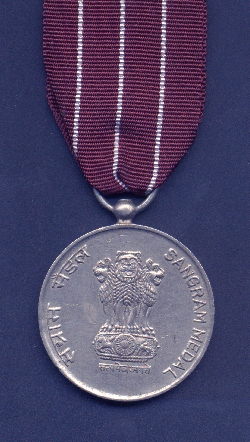
SPECIAL FRONTIER FORCE AT BIKANER HOUSE ANNEXE, SHAHJAHAN ROAD, NEW DELHI. I AM ASKING FOR VERIFICATION OF MY CLAIM FOR GRANT OF GALLANTRY AWARD DURING BANGLADESH Ops OF 1971.SPECIAL FRONTIER FORCE AT BIKANER HOUSE ANNEXE, SHAHJAHAN ROAD, NEW DELHI. THIS MILITARY MEDAL CALLED POORVI STAR IS AWARDED TO ME FOR MY PARTICIPATION IN BANGLADESH Ops OF 1971.SPECIAL FRONTIER FORCE AT BIKANER HOUSE ANNEXE, SHAHJAHAN ROAD, NEW DELHI. THIS MILITARY MEDAL CALLED SANGRAM MEDAL IS AWARDED TO ME FOR MY PARTICIPATION IN BANGLADESH Ops OF 1971.
SPECIAL FRONTIER FORCE AT VAYU BHAWAN: MY GRIEVANCE REGARDING AWARD OF GALLANTRY AWARD RECOMMENDED BY SPECIAL FRONTIER FORCE IN RECOGNITION OF MY ROLE IN BANGLADESH OPs HAS NOW REACHED VAYU BHAWAN.
My grievance about grant of gallantry award recommended in recognition of my role during Bangladesh Ops of 1971 submitted to Department of Administrative Reforms & Public Grievances has now reached Shri. Amitab Ranjan Sinha, Director Air III, Vayu Bhawan. His contact phone number: 23016326. Indian Air Force Officer Parvez Jamasji, helicopter pilot who served in the rank of Flight Lieutenant during 1971 had received Vir Chakra award for his participation in the same military operation. Apparently, my petition is being processed at Vayu Bhawan as my Unit(South Column – Special Frontier Force) received airlift support from this Air Force helicopter pilot. I would ask my readers to speak to Shri. Amitab Ranjan Sinha and request him to process my petition at an early date.
SPECIAL FRONTIER FORCE AT VAYU BHAWAN, NEW DELHI. SHRI. AMITAB RANJAN SINHA, DIRECTOR AIR III, ROOM NO. 364, VAYU BHAWAN, DHQ P.O. NEW DELHI IS CURRENTLY PROCESSING THIS GRIEVANCE SUBMITTED BY AN OFFICER WHO BELONGS TO SPECIAL FRONTIER FORCE.
:: Grievance Status ::
PORTAL FOR PUBLIC GRIEVANCES
Brought to you by Department of Administrative Reforms & Public Grievances
Government of India
Grievance Status
Status as on 11 Jul 2015
Registration Number:DARPG/E/2013/82606
Name Of Complainant:R R Narasimham
Date of Receipt:07 Sep 2013
Received by:Department of Administrative Reforms and Public Grievances
Forwarded to:Director Air III
Officer name:Shri Amitab Ranjan Sinha
Officer Designation:Director
Contact Address:Room No.364, Vayu Bhawan DHQ, PO New Delhi
Contact Number:23016326
Grievance Description:
Dear Sir, or Madam,
This grievance pertains to the following petitions registered by the Department of Administrative Reforms and Public Grievances. 1. MODEF/E/2011/00761 dated 24 Sep 2011, 2. CABST/E/2012/00154 dated 26 May 2012, 3. DARPG/E/2013/82597 dated 07 Sep 2013, and 4. MODEF/E/2013/01709 dated 05 Sep 2013.
1.A gallantry award is granted in recognition of a past event and the gallant action would always exist as a past event.
2. In the history of Republic of India, for the first time during 1971, the Prime Minister sanctioned a military action that was not planned by Army/Ministry of Defence.
3. Operation Eagle in which I had the honour to participate was not planned and executed under orders issued by Army Headquarters/Ministry of Defence.
4. The gallant action did not happen in the context of a border skirmish or that of a border conflict. It was not related to the Official War between India and Pakistan that was declared by the Prime Minister on 04 December 1971.
5. The gallant action pertains to a deliberate, planned attack deep inside the territory defended by the Enemy’s Regular Army. I had marched with the men to participate in the attack.
6. The battlefield casualties were treated at the Enemy Post we captured and not in Indian territory.
7. There was no Regimental Aid Post at the border, inside Indian territory. The treatment of battle casualties began at the site of battle, about 40 miles from the border.
8.The Brigade Headquarters which had the primary responsibility for airlifting of battle casualties could not dispatch the helicopter as the Prime Minister did not sanction the violation of Pakistan’s airspace during the first phase of Operation Eagle in the month of November 1971.
9. I as the Unit Medical Officer went beyond the call of my duty to ensure a safe, and timely evacuation of the battlefield casualties. I had marched a distance of over 80 miles from Sunrise to Sunset to complete my task inside the Enemy territory while the Enemy was still dispersed in the area.
10. Indian Army concluded its phase of military operations inside Bangladesh on 16 December 1971 when the Enemy totally surrendered. However, Operation Eagle concluded its military operation during January 1972.
11. The fact that the Prime Minister had established the eligibility criteria for the sanction of military awards, honours, and decorations to the participants of Operation Eagle could be proved by the simple fact that the Gallantry Award of Vir Chakra was given to Shri. G B Velankar, a civilian officer of my Unit who was allowed the use of Major’s rank on a honorary basis.
12. Under the battle plan of Operation Eagle, to grant military awards, the Prime Minister did not impose any time constraints as it was not a battle operation launched by Indian Army.
13. The citation that recommended the grant of Vir Chakra for my gallant action during Operation Eagle was initiated by Lieutenant Colonel B K Narayan of my Unit, it was reviewed and recommended by Brigade Commander, Brigadier T S Oberoi, and it was finally approved and recommended by the Formation Commander, Major General Sujan Singh Uban.
14. Special Frontier Force had strictly followed the guidelines included in the battle plan of Operation Eagle and the citation was directly submitted to the Director of Medical Services(Army), Medical Directorate, Army Headquarters, New Delhi before the conclusion of Operation Eagle.
15. I am not responsible for delivering the citation to the MS Branch, Ministry of Defence, New Delhi while I am on operational duty in the field. If the Medical Directorate had failed in the performance of its duty, I should not be penalized.
Date of Action:27 May 2015
SPECIAL FRONTIER FORCE AT VAYU BHAWAN: MAJOR GENERAL SUJAN SINGH UBAN AVSM, INSPECTOR GENERAL SPECIAL FRONTIER FORCE RECOMMENDED GALLANTRY AWARD FOR MY ROLE DURING BANGLADESH OPs OF 1971.SPECIAL FRONTIER FORCE AT VAYU BHAWAN: REMARKS OF LIEUTENANT GENERAL TS OBEROI PVSM, VrC., GENERAL OFFICER COMMANDING IN CHIEF, HQ SOUTHERN COMMAND, PUNE.
Red China – Red Alert – Sixth Protest Self-Immolation of 2015
Whole Sacrifice – Tibetans Resist Occupation by Self-Sacrifice
Tibetans continue to resist military occupation of Tibet. Self-Immolation is ultimate act of passive resistance in an attempt to convince an adversary to change his behavior. I am sharing the news about this Tibetan tragedy and offer my prayers for Peace, Harmony, and Tranquility in the Land of Tibet.
UNREPRESENTED NATIONS AND PEOPLES ORGANIZATION (UNPO)
RED CHINA – RED ALERT: SIXTH PROTEST SELF-IMMOLATION OF 2015 TO RESIST TIBET’S MILITARY OCCUPATION.
July 10, 2015
Tibet: Sixth Protest Self-Immolation of This Year Takes Place in Kyegudo
Tibet: Sixth Protest Self-Immolation of 2015 Takes Place in Kyegudo
An unidentified Tibetan monk set himself ablaze on Thursday [9 July 2015] in the central square of Kyegudo in the Yulshul Tibetan Autonomous Prefecture, China’s Qinghai province, in a protest against Beijing’s rule in the Tibetan region. It constitutes the sixth self-immolation this year and brings the total number of self-immolations by Tibetans since the beginning of open protests in 2009 to 142. The monk was taken to a hospital for treatment, but his current condition or whereabouts remain unknown. It also remains unclear whether he was taken away by bystanders or by the police.
Below is an article published by RADIO FREE ASIA
A Tibetan monk set himself ablaze on Thursday in northwestern China’s Qinghai province in an apparent challenge to Beijing’s rule in Tibetan areas in the sixth such protest this year, according to sources in the region and in exile.
The burning in the central square of Kyegudo in the Yulshul (in Chinese, Yushu) Tibetan Autonomous Prefecture brings to 142 the total number of self-immolations by Tibetans since the wave of fiery protests began in 2009.
The still unidentified monk was taken to hospital for treatment of his burns, but no word has been received on his current condition or whereabouts, sources said.
“On July 9, sometime between 5:00 and 6:00 p.m. [local time] a monk self-immolated in Kyegudo’s Gesar Square,” a Tibetan living in exile told RFA’s Tibetan Service on Thursday, citing contacts in the town.
“We still don’t know what his name is or which monastery he came from,” he said, adding that though sources said the monk was transported to a local hospital for treatment, it is unclear if he was taken there by bystanders or the police.
Kyegudo, the site of Thursday’s protest and Yulshul prefecture’s main town, was hit by a devastating earthquake on April 14, 2010 that largely destroyed the town and killed almost 3,000 residents by official count.
Thursday’s burning is the sixth Tibetan self-immolation to take place since the beginning of the year. It follows the May 27 protest of Sangye Tso, a Tibetan mother of two, who set herself ablaze and died outside Chinese police headquarters in Chone (Zhuoni) county in Gansu province’s Kanlho (Gannan) Tibetan Autonomous Prefecture.
SPECIAL FRONTIER FORCE AT OFFICE OF THE DGAFMS : I served in this organization from September 22, 1971 to December 18, 1974. I was not a mercenary working for a foreign government or Agency. I was fully involved and was prepared to defend the legitimate border between India and Tibet as established by the McMahon Treaty and the Simla Agreement of 1914 between India and Tibet. We as an organization defended our own territory to defend our natural rights. We were fully ready to conduct offensive operations against our Enemy if the Enemy attacks us during the conduct of our military mission.
I am sharing the status of a public grievance submitted to Department of Administrative Reforms & Public Grievances. No effort is made to contact my Unit(Special Frontier Force) to verify my personal service information, record of service, and the fact of my participation in Bangladesh Ops during which my Unit recommended a gallantry award.
I am asking my readers to speak to Colonel. R. R. Kole, Director AFMS Coord, Office of DGAFMS to ask him to contact my Unit(Special Frontier Force) and obtain the relevant information to process the grievance.
PORTAL FOR PUBLIC GRIEVANCES Brought to you by Department of Administrative Reforms & Public Grievances
Government of India
Grievance Status
Status as on 10 Jul 2015
Registration Number:DARPG/E/2013/82597
Name Of Complainant:R Pratap Narayan
Date of Receipt:07 Sep 2013
Received by:Department of Administrative Reforms and Public Grievances
Forwarded to:Office of DGAFMS
Officer name:Col. R R. Kole
Officer Designation:Dir AFMS Coord.
Contact Address:Room No.7, M Block, New Delhi 110001
Contact Number: Phone 01123092004
Grievance Description:
1. My younger brother, Service Number: MS-8466/MR-03277K, Name:R. Rudra Narasimham( or R. R. Narasimham ) served as Medical Officer in Army Medical Corps from 26 July 1970 to 10 January 1984 after grant of Short Service Commission(September 1969) and Direct Permanent Commission(March 1973). He served in the rank of Lieutenant/Captain at Establishment No. 22/Special Frontier Force from 22 September 1971 to 18 December 1974.
2. He had served under the command of Major General Sujan Singh Uban, Inspector General Special Frontier Force and took part in Operation Eagle from November 1971 to January 1972. Operation Eagle had initiated the Liberation of Bangladesh with military action in Chittagong Hill Tracts. The Brigade Commander of Operation Eagle was Brigadier T S Oberoi, the Commandant, Establishment No. 22. The Chief Staff Officer was Colonel Iqbal Singh. My brother served in the South Column Unit that was commanded by Lieutenant Colonel BK Narayan. During November 1971, his Unit had attacked and captured an enemy post defended by regular troops of Pakistan’s Army. In this Infantry attack, my brother was at the front line marching with the men. The two Company Commanders, Major Savendra Singh Negi(Grenadiers), and Major G B Velankar(SFF-EST No. 22, a Civilian Officer) who led the assault on the enemy position were awarded the Gallantry Award of Vir Chakra. My brother who took part in this action with the men of these two Company Commanders was also recommended to receive the Gallantry Award of Vir Chakra. The citation for the grant of this Gallantry Award was initiated by Lieutenant Colonel BK Narayan, it was seen by Colonel Iqbal Singh, the Chief Staff Officer, it was reviewed and recommended by Brigadier T S Oberoi and it was finally approved by Major General Sujan Singh Uban, IG SFF who had recommended it and sent it directly to the Director of Medical Services, DMS(Army), Medical Directorate, New Delhi for favour of sending the citation to the MS Branch, Army Hq for their necessary action to sanction the Gallantry Award.
3. It must be clearly noted that the eligibility criteria for the grant of military awards, decorations and honours were included in the Battle Plan of Operation Eagle which was duly approved and sanctioned by the Prime Minister of India. The Prime Minister’s Office(PMO) and the Cabinet Secretariat are fully aware of the terms and conditions for the grant of awards to members who took part in Operation Eagle. My brother is requesting that the Gallantry Award to be granted as approved and recommended by the Inspector General of Special Frontier Force. My brother applied for Direct Permanent Commission during September 1972 and his application for AMC Examination held in September 1972 includes the remarks of recommendation signed by Colonel Iqbal Singh who had mentioned the citation, and had substantially quoted the citation giving the full details of my brother’s gallant response in the face of enemy action. This application for Permanent Regular Commission in Army Medical Corps is archived at the Medical Personnel Records Section(Officers)/ MPRS(O), Office of the DGAFMS, Ministry of Defence, New Delhi.
4. If you need any further information, kindly write to me and I will be happy to provide the same.
RED CHINA – RED ALERT – PUBLIC ENEMY NUMBER ONE – MILLIONS OF US CITIZENS ARE VICTIMS OF RED CHINA’S CRIMINAL ACTIVITIES. KATHERINE ARCHULETA HAD TO STEP DOWN AND I BLAME RED CHINA FOR UNDERMINING HER POSITION. FILE In this June 25, 2015, file photo, Office of Personnel Management (OPM) director Katherine Archuleta testifies on Capitol Hill in Washington. The Obama administration says hackers stole Social Security numbers from more than 21 million people and took other sensitive information when government computer systems were compromised. The number affected by the breach is higher than the 14 million figure that investigators gave The Associated Press in June. (AP Photo/Susan Walsh)
Red China is Public Enemy Number One. The data breach at United States Office of Personnel Management(OPR) has victimized nearly 22 million US citizens. Hackers stole their financial, health, employment, residency, criminal background information used for security clearances( SF – 86 Form) as well as information about their families and acquaintances. It includes information on people who applied for security clearances and 2 million others such as spouses, housemates, and contacts. I can understand Red China may have a reason to gather information or ‘Intelligence’ to know her adversary, but this hacking expedition would let me designate Red China as Public Enemy Number One.
22 Million Affected by OPM Hack, Officials Say (ABC News)
The U.S. agency burglarized by suspected Chinese hackers has completed its long-awaited damage assessment and more than 22 million people inside and outside government likely had their personal information stolen, officials announced today.
That number is more than five times larger than what the Office of Personnel Management announced a month ago when first acknowledging a major breach had occurred. At the time, OPM only disclosed that the personnel records of 4.2 million current and former federal employees had been compromised.
The extent of the hacking was first reported earlier today by ABC News.
Investigators ultimately determined that 19.7 million applicants for security clearances had their Social Security numbers and other personal information stolen and 1.8 million relatives and other associates also had information taken, according to OPM. That includes 3.6 million of the current and former government employees for a total of 22.1 million. “If an individual underwent a background investigation through OPM in 2000 or afterwards … it is highly likely that the individual is impacted by this cyber breach,” OPM’s statement said today.
Even before today’s announcement, there was little doubt that the universe of victims was vastly larger because the hackers had access to far more than personnel records, including files associated with background investigations and information on government workers’ families, sources said.
In fact, the hackers allegedly rummaged through various OPM databases for more than a year — and lawmakers and U.S. officials alike have described the breach as a significant threat to national security.
“It is a huge deal,” FBI Director James Comey told a Senate panel on Wednesday.
Since reports surfaced saying more than just personnel records were stolen, the Obama administration has publicly maintained the theft of background-investigation files was a “separate incident” still under investigation. Some U.S. officials and lawmakers believe that distinction — encompassing the same cyber-campaign — kept the full scope of the OPM breach hidden for weeks.
“I’m sure you will probably obfuscate, [but] when will the American people know … the extent of this penetration?” Sen. John McCain, R-Arizona, asked OPM Director Katherine Archuleta at a hearing on Capitol Hill two weeks ago.
Despite mounting public pressure and push-back from top FBI officials during closed-door briefings, senior OPM officials continued to say they couldn’t offer even an estimate until they determined exactly how many people were affected by the “separate but related incident.” As part of a “time-consuming analysis,” investigators had to ensure they weren’t double-counting people whose personal information may have been stored in more than one system breached, Archuleta said two weeks ago.
“Throughout this investigation, OPM has been committed to providing information in a timely, transparent and accurate manner,” OPM said in a statement today.
U.S. intelligence and law enforcement officials are particularly concerned over the theft of forms known as SF-86s that current and prospective federal workers, including certain military personnel and even contractors, submit for security clearances. The forms require applicants to provide personal information not only about themselves but also relatives, friends, “associates” and foreign contacts spanning several years. The forms also ask applicants about past drug use, financial history, mental health history and personal relationships.
Such information could be exploited to pressure or trick employees and U.S. officials into further compromising their agencies, or they could provide ways for hackers to target people outside government, sources have told ABC News.
An OPM system known as “e-QIP” that allows applicants to submit SF-86s and other materials online remains suspended in the wake of the breach. The attack on OPM began in late 2013, when hackers infiltrated the systems of a government contractor, KeyPoint Government Solutions, and stole the “credentials” of an employee, according to two days of testimony on Capitol Hill.
Sources suspect that was the start of an unprecedented cyber-campaign out of China to collect information on federal workers inside the United States and others around the world. A major breach of OPM systems wasn’t detected until April, after OPM began implementing new cyber-security measures. That led investigators to realize the files associated with background investigations had been taken.
OPM is now offering what it calls “a comprehensive suite of monitoring and protection services” to those impacted.
Editor’s Note: The story has been updated. A previous version stated that the total number of people affected was more than 25 million.
RED CHINA – RED ALERT – PUBLIC ENEMY NUMBER ONE : The U.S. Office of Personnel Management building in Washington June 5, 2015. In the latest in a string of intrusions into U.S. agencies’ high tech systems, the Office of Personnel Management (OPM) suffered what appeared to be one of the largest breaches of information ever on government workers. The office handles employee records and security clearances. REUTERS/Gary Cameron
RED CHINA – RED ALERT – PUBLIC ENEMY NUMBER ONE – KATHERINE ARCHULETA IS A VICTIM OF RED CHINA’S CYBER SPACE INVASION. Office of Personnel Management (OPM) Director Katherine Archuleta testifies on Capitol Hill in Washington, Thursday, June 25, 2015, before the Senate Homeland Security and Governmental Affairs Committee hearing on Federal Cybersecurity and the OPM Data Breach. (AP Photo/Susan Walsh)
RED CHINA – RED ALERT – PUBLIC ENEMY NUMBER ONE -FILE In this June 5, 2015, file photo, the Homeland Security Department headquarters in northwest Washington. The Obama administration says hackers stole Social Security numbers from more than 21 million people and took other sensitive information when government computer systems were compromised. The number affected by the breach is higher than the 14 million figure that investigators gave The Associated Press in June. (AP Photo/Susan Walsh, File)
Yahoo – ABC News Network
RED CHINA – RED ALERT – PUBLIC ENEMY NUMBER ONE -The U.S. Office of Personnel Management building in Washington June 5, 2015. In the latest in a string of intrusions into U.S. agencies’ high tech systems, the Office of Personnel Management (OPM) suffered what appeared to be one of the largest breaches of information ever on government workers. The office handles employee records and security clearances. REUTERS/Gary Cameron
RED CHINA – RED ALERT – PUBLIC ENEMY NUMBER ONE – MILLIONS OF US CITIZENS ARE VICTIMS OF RED CHINA’S CRIMINAL ACTIVITIES. KATHERINE ARCHULETA HAD TO STEP DOWN AND I BLAME RED CHINA FOR UNDERMINING HER POSITION. FILE In this June 25, 2015, file photo, Office of Personnel Management (OPM) director Katherine Archuleta testifies on Capitol Hill in Washington. The Obama administration says hackers stole Social Security numbers from more than 21 million people and took other sensitive information when government computer systems were compromised. The number affected by the breach is higher than the 14 million figure that investigators gave The Associated Press in June. (AP Photo/Susan Walsh)
Red China – Red Alert – Public Enemy 1
Red China – Red Alert – Public Enemy Number One – Cyberspying.
Red China – Red Alert- Public Enemy Number One – Espionage – Sun Tzu – The Art of War.
RED CHINA – RED ALERT – PUBLIC ENEMY NUMBER ONE -FILE In this June 5, 2015, file photo, the Homeland Security Department headquarters in northwest Washington. The Obama administration says hackers stole Social Security numbers from more than 21 million people and took other sensitive information when government computer systems were compromised. The number affected by the breach is higher than the 14 million figure that investigators gave The Associated Press in June. (AP Photo/Susan Walsh, File)
RED CHINA – RED ALERT – PUBLIC ENEMY NUMBER ONE – KATHERINE ARCHULETA IS A VICTIM OF RED CHINA’S CYBER SPACE INVASION. Office of Personnel Management (OPM) Director Katherine Archuleta testifies on Capitol Hill in Washington, Thursday, June 25, 2015, before the Senate Homeland Security and Governmental Affairs Committee hearing on Federal Cybersecurity and the OPM Data Breach. (AP Photo/Susan Walsh)
UNITED STATES OPPOSES TIBET’S MILITARY OCCUPATION WHILE THE DALAI LAMA IS FIGHTING THE PROBLEM WITH WISDOM AND COMPASSION AS HIS WEAPONS.
I am pleased to share Inquirer Opinion titled ‘TIBET AFTER THE DALAI LAMA’ authored by Brahma Chellaney. In his analysis, there is no specific mention about the United States and to the fact that US firmly stands opposed to Tibet’s military occupation. His Holiness the 14th Dalai Lama is addressing this problem with great patience and perseverance and has been fighting the challenge imposed by military occupation using Wisdom and Compassion as his only weapons. After the Dalai Lama, it is indeed true that there may not be another Spiritual Leader to provide guidance to tackle this problem causing misery, pain, and suffering to millions of Tibetans whose natural rights to Freedom are destroyed.
UNITED STATES OPPOSES TIBET’S MILITARY OCCUPATION. AFTER THE DALAI LAMA, RED CHINA IS DOOMED FOR HER FATE IS SEALED. DOOMSAYER OF DOOM DOOMA PREDICTS A CALAMITY THAT WILL CAUSE RED CHINA’S SUDDEN DOWNFALL.
If human actions and human interventions fail to remove the problem of military occupation, I would expect a divine remedy in the form of an unexpected calamity, disaster, or catastrophe that Red China cannot ward off and from which Red China can save herself.
TIBET AFTER THE DALAI LAMA – OPINION OF BRAHMA CHELLANEY – A PROFESSOR OF STRATEGIC STUDIES AT THE INDEPENDENT CENTRE FOR POLICY RESEARCH IN NEW DELHI.
01:16 AM July 8th, 2015
By: BRAHMA CHELLANEY July 8th, 2015 01:16 AM
NEW DELHI—On the 80th birthday of the 14th Dalai Lama, who has been in exile in India since 1959, Tibet’s future looks more uncertain than ever. During his reign, the Dalai Lama has seen his homeland—the world’s largest and highest plateau—lose its independence to China. Once he dies, China is likely to install a puppet as his successor, potentially eroding the institution.
China already appointed its pawn to the second-highest position in Tibetan Buddhism, the Panchen Lama, in 1995, after abducting the Tibetans’ six-year-old appointee, who had just been confirmed by the Dalai Lama. Twenty years later, the rightful Panchen Lama now ranks among the world’s longest-serving political prisoners. China also appointed the Tibetans’ third-highest religious figure, the Karmapa; but in 1999, at age 14, he fled to India.
This year marks one more meaningful anniversary for Tibet: the 50th anniversary of the founding of what China calls the “Tibet Autonomous Region.” The name is highly misleading. In fact, Tibet is ruled by China, and half of its historic territory has been incorporated into other Chinese provinces.
With its conquest of Tibet in 1950-1951, China enlarged its landmass by more than one-third and fundamentally altered Asia’s geostrategic landscape. China became neighbors with India, Nepal and Bhutan, and gained control over the region’s major river systems. Rivers that originate in water-rich Tibet are vital to support the world’s two most populous countries, China and India, as well as the arc of countries stretching from Afghanistan to Vietnam.
For China, capturing the 437-year-old institution of the Dalai Lama appears to be the final step in securing its hold over Tibet. After all, since fleeing to India, the Dalai Lama—Tibet’s rightful political and spiritual leader (though he ceded his political role to a democratically elected government in exile in 2011)—has been the public face of resistance to Chinese control of Tibet. In recent years, however, China has employed its growing influence—underpinned by the threat of diplomatic and economic pain—to compel a growing number of countries not to receive the Dalai Lama, thereby reducing his international visibility.
China’s government, having issued a decree in 2007 that bans senior lamas from reincarnating without official permission, is essentially waiting for the current Dalai Lama to die, so that it can exercise its self-proclaimed exclusive authority to select his successor. China’s leaders seem not to be struck by the absurdity of an atheist government choosing a spiritual leader. It is as if Mussolini had claimed that only he, not the College of Cardinals, could appoint the pope.
The aging Dalai Lama has publicly discussed a range of unorthodox possibilities for the future disposition of his soul—from being reincarnated as a woman to naming his successor while he is still alive. Moreover, he has suggested that the next Dalai Lama will be found in the “free world,” implying that he will be reincarnated as a Tibetan exile or in India’s Tawang district, where the sixth Dalai Lama was born in the 17th century.
Such declarations have motivated China to claim, since 2006, India’s entire Arunachal Pradesh state as “South Tibet” and to press India, in the negotiations over the long-disputed Himalayan border, to relinquish at least the part of the Tawang district located in that state. But the declaration that has most infuriated China was the one he made last December, suggesting that he would be the last Dalai Lama.
China knows that there is every reason to expect that restive Tibet, whose people have largely scorned the Chinese-appointed Panchen Lama as a fraud, would not accept its chosen Dalai Lama. If the Dalai Lama issued clear guidelines about his own reincarnation, Tibetans would be even less likely to accept China’s appointment. The question is why the Dalai Lama has hesitated to do so.
The biggest risk stemming from the Dalai Lama’s passing is violent resistance to Chinese repression in Tibet. As it stands, the Dalai Lama’s commitment to nonviolence and conciliation—exemplified in his “middle way” approach, which aims for Tibet to gain autonomy, but not independence—is helping to ensure that Tibetan resistance to Chinese rule remains peaceful and avoids overt separatism.
Indeed, over the last 60 years, Tibetans have pursued a model resistance movement, untainted by any links with terrorism. Even as China’s repression of Tibet’s religious, cultural and linguistic heritage becomes increasingly severe, Tibetans have not taken up arms. Instead, they have protested through self-immolation, which 140 Tibetans have carried out since 2009.
But, once the current Dalai Lama is gone, this approach may not continue. Younger Tibetans already feel exasperated by China’s brutal methods—not to mention its sharp rebuff, including in a recent white paper, of the Dalai Lama’s overtures. Against this background, a Chinese-appointed “imposter” Dalai Lama could end up transforming a peaceful movement seeking autonomy into a violent underground struggle for independence.
Given that the rightful Dalai Lama would be a small child, and thus incapable of providing strong leadership to the resistance movement, such an outcome would be all the more likely. China exploited just such a situation, when the current Dalai Lama was only 15, to invade and occupy Tibet.
After the 13th Dalai Lama died in 1933, a leaderless Tibet was plagued by political intrigue, until the present Dalai Lama was formally enthroned in 1950. The next power vacuum in the Tibetan hierarchy could seal the fate of the Dalai Lama lineage and propel Tibet toward a violent future, with consequences that extend far beyond that vast plateau. Project Syndicate
Brahma Chellaney, professor of strategic studies at the New Delhi-based Center for Policy Research and fellow at the Robert Bosch Academy in Berlin, is the author of nine books, including “Asian Juggernaut, Water: Asia’s New Battleground”; and “Water, Peace, and War: Confronting the Global Water Crisis.”
After the Dalai Lama – Beijing Is Doomed -Asteroid day – Tunguska event
After the Dalai Lama – Doomsayer of Doom Dooma predicts Divine intervention to end Tibet’s military occupation.
After the Dalai Lama – Doomsayer of Doom Dooma – Bejing is Doomed
After the Dalai Lama – Doomsayer of Doom Dooma predicts – Beijing is Doomed – Asteroid
After the Dalai Lama – Asteroid Day – Doomsday revelation – Beijing is Doomed
After the Dalai Lama – Beijing Is Doomed – Asteroid Day – Doomsday prophecy
After the Dalai Lama – Beijing Is Doomed -Asteroid day – Tunguska event
After the Dalai Lama – Beijing Is Doomed – Asteroid Day – Doomsday prophecy
After the Dalai Lama – Asteroid Day – Doomsday revelation – Beijing is Doomed
UNITED STATES OPPOSES TIBET’S MILITARY OCCUPATION. AFTER THE DALAI LAMA, RED CHINA IS DOOMED FOR HER FATE IS SEALED. DOOMSAYER OF DOOM DOOMA PREDICTS A CALAMITY THAT WILL CAUSE RED CHINA’S SUDDEN DOWNFALL.
After the Dalai Lama – Doomsayer of Doom Dooma predicts – Beijing is Doomed – Asteroid
After the Dalai Lama – Doomsayer of Doom Dooma – Bejing is Doomed
After the Dalai Lama – Doomsayer of Doom Dooma predicts Divine intervention to end Tibet’s military occupation.
UNITED STATES OPPOSES TIBET’S MILITARY OCCUPATION WHILE THE DALAI LAMA IS FIGHTING THE PROBLEM WITH WISDOM AND COMPASSION AS HIS WEAPONS.
Whole Freedom or Purna Swaraj – United States Supports Tibet’s Whole Freedom: We believe that it is the inalienable right of the Indian people, as of any other people, to have freedom and to enjoy the fruits of their toil and have the necessities of life, so that they may have full opportunities of growth.
We believe that it is the inalienable right of the Indian people, as of any other people, to have freedom and to enjoy the fruits of their toil and have the necessities of life, so that they may have full opportunities of growth.
While the US has stated publicly that Tibet is a part of China, yet it supports “Tibet independence forces”, a senior Chinese official has said.
UNITED STATES SUPPORTS TIBET’S FREEDOM: FOR MAN IS BORN FREE, MAN HAS A NATURAL RIGHT TO FREEDOM. UNITED STATES OPPOSES MILITARY OCCUPATION THAT DESTROYED TIBET’S NATURAL FREEDOM. While the US has stated publicly that Tibet is a part of China, yet it supports “Tibet independence forces”, a senior Chinese official has said.
On behalf of Special Frontier Force, I am pleased to respond to a statement issued by Chinese official, Lu Guangjin, Director of the Human Rights Affairs Bureau of the Department of State Council Information Office of China when he spoke to IANS (The Times of India) on July 06, 2015.
Chinese official Lu claimed that the United States recognized Tibet as part of China one hundred years ago. The national entity known as People’s Republic of China has never existed one hundred years ago. The United States is simply stating that Tibet was part of Manchu China Empire of Ch’ing or Qing Dynasty (1644-1911) that has fallen and no longer exists in the world.
Freedom is a natural condition and for man is born free, Freedom is man’s Natural Right. Yuan or Mongol Dynasty (1260-1368) founded by Kublai Khan invaded Tibet in 1279. Later, Tibet came under nominal protection of Manchu or Qing Dynasty and with its downfall in 1911, Tibet declared independence and maintained the same until 1950 when Red China invaded and illegally occupied Tibetan territory. Tibetans were not affected by these foreign conquests and for centuries Tibetans enjoyed their Natural Freedom and maintained their independent nature.
UNITED STATES SUPPORTS TIBET’S FREEDOM: UNITED STATES DECLARED HER INDEPENDENCE ON JULY 04, 1776 CLAIMING HER RIGHTS TO FREEDOM, EQUALITY, AND PURSUIT OF HAPPINESS. While the US has stated publicly that Tibet is a part of China, yet it supports “Tibet independence forces”, a senior Chinese official has said.
United States opposes military occupation of Tibet that destroyed Tibet’s Natural Freedom. United States supports Freedom, Democracy, and Peace as national values based upon which United States declared Independence on July 04, 1776. In this context, it can be said that India was part of British Empire but India is never a part of a national entity called Great Britain. To the same extent, Special Frontier Force states that Tibet was part of Mongol China, Manchu China, and later Red China, but Tibet is never a part of a national entity called People’s Republic of China.
UNITED STATES SUPPORTS FREEDOM IN TIBET: SPECIAL FRONTIER FORCE IS A MILITARY ORGANIZATION FUNDED BY UNITED STATES TO PROMOTE FREEDOM, DEMOCRACY, AND PEACE IN OCCUPIED TIBET.While the US has stated publicly that Tibet is a part of China, yet it supports “Tibet independence forces”, a senior Chinese official has said.
US SUPPORTS ‘INDEPENDENCE FORCES’ IN TIBET: CHINESE OFFICIAL – THE TIMES OF INDIA
US supports ‘independence forces’ in Tibet: Chinese official IANS | Jul 6, 2015, 08.34 PM IST
And in an apparent reference to Tibetan spiritual leader the Dalai Lama, the official said that some people who fled China were now working “with some external forces to destabilize China.”
BEIJING: While the US has stated publicly that Tibet is a part of China, yet it supports “Tibet independence forces”, a senior Chinese official has said.
And in an apparent reference to Tibetan spiritual leader the Dalai Lama, the official said that some people who fled China were now working “with some external forces to destabilize China”.
“Some 100 years ago the US had stated publicly that Tibet is part of China. Even now it admits thatTibet is inseparable from China,” Lu Guangjin, director of the Human Rights Affairs Bureau of the Department of State Council Information Office of China, told IANS here.
“Yet the US supports Tibet independence forces,” he said, clearly hinting at the Central Tibetan Administration (CTA), the India-based government-in-exile once headed by the Dalai Lama.
The 55-year-old Chinese official was categorical in his hour-long interaction that “some people who ran away from China are now working together with some external forces to create destabilizing factors and obstruct people’s lives in China.
“As I understand it, there are some external forces that provoked a small group of monks,” Lu said.
He was asked to comment on the 140 people in Tibet who have self-immolated with the demand for the return of the Dalai Lama and for freedom for Tibetans.
“Such violence triggered international reaction. During that period (2008 Beijing Olympics) some Tibet independence forces attempted to obstruct the relay torch, causing anger among Chinese.”
The official said even now attempts were being made to stall China’s bid for the 2022 Winter Olympics.
“Some people are creating trouble. There is an international website that supports Tibet’s independence and it submitted material to the IOC (International Olympics Committee) saying China’s human rights violations, particularly in Tibet, don’t qualify it to host the Winter Olympics.”
On the celebration of the Dalai Lama’s 80th birthday, he said: “He is celebrating the birthday for a second time (July 6), this time in the US. In this, you see the influence of external factors.
“He (the Dalai Lama) is a religious leader. I won’t comment on his religious doings. Yet he has a shallow political vision.
“Over the years he has always been committed to the so-called ‘grand cause’ of Tibet independence. For us, he’s naive,” added the official.
He reiterated Beijing’s official line that Tibet cannot be separated from China.
While the US has stated publicly that Tibet is a part of China, yet it supports “Tibet independence forces”, a senior Chinese official has said.
While the US has stated publicly that Tibet is a part of China, yet it supports “Tibet independence forces”, a senior Chinese official has said.While the US has stated publicly that Tibet is a part of China, yet it supports “Tibet independence forces”, a senior Chinese official has said.While the US has stated publicly that Tibet is a part of China, yet it supports “Tibet independence forces”, a senior Chinese official has said.While the US has stated publicly that Tibet is a part of China, yet it supports “Tibet independence forces”, a senior Chinese official has said.
The Subjugation of Tibet is a crime against humanity
THE SUBJUGATION OF TIBET: RED CHINA’S ILLEGAL, AND UNJUST OCCUPATION OF TIBET IS A CRIME AGAINST HUMANITY.
I am pleased to share this article authored by Patrick Boehler, “FROM THE ARCHIVES: DALAI LAMA’S ACCESSION TO THRONE AND FLIGHT TO INDIA” in The New York Times blog called ‘Sinosphere’ that includes dispatches from China. This blog post includes a series of news stories published by The New York Times. Just like India which was part of British Empire for several centuries, Tibet was part of Mongol, and later Manchu China Empires for several centuries. But, at no time India was a part of a national entity called Great Britain. Similarly, at no time Tibet is part of a national entity called China or People’s Republic of China. Red China’s Expansionist Policy and acts of aggression have no legitimacy. Red China’s illegal, unjust military occupation of Tibet is a Crime Against Humanity.
SINOSPHERE : DISPATCHES FROM CHINA
From the Archives: Dalai Lama’s Accession to Throne and Flight to India
BY PATRICK BOEHLER July 6, 2015 7:55 am July 6, 2015 7:55 am
Photo
THE SUBJUGATION OF TIBET: RED CHINA’S ILLEGAL, AND UNJUST OCCUPATION OF TIBET IS A CRIME AGAINST HUMANITY.
An op-ed by the Dalai Lama in The New York Times on Feb. 3, 1979.Credit John Faber
As the Dalai Lama celebrates his 80th birthday on Monday, here is a look at how The New York Times covered his early years as the spiritual leader of Tibet, a time when rare glimpses into the Himalayan territory’s politics came mostly from radio broadcasts from India and a few travelers and missionaries from war-torn China.
In December 1933, The Times reported the death of the Dalai Lama’s predecessor, the 13th in the line of spiritual rulers. That was followed by the start of a mission to find his reincarnation in a newborn child, and by international wrangling for influence in the capital, Lhasa.
“The question of succession has its ramifications in widely separated places,” The Times noted in 1934. “In the offices of the Indian government at Delhi; in the India office of London’s Downing Street; in the Kremlin of Moscow; at Kuomintang headquarters in Nanking; at the Japanese military headquarters in Manchuria; at the court of the Manchu Pu Yi; and in the inner councils of the militarists in Tokyo.”
Sir Francis Younghusband, who had led a British expedition to Lhasa 30 years earlier, described the search for a successor in an article for The Times in 1934. “What changes may come, who can say?” he wrote. “British influence may wane. Chinese influence may wax. Or the reverse may happen. In any case, the Tibetans will strive to preserve their soul.”
The current Dalai Lama was born a year later, in 1935. His discovery as the reincarnation of his predecessor seemingly went unreported. In 1940, The Times carried a report from Lhasa describing the child’s enthronement ceremony.
Photo
The first image of the 14th Dalai Lama to appear in The New York Times in 1940.Credit The New York Times
“Wearing a scarlet cloak and riding through reverent crowds in a great golden palanquin, a 6-year-old Chinese peasant boy today was enthroned as the 14th Dalai Lama, chief civil and religious ruler of this monastic kingdom,” The Times wrote.
“Monks from the hundreds of monasteries scattered throughout the kingdom blessed the boy as he passed,” the report added. “The entire city was perfumed by incense burners that lined the route.”
The report noted that a portrait of Sun Yat-sen, the founder of the Chinese republic, and Chinese flags were hung in the throne room to reflect acceptance of Chinese claims of sovereignty over Tibet. In Nanking, officials and monks kowtowed to the Dalai Lama’s image, The Times reported.
The first reports of Chinese Communist forces entering Tibet appeared in The Times in 1950, “blurred by cloudy gulfs of time and distance,” months after Mao Zedong proclaimed the People’s Republic in Beijing.
In November 1950, Indian government sources tole The Times that they had lost radio contact with Lhasa, “now under imminent threat of capture by the invading Chinese Communist forces.” The Dalai Lama had fled the capital, according to the report. A truce, with a reported assurance that Beijing would accept “internal autonomy in Tibet while the Chinese Communists take over the frontier patrol,” was reported on a Times front page in March 1951.
In August 1951, The Times reported the arrival of the Dalai Lama’s brother in the United States. In September, the People’s Liberation Army said it had entered Lhasa. “There is considerable opposition to the Communist regime in Lhasa, according to the latest news received at this border from the Tibetan capital,” a Times correspondent wrote from Kalimpong, in West Bengal, India.
“Resentment against the loss of their ancient freedom to the Chinese Communists smoulders angrily beneath the surface of the present apparent subservience of Tibet to Red occupation,” The Times’s longtime correspondent Robert Trumbull wrote in 1952. “It waits an opportune moment to burst into flame,” as it has always eventually done “in previous Chinese attempts to subjugate the Himalayan Lamaist state.”
Photo
The Dalai Lama seen next to Premier Zhou Enlai of China in Beijing in 1954.Credit The New York Times
The same year, it was reported that Soviet engineers planned to rapidly industrialize the territory, starting with a wool processing plant. “This will serve a twofold purpose of providing employment and to some extent reducing Tibet’s dependence on foreign countries, especially the United States, for marketing raw wool,” The Times wrote.
Mr. Trumbull reported that the Dalai Lama openly defied the Chinese authorities in 1953 by refusing to fly the Chinese flag. Still, he stayed in power. “It is known from a high Tibetan source available in India that the Dalai Lama’s position, as the highest spiritual and temporal authority in the Buddhist state, has been too secure with his people for the Communists to override entirely,” Mr. Trumbull wrote.
Photo
THE SUBJUGATION OF TIBET: RED CHINA’S ILLEGAL, AND UNJUST OCCUPATION OF TIBET IS A CRIME AGAINST HUMANITY.
The Chinese premier announced the end of the Dalai Lama’s rule over Tibet in a radio broadcast in 1959.Credit The New York Times Reports of clashes in Tibet and efforts by Beijing to control the territory increased in frequency during the years leading up to the rebellion of 1959. On March 21, Elie Abel reported the first fighting in Lhasa. “Virtually the entire population of Lhasa had joined rebellious Khamba tribesmen in an unequal struggle against Chinese troops,” Mr. Abel wrote from New Delhi.
In a message broadcast on March 28, Premier Zhou Enlai of China said the Panchen Lama would replace the Dalai Lama, who Mr. Zhou said was being held by rebels, The Times reported. A week later, the newspaper reported the Dalai Lama’s arrival in India, the beginning of the life in exile he has led ever since.
“An envoy of the young god-king had reached the border Sunday, stating that the Dalai Lama had requested political asylum,” The Times reported, adding that the State Department was “greatly pleased” at the news.
Sinosphere, the China blog of The New York Times, delivers intimate, authoritative coverage of the planet’s most populous nation and its relationship with the rest of the world. Drawing on timely, engaging dispatches from The Times’ distinguished team of China correspondents, this blog brings readers into the debates and discussions taking place inside a fast-changing country and details the cultural, economic and political developments shaping the lives of 1.3 billion people.
Copy right 2015 The New York Times Company
history of us india tibet relations h h dalai lama and indira gandhi september4 1959
history of us tibet relations the 14th dalai lama arrived in india 1959
history of us india tibet relations his holiness the dalai lama being received by indian officials at the indo tibet border in 1959
history of us india tibet relations his holiness the 14th dalai lama radhakrishnan nehru
la fg g tibet future 20150703
red china subjugator march12 1959
THE SUBJUGATION OF TIBET : RED CHINA’S ILLEGAL, AND UNJUST OCCUPATION OF TIBET IS A CRIME AGAINST HUMANITY.
WHAT IS TIBET’S FUTURE? KALSANT LHAMO LIGHTING BUTTER LAMPS FOR LOSAR CELEBRATION AT TSUGLAGKHANG TEMPLE, DHARAMSALA, INDIA.
I am pleased to share a story titled “Dalai Lama’s 80th birthday invites celebration and contemplation”, written by BARBARA DEMICK published by Los Angeles Times.
There is a sense of hope and optimism in Tibet, India, and the United States about Tibet’s future. The evidence to show that these three nations share a sense of optimism is the continued existence of a military organization known as Special Frontier Force. This military force is small in size and yet it reflects the strength and endurance of Tibetan Resistance Movement. Tibetans continue to resist military occupation of Tibet and are hopeful that Resistance would eventually prevail. His Holiness is hopeful for he knows Red China does not have moral strength to sustain her unjust occupation of Tibet. Many Tibetans are able to withstand pain, suffering, and misery caused by Red China’s brutal occupation and her use of repressive measures on account of virtues like patience, and perseverance. His Holiness is using the weapons of Wisdom and Compassion to fight against Evil Power.
I have lifetime affiliation to Tibetan Resistance Movement and I draw my sense of hope and optimism from an entirely different source. Red China’s sudden, unexpected downfall is shared by Apocalyptic Book of ‘REVELATION’ which describes a prophetic vision of a calamity, a catastrophe, and a disaster which will utterly ruin Red China in one single day.
Dalai Lama’s 80th birthday invites celebration and contemplation
By BARBARA DEMICK
WHAT IS TIBET’S FUTURE? REFLECTION AND CONTEMPLATION ON TIBET’S FUTURE AS HIS HOLINESS THE 14th DALAI LAMA CELEBRATES 80th BIRTHDAY ON MONDAY, JULY 06, 2015.
To hear the Dalai Lama laugh, his face lighting up in a beatific smile, it is easy to forget the cascade of disasters endured by the Tibetan Buddhist movement over the course of his life. Yet the list is long, and growing longer, as an ascendant China consolidates control over Tibet. On the cusp of the Dalai Lama’s 80th birthday Monday, which he will mark during a three-day visit to Anaheim, China’s rising economic clout is slowly strangling the movement for Tibetan independence and, in the process, nudging the charismatic Tibetan spiritual leader off the world stage. Under Chinese pressure, South Africa refused to grant him a visa last year to attend a gathering of Nobel laureates. Even Pope Francis, presumably worried about the fate of Chinese Catholics, declined to grant him an audience in December.
The 94,000-strong Tibetan community in India, which for years has operated a government in exile headquartered in this mountain resort, is shrinking as a result of tighter Chinese controls on borders and passports that keep the 6 million Tibetans living in China from leaving. At the same time, after a decades-long exodus, a new phenomenon is occurring: Tibetans are quietly requesting Chinese documents to go home, implicitly acknowledging that China’s rule over Tibet is here to stay. “Everybody knows that the economic situation is better over there than here,” said a Tibetan engineer in his 30s who is preparing to return soon and asked not to be named for fear of reprisals. “We’re paid very well back in Tibet and people feel it is better to go back home than to live here in a shack.” And yet Tibetans at home are not happy. Since 2009, 140 Tibetans have immolated themselves to protest Chinese policies that limit their freedom of movement, speech and religion, especially their right to venerate the Dalai Lama.
Exiled from his homeland since 1959, the Dalai Lama views these setbacks and challenges with the air of a man who meditates five hours a day and takes a transcendental approach to adversity. “I don’t consider China powerful at all,” he said during an interview at the sprawling complex of Buddhist temples here. “They may be powerful in their economics and weapons, but in terms of moral principles, they are very weak. The whole society is full of suspicion and full of distrust.” Looming over any discussion of Tibet is a simple actuarial fact: The Dalai Lama is in his final decades of life. At some point, Tibetan Buddhists will be faced with the loss of a man who has been revered as both a secular and spiritual leader and has given their Free Tibet movement a sense of moral authority throughout the world. That has set in motion in recent months a scramble for succession of a uniquely Buddhist variety, because the Dalai Lama’s successor is by tradition the reincarnation of his holiness. In March, the Chinese government once again signaled its intention to have a role in designating the legitimate heir, a plan that prompted the Dalai Lama to suggest that he may break with tradition and appoint his own successor or that he may not be reincarnated at all. “Reincarnation is not the business of the communists,” he said. +++ Born on July 6, 1935, the 14th Dalai Lama began life as Lhamo Dondrub in a village in China’s Qinghai province. As the story goes, the deceased 13th Dalai Lama was found with his head turned in that direction and a search party was sent to identify his reincarnation. They were delighted to find a precocious toddler who could correctly identify the Dalai Lama’s walking stick, rosary and drum. He was brought to Lhasa, the Tibetan capital, at age 4 and assumed rule over Tibet as a 15-year-old in 1950.
Dalai Lama jokingly critiques his portrait by President Bush ( REPUBLICAN ) during Dallas visit Bush, who has taken up painting in his retirement, included the Dalai Lama’s portrait among 30 paintings of world leaders unveiled in April 2014. At the time, he said he painted the renowned…
Tibet had been run as a de facto independent country in the chaotic early 20th century, but it had not been formally recognized. In 1949, Chinese Communists claimed power in distant Beijing and proved to be a force that the Himalayan mountain kingdom could not overcome. For China, the 965,000-square-mile region known as the Tibetan plateau, spread over strategic high ground in the center of Asia, is a crucial buffer from India, Nepal and Bangladesh. Encompassing roughly one-quarter of China’s landmass, it is the source of most of Asia’s largest rivers, supplying water to nearly half the world’s population. It also has the largest reserve of uranium in the world. The struggle to subdue Tibet has shaped the character of modern China, forcing it to become the kind of brutal imperial power the early communist ideologues once deplored. Beijing devotes inordinate military and diplomatic effort to defend its claim to Tibet, which it calls “a part of China since antiquity.” “The Chinese know that historically their empire was weak when control over the western borders lapsed,” said Sulmaan Wasif Khan, a specialist in Chinese foreign relations at Tufts University. Tibetan resistance to Chinese rule has been relatively nonviolent compared with ethnic disputes elsewhere, such as those involving Kurds or Chechens. Robert Barnett, a Tibet scholar at Columbia University in New York, counts only about 20 Han Chinese (the ethnic majority in China) who have been killed by political violence at the hands of Tibetans since the 1980s. The death toll among ethnic Tibetans is higher, in the hundreds including those who have self-immolated with calls for the Dalai Lama to return. If he dies in exile, though, that could change. “People may feel the Chinese forced him to die outside his country and caused him grief, and they could reap a terrible harvest of suffering,” Barnett said.
At the heart of the dilemma is the Dalai Lama. Although he abandoned calls for Tibetan independence in 1979, embracing instead a “middle way” in which Tibetans would enjoy autonomy and freedom of religion and speech under Chinese rule, the Chinese Communist Party reviles him as a separatist. “The Dalai party has never abandoned the use of violence to achieve their goal of full independence,” the State Council wrote in a “white paper” on Tibet released in mid-April. So anathema is the Dalai Lama to the Communist Party that he is treated as the one whose name cannot be mentioned. Tibetans dare not speak of him in public. Walking down the street with a portrait of the Dalai Lama will get one immediately arrested in most parts of China. Tiny medallions are routinely confiscated and destroyed. That causes a recurring cycle of ill will among Tibetans, whose reverence for their spiritual leader endures. People have crossed the Himalayas in flip-flops seeking a blessing from the Dalai Lama. Gonpo Tso, a 64-year-old Tibetan exile living in Dharamsala, says she could accept Chinese communist rule over Tibet if not for the slander of her spiritual leader.
“It gives such pain to my heart to hear the words they use about the Dalai Lama,” she said.
Tibetans remain deeply embittered about the horrors inflicted upon their society by the Communist Party from the 1950s through the 1970s: the mass starvation, the desecration of Buddhist monasteries, the arrests and executions. By the time of Mao Tse-tung’s demise in 1976, hundreds of thousands of Tibetans had perished. Some exile sources estimate up to 1.2 million deaths. Nevertheless, many Tibetans are quietly returning home, accepting that to live there they will lose many of the freedoms they enjoy in India. Consider the case of Lobsang, a Tibetan (like many, he has only one name) who trekked across the Himalayas as a 16-year-old monk to follow the Dalai Lama. Last year, Lobsang found himself among the crowd of hundreds of Tibetans outside the barbed wire-topped concrete walls of the Chinese Embassy in New Delhi. It is a place that Tibetans used to go to protest; now they line up starting at 3 a.m for documents that permit them to go home. “I felt such uneasiness being there,” said Lobsang, 34, a slightly built man who works as a Tibetan-language teacher and editor. “Here I was, as a Tibetan, asking the Chinese for permission to go back to my home.” Although the Tibetan exile community here reached a high of 118,000 in the mid-1990s, it dropped to 94,000 as of the most recent census, in 2009. Chinese state media say 80,000 Tibetan exiles have returned to visit or to live in Tibet since the 1980s. The Chinese are quietly encouraging those who elect to return.
“Back to the motherland,” crowed a headline last year on the Chinese-government website, Tibet.net. It quoted an elderly returnee exclaiming, “My hometown has gone through enormous changes. Living conditions are a lot better than before. There is also freedom of religion. Returning home was the right choice!”
Officially, the government in exile encourages Tibetans to return to their homeland to live or to visit. It now campaigns for more autonomy within China, for freedom of speech and religion and for preservation of the Tibetan language and culture.
But it is a sensitive subject for Tibetans, many of whom feel that returning is in effect a repudiation of the exile government and tacit recognition of China’s sovereignty over Tibet.
“People will tell you they are going back because they miss their families, but many are also disappointed in the Tibetan government,” said Tashi, 30, who has spent eight years in Dharamsala. He comes from China’s Sichuan province, which abuts Tibet and includes some traditionally Tibetan towns. “They see that the exile government cannot do anything for the people inside Tibet,” he added.
The Dalai Lama, though, exudes confidence. His handshake is firm. He carries a conversation in English without hesitation, pausing only on a few occasions to ask an assistant’s help in translating a complex thought. He stumbles only over a weak knee. In the rose garden outside his office, he seems inexhaustible as he greets a long reception line of misty-eyed acolytes, including Tibetans in sweeping cloaks, an Indian movie star, a British artist and a delegation of mainland Chinese. They cling to him and, reaching under the folds of crimson robes, kiss his brown lace-up shoes. The Dalai Lama obligingly strokes their cheeks and poses for photos, until his aides steer him away and with a squirt of hand sanitizer directs him to the interview. Among the droves of admirers who travel to northern India to pay homage to the Dalai Lama are many Han Chinese Buddhists, some well-to-do.
The Dalai Lama gives priority to meeting those Buddhists from the mainland, explaining to them his wishes for autonomy rather than independence. “They are our secret weapon,” joked Tenzin Taklha, the Dalai Lama’s chief secretary, pointing to a delegation that was visiting in early May. During his talks with the Chinese pilgrims, the Dalai Lama often goes out of his way to praise Chinese President Xi Jinping and his campaign against corruption.
Ending a centuries-old theocratic system, the Dalai Lama officially retired in 2011 as head of the exile government, giving up the leadership to an elected prime minister, Harvard-educated Lobsang Sangay. This fledgling experiment in democracy is something about which the Dalai Lama is very proud, but it has in effect thwarted talks with the Chinese, who will not negotiate with an exile government.
“They feel that would give credibility to my administration,” Lobsang Sangay said in an interview. “They want envoys of the Dalai Lama to talk to them directly like before.”
Although there have been no formal negotiations in five years, Chinese intermediaries have hinted that the Dalai Lama could be invited to China, if not to visit Tibet, then to make a pilgrimage to Mt. Wutai, a Buddhist holy site in Shanxi province.
“I have no preconditions for visiting Tibet or China. No conditions at all,” said the Dalai Lama, although he added, “I should have the freedom to teach and explain Buddha dharma to the Buddhists.”
The Dalai Lama said he approves of exiles returning to Tibet so that they can educate those who are there.
“Those Tibetans who are educated here and have a broader view of the world would be useful to the Tibetans inside Tibet. Therefore, I suggest that they go back and work,” he said.
The Dalai Lama, who has long played down any confrontation with China while calling for dialogue, said he has no objection to Tibetans learning Chinese or even joining the Communist Party.
In conversation, as in most other public pursuits, he is relentlessly cheerful, even giggly. He laughed off his setbacks, refusing to take the bait when asked questions designed to pique anger.
“Yes, it was the Chinese doing that South Africa denied me a visa,” he acknowledged without apparent rancor. As for the pope, he said, “I understand that the Vatican has to take care of Chinese Catholics in the People’s Republic of China. These are today’s realities.”
The Dalai Lama’s upcoming birthday is occasioning celebrations around the world.
The monk will spend his birthday at a three-day Global Compassion Summit in Anaheim, beginning Sunday. Last weekend, he made a surprise appearance at a music festival in Glastonbury, England, where singer Patti Smith, one of his many celebrity admirers, presented him with a birthday cake.
In China, Tibetan communities have been marking the birthday since the Tibetan New Year in February, in defiance of authorities. In May, a 35-year-old father of four in Sichuan province immolated himself to protest a crackdown on birthday celebrations.
On the Tibetan calendar, the birthday fell on June 21 and was marked by prayer ceremonies and picnics held mostly out of view of authorities.
Among Tibetans the birthday also has occasioned trepidation: It is a reminder, in a society that believes in a succession of lives, of the tyranny of mortality when it comes to their spiritual leader.
The rudest question to ask the Dalai Lama — and one that no one can resist — is what happens after he dies. The Dalai Lama is so tired of being asked about his health that his secretary, Tenzin Taklha, who is also his nephew, hands interviewers an 11-page primer entitled “Statement of His Holiness the Fourteenth Dalai Lama, Tenzin Gyatso, on the issue of His Reincarnation.”
According to Buddhist doctrine, the Dalai Lama should be reincarnated in the body of a newborn boy who will become the 15th Dalai Lama, after being identified by the proper religious authorities.
In the statement, however, the Dalai Lama leaves open the possibility that he, as a “superior Bodhisattva … can manifest his own emanation before death.” Practically speaking, that means he could name his successor, possibly an adult who has been groomed for the position.
The succession question has been pushed aside for another decade: The Dalai Lama says he will wait until he is about 90 and then convene an advisory group of high lamas to resolve it. One option, he has said, would be to discontinue the tradition of the Dalai Lama entirely.
Despite its professed atheism, the Chinese government wants to control the process. The State Religious Affairs Bureau Order No. 5 prohibits the reincarnation of a monk without a permit.
Beijing has indicated it will put forth its own candidate as the reincarnated Dalai Lama, setting the stage for an inevitable conflict because China’s choice is unlikely to be accepted by most Tibetans.
In 1995, the Chinese government picked a 6-year-old child to succeed the Panchen Lama, the second highest figure in Tibetan Buddhism. Another child who was selected by the Tibetans was whisked away by Chinese authorities (supposedly for his own protection) and hasn’t been heard from since.
The Dalai Lama has rejected all attempts at Chinese intervention though. “First of all, these people do not understand the theory of rebirth. Secondly, they had no knowledge of Tibetan tradition and do not know the history of successive Dalai Lamas, Panchen Lamas and other reincarnated lamas of Tibet. I feel that the Chinese officials should pay more attention and study these histories in an unbiased and objective manner.”
Some Tibetans are exasperated by the Dalai Lama’s lack of urgency. The Chinese … will find some cute little Tibetan boy they can control. – Jamyang Norbu, Tibetan novelist
“He is acting very irresponsibly,” said Jamyang Norbu, a Tibetan novelist and essayist who lives in Tennessee. “The Chinese have already set up a commission to pick the next Dalai Lama. If we don’t get in on the game, they will do it before us. They will find some cute little Tibetan boy they can control.”
Norbu, who tends to articulate frustrations that few others voice publicly, has long criticized the Dalai Lama for being too soft on China. “It is not that the Tibetan people have given up their goals,” he said. “His holiness has given up.”
WHAT IS TIBET’S FUTURE? : ON MARCH 10, 2014 TIBETAN STUDENTS IN DHARAMSALA MARCH IN SUPPORT OF TIBETAN UPRISING DAY.
WHAT IS TIBET’S FUTURE? TSUGLAGKHANG MONASTERY, McLEOD GANJ, DHARAMSALA, INDIA. MONKS DRYING CLOTHES.
WHAT IS TIBET’S FUTURE? TASHI IN BLACK TENT CAFE, McLEOD GANJ SAYS FINDING JOBS HAS BECOME DIFFICULT. HE MAY RETURN TO TIBET TO FIND EMPLOYMENT.
WHAT IS TIBET’S FUTURE? THESE TWO KIDS, TENZIN DHAYSEL(LEFT), AND TENZIN NORZOM ARE BORN IN INDIA TO TIBETAN PARENTS LIVING IN EXILE. McLEOD GANJ, DHARAMSALA.
WHAT IS TIBET’S FUTURE? EXILED TIBETANS CELEBRATING TIBETAN NEW YEAR “LOSAR” AT TSUGLAGKHANG TEMPLE. GREET EACH OTHER “TASHI DELEK.”
WHAT IS TIBET’S FUTURE? A YOUNG MONK BY NAME TENZIN SONAN IN TRAINING AT TSECHOKLING MONASTERY.
WHAT IS TIBET’S FUTURE? TSECHOKLING MONASTERY, McLEOD GANJ, DHARAMSALA, INDIA. TIBETAN BUDDHISM REQUIRES INSTRUCTION AND TRAINING FROM A VERY YOUNG AGE. TIBETANS COME TO INDIA FOR FREEDOM OF EDUCATION.
WHAT IS TIBET’S FUTURE? TIBETAN BUDDHISM ATTRACTS MONKS FROM TIBET, NEPAL, AND INDIA TO LIVE AND STUDY IN MONASTERIES FROM YOUNG AGE.
WHAT IS TIBET’S FUTURE? KALSANT LHAMO LIGHTING BUTTER LAMPS FOR LOSAR CELEBRATION AT TSUGLAGKHANG TEMPLE, DHARAMSALA, INDIA.
WHAT IS TIBET’S FUTURE? TIBETAN UPRISING DAY, MARCH 10, 2014. YOUNG TIBETAN MONKS PROTESTING TIBET’S MILITARY OCCUPATION.
The Dalai Lama leaves a Tibetan “long life ceremony” held for him last year in Dharamsala, India. He will celebrate his 80th birthday at a three-day event in Anaheim.
future of tibet
future of tibet 1
future of tibet 2
future of tibet 3
TIBET AWARENESS – TIBET OF MY CONSCIOUSNESS – TIBET BURNING.
future of tibet 5
WHAT IS TIBET’S FUTURE? REFLECTION AND CONTEMPLATION ON TIBET’S FUTURE AS HIS HOLINESS THE 14th DALAI LAMA CELEBRATES 80th BIRTHDAY ON MONDAY, JULY 06, 2015.
WHAT IS TIBET’S FUTURE? : ON MARCH 10, 2014 TIBETAN STUDENTS IN DHARAMSALA MARCH IN SUPPORT OF TIBETAN UPRISING DAY.
WHAT IS TIBET’S FUTURE?
TSUGLAGKHANG MONASTERY, McLEOD GANJ, DHARAMSALA, INDIA.
WHAT IS TIBET’S FUTURE? TASHI IN BLACK TENT CAFE, McLEOD GANJ SAYS FINDING JOBS HAS BECOME DIFFICULT. HE MAY RETURN TO TIBET TO FIND EMPLOYMENT.
WHAT IS TIBET’S FUTURE? THESE TWO KIDS, TENZIN DHAYSEL(LEFT), AND TENZIN NORZOM ARE BORN IN INDIA TO TIBETAN PARENTS LIVING IN EXILE.
WHAT IS TIBET’S FUTURE? EXILED TIBETANS CELEBRATING TIBETAN NEW YEAR “LOSAR” AT TSUGLAGKHANG TEMPLE. GREET EACH OTHER “TASHI DELEK.”
WHAT IS TIBET’S FUTURE? A YOUNG MONK BY NAME TENZIN SONAN IN TRAINING AT TSECHOKLING MONASTERY.
WHAT IS TIBET’S FUTURE? TSECHOKLING MONASTERY, McLEOD GANJ, DHARAMSALA, INDIA. TIBETAN BUDDHISM REQUIRES INSTRUCTION AND TRAINING FROM A VERY YOUNG AGE. TIBETANS COME TO INDIA FOR FREEDOM OF EDUCATION.
WHAT IS TIBET’S FUTURE? TIBETAN BUDDHISM ATTRACTS MONKS FROM TIBET, NEPAL, AND INDIA TO LIVE AND STUDY IN MONASTERIES FROM YOUNG AGE.
WHAT IS TIBET’S FUTURE? KALSANT LHAMO LIGHTING BUTTER LAMPS FOR LOSAR CELEBRATION AT TSUGLAGKHANG TEMPLE, DHARAMSALA, INDIA.
WHAT IS TIBET’S FUTURE? TIBETAN UPRISING DAY, MARCH 10, 2014. YOUNG TIBETAN MONKS PROTESTING TIBET’S MILITARY OCCUPATION.