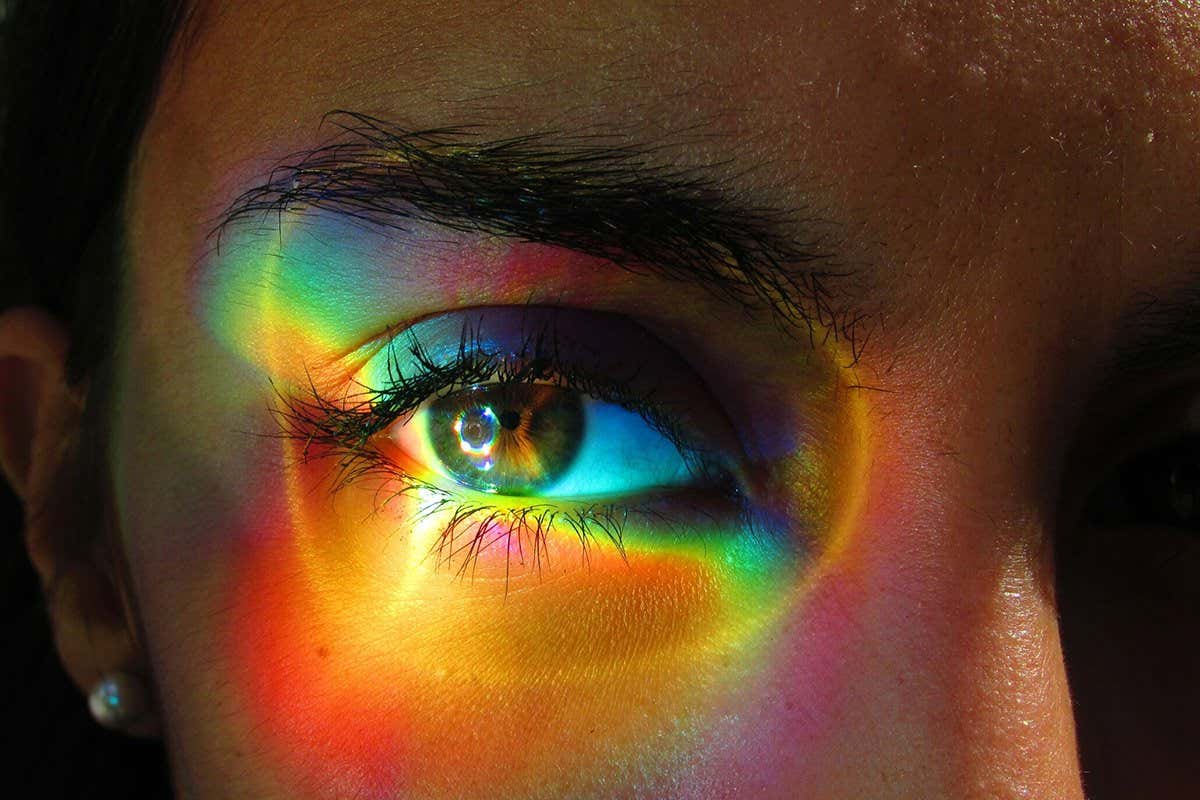
The Material Basis of Spirituality Science. Spiritual Optics. The study of beauty defines the nature of the artist

What is Matter? and What is Spirit? What is the Color of Money? If materialism is about the influence of material wealth, I would like to use the Power/Force/Energy called Money to talk about Life and Death. The Laws of Conservation are applicable to both the living, and the non-living matter. Hence, it can be stated that “Life can neither be created nor destroyed.” If any person can refute my claim using valid, scientific information, I would offer the person a US $1,000 bill as a reward.

What it is to be a Substance? and What it is to Exist? We need to establish knowledge about the man and the world on a firm basis and the information it provides must be tested for its accuracy and consistency with an external reality. We have to make the fundamental distinction between the living and the non-living matter. The scientific advances of the 19th and 20th centuries reinforced the materialistic position concerning the basic similarity of organic living and inorganic physical matter. The man is viewed as a product of natural evolution and is thought to be subject to the same laws of Physics and Chemistry or mechanistic principles.

We need a methodology to study philosophy and to understand philosophical statements. Logical Positivism, also known as Scientific Empiricism aims to clarify concepts in both everyday and scientific language. It describes analysis of language as the function of philosophy. This analysis of language and of concepts is important to understand questions of belief and ideology which affect what we think we ought to do individually and socially. I would use this method of ‘Applied Philosophy’ to analyze the concept of Spiritual Optics, the Spiritual dimension of biological coloration.

WHAT IS COLOR AND WHAT IS COLORATION?

The Material Basis of Spirituality Science. Spiritual Optics. What is Color? White Light is composed of every color in the Spectrum. But, color is more than an optical function.

The term ‘color’ refers to the spectral qualities of emitted or reflected light. The term ‘coloration’ is a dynamic and complex characteristic that has captured human interest and attention for a long time. The human interest to coloration ranges from purely aesthetic to the rigidly pragmatic.

BIOLOGICAL COLORATION:

The Material Basis of Spirituality Science. Spiritual Optics. Who is the Artist? The study, the theory of beauty, or Aesthetics helps in knowing the nature of the artist.

Biological Coloration refers to the general appearance of an organism as determined by the quality and quantity of light that is reflected or emitted from its surface. This Coloration depends upon several factors:

1. The integrity and deployment of the structural units and features involved in the generation of color,

2. The color and distribution of the organism’s pigments, and the relative location of differently colored areas,

3. The shape, posture, position, and movement of the organism,

4. The quality and quantity of light striking the organism, including the seasonal light and temperature variations,

5. The psychological, behavioral, hormonal, and other physiological conditions associated with the use of color,

6. The visual capacity of the viewer.

The Concept of Whole Artist:

The Material Basis of Spirituality Science. Spiritual Optics. Who is the Artist? An artist uses colors with imagination to create forms and to generate a desired visual effect. A “Whole Artist” is a person who creates his own canvas, his own tools, his own pigments, and creates the desired visual effects while the forms that are created have no such creative and cognitive abilities.

The term artist is used to describe a person who works in, or is skilled in the technique of any of the fine arts, especially in painting, drawing, and sculpture. The term artistry describes the artistic ability which includes the use of imagination, a feeling for form, and a feeling for effect. I am using the term ‘Whole Artist’ to discover the person who may have used imagination to create forms to produce desired effects while the form itself lacks the cognitive abilities to generate its own form. Plants may produce flowers of different colors while they essentially lack cognitive abilities to recognize the visual effect of the color they produce. The study, the theory of beauty, or Aesthetics helps us to know the nature of the artist.

The Material Basis of Spirituality Science. Spiritual Optics. The concept of Whole Aesthetics. These Bumble Bee Orchid flowers look like the work of an artist and the artistic process involves combining illusion with reality.

Aesthetics is a branch of philosophy dealing with the nature of art and the criteria of artistic judgment. Aesthetics involves the study or theory of beauty and of the psychological responses to it. Aesthetics has developed into a broad field of knowledge and inquiry. The term was coined by Alexander Gottlieb Baumgarten to denote a realm of concrete knowledge in which content is communicated in sensory form. Now the term is applied to the study of all the works of the fine arts, the useful arts (crafts) and natural phenomena (eg., landscapes, the human face and body) that have aesthetic value and generate an experience called aesthetic experience. Plato and Aristotle formulated the conception of art as an imitation of nature. Beauty inheres in the object itself and may be judged objectively. Hume identified beauty with that which pleases the observer. Baumgarten emphasized on the importance of feeling. If art imitates nature, the artist must deliberately alter nature by adding elements of feeling to perceive reality. The artistic process involves the use of illusion to mirror the creative process of the world.

Aesthetics involves the study of objects that have an inherent aesthetic quality to generate an aesthetic experience in the mind of an observer who has the capacity to interpret sensory information. An artist uses the artistic process to capture the creative process of the world by integrating illusion with reality.

I use the term ‘Whole Aesthetics’ to describe the integration of the human body with the principles of soul and spirit to bring ‘Whole Unity’ and ‘Whole Harmony’ between the conflicting elements of Dependence and Freedom by using an artistic process of combining Reality with Illusion. I use the term ‘Whole Aesthetics’ to describe the ‘Wholeness’ of Human Existence that requires the ‘Whole Harmony’ between Dependence and Freedom, the Whole Harmony between Illusion and Reality, the ‘Whole Unity’ between the human body, spirit and soul. I find the application of this artistic process in the works of Whole Artist or Whole Designer who makes the man to live on the surface of a fast spinning object called planet Earth where the Power of Time churns every future instant into a past instant without ever giving man the chance to recognize the experience of a present instant. Whole Aesthetics captures the beauty of the reality of human existence derived from the experience of illusion.

WHOLE DESIGNER-WHOLE ARTIST-WHOLE AESTHETICS :

Plants have the ability of Photoreception but do not have organs of sense perception like eyes. They produce flowers as if an artist is at work. The flowers below all have two things in common: They’re beautiful, and they remind the human eye of something else entirely. These are flowers are just stunning works of art by nature. I am pleased to share the photo images of ‘ORCHIDS’ to explain the concept of ‘Whole Designer’ and ‘Whole Artist’.

MASTERS OF PLANT PAREIDOLIA

Pareidolia is the tendency to see familiar or significant images in places where none is intended. Classic examples are sightings of Jesus or the Virgin Mary in wood grain or the pastime of looking for shapes in clouds. Pareidolia is encouraged in the Rorschach inkblot test. There are plenty of examples in the natural world, and orchids are particularly notable for looking like something else.

Monkey Face Orchid ( Dracula simia )

The Material Basis of Spirituality Science. Spiritual Optics. The concept of Whole Aesthetics. The artistic process involves the combination of illusion with reality.

Dracula simia is another species in the Dracula genus. As the name implies, the blooms of this orchid look exactly like a monkey’s face.

The Material Basis of Spirituality Science. Spiritual Optics. The concept of Whole Aesthetics. The artistic process involves the combination of illusion with reality.

The monkey orchid (Orchis simia) is said to be shaped like a monkey’s body. A male monkey, to be sure.

Moth Orchid ( Phalaenopsis )

The Material Basis of Spirituality Science. Spiritual Optics. The concept of Whole Aesthetics. The artistic process involves the combination of illusion with reality.

There are about 60 species of Moth Orchids (Phalaenopsis), which are native to Asia and popular among orchid growers. Many of them, if you look really close, appear to have a small bird emerging from their center. Get a closer look at this pink specimen.

Naked Man Orchid (Orchis italica)

The Material Basis of Spirituality Science. Spiritual Optics. The concept of Whole Aesthetics. The artistic process involves the combination of illusion with reality.

Orchis italica is native to the Mediterranean area, and is sometimes called the Naked Man Orchid. You can see why. The blossoms even have little eyes and smiles!

Hooker’s Lips (Psychotria elata)

The Material Basis of Spirituality Science. Spiritual Optics. The concept of Whole Aesthetics. The artistic process involves the combination of illusion with reality.

Orchids may be the masters of plant pareidolia, but they aren’t the only plants that look like something else. Psychotria elata is a tropical plant that produces the psychedelic chemical DMT. The plant is also called Hooker’s Lips. I can’t imagine why.

Dancing Girls (Impatiens bequaertii)

The Material Basis of Spirituality Science. Spiritual Optics. The concept of Whole Aesthetics. The artistic process involves the combination of illusion with reality.

Laughing Bumble Bee Orchid (Ophrys bomybliflora)

While we can’t say that nature intended for an orchid to look like a male body or a flying duck, the orchid genus Ophrys has a simple reason for looking the way it does. The Bee Orchid (Ophrys apifera) bloom resembles a bee in order to attract bees. When a male bee tries to mate with the flower (because it’s so pretty), he ends up pollinating it. Using an insect to achieve plant sex is common, but using insect sex to achieve plant sex is brilliantly weird. It apparently works well, because Ophrys ranges over several continents.

Swaddled Babies (Anguloa uniflora)

The Material Basis of Spirituality Science. Spiritual Optics. The concept of Whole Aesthetics. The artistic process involves the combination of illusion with reality.

Parrot Flower (Impatiens psittacina)

The Material Basis of Spirituality Science. Spiritual Optics. The concept of Whole Aesthetics. The artistic process involves the combination of illusion with reality.

Snap Dragon Seed Pod (Antirrhinum)

The Material Basis of Spirituality Science. Spiritual Optics. The concept of Whole Aesthetics. The artistic process involves the combination of illusion with reality.

Flying Duck Orchid (Caleana major)

The Material Basis of Spirituality Science. Spiritual Optics. The concept of Whole Aesthetics. The artistic process involves the combination of illusion with reality.

The Australian orchid genus Caleana is still not fully classified, but it is commonly called the Flying Duck Orchid. The shape attracts the sawfly, which pollinates the plant. Each component of the flower is design to use the sawfly, like a bright color for it to see, a place to land, and a petal that traps the fly into taking a pollen-rich route out. That’s one smart duck!

An orchid that looks remarkably like a tiger

The Material Basis of Spirituality Science. Spiritual Optics. The concept of Whole Aesthetics. The artistic process involves the combination of illusion with reality.

Happy Alien (Calceolaria uniflora)

The Material Basis of Spirituality Science. Spiritual Optics. The concept of Whole Aesthetics. The artistic process involves the combination of illusion with reality.

And his fellow aliens

The Material Basis of Spirituality Science. Spiritual Optics. The concept of Whole Aesthetics. The artistic process involves the combination of illusion with reality.

Angel Orchid (Habenaria grandifloriformis)

The Material Basis of Spirituality Science. Spiritual Optics. The concept of Whole Aesthetics. The artistic process involves the combination of illusion with reality.

Dove Orchid Or Holy Ghost Orchid (Peristeria elata)

The Material Basis of Spirituality Science. Spiritual Optics. The concept of Whole Aesthetics. The artistic process involves the combination of illusion with reality.

White Egret Orchid ( Habenaria radiata )

The Material Basis of Spirituality Science. Spiritual Optics. The concept of Whole Aesthetics. The artistic process involves the combination of illusion with reality.

The Darth Vader ( Aristolochia salvadorensis )

The Material Basis of Spirituality Science. Spiritual Optics. The concept of Whole Aesthetics. The artistic process involves the combination of illusion with reality.

An Orchid That Looks Like A Ballerina

The Material Basis of Spirituality Science. Spiritual Optics. The concept of Whole Aesthetics. The artistic process involves the combination of illusion with reality.

Flying Duck Orchid

The Material Basis of Spirituality Science. Spiritual Optics. The concept of Whole Aesthetics. The artistic process involves the combination of illusion with reality.(Photo credit: Lorraine Phelan)

Lady Orchid

The Material Basis of Spirituality Science. Spiritual Optics. The concept of Whole Aesthetics. The artistic process involves the combination of illusion with reality. Photo credit: Jeantosti

Orchis purpurea, or Lady Orchid, range through Europe and Northern Africa. The lovely blossoms show a wide purple skirt and a fabulous hat, under which you can almost see a pair of demure eyes. We don’t know why a plant would grow flowers that look like a lady, but we can sure see it.

Dracula Orchid

The Material Basis of Spirituality Science. Spiritual Optics. The concept of Whole Aesthetics. The artistic process involves the combination of illusion with reality.

Dracula radiosa is an orchid native to Colombia. It might not look the way you picture Dracula from the movies, but it certainly has a creepy face staring at you. Dracula is the genus name, and there are over 100 species, so the face in this flower has nothing to do with Dracula. Still creepy.

Fly Orchid

Another species of Orphys is the Fly Orchid (Ophrys insectifera). The flowers not only look like flies, but also smell of insect pheromones. Found all over Europe, the Fly Orchid does not even have to produce nectar to draw flies for pollination purposes.

A well-dressed Orchid

The Material Basis of Spirituality Science. Spiritual Optics. The concept of Whole Aesthetics. The artistic process involves the combination of illusion with reality.

Javier Diaz Barrera took this picture of an unidentified orchid in Spain. Can you see the little smiling man wearing a suit and tie? You have to wonder what kind of insects this is supposed to attract! It may belong to the Ophrys genus.

WHO IS THE ARTIST?

No single function can explain the coloration of living things. We need a comprehensive theory that predicts the lines and patterns of coloration of plants and animals. An artist’s palette containing only three properly chosen colors is entirely adequate under most circumstances to produce the various visual effects of color that is observed. The optical mechanisms involved in the production of color are complex. Coloration is a dynamic and complex characteristic and the term must be clearly distinguished from the term ‘color’ which only refers to the spectral qualities of emitted or reflected light. It is apparent that plants, and animals have no cognitive abilities to produce the coloration by which they are recognized. However, the coloration displayed gives us a clue about the nature of the “Whole Artist” who could be using imagination, has feelings for the forms created and seeks satisfaction from the visual effects that he produced. If man has the ability called visual perception, he must use the ability to visualize the “Whole Artist” who is at work.

Simon Cyrene

What is Matter? and What is Spirit? What is the Color of Money? If materialism is about the influence of material wealth, I would like to use the Power/Force/Energy called Money to talk about Life and Death. The Laws of Conservation are applicable to both the living, and the non-living matter. Hence, it can be stated that “Life can neither be created nor destroyed.” If any person can refute my claim using valid, scientific information, I would offer the person a US $1,000 bill as a reward.

The Material Basis of Spirituality Science. The role of pigments in biological coloration

What is Matter? and What is Spirit? What is the Color of Money? If materialism is about the influence of material wealth, I would like to use the Power/Force/Energy called Money to talk about Life and Death. The Laws of Conservation are applicable to both the living, and the non-living matter. Hence, it can be stated that “Life can neither be created nor destroyed.” If any person can refute my claim using valid, scientific information, I would offer the person a US $1,000 bill as a reward.

What it is to be a Substance? and What it is to Exist? We need to establish knowledge about the man and the world on a firm basis and the information it provides must be tested for its accuracy and consistency with an external reality. We have to make the fundamental distinction between the living and the non-living matter. The scientific advances of the 19th and 20th centuries reinforced the materialistic position concerning the basic similarity of organic living and inorganic physical matter. The man is viewed as a product of natural evolution and is thought to be subject to the same laws of Physics and Chemistry or mechanistic principles.

We need a methodology to study philosophy and to understand philosophical statements. Logical Positivism, also known as Scientific Empiricism aims to clarify concepts in both everyday and scientific language. It describes analysis of language as the function of philosophy. This analysis of language and of concepts is important to understand questions of belief and ideology which affect what we think we ought to do individually and socially. I would use this method of ‘Applied Philosophy’ to analyze the concept of Spiritual Optics, the Spiritual dimension of biological coloration.

WHAT IS COLOR AND WHAT IS COLORATION?

The term ‘color’ refers to the spectral qualities of emitted or reflected light. The term ‘coloration’ is a dynamic and complex characteristic that has captured human interest and attention for a long time. The human interest to coloration ranges from purely aesthetic to the rigidly pragmatic.

BIOLOGICAL COLORATION:

Biological Coloration refers to the general appearance of an organism as determined by the quality and quantity of light that is reflected or emitted from its surface. This Coloration depends upon several factors:

1. The integrity and deployment of the structural units and features involved in the generation of color,

2. The color and distribution of the organism’s pigments, and the relative location of differently colored areas,

3. The shape, posture, position, and movement of the organism,

4. The quality and quantity of light striking the organism, including the seasonal light and temperature variations,

5. The psychological, behavioral, hormonal, and other physiological conditions associated with the use of color,

6. The visual capacity of the viewer.

The role of pigments in biological coloration

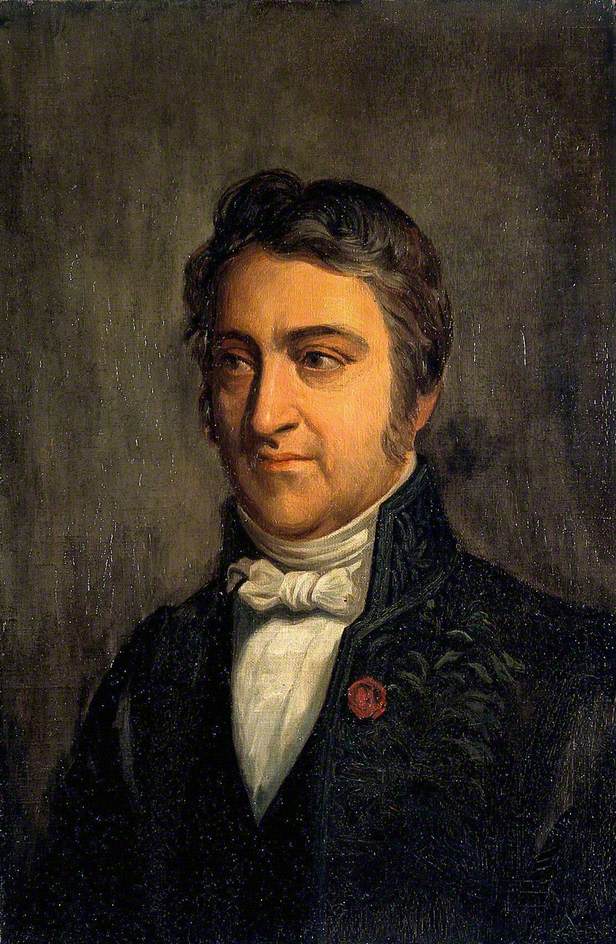
WholeDude-WholeDesigner: Adolf Von Baeyer discovered the chemical structure of Indigo dye in 1883, and could successfully synthesize the plant pigment in 1890. He won the 1905 Noble Prize in Chemistry in recognition of his service in the advancement of Organic Chemistry and the Chemical Industry through his work on Organic Dyes.
The Material Basis of Spirituality Science. Spiritual Optics explores the creative use of pigments . Adolf Von Baeyer discovered the chemical structure of Indigo dye in 1883, and could successfully synthesize the plant pigment in 1890. He won the 1905 Nobel Prize in Chemistry in recognition of his service in the advancement of Organic Chemistry and the Chemical Industry through his work on Organic Dyes.
WholeDude-WholeDesigner: Indigo is the name of blue-colored plant dye derived from a plant that is a native of India. The Indigo plants belong to the genus Indigofera, the species include, I. sumatrana, I. arrecta, and I. tinctoria. The credit for discovering the chemical structure of Indigo goes to German Chemist, Adolf Von Baeyer.
The Material Basis of Spirituality Science. Spiritual Optics explores the creative use of pigments. Indigo is the name of blue-colored plant dye derived from a plant that is a native of India. The Indigo plants belong to the genus Indigofera, the species include, I. sumatrana, I. arrecta, and I. tinctoria. The credit for discovering the chemical structure of Indigo goes to German Chemist, Adolf Von Baeyer.

The biological coloration generated by the pigments of biological tissues that reflect or transmit light are known as biochromes. The organic compounds, biochromes, are classified according to the presence or absence of Nitrogen. Pigments produce color by selective absorption of light. The molecules of pigment absorb a limited range of wavelengths; the light that is not absorbed is reflected and its dominant wavelength determines the pigment’s color. However, it must be noted that biochromes are involved in the performance of various, pivotal, metabolic functions apart from imparting color. The natural coloration of living things is more complex than the visual sensory experience of the color associated with living things.

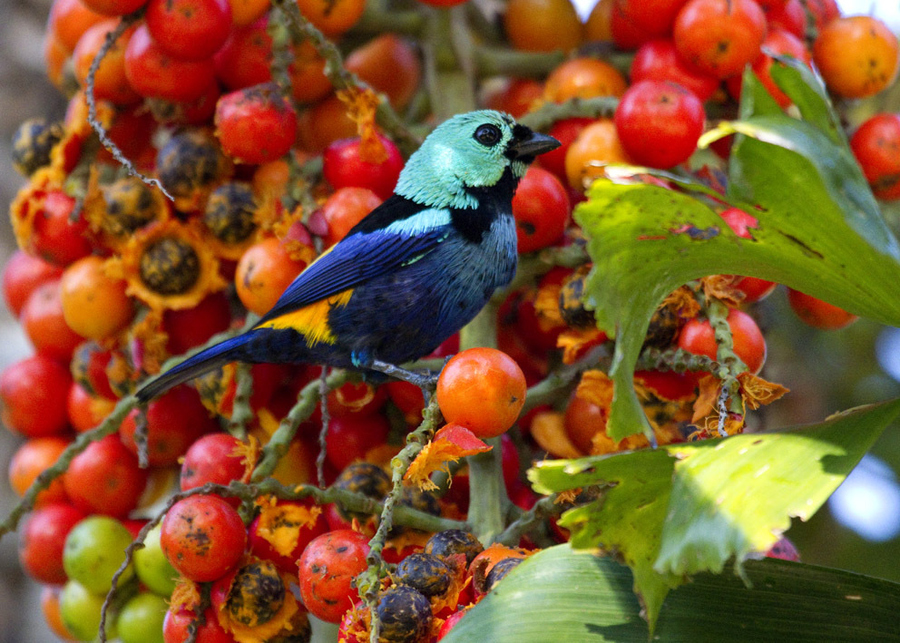
WHoleDude-WholeDesigner: Fischer's Turaco fischeri is unique. It produces its own special green pigment called turacoverdin.
The Material Basis of Spirituality Science. Spiritual Optics explores the creative use of pigments. Fischer’s Turaco fischeri is unique. It produces its own special green pigment called turacoverdin.
WholeDude-WholeDesigner: Red-crested Turaco, Tauraco erythrolophus. The red color results from turacin pigment derived from Porphyrin.
The Material Basis of Spirituality Science. Spiritual Optics explores the creative use of pigments . Red-crested Turaco, Tauraco erythrolophus. The red color results from turacin pigment derived from Porphyrin.

Pigments are substances that impart color to other materials. Most paint pigments are metallic compounds. Some metallic pigments occur naturally. Plants and animals contain pigments. Most opaque substances owe their color to a combination of scattering and absorption within the body of the material. The production of color depends upon the wavelength of incident light, the diameter of the pigment particle, and the relationship between the refractive index of the pigment and that of the vehicle in which the pigment particles are suspended. The color of a chemical compound depends on the selective absorption of light by molecules whose size or vibrational wavelengths or both lie between 3000 and 7000 angstrom. Selective absorption of visible light results from retardation in the relative speed or vibrational frequency of the many rapidly vibrating electron pairs found in the chemical compound. The chemical molecule is imparted a special motion or chemical resonance. If this molecular resonance involves short, rapid waves, the shorter, visible light waves (Violet and Blue) are absorbed, and the chemical compound appears Yellow or Orange. The Red-appearing pigments have slightly longer resonance values, absorb light from the Blue and Green regions of the light spectrum. Blue, and Green compounds result from cancellation of light in the Red, or Orange realms. Black substances absorb all light equally and completely; White compounds absorb no light in the visible spectrum. The color reflected by a pigment usually includes all the wavelengths of visible light except the absorbed fraction; the observed color of a compound thus depends upon the dominant wavelength reflected or transmitted. In most cases, the color observed by the viewer depends upon the optical absorption characteristics of the pigment, and the scattering effect caused by the medium in which the pigment molecules are suspended.

The role of pigments in biological coloration displays the role of an artist who chooses the pigments to generate a desired visual effect in organisms that have the visual capacity to recognize the color.

Simon Cyrene

What is Matter? and What is Spirit? What is the Color of Money? If materialism is about the influence of material wealth, I would like to use the Power/Force/Energy called Money to talk about Life and Death. The Laws of Conservation are applicable to both the living, and the non-living matter. Hence, it can be stated that “Life can neither be created nor destroyed.” If any person can refute my claim using valid, scientific information, I would offer the person a US $1,000 bill as a reward.

The Material Basis of Spirituality Science. What is the Color of the man?

What is Matter? and What is Spirit? If materialism is about the influence of material wealth, I would like to use the Power/Force/Energy called Money to talk about Life and Death. The Laws of Conservation are applicable to both the living, and the non-living matter. Hence, it can be stated that “Life can neither be created nor destroyed.” If any person can refute my claim using valid, scientific information, I would offer the person a US $1,000 bill as a reward.

What it is to be a Substance? and What it is to Exist? We need to establish knowledge about the man on a firm basis and the information it provides must be tested for its accuracy and consistency with an external reality. We have to make the fundamental distinction between the living and the non-living matter. The scientific advances of the 19th and 20th centuries reinforced the materialistic position concerning the basic similarity of organic living and inorganic physical matter. The man is viewed as a product of natural evolution and is thought to be subject to the same laws of Physics and Chemistry or mechanistic principles.

We need a methodology to study philosophy and to understand philosophical statements. Logical Positivism, also known as Scientific Empiricism aims to clarify concepts in both everyday and scientific language. It describes analysis of language as the function of philosophy. This analysis of language and of concepts is important to understand questions of belief and ideology which affect what we think we ought to do individually and socially. I would use this method of ‘Applied Philosophy’ to analyze the concept of Spiritual Optics, the Spiritual dimension of biological coloration.

Spiritualism - The Colors of Life: Sir Isaac Newton(1642-1727),English mathematician, physicist, and natural philosopher was the first to explain what he called "the permanent colours of natural bodies."
The Material Basis of Spirituality Science. The Colors of Life: Sir Isaac Newton (1642-1727),English mathematician, physicist, and natural philosopher was the first to explain what he called “the permanent colours of natural bodies.”

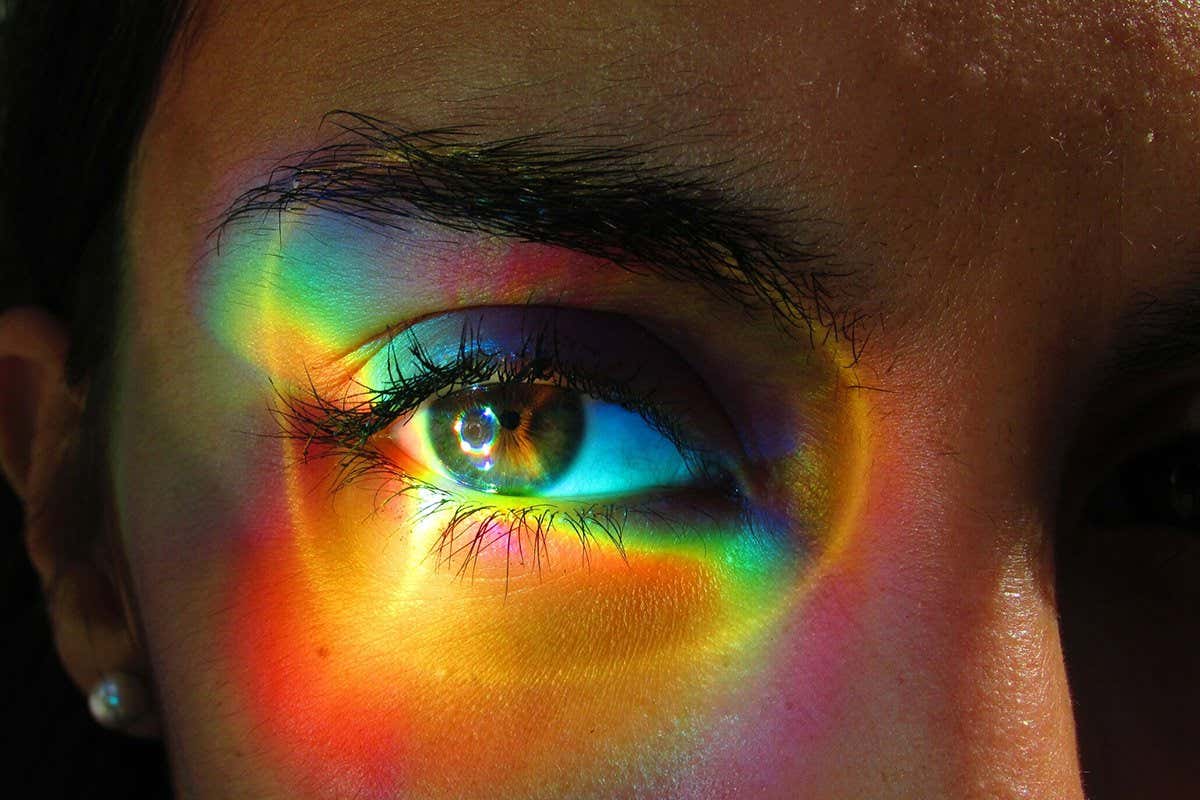
I would like to begin with a special tribute to Sir Isaac Newton who discovered that white light is composed of every color in the spectrum. No single function can fully explain the coloration of living things. We need to integrate the optical, the visual, and the physiological functions of biological coloration and I would like to carefully formulate the concept of spiritual dimension of color as I am not  convinced about the role of color in what is described as “Natural Selection” by evolutionary biologists. Color plays an important role in every aspect of life. Most of us are familiar with coloration changes; the physiological, seasonal, age-related changes in color that are regulated by environmental stimuli such as light and temperature, coloration change due to emotions like excitement, and hormonal changes that are related to color function. Graying hair is a familiar badge of the elderly. The brilliant colors produced by a prism is an optical phenomenon caused by diffraction or dispersion, or interference of light. However, the understanding of color involves not only physics, but physiology and psychology as well. The term ‘Optics’ describes the scientific study of light. Physical Optics is concerned with the genesis, nature, and properties of light. Geometrical Optics is concerned with the Geometry involved in the reflection and refraction of light as encountered in the study of mirror, lens, and prism. Physiological Optics is concerned with the role of light in causing visual sensation. I would like to add the dimension that I often describe as ‘Spiritualism’ to obtain a greater understanding of color as a function of living things.

The Material Basis of Spirituality Science. The Colors of Life.

The New Testament Book of The Gospel According to Apostle John, Chapter 1, verses 3 and 4 read: ” Through Him all things were made, without Him nothing was made that has been made. In Him was life, and that life was the light of men.” There is a direct relationship between life and light and hence there is a need to describe Spiritual Optics and know the coloration of living things as a spiritual function.

Whole Dude-Whole Colors- Richard Gere in 2013-We are most familiar with changes in man's coloration that is related to age. In several cultures, people with silvery gray hair are treated with respect as the color symbolizes maturity, and wisdom.
The Material Dimension of Spirituality Science. The Colors of Life. Richard Gere in 2013. We are most familiar with changes in man’s coloration that is related to age. In several cultures, people with silvery gray hair are treated with respect as the color symbolizes maturity, and wisdom.

WHAT IS COLOR?

Whole Dude-Whole Colors: White light is perceived as colorless as only a neutral color sensation is aroused by it. White light is composed of  every color in the spectrum. Human civilization has developed taste in color and has attached names, values and functions to the colors it visualizes. A sense of fitness has been acquired concerning the use of color.
The Material Dimension of Spirituality Science. The Colors of Life. White light is perceived as colorless as only a neutral color sensation is aroused by it. White light is composed of every color in the spectrum. Human civilization has developed taste in color and has attached names, values and functions to the colors it visualizes. A sense of fitness has been acquired concerning the use of color.

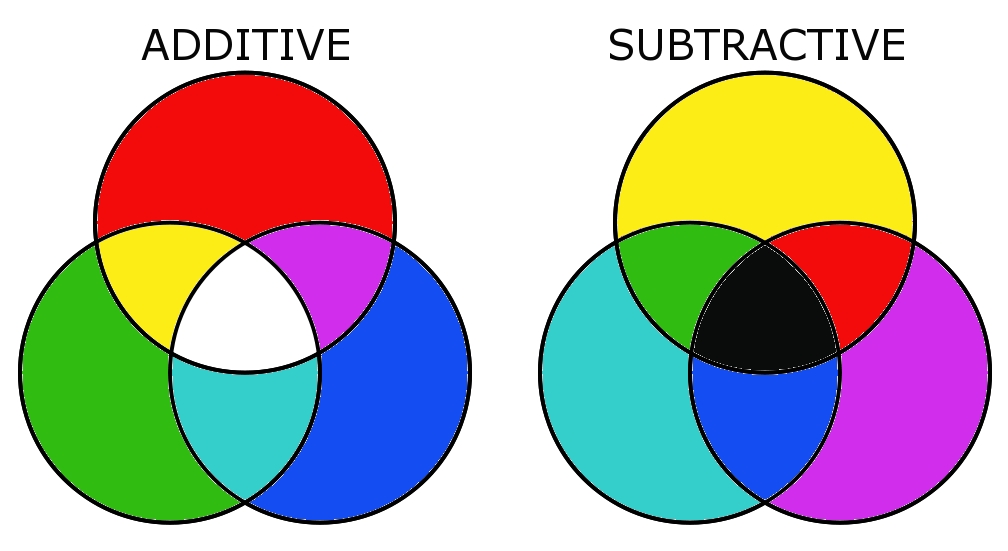
Color is a sensation that is aroused when light falls on the retina of the eye. Color is the visual effect resulting from the eye’s ability to distinguish the different wavelengths or frequencies of light. The apparent color of an object depends on the wavelength of the light that it reflects. Light may originate directly from a light source or as reflected light. Color perception depends on the different degrees to which various wavelengths of light stimulate the eye. In white light, an opaque object that reflects all wavelengths appears white and the object that absorbs all wavelengths appears black. White light is perceived as colorless as only a neutral sensation is aroused by it. Any three primary or spectral colors can be combined in various proportions to produce any other color sensation. The ‘additive mixing’ involves combining colored lights. A painter uses a process called ‘subtractive mixing’ to generate colors when pigments are combined to produce the desired visual effect. It must be noted that a strict definition of color is difficult as different observers attach different meanings. The chemist is conscious of color as a quality concerning a pigment or a dye. The psychologist describes color in terms of visual perception, and this perception is further modified by human civilization that attached meanings, qualities, feelings, moods, and other special values to the colors perceived. The physicist may describe color in terms of qualities such as the wavelength of light, its intensity or brightness, and its hue, a particular shade or tint of a given color.

Spiritualism - The Colors of Life: What is Color? The answer depends upon the perspective of the person who may provide the answer to that question. But, it is important to know that colors are generated by either 'Additive', or 'Subtractive Mixing.
The Material Basis of Spirituality Science.The Colors of Life: What is Color? The answer depends upon the perspective of the person who may provide the answer to that question. But, it is important to know that colors are generated by either ‘Additive’, or ‘Subtractive Mixing. Additive mixing involves combining colored lights as done in generating color movie pictures. An artist combines dyes or pigments where the pigment absorbs or subtracts certain wavelengths and reflects some wavelengths.
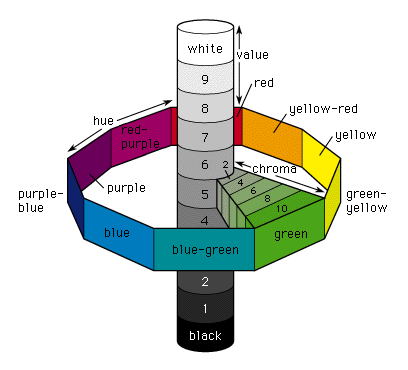
Spiritualism-The Colors of Life: Munsell Color System. Munsell developed a system to describe a color using three criteria, hue, chroma, and value.
Spiritualism-The Colors of Life: What is Color?  Munsell Color System. Munsell developed a system to describe a color using three criteria; hue, chroma, and value.
Spiritualism-The Colors of Life- Munsell System may provide a great understanding of color, but a biologist has to understand the role and purpose of color in relation to a living thing's ability to survive in nature by defending its existence and through reproductive success and by adapting to variable environmental conditions and factors that are peculiar to its biological community with which it constantly interacts.
The Material Basis of Spirituality Science. Colors of Life-What is Color?  Munsell System may provide a great understanding of color, but a biologist has to understand the role and purpose of color in relation to a living thing’s ability to survive in nature by defending its existence and through reproductive success and by adapting to variable environmental conditions and factors that are peculiar to its biological community with which it constantly interacts.

BIOLOGICAL COLORATION:

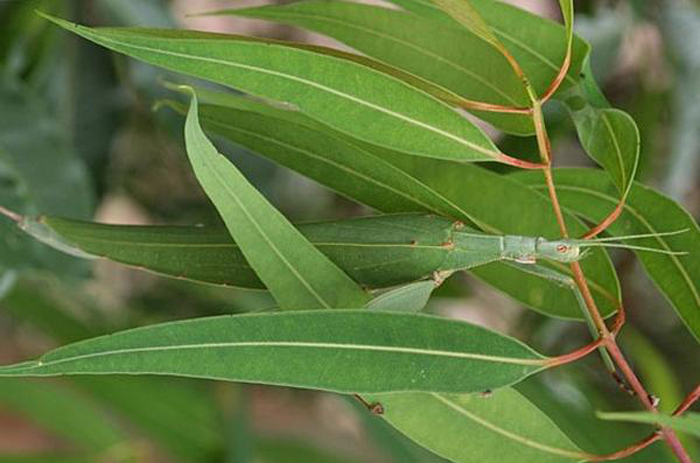
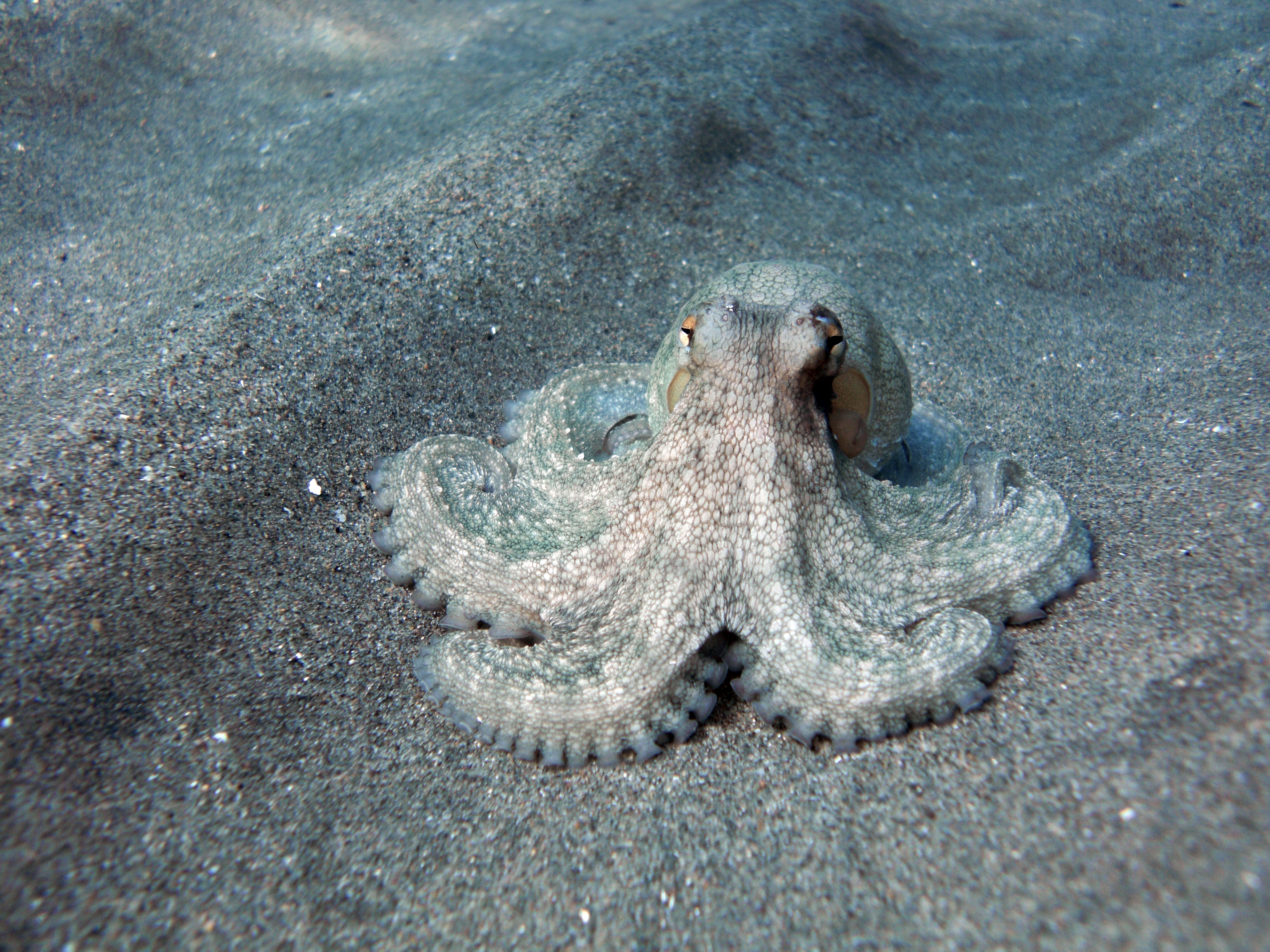
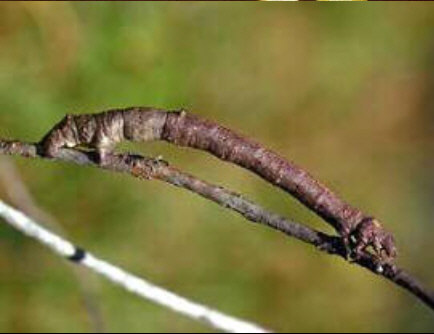
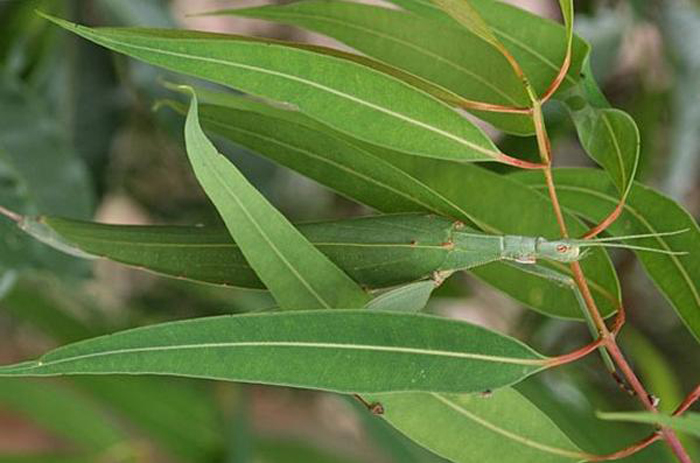
Whole Dude-Whole Colors: What is Color? Color performs a protective function. This insect resembles a twig which is an unrelated species Does this insect have the ability to predetermine its own color and its own appearance in its given environment?
The Material Basis of Spirituality Science. The Colors of Life. What is Color? Color performs a protective function. This insect resembles a twig which is an unrelated species Does this insect have the ability to predetermine its own color and its own appearance in its given environment?

Animals have distinctive color patterns that seem to play an important role to support their existence in a given ecological community that shares a common physical environment. The color may serve the purpose of protection by concealing the organism from predators or its own prey. The term ‘protective coloration’ describes coloration or color pattern that facilitates escape from observation by predators or prey. The color may help reproductive success and is used to attract mates, or to get recognized by the members of its own group. The color may constitute a warning to its natural enemies. Plants extensively use attractive colors to assist the process called pollination.

CRYPTIC COLORATION:

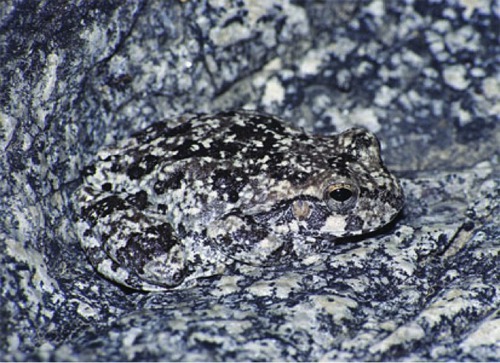
The most widespread form of coloration is called cryptic resemblance or cryptic coloration in which the coloration and pattern on the skin of the animal enables it to blend in with the coloration of its natural habitat. This kind of coloration may conceal the animal from its predator or prey and it involves the use of colors that have general resemblance with its surroundings. The advantageous resemblance of one species to another, often unrelated species or to a feature of its own habitat is predetermined by its own genetic endowment.

Spiritualism-The Colors of  Life: What is Color? The purpose of cryptic coloration is that of concealment. because of background resemblance.
The Material Basis of Spirituality Science. The Colors of Life: What is Color? The purpose of cryptic coloration is that of concealment. because of background resemblance.

IMITATIVE COLORATION:

Coloration is an adaptive mechanism and an animal can conceal its presence by imitating the appearance of  a natural object present in its environment.

Whole Dude-Whole Colors: What is Color? The purpose of Coloration could be an adaptive mechanism and this insect very closely imitates the color and appearance of the leaves.
The Material Basis of Spirituality Science. The Colors of Life. What is Color? The purpose of Coloration could be an adaptive mechanism and this insect very closely imitates the color and appearance of the leaves.
Whole Dude-Whole Colors: What is Color? Marine animals often imitate the appearance of Corals or rocks to conceal their presence.
The Material Basis of Spirituality Science. The Colors of Life. What is Color? Marine animals often imitate the appearance of Corals or rocks to conceal their presence.

WARNING COLORATION AND BATESIAN MIMICRY:

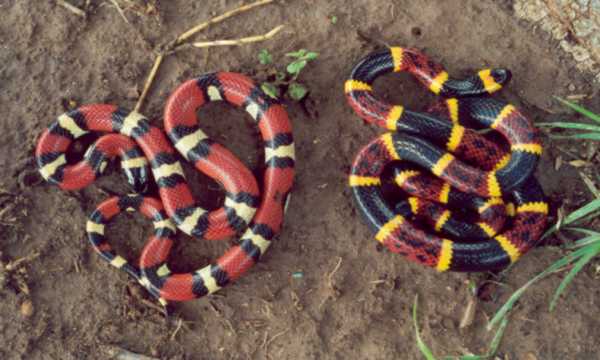
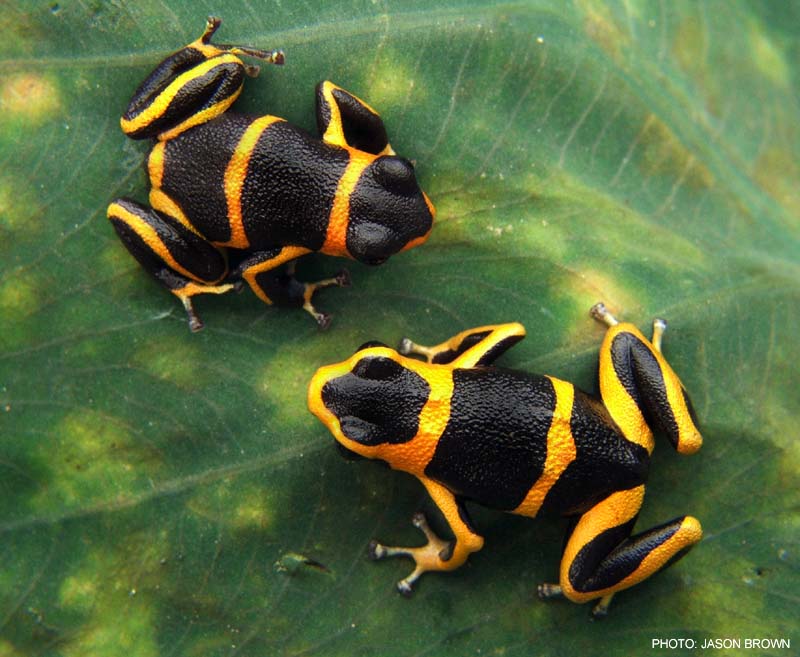
Warning coloration consists of bold markings that warn predators away from inedible or poisonous animals. Mimicry is a deceptive coloration in which the animal resembles or mimic a warning-colored animal or predator.

Spiritualism-The Colors of Life: What is Color? Color may serve as a warning sign and it involves the use of bold markings. Mimicry involves deceptive coloration in which the animal deceptively uses the warning coloration of another animal.Monarch butterfly/The Viceroy butterfly: The North American Monarch is poisonous and is distasteful and is protected by its Warning Coloration which the Viceroy uses for its Mimicry.
The Material Basis of Spirituality Science.The Colors of Life: What is Color? Color may serve as a warning sign and it involves the use of bold markings. Mimicry involves deceptive coloration in which the animal deceptively uses the warning coloration of another animal.Monarch butterfly/The Viceroy butterfly: The North American Monarch is poisonous and is distasteful and is protected by its Warning Coloration which the Viceroy uses for its Mimicry.

SUDDEN CHANGES IN COLORATION:

Chameleon is famous for its ability to change its color suddenly to express anger or fright. The change is caused by movement of pigment called chromatophores within the cells.

Spiritualism-The Colors of Life: What is Color? The purpose of color could be that of expressing sudden mood changes like that of anger, or excitement. Chameleon is known for such Sudden Change in Coloration.
The Material Basis of Spirituality Science.The Colors of Life: What is Color? The purpose of color could be that of expressing sudden mood changes like that of anger, or excitement. Chameleon is known for such Sudden Change in Coloration.

SEASONAL CHANGES IN COLORATION:

The Snow Hare is white in winter and is Brown during Summer and Autumn.

Spiritualism-The Colors of Life: What is Color? The purpose of Color may relate to change in temperatures, environmental changes associated with changing Seasons. The Snow Hare is white in Winter and is Brown during Summer and Autumn.
The Material Basis of Spirituality Science.The Colors of Life: What is Color? The purpose of Color may relate to change in temperatures, environmental changes associated with changing Seasons. The Snow Hare is white in Winter and is Brown during Summer and Autumn.

COLORATION FOR REPRODUCTIVE SUCCESS:

The use of color may serve the purpose of getting recognition from other members of its own group and it may specifically attract the attention of mates during the reproductive season. Many plants use colors to aid pollination by bees and moths.

Spiritualism-The Colors of Life: What is Color? The purpose of color could be that of promoting reproductive success. A male, marine Stickleback, tiny Bony Fish( 3 to 10 cms long) in reproductive condition with complete armour plates develops special red coloration to attract its mate during breeding season.
The Material Basis of Spirituality Science.The Colors of Life: What is Color? The purpose of color could be that of promoting reproductive success. A male, marine Stickleback, tiny Bony Fish( 3 to 10 cm long) in reproductive condition with complete armour plates develops special red coloration to attract its mate during breeding season.
Spiritualism-The Colors of Life: What is Color? Bees are active during day and are attracted by brightly colored flowers such as the flowers of Milkweed.
The Material Basis of Spirituality Science.The Colors of Life: What is Color? Bees are active during day and are attracted by brightly colored flowers such as the flowers of Milkweed.
Spiritualism-The Colors of Life: What is Color? Flowers and Pollination. Flowers may have often bright color markings called 'honeyguides' to attract pollinating insects.
The Material Basis of Spirituality Science.The Colors of Life: What is Color? Flowers and Pollination. Flowers may have often bright color markings called ‘honey-guides’ to attract pollinating insects.
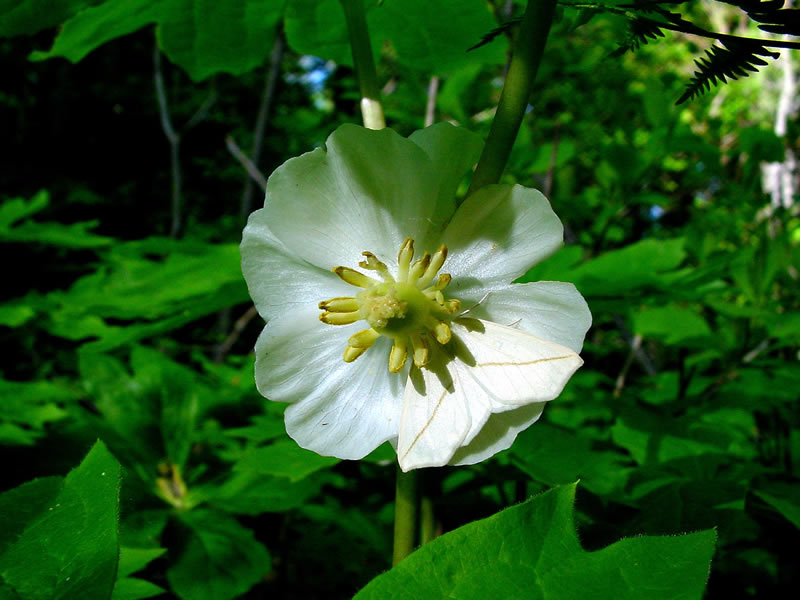
Spiritualism-The Colors of Life: What is Color? Plants that depend upon moths for pollination generally produce white or dull-colored flowers that open late afternoon or night. Moths are active at dusk or night. These white flowers produce ample nectar and carry heavy fragrance to attract the moths.
The Material Dimension of Spirituality Science.The Colors of Life: What is Color? Plants that depend upon moths for pollination generally produce white or dull-colored flowers that open late afternoon or night. Moths are active at dusk or night. These Mayapple white flowers produce ample nectar and carry heavy fragrance to attract the moths.

THE PROBLEM OF ALBINISM:

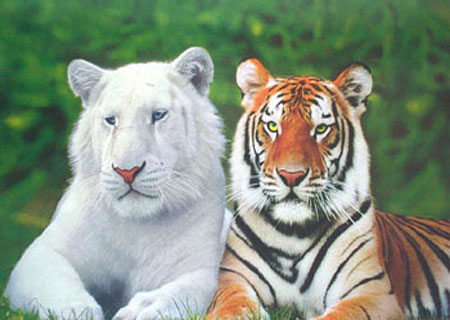
Albino describes animal or plant lacking normal pigmentation. The albino body covering such as skin, eyes, hair, and feathers lack pigment. Melanin is the pigment found in human skin, hair, and eyes. The amino acid tyrosine is required for melanin synthesis. An inherited lack of enzyme required for melanin synthesis results in one form of albinism. This defect is inherited as a recessive trait.

Whole Dude-Whole Colors: What is Color? The problem of Albinism helps in the understanding of the purpose of Biological Coloration. The Tiger with stripes and color has a better ability to conceal itself from its prey before attacking the unsuspecting prey.
The Material Dimension of Spirituality Science. The Colors of Life. What is Color? The problem of Albinism helps in the understanding of the purpose of Biological Coloration. The Tiger with stripes and color has a better ability to conceal itself from its prey before attacking the unsuspecting prey.
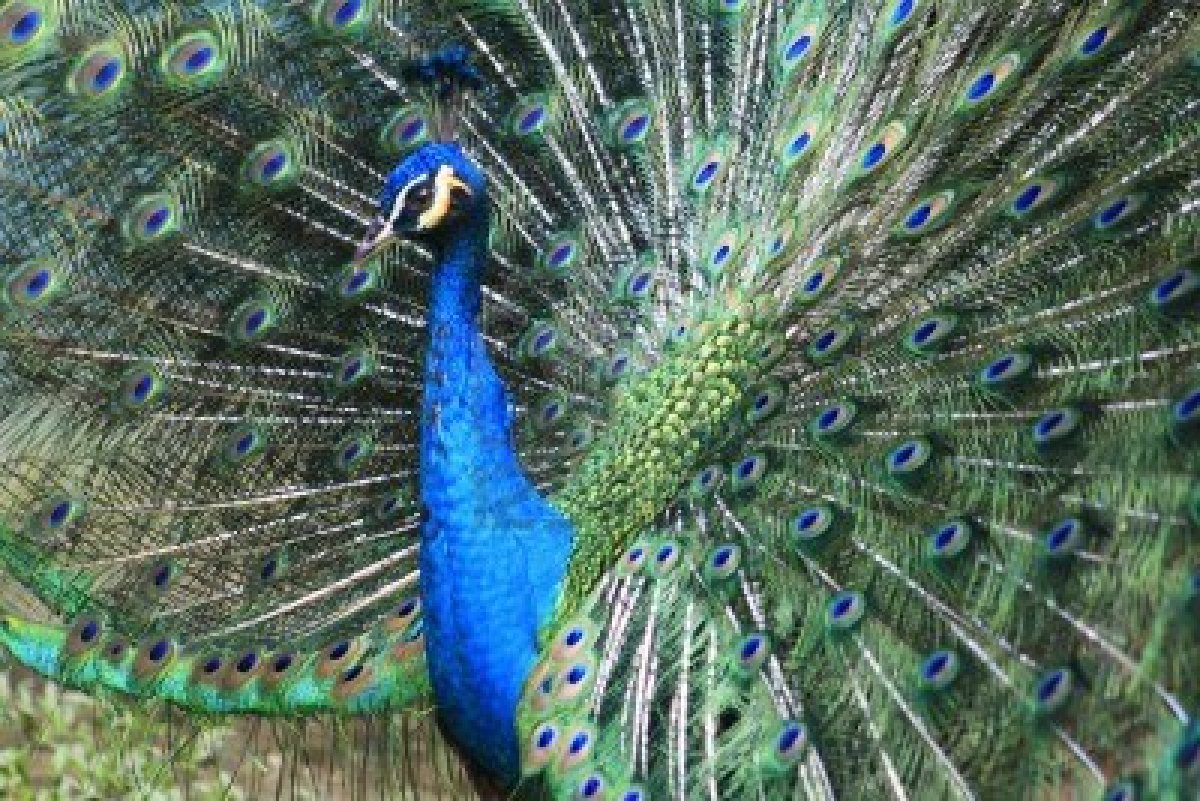
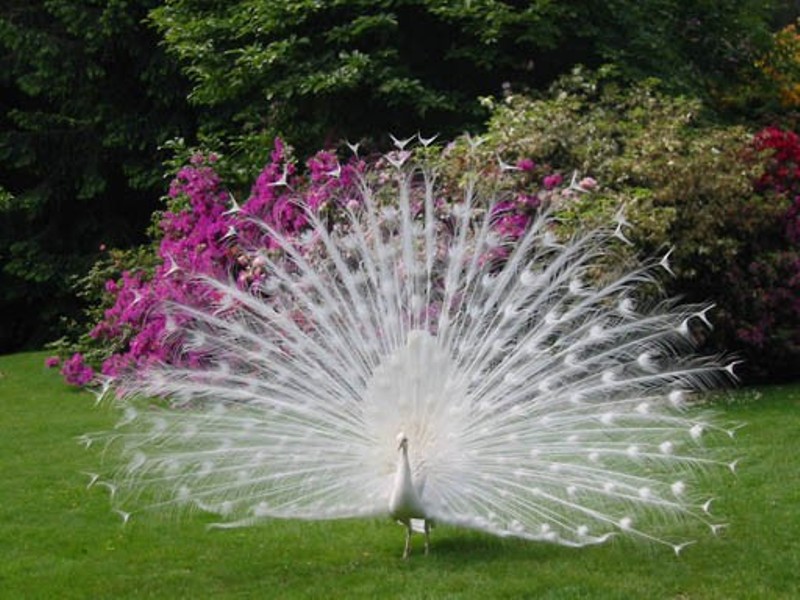
Whole Dude-Whole Colors: What is Color? This is definitely a pretty sight. This albino Peacock would not have the advantage of attracting its mate during the mating season as compared to its normal colored partner.
The Material Dimension of Spirituality Science. The Colors of Life. What is Color? This is definitely a pretty sight. This albino Peacock would not have the advantage of attracting its mate during the mating season as compared to its normal colored partner.

Biological Coloration is genetically determined and the living organism does not voluntarily select the colors it may display. Human beings could be an exception as man uses colors for purposes other than those designed by Nature for human existence.

WHAT IS THE COLOR OF MAN?

Whole Dude-Whole Colors: What is Color? What is the Color of Man? All newborn babies of all human races appear pinkish-red when they are just born. A process of maturation that extends over weeks is needed for the development of skin pigmentation.
The Material Dimension of Spirituality Science. The Colors of Life. What is Color? What is the Color of Man? All newborn babies of all human races appear pinkish-red when they are just born. A process of maturation that extends over weeks is needed for the development of skin pigmentation.
Spiritualism-The Colors of Life: What is Color? Man uses the tactic called 'Camouflage and Concealment' to fight a battle with his enemy.
The Material Basis of Spirituality Science.The Colors of Life: What is Color? Man uses the tactic called ‘Camouflage and Concealment’ to fight a battle against his enemy.
Spiritualism-The Colors of Life: What is Color? This man has used the military tactic called Camouflage and Concealment. What is the true Color of Man?
The Material Dimension of Spirituality Science.The Colors of Life: What is Color? This man has used the military tactic called Camouflage and Concealment. What is the true Color of Man?

WHAT IS THE TRUE COLOR OF MAN?

To explore the spiritual basis of biological coloration, in my next post, I would discuss as to how living things generate colors that play a vital role in biochemical reactions such as photosynthesis, maintenance of thermal balance and other physiological functions.

Simon Cyrene

What is Matter? and What is Spirit? What is the Color of Money? If materialism is about the influence of material wealth, I would like to use the Power/Force/Energy called Money to talk about Life and Death. The Laws of Conservation are applicable to both the living, and the non-living matter. Hence, it can be stated that “Life can neither be created nor destroyed.” If any person can refute my claim using valid, scientific information, I would offer the person a US $1,000 bill as a reward.

The Material Dimension of Spirituality Science. The Colors of Life. An artist uses colors with imagination to create forms and to generate a desired visual effect. A “Whole Artist” is a person who creates his own canvas, his own tools, his own pigments, and creates the desired visual effects while the forms that are created have no such creative and cognitive abilities.

WHOLE SPIRITUALITY – THE ART OF KNOWING

SPIRITUALITY SCIENCE – THE ART OF KNOWING :

When I write about Man as a Spiritual Being, the concern is not about glorifying people as saints. The issue is about man’s true or real nature. My theory of Spirituality is about “The Art of Knowing” that can provide tools to all people to know themselves in an objective manner. This is a simple challenge that can be accomplished without forcing people to attend Church or any other place of worship. The Art of Knowing does not involve what most people tend to recognize as spiritual practices such as Prayer, Meditation, Yoga, or Mysticism. The Art of Knowing simply involves training people to know what they know about others or about themselves. It must be noted that Life is essentially a state, a condition, or an act of knowing.

WHOLE INTUITION  VS  WHOLE MYSTICISM :

SPIRITUALITY SCIENCE - THE ART OF KNOWING : HENRI BERGSON(1859 - 1941), FRENCH PHILOSOPHER, WAS AWARDED THE 1927 NOBEL PRIZE IN LITERATURE. HE DESCRIBED INTUITION AS THE HIGHEST FORM OF KNOWING.
SPIRITUALITY SCIENCE – THE ART OF KNOWING : HENRI BERGSON(1859 – 1941), FRENCH PHILOSOPHER, WAS AWARDED THE 1927 NOBEL PRIZE IN LITERATURE .  HE DESCRIBED INTUITION AS THE HIGHEST FORM OF KNOWING.

Henri Bergson, French philosopher, Professor at the College de France, was awarded the 1927 Nobel Prize in Literature. His famous works include Time and Free Will(1889) and The Creative Mind(1934). Bergson’s dualistic philosophy holds that the world contains two opposing tendencies, the life force and the resistance of matter against that life force. The individual knows matter through intellect but through intuition perceives the life force and the reality of time, which is not a unit of measurement but duration in terms of life experience. Bergson considered intuition to be the highest state of human knowing and  held that mysticism is the perfection of intuition. Bergson emphasized the value of intuition in scientific thinking and argued that reality is beyond rational understanding. He formulated a Theory of Knowledge in which intuition plays a central role. He contended that the expansive and creative thrust of Life explained by Darwinian mechanism. Bergson claimed that ‘Evolution’ is creative and is not based upon mechanistic principles. For similar reasons, I shared my arguments to oppose Darwin’s Theory of Evolution. I formulated my theory of ‘The Law of Creation and Individuality’ for all known living things primarily exist as Individuals with Individuality and they have no choice other than that of existing as Individuals. In this article, I would like to recognize knowing as a basic cognitive function and this biological characteristic can be attributed to a popular term called ‘Spirit’ or ‘Soul’. In this context, I would like to interpret Bergson’s views about Knowing, Intuition, Mysticism, and the Reality of Time.

SPIRITUALITY SCIENCE -  THE ART OF KNOWING : HOW DO PLANTS KNOW WHAT THEY KNOW ???  PLANTS KNOW ABOUT LIGHT, THE LENGTH OF DAY, AND THE DURATION OF DARKNESS CALLED NIGHT. THERE IS NO "INTELLECT" INVOLVED IN THIS PROCESS OF KNOWING. THE ABILITY OF KNOWING LIGHT OR PHOTORECEPTION IS EXPLAINED BY PHOTOCHEMISTRY.
SPIRITUALITY SCIENCE – THE ART OF KNOWING : HOW DO PLANTS KNOW WHAT THEY KNOW ??? PLANTS KNOW ABOUT LIGHT, THE LENGTH OF DAY, AND THE DURATION OF DARKNESS CALLED NIGHT. THERE IS NO “INTELLECT” INVOLVED IN THIS PROCESS OF KNOWING. THE ABILITY OF KNOWING LIGHT OR PHOTORECEPTION IS EXPLAINED BY PHOTOCHEMISTRY.

Intuition provides immediate understanding and it describes the ability to perceive or know things without conscious reasoning. Intuition is about direct knowing or learning of something without using the faculties of mind such as Intellect. The doctrine of Intuitionism claims that things and principles are truly apprehended by Intuition. The doctrine called Ethics describes that fundamental moral principles or the rightness of acts is apprehended by Intuition. In Biology, I would like to use the term Intuition to things apprehended by ‘Innate Knowledge’, the Knowledge that is inherent and not acquired, the Knowledge that is implanted in the Substance or Material called Living Matter. Plants know Light not because of intellectual ability but on account of an innate ability or intuitive power.
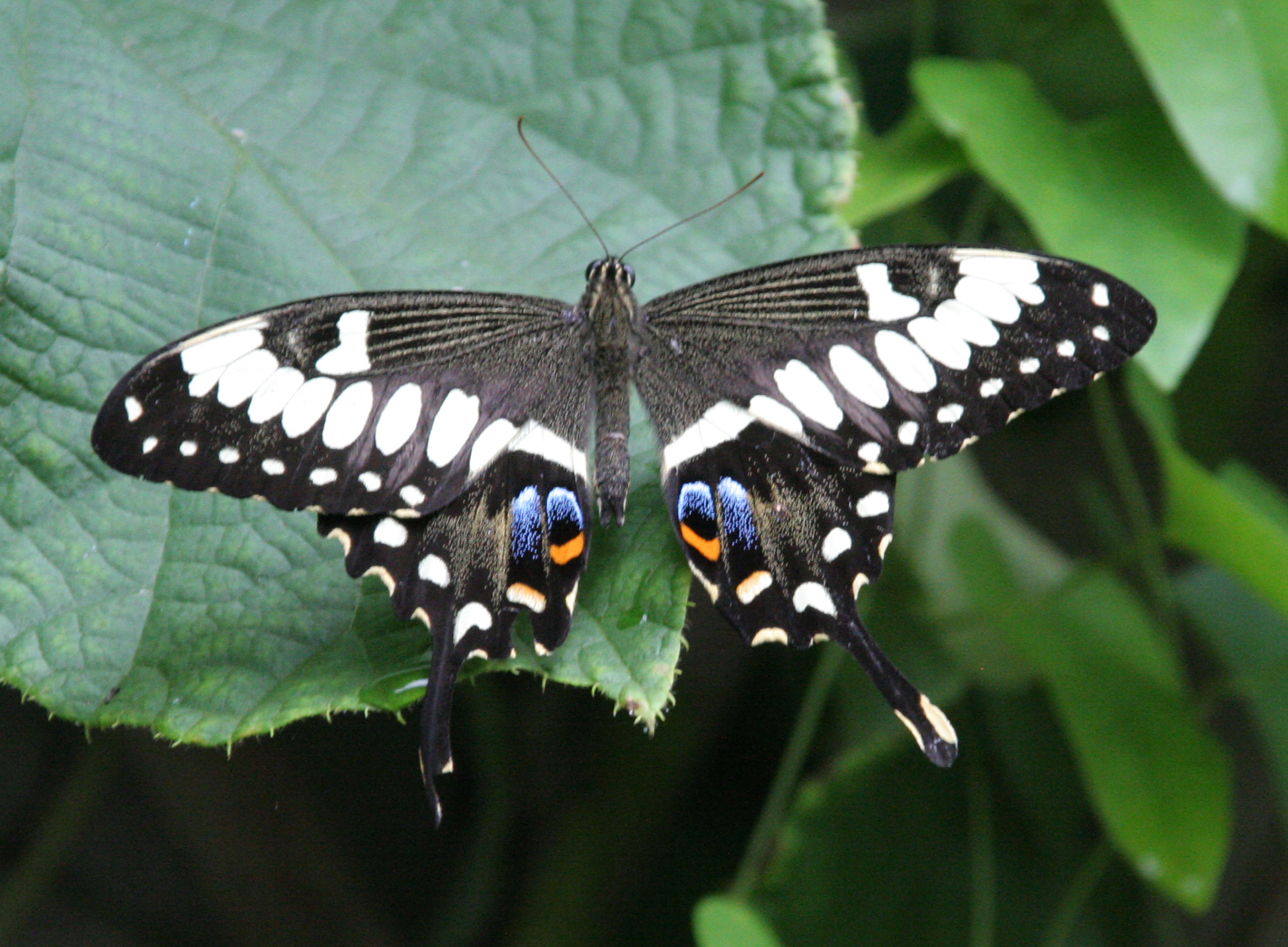
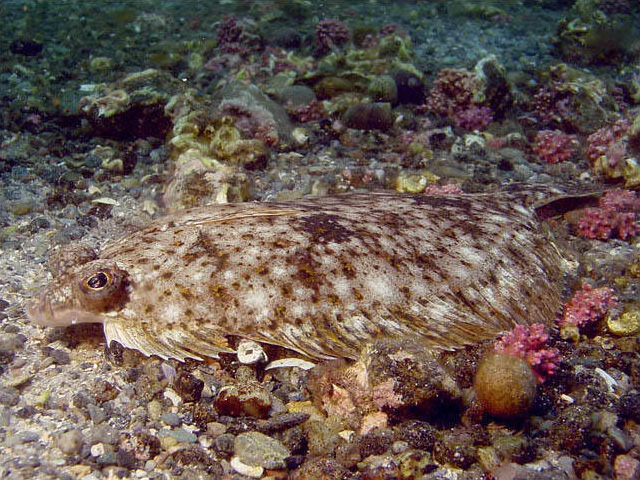
SPIRITUALITY SCIENCE - THE ART OF KNOWING : AT A FUNDAMENTAL LEVEL, LIFE AND LIVING IS ABOUT KNOWING MATTER AS SELF OR NON-SELF. THIS IDENTIFICATION OF MATTER INVOLVES THE ABILITY TO RECOGNIZE MOLECULES OF MATTER . TO LEARN THE ART OF KNOWING, MAN HAS TO KNOW ABOUT THE MOLECULAR BASIS FOR EXISTENCE.
SPIRITUALITY SCIENCE – THE ART OF KNOWING : AT A FUNDAMENTAL LEVEL, LIFE AND LIVING IS ABOUT KNOWING MATTER AS SELF OR NON-SELF. THIS IDENTIFICATION OF MATTER INVOLVES THE ABILITY TO RECOGNIZE MOLECULES OF MATTER . TO LEARN THE ART OF KNOWING, MAN HAS TO KNOW ABOUT THE MOLECULAR BASIS FOR EXISTENCE .

To learn the Art of Knowing, man has to know that the physiological basis for existence is dependent upon Innate Knowledge with which the human organism recognizes matter( such as molecules of Oxygen, or energy-yielding molecules of food substances) and further exploits matter and energy to support and maintain its living functions. To the same extent, the human organism defends its own existence by recognizing the molecules as Self or Non-Self. The immune defense mechanisms that the human body uses to recognize viruses, bacteria, protozoa, and other foreign antigens involve the recognition of molecules.

SPIRITUALITY SCIENCE - THE ART OF KNOWING : WHAT IS THE MYSTERY OF LIFE ??? CAN MYSTICISM HELP TO KNOW THE HIDDEN TRUTHS ABOUT LIFE ??? WHAT IS THE MYSTICAL INFLUENCE OF TIME THAT DRIVES THE AGING PHENOMENON ???
SPIRITUALITY SCIENCE – THE ART OF KNOWING : WHAT IS THE MYSTERY OF LIFE ??? CAN MYSTICISM HELP TO KNOW THE HIDDEN TRUTHS ABOUT LIFE ??? WHAT IS THE MYSTICAL INFLUENCE OF TIME THAT DRIVES THE AGING PHENOMENON ???

What is the Mystery of Life ??? Can Mysticism help to know the hidden truths about Life ???  Mysticism is the doctrine about knowing reality through intense contemplation and other secret practices that involve mental concentration. Mysticism is found in several religions of the world. The criteria and conditions for mystical experience vary depending on the cultural traditions, but there are three common attributes of Mysticism : 1. The experience is immediate and overwhelming, divorced from the common experience of reality, 2. The experience or the knowledge imparted by it is self-authenticating, without need of further evidence or justification, and 3. The experience is ineffable, its essence incapable of being expressed or understood outside the experience itself. The focus of Mysticism is not about the physical reality called existence but it is about a direct and immediate experience of the sacred, or the knowledge derived from such an experience. Mysticism is about the practices of those who are initiated into the mysteries, the practice of putting oneself into direct relation with God, the Absolute or any Unifying Principle of Life.  Mystics believe that it is possible to achieve communion with God through their mystic practices. There are two general tendencies in the practice of Mysticism; 1. To regard God as outside the ‘Soul’ which rises to God by successive stages, and 2. To regard God as dwelling within the ‘Soul’ to be found by delving deeper into one’s own reality. Mysticism is extended to Magic, Occultism, and the Esoteric. Magic may involve the use of charms, spells, and rituals in seeking or pretending to cause or control events or govern certain natural and supernatural forces. Occultism is about hidden, concealed, and secret information that could be beyond human understanding. The Esoteric is about confidential, private, or withheld information that is intended for or understood by only a chosen few and as such the knowledge or information is beyond the understanding of most people. The rituals of Mysticism include meditation, prayer, and a variety of ascetic disciplines. If Mysticism is about Knowing the Secrets of Life, it does not demand the learning of Human Anatomy or Human Physiology, or any of the principles of Biology.

SPIRITUALITY SCIENCE - THE ART OF KNOWING : HOW DOES THE HUMAN ORGANISM KNOWS ABOUT ITS OWN LIFETIME ??? THE AGING PHENOMENON IS RELATED TO MAN'S PERCEPTION OF TIME. HOW IS TIME CONTROLLING OR OPERATING LIFE EXPERIENCE ???
SPIRITUALITY SCIENCE – THE ART OF KNOWING : HOW DOES THE HUMAN ORGANISM KNOWS ABOUT ITS OWN LIFETIME ??? THE AGING PHENOMENON IS RELATED TO MAN’S PERCEPTION OF TIME. HOW IS TIME CONTROLLING OR OPERATING LIFE EXPERIENCE ???

 Bergson claimed that the Reality of Time is not a Unit of Measurement but duration in terms of life experience. How does the human organism knows about its own lifetime??? The human organism experiences the Aging Phenomenon which is related to man’s perception of Time. How is Time controlling or operating life experience ???  The physical reality called existence is controlled, is operated, or is directly influenced by events in man’s external environment, and the most important change in the environment is the alternating periods of light and darkness called Day and Night.

SPIRITUALITY SCIENCE - THE ART OF KNOWING : THE HUMAN ORGANISM RUNS ITS LIVING FUNCTIONS AS IF OPERATED BY A PRECISE TIMEKEEPING DEVICE OR BIOLOGICAL CLOCK. MAN'S EXPERIENCE OF TIME IS RELATED TO SUN'S APPARENT MOTIONS IN THE SKY. MAN KNOWS THE REALITY OF TIME BECAUSE OF AN ILLUSION THAT CAUSES DAY AND NIGHT GIVING MAN THE PERCEPTION OF SUN'S APPARENT MOTION WHILE CONCEALING THE REALITY OF SUN'S MOTION IN THE MILKY WAY GALAXY.
SPIRITUALITY SCIENCE – THE ART OF KNOWING : THE HUMAN ORGANISM RUNS ITS LIVING FUNCTIONS AS IF OPERATED BY A PRECISE TIMEKEEPING DEVICE OR BIOLOGICAL CLOCK. MAN’S EXPERIENCE OF TIME IS RELATED TO SUN’S APPARENT MOTIONS IN THE SKY. MAN KNOWS THE REALITY OF TIME BECAUSE OF AN ILLUSION THAT CAUSES DAY AND NIGHT GIVING MAN THE PERCEPTION OF SUN’S APPARENT MOTION WHILE CONCEALING THE REALITY OF SUN’S MOTION IN THE MILKY WAY GALAXY.

Bergson may have used the term life force to describe the vital, animating Principle called Spirit or Soul. In my view, Soul is an animating Principle for it is fundamentally related to the functional ability called Knowing. Soul is a vital Principle for it is fundamentally related to the functional ability called Nutrition, the power of a living organism to exploit matter found in its external environment. The functional attributes of Soul are related to Knowledge that is inherent or Innate and not acquired as learned experience. Soul describes man’s intuitive ability to know the fact of his own existence in a given environment and to maintain that existence while experiencing the aging process under the external influence called Time.

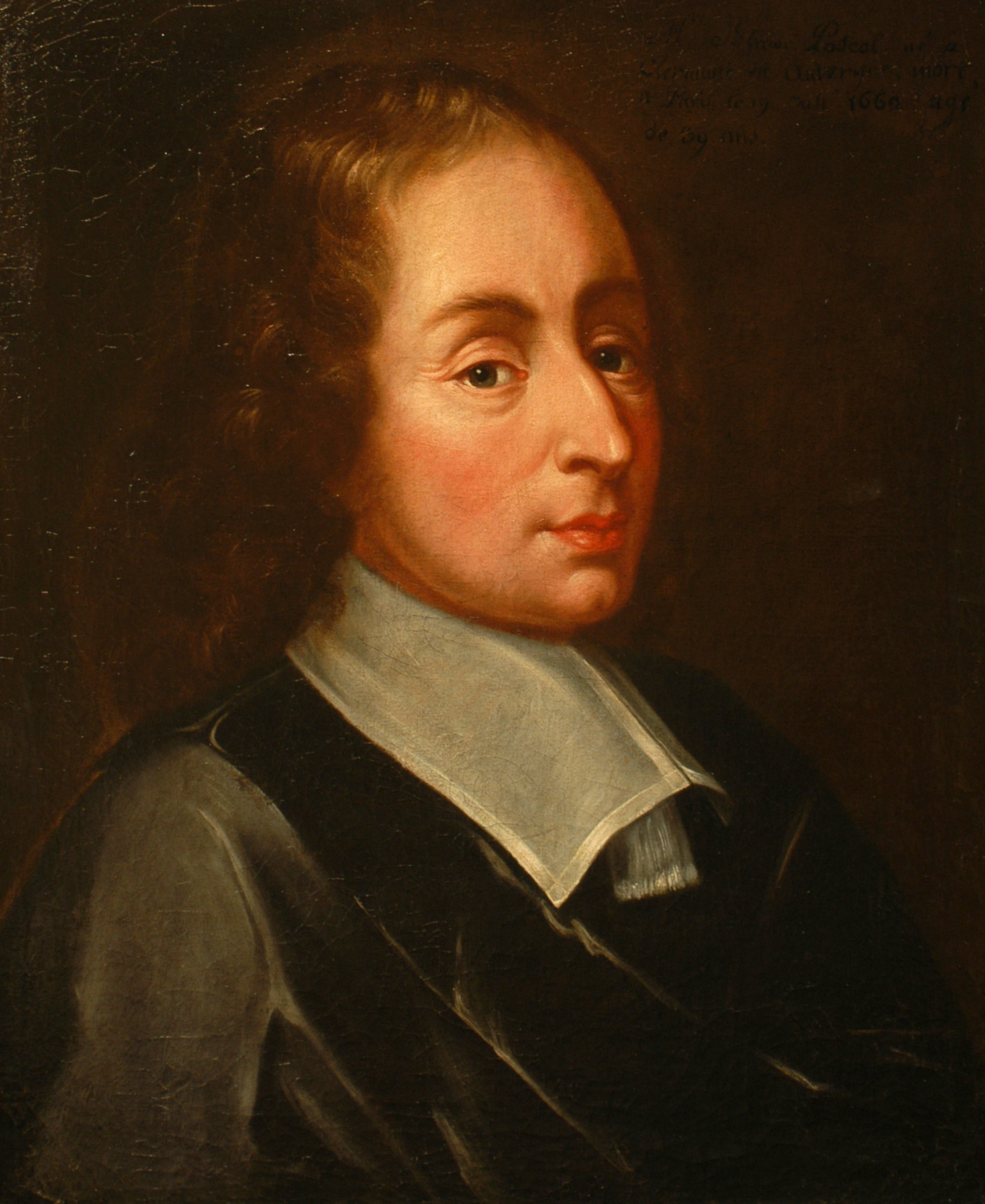
SPIRITUALITY SCIENCE - THE ART OF KNOWING : BLAISE PASCAL(1623 - 1662), FRENCH SCIENTIST AND RELIGIOUS PHILOSOPHER CLAIMED THAT MAN IS INFINITELY REMOVED FROM COMPREHENDING THE EXTREMES ; THE END OF THINGS AND THEIR BEGINNINGS ARE HIDDEN.
SPIRITUALITY SCIENCE – THE ART OF KNOWING : BLAISE PASCAL(1623 – 1662), FRENCH SCIENTIST AND RELIGIOUS PHILOSOPHER CLAIMED THAT MAN IS INFINITELY REMOVED FROM COMPREHENDING THE EXTREMES ; THE END OF THINGS AND THEIR BEGINNINGS ARE HIDDEN .

While writing about The Art of Knowing, I would like to remind my readers that certain things could be hidden from the human perception and man has no ability to know things even if he knows the reality of those things. Blaise Pascal, the French scientist who founded the modern Theory of Probability had claimed : “Man is a nothing in comparison with the Infinite, an All in comparison with the Nothing, a mean between Nothing and Everything. Since he is infinitely removed from comprehending the extremes, the end of things and their beginnings are hopelessly hidden from him in an impenetrable secret; he is equally incapable of seeing the Nothing from which he was made, and the Infinite in which he swallowed up.”

SPIRITUALITY SCIENCE - THE ART OF KNOWING : WHICH HAS COME FIRST ??? THE CHICK OR THE EGG ??? SPIRITUALITY IS NOT ABOUT KNOWING THE BEGINNING OR THE ENDING OF THINGS. IT IS ABOUT THINGS THAT EXIST IN THE PRESENT.
SPIRITUALITY SCIENCE – THE ART OF KNOWING : WHICH HAS COME FIRST ??? THE CHICK OR THE EGG ??? SPIRITUALITY IS NOT ABOUT KNOWING THE BEGINNING OR THE ENDING OF THINGS. IT IS ABOUT THINGS THAT EXIST IN THE PRESENT.

Which came first, the Chick or the Egg ??? Spirituality Science is not about knowing the Beginning or the Ending of things. Spirituality is about things that exist in the ‘Present’. The Physical Reality of Man’s Subjective and Objective experience of his lifetime is a functional attribute of Soul or Spirit which gives Man the cognitive ability called Knowing . If Devotion is used as a scientific method of Inquiry, ‘The Art of Knowing’ is about Knowing Man as a Spiritual Being.

Related Articles:

SPIRITUALISM – SELF AND THE KNOWING-SELF

WHAT IS LIFE ? LIFE IS KNOWLEDGE IN ACTION

WHOLE SPIRITUALITY – WHOLE ILLUMINATION


WHOLE SPIRITUALITY – WHOLE ILLUMINATION

SPIRITUALITY SCIENCE – LIGHT OF LIGHTS – THE PHENOMENON OF ILLUMINATION :

WHOLE SPIRITUALITY - WHOLE ILLUMINATION: TRIBUTE TO DR. SARVEPALLI ANANTA PADMANABHA RAO, M.S., PROFESSOR OF SURGERY AND FORMER DIRECTOR OF MEDICAL EDUCATION, GOVERNMENT OF ANDHRA PRADESH MEDICAL AND HEALTH SERVICES.
WHOLE SPIRITUALITY – WHOLE ILLUMINATION: TRIBUTE TO DR. SARVEPALLI ANANTHA PADMANABHA RAO, M.S., PROFESSOR OF SURGERY AND FORMER DIRECTOR OF MEDICAL EDUCATION, GOVERNMENT OF ANDHRA PRADESH MEDICAL AND HEALTH SERVICES.

Light is the source of illumination. Mind is the observer of illumination. Knowledge is the object of illumination. The phenomenon of Knowing involves Unity between source, object known and its Knower.

SPIRITUALITY SCIENCE - LIGHT OF LIGHTS - THE PHENOMENON OF ILLUMINATION : THE LIGHT IS THE SOURCE OF ILLUMINATION. THE KNOWLEDGE IS THE OBJECT OF ILLUMINATION. THE MIND IS THE OBSERVER OF ILLUMINATION. THERE IS UNITY BETWEEN THE SOURCE, THE OBJECT KNOWN, THE KNOWER TO MANIFEST THE PHENOMENA OF KNOWING.
SPIRITUALITY SCIENCE – LIGHT OF LIGHTS – THE PHENOMENON OF ILLUMINATION : LIGHT IS THE SOURCE OF ILLUMINATION. KNOWLEDGE IS THE OBJECT OF ILLUMINATION. MIND IS THE OBSERVER OF ILLUMINATION. THERE IS UNITY BETWEEN SOURCE, OBJECT KNOWN, AND KNOWER TO MANIFEST THE PHENOMENA OF KNOWING.

I am pleased to share an article titled “Light of Lights” published by Dr. Sarvepalli Anantha Padmanabha Rao, M.S. who served for many years as a Professor of Surgery, and as Director of Medical Education in the Government of Andhra Pradesh Medical and Health Services. It is important to know the views shared by the traditional thinkers of India. Indian Schools of Thought such as “ADVAITA”(NON-DUALISM) have formulated their theories about the true or real ‘essence of man or “SELF”(ATMAN) that may have independent existence while it is totally detached from the Body, and Mind of its thinker. While MYSTICISM is a part of various religious traditions, I am asking my readers to seek “WHOLE ILLUMINATION” by investigating and by exploring the basis for man’s existence in the natural world. Man needs connection, association, partnership, relationship, bonding, cooperation, assistance, patronage, or UNITY with a source of ENERGY that exists in the man’s external environment. Man can use introspection, meditation, or contemplative prayer in illuminating man’s “Inner World” or seek “Inner Vision”, a vision or illumination that describes Identity of man’s true or real “SELF'(ATMAN) and its perfect, complete, and wholesome Divine Nature.

THE PHENOMENON OF ILLUMINATION – THE PHENOMENON OF KNOWING:

SPIRITUALITY SCIENCE - LIGHT OF LIGHTS - THE PHENOMENON OF ILLUMINATION : THE ILLUMINED MIND KNOWS THE KNOWER, THE KNOWLEDGE, AND THE SOURCE OF KNOWLEDGE.
SPIRITUALITY SCIENCE – LIGHT OF LIGHTS – THE PHENOMENON OF ILLUMINATION : THE ILLUMINED MIND KNOWS THE KNOWER, THE KNOWLEDGE, AND THE SOURCE OF KNOWLEDGE.

The term illumination describes lighting or light. It is often used as the act or process of making something clearer or brighter or as a device for doing so. The word ‘illuminating’ or ‘illuminated’ is often applied to a clarification or explanation that sheds light on a subject that needs careful interpretation of information. In Physics, illumination is about intensity of light per unit of area; the luminous flux per unit area at any point on a surface exposed to incident light. It is also called ‘ILLUMINANCE’. However, in Biology, the phenomenon of Illumination requires the study of Optics, Photoreception, and Photochemistry. The biological processes that involve the response of a living thing to the Light stimulus need to be stated as Photochemical Reactions which could be energy dependent and involve the use of chemical energy provided by molecules of Adenosine Triphosphate(ATP). The Phenomenon of ‘ILLUMINATION’ in Biology requires operation of three conditions; 1. The Source of Light or Lighting, 2. The Object that is Illuminated, and 3. The Observer who has the Sensory Perception called Vision, or the ability called Photoreception to acknowledge the phenomenon that is observed. Using the nature of photochemical reaction that is observed, living things can be broadly classified into two kinds; 1. Plants that respond to Light stimulus to trap its radiant Energy but have no Sensory Perception called Vision, and 2. Animals(man included) that have the Sensory Perception called Vision but do not have ability to trap the Light  Energy. For human existence, we need all those three conditions, 1. The Sun as the Source of Light, 2. The Plants that trap the radiant energy of Sunlight using their ability called Photoreception, and 3. The man or Purusha who uses the ability called Sensory Perception or Vision and interprets that Light is God.

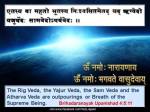
SPIRITUALITY SCIENCE - LIGHT OF LIGHTS - THE PHENOMENON OF ILLUMINATION : FOR MAN TO DESCRIBE HIS EXPERIENCE CALLED VISION, OR INNER VISION, APART FROM A SOURCE OF EXTERNAL OR INTERNAL LIGHT, NEEDS THE SUPPORT OF THE VITAL FUNCTION CALLED BREATHING(PRANA) THAT ESTABLISHES MAN AS A BREATHING LIVING THING(PRANI OR PRANAVANTA).
SPIRITUALITY SCIENCE – LIGHT OF LIGHTS – THE PHENOMENON OF ILLUMINATION : FOR MAN TO DESCRIBE HIS EXPERIENCE CALLED VISION, OR INNER VISION, APART FROM A SOURCE OF EXTERNAL OR INTERNAL LIGHT, NEEDS THE SUPPORT OF THE VITAL FUNCTION CALLED BREATHING(PRANA) THAT ESTABLISHES MAN AS A BREATHING LIVING THING(PRANI OR PRANAVANTA).

The above picture image of a verse from Brihadaranyak Upanishad 4:5:11 helps us to understand the nature of the vital function of Breathing and Respiration which is the physiological mechanism that man uses to oxidize food substances and derive energy which he further uses for his physical and mental work. If Vedas and Holy Scriptures are seen as the Source of knowledge, transmission of that Knowledge involves the use of Breathing. If “Knowing” is compared to the phenomenon of ‘ILLUMINATION’, the act of Knowing will only be possible if there is Unity between God, the Source of Knowledge, Knower, the Individual called JEEVA who performs all his living functions because of the Knowledge implanted in his substance that makes him a Sentient or Sensible thing, or establishes him as the “Knowing-Self.” The natural phenomenon of Life and Living can be defined as ‘Knowledge in Action’. In Indian tradition the “SELF” or “ATMAN” is the source of Inner Light that illuminates the entire human body. I am suggesting that the Light called SELF or ATMAN illuminates by making it possible for man to maintain his connection with an external source of energy present in the environment even while man may find perfect Identity with God through the process called Inner Vision, Introspection, Meditation, or Contemplative Prayers with an attitude of “Whole Detachment” with all things present in the external world. I like the presentation “LIGHT OF LIGHTS” for it nicely explains the thoughts of Shankara. The author concludes his presentation with a final statement, “TAT ASMI PRABHO.” It describes the Unity(ASMI) between man(TAT) and the LORD(PRABHU). Man’s ability of Sensory Perception called Vision, and the ability of Inner Vision are of secondary importance as Existence depends directly on the act of Breathing and the LORD provided Knowledge by performing that act of Breathing.

Rudranarasimham Rebbapragada
Ann Arbor, MI 48104-4162, USA
BHAVANAJAGAT.ORG

LIGHT OF LIGHTS

SPIRITUALITY SCIENCE - THE LIGHT OF LIGHTS - THE PHENOMENON OF ILLUMINATION : DR SARVEPALLI ANANTHA PADMANABHA RAO, M.S., PROFESSOR OF SURGERY, DIRECTOR OF MEDICAL EDUCATION, GOVERNMENT OF ANDHRA PRADESH, MEDICAL AND HEALTH SERVICES.
SPIRITUALITY SCIENCE – THE LIGHT OF LIGHTS – THE PHENOMENON OF ILLUMINATION : DR SARVEPALLI ANANTHA PADMANABHA RAO, M.S., PROFESSOR OF SURGERY, DIRECTOR OF MEDICAL EDUCATION, GOVERNMENT OF ANDHRA PRADESH, MEDICAL AND HEALTH SERVICES.

http://advaita-academy.org/blogs/sarvepalli.ashx#

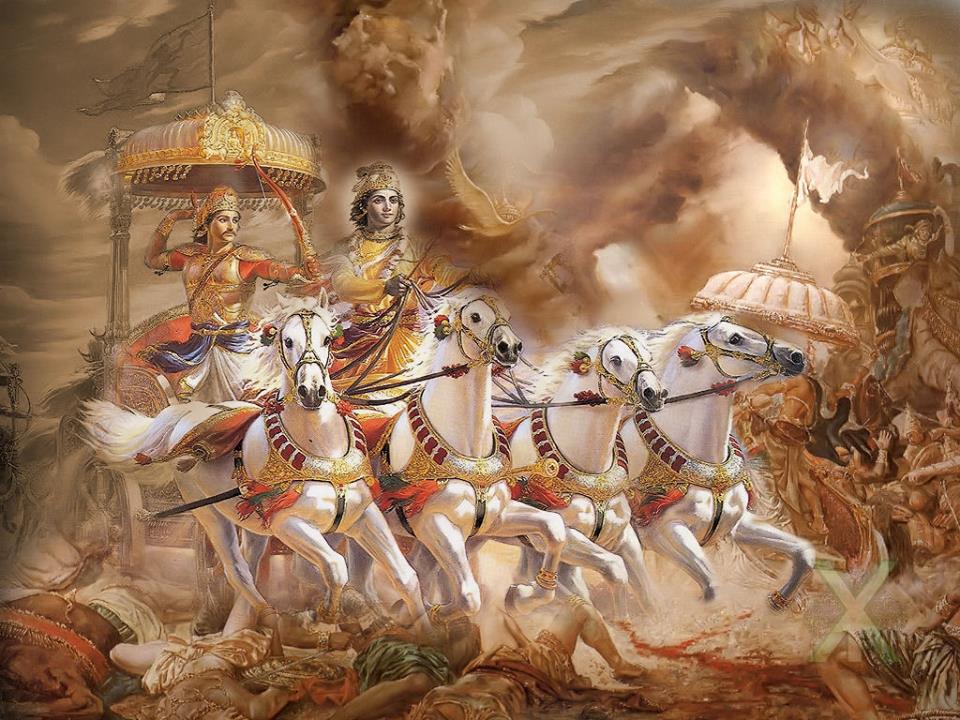
SPIRITUALITY SCIENCE - LIGHT OF LIGHTS - THE PHENOMENON OF ILLUMINATION : THE DIVINE SONG CALLED THE BHAGAVAD GITA ILLUMINATED THE MIND OF PRINCE ARJUNA WITH KNOWLEDGE AND THE SOURCE OF ALL KNOWLEDGE.
SPIRITUALITY SCIENCE – LIGHT OF LIGHTS – THE PHENOMENON OF ILLUMINATION : THE DIVINE SONG CALLED THE BHAGAVAD GITA ILLUMINATED THE MIND OF PRINCE ARJUNA WITH KNOWLEDGE AND THE SOURCE OF ALL KNOWLEDGE.

Light illumines manifold objects in varying degrees of darkness; that is its property. Sources of such light may be external or internal to us. Examples of the former class are well-known, such as Sun, moon, fire, various kinds of lamps etc; The latter class, the internal, would be the psychic apparatus of man, comprising the sense organs, intelligence, intuition and above all the transcendental ‘Oversoul’ of R W Emerson the American philosopher. Vedanta too subscribes to such a transcendental super-conscious entity, illumining all, comprehending all and all-encompassing supreme Brahman. Flashes of intuition reveal discoveries which remain obscure prior to such overpowering experiences. Archimedes, crying out ‘eureka – eureka’ and Newton, when the apple fell and the law of gravitation revealed are instances of such intuitions . A deeper mental cloud prevents one from knowing who one exactly is in the ultimate analysis.

There is, in Greek mythology, a river named ‘Lethe’ whose waters, when drunk, would make the drinker profoundly forgetful.. One would forget, who one was, the ‘whence and wherefore’ of one’s own very self. A great philosopher likened our human predicament, to such a state of congenital amnesia, in which we lost our moorings, our “original innocence” as it were. Nescience is the technical term used for this state of primordial ignorance, which is said to cover one’s wisdom, ‘like smoke shrouds the fire or as dust sullies a mirror or as the womb envelops an embryo’ as th bhagavadgiitaa puts it. This is the ultimate darkness which needs for its dispelling, no less a light than that of the ‘Lord’, quoted in the GITA chapterXI-12 ever so stunningly – “if the light of a thousand suns were to blaze forth in the sky all at once, that might resemble the splendour of that exalted Being” – nothing short of an ‘apocalypse’, as it were, a revelation, of something not previously known or realized. Oppenheimer, the nuclear physicist, whose name is associated with the first atom bomb and who was a witness to its detonation.was so awe-struck at the sight that this line of the gItA chapter XI-32 flamed in his mind ” I am the full-blown, the all-destroying Time “. It was an indubitable intimation from the depths of his being and not much later, his intuitive insight was proved right, by the nuclear holocaust, the mayhem and the destruction at Hiroshima and Nagasaki it was cataclysmic in proportion

To Sankara, that transcendental spiritual genius, is ascribed a one-stanza poem, by name, ‘ekashlokI’. In it, is encapsulated the pith, the quintessence of the celebrated “mahAvAkya’s or the four great Vedic statements, called as such in the Advaita Vedanta. They are culled one from each of the four Vedas those statements or rather ‘truths’ are

a) ” praGYAnam Brahma, (Rigveda) pristine consciousness is Brahman.

b) ayam aatmaa Brahma (Atharva veda) – consciousness in all its apparent transformations is Brahman,

c) “tat tvam asi” (Samaveda)- You are, in essence, that consciousness, the eternal nitya, the unsullied shuddha, the fully awakened buddha, and unfettered – mukta ; the corollary follows that you are not the ignorant embodied jiiva, which you imagine you are.

d) (“aham Brahma asmi ” (Yajurveda) I am indeed that all-encompassing consciousness

It is with considerable trepidation that I have dared to translate the ‘mahaavaakya’s for fear that they may suffer the ‘noble transmutation from gold to lead’, in the process.

The order in which they are recounted here is not the temporal order in which they occur in the veda but they seem, to me, to be the order adopted by Sankara in this small ‘upadesha’ work, namely, the ekashlokii ’ As will become clear in the sequel, what is attempted here is not a word-for-word translation of the Sanskrit texts, not even a paraphrase but rather an unfolding of the traditional thought couched in the highly compressed poem

Before reproducing the Sanskrit verse, a short anecdotal account of the poignant scenario in which it is set, would be well in order, One might be tempted to ask ‘why only one verse-an ‘ekashlokI? Had not Sankara composed his shatashlokI of hundred verses and his upadesha sAhasrI of thousand teachings ? After all, what were the extenuating circumstances? As though in answer to such questions, a story is recounted thus: Sankara, on one of his peregrinations, chanced upon a spiritual aspirant who was in the throes of death. bemoaning his fate of his having ro die before he could get his ‘beatitude’. The compassionate master had empathy with the man’s plight and knowing well the shruti declaration that “he who departs from this world without realising the ‘axara‘, the Imperishable entity, is a veritable wretch a ‘kRRipaNa“, the master devised for him the shortest discourse and the ‘ekashlokI was the result. The verse was composed in a frisky meter named ‘shArdUla vikrIditam’ which has four quarters of 19 syllables each, to enable him to pack all the punch at his command, in a single stanza. This imaginative story illustrates the truth that, when an exceptional master and a pupil desperately thirsting for the ‘saving wisdom’ come together, spiritual enlightenment can not be far behind.

The poem runs as follows :-

kiMjyotistavabhAnumAnahanimeraatraupradiipAdikaM.

syAdevaMravidIpadarshanavidhaukiMjyotirAkhyaahi me.

cakShustasyanimiilanAdisamayekiMdhiirdhiyodarshane.

kiMtatrAhamatobhavAnparamakamjyotistadasmiprabho.

Unless the composition is split up at the right places, it would seem baffling at the first sight, to a beginner. The piece is in the form of a catechism or what in modern pedagogy would be called a ‘one on one’ interactive session. There are five question-answer pairs, one affirmation and one authoritative live-wire exhortation of the teacher and a final total concurrence, by the disciple, after his instant transformation. We shall now proceed with what may, euphemistically, be termed an exegesis of the verse. As will be seen in the sequel, what is attempted here is not a word-to-word rendering in to English, nor even a mere paraphrasing of the work; it is rather an attempt to enter to, and to bring out the traditional import of this Vedantic composition, to the extent my limited faculties permit. Much pertinent digression from the text has been indulged in, in the exposition.

The break up of the verse, is as follows :-

Q 1 :kim jyotih tava ? – what is your illuminator? By this question, the teacher is trying to ascertain a ‘baseline’, as it were, of the pupil’s understanding so as to lead him thence to higher levels. This was a well established methodology of spiritual instruction in the days of yore. It may be noted here that the question is a general one with no adjuncts of time or place specified. The student however thinks the question pertains to daytime and to things within his visual range.

A: bhhaanumaan ahani me – The daylight of the Sun sir. This answer establishes that the seeker has his vision riveted on the external objects – the out-going vision, the so-called ‘paraak pasyati’ concept of the KaThopaniShad.

Q 2 : raatrau ? what after Sun-down ? what illumines then ?

A: pradiipa aadikam– light of the various kinds of lamps which includes illumination from the moonlight, bonfires, lighted torches et cetera; it may be noted that the field being covered is still the outer world.

Affirmation : syaad evam. rightly so my dear; here the guru seems to be saying to himself “ Oh my! your answers are correct as far as they go; but they do not go very far. Here is the next question:

Q 3 Ravi diipa darshana vidhau kim jyotih ? Akhyaahi me – Now tell me what enables you to visualize the objects so illumined by the Sun, the lamps etc.Here the preceptor is shifting focus from the outer to the inner world of the mind. Even the sun, the lamps etc. stand in the relation of visible objects to the perceiving eye.

A: caxuH– “My eye, sir, is the perceiving light in this context” Now the student is made to understand the eye as the window to his inner cognitive apparatus – the mind.

Q4 : tasya nimiilana adi samaye ? If your eyes are shut, what then? The reasons for the shut-down may be many; one may choose to turn a blind eye like Nelson or to give a more noble example, one may actually be blind like Helen Keller. ‘ The word aadi’ in the Sanskrit original in the above question may include a legion instances The guru is taking the student in to deeper waters here, to turning his mind’s eye inward and enable him to watch the gyrations of his own mind

A: dhiiH, sir, it is my intellect that provides me the illumination necessary for my purposes, I can think thoughts that would navigate the scenes for me

Q 5: dhiyaH darshane (kim) ? you are right again my son! But thought is like a spring or a fountain. There must be some faculty to get to its mainspring its source as it were What ultimate light is it that stands as a ‘witness’ or ‘sAxI’ as it is technically termed, to your cognitive equipment?

A: ‘tatra aham ’ sir, Shorn of the baggage of all acquired accretions, appurtenances and appearances – in short, of all objective super-impositions I stand in all my majestic aloofness, and isolation (kaivalya). as ‘Myself’.

The great spiritual warrior in Sankara has finally drawn the bitterest foe of his pupil -‘the beginning-less spiritual ignorance’ to the edge of the precipice. with a view to pushing it over to its final annihilation. With a solemn and apocalyptic, coup de maître – a masterstroke, he is going to deliver the final push the student would be led to his beatitude meaning perfect blessedness or happiness. In devising this stepwise instruction Sankara has trodden the path of the ancient sages, established for ages. The famous dialogue between the sage YaaGYavalkya and Janaka the king in the BRRihadaaranyaka Upanishad chapter iv-3, the kaTha Upanishad III-10 as also the Bhavadgiitaa chapter III-42 have laid down the same rising hierarchical levels of consciousness viz – sense objects, sense organs, intelligence, intellect and the highest of all the PuruSha- the non plus ultra, higher than Which there can be nothing. To use the those very Sanskrit words pregnant with proven meaning – proven to mystic seers of all creeds and climes in their deepest visions down the millennia – saa kaashThaa, saa paraa gatiH. THAT is the summum bonum the last post

And what may that stupendous, staggering declaration be ? Let us see that in the next line:-

THE FINAL PUSH : ataH bhavaan paramakam jyotiH Therefore my child, you are verily that Light of lights, which the Vedanta asserts in stentorian voice and peremptory tone- tat tvam asi – THAT THOU ART . It is not the denoted dictionary meanings of the words of the scriptural testimony that will bring the peace that passes understanding but the inner experience of the truth which is transforming in nature

The finish : tat asmi prabho !!! Oh my master I am indeed that Light of Lights because I have just experienced that ecstatic mystic state, by your bounteous grace. It is another matter that the experience of that state can communicated in words only after descending somewhat from those Olympian heights. But at all events he has been raised to that dizzy altitude of sage-hood, the memory of which shall stamp its hallmark on every thought word and deed ever-after.

Related Articles:

WHAT IS LIFE – LIFE IS KNOWLEDGE IN ACTION

WHOLE DESIGNER – PHOTOCHEMISTRY

WHOLE DESIGNER – PHOTORECEPTION

WHOLE DESIGNER – CHLOROPHYLL

WHOLE DUDE – WHOLE DESIGNER

Whole Dude – Whole Designer – Chlorophyll

WholeDude-WholeDesigner-Chlorophyll: Cyanobacterial chains(Blue-Green Algae) appear Blue-Green as the Green pigment is masked by the presence of other pigments. They could be some of the oldest living organisms of planet Earth. Their use of photosynthesis to convert Carbon Dioxide into organic compounds with the release of Oxygen into atmosphere serves a basic purpose to support the existence of other living organisms that depend upon Oxygen.
Whole Dude-Whole Designer-Chlorophyll: Cyanobacterial chains (Blue-Green Algae) appear Blue-Green as the Green pigment is masked by the presence of other pigments. They could be some of the oldest living organisms of planet Earth. Their use of photosynthesis to convert Carbon Dioxide into organic compounds with the release of Oxygen into atmosphere serves a basic purpose to support the existence of other living organisms that depend upon Oxygen.
WholeDude-WholeDesigner-Chlorophyll: These filaments of Cyanobacteria are thought to be algae in the past. We speak about the Theory of Evolution and in reality the Chlorophyll molecules have retained their molecular structure over billions of years without any apparent modification.
Whole Dude-Whole Designer-Chlorophyll: These filaments of Cyanobacteria are thought to be algae in the past. We speak about the Theory of Evolution and in reality the Chlorophyll molecules have retained their molecular structure over billions of years without any apparent modification.
WholeDude-WholeDesigner-Chlorophyll: Chlorella vulgaris, spherical, unicellular organisms with Chlorophyll pigment have no capacity called visual perception. However, man can easily recognize the green coloration and can look for the presence of Chlorophyll. In the final analysis, the function of the design is not simply a matter of producing visual satisfaction.
Whole Dude-Whole Designer-Chlorophyll: Chlorella vulgaris, spherical, unicellular organisms with Chlorophyll pigment have no capacity called visual perception. However, man can easily recognize the green coloration and can look for the presence of Chlorophyll. In the final analysis, the function of the design is not simply a matter of producing visual satisfaction.

The word Chlorophyll is derived by combining two Greek words; Chloros means green, and Phyllon means a leaf. It refers to the green pigment found in the Cyanobacteria (Blue-Green algae), and in the chloroplasts of Grass-Green algae, and plant cells. Chlorophyll occurs in five forms; especially Chlorophyll a, and Chlorophyll b. Chlorophyll a is the most widely distributed form in nature.

WholeDude-WholeDesigner-Chlorophyll: This simple, unicellular, flagellate organism called Chlamydomonas, Grass-Green algae, Division Chlorophyta, contains the photosynthetic pigments Chlorophyll a and b, and Xanthophyll in the same proportions as those seen in other higher plants.
Whole Dude-Whole Designer-Chlorophyll: This simple, unicellular, flagellate organism called Chlamydomonas, Grass-Green algae, Division Chlorophyta, contains the photosynthetic pigments Chlorophyll a and b, and Xanthophyll in the same proportions as those seen in other higher plants.
WholeDude-WholeDesigner-Chlorophyll: Chlorophyll pigments are found in all green plant cells and they are the most important biomolecules in nature.
Whole Dude-Whole Designer-Chlorophyll: Chlorophyll pigments are found in all green plant cells and they are the most important biomolecules in nature.

The pigments of biological tissues that reflect or transmit light are known as biochromes. Apart from causing, or generating color, biochromes play a pivotal role in metabolic processes. Chlorophyll is a nitrogenous biochrome, an organic molecule that contains nitrogen. It is the only substance in nature that has the ability to trap and store the energy of Sunlight. It absorbs light most strongly in the blue portion of the electromagnetic spectrum followed by the red portion. It is a poor absorber of green and near-green portions of the spectrum. The green portion of the spectrum is reflected and thus Chlorophyll appears green.

WholeDude-WholeDesigner-Chlorophyll: Pierre Joseph Pelletier, French chemist worked along with Joseph Bienaime Caventou at Ecole de Pharmaiie Paris and first isolated Chlorophyll in 1817. They established the basis for Alkaloid Chemistry.
Whole Dude-Whole Designer-Chlorophyll: Pierre Joseph Pelletier (1788-1842), French chemist worked along with Joseph Bienaime Caventou (1795-1877) at Ecole de Pharmacie Paris and first isolated Chlorophyll in 1817. They established the basis for Alkaloid Chemistry. They paved the way for the use of chemical compounds found in the nature.
WholeDude-WholeDesigner-Chlorophyll: Joseph Bienaime Caventou(1795-1877), French chemist was the first to isolate Chlorophyll and shares this credit with Pelletier.
WholeDude-WholeDesigner-Chlorophyll: Joseph Bienaime Caventou (1795-1877), French chemist was the first to isolate Chlorophyll and shares this credit with Pelletier.

French chemists, Joseph Bienaime Caventou and Pierre Joseph Pelletier get the credit for first isolating Chlorophyll in 1817. They paved the way for research on natural organic compounds and had established the foundation for Alkaloid Chemistry. They isolated several plant alkaloids like Quinine, Strychnine, Emetine, and Caffeine. The general molecular structure of Chlorophyll was first described by Hans Fischer, a German chemist in 1940. Fischer investigated pigments in blood, bile, and Chlorophyll in leaves. He was awarded 1930 Nobel Prize for Chemistry.

WholeDude-WholeDesigner-Chlorophyll: Hans Fischer(1881-1945), German chemist investigated Chemistry of Pyrrole compounds from which the pigments found in blood, bile, and leaves are derived. He was awarded 1930 Nobel Prize for Chemistry.
Whole Dude-Whole Designer-Chlorophyll: Hans Fischer (1881-1945), German chemist investigated Chemistry of Pyrrole compounds from which the pigments found in blood, bile, and leaves are derived. He was awarded 1930 Nobel Prize for Chemistry.

 Pyrrole describes a class of organic compounds of the heterocyclic series characterized by a ring structure composed of four carbon atoms and one nitrogen atom. In Chlorophyll, four Pyrrole rings (Tetrapyrrole) are joined in a larger ring system known as Porphyrin. Porphyrins are a group of water-soluble, nitrogenous Pyrrole derivatives that combine with either Iron, or Magnesium. Chlorophyll has a Porphyrin ring (Chlorin ring) coordinated to a central Magnesium ion.

WholeDude-WholeDesigner-Chlorophyll: Chlorin ring, Tetrapyrrole Porphyrin Ring called Chlorophyll with central ion of Magnesium.
Whole Dude-Whole Designer-Chlorophyll: Chlorin ring, Tetrapyrrole Porphyrin Ring called Chlorophyll with central ion of Magnesium.
WholeDude-WholeDesigner-Chlorophyll: Robert Burns Woodward(1917-1979) American chemist who worked at Harvard University published a total synthesis of Chlorophyll molecule in 1960. He synthesized many complex natural products. He was awarded 1965 Nobel Prize for Chemistry.
WholeDude-WholeDesigner-Chlorophyll: Robert Burns Woodward (1917-1979) American chemist who worked at Harvard University published a total synthesis of Chlorophyll molecule in 1960. He synthesized many complex natural products. He was awarded 1965 Nobel Prize for Chemistry.

Robert Burns Woodward, American chemist who worked at Harvard University determined the structure of organic compounds such as Penicillin, Terramycin, and Aureomycin. During 1940s, he had synthesized many complex natural products including Quinine, Cholesterol, Cortisone, Strychnine, Lysergic Acid, Reserpine, Cephalosporin, and Colchicine. He was the first to synthesize Chlorophyll during 1960.

WholeDude-WholeDesigner-Chlorophyll: Three-dimensional view of Chlorophyll molecule.
Whole Dude-Whole Designer-Chlorophyll: Three-dimensional view of Chlorophyll molecule.
WholeDude-WholeDesigner-Chlorophyll: The light absorption spectra of Cholorophyll molecules.
Whole Dude-Whole Designer-Chlorophyll: The light absorption spectra of chlorophyll molecules a and b.

The Chlorophyll molecule is the active part that absorbs the Sunlight. In order to do this job called photo reception, Chlorophyll needs to be attached to the backbone of a very complicated protein. This protein may look haphazard in design, but it has exactly the correct structure to orient the Chlorophyll molecules in the optimal position to enable them to react with Carbon Dioxide, and Water molecules in a very efficient manner. The Chlorophyll photosynthetic pigments performs the light harvesting function because of Chlorophyll-Protein Complex that is part of the Thylakoid Membrane of the Chloroplast, the disc-like structures in which the pigment is found.

WholeDude-WholeDesigner-Chlorophyll: Thylakoid Membrane bound proteins form a Complex with Chlorophyll pigments to perform the photosynthetic function.
Whole Dude-Whole Designer-Chlorophyll: Thylakoid Membrane bound proteins form a Complex with Chlorophyll pigments to perform the photosynthetic function.

Whole Designer – Whole Architect:

Whole Dude – Whole Designer -Chlorophyll: Chlorophyll molecule is the green pigment found in the Chloroplasts of plant cells is uniquely capable of converting active light energy into a latent form(Glucose or Sugar)using the photosynthetic mechanism. Carbon is the central or key element in the compounds of which organisms are composed; the Carbon is derived from the Carbon Dioxide found in atmospheric air or dissolved in water. Plants incorporate Carbon into Carbohydrates and other complex organic molecules. During Respiration or Oxidation, Oxygen combines with portions of Carbohydrate molecule, releasing Carbon in the form of Carbon Dioxide and Water.

Chlorophyll is not simply about generating coloration in plant leaves. It describes the work, the imagination, the inspiration used by a Master Architect who uses matter, energy, time, space, and color in a very creative manner.

The green pigment called Chlorophyll is the only substance in nature able to trap and store the energy of Sunlight. The light absorbed by Chlorophyll molecules is mainly in the red and blue-violet parts of the visible spectrum; the green portion is not absorbed but reflected, and thus Chlorophyll appears Green. The function of Light and Color is that of Creation of Life.

Whole Dude – Whole Colors: The green pigment called Chlorophyll is the only substance in nature able to trap and store the energy of Sunlight. The light absorbed by Chlorophyll molecules is mainly in the red and blue-violet parts of the visible spectrum; the green portion is not absorbed but reflected, and thus Chlorophyll appears Green. The function of Light and Color is that of Creation of Life.

Whole Dude – Whole Artist

WholeDude - Whole Artist  : An artist uses colors with imagination to create forms and to generate a desired visual effect. A "Whole Artist" is a person who creates his own canvass, his own tools, his own pigments, and creates the desired visual effects while the forms that are created have no such creative and cognitive abilities.
Whole Dude – Whole Artist: An artist uses colors with imagination to create forms and to generate a desired visual effect. A “Whole Artist” is a person who creates his own canvas, his own tools, his own pigments, and creates the desired visual effects while the forms that are created have no such creative and cognitive abilities.

The term artist is used to describe a person who works in, or is skilled in the technique of any of the fine arts, especially in painting, drawing, and sculpture. The term artistry describes the artistic ability which includes the use of imagination, a feeling for form, and a feeling for effect.

Whole Dude – Whole Artist: The term artistry describes the artistic ability which includes the use of imagination, a feeling for form, and a feeling for effect.

I am using the term Whole Artist to discover the person who may have used imagination to create forms to produce desired effects while the form itself lacks the cognitive abilities to generate its own form.

Plants may produce flowers of different colors while they essentially lack cognitive abilities to recognize the visual effect of the color they produce. For example, we can examine the colorful hues of Chilean flowers, Mimulus luteus, Mimulus cupreus (Red Emperor), and Mimulus variegatus.

WholeDude - Whole Artist : Chilean Mimulus flowers. Mimulus luteus. Who is the artist that caused this visual effect?
Whole Dude – Whole Artist: Chilean Mimulus flowers. Mimulus luteus. Who is the artist that caused this visual effect?
WholeDude - Whole Artist : Chilean Mimulus flowers. Mimulus variegatus. Who is the artist who produced this visual effect?
Whole Dude – Whole Artist : Chilean Mimulus flowers. Mimulus variegatus. Who is the artist who produced this visual effect?
WholeDude - Whole Artist - The Colors of Chilean Mimulus flowers. Mimulus cupreus(Red Emperor). Who is the artist who produced this visual effect?
Whole Dude – Whole Artist – The Colors of Chilean Mimulus flowers. Mimulus cupreus (Red Emperor). Who is the artist who produced this visual effect?

Arielle Cooley, a researcher at the University of Michigan studied these Chilean Mimulus flowers of different colors and found that the plants make the same type of anthocyanin pigment called cyandin.  The study includes Thin Layer Chromatography Analysis of petal extracts. Each flower produces red-hued anthocyanins and the yellow carotenoids. The two pigment types in combination create the fire-hydrant red spots on the yellow flowers of Mimulus luteus. Cooley concluded the observations with the remark: “Like an artist mixing simple colors of paints on a palette to achieve a specific shade, the Chilean flowers achieve their visual effect using varying proportions of red and yellow pigments.”

WholeDude - Whole Artist : The Colors of Chilean Mimulus flowers. Arielle Cooley, a researcher at the University of Michigan used Thin Layer Chromatography analysis of petal extracts to find the mixing of colors that is needed to produce the visual effects observed by Chilean Mimulus flowers of different hues. Who is the artist that produced these visual effects?
Whole Dude – Whole Artist: The Colors of Chilean Mimulus flowers. Arielle Cooley, a researcher at the University of Michigan used Thin Layer Chromatography analysis of petal extracts to find the mixing of colors that is needed to produce the visual effects observed by Chilean Mimulus flowers of different hues. Who is the artist that produced these visual effects?

Who is the Artist?

Whole Dude – Whole Artist: Who is the Artist?

No single function can explain the coloration of living things. We need a comprehensive theory that predicts the lines and patterns of coloration of plants and animals. An artist’s palette containing only three properly chosen colors is entirely adequate under most circumstances to produce the various visual effects of color that is observed. The optical mechanisms involved in the production of color are complex. Coloration is a dynamic and complex characteristic and the term must be clearly distinguished from the term ‘color’ which only refers to the spectral qualities of emitted or reflected light.

It is apparent that plants, and animals have no cognitive abilities to produce the coloration by which they are recognized. The coloration displayed gives us a clue about the nature of the Whole Artist who uses imagination, has feelings for the forms created and seeks satisfaction from the visual effects that he produced.

Man must use the ability of visual perception, to visualize the Whole Artist who is at work.

Whole Dude – Whole Artist: Man must use the ability of visual perception to visualize the Whole Artist who is at work.

Whole Dude – Whole Optics

Spiritualism – The Science of Optics – Spiritual Light – Spiritual Optics –  God is Light:

WHOLE DUDE - WHOLE OPTICS: SPIRITUALISM INVOLVES A SCIENTIFIC STUDY OF LIGHT OR OPTICS. GOD IS LIGHT, LIGHT IS LIFE, AND COLOR IS THE EVIDENCE FOR THE USE OF IMAGINATION TO FORMULATE SPIRITUAL RELATIONSHIPS.
WHOLE DUDE – WHOLE OPTICS: SPIRITUALISM, SPIRITUAL LIGHT AND SPIRITUAL OPTICS INVOLVES A SCIENTIFIC STUDY OF LIGHT OR OPTICS. GOD IS LIGHT OR GOD CREATED LIGHT, LIGHT IS ENERGY, LIGHT IS ENERGY OF LIFE, AND COLOR IS THE EVIDENCE FOR THE USE OF IMAGINATION TO FORMULATE SPIRITUAL RELATIONSHIPS BETWEEN ENERGY DEPENDENT LIFE AND ENERGY PROVIDING SUPREME BEING.

Optics is the scientific study of Light and the study of Light should be concerned with the genesis, nature, properties of Light and its purpose and role in the establishment of life and interactions among living things. 

Whole Dude – Whole Optics: Light is the sign of divine operation in the world of chaos and darkness

The first recorded utterance of God in the Bible is, “Let there be Light.” (The Old Testament, The First Book of Moses, The Book of Genesis, Chapter 1, verse 3.)

Light is the sign of divine operation in the world of chaos and darkness. Light brings order to the world. Without a source of Light, a primary source of external energy, Life is impossible on planet Earth. Further, it can be stated that Light is essential for Life; for the synchronization of life’s living functions, and to generate the experience of peace, harmony, and tranquility in the living condition, or state.

Whole Dude – Whole Optics: Light is associated with the experience called happiness.

Thus Light is associated with the experience called happiness. “Every good and perfect gift is from above, coming down from the Father of the heavenly lights.” (The New Testament, The Epistle of Apostle James, Chapter 1, verse 17)

WHOLE DUDE - WHOLE COLORS: The most important function of Light is not that of providing visual sensation. Light performs several non optical functions. Plants do not have the ability to see Light. But, plants have the ability to use light energy to perform biochemical reactions such as Photosynthesis which is a creative mechanism to trap light energy as chemical energy that living things can further use to perform a variety of their living functions.
WHOLE DUDE – WHOLE COLORS: The most important function of Light is not that of providing visual sensation. Light performs several non optical functions. Plants do not have the visual ability to see Light. But, plants have the ability to use light energy to perform biochemical reactions such as Photosynthesis which is a creative mechanism to trap light energy and convert it into chemical energy that living things can further use to perform a variety of their living functions. Hence Light is Divine Providence to transform non living matter into Living Organisms which can be identified by their color, and appearance.

What is Color and What is Coloration?

Whole Dude – Whole Optics: Human interest in coloration led to biological studies by the Moravian abbot Gregor Johann Mendel (1822-1884), the botanist who studied inherited characteristics that established the science of Genetics, using visual clues from the coloration of plant flowers.

The term ‘color’ refers to the spectral qualities of emitted or reflected light. The term ‘coloration’ is a dynamic and complex characteristic that has captured human interest and attention for a long time. Human interest to coloration ranges from purely aesthetic to the rigidly pragmatic. Human interest in coloration led to biological studies by the Moravian abbot Gregor Johann Mendel (1822-1884), the botanist who studied inherited characteristics that established the science of Genetics, using visual clues from the coloration of plant flowers.

WHOLE DUDE - WHOLE COLORS: Human interest in Coloration lead Gregor Mendel to conduct his famous studies that established the science called Genetics. He conducted experiments studying the white or pinkish flowers of Pea(Pisum sativum) plants.
WHOLE DUDE – WHOLE COLORS: Human interest in Coloration lead Gregor Mendel to conduct his famous studies that established the science called Genetics. He conducted experiments studying the white or pinkish flowers of Pea (Pisum sativum) plants.

Biological Coloration:

Whole Dude - Whole Colors: Display Coloration of Cock of the Rock(Rupicola rupicola of Peru).
Whole Dude – Whole Optics: Display Coloration of Cock of the Rock (Rupicola rupicola of Peru).

Biological Coloration refers to the general appearance of an organism as determined by the quality and quantity of light that is reflected or emitted from its surface. This Coloration depends upon several factors:

1. The integrity and deployment of the structural units and features involved in the generation of color,

2. The color and distribution of the organism’s pigments, and the relative location of differently colored areas,

3. The shape, posture, position, and movement of the organism,

4. The quality and quantity of light striking the organism, including the seasonal light and temperature variations,

5. The psychological, behavioral, hormonal, and other physiological conditions associated with the use of color,

6. The visual capacity of the viewer.

The optical and non optical functions of Coloration:

Whole Dude-Whole Colors: Display Coloration. Courtship Coloration of male Mandrill(Mandrillus sphynx).
Whole Dude-Whole Optics: Display Coloration. Courtship Coloration of male Mandrill (Mandrillus sphynx).

In plants and animals, coloration serves the function of communication. Plants do not have the ability called visual perception and yet they can transmit optical signals to attract the attention of pollinators to achieve reproductive success. Coloration such as ‘advertising coloration’ may emphasize optical signals and thereby enhance communication. Organisms use such communication to modify biotic interactions with other members of their biological community. The coloration may repel, or attract another organism. However, coloration could also be used to suppress optical signals or to specifically create incorrect signals and thereby reduce communication. Thus coloration contributes to adaptive interactions; and the deceptive coloration serves to lessen detrimental or maladaptive interaction with other organisms.

Whole Dude - Whole Colors: Display Coloration, Flash Colors of male frigate bird(Fregata minor) with red throat patch inflated to attract a female.
Whole Dude – Whole Optics: Display Coloration, Flash Colors of male frigate bird (Fregata minor) with red throat patch inflated to attract a female.
Whole Dude - Whole Colors: Display Coloration. Keel-billed Toucan(Ramphastos sulfuratus) uses color for species recognition.
Whole Dude – Whole Optics: Display Coloration. Keel-billed Toucan (Ramphastos sulfuratus) uses color for species recognition.
Whole Dude-Whole Colors: Alluring Coloration. The blue-tailed skink(Eumeces skiltonianus) can shed its tail at will and uses it to distract potential predators.
Whole Dude-Whole Optics: Alluring Coloration. The blue-tailed skink (Eumeces skiltonianus) can shed its tail at will and uses it to distract potential predators.
Whole Dude-Whole Colors: Display Coloration. Peacock, the male peafowl(Pavo cristatus) displays a stunningly beautiful array of colors to attract the attention of female.
Whole Dude-Whole Optics: Display Coloration. Peacock, the male peafowl (Pavo cristatus) displays a stunningly beautiful array of colors to attract the attention of female.

Coloration may affect an organism in ways other than its interaction with other organisms. Such non optical functions of coloration include physiological roles that depend on the molecular properties (e.g., strength and type of chemical bonds) of the chemicals that create color.

Whole Dude - Whole Colors: The green pigment called Chlorophyll is the only substance in nature able to trap and store the energy of Sunlight. The light absorbed by Chlorophyll molecules is mainly in the red and  blue-violet parts of the visible spectrum; the green portion is not absorbed but reflected, and thus Chlorophyll appears Green. The function of Light and Color is that of Creation of Life.
Whole Dude – Whole Optics: Structures called Chloroplasts found inside the cells of green plants contain the green pigment known as Chlorophyll is the only substance in nature able to trap and store the energy of Sunlight. The light absorbed by Chlorophyll molecules is mainly in the red and blue-violet parts of the visible spectrum; the green portion is not absorbed but reflected, and thus Chlorophyll appears Green. The function of Light and Color is that of Creation of Life.

Chlorophyll is a green pigment which has the exclusive ability of trapping solar energy. Other examples include, dark hair is mechanically stronger than light hair, and dark feathers resist abrasion better than light feathers. Coloration may play a role in organism’s energy budget because biochromes create color by the differential reflection and absorption of solar energy and can contribute to maintain thermal equilibrium. Color pigments like melanin work as a barrier against the harmful effects of the ultraviolet rays of Sunlight. It is the mechanism for the absorption of heat in cold environments by small cold-blooded animals. Pigments found in the eye limit the incidence of beams of light entering the eye by absorbing scattered light within the eyeball that allows greater visual acuity. Coloration or its pattern affects an animal’s own vision. Surfaces near the eye may be darkly colored to reduce reflectance that interferes with vision. Emitted light or Bioluminescence forms a portion of the coloration of some organisms. It serves as a light source in nocturnal species or in deep water marine animals such as Pinecones Fishes which have bright photophores or bioluminescent organs.

Whole Dude-Whole Colors: Bioluminescence is a non optical function of Coloration as seen in this deep water fish Monocentris japonicus.
Whole Dude-Whole Optics: Bioluminescence is a non optical function of Coloration as seen in this deep water fish Monocentris japonicus.

Coloration can result from accumulation of by-products of metabolic processes. The abnormal coloration called ‘jaundice’ or ‘icterus’ describes the greenish-yellow condition of the skin, urine, and eyeballs from increased amounts of bile pigments in the blood and it often indicates a diseased condition like hepatitis, a liver disorder. Similarly, Cyanosis describes a bluish or purple coloration of skin, lips, fingers, eyes, and other mucous membranes caused by lack of oxygen, the presence of desaturated hemoglobin, or abnormal hemoglobin in the blood.

Whole Dude-Whole Colors: Coloration may reveal an underlying diseased condition. This yellow discoloration of eyes and face is called 'Jaundice' or Icterus often caused by Liver inflammation.
Whole Dude-Whole Optics: Coloration may reveal an underlying diseased condition. This yellow discoloration of eyes and face is called ‘Jaundice’ or Icterus often caused by Liver inflammation.
Whole Dude-Whole Colors: The bluish skin coloration of this baby is called Cyanosis and the presence of this coloration helps to diagnose the condition of the baby.
Whole Dude-Whole Optics: The bluish skin coloration of this baby is called Cyanosis and the presence of this coloration helps to diagnose the condition of the baby.

Spiritual Light – Spiritual Optics:

Whole Dude – Whole Optics: SPIRITUAL LIGHT – SPIRITUAL OPTICS: This Vedic Hymn called Gayatri Maha Mantra describes the Spiritual Nature of Light and Spiritual Optics involves the illumination of human mind with true or real Knowledge.

Light is the source of Life. The establishment of Light on planet Earth is a creative process that uses light energy to recreate the spectral colors in the lives of individual organisms.

The Biological Coloration is the most compelling evidence of the fact of creation. Animals, and plants do not have the ability to generate colors by simply depending upon spontaneous, random, and unguided mutations. Biological Coloration requires complex synchronization of morphological appearance, biotic interactions and behavior of living organisms that share a given environment. Light is the primary source of external energy to support the existence of all living things. The principles of Physical Optics, Geometrical Optics, Physiological Optics have to operate in conjunction with Spiritual Optics to generate the experience of peace, harmony, and tranquility that is fundamental to existence.

Life is a manifestation of order to replace disorder, or confusion that could be caused if Light does not provide the stimulus called illumination that drives away darkness. It is no surprise to note that the major Biological Rhythm is called the Diurnal, or Day, or Solar Rhythm.

The Colorful images of Whole Optics:

The Colors of Spiritualism: TARANTULA SPIDER - Poecilotheria metallica. Spider of Southeast India, and Sri Lanka. What is Color? What generates the Color?
Whole Dude – Whole Optics: TARANTULA SPIDER – Poecilotheria metallica. Spider of Southeast India, and Sri Lanka. What is Color? What generates the Color?
The Images of Spiritualism: Naja naja. The Indian snake Cobra with warning coloration on its hood.
Whole Dude – Whole Optics: Naja naja. The Indian snake Cobra with warning coloration on its hood.
Spiritualism in Images: Concealing and Disruptive Coloration of Tiger.
Whole Dude – Whole Optics: Concealing and Disruptive Coloration of Tiger.
Spiritualism in Images: Disruptive Coloration of Zebras - Equus burchelli
Whole Dude – Whole Optics: Disruptive Coloration of Zebras – Equus burchelli.
Spiritualism in Images: Concealing and Protective Coloration - Shadow pattern - Odocoileus virginianus - Mottling of the fawn's coat.
Whole Dude – Whole Optics: Concealing and Protective Coloration – Shadow pattern – Odocoileus virginianus – Mottling of the fawn’s coat.
Spiritualism in Images: Protective Coloration - Countershading - Kob kobus - kob - thomasi of Uganda.
Whole Dude – Whole Optics: Protective Coloration – Counter-shading – Kobus – Kobus – kob – thomasi of Uganda.
Spiritualism in Images: Concealing Coloration. Ceylon leaf insect - Philium.
Whole Dude – Whole Optics: Concealing Coloration. Ceylon leaf insect – Philium.
Spiritualism in Images: Concealing Coloration. Walking stick insect - Phasmatidae - Phraortes illepidus.
Whole Dude – Whole Optics: Concealing Coloration. Walking stick insect – Phasmatidae – Phraortes illepidus.
Spiritualism in Images: Concealing Coloration - Leaf Butterfly - Anaea
Whole Dude – Whole Optics: Concealing Coloration – Leaf Butterfly – Anaea
Spiritualism in Images: Concealing Coloration. Thorn treehopper - Umbonia spinosa.
Whole Dude – Whole Optics: Concealing Coloration. Thorn treehopper – Umbonia spinosa.
Spiritualism in Images: Concealing Coloration. Black Swallowtail Butterfly - Papilio.
Whole Dude – Whole Optics: Concealing Coloration. Black Swallowtail Butterfly – Papilio.
Spiritualism in Images: Concealing Coloration. Pleuronectiformes - Flatfish.
Whole Dude – Whole Optics: Concealing Coloration. Pleuronectiformes – Flatfish.
Spiritualism in Images: Concealing Coloration. Right-eyed Flounder.
Whole Dude – Whole Optics: Concealing Coloration. Right-eyed Flounder.
Spiritualism in Colors: Concealing Coloration. Scolopax rusticola. European Woodcock.
Whole Dude – Whole Optics: Concealing Coloration. Scolopax rusticola. European Woodcock.
Spiritualism in Images: Disruptive and Concealing Coloration. Blacksmith Plover. Vanellus armatus.
Whole Dude – Whole Optics: Disruptive and Concealing Coloration. Blacksmith Plover. Vanellus armatus.
Spiritualism in Images: Willow Ptarmigan. Lagopus lagopus.
Whole Dude – Whole Optics: Concealing and Disruptive Coloration. Willow Ptarmigan. Lagopus lagopus.
Spiritualism in Images: Disruptive and Concealing Coloration. Moorish Idol. Zanclus canescens.
Whole Dude – Whole Optics: Disruptive and Concealing Coloration. Moorish Idol. Zanclus canescens.
Spiritualism in Images: Concealing Coloration. Orchid Mantis of Malay peninsula. Hymenopus coronatus.
Whole Dude – Whole Optics: Concealing Coloration. Orchid Mantis of Malay peninsula. Hymenopus coronatus.
Spiritualism in Images: Disruptive and Protective Coloration. Emperor moth. Saturnia pavonia.
Whole Dude – Whole Optics: Disruptive and Protective Coloration. Emperor moth. Saturnia pavonia.
Spiritualism in Images - Protective Coloration. Startle Markings. False eye. Butterfly fish. Chaetodon capistratus.
Whole Dude – Whole Optics: Protective Coloration. Startle Markings. False eye. Butterfly fish. Chaetodon capistratus.
Spiritualism in Images: Warning Coloration. Puss moth caterpillar Cerura when threatened, raised head and tail thorns displayed.
Whole Dude – Whole Optics: Warning Coloration. Puss moth caterpillar Cerura when threatened, raised head and tail thorns displayed.
Spiritualism in Images: Protective Coloration. Startle markings. False eyes on Noctuid moth. Noctuidae. Donuca orbigera.
Whole Dude – Whole Optics: Protective Coloration. Startle markings. False eyes on Noctuid moth. Noctuidae. Donuca orbigera.
Spiritualism in Images- Adaptive Coloration. Octopus vulgaris can blanch and change its coloration.
Whole Dude – Whole Optics: Adaptive Coloration. Octopus vulgaris can blanch and change its coloration.
Spiritualism in Images: Adaptive Coloration. Anolis carolinensis can gradually change its coloration from green to brown to match its background.
Whole Dude – Whole Optics: Adaptive Coloration. Anolis carolinensis can gradually change its coloration from green to brown to match its background.
Spiritualism in Images. Batesian Mimicry. Non-venomous Scarlet King snake mimicking of the venomous Coral snake. Both have colored rings encircling their bodies. Coral snake has black-yellow-red-yellow ring order, and Scarlet snake has black-yellow-black-red ring order. Its predator has no perfect discrimination ability and gets easily confused about its identity.
Whole Dude – Whole Optics: Batesian Mimicry. Non-venomous Scarlet King snake mimicking of the venomous Coral snake. Both have colored rings encircling their bodies. Coral snake has black-yellow-red-yellow ring order, and Scarlet snake has black-yellow-black-red ring order. Its predator has no perfect discrimination ability and gets easily confused about its identity.
Spiritualism in Images: Mullerian Mimicry. The black-and-yellow coloration of bees and wasps is an advertising, warning coloration to warn the third party of dangerous or inedible qualities of the organism. This is not deceptive coloration. Potential predators easily learn and generalize this optic signal.
Whole Dude – Whole Optics: Mullerian Mimicry. The black-and-yellow coloration of bees and wasps is an advertising, warning coloration to warn the third-party of dangerous or inedible qualities of the organism. This is not deceptive coloration. Potential predators easily learn and generalize this optic signal.
Spiritualism in Images: Warning Coloration. Yellow and black markings on  Poison frogs. Mimic of Ranitomeya summersi.
Whole Dude – Whole Optics: Warning Coloration. Yellow and black markings on Poison frogs. Mimic of Ranitomeya summersi.
Spiritualism in Colors: What is Color? What generates the Color? The Colors of Eugenes fulgens. It is the radiating Spiritual Light that is reflected and is recognized by the viewer.
Whole Dude – Whole Optics: What is Color? What generates the Color? The Colors of Eugenes fulgens. It is the radiating Spiritual Light that is reflected and is recognized by the viewer.

Light is the source of Life. The establishment of Light on planet Earth is a creative process that uses light energy to recreate the spectral colors in the lives of individual organisms.

Spiritualism in Images: The Superb Tanager. Tangara fastuosa. What is Color? What generates the Color? This Superb creature is known for its Tyndall Blue Color.
Whole Dude – Whole Optics: The Superb Tanager. Tangara fastuosa. What is Color? What generates the Color? This Superb creature is known for its Tyndall Blue Color. It needs structural elements and pigments to generate these alluring colors it displays.

Whole Dude – Whole Colors

Spiritualism – The Colors of Life:

Spiritualism - The Colors of Life: Sir Isaac Newton(1642-1727),English mathematician, physicist, and natural philosopher was the first to explain what he called "the permanent colours of natural bodies."
Whole Dude – Whole Colors: Spiritualism – The Colors of Life: Sir Isaac Newton (1642-1727),English mathematician, physicist, and natural philosopher was the first to explain what he called “the permanent colours of natural bodies.”

I begin with a special tribute to Sir Isaac Newton who discovered that white light is composed of every color in the spectrum.

No single function can fully explain the coloration of living things. We need to integrate the optical, visual, physiological functions of biological coloration.

I describe the spiritual dimension of color as I am not  convinced about the role of color in what is described as “Natural Selection.” Color plays an important role in every aspect of life. Most of us are familiar with coloration changes; the physiological, seasonal, age-related changes in color that are regulated by environmental stimuli such as light and temperature, coloration change due to emotions like excitement, and hormonal changes that are related to color function. Graying hair is a familiar badge of the elderly.

The brilliant colors produced by a prism is an optical phenomenon caused by diffraction or dispersion, or interference of light. However, the understanding of color involves not only physics, but physiology and psychology as well. The term ‘Optics’ describes the scientific study of light. Physical Optics is concerned with the genesis, nature, and properties of light. Geometrical Optics is concerned with the Geometry involved in the reflection and refraction of light as encountered in the study of mirror, lens, and prism. Physiological Optics is concerned with the role of light in causing visual sensation.

Whole Dude – Whole Colors: No single function can fully explain the coloration of living things. We need to integrate the optical, visual, physiological functions of biological coloration

I add the dimension that I often describe as ‘Spiritualism’ to obtain a greater understanding of color as a function of living things. The New Testament Book of The Gospel According to Apostle John, Chapter 1, verses 3 and 4 read: ” Through Him all things were made, without Him nothing was made that has been made. In Him was life, and that life was the light of men.” There is a direct relationship between life and light and hence there is a need to describe Spiritual Optics and know the coloration of living things as a spiritual function.

Whole Dude-Whole Colors- Richard Gere in 2013-We are most familiar with changes in man's coloration that is related to age. In several cultures, people with silvery gray hair are treated with respect as the color symbolizes maturity, and wisdom.
Whole Dude-Whole Colors – Richard Gere in 2013-We are most familiar with changes in man’s coloration that is related to age. In several cultures, people with silvery gray hair are treated with respect as the color symbolizes maturity, and wisdom.

What is Color?

Whole Dude-Whole Colors: White light is perceived as colorless as only a neutral color sensation is aroused by it. White light is composed of  every color in the spectrum. Human civilization has developed taste in color and has attached names, values and functions to the colors it visualizes. A sense of fitness has been acquired concerning the use of color.
Whole Dude-Whole Colors: White light is perceived as colorless as only a neutral color sensation is aroused by it. White light is composed of every color in the spectrum. Human civilization has developed taste in color and has attached names, values and functions to the colors it visualizes. A sense of fitness has been acquired concerning the use of color.

Color is a sensation that is aroused when light falls on the retina of the eye. Color is the visual effect resulting from the eye’s ability to distinguish the different wavelengths or frequencies of light. The apparent color of an object depends on the wavelength of the light that it reflects. Light may originate directly from a light source or as reflected light. Color perception depends on the different degrees to which various wavelengths of light stimulate the eye. In white light, an opaque object that reflects all wavelengths appears white and the object that absorbs all wavelengths appears black. White light is perceived as colorless as only a neutral sensation is aroused by it. Any three primary or spectral colors can be combined in various proportions to produce any other color sensation. The ‘additive mixing’ involves combining colored lights. A painter uses a process called ‘subtractive mixing’ to generate colors when pigments are combined to produce the desired visual effect. It must be noted that a strict definition of color is difficult as different observers attach different meanings. The chemist is conscious of color as a quality concerning a pigment or a dye. The psychologist describes color in terms of visual perception, and this perception is further modified by human civilization that attached meanings, qualities, feelings, moods, and other special values to the colors perceived. The physicist may describe color in terms of qualities such as the wavelength of light, its intensity or brightness, and its hue, a particular shade or tint of a given color.

Spiritualism - The Colors of Life: What is Color? The answer depends upon the perspective of the person who may provide the answer to that question. But, it is important to know that colors are generated by either 'Additive', or 'Subtractive Mixing.
Whole Dude – Whole Colors: Spiritualism – The Colors of Life: What is Color? The answer depends upon the perspective of the person who may provide the answer to that question. But, it is important to know that colors are generated by either ‘Additive’, or ‘Subtractive Mixing. Additive mixing involves combining colored lights as done in generating color movie pictures. An artist combines dyes or pigments where the pigment absorbs or subtracts certain wavelengths and reflects some wavelengths.
Spiritualism-The Colors of Life: Munsell Color System. Munsell developed a system to describe a color using three criteria, hue, chroma, and value.
Whole Dude – Whole Colors: Spiritualism-The Colors of Life: What is Color?  Munsell Color System. Munsell developed a system to describe a color using three criteria; hue, chroma, and value.
Spiritualism-The Colors of Life- Munsell System may provide a great understanding of color, but a biologist has to understand the role and purpose of color in relation to a living thing's ability to survive in nature by defending its existence and through reproductive success and by adapting to variable environmental conditions and factors that are peculiar to its biological community with which it constantly interacts.
Whole Dude – Whole Colors: Spiritualism-The Colors of Life-What is Color?  Munsell System may provide a great understanding of color, but a biologist has to understand the role and purpose of color in relation to a living thing’s ability to survive in nature by defending its existence and through reproductive success and by adapting to variable environmental conditions and factors that are peculiar to its biological community with which it constantly interacts.

Biological Coloration:

Whole Dude-Whole Colors: What is Color? Color performs a protective function. This insect resembles a twig which is an unrelated species Does this insect have the ability to predetermine its own color and its own appearance in its given environment?

Animals have distinctive color patterns that seem to play an important role to support their existence in a given ecological community that shares a common physical environment. The color may serve the purpose of protection by concealing the organism from predators or its own prey. The term ‘protective coloration’ describes coloration or color pattern that facilitates escape from observation by predators or prey. The color may help reproductive success and is used to attract mates, or to get recognized by the members of its own group. The color may constitute a warning to its natural enemies. Plants extensively use attractive colors to assist the process called pollination.

Cryptic Coloration:

Spiritualism-The Colors of  Life: What is Color? The purpose of cryptic coloration is that of concealment. because of background resemblance.
Whole Dude – Whole Colors: Spiritualism-The Colors of Life: What is Color? The purpose of cryptic coloration is that of concealment. because of background resemblance.

The most widespread form of coloration is called cryptic resemblance or cryptic coloration in which the coloration and pattern on the skin of the animal enables it to blend in with the coloration of its natural habitat. This kind of coloration may conceal the animal from its predator or prey and it involves the use of colors that have general resemblance with its surroundings. The advantageous resemblance of one species to another, often unrelated species or to a feature of its own habitat is predetermined by its own genetic endowment.

Imitative Coloration:

Whole Dude-Whole Colors: What is Color? The purpose of Coloration could be an adaptive mechanism and this insect very closely imitates the color and appearance of the leaves.

Coloration is an adaptive mechanism and an animal can conceal its presence by imitating the appearance of  a natural object present in its environment.

Whole Dude-Whole Colors: What is Color? Marine animals often imitate the appearance of Corals or rocks to conceal their presence.

Warning Coloration and Batesian Mimicry:

Spiritualism-The Colors of Life: What is Color? Color may serve as a warning sign and it involves the use of bold markings. Mimicry involves deceptive coloration in which the animal deceptively uses the warning coloration of another animal.Monarch butterfly/The Viceroy butterfly: The North American Monarch is poisonous and is distasteful and is protected by its Warning Coloration which the Viceroy uses for its Mimicry.
Whole Dude – Whole Colors: Spiritualism-The Colors of Life: What is Color? Color may serve as a warning sign and it involves the use of bold markings. Mimicry involves deceptive coloration in which the animal deceptively uses the warning coloration of another animal.Monarch butterfly/The Viceroy butterfly: The North American Monarch is poisonous and is distasteful and is protected by its Warning Coloration which the Viceroy uses for its Mimicry.

Warning coloration consists of bold markings that warn predators away from inedible or poisonous animals. Mimicry is a deceptive coloration in which the animal resembles or mimic a warning-colored animal or predator.

Sudden Changes in Coloration:

Spiritualism-The Colors of Life: What is Color? The purpose of color could be that of expressing sudden mood changes like that of anger, or excitement. Chameleon is known for such Sudden Change in Coloration.
Whole Dude – Whole Colors: Spiritualism-The Colors of Life: What is Color? The purpose of color could be that of expressing sudden mood changes like that of anger, or excitement. Chameleon is known for such Sudden Change in Coloration.

Chameleon is famous for its ability to change its color suddenly to express anger or fright. The change is caused by movement of pigment called chromatophores within the cells.

Seasonal Changes in Coloration:

Spiritualism-The Colors of Life: What is Color? The purpose of Color may relate to change in temperatures, environmental changes associated with changing Seasons. The Snow Hare is white in Winter and is Brown during Summer and Autumn.
Whole Dude – Whole Colors: Spiritualism-The Colors of Life: What is Color? The purpose of Color may relate to change in temperatures, environmental changes associated with changing Seasons. The Snow Hare is white in Winter and is Brown during Summer and Autumn.

The Snow Hare is white in winter and is Brown during Summer and Autumn.

Coloration for Reproductive Success:

Whole Dude-Whole Colors: Display Coloration. Peacock, the male peafowl (Pavo cristatus) displays a stunningly beautiful array of colors to attract the attention of female.

The use of color may serve the purpose of getting recognition from other members of its own group and it may specifically attract the attention of mates during the reproductive season. Many plants use colors to aid pollination by bees and moths.

Spiritualism-The Colors of Life: What is Color? The purpose of color could be that of promoting reproductive success. A male, marine Stickleback, tiny Bony Fish( 3 to 10 cms long) in reproductive condition with complete armour plates develops special red coloration to attract its mate during breeding season.
Whole Dude – Whole Colors: Spiritualism-The Colors of Life: What is Color? The purpose of color could be that of promoting reproductive success. A male, marine Stickleback, tiny Bony Fish( 3 to 10 cm long) in reproductive condition with complete armour plates develops special red coloration to attract its mate during breeding season.
Spiritualism-The Colors of Life: What is Color? Bees are active during day and are attracted by brightly colored flowers such as the flowers of Milkweed.
Whole Dude – Whole Colors: Spiritualism-The Colors of Life: What is Color? Bees are active during day and are attracted by brightly colored flowers such as the flowers of Milkweed.
Spiritualism-The Colors of Life: What is Color? Flowers and Pollination. Flowers may have often bright color markings called 'honeyguides' to attract pollinating insects.
Whole Dude – Whole Colors: Spiritualism-The Colors of Life: What is Color? Flowers and Pollination. Flowers may have often bright color markings called ‘honeyguides’ to attract pollinating insects.
Spiritualism-The Colors of Life: What is Color? Plants that depend upon moths for pollination generally produce white or dull-colored flowers that open late afternoon or night. Moths are active at dusk or night. These white flowers produce ample nectar and carry heavy fragrance to attract the moths.
Whole Dude – Whole Colors: Spiritualism-The Colors of Life: What is Color? Plants that depend upon moths for pollination generally produce white or dull-colored flowers that open late afternoon or night. Moths are active at dusk or night. These Mayapple white flowers produce ample nectar and carry heavy fragrance to attract the moths.

The Problem of Albinism:

Albino describes animal or plant lacking normal pigmentation. The albino body covering such as skin, eyes, hair, and feathers lack pigment. Melanin is the pigment found in human skin, hair, and eyes. The amino acid tyrosine is required for melanin synthesis. An inherited lack of enzyme required for melanin synthesis results in one form of albinism. This defect is inherited as a recessive trait.

Whole Dude-Whole Colors: What is Color? The problem of Albinism helps in the understanding of the purpose of Biological Coloration. The Tiger with stripes and color has a better ability to conceal itself from its prey before attacking the unsuspecting prey.
Whole Dude-Whole Colors: What is Color? This is definitely a pretty sight. This albino Peacock would not have the advantage of attracting its mate during the mating season as compared to its normal colored partner.

Biological Coloration is genetically determined and the living organism does not voluntarily select the colors it may display. Human beings could be an exception as man uses colors for purposes other than those designed by Nature for human existence.

What is the Color of Man?

Whole Dude-Whole Colors: What is Color? What is the Color of Man? All newborn babies of all human races appear pinkish-red when they are just born. A process of maturation that extends over weeks is needed for the development of skin pigmentation.
Spiritualism-The Colors of Life: What is Color? Man uses the tactic called 'Camouflage and Concealment' to fight a battle with his enemy.
Whole Dude – Whole Colors: Spiritualism-The Colors of Life: What is Color? Man uses the tactic called ‘Camouflage and Concealment’ to fight a battle with his enemy.

What is the True Color of Man?

Spiritualism-The Colors of Life: What is Color? This man has used the military tactic called Camouflage and Concealment. What is the true Color of Man?
Whole Dude – Whole Colors: Spiritualism-The Colors of Life: What is Color? This man has used the military tactic called Camouflage and Concealment. What is the true Color of Man?

To explore the spiritual basis of biological coloration, in my next post, I would discuss as to how living things generate colors that play a vital role in biochemical reactions such as photosynthesis, maintenance of thermal balance and other physiological functions.

Whole Dude – Whole Colors: What is Color? No single function can fully explain the coloration of living things. We need to integrate the optical, visual, physiological functions of biological coloration

WHOLE DUDE – WHOLE RAINBOW

THE COLORS OF SPIRITUALISM: Color plays an important role in every aspect of life. Human civilization has developed taste in color and has attached values and functions to the colors it visualizes. A sense of fitness has been acquired concerning the use of color. The spectral array of colors exhibited by a rainbow is a glorious sight that cannot be improved by the omission of one or more of its components.


GOD’S COVENANT WITH MAN :


The Colors of Spiritualism: The Rainbow Covenant.


The Colors of Spiritualism: The first recorded Covenant between God and Man. The Book of Genesis, Chapter 9, verses 12-16.


God’s covenant with all living creatures is described in the First Book of Moses, The Old Testament, The Book of Genesis, Chapter 9, verses 12, 13, and 16. And God said, “This is the sign of the Covenant I am making between Me and you and every living creature with you, a Covenant for all generations to come. I have set my rainbow in the clouds, and it will be the sign of the Covenant between Me and the Earth…. Whenever, the rainbow appears in the clouds, I will see it and remember the everlasting Covenant between God and all living creatures of every kind on the Earth.”


In the Bible, the rainbow is the first of the Covenant Signs. The record of Noah’s life mentions the rainbow as the Covenant Sign. The rainbow in the clouds speaks to man from God. The rainbow is the Lord’s Promise made visible in a display of colors.


Rudra N. Rebbapragada, Ann Arbor, Michigan, USA.,


Organization: The Spirits of Special Frontier Force.


ColorRotate