THE BEAUTY AND ATTRACTION OF GOD LIE IN THE EYE OF BELIEVER
Beauty and Attraction of God lie in the eye of the believer.
The Successor of the Dalai Lama will be decided by the Dalai Lama. The Successor, Male or Female will be the embodiment of Truth, Bliss, and Beauty described in the Indian Tradition as Satyam, Shivam, and Sundaram. The Beauty and Attraction of God always lie in the Eye of Believer.
Rudranarasimham Rebbapragada
SPECIAL FRONTIER FORCE
Beauty and Attraction of God lie in the eye of the believer.
Will myself decide on my successor: Dalai Lama
Beauty and Attraction of God lie in the eye of the believer.
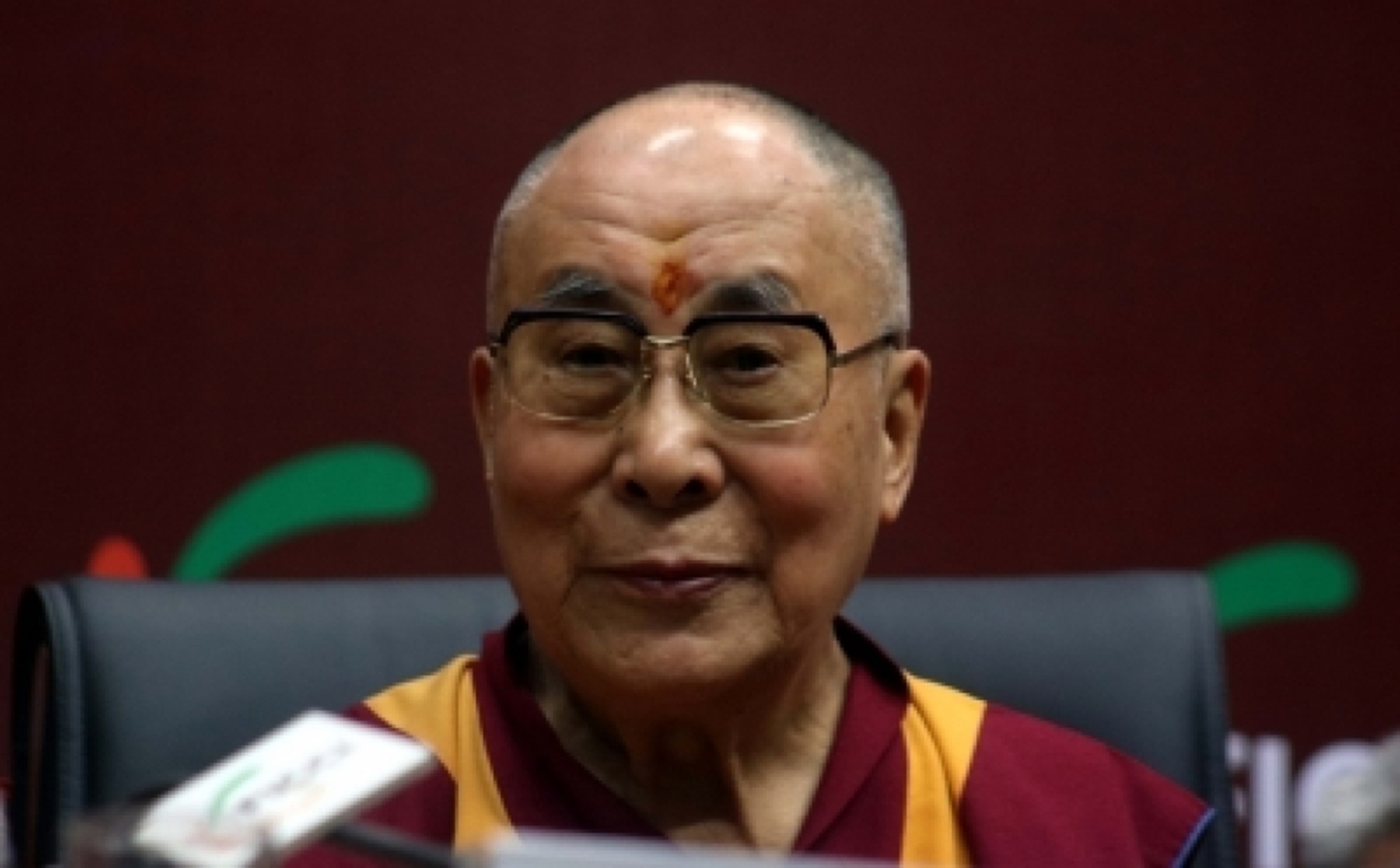
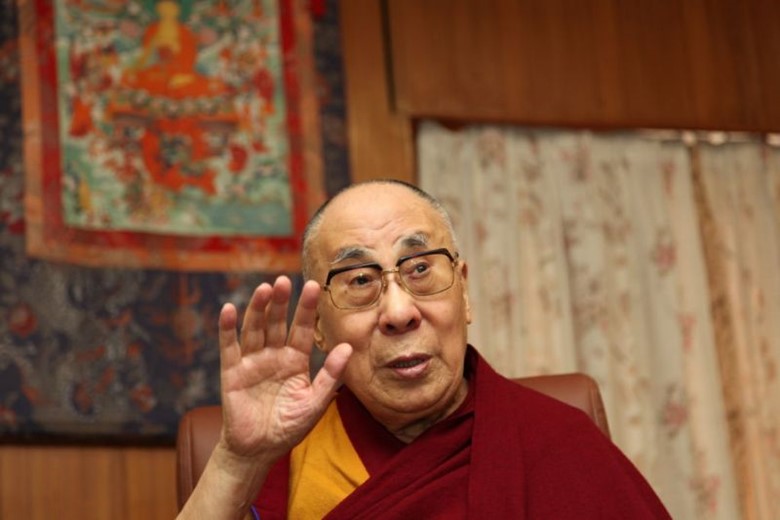
Dharamshala, July 15 (IANS) Tibetan spiritual leader the Dalai Lama, respected by millions as a living god, who has been caught in a controversy over his recent joke that his successor a female Dalai Lama would have to be “more attractive”, has clarified that his reincarnation is to be decided by him.
The Buddhist monk had apologized for his “attractive” female successor remark, saying he genuinely meant no offence and offered his sincere apologies if people were hurt by what he had said.
However, aides in his private office in this northern Indian town on Monday clarified there is no question of search for his successor as the Dalai Lama, 84, announced in 2011 that he would decide at 90 whether he should have a successor.
The issue of reincarnation is his personal right, an aide in the Dalai Lama’s office told IANS.
At the same time, the globe-trotting monk warned that any candidate chosen for political ends by anyone, including China, should not be recognized or accepted.
The aide said still there is no certainty that whether the institution of the Dalai Lama should continue or not after the 14th and current Dalai Lama, Tenzin Gyatso.
“My reincarnation is to be decided by myself, nobody has the right to decide about that,” he often said in his remarks.
“One day you will hear that the Dalai Lama has passed away, but I will come back, even if the institution of Dalai Lama is no longer recognized. I will be back,” a post on his website quoting the Dalai Lama said.
But who is next after the Dalai Lama?
Now, the Dalai Lama’s institution is useful to the Tibetan culture and the Tibetan people.
“Thus, if I were to die today, I think the Tibetan people would choose to have another Dalai Lama. In the future, if the Dalai Lama’s institution is no longer relevant or useful and our present situation changes, then the Dalai Lama’s institution will cease to exist,” the monk said in a post.
“Personally, I feel the institution of the Dalai Lama has served its purpose. More recently, since 2001 we now have a democratically elected head of our administration, the Kalon Tripa.
“The Kalon Tripa runs the daily affairs of our administration and oversees our political establishment. Half-jokingly and half seriously, I state that I am now in semi-retirement.”
In August 2011 when Lobsang Sangay took over the reins of the government-in-exile from monk and scholar Samdhong Rinpoche, who held the post for 10 years but was overshadowed by the Dalai Lama, the Dalai Lama announced: “When I am about 90, I will consult the high lamas and re-evaluate whether the institution of the Dalai Lama should continue or not.”
On his birthday on July 6 this year, he said, “I am now 84, but I hope to be able to celebrate the occasion with all of you for many more years to come.”
Clarifying this month on his remark during a BBC interview that have caused disquiet, the Dalai Lama recalled the conversation on the physical appearance of a female successor with the then Paris editor of Vogue magazine, who had invited him in 1992 to guest-edit the next edition.
She asked if a future Dalai Lama could be a woman. His Holiness replied, “Certainly, if that would be more helpful,” adding, as a joke, that she should be attractive, said a statement by his office.
The Dalai Lama was at least partially responding to the unfamiliar ambience of working with a team whose prime focus was the world of high fashion.
On the Chinese stating that the next Dalai Lama will be born in Tibet and chosen by them, he said: “If the present situation regarding Tibet remains the same, I will be born outside Tibet away from the control of the Chinese authorities. This is logical. The very purpose of a reincarnation is to continue the unfinished work of the previous incarnation.”
His Holiness the 14th Dalai Lama, Tenzin Gyatso, describes himself as a simple Buddhist monk.
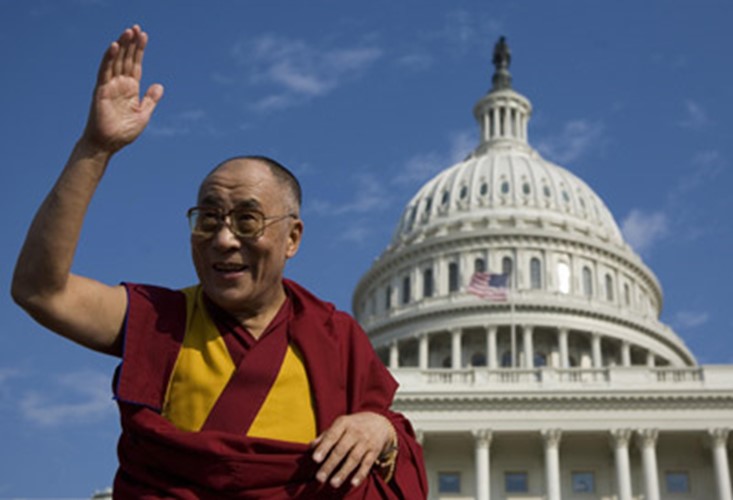
In 1989, the Dalai Lama won the Nobel Peace Prize for his non-violent struggle for Tibet. He was awarded the US Congressional Gold Medal in October 2007, even in the face of protests by China.
The Dalai Lama now lives in exile along with some 140,000 Tibetans, over 100,000 of them in different parts of India. Over six million Tibetans live in Tibet.
(Vishal Gulati can be reached at vishal.g@ians.in)
–IANS
vg/in
(This story was auto published from a syndicated feed. No part of the story has been edited by The Quint.)
Beauty and Attraction of God lie in the eye of the believer.
“The reincarnation of the Dalai Lama is a historical, religious and political issue. There are established historical institutions and formalities for the reincarnation of the Dalai Lama,” Wang Neng Sheng, an official in the rank of vice minister in Tibet, told a small group of Indian journalists in Lhasa.
The Right to grant asylum to the next Dalai Lama.
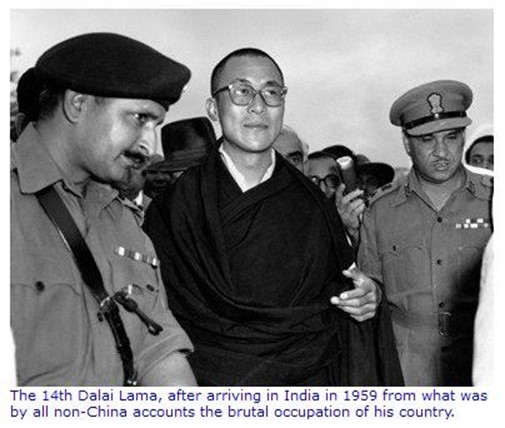
The 14th Dalai Lama fled to India in 1959 following a crackdown on an uprising by the local population in Tibet. (IE photo)
The successor of the Dalai Lama must be decided within China and any interference by India on the issue will impact bilateral ties, Chinese authorities have said. In first clear assertion on the sensitive issue, senior Chinese officials and experts said the reincarnation of the Dalai Lama must be approved by the Chinese government and the selection should take place within the country based on an over 200-year old historical process.
“The reincarnation of the Dalai Lama is a historical, religious and political issue. There are established historical institutions and formalities for the reincarnation of the Dalai Lama,” Wang Neng Sheng, an official in the rank of vice minister in Tibet, told a small group of Indian journalists in Lhasa. “The Dalai Lama’s reincarnation is not decided by his personal wish or by some group of people living in other countries,” he added.
Wang, the director general at the government of Tibet Autonomous Region, said the current Dalai Lama was recognized by Beijing and his successor must be found through the “draw of lots in golden urn process” within China. Echoing Wang’s views, Zha Luo, director at Beijing-based China Tibetology Research Centre, a government-run influential think tank, said any refusal by India to recognize the next Dalai Lama to be chosen within China will impact bilateral ties.
The 14th Dalai Lama fled to India in 1959 following a crackdown on an uprising by the local population in Tibet. India granted him political asylum and the Tibetan government-in-exile is based on Dharamsala in Himachal Pradesh since then.
The Dalai Lama is 84 years old now and the issue of his successor has gained prominence in the last couple of years. “It will be a major political difference that would impact bilateral relations and any wise political leader wouldn’t do that,” said Zha whose team advises central government on policy issues for Tibet said. He was asked what will happen if India refuses to recognize the next Dalai Lama chosen by China. “Since the reincarnation of the Dalai Lama is an important issue for China any friendly country or friend of China would not interfere or meddle on the issue,” he added. Zha, however, called it a hypothetical answer to a hypothetical question. India has maintained its stand on the Dalai Lama.
“Government of India’s position on His Holiness the Dalai Lama is clear and consistent. He is a revered religious leader and is deeply respected by the people of India. There is no change in that position. His Holiness is accorded all freedom to carry out his religious activities in India,” Ministry of External Affairs spokesperson had told a media briefings in March last year.
Wang said the process of selecting the next Dalai Lama must follow two clear steps: “It must go to draw of lots in the golden urn and the reincarnation must be recognized by the central government.” He said the “centrality” of the central government must be recognized and that any personal move by the current Dalai Lama on the issue is not going to be recognized by Chinese government or religious followers in Tibet.
“It was with the central government’s recognition that the Dalai Lama became the 14th Dalai Lama. Otherwise, he wouldn’t have been in that position,” Wang said. He alleged that the Dalai Lama has been “inciting” and “misguiding” young Tibetan people for his political motives.
Asked about the Dalai Lama’s comments that he was ready to accept Tibet as part of China, Wang said he has been resorting to political rhetoric without taking any action. “He still believes that Tibet is an independent country. Without any concrete moves from his side, his words do not mean anything,” he added. He said there were around 10 rounds of discussions between private representatives of the Dalai Lama and Beijing. The last round took place in 2011 in Beijing.
“The discussions were about the future of the Dalai Lama and did not include or touch on the topic of future of Tibet as a part of China’s sovereign territory,” Wang said. The Indian government had issued a note nearly a year back to senior officials, asking them not to attend events organized by the Tibetan government-in-exile. India has also been supporting the ‘One China’ policy, which states that Taiwan and Tibet are part of China’s mainland. Beijing made the ‘One-China’ policy a prerequisite for countries to establish diplomatic ties with it.
TIBETAN IDENTITY AND NATIONALISM BELONG TO THE LAND AND ITS DENIZENS
Tibetan Identity and Nationalism belong to the Land and all of its denizens.
I examine Tibetan Identity and Nationalism by exploring the geography of the region for they developed together over thousands of years under the influence of Natural Causes, Natural Forces, Natural Conditions, and Natural Factors that condition the Tibetan Existence.
Rudranarasimham Rebbapragada
SPECIAL FRONTIER FORCE
PLATEAU PIKAS ARE SEEN BY THE LAKESIDE ON QINGHAI-TIBET PLATEAU
Tibetan Identity and Nationalism belong to the Land and all of its denizens.
A plateau pika (Ochotona curzoniae) forages by a lakeside on the Qinghai-Tibet plateau in Maizhokunggar County, Tibet. July 6, 2019. (Photo: Xinhua)
Tibetan Identity and Nationalism belong to the Land and all of its denizens.
A plateau pika (Ochotona curzoniae) is pictured by a lakeside on the Qinghai-Tibet plateau in Maizhokunggar County, Tibet. July 6, 2019. (Photo: Xinhua)
Tibetan Identity and Nationalism belong to the Land and all of its denizens.
Two plateau pikas (Ochotona curzoniae) frolic by a lakeside on the Qinghai-Tibet plateau in Maizhokunggar County, Tibet. July 6, 2019.(Photo: Xinhua)
Tibetan Identity and Nationalism belong to the Land and all of its denizens.
‘THE LUNG OF LHASA’ BREATHES TIBETAN AIR FOR IT SHARES TIBETAN IDENTITY OF THE LAND AND ITS DENIZENS.
Tibetan Nationalism. The Lung of Lhasa Breathes Tibetan Air.
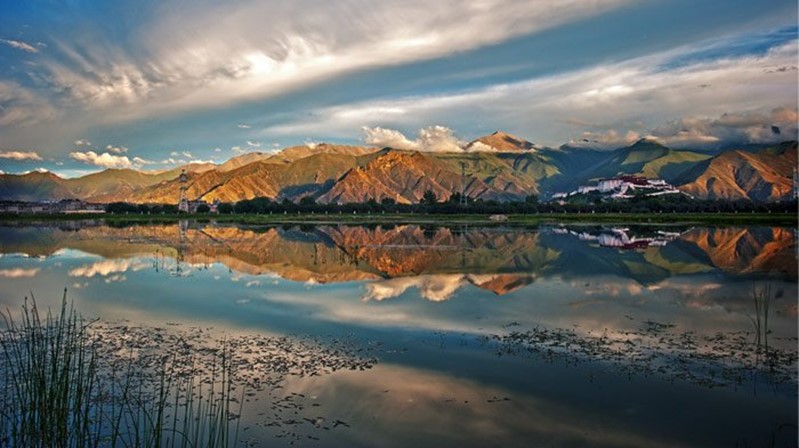
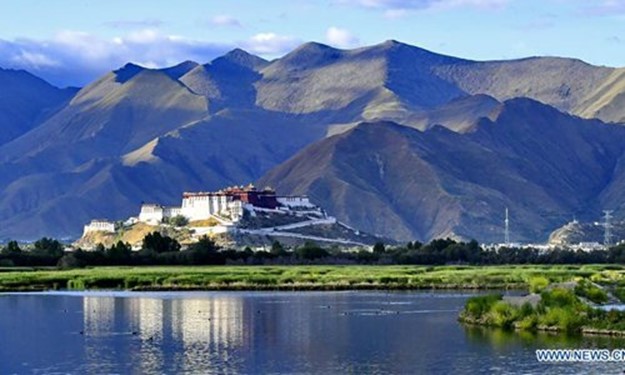
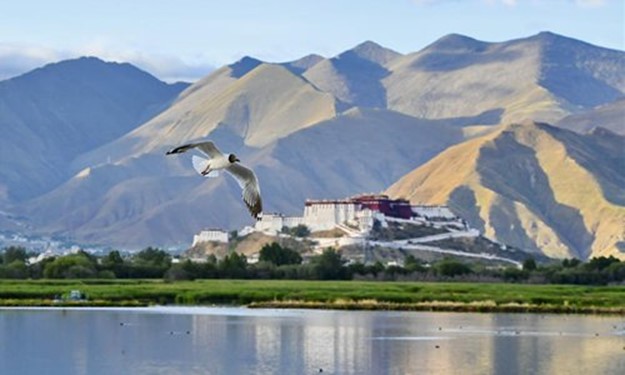
Lhalu wetland, ‘The Lung of Lhasa’ breathes Tibetan air. I describe Tibetan Nationalism as the reflection of Tibetan Identity of the Land and all of its denizens.
Rudranarasimham Rebbapragada
SPECIAL FRONTIER FORCE
Tibetan Nationalism. The Lung of Lhasa Breathes Tibetan Air.
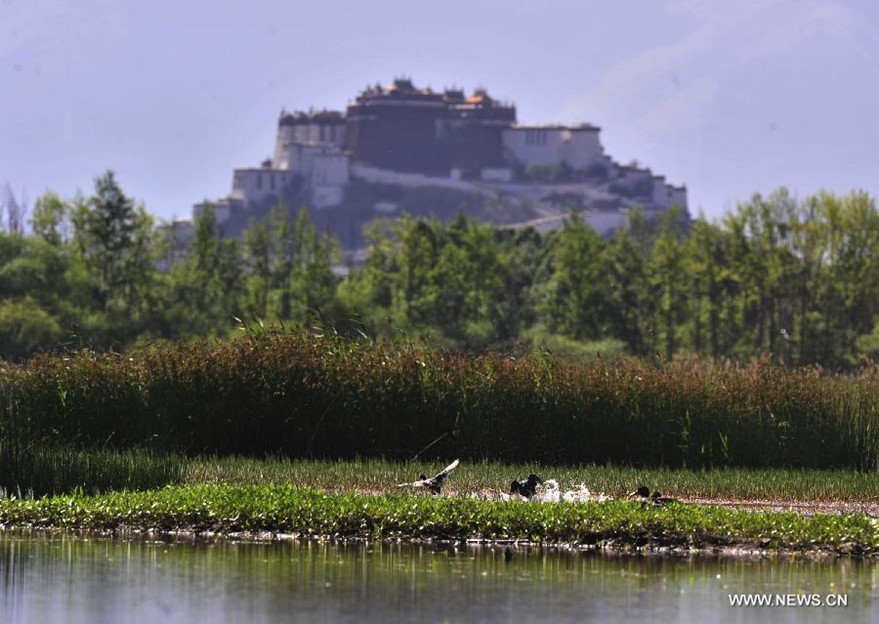
Lhalu wetland, ‘the Lung of Lhasa’ in Tibet
Tibetan Nationalism. The Lung of Lhasa Breathes Tibetan Air.
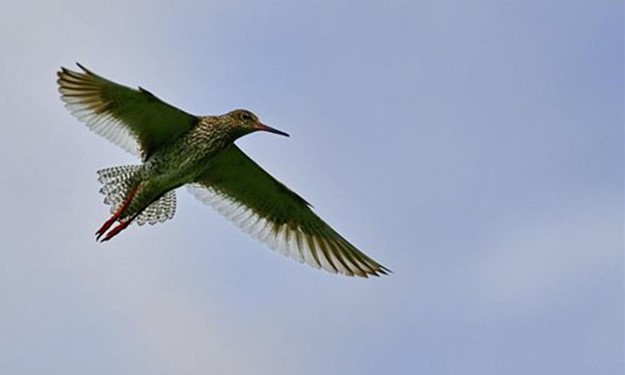
A common redshank is seen at Lhalu wetland in Lhasa, June 27, 2019. Lhalu wetland national nature reserve is known as “the Lung of Lhasa”. (Xinhua/Zhang Rufeng)
Tibetan Nationalism. The Lung of Lhasa Breathes Tibetan Air.
Wild ducks swim at the Lhalu wetland in Lhasa, June 26, 2019. Lhalu wetland national nature reserve is known as “the Lung of Lhasa”. (Xinhua/Zhang Rufeng)
Tibetan Nationalism. The Lung of Lhasa Breathes Tibetan Air.
A night heron is seen at Lhalu wetland in Lhasa, June 26, 2019. Lhalu wetland national nature reserve is known as “the Lung of Lhasa”. (Xinhua/Zhang Rufeng)
Tibetan Nationalism. The Lung of Lhasa Breathes Tibetan Air.
Common redshanks are seen at Lhalu wetland in Lhasa, June 26, 2019. Lhalu wetland national nature reserve is known as “the Lung of Lhasa”. (Xinhua/Zhang Rufeng)
Tibetan Nationalism. The Lung of Lhasa Breathes Tibetan Air.
A common redshank flies over Lhalu wetland in Lhasa, June 26, 2019. Lhalu wetland national nature reserve is known as “the Lung of Lhasa”. (Xinhua/Zhang Rufeng)
Tibetan Nationalism. The Lung of Lhasa Breathes Tibetan Air.
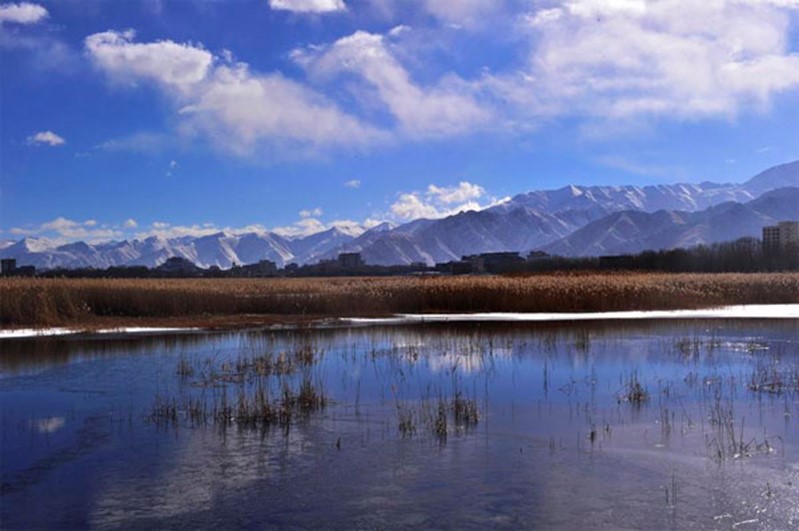
Photo taken on June 27, 2019 shows the view of the Lhalu wetland in Lhasa. Lhalu wetland national nature reserve is known as “the Lung of Lhasa”. (Xinhua/Zhang Rufeng)
Tibetan Nationalism. The Lung of Lhasa Breathes Tibetan Air.
A brown-headed gull flies over Lhalu wetland in Lhasa, June 27, 2019. Lhalu wetland national nature reserve is known as “the Lung of Lhasa”. (Xinhua/Zhang Rufeng)
Tibetan Nationalism. The Lung of Lhasa Breathes Tibetan Air.
BEIJING DOOMED. HIGH-ENERGY COLLISION CAN RESOLVE THE GREAT TIBET PROBLEM
Beijing Doomed. High-Energy Collision can resolve the Great Tibet Problem.
The Great Tibet Problem is described as illegal, illegitimate, military occupation of Tibetan Territory by a foreign invading force. The Great Tibet can be resolved by the application of physical force of a great magnitude that can evict the Occupier of Tibet without any further human intervention or effort.
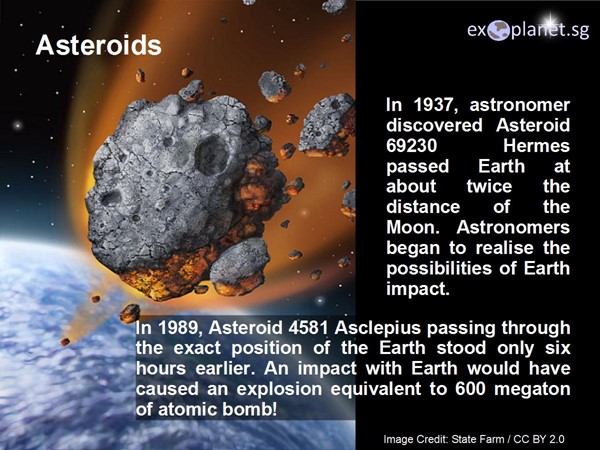
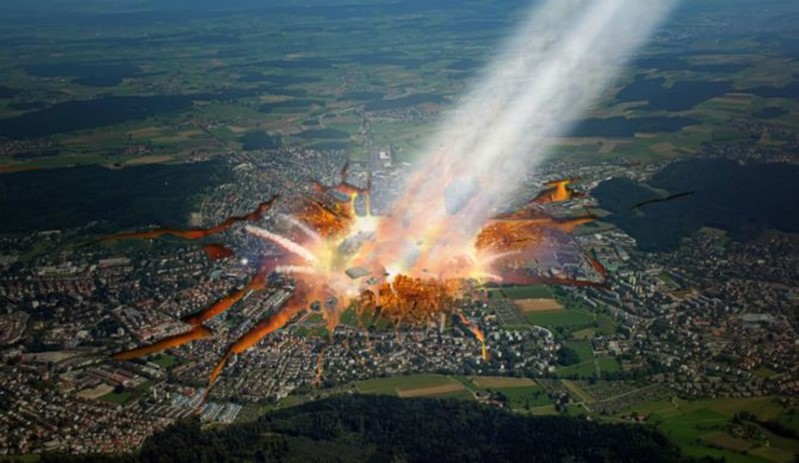
Such forces with devastating power do exist in Nature. Planet Earth experienced the serious consequences of heavenly bodies such as asteroids, bolides, and meteorites colliding with Earth. These heavenly bodies acquire massive amounts of energy as Earth’s Force of Gravitation accelerates them as they enter Earth’s atmosphere.
Beijing Doomed. High-Energy Collision can resolve the Great Tibet Problem.
The discovery of the highest-energy gamma rays by the Tibet ASgamma Experiment gives the hope of a Heavenly Strike acting to neutralize the military power of Tibet’s Occupier. While the gamma rays are prevented by Earth’s atmospheric shield from causing damage, the impacts by Near Earth Objects will not be undermined by the natural protection afforded by the Magnetosphere.
Beijing Doomed. High-Energy Collision can resolve the Great Tibet Problem.
Rudranarasimham Rebbapragada
Special Frontier Force
The highest-energy gamma rays discovered by the Tibet ASgamma experiment
Beijing Doomed. High-Energy Collision can resolve the Great Tibet Problem.
The left figure shows the Tibet ASgamma experiment observed the highest energy gamma rays beyond 100 Teraelectron volts (TeV)from the Crab Nebula with low background noise, the cross mark indicates the Crab pulsar position. And the right figure shows the Crab Nebula taken by the Hubble Telescope Credit: NASA
The Tibet ASgamma experiment, a China-Japan joint research project, has discovered the highest energy cosmic gamma rays ever observed from an astrophysical source—in this case, the Crab Nebula. The experiment detected gamma rays ranging from > 100 Teraelectron volts (TeV) (Fig.1) to an estimated 450 TeV. Previously, the highest gamma-ray energy ever observed was 75 TeV by the HEGRA Cherenkov telescope.
Researchers believe the most energetic of the gamma rays observed by the Tibet ASgamma experiment were produced by interaction between high-energy electrons and cosmic microwave background radiation, remnant radiation from the Big Bang.
The Crab Nebula is a famous supernova remnant in the constellation Taurus. It was first observed as a very bright supernova explosion in1054 AD (see Fig.1). It was noted in official histories of the Song dynasty in ancient China as well as in Meigetsuki, written by the 12th century Japanese poet Fujiwara no Teika. In the modern era, the Crab Nebula has been observed using various types of electromagnetic waves including radio and optical waves, X-rays and gamma rays.
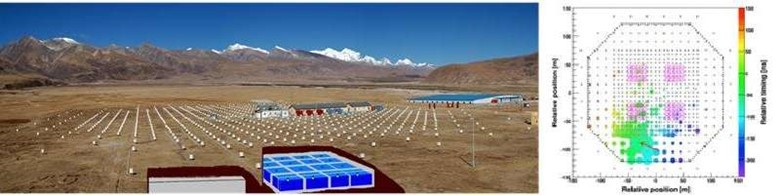
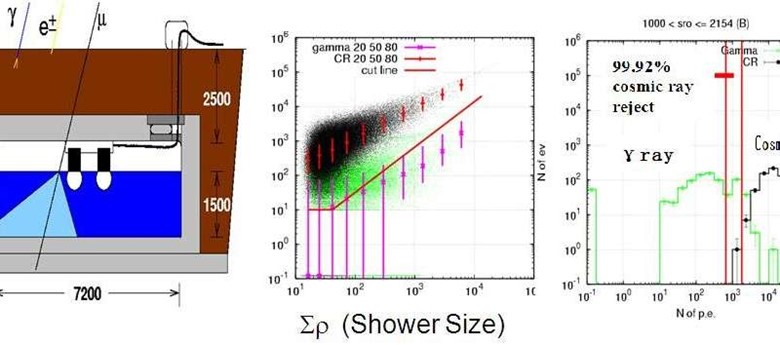
The Tibet ASgamma experiment has been operating since 1990 in Tibet, China, at an altitude of 4300 meters above sea level. The China-Japan collaboration added new water Cherenkov-type muon detectors under the existing cosmic-ray detectors in 2014 (see Fig.2). These underground muon detectors suppress 99.92 percent of cosmic-ray background noise (see Fig.3). As a result, 24 gamma-ray candidates above 100 TeV have been detected from the Crab Nebula with low background noise. The highest energy is estimated at 450 TeV (see Fig.2).
Beijing Doomed. High-Energy Collision can resolve the Great Tibet Problem.
The left figure shows the Tibet ASgamma experiment (Tibet-III array+ Muon Detector array); The right figure shows an event display of the observed 449TeV photon-like air shower. Credit: IHEP
The researchers hypothesize the following steps for generating very-high-energy gamma rays: (1) In the nebula, electrons are accelerated up to PeV, i.e., peta (one thousand trillion) electron volts within a few hundred years after the supernova; (2) PeV electrons interact with the cosmic microwave background radiation (CMBR) filling the whole universe; (3) A CMBR photon is kicked up to 450 TeV by the PeV electrons. The researchers thus conclude that the Crab Nebula is now the most powerful natural electron accelerator discovered so far in our galaxy.
This pioneering work opens a new high-energy window for exploring the extreme universe. The detection of gamma rays above 100 TeV is a key to understanding the origin of very-high-energy cosmic rays, which has been a mystery since the discovery of cosmic rays in 1912. With further observations using this new window, we expect to identify the origin of cosmic rays in our galaxy, namely, pevatrons, which accelerate cosmic rays up to PeV energies.
Beijing Doomed. High-Energy Collision can resolve the Great Tibet Problem.
The China-Japan collaboration placed new water Cherenkov-type muon detectors under the existing cosmic-ray air-shower array in 2014. These underground muon detectors can suppress 99.92% of cosmic-ray background noise. Credit: IHEP
“This is a great first step forward,” said Prof. HUANG Jing, co-spokesperson for the Tibet ASgamma experiment. “It proves that our techniques worked well, and gamma rays with energies up to a few hundred TeV really exist. Our goal is to identify a lot of pevatrons, which have not yet been discovered and are supposed to produce the highest-energy cosmic rays in our galaxy.”
Beijing Doomed. High-Energy Collision can resolve the Great Tibet Problem.
THE THREE-DIMENSIONS OF FEMALE REINCARNATION OF THE DALAI LAMA DESCRIBE THE IDEALS OF TIBETAN NATIONALISM.
Tibetan Nationalism is Defined by the Ideals of Truth, Bliss, and Beauty.
The Female Reincarnation of the Dalai Lama will be a ‘Thing of Beauty’ for it is Beauty accompanied by the Dimensions of Truth and Bliss. Buddha, the Most Compassionate Being has Three Dimensions. These are 1. Satyam (Truth), 2. Shivam (Bliss), and 3. Sundaram (Beauty).
Tibetan Nationalism will always be inspired by the highest ideals of humanity. The Female Reincarnation of the Dalai Lama will bring a Great “Joy Forever.”
Rudranarasimham Rebbapragada
Special Frontier Force
Tibetan Nationalism is Defined by the Ideals of Truth, Bliss, and Beauty.
The Dalai Lama has apologized for controversial comments about the possibility of a woman succeeding him.
Speaking to the BBC last month, the Tibetan spiritual leader had said that any future female Dalai Lama should be “attractive”.
But a statement from his office apologized for his words, suggesting it had been a joke.
“He is deeply sorry that people have been hurt by what he said and offers his sincere apologies,” it said.
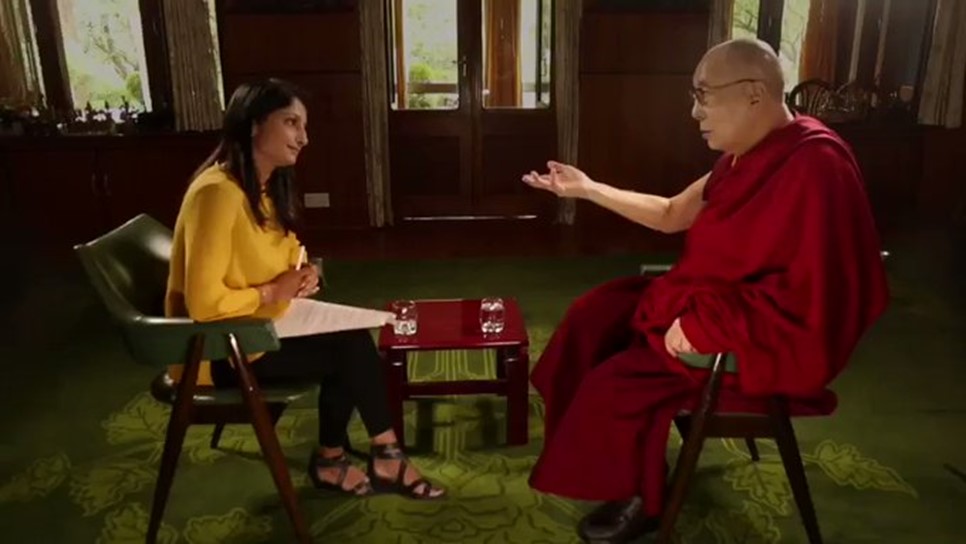
In the interview, the spiritual leader, who is 84 this week, touched on topics including US President Donald Trump, his dreams of returning to Tibet, and refugees.
However, it was his comments on the prospect of a female Dalai Lama that raised eyebrows.
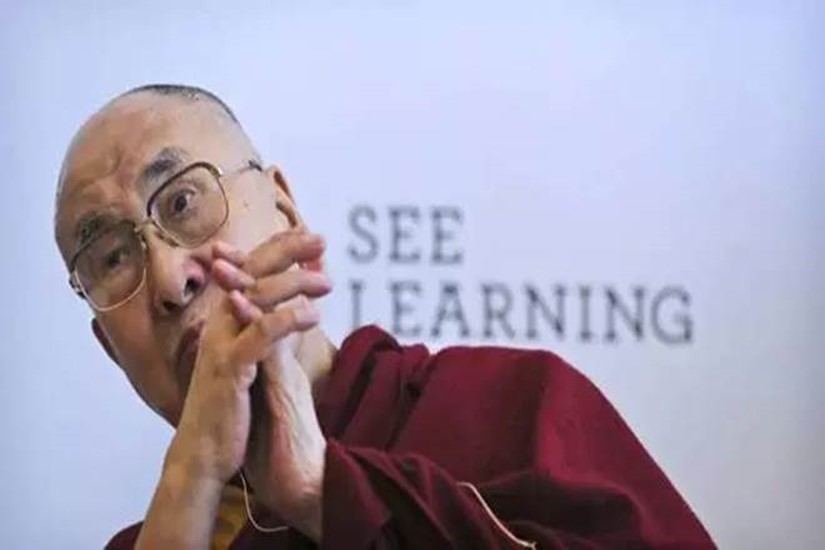
“If a female Dalai Lama comes, she should be more attractive,” he said in English, while laughing
The statement apologized for any offence caused and put it down to a misunderstood joke.
The Dalai Lama “has a keen sense of the contradictions between the materialistic, globalized world he encounters on his travels and the complex, more esoteric ideas about reincarnation that are at the heart of Tibetan Buddhist tradition”, the statement said.
“However, it sometimes happens that remarks, which might be amusing in one cultural context, lose their humor in translation when brought into another. He regrets any offence that may have been given.”
Throughout his life, the Dalai Lama has opposed the objectification of women and supported gender equality, it added.
The statement also said comments in which he said refugees in the European Union should ultimately return home “may have been misinterpreted.”
“He certainly appreciates that many of those who leave their countries may not wish or be able to return,” it said,
However, there was no apology for his comments on Mr. Trump who, he said, had a “lack of moral principle.”
Watch: ‘Dalai Lama reaffirms belief female successor would have to be attractive’ (The Independent)
Tibetan Nationalism is inspired by the Ideals of Truth, Bliss, and Beauty.Tibetan Nationalism is Defined by the Ideals of Truth, Bliss, and Beauty.
TIBETAN EXISTENCE. TO TWEET OR NOT TO TWEET IS THE QUESTION FOR THE FUTURE DALAI LAMA
Tibetan Existence. To tweet or not to tweet is the question for the future Dalai Lama.
“To be, or not to be – that is the question.” Tibetan Existence is truly endangered by relentless, brutal military occupation since 1950. Tibetans face just one question. The question is, “How to Oppose the Occupation of Tibet?” Nothing else really matters. To tweet or not to tweet is the question for the future Dalai Lama.
Rudranarasimham Rebbapragada
Special Frontier Force
Tibetan Existence. To tweet or not to tweet is the question for the future Dalai Lama.
Twitter is canceling the Dalai Lama because he said a female successor should be ‘attractive’
Tibetan Existence. To tweet or not to tweet is the question for the future Dalai Lama.
The fourteenth Dalai Lama (83 years) and the spiritual guru of the Buddhists from Tibet (Photo by Pallava Bagla/Corbis via Getty Images)
The Dalai Lama, the exiled spiritual leader of Tibetan Buddhism, and the 14th person to hold the title, made waves this week when he said his successor, if a woman, needs to be physically attractive.
Rajini Vaidyanathan
✔ @BBCRajiniV
This was perhaps the most surprising moment in the interview. I asked the Dalai Lama if he stood by his earlier comment that if his successor was female, she should be attractive.
Tibetan Existence. To tweet or not to tweet is the question for the future Dalai Lama.
“You once said that you would be open to a female successor,” BBC News reporter Rajini Vaidyanathan asked the religious leader, in a video interview published Thursday on Twitter.
“That’s also possible,” the Dalai Lama confirmed.
“You also told one of my colleagues that, that female must be attractive, otherwise it’s not much use,” she continued. “…Can you see why that comment upset a lot of women?”
The Dalai Lama answered, “If a female Dalai Lama comes, she should be more attractive.” If not, “people, I think prefer, not see her, that face.”
The reporter asked, “It’s about who you are inside, isn’t it?”
“Yes, I think both,” he said. “Real beauty is inner beauty, that’s true. But we’re human beings. I think the appearance is also important.”
The religious leader also suggested that most people would prefer not to look at a “dead face” and argued that women in the public eye should wear makeup.
People took issue with his comments, calling his holiness “canceled.”
Author Jessica Valenti tweeted that this moment was “about as 2019 as it gets.”
Others just felt disappointed.
Some called out what they felt was the absurdity of his comments and made jokes.
One person even suggested singer and icon Dolly Parton step into the role.
These weren’t the only remarks the Dalai Lama made that raised eyebrows this week. He also told the BBC that European nations should be obliged to take in those who are fleeing their home countries, but that those people should ultimately be taught skills and return home, saying, “European countries should take these refugees and give them education and training, and the aim is – return to their own land with certain skills.”
He continued, “But the whole of Europe [will] eventually become Muslim country – impossible. Or African country, also impossible.”
Tibetan Existence. To tweet or not to tweet is the question for the future Dalai Lama.
The Cold War in Asia. Blessings of Peace to Korea.
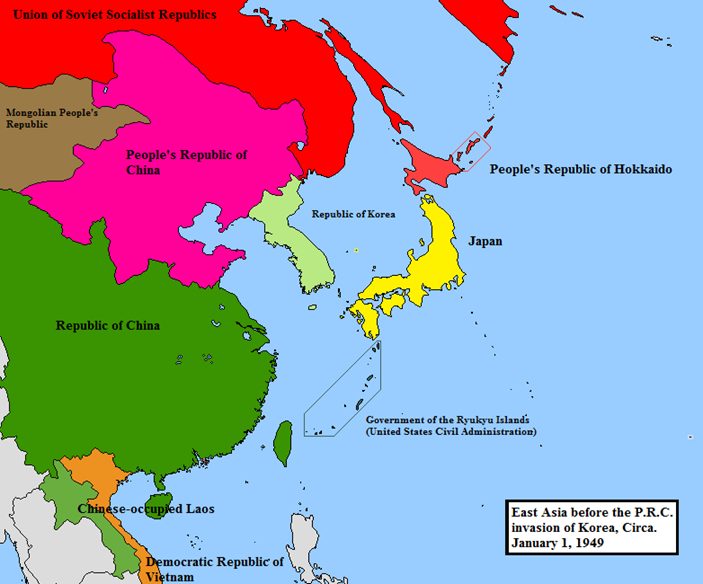
The spread of Communism to mainland China initiated ‘The Cold War in Asia’. People of the Korean Peninsula are fully entitled to their Freedom and the Blessings of Peace.
In my analysis, things in Asia will change if and only if China grants full, and “meaningful” autonomy to Tibetans who lost their freedom due to China’s military conquest of Tibet in 1950.
Rudranarasimham Rebbapragada
SPECIAL FRONTIER FORCE
Trump touts Kim meeting at DMZ as ‘legendary,’ but little has changed
By Eli Stokols and Victoria Kim
Jun 30, 2019 | 9:00 AM
| Seoul
The Cold War in Asia. Blessings of Peace to Korea.
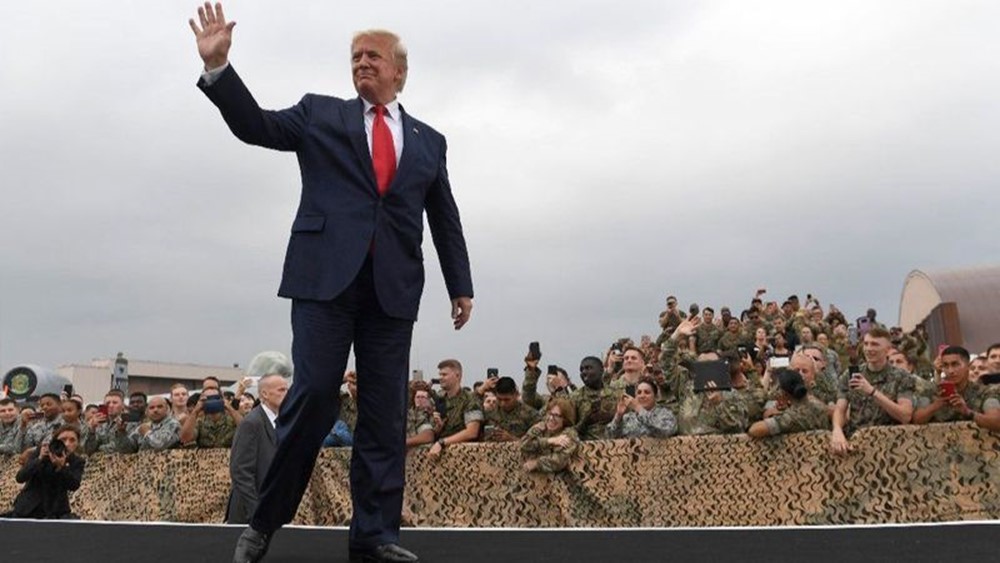
President Trump arrives to speak to troops at Osan Air Base in South Korea on Sunday shortly after a historic meeting with North Korean leader Kim Jong Un at the DMZ. (Susan Walsh / AP)
Moments before his meeting with Kim Jong Un, as President Trump stared into North Korea for the first time, he still nursed a familiar grievance: The media don’t appreciate his accomplishments.
Standing atop an observation point on the South Korean side of the demilitarized zone, Trump listened as a general briefed him on the military significance of the location. Then he gave his own assessment, in which he played a central role.
“There was great conflict here prior to our meeting in Singapore,” Trump said, referring to his first summit with Kim last year. “Tremendous conflict and death, all around them. And it’s now been extremely peaceful. It’s been a whole different world.”
“I say that for the press,” he went on. “They have no appreciation for what is being done, none. There was great conflict here prior to our meeting in Singapore. After our first summit, all of the danger went away.”
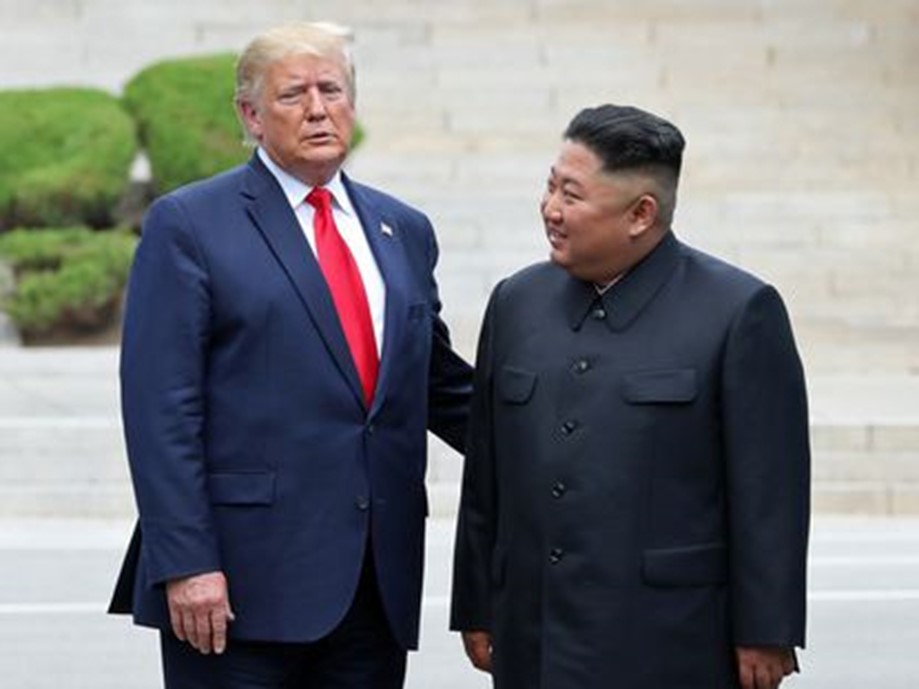
Trump called his impromptu meeting with Kim, in which he became the first U.S. president to set foot in North Korea, “historic” and “very legendary.”
Foreign policy analysts were less impressed.
“It’s only ‘historic’ if it leads to de-nuke negotiations, a verifiable agreement and a peace treaty,” said Victor Cha, a former national security council official who served as President George W. Bush’s envoy to North Korea. “Otherwise it’s just some nice pics and pageantry.”
Samantha Vinograd, who served on the national security council under President Obama, said Trump had effectively moved his own goalposts backward, tacitly walking away from his initial demand for complete and verifiable denuclearization of the Korean Peninsula.
“By shaking hands with Kim Jong Un at the DMZ with no preconditions attached, he’s really signaling that his metric for success at this point is the status quo, which is no long-range missile tests and no nuclear tests,” but North Korea keeping its nuclear arsenal, she said.
“Kim has no reason to denuclearize, but every reason to push Trump for what he’s wanted all along, phased sanctions relief.”
“North Korea under Trump is a normalized, nuclear power.”
A year after Trump’s first meeting with Kim, in Singapore, North Korea remains a dangerous adversary. Kim’s government has continued to develop its nuclear stockpile, which is larger and more powerful now than when Trump took office.
The North Koreans have stopped testing long-range missiles that have potential to reach U.S. territory, but have not dismantled them and continue to test missiles that appear designed to evade U.S. defenses and could threaten Japan and South Korea.
And even some of Trump’s top advisors doubt the North Koreans will ever agree to the U.S. demand that they give up the nuclear weapons that generations of the Kim family have pursued as the ultimate guarantee of their rule.
The practical upshot of Trump’s 53-minute meeting with Kim was an agreement to restart nuclear talks. The two sides would resume working-level discussions, Trump said — effectively a return to where negotiations stood 15 months ago.
“We are going to have teams, they are going to meet over the next weeks, they are going to start a process, and we will see what happens,” he said.
The Cold War in Asia. Blessings of Peace to Korea.
Trump meets Kim Jong Un at DMZ and becomes first sitting U.S. president to enter North Korea
By Eli Stokols and Victoria Kim
Jun 29, 2019 | 11:55 PM
Trump did not say if he and Kim discussed the economic sanctions that severely restrict North Korea’s exports and bar key imports, including oil. So far, the U.S. has said those won’t be lifted unless North Korea denuclearizes. Trump indicated the sanctions could be part of talks as negotiations resume.
“Sanctions remain, yes, but at some point, during the negotiations, things can happen,” he said. “At some point, look, I’m looking forward to taking them off.”
That’s a softer stance than Trump took at his previous meeting with Kim in Hanoi, when he walked out after Kim made an offer to dismantle only one part of the North’s extensive complex of nuclear facilities. At those talks, Secretary of State Michael R. Pompeo and national security advisor John Bolton, who are more hawkish toward North Korea than the president, were involved.
Bolton was far away, en route to a meeting in Mongolia on Sunday when Trump and Kim met. Pompeo accompanied Trump to South Korea, and the president’s daughter Ivanka and son-in-law, Jared Kushner, joined him in crossing the border into North Korea, an experience that Ivanka Trump later called “surreal.”
Pompeo told reporters traveling with him that if Trump’s action was a gamble, “it worked.”
“The president, by getting together with Chairman Kim today, broke through and was able to get us the opportunity to get back to the negotiating table,” he said. “It’s good for North Korea, it’s good for America, good for the world.”
Pompeo said he expected the working-level talks to begin around mid-July in a place to be determined. The U.S. delegation will be led by special representative Stephen Biegun, and the North Korean side will be represented by a foreign ministry official, possibly the foreign minister, Pompeo said.
For Trump, however, the details of denuclearization talks took second place to shaping public perceptions of his unorthodox diplomacy.
He boasted that “tremendous things are happening,” and even as he insisted, he’s in no hurry to cement a final agreement, he continued to carp at the media for refusing to join in the hagiography he relishes.
In his own version of the story, the Korean peninsula was “a fiery mess” until his election, which has brought about “two and a half years of peace.”
“You don’t report it accurately, but that’s OK,” Trump said to reporters after his talk with Kim had concluded. “Someday history will record it accurately.”
Trump’s political opponents took a more skeptical view.
Senate Democratic Leader Charles E. Schumer of New York said on Twitter that while Trump and Kim met, “North Korea continues to build nuclear weapons. Another typical Trump ‘show.'”
Democratic presidential hopeful Sen. Amy Klobuchar of Minnesota, interviewed on CNN, said Trump’s diplomacy with North Korea had little to show for itself.
Advertisement
“We’ve seen a history here,” she said. “Donald Trump announces these summits, and nothing really comes out of it.”
South Korean President Moon Jae-in, by contrast, who has staked his presidency on improving relations with North Korea, appeared eager to stoke Trump’s assessment of his role.
“I’d like to pay my tribute to the creative and bold approach that President Trump has demonstrated,” Moon said, after waiting in a separate room at the DMZ as Trump and Kim met.
“This has presented a big hope for the 80 million Korean people as well as the people of the whole world.”
The intensity with which the president tried to drive home his preferred narrative only highlighted how much he felt the need to do so — to proclaim a version of events that offers more than the reality that, after three meetings, North Korea continues to be a nuclear state, one that Trump himself has now legitimized on the world stage.
Kim has taken maximum advantage of Trump’s willingness to meet. At the DMZ, a coterie of North Korean state media accompanied him. They jostled with American and South Korean journalists to capture images of Kim once again walking shoulder to shoulder with Trump and the U.S. president stepping across the border.
The images and video from the meeting will boost Kim domestically, making up for the embarrassment he suffered after returning from February’s summit in Hanoi empty-handed.
Before heading to the DMZ, Trump bristled when asked what Kim had done in the four months since then to deserve another face-to-face meeting with the president.
Reminded by a reporter that Kim has continued to launch short-range missiles in recent months, Trump brushed off the tests.
“Small missiles,” he said. “Every country tests.”
Asked by another reporter if he was able to determine whether Kim had executed his former lead negotiator, which some South Korean media had reported, Trump couldn’t say for sure the status of the North Korean team.
“I can tell you the main person is [alive], we know that, and I would hope the rest are too,” he said. “I would really hope that the rest are too.”
At the end of his three-day Asia trip, before boarding Air Force One to return to Washington, Trump found a receptive audience for his version of events when he addressed troops at Osan Air Base in Seoul.
Using Marine One as a backdrop, Trump began his remarks by recounting his meeting with Kim, repeating his claim that the meeting came together in a day after he suggested the DMZ rendezvous in a tweet Saturday morning and again celebrating his handshake diplomacy as a major breakthrough.
“I actually stepped into North Korea and they say it’s a very historic moment,” Trump said.
Treating the speech to troops much like a campaign rally, Trump bashed Democrats, cursed and used a familiar and suspicious trope — claiming that some unidentified people had been deeply moved by his presence.
“Many people, I noticed, from Korea were literally in tears,” Trump said.
Staff writers Laura J. King and Tracy Wilkinson in Washington contributed to this report.
The Cold War in Asia. Blessings of Peace to Korea.
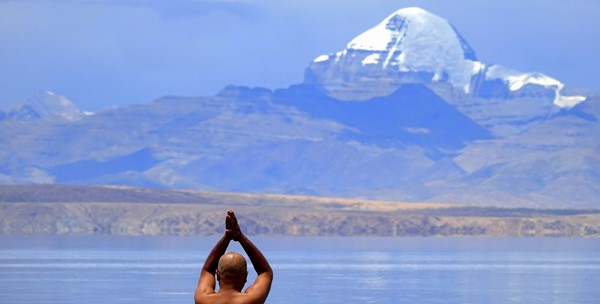
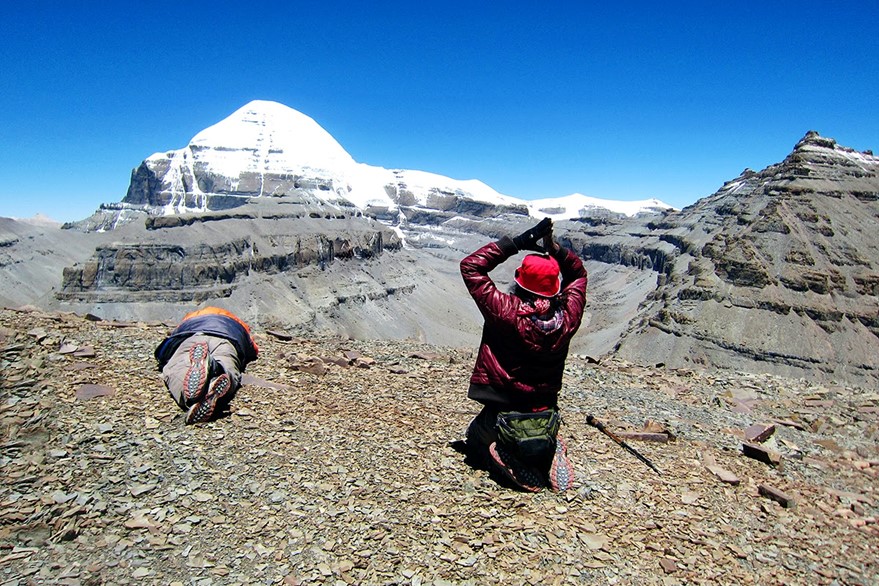
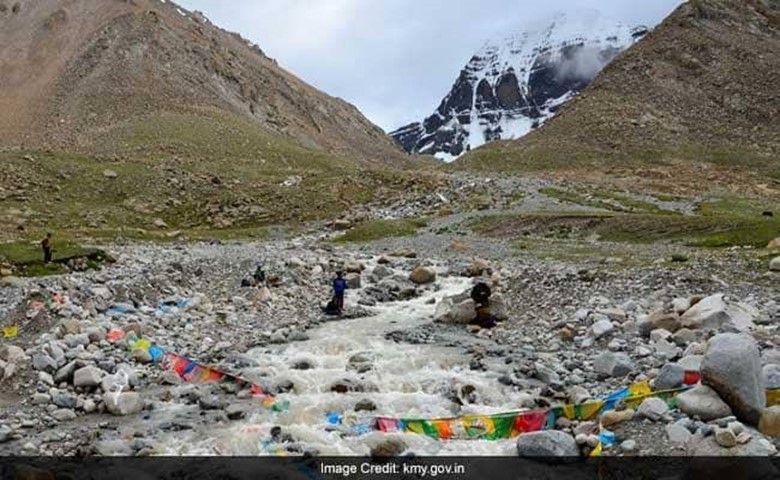
From the beginning of human civilization, from the times of the origin of the Anatomically Modern Man in Tibet and India, the ‘Sanatana Dharma’ formulated the bond between the people of India and Tibet. These people participate in ritualistic worship of Mountains, and of bodies of Water such as the lakes and rivers which shape their earthly living experience. They seek the presence of the LORD God Creator in the acts of His Creation.
Rudranarasimham Rebbapragada
SPECIAL FRONTIER FORCE
The Sanatana Dharma Bond between India and Tibet.
First Group Of Kailash-Mansarovar Pilgrims For 2019 Yatra Reach Tibet
The Sanatana Dharma Bond between India and Tibet.
Kailash-Mansarovar Yatra: “All the members of the batch are safe. They were found medically fit by Indo-Tibetan Border Police or ITBP doctors during a check-up at Gunji.
All India | Press Trust of India | Updated: June 20, 2019 13:52 IST
The Sanatana Dharma Bond between India and Tibet.
Pilgrims on the Kailash-Mansarovar yatra have reached Tibet for darshan (File Photo)
Pithoragarh, Uttarakhand:
The first batch of 58 Kailash-Mansarovar pilgrims reached Tibet today through the Lipulekh pass.
The pilgrims crossed over into Tibet through the Lipulekh pass located at 17,500 feet on way to Kailash-Mansarovar at 8:15 am, said Ashok Joshi, General Manager of Kumaon Mandal Vikas Nigam or KMVN, the nodal agency for the yatra.
“All the members of the batch are safe. They were found medically fit by Indo-Tibetan Border Police or ITBP doctors during a check-up at Gunji.
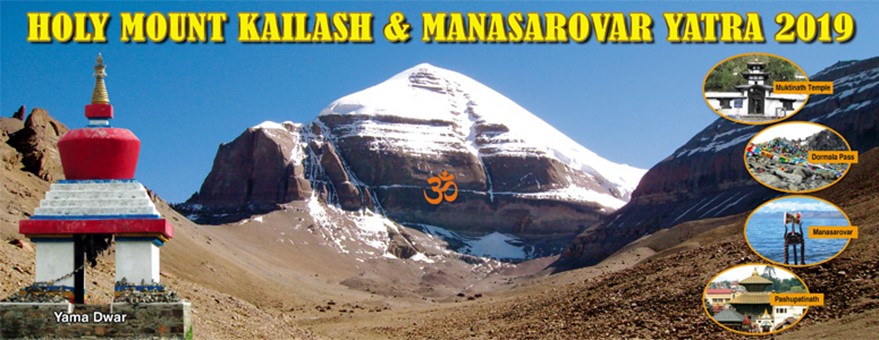
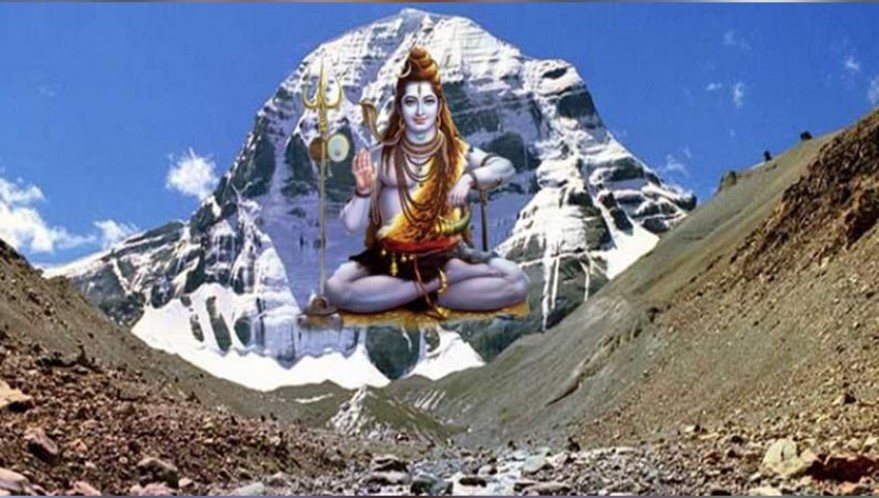
“The batch will return to the pass after spending seven days in Tibet where the pilgrims will have a darshan (view) of the holy Mount Kailash believed to be the abode of Lord Shiva. They will also take a dip in the sacred Mansarovar lake,” Mr. Joshi said.
Besides the first batch, two other batches of pilgrims have also reached close to the Lipulekh pass, he added.
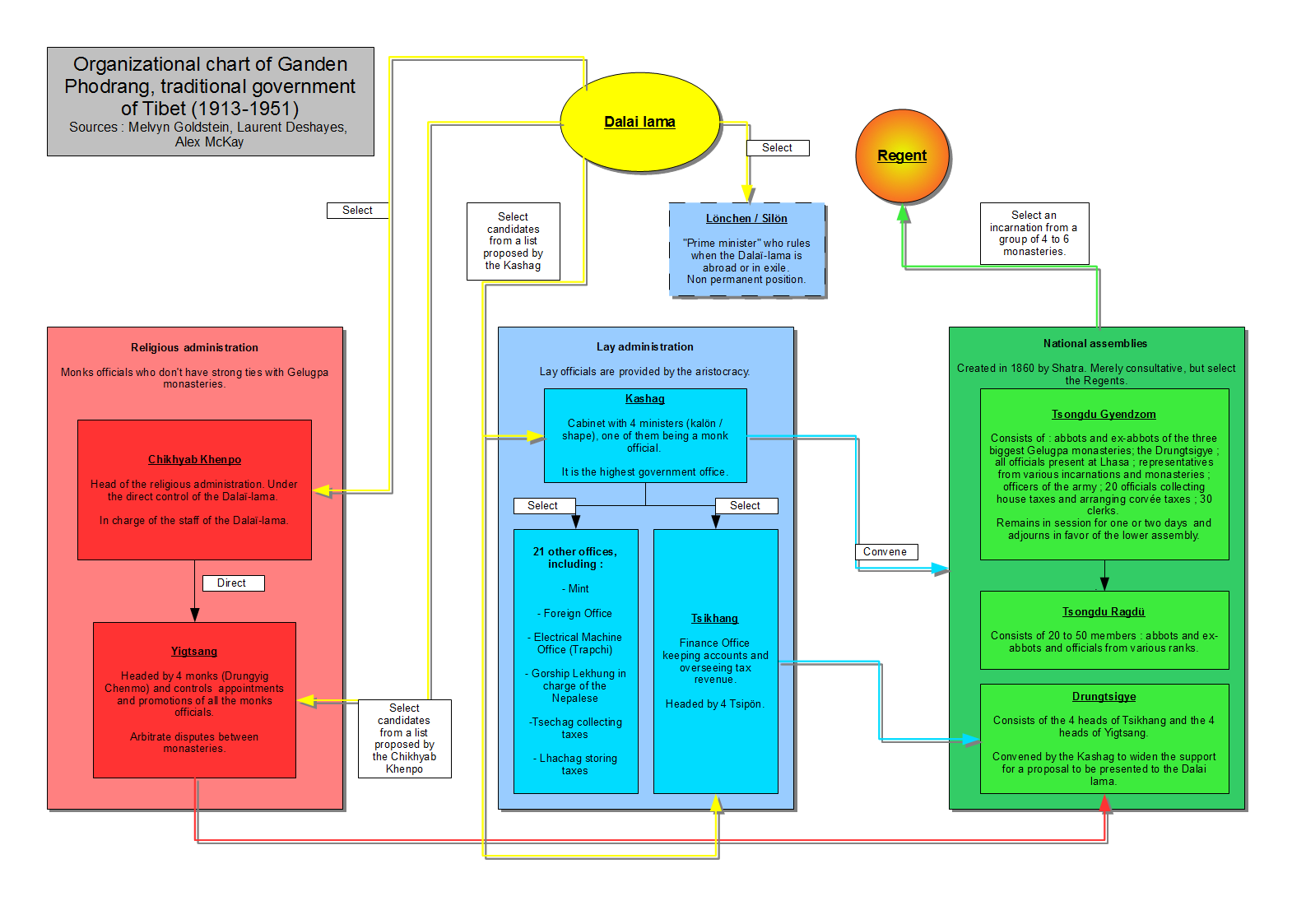
In my analysis, the Political Institution called ‘The Dalai Lama’ represents the Government of Tibet while the person called Tenzin Gyatso may have relinquished his power and may identify himself as the Retired Head of State of Tibet. While the exile Tibetan community elected a President of their choice, Tibetans presently living in Occupied Tibet do not participate in the activities of the Tibetan Government-in-Exile. Tibetans have not yet exercised their Right to Self-Rule or Self-Determination. As such, the Communist Party of China has no legal right to rule or govern Tibet. Military Occupation and Colonization of Tibet cannot abolish The Institution of The Dalai Lama known as The Ganden Phodrang.
Rudranarasimham Rebbapragada
SPECIAL FRONTIER FORCE
Where is Tibet? Who is The Dalai Lama?
Enigma of the Dalai Lama
The writer is former Ambassador of Pakistan and ex-Assistant Secretary General of OIC
Latest news, courtesy AFP, has it that the US Ambassador to China has called on Beijing to open a ‘substantive dialogue with the Dalai Lama’. He made these remarks during a visit to northwest China’s Qinghai province.
This bit of news gives rise to several questions. For one thing, it is something of a pity that, despite having won the Nobel Prize for Peace, the Dalai Lama has hardly been an agitator on the side of peace. Instead, he has often appeared as a tool in the hands of political forces that have an axe to grind against the Peoples’ Republic of China.
One has nothing against the Dalai Lama. He is undoubtedly a very revered personality. He may also be a ‘symbol of peace’ in the estimation of the US administration. But then he has also allowed himself to become a highly controversial political personality and one who has no qualms about being manipulated by certain powers to further their own agendas on the chessboard of international intrigue.
The Dalai Lama went into exile in the 1950s when China asserted its sovereignty over Tibet. He has squandered away several valuable opportunities of coming to terms with the reality of Tibet that has been accepted legally as a part of China by most of the world. This is not the occasion to go into the political complexities of this question. What is important is that the Dalai Lama could perhaps have done greater service to his cause, and to that of peace, if he had adopted the path of reconciliation rather than allow his followers to be kept hostage in a game of high stakes on the international chessboard. It should be more in the character of a revered religious personality and Nobel Peace laureate to work for a denouement leading to a grand reconciliation rather than confrontation.
Be that as it may, it came as something of a disappointment to the well-wishers of the Dalai Lama and his followers to find that he had opted to become a pawn in the US campaign aimed at the ‘containment of China’. Years back, president Bush had presented Tibet’s ‘exiled’ spiritual leader with the US Congress’ highest civilian award and taken advantage of the occasion to offer some gratuitous advice to the Chinese leadership, which the latter understandably had taken exception to.
There was widespread feeling that the timing of the US Congress award to the Dalai Lama was somewhat inappropriate. The only context that this award fitted into was the US obsession with ‘containment’ of China. In this campaign, the Dalai Lama appeared to have allowed his image to be used as a (willing) pawn. Knowing and acknowledging his stature as a religious personality, this can be termed as something of a pity.
The one inference that can be drawn from the latest US statement is that the American administration under President Trump may have the intention to up the ante and revisit the erstwhile forward policy of former president Bush aimed at ‘containment of China’.
It must be recognized that due to its pragmatic and realistic policies, China has meanwhile earned for itself a respected place under the sun. Due to its conscious decision to eschew unnecessary confrontational policies in favor of concentration on a constructive drive veered towards economic development, China has become a major economic prime-mover.
It is a matter of some interest that India appears as an inevitable variable in all the regional equations that concern China. India is host to the Dalai Lama and also the co-signatory of the India-US nuclear deal of doubtful credentials. India, of course, is second to none in its ability to manipulate the twists and turns related to the moves on the international chessboard. In aligning itself with the sole superpower in a China-baiting exercise, it surely must have a very good idea which side its bread is buttered on. No one should have any uncalled-for illusions, though. It would hardly be advisable to underestimate China at this point in time.
Published in The Express Tribune, June 10th, 2019.





























 Whole Dude - Whole Concept