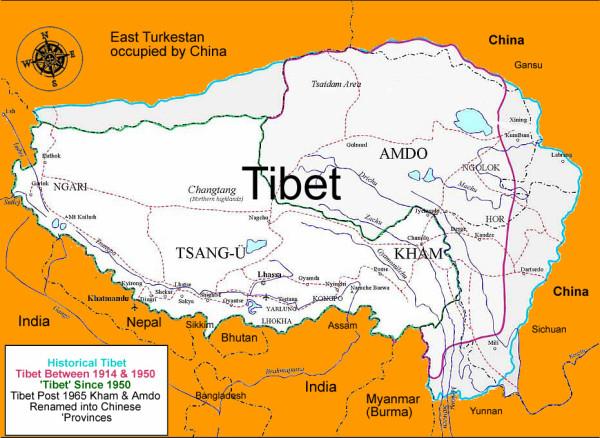
THE EVIL RED EMPIRE – RED CHINA – THE GREAT PROBLEM OF TIBET: TIBET HAS LAND AREA OF 870, 000 SQUARE MILES. TIBET IS LARGER IN SIZE COMPARED TO ASIAN NATIONS LIKE JAPAN, TAIWAN, PHILIPPINES, INDONESIA, MALAYSIA, VIETNAM, AND BRUNEI. TIBET IS THREE-TIMES LARGER THAN TEXAS STATE OF UNITED STATES .
Red China released a new map showing the totality of Beijing’s territorial claims. The word ‘cartography’ describes the art or work of making maps or charts. Red China claims this “10-Dash” new map serves to educate Chinese people about their country and her territory. I consider this map as an act of ‘cartographical’ or ‘cartographic’ aggression. Military always prepares maps and charts to plan its war operations much ahead of launching offensive or defensive military actions. Publication of this map is an act of hostility, a prelude to military aggression, and preparation forWar. As such all affected nations must not hesitate to take retaliatory actions to resist Red China’s acts of aggression. The first step is to prepare people to recognize Red China as an Enemy, Adversary, and an Opponent whose actions have to be challenged.
On behalf of Special Frontier Force, I reject Red China’s new map for I do not recognize Beijing’s claim of Tibet and its territory. Republic of India does not share a border with Red China.
Rudra Narasimham Rebbapragada Ann Arbor, MI 48104-4162, USA Special Frontier Force-Establishment 22-Vikas Regiment
Could this map of China start a war?
By ISHAAN THAROOR June 27, 2014
On behalf of Special Frontier Force, I reject Red China’s new map for I do not recognize Beijing’s claim of Tibet and its territory. Republic of India does not share a border with Red China.
(Hunan Map Press/Xinhua)
Chinese authorities unveiled this week a new map showing the totality of Beijing’s territorial claims. It supplants an earlier map which had a cutaway box displaying China’s declared claims over the South China Sea. Now, Chinese citizens can “fully, directly know the full map of China,” wrote the People’s Daily, a state paper. “Readers won’t ever think again that China’s territory has primary and secondary claims,” said the editor of the map press that published it.
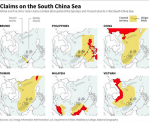
On the face of it, the map shouldn’t be too much of a surprise to China’s neighbors. It counts Taiwan, which Beijing considers a renegade province, as part of China. It shows China’s longstanding belief in its suzerainty over the Spratlys and Paracels, the two main archipelagos of the South China Sea, which are contested to varying degrees by Vietnam, the Philippines and a number of other Southeast Asian nations. A 10-dash line (as opposed to China’s earlier nine-dash line) encircles most of the South China Sea, a body of water which sees some $5.3 trillion worth of trade pass through it every year.
Here’s a useful interactive built by the Council on Foreign Relations on the overlapping maritime claims
The new map also shows China’s claim over the Indian state of Arunachal Pradesh. China and India have one of the world’s most intractable and long-running land border disputes, which flared during a brief, bloody war in 1962. Arunachal Pradesh is fully integrated into India’s federal system, with regular state elections. But China claims most of it as part of “Southern Tibet.”
While it may seem silly to some, maps like this routinely flare tensions in Asia, where many nations are still wrangling with the complicated geography left behind by lapsed empires. Two years ago, a map published in new Chinese passports sparked a diplomatic firestorm , with foreign ministries in Vietnam and India both voicing protests and adopting counter-measures.
On behalf of Special Frontier Force, I reject Red China’s new map for I do not recognize Beijing’s claim of Tibet and its territory. Republic of India does not share a border with Red China.
Laris Karklis/The Washington Post)
China’s economic rise has led to an increasing assertiveness in the region, with its expanding navy worrying neighbors and challenging U.S. dominance in the Pacific. It has triggered an arms race in Asia, punctuated by a growing number of dangerous incidents, including frequent maritime standoffs and altercations with Vietnamese and Philippine vessels and risky fighter jet flybys over Japanese ships.
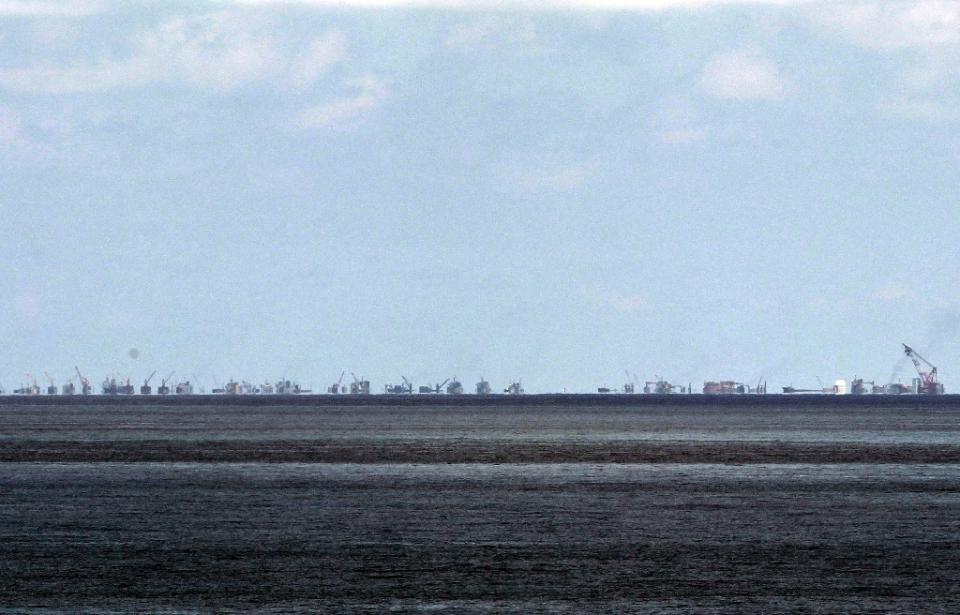
While other countries complain, Beijing is steadily changing facts on the ground. It is building up a city in the Paracels. In May, China deployed a $1 billion oil rig in waters claimed by Vietnam, which led to violent protests and riots in Ho Chi Minh City. China is now moving in a second oil rig, despite the vociferous objections of Vietnamese officials.
The new map is an echo of this provocative worldview. But Beijing officials have sought to play it down. “The goal is to serve the Chinese public,” said a Foreign Ministry spokesperson. “As for the intentions, I think there is no need to make too much of any association here.”
Ishaan Tharoor writes about foreign affairs for The Washington Post. He previously was a senior editor at TIME, based first in Hong Kong and later in New York.
On behalf of Special Frontier Force, I reject Red China’s new map for I do not recognize Beijing’s claim of Tibet and its territory. Republic of India does not share a border with Red China.On behalf of Special Frontier Force, I reject Red China’s new map for I do not recognize Beijing’s claim of Tibet and its territory. Republic of India does not share a border with Red China.On behalf of Special Frontier Force, I reject Red China’s new map for I do not recognize Beijing’s claim of Tibet and its territory. Republic of India does not share a border with Red China.On behalf of Special Frontier Force, I reject Red China’s new map for I do not recognize Beijing’s claim of Tibet and its territory. Republic of India does not share a border with Red China.On behalf of Special Frontier Force, I reject Red China’s new map for I do not recognize Beijing’s claim of Tibet and its territory. Republic of India does not share a border with Red China.On behalf of Special Frontier Force, I reject Red China’s new map for I do not recognize Beijing’s claim of Tibet and its territory. Republic of India does not share a border with Red China.On behalf of Special Frontier Force, I reject Red China’s new map for I do not recognize Beijing’s claim of Tibet and its territory. Republic of India does not share a border with Red China.On behalf of Special Frontier Force, I reject Red China’s new map for I do not recognize Beijing’s claim of Tibet and its territory. Republic of India does not share a border with Red China.
The term ‘tyrant’ describes any person who exercises authority in an oppressive manner, a cruel master, despot, absolute ruler who is unwilling for arbitration. Red China governs as a tyrant
The term ‘tyrant’ describes any person who exercises authority in an oppressive manner, a cruel master, despot, absolute ruler who is unwilling for arbitration. Red China governs as a tyrant. Apart from being harsh, cruel, oppressive, and unjust, the tyrannical rule imposed by Red China over illegally occupied Tibet is characterized by Red China’s use of any kind of pretext to justify its tyranny. When the oppressor intends to be unjust, no argument will succeed. A tyrant will always find a pretext for his tyranny and it is useless for the victim to try by reasoning to get justice. Red China to justify its military grip over Tibet claims that She liberated Tibet and emancipated Tibetan people from feudal Lords.
The stories popularly known as Aesop’s Fables include a story titled ‘The Wolf and The Lamb’ in which, a Lamb finds no choice other than that of losing his life for the Wolf, a tyrant is unwilling to accept any reasoning with which Lamb pleaded to save his life.
The Wolf and the Lamb:
The term ‘tyrant’ describes any person who exercises authority in an oppressive manner, a cruel master, despot, absolute ruler who is unwilling for arbitration. Red China governs as a tyrant
Once upon a time, a Wolf was lapping at a stream, when looking up, the Wolf saw a Lamb just beginning to drink a little lower down the stream.
“There’s my supper”, thought the Wolf, “If only I can find some excuse to seize it.” Then he called out to the Lamb, “How dare you muddle the water from which I am drinking?”
“Nay, Master, nay,” said Lambikin, “If the water be muddy up there, I cannot be the cause of it, for it runs down from you to me.”
“Well then,” said the Wolf, “Why did you call me bad names this time last year?”
“That cannot be,” said the Lamb, “I am only six months old.”
“I don’t care,” snarled the Wolf, “If it was not you it was your father,” and with that he rushed upon the poor little Lamb, seized him and ate him up saying, “Well I won’t remain supperless even though you refute every one of my imputations.”
But before he died, Lamb gasped out, “Any excuse will serve a tyrant.”
In my view, the United States and its allies in Asia cannot win their argument about territorial boundaries in South China Sea. Red China is a tyrant who will use any excuse to justify her actions to expand her maritime boundaries. To address the problem of Red China’s tyranny, the global community of nations must begin with ‘The Great Problem of Tibet’ and evict the illegal occupier of Tibet.
Rudra Narasimham Rebbapragada Ann Arbor, MI 48104-4162, USA
U.S. HOPES CHINESE ISLAND-BUILDING WILL SPUR ASIAN RESPONSE
Reuters
By David Alexander
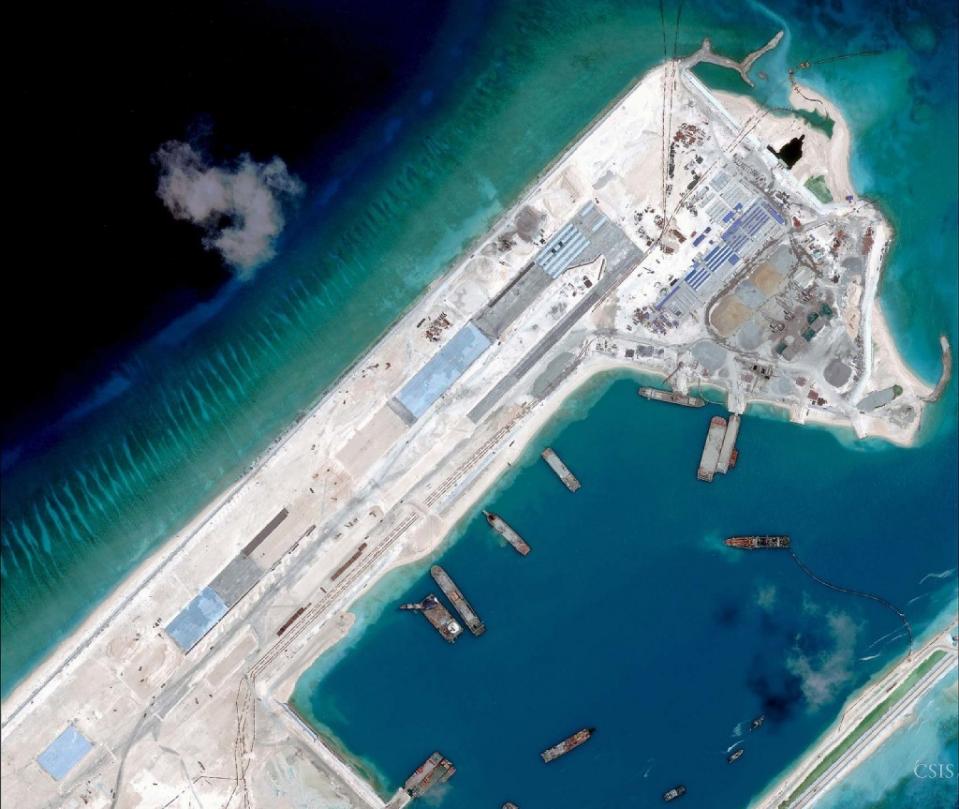
By releasing video of Beijing’s island reclamation work and considering more assertive maritime actions, the United States is signaling a tougher stance over the South China Sea and trying to spur Asian partners to more action.
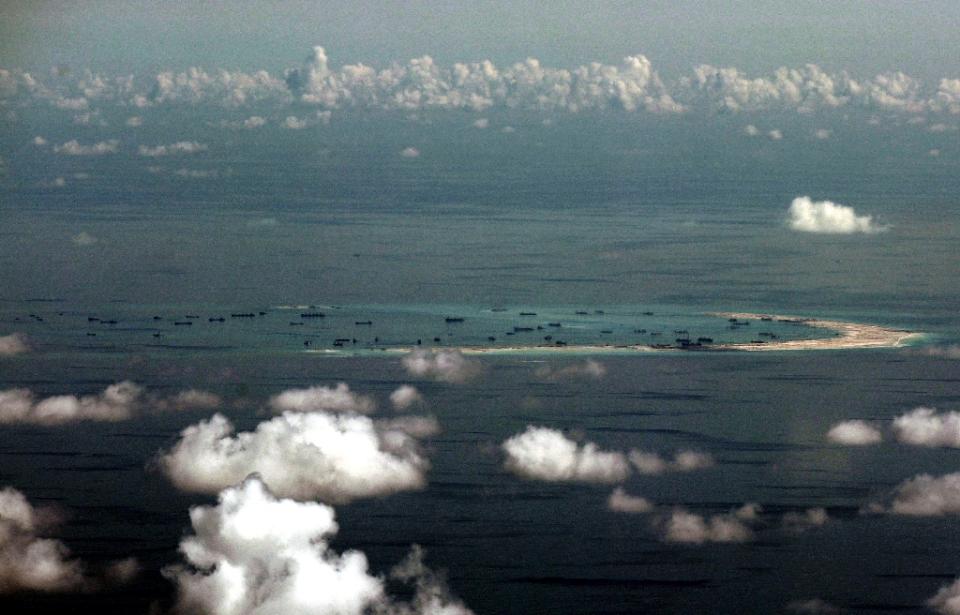
The release last week of the surveillance plane footage – showing dredgers and other ships busily turning remote outcrops into islands with runways and harbors – helps ensure the issue will dominate an Asian security forum starting on Friday attended by U.S. Defense Secretary Ash Carter as well as senior Chinese military officials.
As it pushes ahead with a military “pivot” to Asia partly aimed at countering China, Washington wants Southeast Asian nations to take a more united stance against China’s rapid acceleration this year of construction on disputed reefs.
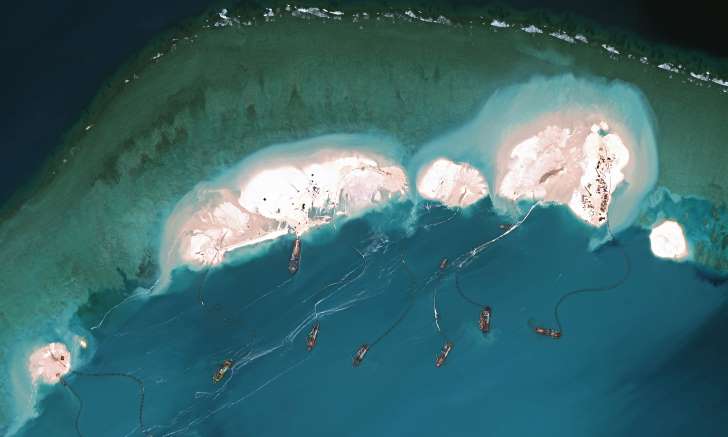
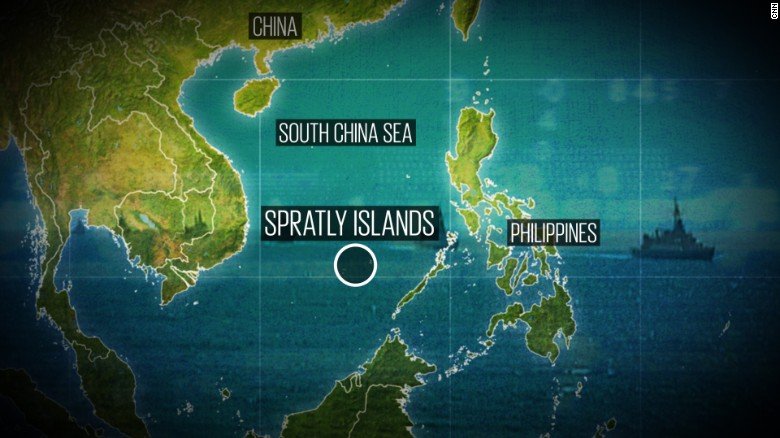
The meeting, the annual Shangri-La Dialogue in Singapore, will be overshadowed by the tensions in the South China Sea, where Beijing has added 1,500 acres to five outposts in the resource-rich Spratly islands since the start of this year.
“These countries need to own it (the issue),” one U.S. defense official said on condition of anonymity, adding that it was counterproductive for the United States to take the lead in challenging China over the issue.
Red China – Land Reclamation Activity in South China Sea.
More unified action by the partners, including the 10-member Association of Southeast Asian Nations (ASEAN), needed to happen soon because “if you wait four years, it’s done,” the official said.
While some ASEAN members, including U.S. ally the Philippines and fellow claimant Vietnam, have been vocal critics of Chinese maritime actions, the group as a whole has been divided on the issue and reluctant to intervene.
But in a sign of growing alarm, the group’s leaders last month jointly expressed concern that reclamation activity had eroded trust and could undermine peace in the region.
Experts dismiss the idea of ASEAN-level joint action any time soon in the South China Sea. “It’s absolute fantasy,” said Ian Storey of Singapore’s Institute on South East Asian Studies.
But stepped-up coordination between some states is possible. Japan’s military is considering joining the United States in maritime air patrols over the sea. Japan and the Philippines are expected to start talks next week on a framework for the transfer of defense equipment and technology and to discuss a possible pact on the status of Japanese military personnel visiting the Philippines.
Carter, speaking in Honolulu en route to Singapore, repeated Washington’s demand that the island-building stop, saying China was violating the principles of the region’s “security architecture” and the consensus for “non-coercive approaches.”
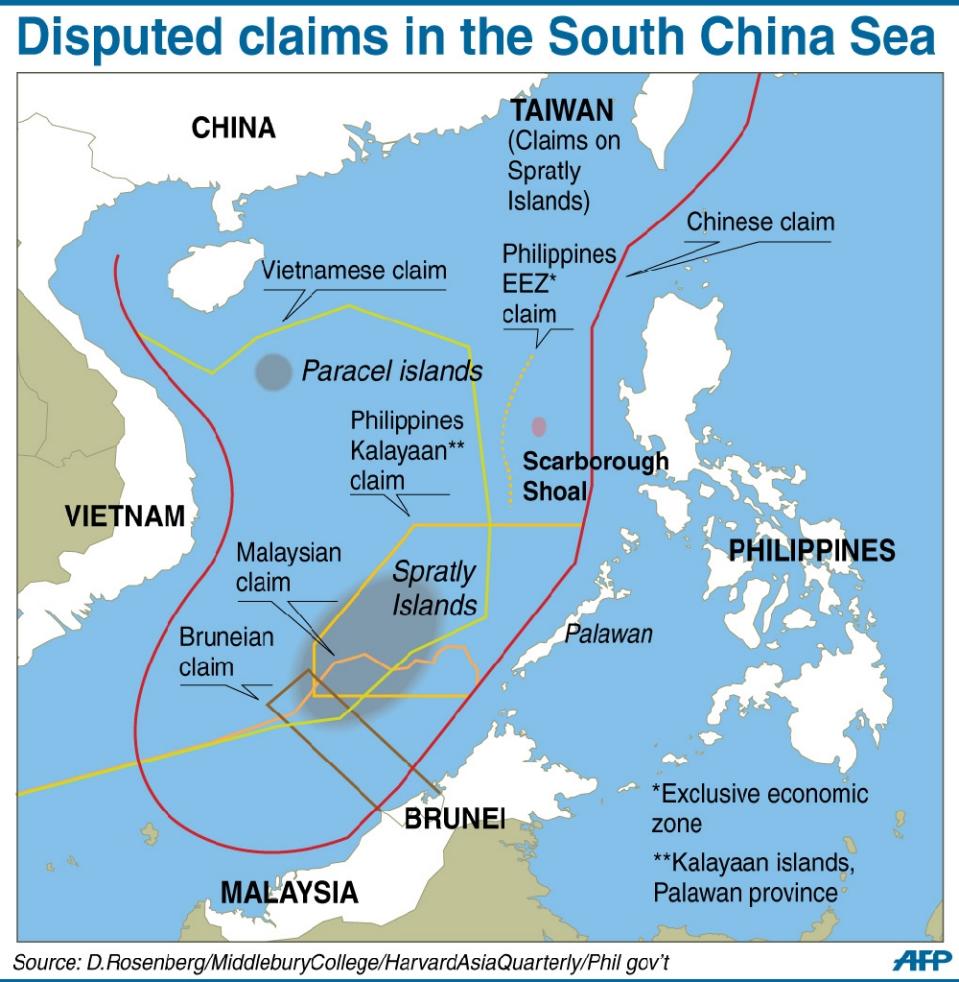
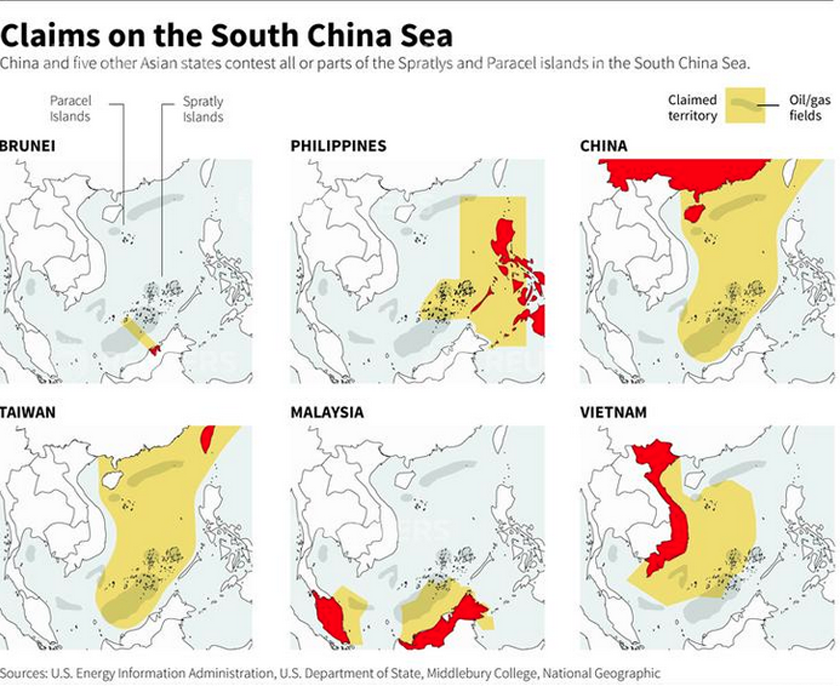
China claims 90 percent of the South China Sea, which is believed to be rich in oil and gas, with overlapping claims from Brunei, Malaysia, the Philippines, Vietnam and Taiwan.
SHOWING CHINA SOME “RESOLVE”
As part of Washington’s drive to energize its allies, a U.S. Navy P-8 reconnaissance plane allowed CNN and Navy camera crews to film Chinese land reclamation activity in the Spratly islands last week and release the footage.
“No one wants to wake up one morning and discover that China has built numerous outposts and, even worse, equipped them with military systems,” Assistant Secretary of State Daniel Russel said.
Ernest Bower, a Southeast Asia expert at the Center for Strategic and International Studies think tank in Washington, said the U.S. goal was to convince China to buy into the international system for dispute resolution rather than impose its sweeping territorial claims on the region.
But in the near term, he added: “I think the Americans are going to have to show China some resolve.”
U.S. officials have said Navy ships may be sent within 12 miles (19 kms) of the Chinese-built islands to show that Washington does not recognize Beijing’s insistence that it has territorial rights there.
Washington is also pressing ahead with its rebalancing towards Asia, four years after President Barack Obama announced the strategic shift, even as some countries say it is slow to take shape.
The United States has updated its security agreements with treaty allies Japan and the Philippines and is bolstering missile defenses in Japan with an eye on North Korea.
U.S. Marines are training in Australia on a rotational basis, littoral combat ships are operating out of Singapore and new P-8 reconnaissance planes stationed in Japan have flown missions across the region.
Overall, defense officials said, the Navy will increase its footprint by 18 percent between 2014 and 2020. The aim is to have 60 percent of Navy ships oriented toward the Pacific by 2020, compared to 57 percent currently.
Military officials in the Philippines say the U.S. shift has been noticeable, including military exercises, training and ship and aircraft visits. The emphasis has shifted from anti-terrorism to maritime security, one official said.
China has not shown any sign of being deterred. On Tuesday it held a groundbreaking ceremony for two lighthouses in the South China Sea, vowed to increase its “open seas protection,” and criticized neighbors who take “provocative actions” on its reefs and islands.
(Additional reporting by Greg Torode in Hong Kong, Nobuhiro Kubo in Tokyo, Manuel Mogato in Manila, Sui Lee Wee in Beijing; editing by David Storey and Stuart Grudgings.)
The term ‘tyrant’ describes any person who exercises authority in an oppressive manner, a cruel master, despot, absolute ruler who is unwilling for arbitration. Red China governs as a tyrantThe term ‘tyrant’ describes any person who exercises authority in an oppressive manner, a cruel master, despot, absolute ruler who is unwilling for arbitration. Red China governs as a tyrantThe term ‘tyrant’ describes any person who exercises authority in an oppressive manner, a cruel master, despot, absolute ruler who is unwilling for arbitration. Red China governs as a tyrantThe term ‘tyrant’ describes any person who exercises authority in an oppressive manner, a cruel master, despot, absolute ruler who is unwilling for arbitration. Red China governs as a tyrantThe term ‘tyrant’ describes any person who exercises authority in an oppressive manner, a cruel master, despot, absolute ruler who is unwilling for arbitration. Red China governs as a tyrantThe term ‘tyrant’ describes any person who exercises authority in an oppressive manner, a cruel master, despot, absolute ruler who is unwilling for arbitration. Red China governs as a tyrantThe term ‘tyrant’ describes any person who exercises authority in an oppressive manner, a cruel master, despot, absolute ruler who is unwilling for arbitration. Red China governs as a tyrantThe term ‘tyrant’ describes any person who exercises authority in an oppressive manner, a cruel master, despot, absolute ruler who is unwilling for arbitration. Red China governs as a tyrant
ROAD BUILDING IN TIBET: THE TENTACLES OF NEOCOLONIALISM
Road Building in Tibet: The Tentacles of Neocolonialism grasping Tibetans.
In my analysis, the road building projects in Tibet represent the tentacles of Neocolonialism spreading a sense of deep fear, hopelessness, and frustration grasping Tibetans under perpetual oppression, suppression, and repression imposed by China’s military conquest of Tibet in 1950.
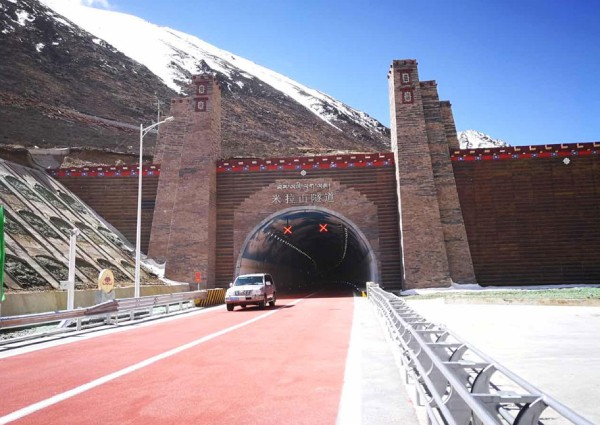
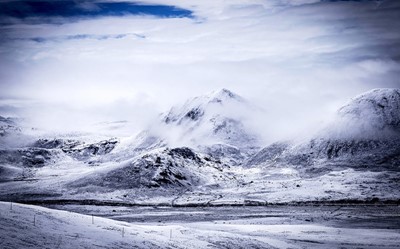
Road Building in Tibet: The Tentacles of Neocolonialism grasping the Mila Mountain.
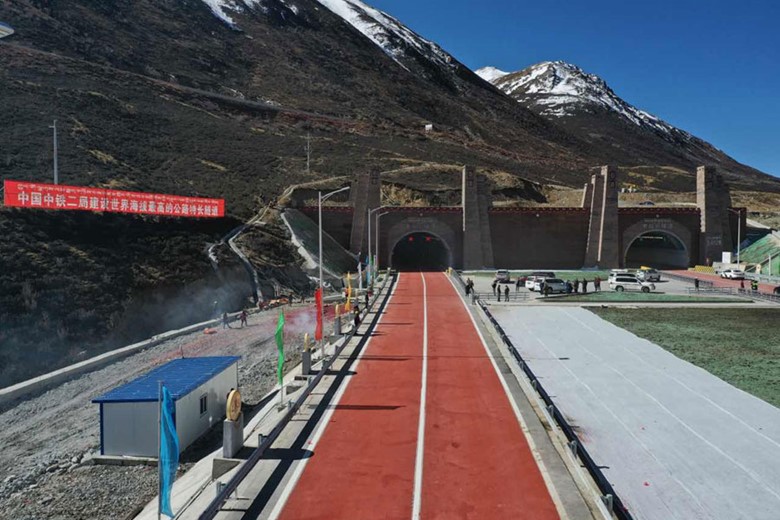
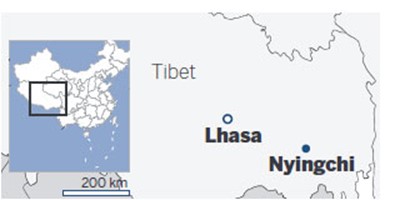
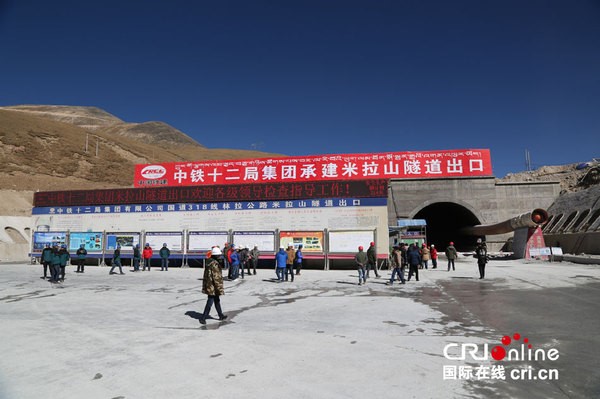
The Mila Mount Tunnel on the Lhasa-Nyingchi Highway in China’s Tibet autonomous region began operations on Friday, symbolizing the full operation of another vital traffic line in the region.
The tunnel is located at the junction of Lhasa and Nyingchi at an average altitude of 4,750 meters above sea level, according to the China Railway Erju Construction Co., Ltd, which constructed the project.
As a key section of the Lhasa-Nyingchi Highway on the National Highway 318, the left lane of the tunnel is 5,727 meters and the right lane is 5,720 meters long respectively, according to the company.
Construction of the Mila Mount tunnel started in April 2015, and it has become the world’s highest super-long tunnel, the company said.
Road Building in Tibet: The Tentacles of Neocolonialism grasping the Mila Mountain.
The Mila Mount Tunnel on the Lhasa-Nyingchi Highway of China’s Tibet autonomous region began operations on Friday (April 26).Photo: China Daily/Asia News Network
Linking the regional capital city Lhasa with the region’s eastern tourism city of Nyingchi, the 409-kilometre highway has reduced travel time from the previous eight hours to the current four.
Road Building in Tibet: The Tentacles of Neocolonialism grasping the Mila Mountain.Road Building in Tibet. The Tentacles of Neocolonialism grasping the Mila Mountain.Road Building in Tibet. The Tentacles of Neocolonialism grasping the Mila Mountain.Road Building in Tibet. The Tentacles of Neocolonialism grasping the Mila Mountain.Road Building in Tibet. The Tentacles of Neocolonialism grasping the Mila Mountain.
THE EVIL RED EMPIRE – CONSUMERISM AND ECONOMIC EXPANSIONISM
THE EVIL RED EMPIRE – CONSUMERISM – ECONOMIC EXPANSIONISM. RED CHINA’S SHIFT FROM COMMUNISM TO CONSUMERISM POSES A GREATER DANGER . COMMUNIST PARTY CHAIRMAN MAO ZEDONG’S DREAM OF PROLETARIAN REVOLUTION IS BURIED.
Consumerism is a theory that claims continual increase in consumption of material goods is sound economically. Red China buried her dreams of Proletarian Revolution to embrace this theory of ‘CONSUMERISM’ as a means to accomplish her goal of Economic Expansionism. People all over the world have recognized dangers posed by practice of Consumerism. What we clearly need is Consumer Protection, not only laws to safeguard interests of the buying public, but also to protect rights of workers, communities, environment, and ecological systems that sustain delicate natural equilibrium. The lives, health, and well-being of both workers and consumers is compromised by hazardous products and planet Earth is facing a major challenge to the very existence of Life. Red China’s Economic Expansionism is not sustainable and her economic collapse is simply inevitable. Red China’s Economic Meltdown is indeed a Blessing to all of us.
The Evil Red Empire. The Evil of Consumerism is far more dangerous than the Evil of Communism.
THE EVIL RED EMPIRE – CONSUMERISM – ECONOMIC EXPANSIONISM. RED CHINA’S ECONOMIC MELTDOWN IS A BLESSING TO ALL OF US.
The Evil Red Empire – Consumerism – Economic Expansionism. Red China’s Shift to Consumerism is the Driving Force causing Income Inequality.
The Evil Red Empire – Consumerism – Economic Expansionism.Red China is forcing a Culture of Consumption chasing a Mirage of Economic Prosperity.
The Evil Red Empire – Consumerism – Economic Expansionism. Self-Indulgence leads to Self-Destruction.
The Evil Red Empire – Consumerism – Economic Expansionism Plan is Fundamentally Flawed.
THE US NEWS & WORLD REPORT
IS CHINA COOKING THE BOOKS ON ECONOMIC EXPANSION?
Analysts aren’t terribly confident in the Chinese government’s economic growth data.
THE EVIL RED EMPIRE – CONSUMERISM – ECONOMIC EXPANSIONISM. RED CHINA DRIFTED FROM PROLETARIAN REVOLUTION TO PROMOTING MASS CONSUMERISM TO POWER ITS ECONOMIC ENGINE. RED CHINA’S ECONOMIC DOWNFALL IS A BLESSING TO ALL PEOPLE.
China’s government expects its economy to grow 6.5 percent each year between 2016 and 2020.
By ANDREW SOERGEL Nov. 2, 2015 | 1:10 p.m. EST
One of China’s most senior government officials over the weekend said his country’s economy should expect to see “at least 6.5 percent” gross domestic product growth each year between 2016 and 2020, despite a growing pool of evidence suggesting China is in the midst of a historic economic slowdown.
But whether Chinese GDP numbers actually paint a clear economic picture is another question entirely.
“We propose to achieve the goal of creating a ‘moderately prosperous society’ by 2020, which requires annual economic growth of at least 6.5 percent over the next five years,” Chinese Premier Li Keqiang said Sunday during a speech in Seoul, according to The Associated Press. He said the economy is operating within a “reasonable range” and that the government has “the confidence and ability” to hit its growth target of “about 7 percent” this year.
THE EVIL RED EMPIRE – CONSUMERISM – ECONOMIC EXPANSIONISM. RED CHINA PURSUING A PATH OF SELF-DESTRUCTION.
Rumors had floated around in the days and weeks leading up to Sunday’s announcement that the government would eventually lower its expansion goals for the next several years following a slew of recently underwhelming economic indicators suggesting Asia’s financial giant was beginning to cool. Exports and imports have plummeted in recent months, and the Chinese government announced in October that GDP expanded by only 6.9 percent in the third quarter – which represents the worst three-month period for the Chinese economy since the world was just emerging from the global financial crisis in 2009. But even that 6.9 percent growth – the worst China had posted in more than half a decade – sounded too good to be true. “We don’t have total confidence in the numbers, and we are surprised by the acceleration in services output given the collapse in the equity market,” a team of Bloomberg economists wrote in a research note at the time.
China’s stock market has recently strengthened, thanks in no small part to extraordinary governmental intervention. The heavy-handed Chinese government has thrown out safety net after safety net in an attempt to prevent a hard economic landing. Only a few weeks ago, China slashed its interest rates for the sixth time in less than a year.
“We continue to expect China to pull out all the stops to kick-start its economy in the coming weeks and months,” Burt White, chief investment officer at LPL Financial, wrote in a research note last week. “The [People’s Bank of China] interest rate cuts, along with selected fiscal and legislative actions in China, should further help to calm fears of a hard landing.”
THE EVIL RED EMPIRE – CONSUMERISM – ECONOMIC EXPANSIONISM. RED CHINA AND RUSSIA ARE PLOTTING TO UNDERMINE STRENGTH OF US CURRENCY.
Are China and Russia Trying to Undermine the U.S. Dollar?But some analysts have speculated that the Chinese government’s intervention could extend to the country’s economic news releases as well. A recent Wall Street Journal survey of 64 select economists found that 96 percent of respondents think China’s GDP estimates don’t “accurately reflect the state of the Chinese economy.” They likely “overstate GDP by about 2 to 3 percentage points,” said one respondent.
“A government wielding such a heavy hand in markets is surely influencing/manipulating official statistics.” said another.
Ironically, China’s own premier has previously said he’s far from confident in the country’s GDP estimates, calling them “man-made” and unreliable, according to a leaked document from 2007 obtained by WikiLeaks. He said government data releases, especially the GDP numbers, should be used “for reference only.”
“Quite frankly, we don’t believe them at all. It’s not only that they come in suspiciously close to the target, which is pre-set. They’re produced remarkably quickly and rarely revised,” Danny Gabay, director at Fathom Financial Consulting, said last month in a radio interview with the BBC.
THE EVIL RED EMPIRE – CONSUMERISM – ECONOMIC EXPANSIONISM. THE PRACTICE OF CONSUMERISM HAS NO MAGICAL POWER TO SAVE MAN.
Gabay said he recalculated economic growth “based on Premier Li’s advice, which is that the GDP data are untrustworthy and we should use alternative measures to gauge the level of activity in China like electricity use, credit growth and other domestic indicators.” He said the actual growth number is “closer to 3 percent. Not 7.3 percent.”
But even if the 6.5 percent growth target between now and 2020 seems a little optimistic, it’s a clear recognition from the Chinese government that economic expansion now is not what it once was. China enjoyed double-digit annual growth between 2003 and 2007, and 2014’s 7.4 percent jump was still significantly higher than the global average, even though it was China’s worst year in more than two and a half decades.
For comparison’s sake, the U.S. economy hasn’t grown by 7.4 percent or more in a single year since 1951. And double-digit annual growth hasn’t been seen in America since 1943.
Part of the problem is that once an economy gets to a certain size, it’s just harder to keep up the momentum, which is likely at least partially responsible for China’s gradual slowdown. It would be unreasonable to expect the Chinese economy to plug along at a double-digit pace, just as it would be unreasonable to expect the U.S. economy to suddenly grow by 10 or 12 percent for a prolonged period of time.
But China’s government is able to influence market activity in a way America’s is not, which could artificially prolong China’s still respectable levels of economic growth beyond what would happen naturally. Most expect to continue to see relatively positive GDP numbers out of China for some time, even if such releases could be filled with a little bit of hot air.
“As an economy closely linked to international markets, China cannot stay immune to the lackluster performance of the global economy,” Chinese President Xi Jinping told Reuters in an interview last month. “We do have concerns about the Chinese economy, and we are working hard to address them.”
Andrew Soergel is an Economy Reporter at U.S. News.
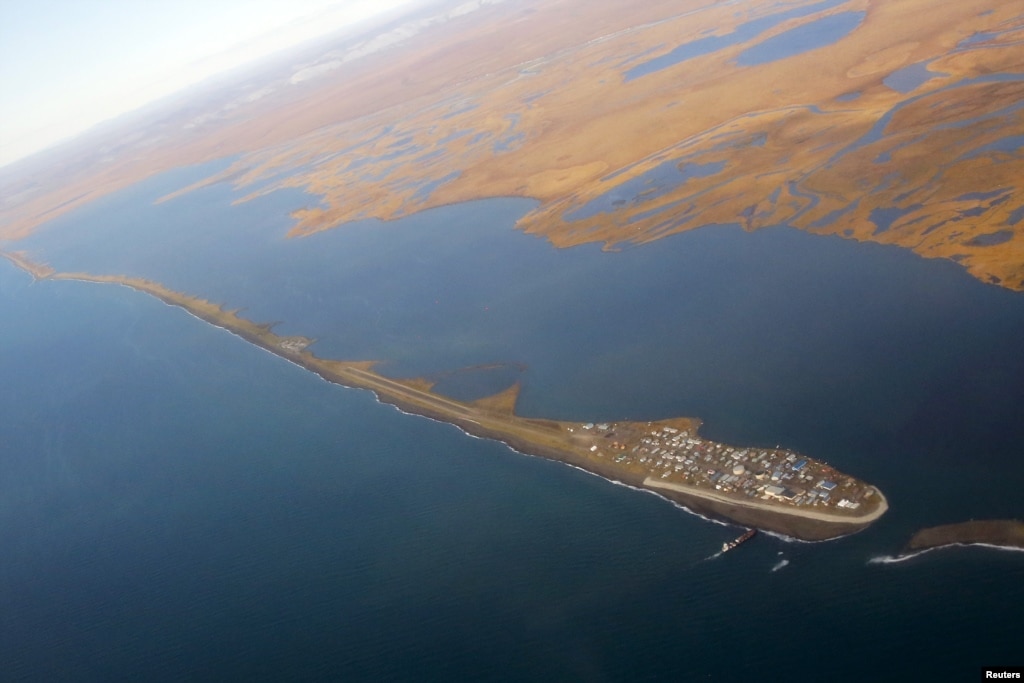
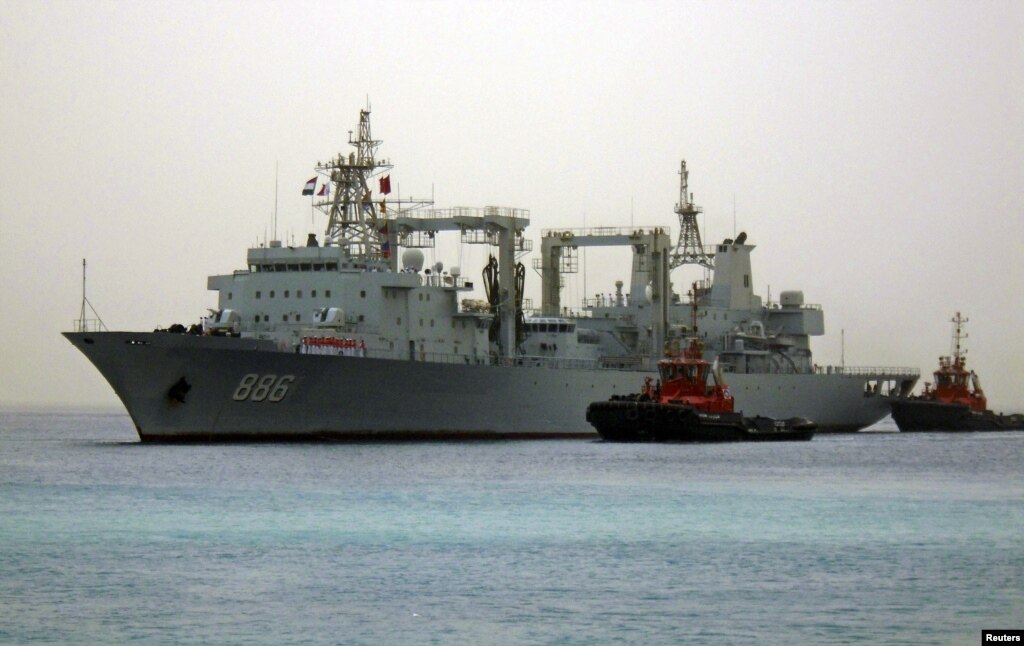
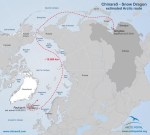
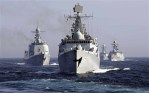
During the US President Barack Obama’s three-day visit to Alaska, Red China dispatched five of its naval vessels to Bering Sea. Red China became a permanent observer to the Arctic Council in 2013. Arctic Council’s members are eight Arctic States, Canada, Denmark, Finland, Iceland, Norway, Sweden, Russia, and the United States. Red China is interested in Arctic region’s vast energy reserves. This demonstration of Red China’s naval power is a clear indication of Red China’s assertion of her right to drill for Oil and Gas in Arctic Sea with or without consent of Arctic Council.
Chinese Navy Ships Spotted Off Alaska During Obama Visit
U.S. President Barack Obama (L) tours the Kotzebue Shore Avenue Project, an effort to protect against rising sea levels in Kotzebue, Alaska Sept. 2, 2015.
WILLIAM GALLO, VICTOR BEATTLE
Last updated on: September 03, 2015 7:31 AM
Five Chinese Navy ships have been spotted in international waters off the coast of Alaska, according to U.S. officials, in what many analysts see as a fresh attempt by Beijing to project military power far from its shores.
Pentagon spokesman Bill Urban on Wednesday confirmed the presence of the five vessels, noting that it is the first time the U.S. has observed Chinese Navy ships in the Bering Sea.
“We respect the freedom of all nations to operate military vessels in international waters in accordance with international law,” he said, adding that the U.S. military is tracking the ships.
White House spokesman Josh Earnest said U.S. officials have not detected any “threatening activities” by the ships, but said the intent of their presence was “still unclear.”
The Chinese ship deployment came as President Barack Obama visited Alaska to build support for his environmental policies to combat climate change.
The island village of Kivalina, an Alaska Native community of 400 people the White House chose to highlight as a community at risk from rising sea levels, can be seen from Air Force One as U.S. President Barack Obama flies to Kotzebue, Alaska Sept. 2, 201
Coincidence?
But it is not likely Beijing planned the deployment to coincide with Obama’s trip, said Ralph Cossa with the Center for Strategic and International Studies.
“I would guess that their presence during Obama’s visit is coincidental more than deliberate. Because deployment like that is normally planned months in advance and I don’t think anyone knew Obama was going to be in Alaska until a few days ago,” Cossa told VOA.
However, the presence of the ships is meant to send a message to the U.S., he added.
“What it’s saying is that at some point the Chinese are going to be just as obnoxious as we are when it comes to sailing around in international waters close to the other country’s shores, and we should get used to it,” he said.
The U.S. military has numerous bases in Asia and regularly conducts various air-and-ship-based activities off China’s coasts in international waters.
“And China has repeatedly expressed its concerns about that,” noted VOA Beijing correspondent William Ide. “It feels like China’s trying to say if you’re going to continue to do this, we’re going to do the same.”
U.S. officials say the Chinese flotilla is made up of three surface warfare ships, one amphibious assault ship, and a replenishment vessel.
If that is the case, the deployment represents less of a threat, and more of a projection of power, according to Scott Harold of the RAND Corporation.
“A replenishment vessel says to me this is in part a demonstration of its capacity to operate far from their shores,” Harold told VOA.
“And an amphibious assault vessel would be absurd as a threat. No one is going to invade the United States by ground or by sea, much less are they going to do it in Alaska. But it is a symbol of China’s ability to project naval or amphibious forces at some distance from China,” he said.
FILE – Chinese navy warships arrive at the seaport of Port Sudan.
Near-Arctic power
The deployment fits a larger pattern by China’s navy, which is rapidly modernizing and attempting to venture out well beyond its shores.
And even though it does not border the resource-rich polar region, Beijing has made it clear that it wants to be regarded internationally as a “near-Arctic power,” said Harold.
“Chinese leaders have clearly recognized that the resources that may be in the Arctic, the sea lines of communications that transit through the Arctic passageways that may open up as the ice melts are of tremendous potential value to China,” he said.
Underscoring the strategic importance of the Arctic, Obama this week used his Alaskan tour to push lawmakers to speed up construction of a new heavy icebreaker ship that can navigate the region year-round.
The U.S. has just two functioning icebreakers, while Russia has 41. China unveiled its own icebreaker vessel in 2012, and plans to finish construction of another by 2016.
ARCTIC DRAWS INTERNATIONAL COMPETITON FOR OIL
A new geopolitical “Great Game” is underway in earth’s northernmost region, the Arctic, where Russia has claimed a large area for resource development and President Barack Obama recently approved Shell Oil Company’s test-drilling project in an area under U.S. control. Greg Flakus reports.
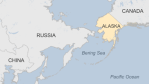
red navy bering sea map
red navy in bering sea
the evil red empire the dragon covets the arctic the route to iceland
the evil red empire the dragon covets the arctic
RED CHINA – RED ALERT – RED DRAGON COVETS ARCTIC: CHINESE NAVY DESTROYER WUHAN LEADS FIVE-SHIP SURFACE ACTION GROUP FROM CHINESE PEOPLE’S LIBERATION ARMY NAVY OR PLAN AS THEY MOVE INTO BERING SEA FOR THE FIRST TIME IN US HISTORY.
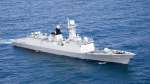
red navy yancheng missile frigate
red navy bering sea red china mocker
red china red alert joint chiefs of staff general martin dempsey
RED DRAGON – RED CHINA – RED ALERT – HEGEMONIST : UNITED STATES IN RECOGNITION OF RED CHINA’S HEGEMONISM MUST COUNTERACT AND CONTAIN RED CHINA’S INFLUENCE OVER HER WEAK NEIGHBORS.
On behalf of Special Frontier Force I issuing a ‘RED ALERT’ to warn US citizens of imminent danger as United States holds three days of cabinet-level meetings with more than 400 Chinese officials. Under the wide-ranging Strategic and Economic Dialogue(S &ED)framework, eight US Cabinet Secretaries are involved in these talks and consultations with Chinese officials. The top Chinese officials meet US President Barack Obama at The White House on Wednesday, June 24, 2015.
RED DRAGON – RED CHINA – RED ALERT – HEGEMONIST : THIS SEVENTH STRATEGIC AND ECONOMIC DIALOGUE BETWEEN UNITED STATES AND CHINA MUST ADDRESS THE PROBLEM OF RED CHINA’S HEGEMONISM.
The term ‘HEGEMONY’ describes dominance of one state or nation over others. Hegemonism is the Policy or Practice of a nation in aggressively expanding its influence over other nations. Red China formulated her Hegemonistic Policy in 1950 when she conquered Tibet bringing Tibetan people under her control or subjection. Red China subdued Tibetan Government and forced Tibet’s Head of State to live in exile. Red China’s Hegemonic Practice forces Tibetan people to become subservient to Peking(or Beijing). United States has to recognize Red China as “HEGEMONIST” and counteract to contain Red China’s growing political, economic, military power which she uses to expand her influence over other nations of our world.
U.S. AND CHINA OPEN ANNUAL DIALOGUE WITH ‘CANDID, TO-THE-POINT’ TALKS
BY DAVID BRUNNNSTROM
The United States and China held “candid and to-the-point” talks at the start of three days of cabinet-level meetings aimed at managing the highly complex relationship between the world’s two biggest economies, a senior U.S. official said.
The U.S. side, led on Monday by Deputy Secretary of State Antony Blinken, reiterated U.S. concerns about China’s pursuit of territorial claims in the South China Sea, the official said.
U.S. worries about cybersecurity following massive attacks on government computers that U.S. officials have blamed on Chinese hackers would also be addressed “in very direct terms,” the official said.
RED DRAGON – RED CHINA – RED ALERT – HEGEMONIST: US and Chinese flags at Tiananmen Square President Obama’s Peking(Beijing) Visit.
More than 400 Chinese officials are in Washington for the annual talks under the wide-ranging Strategic and Economic Dialogue (S&ED) framework, which will involve eight U.S. cabinet secretaries.
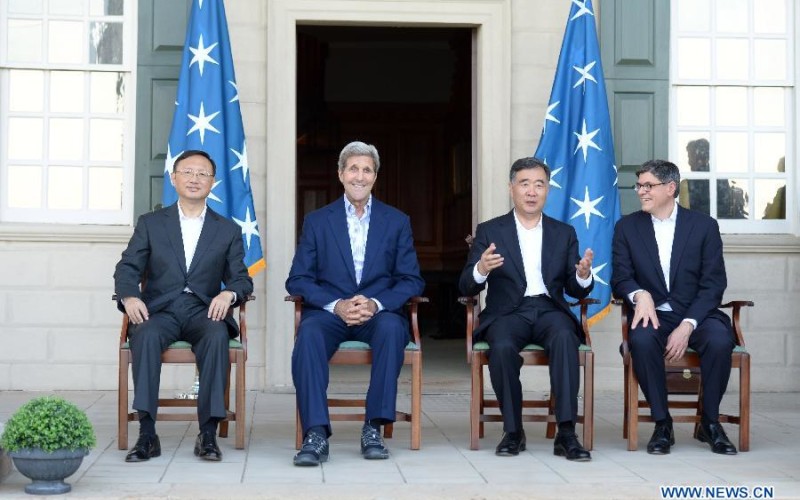
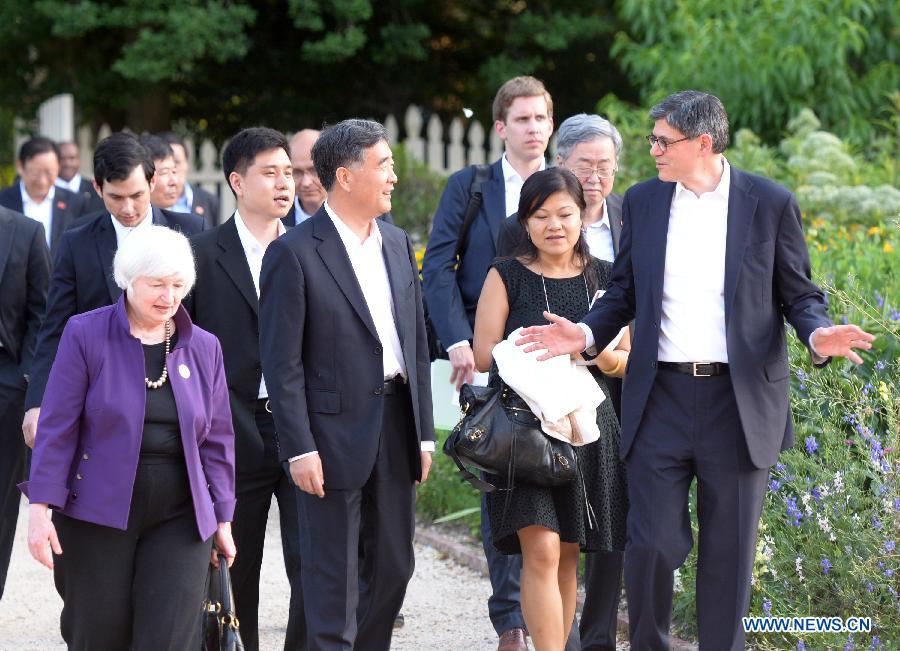
RED DRAGON – RED CHINA – RED ALERT – HEGEMONIST : RED CHINA’S VICE PREMIER WANG YANG IN MT VERNON, VIRGINIA.
The meetings come at a time of waning trust and widening differences between the two countries, even though they maintain robust economic ties worth $590 billion in two-way trade last year.
U.S. concerns have been mounting about Beijing’s challenge to its dominance of global finance and about restrictions on U.S. businesses in China.
U.S. President Barack Obama is struggling to secure backing from Congress for legislation needed to speed a 12-nation trade deal, which is the economic plank of his Asia policy intended as a counterweight to China’s growing influence.
The two sides will try to ease tensions by stressing areas of cooperation, including climate change, shared concerns about Iran and North Korea’s nuclear programs, the fight against Islamist militancy, and support for global development.
“We have agreed with the Chinese that we are going to try to expand those areas where our interests overlap and expand cooperation in those areas,” the U.S. official said. But the aim was not to “paper over” contentious issues, or to “agree to disagree,” but to narrow differences to avoid miscalculations.
Despite the considerable areas of tension, China is hoping for a smooth set of meetings to prepare for a visit to Washington by President Xi Jinping in September. Prospects for substantial outcomes from the cabinet-level meetings appeared slim, with any scant progress likely to be held over for announcement during Xi’s visit, analysts said.
The sides are expected to discuss a Bilateral Investment Treaty that has been seven years in discussion but has been held up by restrictions on both sides, while China is likely to press its bid to add the yuan to the International Monetary Fund’s basket of reserve currencies.
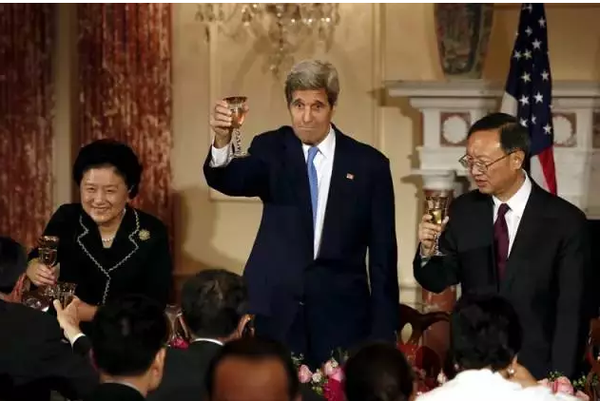
Blinken and Secretary of State John Kerry will chair the security side of the talks with State Councillor Yang Jiechi and Vice Foreign Minister Zhang Yesui on the Chinese side.
RED DRAGON – RED CHINA – RED ALERT – HEGEMONIST: BEAWARE OF RED CHINA’S HEGEMONISM.
U.S. Treasury Secretary Jack Lew and Chinese Vice Premier Wang Yang will chair the economic elements, and the top Chinese officials will meet Obama at the White House on Wednesday.
(Reporting by David Brunnstrom; Additional reporting by Jason Lange, Krista Hughes, Anna Yukhananov, Megan Cassella and Idrees Ali in Washington and Michael Martina in Beijing; Editing by Christian Plumb)
Red Dragon – Red Alert. US and Chinese flags at Tiananmen Square – President Obama -Peking-Beijing visit
Red Alert Chinese J- 11 Fighter jet flying near a us navy p 8 poseidon
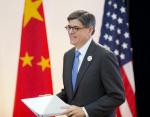
U.S. Treasury Secretary Jack Lew walks to the podium before speaking at the 7th US China Strategic and Economic Dialogue (S&ED) and 6th Consultation on People-to-People (CPE) at the U.S. State Department in Washington, Tuesday, June 23, 2015.(AP Photo/Pablo Martinez Monsivais)
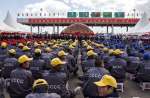
Red Alert- Ethiopian and Chinese workers – China Communication Construction Company- Addis Ababa – Adama toll road
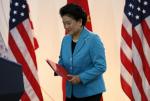
Chinese Vice Premier Liu Yandong arrives to speak at the Strategic and Economic Dialogue (S&ED) at the State Department in Washington June 23, 2015. More than 400 Chinese officials are in Washington for annual talks under the wide-ranging Strategic and Economic Dialogue (S&ED) framework, which will involve eight U.S. cabinet secretaries. REUTERS/Yuri Gripas
RED DRAGON – RED CHINA – RED ALERT – HEGEMONIST : UNITED STATES IN RECOGNITION OF RED CHINA’S HEGEMONISM MUST COUNTERACT AND CONTAIN RED CHINA’S INFLUENCE OVER HER WEAK NEIGHBORS.
RED DRAGON – RED CHINA – RED ALERT – HEGEMONIST : THIS SEVENTH STRATEGIC AND ECONOMIC DIALOGUE BETWEEN UNITED STATES AND CHINA MUST ADDRESS THE PROBLEM OF RED CHINA’S HEGEMONISM.
RED DRAGON – RED CHINA – RED ALERT – HEGEMONIST : RED CHINA’S VICE PREMIER WANG YANG IN MT VERNON, VIRGINIA.
RED DRAGON – RED CHINA – RED ALERT – HEGEMONIST: BEAWARE OF RED CHINA’S HEGEMONISM.
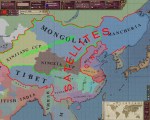
It surprises me to note that news media give attention to threats posed to national entities like Taiwan, Japan, Philippines, Indonesia, Malaysia, Vietnam, and Brunei but pay no attention to ‘The Great Problem of Tibet’. To provide some perspective on this issue, I ask my readers to compare the land area of these nations:
THE EVIL RED EMPIRE – RED CHINA – THE GREAT PROBLEM OF TIBET : TIBET HAS LAND AREA OF 870, 000 SQUARE MILES. TIBET IS LARGER IN SIZE COMPARED TO ASIAN NATIONS LIKE JAPAN, TAIWAN, PHILIPPINES, INDONESIA, MALAYSIA, VIETNAM, AND BRUNEI. TIBET IS THREE-TIMES LARGER THAN TEXAS STATE OF UNITED STATES .
Land area of Tibet includes Tibet Autonomous Region(TAR) and Tibetan territory annexed to Qinghai, Gansu, Sichuan, and Yunnan Provinces of People’s Republic of China. To give a better understanding of the size of Tibet, it may be compared to Texas, largest State in the coterminous United States. Land area of Texas is 268, 820 square miles. Tibet is larger than three States of Texas combined.
Special Frontier Force welcomes attention given to security risks posed by Red China to countries of Asia and those threats cannot be resolved without including solution to ‘The Great Problem of Tibet.’
TAIWAN COAST GUARD LAUNCHES NEW SHIPS AS SOUTH CHINA SEA TENSIONS RISE
Taiwan coast guard launches new ships as South China Sea tensions rise
By J.R. Wu June 6, 2015
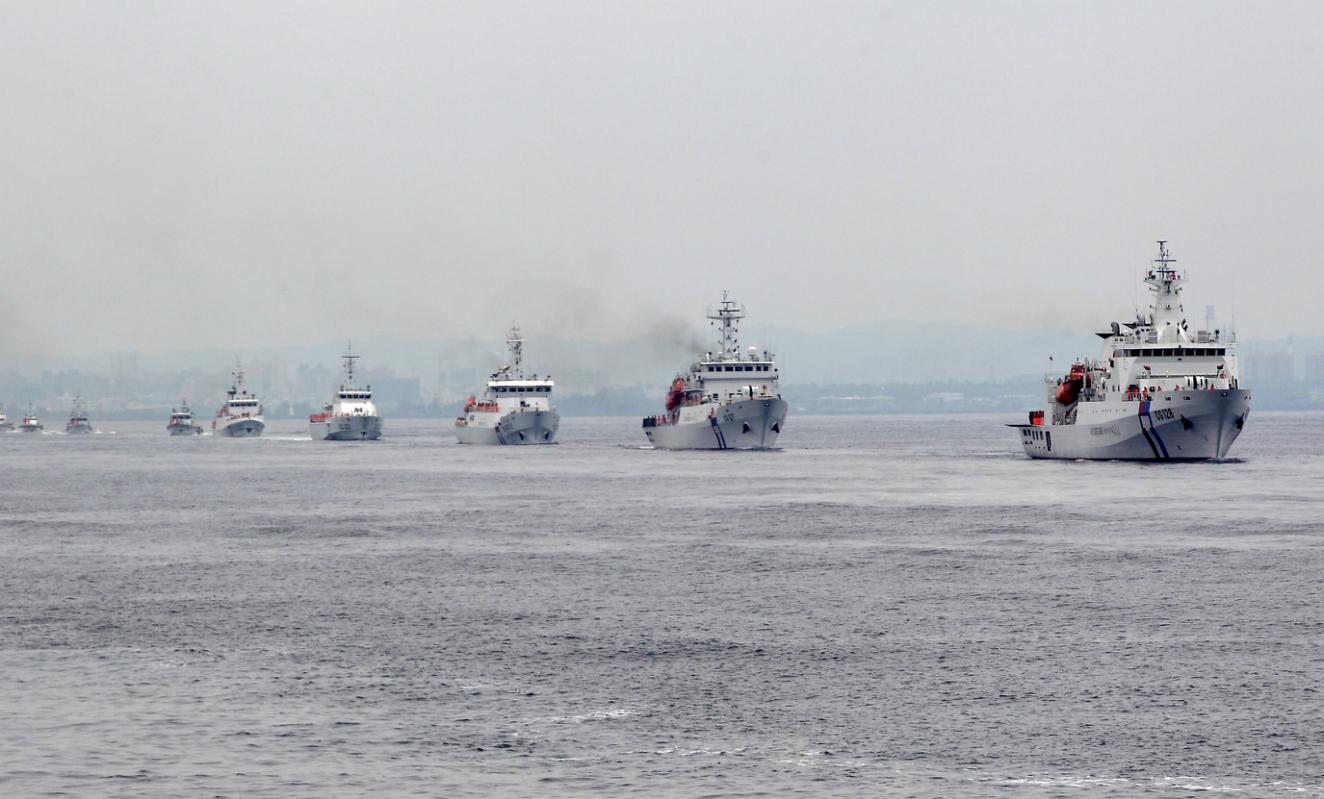
Taiwan Coast Guard’s new patrol ship, the 3000-ton “Ilan” (L), is seen during a commissioning …
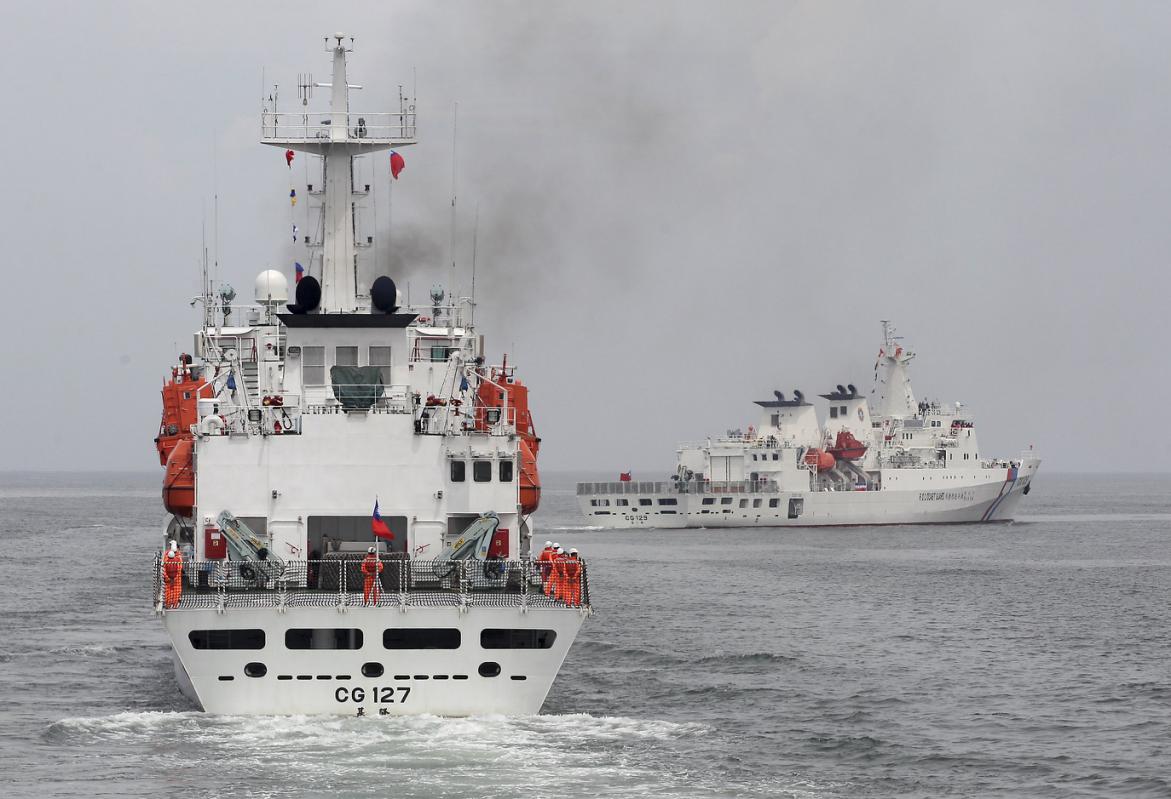
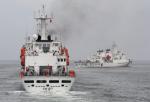
Taiwan Coast Guard patrol ships are seen during a drill held about 4 nautical miles out of the port of Kaohsiung, southern Taiwan, June 6, 2015. Taiwan’s coast guard on Saturday commissioned its biggest ships for duty, in the form of two 3,000 ton patrol vessels, as Taipei boosts its defences amid concerns about China’s growing footprint in the disputed South China Sea. REUTERS/Pichi Chuang
By J.R. Wu
KAOHSIUNG, Taiwan (Reuters) – Taiwan’s coast guard on Saturday commissioned its biggest ships for duty in the form of two 3,000-ton patrol vessels, as the island boosts defenses amid concerns about China’s growing footprint in the disputed South China Sea.
The new vessels will be able to dock at a new port being constructed on Taiping Island, the largest of the naturally occurring Spratly Islands in the South China Sea, before the end of this year.
Taiwan’s coast guard has had direct oversight of the 46-ha (114-acre) island, also known as Itu Aba, since 2000.
“Taiping Island’s defense capabilities will not be weak,” said Wang Chung-yi, minister of the Coast Guard Administration, referring to recent upgrading done on the 1,200-metre (yards) long airstrip on Taiping and the building of a new port, which he said could be completed as early as October this year.
“As far as Taiping Island is concerned, we still maintain not so much a military as a civil role,” Wang told Reuters in an interview in Taipei. Taiwan will not create conflict, but if it is provoked “we will not concede,” he said.
Taiwan Coast Guard patrol ships are seen during a drill held about 4 nautical miles out of the port of Kaohsiung, southern Taiwan, June 6, 2015. Taiwan’s coast guard on Saturday commissioned its biggest ships for duty, in the form of two 3,000 ton patrol vessels, as Taipei boosts its defences amid concerns about China’s growing footprint in the disputed South China Sea. REUTERS/Pichi Chuang
Taiwan Coast Guard patrol ships and helicopters from National Airborne Service Corps are seen during …
Unlike the Philippines and Vietnam, Taiwan has largely avoided becoming ensnared in public disputes with China over the South China Sea, through which $5 trillion in ship-borne trade passes every year.
Beijing claims most of the South China Sea, while the Philippines, Brunei, Malaysia, Taiwan and Vietnam also have overlapping claims.
Rival claims by Taiwan and China go back to before defeated Nationalists fled to Taiwan after losing a civil war with the Communists in 1949. Beijing sees self-ruled Taiwan as a renegade province to be retaken one day and bans actions that would confer sovereignty, such as negotiating territorial disputes in the South China Sea.
Taiwan President Ma Ying-jeou boarded one of the new ships on Saturday, observing rescue drills in waters off the southern Taiwan port city of Kaohsiung. One of the vessels will be sent to the South China Sea, while the other will be assigned to waters north of Taiwan where it has overlapping claims with Japan.
Japan’s Yomiuri newspaper reported on Saturday that Group of Seven leaders meeting in Germany on Sunday would express their concern over any unilateral action to change the status quo in the East and South China Seas.
China has been criticized for extensive reclamation work and moves to turn submerged rocks into man-made structures. The United States last week said Beijing had placed mobile artillery systems in contested territory.
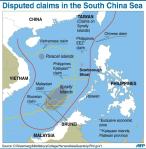
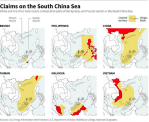
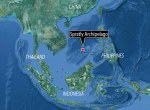
Red China Territorial and Maritime Claims in South China Sea
Red China – Land Reclamation Activity in South China Sea.
Taiwan Coast Guard patrol ships are seen during a drill held about 4 nautical miles out of the port of Kaohsiung, southern Taiwan, June 6, 2015. Taiwan’s coast guard on Saturday commissioned its biggest ships for duty, in the form of two 3,000 ton patrol vessels, as Taipei boosts its defences amid concerns about China’s growing footprint in the disputed South China Sea. REUTERS/Pichi Chuang
Taiwan Coast Guard patrol ships are seen during a drill held about 4 nautical miles out of the port of Kaohsiung, southern Taiwan, June 6, 2015. Taiwan’s coast guard on Saturday commissioned its biggest ships for duty, in the form of two 3,000 ton patrol vessels, as Taipei boosts its defences amid concerns about China’s growing footprint in the disputed South China Sea. REUTERS/Pichi Chuang
Special Frontier Force Joins Tibetan Prayers for Unity and Solidarity. Tibetan Territory is fragmented by Red China – Subjugator – Occupation of Tibet
The Evil Red Empire – Red China – Land, Sea, and Airspace Expansionism – South China Sea.
THE EVIL RED EMPIRE – RED CHINA – THE GREAT PROBLEM OF TIBET : TIBET HAS LAND AREA OF 870, 000 SQUARE MILES. TIBET IS LARGER IN SIZE COMPARED TO ASIAN NATIONS LIKE JAPAN, TAIWAN, PHILIPPINES, INDONESIA, MALAYSIA, VIETNAM, AND BRUNEI. TIBET IS THREE-TIMES LARGER THAN TEXAS STATE OF UNITED STATES .
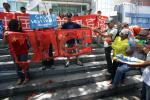
Filipino environmental activists aim water guns at mock Chinese flags as they stage a rally outside the Chinese Consulate in suburban Makati, south of Manila, Philippines on Monday, May 11, 2015 to protest against the continued building of infrastructures along a disputed group of islands known as the Spratlys in the South China Sea. The group is accusing the Chinese military of destroying the fragile ecosystem and livelihood of fishermen during their reclamation projects in the area which both countries have claimed ownership. (AP Photo/Aaron Favila)
I am sharing this story about dispute between Red China and Philippines as there are no stories written about dispute between Red China and Tibet. There is a territorial dispute between Red China and Tibet which I often refer to as ‘The Great Problem of Tibet’. Red China has a State Policy known as “EXPANSIONISM” and she extends her territory and her influence by using her superior military power over her weak neighbors. Philippines is resisting threat imposed by Red China taking help from other nations like Japan, and the United States. Filipino people have demonstrated their resolve to oppose Red China’s claims in South China Sea. Tibetans have to join this issue and learn the principles of warfare. To fight a stronger opponent, Tibet like Philippines needs partners to give strength to their demands for Justice in Occupied Tibet.
PHILIPPINES AIRS PROGRAM ABOUT SEA DISPUTES WITH CHINA
Philippines airs program about sea disputes with China
By JIM GOMEZ
MANILA, Philippines (AP) — The Philippine government broadcast a television program on Friday aimed at boosting public opposition to China’s increasingly assertive moves to press its territorial claims in the disputed South China Sea.
The broadcast of the first episode of a three-part series, titled “Freedom,” on the state-run TV network coincided with the Philippines’ independence day.
The 22-minute video, which was also posted on government websites, focuses on the economic impact of China’s actions, including its 2012 seizure of a disputed shoal where Chinese coast guard ships have chased away Filipino fishermen.
The broadcast reflects increased enmity among claimants in the South China Sea, which Beijing claims virtually in its entirety. The U.S. military has increased surveillance flights over the waters to reassure allies territorially at odds with Beijing.
Rising military deployments in the disputed region have heightened fears of possible confrontations and accidental clashes that could escalate into a major conflict. Also Friday, about 200 left-wing and nationalist protesters staged rallies at the Chinese Consulate and the U.S. Embassy in Manila to condemn Beijing’s actions, including the construction of artificial islands in the disputed Spratly Islands, and oppose what they called U.S. intervention in the dispute.
Protesters face the Chinese Consulate to display their anti Chinese message during a Philippines Independence Day rally in the financial district of Makati city east of Manila, Philippines, Friday, June 12, 2015. The protesters condemned the recent reclamation of land by China in the disputed Spratlys group of islands on the South China Sea. (AP Photo/Bullit Marquez)
Protesters carry placards as they march in a Philippines Independence Day rally toward the Chinese Consulate.
Waving red flags and holding placards that read, “U.S.-China, hands off the Philippines,” the protesters called on Filipinos to join efforts to defend the country’s sovereignty and territory. “These two powerful countries are increasingly conniving and challenging each other in their quest for dominance in the Asia-Pacific region,” the protesters said in a statement.
The broadcast features interviews with Filipino fishermen who say they lost a key source of income after China began preventing them from sailing to Scarborough Shoal, which effectively came under Chinese control at the end of a tense standoff with Philippine ships in 2012.
A Philippine diplomat, Henry Bensurto, says in the video that China’s territorial claims include areas where coastal states like the Philippines have exclusive rights to fish and explore for other resources under the United Nations Convention on the Law of the Sea.
Chinese Embassy officials did not immediately react to the program. Beijing has steadfastly defended its right to pursue island-building and other activities in areas it says have belonged to it since ancient times.
“If we won’t get involved and take action, we may not have anything to bequeath to the next generation,” popular TV personality Lourd de Veyra says in the program. “The problem is we have a neighbor who sneaks in and out of our territory and takes away all the resources. This belongs to us.”
Copyright 2015 The Associated Press. All rights reserved. This material may not be published, broadcast, rewritten or redistributed.
Yahoo – ABC News Network
THE EVIL RED EMPIRE – RED CHINA VS PHILIPPINES – FILIPINO PROTEST ON MAY 11, 2015.
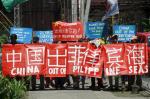
Environmental activists display placards as they march towards the Chinese Embassy in Makati City, Metro Manila May 11, 2015. The activists demanded that Chinese authorities immediately put a stop to the ecological destruction caused by the reclamation activities of China in the South China Sea, which the Philippines calls West Philippine Sea. They also condemned what they say is the bullying by Chinese naval and coast guard forces of Filipino fishermen in the disputed seas, an environmental activist said. REUTERS/Romeo Ranoco
THE EVIL RED EMPIRE – RED CHINA VS PHILIPPINES – A DISPUTE IMPOSED BY RED CHINA’S EXPANSIONIST POLICY.
RED CHINA VS PHILIPPINES :United States joint military exercise. April 20, 2015
Filipino activists hold anti China slogans as they march towards the Chinese Consulate during a rally at the financial district of Makati, south of Manila, Philippines Thursday, June 4, 2015. More than 100 left wing Filipino activists demanded that China stop its increasingly assertive actions in the disputed South China Sea Thursday, warning during a rally that they can target “Chinese economic interests” with protests. (AP Photo/Aaron Favila)
In this photo taken May 16, 2015, Filipino fishermen sit at a meeting in Masinloc municipality in the northwestern province of Zambales where they, along with foreign journalists and local officials, attended the forum organized by Zambales and Masinloc officials on the South China Sea territorial disputes. Many Filipino fishermen in Masinloc say their livelihoods were affected over the disputed Scarborough Shoal off Zambales in 2012, affecting Filipino fishermen’s access to fishing waters. A group of 15 foreign journalists traveled to Masinloc under a study tour organized by the Hawaii based East West Center last month to look into the impact of the South China Sea territorial disputes on fishermen like Mula. (AP Photo/Jim Gomez)
Protesters face the Chinese Consulate to display their anti Chinese message during a Philippines Independence Day rally in the financial district of Makati city east of Manila, Philippines, Friday, June 12, 2015. The protesters condemned the recent reclamation of land by China in the disputed Spratlys group of islands on the South China Sea. (AP Photo/Bullit Marquez)
Protesters carry placards as they march in a Philippines Independence Day rally toward the Chinese Consulate in the financial district of Makati city east of Manila, Philippines, Friday, June 12, 2015. The protesters condemned the recent reclamation of land by China in the disputed Spratlys group of islands on the South China Sea. (AP Photo/Bullit Marquez)
Filipino environmental activists aim water guns at mock Chinese flags as they stage a rally outside the Chinese Consulate in suburban Makati, south of Manila, Philippines on Monday, May 11, 2015 to protest against the continued building of infrastructures along a disputed group of islands known as the Spratlys in the South China Sea. The group is accusing the Chinese military of destroying the fragile ecosystem and livelihood of fishermen during their reclamation projects in the area which both countries have claimed ownership. (AP Photo/Aaron Favila)
THE EVIL RED EMPIRE – RED CHINA VS PHILIPPINES – FILIPINO PROTEST ON MAY 11, 2015.
Environmental activists display placards as they march towards the Chinese Embassy in Makati City, Metro Manila May 11, 2015. The activists demanded that Chinese authorities immediately put a stop to the ecological destruction caused by the reclamation activities of China in the South China Sea, which the Philippines calls West Philippine Sea. They also condemned what they say is the bullying by Chinese naval and coast guard forces of Filipino fishermen in the disputed seas, a environmental activist said. REUTERS/Romeo Ranoco
THE EVIL RED EMPIRE – RED CHINA VS PHILIPPINES – A DISPUTE IMPOSED BY RED CHINA’S EXPANSIONIST POLICY.
Espionage is described as ‘Intelligence’ gathering, securing of information about one nation for the benefit of another. Spying is a term used to describe clandestine intelligence gathering activity. Spying involves the use of spies or agents by a government to learn the secrets of other nations. Espionage involves obtaining information using spies, secret agents, and illegal monitoring devices.
red china espionage sun tzu the art of war
In government operations, intelligence involves evaluated information concerning the strength, activities and probable course of action of its opponents. The concept of intelligence is not new. The military treatise “Ping-fa”(The Art of War) written c.400 B.C. by military philosopher Sun-tzu mentions the use of secret agents and importance of good intelligence. To obtain knowledge of enemy’s intentions, intelligence systems have been in use from ancient times. The Intelligence Service of Red China belongs to Ministry of State Security.
At Special Frontier Force, I am familiar with Red China’s espionage and her intelligence gathering operations which often target individuals serving in Special Frontier Force to identify them with specificity. Intelligence gathering in cyberspace or cyberespionage is manifestation of digital age. At Special Frontier Force, I am trained to recognize Red China as an adversary, an opponent, and an enemy. I would not expect Red China to extend her cooperation to apprehend those criminals who with a series of computer hacks have stolen vast amounts of data from a database maintained by the Office of Personnel Management in the United States. While nations may face the compulsion to gather intelligence, stealing private information of millions of civilian employees is unfair, unethical, and is totally unwarranted. As such, I would recognize Red China as a Cyber Criminal and Red China has to bear full responsibility for criminal actions of her employees or agents she hired.
With a series of major hacks, China builds a database on Americans
American and Chinese flags are adjusted before a press conference in Beijing in 2012. (Feng Li/ASSOCIATED PRESS)
By ELLEN NAKASHIMA June 5 at 5:55 PM
China is building massive databases of Americans’ personal information by hacking government agencies and U.S. health-care companies, using a high-tech tactic to achieve an age-old goal of espionage: recruiting spies or gaining more information on an adversary, U.S. officials and analysts say.
Groups of hackers working for the Chinese government have compromised the networks of the Office of Personnel Management(OPM) which holds data on millions of current and former federal employees, as well as the health insurance giant Anthem, among other targets, the officials and researchers said.
“They’re definitely going after quite a bit of personnel information,” said Rich Barger, chief intelligence officer of ThreatConnect, a Northern Virginia cybersecurity firm. “We suspect they’re using it to understand more about who to target [for espionage], whether electronically or via human recruitment.”
The targeting of large-scale databases is a relatively new tactic and is used by the Chinese government to further its intelligence-gathering, the officials and analysts say. It is government espionage, not commercial espionage, they say.
China hacked into the federal government’s network, compromising four million current and former employees’ information. The Post’s Ellen Nakashima talks about what kind of national security risk this poses and why China wants this information. (Alice Li/The Washington Post)
“This is part of their strategic goal — to increase their intelligence collection via big data theft and big data aggregation,” said a U.S. government official, who, like others, spoke on condition of anonymity to discuss a sensitive topic. “It’s part of a strategic plan.”
One hack of the OPM, which was disclosed by the government Thursday, dates at least to December, officials said. Earlier last year, the OPM discovered a separate intrusion into a highly sensitive database that contains information on employees seeking or renewing security clearances and on their background investigations.
Once harvested, the data can be used to glean details about key government personnel and potential spy recruits, or to gain information useful for counterintelligence. Records in OPM’s database of background investigations, for instance, could contain a complete history of where an individual has lived and all of his or her foreign contacts in, say, China. “So now the
Chinese counterintelligence authorities know which American officials are meeting with which Chinese,” a China cyber and intelligence expert said.
The data could help Chinese analysts do more effective targeting of individuals, said a former National Security Agency official. “They can find specific individuals they want to go after, family members,” he said.
The trend has emerged and accelerated over the past 12 to 18 months, the official said. An increase in Chinese capability has opened the way “for bigger data storage, for bigger data theft,” he said. “And when you can gain it in bulk, you take it in bulk.”
The Chinese government, he said, is making use of Chinese companies that specialize in aggregating large sets of data “to help them in sifting through” the information for useful details. “The analogy would be one of our intelligence organizations using Google, Yahoo, Accenture to aggregate data that we collected.”
China on Friday dismissed the allegation of hacking as “irresponsible and unscientific.”
Chinese Foreign Ministry spokesman Hong Lei said Beijing wanted to cooperate with other nations to build a peaceful and secure cyberspace.
“We wish the United States would not be full of suspicions, catching wind and shadows, but rather have a larger measure of trust and cooperation,” he told a regular news briefing,
The OPM disclosed that the latest hack of one of its systems exposed personal data of up to 4 million current and former employees — the largest hack of federal employee data in recent years.
U.S. officials privately said China was behind it. The stolen information included Social Security numbers and performance evaluations.
“This is an intelligence operation designed to help the Chinese government,” the China expert said. “It’s a new phase in an evolution of what they’re doing. It certainly requires greater sophistication on their part in terms of being able to take out this much data.”
Barger’s firm has turned up technical evidence that the same Chinese group is behind the hacks of Premera Blue Cross and Empire BlueCross, which were discovered at roughly the same time earlier this year.
The first OPM incident has been linked to the health-care hacks by Barger and another security researcher, John Hultquist, senior manager for cyberespionage threat intelligence at iSight Partners. Hultquist said the same group is responsible for all of them, and for other intrusions into commercial databases containing large sets of Americans’ personal information.
“They would leverage this data to get to diplomatic, political, military and economic intelligence that they typically target,” said Hultquist, who declined to comment on who was behind the attacks.
Though much Chinese cyberespionage is attributed to the People’s Liberation Army, these hacks, Barger said, appeared to be linked to the Ministry of State Security, which is a spy agency responsible for foreign espionage and domestic counterintelligence.
Other Chinese entities, including the military, may also be involved in the campaign, analysts said.
Chinese government hackers “are like a vacuum cleaner” in sucking up information electronically, said Robert “Bear” Bryant, a former top counterespionage official in the government. “They’re becoming much more sophisticated in tying it all together. And they’re trying to harm us.”
Security researchers have pointed to a cyber tool or family of malicious software called Derusbi that has been linked exclusively to Chinese actors. One group that has used Dersubi is Deep Panda, a name coined by the firm CrowdStrike, which has linked that group to the Anthem hack.
Disclosed in February, that incident exposed the Social Security numbers, addresses, phone numbers, e-mail addresses and member IDs of tens of millions of customers. No medical data such as diagnosis or treatment information was compromised, the company said.
Researchers note that in contrast to the hacks of Home Depot and Target, personal data that might have been stolen from the OPM, Anthem and the other companies have not shown up on the black market, where it can be sold to identity thieves. That is another sign, they said, that the intrusions are not being made for commercial purposes.
“Usually if there’s a criminally or financially motivated breach like that, we see the data making its way into the black market soon after that,” Barger said.
The big data approach being taken by the Chinese might seem to mirror techniques used abroad by the NSA, which has come under scrutiny for its data-gathering practices under executive authority. But in China, the authorities do not tolerate public debate over the proper limits of large-scale spying in the digital age.
“This is what all intelligence services do if they’re good,” said the China cyber expert. “If you want to find a needle, first you have to gather a haystack of needles.”
The massive data harvesting “reflects a maturity in Chinese” electronic intelligence gathering, the expert said. “You have to put in place structured data repositories. You have to have big data management tools to be able to store and sift and analyze.”
Barger said that “with a large pool of data, they can prioritize who is the best to target electronically and who is the best to target via human recruitment.”
The U.S. official noted that the Chinese “would not take [the data] if they did not have the opportunity to aggregate it.” And, he added, “they are taking it.”
Simon Denyer in Beijing contributed to this report.
Ellen Nakashima is a national security reporter for The Washington Post. She focuses on issues relating to intelligence, technology and civil liberties.
Jackals are wild dogs of Asia and North Africa. The word Jackal is often used to describe a person who does dishonest or humiliating tasks for one’s own gain. Jackal is the other name for a cheat or a swindler. I am specifically using the term ‘JACKAL’ to describe the nature of Red China’s statecraft or statesmanship. It helps my readers to recognize Red China’s sly, secretive, or wily nature. Sly implies a working to achieve one’s ends by evasiveness, insinuation, furtiveness, duplicity, circumvention, plot, subterfuge, stratagem, craftiness, subtle blandishments, ruses, cunning underhandedness, mischievous or roguish behavior. Red China could be called “FOXY” for its tricks are sharpened by experience. Red China deals with her neighbors using her proficiency in deception. Red China is subtly deceitful for she knows to defraud others by deliberately misleading them to obtain their rights and property. Red China often takes pleasure in demonstrating the gullibility of her victims.
At Special Frontier Force, we have personal experience of Red China’s sly, wily, cunning, dishonest, and deceitful nature.
Pentagon chief criticizes Beijing’s South China Sea
moves
Associated Press
By LOLITA C. BALDOR and MATTHEW PENNINGTON
SINGAPORE — China’s land reclamation in the South China Sea is out of step
with international rules, and turning underwater land into airfields won’t
expand its sovereignty, Defense Secretary Ash Carter told an international
security conference Saturday, stepping up America’s condemnation of the
communist giant as Beijing officials sat in the audience.
Carter told the room full of Asia-Pacific leaders and experts that the U.S.
opposes “any further militarization” of the disputed lands.
His remarks were immediately slammed as “groundless and not constructive” by
a Chinese military officer in the audience.
Carter’s comments came as defense officials revealed that China had put two
large artillery vehicles on one of the artificial islands it is creating in the
South China Sea. The discovery, made at least several weeks ago, fuels fears in
the U.S and across the Asia-Pacific that China will try to use the land
reclamation projects for military purposes.
The weaponry was discovered at least several weeks ago, and two U.S.
officials who are familiar with intelligence about the vehicles say they have
been removed. The officials weren’t authorized to discuss the intelligence and
spoke only on condition of anonymity.
The Pentagon would not release any photos to support its contention that the
vehicles were there.
China’s assertive behavior in the South China Sea has become an increasingly
sore point in relations with the United States, even as President Barack Obama
and China’s President Xi Jinping have sought to deepen cooperation in other
areas, such as climate change.
Carter delivers his speech about “The United States and Challenges to
Asia-Pacific Security” during the 14th International Institute for Strategic
Studies Shangri-la Dialogue, or IISS, Asia Security Summit, Saturday, May 30,
2015, in Singapore.
While Carter did not refer directly to the weapons in his speech, he told the
audience that now is the time for a diplomatic solution to the territorial
disputes because “we all know there is no military solution.”
“Turning an underwater rock into an airfield simply does not afford the
rights of sovereignty or permit restrictions on international air or maritime
transit,” Carter told the audience at the International Institute for Strategic
Studies summit.
China’s actions have been “reasonable and justified,” said Senior Col. Zhao
Xiaozhuo, deputy director of the Center on China-America Defense Relations at
the People’s Liberation Army’s Academy of Military Science.
Zhao challenged Carter, asking whether America’s criticism of China and its
military reconnaissance activities in the South China Sea “help to resolve the
disputes” and maintain peace and stability in the region.
Carter responded that China’s expanding land reclamation projects are
unprecedented in scale. He said the U.S. has been flying and operating ships in
the region for decades and has no intention of stopping.
While Carter’s criticism was aimed largely at China, he made it clear that
other nations who are doing smaller land reclamation projects also must
stop.
One of those countries is Vietnam, which Carter is scheduled to visit during
this 11-day trip across Asia. Others are Malaysia, the Philippines and
Taiwan.
Asked about images of weapons on the islands, China’s Foreign Ministry
spokeswoman Hua Chunying said she was “not aware of the situation you
mention.”
She also scolded Carter, saying the U.S. should be “rational and calm and
stop making any provocative remarks, because such remarks not only do not help
ease the controversies in the South China Sea, but they also will aggravate the
regional peace and stability.”
Carter appeared to strike back in his speech, saying that the U.S. is
concerned about “the prospect of further militarization, as well as the
potential for these activities to increase the risk of miscalculation or
conflict.” And he said the U.S. “has every right to be involved and be
concerned.”
But while Carter stood in China’s backyard and added to the persistent
drumbeat of U.S. opposition to Beijing’s activities, he did little to give
Asia-Pacific nations a glimpse into what America is willing to do to achieve a
solution.
He said the U.S. will continue to sail, fly and operate in the region, and
warned that the Pentagon will be sending its “best platforms and people” to the
Asia-Pacific. Those would include, he said, new high-tech submarines,
surveillance aircraft, the stealth destroyer and new aircraft carrier-based
early-warning aircraft.
U.S. Sen. John McCain, R-Ariz., who also is attending the Singapore
conference, told reporters that the U.S. needs to recognize that China will
continue its activities in the South China Sea until it perceives that the costs
of doing so outweigh the benefits.
Carter delivers his speech about “The United States and Challenges to
Asia-Pacific Security” during the 14th International Institute for Strategic
Studies Shangri-la Dialogue (IISS) Asia Security Summit, Saturday, May 30, 2015,
in Singapore.
One senior defense official has said the U.S. is considering more military
flights and patrols closer to the projects in the South China Sea, to emphasize
reclaimed lands are not China’s territorial waters. Officials also are looking
at ways to adjust the military exercises in the region to increase U.S. presence
if needed. That official was not authorized to discuss the options publicly and
spoke on condition of anonymity.
One possibility would be for U.S. ships to travel within 12 miles of the
artificial islands, to further make the point that they are not sovereign
Chinese land. McCain said it would be a critical mistake to recognize any
12-mile zone around the reclamation projects.
The U.S. has been flying surveillance aircraft in the region, prompting China
to file a formal protest.
U.S. and other regional officials have expressed concerns about the island
building, including worries that it may be a prelude to navigation restrictions
or the enforcement of a possible air defense identification zone over the South
China Sea. China declared such a zone over disputed Japanese-held islands in the
East China Sea in 2013.
China has said the islands are its territory and that the buildings and other
infrastructure are for public service use and to support fishermen.
Pennington reported from Washington. AP news assistant Liu Zheng in Beijing
contributed to this report.
red china shangri la carter
red china shangri la may302015
red china reclamation may112015
red china sun jianguo pla navy shangri la
red china south china sea thitu island spratly group
red china us secretary of defense ashton carter
THE EVIL RED EMPIRE – RED CHINA – A JACKAL .
the evil red empire theexpansionist south china sea
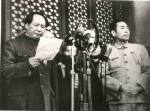
the evil red empire chairman mao zedong premier zhou en lai5
the evil red empire the expansionist4
the evil red empire airspace nine dash expansionism5


















































 Whole Dude - Whole Concept