THE EVIL RED EMPIRE – RED CHINA – COMMUNIST: ONE – PARTY GOVERNANCE OF RED CHINA HAS NO RESPECT FOR NATURAL RIGHTS OF PEOPLE .
I am asking my readers to acknowledge Red China’s one-party governance as “COMMUNIST.” In the years ahead, the United States and others will be left with no political alternatives as there is fundamental incompatibility between the systems of governance called ‘Democracy’, and ‘Communism’.
THE EVIL RED EMPIRE – RED CHINA – COMMUNIST : COMMUNISM LAYS EMPHASIS ON THE REQUIREMENTS OF THE STATE WITH NO CONCERN FOR INDIVIDUAL LIBERTIES . COMMUNIST GOVERNANCE IS NOT BASED UPON SOCIAL CONTRACT . COMMUNISTS RULE WITHOUT CONSENT OF THEIR PEOPLE .
Communism is the form of government by a one-party political structure which lays emphasis on the requirements of the State rather than on individual liberties. State is primarily involved in planning and control of economy without transparency and public accountability. Democracy is a form of government based on the theory of “Natural Rights” and the doctrine of government by “Social Contract.” In Democracy, government is instituted among men deriving its just powers from consent of the governed. Communism includes an unmistakable design to establish tyranny.
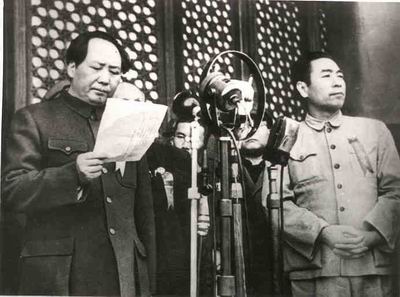
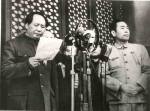
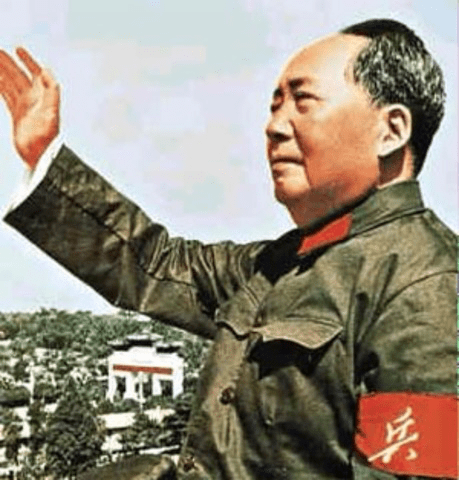
Red China’s Communist Party Chairman Mao Tse-Tung or Mao Zedong established a national entity on October 01, 1949 where the Communist Party can rule or govern people without their consent. Red China entered the Korean War against UN forces in 1950, participating on a large scale until the armistice of 1953. Red China invaded and occupied its weak neighbor Tibet during October 1950. A liberal “Hundred Flowers” period of 1957 was followed by a harsh crackdown on intellectuals. Red China demonstrated its ambitions to become a global superpower by exploding an atomic bomb in 1964 and the launching of its first satellite in 1970. Nixon-Kissinger “TREASON” in Vietnam paved the way for Red China’s entry to the United Nations. While the United States was engaged in a bloody war in Vietnam to resist and contain Communism, Nixon-Kissinger visited Peking in February 1972. US and Red China normalized diplomatic relations on January 01, 1979.
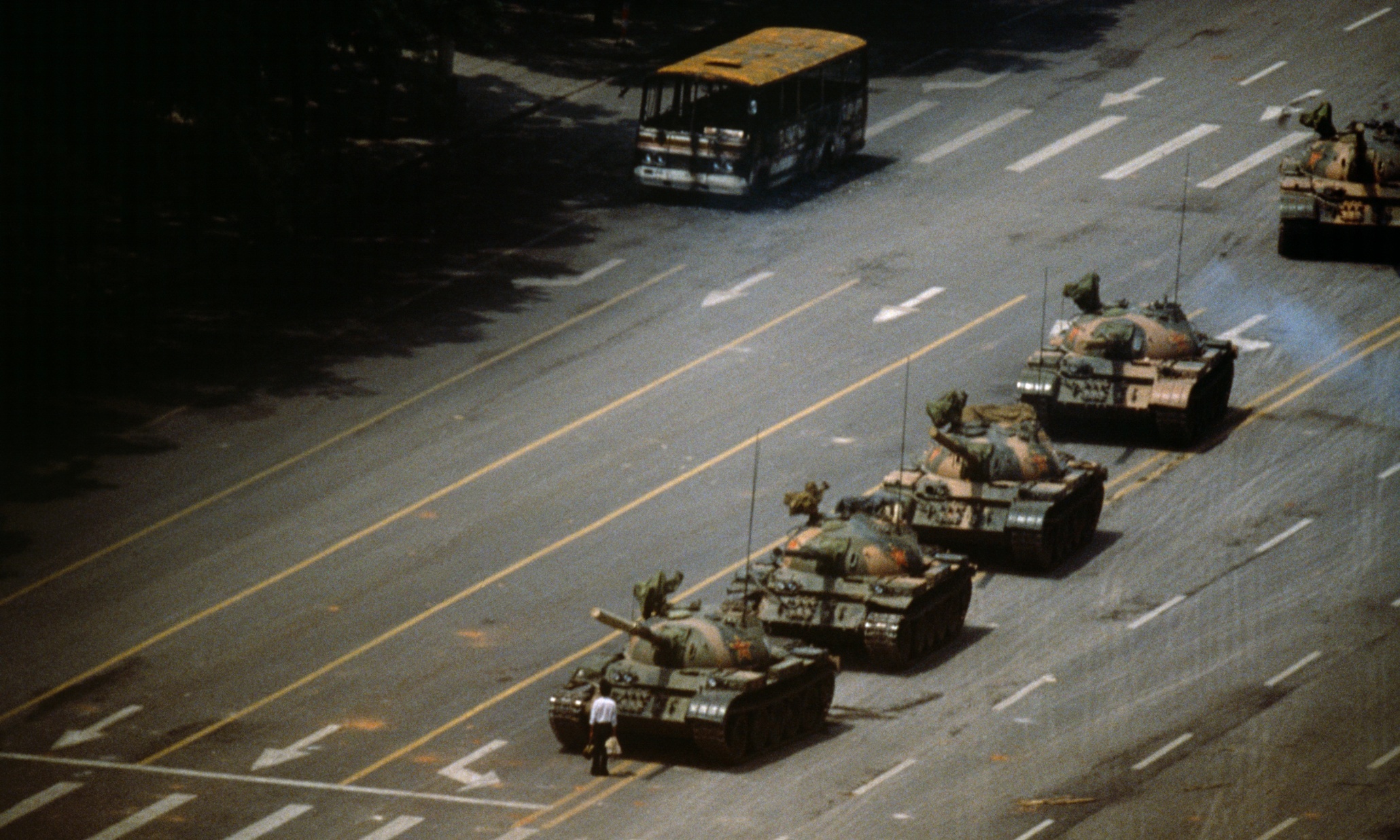
In 1981, Red China’s Communist Party severely criticized Mao Tse-Tung’s policies in the last years of his life in a public document and in 1982 Maoist ideology and political structure were curbed through the adoption of new Party and national constitution. The events commonly described as “TIANANMEN SQUARE MASSACRE” during May-June 1989 is clear evidence of a system of governance inspired by ideology of Communism which has no respect for “Natural Rights” of people.
THE EVIL RED EMPIRE – RED CHINA – COMMUNIST: Beijing. Tien An Men Square. ‘The Tank Man’ stopping the column of T59 tanks. 4th June 1989.
Red China has not accounted for her “Crimes Against Humanity” during a period of her history called the “Cultural Revolution.” Communist Party Chairman Mao Tse-Tung launched a massive upheaval in August 1966 to physically destroy all ‘liberal’ elements who in his view posed a threat to China’s “Red Revolution.” It was a mass campaign to revitalize revolutionary fervor by attacking people and cultural institutions perceived as liberal or so-called “BOURGEOIS” elements in cultural circles. Tibetan religious and political institutions that define Tibetan national character and Tibetan national identity became the targets of vicious attacks that aimed to physically destroy persons and material properties associated with Tibetan Culture using State-sponsored violence. Cultural Revolution ended in 1976 with the death of Chairman Mao and the purging of the “Gang of Four.” However, Communist misrule, xenophobia, and anti-intellectualism continue unabated in Occupied Tibet.
Here’s how The Washington Post covered Tiananmen Square in 1989
By SWATI SHARMA June 4
In 1989, the chinese military descended on Tiananmen Square and moved to end pro-democracy demonstrations. The event, which resulted in several hundred to several thousand dead, is considered one of the most brutal crackdowns in modern history. At the height of the protests, which were sparked by the death of a Communist Party leader who wanted reform, at least a million people were estimated to have participated in the demonstrations. Here is a look back at the Tiananmen Square massacre through the pages of The Washington Post.
May 20: Students defy martial law orders
“[T]he government today declared martial law ‘in certain areas’ of the capital to meet the growing defiance by Chinese citizens. Martial law provisions included a ban on demonstrations, and restrictions on the movements of Chinese citizens and the activities of foreign journalists.”
June 3: Troops are blocked for a second time
Although 200,000 troops surrounded Tiananmen Square, citizens were able to stop them from entering. “The citizens shouted ‘Go home,’ and called on people in the area to join them in opposition to the troops. The troops continued to press forward but were channeled into the left-hand side of the street, when a mass of people now numbering more than 1,000 stopped the soldiers in their tracks. The troops then seemed to give up.”
Tiananmen Square Massacre June 1989
June 3: Frightened students worry about what comes next
After troops were blocked from entering the square twice, concerned students and media contemplate the military’s next move. Staff writer Jay Mathews poses a simple question: “Would they come?”
Tiananmen Square Massacre June 1989.
June 4: The massacre
Here is the front page, leading with staff reporter Daniel Southerland’s coverage.
Tiananmen Square Massacre June 1989.
June 4: The legacy of Tiananmen Square
The front of The Post’s Outlook section: “‘There’s been nothing like it in human history,’CBS’s Charles Kuralt proclaimed on Sunday morning.”
Tiananmen Square Massacre June 1989.
June 5: Death in Tiananmen
Tiananmen Square Massacre June 1989.
June 6: An infamous photo is born
July 1: An avenue full of corpses
Shen Tong became the first Chinese student to speak publicly about the massacre. He told reporters: “People around me were being shot because they could not believe the army was shooting at them, so they did not move.”
Massacre in Tiananmen Square June 1989.
Note: This post was originally published on June 3, 2014.
Swati Sharma is a digital editor for World and National Security and previously worked at the Boston Globe.
The Evil Red Empire: Red China Communist: PRO-DEMOCRACY PROTEST June 03, 1989The Evil Red Empire: Red China Communist t. Tiananmen Square Protests 19891989, Beijing, China, Bodies of protestors shot by the Chinese army piled up in the corner of Capital hospital after the Chinese army occupation of Tiananmen Square on the 4th June, 1989. Tiananmen Square MassacreThe Evil Red Empire: Red China Communist. Bodies and mangled bicycles. Pro Democracy Protests 1989.The Evil Red Empire: Red China Communist. Pro Democracy protests June 05 1989
Espionage is described as ‘Intelligence’ gathering, securing of information about one nation for the benefit of another. Spying is a term used to describe clandestine intelligence gathering activity. Spying involves the use of spies or agents by a government to learn the secrets of other nations. Espionage involves obtaining information using spies, secret agents, and illegal monitoring devices.
red china espionage sun tzu the art of war
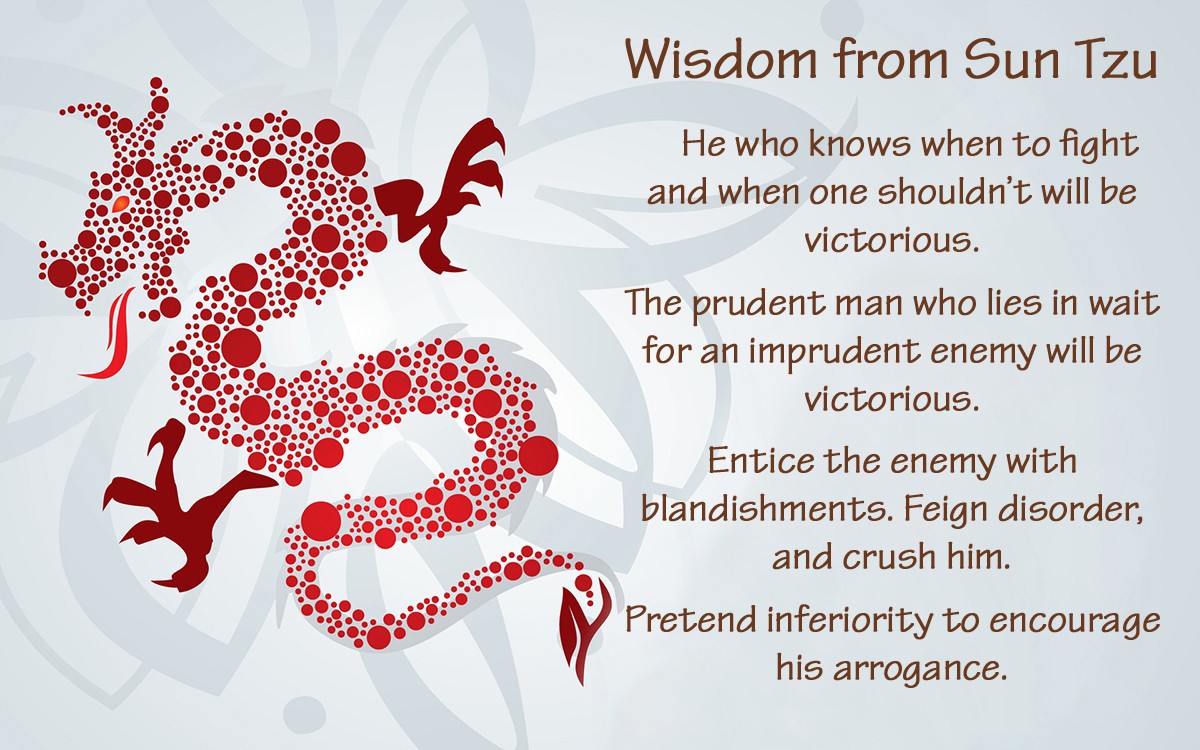
In government operations, intelligence involves evaluated information concerning the strength, activities and probable course of action of its opponents. The concept of intelligence is not new. The military treatise “Ping-fa”(The Art of War) written c.400 B.C. by military philosopher Sun-tzu mentions the use of secret agents and importance of good intelligence. To obtain knowledge of enemy’s intentions, intelligence systems have been in use from ancient times. The Intelligence Service of Red China belongs to Ministry of State Security.
At Special Frontier Force, I am familiar with Red China’s espionage and her intelligence gathering operations which often target individuals serving in Special Frontier Force to identify them with specificity. Intelligence gathering in cyberspace or cyberespionage is manifestation of digital age. At Special Frontier Force, I am trained to recognize Red China as an adversary, an opponent, and an enemy. I would not expect Red China to extend her cooperation to apprehend those criminals who with a series of computer hacks have stolen vast amounts of data from a database maintained by the Office of Personnel Management in the United States. While nations may face the compulsion to gather intelligence, stealing private information of millions of civilian employees is unfair, unethical, and is totally unwarranted. As such, I would recognize Red China as a Cyber Criminal and Red China has to bear full responsibility for criminal actions of her employees or agents she hired.
With a series of major hacks, China builds a database on Americans
American and Chinese flags are adjusted before a press conference in Beijing in 2012. (Feng Li/ASSOCIATED PRESS)
By ELLEN NAKASHIMA June 5 at 5:55 PM
China is building massive databases of Americans’ personal information by hacking government agencies and U.S. health-care companies, using a high-tech tactic to achieve an age-old goal of espionage: recruiting spies or gaining more information on an adversary, U.S. officials and analysts say.
Groups of hackers working for the Chinese government have compromised the networks of the Office of Personnel Management(OPM) which holds data on millions of current and former federal employees, as well as the health insurance giant Anthem, among other targets, the officials and researchers said.
“They’re definitely going after quite a bit of personnel information,” said Rich Barger, chief intelligence officer of ThreatConnect, a Northern Virginia cybersecurity firm. “We suspect they’re using it to understand more about who to target [for espionage], whether electronically or via human recruitment.”
The targeting of large-scale databases is a relatively new tactic and is used by the Chinese government to further its intelligence-gathering, the officials and analysts say. It is government espionage, not commercial espionage, they say.
China hacked into the federal government’s network, compromising four million current and former employees’ information. The Post’s Ellen Nakashima talks about what kind of national security risk this poses and why China wants this information. (Alice Li/The Washington Post)
“This is part of their strategic goal — to increase their intelligence collection via big data theft and big data aggregation,” said a U.S. government official, who, like others, spoke on condition of anonymity to discuss a sensitive topic. “It’s part of a strategic plan.”
One hack of the OPM, which was disclosed by the government Thursday, dates at least to December, officials said. Earlier last year, the OPM discovered a separate intrusion into a highly sensitive database that contains information on employees seeking or renewing security clearances and on their background investigations.
Once harvested, the data can be used to glean details about key government personnel and potential spy recruits, or to gain information useful for counterintelligence. Records in OPM’s database of background investigations, for instance, could contain a complete history of where an individual has lived and all of his or her foreign contacts in, say, China. “So now the
Chinese counterintelligence authorities know which American officials are meeting with which Chinese,” a China cyber and intelligence expert said.
The data could help Chinese analysts do more effective targeting of individuals, said a former National Security Agency official. “They can find specific individuals they want to go after, family members,” he said.
The trend has emerged and accelerated over the past 12 to 18 months, the official said. An increase in Chinese capability has opened the way “for bigger data storage, for bigger data theft,” he said. “And when you can gain it in bulk, you take it in bulk.”
The Chinese government, he said, is making use of Chinese companies that specialize in aggregating large sets of data “to help them in sifting through” the information for useful details. “The analogy would be one of our intelligence organizations using Google, Yahoo, Accenture to aggregate data that we collected.”
China on Friday dismissed the allegation of hacking as “irresponsible and unscientific.”
Chinese Foreign Ministry spokesman Hong Lei said Beijing wanted to cooperate with other nations to build a peaceful and secure cyberspace.
“We wish the United States would not be full of suspicions, catching wind and shadows, but rather have a larger measure of trust and cooperation,” he told a regular news briefing,
The OPM disclosed that the latest hack of one of its systems exposed personal data of up to 4 million current and former employees — the largest hack of federal employee data in recent years.
U.S. officials privately said China was behind it. The stolen information included Social Security numbers and performance evaluations.
“This is an intelligence operation designed to help the Chinese government,” the China expert said. “It’s a new phase in an evolution of what they’re doing. It certainly requires greater sophistication on their part in terms of being able to take out this much data.”
Barger’s firm has turned up technical evidence that the same Chinese group is behind the hacks of Premera Blue Cross and Empire BlueCross, which were discovered at roughly the same time earlier this year.
The first OPM incident has been linked to the health-care hacks by Barger and another security researcher, John Hultquist, senior manager for cyberespionage threat intelligence at iSight Partners. Hultquist said the same group is responsible for all of them, and for other intrusions into commercial databases containing large sets of Americans’ personal information.
“They would leverage this data to get to diplomatic, political, military and economic intelligence that they typically target,” said Hultquist, who declined to comment on who was behind the attacks.
Though much Chinese cyberespionage is attributed to the People’s Liberation Army, these hacks, Barger said, appeared to be linked to the Ministry of State Security, which is a spy agency responsible for foreign espionage and domestic counterintelligence.
Other Chinese entities, including the military, may also be involved in the campaign, analysts said.
Chinese government hackers “are like a vacuum cleaner” in sucking up information electronically, said Robert “Bear” Bryant, a former top counterespionage official in the government. “They’re becoming much more sophisticated in tying it all together. And they’re trying to harm us.”
Security researchers have pointed to a cyber tool or family of malicious software called Derusbi that has been linked exclusively to Chinese actors. One group that has used Dersubi is Deep Panda, a name coined by the firm CrowdStrike, which has linked that group to the Anthem hack.
Disclosed in February, that incident exposed the Social Security numbers, addresses, phone numbers, e-mail addresses and member IDs of tens of millions of customers. No medical data such as diagnosis or treatment information was compromised, the company said.
Researchers note that in contrast to the hacks of Home Depot and Target, personal data that might have been stolen from the OPM, Anthem and the other companies have not shown up on the black market, where it can be sold to identity thieves. That is another sign, they said, that the intrusions are not being made for commercial purposes.
“Usually if there’s a criminally or financially motivated breach like that, we see the data making its way into the black market soon after that,” Barger said.
The big data approach being taken by the Chinese might seem to mirror techniques used abroad by the NSA, which has come under scrutiny for its data-gathering practices under executive authority. But in China, the authorities do not tolerate public debate over the proper limits of large-scale spying in the digital age.
“This is what all intelligence services do if they’re good,” said the China cyber expert. “If you want to find a needle, first you have to gather a haystack of needles.”
The massive data harvesting “reflects a maturity in Chinese” electronic intelligence gathering, the expert said. “You have to put in place structured data repositories. You have to have big data management tools to be able to store and sift and analyze.”
Barger said that “with a large pool of data, they can prioritize who is the best to target electronically and who is the best to target via human recruitment.”
The U.S. official noted that the Chinese “would not take [the data] if they did not have the opportunity to aggregate it.” And, he added, “they are taking it.”
Simon Denyer in Beijing contributed to this report.
Ellen Nakashima is a national security reporter for The Washington Post. She focuses on issues relating to intelligence, technology and civil liberties.
The Seven Heads of Red China manifest as 1. Evil Power, 2. Expansionist, 3. Imperial State, 4. Aggressor Nation, 5. Neocolonialist, 6. Tyrant, and 7. Jackal. Nations that conduct business with Red China have to deal with the reality of this Seven-Headed Monster.
The Evil Red Empire – Red China – Seven-Headed Scarlet Beast
The Evil Red Empire – The Seven-Headed Scarlet Beast: The Seven Heads of Red China manifest as 1. Evil Power, 2. Expansionist, 3. Imperial State, 4. Aggressor Nation, 5. Neocolonialist, 6. Tyrant, and 7. Jackal. Nations that conduct business with Red China have to deal with the reality of this Seven-Headed Monster.
Red China’s Communist Party Chairman Mao Zedong or Mao Tse-Tung proclaimed the founding of People’s Republic of China on October 01, 1949. Red China joined the global community of nations with ‘evil’ intentions. Red China shared a vision for her own future growth and development, formally disclosed a plan for building an ‘Empire’ using the policy of ‘Expansionism’.
The Evil Red Empire – The Seven-Headed Scarlet Beast: The Seven Heads of Red China manifest as 1. Evil Power, 2. Expansionist, 3. Imperial State, 4. Aggressor Nation, 5. Neocolonialist, 6. Tyrant, and 7. Jackal. Nations that conduct business with Red China have to deal with the reality of this Seven-Headed Monster.
I monitored the growth of this Evil Empire and she symbolizes Seven-Headed Scarlet Beast described in The New Testament Book of Revelation, Chapter 17, verse 3.
Revelation 17:3
“So he carried me away in the spirit into the wilderness: and I saw a woman sit upon a scarlet colored beast, full of names of blasphemy, having seven heads and ten horns.”
Each head of this Scarlet Beast represents a particular trait or aspect of Red China and her behavior as a national entity. The Seven Heads of Red China manifest as 1. Evil Power, 2. Expansionist, 3. Imperial State, 4. Aggressor Nation, 5. Neocolonialist, 6. Tyrant, and 7. Jackal.
Nations that conduct business with Red China have to deal with the reality of this Seven-Headed Monster.
CHINA OFFICIAL SAYS AIR DEFENSE ZONE IN SOUTH CHINA SEA HINGES ON SECURITY
Reuters
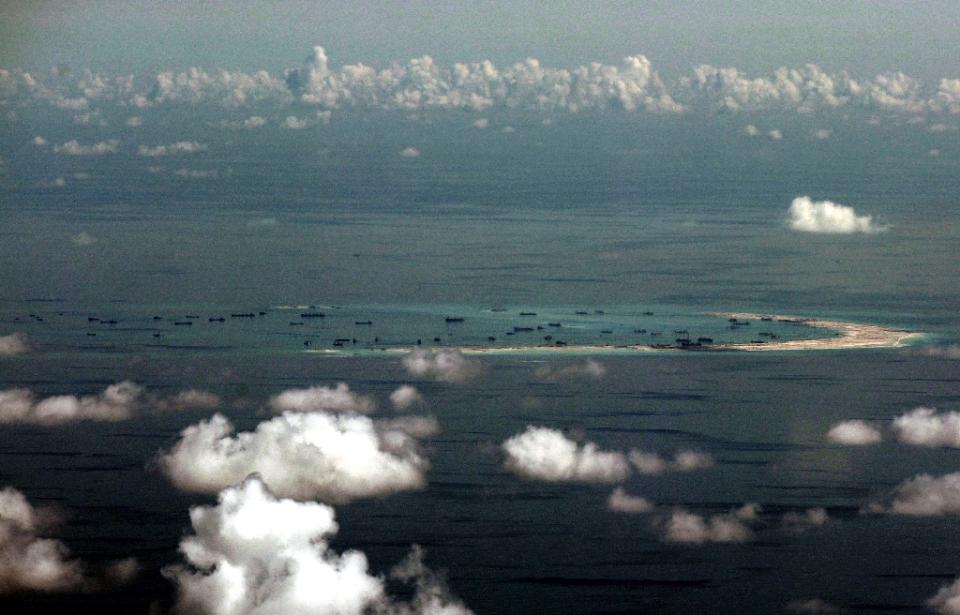
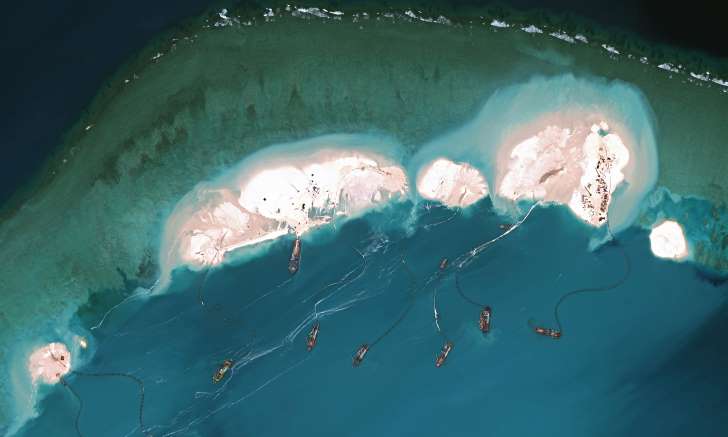
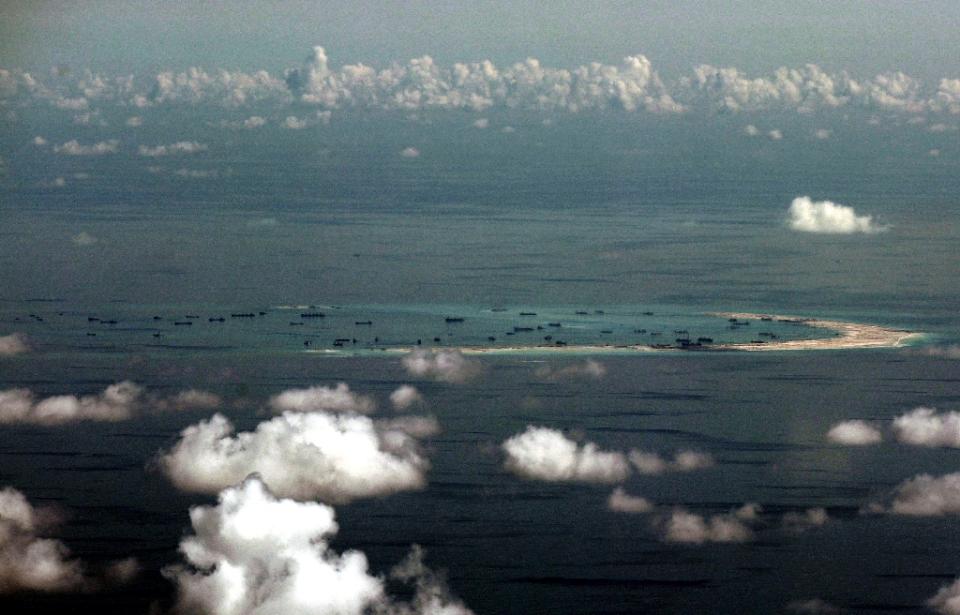
Mischief Reef in the Spratly Islands. Red China Land Reclamation .Photo image MAY 11, 2015. Nations that conduct business with Red China have to deal with the reality of this Seven-Headed Monster. Nations that conduct business with Red China have to deal with the reality of this Seven-Headed Monster.
China’s decision on whether to establish an air defense zone in the South China Sea depends on whether there is a threat to its air or maritime security in the region, a senior military official said on Saturday.
Extensive land reclamation work by China in the South China Sea has led to speculation that it will declare an Air Defense Identification Zone around the disputed waters.
Such a move “depends on whether our security in air and maritime will be threatened and extensive factors will be taken into consideration,” Admiral Sun Jianguo, a deputy chief of staff of China’s People’s Liberation Army, said at a security forum in Singapore.
(Reporting by Rachel Armstrong; Editing by Raju Gopalakrishnan)
The Washington Post
The Seven Heads of Red China manifest as 1. Evil Power, 2. Expansionist, 3. Imperial State, 4. Aggressor Nation, 5. Neocolonialist, 6. Tyrant, and 7. Jackal. Nations that conduct business with Red China have to deal with the reality of this Seven-Headed Monster.
Pentagon chief criticizes Beijing’s South China Sea moves
The Seven Heads of Red China manifest as 1. Evil Power, 2. Expansionist, 3. Imperial State, 4. Aggressor Nation, 5. Neocolonialist, 6. Tyrant, and 7. Jackal. China official says air defense zone in South China Sea hinges on security. Nations that conduct business with Red China have to deal with the reality of this Seven-Headed Monster.
China’s land reclamation in the South China Sea is out of step with international rules, and turning underwater land into airfields won’t expand its sovereignty, Defense Secretary Ash Carter told an international security conference Saturday, stepping up America’s condemnation of the communist giant as Beijing officials sat in the audience.
Associated Press
The Seven Heads of Red China manifest as 1. Evil Power, 2. Expansionist, 3. Imperial State, 4. Aggressor Nation, 5. Neocolonialist, 6. Tyrant, and 7. Jackal. China official says air defense zone in South China Sea hinges on security. Nations that conduct business with Red China have to deal with the reality of this Seven-Headed Monster.The Seven Heads of Red China manifest as 1. Evil Power, 2. Expansionist, 3. Imperial State, 4. Aggressor Nation, 5. Neocolonialist, 6. Tyrant, and 7. Jackal. Nations that conduct business with Red China have to deal with the reality of this Seven-Headed Monster.The Seven Heads of Red China manifest as 1. Evil Power, 2. Expansionist, 3. Imperial State, 4. Aggressor Nation, 5. Neocolonialist, 6. Tyrant, and 7. Jackal. Nations that conduct business with Red China have to deal with the reality of this Seven-Headed Monster.The Seven Heads of Red China manifest as 1. Evil Power, 2. Expansionist, 3. Imperial State, 4. Aggressor Nation, 5. Neocolonialist, 6. Tyrant, and 7. Jackal. Nations that conduct business with Red China have to deal with the reality of this Seven-Headed Monster.The Seven Heads of Red China manifest as 1. Evil Power, 2. Expansionist, 3. Imperial State, 4. Aggressor Nation, 5. Neocolonialist, 6. Tyrant, and 7. Jackal. Nations that conduct business with Red China have to deal with the reality of this Seven-Headed Monster.The Seven Heads of Red China manifest as 1. Evil Power, 2. Expansionist, 3. Imperial State, 4. Aggressor Nation, 5. Neocolonialist, 6. Tyrant, and 7. Jackal. Nations that conduct business with Red China have to deal with the reality of this Seven-Headed Monster.
Jackals are wild dogs of Asia and North Africa. The word Jackal is often used to describe a person who does dishonest or humiliating tasks for one’s own gain. Jackal is the other name for a cheat or a swindler. I am specifically using the term ‘JACKAL’ to describe the nature of Red China’s statecraft or statesmanship. It helps my readers to recognize Red China’s sly, secretive, or wily nature. Sly implies a working to achieve one’s ends by evasiveness, insinuation, furtiveness, duplicity, circumvention, plot, subterfuge, stratagem, craftiness, subtle blandishments, ruses, cunning underhandedness, mischievous or roguish behavior. Red China could be called “FOXY” for its tricks are sharpened by experience. Red China deals with her neighbors using her proficiency in deception. Red China is subtly deceitful for she knows to defraud others by deliberately misleading them to obtain their rights and property. Red China often takes pleasure in demonstrating the gullibility of her victims.
At Special Frontier Force, we have personal experience of Red China’s sly, wily, cunning, dishonest, and deceitful nature.
Pentagon chief criticizes Beijing’s South China Sea
moves
Associated Press
By LOLITA C. BALDOR and MATTHEW PENNINGTON
SINGAPORE — China’s land reclamation in the South China Sea is out of step
with international rules, and turning underwater land into airfields won’t
expand its sovereignty, Defense Secretary Ash Carter told an international
security conference Saturday, stepping up America’s condemnation of the
communist giant as Beijing officials sat in the audience.
Carter told the room full of Asia-Pacific leaders and experts that the U.S.
opposes “any further militarization” of the disputed lands.
His remarks were immediately slammed as “groundless and not constructive” by
a Chinese military officer in the audience.
Carter’s comments came as defense officials revealed that China had put two
large artillery vehicles on one of the artificial islands it is creating in the
South China Sea. The discovery, made at least several weeks ago, fuels fears in
the U.S and across the Asia-Pacific that China will try to use the land
reclamation projects for military purposes.
The weaponry was discovered at least several weeks ago, and two U.S.
officials who are familiar with intelligence about the vehicles say they have
been removed. The officials weren’t authorized to discuss the intelligence and
spoke only on condition of anonymity.
The Pentagon would not release any photos to support its contention that the
vehicles were there.
China’s assertive behavior in the South China Sea has become an increasingly
sore point in relations with the United States, even as President Barack Obama
and China’s President Xi Jinping have sought to deepen cooperation in other
areas, such as climate change.
Carter delivers his speech about “The United States and Challenges to
Asia-Pacific Security” during the 14th International Institute for Strategic
Studies Shangri-la Dialogue, or IISS, Asia Security Summit, Saturday, May 30,
2015, in Singapore.
While Carter did not refer directly to the weapons in his speech, he told the
audience that now is the time for a diplomatic solution to the territorial
disputes because “we all know there is no military solution.”
“Turning an underwater rock into an airfield simply does not afford the
rights of sovereignty or permit restrictions on international air or maritime
transit,” Carter told the audience at the International Institute for Strategic
Studies summit.
China’s actions have been “reasonable and justified,” said Senior Col. Zhao
Xiaozhuo, deputy director of the Center on China-America Defense Relations at
the People’s Liberation Army’s Academy of Military Science.
Zhao challenged Carter, asking whether America’s criticism of China and its
military reconnaissance activities in the South China Sea “help to resolve the
disputes” and maintain peace and stability in the region.
Carter responded that China’s expanding land reclamation projects are
unprecedented in scale. He said the U.S. has been flying and operating ships in
the region for decades and has no intention of stopping.
While Carter’s criticism was aimed largely at China, he made it clear that
other nations who are doing smaller land reclamation projects also must
stop.
One of those countries is Vietnam, which Carter is scheduled to visit during
this 11-day trip across Asia. Others are Malaysia, the Philippines and
Taiwan.
Asked about images of weapons on the islands, China’s Foreign Ministry
spokeswoman Hua Chunying said she was “not aware of the situation you
mention.”
She also scolded Carter, saying the U.S. should be “rational and calm and
stop making any provocative remarks, because such remarks not only do not help
ease the controversies in the South China Sea, but they also will aggravate the
regional peace and stability.”
Carter appeared to strike back in his speech, saying that the U.S. is
concerned about “the prospect of further militarization, as well as the
potential for these activities to increase the risk of miscalculation or
conflict.” And he said the U.S. “has every right to be involved and be
concerned.”
But while Carter stood in China’s backyard and added to the persistent
drumbeat of U.S. opposition to Beijing’s activities, he did little to give
Asia-Pacific nations a glimpse into what America is willing to do to achieve a
solution.
He said the U.S. will continue to sail, fly and operate in the region, and
warned that the Pentagon will be sending its “best platforms and people” to the
Asia-Pacific. Those would include, he said, new high-tech submarines,
surveillance aircraft, the stealth destroyer and new aircraft carrier-based
early-warning aircraft.
U.S. Sen. John McCain, R-Ariz., who also is attending the Singapore
conference, told reporters that the U.S. needs to recognize that China will
continue its activities in the South China Sea until it perceives that the costs
of doing so outweigh the benefits.
Carter delivers his speech about “The United States and Challenges to
Asia-Pacific Security” during the 14th International Institute for Strategic
Studies Shangri-la Dialogue (IISS) Asia Security Summit, Saturday, May 30, 2015,
in Singapore.
One senior defense official has said the U.S. is considering more military
flights and patrols closer to the projects in the South China Sea, to emphasize
reclaimed lands are not China’s territorial waters. Officials also are looking
at ways to adjust the military exercises in the region to increase U.S. presence
if needed. That official was not authorized to discuss the options publicly and
spoke on condition of anonymity.
One possibility would be for U.S. ships to travel within 12 miles of the
artificial islands, to further make the point that they are not sovereign
Chinese land. McCain said it would be a critical mistake to recognize any
12-mile zone around the reclamation projects.
The U.S. has been flying surveillance aircraft in the region, prompting China
to file a formal protest.
U.S. and other regional officials have expressed concerns about the island
building, including worries that it may be a prelude to navigation restrictions
or the enforcement of a possible air defense identification zone over the South
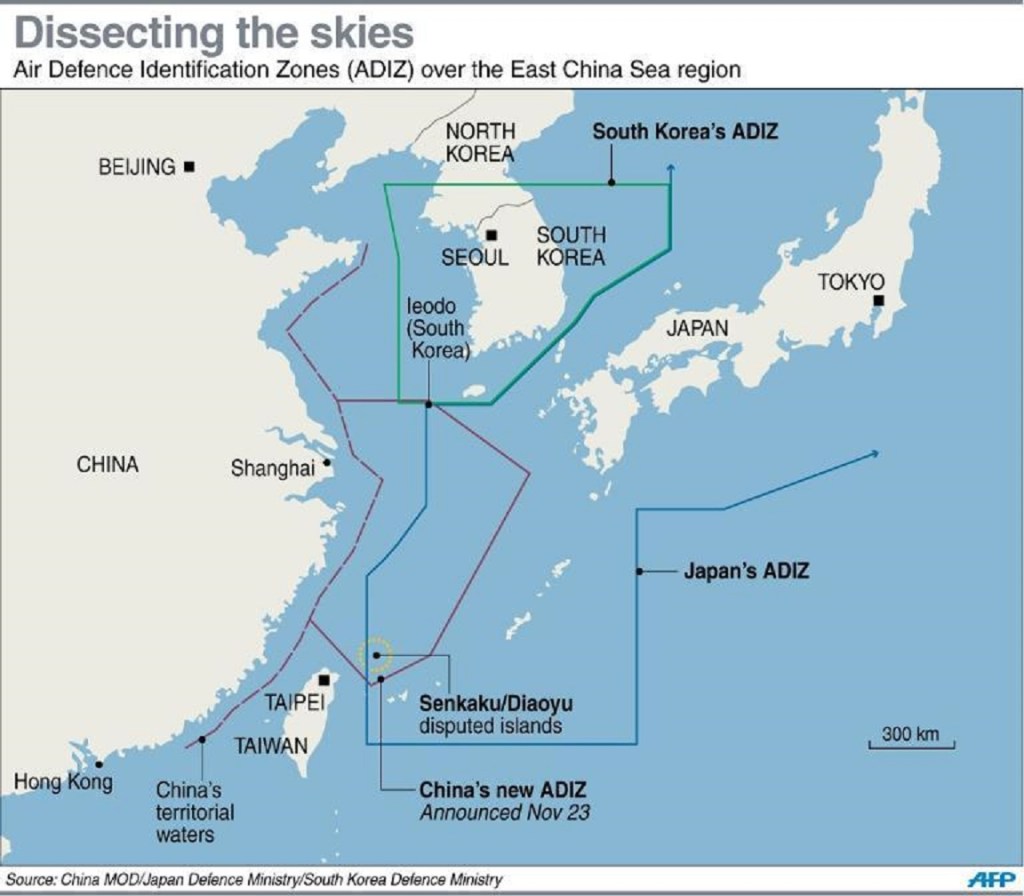
China Sea. China declared such a zone over disputed Japanese-held islands in the
East China Sea in 2013.
China has said the islands are its territory and that the buildings and other
infrastructure are for public service use and to support fishermen.
Pennington reported from Washington. AP news assistant Liu Zheng in Beijing
contributed to this report.
red china shangri la carter
red china shangri la may302015
red china reclamation may112015
red china sun jianguo pla navy shangri la
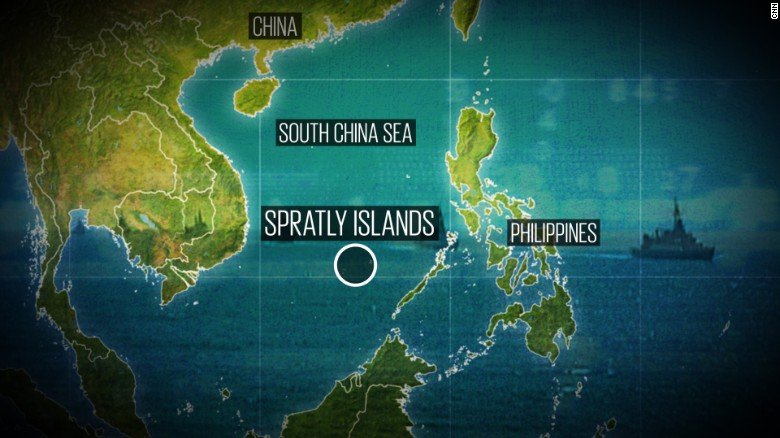
red china south china sea thitu island spratly group
red china us secretary of defense ashton carter
THE EVIL RED EMPIRE – RED CHINA – A JACKAL .
the evil red empire theexpansionist south china sea
the evil red empire chairman mao zedong premier zhou en lai5
the evil red empire the expansionist4
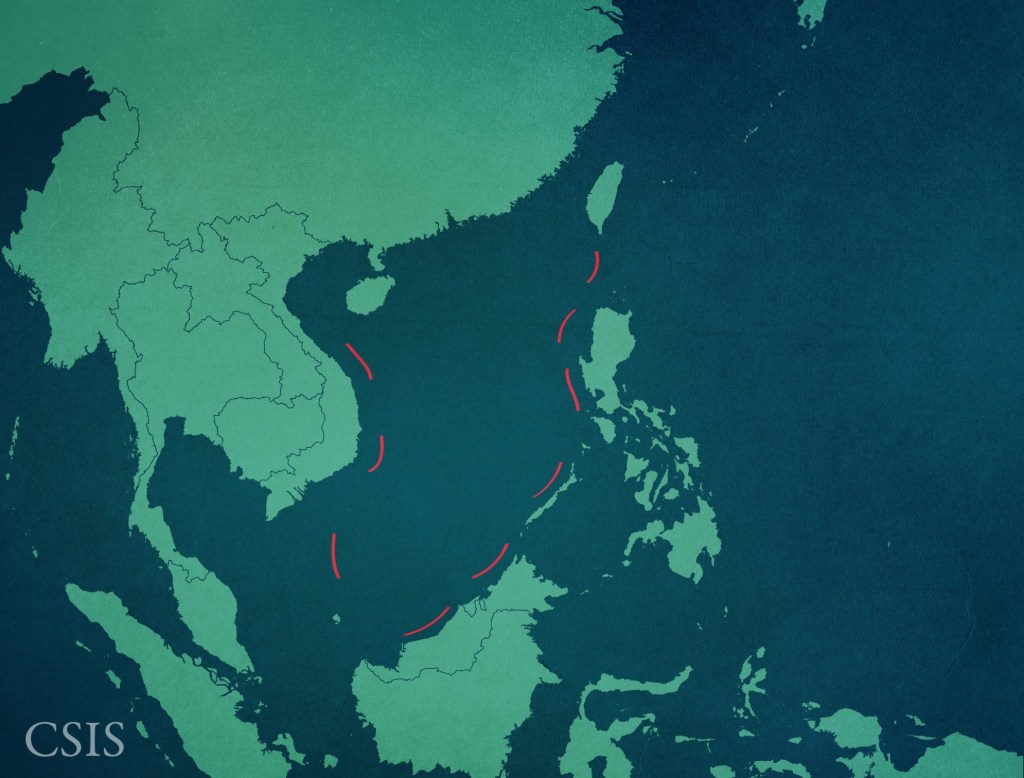
the evil red empire airspace nine dash expansionism5
Red China vs Tibet: Who decides the results of a battle? The outcome of the fight is not always controlled by the relative military strengths of the opposing parties.
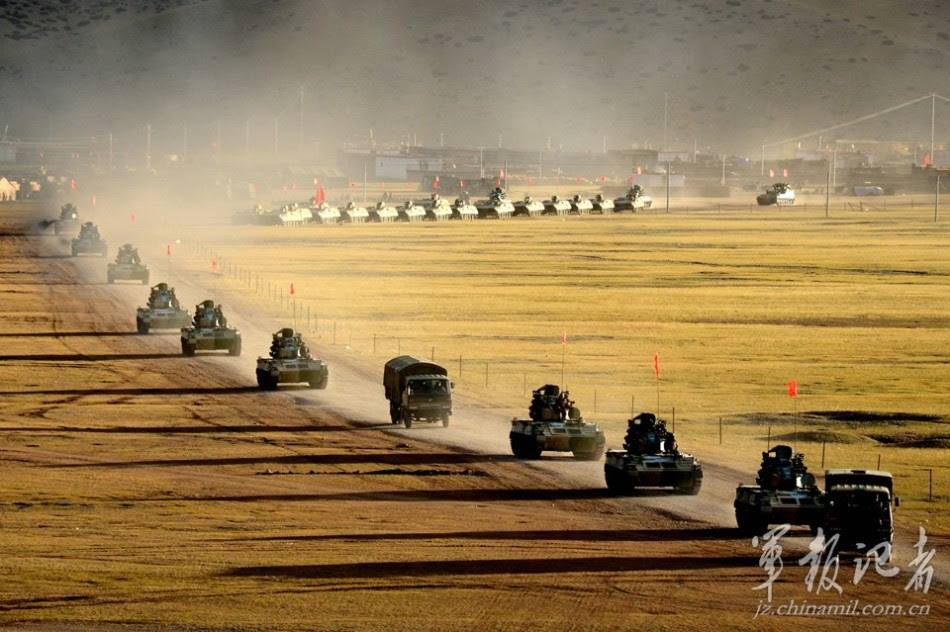
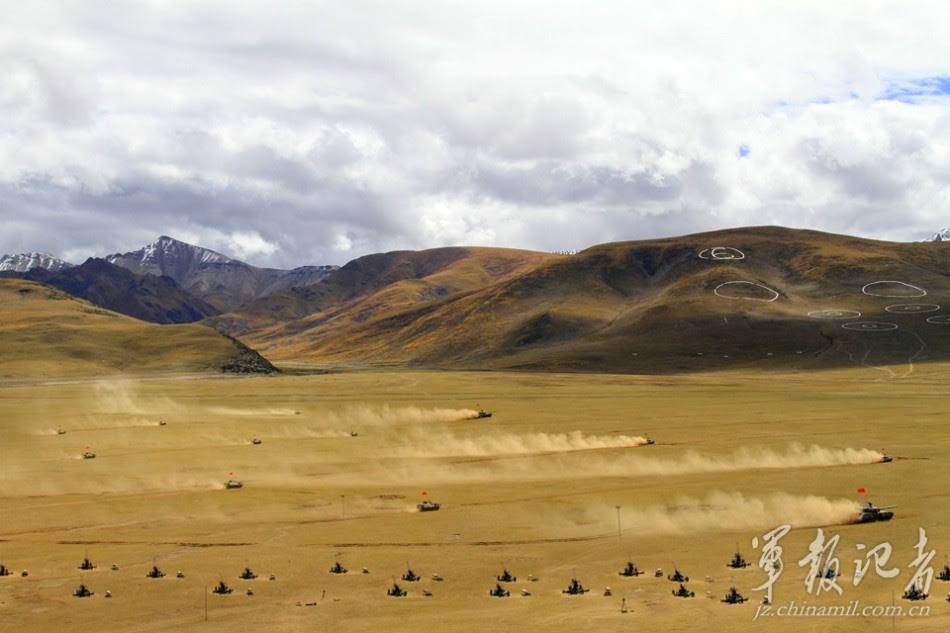
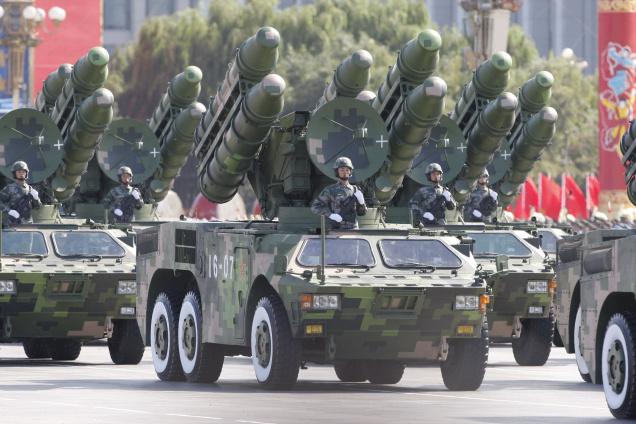
Red China has claimed that it is expanding its defense spending to increase its global military reach to defend its economic interests and territorial rights which includes Red China’s claim for territorial rights in Occupied Tibet. People’s Liberation Army maintains an impressive military force in Tibet with which it brutalized and represses people who offer Resistance to Red China’s occupation. Red China rules over Tibet with its Iron Fist.
Red China vs Tibet: Who decides the results of a battle? The outcome of the fight is not always controlled by the relative military strengths of the opposing parties.
Everyday deeds by ordinary folks can break the knuckles of the military grip over Tibet. Who decides the results of a battle? The outcome of the fight is not always controlled by the relative military strengths of the opposing parties.
RED CHINA vs TIBET – THE FIGHT BETWEEN DAVID AND GOLIATH:
Red China vs Tibet: Who decides the results of a battle? The outcome of the fight is not always controlled by the relative military strengths of the opposing parties.
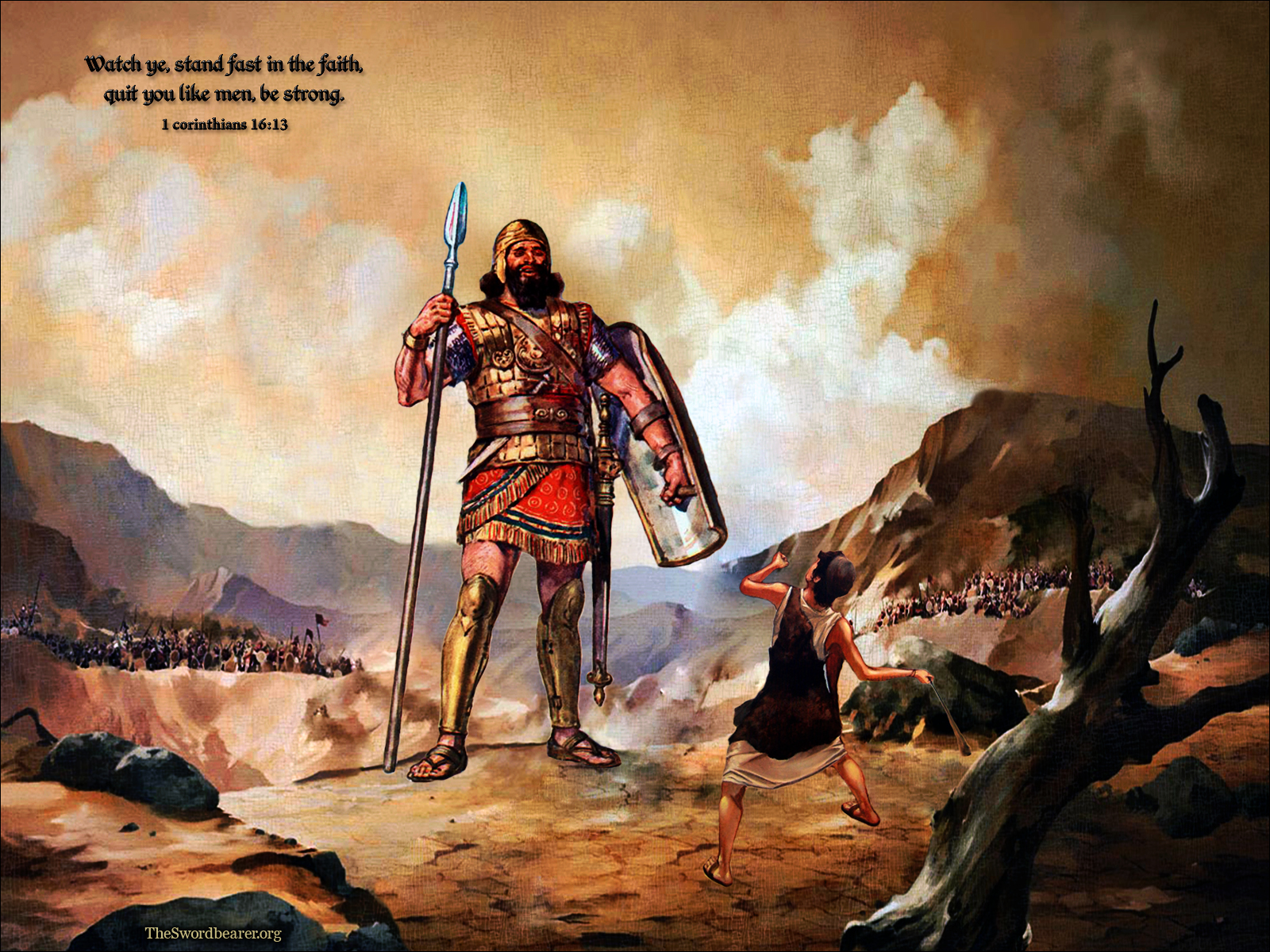
Wars in ancient times were sometimes decided by “representative combat”; Champions from each side would fight, and the results of their combat would determine the battle’s result. People believed the outcome of the fight was controlled by the warriors’ gods more than by the two sides’ military strength.The Old Testament Book of 1 Samuel, Chapter 17 described an interesting fight between David, a young Israeli shepherd and Goliath, a gigantic warrior of the Philistine army. David had no prior experience of warfare but was confident in his God. Whereas Goliath was an experienced soldier and was especially scornful of Israelites who openly proclaimed that they are God’s chosen people.
Red China vs Tibet: Who decides the results of a battle? The outcome of the fight is not always controlled by the relative military strengths of the opposing parties.
The Philistines had ventured into Israel’s territory and had taken a firm position on the slope of a hill, with Israel camped on the opposite hill. From the Philistine camp Goliath made daily challenges to personal combat, but after forty days no one accepted his challenge as Israelites were simply terrified and dismayed by the Philistine. Goliath’s size was extraordinary. He was over nine feet (or even over eleven feet) in height. Goliath had a bronze helmet on his head and wore a coat of scale armor of bronze, on his legs he wore bronze greaves, and a bronze javelin was slung on his back. He also held a sword and a spear. For forty days, Goliath came forward every morning and evening and took his stand demanding Israelites to send a soldier to fight him. David had been sent to Israeli camp to deliver some provisions to his three brothers who served as soldiers in Israeli army. When David heard Goliath’s challenge, he made repeated inquires about its meaning. After being told, David agreed to respond to Goliath’s challenge and demand for personal combat without any concern for his lack of war experience.
Red China vs Tibet: Who decides the results of a battle? The outcome of the fight is not always controlled by the relative military strengths of the opposing parties.
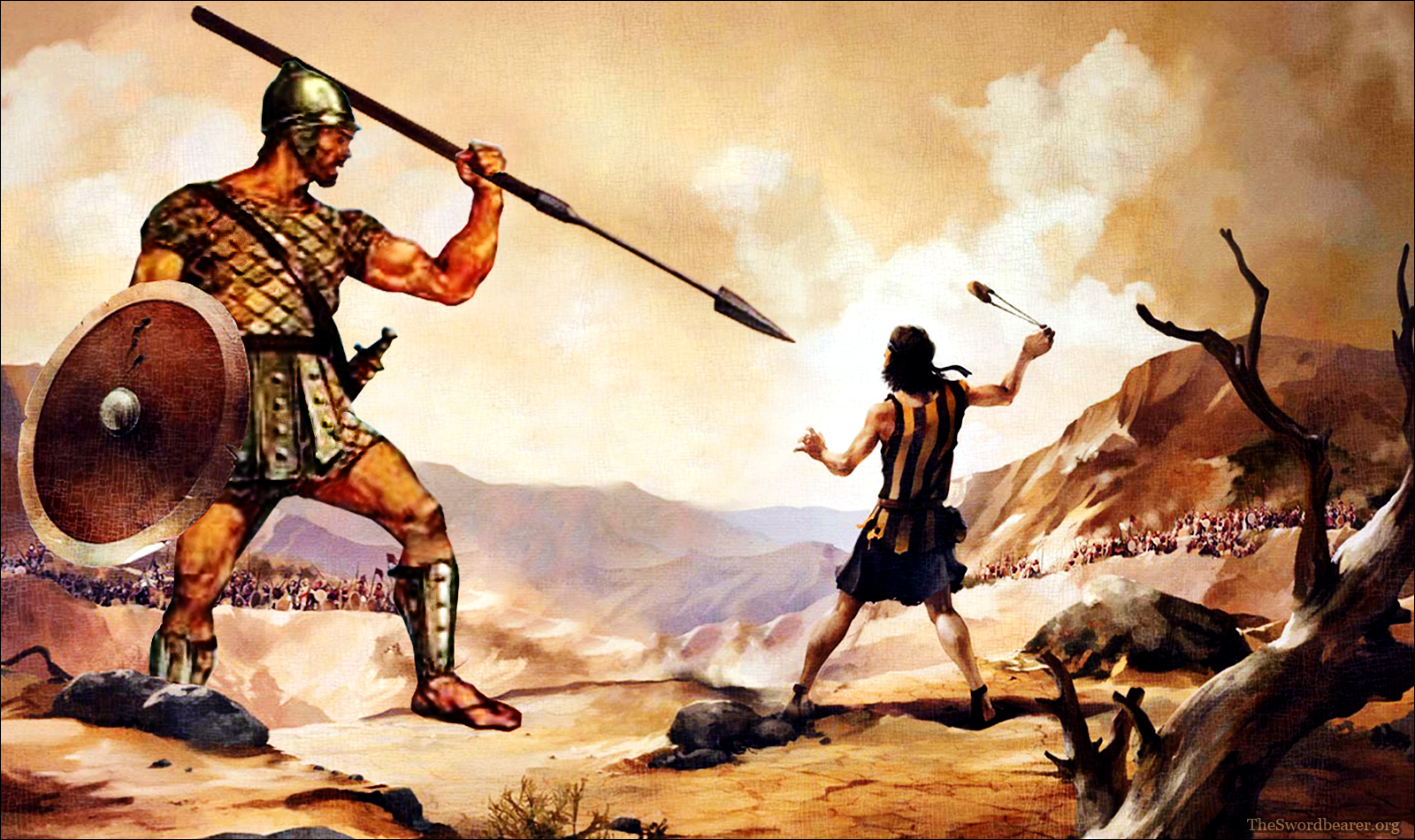
David took his staff in his hand, chose five smooth stones from the stream, put them in the pouch of his shepherd’s bag and with his sling in hand ,went to face Goliath. He approached him and said to Goliath, “You come against me with sword and spear and javelin, but I come against you in the name of the LORD Almighty, the God of the armies of Israel, whom you have defied…… All those gathered here will know that it is not b sword or spear that the LORD saves; for the battle is LORD’s, and He will give all of you into our hands.” (1 Samuel 17: 45-47)
Red China vs Tibet: Who decides the results of a battle? The outcome of the fight is not always controlled by the relative military strengths of the opposing parties.
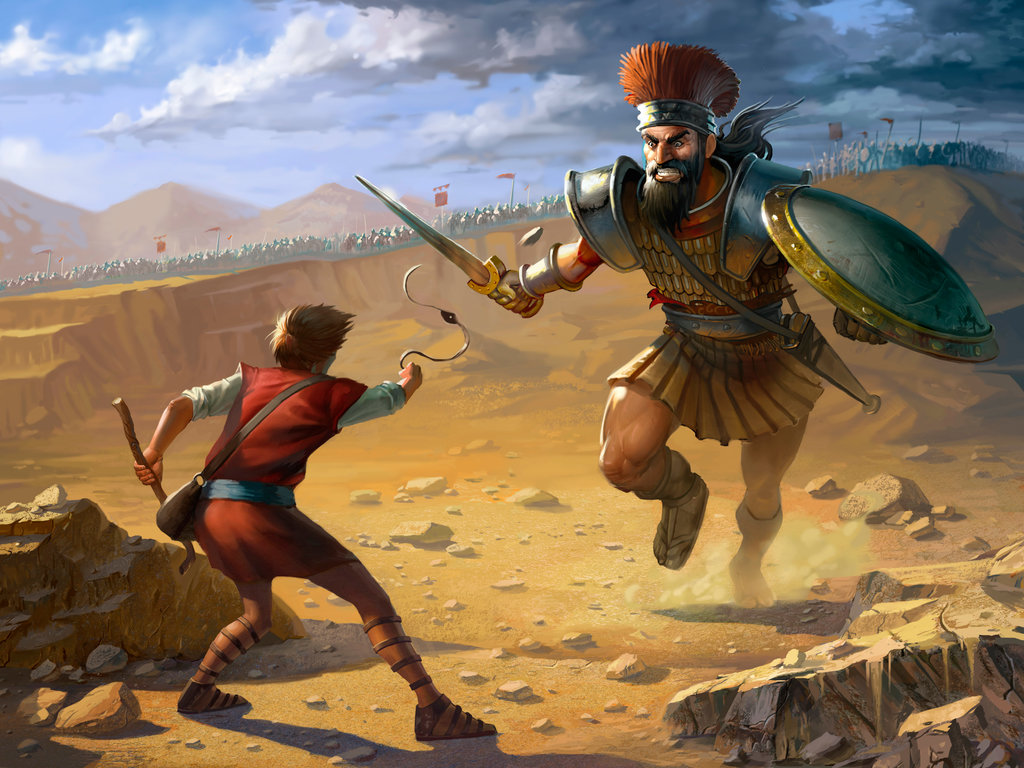
As Goliath moved closer to attack David, he ran quickly toward the battle line to meet Goliath. David reached into his bag and took out a stone, slung it striking Goliath on his forehead. The stone found its mark, sank into Goliath’s forehead, and Goliath fell facedown on the ground.
Red China vs Tibet: Who decides the results of a battle? The outcome of the fight is not always controlled by the relative military strengths of the opposing parties.
So David triumphed over Goliath with a sling and stone without a sword in his hand; he struck down Goliath and killed him.
Red China vs Tibet: Who decides the results of a battle? The outcome of the fight is not always controlled by the relative military strengths of the opposing parties.
David took hold of Goliath’s sword and drew it from the scabbard and he cut off his head with the sword.
Red China vs Tibet: Who decides the results of a battle? The outcome of the fight is not always controlled by the relative military strengths of the opposing parties.
In my analysis, David overwhelmed Goliath, taking full advantage of a small portion of Goliath’s huge body to strike it at a most vulnerable spot in a very precisely executed attack.
Red China vs Tibet: Who decides the results of a battle? The outcome of the fight is not always controlled by the relative military strengths of the opposing parties.
I am not concerned about the religious beliefs of people who fight on behalf of Tibet or those of Red China. I visualize this as a ‘Battle of Right Against Might’. Military occupation of Tibet is illegal, unjust, and it reveals the evil intent of Red China. For Red China’s actions are evil, Red China has no choice other than that of experiencing the fruits of their own actions. For that reason, I predict that Beijing Is Doomed. Red China will come down, its downfall will be sudden and very quick as mentioned in The New Testament Book Revelation Chapter 18, Verse 21.
Red China vs Tibet: Who decides the results of a battle? The outcome of the fight is not always controlled by the relative military strengths of the opposing parties.
CHINESE MILITARY SETS COURSE TO EXPAND GLOBAL REACH AS ‘NATIONAL INTERESTS’ GROW
The Washington Post
Simon Denyer
Red China vs Tibet: Who decides the results of a battle? The outcome of the fight is not always controlled by the relative military strengths of the opposing parties.
BEIJING — China said Tuesday that it plans to extend its global military reach to safeguard its economic interests, while defending its territorial claims at sea against “provocative actions” by neighbors and “meddling” by the United States.
A policy document setting out China’s military strategy, issued by the State Council, or cabinet, underlined the dramatic growth of the country’s defense ambitions — especially its naval ambitions — in tandem with its rapid economic rise.
Beijing insisted in the document that its military is dedicated to “international security cooperation” and peaceful development. But it also said the navy will expand its focus from “offshore waters defense” to a greater emphasis on “open seas protection” as China aims to establish itself as a maritime power. The air force, meanwhile, will shift its focus from “territorial air defense to both defense and offense.”
Patrick Cronin, director of the Asia-Pacific Security Program at the Center for a New American Security, called the white paper “a blueprint for achieving slow-motion regional hegemony.”
“It asserts a confidence backed by growing capability on land and increasingly at sea,” he said. “While it calls for balancing China’s territorial ‘rights’ with ‘stability,’ there should be little doubt on the part of its neighbors that China is building a maritime force to assert the former.”
China’s officially disclosed defense budget was expanded by just over 10 percent this year, to $141 billion, marking two decades of nearly unbroken double-digit growth. The navy is reportedly building a second aircraft carrier and has invested heavily in submarines and warships.
“China has made it a strategic goal to become a maritime power,” Senior Col. Wang Jin said at a news conference Tuesday. “Therefore, we need to build a strong navy.”
He added that the development of long-range precision weapons means that the battlefield at sea is widening. “Offshore-waters defense alone can no longer provide effective defense of the country’s maritime interests,” he said.
In Washington, State Department spokesman Jeff Rathke said the administration was aware of the paper and continued to monitor China’s military developments carefully. “We also continue to urge China to exhibit greater transparency with respect to its capabilities and to its intentions,” he said.
According to a Pentagon report released this month, China is developing missiles designed to “push adversary forces — including the United States — farther from potential regional conflicts.”
The Chinese military is mainly focused on readying for possible conflict in the Taiwan Strait but also is investing to prepare for “contingencies” in the East China Sea and the South China Sea, where it is engaged in several territorial disputes, the Pentagon report said.
Chinese officials say that the country’s declared annual defense spending is significantly below the global average when compared with the size of its economy. Its actual defense spending is almost certainly higher than the declared number but is still far lower than the Pentagon’s fiscal 2015 budget of $560 billion, experts say.
In a move welcomed by other nations, China sent a 700-strong peacekeeping force in December to South Sudan, where it has extensive oil interests, marking the first time it has sent an infantry battalion on a U.N. mission.
Beijing also is negotiating with the strategic port nation of Djibouti to open a military base there to support anti-piracy naval escort missions in the Gulf of Aden and off the coast of Somalia, the Agence France-Presse news agency reported this month. The United States and France already have a military presence in the tiny Horn of Africa country.
Mapping Asia’s Chinese fears
“With the growth of China’s national interests, the security of our overseas energy and resources, strategic sea lines of communication and the safety of our overseas institutions, personnel and assets have become prominent issues,” Senior Col. Zhang Yuguo said at Tuesday’s news conference.
Zhang added, however, a note of outreach apparently aimed at the United States and other countries watching China’s military growth. “China will never seek hegemony or divide up spheres of power, nor will it engage in military alliances or expansion,” he said.
In addition to rattling its neighbors, China’s military growth has set the nation on a possible collision course with the United States.
This year in particular, the Obama administration has repeatedly condemned a program of rapid land reclamation and construction on disputed islands and reefs in the South China Sea. A U.S. surveillance plane was warned to leave the area by the Chinese navy last week, while Beijing lodged a formal diplomatic complaint.
Senior Col. Yang Yujun, a Defense Ministry spokesman, on Tuesday likened China’s construction activities on the islands to “everyday actions” such as the building of houses, roads and bridges. But he acknowledged that the facilities being constructed, including an airstrip and radar stations, will have both military and civilian uses.
[Chinese warships could one day outnumber U.S. fleet]
Rathke, the State Department spokesman, said the United States took a different view, saying that China’s land reclamation efforts in the South China Sea have “contributed . . . to rising tensions” and suggesting that other countries in the region share that view.
Yang said that the Chinese military was responding to increasingly frequent surveillance flights in a “legal and professional manner” but that the issue was being hyped up to “throw mud” at China.
“There’s no ruling out the possibility that some country is seeking an excuse for its potential action in the future,” he said. “I don’t think this is a new trick. It’s an old trick.”
On Monday, the state-owned tabloid the Global Times warned that battle is “inevitable” if the United States tries to prevent China from finishing its reclamation and construction work. It said the risks would be “still under control” if Washington accepts China’s peaceful rise.
Although not necessarily fully reflecting official thinking, the editorial shows China’s determination to continue its projects in the South China Sea.
Yang said Sino-U.S. relations are generally good and noted that both militaries have signed agreements to govern air and maritime encounters and prevent crises.
But the policy paper expressed concern about the United States’ “ ‘rebalancing’ strategy,” which has led China to enhance its military presence and strengthen military alliances in the Asia-Pacific region and worry about more assertive military and security policies in Japan. It accused China’s neighbors of provocative actions by reinforcing their military presence on “China’s reefs and islands that they have illegally occupied.”
“Some external countries are also busy meddling in South China Sea affairs,” it said, adding in a clear reference to the United States: “A tiny few maintain constant close-in air and sea surveillance and reconnaissance against China.”
Philippines President Benigno Aquino III was quoted as saying Monday that his nation will continue flying over disputed islands in the South China Sea, while Defense Minister Voltaire Gazmin said he was seeking a “stronger commitment” from the United States to help its ally, according to news agency reports.
China responded angrily.
“I would like to remind the Philippines that China will not bully small countries, but small countries must not ceaselessly and willfully make trouble,” Foreign Ministry spokeswoman Hua Chunying said at a news conference. “We hope the Philippines can cease its instigation and provocation and return to the correct path of resolving the problem through negotiation and consultation.”
On Tuesday, state media reported that China had held a groundbreaking ceremony for the building of two lighthouses on the disputed Spratly Islands, a move that Hua said was meant to fulfill the nation’s international obligations but that is unlikely to ease concerns about Beijing’s expanding influence.
The military strategy paper also outlined threats emanating from instability on the Korean Peninsula, from separatist forces in its western regions of Tibet and Xinjiang and from forces attempting to instigate a “color revolution” to overthrow the Communist Party. It also noted growing threats in outer space and cyberspace.
Xu Yangjingjing in Beijing and Dan Lamothe in Washington contributed to this report.
Red China vs Tibet: Who decides the results of a battle? The outcome of the fight is not always controlled by the relative military strengths of the opposing parties.Red China vs Tibet: Who decides the results of a battle? The outcome of the fight is not always controlled by the relative military strengths of the opposing parties.Red China vs Tibet: Who decides the results of a battle? The outcome of the fight is not always controlled by the relative military strengths of the opposing parties.Red China vs Tibet: Who decides the results of a battle? The outcome of the fight is not always controlled by the relative military strengths of the opposing parties.Red China vs Tibet: Who decides the results of a battle? The outcome of the fight is not always controlled by the relative military strengths of the opposing parties.Red China vs Tibet: Who decides the results of a battle? The outcome of the fight is not always controlled by the relative military strengths of the opposing parties.Red China vs Tibet: Who decides the results of a battle? The outcome of the fight is not always controlled by the relative military strengths of the opposing parties.Red China vs Tibet: Who decides the results of a battle? The outcome of the fight is not always controlled by the relative military strengths of the opposing parties.Red China vs Tibet: Who decides the results of a battle? The outcome of the fight is not always controlled by the relative military strengths of the opposing parties.Red China vs Tibet: Who decides the results of a battle? The outcome of the fight is not always controlled by the relative military strengths of the opposing parties.
THE EVIL RED EMPIRE – RED CHINA – COLONIAL RULE OVER TIBET:
THE EVIL RED EMPIRE – RED CHINA – COLONIAL RULE OVER TIBET .
Neocolonialism describes the revival of Colonialist exploitation by a foreign power of a region that has achieved independence. Colonialism is the system or policy by which a country maintains foreign colonies especially in order to exploit them economically. Colonization refers to extension of political and economic control over an area by an occupying state that has organizational or technological superiority. Imperialism has been a major colonizing force. The Colony’s population is subdued to assimilate them to the Colonizer’s way of life.
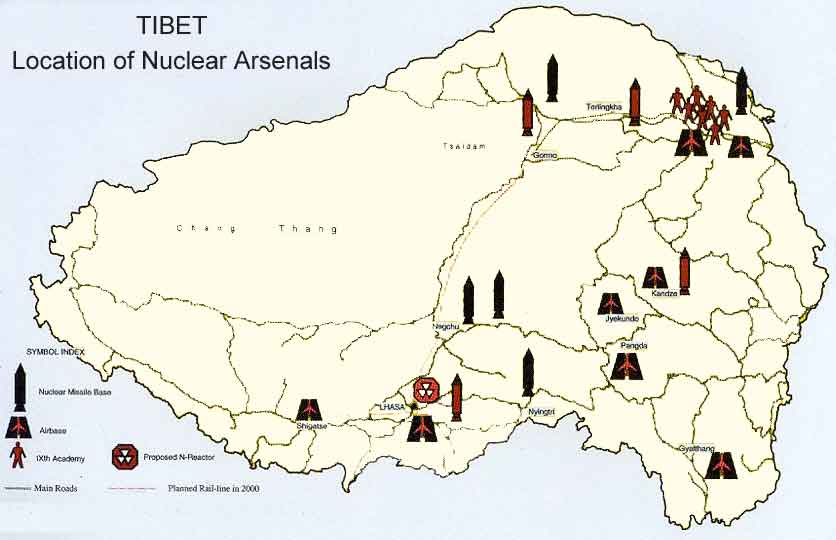
The Great 13th Dalai Lama of Tibet declared Tibet’s independence from Manchu China(Qing or Ch’ing Dynasty) on February 13, 1913. Tibet expelled Manchu China’s diplomats and its military contingent posted in Lhasa, Tibet’s Capital. For centuries, Tibet came under foreign conquests by Mongols and Manchu China but Tibet was never colonized. Red China’s military invasion of Tibet in 1950 describes the typical features of Colonialism. Tibet’s population is repressed by brutal force in an attempt to fully assimilate Tibetans to the Colonizer’s way of life. Red China’s Colonial Rule is a direct threat to existence of Tibetan way of life shaped by centuries of Natural Freedom. Apart from wiping out Tibetan System of Governance known as Ganden Phodrang, The Institution of Dalai Lama at Potala Palace, Lhasa, the tyrannical rule of Red China is destroying every attribute of Tibetan Culture including Tibetan language, and Tibetan religious institutions putting Tibetan Identity at a great peril. Red China’s colonization of Tibet is defacing and degrading Tibetan territory and its fragile environment totally upsetting its delicate ecological balance. The Land of Tibet is scarred by Red China’s reckless mining activities, deforestation, diversion of rivers, and dumping of toxic chemical and nuclear wastes.
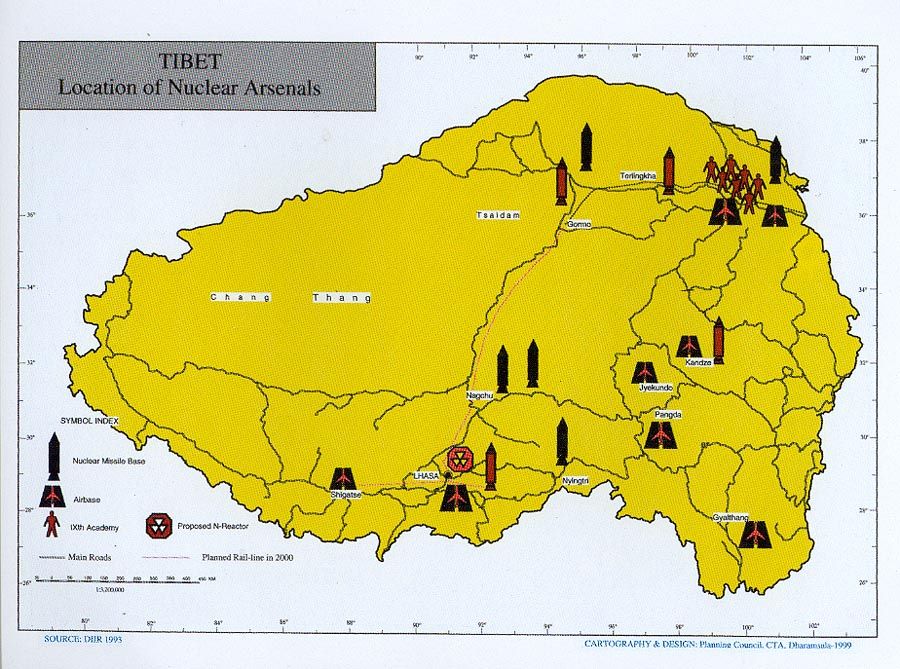
THE EVIL RED EMPIRE – RED CHINA – COLONIAL RULE OVER TIBET : TIBET IS POISONED WITH LONG LIVING NUCLEAR WASTE FROM RED CHINA’S NUCLEAR EXPANSIONISM .
Colonization was the vehicle of European expansion from the 15th century into Africa, the Americas, and Asia. The Spanish, Portuguese, English, French, and Dutch established Colonies worldwide that have for the most part obtained independence from imperial system only in the 20th century.
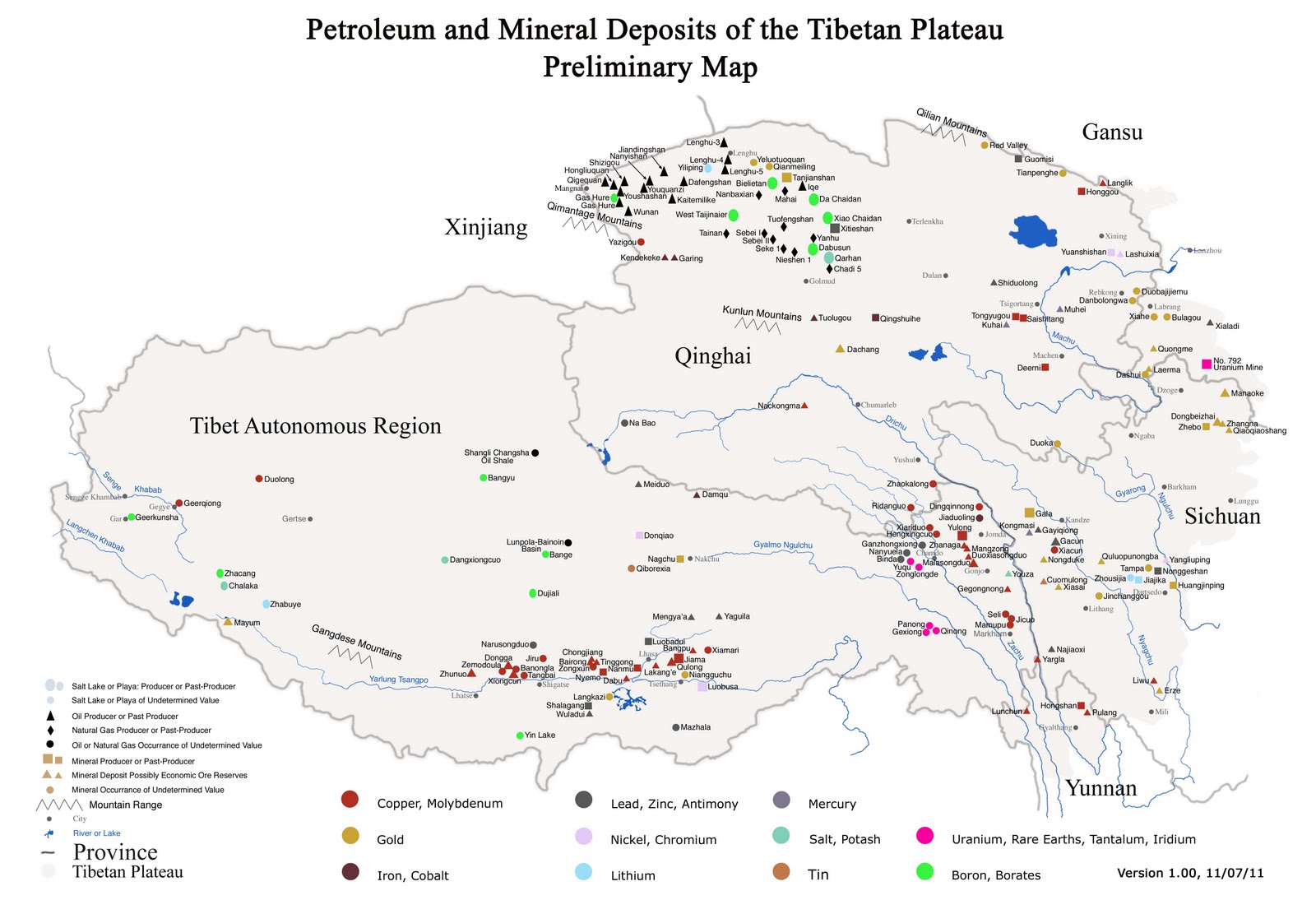
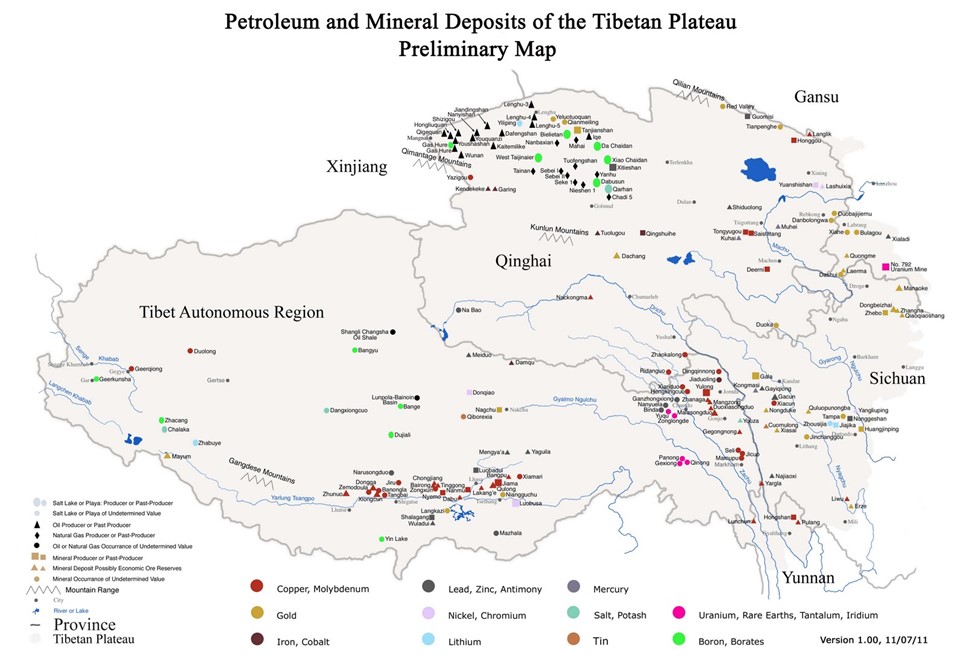
red china neocolonialist mineral deposits Tibet
red china neocolonialist Canadian mining projects Tibet
Red China determines the economic development of other countries from which it extracts vast amounts of raw materials. With the sole exception of Tibet, Red China is able to get raw materials and flood world markets with Made in China products without the need to fight the wars of the previous Colonial Era. With threats of its muscle power, Red China has entered a new era of Colonialism. People of the World have to awaken to the threat imposed by Red China – Neocolonialist.
CONGO ASSESSES $6.7 BILLION CONTRACTS WITH CHINESE
Congo assesses $6.7 billion contracts with Chinese
By SALEH MWANAMILONGO
.
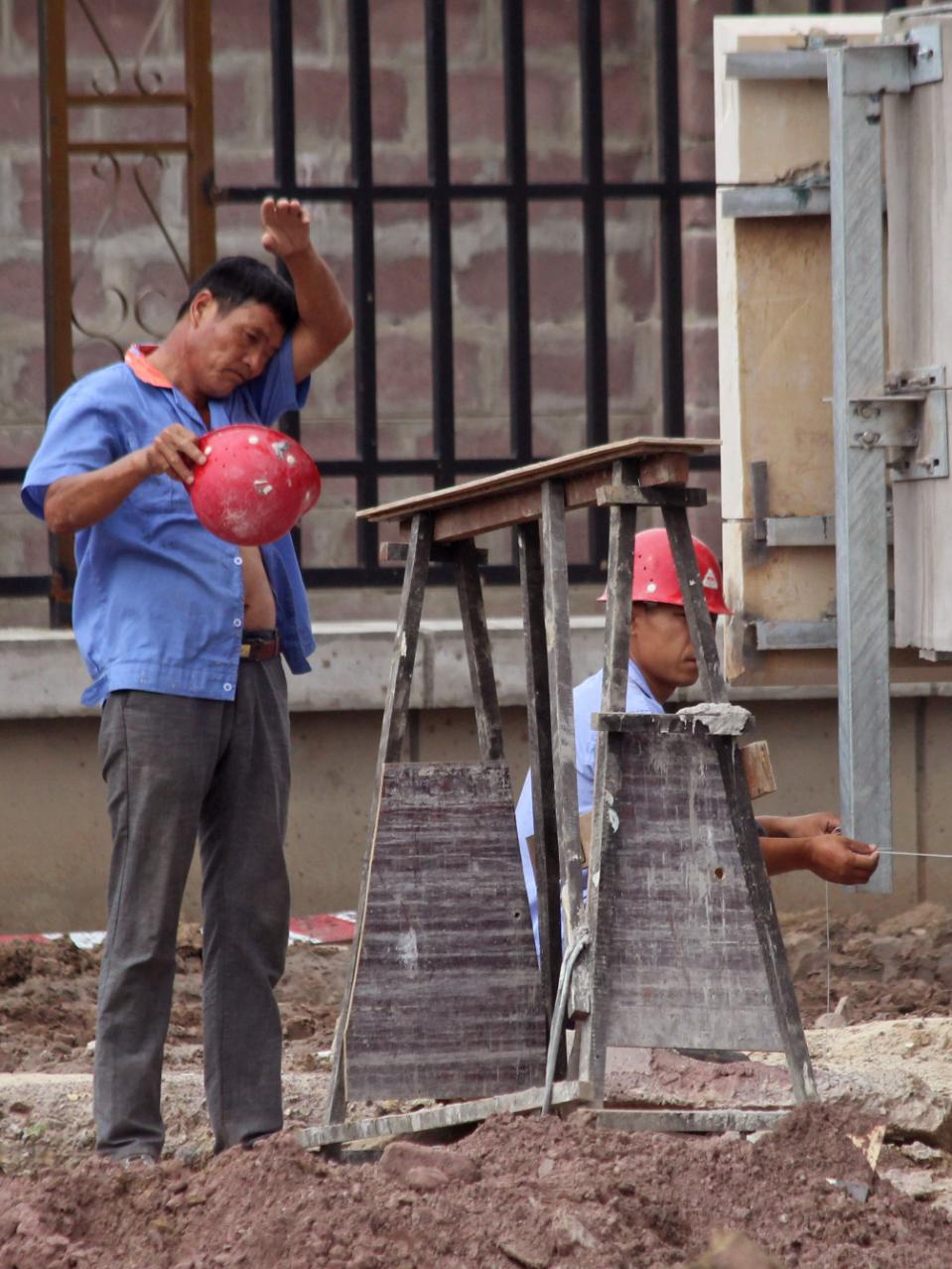
In this photo taken on May 20, 2015, Chinese workers travel on the back of a trailer pulled by a tractor on their way to work in Kinshasa, Democratic Republic of Congo. Congos government is bringing in outside experts including officials from the World Bank and the United Nations, to investigate the long-term impact of some $6.7 billion in contracts with Chinese companies that critics have said could exploit the central African nations mineral riches.(AP Photo/John Bompengo)
.
In this photo taken on May 20, 2015, Chinese workers inside a new hotel being built for the use by Congo government officials when completed in Kinshasa, Democratic Republic of Congo. Congos government is bringing in outside experts including officials from the World Bank and the United Nations, to investigate the long-term impact of some $6.7 billion in contracts with Chinese companies that critics have said could exploit the central African nations mineral riches.(AP Photo/John Bompengo)
In this photo taken on May 20, 2015, Chinese workers at the building site of a new hotel to be used by Congo government officials when completed in Kinshasa, Democratic Republic of Congo. Congos government is bringing in outside experts including officials from the World Bank and the United Nations, to investigate the long-term impact of some $6.7 billion in contracts with Chinese companies that critics have said could exploit the central African nations mineral riches. (AP Photo/John Bompengo)
In this photo taken on May 20, 2015, Chinese workers travel on the back of a trailer pulled by a tractor on their way to work in Kinshasa, Democratic Republic of Congo. Congos government is bringing in outside experts including officials from the World Bank and the United Nations, to investigate the long-term impact of some $6.7 billion in contracts with Chinese companies that critics have said could exploit the central African nations mineral riches.(AP Photo/John Bompengo)
KINSHASA, Congo (AP) — Congo’s government is bringing in outside experts to investigate the long-term impact of some $6.7 billion in contracts with Chinese companies that critics say could exploit the central African nation’s mineral riches.
Congo’s government has a 32 percent stake while China has 68 percent in the mining project called Sicomines. It was created in 2008 but construction did not officially start until three years later, said Jean Nzenga Kongolo, deputy general manager of Sicomines.
It now employs about 3,000 people, of whom 70 percent are Congolese, said Kongolo.
To assess the project’s impact, officials from the World Bank and the United Nations visited the mines this week.
The project “is truly in the right lines and objectives of the World Bank which is to fight against poverty,” said World Bank representative Ahmadou Moustapha Ndiaye. The U.N. official also praised the project.
However, critics say a more thorough evaluation of the contract still must be done.
In this photo taken on May 20, 2015, Chinese workers at the building site of a new hotel to be used by Congo government officials when completed in Kinshasa, Democratic Republic of Congo. Congos government is bringing in outside experts including officials from the World Bank and the United Nations, to investigate the long-term impact of some $6.7 billion in contracts with Chinese companies that critics have said could exploit the central African nations mineral riches.(AP Photo/John Bompengo)
In this photo taken on May 20, 2015, Chinese workers at the building site of a new hotel to be used by Congo government officials in Kinshasa.
“The Chinese contract was never a win-win … It was badly negotiated,” said civil society leader Jonas Tshiombela.
As part of the deal, China’s Railway Engineering Corporation and Sinohydro Corp. are constructing about 3,000 kilometers of roads and railways in Congo. Universities, hospitals and health centers are also being built, according to the agreement.
Tshiombela said the quality of the construction work “leaves much to be desired.” One road in the capital of Kinshasa — Sendwe Boulevard — already has potholes just a year after it was completed, he said.
Sun Rui Wen, the director general representing China’s interest in Sicomines, defended the project, saying it is based on “equality and mutual benefit.”
The deal also allows the Chinese companies to mine copper, cobalt and gold, according to the agreement seen by The Associated Press.
Congo should be able to repay the investment after 25 years, said Moise Ekanga Lushyma, executive secretary coordinating the project for the Congolese government. At that point they will pay management fees or negotiate another loan — not necessarily with the Chinese — to produce minerals, he said.
KINSHASA, Congo
World Bank
Copyright 2015 The Associated Press. All rights reserved. This material may not be published, broadcast, rewritten or redistributed.
Yahoo – ABC News Network
red china neocolonialist canadian mining projects tibet
red china neocolonialist mineral deposits tibet
THE EVIL RED EMPIRE – RED CHINA – COLONIAL RULE OVER TIBET : TIBET IS POISONED WITH LONGLIVING NUCLEAR WASTE FROM RED CHINA’S NUCLEAR EXPANSIONISM .
In this photo taken on May 20, 2015, Chinese workers at the building site of a new hotel to be used by Congo government officials when completed in Kinshasa, Democratic Republic of Congo. Congos government is bringing in outside experts including officials from the World Bank and the United Nations, to investigate the long-term impact of some $6.7 billion in contracts with Chinese companies that critics have said could exploit the central African nations mineral riches.(AP Photo/John Bompengo)
In this photo taken on May 20, 2015, Chinese workers travel on the back of a trailer pulled by a tractor on their way to work in Kinshasa, Democratic Republic of Congo. Congos government is bringing in outside experts including officials from the World Bank and the United Nations, to investigate the long-term impact of some $6.7 billion in contracts with Chinese companies that critics have said could exploit the central African nations mineral riches.(AP Photo/John Bompengo)
In this photo taken on May 20, 2015, Chinese workers inside a new hotel being built for the use by Congo government officials when completed in Kinshasa, Democratic Republic of Congo. Congos government is bringing in outside experts including officials from the World Bank and the United Nations, to investigate the long-term impact of some $6.7 billion in contracts with Chinese companies that critics have said could exploit the central African nations mineral riches.(AP Photo/John Bompengo)
In this photo taken on May 20, 2015, Chinese workers at the building site of a new hotel to be used by Congo government officials when completed in Kinshasa, Democratic Republic of Congo. Congos government is bringing in outside experts including officials from the World Bank and the United Nations, to investigate the long-term impact of some $6.7 billion in contracts with Chinese companies that critics have said could exploit the central African nations mineral riches. (AP Photo/John Bompengo)
In this photo taken on May 20, 2015, Chinese workers travel on the back of a trailer pulled by a tractor on their way to work in Kinshasa, Democratic Republic of Congo. Congos government is bringing in outside experts including officials from the World Bank and the United Nations, to investigate the long-term impact of some $6.7 billion in contracts with Chinese companies that critics have said could exploit the central African nations mineral riches.(AP Photo/John Bompengo)
THE EVIL RED EMPIRE – RED CHINA – COLONIAL RULE OVER TIBET .
Neocolonialism describes the revival of Colonialist exploitation by a foreign power of a region that has achieved independence. Colonialism is the system or policy by which a country maintains foreign colonies especially in order to exploit them economically. Colonization refers to extension of political and economic control over an area by an occupying state that has organizational or technological superiority. Imperialism has been a major colonizing force. The Colony’s population is subdued to assimilate them to the Colonizer’s way of life.
The Great 13th Dalai Lama of Tibet declared Tibet’s independence from Manchu China(Qing or Ch’ing Dynasty) on February 13, 1913. Tibet expelled Manchu China’s diplomats and its military contingent posted in Lhasa, Tibet’s Capital. For centuries, Tibet came under foreign conquests by Mongols and Manchu China but Tibet was never colonized. Red China’s military invasion of Tibet in 1950 describes the typical features of Colonialism. Tibet’s population is repressed by brutal force in an attempt to fully assimilate Tibetans to the Colonizer’s way of life. Red China’s Colonial Rule is a direct threat to the existence of Tibetan way of life shaped by centuries of Natural Freedom. Apart from wiping out Tibetan System of Governance known as Ganden Phodrang, The Institution of Dalai Lama at Potala Palace, Lhasa, the tyrannical rule of Red China is destroying every attribute of Tibetan Culture including Tibetan language, and Tibetan religious institutions putting Tibetan Identity at a great peril. Red China’s colonization of Tibet is defacing and degrading Tibetan territory and its fragile environment totally upsetting its delicate ecological balance. The Land of Tibet is scarred by Red China’s reckless mining activities, deforestation, diversion of rivers, and dumping of toxic chemical and nuclear wastes.
Colonization was the vehicle of European expansion from the 15th century into Africa, the Americas, and Asia. The Spanish, Portuguese, English, French, and Dutch established Colonies worldwide that have for the most part obtained independence from imperial system only in the 20th century.
Red China determines the economic development of other countries from which it extracts vast amounts of raw materials. With the sole exception of Tibet, Red China is able to get raw materials and flood world markets with Made in China products without the need to fight the wars of the previous Colonial Era. With threats of its muscle power, Red China has entered a new era of Colonialism. People of the World have to awaken to the threat imposed by Red China – Neocolonialist.
Whole Evil: Red China Neocolonialist exploiting mineral deposits in Tibet
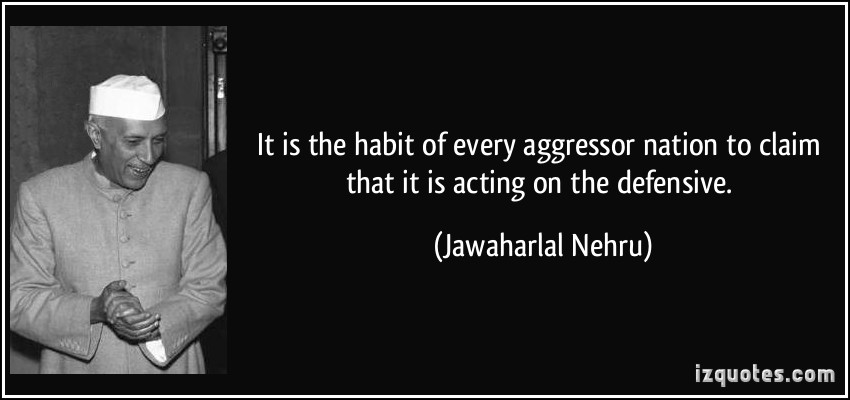
I have been studying the aggressive nature of Red China since 1950s. The word ‘aggressor’ as a noun refers to a person or nation that is guilty of aggression or makes an unprovoked attack. Aggressive behavior, aggressive nature describe a mental inclination to start fights or quarrels, a readiness or willingness to take issue or engage in direct militant action. When I describe Red China as an “Aggressor Nation,” I am speaking about the practice or habit of being quarrelsome, destructively hostile to others, the use of unprovoked attacks or warlike acts. Red China is using her People’s Liberation Army violating her international obligations. Red China is aggressive for she displays boldness and because of her energetic pursuit of her own vested interests with a ruthless desire to dominate her weaker neighbors. Red China has formulated a State Policy called Expansionism which involves a vigorous, unrepentant espousal to use her military force or power to further her own ends.
I have been studying the aggressive nature of Red China since 1950s. The word ‘aggressor’ as a noun refers to a person or nation that is guilty of aggression or makes an unprovoked attack. Aggressive behavior, aggressive nature describe a mental inclination to start fights or quarrels, a readiness or willingness to take issue or engage in direct militant action. When I describe Red China as an “Aggressor Nation,” I am speaking about the practice or habit of being quarrelsome, destructively hostile to others, the use of unprovoked attacks or warlike acts. Red China is using her People’s Liberation Army violating her international obligations. Red China is aggressive for she displays boldness and because of her energetic pursuit of her own vested interests with a ruthless desire to dominate her weaker neighbors. Red China has formulated a State Policy called Expansionism which involves a vigorous, unrepentant espousal to use her military force or power to further her own ends.
Air Space Expansionism: I have been studying the aggressive nature of Red China since 1950s. The word ‘aggressor’ as a noun refers to a person or nation that is guilty of aggression or makes an unprovoked attack. Aggressive behavior, aggressive nature describe a mental inclination to start fights or quarrels, a readiness or willingness to take issue or engage in direct militant action. When I describe Red China as an “Aggressor Nation,” I am speaking about the practice or habit of being quarrelsome, destructively hostile to others, the use of unprovoked attacks or warlike acts. Red China is using her People’s Liberation Army violating her international obligations. Red China is aggressive for she displays boldness and because of her energetic pursuit of her own vested interests with a ruthless desire to dominate her weaker neighbors. Red China has formulated a State Policy called Expansionism which involves a vigorous, unrepentant espousal to use her military force or power to further her own ends.
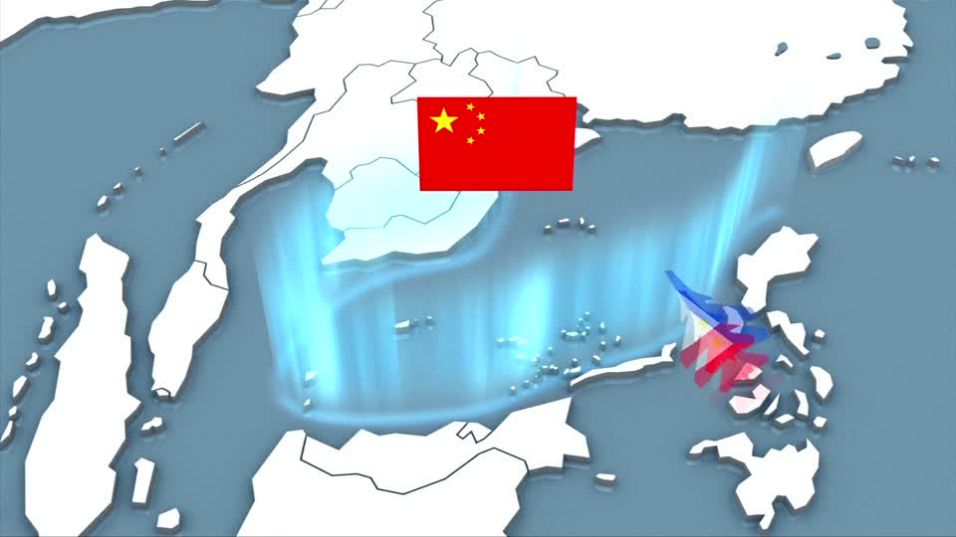
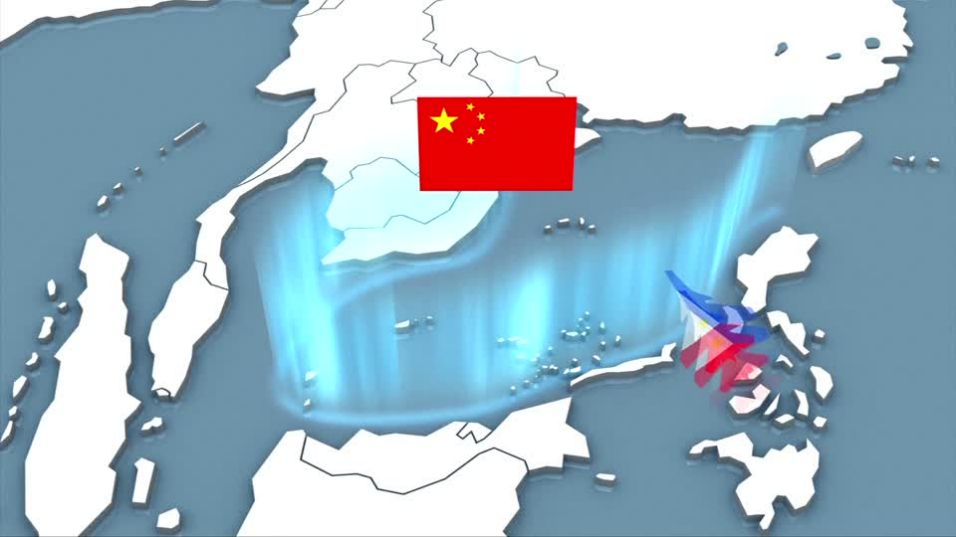
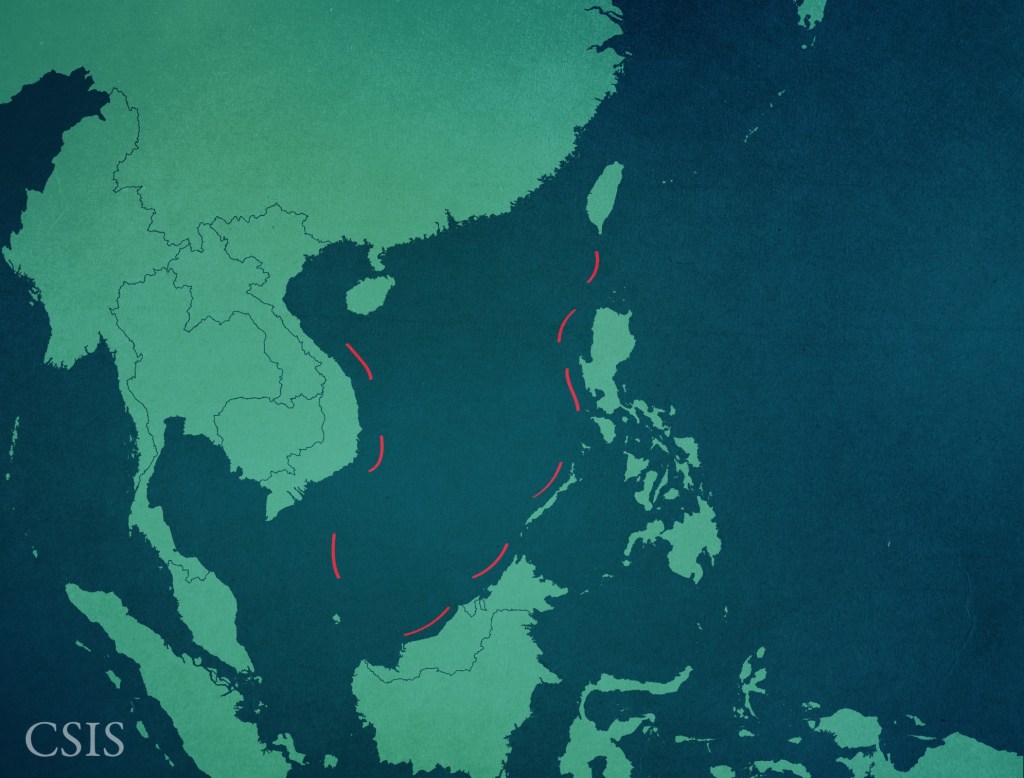
Most journalists reporting on recent events in the South China Sea have used the term “Assertive” to describe the actions of Red China. The word ‘assertive’ emphasizes self-confidence and a persistent determination to express oneself or one’s opinions. Red China is claiming ‘sovereignty’ over most of the South China Sea. In this behavior, Red China is not simply asserting its opinion or view. Red China is using her military muscle to implement her own opinion and is responding with the use of her military power to any challenge or any action that may compromise her opinion.
Territorial Expansionism: I have been studying the aggressive nature of Red China since 1950s. The word ‘aggressor’ as a noun refers to a person or nation that is guilty of aggression or makes an unprovoked attack. Aggressive behavior, aggressive nature describe a mental inclination to start fights or quarrels, a readiness or willingness to take issue or engage in direct militant action. When I describe Red China as an “Aggressor Nation,” I am speaking about the practice or habit of being quarrelsome, destructively hostile to others, the use of unprovoked attacks or warlike acts. Red China is using her People’s Liberation Army violating her international obligations. Red China is aggressive for she displays boldness and because of her energetic pursuit of her own vested interests with a ruthless desire to dominate her weaker neighbors. Red China has formulated a State Policy called Expansionism which involves a vigorous, unrepentant espousal to use her military force or power to further her own ends.
I witnessed Red China’s unprovoked attack on Tibet during 1950 and I witnessed Red China’s unprovoked attack on India during 1962.
I have been studying the aggressive nature of Red China since 1950s. The word ‘aggressor’ as a noun refers to a person or nation that is guilty of aggression or makes an unprovoked attack. Aggressive behavior, aggressive nature describe a mental inclination to start fights or quarrels, a readiness or willingness to take issue or engage in direct militant action. When I describe Red China as an “Aggressor Nation,” I am speaking about the practice or habit of being quarrelsome, destructively hostile to others, the use of unprovoked attacks or warlike acts. Red China is using her People’s Liberation Army violating her international obligations. Red China is aggressive for she displays boldness and because of her energetic pursuit of her own vested interests with a ruthless desire to dominate her weaker neighbors. Red China has formulated a State Policy called Expansionism which involves a vigorous, unrepentant espousal to use her military force or power to further her own ends.
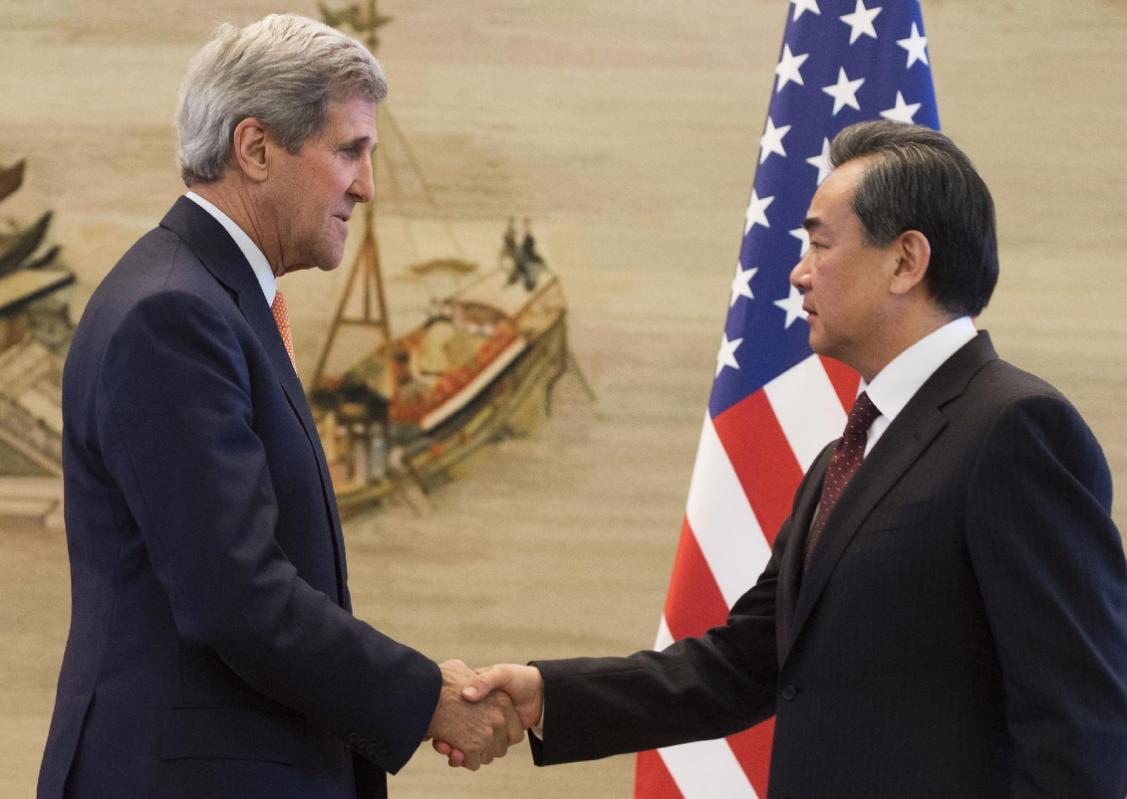
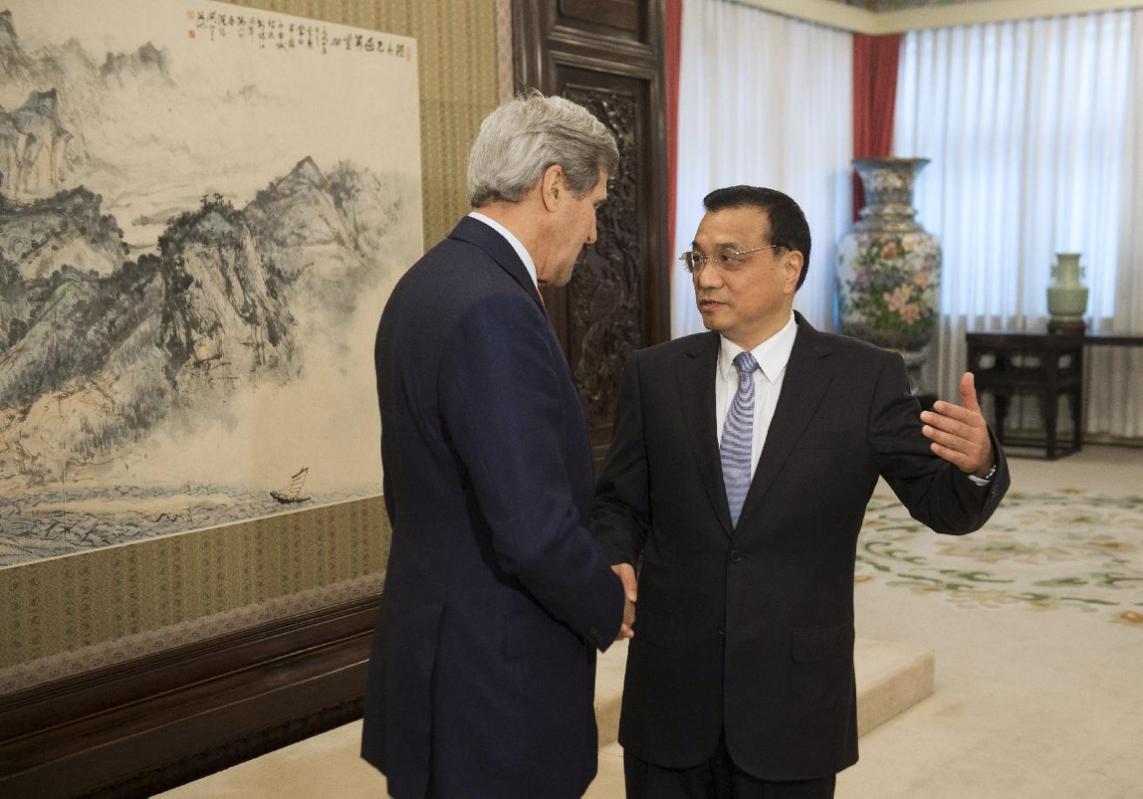
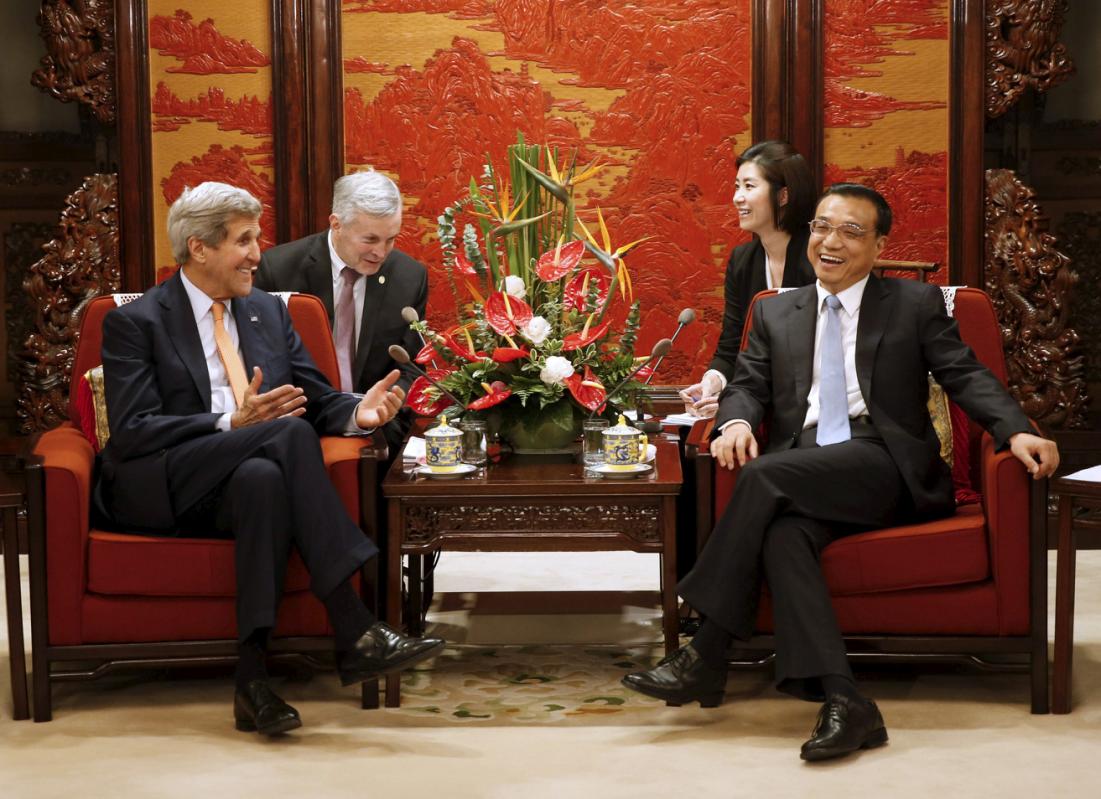
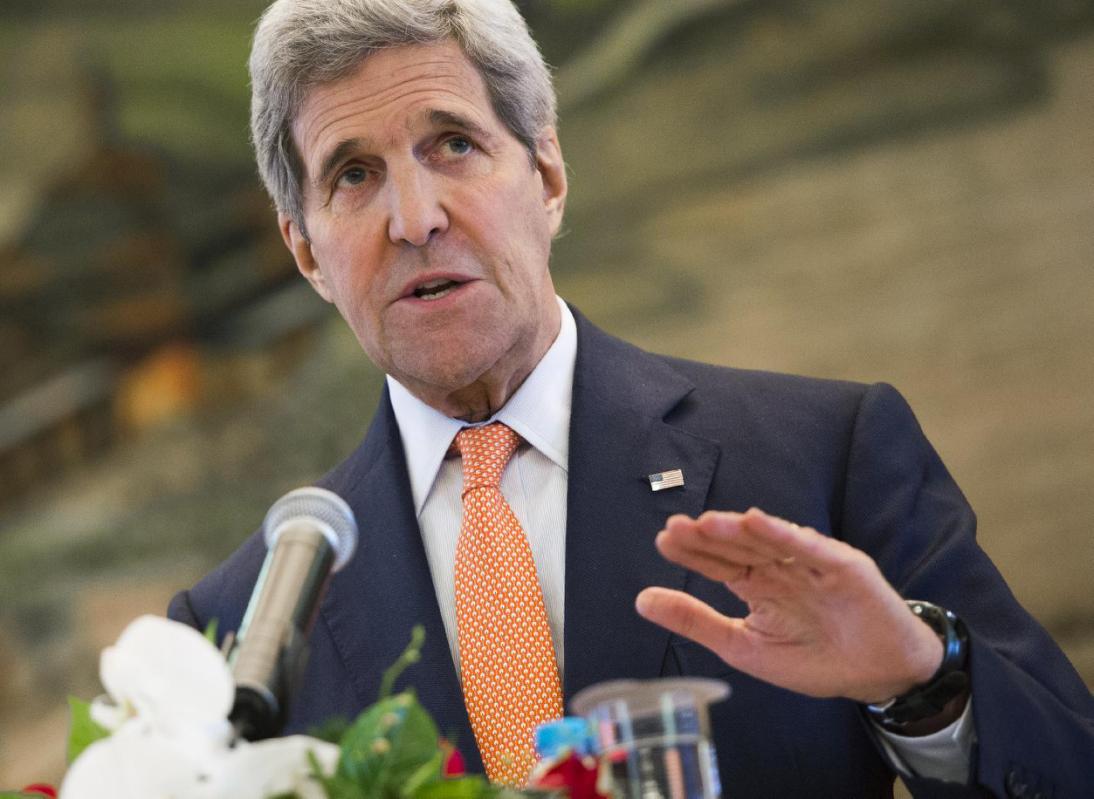
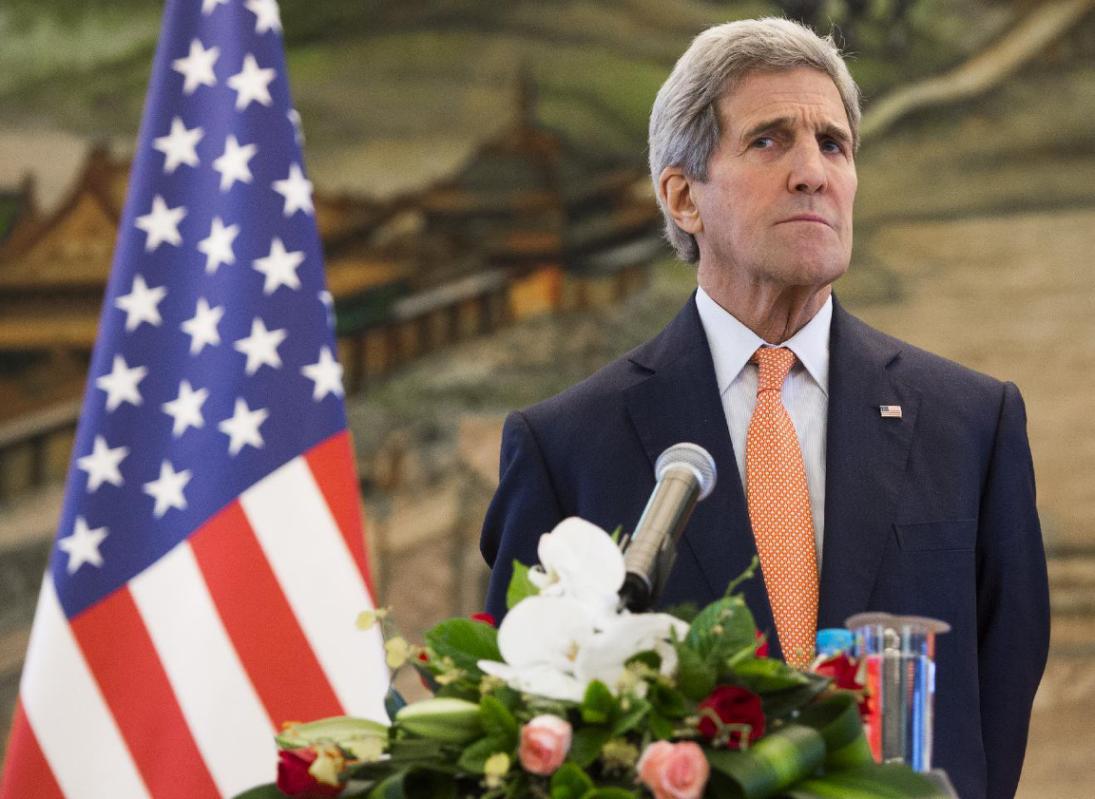
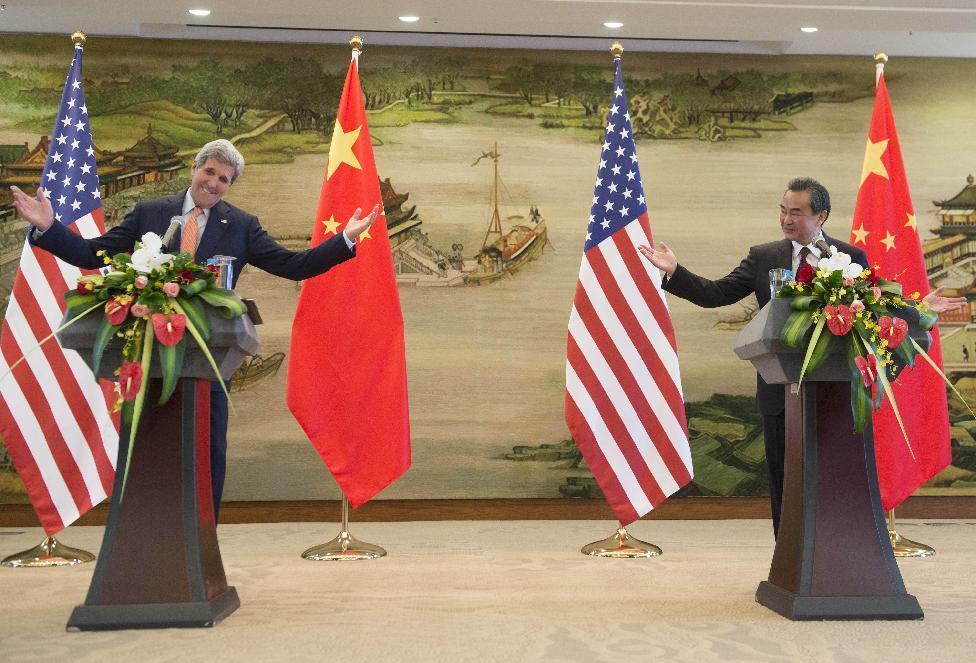
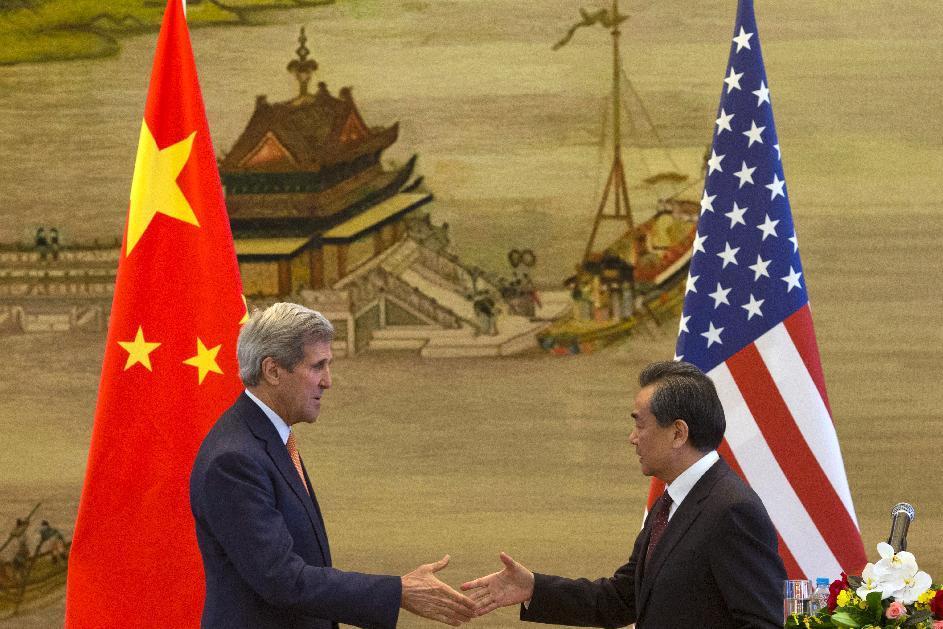
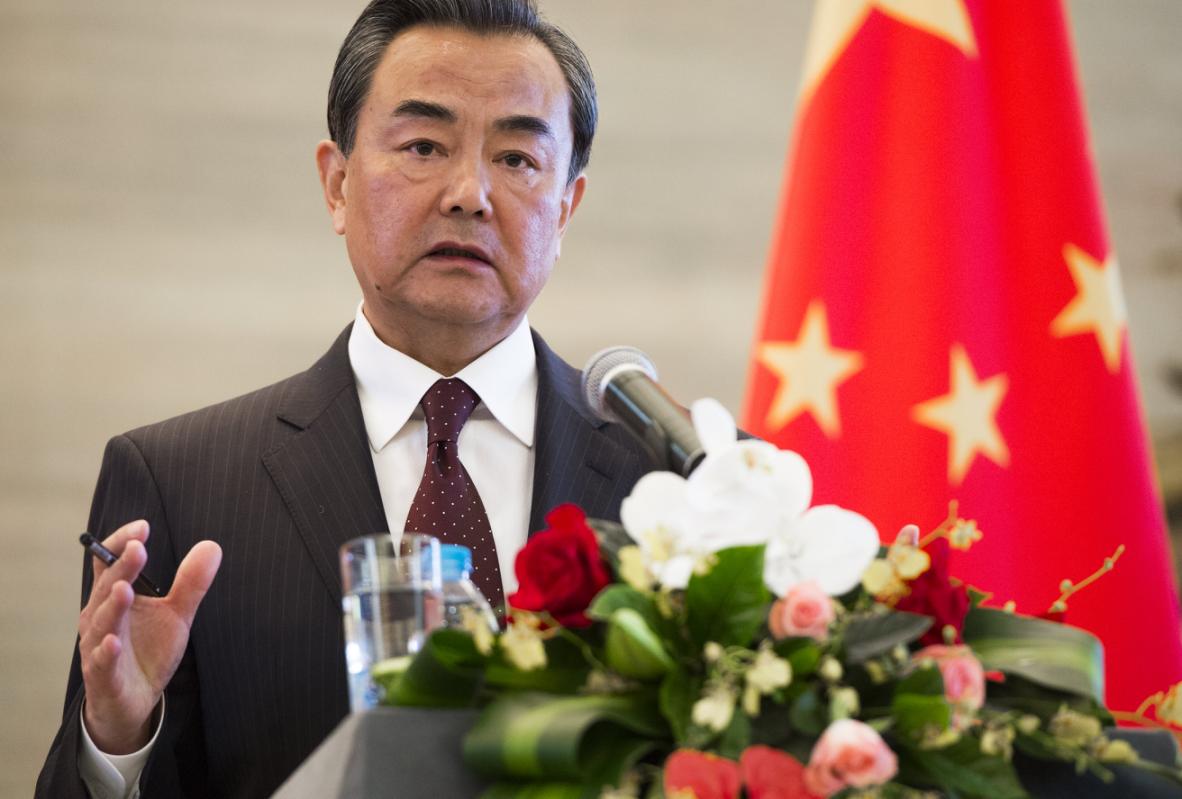
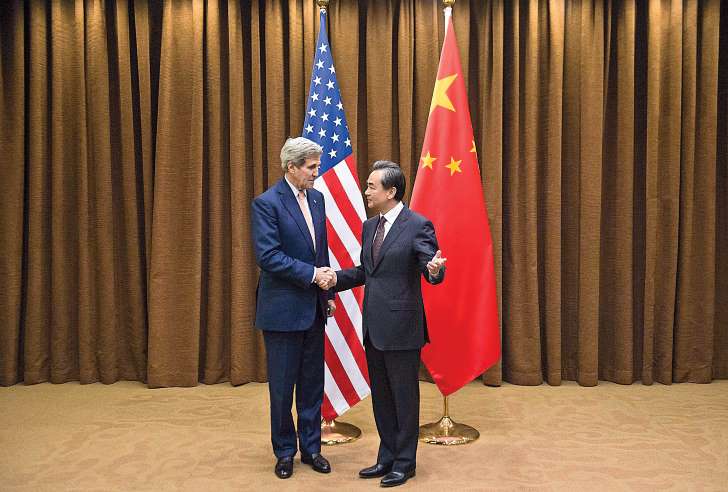
On May 16, 2015, US Secretary of State John Kerry visited Beijing and talked directly to Red China’s President, Prime Minister, and Foreign Minister expressing concerns about Red China’s use of its military muscle to exercise its control over much of the South China Sea. The latest encounter with US Navy Surveillance Plane clearly demonstrates Red China’s unwillingness to review her opinion of sovereignty claims.
I have been studying the aggressive nature of Red China since 1950s. The word ‘aggressor’ as a noun refers to a person or nation that is guilty of aggression or makes an unprovoked attack. Aggressive behavior, aggressive nature describe a mental inclination to start fights or quarrels, a readiness or willingness to take issue or engage in direct militant action. When I describe Red China as an “Aggressor Nation,” I am speaking about the practice or habit of being quarrelsome, destructively hostile to others, the use of unprovoked attacks or warlike acts. Red China is using her People’s Liberation Army violating her international obligations. Red China is aggressive for she displays boldness and because of her energetic pursuit of her own vested interests with a ruthless desire to dominate her weaker neighbors. Red China has formulated a State Policy called Expansionism which involves a vigorous, unrepentant espousal to use her military force or power to further her own ends.
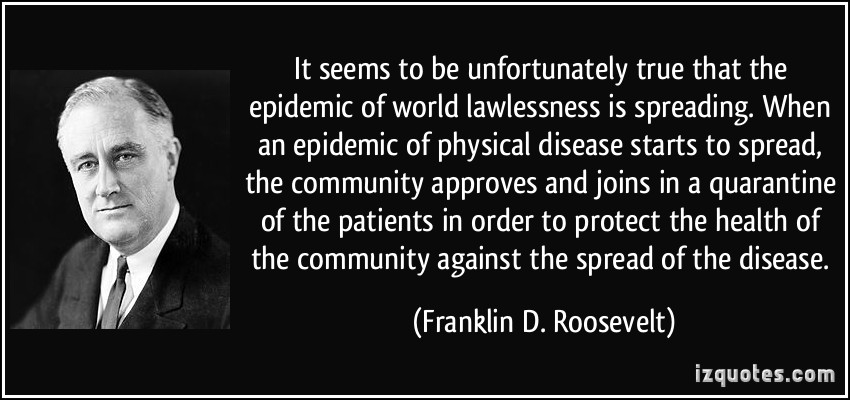
Red China is an “Aggressor Nation” and using the words of Franklin Delano Roosevelt, I ask that she must be “Quarantined” until she recovers for her disease called “Aggression.”
U.S. vows to continue patrols after China warns spy plane
By David Brunnstrom
WASHINGTON (Reuters) – The United States vowed on Thursday to keep up air and sea patrols in international waters after the Chinese navy repeatedly warned a U.S. surveillance plane to leave the airspace over artificial islands China is creating in the disputed South China Sea.
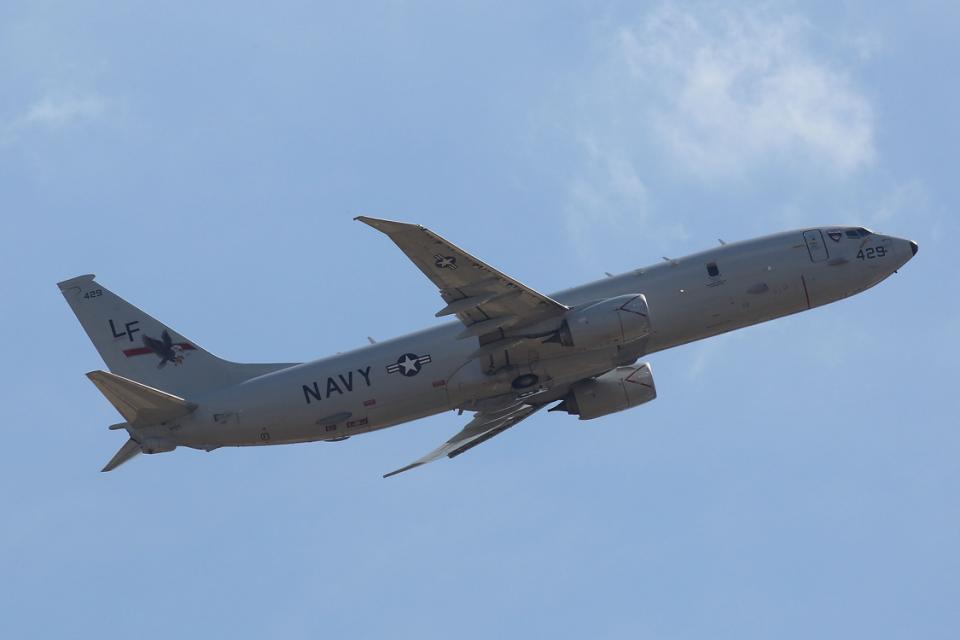
The Chinese navy issued eight warnings to the crew of a U.S. P8-A Poseidon, the U.S. military’s most advanced surveillance aircraft, when it conducted the overflights on Wednesday, according to CNN, which was aboard the U.S. aircraft.
PERTH, AUSTRALIA – MARCH 28: A US Navy P-8A Poseidon departs Perth’s International Airport on March 28, 2014 in Perth, Australia. The Australian Maritime Safety Authority (AMSA) announced today the search area for missing flight MH370 has shifted closer to the Western Australian Coast after receiving radar analysis suggesting the airliner did not travel as far south as originally thought. The Malaysian airliner disappeared on March 8 with 239 passengers and crew on board and is suspected to have crashed into the southern Indian Ocean. (Photo by Matt Jelonek/Getty Images)
When the American pilots responded by saying the plane was flying through international airspace, a Chinese radio operator said with exasperation: “This is the Chinese navy … You go!” The Poseidon flew as low as 15,000 feet (4,500 meters), CNN said, and video provided by the Pentagon appeared to have been taken from directly above one artificial island.
The incident, along with recent Chinese warnings to Philippine military aircraft to leave areas around the Spratly archipelago in the South China Sea, suggested Beijing is trying to enforce a military exclusion zone above its new islands there. Some security experts worry about the risk of confrontation, especially after a U.S. official said last week that the Pentagon was considering sending military aircraft and ships to assert freedom of navigation around the Chinese-made islands.
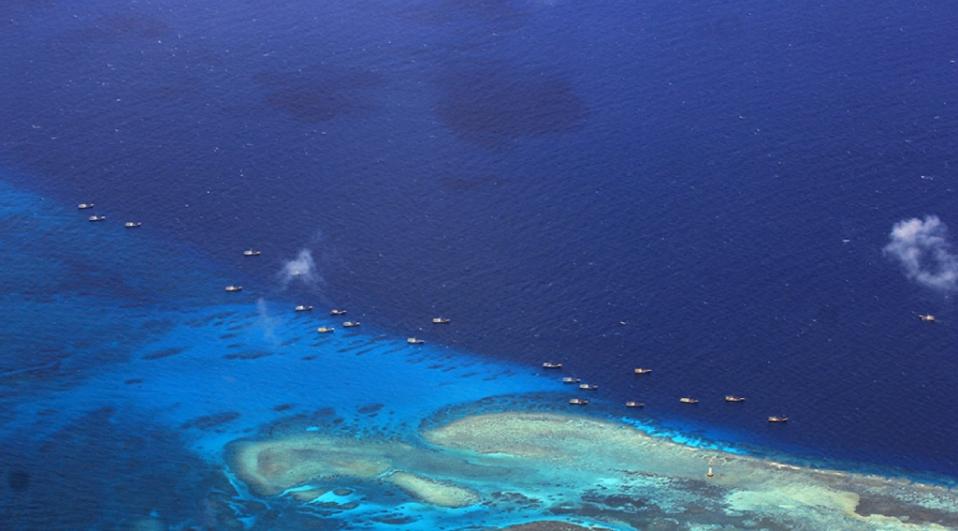
Maritime Expansionism: I have been studying the aggressive nature of Red China since 1950s. The word ‘aggressor’ as a noun refers to a person or nation that is guilty of aggression or makes an unprovoked attack. Aggressive behavior, aggressive nature describe a mental inclination to start fights or quarrels, a readiness or willingness to take issue or engage in direct militant action. When I describe Red China as an “Aggressor Nation,” I am speaking about the practice or habit of being quarrelsome, destructively hostile to others, the use of unprovoked attacks or warlike acts. Red China is using her People’s Liberation Army violating her international obligations. Red China is aggressive for she displays boldness and because of her energetic pursuit of her own vested interests with a ruthless desire to dominate her weaker neighbors. Red China has formulated a State Policy called Expansionism which involves a vigorous, unrepentant espousal to use her military force or power to further her own ends. Mischief Reef 05 11 2015
An aerial photo taken though a glass window of a Philippine military plane shows the alleged on-going island building at Mischief Reef, South China Sea.
The senior U.S. diplomat for the East Asia, Assistant Secretary of State Daniel Russel, told a media briefing in Washington the U.S. reconnaissance flight was “entirely appropriate” and that U.S. naval forces and military aircraft would “continue to fully exercise” the right to operate in international waters and airspace.
He said the United States would go further to preserve the ability of all countries to move in international waters and airspace. “Nobody in their right mind is going to try to stop the U.S. Navy from operating – that would not be a good bet,” he said.
“But it’s not enough that a U.S. military plane can overfly international waters, even if there is challenge or hailing query … We believe that every country and all civilian actors should have unfettered access to international waters and international airspace.”
A spokesman for China’s Foreign Ministry said he was not aware of the incident. “China has the right to engage in monitoring in the relevant airspace and waters to protect the country’s sovereignty and prevent accidents at sea,” ministry spokesman Hong Lei said in a regular briefing. “We hope the relevant country can earnestly respect China’s sovereignty in the South China Sea.” HIVE OF CONSTRUCTION
Footage taken by the P8-A Poseidon over the new islands, and aired by CNN, showed a hive of construction and dredging activity, as well as Chinese navy ships nearby. CNN said it was the first time the Pentagon had declassified video of China’s building activity and audio of challenges to a U.S. aircraft.
“We were just challenged 30 minutes ago and the challenge came from the Chinese navy,” Captain Mike Parker, commander of U.S. surveillance aircraft deployed to Asia, told CNN on the flight. “I’m highly confident it came from ashore, this facility here,” Parker said, pointing to an early warning radar station on Fiery Cross Reef.
Military facilities on Fiery Cross Reef, including a 3,000-metre (10,000-foot) runway, could be operational by year’s end, one U.S. commander recently told Reuters, and Washington is concerned China will use it to press its extensive territorial claims at the expense of weaker rivals.
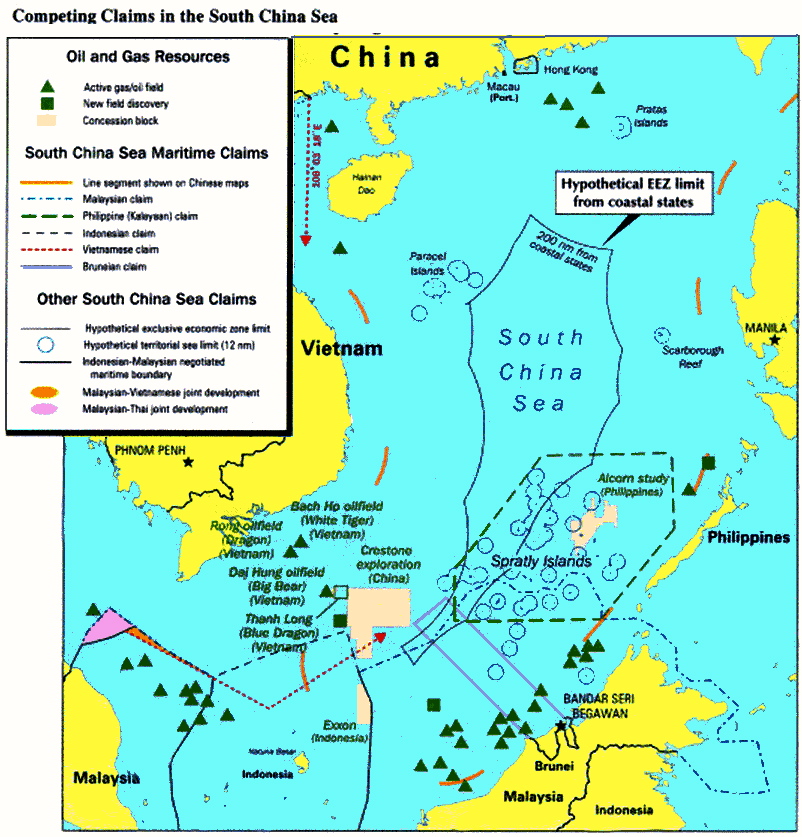
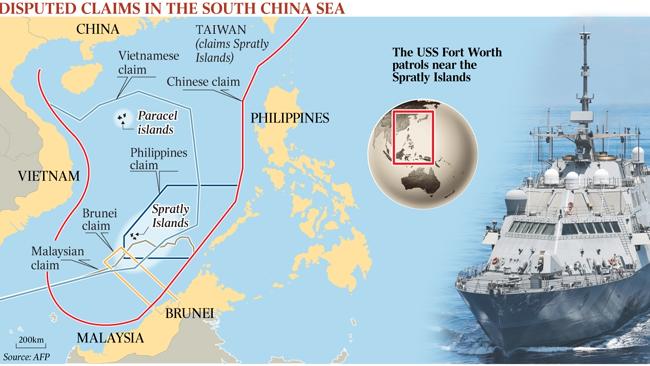
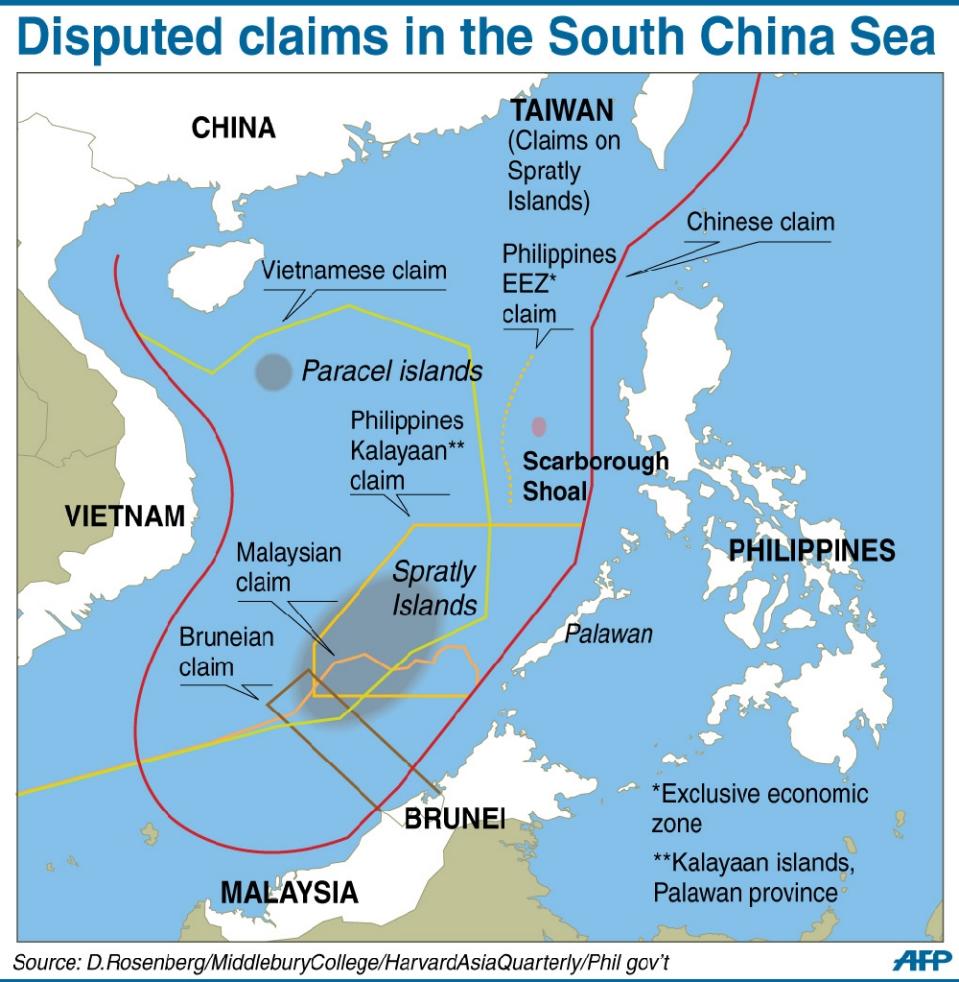
China claims sovereignty over most of the South China Sea, through which $5 trillion in ship-borne trade passes every year. The Philippines, Vietnam, Malaysia, Taiwan and Brunei also have overlapping claims. Chinese Foreign Minister Wang Yi last week asserted Beijing’s right to reclaim the reefs and said China’s determination to protect its interests was “as hard as a rock.”
China has also said it had every right to set up an Air Defense Identification Zone (ADIZ) in the South China Sea but that current conditions did not warrant one. ADIZs are used by some nations to extend control beyond national borders, requiring civilian and military aircraft to identify themselves or face possible military interception.
During the P8-A Poseidon mission, the pilot of a Delta Air Lines flight in the area spoke on the same frequency after hearing the Chinese challenges and identified himself as commercial. The Chinese voice reassured the pilot and the Delta flight went on its way, CNN said.
Delta Airlines did not immediately respond to a request for comment.
(Writing by Dean Yates, additional reporting by Michael Martina in Beijing and David Brunnstrom in Washington; Editing by Paul Tait, Jonathan Oatis and Steve Orlofsky
(c) Copyright Thomson Reuters 2015.
Yahoo – ABC News Networks
I have been studying the aggressive nature of Red China since 1950s. The word ‘aggressor’ as a noun refers to a person or nation that is guilty of aggression or makes an unprovoked attack. Aggressive behavior, aggressive nature describe a mental inclination to start fights or quarrels, a readiness or willingness to take issue or engage in direct militant action. When I describe Red China as an “Aggressor Nation,” I am speaking about the practice or habit of being quarrelsome, destructively hostile to others, the use of unprovoked attacks or warlike acts. Red China is using her People’s Liberation Army violating her international obligations. Red China is aggressive for she displays boldness and because of her energetic pursuit of her own vested interests with a ruthless desire to dominate her weaker neighbors. Red China has formulated a State Policy called Expansionism which involves a vigorous, unrepentant espousal to use her military force or power to further her own ends.Chinese Foreign Minister Wang Yi (R) and US Secretary of State John Kerry walk to a joint news conference following meetings at the Ministry of Foreign Affairs in Beijing May 16, 2015. The United States and China clashed over a territorial dispute in the South China Sea on Saturday, as China’s foreign minister asserted its sovereignty to reclaim reefs saying its determination to protect its interests is “as hard as a rock”.REUTERS/Saul Loeb/PoolU.S. Secretary of State John Kerry, left, shakes hands with Chinese Foreign Minister Wang Yi after their press conference following their meetings at the Ministry of Foreign Affairs in Beijing Saturday, May 16, 2015. Kerry is in China to press Beijing to halt increasingly assertive actions it is taking in the South China Sea that have alarmed the United States and China’s smaller neighbors. (Saul Loeb/Pool Photo via AP)U.S. Secretary of State John Kerry, left, and Chinese Premier Li Keqiang talk during a meeting at Zhongnanhai Leadership Compound in Beijing Saturday, May 16, 2015. The United States and China held firm Saturday to deep disagreements over increasingly assertive Chinese activity in disputed areas of the South China Sea, as Beijing politely but pointedly rejected U.S. Secretary of State John Kerry’s push for it to reduce tensions. (Saul Loeb/Pool Photo via AP)U.S. Secretary of State John Kerry (L) speaks with Chinese Premier Li Keqiang at the Zhongnanhai Leadership Compound in Beijing, China, May 16, 2015. The United States and China clashed over a territorial dispute in the South China Sea on Saturday, as China’s foreign minister asserted its sovereignty to reclaim reefs saying its determination to protect its interests is “as hard as a rock”. REUTERS/Kim Kyung-HoonU.S. Secretary of State John Kerry speaks during a joint press conference with Chinese Foreign Minister Wang Yi following their meetings at the Ministry of Foreign Affairs in Beijing Saturday, May 16, 2015. Kerry is in China to press Beijing to halt increasingly assertive actions it is taking in the South China Sea that have alarmed the United States and China’s smaller neighbors. (Saul Loeb/Pool Photo via AP)Chinese Foreign Minister Wang Yi (R) and US Secretary of State John Kerry speak following a joint news conference following meetings at the Ministry of Foreign Affairs in Beijing May 16, 2015. The United States and China clashed over a territorial dispute in the South China Sea on Saturday, as China’s foreign minister asserted its sovereignty to reclaim reefs saying its determination to protect its interests is “as hard as a rock”. REUTERS/Saul Loeb/PoolU.S. Secretary of State John Kerry attends a joint press conference with Chinese Foreign Minister Wang Yi following their meetings at the Ministry of Foreign Affairs in Beijing Saturday, May 16, 2015. Kerry is in China to press Beijing to halt increasingly assertive actions it is taking in the South China Sea that have alarmed the United States and China’s smaller neighbors. (Saul Loeb/Pool Photo via AP)U.S. Secretary of State John Kerry, left, and Chinese Foreign Minister Wang Yi hold a joint press conference following their meetings at the Ministry of Foreign Affairs in Beijing Saturday, May 16, 2015. Kerry is in China to press Beijing to halt increasingly assertive actions it is taking in the South China Sea that have alarmed the United States and China’s smaller neighbors. (Saul Loeb/Pool Photo via AP)U.S. Secretary of State John Kerry, left, and Chinese Foreign Minister Wang Yi shake hands after a press conference following meetings at the Ministry of Foreign Affairs in Beijing Saturday, May 16, 2015. U.S. Secretary of State John Kerry is urging China to halt increasingly assertive actions it is taking in the South China Sea. (AP Photo/Ng Han Guan, Pool)Chinese Foreign Minister Wang Yi speaks during a joint press conference following meetings with U.S. Secretary of State John Kerry at the Ministry of Foreign Affairs in Beijing, China, Saturday, May 16, 2015. Kerry is in China to press Beijing to halt increasingly assertive actions it is taking in the South China Sea that have alarmed the United States and China’s smaller neighbors. (Saul Loeb/Pool Photo via AP)Maritime Expansionism – South China Sea: I have been studying the aggressive nature of Red China since 1950s. The word ‘aggressor’ as a noun refers to a person or nation that is guilty of aggression or makes an unprovoked attack. Aggressive behavior, aggressive nature describe a mental inclination to start fights or quarrels, a readiness or willingness to take issue or engage in direct militant action. When I describe Red China as an “Aggressor Nation,” I am speaking about the practice or habit of being quarrelsome, destructively hostile to others, the use of unprovoked attacks or warlike acts. Red China is using her People’s Liberation Army violating her international obligations. Red China is aggressive for she displays boldness and because of her energetic pursuit of her own vested interests with a ruthless desire to dominate her weaker neighbors. Red China has formulated a State Policy called Expansionism which involves a vigorous, unrepentant espousal to use her military force or power to further her own ends.I have been studying the aggressive nature of Red China since 1950s. The word ‘aggressor’ as a noun refers to a person or nation that is guilty of aggression or makes an unprovoked attack. Aggressive behavior, aggressive nature describe a mental inclination to start fights or quarrels, a readiness or willingness to take issue or engage in direct militant action. When I describe Red China as an “Aggressor Nation,” I am speaking about the practice or habit of being quarrelsome, destructively hostile to others, the use of unprovoked attacks or warlike acts. Red China is using her People’s Liberation Army violating her international obligations. Red China is aggressive for she displays boldness and because of her energetic pursuit of her own vested interests with a ruthless desire to dominate her weaker neighbors. Red China has formulated a State Policy called Expansionism which involves a vigorous, unrepentant espousal to use her military force or power to further her own ends.I have been studying the aggressive nature of Red China since 1950s. The word ‘aggressor’ as a noun refers to a person or nation that is guilty of aggression or makes an unprovoked attack. Aggressive behavior, aggressive nature describe a mental inclination to start fights or quarrels, a readiness or willingness to take issue or engage in direct militant action. When I describe Red China as an “Aggressor Nation,” I am speaking about the practice or habit of being quarrelsome, destructively hostile to others, the use of unprovoked attacks or warlike acts. Red China is using her People’s Liberation Army violating her international obligations. Red China is aggressive for she displays boldness and because of her energetic pursuit of her own vested interests with a ruthless desire to dominate her weaker neighbors. Red China has formulated a State Policy called Expansionism which involves a vigorous, unrepentant espousal to use her military force or power to further her own ends.Air Space Expansionism: I have been studying the aggressive nature of Red China since 1950s. The word ‘aggressor’ as a noun refers to a person or nation that is guilty of aggression or makes an unprovoked attack. Aggressive behavior, aggressive nature describe a mental inclination to start fights or quarrels, a readiness or willingness to take issue or engage in direct militant action. When I describe Red China as an “Aggressor Nation,” I am speaking about the practice or habit of being quarrelsome, destructively hostile to others, the use of unprovoked attacks or warlike acts. Red China is using her People’s Liberation Army violating her international obligations. Red China is aggressive for she displays boldness and because of her energetic pursuit of her own vested interests with a ruthless desire to dominate her weaker neighbors. Red China has formulated a State Policy called Expansionism which involves a vigorous, unrepentant espousal to use her military force or power to further her own ends.Maritime Expansionism – South China Sea: I have been studying the aggressive nature of Red China since 1950s. The word ‘aggressor’ as a noun refers to a person or nation that is guilty of aggression or makes an unprovoked attack. Aggressive behavior, aggressive nature describe a mental inclination to start fights or quarrels, a readiness or willingness to take issue or engage in direct militant action. When I describe Red China as an “Aggressor Nation,” I am speaking about the practice or habit of being quarrelsome, destructively hostile to others, the use of unprovoked attacks or warlike acts. Red China is using her People’s Liberation Army violating her international obligations. Red China is aggressive for she displays boldness and because of her energetic pursuit of her own vested interests with a ruthless desire to dominate her weaker neighbors. Red China has formulated a State Policy called Expansionism which involves a vigorous, unrepentant espousal to use her military force or power to further her own ends.
THE EVIL RED EMPIRE – RED CHINA – ECONOMIC EXPANSIONISM :
THE EVIL RED EMPIRE – RED CHINA – ECONOMIC EXPANSIONISM : AT SPECIAL FRONTIER FORCE WE ARE TRAINED TO RECOGNIZE RED CHINA AS AN ADVERSARY, AN OPPONENT, AN ENEMY WITH WHOM WE ARE ENGAGED IN A PROLONGED CONFLICT .
Bill Powell published a story in Newsweek magazine predicting a prolonged geopolitical struggle between the United States and Red China and named it Cold War-2. In his analysis, Red China is a tough adversary because of its economic power. He makes no mention about adversarial relationship between Tibet and Red China since 1950s. At Special Frontier Force, an alliance between the US, India, and Tibet, we have always recognized Red China as an adversary, an enemy, an opponent, and a party with which we are engaged in a prolonged conflict with a potential to secure our mission fighting a battle that aims to evict the occupier of Tibet. Special Frontier Force is a product of Cold War-1 and we are not waiting for the dawn of a “New Cold War” or “Cold War-2.”
Economics is the Science that deals with the production, distribution, and consumption of wealth. Red China’s economy is managed by a system of government that is involved in all the aspects of production, distribution, and consumption of its national wealth. A capitalist is a person who has capital, owner of wealth used in business. Capitalism is the economic system in which all or most of the means of production and distribution are privately owned and operated for profit. Communism is an economic theory or system in which a one-party political structure has the ownership of all property and manages the production and distribution of economic goods. In a Communist State, the economy is just another tool in the hands of one-party that governs the Land. Unlike capitalists in the West, Red China’s concern for earning profits is translated into implementing its Policy of Expansionism of which Economic Expansionism is one dimension.
Red China while expanding private ownership of property, its one-party government remains as the ultimate manager who makes decisions about production, distribution, and consumption of wealth. Red China brings raw materials and finds new markets for its manufactured products. Red China is able to get raw materials and flood the world markets with Made in China products with great ease without the need to conquer other countries fighting costly battles. American and other capitalists who directly or indirectly invest in Red China have no control over the one-party government that manages all the parts of its economic system. American and other foreign investors are primarily concerned about the profits they earn by giving Red China the power of production and distribution of goods. The one-party government of Red China is empowered by this capital inflow and by its ability to acquire raw materials from other nations without waging wars or by simply occupying territory of its weaker neighbors like Tibet.
Red China has steadily expanded its Economic Power which it uses to exert its political influence over weaker nations and even over developed nations in the West. Nixon-Kissinger US administration in 1972 formulated trade and commerce relations with Red China not knowing the nature of its one-party government. Red China is earning profits from its worldwide trade and those profits directly benefit to accomplish its goal of Expansionism to become a true Imperial Power.
In the years ahead, the United States and others will be left with no political alternatives to face the challenges posed by Expansionist Red China. The capitalists who invest in Red China have the only option of Economic Disinvestment.
THE EVIL RED EMPIRE – RED CHINA – ECONOMIC EXPANSIONISM : PEOPLE’S REPUBLIC OF CHINA CAME INTO ITS EXISTENCE ON OCTOBER 01, 1949 . AFTER ITS MILITARY INVASION AND OCCUPATION OF TIBET IN 1950, A GEOPOLITICAL STRUGGLE TOOK BIRTH TO EVICT THE OCCUPIER OF TIBET .
Something that as recently as a decade ago was almost never discussed in polite company—the prospect for a prolonged geopolitical struggle between the United States and China (Cold War 2.0)—is now Topic A in the foreign policy salons of both Washington and Beijing. In the United States, the centrist Council on Foreign Relations issued a lengthy report calling for the U.S. to “revise” its “grand strategy” toward China. In Beijing, Liu Mingfu, a colonel in the People’s Liberation Army and one of its most influential strategists, wrote in his recent book, The China Dream, “In the 21st century China and the United States will square off and fight to become the champion among nations.’’
The current tension in the South China Sea, where Beijing is building artificial islands in the Spratlys, a contested chain claimed by six countries, certainly sounds like a Cold War in the making. The U.S. Defense Department let it be known in mid-May that it was considering sending surveillance aircraft and warships to within 12 nautical miles of the chain, as a signal to Beijing to back off. The Chinese Foreign Affairs Ministry immediately condemned Washington for even thinking about it.
Meanwhile, nine Chinese and Russian warships came together for joint exercises in the Mediterranean Sea—the most recent evidence of the warmer ties between the two historical antagonists. A month earlier, Vietnam, deeply distrustful of Beijing, hosted a dozen U.S. defense contractors for meetings in Hanoi. They came just eight days before celebrations marking the 40th anniversary of Vietnam’s defeat of the United States.
War games, prospective weapons sales, a war of words over contested real estate in some far-flung part of the world. That’s all pretty much standard Cold War fare, familiar to anyone in Moscow or Washington who fought the last one. But a Washington vs. Beijing Cold War 2.0—should it prove to be unavoidable—would be very different from its predecessor.
The fundamental, obvious difference is that Beijing would bring far more economic power to the contest than the Soviet Union ever did. Indeed, for Soviet citizens, the enduring image from the last days of Communism is empty shelves at the food store. And pretty much everywhere the Soviets exerted their influence—from Eastern Europe to Africa to Latin America—economic calamity ensued. The command and control, state-dominated form of economic management didn’t work, and that—more than how many nuclear weapons Moscow possessed—was what mattered in the end.
Contrast that with China. Already the second-largest economy in the world, it may well surpass the United States as the biggest in a decade or so. While the state controls the commanding heights of the economy—banking, telecommunications, energy—it tries to do so in a market-friendly way, and it allows unfettered private enterprise in a range of industries (including, critically, high technology) that have helped drive China’s extraordinary three-decade-long ascent from poverty. Alibaba is but one recent example of a private Chinese company with an increasingly global footprint. Remember all those great Soviet companies with initial public offerings of billions of dollars on the NASDAQ or the New York Stock Exchange? Right. You don’t. Because there weren’t any.
China is in the business of deploying its economic power abroad in a big way. It invests heavily in infrastructure projects in Africa. It uses its massive foreign exchange reserves to buy up resources—oil, gas and minerals—throughout Africa and Latin America. This is often—inaccurately—described as “soft” power. Economic power is not the same as soft power. Soft power has to do with lots of things—the form of government, the transparency of government, the accountability of elites to the broad citizenry, what a country stands for and stands against. The projection of economic power means the ability to put money in local pockets. Beijing is doing that aggressively, and, given its enormous accumulation of foreign exchange reserves, it is in a position to continue to do so for quite some time, even as its frantic economic growth now slows.
The United States, in the view of many analysts, is in a different and arguably more difficult place. Its hard power—its military assets—still dwarfs China’s, even though Beijing has rapidly increased its defense spending in recent years. But the prospect of a Cold War between the two countries was—and to a certain extent still is—dismissed by many China hands in the U.S. because, as former National Security Council staffer Aaron Friedberg wrote last year in his book A Contest for Supremacy, “the enormous advantages the United States now enjoys are the product of its long-standing lead in the development and deployment of new technologies, and the unmatched ability of its huge and dynamic economy to carry the costs of military primacy.”
Is the United States still more technologically advanced than China? Absolutely. Is it still more innovative. Yes. But those leads are narrowing, and the U.S. plainly faces a host of domestic economic issues—from debt to demographics to an economy seemingly stuck at stall speed—that are daunting. As Friedberg wrote, “Whether [the United States] will continue to enjoy [its
economic advantages] in a long-term strategic rivalry with China is by no means obvious.”
The other critical difference between Cold War 1.0 and the Cold War 2.0 that now looms is the simple fact that China is the most important market in the world for the Fortune 500. By contrast, the Soviet Union, for 99.5 percent of America’s biggest companies, simply didn’t exist. Beijing can use access to its market as leverage in geopolitical disputes, and in so doing will be playing to a core establishment constituency in the United States: big business. As long as China avoids an economic crisis that upends the current economic reality, that reality is going to be difficult for Washington to finesse as geopolitical competition intensifies.
There is, of course, tremendous irony in that. For decades, U.S. policy was to help China succeed economically. We had convinced ourselves that through trade and prosperity, political change would come in Beijing (just as it had in South Korea and Taiwan, former authoritarian economic success stories turned vibrant democracies). That notion is now long gone. The
Chinese Communist Party, and its one-party rule, doesn’t appear to be going anywhere. It’s also playing a long game; its military is just a regional player now, but by 2049, when the party expects to celebrate its 100th anniversary in power, it may well be able to project force globally. That, anyway, is the intention of the more hawkish elements of the party and its military.
Washington had earnestly hoped that the days of a global struggle against a powerful adversary were gone, the stuff of history books. That it’s now waking up and acknowledging a different reality is step one in what Liu Mingfu calls the central “fight” for the 21st century.
THE EVIL RED EMPIRE – RED CHINA – ECONOMIC EXPANSIONISM : RED CHINA HAS DRAINED THE ECONOMIC POWER OF AMERICAN AND FOREIGN CAPITALIST WHO INVEST IN RED CHINA . THEY HAVE NO POLITICAL OPTIONS . THE ONLY CHOICE IS THAT OF ECONOMIC DISINVESTMENT .
The Evil Red Empire – Red China’s Nuclear Expansionism
Whole Evil – Red China’s Nuclear Expansionism: MAO ZEDONG PROCLAIMS THE BIRTH OF PEOPLE’S REPUBLIC OF CHINA ON OCTOBER 01,1949. HE WAS ENRAGED BY MOSCOW’S DECISION TO SUSPEND ASSISTANCE TO RED CHINA’S NUCLEAR PROGRAM ON JUNE 20, 1959. FROM THAT TIME RED CHINA PURSUED A VERY AMBITIOUS NUCLEAR POLICY TO COMPETE AGAINST UNITED STATES AND SOVIET UNION .THE EVIL RED EMPIRE – NUCLEAR EXPANSIONISM: RED CHINA CONDUCTED ITS FIRST NUCLEAR TEST ON OCTOBER 16, 1964 AT LOP NOR, INSIDE OCCUPIED TIBET . FROM THAT TIME SPECIAL FRONTIER FORCE STARTED MONITORING RED CHINA’S NUCLEAR ACTIVITIES INSIDE TIBET .
The US Department of Defense in its annual report of 2015 informed the US Congress on Red China’s nuclear capabilities apart from its advances in conducting conventional warfare. Special Frontier Force has been assisting US in monitoring Red China’s nuclear activities after it conducted its first Nuclear Test on October 16, 1964 at Lop Nor, inside Occupied Tibet. It is the only site Red China uses for its nuclear tests. It is important to remember that US President John F. Kennedy and Soviet Premier Nikita Khrushchev agreed for the first Limited or Partial Nuclear Test Ban Treaty during 1963. Since that time United States is making a steady progress on Nuclear Disarmament issue with full cooperation from the Soviet Union and later Russia.
THE EVIL RED EMPIRE – NUCLEAR EXPANSIONISM – NUCLEAR STRATEGY. RED CHINA DEVELOPED AND DEPLOYED A VARIETY OF BALLISTIC MISSILES THAT CAN EASILY TARGET MOST PLACES IN THE UNITED STATES.
I ask my readers to recognize the role played by Soviet Premier Nikita Sergeyevich Khrushchev(April 17, 1894 to September 11, 1971) in curbing Red China’s nuclear ambitions. Khrushchev was the USSR Communist Party Secretary from 1956 and its Premier from 1958 to 1964. In 1956, in the 20th Communist Party Congress, he gave his famous six-hour “Secret Speech” denouncing “The Crimes of the Stalin Era.” After the US, Britain, France, and Soviet Union Geneva Summit Conference in July 1955, he formulated a policy of “Peaceful Coexistence” with the West. He traveled to the US in 1959 and 1960. He stopped assisting Red China’s Nuclear Program on 20 June 1959. His insistence on “Peaceful Coexistence” with the West contributed to a rupture with Red China’s Mao Tse-Tung or Mao Zedong. Khrushchev eased relations with the West but antagonized Red China. Nixon-Kissinger took advantage of this Sino-Soviet Split to formulate US-China Relations without any concern for Red China’s Nuclear ambitions. United States and Soviet Union held Strategic Arms Limitation Talks from 1969 to 1972 (SALT I), Strategic Arms Limitation Talks from 1972 to 1979 (SALT II), Strategic Arms Reduction Talks (START) from 1982, signed several treaties in 1972, 1987, 1991, 1993 and more recently in April 2010.
While US and Russia continue to make progress in reducing strategic offensive arms, Red China rapidly pursued a Nuclear Expansionism Policy to strengthen its nuclear offensive capabilities and to establish itself as a global superpower that can seriously challenge the US supremacy in both conventional and nuclear warfare. Nixon-Kissinger initiative to befriend Red China during 1970-72 has totally compromised the US Nuclear Strategy, a costly mistake that the US would regret forever. United States has underestimated the nature of Red China’s Imperialism.
Pentagon report: Chinese ballistic missiles can target nearly the entirety of the US
By Jeremy Bender
China now has dozens of nuclear-capable missiles that could target almost the entirety of the US, according to the Department of Defense’s 2015 report on the Chinese military.
The annual report to Congress focuses on China’s military modernization, possible invasion plans for the self-governing and US-allied island of Taiwan, advances in space technology, and Beijing’s rapidly advancing missile capabilities.
China’s conventional capabilities are improving. But Beijing also now has what could be considered the ultimate military asset for a rising superpower: the ability to deliver nuclear warheads nearly anywhere on earth (outside of South America, at least).
The following map from the report highlights the maximum missile ranges of China’s medium and intercontinental ballistic missiles (ICBMs). The longest-ranging of the missiles, the CSS-4, can target almost the entirety of the US (except for Florida).
THE EVIL RED EMPIRE – NUCLEAR EXPANSIONISM – NUCLEAR STRATEGY. RED CHINA DEVELOPED AND DEPLOYED A VARIETY OF BALLISTIC MISSILES THAT CAN EASILY TARGET MOST PLACES IN THE UNITED STATES.
(Screenshot/Department of Defense)
The CSS-4 has the largest range of any Chinese ICBM. The missile is nuclear-capable, according to the DoD report, and is housed in silos across the Chinese countryside. Beijing is estimated to have between 50 and 60 silo-based ICBMs.
The DF-31A has the second-longest range of any Chinese missile. It is capable of hitting the majority of the US’ Pacific coast in addition to portions of the mid-West. Unlike the CSS-4, the DF-31A is a road-mobile missile. This means Beijing can move the ICBM to various points throughout the country to better target various locations and avoid possible incoming strikes.
The DF-31, the CSS-3, and the CSS-5 are all also road-mobile and nuclear-capable. But unlike the CSS-4 or the DF-31A, these missiles are intended for regional deterrence against neighboring powers like Russia and India.
Unlike the other land-based missiles on the chart, the JL-2 is a sea-based nuclear-capable ballistic missile. According to the DoD, the JL-2 will be carried by China’s future JIN-class ballistic missile submarine as a nuclear deterrent. So far China has commissioned four JIN-class submarines with a fifth one under construction. The Pentagon report expects the JIN to begin patrols in 2015.
THE EVIL RED EMPIRE – JL-2 IS A SEA-BASED NUCLEAR-CAPABLE BALLISTIC MISSILE CARRIED BY RED CHINA’S JIN-CLASS BALLISTIC MISSILE SUBMARINE.
(Navy Office of Legislative Affairs) A Chinese JIN-class submarine
The improvement in China’s nuclear deterrent has been spurred by developments in countries that China might consider to be its strategic competitors.
China modernized its missile forces because of “continued advances in the US and, to a lesser extent, Russian strategic ISR [Intelligence, surveillance and reconnaissance], precision strike, and missile defense capabilities,” the report notes.
Likewise, India’s own nuclear force has put pressure on China to continuously update and better its own capabilities.
Red China’s Nuclear Expansionism since 1964 while the US and the Soviets/Russia were engaged in Arms Control Negotiations:
I included photo images of historical progress being made by US and Soviet Union to reduce nuclear tensions by limiting offensive nuclear weapons and limiting antiballistic missiles.