Whole Dude – Whole Spirituality – Whole Materialism: The Rudolf-Rudi Connection describes the Material Basis of Spirituality Science.
Yes indeed, Life is complicated. Before making the next food shopping trip, I ask my readers to reflect upon the connection between food, man, and the world in which the man finds his mortal existence.
Spiritualism – Matter, Energy, Life and Spirituality:
Whole Dude – Whole Spirituality – Whole Materialism: The Rudolf-Rudi Connection describes the Material Basis of Spirituality Science. What is Man? Respiration plays a crucial role in Energy Transformation. Living Things create a new form of Chemical Energy.
Man is a Physical Being with matter and form. Materialism is a system of thought that explains the nature of the world as entirely dependent on matter, the final reality. Man must understand what it is to be a substance and what it is to exist. I use a method of investigation or inquiry called ‘Dialectic’ which deals with the nature and relation of things – what each is, how it differs from others, what common quality all have, to what kind each belongs, and in what rank each stands in its kind, and whether its being is real-being, and how many beings there are and how many non-beings to be distinguished from beings.
Life is characterized by the presence of complex transformation of organic molecules and by the organization of such molecules into the successively larger units of protoplasm, cells, organs and tissues. Life comes into existence only when matter has the ability to acquire energy from its external environment. I begin this dialectical inquiry by paying a tribute to people who have significantly contributed to the understanding of matter, and energy transformation in living matter.
The Founder of Modern Chemistry:
Antione Laurent Lavoisier (1743-94), French Chemist and Physicist, a Founder of Modern Chemistry. He was one of the first to use effective quantitative methods in the study of chemical reactions. His classification of substances is the basis of the modern distinction between chemical elements and chemical compounds and of the system of chemical nomenclature. His work established the Law of Conservation of Mass (or Matter). He was guillotined during the Reign of Terror unleashed by French Revolution.
Chemistry is the science that deals with the composition and properties of substances, and with the reactions by which substances are produced from or converted into other substances. The name Organic Chemistry originated to differentiate between those substances derived from plant and animal (organic) sources and those derived from inanimate (inorganic) materials. It refers to the Chemistry of compounds containing Carbon, or chains of connected Carbon atoms. The science called Biochemistry involves the study of the large organic molecules found in living systems and their reactions which make up the life processes. The science called Molecular Biology explains biological events by studying the molecules within cells.
Joseph Priestley (1733-1804), English Theologian, Philosopher, and Scientist. His techniques for studying gases led to his discovery of Sulfur Dioxide, Ammonia, and “Dephlogisticated Air”, the gas that Lavoisier named Oxygen. He had studied Photosynthesis in Plants and Respiration in animals. The most important equations for living things are mutually inverse.Respiration represents the reverse of Photosynthesis in Plants.
The Living Cell is a thermodynamically unstable system. This means that without continuous input of energy, a Cell will degrade spontaneously into a non-living collection of molecules. However, we have to be careful in using the term ‘perishable’. The Law of Conservation of Mass or Matter states that matter may change its form or shape; its mass always remains the same. Mass is the quantity of matter in a body regardless of its volume or of any forces acting on it. The Conservation Laws of classical Physics apply to certain physical properties of an isolated system that remain constant with time. These basic Laws of Physics maintain that the total value of certain quantities like mass and energy remain unchanged during a physical process. Laws of Conservation signify that nature does not change with passage of time. Conservation of Mass implies that matter can be neither created nor destroyed; that is, processes that change the physical or chemical properties of substances leave the total mass unchanged. The Law of Conservation of Energy implies that energy can be neither created nor destroyed although it can be changed from one form into another.
The Laws of Conservation of Mass and Energy could apply to both living systems and non-living physical systems. To maintain life, a living system not only repairs or replaces (or both ) its structures by a constant supply of the materials of which it is composed but also keeps its life processes in operation by a steady supply of energy. Living systems must be supplied energy for continual synthesis of new organic molecules and to replace or to repair broken organic molecules. Life is a consequence of successive and coordinated chemical reactions – the most important being the Oxidation-Reduction or Redox Reactions.
Oxidation-Reduction or Redox Reactions:
Most important biological processes involve Oxidation-Reduction or Redox Reactions to acquire Oxidative energy from other substances termed nutrients. The burning of a substance in air is rapid Oxidation or Combustion which is not of much use for living systems. Plants and Animals use a form of Oxidation called Respiration to liberate energy stored in food materials.
Oxidation-Reduction reactions are complementary chemical reactions characterized by the loss or gain, respectively, of one or more electrons by an atom or molecule. When an atom or molecule combines, or forms a chemical bond, with oxygen, it tends to give up electrons to oxygen. Similarly, when a molecule loses oxygen, it tends to gain electrons. Oxidation is a reaction involving loss of electrons, and Reduction is a reaction involving the gain of electrons. The two processes, Oxidation and Reduction, occur simultaneously and in chemically equivalent quantities; the number of electrons lost by one substance is equaled by the number of electron gained by another substance. The substance losing electrons or electron donor undergoes Oxidation and is called Reductant. The substance gaining electrons or electron acceptor undergoes Reduction and is called Oxidant. Common Reductant substances are Carbon and Hydrogen (readily oxidized). Common Oxidant (substance readily reduced) is Oxygen. Respiration is the process by which an organism exchanges gases with its environment. Organisms that utilize respiration to obtain energy are called aerobic, or Oxygen-dependent. In Biochemistry, respiration refers to the series of biochemical Oxidation-Reduction reactions in which organic molecules such as carbohydrates (sugars), fatty acids (fats), and amino acids (proteins) are converted to carbon dioxide and water. The chemical energy thus obtained is trapped and stored for later use by the cells.
Energy Transformation in Living Matter:
Chlorophyll molecule is the green pigment found in the Chloroplasts of plant cells is uniquely capable of converting active light energy into a latent form (Glucose or Sugar)using the photosynthetic mechanism. Carbon is the central or key element in the compounds of which organisms are composed; the Carbon is derived from the Carbon Dioxide found in atmospheric air or dissolved in water. Plants incorporate Carbon into Carbohydrates and other complex organic molecules. During Respiration or Oxidation, Oxygen combines with portions of Carbohydrate molecule, releasing Carbon in the form of Carbon Dioxide and Water.Energy Transformation in Living Matter. Oxygen is released as a byproduct during Photosynthesis and it is vital to Respiration in Plants and Animals. This relationship is very important for existence of Life.Sir Hans Adolf Krebs (1900-1981), German-born British Biochemist who received the 1953 Nobel Prize for Physiology or Medicine for the discovery in living organisms of the series of chemical reactions known as the Tricarboxylic Acid Cycle/Citric Acid Cycle or Krebs Cycle.Substances formed by the breakdown of Sugars, Fats, and Proteins are converted into Carbon Dioxide and Water, and energy-rich compounds (Adenosine Tri Phosphate or ATP) in a series of chemical reactions. It is the source of two-thirds of the food-derived energy in higher organisms.Mitochondria are organelles found within most cells which provide the cells with energy by converting Oxidation energy into Chemical energy. They have extensive internal membranes or cristae where Cellular Respiration or Oxidation takes place. They provide energy oxidising Sugars, Fats, and Amino Acids using the Kreb’s Cycle. They have their own DNA and replicate autonomously.
The process by which a living cell acquires energy to perform its living functions is called ‘Nutrition’, the power by which living matter attracts or obtains materials necessary for its growth and maintenance from surrounding matter or environment. The cell takes in nutrients and excrete waste products. The nutrients are either used as building blocks in synthesizing large molecules or they are oxidized producing energy for powering the cell’s activities. Life may be stated as a relationship between energy-yielding substance and energy-demanding substance.
Spirituality, Consciousness and the Living System:
Irrespective of the size, shape, and external appearance, Consciousness is the fundamental characteristic of Living Matter. Consciousness has a set of defining features; it is the principle by which a Living System knows the fact of its own existence; it knows as to where it exists and knows as to how it is existing. Consciousness is the awareness of energy-dependent existence in a given environment and this characteristic is common to all living cells. The term ‘Spiritual’ describes the nature of a relationship, a partnership, an association, bonding, or connection between living molecules to provide some benefit to the existence of a living, individual entity. Hence, I describe Consciousness as a ‘spiritual’ function as it establishes a relationship between the energy-dependent and energy-yielding substances. Human Consciousness is fundamentally related to the Subject called “I AM” both at the level of the entire organism and at the level of individual living cells that constitute the organism displaying complex structural and functional organization of molecules which acquire, manipulate, transform, and utilize energy for the benefit of the existence of the Individual whom we recognize as a Human Person. Life has to be studied as structural and functional organization of matter in which knowledge is implanted, the presence of this knowledge is reflected in its living spiritual functions of consciousness, intelligence and use of information to manipulate and transform energy to support its own existence in its given environment.
Rudolf is reborn as Rudi to describe the spiritual connection between the Cell and its Energy Provider
Rudolf is reborn as Rudi to describe the spiritual connection between Cell and its Energy Provider
Rudi acknowledges his German heritage at Whole Foods when he discovered the spiritual connection between man, food, and God. Whole Foods, Whole People, and Whole Planet are connected by a material substance called Protoplasm or Cytoplasm, a divine plan to provide nourishment to Life.
The Rudolf and Rudi Connection. The Discovery of Whole Spirituality at Whole Foods, Ann Arbor.
The Rudolf and Rudi Connection at Whole Foods, Ann Arbor can be best described as the concept of Whole Spirituality, the three dimensional spiritual relationship between Man, Food, and God.
Rudolf is reborn as Rudi to describe the spiritual connection between Cell and its Energy Provider. The 3-Dimensional Spiritual Relationship between Man, Food, and God.
Spiritualism – The Cell Theory of Spirituality:
The Rudolf and Rudi Connection. The Discovery of Whole Spirituality at Whole Foods, Ann Arbor.
In Biology, cell is the basic or fundamental unit of structure, function, and organization in all living things or it is the building block of life. Let me begin with my respectful tribute to some of the people who contributed to ‘The Cell Theory’, one of the foundations of Biological Sciences. Cells were first observed in the 17th century shortly after the discovery of the microscope. Robert Hooke, british curator of instruments at The Royal Society of London, during 1665 coined the word cell. Dutch microscopist Antonie Van Leeuwenhoek (1632-1723) made over 247 microscopes and examined microorganisms and tissue samples. He gave the first complete descriptions of bacteria, protozoa (which he called animalcules), spermatozoa, and striped muscle. He also studied capillary circulation and observed Red Blood Cells.
Robert Hooke, british curator of instruments at The Royal Society of London coined the term cell during 1665.Dutch microscopist Antonie Van Leeuwenhoek (1668-80) studied capillary circulation and observed Red Blood Cells.
Improvements in microscopy during early 19th century permitted closer observation and the significance of cells had received better understanding. Matthias Jakob Schleiden (1838), german botanist, Theodor Schwann (1839), german physiologist, and Rudolf Virchow (1855), german pathologist, and others made important contributions to the Cell Theory that describes cell as the building block of all Life.
Schleiden, Professor of Botany, The University of Jena studied plant structure under the microscope, published “Contibutions to Phytogenesis”(1838). He had also published the two-volume text of ‘Principles of Scientific Botany’.Schwann founder of modern Histology extended the Cell Theory of Plants to animals in his ‘Microscopic Researches into Accordance in the Structure and Growth of Animals and Plants(1839).Schwann discovered Myelin Sheath covering peripheral axons, now termed Schwann Cells. He coined the term ‘Metabolism’ for the chemical changes that take place in living tissues.Rudolf Virchow,German Pathologist in 1855 coined the biological dictum “OMNIS CELLULA E CELLULA” – All living cells arise only from pre-existing living cells.
The Cell is the smallest unit in the living organism that is capable of carrying on the essential life processes of sustaining metabolism for producing energy and reproducing. Many simple, small, single-celled organisms like Protozoa perform all life functions. In higher, complex, bigger, multicellular organisms, groups of cells are structurally and functionally differentiated into specialized tissues and organ systems. Thus, the Cell Theory includes the following foundational principles of the Biological Sciences:
1. All living things are made up of cells. Cell is the most elementary or basic unit of Life.
2. Cell is a fundamental unit of structure, function, and organization in all living things including plants and animals.
3. Cells only rise from division of previously existing cells.
4. All cells are similar in composition, form, and function. All cells are basically the same in chemical composition (in spite of variations) in organisms of similar species. For example, all the solid tissues in the human body can be shown to consist largely of similar cells; differing it is true, but that are essentially similar to an Ovum.
5. The cells exhibit functional autonomy. The activity of an organism depends on the total activity of ‘INDEPENDENT’ cells.
6. Energy flow (metabolism and biochemistry) occurs within cells.
7. Cells contain hereditary, biological information (DNA) which is passed from cell to cell during cell division.
The Cell Theory of Spirituality:
The Rudolf and Rudi Connection. The Discovery of Whole Spirituality at Whole Foods, Ann Arbor.
The basic or fundamental unit of life in the human organism is derived from the fertilized egg cell that eventually develops into a complete organism. The most significant feature of similarity between the cells of the human body is the presence of a soft, gelatinous, semi-fluid, granular material inside the cell. This substance known as Protoplasm or Cytoplasm, or Cytosol is similar to the ground substance found in the Ovum or the Egg Cell.
Human Ovum Structure – The Cell Theory of Spirituality is based upon the Substance, Structure, Form, Organization, Function, Action and Interactions of this Single Fertilized Egg Cell that eventually develops into a complete human organism.
This viscous, translucent, colloidal substance is enclosed in a membrane called Cell Membrane, Plasma Membrane or Biological Membrane. A small spherical body called nucleus is embedded in the Protoplasm of the cell. The three essential features of any living cell in the human body are that of the presence of protoplasm, the nucleus, and the cell membrane.
Protoplasm – The Ground Substance of Spiritualism and Spirituality
I seek the existence of Soul or Spirit in a substance that is basic to life activities, and in a material that is responsible for all living processes. I, therefore, propose that the understanding of the true or real nature of this ground substance of all living matter will help man to discover peace, harmony, and tranquility in all of his internal and external relationships while man exists in a physical environment as a member of a social group, social community, and Society. In this blog post, I would like to pay my respectful tribute to Jan Evangelista Purkinje and Hugo Von Mohl for their great contribution to the scientific understanding of the living substance, living material, and living matter.
Jan Evangelista Purkyne (Czech name), Jan Evangelista Purkinje (German name)also known as Johannes Evangelist Purkinje, b. December 17, 1787, d. July 28, 1869. The pioneer Czech experimental Physiologist whose investigations in the fields of Histology, Embryology,and Pharmacology helped create a modern understanding of the eye and vision, brain and heart function, mammalian reproduction, and the composition of cells.
Purkinje conducted his research on human vision at the University of Prague and later on, he served there as a Professor of Physiology (1850-69). He went to Germany and was appointed the Chair of Physiology and Pathology (1823-50) at the University of Breslau, Prussia. There Purkinje created the world’s first independent Department of Physiology (1839) and the first Physiological Laboratory (Physiological Institute, 1842). He is best known for his discovery of large nerve cells with many branching extensions found in the cortex of Cerebellum of the brain (Purkinje Cells, 1837). He discovered the fibrous tissue that conducts electrical impulses from the ‘pacemaker’ called Atrioventricular node or A-V node along the inside walls of the ventricles to all parts of the heart to help in Cardiac contractile function (Purkinje Fibers, 1839). In 1835, he invented and introduced the scientific term ‘Protoplasm’ to describe the ground substance found inside young animal embryo cells. He discovered the sweat glands of the skin (1833); he discovered the nine configuration groups of Fingerprints used in biometric identification of man (1823); he described the germinal vesicle or nucleus of the unripe ovum that now bears his name (1825), and he noted the protein digesting power of pancreatic extracts (1836).
Hugo Von Mohl, b. April 08, 1805, d. April 01, 1872, German Botanist noted for his research on the anatomy and physiology of plant cells.
Hugo Von Mohl named the granular, colloidal material that made up the main substance of the plant cell as “Protoplasm” in 1846. Purkinje invented the word, but Hugo gave more clarity, understanding, and knowing the nature of this ground substance. He viewed cell as an “elementary organ” and in Physiology he explained Protoplasm as an organ of Motion or Movement, Nutrition, and Reproduction. It is the preliminary material in cellular generation. He was the first to propose that new cells are formed by division of preexisting cells and he had observed this process of Cell Division in the algal cells of Conferva glomerata. His observations are very important to understand the Cell Theory that explains cells as the basic building blocks of Life. He was the first to investigate the phenomenon of the stomatal openings in leaves.
The Ground Substance of Spiritualism and Spirituality. The vital characteristics, the animating principles of Protoplasm could be known by observing Amoeba proteus. The Living Substance works as an organ of Motion or Movement, as an organ of Nutrition, and as an organ of Reproduction to generate new cells which have a life span of their own. In these physiological functions, I describe the characteristics such as Cognition, Consciousness, Memory, and Intelligence which have a Spiritual role as they bring functional unity and harmony in the interactions between different parts of the same individual organism while it exists in an environment as a member of a biological community.
Protoplasm is a complex, viscous, translucent solution of such materials as salts and simple sugars with other molecules, mostly proteins and fats, in a colloidal state, that is dispersed but not dissolved in one another. Carbon, Hydrogen, Oxygen, and Nitrogen constitute more than 90 percent of Protoplasm.
The Rudolf-Rudi Connection at Whole Foods. God created Cytoplasm or Protoplasm as the Ground Substance of Spirituality.The Rudolf-Rudi Connection at Whole Foods. God created Cytoplasm or Protoplasm as the Ground Substance of Spirituality.
It exhibits properties such as Protoplasmic Streaming or Cytoplasmic Streaming or Motion that is called “Amoeboid Movement.” It has the intrinsic power to change its shape and position. It has the power of Nutrition by which it can attract and obtain the materials necessary for its growth and maintenance from surrounding matter/environment.
The Rudolf-Rudi Connection at Whole Foods. God created Cytoplasm or Protoplasm as the Ground Substance of Spirituality.
The living functions such as Nutrition, Cellular Respiration, and Reproduction performed by Cytoplasm involve acquiring, processing, retaining, and using information to perform tasks in a sequential manner for a predetermined purpose and hence describe Consciousness, Memory, and Intelligence.
The Rudolf-Rudi Connection at Whole Foods. God created Cytoplasm or Protoplasm as the Ground Substance of Spirituality. Cellular respiration is a set of metabolic reactions and processes that take place in the cells of organisms to convert biochemical energy from nutrients into adenosine triphosphate (ATP), and then release waste products.The Rudolf-Rudi Connection at Whole Foods. God created Cytoplasm or Protoplasm as the Ground Substance of Spirituality.The Rudolf-Rudi Connection at Whole Foods. God created Cytoplasm or Protoplasm as the Ground Substance of Spirituality.The Rudolf-Rudi Connection at Whole Foods. God created Cytoplasm or Protoplasm as the Ground Substance of Spirituality.
The terms Soul and Spirit belong to the materialistic realm where the Physical Reality of man’s biological existence is established. I have not yet discovered any good reason to use the terms Soul and Spirit as a metaphysical or transcendental Reality.
The Inheritance of Cytoplasmic Membrane or Cell or Plasma Membrane:
The Rudolf-Rudi Connection at Whole Foods. God created Cytoplasm or Protoplasm as the Ground Substance of Spirituality. Living cells have a corporeal substance called Protoplasm that has the ability of Spiritual Biotic Interactions. The Biological Membrane or Cell Membrane separates the cell from its environment and other living cells present in the environment. Cells use unique proteins, biological molecules and receptor sites to recognize the other living cells and use chemical signals to facilitate the interactions. Such interactions between living cells have the characteristics of consciousness or awareness.The Rudolf-Rudi Connection at Whole Foods. God created Cytoplasm or Protoplasm as the Ground Substance of Spirituality. Cytoplasmic Membrane or Cell Membrane is an integral feature of Cytoplasm, a limiting membrane devised by Cytoplasm to create boundaries to perform its numerous living functions.
The Functions of Cytoplasmic Membrane or Cell Membrane or Biological Membrane:
1. Protection: It protects the cell from its surroundings or extracellular environment. Plant cell possess wall over the plasma membrane for extra protection and support.
2. Holding cell contents: Plasma membranes hold the semi fluid protoplasmic contents of the cell intact; thus keeping the individuality of the cell.
3. Selective Permeability: Cell membrane allows only selected or specific substances to enter into the cell and are impermeable to others.
Gases like O2 and CO2 can diffuse rapidly in solution through membranes.
Small compounds like H2O and methane can easily pass through where as sugars, amino acids and charged ions are transported with the help of transport proteins.
The size of the molecules which can pass through the plasma membrane is 1-15 A0. This property is responsible for keeping a cell ‘as a cell’, an individual unit.
4. Shape: It maintains form and shape of the cell. It serves as site of anchorage or attachment of the cytoskeleton; thus providing shape to the cell (especially in animal cells without cell wall).
5. Organelles: Cell membrane delimits or covers all sub-cellular structures or organelles like nucleus, mitochondria, plastids, Golgi apparatus, endoplasmic reticulum, microbodies etc. thus protecting them form the surroundings and also helps in maintaining a constant internal environment.
6. Compartmentalization: Cell membrane separate the cells from their external environment and cell organelle from cytosol. It help the cells and their organelles to have their own microenvironments, structural and functional individuality.
7. Cell Recognition: With the help of glycolipids and glycoproteins on its surface, cell membranes are able to differentiate similar cells from dissimilar ones, foreign substances and cells own materials. Cell recognition is useful for tissue formation and defence against microbes.
8. Antigens: Cell membranes possess antigens which determine blood grouping, immune response, acceptance or rejection of a transplant (graft rejection by MHC’s on plasma membrane).
9. Microvilli: They are microscopic finger like projections of plasma membrane present on some cells like intestinal epithelial cells, which are involved in a wide variety of functions, including increasing surface area for absorption, secretion, cellular adhesion etc.
10. Sheaths of cilia and flagella: Cilia and flagella are projections from the cell; made up of microtubules which are covered by an extension of the plasma membrane.
11. Cytoplasmic bridges in plasmodesmata and gap junctions: Plasmodesmata in plant cells and gap junctions in animal cells; meant for intercellular transport and communication, form cytoplasmic bridges between adjacent cells through plasma membrane.
12. Endocytosis and Exocytosis: Bulk intake of materials or endocytosis occurs through development of membrane vesicles or invagination and engulfing by plasma membrane.
Exocytosis: It is reverse of endocytosis that provides for releasing waste products and secretory materials ot of the cells with the help of plasma membrane.
13. Impulse transmission in neurons: The transmission of a nerve impulse along a neuron from one end to the other occurs as a result of electrical changes across the plasma membrane of the neuron
14. Cell metabolism: Cell membranes control cell metabolism through selective permeability and retentivity of substances in a cell.
15. Electron transport chain in bacteria: In bacteria; Electron transport chain is located in cell membrane.
16. Osmosis through cell membrane: It is movement of solvent molecules (generally water) from the region of less concentrated solution to the region of high concentrated solution through a semi permeable membrane. Here the semi permeable membrane that helps in osmosis is the cell membrane. Eg: Root cells take up water from the soil by osmosis
17. Carrier proteins for active transport: They occur in the cell membranes and control active transport of substances. Example, GLUT1 is a named carrier protein found in almost all animal cell membranes that transports glucose across the bilayer or plasma membrane.
18. Plasma Membrane enzymes: Many enzymes are present on the plasma membrane with wide variety of catalytic activity. Example: Red blood cell plasma membranes contain a number of enzymes such as ATPases, anion transport protein, glyceraldehyde 3-phosphate dehydrogenase, protein kinases, adenylate cyclase, acetylcholinesterase.
19. Cell Membrane Receptors: Receptor on the plasma membrane performs signal transduction, converting an extracellular signal into an intra-cellular signal. Membrane possess receptors for hormones, neurotransmitters, antibodies and several other biochemicals.
20. Plasma membrane assisted Cell movements: Undulation and pseudopodia are cell membrane phenomenon involved in cell movement. Amoeba, macrophages and WBCs move with the helps of temporary organelles like pseudopodia. Pseudopods are temporary cytoplasmic projections of the cell membrane in certain unicellular protists such as Amoeba. Some mammalian cells such as fibroblasts can move over a solid surface by wave like undulations of the plasma membrane.
The Ground Substance of Spiritualism and Spirituality. The vital characteristics, the animating principles of Protoplasm could be known by observing Amoeba proteus. The Living Substance works as an organ of Motion or Movement, as an organ of Nutrition, and as an organ of Reproduction to generate new cells which have a life span of their own. In these physiological functions, I describe the characteristics such as Cognition, Consciousness, Memory, and Intelligence as spiritual attributes of Life as they bring functional unity and harmony in the interactions between different parts of the same individual organism while it exists in an environment as a member of a biological community.
The Spirituality of Substance, Function, Organization, Action, and Interactions:
The Rudolf and Rudi Connection. The Discovery of Whole Spirituality at Whole Foods, Ann Arbor.
To establish the biological existence of the human organism, I add the concept of Spiritualism and Spirituality to the Cell Theory.
The Rudolf-Rudi Connection at Whole Foods. God created Cytoplasm or Protoplasm as the Ground Substance of Spirituality.
The Single Fertilized Egg Cell has ground substance that is of Spiritual nature and the Spiritualism and Spirituality consists of the following functional, and organizational characteristics:
1. The Cell is Conscious of its own existence and knows its internal condition and knows it external environment.
2. The Cell is intelligent and it has the cognitive abilities like perception and memory to acquire information, to retain information, to recall information, and to use information in the performance of its complex tasks in a sequential manner.
3. The Cell has the ability to show characteristics such as mutual cooperation, mutual tolerance, and display functional subordination and subservience while being independent.
4. The Cell grows, divides, and develops into a complete organism while it acquires substances and energy from an external environment. The power of Protoplasm/Cytoplasm to attract matter found in its external environment is called Nutrition. The Cell continuously transforms matter to build matter of its own kind for its own benefit to sustain its existence with its own identity and individuality. The Organism represents a social group or a biological community of Cells. The Spiritual nature of Protoplasm/Cytoplasm brings this functional harmony and unity in the Social Group or Biotic Community of Cells by bringing together its Essence and Existence.
5. The Cell Theory is incomplete for it does not describe the conditioned nature of the Cell’s existence. The Cell represents a Living System that is thermodynamically unstable. It requires a constant supply of matter and energy from its external environment to sustain its living functions. The concept of Whole Spirituality formulates the connection between the Cell and its external source of matter and energy.
The Rudolf and Rudi Connection. The Discovery of Whole Spirituality at Whole Foods, Ann Arbor. The Bone Marrow smear from a patient of Leukemia or Blood Cancer helps to illustrate the nature of Biotic Interactions in the Social Group or Biotic Community that represents the singularity called man. The true or real man can only be discovered by the microscopic study of the Cells that constitute the Organism.
The theoretical claims about Spirit and Soul, the religious and philosophical doctrines of Spiritualism and Spirituality must be verified using the Cell Theory that defines the human organism. To describe Soul or Spirit as nonmaterial or immaterial Self will not help man to know the real or true man.
The Rudolf-Rudi Connection at Whole Foods. God created Cytoplasm or Protoplasm as the Ground Substance of Spirituality.
The Rudolf and Rudi Connection. The Discovery of Whole Spirituality at Whole Foods, Ann Arbor.
Whole Foods, Whole People, and Whole Planet come together in a Wholesome Relationship as God is the Energy Provider, the Original Source of Matter and Energy for Life.
Rudolf is Reborn as Rudi to describe the spiritual connection between the Cell and its Energy Provider.
Bharat Darshan Defines Indian Identity as the Breath of My Life:
Whole Dude – Whole Breath: Bharat Darshan Defines Indian Identity as The Breath of My Life. FOR MAN TO DESCRIBE HIS EXPERIENCE CALLED VISION, OR INNER VISION, APART FROM A SOURCE OF EXTERNAL OR INTERNAL LIGHT, NEEDS THE SUPPORT OF THE VITAL FUNCTION CALLED BREATHING (PRANA) THAT ESTABLISHES MAN AS A BREATHING LIVING THING (PRANI OR PRANAVANTA).Whole Dude – Whole Breath: Whole Dude – Whole Breath: Bharat Darshan Defines Indian Identity as The Breath of My Life. Lord Hanuman, 85 feet tall stands gracefully in Trinidad, Caribbean Islands.
Wind or Air in Motion – A Life Giving Force:
Whole Dude – Whole Breath: Bharat Darshan Defines Indian Identity as The Breath of My Life
Nature supports and sustains life through various material energies, and wind or air in motion is considered to be a vital force. The Sanskrit word ‘Prana’ is described as the ‘Breath of Life’ and death is generally viewed as the departure of ‘Prana’. Wind is described in Sanskrit as ‘Vayu’, ‘Pavan’, and ‘Marut’.
The Breath of my Life. Defining Indian Identity.
Wind is very important and it protects planet Earth from Sun’s radiation. Sun heats up the planet in an uneven manner, and the winds redistribute the heat. The importance of wind in controlling climate, rainfall, and ocean currents is well understood.
The Breath of my Life. Defining Indian Identity.
Air is the source of carbon and nitrogen and hence is an important source for food synthesis. Most living organisms also depend upon oxygen to sustain their metabolic activities. The carbon based fossil fuels are derived from atmospheric carbon dioxide. Wind energy is being directly harnessed as an alternate source of energy and will play a greater role in future energy supplies.
Whole Dude – Whole Breath: Bharat Darshan Defines Indian Identity as The Breath of My Life
Several cultures across this globe recognize the importance of natural elements such as wind or air. Soul, the life principle of human beings is associated with the act of breathing. If a man is seriously wounded, is bleeding profusely, and is not breathing, the physician would first give attention to the problem of breathing and restore it before he may give attention to the bleeding wounds. If a physician had to attend upon two patients, one fully conscious, howling in terrible pain and is profusely bleeding, and the second patient who is quiet but not able to breathe on his own, the physician would give the top priority to the quiet patient who may have an obstruction in his airways and is not able to breathe on his own. Air and the act of respiration deliver the vital element oxygen to the body and then blood circulates this vital element to rest of the body and the most important organ in the body which is critically dependent upon oxygen being the brain. Compared to heart and circulation, the function of lungs and respiration are more important to human survival.
The Breath of My Life – Defining Indian Identity:
Whole Dude – Whole Breath: Bharat Darshan Defines Indian Identity as The Breath of My Life
While Wind, ‘Vayu’, ‘Pavan’, or ‘Marut’ are well-recognized as a life-giving force all over the world, Indians have a unique way of celebrating and showing their reverence to this natural energy. Indians all across their Land worship Lord Hanuman who is the legendary son of the Wind God Vayu. Hanuman is invariably described as the son of Wind God and in recognition of that fact He is bestowed with several names such as ‘Pavan Putra’, ‘Pavan Tanaya’, ‘Pavan Suta’, ‘Vayu Putra’, and ‘Marut Nandan’. When Indians think of wind or vayu, their thoughts automatically lead to Lord Hanuman whom they value for His devotional service to Lord Rama. The worship of Lord Hanuman became popular in India after the Muslim invasion and conquest of India and beginning in the 12th century A.D. several temples were constructed to worship Him. Lord Hanuman symbolizes the ‘Bhakti Movement’ (Devotion to the Lord) in India and is generally viewed as the Protector and to dispel fears about enemy.
The following verse in praise of Lord Hanuman describes His characteristics and His personality.
Whole Dude – Whole Breath: Bharat Darshan Defines Indian Identity as The Breath of My Life
Lord Hanuman is described as Lord Rama’s messenger and He is worshipped by respectfully bending the neck and touching the ground with forehead, He is praised for his ability to act with speed like the speed of ‘Mind’, for His ability to move with speed like the speed of ‘Wind’, He is self-less for He has conquered/ has full control on His organs of sense through which gratification of desires is achieved, He is Great in His ‘Wisdom’, He is the son of God ‘Vayu’ and He is an important ‘Commander’ in the army of Monkeys which defeated the evil forces represented by King Ravana.
Whole Dude – Whole Breath: Bharat Darshan Defines Indian Identity as The Breath of My LifeWhole Dude – Whole Breath: Bharat Darshan Defines Indian Identity as The Breath of My Life The worship of Lord Rama could be accomplished through worship of Lord Hanuman who rendered an excellent and devoted service to Lord Rama.Whole Dude – Whole Breath: Man’s conditioned existence evokes a psychological response called “FEAR”. The difficulties of Life’s Journey is compared to the crossing of a Sea of unknown dimensions. To reach the destination, man needs physical help, and mental comfort. Lord Hanuman is the source of Life’s Vital Energy.
Whole Help – Whole Guide to understand the Complexities of Life
Friday, June 10, 2022. The Tenth Anniversary of The Rudolf-Rudi Connection at Whole Foods. How Can I Help You? Whole Dude often describes his Love of Whole Foods as if Love can be measured using the Units of Measurement used by man
I seek the existence of Soul or Spirit in a substance that is basic to life activities, and in a material that is responsible for all living processes. I, therefore, propose that the understanding of the true or real nature of this ground substance of all living matter will help man to discover peace, harmony, and tranquility in all of his internal and external relationships while man exists in a physical environment as a member of a social group, social community, and Society. In this blog post, I would like to pay my respectful tribute to Jan Evangelista Purkinje and Hugo Von Mohl for their great contribution to the scientific understanding of the living substance, living material, and living matter.
Friday, June 10, 2022. The Tenth Anniversary of the Rudolf-Rudi Connection at Whole Foods. How Can I Help You? Whole Dude often describes his Love of Whole Foods as if Love can be measured using the Units of Measurement used by man.
Yes indeed, Life is Complicated. On Friday, June 10, 2022, I made a phone call to inquire about the Complexities of Life. My call is answered with very sweet words, How Can I Help You?
Friday, June 10, 2022. The Tenth Anniversary of the Rudolf-Rudi Connection at Whole Foods. How Can I Help You? Whole Dude often describes his Love of Whole Foods as if Love can be measured using the Units of Measurement used by man.
Life is a Complicated Journey. I am in need of a Guide who may ask me, How Can I Help You?
Friday, June 10, 2022. The Tenth Anniversary of the Rudolf-Rudi Connection at Whole Foods. How Can I Help You? Whole Dude often describes his Love of Whole Foods as if Love can be measured using the Units of Measurement used by man.
Whole Dude – Whole Journey – Whole Spirituality
Whole Dude’s Whole Journey Called Whole Spirituality. The Journey to be Successful and Safe, must proceed on TRACKS that are firmly and properly laid on Ground. I name the Tracks of Life’s Journey as Whole Spirituality. Whole Dude often describes his Love of Whole Foods as if Love can be measured using the Units of Measurement used by man.
Whole Dude often describes his Love of Whole Foods as if Love can be measured using the Units of Measurement used by man.
Friday, June 10, 2022, the Tenth Anniversary of the Rudolf-Rudi Connection at Whole Foods. How Can I Help You? Whole Dude often describes his Love of Whole Foods as if Love can be measured using the Units of Measurement used by man.
Whole Dude demonstrates the fact of his Love; the Love of Whole Foods during a Life Journey that is measured as Service Hours. He rendered Service of about 56, 000 hours with no reported unscheduled absence from work. Over the last 27 years of this Life Journey, Whole Dude never missed a single day of work due to illness, sickness, or injury. Apparently, Whole Dude does not find the Service to be dull, uninteresting, monotonous, tedious, or boring. The lack of boredom during the course of time devoted to Whole Foods could be verified by the fact that Whole Dude has accumulated over 4, 430 hours of Paid Time Off or paid vacation time of about three years. In other words, Whole Dude says that he finds in his Life Journey the experience of psychological satisfaction; mental contentment that establishes happiness in mind and joy in heart. To verify the accuracy of this statement, Whole Dude is disclosing the fact that he does not use alcohol, tobacco, or any other recreational substance to find happiness in his Life Journey. To attest this fact, Whole Dude participated in Community Volunteer Service over several years and the Volunteers are routinely screened to verify that they do not use drugs or alcohol. The reason for finding happiness and joy in living experience is because of Whole Dude’s respectful relationship, his partnership, his association, his bonding, and his connection with a nourishing substance that he calls Whole Food. His Journey has given the insight to know the true or real nature of Whole Food. Whole Dude defines Whole Food as the nutritional substance that supports the man’s physical, mental, social, moral, and spiritual well-being. These five components of well-being are important to have the experience of peace, harmony, and tranquility in human living condition.
Friday, June 10, 2022. The Tenth Anniversary of the Rudolf-Rudi Connection at Whole Foods. How Can I Help You? Whole Dude often describes his Love of Whole Foods as if Love can be measured using the Units of Measurement used by man.
From the beginning of human history, the ideas about spiritualism, and spirituality included a serious concern to find peace, harmony, and tranquility in the living human experience. During the course of his Life Journey, Whole Dude discoveres that Food serves the function of a spiritual medium that fosters unity between man’s body, mind, and soul which generates the peace, harmony, and tranquility that man experiences in his living condition.
No man is truly capable of independent existence that excludes the social community and the physical environment in which he exists. Whole Dude is saying that he is supporting his biological existence because of an Inheritance that includes the Community and a favorable environment which is keeping his Life Journey on sound tracks. The term Tracks is used to describe a pair of parallel steel rails on which freight cars, passenger cars, street cars, and other rolling stock are drawn by powered locomotives. During 1880s, the width of railroad tracks were standardized at 4 feet, 8 and half inches (1.44 m). The railroad tracks are laid on a firm, and well-prepared ground to ensure their stability and a durable metal like steel is used to support its sustained use. The Journey that proceeds on the right Tracks is a Whole Journey and Whole Dude names those Tracks as Whole Spirituality.
Whole Dude – Whole Journey – Whole Spirituality. Whole Dude often describes his Love of Whole Foods as if Love can be measured using the Units of Measurement used by man.
Rudolf is reborn as Rudi to describe the spiritual connection between the Cell and its Energy Provider
Rudolf is reborn as Rudi to describe the spiritual connection between Cell and its Energy Provider. Whole Dude often describes his Love of Whole Foods as if Love can be measured using the Units of Measurement used by man.
Rudi acknowledges his German heritage at Whole Foods when he discovered the spiritual connection between man, food, and God. Whole Foods, Whole People, and Whole Planet are connected by a material substance called Protoplasm or Cytoplasm, a divine plan to provide nourishment to Life.
The Rudolf and Rudi Connection. The Discovery of Whole Spirituality at Whole Foods, Ann Arbor. Whole Dude often describes his Love of Whole Foods as if Love can be measured using the Units of Measurement used by man.
The Rudolf and Rudi Connection at Whole Foods, Ann Arbor can be best described as the concept of Whole Spirituality, the three dimensional spiritual relationship between the multicellular human organism, food, and God.
Rudolf is reborn as Rudi to describe the spiritual connection between Cell and its Energy Provider. The 3-Dimensional Spiritual Relationship between Man, Food, and God. Whole Dude often describes his Love of Whole Foods as if Love can be measured using the Units of Measurement used by man.
Spiritualism – The Cell Theory of Spirituality:
The Rudolf and Rudi Connection. The Discovery of Whole Spirituality at Whole Foods, Ann Arbor. Whole Dude often describes his Love of Whole Foods as if Love can be measured using the Units of Measurement used by man.
In Biology, cell is the basic or fundamental unit of structure, function, and organization in all living things or it is the building block of life. Let me begin with my respectful tribute to some of the people who contributed to ‘The Cell Theory’, one of the foundations of Biological Sciences. Cells were first observed in the 17th century shortly after the discovery of the microscope. Robert Hooke, british curator of instruments at The Royal Society of London, during 1665 coined the word cell. Dutch microscopist Antonie Van Leeuwenhoek (1632-1723) made over 247 microscopes and examined microorganisms and tissue samples. He gave the first complete descriptions of bacteria, protozoa (which he called animalcules), spermatozoa, and striped muscle. He also studied capillary circulation and observed Red Blood Cells.
Robert Hooke, british curator of instruments at The Royal Society of London coined the term cell during 1665. Whole Dude often describes his Love of Whole Foods as if Love can be measured using the Units of Measurement used by man.Dutch microscopist Antonie Van Leeuwenhoek (1668-80) studied capillary circulation and observed Red Blood Cells. Whole Dude often describes his Love of Whole Foods as if Love can be measured using the Units of Measurement used by man.
Improvements in microscopy during early 19th century permitted closer observation and the significance of cells had received better understanding. Matthias Jakob Schleiden (1838), german botanist, Theodor Schwann (1839), german physiologist, and Rudolf Virchow (1855), german pathologist, and others made important contributions to the Cell Theory that describes cell as the building block of all Life.
Schleiden, Professor of Botany, The University of Jena studied plant structure under the microscope, published “Contibutions to Phytogenesis”(1838). He had also published the two-volume text of ‘Principles of Scientific Botany’. Whole Dude often describes his Love of Whole Foods as if Love can be measured using the Units of Measurement used by man.Schwann founder of modern Histology extended the Cell Theory of Plants to animals in his ‘Microscopic Researches into Accordance in the Structure and Growth of Animals and Plants(1839). Whole Dude often describes his Love of Whole Foods as if Love can be measured using the Units of Measurement used by man.Schwann discovered Myelin Sheath covering peripheral axons, now termed Schwann Cells. He coined the term ‘Metabolism’ for the chemical changes that take place in living tissues. Whole Dude often describes his Love of Whole Foods as if Love can be measured using the Units of Measurement used by man.Rudolf Virchow,german pathologist in 1855 coined the biological dictum “OMNIS CELLULA E CELLULA” – All living cells arise only from pre-existing living cells. Whole Dude often describes his Love of Whole Foods as if Love can be measured using the Units of Measurement used by man.
The Cell is the smallest unit in the living organism that is capable of carrying on the essential life processes of sustaining metabolism for producing energy and reproducing. Many simple, small, single-celled organisms like Protozoa perform all life functions. In higher, complex, bigger, multicellular organisms, groups of cells are structurally and functionally differentiated into specialized tissues and organ systems. Thus, the Cell Theory includes the following foundational principles of the Biological Sciences:
1. All living things are made up of cells. Cell is the most elementary or basic unit of Life.
2. Cell is a fundamental unit of structure, function, and organization in all living things including plants and animals.
3. Cells only rise from division of previously existing cells.
4. All cells are similar in composition, form, and function. All cells are basically the same in chemical composition (in spite of variations) in organisms of similar species. For example, all the solid tissues in the human body can be shown to consist largely of similar cells; differing it is true, but that are essentially similar to an Ovum.
5. The cells exhibit functional autonomy. The activity of an organism depends on the total activity of ‘INDEPENDENT’ cells.
6. Energy flow (metabolism and biochemistry) occurs within cells.
7. Cells contain hereditary, biological information (DNA) which is passed from cell to cell during cell division.
The Cell Theory of Spirituality:
The Rudolf-Rudi Connection at Whole Foods. Rudolf Virchow, Photograph, 1893. Rudolf Virchow (1821-1902). Whole Dude often describes his Love of Whole Foods as if Love can be measured using the Units of Measurement used by man.
The basic or fundamental unit of life in the human organism is derived from the fertilized egg cell that eventually develops into a complete organism. The most significant feature of similarity between the cells of the human body is the presence of a soft, gelatinous, semi-fluid, granular material inside the cell. This substance known as Protoplasm or Cytoplasm, or Cytosol is similar to the ground substance found in the Ovum or the Egg Cell.
Human Ovum Structure – The Cell Theory of Spirituality is based upon the Substance, Structure, Form, Organization, Function, Action and Interactions of this Single Fertilized Egg Cell that eventually develops into a complete human organism. Whole Dude often describes his Love of Whole Foods as if Love can be measured using the Units of Measurement used by man.
This viscous, translucent, colloidal substance is enclosed in a membrane called Cell Membrane, Plasma Membrane or Biological Membrane. A small spherical body called nucleus is embedded in the Protoplasm of the cell. The three essential features of any living cell in the human body are that of the presence of protoplasm, the nucleus, and the cell membrane.
Protoplasm – The Ground Substance of Spiritualism and Spirituality:
I seek the existence of Soul or Spirit in a substance that is basic to life activities, and in a material that is responsible for all living processes. I, therefore, propose that the understanding of the true or real nature of this ground substance of all living matter will help man to discover peace, harmony, and tranquility in all of his internal and external relationships while man exists in a physical environment as a member of a social group, social community, and Society. In this blog post, I would like to pay my respectful tribute to Jan Evangelista Purkinje and Hugo Von Mohl for their great contribution to the scientific understanding of the living substance, living material, and living matter.
Jan Evangelista Purkyne(Czech name), Jan Evangelista Purkinje(German name)also known as Johannes Evangelist Purkinje, b. December 17, 1787, d. July 28, 1869. The pioneer Czech experimental Physiologist whose investigations in the fields of Histology, Embryology,and Pharmacology helped create a modern understanding of the eye and vision, brain and heart function, mammalian reproduction, and the composition of cells.
Purkinje conducted his research on human vision at the University of Prague and later on, he served there as a Professor of Physiology (1850-69). He went to Germany and was appointed the Chair of Physiology and Pathology (1823-50) at the University of Breslau, Prussia. There Purkinje created the world’s first independent Department of Physiology (1839) and the first Physiological Laboratory (Physiological Institute, 1842). He is best known for his discovery of large nerve cells with many branching extensions found in the cortex of Cerebellum of the brain (Purkinje Cells, 1837). He discovered the fibrous tissue that conducts electrical impulses from the ‘pacemaker’ called Atrioventricular node or A-V node along the inside walls of the ventricles to all parts of the heart to help in Cardiac contractile function (Purkinje Fibers, 1839). In 1835, he invented and introduced the scientific term ‘Protoplasm’ to describe the ground substance found inside young animal embryo cells. He discovered the sweat glands of the skin (1833); he discovered the nine configuration groups of Fingerprints used in biometric identification of man (1823); he described the germinal vesicle or nucleus of the unripe ovum that now bears his name (1825), and he noted the protein digesting power of pancreatic extracts (1836).
Hugo Von Mohl, b. April 08, 1805, d. April 01, 1872, German Botanist noted for his research on the anatomy and physiology of plant cells.
Hugo Von Mohl named the granular, colloidal material that made up the main substance of the plant cell as “Protoplasm” in 1846. Purkinje invented the word, but Hugo gave more clarity, understanding, and knowing the nature of this ground substance. He viewed cell as an “elementary organ” and in Physiology he explained Protoplasm as an organ of Motion or Movement, Nutrition, and Reproduction. It is the preliminary material in cellular generation. He was the first to propose that new cells are formed by division of preexisting cells and he had observed this process of Cell Division in the algal cells of Conferva glomerata. His observations are very important to understand the Cell Theory that explains cells as the basic building blocks of Life. He was the first to investigate the phenomenon of the stomatal openings in leaves.
The Ground Substance of Spiritualism and Spirituality. The vital characteristics, the animating principles of Protoplasm could be known by observing Amoeba proteus. The Living Substance works as an organ of Motion or Movement, as an organ of Nutrition, and as an organ of Reproduction to generate new cells which have a life span of their own. In these physiological functions, I describe the characteristics such as Cognition, Consciousness, Memory, and Intelligence which have a Spiritual role as they bring functional unity and harmony in the interactions between different parts of the same individual organism while it exists in an environment as a member of a biological community.
Protoplasm is a complex, viscous, translucent solution of such materials as salts and simple sugars with other molecules, mostly proteins and fats, in a colloidal state, that is dispersed but not dissolved in one another. Carbon, Hydrogen, Oxygen, and Nitrogen constitute more than 90 percent of Protoplasm.
The Rudolf-Rudi Connection at Whole Foods. God created Cytoplasm or Protoplasm as the Ground Substance of Spirituality.The Rudolf-Rudi Connection at Whole Foods. God created Cytoplasm or Protoplasm as the Ground Substance of Spirituality.
It exhibits properties such as Protoplasmic Streaming or Cytoplasmic Streaming or Motion that is called “Amoeboid Movement.” It has the intrinsic power to change its shape and position. It has the power of Nutrition by which it can attract and obtain the materials necessary for its growth and maintenance from surrounding matter/environment.
The Rudolf-Rudi Connection at Whole Foods. God created Cytoplasm or Protoplasm as the Ground Substance of Spirituality.
The living functions such as Nutrition, Cellular Respiration, and Reproduction performed by Cytoplasm involve acquiring, processing, retaining, and using information to perform tasks in a sequential manner for a predetermined purpose and hence describe Consciousness, Memory, and Intelligence.
The Rudolf-Rudi Connection at Whole Foods. God created Cytoplasm or Protoplasm as the Ground Substance of Spirituality. Cellular respiration is a set of metabolic reactions and processes that take place in the cells of organisms to convert biochemical energy from nutrients into adenosine triphosphate (ATP), and then release waste products.The Rudolf-Rudi Connection at Whole Foods. God created Cytoplasm or Protoplasm as the Ground Substance of Spirituality.The Rudolf-Rudi Connection at Whole Foods. God created Cytoplasm or Protoplasm as the Ground Substance of Spirituality.The Rudolf-Rudi Connection at Whole Foods. God created Cytoplasm or Protoplasm as the Ground Substance of Spirituality.
The terms Soul and Spirit belong to the materialistic realm where the Physical Reality of man’s biological existence is established. I have not yet discovered any good reason to use the terms Soul and Spirit as a metaphysical or transcendental Reality.
The Inheritance of Cytoplasmic Membrane or Cell or Plasma Membrane:
The Rudolf-Rudi Connection at Whole Foods. God created Cytoplasm or Protoplasm as the Ground Substance of Spirituality. Living cells have a corporeal substance called Protoplasm that has the ability of Spiritual Biotic Interactions. The Biological Membrane or Cell Membrane separates the cell from its environment and other living cells present in the environment. Cells use unique proteins, biological molecules and receptor sites to recognize the other living cells and use chemical signals to facilitate the interactions. Such interactions between living cells have the characteristics of consciousness or awareness.The Rudolf-Rudi Connection at Whole Foods. God created Cytoplasm or Protoplasm as the Ground Substance of Spirituality. Cytoplasmic Membrane or Cell Membrane is an integral feature of Cytoplasm, a limiting membrane devised by Cytoplasm to create boundaries to perform its numerous living functions.
The Functions of Cytoplasmic Membrane or Cell Membrane or Biological Membrane:
1. Protection: It protects the cell from its surroundings or extracellular environment. Plant cell possess wall over the plasma membrane for extra protection and support.
2. Holding cell contents: Plasma membranes hold the semi fluid protoplasmic contents of the cell intact; thus keeping the individuality of the cell.
3. Selective Permeability: Cell membrane allows only selected or specific substances to enter into the cell and are impermeable to others.
Gases like O2 and CO2 can diffuse rapidly in solution through membranes.
Small compounds like H2O and methane can easily pass through where as sugars, amino acids and charged ions are transported with the help of transport proteins.
The size of the molecules which can pass through the plasma membrane is 1-15 A0. This property is responsible for keeping a cell ‘as a cell’, an individual unit.
4. Shape: It maintains form and shape of the cell. It serves as site of anchorage or attachment of the cytoskeleton; thus providing shape to the cell (especially in animal cells without cell wall).
5. Organelles: Cell membrane delimits or covers all sub-cellular structures or organelles like nucleus, mitochondria, plastids, Golgi apparatus, endoplasmic reticulum, microbodies etc. thus protecting them form the surroundings and also helps in maintaining a constant internal environment.
6. Compartmentalization: Cell membrane separate the cells from their external environment and cell organelle from cytosol. It help the cells and their organelles to have their own microenvironments, structural and functional individuality.
7. Cell Recognition: With the help of glycolipids and glycoproteins on its surface, cell membranes are able to differentiate similar cells from dissimilar ones, foreign substances and cells own materials. Cell recognition is useful for tissue formation and defence against microbes.
8. Antigens: Cell membranes possess antigens which determine blood grouping, immune response, acceptance or rejection of a transplant (graft rejection by MHC’s on plasma membrane).
9. Microvilli: They are microscopic finger like projections of plasma membrane present on some cells like intestinal epithelial cells, which are involved in a wide variety of functions, including increasing surface area for absorption, secretion, cellular adhesion etc.
10. Sheaths of cilia and flagella: Cilia and flagella are projections from the cell; made up of microtubules which are covered by an extension of the plasma membrane.
11. Cytoplasmic bridges in plasmodesmata and gap junctions: Plasmodesmata in plant cells and gap junctions in animal cells; meant for intercellular transport and communication, form cytoplasmic bridges between adjacent cells through plasma membrane.
12. Endocytosis and Exocytosis: Bulk intake of materials or endocytosis occurs through development of membrane vesicles or invagination and engulfing by plasma membrane.
Exocytosis: It is reverse of endocytosis that provides for releasing waste products and secretory materials ot of the cells with the help of plasma membrane.
13. Impulse transmission in neurons: The transmission of a nerve impulse along a neuron from one end to the other occurs as a result of electrical changes across the plasma membrane of the neuron
14. Cell metabolism: Cell membranes control cell metabolism through selective permeability and retentivity of substances in a cell.
15. Electron transport chain in bacteria: In bacteria; Electron transport chain is located in cell membrane.
16. Osmosis through cell membrane: It is movement of solvent molecules (generally water) from the region of less concentrated solution to the region of high concentrated solution through a semi permeable membrane. Here the semi permeable membrane that helps in osmosis is the cell membrane. Eg: Root cells take up water from the soil by osmosis
17. Carrier proteins for active transport: They occur in the cell membranes and control active transport of substances. Example, GLUT1 is a named carrier protein found in almost all animal cell membranes that transports glucose across the bilayer or plasma membrane.
18. Plasma Membrane enzymes: Many enzymes are present on the plasma membrane with wide variety of catalytic activity. Example: Red blood cell plasma membranes contain a number of enzymes such as ATPases, anion transport protein, glyceraldehyde 3-phosphate dehydrogenase, protein kinases, adenylate cyclase, acetylcholinesterase.
19. Cell Membrane Receptors: Receptor on the plasma membrane performs signal transduction, converting an extracellular signal into an intra-cellular signal. Membrane possess receptors for hormones, neurotransmitters, antibodies and several other biochemicals.
20. Plasma membrane assisted Cell movements: Undulation and pseudopodia are cell membrane phenomenon involved in cell movement. Amoeba, macrophages and WBCs move with the helps of temporary organelles like pseudopodia. Pseudopods are temporary cytoplasmic projections of the cell membrane in certain unicellular protists such as Amoeba. Some mammalian cells such as fibroblasts can move over a solid surface by wave like undulations of the plasma membrane.
The Ground Substance of Spiritualism and Spirituality. The vital characteristics, the animating principles of Protoplasm could be known by observing Amoeba proteus. The Living Substance works as an organ of Motion or Movement, as an organ of Nutrition, and as an organ of Reproduction to generate new cells which have a life span of their own. In these physiological functions, I describe the characteristics such as Cognition, Consciousness, Memory, and Intelligence as spiritual attributes of Life as they bring functional unity and harmony in the interactions between different parts of the same individual organism while it exists in an environment as a member of a biological community.
The Spirituality of Substance, Function, Organization, Action, and Interactions:
The Rudolf and Rudi Connection. The Discovery of Whole Spirituality at Whole Foods, Ann Arbor. God created Cytoplasm or Protoplasm as the Ground Substance of Spirituality.
To establish the biological existence of the human organism, I add the concept of Spiritualism and Spirituality to the Cell Theory.
The Rudolf-Rudi Connection at Whole Foods. God created Cytoplasm or Protoplasm as the Ground Substance of Spirituality.
The Single Fertilized Egg Cell has ground substance that is of Spiritual nature and the Spiritualism and Spirituality consists of the following functional, and organizational characteristics:
1. The Cell is Conscious of its own existence and knows its internal condition and knows it external environment.
2. The Cell is intelligent and it has the cognitive abilities like perception and memory to acquire information, to retain information, to recall information, and to use information in the performance of its complex tasks in a sequential manner.
3. The Cell has the ability to show characteristics such as mutual cooperation, mutual tolerance, and display functional subordination and subservience while being independent.
4. The Cell grows, divides, and develops into a complete organism while it acquires substances and energy from an external environment. The power of Protoplasm/Cytoplasm to attract matter found in its external environment is called Nutrition. The Cell continuously transforms matter to build matter of its own kind for its own benefit to sustain its existence with its own identity and individuality. The Organism represents a social group or a biological community of Cells. The Spiritual nature of Protoplasm/Cytoplasm brings this functional harmony and unity in the Social Group or Biotic Community of Cells by bringing together its Essence and Existence.
5. The Cell Theory is incomplete for it does not describe the conditioned nature of the Cell’s existence. The Cell represents a Living System that is thermodynamically unstable. It requires a constant supply of matter and energy from its external environment to sustain its living functions. The concept of Whole Spirituality formulates the connection between the Cell and its external source of matter and energy.
The Rudolf and Rudi Connection. The Discovery of Whole Spirituality at Whole Foods, Ann Arbor. The Bone Marrow smear from a patient of Leukemia or Blood Cancer helps to illustrate the nature of Biotic Interactions in the Social Group or Biotic Community that represents the singularity called man. The true or real man can only be discovered by the microscopic study of the Cells that constitute the Organism.
The theoretical claims about Spirit and Soul, the religious and philosophical doctrines of Spiritualism and Spirituality must be verified using the Cell Theory that defines the human organism. To describe Soul or Spirit as nonmaterial or immaterial Self will not help man to know the real or true man.
The Rudolf-Rudi Connection at Whole Foods. God created Cytoplasm or Protoplasm as the Ground Substance of Spirituality.
The Rudolf and Rudi Connection. The Discovery of Whole Spirituality at Whole Foods, Ann Arbor. God created Cytoplasm or Protoplasm as the Ground Substance of Spirituality.
Whole Foods, Whole People, and Whole Planet come together in a Wholesome Relationship as God is the Energy Provider, the Original Source of Matter and Energy for Life.
Friday, June 10, 2022. The Tenth Anniversary of The Rudolf-Rudi Connection at Whole Foods. How Can I Help You?
Adhyatma Vidya. The Knowledge of the Spiritual Self. The Great Banyan Tree of Kolkata has lived for over 250 years. This tropical fig tree known as Ficus benghalensis is native to India; ‘adventitious’ roots that grow from its branches go downwards and take root to form new trunks over a relatively wide area. In the Sanskrit language, the Sacred Fig or Ficus religiosa is known as ‘ASVATTHA’. In my opinion, Hindu Scriptures refer to Banyan tree as ‘ASVATTHA’. It is cherished for its everlasting or imperishable nature. If the tree is living, we need to know the nature of its substance that keeps it living.Adhyatma Vidya. The Knowledge of the Spiritual Self. The Banyan Tree offers an unusual appearance. It has roots that appear growing from its branches and the roots are located up in the air and away from the ground; it has trunks and branches growing downwards apart from the normal branches that grow upwards and outwards. Because of its adventitious roots, Banyan Tree spreads to cover a wide area and lives for a long time. Knowing and understanding this Asvattha Tree is important to gain the Knowledge of Vedas, the Hindu Scriptures that reveal the Knowledge of the Spiritual Self or Adhyatma Vidya.
The Knowledge of the Banyan Tree:
The Hindu Scripture, The Bhagavad Gita, Chapter XV known as Purusottama Yoga speaks about the nature of the Supreme Person. It metaphorically compares the Supreme Being to the popularly known Fig Tree or Asvattha.
Adhyatma Vidya. The Knowledge of the Spiritual Self. Ficus religiosa or the Bodhi Tree is often worshipped in India. The tree is also described as “Sthaanuu” which means immovable.
I ask readers to visualize the Banyan tree called Ficus benghalensis rather than the holy tree called Ficus religiosa, or the Bodhi tree under which Lord Gautama Buddha experienced Enlightenment.
Adhyatma Vidya. The Knowledge of Spiritual Self. The Knowledge of Banyan Tree.
The first verse reads as follows: Sri Bhagavan Uvacha: “Urdhva-Mulam adhah-sakham Asvattham prahur avyayam, Chandamsi yasya parnani yas tam Veda sa Veda-vit.”The Supreme Lord Krishna said: There is a (Banyan) Asvattha Tree which has its roots upward and its branches down and metaphorically it is imperishable, and the Vedic hymns are its leaves. One who knows this Tree is the Knower of the Vedas (the person attains the Knowledge of the Ultimate Reality or the Supreme being).
When we know the Banyan Tree and its apparent imperishable quality, we may understand the true nature of man. The man is a spiritual being. The truth or falsity of this proposition depends on the fact of man’s having a substance that is of spiritual nature. Such a substance of spiritual kind is perceptible to the senses, is amenable to direct observation, and could be subject to verification by experimental science. To establish the fact of man’s spiritual nature, it needs reasoning based upon scientific validity.
The structure and the behavior of things contribute to their individual being and function. If the man has a set of defining features based upon his structure (Human Anatomy), function (Human Physiology), and behavior (Human Behavioral Science), the spiritual nature of man could be proved on theoretical and practical reasoning and could be verified by scientific experiments. I am not seeking to discover a soul or spirit that could have an existence independent of man’s physical being. However, it will be important to note that it is not possible to conceive of a soul or spirit if it is never associated with its human body. My purpose is that of describing the spiritual nature of the human organism and of other living beings. To understand the true nature of human being, we need to ascertain the validity of Knowledge that pertains to the Spiritual Self.
Man is a Mortal Being:
Man is a mortal being who must eventually die. When Lazarus died and was laid in a tomb for four days, Jesus performed a miracle and Lazarus came back to life from death. The Book of John, Chapter 11, narrates this event. In verses 41 and 42, Jesus said,”Father, I thank You that You have heard Me. And I know that You always hear Me, but I said this for the benefit of the people who are standing here, that they may believe that You sent Me.” The risen Lazarus had eventually died.
The man’s greatest need is not only to know the world around him but also to know himself better. The man must understand what it is to be a substance and what it is to exist. The man is a physical being or thing with matter and form. The corporeal body of man is composite of two principles; matter, and form. What is called matter is a potentiality, and what is called form is the actuality. The corporeal substance or matter called protoplasm becomes an actuality and is recognized as a living person because of the uniqueness of its genome that operates its living functions and defines its size, shape, color, and external form or morphological appearance. However, life comes into existence only when matter or substance has the ability to acquire energy from its external environment. The human being comes to life when his corporeal substance uses its ability and power called Nutrition to acquire energy and matter from its environment.
Life begins with fertilization, the union of sperm with an egg cell, and this event called conception proceeds to develop a human being after an important event called implantation. The life journey after conception continues if there is a connection between the energy seeking embryo and its maternal energy provider. To exist means that the living entity is maintaining a relationship, a partnership, a connection, or association with its source of energy.
The man leads energy-dependent existence deriving energy and matter from nature which supports other living forms with a similar corporeal substance called protoplasm. The mortality of man must be understood as the dissolution of man’s physical form. The dissolution of a living man into non-living molecules and chemical elements would not alter the potentiality of protoplasm to acquire energy and matter to create its own substance.
Things in Nature change with Time, but what is called Human Nature remains unchanged even under the influence of Time. As per the Laws of Conservation of Mass and Energy, as described in classical Physics, mass or energy remain constant. The potentiality of living substance to acquire energy and matter to form its own kind of substance has remained unchanged or unaffected by major natural calamities and other cataclysmic events. Life forms perish and yet life continues as new life forms. During the billions of years of existence, planet Earth has experienced several minor, and major extinction events described in its geologic history.
The Science of Paleontology offers information to support a hypothesis based upon theoretical and empirical evidence to propose that the substance called protoplasm is eternal, immutable, and indestructible as the Chemical Elements that constitute protoplasm have those defining attributes such as immutability and imperishability. At a fundamental level, it could be stated that the man is a mortal, physical being who derives his physical form because of its association with an imperishable substance. During any stage of its existence, the form called man cannot be separated from the eternal, immortal, and imperishable nature of its chemical elements.
Adhyatma Vidya. The Knowledge of the Spiritual Self. California State Tree known as Redwood includes Sequoia sempervirens and the Giant Sequoia is known as Sequoia gigantea. The Redwoods are the most massive trees in the world and could attain a trunk diameter as large as 30 feet. They also include the tallest trees in the world averaging about 300 feet high. They include the oldest known living trees and may reach ages of over 3,000 years. What is that corporeal substance that is living apparently in an imperishable manner?Adhyatma Vidya. The Knowledge of the Spiritual Self.Sequoia sempervirens. The man has officially designated this tree as the State Tree of California State. What is the connection between man and plants or trees? What is the corporeal substance shared or common to all living entities?Adhyatma Vidya. The Knowledge of the Spiritual Self. Sequoia gigantea is a massive tree. A living thing has a form and has matter. We often recognize the form and give it a name. What about the “MATTER” that constitutes the substance of this living thing? We need to understand the ‘potentiality’ of the Matter to know the nature of the Form. The Form has no independent existence of its own. The Form lives if and only if it has Matter that is living.
What is Soul or Spirit?
The Book of Genesis, Chapter 1, verse 27:”So God created man in His own image; in the image of God He created him; male and female He created them.”
Traditionally, man has been divided into two parts; body, and soul. In common usage, the term soul represents the immaterial aspect of a human being. The soul is further defined as that part of the individual which is considered to survive the death of the body. The term spirit is often used to describe a disembodied soul. On separation from the human body, the soul or spirit has a life of its own, a capacity for independent existence or self-subsistence which describes its immortality. I inform my readers to evaluate the possibility of immortality by understanding the immutable attributes of the Chemical Elements constituting the Living Matter.
The conceptions of Soul:
There are a variety of conceptions about the soul or spirit. Some of the traditional conceptions of the soul are the following:
1. The soul is the immaterial substance, form, or principle of self-motion, vitality, life force, or life in living things. The insentient body is completely distinct from the sentient soul.
2. Soul describes the Doctrine of the Self and is considered to be synonymous with the True-Self. In a human being, the soul confers the Individuality and its Human Nature.
3. The soul is often described as a thinking substance and is often equated with the mind. The soul has knowledge of itself by the reflection of its acts. The soul is the knower and it knows the physical, and mental acts of the human body where it resides.
4. The soul is important to maintain and to preserve life. The soul may not directly participate in the activities of the human body. However, the activities of the human body may have a polluting effect on the soul. If the soul is tainted or contaminated by the sinful acts of the body, the soul may obtain purification by its release from the body. Some form of human effort, activity, attitude, and behavior is essential to keep the soul in its natural, pure, and perfect condition.
5. The soul that has experienced the polluting effects by its association with a human body would be forced to experience perpetual reincarnation by a process called transmigration. The soul continues to reside as a prisoner in different bodies until such time it attains its original state or condition of purity and perfection.
6. The soul is a transcendental or noumenal object that is real but not visible and could not be detected by human sensory perception. The human body that is visible is, in fact, unreal or is a product of sensory illusion.
I ask my readers to attach a simple meaning to terms such as the soul or the spirit. It would be sufficient to describe the soul or the spirit as the vital, animating principle found in all living things.
The relationship between Soul and Human Body:
Most religions and cultures speak about the soul and describe it as some incorporeal or immaterial substance/principle of human life that is distinct from the body. Despite the frequent acceptance of the existence of a soul, different religions and philosophers have developed a variety of theories as to the nature of the soul and its relationship to the human body. There are divergent views about the origin of the soul, when and how it gets implanted into the human body, and the mortality or when and if the soul dies. I would like to share the view that is attributed to Lord Krishna, the avatar or reincarnation of Hindu God Lord Vishnu.
Adhyatma Vidya – The Bhagavad Gita:
The word ‘vidya’ is related to acquired knowledge or learned experience derived from studies or from instructions given by a teacher. The term ‘adhyatma’ pertains to the individual soul, Atma, or atman which describes the Spiritual Self. The phrase ‘Adhyatma Vidya’ could be described as the Knowledge of the Spiritual Self.
The legendary Indian Sage Veda Vyasa known as Krishna Dvaipayana was the author of the epic poem ‘The Mahabharata’ (Great Epic of the Bharata Dynasty). Veda Vyasa is recognized as the compiler of ancient Hindu texts known as the Vedas. The Book VI of Mahabharata narrates Lord Krishna’s conversation with Prince Arjuna while the warring parties of Pandavas and Kauravas had assembled at the battlefield of Kurukshetra. Lord Krishna reveals His views about the soul, the human body and their relationship in “The Song of the Lord” known as ‘The Bhagavad Gita’. These poems of The Bhagavad Gita give a synopsis of the religious thought and experience of Indians through the ages.
Spirituality Science. The Knowledge of Spiritual Self. Adhyatma Vidya. Bhagavad Gita, Chapter 10, text 39.
Chapter X of The Bhagavad Gita is titled ‘Vibhuti-Vistara Yoga’ and it describes the divine or transcendental attributes of the Supreme Lord. In verse #39, the Lord claims, “I am the generating seed of all existences. There is no being, moving or unmoving( “Chara-acharam” ) that can exist without Me.
Adhyatma Vidya. The Knowledge of the Spiritual Self.
Verse #32, the Lord proclaims, “….of all the branches of Learning and Knowledge, I am the Knowledge of the Spiritual Self (Adhyatma Vidya).
Adhyatma Vidya. The Knowledge of the Spiritual Self. In all living beings, I am consciousness.
In verse #22, the Lord describes the nature of His connection with the living beings that He has generated, “…. and in living beings, I am Consciousness (“Bhutanam Asmi Chetana”).” He also clarifies that Consciousness or Chetana as a different characteristic and separates it from the mind, intellect, and organs of sense perception. The mind is traditionally viewed as the major organ of sense perception, the seat of thoughts, intellect, emotions, feelings, and self-ego. Consciousness or Chetana is associated with the characteristics of a living being.
The Lord also cites The Vedanta Sutra to make the distinction between the body, the soul, and the Supersoul. The Vedanta, the insights from Vedic Scriptures describe three manifestations of the Supreme Lord’s Energy. These are 1. Annamoya or dependence upon Food for existence, 2. Pranamoya or the manifestation of the living symptoms and life forms, and 3. Jnanamoya or the Knowledge of the distinction between the body, the field of activity and the Knower who resides in the body. If a living being needs food for its existence and performs its living functions in a state or condition called awareness or consciousness, it could be described as the manifestation of the Supreme Lord’s Energy.
Adhyatma Vidya. The Knowledge of the Spiritual Self. I am ‘Life’ or “Jivanam” in all Living Entities.
In Chapter VII titled ‘Paramahamsa Vijnana Yoga’ or Knowledge of the Ultimate Truth, in verse #9 Lord Krishna claims: “I am the life (“Jivanam”) of all that lives.” He demonstrates a connection between life and consciousness to describe the spiritual nature of Self.
Adhyatma Vidya. The Knowledge of the Spiritual Self: Existence Precedes Essence.
The Chapter XIII of The Bhagavad Gita titled ‘Kshetra – Kshetrajna Vibhaga Yoga’ deals with the dichotomy or distinction between the material body, immortal soul, and the Supersoul. It states the view that the material body is called the field of activity or Kshetra. One who knows this body, the field of activity is called the Knower of the Field or Kshetrajna. The Knower of the Field is the Owner of the body. The Supreme Lord is also the Knower of the field of activity in all bodies( verse #3 ).
The Blessed Lord said: This body, O Kaunteya is called Kshetra (the Field) and he who knows it is called Kshetrajna (the Knower-of-the-Field) by those who know them (Kshetra and Kshetrajna) i. e., by the sages.
In this human body, there is another indwelling Observer, a Sanctioner, a Preserver, an Enjoyer, and indeed ultimate Controller called ‘Paramatma’ or Supersoul. The Supreme Lord or Paramesvaram is residing equally in all living entities( verses # 23, 27, and 28 ).
Adhyatma Vidya. The Knowledge of the Spiritual Self. Body, Soul, and the Supersoul.
The final Chapter XVIII of The Bhagavad Gita titled ‘Moksha-Upadesa Yoga’ comes to an interesting conclusion about the Single Reality that pervades all existence that is divided into innumerable forms. Verse #20 reads as follows:
Understand that Knowledge by which one undivided, imperishable (Avyayam) reality is seen within all diverse living entities is in the nature of goodness (Satvikam).
What is that undivided reality that is imperishable that connects all the diverse, living entities?
The Body-Soul Dichotomy:
In the Indian tradition, the individual soul is known as Atma or Atman. The Supreme Soul or the Supersoul is known as Paramatma, Paramesvaram, or Brahman, the Ultimate Truth, and the Reality. However, the concepts about Atma or individual soul vary and the Hindus belong to different schools of thought. While the concepts about the individual soul are different, there is general agreement among various Indian thinkers and philosophers about the distinction between the material, insentient, and perishable human body and the immaterial, sentient, and imperishable or immortal soul. The soul is independent and is not attached and it still requires the substance of the corporeal body.
However, I am not able to draw that distinction between the Body and it’s embodied Soul as I am not able to make that separation from the substance and its function. To describe a function, I need the substance. Man lives and functions with consciousness because of the fundamental nature of the corporeal substance called protoplasm, and this substance is apparently imperishable, indestructible, and immortal. We could destroy the physical form of man and several other living forms, but man or nature and the influence of Time have not demonstrated an ability to destroy this living substance which has survived on planet Earth continuously over billions of years. Man cannot create life and man cannot destroy life. Man can only live or exist because of the spiritual nature of his corporeal substance with which he can not seek separation until the time of dissolution of his physical form after an event called death. After physical decomposition, the chemical elements get eventually taken up by other living things. The substance has a life of its own and continues to create the new substance of its own kind and becomes visible as a living life form with a different identity or morphological appearance.
Man is a Created Being:
Adhyatma Vidya. Knowledge of the Spiritual Self. Man is a created being. Spirituality explores the connection between man and his Creator. The Trimurti at Elephanta Island Cave Temples near Mumbai, India represents God as the Creator (Brahma), the Preserver (Vishnu) and the Destroyer (Shiva).
The status of man in nature describes the man as a created object; a new object, one of its own kind, distinctive, and unique which cannot be duplicated by using any known reproductive technology such as cloning. Genetically identical twins can still be separated as Individuals with Individuality.
The Eternal Reality of Soul’s Immortality:
Adhyatma Vidya. The Knowledge of the Spiritual Self. Ajanta Caves near Aurangabad, Maharashtra State, India, Fresco-type wall paintings. Man’s spiritual dimension describes man’s humanity, moral nature, individuality, and Consciousness.
Religious thinkers have further defined Soul as that part of the individual which partakes of divinity. People of all races, cultures, and religions would like to investigate the nature of this God-Connection as they perceive the world and the universe in which they exist as a fact of Creation. I have not discovered evidence that would fundamentally deny the fact of Creation.
Man is a Social Being:
French philosopher Auguste Comte (1798-1857) coined the term Sociology. He believed that the scientific study of social organization would make possible a reconstitution of the social order based on principles of moral progress.
Apart from being a created Physical being, the man is recognized as a Social being as he displays social instincts and social behaviors in all of his activities. A rudimentary understanding of Sociology or Theories of Social Science would clarify this matter. Social instincts and Social Behaviors are seen in all animals including bacteria.
At a cellular level, the social function is called ‘Association’. Man is an association of trillions of cells. Each human organ and organ system represents an association of cells that display functional subordination to perform selective tasks. Life is just impossible without social structure and organization.
Matter, Energy, and Knowledge:
The Greek philosopher Aristotle observes that corporeal substances are composite of two principles, form and matter. What is called matter is a potentiality, what is called form is an actuality. The totality of things has been divided in various ways. The three fundamental distinctions are 1. the distinction between the natural and the supernatural, 2. the distinction between the material and the spiritual, and 3. the distinction between the lifeless and the living. When we make the distinction animate/inanimate, living/non-living, and inorganic/organic, a question arises about the nature of that distinction. The difference, is that one of kind or degree? The Mechanistic View claims the continuity of nature in terms of the universality of purely mechanical principles.
I define Life as the organization of matter with implanted supernatural Knowledge. The establishment of supernatural Knowledge in matter describes the operation of ‘God Principle’, Spirit, or Soul. Life comes into existence when matter and energy come together with the establishment of ‘God Connection’.
Life and Consciousness:
Amoeba proteus, the unicellular, protozoan organism is conscious or aware of its own state of existence. It has the abilities of Motion, Nutrition, and Reproduction. All of its living functions are goal-oriented. It responds to its environment and survives adverse environmental conditions by a process called encystment.
The basic characteristic of a Living Cell or organism is the presence of consciousness. I recognize a cell as a Living Cell if it displays functions that characterize the presence of awareness or consciousness. The Living Cell or Living Thing need not be aware or conscious of the Subject who may be investigating or observing the properties of that Object. The Living Object needs to be aware of its own existence and its condition called Living. Atoms and molecules display their properties and interact according to the Laws of Physics and Chemistry. Living organic molecules show individualistic behaviors under experimental conditions that could be repeated and be verified. The Living Cell is very selective and it responds in a variable manner to physical and chemical stimuli. It can communicate or send signals to other Living Cells present in its environment. It responds according to its internal condition in relation to the environment in which it exists. The interactions of non-living physical matter are not goal-oriented. The interactions of Living matter are goal-oriented and they specifically achieve the purpose of sustaining, preserving, defending, and continuing its own living condition or existence.
Life and Death is a continuous process:
When does Life begin? When does Life end? Life always comes into a state of existence from a previously existing Living Cell. Life and Death is a continuous process and is recognized by the presence of Consciousness and Individuality.
When does Life begin? When does Life end? Every Living Cell is derived from a previously existing Living Cell. Life has not experienced the final event called DEATH. Life continues its act of Living through a function called Reproduction. A given species is considered to be totally extinct only if there is no surviving member to represent that particular species. In spite of numerous major and minor extinction events, Life exists on planet Earth as if Life is imperishable. The phenomena of Life and Death always involve a social group of interacting living things.
The Soul and God Connection:
All types of Living Cells with or without nucleus represent thermodynamically unstable systems. Without a continuous input of energy, a Living Cell will degrade spontaneously into a nonliving collection of molecules. Biological existence is possible because of an association or connection, or partnership between energy seeker and energy provider.
There has been no clearly defined and universally accepted metaphysical conception of the term Soul. It is a term often used without a precise definition in philosophy, religion, or routine conversation. In this discussion, I face the problem of using words to which no definitive meaning is attached. If I make an attempt to define the word ‘God’, my readers may even speculate that I may belong to a new religious order. We need to come to a consensus even if an entity called ‘God’ does not exist.
Life is a condition that describes Synchronized Existence, the synchronization of activities, the connection between energy dependent life functions and its Source of Power.
A majority of life forms have synchronized their state of existence with an event that produces alternating periods of light and darkness while that source of light is not being turned ‘on’ and ‘off’. Rather we are forced to experience the effects of an illusion. Sunrise and Sunset is the reality that governs a majority of Biological Rhythms that control the life processes. The illusion is the necessary condition for the biological existence of Life.
Who has established the connection between Autotrophs and Heterotrophs? The creative mechanism to trap Solar Energy describes implanted Knowledge to formulate the connection between autotrophs and heterotrophs.In mitochondria, many substances(food) are oxidized and ATP, the energy-storing chemical of the Cell is produced. The most important equations for living things are mutually inverse. Respiration of humans and Cellular Respiration represents the reverse of Photosynthesis.
Soul and Death:
The idea of ‘Soul’ always comes in the context of Death. If the man is immortal, we will not be spending our time and energy to verify the existence of an immortal principle.
Red Blood Cells display functional subordination to serve the purpose of the Whole Organism. Functional differentiation and Functional Unity are important to support the existence of the Subject or Individual who is, in reality, an association of trillions of cells.
In a multicellular organism, the consciousness works both at the level of each individual cell and to establish the functioning of the organism as an individual unit. Without functional unity, the organism cannot maintain its biological existence. Cell differentiation is the process by which the individual cells use adaptation to perform specific tasks. Red Blood Cells perform specific tasks.
The neurobiological aspects of Consciousness:
Reticular Formation of Brain Stem has connections with almost all other parts of the Central Nervous System and it helps to coordinate and integrate actions of different parts of the CNS. It is important for Behavioral Arousal and the Capacity for Consciousness.
In the Human Brain Stem, several neurons, and nuclei which are in an area called Reticular Formation are functionally adapted to compose the contents of human consciousness. The Reticular Formation gives the Capacity for Consciousness. The selected contents of this consciousness are read in the cortical areas of the cerebral hemispheres and described as Cortical awareness. For example, the information about circulation, respiration, and Acid-Base Balance is processed by the Brain Stem and compensatory mechanisms if needed are initiated without the need for cortical awareness.
Consciousness is awareness of existence, the facts that relate to the state or condition of existence. Behavioral Arousal and Cortical awareness of thoughts, feelings, and sensations is an important component of total Biological Existence.
Identity and Individuality:
The Eternal Reality of Soul’s Immortality is described in The Bhagavad Gita, Chapter II, verse 13. Lord Krishna spoke to the Pandava Prince Arjuna. The morphological Identity constantly changes under the influence of Time.
For each of us, our Individuality existed in the past and our Individuality will continue in the future without interruption. Certainly, never did I not exist, nor you, nor all these Kings and certainly never shall we cease to exist in the future.
The issue of spirituality, the nature of Soul and consciousness must be explored in the context of arriving at an understanding of man’s Identity and Individuality. If the man is viewed as an association of trillions of cells, we need to know the Identity of that Subject who lives because of the functions of the trillions of cells.
Rudra Narasimham Rebbapragada
Bhavanajagat
Adhyatma Vidya – The Discovery of True or Real Self: The Knower – The Knowing-Self: The Man, the entire human organism is derived from a single, fertilized Egg Cell. How does this complex multicellular organism recognizes its own Identity?
Whole Foods-Whole Inspiration-Whole LanguageWhole Foods, Whole People and Whole Planet inspire Whole Dude to invent Whole Phrases: Whole Linguistics – Whole Language. The concept of Whole Cookie and Whole Love. Whole Dude uses the phrase Whole Linguistics to describe three entities; 1. Language User, 2. Language Interpreter and 3. Language Creator. Image Credit: Agenda Publications, Ann Arbor District Library, Issue Dates, December 1997 and February 1998.Whole Dude – Whole Connection – Whole Concept: The DNA molecule needs a steady supply of energy to perform its living functions. What is the Connection?
The Status of Man in Nature:
Whole Dude – Whole Connection – Whole Concept: The Book of Genesis, Chapter 1, verse 27:”So God created man in His own image; in the image of God He created him; male and female He created them.”
The First Book of Moses, The Old Testament Book of Genesis describes the story of Creation; in Chapter 2, verse 7, it narrates man’s creation: “And the LORD God formed man of the dust of the ground, and breathed into his nostrils the breath of life; and man became a living soul.”
Man is a Created Being:
Whole Dude – Whole Connection – Whole Concept: Man is a created being. Spirituality explores the connection between man and his Creator. The Trimurti at Elephanta Island Cave Temples near Mumbai, India represents God as the Creator (Brahma), the Preserver (Vishnu) and the Destroyer (Shiva).
The status of man in nature describes man as a created object; a new object, one of its own kind, distinctive, and unique. The principle of Creation involves the use of inspiration and imagination as opposed to the view proposed by the Theory of Evolution. The fundamental issue is about understanding man’s status in nature.
Did man come into existence by gradual changes caused by random and unguided events called genetic mutations? Or, does man actually exist in nature because of his relationship with other objects present in his living environment? What defines man’s existence? What establishes the reality of man’s physical existence? Should we focus on the changing form? Alternately, should we give attention to an unchanging relationship that is a prerequisite for the existence of all life forms? If an object cannot come into its state of existence, how could that object get a shape or form? In the context of a discussion about man’s existence in nature, I state that man is a created object, and hence manexists as a Spiritual being.
Man is a Spiritual Being:
The term Spirituality describes the nature of this connection between man and His Creator. Soul is the immortal part of man as distinguished from his body; it is the vital principle which moves and animates all Life. Soul may represent the essence of a human being, it could be the quality which confers individuality, humanity, and the moral nature of man. I divide man into two categories; the first category is called the ‘SELF’ which represents man as a physical, mental, and social being; and the second category is called the ‘KNOWING-SELF’ which represents man as a moral, and spiritual being. These two categories function together and the functional unity of the human person is an attribute of a neuro-biological function called Consciousness. Man’s physical being is represented by a changing external or morphological appearance and while the physical Identity is constantly changing, the unchanging Individuality is supported by man’s spirituality or the nature of his constant spiritual relationship.
The Eternal Reality of Soul’s Immortality:
Whole Dude – Whole Connection – Whole Concept: Ajanta Caves near Aurangabad, Maharashtra State, India, Fresco-type wall painting- Man’s spiritual dimension describes man’s humanity, moral nature, individuality, and Consciousness.
Religious thinkers have further defined Soul as that part of the individual which partakes of divinity. People of all races, cultures and religions would like to investigate the nature of this God-Connection as they perceive the world and the universe in which they exist as a fact of Creation. I need to find evidence that would fundamentally deny the fact of Creation.
Man is a Social Being:
Whole Dude – Whole Connection – Whole Concept: French philosopher Auguste Comte (1798-1857) coined the term Sociology. He believed that the scientific study of social organization would make possible a reconstitution of the social order based on principles of moral progress.
Apart from being a created Physical being, man is recognized as a Social being as he displays social instincts and social behaviors in all of his activities. A rudimentary understanding of Sociology or Theories of Social Science would clarify this matter.
Whole Dude – Whole Connection – Whole Concept: The multicellular human organism is a biotic community and a social group or association of trillions of cells and microbes.
Social instincts and Social Behaviors are seen in all animals including bacteria. At a cellular level, the social function is called ‘Association’. Man is an association of trillions of cells. Each human organ and organ system represents an association of cells that display functional subordination to perform selective tasks. Life is just impossible without social structure and organization. The multicellular human organism is indeed a biotic community and a social group or association of trillions of cells and microbes.
Man is a Moral Being:
Whole Dude – Whole Connection – Whole Concept: Man is a Spiritual being and is endowed with Moral nature. James Tissot in his painting captures the essence of man. The Book of Matthew, Chapter 27 verses 3-5 narrate the story of Apostle Judas Iscariot and his moral failing that caused the dissolution of his biological existence-“When Judas who had betrayed Him, saw that Jesus was condemned, he was seized with remorse and returned the thirty silver coins to the chief priests and the elders. “I have sinned,” he said,”for I have betrayed innocent blood.” So Judas threw the money into the temple and left. Then he went away and hanged himself.”
Man is an individual who exists in a social group. At the same time, man is a Moral being, as he displays moral behavior even when he is corrupt. Man displays the ability of Repentance for his thoughts, for his actions of commission and omission. Man has the ability to admit his sins, express remorse and may often punish himself for his sinful conduct. Man experiences grief for his actions that are sinful. Man actively searches for solutions for his sinful conduct. Man cannot sustain his biological existence if he had morally failed. A famous example would be that of Apostle Judas Iscariot, the betrayer of Jesus.
Matter, Energy, and Knowledge:
Greek philosopher Aristotle had observed that corporeal substances are composite of two principles, form and matter. What is called matter is potentiality, what is called form is actuality. The totality of things have been divided in various ways. The three fundamental distinctions are 1. the distinction between the natural and the supernatural, 2. the distinction between the material and the spiritual, and 3. the distinction between the lifeless and the living. When we make the distinction animate/inanimate, living/non-living, and inorganic/organic, a question arises about the nature of that distinction. The difference, is that one of kind or degree? The Mechanistic View claims the continuity of nature in terms of the universality of purely mechanical principles.
I define Life as organization of matter with implanted supernatural Knowledge. The establishment of supernatural Knowledge in matter decribes the operation of ‘God Principle’, Spirit, or Soul. Life comes into existence when matter and energy come together with the establishment of ‘God Connection.
Life and Consciousness:
Whole Dude – Whole Connection – Whole Concept: Amoeba proteus, unicellular, protozoan organism is conscious or aware of its own state of existence. It has the abilities of Motion, Nutrition, and Reproduction. All of its living functions are goal-oriented. It responds to its environment and survives adverse environmental conditions by a process called encystment.
The basic characteristic of a Living Cell or organism is the presence of consciousness. I recognize a cell as a Living Cell if it displays functions that characterize the presence of awareness or consciousness. The Living Cell or Living Object need not be aware or conscious of the Subject who may be investigating or observing the properties of that Object. The Living Object need to be aware of its own existence and its condition called Living. Atoms and molecules display their properties and interact according to the Laws of Physics and Chemistry. Living organic molecules show individualistic behaviors under experimental conditions that could be repeated and be verified. The Living Cell is very selective and it responds in a variable manner to physical and chemical stimuli. It can communicate or send signals to other Living Cells present in its environment. It responds according to its internal condition in relation to the environment in which it exists. The interactions of non-living physical matter are not goal-oriented. The interactions of Living matter are goal-oriented and they specifically achieve the purpose of sustaining, preserving, defending, and continuing the Living functions.
Man is a Mortal, Physical Being:
Whole Dude – Whole Connection – Whole Concept: Man is a mortal being who must eventually die. When Lazarus died and was laid in a tomb for four days, Jesus performed a miracle and Lazarus came back to life from death. The Book of John, Chapter 11, narrates this event. In verses 41 and 42, Jesus said,”Father, I thank You that You have heard Me. And I know that You always hear Me, but I said this for the benefit of the people who are standing here, that they may believe that You sent Me.” The risen Lazarus had eventually died.
Life and Death is a Continuous Process:
Whole Dude – Whole Connection – Whole Concept: When does Life begins? When does Life ends? Life always comes into a state of existence from a previously existing Living Cell. Life and Death is a continuous process and is recognized by the presence of Consciousness and Individuality.
When does Life begins? When does Life ends? Every Living Cell is derived from a previously existing Living Cell. Life has not experienced the final event called Death. Life continues its act of Living through a function called Reproduction. A given species is considered to be totally extinct only if there is no surviving member to represent that particular species. Death is a programmed event and it gives meaning to the Identity of a Living Object. The dissolution of a single Living Object should not obscure the fact that Life is a continuous process. Life continues as Living Objects get new Identities. It is very reasonable to expect that Life would continue after the death of a given Living Object. People all over the world are a witness to that simple and direct observation. During the Life-Death continuum, the connection between the Creator and the created Living Object is manifested by the biological function called awareness or consciousness. The presence of Soul is evidenced by the presence of consciousness. As long as the Soul is functioning and is united with the physical being, the presence of consciousness could be detected and could be verified.
The Soul and God Connection:
Whole Dude – Whole Connection – Whole Concept: All types of Living Cells with or without a nucleus represent thermodynamically unstable systems. Without a continuous input of energy a Living Cell will degrade spontaneously into a collection of Nonliving molecules. Biological existence is possible because of an association or connection, or partnership between energy seeker and energy provider.
There has been no clearly defined and universally accepted metaphysical conception of the term Soul. It is a term rarely used with precise definition in philosophy, religion, or common life. In this discussion we face the problem of using words to which no definitive meaning is attached. If I make an attempt to define the word ‘God’, you may even speculate that I may belong to a new religious order. We need to come to a consensus even if an entity called ‘God’ does not exist. We need to formulate a view, a hypothetical view about Soul and test that hypothesis by countering it with a skeptical hypothesis.
The Science called Physics deals with the properties, changes, interactions, etc. of matter and energy in which energy is considered to be continuous. In the ultimate analysis, matter is a representation of its energy content. The Science called Biology deals with Life and Life processes. While Life is made up of physical matter, Life processes are not explained by simple mechanistic interactions. However, I am willing to use the principles, the methods, and the tools used by Physics. Molecular Biology explains biological events by studying the molecules within cells; the molecular basis of genetics – Nucleic Acids and its relationship to energy cycling and replication. If this universe is seen as matter and energy, I would define God as the Controller of Force/Power/Energy. All living things are essentially made up of the same kind of living matter and yet they appear to be different. Life could be attributed to ONE common principle which has the ability to be simultaneously different. Each living object comes into a state of existence as a new object, as an original object, one of its own kind, unique, and distinctive. This morphological variation is an attribute of the organic molecules that establish the phenotype or the physical identity of that living organism. Physics provides those powerful tools to see the molecules and to recognize their individualistic behavior. Life comes into existence using a creative principle, and creative mechanisms that need inspiration, and imagination apart from the use of simple mechanistic laws. If Life is governed by the Law of Individuality, I would define God as a Creative Force/Power/Energy.
Whole Dude – Whole Connection – Whole Concept: Life is a condition that describes Synchronized Existence, the synchronization of activities, the connection between energy dependent life functions and its Source of Power.
A majority of these life forms that we know and have studied, have synchronized their state of existence with an event that produces alternating periods of light and darkness while that source of light is not being turned ‘on’ and ‘off’. Rather we are forced to experience the effects of an illusion. Sunrise and Sunset is the reality that governs a majority of Biological Rhythms that control the life processes. Illusion is the necessary condition for the biological existence of Life. If Earth’s rotational spin generates this illusion, God uses Force/Power/Energy to cause illusion. In the universe that exists today, to the extent we have verified; there are no two identical celestial objects that exhibit the same rotational spin. In this context, it may be said that the Force/Power/Energy called God has created Earth to provide a home to the life forms that He has created as Individuals. These life forms have the ability called reproduction and yet lack the ability of producing two identical new objects. Sexual or Asexual reproduction always results in the production of new Individuals which could be easily verified by using the Biometric Identification Technology. Even the clones, sharing identical genomes, in reality exist as individuals. This Individuality when investigated by the tools supplied by Physics, it is discovered that the organic molecules behave as Individuals and man is not able to modify that behavior. Under the same experimental conditions, the molecules behave as individuals. When we examine the nature of this biological existence, it indicates that life processes are supported by the provision of energy from an external source.
Whole Dude – Whole Connection – Whole Concept: Life on Earth depends upon supply of Energy from an Extraterrestrial Source of Energy
The Living Cell is a thermodynamically unstable system. This means that without a continuous input of energy a Living Cell will degrade spontaneously into a nonliving collection of molecules. This lack of energy independence would direct us to define God as the Power/Force/Energy which delivers Compassion/Mercy/Grace which helps energy acquisition by energy dependent living organisms. Life forms on planet Earth exist depending upon an extraterrestrial source of energy or Cosmic Power/Force/Energy.
Whole Dude – Whole Connection – Whole Concept: The Living Cell is the basic unit of a Living System
Life exists because of its ability called ‘Association’. The act of associating, the state of being associated; the companionship, the fellowship, and the partnership is the defining feature of the State or Condition, or Act of Living. Association or patnership between energy seeker and energy provider could be described as God-Connection. Organisms that are single do not live as single cells but develop association with other single cells to form distinct Colonies. Organisms that are multicellular represent an organization of individual cells that are associated having common interests, purposes, sensations, etc., Since association has a purpose, in the context of biological existence, the association or connection, or partnership between the energy seeker, and the energy provider is a meaningful event and not a simple, mechanical, physical event governed by the Laws of Interactions between Matter and Energy. There are Four Fundamental Interactions and they do not regulate or define this Interaction between Living matter and the Cosmic Force/Power/Energy. Living matter uses and exploits energy in a creative manner to build organic molecules and to break down organic molecules. The life processes are very similar and yet the results are totally different. While using energy mostly following a similar metabolic pathway, each organism supports its identity and individuality.
Whole Dude – Whole Connection – Whole Concept: WHO HAS ESTABLISHED THE CONNECTION BETWEEN AUTOTROPHS AND HETEROTROPHS? The creative mechanism to trap Solar Energy describes implanted Knowledge to formulate the connection between autotrophs and heterotrophs.Whole Dude – Whole Connection – Whole Concept: In mitochondria, many substances (food) are oxidized and ATP, the energy-storing chemical of the Cell is produced. The most important equations for living things are mutually inverse. Respiration of humans, and Cellular Respiration represents the reverse of Photosynthesis.
Soul and Death:
The idea of ‘Soul’ always comes in the context of Death. If man is immortal, we will not be spending our time and energy discussing to verify the existence of an immortal principle. The human subject has a limited life span and it arouses a sense of curiosity about the existence of something that could defy Death. I am trying to define the word ‘Soul’ in a manner to promote an understanding that ‘Soul’ is immortal if we look at man as an Association of individual living cells. We need to establish the Identity of that Individual for whose purpose or interest this Association of Individual living cells exists. If we think of Death as a final event, it is not supported by factual evidence. In this Association, death is a daily event. We simply fail to acknowledge this daily event as there is an immortal principle that is escaping this death experience. The Individual thinks that he is alive and sustains his Individuality without getting overwhelmed by the dying process that is continuous. While the human organism is changing its external appearance and identity all the time, the Individuality survives if ‘Soul’ the vital, or operating immortal principle is functioning. The issue or question about ‘transmigration’ of Soul would not arise if every living organism exists strictly as an Individual with an Individuality. As stated before,man has no choice and he must always exist as an Individual even when we use Reproductive Genetic Engineering Technology to produce identical clones with the same genome.
The dissolution of matter may not change the Law of Conservation of Energy. If Soul is defined as the God Connection that gives the ability of energy acquisition, the Soul when removed from a physical object to which it has given Individuality, would operate as per the commands of the Controller of Force/Power/Energy. It provides the possibility of carrying the impressions of a previous state of existence into a new state of existence with a new Identity and Individuality. During the life span of a given Individual, an association of cells in which death is a daily event, Soul is a continuous principle as its purpose and interest is to maintain Individuality of that Individual.
Soul and The Living Cell:
Whole Dude – Whole Connection – Whole Concept: SPIRITUALITY SCIENCE – ESSENCE – IDENTITY – UNITY – EXISTENCE: THIS FERTILIZED HUMAN OVUM OR EGG CELL BEGINS THE LIFE JOURNEY OF MAN. FROM THE BEGINNING, THERE IS UNITY BETWEEN, BODY, MIND, SOUL, AND GOD.
I define man as a physical, mental, social, moral, and spiritual being as I define the term ‘health’ as the physical, mental, social, moral, and spiritual well-being of the man in his environment and community and not merely as absence of disease. This definition of ‘health’ would help to provide ‘comprehensive health care’ as a Primary Care physician. Specialists and Super specialists provide health care in specific areas involving an organ or an organ system.
Whole Dude – Whole Connection – Whole Concept: Jean Paul Sartre had stated that Nothingness (Non-thing or Neant) is a condition of not having Being and yet it is supported by Being. Nothingness comes into the world by the Being-for-itself. The Conscious Knowing-Self or the Essence of man is preceded by the Subjective Reality of physical Existence.
I attach my ideas to some ideas expressed by others. Sartre is a well-known person. He had won the Nobel Prize for literature but declined to accept it. I may not totally agree with him and his views about consciousness. He had stated his view in a manner that people can easily understand. He makes a distinction between objective things and human consciousness. He claims that consciousness is a ‘non-thing'(‘neant’ or nothingness ) and its reality consists in standing back from things and taking a point of view on them. Because consciousness is a non-thing, it does not have any of the causal involvements that things have with other things. If you stand before a mirror, the reflection exists only if it is supported by the presence of a physical being or thing. If the physical thing is taken away, the reflected image is gone but the reflective surface retains its ability to reflect the images of things.
The Biological Membrane and Consciousness:
Whole Dude – Whole Connection – Whole Concept: The Biological Membrane is not a simple physical barrier separating the Living Cell from its environment. The Protoplasm or Cytoplasm, the Living Matter uses its Biological Membrane with a sense of awareness or consciousness which recognizes the fact of its existence and the fact of something present in its environment.
In a Living Cell, consciousness reflects its external environment and its internal condition or internal environment. The Living Cell knows, it is aware of its state, fact, and act of its Living. The Living Cell makes contact with its environment by using a cell membrane, a biological membrane, or a bio-membrane. If you carefully look at some of the functions of this membrane, you would discern that the Living Cell has consciousness or awareness of these functions. The Biological Membrane behaves in a conscious manner and it is not a simple, physical barrier between the Protoplasm, the Living Substance and its environment. If the term ‘soul’ describes a vital principle, or a source of Knowledge, it provides the information with which these functions could be performed. Some molecules and ions can freely move across this Bio-membrane and some are actively pumped in or out of the Cell that involves expenditure of energy. The Living Cell has the ability to recognize the condition of its nucleus, if the DNA is damaged, the Cell can initiate a process and cause its own dissolution.
Whole Dude – Whole Connection – Whole Concept: Red Blood Cells display functional subordination to serve the purpose of the Whole Organism. Functional differentiation, and Functional Unity are important to support the existence of the Subject or Individual who is in reality an association of trillions of cells.
In multicellular organism, the consciousness works both at the level of each individual cell and to establish the functioning of the organism as an individual unit. Without functional unity, the organism cannot maintain its biological existence. Cell differentiation is the process by which the individual cells use adaptation to perform specific tasks. Red Blood Cells perform specific tasks.
The neuro-biological aspects of Consciousness:
Reticular Formation of Brain Stem has connections with almost all other parts of the Central Nervous System and it helps to coordinate and integrate actions of different parts of the CNS. It is important for Behavioral Arousal, and the Capacity for Consciousness.
In the human Brain Stem, several neurons, and nuclei which are in an area called Reticular Formation are functionally adapted to compose the contents of human consciousness. The Reticular Formation gives the Capacity for Consciousness. The contents of this consciousness are read in the cortical areas of the cerebral hemispheres and described as Cortical awareness. Most philosophers, most of the psychologists, and several of the religious thinkers pay attention to this Cortical awareness and describe that as human consciousness. We tend to ignore the fact that there would be no Cortical awareness unless there is a Capacity for Consciousness. Most recently, the surgeons had removed the complete left cerebral hemisphere from a child to stop convulsive seizures. The child is alive, fully conscious, and hopefully would continue to live in future with some neurological deficits. Just like the human heart which has four different muscular chambers and each has a function of its own; we need to understand consciousness by knowing its components. We need to use separate terms to distinguish these different components. There would be confusion if a term is used without attaching a specific meaning. Cortical awareness is important and is very interesting and yet man can exist and survive with minimal cortical awareness. We have seen children with severe degrees of mental retardation, and they can keep their biological existence if they retain the ability to Compose Consciousness. I want to designate the upper Brain Stem as the Seat of Consciousness and the word consciousness itself must describe the functions of the Brain Stem which are most important for man’s biological existence. A man is clinically dead in the absence of these Brain Stem functions involved in the Capacity of Consciousness. In Clinical Medicine, the term conscious is often used to measure the degree of Arousal or Cortical awareness and hence this subject matter would remain confusing for a long time. If a subject is unconscious, I would not issue a ‘death certificate’. In Clinical Medicine, the term used is ‘Brain Death’ and when Brain Death is diagnosed, the human person for all practical purposes is dead. I would suggest that we must use the term ‘Unconscious’ specifically to indicate the Brain Death which is diagnosed by testing the Brain Stem Reflexes. If the human person is viewed as a single physical thing or object, the integration of functions is achieved at the Brain Stem (Reticular Formation), and he maintains his individuality throughout his physical existence only when this part of the brain is functioning. If you like the term individual soul or Jeeva Atma, its existence is a reflection of this function. To see a reflection, we need two things; the physical object and a reflective surface. The quality of reflecting objects may depend upon presence of Knowledge. It is not known if this particular kind of knowledge exists as organic molecules; however, it is very well understood that most of the knowledge to perform a variety of biological functions is contained in organic molecules and the most well-known group of these organic molecules are known as DNA. There are Viruses which can function with RNA. Hence, there is still a possibility of finding organic molecules that could be associated with the functional ability called consciousness, awareness, cognition, recognition, responsiveness, perception, memory, intelligence, and association. The most important aspect of ‘association’ is ‘God Connection’ and without this function of ‘association’ man cannot keep his biological existence.
Whole Dude – Whole Connection – Whole Concept: Consciousness is awareness of existence, the facts that relate to the state or condition of existence. Behavioral Arousal and Cortical awareness of thoughts, feelings, and sensations is an important component of total Biological Existence.
Identity and Individuality:
Whole Dude – Whole Connection – Whole Concept: The Eternal Reality of Soul’s Immortality is described in The Bhagavad Gita, Chapter II, verse 12. Lord Krishna spoke to the Pandava Prince Arjuna :”Na tv evaham jatu nasam na tvam neme JanadhipaH;Na chaiva na bhavisyamaH, sarve vayam ataH param.” For each of us our Individuality existed in the past and our Individuality will continue in the future without interruption. Certainly, never at any time did I not exist, nor you, nor all these Kings and certainly never shall we cease to exist in the future.
The issue of spirituality, the nature of Soul and consciousness must be explored in the context of arriving at an understanding of man’s Identity and Individuality. If man is viewed as an association of trillions of cells, we need to know the Identity of that Subject who lives because of the functions of the trillions of cells. The purpose of consciousness at cellular level is to foster functional unity of the multicellular organism and to establish it as an Individual. In a multicellular organism, cells have short lives as individuals. The Subject or the whole organism has a life span of its own and it has effects on individual cells. Multicellularity is accompanied by adaptive subordination of all cells to the requirements of the organism as a whole. To achieve proper numerical balance between functionally related cell groups, the death of many cells is necessary for other cells to reach maturity. This programmed cell death plays an important role in embryological development. Such programmed cell death events are essential if the organism as a whole is to develop its normal final form. Waves of genetically driven cell deaths are critical to the proper modeling of organs and organ systems. We need to know and understand that death of cells is a must to establish the Identity and to sustain the Individuality of the human being. The dying process helps man to understand his Individuality. The Individuality is preserved while death is a daily event at the cellular level. The phenotype or the morphological appearance of the human Subject undergoes constant change during the Life journey and yet the Individuality remains unchanged. We recognize the death of this human Subject when his Soul departs from his body. Soul may be stated as an entity which is regarded as being immortal or spiritual part of the person. The Spirit of a dead person generally refers to a principle separate from the body and leading an existence of its own. If Soul is viewed as a Non-thing or Nothingness, it comes into the world of existence by entering the physical being at its conception which becomes conscious or aware of its existence. This consciousness has also existed in a previously existing Living Egg Cell which is the Mother of Life, Energy, and Knowledge. Consciousness by its very nature is immortal, it is eternal, and it has no birth or death. We recognize the arrival and departure of the new product during the Life-Death continuum where the Individuality is unaffected by the changes that are caused by the powerful influence of Time.
Whole Dude – Whole Connection – Whole Concept: The mystery of man and God Connection.
Half Full or Half Empty is not the Right Question – Can You Drink the Cup I Drink?
Whole Dude – Whole Question: Half Full or Half Empty? – What is the real Question? Can You Drink the Cup I Drink?
Excerpt: When I drink from the ‘Cup of my Life’; What I truly experience from my life, the reality of my condition is more important than my attitude towards existence. The man has no hope to find happiness until and unless he renounces all desires including the desire to find happiness. The man has no choice other than that of living in the moment without concern for either pessimism or optimism. The attitude of dispassion automatically excludes both pessimism and optimism.
Whole Dude – Whole Question: Half Full or Half Empty? What is the real Question? Can You Drink the Cup I Drink?
HALF FULL OR HALF EMPTY? IS THAT REALLY IMPORTANT?
Whole Dude – Whole Question: Half Full or Half Empty? – What is the real Question? Can You Drink the Cup I Drink?
I drank from that cup. Now, the cup could be described as half full or half empty. Is that really important? The cup that I drink from gives me pain and I experience suffering. What would be the right question if I have to drink from that cup? What I truly experience from my life, the reality of my condition is more important than my attitude towards my existence. The issue is not about optimism or pessimism. I need to focus on knowing the reality and I need to face the reality about what I experience when I drink from that Cup of my Life.
IS IT POSSIBLE FOR THIS CUP TO BE TAKEN AWAY FROM ME ?
Whole Dude – Whole Question: Half Full or Half Empty? – What is the real Question? Can You Drink the Cup I Drink?
I would answer this question from a reading from The New Testament of The Holy Bible. I would like to quote verses 36 to 44, chapter 26, The Gospel According to Matthew.
Whole Dude – Whole Question: Half Full or Half Empty? – What is the real Question? Can You Drink the Cup I Drink?
36. Then Jesus came with His disciples to a place called Gethsemane and said to them, “Sit here while I go and pray over there.”
Whole Dude – Whole Question: Half Full or Half Empty? – What is the real Question? Can You Drink the Cup I Drink?
37. And He took with Him Peter and the two sons of Zebedee, and He began to be sorrowful and deeply distressed.
Whole Dude – Whole Question: Half Full or Half Empty? – What is the real Question? Can You Drink the Cup I Drink?
38. Then He said to them, “My soul is exceedingly sorrowful, even to death. Stay here and watch with Me.”
Whole Dude – Whole Question: Half Full or Half Empty? – What is the real Question? Can You Drink the Cup I Drink?
39. He went a little farther and fell on His face, and prayed, saying, “O My Father, if it is possible let this cup pass from Me; nevertheless not as I will, but as You will.”
Whole Dude – Whole Question: Half Full or Half Empty? – What is the real Question? Can You Drink the Cup I Drink?
40. Then He came to the disciples and found them sleeping, and said to Peter, “What! Could you not watch with Me one hour?
41.”Watch and pray, lest you enter into temptation. The spirit indeed is willing, but the flesh is weak.”
Whole Dude – Whole Question: Half Full or Half Empty? – What is the real Question? Can You Drink the Cup I Drink?
42. Again, a second time, He went away and prayed, saying, “O My Father, if this cup cannot pass away from Me unless I drink it, may Your will be done.”
43. And He came and found them asleep again, for their eyes were heavy.
Whole Dude – Whole Question: Half Full or Half Empty? – What is the real Question? Can You Drink the Cup I Drink?
44. So He left them, went away again, and prayed the third time, saying the same words.
Whole Dude – Whole Question: Half Full or Half Empty? – What is the real Question? Can You Drink the Cup I Drink?
Jesus had prayed three times, saying the same words. It was not possible for the cup to pass away and Jesus had to drink from the cup.
Whole Dude – Whole Question: Half Full or Half Empty? – What is the real Question? Can You Drink the Cup I Drink?
THE TEACHINGS OF GAUTAMA BUDDHA:
Whole Dude – Whole Question: Lord Gautama Buddha has laid the foundation for understanding Pain and Suffering that is implicit in Human Existence. Half Full or Half Empty? – What is the real Question? Can You Drink the Cup I Drink?
At age 29, Prince Siddhartha realized that humans are subject to old age, sickness, disability and death. He became aware of the suffering implicit in human existence. Buddha described the nature of reality and Dharma (“true law”) as the Four Noble Truths (1) life is fundamentally disappointment and suffering; (2) suffering is a result of one’s desires for pleasure, power, and continued existence; (3) to stop disappointment and suffering one must stop desiring and (4) the way to stop desiring and thus suffering is the Noble Eightfold Path- right views, intention, speech, conduct, livelihood, effort, mindfulness, and concentration.
From the hymns popularly known as Bhaja Govindam, while I drink from the Cup of my Life, I will keep contemplate on the concept of dispassion:
“KASYA SUKHAM NA KAROTI VIRAGAH”
Whole Dude – Whole Question: Half Full or Half Empty? What is the real Question? Can You Drink the Cup I Drink?
Living in temples or at the foot of trees, sleeping on the ground, wearing deer-skin, renouncing all possessions and their enjoyment – to whom will not dispassion bring happiness?
The verse 19 in Shankaracharya’s Bhaja Govindam questions, “Kasya sukham na karoti viragah?”, which means, “What pleasure cannot be given by dispassion?” It gives all the pleasures because you are so totally living in the moment.
The man has no hope to find happiness until and unless he renounces all desires including the desire to find happiness. The man has no choice other than that of living in the moment without concern for either pessimism or optimism. The attitude of dispassion automatically excludes both pessimism and optimism.
Whole Dude – Whole Question: Half Full or Half Empty? – What is the real Question?Whole Dude – Whole Question: Half Full or Half Empty doesn’t change the reality of the experience.
Whole Dude – Whole Obedience: Defining Indian Identity – The Traditional Greeting.
Excerpt: This article explores the significance of the traditional Indian greeting “Namaskar”. “Namaskar” is understood as a symbol of respect and obedience, two fundamental values in Indian culture. The term also serves as an embodiment of cultural heritage, shaping personal identity and attitude. The writer also links the greeting to the concept of Karma, implying the cultural context of “Namaskar” as part of India or “Bharat Varsha.” It is used in various social relations, fostering humility, discipline, and team structure, especially in the military. The act of “Namaskar,” therefore, contributes to self-knowledge and liberation from attachments (“Moksha” or “Mukti”).
Whole Dude – Whole Obedience: Om, Namah Sivaya – The Five Letter Mantra – Traditional Indian Greeting-Namaskar
TheTradition of Respect and Obedience:
Whole Dude – Whole Obedience: Defining Indian Identity – The Traditional Greeting
Deuteronomy, 5th Book of Moses, The Old Testament, The Holy Bible: Chapter 10, verse 16:
“Circumcise therefore the foreskin of your heart, and be no more stiff necked.”
The word ‘Namah’ means one that bends which implies obedience. The one word ‘Namaskar’ represents the full spectrum of the legacy of India’s Culture.
Namah Shivaya:
Whole Dude – Whole Obedience: Defining Indian Identity – The Traditional Greeting. Five Letter Mantra for Learning. AUM NAMAH SHIVAYA. Namah is the most used Sanskrit word in all human interactions, worship, and the Learning Process.
I shall begin this entry with a traditional greeting. As a kid I was trained to greet and acknowledge others. The greeting is called ‘Namaskar’ or ‘Namaste’. I would begin by greeting all of you who may read this entry with my ‘Namaskar’. Namaskar is the essence of our Culture and this single word can represent the full spectrum of our Cultural legacy.
Whole Dude – Whole Obedience: Defining Indian Identity – The Traditional Greeting. Lieutenant General T A D’ Cunha, Director General of Ordnance Services is seen saluting the Corps Colors in this photo image taken during AOC 8th Reunion Celebration at AOC Centre Secunderabad.
I served in Uniform. The lesson I grasped is that to Salute is the foundation upon which the entire structure of military discipline is built.Service in the Armed Forces depends upon team work.The team structure depends upon the ability of team members to recognize and acknowledge each other at all times. I salute to acknowledge the person as a member of my team. Army accomplishes great things only when the team members follow this ground rule for their conduct and behavior. Namaskar is the tool given to me by the Culture of my Land and this tool shapes my attitude and personal behavior and this tool helps me to attain my life’s goals.
Defining Culture:
Whole Dude – Whole Obedience: Defining Indian Identity – The Traditional Greeting. Namaskar
Culture is defined as learned or acquired behavior in contrast to biological behavior which is genetically endowed. Human Culture is defined as learned behavior acquired by individuals as members of a social group.Culture denotes a people’s heritage of custom and belief. It is a system of ideas that has been transmitted down through the generations. It includes assumptions about the world, about life and existence, rules and ways to act, goals and ways of achieving them. People’s ideas about ways to live may shape the ways they actually do live.Beginning at birth, each individual is encultured by a body of norms governing behavior and other knowledge that the society has. Thus Cultural Heritage can be defined as the sum total of human knowledge and acquired behavior.
Whole Dude – Whole Obedience: Defining Indian Identity – The Traditional Greeting Namaskar
Namaskar represents the essence of my Cultural heritage. Culture gives people a sense of personal identity. Defining that ‘identity’ helps in understanding the Culture. Namaskar is the behavior I learned and Namaskar defines my ‘identity’. It is a behavior transmitted to me through the generations.
Culture of the Land:
Whole Dude – Whole Obedience: Defining Indian Identity – The Traditional Greeting. The Land of India or Bharat Varsha is traditionally identified as ‘KARMA KSHETRA’ or ‘KARMA BHUMI’.Human Existence is operated by the ‘Law of Karma’.
The Land of India in our Culture and tradition is referred to as the land of Bharat. My purpose is to learn the ideas and thoughts that have found their roots in this particular Land. Ideas and thoughts help in developing and defining our attitudes.Our attitudes are reflected in our behaviors.The behavior which springs from the seeds of ideas and thoughts that were planted in the soil could be described as the Culture of the Land. The ancient Hindu Scripture known as Rig Veda has recommended that we should keep our minds open to receive noble thoughts from all directions. I studied Natural Sciences and I gained much of my information from ideas and thoughts expressed in books that were published in the West.The basic idea and thought that I had received was that we need to carefully sort out the information that we gather. Assimilation of information would be possible only when facts are considered in a systematic manner. I learned about plants and animals as a part of my study called Biological Science. Living things are connected and are related to each other.This interconnectedness and the interrelatedness describes the ecological system.There is a great amount of diversity in nature.To understand living things, we need to group them and learn about them as a part of an ecological system. We can not understand existence if we look at individual creatures.The reactions between the players of a given geographical area gives a better understanding of life and existence. I would like to use this kind of scientific tool to identify ideas and thoughts.Some ideas and thoughts could be assigned to a particular land in the same manner that a natural scientist would identify some species are ‘NATIVE’ and others as ‘NON-NATIVE’ in the description of an Ecological System. To prove that an idea is culturally derived, we need to demonstrate that the idea is transmitted through generations.To arrive at ideas that originated in the Land of India, I would prefer to obtain a sense of direction from my great grand mother, my grand mothers and my mother. If an idea was not known to them, it may not be a part of my cultural legacy. If they had known very little, I would deem it as my good fortune and that little is my whole inheritance. Namaskar thus represents the best of my acquired knowledge.
The importance of Namaskar:
Whole Dude – Whole Obedience: Defining Indian Identity – The Traditional Greeting
The word Namaskar is usually accompanied with the action of joining hands and bringing them together in front of the body with the elbows flexed and the neck slightly bent forwards.The joining of hands symbolizes respect and the bending of the neck signifies obedience. A person with ‘stiff neck’ is generally considered to be disobedient, rude, arrogant or proud. Respect can not be shown if the person does not display an attitude of obedience.The very essence of Indian Culture can be stated as that of showing respect and obedience. This is the most important behavior that is expected of every one. It is not merely about showing respect and of obedience to the Gods that people worship. Even the Gods that people worship also implicitly observe the rule about showing respect and obedience.This social expectation rules every relationship and activity. It is the basic expectation, let it be parent-child relationship, husband-wife relationship, teacher-student relationship, employer-employee relationship, the Ruler and the subject relationship, the relationship between siblings and even between friends. Respectful conduct is expected while receiving guests, while dealing with any elderly person even though the person may not be related. In addition, several plants, trees, birds, animals, rivers, the sea and the the hills and mountains enjoy a special status and are treated with great respect.This social behavior is encouraged at all times and specially kids are trained and tutored to display this behavior. I grew up in India and my childhood is shaped by learning this behavior. Also my culture has given the freedom of choice. I am free to worship several entities in addition to God. If I am not inclined to worship God, I may choose a living person, a plant, a tree, an animal, some element of nature or even a name and shapeless stone and I am free to worship that object with the same and similar amount of respect that one may give to God.The Gods of my Culture would not get angry or jealous if I am totally preoccupied with showing respect to an object of my choice. Most people of the Land of India get used to showing respect to a variety of objects.
Showing respect and obedience is considered as the most important learning tool to acquire humility. Through humility, the individual can subdue his ‘ego’. Ego is viewed as a great obstacle in the pursuit of self-knowledge. Self-Knowledge is the chisel that lets an individual to break the shackles of all attachments. Freedom from all attachments is described as Moksha or Liberation and as Mukti or Release.This cultural norm of showing respect and obedience and the use of Namaskar would help us in attaining life’s goal or to realize man’s purpose in life.
Whole Dude – Whole Obedience: Defining Indian Identity – The Traditional Greeting provides the tool to learn the cultural values of respect and obedience.
Whole Dude – Whole Worship: Defining Indian Identity – The Worship of Feet.
Excerpt: The worship of feet, or ‘Pada Sevanam’, is an integral part of Indian identity and the culture’s philosophy of total submission and surrender to a higher divine power. In the Hindu religion, this act signifies humility, protection, and reverence. This practice is deeply rooted in Indian epics like Ramayana, where feet touching was a significant gesture. In modern times, this tradition continues, seen in ordinary life situations, such as people paying respect to elders by touching their feet. Thus, the act of worshipping feet is a unique cultural hallmark that helps define the Indian identity.
Whole Dude – Whole Worship: Defining Indian Identity – The Worship of Feet.
I seek refuge of Sri Venkateswara’s feet, which are extolled (in the Rg Veda) as “Visnoh parame pade” (in the most exalted abode of Vishnu), which are, (again) extolled therein as “madhva utsa” (meaning the fountain the honey) as extremely enjoyable and which are indicated as such by the show of the palm of Thy hand.
Pada Vandanam, Pada Namaskaram, Pada Archanam, Pada Sevanam, Pada Puja or Worship of Feet:
Whole Dude – Whole Worship: Defining Indian Identity – The Worship of Feet.
The land of India is a very unique place on this planet where people are culturally endowed with an ardent desire to worship feet.No other society or social community has openly exhibited this behavioral trait and feet worship could be described as the hall-mark of Indian Identity.This tradition and literal practice of feet worship was well established by the time the epic poem of Ramayana was composed. In AYODHYA KANDA,we read the very moving account of Rama touching the feet of His father Dasaratha and queen mother Kaikeyi after having received the orders for his banishment to live in the forest for fourteen years. Later in ARANYA KANDA, we read about the younger brother Bharata who literally clung to the feet of Rama seeking His refuge. Eventually,Bharata carried Rama’s sandals keeping them on his head and installs them on the throne (PADUKAPATTABHISHEKAM) and served them with great devotion for fourteen long years during Rama’s exile.
Whole Dude – Whole Worship: Defining Indian Identity – The Worship of Feet.
India is the land where you witness people touching the feet of living persons as an act of worship.This is a fairly common event and sometimes the remembrance of such worship lingers in your mind.I would like to narrate one such event that I had witnessed in the past and my act of remembrance may add-on to the blessings these feet worshipers may be receiving even today.
I was traveling by train from Rajahmundry to Lucknow City to serve in the Indian Army Medical Corps. I was motivated by a desire to see the land of India with my own eyes and know its people. For the first time, I was traveling in a first class compartment and was the sole occupant. Later in the night, a lady entered the compartment and was apparently traveling alone. She was elegantly attired, looked modest and the picture of an upper middle class house wife. Early morning, when the train halted at a station, I did not realize that she had reached her destination. She was quietly seated, was not gathering her belongings and was not even looking outside to check if some one had arrived to receive her. After a little while, I had noticed three young men, well- dressed and well-groomed, all of them little older than me, checking the list of passenger names on the door of the train compartment and entered the compartment. They did not pay any attention to my presence. One after the other, they went forward to bend and touch her feet and paid their respects. The behavior of the young men that I was keenly observing was natural, spontaneous and unpretentious. That early morning hour, they were not putting up an act in a public place to impress any one. They acted in a deliberate, purposeful and reverential manner and I am very sure that they grew up in that manner and clearly they were not inhibited in displaying their respect in front of strangers. I was a silent spectator of this scene wherein an unassuming woman suddenly got transformed into a living deity. I can assure you that you would witness such a scene only in the Land of India. Hence, I would claim that the desire to worship the feet of a living person would define Indian Identity.
Whole Dude – Whole Worship: Defining Indian Identity – The Worship of Feet.
Every deity that Indians seek to worship are better pleased when we worship their feet. PRAHLADA describes “PADA SEVANAM” as one of the nine ways to worship VISHNU.
Whole Dude – Whole Worship: Ramayana gives detailed accounts of the Tradition of Feet Worship.Rama worshipped the feet of His father, mother, stepmothers and His Gurus. Bharata, the younger brother of Rama had installed the sandals (Padukas) worn by Rama upon the throne had worshipped them for fourteen years.
Indians worship feet not only as a sign of humility but also as a mark of submission, total surrender to the will of God. They touch feet as a plea for protection. This is not a mere religious rite or ritual and it actually shapes the attitudes and behavior of people. The final resting place for the individual souls (JEEVATMA)has been described as the Lotus Feet of the Lord. This is described as ‘CHARANAM’ (Feet of the Lord) ‘SHARANAM’ (Ultimate Refugee).
Whole Dude – Whole Worship: Defining Indian Identity – The Worship of Feet
Personal Number: MS-8466. Rank: Captain. Name: R Rudra Narasimham, Branch: Army Medical Corps/Short Service Regular Commission. Unit: Headquarters Establishment Number. 22, C/O 56 APO. Designation: Medical Officer from September 22, 1971 to December 18, 1974. Organization: SPECIAL FRONTIER FORCE.Special Frontier Force – Lohit River:SPECIAL FRONTIER FORCE – LOHIT RIVER: Map of Anjaw District, Arunachal Pradseh State, India.Special Frontier Force – Lohit River: Walong War MemorialThe Rudi-Grant Connection combines the knowledge provided by Human Anatomy with the Service experience in the Army Medical CorpsDefining Indian Identity – The Tradition of Hospitality. Honoring our fallen soldiers. The War Memorial in Walong, Arunachal PradeshDefining Indian Identity – The Tradition of Hospitality. I arrived at DumDuma (Doom Dooma) Airfield, Assam in 1972 after the successful conclusion of Operation Eagle, the military action in the Chittagong Hill Tracts, Bangladesh.I had the wonderful opportunity to serve in the North East Frontier Agency (NEFA) during 1972-73, after Indian Army’s victory in Bangladesh. I camped at Walong visiting troops.A view from a hill top near Walong, Arunachal Pradesh.During the 1962 Chinese aggression Indian Army valiantly resisted the enemy’s attack in a historical battle at Namti Plains, near Walong, Arunachal Pradesh.Suspension bridge across Lohit River near Chigwinti, Arunachal Pradesh.This is a picture taken at Headquarters ‘D’ Sector, prior to my visit to Chigwinti, and Walong. I am seen here along with Major Deedar Singh, the Unit Adjutant, and Captain Roop Singh an Assistant Company Commander standing in the middle.Service Award presented by all Officers D Sector, Establishment 22 in January 1973.Defining Indian Identity – The Tradition of Hospitality. I arrived at DumDuma (Doom Dooma) Airfield, Assam in 1972 after the successful conclusion of Operation Eagle, the military action in the Chittagong Hill Tracts, Bangladesh.
This entry is dedicated to the memory of those brave men who gave their precious lives fighting the massive Chinese aggression in 1962. I experienced the traditional Indian hospitality at a forward Company location in Arunachal Pradesh (North East Frontier Agency) and my memories are fresh after a lapse of over 50 years and the reason is that I still feel the same passion to serve our men who fight for our country.
Defining Indian Identity – The Tradition of Hospitality. A view of Lohit River at Walong, Anjaw District.
In 1962 while the Chinese attacked India, I was a first year student studying for a Bachelor of Science degree (3- Year Bachelor’s Degree Course) at Government Giriraj Arts College, Nizamabad, Andhra Pradesh. India was taken aback by this unprovoked and unexpected invasion across the Himalayan Frontier. There was a spontaneous reaction from people across our nation. Nizamabad was no exception and the Giriraj students took out a procession to condemn the enemy. I was not a student leader but I was the son of the Principal of the College. That placed me in the very first row of students who led the procession. At that time, I did not visualize myself that I would be wearing the Olive Green Indian Army Uniform.
Special Frontier Force – Lohit River: “WALONG WILL NEVER FALL AGAIN.”
By year 1972, I completed two years of service in Indian Army and the great moment in my life arrived when I stood before the War Memorial in WALONG. The following verses were inscribed on it:
The sentinel hills that round us stand
bear witness that we loved our land.
Amidst shattered rocks and flaming pine
We fought and died on Namti Plain.
O Lohit, gently by us glide
pale stars above us softly shine
as we sleep here in sun and rain.
Defining Indian Identity – The Tradition of Hospitality.
Let us keep our collective memory afresh and pay tribute to these loyal sons of our land.
The Tradition of Hospitality in India:
Defining Indian Identity – The Tradition of Hospitality.
Hospitality is a fairly popular tradition for a variety of cultures across our globe. In India the tradition was well established a long time ago and we elevated it to a degree which may not be seen anywhere else in this world. The Vedic statement ” Athiti Devo Bhava ” is a thought that finds its expression only in our Land. The word ‘Athiti’ defines the guest as a person who could show up at your home without a prior notice or formal invitation and on a day and at a time of his own choice. Our literature is full of stories about this great tradition of hospitality and the episode described in the story of MAHA BHARATA shows the importance of preserving this tradition. Princess Draupadi was overwhelmed by the arrival of a large number of guests , while she and the Pandava Princes lost their kingdom and were living in the forest. She did not want to fail in her duty of being a good hostess. She was desperate and she met this challenge by earnestly praying to Lord Krishna. Upholding the principle of hospitality is very important to Lord Krishna and He gracefully provided the help Draupadi needed to serve her guests in accordance with our Dharma (Right Conduct). Her adherence to the tradition of hospitality truly defines the Indian Identity.
Most of you would have experienced some act of hospitality or the other and I want to narrate a simple act of hospitality that I experienced at CHINGAWANTY ( or CHIGWINTI ) in Arunachal Pradesh and would take this opportunity to speak of my memorable experience at this forward Company location and describe this as our Indian Identity.
The Tradition of Hospitality at Chingawanty (CHIGWINTI ):
Defining Indian Identity – The Tradition of Hospitality
The Company Commander Major.G B Valenkar was the recipient of VIR CHAKRA award for his role in Operation Eagle, the military action that initiated the Liberation of Bangladesh in 1971 with attacks on the enemy posts in the Chittagong Hill Tracts. During Operation Eagle, we had worked together in the South Column Unit under the Command of Lieutenant Colonel B K Narayan.
Major Valenkar briefed me about the traditional hospitality of the men of his Company. Before the dinner was served, he told me that the men would continue to serve food till such time I announce that I am fully satiated and that I need no further servings. Then, they would bring one more final serving to ensure that I am truly satiated and well fed. I wanted to test the men and find out for myself their devotion to their hospitality tradition. After dinner was announced, I mentioned my preference for bread.
Defining Indian Identity – The Tradition of Hospitality.
Instead of ‘chapatis’, I told the men hosting my dinner, that I would like to be served with poori (soft, fluffy, deep-fried Indian Bread) to go with my meal. The dishes were served piping hot and the fried poori were made one after the other and a fresh serving would arrive just before I would finish the previous serving. The food was delicious and the mountain weather was cool and refreshing and I was young and had a healthy appetite. I continued eating while having a pleasant conversation with Major.Valenkar and after several servings, the man stood before me respectfully and asked me to grant him some additional time before he could bring forth the next serving. He mentioned that the cook had run out of the dough he had prepared for the evening meal. I responded saying that I really need no further servings and asked him not to bother about preparing more dough. The man submitted that it would not be fair on my part to stop him at that juncture and stated that I could only stop him from serving only at a time when he is able to provide more servings. In the Indian Hospitality tradition, the guest is also expected to give his host a reasonable opportunity to fulfill his obligation and the host has also a right to derive a sense of satisfaction by observing the rules of hospitality. I had to concede and in a little while, he resumed his service. After eating to my heart’s content, I told him that I am really satiated. He agreed to bring in the final serving and he passed in the test and he did not give up until he made sure that I am fed till such time that I am fully fed.
I am speaking of this hearty meal to just give you a chance to taste the passion that keeps us united and we relish the opportunity to serve our Land and defend its traditions of Valor and Hospitality.
Defining Indian Identity – The Tradition of Hospitality
Annam Brahma raso Vishnu pakto Devo Maheshvarah
Evam samchintya bhumjaano, drushti dosho na lipyate.
The above verse is asking us to consider both, the meal, and the person who is partaking the meal as God.
Defining Indian Identity – The Tradition of Hospitality.
The Cell Theory leads to the formulation of the concept called Whole Food
The Rudolf-Rudi Connection at Whole Foods. What is Nutrition? Rudolf is reborn as Rudi to describe the spiritual connection between Cell and its Energy Provider.
Rudi acknowledges his German heritage and describes it as the Rudolf-Rudi Connection at Whole Foods for he discovered the spiritual connection between man, food, and Providence. Whole Foods, Whole People, and Whole Planet are connected by a material substance called Protoplasm, or Cytoplasm, a divine plan to provide nourishment to Life.
SPIRITUALITY SCIENCE – THE SCIENCE OF NUTRITION:
The Rudolf-Rudi Connection at Whole Foods. What is Nutrition? Besides performing the functions of metabolism and reproduction, Protoplasm/Cytoplasm is the primary organ of Nutrition.
Life comes into existence when energy-yielding molecules and energy-demanding molecules come together in a spiritual relationship. The Science of Nutrition has to state that Food serves the function of being a spiritual medium that fosters unity between man’s body, mind, soul and the external source of matter and energy.
THE UNITED STATES DEPARTMENT OF AGRICULTURE (USDA) FOOD PYRAMID OF 1992. The Rudolf-Rudi Connection at Whole Foods. What is Nutrition?
WHOLE DUDE – WHOLE FOOD:
WHOLE DUDE – WHOLE FOOD :Human Foods are divided into Classes and the basic nutritional goal is to have a Balanced Diet with items from all of the major Food Groups. The Balanced Diet may or may not provide the experience called ‘SATIATION’.
WHAT IS FOOD?
The man is constituted as a Physical Being that is made up of about 100 trillion individual living cells that are structurally and functionally differentiated as the tissues, organs, and organ systems of the human body. Each living, individual cell is thermodynamically unstable. It means that the living system that is represented by the cell will dissolve into its non-living molecules and elements if not supplied energy from an external source.
Food provides those energy-yielding molecules to energy-demanding molecules that constitute the Physical Being. Food is used as a general term to describe substances consumed by a man for nourishment. Food is defined as any substance which a living organism can convert into its own living substance from which it grows and develops new tissue, manipulates energy, etc., using a process called ‘metabolism’. The term ‘nutrient’ is explained as a substance that serves as food, or provides nourishment.
The term ‘nutrition’ refers to the process of feeding or being nourished. As mentioned earlier, all the tissues and organs of which the human body is composed, consists of building blocks called cells. Every cell contains a spherical body called nucleus and a ground material, living substance, or living matter called ‘protoplasm’. The most striking characteristic of protoplasm is its vital property called ‘Nutrition’. In Human Physiology, the term ‘Nutrition’ is used to describe the ‘power’ which protoplasm has of attracting to itself the materials that provide energy, and the substances for its growth and maintenance from surrounding matter or extracellular environment.
The man must feed himself and yet he depends upon the ability of cells to recognize the specific nutrient substances and take action to absorb them and process them for further use.
Nutritional Science describes three major functions of food; 1. food generates energy for growth, maintenance and activity, 2. food supplies agents like vitamins and others that are needed to make or to help enzymes which carry out a variety of cellular processes, and 3. food provides the building materials like proteins and amino acids that are used for building cells and tissues of the body. The essential human nutrients are proteins, carbohydrates, fats, minerals, and vitamins. Human body cannot synthesize some of these nutrients and they must be supplied. To make this easy for understanding, human foods are divided into classes and the basic nutritional goal is to have a ‘Balanced Diet’ with items from all of the major Food Groups to perform all the living functions such as the uptake and conversion of nutrients, making, breaking, and repairing of organic molecules, production of energy, and regulation and coordination of various metabolic sequences.
WHAT IS WHOLE FOOD?
WHOLE DUDE – WHOLE FOOD – This image called ‘MYPLATE’ depicts important Food Groups such as Vegetables,Fruits, Grains, Proteins and Dairy. Could we be able to say that these substances together be called as “WHOLE FOOD”?SPIRITUALITY SCIENCE – THE SCIENCE OF NUTRITION: Hippocrates, the Father of Medicine laid emphasis on the role of Food in promoting Health and Well-Being of Man apart from its role in the treatment of Diseases. Jesus provides a different perspective and instituted the ritual of Holy Communion.
The term ‘WHOLE’ is often used to describe something that is entire or complete to signify that it has all the elements or parts constituting the entire amount and it is not broken, damaged, or defective. The term ‘WHOLE’ also means auspicious, healthy, or uninjured and not diseased.
The Rudolf-Rudi Connection at Whole Foods. What is Nutrition?: THE CELEBRATION OF LORD’S SUPPER, EUCHARIST, MASS, AND HOLY COMMUNION DEMANDS THE ESTABLISHMENT OF A NEW RELATIONSHIP BETWEEN GOD, CHRIST, AND MAN, A RELATIONSHIP THAT USES LOVE AS THE BOND THAT UNITES ALL.
We need to define human being as a ‘Whole Person’ to understand the complete entity that exists as man. There are five aspects of ‘Whole Person’:1. Man – the Physical being, 2. Man – the Mental being, 3. Man – the Social being, 4. Man – the Moral being, and 5. Man – the Spiritual being. These five components have to come together to establish the reality of man’s biological existence in the physical world.
The Rudolf-Rudi Connection at Whole Foods. What is Nutrition?
In the context of ‘Whole Food’, we need to find qualities that fit this description of being ‘Whole’ and its ability to perform all the functions that are attributed to Food. There is a huge growing concern about the substances that are adding to food by food industry. The concern involves the use of synthetic or artificial colors, flavors, and preservatives. Food that may contain artificial colors, artificial flavors and chemical preservatives may not promote good health and are even suspected to cause injury or disease. Hence, the concept of ‘Whole Food’ demands the exclusion of such artificial colors and flavors and all synthetic preservatives from the food products used by man for his nutrition. Even when chemicals are not added to food, there is a concern about chemicals like synthetic pesticides, fertilizers and hormones that are used by the food and agriculture industry. It calls for understanding the term called ‘Natural Food’. To be called ‘natural’, food must not be exposed or tainted by chemicals that are not ‘naturally’ present in the substances that are consumed as Food. This concern is often reflected in the demand for ‘Organic Food’ that calls for the exclusion of synthetic pesticides, chemical fertilizers, and growth hormones in the production of food.
Apart from these considerations, the use of additives to change the taste, texture, and appearance of food have caused several health-related concerns. Some of them relate to the use of artificial sweeteners, and the use of partially hydrogenated oils. To qualify as ‘Whole Food’, it may require the exclusion of artificial sweeteners and the so-called ‘transfats’ from food. This concern is also extended to genetically modified organisms or GMOs that have become common. The genetically modified trait may impart some benefit to the substance and yet it may not qualify to be described as ‘Whole Food’.
WHOLE FOOD – WHOLE SATISFACTION
The Rudolf-Rudi Connection at Whole Foods. What is Nutrition?
The man is constituted to exist as a Mental being. A man relates to himself, his physical body with the help of his thoughts and moods. It seems that man often tries to discover his ‘essence’ or true identity not in his physical, living substance, but by knowing his ideas, thoughts, and imagination which describe his physical identity. These mental concepts that relate to identity are always associated with emotional feelings and moods that give meaning to the living condition or living state. Food provides substances to constitute the body and it also affects man’s thoughts and moods. The problems related to man’s feeding behavior will not be eliminated by supplying him what could be defined as ‘Balanced Diet’. The health problems associated with food consumption and caloric intake seem to persist even when man consumes ‘Balanced Diet’.
The Rudolf-Rudi Connection at Whole Foods. What is Nutrition? What is Hunger? What is Thirst?: Living Waters. The Book of John, Chapter 3, verse 5 , Jesus answered, “I tell you the truth, no one can enter the Kingdom of God unless he is born of the water and the Spirit.”
It calls for further understanding of the functions of Food and we have to define the term ‘Whole Food’ by sharing the ‘Whole Story’ about Food and its role in human life.
There are two important aspects of Food that are not taken into consideration by Nutritional Science. The Law may require that food products that are sold by retail food stores or grocery stores must provide adequate ‘Nutritional Information’. The products are labeled to provide information about the ingredients, allergens, and nutritional facts to help the consumer of food to make an informed choice about the food that is consumed. Such nutritional choices are helpful and yet there is a problem about the Food. There are two roles performed by Food and the concept of ‘Whole Food’ may have to give recognition to the role of Food apart from its function as the supply of nutrients. Food has to provide Satiation or the experience of mental contentment or psychological satisfaction from its consumption.
WHOLE FOOD – WHOLE COMMUNITY
The Rudolf-Rudi Connection at Whole Foods. Escherichia Coli – Example of microbial flora of human gastrointestinal tract. The man exists as a natural host to a biotic community of trillions of microorganisms.
The man is constituted to exist as a Social being. The man’s growth and development demands social support. The man as a biological living entity could only be described as an association of trillions of individual cells. At the same time, there are about 10 times 100 trillion microbes that inhabit the human gastrointestinal tract. Man is a natural host and there is a mutually beneficial relationship between man the host, and the microbes that reside in his body. During the entire course of his life, man shares his food and drink with the guests who have taken residence in his body. These guests perform the function of an internal organ system and are important for man’s health and well-being. Man will always exist as a member of a Biotic or Biological community without any chance of true independence. This understanding is promoting the consumption of foods that are popularly termed as ‘PROBIOTIC’. Man to support his health and well-being has to consume some living organisms on a regular basis to replenish the microbes that are lost due to excretion.
The Rudolf-Rudi Connection at Whole Foods. What is Nutrition?
Food plays a vital role in the development, and the maintenance of social interactions, and social relationships.Food-directed activities of man often need social situations and social bonding. Food has the intrinsic ability to nurture a relationship between the provider of the food and the food consumer. At the same time, there is a direct emotional relationship between man and the Food he consumes. Man derives emotional satisfaction called ‘Satiation’ when he consumes Food. It contributes to psychological satisfaction or a sense of mental contentment to shape his living experience.
Man lives to experience satisfaction or mental contentment by gratifying his desires or cravings. Food craving is very important part of man’s life and biological existence. Balanced Diet may or may not provide the psychological contentment that man wants to derive by consuming Food. Such satisfaction demands social bonding between man and the food and between man and his provider of food. Hence, we have to develop our understanding of Food as a medium or as a substance that has the potency to develop and form relationships, association, connection, and bonding between man and his social community and environment in which man exists, and by the consumption of ‘Whole Food’ man may find ‘Whole Satisfaction’ in his living experience.
FOOD = ENERGY = LIFE = WHOLE ECOLOGY
ECOLOGY-WHOLE FOOD-WHOLE LIFE-WHOLE SPIRITUALITY:Food is the medium through which interrelatedness, interdependence, and the interconnectedness of living organisms is expressed.
Man is constituted to exist as a Spiritual being. The term ‘SPIRITUAL’ refers to relationships that are based upon feelings of sympathy and understanding.
Man has to define the spiritual basis of his relationship with the rest of the biological community and the physical environment that is common to all of them.
Ecology is the Science that is concerned with the relation between organisms and their environment. ‘Food Chain’ in Ecology describes the sequence of transfers of matter and energy from organism to organism in the form of food. Food is the medium through which interrelatedness, interdependence, and the interconnectedness of organisms that are members of an Ecological System is expressed.
A balanced growth of organisms that are connected in an Ecosystem demands the concept of ‘Sustainable Development’. Natural resources have to be used wisely to sustain the qualities of environment that supports living systems. Man needs food for his nourishment and to find this nourishment, man may have to stop environmental pollution and degradation that may upset the delicate Ecological Balance that operates in Nature. The manner in which man acquires energy-yielding molecules from his environment will define man’s definition of Food.
WHOLE FOOD – WHOLE MORALITY
WHOLE FOOD – WHOLE IDEALISM vs PRAGMATISM : WHILE STANDARDS COULD BE USEFUL GUIDELINES, SOMETHING COULD BE SAID TO BE TRUE IF AND ONLY IF IT COULD BE VERIFIED BY LOGICAL OR SCIENTIFIC PROCEDURES.
Man is constituted to exist as a Moral Being. Man is intrinsically endowed with a nature that displays the ability called discernment. Man has the ability to choose right conduct and right behavior as he has the ability to discern right from wrong, and distinguish good from bad.
The Rudolf-Rudi Connection at Whole Foods. What is Nutrition?
This human nature called discernment is related to the nature of the living substance or living matter called protoplasm or cytoplasm. I have described its vital property called the Power of Nutrition. It uses this power with a sense of discernment. Protoplasm while attracting substances found in its external environment, it uses a very selective uptake process. Some substances are accepted and tolerated and some are rejected. It expresses intolerance to the presence of certain substances and its response may cause a severe and sometimes life-threatening allergic reaction.
Man has no ability to consume all substances as Food. Man has to know about good and bad food choices, and man has to know as to which food is right and as to which food is wrong. Human beings acting individually and collectively have developed ‘Food Culture’ and Food Traditions to express their moral and ethical principles in all of their food-directed activities and behavior.
In recent times, these concerns have developed into ideas such as ‘FAIR-TRADE’, ‘WHOLE-TRADE’ and ‘ECO-TRADE’. There is a growing genuine moral and ethical concern to support the living conditions of people and communities involved in growing Food. There is a growing interest to consume Food that is called ‘LOCAL’; food that is grown or manufactured in the local communities. Man must consume Food for his living and he may have to do it in a morally and ethically responsible manner. These concerns have generated the demand for ethical and compassionate treatment of all animals used as Food for human consumption. Food and Agriculture Industry are developing standards for Compassionate Treatment of Animals. The concept of ‘Whole Food’ would include the moral and ethical principles that man would apply to define his food-related behavior.
WHOLE FOOD – WHOLE SPIRITUALITY
Food is defined as any substance which a living organism can convert into its own living substance or living matter called protoplasm, the physical basis of Life.
In my analysis, the corporeal substance or living matter has a spiritual dimension as it has the potency to formulate functional harmony and mutually beneficial relationship among the cells, tissues, organs and organ systems that grow and develop using the energy and organic molecules synthesized by protoplasm.
The concept of ‘Whole Food’ will naturally include the concept of Food as a Spiritual Substance that must be treated with respect and devotion. Such an attitude of respect and devotion would help man to use Food as a Spiritual Medium to establish a Connection, a Relationship, an Association, a Partnership, and Bonding between the Food Consumer and the Divine Providence.
WHOLE FOOD – WHOLE LIFE
The Rudolf-Rudi Connection at Whole Foods. What is Nutrition?
I define the term ‘WHOLE FOOD’ as follows taking into consideration the five aspects of the role of Food in supporting the biological existence of man in his community, and environment. No man is truly capable of independent existence that excludes the social community and the physical environment in which he exists:
1. Whole Food provides the nutritional substances for the Physical well-being of man and supports his living functions.
2. Whole Food provides the psychological satisfaction, the mental contentment that man needs in support of his Mental well-being.
3. Whole Food provides the stimulus for social relationships and social bonding that man needs in support of his Social well-being.
4. Whole Food provides the ability to man to express his moral and ethical principles in support of his Moral well-being.
5. Whole Food provides the Spiritual basis for man’s relationship with Divine Providence to support the Spiritual well-being of man.
Whole Food is the nutritional substance that supports man’s Physical, Mental, Social, Moral, and Spiritual well-being. These five components of well-being are important to have the experience of Peace, Harmony, and Tranquility in human Life. There is no Joy in Life and there is no Happiness in Mind, and there will be no Love in Heart until man finds Peace, Harmony, and Tranquility in the Living Experience.
I say Whole Food gives man the experience of Whole Life; a Life of Satisfaction, Contentment, Happiness, and Joy.
The Rudolf-Rudi Connection at Whole Foods. What is Nutrition?
I say, I Love Whole Food and what do you want to say? Kindly share your thoughts and views about the concept of ‘Whole Food’.
The Rudolf and Rudi Connection. The Discovery of Whole Spirituality at Whole Foods, Ann Arbor.
The Rudolf and Rudi Connection at Whole Foods, Ann Arbor can be best described as the concept of Whole Spirituality, the three dimensional spiritual relationship between the multicellular human organism, food, and the Divine Providence.
Rudolf is reborn as Rudi to describe the spiritual connection between Cell and its Energy Provider. The 3-Dimensional Spiritual Relationship between Man, Food, and God.
SPIRITUALISM – THE CELL THEORY OF SPIRITUALITY:
The Rudolf and Rudi Connection. The Discovery of Whole Spirituality at Whole Foods, Ann Arbor.
In Biology, cell is the basic or fundamental unit of structure, function, and organization in all living things or it is the building block of life. Let me begin with my respectful tribute to some of the people who contributed to ‘The Cell Theory’, one of the foundations of Biological Sciences. Cells were first observed in the 17th century shortly after the discovery of the microscope. Robert Hooke, british curator of instruments at The Royal Society of London, during 1665 coined the word cell. Dutch microscopist Antonie Van Leeuwenhoek (1632-1723) made over 247 microscopes and examined microorganisms and tissue samples. He gave the first complete descriptions of bacteria, protozoa (which he called animalcules), spermatozoa, and striped muscle. He also studied capillary circulation and observed Red Blood Cells.
Robert Hooke, british curator of instruments at The Royal Society of London coined the term cell during 1665.Dutch microscopist Antonie Van Leeuwenhoek (1668-80) studied capillary circulation and observed Red Blood Cells.
Improvements in microscopy during early 19th century permitted closer observation and the significance of cells had received better understanding. Matthias Jakob Schleiden (1838), german botanist, Theodor Schwann (1839), german physiologist, and Rudolf Virchow (1855), german pathologist, and others made important contributions to the Cell Theory that describes cell as the building block of all Life.
Schleiden, Professor of Botany, The University of Jena studied plant structure under the microscope, published “Contibutions to Phytogenesis”(1838). He had also published the two-volume text of ‘Principles of Scientific Botany’.Schwann founder of modern Histology extended the Cell Theory of Plants to animals in his ‘Microscopic Researches into Accordance in the Structure and Growth of Animals and Plants(1839).Schwann discovered Myelin Sheath covering peripheral axons, now termed Schwann Cells. He coined the term ‘Metabolism’ for the chemical changes that take place in living tissues.Rudolf Virchow,german pathologist in 1855 coined the biological dictum “OMNIS CELLULA E CELLULA” – All living cells arise only from pre-existing living cells.
The Cell is the smallest unit in the living organism that is capable of carrying on the essential life processes of sustaining metabolism for producing energy and reproducing. Many simple, small, single-celled organisms like Protozoa perform all life functions. In higher, complex, bigger, multicellular organisms, groups of cells are structurally and functionally differentiated into specialized tissues and organ systems. Thus, the Cell Theory includes the following foundational principles of the Biological Sciences:
1. All living things are made up of cells. Cell is the most elementary or basic unit of Life.
2. Cell is a fundamental unit of structure, function, and organization in all living things including plants and animals.
3. Cells only rise from division of previously existing cells.
4. All cells are similar in composition, form, and function. All cells are basically the same in chemical composition (in spite of variations) in organisms of similar species. For example, all the solid tissues in the human body can be shown to consist largely of similar cells; differing it is true, but that are essentially similar to an Ovum.
5. The cells exhibit functional autonomy. The activity of an organism depends on the total activity of ‘INDEPENDENT’ cells.
6. Energy flow (metabolism and biochemistry) occurs within cells.
7. Cells contain hereditary, biological information (DNA) which is passed from cell to cell during cell division.
THE CELL THEORY OF SPIRITUALITY:
The Rudolf and Rudi Connection. The Discovery of Whole Spirituality at Whole Foods, Ann Arbor.
The basic or fundamental unit of life in the human organism is derived from the fertilized egg cell that eventually develops into a complete organism. The most significant feature of similarity between the cells of the human body is the presence of a soft, gelatinous, semi-fluid, granular material inside the cell. This substance known as Protoplasm or Cytoplasm, or Cytosol is similar to the ground substance found in the Ovum or the Egg Cell.
Human Ovum Structure – The Cell Theory of Spirituality is based upon the Substance, Structure, Form, Organization, Function, Action and Interactions of this Single Fertilized Egg Cell that eventually develops into a complete human organism.
This viscous, translucent, colloidal substance is enclosed in a membrane called Cell Membrane, Plasma Membrane or Biological Membrane. A small spherical body called nucleus is embedded in the Protoplasm of the cell. The three essential features of any living cell in the human body are that of the presence of protoplasm, the nucleus, and the cell membrane.
PROTOPLASM – THE GROUND SUBSTANCE OF SPIRITUALISM AND SPIRITUALITY:
In the middle of the 19th century, various biologist started to recognize the importance of Juicy or Slimy contents of the cells. Purkinje (1839) gave the name protoplasm (Gr., Protos- primitive or first, plasma- substance) to the contents of the cells. This theory states that the cell is an accumulation of living substance or protoplasm, definitely limited in space and possessing a nucleus and a cell membrane .
I seek the existence of Soul or Spirit in a substance that is basic to life activities, and in a material that is responsible for all living processes. I, therefore, propose that the understanding of the true or real nature of this ground substance of all living matter will help man to discover peace, harmony, and tranquility in all of his internal and external relationships while man exists in a physical environment as a member of a social group, social community, and Society. In this blog post, I would like to pay my respectful tribute to Jan Evangelista Purkinje and Hugo Von Mohl for their great contribution to the scientific understanding of the living substance, living material, and living matter.
Jan Evangelista Purkyne(Czech name), Jan Evangelista Purkinje(German name)also known as Johannes Evangelist Purkinje, b. December 17, 1787, d. July 28, 1869. The pioneer Czech experimental Physiologist whose investigations in the fields of Histology, Embryology,and Pharmacology helped create a modern understanding of the eye and vision, brain and heart function, mammalian reproduction, and the composition of cells.
Purkinje conducted his research on human vision at the University of Prague and later on, he served there as a Professor of Physiology (1850-69). He went to Germany and was appointed the Chair of Physiology and Pathology (1823-50) at the University of Breslau, Prussia. There Purkinje created the world’s first independent Department of Physiology (1839) and the first Physiological Laboratory (Physiological Institute, 1842). He is best known for his discovery of large nerve cells with many branching extensions found in the cortex of Cerebellum of the brain (Purkinje Cells, 1837). He discovered the fibrous tissue that conducts electrical impulses from the ‘pacemaker’ called Atrioventricular node or A-V node along the inside walls of the ventricles to all parts of the heart to help in Cardiac contractile function (Purkinje Fibers, 1839). In 1835, he invented and introduced the scientific term ‘Protoplasm’ to describe the ground substance found inside young animal embryo cells. He discovered the sweat glands of the skin (1833); he discovered the nine configuration groups of Fingerprints used in biometric identification of man (1823); he described the germinal vesicle or nucleus of the unripe ovum that now bears his name (1825), and he noted the protein digesting power of pancreatic extracts (1836).
Hugo Von Mohl, b. April 08, 1805, d. April 01, 1872, German Botanist noted for his research on the anatomy and physiology of plant cells.
Hugo Von Mohl named the granular, colloidal material that made up the main substance of the plant cell as “Protoplasm” in 1846. Purkinje invented the word, but Hugo gave more clarity, understanding, and knowing the nature of this ground substance. He viewed cell as an “elementary organ” and in Physiology he explained Protoplasm as an organ of Motion or Movement, Nutrition, and Reproduction. It is the preliminary material in cellular generation. He was the first to propose that new cells are formed by division of preexisting cells and he had observed this process of Cell Division in the algal cells of Conferva glomerata. His observations are very important to understand the Cell Theory that explains cells as the basic building blocks of Life. He was the first to investigate the phenomenon of the stomatal openings in leaves.
The Ground Substance of Spiritualism and Spirituality. The vital characteristics, the animating principles of Protoplasm could be known by observing Amoeba proteus. The Living Substance works as an organ of Motion or Movement, as an organ of Nutrition, and as an organ of Reproduction to generate new cells which have a life span of their own. In these physiological functions, I describe the characteristics such as Cognition, Consciousness, Memory, and Intelligence which have a Spiritual role as they bring functional unity and harmony in the interactions between different parts of the same individual organism while it exists in an environment as a member of a biological community.
Protoplasm is a complex, viscous, translucent solution of such materials as salts and simple sugars with other molecules, mostly proteins and fats, in a colloidal state, that is dispersed but not dissolved in one another. Carbon, Hydrogen, Oxygen, and Nitrogen constitute more than 90 percent of Protoplasm. It exhibits properties such as Protoplasmic Streaming or Cytoplasmic Streaming or Motion that is called “Amoeboid Movement.” It has the intrinsic power to change its shape and position. It has the power of Nutrition by which it can attract and obtain the materials necessary for its growth and maintenance from surrounding matter/environment. These functions involve acquiring, processing, retaining, and using information to perform tasks in a sequential manner for a predetermined purpose and hence describe Consciousness, Memory, and Intelligence. The terms Soul and Spirit belong to the materialistic realm where the Physical Reality of man’s biological existence is established. I have not yet discovered any good reason to use the terms Soul and Spirit as a metaphysical or transcendental Reality.
The Ground Substance of Spiritualism and Spirituality. The vital characteristics, the animating principles of Protoplasm could be known by observing Amoeba proteus. The Living Substance works as an organ of Motion or Movement, as an organ of Nutrition, and as an organ of Reproduction to generate new cells which have a life span of their own. In these physiological functions, I describe the characteristics such as Cognition, Consciousness, Memory, and Intelligence as spiritual attributes of Life as they bring functional unity and harmony in the interactions between different parts of the same individual organism while it exists in an environment as a member of a biological community.
The Spirituality of Substance, Function, Organization, Action, and Interactions:
The Rudolf and Rudi Connection. The Discovery of Whole Spirituality at Whole Foods, Ann Arbor.
To establish the biological existence of the human organism, I add the concept of Spiritualism and Spirituality to the Cell Theory. The Single Fertilized Egg Cell has ground substance that is of Spiritual nature and the Spiritualism and Spirituality consists of the following functional, and organizational characteristics:
1. The Cell is Conscious of its own existence and knows its internal condition and knows it external environment.
2. The Cell is intelligent and it has the cognitive abilities like perception and memory to acquire information, to retain information, to recall information, and to use information in the performance of its complex tasks in a sequential manner.
3. The Cell has the ability to show characteristics such as mutual cooperation, mutual tolerance, and display functional subordination and subservience while being independent.
4. The Cell grows, divides, and develops into a complete organism while it acquires substances and energy from an external environment. The power of Protoplasm/Cytoplasm to attract matter found in its external environment is called Nutrition. The Cell continuously transforms matter to build matter of its own kind for its own benefit to sustain its existence with its own identity and individuality. The Organism represents a social group or a biological community of Cells. The Spiritual nature of Protoplasm/Cytoplasm brings this functional harmony and unity in the Social Group or Biotic Community of Cells by bringing together its Essence and Existence.
5. The Cell Theory is incomplete for it does not describe the conditioned nature of the Cell’s existence. The Cell represents a Living System that is thermodynamically unstable. It requires a constant supply of matter and energy from its external environment to sustain its living functions. The concept of Whole Spirituality formulates the connection between the Cell and its external source of matter and energy.
The Rudolf and Rudi Connection. The Discovery of Whole Spirituality at Whole Foods, Ann Arbor. The Bone Marrow smear from a patient of Leukemia or Blood Cancer helps to illustrate the nature of Biotic Interactions in the Social Group or Biotic Community that represents the singularity called man. The true or real man can only be discovered by the microscopic study of the Cells that constitute the Organism.
The theoretical claims about Spirit and Soul, the religious and philosophical doctrines of Spiritualism and Spirituality must be verified using the Cell Theory that defines the human organism. To describe Soul or Spirit as nonmaterial or immaterial Self will not help man to know the real or true man.
The Rudolf and Rudi Connection. The Discovery of Whole Spirituality at Whole Foods, Ann Arbor.
Whole Foods, Whole People, and Whole Planet come together in a Wholesome Relationship as God is the Energy Provider, the Original Source of Matter and Energy for Life.
Rudolf is Reborn as Rudi to describe the spiritual connection between the Cell and its Energy Provider.The Indian Tradition of Hospitality describes the 3-dimensional Spiritual relationship between Man, Food, and GodThis post is presented by the Rudi-Grant Connection
SPIRITUALITY – THE SCIENCE OF VIRTUE AND VICE: Socrates(470-399 B.C.), Greek philosopher compares the harmony produced by virtue in the Soul with the harmony of the parts in a healthy body. His view provides a rational basis for seeking a scientific understanding of Virtue and Vice.
Yes indeed, Life is complicated. The complexities of Life demand the understanding of the complex structures and functions of the human organism. The concepts of virtue and vice are intimately related to the phenomenon of existence. The condition called existence is always associated with experience. The term Spirituality relates to the experience of peace, harmony, and tranquility in the living condition.
SPIRITUALITY – THE SCIENCE OF VIRTUE AND VICE:
Greek philosopher Socrates (470-399 B.C.) compares the harmony produced by Virtue in the Soul with the harmony of the parts in a healthy body. He states, “Virtue is the health and beauty and well-being of the Soul, and Vice the disease and weakness and deformity of the same.” His view provides a rational basis for seeking a scientific understanding of Virtue and Vice.
The Rudi-Rudolf Connection Defines Spirituality as the Science of Virtue and Vice.
If Soul or Spirit is defined as the vital, animating principle that operates in all living beings, Spirituality is a Science that describes the establishment and existence of man as a Spiritual Being. I would define Spirituality as an internal, mutually beneficial partnership between the cells, the tissues, the organs, and the organ systems of the human organism and the Whole Organism which exists as the singularity recognized in the external world as a human being. To that extent, I claim, Spirituality brings structural unity and functional harmony in the multicellular human organism. Spirituality involves both intrapersonal, and interpersonal relationships. However, in common usage Spiritual relationships are stated as interpersonal relationships based upon sympathy, and understanding of thoughts and feelings. To develop a basis for scientific understanding of Soul or Spirit and the characteristic attributes of Spiritual functions, I give special attention to the following defining aspects of man, his living condition, and the nature of human existence: 1. Man as a Conscious being, 2. Man as an Intelligent and Mental being, 3. Man as a Moral being with ability called Discernment, 4. Man as a Social being formulating his biological existence through spiritual, biotic interactions both intraspecific and interspecific, and 5. Man as a Physical being making choices between right and wrong in the context of self-preservation or existence. The last is an area where I would emphasize that we have to make a careful distinction between Human Nature and Human Behavior. In my view, I seek to find Human Nature in terms of living functions that the human organism performs to maintain its existence while living in a given environment and participating in interactions with other members of its biotic community and much of these functions can only be understood at molecular and cellular levels. The term Human Behavior is the subject of study of a Science called Psychology. The terms Virtue and Vice are used without making a careful distinction between Human Nature and Human Behavior and hence cause some confusion in defining them.
VIRTUE IS GOOD, AND VICE IS EVIL:
SPIRITUALITY – SCIENCE OF VIRTUE AND VICE: Immanuel Kant (1724-1804), German philosopher states that good and evil occur only in the realm of freedom, not at all in the realm of existence or nature.
Virtue is Good and Vice is Evil. Men tend to estimate or judge all things according to their own condition and the way things affect them. What is the principle of goodness in the virtues? There are several questions about objectivity or subjectivity of good and evil. How to determine good and evil? Are they determined by nature or convention? Are they objects of Knowledge or simply a matter of Opinion? Are they relative to individual desires? The terms Virtue and Vice are related to Morality, consideration of Good and Evil in human life, and with the issue of Right and Wrong in human desires, thoughts, and actions.
However, to make the determination about good and evil, to make the distinction between Virtue and Vice, a few objective principles could be relevant; 1. The Rule of Reason, 2. Confirmity to Nature or Natural Law, 3. The Standard of Utility – useful and profitable nature of Virtue, 4. Obedience to the Moral Law and Moral Duty which is often shaped by acceptable standards established by social conventions or man-made rules and regulations that regulate human actions and behavior in a civilized society, and 5. Submission to God’s Will as dictated by individual’s religious faith. According to Immanuel Kant (1724-1804), German philosopher, good and evil occur only in the realm of freedom, not at all in the realm of existence or nature. Kant asserts that good and evil always imply a reference to the will as determined by the Law of Reason which is the Law of Freedom. In Kant’s view, virtue is the moral strength of a man’s will in his obedience to duty and Free Will is the seat or the source of all the goodness or evil that there is.
The Rudi-Rudolf Connection Defines Spirituality as the Science of Virtue and Vice. The concept of Free Will does not account for man’s existence on the surface of a fast, spinning, celestial object.
While I appreciate the view shared by Kant and its relevance to the understanding of human actions and behavior, the concept of “Free Will” fails to account for man’s biological existence. To exercise “Free Will” man must establish his living condition called existence. The Law of Reason, human rationality, and human knowledge do not fully account for human existence. It is not rational for man to exist on the surface of a very fast spinning object like planet Earth. Man’s power of reasoning has no role. Man’s existence is possible because of the Force of Gravitation, a Law of Nature and its operation can be explained but cannot be accounted by the Law of Reason.
MORAL PHILOSOPHY – THE SCIENCE OF VIRTUE AND VICE:
SPIRITUALITY – THE SCIENCE OF VIRTUE AND VICE: Thomas Hobbes(1588-1679), English philosopher claims, “Moral philosophy is the Science of Virtue and Vice,” – and “Therefore the true doctrine of the Laws of Nature is the true Moral Philosophy.”
According to Thomas Hobbes (1588-1679), English philosopher, “Moral philosophy is the science of virtue and vice” – and “Therefore the true doctrine of the Laws of Nature is the true Moral philosophy.” In Hobbes opinion, virtues derive their goodness from Natural Law or the Laws of Nature. Their contrary are vice. Natural Law demands man to do whatever is required for self-preservation and peace. Self-preservation is the end which determines the direction of virtuous conduct. Hobbes defines human nature as self-interested cooperation. In his view, the goodness of virtues must be praised as the means of peaceable, sociable, and comfortable living.
THE LAW OF REASON, THE LAW OF NATURE, AND DIVINE NATURE:
SPIRITUALITY – THE SCIENCE OF VIRTUE AND VICE: Baruch Spinoza (1632-1677), Dutch philosopher taught that there is but one Infinite Substance, God or Nature having infinite attributes. He held that human mind and human body as merely different aspects of a single Substance and God is Nature in its fullness.
Baruch Spinoza (1632-1677), Dutch philosopher taught that there is one Infinite Substance, God or Nature having infinite attributes of which only thought and extension are knowable. He held that human mind, and human body as merely different aspects of a single Substance and God is Nature in its fullness. Both Spinoza and Hobbes stated a theory of Virtue making self-preservation the end which determines the direction of virtuous conduct. Both consider civil peace or the good of others in relation to self. Whereas Hobbes describes Virtue by reference to Natural Law, Spinoza identifies virtue in terms of adequate ideas of God’s Nature. Spinoza identifies Virtue with power and holds that, “The more each person strives and is able to seek his own profit, that is to say, to preserve his own being, the more virtue does he possess.” “The endeavor after self-preservation…….the primary and only foundation of Virtue.” “To act in confirmity with Virtue is to act according to the guidance of reason……, it is a good which is common to all men, and can be equally possessed by all in so far as they are of the same nature.” In Spinoza’s view, self-preservation has its foundation in knowledge of God. While I generally agree with the view shared by Spinoza, I think that this self-preservation or human existence is fundamentally established by God’s Unconditioned Love which does not demand knowledge about existence of God. In other words, man can maintain his conditioned existence without any basic ability to gain knowledge of God.
THE RELATIONSHIP OF VIRTUE AND VICE WITH HAPPINESS:
SPIRITUALITY – THE SCIENCE OF VIRTUE AND VICE: Aristotle (384-322 B.C.), Greek philosopher states that happiness may be seen as constituted by bodily and external goods such as health, pleasure, friendship, and wealth. Virtue is the good that causes our thinking and acting well with respect to all other goods. Happy man is one who is active in accordance with complete virtue.
Virtue can be viewed in the context of Duty or that of gratification and pleasure. Virtue can be seen as the means to obtain the end called Happiness. Virtue is a natural and necessary condition of Happiness. Virtue and Happiness can be explained as reciprocal notions like Cause and Effect. In Kant’s view, Virtue consists of doing one’s duty to become worthy of happiness. Virtue is related to happiness through the medium of duty. Aristotle (384-322 B.C.), Greek philosopher states a view of Happiness in which it may be seen as constituted by bodily and external goods such as health, pleasure, friendship, and wealth. Virtue is the good that causes our thinking and acting well with respect to all other goods. Happy man is one who is active in accordance with complete Virtue. If the object of Virtue is Happiness, I assert that there will be no Happiness unless and until man discovers Peace, Harmony, and Tranquility in his living condition called existence. The specific quality of the maxims that define the difference between Virtue and Vice are Peace, Harmony, and Tranquility. In my opinion, man the Spiritual Being is known from the nature of his conditioned human existence seeking Peace, Harmony, and Tranquility within himself and with others in his environment, and community. I define the terms Virtue and Vice as relative to man’s experience of Peace, Harmony, and Tranquility in his own life and in his interactions with his external environment and community.
Spiritualism vs Behaviorism
Spiritualism vs Behaviorism. What is Man? The Vitruvian Man c. 1492. The painting by Leonardo da Vinci displays Spirit of Scientific Inquiry. I make distinction between Human Nature and Human Behavior.
Yes indeed, Life is Complicated. The complexity of Life fundamentally involves the Human Behavior and its false interpretation as Human Nature.
What is Man? The motivation for asking this question comes from a statement expressed in Sanskrit language:
Spiritualism vs Behaviorism. WHAT IS MAN? THE MOTIVATION FOR ASKING THE QUESTION COMES FROM SHANTI MANTRA PROMOTING FINDING OF PEACE, HARMONY, AND TRANQUILITY IN MAN’S LIVING EXPERIENCE.
“Sarvesham Svastir Bhavatu”, Shanti Mantra in Sanskrit seeks the well-being of all humans, of all races, of all religions, of all cultures, and of all nations. It promotes finding of Peace, Harmony, and Tranquility in Man’s Living Experience.
Our efforts to support the well-being of Man get affected by our understanding the ‘real’ or ‘true’ nature of Man. I recognize Man’s Existence with Seven Forms or Dimensions. These are, 1. the Physical Being described by Human Anatomy, Human Physiology and other Medical Sciences, the human being in health and sickness, 2. the Mental Being, the intellect, thoughts and emotional states of Man described by Psychology and Psychiatry, 3. the Social Being described by Social Sciences, 4. the Moral Being described by Moral Science and Ethics, the power of discernment used by Man to make distinction between good and evil, and right and wrong, 5. the Spiritual Being described by Vital Power, Animating /Sensible Properties, and Conscious/Cognitive abilities of Man’s Corporeal Substance that develops and builds the cells, tissues, and organs of Human Body, 6. the Created Being which is reflected in the existence of man as an Individual with Individuality without any choice, and 7. the Rational Being which directs man to reconcile his behavior with his true or real nature that makes the man to review the actions performed in the external environment.
WHAT IS MAN? HUMAN NATURE vs HUMAN BEHAVIOR. MAN’S SPIRITUAL NATURE IS DISPLAYED BY ALTRUISTIC BEHAVIOR OF HIS RED BLOOD CELLS.
I try to know the Spiritual Dimension of Human Nature by observing functional relationships facilitating interactions of cells, tissues, and organs making up the human organism. For Man is a Multicellular organism, Human Nature gets reflected in the biotic interactions of cells, tissues, and organs because of whose functions Man lives in the world. While the cells are Independent, Individual entities, their functional activity is characterized by Mutual Assistance, Mutual Cooperation, Mutual Tolerance, and Mutual Subordination to provide benefit to Man. And lastly, Man’s Identity and Individuality establish him as Created Being, one of its own kind, original, unique and distinctive.
The Six Dimensions of Man contribute to six kinds of Behavior of Man; the physical, mental, social, moral, spiritual and creative facets of Behavior. For example, muscle cell displays the behavior of contraction in response to a stimulus; it is able to contract because of its contractile nature which gives it the power of contracting. I account for Spiritual Dimension of Human Nature as that of generating Singular, Harmonious Effect in the working of trillions of cells giving Man power or ability to perform his living functions such as Respiration and display his characteristic Behaviors like Feeding, and Reproduction.
Human Behavior and Environment:
What is Man? Burrhus Frederick Skinner (1904 – 1990), Professor of Psychology at Harvard University (1948 – 1974) proposes empirical study of human behavior as the only way to arrive at a true theory of human nature. He published several books, The Behavior of Organisms:An Experimental Analysis (1938), Science and Human Behavior (1953), and Verbal Behavior (1957).
B. F. Skinner studied Behavior and the environmental causes of Behavior mediated through conditioning mechanisms. In his opinion, all Behavior is function of environmental variables. He proposes a thesis of ‘Universal Determinism, and thinks that every human event including all human choices has a set of preceding environmental causes.
WHAT IS MAN? HUMAN NATURE vs HUMAN BEHAVIOR. HUMAN BEHAVIOR IS CONDITIONED BY EXTERNAL INFLUENCES OF MATERIAL NATURE.WHAT IS MAN? HUMAN NATURE vs HUMAN BEHAVIOR. THERE ARE FIVE FACTORS TO ACCOUNT FOR HUMAN ACTIONS AND BEHAVIOR.
In Indian tradition, the Bhagavad Gita explains the relation between Human Behavior and Environment or ‘Prakriti’. Chapter XIV, verse 5 states: “Sattvam, rajas, tama iti gunah prakriti sambhavah,” the modes of Human Behavior such as Sattva (the mode of goodness), Rajas (the mode of passion), and Tamas (the mode of ignorance) generated by the interactions between Man and the environment in which he lives. At the same time, Indian tradition makes a very clear distinction between true Human Nature and the three modes of Human Behavior. The real, or true Man is identified by Spiritual attributes of Human Nature.
WHAT IS MAN? HUMAN NATURE vs HUMAN BEHAVIOR. SPIRITUAL NATURE IS UNDIVIDED, IS SEEN IN ALL LIVING ENTITIES.
The Bhagavad Gita in Chapter XVIII, verse 20 claims that all living entities share a single reality even while they are divided into innumerable forms (“Sarva bhutesu yenaikam bhavam avyayam iksate”) and directs us to recognize that Spiritual Nature as the true reality that is common to different living forms.
Skinner gives attention to the external causes or influences that generate or modify Human Behavior. Skinner avoids the study of Innate or Intrinsic Cause of Behavior. He gives no importance to the role of Heredity in Human Behavior. This internal influence on organism’s behavior is not directly observable and an experimenter cannot manipulate such internal influences to conduct experimental studies of Behavior. Skinner’s findings about external influences and environmental conditioning mechanisms explain several aspects of Human behavior but they do not explain the relationship between Human Behavior and Human Existence. To understand Human Existence, we have to learn about the Nature of Man’s Substance and the Behavior of cells, tissues, and organs which formulate the Structures and Functions of Man as a Living Thing.
Man is a very complex living organism showing structural differentiation with functional organization of numerous independent, individual cells, tissues, organs and organ systems. These specialized functions of tissues and organs are possible because of the functional subordination of the cells to the requirements of the organism as a whole. In other words, the specialized functions of tissues and organs could be described as ‘altruistic’ behavior, a behavior that promotes the well-being and appears to favor the individual’s chances of survival and reproduction.
Man may exhibit Behavior under the influence of environment and may act in the Modes of Behavior such as goodness (Sattva), passion (Rajas), or ignorance (Tamas), but his existence is made possible by his Innate Human Nature which as internal or intrinsic guiding influence or controlling mechanism determines the characteristics of biotic interactions between cells, tissues, organs and organ systems of his own body.
The Rudi-Rudolf Connection Makes the Distinction Between Human Nature and Human Behavior
Yes indeed, Life is complicated. To understand the complexities of Life, we need to make the distinction between Human Nature and Human Behavior. The knowledge about the man will be incomplete if the true or real nature of man remains unknown.
What is Matter? and What is Spirit? If materialism is about the influence of money and material wealth, I would like to use the Power/Force/Energy called Money to talk about Life and Death. The Law of Conservation is applicable to both the living, and the non-living matter. Therefore, it can be stated, Life is neither created nor destroyed. If any person can refute my claim using valid, scientific information, I would give the person a US $1,000 bill as a reward
What it is to be a Substance? and What it is to Exist? We need to establish knowledge about the man on a firm basis and the information it provides must be tested for its accuracy and consistency with an external reality. We have to make the fundamental distinction between the living and the non-living matter. The scientific advances of the 19th and 20th centuries reinforced the materialistic position concerning the basic similarity of organic living and inorganic physical matter. The man is viewed as a product of natural evolution and is thought to be subject to the same laws of Physics and Chemistry or mechanistic principles.
We need a methodology to study philosophy and to understand philosophical statements. Logical Positivism, also known as Scientific Empiricism aims to clarify concepts in both everyday and scientific language. It describes analysis of language as the function of philosophy. This analysis of language and of concepts is important to understand questions of belief and ideology which affect what we think we ought to do individually and socially. I would use this method of ‘Applied Philosophy’ to analyze the philosophical doctrine of ‘Materialism’ and to interpret human nature and human existence.
This painting the Vitruvian Man ( c. 1492 ) by Leonardo da Vinci displays a spirit of scientific inquiry. What is Man? The understanding of human nature will help to promote the man’s well-being.
What is Man? The motivation for asking this question comes from a statement expressed in Sanskrit language, ‘Sarvesham Swastir Bhavatu’ which seeks the well-being of all human beings of all races, of all nations, of all cultures, and of all religions. The term altruism describes unselfish concern for the welfare of others. It involves human behavior and actions that appear to favor another individual’s chances of survival and reproduction. The thought expressed in the Sanskrit language reveals human nature. Our efforts to support the well-being of man would be affected by our understanding the ‘real’ or ‘true’ nature of man. All religious and cultural traditions make assumptions about human nature. The basic assumption about human nature is that of finding it displayed in feelings, thoughts, actions, and behavior.
The Rudi-Rudolf Connection makes the distinction between Human Nature and Human Behavior.
If man is viewed as a multicellular organism, we need to discover the human nature of this subject who lives because of the functions of the trillions of cells. Hence, we need to know if human nature is displayed in the functional characteristics that are observable in biotic interactions of cells that constitute the human organism.
The objective of this blog post is to explore the universal principles that determine human nature. Human cultures and religions seek to know human nature as reflected in the man’s thoughts, feelings, moods, actions, and behavior. I seek the knowledge of human nature by describing the characteristics of behavior exhibited by the cells that constitute the human individual.
THE STUDY OF MAN AS A LIVING THING:
Greek philosopher and the founder of Biology Aristotle(384 – 322 B.C.) has observed that there is a science which investigates being as being and the attributes which belong to being in virtue of its own nature.
Greek philosopher and the founder of Biology Aristotle (384 – 322 B.C.) has observed that there is a science which investigates being as being and the attributes which belong to being in virtue of its nature. For a thing to come into being, Aristotle describes four kinds of causes, 1. Efficient Cause, 2. Formal Cause, 3. Material Cause, and 4. Final Cause, the end or purpose for which a thing exists. Aristotle describes corporeal substances are composite of two principles, form, and matter. Matter and Form are the Material and the Formal Cause respectively of what comes to be known as a thing. The matter represents the potentiality of the livng corporeal substance and the form represents the actuality of the living thing. The structure and the behavior of things contribute to their individual being and function. Aristotle did not regard the body and soul as two separate entities as the soul is merely a set of defining features.
I would like to proceed with my presentation keeping the basic criteria that Aristotle would use to know human nature, 1. the human form, 2. the living matter, 3. the human living thing, its nature being a function of its structure and its behavior.
1.The Human Form: In case of man, the human form undergoes changes during every stage of its existence such as infancy, boyhood, youth, adult, and old age.
2. The Living Matter: The living matter or protoplasm continues to live without any apparent changes in its fundamental living properties. The biological functions or the characteristics of the living matter or protoplasm do not evolve or change because of its survival value for the species.
3. The Human Living Thing: The living functions such as consciousness, responsiveness, recognition, communication through signalling, motion, and nutrition are innate properties of the living substance or protoplasm and are not acquired by a learning process. This innate ability of protoplasm to perform functions helps in the development of instinctive behavior that is observed in the organism. It is not surprising to observe that certain important features of human nature are innate rather than learned from experience. There are several factors involved in the development of human nature and in the formation of individual character. We need to recognize the contrast between the innate and the learned, heredity and environment, nature and nurture or social upbringing.
The biological properties such as Motion, and Nutrition, the biological characteristics such as consciousness or awareness of its own condition called existence in a given environment, and the biological nature such as responsiveness, communication, and recognition of other living cells present in its external environment could account for an instinctive behavior pattern observed in all living organisms. This instinctive behavior pattern accounts for the nature of biotic interactions among members of a given biotic community.
To explain human nature, we need to study the character and behavior of man’s corporeal substance or protoplasm and view man as a terrestrial organism represented by a biotic community of trillions of individual living cells and as a natural host to trillions of microbes that inhabit the man’s body and organs such as the gastrointestinal tract. The terms such as spirit or soul must be used by stating its defining features and we need to understand the connection between the feature and the substance that contributes to that feature called soul or spirit that is seen as the vital, animating principle found in all living things.
THE MECHANIST CONCEPT OF LIFE:
There is fundamental distinction between the lifeless and the living, animate and inanimate, living and nonliving matter. The living system cannot maintain its living functions by exclusively using the elementary laws of Physics and Chemistry.
The Mechanist Concept of Life asserts that the phenomena of life are merely processes and transformations obeying elementary laws of Physics and Chemistry. The living system is ultimately reducible to its constituent molecules and atoms. The living cell is a thermodynamically unstable system. This means that without continuous input of energy, a living cell will degrade spontaneously into a nonliving collection of molecules. To maintain life an organism not only repairs or replaces (or both) its structures by a constant supply of the materials of which it is composed but also keeps its life processes in operation by a steady supply of energy. This functional activity of a living cell is called metabolism. Living systems must be supplied energy for continual synthesis of new organic molecules and to replace, or to repair broken organic molecules. We need to explain this functional ability of a living system to acquire energy from its external environment. This ability is not operated by laws of Physics and Chemistry. For example, in Physics, the force by which every mass or particle of matter including photons attracts and is attracted by every other mass or particle is called Gravitation which is the weakest of the four Fundamental Forces operating in nature. A living system does not use the force of Gravitation to attract a substance to use it for its metabolism. Physics explains the process of diffusion and the operation of Osmosis in which a solvent passes through a semipermeable membrane such as the wall of a livng cell, into a solution of higher concentration, so as to equalize concentrations on both sides of the membrane (the osmotic pressure gradient). Osmosis is a relevant biological mechanism but it does not fully account for the energy acquisition by a living cell.
HOW DOES PROTOPLASM ACQUIRES ENERGY?
The Biological Membrane or the Plasma Membrane separates protoplasm of the cell from its environment. It allows a highly controlled exchange of matter across the barrier it poses.
The functional activity called metabolism involves a living system’s continual exchange of some of its materials with its surroundings, principally in the process of building up or destroying its protoplasm. The most striking characteristics of protoplasm are its vital properties of Motion, and Nutrition. By Motion is meant the property which protoplasm has of changing its shape and position by some “intrinsic power” and exhibit amoeboid movement. Ciliary movement or the vibration of hair-like processes from the surface of any cell may also be regarded as a variety of the motion with which protoplasm is endowed.
Nutrition is the “power” which protoplasm has of attracting to itself the materials necessary for its growth and maintenance from surrounding matter. When any foreign particle comes in contact with the protoplasmic substance, it becomes incorporated in it, being enwrapped by one or more processes projected from the parent mass which encloses it. When thus taken up, the foreign particle may remain in the substance of the protoplasm for some time without change, or may be again extruded. The living substance called protoplasm has the “intrinsic power” of motion and uses its power to ingest and to expel foreign particles in the external environment with which it may come into contact. The Biological Membrane or the Plasma Membrane which separates protoplasm of the cell from its environment allows a highly controlled exchange of matter across the barrier it poses; some compounds are able to pass through the membrane easily, others are completely blocked. The screening effect on the substances that enter and leave the cell is perhaps the most important function of the membrane. The actions and behavior of protoplasm, the corporeal substance is dependent upon its innate “power” and may not be attributable to elementary laws of Physics and Chemistry.
SPIRITUALISM AND HUMAN NATURE:
Red Blood Cells provide a very good example of the adaptive subordination of cells to meet the requirements of the Whole Organism. The specialized functions of tissues and organs of human body are possible because of such functional subordination.
The structural differentiation and the functional organization of various organ systems makes man a very complex living organism. This kind of specialized functions of tissues and organs is possible because of adaptive subordination of the cells to the requirements of the Whole Organism. If altruism describes any behavior that appears to favor another individuals’ chances of survival, we can easily recognize this characteristic in the functions performed by the Red Blood Cells. Each Red Blood Cell lives for a very limited life span of its own and during its short period of existence it serves the purpose of the Whole Human Organism with a sense of devotion, with the spirit of cooperation, to provide assistance to all other cells, tissues, and organs of the body in a selfless manner.
I define the term ‘Spiritualism’ as the NATURE of a relationship, a partnership, an association, or bonding between two individual living entities based upon characteristics such as compassion, sympathy, understanding, cooperation, mutual assistance, mutual tolerance, voluntary subservience to provide some benefit to the member participating in the biotic interaction. Spiritualism is innate and is not acquired by learning experience. The man depends upon the protoplasmic substance for his very existence as a human being and to perform the characteristic living functions. The human form becomes the actuality that it represents by the Nature of its spiritual association with the protoplasmic living matter. Man is a spiritual being because of the spiritual nature of his living substance called protoplasm.
The Material Basis of Spirituality. What is Matter? and What is Spirit? If materialism is about the influence of money and material wealth, I would like to use the Power/Force/Energy called Money to talk about Life and Death. The Law of Conservation is applicable to both the living, and the non-living matter. Therefore, it can be stated, Life is neither created nor destroyed. If any person can refute my claim using valid, scientific information, I would give the person a US $1,000 bill as a reward.
Rudolf is reborn as Rudi to describe the spiritual connection between the Cell and its Energy Provider
Rudi acknowledges his German heritage when he discovered the spiritual connection between man, food, and Providence.
Rudolf is Reborn as Rudi to describe the Spiritual Connection between the Cell and its Energy Provider. Photograph, 1893. Rudolf Virchow (1821-1902).
Whole Foods, Whole People, and Whole Planet are connected by a material substance called Protoplasm or Cytoplasm, a divine plan to provide nourishment to Life.
The Rudolf and Rudi Connection can be best described as the concept of Whole Spirituality, the three dimensional spiritual relationship between the multicellular human organism, food, and the Divine Providence.
Rudolf is reborn as Rudi to describe the Spiritual Connection between Cell and its Energy Provider. The 3-Dimensional Spiritual Relationship between Man, Food, and God.
Spiritualism – The Cell Theory of Spirituality:
Rudolf is Reborn as Rudi to describe the Spiritual Connection between the Cell and its Energy Provider. The Discovery of Whole Spirituality at Whole Foods, Ann Arbor.
In Biology, cell is the basic or fundamental unit of structure, function, and organization in all living things or it is the building block of life. Let me begin with my respectful tribute to some of the people who contributed to ‘The Cell Theory’, one of the foundations of Biological Sciences. Cells were first observed in the 17th century shortly after the discovery of the microscope. Robert Hooke, british curator of instruments at The Royal Society of London, during 1665 coined the word cell. Dutch microscopist Antonie Van Leeuwenhoek (1632-1723) made over 247 microscopes and examined microorganisms and tissue samples. He gave the first complete descriptions of bacteria, protozoa (which he called animalcules), spermatozoa, and striped muscle. He also studied capillary circulation and observed Red Blood Cells.
Rudolf is Reborn as Rudi to describe the Spiritual Connection between the Cell and its Energy Provider. Robert Hooke, british curator of instruments at The Royal Society of London coined the term cell during 1665.Rudolf is Reborn as Rudi to describe the Spiritual Connection between the Cell and its Energy Provider. Dutch microscopist Antonie Van Leeuwenhoek (1668-80) studied capillary circulation and observed Red Blood Cells.
Improvements in microscopy during early 19th century permitted closer observation and the significance of cells had received better understanding. Matthias Jakob Schleiden (1838), German botanist, Theodor Schwann (1839), German physiologist, and Rudolf Virchow (1855), German pathologist, and others made important contributions to the Cell Theory that describes cell as the building block of all Life.
Rudolf is Reborn as Rudi to describe the Spiritual Connection between the Cell and its Energy Provider. Schleiden, Professor of Botany, The University of Jena studied plant structure under the microscope, published “Contibutions to Phytogenesis” (1838). He had also published the two-volume text of ‘Principles of Scientific Botany’.Rudolf is Reborn as Rudi to describe the Spiritual Connection between the Cell and its Energy Provider. Schwann founder of modern Histology extended the Cell Theory of Plants to animals in his ‘Microscopic Researches into Accordance in the Structure and Growth of Animals and Plants (1839).Rudolf is Reborn as Rudi to describe the Spiritual Connection between the Cell and its Energy Provider. Schwann discovered Myelin Sheath covering peripheral axons, now termed Schwann Cells. He coined the term ‘Metabolism’ for the chemical changes that take place in living tissues.Rudolf is Reborn as Rudi to describe the Spiritual Connection between the Cell and its Energy Provider. Rudolf Virchow, German pathologist in 1855 coined the biological dictum “OMNIS CELLULA E CELLULA” – All living cells arise only from pre-existing living cells.
The Cell is the smallest unit in the living organism that is capable of carrying on the essential life processes of sustaining metabolism for producing energy and reproducing. Many simple, small, single-celled organisms like Protozoa perform all life functions. In higher, complex, bigger, multicellular organisms, groups of cells are structurally and functionally differentiated into specialized tissues and organ systems. Thus, the Cell Theory includes the following foundational principles of the Biological Sciences:
1. All living things are made up of cells. Cell is the most elementary or basic unit of Life.
2. Cell is a fundamental unit of structure, function, and organization in all living things including plants and animals.
3. Cells only rise from division of previously existing cells.
4. All cells are similar in composition, form, and function. All cells are basically the same in chemical composition (in spite of variations) in organisms of similar species. For example, all the solid tissues in the human body can be shown to consist largely of similar cells; differing it is true, but that are essentially similar to an Ovum.
5. The cells exhibit functional autonomy. The activity of an organism depends on the total activity of ‘INDEPENDENT’ cells.
6. Energy flow (metabolism and biochemistry) occurs within cells.
7. Cells contain hereditary, biological information (DNA) which is passed from cell to cell during cell division.
Rudolf is Reborn as Rudi to describe the Spiritual Connection between the Cell and its Energy Provider.
The Cell Theory of Spirituality:
Rudolf is Reborn as Rudi to describe the Spiritual Connection between the Cell and its Energy Provider. The Discovery of Whole Spirituality at Whole Foods, Ann Arbor.
The basic or fundamental unit of life in the human organism is derived from the fertilized egg cell that eventually develops into a complete organism. The most significant feature of similarity between the cells of the human body is the presence of a soft, gelatinous, semi-fluid, granular material inside the cell. This substance known as Protoplasm or Cytoplasm, or Cytosol is similar to the ground substance found in the Ovum or the Egg Cell.
Rudolf is Reborn as Rudi to describe the Spiritual Connection between the Cell and its Energy Provider. Human Ovum Structure – The Cell Theory of Spirituality is based upon the Substance, Structure, Form, Organization, Function, Action and Interactions of this Single Fertilized Egg Cell that eventually develops into a complete human organism.
This viscous, translucent, colloidal substance is enclosed in a membrane called Cell Membrane, Plasma Membrane or Biological Membrane. A small spherical body called nucleus is embedded in the Protoplasm of the cell. The three essential features of any living cell in the human body are that of the presence of protoplasm, the nucleus, and the cell membrane.
Rudolf is Reborn as Rudi to describe the Spiritual Connection between the Cell and its Energy Provider.
Protoplasm – The Ground Substance of Spiritualism and Spirituality:
Rudolf is Reborn as Rudi to Describe the Spiritual Connection between the Cell and its Energy Provider.
I seek the existence of Soul or Spirit in a substance that is basic to life activities, and in a material that is responsible for all living processes. I, therefore, propose that the understanding of the true or real nature of this ground substance of all living matter will help man to discover peace, harmony, and tranquility in all of his internal and external relationships while man exists in a physical environment as a member of a social group, social community, and Society. In this blog post, I would like to pay my respectful tribute to Jan Evangelista Purkinje and Hugo Von Mohl for their great contribution to the scientific understanding of the living substance, living material, and living matter.
Rudolf is Reborn as Rudi to describe the Spiritual Connection between the Cell and its Energy Provider. Jan Evangelista Purkyne (Czech name), Jan Evangelista Purkinje (German name)also known as Johannes Evangelist Purkinje, b. December 17, 1787, d. July 28, 1869. The pioneer Czech experimental Physiologist whose investigations in the fields of Histology, Embryology,and Pharmacology helped create a modern understanding of the eye and vision, brain and heart function, mammalian reproduction, and the composition of cells.
Purkinje conducted his research on human vision at the University of Prague and later on, he served there as a Professor of Physiology (1850-69). He went to Germany and was appointed the Chair of Physiology and Pathology (1823-50) at the University of Breslau, Prussia. There Purkinje created the world’s first independent Department of Physiology (1839) and the first Physiological Laboratory (Physiological Institute, 1842). He is best known for his discovery of large nerve cells with many branching extensions found in the cortex of Cerebellum of the brain (Purkinje Cells, 1837). He discovered the fibrous tissue that conducts electrical impulses from the ‘pacemaker’ called Atrioventricular node or A-V node along the inside walls of the ventricles to all parts of the heart to help in Cardiac contractile function (Purkinje Fibers, 1839). In 1835, he invented and introduced the scientific term ‘Protoplasm’ to describe the ground substance found inside young animal embryo cells. He discovered the sweat glands of the skin (1833); he discovered the nine configuration groups of Fingerprints used in biometric identification of man (1823); he described the germinal vesicle or nucleus of the unripe ovum that now bears his name (1825), and he noted the protein digesting power of pancreatic extracts (1836).
Rudolf is Reborn as Rudi to describe the Spiritual Connection between the Cell and its Energy Provider. Hugo Von Mohl, b. April 08, 1805, d. April 01, 1872, German Botanist noted for his research on the anatomy and physiology of plant cells.
Hugo Von Mohl named the granular, colloidal material that made up the main substance of the plant cell as “Protoplasm” in 1846. Purkinje invented the word, but Hugo gave more clarity, understanding, and knowing the nature of this ground substance. He viewed cell as an “elementary organ” and in Physiology he explained Protoplasm as an organ of Motion or Movement, Nutrition, and Reproduction. It is the preliminary material in cellular generation. He was the first to propose that new cells are formed by division of preexisting cells and he had observed this process of Cell Division in the algal cells of Conferva glomerata. His observations are very important to understand the Cell Theory that explains cells as the basic building blocks of Life. He was the first to investigate the phenomenon of the stomatal openings in leaves.
Rudolf is Reborn as Rudi to describe the Spiritual Connection between the Cell and its Energy Provider. The Ground Substance of Spiritualism and Spirituality. The vital characteristics, the animating principles of Protoplasm could be known by observing Amoeba proteus. The Living Substance works as an organ of Motion or Movement, as an organ of Nutrition, and as an organ of Reproduction to generate new cells which have a life span of their own. In these physiological functions, I describe the characteristics such as Cognition, Consciousness, Memory, and Intelligence which have a Spiritual role as they bring functional unity and harmony in the interactions between different parts of the same individual organism while it exists in an environment as a member of a biological community.
Protoplasm is a complex, viscous, translucent solution of such materials as salts and simple sugars with other molecules, mostly proteins and fats, in a colloidal state, that is dispersed but not dissolved in one another. Carbon, Hydrogen, Oxygen, and Nitrogen constitute more than 90 percent of Protoplasm.
God created Cytoplasm or Protoplasm as the Ground Substance of Spirituality.God created Cytoplasm or Protoplasm as the Ground Substance of Spirituality.
It exhibits properties such as Protoplasmic Streaming or Cytoplasmic Streaming or Motion that is called “Amoeboid Movement.” It has the intrinsic power to change its shape and position.
Rudolf is Reborn as Rudi to describe the Spiritual Connection between the Cell and its Energy Provider. The importance of Protoplasmic or Cytoplasmic Streaming is displayed in the transportation of Neuropeptides from the sites of their Synthesis to the sites of their action at the axon terminal of the Nerve Cells.
Protoplasm has the power of Nutrition by which it can attract and obtain the materials necessary for its growth and maintenance from surrounding matter/environment.
God created Cytoplasm or Protoplasm as the Ground Substance of Spirituality.
The living functions such as Nutrition, Cellular Respiration, and Reproduction performed by Cytoplasm involve acquiring, processing, retaining, and using information to perform tasks in a sequential manner for a predetermined purpose and hence describe Consciousness, Memory, and Intelligence.
God created Cytoplasm or Protoplasm as the Ground Substance of Spirituality. Cellular respiration is a set of metabolic reactions and processes that take place in the cells of organisms to convert biochemical energy from nutrients into adenosine triphosphate (ATP), and then release waste products.God created Cytoplasm or Protoplasm as the Ground Substance of Spirituality.God created Cytoplasm or Protoplasm as the Ground Substance of Spirituality.God created Cytoplasm or Protoplasm as the Ground Substance of Spirituality.
The terms Soul and Spirit belong to the materialistic realm where the Physical Reality of man’s biological existence is established. I have not yet discovered any good reason to use the terms Soul and Spirit as a metaphysical or transcendental Reality.
The Inheritance of Cytoplasmic Membrane or Cell or Plasma Membrane:
God created Cytoplasm or Protoplasm as the Ground Substance of Spirituality. Living cells have a corporeal substance called Protoplasm that has the ability of Spiritual Biotic Interactions. The Biological Membrane or Cell Membrane separates the cell from its environment and other living cells present in the environment. Cells use unique proteins, biological molecules and receptor sites to recognize the other living cells and use chemical signals to facilitate the interactions. Such interactions between living cells have the characteristics of consciousness or awareness.God created Cytoplasm or Protoplasm as the Ground Substance of Spirituality. Cytoplasmic Membrane or Cell Membrane is an integral feature of Cytoplasm, a limiting membrane devised by Cytoplasm to create boundaries to perform its numerous living functions.
The Functions of Cytoplasmic Membrane or Cell Membrane or Biological Membrane:
1. Protection: It protects the cell from its surroundings or extracellular environment. Plant cell possess wall over the plasma membrane for extra protection and support.
2. Holding cell contents: Plasma membranes hold the semi fluid protoplasmic contents of the cell intact; thus keeping the individuality of the cell.
3. Selective Permeability: Cell membrane allows only selected or specific substances to enter into the cell and are impermeable to others.
Gases like O2 and CO2 can diffuse rapidly in solution through membranes.
Small compounds like H2O and methane can easily pass through where as sugars, amino acids and charged ions are transported with the help of transport proteins.
The size of the molecules which can pass through the plasma membrane is 1-15 A0. This property is responsible for keeping a cell ‘as a cell’, an individual unit.
4. Shape: It maintains form and shape of the cell. It serves as site of anchorage or attachment of the cytoskeleton; thus providing shape to the cell (especially in animal cells without cell wall).
5. Organelles: Cell membrane delimits or covers all sub-cellular structures or organelles like nucleus, mitochondria, plastids, Golgi apparatus, endoplasmic reticulum, microbodies etc. thus protecting them form the surroundings and also helps in maintaining a constant internal environment.
6. Compartmentalization: Cell membrane separate the cells from their external environment and cell organelle from cytosol. It help the cells and their organelles to have their own microenvironments, structural and functional individuality.
7. Cell Recognition: With the help of glycolipids and glycoproteins on its surface, cell membranes are able to differentiate similar cells from dissimilar ones, foreign substances and cells own materials. Cell recognition is useful for tissue formation and defence against microbes.
8. Antigens: Cell membranes possess antigens which determine blood grouping, immune response, acceptance or rejection of a transplant (graft rejection by MHC’s on plasma membrane).
9. Microvilli: They are microscopic finger like projections of plasma membrane present on some cells like intestinal epithelial cells, which are involved in a wide variety of functions, including increasing surface area for absorption, secretion, cellular adhesion etc.
10. Sheaths of cilia and flagella: Cilia and flagella are projections from the cell; made up of microtubules which are covered by an extension of the plasma membrane.
11. Cytoplasmic bridges in plasmodesmata and gap junctions: Plasmodesmata in plant cells and gap junctions in animal cells; meant for intercellular transport and communication, form cytoplasmic bridges between adjacent cells through plasma membrane.
12. Endocytosis and Exocytosis: Bulk intake of materials or endocytosis occurs through development of membrane vesicles or invagination and engulfing by plasma membrane.
Exocytosis: It is reverse of endocytosis that provides for releasing waste products and secretory materials ot of the cells with the help of plasma membrane.
13. Impulse transmission in neurons: The transmission of a nerve impulse along a neuron from one end to the other occurs as a result of electrical changes across the plasma membrane of the neuron
14. Cell metabolism: Cell membranes control cell metabolism through selective permeability and retentivity of substances in a cell.
15. Electron transport chain in bacteria: In bacteria; Electron transport chain is located in cell membrane.
16. Osmosis through cell membrane: It is movement of solvent molecules (generally water) from the region of less concentrated solution to the region of high concentrated solution through a semi permeable membrane. Here the semi permeable membrane that helps in osmosis is the cell membrane. Eg: Root cells take up water from the soil by osmosis
17. Carrier proteins for active transport: They occur in the cell membranes and control active transport of substances. Example, GLUT1 is a named carrier protein found in almost all animal cell membranes that transports glucose across the bilayer or plasma membrane.
18. Plasma Membrane enzymes: Many enzymes are present on the plasma membrane with wide variety of catalytic activity. Example: Red blood cell plasma membranes contain a number of enzymes such as ATPases, anion transport protein, glyceraldehyde 3-phosphate dehydrogenase, protein kinases, adenylate cyclase, acetylcholinesterase.
19. Cell Membrane Receptors: Receptor on the plasma membrane performs signal transduction, converting an extracellular signal into an intra-cellular signal. Membrane possess receptors for hormones, neurotransmitters, antibodies and several other biochemicals.
20. Plasma membrane assisted Cell movements: Undulation and pseudopodia are cell membrane phenomenon involved in cell movement. Amoeba, macrophages and WBCs move with the helps of temporary organelles like pseudopodia. Pseudopods are temporary cytoplasmic projections of the cell membrane in certain unicellular protists such as Amoeba. Some mammalian cells such as fibroblasts can move over a solid surface by wave like undulations of the plasma membrane.
The Ground Substance of Spiritualism and Spirituality. The vital characteristics, the animating principles of Protoplasm could be known by observing Amoeba proteus. The Living Substance works as an organ of Motion or Movement, as an organ of Nutrition, and as an organ of Reproduction to generate new cells which have a life span of their own. In these physiological functions, I describe the characteristics such as Cognition, Consciousness, Memory, and Intelligence as spiritual attributes of Life as they bring functional unity and harmony in the interactions between different parts of the same individual organism while it exists in an environment as a member of a biological community.
Rudolf is Reborn as Rudi to Describe the Spiritual Connection between the Cell and its Energy Provider.
The Spirituality of Substance, Function, Organization, Action, and Interactions:
Rudolf is Reborn as Rudi to describe the Spiritual Connection between the Cell and its Energy Provider. The Discovery of Whole Spirituality at Whole Foods, Ann Arbor.
To establish the biological existence of the human organism, I add the concept of Spiritualism and Spirituality to the Cell Theory.
God created Cytoplasm or Protoplasm as the Ground Substance of Spirituality.
The Single Fertilized Egg Cell has ground substance that is of Spiritual nature and the Spiritualism and Spirituality consists of the following functional, and organizational characteristics:
1. The Cell is Conscious of its own existence and knows its internal condition and knows it external environment.
2. The Cell is intelligent and it has the cognitive abilities like perception and memory to acquire information, to retain information, to recall information, and to use information in the performance of its complex tasks in a sequential manner.
3. The Cell has the ability to show characteristics such as mutual cooperation, mutual tolerance, and display functional subordination and subservience while being independent.
4. The Cell grows, divides, and develops into a complete organism while it acquires substances and energy from an external environment. The power of Protoplasm/Cytoplasm to attract matter found in its external environment is called Nutrition. The Cell continuously transforms matter to build matter of its own kind for its own benefit to sustain its existence with its own identity and individuality. The Organism represents a social group or a biological community of Cells. The Spiritual nature of Protoplasm/Cytoplasm brings this functional harmony and unity in the Social Group or Biotic Community of Cells by bringing together its Essence and Existence.
5. The Cell Theory is incomplete for it does not describe the conditioned nature of the Cell’s existence. The Cell represents a Living System that is thermodynamically unstable. It requires a constant supply of matter and energy from its external environment to sustain its living functions. The concept of Whole Spirituality formulates the connection between the Cell and its external source of matter and energy.
The Rudolf and Rudi Connection. The Discovery of Whole Spirituality. The Bone Marrow smear from a patient of Leukemia or Blood Cancer helps to illustrate the nature of Biotic Interactions in the Social Group or Biotic Community that represents the singularity called man. The true or real man can only be discovered by the microscopic study of the Cells that constitute the Organism.
The theoretical claims about Spirit and Soul, the religious and philosophical doctrines of Spiritualism and Spirituality must be verified using the Cell Theory that defines the human organism. To describe Soul or Spirit as nonmaterial or immaterial Self will not help man to know the real or true man.
God created Cytoplasm or Protoplasm as the Ground Substance of Spirituality.
Whole Foods, Whole People, and Whole Planet come together in a Wholesome Relationship as God is the Energy Provider, the Original Source of Matter and Energy for Life.
Rudolf is Reborn as Rudi to Describe the Spiritual Connection between the Cell and its Energy Provider.Spiritualism vs Behaviorism: Rudolf is Reborn as Rudi to describe the Spiritual Connection between the Cell and its Energy Provider.
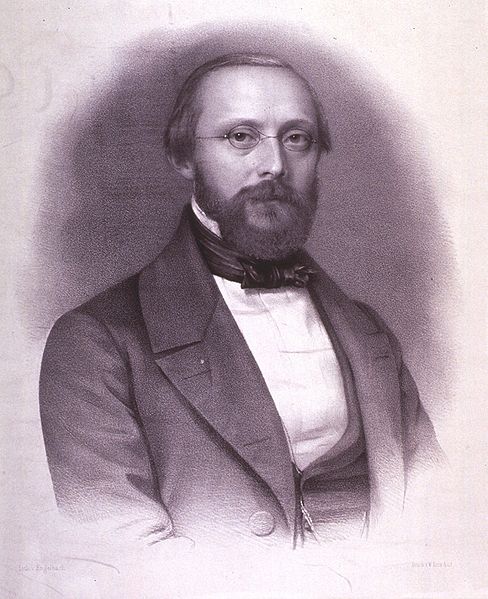


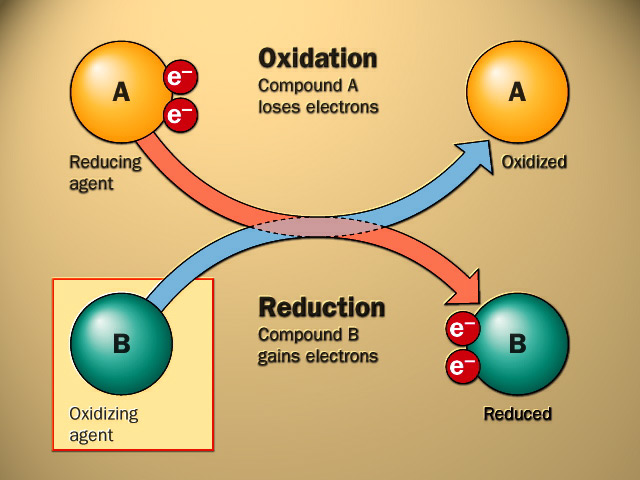
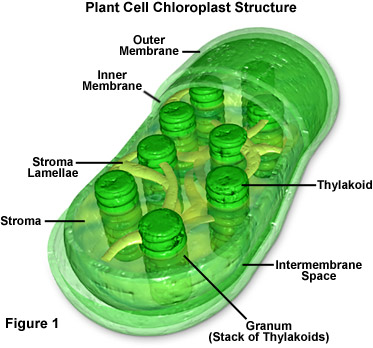

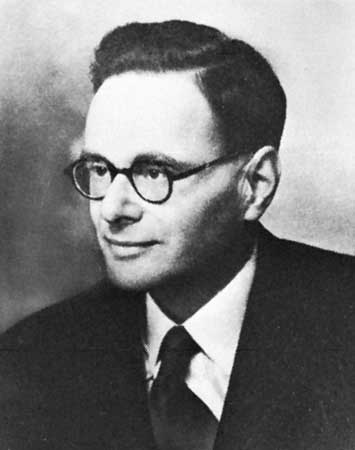
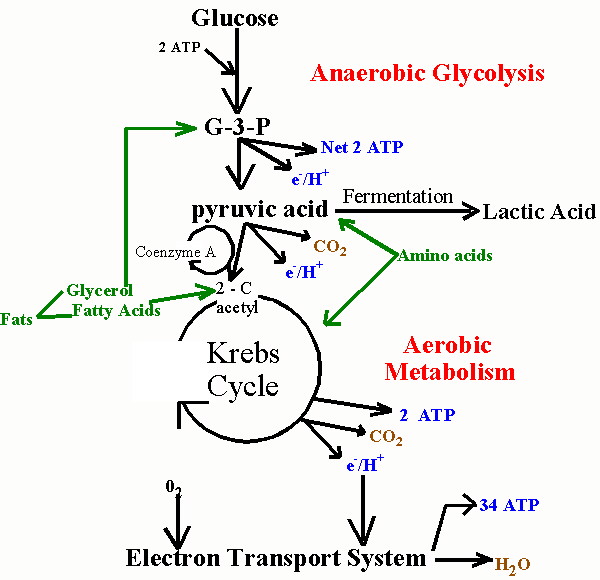


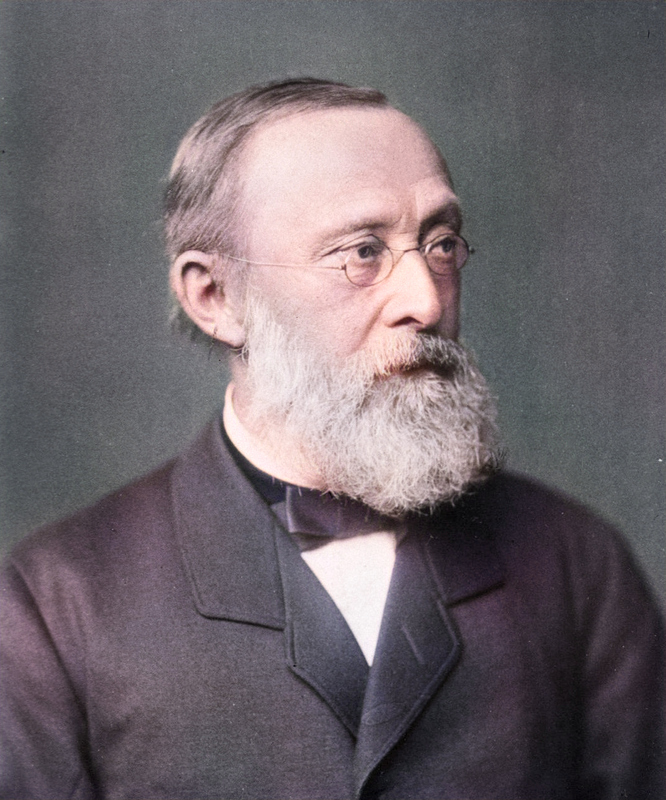


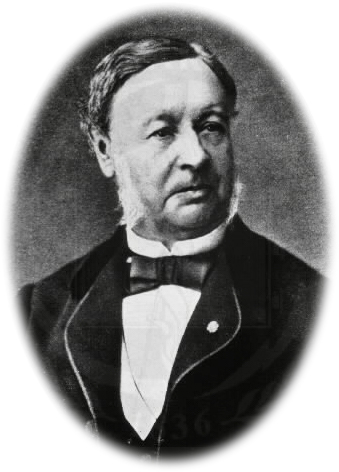


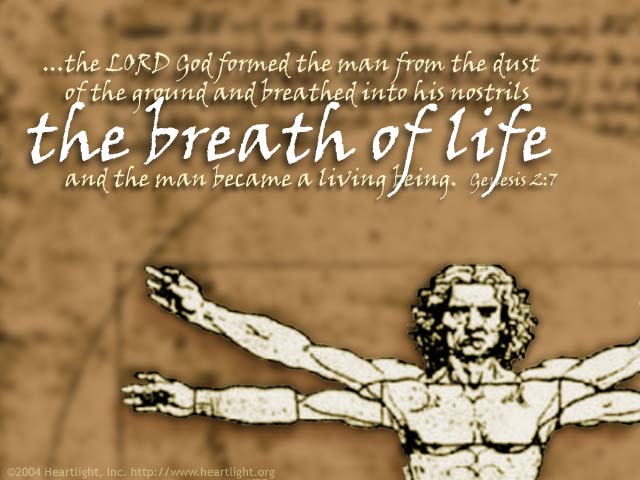
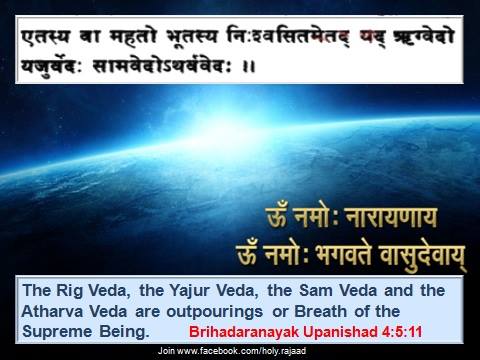
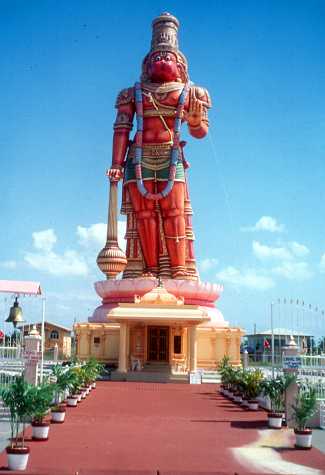
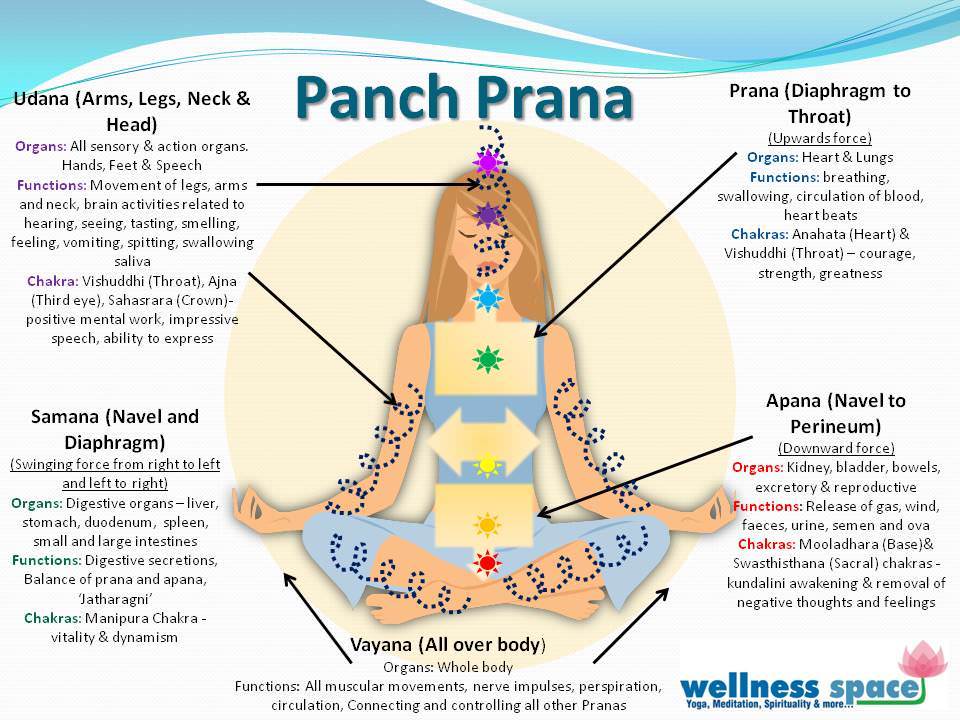


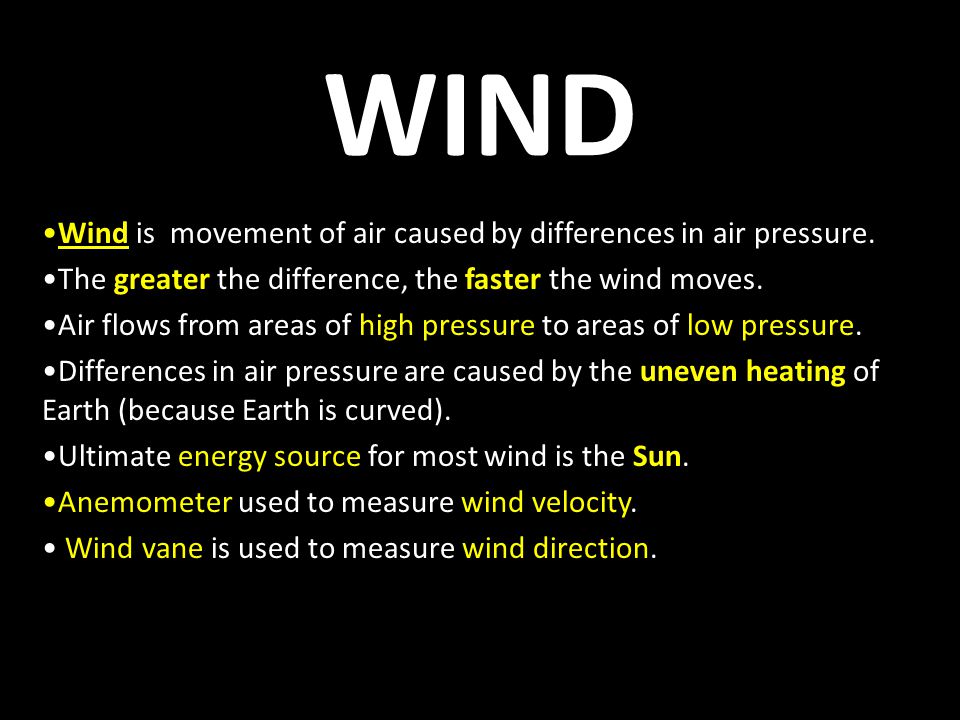
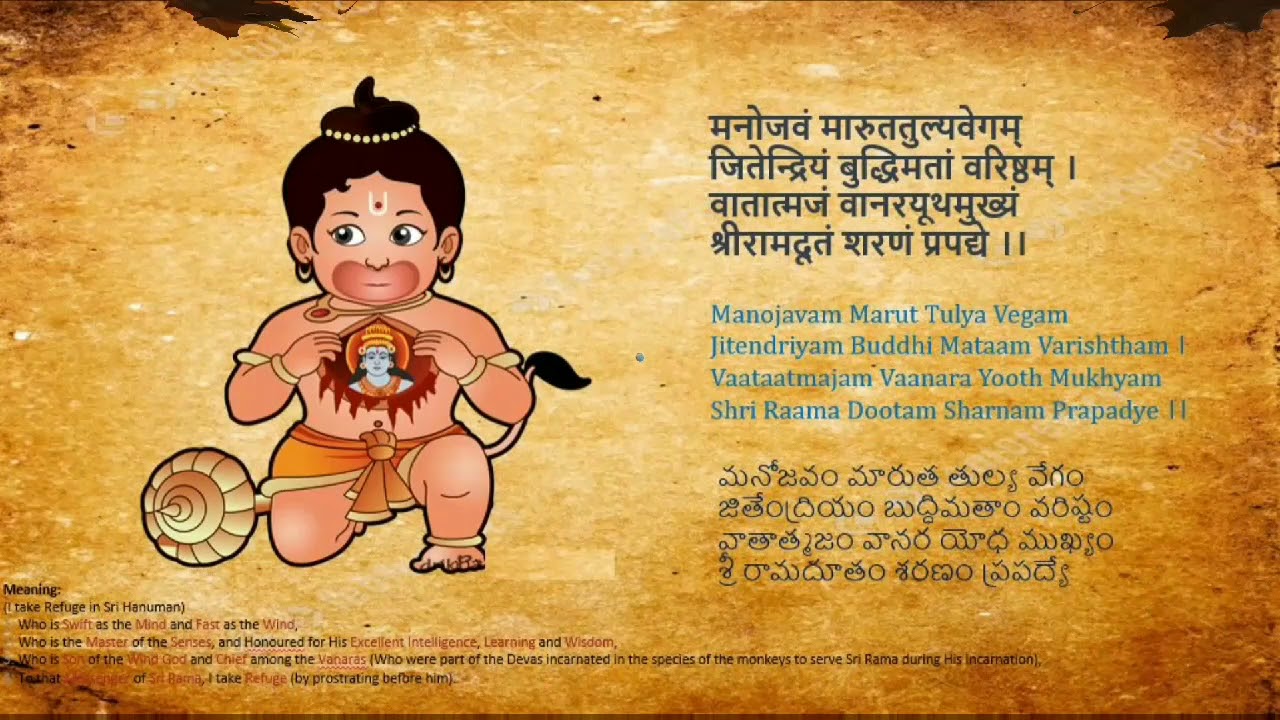
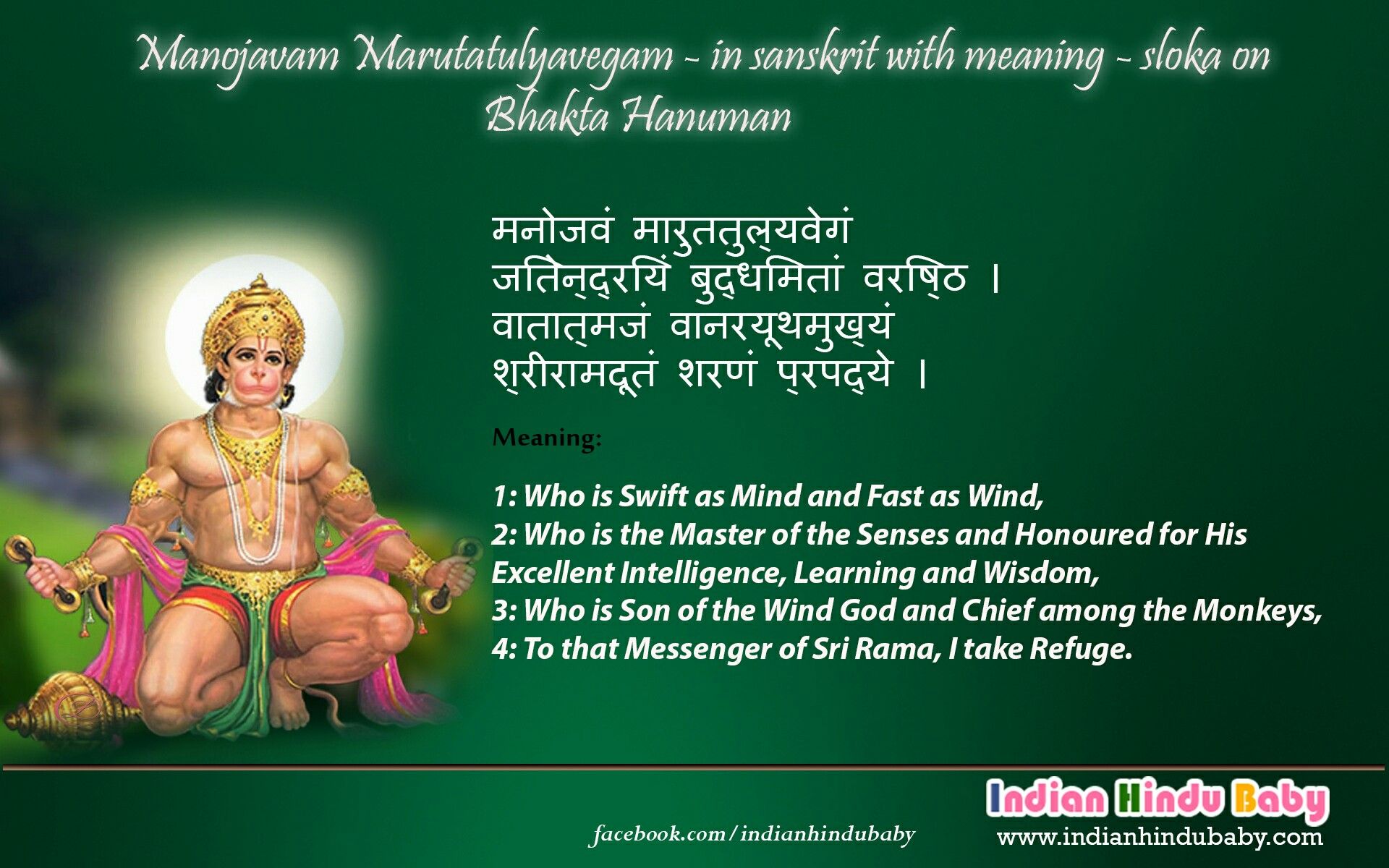
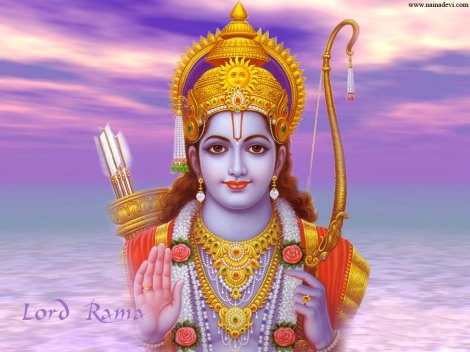
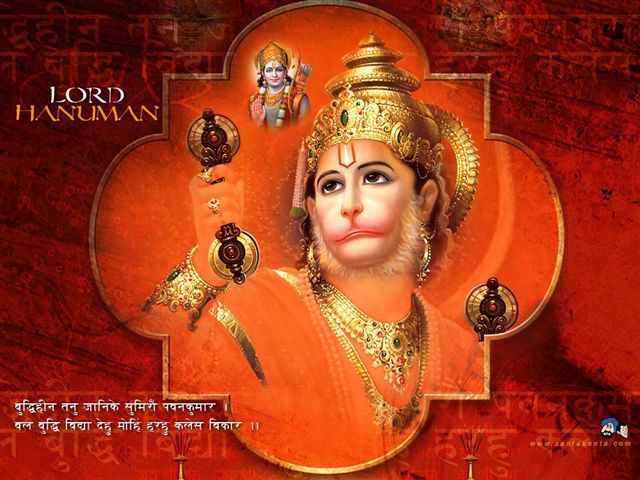


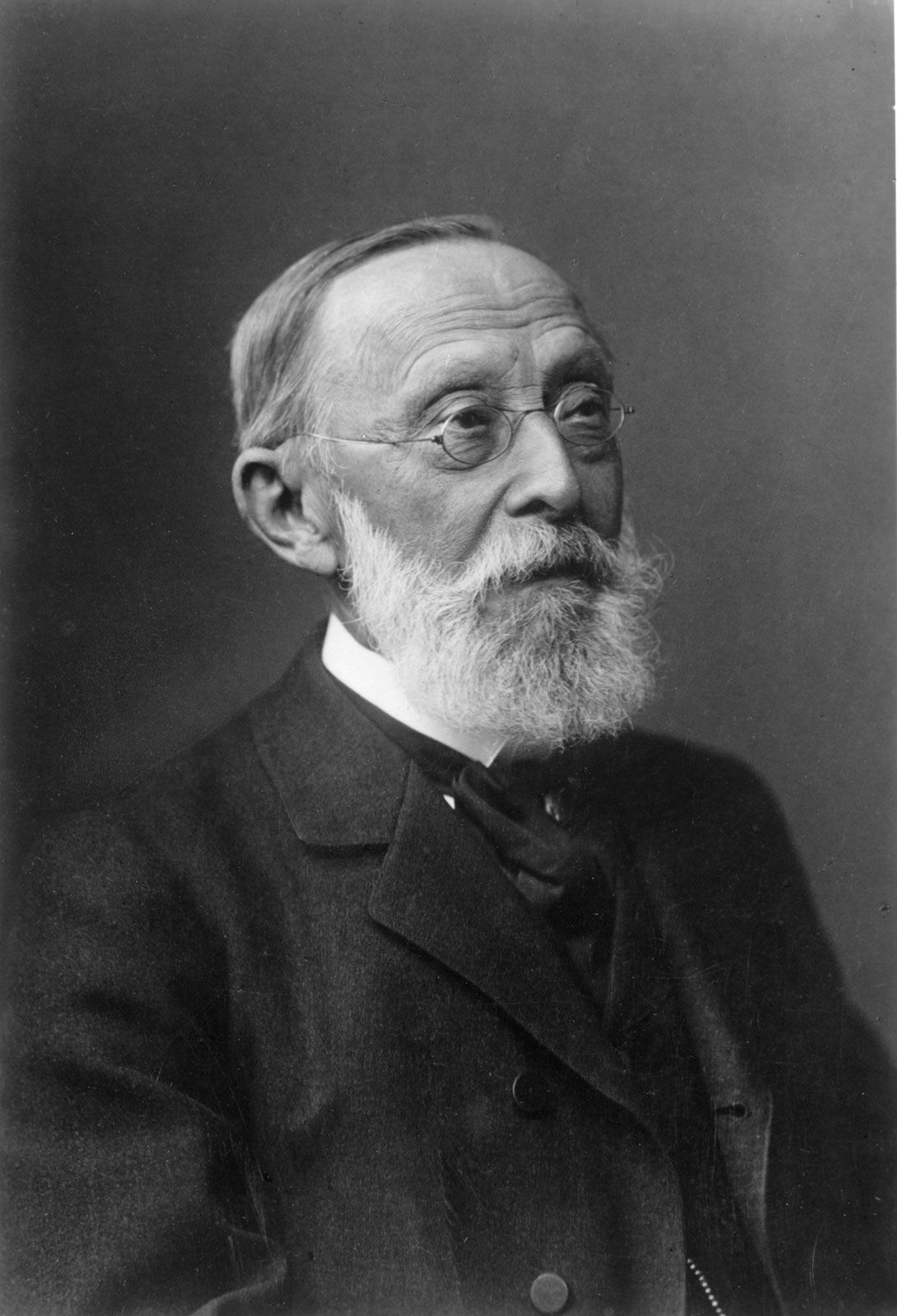

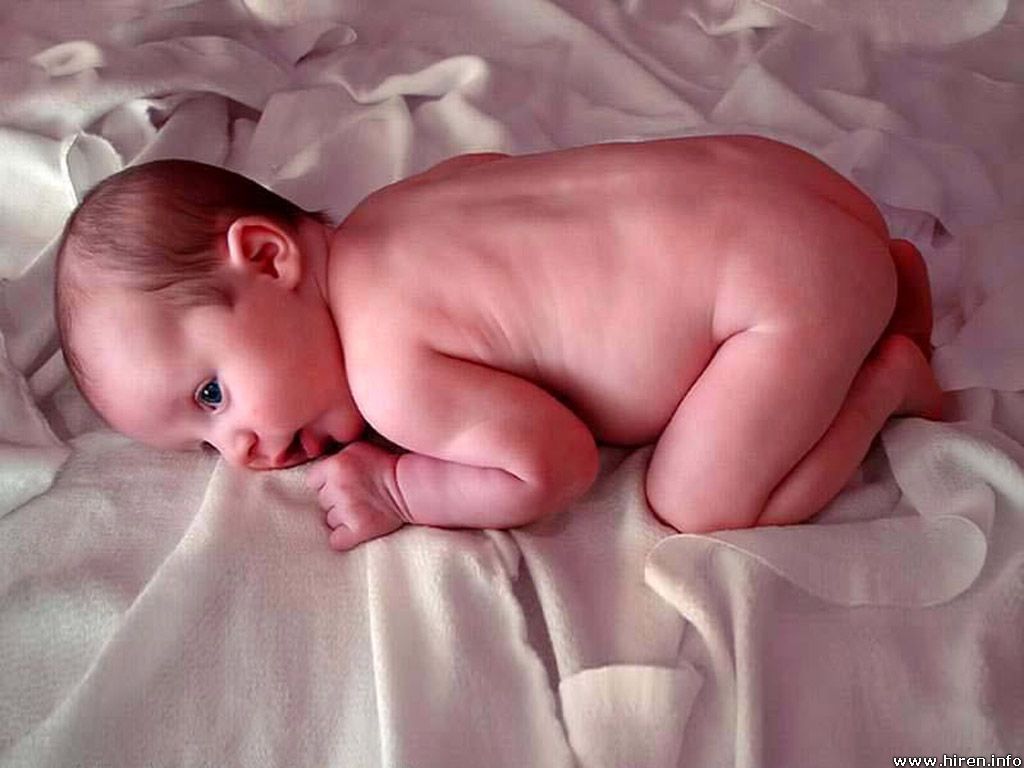


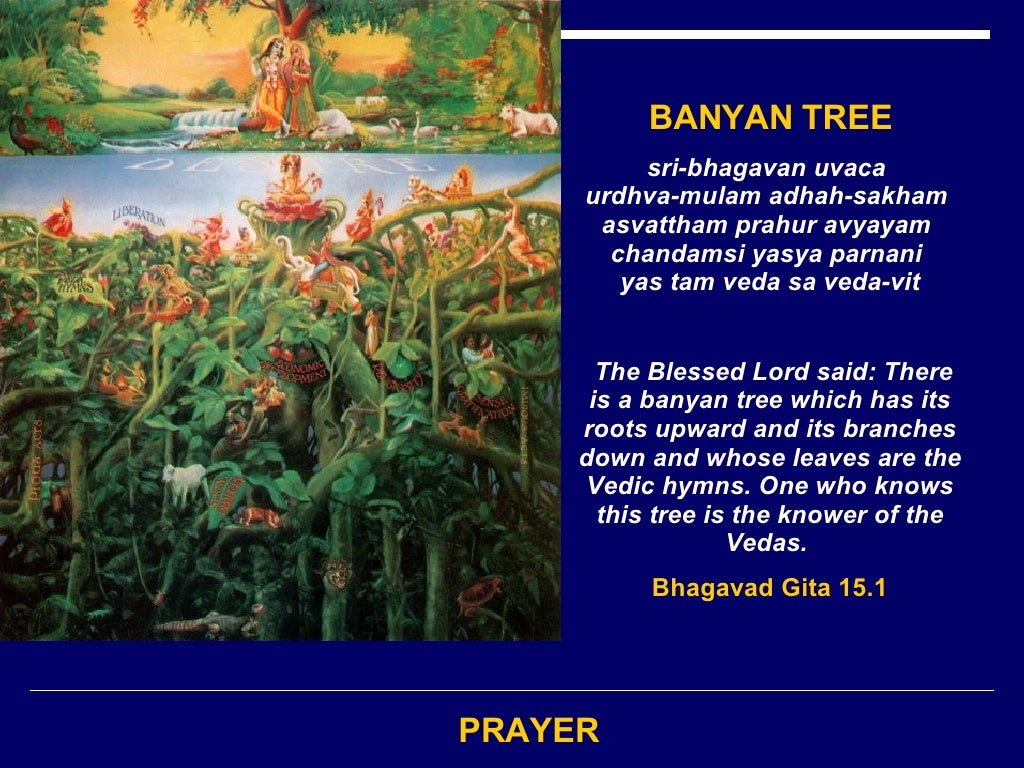


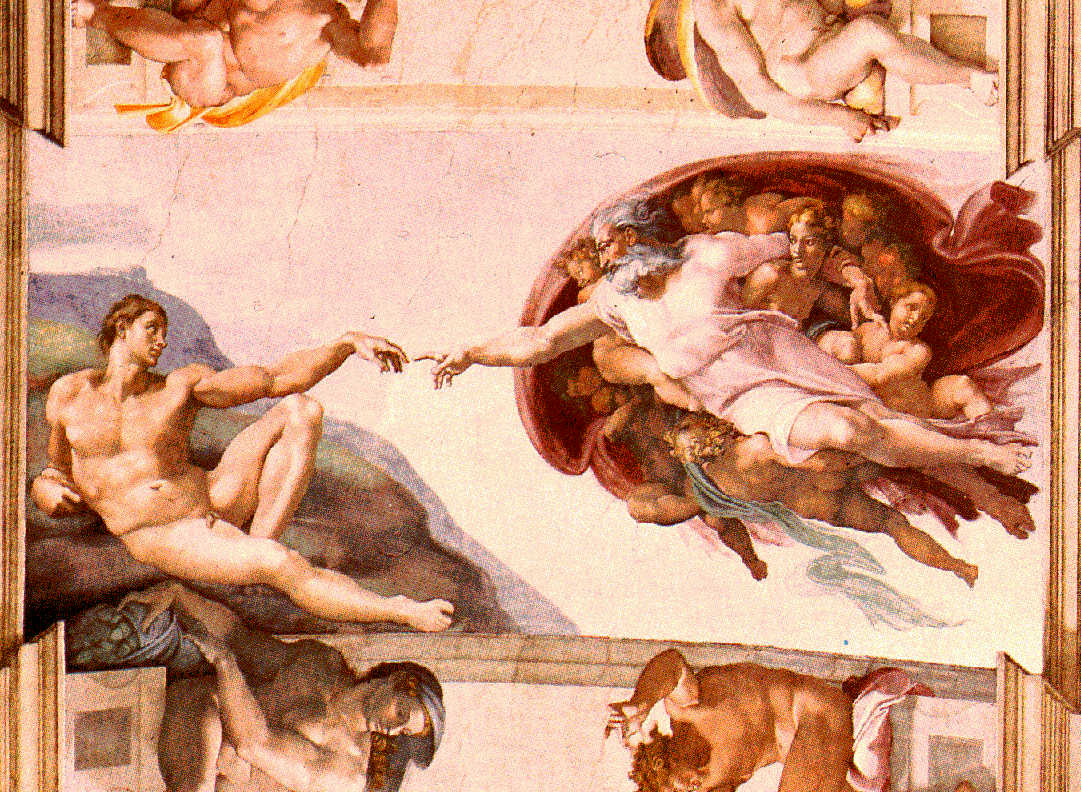


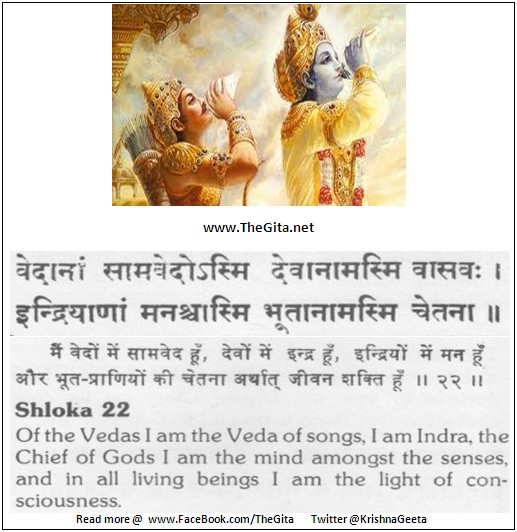
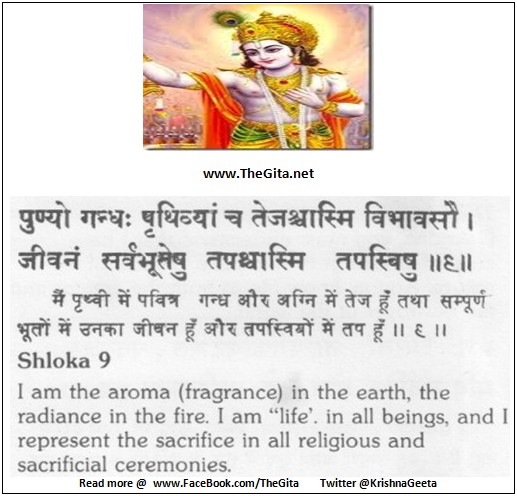

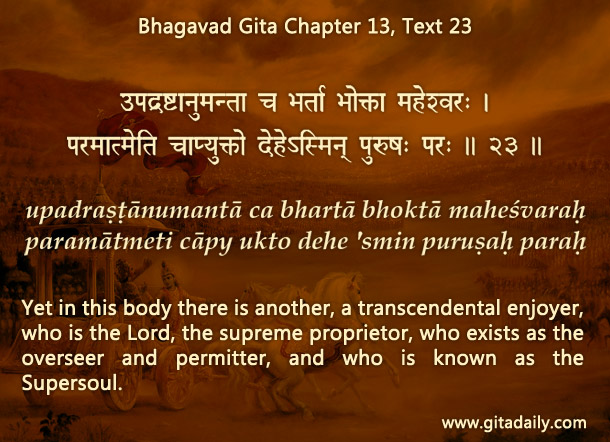


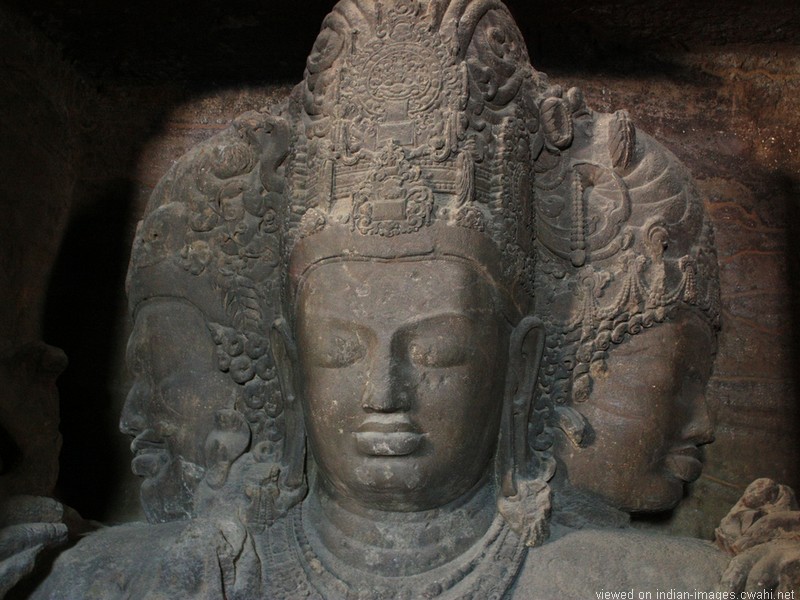


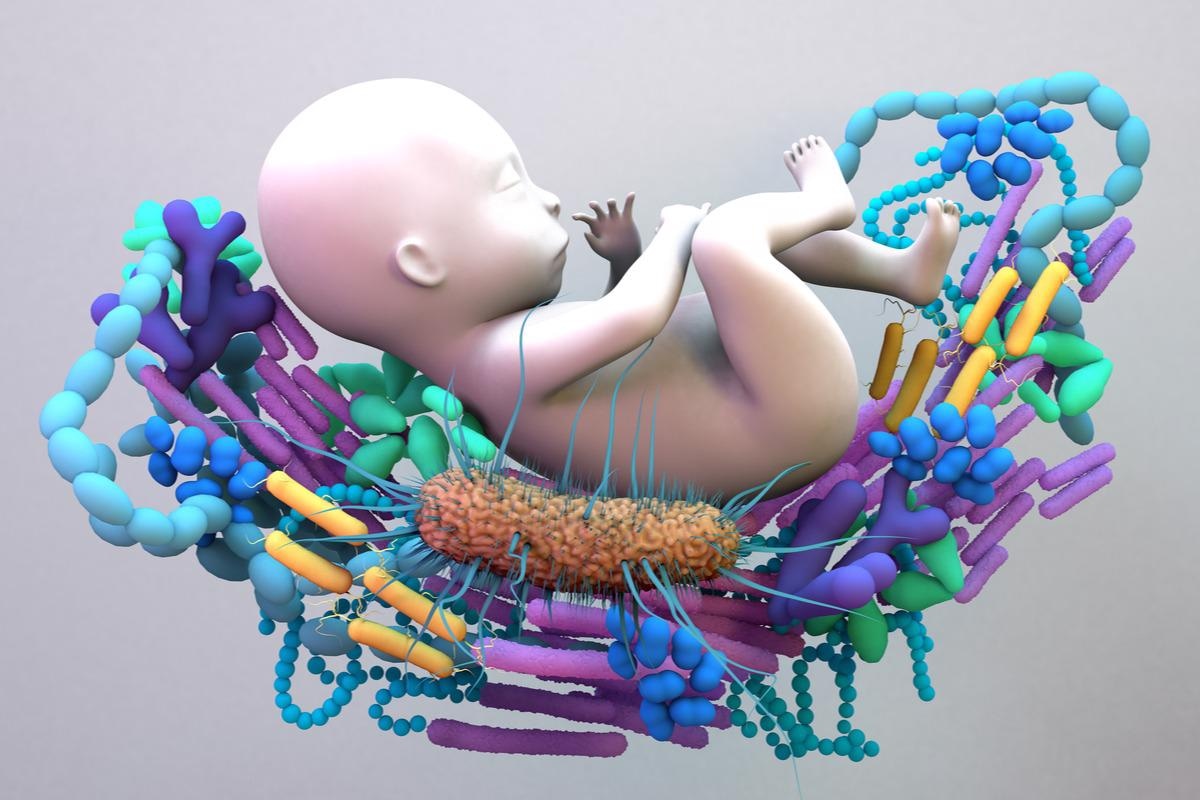
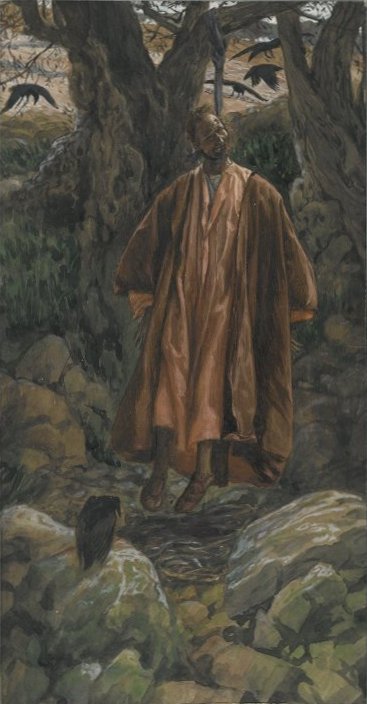


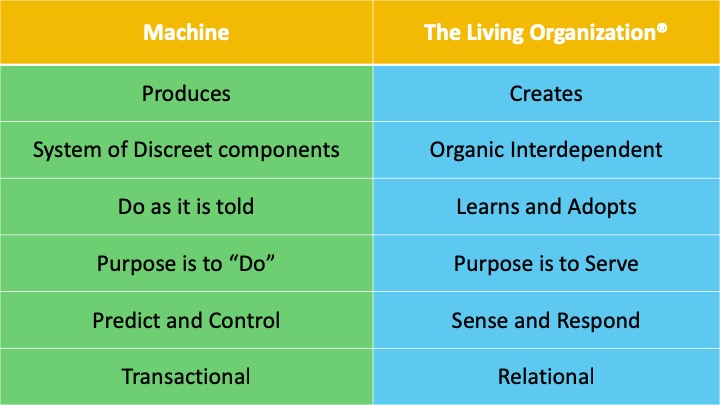
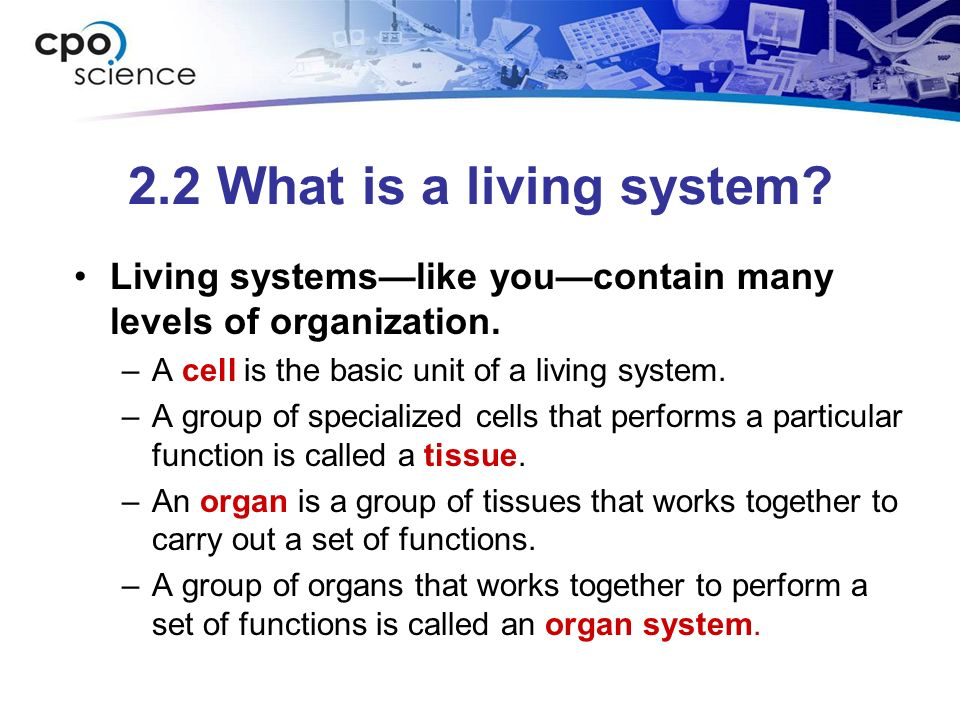


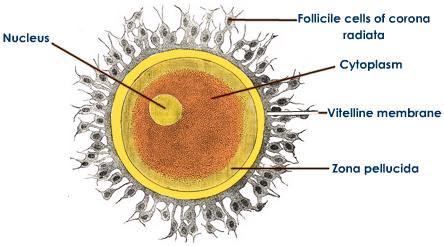


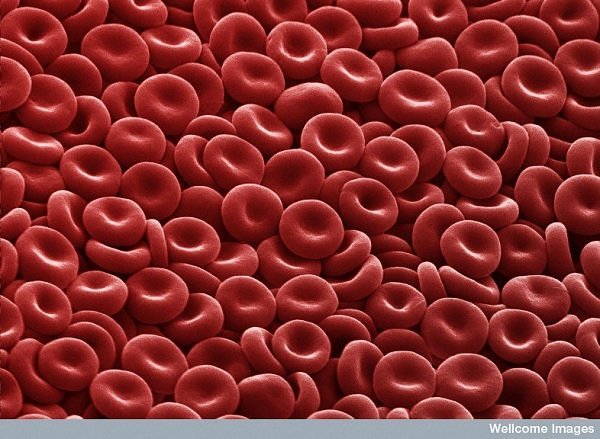


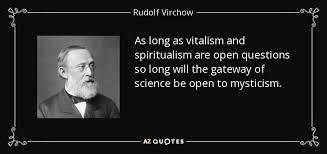


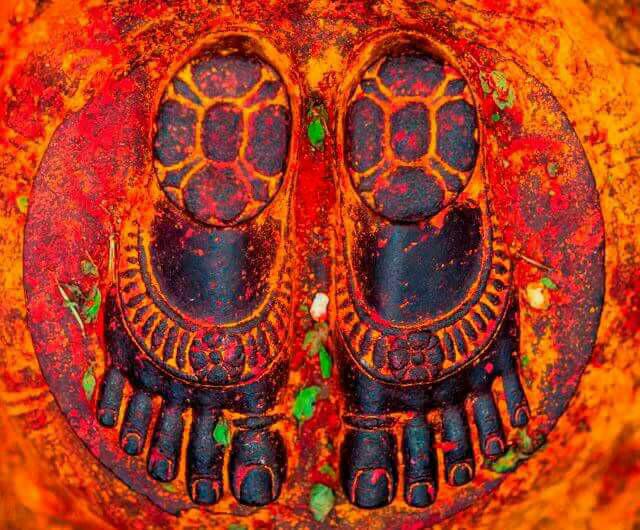






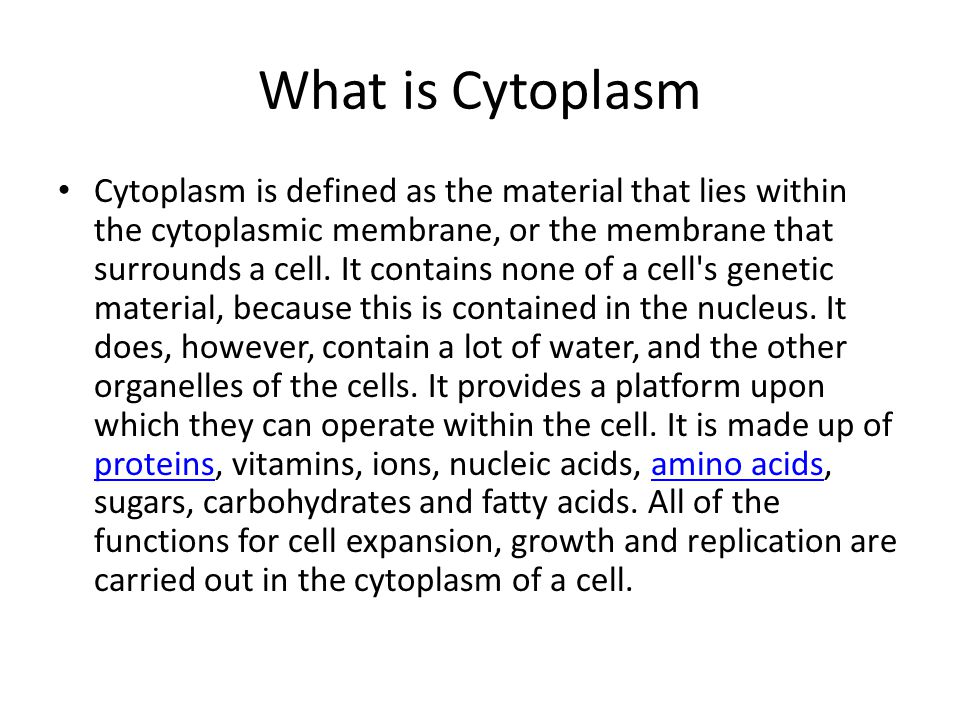
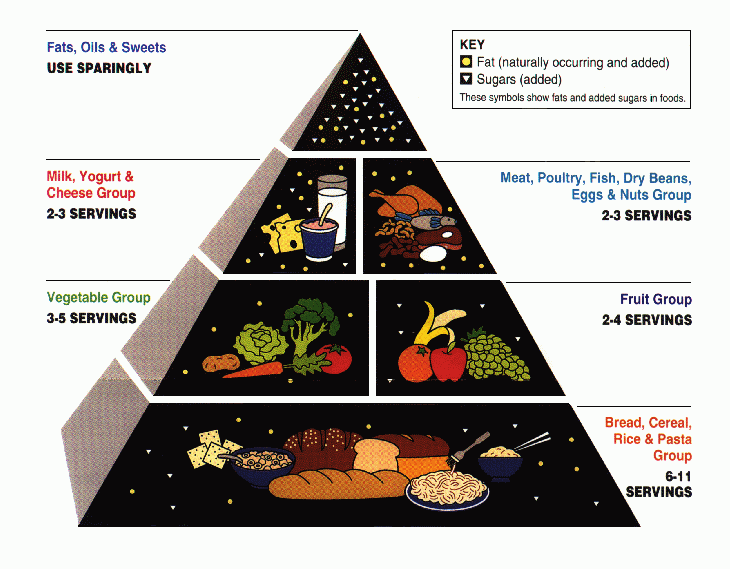


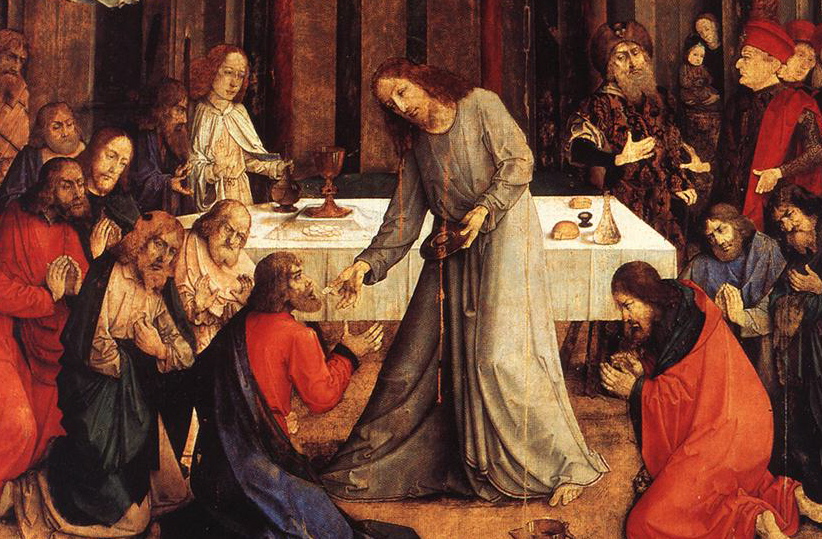


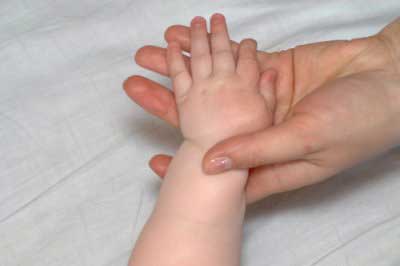


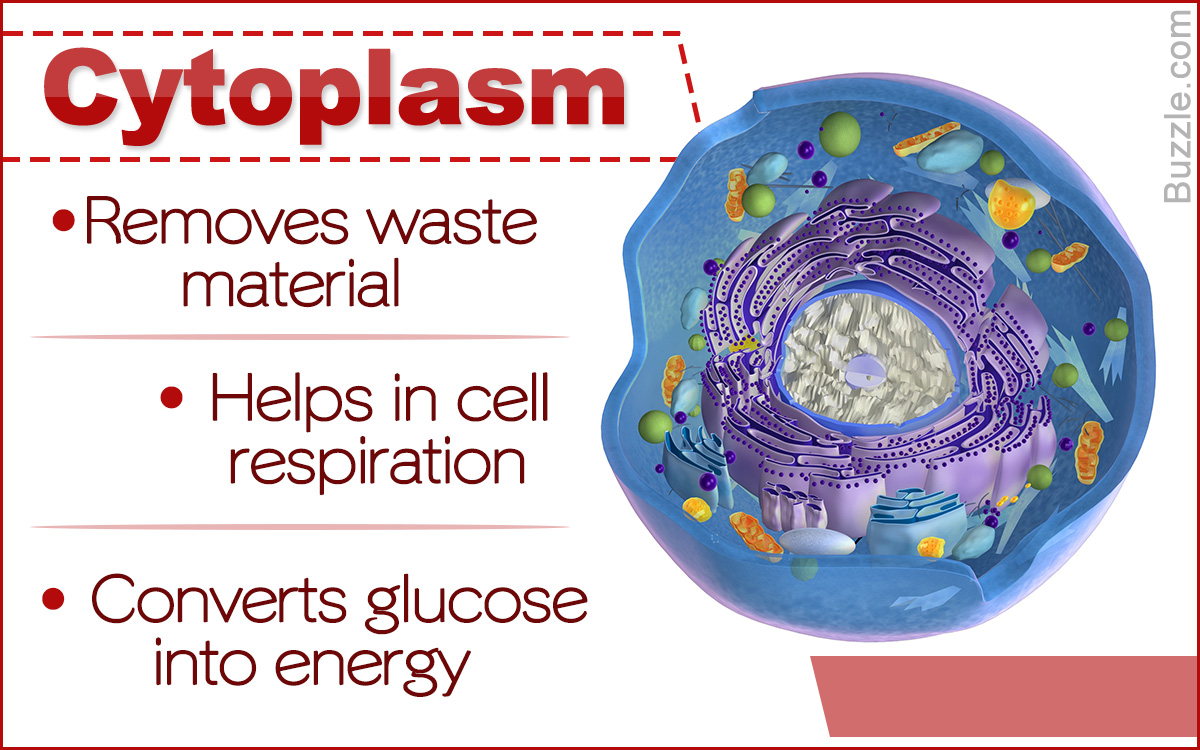


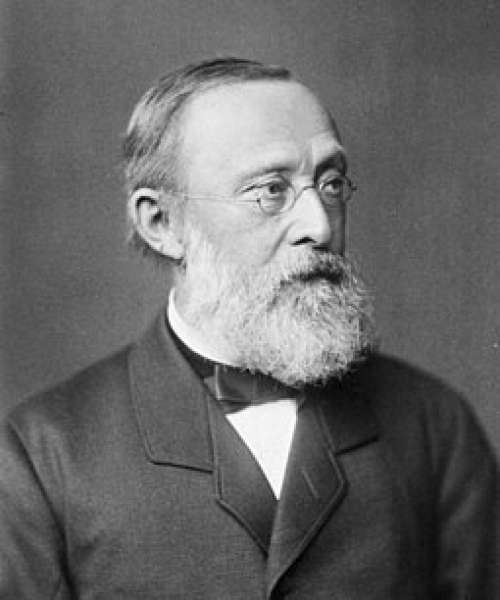






 Whole Dude - Whole Concept
