THE EVIL RED EMPIRE – RED CHINA – POLLUTER

THE EVIL RED EMPIRE – RED CHINA – POLLUTER

The word ‘pollute’ means to make unclean, impure, corrupt, defile, contaminate, dirty by releasing harmful ideas, wicked practices, immoral and unethical conduct apart from the usual meaning of a harmful chemical or waste material recklessly discharged into water, land, and air. Red China is guilty of both kinds of pollution and hence I acknowledge Red China as a “POLLUTER.”

My concern is not about Karl Marx’s philosophy called ‘Dialectical Materialism’. My concern is about Red China’s immoral conduct and behavior. My concern is about Red China’s use of Intimidation, Infiltration, and Internal Subversion to inject her Communist Doctrine into Land of Tibet which she had illegally occupied since 1950s using her superior military power. Red China constantly intimidates Tibetan people to make them afraid, to make them timid, and to force them or deter them with threats and use of brutal violence. Red China uses the policy of Intimidation to completely undermine ability of Tibetans to resist military occupation. The policy of Intimidation is not working and Tibetans responded with patience and perseverance to resist Red China’s military occupation.

Red China, A Jackal, knows several tricks or ruses to conquer her opponents. Red China is using a strategy called ‘Infiltration’ to subjugate Tibetan people. Infiltration involves penetrating a group or a region gradually or stealthily so as to attack or to seize control from within. In military strategy, Infiltration describes passing through weak places in the defense lines in order to attack defender’s flanks or rear. Red China used a frontal attack and had overcome opposition to her military power when she occupied Tibet in 1950. However, Red China failed to exercise control or influence the minds of Tibetan people. Tibetan National Identity and Tibetan National Character is resisting corrupting influences introduced by Foreign Conqueror. Tibet is displaying strength, and resilience in refusing to embrace evil, wicked, depraved, dishonest dealings and behavior of Communists. The word ‘CORRUPTION’ means a change from sound condition to an unsound condition. The effect or consequence of Corruption is described as rotten, spoiled, contaminated, deteriorated, debased, perverted, venal, or depraved condition as compared to normal standards and perceptions of morality and ethical behavior.

Red China is a Seven-headed Scarlet Beast and in her passionate desire to possess Tibet; to dominate, to control, and to influence Tibetan people Red China is using a Communist tactic called “Internal Subversion.” Subversion is a mechanism used to ruin, destroy, or overthrow an established government, institution, belief, etc., using the tool called Corruption. Red China is using Subversion as a means to undermine or corrupt established social, cultural, religious, political, and belief ‘Systems’ of Tibet to overthrow, destroy, and ruin Tibetan National Identity, Tibetan National Character that continues to resist Red China’s Communist Doctrine and Ideology.

The controversy about Tibetan Panchen Lama is evidence of Red China’s wicked practice called ‘Internal Subversion’.

Rudranarasimham Rebbapragada
Ann Arbor, MI 48104-4162, USA
The Spirits of Special Frontier Force

image
The Spirits of Special Frontier ForceSpecial Frontier Force is a military organization of India, Tibet, United States to resist Red…
View on www.Facebook.com Preview by Yahoo
  • China’s Panchen Lama promises Xi he will uphold national unity

Reuters

Gyaltsen Norbu, the 11th Panchen Lama, speaks with a delegate ahead of the opening of the third plenary meeting of Chinese People's Political Consultative Conference in Beijing

Gyaltsen Norbu (R), the 11th Panchen Lama, speaks with a delegate ahead of the opening of the third plenary …

BEIJING (Reuters) – A youth named by China as the second-highest figure in Tibetan Buddhism, but reviled as a fake by many Tibetans, on Wednesday told President Xi Jinping he backed national unity and would strive to meet the Communist Party’s expectations.

Although officially atheist, China selected Gyaltsen Norbu as the 11th Panchen Lama in 1995, in a drive to win the hearts and minds of Tibetans.

Tibet’s current spiritual leader, the Dalai Lama, had announced his own choice of a six-year-old boy, but he was taken away by authorities and has since vanished from public view.
This year marks not only the 20th anniversary of the boy’s disappearance, but also the 80th birthday of the Dalai Lama, who has lived in exile in India since fleeing Tibet in 1959 following an abortive uprising against Chinese rule.

It is also the 50th anniversary of the founding of what China calls the Tibet Autonomous Region.

At a meeting in the party’s Zhongnanhai leadership compound in central Beijing, China’s Panchen Lama told Xi he would “resolutely uphold the unity of the motherland and its people”, state television said in its main evening news bulletin.

He would “not fail to live up to the ardent expectations of the party and people”, the report added.

Xi said the party paid great attention to events in Tibet, and would send a delegation to mark 50 years of the founding of the autonomous region.

“Tomorrow will be even better for all the people of Tibet,” Xi said, adding that he hoped China’s Panchen Lama would promote patriotism and uphold national unity.
China has gradually exposed its Panchen Lama in public roles in the hope he will achieve the respect commanded by the Dalai Lama among Tibetans and globally, and in 2012 he made his first trip outside mainland China when he visited Hong Kong.

Chinese troops marched into Tibet in 1950. After the Dalai Lama fled, the 10th Panchen Lama stayed on and was initially seen as a collaborator, but it later emerged that his criticism of Beijing had earned him more than a decade spent either in prison or under house arrest.
Freed in 1977, he was politically rehabilitated the following year, and died in 1989.

Activists say China has violently tried to stamp out religious freedom and culture in Tibet, which remains under heavy security. China rejects the criticism, saying its rule has ended serfdom and brought development to a backward region.

(Reporting by Ben Blanchard; Editing by Clarence Fernandez)

  • Panchen Lama
  • Dalai Lama
  • China
  • Xi Jinping

(c) Copyright Thomson Reuters 2015. Click For Restrictions – http://about.reuters.com/fulllegal.asp

Yahoo – ABC News Network

THE EVIL RED EMPIRE – RED CHINA – OPPRESSOR

THE EVIL RED EMPIRE – RED CHINA – OPPRESSOR

THE  EVIL  RED  EMPIRE  -  RED  CHINA  -  OPPRESSOR :  TIBET  IS  NOT  A  PART  OF  RED  CHINA .  HOWEVER,  IT  IS  CORRECT  TO  STATE  THAT  TIBETANS  ARE  OPPRESSED  BY  RED  CHINA'S  TYRANNY .
THE EVIL RED EMPIRE – RED CHINA – OPPRESSOR : TIBET IS NOT A PART OF RED CHINA . HOWEVER, IT IS CORRECT TO STATE THAT TIBETANS ARE OPPRESSED BY RED CHINA’S TYRANNY .

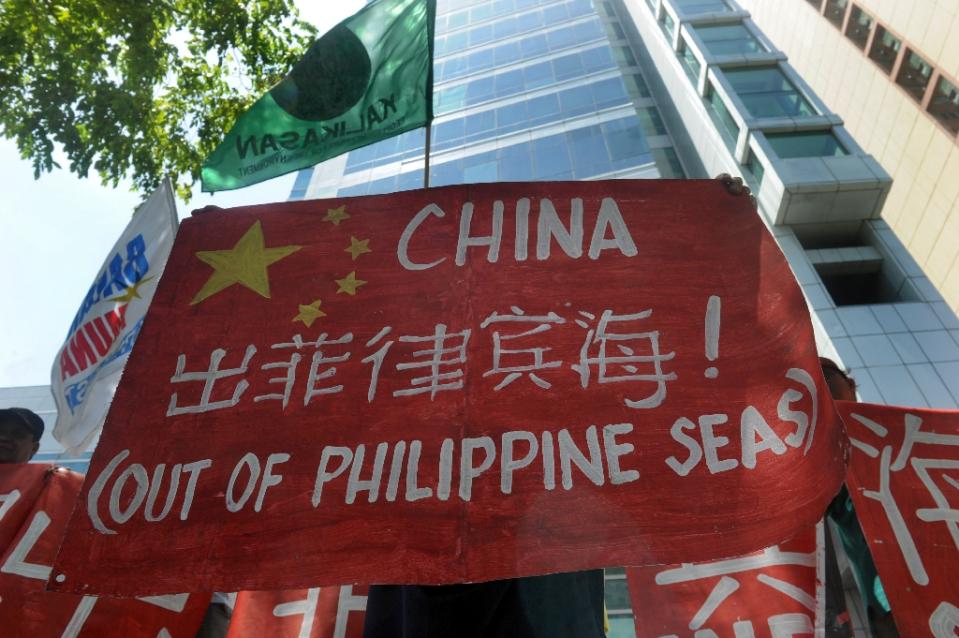
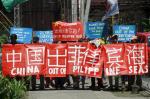
Oppressor refers to a person or group that oppresses people. Oppressor is related to terms like tyrant, despot, persecutor, and,subjugator. Oppressor is a person who uses power or authority in a cruel, unjust, or harmful way. Red China is an Oppressor for she persecutes people in Occupied Tibet. In recent times, news media in the United States have shared a number of stories to focus public attention of people about problems faced by people of Philippines and other weak neighbors of Red China because of China’s Maritime Expansionism. Not even a single word is mentioned about Red China’s oppressive rule over Occupied Tibet.

THE  EVIL  RED  EMPIRE  -  RED  CHINA -  OPPRESSOR :  TIBET  IS  NOT  A  PART  OF  RED  CHINA .  RED  CHINA  EXPANDED  HER  TERRITORY  THROUGH  MILITARY  CONQUEST .
THE EVIL RED EMPIRE – RED CHINA – OPPRESSOR : TIBET IS NOT A PART OF RED CHINA . RED CHINA EXPANDED HER TERRITORY THROUGH MILITARY CONQUEST .

Tibet is the first victim of Red China’s Expansionist Policy. The problems of South China Sea demand proper evaluation of Red China’s tyranny, despotism, subjugation, persecution, suppression, and oppression of Tibetan people living their miserable lives in Occupied Tibet.

Rudranarasimham Rebbapragada
Ann Arbor, MI 48104-4162, USA
The Spirits of Special Frontier Force

 
  image          
The Spirits of Special Frontier ForceSpecial Frontier Force is a military organization of India, Tibet, United States to resist Red…
 
View on www.facebook.com Preview by Yahoo


For some Filipino fishermen, the South China Sea dispute is personal

The Washington Post

Will Englund

THE EVIL RED EMPIRE - RED CHINA - OPPRESSOR : Filipino fisherman's personal story .
THE EVIL RED EMPIRE – RED CHINA – OPPRESSOR : Filipino fisherman’s personal story .

© The Washington Post The Marvin-1, a fishing boat, sits on the shore May 16, 2015, in Masinloc, Philippines, unused since the Chinese barred it from Scarborough Shoal in the South China Sea.

MASINLOC, Philippines — When nations duel over reefs, rocks and islets, people are going to get hurt, and in the South China Sea dispute, that means the fishermen here who once wrested a living from the contested waters.

Gunmen in a Chinese speedboat drove Macario Forones, for instance, away from a favorite spot called Scarborough Shoal, and now his boat, the Marvin-1, sits useless in the grass and weeds above the high-tide line, and he sells someone else’s fish from a stall in the local market. Efrim Forones now dives for clams in the bay, making about one-tenth of what he earned when he fished the sea. Viany Mula says he was set upon with a Chinese water cannon when he ventured out to the shoal in his boat, and now he makes deliveries around town on a motorbike, barely earning enough each day, as he p

“I really want to fish the shoal,” Mula said one recent day. “It’s a very rich fishing ground. But that’s not possible now.”

For generations, the South China Sea was a regional common. Fishing boats from all of the surrounding countries would roam its waters, pausing now and then to trade cigarettes or potatoes or gossip.

But then Vietnam, followed by the Philippines, began staking claims to some of the islands, and now China is moving in, in a big way. Beijing is building up the outposts it has established, enlarging islands that it controls and claiming exclusive rights to fishing grounds.

The smaller, poorer nations can’t put up a real fight for the access to the sea that they long enjoyed.
“That’s not for us,” Mula said. “We have nothing.”

But the Philippines does have the United States behind it, after a fashion. The Americans are making more visits here, and stepping up naval patrols and overflights — and in the process, the South China Sea dispute becomes something bigger than a contest for fish. It looks more and more like a geostrategic confrontation between the two great powers, China and the United States; that’s certainly how the Chinese characterize it.

The U.S. military has long been a source of anguish, self-doubt and defiance for the Philippines, a former U.S. colony. Many Filipinos are encouraged by recent U.S. attention to the maritime dispute, but they wonder whether the Americans give much thought to the Philippines and the people who are paying a price as the dispute deepens.
One in three residents of Masinloc have depended over the years on fishing for their livelihoods, said Mayor Desiree Edora. Scarborough Shoal, a half-day’s sail from shore, was a refuge from storms, a gathering place for fishermen from all over and a home to abundant grouper and giant clams. Now, the Chinese have barred foreign boats. It is like being thrown out of your own house, she said.

“We can’t replicate what Scarborough Shoal can provide,” she said.

The Philippines took China to court — an international tribunal in The Hague — two years ago over competing claims in the sea. China refused to participate; a decision is expected next year, but it probably will be unenforceable. The Philippine move may have provoked the Chinese into trying to cement their claims by occupying and building up as many spots in the sea as they can, but officials in the Philippines say they had no choice after efforts to negotiate came to nothing.

The governor of Zambales province, Hermogenes E. Ebdane Jr., said he wonders what China’s ultimate goal is. “No one’s going to war over fish,” he said. His constituents, the fishermen, will have to find something else to do. But if this confrontation is about something bigger, Ebdane said, it’s unclear what role the Philippines might have. There’s a new defense agreement with the United States, but, he said, neither side seems to have thought through the implications for the murky weeks and months ahead.

A legacy of deep ambivalence

At the Defense College in Quezon City, on the outskirts of Manila, an entire wall in the lobby is given over to a painting that depicts the massacre of four dozen U.S. soldiers by Filipino insurgents at Balangiga in 1901. A diorama up a staircase shows Filipinos battling Spanish conquistadors, and fighting against the Japanese in World War II — alongside Americans.
The United States seized the Philippines from Spain in 1898 and held it until 1946. The U.S. military continued to keep permanent bases here until 1991.

The legacy is a deep ambivalence toward the United States. But the U.S. Navy is the one force that is willing to challenge the Chinese and keep up regular patrols in the region. An agreement signed last year would allow the U.S. military standing presence here, rotating forces onto Philippine bases. The agreement is held up by a lawsuit in the Philippine Supreme Court.

Washington has stepped up visits and patrols, and it has made much of joint training exercises and the donation of used military equipment.
“That is not to protect the Philippines but to protect their own turf,” said Roilo Golez, a member of the country’s House of Representatives. U.S. military aid, worth about $40 million a year, is nothing but a token, he said.

The Philippine armed forces, in this nation of 100 million, remain in woeful shape. It is an article of faith that the government was caught napping when China began making its moves in the South China Sea.

“We remain quite dependent on allied help, and that is not good,” said Rafael Alban III, former secretary of the interior. “The focus of the Philippine government has been on politics, politics, politics, at the expense of national security. China is taking advantage of our inertia and lack of assertiveness. We are presenting ourselves as unworthy before friend and foe.”
Walden Bello, founding director of a group called Focus on the Global South, said his country “is right back to its role in the Cold War, when it played the part of handmaiden to the United States.”

But military officials here say they are unsure of the U.S. commitment if hostilities should break out. The United States and the Philippines have a mutual defense treaty pledging assistance if either is attacked, but Washington doesn’t recognize any nation’s territorial claims in the South China Sea, including the Philippines’. Naval analysts in Washington say the U.S. response to conflict there would depend entirely on the circumstances.

“We may have overestimated how the United States will come to the rescue,” said Chito Santa Romana, an expert on China. “We may have underestimated Chinese resolve.”

Water-borne civil disobedience

The two biggest vessels in the Philippine navy are former U.S. Coast Guard cutters, retrofitted with deck guns, and of little use in standing up to the Chinese. The government, in any case, has no desire to provoke China into a military confrontation.

That leaves the fishing fleet as the country’s best means of maintaining a presence in the parts of the South China Sea that Beijing claims. Philippine — and Vietnamese — boats challenge the Chinese when and where they can, until the Chinese coast guard drives them off. It is water-borne civil disobedience.

“These are small, subsistence fishermen,” said Evan P. Garcia, undersecretary for policy in the Philippines Department of Foreign Affairs. “They’re not a threat to anybody. And it’s not as if they just went there yesterday.”

The fish they’re after may be the other big casualty of the dispute. The tensions over the years have kept anyone from getting good data on fish stocks or devising a conservation plan. Hundreds of millions of people live around the South China Sea and eat its fish. The Marine Stewardship Council, with an office in Singapore, says that the humpback wrasse and bluefin tuna populations are close to collapse. Edgardo Gomez, a marine biologist in Manila, said that the Chinese have wiped out the giant clams on Scarborough and that their construction work is destroying reefs that support the bottom rungs of the sea’s food chain.

“You have tons and tons of marine life in and around those reefs that are now gone,” he said.
The hatch is being shut on a way of life. The United States and China are either pursuing strategic advantage or practicing destructive gamesmanship, depending on the perspective. Filipinos have to live with that — with the “odd detour,” as Garcia put it, that brought them here.

Viany Mula would trade his motorbike in the blink of an eye for a chance to return to sea. But that is not going to happen.

Englund visited the Philippines on a Jefferson Fellowship, supported by the East-West Center.

THE EVIL RED EMPIRE – RED CHINA – CYBER CRIMINAL

THE EVIL RED EMPIRE – RED CHINA – CYBER CRIMINAL

red china espionage sun tzu wisdom

Espionage is described as ‘Intelligence’ gathering, securing of information about one nation for the benefit of another. Spying is a term used to describe clandestine intelligence gathering activity. Spying involves the use of spies or agents by a government to learn the secrets of other nations. Espionage involves obtaining information using spies, secret agents, and illegal monitoring devices.

red china espionage sun tzu the art of war

In government operations, intelligence involves evaluated information concerning the strength, activities and probable course of action of its opponents. The concept of intelligence is not new. The military treatise “Ping-fa”(The Art of War) written c.400 B.C. by military philosopher Sun-tzu mentions the use of secret agents and importance of good intelligence. To obtain knowledge of enemy’s intentions, intelligence systems have been in use from ancient times. The Intelligence Service of Red China belongs to Ministry of State Security.

At Special Frontier Force, I am familiar with Red China’s espionage and her intelligence gathering operations which often target individuals serving in Special Frontier Force to identify them with specificity. Intelligence gathering in cyberspace or cyberespionage is manifestation of digital age. At Special Frontier Force, I am trained to recognize Red China as an adversary, an opponent, and an enemy. I would not expect Red China to extend her cooperation to apprehend those criminals who with a series of computer hacks have stolen vast amounts of data from a database maintained by the Office of Personnel Management in the United States. While nations may face the compulsion to gather intelligence, stealing private information of millions of civilian employees is unfair, unethical, and is totally unwarranted. As such, I would recognize Red China as a Cyber Criminal and Red China has to bear full responsibility for criminal actions of her employees or agents she hired.

Rudranarasimham Rebbapragada
Ann Arbor, MI 48104-4162, USA
SPECIALFRONTIERFORCE.ESTABLISHMENT22

The Washington Post

With a series of major hacks, China builds a database on Americans


AP7800370634461370635261-1616.jpg?uuid=uKJWxPmaEeShPBk7EkHVGg

American and Chinese flags are adjusted before a press conference in Beijing in 2012. (Feng Li/ASSOCIATED PRESS)

By ELLEN NAKASHIMA June 5 at 5:55 PM

China is building massive databases of Americans’ personal information by hacking government agencies and U.S. health-care companies, using a high-tech tactic to achieve an age-old goal of espionage: recruiting spies or gaining more information on an adversary, U.S. officials and analysts say.

Groups of hackers working for the Chinese government have compromised the networks of the Office of Personnel Management(OPM) which holds data on millions of current and former federal employees, as well as the health insurance giant Anthem, among other targets, the officials and researchers said.

“They’re definitely going after quite a bit of personnel information,” said Rich Barger, chief intelligence officer of ThreatConnect, a Northern Virginia cybersecurity firm. “We suspect they’re using it to understand more about who to target [for espionage], whether electronically or via human ­recruitment.”

The targeting of large-scale data­bases is a relatively new tactic and is used by the Chinese government to further its intelligence-gathering, the officials and analysts say. It is government espionage, not commercial espionage, they say.

China hacked into the federal government’s network, compromising four million current and former employees’ information. The Post’s Ellen Nakashima talks about what kind of national security risk this poses and why China wants this information. (Alice Li/The Washington Post)

“This is part of their strategic goal — to increase their intelligence collection via big data theft and big data aggregation,” said a U.S. government official, who, like others, spoke on condition of anonymity to discuss a sensitive topic. “It’s part of a strategic plan.”

One hack of the OPM, which was disclosed by the government Thursday, dates at least to December, officials said. Earlier last year, the OPM discovered a separate intrusion into a highly sensitive database that contains information on employees seeking or renewing security clearances and on their background investigations.

Once harvested, the data can be used to glean details about key government personnel and potential spy recruits, or to gain information useful for counter­intelligence. Records in OPM’s database of background investigations, for instance, could contain a complete history of where an individual has lived and all of his or her foreign contacts in, say, China. “So now the

Chinese counterintelligence authorities know which American officials are meeting with which Chinese,” a China cyber and intelligence expert said.
The data could help Chinese analysts do more effective targeting of individuals, said a former National Security Agency official. “They can find specific individuals they want to go after, family members,” he said.

The trend has emerged and accelerated over the past 12 to 18 months, the official said. An increase in Chinese capability has opened the way “for bigger data storage, for bigger data theft,” he said. “And when you can gain it in bulk, you take it in bulk.”

The Chinese government, he said, is making use of Chinese companies that specialize in aggregating large sets of data “to help them in sifting through” the information for useful details. “The analogy would be one of our intelligence organizations using Google, Yahoo, Accenture to aggregate data that we collected.”

China on Friday dismissed the allegation of hacking as “irresponsible and unscientific.”

Chinese Foreign Ministry spokesman Hong Lei said Beijing wanted to cooperate with other nations to build a peaceful and secure cyberspace.
“We wish the United States would not be full of suspicions, catching wind and shadows, but rather have a larger measure of trust and cooperation,” he told a regular news briefing,

The OPM disclosed that the latest hack of one of its systems exposed personal data of up to 4 million current and former employees — the largest hack of federal employee data in recent years.

U.S. officials privately said China was behind it. The stolen information included Social Security numbers and performance evaluations.

“This is an intelligence operation designed to help the Chinese government,” the China expert said. “It’s a new phase in an evolution of what they’re doing. It certainly requires greater sophistication on their part in terms of being able to take out this much data.”

Barger’s firm has turned up technical evidence that the same Chinese group is behind the hacks of Premera Blue Cross and Empire BlueCross, which were discovered at roughly the same time earlier this year.

The first OPM incident has been linked to the health-care hacks by Barger and another security researcher, John Hultquist, senior manager for cyberespionage threat intelligence at iSight Partners. Hultquist said the same group is responsible for all of them, and for other intrusions into commercial databases containing large sets of Americans’ personal information.
“They would leverage this data to get to diplomatic, political, military and economic intelligence that they typically target,” said Hultquist, who declined to comment on who was behind the attacks.

Though much Chinese cyber­espionage is attributed to the People’s Liberation Army, these hacks, Barger said, appeared to be linked to the Ministry of State Security, which is a spy agency responsible for foreign espionage and domestic counterintelligence.

Other Chinese entities, including the military, may also be involved in the campaign, analysts said.

Chinese government hackers “are like a vacuum cleaner” in sucking up information electronically, said Robert “Bear” Bryant, a former top counterespionage official in the government. “They’re becoming much more sophisticated in tying it all together. And they’re trying to harm us.”

Security researchers have pointed to a cyber tool or family of malicious software called Derusbi that has been linked exclusively to Chinese actors. One group that has used Dersubi is Deep Panda, a name coined by the firm CrowdStrike, which has linked that group to the Anthem hack.

Disclosed in February, that incident exposed the Social Security numbers, addresses, phone numbers, e-mail addresses and member IDs of tens of millions of customers. No medical data such as diagnosis or treatment information was compromised, the company said.

Researchers note that in contrast to the hacks of Home Depot and Target, personal data that might have been stolen from the OPM, Anthem and the other companies have not shown up on the black market, where it can be sold to identity thieves. That is another sign, they said, that the intrusions are not being made for commercial purposes.
“Usually if there’s a criminally or financially motivated breach like that, we see the data making its way into the black market soon after that,” Barger said.

The big data approach being taken by the Chinese might seem to mirror techniques used abroad by the NSA, which has come under scrutiny for its data-gathering practices under executive authority. But in China, the authorities do not tolerate public debate over the proper limits of large-scale spying in the digital age.

“This is what all intelligence services do if they’re good,” said the China cyber expert. “If you want to find a needle, first you have to gather a haystack of needles.”
The massive data harvesting “reflects a maturity in Chinese” electronic intelligence gathering, the expert said. “You have to put in place structured data repositories. You have to have big data management tools to be able to store and sift and analyze.”

Barger said that “with a large pool of data, they can prioritize who is the best to target electronically and who is the best to target via human recruitment.”
The U.S. official noted that the Chinese “would not take [the data] if they did not have the opportunity to aggregate it.” And, he added, “they are taking it.”

Simon Denyer in Beijing contributed to this report.

nakashimaem.jpg?ts=1432642558011&w=180&h=180

Ellen Nakashima is a national security reporter for The Washington Post. She focuses on issues relating to intelligence, technology and civil liberties.

AP7800370634461370635261-1612.jpgAP7800370634461370635261-1612.jpg

  • © 1996-2015 The Washington Post

THE EVIL RED EMPIRE – MARITIME EXPANSIONISM

THE EVIL RED EMPIRE – MARITIME EXPANSIONISM:

Mao Zedong proclaims the founding of the People's Republic of China in Beijing on Oct. 1, 1949.
Mao Zedong proclaims the founding of the People’s Republic of China in Beijing on Oct. 1, 1949.

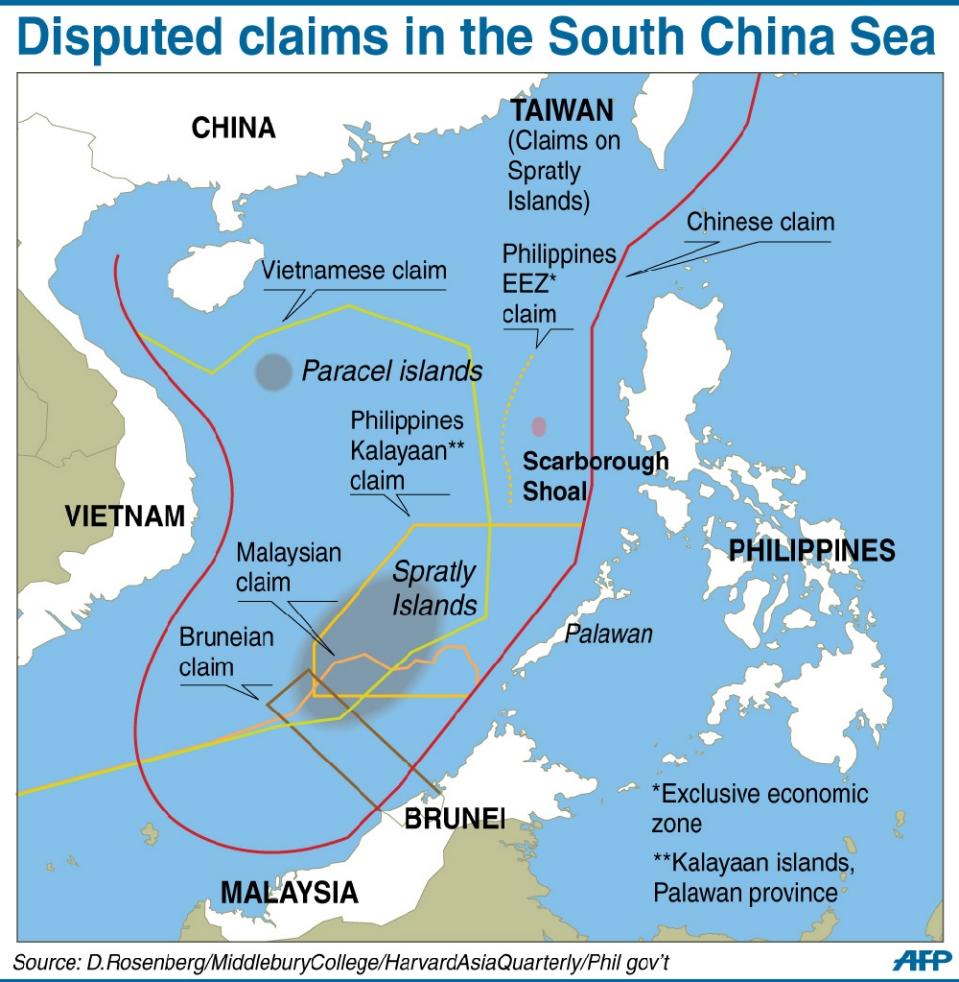
The Evil Red Empire proclaimed by Mao Zedong or Mao Tse-Tung on October 01, 1949 began its existence with ambitious plans to extend its power and influence in all directions. Red China claims that it had released its ‘Nine-Segment Map to demarcate its maritime boundaries.

the evil red empire   THE  RED  DRAGON'S  EXPANSIONISM .
the evil red empire THE RED DRAGON’S EXPANSIONISM .
RED  CHINA  -  EXPANSIONISM  -  SOUTH  CHINA  SEA .
RED CHINA – EXPANSIONISM – SOUTH CHINA SEA .


Red China’s regional neighbors are left with no choice for they are no match to the Red Dragon’s military power. Red China wants to affix its seal of authority and decide its maritime boundaries as if there is no one besides her. While the United States considers its military options to the security threats posed by Red China, I predict the downfall of The Evil Empire using the prophecy revealed by Prophet Isaiah in The Old Testament Book of Isaiah, Chapter 47, verses # 7 to 15:

the evil red empire the fall of evil empire the prophet isaiah
the evil red empire the fall of evil empire  Prediction by   Prophet Isaiah

Please note that Babylon is a byword for Evil and the symbolism of “Babylon The Great” is applicable to The Evil Red Empire, The Red Dragon, The Expansionist, Red China.

“You said, ‘I will continue forever
the eternal queen!’
But you did not consider these things
or reflect on what might happen.”

“Now then, listen, you wanton creature,
lounging in your security
and saying to yourself,
‘I am and there is none besides me.
I will never be a widow
or suffer the loss of children.’

Both of these will overtake you
in a moment, on a single day:
loss of children and widowhood.
They will come upon you in full measure,
in spite of your many sorceries
and all your potent spells.

You have trusted in your wickedness
and have said, ‘No one sees me.’
Your wisdom and knowledge mislead you
When you say to yourself,
‘I am, and there is none besides me.’

Disaster will come upon you,
and you will not know how to conjure it away.
A calamity will fall upon you
that you cannot ward off with a ransom;
a catastrophe you cannot foresee
will suddenly come upon you.

Keep on, then, with your magic spells
and with your many sorceries,
which you have labored at since childhood.
Perhaps you will succeed,
perhaps you will cause terror.

All the counsel you have received has only
worn you out !
Let your astrologers come forward,
those stargazers who make predictions month
by month,
let them save you from what is coming upon you.

Surely they are like stubble;
the fire will burn them up.
They cannot even save themselves
from the power of the flame.
Here are no coals to warm anyone;
here is no fire to sit by.

That is all they can do for you-
these you have labored with
and trafficked with since childhood.
Each of them goes on in his error;
there is not one that can save you.”

Doomsayer of Doom Dooma predicts, Beijing Is Doomed, and there is no one that can save Beijing for its time of reckoning has arrived.

doomsayerofdoomdooma beijingisdoomed asteroid
doomsayerofdoomdooma   beijingisdoomed   asteroid


Rudranarasimham Rebbapragada
Ann Arbor, MI 48104-4162, USA
SPECIALFRONTIERFORCE.ESTABLISHMENT22

US anxious over China’s ‘great wall of sand’

AFP

By Dan De Luce 2 hours ago

This aerial photograph taken from a military aircraft shows alleged on-going reclamation by China on Mischief Reef in the Spratly group of islands in the South China Sea, west of Palawan, on May 11, 2015

Washington (AFP) – The United States is weighing sending warships and surveillance aircraft near artificial islands built by China to challenge Beijing’s territorial claims in the South China Sea, officials said.

But the US officials acknowledge Beijing’s massive land reclamation effort, dubbed by an American naval commander as China’s “great wall of sand,” may be difficult to stop.
The Pentagon is weighing a range of options, including sailing destroyers or other naval ships within 12 nautical miles of the man-made islands, as well as flying P-3 and P-8 surveillance planes overhead, two defense officials told AFP on Wednesday.

The maritime and air patrols would be designed “to demonstrate support for freedom of navigation” and “to reassure our allies,” said one official, who spoke on condition of anonymity.
“We have never recognized these artificial islands as legitimate claims,” the official said.

US officials increasingly believe Washington needs to send a clear signal about China’s dredging activities around the Spratly Islands and other disputed territories, though they want to calibrate any military operation to avoid triggering a crisis.

Officials admitted China has been building at a rapid pace in recent years and that concerns expressed by the United States and regional governments so far have had little effect.
Pentagon officials last week revealed that China is building artificial islands on top of coral reefs at an unprecedented pace. The rapid construction comes to 2,000 acres (800 hectares), with 75 percent of the total just in the last five months.

the evil red empire subi reef 05 11 2015
the evil red empire Subi Reef 05 11 2015

Alleged on-going reclamation by China on Subi Reef is seen from Pagasa Island (Thitu Island), in the …

At four reclamation sites, China has moved from dredging to infrastructure work that could include harbors for larger ships, communications systems and at least one airfield, a Defense Department report said.

“We are actively assessing the military implication of land reclamation and are committed to taking effective and appropriate action,” David Shear, assistant secretary of defense for Asian and Pacific security affairs, told senators Wednesday.

Building on submerged features did not qualify as a recognized territorial claim, he said.
“It is difficult to see how Chinese behavior in particular comports with international law,” he said.

NO CHANGE IN BEHAVIOR:

Washington is concerned China’s increasingly assertive stance could undermine the sovereignty of neighboring nations and undercut America’s naval power in the Pacific.
To try to check Beijing’s expansion in the South China Sea, the United States has backed diplomatic efforts by regional governments to defuse rival territorial claims and bolstered its military profile.

the evil red empire manila protest 05 11 2015

Filipino activists rally outside China’s consular office in Manila on May 11, 2015, against Chin …

Washington has started deploying Littoral Combat Ships to Singapore, increased port calls in and around the South China Sea, stepped up reconnaissance flights and tried to bolster coast guard forces in the area.

But lawmakers told Pentagon and State Department officials that the United States needed a tougher policy and that so far China has shrugged off Washington’s objections.
“I don’t see their behavior changing, It seems to me that in a very short amount of time, they are going to have de facto control of the South China Sea,” said Senator Bob Corker, chairman of the Senate Foreign Relations Committee.

Officials told senators that China has had to back off at times when faced with concerted diplomatic pressure and resistance from neighboring countries.
China was forced to withdraw a giant oil rig last year in disputed waters off of Vietnam’s coast, said David Russel, assistant secretary of state for East Asian and Pacific Affairs.

Beijing pulled back the rig after the move prompted repeated clashes at sea between Chinese vessels deployed to guard it and Vietnamese boats.
China on Wednesday denounced any expansion in the US military’s presence in the area.

“Freedom of navigation does not mean that the military vessels or aircraft of a foreign country can willfully enter the territorial waters or airspace of another country,” Chinese foreign ministry spokeswoman Hua Chunying said in Beijing.

China claims nearly all of the South China Sea, even waters approaching the coasts of its Asian neighbors.
The disputed waters are home to vital global shipping lanes and are believed to be rich in oil and gas.

Washington has flexed its military muscle previously to try to counter what it considers Beijing’s aggressive moves.

Last November, two long-range B-52 bombers flew over China’s newly declared Air Defense Identification Zone (ADIZ) in the East China Sea.

China’s dredging work could ultimately hamper America’s ability to project its military power and heighten the risk of a dangerous miscalculation, said Alexander Sullivan of the Center for a New American Security, a Washington think tank.

“Politically, Chinese control over the South China Sea would strike a major blow to perceptions of US power in Asia, the world’s most consequential region,” Sullivan said.

  • South China Sea
  • China

What to read next

© 2015 AFP

Yahoo – ABC News Network

THE BATTLE OF RIGHT AGAINST MIGHT – TIBETAN UPRISING DAY

56th ANNIVERSARY OF TIBETAN NATIONAL UPRISING DAY ON MARCH 10, 2015 :

THE  BATTLE  OF  RIGHT  AGAINST  MIGHT  :  SEEKING  SOLIDARITY  OF  GLOBAL  COMMUNITY  IN  SUPPORT  OF  FREEDOM  IN  OCCUPIED  TIBET .
THE BATTLE OF RIGHT AGAINST MIGHT : SEEKING SOLIDARITY OF GLOBAL COMMUNITY IN SUPPORT OF FREEDOM IN OCCUPIED TIBET .
THE  BATTLE  OF  RIGHT  AGAINST  MIGHT  : 56TH  ANNIVERSARY  OF  TIBETAN  NATIONAL  UPRISING  DAY .  SEEKING  JUSTICE  IN  OCCUPIED  TIBET .  OCCUPATION  IS  UNJUST,  ILLEGAL , AND  IS  A  LIE  IMPOSED  BY  CHINA .
THE BATTLE OF RIGHT AGAINST MIGHT : 56TH  ANNIVERSARY  OF  TIBETAN  NATIONAL UPRISING DAY . SEEKING JUSTICE IN OCCUPIED TIBET . OCCUPATION IS UNJUST, ILLEGAL , AND IS A LIE IMPOSED BY CHINA .
THE  BATTLE  OF  RIGHT  AGAINST  MIGHT : 56TH  ANNIVERSARY  OF  TIBETAN  NATIONAL  UPRISING  DAY,  MARCH 10,  2015.  SEEKING  PEACE  AND  HARMONY  IN  OCCUPIED  TIBET .
THE BATTLE OF RIGHT AGAINST MIGHT : 56TH ANNIVERSARY OF TIBETAN NATIONAL UPRISING DAY, MARCH 10, 2015. SEEKING PEACE AND HARMONY IN OCCUPIED TIBET .
THE  BATTLE  OF  RIGHT  AGAINST  MIGHT  : 56TH  ANNIVERSARY  OF  TIBETAN  NATIONAL  UPRISING  DAY,  MARCH  10,  2015.  THE  BATTLE  WILL  CONTINUE  TILL  THE  OCCUPIER  IS  EVICTED  FROM  TIBET .
THE BATTLE OF RIGHT AGAINST MIGHT : 56TH ANNIVERSARY OF TIBETAN NATIONAL UPRISING DAY, MARCH 10, 2015. THE BATTLE WILL CONTINUE TILL THE OCCUPIER IS EVICTED FROM TIBET .


WholeDude's avatarWhole Dude - Whole Spirituality

THE  WOLF  AND  THE  LAMB : 

THE TYRANT WILL ALWAYS FIND AN EXCUSE FOR HIS TYRANNY.

This story was told by Aesop, the legendary Greek story-teller. Once upon a time, a Wolf was lapping at a stream. When looking up, the Wolf saw a Lamb just beginning to drink a little down the stream. “There’s my supper,” thought the Wolf. The Lamb looked so very helpless and innocent. The Wolf felt he ought  to have  an excuse for taking its life. Then he called out to the Lamb, “How dare you muddle the water from which I am drinking?” “No, Master, No,” said the Lamb; “if the water be muddy up there, I cannot be the cause of it, for it runs down from you to me.” “Well then,” said the Wolf, “Why did you call me bad names this time last year?” “That cannot be,” said the Lamb, “I am…

View original post 685 more words