NIXON-KISSINGER VIETNAM TREASON – THE CIA’S CANCELLED WAR

NIXON-KISSINGER VIETNAM TREASON – THE CIA’S CANCELLED WAR

NIXON-KISSINGER VIETNAM TREASON – THE CIA’S CANCELLED WAR.

‘TIBET: THE CIA’S CANCELLED WAR’ fails to describe Nixon-Kissinger Vietnam Treason during 1971-72 when Americans were fighting a bloody War in Vietnam against Communists supported by the Soviet Union and Red China. As I was part of this CIA Mission in Tibet, I knew that Tibet and India were willing to help the US by fighting against Communists inside Tibet rather than directly engaging Communists in Vietnam. Tibet and India want to choose their Battlefield in full support of the US Policy to engage and contain the spread of Communism. The Central Intelligence Agency or CIA has no vested powers to wage or fight wars. “The Cancelled War” is simply an act of Treason. The 37th President of the United States chose to provide support and comfort to the Enemy during War waged on behalf of the United States.

In 1971-72, CIA Mission in Tibet never ended. The Mission continued without direct participation of American nationals. I can appreciate CIA’s unwillingness to divulge the truth about its Mission which is always sanctioned by the executive powers vested in the US President. In my analysis, this War will be fought to restore Balance of Power in Southern Asia.

Rudranarasimham, Rebbapragada

DOOM DOOMA DOOMSAYER

TIBET: THE CIA’S CANCELLED WAR

JONATHAN MIRSKY

NIXON-KISSINGER VIETNAM TREASON – CIA’S CANCELLED WAR

Lhamo Tsering Collection

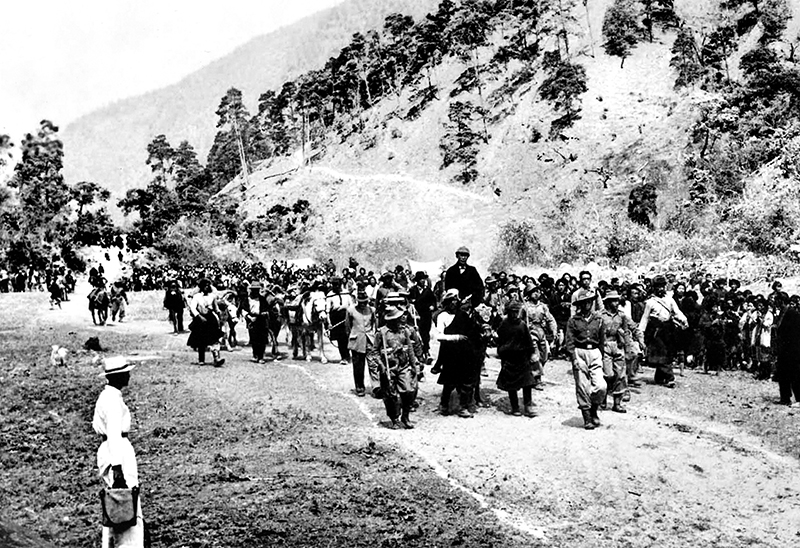
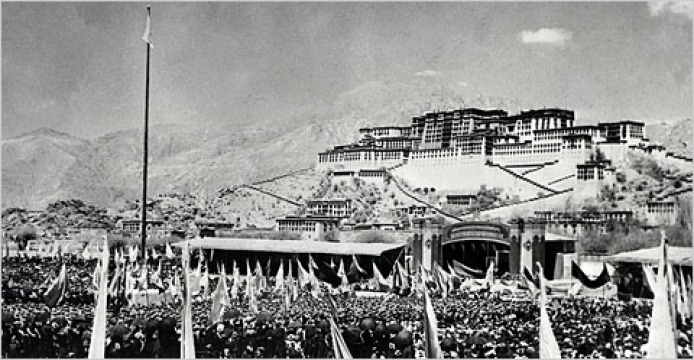
Resistance fighters on the Tibetan border during the early years of the CIA’s Tibet program

For much of the past century, US relations with Tibet have been characterized by kowtowing to the Chinese and hollow good wishes for the Dalai Lama. As early as 1908, William Rockhill, a US diplomat, advised the Thirteenth Dalai Lama that “close and friendly relations with China are absolutely necessary, for Tibet is and must remain a portion of the Ta Ts’ing [Manchu] Empire for its own good.” Not much has changed with the Fourteenth Dalai Lama one hundred years later. After a meeting in 2011 with President Obama in the White House Map Room—the Oval Office being too official—the Dalai Lama has ushered out the back door, past the garbage cans. All this, of course, is intended to avoid condemnation from Beijing, which regards even the mildest criticism of its Tibet policy as “interference.”

However, there was one dramatic departure from the minimalist approach. For nearly two decades after the 1950 Chinese takeover of Tibet, the CIA ran a covert operation designed to train Tibetan insurgents and gather intelligence about the Chinese, as part of its efforts to contain the spread of communism around the world. Though little known today, the program produced at least one spectacular intelligence coup and provided a source of support for the Dalai Lama. On the eve of Richard Nixon’s historic 1972 meeting with Mao, the program was abruptly canceled, thus returning the US to its traditional arms-length policy toward Tibet. But this did not end the long legacy of mistrust that continues to color Chinese-American relations. Not only was the Chinese government aware of the CIA program; in 1992, it published a white paper on the subject. The paper included information drawn from reliable Western sources about the agency’s activities, but laid the primary blame for the insurgency on the “Dalai Lama clique,” a phrase Beijing still uses today.

The insurgency began after the People’s Liberation Army invaded Tibet following its defeat of the Nationalists, and after Beijing forced the Dalai Lama’s government to recognize Chinese administration over the region. In 1955, a group of local Tibetan leaders secretly plotted an armed uprising, and rebellion broke out a year later, with the rebels besieging local government institutions and killing hundreds of government staff as well as Han Chinese people. In May 1957, a rebel organization and a rebel fighting force were founded and began killing communist officials, disrupting communication lines, and attacking institutions and Chinese army troops stationed in the region.

By that point, the rebellion had gained American backing. In the early 1950s, the CIA began to explore ways to aid the Tibetans as part of its growing campaign to contain Communist China. By the second half of the decade, “Project Circus” had been formally launched, Tibetan resistance fighters were being flown abroad for training, and weapons and ammunition were being airdropped at strategic locations inside Tibet. In 1959, the agency opened a secret facility to train Tibetan recruits at Camp Hale near Leadville, Colorado, partly because the location, more than 10,000 feet above sea level, might approximate the terrain of the Himalayas. According to one account, some 170 “Kamba guerrillas” passed through the Colorado program.

While the CIA effort never produced a mass uprising against the Chinese occupiers, it did provide one of the greatest intelligence successes of the Cold War, in the form of a vast trove of Chinese army documents captured by Tibetan fighters and turned over to the CIA in 1961. These revealed the loss of morale among Chinese soldiers, who had learned of the vast famine that was wracking China during The Great Leap Forward. Over the next decade, however, there was growing disagreement in Washington over the CIA’s activities in Tibet, and in 1971, as Henry Kissinger prepared for Nixon’s meeting with Mao, the program was wound down.

“Although Tibet may not have been on the table in the Beijing talks, the era of official US support for the Tibetan cause was over,” recalled John Kenneth Knaus, a forty-year CIA veteran, in his 1999 book Orphans of the Cold War: America and the Tibetan Struggle for Survival. “There was no role for Tibet in Kissinger’s new equation.” By 1975, President Gerald Ford could say to a skeptical Deng Xiaoping, China’s future leader, “Let me assure you, Mr. Vice-Premier, that we oppose and do not support any [United States] governmental action as far as Tibet is concerned.”

Many friends of Tibet and admirers of the Dalai Lama, who has always advocated nonviolence, believe he knew nothing about the CIA program. But Gyalo Thondup, one of the Dalai Lama’s brothers, was closely involved in the operations, and Knaus, who took part in the operation, writes that “Gyalo Thondup kept his brother the Dalai Lama informed of the general terms of the CIA support.” According to Knaus, starting in the late 1950s, the Agency paid the Dalai Lama $15,000 a month. Those payments came to an end in 1974.

In 1999, I asked the Dalai Lama if the CIA operation had been harmful to Tibet. “Yes, that is true,” he replied. The intervention was harmful, he suggested because it was primarily aimed at serving American interests rather than helping the Tibetans in any lasting way. “Once the American policy toward China changed, they stopped their help,” he told me. “Otherwise our struggle could have gone on. Many Tibetans had great expectations of CIA [air] drops, but then the Chinese army came and destroyed them. The Americans had a different agenda from the Tibetans.”

This was exactly right, and the different goals of the Agency and the Tibetans are explored fully by the Tibetan-speaking anthropologist Carole McGranahan in her Arrested Histories: Tibet, the CIA, and Memories of a Forgotten War (2010). Although sometimes clouded by anthropological jargon, her account fascinatingly explores how differently from their American counterparts the Tibetan veterans remember the CIA operation. A striking example is the matter of the Chinese army documents, whose capture in a Tibetan ambush of a high-ranking Chinese officer is depicted in grisly detail in a huge painting in the CIA’s museum in Washington. In addition to revealing low Chinese morale, the documents disclosed the extent of Chinese violence in Tibet. “This information was the only documentary proof the Tibetan government [in exile] had of the Chinese atrocities and was therefore invaluable,” McGranahan notes. Yet the documents and their capture rarely came up during her long interview sessions with the veterans. “Why is it that this achievement, so valued by the US and Tibetan governments, is not remotely as memorable for [the] soldiers?”

One reason is that the Tibetan fighters were told nothing about the value of the documents, which they couldn’t read. One veteran explains to her:

Our soldiers attacked Chinese trucks and seized some documents of the Chinese government. After that, the Americans increased our pay scale. Nobody knew what the contents of those documents were. At that time, questions weren’t asked. If you asked many questions, then others would be suspicious of you.

The leader of the ambush tells her that “as a reward, the CIA gave me an Omega chronograph,” but he, too, had little knowledge of the documents’ importance. As McGranahan shows in extensive detail, the veterans were preoccupied above all by their devotion to the Dalai Lama, whom they wanted to resume his position as supreme leader of an independent Tibet.

After the CIA mission was ended, Tibet became increasingly marginal to Washington’s China policy, as Knaus has now made clear in a second book, Beyond Shangri-la: America and Tibet’s Move into the Twenty-First Century. The reality is that American presidents now face a world power in Beijing. In language that sums up the cats-cradle of American justifications for ignoring Tibet, ex-Assistant Secretary of State for East Asia Marshall Green recalls to Knaus, “there was nothing we could do to help the Tibetans except by improving our relations with the Chinese Communists so that we might be in a position to exert pressure on them to moderate their policies towards the Tibetans.” Green “admitted that this was ‘perhaps a rationalization.'”

President Obama will soon meet the new Chinese leader, Xi Jinping. His advisers will have reminded him of the encounter between his predecessor, Bill Clinton, and then-Chinese president Jiang Zemin on June 27, 1998. In that meeting, Clinton assured Jiang that, “I agree that Tibet is a part of China, an autonomous region of China. And I can understand why the acknowledgment of that would be a precondition of dialog with the Dalai Lama.” Banking on his well-known charm, Mr. Clinton added, “I have spent time with the Dalai Lama. I believe him to be an honest man, and I believe if he had a conversation with President Jiang, they would like each other very much.” Jiang, it is reported, threw back his head and laughed. Clinton’s suggestion was omitted from the official Chinese transcript.

April 9, 2013, 2:29 pm


© 1963-2017 NYREV, Inc. All rights reserved.
NIXON-KISSINGER VIETNAM TREASON – CIA’S CANCELLED WAR.

Special Service Award without Service Weapon

Silver Plate presented by all Officers, D-Sector, Establishment 22 in appreciation of my Service in the North East Frontier Agency/Arunachal Pradesh in January 1973

Excerpt: I love the Service Award I earned at Doom Dooma without using any Service Weapon. I love Doom Dooma for the opportunity it gave to me to demonstrate my commitment to serve the men who serve our country without any concern for my personal safety.

Sainya Seva Medal. Service Award without Service Weapon.

SAINYA  SEVA MEDAL

The Government of India awards Sainya Seva  Medal to Service Personnel serving in Indian Armed Forces in recognition of ‘non-operational’ services under conditions of special hardship and severe climate. The bar or clasp shows the words ” NEFA ” in Hindi. To qualify for this award, an aggregate of one- year service in the North-East Frontier Agency (NEFA) is required. The Medal shows an image of Nanda Devi Himalayan mountain peak with a bamboo stand in the foreground.

REMEMBERING A WAR:THE 1962 INDIA-CHINA WAR: This is a photo image taken in 1972, ten years after the 1962 War, while I had proudly served the Nation in North East Frontier Agency. There was no schism or division among the Officers Corps. The Men and the Officers were totally united and were fully motivated to fight the Enemy and we had patrolled the border along the McMahon Line and went beyond the border for Operational reasons. There was no Fear and we were Prepared for the Challenge.

I am proud of my military service in North East Frontier Agency (renamed Arunachal Pradesh) for several reasons. These are;

Special Frontier Force – Sainya Seva Medal – Service Award without Service Weapon

In 1962, Communist China’s War of  Aggression across Himalayan Frontier motivated me to Resist, to Oppose and to Fight against Red China’s military threat posed from Occupied Tibet. 54 Years after the 1962 War, India is unwilling to part with her territory. India lost control of her territory in the Ladakh region as Tibet still remains under Chinese occupation.

REMEMBERING THE 1962 INDIA – CHINA WAR: The McMahon Line in India’s North East Frontier Agency or the State of Arunachal Pradesh. The Top Secret of 1962 War is the number of Chinese soldiers that were killed and injured during their military attack. Communist China must take courage and admit the true numbers. This War was not a total loss. India learned its lesson. We had a spectacular Military Victory in 1971 during our Bangladesh Liberation War.

Fortunately, in the North-East Himalayan Sector, India retains control over territory which we initially lost in the 1962 War. In 1972, I was very glad to serve in this area for one complete year and I could personally witness the fact that India is fully prepared to fight against Red China one more time. We are willing to do our best to keep ‘NEFA’ (Arunachal Pradesh) under our control whatever may be the Chinese threats protests, and claims to territory she calls “Southern Tibet.” China, apart from the illegal military occupation of Tibet, claims Indian territory publishing maps showing international borders. In recent years, China refused to issue a visa to an Officer of the Indian Administrative Service who had earlier served in this region.

Special Frontier Force – Sainya Seva Medal – Service Award without Service Weapon

The tensions still exist and I am glad for we are better prepared now and if war is inevitable, we welcome that challenge. To serve in NEFA, I was stationed at Doom Dooma, Tinsukia District, Assam. When I first arrived in Doom Dooma to join my Unit, the first thing that I was told by my Unit Adjutant was, ” Rudra, if you need a copy of your most recent photo, ask the Chinese Intelligence, and they could provide you one.” The Chinese Intelligence operatives or spies keep tabs on each Officer who is entering this area while keeping a close watch on our movements.

To my utter surprise, my Indian Army Picture ID Card stolen during 1972 resurfaces in the Indian Movie titled TE3N. Doomsayer of Doom Dooma earns Sainya Seva Medal – Service Award Without Service Weapon.

We are neither threatened nor intimidated by this kind of Chinese surveillance. We want to assure China that we will not be deterred by their superior Intelligence capabilities.

Special Frontier Force – Sainya Seva Medal. Service Award without Service Weapon.

I arrived in Doom Dooma without my Service Weapon issued by Indian Army as I am expected to participate in operations not known to Indian Army.

Special Frontier Force – Sainya Seva Medal – Service Award without Service Weapon. Doomed Gun of Doom Dooma

My Unit in Doom Dooma is fully armed and equipped by the United States. While I arrived in Doom Dooma, US President Richard M. Nixon arrived in Peking seeking Communist Party Chairman Mao Zedong’s hand in friendship.

Special Frontier Force – Sainya Seva Medal – Service Award without Service Weapon. Richard Nixon Visits China. The Last Week of February 1972 My Life Doomed.

I was not amused. I had no choice, no alternative for providing Military Service using the US Infantry Weapon for my personal protection. At Doom Dooma, I am predestined to oppose Red China without access to any Service Weapon. I moved around in NEFA performing military tasks sanctioned by my Unit without carrying any Military Weapon.

Indian Army’s Commitment to its Men:

In the Indian Army, we take pride in looking after our men and very often we stretch ourselves to do our best to safeguard the welfare of our men even under the most difficult circumstances. And we maintain this attitude while extending help to others who may not be members of our Service.

I remember my visit to a Forward Company location when a Sub-Inspector of Police came to me asking for medical attention. He belonged to the Central Reserve Protection Force and was dispatched to this difficult area without any prior health screening. I will not be surprised if the same thing is happening today. We deploy police personnel to work in remote areas and we do not care and value their services. This Police Officer was not medically fit to serve in this area and no attempt was made to ascertain his physical fitness to perform the task for which he was sent. Fortunately, he survived the long trek and the very difficult and physically challenging climb to reach the Village where I am camping. The Village has a Government Clinic and as there was no Doctor posted at the Clinic, I was voluntarily providing services to all civilians residing in that area.

I examined him and found his blood pressure to be very high and he was at great risk of suffering from a stroke which could be fatal or cause paralysis. Apparently, he had undiagnosed high blood pressure for a long time and I could also find evidence that his kidneys were already damaged. To bring his blood pressure under control, he needed immediate hospital treatment and required emergency medical evacuation.

His Police Department never cared to inquire about his well-being before giving him the posting order. Whereas in the Armed Forces, we routinely interview the men and get them medically examined before they are sent to difficult areas.

I prepared a note about his medical condition and the Signal Company Operators immediately dispatched this message. Within minutes, my request for Emergency Medical Evacuation was approved. Doom Dooma Air Force Station was asked to send a helicopter. After a short while, I received a call from the helicopter pilot who spoke to me on his radio and informed me that he was sitting in his helicopter and was ready to take off as soon as the weather permits. That was a particularly, rainy and cloudy day with very poor visibility and the mission was really challenging. The pilot had assured me that he would fly in spite of all odds and would pick up my patient. The control tower was closely monitoring the clouds and they were waiting for a window of opportunity to make this trip while the cloud system moves through the mountain valley. He had asked me to keep the patient ready at the helipad and that he would not be able to spend even an extra minute on the ground. 

Special Frontier Force – Sainya Seva Medal – Service Award without Service Weapon. Mi- 4 Helicopter provided airlift service for our operations in NEFA (Arunachal Pradesh)

Instantly, the whole scenario at my Company location got transformed. The day started on a very dull note. It was raining and there was dense fog. Suddenly, everybody got busy. As per standing orders, armed men were sent to secure our landing strip, weather signs were posted, the helipad was marked with fresh paint. Equipment for Fire-Fighting and Smoke Signaling were positioned on the ground. We erected a small shelter for the patient to rest while awaiting evacuation. A Sub-Inspector of Police suddenly became the focus of attention literally transforming him into a ‘VIP’ or Very Important Person. He was worried about his senior officers who dispatched him to this station. He was concerned that he might offend them by leaving his duty station without their prior permission. I reassured him and told him that the Indian Army would accept total responsibility for sending him to the hospital. I informed him that we value him and care for his well-being and that we would not expect any person to perform duty when their personal health is at risk. 

The pilot made the bold trip as promised and safely transported him to Service Hospital at Air Force Station, Jorhat. The Sub-Inspector of Police told me that he would never forget this particular day of his life on which he could directly experience the sense of urgency with which we acted and treated him as if he is the most precious thing on earth.

I love the Service Award I earned at Doom Dooma without using any Service Weapon. I love Doom Dooma for the opportunity it gave to me to demonstrate my commitment to serve the men who serve our country without any concern for my personal safety.

Doomsayer of Doom Dooma Earns Bharat Sarkar, Indian Army Sainya Seva Medal -Service Award for Military Service Without Military Service Weapon.
Doomsayer of Doom Dooma Earns Sainya Seva Medal – Service Award Without Service Weapon.
Doomsayer of Doom Dooma Earns Sainya Seva Medal – Service Award Without Service Weapon. Walong War Memorial.
Special Frontier Force – Sainya Seva Medal – Service Award without Service Weapon.
During 1962 Chinese aggression Indian Army had valiantly resisted the enemy’s attack in a historical battle at Namti Plains, near Walong, Arunachal Pradesh.
Special Frontier Force – Lohit River: “WALONG WILL NEVER FALL AGAIN.”
Special Frontier Force – Sainya Seva Medal – Service Award without Service Weapon

UNENDING STORY OF RED TERROR IN TIBET – 1961 INTERVIEW WITH THE DALAI LAMA

UNENDING STORY OF RED TERROR IN TIBET – 1961 INTERVIEW WITH THE DALAI LAMA

UNENDING STORY OF RED TERROR IN TIBET  DALAI LAMA LIVES IN EXILE SINCE MARCH 1959.

US News interviewed the Dalai Lama in 1961 in which he shared aspects of Red Terror in Tibet. Tibetans suffered lot more during the years of Cultural Revolution which may have concluded in China after death of Communist Party Chairman Mao Zedong. As far as Tibetans are concerned, the story of Red Terror has remained the same with new dimensions that Dalai Lama could not foresee in 1961.

Rudranarasimham Rebbapragada
Ann Arbor, MI 48104-4162 USA
SPECIAL FRONTIER FORCE

usn-logo-large.svg

The Red Terror in Tibet: 1961 Interview With the Dalai Lama

In a 1961 Q&A with U.S. News, the Dalai Lama described Red China’s movements in Tibet.

By U.S. NEWS STAFF June 15, 2016, at 12:42 p.m.

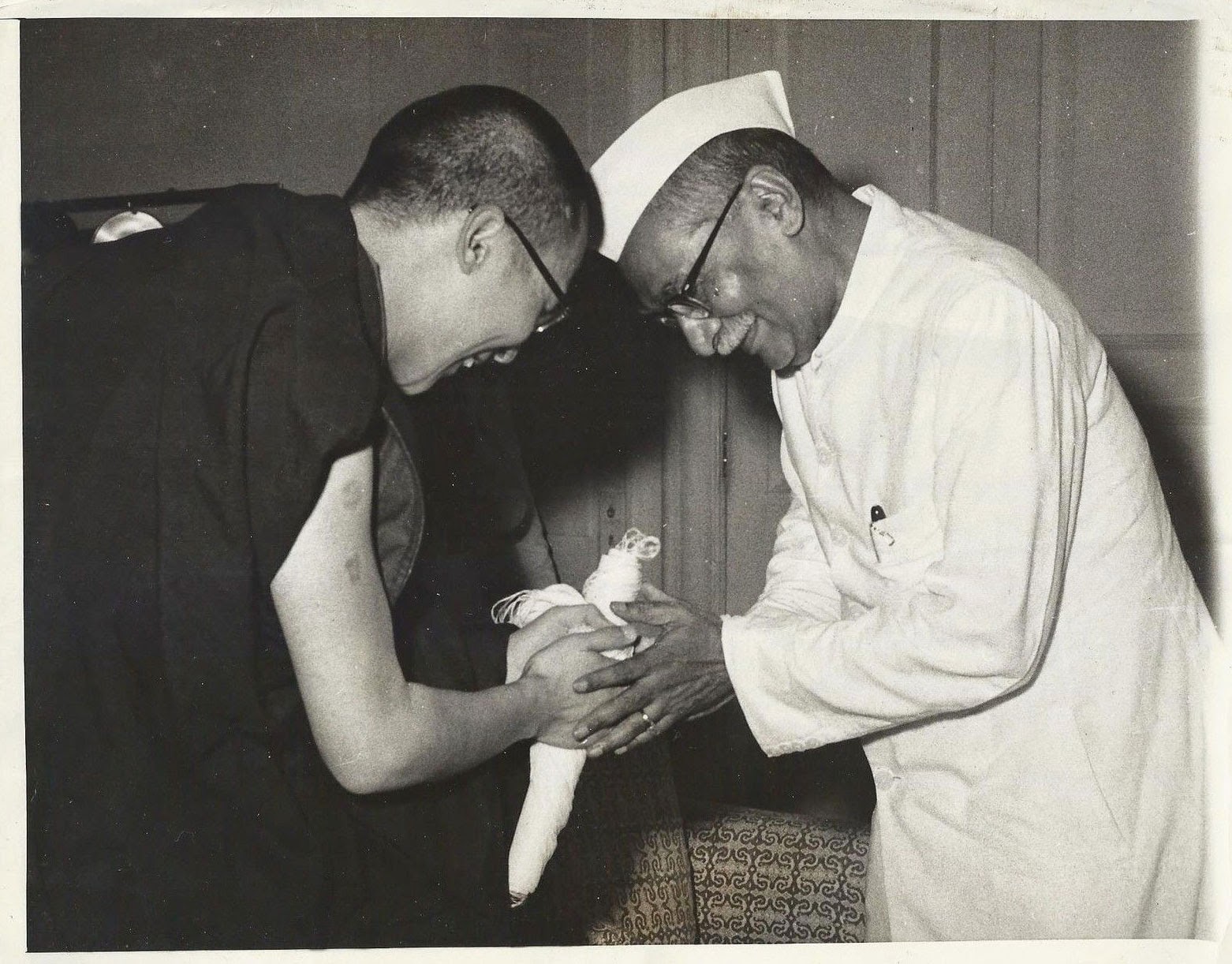
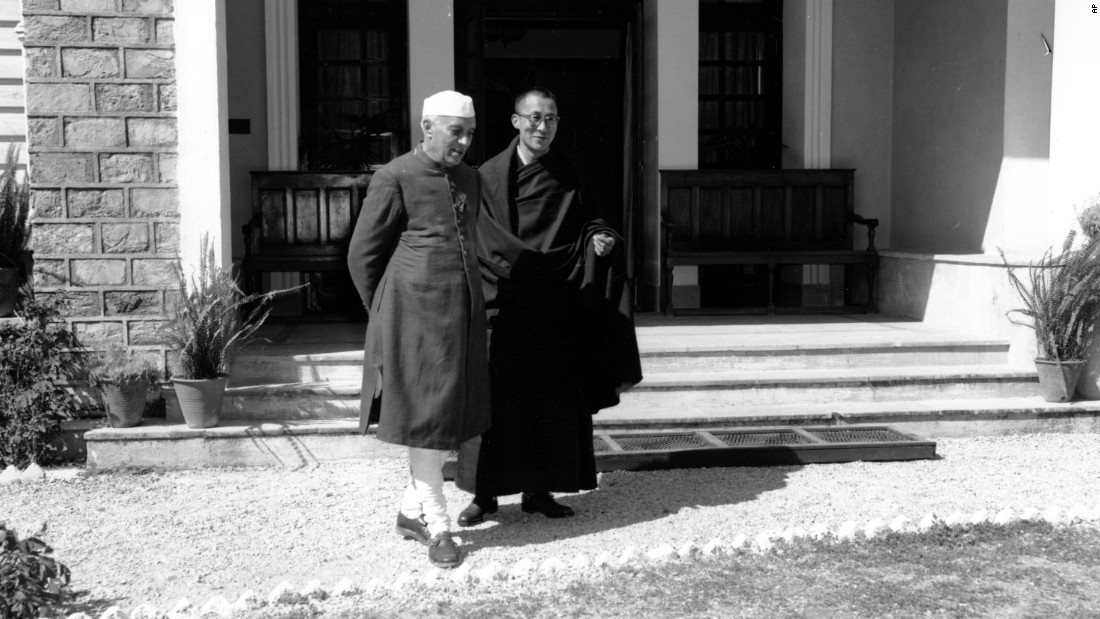
UNENDING STORY OF RED TERROR IN TIBET. DALAI LAMA WITH INDIAN PRIME MINISTER JAWAHARLAL NEHRU ON APRIL 22, 1961.

Prime Minister Jawaharlal Nehru clasps hands as he and the Dalai Lama, god-king of Tibet, meet at Nehru’s New Delhi, India, residence on April 22, 1961, to discuss rehabilitating an estimated 50,000 refugees who fled Tibet when red China took over in 1959. The Dalai Lama is now living in exile in India. (AP)


This article originally appeared in the April 24, 1961, edition of U.S. News & World Report.

At a time when Communists are denouncing “colonialism” and “imperialism”—

Take a look at what Red China is doing in its captive “colony” of Tibet.

Communists shot their way in, now are systematically “absorbing” that ancient land.

To get the story of what Red colonizers are doing, a member of the staff of “U. S. News & World Report” journeyed into the highlands of Northern India for this exclusive interview with the Dalai Lama, Tibet’s spiritual ruler—now a refugee from the Communists.

DHARMSALA, India—

Q Your Holiness, are Tibetans being forced out of Tibet?

A In some places, yes—in Northern and Eastern Tibet.

Q How many have been deported?

A I cannot give you an exact figure, but it would run to at least 15,000.

Dalai Lama and Obama to Meet Wednesday, Amid Chinese Criticism

The Chinese foreign ministry vociferously objected to the meeting.

Q Have they been replaced by Chinese settlers?

A Many more Chinese settlers than that have come into Tibet.

Q What sort of settlers?

A All types, but mostly soldiers. Tibetans usually divide them into two types—”yellow” Chinese and “blue” Chinese. “Blue” Chinese are officials and villagers. “Yellow” Chinese are troops. Recently some Tibetans came here from Lhasa and they told me there were more “yellow” Chinese in Tibet.

Q What’s taking place inside the country?

A People are all frightened and tense—always afraid they won’t finish tasks the Chinese have given them to do. The worry about famine.

There’s a saying in Tibet, “We are sitting on a thorn.” Now all Tibet is sitting on a thorn—and anyone who moves is hurt. It’s not just a matter of political rights. Their human right are being suppressed, too.

Q In what way?

A They’re having to undergo all types of forced labor. For 20 hours a day, people in Tibet must work and listen to Communist propaganda. Two or three men have to do the work that once was done by two mules, hauling stones in mule carts—

Q Do you mean people instead of mules now pull carts?

A Yes, as a form of torture. Some haul stones, others have to carry baskets of dirt. The normal quota for one day is 250 baskets, but some have to carry 300 baskets a day. Many of these people have developed sores on their backs. This is something that was never known in Tibet before.

Q What kind of food are Tibetan people getting?

A They get worse food than the animals do. People who come from Lhasa have brought samples of the food they get—a mixture of grains and meal which they mix with water and form into a cake. They get about two small teacups of this per day. Sometimes in place of grain they get two teacups of beans.

10 Things You Didn’t Know About the Dalai Lam

Compiled by the U.S.News & World Report library staff.

Q What kinds of military activities are going on in Tibet?

A They’ve built very good roads—a network of roads. In some areas of Western Tibet they’ve built airfields.

Q Have you heard any reports of restlessness among the Chinese troops?

A I believe this to be true. The reason is that, since 1958, some Chinese soldiers and officers have joined resistance troops in Tibet.

Q Is the resistance underground operating effectively?

A Yes. Out of sheer desperation—as long as oppression goes on, out of sheer desperation there will be resistance.

Q What do they fight with? How are they armed?

A The only weapons they possess are those they’ve managed to capture from the Chinese. They have guns, but they’ve even been using slingshots, spears, knives and swords.

Q Have there been any pitched battles?

A Yes, there have been many.

Q What’s happening to religion inside Tibet?

A The Chinese are using two principal methods against religion:

Firstly, they’re trying to obliterate the existing ancient religion by attacking religious leaders; they’ve murdered several and sent others to forced labor. You may have heard of our famous monasteries—Drepung, Sera, Ganden. At one of these, Sera, there used to be about 8,000 monks. Now there are only two or three hundred left. Where have the others gone? Some to forced labor, some to China, some killed, some to prison.

Secondly, as regards our sacred texts and images, only some have been preserved in Lhasa to show foreign visitors. Images made of brass or gold or silver have been melted. Those made of clay have been thrown away. Sacred texts have been used as shoe soles or burned. So religion is being destroyed.

Copyright 2016 © U.S. News & World Report L.P.

Unending story of Red Terror in Tibet. Dalai Lama in Exile since 1959.


Unending Story of Red Terror in Tibet. Dalai Lama lives in Exile since March 1959. His Journey into Exile.

Unending Story of Red Terror in Tibet. Dalai Lama Lives in Exile Since March 1959.


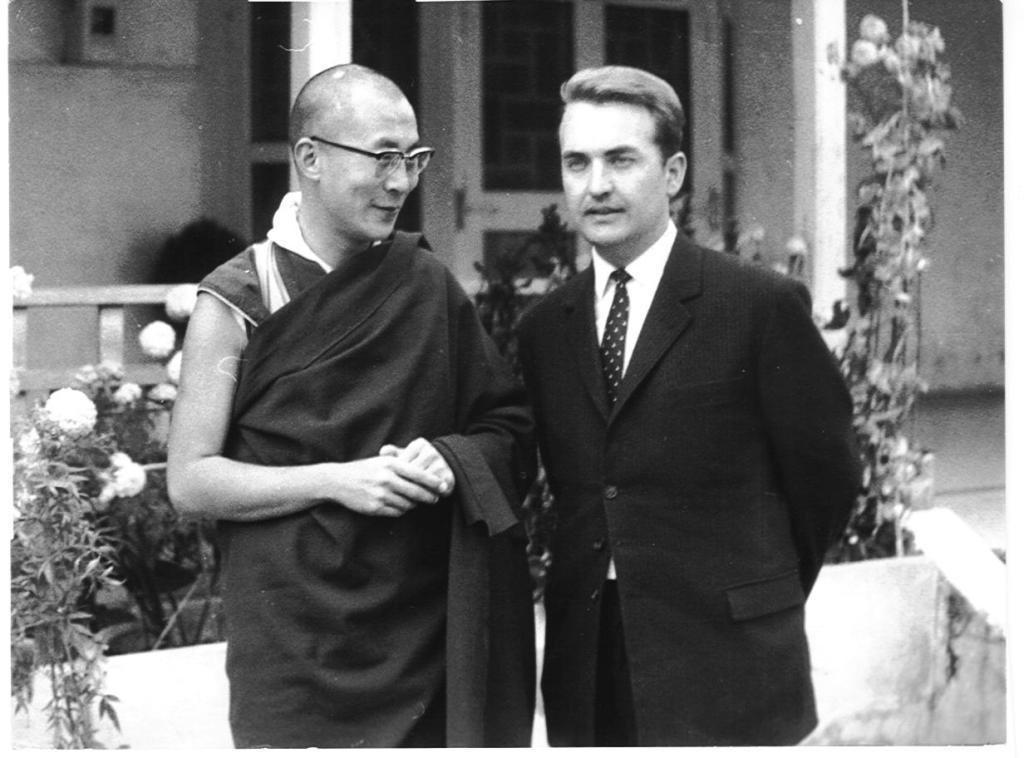
Unending Story of Red Terror in Tibet. Dalai Lama Lives in Exile Since March 1959. Picture taken in 1967.


Unending Story of Red Terror in Tibet. Dalai Lama Lives in Exile Since March 1959.

Unending Story of Red Terror in Tibet. Dalai Lama’s Journey into Exile began in March 1959.

Unending Story of Red Terror in Tibet. Dalai Lama Lives in Exile Since March 1959.


Unending Story of Red Terror in Tibet. Dalai Lama Lives in Exile Since March 1959. Photo taken in May 1959.

Unending Story of Red Terror in Tibet. Dalai Lama Lives in Exile since March 1959. Photo taken in 1959 with Indian President Dr. Babu Rajendra Prasad.

Unending Story of Red Terror in Tibet. Dalai Lama Lives in Exile since March 1959.

Unending Story of Red Terror in Tibet. Dalai Lama Lives in Exile Since March 1959.

Unending Story of Red Terror in Tibet. Dalai Lama’s Journey into Exile began in March 1959.

Unending Story of Red Terror in Tibet. Dalai Lama Lives in Exile Since March 1959.

Unending Story of Red Terror in Tibet. Dalai Lama Lives in Exile Since March 1959.

Unending Story of Red Terror in Tibet. Dalai Lama Lives in Exile Since March 1959.


Unending Story of Red Terror in Tibet. Dalai Lama Lives in Exile Since March 1959.

Unending Story of Red Terror in Tibet. Dalai Lama Lives in Exile Since March 1959. Seen with Indian Prime Minister Jawaharlal Nehru.

Unending Story of Red Terror in Tibet. Dalai Lama Lives in Exile Since 1959. Seen with Maharaja of Sikkim.

Unending Story of Red Terror in Tibet. Dalai Lama Lives in Exile Since March 1959.


Unending Story of Red Terror in Tibet. Dalai Lama Lives in Exile Since march 1959.

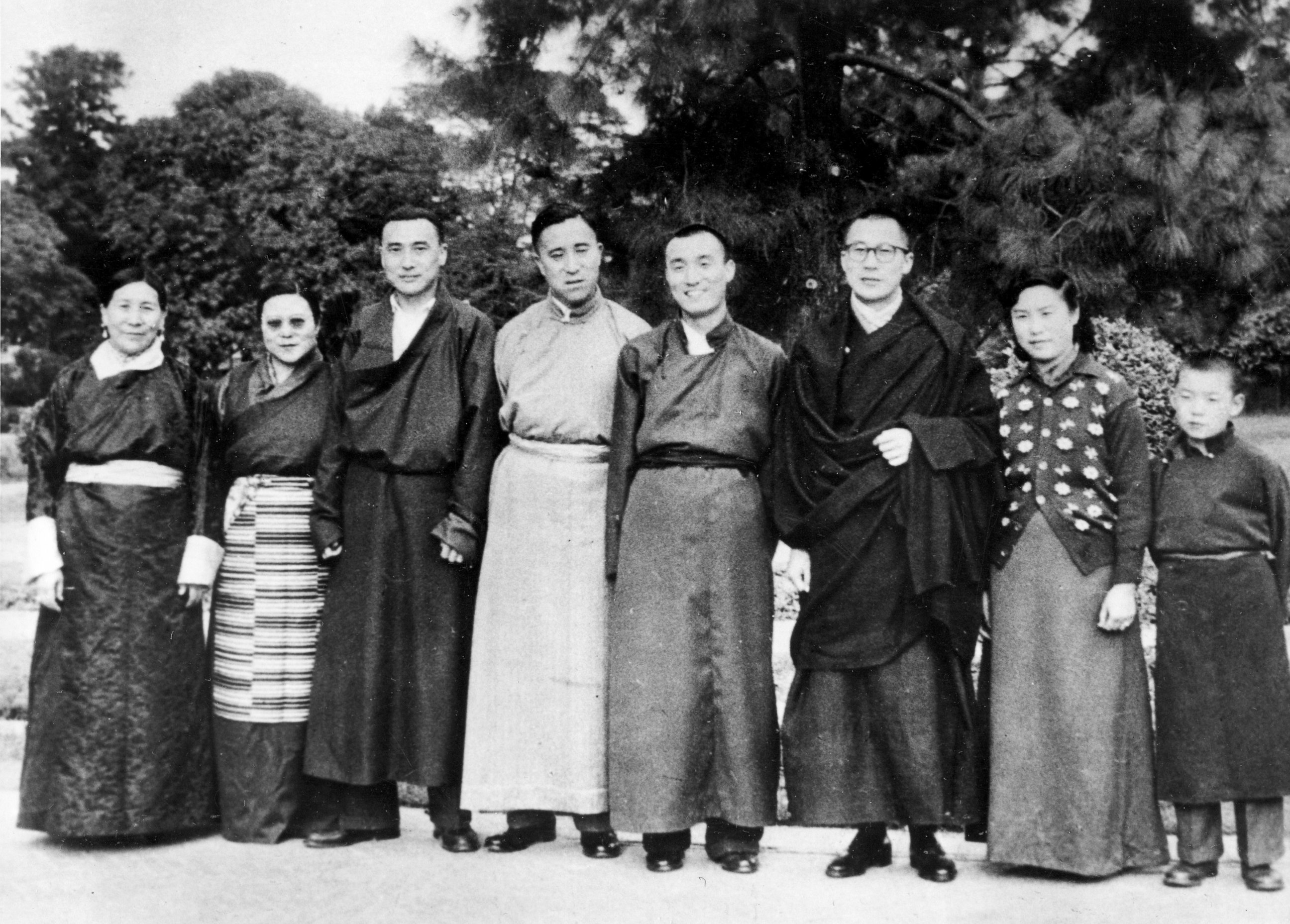
Unending Story of Red Terror in Tibet. Chinese Vive-Premier Chen Yi with Dalai Lama and Panchen Lama. Dalai Lama forced into Exile in March 1959.

Unending Story of Red Terror in Tibet. Dalai Lama’s Journey into Exile began in March 1959.

Unending Story of Red Terror in Tibet. Dalai Lama Lives in Exile Since National Tibetan Uprising of March 1959. 

Unending Story of Red Terror in Tibet. Dalai Lama Lives in Exile Since March 1959.

Unending Story of Red Terror in Tibet. Dalai Lama forced into Exile in March 1959.

Unending Story of Red Terror in Tibet. Dalai Lama’s Journey into Exile began in March 1959.

Unending Story of Red Terror in Tibet. Dalai Lama Lives in Exile Since March 1959.

Unending Story of Red Terror in Tibet. Dalai Lama Lives in Exile Since March 1959.

Unending Story of Red Terror in Tibet. Dalai Lama’s Journey into Exile began in March 1959.

Unending Story of Red Terror in Tibet. Dalai Lama Lives in Exile Since March 1959.

Unending Story of Red Terror in Tibet. Dalai Lama Lives in Exile Since March 1959.

Unending Story of Red Terror in Tibet. Dalai Lama Lives in Exile Since March 1959.

Unending Story of Red Terror in Tibet. Dalai Lama’s Journey into Exile began in March 1959.

Unending Story of Red Terror in Tibet. Dalai Lama Forced to Live in Exile Since March 1959.

Unending Story of Red Terror in Tibet. Dalai Lama’s Journey into Exile began in March, 1959.

Unending Story of Red Terror in Tibet. Dalai Lama Lives in Exile Since March 1959.

Unending Story of Red Terror in Tibet. Dalai Lama Lives in Exile Since March 1959.


Unending Story of Red Terror in Tibet. Dalai Lama’s Journey into Exile began in March 1959.

Unending Story of Red Terror in Tibet. Dalai Lama Lives in Exile Since March 1959. Seen with Indian Vice President Dr Sarvepalli Radhakrishnan.On wholedude.com

Unending Story of Red Terror in Tibet. Dalai Lama was forced into exile after failed Tibetan Uprising of March 1959.

Unending Story of Red Terror in Tibet. Dalai Lama’s Journey into Exile began in March 1959.

Unending Story of Red Terror in Tibet. Dalai Lama’s Journey into Exile began in March 1959.

UNENDING STORY OF RED TERROR IN TIBET. THE DALAI LAMA (TENZIN GYATSO) LIVING IN EXILE SINCE MARCH 1959.


RED CHINA – RED ALERT – RED DRAGON COVETS ARCTIC

RED CHINA – RED ALERT – RED DRAGON COVETS ARCTIC

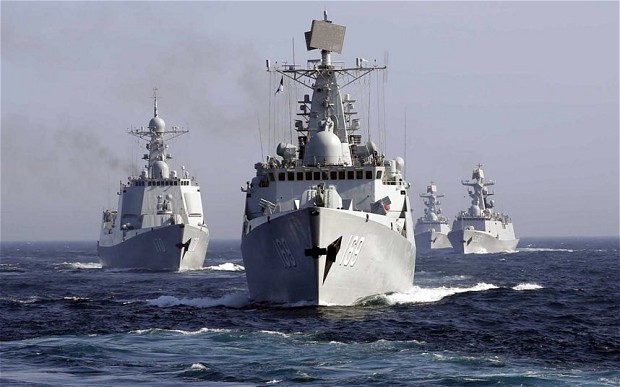
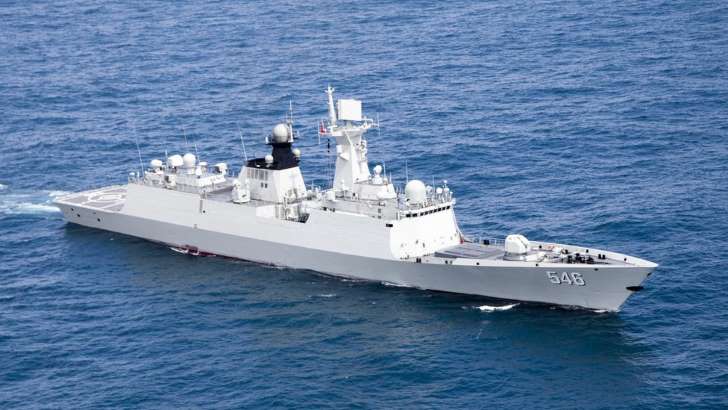
RED CHINA - RED ALERT - RED DRAGON COVETS ARCTIC: CHINESE NAVY DESTROYER WUHAN LEADS  FIVE-SHIP SURFACE ACTION GROUP FROM CHINESE PEOPLE'S LIBERATION ARMY NAVY OR PLAN AS THEY MOVE INTO BERING SEA FOR THE FIRST TIME IN US HISTORY.
RED CHINA – RED ALERT – RED DRAGON COVETS ARCTIC: CHINESE NAVY DESTROYER WUHAN LEADS FIVE-SHIP SURFACE ACTION GROUP FROM CHINESE PEOPLE’S LIBERATION ARMY NAVY OR PLAN AS THEY MOVE INTO BERING SEA FOR THE FIRST TIME IN US HISTORY.

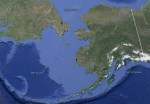
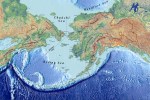
Five-ship Surface Action Group, three combat ships, a resupply vessel, and an amphibious ship, from Chinese People’s Liberation Army Navy or ‘PLAN’ for the first time in US history are spotted in Bering Sea while US President Barack Obama is visiting Alaska.

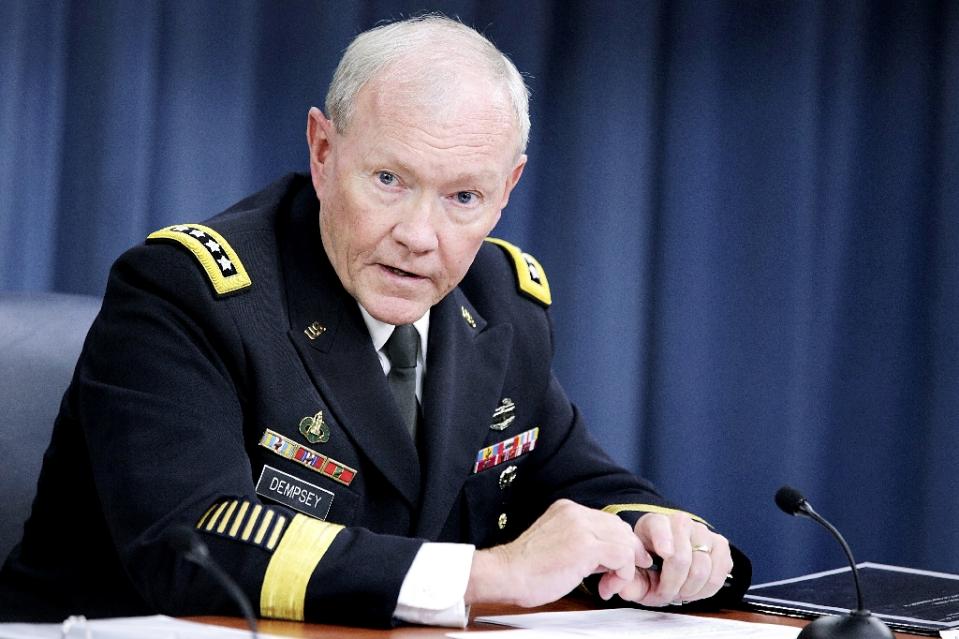
RED CHINA - RED ALERT - RED DRAGON COVETS ARCTIC. US JOINT CHIEFS OF STAFF GENERAL MARTIN DEMPSEY BRIEFED NEWS MEDIA AND FAILED TO ACKNOWLEDGE RED DRAGON'S INTENTIONS IN BERING SEA AND IN ARCTIC OCEAN.
RED CHINA – RED ALERT – RED DRAGON COVETS ARCTIC. US JOINT CHIEFS OF STAFF GENERAL MARTIN DEMPSEY BRIEFED NEWS MEDIA AND FAILED TO ACKNOWLEDGE RED DRAGON’S INTENTIONS IN BERING SEA AND IN ARCTIC OCEAN.

US General Martin Dempsey assured news media that these Chinese navy vessels do not pose any threat to United States while they use international waters in close proximity to Alaska. Some news analysts have speculated that Red China is flexing her muscles to retaliate for US naval presence in South China Sea. In my view, Red Dragon covets Arctic to exploit its vast energy resources. Red China’s policy of Economic Expansionism aims at controlling world’s natural resources for her own economic advantage and to dominate nations of the world.

Rudranarasimham Rebbapragada
Ann Arbor, MI 48104-4162, USA
SPECIALFRONTIERFORCE.ESTABLISHMENT22

 
  image          
The Spirits of Special Frontier ForceAt Special Frontier Force, I host ‘The Living Tibetan Spirits’ to promote Tibet Awareness. 
 
View on www.facebook.com


CHINESE NAVY SHIPS SEEN OFF US COAST

BBC NEWS

red navy yancheng missile frigate1
RED CHINA – RED ALERT – RED DRAGON COVETS ARCTIC:  Red Navy Missile Frigate Yancheng. 

© Getty Images Chinese missile frigate, the Yancheng, sailing in an undisclosed location in undated photo

Five Chinese naval ships are currently positioned in the Bering Sea off the coast of Alaska, US officials confirm.
It is believed to be the first time Chinese military vessels have been seen operating in the area.

Officials say they have been monitoring the ships’ activities, but said they were operating in international waters.
In recent years Beijing has taken a more assertive stance on maritime territorial disputes with Japan and South East Asian nations.

‘Not threatening’

US defence officials have spotted three Chinese combat ships, a supply vessel and an amphibious ship moving toward the Aleutian Islands which is split between Russian and US control, according to the Wall Street Journal.

They were seen not far from where US President Barack Obama is visiting as part of his three-day tour of Alaska to raise awareness of the effects of climate change on the state.

“We are aware of the five People’s Liberation Army Navy (PLAN) ships in the Bering Sea. This is the first time we have observed PLAN ships in the Bering Sea,” US defence department spokesman Bill Urban told the BBC on Wednesday.

“We respect the freedom of all nations to operate military vessels in international waters in accordance with international law,” he said.

Another official told the Wall Street Journal the defence department did not “characterise anything they’re doing as threatening”.
Peter Dutton, director of the China Maritime Studies Institute, described it as a big advancement in the way Chinese ships operate.

But, he tells the BBC, “it’s not a surprise in a sense that the Chinese have been continually expanding their presence in Eurasia”.

“They have conducted exercises with Russia in the Mediterranean and in the Sea of Japan… they have interest in the northern sea route so to see them off the coast of Alaska is the next evolutionary step along these lines.”

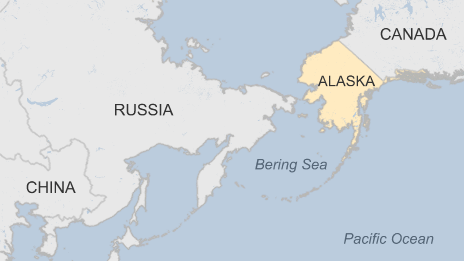
RED CHINA - RED ALERT - RED DRAGON COVETS ARCTIC: WHAT ARE RED CHINA'S TRUE INTENTIONS IN BERING SEA???
RED CHINA – RED ALERT – RED DRAGON COVETS ARCTIC: WHAT ARE RED CHINA’S TRUE INTENTIONS IN BERING SEA???

© BBC Map of region showing Alaska, Russia and China – 3 September 2015

Patrick Cronin, of the Center for a New American Security, agrees, saying: “It’s part of a pattern over the last six years or so of China getting tougher in maritime space.”
China wants to rewrite international maritime laws so that they are more favourable to its own interests, particularly in the South China Sea where rival countries are wrangling over territory, Mr Cronin adds.

China this year boosted its defence spending in a bid to modernise its forces, including developing stealth fighters and anti-satellite missiles, a move that has unnerved the US and its allies in the Asia-Pacific region.

President Xi Jinping will on Thursday preside over an enormous military parade in Beijing in commemoration of China’s World War Two victory over Japan 70 years ago.


RED DRAGON – RED CHINA – IMPERIALIST

RED DRAGON – RED CHINA – IMPERIALIST

red china west philippine sea aggression fiery cross reef
RED DRAGON – RED CHINA  West Philippine Sea Aggression –  Fiery Cross Reef

Red China’s passionate desire to exercise power and influence over her weaker regional neighbors has undermined the prospects for Peace, Security, and Stability in Southeast Asia since 1950s.

Rudranarasimham Rebbapragada
Ann Arbor, MI 48104-4162, USA
SPECIALFRONTIERFORCE.ESTABLISHMENT22

 
  image          
The Spirits of Special Frontier ForceAt Special Frontier Force, I host ‘The Living Tibetan Spirits’ to promote Tibet Awareness. I…
 
View on www.facebook.com Preview by Yahoo


SE Asia warns of ‘increased tensions’ over S. China Sea

AFP

By Nicolas Revise August 6, 2015 1:40 PM


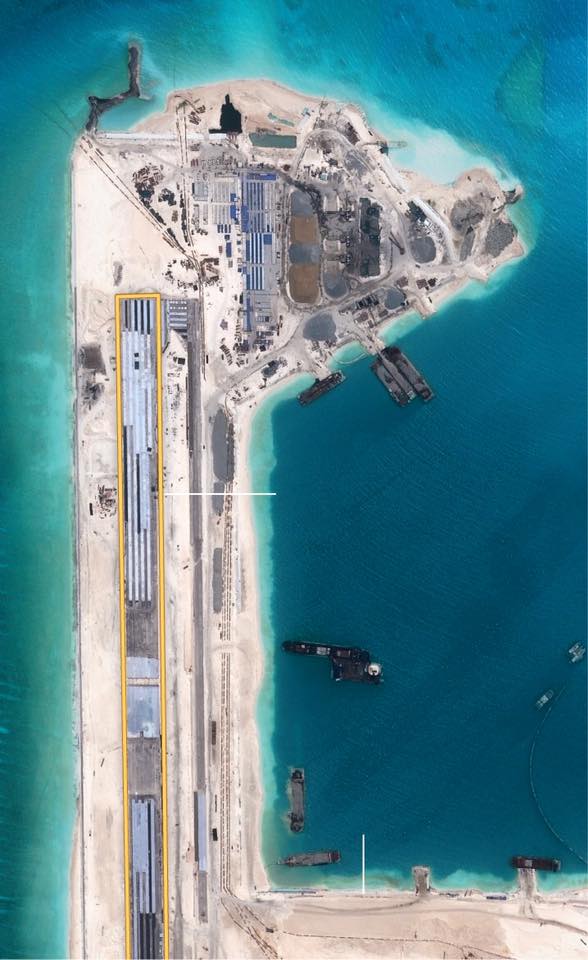
A satellite image of what is claimed to be an airstrip, under-construction at Fiery Cross Reef in the disputed South China Sea
RED DRAGON – RED CHINA – IMPERIALIST: A satellite image of China’s military airstrip at Fiery Cross Reef.

Land reclamation in the South China Sea has “increased tensions” in the region, Southeast Asian foreign ministers said Thursday at the close of talks dominated by Beijing’s island-building.

The declaration, contained in a final communique, followed a warning by US Secretary of State John Kerry that Washington would not tolerate any restrictions on freedom of navigation in the strategically important waters.

The Southeast Asian ministers’ joint final statement noted “the serious concerns expressed by some ministers on the land reclamations in the South China Sea”.
It said the land works “have eroded trust and confidence, increased tensions and may undermine peace, security and stability in the South China Sea,” without specifically singling out Beijing.

The communique was hashed out after two days of wrangling over how hard to pressure China on its controversial drive to expand tiny reefs and build military posts in the disputed waters.

The issue took centre stage at the series of diplomatic meetings this week in Kuala Lumpur, hosted by the 10-nation Association of Southeast Asian Nations (ASEAN).

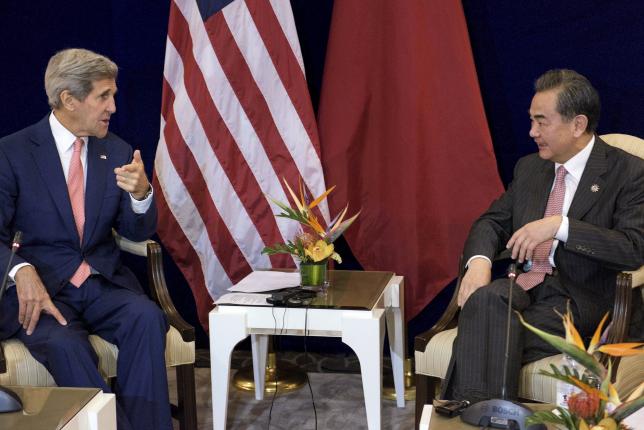
US Secretary of State John Kerry (L) and China's Foreign Minister Wang Yi talk before a bilateral meeting at the Putra World Trade Center August 5, 2015 in Kuala Lumpur, Malaysia.  REUTERS/Brendan Smialowski/Pool
US Secretary of State John Kerry (L) and China’s Foreign Minister Wang Yi talk before a bilateral meeting at the Putra World Trade Center August 5, 2015 in Kuala Lumpur, Malaysia. REUTERS/Brendan Smialowski/Pool

US Secretary of State John Kerry attends an Association of Southeast Asian Nations (ASEAN) meeting in Kuala Lumpur, Malaysia.

They also included envoys from two dozen other nations such as China and the United States.
Beijing claims control over nearly the entire South China Sea, a key shipping route thought to hold rich oil and gas reserves.
Vietnam, the Philippines, Malaysia and Brunei — all ASEAN members — also have various claims, as does Taiwan, many of which overlap.

Even before the land reclamations, China had sparked rising unease over the years with actions interpreted as seeking to shore up its disputed claims, in violation of a pledge not to upset the status quo.

A day after voicing concern to his Chinese counterpart Wang Yi over the potential “militarization” of the South China Sea, Kerry said freedom of navigation must be maintained.

red china west philippine sea aggression johnson south reef
Red Dragon – Red China – Imperialist: West Philippine Sea Aggression. Johnson South Reef

Alleged reclamation by China on what is internationally recognised as the Johnson South Reef in the West Philippine Sea or South China Sea.

– Behind-the-scenes wrangling –

“Let me be clear: The United States will not accept restrictions on freedom of navigation and overflight, or other lawful uses of the sea,” he told reporters.

Diplomatic sources told AFP the Philippines and Vietnam — which have been in the most direct confrontation with China — had called for strong language.
But they said there had been pushback from Beijing’s traditional allies among the association. Cambodia, Laos and Myanmar traditionally side with China within ASEAN.

The tug-of-war raised the spectre of a bitter 2012 ASEAN meeting hosted by Cambodia, when the bloc was unable for the first time in its four-decade history to issue a joint statement.
Cambodia was accused of precipitating the debacle by refusing to allow criticism of China over territorial issues.

A Malaysian foreign ministry source told AFP there were some “ASEAN members who said that we don’t want a repeat of 2012”.

The United States and Southeast Asian nations have called for a halt to further island-expansion and construction by China.
Wang, however, said Wednesday that land reclamation had “already stopped” — a claim some diplomats said was met with scepticism at the gathering.

Kerry told reporters after the close of the talks: “The Chinese have indicated that they have stopped. I hope it is true. I don’t know yet.”
ASEAN has expressed increasing impatience with China’s actions over the years.

Analysts, however, say Beijing maintains immense diplomatic and economic leverage in the region and that a concerted and sustained effort by ASEAN to resist China’s assertions was unlikely.
Singapore International News South China Sea

© 2015 AFP

Yahoo – ABC News Network

RED DRAGON – RED CHINA – A TYRANT

RED DRAGON – RED CHINA – A TYRANT

US Secretary of State John Kerry (L) and China's Foreign Minister Wang Yi talk before a bilateral meeting at the Putra World Trade Center August 5, 2015 in Kuala Lumpur, Malaysia.  REUTERS/Brendan Smialowski/Pool
US Secretary of State John Kerry (L) and China’s Foreign Minister Wang Yi talk before a bilateral meeting at the Putra World Trade Center August 5, 2015 in Kuala Lumpur, Malaysia. REUTERS/Brendan Smialowski/Pool

Red China’s acts of aggression alarm her neighbors and nations of Southeast Asia are trying their best to convince Red China about the nature of her acts. It is not easy to persuade a tyrant for a tyrant will always find a pretext to justify own actions and find fault with others if they complain about it. Red China is a danger to peace and tranquility in Southeast Asia and she must be quarantined until such time she recovers from her disease called ‘AGGRESSION’.

Rudranarasimham Rebbapragada
Ann Arbor, MI 48104-4162, USA
The Spirits of Special Frontier Force

 
  image          
The Spirits of Special Frontier ForceAt Special Frontier Force, I host ‘The Living Tibetan Spirits’ to promote Tibet Awareness. I…
 
View on www.facebook.com Preview by Yahoo


US, China bicker over territorial claims in South China Sea

Associated Press

By MATTHEW LEE and EILEEN NG 


China’s Foreign Minister Wang Yi, right, listens while U.S. Secretary of State John Kerry talks before a bilateral meeting at the Putra World Trade Center in Kuala Lumpur, Malaysia Wednesday, Aug. 5, 2015. (Brendan Smialowski/Pool Photo via AP)

China’s Foreign Minister Wang Yi, right, listens while U.S. Secretary of State John Kerry talks before a bilateral meeting at the Putra World Trade Center in Kuala Lumpur, Malaysia Wednesday, Aug. 5, 2015. (Brendan Smialowski/Pool Photo via AP)

KUALA LUMPUR, Malaysia (AP) — The United States and China clashed Wednesday over who is to blame for rising tensions over territorial disputes in the South China Sea with Washington demanding a halt to “problematic actions” in the area and Beijing telling foreign parties to keep out.

In blunt but diplomatic terms, U.S. Secretary of State John Kerry and his Chinese counterpart Wang Yi suggested that efforts to ease tensions over competing claims remained a contentious work in progress despite hopes for movement on ways to resolve them here at a Southeast Asian regional security forum.
Kerry urged China to end provocative land reclamation projects in the South China Sea that have ratcheted up tensions with its smaller neighbors in some of the world’s busiest commercial sea lanes.
Wang, meanwhile, sent a strong message that those without claims, such as the United States, should allow China and the other claimants to deal with them on their own.
Kerry told foreign ministers of members of the Association of Southeast Asian Nations that the U.S. shares their desire “to ensure the security of critical sea lanes and fishing grounds, and we want to see that disputes in the area are managed peacefully and on the basis of international law.” A senior U.S. official said Kerry made the case for easing tensions in a closed-door meeting with Wang.
In his meeting with Wang, Kerry reiterated U.S. concerns about the rising tensions and “China’s large-scale reclamation, construction, and militarization of features,” according to the senior U.S. official.
The official said Kerry had “encouraged” China, and the other claimants, “to halt problematic actions in order to create space for diplomacy.” The official spoke on condition of anonymity because he was not authorized to speak publicly about the private meeting.
Chinese land reclamation in contested waters has irked Southeast Asian nations who, like the U.S., want China to stop. Washington is calling for a halt to aggressive actions by China and other claimants to allow a diplomatic solution to the rift. The U.S. is not a party to the conflict but says a peaceful resolution of the problem and freedom of navigation are in the U.S. national interest.
China rejects any U.S. involvement and insists it has the right to continue the reclamation projects. Beijing was opposed to the issue being raised at the security forum in the first place.
Kerry told the ASEAN ministers that his meeting with Wang had been “good” and that he hoped “we will find a way to move forward effectively, together, all of us” over the course of the two-day forum.
But Wang gave no indication he had been swayed by Kerry, telling reporters later that foreign parties should support Beijing and ASEAN’s plan to accelerate negotiations on a code of conduct governing behavior in the disputed waters.
“We want to send a clear message to the international community that China and ASEAN have the capability and wisdom to resolve this specific issue between us,” he told a news conference. “We shouldn’t allow the South China Sea region to be destabilized.”
He said that China is committed to a peaceful solution through “rules and mechanisms already in place.” He also pledged that China will uphold freedom of navigation and overflight at sea. “There has not, and will not be any problem in this regard,” he said.
However, ASEAN members have complained that although China has pledged to start substantive negotiations with them on a code of conduct governing behavior in the resource-rich and busy waterways, there is a gap between its pledge and the situation on the ground.
China, Taiwan and several ASEAN members — the Philippines, Malaysia, Vietnam and Brunei — have wrangled over ownership and control of the South China Sea in a conflict that has flared on and off for decades.
Tensions rose last year when China began building artificial islands in the Spratly Islands, which the U.S. and Beijing’s rival claimant countries fear could impede freedom of navigation and overflights in a major transit area for the world’s oil and merchandise.
The disputes have led to deadly confrontations between China and Vietnam, and Washington and governments in the region are concerned that greater military deployments increase the risk of miscalculations and accidental clashes that could spiral out of control.
U.S. officials say China has reclaimed more than 3,000 acres (1,200 hectares) in the last 18 months alone. That figure dwarfs the 100 acres (40 hectares) that Vietnam, Malaysia, the Philippines and Taiwan have reclaimed in disputed areas over the last 45 years.
Wang bristled when asked about calls for China to halt its island-building activities.
“China has stopped, China has stopped. You want to see who is building? Take a plane and go see who is still building,” he said.
John Kerry South China Sea China


Copyright 2015 The Associated Press. All rights reserved. This material may not be published, broadcast, rewritten or redistributed.


Yahoo – ABC News Network

RED DRAGON – RED CHINA – SOUTH CHINA SEA AGGRESSION

RED DRAGON – RED CHINA – SOUTH CHINA SEA AGGRESSION

Red China is guilty of aggression for she makes unprovoked attacks on other nations. Red China is in the habit of being destructively hostile to her weak neighbors. Red China used her armed forces violating her international obligations in ruthless pursuit of her desire to dominate other nations to further her own ends. Firstly, I am asking news media to use correct linguistic terms to describe Red China’s war like acts.

Rudranarasimham Rebbapragada
Special Frontier Force

The Japan Times

Chinese Foreign Minister Wang Yi listens while U.S. Secretary of State John Kerry talks before a bilateral meeting at the Putra World Trade Center on Wednesday in Kuala Lumpur. | REUTERS

Kerry raises South China Sea concerns with China’s Wang

AFP-JIJI, Reuters

  • Aug 5, 2015

    • Online: Aug 05, 2015
    • Print: Aug 06, 2015
    • Last Modified: Aug 05, 2015

KUALA LUMPUR – U.S. Secretary of State John Kerry voiced concern to China on Wednesday over its land reclamation in the South China Sea and the “militarization” of its disputed waters.
Kerry made the remarks to Foreign Minister Wang Yi in Kuala Lumpur on the sidelines of meetings involving the 10-member Association of Southeast Asian Nations, where maritime tensions have taken center stage.

The official said Kerry told Wang that while Washington did not take a position on sovereignty claims in the strategic waterway, it wanted to see them resolved peacefully and in accordance with international law.

“He encouraged China, along with the other claimants, to halt problematic actions in order to create space for diplomacy,” the official said.
In brief remarks to reporters after his talks with Kerry, Wang said China would pursue “peaceful discussions” to resolve the South China Sea dispute. He did not elaborate.

Recent satellite images show China has almost finished building a 3,000-metre airstrip on one of its seven new islands in the Spratlys.
The airstrip will be long enough to accommodate most Chinese military aircraft, security experts have said, giving Beijing greater reach into the heart of maritime Southeast Asia.

China claims most of the South China Sea, through which $5 trillion in ship-borne trade passes every year. The Philippines, Vietnam, Malaysia, Taiwan and Brunei have overlapping claims.

China had said it did not want the South China Sea dispute raised at this week’s ASEAN meetings, but some ministers, including from host Malaysia, rebuffed that call, saying the issue was too important to ignore.

In a statement, Japan’s Senior Vice Foreign Minister Minoru Kiuchi “voiced deep concern over unilateral actions that change the status quo and heighten tensions in the South China Sea, including large-scale land reclamation, the construction of outposts and their use for military purposes.”

Despite strong public comments by several Southeast Asian ministers about the need to reduce tensions, the grouping had yet to issue a customary communique following annual talks between its foreign ministers on Tuesday.

“On the South China Sea, I think we are probably nearing a formulation,” said Jakkrit Srivali, director-general of the ASEAN department at Thailand’s Foreign Affairs Ministry.
Other issues had also held up the statement, he said without elaborating. A communique was expected at the end of joint meetings between ASEAN, the United States, China, Japan and other countries on Thursday, senior officials said.

China and Southeast Asian nations had agreed to set up a foreign ministers’ hotline to tackle emergencies in the waterway, a senior ASEAN official said on Friday. This was expected to be contained in the communique.

Wang was due to hold talks with ASEAN foreign ministers later on Wednesday.
On Monday, he described calls for a freeze in activity in the South China Sea as “unrealistic.”

Kerry told his ASEAN counterparts in a separate meeting that Washington wanted to see stability in the South China Sea.
“We want to ensure the security of critical sea lanes and fishing grounds and to see that disputes in the area are managed peacefully and on the basis of international law,” Kerry said.

China has shown no sign of halting its construction on artificial islands in disputed areas.
It has accused the United States of militarizing the South China Sea by staging patrols and joint military drills.

The senior State Department official said Kerry and Wang also discussed Chinese President Xi Jinping’s visit to the United States in September, as well as U.S. concerns over cybersecurity and human rights in China.

“They agreed there are many shared challenges that both countries should work closer together to address, such as climate change and development, and that more dialogue and cooperation between the United States and China remains vital,” the official said.

Chinese Foreign Minister Wang Yi listens while U.S. Secretary of State John Kerry talks before a bilateral meeting at the Putra World Trade Center on Wednesday in Kuala Lumpur. | REUTERS


  • Revelation
    So, is the whole world just going to continue sitting on their thumbs while China continues to advance is what is clearly not quote “militarization”, but indeed militarization? What will it take to get the United States, the U.N- SOMEONE- to strike in glaring detail the Chinese government is ignoring officially set maritime borders and take actual action against this? Do we honestly have to wait until China takes over a nation or two in order to wake people up?
    This is not a time to shy due to the possibility of war. We might have one in the future if this keeps up.

    • koedo
      I couldn’t agree more. What’s truly frightening is the mismatch between Kerry and Wang Yi. Remember, Kerry and Obama, think they just accomplished a historic agreement with Iran. As far as negotiating with China goes, history is, indeed, repeating itself and Kerry is playing the lead role of Neville Chamberlain. China does not fear the current US administration in the least bit. Why should they? Kerry and Obama’s complete incompetence in the arena of foreign policy, is going to, literally, get people killed.

      • Revelation
        Bother the US Administration the Chinese government fears no one, and why? Because the world has stupidly fed the beast until it’s become the monster it is today. The majority of world economies depend on China, and they can’t simply sever relations; China knows this, which is why they dare to cause trouble.
        No kidding how incompetent Obama is; then again, the States has not had a competent president in ages, let alone one who isn’t a bloody coward.

The Japan Times LTD. All rights reserved.

THE PROBLEM OF RED CHINA’S AGGRESSION IN WEST PHILIPPINE SEA

THE PROBLEM OF RED CHINA’S AGGRESSION IN WEST PHILIPPINE SEA

RED CHINA'S AGGRESSION IN WEST PHILIPPINE SEA DEMANDS FULL UNDERSTANDING OF HER EXPANSIONIST POLICY.
RED CHINA’S AGGRESSION IN WEST PHILIPPINE SEA DEMANDS FULL UNDERSTANDING OF HER EXPANSIONIST POLICY.

I am pleased to note that United States is giving support to Philippines to confront the problem of Red China’s aggression in West Philippine Sea. Resolution of this problem demands a proper understanding of Red China’s Expansionist Policy and containing and resisting all manifestations of Red China’s Expansionism. Tibet is Red China’s first victim and Southeast Asia’s nations have to seek justice for Tibetans if they want to protect their own national interests from Red China’s Imperialism.

Rudranarasimham Rebbapragada
Ann Arbor, MI 48104-4162, USA
The Spirits of Special Frontier Force

 
  image          
The Spirits of Special Frontier ForceAt Special Frontier Force, I host ‘The Living Tibetan Spirits’ to promote Tibet Awareness. I…
 
View on www.facebook.com Preview by Yahoo
 
 Close

VOICE OF AMERICA

US, PHILIPPINES URGE END TO ISLAND-BUILDING IN S. CHINA SEA

FILE - Foreign Minister of the Philippines Albert del Rosario (L) and U.S. Secretary of State John Kerry shake hands before a meeting.
FILE – Foreign Minister of the Philippines Albert del Rosario (L) and U.S. Secretary of State John Kerry shake hands before a meeting.

SIMONE ORENDAIN

August 04, 2015 8:17 AM

MANILA—

The Philippines says it will back calls by the United States for a series of measures aimed at reducing tensions in the South China Sea during a regional security forum in Kuala Lumpur Wednesday. Washington wants countries to stop building artificial islands and carrying out military activities.

The Philippines is expected to raise the issue of China’s activities in the South China Sea during meetings of the 10-member Association of Southeast Asian Nations (ASEAN) this week.
Foreign Affairs Secretary Albert del Rosario released a statement Tuesday saying that his country would also endorse a U.S. call for stopping all work on disputed outcroppings and any military activities.

“As a means of de-escalating tensions in the region, the Philippines fully supports and will pro-actively promote the call of the United States on the ‘three halts’ — a halt in reclamation, halt in construction and a halt in aggressive actions that could further heighten tensions,” Del Rosario said.

However, he said the Philippines back those measures only if other claimants, including China, do the same. And he said this does not mean that China’s island construction on at least seven outcroppings is legitimate.

In recent months the U.S. has been raising concerns over China’s project to convert reefs and shoals in the Spratlys into manmade islands.
“This has been the American position for what, almost two years now, saying that everyone should stop developing their particular areas that they hold,” explained Carl Baker, programs director at the Pacific Forum of the Washington-based Center for Strategic and International Studies. “But everybody knows that this is really directed at China.”
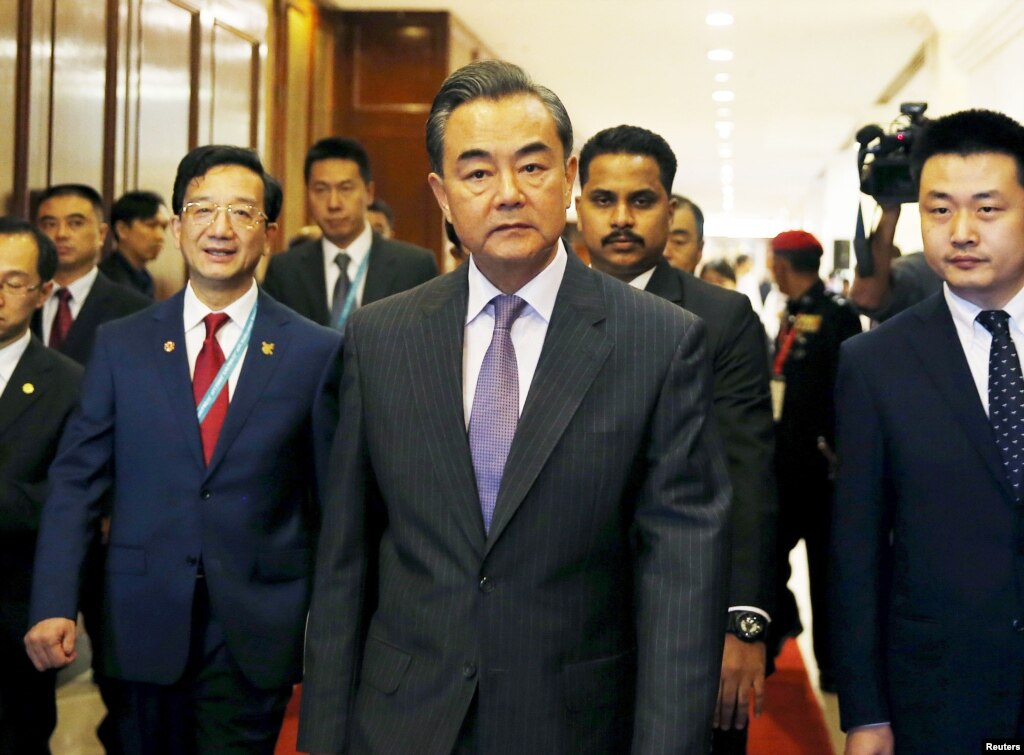
China's Foreign Minister Wang Yi arrives at a meeting during the 48th Association of Southeast Asian Nations (ASEAN) foreign ministers meeting in Kuala Lumpur, Malaysia, Aug. 4, 2015.

China’s Foreign Minister Wang Yi arrives at a meeting during the 48th Association of Southeast Asian Nations (ASEAN) foreign ministers meeting in Kuala Lumpur, Malaysia, Aug. 4, 2015.

CHINA’S STANCE

China insists that ASEAN forums are not the place to raise these territorial disputes.

Beijing claimed nearly the entire South China Sea, while the Philippines, Vietnam, Malaysia, Brunei and Taiwan also have overlapping claims. The Philippines has filed a case with the Permanent Court of Arbitration to question what it calls China’s “excessive claims” in the sea. China rejected the case and is not participating.

Baker does not foresee any change in the U.S. position and nor does he see a shift in China’s stance, especially since it already built the islands. He predicts that the standoff will “inhibit security cooperation” in Southeast Asia.

On Monday in Singapore, China’s foreign minister, Wang Yi, downplayed the concerns over Beijing’s island building, which has rapidly built airstrips and buildings on top of what were until recently mostly submerged rocks and reefs.

“At the moment the general situation in the South China Sea is stable, and China is steadfastly committed to working with the parties to maintain the situation which has not come easily. And we will never allow any country to destabilize the South China Sea,” said Wang.

Wang made a pitch for peacefully resolving the disputes through “consultations and negotiations” among what he called “five commitment points” of China regarding the contested sea.

RED DRAGON – RED CHINA’S AGGRESSION IN WEST PHILIPPINE SEA

RED CHINA’S AGGRESSION IN WEST PHILIPPINE SEA

RED DRAGON - RED CHINA - AGGRESSION IN WEST PHILIPPINE SEA. AGGRESSOR MUST BE QUARANTINED.
RED DRAGON – RED CHINA – AGGRESSION IN WEST PHILIPPINE SEA. AGGRESSOR MUST BE QUARANTINED.

At Special Frontier Force, the fact of Red China’s aggression in Tibet is recognized since 1950. Now, Red China’s aggression in West Philippine Sea is attracting media attention unlike Red China’s prolonged military occupation of Tibet. Aggressor nation must be quarantined by placing diplomatic and economic sanctions. Aggression has to be treated like a disease and aggressor has to be isolated from rest of the global community for aggression poses dangers to peaceful existence of all people.

Rudranarasimham Rebbapragada
Ann Arbor, MI 48104-4162, USA
The Spirits of Special Frontier Force

 
  image          
The Spirits of Special Frontier ForceAt Special Frontier Force, I host ‘The Living Tibetan Spirits’ to promote Tibet Awareness. I…
 
View on www.facebook.com Preview by Yahoo


DIGITAL JOURNAL

Protesters condemn China’s aggression in West Philippine Sea 


RED DRAGON - RED CHINA - AGGRESSION IN WEST PHILIPPINE SEA : PROTEST ON JULY 25, 2015. RAFAEL ALUNAN WITH MARTIN DINO BELLE ENRIQUEZ AND DANTE JIMENEZ.
RED DRAGON – RED CHINA – AGGRESSION IN WEST PHILIPPINE SEA : PROTEST ON JULY 25, 2015. RAFAEL ALUNAN WITH MARTIN DINO BELLE ENRIQUEZ AND DANTE JIMENEZ.

By LEO REYES Jul 25, 2015


The West Philippine Sea Coalition has condemned China’s aggression in the West Philippine Sea in a protest rally held along Roxas Boulevard (fronting the West Philippine Sea) in Manila Saturday morning.

Belle Enriquez of West Philippine Sea Coalition

Belle Enriquez of West Philippine Sea Coalition
FB

The coalition members include the Volunteers Against Crime and Corruption (VACC), RAM, Anti-Drugs Advocate, Guardians, Motorcycle Philippines Federation, United Defense Manufacturing Corp., ProGun, SMX Phils and Predator Riders, among others.
The event was the 3rd Annual Day of Protest against China’s bullying in the West Philippine Sea. Simultaneous protests have also been held in London, United States and other cities across the globe.
Anti-China Rally Manila July 25 2015

Anti-China Rally, Manila July 25, 2015
FB

Among others, the West Philippine Sea Coalition cited China’s territorial aggression when it reclaimed (and continues reclaim) reefs, shoals, islets, and other submerged rocks and corals for their exclusive use despite diplomatic intervention by the US, Japan and other ASEAN-member countries.
On the environmental front, the coalition scored China for the massive destruction of the coral reefs in the disputed territories as a result of its ongoing reclamation and construction activities.
The coalition also cited China’s invasion of the Scarborough Shoal, a rich fishing ground located within the 200-mile economic zone of the Philippines.
China’s continued presence in what the Philippines claims as part of its territory had prevented hundreds of Filipino fishermen from traversing the rich fishing ground resulting in their family’s economic displacement.
The coalition lambasted China for being a top source of illegal drugs that continues to be smuggled into the Philippines by Chinese drug lords.
In their short talk during the rally, Top VACC officials Dante Jimenez and Martin Dino together with Anti-Drugs Advocate Jonathan Morales criticized China for having destroyed lives of hundreds of thousands of drug addiction victims in the country.

Former DILG Sec. Rafael Alunan with Nick SoteloFormer DILG Sec. Rafael Alunan with Nick Sotelo
FB

Alunan and leaders of the coalition called on the public to support the case pending before the UN Arbitral Tribunal by educating the people on the merits of the case. At the same time, they also urged the public to call on the nation’s leaders to fast track the development of a credible external defense capability.
Rep. Roilo Golez, who is supporting the coalition has called on the public to boycott made in China products especially garments and buy products that are made in the Philippines.

In London, Gene Alcantara, a longtime immigration adviser and social activist together with concerned Filipinos in UK joined the global protest with their placards denouncing the Chinese aggression at the Chinese Embassy despite heavy rain. Similar protest was also held in Ireland by the Filipino communities there
Gene Alcantara with friends at the Chinese Embassy in London

Gene Alcantara with friends at the Chinese Embassy in London
Gene Alcantara FB

Filipino communities across the US have also participated in the Anti-China protest like the one shown here from the Filipino group in Guam and the Marianas.
Anti-China protest in Guam July 25 2015

Anti-China protest in Guam, July 25, 2015
Gene Alcantara-FB-Pacific News Center

The leaders of the West Philippine Sea Coalition have vowed to continue heightened protests against China’s aggression in the disputed territories through legal and peaceful means.
As part of its campaign to educate the public on the country’s territorial claim, West Philippine Sea Coalition’s Belle Enriquez told Digital Journal that another forum will be held in late August to allow the public to view an ancient map showing the extent of the Philippine coastline.

Red Dragon - Red China aggressor nation - United Nations must act to stop China's Aggression in Southeast Asia.
Red Dragon – Red China aggressor nation – United Nations must act to stop China’s Aggression in Southeast Asia.


THE EVIL RED EMPIRE – RED CHINA – DOOMSDAY PROPHECY

THE EVIL RED EMPIRE – RED CHINA – DOOMSDAY PROPHECY

THE EVIL RED EMPIRE - RED CHINA - DOOMSDAY PROPHECY FROM THE NEW TESTAMENT BOOK "REVELATION" CHAPTER 18.
THE EVIL RED EMPIRE – RED CHINA – DOOMSDAY PROPHECY FROM THE NEW TESTAMENT BOOK “REVELATION” CHAPTER 18.

The New Testament Book “REVELATION” shared a prophecy predicting sudden, unexpected, fall of an evil empire using coded name “BABYLON.” Planet Earth has already witnessed several impacts by heavenly bodies called asteroids, or meteorites with known or unknown consequences to life on Earth. The most significant asteroid impact event may have happened 65 million years ago which wiped out a huge variety of animals collectively known as ‘Dinosaurs’ and surprisingly, life thrived on Earth with emergence of new species that populate Earth in present times. Without any human initiative, without any human intervention, Earth may be hit by a very large stone that would result in the downfall of an evil empire while sparing rest of the humanity. I am asking my readers to contemplate on Doomsday Prophecy found in ‘Revelation’ Chapter 18 and compare its scenario with some of Earth’s recorded asteroid/meteorite impact events:

doomsayerofdoomdooma qaraqul crater pamir mountains
Doomsayer of Doom Dooma: Qaraqul crater, Black Lake, Pamir mountains, Tajikistan.

1. Qaraqul crater, Palmir mountains, located between Tajikistan and Afghanistan. The impact happened 10 million years ago, created Black Lake which is 45 kilometers wide.

doomsayerofdoomdooma manicouagan crater quebec canada
Doomsayer of Doomdooma: Manicouagan crater, Quebec, Canada.

2. Manicouagan crater, Quebec, Canada. 212 million years old impact. Created one of the biggest impact craters which is about 100 kilometers wide.

doomsayerofdoomdooma hudson bay quebec
Doomsayer of Doom Dooma: Clear Water Crater Lakes, Hudson Bay, Quebec, Canada.

3. Clear Water Crater Lakes, Quebec, Canada. Impact 290 million years ago. Created Western Lake, 32 kilometers wide; and Eastern Lake, 22 kilometers wide.

doomsayerofdoomdooma wolfe creek meteorite crater
doomsayer of doom dooma: Wolfe Creek meteorite crater, Australia.

4. Wolfe Creek crater, Central Australia. 300,000 years old. Crater is 875 miles wide.

doomsayerofdoomdooma aorounga crater chad
doomsayer of doom dooma: Aorounga crater Chad, Africa.

5. Aorounga crater, Chad, Africa. 200 million years old. Crater is 17 kilometers wide.

asteroid day mexico major extinction event 1600km central america

6. Chicxulub crater, Yucatan Peninsula, Gulf of Mexico. A very significant, dangerous asteroid impact event that may have caused extinction of entire Dinosaur species 65 million years ago. Asteroid could be 10 and 20 kilometers in diameter and caused 70 kilometers wide crater.

doomsayerofdoomdooma meteor crater arizona
Doomsayer of doom dooma: meteor crater near Flagstaff, Arizona

7. Arizona’s Menlo Park crater near Flagstaff, Arizona. Impact event 49,000 years old. Crater is 1186 meters in diameter.

As Doomsayer of Doom Dooma, I am predicting an impact event that would cause demise of Evil Power ruling Beijing. However, the actual impact may affect Shanghai, Red China’s largest City without causing loss of human lives as people get a warning and given chance to run away from impending danger.

Rudranarasimham Rebbapragada
Ann Arbor, MI 48104-4162, USA
The Spirits of Special Frontier Force

THE EVIL RED EMPIRE - RED CHINA - DOOMSDAY PROPHECY.
THE EVIL RED EMPIRE – RED CHINA – DOOMSDAY PROPHECY.

REVELATION 18 NEW INTERNATIONAL VERSION(NIV)

LAMENT OVER FALLEN BABYLON
18 After this I saw another angel coming down from heaven. He had great
authority, and the earth was illuminated by his splendor.

2 With a mighty voice he shouted:

“‘Fallen! Fallen is Babylon the Great!’[a]
She has become a dwelling for demons
and a haunt for every impure spirit,
a haunt for every unclean bird,
a haunt for every unclean and detestable animal.
3 For all the nations have drunk
the maddening wine of her adulteries.
The kings of the earth committed adultery with her,
and the merchants of the earth grew rich from her excessive luxuries.”

WARNING TO ESCAPE BABYLON’S JUDGMENT

4 Then I heard another voice from heaven say:

“‘Come out of her, my people,’[b]
so that you will not share in her sins,
so that you will not receive any of her plagues;
5 for her sins are piled up to heaven,
and God has remembered her crimes.
6 Give back to her as she has given;
pay her back double for what she has done.
Pour her a double portion from her own cup.
7 Give her as much torment and grief
as the glory and luxury she gave herself.
In her heart she boasts,
‘I sit enthroned as queen.
I am not a widow;[c]
I will never mourn.’
8 Therefore in one day her plagues will overtake her:
death, mourning and famine.
She will be consumed by fire,
for mighty is the Lord God who judges her.

THREEFOLD WOE OVER BABYLON’S FALL

9 “When the kings of the earth who committed adultery with her and shared
her luxury see the smoke of her burning, they will weep and mourn over her.
10 Terrified at her torment, they will stand far off and cry:

“‘Woe! Woe to you, great city,
you mighty city of Babylon!
In one hour your doom has come!’

11 “The merchants of the earth will weep and mourn over her because no one
buys their cargoes anymore—

12 cargoes of gold, silver, precious stones and
pearls; fine linen, purple, silk and scarlet cloth; every sort of citron
wood, and articles of every kind made of ivory, costly wood, bronze, iron
and marble;

13 cargoes of cinnamon and spice, of incense, myrrh and
frankincense, of wine and olive oil, of fine flour and wheat; cattle and
sheep; horses and carriages; and human beings sold as slaves.

14 “They will say, ‘The fruit you longed for is gone from you. All your

luxury and splendor have vanished, never to be recovered.’

15 The merchants who sold these things and gained their wealth from her will stand far off,
terrified at her torment. They will weep and mourn

16 and cry out:

“‘Woe! Woe to you, great city,
dressed in fine linen, purple and scarlet,
and glittering with gold, precious stones and pearls!
17 In one hour such great wealth has been brought to ruin!’
“Every sea captain, and all who travel by ship, the sailors, and all who
earn their living from the sea, will stand far off. 18 When they see the
smoke of her burning, they will exclaim, ‘Was there ever a city like this
great city?’

19 They will throw dust on their heads, and with weeping and
mourning cry out:

“‘Woe! Woe to you, great city,
where all who had ships on the sea
became rich through her wealth!
In one hour she has been brought to ruin!’

20 “Rejoice over her, you heavens!
Rejoice, you people of God!
Rejoice, apostles and prophets!
For God has judged her
with the judgment she imposed on you.”

THE FINALITY OF BABYLON’S DOOM
21 Then a mighty angel picked up a boulder the size of a large millstone and
threw it into the sea, and said:

“With such violence
the great city of Babylon will be thrown down,
never to be found again.
22 The music of harpists and musicians, pipers and trumpeters,
will never be heard in you again.
No worker of any trade
will ever be found in you again.
The sound of a millstone
will never be heard in you again.
23 The light of a lamp
will never shine in you again.
The voice of bridegroom and bride
will never be heard in you again.
Your merchants were the world’s important people.
By your magic spell all the nations were led astray.
24 In her was found the blood of prophets and of God’s holy people,
of all who have been slaughtered on the earth.”

Footnotes:

Revelation 18:2 Isaiah 21:9
Revelation 18:4 Jer. 51:45
Revelation 18:7 See Isaiah 47:7,8.

Cross references:

Revelation 18:1 : Rev 17:1
Revelation 18:1 : Rev 10:1; 20:1
Revelation 18:1 : Eze 43:2
Revelation 18:2 : S Rev 14:8
Revelation 18:2 : Rev 16:13
Revelation 18:2 : Isa 13:21, 22; 34:11, 13-15; Jer 50:39; 51:37; Zep 2:14,
15
Revelation 18:3 : S Rev 14:8
Revelation 18:3 : Rev 17:2
Revelation 18:3 : ver 11, 15, 23; Eze 27:9-25
Revelation 18:3 : ver 7, 9
Revelation 18:4 : Isa 48:20; Jer 50:8; 51:6, 9, 45; 2Co 6:17
Revelation 18:4 : Ge 19:15
Revelation 18:5 : 2Ch 28:9; Ezr 9:6; Jer 51:9
Revelation 18:5 : Rev 16:19
Revelation 18:6 : Ps 137:8; Jer 50:15, 29
Revelation 18:6 : Isa 40:2
Revelation 18:6 : Rev 14:10; 16:19; 17:4
Revelation 18:7 : Eze 28:2-8
Revelation 18:7 : Ps 10:6; Isa 47:7, 8; Zep 2:15
Revelation 18:8 : ver 10; Isa 9:14; 47:9; Jer 50:31, 32
Revelation 18:8 : Rev 17:16
Revelation 18:9 : ver 3; Rev 14:8; 17:2, 4
Revelation 18:9 : ver 3, 7
Revelation 18:9 : ver 18; Rev 14:11; 19:3
Revelation 18:9 : Jer 51:8; Eze 26:17, 18
Revelation 18:10 : ver 15, 17
Revelation 18:10 : ver 16, 19
Revelation 18:10 : ver 17; Rev 17:12
Revelation 18:11 : Eze 27:27
Revelation 18:11 : ver 15, 19; Eze 27:31
Revelation 18:11 : S ver 3
Revelation 18:12 : Eze 27:12-22; Rev 17:4
Revelation 18:13 : Eze 27:13; 1Ti 1:10
Revelation 18:15 : S ver 3
Revelation 18:15 : ver 10, 17
Revelation 18:15 : ver 11, 19; Eze 27:31
Revelation 18:16 : ver 10, 19
Revelation 18:16 : Rev 17:4
Revelation 18:17 : ver 10; Rev 17:12
Revelation 18:17 : Rev 17:16
Revelation 18:17 : Eze 27:28-30
Revelation 18:17 : ver 10, 15
Revelation 18:18 : ver 9; Rev 19:3
Revelation 18:18 : S Rev 17:18
Revelation 18:18 : Eze 27:32; Rev 13:4
Revelation 18:19 : Jos 7:6; La 2:10; Eze 27:30
Revelation 18:19 : ver 11, 15; Eze 27:31
Revelation 18:19 : ver 10, 16; Rev 17:18
Revelation 18:19 : Rev 17:16
Revelation 18:20 : Jer 51:48; S Rev 12:12
Revelation 18:20 : Rev 19:2
Revelation 18:21 : Rev 5:2; 10:1
Revelation 18:21 : Jer 51:63
Revelation 18:21 : S Rev 17:18
Revelation 18:22 : Isa 24:8; Eze 26:13
Revelation 18:22 : Jer 25:10
Revelation 18:23 : Jer 7:34; 16:9; 25:10
Revelation 18:23 : ver 3; Isa 23:8
Revelation 18:23 : Na 3:4
Revelation 18:24 : Rev 16:6; 17:6
Revelation 18:24 : Jer 51:49; Mt 23:35

New International Version (NIV)

Holy Bible, New International Version®, NIV® Copyright ©1973, 1978, 1984,
2011 by Biblica, Inc.® Used by permission. All rights reserved worldwide.