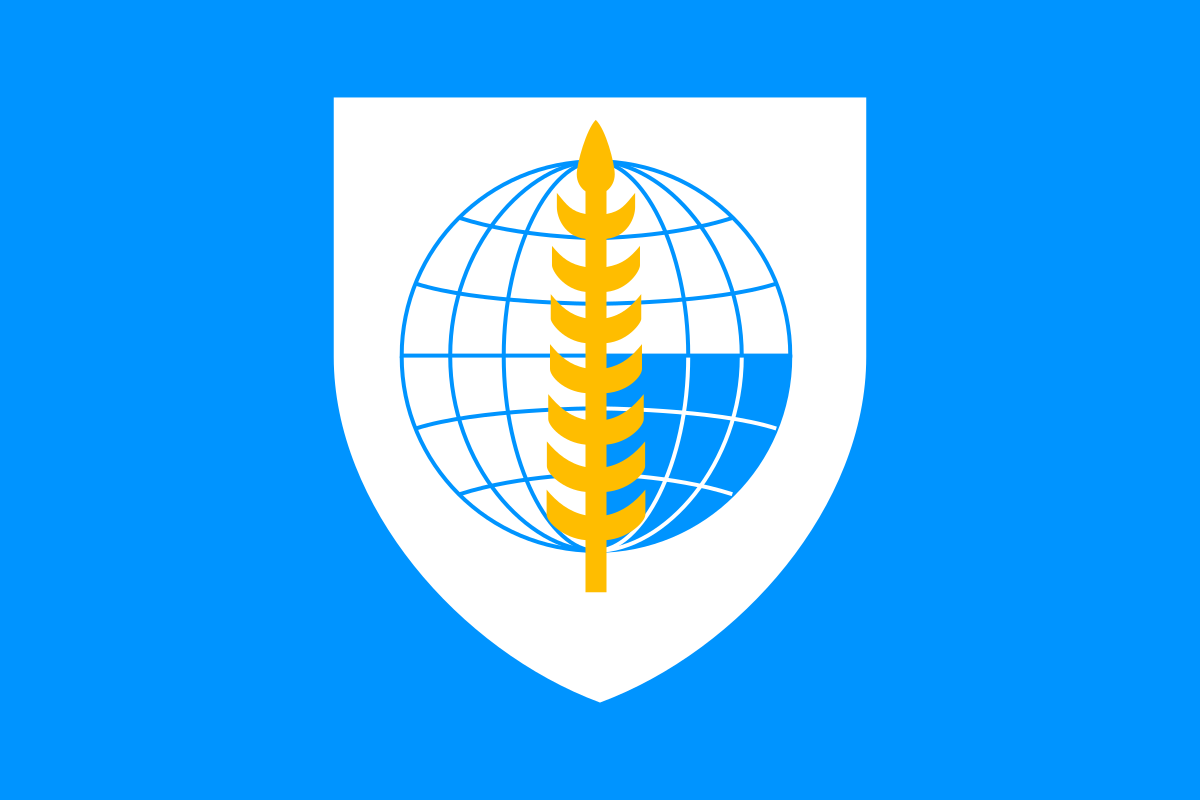
Special Frontier Force pays tribute to Jimmy Carter on President’s Day 2024Whole Dude – Whole Thanks: Special Frontier Force – Establishment 22. This Shoulder Badge represents a military alliance/pact between India, Tibet and the United States of America.
Special Frontier Force Celebrates President Jimmy Carter’s Birthday
Special Frontier Force celebrates President Jimmy Carter’s Birthday.
On Monday, February 19, 2024 President’s Day, Special Frontier Force celebrates 39th US President’s birthday which falls on October 01. President Jimmy Carter, in 1977, lifted Visa and Travel Restrictions imposed upon His Holiness the 14th Dalai Lama by 37th and 38th US Presidents.
Special Frontier Force Celebrates President Jimmy Carter’s Birthday.
Special Frontier Force celebrates President Jimmy Carter’s birthday.
October 01, 1924
On this day in 1924, future President James Earl Carter is born in Plains, Georgia. Carter, who preferred to be called “Jimmy,” was the son of a peanut farmer and was the first president to be born in a hospital. Carter was raised a devoted Southern Baptist and graduated from the Naval Academy in Annapolis, Maryland, in 1946. He married Rosalynn Smith later that year.
After graduation, Carter served in the Navy’s new nuclear submarine program and was looking forward to a career in the Navy when his father passed away in 1953. The Carters dutifully returned to Georgia and took over the family farm. Back in Plains, Carter became involved in local politics, serving first on the school board and working his way up to a seat on the George State Planning Commission. In 1962, he was elected to the George Senate and, nine years later, he became governor.
A liberal Democrat, Carter launched a campaign against Republican presidential incumbent Gerald Ford in 1974, when the American electorate was still reeling from the Vietnam War, which ended in 1973, and former President Richard Nixon’s involvement in the Watergate scandal. Ford, who assumed office immediately upon Nixon’s resignation in 1974, pardoned his former boss, enraging many who thought Nixon should have had to stand trial. Carter’s “Washington outsider” persona helped him win the White House in 1976.
Carter’s tenure as president was most notable for his alternative-energy policies, racial-equality programs and friendly overtures toward Russia. He was instrumental in brokering a peace treaty between Israel and Egypt and signed an arms-reduction treaty with the Soviet Union (SALT II). These triumphs, however, were overshadowed by his inability to lead the nation out of a crippling energy crunch caused by the OPEC oil embargo of 1973.
On top of his administration’s failure to effectively combat the energy crisis, which in turn contributed to rapidly rising inflation, Carter’s administration was forced to deal with another crisis. In 1979, an Islamist student group in Iran stormed the U.S. embassy in Teheran, holding 70 Americans hostage for 444 days. Carter’s failure to secure the release of the hostages, the ongoing recession and a growing movement toward conservatism in America contributed to Carter’s loss to Ronald Reagan in the 1980 presidential campaign.
The Carters have since stayed active in national and international affairs. In 1982, they founded the Carter Center in Atlanta to advocate for human rights and to alleviate “unnecessary human suffering” around the world. Since 1984, the Carters have given their time each year to build homes and raise awareness of homelessness with the international charitable organization Habitat for Humanity. In 2002, Carter won the prestigious Nobel Prize for his efforts to find peaceful solutions to international conflicts, to advance democracy and human rights and to promote economic and social development.
Special Frontier Force Celebrates President Jimmy Carter’s Birthday.
PRESIDENT TRUMP’S DEFINING MOMENT – ARE YOU FRIEND OF FREEDOM AND DEMOCRACY?
On Tuesday September 19, 2017, President Trump will address the UN General Assembly. It will be President Trump’s defining moment. He must prove his credentials to the world.
On behalf of Special Frontier Force, I ask Mr. President, “Are You Friend of Freedom and Democracy?”
Trump must verify his love, hate relationship with American Values. While defending Freedom and Democracy, the US lost its battle in Vietnam. Now, I must know as to how President Trump plans to “WIN” ‘The Cold War in Asia’.
Rudranarasimham Rebbapragada
Ann Arbor, Michigan, USA 48104 – 4162
SPECIAL FRONTIER FORCE
TRUMP’S LOVE, HATE RELATIONSHIP WITH THE UNITED NATIONS – ABC NEWS
President Trump will make his first speech before the United Nations General Assembly on Tuesday. Will he bring the world together or sow division? Will he embrace an institution that he has previously called weak and incompetent?
His relationship with the New York-based global organization is long and complicated.
Trump, the candidate, says UN “not a friend of freedom”
During his March 23, 2016 speech before the American Israel Public Affairs Committee’s conference, then-candidate Trump issued some of his toughest commentary, speaking of the “utter weakness and incompetence of the United Nations.”
“The United Nations is not a friend of democracy. It’s not a friend to freedom,” Trump said. “It’s not a friend even to the United States of America, where, as you know, it has its home. And it surely is not a friend to Israel.”
Though a 2016 Global Attitudes Survey by Pew Research Center showed that 64 percent of Americans had a favorable view of the United Nations, Trump’s campaign promises for a protectionist economic policy and an aggressive approach to China come into conflict with the goals of multilateralism and the UN charter. His promotion of interrogation techniques “worse than waterboarding,” his push for a temporary ban on Muslims from entering the U.S. and his decision to pull out of the Paris Climate Accords have also put Trump at odds with UN allies.
Last December, Trump continued his assault on the institution, tweeting: “The United Nations has such great potential but right now it is just a club for people to get together, talk and have a good time. So sad!”
Trump, the real estate magnate: “I’m a big fan” of the UN
In 2005, Trump testified before a subcommittee looking at UN spending, calling himself a “big fan of the United Nations and all it stands for.” He told lawmakers the institution was one of the reasons he chose to build Trump World Tower, one of his luxury residential properties, where he did in 1998.
“If the United Nations weren’t there, perhaps I wouldn’t have built it in that location,” said Trump. “So it means quite a bit to me.” When Trump was planning the building, many UN officials, including Secretary General Kofi Annan, expressed disapproval of the massive construction project.
Trump’s renovation hopes
At a 2005 hearing, a Senate Homeland Security and Governmental Affairs subcommittee was looking at renovations at the UN New York headquarters and estimated development costs for similar projects in New York. Trump had met with UN officials to pitch his services, but they were refused. He told members he thought the project could cost $700 million, and he predicted the UN would end up spending upwards of $3 billion.
“You have to deal in New York City construction to see what tough people are all about,” Trump said at the time. “I listen to these people and they’re very naive, I respect them, but they’re very naive in this world. I might be naive in their world. But in this world, they’re naive.”
He also noted at a 2005 hearing that it was a dream of his to move the United Nations headquarters to the World Trade Center.
Seven years later, he shared another UN preoccupation, tweeting on Oct. 3, 2012: “The cheap 12 inch sq. marble tiles behind speaker at UN always bothered me. I will replace with beautiful large marble slabs if they ask me.”
On Tuesday, Trump will address the United Nations General Assembly and the world without his “beautiful large marble slabs” as a backdrop.
SEPTEMBER 10, 2017 – THE COLD WAR IN ASIA – TELL THE COMMUNISTS, “WE STILL MEAN BUSINESS”
SEPTEMBER 10, 2017 – THE COLD WAR IN ASIA – TELL THE COMMUNISTS, “WE STILL MEAN BUSINESS”
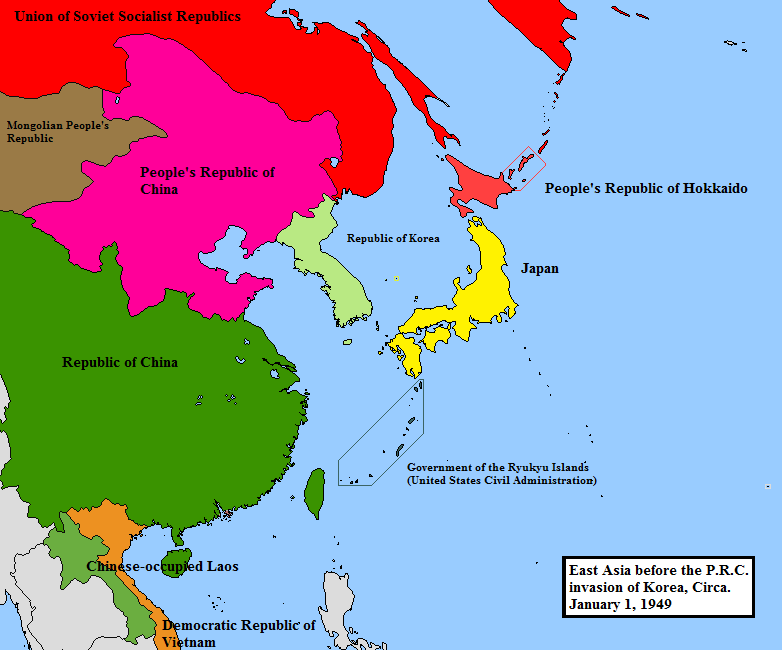
On September 10, 2017, United States must tell the Communists, “We mean Business.” The time has come to squarely address the problem of Communism that spread to mainland China in 1949.
Rudranarasimham Rebbapragada DOOM DOOMA DOOMSAYER
PRESIDENT JOHNSON SENDS SIGNAL TO BOTH NORTH AND SOUTH VIETNAMESE – SEPTEMBER 10, 1964
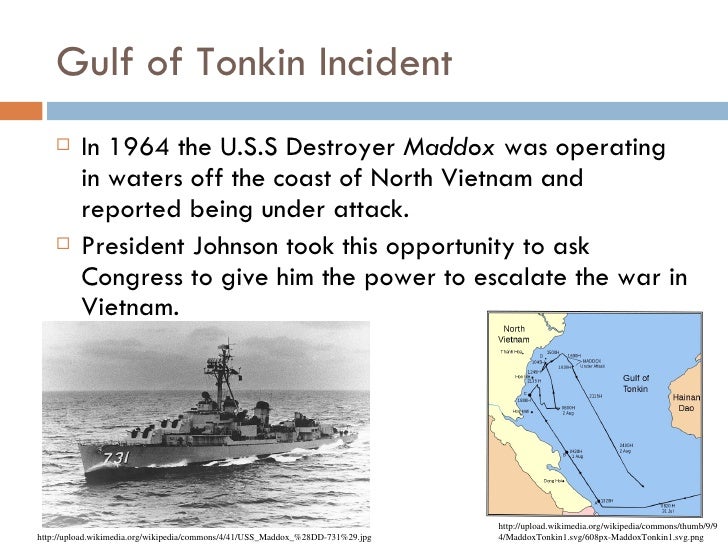
Following the Tonkin Gulf incidents, in which North Vietnamese torpedo boats attacked U.S. destroyers, and the subsequent passage of the Tonkin Gulf Resolution empowering him to react to armed attacks, President Lyndon Johnson authorizes a series of measures “to assist morale in South Vietnam and show the Communists [in North Vietnam] we still mean business.” These measures included covert action such as the resumption of the DeSoto intelligence patrols and South Vietnamese coastal raids to harass the North Vietnamese. Premier Souvanna Phouma of Laos was also asked to allow the South Vietnamese to make air and ground raids into southeastern Laos, along with air strikes by Laotian planes and U.S. armed aerial reconnaissance to cut off the North Vietnamese infiltration along the route that became known as the Ho Chi Minh Trail. Eventually, U.S. warplanes would drop over 2 million tons of bombs on Laos as part of Operations Steel Tiger and Tiger Hound between 1965 and 1973.
Also on this day
Vietnam War
1963
President Kennedy gets mixed signals
Maj. Gen. Victor Krulak, USMC, Special Assistant for Counterinsurgency and Special Activities to the Joint Chiefs of Staff, and Joseph Mendenhall of the State Department report to President John F. Kennedy on their fact-finding mission to Vietnam. The president had sent them to make a firsthand assessment of the situation in Vietnam…
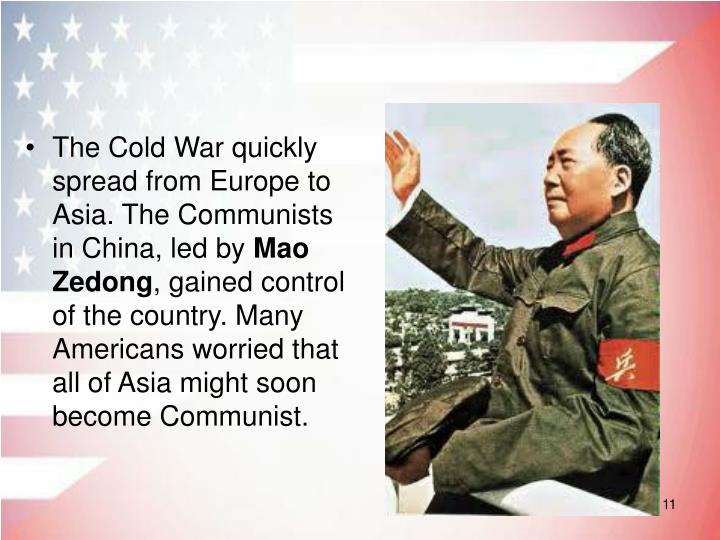
On September 09, 2017 Chairman Mao Zedong’s Legacy lives. Unfinished Korea-Vietnam War is mere symptom of ‘The Cold War in Asia’ which started with Communist takeover of mainland China. In Korean Peninsula, the US faces security challenge posed by the spread of Communism in Asia. It is not surprising to note that Vietnam recognizes the same threat and is willing to cooperate with the United States to contain Expansionist Doctrine formulated by Communist Party Chairman Mao Zedong. Rudranarasimham Rebbapragada DOOM DOOMA DOOMSAYER
1976 On this day in 1976, Chinese revolutionary and statesman Mao Zedong, who had been suffering from Parkinson’s disease and other health problems, dies in Beijing at the age of 82. The Communist leader and founder of the People’s Republic of China is considered one of the most influential figures of the 20th century. Mao was born into a peasant family in the village of Shaoshan in China’s Hunan province on December 26, 1893. During the 1911 Revolution, he was a soldier in the revolutionary army, which eventually defeated the Qing Dynasty. After serving in the army, he resumed his education and eventually moved to Beijing, where he studied Marxist social and political thought. In 1921, he attended the first session of the Chinese Communist Party (CCP), which was held in Shanghai. He went on to found the Hunan branch of the CCP and organize workers’ strikes. Marxism held that cultural revolution would be brought about by urban workers; however, Mao came to believe that China’s millions of peasants were the key to change. In 1934, during his long civil war with Chiang Kai-Shek and his nationalist government, Mao broke through enemy lines and led his followers on the Long March, a trek of some 6,000 miles to northern China. There, he built up his Red Army and fought against the Japanese invaders. In 1945, civil war resumed, and in 1949 the Nationalists were defeated. On October 1, 1949, Mao proclaimed the founding of the People’s Republic of China (PRC). Under Mao’s leadership, the Communist Party took control of China’s media and executed its political enemies, including business owners, landlords, former government officials and intellectuals. In 1958, Mao launched the Great Leap Forward, an economic initiative aimed at boosting the country’s agricultural and industrial production. The program involved the establishment of large farming communes, which would free up more workers for industrial jobs. Instead, the plan failed as grain production declined and millions of Chinese died due to famine. In 1966, Mao launched the Cultural Revolution, in an attempt to wipe out China’s old customs and ideas, promote Mao’s teachings and purge the Communist party of his political enemies. Mao urged students and other young people to join the Red Guards, who in turn shut down schools, churches, temples and museums and tortured or killed academics and other authority figures who were viewed as capitalists and anti-revolutionaries. The Cultural Revolution resulted in widespread chaos and civil unrest. Despite these failures, Mao maintained fanatical followers all across China and, as the founder of modern China, remains one of the most influential figures of the 20th century. After his death, Deng Xiaoping emerged as China’s leader. Today, Mao’s embalmed remains are housed in a mausoleum in Beijing’s Tiananmen Square.
Also on this day
Cold War 1976 Mao Zedong Dies Mao Zedong, who led the Chinese people through a long revolution and then ruled the nation’s communist government from its establishment in 1949, dies. Along with V.I. Lenin and Joseph Stalin, Mao was one of the most significant communist figures of the Cold War. Vietnam War 1967 Hackney receives Medal of Honor
Sergeant Duane D. Hackney is presented with the Air Force Cross for bravery in rescuing an Air Force pilot in Vietnam. He was the first living Air Force enlisted man to receive the award, the nation’s second highest award for bravery in action.
1969
Ho Chi Minh buried in Hanoi
Funeral services, attended by 250,000 mourners, are held for Ho Chi Minh in Hanoi’s Ba Dinh Square. Among those in attendance were Soviet Premier Aleksei Kosygin, Chinese Vice-Premier Li Hsien-nien and Prince Norodom Sihanouk of Cambodia. Ho had established the Indochinese Communist Party in 1929. 1972
U.S. Air Force Capt. Charles B. DeBellevue (Weapons Systems Officer) flying with his pilot, Capt. John A. Madden, in a McDonnell Douglas F-4D, shoots down two MiG-19s near Hanoi. These were Captain DeBellevue’s fifth and sixth victories, which made him the leading American ace (an unofficial designation awarded for…
SEPTEMBER 07, 2017 – THE COLD WAR IN ASIA – UNCLE SAM’S UNFINISHED KOREA-VIETNAM WAR
SEPTEMBER 07, 2017 – THE COLD WAR IN ASIA – UNCLE SAM’S UNFINISHED KOREA-VIETNAM WAR
On September 07, 2017 Uncle Sam’s Korea-Vietnam War remains unfinished. Uncle Sam’s real Enemy is neither Korea nor Vietnam. The real Enemy is the threat of spread of Communism in Asia. Nixon-Kissinger paved the way for Communist China’s admission to the United Nations and as Permanent Member of UN Security Council. Uncle Sam will never get the opportunity again to pass resolution in the United Nations for the use of force to repel the Communist North Korea.
Rudranarasimham Rebbapragada
DOOM DOOMA DOOMSAYER
UNITED NATIONS DEFEATS SOVIET MOTION – SEPTEMBER 07, 1950
Slightly more than two months after the United Nations approved a U.S. resolution calling for the use of force to repel the communist North Korean invasion of South Korea, the Security Council rejects a Soviet resolution that would condemn the American bombing of North Korea. The Security Council action was another victory for the United States in securing U.N. support for the war in Korea.
In June 1950, armed forces from communist North Korea attacked South Korea. Days after the invasion, the United States secured approval in the U.N.’s Security Council for a resolution calling for the use of force to repel the communists. The Soviet Union could have vetoed the resolution, but its representatives were boycotting the Security Council because of the U.N. decision not to seat the communist government of the People’s Republic of China. Just a few days after the Security Council resolution was passed, President Harry S. Truman ordered U.S. military forces into South Korea. The introduction of the U.S. forces turned the tide of the war, and by September 1950, the North Korean forces were in retreat and U.S. planes were bombing military targets inside North Korea. On September 7, the Soviet representative on the Security Council proposed a resolution condemning the United States for its “barbarous” bombing of North Korea. Referring to U.S. policies in Korea as “Hitlerian,” the Russian representative called the bombings “inhuman.” The U.S. representative responded by charging the North Koreans with numerous war crimes, including murdering prisoners of war. He also denied that the bombings were “inhuman,” insisting that the United States was using every effort to warn North Korean civilians to stay away from the military targets being hit. He concluded by stating, “The moral is plain: Those who sow the wind will reap the whirlwind. Moral guilt rests heavily upon the aggressors.” By a vote of 9 to 1, the Security Council defeated the Soviet resolution, with only the Russian representative voting to support it.
The Security Council defeat of the Russian resolution was another victory for the United States in securing U.N. support for the war effort in Korea. This war marked the first time the United Nations had ever approved the use of force, and U.S. officials were determined to maintain U.N. support for what was, in effect, a U.S. military effort. America supplied the vast majority of the ground, air, and sea forces that responded to the Security Council’s resolution calling for the use of force in Korea. The Soviets, sensing the grave consequences of their absence from the vote on that resolution, now desperately tried to attack U.S. actions in Korea. As they discovered with the crushing defeat of their resolution condemning the U.S. bombings, it was too late.
Also on this day
1813
United States nicknamed Uncle Sam
On this day in 1813, the United States gets its nickname, Uncle Sam. The name is linked to Samuel Wilson, a meat packer from Troy, New York, who supplied barrels of beef to the United States Army during the War of 1812.Wilson (1766-1854) stamped the barrels with “U.S.” for United…
Vietnam War
1965
Marines launch Operation Piranha
U.S. Marines and South Vietnamese forces launch Operation Piranha on the Batangan Peninsula, 23 miles south of the Marine base at Chu Lai. This was a follow-up to Operation Starlight, which had been conducted in August. During the course of the operation, the Allied forces stormed a stronghold…
1967
McNamara Line announced
U.S. Secretary of Defense Robert S. McNamara announces plans to build an electronic anti-infiltration barrier to block communist flow of arms and troops into South Vietnam from the north at the eastern end of the Demilitarized Zone (DMZ). The “McNamara Line,” as it became known, would employ state-of-the-art, high-tech…
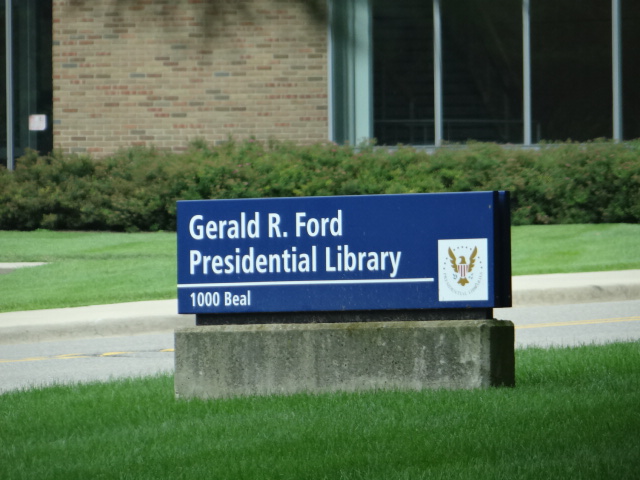
On September 08, 2017, I live in Ann Arbor, Michigan which hosts President Gerald R. Ford’s Presidential Library on the University of Michigan North Campus. I was serving US President Ford on September 08, 1974 as member of Special Frontier Force while Ford granted pardon to Nixon. The United States missed an opportunity to investigate Nixon-Kissinger Vietnam Treason. The Cold War in Asia was placed on the backburner without resolving the problem posed by spread of Communism in Asia.
In a controversial executive action, President Gerald Ford pardons his disgraced predecessor Richard M. Nixon for any crimes he may have committed or participated in while in office. Ford later defended this action before the House Judiciary Committee, explaining that he wanted to end the national divisions created by the Watergate scandal. The Watergate scandal erupted after it was revealed that Nixon and his aides had engaged in illegal activities during his reelection campaign–and then attempted to cover up evidence of wrongdoing. With impeachment proceedings underway against him in Congress, Nixon bowed to public pressure and became the first American president to resign. At noon on August 9, Nixon officially ended his term, departing with his family in a helicopter from the White House lawn. Minutes later, Vice President Gerald R. Ford was sworn in as the 38th president of the United States in the East Room of the White House. After taking the oath of office, President Ford spoke to the nation in a television address, declaring, “My fellow Americans, our long national nightmare is over.” Ford, the first president who came to the office through appointment rather than election, had replaced Spiro Agnew as vice president only eight months before. In a political scandal independent of the Nixon administration’s wrongdoings in the Watergate affair, Agnew had been forced to resign in disgrace after he was charged with income tax evasion and political corruption. Exactly one month after Nixon announced his resignation, Ford issued the former president a “full, free and absolute” pardon for any crimes he committed while in office. The pardon was widely condemned at the time. Decades later, the John F. Kennedy Library Foundation presented its 2001 Profile in Courage Award to Gerald Ford for his 1974 pardon of Nixon. In pardoning Nixon, said the foundation, Ford placed his love of country ahead of his own political future and brought needed closure to the divisive Watergate affair. Ford left politics after losing the 1976 presidential election to Democrat Jimmy Carter. Ford died on December 26, 2006, at the age of 93.
American troops arrive in Korea to partition the country U.S. troops land in Korea to begin their postwar occupation of the southern part of that nation, almost exactly one month after Soviet troops had entered northern Korea to begin their own occupation. Although the U.S. and Soviet occupations were supposed to be temporary, the division of Korea quickly became permanent.
Presidential 1974 President Ford pardons former President Nixon On this day in 1974, President Gerald Ford, who assumed office on the heels of President Richard M. Nixon’s resignation, pardons his predecessor for his involvement in the Watergate scandal. Congress had accused Nixon of obstruction of justice during the investigation of the Watergate scandal, which began in 1972.
1954 SEATO established Having been directed by President Dwight D. Eisenhower to put together an alliance to contain any communist aggression in the free territories of Vietnam, Laos, and Cambodia, or Southeast Asia in general, Secretary of State John Foster Dulles forges an agreement establishing a military alliance that becomes the Southeast Asia Treaty Organization. 1968
Vietnam War ARVN general killed Troung Quang An becomes the first South Vietnamese general killed in action when his aircraft is shot down. The commander of the U.S. 1st Infantry Division (more popularly known as the ‘Big Red One”), Maj. Gen. Keith L. Ware, suffered a similar fate when his helicopter was shot down…
STAND UP FOR NATURAL RIGHTS OF JEWS AND TIBETANS IN THEIR HOMELANDS.
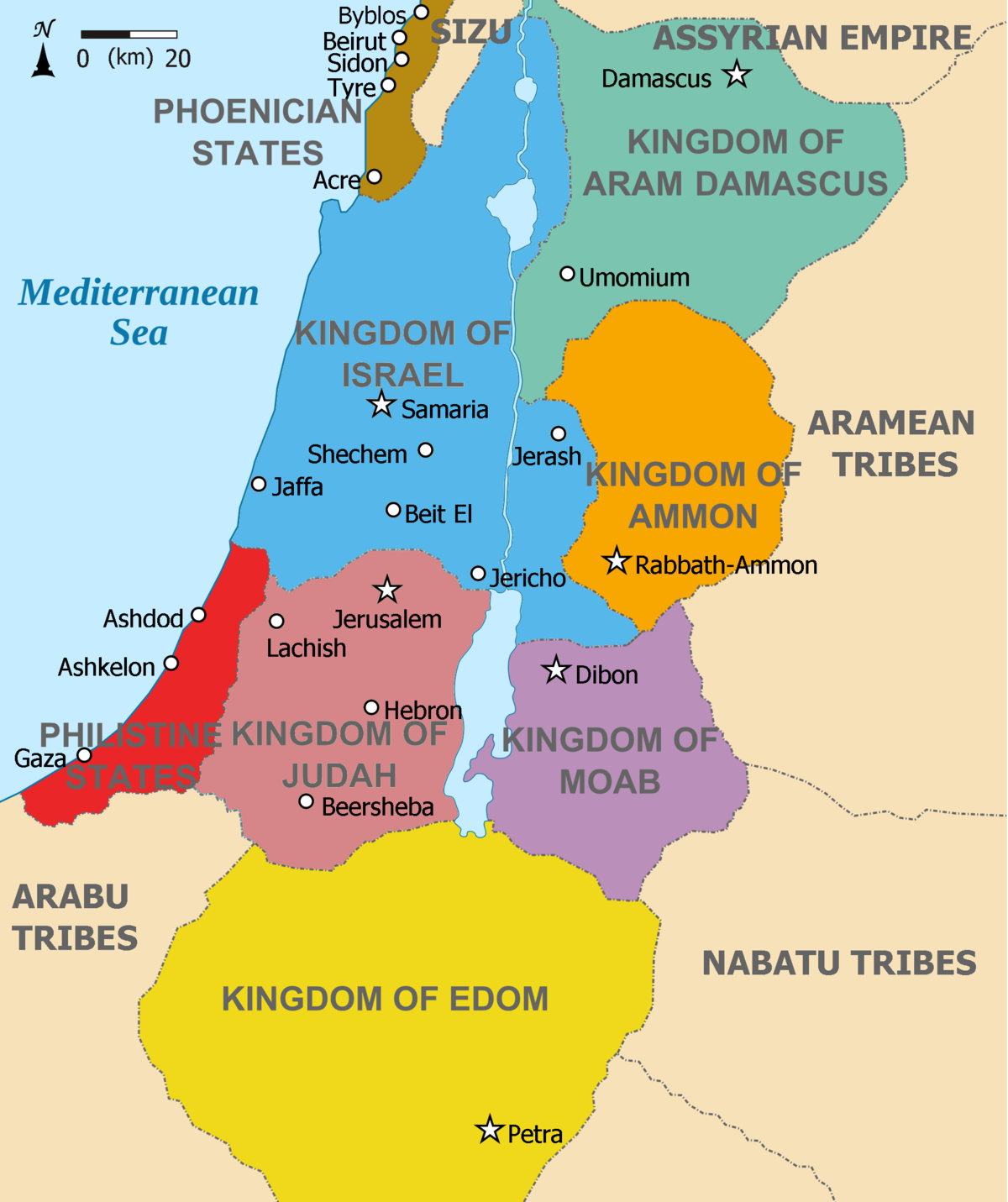
I stand up for Natural Rights of Jews to live in Judea and Samaria; and I stand up for Natural Rights of Tibetans to their ancestral Homeland. I support His Holiness the Dalai Lama’s Five-Point Peace Plan to stop Communist China’s Colonization of Tibet.
“United Nations Secretary-General Antonio Guterres called on Israel to stop settlement construction in the West Bank…. We believe that settlement activity is illegal under international law.”
Why has United Nations Secretary-General Antonio Guterres never made similar statements about Tibet?
Stand Up for Natural Rights of Tibetans. Stop Han Chinese Tibet Colonization.
Tibetan students in New Delhi demonstrate at UN Information Center (photo: R.T.Y Rohini)
In his 5-point peace plan, the Dalai Lama called to stop Chinese colonization of Tibet.
“When the newly formed People’s Republic of China invaded Tibet in 1949/50, it created a new source of conflict. This was highlighted when, following the Tibetan national uprising against the Chinese and my flight to India in 1959, tensions between China and India escalated into the border war in 1962. Today large numbers of troops are again massed on both sides of the Himalayan border and tension is once more dangerously high.
“The real issue, of course, is not the Indo-Tibetan border demarcation. It is China’s illegal occupation of Tibet, which has given it direct access to the Indian sub-continent. The Chinese authorities have attempted to confuse the issue by claiming that Tibet has always been a part of China. This is untrue. Tibet was a fully independent state when the People’s Liberation Army invaded the country in 1949/50.
“Since Tibetan emperors unified Tibet, over a thousand years ago, our country was able to maintain its independence until the middle of this century. At times Tibet extended its influence over neighboring countries and peoples and, in other periods, came itself under the influence of powerful foreign rulers – the Mongol Khans, the Gorkhas of Nepal, the Manchu Emperors and the British in India.
“It is, of course, not uncommon for states to be subjected to foreign influence or interference. Although so-called satellite relationships are perhaps the clearest examples of this, most major powers exert influence over less powerful allies or neighbours. As the most authoritative legal studies have shown, in Tibet’s case, the country’s occasional subjection to foreign influence never entailed a loss of independence. And there can be no doubt that when Peking’s communist armies entered Tibet, Tibet was in all respects an independent state…
“Human rights violations in Tibet are among the most serious in the world. Discrimination is practiced in Tibet under a policy of ‘apartheid’ which the Chinese call ‘segregation and assimilation’. Tibetans are, at best, second class citizens in their own country. Deprived of all basic democratic rights and freedoms, they exist under a colonial administration in which all real power is wielded by Chinese officials of the Communist Party and the army.
“Although the Chinese government allows Tibetans to rebuild some Buddhist monasteries and to worship in them, it still forbids serious study and teaching of religion. Only a small number of people, approved by the Communist Party, are permitted to join the monasteries.
“While Tibetans in exile exercise their democratic rights under a constitution promulgated by me in 1963, thousands of our countrymen suffer in prisons and labor camps in Tibet for their religious or political convictions…
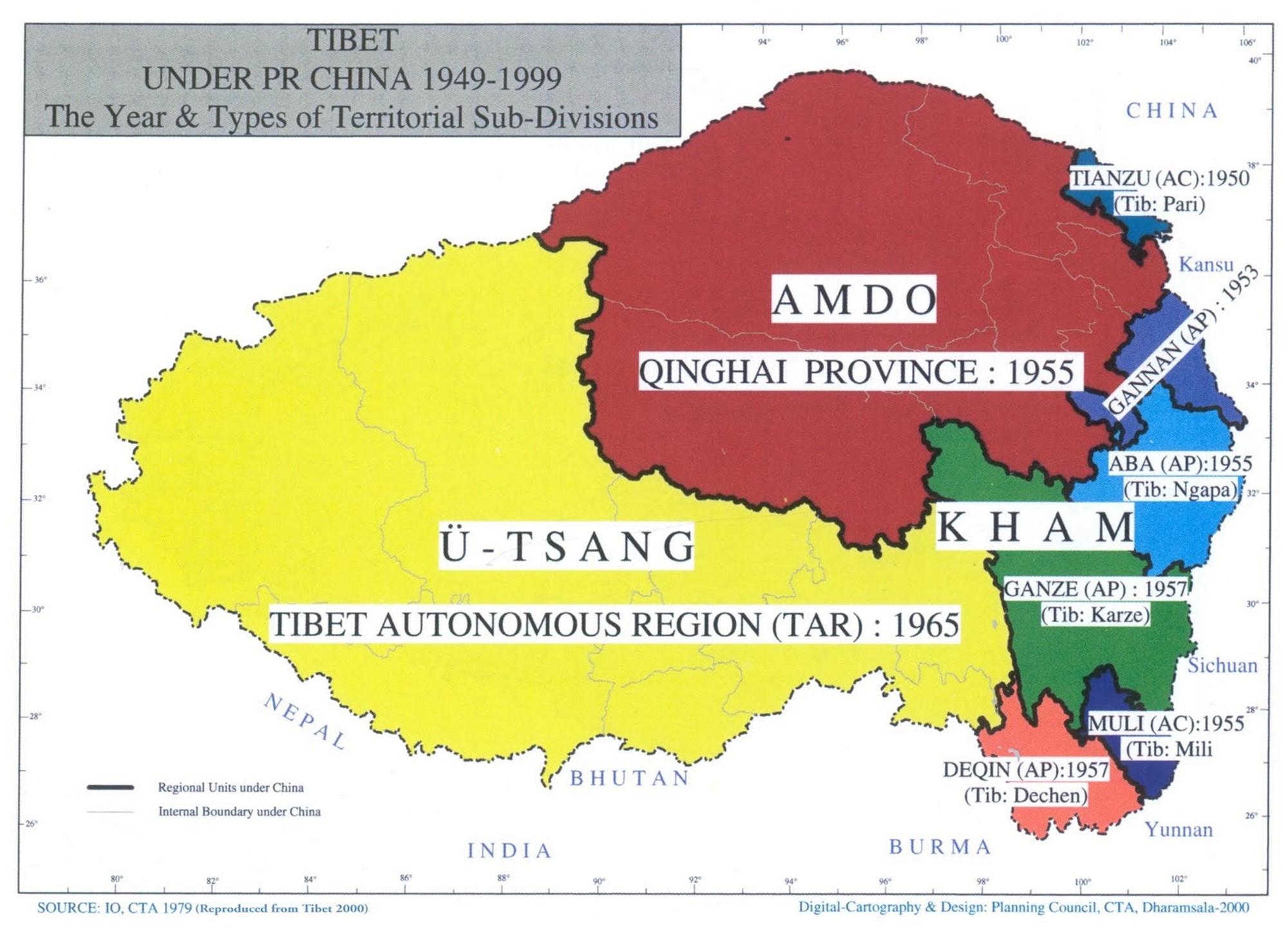
“The massive transfer of Chinese civilians into Tibet in violation of the Fourth Geneva Convention (1949), threatens the very existence of the Tibetans as a distinct people. In the eastern parts of our country, the Chinese now greatly outnumber Tibetans. In the Amdo province, for example, where I was born, there are, according to the Chinese statistics, 2.5 million Chinese and only 750,000 Tibetans. Even in the so-called Tibet Autonomous Region (i.e., central and western Tibet), Chinese government sources now confirm that Chinese outnumber Tibetans.
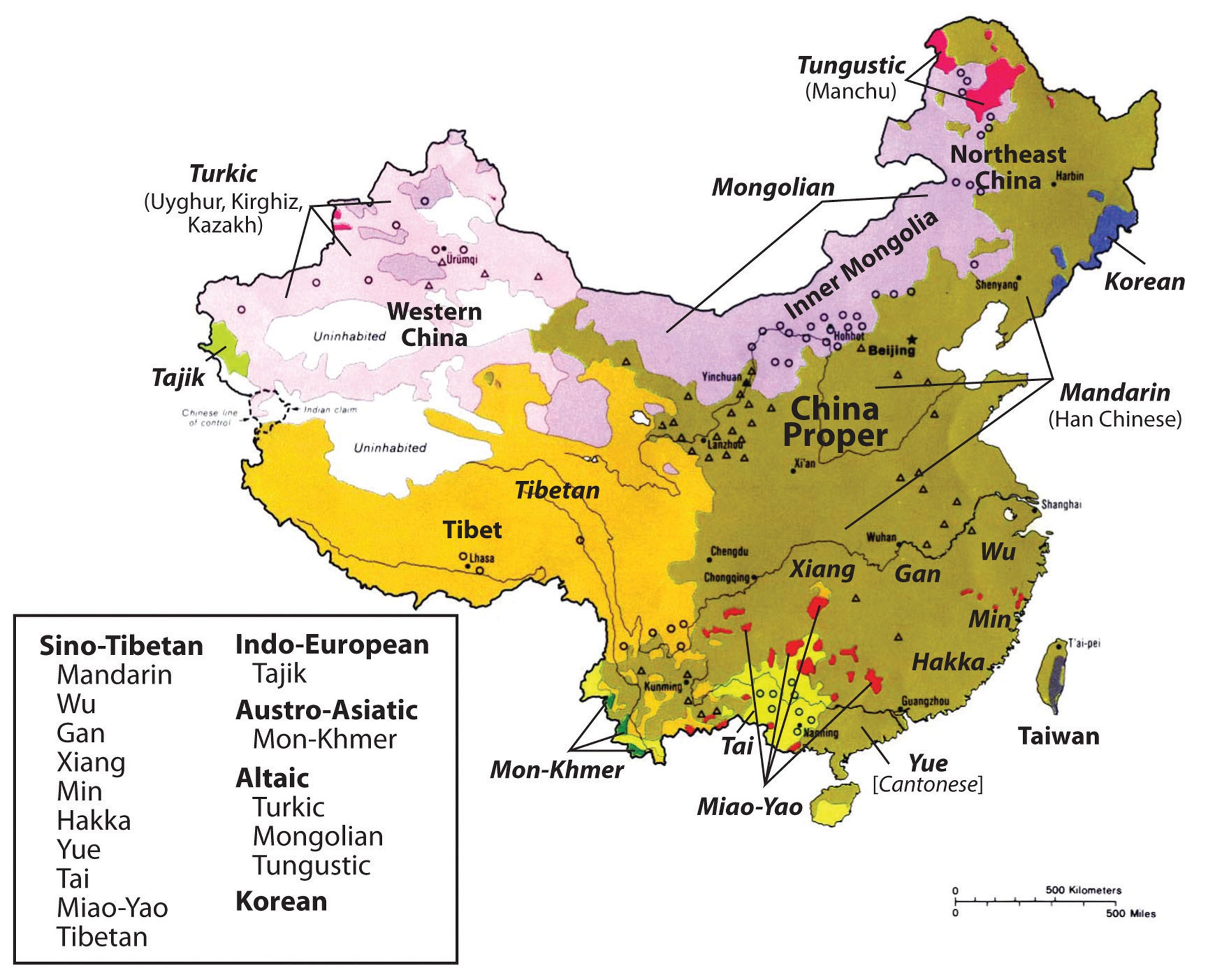
“The Chinese population transfer policy is not new. It has been systematically applied to other areas before. Earlier in this century, the Manchus were a distinct race with their own culture and traditions. Today only two to three million Manchurians are left in Manchuria, where 75 million Chinese have settled. In Eastern Turkestan, which the Chinese now call Sinkiang, the Chinese population has grown from 200,000 in 1949 to 7 million, more than half of the total population of 13 million. In the wake of the Chinese colonization of Inner Mongolia, Chinese number 8.5 million, Mongols 2.5 million.
“Today, in the whole of Tibet 7.5 million Chinese settlers have already been sent, outnumbering the Tibetan population of 6 million. In central and western Tibet, now referred to by the Chinese as the “Tibet Autonomous Region”, Chinese sources admit the 1.9 million Tibetans already constitute a minority of the region’s population. These numbers do not take the estimated 300,000-500,000 troops in Tibet into account – 250,000 of them in so-called Tibet Autonomous Region.
“For the Tibetans to survive as a people, it is imperative that the population transfer is stopped and Chinese settlers return to China. Otherwise, Tibetans will soon be no more than a tourist attraction and relic of a noble past. “
Why has United Nations Secretary-General Antonio Guterres never complained about Chinese settlements in Tibet as he complains against Jewish settlements?
In a better analogy of the Arab-Israeli conflict, Israel plays the role of Tibet, the dozens of Arab countries that surround it are like China. The Palestinian Arabs serve as the spearhead of the dozens of Arab Nations that are trying to engulf the world’s only Jewish State (smaller than New Jersey) the same way gigantic China is trying to absorb Tibet.
Since United Nations Secretary-General Antonio Guterres is not planning to go to the Tibet to condemn the Chinese presence there as illegal, he should not come to Israel to call for the ethnic cleansing of Jews from Judea and Samaria.
Stand Up for Natural Rights of Tibetans. Stop Han Chinese Colonization of Tibet, Inner Mongolia, Manchuria, and East Turkestan.
THE COLD WAR IN ASIA – TIBETAN RESISTANCE FROM 1950s TO 2017
The Cold War in Asia – Tibetan Resistance From 1950s To 2017. Communism is the root cause of ‘The Cold War in Asia’. Tibet and India’s attempts to befriend Communist China utterly failed.
The Cold War in Asia – Tibetan Resistance From 1950s To 2017. Communist Party of China imposes dictatorial regime with no transparency and public accountability.
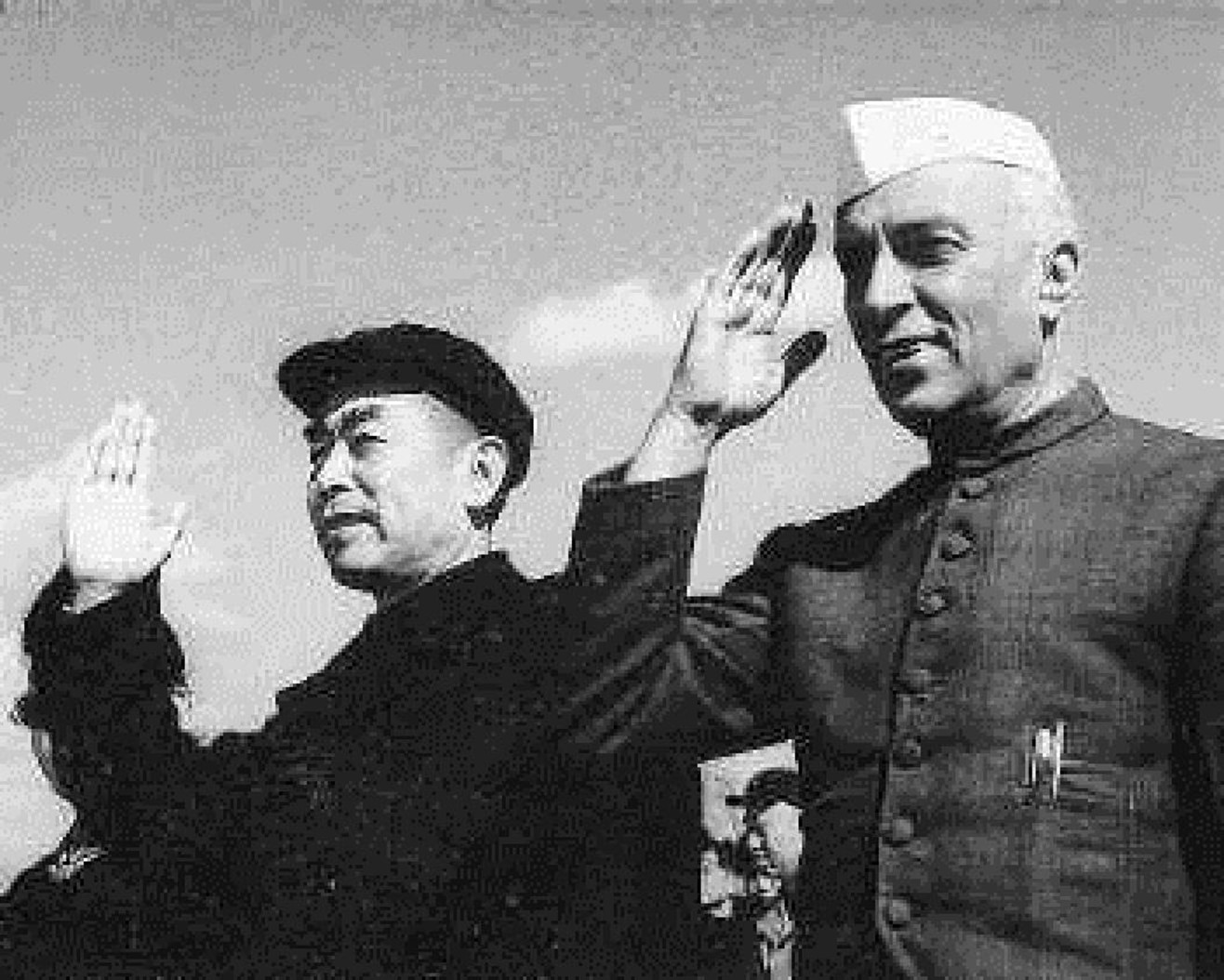
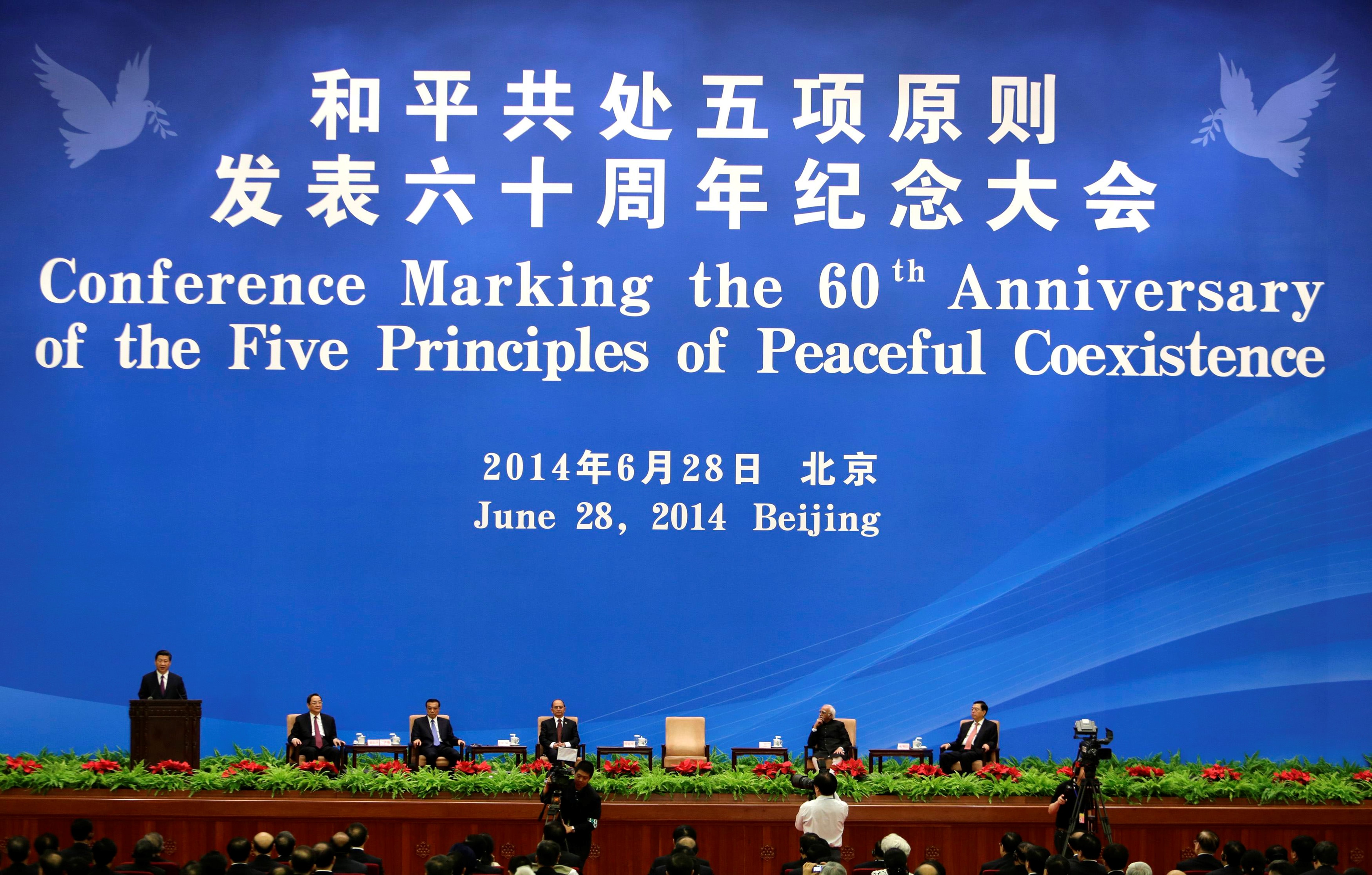
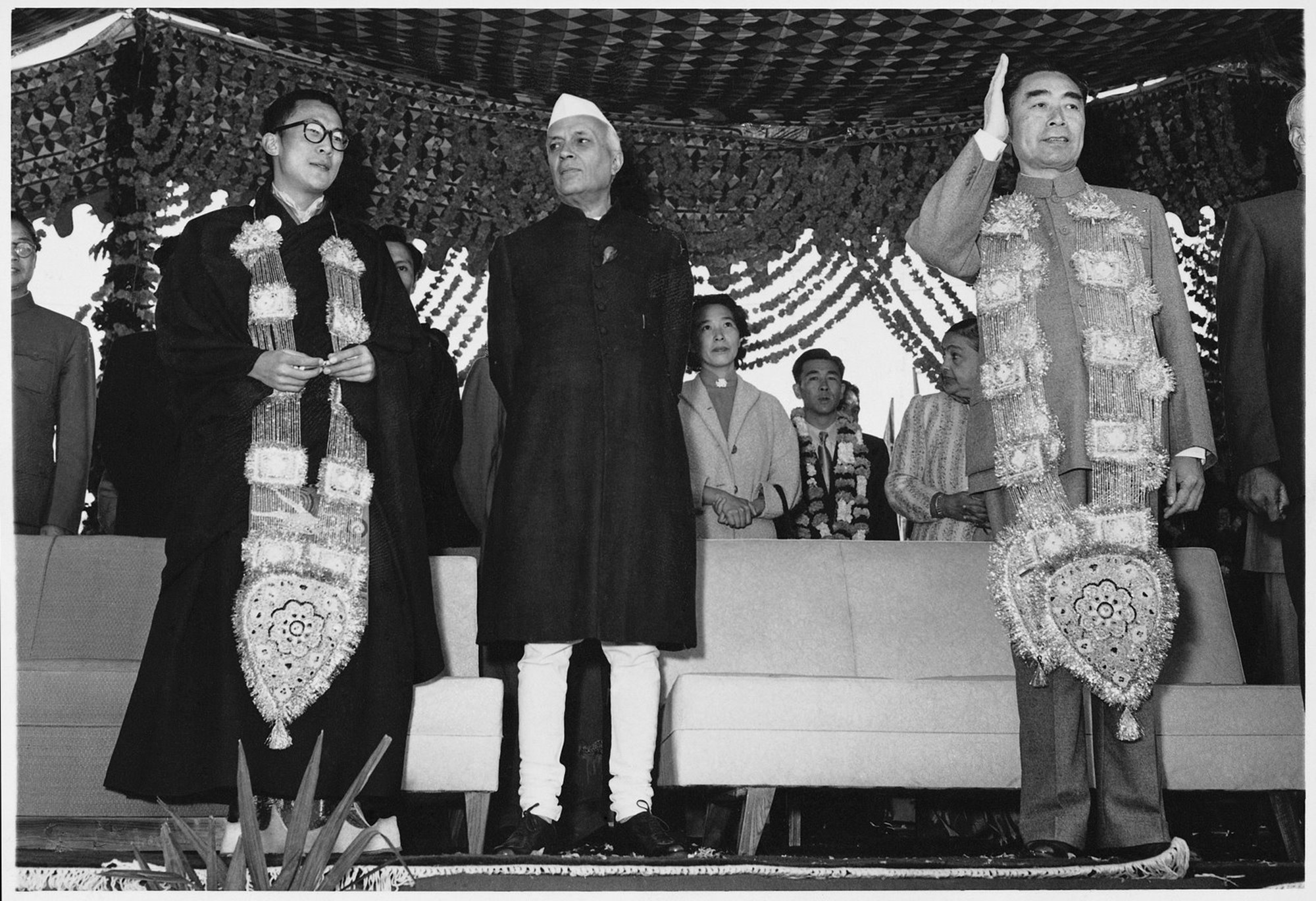
Introduction of Communism to mainland China on October 01, 1949 is the reason for ‘The Cold War in Asia’. Communism introduced dictatorial regime with no transparency and public accountability. On May 23, 1951, Tibet and Communist China signed Seventeen-Point Plan or 17-Point Agreement to ensure meaningful Tibetan Autonomy under Chinese Communist Party Governance. Further, India, and Communist China signed Panchsheel Agreement on April 29, 1954 to formalize international relations on Five-Principles of Peaceful Coexistence. Adherence to the Five-Principles of Peaceful Coexistence would indeed let China and India live together side by side with ‘Brotherly Love’ to declare “Hindi Chini Bhai Bhai.”
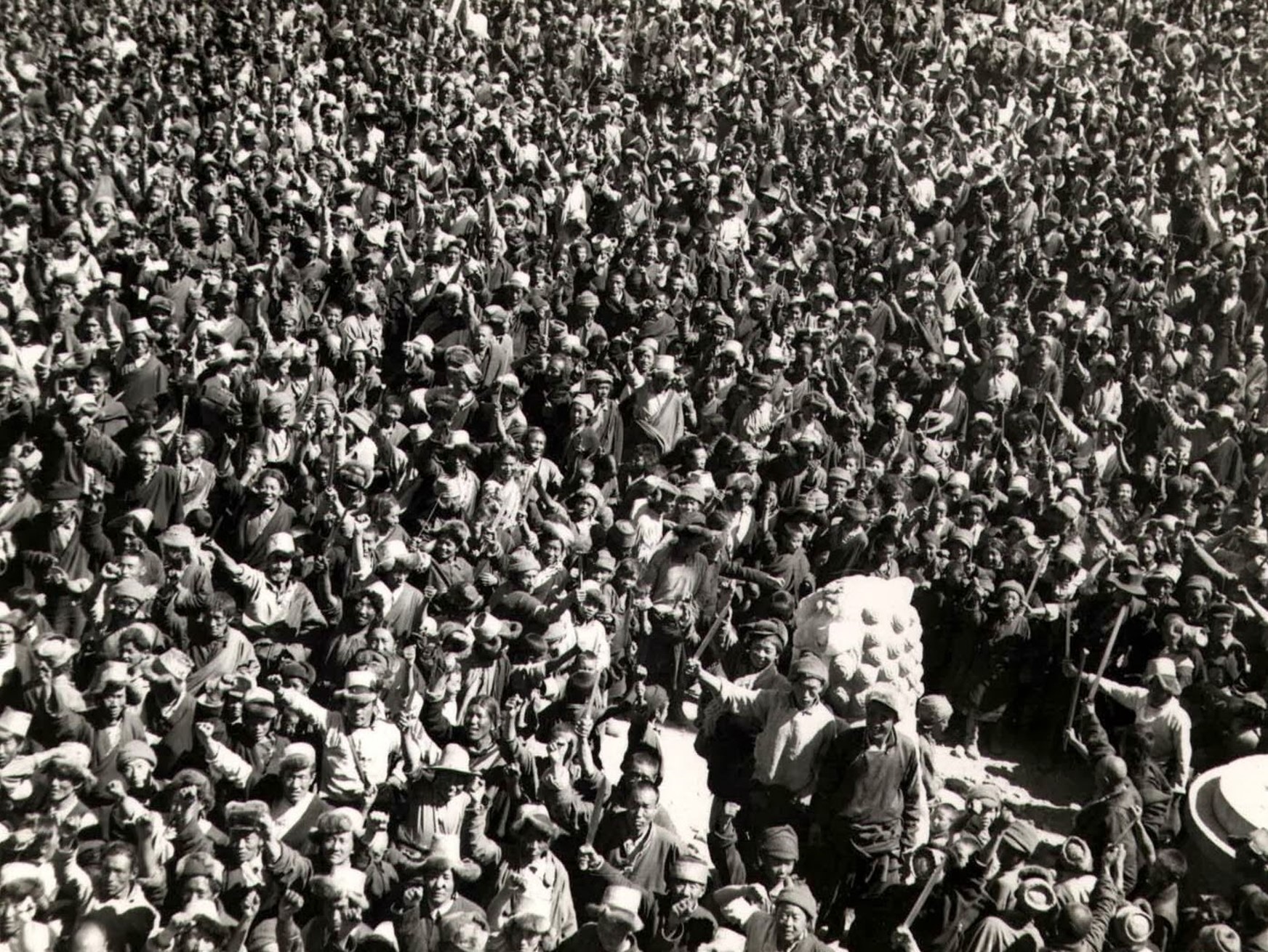
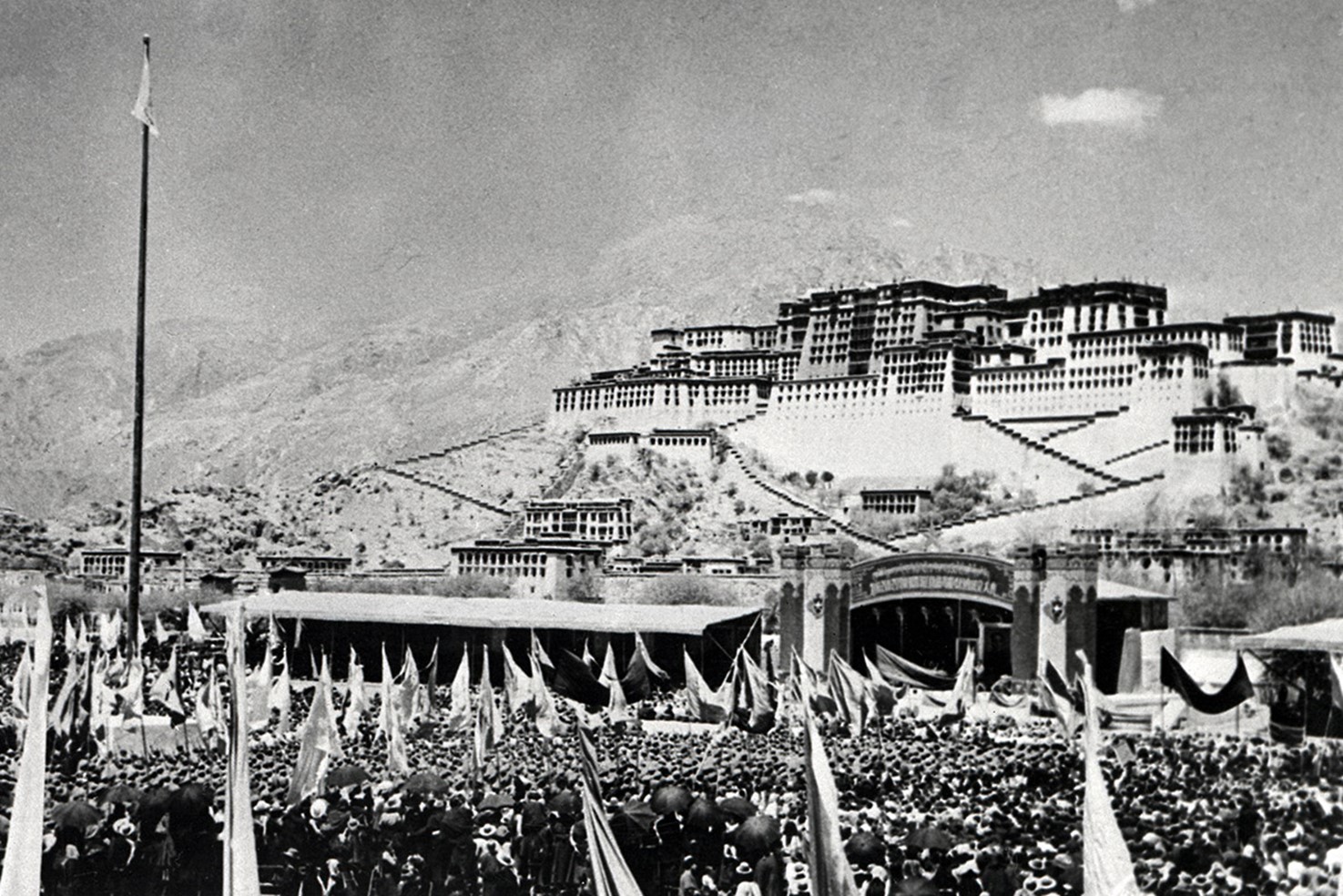
The Cold War in Asia – Tibetan Resistance From 1950s To 2017. Massive Tibetan National Uprising on March 10, 1959 is evidence for failed 17-Point Plan between Communist China and Tibet.
The Cold War in Asia – Tibetan Resistance From 1950s To 2017. Massive Tibetan National Uprising on March 10, 1959 is evidence of broken 17-Point Agreement between Communist China and Tibet.
The Cold War in Asia – Tibetan Resistance From 1950s To 2017. Introduction of Communism into mainland China on October 01, 1949 caused massive Tibetan Revolt against Communist Rule. Tibetans protesting in Lhasa on March 10, 1959.
Tibetan Resistance began in 1950s and continues in 2017 because of unwillingness of Communist Party of China to implement the 17-Point Plan as agreed. Republic of India adheres to principles of Democracy, Socialism, and Secularism. While Chinese people may embrace Buddhism, their system of Communist Party Governance with no transparency and public accountability will keep Tibetan Resistance alive. Buddhism may encourage and promote tourism but it cannot be used as the basis for formulating international relations by Secular Republic of India.
“India should develop a pilgrimage for Chinese people who follow Buddhism. These people can come to places like Bodh Gaya and can come closer to India emotionally as well,” he said.
The Cold War in Asia – Tibetan Resistance From 1950s To 2017. Tibet and India failed to befriend Communist China in spite of signing Agreements in 1951 and 1954.
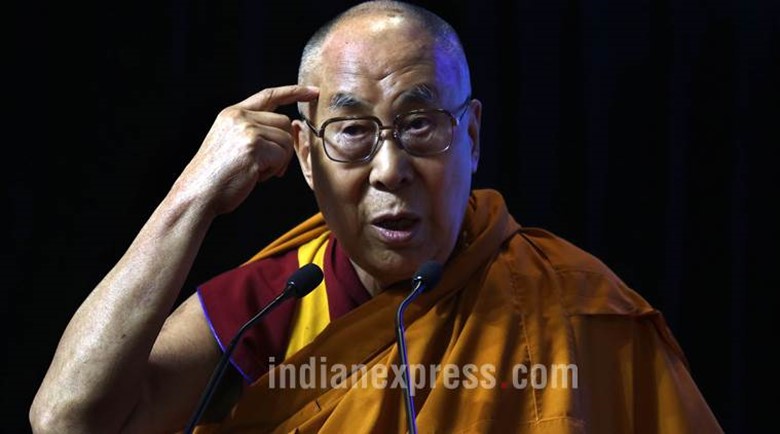
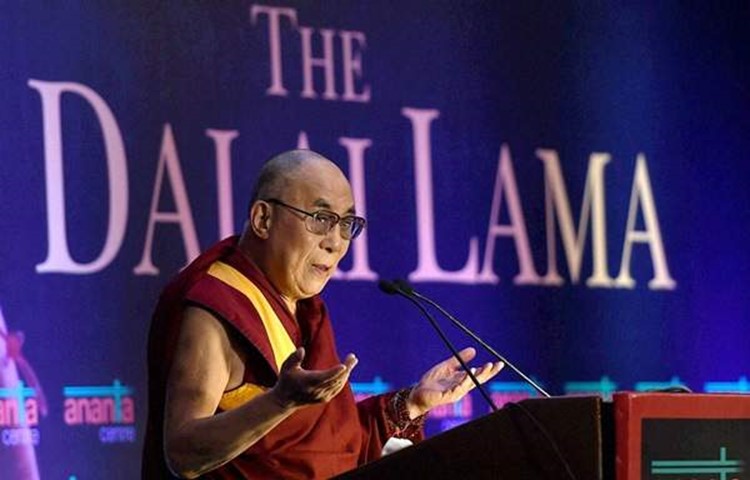
Tibetan spiritual leader the Dalai Lama gestures as he speaks during a ‘world peace and harmony conclave’ in Mumbai on Sunday. (Express photo By Pradip Das)
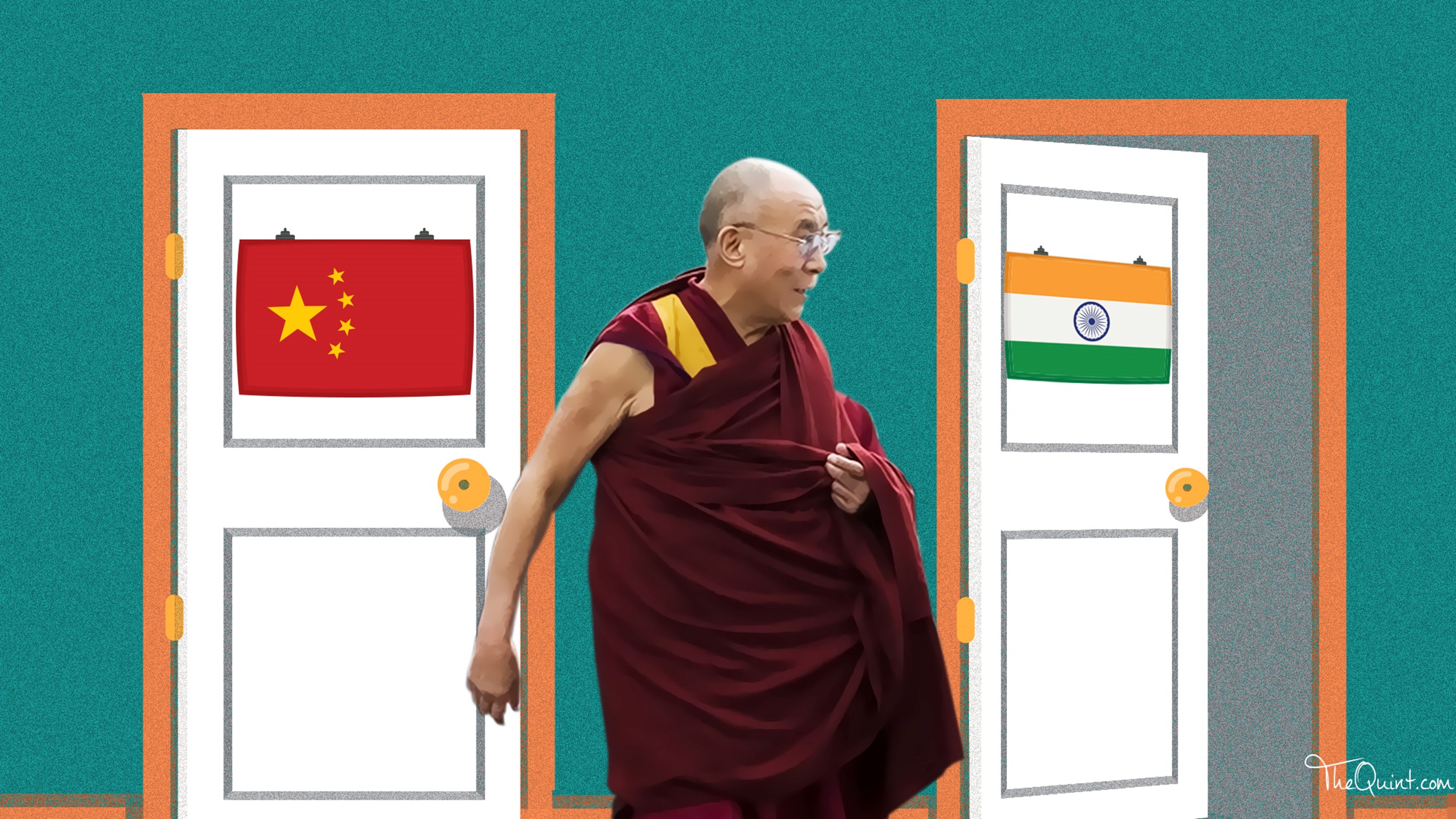
Tibetan spiritual leader the Dalai Lama on Monday said India and China cannot defeat each other and both the countries will have to live together as neighbours. The spirit of “Hindi-Chini Bhai Bhai” is the only way forward, he stressed. “In the current border situation, neither India nor China can defeat the other. Both countries are militarily powerful,” the Dalai Lama said. Both the countries will have to live together as neighbours, he said.
“There may be some incidents of cross-border firing. It does not matter,” he said. The Dalai Lama was responding to questions by reporters at an event here.
He said, “In 1951, a 17-point agreement was signed between the Local Government of Tibet and People’s Republic of China for peaceful liberation of Tibet. Today China is changing and has become a country with the highest Buddhist population. They (India and China) should go back to ‘Hindi Chini Bhai Bhai’ again.”
It is a Communist government but Buddhism is widely accepted, he said.
“Earlier, the Dalai Lama used to be the head of spiritual and political movements in Tibet, but in 2011, I totally retired from politics. It was a way of democratizing the institutions, because it had some feudal elements in it,” said the 14th Dalai Lama.
He suggested that India should “develop pilgrimage for Chinese” people who are followers of Buddhism.
“We must understand that the followers of Buddhism in China are actually following the line of Indian Buddhism that came from Nalanda (Indian seat of learning) and Sanskrit,” said the spiritual leader.
“India should develop a pilgrimage for Chinese people who follow Buddhism. These people can come to places like Bodh Gaya and can come closer to India emotionally as well,” he said.
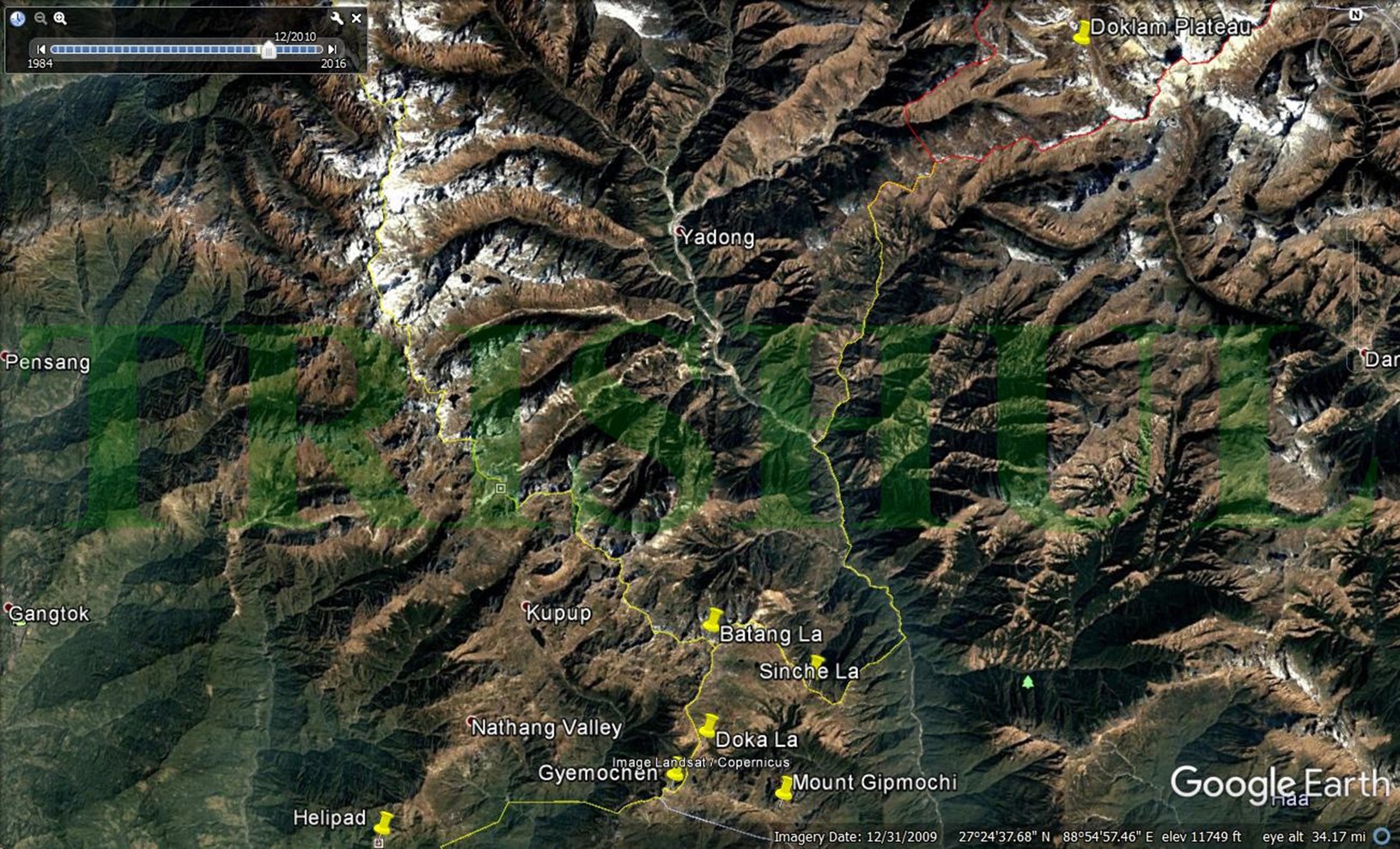
India and China have been locked in a standoff in the Doklam area since June 16 after Chinese troops began constructing a road near the Bhutan trijunction.
Commenting on the definition of secularism in the Indian context, the Dalai Lama said, “Respect for all religions and even the non-believers too. This is the definition of secularism in Indian context.”
“During the French Revolution and the Bolshevik movement, people opposed the exploitation by their kings and queens. Then religious institutions were supporting the feudal lords; hence the revolution also went against them. That’s why in the western context, secularism has become a word expressing disrespect to religion,” he said.
“Even an Indian communist leader had once told me that as a communist party worker, he does not believe in God. But for the people who he works for, they do believe in God and it is his duty to respect their feelings. I welcome such a mature approach,” the Dalai Lama said.
The Cold War in Asia – Tibetan Resistance From 1950s To 2017. Tibetans remain opposed to Communist Party of China and resist its dictatorial regime.
The Cold War in Asia – Tibetan Resistance From 1950s To 2017. Tibetans resist Communist Party of China’s dictatorial regime.
THE COLD WAR IN ASIA – INDIA AND TIBET ARE MILITARY PARTNERS TO CONTAIN COMMUNISM
I warmly appreciate His Holiness the Dalai Lama’s remarks about India and China living side by side as “Brothers(Bhai-Bhai).”
The Standoff between China and India inside Bhutan’s territory called Doklam is not really serious. The real issue is that of dangers posed by spread of Communism in Asia. Both India, and Tibet recognized this real danger to foster military partnership or alliance to checkmate, to engage, to confront, to contain, to resist, and to battle against dark, and evil forces of Communism. To that extent, both India, and Tibet must consider deployment of Reserve Duty Brigade (Mobile Reserve Force or MRF) of Special Frontier Force to defend their shared values.
Rudranarasimham Rebbapragada
SPECIAL FRONTIER FORCE
DALAI LAMA INVOKES ‘HINDI CHINI BHAI BHAI’, SAYS DOKLAM STANDOFF NOT VERY SERIOUSOFF NOT
NEW DELHI: Describing the ongoing Doklam standoff as “not very serious”, the Dalai Lama today invoked “Hindi Chini Bhai Bhai”, a catch phrase that defined Sino-India ties in the 1950s, stressing that the two neighbors have to live side by side in peace.
Asserting that any problem has to be resolved through talks, the 81-year-old Tibetan spiritual leader said the theme of 21st century should be dialogue.
“That’s the only away. One side’s retreat and defeat is an old-time thinking. In modern times, every country is dependent on each other,” he said, speaking at the Rajendra Mathur Memorial Lecture organized by the Editors Guild of India here.
The spiritual leader, who calls himself a “chela” (disciple) of India, also needled China saying he can do more in India, which has freedom.
“Where there is no freedom, I don’t like. There is some tension, but I do not think it is very serious. We need to make distinction between people and governments. The other day, I mentioned that Hindi-Chini Bhai is the only way. India and China have to live side by side,” the Dalai Lama said, even as he added that “propaganda and wrong information make things complicated”.
The Dalai Lama, who had fled a Chinese State crackdown in Lhasa and took shelter in India in 1959, said occasionally the two neighbors use “harsh words”, and added as a reminder that the Chinese forces eventually withdrew though they had reached Bomdila in 1962.
Queried about any possible resumption of talks between the Central Tibetan Authority and the Chinese side, he said it may take place after the 19th national congress of the Communist Party of China, which is slated later this year. “But nothing is definite,” he said.
India and China have been locked in a face-off in the Doklam area of the Sikkim sector for more than 50 days after Indian troops stopped the Chinese Army from building a road in the area. China claimed it was constructing the road within its territory and has been demanding immediate withdrawal of the Indian troops from the disputed Doklam plateau.
Bhutan says Doklam belongs to it but China claims it to be its territory and says Thimphu has no dispute with Beijing over it.
External Affairs Minister Sushma Swaraj had recently said both sides should first pull back their troops for any talks to take place, favoring a peaceful resolution of the border standoff.
The Cold War in Asia – Unfinished Vietnam War. Spread of Communism to Asia undermines Natural Freedom, Natural Balance, and Natural Equilibrium shaping living experience of people.
In my analysis, the border tensions between India and Communist China are mere symptoms of ‘The Cold War in Asia’.
Nations of ‘Free World’ were alarmed by the spread of Communism into Asia. United States spent billions of dollars to prevent Communist takeover of China. Having failed to do so, United States pursued a policy of containing the spread of Communism in Asia. In the battles of Korean Peninsula, and Vietnam, Communists prevailed with support from Soviet Union and Communist China.
India’s border tension problems began with Red China’s illegal occupation of Tibet since 1950. During 1960s and 1970s, the United States and India had opportunity to launch Tibet Campaign to defend Freedom, Democracy, Peace, and Justice in Asia. Most unfortunately, during 1971-72, Nixon-Kissinger Vietnam Treason placed ‘The Cold War in Asia’ on ‘back-burner’.
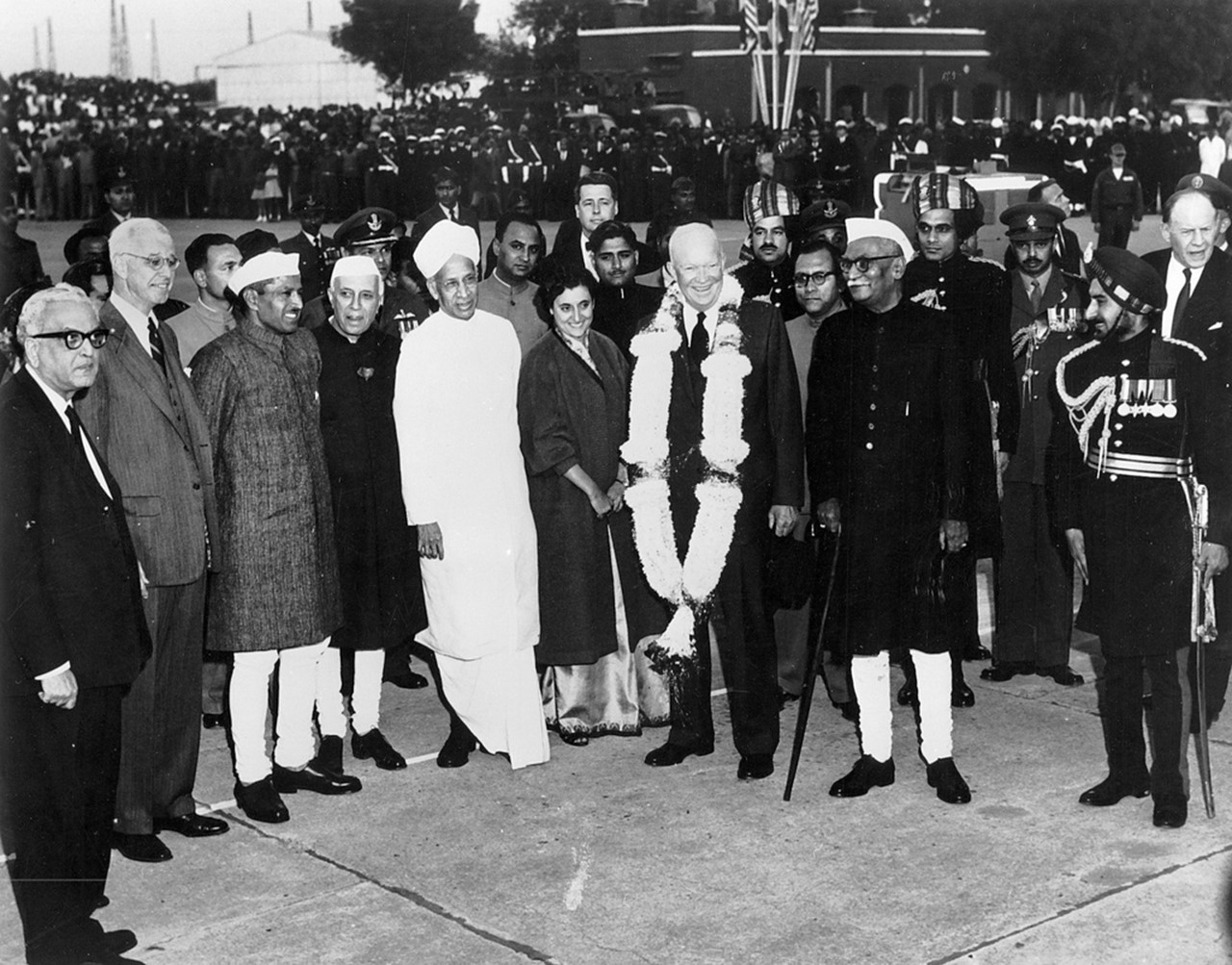
The Cold War in Asia – Unfinished Vietnam War. United States, India, and Tibet missed a golden opportunity to drive Communism out of Tibet. US President Eisenhower’s Visit to India during December 1956.
The Cold War in Asia – Unfinished Vietnam War. Both Tibet, and India hoped to contain threat posed by Communism through negotiations.
I am not surprised by Communist China’s military assertiveness for the US withdrew without accomplishing ‘War for Peace’ Mission fervently advocated by US President Dwight D. Eisenhower in December 1956 while on visit to India.
Beijing’s handling of protracted conflict in Himalayas has had a spillover effect in the region and fueled suspicion
The Cold War in Asia – Unfinished Vietnam War. Border tensions, Border Conflicts along Himalayan Frontier are symptoms of spread of Communism in Asia.
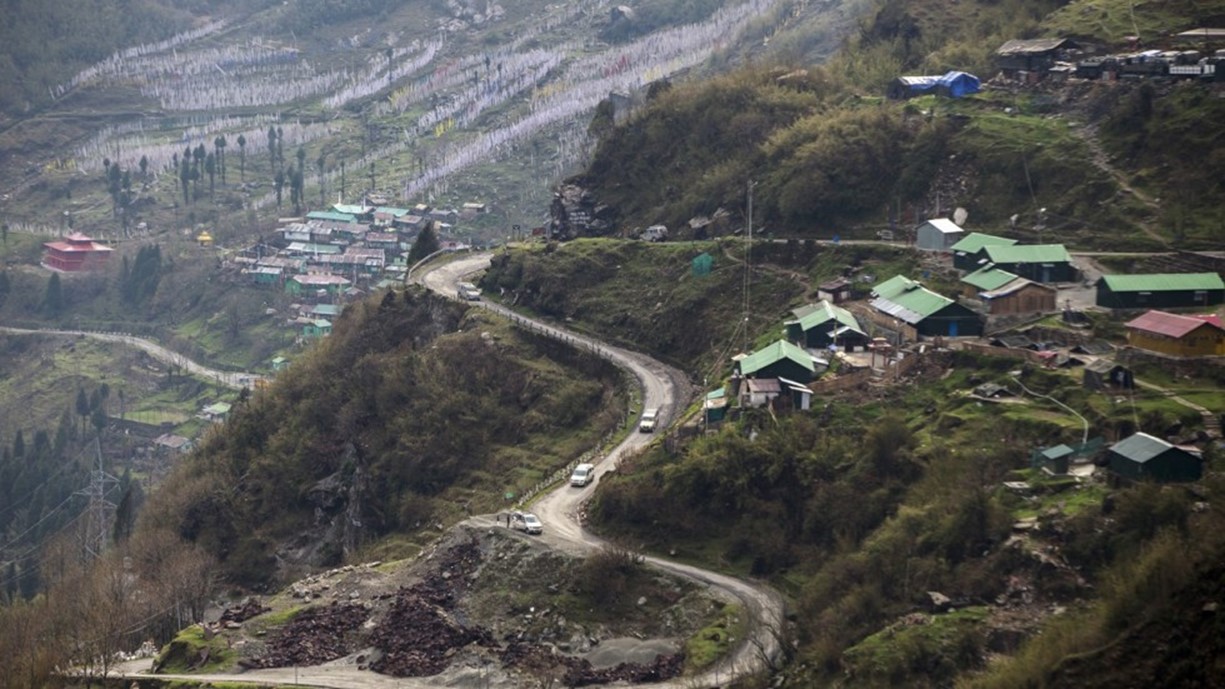
Vehicles travel along a mountain road near the Nathu La Pass, an open trading post in the Himalayas between India and China, in Sikkim, India. Photo: Bloomberg
The protracted border dispute between China and India in the Himalayas has created a “spillover effect” as China’s neighbors become unsettled by its tough handling of the escalating conflict between the two Asian giants, foreign policy experts have said.
China’s Foreign Minister Wang Yi and his Indian counterpart Smt. Sushma Swaraj are scheduled to attend the Asean foreign ministers’ meeting in Manila later this week. And while the North Korean nuclear crisis and South China Sea disputes are expected to dominate the meeting, analysts will also be keeping a close eye on how members of the 10-nation group interact with China and India.
Hostile border dispute with India could damage China’s global trade plan, experts warn
The Association of Southeast Asian Nations generally regards a robust Indian presence in the region as a useful deterrent against China, which has been increasingly assertive in its approach to handling territorial issues, as has been the case in the Himalayas.
The Cold War in Asia – Unfinished Vietnam War. Border tensions and Border Conflicts along Himalayan Frontier are symptomatic of Communist domination in Asia.
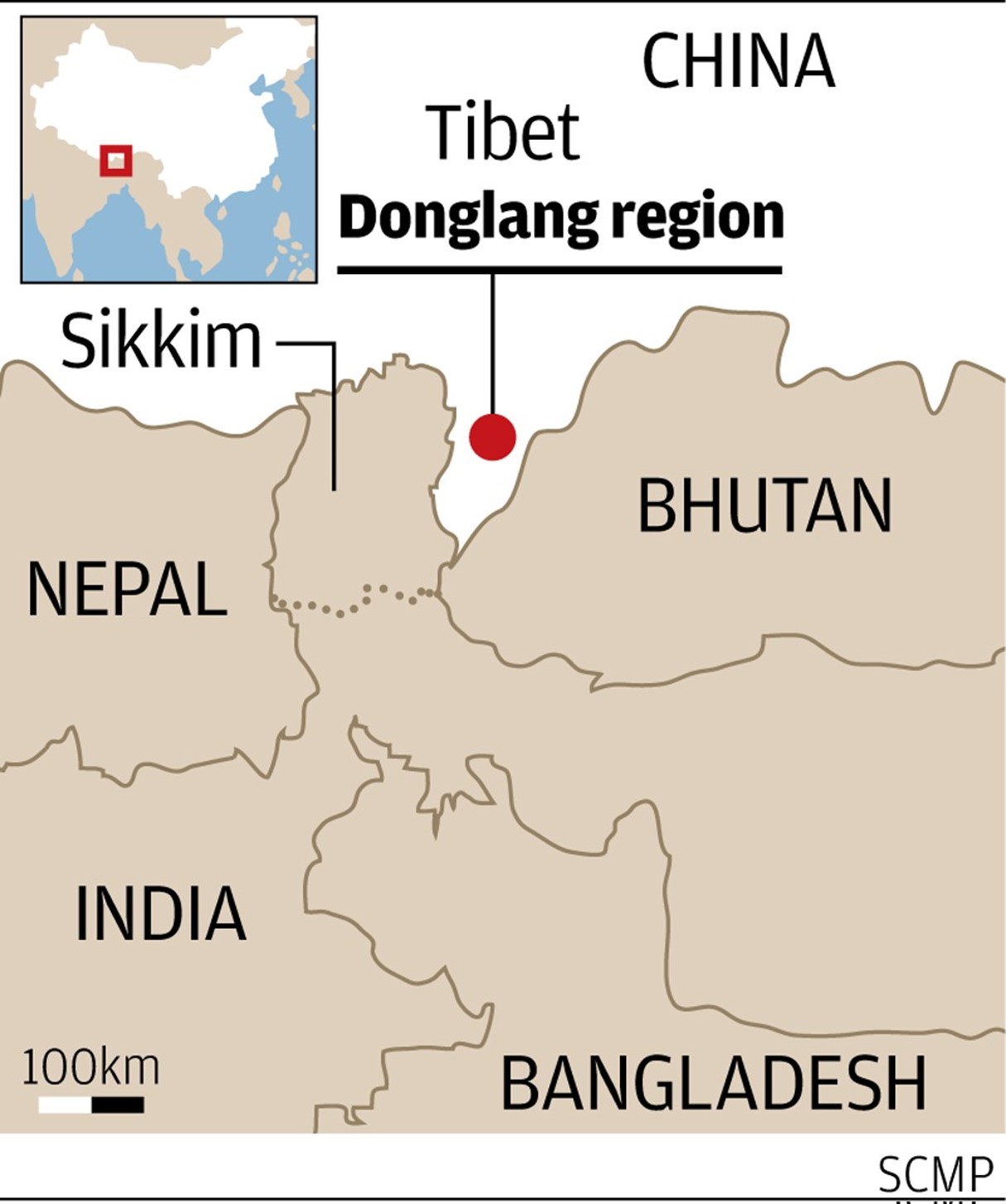
The disputed Doklam region (called Donglang by China) on the India, Bhutan and China tri-border. Graphic: SCMP
Are China-India trade ties turning sour amid border standoff?
China and India last week held their first substantial talks since the dispute broke out more than a month ago in the Doklam region, where the pair shares a border with Bhutan. Chinese State Councilor Yang Jiechi met Indian National Security Adviser Ajit Doval in Beijing, though neither showed any signs of backing down and tensions remain high.
Also last week, China’s Defence ministry issued its strongest warning yet to India, with a spokesman saying Beijing had stepped up its deployment along the unmarked border and would protect its sovereignty “at all costs”.
Richard Javad Heydarian, a political scientist at the Manila-based De La Salle University, said the stand-off in Doklam had had a “spillover effect” by fueling suspicion among countries that are caught in separate territorial disputes with China.
Dispatch from Doklam: Indians dig in for the long haul in standoff with China
“People are asking, if China is really peaceful, why are there so many countries having disputes with China?” he said.
Such sentiment may create fertile ground for Southeast Asian countries to leverage China’s influence with engagement with India.
Vietnam’s foreign minister and deputy prime minister, Pham Binh Minh, has called on India to play a greater role in the region and to partner with Southeast Asian countries on strategic security and promoting freedom of navigation in South China Sea.
The Cold War in Asia – Unfinished Vietnam War. Border Tensions, and Border Conflicts along Himalayan Frontier are symptomatic of spread of Communism in Asia.
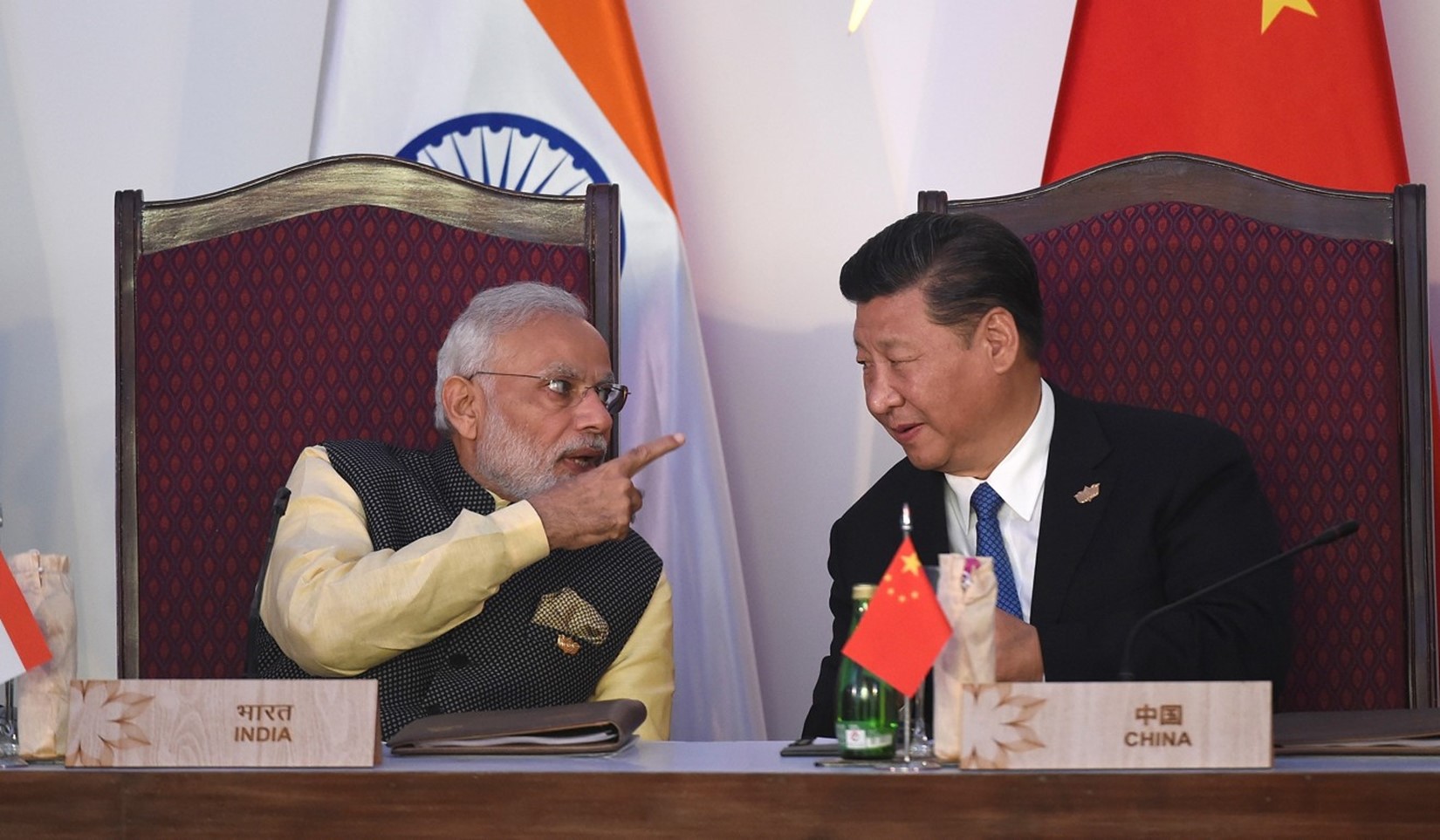
India Prime Minister Narendra Modi and President Xi Jinping at a BRICS leaders’ meeting with the bloc’s Business Council in Goa last October 16. Photo: AFP
A few days after Minh spoke, Vietnam granted Indian Oil firm ONGC Videsh a two-year extension on its plan to explore a Vietnamese oil block in an area of the South China Sea contested by China and Vietnam.
Analysts said recent developments have wide strategic implications – pointing to how Asia is increasingly defined by the China-India rivalry and the renewed tensions between the two Asian giants.
How India border stand-off gives China a chance to burnish its global image
Nisha Desai Biswal, former US assistant secretary of state for South and Central Asia, was quoted by Indian media PTI as saying that China needs to acknowledge that “there is growing strategic and security capability across Asia” and that “India is a force to be reckoned with”.
Wang Yi on Tuesday backed Philippines President Rodrigo Duterte’s idea of forming joint energy ventures in the disputed South China Sea, warning that unilateral action could cause problems and damage both sides.
The Cold War in Asia – Unfinished Vietnam War. Border Tensions and Border Conflicts along Himalayan Frontier are symptomatic of spread of Communism in Asia.
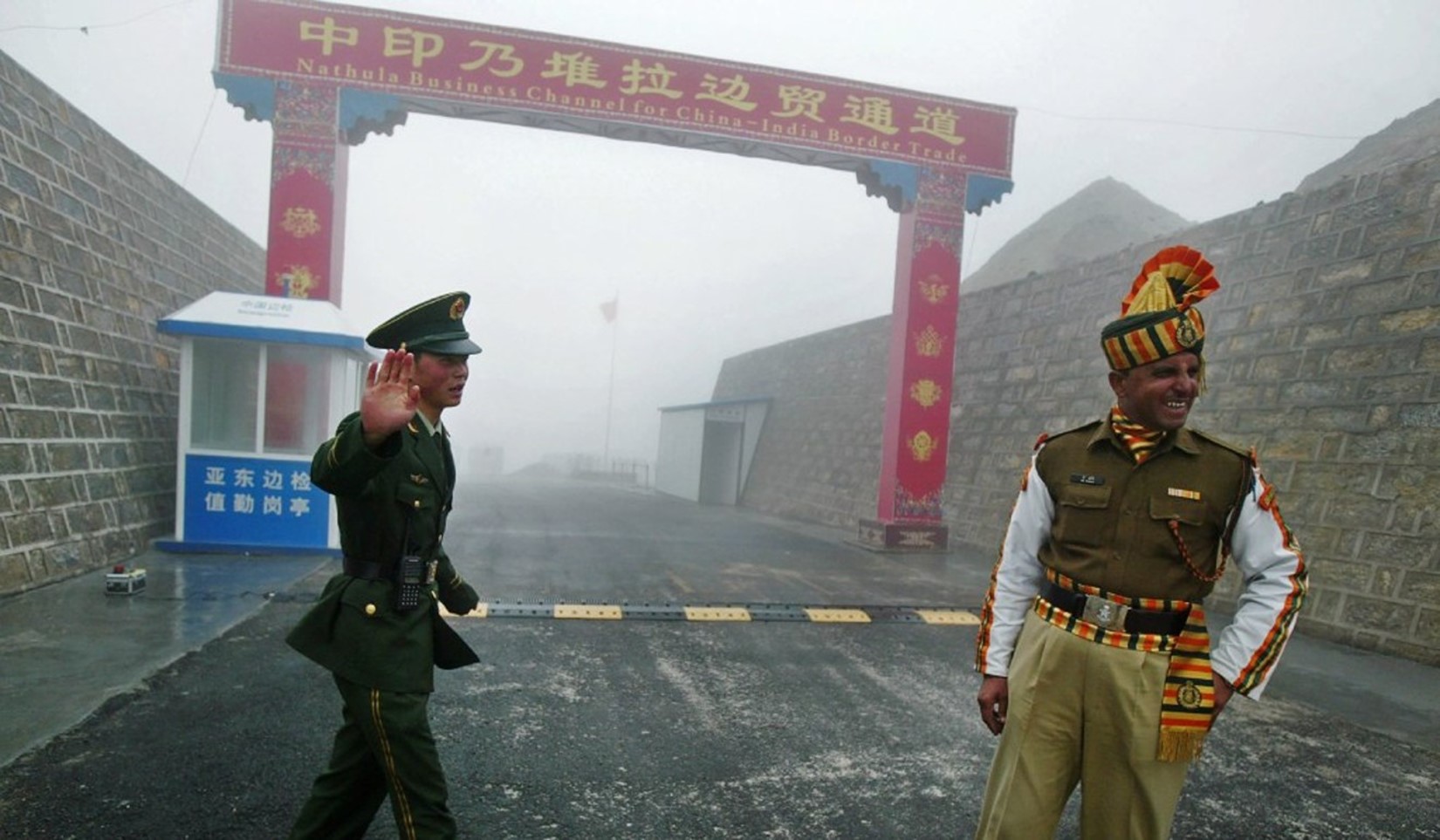
A Chinese soldier, left, is shown next to an Indian soldier at the Nathu La border crossing between India and China in India’s northeastern Sikkim state. Photo: AFP
Duterte on Monday said a partner had been found to develop oil fields and exploration, and exploitation would restart this year.
However, analysts warn that India’s strong position in the standoff has strengthened the hawkish voices in the Philippines who seize opportunities to criticize Duterte’s détente policy towards China and “push forward the narrative that the Philippines needs to be careful on how to approach China and its territorial expansion”, Heydarian said.
Explore the China-India border standoff
Under Indian Prime Minister Narendra Modi’s “Act East” policy, India in recent years has formed strategic partnerships with Southeast Asian countries including Vietnam, Indonesia, Malaysia and Singapore, and Northeast Asian countries including Japan and South Korea.
During the “India-Asean Delhi Dialogue IX” early this month, Indian External Affairs Minister Sushma Swaraj said New Delhi remained committed to enhancing maritime cooperation with Asean as well as upholding freedom of navigation and respect for international law in the region.
The Cold War in Asia – Unfinished Vietnam War. Border Tensions, and Border Conflicts along Himalayan Frontier are symptomatic of spread of Communism in Asia.
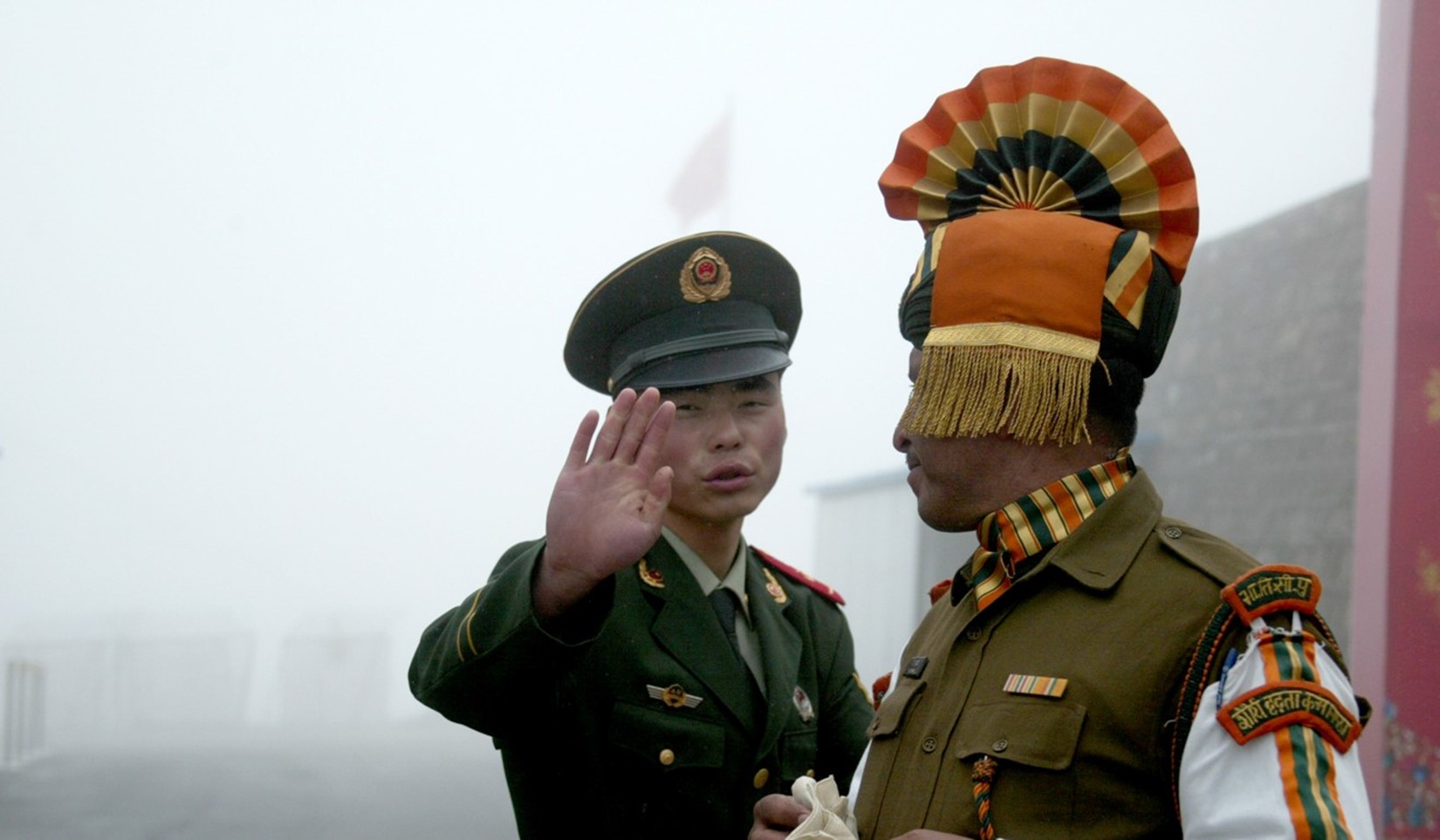
A Chinese soldier gestures as he stands near an Indian soldier on the Chinese side of the ancient Nathu La border crossing between India and China. Photo: AFP
Heydarian suggests that India’s upgrading of its strategic partnership with Asean and increasing its strategic presence in the South China Sea could be a way of pushing back against China.
Even a non-claimant Southeast Asian state such as Thailand “would see the benefit of China being challenged in the South Asia theatre”, said Thitinan Pongsudhirak, an international relations scholar at Bangkok-based Chulalongkorn University.
“India’s standing up to China can only be a boon for Southeast Asian countries even when they don’t say so openly,” he said, “Any major power keeping China in check can only yield geopolitical benefits to Southeast Asia as the region is wary of China’s growing assertiveness.”
China is being ‘unusually aggressive’ in border row
But Pongsudhirak also said that India, a “latecomer to Southeast Asia’s geopolitics”, still lacks strategic depth in terms of military reach and economic wherewithal. “But in combination with other middle powers like Japan, India can have a significant impact in Southeast Asia’s power dynamics,” he said.
Despite Southeast Asian countries’ welcoming attitude, India has remained cautious towards more strongly engaging with the region, observers said.
The Cold War in Asia – Unfinished Vietnam War. Border Tensions, and Border Conflicts along Himalayan Frontier represent Communist Expansionism in Asia.
An Indian Soldier stands at the Nathu La border crossing between India and China in India’s northeastern Sikkim state. Photo: Handout
“Southeast Asia is a natural extension of India’s security horizons in light of its growth as a regional power,” said Rajesh Manohar Basrur, a South Asia specialist with Nanyang Technological University.
Basrur said that while competition with China is a major driver of India’s engagement with Southeast Asia, India’s commitment to the region remains limited with measures amounting to no more than “symbolic acts such as military exercises, [to] generate a strategic environment aimed at building up political-psychological pressure on [China].”
Why India is cool towards China’s Belt and Road
Sourabh Gupta, a senior specialist at the Institute for China-America Studies in Washington, said that as India tries to limit fallout from its Doklam intervention, it will not want to expand the theatre of conflict or widen the geography of competition in the short-term.
“But I can foresee India making a qualitatively greater effort, albeit quietly, to build up Vietnam’s naval and law enforcement capacity to confront and deter Chinese assertiveness,” he said.
Gupta also warned that the situation in the South China Sea could lapse into even further conflict.
The Cold War in Asia – Unfinished Vietnam War. Border Tensions, and Border Conflicts along Himalayan Frontier are symptomatic of Communist Expansionism in Asia.
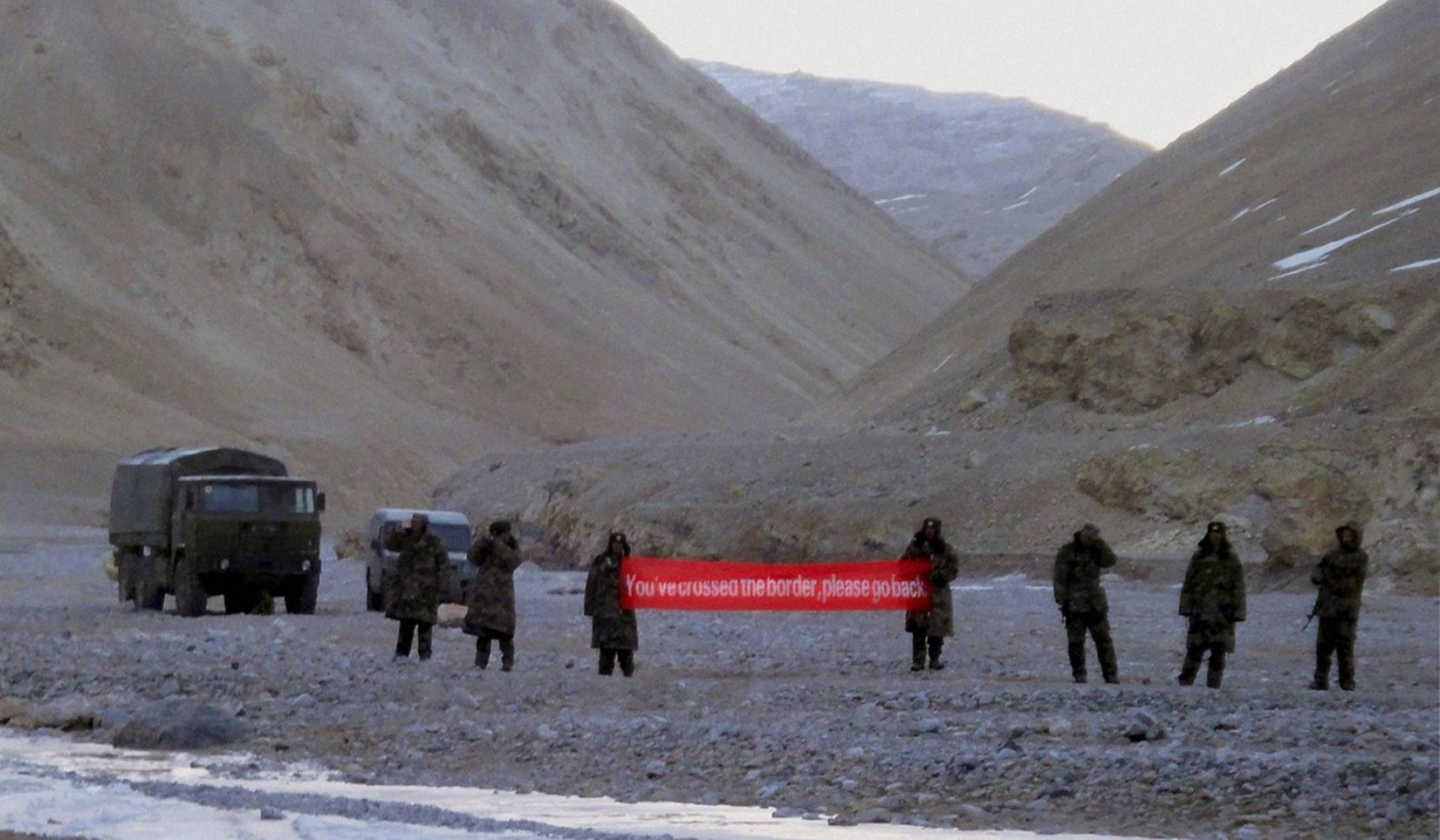
Chinese troops hold a banner which reads, “You’ve crossed the border, please go back.”
“India and China have a fairly rich menu of boundary management protocols which effectively translate into engagements between very lightly armed personnel from either side when a standoff breaks out,” he said.
“That is different from the situation in the South and East China Sea where engagement protocols are still very rudimentary and could see sharp escalatory spirals.”
The Cold War in Asia – Unfinished Vietnam War. Armed Conflicts in China, Korea, Vietnam, and Tibet could not checkmate spread of Communism in Asia.


















 Whole Dude - Whole Concept