Whole Foods-Whole Inspiration-Whole LanguageWhole Foods, Whole People and Whole Planet inspire Whole Dude to invent Whole Phrases: Whole Linguistics – Whole Language. The concept of Whole Cookie and Whole Love. Whole Dude uses the phrase Whole Linguistics to describe three entities; 1. Language User, 2. Language Interpreter and 3. Language Creator. Image Credit: Agenda Publications, Ann Arbor District Library, Issue Dates, December 1997 and February 1998.
The Art of Self-Discipline – Walk in the Spirit
May is Mental Health Month – Reap the Fruits of the SpiritMay is Mental Health Month – Reap the Fruits of the Spirit
May is Mental Health Month, a time to shine a light on the importance of mental health to personal wellbeing and overcome reluctance to seeking help. Mental health is key to positive relationships and feelings of satisfaction and fulfillment in life. Mental health is also closely linked with physical health. Just as with physical health, mental health problems can be successfully treated. Mental Health America, the sponsor of Mental Health Month in the U.S., offers information and tools on its website: https://www.mhanational.org/mental-health-month. You’ll find helpful information on maintaining mental health and dealing with mental health issues on this website, too, including the following:
1 in 5 people will suffer from some form of mental illness in any given year. Break the Silence, Break the Stigma.
May is Mental Health Month – Reap the Fruits of the Spirit
May is Mental Health Month, a time to shine a light on the importance of mental health to personal wellbeing and overcome reluctance to seeking help. Mental health is key to positive relationships and feelings of satisfaction and fulfillment in life. Mental health is also closely linked with physical health. Just as with physical health, mental health problems can be successfully treated. Mental Health America, the sponsor of Mental Health Month in the U.S., offers information and tools on its website: https://www.mhanational.org/mental-health-month. You’ll find helpful information on maintaining mental health and dealing with mental health issues on this website, too, including the following:
1 in 5 people will suffer from some form of mental illness in any given year. Break the Silence, Break the Stigma.
May is Mental Health Month – Reap the Fruits of the Spirit
A Soldier’s Reflections on the Art of Self-Discipline
May is Mental Health Month – Reap the Fruits of the Spirit
Yes indeed, Life is Complicated. The complexities of Life compel us to live our daily lives with a sense of self-discipline, and direct us to practice self-control, self-restraint, and self-regulation in all actions performed in the external world.
The Art of Self-Discipline:
Self-discipline is essentially the same as self-control, one of the nine fruits of theSpirit listed by Paul in Galatians 5:22-23. The KJV translation uses the word temperance in place of “self-control” which, like self-discipline, generally refers to our ability to control or restrain ourselves from all kinds of feelings, impulses, and desires, which includes the desire for physical and material comfort.
May is Mental Health Month – Reap the Fruits of the Spirit
In the Sanskrit language the term used for Self-Discipline is called “Krama Shiksha.” The instructions to impart physical and mental Discipline has a physiological basis.
May is Mental Health Month – Reap the Fruits of the Spirit. A Soldier’s Reflections on the Art of Self-Discipline.The above image shows the Seat of Consciousness/Conscience as Cit or Chitta and it is superior to Mind, Ego, Senses, and Body.
A part of human brain called the ‘Reticular Formation’ functions like Spirit or Soul to control, to guide, and to regulate the Intellect (Buddhi), the Mind (Manah), Ego or Arrogance (Ahamkara), the Senses (Indriya), and the Body (Deha).
May is Mental Health Month – Reap the Fruits of the Spirit. The Art of Self-Discipline: “KRAMA SHIKSHA” THE INSTRUCTION TO IMPART PHYSICAL AND MENTAL DISCIPLINE HAS A PHYSIOLOGICAL BASIS AS A PART OF HUMAN BRAIN FUNCTIONS LIKE SPIRIT OR SOUL TO CONTROL, TO GUIDE, AND TO REGULATE INTELLECT, MIND, EGO, SENSES, AND BODY . THIS IS THE IMAGE OF THE MADRAS REGIMENT TAKING PART IN 65th REPUBLIC DAY PARADE IN NEW DELHI, INDIA.
This is a tribute to all the men and women who serve India in Uniform after undergoing rigorous training enduring pain and hardships. The drill, such as marching together during ceremonial parades, testifies to the process of teaching the ‘Art of Self-Discipline’.
May is Mental Health Month – Reap the Fruits of the Spirit. THE ART OF SELF-DISCIPLINE : IN MY VIEW, MILITARY DISCIPLINE IS A SPIRITUAL PRACTICE. SUCCESS OR VICTORY IN THE BATTLEFIELD IS ACCOMPLISHED BY DESTROYING THE ENEMY. MILITARY TRAINS TO DEFEAT AN EXTERNAL ENEMY AND A SPIRITUAL PRACTITIONER OR SADHAK TRAINS TO DESTROY ONE’S OWN INTERNAL ENEMIES.
Discipline is training that develops Self-Control, character, orderliness, and efficiency. It may imply strict control to enforce obedience, acceptance of or submission to authority. While Discipline requires training that molds, instructs, and corrects personal behavior, the concept of Self-Discipline is often used in the context of a Spiritual Practice. For all practical purposes Self-Discipline is like Military Discipline which uses training apart from verbal instruction, encouragement, and teaching as its tools. Soldiers master the Art of Self-Discipline to take responsibility for all of their actions, speech, and mannerisms.
May is Mental Health Month – Reap the Fruits of the Spirit. THE ART OF SELF-DISCIPLINE: A BOXER WITH GOOD REFLEXES HAS THE ABILITY TO REACT QUICKLY AND EFFECTIVELY . THE TRAINING FOCUSES UPON DEVELOPING QUICK, AUTOMATIC, OR HABITUAL MOTOR REFLEXES AND THE BOXER REACTS WITHOUT GETTING DISTRACTED BY HIS OWN INTELLECT, MIND, SENSES, AND BODY IGNORING HIS OWN PAIN AND INJURIES.
Just like training for Boxing, military training gives the ability to react quickly, effectively in a reflex action. The military Drill disciplines the Mind and Body to make the man to make quick, automatic or habitual responses when he hears the words of Command. Both Military and Spiritual Disciplines recognize their need for training to achieve the objective of destroying an Enemy who hinders the path to Success or Victory. Military Discipline imparts the ability to fight an external Enemy on the battlefield and Spiritual Discipline is about fighting one’s own internal Enemy. Combating and overcoming an Enemy is of utmost importance to both types of Discipline. In either case, Discipline has the following characteristics: 1. Devotion (“Sraddha”), 2. Humility (“Namrata”-“Nigarvi”), 3. Temperance (“Niyama” -“Nigraha”), and 4. Perseverance (“Kshama”). These attributes or qualities are acquired through training and are found in a trained Soldier and a Spiritual Practitioner or “Sadhak.”
May is Mental Health Month – Reap the Fruits of the Spirit. THE ART OF SELF-DISCIPLINE: “KRAMA SHIKSHA.” IN MY VIEW, A MAN IN UNIFORM IS A SPIRITUAL PRACTITIONER OR SADHAK AS THE TRAINING INVOLVES DEVOTION TO LEARNING AND SUBMISSION TO A SOURCE OF HIGHER AUTHORITY.
Discipline involves the ability to endure hardship. No Discipline is entirely pleasant to begin with. The training imposes pain and builds up pain tolerance and pain resistance. In my view, a Spiritual Practitioner or “Sadhak” and a Soldier face the same kind of challenges to overcome lethargy, inertia and accept physical and mental fatigue as a necessary burden to win their Battle.
May is Mental Health Month – Reap the Fruits of the Spirit. THE ART OF SELF-DISCIPLINE: “KRAMA SHIKSHA.” IN MY VIEW, A SOLDIER AND A SPIRITUAL PRACTITIONER OR SADHAK FACE THE SAME KIND OF CHALLENGES. FIRSTLY, TRAINING DEMANDS TOLERANCE OF PAIN AND HARDSHIP.
Devotion (Sraddha) speaks of the fact, quality or state of being devoted. The quality called devotion in physical or mental tasks generates feelings of faithfulness, loyalty, and deep affection. Devotion means to give up oneself or one’s time, energy, etc., to some purpose or activity. The attitude called Discipline involves applying oneself with seriousness or earnestness. The purpose of close-order military drill is that of instilling ideas in the person by repeated exercises. A devoted Soldier dedicates himself to his primary task of fighting a battle and willingly prepares himself to get exposed to the risk or danger of severe bodily injury or even loss of life.
May is Mental Health Month – Reap the Fruits of the Spirit. THE ART OF SELF-DISCIPLINE: “KRAMA SHIKSHA.” DISCIPLINE IS AN ATTITUDE THAT IS DISPLAYED BY A QUALITY CALLED DEVOTION . A DEVOTED SOLDIER PERFORMS HIS TASKS WITH SERIOUSNESS AND EARNESTNESS. HIS DEVOTION TO HIS DUTY INCLUDES FEELINGS OF LOYALTY, FAITHFULNESS, AND DEEP AFFECTION.
Humility (Namrata – Nigarvi) is the state or quality of being humble; absence of self-pride or arrogance. A trained Soldier takes pride in his Service, takes pride in his Unit or Regiment, and takes pride in the dress or uniform that he wears. But, the training that imparts Discipline transforms the Soldier into a man of Humility for he recognizes that self-pride or arrogance are of no use in the learning process.
May is Mental Health Month – Reap the Fruits of the Spirit. THE ART OF SELF-DISCIPLINE: “KRAMA SHIKSHA.” DISCIPLINE DEMANDS THE USE OF TEMPERANCE. A TRAINED SOLDIER IS NOT SELF-INDULGENT. SOLDIERS USE SELF-RESTRAINT IN THEIR ACTIONS AND SPEECH. SOLDIERS USE MODERATION IN THE USE OF FOOD AND DRINK FOR THEY LEARN TO REGULATE ALL ASPECTS OF THEIR BEHAVIOR AND CONDUCT.
Temperance (Niyama – Nigraha) is the state or quality of being moderate in indulging the appetites; it involves self-restraint in conduct, expression, not self-indulgent, moderate in one’s actions, speech, apart from moderation in the use of food, and alcohol. A basic quality of a trained Soldier is that of Self-Restraint.
May is Mental Health Month – Reap the Fruits of the Spirit. THE ART OF SELF-DISCIPLINE: “KRAMA SHIKSHA.” A TRAINED SOLDIER ACQUIRES THE QUALITY CALLED PERSEVERANCE. A SOLDIER IS STEADFAST, HAS THE QUALITY OF PERSISTENCE AND HE CONTINUES HIS EFFORT IN SPITE OF DIFFICULTY AND STIFF OPPOSITION .
Perseverance (Kshama) is the act of continued, patient effort; the quality of persistence to continue the effort in spite of difficulty or stiff opposition. A trained Soldier is steadfast in his purpose, and he continues his physical or mental activity without shifting to another task because of distractions or of a change in stimulus. Perseverance is the other name for Discipline.
May is Mental Health Month – Reap the Fruits of the Spirit. THE ART OF SELF-DISCIPLINE: “KRAMA SHIKSHA.” BOTH MAN AND ANIMAL COME TOGETHER TO MOVE WITH DISCIPLINE AS TRAINING MAKES DISCIPLINE THEIR SECOND NATURE.
In my view, the training used by military to impart Discipline, and the techniques used by a Spiritual Practitioner to instill Self-Discipline use the same kind of approach to bring harmony in the interactions between the body, and the mind.
May is Mental Health Month – Reap the Fruits of the Spirit. THE ART OF SELF-DISCIPLINE: “KRAMA SHIKSHA.” THE TRAINING THAT IMPARTS MILITARY DISCIPLINE AND THE TECHNIQUES USED BY A SPIRITUAL PRACTITIONER OR SADHAK TO INSTILL SELF-DISCIPLINE AIM TO BRING HARMONY IN THE INTERACTIONS BETWEEN THE BODY AND THE MIND.
In military training, the term Soul or Spirit is not used. The term “Esprit De Corps” refers to group spirit, sense of pride, honor, etc., shared by those in the same group such as a Regiment, or a Branch of Service. Military uses the term ‘spirit’ to describe the frame of mind, enthusiasm, and loyalty shared by a group of its members. If not in Science, in religion, and in philosophy, the terms Soul or Spirit describe a vital, animating Principle that is distinct from the body, and mind. In Indian tradition, it is held that the organs of Sense perception are superior to other organs and tissues of the human body, but more than the Senses, the Mind is superior but more than the Mind, the Intelligence is superior and more than the Intelligence that which is superior is the Seat of Individual Consciousness. Soul or Spirit is intimately associated with the function called Consciousness.
May is Mental Health Month – Reap the Fruits of the Spirit. THE ART OF SELF-DISCIPLINE: “KRAMA SHIKSHA.” THE INDIAN ARMY TRAINS ITS OFFICERS AT INDIAN MILITARY ACADEMY, DEHRADUN. THESE TRAINEES LEARN ABOUT “ESPRIT DE CORPS” WHICH MEANS GROUP SPIRIT, TAKING PRIDE, AND GIVING HONOR TO THEIR REGIMENTAL AFFILIATIONS.May is Mental Health Month – Reap the Fruits of the Spirit. THE ART OF SELF-DISCIPLINE: “KRAMA SHIKSHA .” MILITARY TRAINING MANUALS MAY NOT USE THE TERM SPIRIT OR SOUL BUT CONSCIOUSNESS AND SELF-AWARENESS ARE IMPORTANT TO THE LEARNING PROCESS AT ANY MILITARY INSTITUTION. INDIAN PRESIDENT MRS. PRATIBHA PATIL IS SEEN IN THIS IMAGE REVIEWING A GUARD OF HONOR AT INDIAN MILITARY ACADEMY, DEHRADUN.
Science and military training manuals may not use the term Soul but Consciousness and Self-Awareness are important to the learning process at any Military Training Institution.
May is Mental Health Month – Reap the Fruits of the Spirit. THE ART OF SELF-DISCIPLINE : “KRAMA SHIKSHA .” WILLIAM LYON MACKENZIE KING (1874-1950), PRIME MINISTER OF CANADA 1921-1930, & 1935-1948. A GOOD SOLDIER IS PRECISELY LIKE A GOOD SPIRITUAL PRACTITIONER OR SADHAK. BOTH DEPEND UPON SELF-DENIAL AND SELF-DISCIPLINE TO ARRIVE AT THEIR DESTINATION OR GOAL WHICH DEFINES THEIR PURPOSE IN LIFE .
A good Soldier is precisely like a good Spiritual Practitioner or Sadhak. Both depend upon Self-Denial and Self-Discipline to arrive at their destination or goal which defines their purpose in life.
May is Mental Health Month – Reap the Fruits of the Spirit. THE ART OF SELF-DISCIPLINE: “KRAMA SHIKSHA .” THEODORE ROOSEVELT (1858-1919), 26th PRESIDENT OF THE UNITED STATES (1901-1909). DISPLAYED THE QUALITY CALLED SELF-DISCIPLINE TO MAKE DETERMINED EFFORTS TO OVERCOME THE FRAIL HEALTH THAT WOULD MARKEDLY AFFECT HIS CHARACTER.
Discipline develops the character of the individual and Self-Control is the key to overcome the problems of Self-Destructive behaviors.
May is Mental Health Month – Reap the Fruits of the Spirit. THE ART OF SELF-DISCIPLINE : “KRAMA SHIKSHA.” NAPOLEON HILL(1883-1970), AMERICAN AUTHOR IN THE AREA OF THE NEW THOUGHT MOVEMENT. ONE OF THE GREAT WRITERS ON SUCCESS. THE MASTERY OF MIND IS CENTRAL TO THE TRAINING THAT ESTABLISHES SELF-DISCIPLINE.
Self-Discipline is not about regulating human behavior and actions using the authority or power invested in the rules and regulations that man makes to bring orderliness and efficiency in the society. Military training establishes Self-Discipline using repeated exercises that instill ideas to control mental activities without using physical force and without using the strict Military Code for Conduct. The success of military training does not depend upon the ability to punish or reprimand people for their errant behavior. Military is a hierarchical organization and it uses a group of persons arranged in order of rank, grade, class, etc., to define the power or authority invested in each person. Man is a complex organization, and Indian tradition describes a hierarchy of structures or parts of man that can find unity while man acts helplessly according to the impulses born of the modes of material nature or “Prakrit.”
May is Mental Health Month – Reap the Fruits of the Spirit. THE ART OF SELF-DISCIPLINE : “KRAMA SHIKSHA.” INDIAN TRADITION RECOGNIZES THE OPERATION OF A HIERARCHY THAT IS INVOLVED IN MAN’S ACTIONS AND PHYSICAL BEHAVIORS. BUT, THE MAN IS DELUDED BY A FORCE CALLED “MAYA” OR ILLUSION THAT BREAKS THE CHAIN OF COMMAND.
TheIndian tradition recognizes operation of a hierarchy of structures as shown in the above photo image. These structures identified as the Body, the Senses (Organs of Sense Perception such as the eyes, and ears), the Mind, the Intellect, and the Soul have positions of importance according to a ranking system, and the thing with a superior rank can control the things with a subordinate rank. However, a force called “Maya” or Illusion can delude the man and break the Chain of Command.
May is Mental Health Month – Reap the Fruits of the Spirit. THE ART OF SELF-DISCIPLINE: “KRAMA SHIKSHA” THE HUMAN ORGANISM IS VERY COMPLEX. THE UNDERSTANDING OF HUMAN ANATOMY AND HUMAN PHYSIOLOGY HELPS TO KNOW THE BIOLOGICAL BASIS FOR MAN’S BEHAVIOR AND ACTIONS. IN MY VIEW, THE BLUE-COLORED STRUCTURE CALLED RETICULAR FORMATION IS IDENTICAL TO SOUL OR SPIRIT DESCRIBED IN RELIGIOUS SCRIPTURES AND PHILOSOPHICAL WRITINGS. THE RETICULAR FORMATION, PONS, RAPHE NUCLEI, AND LOCUS COERULEUS MAINTAIN WAKEFULNESS.
Thehuman organism is a very complex assembly of trillions of individual, independent, living cells and for purposes of structural and functional organization, these cells are components of different tissues, organs, and organ systems. A basic understanding of human anatomy and human physiology explains the relationships between tissues, organs, and organ systems. Brain is a very important structure but it functions if and only if it is continuously supplied with oxygen and nutrients like glucose to maintain its own metabolic activities. But, the human body and vital organs like heart and lungs depend upon the brain structure called Brain Stem which has the vital regulatory centers that operate functions of respiration and circulation. Within the Brain Stem, the structure called the Reticular Formation is identical to Soul or Spirit described in religious scriptures and philosophical writings. The Reticular Formation is the structure that is intimately associated with the control, regulation of those functions that help to establish man as a conscious, and breathing living entity.
May is Mental Health Month – Reap the Fruits of the Spirit. THE ART OF SELF-DISCIPLINE: “KRAMA SHIKSHA” THE RETICULAR FORMATION IN THE CENTRAL BRAIN STEM EXTENDS FROM MEDULLA TO THALAMUS. THE RETICULAR FORMATION HAS CONNECTIONS WITH ALMOST ALL OTHER PARTS OF THE CENTRAL NERVOUS SYSTEM. THE RETICULAR FORMATION REGULATES MUSCLES AND MOTOR REFLEX ACTIVITY. A TRAINED SOLDIER REACTS AUTOMATICALLY AND EFFECTIVELY WHEN HE HEARS THE WORDS OF COMMAND.
I am intentionally sharing several images of the structure known as the Reticular Formation. It is in the central Brain Stem and extends from Medulla to Thalamus. It has connections with almost all other parts of the Central Nervous System (CNS), such as Spinal Cord, Cranial Nerve Nuclei, Cerebellum, Hypothalamus, Thalamus, Striatum , Limbic System , and Cerebral Cortex. This neural structure which I name as Soul or Spirit plays a central role to develop the trait called Self-Discipline. A disciplined Soldier reacts automatically, and effectively when he hears the words of Command . This reflex motor activity is possible because of the integrative role played by the Reticular Formation.
May is Mental Health Month – Reap the Fruits of the Spirit. THE ART OF SELF-DISCIPLINE: “KRAMA SHIKSHA” THE RETICULAR FORMATION DEPICTED AS GREEN-COLORED BAND IS A NETWORK OF PATHWAYS AND NUCLEI THROUGHOUT THE BRAIN STEM . IT CONNECTS MOTOR NERVES AND SENSORY NERVES TO AND FROM THE SPINAL CORD, THE CEREBELLUM, AND THE CEREBRAL CORTEX .
The Reticular Formation consists of more than 100 Brain Stem Nuclei. A single neuron in this network may have synapses with as many as 25,000 other neurons.
May is Mental Health Month – Reap the Fruits of the Spirit. THE ART OF SELF-DISCIPLINE: “KRAMA SHIKSHA” TO UNDERSTAND THE PHYSIOLOGICAL BASIS FOR SELF-DISCIPLINE , I WOULD INVITE MY READERS TO GIVE ATTENTION TO THE ROLE OF THE RETICULAR FORMATION IN COMPOSING THE CONTENTS OF CONSCIOUSNESS.
The Reticular Formation plays an important role in composing the contents of Consciousness. It filters incoming stimuli to discriminate irrelevant background stimuli It regulates actions such as alert/sleep cycles, wakefulness, and behavioral arousal.
May is Mental Health Month – Reap the Fruits of the Spirit. THE ART OF SELF-DISCIPLINE: “KRAMA SHIKSHA” MILITARY TRAINING AND SPIRITUAL PRACTICES TAKE ADVANTAGE OF THE STRUCTURAL AND FUNCTIONAL ORGANIZATION OF BRAIN AND ITS ABILITY TO MAINTAIN ALERTNESS OR GENERAL AROUSAL TO ACCOMPLISH SPECIFIC ACTIONS IN THE PHYSICAL WORLD.
The Reticular Formation running through Medulla, Pons, and Midbrain helps to coordinate, integrate, and regulate actions of different parts of the Central Nervous System. It is involved in 1. Regulation of Muscles, and Reflex activity, 2. Central transmission of Sensory impulses, 3. Respiration, 4. Cardiovascular responses, 5. Behavioral Arousal, and 6. Sleep. In Indian tradition, the Spirit or Soul exercises similar control to regulate, guide, and integrate the functions of Intellect, Mind, Senses, and Body. The Art of Discipline involves the use of such regulative, and integrative abilities.
May is Mental Health Month – Reap the Fruits of the Spirit. THE ART OF SELF-DISCIPLINE: The Individual vs the Group. The Individual is trained to work as an efficient member of his group using the tool called Discipline.May is Mental Health Month – Reap the Fruits of the Spirit. THE ART OF SELF-DISCIPLINE: How to train a horse to obey your commands?May is Mental Health Month – Reap the Fruits of the Spirit. THE ART OF SELF-DISCIPLINE: What is the relationship between the Body, the Senses, the Mind, the Intellect and the Soul?May is Mental Health Month – Reap the Fruits of the Spirit. THE ART OF SELF-DISCIPLINE: The Knowledge imparted by the Bhagavad Gita has its own practical applications in real life.May is Mental Health Month – Reap the Fruits of the Spirit. THE ART OF SELF-DISCIPLINE: True Knowledge of Soul has its own practical applications in the proper regulation of actions and behavior.May is Mental Health Month – Reap the Fruits of the Spirit. THE ART OF SELF-DISCIPLINE: Life involves the performance of sequential, guided, purposeful, goal-oriented actions.May is Mental Health Month – Reap the Fruits of the Spirit. THE ART OF SELF-DISCIPLINE: How to tame the horse?May is Mental Health Month – Reap the Fruits of the Spirit. THE ART OF SELF-DISCIPLINE: The Lord God Creator is visualized as the source of all Laws that operate the entire creation.May is Mental Health Month – Reap the Fruits of the Spirit. THE ART OF SELF-DISCIPLINE: The Indian Tradition acknowledges God as the Source of Knowledge and Learning or Vidya.May is Mental Health Month – Reap the Fruits of the Spirit. THE ART OF SELF-DISCIPLINE: The Mentor of Learning. Discipline involves the submission to a higher authority with a sense of obedience and humility.May is Mental Health Month – Reap the Fruits of the Spirit. THE ART OF SELF-DISCIPLINE: The Sun is the source of Knowledge and Wisdom for His apparent motions regulate the biological rhythms called Sun Rhythm.May is Mental Health Month – Reap the Fruits of the Spirit. THE ART OF SELF-DISCIPLINE: The apparent motions of the Sun display the characteristics of Self-Discipline. The Sunrise is always followed by the Sunset. It operates the Biological Rhythm.May is Mental Health Month – Reap the Fruits of the Spirit. THE ART OF SELF-DISCIPLINE. MENTAL vs PHYSICAL DISCIPLINE.May is Mental Health Month – Reap the Fruits of the Spirit. The Art of Self-Discipline. True Knowledge has always its own practical applications.May is Mental Health Month – Reap the Fruits of the Spirit. THE ART OF SELF-DISCIPLINE : LIFE IS KNOWLEDGE IN ACTION. THE OPERATION OF BIOLOGICAL RHYTHMS.May is Mental Health Month – Reap the Fruits of the Spirit. THE ART OF SELF-DISCIPLINE. KNOWLEDGE IS GOAL-ORIENTED FOR IT IS ALWAYS APPLIED IN THE PERFORMANCE OF SEQUENTIAL, PURPOSIVE ACTIONS.May is Mental Health Month – Reap the Fruits of the Spirit
Whole Foods-Whole Inspiration-Whole LanguageWhole Foods, Whole People and Whole Planet inspire Whole Dude to invent Whole Phrases: Whole Linguistics – Whole Language. The concept of Whole Cookie and Whole Love. Whole Dude uses the phrase Whole Linguistics to describe three entities; 1. Language User, 2. Language Interpreter and 3. Language Creator. Image Credit: Agenda Publications, Ann Arbor District Library, Issue Dates, December 1997 and February 1998.
What is Mental Health?
Mental Health in the Age of Stress – The diagnosis of Good and Positive Health is better than the diagnosis of ill-health
Mental health includes our emotional, psychological, and social well-being. It affects how we think, feel, and act, and helps determine how we handle stress, relate to others, and make choices.
Mental health is important at every stage of life, from childhood and adolescence through adulthood. Over the course of your life, if you experience mental health problems, your thinking, mood, and behavior could be affected.
Mental Health Conditions
Mental Health in the Age of Stress – The diagnosis of Good and Positive Health is better than the diagnosis of ill-health
Mental illnesses are disorders, ranging from mild to severe, that affect a person’s thinking, mood, and/or behavior. According to the National Institute of Mental Health, nearly one-in-five adults live with a mental illness.
Mental Health and Substance Use Co-Occurring Disorders
Mental Health in the Age of Stress – The diagnosis of Good and Positive Health is better than the diagnosis of ill-health
Mental health problems and substance use disorders sometimes occur together. This is because:
Certain substances can cause people with an addiction to experience one or more symptoms of a mental health problem
Mental health problems can sometimes lead to alcohol or drug use, as some people with a mental health problem may misuse these substances as a form of self-medication
Mental health and substance use disorders share some underlying causes, including changes in brain composition, genetic vulnerabilities, and early exposure to stress or trauma
More than one in four adults living with serious mental health problems also has a substance use problem. Substance use problems occur more frequently with certain mental health problems, including:
Mental Health in the Age of Stress – The diagnosis of Good and Positive Health is better than the diagnosis of ill-health
Symptoms
It can be hard to identify a Substance Use Disorder sometimes because people can have a wide degree of functioning and often can hide their alcohol or drug use. Symptoms of substance use disorders may include behavioral changes, such as:
Drop in attendance and performance at work or school
Frequently getting into trouble (fights, accidents, illegal activities)
Engaging in secretive or suspicious behaviors
Changes in appetite or sleep patterns
Unexplained change in personality or attitude
Sudden mood swings, irritability, or angry outbursts
Periods of unusual hyperactivity, agitation, or giddiness
Lack of motivation
Appearing fearful, anxious, or paranoid, with no reason
Physical changes, such as:
Bloodshot eyes and abnormally sized pupils
Sudden weight loss or weight gain
Deterioration of physical appearance
Unusual smells on breath, body, or clothing
Tremors, slurred speech, or impaired coordination
Social changes, such as:
Sudden change in friends, favorite hangouts, and hobbies
Legal problems related to substance use
Unexplained need for money or financial problems
Using substances even though it causes problems in relationships
Pain tolerance and Pain resistance:
The Art of Battlefield Medicine demands adequate Pain management. Pain aggravates circulatory collapse/SHOCK caused by blood loss. Transportation of critically injured battle wounded persons also aggravates the pain sensation. By providing care and comfort, by treating wounded persons with kindness, and compassion, I recognized that I could manage their pain with minimal use of narcotics or other medications used in pain relief. Compassion exerts a positive influence and alters the perception of the pain sensation. Under the influence of compassion, man learns pain tolerance.
People have various degrees of pain tolerance. I have practically experienced that by providing care, and comfort, by treating people with kindness and compassion, I can increase their physical capacity to tolerate pain. The beneficiary, and the benefactor who serves with compassion, both equally experience a sense of Joy and tend to become Pain Tolerant and Pain Resistant. Compassion has a quality and it gives the man a capacity to tolerate and resist a far greater amount of physical, mental, and emotional pain as compared to an individual who has not experienced the force of compassion.
Advantages of Pain tolerance and Pain resistance:
Mental Health – The diagnosis of Good and Positive Health is better than the diagnosis of ill-health. King of Pop, Michael Jackson died unfortunately as a consequence of an inappropriate use of a pain killer. His pain was not managed in a manner that could have avoided this tragedy.
The person who is Pain Resistant or Pain Tolerant would not need high doses of pain killers. Such Pain Tolerant persons would not use drugs to alter mood or to elevate mood. The Pain Resistant person would not use recreational drugs like alcohol, tobacco, or other chemical substances. He is not prone to the problems of Drug Addiction or Drug Abuse and Drug Dependence. He would not need drugs to relieve Anxiety, or Depression as he is not likely to be susceptible to states of mental anxiety or mental depression. He would not routinely use drugs for pain relief as the body has made psychological adjustments for its level of pain perception . We need to know people who depend upon drugs to live their lives. If Michael Jackson is alive, he would tell us about his drug-dependent human existence. There are millions of such human beings who live using drugs and they would be only experiencing self-pity. If we recognize the Force of Divine Providence called Compassion, we could help people and help them to live a life without drugs.
The Diagnosis of Good Health is better than the diagnosis of ill-health
The Art of Diagnosing Good Health vs ill-health. The Diagnostic Process must be applied to the evaluation of the man to diagnose the condition called Good, Perfect, and Positive health.
To diagnose ill-health is easy. The sick person may describe his ailments. In addition to a person’s subjective symptoms, ill-health shows objective manifestations. The art of clinical diagnosis in sickness and disease involves the use of signs and symptoms attributable to specific conditions that affect the state of health of an individual. However, the mere absence of ill-health does not necessarily mean that the person is positively healthy. Health, like beauty is often a matter of subjective impression. But, while beauty is in the eyes of the beholder, the diagnosis of perfect and positive health is a verdict rendered after a carefully executed medical examination.
The Art of Diagnosing Good Health vs ill-health. The Diagnostic Process must be applied to the evaluation of the man to diagnose the condition called Good, Perfect, and Positive health.
The important object of medical inspection and examination of Armed Forces personnel is to ensure that they are healthy and are able to perform the tasks assigned to them. As the medical officer providing medical cover to units in the Armed Forces of India and The Sultanate of Oman where I had served, I was responsible for assessment of health of all personnel under my care. To ensure that the troops are in good health, I was required to medically inspect all personnel under my care periodically and diagnose that they were in good health. Good health demands that a person should appear well nourished. In stature and build, a person should represent an average example of his race and class. The person should not present any evidence of emotional hyper-excitability. Temperamentally, the individual should exhibit reasonable aptitude and behavior consistent with the expectations of his occupation. Most importantly, the face of the person should reflect the bloom of vigorous health. A person in good health should appear cheerful and be full of vitality. The entire individual is carefully examined to assess the health status. I acquired the practical skills of the ‘Art of Diagnosing Good Health’ by carefully carrying out regular, periodic health inspections of all men under my care. Armed Forces insists upon Medical Inspections for a variety of reasons and individuals who are subject to the Rules and Regulations that govern Service in Uniform cannot refuse the mandatory Medical Examinations. Medical Inspection of all the men including all food handlers of the Unit is done typically once every month. In addition, men newly posted to the Unit (New Arrivals), men before proceeding on and returning from Courses of Instruction/Leave of Absence/Temporary Duty, and after Hospital Discharge are Medically Inspected. Recruits posted to the Unit after completion of Recruit Training, and men joining their Units after serving abroad are subjected to Medical Inspections. Thorough, detailed and specific Medical Examinations of military personnel is required under the following conditions:
1. All troops proceeding on ‘active service’ or troops proceeding overseas. 2. Individuals proceeding on permanent transfer to another Unit. 3. Men desirous of an extension of service or re-engagement. 4. Troops for transfer for the Reserve Duty. 5.Officers at the time of initiation of Annual Confidential Reports, entry to Staff College, any Course of Instruction, Fitness for Special Duty. 6. Men under arrest and undergoing sentence and before disciplinary action. 7. Men posted to serve at High Altitude. 8. Special examination at the outbreak of an infectious disease. Typically, I used to examine at least twenty known contacts of each case of Malaria or Viral Hepatitis.
Medicine is not merely the Art of Diagnosing ill-health and it is equally the Art of Diagnosing Good and Positive Health. I perfected this skill by meticulously repeating the task of conducting Medical Inspections thousands of times during the course of my service in the Armed Forces. This practice also contributed to my ability to diagnose ill-health and in the next several posts I would narrate a few specific instances when I diagnosed an impending outcome of death. During my service, there are instances when I diagnosed the fact of Good Health and made the individuals to perform their assigned tasks and did not allow them to escape from the obligations of Military Duty making invalid claims about their health status.
Mental Health in the Age of Stress
The development of well integrated Stress Resistant Personality in the Age of Stress.Mental Health in the Age of Stress – The diagnosis of Good and Positive Health is better than the diagnosis of ill-health
The accelerated tempo of life brings forth stimuli of high velocity of action, magnitude, and impact that they stimulate a chain of psycho-physical reactions strong enough to cause manifest effects in the human body. A person experiences ‘strain’ when his life’s demands exceed his ability to meet those demands. Prolonged high intensity intellectual and emotional strain which involves fixation of motives to do hard work, achieve high standards, carryout a task against opposition, and aspiration for high professional, prestigious, economic and social career and status would produce ‘stress’. Stress is produced not so much by the efforts which have been rewarded by success but more often by the ones not ending in satisfactory achievement.
Mental Health in the Age of Stress – The diagnosis of Good and Positive Health is better than the diagnosis of ill-health
The impact of modern living has a significant bearing on the genesis of stress-associated declines in health. Prolonged stress may result in increased levels of stress hormones such as cortisol, a decline in certain aspects of immune system which contributes to a decline in the immune system surveillance against viral infected and cancer cells, increases the rigidity of the vascular system which produces hypertension (high blood pressure), thickening of the coronary arteries that impacts cardiac health, aggravate breathing difficulties, disrupts gastrointestinal microbial balance, and a host of other problems.
Whole Personality – The development of Resilient Personality in the Age of Stress
Depending upon the physical, psychological, and social environments under which the person has been brought up and is presently living; and depending upon the genetic and constitutional factors, stress affects a particular target organ or system. The problems associated with the use of alcohol, tobacco, and a variety of mind altering drugs and substances could be considered as an extension of a response to stressful stimuli and substance abuse further aggravates the ‘stress syndrome’.
Mental Health in the Age of Stress – The diagnosis of Good and Positive Health is better than the diagnosis of ill-health
Stress is reduced by pre-existing resistance. The defeat, imperfect production of resistance, or premature arrest of the process of its production gives rise to disease. Heredity, environment, physical and mental health, and social support detremine our ability to resist stress situations. The development of a well integrated personality to face life squarely determines the extent and quality of the resistance. By proper education and training, the threshold for physical and emotional stress could be increased.
The development of well integrated Stress Resistant Personality
Mental Health in the Age of Stress – The diagnosis of Good and Positive Health is better than the diagnosis of ill-health
A psychological stress stimulus may not cause a similar reaction in all individuals. All individuals have different capacities to perform and adapt when faced with stress.
Mental Health in the Age of Stress – The diagnosis of Good and Positive Health is better than the diagnosis of ill-health
People will react differently depending upon the preformed resistance they have.
Mental Health in the Age of Stress – The diagnosis of Good and Positive Health is better than the diagnosis of ill-health
Five different types of reactions are possible. 1. The stress stimulus acts like an inspiration and becomes a source of healthy pursuit. 2. The stimulus is accepted as a reasonable strain and the individual takes it up as a healthy challenge. 3. The situation appears to be overwhelming and the stimulus becomes either a source of depression, and breakdown or a source of ‘stress syndrome’. 4. It may cause anxiety and becomes a source of an anxiety state or neurosis. 5. The stimulus does not elicit any reaction at all as the individual is apathetic.
Depending upon their response or reaction to stress, we can distinguish five different personality types of people.
Mental Health in the Age of Stress – The diagnosis of Good and Positive Health is better than the diagnosis of ill-health
GROUP I: Persons highly resistant to stress. They have superior preformed resistance and often display an ability to develop resistance within a short time of exposure to stress. They master the stressful event and overcome the stress triumphantly. They do not suffer from any negative consequences while they carry out the task even while under great stress. They have dominant will power and have a great power of endurance.
Mental Health in the Age of Stress – The diagnosis of Good and Positive Health is better than the diagnosis of ill-health
GROUP II: These persons have enough preformed resistance to overcome the stress partially. They do not show overt ‘stress syndrome’ but suffer to a lesser extent in their attempts to master the stressful situation and achieve success. The task does not suffer. Such persons are likely to suffer from precipitation of internal conditions such as hypertension, coronary artery disease if they have other predisposing risk factors.
GROUP III: These persons have very low preformed resistance. If a stressful situation continues such persons may develop resistance which carries them through for some time but sooner or later they succumb to the situation and show evident ‘stress syndrome’. The task may not always suffer but the individual suffers from physical manifestations of stress.
GROUP IV: These persons have no preformed resistance and their ability to create immediate resistance is low. These persons abandon the task and tend to get away from the stressful situation. The task suffers and the individual could be punished for failing to perform his task.
GROUP V: These persons are Non-Resistant to stress. They have no preformed resistance. They are not capable of favorably reacting to a stress producing situation at all. They succumb and become psychiatric casualties and cease to exist as an organized entity. Sometimes, they may not be able to maintain their biological existence.
Mental Health in the Age of Stress – The diagnosis of Good and Positive Health is better than the diagnosis of ill-health
Armed Forces consistently strive to select and recruit only Resistant personalities and weed out the vulnerable ones by careful monitoring of the health of the troops.Over fifteen years of military service, I conducted several thousands of medical examinations to assess the physical and mental fitness of people and was actively involved in preserving their health and promoting the quality of their health.I recruited several thousands of young people for service in the Indian Army and also recommended the removal of people whom I had detected to be falling short of our expected standards of fitness. With proper nutrition, physical training, personal hygiene, clean habits, and immunization, without any doubt we could make people ‘resistant’ to a variety of biological, and physical stress stimuli. The stress imposed by psychological stimuli is also important and the resistance to such ‘stress’ could also be improved. Understanding the phenomenon of stress is important for our existence in the modern times. By improving ‘Stress Resistance’, we keep the men ready for a batlle at all times, maintain the level of Stress Resistance during the most stressful moments of the battle, and protect their well being after the stress of the battle is over. The psychological preparation for batlle includes an effort to increase the stress resistance level by proper motivational techniques used routinely in the medical fitness examinations of men. To sustain productivity in education, and at work, we need to lay emphasis on the concept of stress resistance.
Mental Health in the Age of Stress – The diagnosis of Good and Positive Health is better than the diagnosis of ill-health
Whole Foods-Whole Inspiration-Whole LanguageWhole Foods, Whole People and Whole Planet inspire Whole Dude to invent Whole Phrases: Whole Linguistics – Whole Language. The concept of Whole Cookie and Whole Love. Whole Dude uses the phrase Whole Linguistics to describe three entities; 1. Language User, 2. Language Interpreter and 3. Language Creator. Image Credit: Agenda Publications, Ann Arbor District Library, Issue Dates, December 1997 and February 1998.Mental Health – The rules for developing harmonious, positive interpersonal relationships
May is Mental Health Month, a time to shine a light on the importance of mental health to personal wellbeing and overcome reluctance to seeking help. Mental health is key to positive relationships and feelings of satisfaction and fulfillment in life. Mental health is also closely linked with physical health. Just as with physical health, mental health problems can be successfully treated. Mental Health America, the sponsor of Mental Health Month in the U.S., offers information and tools on its website: https://www.mhanational.org/mental-health-month
Mental Health – The rules for developing harmonious, positive interpersonal relationships
Mental health is defined as the capacity in an individual to form harmonious relations with others and to participate in or contribute constructively to changes in the social environment.
Mental Health – The rules for developing harmonious, positive interpersonal relationships: Human existence raises some fundamental questions about individual’s identity, the purpose in life and the nature of human relationships. Does the image I see in the mirror describe my true identity? Unless I define my identity, how it would be possible to describe my relationship with others. The fundamental rule for formulating harmonious, positive interpersonal relationships relate to understanding my own identity and recognizing my relationship with my own self. If I know, who I am, I could live in a relationship with myself.
Human existence raises some fundamental questions about individual’s identity, the purpose in life and the nature of human relationships. Does the image I see in the mirror describe my true identity ? Unless I define my identity, how it would be possible to describe my relationship with others? The fundamental rule for formulating harmonious, positive interpersonal relationships relate to understanding my own identity and recognizing my relationship with my own self. If I know, who I am, I could live in a relationship with myself.
The complex issues of identity and individuality in the multicellular human organism
The complex issues of identity and individuality in the multicellular human organism. THE NEWBORN BABY ALWAYS ARRIVES INTO THE WORLD WITH AN ORIGINAL, UNIQUE, DISTINCT, AND ONE OF ITS OWN KIND OF GENOME THAT HAS NEVER EXISTED IN THE PAST AND WILL NEVER EXIST AGAIN IN THE FUTURE
If man is viewed as a multicellular human organism, we may have to ask ourselves the following question. Who or what is the subject who lives because of the functions of the trillions of cells?
Man is unique, original, one kind of person who has not existed before and would not also exist in future even when he shares the same identical genome. Two identical twins could be correctly identified as two different individuals. I propose the Law of Individuality and Creation to claim that man exists as Individual and has no choice in this conditioned nature of subjective physical existence in the world. Man can only exist as Individual with Individuality.
Human Anatomy Formulates Human Identity
Mental Health – The rules for developing harmonious, positive interpersonal relationships
I learned the truths about the living human body and about Life while dissecting the dead human bodies in a systematic manner.
Mental Health – The rules for developing harmonious, positive interpersonal relationships
So what is the Identity of this Human person or Human subject? How does the living Human organism maintain its Identity and Individuality? Apart from the Cultural Traditions of India, several Schools of religious thought claim that the Human Individual and its Identity is represented by Human Soul. Where does this soul exist in the human body? What is the location if the soul is present in the living person? Does man have a soul?How does the human organism acquires Knowledge about its own structures and the functions they perform?
How does the multicellular human organism recognizes its own Identity and Individuality?
Mental Health – The rules for developing harmonious, positive interpersonal relationships
A brief glance at the face is enough for most people to identify one another. However, man does not exist with the same identity during the course of his life. The word identity describes the condition or fact of being a specific person. Identification is the process by which a person can be identified in an accurate and consistent manner
Human Anatomy Formulates Human Identity. A brief glance at the face is enough for most people to identify one another. Face recognition is a basic feature of human identity and recognition.
The morphological or the external appearance of a person is subject to constant changes and it differs in a significant manner during the various stages of life such as infancy, boyhood, adulthood, and old age. The term individuality describes the sum of the characteristics or qualities that set one person apart from others. The condition of being individual, or different from others establishes the indivisibility of man.
Human Anatomy Formulates Human Identity. If Identity described by the Phenotype that establishes one face of the Coin, the Individuality describes the second face of the same coin and is established by the Genotype. While being the same, the Genotype presents the Individual with varying features of identification.
Identity, Individuality, and Consciousness:
Human Anatomy Formulates Human Identity. Identity and Individuality. How does the multicellular human organism recognizes its own Identity?
Man describes his identity in terms of his personal name, age, gender, race, ethnicity, place of origin, language, religion, political, occupational, or social affiliation. In reality, the man is an association of trillions of individual cells.
Human Anatomy Formulates Human Identity. Identity and Individuality. Cognitive Biology must address the issue of cognition of human Identity. In the multicellular human organism, who recognizes the Identity of the Human Individual?
The human organism is a conscious being and the function called consciousness achieves functional unity of all these individual cells and works for the benefit of the individual who always maintains his individuality.This is possible because individual cells have the ability to recognize the presence of other living cells in their environment and display functional subordination to serve the purpose of the whole organism.
Human Anatomy Formulates Human Identity. Identity, Individuality, and Consciousness – Existence precedes Essence
Understanding Individuality:
Dr. Michael Elowitz and Dr. Long Cai are developing a platform through which cells can self-record their lineage and molecular event histories directly into their own DNA as they create new tissues, particularly in the brain. This research will help to address how individual cells in a developing embryo diversify into many distinct cell types, each playing its unique role in the organism.
Dr. Michael Elowitz, Physicist at California Institute of Technology has conducted experiments on colonies of genetically identical (clones) E. coli bacteria under identical conditions and discovered that they behave in different ways.
The complex issues of identity and individuality in the multicellular human organism. The Law of Individuality. Genetically identical bacteria is actually a mob of Individuals.
A colony of genetically identical E. coli bacteria is actually a mob of individuals.Even among simple forms of life, like the common bacterium E. coli, genetics only partly determines what any one organism is like. E. coli expresses its individuality in many ways. All the bacilli above are genetically identical, but the shades show differences in the production of proteins that digest lactose.
The key to understanding E. coli’s fingerprints is to recognize that the bacteria are not simple machines. Unlike wires and transistors, E. coli’s molecules are floppy, twitchy and unpredictable. In an electronic device, like a computer or a radio, electrons stream in a steady flow through the machine’s circuits, but the molecules in E. coli jostle and wander. When E. coli begins using a gene to make a protein, it does not produce a smoothly increasing supply. It spurts out the proteins in fits and starts. One clone may produce half a dozen copies of a protein in an hour, while a clone right next to it produces none.
The bacteria, Dr. Elowitz found, did not produce a uniform glow. They flickered, sometimes brightly, sometimes dimly. And when Dr. Elowitz took a snapshot of the colony, it was not a uniform sea of light. Some microbes were dark at that moment while others shone at full strength.
At the very least, E. coli’s individuality should be a warning to those who would put human nature down to any sort of simple genetic determinism. Living things are more than just programs run by genetic software. Even in minuscule microbes, the same genes and the same genetic network can lead to different fates.
The bacteria have fingerprints of their own and even when they share the same genome, they could still be identified as individuals.
The Law of Individuality:
The complex issues of identity and individuality in the multicellular human organism.
I propose the Law of Individuality which governs all the living entities. Either with the same and identical genome or with different genomes, all living organisms have no choice other than that of living as ‘Individuals’.
Individuality and the Genome. The phenomenon of Diversity must be studied beyond the realm of genes, genetic codes, and genomes. Cytoplasm and its organs must be studied to understand the physiological basis of Diversity
The genes and the genetic codes function in accordance with the Law of Individuality. While the genetic structural organization is the same, there is functional variability due to factors over which the organism has no control. I describe Individuality as a Trade Mark. It is the characteristic of a biological entity. Genes and the genetic codes are the tools that an organism uses to express its Individuality. Each organism assembles its own kind of protein molecules to define its identity and to defend its existence in the natural world.
Individuality and the Genome. The Law of Individuality formulates the phenomenon of Human Individuality.
The concept of Biological Individual and Individuality has to be always defined in the context of the Individual’s relationship with its own Body, Social Group, Society, Time, and the Environment in which the Individual finds the reality of its own Existence.In the natural world, all living entities exist as individuals and express their individuality.
The complex issue of identity and individuality in the multicellular human organism. The Law of Individuality leaves the Individual with no choice other than that of expressing variability while being a member of a Social Group which may have a fixed Identity.
Man is constituted as a Biotic Community of socially interacting cells and microbes
Mental Health – The rules for developing harmonious, positive interpersonal relationships. Man is constituted as a Biotic Community of Socially interacting Cells and Microbes.The complex issue of identity and individuality in the multicellular human organism
Biology must use the concept of Soul/Spirit to identify each man as a Specific Individual with Individuality. Human Identity and Individuality always involves the biological community, the time, the place, and the environment which are constantly interacting to provide the basis for the human existence.
My relationship with myself. Who am I?
What is my relationship with myself ? I have forgotten all other relationships. How many mirrors that I have looked into, yet I have forgotten my face.
The above lines are an attempt by me to translate into English the ‘ghazal’ titled “Mujh Se Mera Kya Rishta Hai” by Mumtaz Rashid. The ‘ghazal’ is included in the music audio cassette (11/98), “Rubayee” (Volume 1). The singer is India’s famous ghazal singer Pankaj Udhas. The cassette was released by Music India, Polygram India Ltd. The cassette includes “Rubayees” of Hakim Omar Khayyam translated into Indian language Urdu by Janab Zameer Kazmi and Janab Irteza Nishat
Mujh Se Mera Kya Rishta Hai Lyric
Beemar Ko Bekaar Na Kardo Ya Rab Iss Jeene Ko Dushwar Na Kardun Ya Rab Iss Khaab Se Har Shaam Ko Pee Leta Hoon Main Khud Se Bhi Inkaar Na Kar Dun Ya Rab
Peene De Mujhe Bhar De Mera Paimaana Duniya To Hain Ek Uljha Huaa Afsaana Jab Tak Mujhe Maalum Na Ye Ho Jaaye Main Aaya Kahan Se Hun Kahan Hain Jaana Mujh Se Mera Kya Rishta Hai Har Ek Rishta Bhool Gaya Itne Aaine Dekhe Hain Ki Apna Chehra Bhool Gaya Mujh Se Mera Kya Rishta Hai
Ab To Yeh Bhi Yaad Nahi Hai Farq Tha Kitna Dono Main Ab To Yeh Bhi Yaad Nahi Hai Farq Tha Kitna Dono Main Us Ki Baatein Yaad Raheen Aur Us Ki Baatein Yaad Raheen Aur Us Ka Lehja Bhool Gaya Itne Aaine Dekhe Hain Ki Apna Chehra Bhool Gaya Mujh Se Mera Kya Rishta Hai
Pyasi Dharti Ke Hothon Per Mera Naam Nahi To Kya Pyasi Dharti Ke Hothon Per Mera Naam Nahi To Kya Main Woh Baadal Ka Tukda Hoon Main Woh Baadal Ka Tukda Hoon Jis Ko Dariya Bhool Gaya Itne Aaine Dekhe Hain Ki Apna Chehra Bhool Gaya Mujh Se Mera Kya Rishta Hai
Duniya Wale Kuch Bhi Kahein Rashid Apni Majboori Hain Duniya Wale Kuch Bhi Kahein Rashid Apni Majboori Hain Uski Gali Jab Yaad Aayi Hain Uski Gali Jab Yaad Aayi Hain Ghar Ka Rasta Bhool Gaya Itne Aaine Dekhe Hain Ki Apna Chehra Bhool Gaya Mujh Se Mera Kya Rishta Hai Har Ek Rishta Bhool Gaya Mujh Se Mera Kya Rishta Hai Har Ek Rishta Bhool Gaya.
Who am I? From where I have arrived? Where am I going?
Mental Health – The rules for developing harmonious, positive interpersonal relationships
Human existence raises some fundamental questions about individual’s identity, the purpose in life and the nature of human relationships. Does the image I see in the mirror describe my true identity ? Unless I define my identity, how it would be possible to describe my relationship with others. The fundamental rule for formulating harmonious, positive interpersonal relationships relate to understanding my own identity and recognizing my relationship with my own self. If I know, who I am, I could live in a relationship with myself.
Mental Health – The rules for developing harmonious, positive interpersonal relationships
Whole Foods-Whole Inspiration-Whole LanguageWhole Foods, Whole People and Whole Planet inspire Whole Dude to invent Whole Phrases: Whole Linguistics – Whole Language. The concept of Whole Cookie and Whole Love. Whole Dude uses the phrase Whole Linguistics to describe three entities; 1. Language User, 2. Language Interpreter and 3. Language Creator. Image Credit: Agenda Publications, Ann Arbor District Library, Issue Dates, December 1997 and February 1998.Mental Health – An integrated approach to Physical, Mental, Social, Moral, and Spiritual Wellbeing
What is Mental Health?
Mental health includes our emotional, psychological, and social well-being. It affects how we think, feel, and act, and helps determine how we handle stress, relate to others, and make choices.
Mental health is important at every stage of life, from childhood and adolescence through adulthood. Over the course of your life, if you experience mental health problems, your thinking, mood, and behavior could be affected.
Behavioral Health vs. Mental Health – What’s the Difference?
Mental Health – An integrated approach to Physical, Mental,Social, Moral and Spiritual Wellbeing
The terms “behavioral health” and “mental health” are often used interchangeably, but they don’t always mean the same thing. Mental health pertains entirely to a person’s psychological state, while behavioral health entails not just a person’s state of mind but their physical condition.
Behavioral health is defined as the connection between behavior’s impact and the health and well-being of the body, mind, and spirit.
Behavioral health includes the relationship between our daily habits (good and bad) and their effect on physical health and includes mental health disorders.
Ideally, good habits (healthy diet, exercise, and sleep routines) result in the best balance between good mental and physical health.
Conversely, poor habits typically result in degrees of poor mental and physical wellness.
Behavioral health vs. mental health: Identifying typical conditions
It’s difficult to talk about behavioral or mental health without exploring some of the corresponding conditions. Let’s start with mental health. Below are some of the most common and recognizable mental illnesses identified by the Alvarado Parkway Institute.
Common mental health illnesses:
Depression is characterized as a mood disorder and leaves people feeling persistently empty and heavy. There are different forms of depression — including postpartum and seasonal affective — but they all disrupt a person’s day-to-day life.
Generalized anxiety disorder is a step above occasional anxiety. For some people, that sense of unease can persist and interfere with everyday life by causing repetitive worries as well as sleep and concentration issues. In some cases, it can escalate into a panic disorder.
Bipolar disorder is characterized by episodes of depression and mania — extreme hyperactivity. Like most mental health conditions, there are varying degrees of bipolar disorder, and not everyone experiences it in the same way.
Schizophrenia is an uncommon condition, but it is most notable for causing people to lose touch with reality and experience symptoms like hallucinations, delusions and unhealthy, repetitive thoughts.
Negative behaviors don’t always accompany these mental health conditions. Most everyone with depression, for example, experiences sleep issues. But not everyone develops a behavioral disorder. When a distinct, regular behavior that goes beyond the scope of a typical mental illness begins to negatively affect someone, it becomes a disorder that typically requires more specific treatment. Here’s a look at some common behavioral disorders.
Common behavioral disorders:
Substance abuse often starts when people misuse substances to self-medicate or cope with an existing issue. While it may seem to work for a time, this behavior eventually worsens the problem and becomes one itself. According to the National Survey on Drug Use and Health (NSDUH), 19.7 million American adults experienced a substance abuse disorder in 2017.
Gambling addiction is similar to substance abuse. Researchers believe it can stimulate the brain’s reward systems to overproduce dopamine, creating a need to pursue risky behaviors. Gambling addiction can even result in withdrawal when the chemical high isn’t achieved.
Self-injury is most often associated with depression and disassociation, but some psychology experts think the tendency to harm oneself is more specifically tied to a negative self-image. Identifying this behavior as separate from depression can significantly impact the treatment path and potential for recovery.
Eating disorders include anorexia nervosa, bulimia nervosa and binge-eating. Not only can these behaviors lead to significant medical complications but they present a specific set of mental illness issues associated with self-image obsession and lack of perceived control.
Spiritualism vs Behaviorism
Spirituality Science – The creation of Adam and Eve in the Garden of Eden. The Hebrew word Adam means Man. The Biblical story of Adam and Eve provide the contrast between Human Nature and Human Behavior.
Yes indeed, Life is Complicated. The complexity of Life fundamentally involves the Human Behavior and its false interpretation as Human Nature.
Spiritualism vs Behaviorism. What is Man? The Vitruvian Man c. 1492. The painting by Leonardo da Vinci displays the Spirit of Scientific Inquiry. I make distinction between Human Nature and Human Behavior.
What is Man? The motivation for asking this question comes from a statement expressed in the Sanskrit language:
Spiritualism vs Behaviorism. WHAT IS MAN? THE MOTIVATION FOR ASKING THE QUESTION COMES FROM SHANTI MANTRA PROMOTING FINDING OF PEACE, HARMONY, AND TRANQUILITY IN MAN’S LIVING EXPERIENCE.
“Sarvesham Svastir Bhavatu”, Shanti Mantra in Sanskrit seeks the well-being of all humans, of all races, of all religions, of all cultures, and of all nations. It promotes finding of Peace, Harmony, and Tranquility in Man’s Living Experience.
Our efforts to support the well-being of Man get affected by our understanding the ‘real’ or ‘true’ nature of Man. I recognize Man’s Existence with Seven Forms or Dimensions. These are, 1. the Physical Being described by Human Anatomy, Human Physiology and other Medical Sciences, the human being in health and sickness, 2. the Mental Being, the intellect, thoughts and emotional states of Man described by Psychology and Psychiatry, 3. the Social Being described by Social Sciences, 4. the Moral Being described by Moral Science and Ethics, the power of discernment used by Man to make distinction between good and evil, and right and wrong, 5. the Spiritual Being described by Vital Power, Animating /Sensible Properties, and Conscious/Cognitive abilities of Man’s Corporeal Substance that develops and builds the cells, tissues, and organs of Human Body, 6. the Created Being which is reflected in the existence of man as an Individual with Individuality without any choice, and 7. the Rational Being which directs man to reconcile his behavior with his true or real nature that makes the man to review the actions performed in the external environment.
WHAT IS MAN? HUMAN NATURE vs HUMAN BEHAVIOR. MAN’S SPIRITUAL NATURE IS DISPLAYED BY ALTRUISTIC BEHAVIOR OF HIS RED BLOOD CELLS.
I describe the Spiritual dimension of Human Nature by observing functional relationships facilitating interactions of cells, tissues, and organs making up the human organism. For Man is a multicellular organism, Human Nature gets reflected in the biotic interactions of cells, tissues, and organs, as Man lives in the world because of those functions. While the cells are independent, individual entities, their functional activity is characterized by Mutual Assistance, Mutual Cooperation, Mutual Tolerance, and Mutual Subordination to provide benefit to Man; the benefit of Identity and Individuality to establish him as one of its own kind, original, unique and distinctive living thing.
The Six Dimensions of Man contribute to six kinds of Behavior of Man; the physical, mental, social, moral, spiritual and creative facets of Behavior. For example, muscle cell displays the behavior of contraction in response to a stimulus; it is able to contract because of its contractile nature which gives it the power of contracting.
I account for Spiritual Dimension of Human Nature as that of generating a Singular, Harmonious Effect in the working of trillions of cells giving Man the power or ability to perform his living functions such as Respiration and display his characteristic Behaviors like Feeding, and Reproduction.
Human Behavior and Environment:
What is Man? Burrhus Frederick Skinner (1904 – 1990), Professor of Psychology at Harvard University (1948 – 1974) proposes empirical study of human behavior as the only way to arrive at a true theory of human nature. He published several books, The Behavior of Organisms:An Experimental Analysis (1938), Science and Human Behavior (1953), and Verbal Behavior (1957).
B. F. Skinner studied Behavior and the environmental causes of Behavior mediated through conditioning mechanisms. In his opinion, all Behavior is function of environmental variables. He proposes a thesis of ‘Universal Determinism, and thinks that every human event including all human choices has a set of preceding environmental causes.
WHAT IS MAN? HUMAN NATURE vs HUMAN BEHAVIOR. HUMAN BEHAVIOR IS CONDITIONED BY EXTERNAL INFLUENCES OF MATERIAL NATURE.WHAT IS MAN? HUMAN NATURE vs HUMAN BEHAVIOR. THERE ARE FIVE FACTORS TO ACCOUNT FOR HUMAN ACTIONS AND BEHAVIOR.
In the Indian tradition, the Bhagavad Gita explains the relation between Human Behavior and Environment or ‘Prakriti’. Chapter XIV, verse 5 states: “Sattvam, rajas, tama iti gunah prakriti sambhavah,” the modes of Human Behavior such as Sattva (the mode of goodness), Rajas (the mode of passion), and Tamas (the mode of ignorance) generated by the interactions between Man and the environment in which he lives. At the same time, the Indian tradition makes a very clear distinction between true Human Nature and the three modes of Human Behavior. The real, or true Man is identified by Spiritual attributes of Human Nature.
WHAT IS MAN? HUMAN NATURE vs HUMAN BEHAVIOR. SPIRITUAL NATURE IS UNDIVIDED, IS SEEN IN ALL LIVING ENTITIES.
The Bhagavad Gita in Chapter XVIII, verse 20 claims that all living entities share a single reality even while they are divided into innumerable forms (“Sarva bhutesu yenaikam bhavam avyayam iksate”) and directs us to recognize that Spiritual Nature as the true reality that is common to different living forms.
Skinner gives attention to the external causes or influences that generate or modify Human Behavior. Skinner avoids the study of Innate or Intrinsic Cause of Behavior. He gives no importance to the role of Heredity in Human Behavior. This internal influence on organism’s behavior is not directly observable and an experimenter cannot manipulate such internal influences to conduct experimental studies of Behavior. Skinner’s findings about external influences and environmental conditioning mechanisms explain several aspects of Human behavior but they do not explain the relationship between Human Behavior and Human Existence. To understand Human Existence, we have to learn about the Nature of Man’s Substance and the Behavior of cells, tissues, and organs which formulate the Structures and Functions of Man as a Living Thing.
Man is a very complex living organism showing structural differentiation with functional organization of numerous independent, individual cells, tissues, organs and organ systems. These specialized functions of tissues and organs are possible because of the functional subordination of the cells to the requirements of the organism as a whole. In other words, the specialized functions of tissues and organs could be described as ‘altruistic’ behavior, a behavior that promotes the well-being and appears to favor the individual’s chances of survival and reproduction.
Man may exhibit Behavior under the influence of environment and may act in the Modes of Behavior such as goodness (Sattva), passion (Rajas), or ignorance (Tamas), but his existence is made possible by his Innate Human Nature which as internal or intrinsic guiding influence or controlling mechanism determines the characteristics of biotic interactions between cells, tissues, organs and organ systems of his own body.
The distinction between Human Nature and Human Behavior
Spiritualism vs Behaviorism: The Spiritual Connection between the Cell and its Energy Provider.
Yes indeed, Life is complicated. To understand the complexities of Life, we need to make the distinction between Human Nature and Human Behavior. The knowledge about the man will be incomplete if the true or real nature of man remains unknown.
What it is to be a Substance? and What it is to Exist? We need to establish knowledge about the man on a firm basis and the information it provides must be tested for its accuracy and consistency with an external reality. We have to make the fundamental distinction between the living and the non-living matter. The scientific advances of the 19th and 20th centuries reinforced the materialistic position concerning the basic similarity of organic living and inorganic physical matter. The man is viewed as a product of natural evolution and is thought to be subject to the same laws of Physics and Chemistry or mechanistic principles.
We need a methodology to study philosophy and to understand philosophical statements. Logical Positivism, also known as Scientific Empiricism aims to clarify concepts in both everyday and scientific language. It describes analysis of language as the function of philosophy. This analysis of language and of concepts is important to understand questions of belief and ideology which affect what we think we ought to do individually and socially. I would use this method of ‘Applied Philosophy’ to analyze the philosophical doctrine of ‘Materialism’ and to interpret human nature and human existence.
The term altruism describes unselfish concern for the welfare of others. It involves human behavior and actions that appear to favor another individual’s chances of survival and reproduction. Our efforts to support the well-being of man would be affected by our understanding the ‘real’ or ‘true’ nature of man.
All religious and cultural traditions make assumptions about human nature. The basic assumption about human nature is that of finding it displayed in feelings, thoughts, actions, and behavior.
The distinction between Human Nature and Human Behavior.
If man is viewed as a multicellular organism, we need to discover the human nature of this subject who lives because of the functions of the trillions of cells. Hence, we need to know if human nature is displayed in the functional characteristics that are observable in biotic interactions of cells that constitute the human organism.
The objective of this blog post is to explore the universal principles that determine human nature. Human cultures and religions seek to know human nature as reflected in the man’s thoughts, feelings, moods, actions, and behavior. I seek the knowledge of human nature by describing the characteristics of behavior exhibited by the cells that constitute the human individual.
The Study of Man as a Living Thing:
Greek philosopher and the founder of Biology Aristotle(384 – 322 B.C.) has observed that there is a science which investigates being as being and the attributes which belong to being in virtue of its own nature.
Greek philosopher and the founder of Biology Aristotle (384 – 322 B.C.) has observed that there is a science which investigates being as being and the attributes which belong to being in virtue of its nature. For a thing to come into being, Aristotle describes four kinds of causes, 1. Efficient Cause, 2. Formal Cause, 3. Material Cause, and 4. Final Cause, the end or purpose for which a thing exists. Aristotle describes corporeal substances are composite of two principles, form, and matter. Matter and Form are the Material and the Formal Cause respectively of what comes to be known as a thing. The matter represents the potentiality of the livng corporeal substance and the form represents the actuality of the living thing. The structure and the behavior of things contribute to their individual being and function. Aristotle did not regard the body and soul as two separate entities as the soul is merely a set of defining features.
I would like to proceed with my presentation keeping the basic criteria that Aristotle would use to know human nature, 1. the human form, 2. the living matter, 3. the human living thing, its nature being a function of its structure and its behavior.
1.The Human Form: In case of man, the human form undergoes changes during every stage of its existence such as infancy, boyhood, youth, adult, and old age.
2. The Living Matter: The living matter or protoplasm continues to live without any apparent changes in its fundamental living properties. The biological functions or the characteristics of the living matter or protoplasm do not evolve or change because of its survival value for the species.
3. The Human Living Thing: The living functions such as consciousness, responsiveness, recognition, communication through signalling, motion, and nutrition are innate properties of the living substance or protoplasm and are not acquired by a learning process. This innate ability of protoplasm to perform functions helps in the development of instinctive behavior that is observed in the organism. It is not surprising to observe that certain important features of human nature are innate rather than learned from experience. There are several factors involved in the development of human nature and in the formation of individual character. We need to recognize the contrast between the innate and the learned, heredity and environment, nature and nurture or social upbringing.
The biological properties such as Motion, and Nutrition, the biological characteristics such as consciousness or awareness of its own condition called existence in a given environment, and the biological nature such as responsiveness, communication, and recognition of other living cells present in its external environment could account for an instinctive behavior pattern observed in all living organisms. This instinctive behavior pattern accounts for the nature of biotic interactions among members of a given biotic community.
To explain human nature, we need to study the character and behavior of man’s corporeal substance or protoplasm and view man as a terrestrial organism represented by a biotic community of trillions of individual living cells and as a natural host to trillions of microbes that inhabit the man’s body and organs such as the gastrointestinal tract. The terms such as spirit or soul must be used by stating its defining features and we need to understand the connection between the feature and the substance that contributes to that feature called soul or spirit that is seen as the vital, animating principle found in all living things.
The Mechanist Concept of Life:
There is a fundamental distinction between the lifeless and the living, animate and inanimate, living and nonliving matter. The living system cannot maintain its living functions by exclusively using the elementary laws of Physics and Chemistry.
The Mechanist Concept of Life asserts that the phenomena of life are merely processes and transformations obeying elementary laws of Physics and Chemistry. The living system is ultimately reducible to its constituent molecules and atoms. The living cell is a thermodynamically unstable system. This means that without continuous input of energy, a living cell will degrade spontaneously into a nonliving collection of molecules. To maintain life an organism not only repairs or replaces (or both) its structures by a constant supply of the materials of which it is composed but also keeps its life processes in operation by a steady supply of energy. This functional activity of a living cell is called metabolism. Living systems must be supplied energy for continual synthesis of new organic molecules and to replace, or to repair broken organic molecules. We need to explain this functional ability of a living system to acquire energy from its external environment. This ability is not operated by laws of Physics and Chemistry. For example, in Physics, the force by which every mass or particle of matter including photons attracts and is attracted by every other mass or particle is called Gravitation which is the weakest of the four Fundamental Forces operating in nature. A living system does not use the force of Gravitation to attract a substance to use it for its metabolism. Physics explains the process of diffusion and the operation of Osmosis in which a solvent passes through a semipermeable membrane such as the wall of a livng cell, into a solution of higher concentration, so as to equalize concentrations on both sides of the membrane (the osmotic pressure gradient). Osmosis is a relevant biological mechanism but it does not fully account for the energy acquisition by a living cell.
How does Protoplasm acquires Energy?
The Biological Membrane or the Plasma Membrane separates protoplasm of the cell from its environment. It allows a highly controlled exchange of matter across the barrier it poses.
The functional activity called metabolism involves a living system’s continual exchange of some of its materials with its surroundings, principally in the process of building up or destroying its protoplasm. The most striking characteristics of protoplasm are its vital properties of Motion, and Nutrition. By Motion is meant the property which protoplasm has of changing its shape and position by some “intrinsic power” and exhibit amoeboid movement. Ciliary movement or the vibration of hair-like processes from the surface of any cell may also be regarded as a variety of the motion with which protoplasm is endowed.
Nutrition is the “power” which protoplasm has of attracting to itself the materials necessary for its growth and maintenance from surrounding matter. When any foreign particle comes in contact with the protoplasmic substance, it becomes incorporated in it, being enwrapped by one or more processes projected from the parent mass which encloses it. When thus taken up, the foreign particle may remain in the substance of the protoplasm for some time without change, or may be again extruded. The living substance called protoplasm has the “intrinsic power” of motion and uses its power to ingest and to expel foreign particles in the external environment with which it may come into contact. The Biological Membrane or the Plasma Membrane which separates protoplasm of the cell from its environment allows a highly controlled exchange of matter across the barrier it poses; some compounds are able to pass through the membrane easily, others are completely blocked. The screening effect on the substances that enter and leave the cell is perhaps the most important function of the membrane. The actions and behavior of protoplasm, the corporeal substance is dependent upon its innate “power” and may not be attributable to elementary laws of Physics and Chemistry.
Spiritualism and Human Nature:
Red Blood Cells provide a very good example of the adaptive subordination of cells to meet the requirements of the Whole Organism. The specialized functions of tissues and organs of human body are possible because of such functional subordination.
The structural differentiation and the functional organization of various organ systems makes man a very complex living organism. This kind of specialized functions of tissues and organs is possible because of adaptive subordination of the cells to the requirements of the Whole Organism. If altruism describes any behavior that appears to favor another individuals’ chances of survival, we can easily recognize this characteristic in the functions performed by the Red Blood Cells. Each Red Blood Cell lives for a very limited life span of its own and during its short period of existence it serves the purpose of the Whole Human Organism with a sense of devotion, with the spirit of cooperation, to provide assistance to all other cells, tissues, and organs of the body in a selfless manner.
I define the term ‘Spiritualism’ as the nature of a relationship, a partnership, an association, or bonding between two individual living entities based upon characteristics such as compassion, sympathy, understanding, cooperation, mutual assistance, mutual tolerance, voluntary subservience to provide some benefit to the member participating in the biotic interaction. Spiritualism is innate and is not acquired by learning experience. The man depends upon the protoplasmic substance for his very existence as a human being and to perform the characteristic living functions. The human form becomes the actuality that it represents by the Nature of its spiritual association with the protoplasmic living matter. Man is a spiritual being because of the spiritual nature of his living substance called protoplasm.
The terms Soul and Spirit belong to the materialistic realm where the Physical Reality of man’s biological existence is established. I have not yet discovered any good reason to use the terms Soul and Spirit as a metaphysical or transcendental Reality.
In the middle of the 19th century, various biologist started to recognize the importance of Juicy or Slimy contents of the cells. Purkinje (1839) gave the name protoplasm (Gr., Protos- primitive or first, plasma- substance) to the contents of the cells. This theory states that the cell is an accumulation of living substance or protoplasm, definitely limited in space and possessing a nucleus and a cell membrane .
Whole Foods-Whole Inspiration-Whole LanguageWhole Foods, Whole People and Whole Planet inspire Whole Dude to invent Whole Phrases: Whole Linguistics – Whole Language. The concept of Whole Cookie and Whole Love. Whole Dude uses the phrase Whole Linguistics to describe three entities; 1. Language User, 2. Language Interpreter and 3. Language Creator. Image Credit: Agenda Publications, Ann Arbor District Library, Issue Dates, December 1997 and February 1998.Mental Health – Set Your Mind Free.
What is Mental Health?
Mental health includes our emotional, psychological, and social well-being. It affects how we think, feel, and act, and helps determine how we handle stress, relate to others, and make choices.
Mental health is important at every stage of life, from childhood and adolescence through adulthood. Over the course of your life, if you experience mental health problems, your thinking, mood, and behavior could be affected.
Mental Health – Set Your Mind Free.
The Fluid Mind is that quality of the mind that equips us to accept what is coming our way and let go of what is (or should be) finished.
Fluid intelligence is the ability to think creatively, adapt to new situations, and solve problems you’ve often never encountered before in novel situations
Fluidity of Thoughts: is a person who has ability to follow and change thoughts smoothly. Such writers are often a good conversationalist, speaker, or writer.
The Fluid Self: our self-concept is not static but fluid, dynamic and ever-changing, influenced by our surroundings and shifts in our experiences and interactions with other
The Fluid Concept of Mind to Set Your Mind Free.
The “fluid concept of mind” refers to the idea that our mental processes, including our ability to think, learn, and adapt, are not static but rather dynamic and flexible. This concept highlights the mind’s capacity for change, growth, and adaptability, contrasting with the notion of a rigid or fixed mental state
Yes indeed, Life is Complicated. The complexities of Life involve the ability to process information and converting the mental process into actions performed by man. I am recommending the Fluid Concept of Mind or Mental Fluidity to Set Your Mind Free.
Mental Health – The Fluid Concept of Mind to Set Your Mind Free.
The Mental Fluidity helps in the communication of thoughts and other mental activities to perform actions such as Speech, Reading, Writing, in Arts, Music and all other actions where the brain and body have to work together. In the Indian tradition, the concept of mental fluidity is emphasized to prevent the problems of mental Burnout, mental inertia, mental lethargy, and as a practical tool to efficiently assimilate the information acquired by the Learning Process.
The “fluid concept of mind” refers to the idea that our mental processes, including our ability to think, learn, and adapt, are not static but rather dynamic and flexible. This concept highlights the mind’s capacity for change, growth, and adaptability, contrasting with the notion of a rigid or fixed mental state
Set Your Mind Free – Let The River Sarasvati Flow:
Set Your Mind Free. Let the River Sarasvati Flow. Goddess Sarasvati is known as the Goddess of Speech or Vak Devi and She is described as the personification of the ancient River Sarasvati which symbolizes Mental Fluidity. Her Speech is Free Flowing for She has Set her Mind Free.Set Your Mind Free. Let the River Sarasvati Flow. Richard Lovelace (1618-1657),English Poet and Soldier
Set Your Mind Free:
Set Your Mind Free. Let the River Sarasvati Flow.
Richard Lovelace, a romantic poet was confined within the walls of Gate House, a prison in Westminster, London. From the prison, in 1642 he wrote the poem, “To Althea, from Prison.” The poem has the following famous lines :
Stone walls do not a prison make,
Nor iron bars a cage;
Minds innocent and quiet take
That for a hermitage;
If I have freedom in my love
And in my soul am free,
Angels alone, that soar above,
Enjoy such liberty.
Those who had confined him could not stop him from exercising his ability to think and dream. No one can imprison or enslave the human mind. A human being essentially seeks to exist in a free state and when imprisoned, the man can still set his mind free to think and dream. A mind that is free, expresses its freedom in speech, in writing, in songs and music. Speech in all of its forms conveys the ability of a man to communicate his thoughts. Fluent and coherent speech requires the formulations of propositions, which are translated into conventional symbols, earlier acquired and readily accessible, which then reach external expression by means of an efficient vocalizing apparatus. The sequences involved in efficient speech production could be interrupted at various levels to produce different types of speech defects.
Disturbances of Speech:
Set Your Mind Free. Let the River Sarasvati Flow. Intellectual impairment due to drugs, disease, and old age cause Speech Disorders.Set Your Mind Free. Let the River Sarasvati Flow. Broca’s Area – Brain’s Speech CenterSet Your Mind Free. Let the River Sarasvati Flow. Co-ordination of sensory and motor functions is vital for normal Speech.
Since speech is an attribute of a free mind, it is important to understand the problems of disturbances of speech:
1. Intellectual impairment: Speech is deranged as a result of a deficit of intellectual function which prevents organization of meaningful propositions. A person who is intoxicated cannot speak well. There are several medical conditions associated with cognitive impairment, and the level of consciousness is impacted. Apart from these problems, a person, who is uneducated or any person who is unwilling to learn, cannot deliver a good speech. In the Sanskrit language such ignorant persons are identified as Murkh or Moron.
2. Dysarthria and Dysphonia: Precise enunciation of words with good volume requires normal function and co-ordination of lips, tongue, palate, and the vocal apparatus called larynx. Several medical conditions could cause a defect in motor output involved in speaking and contribute to slurring and distortion of speech.
3. Aphasia: These are speech difficulties or absence of speech where the person has no motor disorder and the articulatory system is intact. Three major varieties of aphasia are described.
a. Broca’s, motor/expressive/Non-fluent aphasia: Broca’s area of brain produces verbs, builds sentences and predicts what people are going to say. Problems in this area makes the person’s speech non-fluent as the person has profound word finding difficulties. The person speaks slowly and with great effort. The speech is described as ‘telegraphic’ because it has no grammatical structure and small connecting words (e.g., and, or, but), are missing. The person comprehends well. The person can formulate thoughts in appropriate words i.e. internal speech is preserved, but is unable to translate them into corresponding sounds.
b. Wernicke’s/Sensory/Receptive/fluent aphasia: Wernicke’s area of brain is involved in learning patterns corresponding to different types of auditory stimulation. It attaches meanings, images, and feelings to sounds and to individual words. Problems in this area would result in severe impairment in comprehension of language (both spoken and written). The person speaks fluently with ease and often in large amounts. However, the speech often goes in circles (circumlocutory) and contains incorrect word usages (paraphasias). The person fails to understand or carry out spoken instructions. Internal speech is disturbed and hence there is impairment of external speech. The person cannot understand what he hears.
c. Conductive aphasia: The nerve fibers between Broca’s and Wernicke’s areas are involved in this type of problem. The person has trouble converting auditory input to verbal output. It is characterized by a marked inability to repeat words or phrases spoken to the person.
d. Dyslexia and Alexia: Impairment of reading ability in individuals with normal intelligence either due to a developmental disorder or due to acquired brain lesions.
Mental Fluidity as a Free Flowing River or Stream:
Set Your Mind Free. Let the River Sarasvati Flow. Eloquent Speech is often described as a Free Flowing Stream.Set Your Mind Free. Let the River Sarasvati Flow. Eloquent Speech is comparable to free-flowing water, the words come out continuously without any apparent effort.
Speech and Mental Lethargy:
Set Your Mind Free. Let the River Sarasvati Flow. The problem of Mental Lethargy and Mental Inertia.
A normal healthy person with normal intelligence and abilities to speak, write, read, and sing may not automatically become a fluent speaker. Human mind needs to exist in a ‘fluid’ state to maintain and sustain a high state of alertness and activity.
Set Your Mind Free. Let the River Sarasvati Flow.
Mental lethargy is described in the Sanskrit language as “Jadd.” The mental lethargy could be due to disease (‘Roga’), ignorance (Murkh), or could be due to a depressed condition or state of mental activity often named Mental Burnout.
Set Your Mind Free. Let the River Sarasvati Flow.
This condition of mental weakness or diminished energy is characterized by intellectual sluggishness. The mind is dull, lazy or indifferent. Whatever term is used, mental inertia, lack of interest or energy or lassitude is an important issue , and the man’s speech lacks the fluency and the mind lacks the ‘fluidity’ that is needed for coordinating activities. Very often, man creates ‘mental barriers’, and erects ‘mental fences’ and impedes his own intellect from generating creative thoughts and in expressing such thoughts through creative forms of speech and music. There should be no obstacles to the flow of thoughts and to its physical expression.
In its natural state, a river flows without any impediments and that ‘fluid’ flowing state is important for effective human communications.
Set Your Mind Free. Let the River Sarasvati Flow.The Concept of ‘Mental Fluidity’ is very important to appreciate Eloquent Speech. Eloquence has a charming quality of its own, it is pleasing to the ears of the listeners and captivates the minds of the members of the audience. Speech should make the same impact in terms of its appeal like a scenic picture.
Indian Traditions About Letters, Writing, Speech, Arts, and Music:
Set Your Mind Free. Let The River Sarasvati Flow. The Streaming Flow of Eloquent Speech.
The man cannot realize his creative potential in the fields of letters, writing, speech, arts, and music if mind is responding slowly, a condition of mental inertia or lethargy described in the Indian tradition as ‘Buddhi Mandhyam’.
Set Your Mind Free. Let the River Sarasvati Flow. I would like to draw an analogy between the Fluidity that manifests as a Flowing Stream and the Fluidity of a Mind that lets a ‘thought wave’ to propagate.
I would like to draw an analogy between the Fluidity that manifests as a Flowing Stream and the Fluidity of a Mind that lets a ‘thought wave’ to propagate. The Vedic River Sarasvati is personified as the patron Goddess of Speech (‘Vac or Vak’).
Mental Fluidity, Mental Clarity, and Mental Purity:
Set Your Mind Free. Let The River Sarasvati Flow. Star Jasmine or Kunda’s whiteness symbolizes Purity. White Lotus symbolizes Purity. White and radiant personality symbolizes Purity. In the Indian Tradition, the concept of Mental Fluidity is associated with the Quality called Mental Purity.
In the Indian tradition, the concept of Mental Fluidity is associated with the quality called Mental Purity and Goddess Sarasvati is endowed with a pure White and radiant personality which represents Her as the source of Pure Knowledge and Perfect Wisdom. Goddess Sarasvati enjoys a unique autonomous position. Apart from man, the entire Hindu pantheon of Gods pay obeisance to Her and seek Her protection to destroy and dissolve the problem of mental lethargy and mental inertia which impairs mental activity. The mind of man cannot be set free unless the mental barriers and mental fences are totally eradicated and the River Sarasvati is allowed to flow in its natural state without impediments.
A hymn to Worship Goddess Sarasvati:
Set Your Mind Free. Let The River Sarasvati Flow. Jasminum multiflorum,’ KUNDA’, Star Jasmine, Native of India.Set Your Mind Free. Let The River Sarasvati Flow. Moon, ‘INDU’ and the radiant personality of Sarasvati.Set Your Mind Free. Let The River Sarasvati Flow. ‘TUSHAR’, Snow clad peaks of Himalayas, the abode of Snow/Ice.Set Your Mind Free. Let The River Sarasvati Flow. ‘VEENA’, stringed musical instrument, native to India.Set Your Mind Free. Let The River Sarasvati Flow. Nelumbo nucifera, White Lotus flower,’ “Shwetha Padma” , Native of India.Set Your Mind Free. Let The River Sarasvati Flow. The Divine Trinity-Brahma, Vishnu, and Shiva join to worship the Goddess of Pure Knowledge and Perfect Wisdom.Set Your Mind Free. Let The River Sarasvati Flow. The Rig Vedic River Sarasvati, the source of pure, nourishing waters. The Sanskrit language and the Devanagari script originated in the Sarasvati River Valley. Set Your Mind Free. Let The River Sarasvati Flow. Sarasvati, the destroyer of Mental Inertia and Lethargy.Set Your Mind Free, Let The River Sarasvati Flow. ‘AUM’, the Sound Invocation for Sarasvati Vandana, the hymn to worship Goddess Sarasvati.
Ya kundendu tushara haara dhavala, Ya shubhra vastravrita Ya veena vara danda mandithakara, Ya shwetha padmaasana Ya brahmachyuthaha shankara prabrithibhi devai, sada poojitha Samaam paatu Sarasvati Bhagavathi, nihshesha Jaddyapaha.
Meaning:
Salutations to Devi Sarasvati, who is pure white like Jasmine and covered with white garments, with the coolness of Moon, brightness of snow and shine like the garland of Pearls.
Whose hands are adorned with Veena and the boon giving staff and who is seated on white lotus.
Who is always adored by Lord Brahma, Vishnu, Shankara and other Devas.
O Goddess, please protect me and remove my mental inertia and ignorance completely.
Sarasvati is defined as “Saaram vaati iti Sarasvati”, She who flows towards the Absolute is Sarasvati. For river-like streaming and fluent speech the blessings of Sarasvati would help and the mind is set free as long as the waters flow.
Set Your Mind Free-Let The River Sarasvati Flow. Shevata Padma DHAVALA – The White Lotus symbolizes the Purity, Creativity, and Nourishing Qualities of Pure and Free Mind.
Mental Health – The Concept of Mental Fluidity to Set Your Mind Free.
Mental Health – Keeping memories alive to protect mind from age-related cognitive decline
Mental health includes our emotional, psychological, and social well-being. It affects how we think, feel, and act, and helps determine how we handle stress, relate to others, and make choices.
Mental health is important at every stage of life, from childhood and adolescence through adulthood and old age. Over the course of your life, if you experience mental health problems, your thinking, mood, and behavior could be affected.
Mental Health – Keeping memories alive to protect mind from age-related cognitive decline
Protecting against cognitive decline
Mental Health – Keeping memories alive to protect mind from age-related cognitive decline
Memory loss is unusual forgetfulness. You may not be able to remember new events, recall one or more memories of the past, or both.
Alternative Names
Forgetfulness; Amnesia; Impaired memory; Loss of memory; Amnestic syndrome; Dementia – memory loss; Mild cognitive impairment – memory loss
Causes
Normal aging can cause some forgetfulness. It is normal to have some trouble learning new material or needing more time to remember it. But normal aging does not lead to dramatic memory loss. Such memory loss is due to other diseases.
While there’s currently no treatment that can prevent or cure dementia, researchers have identified some factors that may help protect you from cognitive decline. 1. Exercise – Exercise offers an impressive array of health benefits. It helps prevent heart disease and type 2 diabetes; lowers the risk for high blood pressure, colon cancer, and breast cancer; and helps relieve insomnia, anxiety, and depression. In addition, it may help ward off cognitive decline and dementia. Plus, some studies have shown that engaging in a program of regular exercise improved cognitive function in people who already had memory problems, 2. A Mediterranean-style diet – A Mediterranean diet emphasizes fruits, vegetables, whole grains, beans, nuts and seeds, and olive oil, and includes moderate amounts of fish, poultry, and dairy products, while limiting red meat. This eating pattern has long been recognized as promoting better cardiovascular health ,lowering the risk of certain cancers, and may protect against cognitive decline, 3. Alcohol – experts do not recommend drinking alcohol to prevent cognitive decline. If you enjoy an occasional alcoholic beverage, you should limit your consumption to no more one drink per day, 4. Sleep – Getting consistent, good-quality sleep is known to improve overall health and may prevent cognitive decline. Our bodies rely on a certain amount of regular sleep for a variety of essential functions, many of them in the brain. Studies have shown that people who regularly sleep less than the recommended seven to eight hours a night score lower on tests of mental function. This may be because learning and memories are consolidated during sleep, 5. Mental stimulation – as you age, education level is less important in maintaining a healthy brain than the habit of staying mentally active, by using activities that required active mental engagement—reading, writing, doing crossword puzzles, playing board or card games, engaging in group discussions, and playing music, and 6. Social contacts – Social interaction can have profound effects on your health and longevity. In fact, there’s evidence that strong social connections may be as important as physical activity and a healthy diet. Strong social interactions can help protect your memory and cognitive function in several ways as you age
The Whole Dude Connection is about the Moments that Slip Away and are Laid to your Account
The Whole Dude Connection is about the Moments that Slip Away and are Laid to your Account (Labuntur Et Imputantur)The Whole Dude Connection is about the Moments that Slip Away and are Laid to your Account.
In 1965, while I was a student of Human Anatomy at Kurnool Medical College, I had the opportunity to know about Dr. J. C. B. Grant (1886-1973), the author of Grant’s Atlas of Anatomy. The 5th Edition of his Atlas was published in 1962 and was available in India in our Medical College Library.
Born in Loanhead (south of Edinburgh) in 1886, Grant studied medicine at the University of Edinburgh Medical School and graduated with an M.B., Ch.B. degree in 1908. While at Edinburgh, he worked under the renowned anatomist Daniel John Cunningham.
badge, headdress, British, Royal Army Medical Corps (INS 8067) Brass cap badge of the rod of Aesculapius with a serpent entwined round it, head uppermost and looking left, all within a laurel wreath. Above, an Imperial (King’s) crown and below, a scroll bearing ROYAL ARMY MEDICAL CORPS. Slider to reverse. Copyright: � IWM. Original Source: http://www.iwm.org.uk/collections/item/object/30078877The Cap Badges and the Insignia of the British Royal Medical Corps and the Indian Army Medical Corps reveal the Rudi-Grant Connection. The Indian Army Medical Corps was created from the British Royal Army Medical Corps.
Grant became a decorated serviceman of the Royal Army Medical Corps during the First World War before moving to Canada. He established himself as an ‘anatomist extraordinary’ at the University of Toronto, publishing three textbooks that form the basis of Grant’s Anatomy. The textbooks are still used in anatomy classes today, and made unforgettable memories for those who found themselves in his classes nearly a century ago. One of Grant’s many accomplishments was establishing a division of histology within the department.
The Whole Dude Connection is about the Moments that Slip Away and are Laid to your Account
As a student of Human Anatomy during 1965-67, I spent time almost every day, a couple of hours in the evening preparing the drawings for my own Atlas of Anatomy, as the course of study demands the students to learn Anatomy preparing their own pictorial guide.
Students continue to use Grant’s textbooks today, and for the more artistic anatomist there’s even a Grant’s Anatomy Coloring Book, published in 2018.
The Whole Dude Connection is about knowing the man, the building blocks and the structural units and organization of the human body. To defend the human existence, the Rudi-Grant Connection lays the emphasis on knowing the person who is at risk apart from knowing the agent posing the risk.
The Identity of Multicellular Human Organism:
The Whole Dude Connection is about the Moments that Slip Away and are Laid to your Account. Cunningham’s Manuals of Practical Anatomy provide me the learning tools to know and understand Man’s External and Internal Reality and its Identity as described by Cells, Tissues, Organs,and Organ Systems.
Daniel John Cunningham was born on 15 April 1850 in Scotland. After his initial schooling at his home town, Crieff, he took up the study of medicine at the University of Edinburgh and passed with honours. He is best known for the excellent series of dissection manuals, namely Cunningham’s Dissection Manuals. Cunningham’s Manual of Practical Anatomy has provided me the learning tools to know and understand Man’s External and Internal Reality and its Identity as described by Cells, Tissues, Organs,and Organ Systems.
The Whole Dude Connection is about the Moments that Slip Away and are Laid to your Account. Cunningham’s Manuals of Practical Anatomy provide me the learning tools to know and understand Man’s External and Internal Reality and its Identity as described by Cells, Tissues, Organs,and Organ Systems.The Whole Dude Connection is about the Moments that Slip Away and are Laid to your Account. Cunningham’s Manuals of Practical Anatomy provide me the learning tools to know and understand Man’s External and Internal Reality and its Identity as described by Cells, Tissues, Organs,and Organ Systems.
The Moments Slip Away and are laid to your Account
The Moments Slip Away And Are Laid to Your Account. Recalling the Moments at Government Victoria College, Palghat.
Government Victoria College, Palakkad is the oldest institution of higher learning in the Malabar region of Kerala. In January 1888 it was raised to the rank of a second grade college and was affiliated to the University of Madras. The institution was taken over by the Government of Madras Presidency in 1919.The teaching of Geography as an optional subject for ‘Intermediate’ students commenced in 1945. Before the creation of linguistic provinces in 1956, Palghat was part of Madras State after India’s independence in 1947.
Moments Slip Away And Are Laid to Your Account. Recalling the Moments at Government Victoria College, Palghat.
The Motto of the College is the Latin slogan Labuntur et imputantur. Indeed it is true that life’s moments slip away and fortunately they are laid to your account.
Moments Slip Away And Are Laid to Your Account. Recalling the Moments at Government Victoria College, Palghat.
Because of Victoria College, I am able to recall some of those moments that slipped away from my life about 73 years ago. I am speaking of the times when Palghat was a part of Madras State and when Victoria College was affiliated to the Madras University. In 1952, I was a four-year old kid and my father was employed in the Madras State Educational Service. He had obtained his M.A degree in Indian History from Madras University and worked in the Madras Presidency College, Madras which is now known as Chennai city. My father had also a Diploma in Geography and he was transferred to Government Victoria College, Palghat to teach Geography. In his long career in the Educational Service, my father taught mostly Indian History, and at Victoria College, he taught Geography and was assigned to the Department of Geography.
Moments Slip Away And Are Laid to Your Account. Recalling the Moments at Government Victoria College, Palghat.
We lived in a rented house in Palghat. The house is on a dead-end street and it is the last house on the street and it abuts the college compound wall.The house faces the college cricket stadium/sports grounds.There is a canteen of the college right in front of the house.The stadium has a nice pavilion for the spectators to sit and watch the games. Our landlord had two sons who were then students at the college. Apart from my parents, I lived with my two elder brothers. For the first time in my life, I was introduced to the game of Cricket in this house while we lived in Palghat. In the front courtyard of the house, we had a large tree which served as the stumps for our game. Very often, myself and my brothers would watch the Cricket matches and I have seen for the first time the official scorekeeping sheets they fill up during the game. Cricket has been popular with Indians for a long time. It was not Mylapore, Madras and it was not my native place Rajahmundry where I took my first lesson to play this game. I remember Palghat as the place where my love for the game of Cricket began.
Moments Slip Away And Are Laid to Your Account. Recalling the Moments at Government Victoria College, Palghat.
When I opened my Palghat Account, my landlord’s two sons still look young and fresh like any other college students and I still have the visual image of myself and my brothers, all kids, playing cricket in front of the house. This is life. It is full of moments that quietly slip away and if you are lucky, the account that you have created is still there and you have the chance to recapture the moment and you can actually relive in that moment and the freshness of it is carefully preserved and it tastes as good as it was on the first occasion. Thanks to Victoria College, Palghat and I still have an account with credit balance.
Moments Slip Away And Are Laid to Your Account. Recalling the Moments at Government Victoria College, Palghat.
Essence and Existence:
Moments Slip Away And Are Laid to Your Account. Recalling the Moments at Government Victoria College, Palghat.
What is man’s nature and how to describe man’s essence? The essence is supported by existence. The existence is in the moments that slip away on which man has no control. Man exists as he helplessly watches the moment called future is churned into past, and present is only an instant in this future-past continuum. Fortunately, man can recall and revisit the moments that have slipped away and bring past into the present moment. In the final analysis, Life is all about recalling the memories of the past moments laid into our own memory bank accounts.
Mental Health – Keeping memories alive to protect mind from age-related cognitive decline. Reticular Formation of Brain Stem has connections with almost all other parts of the Central Nervous System and it helps to coordinate and integrate actions of different parts of the CNS. It is important for Behavioral Arousal, and the Capacity for Consciousness.
Whole Foods-Whole Inspiration-Whole LanguageWhole Foods, Whole People and Whole Planet inspire Whole Dude to invent Whole Phrases: Whole Linguistics – Whole Language. The concept of Whole Cookie and Whole Love. Whole Dude uses the phrase Whole Linguistics to describe three entities; 1. Language User, 2. Language Interpreter and 3. Language Creator. Image Credit: Agenda Publications, Ann Arbor District Library, Issue Dates, December 1997 and February 1998.
Staying Connected for Mental Health – What is God Connection?
Staying Connected for Mental Health – What is God Connection?Staying Connected for Mental Health – What is God Connection?
Humans are social animals: We crave feeling supported, valued and connected.
Research Points To The Benefits Of Social Connection:
Increased happiness. In one compelling study, a key difference between very happy people and less-happy people was good relationships.
Better health. Loneliness was associated with a higher risk of high blood pressure in a recent study of older people.
A longer life. People with strong social and community ties were two to three times less likely to die during a 9-year study.
Mental Health – An integrated approach to Physical, Mental, Social, Moral, and Spiritual Wellbeing
Staying Connected for Mental Health – What is God Connection? An integrated approach to Physical, Mental, Social, Moral, and Spiritual Wellbeing
I recognize Man’s Existence with Seven Forms or Dimensions. These are, 1. the Physical Being described by Human Anatomy, Human Physiology and other Medical Sciences, the human being in health and sickness, 2. the Mental Being, the intellect, thoughts and emotional states of Man described by Psychology and Psychiatry, 3. the Social Being described by Social Sciences, 4. the Moral Being described by Moral Science and Ethics, the power of discernment used by Man to make distinction between good and evil, and right and wrong, 5. the Spiritual Being described by Vital Power, Animating /Sensible Properties, and Conscious/Cognitive abilities of Man’s Corporeal Substance that develops and builds the cells, tissues, and organs of Human Body, 6. the Created Being which is reflected in the existence of man as an Individual with Individuality without any choice, and 7. the Rational Being which directs man to reconcile his behavior with his true or real nature that makes the man to review the actions performed in the external environment.
The Seven Dimensions of man demand an integrated approach to promote the wellbeing of man.
Staying Connected for Mental Health – What is God Connection? Red Blood Cells provide a very good example of the adaptive subordination of cells to meet the requirements of the Whole Organism. The specialized functions of tissues and organs of human body are possible because of such functional subordination.
The structural differentiation and the functional organization of various organ systems makes man a very complex living organism. This kind of specialized functions of tissues and organs is possible because of adaptive subordination of the cells to the requirements of the Whole Organism. If altruism describes any behavior that appears to favor another individuals’ chances of survival, we can easily recognize this characteristic in the functions performed by the Red Blood Cells. Each Red Blood Cell lives for a very limited life span of its own and during its short period of existence it serves the purpose of the Whole Human Organism with a sense of devotion, with the spirit of cooperation, to provide assistance to all other cells, tissues, and organs of the body in a selfless manner.
I define the term ‘Spiritualism’ as the nature of a relationship, a partnership, an association, or bonding between two individual living entities based upon characteristics such as compassion, sympathy, understanding, cooperation, mutual assistance, mutual tolerance, voluntary subservience to provide some benefit to the member participating in the biotic interaction. Spiritualism is innate and is not acquired by learning experience. The man depends upon the protoplasmic substance for his very existence as a human being and to perform the characteristic living functions. The human form becomes the actuality that it represents by the Nature of its spiritual association with the protoplasmic living matter. Man is a spiritual being because of the spiritual nature of his living substance called protoplasm.
The terms Soul and Spirit belong to the materialistic realm where the Physical Reality of man’s biological existence is established. I have not yet discovered any good reason to use the terms Soul and Spirit as a metaphysical or transcendental Reality.
Staying Connected for Mental Health – What is God Connection?
The importance of human connection
Staying Connected for Mental Health – What is God Connection?
Research shows us that loneliness is on the rise, and that a lack of human connection can be more harmful to your health than obesity, smoking and high blood pressure.
In today’s age, we live busy lives, trying to strike a balance between work, school, hobbies, self-care and more. Often, our social connections fall by the wayside. But connecting with others is more important than you might think. Social connection can lower anxiety and depression, help us regulate our emotions, lead to higher self-esteem and empathy, and actually improve our immune systems. By neglecting our need to connect, we put our health at risk.
The reality is that we’re living in a time of true disconnection. While technology seems to connect us more than ever, the screens around us disconnect us from nature, from ourselves, and from others. Wi-Fi alone isn’t enough to fulfill our social needs – we need face-to-face interaction to thrive. Technology should be enhancing our connection to others, not replacing it.
The God Connection defines Life as the relationship between energy-yielding Matter and energy-demanding Matter
Whole Foods – Whole Planet – Whole Family – Whole Concept: Salutations to Mother Annapurna the Original Source of Whole or Purna Concept (Always Full, Complete and Perfect). My mother’s name is the equivalent of Whole Foods.
Yes indeed, Life is complicated. Before making the next food shopping trip, I ask my readers to reflect upon the connection between food, man, and the world in which the man finds his mortal existence.
Spiritualism – Matter – Energy – Life and Spirituality:
WHAT IS MAN? SPIRITUALITY AND SELF-REALIZATION. RESPIRATION PLAYS CRUCIAL ROLE IN ENERGY TRANSFORMATION.
Man is a Physical Being with matter and form. Materialism is a system of thought that explains the nature of the world as entirely dependent on matter, the final reality. Man must understand what it is to be a substance and what it is to exist. I use a method of investigation or inquiry called ‘Dialectic’ which deals with the nature and relation of things – what each is, how it differs from others, what common quality all have, to what kind each belongs, and in what rank each stands in its kind, and whether its being is real-being, and how many beings there are and how many non-beings to be distinguished from beings.
Life is characterized by the presence of complex transformation of organic molecules and by the organization of such molecules into the successively larger units of protoplasm, cells, organs and tissues. Life comes into existence only when matter has the ability to acquire energy from its external environment. I would like to begin this dialectical inquiry by paying a tribute to people who have significantly contributed to the understanding of matter, and energy transformation in living matter.
The Founder of Modern Chemistry:
Antione Laurent Lavoisier(1743-94), French Chemist and Physicist, a Founder of Modern Chemistry. He was one of the first to use effective quantitative methods in the study of chemical reactions. His classification of substances is the basis of the modern distinction between chemical elements and chemical compounds and of the system of chemical nomenclature. His work established the Law of Conservation of Mass(or Matter). He was guillotined during the Reign of Terror unleashed by French Revolution.
Chemistry is the science that deals with the composition and properties of substances, and with the reactions by which substances are produced from or converted into other substances. The name Organic Chemistry originated to differentiate between those substances derived from plant and animal (organic) sources and those derived from inanimate (inorganic) materials. It refers to the Chemistry of compounds containing Carbon, or chains of connected Carbon atoms. The science called Biochemistry involves the study of the large organic molecules found in living systems and their reactions which make up the life processes. The science called Molecular Biology explains biological events by studying the molecules within cells.
Joseph Priestley(1733-1804), English Theologian, Philosopher, and Scientist. His techniques for studying gases led to his discovery of Sulfur Dioxide, Ammonia, and “Dephlogisticated Air”, the gas that Lavoisier named Oxygen. He had studied Photosynthesis in Plants and Respiration in animals. The most important equations for living things are mutually inverse.Respiration represents the reverse of Photosynthesis in Plants.
The Living Cell is a thermodynamically unstable system. This means that without continuous input of energy, a Cell will degrade spontaneously into a non-living collection of molecules. However, we have to be careful in using the term ‘perishable’. The Law of Conservation of Mass or Matter states that matter may change its form or shape; its mass always remains the same. Mass is the quantity of matter in a body regardless of its volume or of any forces acting on it. The Conservation Laws of classical Physics apply to certain physical properties of an isolated system that remain constant with time. These basic Laws of Physics maintain that the total value of certain quantities like mass and energy remain unchanged during a physical process. Laws of Conservation signify that nature does not change with passage of time. Conservation of Mass implies that matter can be neither created nor destroyed; that is, processes that change the physical or chemical properties of substances leave the total mass unchanged. The Law of Conservation of Energy implies that energy can be neither created nor destroyed although it can be changed from one form into another.
The Laws of Conservation of Mass and Energy could apply to both living systems and non-living physical systems. To maintain life, a living system not only repairs or replaces (or both) its structures by a constant supply of the materials of which it is composed but also keeps its life processes in operation by a steady supply of energy. Living systems must be supplied energy for continual synthesis of new organic molecules and to replace or to repair broken organic molecules. Life is a consequence of successive and coordinated chemical reactions – the most important being the Oxidation-Reduction or Redox Reactions.
Oxidation-Reduction or Redox Reactions:
Most important biological processes involve Oxidation-Reduction or Redox Reactions to acquire Oxidative energy from other substances termed nutrients. The burning of a substance in air is rapid Oxidation or Combustion which is not of much use for living systems. Plants and Animals use a form of Oxidation called Respiration to liberate energy stored in food materials.
Oxidation-Reduction reactions are complementary chemical reactions characterized by the loss or gain, respectively, of one or more electrons by an atom or molecule. When an atom or molecule combines, or forms a chemical bond, with oxygen, it tends to give up electrons to oxygen. Similarly, when a molecule loses oxygen, it tends to gain electrons. Oxidation is a reaction involving loss of electrons, and Reduction is a reaction involving the gain of electrons. The two processes, Oxidation and Reduction, occur simultaneously and in chemically equivalent quantities; the number of electrons lost by one substance is equaled by the number of electron gained by another substance. The substance losing electrons or electron donor undergoes Oxidation and is called Reductant. The substance gaining electrons or electron acceptor undergoes Reduction and is called Oxidant. Common Reductant substances are Carbon and Hydrogen (readily oxidized). Common Oxidant (substance readily reduced) is Oxygen. Respiration is the process by which an organism exchanges gases with its environment. Organisms that utilize respiration to obtain energy are called aerobic, or Oxygen-dependent. In Biochemistry, respiration refers to the series of biochemical Oxidation-Reduction reactions in which organic molecules such as carbohydrates (sugars), fatty acids (fats), and amino acids (proteins) are converted to carbon dioxide and water. The chemical energy thus obtained is trapped and stored for later use by the cells.
Energy Transformation in Living Matter:
Staying Connected for Mental Health – What is God Connection?Chlorophyll molecule is the green pigment found in the Chloroplasts of plant cells is uniquely capable of converting active light energy into a latent form(Glucose or Sugar)using the photosynthetic mechanism. Carbon is the central or key element in the compounds of which organisms are composed; the Carbon is derived from the Carbon Dioxide found in atmospheric air or dissolved in water. Plants incorporate Carbon into Carbohydrates and other complex organic molecules. During Respiration or Oxidation, Oxygen combines with portions of Carbohydrate molecule, releasing Carbon in the form of Carbon Dioxide and Water.Sir Hans Adolf Krebs (1900-1981), German-born British Biochemist who received the 1953 Nobel Prize for Physiology or Medicine for the discovery in living organisms of the series of chemical reactions known as the Tricarboxylic Acid Cycle/Citric Acid Cycle or Krebs Cycle.Substances formed by the breakdown of Sugars, Fats, and Proteins are converted into Carbon Dioxide and Water, and energy-rich compounds (Adenosine Tri Phosphate or ATP) in a series of chemical reactions. It is the source of two-thirds of the food-derived energy in higher organisms.Mitochondria are organelles found within most cells which provide the cells with energy by converting Oxidation energy into Chemical energy. They have extensive internal membranes or cristae where Cellular Respiration or Oxidation takes place. They provide energy oxidising Sugars, Fats, and Amino Acids using the Kreb’s Cycle. They have their own DNA and replicate autonomously.
The process by which a living cell acquires energy to perform its living functions is called ‘Nutrition’, the power by which living matter attracts or obtains materials necessary for its growth and maintenance from surrounding matter or environment. The cell takes in nutrients and excrete waste products. The nutrients are either used as building blocks in synthesizing large molecules or they are oxidized producing energy for powering the cell’s activities. Life may be stated as a relationship between energy-yielding substance and energy-demanding substance.
Spirituality, Consciousness and Living System:
SPIRITUALITY SCIENCE – THE ART OF KNOWING : HOW DO PLANTS KNOW WHAT THEY KNOW? PLANTS KNOW ABOUT LIGHT, THE LENGTH OF DAY, AND THE DURATION OF DARKNESS CALLED NIGHT. THERE IS NO “INTELLECT” INVOLVED IN THIS PROCESS OF KNOWING. THE ABILITY OF KNOWING LIGHT OR PHOTORECEPTION IS EXPLAINED BY PHOTOCHEMISTRY.
Irrespective of the size, shape, and external appearance, Consciousness is the fundamental characteristic of Living Matter. Consciousness has a set of defining features; it is the principle by which a Living System knows the fact of its own existence; it knows as to where it exists and knows as to how it is existing. Consciousness is the awareness of energy-dependent existence in a given environment and this characteristic is common to all living cells. The term ‘Spiritual’ describes the nature of a relationship, a partnership, an association, bonding, or connection between living molecules to provide some benefit to the existence of a living, individual entity. Hence, I describe Consciousness as a ‘spiritual’ function as it establishes a relationship between the energy-dependent and energy-yielding substances. Human Consciousness is fundamentally related to the Subject called “I am” both at the level of the entire organism and at the level of individual living cells that constitute the organism displaying complex structural and functional organization of molecules which acquire, manipulate, transform, and utilize energy for the benefit of the existence of the Individual whom we recognize as a Human Person. Life has to be studied as structural and functional organization of matter in which knowledge is implanted, the presence of this knowledge is reflected in its living spiritual functions of consciousness, intelligence and use of information to manipulate and transform energy to support its own existence in its given environment.
Rudolf is reborn to describe the spiritual connection between the Cell and its Energy Provider
Rudolf is reborn to describe the spiritual connection between the Cell and its Energy Provider. Rudolf Virchow
I acknowledge my German heritage that I discovered at Whole Foods. I discovered the spiritual connection between man, food, and Providence. Whole Foods, Whole People, and Whole Planet are connected by a material substance called Protoplasm or Cytoplasm, a divine plan to provide nourishment to Life.
Whole Foods – Whole Planet – Whole Family – Whole Concept: Salutations to Mother Annapurna the Original Source of Whole or Purna Concept (Always Full, Complete and Perfect). My mother’s name is the equivalent of Whole Foods.
The God Connection discovered at Whole Foods, Ann Arbor can be best described as the concept of Whole Spirituality, the three dimensional spiritual relationship between the multicellular human organism, food, and the Divine Providence.
Staying Connected for Mental Health – What is God Connection? Rudolf is reborn to describe the spiritual connection between Cell and its Energy Provider. The 3-Dimensional Spiritual Relationship between Man, Food, and God.
Spiritualism – The Cell Theory of Spirituality:
Staying Connected for Mental Health – What is God Connection? The Rudolf-God Connection. The Discovery of Whole Spirituality at Whole Foods, Ann Arbor.
In Biology, cell is the basic or fundamental unit of structure, function, and organization in all living things or it is the building block of life. Let me begin with my respectful tribute to some of the people who contributed to ‘The Cell Theory’, one of the foundations of Biological Sciences. Cells were first observed in the 17th century shortly after the discovery of the microscope. Robert Hooke, british curator of instruments at The Royal Society of London, during 1665 coined the word cell. Dutch microscopist Antonie Van Leeuwenhoek (1632-1723) made over 247 microscopes and examined microorganisms and tissue samples. He gave the first complete descriptions of bacteria, protozoa (which he called animalcules), spermatozoa, and striped muscle. He also studied capillary circulation and observed Red Blood Cells.
Robert Hooke, british curator of instruments at The Royal Society of London coined the term cell during 1665.Dutch microscopist Antonie Van Leeuwenhoek (1668-80) studied capillary circulation and observed Red Blood Cells.
Improvements in microscopy during early 19th century permitted closer observation and the significance of cells had received better understanding. Matthias Jakob Schleiden (1838), german botanist, Theodor Schwann (1839), german physiologist, and Rudolf Virchow (1855), german pathologist, and others made important contributions to the Cell Theory that describes cell as the building block of all Life.
Schleiden, Professor of Botany, The University of Jena studied plant structure under the microscope, published “Contibutions to Phytogenesis”(1838). He had also published the two-volume text of ‘Principles of Scientific Botany’.Schwann founder of modern Histology extended the Cell Theory of Plants to animals in his ‘Microscopic Researches into Accordance in the Structure and Growth of Animals and Plants(1839).Schwann discovered Myelin Sheath covering peripheral axons, now termed Schwann Cells. He coined the term ‘Metabolism’ for the chemical changes that take place in living tissues.Rudolf Virchow, German pathologist in 1855 coined the biological dictum “OMNIS CELLULA E CELLULA” – All living cells arise only from pre-existing living cells.
The Cell is the smallest unit in the living organism that is capable of carrying on the essential life processes of sustaining metabolism for producing energy and reproducing. Many simple, small, single-celled organisms like Protozoa perform all life functions. In higher, complex, bigger, multicellular organisms, groups of cells are structurally and functionally differentiated into specialized tissues and organ systems. Thus, the Cell Theory includes the following foundational principles of the Biological Sciences:
1. All living things are made up of cells. Cell is the most elementary or basic unit of Life.
2. Cell is a fundamental unit of structure, function, and organization in all living things including plants and animals.
3. Cells only rise from division of previously existing cells.
4. All cells are similar in composition, form, and function. All cells are basically the same in chemical composition (in spite of variations) in organisms of similar species. For example, all the solid tissues in the human body can be shown to consist largely of similar cells; differing it is true, but that are essentially similar to an Ovum.
5. The cells exhibit functional autonomy. The activity of an organism depends on the total activity of ‘Independent’ cells.
6. Energy flow (metabolism and biochemistry) occurs within cells.
7. Cells contain hereditary, biological information (DNA) which is passed from cell to cell during cell division.
The Cell Theory of Spirituality:
Staying Connected for Mental Health – What is God Connection? The Rudolf-God Connection. The Discovery of Whole Spirituality at Whole Foods, Ann Arbor.
The basic or fundamental unit of life in the human organism is derived from the fertilized egg cell that eventually develops into a complete organism. The most significant feature of similarity between the cells of the human body is the presence of a soft, gelatinous, semi-fluid, granular material inside the cell. This substance known as Protoplasm or Cytoplasm, or Cytosol is similar to the ground substance found in the Ovum or the Egg Cell.
Human Ovum Structure – The Cell Theory of Spirituality is based upon the Substance, Structure, Form, Organization, Function, Action and Interactions of this Single Fertilized Egg Cell that eventually develops into a complete human organism.
This viscous, translucent, colloidal substance is enclosed in a membrane called Cell Membrane, Plasma Membrane or Biological Membrane. A small spherical body called nucleus is embedded in the Protoplasm of the cell. The three essential features of any living cell in the human body are that of the presence of protoplasm, the nucleus, and the cell membrane.
Protoplasm – The Ground Substance of Spiritualism and Spirituality:
I seek the existence of Soul or Spirit in a substance that is basic to life activities, and in a material that is responsible for all living processes. I, therefore, propose that the understanding of the true or real nature of this ground substance of all living matter will help man to discover peace, harmony, and tranquility in all of his internal and external relationships while man exists in a physical environment as a member of a social group, social community, and Society. In this blog post, I would like to pay my respectful tribute to Jan Evangelista Purkinje and Hugo Von Mohl for their great contribution to the scientific understanding of the living substance, living material, and living matter.
Jan Evangelista Purkyne(Czech name), Jan Evangelista Purkinje(German name)also known as Johannes Evangelist Purkinje, b. December 17, 1787, d. July 28, 1869. The pioneer Czech experimental Physiologist whose investigations in the fields of Histology, Embryology,and Pharmacology helped create a modern understanding of the eye and vision, brain and heart function, mammalian reproduction, and the composition of cells.
Purkinje conducted his research on human vision at the University of Prague and later on, he served there as a Professor of Physiology (1850-69). He went to Germany and was appointed the Chair of Physiology and Pathology (1823-50) at the University of Breslau, Prussia. There Purkinje created the world’s first independent Department of Physiology (1839) and the first Physiological Laboratory (Physiological Institute, 1842). He is best known for his discovery of large nerve cells with many branching extensions found in the cortex of Cerebellum of the brain (Purkinje Cells, 1837). He discovered the fibrous tissue that conducts electrical impulses from the ‘pacemaker’ called Atrioventricular node or A-V node along the inside walls of the ventricles to all parts of the heart to help in Cardiac contractile function (Purkinje Fibers, 1839). In 1835, he invented and introduced the scientific term ‘Protoplasm’ to describe the ground substance found inside young animal embryo cells. He discovered the sweat glands of the skin (1833); he discovered the nine configuration groups of Fingerprints used in biometric identification of man (1823); he described the germinal vesicle or nucleus of the unripe ovum that now bears his name (1825), and he noted the protein digesting power of pancreatic extracts (1836).
Hugo Von Mohl, b. April 08, 1805, d. April 01, 1872, German Botanist noted for his research on the anatomy and physiology of plant cells.
Hugo Von Mohl named the granular, colloidal material that made up the main substance of the plant cell as “Protoplasm” in 1846. Purkinje invented the word, but Hugo gave more clarity, understanding, and knowing the nature of this ground substance. He viewed cell as an “elementary organ” and in Physiology he explained Protoplasm as an organ of Motion or Movement, Nutrition, and Reproduction. It is the preliminary material in cellular generation. He was the first to propose that new cells are formed by division of preexisting cells and he had observed this process of Cell Division in the algal cells of Conferva glomerata. His observations are very important to understand the Cell Theory that explains cells as the basic building blocks of Life. He was the first to investigate the phenomenon of the stomatal openings in leaves.
The Ground Substance of Spiritualism and Spirituality. The vital characteristics, the animating principles of Protoplasm could be known by observing Amoeba proteus. The Living Substance works as an organ of Motion or Movement, as an organ of Nutrition, and as an organ of Reproduction to generate new cells which have a life span of their own. In these physiological functions, I describe the characteristics such as Cognition, Consciousness, Memory, and Intelligence which have a Spiritual role as they bring functional unity and harmony in the interactions between different parts of the same individual organism while it exists in an environment as a member of a biological community.
Protoplasm is a complex, viscous, translucent solution of such materials as salts and simple sugars with other molecules, mostly proteins and fats, in a colloidal state, that is dispersed but not dissolved in one another. Carbon, Hydrogen, Oxygen, and Nitrogen constitute more than 90 percent of Protoplasm.
It exhibits properties such as Protoplasmic Streaming or Cytoplasmic Streaming or Motion that is called “Amoeboid Movement.” It has the intrinsic power to change its shape and position. It has the power of Nutrition by which it can attract and obtain the materials necessary for its growth and maintenance from surrounding matter/environment.
The living functions such as Nutrition, Cellular Respiration, and Reproduction performed by Cytoplasm involve acquiring, processing, retaining, and using information to perform tasks in a sequential manner for a predetermined purpose and hence describe Consciousness, Memory, and Intelligence.
The Rudolf-God Connection at Whole Foods. God created Cytoplasm or Protoplasm as the Ground Substance of Spirituality. Cellular respiration is a set of metabolic reactions and processes that take place in the cells of organisms to convert biochemical energy from nutrients into adenosine triphosphate (ATP), and then release waste products.The Rudolf-God Connection at Whole Foods. God created Cytoplasm or Protoplasm as the Ground Substance of Spirituality.The Rudolf-God Connection at Whole Foods. God created Cytoplasm or Protoplasm as the Ground Substance of Spirituality.The Rudolf-God Connection at Whole Foods. God created Cytoplasm or Protoplasm as the Ground Substance of Spirituality.
The terms Soul and Spirit belong to the materialistic realm where the Physical Reality of man’s biological existence is established. I have not yet discovered any good reason to use the terms Soul and Spirit as a metaphysical or transcendental Reality.
The Ground Substance of Spiritualism and Spirituality. The vital characteristics, the animating principles of Protoplasm could be known by observing Amoeba proteus. The Living Substance works as an organ of Motion or Movement, as an organ of Nutrition, and as an organ of Reproduction to generate new cells which have a life span of their own. In these physiological functions, I describe the characteristics such as Cognition, Consciousness, Memory, and Intelligence as spiritual attributes of Life as they bring functional unity and harmony in the interactions between different parts of the same individual organism while it exists in an environment as a member of a biological community.
The Spirituality of Substance, Function, Organization, Action, and Interactions:
Staying Connected for Mental Health – What is God Connection? The Rudolf-God Connection. The Discovery of Whole Spirituality at Whole Foods, Ann Arbor.
To establish the biological existence of the human organism, I add the concept of Spiritualism and Spirituality to the Cell Theory.
The Rudolf-God Connection at Whole Foods. God created Cytoplasm or Protoplasm as the Ground Substance of Spirituality.
The Single Fertilized Egg Cell has ground substance that is of Spiritual nature and the Spiritualism and Spirituality consists of the following functional, and organizational characteristics:
1. The Cell is Conscious of its own existence and knows its internal condition and knows it external environment.
2. The Cell is intelligent and it has the cognitive abilities like perception and memory to acquire information, to retain information, to recall information, and to use information in the performance of its complex tasks in a sequential manner.
3. The Cell has the ability to show characteristics such as mutual cooperation, mutual tolerance, and display functional subordination and subservience while being independent.
4. The Cell grows, divides, and develops into a complete organism while it acquires substances and energy from an external environment. The power of Protoplasm/Cytoplasm to attract matter found in its external environment is called Nutrition. The Cell continuously transforms matter to build matter of its own kind for its own benefit to sustain its existence with its own identity and individuality. The Organism represents a social group or a biological community of Cells. The Spiritual nature of Protoplasm/Cytoplasm brings this functional harmony and unity in the Social Group or Biotic Community of Cells by bringing together its Essence and Existence.
5. The Cell Theory is incomplete for it does not describe the conditioned nature of the Cell’s existence. The Cell represents a Living System that is thermodynamically unstable. It requires a constant supply of matter and energy from its external environment to sustain its living functions. The concept of Whole Spirituality formulates the connection between the Cell and its external source of matter and energy.
The Rudolf-God Connection. The Discovery of Whole Spirituality at Whole Foods, Ann Arbor. The Bone Marrow smear from a patient of Leukemia or Blood Cancer helps to illustrate the nature of Biotic Interactions in the Social Group or Biotic Community that represents the singularity called man. The true or real man can only be discovered by the microscopic study of the Cells that constitute the Organism.
The theoretical claims about Spirit and Soul, the religious and philosophical doctrines of Spiritualism and Spirituality must be verified using the Cell Theory that defines the human organism. To describe Soul or Spirit as nonmaterial or immaterial Self will not help man to know the real or true man.
Staying Connected for Mental Health – What is God Connection? The Rudolf-God Connection at Whole Foods. God created Cytoplasm or Protoplasm as the Ground Substance of Spirituality.
Whole Foods – Whole Planet – Whole Family – Whole Concept: Salutations to Mother Annapurna the Original Source of Whole or Purna Concept (Always Full, Complete and Perfect). My mother’s name is the equivalent of Whole Foods.
Whole Foods, Whole People, and Whole Planet come together in a Wholesome Relationship as God is the Energy Provider, the Original Source of Matter and Energy for Life.
Staying Connected for Mental Health – What is God Connection? Rudolf is Reborn to describe the spiritual connection between the Cell and its Energy Provider.
Whole Foods-Whole Inspiration-Whole LanguageWhole Foods, Whole People and Whole Planet inspire Whole Dude to invent Whole Phrases: Whole Linguistics – Whole Language. The concept of Whole Cookie and Whole Love. Whole Dude uses the phrase Whole Linguistics to describe three entities; 1. Language User, 2. Language Interpreter and 3. Language Creator. Image Credit: Agenda Publications, Ann Arbor District Library, Issue Dates, December 1997 and February 1998.Mental Health and the Pursuit of Happinessthrough Spiritual Relationships
Mental stability and happiness are highly linked. It’s almost impossible to have one without the other, and it can be difficult to achieve both when you’re facing some form of adversity in life.
Mental Health and the Pursuit of Happiness through Spiritual Relationships
Emotional and mental health is important because it’s a vital part of your life and impacts your thoughts, behaviors and emotions.
Mental Health and the Pursuit of Happiness through Spiritual Relationships
Being healthy emotionally can promote productivity and effectiveness in activities like work, school or caregiving.
Mental Health and the Pursuit of Happiness through Spiritual Relationships
Spirituality Science – Clinical Medicine can verify the mental experience called Anand, Pure Joy, and Pure Bliss
Spirituality Science – Clinical Medicine Can Verify the Mental Experience called Anand, Pure Joy and Pure Bliss. Mental Health and the Pursuit of Happiness
As student of Medical Science involved in investigating man, I use the medical principles of Dynamic Equilibrium shared by Dr. Claude Bernard, Father of Physiology, and Dr. Walter B. Cannon who coined the phrase ‘Homeostasis’ to verify man’s Living Condition at any given time.
Spirituality Science – Clinical Medicine can verify the mental experience called Anand, Pure Joy, and Pure Bliss Spirituality Science – Clinical Medicine can verify the mental experience called Anand, Pure Joy, and Pure Bliss Spirituality Science – Clinical Medicine can verify the mental experience called Anand, Pure Joy, and Pure Bliss Spirituality Science – Clinical Medicine can verify the mental experience called Anand, Pure Joy, and Pure Bliss SPIRITUALITY SCIENCE – WHOLE DYNAMICS – WHOLE EQUILIBRIUM: IN MAN, HEALTH IS RELATIVE EQUILIBRIUM OF BODY FORM AND FUNCTION WHICH RESULTS FROM ITS SUCCESSFUL DYNAMIC ADJUSTMENT TO FORCES TENDING TO DISTURB IT.
The Indian Tradition developed philosophical concept of “ANAND” often described as Pure Joy, or Pure Bliss. I can verify the same using the medical concept of Equilibrium. Students of Physics easily understand the Concept of Equilibrium and Balance.
Spirituality Science – Clinical Medicine can verify the mental experience called Anand, Pure Joy, and Pure Bliss Spirituality Science – Clinical Medicine can verify the mental experience called Anand, Pure Joy, and Pure Bliss Spirituality Science – Clinical Medicine can verify the mental experience called Anand, Pure Joy, and Pure Bliss
For example, if clinical examination of man reveals rapid pulse rate, respiration rate, high blood pressure, excessive perspiration, tremors and other signs and symptoms of physical, or mental imbalance, I will be able to easily rule out the Condition or State called “Anand.” In Clinical Medicine, Final Diagnosis is always arrived after conclusively eliminating other possible conditions.
Spirituality Science – Clinical Medicine Can Verify the Mental Experience called Anand, Pure Joy, and Pure Bliss.
Rudra Narasimham Rebbapragada Ann Arbor, MI 48104-4162 USA BHAVANAJAGAT
FROM: DEVINDER SINGH GULATI
Spirituality Science – Clinical Medicine Can Verify the Mental Experience called Truth, Consciousness, and Bliss.
ANAND (Sanskrit. Anand, from nand meaning “to rejoice” or “to delight”) denotes mystical experience, spiritual bliss or a state of consciousness such as that of a Jivan Mukta, i.e. one released while still in body. Anand in the Upanishadic texts is taken to be one of the three inherent attributes of Atman or Brahman, the other two being Sat and Chit. In the Taittiriya Upanishad (II. 15), it acquired this meaning of Pure Bliss.
The Self at the lowest or first stage of its evolution is defined as the Annamaya Kosa (the matter) which evolves successively into Pranamaya Kosa (life), Jnanamaya Kosa, man (mind or perceptual consciousness), Vijnanamaya Kosa (Self consciousness, The Knowing Self) and Anandamaya Kosa, Nondual Bliss. In SIKH theology too, Anand is one of the attributes of the Supreme Self; so it can be the state of the Individual Soul as well. GURU Amar Das`s composition Anandu, in the measure Ramkali, gives an exposition of the experience of Anand, of the Union with the Immaculate Hari attained through absorption in “Nam”, i.e. repetition of Divine Name.
That, indeed, which is Jīva (individual soul) is the all-blissful Divine in disguise, descended to enjoy the self-luminous World Brahman. This which is the experience of suffering is an experience made of bliss. The All-Blissful enjoys its bliss only. Who indeed could dare enjoy that which is devoid of bliss? He only could dare it who is all-blissful. As for him who is devoid of bliss, he while enjoying the blissless, would still not enjoy it, would rather perish without bliss. Who can become weak? He only can who is all-powerful. The weak one indeed invaded by weakness would not endure, but would perish without force. Who could enter Ignorance? Only He who is omniscient could enter it. As for the ignorant, he could not endure in that darkness, non-being would remain non-being only. It would perish without knowledge. Ignorance is the play of knowledge, concealing itself in itself. Weakness is the play of power, blisslessness the play of bliss, the concealment of itself in itself. Blissfully laughs the Jīva, blissfully cries, sheds tears, blissfully throbs as if shining in dark Ānanda, agitated by tortures, blissfully throbs agitated by violent pleasures. For the full enjoyment of the dark ignorant portion of that Ānanda he (Jīva) conceals It, becoming obscure and ignorant.
Sri Aurobindo echos the Gurbani:
There is Brahman alone, the One without a second. Being and non-being are its forms and It is also beyond Being and Non-Being. There is nothing else except That. All that is contained in the three times and all that is beyond the three times is indeed that One Brahman alone. Whatever is in the universe, small or large, noble or mean, is Brahman alone, Brahman alone. The world is also Brahman. It is true, not false.
That alone is the Transcendent Being, beyond all the three times, beyond all the worlds, penetrating all the worlds, beyond Being, beyond Non-Being, All-Being, All-Consciousness, All-Bliss, without beginning and end, the eternal Divine.
He is without quality and supports all qualities. He has qualities, infinite qualities, and enjoys the state of being without quality. He Himself transcends the state of being without qualities and the state of being with qualities. He is neither without quality nor with quality because He is One and Single.
Spirituality Science – Clinical Medicine can verify the mental experience called Anand, Pure Joy, and Pure Bliss
Spirituality Science – Clinical Medicine can verify the mental experience called Anand, Pure Joy, and Pure BlissMIND – FACE CONNECTION. FACIAL APPEARANCE OR COUNTENANCE PROVIDES CLUES TO IDENTIFY MENTAL STATE OR CONDITION.
From very ancient times, medical practitioners all over the world, recognized the connection between Mind and Face. The conditions that affect human body and mind can be diagnosed by careful examination of clues offered by Facial Appearance or Countenance.
For example, Indian tradition describes or uses the term “ANTAHKARANA” that includes four, different attributes of Mind. These are, 1. Manas or Manah associated with Thinking, Thoughts, or Power of Imagination, 2. Buddhi associated with Knowledge and Intellect, 3. Chitta associated with Mood such as Kindness, Love, Compassion, Anger, Fear, etc., and 4. Ahamkara associated with Self-Pride or attributes like Arrogance. Each of these Mental Conditions, States or Mental Faculties are often associated with expression of their contents on Face.
While practicing Clinical Medicine in Armed Forces, I gained practical experience of The Art of Diagnosing Positive, Good Health. Armed Forces demand that men and women should be physically and mentally fit at all times. In military practice, the doctor spends more time in conducting medical examination of people to assess their physical and medical fitness as compared to the time spend on examining people to diagnose Ill health, Sickness, or Disease. Observation of Facial Appearance provides important clues about Man’s mental and physical health. On several occasions, I have diagnosed or suspected serious medical conditions when patient simply arrives in the Clinic or Hospital for medical evaluation. People can be very good actors but it is not easy to express things on Face as the facial expression is not always directed by conscious mental activity like thinking or thoughts. For example, a good actor can project sense of Fear and generate facial expression of Fear but in reality it is not the same as Fear expressed on the face of a victim of Heart Attack or Myocardial Infarction.
Spirituality Science – Clinical Medicine can verify the mental experience called Anand, Pure Joy, and Pure Bliss
I agree that it will not be easy to diagnose Mental State, Physical State or Condition by simply examining one photo image. During Medical Examination, I keep the patient distracted and would not let him or her know that I am simultaneously evaluating Facial Expression while performing tests to recognize symptoms and signs caused by various health conditions. I want to assure you that your ‘inner experience’ of truth or reality can be verified by using The Art of Facial Diagnosis.
The Indian tradition describes the mental condition called ‘ANAND’ or Joy, or Bliss as the sign and symptom of Self-Realization. Self-Realized Soul can be medically diagnosed by careful examination of Facial Countenance.
Spirituality Science – Clinical Medicine can verify the mental experience called Anand, Pure Joy, and Pure Bliss
Rudra Narasimham Rebbapragada
Ann Arbor, MI 48104-4162 USA BHAVANAJAGAT
Mental Health and the Pursuit of Happiness through Spiritual Relationships
Whole Foods-Whole Inspiration-Whole LanguageWhole Foods, Whole People and Whole Planet inspire Whole Dude to invent Whole Phrases: Whole Linguistics – Whole Language. The concept of Whole Cookie and Whole Love. Whole Dude uses the phrase Whole Linguistics to describe three entities; 1. Language User, 2. Language Interpreter and 3. Language Creator. Image Credit: Agenda Publications, Ann Arbor District Library, Issue Dates, December 1997 and February 1998.Mental Health and the problem of Loneliness
May is Mental Health Month, a time to shine a light on the importance of mental health to personal wellbeing and overcome reluctance to seeking help. Mental health is key to positive relationships and feelings of satisfaction and fulfillment in life.
Mental health is defined as the capacity in an individual to form harmonious relations with others and to participate in or contribute constructively to changes in the social environment
Mental Health and the problem of Loneliness
Feeling lonely can have a negative impact on mental health, especially if these feelings have lasted a long time. Some research suggests that loneliness is associated with an increased risk of certain mental health problems, including depression, anxiety, low self-esteem, sleep problems and increased stress.
Mental Health and the problem of Loneliness
Research has linked social isolation and loneliness to higher risks for a variety of physical and mental conditions: high blood pressure, heart disease, obesity, a weakened immune system, anxiety, depression, cognitive decline, Alzheimer’s disease, and even death.
Mental Health and the problem of Loneliness
Loneliness is a subjective, unwelcome feeling of lack or loss of companionship, which happens when there is a mismatch between the quantity and quality of the social relationships that we have, and those that we want (Perlman and Peplau, 1981)
There are different types of loneliness: emotional, and social and existential loneliness.
Emotional loneliness is the absence of a significant other with whom a close attachment or meaningful relationship existed (a partner or close friend).
Social loneliness is the lack of a wider social network of friends, neighbors or colleagues.
Existential loneliness is described as a universal aspect of the human condition which expresses the separateness of the person from others.
Loneliness can be a transient feeling that comes and goes. It can also be situational; for example only occurring at certain times like Sundays, bank holidays or Christmas. Or loneliness can be chronic; this means someone feels lonely all or most of the time.
Loneliness can also be characterised by its intensity, or how strongly it is felt, which can change from moment to moment and over different durations of time.
Man’s Physical Existence:
Mental Health and the problem of Loneliness. The subjective reality of man’s physical existence is conditioned by his physical, mental, social, moral, rational, and spiritual well-being.
If man is viewed as a multicellular human organism, we may have to ask ourselves the following question. Who or what is the subject who lives because of the functions of the trillions of cells? Man has to explore the biological basis for his existence in nature. The subjective reality of man’s physical existence is conditioned by his physical, mental, social, moral, rational, and spiritual well-being.Mental health is an important component of the total positive health when health is defined as not the mere absence of disease, but as a state of man’s physical, mental, social, moral, rational, and spiritual well-being.
Mental Health and the problem of Loneliness. The Physiological Basis for Human Existence.
The man is conditioned to exist under the influence of a grand illusion such as the Sunrise and Sunset which regulates the biological rhythms. The man must find a rational basis for his physical existence as the realities of existing on the surface of a fast, spinning planet impose limitations on man’s cognitive abilities. In the final analysis, the man must face the challenges of living his mortal life finding solutions in a logical and rational manner. Physical conditions and ailments affect mental well-being. Mental health and well-being could have important consequences affecting the physical, and social well-being of the man and may even threaten his ability to maintain the biological integrity to survive as a human organism.
The Unity of Man and God
THE UNITY OF MAN AND GOD. THE PRIMARY CONCERN IS NOT ABOUT MAN’S ESSENCE OR IDENTITY. EXISTENCE ALWAYS PRECEDES ESSENCE. ASMI SIGNIFIES UNITY OR “EIKYATA” BETWEEN MAN AND GOD WITHOUT WHICH EXISTENCE IS IMPOSSIBLE.On bhavanajagat.com
To account for man’s existence in physical world, the Sanskrit language created a new word known as “Asmi.” It means always present, or ever-existing. Man is a Mortal, Physical Being who leads a transient, or ephemeral existence. However, to establish the Subjective and Objective Reality of man in natural world, man needs to yoke, join, come together, unite, pair, bond, connect, relate, and seek partnership with an external Reality that is always present, or ever-existing. The Sanskrit word “Asmi” thus signifies Unity of man and God which transforms the Subject “I” into an Object that identifies itself as “I am.”
The Instrument of Unity – Gayatri
THE UNITY OF MAN AND GOD. THE INSTRUMENT OF UNITY IS “GAYATRI.”
Biological Diversity is a creative process as living organisms have no choice other than that of existing as Individuals with Individuality. Ever since Life arrived on planet Earth, living matter, living substance, or living material has remained the same while diverse forms of life lived and became extinct during different periods of geological time. When we speak about biological diversity, we have to constantly remind ourselves that there are certain values which never change under the influence of time. Things in Nature change if and only if the change is operated by an underlying unchanging principle.
Language is the peculiar possession of anatomically modern humans. Prehistoric man could paint, draw, and carve images but did not use human language. Linguistic diversity has to be known by recognizing unchanging human anatomical and physiological mechanisms involved in generating sound, and perception of sound which includes analysis of sound information. Human Speech and Human Writing are two-faces of same language ability and in Clinical Medicine they constitute problems of Speech Disorders.
Life is about using Knowledge to perform a myriad of living functions. In other words, Life is Knowledge in Action. All living functions without any exception need an external source of energy. Life on planet Earth is possible as living forms have capacity to use energy from an extraterrestrial source. Earth and living forms belong to Natural Realm, and the source of energy belongs to Supernatural or heavenly Realm. We see Sun in the sky, but it belongs to Supernatural or Heavenly Realm. Fortunately, there is a barrier between these two realms to make life possible. For Sun is the Source of Supernatural Power/Energy/Force, Sun is the source of Knowledge that living forms use to perform diverse living functions including the use of Speech. Diversity that we experience on Earth is possible for Sun’s Energy is that unchanging Principle that operates all natural phenomena.
The Relevance of Sanskrit in Present Times:
THE UNITY OF MAN AND GOD. THE INSTRUMENT OF UNITY IS “GAYATRI.”
The relevance of Sanskrit in present times becomes apparent when we try to account for man’s existence; how does the ‘Subject’ called “I” becomes the Object called “I am” that can be verified by Science. The thing called “I” will not be known until and unless it is transformed into a living being that claims, “I am.” Science is not able to fully account for the phenomenon called human existence. We all know that man exists in present day phenomenal world but we are not able to explain it as to how such existence is possible.
THE UNITY OF MAN AND GOD. SANSKRIT WORD “ASMI” MEANS ALWAYS PRESENT, OR EVER-EXISTING AND ANY KIND OF EXISTENCE DEMANDS YOKING, OR PAIRING OF MAN AND GOD. On bhavanajagat.com
The Sanskrit word or ‘Sabda’ called “Asmi” accounts for transformation of “I” into a recognizable entity called “I am.” Asmi describes Unity or ‘Eikyata’, the coming together, yoking, or joining of “I” with an external, unchanging Reality, the fundamental basis for all Existence. Things in Nature change under the influence of Time, but every natural change is operated by an Unchanging Principle. There is no natural phenomenon of this world which may not require operation of an underlying unchanging principle.
To answer problems of this age, man has to know himself and know the World in which he exists. Knowing “Asmi” is the beginning of that learning process.
Man never exists all alone
Mental Health and the problem of Loneliness
In my final analysis, Man can never have the Subjective experience of the reality of his own physical existence without the Fundamental Unity between Man and God. The problem of human loneliness simply disappears when Man accounts the reason for his own existence in the physical world.
Whole Foods-Whole Inspiration-Whole LanguageWhole Foods, Whole People and Whole Planet inspire Whole Dude to invent Whole Phrases: Whole Linguistics – Whole Language. The concept of Whole Cookie and Whole Love. Whole Dude uses the phrase Whole Linguistics to describe three entities; 1. Language User, 2. Language Interpreter and 3. Language Creator. Image Credit: Agenda Publications, Ann Arbor District Library, Issue Dates, December 1997 and February 1998.Friday, May 02, 2025, Shankaracharya Jayanti. What is Man? What is Soul?
Adi Shankaracharya Jayanti is observed on Panchami Tithi during Shukla Paksha (the Waxing phase of Moon) of Vaishakha month (the second month of Hindu calendar) and it falls between April and May.
In his short life of 32 years, Adi Shankara walked across India – twice. May 2, 2025 is Adi Shankara Jayanti. Friday, May 02, 2025, Shankaracharya Jayanti. What is Man? What is Soul? Man is Constituted as a Spiritual Being.
On Friday, May 02, 2025, I pay my respectful tribute to Adi Guru Shankaracharya and share my thoughts on the realities of my human existence.
Friday, May 02, 2025, Shankaracharya Jayanti. What is Man? What is Soul? The Man is Constituted as a Spiritual Being.Friday, May 02, 2025, Shankaracharya Jayanti. What is Man? What is Soul? The Man is Constituted as a Spiritual Being.Friday, May 02, 2025, Shankaracharya Jayanti. What is Man? What is Soul? The Man is Constituted as a Spiritual Being.
What it is to be a Substance? and What it is to Exist? We need to establish knowledge about the man on a firm basis and the information it provides must be tested for its accuracy and consistency with an external reality. We have to make the fundamental distinction between the living and the non-living matter. The scientific advances of the 19th and 20th centuries reinforced the materialistic position concerning the basic similarity of organic living and inorganic physical matter. The man is viewed as a product of natural evolution and is thought to be subject to the same laws of Physics and Chemistry or mechanistic principles.
We need a methodology to study philosophy and to understand philosophical statements. Logical Positivism, also known as Scientific Empiricism aims to clarify concepts in both everyday and scientific language. It describes analysis of language as the function of philosophy. This analysis of language and of concepts is important to understand questions of belief and ideology which affect what we think we ought to do individually and socially. I would use this method of ‘Applied Philosophy’ to analyze the philosophical doctrine of ‘Advaita’ and to study the views and philosophy of Adi Shankara and his efforts to interpret the true or real identity of man and the world.
The Material Basis of Spirituality Science. The Truth about Soul or Spirit. Adi Shankara (c. 788 A.D. – c. 820 A.D.), the founder of the Non-Dualist or Advaita School of Indian Philosophy has shared his ideas about human soul or spirit which is called Atma or Atman in the Indian Sanskrit language. What is the Truth about Soul or Spirit?
Truth is the quality of being in accordance with experience, and verified facts. Truth or Reality can be established by using a reasoning process called verification and validation. To verify or refute a theoretical claim, we need to clarify statements by demonstrating relation between the theoretical claim and the observational evidence. Such a reasoning process could be applied in two manners; 1. The Coherence Theory of Truth, and 2. The Correspondence Theory of Truth.
Friday, May 02, 2025, Shankaracharya Jayanti. What is Man? What is Soul? Nietzsche correctly claims that people don’t want to hear the ‘Truth’. As a human being, Nietzsche is not an exception to that Rule. The Truth is, man needs an Illusion if he has to exist on the surface of fast spinning object called planet Earth.
According to the Coherence Theory of Truth, the standard of Truth is the logical consistency of a proposition with a large system of propositions. According to the Correspondence Theory of Truth, Truth is viewed as a relation between an idea or proposition and its object. To verify Truth or Reality, the Subject and Object of an idea or proposition must have a relationship. Truth when applied to statements or ideas is related to the validity of what we mean and hence it requires correspondence between thought and external reality. It is true that a man has the biological ability and capacity called ‘imagination’, but the man may not have the ability and capacity to translate the power of imagination into an actuality, an external experience that could be observed by others. In my imagination, I can seek the existence of an all blissful entity called ‘Shiva’ while in actuality, I exist in the physical world as a fragile, mortal being. Religion, Philosophy, and Science may represent three distinct fields of learning about Truth and Reality. Scientific knowledge not only provides the knowledge that something is true, but it also provides the reason as to why it is true. Religion, and Philosophy could use different methods to study Truth and Reality, but the ideas they share require verification, corroboration, and validation. In the study of a man, the know-er and the known are one. The man is the observer and the observed fact is that of the man’s nature. If a man has to know the truth about his true or real self, the man has to understand the truth and reliability of his own cognitive powers. If the Subject called man is identified as an Object called Soul, or Spirit, the Truth or Reality of Soul, or Spirit involves a structural/functional relationship between the Subject and its Object.
Adi Shankara’s Nirvana Shatakam or Atma Shatakam:
Friday, May 02, 2025, Shankaracharya Jayanti. What is Man? What is Soul? To know man, the Self, Soul, Spirit, or Atman as the Knower of Body is the first step in man’s inquiry about Self. The Knowledge will help and guide man to reach his destination using his body like a chariot.
Adi Shankara (c. 788 – c. 820 A.D.), the founder of the Non-Dualist or the Advaita School of Indian Philosophy called ‘Vedanta’ shared his ideas about human Soul, or Spirit or ‘Atma’ or ‘Atman’ in the Indian Sanskrit language. In six short poems popularly known as ‘Nirvana Shatakam’, or ‘Atma Shatakam’, he presents his mental concepts about human Soul, or Spirit which he calls “Aham” (Subject ‘A’). Adi Shankara’s primary concern is about establishing the perfect Identity between this Subject ‘A’ and its Object called “Chidananda Shivam” (Object ‘C’). However, Adi Shankara makes no attempt in his propositions to establish the basis for this Identity between the Subject A and its Object C. Adi Shankara is proposing that the Subject A or Aham has no structural, functional, mental, moral, social, and spiritual relationship with its human body or ‘B’. In his view, the human soul or spirit is not involved, and is not concerned with the existence of human body in which the soul or spirit is thought to be residing. In an effort to establish the school of thought called “Advaita” or Non-Dualism, he systematically separates the human body from its human soul. Adi Shankara further extends this proposition to claim that the Subject A is the same as the Object C and the reason he has given is that of a lack of relationship between Subject A and the human body B. Since, A is not the same as B, A is not equal to B. And, therefore, Adi Shankara claims that A is the same as C or A is equal to C. He is neither describing nor illustrating that there is or there could be a structural, functional, mental, moral, social, and spiritual relationship between A and C. If such relationship exists between A and C, Adi Shankara has not presented any observational evidence in support of his claim that states A = C.
Let us briefly review the six verses. Kindly note that the verses are composed in the Indian Sanskrit language and there are several minor variations in the words that are attributed to Adi Shankara. The word ‘Nirvana’ means ‘Mukti’ or Release (the release of the conditioned human soul), death, Sunset, and conclusion of an event (such as the end of Life).
I must clarify that ‘death’ may not be viewed as a static, or final event. Death is a dynamic event like Life which is characterized by changes like growth and development and various stages like infancy, youth, adult, and old age. Just like Sunset which is followed by Sunrise, the event called death is followed by regeneration, renewal, and rebirth. Living organisms arrive with a plan for their own dissolution and such organic decay and decomposition is influenced by the cyclical flow of Time.
Man is a Physical, Mortal Being, a Created Being with a Living Soul:
The Material Basis of Spirituality Science. The Truth about Soul or Spirit. Nirvana Shatkam, first verse.
Mano buddhi ahankara chittani naham Na cha shrotravjihve na cha ghraana netre Na cha vyoma bhumir na tejo na vayuhu Chidananda rupah Shivoham Shivoham Chidananda rupah Shivoham Shivoham Chidananda rupah Shivoham Shivoham
In the first verse of Nirvana Shatkam, Adi Shankara excludes the four mental functions known as Ma-nah ( the seat of thoughts and imagination, the chief sense organ called Mind), Buddhi (the seat of intellect and knowledge), Chitta (the seat of emotions such as compassion, affection, and devotion), and Ahankara (the seat of ego, self-pride, the sense of pride that is associated with the recognition of ‘Self’ or ‘I’ as the existing or living entity) as the basis of his true Identity or Essence (What you are). These four aspects of mental activities are described in the Indian tradition as “Antah Karanam” or “Mano Chatushtaya.” The human nature which has features such as “Chitta” or “Hrudaya,” “Karuna,” or “Daya” and “Bhakti,” is characterized as Compassion, Kindness, and Devotion; the mental qualities that are needed for formulating Spiritual relationships both within the Individual and between Individuals. Adi Shankara gives no reason for this separation of human nature from its human Soul. Similarly, he excludes the five organs of Sense Perception (often described as “Jnana Indriyas,” the organs that provide sensory information and sensory experience such as ears, tongue, nose, eyes, and skin and the Five Primordial Elements described in the Indian tradition as ‘Pancha Mahabhutas’ such as Sky, Earth, Fire, Wind, and Water. He thinks that they are not fundamentally related to his True Identity and Essence. He is specifically excluding all known material substances, material structures and forces that operate in the natural world in the description of his True Identity. In my view, I consider that man comes into existence as a newly created object, one of its own kind, original, and distinctive who could always be identified as a specific individual.
Friday, May 02, 2025, Shankaracharya Jayanti. What is Man? What is Soul?
I claim that man is a created being and man has no choice other than that of existing as an Individual with Individuality. The physical form, the morphological appearance of man always makes him unique and it has to be explained and accounted for. I suggest that the human Soul is the internal reality; and Soul is the basis for human Individuality and the Soul is the unchanging principle that allows a man to exist with changing external forms with specific physical attributes. The man is constituted by Chemical Elements and hence exists as a Physical Being.
Man is defined by his Structure, Functions, and Behavior:
The Material Basis of Spirituality Science. The Truth about Soul or Spirit. Nirvana Shatkam, second verse.
Na cha prana sangyo na vai pancha vayu hu Na va sapta dhatur na va pancha kosha Na vak pani padam na chopastha payu Chidananda rupah Shivoham Shivoham Chidananda rupah Shivoham Shivoham Chidananda rupah Shivoham Shivoham
In the second verse of Nirvana Shatkam, Adi Shankara gives a very detailed description of various tissues of the human body and describes all the vital functions and states that the Subject A or Aham has no structural or functional relationship with the man described by Human Anatomy and Human Physiology. The term Prana refers to the vital life-energy and is generally used to describe the chief characteristic to make the fundamental distinction between living and non-living; the important sign of life is the act of breathing or respiration.The term “Pancha Vayu” refers to, 1. Vyana – the air that is spread in the entire extent of the human body; 2. Samana – the air that is in the navel region; it could be the air that is swallowed during acts of eating and drinking and may refer to the intestinal gas; 3. Udana – the air that is in the throat/neck region; this narrow airway is vital for the respiratory function; 4. Apana – the air that travels downwards and outwards; it could mean the air expelled from the body as flatus or exhaled air from the lungs; and 5. Prana – the inspired air; air that is in the heart, the chief organ of Cardiovascular System that circulates Oxygen throughout human body. The term “Sapta Dhatu” refers to the seven material essences such as the skin, muscle/tendons/nerves, blood, bones, bone marrow, brain (neural tissue), and “Rasa” which describes fluids like semen and lymph. The term “Pancha Kosha” refers to the traditional view about the structure of the Soul. It is believed that the Soul has five coverings or envelopes and each layer establishes human existence and these are called as the five stages of Self-Realization; 1. Anna moya (related to Nutrition), 2. Prana moya (related to vital functions like Respiration), 3. Jnana moya (relates to implantation of Innate Knowledge and Consciousness), 4. Vijnana moya (relates to the ability to make a distinction between human body or the physical Self and Soul as the real or true Self), and 5. Ananda moya (relates to the experience of Bliss, the experience of Peace, Harmony, Tranquility, and Equilibrium as a Living Experience) ; these are the five aspects of Self-Realization and refer to the complete fulfillment or development of a man. I have discussed these five aspects in my blog post:
Adi Shankara also refers to the five organs of action that are described in the Indian tradition as “Karma Indriyas” which are the five instruments of function such as Speech (Vak), Hand-Grip and Manipulation (Pani), Locomotion (Pada), Procreation (Upastha) and Excretion (Payu). Adi Shankara has not bothered to state as to how these different organs and organ systems could function together to support the existence of the human person who lives because of those varied living functions. Life is nothing but to function and in my view, the human Soul is the central organizational structure providing the structural and functional coordination that is required for the human existence.
Man is a Mental Being, an Emotional Being and a Moral Being:
The Material Basis of Spirituality Science. The Truth about Soul or Spirit. Adi Shankaracharya (c.788 – c.820), Exponent of ‘Advaita’ or Non-Dualism. The man exists on earth under the powerful influence called Maya or Grand Illusion.
Na me dvesha ragau na me lobha mohau Na me vai mado naiva matsarya bhavaha Na dharmo na chartho na kamo na mokshaha Chidananda rupah Shivoham Shivoham Chidananda rupah Shivoham Shivoham.
In the third verse of Nirvana Shatkam, Adi Shankara correctly claims that the human Soul may not contribute to human feelings, and thoughts associated with hatred, sexual passion, greed, arrogance, and envy or jealousy. At the same time, he rejects the traditional Indian view about man’s purpose in Life; the purpose of Right Action or “Dharma”, the purpose called earning money or material wealth to support Life or “Artha”, the purpose of Procreation or “Kama”, and the purpose called God-Realization, Liberation, or “Moksha.” In other words, Adi Shankara is suggesting that human life and human existence may have no underlying purpose. He is also not giving any coping mechanism to deal with the problems associated with human emotional experiences like passionate desires. The Indian tradition consistently recommends that a man can exercise self-control as the human Soul is superior to human mind, human intellect, and human sense organs. If the human body has no structural or functional affiliation with its human Soul, it will not be likely that man can exercise self-restraint and self-control. In my view, man, the Mental Being can establish himself as a Moral Being using the innate discerning ability to make the distinction between right and wrong, and distinguish good from evil by knowing the existence of the Knowing-Self or the Soul.
Man is a Spiritual Being:
The Material Basis of Spirituality Science. The Truth about Soul or Spirit. In my analysis, man is not saved by acquired Knowledge. Man cannot directly rule or govern his own body for the building blocks of the body called cells are independent and enjoy functional autonomy.
Na punyam na papam na saukhyam na duhkham Na mantro na tirtham na vedah na yajnah Aham bhojanam naiva bhojyam na bhokta Chidananda rupah Shivoham Shivoham Chidananda rupah Shivoham Shivoham
In the fourth verse of Nirvana Shatkam, Adi Shankara claims that he has no sense of attachment to the consequences of his actions either good (“Punya”) or bad (“Paapa”). He is recommending that man need not perform temple worship, and there is no need to observe religious rituals, sacrifice, and perform acts of pilgrimage. He is rejecting the desire to seek pleasure and comfort (“Saukhyam”) and he may not be able to totally avoid the pain, misery, and the experience of suffering (“Dukham”). He specifically undermines the role of food and its five functions in support of the human existence.
The problem is that of the nature of human existence. In my view, the man at any given age, in any given condition, under all given circumstances including good health or ill-health depends upon the Power/Energy/Force called Mercy/Grace/Compassion, often called Divine Providence. The man is not in control of his own existence. The man needs a guiding, and controlling force called the Divine Providence. In my opinion, the human Soul operates as the Connection between man and the Divine Providence that supports, sustains, and preserves human existence irrespective of man’s experience of pain or pleasure. The man has no choice other than that of seeking Mercy, Grace, and Compassion that is called “Krupa” in the Sanskrit language.
Man is a Social Being:
The Material Basis of Spirituality Science. The Truth about Soul or Spirit. Nirvana Shatkam, fifth verse.
Na me mrityu shanka na mejati bhedha Pita naiva me naiva mata na janmaha Na bandhur na mitram gurur naiva shisyaha Chidananda rupah shivoham shivoham Chidananda rupah shivoham shivoham
In the fifth verse of Nirvana Shatkam, Adi Shankara very boldly asserts that he is without a trace of doubt (“Shanka”) and further adds that the Soul that he calls “Aham” has no Father, or Mother. The Indian tradition describes Father (“Pita”) as the originating principle, and Mother (“Mata”) as the sustaining principle. In my view, the human Soul comes into existence (“Janma”) because of the Supreme Will or the Supreme Soul which is the Prime Cause, the Cause of all types of things and all kinds of Existence. The human Soul is conditioned and is not totally independent and hence, the human soul still needs a Divine Mother Principle to maintain its Spiritual Condition and Spiritual Existence and a Father Principle that can account for its origination or the fact of its existence.
Man is a Conditioned Soul:
The Material Basis of Spirituality Science. The Truth about Soul or Spirit. Nirvana Shatkam, sixth verse.
Aham nirvikalpo nirakara rupo Vibhut vatcha sarvatra sarvendriyanam Na cha sangatham na muktir na meyaha Chidananda rupah Shivoham Shivoham Chidananda rupah Shivoham Shivoham Chidananda rupah Shivoham Shivoham
In this final or sixth verse of Nirvana Shatkam, Adi Shankara tries to eliminate the classical dualism that is called the dualism of Universal vs Particular. He claims that his human Soul or “Aham” is the universal entity that is limitless, formless (“Nirakara”) and is without any attributes or attachments (“Bandha”). In his view, the human Soul is essentially free; it is everything, everywhere, every time and is always in a state of equilibrium. He states this view without a trace of doubt (Nirvikalpa”).
Friday, May 02, 2025, Shankaracharya Jayanti. What is Man? What is Soul? Animate vs Inanimate Dualism. Man, Body, and Soul are united by LORD God or ‘Prabhu’ who still remains aloof, disinterested, or separate from both Animate and Inanimate Matter. GOD is a separate order distinct from Animate and Inanimate Matter.
I suggest some caution and ask my readers to recognize the importance of separation between the human soul and the Supreme Soul or the Ultimate Reality. I can understand that there is no disunity between man and his Creator.
I ask my readers to know the philosophical system of thought called ‘Nominalism’ that does not grant universality to mental concepts outside the mind. Universality could be applied only to words or “nomina”, mental habits, or concepts. Nominalism only maintains the objective existence of the concrete, individual thing. It denies all objectivity whether actual or potential to universals. The human soul is attached to the human being and the human being has his existence on planet Earth and hence is not an universal entity. Since the human condition demands existence only on planet Earth and not the rest of the universe, the human Soul cannot escape from its conditioned status while it exists as a human Soul. The Universal Soul as proposed by Adi Shankara is just a mental concept and it can only exist in the mind of the man and it may have no correspondence with the facts of external world and the Universe.
What is Truth, What is illusion?
The Material Basis of Spirituality Science. What is Truth and what is illusion? Adi Shankara claims: “Brahma Satyam, Jagat Mithya, Jivo Brahmaiva Na paraH.” Brahma is the Only Truth, the World is Illusion, and there is ultimately no difference between Brahman and the Individual True Self. My question is: “Where does this True-Self exists? Without Existence, there is no Essence. If and only if a Thing exists, it can define its Essence.
Sri Shankaracharya sums up the entire message of Vedanta in three crisp aphorisms. These are:
Adi Shankara is fully convinced in his belief that A (Soul or Spirit or Atman) and the human body B are not connected or related. It must be noted that, A or “Aham” refers to a singular person called ‘I’ and that singular person ‘I’ is in a state called ‘Being’, one who lives, or exists. If A is stated to be existing as an entity called I am, I would like to ask the following questions:
1. Who is Existing?
2. What is Existing?
3. When it is Existing?
4. Where it is Existing?
5. Why it is Existing?
If the Subject A, or Aham (I am), has no size, no shape, and no form, how could we establish the fact that A is existing? Adi Shankara fails to categorically state the place or site where A could be existing. If A is existing, we may like to know the purpose of this existence. If there is a purpose for the existence of A, the question would be, What is that purpose? How is the nature of A or the nature of C is related to its purpose? The Truth and Reality about human Soul, or Spirit can be verified, can be corroborated, and can be validated by knowing the structural, functional, mental, moral, social, and spiritual relationship, partnership, connection, association, or bonding between A, B, and C. Indian tradition suggests that the human body has three aspects; “Tri-ani-pada”, or three-in-one; and the three aspects of human body are, 1. Causal, 2. Spiritual, and 3. Material. There is a material connection between A, B, and C, if the human body has a ‘causal, and a ‘spiritual’ dimension. It would be very interesting to note that Adi Shankara specifically avoids to describe the connection or relationship between the human Soul and the human Consciousness. In the Sanskrit language, Consciousness is called “Chetana” or “Chaitanya” and this term is not used in any of the six verses. Indian tradition believes that consciousness is the evidence for the presence of the human Soul and there is a structural and functional relationship between Soul and the Living Entity that is Conscious. We need to explain the concepts of Subject-Object, Appearance-Reality, Perceptual-Categorical, Immanent-Transcendent, Regulative-Constitutive, Conditioned-Unconditioned Dualism in respect of man’s existence and man’s status in Nature.
Friday, May 02, 2025, Shankaracharya Jayanti. What is Man? What is Soul?Friday, May 02, 2025, Shankaracharya Jayanti. What is Man? What is Soul? What is Matter? and What is Spirit? I ask my readers to learn about the Material Basis of Life and Death. The Laws of Conservation are applicable to both the living, and the non-living matter. Hence, I claim that “Life can neither be created nor destroyed.” Friday, May 02, 2025, Shankaracharya Jayanti. What is Man? What is Soul? The reality of the Human Existence on the Surface of Earth is Conditioned by the Great Grand Illusion which will not allow the Man the Direct Sensory Perception of the Realities of Earth’s Motion, around the Sun, and the Spinning on its own axis.



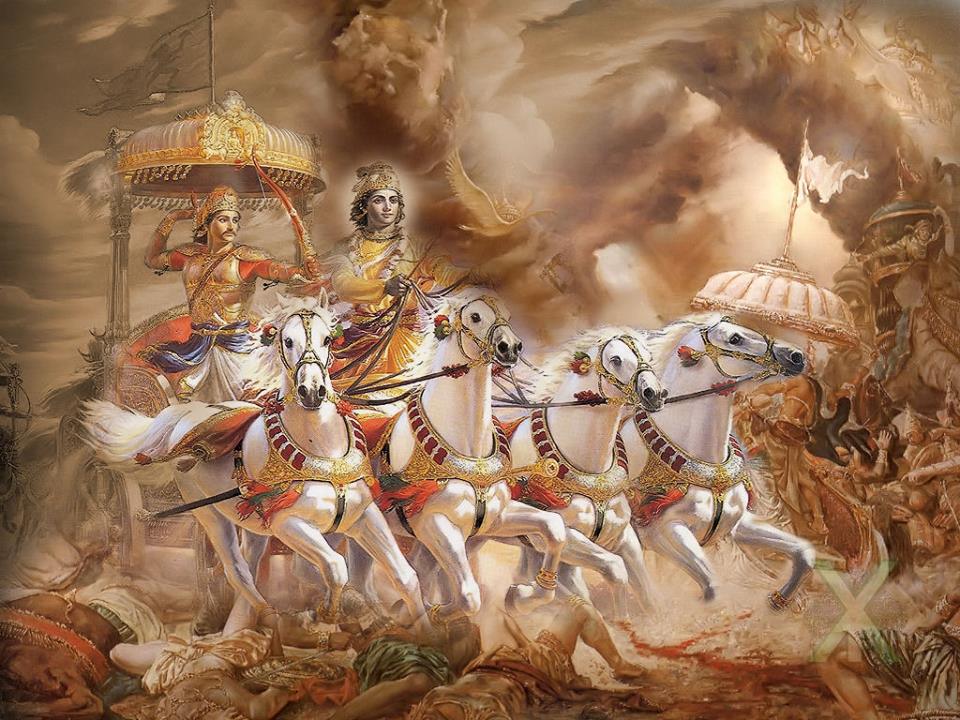


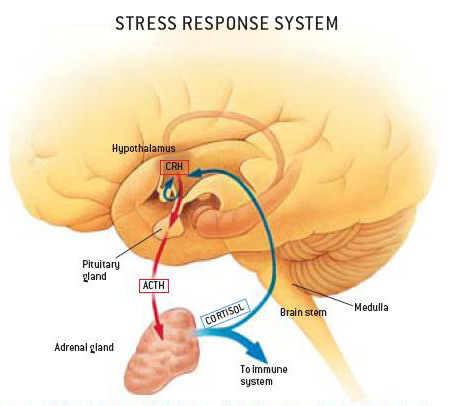


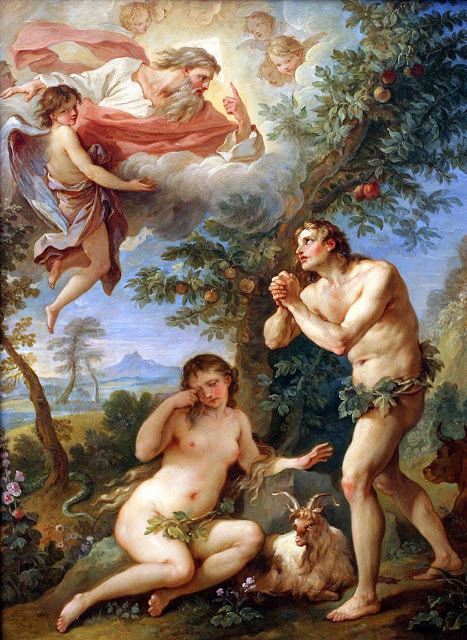


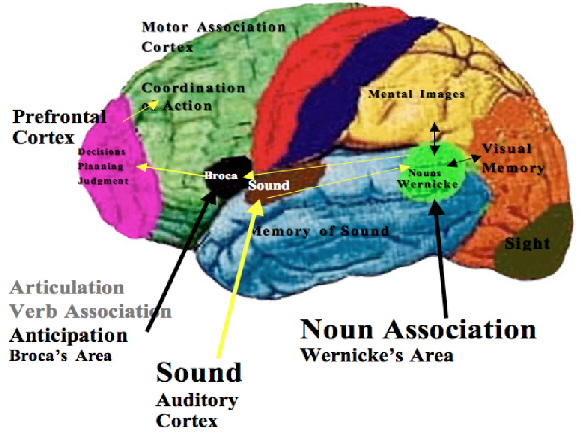







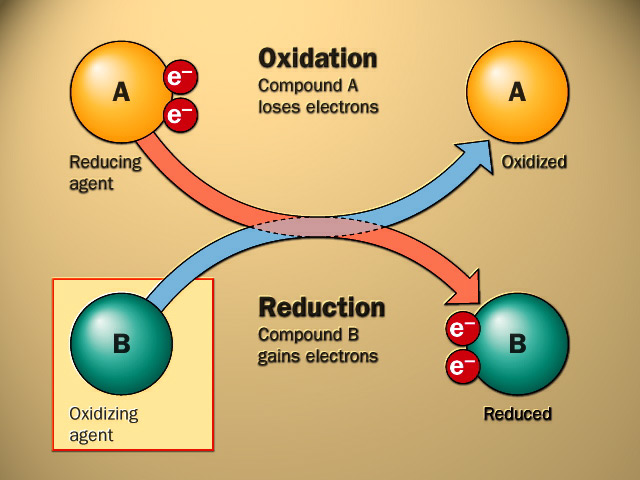

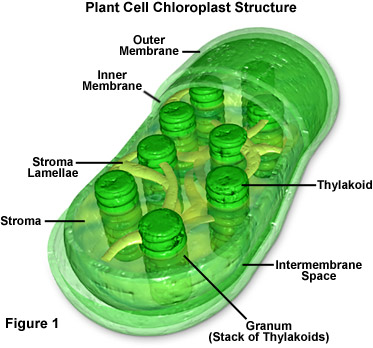
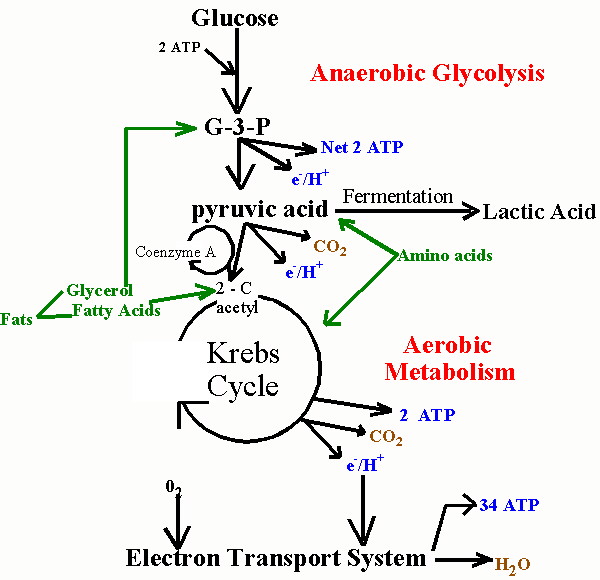






 Whole Dude - Whole Concept