Who is Whole Dude at Whole Foods? Posted on October 16, 2009
Who is Whole Dude? The Unknown Soldier of America.
The word ‘Whole’ as an adjective describes quality of being healthy, sound, auspicious, not broken, not defective, entire, undivided, complete, containing or constituting the entire amount, or having all of its natural elements. The word ‘Whole’ is also used as a noun to describe a thing or entity that is complete in itself and which lacks none of its parts. Whole Dude is a phrase that refers to Whole Man in all aspects of one’s being, including physical, mental, social, moral, rational, creative and spiritual. Man exists because of functional unity of the entire system and may not be divided into its parts like body, mind, and soul which have no independent existence of their own.
Whole Foods-Whole Inspiration-Whole LanguageWhole Foods Arrives in Ann Arbor, September 1993Whole Foods opened its Store in Ann Arbor on September 16, 1993. Whole Foods, Whole People and Whole Planet inspire Whole Dude to invent Whole Phrases: Whole Linguistics – Whole Language. The concept of Whole Cookie and Whole Love. Whole Dude uses the phrase Whole Linguistics to describe three entities; 1. Language User, 2. Language Interpreter and 3. Language Creator. Image Credit: Agenda Publications, Ann Arbor District Library, Issue Dates, September 1993, December 1997 and February 1998.
I can describe myself as a Whole Man, a Whole Person and as Whole Self. I am inspired by Whole Foods to coin the phrase Whole Dude as my Identity as perceived by Whole Foods does not include all the components of my Identity as a Whole Individual with Individuality. I introduced myself as Whole Dude on World Wide Web as early as 2007 using a blogger’s platform provided by Yahoo and later transferred the blog to WordPress. I registered WholeDude.com as my Domain during 2012.
WholeDude.com, ‘The Unknown Soldier of America’ represents the Tibetan Resistance Movement that is affiliated to Special Frontier Force, a military organization created by the United States, India, and Tibet. Tibet declared its independence on February 13, 1913 and had signed the McMahon Treaty with British Empire in India after the Simla Agreement of 1914. The Republic of India came into its existence on January 26, 1950, after India won its independence on August 15, 1947. India did not annul or void this Treaty and holds it as a valid agreement between two neighboring nations.
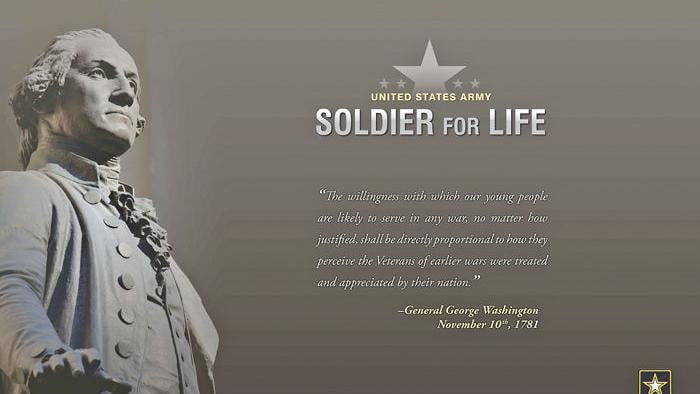
WholeDude.com is the Living Spirit of the Tibetan Resistance Movement with its early beginnings in 1950s followed by the founding of Special Frontier Force- Establishment 22-Vikas Regiment deployed in India. I am the Living Host of the Spirits of Tibetan Soldiers who sacrificed their precious lives taking part in the Liberation War of Bangladesh with military action in the Chittagong Hill Tracts during 1971-72. I am inspired by the Organization’s esprit de corps that transformed me into a ‘Soldier for Life’ and I am not a ‘Soldier for Hire’.
About WholeDude.com I describe myself as ‘The Unknown Soldier of America’ as my military service in Special Frontier Force-Establishment 22-Vikas Regiment is kept as a secret by the US, India, and Tibet.
I describe myself as ‘The Unknown Soldier of America’ as my military service in Special Frontier Force-Establishment 22-Vikas Regiment is kept as a secret by the US, India, and Tibet. I am neither a Mercenary nor a Soldier of Fortune. In fact, the quest for Freedom, Democracy, Peace, and Justice in Occupied Tibet forces me to lead the life of a Slave in the United States which proclaims itself as the Champion of Free World and abolished Slavery with a presidential proclamation on September 22.
WholeDude.com ‘The Unknown Soldier of America’ is the Living Spirit of the Tibetan Resistance Movement which transformed into Special Frontier Force-Establishment 22-Vikas Regiment which resists the Evil Red Empire, the Expansionist Asian Power which seized Tibetan territories by military invasion soon after the emergence of Communist Power in Asia.
WholeDude.com serves as the unspoken Spirit of Special Frontier Force, a military alliance between the US, India, and Tibet to resist Red China’s Expansionist Policy. As the Doomsayer of Doom Dooma, I am prophesying Beijing is Doomed. I speak of Beijing’s Doom in the words of Prophet Isaiah from The Old Testament Book of Isaiah, Chapter 47, verse 11:
“Disaster will come upon you that you cannot ward off with a ransom;
a catastrophe you cannot foresee will suddenly come upon you.”
About WholeDude.com ‘The Unknown Soldier of America’, Doomsayer of Doom Dooma prophesying Beijing’s sudden downfall.
On Beijing’s Doomsday, there is not one can save her.
Missing Parts of Whole Dude’s Whole Identity:
WholeDude.com is the Living Spirit of the Tibetan Resistance Movement with its early beginnings in 1950s followed by the founding of Special Frontier Force- Establishment 22-Vikas Regiment deployed in India. I am the Living Host of the Spirits of Tibetan Soldiers who sacrificed their precious lives taking part in the Liberation War of Bangladesh with military action in the Chittagong Hill Tracts during 1971-72. I am inspired by the Organization’s esprit de corps that transformed me into a ‘Soldier for Life’ and I am not a ‘Soldier for Hire’.Special Frontier Force-Establishment 22-Vikas Regiment – Operation Eagle: This badge represents a military alliance/pact between India, Tibet, and the United States of America. Its first combat mission was in the Chittagong Hill Tracts which unfolded on 03 November 1971. It was named Operation Eagle. It accomplished its mission of securing peace in the region that is now knownas Republic of Bangladesh.Revisting Chakrata Karma of August 09, 1974 – The doomed presidency of Nixon-Ford US administration. The M14 Service Rifle was issued to me in October 1971 while I served in Special Frontier Force, Establishment 22, Vikas RegimentPoorvi Star 1971-A piece of material evidence in my possession to prove my participation in Operation Eagle during Liberation War of Bangladesh 1971.This medal was awarded for service during the 1971/72 War with Pakistan. This medal was given to all categories of personnel who served in the military, paramilitary forces, police, and civilians in service in the operational areas of Jammu and Kashmir, Punjab, Gujarat, Rajasthan, West Bengal, Assam, Meghalaya, Mizoram or Tripura between 3 December 1971 and 20 December 1972.Bharat Darshan. August 15, 2025. Bharat, India Celebrates 79th Independence Day. Nation First, Always First. 25th Independence Anniversary Medal. Indian Independence-A Measure of my Life. I was awarded the Silver Jubilee Medal in 1972.This Medal known as ‘Sainya Seva Medal’ with ‘NEFA’ clasp speaks of the time I spent serving in North East Frontier Agency, now known as Arunachal Pradesh. Apart from awarding this DGAFMS MEDAL in the Medical Officers Junior Command Course-67 held in 1976, The Commandant, the Professor of Medicine, the Professor of Pathology, and the Professor of Social & Preventive Medicine at Armed Forces Medical College, Pune gave a written recommendation that I should be allowed to undergo Training in Paediatrics. Based upon this Strong written Recommendation, I had reapplied for Advanced Training in Paediatrics during 1977 and my application was rejected by Lieutenant General BDP Rao. Apart from awarding this DGAFMS MEDAL in the Medical Officers Junior Command Course-67 held in 1976, The Commandant, the Professor of Medicine, the Professor of Pathology, and the Professor of Social & Preventive Medicine at Armed Forces Medical College, Pune gave a written recommendation that I should be allowed to undergo Training in Paediatrics. Based upon this Strong written Recommendation, I had reapplied for Advanced Training in Paediatrics during 1977 and my application was rejected by Lieutenant General BDP Rao. This Nine Year Long Service Medal was awarded to me in July 1979 and I salute the Law of Temperance for this Award.I served in the Royal Oman Army, Armed Forces Medical Services providing Medical Services to the Land Forces, Air Force, and Navy of Sultanate of Oman from January 14, 1984 to July 26, 1986. I served in several different locations to participate in several Security and Intelligence Operations in the Persian Gulf and particularly at Strait of Hormuz. The decision to embark upon a Journey to United States was made at Khasab, Headquarters Peninsular Sector Force (Hq PENSEC). The airfield at Khasab was built by American engineers and I have reasons to believe that Khasab was used as a launching pad for the failed Helicopter Rescue Operation to save the American Hostages trapped inside Iran. At Khasab, we provide logistical support to all United States Naval vessels passing through the Strait of Hormuz. The Khasab Air base also played a crucial role during the Gulf Wars. I had also supported other American military operations at Thumrait, Masirah and Seeb Air Base during my tenure of service in Oman. I served in the Royal Oman Army, Armed Forces Medical Services providing Medical Services to the Land Forces, Air Force, and Navy of Sultanate of Oman from January 14, 1984 to July 26, 1986. I served in several different locations to participate in several Security and Intelligence Operations in the Persian Gulf and particularly at Strait of Hormuz. The decision to embark upon a Journey to United States was made at Khasab, Headquarters Peninsular Sector Force (Hq PENSEC). The airfield at Khasab was built by American engineers and I have reasons to believe that Khasab was used as a launching pad for the failed Helicopter Rescue Operation to save the American Hostages trapped inside Iran. At Khasab, we provide logistical support to all United States Naval vessels passing through the Strait of Hormuz. The Khasab Air base also played a crucial role during the Gulf Wars. I had also supported other American military operations at Thumrait, Masirah and Seeb Air Base during my tenure of service in Oman. I served in the Royal Oman Army, Armed Forces Medical Services providing Medical Services to the Land Forces, Air Force, and Navy of Sultanate of Oman from January 14, 1984 to July 26, 1986. I served in several different locations to participate in several Security and Intelligence Operations in the Persian Gulf and particularly at Strait of Hormuz. The decision to embark upon a Journey to United States was made at Khasab, Headquarters Peninsular Sector Force (Hq PENSEC). The airfield at Khasab was built by American engineers and I have reasons to believe that Khasab was used as a launching pad for the failed Helicopter Rescue Operation to save the American Hostages trapped inside Iran. At Khasab, we provide logistical support to all United States Naval vessels passing through the Strait of Hormuz. The Khasab Air base also played a crucial role during the Gulf Wars. I had also supported other American military operations at Thumrait, Masirah and Seeb Air Base during my tenure of service in Oman. I served in the Royal Oman Army, Armed Forces Medical Services providing Medical Services to the Land Forces, Air Force, and Navy of Sultanate of Oman from January 14, 1984 to July 26, 1986. I served in several different locations to participate in several Security and Intelligence Operations in the Persian Gulf and particularly at Strait of Hormuz. The decision to embark upon a Journey to United States was made at Khasab, Headquarters Peninsular Sector Force (Hq PENSEC). The airfield at Khasab was built by American engineers and I have reasons to believe that Khasab was used as a launching pad for the failed Helicopter Rescue Operation to save the American Hostages trapped inside Iran. At Khasab, we provide logistical support to all United States Naval vessels passing through the Strait of Hormuz. The Khasab Air base also played a crucial role during the Gulf Wars. I had also supported other American military operations at Thumrait, Masirah and Seeb Air Base during my tenure of service in Oman. I served in the Royal Oman Army, Armed Forces Medical Services providing Medical Services to the Land Forces, Air Force, and Navy of Sultanate of Oman from January 14, 1984 to July 26, 1986. I served in several different locations to participate in several Security and Intelligence Operations in the Persian Gulf and particularly at Strait of Hormuz. The decision to embark upon a Journey to United States was made at Khasab, Headquarters Peninsular Sector Force (Hq PENSEC). The airfield at Khasab was built by American engineers and I have reasons to believe that Khasab was used as a launching pad for the failed Helicopter Rescue Operation to save the American Hostages trapped inside Iran. At Khasab, we provide logistical support to all United States Naval vessels passing through the Strait of Hormuz. The Khasab Air base also played a crucial role during the Gulf Wars. I had also supported other American military operations at Thumrait, Masirah and Seeb Air Base during my tenure of service in Oman.
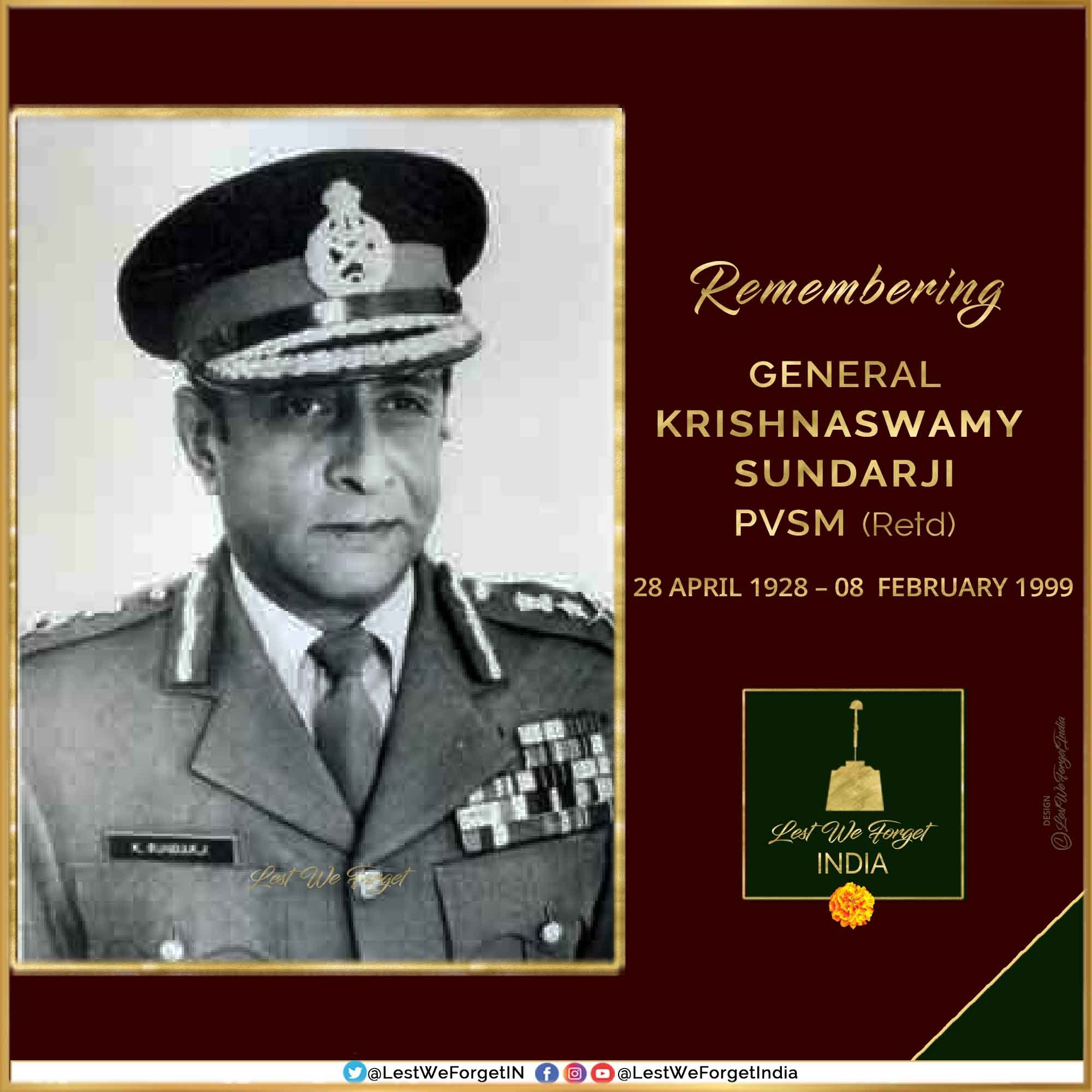
Winning Peace-The Art of Preparing for War. General KRISHNASWAMY SUNDARRAJAN (K S Sundarji) PVSM, the Chief of Army Staff, Indian Army, February 01, 1985 to May 31, 1988.Winning Peace-The Art of Preparing for War. General KRISHNASWAMY SUNDARRAJAN (K S Sundarji) PVSM, the Chief of Army Staff, Indian Army, February 01, 1985 to May 31, 1988.
We can not win peace if we are not ready for war. There will be no peace until we are willing to stand up to the challenge posed by the enemy. People who arrive at the battlefield fully prepared are more likely to display courage and the well-prepared are more likely to win.
IS WAR AN ART FORM?
Winning Peace-The Art of Preparing for War. General KRISHNASWAMY SUNDARRAJAN (K S Sundarji) PVSM, the Chief of Army Staff, Indian Army, February 01, 1985 to May 31, 1988.
General Sundarji served as the General Officer Commanding, First Armoured Division of Indian Army during 1976 to 1978 and I served in 55 Medical Battalion of First Armoured Division during that time. He would not let us give an excuse for not being prepared for the combat operations. He would stand next to me to check the expiration dates of the life saving medicines we bring to the battle and very often count the numbers to make sure that we carry enough quantity of each item that is included in our operational plans. Without preparation, no plan could be executed to accomplish its goal. While serving under his Command, I learned the importance of preparing for war. Shortcomings and deficiencies should not be ignored and should never be concealed. Being fully prepared boosts up the level of confidence and keeps up the fighting morale of men. I was fortunate to learn from his experience and his insistence and expectation that people under his command should excel in the art of preparing for war. He was an exceptionally good task master and would not permit any second guessing when he inspected Units to evaluate their battle preparedness. He paid scrupulous attention to every detail and no aspect of preparedness was considered trivial and no shortcoming would escape his attention. Under the leadership and stewardship of General Sundarji (whom I consider as my ‘Guru’) I learned the basic method of preparing for battle. He is described as the scholar General, military genius of India and is well-respected for his professional acumen and candor. He was the first and the only Infantry Officer in the Indian Army till date to command an Armoured Division. My learning experience started upon my posting to the First Armoured Division in 1976 while General Sundarji served as its Commander. In India, the classical literature had always described the use of weapons as an art which like all other branches of learning requires a “GURU”(Teacher) and the act of preparing for war needs a proper attitude, discipline and application. Modern Warfare is like a Symphony Orchestra where different players come together, work in harmony to provide an alluring musical experience. The actual warfare may provide images of violence but the preparation for war is more of an art form. Just like the practice for a great musical performance, each player should learn the notes, tune the instrument to play the correct notes and synchronize their moves with the rest of the team. My service in the Indian Army had given me the opportunity to master this art of preparing for war and I would consider General Sundarji as a great Master of this Art.
YOU WIN PEACE WHEN YOU ARE READY FOR WAR:
Winning Peace-The Art of Preparing for War. General KRISHNASWAMY SUNDARRAJAN (K S Sundarji) PVSM, the Chief of Army Staff, Indian Army, February 01, 1985 to May 31, 1988.
In early 1979, as tensions between India and Pakistan had increased and in response to Pakistan’s military build up and aggressive postures, India had demonstrated its willingness to accept the challenge by moving its fighting forces and conducted a massive operation near the Indo-Pak border in the Thar Desert of the State of Rajasthan. I was deputed to witness this military exercise as an umpire and was asked to report upon the performance of a Medical Battalion. The Battalion was commanded by a Lieutenant Colonel and was supervised by an Additional Director of Medical Services, a Colonel. From my experience at the First Armoured Division and the mentor ship of General Sundarji, I acquired a sharp eye and a passion for details. During the course of the exercise, I submitted several reports to the Deputy Director of Medical Services at the Head Quarters of the Southern Army Command. I had frank and open discussions with the Officers and the men of the Medical Battalion about aspects of their training and preparedness. I accurately pointed out their shortcomings in training and their deficiencies in stores and equipment. I was pleased to hear from all of them that they would not mind any hardship or inconvenience and that they would prefer to retrain and improve their battle preparedness. My reports helped the Unit to identify the areas of weakness and later the Medical Battalion was provided with the necessary retraining.
The robust military response from India at that time in 1979 forced Pakistan into a retreat and eased tensions between the two countries and averted the possibility of a war. From this experience, I learned that we can win peace when we are prepared for war.
Winning Peace-The Art of Preparing for War. General KRISHNASWAMY SUNDARRAJAN (K S Sundarji) PVSM, the Chief of Army Staff, Indian Army, February 01, 1985 to May 31, 1988.Winning Peace-The Art of Preparing for War. General KRISHNASWAMY SUNDARRAJAN (K S Sundarji) PVSM, the Chief of Army Staff, Indian Army, February 01, 1985 to May 31, 1988.. Indian Army Armoured Corps T-90 main battle tank .Winning Peace-The Art of Preparing for War. General KRISHNASWAMY SUNDARRAJAN (K S Sundarji) PVSM, the Chief of Army Staff, Indian Army, February 01, 1985 to May 31, 1988.
Whole Dude – Whole Persian: India and Iran – What is the connection? It relates to my military service in the Indian Army and the Royal Oman Army.
I joined the Indian Army Medical Corps during September 1969 when I qualified for the grant of Short Service Regular Commission in the rank of Second Lieutenant. General Manekshaw had a very high reputation across all the ranks and branches of the Indian Armed Forces. I had no opportunity to meet him in person but I always felt motivated by his spirit and enthusiasm to perform military tasks with cheerfulness and a sense of strong conviction to uphold the pride and dignity of Indian Army.
MY CONNECTION WITH THE PARSI COMMUNITY OF INDIA:
Whole Dude – Whole Persian: Parsi Community in India had arrived from HORMUZ area of Persia. My military career in India began under the leadership of General Sam Manekshaw, a Parsi by birth, and Srimati Indira Gandhi who had married Feroze Gandhi, a Parsi by birth. Interestingly, my military career has ended in July 1986 at KHASAB, on the shores of the Strait of Hormuz.
Parsis are the followers in India of the Iranian Prophet Zoroaster. The name means Persians. According to tradition, the Parsis had initially settled at Hormuz on the Persian Gulf and they sailed to India in the 8th century. They form a well-defined community and they have retained almost unchanged the beliefs and customs of their ancestors. Just like other Indians, the Parsis consider the elements of Fire, Water and Earth as sacred. I would like to speak about two members of this community with whom I am connected with love and a great admiration.
1. Field Marshal Sam Hormusji Framji Jamshedji Manekshaw:
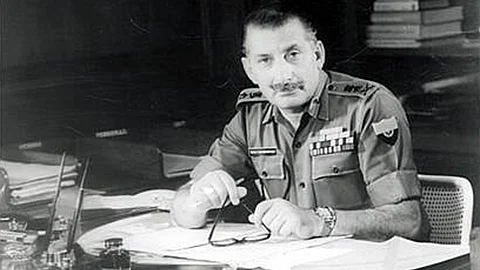
WHOLE DUDE – WHOLE PERSIAN: SAM THE BRAVE’-FIELD MARSHAL SAM HORMUSJI FRAMJI JAMSHEDJI MANEKSHAW, MILITARY CROSS, PADMA VIBHUSHAN, PADMA BHUSHAN, CHIEF OF ARMY STAFF 07 JUNE 1969-15 JAN 1973
In the year 1969, while I was a student at Kurnool Medical College, Kurnool, Andhra Pradesh, I qualified for the grant of Short Service Regular Commission to join the Indian Army Medical Corps in the rank of Second Lieutenant. I joined the Army Medical Corps on 26 July, 1970 in the rank of Lieutenant. On completion of my training, I got promoted to the rank of Captain on 26 July, 1971. My first task was getting ready for the crisis that India was facing on account of the influx of the Bangla refugees.
Whole Dude – Whole Persian: Field Marshal Sam Hormusji Framji Jamshedji Manekshaw is popularly known as ‘SAM BAHADUR’. He was 8th Chief of Army Staff of Indian Army from 07 June 1969 to 15 January 1973. My career in the Indian Army commenced with this Parsi Connection. He served as the GOC-in-C of the Eastern Command.
General Manekshaw was born in Amritsar, Punjab to Parsi parents. He became the 8th Chief of Staff of the Indian Army in 1969 and his distinguished military career has spanned four decades and through five wars, including World War II. He has the rare distinction of being honoured for his bravery on the battle front itself. He won the Military Cross for display of his valour in face of stiff resistance from the Japanese while he was leading a counter-offensive against the invading Japanese Army in Burma. He is the architect of India’s heroic victory in the 1971 India-Pakistan War. He had shown uncommon ability to motivate the troops and coupled it with a mature war strategy. He had masterminded the rout of the Pakistan Army in one of the quickest victories in recent military history. I take pride in my military service and my connection to Sam Bahadur. This military experience has helped me while I participated in Military Security and Intelligence Operations at Strait of Hormuz, Persian Gulf during 1984 to 1986 while I served in Royal Oman Army.
Whole Dude – Whole Persian: The rugged sea coast of Musandam Peninsula where I had worked hard patrolling the coastline, visiting remote villages, looking for Iranian infiltrators. Iran is just 18 miles away. I used to look towards Bandar abbas of Iran which is clearly visible while I used to drive over these hill cliffs. I had a sense of fascination for Hormuz region of Iran. Parsi community of India had arrived from Hormuz. My military career in Indian Army had started under General Manek Shaw. Prime Minister Indira Gandhi’s husband Feroze Gandhi was a Parsi by birth. I had actually visited Iranian Embassy in Muscat. The Staff were excited to receive me as I went there in my military uniform and they had recognized that I was stationed at Khasab defending Strait of Hormuz. They wanted to help me but they had no powers. I was not seeking a tourist visa. I had reconciled. It was not God’s Plan. When God plans your Journey, there would be no obstacles. His uplifting power would enable you to overcome all obstacles.
I began my military service under the leadership of a member of the Parsi Community which had arrived in India from Hormuz area of Persian Gulf (Iran) and my military career came to a final conclusion at Headquarters Peninsular Security Force (Hq PENSEC), Musandam, Khasab, on the shores of Persian Gulf at Strait of Hormuz while I was very actively involved in arresting the growth of Iranian influence in that area.
2. FEROZE GANDHI (FEROZE GANDHY):
WHOLE DUDE – WHOLE PERSIAN: INDIA AND IRAN WHAT IS THE CONNECTION? I DESCRIBE THIS CONNECTION FROM MY NATIONAL PERSPECTIVE. IT NARRATES MY LIFE’S JOURNEY FROM INDIA TO THE SHORES OF STRAIT OF HORMUZ , PERSIAN GULF. I SENT A LETTER OF CONGRATULATIONS TO MRS. INDIRA GANDHI WHEN SHE BECAME THE THIRD PRIME MINISTER OF INDIA IN 1966.Whole Dude – Whole Persian: On January 24, 1966, Indira Gandhi became the third Prime Minister of India. She had married Feroze Gandhy or Feroze Gandhi born into a Parsi family. Feroze Gandhi was a Member of India’s First Parliament and had won elections to the Parliament in 1952 and 1957 from Rai Bareilly Constituency in Uttar Pradesh State.
Feroze Gandhi was born into a Parsi family. He was a member of India’s first Parliament. He won his election in 1952 and in 1957 from Rai Bareilly constituency in Uttar Pradesh. His wife was his election manager. He was the husband of India’s first woman Prime Minister, Mrs. Indira Gandhi and the father of the former Indian Prime Minister Rajiv Gandhi. His grandson is a Member of Indian Parliament. Feroze died in 1960 but his name connects me to our beloved Prime Minister Indira Gandhi. I was a student in Kurnool Medical College in 1966 when Mrs. Gandhi was first appointed as the Prime Minister. I wrote her a personal letter to congratulate her and she had graciously responded to that letter. In 1967, I was in New Delhi to participate in a National Student Seminar for National Integration . Myself and other student delegates had a opportunity to meet Mrs. Gandhi at her residence and exchanged our views and expressed our concerns on several issues. After joining Indian Army, in 1971, I joined duty at the Office of the Directorate General of Security which takes its orders from the Prime Minister’s Cabinet Secretariat. It gave me an opportunity to understand the great leadership role played by Mrs.Gandhi and it provided me an insight into her foreign policy initiatives. Mrs. Gandhi’s decisive leadership had helped India to successfully test our first nuclear weapon.
SPECIAL FRONTIER FORCE – OPERATION EAGLE – INDIRA GANDHI’S MILITARY ACTION IN THE CHITTAGONG HILL TRACTS – LIBERATION WAR OF BANGLADESH 1971:
WHOLE DUDE – WHOLE PERSIAN: INDIA AND IRAN – WHAT IS THE CONNECTION? INDIAN AIR FORCE HELICOPTER PILOT FLIGHT LIEUTENANT PARVEZ JAMASJI, VrC . THE FIRST PARSI OFFICER OF INDIAN ARMED FORCES THAT I MET AND BRIEFLY INTERACTED DURING THE MILITARY ACTION IN THE CHITTAGONG HILL TRACTS THAT INITIATED THE LIBERATION OF BANGLADESH DURING 1971.
Among several people who had participated in Operation Eagle 1971, I want to mention the name of Flight Lieutenant Parvez Jamasji of Indian Air Force, the Parsi helicopter pilot who helped me with my battle casualty evacuation from the Chittagong Hill Tracts to our Field Hospital at Lungleh, Mizoram.
WHOLE DUDE – WHOLE PERSIAN: OPERATION EAGLE 1971 – INDIA’S MILITARY VICTORY IN THE CHITTAGONG HILL TRACTS – THE PARSI CONNECTION
Iran is an ancient land. We had trade and Cultural relations with Iran (PERSIA – THE LAND OF ARYANS) for several centuries. People of Persian origin have immensely contributed to India in a variety of fields such as business, arts, architecture and public service. The Parsi community of India represents my connection to Iran, a Land which still proclaims its Aryan heritage.
Whole Dude – Whole Persian: Major General Sujan Singh Uban, Inspector General of Special Frontier Force, was my Commander during Indo-Pak War of 1971. I used this military experience in the conduct of Security and Intelligence Operations at the ‘Strait of Hormuz’, Persian Gulf.Whole Dude – Whole Persian: The Taste of Victory. Indian Armed Forces scored a historical victory in its successful conduct of a massive military campaign that resulted in the Birth of Bangladesh.
Dr. R. Rudra Narasimham, B.Sc., M.B.B.S.,
Service Number: MR-03277K, Rank: Major Army Medical Corps/Direct Permanent Commission & XSCO-324 Naqeeb/Captain Force Medical Services, Royal Oman Army, Sultanate of Oman
Medical Officer, South Column Unit, Operation Eagle 1971-72
Headquarters Establishment No. 22 C/O 56 APO
Indian Army has awarded POORVI STAR for my participation in military operation in the Chittagong Hill Tracts during the Indo-Pak War of 1971Sangram Medal 1971Sainya Seva Medal (NEFA) 1972Nine Years Long Service Medal 1979Royal Oman Army Peace MedalRoyal Oman Army 15th Anniversary MedalSilver Jubilee Medal 1972Whole Dude – Whole Persian: India and Iran – What is the connection? It relates to my military service in the Indian Army and the Royal Oman Army.
Bharat Darshan – Remembering Sam Bahadur
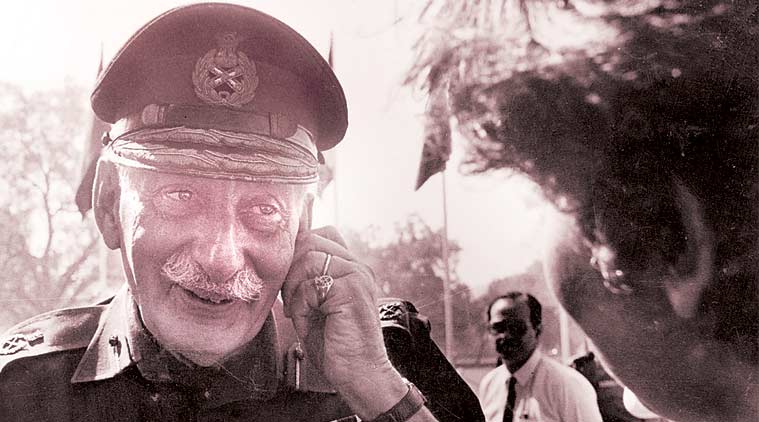
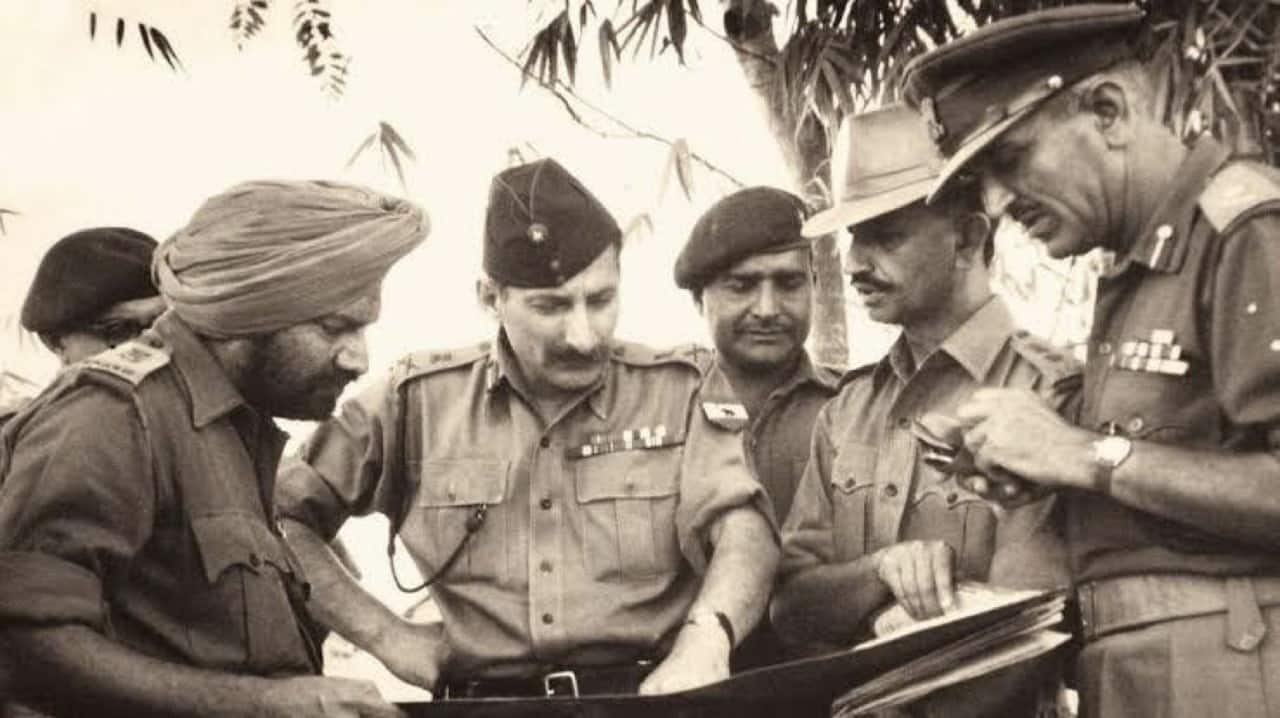
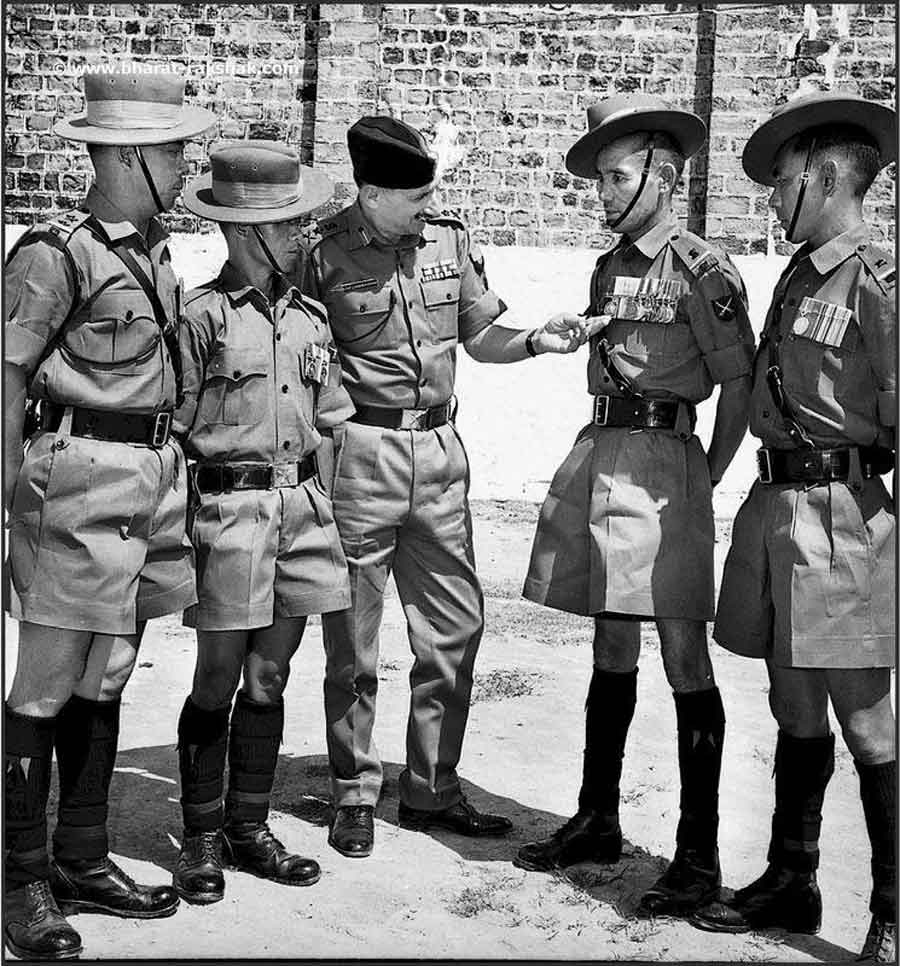
Bharat Darshan-Remembering Sam BahadurBharat Darshan – Remembering Sam Manekshaw. 8th Chief of Army Staff and Prime Minister of India, my Parsi Connections in 1970.Bharat Darshan – Remembering Sam Bahadur. Mrs. Indira Gandhi, Prime Minister of India with Indian Army Chief Sam Manekshaw, my Parsi Connections.
I have good reasons to pay this tribute to Field Marshal Sam Manekshaw (‘SAM BAHADUR’) who passed away on June 27, 2008. I count him as my ‘Parsi Connection’ apart from Mrs. Indira Gandhi who was India’s Prime Minister when I reported to Officers Training School, AMC Centre, Lucknow on July 26, 1970 to attend Basic Medical Officers Course 20/70. Interestingly, when I left military service, I was at Strait of Hormuz near Hormuz region of Iran to which Parsi community has its historical relationship.
Bharat Darshan-Remembering Sam Bahadur.
The video jerked into play… realised I wasn’t looking for the Great Man: Sam Manekshaw’s daughter Maja Daruwala
Field Marshal Sam Manekshaw died this day in 2008. A daughter remembers.
Bharat Darshan – Remembering Sam Bahadur Field Marshal Sam Manekshaw.
Field Marshal Sam Manekshaw led the Indian Army to victory in East Pakistan. (Photo: Express Archive)Written by Maja Daruwala | New Delhi | Published:June 27, 2016 1:27 am
Perhaps because there are so few of us around, people feel obliged to email and SMS me snippets of news and views, blogs, pictures and videos about Parsees. The complimentary pieces are bittersweet gestures of affection for a friend. They come tinged with regret that seems to mourn the inevitable passing away of our tiny community. The last little video I got came with the message “You should be proud” and opened into a montage of the usual greats. I watched with only tepid interest as the pictures and names in blazoned heroic script passed across the screen. There was Jamshedji, and Dorabji, Nani, Fali and Soli. There was Bhikhaji Cama and atomic energy Bhabha and Rattan of course, Adi, and apro Zubin and Cyrus. I’d seen them all before. At the end, the video stalled and I realised I was mildly miffed at the producers who had missed one name.Still and sad, I stared hard at the little dots going round and round as the video buffered into its last five seconds. In those long moments, I felt my chest tighten and my eyes prick as I remembered the missing man. He had meant so much to us. Eight years dead this week, he was still right there at every family gathering, lighting up the room with silly teasing and laughter, telling funny stories about the cook in Amritsar whose kheema my mother could never match, or the fair girl who’d given him his first innocent kiss by the back loo in exchange for a promise not to tell the elders she was meeting with the local rake, or the tale of how he had exasperated his mother into throwing a bunch of keys at him for explaining to all the household that his hazel eyes came from being born in Egypt. When we asked; “Why Egypt? His only explanation was “Baby, that’s the only name I knew!”
He taught us the names of all the flowers in the garden and read us Scheherazade stories from the Arabian Nights. Then wickedly played king. My sister was the favoured and beautiful Lal Pari, I the ugly sidey grateful to be included. When we asked what our mother was he’d say airily: “Oh, she’s the lady in waiting — waiting for everything.” He loved being the hero and would post us scurrilous detective stories at boarding school. In the hols, I complained to my aunt that no one believed the letters were from my father and she cried out “Bhai, you’re still doing the same thing!” She had been an early victim in their school days. He had enthusiasms and dragged us willy-nilly into them because they had to be shared by everyone around. So my mother, straw hat on head, walked across the winter sun fields near Delhi while he shot quail and joined the locals in chai on the khatia after. At home, my sister wiggled hot and impatient under studio lights while he perfected the angle of his tripod camera. At the race course, he taught me to feed our one-fourth of a race horse with an open flat hand so I wouldn’t get bitten. It mattered not at all that First Entry never won a race. In Ferozpur, the huge grounds of Flagstaff House turned him farmer. So we all dug potatoes out of the ground, picked cotton and felt how aniseed tasted right off the stalk. In Mhow, he battled the cook for suzerainty over the kitchen and competed with him to show he could make the best tasting chola ever — for breakfast! In Coonoor, it was trout fishing and endless hours fiddling to find just the right rods and reels and being coaxed into spearing live bait on to hook because he wasn’t going to do it. Then it was milch cows. We had to have them. All the houses along Porter Avenue got milk at the same price for 20 years. Meticulous accounts were kept. The grandchildren got the 6 am milk run and my mother got to name the animals: Rose (naturally, what else can you name a cow), then Rose Bud, then just Bud, then Bud Bud. Until the Gorkhas put their foot down and only a minimal cow was allowed to remain on the premises. He loved being loved and retired hurt one time when our long time charioteer cook and Gorkhas agreed that “hamari madam jaisa koi nahi”. He wasn’t expecting it. Beyond the jesting, there was wisdom. “You must spoil your children and spoil your children but they must never get spoiled.” He’d say. The video jerked into play and pulled me out of my reverie. At last I was face to face with the last name and portrait. We looked at each other and I realised I wasn’t looking for the Great Man at all but for the funny, handsome brave father whose face anyway lives behind my eyes — always.
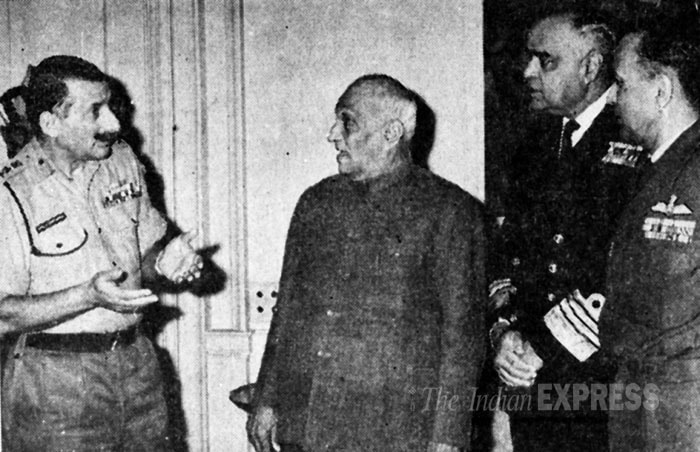
Bharat Darshan – Remembering Sam Bahadur, Field Marshal Manekshaw.Bharat Darshan – Remembering Sam Bahadur, Field Marshal Sam Manekshaw.Bharat Darshan-Remembering Sam Bahadur (GOC IV CORPS)Bharat Darshan – Remembering Sam Bahadur, Field Marshal Sam Manekshaw.Bharat Darshan – Remembering Sam Bahadur, Field Marshal Sam Manekshaw.Bharat Darshan – Remembering Sam Bahadur, Field Marshal Sam Manekshaw.Bharat Darshan – Remembering Sam Bahadur, Field Marshal Sam Manekshaw.Bharat Darshan – Remembering Sam Bahadur, Field Marshal Sam Manekshaw.Bharat Darshan – Remembering Sam Bahadur, Field Marshal Sam Manekshaw. Indian President V.V. Giri with Army, Navy, and Air Chiefs.Bharat Darshan – Remembering Sam Bahadur, Field Marshal Sam Manekshaw.Bharat Darshan – Remembering Sam Bahadur, Field Marshal Sam Manekshaw.Bharat Darshan – Remembering Sam Bahadur, Field Marshal Sam Manekshaw.Bharat Darshan – Remembering Sam Bahadur, Field Marshal Manekshaw, Final Journey on June 27, 2008.Bharat Darshan-Remembering Sam Bahadur.Whole Dude – Whole Persian: Remembering Sam Bahadur. India – Iran, Hormuz – Parsi Connection.
Whole Dude – Whole Opportunity: Iran – A Missed Opportunity? My military service in Royal Oman Army 1984-86.
The Strait of Hormuz
Whole Dude – Whole Opportunity: The rugged sea coast of Musandam Peninsula where I had worked hard patrolling the coastline, visiting remote villages, looking for Iranian infiltrators. Iran is just 18 miles away. I used to look towards Bandar Abbas of Iran which is clearly visible while I used to drive over these hill cliffs. I had a sense of fascination for Hormuz region of Iran. Parsi community of India had arrived from Hormuz. My military career in Indian Army had started under General Manek Shaw. Prime Minister Indira Gandhi’s husband Feroze Gandhi was a Parsi by birth. I had actually visited Iranian Embassy in Muscat. The Staff were excited to receive me as I went there in my military uniform and they had recognized that I was stationed at Khasab defending Strait of Hormuz. They wanted to help me but they had no powers. I was not seeking a tourist visa. I had reconciled. It was not God’s Plan. When God plans your Journey, there would be no obstacles. His uplifting power would enable you to overcome all obstacles.
The Strait of Hormuz connects Persian Gulf with Gulf of Oman and kindly view the enlarged picture and you would appreciate the maritime boundaries between Iran and Oman and the narrow shipping lanes that are vital for global energy supply. I served in The Sultanate of Oman’s Land Forces and also took part in the operations conducted by The Sultanate of Oman’s Air force, Navy and Coast Guard almost on a daily basis while I was stationed at Al-KHASAB air base.
Whole Dude – Whole Opportunity: Iran – A Missed Opportunity? My military service in Royal Oman Army 1984-86. The Gulf Crisis in Qatar – The US Military Presence in Oman. The Khasab airfield.
My Unit Hq PENSEC is responsible for the security of the Musandam Peninsula and also safeguard Oman’s territorial waters. We keep a 24 hours watch on all the vessels that transit through the Strait of Hormuz and provide navigational guidance and assistance as needed. Apart from keeping this vigil and monitoring the activity in the narrow shipping lanes, we regularly patrol all the coastal villages and contact the residents on a regular basis and gather information about any possible cross border infiltration. I used to make my trips using a variety of modes of transportation that included boats, smaller naval vessels, helicopters and land rovers. There are very few roads and the terrain is rocky and very rough. The villages are literally cut off from the rest of the country. Oman’s Ministry of Health runs clinics and hospitals at places like Khasab and Bukha and the smaller village communities have no such facilities and I have not noticed even grocery stores as the places are remote and inaccessible. I made a very dramatic impact upon the Village Patrolling operations in Musandam Peninsula and successfully redirected the military security and intelligence operation to provide assistance to the villagers.
Whole Dude – Whole Opportunity: Iran – A Missed Opportunity? My military service in Royal Oman Army 1984-86.Whole Dude – Whole Opportunity: Iran – A Missed Opportunity? My military service in Royal Oman Army 1984-86.Whole Dude – Whole Opportunity: Iran – A Missed Opportunity? My military service in Royal Oman Army 1984-86.Whole Dude – Whole Opportunity: Iran – A Missed Opportunity? My military service in Royal Oman Army 1984-86.Whole Dude – Whole Opportunity: Iran – A Missed Opportunity? My military service in Royal Oman Army 1984-86.
I used to spend my time talking to the residents, provide free medicine and arrange free helicopter trips to obtain hospital care in Khasab. Many of them needed dental treatment and were not able to visit a dentist. I could use the military helicopters to take them to the dentist and bring them back to their homes at the end of their appointments. During all of my trips, women, children, the elderly and others used to come out of their dwellings and line up to converse with me. To my utter surprise, sometimes I used to meet women from Hyderabad, India who had married Omani citizens. During my journeys, I used to get a very clear view of the coastline of Iran and I was told that many villagers regularly do their shopping at Bandar-e-Abbas of Iran.
Iran – A Missed Opportunity?
Whole Dude – Whole Opportunity: Iran – A Missed Opportunity? My military service in Royal Oman Army 1984-86. Musandam Peninsula, Oman
Before I moved to Oman in January 1984, I made an attempt to find employment in Iran. I visited the beautiful Iranian Consulate in Hyderabad, India. Several of my friends who were then serving in the Medical and Health Services of the Government of Andhra Pradesh, had been to Iran on 5-years deputation, gave me a very good account of their service conditions and experience in Iran. I was looking for an opportunity to serve in the Iranian Armed Forces and was not really keen to take up a job with their Ministry of Health. Simultaneously, I found this opportunity in Oman to serve as an Officer with a good contract from their Ministry of Defense. Interestingly, I had again gone to the Iranian Embassy in Muscat, Oman in July, 1986 looking for an opportunity to live in Iran. I met with their senior officials who received me with great courtesy. Very regretfully, they claimed that their hands are tied and they could not give me the type of Visa I wanted. However, they sincerely appreciated my desire to work and live in Iran. If God is willing, may be I would get a third chance to knock on the doors of some Iranian Embassy. When I look back into our history, the story of Aryan Migration to Iran interests me a lot and I also recognize that Persian was the Court language during the long rule by Mughals (Moguls) and I love listening to ‘ghazals’, the lyrics composed in the Indian language Urdu which is enriched with the ideas and thoughts that are expressed in the Persian language.
Whole Dude – Whole Opportunity: Iran – A Missed Opportunity? My military service in Royal Oman Army 1984-86. The Gulf Crisis in Qatar – The US Military Presence in Oman. Khasab.Whole Dude – Whole Opportunity: It was in the Sultanate of Oman I came to know that the phrase “In God We Trust” is the Official Motto of the United States of America when I read a news story published in The Oman Daily Observer, Oman’s only English language news paper. While serving in Oman, I had visited Masirah island, served at Sultanate of Oman’s Airforce Base at Thumrait. After the Gulf Wars, American military operations based in Oman have become widely known. I had served at different locations including Muaskar Al Murtafaa (MAM -The Ministry of Defence and Force Medical Services Headquarters), Jebel Akhdar, Rustaq,Thumrait, Aydim, Salalah,Raysut,Dhofar region, As Seeb Airforce Base, Ghalla,Bait Al Falaj, Nizwa and other places. I had traveled by road, by sea, and in air on various assignments. At Khasab, I had also provided support to Sultanate of Oman’s Naval base at Goat Island.
When you breathe in smoke that comes from the end of a lit cigarette, cigar, or pipe ( often described as ‘sidestream smoke‘ ), or when you breathe in smoke that is exhaled by a smoker(often described as ‘mainstream smoke’ ), you are exposed to the risk of secondhand smoke. You will be inhaling almost the same amount of chemicals as the smoker breathes in. Tobbaco smoke contains more than 4,000 different chemical compounds, and more than 50 of them are known to cause Cancer. Some of these known carcinogens are Hydrogen Cyanide, Benzene, Formaldehyde, and Carbon monoxide. Involuntary or passive smoking can kill. There is no amount of exposure to secondhand smoke that is considered as a safe level of exposure. The more secondhand smoke that you breathe in, the more your health risk increases. Secondhand smoke exposure causes nearly 50,000 deaths per year in adult nonsmokers in the United States. 3,000 deaths are from Lung Cancer, and 46,000 deaths are from heart disease. Nonsmokers increase their risk of developing Lung Cancer by 20% to 30%, and heart disease by 25% to 30% when they are exposed to secondhand smoke. The risks of Breast Cancer and Cervical Cancer and other types of Cancer are also higher. Women who are exposed to secondhand smoke face a 69% higher risk of heart disease and a 56% higher risk of Stroke than those who are not exposed to smoke. Children are particularly vulnerable to the effects of secondhand smoke because of their bodies are still growing and they breathe at a faster rate than adults. The effects of smoking can be very significant especially for those who live or work with a smoker. In reality, most of the smoke from a burning cigarette doesn’t get sucked down into smoker’s lungs- it simply escapes into the air where it can be inhaled by anyone unfortunate enough to be nearby. Living under the shadow of a great person may give some benefits, protection, and a sense of security. But, life under the shadow of secondhand smoke is a prescription for death. There was such an unfortunate victim who had lived under the shadow of a great leader known as Mohammed Ali Jinnah.
Mohammad Ali Jinnah, Qaid-e-Azam, the great leader and founder of Pakistan. What is the risk of Living under the Shadow of a great leader?
Jinnah, Indian Muslim politician was the founder and first Governor General of Pakistan (1947-1948). His parents arranged for an early marriage for him before he left for England at the age of 16. While in London, Jinnah suffered the loss of his wife and mother. In 1895, at the age of 19, he was called o the Bar on completion of his formal studies to become a barrister. He had supported the election of Dadabhai Naoroji, a Parsi leader, a leading Indian nationalist who ran for the English Parliamnet. Naoroji became the first Indian to sit in the British House of Commons. In 1896, Jinnah returned to Karachi and then moved to Bombay to start his legal practice. He met Ruttenbai, the daughter of Dinshaw Petit, a Bombay Parsi millionaire. Jinnah had married this young and beautiful lady over tremendous opposition from her parents and others. The great love and the marriage withered and proved to be an unhappy union. The stress imposed by exposure to secondhand smoke was not known and was not recognized those days. Jinnah’s addiction to Tobacco and the price paid by his wife describe the other side of Jinnah which many people in Pakistan and India tend to ignore.
The Other side of Mohammed Ali Jinnah :
Jinnah, a great leader with a simple addiction to Tobacco.
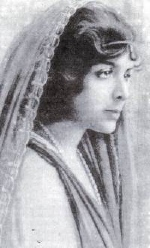
This young and beautiful lady had great feelings of love for Jinnah and those tender feelings withered while she had lived under the Shadow of Secondhand Smoke.
I would like to share the very interesting and powerful story about the life of Ruttenbai who had lived under the shadow of Mohammed Ali Jinnah . Unfortunatley, this story posted below my post fails to mention the nature of cancer that had killed this beautiful lady at such an young age. I am very sure about the nature of her illness. She died of Lung Cancer. She developed Cancer because of inhaling tobacco smoke and it is a very well recognized risk factor now. Secondhand Tobacco smoke kills people and even now the chances of survival are not good. I had personally witnessed a similar case and had narrated that story at my Home page of BhavanaJagat and the story is titled ‘Living Under the Shadow – A Prescription for Death’. A young, beautiful lady, the first wife of Chief of Army Staff (under Prime Minister Rajiv Gandhi), General K S Sundarji ( who is well-known for Operation Blue Star ) died of Lung Cancer in Army Hospital, New Delhi during 1978. The connection between smoking and Lung Cancer was well understood but at that time the risk of Lung Cancer due to Secondhand Tobacco Smoke was not properly recognized.
The Chief of Army Staff, General Krishnaswamy Sundarrajan, PVSM - I had served under his Command while he was the General Officer Commanding of the First Armoured Division during 1976 to 1978. His first wife, Padma Sundarji had lived her life under the shadow of Secondhand Smoke.
More than 61 years have passed since the death of founder of Pakistan , Quaid-i-Azam Mohammad Ali Jinnah. But even today, nothing about Jinnah seems ordinary —not his legal career, politics, personal life, his legacy and even the property he left behind.
The great South Asian intellectual Eqbal Ahmed once described Jinnah as an enigma of modern history. His aristocratic English lifestyle, Victorian manners, and secular outlook rendered him a most unlikely leader of India ’s Muslims. Yet, he led them to separate statehood, creating history, and in Saad R. Khairi’s apt phrase, “altering geography”.
Much has been written about Jinnah’s legal career, politics, his role as a founder of Pakistan and his vision, but even today, very little is known about Jinnah’s personal life. This was probably because Jinnah never had time to write a diary or an autobiography and whatever little he wrote was formal and matter of fact. For most of his life, he remained reserved, taciturn and secretive. He wrote his will in May, 1939, but it was only after his death that Liaquat Ali Khan, his close associate and the first Prime Minister of Pakistan, came to know that he was its trustee and executor.
His only child, Dina Wadia, has hardly ever spoken about her father in public. So furious was Jinnah with Dina that he disowned her after she married a Parsi man against his wishes, and yet he left two lacs for her in his will. Akbar Ahmed’s movie Jinnah had just ten to fifteen minutes on Jinnah’s personal life, which are nowhere near enough.
Life Under The Shadow – Ruttie in Jinnah’s Shadow
image004
image005
image006
Jinnah’s first wife, fourteen year old Emibai from Paneli village, died just eight months after he left for London at age sixteen in 1892, to join Graham’s Shipping and Trading Company, which conducted business with his father in Karachi. It was a forced marriage, as Jinnah’s mother was afraid that if he went to England , he might end up marrying an English girl. He barely knew Emibai.
Jinnah’s second marriage with the most beautiful girl of Bombay – Ruttie: The Flower of Bombay – was like a fairy tale. It began in the summer of 1916 in Darjeeling or “Town of the Thunderbolt” (how appropriate considering what was to happen there).
Jinnah had established himself as a lawyer and a politician by then and had become friends with Sir Dinshaw Maneckjee Petit, the son of one of the richest and most devoutly orthodox Parsis of the 19th century.
The Petit`s chateau overlooked Mount Everest and it was there Jinnah met his only daughter Ruttenbai Petit or Ruttie as she was popularly called. Merely sixteen at that time, Ruttie was a charming young girl. Stanley Wolpert writes in Jinnah of Pakistan :“Precociously bright, gifted in every art, beautiful in every way. As she matured, all of her talents, gifts and beauty were magnified in so delightful and unaffected a manner that she seemed a fairy princess”.
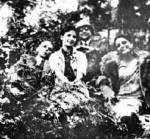
A dazzling beauty and full of life, Ruttie had exquisite taste and affable manners. Quick-witted, she was easily one of the best dressed and most popular women among the elitist circles of Bombay . She was intellectually far more mature than other girls of her age, with diverse interests ranging from poetry (Oscar Wilde being her favorite, whom she often recited) to politics. Her large collection of books, which remained in Jinnah’s possession after her death, reflected her deep interest in poetry, literature, history, occultism, mysticism and sorcery. She was an excellent horse-rider. She attended all public meetings and was inspired by Annie Besant’s Home Rule League.
A fierce supporter of India for Indians, Ruttie was once asked about rumors of Jinnah’s possible knighthood and whether she would like to be Lady Jinnah. She snapped that she would rather be separated from her husband than take on an English title.
Jinnah on the other hand also had a special interest in acting and in Shakespeare’s dramas. While in London , he had acted in some Shakespearean plays and even considered seriously taking up acting as a profession. It was his dream to play Romeo at The Globe in London . Khwaja Razi Haider thinks it was probably Jinnah’s deep interest in Shakespeare that gave him insight into the intricacies of the human character, which he was to use for grasping the essentials of Indian politics. Jinnah was thirty-nine and Ruttie sixteen, but the age difference proved no obstacle in their love. Love has no logic.
He was enamored by her beauty and charm and she was awe- struck by “Jay”, as she called him. Jinnah asked Sir Dinshaw for Ruttie’s hand in marriage, who became furious and refused. Jinnah repeatedly pleaded his case but Dinshaw never gave in, as Jinnah had a different faith and he was more than twice Ruttie’s age. Their friendship ended and Dinshaw forbade Ruttie from meeting Jinnah while she lived in his house. He even got a court injunction restraining Jinnah from meeting her (a pity no biographer has yet traced the court papers).
The couple continued to meet secretly, and patiently waited for two years until February 1918 when Ruttie turned eighteen, and was free to marry. She walked out of her parental home to which she was never to return, and converted to Islam at Bombay ’s Jamia Mosque, under the Muslim Shiite doctrine, on April 18, 1918.
The very next day, Jinnah and Ruttie got married in a quiet ceremony at Jinnah’s Malabar Hill house in Bombay . Located in a most highly-priced area today, with Maharashtra’s Chief Minister as its next-door neighbor, Jinnah House remains a dispute between India , Pakistan and Dina Wadia. Jinnah owned another house at 10 Aurangzeb Road , Delhi , which he sold just before Partition for Rs 3 lacs. The Dutch Ambassador to India lives there now. The Raja Sahib of Mahmudabad, who signed as Jinnah’s witness, and a few other friends, attended the wedding. Maulana Muhammad Hasan Najafi was Ruttie’s witness. Jinnah presented the wedding ring to Ruttie, a gift from Raja Sahab, and paid Rs 125,000 as haq mehr . Nobody from Ruttie’s family attended the wedding. Interestingly, the Nikah Nama stated “Ruttenbai” as the bride’s name instead of Marium, her Islamic name. The honeymoon was first at Raja Sahab’s Nainitaal mansion, and then at the Maidens Hotel, a magnificent property just beyond the Red Fort.
Quaid’s Nikahnama
Quaid’s house in Bombay
Gandhi’s grandson Raj Mohan Gandhi writes about the wedding in his book Understanding the Muslim Mind: “For the first time in his life, a girl had absorbed Jinnah’s emotions. Living for sometime now in a large but somber Malabar Hill house, bowing to ladies (on occasional parties) and praising their sarees but otherwise keeping a distance from them, (he) fell in love with Ruttenbai. Joy and laughter entered Jinnah’s life. The Malabar Hill house became brighter.’ She presented him with a daughter, Dina. But, ‘Alas the happiness was not destined to last; Sarojni’s veiled prediction of trouble came true”.
Sarojni Naidu was a huge admirer of Jinnah, wrote several poems and prose pieces on him, and many historians believe she was in love with him.
She wrote this about the wedding in a letter to Sir Syed’s son, Syed Mahmud: “So Jinnah has at last plucked the Blue Flower of his desire. It was all very sudden and caused terrible agitation and anger among the Parsis; but I think the child has made far bigger sacrifices than she yet realises. Jinnah is worth it all – he loves her; the one really human and genuine emotion of his reserved and self-centred nature. And he will make her happy.”
The first few years of the marriage were a dream for Ruttie and Jinnah, the happiest time of their lives. They traveled across India , Europe and North America together. Ruttie watched with a great sense of pride the feverish political activity of her husband. She would be seen in the visitors’ gallery when Jinnah was due to speak, accompanied him to the High Court, and even attended the Nagpur session of the Congress in December 1920.
According to Wolpert: “They were a head- turning couple; he in his elegant suits, stitched in London , she with her long, flowing hair decked in flowers. There was no limit to their joy and satisfaction at that time. Their only woe was Ruttie’s complete isolation and ostracism from her family.”
Kanji Dwarkadas, a veteran leader of Congress and a close friend of the couple, who looked after Ruttie during her last days, wrote in his book Ruttie Jinnah: The story of a great friendship: “For Jinnah, who was not generous in many matters, no expense was too great to satisfy the extravagant claims of the baronet’s spoilt child. During a visit to Kashmir , she spent Rs 50,000 in refurnishing the boathouse and Jinnah gladly paid all the bills. He treated her wonderfully well, and paid without a murmur all the bills necessitated by the luxurious life she led.Ruttie’s fabulous beauty, spontaneous wit, and immense charm have been praised to the neglect of her serious interests.”
Even though Ruttie was much younger than Jinnah, she made him a very happy man. They had no separate existence and Jinnah found her a great source of inspiration.
He resigned from the Orient Club where he used to play chess and billiards. He was so deeply in love with Ruttie that he would return from the law courts on time each day and talk to her for hours on end.
Unfortunately, their happiness was short- lived and the marriage started to crack after 1922-3. What caused the ruination of the Jinnah-Ruttie marriage? Was it Jinnah’s busy political life and his inability to give enough time to Ruttie, their age difference, or their incompatibility of temperaments? He was cold, introverted and domineering. She was young, extroverted, glamorous. There is no clear answer but the fact remains that Ruttie and Jinnah still loved each other despite the rift in their marriage.
It is evident in every letter Ruttie wrote during that period, and every book written on their relationship. She moved to London with Dina in 1922 and from there too, her heart was still set on her life with Jinnah.
She wrote in a letter to Kanji in India :“And just one thing more – go and see Jinnah and tell me how he is – he has a habit of overworking himself and now that I am not there to tease and bother him, he will be worse than ever.”
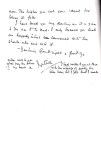
After her return, the couple tried one more time to save their failing marriage and took a five-month tour to Europe and North America together. But the rift grew and by January 1928 they were virtually separated, when Ruttie became seriously ill with cancer. Shortly before her death, she wrote a letter to Jinnah from Marseilles , France where she had gone for treatment. It turned out to be her last letter to him (larger view of original hand-written letter with typed text here
Life Under The Shadow – Ruttie’s Letter to Jinnah
image011
S. S. Rajputana,
Marseilles 5 Oct 1928 Darling – thank you for all you have done. If ever in my bearing your once tuned senses found any irritability or unkindness – be assured that in my heart there was place only for a great tenderness and a greater pain – a pain my love without hurt. When one has been as near to the reality of Life (which after all is Death) as I have been dearest, one only remembers the beautiful and tender moments and all the rest becomes a half veiled mist of unrealities. Try and remember me beloved as the flower you plucked and not the flower you tread upon.
I have suffered much sweetheart because I have loved much. The measure of my agony has been in accord to the measure of my love. Darling I love you – I love you – and had I loved you just a little less I might have remained with you – only after one has created a very beautiful blossom one does not drag it through the mire. The higher you set your ideal the lower it falls.
I have loved you my darling as it is given to few men to be loved. I only beseech you that the tragedy which commenced in love should also end with it.
Darling Goodnight and Goodbye Ruttie
image013
image014
It is a pity that none of the letters that Jinnah wrote to Ruttie have ever been made public. M.C. Chagla, a former Chief Justice of the Bombay High Court and a diplomat at the UN, has described the last days of Ruttie and Jinnah’s marriage in his book “Roses in December”. Chagla knew the couple very well, as he assisted Jinnah at his chambers during that time. He idealized Jinnah but severed all ties when he began working on the idea of an independent state for the Muslims of India. He writes: By 1927, Ruttie and Jinnah had virtually separated. Ruttie’s health deteriorated rapidly in the years after they returned from their final trip together. Ruttie lived at the Taj Hotel in Bombay, almost a recluse as she became more and more bed-ridden. Kanji continued to be her constant companion. By February 18, 1929 she had become so weak that all she could manage to say to him was a request to look after her cats.Two days later, Ruttie Petit Jinnah died. It was her 29th birthday. She was buried on February 22 in Bombay according to Muslim rites. Jinnah sat like a statue throughout the funeral but when asked to throw earth on the grave, he broke down and wept. That was the only time when I found Jinnah betraying some shadow of human weakness. It’s not a well publicised fact that as a young student in England it had been one of Jinnah’s dreams to play Romeo at The Globe. It is a strange twist of fate that a love story that started like a fairy tale ended as a haunting tragedy to rival any of Shakespeare’s dramas.”
The second time Jinnah ever broke down was in August 1947 when he visited Ruttie’s grave one last time before leaving for Pakistan . The architect of Pakistan paid a high price for Partition by leaving two of his most beloved possessions on ‘the other’ side of the border, the Jinnah House on Malabar Hill where he had the happiest moments of his life, and his beloved wife Ruttie who remains buried in Bombay. Jinnah left India in August 1947, never to return again, but he left behind a piece of his heart in a little grave in a cemetery in Bombay .
Rajahmundry – The Gateway to Traditions and History
Bharat Darshan – Rajahmundry – The Gateway to Traditions and History. Kandukuri Veeresalingam Pantulu of Rajahmundry
Kandukuri Veeresalingam Pantulu of Rajahmundry
Bharat Darshan – Rajahmundry – The Gateway to Traditions and History
I am a native of Rajahmundry of East Godavari District, Andhra Pradesh, India by way of my family connections. I lived only a small part of my life in my hometown. Within those few years, Rajahmundry very graciously connected me to the nation that we know as India. On one hand, I was introduced to the traditions of River Worship and Idol Worship, I got acquainted with the ideas of Ahimsa (non-injury), and at the same time I was also introduced to India’s history of foreign occupation, the pain imposed by the Muslim invaders, the struggle for Independence from the British Rule and equally important is the social awakening of the people. During the 19th century, India saw the rise of nationalism and simultaneously there was a wish to reform the society. The natives of Rajahmundry received inspiration from a variety of sources.
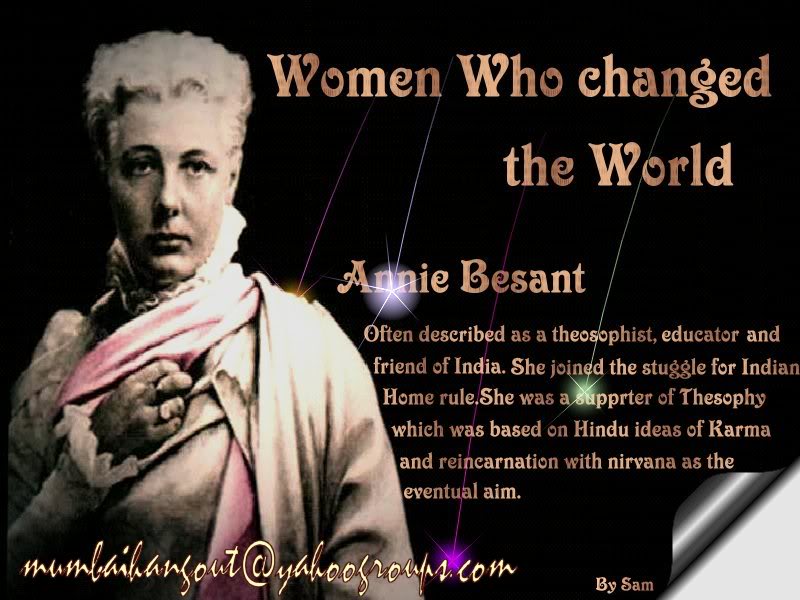
Bharat Darshan – Rajahmundry – The Gateway to Traditions and History. ANNIE BESANT – ANGEL OF INDIA.
Ms. Annie Besant who became the President of the Theosophical Society in 1907 visited Rajahmundry twice and established a place of worship known as ‘Divya Gjyan Samaj’ in a residential sub-division of Rajahmundry which is still known as ‘ALCOT GARDENS’ (named after Theosophist Henry Steel Olcott).
Bharat Darshan – Rajahmundry – The Gateway to Traditions and History
Bipin Chandra Pal (1858-1932), the leader of ‘Vande Mataram’ nationalist movement visited Rajahmundry in April 1907.
Bharat Darshan – Rajahmundry – The Gateway to Traditions and History
Alluri Sita Ramaraju (1898-1924) was inspired by the patriotic zeal of the revolutionaries in Bengal and waged a brief war against the British winning the hearts of the natives of Rajahmundry.
Kandukuri Veeresalingam Pantulu Garu:
Bharat Darshan – Rajahmundry – The Gateway to Traditions and History
He was born into a poor Brahmin family at Rajahmundry in 1848. About one hundred years later, when I arrived in Innespeta subdivision of Rajahmundry, the first time I had known this great man was during a visit to the municipal park on the Main Road, just a short walking distance from my grandparents’ house. There is a very imposing statue and people spoke about him with pride and admiration. My eldest brother, Hari was a student at the Veeresalingam Theistic High School in Innespeta. During the academic year 1952-53, I studied in 3rd grade at ‘Shade Girls High School’ located near ‘Kambala Cheruvu’ (Lake Kambala) while my family resided in Danavaipeta subdivision of Rajahmundry. Myself and my elder brother Pratap used to walk to the school and the easiest way to reach the school was a private road which traverses the Veeresalingam Gardens. The subdivisions of Danavai peta and the Danavai Pond and Prakasam Nagar are located on the southern side of the Gardens and Gandhi Nagar is located along the northern perimeter of the Gardens. The school is at a short distance from the north-west entrance to the Gardens. Apart from the tombs of Veeresalingam and his wife Rajya Lakshmi, the Gardens had a venue to conduct marriage functions and there was a Home for Widows. On our way to the school, we used to enter the Widow’s Home and a classmate of ours by name Sai Baba would join us in the walk to the school. On our return trip, the three of us used to reach the Home and after leaving Sai Baba, myself and my brother would resume our walk to our residence in Danavaipeta. There were several occasions when we would wait at the Home while Sai Baba’s mother would be breastfeeding him. During that school year, it was my daily experience and I knew that my friend and his mother derived their support from this great benefactor known as Veeresalingam.
As my family lived on the outer fringes of Veeresalingam Gardens during the most part of my later school years at Danavaipeta Municipal High School, walking across the Gardens and playing cricket in the evening in the open areas of the Garden became a part of my daily routine. The Gardens had several flowering plants and fruit-bearing trees and to celebrate the festival of Ganesh we used to gather from the Gardens several flowers, leaves, and fruits which are required for the worship. At the same time, I also knew about ‘Hithakarani Samajamu’. Veeresalingam donated all his lifetime earnings and had established this trust in 1907. Addepalli Vivekananda Devi, a social worker, and educationist lived in Danavaipeta and I had seen her several times and I was aware that she was continuing the relentless effort started by Veeresalingam to empower women and for the uplifting of women.
Bharat Darshan – Rajahmundry – The Gateway to Traditions and History
In 1968, Ms. Addepalli Vivekananda Devi successfully established Srimati. Kandukuri Rajya Lakshmi College for Women near the Lake known as ‘Danavai Gunta’. My sister and a sister-in-law studied in this College.
Veeresalingam was influenced by the ideals of ‘BRAHMO SAMAJ‘ founded by the great social reformers of Bengal, Raja Ram Mohan Roy, Keshub Chunder Sen, and Iswar Chandra Vidya Sagar who did much work for women’s emancipation. Veeresalingam was the pioneer of social reform in Andhra areas of the Madras Presidency apart from his remarkable contributions to Telugu literature and for the cause of education.
Bharat Darshan – Rajahmundry – The Gateway to Traditions and History
During the course of life, moments slip away and fortunately, they are laid into account. If there are no memories, there is no life worth speaking about.
Dr. R. Rudra Narasimham, B.Sc., M.B.B.S.,
Danavaipeta Municipal High School, Rajahmundry,
S.S.L.C. Class, March 1961
Bharat Darshan – Rajahmundry – The Gateway to Traditions and History.
























 Whole Dude - Whole Concept