Whole Learning – The Creative Writing Class at Ann Arbor Pioneer High School

The Art of Learning and Creative Writing

Pioneer High School, Ann Arbor, Michigan. The Students started a new School Year on September 08. My children in the past had attended this School. In the past ten years, I had visited this building countless number of times particularly after the School is closed at the end of the day.

East and West – What sets us apart in Learning and Creative Writing?   

Besides food, in the East, particularly in India, we tend to use visual images and use imaginary personalities with individualistic characteristics to engage in all kinds of human effort and activity. In the field of Education, we use the images and the characteristics associated with the following personalities:   
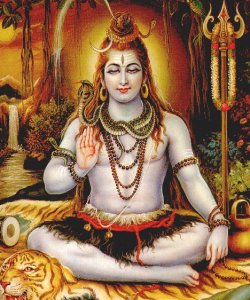
Lord Shiva-The God of Learning: Om, NamaH Shivaya, Siddham NamaH
The Art of Learning and Creative Writing: Lord Shiva-The God of Learning: Om, NamaH Shivaya, Siddham NamaH.

Lord Shiva, the God of Learning insists that we should seek the ability to think for ourselves. Learning commences after the student respectfully submits to Him and states that he is ready and prepared for Learning.

The Art of Learning and Creative Writing: Om, Namah Sivaya – The Five Letter Mantra – Traditional Indian Greeting-Namaskar

In Sanskrit language the student makes his submission to Lord Shiva: ” Om, Namah Shivaya; Siddham NamaHa.” An attitude of humility, and a willingness to accept personal responsibility and being mentally prepared before any Learning instruction is imparted are the first steps for Learning to begin. In my view, Lord Shiva presides over the frontal area (Prefrontal Cortex) of the human brain which is the seat of intellectual thoughts.   

Sarasvati - The Goddess of Wisdom and Perfect Knowledge, the Goddess of Speech or Vaak presides over the Broca's Area, the Speech Center of the Brain.
The Art of Learning and Creative Writing: Sarasvati – The Goddess of Wisdom and Perfect Knowledge, the Goddess of Speech or Vaak presides over the Broca’s Area, the Speech Center of the Brain.

Sarasvati is the Goddess of Wisdom and Perfect Knowledge. Learning is not about the mere exposure of a student to new information. Learning involves the process of assimilation of new information and an ability to analyze that information, and to formulate an opinion based upon that information. The student should be able to express that information in his speech and prove that he had imbibed the information in a critical manner. Sarasvati is also the Goddess of Speech or “Vaak” and controls the Speech Center or Area of the brain known as Broca’s Area. She banishes mental lethargy, mental laziness which impedes the ability to learn new information. She removes the mental barriers, the mental fences that we erect which disrupt ‘mental fluidity’, the fluid dynamics required for smooth flow of mental impulses between different areas of the brain involved in Learning and Speech.   

Lord Ganesha - The Mentor of Learning, the Remover of Obstacles.
The Art of Learning and Creative Writing: Lord Ganesha – The Mentor of Learning, the Remover of Obstacles.

Lord Ganesha is the Mentor of Learning. Learning is a complicated process. At individual level, it needs neuro-muscular coordination and at an external level it needs the removal of all distractions that interfere with the process of Learning. Ganesha removes all obstacles that could prevent the student from his pursuit of Learning.   

Lord Rama is the source of inspiration to writers, musicians, dancers, and other artists and craftsmen.
The Art of Learning and Creative Writing: Lord Rama is the source of inspiration to writers, musicians, dancers, and other artists and craftsmen.

Apart from the three personalities, the student can choose an image of his choice to specifically draw inspiration  while he travels on the path of Learning. The personality of Lord Rama alone inspires thousands of Indians to express their devotion to Him in creative and distinctive ways. In the Indian Tradition, the Guru or the teacher has a very unique position and is elevated to the status of the Divine Trinity represented by Brahma (the Creator), Vishnu (the Protector), and Shiva (the Restorer).   

The Creative Writing Class at Pioneer High School, Ann Arbor, Michigan:   

Jeff Kass is a teacher of Creative Writing at Pioneer High School in Ann Arbor and he also teaches at the Eastern Michigan University in Ypsilanti, Michigan. He teaches four sections of Creative Writing per day and over 110 students attend his classes to learn Creative Writing at Pioneer High School.

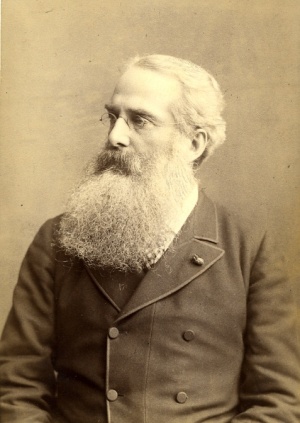
George Bernard Shaw - July 26, 1856 to November 2, 1950 - Author of more than 60 plays, distinguished essayist, music critic, the only person who won a Nobel Prize for Literature and also an Academy Award.
George Bernard Shaw – July 26, 1856 to November 2, 1950 – Author of more than 60 plays, distinguished essayist, music critic, the only person who won a Nobel Prize for Literature and also an Academy Award.

George Bernard Shaw apart from being a great playwright, was an influential music and drama critic, a superb essayist, and a penetrating analyst of virtually every important aspect of Western culture. The adjective ‘Shavian’ describes anything resembling his distinctive ideas or personality. Shaw rejected orthodoxy to become an atheist and a Darwinist, and moved through radical anarchism, Marxism to Socialism. He had finally arrived at Creative Evolution which viewed life as a whole and over an infinite time span. I could use his image to inspire myself while I indulge in expressing my thoughts, but I cannot draw any inspiration from his distinctive ideas  and use them as a basis for my writing.   

Jeff Kass includes a quotation from the playwright George Bernard Shaw in the hand-out for his class and designates the quotation as the Mission Statement, the Journey in Learning and Creative Writing that his students will diligently pursue throughout the semester. The Bernard Shaw quote is as follows: ” I want to be thoroughly used up when I die, for the harder I work, the more I live.” Jeff Kass further instructs his students: “I want you to be thoroughly used up. I want you to feel like you gave this class everything you possibly could and you have nothing left.” He drew the analogy of a boating crew, the athletes who compete in boating races. These athletes at the end of the race are very physically exhausted, they manage to hobble across the dock without an ounce of energy left in their bodies. Jeff Kass states that his Creative Writing Class students may experience a figurative death at the end of their semester as they are thoroughly used up.   

Row, row, row your boat, Gently down the Stream; Merrily, merrily, merrily, merrily, Life is but a Dream.
The Art of Learning and Creative Writing: Row, row, row your boat, Gently down the Stream; Merrily, merrily, merrily, merrily, Life is but a Dream.

Creative Writing and Mental Fluidity:   

Creative Writing should not demand any kind of strenuous effort and particularly should not result in mental strain. Firstly, writing needs neuromuscular coordination but it is not viewed as a physical effort. What makes an individual ‘creative’ is his ability to think for himself. An individual may need the necessary language skills to express his thoughts; he needs information about the subject of his thoughts, and his mind actually experiences a sense of profound relief when the thoughts find an outlet in the form of written expression.

Creative Writing is like the sense of relief a pregnant woman experiences after delivering the baby she had conceived before. A mind, full of thoughts is often compared to the state of pregnancy. The act of delivery is the ultimate Joy and the painful contractions of delivery are instantly forgotten and the face of the mother reflects a glow of happiness.

Creative Writing is like the sense of relief a pregnant woman experiences after delivering the baby she had conceived before. A mind, full of thoughts is often compared to the state of pregnancy. The act of delivery is the ultimate Joy and the painful contractions of delivery are instantly forgotten and the face of the mother reflects a glow of happiness.

I expect to see a Glow of Happiness when the students leave the Creative Writing Class. Creative Writing should not be like that of a boat rowing race and it should rather represent the act of gently rowing the boat down the stream and the act of rowing should give a sense of Joy as expressed in the following popular nursery rhyme:   

I expect to see a Glow of Happiness when the students leave the Creative Writing Class. Creative Writing should not be like that of a boat rowing race and it should rather represent the act of gently rowing the boat down the stream and the act of rowing should give a sense of Joy as expressed in the following popular nursery rhyme:   

Row, row, row your boat   

Gently down the stream   

Merrily, merrily, merrily, merrily   

Life is but a Dream.   

A  Creative Writer never dies as he always lives through the thoughts that he had expressed in his Writing.   

Individualism and Creativity:   

The Art of Learning and Creative Writing: What is Creativity?

We come into existence as individuals. We are created as persons with qualities and characteristics that set us apart from others. Our personal identity relates to the condition of being an individual or different from others. The students of the Creative Writing class should be able to describe their ‘Individuality’. For Creative Writing, the individual must express his original, distinctive ideas, the ideas that set him apart from the ideas expressed by other individuals. The Individuality is not related to the individual’s skin color, hair color, or the glasses the individual may wear. The Individuality exists in the thoughts and which when expressed in words speak about the Creativity of the individual. The students of the Creative writing class should seek to exist as individuals, capable of thinking for themselves, form their own opinions, and express their own distinctive ideas. The Class should provide tools to students to express their Individualism.   

Creative Writing: Individualistic Rhythm  vs Group Dance:    

Raas Leela - Lord Krishna in Vrindavan dancing with Gopis. Lord Krishna is simultaneously ONE and also DIFFERENT. He is the manifestation of Creative Energy.This Group Dance is an example of 'Individualistic Rhythm'.
The Art of Learning and Creative Writing: Raas Leela – Lord Krishna in Vrindavan dancing with Gopis. Lord Krishna is simultaneously One and also Different. He is the manifestation of Creative Energy.This Group Dance is an example of ‘Individualistic Rhythm’.

Jeff Kass encourages his students to perform a ‘Group Dance’ to encourage them to share their thoughts with the ‘Group’ and getting connected to them.The individual always exists in an environment. For Creative Writing, the individual needs to get connected to his ‘Inner- Self’, set himself apart from the social group to which he may belong. His concern should not be about the ‘Group’. His concern should be to focus on his own thoughts about everything else. What he thinks about the ‘Group’ is more relevant than being part of the ‘Group’. Creative Writing is not like the ‘Group Dance’ and in fact, it describes the ‘Individualistic Rhythm’. Lord Krishna in the above illustration is seen dancing with a Group of maidens known as Gopis. He appears before each of His dancing partner as a Different individual. He uses His Creative Energy to perform His Individualistic Rhythm. Creativity gives us the ability to express individualistic variation and define our Identity in thought and action.   

“Reflections” – Creative Writing Class at Pioneer High School:   

The Art of Learning and Creative Writing: I expect to see a Glow of Happiness when the students leave the Creative Writing Class. Creative Writing should not be like that of a boat rowing race and it should rather represent the act of gently rowing the boat down the stream and the act of rowing should give a sense of Joy as expressed in the following popular nursery rhyme:   

The Creative Writing Class at Pioneer High begins with an incomplete quote from playwright George Bernard Shaw. The quote should read as follows: “I am of the opinion that my life belongs to the whole community and as long as I live, it is my privilege to do for it whatever I can. I want to be thoroughly used up when I die, for the harder I work the more I live.” This is the view of George Bernard Shaw about the purpose of his human life and existence and hence the quote cannot be used to inspire students learning the Art of Creative Writing. For Creative Writing, the individual must first recognize his individuality, define his identity and purpose, and get connected to his ‘inner-self’ before paying attention to the social community or “Group”. This flawed ‘Mission Statement’ is now getting expressed in the ‘Reflections’ of the students. Two of the students of this Class use a homophobic word in written assignments submitted to the teacher. Sexuality describes our attitude about human sexual relationships. A Creative Writer should first learn to express his/her ideas about his/her own gender. The same applies to issues such as race, religion, or ethnicity. The Creative Writer must be given the tools to express ideas and thoughts that explain his/her gender, race, ethnicity, physical or anthropometric identity, and purpose in life before venturing to express opinions about relationships with others. The student should first recognize the difference between an ‘idea’ and an ‘opinion’. The Class should aim at expressing ‘ideas’ and not upon voicing ‘opinions’. By including the ‘opinion’ of GBS in the ‘Mission Statement’, the students are given the wrong impression that  their purpose is that of expressing ‘opinions’. If I am a male, my own personal awareness of my gender is more important than expressing that gender identity in the context of homophobia. A Creative Writer needs to express unique, and distinctive ideas and such ideas would arise only if he/she understands his/her own self.   

A Teachable Moment to the Teachers: Creative Writing at Pioneer High School:   

In the last three weeks, Jeff Kass at Pioneer High School publicly disclosed verbal or written statements of his Creative Writing Class students without giving them a prior warning. It would be appropriate to disclose to the students that their statements would be publicly disclosed and would be openly debated by the rest of the Community. A physician who may have seen or diagnosed the pregnancy of the teen in the Creative Writing Class would not have divulged that information to others. A priest who may hear confessional statements of his parishioners would not disclose them to the rest of the congregation. I wonder if there is a confidentiality clause in the teacher-pupil relationship. At a minimum, the students should be aware of the blog postings of their teacher and the public discussion. It is relevant as the teacher has not set boundaries to the freedom of speech in the context of his lesson plans. The homophobic word or expression in the written assignments rendered by two students should be evaluated for its academic merit. It appears that the students who used the words have not yet acquired narrative skills. The word ‘idea’ in the context of Creative Writing could be defined as something one thinks, a thought, mental conception, or image. Students should be encouraged to visualize their ideas and then describe their mental pictures or images. The ‘reflective’ statements with the homophobic word lack this quality; a clear description of a mental image or picture and from an academic point of view, a creative idea is neither described nor stated. The word ‘opinion’ is defined as a mental conviction, a belief, an evaluation, impression, estimation, or judgment of the quality or worth of a person or thing; a conclusion affected by one’s personal manner of looking at things. The homophobic word qualifies as an ‘opinion’ and if it is used as an ‘idea’, the mental concept or image is poorly narrated. Creative Writing demands that the writer should project his mental concepts in a vivid manner and a reader should be able to visualize that ‘idea’ described by the author. It is a teachable moment to the teachers as the incident reveals the pitfalls of inadequate instruction.   

Related Blog Post:   

Set your Mind Free – Let Sarasvati Flow

Creative Writing is like the sense of relief a pregnant woman experiences after delivering the baby she had conceived before. A mind, full of thoughts is often compared to the state of pregnancy. The act of delivery is the ultimate Joy and the painful contractions of delivery are instantly forgotten and the face of the mother reflects a glow of happiness.

Whole Dude – Whole Star

The East-West Confluence – Discover the Star of India

Discover the Star of India: ANNIE BESANT, b. OCT.1 , 1847, LONDON – d. SEPT. 20 , 1933, ADYAR, MADRAS. THE CHARISMATIC ENGLISH WOMAN WHO MADE INDIA HER HOME.

Mylapore, Madras is my birth place. I am native of Rajahmundry. Ms. Annie Besant visited Rajahmundry twice and opened a place of worship known as ‘Divya Gjyan Samaj’ to honor the memory of Colonel Henry Steel Olcott, the first President of Theosophical Society International at Adyar, Madras. This temple is located in Alcot Gardens, Rajahmundry.

Theosophy – The Cultural Enrichment of India:

ANNIE BESANT – ANGEL OF INDIA . ENGLISH WOMAN WHO MADE INDIA HER HOME .

Theosophy is derived from the Greek ‘theos’; “God”, and ‘sophia’; “Wisdom”, and is usually translated as Divine Wisdom. Theosophy is based upon the principle that God must be experienced directly to be known at all. It lays emphasis on mystical experience. It claims that a deeper spiritual reality exists with which direct contact may be established through intuition, meditation, and revelation, by transcending man’s normal consciousness. It is held that knowledge of the ‘Divine Wisdom’ gives access to the mysteries of nature and man’s deeper being. It views that the ‘reality’ is constituted by one principle. Theosophists have affirmed an underlying all-encompassing unity that subsumes all differentiation. The Theosophical Society affirms the following objectives; 1. to form a nucleus of the universal brotherhood of humanity without distinction of race, creed, sex, caste or color; 2. to encourage the study of comparative religion, philosophy, and science; and 3. to investigate unexplained laws of nature and the powers latent in man. The Society insists that it is not offering a new system of thought but it merely identifies certain universal concepts of God, nature and man that are known to wise men in all ages and that may be found in the teaching of all the great religions.

An English Woman in India:

ANNIE BESANT – ANGEL OF INDIA . ENGLISH WOMAN WHO MADE INDIA HER HOME .

Annie Besant after her conversion to Theosophy in 1889, traveled to Adyar, Madras and made India her home. She was active in educational and humanitarian work in India. She founded the Central Hindu College at Varanasi. Beginning in 1916, she became involved in the Indian independence movement and established the Indian Home Rule League. She was the president of the Theosophical Society from 1907 until her death in 1933. She wrote several books to promote understanding of theosophical belief. Her leadership gave Indians a sense of pride in that they were exporting ideas of importance to the West. The Theosophy movement has been a pioneering agency in promotion of greater Western acquaintance with Eastern thought.

Discover ‘The Star of India’ – The Second Coming of Buddha, a new Messiah:

Discover the Star of India – The Second Coming of Buddha, the reincarnation of Bodhisattva, Maitreya, the new Messiah.

Jiddu Krishnamurti born into a Telugu speaking Hindu Brahmin family at Madanapalli in the present State of Andhra Pradesh was adopted by Annie Besant in 1909 when he was about 14 years old. She proclaimed that Krishnamurti is the vehicle of a coming World Teacher,  reincarnation of Bodhisattva, Maitreya, the Second Buddha.

Discover the Star of India – The Second Coming of Buddha, the reincarnation of Bodhisattva, Maitreya, the new Messiah. The Discovery of Jiddu Krishnamurti.

She traveled in Great Britain and the United States with Krishnamurti whom she presented as a new Messiah. In 1911, she founded the ‘Order of the Star of India’ based on the claim that he was Buddha reincarnated. She was his legal guardian till 1921.In 1929, Krishnamurti dissolved this movement.

The Quest for Truth:

ANNIE BESANT – ANGEL OF INDIA . ENGLISH WOMAN WHO MADE INDIA HER HOME .

The keynote of Annie Besant’s varied activities was her unswerving loyalty to Truth. As she said, “She (Truth) may lead me into wilderness, yet I must follow her; She may strip me of all love, yet I must pursue her; though She slay me, yet will I trust in her; and I ask no other epitaph on my tomb but ‘she tried to follow Truth’.”

Rudra Narasimham Rebbapragada, B.Sc., M.B.B.S.,

Danavaipeta Municipal High School, Rajahmundry, East Godavari District, Andhra Pradesh, India.

S.S.L.C. Class of March 1961

THE WEST MEETS THE EAST-MEET THE WHITE AMERICAN BRAHMIN

ANNIE BESANT, b. OCT.1 , 1847 , LONDON – d. SEPT. 20 , 1933 , ADYAR, MADRAS. THE CHARISMATIC ENGLISH WOMAN WHO MADE INDIA HER HOME.
Hauptgebäude der Theosophischen Gesellschaft i...
ANNIE BESANT, b. OCT.1 , 1847 , LONDON – d. SEPT. 20 , 1933 , ADYAR, MADRAS. THE CHARISMATIC ENGLISH WOMAN WHO MADE INDIA HER HOME

Whole Dude – Whole Conquest

A Barrier to conquer the Cultural Barrier

A Barrier to Conquer the Cultural Barrier. A tribute to Sir Arthur Cotton.

Sir Arthur Cotton is popularly known as “Irrigation Cotton” or “Cotton Dora” (Cotton the Noble). In 1821, at the very young age of 18, he had arrived in India and was appointed to service with the Madras Engineers. He served in the First Burmese War (1824-26). The military Corps of Engineers also undertake civilian construction projects. Cotton became responsible for greatest civil engineering projects of his time. He worked in the face of stiff opposition, discouragement and criticism from the Madras government. In 1828, by constructing barrages across river Cauvery, he transformed the drought-stricken Tanjore district into the richest part of the State of Madras. In 1838, he designed and built sea defenses for Visakhapatnam. In 1847-52, he masterminded the Godavari delta project. He constructed Asia’s largest barrage across river Godavari a few miles south of Rajahmundry, my native place. This masonry dam is 2.25 mile (3,500 metres)long and is 12 feet high. It helped to irrigate 720,000 acres of land and created 500 mile long navigable channels connecting Godavari delta with the port of Kakinada. He was responsible for bringing prosperity to the farmers of the Godavari delta region. He was elevated to the post of Chief Engineer of the Madras Presidency. He retired from government service in 1862 and in 1876 he was knighted. His name is much honored to this day and the spirit of public service he displayed is still remembered with love and admiration.

GENERAL SIR ARTHUR THOMAS COTTON(b. MAY 15, 1803, WOOD COTE, OXFORDSHIRE, ENGLAND. _ d. JULY 14, 1899, DORKING, SURREY, ENGLAND.)

“OH, EAST IS EAST, AND WEST IS WEST,

AND NEVER THE TWAIN SHALL MEET.”

A BARRIER THAT CONQUERED THE EAST-WEST CULTURAL BARRIER. A TRIBUTE TO SIR ARTHUR THOMAS COTTON

There could be social and cultural barriers between humans but those man-made barriers could be conquered by people who are dedicated to serving the humanity. Sometimes, a man-made barrier can bridge that cultural divide and could bring people together. A barrage is described as a man-made barrier in a stream or a river. By constructing barrages, Sir Arthur Thomas Cotton had shown that public service could help people to love one another.

A Barrier that conquered the East-West Barrier. A tribute to Sir Arthur Cotton.
A Barrier that Conquered the East-West Cultural Barrier. A tribute to Sir Arthur Cotton.

WHOLE DUDE – WHOLE GIFT

A TIME FOR EVERY PURPOSE UNDER HEAVEN  :      

TIME HEALS ALL WOUNDS - DOES IT DESCRIBE THE POWER OF TIME?


THE BOOK OF ECCLESIASTES AND CONCEPTS ABOUT TIME  :      

The words of the Preacher, the son of King David, King in Jerusalem, Solomon the Wise.


King Solomon is believed to be the author of The Book of Ecclesiastes, The Old Testament Book of Holy Bible. These are his words from Chapter 3, verses 1-11 :      

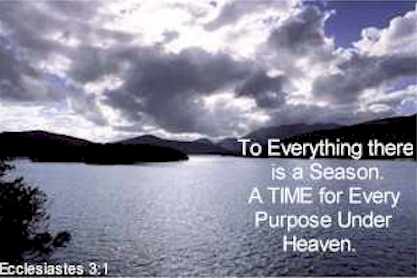
To everything there is a season,      

A time for every purpose under Heaven:      

A time to be born,      

And a time to die;      

A time to plant,      

And a time to pluck what is planted;      

A time to kill,      

And a time to heal;      

A time to break down,      

And a time to build up;      

A time to weep,      

And a time to laugh;      

A time to mourn,      

And a time to dance;      

A time to cast away stones,      

And a time to gather stones;      

A time to embrace,      

And a time to refrain from embracing;      

A time to gain,      

And a time to lose;      

A time to keep,      

And a time to throw away;      

A time to tear,      

And a time to sew;      

A time to keep silence,      

And a time to speak;      

A time to love,      

And a time to hate;      

A time of war,      

And a time of peace.      

What profit has the worker from that in which he labors? I have seen the God-given task with which the sons of men are to be occupied. He has made everything beautiful in its time. Also He has put eternity in their hearts, except that no one can find out the work that God does from beginning to end.      

THE HEALING POWER OF TIME  :      

Human existence could be challenged by physical and psychological injuries. A physical injury could also cause a significant amount of psychological damage and to a similar extent, unhealed psychological wounds may impair physical health and wellbeing. A psychological insult or injury may impact the activities and the normal functioning of a person who is not otherwise physically diseased. Human body is naturally endowed with an ability to repair damage caused to body tissues by physical injuries and other insults. The Repair process by which body heals itself is described as Inflammation and Repair. Human existence is possible because of this valuable, and protective natural healing process. However, this healing process and mechanisms are not under man’s voluntary control. The inflammatory reaction and the repair process result in scars as remnants. Once inflammation has subsided, the body may heal by regeneration of original tissue or the original tissue could be replaced by fibrotic connective tissue leading to scarring; very often wounds heal by a combination of these two events. Different tissues in the human body have different regenerative capacities. Basing upon the ability of regeneration, three different types of cells make up the human body: 1. Labile Cells – have the ability to regenerate throughout life. The epithelial cells of skin surface are regenerated on a regular basis giving us the ability to sustain our physical appearance as long as we live. Several other cells particularly found in blood, lymph, and spleen have this ability. 2. Stable Cells – have the ability to multiply and proliferate throughout life but are dormant unless stimulated. The cells of liver, pancreas, kidney, smooth muscles such as found in the wall of intestines, and the cells of the inner lining of blood vessels belong to this category. If a part of liver is removed, the liver can regenerate new liver cells and the resected liver regains its original size. 3. Permanent Cells – these cells do not have the ability to replicate and when injured or damaged are always replaced by connective tissue that results in loss of function. Neurons, skeletal muscle cells, and cardiac muscle cells belong to this type. The injury of neurons may cause paralysis. The injury of cardiac muscle cells may cause heart failure or cardiac arrest.      

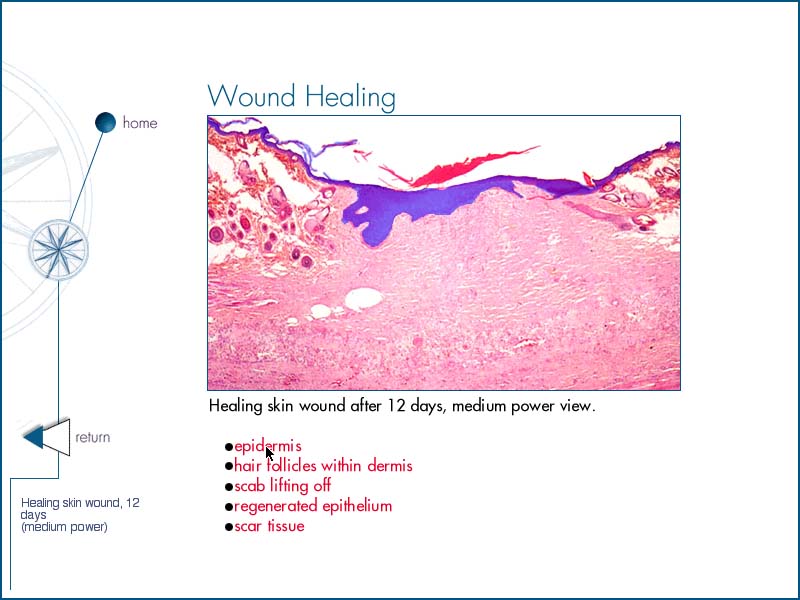
The natural process of Wound Healing is Time related.


The human body’s ability to heal itself also depends upon the nature of the insult and the agent causing the injury. Several physical, chemical, and biological agents have a great potential to cause severe damage and result in structural and functional impairment of the body from which recovery is not possible. Wound healing and restoration of function represent a process critical to the practice of Surgery. Surgeons are able to provide curative and restorative services because of the human body’s natural ability to heal itself.      

TYPES OF WOUND HEALING :      

The Healing of Wounds takes Time and the Types of Wound Healing is also related to the Time Factor.


Wound Healing is the process in which a physical injury ( like a cut injury ) undergoes repair with restoration of intrinsic tissue strength and function and also with resistance to infection and other external influences. Wound Healing is affected by the type of the Wound. Clean, sterile wounds that are not at the risk of contamination by other body secretions from the gastrointestinal tract, the genitourinary tract, or the respiratory tract heal better. Infected wounds and contaminated wounds heal slowly. If a wound is suspected to be contaminated the wound is often left open to evaluate the problem and to control any infectious agent. There are three types of Wound Healing described.      

1. Primary Intention or First Intention Wound Healing – Primary Union occurs when there has been little tissue damage, the wound is clean and is not contaminated by foreign matter, the wound is not infected, and the wound edges are closely approximated and are in proper contact. The edges of a wound should be approximated as early as possible after the injury. The surgical procedure known as Primary Wound Closure allows the wound to heal by First Intention. These wounds heal rapidly with minimal amount of scarring. A Surgeon while operating inflicts clean incised wounds and closes the wounds at the end of the surgical procedure. Nature takes over the process of Healing which proceeds in a timely fashion.      

The Natural Wound Healing Process known as Inflammation and Repair involves several different kinds of body cells and chemical mediators. Macrophage is one such cell. It eats up dead tissue and devours harmful bacteria, and engulfs foreign matter present in the wound.


2. Second Intention Wound Healing – It will not be possible to close wounds immediately after an injury if the wound is large, and the two skin edges are not in contact; the wound contains a lot of dead tissue or foreign matter, or is infected. The wound could be intentionally left open until the surgeon could make it clean. Sometimes, the injured person arrives late after sustaining an injury. The time of injury is of critical importance in choosing a course of action for its healing. The surgical procedure known as Delayed or Secondary Closure brings about healing by Secondary Union. Apart from the delay in Wound Healing, the resulting scar tissue is also more extensive.      

3. Third Intention Wound Healing – Sometimes, the wound is left open and is observed for several days because of low-grade bacterial contamination. Eventually, when the wound looks healthy and the wound edges are healthy, the Surgeon would close the wound allowing it to heal by Third Intention. Depending upon the amount of loss in skin surface, and the size of the wound, skin grafts may be needed for Wound Healing and the process is delayed until suitable graft material is procured and the grafting process concludes successfully.      

Wound Healing is affected by several factors that affect human body. A healthy person recovers faster and better if he is injured. When the health is compromised, the recovery from the wounds would be unsatisfactory. Malnutrition, protein deficiency, iron deficiency, Vitamin-C ( Ascorbic acid ) deficiency, diseases of liver and kidneys delay the natural healing process. Conditions causing poor blood supply( Peripheral Arterial Disease ), diabetes, other severe systemic diseases and infections like Tuberculosis can affect wound healing. After Wound Healing, the tissue never regains its original strength that existed prior to the injury. An uncomplicated wound, six months after its healing has about 80 percent of its original strength. Most wounds continue to remodel for more than one year. First Intention healing would generally produce cosmetically acceptable scars. Some scars are unsightly with a raised surface but the scar lies entirely within the confines of the wound. These Hypertrophic scars eventually stabilize in about six months time and are amenable to further cosmetic surgical correction to improve the appearance and to restore the function of the affected body part. Scars known as ‘Keloids’ invade nearby normal tissue that was not previously involved in the wound. This type of scar continues to enlarge even after six months time and does not usually regress or soften. The Keloids cause cosmetic disfigurement which is not easily treatable. Time plays an important role in all the aspects of Wound Healing and Wound Management and exerts an unique influence of its own in the outcomes.      

THE EXPERIENCE OF PAIN AND THE EXPRESSION OF GRIEF  :      

The disfigurement caused by Leprosy is known to humanity for several centuries. This disfigurement is caused by the involvement of nerves and the loss of sensory functions.


We seek help and medical attention for our physical injuries and wounds because of our ability to experience pain.The experience of the physical sensation of pain is of utmost importance in defending and in preserving human existence. If the neurological function of pain perception is blunted or impaired for any reason, the recovery from physical wounds would be delayed and the body sustains further physical damage. Pain is of utmost importance in Clinical Medicine, both for diagnosing an underlying medical condition, to watch the progress, and in treating the condition. The human body that can not express pain or experience pain is at a great risk of harming itself. Psychological insults and injuries also cause pain and grief. To experience mental pain or grief is a natural protective, and defensive mechanism. Such ability to perceive pain from psychological attacks and insults is important to preserve the integrity and existence of the entire organism. By expressing grief, body initiates the natural healing process. While physical wounds need to be closed to help them heal faster, psychological wounds need to be exposed to bring about their healing. Emotional pain and grief must not be concealed. By properly expressing mental grievances, mind gets a chance to purge the negative emotions generated by the psychological assault. The grievance must be reported to a friend, a relative, a therapist, a priest, or to the Law Enforcement and if no such avenue is available it must be submitted to the God the person believes. Psychological wounds when hidden, fail to heal.      

Psychological Injuries and Insults Heal with passage of Time. The Pain is eased as the painful event becomes more distant and the memory of the event starts fading. Apart from memory function, Time may alter our perception of the Psychological Attack and the Injury.


Time exists even when there is no conscious entity with its awareness of past, present, and the future. Time exists not because of human memory of past events, awareness of present, and expectation of future. Time exerts an influence of its own which changes our perception of events and alters the course of consequences. A person with very good memory function would experience less pain with the passage of time after sustaining psychological trauma. The qualities of patience, tolerance, and forbearance increase our ability to withstand physical and mental pain. In the Sanskrit language, the qualities of patience, tolerance, and forbearance are described as ‘KSHAMA’. These qualities not only make the individual Stress Resistant and Resilient, they would also allow the Time’s Power of Healing to come into play. Indians seek the quality of KSHAMA to withstand the consequences of physical and psychological wounds and they believe in the concept of Time as a Healer of all Wounds.      

THE DIVINE HEALING POWER OF TIME  :      

Susruta, Surgeon of Ancient India - Surgical Care and intervention is possible only because of the body's intrinsic ability to heal its wounds. Surgery would be impossible without this Natural Gift of Inflammation and Repair.


By simply repeating and remembering the two letters, "RA", "MA" serves like a Medicine while man confronts the problems of Healing and the consequences of physical and psychological wounds. Indian Culture offers RAMA as a Medicine to all the illnesses and injuries that may afflict human existence and survival. The Indian Concept of Time describes its Divine Healing Potential and Rama provides KSHAMA, the patience, tolerance, and forbearance that is needed for Time to exert its Divine Healing Power.


Human body exists with an ability to recognize its own wounds and initiates its well synchronized response almost simultaneously and this timely response could only be described as a Divine Gift, a gift which humans have no ability to invent on their own. 

Please also view my blog post titled ‘Pain and Compassion – Philosophy of Medicine’ 

http://bhavanajagat.wordpress.com/2010/06/01/pain-and-compassion-philosophy-of-medicine/      

Dr. R. Rudra Narasimham,    

Kurnool Medical College, Kurnool, Andhra Pradesh, India,    

M.B.B.S.,  Class of  April, 1970.

WHOLE DUDE – WHOLE DIAGNOSIS

THIS PORTRAIT OF ADI SHANKARA DEPICTS HIM IN PERFECT, GOOD AND POSITIVE HEALTH.  

THE LEGEND ABOUT ‘BHAJA GOVINDAM’ : 

Adi Shankara, an Indian philosopher of 8th century CE, born in the southern Indian state of Kerala is well-known for his doctrine of Advaita Vedanta which he had established using Upanishads for reference. Shankara had established the ‘SMARTHA’ tradition to which I belong. He had recommended devotion to both Shiva and Vishnu and also the worship of other gods and goddesses. His poetic composition popularly known as ‘Bhaja Govindam’ deals with issues of human existence and the problem of death. Shankara had renounced the comforts associated with materialistic existence and had become a ‘Sanyasin'( Hindu ascetic) at a very young age and had walked across the length and breadth of India on foot. He had lived by accepting the offerings(‘biksha’) given by the community which often involved walking along the streets in places where he had lived. While he had lived in the city of Kashi also known as Benares or Varanasi, the legend claims that he had composed the twelve verses of Sanskrit poetry. He was accompanied by fourteen of his disciples who had also contributed a verse each and these songs are collectively known as ‘Bhaja Govindam’. The legend describes that Shankara had encountered a man teaching the rules of Sanskrit grammar to his students. In India, the teaching technique often involves learning by rote. A phrase is repeated several times to let the students put it into memory. As this Sanskrit Grammar teacher was repeating the phrase ‘Du krun kariney’, Shankara, a man of great spiritual insight, had instantly recognized that the Sanskrit teacher was actually facing the threat of death and the teacher himself was not aware of the threat to his physical existence. Shankara who had mastered Vedas and Upanishads was aware of the many sources both external and internal that endanger human physical existence. This particular ability of Shankara to diagnose the health of an individual interests me because of my educational experience and training in the ‘Art of Diagnosis’. Unfortunately, Shankara died at the very young age of 32. A mystery surrounds his death. The place of his death is disputed. He was always followed by his disciples. Some accounts claim that he had died in Kedarnath in the Himalayan mountains of Uttaranchal State. Others claim that he had died in the southern Indian city of Kanchi. What had contributed to his premature demise is not known. His portraits always depicted him in good and positive health. 

THE ART OF DIAGNOSING GOOD HEALTH : 

To diagnose ill-health is easy. The sick person may describe his ailments. In addition to a person’s subjective symptoms, ill-health shows objective manifestations. The art of clinical diagnosis in sickness and disease involves the use of signs and symptoms attributable to specific conditions that affect the state of health of an individual. However, the mere absence of ill-health does not necessarily mean that the person is positively healthy. Health, like beauty is often a matter of subjective impression. But, while beauty is in the eyes of the beholder, the diagnosis of perfect and positive health is a verdict rendered after a carefully executed medical examination. 

The important object of medical inspection and examination of Armed Forces personnel is to ensure that they are healthy and are able to perform the tasks assigned to them. As the medical officer providing medical cover to units in the Armed Forces of India and The Sultanate of Oman where I had served, I was responsible for assessment of health of all personnel under my care. To ensure that the troops are in good health, I was required to medically inspect all personnel under my care periodically and diagnose that they were in good health. Good health demands that a person should appear well nourished. In stature and build, a person should represent an average example of his race and class. The person should not present any evidence of emotional hyper-excitability. Temperamentally, the individual should exhibit reasonable aptitude and behavior consistent with the expectations of his occupation. Most importantly, the face of the person should reflect the bloom of vigorous health. A person in good health should appear cheerful and be full of vitality. The entire individual is carefully examined to assess the health status. I had acquired the practical skills of the ‘Art of Diagnosing Good Health’ by carefully carrying out regular, periodic health inspections of all men under my care. Armed Forces insists upon Medical Inspections for a variety of reasons and individuals who are subject to the Rules and Regulations that govern Service in Uniform cannot refuse the mandatory Medical Examinations. Medical Inspection of all the men including all food handlers of the Unit is done typically once every month. In addition, men newly posted to the Unit( New Arrivals), men before proceeding on and returning from Courses of Instruction/Leave of Absence/Temporary Duty, and after Hospital Discharge are Medically Inspected. Recruits posted to the Unit after completion of Recruit Training, and men joining their Units after serving abroad are subjected to Medical Inspections. Thorough, detailed and specific Medical Examinations of military personnel is required under the following conditions : 

1. All troops proceeding on ‘active service’ or troops proceeding overseas. 2. Individuals proceeding on permanent transfer to another Unit. 3. Men desirous of an extension of service or re-engagement. 4. Troops for transfer for the Reserve Duty. 5.Officers at the time of initiation of Annual Confidential Reports, entry to Staff College, any Course of Instruction, Fitness for Special Duty. 6. Men under arrest and undergoing sentence and before disciplinary action. 7. Men posted to serve at High Altitude. 8. Special examination at the outbreak of an infectious disease. Typically, I used to examine at least twenty known contacts of each case of Malaria or Viral Hepatitis. 

Medicine is not merely the Art of Diagnosing ill-health and it is equally the Art of Diagnosing Good and Positive Health. I had perfected this skill by meticulously repeating the task of conducting Medical Inspections thousands of times during the course of my service in the Armed Forces. This had also contributed to my ability to diagnose ill-health and in the next several posts I would narrate a few specific instances when I had diagnosed an impending outcome of death during my service and there are instances when I had diagnosed Good Health and made individuals to perform their assigned tasks and did not allow them to escape from the obligations of Military Duty. Sometimes, my acute power of observation was better than that of Physicians more qualified than me. During 1973, I was admitted to Military Hospital, ROORKEE for an intestinal infection. During my hospital stay as a patient,while I was standing in the lobby of the Officers’ Ward one particular evening, I had seen a young, male patient coming into the Ward after his admission. When I had looked at him from a distance, and the manner in which he was walking, particularly his gait and the position of his right hand over the right lower quadrant of his abdomen, I had suspected his medical problem. After he came into the Ward, from his facial appearance alone, I had recognized him as the younger brother of an Officer who was then serving with me in my Unit. Both of them belonged to the Corps of Engineers. I had introduced myself and he had confirmed his relationship to the Officer who was then serving at my Unit. I had asked him about his medical ailment. He was getting treatment from the Hospital Physician( Medical Specialist) over the last several days and was
already seen by the Physician twice in the Out-Patient Clinic and was not responding to the medicines that were prescribed. I had looked up at the Hospital Admission document. He was admitted to the Military Hospital with the provisional diagnosis of Fever Not Yet Diagnosed. I told him that Fever was not the real issue and that he was suffering on account of a common well-known surgical condition called Acute Appendicitis. I had confirmed this diagnosis by performing a simple test on this young Officer patient and told him that he would need immediate surgery and that his ‘APPENDIX’ should be removed without any delay. I proceeded to contact the Duty Medical Officer who had admitted and sent this individual to the Officers’ Ward. The Duty Officer had simply admitted this man based upon the written opinion given by the Physician. The Duty Medical Officer came over to the Officers’ Ward and he repeated the test I had performed earlier and the diagnosis was very clear. He immediately called the Duty Surgeon, who came over and repeated the test I had conducted and confirmed that Appendix should be removed. The appendix was removed and the Surgeon came back and told me that the appendix was highly inflamed and was at the risk of a RUPTURE which could pose a greater threat. While, Appendicitis is a common surgical emergency among young adults, Medical Specialists are not trained to treat this condition and sometimes they may fail to look for it. I was less qualified than the Medical Specialist but I had trained myself in the Art of Diagnosis which would be of use in diagnosis if not in delivering the special treatment a medical condition requires. Whatever may be the outcome, a Good Diagnosis is as relevant as a Good and proper Treatment. Roorkee was the hometown of this Officer patient. Later his father came to the Ward to meet me and was particularly excited with this chance coincidence ; I knew his first son and then I was in Roorkee at that precise moment and intervened as his second son was arriving at the Officers’ ward.
 

BHAJA GOVINDAM – PART-I : 

While the Art of Diagnosis interests me, I constantly remind myself that Good Health is due to the GRACE and MERCY of the LORD and Indians love to identify the LORD as GOVINDA. While we exist because of MERCY, when the existence is threatened, we have no choice other than remembering the LORD. 

Bhaja Govindam, Bhaja Govindam, 

Govindam Bhaja muudha matey, 

Sampraaptey Sannihitey kaaley, 

Nahi Nahi rakshati Du krun karaney. 

Dr. R. Rudra Narasimham,

Kurnool Medical College, Kurnool, A.P., India.,

M.B.B.S., Class of April, 1970.


Whole Dude – Whole Worship

"haviryajna done by a Nambudiri in Kerala...
Whole Dude – Whole Worship

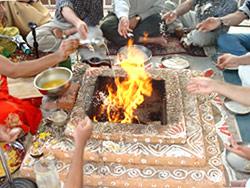
YAGNA, A VEDIC RITUAL OF SACRIFICE-‘HOTREE’ OR ‘YAGNA PERFORMER’ OFFERS ‘HAVIS’ TO FIRE (LORD AGNI)

THE UNIVERSE AS GOD’S BODY

The word ‘omnipresent’ is defined as present everywhere at the same time. The property of being present everywhere is one of the Divine attributes. In western theism it has attracted less attention and the idea of ‘omnipresence’ is explained in a bit unclear way. In Judeo-Christian, and Islamic Cultures, God is not immersed in the substance of creation even though He is able to interact with it as He chooses. They tend to the view that God is in “HEAVEN”, and that God is above and outside of all creation. They explain ‘omnipresence’ in terms of His ‘ESSENCE’ as He is present to all as the cause of their being, His ‘POWER’ as all things are subject to His power, and His ‘KNOWLEDGE’ as He constantly watches all that goes on in the world and all things are bare and open to His eyes and hence He is naturally present in every aspect of the natural order. Whereas Indian thinkers tend to believe that a thing is said to be substantially or essentially in that place in which its substance is. Hence, people in the Land of India traditionally hold the view that God is related to the universe as though it is His body. The entire creation is seen as a manifestation of the Supreme Person. The theory of transcendent(exists apart from material universe) and immanent(actually present throughout the material universe)’omnipresence’ explains the meaning of the word ‘BRAHMAN’, the Ultimate Reality. Indian people reflect this belief in their worship of creation, and the idea that God is immersed in the substance of His creation could be recognized as a core value, the foundation upon which the Cultural traditions of India are established over thousands of years of their continued existence. The rituals of temple worship and the Vedic rituals of Yagna always include aspects of Worship of Creation and the Scriptures reveal that the Gods also Worship Creation to the same extent and the Indian way of life could be stated as a quest for unity with the Divine.

A HYMN TO SEEK PROTECTION FROM THE CREATOR

Yaa srushti srashtu raadyaa vahiti vidhihutam, yaa havi ryaacha hotree

Ye dvey kaalam vidhatta, sruti vishaya gunaa, Yaa sthithaa vyaapya viswavam

Yaa maa hu sarva bhuta prakriti riti, Ya Yaa praanina praanavanta

Pratyakshaabhi prasanna stanubhi ravatu Vastaabhi rashtaabhi reesa.

We seek the protection of God who physically manifests Himself with the eight bodies of

1. WATER- Lord VARUNA who was created prior to the creation of all other creation(of living entities).

2. FIRE- Lord Agni who receives ‘HAVIS’, the oblations or offerings given to God.

3. HOTREE- the person who is performing ‘YAGNA’, the Vedic ritual of sacrifice.

4. SUN- Lord Surya, the marker of day time.

5. MOON- Lord Chandra, the marker of night-time.

6. SKY- or ETHER which helps in the propagation of SOUND and is spread across the entire universe.

7.EARTH- Mother Earth, Goddess Bhu Devi, who bears the burden of harboring all living entities.

8. WIND- Lord VAYU who is the ‘Breath of life'(or PRANA) of all living entities that breathe.

THE FUNDAMENTAL RIGHT TO WORSHIP CREATION

The act of Creation Worship defines Indian Identity. All other Cultural Traditions that are existing in India proceed from this foundational principle. Indians seek their well-being, prosperity, happiness and eventually salvation through acts of worship. The foreign forces that occupied and ruled India tried hard to take away this Right to Worship as per our belief that God is immanent. We need to recognize the Right to Worship Creation as a Fundamental Right. Citizens while they are free to profess their religion , should not be free to ‘PROPAGATE’ a religion or idea which basically interferes with a Fundamental Right. No person could have a Fundamental Right to PROPAGATE at the expense of denying and devaluing other core values. To that extent, we should seek an amendment to PART III, Article 25 of the Constitution of India which deals with Freedom of Religion. The Constitution of India must recognize the Worship of Creation as a Foundational Principle of the Land of India and hence should be considered a Fundamental Right and should prohibit PROPAGATION of religion which infringes upon this Core Value. Such an amendment is vital to defend the Freedom of Religion as religious doctrines of Islam and Christianity are opposed to the idea of divinity of all created objects. These religious faiths divide humanity into two categories; the believers, and the non-believers. They also further express the claim that they possess a divine sanction to punish or modify the beliefs of the non-believers. In the global community, the adherents of Hindu religious faith are only a minority and they need special protection to defend the Right to Freedom of Religion. 

Whole Dude – Whole Worship: The Lord God or the Principal Presiding deity at Malibu Hindu Temple is known as Lord Venkateshwara who represents the physical manifestation of the Supreme Being, Lord Vishnu in the material realm. Since the LORD is present in this terrestrial realm, He knows the Brahman Spirit that is in Prison.

Whole Dude – Whole Brahmin

The West Meets the East – Meet the White American Brahmin

Bharat Darshan – The West Meets the East-Meet the White American Brahmin.

Colonel Henry Steel Olcott (Born. August 2, 1832,Orange, N.J. U.S.A., Died. February 17, 1907, Adyar, Madras (Chennai), India.

Bharat Darshan – The West Meets the East-Meet the White American Brahmin.

“OH, East is East, and West is West,

And never the twain shall meet.

Till Earth and Sky stand presently at

God’s Great Judgment Seat.”

(Rudyard Kipling, English poet, novelist, Nobel Prize winner)

The West Meets the East – The East – West Confluence:

Bharat Darshan – The West Meets the East. Meet the White American Brahmin. Helena Petrovna Blavatsky and Colonel Henry Steel Olcott founded the Theosophical Society and established its headquarters at Adyar, Madras, Chennai .

Colonel Henry Steel Olcott, an American lawyer and philosopher founded the Theosophical Society in New York City in 1875 along with Russian-born religious mystic Helena Petrovna Blavatsky, William Judge and others. He became the first president of the Theosophical Society. In 1878 he and Blavatsky visited India. The two settled there in 1879 and in 1882 established the permanent headquarters of the Theosophical Society at Adyar, Madras. Theosophy incorporates aspects of Buddhism, Hinduism and Christian esotericism. His acceptance by and influence on the Buddhists was far reaching. Identified with Eastern philosophical thought, he also helped revive Hindu philosophy. A Pandit conferred on him the sacred thread of the Brahmin caste.

Olcott dedicated his energies to fraternal understanding and the search for truth. He referred to theosophists as “original searchers after spiritual knowledge”. In his farewell message he expressed the wish ” to impress on all men on earth that ‘there is no religion higher than Truth’ and that in the Brotherhood of Religions lies the peace and progress of humanity.”

Upon his death at Adyar, Madras, India in 1907, Olcott was succeeded as president by Ms. Annie Besant, a social reformer and Indian independence leader. She visited my home town Rajahmundry twice and established ‘Divya Gjyan Samaj'(Divine Wisdom Assembly) building at Alcot Gardens. The teachings of the Theosophical Society emphasized human service, a spiritual evolutionism and the role of suprahuman masters of Wisdom (“ADEPTS”).

The natives of my home town Rajahmundry still honour the memory of Colonel Olcott. The residential community of ‘Alcot Gardens’ derives its name from “Olcott”. (Kindly review the comment posted .)

Dr. R. Rudra Narasimham, B.Sc., M.B.B.S.,

Danavaipeta Municipal High School, Rajahmundry, East Godavari District, Andhra Pradesh, India,

S.S.L.C.,  Class  of  March, 1961.

THE WEST MEETS THE EAST. MEET THE WHITE AMERICAN BRAHMIN. ANNIE BESANT – ANGEL OF INDIA .