THE DALAI LAMA AND XI JINPING MEETING IN NEW DELHI
In my analysis, the proposed meeting between the Dalai Lama and Xi Jinping in New Delhi in 2014 never happened as the meeting was not approved by the United States. I ask my readers to know that the asylum granted to the Dalai Lama was fully approved by the United States with certain terms and conditions. He is not entirely free to make political decisions without the approval of the United States and India.
Dalai Lama Exclusive: Chinese President Had Agreed To Meet Me In Delhi
Book Excerpt | Sonia Singh | Updated: May 15, 2019 14:35 IST
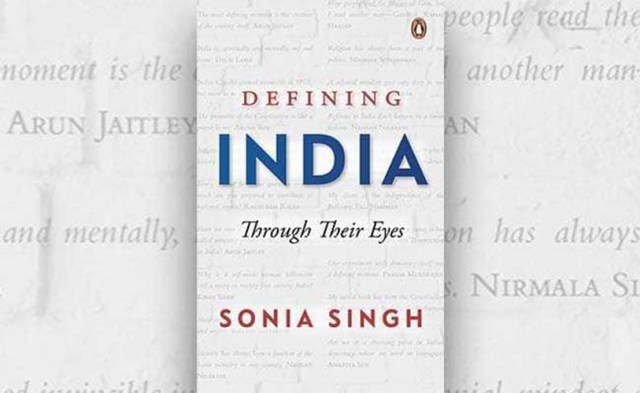
Cover of Sonia Singh’s book ‘Defining India: Through Their Eyes’
The Dalai Lama, Tibet’s spiritual leader in exile has been in India for the last 60 years, his very existence remaining an irritant to China which has often publicly denounced him as an Enemy. Yet, in this rare conversation for her book, ‘Defining India’, the Dalai Lama told Sonia Singh, that he had reached out to China for a meeting with President Xi during his visit to Delhi in 2014…and surprisingly China had agreed. India however intervened and the meeting didn’t happen. Here’s an excerpt from the book.
Prime ministers will change but it’s clear that India has always walked a very careful tightrope with China on the Tibet question. ‘Prime Minister Modi has looked at redefining India’s relationship with China and you have enjoyed greater visibility under his government with your visit to Arunachal Pradesh and the Tawang monastery. Yet, “thank you” celebrations to mark your sixty years in India had to be shifted from Delhi to Dharamshala to avoid angering the Chinese. How has dealing with Prime Minister Modi been?’ I ask.
‘Awkward,’ says the Dalai Lama wryly, then adding, ‘And it’s only natural, understandable. The China-India relationship is very important. When the Doklam problem happened [in 2017, China tried to build a road in Doklam, a stretch in Bhutan bordering India and China, to which India and Bhutan objected, resulting in a standoff], the media asked me about my beliefs and I told them that these were minor; neither India nor China want to destroy one another-we have to live side by side. The ultimate goal should be “Hindi-Chini bhai-bhai!” That is the only realistic way.
‘So, naturally Prime Minister Modi is concerned about good relations with China. I actually know him very well. When he was the chief minister of Gujarat, the state found an ancient Buddhist monastery and as chief minister, Mr. Modi invited me to a function for this. Besides the official meeting, he also came to see me at my hotel. We have very good relations. He is quite an active Indian prime minister, continuously visiting many countries. That, I admire at his age.’
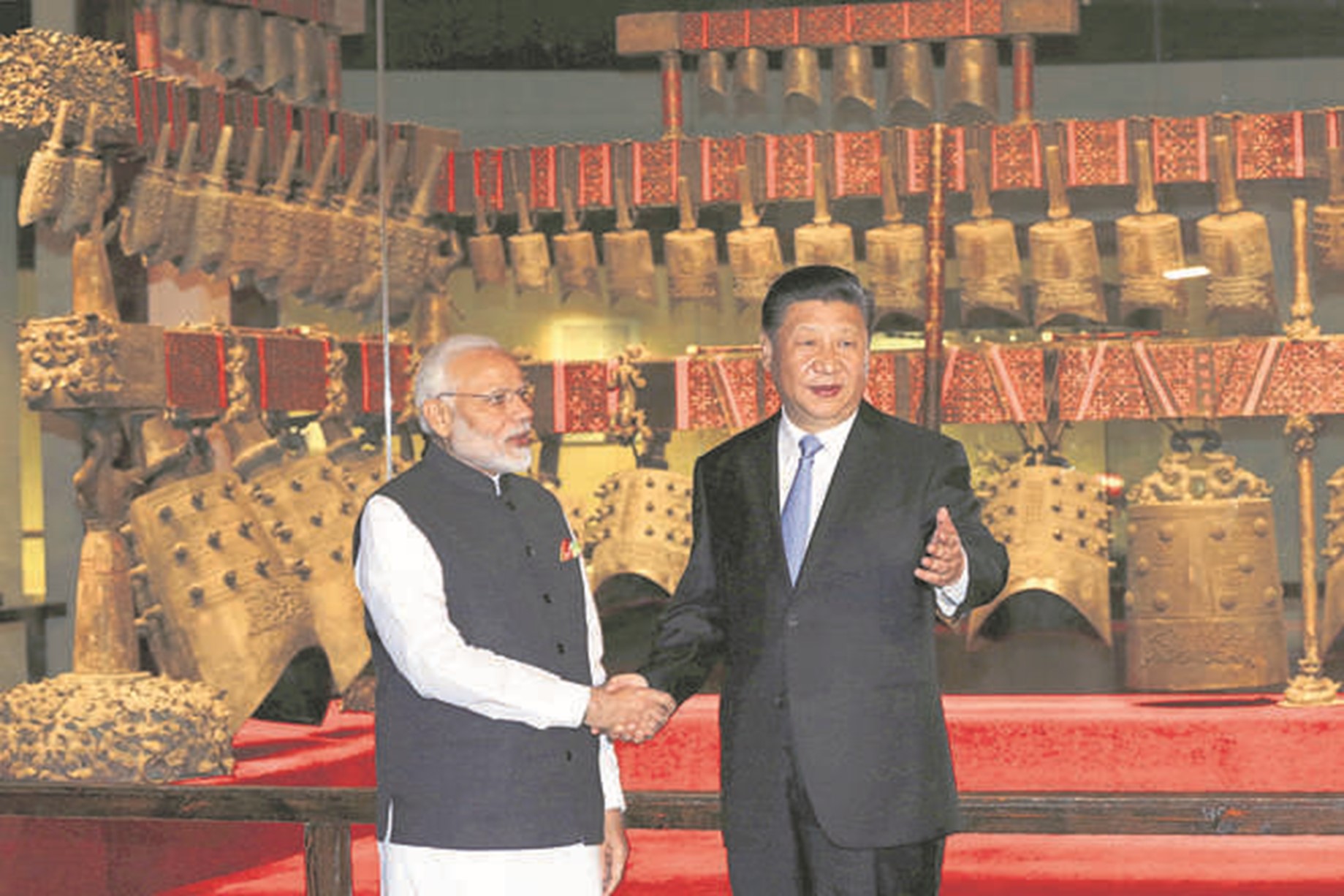
And it is then as we talk of the prime minister that the Dalai Lama drops his political bombshell. ‘In 2014, when Chinese President Xi Jinping visited Delhi for talks with Prime Minister Modi, I requested a meeting with him. President Xi Jinping agreed, but the Indian government was cautious about the meeting, so it didn’t happen.’
Just like the historic moment between the heads of North Korea and South Korea in 2018, this could have been a meeting that had the promise to change the course of China-Tibet relations, especially as there have been reports that there are informal contacts between both sides. President Xi is said to have a close knowledge of Buddhism through his father who headed the Communist Party’s religious work in 1980. During his stint as a young provincial officer as well in 1982, Xi Jinping was posted in Zhengding, China where he backed a Buddhist monk’s efforts to rebuild the famous Linji Temple and has asked workers to study the partnership between party and religion. In 2014, in a speech in Delhi, the Dalai Lama had said that President Xi was the first Chinese leader to publicly say that Buddhism had a role to play in the preservation of Chinese culture.
However, a meeting between the Dalai Lama and President Xi could have also been used as a propaganda tool by the Chinese to outwit both India and the Dalai Lama, who is seen by some foreign policy strategists as India’s trump card against the Chinese. It’s not surprising then that the request for the meeting must have sent the ministry of external affairs into a spin leading to a denial of the request.
Excerpted with permission of Penguin India from ‘Defining India: Through Their Eyes’ by Sonia Singh. Order your copy here.
COMMENT
Disclaimer: The author and publisher of the book are responsible for the contents of the excerpt and the book. NDTV shall not be responsible or liable for any defamation, intellectual property infringement, plagiarism or any other legal or contractual violation by the excerpt or the book.
THE MOST UNFORGETTABLE WEEK IN US HISTORY – FEBRUARY 21-27, 1972
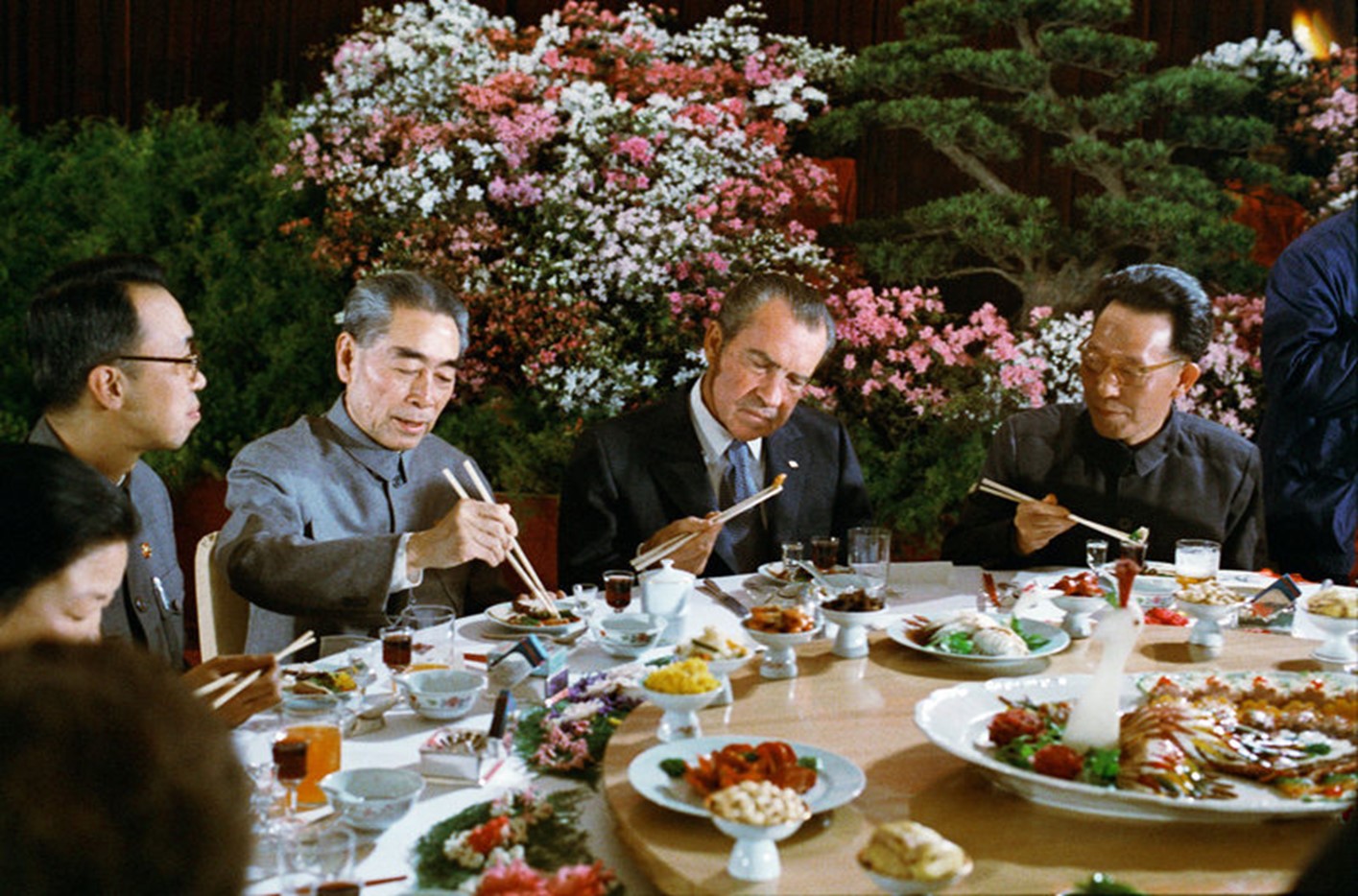
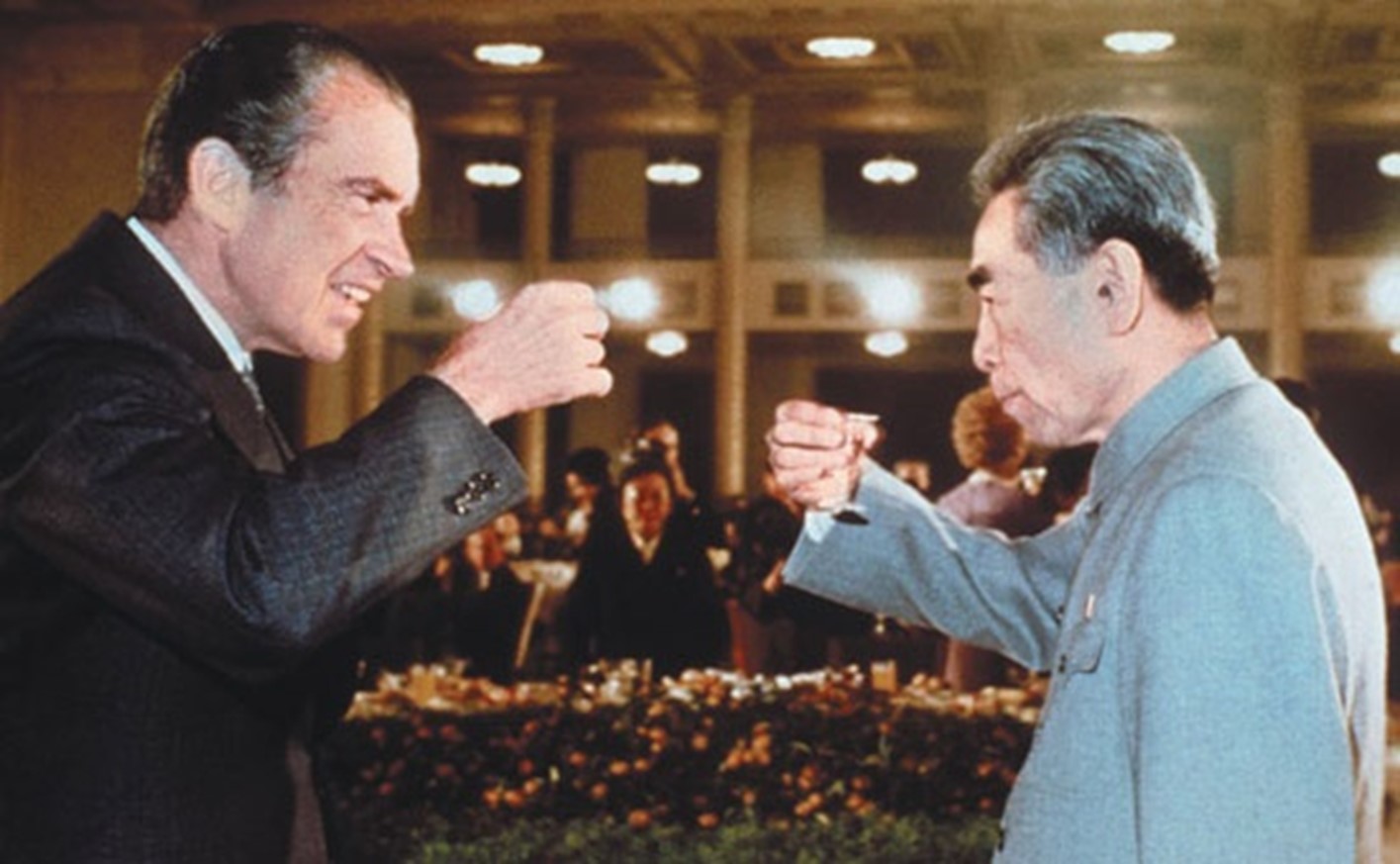
While the US troops fight the biggest battle on February 25, 1972, near Saigon in Vietnam, the US President Richard Nixon spent time in Peking befriending the adversary, giving care and comfort to the Enemy while Americans bled on the battlefield.
Rudranarasimham Rebbapragada
SPECIAL FRONTIER FORCE
U.S. troops fight the biggest battle in nearly a year – HISTORY
U.S. troops clash with North Vietnamese forces in a major battle 42 miles east of Saigon, the biggest single U.S. engagement with an enemy force in nearly a year. The five-hour action around a communist bunker line resulted in four dead and 47 wounded, almost half the U.S. weekly casualties.
China ‘Resolutely Opposes’ the US-Tibet Relations.
In my analysis, the ‘Tibet Crisis’ began with the Communist takeover of mainland China in 1949. Communist Party Chairman Mao Zedong took the blessings of the Soviet Union to launch a military attack on Tibet for China wanted to resolutely oppose the US-Tibet relations formulated by the US President Franklin D. Roosevelt.
China ‘Resolutely Opposes’ the US-Tibet Relations.
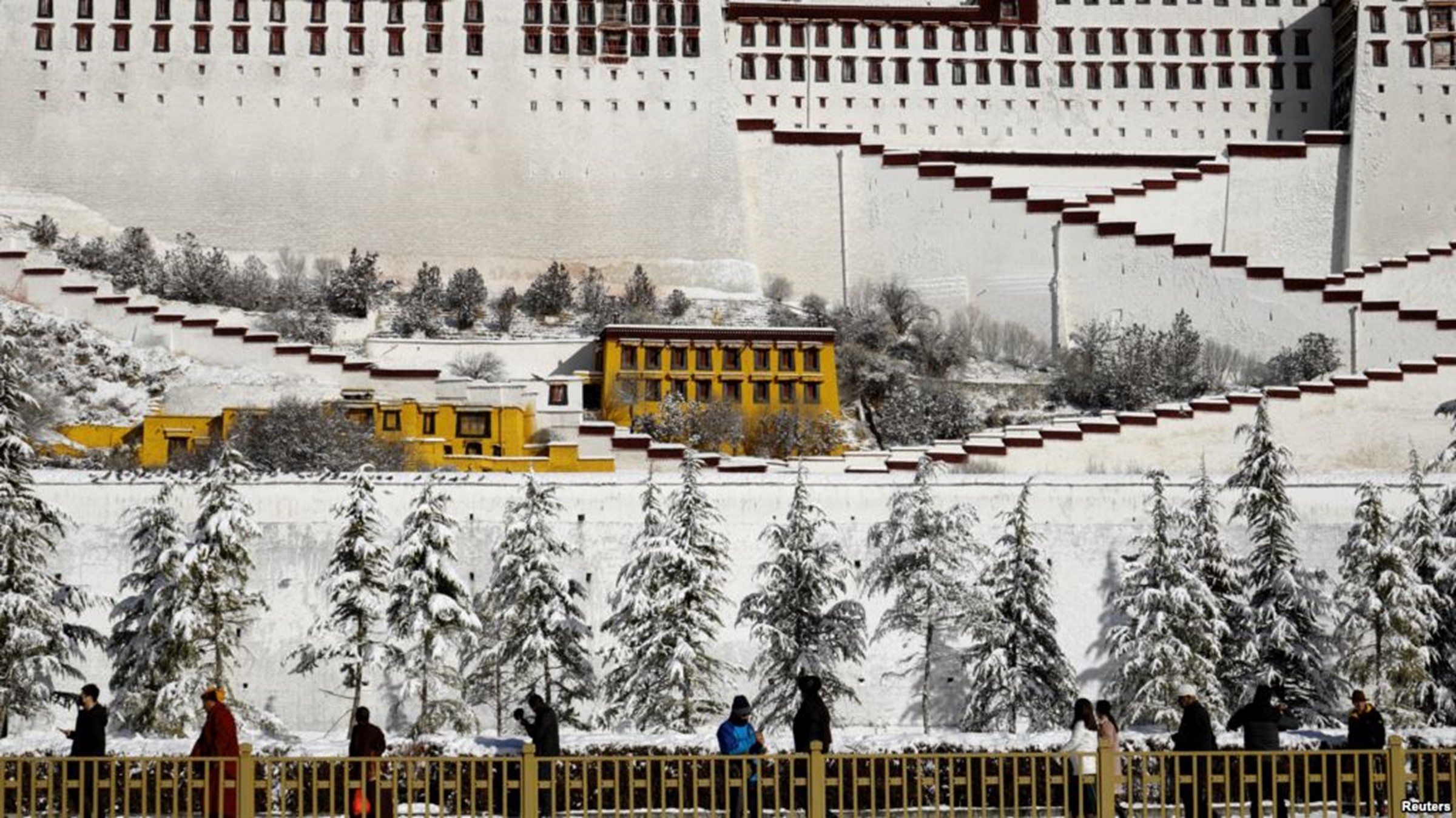
People walk past snow-covered trees outside the Potala Palace in Lhasa, Tibet Autonomous Region, China, Dec. 19, 2018.
BEIJING —
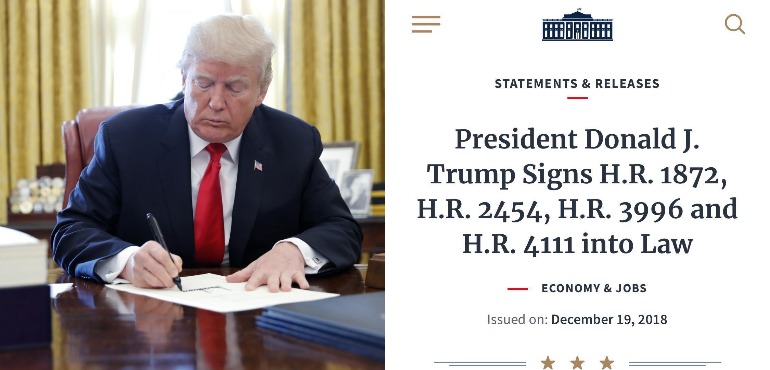
President Trump signs Reciprocal Access to Tibet into Law: “A Message of hope and justice to Tibetans in Tibet….”
China ‘Resolutely Opposes’ the US-Tibet Relations.
China ‘Resolutely Opposes’ the US-Tibet Relations.
China ‘Resolutely Opposes’ the US-Tibet Relations.
Lobsang Sangay @Drlobsangsangay Following @Drlobsangsangay
I extend profound appreciation to the President Donald Trump for signing the Reciprocal Access to Tibet Act into law,” CTA President said.
Dharamshala: US President Donald Trump has signed into law the Reciprocal Access to Tibet Act of 2018, which will impose a visa ban on Chinese officials who deny American citizens, government… tibet.net
China denounced the United States on Thursday for passing a new law on restive Tibet, saying it was “resolutely opposed” to the U.S. legislation on what China considers an internal affair, and it risked causing “serious harm” to their relations.
U.S. President Donald Trump on Wednesday signed into law the Reciprocal Access to Tibet Act.
The law seeks to promote access to Tibet for U.S. diplomats and other officials, journalists and other citizens by denying U.S. entry for Chinese officials deemed responsible for restricting access to Tibet.
Beijing sent troops into remote, mountainous Tibet in 1950 in what it officially terms a peaceful liberation and has ruled there with an iron fist ever since.
China: wrong signals
Chinese foreign ministry spokeswoman Hua Chunying told a daily briefing that the law “sent seriously wrong signals to Tibetan separatist elements,” as well as threatening to worsen bilateral ties strained by trade tension and other issues.
“If the United States implements this law, it will cause serious harm to China-U.S. relations and to the cooperation in important areas between the two countries,” Hua said.
The United States should be fully aware of the high sensitivity of the Tibet issue and should stop its interference, otherwise the United States would have to accept responsibility for the consequences, she added, without elaborating.
Difficult life in Tibet
Rights groups say the situation for ethnic Tibetans inside what China calls the Tibet Autonomous Region remains extremely difficult. The U.N. High Commissioner for Human Rights said in June conditions were “fast deteriorating” in Tibet.
All foreigners need special permission to enter Tibet, which is generally granted to tourists, who are allowed to go on often tightly monitored tours, but very infrequently to foreign diplomats and journalists.
Hua said Tibet was open to foreign visitors, as shown by the 40,000 American visitors to the region since 2015.
At the same time, she said it was “absolutely necessary and understandable” that the government-administered controls on the entry of foreigners given “local geographic and climate reasons.”
Rights groups welcome law
Tibetan rights groups have welcomed the U.S. legislation. The International Campaign for Tibet said the “impactful and innovative” law marked a “new era of American support” and was a challenge to China’s policies in Tibet.
“The U.S. let Beijing know that its officials will face real consequences for discriminating against Americans and Tibetans and has blazed a path for other countries to follow,” the group’s president, Matteo Mecacci, said in a statement.
Next year marks the sensitive 60th anniversary of the flight into exile in India of the Dalai Lama, the highest figure in Tibetan Buddhism, after a failed uprising against Chinese rule.
China routinely denounces him as a dangerous separatist, although the Dalai Lama says he merely wants genuine autonomy for his homeland.
China ‘Resolutely Opposes’ the US-Tibet Relations.
In my analysis, India and Tibet are connected with each other because of the practices associated with The Sanatana Dharma, even long before the birth of Gautama Buddha.
Sanatana Dharma, in Hinduism, term used to denote the eternal or absolute set of duties or religiously ordained practices incumbent upon all Hindus, regardless of class, caste, or sect. Different texts give different lists of the duties, but in general sanatana dharma consists of virtues such as honesty, refraining from injuring living beings, purity, goodwill, mercy, patience, forbearance, self-restraint, generosity, and asceticism. Sanatana dharma is contrasted with svadharma, ones own duty or the particular duties enjoined upon an individual according to his or her class or caste and stage of life. The potential for conflict between the two types of dharma (e.g., between the particular duties of a warrior and the general injunction to practice non-injury) is addressed in Hindu texts such as the Bhagavad Gt, where it is said that in such cases svadharma must prevail.
The term has also more recently been used by Hindu leaders, reformers, and nationalists to refer to Hinduism as a unified world religion. Sanatana dharma has thus become a synonym for the eternal truth and teachings of Hinduism, the latter conceived of as not only transcendent of history and unchanging but also as indivisible and ultimately nonsectarian.
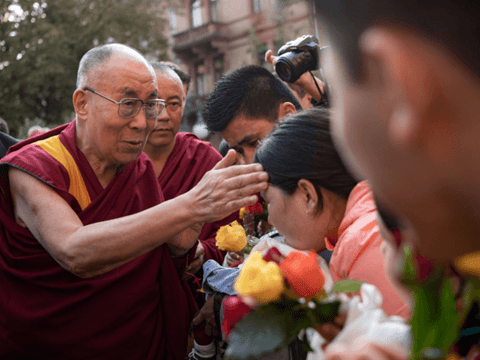
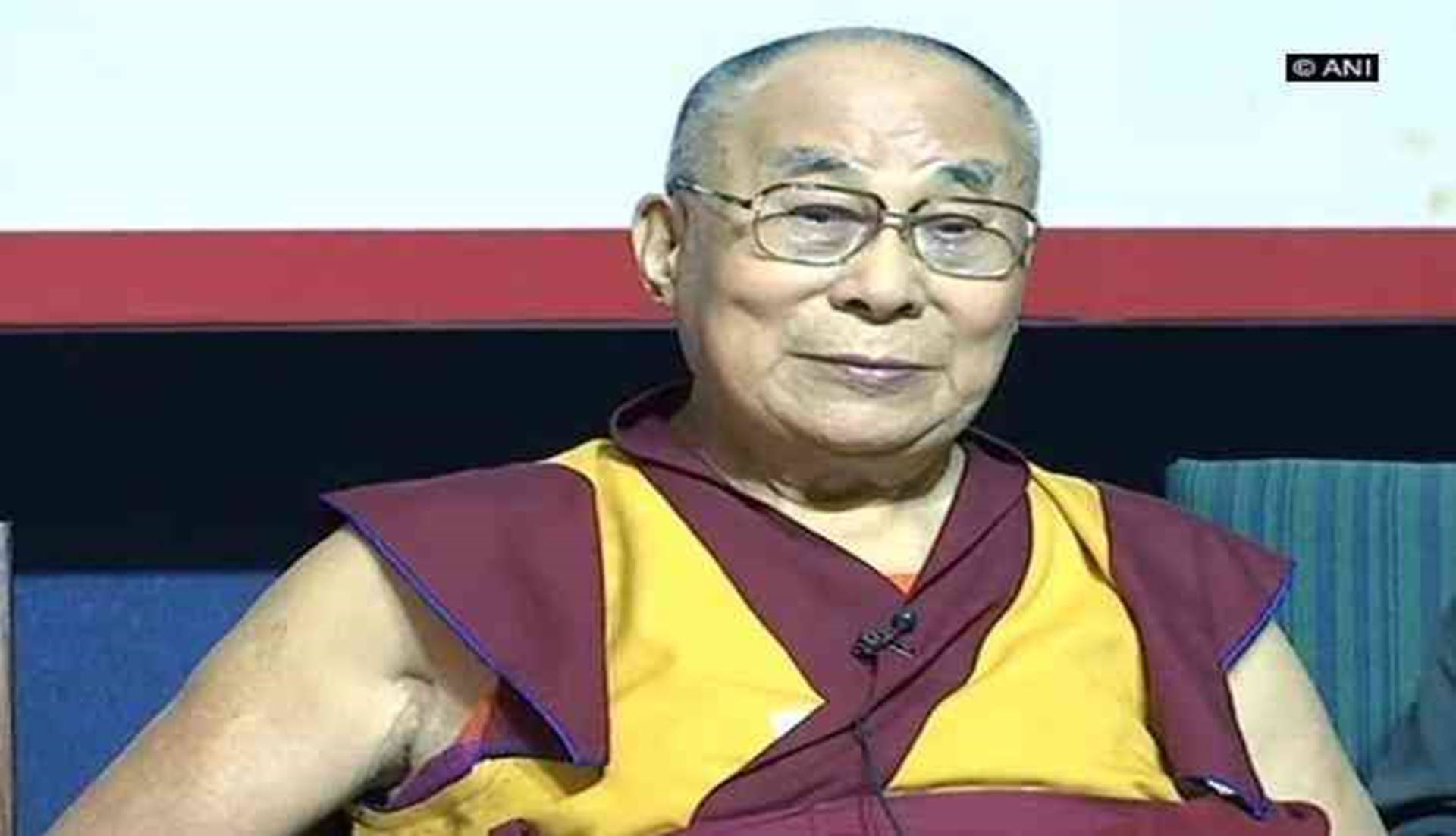
Tibetan spiritual leader the Dalai Lama on Thursday said that he is the son of India, both physically and mentally.
Speaking at ‘Silver Lecture Series’ function of Mumbai’s Guru Nanak College of Arts, Science and Commerce, the Dalai Lama said: "Media from China and America asked what makes me a son of India. I answered that my brain is filled with thoughts of Nalanda and this physical body survived on India’s dal, chapati and dosa. So both physically and mentally I am from this country, that’s how I’m a son of India."
He said that according to Tibetan religion, all human beings are created by God. "Today, we have created a lot of problems on our own including greed and exploitation," he added.
The 83-year-old also asserted that everyone’s rights and desires should be respected.
The Tibetan spiritual leader, who is on a three-day visit to the city, is expected to address students on December 14 during the 22nd TechFest 2018 at the Indian Institute of Technology Bombay.
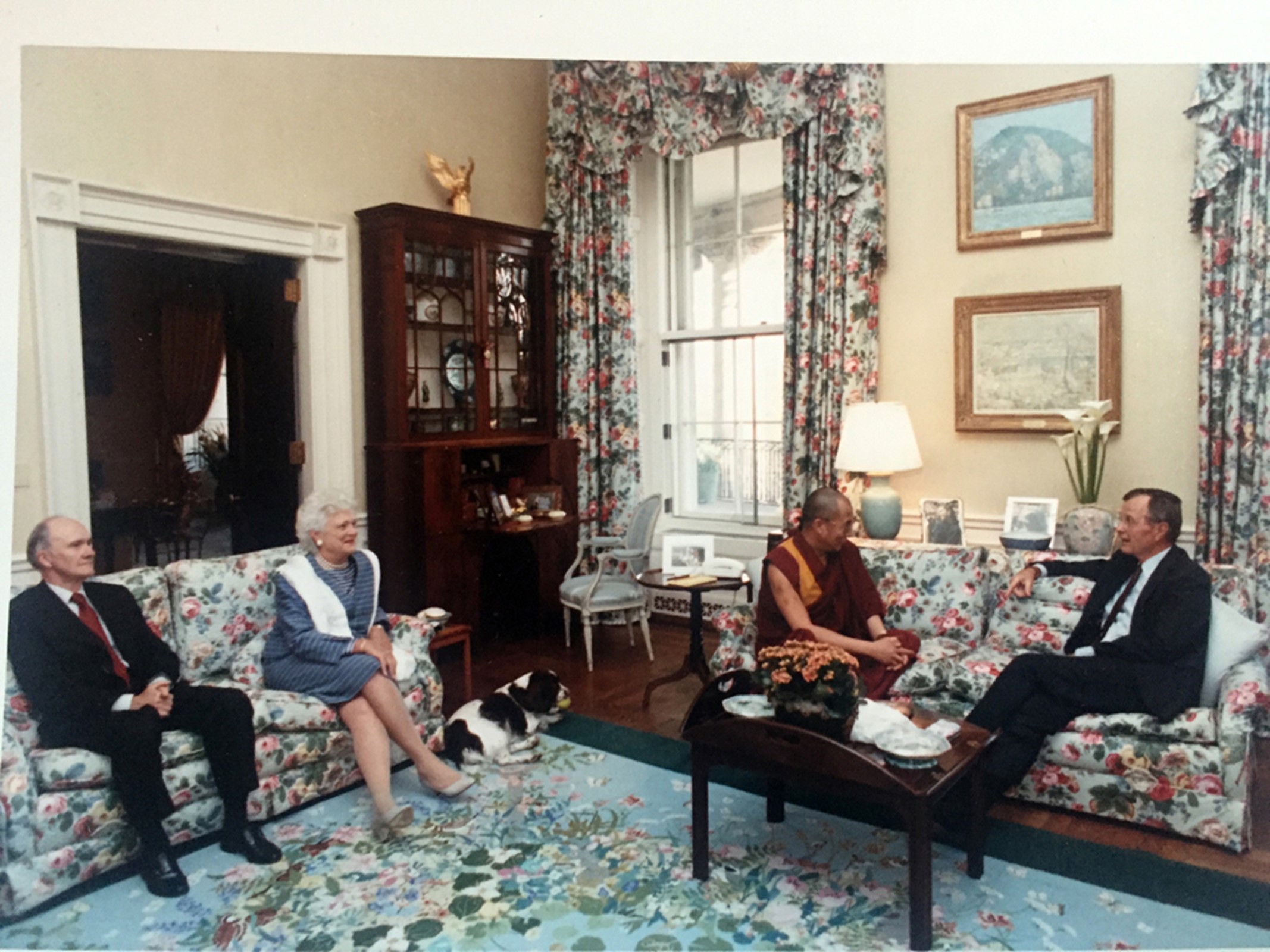
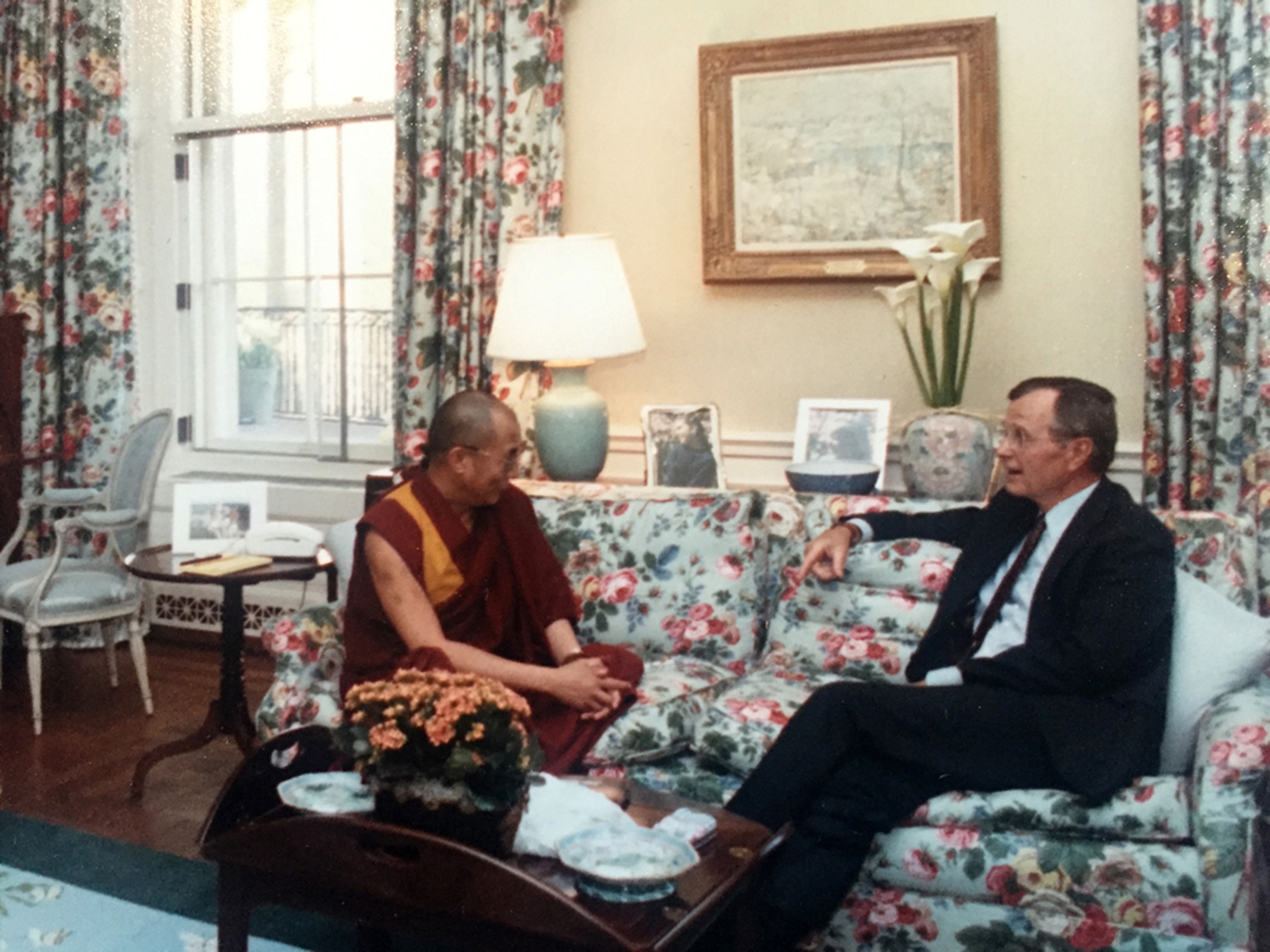
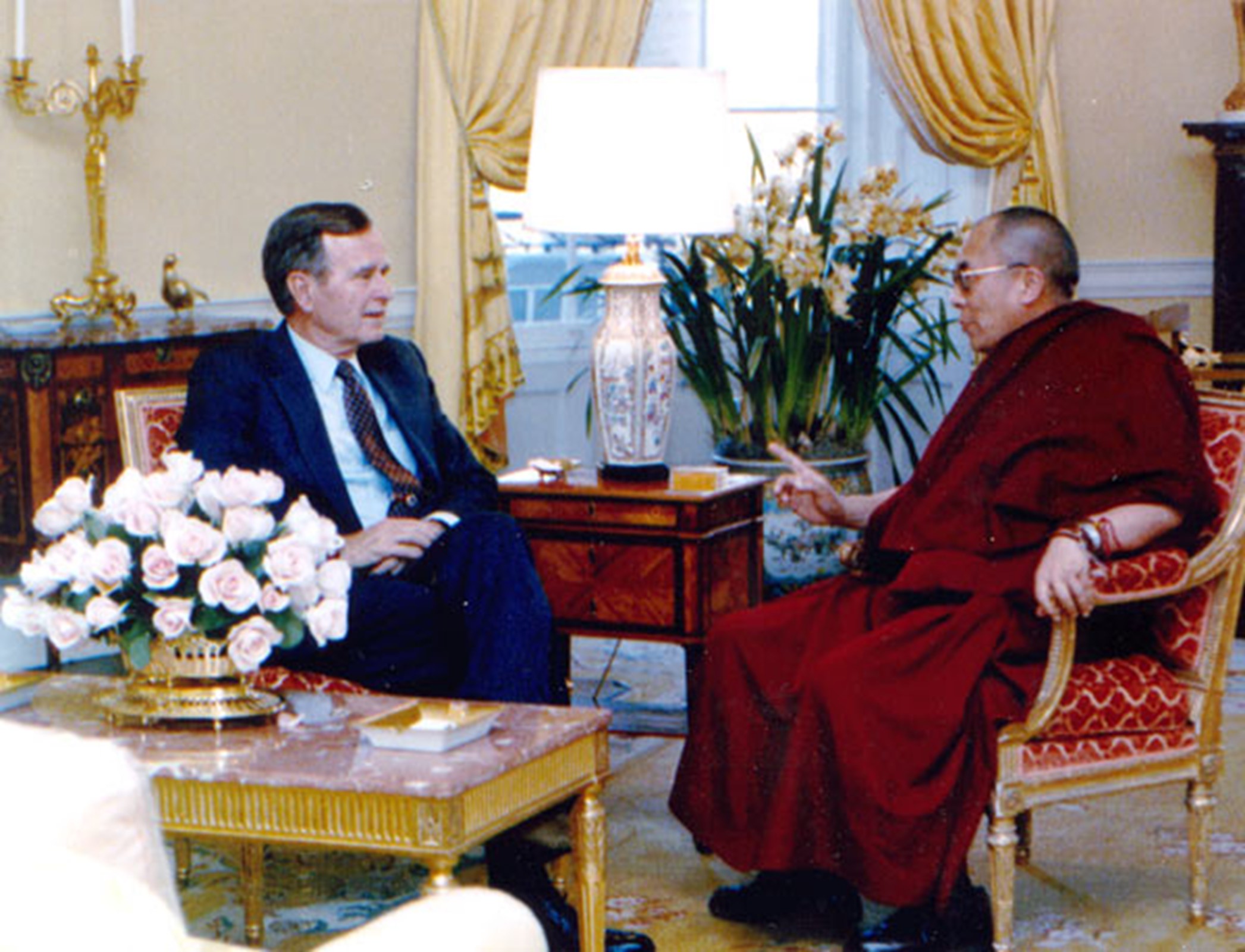
“It was the year when George HW Bush took a stance against China’s repressive religious policy after he became the first-ever US President to receive the Dalai Lama officially at the White House.”
Time to tell an old Tibet Story. The time when George H.W. Bush officially received the Dalai Lama at The White House.
In my analysis, the time has come to share an old Tibet story. I am happy to tell about the meeting between His Holiness the 14th Dalai Lama and the US President George Herbert Walker Bush in the White House.
Time for an old Tibet Story. Time when George H.W. Bush officially received the Dalai Lama at The White House.
A New start: China certainly requires India’s support to resolve the issue in its favor. Perhaps, the Wuhan meet was just about that!
P Stobdan
FORMER AMBASSADOR
At a recent academic presentation at Tibetology Research Centre, Beijing, Chinese experts on Tibet said when Deng Xiaoping was seeking an accommodation in Tibet in the 1980s, the Dalai Lama was exploring other options in the West to play mischief against China. On his part, Tibet expert Xiaobin Wang claimed that the most belligerent attempt at confronting China came from the Dalai Lama immediately after the dramatic collapse of the Soviet Union in 1991. It was the year when George HW Bush took a stance against China’s repressive religious policy after he became the first-ever US President to receive the Dalai Lama officially at the White House.
The Tibetan spiritual leader was perhaps prompted to believe that the mightiest of empires could be pulled down by shared power of religion. Whether or not such assessments are accurate, there was no doubting the Dalai Lama’s optimism about a Soviet spinoff effect to either opt for a ‘political process’ or face ‘bloody political struggles’ as he also decided to drop the dialogue path.
The US Tibet Policy Act Bill (2001) and Congressional gold medal to the Dalai Lama (2007) ensued worst riots across the plateau in 2008.
Wang insinuated how the West fostered the Dalai Lama to become a potent force and an icon of resistance against China to wage a psychic war against the Communist regime. China’s vitriol against the Dalai Lama as an ‘evil separatist’ never stopped until Xi Jinping came to power in 2013. But the dialogue interrupted in 2010 has never been resumed.
Tibet’s history and polity is rooted in China’s ritualistic order that can’t be changed, Wang asserted. The confusion arose after the British Empire (through eight key conventions between 1876 and 1914) tried to alter Tibet’s status, from a territory of China to a de facto independent nation.
The Dalai Lama’s ‘middle way’ policy is an attempt at regaining a ‘suzerainty’ status like ‘trying to change the liquid, but not the drug’, the Chinese said.
The briefing was a part of the rare trip to Ganzi Tibetan Autonomous Prefecture organized by China’s foreign ministry to showcase China’s achievements in Tibet. Ganzi (thrice the size of Punjab) proved its economic vitality: the middle-class population here drew income from hydropower, geothermal, mining and tourism. The world’s largest methyl card lithium ore reserve is found here. Its agro-products directly go to Hong Kong, to cite few examples.
One could feel the churning — ethnic Chinese own shops everywhere. Tibetans are moving towards Chengdu to buy properties. Most Tibetans were discreet in making political comments. A lama in Xiede town said Xi was revered as lingxiu (wise man) and people are ‘very respectful of Xi’.
Asked discreetly why they were not inviting the Dalai Lama back, the reply invariably was ‘why should we invite him, he left the country by himself!’ Any prospect of his return would be resisted by the power elite network; people are more interested in better living than risking uncertainty, an official said.
Obviously, China still suspects the Dalai Lama’s covert intention to split Tibet from China. It is wary of his ‘disruptive potentials’. It is not ready to risk the chaos ensuing upon his arrival. ‘Tibet is an outlying region and its vulnerabilities could be exploited by anti-China forces,’ noted an official in Khanding.
Yet, I felt, he is still revered as a ‘god-king’ by Tibetan folks, though this question was met with polite reticence by local Tibetan officials. Nobody I spoke to in Ganzi and Beijing thought reconciliation is coming anytime soon. No radical policy change is visible though more and more ordinary Chinese are seemingly getting drawn towards Tibetan Buddhism. I was amazed by the area’s development and natural beauty. But as for the political takeaways, a bit of self-censorship in observation is needed, not only to avoid blocking access by China, but also to be careful to not hurt Tibetan sentiments about narrating China’s ‘Tibet story’.
On the downside, despite China’s high development achievements, some unsettling elements could be felt. The situation concealed as much as it revealed. I could understand the Tibetan obsession for an epistemological and metaphysical-driven life, but failed to figure out why, as practitioners of the most erudite Buddhist philosophy like the Indians, Japanese, Koreans, Chinese and others, they fail in adopting the transformative changes.
Perhaps, the greatest challenge before the younger Tibetan masters should include: firstly, to recognize the hard-geopolitical reality; secondly, to employ their brand of Buddhism as a bridge to find a common ground; and thirdly, to catalyze Buddhism for bringing about a transformative change in Tibet.
After all, Asian societies have succeeded in spurring an enduring socio-economic change this way.
As for India, the Tibet issue seems no longer a crucial sticking point in its relationship with China. But China requires India’s support if the issue is to be resolved in its favor. Probably, the Wuhan process was just about that!
The visit has given rise to the idea that it is now time for India to normalize its traditional trade and cultural ties with Tibet that should include reopening of an Indian Consulate in Lhasa. Equally apt to find ways to send high Tibetan lamas back to Tibet if the fruits of investments made by India on them for such a long time are to be reaped fully.
Time for an old Tibet Story. Time when George H.W. Bush officially received the Dalai Lama at The White House.
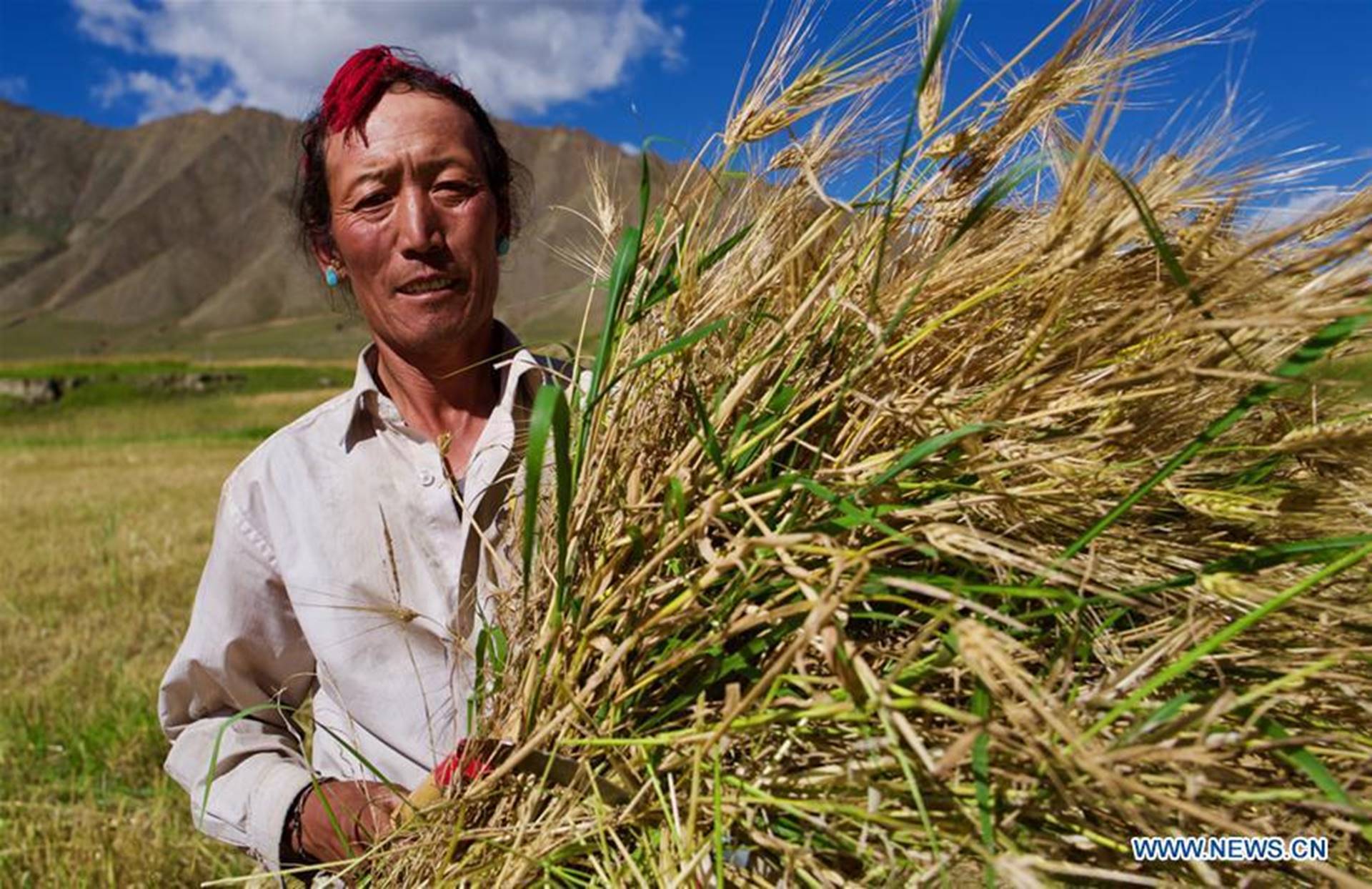
A farmer inspects highland barley in Lhaze County of Xigaze,Tibet, Sept. 13, 2018. The highland barley in Tibet is entering harvest season. (Xinhua/Purbu Zhaxi)
A farmer harvests highland barley in Lhaze County of Xigaze,Tibet, Sept. 13, 2018. The highland barley in Tibet is entering harvest season. (Xinhua/Purbu Zhaxi)
Aerial photo shows farmers reaping highland barley in Lhaze County of Xigaze,Tibet, Sept. 13, 2018. The highland barley in Tibet is entering harvest season. (Xinhua/Purbu Zhaxi)
A farmer harvests highland barley in Caina Township in Quxu County of Lhasa,Tibet, Sept. 16, 2018. The highland barley in Tibet is entering harvest season. (Xinhua/Purbu Zhaxi)
A farmer reaps highland barley in Lhunzhub County of Lhasa, Tibet, Sept. 3, 2018. The highland barley in Tibet is entering harvest season. (Xinhua/Purbu Zhaxi)
Farmers reap highland barley in Lhunzhub County of Lhasa, Tibet, Sept. 3, 2018. The highland barley in Tibet is entering harvest season. (Xinhua/Purbu Zhaxi)
Aerial photo shows highland barley fields in Nagarze Town in Nagarze County of Shannan, Tibet, Sept. 13, 2018. The highland barley in Tibet is entering harvest season. (Xinhua/Purbu Zhaxi)
NATIONAL SECURITY BILL FOR TIBET – GOD HAS A PLAN FOR TIBET
August 10, 1949. National Security Bill for Tibet. God has a Plan for Tibet. In the absence of National Security Plan or Strategy, Tibet has become dependent upon The US National Security Bill and its execution by different US Administrations.
On August 10, 1949, the US President Harry Truman signed The National Security Bill creating The Department of Defense to prepare the United States for Cold War as containment of Communist Expansionism requires a complex strategy.
Tibet declared full independence on February 13, 1913, taking advantage of the downfall of the Qing Dynasty or Ch’ing, or Manchu Chinese Empire during 1911-1912.
Tibet never had a National Security Plan or Security Strategy to defend its existence. During 1948-49, Tibet experienced the first major threat to existence with the spread of Communism to mainland China during World War II. It is no surprise to find Tibetans unprepared. In the absence of National Security Plan or Strategy, Tibet has become dependent upon The US National Security Bill and its execution by different US Administrations.
Tibetans are very fearful of Chinese people as Chinese ruled over Tibet with the utmost brutality, unlike the Mongols who had earlier ruled over Tibet for a long time. Tibetans are not concerned about the political ideology of Chinese people. Tibetans are simply afraid of the Chinese race known for their arrogance and unjustified use of power to subjugate innocent, undefended Tibetan people.
August 10, 1949. National Security Bill for Tibet. God has a Plan for Tibet. For Tibet has no Security Plan or Strategy, Tibet has become dependent upon the US National Security Bill and its execution by different US Administrations.
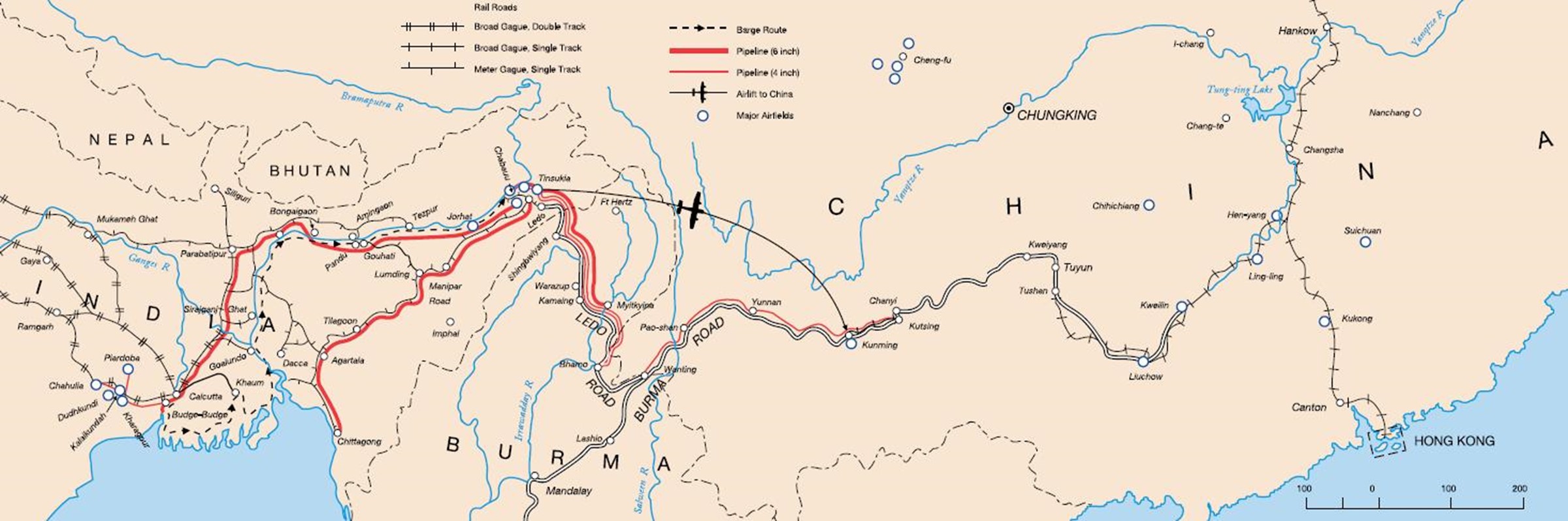
Living Tibetan Spirits trace their American Support from the period of Hump Airlift Operations from April 1942 to November 1945 in China Burma India Theater (CBI) of World War II. While the British fought against the Japanese invasion of Burma, the US worked to extend support to Nationalist forces engaged in bitter Civil War to oppose the Communist takeover of mainland China. Apart from the use of Tibetan airspace, some Hump Airlift Operations delivered weapons and ammunition to Tibet.
For both Tibet and India have no Security Plan or Strategy to defend Tibet from military conquest, they used the opportunity provided by the US President Harry Truman who signed The National Security Bill with plans to fight against Communist Expansionism.
Tibet, India, and the United States agreed to work together in support of the US Plan to contain the spread of Communism. But, as we have seen, it is not good enough. In fact, Communist China consolidated her tight grip over Tibet.
August 10, 1949. National Security Bill for Tibet. God has a Plan for Tibet. In the absence of National Security Plan or Strategy, Tibet has become dependent upon The US National Security Bill and its execution by different US Administrations.
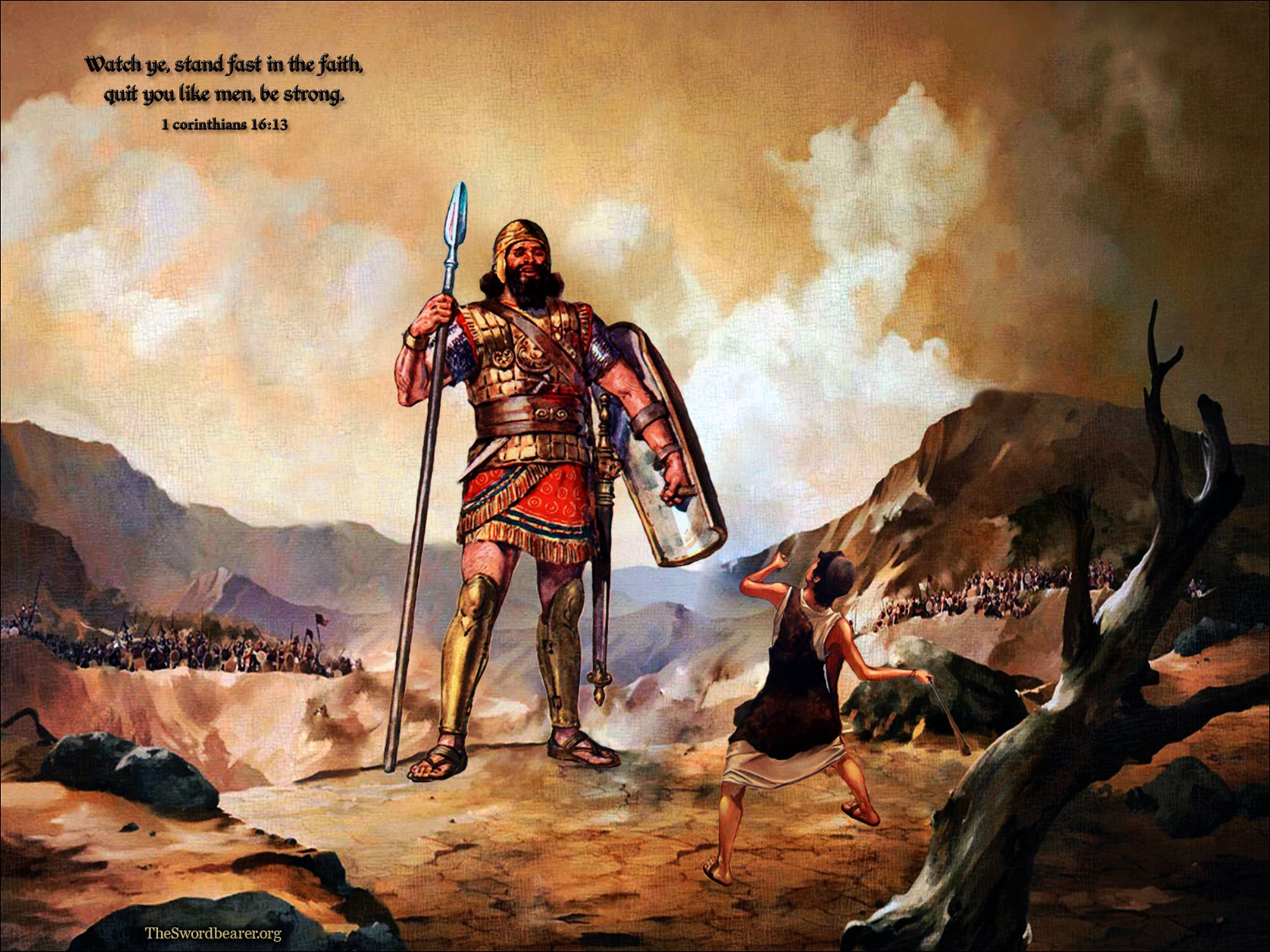
For countries of the World have no Security Plan for Tibet, I asked God for His Security Plan for Tibet. God referred me to the story of David and Goliath described in The Old Testament Book, 1 SAMUEL, Chapter 17. God assures me that it takes only a single ‘Sling Shot’ to utterly defeat Tibet’s Enemy. Beijing’s Downfall is just a ‘Stone’s Throw Away’. I call God’s Plan as ‘The Sling Shot’ Option for Tibet’s Security.
President Harry S. Truman signs the National Security Bill, which establishes the Department of Defense. As the Cold War heated up, the Department of Defense became the cornerstone of America’s military effort to contain the expansion of communism.
In 1947, the National Security Act established the Cabinet-level position of secretary of defense, which oversaw a rather unwieldy umbrella military-defense agency known as the National Military Establishment. The secretary of defense, however, was just one of a number of military-related cabinet positions, including the pre-existing secretaries for the Army, Navy, and Air Force. The growing complexity of the Cold War, a war in which the mishandled application of military force could lead to a world war of cataclysmic proportions, convinced U.S. officials that the 1947 act needed to be revised.
In 1949, the National Security Bill streamlined the defense agencies of the U.S. government. The 1949 bill replaced the National Military Establishment with the Department of Defense. The bill also removed the cabinet-level status of the secretaries of the Army, Navy, and Air Force, who would henceforth be subordinate to the Secretary of Defense. The first person to hold this position was Louis Johnson. Finally, the bill provided for the office of chairman of the Joint Chiefs of Staff in an effort to bring to end to the inter-service bickering that had characterized the Joint Chiefs in recent years. World War II hero General Omar Bradley was appointed the first Chairman of the Joint Chiefs of Staff.
The National Security Bill of 1949 was the result of the realization that more coordination and efficiency were needed for America’s military-defense bureaucracy, which had experienced tremendous growth during and after World War II. The Cold War was a new and dangerous kind of war for America, and the 1949 reorganization was recognition of the need for a different approach to U.S. defense.
August 10, 1949. National Security Bill for Tibet. God has a Plan for Tibet. I describe God’s Plan as ‘The Sling Shot’ Option.
Foreign Relations of the United States. Status on Tibetan Operations.
On behalf of Living Tibetan Spirits, I can review the status on Tibetan Operations because of my lifetime affiliation with the military organization called Special Frontier Force. In my review of foreign relations of the United States, I conclude making amendments to the US policy which essentially aims to contain the threat of the spread of Communism to mainland China. 1. In the present times of ‘The Information Era’, there is no need for The Cold War Era of secret diplomacy and covert operations. Information is the most important tool to decide the outcome of the battle between Democracy and Communism. 2. The United States must seek Direct Dialogue with Tibet and Tibetan Institutions of Government and, 3. The United States must recognize Tibet as the third largest nation of Asia. This country because of its size and location is vital to the US interests to maintain The Balance of Power.
1. Summary—The CIA Tibetan program, parts of which were initiated in 1956 with the cognizance of the Committee, is based on U.S. Government commitments made to the Dalai Lama in 1951 and 1956. The program consists of political action, propaganda, paramilitary and intelligence operations, appropriately coordinated with and supported by [less than 1 line of source text not declassified]. This program was last reviewed and endorsed by the Committee on 20 February 1964. Current activities have been coordinated with and have the approval of [1 line of source text not declassified], Mr. William Bundy, Assistant Secretary of State for East Asian and Pacific Affairs, and Mr. Lucius Battle, Assistant Secretary of State for Near East and South Asian Affairs. 2. Program Objectives—In the political action and propaganda field, Tibetan program objectives are aimed toward lessening the influence and capabilities of the Chinese regime through support, among Tibetans and among foreign nations, of the concept of an autonomous Tibet under the leadership of the Dalai Lama; toward the creation of a capability for resistance against possible political developments inside Tibet; and the containment of Chinese Communist expansion—in pursuance of U.S. policy objectives stated initially in NSC 5913/1.2 [6 lines of source text not declassified] 3.
Appraisal of Current Programs—The cultural revolution in China expanded into Tibet bringing with it tremendous disturbances including the disruption of internal transportation, communication, travel and, to a significant extent, peace and order. Unfortunately, there are no apparent signs that the Tibetan people are capitalizing upon this internal chaos to seek further autonomy. Chinese security has shown no signs of deterioration [Page 740]and their control over Tibet, both political and military remains as pervasive as ever. Tibetan leadership has been purged, leaving the Chinese in direct control of the local administration, and a large number of underground assets have been uncovered and neutralized.
The Tibetan program has a potential for operational success based on a reservoir of trained agent material, the location in a safe-haven of the Dalai Lama together with the nucleus of new young leaders, widespread sympathy for the Tibetan cause, indications of a more positive Indian attitude toward the political aspirations of the Tibetan government, and evidence of considerable disarray among the Chinese stationed in Tibet.
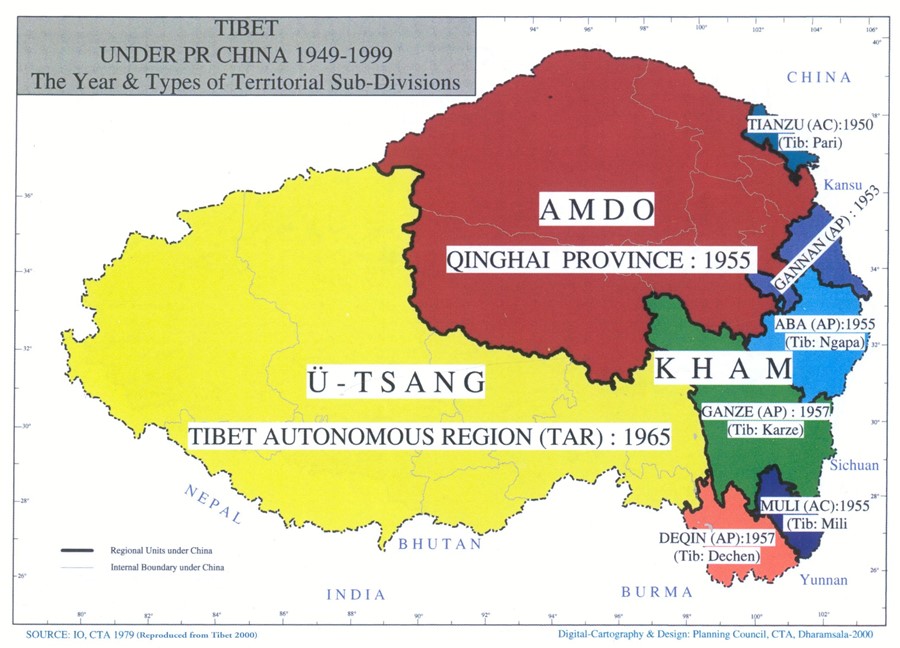
a. At present, there are no radio teams remaining inside Tibet. Radio teams continue to function [less than 1 line of source text not declassified] although much of their information comes from the debriefing of traders and refugees. Singleton resident agent operations in Tibet, regarded as being the long-range replacement of the black radio teams, have not progressed as planned due to continued tightening of Chinese security in the border areas. Intelligence reporting from all sources deals primarily with military, political and construction activities along the Tibetan border. b. The Tibetan paramilitary unit, a remnant of the 1959 resistance force, is dispersed in 15 camps [less than 1 line of source text not declassified]. The Tibetan leadership views the force as the paramilitary arm of its “government-in-exile” [2 lines of source text not declassified]. Because of the diplomatic sensitivity occasioned by the presence of the Tibetan force [less than 1 line of source text not declassified], it has been enjoined from offensive action which might invite Chinese [less than 1 line of source text not declassified] retaliation. Joint efforts to disperse the force to other uninhabited areas [less than 1 line of source text not declassified] have not been successful because of Chinese [less than 1 line of source text not declassified] reaction or of difficulties in resupply. c. [1 line of source text not declassified] responsible for radio contact with and operational direction of the radio teams, the paramilitary resistance force, and the support mechanism [less than 1 line of source text not declassified] continue to serve their intended purpose with a minimum of problems. d. Bi-lateral CIA-Tibetan intelligence collection operations into Tibet, [less than 1 line of source text not declassified] have increased significantly, both in number and in value during the past few years. e. Activities designed to develop a dynamic political program [less than 1 line of source text not declassified] to weld the refugee communities into a cohesive whole under the leadership of the Dalai Lama and his brother, Gyalo Thondup, continue. These include: (1) The Geneva, New York and [less than 1 line of source text not declassified] “Tibet houses” continue in operation. The Geneva office serves as [Page 741]the coordinating point for the resettlement of some 500 Tibetan refugees in Switzerland and other European countries and maintains contact with the international agencies concerned with Tibetan relief. Although time has dimmed some of the effectiveness of its pleas, the New York office continues to lobby among the U.N. delegations for legal and moral support for the Tibetan cause, guided in their efforts by a sitting former U.S. delegate to the U.N. who is also a well-known international lawyer. [2 lines of source text not declassified] (2) The covert training program conducted in the U.S. under which some 250 Tibetans were trained, ended in November 1964. (3) Twenty selected Tibetan junior officers studied at Cornell University, over a three year period. Due to the Katzenbach strictures, this program was concluded in July 1967; CIA is considering a continuation of the program, on a limited scale, [less than 1 line of source text not declassified]. (4) The Tibetan organizational party, the Cho Kha Sum, (i.e. the Defense of Religion by the Three Regions: Kham, Amdo, and U-Tsang), which was established in India in April 1964 by Gyalo Thondup, now has an active press and publications arm. While the future potential of the party is still in question, the Tibetans are making an effort to mold it into an effective organization, aimed at halting a drift towards disunity among the refugees, developing a political consciousness and a political program with which to challenge the Communist efforts inside Tibet.
4.
Significant Previous 303 Committee Approvals—
a. September 1958—initial endorsement of CIA covert support to Tibetan resistance; b. 20 May 1959—initial approval of covert support to the Dalai Lama; c. 14 February 1961—endorsed continuation of the covert program; d. 13 December 1962—approved training of Tibetan guerrilla force; e. 20 February 1964—reviewed and endorsed continuation of covert program; f. 9 April 1965—approved relocation of Tibetan paramilitary force; g. 8 July and 25 November 1966—endorsed the covert paramilitary program [1 line of source text not declassified].
These landmark reviews were interspersed with status reports and briefings of the Committee, in one period at monthly intervals. The basic decisions listed above in several instances were reviewed with Higher Authority.
5. Coordination— a. Department of State—Since the project’s inception, appropriate officials of the Department have approved various elements of the program. [Page 742]Department officers who have been briefed on aspects of this project include Elmer Falk and Clement J. Sobotka, Director and Deputy Director, respectively, of the Office of Refugee and Migration Affairs; Harald Jacobson, Director, Office of Asian Communist Affairs; William Gleysteen, Deputy Director, Office of U.N. Political Affairs; William Bundy, Assistant Secretary of State for East Asian and Pacific Affairs; and Lucius Battle, Assistant Secretary of State for Near East and South Asian Affairs. b. Ambassadors—The past and present Ambassadors to Nepal and India have approved the Tibetan program, [1 line of source text not declassified]. c. [2–1/2 lines of source text not declassified] 6. Projected and Planned Programs— a. On the political front during 1967, the Dalai Lama began what is hoped will be a long-range program of projecting himself and Tibetan affairs on an international basis. He is contemplating visits to Ceylon, Burma, and Cambodia, having visited Japan and Thailand in late 1967. Invitations have also been extended from several European countries having active Tibetan refugee programs or interests. b. Gyalo Thondup, acting for the Tibetan partnership in our liaison with the Indians, has proposed the establishment of a Tibetan Operations Center to represent Tibetan interests [less than 1 line of source text not declassified]. This Tibetan center would conceivably provide greater efficiency in the Tibetan handling of existing operations and in the relegation of operational tasks to Tibetan assets. [1 line of source text not declassified] c. Some elements of the basic covert program remain to be implemented. They include the deployment of landline wiretap teams to selected priority targets within Tibet; the activation of special refugee debriefing teams; a census of some 70,000 Tibetan refugees spread throughout India and its neighboring countries which may locate additional operational assets; and the resupply of arms and ammunition to the Mustang force. 7. Costs—At the time of the February 1964 review by the Committee, the projected annual cost for all Tibetan operations was $1,735,000. With the discontinuation of the training programs in the U.S., [1 line of source text not declassified] a reduction of $570,000 in this estimate for FY68 has been achieved. The remainder of $1,165,000 has been programmed in the CIA budget for FY68 for the activities described in this paper. Of this amount, $650,000 was approved by the 303 Committee on 25 November 1966 in its review of the [less than 1 line of source text not declassified].
Source: Department of State, INR Historical Files, Tibet, 1967–1968. Secret; Eyes Only. The source text bears no drafting information. A March 4 memorandum from Battle to Bohlen describes it as a CIA memorandum. (Ibid.) It was discussed at a March 19 meeting of the 303 Committee. According to Peter Jessup’s memorandum for the record of the meeting, CIA representative James Critchfield stated that “achievements inside Tibet were minimal—outside more substantial.” He observed that “the Tibetans by nature did not appear to be congenitally inclined toward conspiratorial proficiency.” Jessup records no action by the 303 Committee at the meeting. (Johnson Library, National Security File, Intelligence File, 303 Committee)↩
The text of NSC 5913/1, approved September 25, 1959, is printed in Foreign Relations, 1958–1960, vol. XVI, pp. 133– 144. Also, see the record of the NSC discussion of NSC 5913 on September 17, 1959, ibid., pp. 116–127.↩
Foreign Relations of the United States. The Status on Tibetan Operations.
Tibetan Resistance Movement failed because of Covert Actions.
In my analysis, American actions in support of the Tibetan Resistance Movement failed because of the choice of covert operations to accomplish their mission. On behalf of Living Tibetan Spirits, I demand direct dialogue between the US and Tibet after due recognition of Tibetan Government-in-Exile as the sole representative of Tibetan people.
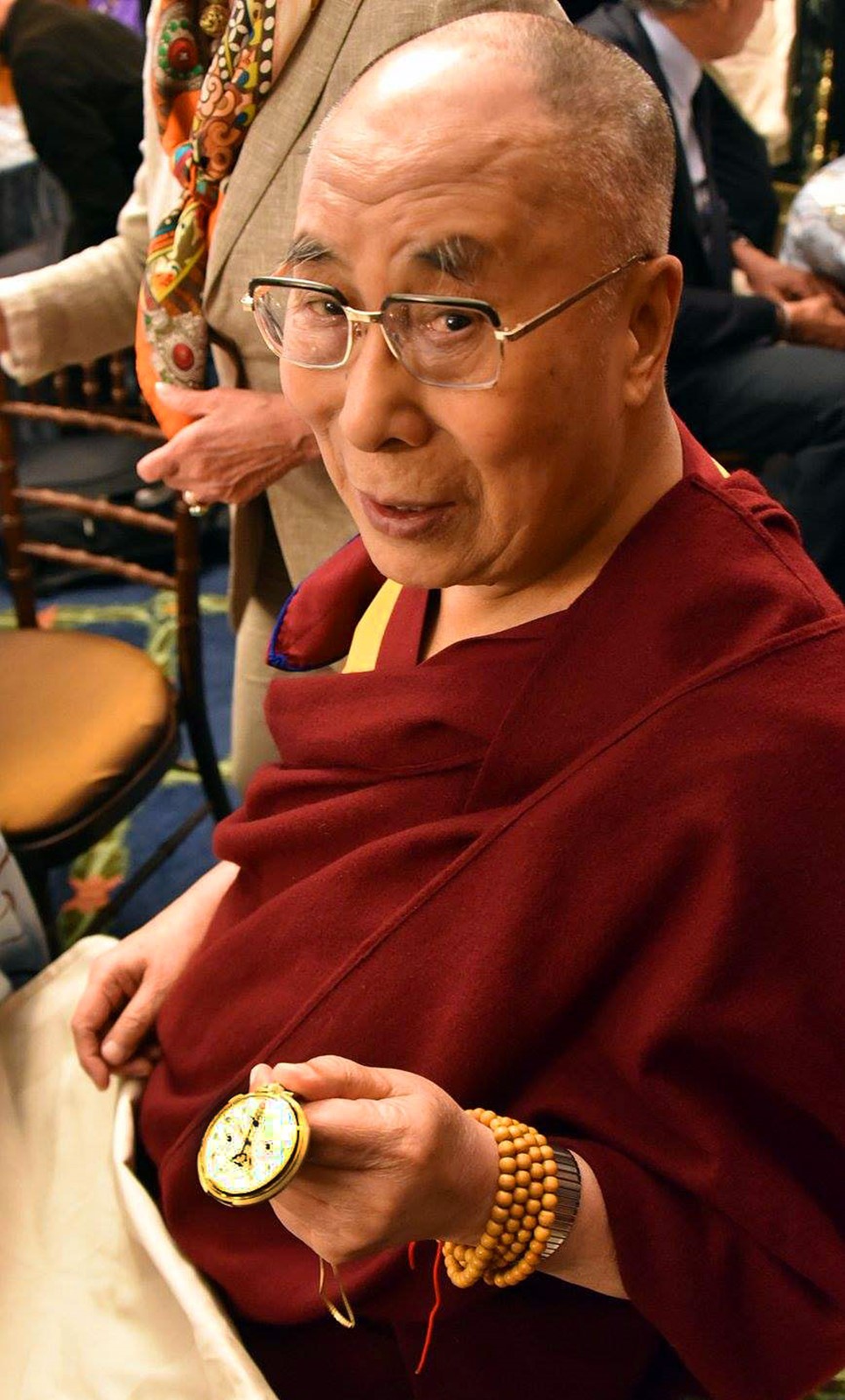
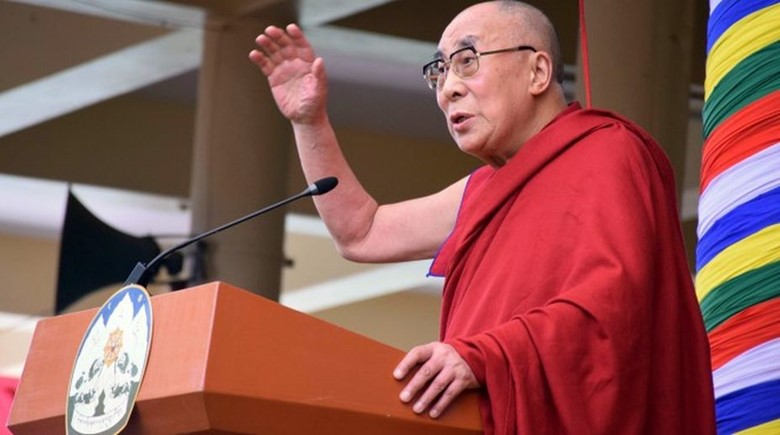
In a statement issued on World Environment Day, Dalai Lama said destruction of nature and nature resources results from ignorance, greed and lack of respect for the earth’s living things.
Tibetan spiritual leader Dalai Lama (Photo: Getty images/File)
Tibetan spiritual leader Dalai Lama called for ethical approach for environment conservation, while saying that the peace and survival of life on earth are threatened by human activities, which lack a commitment to humanitarian values.
In a statement issued on World Environment Day, Dalai Lama said destruction of nature and nature resources results from ignorance, greed and lack of respect for the earth’s living things.
This lack of respect extends even to earth’s human descendants, the future generations who will inherit a vastly degraded planet if world peace does not become a reality, and destruction of the natural environment continues at the present rate, he said.
“Our ancestors viewed the earth as rich and bountiful, which it is. Many people in the past also saw nature as inexhaustibly sustainable which we now know is the case only if we care for it,” he said, adding it is not difficult to forgive destruction in the past which resulted from ignorance.
Dalai Lama said today, however, we have access to more information and it is essential that we re-examine ethically what we have inherited, what we are responsible for, and what we will pass on to coming generations.
“Clearly this is a pivotal generation. Global communication is possible yet confrontations take place more often than meaningful dialogues for peace. Our marvels of science and technology are matched if not outweighed by many current tragedies, including human starvation in some parts of the world, and extinction of other life forms,” he said.
He said exploration of outer space takes place at the same time as the earth’s own oceans, seas, and freshwater areas grow increasingly polluted and their life forms are largely unknown or misunderstood.
Many of the earth’s habitats, animals, plants, insects, and even micro-organisms that we know of as rare or endangered, may not be known at all by future generations, said Dalai Lama.
“We have the capacity and the responsibility. We must act before it is too late,” Dalai Lama added.












 Whole Dude - Whole Concept