THE COLD WAR IN ASIA – MAO ZEDONG DEAD WRONG IN TIBET

THE COLD WAR IN ASIA – MAO ZEDONG DEAD WRONG IN TIBET


Rudranarasimham Rebbapragada

Border tensions and border conflicts along Himalayan Frontier are mere symptoms of ‘The Cold War in Asia’. It started with Communist Party Chairman Mao Zedong’s Evil Plan of Expansionism. Mao Zedong ‘Dead Wrong’ in Tibet. He died but his Evil Plan still survives posing threat to Freedom, Democracy, Peace, and Justice in the entire Himalayan Territory shared by Tibet, India, Bhutan, and Nepal.

Rudranarasimham Rebbapragada

Doom Dooma Doomsayer

India, China agree to pull back troops to resolve tense border dispute
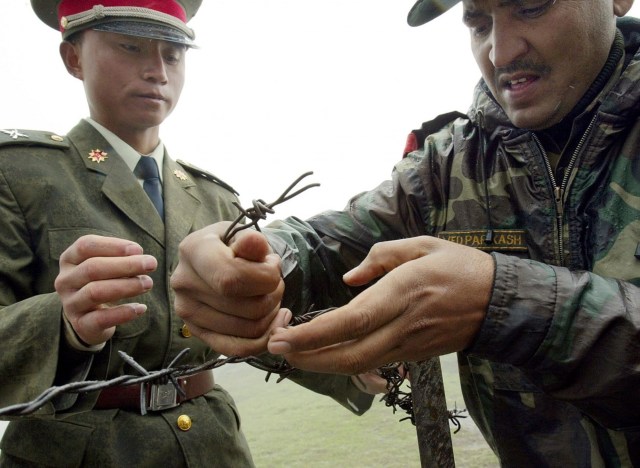
In July 2006, a Chinese and an Indian soldier place a barbed wire fence at a border crossing after a meeting between leaders from the two countries. (Desha-Kalyan Chowdhury/AFP/Getty Images)

By Simon Denyer and Annie Gowen

World

August 28 at 10:07 AM

BEIJING — India and China have withdrawn troops from a disputed Himalayan region on the border with China, foreign ministries from the two countries announced Monday, defusing a tense standoff that had threatened to provoke armed conflict between the nuclear-armed Asian rivals.

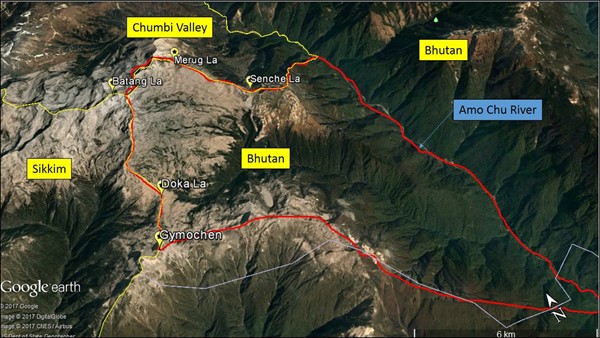
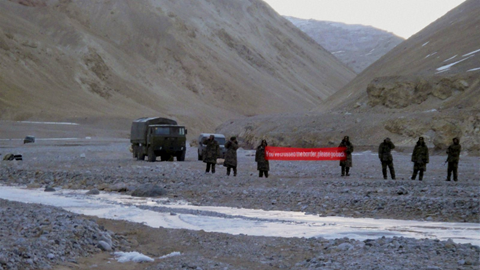
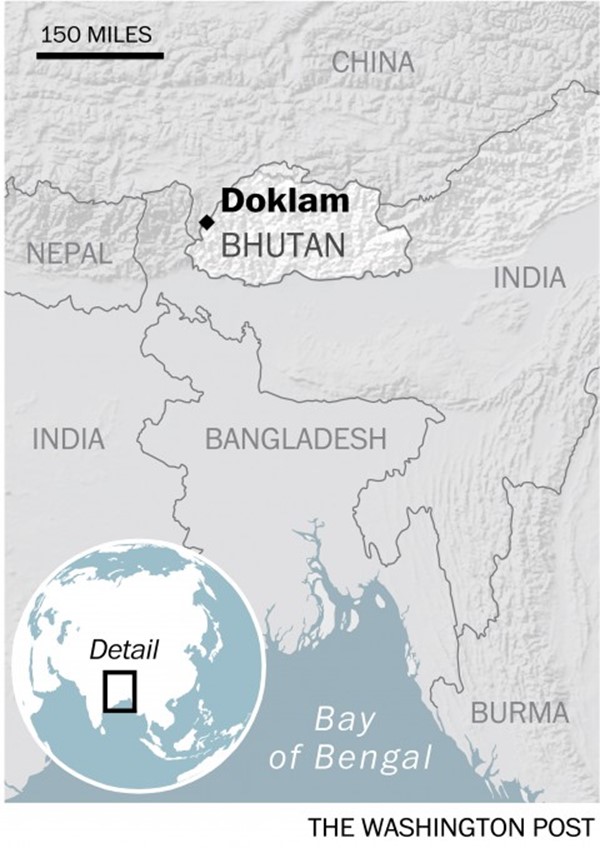
For the past two months, Indian and Chinese troops had faced off on a plateau in the Doklam area in the Himalayas, after Indian troops moved in to prevent the Chinese military from building a road into territory claimed by India’s close ally, Bhutan.

China had repeatedly and furiously denounced the Indian move as a direct infringement of its sovereignty, demanded an immediate and unconditional withdrawal, and warned that conflict was a real possibility if that didn’t happen.

[China and India are dangerously close to military conflict in the Himalayas]

On Monday, the two sides announced they had reached an agreement, with India saying its troops were disengaging, and China saying it would redeploy forces in response. By the evening, India said both sides had almost completed their withdrawal.
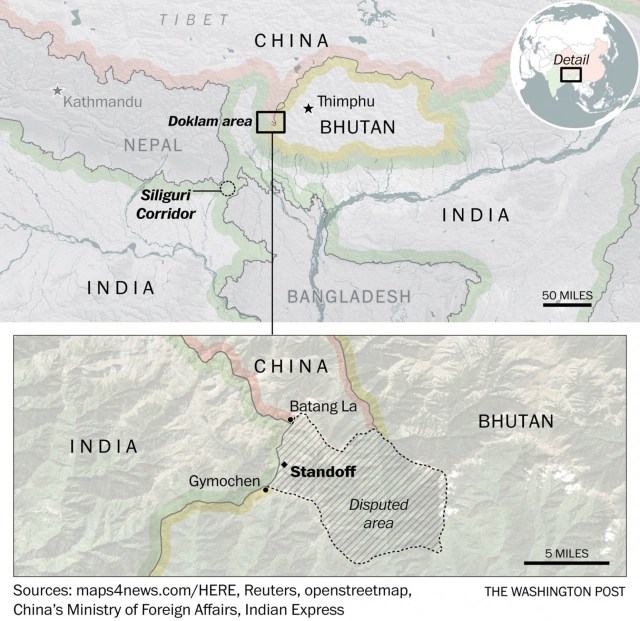
But it was not clear from both sides’ public statements if Beijing had offered any concessions in return for the Indian withdrawal, such as agreeing to halt the construction of the road. 

China said it would continue to patrol and garrison the area — as well as exercise its sovereign rights.

In a short statement, India’s Ministry of External Affairs said the two countries had maintained diplomatic communication over the dispute in recent weeks.

“During these communications, we were able to express our views and convey our concerns and interests,” it said. “On this basis, expeditious disengagement of border personnel at the face-off site at Doklam has been agreed to and is on-going.”

Later, it confirmed that forces from both sides were pulling back, adding that this process was “almost completed under verification.”

China’s Foreign Ministry said it was happy to confirm that all Indian “individuals and facilities” have withdrawn to the India side of the border. It also implied it would be reducing troop numbers in response to the Indian redeployment.

“The Chinese frontier defense force will continue to patrol and garrison in the Doklam area,” spokeswoman Hua Chunying told a regular news conference. “The situation at the spot has changed, and China will adjust and deploy according to current situation.”

Indian troops reportedly clashed with Chinese soldiers on Aug. 15. Tensions have been rising since Indian troops were sent to a remote area of the border in June to block China from building a road. (Reuters)

Hua said China will “exercise its sovereign rights according to the historical treaty and guard its territorial sovereignty.” 

China maintains the area in question was listed as on its side of the border under the 1890 “Convention Between Great Britain and China Concerning Sikkim and Tibet.”

Neither side, though, was willing to admit to having backed down.

“We remind India to learn the lessons from this incident, tangibly abide by the historical treaties and the basic principles of international law, and to meet China halfway, jointly guard the peace and tranquility of the border areas, and promote a healthy development of bilateral military relations,” Chinese Defense Ministry spokesman Wu Qian said in a statement.

India said it had always insisted on resolving the dispute through diplomatic channels. “Our principled position is that agreements and understandings reached on boundary issues must be scrupulously respected,” the Ministry of External Affairs said.

An Indian foreign ministry official also told the Associated Press that the two sides had agreed to return to the “status quo,” while cable news channel NDTV reported that Chinese bulldozers had been moved away, and road construction stopped, according to its sources — implying that India’s demand had been met.

Earlier on Monday, the state-owned China Daily newspaper had warned that India stood “to face retribution” over the incident, arguing that New Delhi was complacent if it thought China was not prepared for military conflict if necessary.

But Beijing will also have wanted to resolve the dispute ahead of a meeting scheduled to take place in China this weekend of heads of state from “BRICS” countries, a bloc composed of Brazil, Russia, India, China and South Africa.

“It’s hugely  good news,” said Wang Dehua, an Indian studies expert at the Shanghai Institute for International Studies. 

“We have avoided falling into the situation where two major countries with ancient civilizations become hostile enemies,” Wang said, while cautioning against declaring the incident a diplomatic victory for China.

He said China would try to address India’s security concerns when Prime Minister Narendra Modi visits for the summit but would continue building roads in border areas.

Mao Siwei, former consul general of China in the Indian city of Kolkata, said the statements were deliberately “vague” because of the sensitivity of the issue, and the reluctance of either side to show weakness.

“Judging from experience and common sense, I guess both sides have come to the following agreement: firstly, on principle, China would stop its road building and India would withdraw its troops; secondly, regarding the timing, India would withdraw first and China would withdraw later.”

In India, some experts also interpreted the statements — and New Delhi’s comments about having raised its security concerns — to mean that China had quietly agreed to stop building the road in question, but would not say so publicly.

“I very much doubt that India would have agreed to withdraw unless it involved, at the very least, a commitment from Beijing that it would halt construction of the disputed road,” said Shashank Joshi, an analyst with the Royal United Services Institute in London. 

“In these cases, clarity is the enemy of face-saving,” he added. “India will probably be comfortable with China spinning the agreement, because New Delhi is likely to have met its objectives: restoring the pre-June status quo. However, I imagine that India will now be vigilant, as China is likely to conduct more aggressive patrolling in Doklam in the future, having had its claims challenged in such serious fashion.”

The tiny Himalayan kingdom of Bhutan was inadvertently swept up into the dispute when Indian soldiers moved from a nearby garrison into territory Bhutan contests with China, to block a road-building crew from China’s People’s Liberation Army.

A few hundred troops from India and China were eventually deployed in a standoff that has produced harsh rhetoric — mostly from the Chinese side — and sparked a period of tension between the neighbors not seen for decades, analysts have said.

Although India and China have often sparred over the disputed areas along their estimated 2,200-mile border — and fought a brief war over it in 1962 — this clash was unusual because it involved a third country and came at a time when relations between India and China were at a low ebb.

Whether India — long a patron of Bhutan — moved in after coordinating with Bhutanese forces, as the Indians have said, or deployed on their own, as China claims, is the subject of much debate.

The Bhutan government was careful not to make comments and inflame tensions, and, aside from one brief statement from their Foreign Ministry, maintained a calculated silence throughout the dispute.

Gowen reported from New Delhi. Shirley Feng and Luna Lin in Beijing contributed to this report.

 

Simon Denyer is The Post’s bureau chief in China. He served previously as bureau chief in India and as a Reuters bureau chief in Washington, India and Pakistan.

Follow @simondenyer



Annie Gowen is The Post’s India bureau chief and has reported for the Post throughout South Asia and the Middle East.

  • © 1996-2017 The Washington Post
  •  


Inserted from <https://www.washingtonpost.com/world/india-withdraws-troops-from-disputed-himalayan-region-defusing-tension-with-china/2017/08/28/b92fddb6-8bc7-11e7-a2b0-e68cbf0b1f19_story.html?utm_term=.0422c7e45fcd>

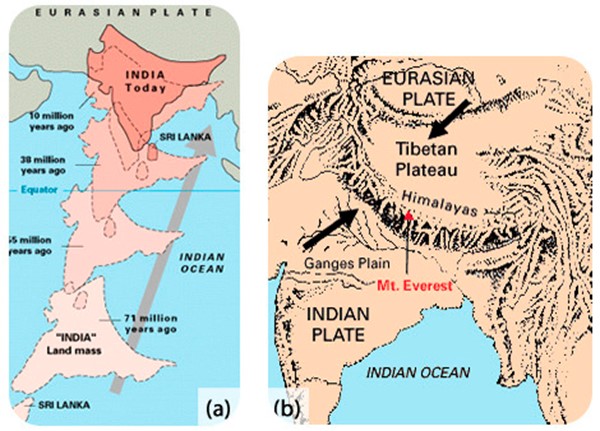
NATURAL HISTORY OF HIMALAYAN FRONTIER – TIBET IS NOT PART OF CHINA

NATURAL HISTORY OF HIMALAYAN FRONTIER – TIBET IS NOT PART OF CHINA

Natural History of Himalayan Frontier establishes truth about Tibet’s Identity. Tibet is not part of China.

Red China is making invalid and baseless claims of historical ownership of Himalayan Frontier.

Rudranarasimham Rebbapragada

DOOM DOOMA DOOMSAYER

China warns India not to ‘push its luck’ amid border stand-off in Himalayas

Published time: 24 Jul 2017 09:06 Edited time: 24 Jul, 2017 09:09

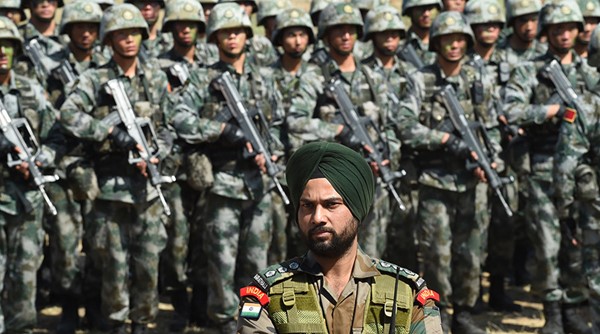
FILE PHOTO: An Indian Army soldier stands in front of a group of People’s Liberation Army of China soldiers © Indrani Mukherjee / AFP

China has warned India not to “cling to fantasies” amid a tense border stand-off, which also involves Bhutan, involving disputed territory in the Himalayas. Earlier, China staged live-fire drills in the area while India deployed troops there.

“China’s determination and resolve to safeguard national security and sovereignty is unshakable,” Defense Ministry Spokesman Senior Colonel Wu Qian said in a statement on Monday, as cited by AP and local media. His words come ahead of the 90th anniversary of the founding of the Chinese People’s Liberation Army (PLA).

“Don’t push your luck and cling to any fantasies,” Wu said.

“The 90-year history of the PLA has proved but one thing: that our military means to secure our country’s sovereignty and territorial integrity has strengthened and our determination has never wavered. It is easier to shake a mountain than to shake the PLA.”

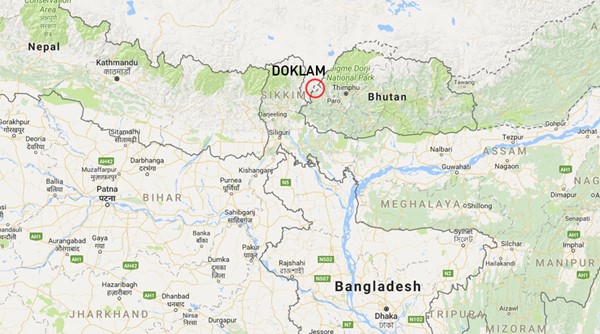
© Google Maps

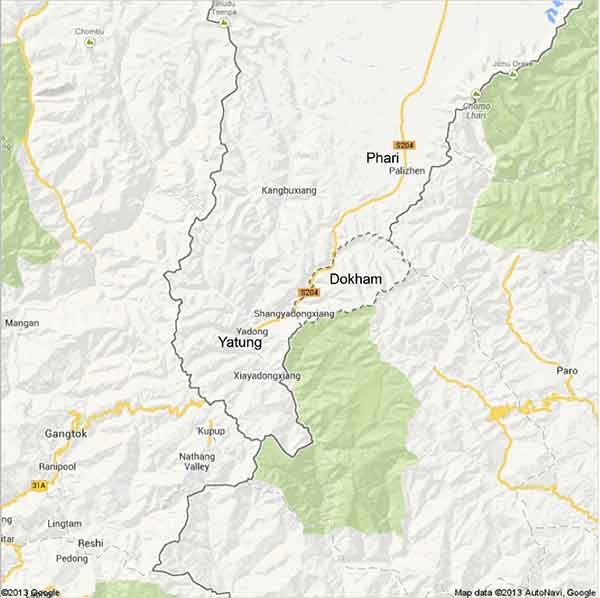
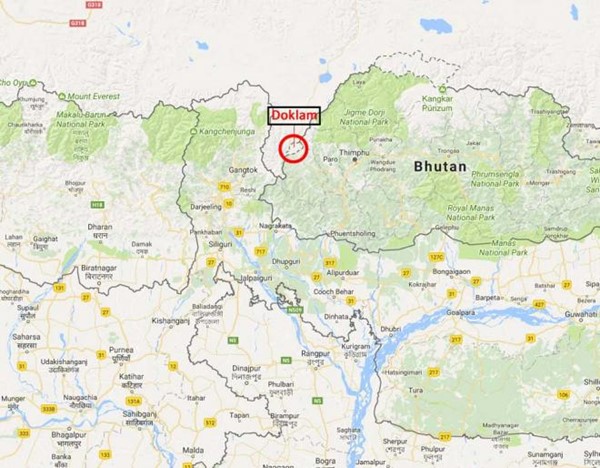
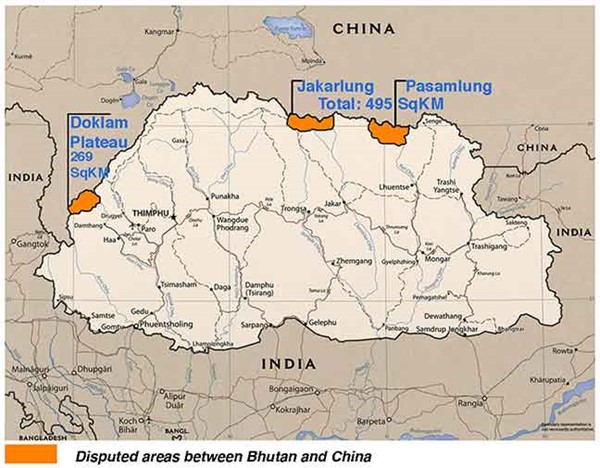
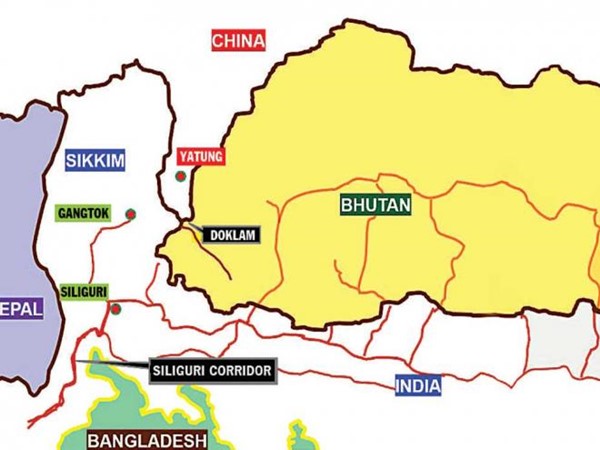
China and Indian ally Bhutan have been disputing the narrow Doklam plateau at the tri-junction of the three countries’ borders for decades. India says the area is Bhutanese.

Tensions between Beijing and Delhi escalated this June when Chinese teams started building a road on the plateau. Bhutan requested help from India, which sent its troops across the border.

‘Avoid escalation’: China demands India withdraw troops from disputed Himalayan territory

India also warned China that the road was a “serious security concern” because it would give China access to the Siliguri Corridor, also known as the ‘Chicken’s Neck,’ a narrow stretch of land linking India’s northeastern states to the rest of the country, NDTV reported earlier in July. 

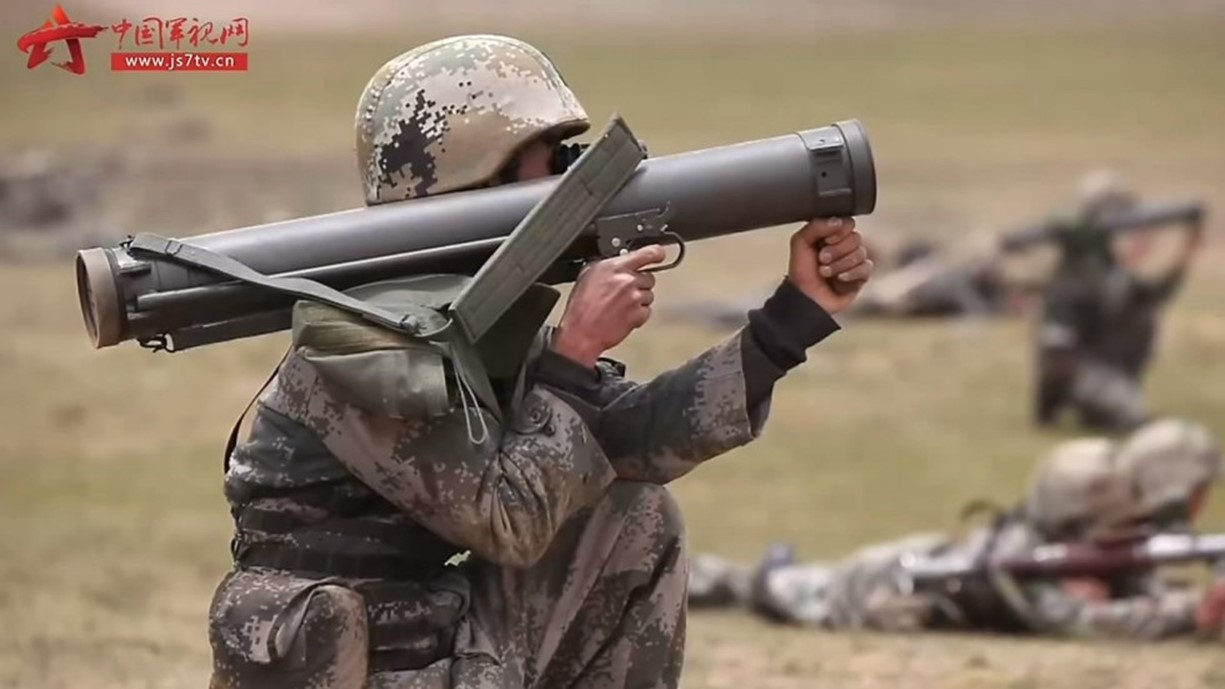
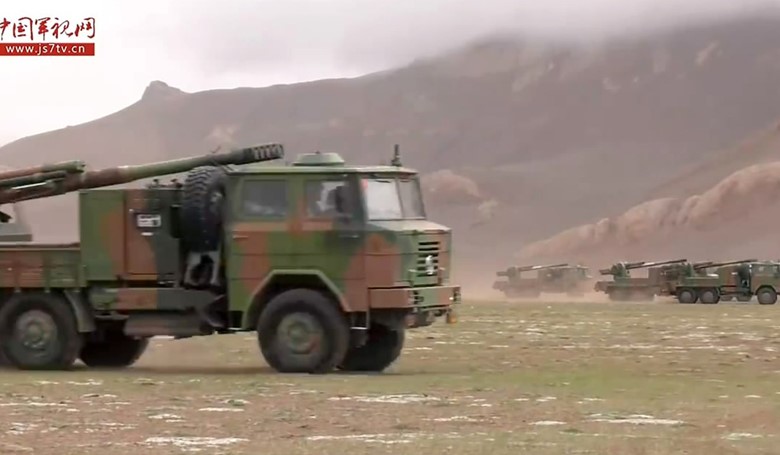
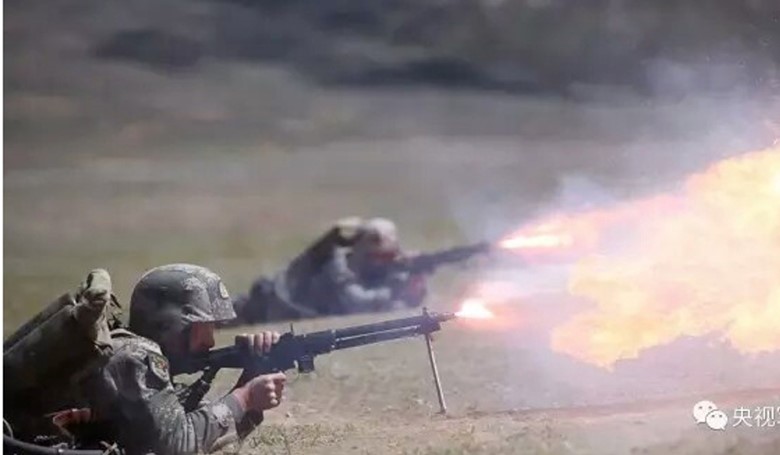
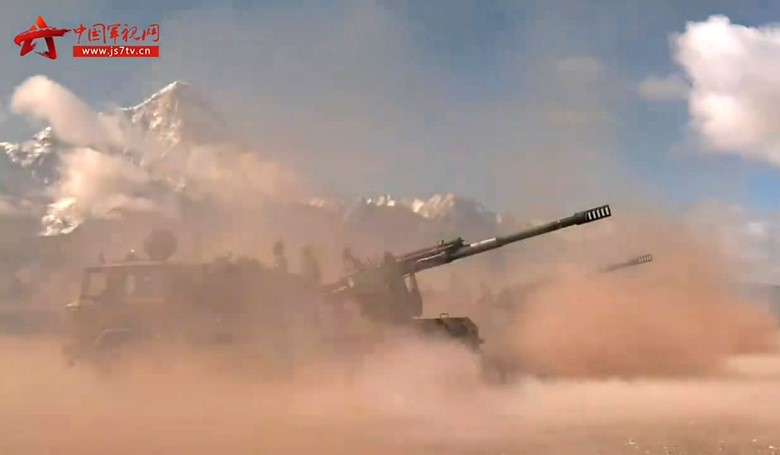
Also in July, China staged 11 hours of live-fire drills in Tibet, not far from the disputed territory, Chinese media reported. The exercises involved soldiers armed with rocket launchers, machine guns, and mortars. 

In June, to support its claim, China provided historical documents which it says prove the Doklam plateau belongs to Beijing.

“First, in terms of history, Doklam has always been the traditional pasture for border inhabitants living in [China’s] Yadong [county], Xizang. China has been exercising jurisdiction over this area,” Foreign Ministry Spokesperson Lu Kang said in a statement.  

However, those claims are disputed by India, which accuses China of cherry-picking facts to suit its agenda.

Both India and China reportedly bolstered their troops in the area in June, with each side adding about 3,000 soldiers, the Times of India said at that time. 

The standoff is the longest between the China and India since 1962, when the two sides fought a brief war over tensions surrounding Tibet and other points along the border in the Sino-Indian War, which China won.

© Autonomous Nonprofit Organization “TV-Novosti”, 2005–2017. All rights reserved.

Inserted from <https://www.rt.com/news/397299-china-india-military-border/>

Whole Trouble – Pakistan and China North Indus River Cascade – Illegal Bartering

Tibet Equilibrium – Pakistan and China North Indus River Cascade is illegal Bartering

Tibet Equilibrium – Pakistan and China North Indus River Cascade – Illegal Bartering. Two thieves sharing stolen assets.

The five dams forming the ‘North Indus River Cascade’ that Communist China plans to build in Pakistan-Occupied Indian territory represents Illegal Bartering. Firstly, Communist China’s Tibet Occupation is illegal for it violates Natural Law, Natural Balance, Natural Order, Natural Equilibrium, Natural Harmony, and Natural Tranquility that formulates connections between man and Nature. Tibet Equilibrium gives Indus River the ability to flow down to reach Arabian Sea.

Tibet Equilibrium – Pakistan and China North Indus River Cascade – Illegal Bartering. Two thieves sharing stolen assets.

China’s doctrine of Neocolonialism drives her capital investment projects to develop infrastructure and exploit natural resources to ensure her political, economic, and military domination of world.  North Indus River Cascade in its essence represents the actions of two thieves sharing stolen assets. In my analysis, Communist China sponsored Indus River Projects bring no Joy, no Peace, no Harmony, and no Tranquility in the lives of people for Beijing is Doomed.

Tibet Equilibrium – Pakistan and China North Indus River Cascade – Illegal Bartering. Two thieves sharing stolen assets.

Pakistan’s Indus Cascade, a China Sponsored Himalayan Blunder

Tibet Equilibrium – Pakistan and China North Indus River Cascade – Illegal Bartering. Two thieves sharing stolen assets.

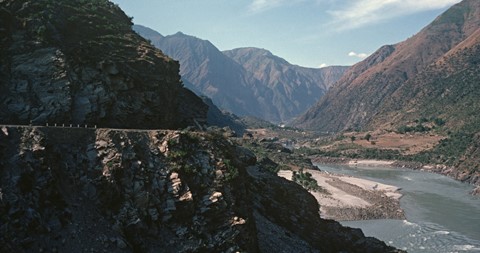
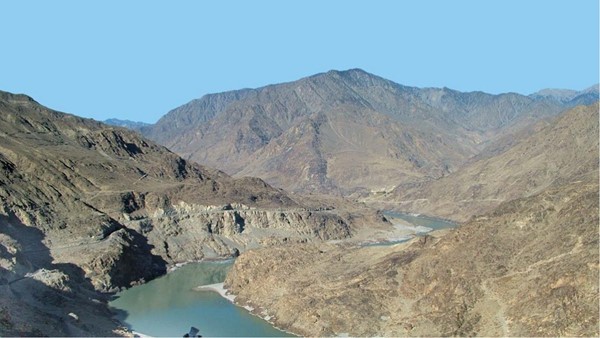
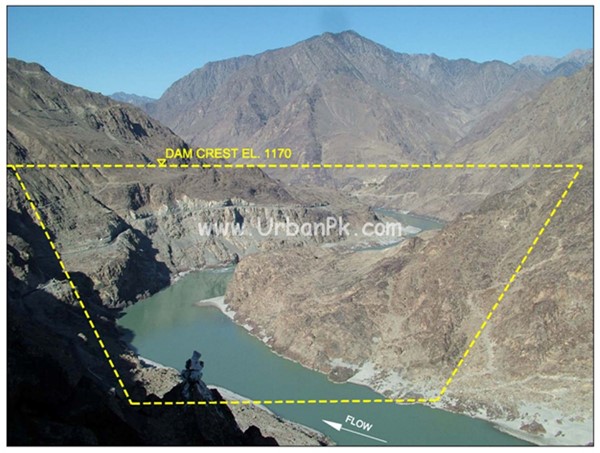
The Indus River in Diamer District of Pakistan’s Gilgit-Baltistan. (Photo Courtesy: Wikimedia Commons)

Joydeep Gupta

Updated: 22 May 2017 4:27 PM IST

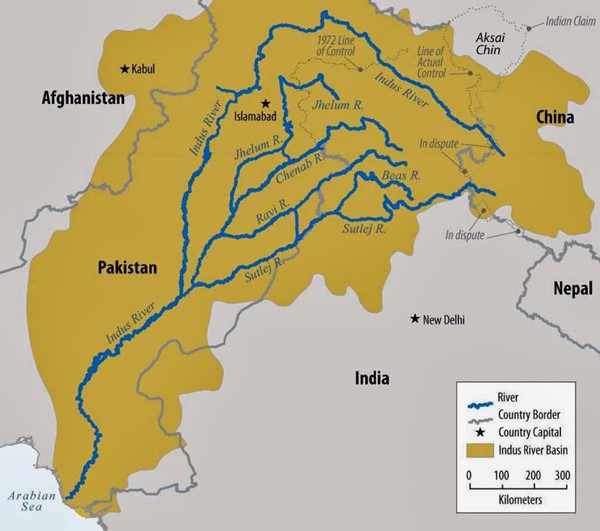
The five dams forming the ‘North Indus River Cascade’ that China has just promised to finance and build in Pakistan – including Pakistan-administered Kashmir – has the potential to generate over 22,000 MW in an energy-starved country.
But the dams will also stop the flow of silt which is the lifeline of agriculture downstream. In non-monsoon months from October to June, they may also reduce the flow of water down the Indus to Pakistan’s Punjab and Sindh provinces.

Climate change is making water flow along rivers more erratic – especially rivers like the Indus, that flow from the Himalayas.
Pakistan’s entire water supply for agriculture, factories, and homes is dependent on rivers in the Indus basin. Water availability is already below the 1,000 cubic meters per person per year level at which a country is described as water-scarce, according to the global norm followed by most UN agencies.
In this situation, it is critical to look at food, energy and water together, as a nexus. Instead, the planners of Pakistan appear to be looking at energy alone.

Money, CPEC, OBOR
China is providing Pakistan with US $50 billion for the Indus Cascade. A Memorandum of Understanding (MoU) was signed to this effect during the recent Belt and Road Initiative (BRI) – previously known as One Belt, One Road (OBOR) – conference in Beijing. China’s National Energy Administration (NEA) will oversee the funding.
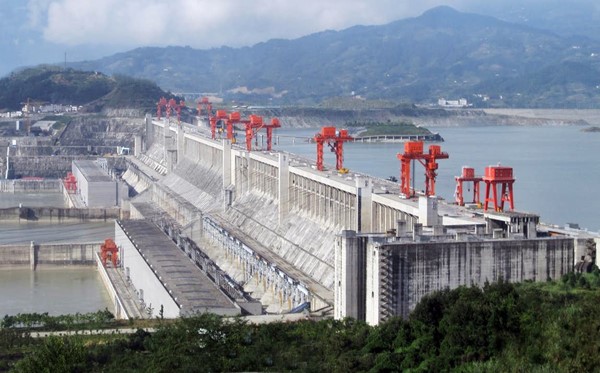
China Three Gorges Corporation – which runs the world’s largest hydroelectricity project at the Three Gorges Dam – is the frontrunner to build the five dams that will form the cascade.
The MoU was signed by Pakistan’s Water and Power Secretary Yousuf Naseem Khokhar and Chinese Ambassador to Pakistan Sun Weidong in presence of Prime Minister Nawaz Sharif.
This is in addition to the US $57 billion China is providing to Pakistan for a series of infrastructure projects along the China-Pakistan Economic Corridor (CPEC), a part of the BRI. The infrastructure projects include the building of coal-fired power stations and the port at Gwadar on the Arabian Sea

Tibet Equilibrium – Pakistan and China North Indus River Cascade – Illegal Bartering. Two thieves sharing stolen assets. Stealing assets originating in Tibet.

The Three Gorges Dam on the Yangtze River in China (Photo Courtesy: Wikimedia Commons)

The Indus Cascade
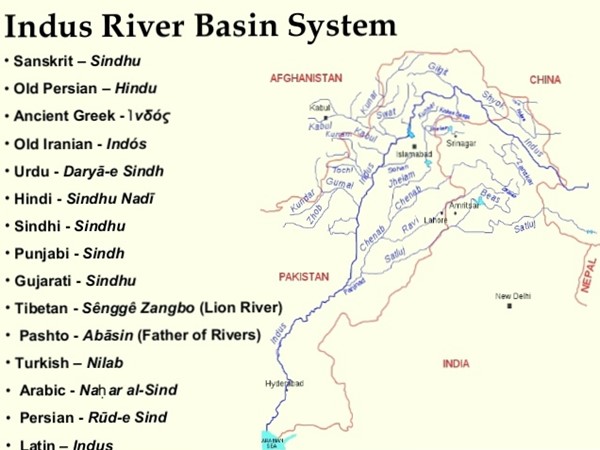
The cascade plans all the way down the Indus from Gilgit-Baltistan to the existing Tarbela dam near Islamabad. It will effectively turn this huge transboundary river into a series of lakes in the last part of its journey through the Hindu Kush Himalayas to the plains of South Asia.
The uppermost of the five dams is planned at Bunji near Skardu in Pakistan administered Kashmir. The former princely state of Jammu & Kashmir is a disputed territory claimed in its entirety by both India and Pakistan, though both only control parts of it, with China also controlling some.
The 7,100 MW Bunji Hydropower Project has been described by Pakistan’s Water and Power Development Authority (WAPDA) as a run-of-the-river (RoR) project. But the same promotional video (for the entire cascade) which provides this description also indicates that:
This project will have a reservoir that will spread along a 22-km stretch of the Indus and inundate a 12-km stretch of the road between Gilgit and Skardu – the two main towns of Gilgit-Baltistan. So, despite the description, this may not be an RoR project.

The next dam in the cascade is the big one – Diamer-Basha – with a planned live storage of 6.4 million-acre feet (MAF) of water and a hydropower generating potential of 4,500 MW.
From Diamer-Basha, the projects run along the Karakoram Highway, which China built in the 1960s through Pakistan administered Kashmir despite strenuous objections from India. The reservoir that will form behind the Diamer-Basha dam will submerge 104 km of the Karakoram Highway and displace about 30,000 people, according to WAPDA.
The Diamer-Basha dam is promoted by WAPDA as a sediment trap and therefore good for downstream hydropower projects. But the same sediment – mainly silt – rejuvenates the soil downstream every year and has been the main reason sustaining agriculture in the Indus valley for over a millennium.
Building the Diamer-Basha dam is estimated to cost US $15 billion. For years, Pakistan has been seeking the money from multilateral funding agencies. Experts at the World Bank and the Asian Development Bank have advised Pakistani planners to think of smaller dams instead. Now China has promised funding.
Just downstream of Diamer-Basha is the third dam in the cascade – the 4,320 MW Dasu Hydropower Project. This will have a reservoir that will stretch upstream for 74 km along the Indus, all the way to the Diamer-Basha dam, according to WAPDA. It will also submerge 52 km of the Karakoram Highway.
Some of the peripheral work for this project has started, and people have already been displaced, with WAPDA seeking contracts for resettlement and providing free transport to resettlement sites.
And immediately downstream of that, WAPDA has planned the 2,200 MW Patan Hydropower Project, with a 35-km long reservoir that goes up to the Dasu dam.

Tibet Equilibrium – Pakistan and China North Indus River Cascade – Illegal Bartering. Two thieves sharing stolen assets.

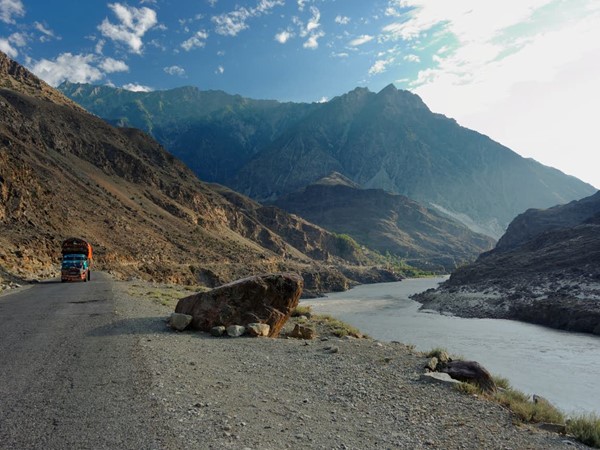
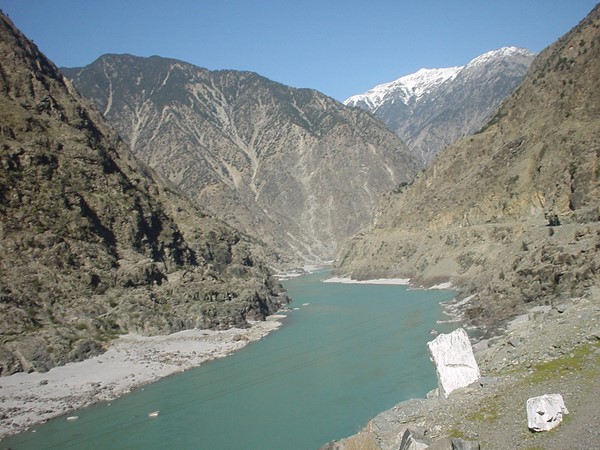
The Indus River from the Karakoram Highway (Photo Courtesy: Wikimedia Commons)

Once again, the fifth dam in the cascade is just a little downstream – the 4,000 MW Thakot Hydropower Project in which the plan is to divert the Indus waters through four headrace tunnels to generate electricity.
By the time the Indus emerges from the tunnels, it will be close to the existing dam at Tarbela, which has been in operation since 1976.

The Plan, the Effect
The electricity that will potentially be generated by the five new projects forming the Indus Cascade adds up to a little over 22,000 MW. Officials in Pakistan’s Ministry of Water and Power have been telling the domestic media that experts from the Chinese NEA conducted feasibility study of the entire cascade this February and satisfied about feasibility of the project.
The officials say that now, after the signing of the MoU, the Chinese experts will conduct a more detailed study for three months to finalize both financing and execution of the projects. In 2015, China Three Gorges Corporation had said it wanted to be part of a financing consortium with a US $50 billion fund to build hydroelectric power projects in Pakistan.
The corporation may be the frontrunner to build the dams, but it is not the only competitor. After the MoU was signed in Beijing, several Chinese power sector companies showed willingness to join the project. This will be the first large-scale private sector hydroelectricity project in Pakistan.
At the MoU signing ceremony, Nawaz Sharif spoke glowingly of cooperation between the two governments to overcome Pakistan’s energy crisis.
“Development of the Indus Cascade is a major focus of my government and the construction of Diamer-Basha Dam is the single most important initiative in this regard.” Nawaz Sharif, Prime Minister, Pakistan
He also said, “Water and food security are of paramount importance for Pakistan, keeping in view the challenges posed by climate change.”
The Indus Cascade will reduce water and food security in Pakistan instead.
One proven effect of climate change is intensification of the water cycle. In lay terms, it means fewer rainy or snowy days but more intense rainfall or snowfall in those days. Pakistan is already suffering the effects.
For the first nine years in this century, the Indus failed to reach the sea. Then there was such a cloudburst in 2010 flooding a fifth of the country. The floods also brought down, and continue to bring down, huge sediment loads that reduce the working lives of dams. To build more large dams in this situation appears dangerously short-sighted.
A side effect of the cascade project will be the need to rebuild large parts of the Karakoram Highway. Building a road in the mountains always has a strong negative effect on the environment and increases the risk of landslides manifold.
India has already boycotted the BRI conference because many of the CPEC projects are in Kashmir. Addition of a project as big as the Indus Cascade to that list is likely to lead to more protests from India and to raise tension in the region.

(This article was originally published in ThirdPole.net)
First published: 22 May 2017 4:27 PM IST
2017 © Copyright TheQuint

Inserted from <https://www.thequint.com/world/2017/05/22/indus-river-dam-project-china>

Tibet Equilibrium – Pakistan and China North Indus River Cascade – Illegal Bartering. Two thieves sharing stolen assets.
Tibet Equilibrium – Pakistan, China North Indus River Cascade – Illegal Bartering. Two thieves sharing stolen assets. Indus River flows down Indian territory.
Tibet Equilibrium – Pakistan, China North Indus River Cascade – Illegal Bartering. Two thieves sharing stolen assets.
Tibet Equilibrium – Pakistan, China North Indus River Cascade – Illegal Bartering. Two thieves sharing stolen assets. Indus River originates in Tibet and flows down India.

Whole Evil – The Downfall of Mighty Red Empire

Beijing invites her Doom by Evil action in Tibet

BEIJING INVITES HER DOOM BY EVIL ACTION IN TIBET.
Beijing invites her doom by evil action in Tibet.

Red China finds comfort and security in her military power and thinks that there is no power besides her own. Red China’s action of using military force to subjugate Tibet is Evil action. Beijing sealed her fate for she invited Doom by her own actions.

CHINA FLEXES ITS MILITARY MUSCLE IN TIBET, CLOSE TO BORDER DISPUTE WITH INDIA – SOUTH CHINA MORNING POST

Clipped from: http://www.scmp.com/news/china/diplomacy-defence/article/2102965/china-flexes-its-military-muscle-tibet-close-border

Armed forces take part in live ammunition drill that one observer says was intended as a clear warning to India

Beijing invites her doom by evil action in Tibet.

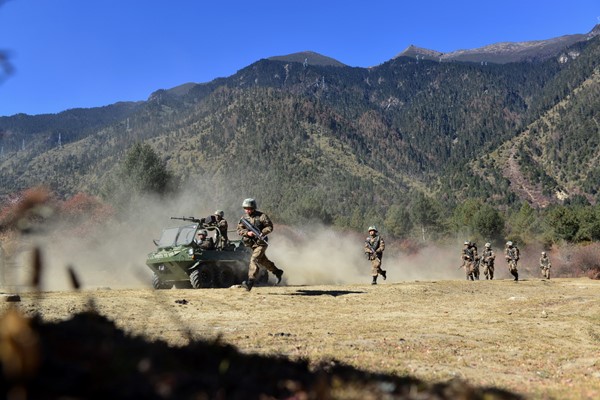
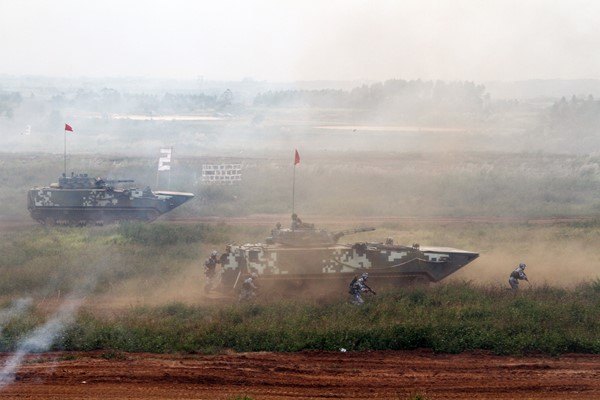
A fully staffed and equipped brigade engaged in various drills involving the rapid movement of troops, use of digital devices and combined attacks by multiple forces on the 5,000m high plateau, China Central Television said over the weekend.

How a road on China and India’s border led to the two powers’ worst stand-off in decades

In video clip shown on CCTV over the weekend, soldiers armed with machine guns, rocket launchers and mortars were seen launching an assault on an “enemy position”.

They used radar to target “enemy planes” with anti-aircraft guns and also employed anti-tank grenades, the report said. One brigade of soldiers was involved, which under the structure of the People’s Liberation Army, consists of between 4,000 and 7,000 soldiers.

Beijing invites her doom by evil action in Tibet.

A large amount of military hardware was on show during the exercise. Photo: Handout

“The 11-hour exercise covering a dozen elements was testimony to the PLA’s [Chinese military’s] combined strike capability,” it said.

Down on the border, simmering China-India stand-off raises fears for local lifeline

The report did not give precise details of where or when the exercise was held, though it came as Chinese and Indian troops remain locked in their worst stand-off in decades, on the tri-junction with Bhutan.

Beijing invites her doom by evil action in Tibet.

An observer said the drills were meant as a warning to India. Photo: Handout

One observer said the show of strength was likely intended as a warning to India.

“The PLA wanted to demonstrate it could easily overpower its Indian counterparts,” said Beijing-based military commentator Zhou Chenming.

China-India border dispute could hurt summit of five emerging economies, analysts warn

The Chinese force that took part in the drill is stationed in the Linzhi region of eastern Tibet, close to the stand-off. It is one of only two Chinese plateau mountain brigades in Tibet, the report said.

Beijing invites doom by evil action in Tibet.

A fully staffed and equipped brigade took part in the drills, which lasted 11 hours, CCTV reported. Photo: Handout

In comparison, India has nearly 200,000 troops stationed in the areas it disputes with China, outnumbering its neighbor’s forces by as much as 15 or 20 to one, it said.

Nonetheless, China has a clear advantage in terms of speed of movement, firepower, and logistics, Zhou said.

“[By staging] a small-scale drill, China wants to control the problem and lower the risk of shots being fired,” he said.

China and India fought a border war in 1962, partly because India’s then leader Jawaharlal Nehru took China’s dovish stance as a green light for him to advance without retaliation, said Wang Dehua, South Asia studies experts at Shanghai Institutes for International Studies.

“Showing an opponent that you are combat ready is more likely to prevent an actual battle,” he said, adding that broadcasting the drill on CCTV was also likely designed to keep the public happy.

“It could also reassure the Chinese people that a strong PLA force is there, capable and determined to defend Chinese territory,” Wang said.

Beijing invites her doom by evil action in Tibet.
Beijing invites doom by evil action in Tibet.
Beijing invites her doom by evil action in Tibet.
Beijing invites doom by evil action in Tibet.
BEIJING INVITES HER DOOM BY EVIL ACTION IN TIBET.
BEIJING DOOMED BY EVIL ACTION IN TIBET.

REMEMBERING JULY 16, 1945 – NATURAL FREEDOM IN TIBET IS JUST A STONE’S THROW AWAY

REMEMBERING JULY 16, 1945 – NATURAL FREEDOM IN TIBET IS JUST A STONE’S THROW AWAY

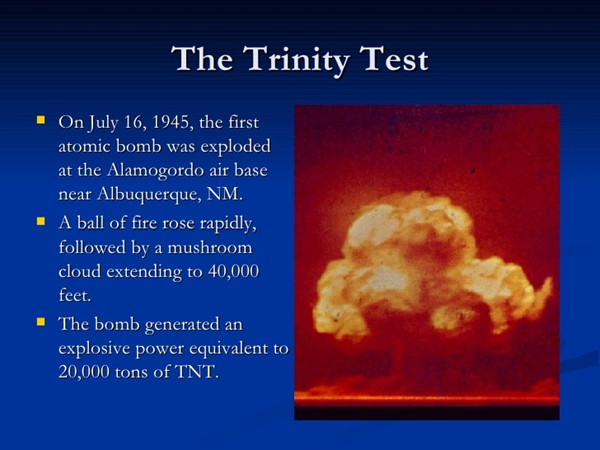
Natural Science, Physics and Chemistry describe Four Fundamental Forces, and Four Fundamental Interactions. Applying these principles, man developed explosive device called Atomic Bomb to conduct its successful test on July 16, 1945.

Applying the same principles, I recognize the potential power of heavenly bodies such as large stones to yield massive force that can change the attitude of belligerent nations.


Natural Forces acting together established Natural Freedom in Tibet. It is of no surprise to note that Tibetan Existence for centuries was characterized by Independent Lifestyles in testimony of Tibet Equilibrium or Tibet Tranquility based upon Natural Balance, Natural Harmony, and Natural Peace without any human intervention.

Occupation of Tibet since 1950s involved application of man’s Military Force. To counteract it, I am not seeking application of Strong Nuclear Force of man-made devices like the Atomic Bomb. If I am correct, Natural Freedom in Occupied Tibet is ‘Just a Stone’s Throw Away’.


Rudranarasimham Rebbapragada

DOOM DOOMA DOOMSAYER


THE FIRST ATOMIC BOMB TEST IS SUCCESSFULLY EXPLODED – JULY 16, 1945 – HISTORY.com

Clipped from: http://www.history.com/this-day-in-history/the-first-atomic-bomb-test-is-successfully-exploded?

On this day in 1945, at 5:29:45 a.m., the Manhattan Project comes to an explosive end as the first atom bomb is successfully tested in Alamogordo, New Mexico.

Plans for the creation of a uranium bomb by the Allies were established as early as 1939, when Italian emigre physicist Enrico Fermi met with U.S. Navy department officials at Columbia University to discuss the use of fissionable materials for military purposes. That same year, Albert Einstein wrote to President Franklin Roosevelt supporting the theory that an uncontrolled nuclear chain reaction had great potential as a basis for a weapon of mass destruction. In February 1940, the federal government granted a total of $6,000 for research. But in early 1942, with the United States now at war with the Axis powers, and fear mounting that Germany was working on its own uranium bomb, the War Department took a more active interest, and limits on resources for the project were removed.

Brigadier-General Leslie R. Groves, himself an engineer, was now in complete charge of a project to assemble the greatest minds in science and discover how to harness the power of the atom as a means of bringing the war to a decisive end. The Manhattan Project (so-called because of where the research began) would wind its way through many locations during the initial period of theoretical exploration, most importantly, the University of Chicago, where Enrico Fermi successfully set off the first fission chain reaction. But the Project took final form in the desert of New Mexico, where, in 1943, Robert J. Oppenheimer began directing Project Y at a laboratory at Los Alamos, along with such minds as Hans Bethe, Edward Teller, and Fermi. Here theory and practice came together, as the problems of achieving critical mass—a nuclear explosion—and the construction of a deliverable bomb were worked out.

Finally, on the morning of July 16, in the New Mexico desert120 miles south of Santa Fe, the first atomic bomb was detonated. The scientists and a few dignitaries had removed themselves 10,000 yards away to observe as the first mushroom cloud of searing light stretched 40,000 feet into the air and generated the destructive power of 15,000 to 20,000 tons of TNT. The tower on which the bomb sat when detonated was vaporized.

The question now became—on whom was the bomb to be dropped? Germany was the original target, but the Germans had already surrendered. The only belligerent remaining was Japan.

A footnote: The original $6,000 budget for the Manhattan Project finally ballooned to a total cost of $2 billion.


NATURAL TIBET – VASTNESS AND EMPTY AREAS OF TIBET SICKENED BY OCCUPATION

NATURAL TIBET – VASTNESS AND EMPTY AREAS OF TIBET SICKENED BY OCCUPATION


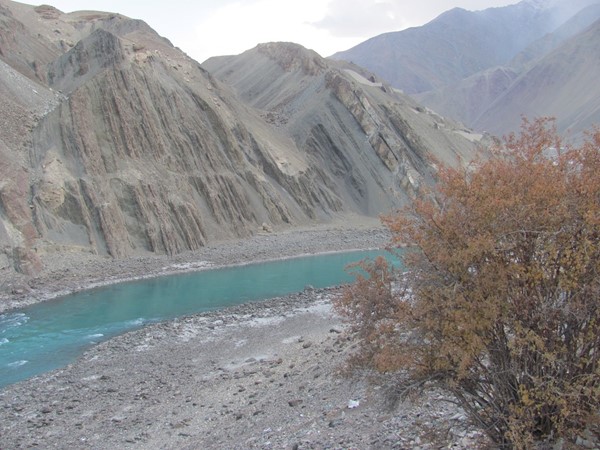
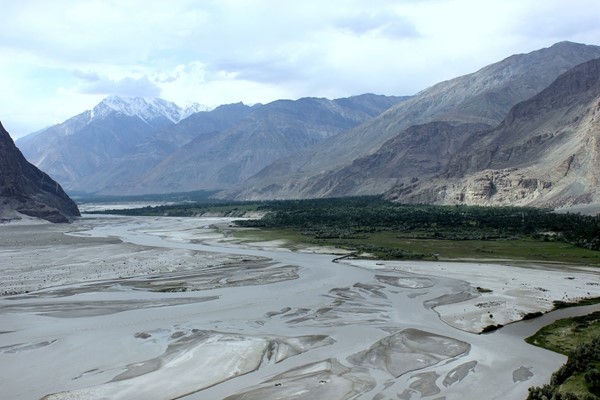
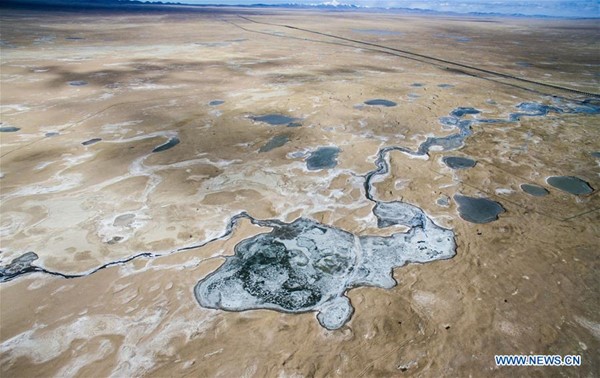
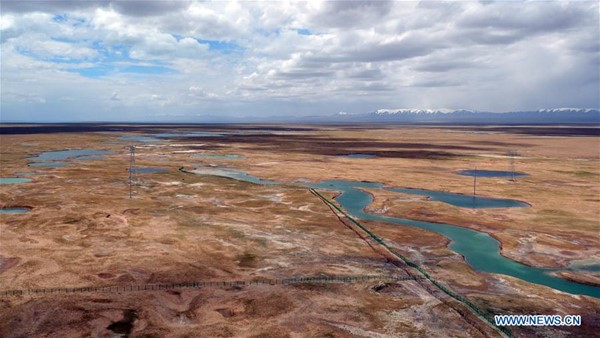
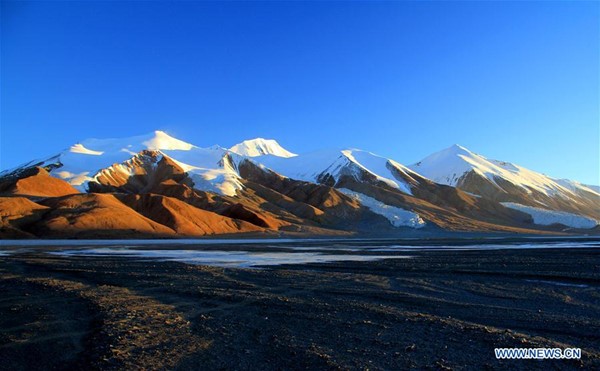
World must know about Real or Natural Tibet where Natural Forces, Natural Factors, and Natural Conditions shape Tibetan Identity. The vastness, and empty areas of Tibet sickened by Occupation bear testimony to burden, hardship, pain, suffering, and misery endured by Tibetans. The Blessings of Natural Freedom, and Independent Lifestyles enjoyed by Tibetans over centuries got compromised or abridged by Occupation since 1950s.


Rudranarasimham Rebbapragada

DOOM DOOMA DOOMSAYER


Buddhism now


Welcome to Buddhism Now an online Buddhist magazine, giving advice on how to practice Buddhism.

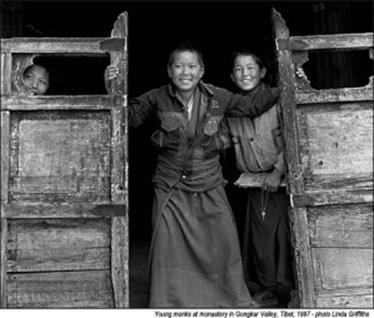
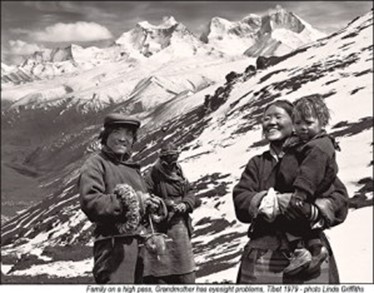
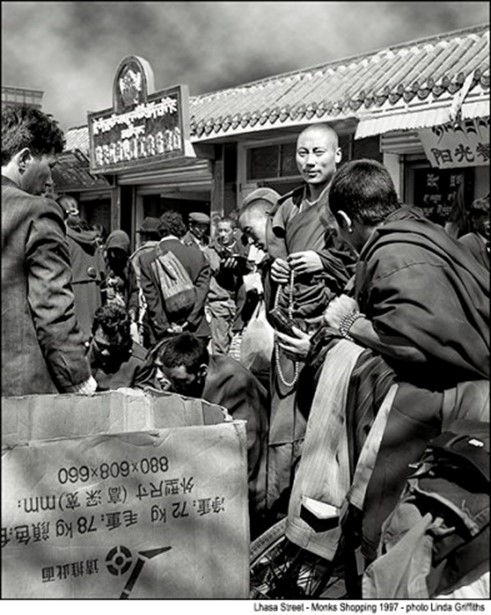
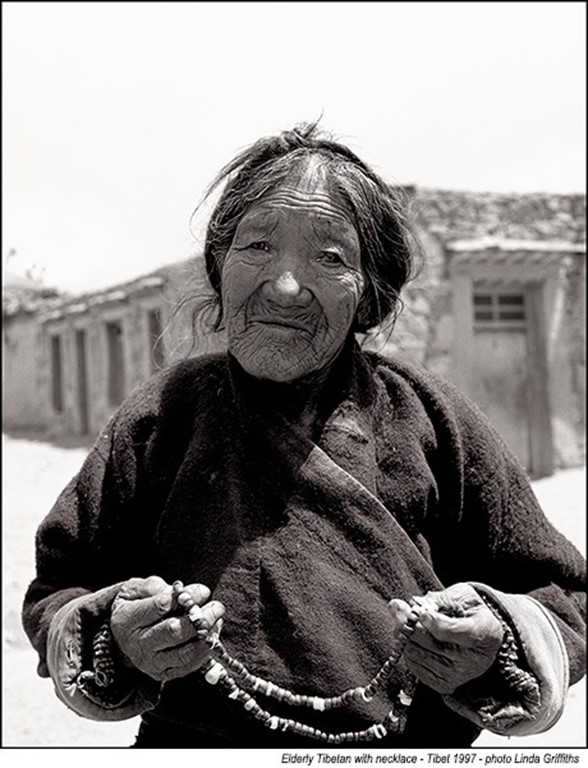
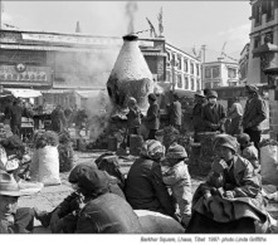
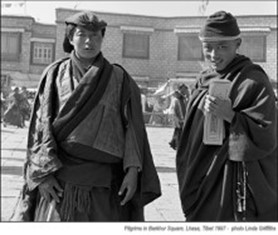
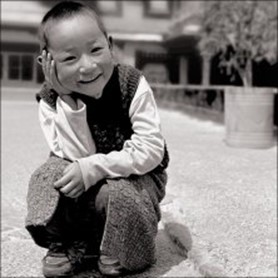
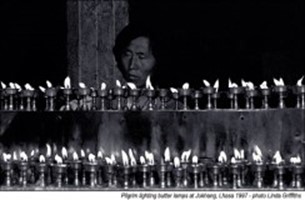
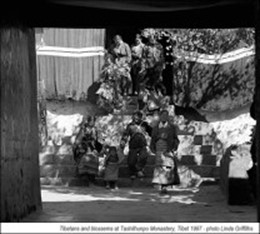
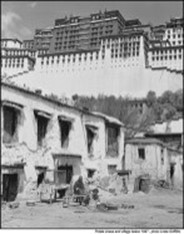
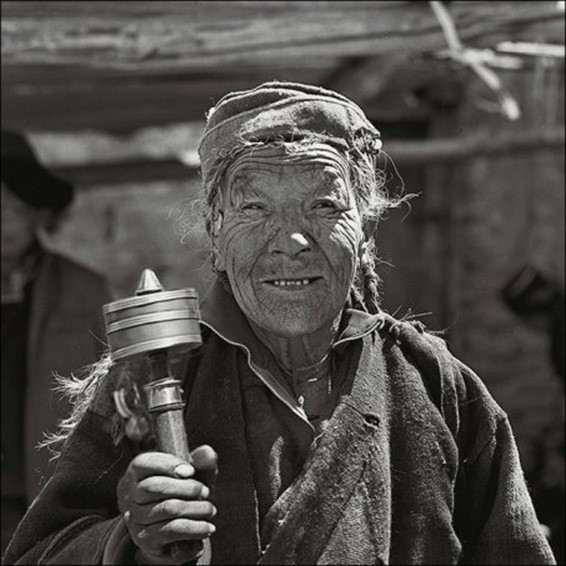
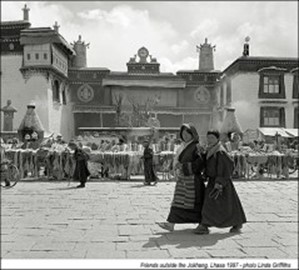
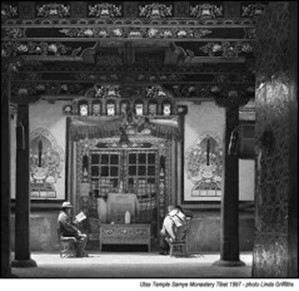
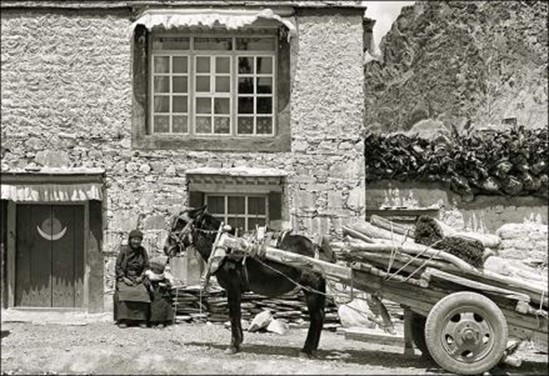
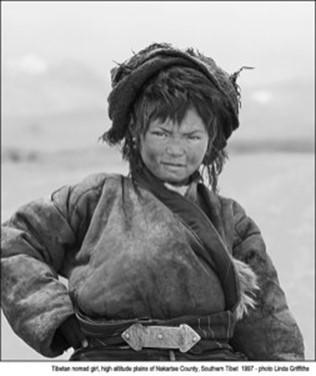
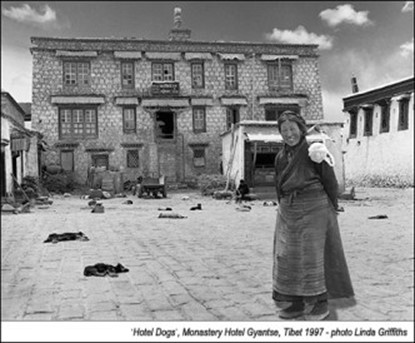
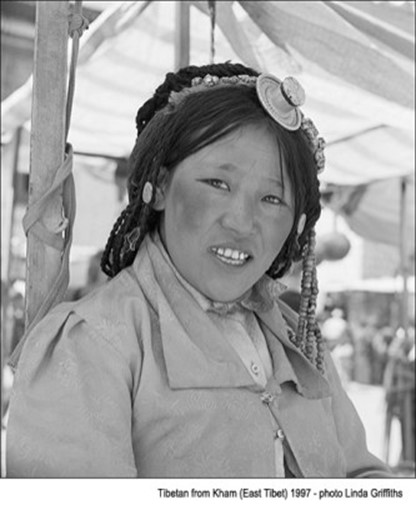
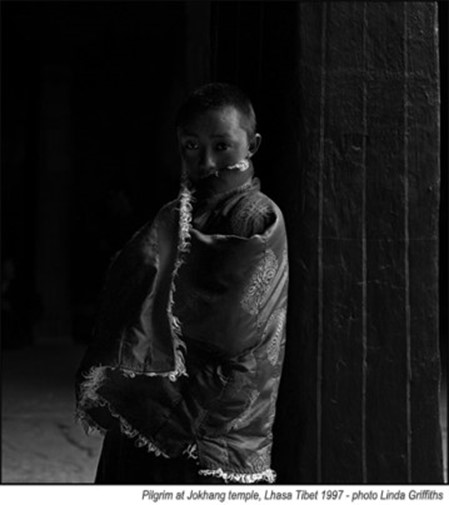
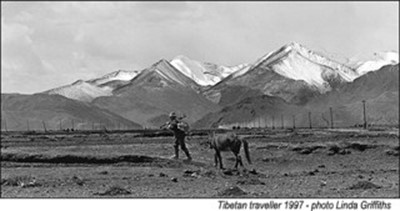
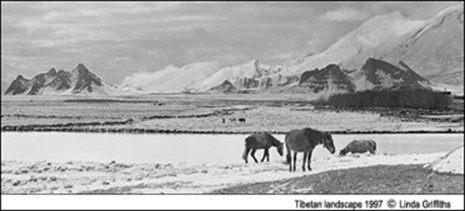
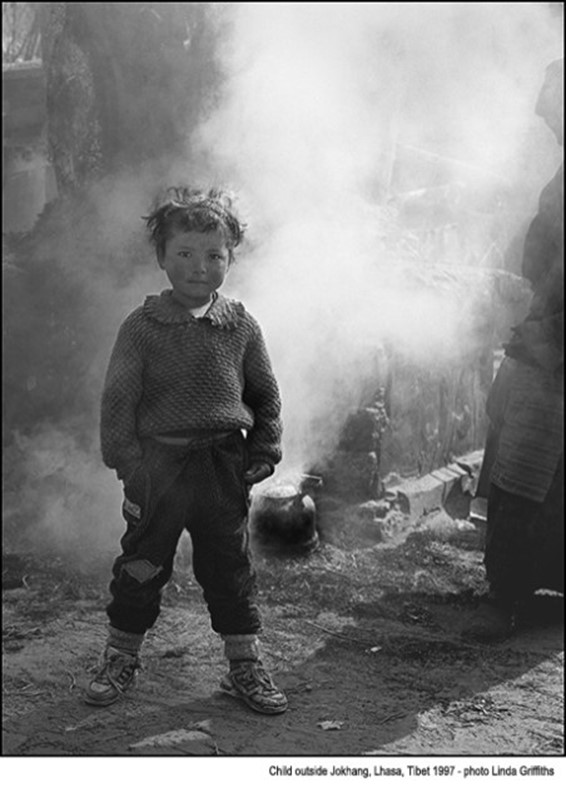
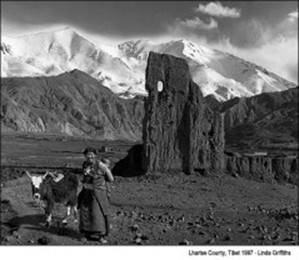
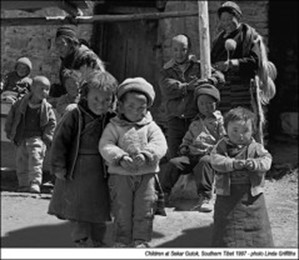
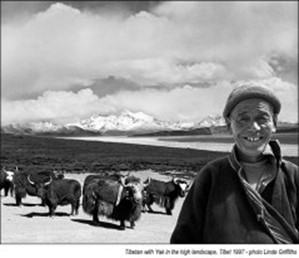
Photographs Taken During a Journey Around Tibet in 1997 by Linda Griffiths

on 14 July 2017

My old blue notebook is very rough, with scribbled notes of routes, ongoing costs and map marked up.  My daughter accompanied me.  We took a flight from Kathmandu into Lhasa on Saturday 5 April 1997.

We received a warm welcome from the many Tibetans we met — a life-changing experience for me, a homecoming — the landscape, buildings and the people merging, and overnight stays with Tibetan families wherever possible. Initially I had altitude sickness, tight headaches and vomiting.  So tiring at first being at Lhasa altitude so suddenly — only 3,590 meters. We adjusted after a few days and crisscrossed many passes way higher than Lhasa.


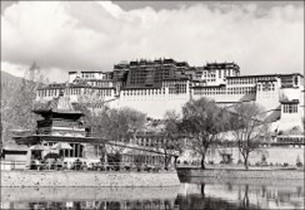
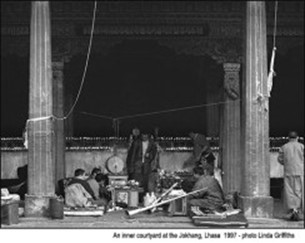
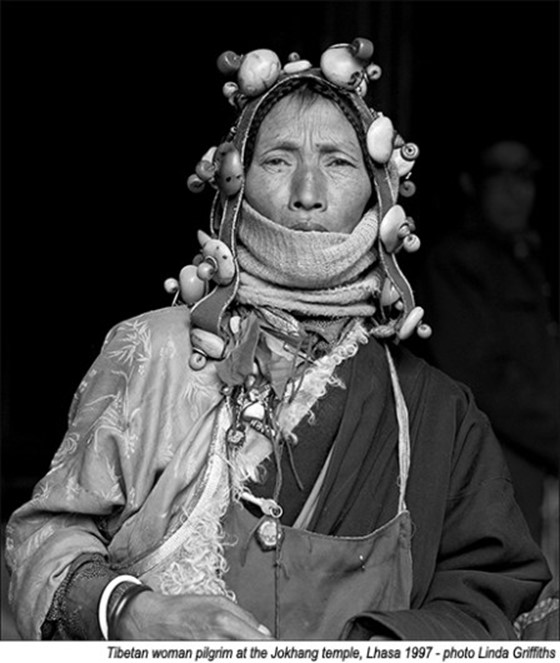
We stayed in Lhasa for 5 days visiting the Jokhang Temple many times and the Potala Palace once. In the streets and markets, meeting people, arranging the many visas required for each step of our journey, hiring a 4-wheel drive vehicle, with a Tibetan driver and a Tibetan guide. They made our journey a wonderful experience and kept us safe across the vast snowy high plains totally devoid of markings of any sort, not even tracks of other vehicles, no signs. Only Mountain peaks. We had to take everything with us, medicine, water, snacks, gifts and prayer flags.

On Thursday 10 April, we left Lhasa for Tsetang visiting Gonkar Chode monastery on the way, not far from the airport. We also visited Tradruk Monastery. Stayed in Tsetang — not a wonderful experience.


Friday 11 April, we took the Land rover on a ferry across the Brahmaputra — 90 terrifying minutes, then drove through desert to visit Samye Monastery for a day before returning to Tsetang for the night. Samye is amazing, wonderful.

On Saturday 12 April, we visited Chonge tombs and continued via the Luga La pass at 4,600 meters. Views of the nomadic grasslands and lakes. We stayed at Tanzik Gov. Guesthouse — best place so far. Many yaks, horses, great birds, sheep and rabbit like animals. Saw Mawochock monastery from afar hanging on a sheer cliff face.

Owing to us not being granted access to military areas we were forced to take several round about routes doubling our journey so we could visit important places. The many extra hours in the vehicle were hard but worth it.

On Monday 14 April, we arrived at Dowa Dzong capital of Lhodrak County. A drive up the winding pass of Gampa La at 4,794 meters. We looked down at the astoundingly turquoise Yamdrok Yutso Lake.  Finally, a tea stop in Nakartse.   High plains, vast and empty without sign of humanity, then small villages with very friendly people. Then the high pass, the Monda La at 5,266 meters. This is high altitude. Prayer flags on piles of carved rocks at the top.


On Tuesday 15 April with visited Sekar Gutok, a military town.  We continued to the 9-storied tower constructed by Milarepa. A place most difficult to reach — 32 km along a very deep sided gorge with rushing waters. We felt trapped in the gorge, perhaps the rushing waters would submerge us, we felt so small. This area with the famous tower is close to the Bhutan border. It feels like the end of the world. Finally, a small village with lovely people and lots of children. At the tower, itself we were well received. We hung prayer flags outside all around the building. Very special. This was our ultimate destination of the trip. We felt a sense of fulfilment, we felt blessed.

On Wednesday 16 April, we travelled to Gyantse, a very large town where time has stood still for centuries after retracing our steps via the Monda La pass and along the side of Phuma lake, frozen over today. We turned off to Nakartse. We had a day around Gyantse visiting the great Kumbum stupa and the monastery. Next, we went to Zhigatse where we visited the large and impressive monastery with many monks. A lively place. Nice place to stay.


We decided to make a 3-day detour on our road back to Kathmandu to visit Base Camp Mt. Everest on the Tibetan side. We also visited the nearby monastery. Main memory is of vastness, empty areas, only the wind breathing.

Photographs Taken During a Journey Around Tibet in 1997 © Linda Griffiths

From a showing at the Golden Buddha Centre, Totnes.

Tags: Buddhist Photographs of Tibet, Gonkar Chode monastery, Jokhang Temple, Lhasa, Milarepa


WholeDude

15 July 2017 • 2:46 am

Your comment is awaiting moderation.
Untold Story:
The vastness, empty areas of Tibet suffer from unnatural event called Occupation which imposes burden, hardship, pain, suffering, and misery for it compromises or abridges Natural Freedom and Independent Lifestyles of Tibetan people.


Welcome to Buddhism Now


Buddhism Now is an online Buddhist magazine, giving advice on how to practice Buddhism.


WHOLE ANGEL – WHOLE …wholeangel.com


WholeDude@bhavanajagat


Inserted from <https://buddhismnow.com/2017/07/14/photographs-taken-during-a-journey-around-tibet-in-1997-by-linda-griffiths/#comment-33483>


NATURE PLAYS TIBET CARD TO GENERATE TIBETAN FLAVOR OF NATURAL FREEDOM

NATURE PLAYS TIBET CARD TO GENERATE TIBETAN FLAVOR OF NATURAL FREEDOM


Man is Born Free and hence Man Claims Freedom as Natural Right. Natural Forces, Natural Mechanisms, and Natural Events created Tibetan Plateau over thousands of years imparting Natural Tibetan Flavor to Natural Freedom enjoyed by denizens of Tibet.


Occupation is Unnatural Event for it compromises Natural Freedom. Hence, Tibetans naturally respond to Forces of Occupation with Resistance Enduring Pain, Suffering, Hardship, and Misery.


Rudranarasimham Rebbapragada

DOOM DOOMA DOOMSAYER


Indian Defence News

India-China Standoff: Free-Tibet Movement In News Again, But Does New Generation Really Care?

  •  
  •  
     

    Thursday, July 13, 2017

    By: Outlook India


    “If New Delhi is pulling the strings of the Tibetan exiles’ political act of flag-hoisting, it will only have burned itself,” China’s state-run Global Times reacted in an editorial on July 9 after the Narendra Modi government reportedly allowed the Tibetan government in exile — on the eve of the Dalai Lama’s 82nd birthday — to perform rituals on the shores of Ladakh’s Pang Gong Lake along the disputed boundary with China.


    China also warned India to refrain from playing the “Dalai Lama card”. This came amid the ongoing border row between the two nations in the Sikkim sector. Whether India plays the Dalai Lama card or not, the latest standoff has once again shifted a little focus on the struggle of the thousands of Tibetan refugees in India who have been demanding free-Tibet for more than six decades now.


    Since 1959, when the Dalai Lama fled occupied Tibet to escape the Chinese regime, Tibetan refugees have been pouring into India. More than 100,000 Tibetans live in 39 formal settlements and dozens of informal communities across India. While the numbers have waxed and waned over the years the tide has never stemmed. The Indian government has funded schools to provide free education for Tibetans, and reserved seats in medical and engineering colleges.


    A majority of the Tibetans living in India have been born and brought up within the country.


    In a ruling last year, the Delhi High Court said nationality of Tibetans, born in India between 1950 and 1987, cannot be questioned under the Citizenship Act, and directed the government to issue passports to all Tibetans who meet the criteria of being Indian citizens by birth.


    But the important question is does this generation have ties to their homeland as strong as those of their parents and grandparents? Do they share the same fierce hope that one-day, soon, Tibet will be liberated and the entire exiled community can go home?


    Kunga Gyaltse, 43, a second-generation Tibetan refugee living with his family in Majnu ka Tila, a housing colony for Tibetans set up by the Indian government in north Delhi, is adamant that Tibetans in India have retained the purity of their culture. “Our ties with Tibet are just as strong,” he says.


    The colony is only a heartbeat away from the main road, but it seems like a wholly different world. A Buddhist temple and giant prayer wheel hem in the main square. Groups of Tibetans sit around the square sipping cups of tea while Buddhist monks in chougu robes are immersed in the counting of prayer beads. Tibetan culture seems alive and vibrant in the heart of old Delhi.


    Kunga places great value on housing colonies for refugees and the system of education controlled by the Tibetan government in exile. He believes that these have allowed Tibetans to flourish as a separate community with a distinct culture.


    “We teach our kids that it’s their duty to love Tibet. Their education is in Tibetan. If we’d mixed in with the Indian community we’d have lost our culture. But we stayed apart,” he adds.


    And what about the prospects of a Free-Tibet? Kunga and his friend, Dickyi, 48, are optimistic. “It will definitely be free in our lifetime,” Dickyi says.


    “The Dalai Lama is the reason our culture persists,” adds Dickyi’s friend Dolma, 45. All the Tibetans, varying in ages, are unanimous in their belief in the Dalai Lama and his central role in the freedom struggle.


    However, Jigme, 25, who lives in Dharamsala and works for the Tibetan government in exile, says a fully free-Tibet is unlikely to be realized any time soon.


    “I vouch for the middle path, I think that’s far more practical,” he says.


    This refers to a policy that advocates for Tibetan autonomy within the framework of Chinese rule. Jigme acknowledges that this is not something the older generation is likely to support.


    “My grandmother is purely Tibetan, she never adapted to Indian ways. She will only go back to a fully free Tibet,” he adds.


    Jigme is also in favor of Tibetans applying for Indian citizenship, an issue that has divided the Tibetan community in India in recent times. Citizenship provides security and permanence. It eases problems that refugees face with college admissions, where their foreign status leads to exorbitant fees. It makes it easier to apply for jobs in the public sector. Yet many Tibetans shun Indian citizenship.


    In 2015, the Election Commission, in a move aimed to ease the citizenship process for Tibetan refugees, allowed them to register for voter identity cards for the Delhi assembly elections. Many prominent activists and Tibetan leaders spoke out against the same. They argued that this move would dilute the cause for Tibetan freedom.


    Many younger Tibetans feel differently. Twenty-eight-year-old Tenzing wants the law governing citizenship to be expanded to include younger Tibetans.


    “I would like to apply for citizenship, it would help a lot,” she says ruefully.


    Angphurvasherpa, 57, a monk, disagrees. He sees applying for Indian citizenship as a selfish act.


    “In India, they give you documents to travel without having citizenship, so what is the need for it?” he says.


    According to him, the younger generation doesn’t understand the kind of hardships people in Tibet are facing.


    “They don’t value their own nation, they only care about themselves, they only value their own lives,” he says.


    The relationship of Tibetan refugees to their homeland has changed over time.


    Honey Oberoi Vahali, the author of Lives in Exile: Exploring the Inner World of Tibetan Refugees, describes how younger refugees view Tibet in a wholly different way from their ancestors.


    “Younger Tibetans have begun to feel that carrying the homeland forward is more symbolic than literal,” she says. “Since they’ve never seen Tibet it is viewed as part of an imagined past, inherited from their parents and grandparents.”


    Tenzing Sonam, 58, a writer, film director and essayist who is a long-standing advocate for Tibetan rights seems to agree.


    “Today’s youngsters are several generations removed from a direct connection with Tibet. So, although their sense of being Tibetan is still strong, their idea of Tibet is almost mythical,” he say


    He argues that Tibet has changed so drastically over the last 60 years that most exiled Tibetans would find it hard to adjust to life over there.


    Those who have come more recently from Tibet, see vast differences between Tibetans in India and those in Tibet. Lkhyi, 22, is one such refugee. She fled Tibet for India when she was 12. She observes that refugees born and brought up in India have adopted the local culture and customs to a far greater degree than they realize.


    “They are very different”, she says. “In terms of education, religion, the way they think everything. Even their taste in food is completely different.” She adds with a smile.


    For younger Tibetans, born and brought up in India, balancing their Indian identity with their Tibetan roots is a challenge. Moreover, India doesn’t always welcome them with open arms. The alienation that Tibetans still face within the nation, a place they see as home, often pushes younger refugees to join organizations such as the Students For Free Tibet (SFT), a global network of students and activists that work for the freedom of Tibet.


    Tenzin Tselha, SFT’s India branch director, recalls one such experience that prompted her to join the organization.


    “I had a lot of difficulties during my college admissions. People thought I was a foreigner, but I’ve been born and brought up in India, that’s when it really hit me,” she says. Tselha, 22, wanted to learn more about her culture and do something for her people so she moved to Dharamsala and joined the SFT.


    While some young Tibetans still echo the hopes and passions of their parents and grandparents, others are more focused on the present and creating a life of opportunity, than in the struggle to free Tibet.


    Thomas Kauffmann, author of The Agendas of Tibetan Refugees: Survival Strategies of a Government-in-Exile, argues that one of the main problems that Tibetans in India are facing is the dismantlement of settlements.


    “Many youngsters are indeed leaving the settlements because they don’t find jobs there and/or because they are attracted by other opportunities in cities or in other countries. There is nowadays a second migration from India to the West for the Tibetans.”


    “Many young Tibetans are moving to places like the US,” says Angphurvasherpa.


    He contends that since these countries don’t settle Tibetans into colonies, inevitably such relocation dilutes Tibetan culture. “But what can one do,” he says with a sad simile.


    Today, as the fourth and fifth generations of Tibetans are born within India, the differences among the community seem large. There are competing ideas regarding the best path to freedom, clashes over accepting Indian citizenship and discontent over the migration of youngsters.


    Despite this, until now the community has managed to preserve their culture. They have battled with yet stayed true to their identity.


  • Copyright © 2016
  • www.DefenceNews.in
  • All Rights Reserved


    Inserted from <http://defencenews.in/article/India-China-Standoff-Free-Tibet-Movement-In-News-Again,-But-Does-New-Generation-Really-Care-263158>


RED CHINA ON SLIPPERY SLOPE – OPENS FIRST OVERSEAS MILITARY BASE

RED CHINA ON SLIPPERY SLOPE – OPENS FIRST OVERSEAS MILITARY BASE


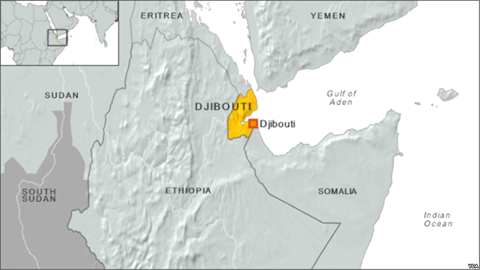
In my analysis, Red China placed herself on Slippery Slope by opening her first overseas military base in Djibouti. Red China’s military adventurism cannot ward off natural disaster, natural calamity, and natural catastrophe that is waiting, for Beijing invited her own Doom with her evil actions.


Soviet Union failed in the past due to military adventurism. It is too late for Red China to learn and plan to avoid sudden Downfall.


Rudranarasimham Rebbapragada

DOOMDOOMA DOOMSAYER


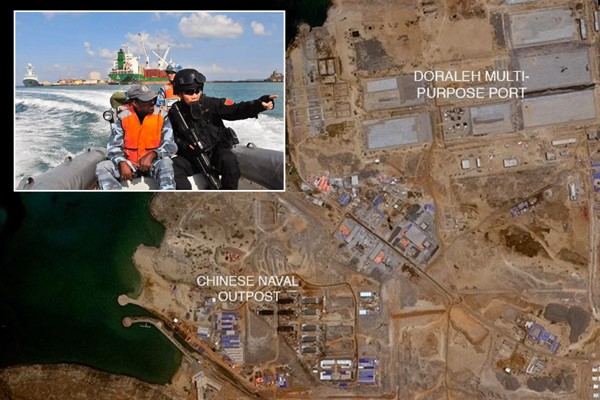
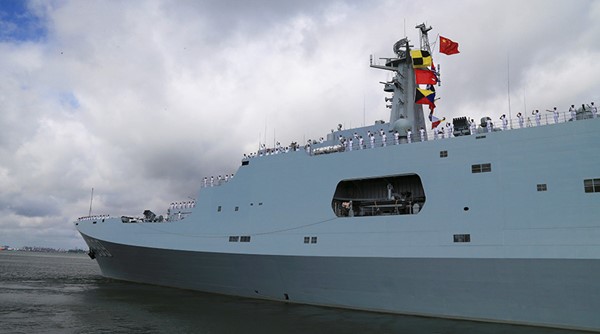
China sends troops to Djibouti, establishes first overseas military base

By Brad Lendon and Steve George, CNN


Wed July 12, 2017


  • “This base can support Chinese Navy to go farther,” Chinese paper says
  • Djibouti has become host to several foreign military powers

    (CNN)China has dispatched troops to Djibouti in advance of formally establishing the country’s first overseas military base.

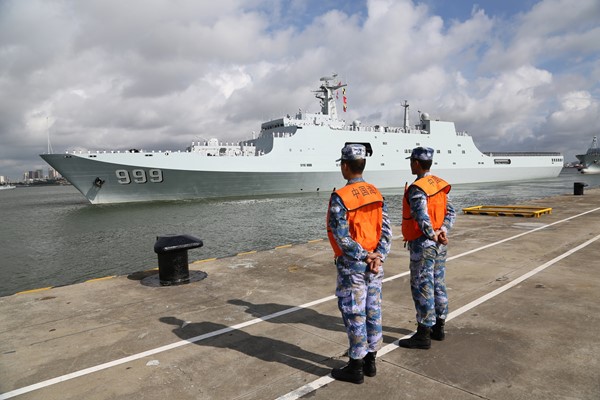
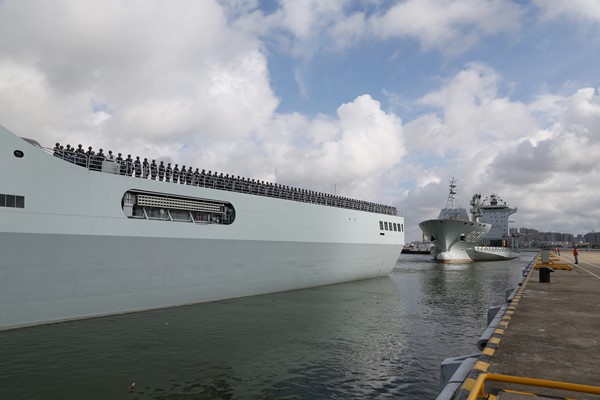
    Two Chinese Navy warships left the port of Zhanjiang on Tuesday, taking an undisclosed number of military personnel on the journey across the Indian Ocean.

    An editorial Wednesday in the state-run Global Times stressed the importance of the new Djibouti facility — in the strategically located Horn of Africa — to the Chinese military.


    “Certainly this is the People’s Liberation Army’s first overseas base and we will base troops there. It’s not a commercial resupply point… This base can support Chinese Navy to go farther, so it means a lot,” said the paper.

    The Global Times said the main role of the base would be to support Chinese warships operating in the region in anti-piracy and humanitarian operations.

    “It’s not about seeking to control the world,” said the editorial.


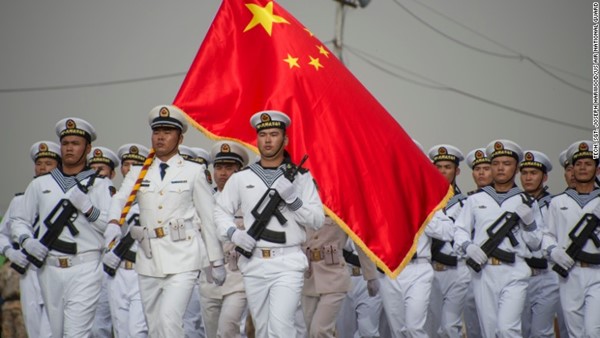
    Chinese People’s Liberation Army-Navy troops march in Djibouti’s Independence Day parade on June 27, marking 40 years since the end of French rule in the Horn of Africa country.

    Chinese military presence


    At a regular press briefing Wednesday, Chinese Foreign Ministry spokesman Geng Shuang described the base as part of ongoing efforts to help bring peace and security to the region.

    “China has been deploying naval ships to waters off Somalia in the Gulf of Aden to conduct escorting missions since 2008,” said Geng. “The completion and operation of the base will help China better fulfill its international obligations in conducting escorting missions and humanitarian assistance … It will also help promote economic and social development in Djibouti.”

    China has expanded its military ties across Africa in recent years. According to a report by the European Council on Foreign Relations (ECFR), cooperation with Africa on peace and security is now an “explicit part of Beijing’s foreign policy.”

    In 2015 Chinese President Xi Jinping committed 8,000 troops to the UN peacekeeping standby force — one fifth of the 40,000 total troops committed by 50 nations — China also pledged $100 million to the African Union standby force and $1 billion to establish the UN Peace and Development Trust Fund.

    More than 2,500 Chinese combat-ready soldiers and police officers are now deployed in blue-helmet missions across the African continent, with the largest deployments in South Sudan (1,051), Liberia (666), and Mali (402), according to the ECFR.

    “Blue-helmet deployments give the PLA a chance to build up field experience abroad — and to help secure Chinese economic interests in places such as South Sudan,” said the ECFR report.

    Africa is home to an estimated one million Chinese nationals, with many employed in infrastructure projects backed by the Chinese government.

    “China’s involvement in African security is a product of a wider transformation of China’s national defense policy. It is taking on a global outlook … and incorporating new concepts such as the protection of overseas interests and open seas protection,” said the ECFR report.


    US ‘strategic interests’

    China joins the US, France and Japan, among others, with permanent bases in Djibouti, a former French colony with a population of less than one million residents.

    Though small in both population and size, Djibouti’s position on the tip of the Horn of Africa offers strategic access to the Bab el-Mandeb Strait.

    The strait, which is only 18 miles wide at its narrowest point, connects the Mediterranean Sea via the Suez Canal and the Red Sea to the Gulf of Aden and the Indian Ocean beyond.

    One of the world’s most important sea lanes, millions of barrels of oil and petroleum products pass through the strait daily, according to GlobalSecurity.org.

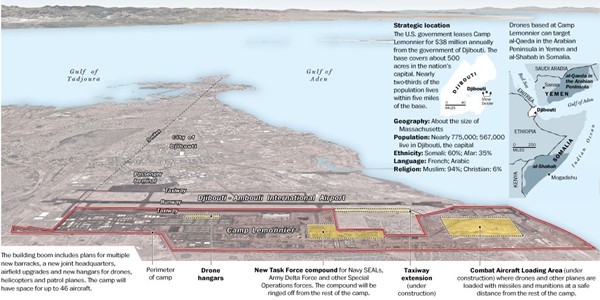
    US Marine Corps Gen. Thomas Waldhauser, the head of the Pentagon’s Africa Command, stressed Djibouti’s location during a visit to the US Camp Lemonnier garrison there earlier this year.

    “This particular piece of geography is very, very important to our strategic interests,” Waldhauser said in joint appearance with US Defense Secretary James Mattis.

    The US military has some 4,000 troops at Camp Lemonnier, a 100-acre base for which it signed a 10-year, $630 million lease in 2014, according to media reports.

    Elsewhere in Djibouti, the US military operates the Chabelley Airfield, from which the Pentagon stages drone airstrikes, likely into Somalia and across the Bab el-Mandeb Strait into Yemen, according to the Center for the Study of the Drone at Bard College in New York. The Pentagon is investing millions in the base, and satellite photos show several construction projects, the center reported last year.


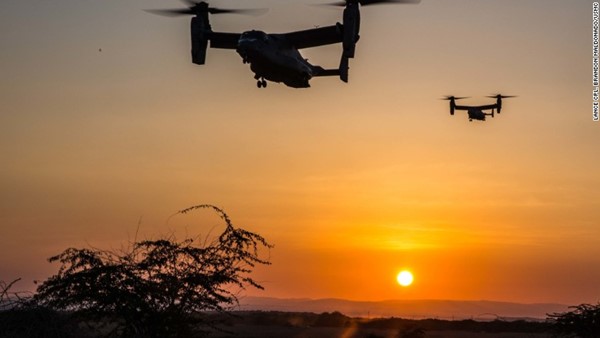
    US Marine Corps MV-22 Ospreys prepare to land at a landing zone during training conducted in Djibouti on January 10.


    ‘Get-rich-quick scheme’


    Japan, which has seen tense relations with China over disputed islands in the East China Sea, has established what it calls an “activity facility” to support its anti-piracy efforts there.

    A spokesperson for the Japan Self Defense Forces said 170 troops are at its 30-acre facility in Djibouti.

    Lease terms would not be released, but Japan will spend about $9 million to operate the facility this fiscal year, the spokesperson said.

    Edward Paice, director of the London-based Africa Research Institute, said a base in Djibouti makes a lot of sense for China, just as it does for Japan or the US.

    “It (China) has cited its desire to play a greater role in peacekeeping, and it has combat troops in both South Sudan and Mali. It’s logical that it needs an actual base somewhere in Africa, which is really no different from the Americans saying that they need Camp Lemonnier as a headquarters for operations in Africa, whether in peacekeeping or counterterror or whatever,” Paice said on The Cipher Brief website.


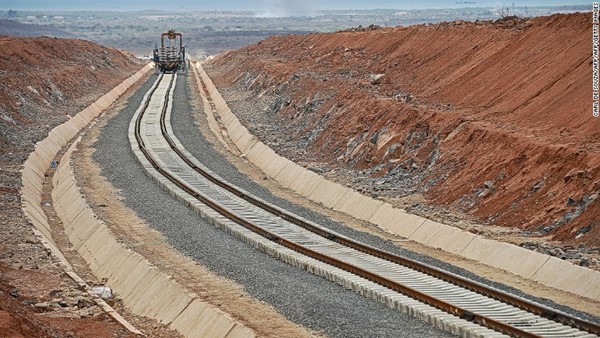
    Picture taken on May 5, 2015, shows work in progress on the new railway tracks linking Djibouti with Addis Ababa.

    Paice points out that China made a substantial investment in Djibouti — about $500 million, according to reports — to build the Djibouti portion of a rail line to the capital of neighboring Ethiopia.

    “It’s a confluence of these factors — trade, military, and stability in the host country’s government” that brought China to Djibouti, Paice said.

    Meanwhile, for Djibouti, it’s all about money, Paice said. “This is a fantastic get-rich-quick scheme — to rent bits of desert to foreign powers. It’s as simple as that.”

    CNN’s Serenitie Wang, Daisy Lee and Junko Ogura contributed to this report.

  •  
    © 2017 Cable News Network. Turner Broadcasting System, Inc. All Rights Reserved.

    CNN Sans ™ & © 2016 Cable News Network.

    Inserted from <http://www.cnn.com/2017/07/12/asia/china-djibouti-military-base/index.html>


WORLD TIBET DAY – PRAYERS AT PANG GONG LAKE FOR TIBET EQUILIBRIUM

WORLD TIBET DAY – PRAYERS AT PANG GONG LAKE FOR TIBET EQUILIBRIUM

WORLD TIBET DAY – PRAYERS AT PANG GONG LAKE TO DELIVER BLESSINGS OF FREEDOM TO TIBETANS IN OCCUPIED TIBET.

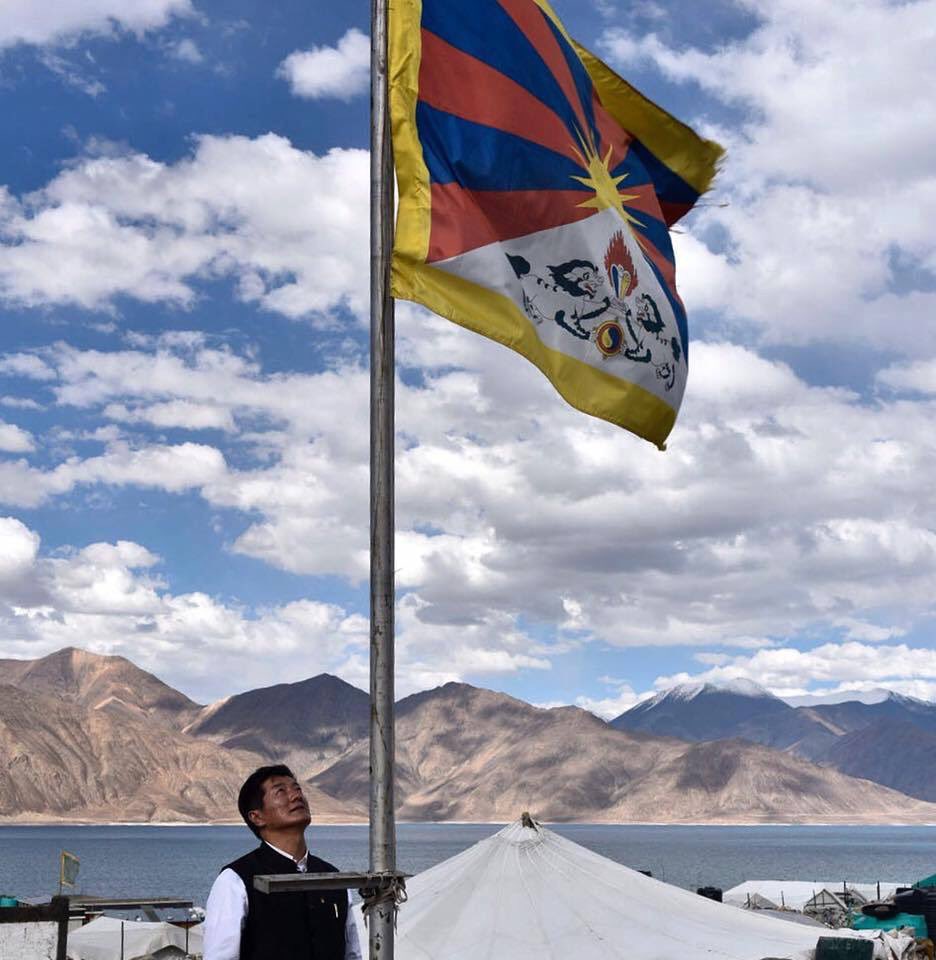
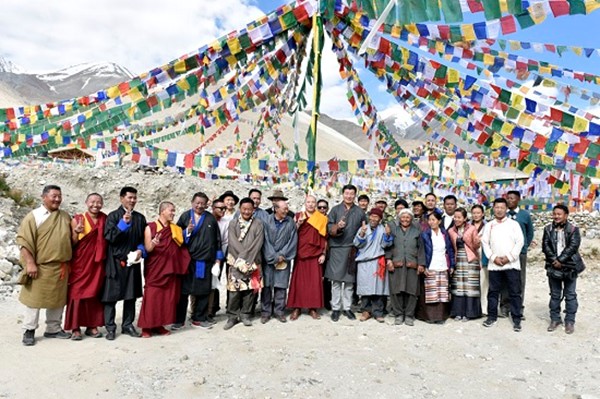
World Tibet Day – Prayers at Pang Gong Lake for Tibet Equilibrium. Tibetan President Dr. Lobsang Sangay at Pang Gong Lake on July 05, 2017.

World Tibet Day – Prayers at Pang Gong Lake for Tibet Equilibrium.

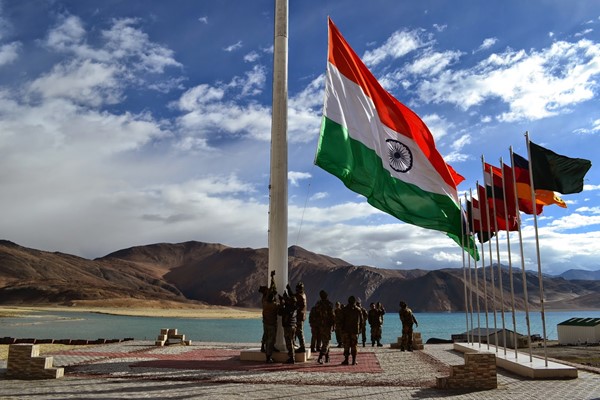
Tibetan President Dr. Lobsang Sangay hoisted Tibetan National Flag and held special Prayer Service on Wednesday, July 05, 2017 at Pang Gong Lake near India-Tibet Border in preparation for celebration of World Tibet Day on Thursday, July 06, 2017. The Prayer seeks blessings of Freedom for all Tibetans in Occupied Tibet.

World Tibet Day – Tibetan President, Dr. Lobsang Sangay at Pang Gong Lake.

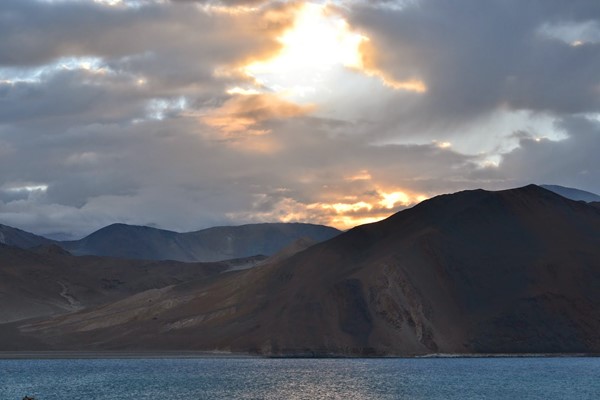
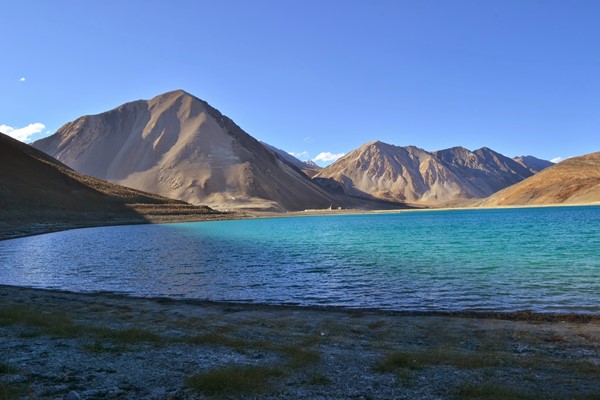
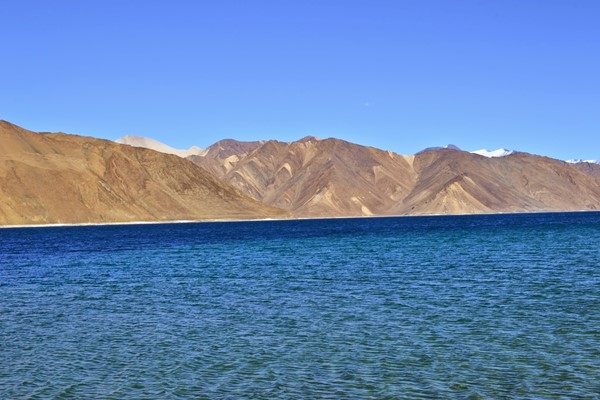
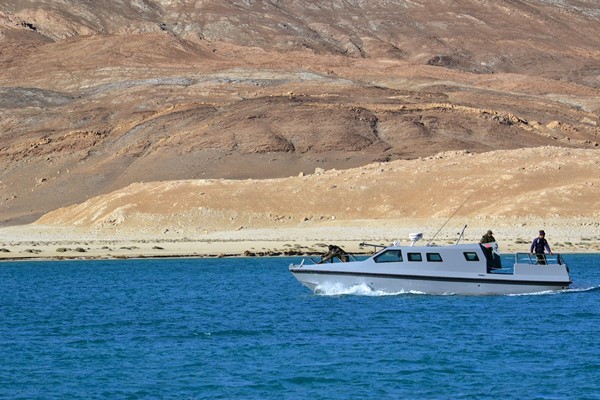
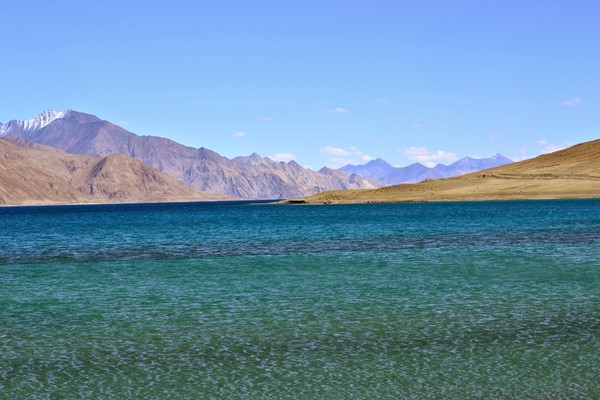
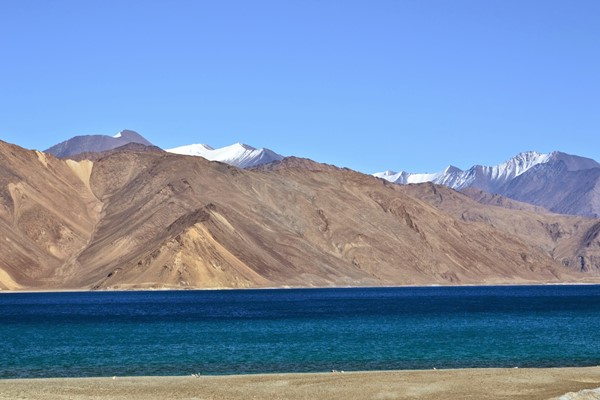
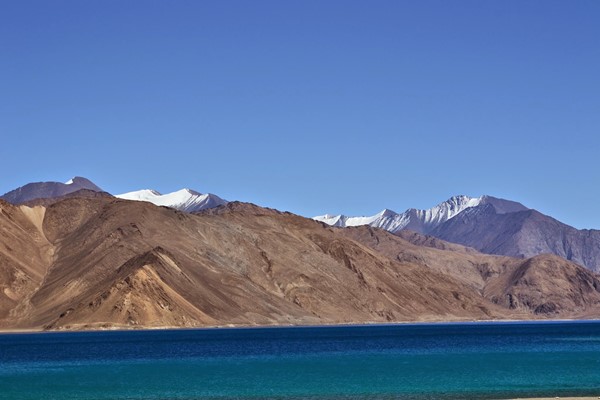
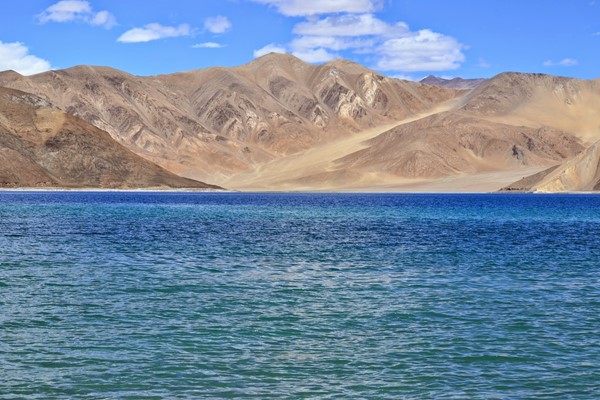
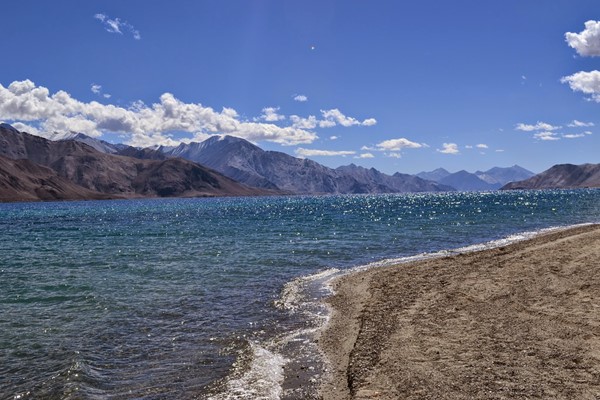
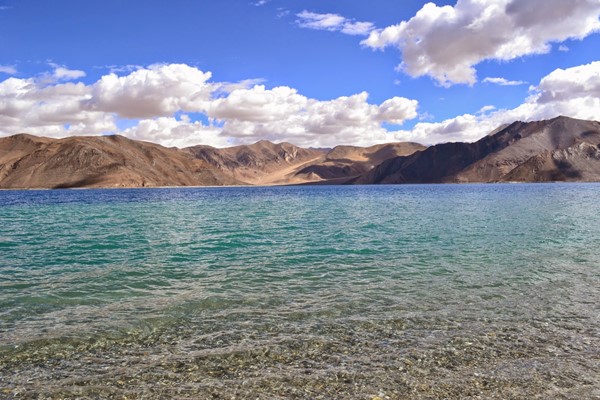
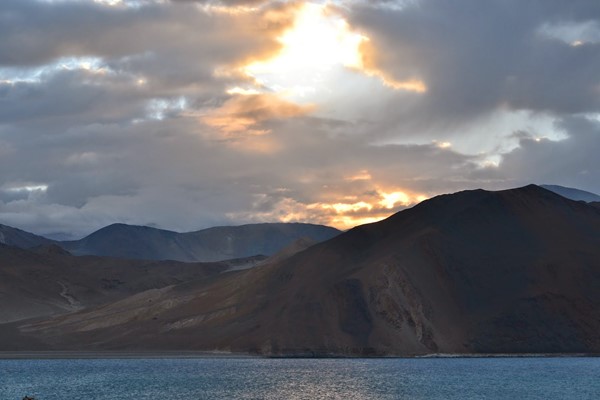
I invite my readers to view photo images to enjoy ‘Natural Beauty’ of Pang Gong Lake between India and Tibet.

World Tibet Day – Prayers at Pang Gong Lake for Tibet Equilibrium.

Rudranarasimham Rebbapragada

DOOM DOOMA DOOMSAYER

‘TIBET CARD’ ADDED TO INDIA-CHINA BORDER MIX AS TIBETAN FLAG IS HOISTED AT PANG GONG LAKE – INDIAN DEFENCE FORUM

World Tibet Day – Prayers at Pang Gong Lake for Tibet Equilibrium on July 05, 2017. Tibetan President Dr. Lobsang Sangay at Namgyal Monastery.

Clipped from: http://indiandefence.com/threads/tibet-card-added-to-india-china-border-mix-as-tibetan-flag-is-hoisted-at-pang-gong-lake.62429/

BY DEVIRUPA MITRA ON  JULY 08, 2017 • 

Coming amid the ongoing stand-off between India and China in Doklam, the hoisting of the Tibetan flag on Indian territory could be seen as political activity.

World Tibet Day – Prayers at Pang Gong Lake for Tibet Equilibrium. Tibetan President Dr. Lobsang Sangay hoisted Tibetan National Flag on July 05, 2017.

Lobsang Sangay, head of the Tibetan government-in-exile, seen after hoisting the Tibet flag on Pangong Lake. Courtesy: Central Tibetan Administration website

New Delhi: Even as the stand-off between Indian and Chinese soldiers continued in one part of the Himalayas, Lobsang Sangay, head of the Tibetan government-in-exile, unfurled the Tibetan national flag on the shores of Pang Gong lake in Ladakh.

The lake, located at over 14,000 feet, sits astride India and China, with the Line of Actual Control passing through it.

Speaking to The Wire, Sonam Norbu Dagpo, spokesperson of the Central Tibetan Administration (CTA), said that this was the first time that the independent Tibet flag had been unfurled by the head of the government-in-exile at that important location.

“This is the first visit by the CTA president to Ladakh and, therefore, the first time that the national flag has been unfurled near the lake,” he said.

Dagpo pointed out that the location has special meaning for the Tibetan community. “As you know, half the lake is in India, and half the Tibet,” he added. Consequently, he said that the hoisting of the national flag has “political and personal significance”.

When asked if any go-ahead signal was taken from authorities, Dagpo asserted, “I don’t think any permission is required to hoist the Tibetan national flag”.

Sangay was in Ladakh on the invitation of the Ladakhi community to celebrate the birthday of the Dalai Lama on July 6, Dagpo added.

According to a report on the lake shore ceremony published on the CTA website, Sangay had a brief audience with the Dalai Lama before leaving for the lake on the morning of July 5.

The report noted that Sangay poured “blessed grains” received from the Dalai Lama into the lake in the hope that “these grains will reach Tibet and bless Tibetans inside Tibet as well”.

“Physically, I may be standing just a few meters from Tibet today. However, in terms of political freedom and views, I am still far away from the situation inside Tibet,” Sangay said, according to the report.

Speaking to The Wire, a former MEA secretary, R.S. Kalha said, “The unfurling of the Tibetan flag is a political act, especially at this time”.

For the last 22 days, Indian and Chinese soldiers have been watching each other warily on a clearing called the ‘Turning Point’ in Doklam. Indian soldiers had stopped Chinese soldiers from constructing a road within Bhutanese territory, which would have serious security implications for the tri-junction and the ‘chicken neck’ Siliguri corridor.

China has been on a media blitzkrieg claiming that India violated a 1890 treaty and asserting that Indian soldiers were on Chinese territory. India and Bhutan have both said that China had changed the status-quo by building a road and asked it to return to the previous position.

Indian Prime Minister Narendra Modi and Chinese President Xi Jinping had a five-minute conversation on Friday on the sidelines of a meeting of BRICS leaders gathered in Hamburg for the G20 summit. However, no details were given of the “wide range of issues” discussed.

Meanwhile, even as the two leaders met in Hamburg, the Chinese embassy in India issued an advisory for its nationals to “pay close attention to personal safety”.

Observer Research Foundation’s Manoj Joshi agreed that the flag hoisting by Sangay “assumes importance due to the timing”. “This is a very significant gesture, given that it has happened for the first time at this location which has emotional and political symbolism.”

Both Kalha and Joshi pointed out that the flag was hoisted on Indian territory, which could be interpreted as political activity.

A former Indian diplomat, who has been a practitioner in India-China bilateral ties, claimed that it was unlikely that India would have “encouraged” Sangay to go to the lake. “So far, I do not see any signs of the Indian government interested in escalating the issue,” said the diplomat, who did not want to be named. He also pointed to the Indian statement on the Doklam stand-off, which he said was “very measured and sober”.

Joshi asserted that the NDA government has a history of trying to play up the Tibet issue. “Ever since this government took office, it has given more visibility to the Tibetan cause, right from swearing-in day. This has not gone unnoticed in Beijing,” he said.

When Modi was sworn in as prime minister, Sangay was among the special invitees in the audience, sitting right next to then Uttar Pradesh chief minister Akhilesh Yadav. Sangay’s presence led to speculation of new government policy on Tibet. Sangay’s presence didn’t go unnoticed, with China lodging a protest. A few months later, Modi and Xi were sitting together on a swing alongside the river Sabarmati – but that was probably the biggest high in India-China bilateral relations till now.

In April 2016, India allowed a US-based Chinese dissident organization to organize a seminar of pro-democracy activists in Dharamshala, but later cancelled the visa of an Uighur activist on the grounds that he gave wrong information in his visa application. The visas of three other participants to the conference were also cancelled. However, the seminar went ahead, but without the media being allowed in.

The permission for the conference had come in the wake of China putting on hold – yet again – the listing of Jaish-e-Mohammed chief Maulana Masood Azhar by the 1267 al-Qaeda and Taliban sanctions committee of the UN Security Council.

In December 2016, China warned India to respect Beijing’s “core interests” after Dalai Lama visited Rashtrapati Bhawan to attend a conference of Nobel laureates and shared the dais with the Indian president. This was the first contact between the Tibetan spiritual leader and the head of the Indian state in decades. India had played down the incident, stating that Dalai Lama had been invited for a “non-political event”.

A few months earlier in October 2016, Beijing had also protested the first ever visit by an US ambassador to India to Arunachal Pradesh.

This year, China was again upset by the visit of the Dalai Lama to Arunachal Pradesh. The language used by the Chinese foreign ministry on Dalai Lama’s visit was so sharp that India issued a list of previous trips of the Tibetan spiritual leader to the north-eastern state, which is claimed by China. The foreign ministry spokesperson also clarified that there was a “no change” in Indian government’s policy towards China’s Tibet or to the boundary question.

https://thewire.in/155657/lobsang-sangay-central-tibetan-administration-tibet-flag-india-china/

World Tibet Day – Prayers at Pang Gong Lake for Tibet Equilibrium.

World Tibet Day – Prayers at Pang Gong Lake for Tibet Equilibrium.

World Tibet Day – Prayers at Pang Gong Lake for Tibet Equilibrium.

World Tibet Day – Prayers at Pang Gong Lake for Tibet Equilibrium.

World Tibet Day – Prayers at Pang Gong Lake for Tibet Equilibrium.

World Tibet Day – Prayers at Pang Gong Lake for Tibet Equilibrium.

World Tibet Day – Prayers at Pang Gong Lake for Tibet Equilibrium.

World Tibet Day – Prayers at Pang Gong Lake for Tibet Equilibrium.

World Tibet Day – Prayers at Pang Gong Lake for Tibet Equilibrium.

World Tibet Day – Prayers at Pang Gong Lake for Tibet Equilibrium.

World Tibet Day – Prayers at Pang Gong Lake for Tibet Equilibrium.

World Tibet Day – Prayers at Pang Gong Lake for Tibet Equilibrium.

World Tibet Day – Prayers at Pang Gong Lake for Tibet Equilibrium.

World Tibet Day – Prayers at Pang Gong Lake for Tibet Equilibrium.

World Tibet Day – Prayers at Pang Gong Lake for Tibet Equilibrium.

World Tibet Day – Prayers at Pang Gong Lake for Tibet Equilibrium.

World Tibet Day – Prayers at Pang Gong Lake for Tibet Equilibrium.

World Tibet Day – Prayers at Pang Gong Lake for Tibet Equilibrium.

World Tibet Day – Prayers at Pang Gong Lake for Tibet Equilibrium.

World Tibet Day – Prayers at Pang Gong Lake for Tibet Equilibrium.

World Tibet Day – Prayers at Pang Gong Lake for Tibet Equilibrium.

World Tibet Day – Prayers at Pang Gong Lake for Tibet Equilibrium. Indian Armed Forces keeping watch at India-Tibet Border.

World Tibet Day – Prayers at Pang Gong Lake for Tibet Equilibrium. The Lake is at India-Tibet Border.

WORLD TIBET DAY – PRAYERS AT PANG GONG LAKE FOR TIBET EQUILIBRIUM.

Whole Trouble – Red China invents Border disputes to justify Occupation

Red China invents Border Disputes to perpetuate Tibet’s Occupation

Red China invents these Border Disputes to legitimize illegal Occupation of Tibet

The root cause of territorial disputes in Himalayan Plateau is an Unnatural event called ‘Occupation’ that shattered Tibet’s experience of Natural Balance, Natural Order, Natural Equilibrium, Natural Harmony, Natural Peace, and Natural Freedom. India and Bhutan must primarily focus upon return of Tibet to its Natural State or Condition, a condition that never threatened the existence of its immediate neighbors. Red China invents these Border Disputes to legitimize illegal Occupation of Tibet

Red China invents these Border Disputes to legitimize illegal Occupation of Tibet

Clipped from: https://www.washingtonpost.com/world/asia_pacific/china-pushes-hard-in-border-dispute-with-india/2017/07/06/52adc41e-619b-11e7-80a2-8c226031ac3f_story.html?utm_term=.9bc54d806201

Red China invents these Border Disputes to legitimize illegal Occupation of Tibet

China pushes hard in border dispute with India

The Washington Post
Red China invents these Border Disputes to legitimize illegal Occupation of Tibet


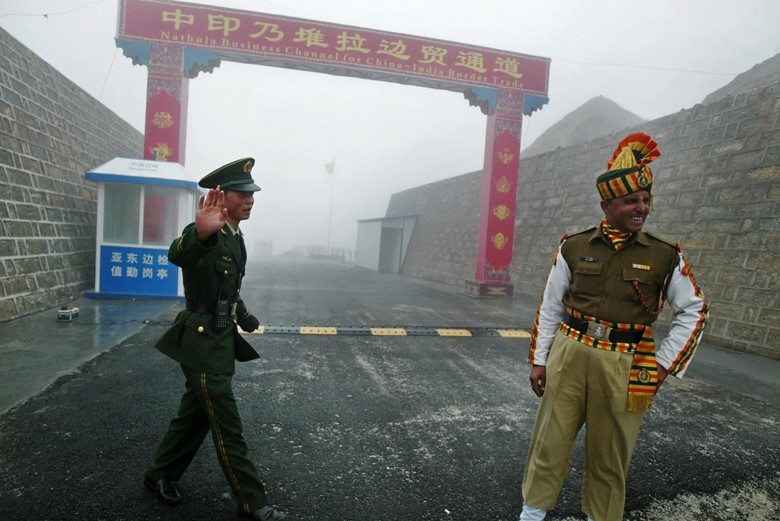
This photo from 2008 shows a Chinese soldier, left, next to an Indian soldier at the Nathu La border crossing between India and China. (Diptendu Dutta/Agence France-Presse via Getty Images)

NEW DELHI — Their meeting is likely to be all smiles and polite handshakes, as world leaders look on. But as Indian Prime Minister Narendra Modi and his Chinese counterpart Xi Jinping left for Friday’s Group of 20 summit in Hamburg, tensions between the rising Asian powers had escalated over a patch of disputed territory claimed by both China and the tiny Himalayan kingdom of Bhutan.

Border scuffles between India and China have simmered in the past, but analysts from both sides said the latest spat has the potential to spiral into conflict between the two nuclear-armed nations. So far, the countries’ troops, who are usually unarmed to avoid provocation, have engaged in what is known as “jostling,” when soldiers attempt to physically push rivals back.

The standoff began at the end of June, while Modi was meeting President Trump, prompting some Indian analysts to wonder whether the timing had anything to do with China’s disdain for India’s increasingly close ties to the United States.

“The Chinese are making their unhappiness clear on India and America’s relationship,” said Sameer Patil, director at an India-based foreign policy think tank called Gateway House.

The dispute started after Chinese construction trucks, accompanied by soldiers, rolled south in the disputed region of Doklam to build a road. India and Bhutan consider the region to be Bhutanese territory; China claims the land as its own. The countries disagree on the exact location of the “tri-junction,” where the three borders meet.

Red China invents these Border Disputes to legitimize illegal Occupation of Tibet

The argument bears some of the hallmarks of China’s efforts to fortify islands in the disputed South China Sea, where it has riled the Philippines and Vietnam and risked confrontation with the U.S. Navy.

India and Bhutan have traditionally been close allies; India often provides the small country with financial and military assistance. It was the first country Modi visited after being elected.

Indian analysts say China’s move in Doklam threatens a narrow sliver of strategically important land, known as the “chicken’s neck,” which connects central India to its remote northeast. In response to what it believed was extraterritorial Chinese road-building, New Delhi sent reinforcements supporting Bhutan — according to ex-Indian army officials, at Bhutan’s request.

Chinese officials say India’s intervention amounted to a provocation, violating an 1890 treaty with Britain that appears to grant China access to the region. According to Chinese Foreign Ministry spokesman Geng Shuang, the pact was affirmed by Indian leaders after independence.

“As to the boundary negotiation between China and Bhutan,” he said Wednesday, “we have repeatedly stated that Doklam has always been part of China’s territory and under China’s effective jurisdiction without disputes.”

The government’s messages were bolstered by stern statements in China’s state-run media. The Global Times newspaper printed a furious editorial warning India of China’s military might. “The Indian military can choose to return to its territory with dignity, or be kicked out of the area by Chinese soldiers,” it said.

Wang Dehua, from the Shanghai Municipal Center for International Studies, said, “By continuing to increase deployment of troops at the border, India once again underestimates China’s capability and determination to safeguard its territory. It also fails to estimate the cost of confrontation.”
Hopes for a discussion between Modi and Xi on the Doklam dispute on the sidelines of the G-20 summit were scuppered after Indian media reported that the government had not requested a one-on-one meeting. Instead, Xi and Modi will meet among leaders from other G-20 countries to discuss international issues.

“China has taken a very stubborn attitude, and there is little appetite in India to accommodate China’s behavior,” Patil said.

Modi had come into office with high hopes of building Sino-
Indian relations; experts called him the most pro-China prime minister since the two countries’ 1962 border war. Xi met Modi in India in 2014 shortly after the latter was elected, in the first visit by a Chinese leader in eight years.

Instead, the two nations have become increasingly suspicious of one another. During Modi’s recent visit to the United States, a deal was struck to buy surveillance drones that could be used to monitor Chinese naval activity in the Indian Ocean. In April, China fulminated over the Dalai Lama’s tour of Arunachal Pradesh in northeast India, known in China as south Tibet. China considers the Dalai Lama an opponent and a separatist whose power threatens its control over Tibet.

India also refused to join China’s “One Belt, One Road” program, a massive infrastructure project involving 70 countries aimed at reviving old Silk Road trade routes. Plans include an improved connection between China and Pakistan and would allow Pakistan access to other countries in Central Asia.

China, on the other hand, blocked efforts to designate a Pakistan-based militant outfit, Jaish-e-Muhammad, as a terrorist organization. It has also stood in the way of India’s bid for membership in the Nuclear Suppliers Group, an organization of countries that supply — and control — the export of nuclear materials, equipment and technology.

China has billions of dollars in investment deals with Sri Lanka and Nepal and this year took part in a joint military training exercise with Nepal. India considers both neighbors to be allies.

“I think the root cause is that the Chinese feel that their moment has arrived and that they do not need to accommodate Indian interests in any way, given the huge power differential in their favor,” said India expert Ashley Tellis, senior fellow at the Carnegie Endowment for International Peace. “Chinese suspicion that India was casting its lot entirely with the United States has only intensified Beijing’s determination to be even less accommodative towards New Delhi.”

Politically, neither Modi nor Xi can be seen to be giving in to the other’s demands. Modi’s nationalist government has insisted upon maintaining the integrity of Indian borders, banning maps and representations of disputed regions in the north. Xi, too, cannot be seen to be relenting on what the Global Times called “unruly provocations” from India, as he prepares to face a Chinese Communist Party conference in the fall.

Denyer reported from Beijing.

China demands India leave Himalayan plateau in rising spat

Red China invents these Border Disputes to legitimize illegal Occupation of Tibet