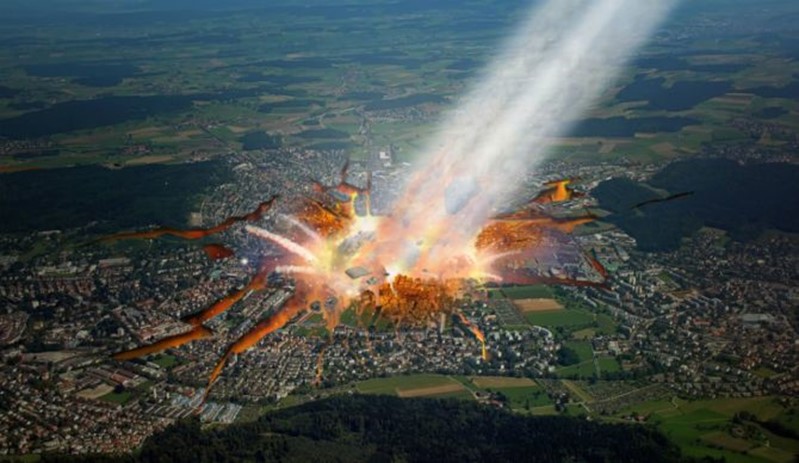
A HYPOTHETICAL CATACLYSMIC EVENT TO RESTORE TIBET EQUILIBRIUM

Tibet Equilibrium – Balance of Power – Future of Red China’s Evil Power. Consequences for Evil actions. Beijing is Doomed by the Prophecy of Isaiah.

Tibetans enjoyed a sense of peace, harmony, and tranquility or of equilibrium for several centuries as a gift from Mother Nature. The geographical isolation, the inhospitable terrain, and climate protected Tibetans from attacks by hostile, foreign forces. However, about 70 years ago, the natural defenses of Tibet utterly failed to resist the onslaught of Communist China’s military expansionism.

TIBET EQUILIBRIUM – BALANCE OF POWER IN OCCUPIED TIBET. THE GREAT TIBET PROBLEM WILL EXIST UNTIL BALANCE OF POWER IS RESTORED IN OCCUPIED TIBET.

I characterize myself as an advocate of a Doomsday Event, a natural cataclysmic event that will restore the balance of power in the Land of Tibet without the need for the application of man’s physical power to counteract against the physical power of China.

Arrogant nation, pride and might of Evil Red Empire

In my analysis, a cataclysmic event will affect mainland China and as a consequence, China would cease its military occupation of Tibet fully restoring Tibet equilibrium which prevails as a natural event entirely shaped by Natural Factors, Natural Conditions, and Natural Mechanisms.

Cataclysmic events are strong stressors that occur suddenly and typically affect many people at the same time. For example plane crashes or tornadoes. Personal stressors include life events such as personal failure, the death of a parent or the loss of one’s job.

Something that’s cataclysmic is violently destructive. The word often refers to natural disasters, like a cataclysmic earthquake, but cataclysmic can describe other events

Cataclysm is derived from the Greek κατά kata, “down, against” and κλύζω klyzō, “wash over, surge.” It may refer to: Deluge (mythology); a hypothetical Doomsday event; any catastrophic geological phenomenon.

THE FUTURE OF RED CHINA’S EXPANSIONISM – BEIJING DOOMED.

I am reproducing an article describing 17 Cataclysmic Events that Changed the Earth forever.

17 Cataclysmic Events That Changed the Earth Forever

By Michael B. Sauter and Thomas C. Frohlich November 15, 2019, 1:37 pm Print Email Share

Since the Earth was formed roughly 4.5 billion years ago, it has gone through dozens of major cataclysmic events, including the eruption of supervolcanoes, impacts by comets and asteroids, major tectonic shifts, exposure to cosmic radiation, and more. Most of these took place long before homo sapiens ever walked the Earth.

Some of these events were so violent that they directly ushered in new geologic periods. These were often accompanied by ice ages, mass extinction events, or conversely warming and ecological flourishing. These periods left lasting, major changes to the planet’s species, continental structure, and atmospheric composition. 

For those concerned about the looming threat of global climate change, these events, many of which are now millions of years old, bear grim relevance to today. 

The major extinction events that occurred since life began on Earth, in the majority of cases, share a few attributes, including major changes in CO2 levels and other gases like methane and sulfur dioxide in the atmosphere and an increase in ocean acidification, which can result from higher CO2 levels. 

Since the Industrial Revolution, both carbon concentration in the atmosphere and ocean acidification is increasing at far faster levels than can be explained by cyclical changes. Ocean acidity has increased by 30%, and CO2 levels have roughly doubled compared to preindustrial levels, and the result is the endangerment of tens of thousands of species.

Currently, the planet’s flora and fauna are dying at a much faster rate than is normal in nature. Scientists have warned we could be in the midst of a sixth major extinction event, which unlike previous extinction events is caused by human activity and could worsen if human-related greenhouse gas emissions continue unchecked. 

To compile a list of the largest geological forces in Earth’s history, 24/7 Wall St. reviewed publications in scientific journals focusing on cataclysmic events in Earth’s history that resulted in sudden, abrupt, and massive environmental impacts. For each event where the date of occurrence can only be estimated, we list the rough number of years it is believed to have occurred before today, and for events where the exact year of the occurrence is known, the year is written out with A.D. notation. 

A cataclysmic event is one that changes a situation or society in a very significant manner, especially in an unpleasant way.

1. Collision with Theia
> Era: 4.5 billion years ago

1. Collision with Theia
> Era: 4.5 billion years ago

According to the prevailing theory on the Moon’s origin, roughly 4.5 billion years ago, the relatively young Earth — just 100 million years old at that point — collided with a Mars-sized planet-like object called Theia. The head-on collision ejected tons of molten material into the Earth’s atmosphere, which for a time after is believed to have been made up of plasma-metal vapor. The debris eventually congealed and formed Earth’s moon.

2. The Great Oxidation Event
> Era: 2.5 billion years ago

2. The Great Oxidation Event
> Era: 2.5 billion years ago

It is believed that between 2.5 billion and 2.3 billion years ago, life on Earth was largely confined to the oceans. Around that time, a massive bloom of an algae-like bacteria called cyanobacteria appeared, saturating the Earth in oxygen. Because most bacteria at the time did not metabolize oxygen, many bacteria species died out. The abundance of oxygen, in a chemical reaction, helped reduce the levels of methane in the atmosphere, cooling the Earth down significantly.

3. Vredefort impact
> Era: 2 billion years ago

Source: Júlio Reis / NASA / Wikimedia Commons

3. Vredefort impact
> Era: 2 billion years ago

Approximately 2 billion years ago, an asteroid somewhere between 3 miles and 6 miles in diameter struck the Earth in what is now South Africa at an estimated 12 miles per second. The resulting crater is 118 miles in diameter and was originally a magma lake formed from the energy of the collision. An impact of this size would certainly have caused major changes in the composition of the Earth’s atmosphere.

4. Sudbury Basin impact
> Era: 1.8 billion years ago

Source: NASA World Wind / Wikimedia Commons

4. Sudbury Basin impact
> Era: 1.8 billion years ago

The Sudbury Basin in Ontario, Canada, is one of the three largest impact craters on Earth, measuring 18 miles by 37 miles. Unlike some other major impacts, scientists believe the basin was formed by a comet rather than an asteroid. The impact was so intense that it formed a hole in the crust of the Earth, which subsequently filled with magma.

5. Acraman impact
> Era: 580 million years ago

Source: NASA World Wind / Wikimedia Commons

5. Acraman impact
> Era: 580 million years ago

Roughly 56 miles in diameter, the Acraman crater in South Australia is one of the largest on Earth. Approximately 580 million years ago, an asteroid with an estimated diameter of 2.9 miles hit the site. The effects of the impact on the atmosphere, coupled with a period of glaciation, may have had a substantial impact on the course of evolution at the time.

6. Events leading to Ordovician extinction
> Era: 440 million years ago

6. Events leading to Ordovician extinction
> Era: 440 million years ago

The Ordovician period ended some 440 million years ago, coinciding with the beginning of an ice age. An estimated 85% of all animal species on Earth died out, making it a larger extinction event than the K-T extinction (the event known to result in the extinction of the dinosaurs). While the Ice Age is generally accepted as the primary cause for the mass die-out, one theory suggests that during this period the Earth was bathed in deadly gamma radiation, which would have directly killed many of earth’s inhabitants, and also filled the atmosphere with nitrogen dioxide and create conditions that might have been the catalyst for the ice age that occurred.

7. Eruption leading to the Permian extinction
> Era: 252 million years ago

7. Eruption leading to the Permian extinction
> Era: 252 million years ago

Approximately 252 million years ago, about 90% of life on Earth died out. This event often referred to as “The Great Dying” is the single largest extinction event in Earth’s history. The catalyst for the mass extinction is believed to be an explosion of volcanic activity in what is now Siberia. The explosion put over 700,000 cubic miles of ash into the atmosphere, which could have raised global temperatures by an average of approximately 18 F. The rise in temperatures and other atmospheric changes, including acid rain, devastated Earth’s species.

Underwater eruption leading to End-Triassic extinction
> Era: 201 million years ago

8. Underwater eruption leading to End-Triassic extinction
> Era: 201 million years ago

Around 200 million years ago, the supercontinent of Pangaea was breaking up. In what was the newly forming Atlantic Ocean, a range of undersea volcanoes were releasing tons of gases and lava into the ocean and atmosphere.. The massive volume of carbon and sulfur released into the atmosphere likely catalyzed a massive global extinction event in which 76% of all terrestrial and marine species were lost.

9. Chicxulub impact
> Era: 65 million years ago

Source: Elenarts / Getty Images

9. Chicxulub impact
> Era: 65 million years ago

In what may have been the largest meteorite collision in Earth’s history, a 186-mile-in-diameter asteroid strike is believed to have caused the extinction of the dinosaurs 65 million years ago.

The impact crater is located in the Yucatan Peninsula, Mexico. The environmental effects of the impact were likely immediate intense radiation, earthquakes, tsunamis, and mass burial under the ejected matter. Over the course of months, effects were likely massive wildfires and acid rain; years of ozone loss and cooling temperatures; and decades of greenhouse warming.

10. Paleocene-Eocene Thermal Maximum
> Era: 56 million years ago

Source: Muni Yogeshwaran / Getty Images

10. Paleocene-Eocene Thermal Maximum
> Era: 56 million years ago

The PETM is considered one of the best ancient examples of modern climate change. During this 15 thousand to 20 thousand-year period around 56 million years ago, the Earth warmed by about 5 C due to increase in CO2 concentrations in the atmosphere. At the peak of the PETM, the oceans are thought to have been as warm as nearly 70 F off the coast of what is now Antarctica.

11. Yellowstone eruptions
> Era: 2.1 million years ago, 1.2 million years ago, 640,000 years ago

11. Yellowstone eruptions
> Era: 2.1 million years ago, 1.2 million years ago, 640,000 years ago

Yellowstone National Park, now a popular tourist destination, has been the source of three cataclysmic volcanic eruptions, occurring 2.1 million years ago, 1.2 million years ago, and 640,000 years ago. While the first of these was the most powerful, the most recent was still extremely strong, producing an estimated 1,000 cubic kilometers, or about 240 cubic miles of ash and magma, or about 4,000 times as much material as in the eruption of Mount St. Helens.

12. Toba eruption
> Era: 74,000 years ago

Source: NASA / Wikimedia Commons

12. Toba eruption
> Era: 74,000 years ago

Around 72,000 B.C., the Toba supervolcano in Sumatra, Indonesia, erupted. The eruption may have ejected over 670 cubic miles of material into the atmosphere, thousands of times more than the ash and magma released during the eruption of Mount St. Helens in 1980. The event likely plunged the Earth into cold and relative darkness for years afterward.

13. Mount Thera eruption
> Era: 3,600 years ago

Source: Rolfsteinar / Wikimedia Commons

13. Mount Thera eruption
> Era: 3,600 years ago

In what are now the Aegean Islands near the Greek Island of Santorini, Mount Thera erupted around 1610 B.C. The blast, which may have been equivalent to hundreds of atomic bombs, is one of the largest explosions witnessed by humans. The sulfur dioxide the explosion released into the atmosphere likely had a substantial impact on the world’s climate.

Tree rings in Taxodium distich... by James St. John
14. Huaynaputina eruption
> Era: 1600 A.D.

Tree rings in Taxodium distich… (CC BY 2.0) by James St. John

14. Huaynaputina eruption
> Era: 1600 A.D.

In a recent paper on the aftermath of the Huaynaputina eruption published in Nature, a team of geologists noted there were several climate discrepancies in the year 1601, indicating a possible much wider impact on the volcano eruption may have had. Tree-ring analysis suggested sulfur particles may have caused the Northern Hemisphere’s coldest year in 600 years. Other examples of volatile climate in 1601 include altered wind patterns demonstrated by unusual ship routes, record flooding, snowfall, poor harvests, and famine.

15. Tambora eruption
> Era: 1815 A.D.

Source: Jialiang Gao / Wikimedia Commons

15. Tambora eruption
> Era: 1815 A.D.

In 1815, Mt. Tambora on Sumbawa Island in Indonesia erupted in one of the most intense volcanic eruptions experienced in human history. The blast killed at least 70,000 people and was so powerful that the sound was heard over 1,200 miles away. The ejecta released by Tambora filled the atmosphere with ash, radically disrupting global weather patterns. Many referred to 1816 as “The Year Without a Summer.” It was during that summer that Mary Shelley, weathering the dreary conditions in Switzerland with other noted authors, including her husband Percy Shelley and Lord Byron, developed the story that would become “Frankenstein: or, the Modern Prometheus.”

16. Krakatoa eruption
> Era: 1883 A.D.

16. Krakatoa eruption
> Era: 1883 A.D.

While not as substantial as some of the other volcanic events to make this list, the famous explosion of the Indonesian island of Krakatoa on Aug. 26, 1883, was still a devastating global event, killing over 36,000 people and sending material 50 miles into the air with a blast 10,000 times that of the Hiroshima atomic bomb. Most of the deaths were caused by the massive tsunamis that resulted from the eruption, including one that was 120 feet high. The six cubic miles of debris sent into the atmosphere had widespread effects on global weather patterns.

17. Spike in CO2 from human activity
> Era: 1900 to present

17. Spike in CO2 from human activity
> Era: 1900 to present

Nature no longer seems immune to the influence of human beings. In 1988, the scientific community revealed to the general public the problem of global warming from human-caused CO2 emissions that the oil company Exxon had detected as early as 1977. The warming caused by these emissions — from the burning of fossil fuels, cement production, deforestation practices, and so on — have contributed to about 37 billion metric tons of carbon dioxide emissions in 2018. This was the record to date for annual emissions, which will continue to increase as long as we continue on our current course.

Current global concentrations of three major greenhouse gases — CO2, CH4, and N2O — are well more than double pre-industrial levels (pre-1750). Since then, trillions of tons of CO2 have been added to the atmosphere by human activities, resulting in warming of slightly less than 1 C. The warming has caused large and relatively dramatic changes to the Earth, including sea-level rise and extreme weather events. Scientists pointed out in a recent report in the journal Nature Climate Change that human-caused effects on the planet will “extend longer than the entire history of human civilization thus far.”

By Michael B. Sauter and Thomas C. Frohlich

A Cataclysmic Event will bring the sudden downfall of an arrogant nation, Evil Red Empire. Isaiah 47

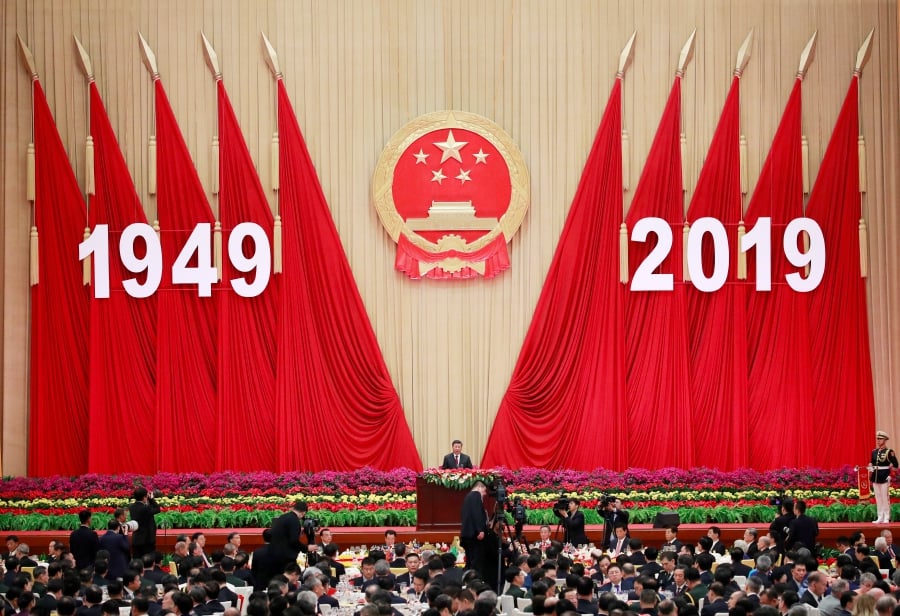
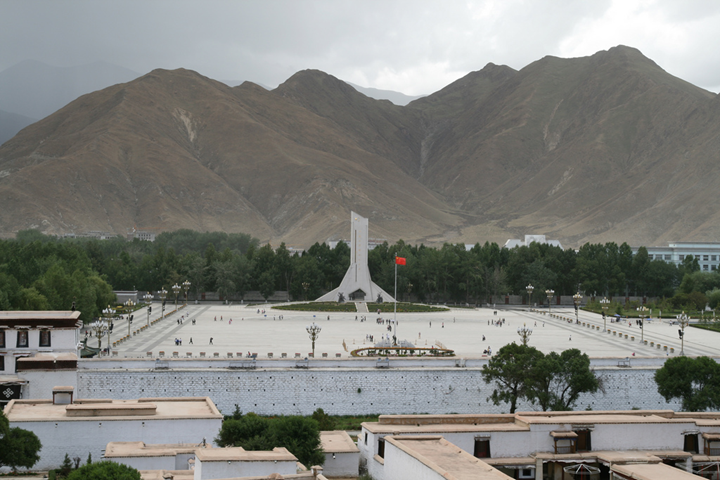
THE CELEBRATION IN LHASA FOR 70 YEARS OF COMMUNISM IN ASIA

THE CELEBRATION IN LHASA FOR 70 YEARS OF COMMUNISM IN ASIA

70 Years of Communism in Asia.

The birth of the People’s Republic of China on October 01, 1949 marks the beginning of a new era in the geopolitics of the world. The spread of Communism to Asia triggered the Cold War in Asia. For Tibetans, it is indeed a horrible nightmare that has come true. In Lhasa, Tibetans celebrated the 70th birth anniversary of China with hopes that the occupation will end soon.

Rudra Narasimham Rebbapragada

Special Frontier Force

Tibet celebrates PRC’s 70th anniversary

By Palden Nyima and Daqiong in Lhasa, Tibet Updated: 2019-09-29

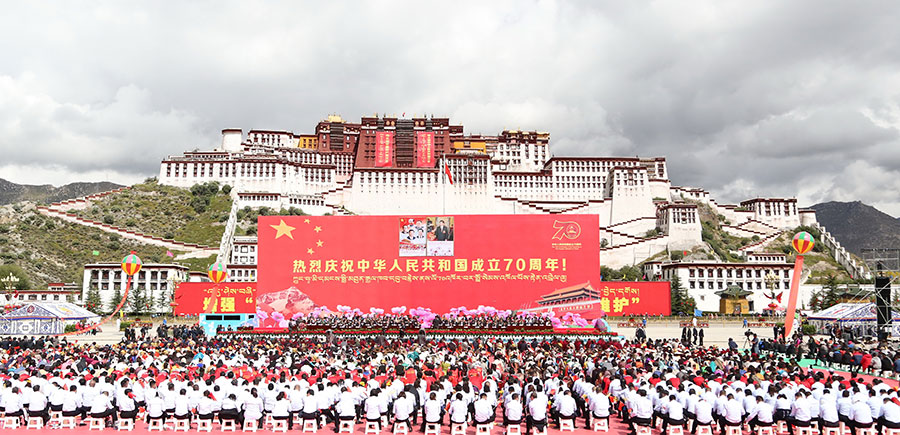
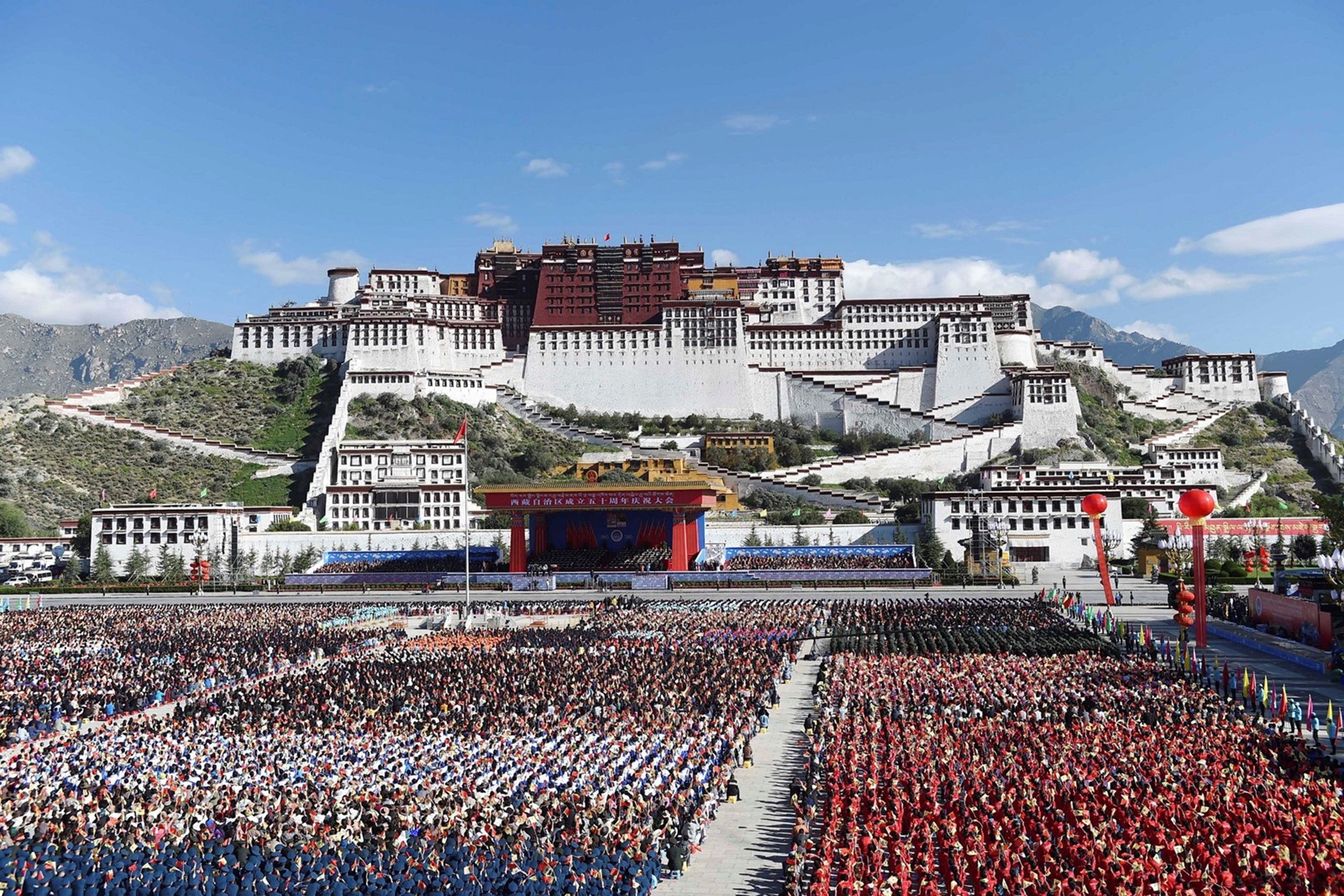
70 Years of Communism in Asia. People from all walks of life gather on Sunday in front of Potala Palace for a celebration marking the People’s Republic of China’s 70th anniversary. [Photo by Palden Nyima/chinadaily.com.cn]

More than 4,000 people gathered Sunday in Potala Palace Square in Tibet autonomous region for a celebration marking the 70th anniversary of the founding of the People’s Republic of China, which falls Oct 1.

Government officials, farmers, herders, students, soldiers, policeman, and monks attended, carrying miniatures national flags and holding flowers and khadak, white silk representing purity.

They sang the national anthem, listened to speeches and danced in unison.

Over the 70 years Communist Party of China leadership, people in Tibet have driven historic change, said Wu Yingjie, the region’s Party secretary, during the ceremony.

According to Wu, the region’s GDP has soared from 129 million yuan ($18 million) in 1951 to 147 billion yuan in 2018.

Urban residents’ per-capita disposable income reached 33,797 yuan in 2018, while that of rural residents hit 11,450 yuan, said Wu.

Dekyi Medog, a singer from the region, said on this the year of China’s 70th anniversary, she wanted to bless the country with her songs.

“I want to express my heartfelt thanks to the motherland and the Party, and I wish my country more prosperity and flourishing in the future,” she said.

Basang Drolma, a student representative from the region’s Lhasa Middle School, said she was honored and pleased to live and study in the new era.

Thanks to the leadership of the Communist Party of China, Tibet has launched democratic reform, socialism construction and the reform and opening-up policy, she said.

The people of the region have left poverty far behind and have been enjoying wealth and progress in the new era, she said.

Singers perform on Sunday during a celebration marking the People’s Republic of China’s 70th anniversary. [Photo by Palden Nyima/chinadaily.com.cn]
Performers dance in front of Potala Palace in Lhasa on Sunday during a celebration marking the People’s Republic of China’s 70th anniversary. [Photo by Palden Nyima/chinadaily.com.cn]
Performers dance in front of Potala Palace in Lhasa on Sunday during a celebration marking the People’s Republic of China’s 70th anniversary.[Photo by Palden Nyima/chinadaily.com.cn]
Performers dance in front of Potala Palace in Lhasa on Sunday during a celebration marking the People’s Republic of China’s 70th anniversary. [Photo by Palden Nyima/chinadaily.com.cn]
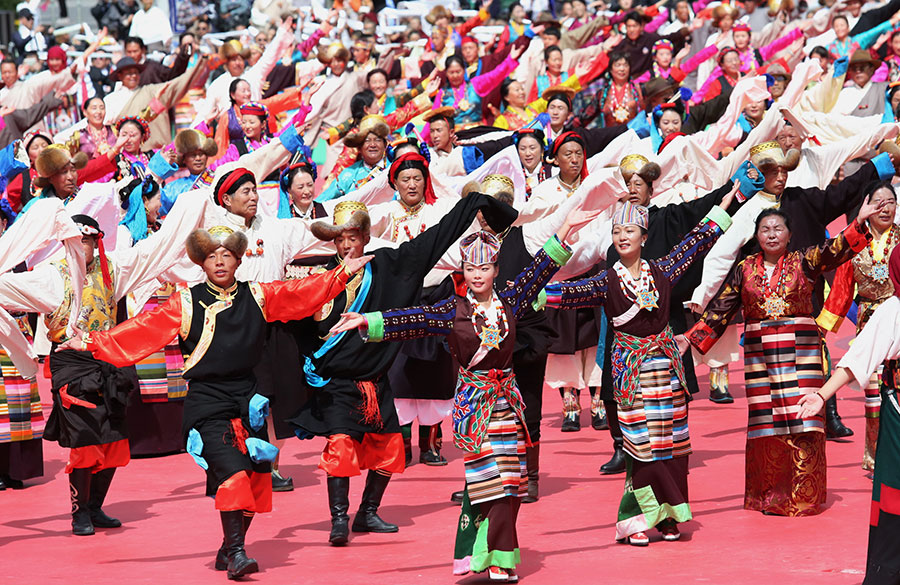
People perform Guozhuang dance at Potala Palace Square in Lhasa, Tibet, September 29, 2019. More than 1,000 people performed Guozhuang dance here on Sunday to celebrate the 70th anniversary of the founding of the People’s Republic of China. [Xinhua/Jigme Dorje]
People wearing traditional clothes participate in a celebration gala at Potala Palace Square in Lhasa, Tibet, September 29, 2019. More than 1,000 people performed Guozhuang dance here on Sunday to celebrate the 70th anniversary of the founding of the People’s Republic of China. [Xinhua/Jigme Dorje]
 
People wearing traditional clothes participate in a celebration gala at Potala Palace Square in Lhasa, Tibet, September 29, 2019. More than 1,000 people performed Guozhuang dance here on Sunday to celebrate the 70th anniversary of the founding of the People’s Republic of China. [Xinhua/Jigme Dorje]
People perform Guozhuang dance at Potala Palace Square in Lhasa, Tibet, September 29, 2019. More than 1,000 people performed Guozhuang dance here on Sunday to celebrate the 70th anniversary of the founding of the People’s Republic of China. [Xinhua/Jigme Dorje]
A gala to celebrate the 70th anniversary of the founding of the People’s Republic of China (PRC) in Lhasa, Tibet, Sept. 28, 2019. About half of the performers in the grand gala were ordinary farmers and herdsmen. (Photo: China News Service/Zhang Wei)
The Celebration in Lhasa for 70 Years of Communism in Asia.

TIBET IS THE KEY FOR BALANCE OF POWER IN ASIA. #TIBETEQUILIBRIUM

TIBET IS THE KEY FOR BALANCE OF POWER IN ASIA. #TIBETEQUILIBRIUM

Tibet is the Key for Balance of Power in Asia. It is not Geometry. It is Geography that Matters. #TibetEquilibrium

In my analysis, it is not “Geometry” but it is “Geography” that Matters to secure the Balance of Power in Asia. I coined the phrase “Tibet Equilibrium,” #TibetEquilibrium to signify the importance of the landmass to achieve Power Equilibrium in Asia.

Rudra Narasimham Rebbapragada

SPECIAL FRONTIER FORCE

Pentagon steps up efforts to counter China’s rising power

 afp.com 

Maritime operations, missile tests, landing exercises: the Pentagon has been sharply stepping up its efforts to counter China’s growing military power, seen increasingly as a threat.

a large ship in the water: The US military has been using guided-missile destroyers like this one, the USS John McCain, seen here in a US Navy photo, as it seeks to enforce an international 'freedom of operation' near islands claimed by Beijing in the South China Sea
Tibet Equilibrium. Geography Matters. Tibet is the Key for Power Equilibrium in Asia.

© James VAZQUEZ The US military has been using guided-missile destroyers like this one, the USS John McCain, seen here in a US Navy photo, as it seeks to enforce an international ‘freedom of operation’ near islands claimed by Beijing in the South China Sea

On Friday an American warship approached the Paracel Islands, an island chain claimed by Beijing in the South China Sea, to affirm international “freedom of navigation” in the region.

The USS Wayne E. Meyer, a guided-missile destroyer, passed near the islands to contest Beijing’s sweeping claims to the seas around the archipelago, which is also claimed by Taiwan and Vietnam.

The Chinese claim would block “innocent passage” by other countries’ ships and is “not permitted by international law,” a US Seventh Fleet spokeswoman, Commander Reann Mommsen, said.

Friday’s was the sixth “freedom of navigation operation” — or FONOPS in naval jargon — this year, a clear acceleration in pace.

There were a total of eight in 2017 and 2018 and only six during the entire Obama presidency.

On Wednesday, the US Marine Corps announced it had conducted exercises on the Japanese islet of Tori Shima, hundreds of miles south of Tokyo, to practice landings on “hostile” shores and the seizure of landing strips.

a man wearing a suit and tie: Ryan McCarthy is seen on September 12, 2019 at his Senate confirmation hearing to become US secretary of the army, the position formerly held by Defense Secretary Mark Esper
Tibet Equilibrium. Geography Matters. Tibet is the Key for Power Equilibrium in Asia.

© MARK WILSON Ryan McCarthy is seen on September 12, 2019, at his Senate confirmation hearing to become US secretary of the army, the position formerly held by Defense Secretary Mark EsperThe exercises were clearly designed to highlight the ability of the American military to invade a disputed island and establish a supply base for aerial operations.

“This type of raid gives the commanders in the Indo-Pacific region the ability to project power and conduct expeditionary operations in a potentially contested littoral environment,” one of the officers in charge, Commander Anthony Cesaro, said in a statement.

Such a forthright description, coming from a Pentagon hardly known for unguarded talk, reflects the fresh impetus Defense Secretary Mark Esper has given to the US policy of “strategic rivalry” with China and Russia.

Esper, who chose Asia for his first overseas trip only weeks after being sworn in as Pentagon chief, has made clear that the US wants to rapidly deploy new missiles in Asia — possibly within months — to counter China’s rising military power.

– To ‘change the geometry’ –

On Thursday, acting US army secretary Ryan McCarthy, speaking in a Senate confirmation hearing, defended the development of such new missiles.

He said the new medium-range conventional missiles Washington wants to develop — now that the US is no longer constrained by the Intermediate Nuclear Forces (INF) treaty, which the Trump administration abandoned last year — would “change the geometry within Southeast Asia.”

“If we can get the appropriate partnerships, expeditionary basing rights with partners within the region,” McCarthy said, “we can change the geometry and basically reverse anti-access, area-denial capabilities that have been invested by near-peer competitors” — jargon for pushing back against sovereignty claims by China and Russia.

a large ship in the background: Sailors stand on the deck of the new Chinese guided-missile destroyer Nanchang as Beijing showed off its growing fleet on April 23, 2019 in the sea off eastern China's Shandong province
Tibet is the Key for Balance of Power in Asia. It is not Geometry. It is Geography that Matters. #TibetEquilibrium

© Mark Schiefelbein Sailors stand on the deck of the new Chinese guided-missile destroyer Nanchang as Beijing showed off its growing fleet on April 23, 2019 in the sea off eastern China’s Shandong province last month the Pentagon chose the Pacific Ocean for its first test of a conventional medium-range missile since the end of the Cold War — effectively driving a nail into the coffin of the INF treaty, which banned the use of land-based missiles with ranges of 500 to 5,500 kilometers (310 to 3,400 miles).

And in late August, Washington formally established its Space Command, or Spacecom, a new unified command charged with ensuring US domination in space, where China has been increasingly active.

Beijing rattled US military officials in 2007 when it launched a missile that located and then destroyed a Chinese satellite, in a dramatic demonstration of China’s growing ability to militarize space.

Tibet is the Key for Balance of Power in Asia. It is not Geometry. It is Geography that Matters. #TibetEquilibrium

BEIJING DOOMED: 3 Giant Asteroids Zip Past Earth On Wednesday

BEIJING DOOMED: 3 Giant Asteroids Zip Past Earth On Wednesday

Beijing Doomed.

On Wednesday, July 24, 2019 NASA detected three massive asteroids currently headed for Earth.

In my analysis of Chapter 18, The Revelation, the Doom of Babylon is near. But, Babylon remains a Mystery. Where is Babylon? In my view, Shanghai City, the largest City of the world could be “BABYLON” described in the Doomsday Prophecy.

Rudranarasimham Rebbapragada

SPECIAL FRONTIER FORCE

Beijing Doomed.

NASA Asteroid Tracker: 3 Giant Asteroids Zip Past Earth On Wednesday

Beijing Doomed. 3 massive asteroids getting closer to Earth.

Clipped from: https://www.ibtimes.com/nasa-asteroid-tracker-3-giant-asteroids-zip-past-earth-wednesday-2808337

Beijing Doomed.

NASA has detected three massive asteroids that are currently headed for Earth. According to the agency’s Center for Near Earth Object Studies (CNEOS), one of the approaching asteroids will fly closer than the Moon.

The first asteroid that will visit Earth on Wednesday is 2015 HM10. This asteroid is currently traveling at a speed of 21,273 miles per hour and is about 360 feet long. At its current size, the asteroid is bigger than the Statue of Liberty.

2015 HM10 is expected to fly past Earth on July 24 at 6:00 am ST. It will approach the planet from a distance of 0.03135 astronomical units or around 2.9 million miles away.

This asteroid was first observed on April 18, 2015. According to its trajectory record, 2015 HM10 is a frequent visitor to Earth and Jupiter’s vicinity.

Trailing behind 2015 HM10 is the asteroid known as 2019 OD. This near-Earth object is also 360 feet long. It is traveling at a much faster speed compared to 2016 HM10 at 43,000 miles per hour.

Out of the three asteroids that will fly past Earth on Wednesday, 2019 OD will approach the closest. According to CNEOS’ data, the asteroid will only be about 0.00239 astronomical units or around 222,160 miles from Earth on July 24 at 1:31 pm ST. This means 2019 OD will be flying much closer than the distance between the Earth and the Moon, which is around 238,900 miles.

Shortly after 2019 OD’s close-Earth approach, the asteroid will fly near the Moon at around 1:44 pm ST.

The last asteroid that’s set to zip past Earth on Wednesday is 2019 OE. According to CNEOS, this asteroid has a velocity of around 20,000 miles per hour. Compared to the first two asteroids, 2019 OE is much smaller with an estimated diameter of 174 feet.

2019 OE is will approach Earth on July 24 at 2:36 pm ST. Like 2019 OD, 2019 OE will also zip past the planet at a close distance. Based on the data collected by CNEOS, the asteroid will be about 0.00646 astronomical units or around 600,500 miles from the planet’s center during its approach.

Beijing Doomed

HIGH-ENERGY COLLISION CANRESOLVE THE GREAT TIBET PROBLEM

BEIJING DOOMED. HIGH-ENERGY COLLISION CAN RESOLVE THE GREAT TIBET PROBLEM

Beijing Doomed. High-Energy Collision can resolve the Great Tibet Problem.

The Great Tibet Problem is described as illegal, illegitimate, military occupation of Tibetan Territory by a foreign invading force. The Great Tibet can be resolved by the application of physical force of a great magnitude that can evict the Occupier of Tibet without any further human intervention or effort.

Such forces with devastating power do exist in Nature. Planet Earth experienced the serious consequences of heavenly bodies such as asteroids, bolides, and meteorites colliding with Earth. These heavenly bodies acquire massive amounts of energy as Earth’s Force of Gravitation accelerates them as they enter Earth’s atmosphere.

Beijing Doomed. High-Energy Collision can resolve the Great Tibet Problem.

The discovery of the highest-energy gamma rays by the Tibet ASgamma Experiment gives the hope of a Heavenly Strike acting to neutralize the military power of Tibet’s Occupier. While the gamma rays are prevented by Earth’s atmospheric shield from causing damage, the impacts by Near Earth Objects will not be undermined by the natural protection afforded by the Magnetosphere.

Beijing Doomed. High-Energy Collision can resolve the Great Tibet Problem.

Rudranarasimham Rebbapragada

Special Frontier Force

The highest-energy gamma rays discovered by the Tibet ASgamma experiment

Clipped from: https://phys.org/news/2019-07-highest-energy-gamma-rays-tibet-asgamma.html

Beijing Doomed. High-Energy Collision can resolve the Great Tibet Problem.

The left figure shows the Tibet ASgamma experiment observed the highest energy gamma rays beyond 100 Teraelectron volts (TeV)from the Crab Nebula with low background noise, the cross mark indicates the Crab pulsar position. And the right figure shows the Crab Nebula taken by the Hubble Telescope Credit: NASA

The Tibet ASgamma experiment, a China-Japan joint research project, has discovered the highest energy cosmic gamma rays ever observed from an astrophysical source—in this case, the Crab Nebula. The experiment detected gamma rays ranging from > 100 Teraelectron volts (TeV) (Fig.1) to an estimated 450 TeV. Previously, the highest gamma-ray energy ever observed was 75 TeV by the HEGRA Cherenkov telescope.

Researchers believe the most energetic of the gamma rays observed by the Tibet ASgamma experiment were produced by interaction between high-energy electrons and cosmic microwave background radiation, remnant radiation from the Big Bang.

The Crab Nebula is a famous supernova remnant in the constellation Taurus. It was first observed as a very bright supernova explosion in1054 AD (see Fig.1). It was noted in official histories of the Song dynasty in ancient China as well as in Meigetsuki, written by the 12th century Japanese poet Fujiwara no Teika. In the modern era, the Crab Nebula has been observed using various types of electromagnetic waves including radio and optical waves, X-rays and gamma rays.

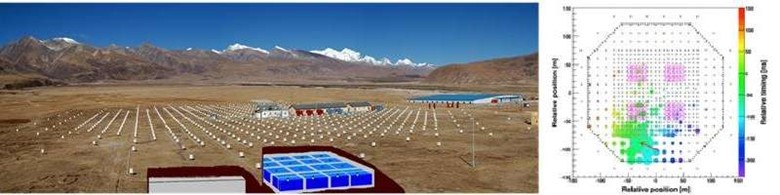
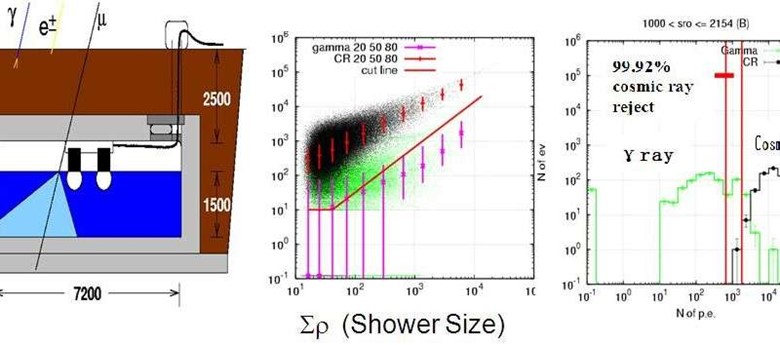
The Tibet ASgamma experiment has been operating since 1990 in Tibet, China, at an altitude of 4300 meters above sea level. The China-Japan collaboration added new water Cherenkov-type muon detectors under the existing cosmic-ray detectors in 2014 (see Fig.2). These underground muon detectors suppress 99.92 percent of cosmic-ray background noise (see Fig.3). As a result, 24 gamma-ray candidates above 100 TeV have been detected from the Crab Nebula with low background noise. The highest energy is estimated at 450 TeV (see Fig.2).

Beijing Doomed. High-Energy Collision can resolve the Great Tibet Problem.

The left figure shows the Tibet ASgamma experiment (Tibet-III array+ Muon Detector array); The right figure shows an event display of the observed 449TeV photon-like air shower. Credit: IHEP

The researchers hypothesize the following steps for generating very-high-energy gamma rays: (1) In the nebula, electrons are accelerated up to PeV, i.e., peta (one thousand trillion) electron volts within a few hundred years after the supernova; (2) PeV electrons interact with the cosmic microwave background radiation (CMBR) filling the whole universe; (3) A CMBR photon is kicked up to 450 TeV by the PeV electrons. The researchers thus conclude that the Crab Nebula is now the most powerful natural electron accelerator discovered so far in our galaxy.

This pioneering work opens a new high-energy window for exploring the extreme universe. The detection of gamma rays above 100 TeV is a key to understanding the origin of very-high-energy cosmic rays, which has been a mystery since the discovery of cosmic rays in 1912. With further observations using this new window, we expect to identify the origin of cosmic rays in our galaxy, namely, pevatrons, which accelerate cosmic rays up to PeV energies.

Beijing Doomed. High-Energy Collision can resolve the Great Tibet Problem.

The China-Japan collaboration placed new water Cherenkov-type muon detectors under the existing cosmic-ray air-shower array in 2014. These underground muon detectors can suppress 99.92% of cosmic-ray background noise. Credit: IHEP

“This is a great first step forward,” said Prof. HUANG Jing, co-spokesperson for the Tibet ASgamma experiment. “It proves that our techniques worked well, and gamma rays with energies up to a few hundred TeV really exist. Our goal is to identify a lot of pevatrons, which have not yet been discovered and are supposed to produce the highest-energy cosmic rays in our galaxy.”

Beijing Doomed. High-Energy Collision can resolve the Great Tibet Problem.


LIVING TIBETAN SPIRITS BEWITCHED BY “PEACEFUL LIBERATION” OF TIBET

LIVING TIBETAN SPIRITS BEWITCHED BY “PEACEFUL LIBERATION” OF TIBET

Living Tibetan Spirits bewitched by “peaceful liberation” of Tibet.

Living Tibetan Spirits are bewitched by “Peaceful Liberation” of Tibet. Occupation is a Lie. Tibet is Never a Part of China.

Rudranarasimham Rebbapragada

SPECIAL FRONTIER FORCE

Living Tibetan Spirits bewitched by “Peaceful Liberation” of Tibet.

China says Tibet human rights critics ‘bewitched’ by Dalai Lama | Reuters

Clipped from: https://www.reuters.com/article/us-china-tibet/china-says-tibet-human-rights-critics-bewitched-by-dalai-lama-idUSKCN1R80A3

BEIJING (Reuters) – Those who criticize China over human rights in Tibet have been “bewitched” by the Dalai Lama, a senior Chinese official said on Wednesday, days before the 60th anniversary of the Tibetan spiritual leader’s flight into exile in India.

Living Tibetan Spirits Bewitched by “Peaceful Liberation” of Tibet.

People cross a road under flags marking Tibetan Serfs’ Emancipation Day on March 28, in Lhasa, Tibet Autonomous Region, China March 26, 2019. Picture taken March 26, 2019. REUTERS/Stringer

China says it “peacefully liberated” Tibet in 1950 and has since exerted enormous effort to bring the remote region into the modern era, abolishing feudal practices while protecting its Buddhist people’s right to freely practise their religion and maintain their culture.

Critics, including the United States, say China rules with an iron fist and has overseen widespread rights abuses.

Deputy Tibet governor Norbu Dondrup said Tibetan society was “very dark and very cruel” before Communist Party rule. He was speaking in Beijing on the release of a policy paper marking six decades since China began what it calls “democratic reforms” in Tibet.

He said ordinary people – or “serfs” – could be bought and sold, thrown in jail, or even killed at will when the Dalai Lama was in charge in Tibet.

“The Dalai Lama attacking our human rights totally has ulterior motives. He tramples on human rights, and has no right, no qualifications, and is unworthy of talking about human rights,” Norbu Dondrup said.

“As for some countries slamming our human rights, they either don’t understand or believe the Dalai clique’s rumors and bewitchments,” he said.

The human rights situation in Tibet was extremely good, he said, listing examples such as free medical care and an abundance of food.

Asked whether China would ever allow an independence referendum in Tibet, as has happened in Scotland and Quebec, Norbu Dondrup said Tibet has been an inseparable part of China since ancient times.

“We have never recognized Tibet independence, and neither has any other country,” he said. “Moreover, the peoples of Tibet in the extended family of the peoples of the motherland now have very happy lives.”

China reviles the Dalai Lama, who crossed the border into exile in India on March 31, 1959, after a failed uprising against Chinese rule.

Seen by Beijing as a dangerous separatist, he says he seeks merely genuine autonomy for his mountainous homeland and denies espousing violence.

The Dalai Lama told Reuters last week it was possible that, once he dies, his incarnation could be found in India and warned that any other successor named by China would not be respected.

The officially atheist Communist Party says it must approve his and other reincarnations of Tibetan lamas.

The Tibet issue has also become another irritant in China-U.S. ties after President Donald Trump signed into law a Reciprocal Access to Tibet Act in December.

That seeks to press China to open the region by denying U.S. entry to officials deemed responsible for restricting access to Tibet. China has denounced the law.

Reporting by Ben Blanchard; Editing by Paul Tait

Living Tibetan Spirits Bewitched by “Peaceful Liberation” of Tibet.


THE BATTLE FOR TIBET. TRUTH vs GUN


THE BATTLE FOR TIBET. TRUTH vs GUN


“Our strength, our power is based on truth. Chinese power based on gun,” the Dalai Lama said. “So, for short term, gun is much more decisive, but long term truth is more powerful.”


In my analysis, the Battle for Tibet will not be decided by either Chinese Gun or American Gun. Truth will prevail. China will reap the consequences of her own Evil actions. Tibet’s Identity is shaped by Natural Forces, Natural Causes, and Natural Factors that condition the nature of Tibetan Existence. Nature will unleash physical force to compel China to withdraw from illegally occupied Tibetan Territory.


Rudranarasimham Rebbapragada

Special Frontier Force


Exclusive: Dalai Lama contemplates Chinese gambit after his death. Reuters


Clipped from: https://www.reuters.com/article/us-china-tibet-dalai-lama-exclusive/exclusive-dalai-lama-contemplates-chinese-gambit-after-his-death-idUSKCN1QZ1NS?feedType=RSS&feedName=topNews


DHARAMSHALA, India (Reuters) –

The Dalai Lama, the spiritual leader of Tibetan Buddhism, said on Monday it was possible that once he dies his incarnation could be found in India, where he has lived in exile for 60 years, and warned that any other successor named by China would not be respected.

Sat in an office next to a temple ringed by green hills and snow-capped mountains, the 14th Dalai Lama spoke to Reuters a day after Tibetans in the northern Indian town of Dharamshala marked the anniversary of his escape from the Tibetan capital, Lhasa, disguised as a soldier.

He fled to India in early 1959 after a failed uprising against Chinese rule and has since worked to draw global support for linguistic and cultural autonomy in his remote and mountainous homeland.

China, which took control of Tibet in 1950, brands the 83-year-old Nobel peace laureate a dangerous separatist.

Pondering what might happen after his death, the Dalai Lama anticipated some attempt by Beijing to foist a successor on Tibetan Buddhists.

“China considers Dalai Lama’s reincarnation as something very important. They have more concern about the next Dalai Lama than me,” said the Dalai Lama, swathed in his traditional red robes and yellow scarf.

“In future, in case you see two Dalai Lamas come, one from here, in free country, one chosen by Chinese, then nobody will trust, nobody will respect (the one chosen by China). So that’s an additional problem for the Chinese! It’s possible, it can happen,” he added, laughing.

China has said its leaders have the right to approve the Dalai Lama’s successor, as a legacy inherited from China’s emperors.

But many Tibetans – whose tradition holds that the soul of a senior Buddhist monk is reincarnated in the body of a child on his death – suspect any Chinese role as a ploy to exert influence on the community.

Born in 1935, the current Dalai Lama was identified as the reincarnation of his predecessor when he was two years old.

Speaking in Beijing at a daily news briefing on Tuesday, Chinese foreign ministry spokesman Geng Shuang said the 14th Dalai Lama himself was chosen by following centuries-old religious rituals and history, which were “respected and protected” in rules and ordinances regulating religion.

“Therefore reincarnations, including that of the Dalai Lama, should observe the country’s laws and regulations and follow the rituals and history of religion,” Geng said.

UP FOR DISCUSSION

Many of China’s more than 6 million Tibetans still venerate the Dalai Lama despite government prohibitions on displays of his picture or any public display of devotion.

The Dalai Lama said contact between Tibetans living in their homeland and in exile was increasing, but that no formal meetings have happened between Chinese and his officials since 2010.

Informally, however, some retired Chinese officials and businessman with connections to Beijing do visit him from time to time, he added.

He said the role of the Dalai Lama after his death, including whether to keep it, could be discussed during a meeting of Tibetan Buddhists in India later this year.

He, however, added that though there was no reincarnation of Buddha, his teachings have remained.

“If the majority of (Tibetan people) really want to keep this institution, then this institution will remain,” he said. “Then comes the question of the reincarnation of the 15th Dalai Lama.”


FILE PHOTO: Tibetan spiritual leader the Dalai Lama, Patron of Children in Crossfire, speaks during a press conference in Londonderry, Northern Ireland September 11, 2017. REUTERS/Clodagh Kilcoyne/File Photo

If there is one, he would still have “no political responsibility”, said the Dalai Lama, who gave up his political duties in 2001, developing a democratic system for the up to 100,000 Tibetans living in India.

SEMINAR IN CHINA?

During the interview, the Dalai Lama spoke passionately about his love for cosmology, neurobiology, quantum physics and psychology.

If he was ever allowed to visit his homeland, he said he’d like to speak about those subjects in a Chinese university.

But he wasn’t expecting to go while China remained under Communist rule.

“China – great nation, ancient nation – but it’s political system is totalitarian system, no freedom. So therefore, I prefer to remain here, in this country.”

The Dalai Lama was born to a family of farmers in Taktser, a village on the northeastern edge of the Tibetan plateau, in China’s Qinghai province.

During a recent Reuters visit to Taktser, police armed with automatic weapons blocked the road. Police and more than a dozen plain-clothed officials said the village was not open to non-locals.

“Our strength, our power is based on truth. Chinese power based on gun,” the Dalai Lama said. “So, for short term, gun is much more decisive, but long term truth is more powerful.”

Reporting by Krishna N. Das; Additional reporting by Philip Wen in BEIJING; Editing by Simon Cameron-Moore


I SAY GOD MUST REINCARNATE TO DEFY THE CHINESE RULE OVER TIBET

I SAY GOD MUST REINCARNATE TO DEFY THE CHINESE RULE OVER TIBET

I say God must reincarnate to defy the Chinese Rule over Tibet.

I say God must reincarnate to defy the Chinese Rule over Tibet. If not, I ask God to give me a few pebbles to knock down The Goliath.

Rudranarasimham Rebbapragada

SPECIAL FRONTIER FORCE

China says Dalai Lama reincarnation ‘must comply’ with Chinese laws

Clipped from: https://www.telegraph.co.uk/news/2019/03/21/china-says-dalai-lama-reincarnation-must-comply-chinese-laws/

I say God must reincarnate to defy the Chinese Rule over Tibet.

The Dalai Lama, the Tibetan spiritual leader, warned that the successor chosen by China could not be trusted Credit: BIJU BORO/AFP/Getty Images

The Dalai Lama has warned of a possible “double reincarnation” with one from a “free country” after Beijing reiterated that his next incarnation must comply with Chinese law.

The Tibetan Buddhist leader on Monday warned that a successor chosen by Beijing after his eventual death could not be trusted.

He said it is possible that his reincarnation could be found in India, where he has lived in exile for 60 years upon fleeing Tibet following a failed uprising against Chinese rule.

“In future, in case you see two Dalai Lamas come, one from here, in free country, one chosen by Chinese, then nobody will trust, nobody will respect [the one chosen by China].

“So that’s an additional problem for the Chinese! It’s possible, it can happen,” he told Reuters in an interview.

I say God must reincarnate to defy the Chinese Rule over Tibet.

The Dalai Lama has lived in exile in northern India since the failed uprising, along with other Tibetans Credit: MONEY SHARMA/AFP/Getty Images

China stated in response that its leaders have the right to approve the Dalai Lama’s successor. The selection process “must comply with Chinese laws and regulations,” according to Geng Shuang, a spokesman for the foreign ministry.

Chinese state media highlighted those laws, titled “New Regulations on Religious Affairs and the Rules on the Management of the Reincarnation of Tibetan Living Buddhas.”

Many Tibetans, who believe that the soul of a senior Buddhist monk is reincarnated into the physical body of a child upon his death, worry a successor chosen by Beijing will be under the thumb of the ruling Communist Party.

The current Dalai Lama was identified as the reincarnation of his predecessor when he was two years old.

Now at 83, it’s getting harder for him to travel the world to boost awareness, and his influence is waning just as China’s is growing on the world stage.

I say God must reincarnate to defy the Chinese Rule over Tibet.

The Dalai Lama is now 83 Credit: STR/AFP/Getty Images

Beijing has recently cracked down heavily on religion under president Xi Jinping, after the government vowed to “Sinicize” faith. The wave of repression has affected Muslims, Christians, and Buddhists.

“China considers Dalai Lama’s reincarnation as something very important,” the Dalai Lama said in an interview with Reuters. “They have more concern about the next Dalai Lama than me.”

Beijing has previously co-opted the spiritual reincarnation process with a goal of bringing Tibetan Buddhism within party lines.

In 1995, the Dalai Lama named a young Tibetan boy as the reincarnation of the previous Panchen Lama – the second highest in spiritual authority after himself. But the child was then put under what Chinese officials described as protective custody.

Beijing put forth another successor and the Dalai Lama’s choice – then only six years old – disappeared from public.

‘Chinese interference is routine’

I say God must reincarnate to defy the Chinese Rule over Tibet.

The Chinese government has sought to discredit the Dalai Lama. In February, Wu Yingjie, leader of a parliamentary delegation from Tibet, said that Tibetans didn’t love the Dalai Lama at all.

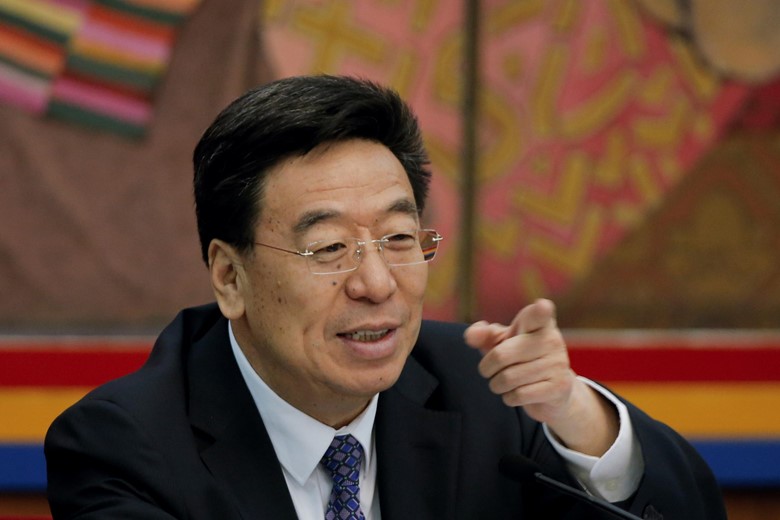
“Since Dalai Lama defected from Tibet, he has never done a single thing that was for the benefit for the Tibetan people,” Mr. Wu said. Instead, “they are grateful for what the Party brings to them.”

Last May, Tashi Wangchuk, a Tibetan businessman, was given a five-year prison sentence by China for promoting the Tibetan language, based on comments made in interviews with the New York Times.

The Tibet Autonomous Region, in China’s far west, is considered a homeland to many Tibetans and remains on lockdown. Travel in and out of the region is difficult, even for Tibetans.

Foreign journalists cannot visit without government permission, and those requests are frequently denied. Chinese officials have said they are concerned this is out of concern that foreigners may find it difficult to acclimate to the high altitudes on the Tibetan plateau.

I say God must reincarnate to defy the Chinese Rule over Tibet.


CHINA CAN’T HANDLE THE HEIGHTS OF TIBETAN UPRISING

CHINA CAN’T HANDLE THE HEIGHTS OF TIBETAN UPRISING

60th Anniversary of Tibetan National Uprising Day. China Can’t Handle the Heights of Tibetan Uprising.

In my analysis, China imposed travel restrictions for China can’t handle the Heights of Tibetan Uprising which is climbing to a new peak after 60-Years of pent up resentment opposing the military occupation of Tibet.

Rudranarasimham Rebbapragada

SPECIAL FRONTIER FORCE

No head for heights: China defends Tibet travel restrictions | Reuters

Clipped from: https://www.reuters.com/article/us-china-parliament-tibet-idUSKCN1QN1AW

BEIJING (Reuters) – Foreigners can’t handle Tibet’s high altitude so China needs to restrict access, the top Chinese official in charge of the remote and mountainous region said on Wednesday, defending tough government restrictions on who can go there.

60th Anniversary of Tibetan National Uprising Day. China Can’t Handle the Heights of Tibetan Uprising.

Communist Party Secretary of Tibet Autonomous Region Wu Yingjie and Governor of Tibet Autonomous Region Qizhala attend a news conference during the National People’s Congress (NPC) in Beijing, China, March 6, 2019. REUTERS/Thomas Peter

Access to Tibet, which China says it “peacefully liberated” in 1950, has become another irritant in ties with the United States after President Donald Trump signed into law a Reciprocal Access to Tibet Act in December.

That seeks to press China to open the region by denying U.S. entry to officials deemed responsible for restricting access to Tibet. China has denounced the law.

Speaking on the sidelines of China’s annual meeting of parliament, Tibet’s Communist Party boss Wu Yingjie said many Americans visit Tibet, especially older ones, and some foreign tourists “meet with mishap” at high altitude.

Tibetans have been finding foreigners who have died because of the harsh conditions, he said.

“The ordinary people tell us, there’s a tent, the people inside have been dead for many days, with the lack of oxygen,” Wu said. It was not clear what he was referring to and he did not elaborate.

“After considering the special geographical and climatic conditions, we adopted a series of regulations on foreigners entering Tibet in accordance with the law. This is not only for Americans. Other foreigners also have to complete these procedures.”

Tibet’s main city, Lhasa, is at about 3,650 meters (nearly 12,000 feet). Altitude sickness can affect some people at that height.

While some foreigners thank the government for the concern and help given them, only Americans “brood” about it, Wu said.

“This is really odd. If you have the opportunity go tell this to the American people.”

Non-Chinese visitors must apply for a special permit to travel to Tibet, which is usually granted for tourists provided they travel with approved tour companies but rarely for journalists and diplomats.

The government pledged in January to make access easier for foreign tourists.

60th Anniversary of Tibetan National Uprising Day. China Can’t Handle the Heights of Tibetan Uprising.

Rights groups and overseas activists say ethnic Tibetans face widespread restrictions under Chinese rule and the U.N. High Commissioner for Human Rights said in June conditions were “fast deteriorating”.

China routinely denies such accusations and says its rule of Tibet ended serfdom and brought prosperity to what was a backward region, and that it fully respects the rights of the Tibetan people.

This year marks the 60th anniversary of a failed Tibetan uprising against Chinese rule in 1959, which resulted in Tibet’s Buddhist spiritual leader, the Dalai Lama, fleeing into exile in India.

China views the Nobel Peace laureate as a dangerous separatist. The Dalai Lama denies espousing violence and says he only wants genuine autonomy for Tibet.

Many Tibetans in China still deeply venerate the Dalai Lama, despite government restrictions on displays of his picture, especially in what China calls the Tibet Autonomous Region.

Wu said the Dalai Lama was not popular in Tibet.

“Since defecting, the Dalai Lama hasn’t done a single good thing for the people of Tibet,” he said.

“The people of Tibet have weighed things up, and really thank the Communist Party for the happy life they have brought them.”

Reporting by Michael Martina and Gao Liangping; Writing by Ben Blanchard; Editing by Robert Birsel

ASIA REASSURANCE INITIATIVE ACT SYMBOLIZES THE COLD WAR IN ASIA


ASIA REASSURANCE INITIATIVE ACT SYMBOLIZES THE COLD WAR IN ASIA


In my analysis, the Asia Reassurance Initiative Act symbolizes the reality of ‘The Cold War in Asia’. President of Tibet and the President of the United States have acknowledged the threat posed by the Enemy’s presence in Tibet.


Rudranarasimham Rebbapragada

SPECIAL FRONTIER FORCE


CTA President welcomes the enactment of Asia Reassurance Initiative Act (ARIA) | Central Tibetan Administration


Clipped from: https://tibet.net/2019/01/cta-president-welcomes-the-enactment-of-asia-reassurance-initiative-act-aria/


CTA President hails the Asia Reassurance Initiative Act.

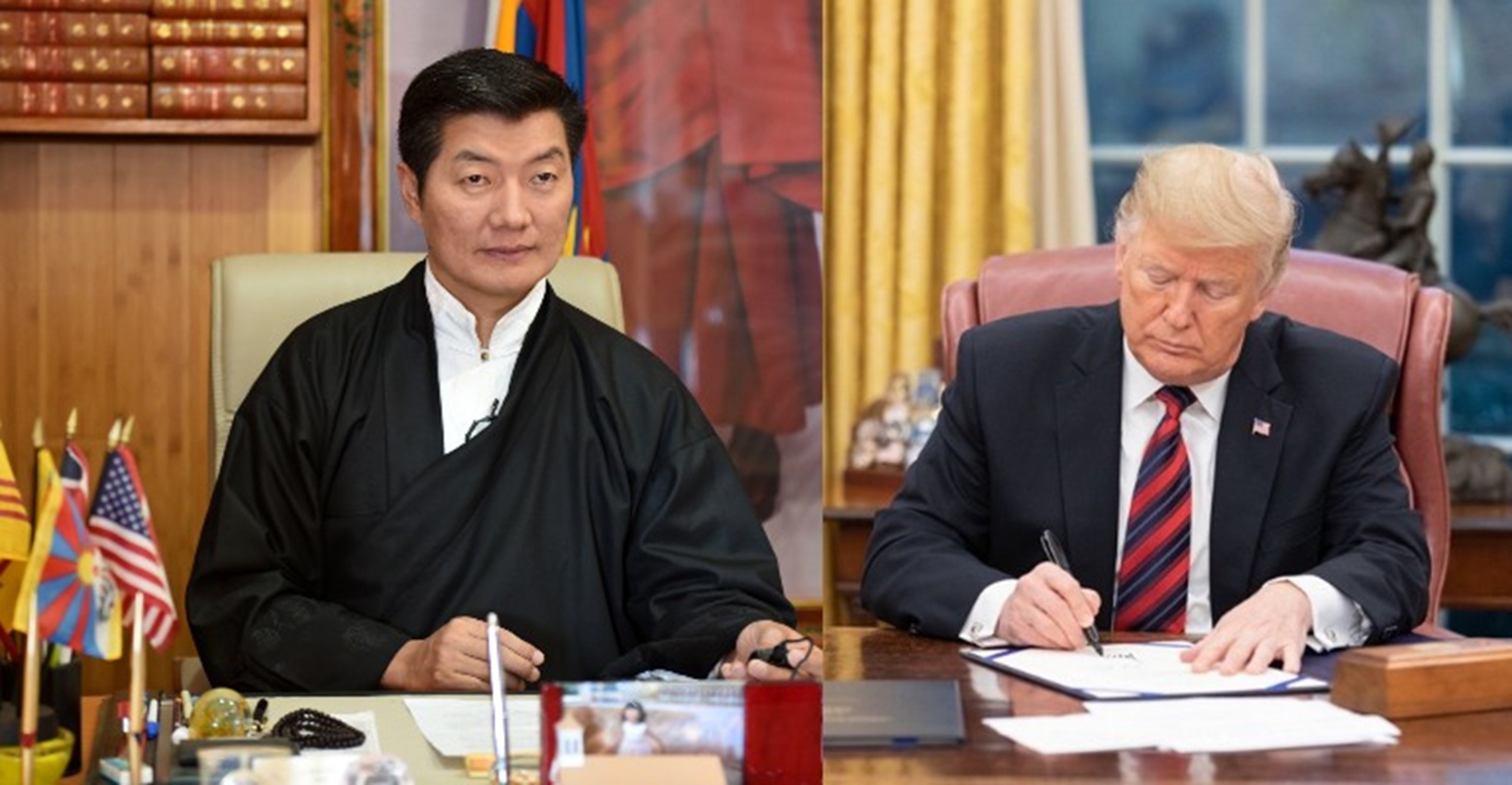
Dharamshala: President Dr Lobsang Sangay of Central Tibetan Administration hailed the enactment of the Asia Reassurance Initiative Act (ARIA) on Tuesday, saying that the passage is a much-welcomed move. US President Donald Trump signed the ARIA Act into law on 31 December 2018, having passed the Senate and the House on 4 and 12 December respectively. 

President Dr Sangay thanked the US Congress for passing the Asia Reassurance Initiative Act, which references Tibet in terms of supporting “activities preserving cultural traditions and promoting sustainable development, education, and environmental conservation in Tibetan communities in the Tibet Autonomous Region and in other Tibetan communities in China, India, and Nepal.”

CTA President, in recent years, has made multiple visits to the United States and held high-level meetings in the Senate as well as the House of Representatives. During those meetings, he has relentlessly tabled the issue of prioritizing Tibet at the core of US policy. The Office of Tibet in Washington DC has also made tremendous efforts towards this.

“ARIA ensures that the US will continue to support Tibet by authorizing funds for Tibet-related programs and by highlighting Chinese human rights abuses against the Tibetan people,” said Senators Cory Gardner (R-Colo.) and Ed Markey (D-Mass.), the lead sponsors of the Act.

Matteo Mecacci, president of the International Campaign for Tibet said: “This Act rightly places the issue of Tibet within the parameters of US security interests. Tibet occupies an Asian fault zone of clashing cultures and big-power politics.”

The Act, known as ARIA, aims at enhancing American leadership in the Indo-Pacific region and strengthening cooperation with regional partners, including India and Taiwan. It says, “The United States has a fundamental interest in defending human rights and promoting the rule of law in the Indo-Pacific region.”

Following is the reference to Tibet in the Act.
SEC. 409. AUTHORIZATION OF APPROPRIATIONS.

(a) Promotion of Democracy in the Indo-Pacific Region.–
(1) In general.–There is authorized to be appropriated $210,000,000, for each of the fiscal years 2019 through 2023, to promote democracy, strengthen civil society, human rights, rule of law, transparency, and accountability in the Indo- Pacific region, including for universities, civil society, and multilateral institutions that are focusing on education awareness, training, and capacity building.

(2) Democracy in china. –Amounts appropriated pursuant to paragraph (1) shall be made available for United States Government efforts, led by the Assistant Secretary of State for Democracy, Human Rights, and Labor, to promote democracy, the rule of law, and human rights in the People’s Republic of China.

(3) Tibet. –Amounts appropriated pursuant to paragraph (1) shall be made available for nongovernmental organizations to support activities preserving cultural traditions and promoting sustainable development, education, and environmental conservation in Tibetan communities in the Tibet Autonomous Region and in other Tibetan communities in China, India, and Nepal.

The Act also recognizes India as a major Defense partner, the vital role of the strategic partnership between the United States and India in promoting peace and security in the Indo-Pacific region. Section 204 of the Act calls for strengthening and broadening of diplomatic, economic, and security ties between the two countries. 

The Indo-Pacific is a biogeographic region, comprising the Indian Ocean and the western and central Pacific Ocean, including the South China Sea.