Whole Trust – Time to Trust All-Powerful God

Time to Trust All-Powerful God – The Fall of Evil Red Empire

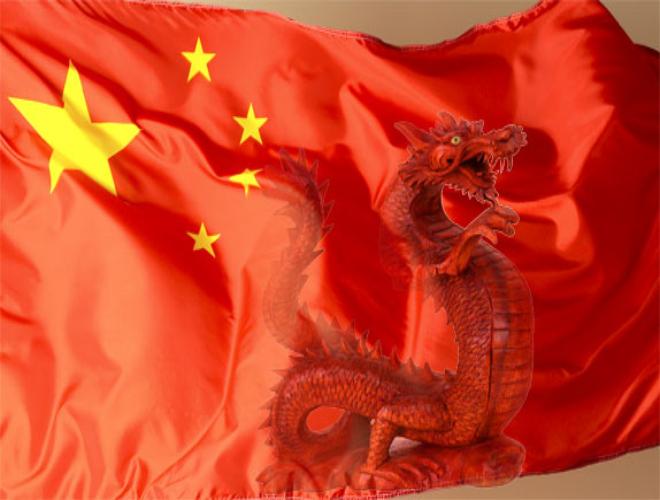
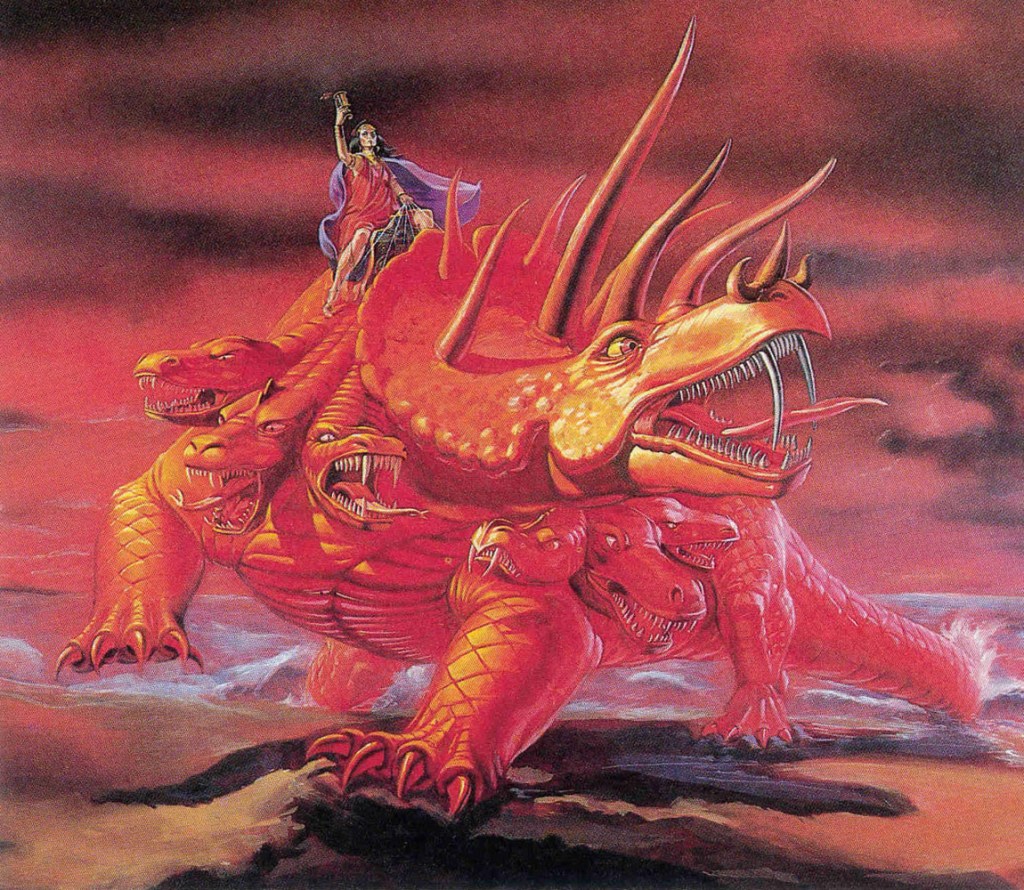
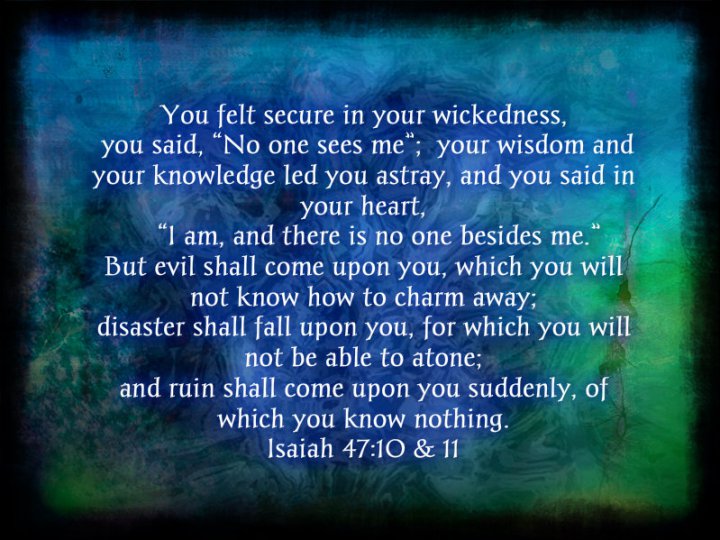
For I trust in All-powerful God, I can expect ‘The Fall of Evil Red Empire’ as per the prophecy shared by Isaiah, Chapter 47, and Revelation, Chapter 18.
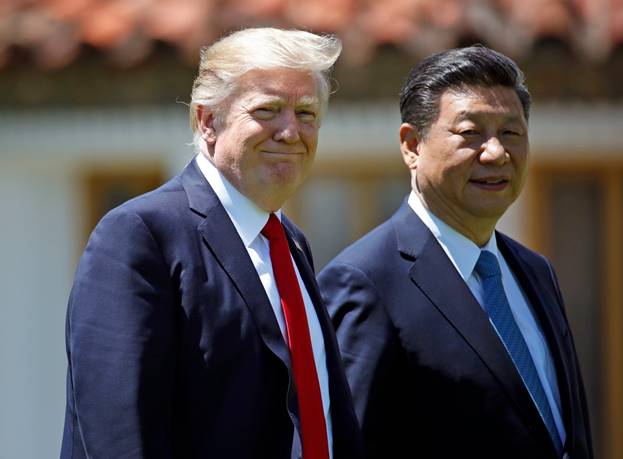
US President Donald Trump and China’s President Xi Jinping could be among the ‘Most-Powerful’ men in the world. However, I will not recognize any mortal human being as “All-Powerful.”

For I trust in All-powerful God, I can expect ‘The Fall of Evil Red Empire’ as per the prophecy shared by Isaiah, Chapter 47, and Revelation, Chapter 18.

For I trust in All-powerful God, I can expect ‘The Fall of Evil Red Empire’ as per the prophecy shared by Isaiah, Chapter 47, and Revelation, Chapter 18.

Rudra Narasimham Rebbapragada

Doom Dooma Doomsayer

For I trust in All-powerful God, I can expect ‘The Fall of Evil Red Empire’ as per the prophecy shared by Isaiah, Chapter 47, and Revelation, Chapter 18.

TIME FOR TRUMP TO TEST THE ALL-POWERFUL XI JINPING

By Henry M. Paulson Jr., – OPINION, THE WASHINGTON POST
Clipped from: https://www.washingtonpost.com/opinions/time-for-trump-to-test-the-all-powerful-xi-jinping/2017/11/03/cd1423a6-c00a-11e7-959c-fe2b598d8c00_story.html?

For I trust in All-powerful God, I can expect ‘The Fall of Evil Red Empire’ as per the prophecy shared by Isaiah, Chapter 47, and Revelation, Chapter 18.


President Trump and Chinese President Xi Jinping. (Alex Brandon/Associated Press)

Henry M. Paulson Jr., treasury secretary from 2006 to 2009, is chairman of the Paulson Institute and author of “Dealing With China: An Insider Unmasks the New Economic Superpower.”

Many have crowned Chinese President Xi Jinping the most powerful man in the world following the 19th Chinese National Congress of the Communist Party. And, indeed, Xi is a dynamic leader who is transforming China. He has swiftly consolidated his authority to drive an ambitious domestic and international effort to establish China as a modern superpower.

Our preoccupation with Xi’s grand ambitions, however, has led us to neglect the scope of the challenges he and his country face. Simply put, ambition and power are not a substitute for deep and enduring reform, and a leader is only as powerful as the country he leads. As Xi knows all too well, China has serious and growing vulnerabilities. When President Trump visits China next week, he may well find he can leverage these emerging dynamics to advance U.S. interests.

In recent years, Xi has moved to address these challenges with a bold strategy aimed at consolidating the tools he needs to govern. Although he has crafted ambitious economic reform policies, he could not assure that they were implemented on a consistent basis in the provinces. And some of his most important and difficult goals have not been attempted.

During his first term, Xi tightened and made sweeping reforms to the Chinese legal system; took control of, cleaned out and started professionalizing the military; and restructured, centralized and, through an anti-corruption campaign, moved to shore up the domestic credibility of the Communist Party as the country’s primary means of governance.

As the party and the central government take power from the provinces, he has begun strengthening the Beijing bureaucracy’s capacity to manage a nation of 1.4 billion people. At the same time, he has neutralized his opposition and positioned trusted advisers to help implement his agenda.

Thus, Xi enters his second term better able to govern, but serious challenges stand in his way. He faces four major economic risks: overreliance on debt to finance growth; a failing state-owned sector; excess capacity across a range of industries, particularly steel; and the real prospect that markets will be closed to China in the United States and elsewhere if the country does not move more quickly to open its economy to foreign competition.

Xi must address China’s unsustainable accumulation of sub-national debt — much of it created by hundreds of thousands of failed firms kept alive by the state to preserve jobs. China won’t be able to grow out of its debt problem.

If China is to avoid a hard landing, it will need to stem the flow of credit and accept slower growth. The government has indicated its intention to do that, but it will require significant political will. Importantly, it must subject failing firms to the discipline of the marketplace. The longer China waits to deal with these problems the riskier and costlier it will get.

Xi will be increasingly pressed by the United States and other major economies to demonstrate that his government intends to uphold its pledge to lift restrictions blocking foreign competition. And he drags his feet at his own peril because the United States and others are reexamining their open-door policies and demanding greater reciprocity in China. This new attitude will put pressure on China just as Xi most needs the world’s export and investment markets. But competition from the private sector is ultimately the best way for him to address the inefficiencies with China’s state-owned enterprises and its massive overcapacity in steel, which, when exported, will increasingly lead to trade disputes.

Xi, however, seems undaunted and remains confident he can manage all the challenges in front of him. Trump and Xi have developed a good personal relationship. Xi’s new consolidation of power — and ability to use it now to get difficult things done — means Trump may have a greater opportunity on his trip to achieve breakthroughs in the security and economic arenas.

Progress on the most important economic issues has potential to build the mutual trust that would make it easier to achieve what is by far our top priority: a denuclearized Korean Peninsula. But no nation should trade away its vital interests; North Korean and economic negotiations should proceed at their own pace.

Trump should be strategic and forceful in defense of America’s industries of the future. It is essential that he fight to open markets and achieve a level playing field in sectors where the United States is most competitive — technology, financial services, the Internet, agribusiness, health care, environmental goods and services, autos, and movies. This has the potential to benefit both countries, particularly in the financial services, where China’s underdeveloped financial markets would clearly benefit from some world-class participants.

The United States should also focus on expanding our economic relationship with China to include direct investment, which creates U.S. jobs and ties our economies together in enduring and positive ways. Without increased market access, the path we are on could lead to important parts of the global economy being walled off from competition and trade. This risks hurting both the United States and China, which are the biggest beneficiaries of a rules-based economic order.

Xi’s new platform presents risks for the United States in an era in which there will be increasing security and economic competition. But it also has the potential for further collaboration with a leader who now has greater ability to deliver. It has always been as big a risk to overestimate China’s power as it is to underestimate its potential. Now the same could be said of Xi. Trump should test Xi’s new position of power by pressing China hard for movement on U.S. priorities.
For I trust in All-powerful God, I can expect ‘The Fall of Evil Red Empire’ as per the prophecy shared by Isaiah, Chapter 47, and Revelation, Chapter 18.

Whole Downfall – Red China on a Slippery Slope

Tibet Awareness – Communist China on a Slippery Slope

TIBET AWARENESS - RED CHINA ON A SLIPPERY SLOPE : RED CHINA TRIED EVERY TRICK AND NOW HAS NO CHANCE TO SAVE HERSELF FROM DOWNFALL.
By adamantly refusing to consider the generous proposal called ‘Middle Way” offered by His Holiness the 14th Dalai Lama, Red China placed herself on a slippery slope and no one can save the Evil Red Empire from downfall.

By adamantly refusing to consider the generous proposal called ‘Middle Way” offered by His Holiness the 14th Dalai Lama, Red China placed herself on a slippery slope and no one can save the Evil Red Empire from downfall.

Rudra Narasimham Rebbapragada
Ann Arbor, MI 48104-4162, USA
Special Frontier Force-Establishment 22-Vikas Regiment

By adamantly refusing to consider the generous proposal called ‘Middle Way” offered by His Holiness the 14th Dalai Lama, Red China placed herself on a slippery slope and no one can save the Evil Red Empire from downfall.

September 12, 2015

After 50 years in Tibet, China sees no ‘middle way’

Beijing’s Tibet policies point to legacy of distrust of religious groups

Thousands of people gather in front of the iconic Potala Palace in the regional capital Lhasa on September 8, 2015, for an event billed as marking 50 years since the founding of the administrative area of Tibet. China on September 8 stressed Communist party control over Tibet, with a senior official denouncing the Dalai Lama at a giant ceremony condemned by rights groups.        AFP PHOTO   CHINA OUT
Thousands of people gather in front of the iconic Potala Palace in the regional capital Lhasa on September 8, 2015, for an event billed as marking 50 years since the founding of the administrative area of Tibet. China on September 8 stressed Communist party control over Tibet, with a senior official denouncing the Dalai Lama at a giant ceremony condemned by rights groups. AFP PHOTO CHINA OUT

Thousands of people gather in front of Lhasa’s Potala Palace on Sept. 8 for an event billed as marking 50 years since the founding of the administrative area of Tibet. (Photo by AFP)

ucanews.com reporters, Beijing and Hong Kong

September 11, 2015

Late on Aug. 27, frantic villagers tried to extinguish flames engulfing 55-year-old mother Tashi Kyi. By 3 a.m., on Aug. 28, she was dead.
Tashi self-immolated after authorities bulldozed houses that failed to provide the right paperwork in a small Tibetan village in China’s Sangchu County.

Ten other Tibetans in Sangchu have self-immolated over the past three years, including Tashi’s 18-year-old nephew, Sangay Tashi. In 2012, Sangay called for the return of Tibet’s spiritual leader, the Dalai Lama, before setting himself ablaze.

“His self-immolation was also an act of protest against the actions and brutalities of the Chinese government,” Sangay’s brother, Jamyang Jinpa, wrote in a letter published online in early September.

Tibet has been both the testing ground and the blueprint for Beijing’s strategies for dealing with religious minorities in other parts of the country — from Muslim Uighurs, to its long-running campaign against Christianity. And as China marks 50 years of governance in Tibet this week, Beijing continues to ignore complaints over its heavy-handed rule.

On Sept. 8, Beijing staged a huge set-piece anniversary event outside Lhasa’s Potala Palace — the former residence of the Dalai Lama. As part of the event, a 65-member government delegation warned of an even tougher stance against Tibet’s exiled spiritual leader.

“Tibet has entered a new stage of sustained stability after people of all ethnic groups together fought against separatism, successfully foiling attempts by the 14th Dalai Lama group and international hostile forces,” Politburo member Yu Zhengsheng said in a speech at the ceremony where he dished out gifts, including electric blenders for making Tibetan yak butter tea. All week, the Communist Party has presented a positive, unified message on Tibet.

Yu spoke of guaranteeing religious freedom. A new government white paper issued on Sept. 6 offered assurances that the Tibetan people would have the right “to participate equally in the management of state affairs”.

State broadcaster CCTV screened a documentary juxtaposing Tibetan children studying in modern classrooms with the region’s pristine, snow-capped landscape.

And a new museum exhibition, opened in Lhasa on Sept. 7, which displayed photos of development projects and one key economic statistic from Beijing: gross domestic product multiplied almost 300 times in Tibet since the Communist Party took over in 1965. GDP was valued at 92 billion yuan (US$14.4 billion) last year.

By adamantly refusing to consider the generous proposal called ‘Middle Way” offered by His Holiness the 14th Dalai Lama, Red China placed herself on a slippery slope and no one can save the Evil Red Empire from downfall.

Muslim Uighur men walk toward a mosque in Kashgar, in China’s western Xinjiang region. China’s strategy for dealing with Tibetans is reflected in its treatment of other religious groups, including Muslims and Christians. (Photo by Greg Baker/AFP)

Opaque development

Beijing has long justified its heavy-handed development in Tibet as a program that has raised living standards. But separating fact from fiction in Tibet has been difficult. Access to Tibet is restricted — foreigners require special permits to travel to the area and are required to stay in groups, as in North Korea. And foreigners are not allowed in at all during March, the anniversary of one of many Tibetan uprisings under Communist Party rule.

After 50 years of Chinese rule, it’s still “impossible” for outsiders to gain independent access to Tibet, said Michael Buckley, one of just a handful of overseas journalists to spend extended periods there.

“[You are] still blocked off from contact with Tibetans unless you have an interpreter and it’s highly risky for Tibetans to be interviewed,” he said.

Buckley’s book, “Meltdown in Tibet,” published in December 2014, paints a damning picture of the impact of China’s development on the fragile environment, contradicting Beijing’s upbeat narrative.

While party officials speak of the schools built-in Tibet, Buckley counters that China spent more on the railway line to Lhasa completed in 2006 than on the entire health care and education budgets since invading Tibet in 1950.

“The railway is now expanding east and west of Lhasa,” said Buckley. “These railways enable large numbers of Chinese migrant workers to come into Tibet, and enable large-scale exploitation of Tibet’s resources economically.”

Finding out whether the slew of hydropower dams and copper, iron and lead mines built in Tibet in recent years have benefited normal Tibetans is, again, challenging. Tibet Mineral Development Company and China Gold International Resources Corp — both of which operate mines in Tibet — did not respond to emailed questions.

Similarly, campaign groups have complained that the more than one dozen Canadian mining companies operating in Tibetan areas have failed to give feedback on how their operations contribute to the livelihoods of Tibetans.

Often, only when tragedies occur has it has been possible to pin down how many ethnic Tibetans work on the big infrastructure projects that dominate Beijing’s GDP figures for the region. Of 83 miners killed in a huge landslide in March 2013 at a site operated by a state-owned company, just two were ethnic Tibetans. The rest were Han Chinese. Anecdotal evidence suggests infrastructure projects in the world’s highest region have devastated the environment, as noted in Buckley’s book. But again, few independent studies exist separating China’s impacts from the effects of global pollution.

Changing landscape

A Chinese priest who declined to be named for security reasons said the negative impacts on Tibet’s environment were evident on repeat visits in recent decades.
“When I visited a Tibet county above 5,000 feet [1,500 meters] two years ago, it had changed so much. The snow on the mountain had melted and the water level had dropped,” the priest said.

Like many visitors to Tibet, he noted that Chinese development remains dominated by projects that destroy the environment, raising tensions with ethnic Tibetans who consider the landscape sacred, a part of their Buddhist faith. In the half-century that China has ruled Tibet, similar policies have been instituted in cycles targeting ethnic minorities and religions.

Elsewhere, the government has long suppressed the Muslim Uighur minority. A “strike-hard” campaign initiated in May has triggered a period of intense persecution against Uighurs.
In Zhejiang province, Christians have been devastated by a two-year cross-removal campaign. While the actions against Zhejiang Christians have been pushed by local authorities, many observers believe such a long-standing campaign must have tacit approval from Beijing. Taken together, such actions underscore the Communist Party’s fear of organized religion as a potential alternative power base to the party itself. The severity of these actions has depended on the threat level perceived by Beijing, notes Fenggang Yang, director of Purdue University’s Center on Religion and Chinese Society.
“At the minimum, the Chinese Communists in their gut have deep suspicion and distrust in religious leaders even if they seem to be amicable toward religious believers and leaders during the good times,” he said.

By adamantly refusing to consider the generous proposal called ‘Middle Way” offered by His Holiness the 14th Dalai Lama, Red China placed herself on a slippery slope and no one can save the Evil Red Empire from downfall.

Exiled Tibetan spiritual leader the Dalai Lama delivers a lecture in Sydney on June 8. (Photo by Saeed Khan/AFP)

Direct control
For Tibetans, this week’s anniversary marking Chinese rule only brings more uncertainty.
In its Sept. 6 white paper, Beijing rejected a “middle way” approach, put forward by the Dalai Lama, which proposed more autonomy for Tibet.

While sidelining Tibet’s exiled spiritual leader, Chinese authorities have further eroded religious freedoms, said Tsomo Tsering, director of the Tibet Center for Human Rights and Democracy in Dharamsala, northern India.

“It’s ridiculous. Sometimes Tibetans will keep images of the Dalai Lama, and the simple act of keeping pictures of their own spiritual leaders is criminalized,” said Tsomo, who works with informants on the ground in Tibet.

Since 2011, authorities have replaced members of monastery management committees with officials who work directly for the government. Small police stations have been built inside some monasteries. This year, authorities ordered all Buddhist monasteries to fly Chinese flags and display pictures of party leaders. “The problem is that the whole of religion is now directly controlled by the Chinese government,” Tsomo said.

By adamantly refusing to consider the generous proposal called ‘Middle Way” offered by His Holiness the 14th Dalai Lama, Red China placed herself on a slippery slope and no one can save the Evil Red Empire from downfall.

Whole Equilibrium – The Future of Red China’s Evil Power

Tibet Equilibrium – The Future of the Evil Power in Occupied Tibet

THE FUTURE OF RED CHINA’S EVIL POWER IN OCCUPIED TIBET – I SHARE THE PROPHECY OF BEIJING’S DOOM.
TIBET EQUILIBRIUM – BALANCE OF POWER – THE FUTURE OF RED CHINA’S EVIL POWER. DOOMSAYER OF DOOM DOOMA SHARES PROPHECY OF ISAIAH 47:10 & 11.

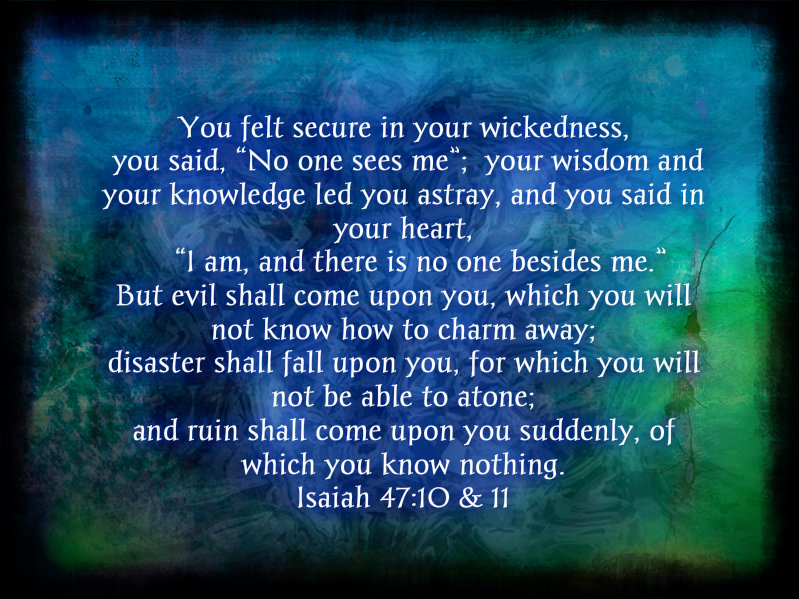
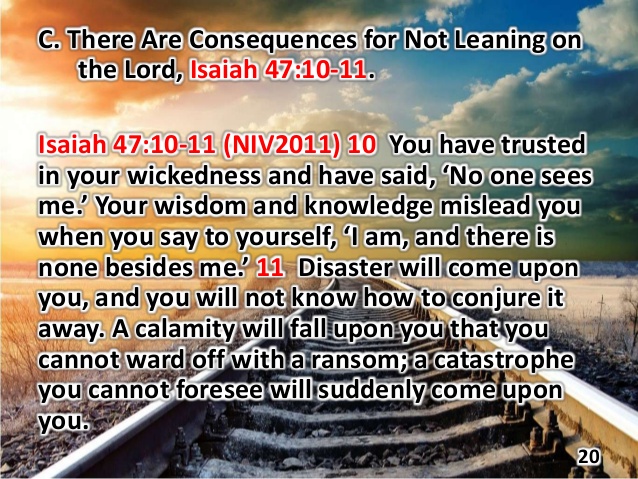
Red China wants to sustain her military occupation of Tibet by controlling and manipulating Tibetan cultural practices that play a role in the selection of the next Dalai Lama. In my analysis, the future of Red China’s Evil Power is already decided by prophecy shared by Prophet Isaiah in The Old Testament Book, Isaiah, Chapter 47, verses 10 and 11:

“You have trusted in your wickedness
and have said, ‘No one sees me.’
Your wisdom and knowledge mislead you
when you say to yourself,
‘I am, and there is none beside me.’

Disaster will come upon you,
and you will not know how to conjure it away.
A calamity will fall upon you
that you cannot ward off with a ransom;
a catastrophe you cannot foresee
will suddenly come upon you.”

At Special Frontier Force, I am known as ‘Doomsayer of Doom Dooma’ for I predict Beijing’s Doom. There is no one to save Red China when this catastrophe suddenly comes upon her.

Rudra Narasimham Rebbapragada
Ann Arbor, MI 48104-4162 USA

BROWN POLITICAL REVIEW

RULE BY REINCARNATION : CHINA AND THE NEXT DALAI LAMA

BY MILI MITRA, NOVEMBER 1, 2015

TIBET EQUILIBRIUM – BALANCE OF POWER – FUTURE OF RED CHINA’S EVIL POWER. RED CHINA WANTS TO PERPETUATE HER RULE OVER TIBET BY CONTROLLING AND MANIPULATION REINCARNATION OF DALAI LAMA. BEIJING IS DOOMED FOR HER INTENTIONS ARE EVIL.

In the last decade, China has become a juggernaut in international politics. It is undoubtedly the dominant force in Asia and faces scant challenge from other regional powers. However, Beijing still faces internal opposition from dissidents, especially in Xinjiang Province and Tibet. The autonomous region of Tibet in particular is known for its robust and lasting resistance to Chinese rule. The Chinese Communist Party (CCP) has attempted to control the region since 1951. Now, China’s most recent efforts have taken an unexpected form: They are relying on the reincarnation of the Dalai Lama. Beijing seems to subscribe to the belief that a more cooperative Dalai Lama would help undercut Tibetan opposition and gain hegemony over the region. Needless to say, this plan is as unrealistic as it is absurd.

Beijing’s historical relationship with Tibet is conflicted and troubled. Tibet was incorporated into CCP-led China in 1951. CCP leader Mao Zedong wished to unite China after a turbulent century of weak Qing emperors, feuding warlords and the Japanese invasion. In October 1950, the Chinese army crossed into Tibet and defeated its Tibetan counterparts. Tenzin Gyatso, the current Dalai Lama, sent representatives to Beijing to negotiate, leading to the signing of the 17-Point Agreement for the Peaceful Liberation of Tibet. The pact made Tibet a part of China but gave it a measure of autonomy. There was some oversight from the national government, but the Tibetan government had more power than any other provincial government.

The Tibetan aristocracy and government were funded in part by China. The CCP also funded the development of infrastructure and organized land reforms. It seemed to be a mutually beneficial treaty, but many of these advantages failed to materialize for Tibet due to Chinese duplicity. Despite these promises, the CCP remained uncomfortable with Tibet’s partial autonomy and unique cultural heritage. Chinese leaders feared that Tibetan spirituality — and indeed, loyalty to the Dalai Lama — would undermine their own power. They endeavored to dilute the local culture, a process now known as the “Sinicization of Tibet.” Rituals and traditions are integral to Tibetan society, but the Chinese government worked to suppress local festivals and religious customs.

To counter the dominance of Tibetan Buddhists in the region, Beijing also sent thousands of Han Chinese, the largest ethnic group in the country, to intermarry with Tibetans. As one would expect, these decisions only exacerbated cultural tensions. Overall, the CCP’s overbearing attempts to control Tibet won them few supporters and antagonized the majority of the local population. Ultimately, the Tibetan people tired of these oppressive tactics and launched the 1959 Tibetan Uprising. The rebellion failed, resulting in at least 10,000 deaths and the exile of the Dalai Lama to northern India.

Ever since, China’s rule in Tibet has been fraught with instability and local opposition. The Chinese government has tried a variety of tactics to win Tibetan support but has finally come to the conclusion that it needs the support of the Dalai Lama. And since it can’t win the approval of the current Dalai Lama, it wants to collaborate with his next incarnation. This plan may sound far-fetched, but China’s schemes are based on a shrewd — if misguided — premise. Beijing has long realized that the Dalai Lama holds an unparalleled sway over the Tibetan people, even in exile. His influence as a spiritual and political leader cannot be overstated. The current Dalai Lama would never agree to cooperate with Beijing; he has long demanded Tibetan independence and is a figurehead for dissidents in the region. Even in exile, the Dalai Lama is an omnipresent figure in the Tibetan cultural and political consciousness. But as he ages, the Chinese government believes his successor might be more compliant.

Since China can’t win the approval of this Dalai Lama, they want to collaborate with his next incarnation.

In fact, China is reluctant to leave this to chance. The boy selected to be the next Dalai Lama will be reared in Tibetan Buddhist traditions and will likely feel the same way as the present Dalai Lama. To ensure that the next spiritual leader will align with its goals, Beijing wishes to oversee the selection process; in other words, it wants to select a Dalai Lama more sympathetic to its goals. In a morbid twist, it sees the Dalai Lama’s passing as an opportunity to instate a puppet leader, a figurehead who would be raised in Beijing and taught to adhere to the party line.

The process to identify the next Dalai Lama is complex and intriguing. A group of senior monks, called High Lamas of the Gelugpa tradition, and the Tibetan government are responsible for identifying their next spiritual leader. The search begins with the High Lamas interpreting their dreams or visions. If the previous Dalai Lama was cremated, as is generally the case, the smoke from his cremation might indicate the direction in which they should look. They then use these signals to find boys born around the time of death of the previous leader. The boys are then asked to identify objects that belonged to the former Dalai Lama. If several boys are found who satisfy the conditions, as is typically the case, they consult the servants of the former Dalai Lama. In the rare case when there are still multiple boys that pass all these tests, they place the names in an urn and hold a public draw.

The Dalai Lama — along with the majority of Tibetans — believes that Beijing’s involvement in the selection process would undermine the sanctity of the religion and lead to further conflict. This is substantiated by a similar case in 1995: the selection of the Panchen Lama. The Panchen Lama is the second highest ranking in Tibetan Buddhism and is “found” in much the same way as the Dalai Lama. The committee of high monks had selected a candidate, Gedhun Choekyi Nyima, and the Dalai Lama endorsed their decision. However, the Chinese government insisted on holding a draw after which Gyaincain Norbu was chosen as the 11th Panchen Lama. Gedhun Choekyi Nyima was immediately taken away by Chinese officials and has been missing ever since. Tibetans were horrified by the Chinese ploy and have refused to accept Gyaincain Norbu as the Panchen Lama. There are still calls from the international community to free Gedhun Choekyi Nyima, but China has disregarded these requests. As a result of Chinese intervention, Tibet’s “true” Panchen Lama has not been seen in over 20 years.

Perhaps with an eye on the past, the current Dalai Lama once again chose to defy the Chinese government. He has announced that he will consider whether he will reincarnate and continue the tradition in 2024. As he told the BBC, he would rather have no Dalai Lama than a “stupid” one. He went on to explain that it might be better to dissolve the influential position rather than to wait for a future Dalai Lama who could “disgrace” himself. His comments imply that he is aware of the prospect of Chinese intervention in selecting his successor and is reluctant to leave his legacy in such hands. He also acknowledged that his role might become less relevant in time. In response, Beijing has hit out at his statements, claiming his attitude was “frivolous.” Not one to shy away from a war of words, the Dalai Lama pointed out, “Chinese officials [seem] more concerned with the future Dalai Lama than me.” The Chinese government’s fixation with the next Dalai Lama is certainly questionable, but it is wrong to assume that the Dalai Lama has not given the matter much thought. He is a shrewd political player and knows how to bring out the worst in the Communist Party. There are several possible motivations behind the Dalai Lama weighing whether or not to reincarnate. Some see it as a means of ensuring the position’s prestige and spiritual authority is not tainted by dirty politics. Others, including Jia Xiudong of the China Institute of International Studies in Beijing, believe he is “playing a political game.” They see his announcement as a way to put pressure on China and ensure that it respects Tibetan traditions and autonomy.

Nonetheless, the Chinese government has emerged from this episode looking ridiculous — a common outcome in their dealings with the Dalai Lama. Regardless of whether the Dalai Lama decides to reincarnate or not, it will be interesting to see how the Free Tibet movement — and indeed, Tibet-China relations — progresses without the Dalai Lama leading the international conversation. Despite his apparent humility, he has shaped Tibetan identity over the last half-century and has become virtually synonymous with the Free Tibet movement. His passing would leave a power vacuum in Tibetan politics for at least a decade, simultaneously making the region more vulnerable to Chinese influence and more volatile to shocks and triggers.

If Beijing wants to maintain regional peace, it should tread very carefully in its positions with the current and future Dalai Lama. A senior Obama Administration official predicted that this process of transition would be reminiscent of the Avignon Papacy, a period of conflict between different Catholic authorities that almost destabilized all of Europe in the fourteenth century. If Beijing intervenes and selects its own candidate, it will likely cause widespread dissent and conflict in Tibet. The Tibetan people are wary of Chinese involvement and will distrust any decision in which Beijing has the upper hand. The Communist Party might believe that they would reduce hostility by choosing a cooperative Dalai Lama, but their intrusion could quite well incite outright rebellion. Either way, the selection of the next Dalai Lama, if it takes place at all, will undoubtedly be a dramatic turning point in Tibetan history. All we can do is wait and watch as the spectacle unfolds.

Copyright 2015 Brown Political Review
TIBET EQUILIBRIUM - BALANCE OF POWER - FUTURE OF RED CHINA'S EVIL POWER. RED CHINA IS DOOMED AS A CONSEQUENCE OF HER OWN EVIL ACTIONS. NO ONE CAN SAVE RED CHINA INCLUDING THE NEXT DALAI LAMA.
TIBET EQUILIBRIUM – BALANCE OF POWER – FUTURE OF RED CHINA’S EVIL POWER. BEIJING IS DOOMED. NO ONE INCLUDING THE NEXT DALAI LAMA CAN SAVE RED CHINA.
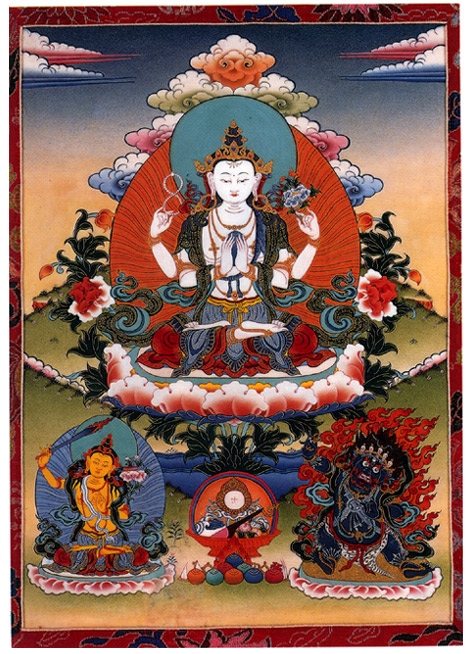
TIBET EQUILIBRIUM – BALANCE OF POWER – FUTURE OF RED CHINA’S EVIL POWER. BEIJING IS DOOMED. BODHISATTVA AVALOKITESVARA IS UNWILLING TO SAVE RED CHINA FOR SHE IS EVIL.
Tibet Consciousness – Red China Slays Tibet with the Sword – Red China Must be Killed with the Sword. No Exceptions to the Golden Rule – The Book of Revelation 13:10
THE FUTURE OF RED CHINA’S EVIL POWER IN OCCUPIED TIBET – I SHARE THE PROPHECY OF BEIJING’S DOOM.

Whole Revelation – Prophetic Revelation made by Photo Image in Bollywood Movie TE3n

Doomsayer of Doom Dooma – Prophecy revealed by Photo image in TE3N

Doomsayer of Doom Dooma – Revelation – Photo Image in Bollywood Movie TE3N.

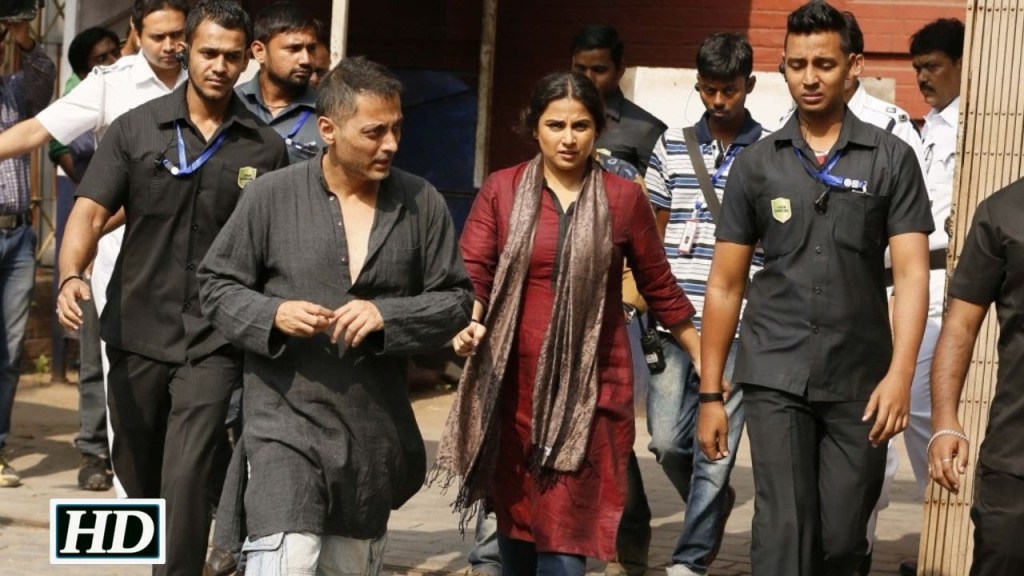
TE3N is a suspense thriller set in Kolkata. Industry’s best actors Amitabh Bachchan, Vidya Balan and Nawazuddin Siddiqui coming together in one film.

My Indian Army Photo ID image taken in 1972 at Doom Dooma serves just one purpose; it unseals Revelation Prophecy and it helps me to announce, “BEIJING IS DOOMED.”

Story in detail:
It’s been 8 years since John Biswas (Amitabh Bachchan) lost his granddaughter, Angela, in a tragic kidnapping incident that scarred him & his wife Nancy forever. But eight years later, while the world has moved, John hasn’t given up his relentless quest for justice.

My Indian Army Photo ID image taken in 1972 at Doom Dooma serves just one purpose; it unseals Revelation Prophecy and it helps me to announce, “BEIJING IS DOOMED.”

He continues to visit the police station where he’s shunned & ignored every day. The only person whose help he seeks is Martin Das (Nawazuddin Siddiqui), an ex-cop turned priest who has one thing in common with John – the death of Angela had a life altering impact on both men.

My Indian Army Photo ID image taken in 1972 at Doom Dooma serves just one purpose; it unseals Revelation Prophecy and it helps me to announce, “BEIJING IS DOOMED.”

But then, 1 day, 8 years after that tragic incident, there’s another kidnapping & everything about it echoes of similarity with the kidnapping of Angela. Father Martin is once again dragged into the investigation by cop Sarita Sarkar (Vidya Balan).

My Indian Army Photo ID image taken in 1972 at Doom Dooma serves just one purpose; it unseals Revelation Prophecy and it helps me to announce, “BEIJING IS DOOMED.”
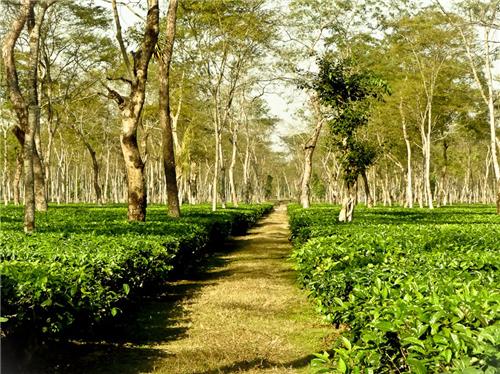
Doomsayer of Doom Dooma – Revelation – Photo Image in Bollywood Movie TE3N. I use my Indian Army Photo ID image of 1972 to describe my connection with City of Doom Dooma, Tinsukia District, Assam, India. I unsealed the prophecy shared by Book of Revelation, Chapter 18 that gives detailed account of sudden, unexpected, downfall of Evil Empire in one single day.

It comes as a big surprise to find my stolen Indian Army Photo ID image from 1972 is revealed in a brief scene shot of Bollywood Movie TE3N released in June 2016.

Doomsayer of Doom Dooma – Revelation

Doomsayer of Doom Dooma – Revelation – Photo Image in Bollywood Movie TE3N. Beijing is Doomed. I use my Indian Army Photo ID image of 1972 to describe my connection with City of Doom Dooma, Tinsukia District, Assam, India. I unsealed the prophecy shared by Book of Revelation, Chapter 18 that gives detailed account of sudden, unexpected, downfall of Evil Empire in one single day.

I use my Indian Army Photo ID image of 1972 to describe my connection with City of Doom Dooma, Tinsukia District, Assam, India. I unsealed the prophecy shared by Book of Revelation, Chapter 18 that gives detailed account of sudden, unexpected, downfall of Evil Empire in one single day.

Doomsayer of Doom Dooma – Revelation – Photo Image in Bollywood Movie TE3N. Beijing is Doomed. My Indian Army Photo ID image taken in 1972 at Doom Dooma serves just one purpose; it unseals Revelation Prophecy and it helps me to announce, “BEIJING IS DOOMED.”
Doomsayer of Doom Dooma – Revelation 18:1-24 – Photo Image in Bollywood Movie TE3N. Beijing is Doomed. My Indian Army Photo ID image taken in 1972 at Doom Dooma serves just one purpose; it unseals Revelation Prophecy and it helps me to announce, “BEIJING IS DOOMED.”
My Indian Army Photo ID image taken in 1972 at Doom Dooma serves just one purpose; it unseals Revelation Prophecy and it helps me to announce, “BEIJING IS DOOMED.”
Doomsayer of Doom Dooma – Revelation Chapter 18:1-24 – Beijing is Doomed. Photo Image in Bollywood Movie TE3N. My Indian Army Photo ID image taken in 1972 at Doom Dooma serves just one purpose; it unseals Revelation Prophecy and it helps me to announce, “BEIJING IS DOOMED.”
Doomsayer of Doom Dooma – Revelation Chapter 18:1-24 inspired by Prophet Isaiah Chapter 47 – Beijing is Doomed. Photo Image in Bollywood Movie TE3N. My Indian Army Photo ID image taken in 1972 at Doom Dooma serves just one purpose; it unseals Revelation Prophecy and it helps me to announce, “BEIJING IS DOOMED.”

My Indian Army Photo ID image taken in 1972 at Doom Dooma serves just one purpose; it unseals Revelation Prophecy and it helps me to announce, “BEIJING IS DOOMED.”

My Indian Army Photo ID image taken in 1972 at Doom Dooma serves just one purpose; it unseals Revelation Prophecy and it helps me to announce, “BEIJING IS DOOMED.”

Whole Dude – Whole Equilibrium

Whole Dude – Whole Equilibrium: Nature grants Freedom to Tibetans without the need for raising questions.

Excerpt: In my analysis, Tibet Equilibrium is about balancing physical force applied by Communist regime to overcome Nature’s Agenda of granting freedom without asking questions. Living Tibetan Spirits speak of Nature’s Agenda in Tibet. Freedom and Independence are gifts of Nature quietly operating across Tibetan Plateau long before the arrival of Anatomically Modern Man. Occupying force wielded by Communist China creates imbalance, disharmony, and discord in the lives of Tibetans who view freedom as natural experience.

WHAT IS TIBET EQUILIBRIUM? I CONSIDER NATURAL CAUSES, NATURAL FACTORS, NATURAL CONDITIONS, NATURAL MECHANISMS, AND NATURAL EVENTS THAT CAN RESTORE NATURAL FREEDOM IN OCCUPIED TIBET.

Natural Sciences such as Physics and Geology describe Natural Forces that are at work shaping Natural Events such as Plate Tectonics that involves collision between plates of Earth’s mantle. For Life to exist on planet Earth, the physical conditions and forces interacting must generate Natural Balance, Natural Order, and Natural Equilibrium for sustained periods of time.

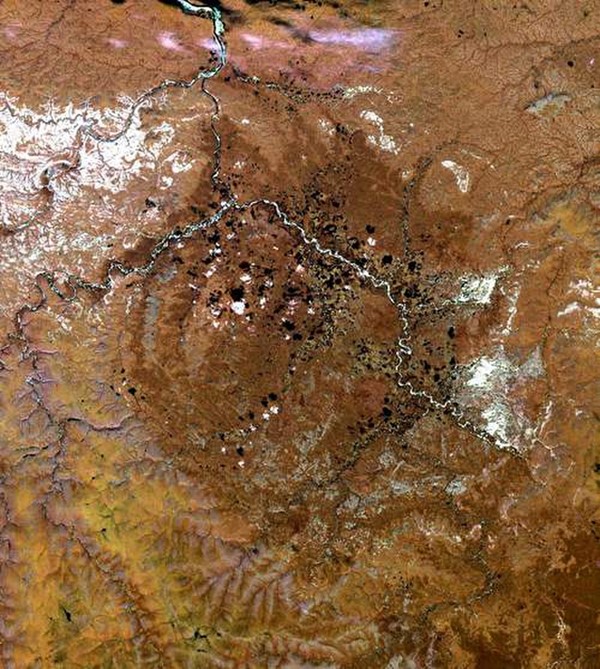
WHAT IS TIBET EQUILIBRIUM? WHAT IS THE CONNECTION BETWEEN POPIGAI IMPACT CRATER IN RUSSIA AND SOUTHERN TIBET UPLIFT?

During the time of ‘Rapid Uplift of Southern Tibet’, planet Earth witnessed massive collision by a meteorite that caused very significant impact crater in Siberia, Russia. This Natural Collision Event, Russia’s Popigai Meteor Crash, contributed to extinction of several species of Life.

I investigate Natural Causes, Natural Factors, Natural Conditions, and Natural Mechanisms that shape Natural Events such as Major and Minor Extinction Events.

What is Tibet Equilibrium? Can Bolide Collision Restore Natural Freedom in Occupied Tibet?

Human History is full of events that involve use of Physical Force applied by Man to change Regime, the Political Power that rules or governs lives of people.

TIBET EQUILIBRIUM – BALANCE OF POWER IN OCCUPIED TIBET. THE GREAT TIBET PROBLEM WILL EXIST UNTIL BALANCE OF POWER IS RESTORED IN OCCUPIED TIBET.

In 1950s, People’s Republic of China invaded Tibet using her superior Physical Power. Tibetans living in Occupied Tibet do not experience Natural Freedom due to change in Balance of Power that operates their lives.

Living Tibetan Spirits speak of Nature’s Agenda in Tibet. Freedom and Independence are gifts of Nature quietly operating across Tibetan Plateau long before the arrival of Anatomically Modern Man. Occupying force wielded by Communist China creates imbalance, disharmony, and discord in lives of Tibetans who view freedom as natural experience. There is no reason for Tibetans to raise their voices demanding freedom. 

To again experience Natural Freedom, Tibet needs help from a Natural Event of great magnitude that applies Force or Power to cause Downfall of Power Regime that rules Tibet from its Seat of Power in Beijing. In my analysis, Bolide Collision Event described in the Book of Revelation, Chapter 18, can shake up the Seat of Power in Beijing. For that reason, I proclaim, “Beijing Doomed.”

What is Tibet Equilibrium? What are the Natural Forces acting or operating in Tibet? “Beijing Doomed,” expression of hope for restoring Natural Freedom in Occupied Tibet.

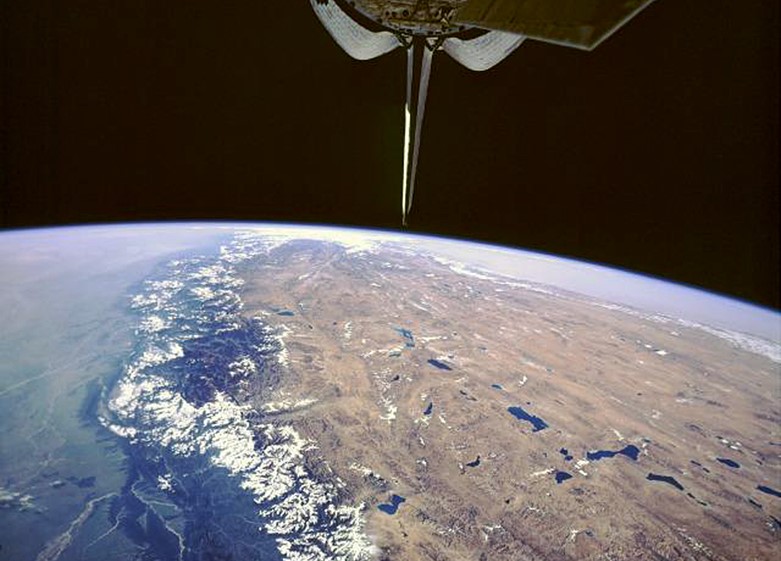
RAPID UPLIFT OF SOUTHERN TIBET – SPACEREF.COM

Clipped from: http://spaceref.com/earth/rapid-uplift-of-southern-tibet.html

What is Tibet Equilibrium? What Natural Causes, Natural Factors, Natural Conditions, Natural Mechanisms, and Natural Forces operate in Tibet?

©NASA

Tibetan Plateau

Using seismic data and supercomputers, Rice University geophysicists have conducted a massive seismic CT scan of the upper mantle beneath the Tibetan Plateau.

They concluded that the southern half of the “Roof of the World” formed in less than one-quarter of the time since the beginning of India-Eurasia continental collision.

The research, which appears online this week in the journal Nature Communications, finds that the high-elevation of Southern Tibet was largely achieved within 10 million years. Continental India’s tectonic collision with Asia began about 45 million years ago.

“The features that we see in our tomographic image are very different from what has been seen before using traditional seismic inversion techniques,” said Min Chen, the Rice research scientist who headed the project. “Because we used full waveform inversion to assimilate a large seismic data set, we were able to see more clearly how the upper-mantle lithosphere beneath Southern Tibet differs from that of the surrounding region. Our seismic image suggests that the Tibetan lithosphere thickened and formed a denser root that broke away and sank deeper into the mantle. We conclude that most of the uplift across Southern Tibet likely occurred when this lithospheric root broke away.”

The research could help answer longstanding questions about Tibet’s formation. Known as the “Roof of the World,” the Tibetan Plateau stands more than three miles above sea level. The basic story behind its creation — the tectonic collision between the Indian and Eurasian continents — is well-known to schoolchildren the world over, but the specific details have remained elusive. For example, what causes the plateau to rise and how does its high elevation impact Earth’s climate?

“The leading theory holds that the plateau rose continuously once the India-Eurasia continental collision began, and that the plateau is maintained by the northward motion of the Indian plate, which forces the plateau to shorten horizontally and move upward simultaneously,” said study co-author Fenglin Niu, a professor of Earth science at Rice. “Our findings support a different scenario, a more rapid and pulsed uplift of Southern Tibet.”

It took three years for Chen and colleagues to complete their tomographic model of the crust and upper-mantle structure beneath Tibet. The model is based on readings from thousands of seismic stations in China, Japan and other countries in East Asia. Seismometers record the arrival time and amplitude of seismic waves, pulses of energy that are released by earthquakes and that travel through Earth. The arrival time of a seismic wave at a particular seismometer depends upon what type of rock it has passed through. Working backward from instrument readings to calculate the factors that produced them is something scientists refer to as an inverse problem, and seismological inverse problems with full waveforms incorporating all kinds of usable seismic waves are some of the most complex inverse problems to solve.

Chen and colleagues used a technique called full waveform inversion, “an iterative full waveform-matching technique that uses a complicated numerical code that requires parallel computing on supercomputers,” she said.

“The technique really allows us to use all the wiggles on a large number of seismographs to build up a more realistic 3-D model of Earth’s interior, in much the same way that whales or bats use echo-location,” she said. “The seismic stations are like the ears of the animal, but the echo that they are hearing is a seismic wave that has either been transmitted through or bounced off of subsurface features inside Earth.”

The tomographic model includes features to a depth of about 500 miles below Tibet and the Himalaya Mountains. The model was computed on Rice’s DAVinCI computing cluster and on supercomputers at the University of Texas that are part of the National Science Foundation’s Extreme Science and Engineering Discovery Environment (XSEDE).

“The mechanism that led to the rise of Southern Tibet is called lithospheric thickening and foundering,” Chen said. “This happened because of convergence of two continental plates, which are each buoyant and not easy to subduct underneath the other plate. One of the plates, in this case on the Tibetan side, was more deformable than the other, and it began to deform around 45 million years ago when the collision began. The crust and the rigid lid of upper mantle — the lithosphere — deformed and thickened, and the denser lower part of this thickened lithosphere eventually foundered, or broke off from the rest of the lithosphere. Today, in our model, we can see a T-shaped section of this foundered lithosphere that extends from a depth of about 250 kilometers to at least 660 kilometers.”

Chen said that after the denser lithospheric root broke away, the remaining lithosphere under Southern Tibet experienced rapid uplift in response.

“The T-shaped piece of foundered lithosphere sank deeper into the mantle and also induced hot upwelling of the asthenosphere, which leads to surface magmatism in Southern Tibet,” she said.

Such magmatism is documented in the rock record of the region, beginning around 30 million years ago in an epoch known as the Oligocene.

“The spatial correlation between our tomographic model and Oligocene magmatism suggests that the Southern Tibetan uplift happened in a relatively short geological span that could have been as short as 5 million years,” Chen said.

Additional co-authors include Adrian Lenardic, Cin-Ty Lee, Wenrong Cao and Julia Ribeiro, all of Rice, and Jeroen Tromp of Princeton University.

The research was supported by a grant from the National Science Foundation (NSF), by the NSF’s Extreme Science and Engineering Discovery Environment (XSEDE) program, and by the China Earthquake Administration’s China Seismic Array Data Management Center. Rice’s DAVinCI supercomputer is administered by Rice’s Center for Research Computing and procured in partnership with the Ken Kennedy Institute for Information Technology. The DOI of the Nature Communications paper is: 10.1038/NCOMMS15659

A copy of the paper, “Lithospheric Foundering and Under thrusting Imaged Beneath Tibet,” is available at: https://www.nature.com/articles/ncomms15659

What is Tibet Equilibrium? How to restore Natural Freedom in Occupied Tibet?
What is Tibet Equilibrium? Can Time alone restore Natural Freedom in Occupied Tibet?

Whole Doom – Doomsayer of Doom Dooma

Doomsayer of Doom Dooma

Whole Doom – Doomsayer of Doom Dooma
Whole Dude – Whole Doom: Predicting the Sudden Downfall of The Evil Red Empire.

Excerpt: President Reagan suggests that the answers for all the problems men face are found within the covers of The Bible. The problems of man do not always need human interventions like insurrection, rebellion, warfare, and other forms of physical force that man uses to resolve conflicts. President Reagan shares a hope that human struggle for Freedom, Fairness, and Justice could be resolved without using bombs, rockets, armies, or military might. In the last book of The New Testament called ‘Revelation’ I discovered a hidden prophecy that graphically describes the downfall of The Evil Red Empire.

Doom Dooma Doomsayer predicts heavenly strike by asteroid – Beijing is doomed

At Establishment 22, Special Frontier Force, I am known as ‘Doom Dooma Doomsayer’ for I predict Evil Red Empire’s Downfall because of a cataclysmic event which she cannot ward off by paying a ransom.

Doom Dooma Doomsayer predicts heavenly strike by asteroid – Beijing is doomed

My predisposition is inherited at a place known as Doom Dooma, Assam, in Northeast India. I am not a prophet and I am not claiming that I am making a new prophetic revelation.

Doom Dooma Doomsayer predicts heavenly strike by asteroid – Beijing is doomed

By divine guidance, I received the opportunity to read the Book of Isaiah, and the Book of Revelation to learn that the term Evil is always associated with Calamity, Disaster, Downfall, Catastrophe, Cataclysm, Trouble, and Woe for evil action always brings its own punishment as a consequence. Evildoer is judged, condemned, and is punished. Evil moves towards its own end of self-destruction.

Doom Dooma Doomsayer predicts heavenly strike by asteroid – Beijing is doomed

The term ‘apocalypse’ means unveiling or revelation; it depicts destruction of ‘Evil’ and triumph of Good. Apocalypse often refers to a striking disclosure of something not previously realized.

Doom Dooma Doomsayer predicts heavenly strike by asteroid – Beijing is doomed

The term ‘prophecy’ means declaration or prediction of something under the influence of divine guidance. In Bible, the term ‘Prophet’ describes person who speaks for God as though under divine guidance, and Prophet often predicts future events.

Doom Dooma Doomsayer predicts heavenly strike by asteroid – Beijing is doomed

The term ‘Doom’ means ‘what is laid down’,decree, judgment, sentence of condemnation, destiny, tragic fate, ruin, and to ordain as penalty. I am named ‘Doomsayer’ for I am predisposed to predicting catastrophe or disaster, calamity, or ‘The Deluge’.

Doom Dooma Doomsayer predicts heavenly strike by asteroid – Beijing is doomed

Evil Red Empire, Red Dragon, Red China embraced self-destruction for her evil actions. Hence, with no further doubt, I pronounce, “Beijing Doomed.”

Doom Dooma Doomsayer predicts heavenly strike by asteroid – Beijing is doomed

I am not predicting a random, spontaneous, purposeless strike or impact by an asteroid. I am predicting Heavenly Strike that is Precise, Selective, Guided, Goal-Oriented and Purposeful for it delivers Justice while destroying Evil.

Doom Dooma Doomsayer predicts heavenly strike by asteroid – Beijing is doomed