Whole Dude at Whole Foods needs a Final Destination to Rest in Peace.I am a Refugee. What is my Final Destination?
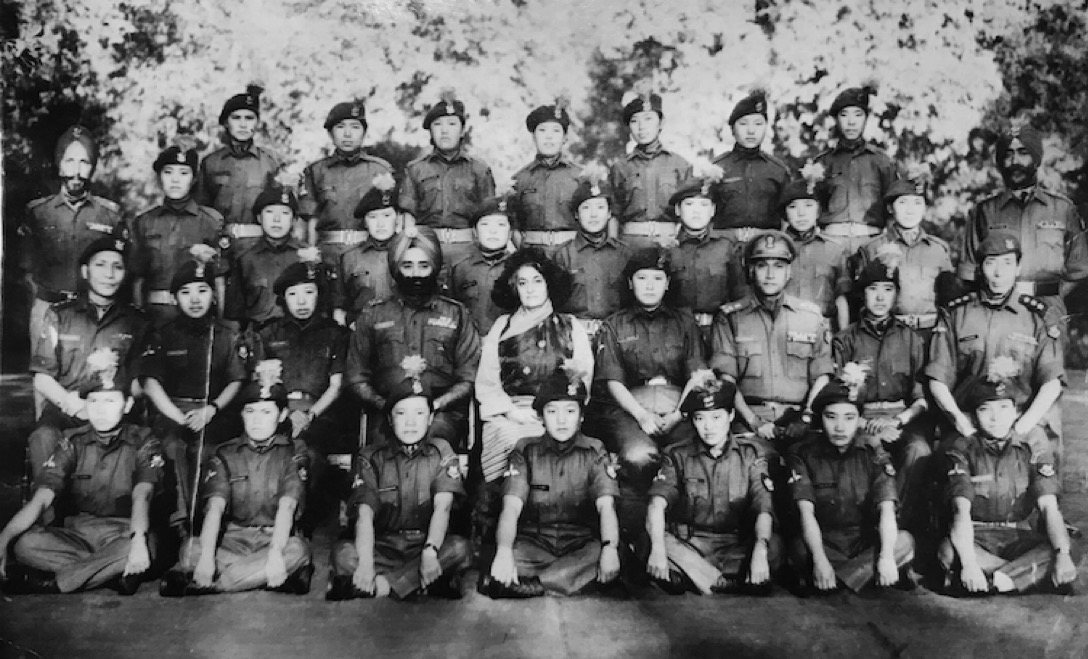
I am a Refugee for I host ‘The Living Tibetan Spirits’, the Spirits of young Tibetan Soldiers who gave their precious lives while dreaming about ‘Freedom’ in Occupied Tibet.
For I am a Refugee, I am not entitled to the benefits entitled to the citizens of my host nation. I am in the search of my Final Destination where I can die with Peace and Dignity. My host nation is Free and yet as a Refugee I live under terms and conditions imposed on my existence as a Refugee. What is the Choice I can make? The options are, 1. Labor until Death in the host nation, and 2. Peaceful Death in the Enemy’s Prison.
I am a Refugee. What is my Final Destination.
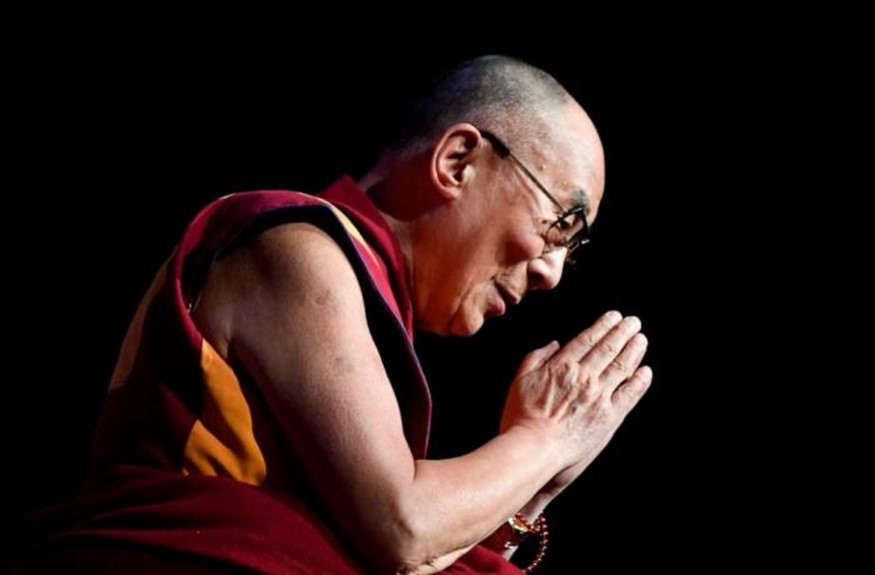
India – Tibet – China Dalai Lama says he would like to return to Tibet before he dies
The spiritual leader of Tibetan Buddhism fled Lhasa during the 1959 uprising. Beijing considers him a “wolf in sheep’s clothing”. Like Xi Jinping, Donald Trump never asked to meet him.
Dharamshala (AsiaNews/Agencies) – “The Tibetan people have trust in me, they ask me [to] come to Tibet,” said the Dalai Lama in an interview with the BBC.
I am a Refugee. What is my Final Destination?
Speaking with the journalist, the spiritual leader of Tibetan Buddhism talked about his desire to return to Lhasa before he dies. He was forced to abandon the Potala Palace (his official residence) during the Tibetan uprising against Chinese military rule in 1959.
Since then, Tenzin Gyatso, the 14th Dalai Lama, has found refuge in Dharamshala (India) along with another 10,000 Tibetan Buddhists who live their Himalayan exile in Arunachal Pradesh.
In the interview the Dalai Lama describes India, the country that welcomed him, his “spiritual home”. Grateful for the hospitality he received, he notes that one advantage of not being able to return home to Tibet is that India is a free country where he can express himself openly.
Although he has often tried to engage Beijing in dialogue, to safeguard the autonomy of Tibetan religion and culture threatened by a “cultural genocide”, the Chinese Communist Party has always branded him a “dangerous” separatist seeking Tibetan independence.
In order to return to Tibet, he gave up his political role in 2011 to remain only as the spiritual leader of Tibetan Buddhism. But the Chinese Communist Party continues to view him as a “wolf in sheep’s clothing”.
At the age of 84, he enjoys good health, although he needs an assistant to walk. In April, Tibetan Buddhists all over the world were concerned for several days after his sudden hospitalization in a Delhi hospital for a lung infection.
In addition to going home to Tibet, the Dalai discussed various topics in the BBC interview: Brexit, migrants, a female Dalai Lama woman who should be “more attractive” than a man.
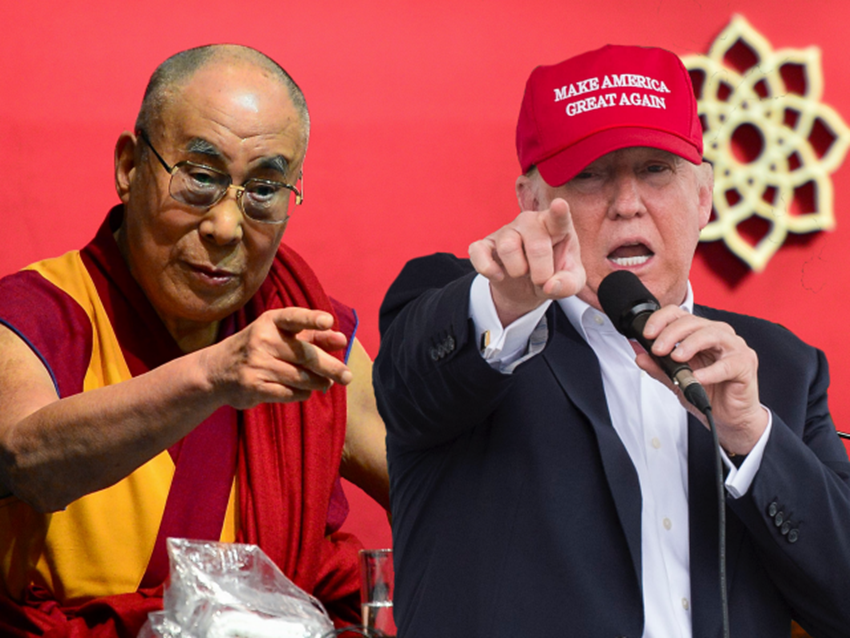
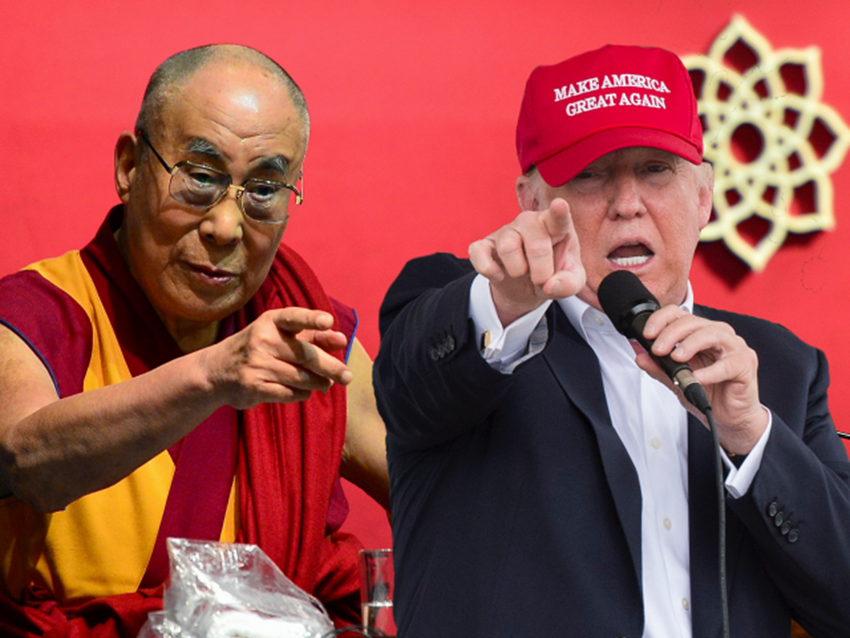
He also voiced strong criticism of US President Donald Trump who, in his view, lacks “moral principle”. The slogan (America First) that allowed him to win “is wrong”. The US leader, he noted, like Xi Jinping, never asked to meet him.
“The Crusade for Peace through Freedom” is due since March 10, 1959
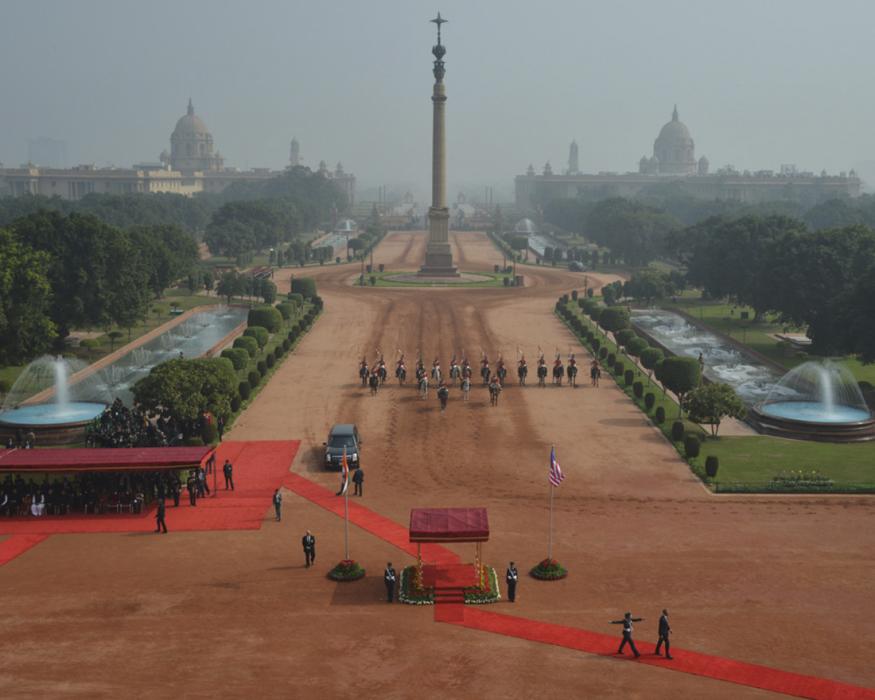
US President Barack Obama was the guest of honor at India’s celebration of its 66th Republic Day on Monday, January 26, 2015. This is the first time in the history of Republic of India, the US President is the guest of honor at the Republic Day ParadeUS President Barack Obama was the guest of honor at India’s celebration of its 66th Republic Day on Monday, January 26, 2015. This is the first time in the history of Republic of India, the US President is the guest of honor at the Republic Day Parade
US President Barack Obama was the guest of honor at India’s celebration of its 66th Republic Day on Monday, January 26, 2015. This is the first time in the history of Republic of India, the US President is the guest of honor at the Republic Day Parade. There is a palpable sense of warmth, friendship, and cordiality between President Obama and India’s Prime Minister Narendra Modi.
US President Barack Obama was the guest of honor at India’s celebration of its 66th Republic Day on Monday, January 26, 2015. This is the first time in the history of Republic of India, the US President is the guest of honor at the Republic Day Parade
Travels of the US Presidents to India:
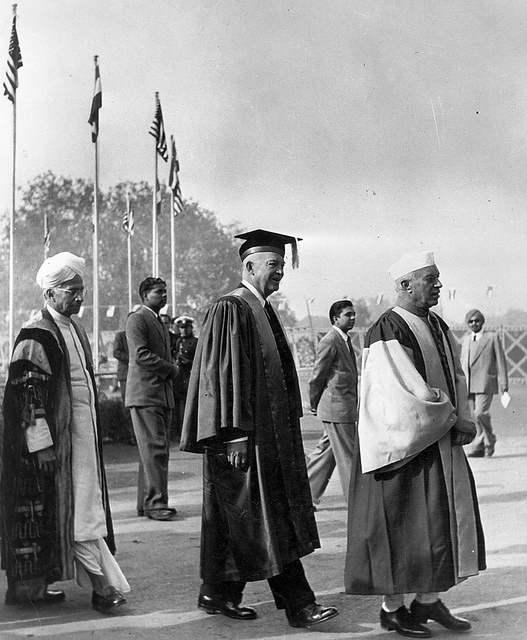
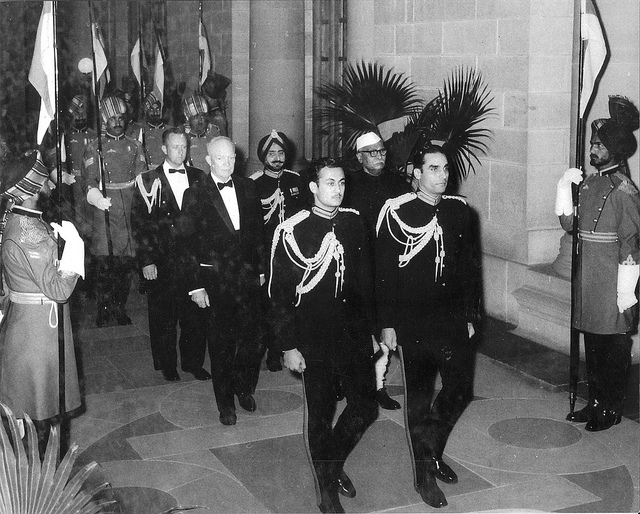
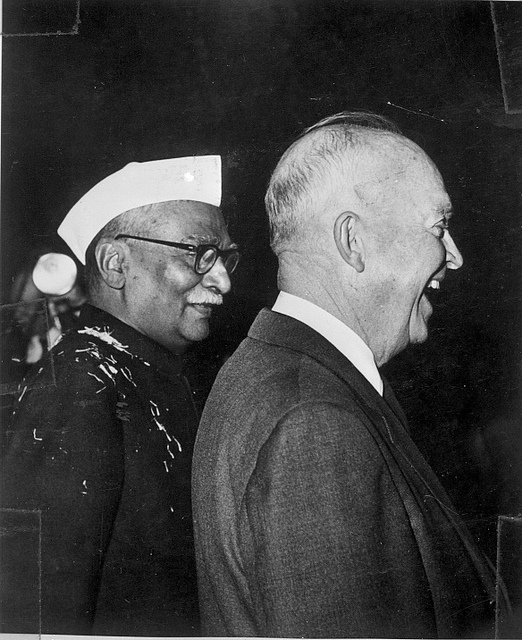
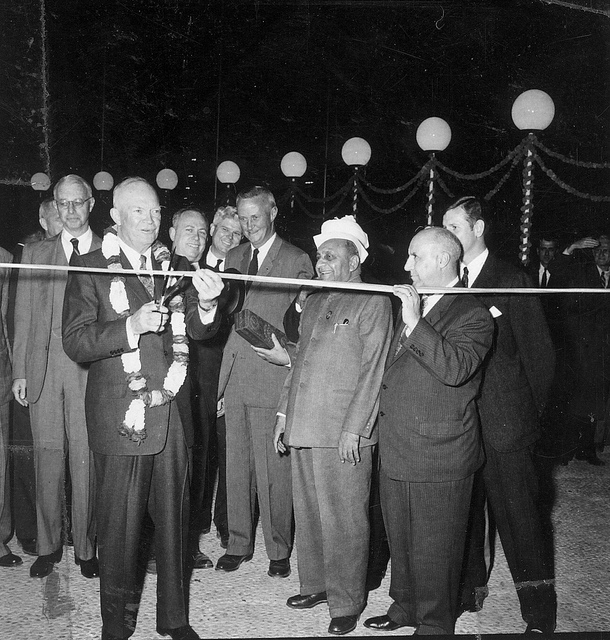
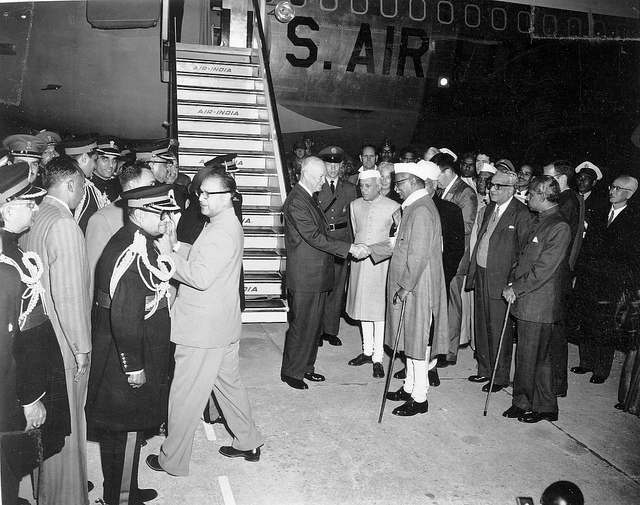
Dwight D. Eisenhower, New Delhi, Agra. Met with President Prasad and Prime Minister Nehru. Addressed Parliament.December 9–14, 1959.
Richard M. Nixon, New Delhi, State visit; met with Acting President Hidayatullah. July 31–August 1, 1969.
Jimmy Carter, New Delhi, Daulatpur-Nasirabad. Met with President Reddy and Prime Minister Desai. Addressed Parliament. January 1–3, 1978.
William J. Clinton, New Delhi, Agra, Jaipur, Hyderabad, Bombay. Met with President Narayanan; signed Joint Statement on Energy and the Environment; addressed the Indian Parliament. March 19–25, 2000.
George W. Bush, New Delhi, Hyderabad. Met with Prime Minister Singh. Signed nuclear cooperation agreement. March 1–3, 2006.
Barack Obama, Mumbai, New Delhi. Attended U.S.-India Business and Entrepreneurship Summit in Mumbai. Met with Prime Minister Singh and President Patil. Addressed the Indian Parliament. November 6–9, 2010.
Barack Obama, New Delhi. Met with President Pranab Mukherjee and Prime Minister Narendra Modi. January 24–27, 2015.
Donald J. Trump, New Delhi. Met with Prime Minister Narendra Modi. February 24–25, 2020.
Joseph R. Biden, New Delhi. Met with Prime Minister Narendra Modi and attended the G20 Leaders’ Summit. September 7–10, 2023.
US President Barack Obama was the guest of honor at India’s celebration of its 66th Republic Day on Monday, January 26, 2015. This is the first time in the history of Republic of India, the US President is the guest of honor at the Republic Day Parade
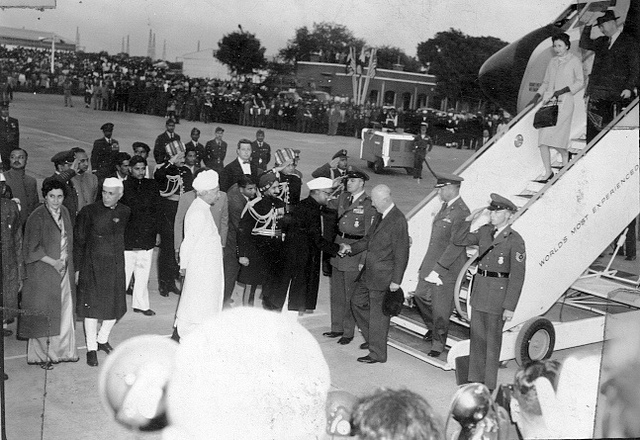
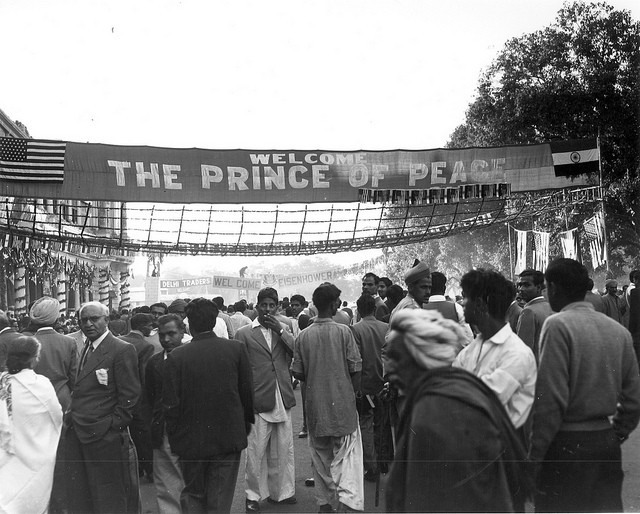
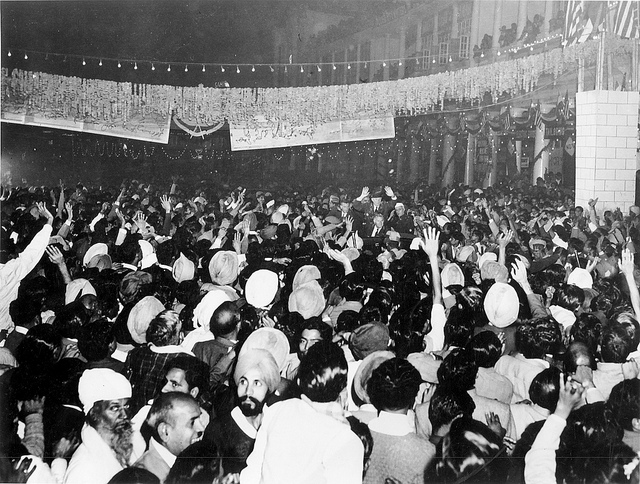
On behalf of Special Frontier Force, I admit that India and the United States are not marching towards the goal of winning Peace through Freedom, a journey that these two nations started during 1950s. I would like to share the memories of the historical Five-Day visit to India by 34th US President Dwight David Eisenhower from 09 December to 14 December 1959.
India’s Prime Minister Narendra Modi (L) and U.S. President Barack Obama watch India’s Republic Day parade in the rain together from their review stand in New Delhi January 26, 2015. REUTERS/Stephen Crowley/Pool (INDIA Tags: POLITICS)
US President Obama, and Indian Prime Minister Narendra Modi have failed to mention the Great Problem of Tibet which gave the stimulus for formulating friendly relations between the US and India. Even if the word Tibet is not mentioned during President Obama’s visit to India, I most positively assert that Tibet remains the central focus of India’s relationship with the United States.
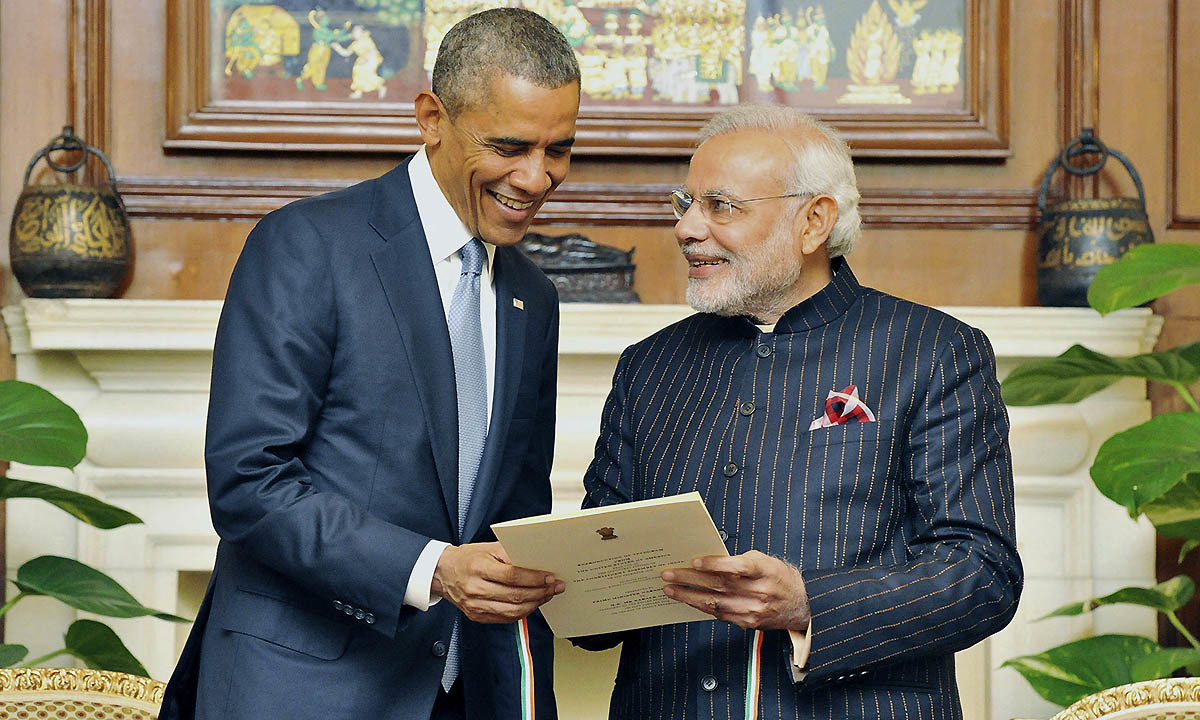
India’s Prime Minister Narendra Modi (R) presents a reproduction of telegram sent by U.S. to the Indian Constituent Assembly in 1946, to U.S. President Barack Obama during their meeting in New Delhi January 25, 2015. In a glow of bonhomie, Obama and Indian Prime Minister Narendra Modi worked on a series of bilateral agreements at a summit on Sunday that both sides hope will establish an enduring strategic partnership. REUTERS/India’s Press Information Bureau/Handout via Reuters.
US Presidents who met with His Holiness the 14th Dalai Lama
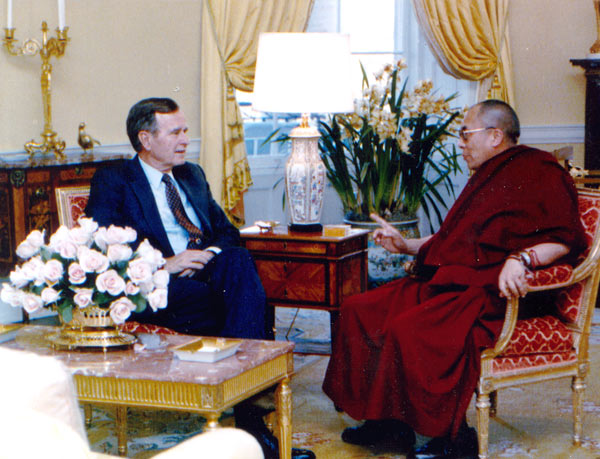
Special Frontier Force at The White House: On April 16, 1991, the 14th Dalai Lama met with US President George H.W. Bush during his first visit to The White House. President George H.W. Bush served at the Director of the US CIA.
Four U.S. presidents—George H.W. Bush, Bill Clinton, George W. Bush, and Barack Obama—have met with His Holiness the 14th Dalai Lama, with the first official meeting occurring in 1991 during the elder Bush’s presidency.
Subsequent meetings have taken place at the White House, including two with Obama in 2010 and 2011.
George H.W. Bush: The first U.S. president to meet with the Dalai Lama during his presidency, in April 1991.
Bill Clinton: Met with the Dalai Lama at the White House in June 2000 and also met with him in November 1998.
George W. Bush: Met with the Dalai Lama multiple times during his presidency, starting in May 2001, with other meetings in 2003, 2005, and 2007. He also met with the Dalai Lama at the George W. Bush Presidential Center after leaving office.
Barack Obama: Met with the Dalai Lama twice in the Map Room of the White House, in February 2010 and July 2011.
The military occupation of Tibet poses the greatest danger to Peace, Freedom, Democracy, and Human Rights in the world. The problem will not go away and the real solution for the military occupation of Tibet is the Eviction of Military Occupier from the territories of Tibet.
US President Barack Obama meets Indian President Pranab Mukherjee at Rashtrapati Bhavan
US President Barack Obama was the guest of honor at India’s celebration of its 66th Republic Day on Monday, January 26, 2015. This is the first time in the history of Republic of India, the US President is the guest of honor at the Republic Day ParadeUS President Barack Obama was the guest of honor at India’s celebration of its 66th Republic Day on Monday, January 26, 2015. This is the first time in the history of Republic of India, the US President is the guest of honor at the Republic Day ParadeUS President Barack Obama was the guest of honor at India’s celebration of its 66th Republic Day on Monday, January 26, 2015. This is the first time in the history of Republic of India, the US President is the guest of honor at the Republic Day ParadeUS President Barack Obama was the guest of honor at India’s celebration of its 66th Republic Day on Monday, January 26, 2015. This is the first time in the history of Republic of India, the US President is the guest of honor at the Republic Day ParadeUS President Barack Obama was the guest of honor at India’s celebration of its 66th Republic Day on Monday, January 26, 2015. This is the first time in the history of Republic of India, the US President is the guest of honor at the Republic Day Parade
India and the United States joined hands to secure Peace and Freedom in the Occupied Land of Tibet . The military organization called Special Frontier Force ( also known as Establishment 22) truly represents the legacy of President Eisenhower who captivated the hearts of Indian people with his call for a Crusade for Peace through Freedom. We have yet to fight this Battle to secure Peace, Freedom, Democracy, and Justice in the Land of Tibet.
India and the United States joined hands to secure Peace and Freedom in the Occupied Land of Tibet . The military organization called Special Frontier Force ( also known as Establishment 22) truly represents the legacy of President Eisenhower who captivated the hearts of Indian people with his call for a Crusade for Peace through Freedom. We have yet to fight this Battle to secure Peace, Freedom, Democracy, and Justice in the Land of Tibet.On behalf of Special Frontier Force, I admit that India and the United States are not marching towards the goal of winning Peace through Freedom, a journey that these two nations started during 1950s. I would like to share the memories of the historical Five-Day visit to India by 34th US President Dwight David Eisenhower from 09 December to 14 December 1959. On behalf of Special Frontier Force, I admit that India and the United States are not marching towards the goal of winning Peace through Freedom, a journey that these two nations started during 1950s. I would like to share the memories of the historical Five-Day visit to India by 34th US President Dwight David Eisenhower from 09 December to 14 December 1959. On behalf of Special Frontier Force, I admit that India and the United States are not marching towards the goal of winning Peace through Freedom, a journey that these two nations started during 1950s. I would like to share the memories of the historical Five-Day visit to India by 34th US President Dwight David Eisenhower from 09 December to 14 December 1959. On behalf of Special Frontier Force, I admit that India and the United States are not marching towards the goal of winning Peace through Freedom, a journey that these two nations started during 1950s. I would like to share the memories of the historical Five-Day visit to India by 34th US President Dwight David Eisenhower from 09 December to 14 December 1959. On behalf of Special Frontier Force, I admit that India and the United States are not marching towards the goal of winning Peace through Freedom, a journey that these two nations started during 1950s. I would like to share the memories of the historical Five-Day visit to India by 34th US President Dwight David Eisenhower from 09 December to 14 December 1959. On behalf of Special Frontier Force, I admit that India and the United States are not marching towards the goal of winning Peace through Freedom, a journey that these two nations started during 1950s. I would like to share the memories of the historical Five-Day visit to India by 34th US President Dwight David Eisenhower from 09 December to 14 December 1959. On behalf of Special Frontier Force, I admit that India and the United States are not marching towards the goal of winning Peace through Freedom, a journey that these two nations started during 1950s. I would like to share the memories of the historical Five-Day visit to India by 34th US President Dwight David Eisenhower from 09 December to 14 December 1959. On behalf of Special Frontier Force, I admit that India and the United States are not marching towards the goal of winning Peace through Freedom, a journey that these two nations started during 1950s. I would like to share the memories of the historical Five-Day visit to India by 34th US President Dwight David Eisenhower from 09 December to 14 December 1959. On behalf of Special Frontier Force, I admit that India and the United States are not marching towards the goal of winning Peace through Freedom, a journey that these two nations started during 1950s. I would like to share the memories of the historical Five-Day visit to India by 34th US President Dwight David Eisenhower from 09 December to 14 December 1959. HISTORY OF THE US-INDIA-TIBET RELATIONS: Crusade for Peace through Freedom in Occupied Tibet. The US President’s visit to India In December 1959.On behalf of Special Frontier Force, I admit that India and the United States are not marching towards the goal of winning Peace through Freedom, a journey that these two nations started during 1950s. I would like to share the memories of the historical Five-Day visit to India by 34th US President Dwight David Eisenhower from 09 December to 14 December 1959. On behalf of Special Frontier Force, I admit that India and the United States are not marching towards the goal of winning Peace through Freedom, a journey that these two nations started during 1950s. I would like to share the memories of the historical Five-Day visit to India by 34th US President Dwight David Eisenhower from 09 December to 14 December 1959. On behalf of Special Frontier Force, I admit that India and the United States are not marching towards the goal of winning Peace through Freedom, a journey that these two nations started during 1950s. I would like to share the memories of the historical Five-Day visit to India by 34th US President Dwight David Eisenhower from 09 December to 14 December 1959. On behalf of Special Frontier Force, I admit that India and the United States are not marching towards the goal of winning Peace through Freedom, a journey that these two nations started during 1950s. I would like to share the memories of the historical Five-Day visit to India by 34th US President Dwight David Eisenhower from 09 December to 14 December 1959. On behalf of Special Frontier Force, I admit that India and the United States are not marching towards the goal of winning Peace through Freedom, a journey that these two nations started during 1950s. I would like to share the memories of the historical Five-Day visit to India by 34th US President Dwight David Eisenhower from 09 December to 14 December 1959. On behalf of Special Frontier Force, I admit that India and the United States are not marching towards the goal of winning Peace through Freedom, a journey that these two nations started during 1950s. I would like to share the memories of the historical Five-Day visit to India by 34th US President Dwight David Eisenhower from 09 December to 14 December 1959. On behalf of Special Frontier Force, I admit that India and the United States are not marching towards the goal of winning Peace through Freedom, a journey that these two nations started during 1950s. I would like to share the memories of the historical Five-Day visit to India by 34th US President Dwight David Eisenhower from 09 December to 14 December 1959.
The military occupation of Tibet poses the greatest danger to Peace, Freedom, Democracy, and Human Rights in the world. The problem will not go away and the real solution for the military occupation of Tibet is the Eviction of Military Occupier from the territories of Tibet.
On behalf of Special Frontier Force, I admit that India and the United States are not marching towards the goal of winning Peace through Freedom, a journey that these two nations started during 1950s. I would like to share the memories of the historical Five-Day visit to India by 34th US President Dwight David Eisenhower from 09 December to 14 December 1959. The History of the US-India-Tibet Relations. Crusade for Peace through Freedom in Occupied Tibet.The military occupation of Tibet poses the greatest danger to Peace, Freedom, Democracy, and Human Rights in the world. The problem will not go away and the real solution for the military occupation of Tibet is the Eviction of Military Occupier from the territories of Tibet.APRIL 22, 1961. CAMP DAVID, MARYLAND: The History of the US-India-Tibet Relations. Crusade for Peace through Freedom in Occupied Tibet. The military occupation of Tibet poses the greatest danger to Peace, Freedom, Democracy, and Human Rights in the world. The problem will not go away and the real solution for the military occupation of Tibet is the Eviction of Military Occupier from the territories of Tibet.Whole Values: Whole Dude at Whole Foods demands the upholding of American Values to defend Personal Liberty, Human Rights, and the Dignity of Man.
HIS HOLINESS THE 14th DALAI LAMA – PRINCE OF PEACE: The Dalai Lama is seen seated on his throne in Potala Palace, Lhasa, Tibet in this photo image from 1956/1957.
The Great Fifth Dalai Lama founded the Ganden Phodrang Government of Tibet in 1642. The successive Dalai Lamas have headed Tibet for nearly four centuries. The Institution of Dalai Lama is the central focus of Tibetan Cultural Identity and Tibetan National Character. Very often, news media stories refer to His Holiness the 14th Dalai Lama as a Buddhist monk and ignore the fact that he was seated on a throne in a ceremonial function when he assumed the Office of the Dalai Lama. For that reason, I would like to categorically name him as “Prince of Peace” who is promoting peace in both Tibetan and International affairs.
Prince of Peace – Book of Isaiah, Chapter 9:6
His Holiness The Dalai Lama – Prince of Peace: He will be called Wonderful Counselor, Prince of Peace for he will shatter the Yoke that burdens Tibet.
His Holiness The Dalai Lama was not born as a Prince. He was chosen by Tibetan tradition and custom to occupy the position of The Dalai Lama which makes him as an exalted person clothed with authority. In Tibetan tradition, the Dalai Lama is a monarch or a King, a Leader who rules over Tibet with full public consent and the political institution of the Dalai Lama and his governance of Tibet is a system of government approved by Social Contract.
His Holiness the 14th Dalai Lama – Prince of Peace: He will ease the burden of Yoke imposed by Communist China’s Oppressive rule of Tibet.
The Dalai Lama as Prince of Peace will ease the burden of Yoke imposed by Red China’s oppressive occupation of Tibet.
Rudra Narasimham Rebbapragada Ann Arbor, MI 48104-4162, USA Special Frontier Force-Establishment 22-Vikas Regiment
Tibet: News International Top US official calls HH the Dalai Lama of Tibet “ambassador for peace”
Monday, 27 July 2015 12:58 Yangchen Dolma, Tibet Post International
The Dalai Lama as Prince of Peace will ease the burden of Yoke imposed by Red China’s oppressive occupation of Tibet.
Washington DC — White House senior adviser praised His Holiness the Dalai Lama of Tibet and described him as “an ambassador for peace, for justice, and for nonviolence.”
Valerie Jarrett, Senior Advisor to President Obama made the following remarks at NATA’s event to honor His Holiness the Dalai Lama, the spiritual leader of Tibet.
“His Holiness the Dalai Lama, to the monks and the people of Tibet, to the leaders and dignitaries and incredible performers who are here today, and to all of you, gathered in this amazing room, good afternoon.
And what an amazing afternoon it is. It is an honor to be among so many friends of His Holiness as we celebrate his extraordinary life of a man that we all admire and respect. I come here today on behalf of President Barack Obama, to convey the birthday wishes of the American people to His Holiness the Dalai Lama. There are very few individuals that have a truly global presence, and even fewer who have used that presence to make such a powerful and positive contribution to humanity.
Both through his words and importantly his deeds, His Holiness the Dalai Lama has become an ambassador for peace, for justice, and for nonviolence. He has inspired us all to speak up for the dignity of every human being, and he has been unwavering in his conviction that there is most certainly more that unifies us than could possibly divide us. In this sense, he is a man for this moment: at a time when voices of intolerance seek to sow division along religious and racial and ethnic lines, the Dalai Lama serves as a powerful counterweight, for he is a uniter. His teachings challenge us to promote religious harmony among all faiths and traditions, and the unwavering persistence of his message of compassion serves as a moral compass for all of us during this extraordinarily challenging time in our world’s history.
But the Dalai Lama is not a billboard who merely looks good from a distance. I know this from personal experience that I am humbled to say. I had the incredible opportunity of visiting His Holiness in Dharamsala back in 2009. I spent time at his private residence and I visited the community that has thrived under his spiritual leadership in exile for 56 years. The Dalai Lama and I discussed the importance of a lifelong commitment to giving voice to the voiceless, and by the example he has set, he truly gave me a renewed strength to never lose sight of our collective and our individual responsibility to be unwavering forces for good.
I felt the profound connection between he and his many followers; I visited a monastery, I visited a school, I visited an orphanage—all that he had established. I saw the extraordinary efforts that he had undertaken to preserve the Tibetan religious, cultural, and linguistic traditions. And I will never, ever forget the joyful healthy children who I met who were being raised by loving and nurturing adults in an orphanage that is 54 years old. And, in fact, I discovered that many of the adults in the orphanage had been raised in that very same orphanage and were giving back to the children of today. After that amazing trip to Dharamsala, I returned to the United States and I told President Obama that His Holiness had changed my life, and I meant it.
Now, I hasten to add that later His Holiness said to the President that he thought I was exaggerating when I said that, but I was not. He truly changed my life. And each time our paths have crossed since that very first visit to Dharamsala, the Dalai Lama has touched my heart, and has been an ongoing source of deep and true inspiration for me as I know he is for all of you.
On a personal note, I just want to say publicly what I hope you know privately, which is: I treasure you, and I am humbled, deeply humbled, to be able to call you my friend.
And so today, as we join here and so many people around the world in celebration of an extraordinary life of this great leader, a good and a decent man, a compassionate and honest man, a spiritual and intellectual man, a man, I hasten to say, with amazing grace. And so I close the way I began, which is to say to you on behalf of President Barack Obama, I wish you Sir, a continued health, and strength, and vigor, for at least until you reach the age of a hundred and twenty. Thank you very much.”
Last Updated ( Monday, 27 July 2015 13:04 )
His Holiness the 14th Dalai Lama – Prince of Peace: He will resist the Prince of Darkness, the Evil One, The Evil Red Empire.His Holiness the 14th Dalai Lama – Prince of Peace: He will shatter the YOKE that burdens Tibet.His Holiness The Dalai Lama – Prince of Peace: For he will shatter the rod of Communist China’s oppression in Tibet.
The Dalai Lama as Prince of Peace will ease the burden of Yoke imposed by Red China’s oppressive occupation of Tibet.The Dalai Lama as Prince of Peace will ease the burden of Yoke imposed by Red China’s oppressive occupation of Tibet.The Dalai Lama as Prince of Peace will ease the burden of Yoke imposed by Red China’s oppressive occupation of Tibet.The Dalai Lama as Prince of Peace will ease the burden of Yoke imposed by Red China’s oppressive occupation of Tibet.The Dalai Lama as Prince of Peace will ease the burden of Yoke imposed by Red China’s oppressive occupation of Tibet.
The Cold War in Asia – The Spread of Communism to Asia
Whole Friction – Communism is the source of Friction in India-China-Tibet Relations
I am pleased to share the article titled “TIBET IS THE REAL SOURCE OF SINO-INDIAN FRICTION” by Brahma Chellaney that was published by Nikkei Asian Review in its edition dated September 26, 2014.
I speak on behalf of Special Frontier Force and The Living Tibetan Spirits. I often describe about my “Kasturi-Sarvepalli-Mylapore-India-Tibet-US” Connection and I openly promote friendly relations between India and Tibet and support the condition called ‘Natural Freedom’ in the Land of Tibet. The military invasion and occupation of Tibet is not consistent with the principles of Panch Sheela Agreement that India signed during 1954. At that time, both Tibet, and India desired friendly relations with China and had used diplomacy to influence China to relax its military grip over Tibet. Tibetans for centuries enjoyed a natural sense of Freedom in spite of foreign invasions by Mongols and later Manchu China. It may be noted that His Holiness the 14th Dalai Lama was not arrested after China’s successful military attack in 1950. He had continued to occupy Patola Palace in Lhasa and had visited New Delhi along with China’s Prime Minister Chou En-Lai and in May 1956 during 2500th Buddha Jayanti (Gautama Buddha’s Birth Anniversary) Celebration.
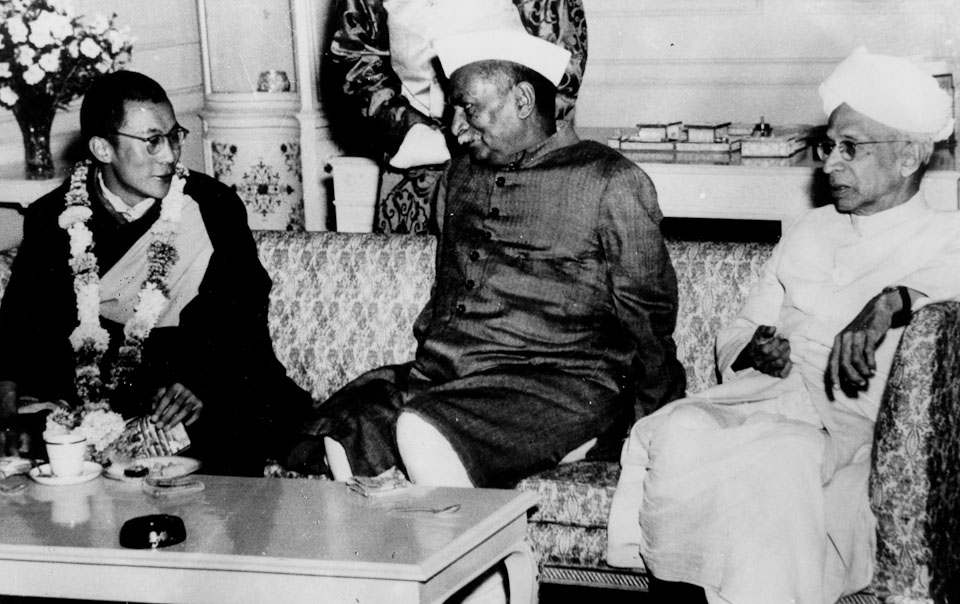
SPECIAL FRONTIER FORCE – INDIA – CHINA RELATIONS: AFTER INDIA AND CHINA SIGNED THE PANCH SHEELA AGREEMENT IN 1954, HIS HOLINESS THE 14th DALAI LAMA WAS RECEIVED IN NEW DELHI DURING MAY 1956 AS A STATE GUEST. THIS PHOTO IMAGE WAS TAKEN AT ASHOKA HOTEL.SPECIAL FRONTIER FORCE – INDIA – CHINA RELATIONS: MAY 26, 1956. 2500th BIRTH ANNIVERSARY OF GAUTAMA BUDDHA, THE BUDDHA JAYANTI CELEBRATION. INDIA’S PRESIDENT AND VICE PRESIDENT REAFFIRM INDIA’S FRIENDLY RELATIONS WITH TIBET.SPECIAL FRONTIER FORCE – INDIA – CHINA RELATIONS: IN 1956, HIS HOLINESS THE 14th DALAI LAMA WAS RECEIVED IN NEW DELHI WITH DUE HONORS AS THE HEAD OF TIBET ALONG WITH CHINA’S PRIME MINISTER CHOU EN-LAI. CHINA DID NOT ARREST OR OVERTHREW DALAI LAMA FROM HIS OFFICIAL POSITION AFTER ITS MILITARY OCCUPATION OF TIBET IN 1950.
Both India, and Tibet had good reasons to entertain an optimistic view about Tibet’s status and had anticipated that China would relent and allow Tibetans to enjoy their natural Freedom and their traditional way of life which is guided by the political philosophy called ‘Isolationism’. The Great 13th Dalai Lama had declared Tibet’s full independence on February 13, 1913 after the fall of Manchu China’s regime during 1911. However, Tibet did not establish formal diplomatic relations with other countries and remained aloof from the events shaping world history.
I am only seeking transparency and full public accountability while nations pursue their foreign policies to promote their own national interests. People’s Republic of China has to make a choice and it can choose to establish friendly relations with Tibet and India and maintain its trade and commerce relations with the United States and the rest of the world.
Rudra Narasimham Rebbapragada Ann Arbor, MI 48104-4162, USA Special Frontier Force–Establishment 22-Vikas Regiment
September 26, 2014 7:00 pm JST
Brahma Chellaney: Tibet is the real source of Sino-Indian friction
INDIA-CHINA-TIBET RELATIONS: BRAHMA CHELLANEY IS A PROFESSOR OF STRATEGIC STUDIES AT THE INDEPENDENT CENTRE FOR POLICY RESEARCH IN NEW DELHI. HIS ARTICLE ON INDIA-CHINA RELATIONS FAILS TO MENTION ABOUT SPECIAL FRONTIER FORCE WHICH PROMOTES FRIENDLY RELATIONS BETWEEN INDIA, THE US, AND TIBET.
The sprawling, mountainous country of Tibet was annexed by China in the 1950s, eliminating a historical buffer with India. Today, the region remains at the heart of Sino-Indian problems, including territorial disputes, border tensions and water feuds. Beijing lays claim to adjacent Indian territories on the basis of alleged Tibetan ecclesial or tutelary links, rather than an ethnic Chinese connection. So when Chinese President Xi Jinping traveled in mid-September to India — home to Tibet’s government in exile — Tibet loomed large. The Tibetan plateau, and the military tensions the issue provokes, will also figure prominently in the Sept. 29-30 summit at the White House between Prime Minister Narendra Modi and U.S. President Barack Obama, who has urged Beijing to reopen talks with the Dalai Lama, the exiled religious leader revered as a god-king by Tibetans. Xi’s visit to New Delhi began with the visitor toasting Modi’s birthday. But, underlining the deep divide regarding Tibet, the visit was overshadowed by a Chinese military incursion across the traditional Indo-Tibetan border. It was as if the incursion — the biggest in terms of troop numbers in many years and the trigger for a military standoff in the Ladakh region — was Xi’s birthday gift for Modi.
Modi’s government, for its part, allowed Tibetan exiles to stage street protests during the two days that Xi was in New Delhi, including some close to the summit venue. This reversed a pattern that had held since the early 1990s, in which police routinely prevented such protests during the visits of Chinese leaders. During the decade-long reign of Modi’s predecessor, Manmohan Singh, police would impose a lockdown on the Indian capital’s Tibetan quarter and beat up Tibetans who attempted to rally. Such brutal practices would have befitted a repressive autocracy like China, but not a country that takes pride in being the world’s largest democracy. In any event, the muzzling of protests won India no gratitude from an increasingly assertive China. It was a welcome change that India permitted members of its large Tibetan community to exercise their legitimate democratic rights. Even the Dalai Lama felt at liberty to speak up during Xi’s visit, reminding Indians: “Tibet’s problem is also India’s problem.” The Tibetan protests, although peaceful, rattled China, which had grown accustomed to Indian authorities doing its bidding. When Modi took office in May, the prime minister of Tibet’s government in exile, Lobsang Sangay, was invited to the swearing-in event. So Xi sought an assurance that the Modi government regards Tibet as part of China. Modi has yet to speak his mind on this issue in public, but the Chinese foreign ministry, apparently citing private discussions, announced: “Prime Minister Modi said that Tibet is a part of China, and India does not allow any separatist activities on its soil.”
Diplomatic fumbles
Tibet — the world’s highest and largest plateau — separated the Chinese and Indian civilizations until relatively recently, limiting their interaction to sporadic cultural and religious contact, with no political relations. It was only after China forcibly occupied Tibet that Chinese military units appeared for the first time on the Himalayan frontiers. The fall of Tibet represented the most profound and far-reaching geopolitical development in India’s modern history. It led to China’s bloody trans-Himalayan invasion in 1962 and its current claims to vast tracts of additional Indian land. Yet Prime Minister Jawaharlal Nehru in 1954 surrendered India’s extraterritorial rights in Tibet — inherited from Britain at independence — and accepted the existence of the “Tibet region of China” with no quid pro quo,not even Beijing’s acknowledgement of the then-prevailing Indo-Tibetan border. He did this by signing a pact mockingly named after the Tibetan Buddhist doctrine of Panchsheela, or the five principles of peaceful coexistence. As agreed in the pact, India withdrew its “military escorts” from Tibet and conceded to China, at a “reasonable” price, the postal, telegraph and public telephone services operated by the Indian government in the region. Years later, another Indian prime minister, Atal Bihari Vajpayee, went further. During Vajpayee’s visit to Beijing in 2003, China wrung from India the concession it always wanted — an unambiguous recognition of Tibet as part of China. Vajpayee went so far as to use the legal term “recognize” in a document signed by the two nations’ heads of government, confirming that what China calls the Tibet Autonomous Region was “part of the territory of the People’s Republic of China.” This opened the way for China to claim the large northeastern Indian state of Arunachal Pradesh — three times the size of Taiwan. Please read on..
Whole Friction – Communism is the source of Friction in India-China-Tibet Relations
Excerpt: The author emphasizes his deep connection with India, the land of Gautama Buddha and the profound influence of Buddhism on Indian culture, identity, and national symbols. This article advocates for the freedom of Tibet, currently occupied by China, highlighting the spiritual, historical, and cultural ties India has with Tibet through Buddhism. The author also calls on the United States to uphold democratic values and support Tibetan freedom. He illustrates his commitment to this cause by sharing his first-hand experiences with Tibetan Buddhists, his participation in a challenging trek to support them, and his published essay criticizing the prioritization of economic ties over human rights.
Whole Dude – Whole Noble: India – The Land of Gautama Buddha. SIDDHARTHA – GAUTAMA BUDDHA (c. 563 to c. 483 BC):”Whatever is born, produced, conditioned, contains within itself the nature of its own dissolution.” Photo by Noelli from Flickr site. http://www.dalekoniedaleko.pl
I belong to ‘The Land of Gautama Buddha’ and I whole heartedly pledge my support to His Holiness the 14th Dalai Lama and to the people of his Land. I firmly believe that we should seek and give our support for a Free Tibet and evict the Occupier of Tibet.
Whole Dude – Whole Noble: India – The Land of Gautama Buddha.
Buddham Saranam Gachhami
Dhammam Saranam Gachhami
Sangham Saranam Gachhami
Whole Dude – Whole Noble: India – The Land of Gautama Buddha
This entry is dedicated to the loving memory of those brave men who sacrificed their lives while nurturing fond hopes to win freedom for Tibet and they cherished a dream to preserve the Tibetan Identity.
Whole Dude – Whole Noble: For India is the Land of Gautama Buddha, we have a duty to defend Tibetan Identity.
Both Telengana and Andhra Pradesh record the influence of Buddha on our hearts and minds. Acharya Nagarjuna, another great Teacher lived in Nalgonda District. India is the blessed Land where Lord Gautama Buddha had lived and preached. His great compassion and noble qualities made a great impact on our character and our identity as Indians.The symbols such as the National Flag and the National Emblem that we have chosen to represent us speak volumes about the long-lasting influence of the Buddhist preachings.
Whole Dude – Whole Noble: India – The Land of Gautama Buddha. The national flag of India is popularly known as ‘TIRANGA’ or ‘TRICOLOR’. The Saffron or subdued Orange represents Courage, Sacrifice, and the Spirit of Renunciation. The White represents Purity, Peace, and Truth. The Green stands for Fertility, Prosperity, and Faith. The Blue Chakra, the 24-spoked Wheel symbolizes the Wheel of Life in Movement and Death in stagnation. It is the same as the DHARMA CHAKRA or the Wheel of Law found in the Saranath Lion Capital of Emperor Ashoka the Great.Whole Dude – Whole Noble: INDIA – THE LAND OF GAUTAMA BUDDHA: INDIA’S NATIONAL EMBLEM PROCLAIMS THE OFFICIAL MOTTO OF INDIA, “SATYA MEVA JAYATE,” TRUTH ALONE TRIUMPHS.
I had the good fortune to visit Buddhist temples known as Gompas and got acquainted with the Buddhist religious traditions for over four years while I lived with Tibetan Buddhists. I had also visited Tibetan Camps in Bylakuppe and Mundgod in the State of Karnataka.
Whole Dude – Whole Noble: India – The Land of Gautama Buddha. Godparents or Buddhist Temple in Bylakuppe, near Mysuru City, Karnataka
In December 1974, when I arrived in Secunderabad, I thought that I am posted to a military station away from my camp life with Buddhists.The motto of our military formation in Secunderabad is “BASH ON REGARDLESS.” I reached Secunderabad from the Himalayan frontier with the hope that I could bring my wife and my daughter from Kadapa where they had been living while I was serving at a field location where families are not permitted to live. As I arrived at my new Unit, the first thing that I was told was that I need to immediately proceed on a military training exercise and that I am not allowed to bring my family to Secunderabad as my services are urgently needed for the exercise.I dutifully took my place in a military convoy and after a few hours my vehicle went past the government quarters where my parents lived while my father worked as Principal of the Nagarjuna Government Arts College in Nalgonda.
Whole Dude – Whole Noble: India – The Land of Gautama Buddha. Acharya Nagarjuna of Nalgonda District, Telengana, India
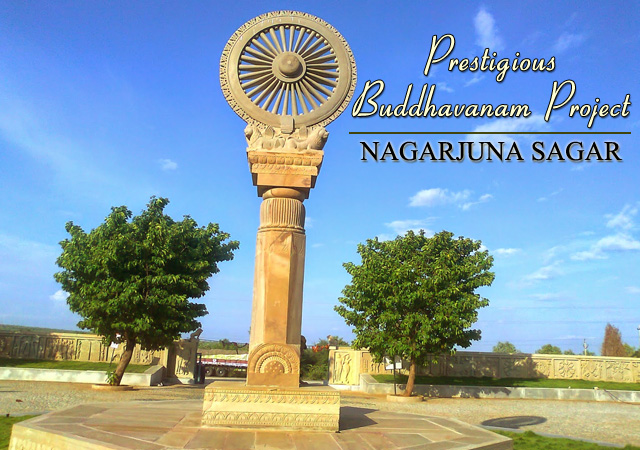
I reached the exercise location near Nagarjuna Sagar and that was my first visit to that area even though I had lived in Andhra Pradesh for a fairly long time.I took the opportunity to visit the historical site of Acharya Nagarjuna’s ‘Vihara’.
Whole Dude – Whole Noble: India – The Land of Gautama Buddha. Nagarjuna Sagar, Nagarjuna Konda, Nagarjuna Vihara, Buddha Vanam, Nalgonda District.
Prince Siddhartha left his wife and infant son in the middle of the night and abandoned his life of comfort in a royal palace as he desired to find the “Truth.” I had no intention to travel in the foot steps of Gautama Buddha, but I chose to stay away from my family if that could help His followers to reclaim their lost possessions and preserve their identity. Even today when I look back, I do not regret the time I spent away from my family and my mission to support Tibetan Buddhists was indeed a serious one. I was willing to put my life on-line if that could make a difference in the lives of those Buddhists who needed my services. I want to share the following essay which was published in ‘The Ann Arbor News’ on Thursday,October 14,1999 and hopefully this essay may convey you the passion with which I had served to support the followers of Gautama Buddha:
Don’t neglect Tibet for the sake of making money in China:
Don’t Neglect Tibet For the Sake of Making Money in China.
The United States-China relationship has naturally come under a critical review because of the nuclear espionage charges.It is irrelevant if China has actually benefited from the sensitive information that the U.S. has lost. What is far more important is the fact that the U.S. has lost its ability to keep sensitive information secure.
Presidential candidate George W.Bush has very correctly pointed out that the U.S. needs to prepare against a potential military threat that China might pose.
A review of the U.S.-China bilateral relationship should take us back 30 years to the time it actually began. The relationship,from the beginning,has no solid foundation. In spite of the huge trade and commerce relationship that the U.S. built up with China over these years, there is a basic lack of trust.
The reason for this mistrust is political. The Chinese political system derives its strength from the ideology of communism. The U.S. essentially adheres to the values of democracy, freedom and liberty.
China, as of today, is not a free society.Its political philosophy does not inspire us and is not trustworthy.Whatever the U.S. business investments may be,whatever the market reforms that China has introduced in recent times may be, there is a huge gap in terms of our political ideologies.
Communism and democracy cannot become good partners in a bilateral relationship.
The reason that I believe would end the U.S.-China bilateral relationship is the problem of Tibet.
The identity of Tibetan people could not be destroyed by all these years of Chinese oppression.The passion of Tibetan people for their freedom could not be subdued by prolonged, brutal occupation. Tibetan people are brave and courageous. They are willing to pay the price to regain their land and liberate it. They have the strength, will power and commitment to achieve this goal.
I witnessed this fact when I marched with hundreds of Tibetans through dense inhospitable forests for three months some years ago.
This was not a camping expedition.We had sick people and severely injured people who were sent to hospitals.We had beautiful people who lost their lives in those remote forests and they lay buried or cremated there. Their sacrifices are etched into my memory.
The only reason for taking that risk to suffer loss of life is the issue of winning back Tibetan freedom.
I also had an opportunity to speak with hundreds of Tibetan boys. Each one of them had a clear idea of their national identity and a compelling desire to win their freedom even if they had to pay for it with their lives.
The U.S. should understand that the issue of Tibet is not going to fade away.
When China occupied Tibet, the U.S. sent its citizens to help these people to plan their resistance.The U.S. sent tons and tons of supplies to aid their struggle. U.S. did not cover itself in glory when it withdrew this support it gave to Tibetans. The U.S. personnel were withdrawn and the aid dried up. That was an intensely painful moment for people like me who were then living with Tibetan people.
All of us had an understanding of the event that led the U.S. to backstab the Tibetan people. The U.S. sacrificed the freedom of the Tibetan people in its quest for establishing bilateral ties with communist China.
Thirty years after this betrayal, the United States should reevaluate the basic principles for which it stands today. The U.S. flag has been always a symbol of freedom. The issue is not that of containment of China. The issue is not that of engagement of China. The real issue is that of the freedom of the Tibetan people. We need to stand up for our own fundamental values and do the right thing.
Whole Dude – Whole Noble: India, the Land of Gautama Buddha must secure Peace, Freedom, and Justice in Occupied Tibet.Whole Dude – Whole Noble: India – The Land of Gautama Buddha.
The Blessings of Peace and Freedom in occupied Tibet hinges on transparency and accountability to Tibetans
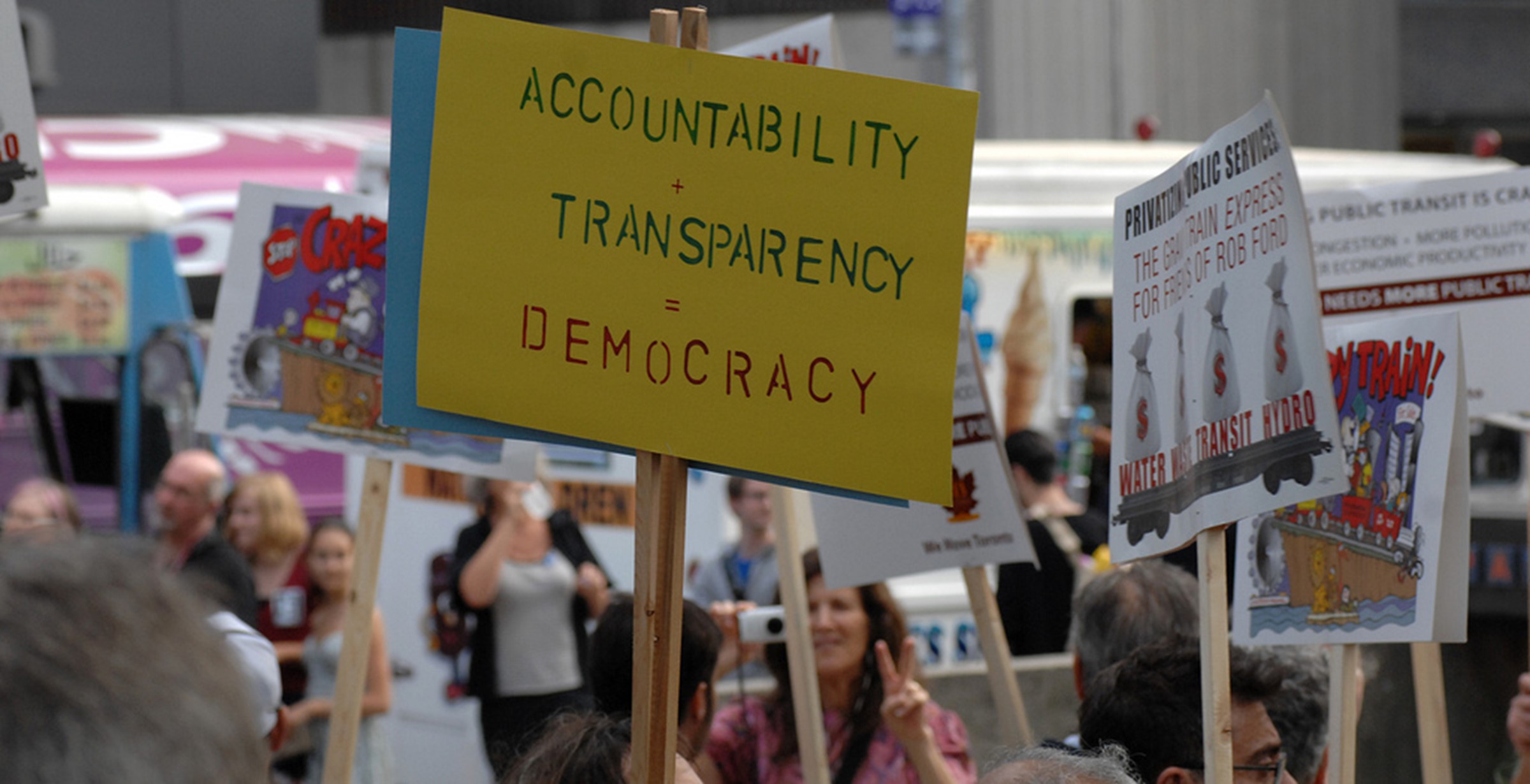
In my analysis, the Fate of Freedom in Tibet hinges on Transparency and Public Accountability to Tibetans. The type of governance in China, India, and the United States is of no consequence if their State Policy is not transparent and is not accountable to Tibetans. On behalf of The Living Tibetan Spirits of Special Frontier Force, I demand a Government Policy that is transparent and is accountable to Tibetans to decide the fate of freedom in Tibet. Hidden Agendas, Covert Actions, and Secret Negotiations will utterly fail to deliver the Blessings of Peace and Justice in Occupied Tibet.In my analysis, the Fate of Freedom in Tibet hinges on Transparency and Public Accountability to Tibetans. The type of governance in China, India, and the United States is of no consequence if their State Policy is not transparent and is not accountable to Tibetans. On behalf of The Living Tibetan Spirits of Special Frontier Force, I demand a Government Policy that is transparent and is accountable to Tibetans to decide the fate of freedom in Tibet. Hidden Agendas, Covert Actions, and Secret Negotiations will utterly fail to deliver the Blessings of Peace and Justice in Occupied Tibet.
In my analysis, the Fate of Freedom in Tibet hinges on Transparency and Public Accountability to Tibetans. The type of governance in China, India, and the United States is of no consequence if their State Policy is not transparent and is not accountable to Tibetans. On behalf of The Living Tibetan Spirits of Special Frontier Force, I demand a Government Policy that is transparent and is accountable to Tibetans to decide the fate of freedom in Tibet. Hidden Agendas, Covert Actions, and Secret Negotiations will utterly fail to deliver the Blessings of Peace and Justice in Occupied Tibet.
Rudra Narasimham Rebbapragada
SPECIAL FRONTIER FORCE
The fate of freedom in Tibet hinges on democracy in China
In my analysis, the Fate of Freedom in Tibet hinges on Transparency and Public Accountability to Tibetans. The type of governance in China, India, and the United States is of no consequence if their State Policy is not transparent and is not accountable to Tibetans. On behalf of The Living Tibetan Spirits of Special Frontier Force, I demand a Government Policy that is transparent and is accountable to Tibetans to decide the fate of freedom in Tibet. Hidden Agendas, Covert Actions, and Secret Negotiations will utterly fail to deliver the Blessings of Peace and Justice in Occupied Tibet.
Tibetan Americans walk in protest to China’s consulate in Los Angeles on Nov. 19, where they held a prayer and candlelight vigil for a 23-year-old Tibetan man named Dopo who self-immolated. (Frederic J. Brown/AFP)
By Carl Gershman
November 28
Carl Gershman is president of the National Endowment for Democracy.
The death last month of Lodi Gyari, who as the Dalai Lama’s special envoy conducted nine rounds of negotiations with Beijing over Tibet’s status, offers an occasion to reflect on the increasingly troubled relationship between the United States and China.
The negotiations conducted by Gyari in 2002 through 2010 were based on the Dalai Lama’s Middle Way Approach, which seeks genuine autonomy for the Tibetan people within the framework of the existing Chinese state and constitution. Earlier in his career, when he was an interpreter for the Tibetan resistance fighters training in the United States and helped found the Tibetan Youth Congress, Gyari was committed to the struggle for Tibetan independence. He never changed his belief that Tibet is “in every sense an occupied nation, brutally occupied.” But he became persuaded that the Dalai Lama’s vision of autonomy offered a nonviolent way to preserve the Tibetan people’s religion, culture, language, and identity. And after conducting exploratory talks in China in the 1980s during the period of reform under Deng Xiaoping and Hu Yaobang, he believed that such an approach was feasible.
But Beijing had no interest in finding a middle ground with the Dalai Lama, and the negotiations were unsuccessful. Beijing actually hardened its position on Tibet. In a speech Gyari gave after the breakdown of the talks, he charged that the regime had increased repression and was seeking the “cultural destruction” of the Tibetan people. China also issued a white paper denouncing the Middle Way and asserting that it wouldn’t resume talks until the Dalai Lama acknowledged that Tibet has been part of China “since antiquity,” a view rejected by all independent scholars. The growing repression, Gyari said, was responsible for “the terrible and tragic wave of self-immolations” by desperate Tibetans, whose resistance was likely to grow.
The bitter disappointment experienced by Gyari parallels the profound disenchantment with China in the United States and other advanced democracies, where policymakers once believed that as China modernized economically it would liberalize internally and become a responsible stakeholder in the rules-based world order.
In fact, exactly the opposite has happened. As China has risen economically, Beijing has become far more repressive, arresting dissidents and independent lawyers, creating mass concentration camps for Uighur Muslims in Xinjiang province, and using facial-recognition technology and other digital tools to establish what has ominously been called the “surveillance state.”
Internationally, it has militarized the South China Sea, despite President Xi Jinping’s pledge in the White House Rose Garden in 2015 not to take such action. China’s military buildup has been described in a Pentagon study as “perhaps the most ambitious grand strategy undertaken by a single nation-state in modern times.” It has engaged in “cyber theft on a massive scale,” and through its $1 trillion Belt and Road Initiative, targets more than 60 countries in an effort to advance its economic and military goals, including securing access to strategic ports.
Such threatening behavior has provoked an international backlash that the Economist has called “the starkest reversal in modern geopolitics.” An example of this reversal was the harsh speech given by Vice President Pence last month at the Hudson Institute, which added the charge of meddling in American politics to all the other alarming Chinese actions. Some observers have seen this speech as a portent of a new Cold War. But one shot across the Chinese bow is not a coherent policy response to the greatest international challenge now facing the United States.
Here Gyari’s experience may help point a way forward. While he failed in his negotiations with Beijing, he was immensely successful as the Dalai Lama’s special envoy in Washington, building bipartisan backing for the Tibet Policy Act (2002), which institutionalized support for Tibet in U.S. foreign policy. He had many allies in this effort, but none was more devoted than Nancy Pelosi, the California Democrat who is the presumptive next House speaker and whose heartfelt statement on the passing of Gyari emphasized that “members of Congress on both sides of the aisle benefitted from Lodi’s insight and wisdom.” She could be an important ally in building bipartisan congressional support for a new China policy.
Two additional elements of such a policy are also tied to Gyari. The first is the importance he attached to the role of India, which has given refuge to the Dalai Lama and the Tibetan government-in-exile, and whose free political environment, he said, “has deeply enriched my thinking.” The Trump administration has emphasized the growing strategic partnership with India, which must be a core part of U.S. policy.
The second element is democracy. Gyari, like the Dalai Lama, believed in the paramount importance of democracy for all people, not least for Tibetans and Chinese. Following the Tibet uprising in 2008, Chinese dissident and future Nobel laureate Liu Xiaobo wrote, “Democratization for all of China is the necessary condition for any solution, whatever its form, to the Tibet issue.”
In my analysis, the Fate of Freedom in Tibet hinges on Transparency and Public Accountability to Tibetans. The type of governance in China, India, and the United States is of no consequence if their State Policy is not transparent and is not accountable to Tibetans. On behalf of The Living Tibetan Spirits of Special Frontier Force, I demand a Government Policy that is transparent and is accountable to Tibetans to decide the fate of freedom in Tibet. Hidden Agendas, Covert Actions, and Secret Negotiations will utterly fail to deliver the Blessings of Peace and Justice in Occupied Tibet.10th December,2009 marks the 20th anniversary of H.H. Dalai Lama winning the Nobel Peace Prize. In my analysis, the Fate of Freedom in Tibet hinges on Transparency and Public Accountability to Tibetans. The type of governance in China, India, and the United States is of no consequence if their State Policy is not transparent and is not accountable to Tibetans. On behalf of The Living Tibetan Spirits of Special Frontier Force, I demand a Government Policy that is transparent and is accountable to Tibetans to decide the fate of freedom in Tibet. Hidden Agendas, Covert Actions, and Secret Negotiations will utterly fail to deliver the Blessings of Peace and Justice in Occupied Tibet.
Prayers for Whole Peace and Whole Harmony – Hiroshima Day 2024
Hiroshima Day 2024. 79th Anniversary of US Atomic Bombing of Hiroshima
Yes indeed, Life is Complicated. The complexity of Life demands the experience of Peace and Harmony to bring together Whole Foods, Whole People, and Whole Planet. Without the experience of peace and harmony, there can be no experience of Life.
Whole Dude-Whole Planet-Whole Peace-Whole Harmony: Hiroshima Day 2024. 79th Anniversary of US Atomic Bombing of Hiroshima. Hiroshima Peace Memorial Park.
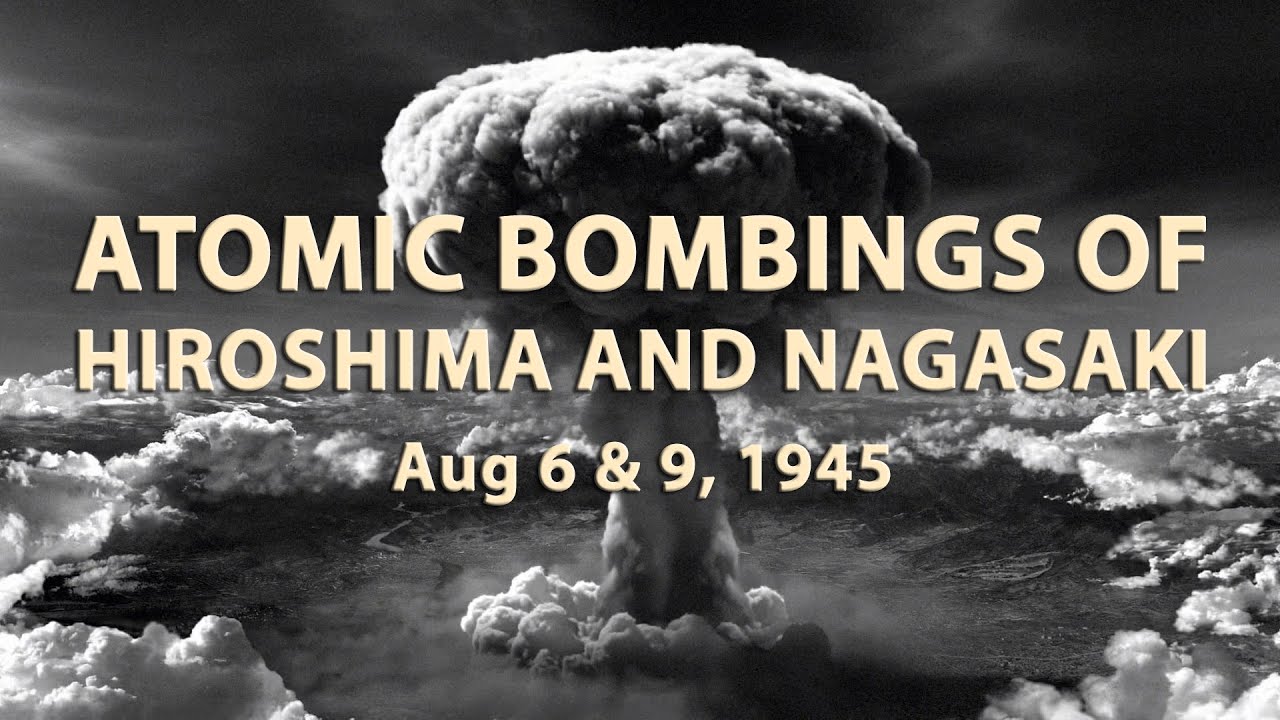
Hiroshima on Tuesday, August 06, 2024 marks the 79th anniversary of the world’s first atomic bombing.
The United States dropped the world’s first atomic bomb on Hiroshima on Aug. 6, 1945, destroying the city and killing 140,000 people. It dropped a second bomb three days later on Nagasaki, killing another 70,000. Japan surrendered on Aug. 15, ending World War II and Japan’s nearly half-century of aggression in Asia.
Tuesday, August 06, 2024. Whole Dude reflects upon 79th Anniversary of US Atomic Bombing of Hiroshima
Whole Dude-Whole Planet-Whole Peace-Whole Harmony. Prayer for Well-being be unto all, Peace be unto all, Fulfillment be unto all, and Prosperity be unto all. O’ LORD, Let there be Peace, Perfect Peace and Whole Peace in all the realms of human existence.
The idea of peace is always part of the idea of well-being and good health. The idea of perfect well-being also includes ideas of inner peace, tranquility, and harmony. The physical, mental, and social well-being are a part of man’s well-being in the environment, and community where he lives. To achieve perfect peace or Whole Peace, we must include the dimensions of the man’s moral, and spiritual well-being apart from the physical, mental, and social well-being. The aspects of external and internal or inner peace work together to contribute a Blissful Existence while man experiences Joy in his mind, and Love in his heart. Hence, peace is not mere absence of war and strife.
Whole Dude, Whole Self or Whole Person lives in a perfect, and whole state of bliss if his physical, mental, social, moral, and spiritual well-being is assured. I seek this Whole Peace as a Blessing from LORD GOD Creator.
Whole Dude-Whole Planet-Whole Peace-Whole Harmony. The Shanti Mantra invokes Peace, Perfect Peace, and Whole Peace as a Blessing received from Lord God Creator. Om, Sarvesham Svastir Bhavatu, Sarvesham Shantir Bhavatu, Sarvesham Purnam Bhavatu, Sarvesham Mangalam Bhavatu, Om, Shanti,Shanti, Shanti Hi.
I say, the concept of Whole Peace relates to the physical, mental, social, moral, and spiritual well-being of the man in his environment, and community. What do you say?
Hiroshima Day 2024: The idea of peace is always part of the idea of well-being and good health. The idea of perfect well-being also includes ideas of inner peace, tranquility, and harmony. The physical, mental, and social well-being are a part of man’s well-being in the environment, and community where he lives. To achieve perfect peace or Whole Peace, we must include the dimensions of the man’s moral, and spiritual well-being apart from the physical, mental, and social well-being. The aspects of external and internal or inner peace work together to contribute a Blissful Existence while man experiences Joy in his mind, and Love in his heart. Hence, peace is not mere absence of war and strife.
Please share your thoughts and views.
Whole Dude-Whole Planet-Whole Peace-Whole HarmonyWhole Dude-Whole Planet-Whole Peace-Whole Harmony.Musings on 79th Anniversary of US Atomic Bombing.Hiroshima Day 2024: The idea of peace is always part of the idea of well-being and good health. The idea of perfect well-being also includes ideas of inner peace, tranquility, and harmony. The physical, mental, and social well-being are a part of man’s well-being in the environment, and community where he lives. To achieve perfect peace or Whole Peace, we must include the dimensions of the man’s moral, and spiritual well-being apart from the physical, mental, and social well-being. The aspects of external and internal or inner peace work together to contribute a Blissful Existence while man experiences Joy in his mind, and Love in his heart. Hence, peace is not mere absence of war and strife. Hiroshima Day 2024: The idea of peace is always part of the idea of well-being and good health. The idea of perfect well-being also includes ideas of inner peace, tranquility, and harmony. The physical, mental, and social well-being are a part of man’s well-being in the environment, and community where he lives. To achieve perfect peace or Whole Peace, we must include the dimensions of the man’s moral, and spiritual well-being apart from the physical, mental, and social well-being. The aspects of external and internal or inner peace work together to contribute a Blissful Existence while man experiences Joy in his mind, and Love in his heart. Hence, peace is not mere absence of war and strife.
On the 35th Anniversary of Tiananmen Square Massacre, the Living Tibetan Spirits regret Tibet’s Policy of Isolationism
Bharat Darshan revisits the past on the 35th Anniversary of Tiananmen Square MassacreBharat Darshan revisits the past on the 35th Anniversary of Tiananmen Square Massacre
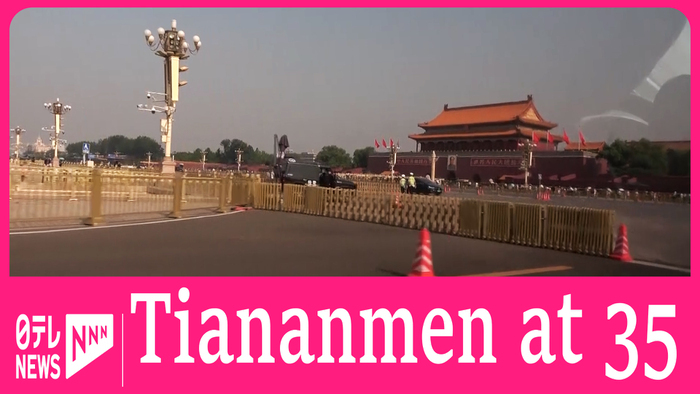
On Tuesday, June 4, 2024, the 35th Anniversary of Tiananmen Square Massacre, The Living Tibetan Spirits revisit the past; the spread of Communism to mainland China in 1949.
Bharat Darshan revisits the past on the 35th Anniversary of Tiananmen Square Massacre
Today, on Tuesday, June 04, 2024 The Living Tibetan Spirits regret Tibet’s decision to pursue the policy of Isolationism while confronting the grave threat posed by Communist takeover of mainland China. In 1943, Tibet had the opportunity to establish formal diplomatic relationships with the United States and other countries of Free World to prevent the spread of Communism to Asia.
Bharat Darshan revisits the past on the 35th Anniversary of Tiananmen Square Massacre
Tibet’s unwillingness to openly resist Communism in 1943 is a crucial factor contributing to the loss of human rights in mainland China.
Special Frontier Force-Establishment No. 22-Vikas Regiment regrets Tibet’s Policy of Isolationism in 1943
Bharat Darshan revisits the past on the 35th Anniversary of Tiananmen Square Massacre
CALLS FOR CHINA TO FACE GHOSTS OF ITS PAST ON TIANANMEN ANNIVERSARY
Bharat Darshan revisits the past on the 35th Anniversary of Tiananmen Square Massacre
FILE – A Chinese man stands alone to block a line of tanks heading east on Beijing’s Cangan Boulevard in Tiananmen Square, June 5, 1989.
BEIJING —
The United States has added its voice to international calls for China’s communist-led government to give a full public accounting of those who were killed, detained or went missing during the violent suppression of peaceful demonstrations in and around Tiananmen Square on June 4, 1989.
In a bold statement from Washington to mark the 29th anniversary of a bloody crackdown that left hundreds — some say thousands — dead, Secretary of State Mike Pompeo called on Chinese authorities to release “those who have been jailed for striving to keep the memory of Tiananmen Square alive; and to end the continued harassment of demonstration participants and their families.”
Bharat Darshan revisits the past on the 35th Anniversary of Tiananmen Square Massacre
University students place flowers on the “Pillar of Shame” statue, a memorial for those injured and killed in the Tiananmen crackdown, at the University of Hong Kong, June 4, 2018.
To this day, open discussion of the topic remains forbidden in China and the families of those who lost loved ones continue to face oppression. Chinese authorities have labeled the protests a counter-revolutionary rebellion and repeatedly argued that a clear conclusion of the events was reached long ago.
In an annual statement on the tragedy, the group Tiananmen Mothers urged President Xi Jinping in an open letter to “re-evaluate the June 4th massacre” and called for an end to their harassment.
“Each year when we would commemorate our loved ones, we are all monitored, put under surveillance, or forced to travel” to places outside of China’s capital, the letter said. The advocacy group Human Rights in China released the open letter from the Tiananmen Mothers ahead of the anniversary.
“No one from the successive governments over the past 29 years has ever asked after us, and not one word of apology has been spoken from anyone, as if the massacre that shocked the world never happened,” the letter said.
Bharat Darshan revisits the past on the 35th Anniversary of Tiananmen Square Massacre
FILE – A woman reacts during a candlelight vigil to mark the 28th anniversary of the crackdown of the pro-democracy movement at Beijing’s Tiananmen Square in 1989, at Victoria Park in Hong Kong, China June 4, 2017.
In his statement, Pompeo also said that on the anniversary “we remember the tragic loss of innocent lives,” adding that as Liu Xiaobo wrote in his 2010 Nobel Peace Prize speech, “the ghosts of June 4th have not yet been laid to rest.”
Bharat Darshan revisits the past on the 35th Anniversary of Tiananmen Square Massacre
FILE – Liu Xia, wife of deceased Chinese Nobel Peace Prize-winning dissident Liu Xiaobo and other relatives attend his sea burial off the coast of Dalian, China, in this photo released by Shenyang Municipal Information Office July 15, 2017.
Liu was unable to receive his Nobel prize in person in 2010 and died in custody last year. The dissident writer played an influential role in the Tiananmen protests and was serving an 11-year sentence for inciting subversion of state power when he passed.
At a regular press briefing on Monday, Foreign Ministry spokeswoman Hua Chunying said China had lodged “stern representations” with the United States over the statement on Tiananmen.
“The United States year in, year out issues statements making ‘gratuitous criticism’ of China and interfering in China’s internal affairs,” Hua said. “The U.S. Secretary of State has absolutely no qualifications to demand the Chinese government do anything,” she added.
In a statement on Twitter, which is blocked in China like many websites, Hu Xijin, the editor of the party-backed Global Times, called the statement a “meaningless stunt.”
In another post he said: “what wasn’t achieved through a movement that year will be even more impossible to be realized by holding whiny commemorations today.”
Commemorations for Tiananmen are being held across the globe to mark the anniversary and tens of thousands are expected to gather in Hong Kong, the only place in China such large-scale public rallies to mark the incident can be held.
Bharat Darshan revisits the past on the 35th Anniversary of Tiananmen Square Massacre
A man wipes the face of a statue of the Goddess of Democracy at Hong Kong’s Victoria Park Monday, June 4, 2018.
Exiled Tiananmen student protest leader Wu’Er Kaixi welcomed the statement from Pompeo.
However, he added that over the past 29 years western democracies appeasement of China has nurtured the regime into an imminent threat to freedom and democracy.
“The world bears a responsibility to urge China, to press on the Chinese regime to admit their wrongdoing, to restore the facts and then to console the dead,” he said. “And ultimately to answer the demands of the protesters 29 years ago and put China on the right track to freedom and democracy.”
Wu’er Kaixi fled China after the crackdown and now resides in Taiwan where he is the founder of Friends of Liu Xiaobo. The group recently joined hands with several other non-profit organizations and plans to unveil a sculpture in July — on the anniversary of his death — to commemorate the late Nobel laureate. The sculpture will be located near Taiwan’s iconic Taipei 101 skyscraper.
In Taiwan, the self-ruled democracy that China claims is a part of its territory, political leaders from both sides of the isle have also urged China’s communist leaders to face the past.
On Facebook, Taiwan’s President Tsai Ing-wen noted that it was only by facing up to its history that Taiwan has been able to move beyond the tragedies of the past.
“If authorities in Beijing can face up to the June 4th incident and acknowledge that at its roots it was a state atrocity, the unfortunate history of June 4th could become a cornerstone for China to move toward freedom and democracy,” Tsai said.
Tsai’s predecessor, Ma Ying-jeou, a member of the opposition Nationalist Party or KMT, who saw close ties with China while in office, also urged Beijing to face up to history and help heal families’ wounds.
“Only by doing this can the Chinese communists bridge the psychological gap between the people on both sides of the [Taiwan] Strait and be seen by the world as a real great power,” Ma said.
Bharat Darshan revisits the past on the 35th Anniversary of Tiananmen Square Massacre
Whole Dude – Whole Shanti: The concept of wellbeing demands the experience of peace, harmony and tranquility while existing in a shared environment.Whole Dude – Whole Shanti: Blessings for Peace. Peace demands the physical, mental, social, moral, and spiritual well-being of man in his community and the shared environment.
Sarvesham Swastir Bhavatu,
Sarvesham Shantir Bhavatu,
Sarvesham Purnam Bhavatu,
Sarvesham Mangalam Bhavatu,
Om Shanti, Shanti, Shanti hi.
This Shanti Mantra from ‘Upanishads’ invokes Peace upon entire humanity. The idea of peace is always associated with the idea of well-being. The idea of perfect well-being also includes ideas of inner peace and tranquility.The physical, mental, social, moral, and spiritual well-being are a part of perfect and complete well-being. The aspects of external and internal peace work together to contribute to a state of Blissful Existence. Hence, peace is not mere absence of war and strife. A man lives in peace if his well-being is fully assured. Since human existence is sustained by health and well-being, peace has become an integral aspect of human survival and existence.
Whole Dude – Whole Shanti: Blessings for Whole Shanti: “Om, Sarvesham Swastir Bhavatu (May Well-being be unto all), Sarvesham Shantir Bhavatu (May Peace be unto all), Sarvesham Purnam Bhavatu (May Fulfillment be unto all), Sarvesham Mangalam Bhavatu (May Prosperity be unto all), Om Shanti, Shanti, Shanti.”
A man lives in ‘Peace’ if his well-being is fully assured. The idea of Peace is associated with the physical, mental, social, moral, and spiritual well-being of man in his environment and in his community.
Whole Dude – Whole Shanti: Human Existence is conditioned by Divine Providence.
We seek this blissful state of existence as a Blessing from our Creator both for the individual and collectively for the larger national and global community to which the individual belongs.
Whole Dude – Whole Shanti. Man’s mortal existence is conditioned by the all-powerful grand illusion. The quest for Shanti or Peace must address the problem of man’s estrangement, separation, and alienation from eternal truth.
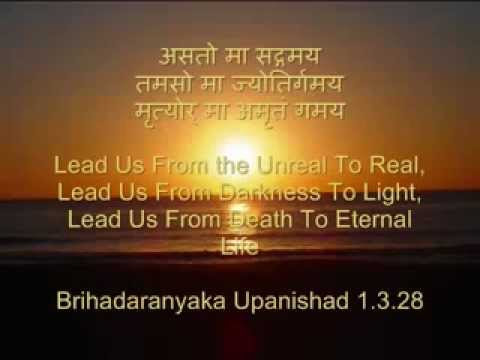
Human existence evokes a sense of fear and anxiety from two directions. 1. The fear is associated with the idea that the journey is long and tedious and the uncertainty of reaching the final destination. 2. The anxiety is because of the fact that the life span is over as the time marches on relentlessly. The passage of day and night, the change of seasons, the spring and the winter, the life span is over even if the individual wants to cling to his life.
Whole Dude – Whole Peace
The life span is often compared to bubbles and beads on the surface of lotus leaf. The water beads and the air bubbles exist only for a moment evoking a sense of anxiety about the transient, ephemeral, mortal existence. The long journey generates fear and the short life span produces anxiety. When the heart is troubled and when the mind is afraid, there is no peace.
Searching for Peace when the heart is troubled:
Whole Dude – Whole Peace
1. Rejoice in the Lord always. I will say it again: Rejoice! Let your gentleness be evident to all. The Lord is near. Do not be anxious about anything, but in everything, by prayer and petition, with thanksgiving, present your requests to God. And the peace of God, which transcends all understanding, will guard your hearts and your minds in Christ Jesus. (PHILIPPIANS4:4-7)
Whole Dude – Whole PeaceWhole Dude – Whole Peace: The Fruit of Spirit is Love
2.But the fruit of the Spirit is love, joy, peace, patience, kindness, goodness, faithfulness, gentleness and self-control. (GALATIANS 5:22-23)
Whole Dude – Whole Peace
3. “Peace I leave with you; my peace I give you. I do not give to you as the world gives. Do not let your hearts be troubled and do not be afraid”. (JOHN14:27)
Whole Dude – Whole PeaceWhole Dude – Whole PeaceWhole Dude – Whole PeaceWhole Dude – Whole PeaceWhole Dude – Whole Peace: Peace is attained through the idea of Refuge and Strength











 International






















 Whole Dude - Whole Concept