Old Flames Never Die – The Moments Slip Away Laid into Account
Old Flames Never Die. The Moments Slip Away Laid into Account – The Living Tibetan Spirits
The Living Tibetan Spirits inhabit my consciousness. The Moments Slip Away Laid into Account. For my Memory lives, I claim, “Old Flames Never Die.”
Rudra Narasimham Rebbapragada
Special Frontier Force – Establishment 22 – Vikas Regiment
September 22. This Day in History. My Quest for Freedom traps me in Slavery. My Journey to Chakrata and Beyond.
‘Tibet with My Eyes Closed’ captures the stories of a region that is at the risk of being forgotten TNN
Old Flames Never Die. The Moments Slip Away Laid into Account.
In the past century, Tibet has been damaged irreparably. Ever since China took over Tibet and began instating their harsh rule on the Tibetan people, many escaped to India seeking refuge. Though they have settled, they often still remember and long for their motherland. “Unfortunately, they can only see a free Tibet in their mind and memories. And it was this sentiment that inspired me to write the book because many Tibetans can only see Tibet with their eyes closed,” said author Madhu Gurung during the launch of her book Tibet with My Eyes Closed in Delhi on July 25.
The book is a compilation of vivid and deeply emotional short stories on Tibetan people. Inspired by the colors of the vibrant Tibetan prayer flag, the author divided the stories into five colors and the elements they represent. The book was launched amidst an eye-opening discussion. The chief guest for the evening was Ven Geshe Dorji Damdul, the director of Tibet House, the Cultural Centre for His Holiness the Dalai Lama. After the ceremonious release of the book, the renowned guest graced the event by explaining the historical importance of the Indo-Tibetan relationship.
“Tibet was more like a barren place, and if not too presumptuous, barbaric. With the advent of Indian culture and philosophy, a beautiful culture of compassion grounded in wisdom started to take root in Tibet, and then it became such a beautiful nation,” said Ven Geshe Dorji Damdul. He has a PhD in Buddhist Philosophy and has even learned Tantric Studies, which is probably why he understands the connection between the cultural philosophies of both the countries so well.
Praising the book, he said, “Reading it, I felt it so close to my heart. And all the readers will also relate to the feelings and thoughts of the Tibetan people. I was so affected by this book. I really congratulate Madhu Gurung Ji and am very grateful for giving me the honor of coming here and speaking.”
The author Madhu Gurung started writing as a freelance journalist. She has worked for BBC World Service Trust, Oxfam, Bill and Melinda Gates Foundation and was the Media Adviser for the National AIDS Control Organization. She has written a book previously. Titled The Keeper of Memories, the book is on Gorkhas and was shortlisted for the Shakti Bhat First Book Award.
She explained how she came to interact with the Tibetans while writing an article on them. Some of their stories stayed with her. So, when she was done with her first book and the article was published, she was inspired to write this book.
“When I started meeting people, there was this underlying thread, this deep yearning. It was like a wound that they carried of losing a homeland, of trying to start a new life. The wound heals over a period but a scab forms over it. And at the slightest remembrance of home, it bleeds and there is nothing that can stop it,” she said.
Her passion for the plight of the Tibetans was evident throughout the talk. Dates of politically significant events and small details of people’s lives rolled off her tongue as if she was talking of her own past when she answered questions.
Madhu Gurung was in conversation with author Preeti Gill, who is best known for her work in documentaries like Rambuai: Mizoram’s ‘Trouble’ Years. She had read Tibet with My Eyes Closed and praised the book saying, ” I think it’s a really unusual collection of stories and right from the time when I read the first story, I was completely enamored”
Preeti Gill grew up in Mussorie, and the school that she attended had Tibetan students too. So, she is familiar with the issues Tibetans are facing and their stories, and she was happy to see it highlighted.
A lot of details on the lives of Tibetans was revealed in their fascinating exchange. The author was careful to avoid spoilers but while describing her favorite stories, she gave context and background of the tales. Most stories are true and are taken from someone she has spoken to. “But when people talk about their lives, they never talk the way you want to write them. They just tell you; they compress the years of their lives into few sentences and everything that you get is like the tip of a mountain. The rest of the mountain is down and so what I did was that I started doing a lot of research. I started reading about Tibet and I was fascinated by the 2100-year-old Tibetan history, it’s myths, culture and the way that life was. And all of that is interwoven into the stories and I have used my imagination to create conversations and situations. Yes, it is true.”
The stories she told were so fascinating that the pile of books at the event emptied quickly and had to be hurriedly restocked to meet the demand. Everyone left the event a little more in awe of the perseverance of the Tibetan spirit.
The Living Tibetan Spirits inhabit my consciousness. The Moments Slip Away Laid into Account. For my Memory lives, I claim, “Old Flames Never Die.”The Living Tibetan Spirits inhabit my consciousness. The Moments Slip Away Laid into Account. For my Memory lives, I claim, “Old Flames Never Die.”
Whole Memory – The ancient Land of India remembers Lord Gautama Buddha
The memories of Lord Gautama Buddha are indeed timeless. The Land of India has unfading, undying, everlasting memory of Prince Siddhartha and it is of great pleasure to share those memories.
Sunday, 26 Jul 2015
IN SKARDU, SIDDHARTHA SINGS ON
The rock carving of Buddha in Baltistan serves as a window into the past
By FERYA ILYAS
Published: July 26, 2015
Images of Buddha in his different forms meticulously carved on a rock in Skardu. PHOTO COURTESY: BCDF
Centuries have passed since Buddhists disappeared from Gilgit-Baltistan (G-B), but Buddha still watches over the serene town of Skardu from the corner of a cliff. Immortalised in stone, the sage continues to radiate wisdom for those who seek. But sadly, there are none.
Resting at the edge of Manthal village on the left of a stream from Satpara Lake, the granite – known as the Buddha Rock – is pale and smooth. Believed to be carved between 8th and 10th centuries, the relic represents the glory of the past, of a time when men and women meditated in the footsteps of the ‘One Who Woke Up’.
It has the makings of a heritage site – bearing testimony to a tradition which has disappeared. Its significance goes beyond nationalities. Yet, it sits at the border of Manthal village, ignored and forgotten by the world.
The serene and spotless Satpara Lake in Skardu. PHOTO COURTESY: MARYAM TARIQ
It is widely believed in Pakistan that the rock was not known to most until British traveler Jane E Duncan documented it in the early 1900s. “I went to Sadpor in search of the carved rock which Rajah Spindia at Khapallu had told me about; three miles and a half from Skardo, and a few yards off the road to Sadpor, we came to the rock, which proved to be a large and important relic of antiquity,” Duncan wrote in her book ‘A Summer Ride Through Western Tibet’ about the 1904 trip to Skardu.
Wazir Ejaz, CEO of Baltistan Culture and Development Foundation (BCDF), tells us that Duncan―failing to understand the Tibetan inscription on the rock―copied it and sent it to German scholar August Hermann Francke who was working in Ladakh. “Francke deciphered the script in English and published it in Calcutta and the world came to know about this magnificent carving,” Ejaz says.
However, British Tibetologist Philip Denwood, in his 2007 article for Journal of Inner Asian Art & Archaeology 2, said the rock carvings and Tibetan inscriptions were noticed by GT Vigne and reproduced in 1836 and 1838. Denwood further wrote AGA Durand published a photograph of the whole rock in 1899.
Shedding light on the ancient relief, historian Muhammad Abbas Kazmi says the carving and Tibetan inscriptions were made on a 30-foot high and 20-foot wide triangle-shaped rock. “The carving depicts present time Buddha—Siddhārtha Gautama—in the centre, 20 smaller Buddhas of the past around him and future Buddhas – Maitreya – standing on both sides,” Kazmi interprets. He claims that in Buddhist tradition, the ‘Council of all Buddhas’ as represented in the carving is called ‘Mandal’ – a word from which the village’s name is derived.
Tibetan text engraved on Buddha Rock.
All the Buddhas, except the Maitreyas, are shown resting on lotuses in Bhumisparsha position which means ‘touching the earth’ and signifies the moment of enlightenment for Gautama. It is the moment when Buddha, after six years of hardship, decides to sit under a tree and not move until he achieves supreme and final wisdom. He is distracted by Mara, the lord of desire, but to no use. Gautama resisted every temptation and as the final test, Mara challenged Buddha to tell him who would bear witness to his worthiness to attain wisdom. Gautama said nothing and touched the ground beneath him. The earth shook. “The earth is my witness,” Buddha said.
The Tibetan script on the Buddha Rock, though incomplete at many places, instructs the followers of Gautama to take care of this sculpture. “The faithful ones (should) from time to time (make the colours of the sculptures) bright, and clean the place of offering that it may not decay,” says the text, as translated by Franke in the 20th century. Kazmi says only one of the three-part text is visible today but the entire script—with only a few characters missing—was on the rock when Duncan examined it.
In her book, Duncan wrote that she submitted copies of the inscription to several Buddhist scholars in London and Paris but because of the missing characters, none could give a rendering. “I wrote to Mr Francke telling him of my difficulty in getting a good translation, and he immediately sent a competent Tibetan from Khalatse to Sadpor to make new copies and this man was able to fill up many of my blank spaces, as he recognised numerous letters which had been partly destroyed,” the British traveler wrote, expressing amusement over the Tibetan charging just Rs12 for his long and fatiguing journey to the rock and back and his trouble in making the copies.
Francke, who translated the ancient text, said that “judging from the orthography employed, the writing is as old as those at Balu-mkhar, dating from not later than 1000 AD and, imperfect as they are, are of great philological and antiquarian interest; they all seem to refer to the sculptures on the rock.” He added, “Line No 8 in the third of them seems to indicate that the sculptures of Buddha are much older than the inscriptions themselves.”
Present time Buddha, Siddhãrtha Gautama, craved in the middle of the rock.
Duncan, in her travelogue, wrote that the hole was used to hold light. “At the top of the rock above the Buddha’s head there is a square hole, which the chowkidar, who acted as my guide, said was used for holding a light, and the stone round it looks smoke-blackened,” she wrote.A prominent feature of the relic is a square cube cut out at the top of the stone. Last summer, when I arrived here, I saw visitors aiming to throw pebbles inside the hollow boxy space in fulfillment of a myth that praying and then throwing a stone inside the cube successfully will make a wish come true—a local spin on European wishing wells and lovers’ locks.
Historian Kazmi, however, says the space was probably used to hold a beam with support from both sides of the stone to carry a roof. “The square recess and cuts on the edges very clearly indicate that in the beginning there was a canopy over the rock-face of the carving to protect it from weather effects,” he explains. Buddhism specialist Dr Christian Luczanits concurs, pointing out that the images were probably painted originally and the roof had protected the paintings.
A copy of a portion of Tibetan text engraved on Buddha Rock. SOURCE: JANE E DUNCAN’S A SUMMER RIDE THROUGH WESTERN TIBET
The exact purpose may remain a mystery for years to come or maybe even be lost forever if the relic is not protected from wear and tear caused by nature and humans. “The sculpture should have been declared a heritage site by UNESCO long ago, but the government and BCDF have failed to make efforts to preserve the eroding piece of history,” Kazmi says, pleading to authorities to pay attention to the relic.
Pakistan, which hosts six world heritage sites, has failed to even mention the Buddha Rock in its Tentative List from which the UN body picks places of ‘special cultural or physical significance’. The last inventory was complied in 2004 in which ten nominations were made in addition to 1993’s eight recommendations. And as per the rules, Pakistan can re-examine the list at least every ten years.
Ejaz says the BCDF―which has Buddha Rock on lease for 90 years―considered recommending it to UNESCO for a heritage site as well as for one of its awards, but did not do so because the relic does not fulfill their criteria.
Dr Luczanits sees this rock carving as part of a larger group of Buddhist relics in the region, which he recommends to be declared a heritage site together. “What is more important is to create awareness locally to ensure protection of the site as part of the heritage,” the Buddhism expert says. And BCDF’s chief Ejaz tells us that for this purpose, his organisation has constructed a boundary wall around the rock and deployed a security guard to facilitate tourists. “The BCDF has also constructed a tourist hut nearby in collaboration with the government’s tourism department and submitted proposals to different donor agencies to preserve its writings and images,” adds Ejaz.
Crystal clear Satpara Lake.
Protection of the site is crucial for preserving history as many believe this place was important for the spread of Buddhism in the area and served as a pilgrimage site for worshippers from far and wide. However, there is no concrete evidence to prove the exact use of the place.
“Such rock carvings are usually at spots that are widely visible and thus serve as a reminder of Buddhism in general, besides having a more specific local ritual function that we cannot reconstruct today anymore, except for its latest use like recorded by Ms Duncan for the square recess on Buddha Rock,” Dr Luczanits tells us. The real story behind the stone may never unravel, but Kazmi vouches for the uniqueness of the carving. “Nowhere in the Buddhist world has anyone seen the depiction of all Buddhas in such a magnificent style,” he claims to point out the importance of Baltistan, and Skardu in particular, in the Buddhist history of the region. “Even in Lhasa, China—which has been the center of Mahayana Buddhism and the seat of Buddhist kings and fourteen Dalai Lamas—such a glorious picture has not been carved,” he says with a hint of pride. Buddhism expert Dr Luczanits says the relief is part of a larger group all along the southern edge of the western Himalayas where rocks were used to depict Buddhist imagery. “The one in Skardu is unique in its composition, high quality carving and the number of Buddhas depicted; the carving emphasises the cosmic quality of the Buddha through the repetition of his image around him,” he says.
An older image showing the entrance to the historic site. The barbed-wire boundary has now been replaced with a concrete wall.
Baltistan was the land of Shamanism until Buddhism arrived in the 4th Century with the monks from Northern India, well before it entered Ladakh and Tibet. Many monasteries were built during the Palolashahi kingdom that ruled the area and the religion continued to flourish after the Tibetan conquest of the region in the second quarter of the 8th Century. In the 14th Century, Ali Hamadani and his followers arrived from Iran and changed the landscape forever. Locals embraced Islam and Buddhism vanished from their daily lives. The places of worship fell into despair due to no visitors and because the preachers of the new religion called for shunning the past. “By the 15th Century, no Buddhist was left in Baltistan and the Muslim population wreaked havoc on the Buddhist legacy, destroying religious buildings and monuments,” claims Kazmi, adding that many dug out the foundations of religious sites in search of wealth believed to be buried by Buddhist kings and lamas. More recently, in 2007 the Taliban in Swat defaced the biggest Buddha sculpture in the world, second only to the monumental statues in Bamiyan, Afghanistan, which were destroyed in 2001 by the Afghan Taliban.
‘The Little Tibet’ and its Buddhist heritage disappeared over time, but what mysteriously survived was the Buddha Rock among a handful of artifacts. “In the midst of a purely Mohammedan population, these monuments have been allowed to remain intact except for the partial defacement of the inscriptions, while over the rest of the country every trace of its ancient religion appears to have been destroyed,” Duncan wrote in surprise.
Dr Luczanits says it is not uncommon that such rock carvings were either ignored once the religion changed or reinterpreted to attain a new meaning for the locals. In this case it appears, Buddha was simply left in peace.
Ferya Ilyas is a senior subeditor at The Express Tribune. She tweets @ferya_ilyas
Whole Memory – The ancient Land of India remembers Lord Gautama Buddha
The Oral Tradition Helps me to discover the Homer of Rajahmundry
Defining Indian Identity -The Oral Tradition helps me to discover the Homer of Rajahmundry. Homer-One of the greatest of the world’s literary artists
Excerpt: A simple man, whose name is not known to me, who had written no epic poetry, is my ‘Homer’. Like the Great Poet, this man orally transmitted the ‘Original’ pain and the emotional experience of people who had lived in Rajahmundry centuries before my arrival and the pain survives in my memory and it would hopefully survive in the memories of our future generations. A bit of historical truth is as great as a long poem. A temple had been destroyed and the pain experienced by the community would live as long as our oral tradition would live.
Homer – One of the greatest of the world’s literary artists
Defining Indian Identity -The Oral Tradition helps me to discover the Homer of Rajahmundry. Achilles vs. Hector. The Climactic Confrontation of the Iliad. Triumphant Achilles dragging Hector s lifeless body in front of the Gates of Troy (from a panoramic fresco on the upper level of the main hall of the Achilleion).
The two great epic poems of ancient Greece, the Iliad and the Odyssey are attributed to Homer. Homer is an oral poet and Homeric tradition is an oral one- that this is a kind of poetry made and passed down by word of mouth and without the intervention of writing. Through out world, people have orally transmitted many texts, let it be history, literature or scriptures, for long periods of time, before the texts were committed to writing. The people of India share this great tradition and we practice this tradition during our festivals and while performing specific rituals. For example, ‘Gayatri Maha Mantra’ is orally transmitted during the ritual called Upanayanam. During festival season, we gather and listen to Puranas and to the Indian Epic Poems, which are ancient stories. A myth is essentially told. India is the land where the myths are transmitted form one generation to the next in the form of Epic Poetry.
MY STORY ABOUT ‘HOMER’ WHO LIVED IN RAJAHMUNDRY
I narrated my stories about my early childhood life in Rajahmundry. Kindly refer back to my blog entries about ‘The Tradition of Ahimsa’, ‘The Tradition of Idol Worship’ and ‘The Tradition of River Worship’. I learned about the Culture of my Land from very ordinary folks and they are the faces of the Indian Identity that I would love to speak about.
Defining Indian Identity -The Oral Tradition helps me to discover the Homer of Rajahmundry. The Story about ‘Pedda Masjid’, Main Road, Rajahmundry narrated by Homer of Rajahmundry
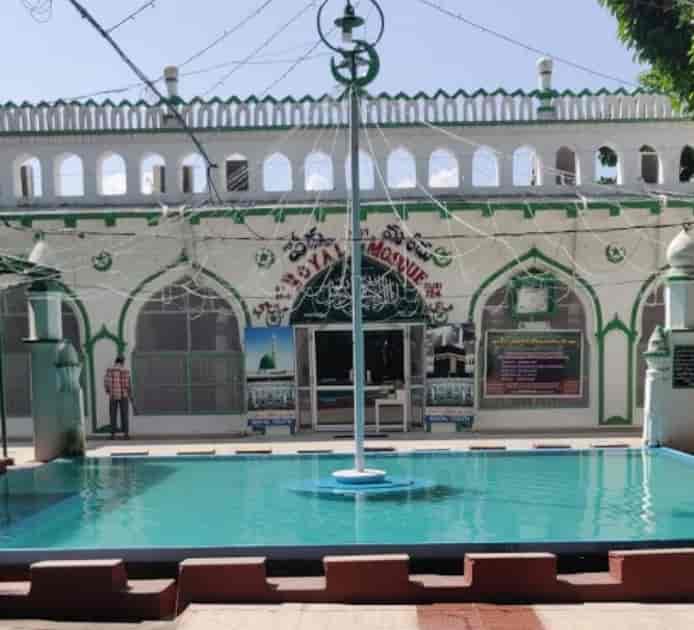
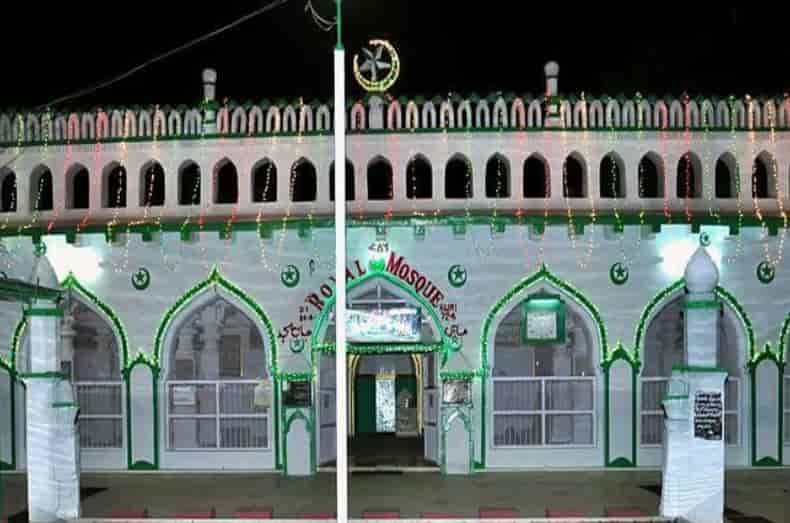
As a little kid, I sometimes performed chores while we lived in my grand parents’ home in Innespeta, Rajahmundry. I still have a vivid recollection of this event which helps me to speak about our oral tradition. I was walking along the ‘Main Road’ of Rajahmundry and was passing in front of Pedda Masjid (The Big Mosque). An elderly person stopped me and spoke to me. I was a little diminutive kid walking bare foot on the street. The man was very modestly dressed and appeared to be one of the working poor of the town who make their living by performing simple menial tasks at the market place. Some of you, who may have lived in Rajahmundry know that we have a vegetable market in that area and it is the heart of the town. I could see the sense of sadness on his face. He was simply trying to unburden himself and share the emotional pain with which he might have lived for many years. I remember this incident as the expression of sorrow and dismay is entirely true. He did not ask for any favor or help. He was not canvassing for any support for political ideology. He was not speaking about his poverty or the hardships of his daily life. He plainly shared the truth about the “Pedda Masjid.”
Defining Indian Identity -The Oral Tradition helps me to discover the Homer of Rajahmundry. The Story about the ‘Pedda Masjid’, Main Road, Rajahmundry narrated by Homer of Rajahmundry.
The mosque was not real. It was a temple. The temple was demolished and the mosque was erected in its place. He did not learn about it by visiting a library or reading the notes written by some historian or archaeologist. He had lived his life in the town and he gained this information from people who had lived before him. He had felt their pain and thought that it was important to share this collective memory with the next generation. I really do not know as to how long we should live with this injustice. But for now, my time has come. I need to narrate this story to the next generation. We shall continue to do so as long as this pain lives. This simple man, whose name is not known to me, who had written no epic poetry, is my ‘Homer’. Like the Great Poet, this man orally transmitted the ‘Original’ pain and the emotional experience of people who had lived in Rajahmundry centuries before my arrival and the pain survives in my memory and it would hopefully survive in the memories of our future generations. A bit of historical truth is as great as a long poem. A temple had been destroyed and the pain experienced by the community would live as long as our oral tradition would live.
A Hindu Place of WorshipThe Reality of Pedda MasjidDefining Indian Identity -The Oral Tradition helps me to discover the Homer of Rajahmundry
The Train of Thoughts: On 19th January, 2024, My Memory Train Keeps On Rolling
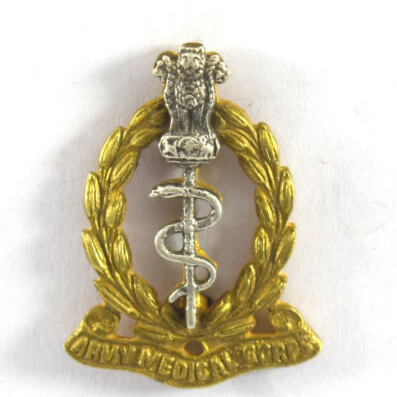
HISTORY OF THE US-INDIA-TIBET RELATIONS : SEPTEMBER 04, 1959 .Personal Number: MS-8466. Rank: Captain. Name: R Rudra Narasimham, Branch: Army Medical Corps/Short Service Regular Commission. Unit: Headquarters Establishment Number. 22, C/O 56 APO. Designation: Medical Officer from September 22, 1971 to December 18, 1974. Organization: SPECIAL FRONTIER FORCE.Whole Dude – Whole Train: The Train of Thoughts. The Rudi-Grant Connection rides on the Memory TrainWhole Dude – Whole Train: The Train of Thoughts. On January 19, 2024 My Memory Train Keeps on Rolling. My connection to Indian Prime Minister Indira Gandhi.
Mylapore, Madras, Chennai is my birthplace. Ever since my birth in Chennai, my life journey rolled on locomotive trains and carriages built in Perambur, Chennai.
Whole Dude – Whole Train: The Train of Thoughts. On January 19, 2024 My Memory Train Keeps on Rolling. My connection to Indian Prime Minister Indira Gandhi
Indian Railways celebrated the 75th Anniversary of Independence Day in 2022 by offering rides in the Memory Train built in Perambur.
Whole Dude – Whole Train: The Train of Thoughts. On January 19, 2024 My Memory Train Keeps on Rolling. My connection to Indian Prime Minister Indira GandhiWhole Dude – Whole Train: The Train of Thoughts. On January 19, 2024 My Memory Train Keeps on Rolling. My connection to Indian Prime Minister Indira Gandhi
My Memory Train keeps on rolling. I am happy to share the Train of Thoughts, the memory of India’s first woman Prime Minister.
Whole Dude – Whole Train: The Train of Thoughts. January 19 brings back the memories of my connection to Indian Prime Minister Indira Gandhi.Whole Dude – Whole Train: The Train of Thoughts. January 19 brings back the memories of my connection to Indian Prime Minister Indira GandhiWhole Dude – Whole Train: The Train of Thoughts. On January 19, 1966, Indira Gandhi became the third Prime Minister of India. She married Feroze Gandhy or Feroze Gandhi born into a Parsi family. Feroze Gandhi was a Member of India’s First Parliament and had won elections to the Parliament in 1952 and 1957 from Rai Bareilly Constituency in Uttar Pradesh State. January 19 brings back the memories of my connection to Indian Prime Minister Indira Gandhi.Whole Dude – Whole Train: The Train of Thoughts. January 19 brings back the memories of my connection to Indian Prime Minister Indira Gandhi.
On January 19, 1966 I was a student at Kurnool Medical College, Kurnool, Andhra Pradesh, India. The appointment of Indira Gandhi as Prime Minister delighted my nationalist sentiment. I immediately sent her a letter of congratulations. She graciously responded to the same. During June 1967, I had the opportunity to meet her at her official residence in New Delhi along with a group of college students participating in a National Student Seminar on National Integration. I was granted Short Service Regular Commission in the Indian Army Medical Corps in the rank of Second Lieutenant during September 1969 while I was still studying in Kurnool Medical College. My career in the Indian Army Medical Corps began in 1969 and concluded on January 10, 1984, during the years she was Prime Minister of India.
Whole Dude – Whole Train: The Train of Thoughts. Prime Minister Indira Gandhi with Sheikh Mujib -ur-Rehman, Prime Minister of Bangladesh at the Palam airport, prior to latter’s departure on April 11, 1974. January 19 brings back the memories of my connection to Indian Prime Minister Indira Gandhi. From 1971 to 1974, apart from initiating the Liberation of Bangladesh with military action in the Chittagong Hill Tracts, I took part in the effort to train Bangladeshi nationals to provide personal protection to Bangladesh Prime Minister.Whole Dude – Whole Train: The Train of Thoughts. January 19 brings back the memories of my connection to Indian Prime Minister Indira Gandhi.
INDIRA GANDHI BECOMES INDIAN PRIME MINISTER – JANUARY 19, 1966
Following the death of Indian Prime Minister Lal Bahadur Shastri, Indira Gandhi becomes head of the Congress Party and thus Prime Minister of India. She was India’s first female head of government and by the time of her assassination in 1984 was one of its most controversial.
Gandhi was the daughter of Jawaharlal Nehru, the first Prime Minister of the independent Republic of India. She became a national political figure in 1955, when she was elected to the executive body of the Congress Party. In 1959, she served as president of the party and in 1964 was appointed to an important post in Lal Bahadur Shastri’s ruling government. Soon after becoming Prime Minister, Gandhi was challenged by the right wing of the Congress Party, and in the 1967 election she won only a narrow victory and thus had to rule with a deputy prime minister.
In 1971, she won a resounding reelection victory over the opposition and became the undisputed leader of India. That year, she ordered India’s invasion of Pakistan in support of the creation of Bangladesh, which won her greater popularity and led her New Congress Party to a landslide victory in national elections in 1972.
During the next few years, she presided over increasing civil unrest brought on by food shortages, inflation, and regional disputes. Her administration was criticized for its strong-arm tactics in dealing with these problems. Meanwhile, charges by the Socialist Party that she had defrauded the 1971 election led to a national scandal. In 1975, the High Court in Allahabad convicted her of a minor election infraction and banned her from politics for six years. In response, she declared a state of emergency throughout India, imprisoned thousands of political opponents, and restricted personal freedoms in the country. Among several unpopular programs during this period was the forced sterilization of men and women as a means of controlling population growth.
In 1977, long-postponed national elections were held, and Gandhi and her party were swept from office. The next year, Gandhi’s supporters broke from the Congress Party and formed the Congress (I) Party, with the “I” standing for “Indira.” Later in 1978, she was briefly imprisoned for official corruption. Soon after the ruling Janata Party fell apart, the Congress (I) Party, with Indira as its head, won a spectacular election victory in 1980, and Gandhi was again Prime Minister.
In the early 1980s, several regional states intensified their call for greater autonomy from New Delhi, and the Sikh secessionist movement in Punjab resorted to violence and terrorism. In 1984, the Sikh leaders set up base in their sacred Golden Temple in Amritsar. Gandhi responded by sending the Indian army in, and hundreds of Sikhs were killed in the government assault. In retaliation, Sikh members of Gandhi’s own bodyguard gunned her down on the grounds of her home on October 31, 1984. She was succeeded by her son, Rajiv Gandhi.
Whole Dude – Whole Train: The Train of Thoughts. On completion of my military training and medical internship in 1971, I was sent on deputation to serve in Special Frontier Force,Establishment No. 22-Vikas Regiment, a multinational defense alliance/pact which is supervised by the Prime Minister and the Cabinet Secretariat/The Directorate General of Security. January 19 brings back the memories of my connection to Indian Prime Minister Indira GandhiWhole Dude – Whole Train: The Train of Thoughts. January 19 brings back the memories of my connection to Indian Prime Minister Indira Gandhi.Whole Dude – Whole Train: The Train of Thoughts. January 19 brings back the memories of my connection to Indian Prime Minister Indira Gandhi.Whole Dude – Whole Train: The Train of Thoughts. January 19 brings back the memories of my connection to Indian Prime Minister Indira Gandhi.Whole Dude – Whole Train: The Train of Thoughts. January 19 brings back the memories of my connection to Indian Prime Minister Indira GandhiWhole Dude – Whole Train: The Train of Thoughts. January 19 brings back the memories of my connection to Indian Prime Minister Indira Gandhi. The Nehru Legacy Lives.Whole Dude – Whole Train: The Train of Thoughts. January 19 brings back the memories of my connection to Indian Prime Minister Indira Gandhi. I am a witness to the sentiment shared by Prime Minister Indira Gandhi.Whole Dude – Whole Train: The Train of Thoughts. On January 19, 2024 My Memory Train Keeps on Rolling. My connection to Indian Prime Minister Indira GandhiWhole Dude – Whole Train: The Train of Thoughts. On January 19, 2024 My Memory Train Keeps on Rolling. My connection to Indian Prime Minister Indira GandhiWhole Dude – Whole Train: The Train of Thoughts. On January 19, 2024 My Memory Train Keeps on Rolling. My connection to Indian Prime Minister Indira GandhiWhole Dude – Whole Train: The Train of Thoughts. This post is presented by the Rudi-Grant Connection
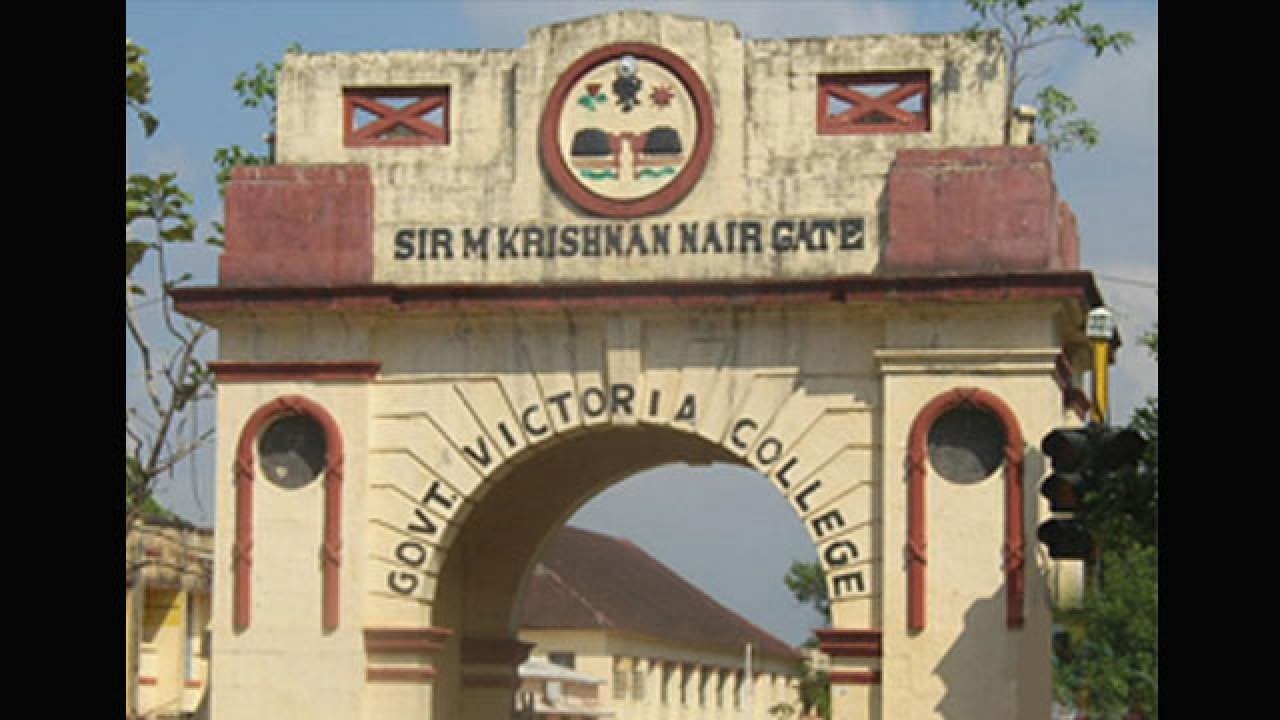
Whole Dude – Whole Account: The Moments Slip Away And Are Laid to Your Account. Recalling the Moments at Government Victoria College, Palghat.
Government Victoria College, Palakkad is the oldest institution of higher learning in the Malabar region of Kerala. In January 1888 it was raised to the rank of a second grade college and was affiliated to the University of Madras. The institution was taken over by the Government of Madras Presidency in 1919.The teaching of Geography as an optional subject for ‘Intermediate’ students commenced in 1945. Before the creation of linguistic provinces in 1956, Palghat was part of Madras State after India’s independence in 1947.
Whole Dude – Whole Account: Moments Slip Away And Are Laid to Your Account. Recalling the Moments at Government Victoria College, Palghat.
The Motto of the College is the Latin slogan Labuntur et imputantur. Indeed it is true that life’s moments slip away and fortunately they are laid to your account.
Whole Dude – Whole Account: Moments Slip Away And Are Laid to Your Account. Recalling the Moments at Government Victoria College, Palghat.
Because of Victoria College, I am able to recall some of those moments that slipped away from my life about 55 years ago. I am speaking of the times when Palghat was a part of Madras State and when Victoria College was affiliated to the Madras University. In 1952, I was a four-year old kid and my father was employed in the Madras State Educational Service. He had obtained his M.A degree in Indian History from Madras University and worked in the Madras Presidency College, Madras which is now known as Chennai city. My father had also a Diploma in Geography and he was transferred to Government Victoria College, Palghat to teach Geography. In his long career in the Educational Service, my father taught mostly Indian History, and at Victoria College, he taught Geography and was assigned to the Department of Geography.
Whole Dude – Whole Account: The Moments Slip Away and are Laid to Your Account. Reliving the Moments of Life at Queen Victoria College, Palghat.
We lived in a rented house in Palghat. The house is on a dead-end street and it is the last house on the street and it abuts the college compound wall.The house faces the college cricket stadium/sports grounds.There is a canteen of the college right in front of the house.The stadium has a nice pavilion for the spectators to sit and watch the games. Our landlord had two sons who were then students at the college. Apart from my parents, I lived with my two elder brothers. For the first time in my life, I was introduced to the game of Cricket in this house while we lived in Palghat. In the front courtyard of the house, we had a large tree which served as the stumps for our game. Very often, myself and my brothers would watch the Cricket matches and I have seen for the first time the official scorekeeping sheets they fill up during the game. Cricket has been popular with Indians for a long time. It was not Mylapore, Madras and it was not my native place Rajahmundry where I took my first lesson to play this game. I remember Palghat as the place where my love for the game of Cricket began.
Whole Dude – Whole Account: Moments Slip Away And Are Laid to Your Account. Recalling the Moments at Government Victoria College, Palghat.
When I opened my PALGHAT ACCOUNT, my landlord’s two sons still look young and fresh like any other college students and I still have the visual image of myself and my brothers, all kids, playing cricket in front of the house. This is life. It is full of moments that quietly slip away and if you are lucky, the account that you have created is still there and you have the chance to recapture the moment and you can actually relive in that moment and the freshness of it is carefully preserved and it tastes as good as it was on the first occasion. Thanks to Victoria College, Palghat and I still have an account with credit balance.
Whole Dude – Whole Account: Moments Slip Away And Are Laid to Your Account. Recalling the Moments at Government Victoria College, Palghat.
Essence and Existence:
What is man’s nature and how to describe man’s essence? The essence is supported by existence. The existence is in the moments that slip away on which man has no control. Man exists as he helplessly watches the moment called future is churned into past, and present is only an instant in this future-past continuum. Fortunately, man can recall and revisit the moments that have slipped away and bring past into the present moment.
Whole Dude – Whole Account: Moments Slip Away And Are Laid to Your Account. Recalling the Moments at Government Victoria College, Palghat.








 Whole Dude - Whole Concept