Whole Foods opened its Store in Ann Arbor on September 16, 1993. Whole Foods, Whole People and Whole Planet inspire Whole Dude to invent Whole Phrases: Whole Linguistics-Whole Language, Whole conversation, Whole Cookie, Whole Huddle, Whole Grind, Whole Love and others. Whole Dude uses the phrase Whole Linguistics to describe three entities; 1. Language User, 2. Language Interpreter and 3. Language Creator. Image Credit: Agenda Publications, Ann Arbor District Library, Issue Dates, September 1993, December 1997 and February 1998
Yes indeed, Life is Complicated. The complexities of Life begin with our own selves. The universe is vast and man’s role in it is insignificant. Man’s great need is not only to know the world around him but also know himself better. Man has to know the Truth about himself.
Whole Foods opened its Store in Ann Arbor on September 16, 1993. Whole Foods, Whole People and Whole Planet inspire Whole Dude to invent Whole Phrases: Whole Linguistics-Whole Language, Whole conversation, Whole Cookie, Whole Huddle, Whole Grind, Whole Love and others. Whole Dude uses the phrase Whole Linguistics to describe three entities; 1. Language User, 2. Language Interpreter and 3. Language Creator. Consciousness is the tool Whole Dude uses to explore his Whole Self.
The tradition of knowing oneself is a longer tradition than any other Science. This is a study in which the Knower and the Known are one. The object of scientific inquiry is the nature of the scientist. Consciousness is the tool Whole Dude uses to explore his Whole Self.
The tradition of knowing oneself is a longer tradition than any other Science. This is a study in which the Knower and the Known are one. The object of scientific inquiry is the nature of the scientist. Consciousness is the tool Whole Dude uses to explore his Whole Self. Dr. Oliver Wendell Holmes, Professor of Anatomy and Physiology, Dean of the Harvard Medical School 1847-1882. “To live is to function and that is all there is in living.” Life is defined by the nature of its living functions. Consciousness is the absolute characteristic of all living functions and so I define Life as “Knowledge in Action.”
Dr. Oliver Wendell Holmes, Professor of Anatomy and Physiology, Dean of the Harvard Medical School 1847-1882 states, “To live is to function and that is all there is in living.” Life is defined by the nature of its living functions. What is that exists and knows that it exists?Consciousness is the absolute characteristic of all living functions and so I define Life as “Knowledge in Action.”
What is Consciousness?
What is Consciousness? Why is this baby crying? Is it hunger? Is it thirst? Is it a wet diaper? Is it earache? Is it fever? Is it too hot? Is it too cold? Is it gripes or colic? Is it to get attention? Is it Consciousness? The baby is aware of something. The baby is aware of its own existence in an environment and is also aware of its internal condition.
Consciousness is described as a state of knowing, or awareness, or recognizing the existence, truth, or fact of ‘something’. What is that ‘something’ that is known or recognized by Consciousness? I propose to explore the contents of Consciousness to answer the question of what is Consciousness?
The Totality of Consciousness:
The Rudi Connection at Whole Foods asks, What is Consciousness?
The Science of Consciousness must explore and investigate the entire contents of Consciousness. By understanding the nature of experience provided by the Totality of Consciousness, the condition, the state, or the act of being Conscious will be explained.
Consciousness is a Mental Experience:
The Rudi-Grant Connection promotes the study of Human Anatomy to learn about consciousness.
The term consciousness is most widely used as meaning “attention to the contents or workings of one’s own mind.” English philosopher John Locke defined Consciousness as a psychological condition; it is described as the perception of what passes in a man’s own mind. In the Indian tradition, mental activities are of four kinds and collectively constitute what is named as Antahkarana; these are: 1. Manas or Manah- the seat of thoughts, 2. Buddhi or intellect and knowledge, 3. Chitta or the seat of emotions such as Kindness and Love, and 4. Ahamkara or self-ego. The mental experience or knowing of these activities of thoughts, intellect, moods, feelings, and self-ego describe Consciousness as a mental experience. Using this view, many philosophers, religious thinkers, and mystics have shared their experience of different levels of Consciousness and have given names to the higher levels or states of Consciousness. Terms such as Pure Consciousness, Cosmic Consciousness, and Super Consciousness may describe some kind of mental experience and such terms may not add any information to understand the Totality of Consciousness and its experience.
Consciousness is a Sense Experience:
What is Consciousness? Is it awareness of Sense Perception? Is it awareness of Thought? Is it awareness of Mood and Feeling? Is it awareness of Existence? Can there be any Perception without Existence? What is that Exists and Knows that it Exists?The Neural Correlates of Consciousness defined by Mormann & Koch explores Consciousness as a sense experience. It fails to understand the Totality of Consciousness.
Consciousness is generally viewed as a form of relationship or act of the mind towards objects in nature. Consciousness has been described as a continuous field or stream of mental sense-data. Some biologists and neurophysiologists view Consciousness as a brain function and describe it as an exclusive function of the nerve cells; neuronal and axonal function. Dr. Florian Mormann and Dr. Christof Koch have defined Neural Correlates of Consciousness( Florian Mormann & Christof Koch(2007) NCC, Scholarpedia 2(12):1740 ) as the minimal neuronal mechanisms jointly sufficient for any one specific conscious percept. Further, Mormann & Koch state that, “Consciousness is a puzzling, state-dependent property of certain types of complex, biological, adaptive, and highly connected systems. A Science of Consciousness must strive to explain the exact relationship between phenomenal, mental states and brain states.” They have posed the question: ” What is the nature of the relationship between the immaterial, conscious mind and its physical basis in the electro-chemical interactions in the body? The answer to this question is very simple. Consciousness is related to a material substance that is called Protoplasm and electro-chemical interactions in the body describe the properties of this living substance or material. The brain cells and all other cells have the same basic features; they are constituted by Protoplasm which has a Biological Membrane to define the limits of the Cell. Mormann & Koch also erroneously suggest that, “Only a few particular systems can experience anything, why they are Conscious and other systems such as the enteric nervous system or the immune system are not Conscious.” The enteric nervous system does in fact provide a wide range of Conscious experiences. A baby would respond with a cry when it experiences gripes or colic. In the practice of Clinical Medicine, the evaluation of pain as a symptom and as a diagnostic clinical sign plays a very significant role. The pain experienced by an individual with gastrointestinal, or genitourinary problems, or from inflammation of tissues and organs, and from problems with skeleton and musculature is registered by Consciousness. The immune system behaves in a Conscious manner and displays specificity, selectivity, and memory. A Living Cell is a highly complex, biological, adaptive, and highly connected system known in Natural Science. A simple understanding of various cell functions would explain this issue. For example, mitochondria are organelles found within most cells which provide the cells with energy. Extensive protein translocation occurs in mitochondria where about one thousand different polypeptides are imported from the cytosol. This event is orchestrated by distinct translocation machineries in the outer and the inner mitochondrial membranes. Mitochondria display functional awareness and perform the task of oxidising sugars and fats in a deliberate, and sequential manner that involves the use of different enzymes to facilitate each chemical reaction.
Consciousness is a Physical or Body Experience – The concept of Homeostasis:
The Rudi Connection at Whole Foods asks, What is Consciousness? Consciousness as a physical or body experience. The concept of Homeostasis.
Apart from thoughts, intellect, feelings, moods, and perception of various sensory information, man is aware of the fact of and the state or condition of his physical existence. Man is aware or Conscious of hunger, thirst, and sexual drive. Man is aware of vital functions like respiration, and circulation. Man is alerted and often reacts with a sense of fear when these vital functions are disturbed or threatened in a significant manner. Consciousness or awareness includes awareness of bodily functions such as appetite, lack of appetite, nausea, vomiting sensation, deglutition (the act of swallowing food and drink), satiation, and the functions of excretion and the associated sensations like the fullness of the bladder, and rectum. The human organism has awareness of its internal condition such as the state of hydration, water and electrolyte balance, and acid/base balance. The chemical events collectively called “metabolism” require the concentration of hydrogen ions and electrolytes to remain within narrow limits in the tissue cells and in the fluids which bathes them. Body responds to both volume changes and changes in the osmotic pressure of the body fluids. Life is possible only if the hydrogen ion concentration of body fluid is kept within a narrow range. In health, a blood hydrogen ion concentration of 36-44 nmol/liter or pH 7.37 – 7.45 is maintained by several closely integrated but widely differing mechanisms. 19th century French physiologist Claude Bernard had defined “Homeostasis” as “all the vital mechanisms, varied as they are, have only one object; that of preserving constant the conditions of life.” All living things maintain a constant internal environment or Internal Milieu. Living cells and organisms are aware or Conscious of the environment in which they exist as well as the state of their own internal environment making possible to witness this phenomenon of Homeostasis.
Consciousness is a Cellular Experience:
All the solid tissues in the human body consist of cells that are essentially similar to an Ovum.
Dr. Oliver Wendell Holmes, the former Dean of Harvard Medical School defines Life by stating that, “To live is to function and that is all there is in living.” Who or what is the subject who lives because of its living functions? Consciousness is a cellular experience of the cells of the brain and the body. It is an experience shared by the Whole Organism. It is an experience shared by all the living cells. The living functions of cells include uptake and conversion of nutrients, synthesis of new molecules, production of energy, and regulation and coordination of metabolic sequences apart from the function of reproduction by asexual cell division. All the solid tissues in the human body can be shown to consist largely of similar cells, differing it is true, but that are essentially similar to an ovum. The most significant feature of similarity between the cells is the presence of a soft, gelatinous, semi-fluid, granular material inside the cell. This substance known as Protoplasm is similar to that found in the ovum or the egg cell. This viscous, translucent, colloidal substance is enclosed in a membrane called Plasma Membrane or Biological Membrane. A small, spherical body called nucleus is embedded in the protoplasm. The protoplasm could be differentiated into cytoplasm/cytosol, and nucleoplasm based upon its location. Cytoplasm refers to protoplasm located outside the nucleus. Nucleoplasm refers to the protoplasm located inside the nucleus. The two essential features of any living cell in the human body are that of the presence of protoplasm and the nucleus. The most striking characteristics of protoplasm are its vital properties of Motion, and Nutrition. Protoplasm has the intrinsic power to change its shape and position and the motion is described as amoeboid movement as the motion is similar to the motion that is observed in Amoeba proteus. Nutrition is the power which protoplasm has of attracting or drawing the materials that are necessary for its growth and maintenance from surrounding matter/environment. Nutrition is not a passive, unguided, and physical event. The Biological Membrane or the Plasma Membrane allows a highly controlled exchange of matter across the barrier it poses; some compounds are able to pass through the Membrane easily, others are completely blocked. The Biological Membrane helps to maintain cell’s internal environment or constant interior milieu in which intracellular reactions occur. To maintain life, the cell not only repairs or replaces, (or both) its structures by continual synthesis of new organic molecules. This is characteristic of functional awareness or Consciousness that is at work at the cellular level. The human organism uses a repair process and it is described as Inflammation and Repair. Wound healing, and hemostasis (or blood leakage or bleeding from an injured blood vessel is controlled) are natural mechanisms operated by Cellular Consciousness. Human existence is possible because of this valuable and protective healing process which comes into immediate play after an injury or damage. Similarly, the human organism defines its identity and defends its existence by deploying unique protein molecules such as the antibodies. Antibodies recognize their antigens or foreign protein molecules with high affinity and extreme selectivity. The ability to develop specific immunity to infection is only one consequence of a wider capacity in the individual to recognize and to specifically respond to the foreignness of an extensive range of biological substances that are not normally present in the body of that individual. The adaptive immune system remembers that particular infectious agent and can prevent it causing disease later. The immune system consists of a variety of molecules and cells that are distributed throughout the body. They play an important role in inflammation, tissue damage and repair, the killing of bacteria, viruses, and tumor cells. Cellular Consciousness defends human existence.
What is Consciousness? Cognition is a natural, biological function of all living things and of all the individual blocks of Life called Cells.
A Living Cell is a highly complex, biological, adaptive, and highly connected system known in Natural Science.
What is Consciousness? Can any function be performed without the cognitive element called functional awareness?
A simple understanding of various cell functions would explain this issue. For example, mitochondria are organelles found within most cells which provide the cells with energy. Extensive protein translocation occurs in mitochondria where about one thousand different polypeptides are imported from the cytosol. This event is orchestrated by distinct translocation machineries in the outer and the inner mitochondrial membranes. Mitochondria display functional awareness and perform the task of oxidising sugars and fats in a deliberate, and sequential manner that involves the use of different enzymes to facilitate each chemical reaction.
Consciousness is a Social Experience:
What is Consciousness? The Social Awareness of Red Blood Cells: Metabolic Sensor in Red Cell, Ion Exchange Transport mechanism, Release of Nitric Oxide to modulate Vascular tone and to cause vasodilation.
Sociology lays claim to the whole of human life beyond the biological level because virtually all human activities possess a social aspect. Consciousness can be viewed as the capacity in an individual to form harmonious relations with others and to participate in or contribute constructively to changes in the social environment. Man is a social being and he is aware of the social structures and the social organization that he is part of. Parental instincts and social instincts describe an aspect of social behavior exhibited by all animals. Animals exhibit social behaviors and form parental societies to care for their offspring. Bacteria come together to live as colonies. At cellular level, the social aspect of Consciousness is reflected by the cell’s abilities such as association, cooperation, communication using signaling molecules, recognition, and functional subordination in its interactions with other living cells present in its environment. In an Ecological System, the Consciousness plays the role to establish the interrelatedness, the interdependence, and the interconnectedness.
Consciousness is a Moral Experience:
What is Consciousness? Conscious versus Conscience
Consciousness is the attribute of a conscientious person. Conscious behavior is often described as conscientious action that is scrupulous, characterized by or done with careful attention. Conscience describes awareness of one’s own acts and the application of knowledge to discern an act as right or wrong, good or evil, selfish or altruistic. Man has the intrinsic ability to recognize his acts of transgression or sinful conduct. Man is a creature with conscience and hence exists as a moral being.
Consciousness is a Spiritual Experience:
What is Consciousness? Consciousness is a Spiritual Experience.
The word spiritual is often used to describe the fact of having a relationship based on sympathy of thought or feeling. Consciousness has a spiritual function as it establishes a relationship between the energy dependent living cell and its energy provider. The living cell is a thermodynamically unstable system. This means that without continuous input of energy, a cell will degrade spontaneously into a nonliving collection of molecules. The life’s journey of the human organism begins as a single cell, that of a fertilized egg cell. This single fertilized egg cell is Conscious of its existence, is Conscious of its energy dependence and it promptly connects itself to its energy provider. Human life begins to move forward when this egg cell implants itself into the maternal tissue and the biological mother has no cortical awareness of this implantation. Cortical awareness does not describe the Totality of Consciousness. The Science of Consciousness must describe the mental, the sensory, the physical, the cellular, the social, the moral, and the spiritual aspects of Consciousness.
Consciousness is Awareness of Existence in the given Environment:
The Ground Substance of Spiritualism and Spirituality. The vital characteristics, the animating principles of Protoplasm could be known by observing Amoeba proteus. The Living Substance works as an organ of Motion or Movement, as an organ of Nutrition, and as an organ of Reproduction to generate new cells which have a life span of their own. In these physiological functions, I describe the characteristics such as Cognition, Consciousness, Memory, and Intelligence which have a Spiritual role as they bring functional unity and harmony in the interactions between different parts of the same individual organism while it exists in an environment as a member of a biological community.
Consciousness describes the condition of an individual; the condition of knowing, awareness, or recognizing the fact, the state, and the act of existence or living in a given environment. Thus, Consciousness is a natural principle that could explain what an individual knows and experiences about the world around one and inside one. There are two aspects of Consciousness that is registered subjectively by an individual; 1. Consciousness is a state of knowing or awareness of what goes on around an individual, and 2. Consciousness is a state of knowing or awareness of what goes on within the individual. Who is this individual who has the ability to know and be aware of its external and internal environment? The term environment refers to all the conditions, circumstances, and influences surrounding, and affecting the existence of a given individual, or group of individuals. The individual is a living organism and the organism could be unicellular or multicellular.
Consciousness and Material Substance:
Consciousness is an absolute attribute of Life; it is the fundamental characteristic of living matter or living substance described as Protoplasm, Cytoplasm, Cytosol, Nucleoplasm, and etc.,
Consciousness is an absolute attribute of Life; it is the fundamental characteristic of living matter or living substance described as Protoplasm or Cytoplasm, the essential living matter or material substance of all animal, and plant cells. Wherever Protoplasm is found, irrespective of the size, shape, and form of the cell or of the living organism, the contents of its Consciousness could be discovered.
Consciousness – The Law of Individuality and Creation:
Identity and Individuality are the two sides of the same Coin. The genome establishes the Identity, and Consciousness establishes the Individuality of a Living Cell or of a Living Organism.
The contents of Consciousness vary from individual to individual. There are individualistic variations in the contents of Consciousness. There can never be two identical living individuals. Even when the cells are cloned and have the same or identical genomes, the state, or condition of Protoplasm that is Conscious is never identical. With the same genome, or different genomes, the living cells can only exist or live as individuals and they have no other choice. The living substance is the same, and the nature of Consciousness is the same and yet the contents of Consciousness are not the same. This Individualistic variation of Consciousness is the characteristic of what I describe as ‘The Law of Individuality and Creation’.
The Principles of Consciousness:
Consciousness is the natural, vital principle that moves and animates all Life. The Living Cell knows the fact of its existence, it knows as to where it exists, and knows as to how it is existing.
Consciousness is the natural principle, the vital principle that moves and animates all Life. It has a set of defining features; it is the principle by which a living cell or organism knows the fact of its own existence, it knows as to where it exists, and knows as to how it is existing. Cognition is described as the act of knowing. Cognitive Science involves the study of all human activities related to Knowledge. These activities include attention, creativity, memory, perception, problem solving, thinking, and the use of language. Cognition is the process involved in knowing, or the act of knowing which includes awareness and judgment. The nature of cognition, the relationship between the knowing mind and external reality, is applicable in the study of living functions that are characteristic of the living substance or material called Protoplasm. These functions at cellular level that require cognition include nutrition, reproduction, metabolism, and association with other living cells present in the immediate environment. The human brain is often viewed as the Seat of Knowledge. Human brain’s ability to acquire, process, store, and use of information is essentially a function of the cytoplasm of the brain cells. Cognitive functions like perception and memory would establish Protoplasm as the Seat of Knowledge.
Consciousness in the Multicellular Human Organism:
The Human Organism is an association of trillions of individual living cells. Consciousness serves the purpose of Functional Unity and all the cells display adaptive functional subordination to serve the purpose of the Whole Organism or the Individual. There are two distinct aspects of human Consciousness;1. The Capacity for Consciousness, and 2. The Contents of Consciousness.The Reticular Formation of Brain Stem functions to maintain the Individuality of Man and at this location the Human Organism establishes its Identity as a Living Organism in its relationship with the rest of the human body and the external environment. The Brain Stem is irreplaceable and plays a crucial role in the diagnosis of Brain Death.SPIRITUALITY SCIENCE – THE KNOWER – THE KNOWING-SELF: IN THIS IMAGE OF HUMAN BRAIN, THE GREEN PORTION OF BRAIN STEM IS CALLED RETICULAR FORMATION. I AM PROPOSING TO CALL IT AS THE KNOWING-SELF AND IT IS THE “KNOWER” OF THE HUMAN BODY WHICH CONSTANTLY CHANGES ITS MORPHOLOGICAL APPEARANCE UNDER THE INFLUENCE OF TIME CALLED THE AGING PROCESS.What is Consciousness? I promote the study of Human Anatomy to learn about consciousnessWhat is Consciousness? I formulate the Biological Law, I am Consciousness, Therefore I am. Cunningham’s Manual of Practical Anatomy has provided me the learning tools to know and understand Man’s External and Internal Reality and its Identity as described by Cells, Tissues, Organs,and Organ Systems.What is Consciousness? I formulate the Biological Law, I am Consciousness, Therefore I am. Cunningham’s Manual of Practical Anatomy has provided me the learning tools to know and understand Man’s External and Internal Reality and its Identity as described by Cells, Tissues, Organs,and Organ Systems.What is Consciousness? I formulate the Biological Law, I am Consciousness, Therefore I am. Cunningham’s Manual of Practical Anatomy has provided me the learning tools to know and understand Man’s External and Internal Reality and its Identity as described by Cells, Tissues, Organs,and Organ Systems.
There are two distinct aspects of human Consciousness namely the Capacity for Consciousness and the Contents of Consciousness. When Consciousness is viewed as a psychological or strictly as a mental function, it is represented by the Contents of Consciousness which is a function of the Cerebral Cortex. When Consciousness is understood as a biological or living function, it is represented by the aspect of Capacity for Consciousness. The upper brain-stem, the neural structures like the Reticular Formation, and Thalamus function to compose the contents of Consciousness and project the contents to the cerebral hemispheres via the tracts of the Ascending Reticular Activating System. The integrity of these neurons and neural connections is important to maintain the alertness, and Arousal State of the Whole Organism in its relationship to its environment and internal maintenance of coordination of various living functions.
Dr. Daniel John Cunningham( 1850-1909 ), Chair of Anatomy, University of Cambridge has provided this Manual of Practical Anatomy to help medical students dissect human cadavers and learn Human Anatomy. Whether humans know and understand Human Anatomy and Physiology or not, they come into existence with full functional knowledge of every constituent cell in the body. The Human Body has Innate Knowledge of its own Structure and Function. I had acquired this Knowledge from Uneducated individuals who had gifted their bodies to promote Medical Education. This is the learning tool that I would use to know and understand the External and Internal Reality and Identity of Man as described by Cells, Tissues, and Organ Systems that constitute the human organism.
I learned about the human body while dissecting the body in a systematic manner. The Manual of Practical Anatomy which guides us through this entire process was published in England. The author Dr. Daniel John Cunningham prepared the Manual while dissecting cadavers of British or Irish citizens. He had never encountered cadavers of Indian citizens. At Kurnool Medical College, Kurnool, Andhra Pradesh, India, where I was a student, the Department of Anatomy obtains dead bodies from Government General Hospital Kurnool and most of the deceased are the poor, illiterate, and uneducated people of that region. None of the deceased had the chance to know this man called Cunningham and similarly, Cunningham had no knowledge about the existence of these people who arrive on our dissection tables. But, as the dissection of the human body proceeds, inch, by inch, we recognize the anatomical parts as described by Cunningham. The manual also lists some anatomical variations and we very often exchange information between various dissection tables and recognize the variations mentioned. The dissections also involve slicing the organs and studying them, both macroscopically, and microscopically. We did not miss any part of the human body. What is the Identity of this Human person or Human subject? How does the living Human organism maintains its Identity and Individuality? Apart from the Cultural Traditions of India, several Schools of Religious Thought claim that the Human Individual and its Identity is represented by Human Soul. Where does this Soul exist in the human body? What is the location if Soul is present in the living person? Does man have a soul?
The Grading of Consciousness in Clinical Medicine:
The reaction of pupil to light beam is often tested in the neurological evaluation of Consciousness in the practice of Clinical Medicine.
Apart from philosophers, psychologists, psychics, theologians and others, the term Consciousness is frequently used by the practitioners of Clinical Medicine. It is a useful term with several practical applications in the management of individuals with a variety of conditions that impact the neural functions, particularly the Arousal. In medical practice, the assessment and grading of Consciousness serves the purpose of being good predictor of the eventual long-term outcome or prognosis of the underlying disease or medical condition.
In Clinical Medicine, the medical practitioner evaluates the Level of Arousal or Alertness of his patient.
In Clinical Medicine, the medical practitioner evaluates the Level of Arousal or Alertness of his patient. The different levels of Consciousness are:
a. alert or awake, fully Conscious and fully Oriented to person, place, and time. This Orientation represents the normal operation of Higher Intellectual Functions. A person who is Conscious, but is under the influence of alcohol or other psychotropic drugs, neural stimulants or depressants may not be fully oriented.
b. phase of automatism – the person is not fully alert as in Sleep-walking, or recovering from the effects of anesthesia.
c. Lethargic – drowsy, sleepy, but easily arousable.
d. Delirium – a state of mental confusion, a toxic condition, altered physical, and mental state or condition.
e. Stupor – semiconscious, responsive only to painful stimuli.
f. Coma – Unconscious or not responsive to painful stimuli.
Similarly, the Edinburgh method of grading Consciousness is :
Grade 0 – Fully Conscious
Grade 1 – drowsy but responsive to vocal command.
Grade 2 – Unconscious but responsive to minimal painful stimuli.
Grade 3 – Unconscious but just responsive to strong painful stimuli.
Grade 4 – Unconscious with no response to verbal commands and all other painful stimuli.
The Glasgow Coma Scale (GCS ) is universally used in the assessment of the head injury victim. This Scale measures and provides a score that ranges from 3 to 15 points by evaluating three kinds of responses from the patient.
1. Eye Opening : Spontaneous eye opening=4; Eye opening in response to command=3; Eye opening in response to painful stimuli=2; and no response of eye opening=1.
2. Motor Response : Obeys commands=6; Localizes pain=5; Shows flexion( decorticate ) response to pain=3; Shows extension ( decerebrate ) response to pain=2; and no response( no reflex muscular activity )=1.
3. Vocal Response: Oriented to person, place, and time=5; Confused=4; Shows inappropriate speech=3; Makes incomprehensible sounds=2; and no vocal sounds=1.
Such neurological evaluations are repeated periodically to record significant changes in the medical condition of the patient. However, it must be noted that Clinical Medicine always evaluates totality of all living functions and the medical usage of the terms Conscious and Unconscious represent a careful interpretation in the context of the medical condition of the patient.
The Neural Correlates of Consciousness defined by Mormann & Koch basically ignores the existence of specific Conscious percept like NUTRITION by which the Living Organism shows its awareness of Energy dependence for its existence or living.
The Confluence of Religion, Philosophy and Science to describe my Reality
Whole Foods opened its Store in Ann Arbor on September 16, 1993. Whole Foods, Whole People and Whole Planet inspire Whole Dude to invent Whole Phrases: Whole Linguistics-Whole Language, Whole conversation, Whole Cookie, Whole Huddle, Whole Grind, Whole Love and others. Whole Dude uses the phrase Whole Linguistics to describe three entities; 1. Language User, 2. Language Interpreter and 3. Language Creator. Image Credit: Agenda Publications, Ann Arbor District Library, Issue Dates, September 1993, December 1997 and February 1998
Yes indeed, Life is Complicated. The complexities of Life begin with our own selves. The universe is vast and man’s role in it is insignificant. Man’s great need is not only to know the world around him but also know himself better. Man has to know the Truth about himself.
What is Truth? Who am I? I am Consciousness:
Whole Dude at Whole Foods Discovers the Identity of Human Soul, or the Knowing-Self.
The term Truth suggests confirmity with facts, experience, or with Reality, either as an idealized abstraction or in actual application to statements, ideas, acts, etc., Truth signifies an established or verified fact, or principle. Truth is related to the validity of what we mean. Plato defined the nature of Truth as correspondence between thought and reality. Dr. William Jones in his book, ‘The Principles of Psychology’ states : “True ideas are those we can assimilate, validate, corroborate, and verify.” The universe is vast and man’s role in it is insignificant. Man’s great need is not only to know the world around him but also know himself better. Man has to know the Truth about himself.
The Three Dimensions of Truth:
1. Truth is correspondence between a statement and the reality of external world.
2. Truth is correspondence between the observer and the reality of the observed fact. Here, we need to recognize the method used for the observation such as intuition, sense experience, or revelation.
3. Truth is correspondence between man and his true nature.
Lord Jesus Christ – Truth as Revelation:
Whole Dude at Whole Foods Verifies the Proposition, I am Consciousness. The Truth of Jesus, John, Chapter 20, verse 29: Jesus said to him (Thomas), “Have you come to believe because you have seen me? Blessed are those who have not seen and have believed.” Truth-Is it a matter of sight or sense experience, or is it a matter of faith and belief?Whole Dude at Whole Foods Verifies the Proposition, I am Consciousness: The Roman Governor Pilate asks Jesus, “What is Truth? “
The Truth about Lord Jesus Christ comes to a very critical scrutiny while he got arrested and stood before Pilate, the Roman Governor. The Book of John, Chapter 18, verses 37 and 38 record the conversation between Jesus and Pilate: So Pilate said to him, “Then you are a King?” Jesus answered, “You say I am a King. For this I was born, and for this I came into the world, to testify to the truth. Everyone who belongs to the truth listens to my voice.” “What is truth?” Pilate asked. Jesus did not answer the question as the truth must have correspondence with a reality in the external world. The truth of Jesus is about the establishment of Kingdom of Heaven upon Earth. It was a prophetic truth and the truth would be evident only when the Prophecy comes true.
Lord Gautama Buddha – Truth as Experience:
Whole Dude at Whole Foods Verifies the Proposition, I am Consciousness. Lord Gautama Buddha states, “The greatest miracle is to explain the truth and to make man realize it.”
Lord Gautama Buddha known as Siddhartha (He who will accomplish), c. 563 B.C to c. 483 B.C., left the palace at the age of 29 leaving behind his young wife and infant son. After six years of ascetic life, while meditating under a Pipal tree (later called Bodhi or Enlightenment Tree), he became Supreme Buddha (c. 528 B.C.) at the age of 35. He preached his first sermon at Sarnath. He outlined his Doctrine of Four Noble Truths and the First Noble Truth is that of suffering, the experience of pain and sorrow called Dukha is implicit in human existence. Buddha’s truth relates to man’s experience of the nature of his existence in the world. I maintain that man exists at any stage of his existence, at any given age, under any given circumstance, in either good health or ill health, in pain and suffering or that of joy and happiness due to the operation of a Fundamental Force/Power/Energy that delivers Mercy/Grace/Compassion. If suffering describes one face of the coin called human existence, Compassion describes the second face of the same coin. Compassion is implicit in human existence and the existence of all living things.
Lord Rama – Truth in Action:
Whole Dude at Whole Foods Verifies the Proposition, I am Consciousness. “WHO AM I? WHY I AM LIKE THIS?” were the questions asked by Lord Rama and these are the questions that we need to ask ourselves to know the Truth about Self.
In an epic poem known as Ramayana, Indian poet Valmiki describes Lord Rama’s life journey. Rama spent 14 years in the forest to help fulfilment of the word or promise made by his father. In the final Chapter, Book Six, Yuddha Kanda, Chapter (Sarga) 117, verse 11, He asks the following question:
so aHaM yasya yatashchaahaM bhagavaMstadbraviitu me.”
“I think of myself to be a human being, by name Rama, the son of Dasaratha. You, as a gracious Divintiy tell me who I am and why I am like this?”
In the story of Ramayana, the Creator Lord Brahma responds to the questions asked by Lord Rama. These are the questions that we need to ask ourselves. To know Truth about Self, the man must begin his inquiry with the question of Who am I?
The Inquiry about Self – Who am I?
Whole Dude at Whole Foods Verifies the Proposition, I am Consciousness. Socrates before taking poison that would end his life states, “The unexamined life is not worth living.” “Know thyself” is a virtue and to defend that virtue, Socrates makes no attempt to save his life.
The tradition of knowing oneself is a longer tradition than any other Science. This is a study in which the Knower and the Known are one. The object of scientific inquiry is the nature of the scientist.
How to Discover the Truth about Self?
Whole Dude at Whole Foods Verifies the Proposition, I am Consciousness. Austrian psychoanalyst Sigmund Freud: “No knowledge can be obtained from revelation, intuition, or inspiration.”
Religion, Philosophy, and Science may represent three distinct fields of learning about Truth and Reality. Each tries to answer fundamental questions about human life. All three differ from each other in the selection of method and subject matter. Auguste Comte, the 19th century French philosopher, the founder of Sociology describes Positive Science as the study of natural, mental, and social phenomena by empirical methods. In his view, Philosophy is mere speculation and Religion is superstition or irrational belief. Speculation represents a futile attempt to go behind the phenomena in order to discover ultimate causes or substances and such speculative methods may result in guess work or conjecture and not in knowledge. Philosophy may use Logic and system and yet its conclusions may lack the validity or objectivity of Science.The philosophical inquiry does not involve investigation by experiment. Science not only provides the knowledge that something is true, but also the reasons why it is true.
The famous Austrian psychoanalyst Sigmund Freud categorically claims that no knowledge can be obtained from revelation, intuition, or inspiration.
There is a tendency in modern times to reject the methods used by Religion and Philosophy. Philosophy may use intuitive generalization or induction from ordinary sense experience. The scientific method involves induction from an inference from experiments which involve testing and verifying a hypothesis. The observations of scientist go beyond the experiences which ordinary men have in the course of daily life. The instruments that are invented and used by scientists have immense abilities to collect numerous kinds of empirical data with precision, accuracy, and consistency. However, it may not be easy to conclude that Science alone can arrive at correspondence with Truth and Reality. Could we extend scientific methodology of investigation to every field of Inquiry? Could we obtain clarity and certainity in all matters using scientific methods? Could Science be the only avenue to Truth? Could we find Truth and Reality as an external experience? Could man use scientific information to experience Truth and Reality?
Whole Dude at Whole Foods Verifies the Proposition, I am Consciousness. Sir Issac Newton demonstrated the properties of Light rays using experimets. Science explains the above optical illusion. Could Science remove the optical illusion and give man a chance to experience the reality of this Pencil. The Reality of this Pencil would be known only when the Pencil is removed from water. When the Pencil is in Water, the man has no choice other than that of perceiving the illusion for man has no ability to change the properties of Light rays.
When a object exists in a conditioned state, like this Pencil in Water, Science may explain the illusion generated. Science and scientific information may not provide the direct experience of Truth and Reality.
Whole Dude at Whole Foods Verifies the Proposition, I am Consciousness. Could Science provide the direct sensory experience of the truth and reality of man’s speed?
Man is the observer, and the reality or truth of Earth’s Angular Speed, or Linear Speed is not an observed fact obtained by direct human sense experience. Scientific information can not provide the experience that could be generated by the truth and reality of Earth’s Speed.
The Purpose of Science: The Knowledge about Self:
Whole Dude at Whole Foods Verifies the Proposition, I am Consciousness. The purpose of Science is to describe observation and experience and provide accepted body of information and arrange it into a meaningful pattern to explain truth and reality.
The purpose of Science is to describe and codify observation and experiences. Natural Sciences such as Physical Sciences, Biological Sciences, and Medical Sciences provide accepted body of information about the world and human body. We need to arrange this information into a meaningful pattern and interpret it to describe the Reality or Truth about man. We need to apply a reasoning process which involves analysis of basic concepts to determine their consistency. Something could be said to be true if, and only if it could be verified by logical or scientific procedures. We need to use a reasoning process, a philosophical analysis to clarify statements, to verify or refute a theoretical claim by demonstrating relation between the theoretical claim and the observational evidence.
The Self and the Knowing-Self:
I divide man into two categories; 1. The Self : it represents the man as a physical, mental, and social being. The Self represents the thinking person or the person having thoughts, and feelings. 2. The Knowing Self : it represents man as a moral, and spiritual being. The Knowing Self is aware or Conscious of the thoughts and feelings of The Self.
Thinking vs Consciousness:
Whole Dude at Whole Foods Verifies the Proposition, I am Consciousness. Dr Florian Mormann & Dr Christof Koch define the Neural Correlates of Consciousness as the minimal neuronal mechanism jointly sufficient for any one specific Conscious percept. This definition basically makes no distinction between Thinking and Consciousness. The NCC definition is not based on correct understanding of the function known as Consciousness. It fails to speak about the role of Reticular Formation, and Brain Stem Nuclei that have the Capacity of Consciousness. The Capacity of Consciousness is an essential precondition of the Content of Consciousness. The Reticular Formation filters incoming stimuli to discriminate irrelevant background stimuli and composes the Content of Consciousness before relaying the information to the Cerebral hemispheres to cause Cortical awareness.
The Self may think about the nature of consciousness, but Thinking and Consciousness are two distinct functions. Thinking and Consciousness are not one and the same. Consciousness functions to provide Awareness and it is not involved in mental activities such as Thinking. The Reticular Formation of the Brain Stem supports functions such as AROUSAL and it maintains wakefulness, alertness, and sleep. In the absence of this Brain Stem function, the Individual is not capable of generating thoughts, and feelings and would not be aware of what goes on inside the Individual, and what goes on outside the Individual.
Whole Dude at Whole Foods Verifies the Proposition, I am Consciousness. In Clinical Medicine, the medical practitioner evaluates the Level of Arousal or Alertness of his patient.
The Individual – Identity and Individuality – The Two-Sides of the Same Coin:
Whole Dude at Whole Foods Verifies the Proposition, I am Consciousness. The Self has two aspects- External Reality describes the Identity of the Individual; Internal Reality establishes the Individuality of the Individual.
If man is viewed as a living thing, the thing is made of Matter and Form. The Form establishes the morphological appearance in the external world. The Matter establishes the Individuality of the Individual. The external appearance or Phenotype of man undergoes constant change and is not the same at all times. The Individuality is related to the Genotype which remains constant while man goes through various stages of his existence from conception to old age.
As per The Law of Individuality and Creation, man is a created being who always exist as an Individual with Individuality and man has no choice other than that of existing as an Individual. The Truth about Self is not about the Identity of the Individual in terms of his anthropometric measurements, biometric information, name, gender, race, ethnicity, language, religion, nationality, education, social occupation, social status or social ranking, and affiliations. This external reality has a degree of correspondence in the external world as it is often confirmed and is recognized by others who can observe the Individual. But this knowledge is subject to change and the information it provides is not experienced in a constant, and objective manner. The Truth about Self is the Truth about the human organism which is multicellular. We need to know as to who or what is the subject who lives because of the functions of the trillions of cells that comprise the human organism.
Who am I? “I am Consciousness.”
Whole Dude at Whole Foods Verifies the Proposition, I am Consciousness. WHO AM I? This question must be answered by applying a reasoning process to Inferential Knowledge about Cell Structure (ANATOMY) and Cell Functions (PHYSIOLOGY). Life is defined as “Knowledge in Action.”
All living organisms use similar building units called cells. Basically, the cell has a membrane, a nucleus, and a living substance known as Protoplasm. The nucleus has nucleic acids like DNA/RNA which have no independent existence of their own. The genome functions when it is associated with Protoplasm which has the exclusive ability to obtain energy (food) from its environment. Consciousness is a natural principle that describes the condition of an Individual; the condition of knowing, awareness, or recognizing the fact, the state, and the act of biological existence in a given environment. The term environment refers to all the conditions, circumstances, and influences surrounding, and affecting the existence of a given Individual, or a group of Individuals. Who is this Individual who has the ability to know and be aware of its external, and internal environment? The Individual is a living organism and the organism could be unicellular or multicellular. The most fundamental aspect of Consciousness as a living function that establishes biological existence is that of acquiring energy from environment. The living cell is a thermodynamically unstable system. This means that without continuous input of energy, a cell will degrade spontaneously into a non living collection of molecules.
“I am Consciousness.” – The Verification of the Proposition:
The proposition that “I am Consciousness” could be subjected to a reasoning process in two manners: 1. The Coherence Theory of Truth, and 2. The Correspondence Theory of Truth.
1. “I am Consciousness” – The Coherence Theory of Truth: The standard of Truth is the logical consistency of a proposition with a large system of propositions. “I am Consciousness” is the proposition. The propositions to support my proposition are:
a. Consciousness is a mental experience.
b. Consciousness is a sense experience.
c. Consciousness is a physical or body experience.
d. Consciousness is a social experience.
e. Consciousness is a moral experience.
f. Consciousness is a spiritual experience.
g. Consciousness is a cellular experience.
The Subject “I am” of the proposition could be defined as a physical, mental, social, moral, and spiritual being based upon the contents of the ‘Total Consciousness’ experience of that Individual.
2. “I am Consciousness” – The Correspondence Theory of Truth: Truth is viewed as a relation between an idea or proposition and its object. “I am Consciousness” is the proposition. The Subject known as “I am” is related to an idea or object described as “Consciousness.” We need to verify the Truth or Reality of a relation between the Subject and its Object. The Subject is the whole or entire human organism comprising of trillions of individual cells which function as organs and tissues of the body. The Subject “I am” can not be defined merely as a single individual, or as a specific organ like brain or mind. The body organ called brain has no independent existence of its own. Brain and its cells (neurons, axons, and connective tissue) need energy to sustain their metabolic activities. The functional relationship between the Subject and the Object operates and involves the activity of the entire organism and is not limited to the activities of brain or mind. The purpose of Consciousness at cellular level is to foster functional unity of the multicellular organism and establish it as an Individual. A living thing maintains it Individuality while being a member of a given social group. The process by which a living cell acquires energy to perform its living functions is called Nutrition. Consciousness is the awareness of energy dependent existence in a given environment and it is the characteristic of all living cells irrespective of their differentiation, functional subordination, and identification as the constituent parts of specific organs, tissues, and organ systems. The idea or Object called “Consciousness” is fundamentally related to the Subject called “I am” both at the level of the entire organism and at the level of individual cells.
Human Knowledge and the Knowledge of Self:
Whole Dude at Whole Foods Verifies the Proposition, I am Consciousness. WHO AM I? Lord Krishna describes Himself in The Bhagavad Gita, Chapter X, The Opulence of the Absolute, verse 22: “Of the Vedas, I am the Sama Veda; of the demigods, I am Indra; of the senses, I am the Mind; and in Living Beings, I am Consciousness.”
Human Knowledge is of two kinds; 1. Acquired Knowledge that is dependent upon sense experience, and reason, and 2. Innate or Intuitive Knowledge, the genetic information, the biological information that all living cells and organisms use to perform living functions and to exhibit biological behavior and instincts. The Knowledge of Self, or Self-Knowledge begins with the implantation of Consciousness in Matter and not as Sense Experience, and not on account of rational thinking with application of reason.
The Rudi Connection at Whole Foods verifies the Proposition, I am Consciousness.
Rudolf is reborn as Whole Dude to describe the spiritual connection between the Cell and its Energy Provider
Spiritualism – Whole Synthesis
Whole Dude acknowledges his German heritage at Whole Foods when he discovered the spiritual connection between man, food, and Providence.
Rudolf is Reborn as Whole Dude to describe the Spiritual Connection between the Cell and its Energy Provider. Photograph, 1893. Rudolf Virchow (1821-1902).
Whole Foods, Whole People, and Whole Planet are connected by a material substance called Protoplasm or Cytoplasm, a divine plan to provide nourishment to Life.
Rudolf is Reborn as Whole Dude to describe the Spiritual Connection between the Cell and its Energy Provider. The Discovery of Whole Spirituality at Whole Foods, Ann Arbor.
The Rudolf Connection at Whole Foods, Ann Arbor can be best described as the concept of Whole Spirituality, the three dimensional spiritual relationship between the multicellular human organism, food, and Divine Providence.
Rudolf is reborn as Whole Dude to describe the Spiritual Connection between Cell and its Energy Provider. The 3-Dimensional Spiritual Relationship between Man, Food, and God.
Spiritualism – The Cell Theory of Spirituality:
Rudolf is Reborn as Whole Dude to describe the Spiritual Connection between the Cell and its Energy Provider. The Discovery of Whole Spirituality at Whole Foods, Ann Arbor.
In Biology, cell is the basic or fundamental unit of structure, function, and organization in all living things or it is the building block of life. Let me begin with my respectful tribute to some of the people who contributed to ‘The Cell Theory’, one of the foundations of Biological Sciences. Cells were first observed in the 17th century shortly after the discovery of the microscope. Robert Hooke, british curator of instruments at The Royal Society of London, during 1665 coined the word cell. Dutch microscopist Antonie Van Leeuwenhoek (1632-1723) made over 247 microscopes and examined microorganisms and tissue samples. He gave the first complete descriptions of bacteria, protozoa (which he called animalcules), spermatozoa, and striped muscle. He also studied capillary circulation and observed Red Blood Cells.
Rudolf is Reborn as Whole Dude to describe the Spiritual Connection between the Cell and its Energy Provider. Robert Hooke, british curator of instruments at The Royal Society of London coined the term cell during 1665.Rudolf is Reborn as Whole Dude to describe the Spiritual Connection between the Cell and its Energy Provider. Dutch microscopist Antonie Van Leeuwenhoek (1668-80) studied capillary circulation and observed Red Blood Cells.
Improvements in microscopy during early 19th century permitted closer observation and the significance of cells had received better understanding. Matthias Jakob Schleiden (1838), German botanist, Theodor Schwann (1839), German physiologist, and Rudolf Virchow (1855), German pathologist, and others made important contributions to the Cell Theory that describes cell as the building block of all Life.
Rudolf is Reborn as Whole Dude to describe the Spiritual Connection between the Cell and its Energy Provider. Schleiden, Professor of Botany, The University of Jena studied plant structure under the microscope, published “Contibutions to Phytogenesis” (1838). He had also published the two-volume text of ‘Principles of Scientific Botany’.Rudolf is Reborn as Whole Dude to describe the Spiritual Connection between the Cell and its Energy Provider. Schwann founder of modern Histology extended the Cell Theory of Plants to animals in his ‘Microscopic Researches into Accordance in the Structure and Growth of Animals and Plants (1839).Rudolf is Reborn as Whole Dude to describe the Spiritual Connection between the Cell and its Energy Provider. Schwann discovered Myelin Sheath covering peripheral axons, now termed Schwann Cells. He coined the term ‘Metabolism’ for the chemical changes that take place in living tissues.Rudolf is Reborn as Whole Dude to describe the Spiritual Connection between the Cell and its Energy Provider. Rudolf Virchow, German pathologist in 1855 coined the biological dictum “OMNIS CELLULA E CELLULA” – All living cells arise only from pre-existing living cells.
The Cell is the smallest unit in the living organism that is capable of carrying on the essential life processes of sustaining metabolism for producing energy and reproducing. Many simple, small, single-celled organisms like Protozoa perform all life functions. In higher, complex, bigger, multicellular organisms, groups of cells are structurally and functionally differentiated into specialized tissues and organ systems. Thus, the Cell Theory includes the following foundational principles of the Biological Sciences:
1. All living things are made up of cells. Cell is the most elementary or basic unit of Life.
2. Cell is a fundamental unit of structure, function, and organization in all living things including plants and animals.
3. Cells only rise from division of previously existing cells.
4. All cells are similar in composition, form, and function. All cells are basically the same in chemical composition (in spite of variations) in organisms of similar species. For example, all the solid tissues in the human body can be shown to consist largely of similar cells; differing it is true, but that are essentially similar to an Ovum.
5. The cells exhibit functional autonomy. The activity of an organism depends on the total activity of ‘INDEPENDENT’ cells.
6. Energy flow (metabolism and biochemistry) occurs within cells.
7. Cells contain hereditary, biological information (DNA) which is passed from cell to cell during cell division.
Rudolf is Reborn as Whole Dude to describe the Spiritual Connection between the Cell and its Energy Provider.
The Cell Theory of Spirituality:
Rudolf is Reborn as Whole Dude to describe the Spiritual Connection between the Cell and its Energy Provider. The Discovery of Whole Spirituality at Whole Foods, Ann Arbor.
The basic or fundamental unit of life in the human organism is derived from the fertilized egg cell that eventually develops into a complete organism. The most significant feature of similarity between the cells of the human body is the presence of a soft, gelatinous, semi-fluid, granular material inside the cell. This substance known as Protoplasm or Cytoplasm, or Cytosol is similar to the ground substance found in the Ovum or the Egg Cell.
Rudolf is Reborn as Whole Dude to describe the Spiritual Connection between the Cell and its Energy Provider. Human Ovum Structure – The Cell Theory of Spirituality is based upon the Substance, Structure, Form, Organization, Function, Action and Interactions of this Single Fertilized Egg Cell that eventually develops into a complete human organism.
This viscous, translucent, colloidal substance is enclosed in a membrane called Cell Membrane, Plasma Membrane or Biological Membrane. A small spherical body called nucleus is embedded in the Protoplasm of the cell. The three essential features of any living cell in the human body are that of the presence of protoplasm, the nucleus, and the cell membrane.
Rudolf is Reborn as Whole Dude to describe the Spiritual Connection between the Cell and its Energy Provider.
Protoplasm – The Ground Substance of Spiritualism and Spirituality:
Rudolf is Reborn as Whole Dude to Describe the Spiritual Connection between the Cell and its Energy Provider.
I seek the existence of Soul or Spirit in a substance that is basic to life activities, and in a material that is responsible for all living processes. I, therefore, propose that the understanding of the true or real nature of this ground substance of all living matter will help man to discover peace, harmony, and tranquility in all of his internal and external relationships while man exists in a physical environment as a member of a social group, social community, and Society. In this blog post, I would like to pay my respectful tribute to Jan Evangelista Purkinje and Hugo Von Mohl for their great contribution to the scientific understanding of the living substance, living material, and living matter.
Rudolf is Reborn as Whole Dude to describe the Spiritual Connection between the Cell and its Energy Provider. Jan Evangelista Purkyne (Czech name), Jan Evangelista Purkinje (German name)also known as Johannes Evangelist Purkinje, b. December 17, 1787, d. July 28, 1869. The pioneer Czech experimental Physiologist whose investigations in the fields of Histology, Embryology,and Pharmacology helped create a modern understanding of the eye and vision, brain and heart function, mammalian reproduction, and the composition of cells.
Purkinje conducted his research on human vision at the University of Prague and later on, he served there as a Professor of Physiology (1850-69). He went to Germany and was appointed the Chair of Physiology and Pathology (1823-50) at the University of Breslau, Prussia. There Purkinje created the world’s first independent Department of Physiology (1839) and the first Physiological Laboratory (Physiological Institute, 1842). He is best known for his discovery of large nerve cells with many branching extensions found in the cortex of Cerebellum of the brain (Purkinje Cells, 1837). He discovered the fibrous tissue that conducts electrical impulses from the ‘pacemaker’ called Atrioventricular node or A-V node along the inside walls of the ventricles to all parts of the heart to help in Cardiac contractile function (Purkinje Fibers, 1839). In 1835, he invented and introduced the scientific term ‘Protoplasm’ to describe the ground substance found inside young animal embryo cells. He discovered the sweat glands of the skin (1833); he discovered the nine configuration groups of Fingerprints used in biometric identification of man (1823); he described the germinal vesicle or nucleus of the unripe ovum that now bears his name (1825), and he noted the protein digesting power of pancreatic extracts (1836).
Rudolf is Reborn as Whole Dude to describe the Spiritual Connection between the Cell and its Energy Provider. Hugo Von Mohl, b. April 08, 1805, d. April 01, 1872, German Botanist noted for his research on the anatomy and physiology of plant cells.
Hugo Von Mohl named the granular, colloidal material that made up the main substance of the plant cell as “Protoplasm” in 1846. Purkinje invented the word, but Hugo gave more clarity, understanding, and knowing the nature of this ground substance. He viewed cell as an “elementary organ” and in Physiology he explained Protoplasm as an organ of Motion or Movement, Nutrition, and Reproduction. It is the preliminary material in cellular generation. He was the first to propose that new cells are formed by division of preexisting cells and he had observed this process of Cell Division in the algal cells of Conferva glomerata. His observations are very important to understand the Cell Theory that explains cells as the basic building blocks of Life. He was the first to investigate the phenomenon of the stomatal openings in leaves.
Rudolf is Reborn as Whole Dude to describe the Spiritual Connection between the Cell and its Energy Provider. The Ground Substance of Spiritualism and Spirituality. The vital characteristics, the animating principles of Protoplasm could be known by observing Amoeba proteus. The Living Substance works as an organ of Motion or Movement, as an organ of Nutrition, and as an organ of Reproduction to generate new cells which have a life span of their own. In these physiological functions, I describe the characteristics such as Cognition, Consciousness, Memory, and Intelligence which have a Spiritual role as they bring functional unity and harmony in the interactions between different parts of the same individual organism while it exists in an environment as a member of a biological community.
Protoplasm is a complex, viscous, translucent solution of such materials as salts and simple sugars with other molecules, mostly proteins and fats, in a colloidal state, that is dispersed but not dissolved in one another. Carbon, Hydrogen, Oxygen, and Nitrogen constitute more than 90 percent of Protoplasm.
The Rudolf Connection at Whole Foods. God created Cytoplasm or Protoplasm as the Ground Substance of Spirituality.The Rudolf Connection at Whole Foods. God created Cytoplasm or Protoplasm as the Ground Substance of Spirituality.
It exhibits properties such as Protoplasmic Streaming or Cytoplasmic Streaming or Motion that is called “Amoeboid Movement.” It has the intrinsic power to change its shape and position.
Rudolf is Reborn as Whole Dude to describe the Spiritual Connection between the Cell and its Energy Provider. The importance of Protoplasmic or Cytoplasmic Streaming is displayed in the transportation of Neuropeptides from the sites of their Synthesis to the sites of their action at the axon terminal of the Nerve Cells.
Protoplasm has the power of Nutrition by which it can attract and obtain the materials necessary for its growth and maintenance from surrounding matter/environment.
The Rudolf Connection at Whole Foods. God created Cytoplasm or Protoplasm as the Ground Substance of Spirituality.
The living functions such as Nutrition, Cellular Respiration, and Reproduction performed by Cytoplasm involve acquiring, processing, retaining, and using information to perform tasks in a sequential manner for a predetermined purpose and hence describe Consciousness, Memory, and Intelligence.
The Rudolf Connection at Whole Foods. God created Cytoplasm or Protoplasm as the Ground Substance of Spirituality. Cellular respiration is a set of metabolic reactions and processes that take place in the cells of organisms to convert biochemical energy from nutrients into adenosine triphosphate (ATP), and then release waste products.The Rudolf Connection at Whole Foods. God created Cytoplasm or Protoplasm as the Ground Substance of Spirituality.The Rudolf Connection at Whole Foods. God created Cytoplasm or Protoplasm as the Ground Substance of Spirituality.The Rudolf Connection at Whole Foods. God created Cytoplasm or Protoplasm as the Ground Substance of Spirituality.
The terms Soul and Spirit belong to the materialistic realm where the Physical Reality of man’s biological existence is established. I have not yet discovered any good reason to use the terms Soul and Spirit as a metaphysical or transcendental Reality.
The Inheritance of Cytoplasmic Membrane or Cell or Plasma Membrane:
The Rudolf Connection at Whole Foods. God created Cytoplasm or Protoplasm as the Ground Substance of Spirituality. Living cells have a corporeal substance called Protoplasm that has the ability of Spiritual Biotic Interactions. The Biological Membrane or Cell Membrane separates the cell from its environment and other living cells present in the environment. Cells use unique proteins, biological molecules and receptor sites to recognize the other living cells and use chemical signals to facilitate the interactions. Such interactions between living cells have the characteristics of consciousness or awareness.The Rudolf Connection at Whole Foods. God created Cytoplasm or Protoplasm as the Ground Substance of Spirituality. Cytoplasmic Membrane or Cell Membrane is an integral feature of Cytoplasm, a limiting membrane devised by Cytoplasm to create boundaries to perform its numerous living functions.
The Functions of Cytoplasmic Membrane or Cell Membrane or Biological Membrane:
1. Protection: It protects the cell from its surroundings or extracellular environment. Plant cell possess wall over the plasma membrane for extra protection and support.
2. Holding cell contents: Plasma membranes hold the semi fluid protoplasmic contents of the cell intact; thus keeping the individuality of the cell.
3. Selective Permeability: Cell membrane allows only selected or specific substances to enter into the cell and are impermeable to others.
Gases like O2 and CO2 can diffuse rapidly in solution through membranes.
Small compounds like H2O and methane can easily pass through where as sugars, amino acids and charged ions are transported with the help of transport proteins.
The size of the molecules which can pass through the plasma membrane is 1-15 A0. This property is responsible for keeping a cell ‘as a cell’, an individual unit.
4. Shape: It maintains form and shape of the cell. It serves as site of anchorage or attachment of the cytoskeleton; thus providing shape to the cell (especially in animal cells without cell wall).
5. Organelles: Cell membrane delimits or covers all sub-cellular structures or organelles like nucleus, mitochondria, plastids, Golgi apparatus, endoplasmic reticulum, microbodies etc. thus protecting them form the surroundings and also helps in maintaining a constant internal environment.
6. Compartmentalization: Cell membrane separate the cells from their external environment and cell organelle from cytosol. It help the cells and their organelles to have their own microenvironments, structural and functional individuality.
7. Cell Recognition: With the help of glycolipids and glycoproteins on its surface, cell membranes are able to differentiate similar cells from dissimilar ones, foreign substances and cells own materials. Cell recognition is useful for tissue formation and defence against microbes.
8. Antigens: Cell membranes possess antigens which determine blood grouping, immune response, acceptance or rejection of a transplant (graft rejection by MHC’s on plasma membrane).
9. Microvilli: They are microscopic finger like projections of plasma membrane present on some cells like intestinal epithelial cells, which are involved in a wide variety of functions, including increasing surface area for absorption, secretion, cellular adhesion etc.
10. Sheaths of cilia and flagella: Cilia and flagella are projections from the cell; made up of microtubules which are covered by an extension of the plasma membrane.
11. Cytoplasmic bridges in plasmodesmata and gap junctions: Plasmodesmata in plant cells and gap junctions in animal cells; meant for intercellular transport and communication, form cytoplasmic bridges between adjacent cells through plasma membrane.
12. Endocytosis and Exocytosis: Bulk intake of materials or endocytosis occurs through development of membrane vesicles or invagination and engulfing by plasma membrane.
Exocytosis: It is reverse of endocytosis that provides for releasing waste products and secretory materials ot of the cells with the help of plasma membrane.
13. Impulse transmission in neurons: The transmission of a nerve impulse along a neuron from one end to the other occurs as a result of electrical changes across the plasma membrane of the neuron
14. Cell metabolism: Cell membranes control cell metabolism through selective permeability and retentivity of substances in a cell.
15. Electron transport chain in bacteria: In bacteria; Electron transport chain is located in cell membrane.
16. Osmosis through cell membrane: It is movement of solvent molecules (generally water) from the region of less concentrated solution to the region of high concentrated solution through a semi permeable membrane. Here the semi permeable membrane that helps in osmosis is the cell membrane. Eg: Root cells take up water from the soil by osmosis
17. Carrier proteins for active transport: They occur in the cell membranes and control active transport of substances. Example, GLUT1 is a named carrier protein found in almost all animal cell membranes that transports glucose across the bilayer or plasma membrane.
18. Plasma Membrane enzymes: Many enzymes are present on the plasma membrane with wide variety of catalytic activity. Example: Red blood cell plasma membranes contain a number of enzymes such as ATPases, anion transport protein, glyceraldehyde 3-phosphate dehydrogenase, protein kinases, adenylate cyclase, acetylcholinesterase.
19. Cell Membrane Receptors: Receptor on the plasma membrane performs signal transduction, converting an extracellular signal into an intra-cellular signal. Membrane possess receptors for hormones, neurotransmitters, antibodies and several other biochemicals.
20. Plasma membrane assisted Cell movements: Undulation and pseudopodia are cell membrane phenomenon involved in cell movement. Amoeba, macrophages and WBCs move with the helps of temporary organelles like pseudopodia. Pseudopods are temporary cytoplasmic projections of the cell membrane in certain unicellular protists such as Amoeba. Some mammalian cells such as fibroblasts can move over a solid surface by wave like undulations of the plasma membrane.
The Ground Substance of Spiritualism and Spirituality. The vital characteristics, the animating principles of Protoplasm could be known by observing Amoeba proteus. The Living Substance works as an organ of Motion or Movement, as an organ of Nutrition, and as an organ of Reproduction to generate new cells which have a life span of their own. In these physiological functions, I describe the characteristics such as Cognition, Consciousness, Memory, and Intelligence as spiritual attributes of Life as they bring functional unity and harmony in the interactions between different parts of the same individual organism while it exists in an environment as a member of a biological community.
Rudolf is Reborn as Whole Dude to describe the Spiritual Connection between the Cell and its Energy Provider.
The Spirituality of Substance, Function, Organization, Action, and Interactions:
Rudolf is Reborn as Whole Dude to describe the Spiritual Connection between the Cell and its Energy Provider. The Discovery of Whole Spirituality at Whole Foods, Ann Arbor.
To establish the biological existence of the human organism, I add the concept of Spiritualism and Spirituality to the Cell Theory.
The Rudolf Connection at Whole Foods. God created Cytoplasm or Protoplasm as the Ground Substance of Spirituality.
The Single Fertilized Egg Cell has ground substance that is of Spiritual nature and the Spiritualism and Spirituality consists of the following functional, and organizational characteristics:
1. The Cell is Conscious of its own existence and knows its internal condition and knows it external environment.
2. The Cell is intelligent and it has the cognitive abilities like perception and memory to acquire information, to retain information, to recall information, and to use information in the performance of its complex tasks in a sequential manner.
3. The Cell has the ability to show characteristics such as mutual cooperation, mutual tolerance, and display functional subordination and subservience while being independent.
4. The Cell grows, divides, and develops into a complete organism while it acquires substances and energy from an external environment. The power of Protoplasm/Cytoplasm to attract matter found in its external environment is called Nutrition. The Cell continuously transforms matter to build matter of its own kind for its own benefit to sustain its existence with its own identity and individuality. The Organism represents a social group or a biological community of Cells. The Spiritual nature of Protoplasm/Cytoplasm brings this functional harmony and unity in the Social Group or Biotic Community of Cells by bringing together its Essence and Existence.
5. The Cell Theory is incomplete for it does not describe the conditioned nature of the Cell’s existence. The Cell represents a Living System that is thermodynamically unstable. It requires a constant supply of matter and energy from its external environment to sustain its living functions. The concept of Whole Spirituality formulates the connection between the Cell and its external source of matter and energy.
The Rudolf Connection at Whole Foods. The Discovery of Whole Spirituality at Whole Foods, Ann Arbor. The Bone Marrow smear from a patient of Leukemia or Blood Cancer helps to illustrate the nature of Biotic Interactions in the Social Group or Biotic Community that represents the singularity called man. The true or real man can only be discovered by the microscopic study of the Cells that constitute the Organism.
The theoretical claims about Spirit and Soul, the religious and philosophical doctrines of Spiritualism and Spirituality must be verified using the Cell Theory that defines the human organism. To describe Soul or Spirit as nonmaterial or immaterial Self will not help man to know the real or true man.
The Rudolf Connection at Whole Foods. God created Cytoplasm or Protoplasm as the Ground Substance of Spirituality.
Spiritualism – The Discovery of Whole Spirituality: What is the “Connection” between man and Sun? Does man have the physical and intellectual ability or capacity to harness Solar Energy to maintain his living functions?
Whole Foods, Whole People, and Whole Planet come together in a Wholesome Relationship as God is the Energy Provider, the Original Source of Matter and Energy for Life.
Rudolf is Reborn as Whole Dude to describe the Spiritual Connection between the Cell and its Energy Provider.
Whole Consciousness – Human Anatomy is the Key to define Consciousness
Whole Foods opened its Store in Ann Arbor on September 16, 1993. Whole Foods, Whole People and Whole Planet inspire Whole Dude to invent Whole Phrases: Whole Linguistics-Whole Language, Whole conversation, Whole Cookie, Whole Huddle, Whole Grind, Whole Love and others. Whole Dude uses the phrase Whole Linguistics to describe three entities; 1. Language User, 2. Language Interpreter and 3. Language Creator. Image Credit: Agenda Publications, Ann Arbor District Library, Issue Dates, September 1993, December 1997 and February 1998The Whole Dude-Grant Connection Formulates the Biological Law, “I am Consciousness, Therefore I am.” Cunningham’s Manual of Practical Anatomy has provided me the learning tools to know and understand Man’s External and Internal Reality and its Identity as described by Cells, Tissues, Organs,and Organ Systems.
In 1965, while I was a student of Human Anatomy at Kurnool Medical College, I had the opportunity to know about Dr. J. C. B. Grant (1886-1973), the author of Grant’s Atlas of Anatomy. The 5th Edition of his Atlas was published in 1962 and was available in India in our Medical College Library.
The Whole Dude-Grant Connection Formulates the Biological Law, “I am Consciousness, Therefore I am.” Cunningham’s Manual of Practical Anatomy has provided me the learning tools to know and understand Man’s External and Internal Reality and its Identity as described by Cells, Tissues, Organs,and Organ Systems.
As a medical student, I used Grant’s Atlas of Anatomy, the seminal work of Scottish-born Dr. John Charles Boileau Grant, who would become the chair of Anatomy at the University of Toronto in 1930 and retired in 1965.
The Whole Dude-Grant Connection Formulates the Biological Law, “I am Consciousness, Therefore I am.” Cunningham’s Manual of Practical Anatomy has provided me the learning tools to know and understand Man’s External and Internal Reality and its Identity as described by Cells, Tissues, Organs,and Organ Systems.
Born in Loanhead (south of Edinburgh) in 1886, Grant studied medicine at the University of Edinburgh Medical School and graduated with an M.B., Ch.B. degree in 1908. While at Edinburgh, he worked under the renowned anatomist Daniel John Cunningham. Grant became a decorated serviceman of the Royal Army Medical Corps during the First World War before moving to Canada. He established himself as an ‘anatomist extraordinary’ at the University of Toronto, publishing three textbooks that form the basis of Grant’s Anatomy. The textbooks are still used in anatomy classes today, and made unforgettable memories for those who found themselves in his classes nearly a century ago. One of Grant’s many accomplishments was establishing a division of histology within the department.
John Charles Boileau Grant (1886–1973)
The Whole Dude-Grant Connection is about knowing the man, the building blocks and the structural units and organization of the human body. To defend human existence, the Whole Dude-Grant Connection lays emphasis on knowing the person who is at risk apart from knowing the agent posing the risk.
The author of Grant’s Atlas of Anatomy (1943) trained thousands of medical students around the world. He came to University of Toronto’s Faculty of Medicine from University of Manitoba (and previously Edinburgh), and was Chair of the Department of Anatomy there from 1930 to 1965. Although he is best known for this famous atlas, his research and teaching also included biological anthropology, as evidenced by such work as Anthropometry of the Cree and Saulteaux Indians in Northeastern Manitoba (Archaeological Survey of Canada 1929). The human skeletal collection he formed, the “J.C.B. Grant Collection,” is still a core collection for human osteology in the Department of Anthropology at University of Toronto. He is also remembered in the Grant’s Museum at the Medical Sciences Building at the University of Toronto. This museum, with its displays of anatomical specimens, many of which were dissected by Grant himself, continues to be used in an active learning environment by more than 1000 students each year.
Students continue to use Grant’s textbooks today, and for the more artistic anatomist there’s even a Grant’s Anatomy Coloring Book, published in 2018.
The Whole Dude-Grant Connection Formulates the Biological Law, “I am Consciousness, Therefore I am.” Cunningham’s Manual of Practical Anatomy has provided me the learning tools to know and understand Man’s External and Internal Reality and its Identity as described by Cells, Tissues, Organs,and Organ Systems.
At the University of Toronto, Dr.McMurrich, Chair of Anatomy was succeeded as chairman in 1930 by Dr. John Charles Boileau Grant. Dr. Grant wrote three text books, of which “An Atlas of Anatomy” (published in 1943) rapidly gained international prominence and is still, one of the most widely used anatomical atlases in the world. It is now known as “Grant’s Atlas of Anatomy” and is in its tenth edition. The atlas was based on a series of elegant dissections done either by Grant or by others under his supervision. Many of these dissections are currently housed in Grant’s Museum at the University of Toronto.
The Whole Dude-Grant Connection is about knowing the man, the building blocks and the structural units and organization of the human body. To defend human existence, the Whole Dude-Grant Connection lays emphasis on knowing the person who is at risk apart from knowing the agent posing the risk.
The Identity of Multicellular Human Organism:
Dr John Daniel Cunningham (b. April 15, 1850, d. July 23, 1909), Scottish physician and professor of Anatomy. Cunningham’s Manual of Practical Anatomy has provided me the learning tools to know and understand Man’s External and Internal Reality and its Identity as described by Cells, Tissues, Organs,and Organ Systems.
Daniel John Cunningham was born on 15 April 1850 in Scotland. After his initial schooling at his home town, Crieff, he took up the study of medicine at the University of Edinburgh and passed with honours. He is best known for the excellent series of dissection manuals, namely Cunningham’s Dissection Manuals.
The Whole Dude-Grant Connection Formulates the Biological Law, “I am Consciousness, Therefore I am.” Cunningham’s Manual of Practical Anatomy has provided me the learning tools to know and understand Man’s External and Internal Reality and its Identity as described by Cells, Tissues, Organs,and Organ Systems.The Whole Dude-Grant Connection Formulates the Biological Law, “I am Consciousness, Therefore I am.” Cunningham’s Manual of Practical Anatomy has provided me the learning tools to know and understand Man’s External and Internal Reality and its Identity as described by Cells, Tissues, Organs,and Organ Systems.The Whole Dude-Grant Connection Formulates the Biological Law, “I am Consciousness, Therefore I am.” Cunningham’s Manual of Practical Anatomy has provided me the learning tools to know and understand Man’s External and Internal Reality and its Identity as described by Cells, Tissues, Organs,and Organ Systems.
I learned about human body while dissecting the body in a systematic manner. The Manual of Practical Anatomy which guides us through this entire process was published in England. The author Dr. Daniel John Cunningham prepared the Manual while dissecting cadavers of British or Irish citizens. He had never encountered cadavers of Indian citizens. At Kurnool Medical College, Kurnool, Andhra Pradesh, India, where I was a student, the Department of Anatomy obtains dead bodies from Government General Hospital Kurnool and most of the deceased are the poor, and often illiterate people of that region. None of the deceased had the chance to know this man called Cunningham and Cunningham had no knowledge about the existence of these people who arrive on our dissection tables. But, as the dissection of the human body proceeds, inch, by inch, we recognize the anatomical parts as described by Cunningham. The manual also lists some anatomical variations and we very often exchange information between various dissection tables and recognize the variations mentioned. The dissections also involve slicing the organs and studying them, both macroscopically, and microscopically. We did not miss any part of the human body.
The Whole Dude-Grant Connection Formulates the Biological Law, “I am Consciousness, Therefore I am.” Cunningham’s Manual of Practical Anatomy has provided me the learning tools to know and understand Man’s External and Internal Reality and its Identity as described by Cells, Tissues, Organs,and Organ Systems.The Whole Dude-Grant Connection Formulates the Biological Law, “I am Consciousness, Therefore I am.” Cunningham’s Manual of Practical Anatomy has provided me the learning tools to know and understand Man’s External and Internal Reality and its Identity as described by Cells, Tissues, Organs,and Organ Systems.The Whole Dude-Grant Connection Formulates the Biological Law, “I am Consciousness, Therefore I am.” Cunningham’s Manual of Practical Anatomy has provided me the learning tools to know and understand Man’s External and Internal Reality and its Identity as described by Cells, Tissues, Organs,and Organ Systems.
What is the Identity of this Human person or Human subject? How does the living Human organism maintains its Identity and Individuality? Apart from the Cultural Traditions of India, several Schools of Religious Thought claim that the Human Individual and its Identity is represented by Human Soul. Where does this soul exist in the human body? What is the location if the soul is present in the living person? Does man have a soul?
Whole Dude at Whole Foods asks, What is Consciousness?
Yes indeed, Life is complicated. The complexities of Life can only be understood by knowing the fundamental living functions that are the characteristics of Life. A thing has Life if it knows the fact of its own living condition called existence.
Whole Dude at Whole Foods asks, What is Consciousness? Dr. Oliver Wendell Holmes, Professor of Anatomy and Physiology, Dean of the Harvard Medical School 1847-1882 says, “To live is to function and that is all there is in living.” Life is defined by the nature of its living functions. Consciousness is the absolute characteristic of all living functions and so I define Life as “Knowledge in Action.”
Dr. Oliver Wendell Holmes, Professor of Anatomy and Physiology, Dean of the Harvard Medical School (1847-1882) views Life in terms of performing the living functions. He says, ”To live is to function and that is all there is in living.” Life is defined by the nature of its living functions. Consciousness is the absolute characteristic of all living functions. Life involves the fact of knowing information or knowledge and hence Life can be defined as Knowledge in Action.
What is Consciousness?
Whole Dude at Whole Foods asks, What is Consciousness? Why is this baby crying? Is it hunger? Is it thirst? Is it a wet diaper? Is it earache? Is it fever? Is it too hot? Is it too cold? Is it gripes or colic? Is it to get attention? Is it Consciousness? The baby is aware of something. The baby is aware of its own existence in an environment and is also aware of its internal condition.
Consciousness is described as a state of knowing, or awareness, or recognizing the existence, truth, or fact of ‘something’. What is that ‘something’ that is known or recognized by Consciousness? I propose to explore the contents of Consciousness to answer the question of what is Consciousness?
Consciousness is a Sense Experience:
Whole Dude at Whole Foods asks, What is Consciousness? Is it awareness of Sense Perception? Is it awareness of Thought? Is it awareness of Mood and Feeling? Is it awareness of Existence? Can there be any Perception without Existence? What is that Exists and Knows that it Exists?
The Neural Correlates of Consciousness defined by Mormann & Koch explores Consciousness as a Sense Experience. It fails to describe the Totality of Consciousness. Can there be any Sense Experience or Sense Perception without the fact of Existence? What is that Exists and knows that it Exists?
Whole Dude at Whole Foods asks, What is Consciousness? The Neural Correlates of Consciousness defined by Mormann & Koch explores Consciousness as a sense experience. It fails to account for the Totality of Consciousness.
Consciousness is generally viewed as a form of relationship or act of the mind towards objects in nature. Consciousness has been described as a continuous field or stream of mental sense-data. Some biologists and neurophysiologists view Consciousness as a brain function and describe it as an exclusive function of the nerve cells; neuronal and axonal function. Dr. Florian Mormann and Dr. Christof Koch have defined Neural Correlates of Consciousness (Florian Mormann & Christof Koch (2007) NCC, Scholarpedia 2(12):1740) as the minimal neuronal mechanisms jointly sufficient for any one specific conscious percept. Further, Mormann & Koch state that, “Consciousness is a puzzling, state-dependent property of certain types of complex, biological, adaptive, and highly connected systems. A Science of Consciousness must strive to explain the exact relationship between phenomenal, mental states and brain states.” They have posed the question: ” What is the nature of the relationship between the immaterial, conscious mind and its physical basis in the electro-chemical interactions in the body? The answer to their question is very simple. Consciousness is related to a material substance that is called Protoplasm and electro-chemical interactions in the body describe the properties of this living substance or material. The brain cells and all other cells of the body have the same basic features; they are constituted by Protoplasm which has a Biological Membrane to define the limits of the Cell. Mormann & Koch also erroneously suggest that, “Only a few particular systems can experience anything, why they are Conscious and other systems such as the enteric nervous system or the immune system are not Conscious.” The enteric nervous system does in fact provide a wide range of Conscious experiences. A baby would respond with a cry when it experiences gripes or colic. In the practice of Clinical Medicine, evaluation of pain as a symptom and as a diagnostic clinical sign plays a very significant role. The pain experienced by an individual with gastrointestinal, or genitourinary problems, or from inflammation of tissues and organs, and from problems with skeleton and musculature is registered by Consciousness. The immune system behaves in a Conscious manner and displays specificity, selectivity, and memory.
Whole Dude at Whole Foods asks, What is Consciousness? Cognition is a natural, biologicalfunction of all living things and of all the individual blocks of Life called Cells.
A Living Cell is a highly complex, biological, adaptive, and highly connected system known in Natural Science.
Whole Dude at Whole Foods asks, What is Consciousness? Can any function be performed without the cognitive element called functional awareness?
A simple understanding of various cell functions would explain this issue. For example, mitochondria are organelles found within most cells which provide the cells with energy. Extensive protein translocation occurs in mitochondria where about one thousand different polypeptides are imported from the cytosol. This event is orchestrated by distinct translocation machineries in the outer and the inner mitochondrial membranes. Mitochondria display functional awareness and perform the task of oxidising sugars and fats in a deliberate, and sequential manner that involves the use of different enzymes to facilitate each chemical reaction.
Consciousness is a Physical or Body Experience – The Concept of Homeostasis:
Whole Dude at Whole Foods asks, What is Consciousness? Consciousness as a physical or body experience. The concept of Homeostasis.
Apart from thoughts, intellect, feelings, moods, and perception of various sensory information, man is aware of the fact of and the state or condition of his physical existence. Man is aware or Conscious of hunger, thirst, and sexual drive. Man is aware of vital functions like respiration, and circulation. Man is alerted and often reacts with a sense of fear when these vital functions are disturbed or threatened in a significant manner. Consciousness or awareness includes awareness of bodily functions such as appetite, lack of appetite, nausea, vomiting sensation, deglutition (the act of swallowing food and drink), satiation, and the functions of excretion and the associated sensations like the fullness of the bladder, and rectum. The human organism has awareness of its internal condition such as the state of hydration, water and electrolyte balance, and acid/base balance. The chemical events collectively called “metabolism” require concentration of hydrogen ions and electrolytes to remain within narrow limits in the tissue cells and in the fluids which bathes them. Body responds to both volume changes and changes in the osmotic pressure of the body fluids. Life is possible only if the hydrogen ion concentration of body fluid is kept within a narrow range. In health, a blood hydrogen ion concentration of 36-44 nmol/liter or pH 7.37 – 7.45 is maintained by several closely integrated but widely differing mechanisms. 19th century French physiologist Claude Bernard defines “Homeostasis” as “all the vital mechanisms, varied as they are, have only one object; that of preserving constant the conditions of life.” All living things maintain a constant internal environment or Internal Milieu. Living cells and organisms are aware or Conscious of the environment in which they exist as well as the state of their own internal environment making possible to witness this phenomenon of Homeostasis.
Consciousness is a Cellular Experience:
Whole Dude at Whole Foods asks, What is Consciousness? All the solid tissues in the human body consist of cells that are essentially similar to an Ovum.
Dr. Oliver Wendell Holmes, the former Dean of Harvard Medical School had defined Life by stating that, “To live is to function and that is all there is in living.” Who or what is the subject who lives because of its living functions? Consciousness is a cellular experience of the cells of the brain and the body. It is an experience shared by the Whole Organism. It is an experience shared by all the living cells. The living functions of cells include uptake and conversion of nutrients, synthesis of new molecules, production of energy, and regulation and coordination of metabolic sequences apart from function of reproduction by asexual cell division. All the solid tissues in the human body can be shown to consist largely of similar cells, differing it is true, but that are essentially similar to an ovum. The most significant feature of similarity between the cells is presence of a soft, gelatinous, semi-fluid, granular material inside the cell. This substance known as Protoplasm is similar to that found in the ovum or the egg cell. This viscous, translucent, colloidal substance is enclosed in a membrane called Plasma Membrane or Biological Membrane. A small, spherical body called nucleus is embedded in the protoplasm. The protoplasm could be differentiated into cytoplasm/cytosol, and nucleoplasm based upon its location. Cytoplasm refers to protoplasm located outside the nucleus. Nucleoplasm refers to the protoplasm located inside the nucleus. The two essential features of any living cell in the human body are that of presence of protoplasm and the nucleus. The most striking characteristics of protoplasm are its vital properties of “Motion”, and “Nutrition.” Protoplasm has the intrinsic power to change its shape and position and the motion is described as amoeboid movement as the motion is similar to the motion that is observed in Amoeba proteus. Nutrition is the power which protoplasm has of attracting or drawing the materials that are necessary for its growth and maintenance from surrounding matter/environment. Nutrition is not a passive, unguided, and physical event. The Biological Membrane or the Plasma Membrane allows a highly controlled exchange of matter across the barrier it poses; some compounds are able to pass through the Membrane easily, others are completely blocked. The Biological Membrane helps to maintain cell’s internal environment or constant interior milieu in which intracellular reactions occur.
To maintain life, the cell not only repairs or replaces, (or both) its structures by continual synthesis of new organic molecules. This is characteristic of functional awareness or Consciousness that is at work at the cellular level. The human organism uses a repair process and it is described as Inflammation and Repair. Wound healing, and hemostasis (or blood leakage or bleeding from an injured blood vessel is controlled) are natural mechanisms operated by Cellular Consciousness. Human existence is possible because of this valuable and protective healing process which comes into immediate play after an injury or damage. Similarly, the human organism defines its identity and defends its existence by deploying unique protein molecules such as the antibodies. Antibodies recognize their antigens or foreign protein molecules with high affinity and extreme selectivity. The ability to develop specific immunity to infection is only one consequence of a wider capacity in the individual to recognize and to specifically respond to the foreignness of an extensive range of biological substances that are not normally present in the body of that individual. The adaptive immune system remembers that particular infectious agent and can prevent it causing disease later. The immune system consists of a variety of molecules and cells that are distributed throughout the body. They play an important role in inflammation, tissue damage and repair, the killing of bacteria, viruses, and tumor cells. Cellular Consciousness defends human existence.
Consciousness is a Social Experience:
Whole Dude at Whole Foods asks, What is Consciousness? The Social Awareness of Red Blood Cells: Metabolic Sensor in Red Cell, Ion Exchange Transport mechanism, Release of Nitric Oxide to modulate Vascular tone and to cause vasodilation.
Sociology lays claim to the whole of human life beyond the biological level because virtually all human activities possess a social aspect. Consciousness can be viewed as the capacity in an individual to form harmonious relations with others and to participate in or contribute constructively to changes in the social environment. Man is a social being and he is aware of the social structures and the social organization that he is part of. Parental instincts and social instincts describe an aspect of social behavior exhibited by all animals. Animals exhibit social behaviors and form parental societies to care for their offspring. Bacteria come together to live as colonies. At cellular level, the social aspect of Consciousness is reflected by the cell’s abilities such as association, cooperation, communication using signaling molecules, recognition, and functional subordination in its interactions with other living cells present in its environment. In an Ecological System, the Consciousness plays the role to establish the interrelatedness, the interdependence, and the interconnectedness.
Consciousness is a Moral Experience:
Whole Dude at Whole Foods asks, What is Consciousness?
Consciousness is the attribute of a conscientious person. Conscious behavior is often described as conscientious action that is scrupulous, characterized by or done with careful attention. Conscience describes awareness of one’s own acts and the application of knowledge to discern an act as right or wrong, good or evil, selfish or altruistic. Man has the intrinsic ability to recognize his acts of transgression or sinful conduct. Man is a creature with conscience and hence exists as a Moral Being.
Consciousness is a Spiritual Experience:
The Rudi Connection at Whole Foods asks, What is Consciousness?
The word spiritual is often used to describe the fact of having a relationship based on sympathy of thought or feeling. Consciousness has a spiritual function as it establishes a relationship between the energy dependent living cell and its energy provider. The living cell is a thermodynamically unstable system. This means that without continuous input of energy, a cell will degrade spontaneously into a nonliving collection of molecules. The life journey of the human organism begins as a single cell, that of a fertilized egg cell. This single fertilized egg cell is Conscious of its existence, is Conscious of its energy dependence and it promptly connects itself to its energy provider. Human life begins to move forward when this egg cell implants itself into the maternal tissue and the biological mother has no cortical awareness of this implantation. Cortical awareness does not describe the Totality of Consciousness. The Science of Consciousness must describe the mental, the sensory, the physical, the cellular, the social, the moral, and the spiritual aspects of Consciousness.
Consciousness is Awareness of Existence in any given Environment:
Whole Dude at Whole Foods asks, What is Consciousness? Amoeba proteus – Is this organism aware of its own existence in an environment? Is it aware of what goes on around it and what goes on within it?
Consciousness describes the condition of an individual; the condition of knowing, awareness, or recognizing the fact, the state, and the act of existence or living in a given environment. Thus, Consciousness is a natural principle that could explain what an individual knows and experiences about the world around one and inside one. There are two aspects of Consciousness that is registered subjectively by an individual; 1. Consciousness is a state of knowing or awareness of what goes on around an individual, and 2. Consciousness is a state of knowing or awareness of what goes on within the individual. Who is this individual who has ability to know and be aware of its external and internal environment? The term environment refers to all the conditions, circumstances, and influences surrounding, and affecting existence of a given individual, or group of individuals. The individual is a living organism and the organism could be unicellular or multicellular.
Consciousness and Material Substance:
Whole Dude at Whole Foods asks, What is Consciousness? Consciousness is an absolute attribute of Life; it is the fundamental characteristic of living matter or living substance described as Protoplasm, Cytoplasm, Cytosol, Nucleoplasm, and etc.,
Consciousness is an absolute attribute of Life; it is the fundamental characteristic of living matter or living substance described as Protoplasm or Cytoplasm, the essential living matter or material substance of all animal, and plant cells. Wherever Protoplasm is found, irrespective of the size, shape, and form of the cell or of the living organism, the contents of its Consciousness could be discovered.
Consciousness – The Law of Individuality and Creation:
Whole Dude at Whole Foods asks, What is Consciousness? Identity and Individuality are the two sides of the same Coin. The genome establishes the Identity, and Consciousness establishes the Individuality of a Living Cell or of a Living Organism.
The contents of Consciousness vary from individual to individual. There are individualistic variations in the contents of Consciousness. There can never be two identical living individuals. Even when the cells are cloned and have the same or identical genomes, the state, or condition of Protoplasm that is Conscious is never identical. With the same genome, or different genomes, the living cells can only exist or live as individuals and they have no other choice. The living substance is the same, and the nature of Consciousness is the same and yet the contents of Consciousness are not the same. This Individualistic variation of Consciousness is the characteristic of what I describe as ‘The Law of Individuality and Creation’.
The Principles of Consciousness:
Whole Dude at Whole Foods asks, What is Consciousness? Consciousness is the natural, vital principle that moves and animates all Life. The Living Cell knows the fact of its existence, it knows as to where it exists, and knows as to how it is existing.
Consciousness is the natural principle, the vital principle that moves and animates all Life. It has a set of defining features; it is the principle by which a living cell or organism knows the fact of its own existence, it knows as to where it exists, and knows as to how it is existing. Cognition is described as the act of knowing. Cognitive Science involves the study of all human activities related to Knowledge. These activities include attention, creativity, memory, perception, problem solving, thinking, and the use of language. Cognition is the process involved in knowing, or the act of knowing which includes awareness and judgment. The nature of cognition, the relationship between the knowing mind and external reality, is applicable in the study of living functions that are characteristic of the living substance or material called Protoplasm. The functions at cellular level that require cognition include nutrition, reproduction, metabolism, and association with other living cells present in the immediate environment. The human brain is often viewed as the Seat of Knowledge. Human brain’s ability to acquire, process, store, and use information is essentially a function of the Protoplasm of the brain cells. Cognitive functions like perception and memory would establish Protoplasm as the Seat of Knowledge.
Consciousness in the Human Organism:
Whole Dude at Whole Foods asks, What is Consciousness? The Human Organism is an association of trillions of individual living cells. Consciousness serves the purpose of Functional Unity and all the cells display adaptive functional subordination to serve the purpose of the Whole Organism or the Individual. There are two distinct aspects of human Consciousness;1. The Capacity for Consciousness, and 2. The Contents of Consciousness.The Reticular Formation of Brain Stem functions to maintain the Individuality of Man and at this location the Human Organism establishes its Identity as a Living Organism in its relationship with the rest of the human body and the external environment. The Brain Stem is irreplaceable and plays a crucial role in the diagnosis of Brain Death.SPIRITUALITY SCIENCE – THE KNOWER – THE KNOWING-SELF: IN THIS IMAGE OF HUMAN BRAIN, THE GREEN PORTION OF BRAIN STEM IS CALLED RETICULAR FORMATION. I AM PROPOSING TO CALL IT AS THE KNOWING-SELF AND IT IS THE “KNOWER” OF THE HUMAN BODY WHICH CONSTANTLY CHANGES ITS MORPHOLOGICAL APPEARANCE UNDER THE INFLUENCE OF TIME CALLED THE AGING PROCESS.There are two distinct aspects of human Consciousness namely the Capacity for Consciousness and the Contents of Consciousness.
There are two distinct aspects of human Consciousness namely the Capacity for Consciousness and the Contents of Consciousness. When Consciousness is viewed as a psychological or strictly as a mental function, it is represented by the Contents of Consciousness, function of Cerebral Cortex. When Consciousness is understood as a biological or living function, it is represented by the aspect of Capacity for Consciousness. The upper Brain Stem, the neural structures like the Reticular Formation, and Thalamus function to compose the contents of Consciousness and project the contents to the cerebral hemispheres via the tracts of the Ascending Reticular Activating System. Integrity of these neurons and neural connections is important to maintain the alertness, and Arousal State of the Whole Organism in its relationship to its environment and internal maintenance of coordination of various living functions.
The Grading of Consciousness in Clinical Medicine:
Whole Dude at Whole Foods asks, What is Consciousness? The grading of consciousness in clinical medicine involves the examination of eyes; eye opening, the size and the response of the pupil to light stimulus.
Apart from philosophers, psychologists, psychics, theologians and others, the term Consciousness is frequently used by the practitioners of Clinical Medicine. It is a useful term with several practical applications in management of individuals with a variety of conditions that impact the neural functions, particularly the Arousal. In medical practice, the assessment and grading of Consciousness serves the purpose of being good predictor of the eventual long-term outcome or prognosis of the underlying disease or medical condition.
Whole Dude at Whole Foods asks, What is Consciousness? In Clinical Medicine, the medical practitioner evaluates the Level of Arousal or Alertness of his patient.
In Clinical Medicine, the medical practitioner evaluates the Level of Arousal or Alertness of his patient. The different levels of Consciousness are :
a. alert or awake, fully Conscious and fully Oriented to person, place, and time. This Orientation represents the normal operation of Higher Intellectual Functions. A person who is Conscious, but is under influence of alcohol or other psychotropic drugs, neural stimulants or depressants may not be fully oriented.
b. phase of automatism – the person is not fully alert as in Sleep-walking, or recovering from the effects of anesthesia.
c. Lethargic – drowsy, sleepy, but easily arousable.
d. Delirium – a state of mental confusion, a toxic condition, altered physical, and mental state or condition.
e. Stupor – semiconscious, responsive only to painful stimuli.
f. Coma – Unconscious or not responsive to painful stimuli.
Similarly, the Edinburgh method of grading Consciousness is:
Grade 0 – Fully Conscious
Grade 1 – drowsy but responsive to vocal command.
Grade 2 – Unconscious but responsive to minimal painful stimuli.
Grade 3 – Unconscious but just responsive to strong painful stimuli.
Grade 4 – Unconscious with no response to verbal commands and all other painful stimuli.
The Glasgow Coma Scale (GCS ) is universally used in assessment of the head injury victim. This Scale measures and provides a score that ranges from 3 to 15 points by evaluating three kinds of responses from the patient.
1. Eye Opening: Spontaneous eye opening=4; Eye opening in response to command=3; Eye opening in response to painful stimuli=2; and no response of eye opening=1.
2. Motor Response: Obeys commands=6; Localizes pain=5; Shows flexion(decorticate) response to pain=3; Shows extension (decerebrate) response to pain=2; and no response (no reflex muscular activity)=1.
3. Vocal Response: Oriented to person, place, and time=5; Confused=4; Shows inappropriate speech=3; Makes incomprehensible sounds=2; and no vocal sounds=1.
Such neurological evaluations are repeated periodically to record significant changes in the medical condition of the patient. However, it must be noted that Clinical Medicine always evaluates totality of all living functions and the medical usage of the terms Conscious and Unconscious represent a careful interpretation in the context of the medical condition of the patient.
Whole Conscious – The Totality of Consciousness:
Whole Dude at Whole Foods asks, What is Consciousness?
The Science of Consciousness must explore and investigate the entire contents of Consciousness. By understanding the nature of experience provided by the Totality of Consciousness, the condition, the state, or the act of being Conscious could be explained.
Consciousness is a Mental Experience:
The term consciousness is most widely used as meaning “attention to the contents or workings of one’s own mind.” English philosopher John Locke defined Consciousness as a psychological condition; it is described as perception of what passes in a man’s own mind. In the Indian tradition, mental activities are of four kinds and collectively constitute what is named as Antahkarana; these are : 1. Manas or Manah- the seat of thoughts, 2. Buddhi or intellect and knowledge, 3. Chitta or the seat of emotions such as Kindness and Love, and 4. Ahamkara or self-ego. The mental experience or knowing of these activities of thoughts, intellect, moods, feelings, and self-ego describe Consciousness as a mental experience. Using this view, many philosophers, religious thinkers, and mystics have shared their experience of different levels of Consciousness and have given names to the higher levels or states of Consciousness. Terms such as Pure Consciousness, Cosmic Consciousness, and Super Consciousness may describe some kind of mental experience and such terms may not add any information to understand the Totality of Consciousness and its experience.
Whole Dude at Whole Foods asks, What is Consciousness? The Neural Correlates of Consciousness defined by Mormann & Koch basically ignores existence of specific Conscious percept like NUTRITION by which the Living Organism shows its awareness of Energy dependence for its existence or living.
Rudolf is reborn as Whole Dude to describe the spiritual connection between the Cell and its Energy Provider
Whole Dude acknowledges his German heritage at Whole Foods when he discovered the spiritual connection between man, food, and Providence.
Rudolf is Reborn as Whole Dude to describe the Spiritual Connection between the Cell and its Energy Provider. Photograph, 1893. Rudolf Virchow (1821-1902).
Whole Foods, Whole People, and Whole Planet are connected by a material substance called Protoplasm or Cytoplasm, a divine plan to provide nourishment to Life.
The Rudolf – Whole Dude Connection at Whole Foods, Ann Arbor can be best described as the concept of Whole Spirituality, the three dimensional spiritual relationship between the multicellular human organism, food, and the Divine Providence.
Rudolf is reborn as Whole Dude to describe the Spiritual Connection between Cell and its Energy Provider. The 3-Dimensional Spiritual Relationship between Man, Food, and God.
Spiritualism – The Cell Theory of Spirituality:
Rudolf is Reborn as Whole Dude to describe the Spiritual Connection between the Cell and its Energy Provider. The Discovery of Whole Spirituality at Whole Foods, Ann Arbor.
In Biology, cell is the basic or fundamental unit of structure, function, and organization in all living things or it is the building block of life. Let me begin with my respectful tribute to some of the people who contributed to ‘The Cell Theory’, one of the foundations of Biological Sciences. Cells were first observed in the 17th century shortly after the discovery of the microscope. Robert Hooke, british curator of instruments at The Royal Society of London, during 1665 coined the word cell. Dutch microscopist Antonie Van Leeuwenhoek (1632-1723) made over 247 microscopes and examined microorganisms and tissue samples. He gave the first complete descriptions of bacteria, protozoa (which he called animalcules), spermatozoa, and striped muscle. He also studied capillary circulation and observed Red Blood Cells.
Rudolf is Reborn as Whole Dude to describe the Spiritual Connection between the Cell and its Energy Provider. Robert Hooke, british curator of instruments at The Royal Society of London coined the term cell during 1665.Rudolf is Reborn as Whole Dude to describe the Spiritual Connection between the Cell and its Energy Provider. Dutch microscopist Antonie Van Leeuwenhoek (1668-80) studied capillary circulation and observed Red Blood Cells.
Improvements in microscopy during early 19th century permitted closer observation and the significance of cells had received better understanding. Matthias Jakob Schleiden (1838), German botanist, Theodor Schwann (1839), German physiologist, and Rudolf Virchow (1855), German pathologist, and others made important contributions to the Cell Theory that describes cell as the building block of all Life.
Rudolf is Reborn as Whole Dude to describe the Spiritual Connection between the Cell and its Energy Provider. Schleiden, Professor of Botany, The University of Jena studied plant structure under the microscope, published “Contibutions to Phytogenesis” (1838). He had also published the two-volume text of ‘Principles of Scientific Botany’.Rudolf is Reborn as Whole Dude to describe the Spiritual Connection between the Cell and its Energy Provider. Schwann founder of modern Histology extended the Cell Theory of Plants to animals in his ‘Microscopic Researches into Accordance in the Structure and Growth of Animals and Plants (1839).Rudolf is Reborn as Whole Dude to describe the Spiritual Connection between the Cell and its Energy Provider. Schwann discovered Myelin Sheath covering peripheral axons, now termed Schwann Cells. He coined the term ‘Metabolism’ for the chemical changes that take place in living tissues.Rudolf is Reborn as Whole Dude to describe the Spiritual Connection between the Cell and its Energy Provider. Rudolf Virchow, German pathologist in 1855 coined the biological dictum “OMNIS CELLULA E CELLULA” – All living cells arise only from pre-existing living cells.
The Cell is the smallest unit in the living organism that is capable of carrying on the essential life processes of sustaining metabolism for producing energy and reproducing. Many simple, small, single-celled organisms like Protozoa perform all life functions. In higher, complex, bigger, multicellular organisms, groups of cells are structurally and functionally differentiated into specialized tissues and organ systems. Thus, the Cell Theory includes the following foundational principles of the Biological Sciences:
1. All living things are made up of cells. Cell is the most elementary or basic unit of Life.
2. Cell is a fundamental unit of structure, function, and organization in all living things including plants and animals.
3. Cells only rise from division of previously existing cells.
4. All cells are similar in composition, form, and function. All cells are basically the same in chemical composition (in spite of variations) in organisms of similar species. For example, all the solid tissues in the human body can be shown to consist largely of similar cells; differing it is true, but that are essentially similar to an Ovum.
5. The cells exhibit functional autonomy. The activity of an organism depends on the total activity of ‘INDEPENDENT’ cells.
6. Energy flow (metabolism and biochemistry) occurs within cells.
7. Cells contain hereditary, biological information (DNA) which is passed from cell to cell during cell division.
Rudolf is Reborn as Whole Dude to describe the Spiritual Connection between the Cell and its Energy Provider.
The Cell Theory of Spirituality:
Rudolf is Reborn as Whole Dude to describe the Spiritual Connection between the Cell and its Energy Provider. The Discovery of Whole Spirituality at Whole Foods, Ann Arbor.
The basic or fundamental unit of life in the human organism is derived from the fertilized egg cell that eventually develops into a complete organism. The most significant feature of similarity between the cells of the human body is the presence of a soft, gelatinous, semi-fluid, granular material inside the cell. This substance known as Protoplasm or Cytoplasm, or Cytosol is similar to the ground substance found in the Ovum or the Egg Cell.
Rudolf is Reborn as Whole Dude to describe the Spiritual Connection between the Cell and its Energy Provider. Human Ovum Structure – The Cell Theory of Spirituality is based upon the Substance, Structure, Form, Organization, Function, Action and Interactions of this Single Fertilized Egg Cell that eventually develops into a complete human organism.
This viscous, translucent, colloidal substance is enclosed in a membrane called Cell Membrane, Plasma Membrane or Biological Membrane. A small spherical body called nucleus is embedded in the Protoplasm of the cell. The three essential features of any living cell in the human body are that of the presence of protoplasm, the nucleus, and the cell membrane.
Rudolf is Reborn as Whole Dude to describe the Spiritual Connection between the Cell and its Energy Provider.
Protoplasm – The Ground Substance of Spiritualism and Spirituality:
Rudolf is Reborn as Whole Dude to Describe the Spiritual Connection between the Cell and its Energy Provider.
I seek the existence of Soul or Spirit in a substance that is basic to life activities, and in a material that is responsible for all living processes. I, therefore, propose that the understanding of the true or real nature of this ground substance of all living matter will help man to discover peace, harmony, and tranquility in all of his internal and external relationships while man exists in a physical environment as a member of a social group, social community, and Society. In this blog post, I would like to pay my respectful tribute to Jan Evangelista Purkinje and Hugo Von Mohl for their great contribution to the scientific understanding of the living substance, living material, and living matter.
Rudolf is Reborn as Whole Dude to describe the Spiritual Connection between the Cell and its Energy Provider. Jan Evangelista Purkyne (Czech name), Jan Evangelista Purkinje (German name)also known as Johannes Evangelist Purkinje, b. December 17, 1787, d. July 28, 1869. The pioneer Czech experimental Physiologist whose investigations in the fields of Histology, Embryology,and Pharmacology helped create a modern understanding of the eye and vision, brain and heart function, mammalian reproduction, and the composition of cells.
Purkinje conducted his research on human vision at the University of Prague and later on, he served there as a Professor of Physiology (1850-69). He went to Germany and was appointed the Chair of Physiology and Pathology (1823-50) at the University of Breslau, Prussia. There Purkinje created the world’s first independent Department of Physiology (1839) and the first Physiological Laboratory (Physiological Institute, 1842). He is best known for his discovery of large nerve cells with many branching extensions found in the cortex of Cerebellum of the brain (Purkinje Cells, 1837). He discovered the fibrous tissue that conducts electrical impulses from the ‘pacemaker’ called Atrioventricular node or A-V node along the inside walls of the ventricles to all parts of the heart to help in Cardiac contractile function (Purkinje Fibers, 1839). In 1835, he invented and introduced the scientific term ‘Protoplasm’ to describe the ground substance found inside young animal embryo cells. He discovered the sweat glands of the skin (1833); he discovered the nine configuration groups of Fingerprints used in biometric identification of man (1823); he described the germinal vesicle or nucleus of the unripe ovum that now bears his name (1825), and he noted the protein digesting power of pancreatic extracts (1836).
Rudolf is Reborn as Whole Dude to describe the Spiritual Connection between the Cell and its Energy Provider. Hugo Von Mohl, b. April 08, 1805, d. April 01, 1872, German Botanist noted for his research on the anatomy and physiology of plant cells.
Hugo Von Mohl named the granular, colloidal material that made up the main substance of the plant cell as “Protoplasm” in 1846. Purkinje invented the word, but Hugo gave more clarity, understanding, and knowing the nature of this ground substance. He viewed cell as an “elementary organ” and in Physiology he explained Protoplasm as an organ of Motion or Movement, Nutrition, and Reproduction. It is the preliminary material in cellular generation. He was the first to propose that new cells are formed by division of preexisting cells and he had observed this process of Cell Division in the algal cells of Conferva glomerata. His observations are very important to understand the Cell Theory that explains cells as the basic building blocks of Life. He was the first to investigate the phenomenon of the stomatal openings in leaves.
Rudolf is Reborn as Whole Dude to describe the Spiritual Connection between the Cell and its Energy Provider. The Ground Substance of Spiritualism and Spirituality. The vital characteristics, the animating principles of Protoplasm could be known by observing Amoeba proteus. The Living Substance works as an organ of Motion or Movement, as an organ of Nutrition, and as an organ of Reproduction to generate new cells which have a life span of their own. In these physiological functions, I describe the characteristics such as Cognition, Consciousness, Memory, and Intelligence which have a Spiritual role as they bring functional unity and harmony in the interactions between different parts of the same individual organism while it exists in an environment as a member of a biological community.
Protoplasm is a complex, viscous, translucent solution of such materials as salts and simple sugars with other molecules, mostly proteins and fats, in a colloidal state, that is dispersed but not dissolved in one another. Carbon, Hydrogen, Oxygen, and Nitrogen constitute more than 90 percent of Protoplasm.
Whole Dude at Whole Foods: God created Cytoplasm or Protoplasm as the Ground Substance of Spirituality.Whole Dude at Whole Foods: God created Cytoplasm or Protoplasm as the Ground Substance of Spirituality.
It exhibits properties such as Protoplasmic Streaming or Cytoplasmic Streaming or Motion that is called “Amoeboid Movement.” It has the intrinsic power to change its shape and position.
Rudolf is Reborn as Whole Dude to describe the Spiritual Connection between the Cell and its Energy Provider. The importance of Protoplasmic or Cytoplasmic Streaming is displayed in the transportation of Neuropeptides from the sites of their Synthesis to the sites of their action at the axon terminal of the Nerve Cells.
Protoplasm has the power of Nutrition by which it can attract and obtain the materials necessary for its growth and maintenance from surrounding matter/environment.
Whole Dude at Whole Foods: God created Cytoplasm or Protoplasm as the Ground Substance of Spirituality.
The living functions such as Nutrition, Cellular Respiration, and Reproduction performed by Cytoplasm involve acquiring, processing, retaining, and using information to perform tasks in a sequential manner for a predetermined purpose and hence describe Consciousness, Memory, and Intelligence.
Whole Dude at Whole Foods: God created Cytoplasm or Protoplasm as the Ground Substance of Spirituality. Cellular respiration is a set of metabolic reactions and processes that take place in the cells of organisms to convert biochemical energy from nutrients into adenosine triphosphate (ATP), and then release waste products.The Rudolf-Rudi Connection at Whole Foods. God created Cytoplasm or Protoplasm as the Ground Substance of Spirituality.Whole Dude at Whole Foods: God created Cytoplasm or Protoplasm as the Ground Substance of Spirituality.Whole Dude at Whole Foods: God created Cytoplasm or Protoplasm as the Ground Substance of Spirituality.
The terms Soul and Spirit belong to the materialistic realm where the Physical Reality of man’s biological existence is established. I have not yet discovered any good reason to use the terms Soul and Spirit as a metaphysical or transcendental Reality.
The Inheritance of Cytoplasmic Membrane or Cell or Plasma Membrane:
Whole Dude at Whole Foods: God created Cytoplasm or Protoplasm as the Ground Substance of Spirituality. Living cells have a corporeal substance called Protoplasm that has the ability of Spiritual Biotic Interactions. The Biological Membrane or Cell Membrane separates the cell from its environment and other living cells present in the environment. Cells use unique proteins, biological molecules and receptor sites to recognize the other living cells and use chemical signals to facilitate the interactions. Such interactions between living cells have the characteristics of consciousness or awareness.Whole Dude at Whole Foods: God created Cytoplasm or Protoplasm as the Ground Substance of Spirituality. Cytoplasmic Membrane or Cell Membrane is an integral feature of Cytoplasm, a limiting membrane devised by Cytoplasm to create boundaries to perform its numerous living functions.
The Functions of Cytoplasmic Membrane or Cell Membrane or Biological Membrane:
1. Protection: It protects the cell from its surroundings or extracellular environment. Plant cell possess wall over the plasma membrane for extra protection and support.
2. Holding cell contents: Plasma membranes hold the semi fluid protoplasmic contents of the cell intact; thus keeping the individuality of the cell.
3. Selective Permeability: Cell membrane allows only selected or specific substances to enter into the cell and are impermeable to others.
Gases like O2 and CO2 can diffuse rapidly in solution through membranes.
Small compounds like H2O and methane can easily pass through where as sugars, amino acids and charged ions are transported with the help of transport proteins.
The size of the molecules which can pass through the plasma membrane is 1-15 A0. This property is responsible for keeping a cell ‘as a cell’, an individual unit.
4. Shape: It maintains form and shape of the cell. It serves as site of anchorage or attachment of the cytoskeleton; thus providing shape to the cell (especially in animal cells without cell wall).
5. Organelles: Cell membrane delimits or covers all sub-cellular structures or organelles like nucleus, mitochondria, plastids, Golgi apparatus, endoplasmic reticulum, microbodies etc. thus protecting them form the surroundings and also helps in maintaining a constant internal environment.
6. Compartmentalization: Cell membrane separate the cells from their external environment and cell organelle from cytosol. It help the cells and their organelles to have their own microenvironments, structural and functional individuality.
7. Cell Recognition: With the help of glycolipids and glycoproteins on its surface, cell membranes are able to differentiate similar cells from dissimilar ones, foreign substances and cells own materials. Cell recognition is useful for tissue formation and defence against microbes.
8. Antigens: Cell membranes possess antigens which determine blood grouping, immune response, acceptance or rejection of a transplant (graft rejection by MHC’s on plasma membrane).
9. Microvilli: They are microscopic finger like projections of plasma membrane present on some cells like intestinal epithelial cells, which are involved in a wide variety of functions, including increasing surface area for absorption, secretion, cellular adhesion etc.
10. Sheaths of cilia and flagella: Cilia and flagella are projections from the cell; made up of microtubules which are covered by an extension of the plasma membrane.
11. Cytoplasmic bridges in plasmodesmata and gap junctions: Plasmodesmata in plant cells and gap junctions in animal cells; meant for intercellular transport and communication, form cytoplasmic bridges between adjacent cells through plasma membrane.
12. Endocytosis and Exocytosis: Bulk intake of materials or endocytosis occurs through development of membrane vesicles or invagination and engulfing by plasma membrane.
Exocytosis: It is reverse of endocytosis that provides for releasing waste products and secretory materials ot of the cells with the help of plasma membrane.
13. Impulse transmission in neurons: The transmission of a nerve impulse along a neuron from one end to the other occurs as a result of electrical changes across the plasma membrane of the neuron
14. Cell metabolism: Cell membranes control cell metabolism through selective permeability and retentivity of substances in a cell.
15. Electron transport chain in bacteria: In bacteria; Electron transport chain is located in cell membrane.
16. Osmosis through cell membrane: It is movement of solvent molecules (generally water) from the region of less concentrated solution to the region of high concentrated solution through a semi permeable membrane. Here the semi permeable membrane that helps in osmosis is the cell membrane. Eg: Root cells take up water from the soil by osmosis
17. Carrier proteins for active transport: They occur in the cell membranes and control active transport of substances. Example, GLUT1 is a named carrier protein found in almost all animal cell membranes that transports glucose across the bilayer or plasma membrane.
18. Plasma Membrane enzymes: Many enzymes are present on the plasma membrane with wide variety of catalytic activity. Example: Red blood cell plasma membranes contain a number of enzymes such as ATPases, anion transport protein, glyceraldehyde 3-phosphate dehydrogenase, protein kinases, adenylate cyclase, acetylcholinesterase.
19. Cell Membrane Receptors: Receptor on the plasma membrane performs signal transduction, converting an extracellular signal into an intra-cellular signal. Membrane possess receptors for hormones, neurotransmitters, antibodies and several other biochemicals.
20. Plasma membrane assisted Cell movements: Undulation and pseudopodia are cell membrane phenomenon involved in cell movement. Amoeba, macrophages and WBCs move with the helps of temporary organelles like pseudopodia. Pseudopods are temporary cytoplasmic projections of the cell membrane in certain unicellular protists such as Amoeba. Some mammalian cells such as fibroblasts can move over a solid surface by wave like undulations of the plasma membrane.
The Ground Substance of Spiritualism and Spirituality:
Rudolf is Reborn as Whole Dude to describe the Spiritual Connection between the Cell and its Energy Provider. The Ground Substance of Spiritualism and Spirituality. The vital characteristics, the animating principles of Protoplasm could be known by observing Amoeba proteus. The Living Substance works as an organ of Motion or Movement, as an organ of Nutrition, and as an organ of Reproduction to generate new cells which have a life span of their own. In these physiological functions, I describe the characteristics such as Cognition, Consciousness, Memory, and Intelligence which have a Spiritual role as they bring functional unity and harmony in the interactions between different parts of the same individual organism while it exists in an environment as a member of a biological community.
The vital characteristics, the animating principles of Protoplasm could be known by observing Amoeba proteus. The Living Substance works as an organ of Motion or Movement, as an organ of Nutrition, and as an organ of Reproduction to generate new cells which have a life span of their own. In these physiological functions, I describe the characteristics such as Cognition, Consciousness, Memory, and Intelligence as spiritual attributes of Life as they bring functional unity and harmony in the interactions between different parts of the same individual organism while it exists in an environment as a member of a biological community.
Whole Foods, Whole People, and Whole Planet come together in a Wholesome Relationship as God is the Energy Provider, the Original Source of Matter and Energy for Life.
The Spirituality of Substance, Function, Organization, Action, and Interactions:
Whole Foods, Whole People, and Whole Planet come together in a Wholesome Relationship as God is the Energy Provider, the Original Source of Matter and Energy for Life.
To establish the biological existence of the human organism, I add the concept of Spiritualism and Spirituality to the Cell Theory.
Whole Foods, Whole People, and Whole Planet come together in a Wholesome Relationship as God is the Energy Provider, the Original Source of Matter and Energy for Life.
The Single Fertilized Egg Cell has ground substance that is of Spiritual nature and the Spiritualism and Spirituality consists of the following functional, and organizational characteristics:
1. The Cell is Conscious of its own existence and knows its internal condition and knows it external environment.
2. The Cell is intelligent and it has the cognitive abilities like perception and memory to acquire information, to retain information, to recall information, and to use information in the performance of its complex tasks in a sequential manner.
3. The Cell has the ability to show characteristics such as mutual cooperation, mutual tolerance, and display functional subordination and subservience while being independent.
4. The Cell grows, divides, and develops into a complete organism while it acquires substances and energy from an external environment. The power of Protoplasm/Cytoplasm to attract matter found in its external environment is called Nutrition. The Cell continuously transforms matter to build matter of its own kind for its own benefit to sustain its existence with its own identity and individuality. The Organism represents a social group or a biological community of Cells. The Spiritual nature of Protoplasm/Cytoplasm brings this functional harmony and unity in the Social Group or Biotic Community of Cells by bringing together its Essence and Existence.
5. The Cell Theory is incomplete for it does not describe the conditioned nature of the Cell’s existence. The Cell represents a Living System that is thermodynamically unstable. It requires a constant supply of matter and energy from its external environment to sustain its living functions. The concept of Whole Spirituality formulates the connection between the Cell and its external source of matter and energy.
The Discovery of Whole Spirituality at Whole Foods, Ann Arbor. The Bone Marrow smear from a patient of Leukemia or Blood Cancer helps to illustrate the nature of Biotic Interactions in the Social Group or Biotic Community that represents the singularity called man. The true or real man can only be discovered by the microscopic study of the Cells that constitute the Organism.
The theoretical claims about Spirit and Soul, the religious and philosophical doctrines of Spiritualism and Spirituality must be verified using the Cell Theory that defines the human organism. To describe Soul or Spirit as nonmaterial or immaterial Self will not help man to know the real or true man.
Whole Foods, Whole People, and Whole Planet come together in a Wholesome Relationship as God is the Energy Provider, the Original Source of Matter and Energy for Life.
Whole Foods, Whole People, and Whole Planet come together in a Wholesome Relationship as God is the Energy Provider, the Original Source of Matter and Energy for Life.
Rudolf is Reborn as Whole Dude to Describe the Spiritual Connection between the Cell and its Energy Provider.Whole Dude at Whole Foods promotes the study of Human Anatomy to learn about consciousness.
To celebrate observance of World Human Rights Day on December 10, 2024, I speak about Tibet’s yoking with Red China. This yoking, coming together, or joining of Red China with Tibet speaks of Subjection, Bondage, Servitude, Enslavement, Hardship, Burden, Trouble, Pain, Suffering, Sorrow, and Misery. Tibetans resist this burden imposed upon their Natural Freedom. Tibet is under Control, and Tibet is Subdued under burden imposed by Red China’s Yoke. We need to help Tibet to resist Subservience to Red China.
TIBET AWARENESS – FULL INDEPENDENCE INEVITABLE. RED CHINA’S POLICY OF RULING TIBET WITH IRON FIST IS DOOMED.
TIBET POST INTERNATIONAL
Tibet: News WHAT PERCEIVED IN TIBET WAS A SMALL REALITY: GERMAN RIGHTS CHIEF
Saturday, 05 December 2015 20:46 Yeshe Choesang, Tibet Post International
TIBET CONSCIOUSNESS – WORLD HUMAN RIGHTS DAY, DECEMBER 10, 2015. Red China and Germany hold the 13th Human Rights Dialogue in Beijing on November 24, 2015.
Dharamshala — German Human Rights Commissioner Mr Christoph Straesser who has led a delegation to Tibet, said what his delegation perceived was surely only a small part of reality in Tibet.
Straesser’s comment came after Beijing said China and Germany held “candid” and “in-depth” talks during their 13th Human Rights Dialogue in Beijing.
During an interview with German newspaper Deutsche Welle, Mr Straesser rebuked the Chinese government for showing an ‘incorrect perception of reality’ during his recent visit to China and Tibet as part of the EU-China human rights dialogue.
The Chinese State-Run Media Xinhua reported on November 25 that the dialogue was attended by top officials of the CCP, holding that the “dialogue was candid, comprehensive and deep and promoted mutual understanding.”
“Both sides exchanged views on new progress and cooperation in human rights area, human rights and environmental protection, social integration and human rights and other issues,” it claimed.
However, responding to a question on the freedom of religion and language in Tibet, Straesser said: “What we perceived was surely only a small part of reality in this region.”
“But given the decades-long discussions held in Germany, there is also the impression that Dalai Lama supporters aren’t allowed to freely practice their religion given that the Dalai Lama is seen in China as someone who is allegedly seeking state autonomy for Tibet.” “His supporters are in constant danger of having their rights infringed because of their affiliation. This also leads to more arrests and very unpleasant situations for these people,” he added.
Describing the current situation in Tibet as a clear violation of the right to religious freedom, he said, ” However, we must take into account that only through persistent dialogue can we achieve that the Chinese government views the Dalai Lama as someone who is not seeking to divide the country.”
“We also have to point to the fact that the Dalai Lama is also seen in our region – when he comes to Germany – as a religious leader and a Nobel Peace Prize laureate who says he has no intention whatsoever of disentangling Tibet from the People’s Republic of China,” he said.
The German Human Rights Commissioner also discussed the issue of political prisoners and other Chinese dissidents including the case of Gao Yu, an outspoken former journalist who was granted medical parole after she was sentenced to seven years in prison in April 2015.
The Germany delegation paid a visit to Tibet. Beijing said it “hopes the tour will help the German side get a correct and objective understanding of the region.”
TIBET CONSCIOUSNESS – TIBET CLIMATE ACTION. DEMANDING FREEDOM, PEACE, AND JUSTICE FOR TIBET.Tibet Consciousness- World Human Rights Day, December 10, 2015.Tibet Consciousness – World Human Rights Day, December 10, 2015.Tibet Consciousness – Human Rights Day, December 10, 2015.
Tibet Consciousness – Red China’s Policy of Subversion
Whole Subversion -Red China’s appointment of 11th Panchen Lama. Red China’s Panchen Lama is a political appointee. Gyaltsen Norbert, the False 11th Panchen Lama symbolizes Red China’s Policy of Subversion.
Subversion means to undermine or corrupt established institutions and belief systems using people who act as figures of authority or of importance that followers can easily recognize. Most Tibetan Buddhists can easily recognize a person known as Panchen Lama. Red China’s policy of Subversion becomes very apparent in the manner in which Red China appointed a Panchen Lama without any concern for Tibet’s true Cultural Institutions. Tibet demands Red China to return true or real 11th Panchen Lama.
REUTERS
China’s Tibet party boss urges senior monk to shun Dalai Lama
Tue Dec 8, 2015 8:25am EST
BEIJING
Whole Subversion -Red China’s appointment of 11th Panchen Lama. Red China’s Panchen Lama is a political appointee. Gyaltsen Norbert, the False 11th Panchen Lama symbolizes Red China’s Policy of Subversion.
Tudeng Kezhu, a Tibetan delegate, touches the hand of Gyaltsen Norbu, the 11th Panchen Lama and a delegate, with his forehead during the opening session of the Chinese People’s Political Consultative Conference (CPPCC) at the Great Hall of the People in Beijing, March 3,… Reuters/Jason Lee/Files
BEIJING China’s Communist Party boss in Tibet has urged the Panchen Lama, the second-highest figure in Tibetan Buddhism, to reject the Himalayan region’s exiled spiritual leader, the Dalai Lama, state media said on Tuesday.
Controversy surrounds the position of the Panchen Lama since the boy the Dalai Lama named as the reincarnation of the leader disappeared when he was six years old.
The fate of the missing Panchen Lama, one of China’s most zealously guarded state secrets, is just one area of contention between China and the Dalai Lama over Tibet, and continues to worry many Tibetans.
Tibetan Buddhism holds that the soul of a senior lama is reincarnated in the body of a child on his death. The Dalai Lama and China’s officially atheist Communist Party have repeatedly tussled over who has final authority on the issue of reincarnation.
China’s Communist Party has long maintained that the Dalai Lama’s choice, Gendun Choekyi Nyima, now 26, is not the real Panchen Lama, and in 1995, the government selected Gyaltsen Norbu as the 11th Panchen Lama.
Chen Quanguo, the party secretary of Tibet, said he hoped Beijing’s Panchen Lama would “unswervingly walk with the party” and safeguard national unity, the official Tibet Daily said. “Resolutely draw a clear line between the 14th Dalai Lama and firmly reject all subversive separatist activities,” Chen told the Panchen Lama in the Tibetan city of Shigatse during a meeting on Monday marking 20 years since the monk’s investiture.
“Tibetan Buddhism is at its best period of development in history and religious circles and believers enjoy full religious freedom,” the paper quoted Beijing’s Panchen Lama as telling Chen. Tibet’s exiled leadership in India said Beijing’s bid to involve itself on the issue of reincarnation had no moral or legal standing.
“Beijing authorities or the atheist communist party of China have neither legitimacy nor credibility on this matter,” Lobsang Sangay, the political head of the government-in-exile, based in the northern hill town of Dharamsala, told Reuters.
The 80-year-old Dalai Lama fled to India after a failed uprising against Chinese rule in 1959. Beijing says he is a violent separatist but the monk denies espousing violence and says he only wants genuine autonomy for Tibet.
The Chinese government sees the appointment of the next Dalai Lama as key to consolidating state control over Tibet, where separatist movements have flared since the 1950s.
Tibetans fear Beijing will use the issue of the Nobel peace laureate’s eventual death and succession to split Tibetan Buddhism, with one new Dalai Lama named by exiles and one by the government.
Beijing insists it must approve the next Dalai Lama, though the title’s current holder has said the role could end when he dies.
(Reporting by Michael Martina; Additional reporting by Abhishek Madhukar in DHARAMSALA; Editing by Clarence Fernandez)
THOMSON REUTERS
Whole Subversion -Red China’s appointment of 11th Panchen Lama. Red China’s Panchen Lama is a political appointee. Gyaltsen Norbert, the False 11th Panchen Lama symbolizes Red China’s Policy of Subversion.Whole Subversion -Red China’s appointment of 11th Panchen Lama. Red China’s Panchen Lama is a political appointee. Gyaltsen Norbert, the False 11th Panchen Lama symbolizes Red China’s Policy of Subversion.Whole Subversion -Red China’s appointment of 11th Panchen Lama. Red China’s Panchen Lama is a political appointee. Gyaltsen Norbert, the False 11th Panchen Lama symbolizes Red China’s Policy of Subversion.Whole Subversion -Red China’s appointment of 11th Panchen Lama. Red China’s Panchen Lama is a political appointee. Gyaltsen Norbert, the False 11th Panchen Lama symbolizes Red China’s Policy of Subversion.Whole Subversion -Red China’s appointment of 11th Panchen Lama. Red China’s Panchen Lama is a political appointee. Gyaltsen Norbert, the False 11th Panchen Lama symbolizes Red China’s Policy of Subversion.Whole Subversion -Red China’s appointment of 11th Panchen Lama. Red China’s Panchen Lama is a political appointee. Gyaltsen Norbert, the False 11th Panchen Lama symbolizes Red China’s Policy of Subversion.Whole Subversion -Red China’s appointment of 11th Panchen Lama. Red China’s Panchen Lama is a political appointee. Gyaltsen Norbert, the False 11th Panchen Lama symbolizes Red China’s Policy of Subversion. 20 years after Disappearance, Tibet wants China to Return True or Real Panchen Lama.The false Panchen Lama presided over a symposium organized by the Tibetan Branch of the CCP-controlled China BuddhistAssociation in Lhasa during 2023 summer. From Weibo. The False Panchen Lama Tells Tibetans to Obey Xi Jinping Unconditionally. His “religious” message centers on establishing the guiding role of President Xi and his ideology
Michigan Medicine AHEAD Study must share its Theory of Consciousness.
I ask Michigan Medicine to acknowledge the Spiritual Dimension of Consciousness:
Whole Dude – Whole Consciousness: I ask Michigan Medicine to acknowledge the Spiritual Dimension of Consciousness.
The AHEAD Study is researching the safety and effectiveness of an investigational medication in people who might be at increased risk for developing memory loss associated with Alzheimer’s Disease. The study is looking for participants age 55-80 years old, who have generally normal memory function in daily life, and who are not being treated for memory problems. For individuals age 55-64 years old, an additional risk factor is required, such as a parent or sibling with Alzheimer’s Disease or previous biomarker testing showing increased risk for developing Alzheimer’s Disease. This study sees participants in Ann Arbor. Contact Lauren Mackenzie at spearsl@med.umich.edu or 734-232-2415, Clinical Research Coordinator, Neurology Clinical Trials Organization (NeCTO), NCAC.
Whole Dude – Whole Consciousness: The Vitruvian Man. c. 1492. The painting by Leonardo da Vinci displays the spirit of scientific inquiry. The inquiry of Man must begin with the investigation of Consciousness.
What is Man? The motivation for asking this question comes from a statement expressed in Sanskrit language: “Sarvesham Swastir Bhavatu,” a statement which seeks the well-being of all humans, of all races, of all cultures, of all religions, and of all nations. The meaning and purpose of human life are affected by whatever we think is the real or true nature of man. More importantly, our efforts to support the well-being of Man require the correct understanding and knowledge of the real or true Man.
Whole Dude – Whole Consciousness. Firstly, I ask my readers to make the distinction between consciousness and Mind, a specialized organ associated with functions like sense perception, thoughts, feelings, intellect, and self-pride.
Consciousness is the biological characteristic of Life or of living matter and this functional attribute must be distinguished from ‘Mind’, the chief organ of Sense Perception (such as vision, hearing, taste, smell, and touch ), the seat of thoughts, feelings, moods, cravings, emotional states, dreams, intellect, and self-pride. Knowledge about Self begins with Consciousness and not as sense experience.
The Theory of Consciousness:
Whole Dude – Whole Consciousness: In the Divine Song of the Lord known as the Bhagavad Gita, Chapter X, Vibhuti-Vistara Yoga, The Opulence of The Absolute, verse 22, Lord God Krishna states: “Indriyanam Manah, bhutanam asmi Chetana.” The Divine is associated with the attribute called Mind, the chief organ of Sense Perception and other mental functions; and among all living entities the Divine is associated with the function known as Chetana or Consciousness.
“Indriyanam Manah, Bhutanam Asmi Chetana”: Mind and Consciousness:
BG 10.22: I am the Samaveda amongst the Vedas, and Indra amongst the celestial gods. Amongst the senses I am the mind; amongst the living beings I am consciousness.
I propose The Theory of Consciousness to explain the Spiritual nature of Consciousness which is stated in the Divine Song known as the Bhagavad Gita. Human Mind and its uniqueness as an organ of Sense Perception (such as vision, hearing, taste, smell, and touch), the seat of thoughts, dreams, emotions, desires and cravings, intellect, and self-pride represents the operation of a divine attribute, or of divine potency. The Human Mind is not an attribute that is shared by all living entities. The biological attribute that is shared by all living entities is known as Consciousness. The contents of Consciousness would help us to identify Consciousness as the following: 1. Consciousness is a mental experience, 2. Consciousness is a sense experience, 3. Consciousness is a homeostatic experience, 4. Consciousness is a social experience, 5. Consciousness is a moral experience, and 6. Consciousness is a spiritual experience. These various aspects of Consciousness could be verified by examining the features of Man that identify him as a Physical, Mental, Social, Moral, and Spiritual being. At a fundamental level, the role of Consciousness in a living organism relates to its ability to acquire energy from its external environment. A living cell is conscious or aware of its energy dependent existence in the given environment. The nature of conditioned existence that involves dependence upon continuous supply of energy from an external source is the essential, or primary content of Consciousness. In the human organism, the cells of the gastrointestinal tract are primarily involved in energy acquisition. The cells of the brain are not involved in primary energy acquisition. The cells of the human gastrointestinal tract have the awareness or Consciousness of the substances present in the digestive tract, they recognize the presence and nature of specific molecules, and interact with them in selective manners either to absorb or reject those substances for the benefit of the entire human organism.
Hence, The Theory of Consciousness that I propose defines Consciousness as the spiritual mechanism to support the living organism to maintain its living functions.
“I am Consciousness” – Man’s Essence and Existence:
I describe a Man who exists in the physical world because of his Consciousness which is the functional characteristic of Man’s corporeal substance and this functional mechanism is operated by Spiritualism, the potency that brings human essence and existence to come together.
Whole Dude – Whole Consciousness: It would be helpful to understand the difference between Spiritualism and the Philosophy of Existentialism shared by Jean Paul Sartre. The Man described by Sartre “exists” in his thoughts, feelings, and consciousness that is viewed as a mental or psychological function. The ‘Consciousness’ described by Sartre is not the Essence of a Substance and he thought of it as ‘Nothingness’. I describe a Man who exists in the physical world because of his Consciousness which is the functional characteristic of Man’s corporeal substance and this functional mechanism is operated by Spiritualism, the potency that brings human essence and existence to come together.
In the proposition, “I am Consciousness,” the subject known as “I am” is related to an object or an idea described as “Consciousness.” The truth or reality of a relationship or correspondence between the subject and its object could be verified. The subject is the entire human organism consisting of trillions of individual cells which function as tissues, organs and organ systems of the human body. The subject “I am” cannot be merely defined as a single, individual, specific organ like brain or the entity called mind. The functional relationship between the subject and the object operates and involves the activities of the entire organism and not limited to the activities of brain, or mind. The body organ called brain has no independent existence of its own. Brain and its neuronal structures, tissues, and cells need energy to sustain their metabolic functions and activities.
The process, the mechanism, and the power by which a living cell acquires energy to perform its living functions is called ‘Nutrition’. Consciousness is the awareness of energy dependent existence in a given external environment. Consciousness is the biological characteristic of all living cells irrespective of their functional adaptation, functional differentiation, functional subordination and identification as specific organs or tissues such as brain and nerves. The idea or object called “Consciousness” is fundamentally related to the subject called “I am” both at the level of the entire or Whole Organism and at the level of individual living cells that constitute the Organism.
Hence, Spiritualism could be stated as the potency of the subject called “I am” who is associated with the object called “Consciousness” to maintain his own existence and living functions.
Just like the Sun who illuminates the entire living world, the soul within the body illuminates the entire field of activity of the physical body by Chetana or Consciousness (Bhagavad Gita, Chapter 13, verse 34). This view as stated suggests that consciousness is the proof or the symptom of the presence of the soul.
Whole Dude – Whole Consciousness: The Spiritual Dimension of Consciousness.
Tibet Consciousness – Monk Thomas Merton, Special Friend, Spiritual Brother of Tibet
TIBET CONSCIOUSNESS – MONK THOMAS MERTON, SPECIAL FRIEND, SPIRITUAL BROTHER OF TIBET. FINAL WEEKS OF MONK MERTON’S LIFE. HIS MEETING WITH DALAI LAMA IN 1968 PRIOR TO HIS DEATH ON DECEMBER 10, 1968.
At Special Frontier Force, I host The Living Tibetan Spirits. I am sharing a news story on Kentucky Monk and influential author Thomas Merton who is described by His Holiness the 14th Dalai Lama as a special friend, and spiritual brother of Tibet.
December 5, 2015
New film explores last, eventful year of Thomas Merton’s life
Tibet Consciousness – Monk Thomas Merton – Special Friend, and Spiritual Brother of Tibet. Documentary Film by Morgan Atkinson.
Louisville filmmaker got an interview with the Dalai Lama. As film came out, Pope Francis praised Merton to US Congress. KET will air documentary about the monk and writer Dec. 10-15.
Thomas Merton, the Kentucky monk and influential author, met in 1968 with the Dalai Lama in Asia during the final weeks of his life. Louisville filmmaker Morgan Atkinson’s new film about Merton’s pivotal last year will debut on KET on Dec. 10. Photo used with permission of the Thomas Merton Center, Bellarmine University.
By Tom Eblen
For his new documentary about the last, eventful year of Thomas Merton’s life, Louisville filmmaker Morgan Atkinson needed a special, hard-to-get interview. He needed the Dalai Lama.
Merton, the Trappist monk and acclaimed writer who for 27 years lived at the Abbey of Gethsemani in Nelson County, spent his last weeks in 1968 traveling through Asia to meet and have dialogue with leaders of other religions.
Perhaps the most eventful of those meetings was with the spiritual leader of Tibetan Buddhists, then a young man of 33.
When the Dalai Lama visited Louisville two years ago, Atkinson was hired to produce a short film for the people who hosted him. With their help — and after a U.S. State Department background check — Atkinson and his video camera were promised a brief audience.
He remains a source of spiritual inspiration.
Pope Francis on Merton
“What was supposed to be a five-minute visit became 15 or 20 minutes,” Atkinson said. “He was just delighted. The meeting with Thomas Merton had taken place 45 years ago, but you could tell that it had been really meaningful to him.”
Atkinson’s new film, The Many Stories and Last Days of Thomas Merton, includes an engaging interview with His Holiness.
“I myself consider him a close friend, a most special friend, a spiritual brother,” the Dalai Lama told Atkinson, who gave him an old photograph from their meeting. “This looks like I’m his son,” the Dalai Lama said with a laugh, before turning serious. “I think spiritually he is elder. So, I am younger.”
That interview is one of many highlights in the excellent hour-long film, which will air on KET eight times from Dec. 10-15. Atkinson wrote and produced the documentary, which is narrated by poet Nikky Finney.
Atkinson had made a successful PBS documentary, Soul Searching: The Journey of Thomas Merton, in 2006. But for the centennial of Merton’s birth this year, he thought there was more to say about Merton’s contributions to inter-faith dialogue and understanding. And he wasn’t alone.
In his speech to Congress in September, Pope Francis cited Merton as one of four Americans who inspire him. (The others are Abraham Lincoln, the Rev. Martin Luther King Jr. and Catholic social activist Dorothy Day.)
“He remains a source of spiritual inspiration and a guide for many people,” the pope said of Merton. “He was also a man of dialogue, a promoter of peace between peoples and religions.”
The pope’s comments came as Atkinson was on a West Coast tour with his just-finished film. “If I had asked for a press agent,” he said, “I couldn’t have had a better one.”
Merton was born in France to an American mother and a New Zealand father. After earning English degrees at Columbia University, he became a Catholic at age 23. He went to a retreat at Gethsemani in 1941 and, eight months later, asked to join the order.
As a monk, he wrote more than 70 books of poetry and essays about spirituality, pacifism and social justice. His 1948 autobiography, The Seven Storey Mountain, became a best-seller and made Merton an unlikely celebrity. He also attracted a following in the 1960s with his advocacy for civil rights and stance against war.
You could tell that it had been really meaningful to him.
Morgan Atkinson, on Dalai Lama’s visit with Merton
Merton’s fame led him to correspond with leaders from many religions, and he longed to meet them. But it was only when a new abbot took over Gethsemani that Merton was finally given permission to travel. While on that trip to Asia, he was accidentally electrocuted in his Bangkok hotel room by a defective fan on Dec. 10, 1968.
The pope’s praise for Merton was notable, because some Catholic leaders have often tried to minimize him.
“Merton was seen by some as too liberal, or too open to dialogue with other faith traditions,” Atkinson said. “To have Pope Francis sort of push him up as an exemplar of a good spiritual path is really a good thing.”
Atkinson was raised Presbyterian, but he said he has been intrigued by Merton since he first read his books three decades ago. He thinks Merton remains popular because people are attracted to different aspects of his life and work.





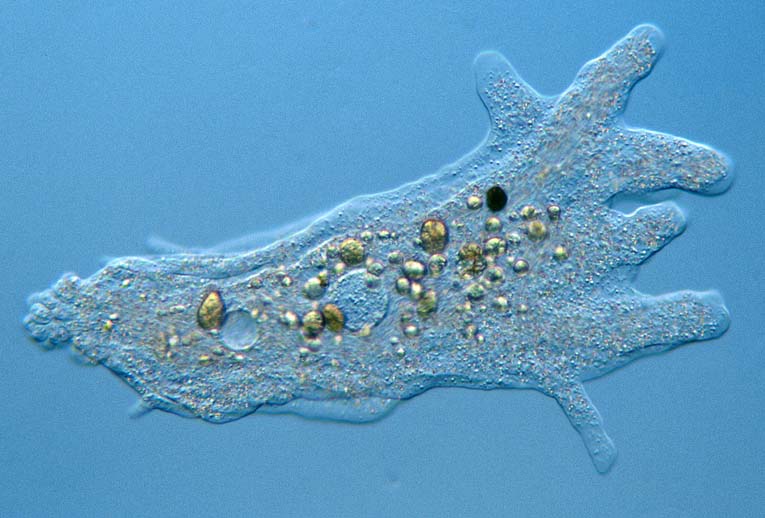


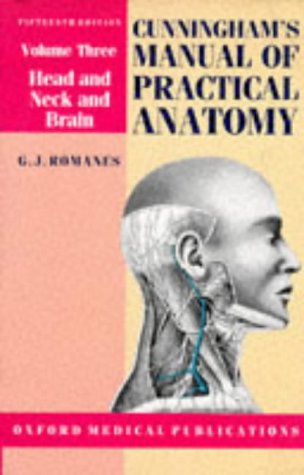


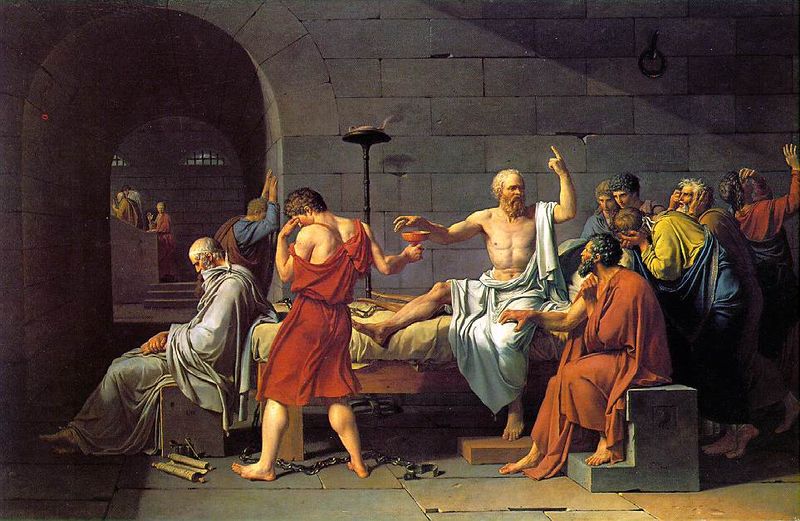


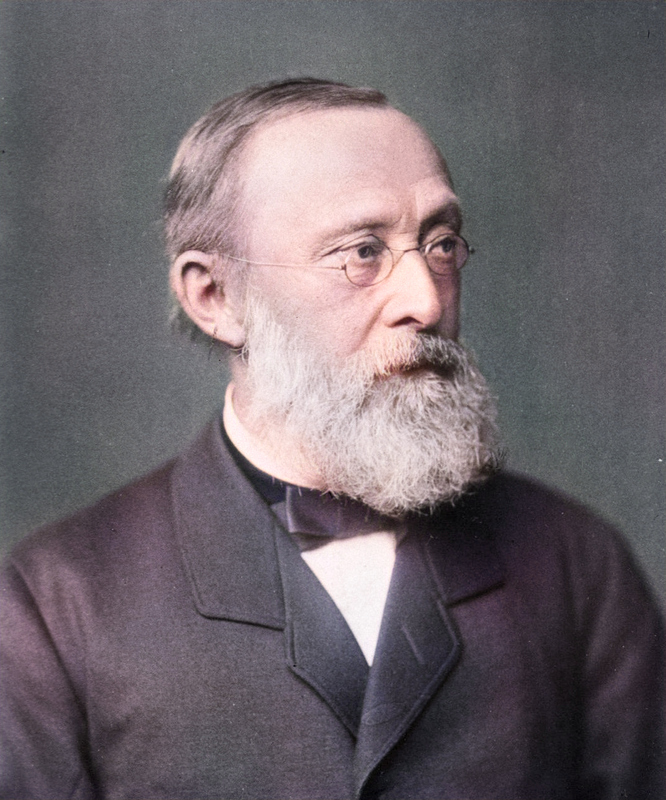


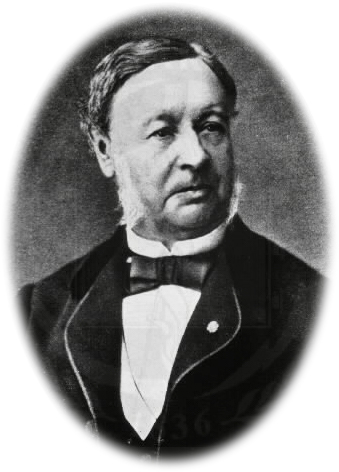


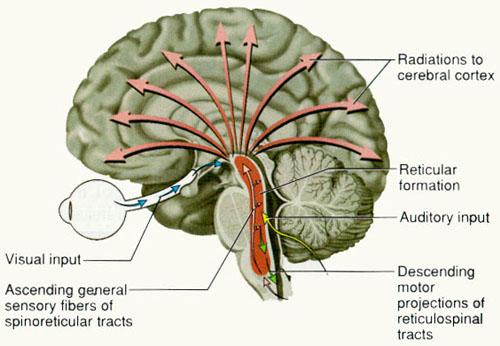


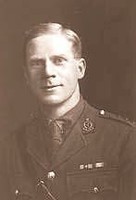








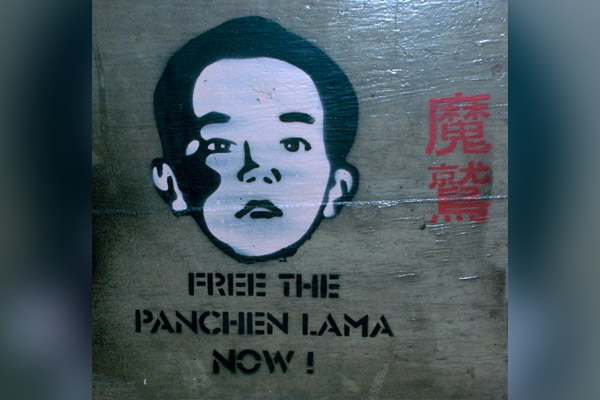





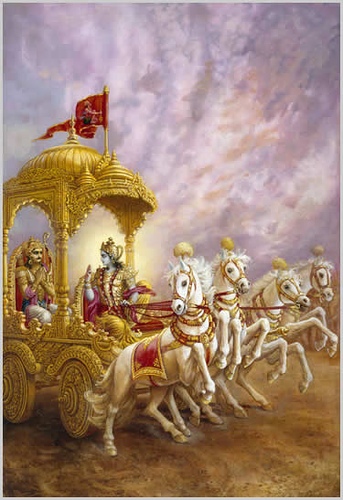


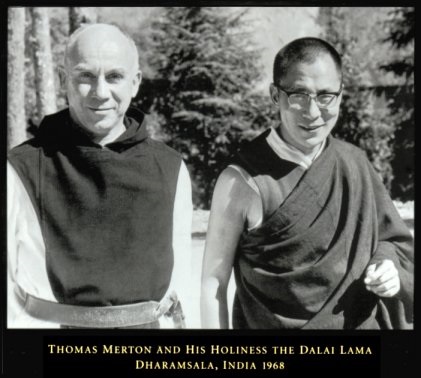


 Whole Dude - Whole Concept