RICHARD NIXON VISITS CHINA. THE WEEK THAT DOOMED MY LIFE.
Richard Nixon Visits China. The Week that Doomed My Life.
My arrival in Doom Dooma, Tinsukia District, Assam, India during the Week of February 1972 marks an event that Doomed My Life.
Richard Nixon Visits China. The Week that Doomed My Life.Richard Nixon Visits China. The Week that Doomed My Life.
I live in the United States, the Leader of the Free World, a Free Nation without any sense of hope for my future Life. I constantly experience the Misery, the Despair, the Frustration, the Disappointment, the Pain, and the Feelings of Hopelessness that describe the lives of Tibetans living in Occupied Tibet.
Rudranarasimham Rebbapragada
DOOM DOOMA DOOMSAYER
Richard Nixon visits China – HISTORY
Year1972
Richard Nixon visits China
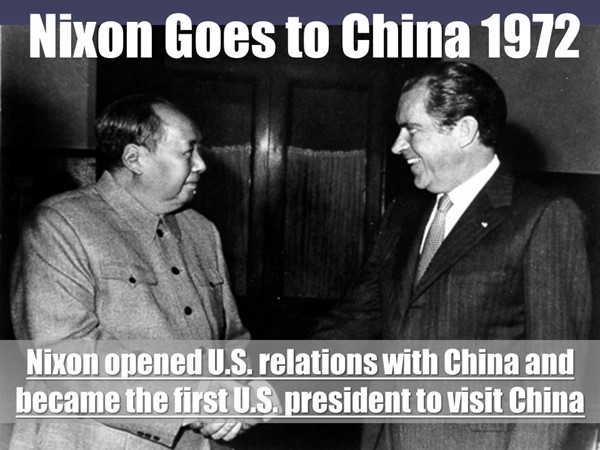
President Richard Nixon visits the People’s Republic of China. After arriving in Beijing, the president announced that his breakthrough visit to China is “The week that changed the world.” In meeting with Nixon, Prime Minister Zhou Enlai urged early peace in Vietnam but did not endorse North Vietnam’s political demands. North Vietnamese officials and peace negotiators took a dim view of Nixon’s trip, fearing that China and the United States would make a deal behind their backs. Nixon’s promise to reduce the U.S. military presence on Taiwan seemed to confirm North Vietnam’s fears of a Chinese-American sellout-trading U.S. military reduction in Taiwan for peace in Vietnam. Despite Hanoi’s fears, China continued to supply North Vietnam levels of aid that had increased significantly in late 1971. This aid permitted the North Vietnamese to launch a major new offensive in March 1972.
1972
Richard Nixon makes the first U.S. presidential visit to China
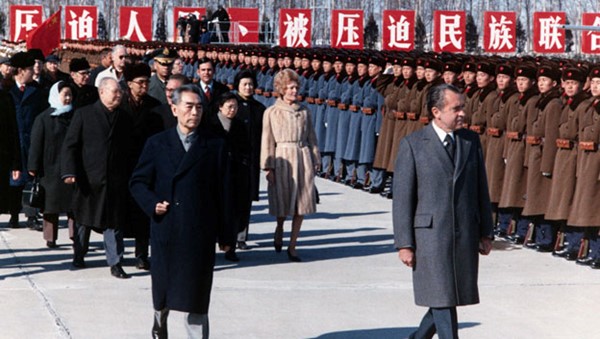
President Richard M. Nixon arrives in Beijing, the capital of the People’s Republic of China, on the first presidential visit to the world’s most populous nation. The U.S. federal government had formally opposed China’s communist government since it took power in 1949,
1848
Karl Marx publishes the Communist Manifesto
On February 21, 1848, The Communist Manifesto, written by Karl Marx with the assistance of Friedrich Engels, is published in London by a group of German-born revolutionary socialists known as the Communist League.
Vietnam War
1970
Kissinger begins secret negotiations with North Vietnamese
National Security Advisor Henry Kissinger begins secret peace talks with North Vietnamese representative Le Duc Tho, the fifth-ranking member of the Hanoi Politburo, at a villa outside Paris.
1972
Nixon arrives in China for talks
In an amazing turn of events, President Richard Nixon takes a dramatic first step toward normalizing relations with the communist People’s Republic of China (PRC) by traveling to Beijing for a week of talks.
TIBET CONSCIOUSNESS – RED CHINA HAS NO REDEEMER. RED CHINA’S DESTINY IS NOT DECIDED BY RELATIVE MILITARY STRENGTHS OF CHINA AND UNITED STATES.
The proud Han Chinese people may choose to ‘love’ or ‘hate’ United States of America. The issue is not that of bilateral US – China relations. Red China would be paid back with the very weapons she used on others. Just as she destroyed Tibet, she would be destroyed. Red China is exhausting herself for nothing. She dominated Tibet but she is wearing herself out. Red China is moving toward her own logical end of self-destruction.
The Evil Red Empire is destined to be uprooted, torn down, and destroyed for Red China has not repented and her evil actions are not forgiven.
Chinese people may love or hate America. But, Red China has no choice. Red China has no Redeemer. No one can save Red China for she pursued a hazardous course of action to the brink of catastrophe. Beijing is Doomed.
The Spirits of Special Frontier ForceThe Spirits of Special Frontier Force, Ann Arbor, MI. At Special Frontier Force, I host ‘The Living Tibetan Spirits’…
TIBET CONSCIOUSNESS – RED CHINA HAS NO REDEEMER. UNITED STATES CANNOT SAVE RED CHINA FROM HER CHOSEN FATE. BEIJING IS DOOMED.
Credit Erik S. Lesser/European Pressphoto Agency
MURONG XUECUN
HONG KONG On the 10th anniversary of the Sept. 11 attacks, a major Chinese television network broadcast a documentary that investigated how Chinese people viewed not only those pivotal events but America itself. One man, referring to the slaughter of thousands of Americans, declared, What a beautiful job! Another said, They should give America more of the same. And a student standing in Tiananmen Square said he approved of the attacks because the United States was a bully and a hegemon. Later in the film, the young man in Tiananmen Square went on to describe his plans for the future. He said that he loved America and that he was about to go there to study. If I don’t have to come back, then I won’t, he said. The Chinese view of America has not changed since this aired four years ago.
On Sept. 3, President Xi Jinping orchestrated an extravagant military parade in Beijing. An acquaintance from my schooldays was so excited by the spectacle, the disciplined troop formations, the advanced equipment that he wrote in a post on WeChat that he could hardly sleep that night. He added that his friends should guard against America because American imperialism still wants to destroy us.
Only a few months earlier, this same man had taken his daughter on a trip to Boston, where he reported enthusiastically on social media about visiting Harvard University and eating a huge lobster. He also pledged to send his daughter to America. We should help our next generation live in a place without pollution, without recycled cooking oil and poisoned milk powder, he wrote.
The young man in Tiananmen Square and my former schoolmate are hardly alone in holding contrasting, schizophrenic views of America. For many Chinese people, the depth of their admiration for the American system and way of life is matched only by their animosity toward the country.
According to a Pew Research Center survey released earlier this year, only 44 percent of Chinese people have a favorable view of America the 33rd lowest approval rating out of 40 countries surveyed, and far lower than the 84 percent reported for South Korea and the 68 percent for Japan.
The Chinese hostility to America is first and foremost the result of government propaganda. Because of censorship, many people lack a basic understanding of life outside China. And although in the past few decades the Chinese government has been careful to avoid a real clash with America, Beijing’s domestic propaganda has never ceased presenting it as the enemy. Stir in 60 years of uninterrupted anti-American schooling, and it is hardly surprising that one result is an irrational hostility toward the United States.
Another Chinese documentary, Silent Contest, from 2013, highlighted one of the major reasons for castigating America as the eternal enemy. In the film, it was said that America’s key strategic objective is to dominate and break up China. You hear a lot of this kind of talk from Chinese officials. Like most despotic governments, the Chinese leadership likes to play the part of defender of the people a role that necessitates the existence of a powerful external enemy. A strong and hostile America is an important source of the legitimacy for Communist Party rule.
But in our globalized age, where there are myriad, multilayered interactions between countries, it is impossible for our government to fully stop people from seeking to research, study and understand the United States.
American films, TV shows and products, and many other aspects of American culture remain influential in everyday Chinese life. On the Internet, Chinese netizens loudly praise America’s system of government and spontaneously rally to America’s defense in global affairs. Some people like to compare America and Russia in recent years Beijing has been cozying up to Moscow and analyze the behavior of the two countries toward China, wondering aloud if we have chosen the right friend.
Many of the same people who are suspicious of America’s intentions are the ones who harbor the most fervent hopes of going to live there. In everyday conversation these people might be ashamed of China’s human rights record and our political situation, or they may talk about how they want to buy an apartment in New York to find a secure place for their money, but when a foreign government or organization (from no matter what country) criticizes the Chinese system, they become defensive. In the case of the United States, they will often fire off a list of America’s failings, such as racism and gun violence.
A mixed view of extremes about America is not uncommon around the world, but what makes it so striking here is that many Chinese government officials and elites seem to hold these contrasting views. Like the young man in the documentary in Tiananmen Square, the children of many high officials go to America to study, to settle down, to invest in property. For years, the children and grandchildren of the Communist Party elite have been attending America’s top universities. Perhaps most famously, President Xi Jinping’s daughter enrolled at Harvard in 2010.
Many Chinese people can’t help but notice that the elites have no problem taking advantage of what America has to offer, but when they are preaching to the public, they seem to have another view.
Government leaders can’t be relied on to deliver better bilateral relationships, especially not the Chinese government. But its encouraging that, in the shadow of censorship, some ordinary Chinese people are opening their eyes and looking more realistically at our country and its place in the world. American leaders should realize that the best hope for improved Chinese-American relations resides with these Chinese people.
Nevertheless, as long as the Chinese government pretends to be the defender of the people against the United States and persists in its negative propaganda, Chinese-American relations will have a long way to go.
Murong Xuecun is a writer whose latest novel to be published in English is Dancing Through Red Dust. This article was translated by The New York Times from the Chinese. A version of this op-ed appears in print on October 14, 2015, in The International New York Times.
Copyright 2015 The New York Times Company.
TIBET CONSCIOUSNESS – RED CHINA HAS NO REDEEMER. RED CHINA HAS NOT REPENTED AND HER EVIL ACTIONS ARE NOT FORGIVEN. UNITED STATES CANNOT SAVE RED CHINA AS SHE MOVES ON HER CHOSEN PATH OF SELF-DESTRUCTION.
TIBET CONSCIOUSNESS – RED CHINA HAS NO REDEEMER. CHINA CANNOT SAVE HERSELF FROM RUIN AND CATASTROPHE. UNITED STATES CAN WEEP ALOUD BUT CANNOT SAVE CHINA FROM HER DOWNFALL.
TIBET CONSCIOUSNESS – RED CHINA HAS NO REDEEMER. US AND CHINA RELATIONS ARE STRAINED BY RED CHINA’S EVIL ACTIONS IN TIBET. US CANNOT REPENT ON BEHALF OF CHINA. US CANNOT BEG FOR MERCY ON BEHALF OF CHINA.
TIBET CONSCIOUSNESS – RED CHINA HAS NO REDEEMER. ALL THESE YOUNG PEOPLE CAN DO NOTHING TO SAVE RED CHINA FROM HER SLIDE ON A SLIPPERY SLOPE.
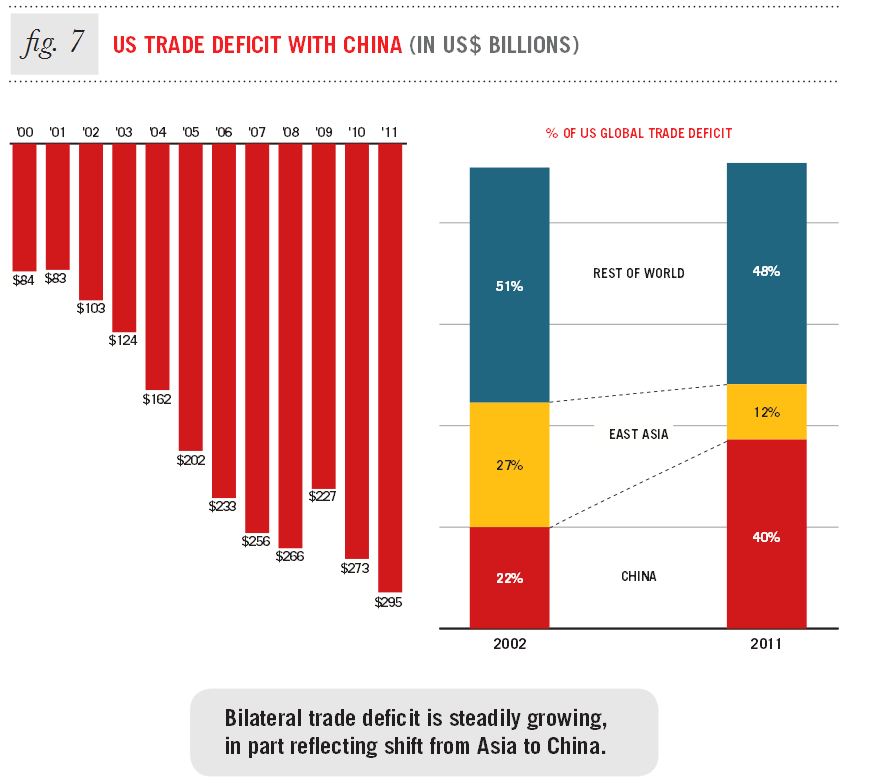
TIBET CONSCIOUSNESS – RED CHINA HAS NO REDEEMER. US – CHINA STARTED THEIR RELATIONS WITH TRADE AND COMMERCE. BUT NO NATION ON EARTH CAN SAVE CHINA FROM HER DOOM.
TIBET CONSCIOUSNESS – RED CHINA HAS NO REDEEMER. US – CHINA RELATIONS WILL NOT BE DECIDED BY US POLICIES TOWARDS CHINA. RED CHINA SEALED HER FATE BY CHOOSING A POLICY TOWARDS TIBET.
TIBET CONSCIOUSNESS – RED CHINA HAS NO REDEEMER. THE RELATIVE STRENGTH OF MAJOR CURRENCIES IS OF NO CONSEQUENCE. BEIJING IS DOOMED BY OVERWHELMING POWER OF HER OWN EVIL ACTIONS.
TIBET CONSCIOUSNESS – RED CHINA HAS NO REDEEMER. NIXON – KISSINGER, FORD – CARTER, REAGAN – BUSH, CLINTON -OBAMA CANNOT REDEEM RED CHINA FOR SHE IS DOOMED.
TIBET CONSCIOUSNESS – RED CHINA HAS NO REDEEMER. RED CHINA WILL FALL INTO A GRAVE THAT SHE PREPARED FOR TIBET.
TIBET CONSCIOUSNESS – RED CHINA HAS NO REDEEMER. US – CHINA ECONOMIC RELATIONSHIP IS OF NO CONSEQUENCE. RED CHINA CANNOT PAY RANSOM TO WARD OFF SUDDEN DISASTER.
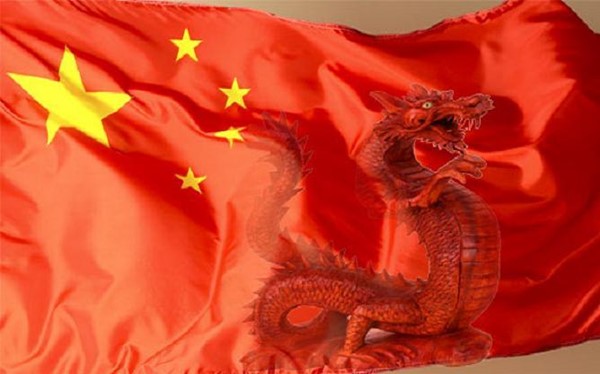
TIBET CONSCIOUSNESS – RED CHINA HAS NO REDEEMER. THE EVIL RED EMPIRE, THE RED DRAGON IS DESTINED TO BE UPROOTED, TORN DOWN, AND DESTROYED.
TIBET CONSCIOUSNESS – RED CHINA HAS NO REDEEMER. RED CHINA IS LIVING ON A SLIPPERY SLOPE. NO ONE CAN SAVE FROM DOWNFALL.
THE EVIL RED EMPIRE – RED CHINA – DOOMSDAY PROPHECY
THE EVIL RED EMPIRE – RED CHINA – DOOMSDAY PROPHECY FROM THE NEW TESTAMENT BOOK “REVELATION” CHAPTER 18.
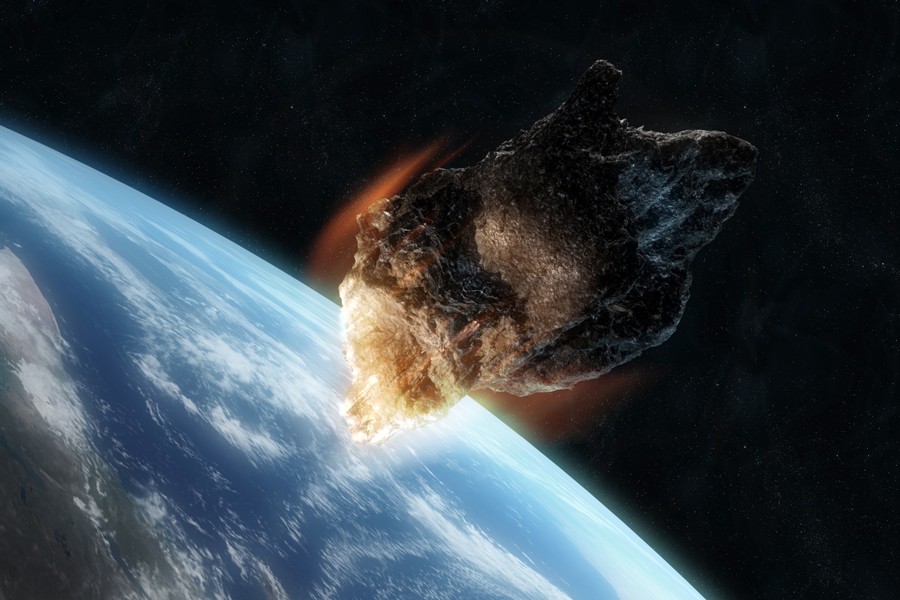
The New Testament Book “REVELATION” shared a prophecy predicting sudden, unexpected, fall of an evil empire using coded name “BABYLON.” Planet Earth has already witnessed several impacts by heavenly bodies called asteroids, or meteorites with known or unknown consequences to life on Earth. The most significant asteroid impact event may have happened 65 million years ago which wiped out a huge variety of animals collectively known as ‘Dinosaurs’ and surprisingly, life thrived on Earth with emergence of new species that populate Earth in present times. Without any human initiative, without any human intervention, Earth may be hit by a very large stone that would result in the downfall of an evil empire while sparing rest of the humanity. I am asking my readers to contemplate on Doomsday Prophecy found in ‘Revelation’ Chapter 18 and compare its scenario with some of Earth’s recorded asteroid/meteorite impact events:
Doomsayer of Doom Dooma: Qaraqul crater, Black Lake, Pamir mountains, Tajikistan.
1. Qaraqul crater, Palmir mountains, located between Tajikistan and Afghanistan. The impact happened 10 million years ago, created Black Lake which is 45 kilometers wide.
Doomsayer of Doomdooma: Manicouagan crater, Quebec, Canada.
2. Manicouagan crater, Quebec, Canada. 212 million years old impact. Created one of the biggest impact craters which is about 100 kilometers wide.
Doomsayer of Doom Dooma: Clear Water Crater Lakes, Hudson Bay, Quebec, Canada.
3. Clear Water Crater Lakes, Quebec, Canada. Impact 290 million years ago. Created Western Lake, 32 kilometers wide; and Eastern Lake, 22 kilometers wide.
doomsayer of doom dooma: Wolfe Creek meteorite crater, Australia.
4. Wolfe Creek crater, Central Australia. 300,000 years old. Crater is 875 miles wide.
doomsayer of doom dooma: Aorounga crater Chad, Africa.
5. Aorounga crater, Chad, Africa. 200 million years old. Crater is 17 kilometers wide.
asteroid day mexico major extinction event 1600km central america
6. Chicxulub crater, Yucatan Peninsula, Gulf of Mexico. A very significant, dangerous asteroid impact event that may have caused extinction of entire Dinosaur species 65 million years ago. Asteroid could be 10 and 20 kilometers in diameter and caused 70 kilometers wide crater.
Doomsayer of doom dooma: meteor crater near Flagstaff, Arizona
7. Arizona’s Menlo Park crater near Flagstaff, Arizona. Impact event 49,000 years old. Crater is 1186 meters in diameter.
As Doomsayer of Doom Dooma, I am predicting an impact event that would cause demise of Evil Power ruling Beijing. However, the actual impact may affect Shanghai, Red China’s largest City without causing loss of human lives as people get a warning and given chance to run away from impending danger.
THE EVIL RED EMPIRE – RED CHINA – DOOMSDAY PROPHECY.
REVELATION 18 NEW INTERNATIONAL VERSION(NIV)
LAMENT OVER FALLEN BABYLON 18 After this I saw another angel coming down from heaven. He had great authority, and the earth was illuminated by his splendor.
2 With a mighty voice he shouted:
“‘Fallen! Fallen is Babylon the Great!’[a] She has become a dwelling for demons and a haunt for every impure spirit, a haunt for every unclean bird, a haunt for every unclean and detestable animal. 3 For all the nations have drunk the maddening wine of her adulteries. The kings of the earth committed adultery with her, and the merchants of the earth grew rich from her excessive luxuries.”
WARNING TO ESCAPE BABYLON’S JUDGMENT
4 Then I heard another voice from heaven say:
“‘Come out of her, my people,’[b] so that you will not share in her sins, so that you will not receive any of her plagues; 5 for her sins are piled up to heaven, and God has remembered her crimes. 6 Give back to her as she has given; pay her back double for what she has done. Pour her a double portion from her own cup. 7 Give her as much torment and grief as the glory and luxury she gave herself. In her heart she boasts, ‘I sit enthroned as queen. I am not a widow;[c] I will never mourn.’ 8 Therefore in one day her plagues will overtake her: death, mourning and famine. She will be consumed by fire, for mighty is the Lord God who judges her.
THREEFOLD WOE OVER BABYLON’S FALL
9 “When the kings of the earth who committed adultery with her and shared her luxury see the smoke of her burning, they will weep and mourn over her. 10 Terrified at her torment, they will stand far off and cry:
“‘Woe! Woe to you, great city, you mighty city of Babylon! In one hour your doom has come!’
11 “The merchants of the earth will weep and mourn over her because no one buys their cargoes anymore—
12 cargoes of gold, silver, precious stones and pearls; fine linen, purple, silk and scarlet cloth; every sort of citron wood, and articles of every kind made of ivory, costly wood, bronze, iron and marble;
13 cargoes of cinnamon and spice, of incense, myrrh and frankincense, of wine and olive oil, of fine flour and wheat; cattle and sheep; horses and carriages; and human beings sold as slaves.
14 “They will say, ‘The fruit you longed for is gone from you. All your
luxury and splendor have vanished, never to be recovered.’
15 The merchants who sold these things and gained their wealth from her will stand far off, terrified at her torment. They will weep and mourn
16 and cry out:
“‘Woe! Woe to you, great city, dressed in fine linen, purple and scarlet, and glittering with gold, precious stones and pearls! 17 In one hour such great wealth has been brought to ruin!’ “Every sea captain, and all who travel by ship, the sailors, and all who earn their living from the sea, will stand far off. 18 When they see the smoke of her burning, they will exclaim, ‘Was there ever a city like this great city?’
19 They will throw dust on their heads, and with weeping and mourning cry out:
“‘Woe! Woe to you, great city, where all who had ships on the sea became rich through her wealth! In one hour she has been brought to ruin!’
20 “Rejoice over her, you heavens! Rejoice, you people of God! Rejoice, apostles and prophets! For God has judged her with the judgment she imposed on you.”
THE FINALITY OF BABYLON’S DOOM 21 Then a mighty angel picked up a boulder the size of a large millstone and threw it into the sea, and said:
“With such violence the great city of Babylon will be thrown down, never to be found again. 22 The music of harpists and musicians, pipers and trumpeters, will never be heard in you again. No worker of any trade will ever be found in you again. The sound of a millstone will never be heard in you again. 23 The light of a lamp will never shine in you again. The voice of bridegroom and bride will never be heard in you again. Your merchants were the world’s important people. By your magic spell all the nations were led astray. 24 In her was found the blood of prophets and of God’s holy people, of all who have been slaughtered on the earth.”
THE EVIL RED EMPIRE – RED CHINA – ECONOMIC EXPANSIONISM :
THE EVIL RED EMPIRE – RED CHINA – ECONOMIC EXPANSIONISM : AT SPECIAL FRONTIER FORCE WE ARE TRAINED TO RECOGNIZE RED CHINA AS AN ADVERSARY, AN OPPONENT, AN ENEMY WITH WHOM WE ARE ENGAGED IN A PROLONGED CONFLICT .
Bill Powell published a story in Newsweek magazine predicting a prolonged geopolitical struggle between the United States and Red China and named it Cold War-2. In his analysis, Red China is a tough adversary because of its economic power. He makes no mention about adversarial relationship between Tibet and Red China since 1950s. At Special Frontier Force, an alliance between the US, India, and Tibet, we have always recognized Red China as an adversary, an enemy, an opponent, and a party with which we are engaged in a prolonged conflict with a potential to secure our mission fighting a battle that aims to evict the occupier of Tibet. Special Frontier Force is a product of Cold War-1 and we are not waiting for the dawn of a “New Cold War” or “Cold War-2.”
Economics is the Science that deals with the production, distribution, and consumption of wealth. Red China’s economy is managed by a system of government that is involved in all the aspects of production, distribution, and consumption of its national wealth. A capitalist is a person who has capital, owner of wealth used in business. Capitalism is the economic system in which all or most of the means of production and distribution are privately owned and operated for profit. Communism is an economic theory or system in which a one-party political structure has the ownership of all property and manages the production and distribution of economic goods. In a Communist State, the economy is just another tool in the hands of one-party that governs the Land. Unlike capitalists in the West, Red China’s concern for earning profits is translated into implementing its Policy of Expansionism of which Economic Expansionism is one dimension.
Red China while expanding private ownership of property, its one-party government remains as the ultimate manager who makes decisions about production, distribution, and consumption of wealth. Red China brings raw materials and finds new markets for its manufactured products. Red China is able to get raw materials and flood the world markets with Made in China products with great ease without the need to conquer other countries fighting costly battles. American and other capitalists who directly or indirectly invest in Red China have no control over the one-party government that manages all the parts of its economic system. American and other foreign investors are primarily concerned about the profits they earn by giving Red China the power of production and distribution of goods. The one-party government of Red China is empowered by this capital inflow and by its ability to acquire raw materials from other nations without waging wars or by simply occupying territory of its weaker neighbors like Tibet.
Red China has steadily expanded its Economic Power which it uses to exert its political influence over weaker nations and even over developed nations in the West. Nixon-Kissinger US administration in 1972 formulated trade and commerce relations with Red China not knowing the nature of its one-party government. Red China is earning profits from its worldwide trade and those profits directly benefit to accomplish its goal of Expansionism to become a true Imperial Power.
In the years ahead, the United States and others will be left with no political alternatives to face the challenges posed by Expansionist Red China. The capitalists who invest in Red China have the only option of Economic Disinvestment.
THE EVIL RED EMPIRE – RED CHINA – ECONOMIC EXPANSIONISM : PEOPLE’S REPUBLIC OF CHINA CAME INTO ITS EXISTENCE ON OCTOBER 01, 1949 . AFTER ITS MILITARY INVASION AND OCCUPATION OF TIBET IN 1950, A GEOPOLITICAL STRUGGLE TOOK BIRTH TO EVICT THE OCCUPIER OF TIBET .
Something that as recently as a decade ago was almost never discussed in polite company—the prospect for a prolonged geopolitical struggle between the United States and China (Cold War 2.0)—is now Topic A in the foreign policy salons of both Washington and Beijing. In the United States, the centrist Council on Foreign Relations issued a lengthy report calling for the U.S. to “revise” its “grand strategy” toward China. In Beijing, Liu Mingfu, a colonel in the People’s Liberation Army and one of its most influential strategists, wrote in his recent book, The China Dream, “In the 21st century China and the United States will square off and fight to become the champion among nations.’’
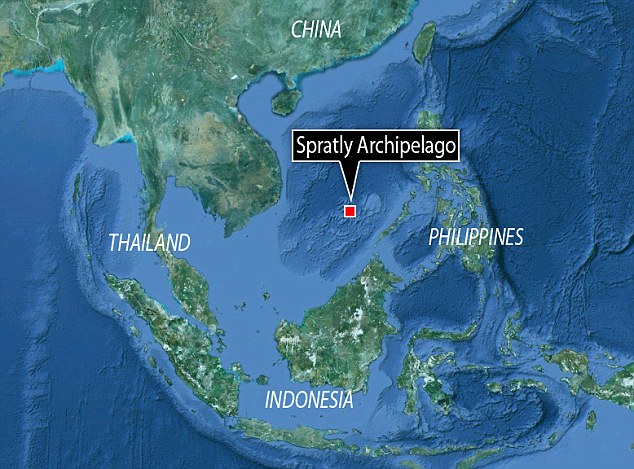
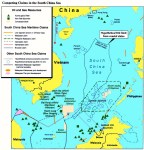
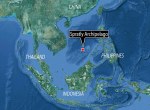
The current tension in the South China Sea, where Beijing is building artificial islands in the Spratlys, a contested chain claimed by six countries, certainly sounds like a Cold War in the making. The U.S. Defense Department let it be known in mid-May that it was considering sending surveillance aircraft and warships to within 12 nautical miles of the chain, as a signal to Beijing to back off. The Chinese Foreign Affairs Ministry immediately condemned Washington for even thinking about it.
Meanwhile, nine Chinese and Russian warships came together for joint exercises in the Mediterranean Sea—the most recent evidence of the warmer ties between the two historical antagonists. A month earlier, Vietnam, deeply distrustful of Beijing, hosted a dozen U.S. defense contractors for meetings in Hanoi. They came just eight days before celebrations marking the 40th anniversary of Vietnam’s defeat of the United States.
War games, prospective weapons sales, a war of words over contested real estate in some far-flung part of the world. That’s all pretty much standard Cold War fare, familiar to anyone in Moscow or Washington who fought the last one. But a Washington vs. Beijing Cold War 2.0—should it prove to be unavoidable—would be very different from its predecessor.
The fundamental, obvious difference is that Beijing would bring far more economic power to the contest than the Soviet Union ever did. Indeed, for Soviet citizens, the enduring image from the last days of Communism is empty shelves at the food store. And pretty much everywhere the Soviets exerted their influence—from Eastern Europe to Africa to Latin America—economic calamity ensued. The command and control, state-dominated form of economic management didn’t work, and that—more than how many nuclear weapons Moscow possessed—was what mattered in the end.
Contrast that with China. Already the second-largest economy in the world, it may well surpass the United States as the biggest in a decade or so. While the state controls the commanding heights of the economy—banking, telecommunications, energy—it tries to do so in a market-friendly way, and it allows unfettered private enterprise in a range of industries (including, critically, high technology) that have helped drive China’s extraordinary three-decade-long ascent from poverty. Alibaba is but one recent example of a private Chinese company with an increasingly global footprint. Remember all those great Soviet companies with initial public offerings of billions of dollars on the NASDAQ or the New York Stock Exchange? Right. You don’t. Because there weren’t any.
China is in the business of deploying its economic power abroad in a big way. It invests heavily in infrastructure projects in Africa. It uses its massive foreign exchange reserves to buy up resources—oil, gas and minerals—throughout Africa and Latin America. This is often—inaccurately—described as “soft” power. Economic power is not the same as soft power. Soft power has to do with lots of things—the form of government, the transparency of government, the accountability of elites to the broad citizenry, what a country stands for and stands against. The projection of economic power means the ability to put money in local pockets. Beijing is doing that aggressively, and, given its enormous accumulation of foreign exchange reserves, it is in a position to continue to do so for quite some time, even as its frantic economic growth now slows.
The United States, in the view of many analysts, is in a different and arguably more difficult place. Its hard power—its military assets—still dwarfs China’s, even though Beijing has rapidly increased its defense spending in recent years. But the prospect of a Cold War between the two countries was—and to a certain extent still is—dismissed by many China hands in the U.S. because, as former National Security Council staffer Aaron Friedberg wrote last year in his book A Contest for Supremacy, “the enormous advantages the United States now enjoys are the product of its long-standing lead in the development and deployment of new technologies, and the unmatched ability of its huge and dynamic economy to carry the costs of military primacy.”
Is the United States still more technologically advanced than China? Absolutely. Is it still more innovative. Yes. But those leads are narrowing, and the U.S. plainly faces a host of domestic economic issues—from debt to demographics to an economy seemingly stuck at stall speed—that are daunting. As Friedberg wrote, “Whether [the United States] will continue to enjoy [its
economic advantages] in a long-term strategic rivalry with China is by no means obvious.”
The other critical difference between Cold War 1.0 and the Cold War 2.0 that now looms is the simple fact that China is the most important market in the world for the Fortune 500. By contrast, the Soviet Union, for 99.5 percent of America’s biggest companies, simply didn’t exist. Beijing can use access to its market as leverage in geopolitical disputes, and in so doing will be playing to a core establishment constituency in the United States: big business. As long as China avoids an economic crisis that upends the current economic reality, that reality is going to be difficult for Washington to finesse as geopolitical competition intensifies.
There is, of course, tremendous irony in that. For decades, U.S. policy was to help China succeed economically. We had convinced ourselves that through trade and prosperity, political change would come in Beijing (just as it had in South Korea and Taiwan, former authoritarian economic success stories turned vibrant democracies). That notion is now long gone. The
Chinese Communist Party, and its one-party rule, doesn’t appear to be going anywhere. It’s also playing a long game; its military is just a regional player now, but by 2049, when the party expects to celebrate its 100th anniversary in power, it may well be able to project force globally. That, anyway, is the intention of the more hawkish elements of the party and its military.
Washington had earnestly hoped that the days of a global struggle against a powerful adversary were gone, the stuff of history books. That it’s now waking up and acknowledging a different reality is step one in what Liu Mingfu calls the central “fight” for the 21st century.
THE EVIL RED EMPIRE – RED CHINA – ECONOMIC EXPANSIONISM : RED CHINA HAS DRAINED THE ECONOMIC POWER OF AMERICAN AND FOREIGN CAPITALIST WHO INVEST IN RED CHINA . THEY HAVE NO POLITICAL OPTIONS . THE ONLY CHOICE IS THAT OF ECONOMIC DISINVESTMENT .
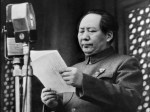
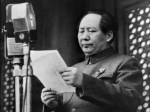
Mao Zedong proclaims the founding of the People’s Republic of China in Beijing on Oct. 1, 1949.
The Evil Red Empire called Red China or People’s Republic of China(Mandarin. Zhonghua Renmin Gongheguo) was proclaimed at Peking( now Beijing) by Communist Party Chairman Mao Zedong or Mao Tse-Tung on October 01, 1949. He formulated a vision of Empire building using a Policy of Expansionism during the late 1940s. Red China expanded its territory after the Communist victory in all of China. Apart from keeping territories gained by China in its historical past, Red China during 1950 attacked Tibet which had declared its independence after the downfall of Manchu China( the Ch’ing or Manchu dynasty) that ruled China from 1644 to 1912. The following Provinces and Autonomous Regions of Red China bear mute testimony to the great problem of its Territorial Expansionism:
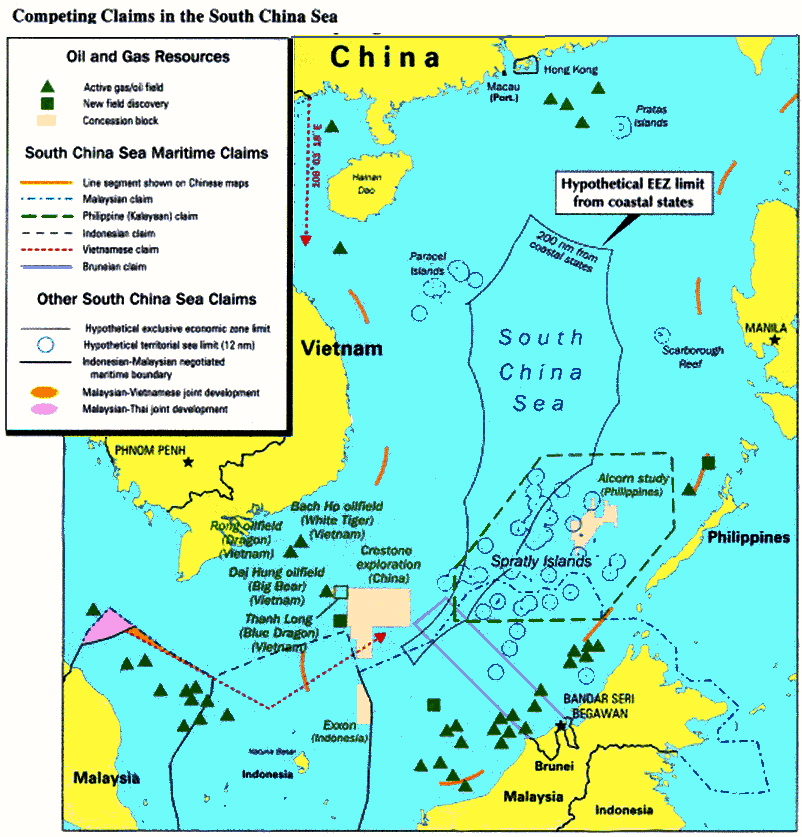
The problem of Red China’s Expansionism in South China Sea must be studied in conjunction with the above problems of annexed territory. The United States will not succeed in its efforts to address the problem of Red China’s land reclamation activities in South China Sea without resolving The Great Problem of Tibet.
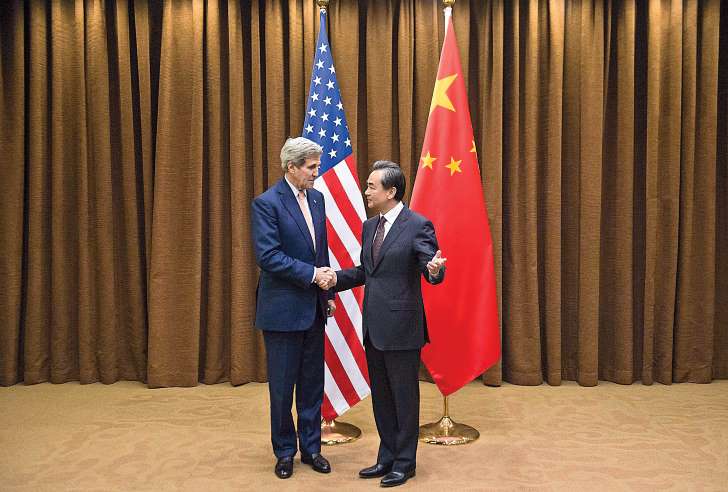
BEIJING — The United States and China held firm Saturday to deep disagreements over increasingly assertive Chinese activity in disputed areas of the South China Sea, as Beijing politely but pointedly rejected U.S. Secretary of State John Kerry’s push for it to reduce tensions.
After meeting in the Chinese capital, both Kerry and China’s Foreign Minister Wang Yi stressed the importance of dialogue to resolve the competing claims, but neither showed any sign of bending in their positions over Chinese land reclamation projects that have alarmed the United States and China’s smaller neighbors. The U.S. and most members of the Association of Southeast Asian Nations want a halt to the projects, which they suspect are aimed at building islands and other land features over which China can claim sovereignty.
“We are concerned about the pace and scope of China’s land reclamation in the South China Sea,” Kerry said, urging China to speed up talks with ASEAN on binding guidelines on how maritime activity in disputed areas should be handled. “And, I urged China, through Foreign Minister Wang, to take actions that will join with everybody in helping to reduce tensions and increase the prospect of diplomatic solutions.”
“I think we agree that the region needs smart diplomacy in order to conclude the ASEAN-China code of conduct and not outposts and military strips,” Kerry told reporters at a joint news conference with Wang.
But Wang signaled that while China was prepared to talk, it would not back down on the construction which he said “is something that falls fully within the scope of China’s sovereignty.”
“The determination of the Chinese side to safeguard our own sovereignty and territorial integrity is as firm as a rock, and it is unshakable,” he said. “It has always been our view that we need to find appropriate solutions to the issues we have through communications and negotiations that we have among the parties directly concerned with peaceful and diplomatic means on the basis of respecting historical facts and international norms. This position will remain unchanged in the future.”
Wang added that the differences between China and the U.S. could be managed “as long as we can avoid misunderstanding and, even more importantly, avoid miscalculation.”
The Chinese claims and land reclamation projects have rattled the region where South China Sea islands and reefs are contested by China and five other Asian governments and activities have led to clashes, accompanied by nationalistic protests and occasional serious diplomatic implications.
The U.S. says it takes no position on the sovereignty claims but insists they must be negotiated. Washington also says ensuring maritime safety and access to some of the world’s busiest commercial shipping routes is a U.S. national security priority.
China has bristled at what it sees as U.S. interference in the region and wants to negotiate with the ASEAN countries individually, something those much smaller nations fear will not be fair.
In one disputed area, the Spratly Islands, U.S. officials say China has reclaimed about 2,000 acres of dry land since 2014 that could be used as airstrips or for military purposes. The U.S. argues that man-made constructions cannot be used to claim sovereignty.
Obama administration officials have declined to comment on reports that it may deploy military assets, or that it is considering a demonstration of freedom of navigation within 12 nautical miles of the islands’ notional territorial zone. But they have said many of the features claimed by China in the disputed Spratlys are submerged and do not carry territorial rights, and said that China cannot “manufacture sovereignty.”
Despite the clear disagreements over the South China Sea, Kerry and Wang said they were on track to make progress in other areas, notably on climate change, the fight against violent extremism and preparations for the next round of the U.S.-China Strategic and Economic Dialogue in June and Chinese President Xi Jinping’s visit to Washington in September. They expressed pleasure with their cooperation in the ongoing Iran nuclear talks, their solidarity in trying to denuclearize North Korea and combat diseases such as the deadly Ebola virus.
Kerry will wrap up the China portion of his Asia trip in meetings with Xi, Chinese State Councilor Yang Jiechi and the country’s top military officer.
On Sunday, Kerry heads to Seoul where he will be meeting senior South Korean officials and deliver a speech on cyber security and related issues.
Kerry will return to Washington after delivering a speech on a proposed Trans-Pacific trade agreement in Seattle on Tuesday.
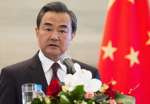
S. Secretary of State John Kerry, left, talks with Chinese Foreign Minister Wang Yi after their joint press conference at the Ministry of Foreign Affairs in Beijing Saturday, May 16, 2015. Kerry is in China to press Beijing to halt increasingly assertive actions it is taking in the South China Sea that have alarmed the United States and China’s smaller neighbors. (Saul Loeb/Pool Photo via AP)
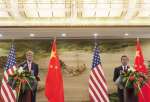
S. Secretary of State John Kerry speaks during a joint press conference following meetings with Chinese Foreign Minister Wang Yi at the Ministry of Foreign Affairs in Beijing, China, Saturday, May 16, 2015. Kerry is in China to press Beijing to halt increasingly assertive actions it is taking in the South China Sea that have alarmed the United States and China’s smaller neighbors. (Saul Loeb/Pool Photo via AP)
S. Secretary of State John Kerry at the Ministry of Foreign Affairs in Beijing, China, Saturday, May 16, 2015. Kerry is in China to press Beijing to halt increasingly assertive actions it is taking in the South China Sea that have alarmed the United States and China’s smaller neighbors. (Saul Loeb/Pool Photo via AP)
S. Secretary of State John Kerry, left, and Chinese Foreign Minister Wang Yi hold a joint press conference following meetings at the Ministry of Foreign Affairs in Beijing Saturday, May 16, 2015. Kerry is in China to press Beijing to halt increasingly assertive actions it is taking in the South China Sea that have alarmed the United States and China’s smaller neighbors. (Saul Loeb/Pool Photo via AP)
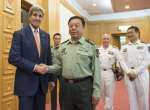
S. Secretary of State John Kerry, left, and Chinese Vice Chairman of the Central Military Commission General Fan Changlong, right, shake hands prior to a meeting at the Ministry of
National Defense in Beijing Saturday, May 16, 2015. Kerry is in China to press Beijing to halt increasingly assertive actions it is taking in the South China Sea that have alarmed the United States and China’s smaller neighbors. (Saul Loeb/Pool Photo via AP)
5 of 5
the evil red empire kerry 11
the evil red empire kerry 21
the evil red empire kerry 31
the evil red empire kerry 41
the evil red empire map of tibet1
Mao Zedong proclaims the founding of the People’s Republic of China in Beijing on Oct. 1, 1949.
the evil red empire general fan changlong vice chairman central militray commission1
Mao Zedong proclaims the founding of the People’s Republic of China in Beijing on Oct. 1, 1949.
The term “The Evil Red Empire” describes the national entity founded by Communist leader Mao Zedong on October 01, 1949. To build an Empire, Mao Zedong formulated a Policy of Expansionism in late 1940s.
the evil red empire airspace expansionism
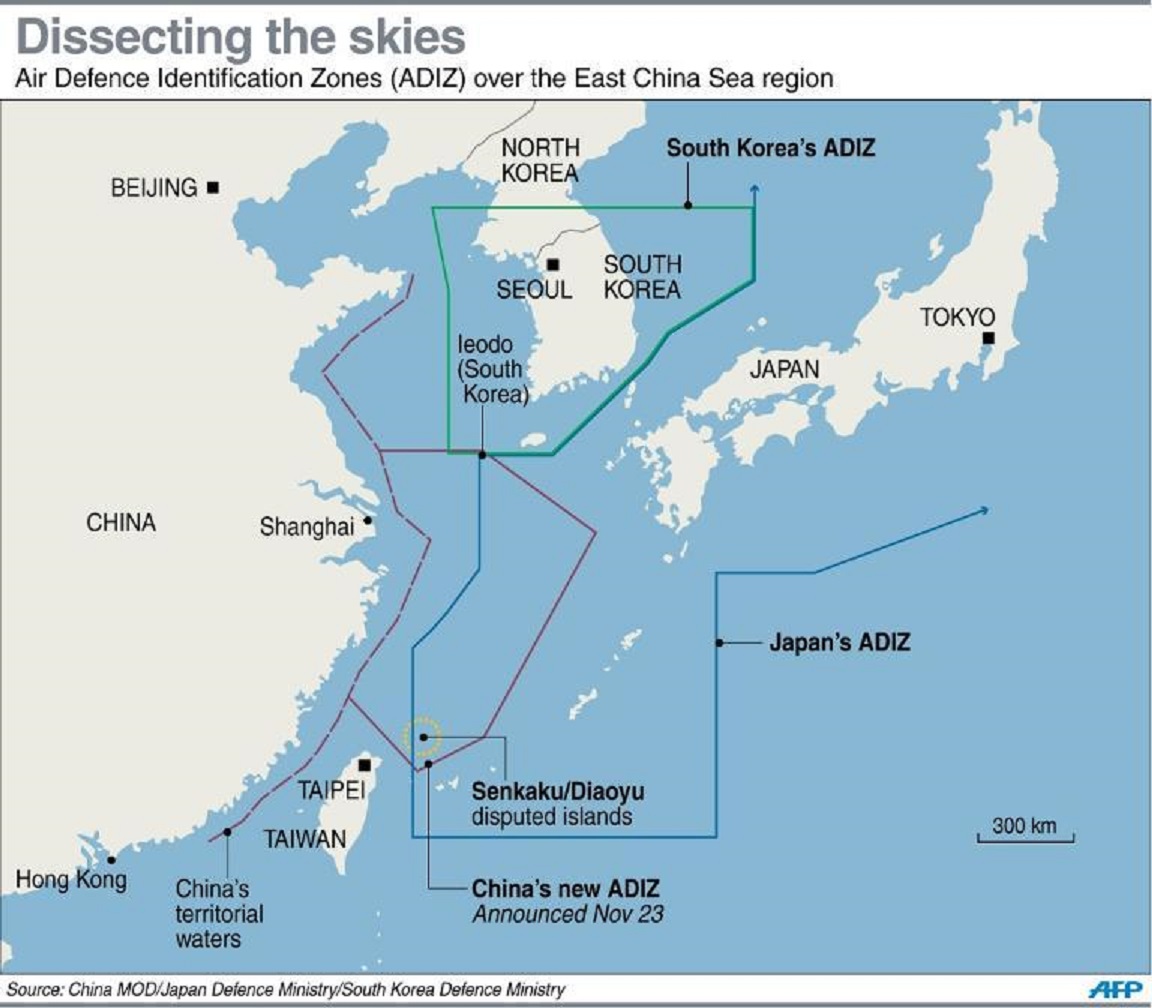
Airspace is the space extending up above an area of the earth’s surface; specifically, airspace refers to the space above a nation over which it can claim jurisdiction. Red China’s maritime expansionism in South China Sea poses a security threat as it involves the rights to use the airspace by other countries. With its land reclamation activities, Red China has expanded its claims to Land, Sea, and Airspace and is further willing to control that airspace by establishing its own Air Defence Identification Zone.
the evil red empire airspace nine dash expansionism
United States Navy and Air Force have no option other than that of challenging Red China’s illegal claim to sovereignty using land reclamation and building activity without any approval from its neighbors who have legitimate claims in that region.
the evil red empire airspace south china sea expansionism
By Greg Torode
.
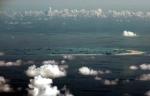
An aerial photo taken though a glass window of a Philippine military plane shows the alleged on-going …
By Greg Torode
HONG KONG (Reuters) – When the U.S. navy sent a littoral combat ship on its first patrol of the disputed Spratly islands in the South China Sea during the past week, it was watching the skies as well.
The USS Fort Worth, one of the most modern ships in the U.S. navy, dispatched a reconnaissance drone and a Seahawk helicopter to patrol the airspace, according to a little-noticed statement on the navy’s website.
While the navy didn’t mention China’s rapid land reclamation in the Spratlys, the ship’s actions were a demonstration of U.S. capabilities in the event Beijing declares an Air Defence Identification Zone (ADIZ) in the area – a move experts and some U.S. military officials see as increasingly likely.
“It’s not inevitable but if we are betting paychecks I’ll bet that they will eventually declare one, I just don’t know when,” said a senior U.S. commander familiar with the situation in Asia.
ADIZs are not governed by formal treaties or laws but are used by some nations to extend control beyond national borders, requiring civilian and military aircraft to identify themselves or face possible military interception.
China sparked condemnation from the United States and Japan when it imposed an ADIZ in the East China Sea, above uninhabited islands disputed with Tokyo, in late 2013.
Chinese military facilities now under construction on Fiery Cross Reef in the Spratlys, including a 3,000-metre (10,000-foot) runway and airborne early warning radars, could be operational by the year-end, said the U.S. commander, who declined to be identified.
Recent satellite images also show reclamation work on Subi Reef creating landmasses that, if joined together, could make space for a similar sized airstrip.
Growing concern in Washington that China might impose air and sea restrictions in the Spratlys once it completes work on its seven artificial islands is likely to be on the agenda when U.S.
Secretary of State John Kerry meets Chinese leaders in Beijing this weekend for previously scheduled talks.
TOUGH TO ENFORCE
Asia’s rising power claims sovereignty over most of the South China Sea, through which $5 trillion in ship-borne trade passes every year. The Philippines, Vietnam, Malaysia, Taiwan and Brunei also have overlapping claims.
China has said it had every right to set up an ADIZ but that current conditions in the South China Sea did not warrant one.
Enforcing such an ADIZ would be difficult even with two airstrips capable of handling fighter planes in the Spratlys, as well as an expanded airstrip on Woody island in the disputed Paracel island chain further north because of the distances involved, regional military officials and experts said.
The Spratlys for example lie more than 1,100 km (680 miles) from the Chinese mainland, putting China’s well-equipped airbases along its coastline well out of reach.
“Even with the new reclamations, it is going to be a stretch for China to routinely enforce such a zone that far south,” said Richard Bitzinger, a regional security analyst at Singapore’s S. Rajaratnam School of International Studies.
The Japanese and U.S. military ignore the ADIZ above the East China Sea, as does Japan’s two major carriers, ANA Holdings <9202.T> and Japan Airlines <9201.T>.
A study produced by the independent U.S. Congressional Research Service earlier this year noted that while China’s air force actively monitors that zone with ground radar from its coastline, it had generally shown restraint in enforcement.
China’s planes were unlikely to maintain a constant presence over the East China Sea, the study noted, citing a U.S. air force assessment.
RISK OF ESCALATION
The South China Sea might prove more problematic for China given the complexity of the dispute and the possibility of challenges from the U.S. navy and air force.
Indeed, on Tuesday, a U.S. official said the Pentagon was considering sending military aircraft and ships to assert freedom of navigation around the Chinese-made islands.
China’s Foreign Ministry responded by saying Beijing was “extremely concerned” and demanded clarification.
On Friday it accused the Philippines of working together with the United States to “exaggerate the China threat” over the Spratlys.
China had recently warned Philippine air force and navy planes at least six times to leave the Spratlys, the Philippine military commander responsible for the region said last week. The planes refused.
Zhang Baohui, a mainland security expert at Hong Kong’s Lingnan University, said he was worried about the risk of confrontation from any U.S. show of force.
“It’s reckless,” he said, referring to Washington’s latest plans.
“It has a built-in dynamic for unintended escalation,” he added. “Are they willing to take the consequences of this escalation?”
At sea, tensions are already apparent.
The naval statement about the USS Fort Worth, which can also hunt submarines and support amphibious landings, noted the ship “encountered multiple People’s Liberation Army-Navy warships” during its patrol. It did not go into detail.
“Our interactions with Chinese ships continue to be professional and (the Code for Unplanned Encounters at Sea) helps clarify intentions and prevent miscommunication,” Commander
Matt Kawas, the Fort Worth’s commanding officer, said in the statement.
(Additional reporting by Tim Kelly and Nobuhiro Kobu in YOKOHAMA, Japan; Editing by Dean Yates)
THE EVIL RED EMPIRE – MILITARY EXPANSIONISM : THE RED DRAGON’S EXPANSIONISM USING ITS SUPERIOR MILITARY POWER OVER ITS WEAKER NEIGHBORS .
Red China’s land reclamation activities in South China Sea are mere symptoms of a serious disease called Military Expansionism. Red China is projecting its military power by acting against the interests of its neighbors for she thinks there is no one besides her. In Red China’s estimate, all other nations will submit to her superior military power or at a minimum avoid a direct military conflict to change her behavior. The word ‘APOCALYPSE’ means unveiling or revelation, it refers to a revelation depicting symbolically the ultimate destruction of Evil and triumph of Good. The word ‘DOOM’ refers to what is laid down, decree, judgment, a sentence of condemnation, destiny, tragic fate, ruin, to ordain as a penalty. Doomsayer is a person disposed to predicting catastrophe or disaster. As Doomsayer of Doom Dooma, I am predicting the downfall of The Evil Red Empire without the need for fighting against its military power.
“Therefore in one day her plagues will overtake her death, mourning and famine. She will be consumed by fire, for mighty is the Lord God who judges her.” (REVELATION 18:4)
I am not surprised to read REUTERS news story published by David Brunnstrom that the US Secretary of State John Kerry would take tough approach in China over South China Sea during his visit to Beijing on Saturday, May 16, 2015.
U.S. Kerry to take tough approach in China over South China Sea
By David Brunnstrom 16 hours ago
.
Chinese President Xi Jinping (L) speaks with U.S. State Secretary John Kerry (R), through a translator, …
By David Brunnstrom
WASHINGTON (Reuters) – U.S. Secretary of State John Kerry will leave China “in absolutely no doubt” about Washington’s commitment to ensuring freedom of navigation and flight in the South China Sea when he visits Beijing this weekend, a senior State Department official said on Wednesday.
Setting the scene for what could be contentious encounters with Chinese leaders, including President Xi Jinping, the official said Kerry would warn that China’s land reclamation work in contested waters could have negative consequences for regional stability – and for relations with the United States.
On Tuesday, a U.S. official said the Pentagon was considering sending military aircraft and ships to assert freedom of navigation around rapidly growing Chinese-made artificial islands in the disputed South China Sea.
China’s Foreign Ministry responded by saying that Beijing was “extremely concerned” and demanded clarification.
U.S. Assistant Secretary of Defense David Shear told a Senate hearing the United States had right of passage in areas claimed by China. “We are actively assessing the military implications of land reclamation and are committed to taking effective and appropriate action,” he said, but gave no details.
Cui Tiankai, China’s ambassador to the United States, responded by warning Washington not to interfere in the South China Sea dispute and rebuked it for “double standards” in its criticism of Beijing, state news agency Xinhua said on Thursday.
“Just who is creating tensions in the South China Sea?” Cui was quoted as saying. “In the past few years, the United States has intervened in such a high-profile way. Is that to stabilize the situation or to further mess it up? The facts are out there.”
Cui, in an interview with Chinese media in the United States on Wednesday, noted that some countries had already begun reclaiming land on reefs that Beijing says belong to China, but the United States had not singled them out.
On the Pentagon’s plan to send military aircraft and ships to the South China Sea, Cui “stressed that many things in the world cannot rely on a show of force to solve them and that the knee-jerk ‘Cold War’ mentality to use force is outdated”.
The senior State Department official said “the question about what the U.S Navy does or doesn’t do is one that the Chinese are free to pose” to Kerry in Beijing, where he is due on Saturday for meetings with civilian and military leaders.
Kerry’s trip is intended to prepare for the annual U.S.-China Strategic and Economic Dialogue next month in Washington and Xi’s expected visit to Washington in September. But growing strategic rivalry rather than cooperation look set to dominate.
China’s Foreign Ministry spokeswoman Hua Chunying said that freedom of navigation did not mean that foreign military ships and aircraft can enter another country’s territorial waters or airspace at will.
“YOU CAN’T BUILD SOVEREIGNTY”
The State Department official dismissed the idea that constructing islands out of half-submerged reefs gave China any right to territorial claims.
“Ultimately no matter how much sand China piles on top of a submerged reef or shoal … it is not enhancing its territorial claim. You can’t build sovereignty,” he said.
He said Kerry would “reinforce … the very negative consequences to China’s image and China’s relationship with its neighbors on regional stability and potentially on the U.S.- China relationship from their large-scale reclamation efforts and the behavior generally in the South China Sea.”
Beijing claims sovereignty over most of the South China Sea, through which $5 trillion in ship-borne trade passes every year. The Philippines, Vietnam, Malaysia, Taiwan and Brunei have overlapping claims.
Last month, the U.S. military commander for Asia, Admiral Samuel Locklear, said China could eventually deploy radar and missile systems on the islands it is building in the Spratly archipelago that could be used to enforce an exclusion zone should it move to declare one.
The U.S. official who spoke on Tuesday said U.S. Defense Secretary Ash Carter had requested options that include sending aircraft and ships within 12 nautical miles (22 km) of the reefs China has been building up.
U.S. President Barack Obama announced a strategic shift toward Asia in 2011 in response to growing Chinese power and influence, but critics have questioned his commitment to this “rebalance” given U.S. security distractions elsewhere in the world and stretched resources.
News of the possibly tougher U.S. stance came as the key economic pillar of the rebalance suffered a blow at the hands of Obama’s Democrats in the U.S. Senate, who blocked debate on a bill that would have smoothed the path for a 12-nation Trans-Pacific Partnership (TPP) trade deal.
Failure to clinch an agreement could damage Washington’s leadership image in Asia, where China has been forging ahead with a new Beijing-led Asian Infrastructure Investment Bank (AIIB) seen as a challenge to U.S. global financial leadership.
(Additional reporting by Phil Stewart and David Alexander, and Ben Blanchard and Sui-Lee Wee in Beijing; Editing by Emily Stephenson, W Simon, Christian Plumb, Chris Reese and Alex Richardson)
Mao Zedong proclaims the founding of the People’s Republic of China in Beijing on Oct. 1, 1949.
The Evil Red Empire proclaimed by Mao Zedong or Mao Tse-Tung on October 01, 1949 began its existence with ambitious plans to extend its power and influence in all directions. Red China claims that it had released its ‘Nine-Segment Map to demarcate its maritime boundaries.
the evil red empire THE RED DRAGON’S EXPANSIONISM .
RED CHINA – EXPANSIONISM – SOUTH CHINA SEA .
Red China’s regional neighbors are left with no choice for they are no match to the Red Dragon’s military power. Red China wants to affix its seal of authority and decide its maritime boundaries as if there is no one besides her. While the United States considers its military options to the security threats posed by Red China, I predict the downfall of The Evil Empire using the prophecy revealed by Prophet Isaiah in The Old Testament Book of Isaiah, Chapter 47, verses # 7 to 15:
the evil red empire the fall of evil empire Prediction by Prophet Isaiah
Please note that Babylon is a byword for Evil and the symbolism of “Babylon The Great” is applicable to The Evil Red Empire, The Red Dragon, The Expansionist, Red China.
“You said, ‘I will continue forever the eternal queen!’ But you did not consider these things or reflect on what might happen.”
“Now then, listen, you wanton creature, lounging in your security and saying to yourself, ‘I am and there is none besides me. I will never be a widow or suffer the loss of children.’
Both of these will overtake you in a moment, on a single day: loss of children and widowhood. They will come upon you in full measure, in spite of your many sorceries and all your potent spells.
You have trusted in your wickedness and have said, ‘No one sees me.’ Your wisdom and knowledge mislead you When you say to yourself, ‘I am, and there is none besides me.’
Disaster will come upon you, and you will not know how to conjure it away. A calamity will fall upon you that you cannot ward off with a ransom; a catastrophe you cannot foresee will suddenly come upon you.
Keep on, then, with your magic spells and with your many sorceries, which you have labored at since childhood. Perhaps you will succeed, perhaps you will cause terror.
All the counsel you have received has only worn you out ! Let your astrologers come forward, those stargazers who make predictions month by month, let them save you from what is coming upon you.
Surely they are like stubble; the fire will burn them up. They cannot even save themselves from the power of the flame. Here are no coals to warm anyone; here is no fire to sit by.
That is all they can do for you- these you have labored with and trafficked with since childhood. Each of them goes on in his error; there is not one that can save you.”
Doomsayer of Doom Dooma predicts, Beijing Is Doomed, and there is no one that can save Beijing for its time of reckoning has arrived.
Washington (AFP) – The United States is weighing sending warships and surveillance aircraft near artificial islands built by China to challenge Beijing’s territorial claims in the South China Sea, officials said.
But the US officials acknowledge Beijing’s massive land reclamation effort, dubbed by an American naval commander as China’s “great wall of sand,” may be difficult to stop.
The Pentagon is weighing a range of options, including sailing destroyers or other naval ships within 12 nautical miles of the man-made islands, as well as flying P-3 and P-8 surveillance planes overhead, two defense officials told AFP on Wednesday.
The maritime and air patrols would be designed “to demonstrate support for freedom of navigation” and “to reassure our allies,” said one official, who spoke on condition of anonymity.
“We have never recognized these artificial islands as legitimate claims,” the official said.
US officials increasingly believe Washington needs to send a clear signal about China’s dredging activities around the Spratly Islands and other disputed territories, though they want to calibrate any military operation to avoid triggering a crisis.
Officials admitted China has been building at a rapid pace in recent years and that concerns expressed by the United States and regional governments so far have had little effect.
Pentagon officials last week revealed that China is building artificial islands on top of coral reefs at an unprecedented pace. The rapid construction comes to 2,000 acres (800 hectares), with 75 percent of the total just in the last five months.
the evil red empire Subi Reef 05 11 2015
Alleged on-going reclamation by China on Subi Reef is seen from Pagasa Island (Thitu Island), in the …
At four reclamation sites, China has moved from dredging to infrastructure work that could include harbors for larger ships, communications systems and at least one airfield, a Defense Department report said.
“We are actively assessing the military implication of land reclamation and are committed to taking effective and appropriate action,” David Shear, assistant secretary of defense for Asian and Pacific security affairs, told senators Wednesday.
Building on submerged features did not qualify as a recognized territorial claim, he said.
“It is difficult to see how Chinese behavior in particular comports with international law,” he said.
NO CHANGE IN BEHAVIOR:
Washington is concerned China’s increasingly assertive stance could undermine the sovereignty of neighboring nations and undercut America’s naval power in the Pacific.
To try to check Beijing’s expansion in the South China Sea, the United States has backed diplomatic efforts by regional governments to defuse rival territorial claims and bolstered its military profile.
the evil red empire manila protest 05 11 2015
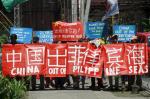
Filipino activists rally outside China’s consular office in Manila on May 11, 2015, against Chin …
Washington has started deploying Littoral Combat Ships to Singapore, increased port calls in and around the South China Sea, stepped up reconnaissance flights and tried to bolster coast guard forces in the area.
But lawmakers told Pentagon and State Department officials that the United States needed a tougher policy and that so far China has shrugged off Washington’s objections.
“I don’t see their behavior changing, It seems to me that in a very short amount of time, they are going to have de facto control of the South China Sea,” said Senator Bob Corker, chairman of the Senate Foreign Relations Committee.
Officials told senators that China has had to back off at times when faced with concerted diplomatic pressure and resistance from neighboring countries.
China was forced to withdraw a giant oil rig last year in disputed waters off of Vietnam’s coast, said David Russel, assistant secretary of state for East Asian and Pacific Affairs.
Beijing pulled back the rig after the move prompted repeated clashes at sea between Chinese vessels deployed to guard it and Vietnamese boats.
China on Wednesday denounced any expansion in the US military’s presence in the area.
“Freedom of navigation does not mean that the military vessels or aircraft of a foreign country can willfully enter the territorial waters or airspace of another country,” Chinese foreign ministry spokeswoman Hua Chunying said in Beijing.
China claims nearly all of the South China Sea, even waters approaching the coasts of its Asian neighbors.
The disputed waters are home to vital global shipping lanes and are believed to be rich in oil and gas.
Washington has flexed its military muscle previously to try to counter what it considers Beijing’s aggressive moves.
Last November, two long-range B-52 bombers flew over China’s newly declared Air Defense Identification Zone (ADIZ) in the East China Sea.
China’s dredging work could ultimately hamper America’s ability to project its military power and heighten the risk of a dangerous miscalculation, said Alexander Sullivan of the Center for a New American Security, a Washington think tank.
“Politically, Chinese control over the South China Sea would strike a major blow to perceptions of US power in Asia, the world’s most consequential region,” Sullivan said.
Mao Zedong proclaims the founding of the People’s Republic of China in Beijing on Oct. 1, 1949.
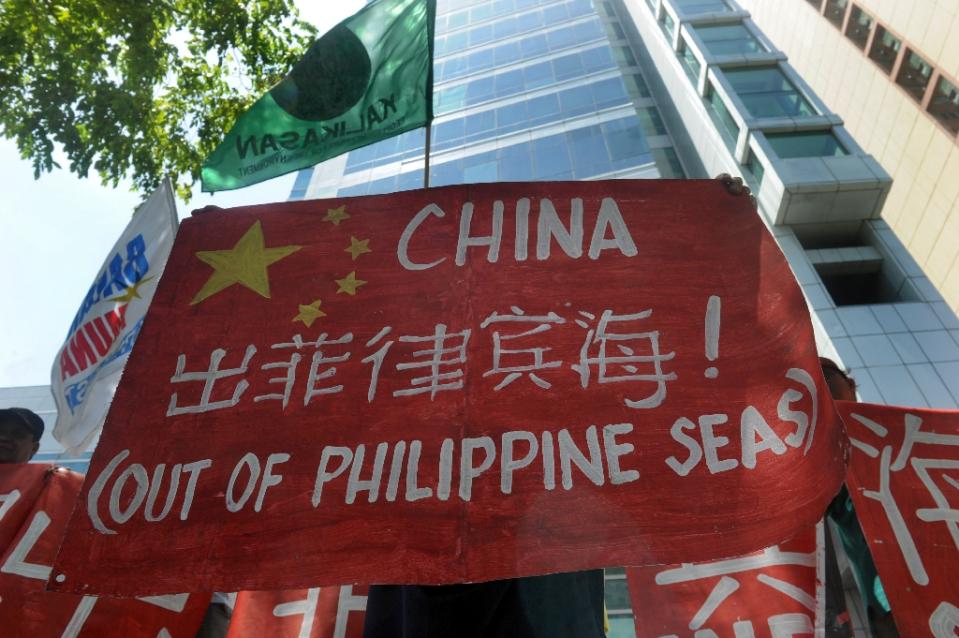
Filipino environmental activists aim water guns at mock Chinese flags as they stage a rally outside the Chinese Consulate in suburban Makati, south of Manila, Philippines on Monday, May 11, 2015 to protest against the continued building of infrastructures along a disputed group of islands known as the Spratlys in the South China Sea. The group is accusing the Chinese military of destroying the fragile ecosystem and livelihood of fishermen during their reclamation projects in the area which both countries have claimed ownership. (AP Photo/Aaron Favila)
the evil red empire manila protest 05 11 2015
the evil red empire mischief reef 05 11 2015
Gen. Gregorio Pio Catapang, second left, the Philippines’ military chief, waves as he is welcomed by residents waving the Philippines flags during his visit at Pag asa Island in the Spratly group of islands in the South China Sea, west of Palawan, Philippines Monday, May 11, 2015. Catapang has flown to a Filipino occupied island in the South China Sea amid territorial disputes in the area with China, vowing to defend the islet and help the mayor develop tourism and marine resources there. (Ritchie B. Tongo/Pool Photo via AP)
Environmental activists display placards as they march towards the Chinese Embassy in Makati City, Metro Manila May 11, 2015. The activists demanded that Chinese authorities immediately put a stop to the ecological destruction caused by the reclamation activities of China in the South China Sea, which the Philippines calls West Philippine Sea. They also condemned what they say is the bullying by Chinese naval and coast guard forces of Filipino fishermen in the disputed seas, a environmental activist said. REUTERS/Romeo Ranoco
the evil red empire subi reef 05 11 2015
the evil red empire the dragon covets the arctic the route to iceland
THE EVIL RED EMPIRE – MILITARY EXPANSIONISM : THE RED DRAGON’S EXPANSIONISM USING ITS SUPERIOR MILITARY POWER OVER ITS WEAKER NEIGHBORS .
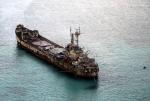
Filipino soldiers wave from the dilapidated Sierra Madre ship of the Philippine Navy as it is anchored near Ayungin shoal (Second Thomas Shoal) in the Spratly group of islands in the South China Sea, west of Palawan, Philippines, May 11, 2015. REUTERS/Ritchie A. Tongo/Pool
THE EVIL RED EMPIRE – BEIJING IS DOOMED – NO ONE CAN SAVE RED CHINA: The Fall of Babylon – Evil Empire – Prophet Isaiah
doomsayerofdoomdooma beijingisdoomed asteroid
doomsayerofdoomdooma earth asteroid impact
doomsayerofdoomdooma the evil red empire destroyed in one hour


























 Whole Dude - Whole Concept