THE EVIL RED EMPIRE – RED CHINA – CYBERSPACE INVASION

THE EVIL RED EMPIRE – RED CHINA – CYBERSPACE INVASION

THE EVIL RED EMPIRE - RED CHINA - CYBERSPACE INVASION :The U.S. Office of Personnel Management building in Washington June 5, 2015. In the latest in a string of intrusions into U.S. agencies' high tech systems, the Office of Personnel Management (OPM) suffered what appeared to be one of the largest breaches of information ever on government workers. The office handles employee records and security clearances.  REUTERS/Gary Cameron
THE EVIL RED EMPIRE – RED CHINA – CYBERSPACE INVASION :The U.S. Office of Personnel Management building in Washington June 5, 2015. In the latest in a string of intrusions into U.S. agencies’ high tech systems, the Office of Personnel Management (OPM) suffered what appeared to be one of the largest breaches of information ever on government workers. The office handles employee records and security clearances. REUTERS/Gary Cameron

Red China has successfully launched a ‘Cyberspace Invasion’ and has stolen US assets without need for Land, Air, or Sea Invasion. Red China has to be recognized as “AGGRESSOR” and her aggressive actions and behavior demand a meaningful response and not diplomatic negotiations about cybersecurity. To describe ‘Cyberspace Invasion’ as “DATA BREACH” will compromise Homeland Security.

Rudranarasimham Rebbapragada
Ann Arbor, MI 48104-4162, USA
The Spirits of Special Frontier Force

 
  image          
The Spirits of Special Frontier ForceSpecial Frontier Force is a military organization of India, Tibet, United States to resist Red…
 
View on www.facebook.com Preview by Yahoo


Reuters

BY JOSEPH MENN

U.S. EMPLOYEE DATA BREACH TIED TO CHINESE INTELLIGENCE
U.S. Employee Data Breach Tied To Chinese Intelligence

By Joseph Menn

SAN FRANCISCO (Reuters) – The Chinese hacking group suspected of stealing sensitive information about millions of current and former U.S. government employees has a different mission and organizational structure than the military hackers who have been accused of other U.S. data breaches, according to people familiar with the matter.

While the Chinese People’s Liberation Army typically goes after defense and trade secrets, this hacking group has repeatedly accessed data that could be useful to Chinese counter-intelligence and internal stability, said two people close to the U.S. investigation.

Washington has not publicly accused Beijing of orchestrating the data breach at the U.S. Office of Personnel Management (OPM), and China has dismissed as “irresponsible and unscientific” any suggestion that it was behind the attack.

Sources told Reuters that the hackers employed a rare tool to take remote control of computers, dubbed Sakula, that was also used in the data breach at U.S. health insurer Anthem Inc last year.

The Anthem attack, in turn, has been tied to a group that security researchers said is affiliated with China’s Ministry of State Security, which is focused on government stability, counter-intelligence and dissidents. The ministry could not immediately be reached for comment.

THE EVIL RED EMPIRE - RED CHINA - CYBERSPACE INVASION :Employees of the U.S. Office of Personnel Management return to their building during the lunch hour in Washington June 5, 2015. In the latest in a string of intrusions into U.S. agencies' high tech systems, the Office of Personnel Management (OPM) suffered what appeared to be one of the largest breaches of information ever on government workers. The office handles employee records and security clearances.   REUTERS/Gary Cameron
THE EVIL RED EMPIRE – RED CHINA – CYBERSPACE INVASION :Employees of the U.S. Office of Personnel Management return to their building during the lunch hour in Washington June 5, 2015. In the latest in a string of intrusions into U.S. agencies’ high tech systems, the Office of Personnel Management (OPM) suffered what appeared to be one of the largest breaches of information ever on government workers. The office handles employee records and security clearances. REUTERS/Gary Cameron

Employees of the U.S. Office of Personnel Management return to their building during the lunch hour …

In addition, U.S. investigators believe the hackers registered the deceptively named OPM-Learning.org website to try to capture employee names and passwords, in the same way that Anthem, formerly known as Wellpoint, was subverted with spurious websites such as We11point.com, which used the number “1” instead of the letter “l”.

Both the Anthem and OPM breaches used malicious software electronically signed as safe with a certificate stolen from DTOPTOOLZ Co, a Korean software company, the people close to the inquiry said. DTOPTOOLZ said it had no involvement in the data breaches.

The FBI did not respond to requests for comment. People familiar with its investigation said Sakula had only been seen in use by a small number of Chinese hacking teams.

“Chinese law prohibits hacking attacks and other such behaviors which damage Internet security,” China’s Foreign Ministry said in a statement. “The Chinese government takes resolute strong measures against any kind of hacking attack. We oppose baseless insinuations against China.”

MANY UNKNOWNS
THE EVIL RED EMPIRE - RED CHINA - CYBERSPACE INVASION OF UNITED STATES OFFICE OF PERSONNEL MANAGEMENT .
THE EVIL RED EMPIRE – RED CHINA – CYBERSPACE INVASION OF UNITED STATES OFFICE OF PERSONNEL MANAGEMENT .


Most of the biggest U.S. cyber attacks blamed on China have been attributed, with varying degrees of certitude, to elements of the Chinese army. In the most dramatic case two years ago, the U.S. Justice Department indicted five PLA officers for alleged economic espionage.

Far less is known about the OPM hackers, and security researchers have differing views about the size of the group and what other attacks it is responsible for.

People close to the OPM investigation said the same group was behind Anthem and other insurance breaches. But they are not yet sure which part of the Chinese government is responsible.

“We are seeing a group that is only targeting personal information,” said Laura Gigante, manager of threat intelligence at FireEye Inc, which has worked on a number of the high-profile network intrusions.

CrowdStrike and other security companies, however, say the Anthem hackers also engaged in stealing defense and industry trade secrets. CrowdStrike calls the group “Deep Panda,” EMC Corp’s RSA security division dubs it “Shell Crew,” and other firms have picked different names.

THE EVIL RED EMPIRE - RED CHINA - CYBERSPACE INVASION :The Homeland Security Department headquarters in northwest Washington, Friday, June 5, 2015. China based hackers are suspected once again of breaking into U.S. government computer networks, and the entire federal workforce could be at risk this time. The Department of Homeland Security said in a statement that data from the Office of Personnel Management   the human resources department for the federal government   and the Interior Department had been compromised. (AP Photo/Susan Walsh)
THE EVIL RED EMPIRE – RED CHINA – CYBERSPACE INVASION :The Homeland Security Department headquarters in northwest Washington, Friday, June 5, 2015. China based hackers are suspected once again of breaking into U.S. government computer networks, and the entire federal workforce could be at risk this time. The Department of Homeland Security said in a statement that data from the Office of Personnel Management the human resources department for the federal government and the Interior Department had been compromised. (AP Photo/Susan Walsh)

The Homeland Security Department headquarters in northwest Washington, Friday, June 5, 2015. China-b …

The OPM breach gave hackers access to U.S. government job applicants’ security clearance forms detailing past drug use, love affairs, and foreign contacts that officials fear could be used for blackmail or recruiting.

In contrast to hacking outfits associated with the Chinese army, “Deep Panda” appears to be affiliated with the Ministry of State Security, said CrowdStrike co-founder Dmitri Alperovitch.

Information about U.S. spies in China would logically be a top priority for the ministry, Alperovitch said, adding that “Deep Panda’s” tools and techniques have also been used to monitor democracy protesters in Hong Kong.

An executive at one of the first companies to connect the Anthem and OPM compromises, ThreatConnect, said the disagreements about the boundaries of “Deep Panda” could reflect a different structure than that in top-down military units.

“We think it’s likely a cohort of Chinese actors, a bunch of mini-groups that are handled by one main benefactor,” said Rich Barger, co-founder of ThreatConnect, adding that the group could get software tools and other resources from a common supplier.

“We think this series of activity over time is a little more distributed, and that is why there is not a broad consensus as to the beginning and end of this group.”

(The story corrects third paragraph to remove erroneous reference to Department of Homeland Security)

(Reporting by Joseph Menn in San Francisco; Additional reporting by Jeremy Wagstaff in Singapore, and Ben Blanchard and Paul Carsten in Beijing; Editing by Tiffany Wu)

http://about.reuters.com/fulllegal.asp

(c) Copyright Thomson Reuters 2015. 

Yahoo – ABC News Network


Whole Evil – Red China – Subjugator of Tibet

Red China – Subjugator of Tibet

red china subjugator occupation tibet
Red China – Subjugator of Tibet

The word “SUBJUGATE” means to bring under control, or subjection, conquer, to cause to become subservient, subdue, and to bring under yoke. Subjugation is the exact opposite of ‘Liberation’, or ‘Emancipation’. Subjugation is associated with tyranny, oppressive and unjust government, very cruel and unjust use of power or authority. Subjugation is the symptom of loss of Freedom. Red China with her military conquest of Tibet in 1950 imposed her authority with harshness, rigor, severity and uses her power in arbitrary manner using coercion. Red China is a Tyrant, one who seizes sovereignty of another nation illegally, Usurper, and a Subjugator of Tibet.

red china subjugator of tibet
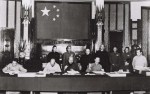
Red China – Subjugator of Tibet. The 17-point Plan signed on May 23, 1951 represents a plan for Subjugation of Tibet and not of Peaceful Liberation of Tibet.

Very often, Red China makes reference to Seventeen-Point Agreement, or 17-Point Plan, or 17-Article Agreement between the Central People’s Government and the Local Government of Tibet on Measures for the Peaceful Liberation of Tibet. Five Tibetan delegates headed by Ngapoi Ngawang Jigmei and Representatives of the Central People’s Government met in Peking(Beijing) and signed an Agreement on May 23, 1951 in presence of Red China’s Vice President Zhu De, Vice President Li Jishena, and Vice-Premier Chen Yi. This 17-Point Plan promised that there should be no coercion on the part of the Central Government of China in implementing any of its measures. During the following years, 1951-1956, Tibet recognized Red China’s true ‘evil’ intentions to subject Tibetan people to her military occupation. Both Tibet, and Republic of India conducted a series of diplomatic negotiations with Red China to loosen her military grip over Tibet. By 1957, it became very apparent that Red China is using her authority to eliminate any opposition to her direct rule. Red China has taken measures to control every aspect of Tibetan Nation giving no chance or opportunity to Tibetan people to live their lives with a natural right to freedom, an independent way of living that Tibet enjoyed during centuries of foreign rule by Mongols, and Manchu China’s Qing Dynasty(1644-1911). Seventeen-Point Agreement of 1951 is a phony agreement with lies, empty assurances and it is evidence of Red China’s treachery, cunningness, craftiness, and wickedness for which I name Red China a ‘Jackal’.

red china subjugator pla chinese army 1951
Red China – Subjugator of Tibet. The military conquest of Tibet.

At Special Frontier Force, I recognized that Red China has violated 17-Article Agreement signed on May 23, 1951. The history of Tibetan Resistance Movement that formulated the finding of Special Frontier Force bears testimony to the fact of Tibet’s subjugation under a tyrannical rule imposed by Red China.

Top Chinese officer pays visit to US: Pentagon

Fan Changlong (R), vice chairman of China’s Central Military Commission, meets with U.S. Army Chief of Staff General Raymond Odierno in Beijing, capital of China, Feb. 21, 2014. (Xinhua/Li Tao)

US army Chief of Staff General Ray Odierno (L) meets with Fan Changlong, Deputy Chairman of the Central Military Commission at Bayi Building in Beijing on February 21, 2014 (AFP Photo/Lintao Zhang)

Washington (AFP) – A top Chinese military officer began a six-day visit to the United States on Monday amid rising tensions over Beijing’s assertive stance in the South China Sea.

General Fan Changlong, vice-chairman of China’s Central Military Commission, started his tour in San Diego with a stop at the USS Ronald Reagan aircraft carrier and will hold talks on Thursday at the Pentagon with US Defense Secretary Ashton Carter, officials said.

Carter and other top US officials have recently castigated China over its push to build artificial islands in the disputed waters of the South China Sea.
At a recent security conference in Singapore, Carter called for an immediate end to land reclamation by countries in the region, and accused China of being out of step with international rules.

“Turning an underwater rock into an airfield simply does not afford the rights of sovereignty or permit restrictions on international air or maritime transit,” the Pentagon chief said at the International Institute for Strategic Studies conference.

President Barack Obama earlier this month also warned Beijing over its tactics, saying territorial disputes could not be solved by “throwing elbows.”
Before heading to Washington, Fan was due to visit a Boeing factory in Seattle and a US Army base at Fort Hood in Texas.

Fan is considered a counterpart to Carter, US officials said.

The general’s visit is part of a years-long effort to build a regular dialogue between the American and Chinese armed forces to defuse potential tensions and avoid miscalculations.
Carter’s predecessor, Chuck Hagel, paid a visit to China in 2014 in a trip that was marked by friction, with each side trading sharply worded criticism.

© 2015 AFP

Yahoo – ABC News Network

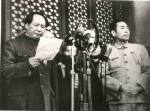
Mao Zedong proclaims the founding of the People's Republic of China in Beijing on Oct. 1, 1949.
Mao Zedong proclaims the founding of the People’s Republic of China in Beijing on Oct. 1, 1949.
THE  EVIL  RED  EMPIRE  -  RED  CHINA  -  SUBJUGATOR  OF  TIBET .
THE EVIL RED EMPIRE – RED CHINA – SUBJUGATOR OF TIBET .
red china subjugator may231951 beijing
Red China Subjugator of Tibet –  May 23, 1951 – PEKING ( Beijing)
red china subjugator 17 point plan
Red China Subjugator of Tibet: 17-Point Plan of May 23, 1951.
red china subjugator 17 article agreement
Red China Subjugator of Tibet. 17 Article Agreement of May 23, 1951
red china subjugator banquet in beijing
Red China Subjugator of Tibet – Banquet in PEKING ( Beijing).
red china subjugator 17 point agreement beijing
Red China Subjugator of Tibet – 17- Point Agreement, May 1951 – PEKING( Beijing).
red china subjugator march12 1959
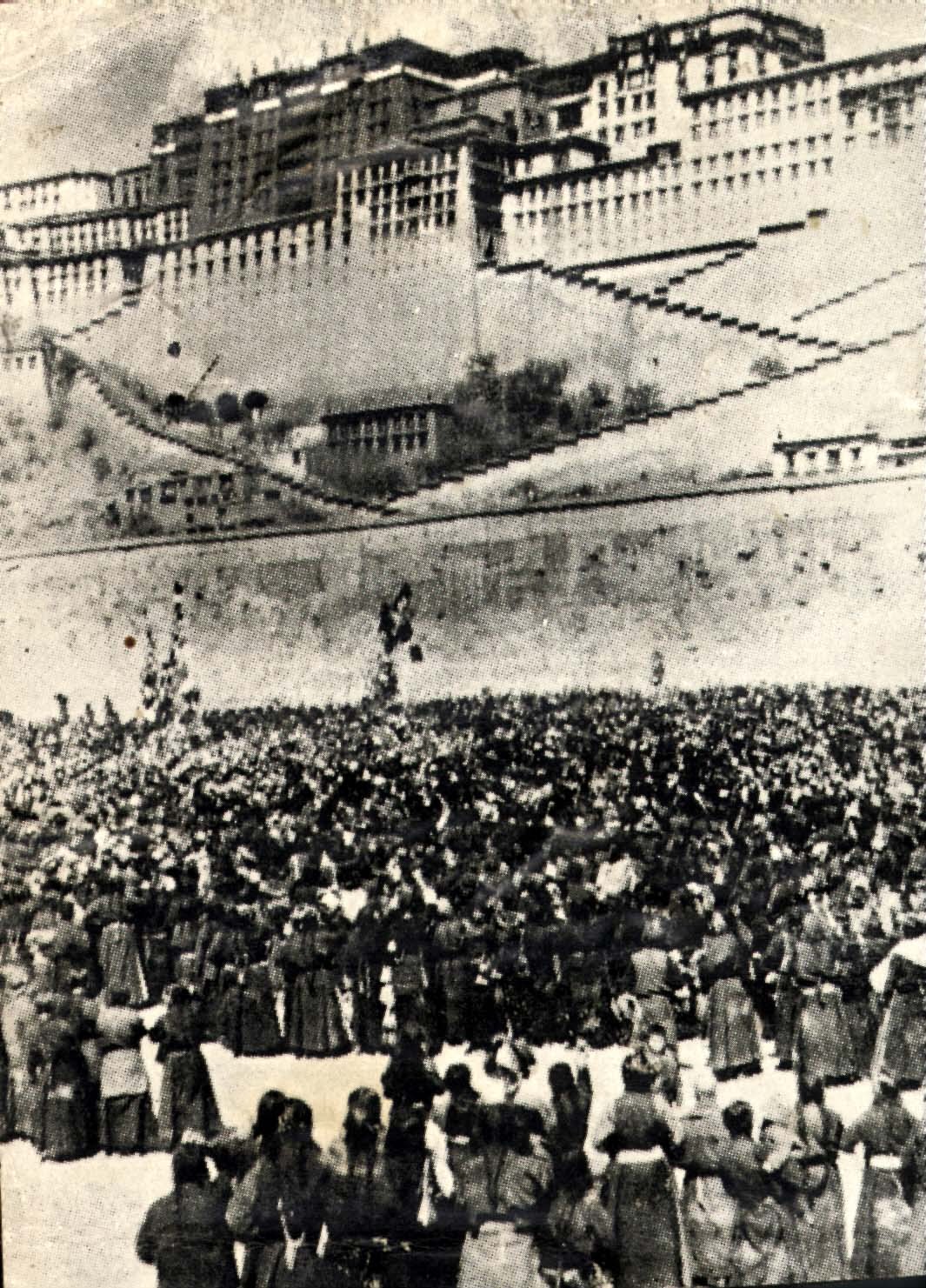
Red China Subjugator of Tibet – Tibetan Uprising – March 12,  1959.
red china oppression in tibet1
Red China – Oppression in Tibet

THE EVIL RED EMPIRE – RED CHINA – OPPRESSOR

THE EVIL RED EMPIRE – RED CHINA – OPPRESSOR

THE  EVIL  RED  EMPIRE  -  RED  CHINA  -  OPPRESSOR :  TIBET  IS  NOT  A  PART  OF  RED  CHINA .  HOWEVER,  IT  IS  CORRECT  TO  STATE  THAT  TIBETANS  ARE  OPPRESSED  BY  RED  CHINA'S  TYRANNY .
THE EVIL RED EMPIRE – RED CHINA – OPPRESSOR : TIBET IS NOT A PART OF RED CHINA . HOWEVER, IT IS CORRECT TO STATE THAT TIBETANS ARE OPPRESSED BY RED CHINA’S TYRANNY .

Oppressor refers to a person or group that oppresses people. Oppressor is related to terms like tyrant, despot, persecutor, and,subjugator. Oppressor is a person who uses power or authority in a cruel, unjust, or harmful way. Red China is an Oppressor for she persecutes people in Occupied Tibet. In recent times, news media in the United States have shared a number of stories to focus public attention of people about problems faced by people of Philippines and other weak neighbors of Red China because of China’s Maritime Expansionism. Not even a single word is mentioned about Red China’s oppressive rule over Occupied Tibet.

THE  EVIL  RED  EMPIRE  -  RED  CHINA -  OPPRESSOR :  TIBET  IS  NOT  A  PART  OF  RED  CHINA .  RED  CHINA  EXPANDED  HER  TERRITORY  THROUGH  MILITARY  CONQUEST .
THE EVIL RED EMPIRE – RED CHINA – OPPRESSOR : TIBET IS NOT A PART OF RED CHINA . RED CHINA EXPANDED HER TERRITORY THROUGH MILITARY CONQUEST .

Tibet is the first victim of Red China’s Expansionist Policy. The problems of South China Sea demand proper evaluation of Red China’s tyranny, despotism, subjugation, persecution, suppression, and oppression of Tibetan people living their miserable lives in Occupied Tibet.

Rudranarasimham Rebbapragada
Ann Arbor, MI 48104-4162, USA
The Spirits of Special Frontier Force

 
  image          
The Spirits of Special Frontier ForceSpecial Frontier Force is a military organization of India, Tibet, United States to resist Red…
 
View on www.facebook.com Preview by Yahoo


For some Filipino fishermen, the South China Sea dispute is personal

The Washington Post

Will Englund

THE EVIL RED EMPIRE - RED CHINA - OPPRESSOR : Filipino fisherman's personal story .
THE EVIL RED EMPIRE – RED CHINA – OPPRESSOR : Filipino fisherman’s personal story .

© The Washington Post The Marvin-1, a fishing boat, sits on the shore May 16, 2015, in Masinloc, Philippines, unused since the Chinese barred it from Scarborough Shoal in the South China Sea.

MASINLOC, Philippines — When nations duel over reefs, rocks and islets, people are going to get hurt, and in the South China Sea dispute, that means the fishermen here who once wrested a living from the contested waters.

Gunmen in a Chinese speedboat drove Macario Forones, for instance, away from a favorite spot called Scarborough Shoal, and now his boat, the Marvin-1, sits useless in the grass and weeds above the high-tide line, and he sells someone else’s fish from a stall in the local market. Efrim Forones now dives for clams in the bay, making about one-tenth of what he earned when he fished the sea. Viany Mula says he was set upon with a Chinese water cannon when he ventured out to the shoal in his boat, and now he makes deliveries around town on a motorbike, barely earning enough each day, as he p

“I really want to fish the shoal,” Mula said one recent day. “It’s a very rich fishing ground. But that’s not possible now.”

For generations, the South China Sea was a regional common. Fishing boats from all of the surrounding countries would roam its waters, pausing now and then to trade cigarettes or potatoes or gossip.

But then Vietnam, followed by the Philippines, began staking claims to some of the islands, and now China is moving in, in a big way. Beijing is building up the outposts it has established, enlarging islands that it controls and claiming exclusive rights to fishing grounds.

The smaller, poorer nations can’t put up a real fight for the access to the sea that they long enjoyed.
“That’s not for us,” Mula said. “We have nothing.”

But the Philippines does have the United States behind it, after a fashion. The Americans are making more visits here, and stepping up naval patrols and overflights — and in the process, the South China Sea dispute becomes something bigger than a contest for fish. It looks more and more like a geostrategic confrontation between the two great powers, China and the United States; that’s certainly how the Chinese characterize it.

The U.S. military has long been a source of anguish, self-doubt and defiance for the Philippines, a former U.S. colony. Many Filipinos are encouraged by recent U.S. attention to the maritime dispute, but they wonder whether the Americans give much thought to the Philippines and the people who are paying a price as the dispute deepens.
One in three residents of Masinloc have depended over the years on fishing for their livelihoods, said Mayor Desiree Edora. Scarborough Shoal, a half-day’s sail from shore, was a refuge from storms, a gathering place for fishermen from all over and a home to abundant grouper and giant clams. Now, the Chinese have barred foreign boats. It is like being thrown out of your own house, she said.

“We can’t replicate what Scarborough Shoal can provide,” she said.

The Philippines took China to court — an international tribunal in The Hague — two years ago over competing claims in the sea. China refused to participate; a decision is expected next year, but it probably will be unenforceable. The Philippine move may have provoked the Chinese into trying to cement their claims by occupying and building up as many spots in the sea as they can, but officials in the Philippines say they had no choice after efforts to negotiate came to nothing.

The governor of Zambales province, Hermogenes E. Ebdane Jr., said he wonders what China’s ultimate goal is. “No one’s going to war over fish,” he said. His constituents, the fishermen, will have to find something else to do. But if this confrontation is about something bigger, Ebdane said, it’s unclear what role the Philippines might have. There’s a new defense agreement with the United States, but, he said, neither side seems to have thought through the implications for the murky weeks and months ahead.

A legacy of deep ambivalence

At the Defense College in Quezon City, on the outskirts of Manila, an entire wall in the lobby is given over to a painting that depicts the massacre of four dozen U.S. soldiers by Filipino insurgents at Balangiga in 1901. A diorama up a staircase shows Filipinos battling Spanish conquistadors, and fighting against the Japanese in World War II — alongside Americans.
The United States seized the Philippines from Spain in 1898 and held it until 1946. The U.S. military continued to keep permanent bases here until 1991.

The legacy is a deep ambivalence toward the United States. But the U.S. Navy is the one force that is willing to challenge the Chinese and keep up regular patrols in the region. An agreement signed last year would allow the U.S. military standing presence here, rotating forces onto Philippine bases. The agreement is held up by a lawsuit in the Philippine Supreme Court.

Washington has stepped up visits and patrols, and it has made much of joint training exercises and the donation of used military equipment.
“That is not to protect the Philippines but to protect their own turf,” said Roilo Golez, a member of the country’s House of Representatives. U.S. military aid, worth about $40 million a year, is nothing but a token, he said.

The Philippine armed forces, in this nation of 100 million, remain in woeful shape. It is an article of faith that the government was caught napping when China began making its moves in the South China Sea.

“We remain quite dependent on allied help, and that is not good,” said Rafael Alban III, former secretary of the interior. “The focus of the Philippine government has been on politics, politics, politics, at the expense of national security. China is taking advantage of our inertia and lack of assertiveness. We are presenting ourselves as unworthy before friend and foe.”
Walden Bello, founding director of a group called Focus on the Global South, said his country “is right back to its role in the Cold War, when it played the part of handmaiden to the United States.”

But military officials here say they are unsure of the U.S. commitment if hostilities should break out. The United States and the Philippines have a mutual defense treaty pledging assistance if either is attacked, but Washington doesn’t recognize any nation’s territorial claims in the South China Sea, including the Philippines’. Naval analysts in Washington say the U.S. response to conflict there would depend entirely on the circumstances.

“We may have overestimated how the United States will come to the rescue,” said Chito Santa Romana, an expert on China. “We may have underestimated Chinese resolve.”

Water-borne civil disobedience

The two biggest vessels in the Philippine navy are former U.S. Coast Guard cutters, retrofitted with deck guns, and of little use in standing up to the Chinese. The government, in any case, has no desire to provoke China into a military confrontation.

That leaves the fishing fleet as the country’s best means of maintaining a presence in the parts of the South China Sea that Beijing claims. Philippine — and Vietnamese — boats challenge the Chinese when and where they can, until the Chinese coast guard drives them off. It is water-borne civil disobedience.

“These are small, subsistence fishermen,” said Evan P. Garcia, undersecretary for policy in the Philippines Department of Foreign Affairs. “They’re not a threat to anybody. And it’s not as if they just went there yesterday.”

The fish they’re after may be the other big casualty of the dispute. The tensions over the years have kept anyone from getting good data on fish stocks or devising a conservation plan. Hundreds of millions of people live around the South China Sea and eat its fish. The Marine Stewardship Council, with an office in Singapore, says that the humpback wrasse and bluefin tuna populations are close to collapse. Edgardo Gomez, a marine biologist in Manila, said that the Chinese have wiped out the giant clams on Scarborough and that their construction work is destroying reefs that support the bottom rungs of the sea’s food chain.

“You have tons and tons of marine life in and around those reefs that are now gone,” he said.
The hatch is being shut on a way of life. The United States and China are either pursuing strategic advantage or practicing destructive gamesmanship, depending on the perspective. Filipinos have to live with that — with the “odd detour,” as Garcia put it, that brought them here.

Viany Mula would trade his motorbike in the blink of an eye for a chance to return to sea. But that is not going to happen.

Englund visited the Philippines on a Jefferson Fellowship, supported by the East-West Center.

THE EVIL RED EMPIRE – RED CHINA – A JACKAL

THE EVIL RED EMPIRE – RED CHINA – A JACKAL :

THE  EVIL  RED  EMPIRE  -  RED  CHINA  -  A  JACKAL .
THE EVIL RED EMPIRE – RED CHINA – A JACKAL .

Jackals are wild dogs of Asia and North Africa. The word Jackal is often used to describe a person who does dishonest or humiliating tasks for one’s own gain. Jackal is the other name for a cheat or a swindler. I am specifically using the term ‘JACKAL’ to describe the nature of Red China’s statecraft or statesmanship. It helps my readers to recognize Red China’s sly, secretive, or wily nature. Sly implies a working to achieve one’s ends by evasiveness, insinuation, furtiveness, duplicity, circumvention, plot, subterfuge, stratagem, craftiness, subtle blandishments, ruses, cunning underhandedness, mischievous or roguish behavior. Red China could be called “FOXY” for its tricks are sharpened by experience. Red China deals with her neighbors using her proficiency in deception. Red China is subtly deceitful for she knows to defraud others by deliberately misleading them to obtain their rights and property. Red China often takes pleasure in demonstrating the gullibility of her victims.

At Special Frontier Force, we have personal experience of Red China’s sly, wily, cunning, dishonest, and deceitful nature.

Rudranarasimham Rebbapragada
Ann Arbor, MI 48104-4162, USA
The Spirits of Special Frontier Force

Pentagon chief criticizes Beijing’s South China Sea
moves

Associated Press

By LOLITA C. BALDOR and MATTHEW PENNINGTON

SINGAPORE — China’s land reclamation in the South China Sea is out of step
with international rules, and turning underwater land into airfields won’t
expand its sovereignty, Defense Secretary Ash Carter told an international
security conference Saturday, stepping up America’s condemnation of the
communist giant as Beijing officials sat in the audience.

Carter told the room full of Asia-Pacific leaders and experts that the U.S.
opposes “any further militarization” of the disputed lands.

His remarks were immediately slammed as “groundless and not constructive” by
a Chinese military officer in the audience.

Carter’s comments came as defense officials revealed that China had put two
large artillery vehicles on one of the artificial islands it is creating in the
South China Sea. The discovery, made at least several weeks ago, fuels fears in
the U.S and across the Asia-Pacific that China will try to use the land
reclamation projects for military purposes.

The weaponry was discovered at least several weeks ago, and two U.S.
officials who are familiar with intelligence about the vehicles say they have
been removed. The officials weren’t authorized to discuss the intelligence and
spoke only on condition of anonymity.

The Pentagon would not release any photos to support its contention that the
vehicles were there.

China’s assertive behavior in the South China Sea has become an increasingly
sore point in relations with the United States, even as President Barack Obama
and China’s President Xi Jinping have sought to deepen cooperation in other
areas, such as climate change.

Pentagon spokesman Brent Colburn said the U.S. was aware of the artillery,
but he declined to provide other details. Defense officials described the
weapons as self-propelled artillery vehicles and said they posed no threat to
the U.S. or American territories.
© AP Photo/Wong Maye-E U.S. Secretary of Defense Ashton

Carter delivers his speech about “The United States and Challenges to
Asia-Pacific Security” during the 14th International Institute for Strategic
Studies Shangri-la Dialogue, or IISS, Asia Security Summit, Saturday, May 30,
2015, in Singapore.

While Carter did not refer directly to the weapons in his speech, he told the
audience that now is the time for a diplomatic solution to the territorial
disputes because “we all know there is no military solution.”

“Turning an underwater rock into an airfield simply does not afford the
rights of sovereignty or permit restrictions on international air or maritime
transit,” Carter told the audience at the International Institute for Strategic
Studies summit.

China’s actions have been “reasonable and justified,” said Senior Col. Zhao
Xiaozhuo, deputy director of the Center on China-America Defense Relations at
the People’s Liberation Army’s Academy of Military Science.

Zhao challenged Carter, asking whether America’s criticism of China and its
military reconnaissance activities in the South China Sea “help to resolve the
disputes” and maintain peace and stability in the region.

Carter responded that China’s expanding land reclamation projects are
unprecedented in scale. He said the U.S. has been flying and operating ships in
the region for decades and has no intention of stopping.

While Carter’s criticism was aimed largely at China, he made it clear that
other nations who are doing smaller land reclamation projects also must
stop.

One of those countries is Vietnam, which Carter is scheduled to visit during
this 11-day trip across Asia. Others are Malaysia, the Philippines and
Taiwan.

Asked about images of weapons on the islands, China’s Foreign Ministry
spokeswoman Hua Chunying said she was “not aware of the situation you
mention.”

She also scolded Carter, saying the U.S. should be “rational and calm and
stop making any provocative remarks, because such remarks not only do not help
ease the controversies in the South China Sea, but they also will aggravate the
regional peace and stability.”

Carter appeared to strike back in his speech, saying that the U.S. is
concerned about “the prospect of further militarization, as well as the
potential for these activities to increase the risk of miscalculation or
conflict.” And he said the U.S. “has every right to be involved and be
concerned.”

But while Carter stood in China’s backyard and added to the persistent
drumbeat of U.S. opposition to Beijing’s activities, he did little to give
Asia-Pacific nations a glimpse into what America is willing to do to achieve a
solution.

He said the U.S. will continue to sail, fly and operate in the region, and
warned that the Pentagon will be sending its “best platforms and people” to the
Asia-Pacific. Those would include, he said, new high-tech submarines,
surveillance aircraft, the stealth destroyer and new aircraft carrier-based
early-warning aircraft.

U.S. Sen. John McCain, R-Ariz., who also is attending the Singapore
conference, told reporters that the U.S. needs to recognize that China will
continue its activities in the South China Sea until it perceives that the costs
of doing so outweigh the benefits.

He said he agreed with Carter’s assertion that America will continue flights
and operations near the building projects, but “now we want to see it translated
into action.”
© AP Photo/Wong Maye-E U.S. Secretary of Defense Ashton

Carter delivers his speech about “The United States and Challenges to
Asia-Pacific Security” during the 14th International Institute for Strategic
Studies Shangri-la Dialogue (IISS) Asia Security Summit, Saturday, May 30, 2015,
in Singapore.

One senior defense official has said the U.S. is considering more military
flights and patrols closer to the projects in the South China Sea, to emphasize
reclaimed lands are not China’s territorial waters. Officials also are looking
at ways to adjust the military exercises in the region to increase U.S. presence
if needed. That official was not authorized to discuss the options publicly and
spoke on condition of anonymity.

One possibility would be for U.S. ships to travel within 12 miles of the
artificial islands, to further make the point that they are not sovereign
Chinese land. McCain said it would be a critical mistake to recognize any
12-mile zone around the reclamation projects.

The U.S. has been flying surveillance aircraft in the region, prompting China
to file a formal protest.

U.S. and other regional officials have expressed concerns about the island
building, including worries that it may be a prelude to navigation restrictions
or the enforcement of a possible air defense identification zone over the South
China Sea. China declared such a zone over disputed Japanese-held islands in the
East China Sea in 2013.

China has said the islands are its territory and that the buildings and other
infrastructure are for public service use and to support fishermen.

Pennington reported from Washington. AP news assistant Liu Zheng in Beijing
contributed to this report.