Whole Aggression – Red China uses maps for launching acts of aggression


Red China’s doctrine of Expansionism

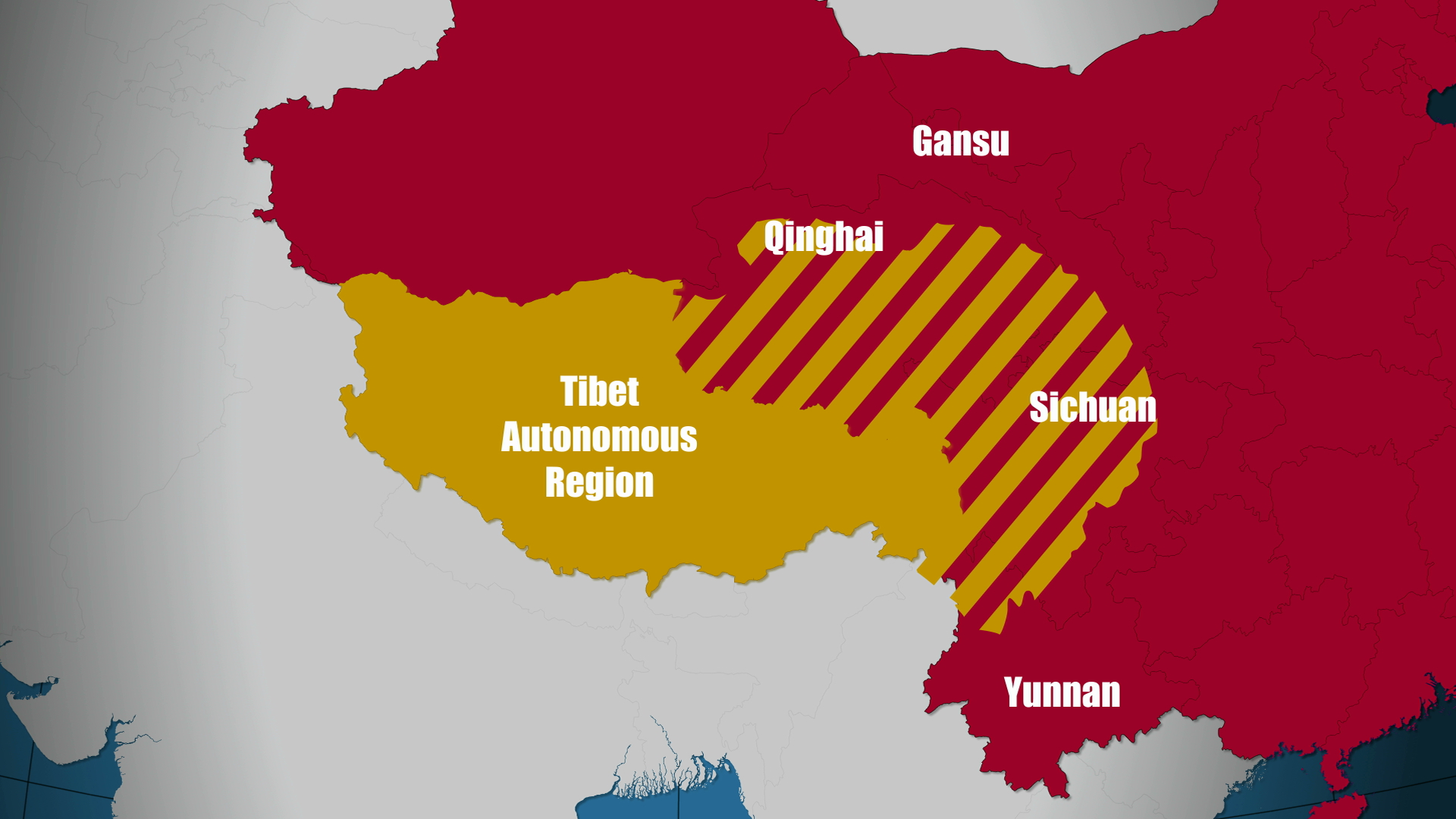
THE EVIL RED EMPIRE – RED CHINA – THE GREAT PROBLEM OF TIBET: TIBET HAS LAND AREA OF 870, 000 SQUARE MILES. TIBET IS LARGER IN SIZE COMPARED TO ASIAN NATIONS LIKE JAPAN, TAIWAN, PHILIPPINES, INDONESIA, MALAYSIA, VIETNAM, AND BRUNEI. TIBET IS THREE-TIMES LARGER THAN TEXAS STATE OF UNITED STATES .

Red China released a new map showing the totality of Beijing’s territorial claims. The word ‘cartography’ describes the art or work of making maps or charts. Red China claims this “10-Dash” new map serves to educate Chinese people about their country and her territory. I consider this map as an act of ‘cartographical’ or ‘cartographic’ aggression. Military always prepares maps and charts to plan its war operations much ahead of launching offensive or defensive military actions. Publication of this map is an act of hostility, a prelude to military aggression, and preparation forWar. As such all affected nations must not hesitate to take retaliatory actions to resist Red China’s acts of aggression. The first step is to prepare people to recognize Red China as an Enemy, Adversary, and an Opponent whose actions have to be challenged.

On behalf of Special Frontier Force, I reject Red China’s new map for I do not recognize Beijing’s claim of Tibet and its territory. Republic of India does not share a border with Red China.

Rudra Narasimham Rebbapragada
Ann Arbor, MI 48104-4162, USA
Special Frontier Force-Establishment 22-Vikas Regiment

The Washington Post

Could this map of China start a war?

By ISHAAN THAROOR June 27, 2014

(Hunan Map Press/Xinhua)
On behalf of Special Frontier Force, I reject Red China’s new map for I do not recognize Beijing’s claim of Tibet and its territory. Republic of India does not share a border with Red China.

(Hunan Map Press/Xinhua)

Chinese authorities unveiled this week a new map showing the totality of Beijing’s territorial claims. It supplants an earlier map which had a cutaway box displaying China’s declared claims over the South China Sea. Now, Chinese citizens can “fully, directly know the full map of China,” wrote the People’s Daily, a state paper. “Readers won’t ever think again that China’s territory has primary and secondary claims,” said the editor of the map press that published it.

On the face of it, the map shouldn’t be too much of a surprise to China’s neighbors. It counts Taiwan, which Beijing considers a renegade province, as part of China. It shows China’s longstanding belief in its suzerainty over the Spratlys and Paracels, the two main archipelagos of the South China Sea, which are contested to varying degrees by Vietnam, the Philippines and a number of other Southeast Asian nations. A 10-dash line (as opposed to China’s earlier nine-dash line) encircles most of the South China Sea, a body of water which sees some $5.3 trillion worth of trade pass through it every year.

Here’s a useful interactive built by the Council on Foreign Relations on the overlapping maritime claims

The new map also shows China’s claim over the Indian state of Arunachal Pradesh. China and India have one of the world’s most intractable and long-running land border disputes, which flared during a brief, bloody war in 1962. Arunachal Pradesh is fully integrated into India’s federal system, with regular state elections. But China claims most of it as part of “Southern Tibet.”

While it may seem silly to some, maps like this routinely flare tensions in Asia, where many nations are still wrangling with the complicated geography left behind by lapsed empires. Two years ago, a map published in new Chinese passports sparked a diplomatic firestorm , with foreign ministries in Vietnam and India both voicing protests and adopting counter-measures.

(Laris Karklis/The Washington Post)
On behalf of Special Frontier Force, I reject Red China’s new map for I do not recognize Beijing’s claim of Tibet and its territory. Republic of India does not share a border with Red China.

Laris Karklis/The Washington Post)

China’s economic rise has led to an increasing assertiveness in the region, with its expanding navy worrying neighbors and challenging U.S. dominance in the Pacific. It has triggered an arms race in Asia, punctuated by a growing number of dangerous incidents, including frequent maritime standoffs and altercations with Vietnamese and Philippine vessels and risky fighter jet flybys over Japanese ships.

While other countries complain, Beijing is steadily changing facts on the ground. It is building up a city in the Paracels. In May, China deployed a $1 billion oil rig in waters claimed by Vietnam, which led to violent protests and riots in Ho Chi Minh City. China is now moving in a second oil rig, despite the vociferous objections of Vietnamese officials.

The new map is an echo of this provocative worldview. But Beijing officials have sought to play it down. “The goal is to serve the Chinese public,” said a Foreign Ministry spokesperson. “As for the intentions, I think there is no need to make too much of any association here.”

tharooris.jpeg?ts=1402006601019&w=180&h=180

Ishaan Tharoor writes about foreign affairs for The Washington Post. He previously was a senior editor at TIME, based first in Hong Kong and later in New York.

© 1996-2015 The Washington Post

On behalf of Special Frontier Force, I reject Red China’s new map for I do not recognize Beijing’s claim of Tibet and its territory. Republic of India does not share a border with Red China.


Whole Threat – Red China’s Imperialism poses a Global Threat

The Evil Red Empire poses a Global Threat

THE  EVIL  RED  EMPIRE -  RED  CHINA  -  IMPERIAL  POWER -  A  GLOBAL  THREAT  TO  PEACE :  RED  CHINA'S  $ 1 BILLION  HAIYANG - SHIYOU  OIL  RIG  981 .
THE EVIL RED EMPIRE – RED CHINA – IMPERIAL POWER – A GLOBAL THREAT TO PEACE : RED CHINA’S $ 1 BILLION HAIYANG – SHIYOU OIL RIG 981 .

During 1970-71, Nixon-Kissinger changed direction of US Foreign Policy that has consistently addressed the problem of Communism and the threat it posed to World Peace. Nixon-Kissinger utterly failed to evaluate dangers posed by Red China’s Expansionist Policy which is extending Chinese territory by conquering her weak neighbors like Tibet. Red China is using her economic and military power in forming and maintaining an Empire to control natural resources and thereby dominate world markets.

Red China’s Expansionism is imposing a severe stress and strain as weaker nations like Vietnam, and Philippines have to increase their defense spending in an attempt to safeguard their national interests.

Rudra Narasimham Rebbapragada
Ann Arbor, MI 48104-4162, USA
Special Frontier Force-Establishment 22-Vikas Regiment

The Washington Post

THE $1 BILLION CHINESE OIL RIG THAT HAS VIETNAM IN FLAMES

By ADAM TAYLOR May 14, 2014

http://Wapo.st/RQKpTz

Protests spurred by the planned construction of a Chinese oil rig in a disputed area of the South China Sea escalated Tuesday into Wednesday in Binh Duong province, Vietnam. (Sarah Parnass/The Washington Post)

Early Wednesday, protesters began looting and burning factories at industrial parks near Ho Chi Minh City, in what is being called the worst outbreak of public disorder in Vietnam for years. Up to 20,000 people had been involved in relatively peaceful protests on Tuesday in Binh Duong province, according to the Associated Press, but smaller groups of men later ran into foreign-owned factories and caused mayhem.

Although some of the factories were owned by companies from Taiwan and South Korea, they were not thought to be the real target of the protesters’ anger.

(Laris Karklis / The Washington Post)
Red China’s Expansionism is imposing a severe stress and strain as weaker nations like Vietnam, and Philippines have to increase their defense spending in an attempt to safeguard their national interests.

(Laris Karklis / The Washington Post)

That prize belongs to China and its now-infamous “nine-dash line.”

The protests were sparked when Beijing deployed an oil rig in waters claimed by Vietnam on May 1. The Haiyang Shiyou 981 now sits about 70 miles inside the exclusive economic zone (EEZ) that extends 200 miles from the Vietnamese shore as part of the 1982 U.N. Convention on the Law of the Sea.

The problem is that China doesn’t really care about Vietnam’s EEZ. What matters to Beijing is the nine-dash line: A loosely defined maritime claim based on historical arguments which China uses to claim much of the land mass in the South China Sea. That nine-dash line (which, as the name implies, looks like nine dashes on a map) runs remarkably close to Vietnam’s shoreline, and though its nature is imprecise, Beijing seems to claim economic rights within the line.

Beijing has been using maps featuring the line since the 1950s, but it was only in the late 1960s that the issue really became a problem, after a U.N. report concluded that the area has large hydrocarbon deposits.

It has caused big rifts between China and Vietnam, which have a complicated relationship at the best of times. In 1974, after attempts by the South Vietnamese government to expel Chinese fishing ships, the Chinese navy seized the historically unoccupied Paracel Islands after a short battle and has held them since, despite a 1988 skirmish that left more than 70 Vietnamese soldiers dead. China later built a city on the largest island in the archipelago, long claimed by Vietnam, and it appears to claim an EEZ around the islands which includes the location of the Haiyang Shiyou 981.

The nine-dash line isn’t a problem just for Vietnam. Going by its U-shaped curve, the larger group of the Spratly Islands also falls within Chinese territory, despite competing claims by the Philippines, Brunei, Malaysia, Taiwan and Vietnam. The 200 or so mostly uninhabitable islands and rocks also are thought to be rich in oil and gas. In addition, China has a serious maritime dispute with Japan in the East China Sea.

A ship of Chinese Coast Guard is seen near Chinese oil rig Haiyang Shi You 981 in the South China Sea, about 210 km (130 miles) off shore of Vietnam May 14, 2014. Vietnamese ships were followed by Chinese vessels as they neared China's oil rig in disputed waters in the South China Sea on Wednesday, Vietnam's Coast Guard said. Vietnam has condemned as illegal the operation of a Chinese deepwater drilling rig in what Vietnam says is its territorial water in the South China Sea and has told China's state-run oil company to remove it. China has said the rig was operating completely within its waters. REUTERS/Nguyen Minh (POLITICS MARITIME ENERGY)
Red China’s Expansionism is imposing a severe stress and strain as weaker nations like Vietnam, and Philippines have to increase their defense spending in an attempt to safeguard their national interests.

A Chinese coast guard ship is seen near the Chinese oil rig Haiyang Shiyou 981 in the South China Sea, about 130 miles off Vietnam’s shore. (Nguyen Minh/Reuters)

Vietnam and China had shown some signs of rapprochement in recent years, signing an agreement in 2011 aimed at solving the South China Sea Disputes and Hanoi had already offered the waters near where the rig is sitting for exploration by energy companies. However, with the arrival of the oil rig – said to have cost $1 billion to produce – relations are looking their worst in years. The timing of the move is worth noting, coming shortly after President Obama’s trip to Asia and just before a recent meeting of the Association of Southeast Asian Nations.

It’s a big problem for Vietnam, which is largely impotent in any battle against China. As a recent Washington Post Editorial noted, Vietnam lacks strong military ties with the United States and is ruled by a powerful Communist Party that includes a strong pro-Beijing faction. It can’t hope to compete with China’s navy, and Chinese President Xi Jinping has made it clear that he would use military strength to protect what he views as Chinese territory: A graphic example of that is the videos posted online last week that appeared to show the oil rig’s Chinese escort ramming and shooting water cannons at Vietnamese boats trying to stop the flotilla.

The protests within Vietnam seem to be a result of that impotence. Although unauthorized protests are rarely tolerated in Vietnam, the anti-China demonstrations seem to have the government’s blessing. The AP reports that signs have been handed out at protests that read : “We entirely trust the party, the government and the people’s army.”
It is unclear whether the violence Wednesday morning was part of the plan, however, and Hanoi may find itself torn between two difficult choices – facing the military and economic wrath of China or its own increasingly furious domestic audience.

CORRECTION: An earlier version of this post incorrectly described the basis for China’s territorial claim there. China asserts sovereignty over land features in South China Sea that lie within a so-called nine dash line on Chinese maps; it does not assert a claim to all waters within that line. China’s assertion of a right to deploy the oil rig in its current location appears to be based a Chinese claim to the nearby Paracel Islands, not the waters themselves. The article also incorrectly stated the islands were historically unoccupied; in fact, they were once sparsely populated.

taylorad.jpg?ts=1401482429561&w=180&h=180

Adam Taylor writes about foreign affairs for The Washington Post. Originally from London, he studied at the University of Manchester and Columbia University.

The Washington Post

Red China’s Expansionism is imposing a severe stress and strain as weaker nations like Vietnam, and Philippines have to increase their defense spending in an attempt to safeguard their national interests.

RED DRAGON – RED CHINA – OCCUPIER OF TIBET

RED DRAGON – RED CHINA – OCCUPIER OF TIBET

RED DRAGON - RED CHINA - OCCUPIER OF TIBET: ARCHAEOLOGICAL FINDINGS SUGGEST THAT PEOPLE OF ANCIENT TIBET HAD FACED THREATS OF FOREIGN CONQUESTS.
RED DRAGON – RED CHINA – OCCUPIER OF TIBET: ARCHAEOLOGICAL FINDINGS SUGGEST THAT PEOPLE OF ANCIENT TIBET HAD FACED THREATS OF FOREIGN CONQUESTS.

Red China took possession of Tibet or seized Tibet using her superior military power. Red China told a lie when she claimed about peaceful liberation of Tibet by People’s Liberation Army. Red China is an occupying force that faces eviction from Tibet when Peace, Freedom, and Justice will prevail again. It is interesting to note that people of ancient Tibet had faced similar threats from external aggressors.

Rudranarasimham Rebbapragada
Ann Arbor, MI 48104-4162, USA
SPECIALFRONTIERFORCE.ESTABLISHMENT22

 
  image          
The Spirits of Special Frontier ForceAt Special Frontier Force, I host ‘The Living Tibetan Spirits’ to promote Tibet Awareness. I…
 
View on www.facebook.com Preview by Yahoo


Popular Archaeology


Archaeologist explores the first civilization of ancient Tibet

Mon, Aug 10, 2015

Vestiges of a once flourishing prehistoric civilization dot the landscape of Upper Tibet.

Archaeologist explores the first civilization of ancient Tibet
For more than two decades, University of Virginia Tibet Center archaeologist and historian John Vincent Bellezza has been exploring highland central Asia, going places where few archaeologists and explorers have ventured. Since 1992, he has investigated and documented scores of monumental sites, rock art, castles, temples, residential structures, and other features on the desolate reaches of the TIBETAN PLATEAU, building a knowledge base on a vast archaic civilization and ancient religion that flourished long before Buddhism emerged and dominated this otherwise comparatively sparsely populated high altitude region.

“Commonly, when people think of Tibet, Buddhism comes to mind,” writes Bellezza in his newest book, THE DAWN OF TIBET. By this he also implies the better-known and popular images of the imposing, sky-high, mountaintop monumental wonders of Buddhist centers such as Lhasa. But, he continues, “before Buddhism was introduced, a different type of civilization reigned in Tibet, one with monuments, art, and ideas alien to those of more recent times……….Demarcated through an enormous network of citadels and burial centers spanning one thousand miles from east to west, it would endure for some fifteen hundred years.”*

Bellezza is describing an archaic civilization known as ZHANG ZHUNG, which flourished from about 500 BC to 625 AD and encompassed most of the western and northwestern regions of the Tibetan Plateau. Mastering an ancient technology base not normally attributed to people of this region in the popular perception, the people of Iron Age Zhang Zhung, according to Bellezza, built citadels, elite stone-corbelled residential structures, temples, necropolises featuring stone pillars, sported metal armaments and a strong equestrian culture, established links with other cultures across Eurasia, and exhibited a relatively uniform and standardized cultural tradition rich in ritualistic religious practice, where kings and priests dominated the highest rungs of power. These are all characteristics of stratified, centralized and developed societies most often associated with the more southerly, lower-altitude great Old World Bronze and Iron Age civilizations that ringed the Mediterranean as well as the advanced civilizations of Mesoamerica and South America. The supporting findings on the landscape, when considered across two decades of investigation, have been nothing less than prolific.

tibetmckaysavage1

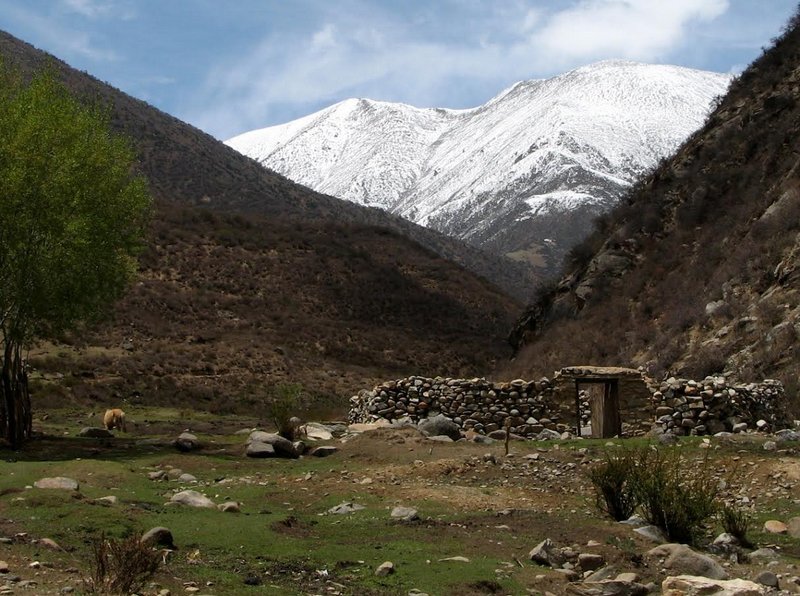
The Tibetan Plateau features ancient stone structures, many of which date back to the First Millennium B.C. McKay Savage, Wikimedia Commons

But this archaeological evidence, according to Bellezza, also opened a window on a civilization that heavily fortified itself from threats both within and without. The struggle for resources in a land where climate gradually changed over preceding millennia from one that was relatively warmer and moist to one that was cold and dry may have played a significant role in this. Competing external and internal forces may have played another. “Most archaic era residential facilities in Upper Tibet were built on unassailable high ground, on inaccessible islands, or in hidden spots, “ writes Bellezza. “This insularity indicates that defense was a preoccupation of the population. Eternal Bon historical sources speak of the martial character of Zhang Zhung society and its political nexus of kings and priests.” Even the priests were depicted in the literature as possessing arms. On the other hand, notes Bellezza, “these literary accounts also hold that the ancient priesthood was very adept in the practice of astrology, divination, magic, and medicine.”*

With much still awaiting discovery and study, Bellezza continues to explore and analyze the massive trove of data he has already compiled on this ancient people. In time, he and other researchers hope, by merging references in the literary sources with the accumulating new archaeological evidence, a sharper focus on an otherwise obscure and ill-understood civilization will emerge.

dawnoftibetpic

Readers can learn more about Zhang Zhung in Belezza’s book, THE DAWN OF TIBET, and in an upcoming article about Zhang Zhung authored by Bellezza in the Fall issue of Popular Archaeology Magazine.

Copyright © 2015POPULAR ARCHAEOLOGY


RED DRAGON – RED CHINA – A TYRANT

RED DRAGON – RED CHINA – A TYRANT

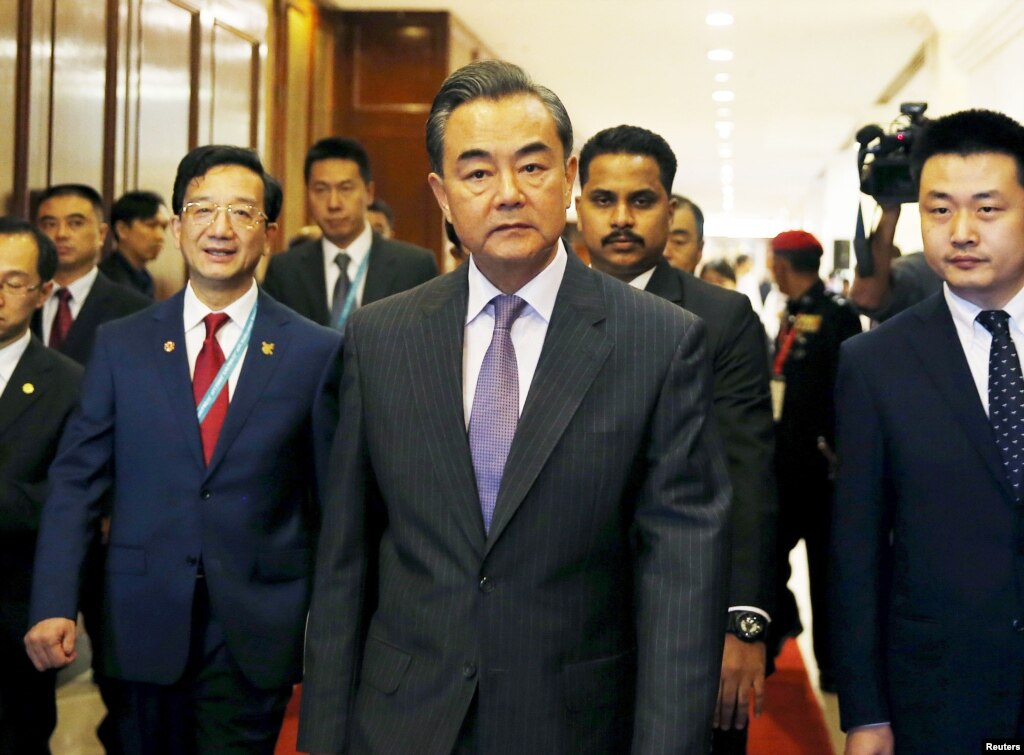
US Secretary of State John Kerry (L) and China's Foreign Minister Wang Yi talk before a bilateral meeting at the Putra World Trade Center August 5, 2015 in Kuala Lumpur, Malaysia.  REUTERS/Brendan Smialowski/Pool
US Secretary of State John Kerry (L) and China’s Foreign Minister Wang Yi talk before a bilateral meeting at the Putra World Trade Center August 5, 2015 in Kuala Lumpur, Malaysia. REUTERS/Brendan Smialowski/Pool

Red China’s acts of aggression alarm her neighbors and nations of Southeast Asia are trying their best to convince Red China about the nature of her acts. It is not easy to persuade a tyrant for a tyrant will always find a pretext to justify own actions and find fault with others if they complain about it. Red China is a danger to peace and tranquility in Southeast Asia and she must be quarantined until such time she recovers from her disease called ‘AGGRESSION’.

Rudranarasimham Rebbapragada
Ann Arbor, MI 48104-4162, USA
The Spirits of Special Frontier Force

 
  image          
The Spirits of Special Frontier ForceAt Special Frontier Force, I host ‘The Living Tibetan Spirits’ to promote Tibet Awareness. I…
 
View on www.facebook.com Preview by Yahoo


US, China bicker over territorial claims in South China Sea

Associated Press

By MATTHEW LEE and EILEEN NG 


China’s Foreign Minister Wang Yi, right, listens while U.S. Secretary of State John Kerry talks before a bilateral meeting at the Putra World Trade Center in Kuala Lumpur, Malaysia Wednesday, Aug. 5, 2015. (Brendan Smialowski/Pool Photo via AP)

China’s Foreign Minister Wang Yi, right, listens while U.S. Secretary of State John Kerry talks before a bilateral meeting at the Putra World Trade Center in Kuala Lumpur, Malaysia Wednesday, Aug. 5, 2015. (Brendan Smialowski/Pool Photo via AP)

KUALA LUMPUR, Malaysia (AP) — The United States and China clashed Wednesday over who is to blame for rising tensions over territorial disputes in the South China Sea with Washington demanding a halt to “problematic actions” in the area and Beijing telling foreign parties to keep out.

In blunt but diplomatic terms, U.S. Secretary of State John Kerry and his Chinese counterpart Wang Yi suggested that efforts to ease tensions over competing claims remained a contentious work in progress despite hopes for movement on ways to resolve them here at a Southeast Asian regional security forum.
Kerry urged China to end provocative land reclamation projects in the South China Sea that have ratcheted up tensions with its smaller neighbors in some of the world’s busiest commercial sea lanes.
Wang, meanwhile, sent a strong message that those without claims, such as the United States, should allow China and the other claimants to deal with them on their own.
Kerry told foreign ministers of members of the Association of Southeast Asian Nations that the U.S. shares their desire “to ensure the security of critical sea lanes and fishing grounds, and we want to see that disputes in the area are managed peacefully and on the basis of international law.” A senior U.S. official said Kerry made the case for easing tensions in a closed-door meeting with Wang.
In his meeting with Wang, Kerry reiterated U.S. concerns about the rising tensions and “China’s large-scale reclamation, construction, and militarization of features,” according to the senior U.S. official.
The official said Kerry had “encouraged” China, and the other claimants, “to halt problematic actions in order to create space for diplomacy.” The official spoke on condition of anonymity because he was not authorized to speak publicly about the private meeting.
Chinese land reclamation in contested waters has irked Southeast Asian nations who, like the U.S., want China to stop. Washington is calling for a halt to aggressive actions by China and other claimants to allow a diplomatic solution to the rift. The U.S. is not a party to the conflict but says a peaceful resolution of the problem and freedom of navigation are in the U.S. national interest.
China rejects any U.S. involvement and insists it has the right to continue the reclamation projects. Beijing was opposed to the issue being raised at the security forum in the first place.
Kerry told the ASEAN ministers that his meeting with Wang had been “good” and that he hoped “we will find a way to move forward effectively, together, all of us” over the course of the two-day forum.
But Wang gave no indication he had been swayed by Kerry, telling reporters later that foreign parties should support Beijing and ASEAN’s plan to accelerate negotiations on a code of conduct governing behavior in the disputed waters.
“We want to send a clear message to the international community that China and ASEAN have the capability and wisdom to resolve this specific issue between us,” he told a news conference. “We shouldn’t allow the South China Sea region to be destabilized.”
He said that China is committed to a peaceful solution through “rules and mechanisms already in place.” He also pledged that China will uphold freedom of navigation and overflight at sea. “There has not, and will not be any problem in this regard,” he said.
However, ASEAN members have complained that although China has pledged to start substantive negotiations with them on a code of conduct governing behavior in the resource-rich and busy waterways, there is a gap between its pledge and the situation on the ground.
China, Taiwan and several ASEAN members — the Philippines, Malaysia, Vietnam and Brunei — have wrangled over ownership and control of the South China Sea in a conflict that has flared on and off for decades.
Tensions rose last year when China began building artificial islands in the Spratly Islands, which the U.S. and Beijing’s rival claimant countries fear could impede freedom of navigation and overflights in a major transit area for the world’s oil and merchandise.
The disputes have led to deadly confrontations between China and Vietnam, and Washington and governments in the region are concerned that greater military deployments increase the risk of miscalculations and accidental clashes that could spiral out of control.
U.S. officials say China has reclaimed more than 3,000 acres (1,200 hectares) in the last 18 months alone. That figure dwarfs the 100 acres (40 hectares) that Vietnam, Malaysia, the Philippines and Taiwan have reclaimed in disputed areas over the last 45 years.
Wang bristled when asked about calls for China to halt its island-building activities.
“China has stopped, China has stopped. You want to see who is building? Take a plane and go see who is still building,” he said.
John Kerry South China Sea China


Copyright 2015 The Associated Press. All rights reserved. This material may not be published, broadcast, rewritten or redistributed.


Yahoo – ABC News Network

RED DRAGON – RED CHINA – HISTORY OF AGGRESSION IN SOUTHEAST ASIA

RED DRAGON – RED CHINA – HISTORY OF AGGRESSION IN SOUTHEAST ASIA

Red China’s acts of aggression in West Philippine Sea or South China Sea have to be examined in the context of Red China’s aggression in Tibet. Red China occupied 965, 000 square miles of Tibetan territory which represents one-quarter of Red China’s landmass. United States has no choice other than that of confronting all aspects of Red China’s aggression.

Rudranarasimham Rebbapragada
Ann Arbor, MI 48104-4162, USA
The Spirits of Special Frontier Force

image
The Spirits of Special Frontier ForceAt Special Frontier Force, I host ‘The Living Tibetan Spirits’ to promote Tibet Awareness. I…
View on www.facebook.com Preview by Yahoo

Kerry raises South China Sea concerns with China’s Wang | Reuters

RED DRAGON – RED CHINA – HISTORY OF AGGRESSION

RED DRAGON – RED CHINA – HISTORY OF AGGRESSION

Red China’s acts of aggression in West Philippine Sea or South China Sea have to be examined in the context of Red China’s aggression in Tibet. Red China occupied 965, 000 square miles of Tibetan territory which represents one-quarter of Red China’s landmass. United States has no choice other than that of confronting all aspects of Red China’s aggression.

Rudranarasimham Rebbapragada
Ann Arbor, MI 48104-4162, USA
The Spirits of Special Frontier Force

image
The Spirits of Special Frontier ForceAt Special Frontier Force, I host ‘The Living Tibetan Spirits’ to promote Tibet Awareness. I…
View on www.facebook.com Preview by Yahoo

Kerry raises South China Sea concerns with China’s Wang | Reuters

THE PROBLEM OF RED CHINA’S AGGRESSION IN WEST PHILIPPINE SEA

THE PROBLEM OF RED CHINA’S AGGRESSION IN WEST PHILIPPINE SEA

RED CHINA'S AGGRESSION IN WEST PHILIPPINE SEA DEMANDS FULL UNDERSTANDING OF HER EXPANSIONIST POLICY.
RED CHINA’S AGGRESSION IN WEST PHILIPPINE SEA DEMANDS FULL UNDERSTANDING OF HER EXPANSIONIST POLICY.

I am pleased to note that United States is giving support to Philippines to confront the problem of Red China’s aggression in West Philippine Sea. Resolution of this problem demands a proper understanding of Red China’s Expansionist Policy and containing and resisting all manifestations of Red China’s Expansionism. Tibet is Red China’s first victim and Southeast Asia’s nations have to seek justice for Tibetans if they want to protect their own national interests from Red China’s Imperialism.

Rudranarasimham Rebbapragada
Ann Arbor, MI 48104-4162, USA
The Spirits of Special Frontier Force

 
  image          
The Spirits of Special Frontier ForceAt Special Frontier Force, I host ‘The Living Tibetan Spirits’ to promote Tibet Awareness. I…
 
View on www.facebook.com Preview by Yahoo
 
 Close

VOICE OF AMERICA

US, PHILIPPINES URGE END TO ISLAND-BUILDING IN S. CHINA SEA

FILE - Foreign Minister of the Philippines Albert del Rosario (L) and U.S. Secretary of State John Kerry shake hands before a meeting.
FILE – Foreign Minister of the Philippines Albert del Rosario (L) and U.S. Secretary of State John Kerry shake hands before a meeting.

SIMONE ORENDAIN

August 04, 2015 8:17 AM

MANILA—

The Philippines says it will back calls by the United States for a series of measures aimed at reducing tensions in the South China Sea during a regional security forum in Kuala Lumpur Wednesday. Washington wants countries to stop building artificial islands and carrying out military activities.

The Philippines is expected to raise the issue of China’s activities in the South China Sea during meetings of the 10-member Association of Southeast Asian Nations (ASEAN) this week.
Foreign Affairs Secretary Albert del Rosario released a statement Tuesday saying that his country would also endorse a U.S. call for stopping all work on disputed outcroppings and any military activities.

“As a means of de-escalating tensions in the region, the Philippines fully supports and will pro-actively promote the call of the United States on the ‘three halts’ — a halt in reclamation, halt in construction and a halt in aggressive actions that could further heighten tensions,” Del Rosario said.

However, he said the Philippines back those measures only if other claimants, including China, do the same. And he said this does not mean that China’s island construction on at least seven outcroppings is legitimate.

In recent months the U.S. has been raising concerns over China’s project to convert reefs and shoals in the Spratlys into manmade islands.
“This has been the American position for what, almost two years now, saying that everyone should stop developing their particular areas that they hold,” explained Carl Baker, programs director at the Pacific Forum of the Washington-based Center for Strategic and International Studies. “But everybody knows that this is really directed at China.”
China's Foreign Minister Wang Yi arrives at a meeting during the 48th Association of Southeast Asian Nations (ASEAN) foreign ministers meeting in Kuala Lumpur, Malaysia, Aug. 4, 2015.

China’s Foreign Minister Wang Yi arrives at a meeting during the 48th Association of Southeast Asian Nations (ASEAN) foreign ministers meeting in Kuala Lumpur, Malaysia, Aug. 4, 2015.

CHINA’S STANCE

China insists that ASEAN forums are not the place to raise these territorial disputes.

Beijing claimed nearly the entire South China Sea, while the Philippines, Vietnam, Malaysia, Brunei and Taiwan also have overlapping claims. The Philippines has filed a case with the Permanent Court of Arbitration to question what it calls China’s “excessive claims” in the sea. China rejected the case and is not participating.

Baker does not foresee any change in the U.S. position and nor does he see a shift in China’s stance, especially since it already built the islands. He predicts that the standoff will “inhibit security cooperation” in Southeast Asia.

On Monday in Singapore, China’s foreign minister, Wang Yi, downplayed the concerns over Beijing’s island building, which has rapidly built airstrips and buildings on top of what were until recently mostly submerged rocks and reefs.

“At the moment the general situation in the South China Sea is stable, and China is steadfastly committed to working with the parties to maintain the situation which has not come easily. And we will never allow any country to destabilize the South China Sea,” said Wang.

Wang made a pitch for peacefully resolving the disputes through “consultations and negotiations” among what he called “five commitment points” of China regarding the contested sea.

RED DRAGON – RED CHINA’S AGGRESSION IN WEST PHILIPPINE SEA

RED CHINA’S AGGRESSION IN WEST PHILIPPINE SEA

RED DRAGON - RED CHINA - AGGRESSION IN WEST PHILIPPINE SEA. AGGRESSOR MUST BE QUARANTINED.
RED DRAGON – RED CHINA – AGGRESSION IN WEST PHILIPPINE SEA. AGGRESSOR MUST BE QUARANTINED.

At Special Frontier Force, the fact of Red China’s aggression in Tibet is recognized since 1950. Now, Red China’s aggression in West Philippine Sea is attracting media attention unlike Red China’s prolonged military occupation of Tibet. Aggressor nation must be quarantined by placing diplomatic and economic sanctions. Aggression has to be treated like a disease and aggressor has to be isolated from rest of the global community for aggression poses dangers to peaceful existence of all people.

Rudranarasimham Rebbapragada
Ann Arbor, MI 48104-4162, USA
The Spirits of Special Frontier Force

 
  image          
The Spirits of Special Frontier ForceAt Special Frontier Force, I host ‘The Living Tibetan Spirits’ to promote Tibet Awareness. I…
 
View on www.facebook.com Preview by Yahoo


DIGITAL JOURNAL

Protesters condemn China’s aggression in West Philippine Sea 


RED DRAGON - RED CHINA - AGGRESSION IN WEST PHILIPPINE SEA : PROTEST ON JULY 25, 2015. RAFAEL ALUNAN WITH MARTIN DINO BELLE ENRIQUEZ AND DANTE JIMENEZ.
RED DRAGON – RED CHINA – AGGRESSION IN WEST PHILIPPINE SEA : PROTEST ON JULY 25, 2015. RAFAEL ALUNAN WITH MARTIN DINO BELLE ENRIQUEZ AND DANTE JIMENEZ.

By LEO REYES Jul 25, 2015


The West Philippine Sea Coalition has condemned China’s aggression in the West Philippine Sea in a protest rally held along Roxas Boulevard (fronting the West Philippine Sea) in Manila Saturday morning.

Belle Enriquez of West Philippine Sea Coalition

Belle Enriquez of West Philippine Sea Coalition
FB

The coalition members include the Volunteers Against Crime and Corruption (VACC), RAM, Anti-Drugs Advocate, Guardians, Motorcycle Philippines Federation, United Defense Manufacturing Corp., ProGun, SMX Phils and Predator Riders, among others.
The event was the 3rd Annual Day of Protest against China’s bullying in the West Philippine Sea. Simultaneous protests have also been held in London, United States and other cities across the globe.
Anti-China Rally Manila July 25 2015

Anti-China Rally, Manila July 25, 2015
FB

Among others, the West Philippine Sea Coalition cited China’s territorial aggression when it reclaimed (and continues reclaim) reefs, shoals, islets, and other submerged rocks and corals for their exclusive use despite diplomatic intervention by the US, Japan and other ASEAN-member countries.
On the environmental front, the coalition scored China for the massive destruction of the coral reefs in the disputed territories as a result of its ongoing reclamation and construction activities.
The coalition also cited China’s invasion of the Scarborough Shoal, a rich fishing ground located within the 200-mile economic zone of the Philippines.
China’s continued presence in what the Philippines claims as part of its territory had prevented hundreds of Filipino fishermen from traversing the rich fishing ground resulting in their family’s economic displacement.
The coalition lambasted China for being a top source of illegal drugs that continues to be smuggled into the Philippines by Chinese drug lords.
In their short talk during the rally, Top VACC officials Dante Jimenez and Martin Dino together with Anti-Drugs Advocate Jonathan Morales criticized China for having destroyed lives of hundreds of thousands of drug addiction victims in the country.

Former DILG Sec. Rafael Alunan with Nick SoteloFormer DILG Sec. Rafael Alunan with Nick Sotelo
FB

Alunan and leaders of the coalition called on the public to support the case pending before the UN Arbitral Tribunal by educating the people on the merits of the case. At the same time, they also urged the public to call on the nation’s leaders to fast track the development of a credible external defense capability.
Rep. Roilo Golez, who is supporting the coalition has called on the public to boycott made in China products especially garments and buy products that are made in the Philippines.

In London, Gene Alcantara, a longtime immigration adviser and social activist together with concerned Filipinos in UK joined the global protest with their placards denouncing the Chinese aggression at the Chinese Embassy despite heavy rain. Similar protest was also held in Ireland by the Filipino communities there
Gene Alcantara with friends at the Chinese Embassy in London

Gene Alcantara with friends at the Chinese Embassy in London
Gene Alcantara FB

Filipino communities across the US have also participated in the Anti-China protest like the one shown here from the Filipino group in Guam and the Marianas.
Anti-China protest in Guam July 25 2015

Anti-China protest in Guam, July 25, 2015
Gene Alcantara-FB-Pacific News Center

The leaders of the West Philippine Sea Coalition have vowed to continue heightened protests against China’s aggression in the disputed territories through legal and peaceful means.
As part of its campaign to educate the public on the country’s territorial claim, West Philippine Sea Coalition’s Belle Enriquez told Digital Journal that another forum will be held in late August to allow the public to view an ancient map showing the extent of the Philippine coastline.

Red Dragon - Red China aggressor nation - United Nations must act to stop China's Aggression in Southeast Asia.
Red Dragon – Red China aggressor nation – United Nations must act to stop China’s Aggression in Southeast Asia.


Whole Subjugation – The Military Oppression of Tibet is a crime against humanity

The Subjugation of Tibet is a crime against humanity

THE SUBJUGATION OF TIBET : RED CHINA'S ILLEGAL, AND UNJUST OCCUPATION OF TIBET IS A CRIME AGAINST HUMANITY.
THE SUBJUGATION OF TIBET: RED CHINA’S ILLEGAL, AND UNJUST OCCUPATION OF TIBET IS A CRIME AGAINST HUMANITY.

I am pleased to share this article authored by Patrick Boehler, “FROM THE ARCHIVES: DALAI LAMA’S ACCESSION TO THRONE AND FLIGHT TO INDIA” in The New York Times blog called ‘Sinosphere’ that includes dispatches from China. This blog post includes a series of news stories published by The New York Times. Just like India which was part of British Empire for several centuries, Tibet was part of Mongol, and later Manchu China Empires for several centuries. But, at no time India was a part of a national entity called Great Britain. Similarly, at no time Tibet is part of a national entity called China or People’s Republic of China. Red China’s Expansionist Policy and acts of aggression have no legitimacy. Red China’s illegal, unjust military occupation of Tibet is a Crime Against Humanity.

SINOSPHERE : DISPATCHES FROM CHINA

Sinosphere - Dispatches From China

From the Archives: Dalai Lama’s Accession to Throne and Flight to India

BY PATRICK BOEHLER July 6, 2015 7:55 am July 6, 2015 7:55 am

Photo

An op-ed by the Dalai Lama in The New York Times on Feb. 3, 1979.
THE SUBJUGATION OF TIBET: RED CHINA’S ILLEGAL, AND UNJUST OCCUPATION OF TIBET IS A CRIME AGAINST HUMANITY.

An op-ed by the Dalai Lama in The New York Times on Feb. 3, 1979.Credit John Faber

As the Dalai Lama celebrates his 80th birthday on Monday, here is a look at how The New York Times covered his early years as the spiritual leader of Tibet, a time when rare glimpses into the Himalayan territory’s politics came mostly from radio broadcasts from India and a few travelers and missionaries from war-torn China.

In December 1933, The Times reported the death of the Dalai Lama’s predecessor, the 13th in the line of spiritual rulers. That was followed by the start of a mission to find his reincarnation in a newborn child, and by international wrangling for influence in the capital, Lhasa.

“The question of succession has its ramifications in widely separated places,” The Times noted in 1934. “In the offices of the Indian government at Delhi; in the India office of London’s Downing Street; in the Kremlin of Moscow; at Kuomintang headquarters in Nanking; at the Japanese military headquarters in Manchuria; at the court of the Manchu Pu Yi; and in the inner councils of the militarists in Tokyo.”

Sir Francis Younghusband, who had led a British expedition to Lhasa 30 years earlier, described the search for a successor in an article for The Times in 1934. “What changes may come, who can say?” he wrote. “British influence may wane. Chinese influence may wax. Or the reverse may happen. In any case, the Tibetans will strive to preserve their soul.”

The current Dalai Lama was born a year later, in 1935. His discovery as the reincarnation of his predecessor seemingly went unreported. In 1940, The Times carried a report from Lhasa describing the child’s enthronement ceremony.

Photo The first image of the 14th Dalai Lama to appear in The New York Times in 1940.

The first image of the 14th Dalai Lama to appear in The New York Times in 1940.Credit The New York Times

“Wearing a scarlet cloak and riding through reverent crowds in a great golden palanquin, a 6-year-old Chinese peasant boy today was enthroned as the 14th Dalai Lama, chief civil and religious ruler of this monastic kingdom,” The Times wrote.

“Monks from the hundreds of monasteries scattered throughout the kingdom blessed the boy as he passed,” the report added. “The entire city was perfumed by incense burners that lined the route.”

The report noted that a portrait of Sun Yat-sen, the founder of the Chinese republic, and Chinese flags were hung in the throne room to reflect acceptance of Chinese claims of sovereignty over Tibet. In Nanking, officials and monks kowtowed to the Dalai Lama’s image, The Times reported.

The first reports of Chinese Communist forces entering Tibet appeared in The Times in 1950, “blurred by cloudy gulfs of time and distance,” months after Mao Zedong proclaimed the People’s Republic in Beijing.

In November 1950, Indian government sources tole The Times that they had lost radio contact with Lhasa, “now under imminent threat of capture by the invading Chinese Communist forces.” The Dalai Lama had fled the capital, according to the report. A truce, with a reported assurance that Beijing would accept “internal autonomy in Tibet while the Chinese Communists take over the frontier patrol,” was reported on a Times front page in March 1951.

In August 1951, The Times reported the arrival of the Dalai Lama’s brother in the United States. In September, the People’s Liberation Army said it had entered Lhasa. “There is considerable opposition to the Communist regime in Lhasa, according to the latest news received at this border from the Tibetan capital,” a Times correspondent wrote from Kalimpong, in West Bengal, India.

“Resentment against the loss of their ancient freedom to the Chinese Communists smoulders angrily beneath the surface of the present apparent subservience of Tibet to Red occupation,” The Times’s longtime correspondent Robert Trumbull wrote in 1952. “It waits an opportune moment to burst into flame,” as it has always eventually done “in previous Chinese attempts to subjugate the Himalayan Lamaist state.”

Photo The Dalai Lama seen next to Premier Zhou Enlai of China in Beijing in 1954.

The Dalai Lama seen next to Premier Zhou Enlai of China in Beijing in 1954.Credit The New York Times

The same year, it was reported that Soviet engineers planned to rapidly industrialize the territory, starting with a wool processing plant. “This will serve a twofold purpose of providing employment and to some extent reducing Tibet’s dependence on foreign countries, especially the United States, for marketing raw wool,” The Times wrote.

Mr. Trumbull reported that the Dalai Lama openly defied the Chinese authorities in 1953 by refusing to fly the Chinese flag. Still, he stayed in power. “It is known from a high Tibetan source available in India that the Dalai Lama’s position, as the highest spiritual and temporal authority in the Buddhist state, has been too secure with his people for the Communists to override entirely,” Mr. Trumbull wrote.

Photo

The Chinese premier announced the end of the Dalai Lama's rule over Tibet in a radio broadcast in 1959.
THE SUBJUGATION OF TIBET: RED CHINA’S ILLEGAL, AND UNJUST OCCUPATION OF TIBET IS A CRIME AGAINST HUMANITY.

The Chinese premier announced the end of the Dalai Lama’s rule over Tibet in a radio broadcast in 1959.Credit The New York Times
Reports of clashes in Tibet and efforts by Beijing to control the territory increased in frequency during the years leading up to the rebellion of 1959. On March 21, Elie Abel reported the first fighting in Lhasa. “Virtually the entire population of Lhasa had joined rebellious Khamba tribesmen in an unequal struggle against Chinese troops,” Mr. Abel wrote from New Delhi.

In a message broadcast on March 28, Premier Zhou Enlai of China said the Panchen Lama would replace the Dalai Lama, who Mr. Zhou said was being held by rebels, The Times reported. A week later, the newspaper reported the Dalai Lama’s arrival in India, the beginning of the life in exile he has led ever since.

“An envoy of the young god-king had reached the border Sunday, stating that the Dalai Lama had requested political asylum,” The Times reported, adding that the State Department was “greatly pleased” at the news.

Sinosphere, the China blog of The New York Times, delivers intimate, authoritative coverage of the planet’s most populous nation and its relationship with the rest of the world. Drawing on timely, engaging dispatches from The Times’ distinguished team of China correspondents, this blog brings readers into the debates and discussions taking place inside a fast-changing country and details the cultural, economic and political developments shaping the lives of 1.3 billion people.

Copy right 2015 The New York Times Company

RED DRAGON – RED CHINA – RED ALERT – HEGEMONIST

RED DRAGON – RED CHINA – RED ALERT – HEGEMONIST

RED DRAGON - RED CHINA - RED ALERT - HEGEMONIST : UNITED STATES IN RECOGNITION OF RED CHINA'S HEGEMONISM MUST COUNTERACT AND CONTAIN RED CHINA'S INFLUENCE OVER HER WEAK NEIGHBORS.
RED DRAGON – RED CHINA – RED ALERT – HEGEMONIST : UNITED STATES IN RECOGNITION OF RED CHINA’S HEGEMONISM MUST COUNTERACT AND CONTAIN RED CHINA’S INFLUENCE OVER HER WEAK NEIGHBORS.

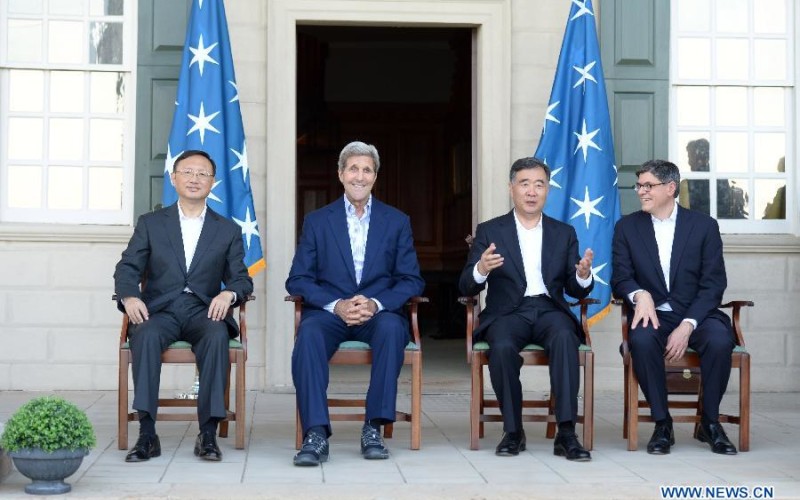
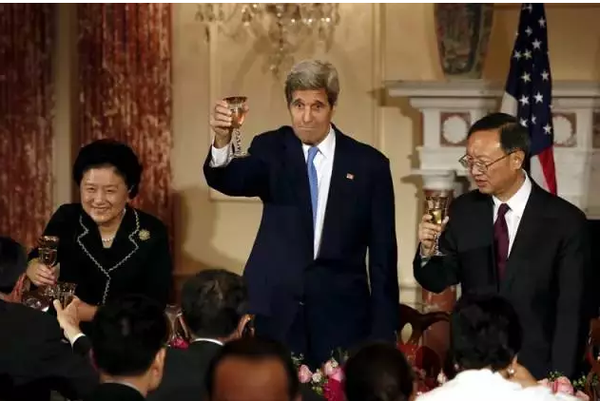
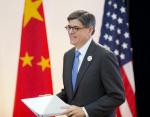
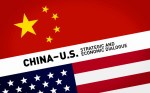
On behalf of Special Frontier Force I issuing a ‘RED ALERT’ to warn US citizens of imminent danger as United States holds three days of cabinet-level meetings with more than 400 Chinese officials. Under the wide-ranging Strategic and Economic Dialogue(S &ED)framework, eight US Cabinet Secretaries are involved in these talks and consultations with Chinese officials. The top Chinese officials meet US President Barack Obama at The White House on Wednesday, June 24, 2015.

RED DRAGON - RED CHINA - RED ALERT - HEGEMONIST : THIS SEVENTH STRATEGIC AND ECONOMIC DIALOGUE BETWEEN UNITED STATES AND CHINA MUST ADDRESS THE PROBLEM OF RED CHINA'S HEGEMONISM.
RED DRAGON – RED CHINA – RED ALERT – HEGEMONIST : THIS SEVENTH STRATEGIC AND ECONOMIC DIALOGUE BETWEEN UNITED STATES AND CHINA MUST ADDRESS THE PROBLEM OF RED CHINA’S HEGEMONISM.

The term ‘HEGEMONY’ describes dominance of one state or nation over others. Hegemonism is the Policy or Practice of a nation in aggressively expanding its influence over other nations. Red China formulated her Hegemonistic Policy in 1950 when she conquered Tibet bringing Tibetan people under her control or subjection. Red China subdued Tibetan Government and forced Tibet’s Head of State to live in exile. Red China’s Hegemonic Practice forces Tibetan people to become subservient to Peking(or Beijing). United States has to recognize Red China as “HEGEMONIST” and counteract to contain Red China’s growing political, economic, military power which she uses to expand her influence over other nations of our world.

Rudranarasimham Rebbapragada
Ann Arbor, MI 48104-4162, USA
The Spirits of Special Frontier Force

image
The Spirits of Special Frontier ForceSpecial Frontier Force is a military organization funded by United States to secure Freedom &…
View on www.facebook.com Preview by Yahoo

U.S. AND CHINA OPEN ANNUAL DIALOGUE WITH ‘CANDID, TO-THE-POINT’ TALKS

BY DAVID BRUNNNSTROM

The United States and China held “candid and to-the-point” talks at the start of three days of cabinet-level meetings aimed at managing the highly complex relationship between the world’s two biggest economies, a senior U.S. official said.

The U.S. side, led on Monday by Deputy Secretary of State Antony Blinken, reiterated U.S. concerns about China’s pursuit of territorial claims in the South China Sea, the official said.

U.S. worries about cybersecurity following massive attacks on government computers that U.S. officials have blamed on Chinese hackers would also be addressed “in very direct terms,” the official said.

red alert us and chinese flags at tiananmen square president obama beijing visit
RED DRAGON – RED CHINA – RED ALERT – HEGEMONIST: US and Chinese flags at Tiananmen Square President Obama’s Peking(Beijing) Visit.


© REUTERS/Petar Kujundzic U.S. and
Chinese national flags flutter on light post at Tiananmen Square ahead of welcoming ceremony for U.S. President Obama, in Beijing

More than 400 Chinese officials are in Washington for the annual talks under the wide-ranging Strategic and Economic Dialogue (S&ED) framework, which will involve eight U.S. cabinet secretaries.

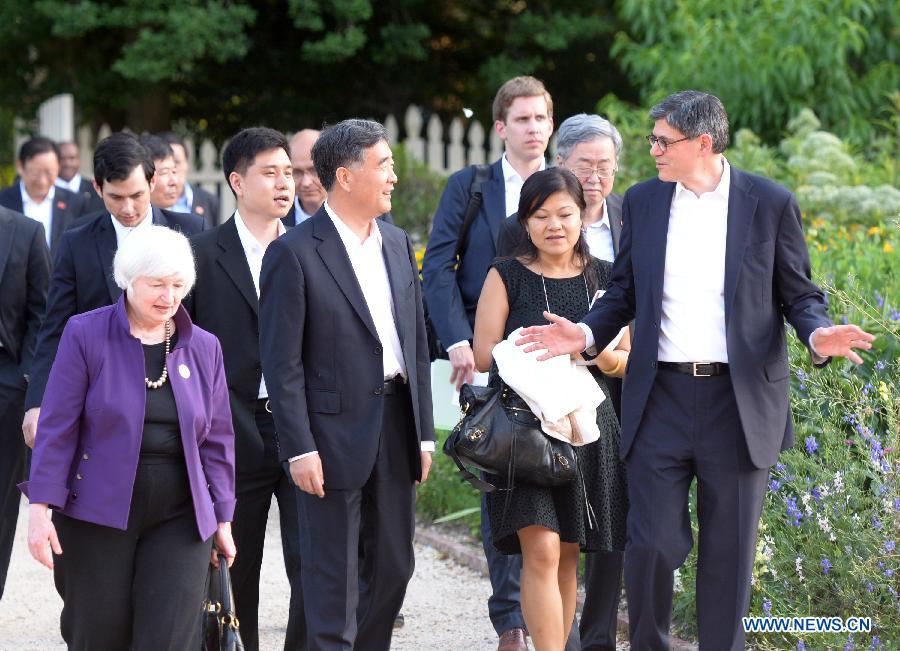
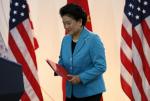
RED DRAGON - RED CHINA - RED ALERT - HEGEMONIST : RED CHINA'S VICE PREMIER WANG YANG IN MT VERNON, VIRGINIA.
RED DRAGON – RED CHINA – RED ALERT – HEGEMONIST : RED CHINA’S VICE PREMIER WANG YANG IN MT VERNON, VIRGINIA.

The meetings come at a time of waning trust and widening differences between the two countries, even though they maintain robust economic ties worth $590 billion in two-way trade last year.

U.S. concerns have been mounting about Beijing’s challenge to its dominance of global finance and about restrictions on U.S. businesses in China.

U.S. President Barack Obama is struggling to secure backing from Congress for legislation needed to speed a 12-nation trade deal, which is the economic plank of his Asia policy intended as a counterweight to China’s growing influence.

The two sides will try to ease tensions by stressing areas of cooperation, including climate change, shared concerns about Iran and North Korea’s nuclear programs, the fight against Islamist militancy, and support for global development.

“We have agreed with the Chinese that we are going to try to expand those areas where our interests overlap and expand cooperation in those areas,” the U.S. official said. But the aim was not to “paper over” contentious issues, or to “agree to disagree,” but to narrow differences to avoid miscalculations.

Despite the considerable areas of tension, China is hoping for a smooth set of meetings to prepare for a visit to Washington by President Xi Jinping in September.
Prospects for substantial outcomes from the cabinet-level meetings appeared slim, with any scant progress likely to be held over for announcement during Xi’s visit, analysts said.

The sides are expected to discuss a Bilateral Investment Treaty that has been seven years in discussion but has been held up by restrictions on both sides, while China is likely to press its bid to add the yuan to the International Monetary Fund’s basket of reserve currencies.

Blinken and Secretary of State John Kerry will chair the security side of the talks with State Councillor Yang Jiechi and Vice Foreign Minister Zhang Yesui on the Chinese side.

RED DRAGON - RED CHINA - RED ALERT - HEGEMONIST: BEAWARE OF RED CHINA'S HEGEMONISM.
RED DRAGON – RED CHINA – RED ALERT – HEGEMONIST: BEAWARE OF RED CHINA’S HEGEMONISM.


U.S. Treasury Secretary Jack Lew and Chinese Vice Premier Wang Yang will chair the economic elements, and the top Chinese officials will meet Obama at the White House on Wednesday.

(Reporting by David Brunnstrom; Additional reporting by Jason Lange, Krista Hughes, Anna Yukhananov, Megan Cassella and Idrees Ali in Washington and Michael Martina in Beijing; Editing by Christian Plumb)