WHAT IS MILITARY INTELLIGENCE? TIBET’S INDEPENDENCE IS INDIA’S SECURITY

TIBET’S INDEPENDENCE IS INDIA’S SECURITY


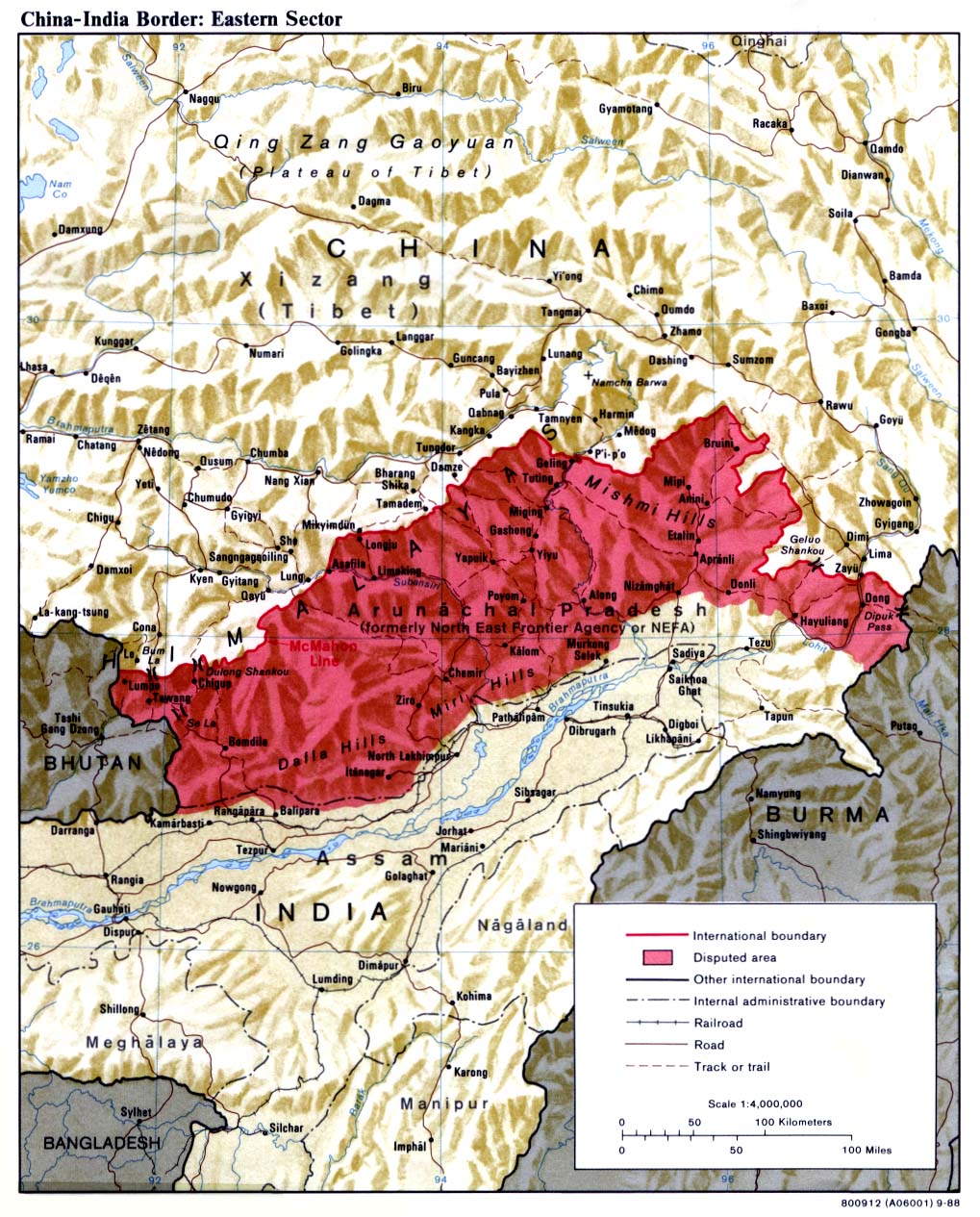
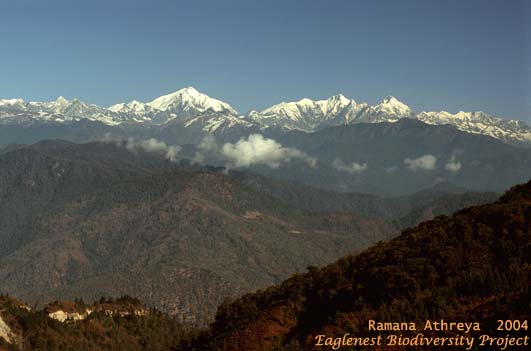
Tibet’s Independence is India’s Security. The Gorichen Range, the highest mountain range of the Arunachal Pradesh separates Tibet from Tawang in India.
TIBET’S INDEPENDENCE IS INDIA’S SECURITY. People’s Republic of China claimed Indian territories of Aksai Chin and Arunachal Pradesh.

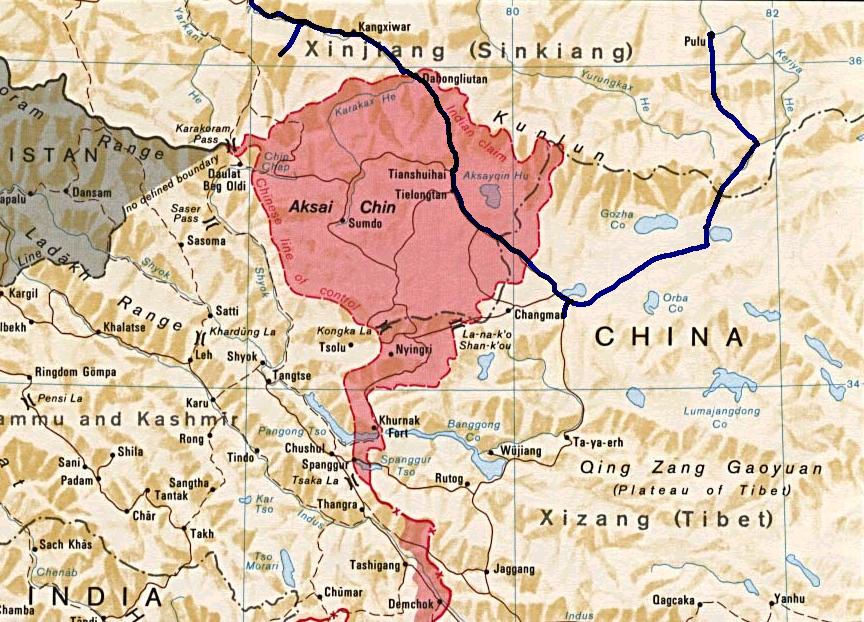
On October 22, 2010, People’s Republic of China has launched an official online mapping service and has formally claimed the entire state of ‘Arunachal Pradesh’ and Aksai Chin region of India’s Ladakh region of the State of Jammu and Kashmir as its own territory. Beijing claims Arunachal Pradesh and has named that area as ‘Southern Tibet’. The Simla Agreement of 1914, and the McMahon Treaty between British India, Tibet, and Manchu China had established the McMahon Line as the legitimate boundary between India and Tibet. Tawang in Arunachal Pradesh was under Tibetan domination during early 19th century. Tibetans consider Tawang as holy land as their Sixth Dalai Lama, Tsang Yang Gyatso ( The Precious Ocean of Pure Melody ), a great poet was born there during 1683. However, the 13th Dalai Lama had ceded this territory to British India and had agreed that McMahon Line determines the Indo-Tibetan border. During Communist China’s unilateral military attack on India in 1962, the Indian government had declared that McMahon Line as the official boundary between India and Tibet which came under China’s military occupation since 1950.  

The Security of Arunachal Pradesh is better served by Tibet’s Independence. Tibet’s Independence is India’s Security.
Birthplace of Tsangyang Gyatso, 6th Dalai Lama, Tawang, Arunachal Pradesh, India. Tibet’s Independence is India’s Security.
McMahon Line in Aksai Chin of Ladakh is the boundary recognized by India. Tibet’s Independence is India’s Security.
The McMahon Treaty of 1914 and the McMahon Line establish the boundary between India and Tibet. Tibet’s Independence is India’s Security.
To defend Northeast India, to curb the activities of insurgents and rebels, India must support Tibet’s Independence. Tibet’s Independence is India’s Security.

India and China have already held 13 rounds of talks to resolve the boundary issue. General Shankar Roychowdhury, PVSM, ADC  served as India’s Chief of Army Staff from 22 November 1994 to 30 September 1997. In a recent article published in The Asian Age, he described  problem of the future security of Arunachal Pradesh. So also, India’s Chief of Army Staff, General V K Singh while addressing a seminar on “Indian Army : Emerging Roles and Tasks” on October 19, 2010 said that China and Pakistan are “irritants” for India.  

General Shankar Roychowdhury, PVSM, ADC was India’s 20th Chief of Army Staff. Tibet’s Independence is India’s Security.
General Vijay Kumar Singh, AVSM, India’s 26th Chief of Army Staff. Tibet’s Independence is India’s Security.

TIBET’S INDEPENDENCE IS INDIA’S SECURITY : SPECIAL FRONTIER FORCE DEFENDING FREEDOM AND DEMOCRACY IN TIBET:


Lieutenant General Dalbir Singh AVSM VSM, General Officer-in-Command, Eastern Command of Indian Army had served as the Inspector General of Special Frontier Force prior to his promotion to the rank of Lieutenant General. He may be aware of the Primary Mission of Special Frontier Force.
Lieutenant General Dalbir Singh Suhag AVSM VSM, General Officer-in-Command, Eastern Command of Indian Army served as the Inspector General of Special Frontier Force from April 2009 to March 2011 in the rank of Major General. Tibet’s Independence is India’s Security.
TIBET'S INDEPENDENCE IS INDIA'S SECURITY. GENERAL DALBIR SINGH SUHAG AVSM VSM, INDIAN ARMY CHIEF OF STAFF KNOWS INDIA'S ENEMIES.
TIBET’S INDEPENDENCE IS INDIA’S SECURITY. GENERAL DALBIR SINGH SUHAG AVSM VSM, INDIAN ARMY CHIEF OF STAFF KNOWS INDIA’S ENEMIES. TIBET’S INDEPENDENCE IS INDIA’S SECURITY.


TIBET’S INDEPENDENCE IS INDIA’S SECURITY.

China’s military occupation of Tibet in 1950 has subjected India to a variety of pressures. India will forever be subjected to pressures: militarily, politically, environmentally, and now, sharing of River waters if Tibet remains under Chinese military occupation. India, for its own Security, and for the future Security of Arunachal Pradesh needs Tibet to exist as a ‘Buffer Zone’ between India and China. Tibetan People have their legitimate Rights to defend their own Culture, Religion, Language, National Identity, Tibetan Buddhist Institutions and historical freedom to their own way of life. People of the entire Free World must come together and demand Tibet’s Independence from illegal Chinese occupation. The bilateral trade and commerce between China and India has allowed China to loot and plunder India’s natural resources without firing a bullet. China has colonized India and is exploiting its natural resources without the need for military occupation. China may not launch or initiate a large-scale military invasion of India as long as this lucrative trade in minerals and manufactured goods flourishes. However, India cannot afford to ignore this security threat and risk posed by China’s military occupation of Tibet. Tibet’s Independence would be in India’s interest and it would be India’s Security. 

THE SPIRITS OF SPECIAL FRONTIER FORCE:

I would invite all readers of this blog post to visit Facebook Page of The Spirits of Special Frontier Force and “LIKE” the Page to show their support for establishing Freedom and Democracy in Occupied Tibet.

Rudranarasimham Rebbapragada,

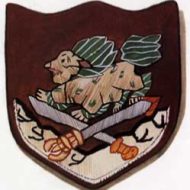
SPECIAL FRONTIER FORCE


THE ASIAN AGE: 

Oct 19th, 2010  

General Shankar Roychowdhury  

All wars commence in the mind, and escalate with words. “Zhang Nan” or “Southern Tibet”, the designation bestowed by the People’s Republic of China on India’s state of Arunachal Pradesh bordering Tibet, is one such example. China now claims Arunachal Pradesh as its historic territory comprising the three southern districts of the Tawang Tract unilaterally acquired by the then British Empire after the Treaty of Simla in 1913. New demands, which were first articulated around 2005, initially concerned Tawang as a traditional tributary region of Lhasa, being the birthplace of the Sixth Dalai Lama (Tsangyang Gyatso, enthroned 1697, probably murdered 1706 by Mongol guards who were escorting him to Beijing under arrest). Subsequently, a day prior to the visit of China’s President Hu Jintao to India in 2006, Sun Yuxi, the then Chinese ambassador to India, stridently reiterated in public China’s claims to the entire state of Arunachal Pradesh in a deliberately provocative gesture designed to put New Delhi on notice of Beijing’s intention to dominate the agenda of interaction according to its own priorities. In a longer-term perspective, these needlessly provocative claims could escalate to a flash point with the potential to provoke a major confrontation between the two countries, and create an existential crisis for the entire region, a contingency for which India has to prepare itself adequately.  

Indian reaction has been characteristically muted, constantly choosing to soft pedal and play down the issue — a unilateral gesture of restraint regardless of the degree of blatant provocation, which exasperated many in this country. It is seen as making a virtue out of necessity, because India has neglected to build up the requisite capabilities to adopt stronger alternatives. This is surely an unenviable position for a country seeking to promote itself as a major power for a permanent seat on the Security Council.  

The present Sino-Indian equation is almost irresistibly reminiscent of the run-up to the Sino-Indian border war of 1962, and provides a fascinating playback of China’s postures at that time with its disconcertingly similar sequence of claims along the McMahon Line in North East Frontier Agency (Nefa), as well as along the Uttar Pradesh-Tibet border and in Ladakh, as relics of historic injustices perpetrated in earlier days by British imperialists. A naive and militarily ill-prepared India, with an exaggerated self-image of its own international relevance as a leader of the Non-Aligned Movement, had sought to dissuade a determined China with platitudinous Nehruvian philosophies of anti-colonial solidarity, all of which were contemptuously disposed of by “a whiff of grapeshot” on the desolate slopes of the Namkha Chu and Rezang La. India’s collapse and comprehensive downsizing in short order in 1962 was primarily because it lacked military capability vis-a-vis China, a fatal flaw which has a disconcerting tendency of repeating itself when lessons of earlier debacles wear off from the country, as they seem to be doing now. “1962 redux” is slowly grinding into gear again, with end results unforeseeable, except that an enhanced replay at some stage (2020?) can never be totally discounted. India must not repeat its follies of the past because this time around it has been adequately forewarned.  

To recover and reunify what it perceives as its lost territories, notably Tibet and Taiwan, the People’s Republic of China has never swerved from its other such claims pertaining to areas along the Sino-Soviet and Sino-Indian borders, besides smaller island entities in the South and East China Seas, to which has now been added the complete territory of India’s Arunachal Pradesh under its new Chinese appellation.  

India has to evaluate the threat potential of the situation dispassionately but realistically, having reference to China’s demonstrated determination to set its own history in order. Tibet was successfully concluded in 1950 when the People’s Liberation Army marched into the country against a feeble and disjointed resistance, and re-established China’s authority. Taiwan has been an infructuous effort so far only because of the massive support and protection of the United States, which has guaranteed the independence of that country with the presence of its Seventh Fleet.  

The border of Arunachal Pradesh, and Ladakh cannot be resolved through diplomacy and mediation (again as in 1962), India will be left with starkly limited options — either capitulation to China, or military defence of its territory. In the latter contingency, even a speculative overview would suggest that for India a full-fledged Sino-India war would likely be a “two-and-a-half front”, with Pakistan and China combining in tandem, and an additional internal half front against affiliated terrorist networks already emplaced and functional within the country. For India it would be a combination of 1962, together with all of India’s wars against Pakistan (1947-65, ’71 and ’99), upgraded to future dimensions and extending over land, aerial, maritime space and cyberspace domains. Nuclear exchange at some stage, strategic, tactical or both, would remain a distinct possibility, admittedly a worst case, but one which cannot be ignored. The magnitude of losses in terms of human, material and economic costs to all participants can only be speculated upon at present.  

China is obviously very much ahead of India in military capabilities, a comparative differential which will be further skewed with Pakistan’s resources coming into play. India has to develop its own matching capabilities in short order, especially the ability to reach out and inflict severe punitive damage to the heartlands of its adversaries, howsoever distant. There would be national, regional and international repercussions that would severely affect the direct participants as also close bystanders like Nepal, Bangladesh and Bhutan, if not countries further afield as well.  

Any future Sino-Indian conflict is a doomsday scenario, straight out of Dr Strangelove, a zero-sum calculus that must not allowed to occur. China must restrain itself regarding its alleged claims to India’s Arunachal be Pradesh. History has moved on — attempts to reverse it are futile.  

Gen. Shankar Roychowdhury is a former Chief of Army Staff and a former Member of Parliament.
  

Whole Trouble – The Great Trouble of Tibet Tourism

The Great Trouble posed by Tibet Tourism

The Great Trouble posed by Tibet Tourism

Tibet is a fascinating place for a variety of reasons; the Land, the Climate, the People, the Culture, its religion, its traditions to name a few. But, there is this ‘Trouble’ in Tibet. I am not opposed to the idea of tourism that can bring people together. To bring people together, Tibet needs Freedom from Occupation. Tibet Tourism will be meaningful if it helps to emancipate Tibetans from tyranny. I thank Ms. Elissa Garay, Cruise Critic Contributor for her thoughtful review.

The Great Trouble posed by Tibet Tourism: The Chinese national flag is raised during a ceremony marking the 96th anniversary of the founding of the Communist Party of China (CPC) at Potala Palace in Lhasa, Tibet Autonomous Region, China, July 1, 2017. CNS/He Penglei via REUTERS/Files

Tibet Cruise Tour Tips

Dreams of touring to Tibet’s snow-capped peaks and Buddhist temples might not instinctively point you in the direction of a river cruise line, but you’d be remiss to overlook this exceptional possibility. Most river cruise companies with a presence in China combine their Yangtze River sailings (known for the scenic landscapes of the Three Gorges region and the engineering marvel that is the Three Gorges Dam) with land-based “cruisetour” extensions further into China, with visits to Beijing, Xian and Shanghai the norm. On some exceptional itineraries, Tibet tours are available too.

Mythical Lhasa (elevation 11,975′) is the main entry point and introduction to Tibet for most travelers, and well worthy of the three days’ exploration that most cruise line tours allot here.

Despite the ongoing rush to modernization and disillusioning effects of some six decades of Chinese occupation (a politically sensitive topic), Tibet remains an intrinsically spiritual place, filled with Tibetan Buddhist shrines, symbols and devotees. That mysticism is met by awe-inspiring mountain scenery and the wonderfully humble and friendly Tibetan people, many of whom spend their lives devoted to the accumulation of good karma, and have clearly made great strides to hold onto their cultural identity in the face of great hardships.

Show Cruise Prices

Best Time for Tibet Cruise tours

The main Yangtze cruise season runs from April through October, which corresponds to the scheduled offerings for Tibet cruisetours, too. While the weather along the river is most comfortable — cooler and dryer, that is — in spring and autumn (April-May; September-October), the higher elevations of the Tibetan Himalayan region are most welcoming during the warmer summer months, from June through August (even if there might be some light rain showers).

Tibet Cruise tour Lines

Viking River Cruises is one of the largest inbound tour operators to Tibet, and is joined by a handful of other companies that tout Tibet cruisetour itineraries, too, including Uniworld, Avalon Waterways, Abercrombie & Kent and G Adventures.

Tibet Cruise tour Itineraries

Tibet cruise tours run 13 to 16 nights in duration, with land-based segments of the trip in Beijing, Shanghai, Xian and sometimes Chengdu, as well as a visit to Lhasa that typically takes up three or four days of the journey. Anticipate this to include a three- to five-night sailing on the Yangtze, as well. Meals, hotels, cruise, guide services and intra-China transport are typically included in the rates.

With the exception of G Adventures, all Tibet cruisetours listed here include a hotel stay at the five-star, 2014-debuted Shangri-La Hotel Lhasa, set within walking distance of the Potala Palace. The 289 spacious rooms offer a sense of place with soothing earth tones, Tibetan design accents and majestic mountain views. A spa, pool and gym round out the offerings, though at nearly 12,000 feet above sea level, you’ll most likely be spending your time in their dedicated “oxygen lounge.” On other tours, Viking also uses the upscale St. Regis Lhasa Resort for lodging, while G Adventures books its guests at the reliable, three-star Dhood Gu Hotel.

Tibet Cruise tour Highlights

For more on Yangtze River cruisetour port highlights beyond Tibet, see Yangtze River Cruise Tips. For the Lhasa portion of the trip, itineraries vary slightly, but you can generally expect the following guided excursions as the core offerings:

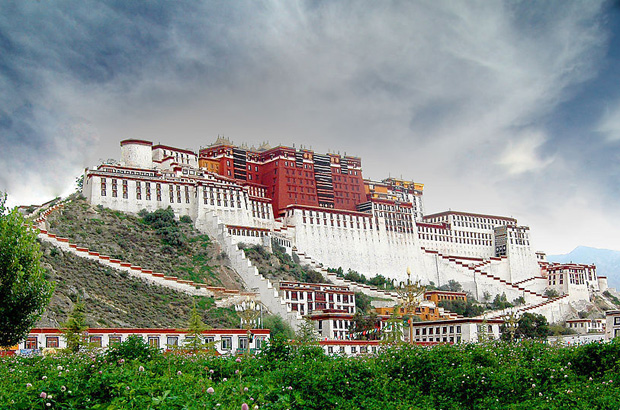
Potala Palace: A sight to behold, both inside and out, this monumental red-and-white hilltop palace welcomes visitors to wander through the 1,000-plus-room former winter residence of Tibet’s long line of Dalai Lamas. The current version dates to the 17th-century, though the site’s significance dates back a millennium further still. Visit the living quarters here of past Dalai Lamas, the spiritual and political leaders of Tibet, who are believed to be reincarnated manifestations of an enlightened bodhisattva (unfortunately, the current Dalai Lama has lived in exile in Dharamsala, India, since 1959). Find, too, a series of sacred shrines and chapels, with impressive imagery and statuary, as well as the astonishing, towering gilded stupa tombs that contain the mummified remains of Tibet’s previous Dalai Lamas.

Jokhang Temple: The holiest temple within Tibetan Buddhism, and a popular place of pilgrimage, this nearly 1,400-year-old temple comes filled with shoulder-to-shoulder devotees and a palpable sense of faith. Join pilgrims as they venerate religious images and ancient statues (including the highly revered Jowo Rinpoche statue of a youthful Buddha), the air thick with incense and the glow of yak-butter lamps. Don’t miss the inspiring rooftop views over Lhasa and the surrounding mountain ranges.

The Barkhor: Circling the exterior of the Jokhang Temple, this ancient pathway marks a sacred kora for Tibetan pilgrims, as they circumambulate the temple in procession, filling the street with a sense of wondrous devotion. The scene is ethereal and animated (people-watching doesn’t get much better than this), as the faithful prostrate, spin prayer wheels and chant en route. Lining the pedestrianized path, too, are a series of stalls selling bargain-ready wares: prayer flags and beads, handmade jewelry and more.

Sera Monastery: This 15th-century Gelugpa mountainside monastery is the site of a trio of monastic colleges and home to about 500 monks in training (though it once housed 5,000). Of special interest to visitors is the huge assembly hall, where just outside, on weekday afternoons, monks engage in spirited debates (complete with stomping and hand gestures) meant to test their level of study.

Tibet Museum: Overlook the Chinese propaganda (the history of Tibet is rewritten to glorify Chinese policies here), and you’ll be rewarded with close-up views of ancient Tibetan artifacts, as well as insight into local culture. Statues of Buddha, handicrafts, thangkas (paintings on cloth), musical instruments and more span Tibetan history, with certain objects dating as far back as Neolithic times.

Home Visit: Several itineraries (including Viking, Uniworld and Avalon’s) incorporate home visits to see how locals live. Our visit with Viking to a traditional Lhasa dwelling included samplings of traditional yak-butter tea (an acquired taste, for sure) and home-brewed barley beer, and a peek into the family’s elaborate home shrine (apparently, the norm throughout the country).

Tibet Cruise tour Tips

There are a few special considerations for travel to Tibet:

China occupies Tibet. China’s controversial claim to Tibet came to a head in 1959, when the Chinese occupation (or, so-called “liberation,” according to the Chinese) ultimately led to the loss of Tibetan sovereignty, the exile of the Dalai Lama to India and the country transforming into a special administrative region of China. Today, China claims Tibet as an “inalienable part of China,” and the ongoing encroachment of the Chinese is apparent in the sheer number of Han Chinese (the ethnic majority in China) who now live and work there. This ongoing political situation marks a painful and sensitive topic, and not one that Tibetans are permitted to speak freely about (our local guides had to divert guests’ questions several times); respect these restrictions, as guides and other local Tibetans can risk persecution and other repercussions from the Chinese authorities. You’ll no doubt notice the military presence, Chinese-led construction projects and distinct Chinese and Tibetan sections of the city; be sure to read up on the disturbing past rife with sad tales of genocide and cultural destruction. However, it’s worth noting that the Dalai Lama encourages tourism to the region, citing the importance for travelers to learn more about Tibet, its people and the reality of life on the ground there.

Tibet visitors need travel permits. Political sensitivities in the region have accordingly led to strict travel restrictions. Foreign travelers are prohibited from visiting Tibet independently and must arrange for travel through a guided group tour, like those on offer with these cruise lines; all necessary travel permits are typically arranged as part of the tour booking.

Beware of altitude sickness. While most itineraries afford three days on the ground in Lhasa, be forewarned that you’re more than likely to need the first day for acclimation (tour stops are usually scheduled accordingly on the second and third days). It’s a frustrating feeling to make the epic journey to Tibet and then be stuck in your hotel room, but for the first full day on the ground there, even the effort of walking from the bed to the bathroom may leave you winded and light-headed (about three-quarters of our tour group experience some form of altitude sickness, some more serious than others). Don’t underestimate your limitations in extreme elevations, and consider talking to your doctor about treatments (like Diamox) that might be right for you to help alleviate symptoms.

–By Elissa Garay, Cruise Critic contributor

Trouble in Tibet – Tibet Tourism will be meaningful if it emancipates Tibetans from tyranny.
Trouble in Tibet – Tibet Tourism has to help people to come together without barriers imposed by tyranny.
Trouble in Tibet – Tibet Tourism and Tibet’s Subjugation. People need to come together to deliver Tibetans from the Yoke of Occupation. Lhasa, Tibet.
tibet open to foreign tourists 2011, Tibet China Travel News - Easy ...
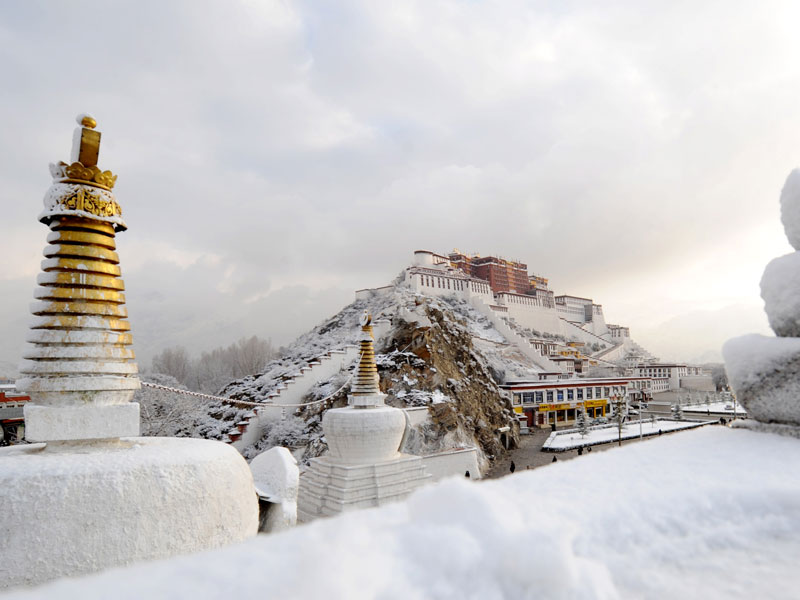
Trouble in Tibet – Tibet Tourism can deliver Tibetans from tyranny if people come together. Potala Palace, Lhasa belongs to the Dalai Lama, the Supreme Ruler of Tibet.
Trouble in Tibet – Tibet Tourism may bring Blessings of Freedom if people come together to oppose Chinese Occupation.
Trouble in Tibet – Tibet Tourism during Changing Seasons. How to change repressive regime controlling Tibetan lives? Potala Palace belongs to the Dalai Lama, the Supreme Ruler of tibet.
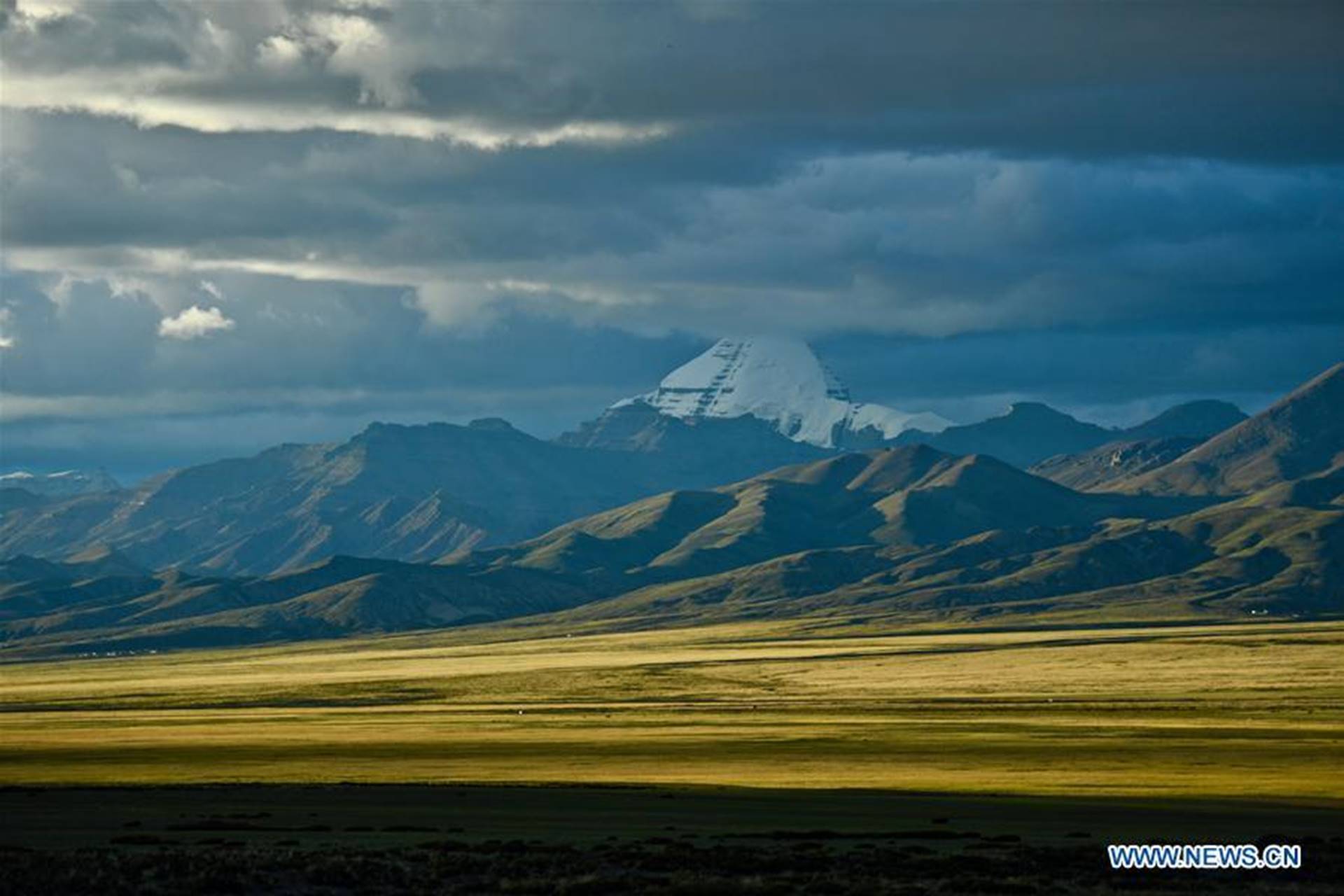
The Story of Tibet relates to The Origin of Man. Mount Kailash in Tibet is associated with The Beginning of Anatomically Modern Man.
Trouble in Tibet – Tibet Tourism – Tibet Experience. Tsedang Yombulagang Palace. Choose Freedom For Tibetans.
Trouble in Tibet – Tibet Tourism – Tibet Experience. Freedom from Tyranny.
Trouble in Tibet – Tibet Tourism must bring people together to uplift Tibetans from trouble.