Tibet is a fascinating place with equally fascinating people. The following tribute to musician David Bowie (January 08, 1947 to January 10, 2016) captures an interesting facet of this artist.
Tibet is a fascinating place with equally fascinating people. The following tribute to musician David Bowie (January 08, 1947 to January 10, 2016) captures an interesting facet of this artist.
Rudra Narasimham Rebbapragada Ann Arbor, MI 48104-4162 USA Special Frontier Force-Establishment 22-Vikas Regiment
PATHEOS
David Bowie’s fascination with Tibet and Buddhism
January 11, 2016 by JUSTIN WHITAKER
With the very sad passing of the great David Bowie, tributes have poured in from around the world. Bowie, as the NYTimes writes, “Transcended Music, Art and Fashion.” Among them a number have noted his youthful connections with Buddhism, which was growing in popularity in the England of the 1960s. Of particular interest is an in-depth blog dedicated to the songs of Bowie, aptly named “Pushing Ahead of the Dame: David Bowie, song by song.” In one post there, the author, Chris O’Leary, recounts Bowie’s early fascination with the Tibet and Buddhism of Heinrich Harrer’s 1952 book “Seven Years In Tibet”:
David Bowie discovered Buddhism in his early teens, thanks to his step-brother Terry’s beatnik leanings, the novels of Jack Kerouac and a few Penguin paperbacks that gave him the basic schematics of the religion. It was Harrer’s book that set him a-boil: “When I was about nineteen I became an overnight Buddhist,” he recalled in 1997. “At that age a very influential book for me was called “Seven Years In Tibet”…[Harrer] was one of the very first Westerners to ever spend any time in Tibet; in fact, one of the very first Westerners actually to go into Tibet and discover for himself this extraordinary existence and this incredibly sublime philosophy.” “Silly Boy Blue,” Bowie’s first Buddhist song, was inspired by Harrer’s descriptions of Lhasa and the Dalai Lama’s winter palace of Potala, the song opening with the yak-butter statues made for celebration days. – Pushing Ahead of the Dame | Seven Years in Tibet
Rod Meade Sperry at Lion’s Roar writes that Bowie nearly became a Buddhist at Samye Ling, the monastery of up-and-coming “Crazy Wisdom” guru Chögyam Trungpa Rinpoche, in Scotland in 1967: “I was within a month of having my head shaved, taking my vows, and becoming a monk,” Bowie has said about that period of his life. But, as the story goes, he was torn and so sought Trungpa’s counsel. His reply to the famous young seeker? That he should remain a musician, for that was how he could be of the most benefit.
Writing for the Guardian in 2013, Sean O’Hagen casts doubt on how influential Buddhism was on the young Bowie:
In the mid to late 1960s, he immersed himself deeply, but often briefly, in whatever caught his imagination, whether Buddhism – he went on a retreat to a Buddhist community in Scotland in 1967 – or mime – studying seriously under Lindsay Kemp, his first artistic mentor.
Aligned to all this cosmic adventurism, though, was his oddly old-fashioned attraction to showbusiness, vaudeville and musicals. As the pop-culture historian Jon Savage points out, Bowie’s eponymously titled debut album, released in 1967, is “almost defiant in the way that it contains almost no trace of contemporary pop modes. Despite Bowie’s deep interest in Buddhism, he had no sympathy with the hippy package: the record was a strange mixture of exaggerated, cockney vocals – inspired both by Anthony Newley and Syd Barrett – intricate arrangements and songs that constantly shifted tone and mood, from horror to farce, from Edwardiana to fairytales and back again.”
At the Hollowverse, Tom Kershaw writes that:
Like so many aspects of this man, Bowie is difficult to pin down–even to himself. By his own account, he’s tried about every religion in the book, saying:
I was young, fancy free, and Tibetan Buddhism appealed to me at that time. I thought, ‘There’s salvation.’ It didn’t really work. Then I went through Nietzsche, Satanism, Christianity… pottery, and ended up singing. It’s been a long road.
But in his advanced years, Bowie’s real spiritual views have come out. He said:
I’m not quite an atheist and it worries me. There’s that little bit that holds on: Well, I’m almost an atheist. Give me a couple of months. [in 2003]
The Hollowverse | The religion and political views of David Bowie
However, returning once more to “Pushing Ahead of the Dame” we find it argued that Buddhism was indeed an influence on early Bowie songs. There O’Leary writes that Bowie “meant for the backing chorus of his [1965] single “Baby Loves That Way” to sound like chanting monks.” Have a listen: And his 1967 “Silly Boy Blue” tells the story of a rule-breaking boy in the streets of Tibet’s capital city Lhasa:
Though some of his colleagues and friends in the late Sixties considered Bowie’s Buddhist leanings to be hip affectations, others saw a more fervent side of him. The journalist George Tremlett and Bowie’s housemate/lover Mary Finnigan attested that Bowie was serious about Buddhism, speaking to them for hours about it. Whether he truly meant to join a Tibetan Buddhist monastery in Scotland, which he visited in late 1967, is very questionable. What’s not is that the symbols of Buddhism, its sutras, its concepts like reincarnation (see “Quicksand”), the Oversoul and astral projection (see “Did You Ever Have a Dream“), were essential to Bowie’s growth as a songwriter. Buddhism gave him a reservoir of imagery to use: it gave him a spiritual scaffolding. Pushing Ahead of the Dame | Seven Years in Tibet
The Chinese invasion and occupation of Tibet further spurred Bowie’s interest in and sympathy for Tibetan Buddhism.
When you’re kind of young and idealist we were protesting the invasion of Tibet by China. And thirty years later they’re still there. Nothing has really moved. And more than anything else it was the lectures that the Dalai Lama has been doing over the last couple of years that really prodded me a bit. Made me feel quite guilty that I’ve known about this situation quite well and quite intimately for many, many years—that I hadn’t actually come out and made my stance on what I feel about it. So I guess that song [Seven Years in Tibet, below] in a way was to make some kind of amends. Bowie, radio interview, 1997. [from Pushing Ahead of the Dame | Seven Years in Tibet]
In that year he released the very dark “Seven Years in Tibet” with lyrics including: ‘Are you OK? | You’ve been shot in the head | And I’m holding your brains,’ | The old woman said…
Speaking of the song, Bowie noted:
The subtext of the song is really some of the desperation and agony felt by young Tibetans who have had their families killed and themselves have been reduced to mere ciphers in their own country. Bowie, 1997. [from Pushing Ahead of the Dame | Seven Years in Tibet]
A figure sitting cross-legged on the floor he’s clogged and clothed in saffron robes His beads are all he owns Slow down, slow down Someone must have said that slow him down Slow down, slow down It’s pictured on the arms of the karma man Karma Man (1967)
R.I.P. David Bowie (January 8, 1947 – Jan 10, 2016)
Copyright 2008-2015, Patheos. All rights reserved.
Tibet is a fascinating place with equally fascinating people. The following tribute to musician David Bowie (January 08, 1947 to January 10, 2016) captures an interesting facet of this artist.
My Dream Trip to Mount Everest gives testimony about True Tibetan Identity
The Supreme Ruler of Tibet cannot be chosen by any foreign government.Whole Dude – Whole Trip: My Dream Trip to Mount Everest gives testimony about True Tibetan Identity.Whole Dude – Whole Trip: The Living Tibetan Spirits Make a Dream Trip to Mount Everest.
In my Dream Trip to Mount Everest or Qomolangma, the mighty mountain gives me testimony in support of true Tibetan Identity. Mount Everest proclaims that Tibet is never a part of China.
Whole Dude – Whole Trip: Mount Everest or Qomolangma is my mighty witness testifying in support of true Tibetan Identity. Mount Everest proclaims that Tibet is never a part of China.Whole Dude – Whole Trip: Mount Everest or Qomolangma is my mighty witness testifying in support of true Tibetan Identity. Mount Everest proclaims that Tibet is never a part of China.Whole Dude – Whole Trip: Mount Everest or Qomolangma is my mighty witness testifying in support of true Tibetan Identity. Mount Everest proclaims that Tibet is never a part of China.Whole Dude – Whole Trip: Mount Everest or Qomolangma is my mighty witness testifying in support of true Tibetan Identity. Mount Everest proclaims that Tibet is never a part of China.Whole Dude – Whole Trip: Mount Everest or Qomolangma is my mighty witness testifying in support of true Tibetan Identity. Mount Everest proclaims that Tibet is never a part of China.Whole Dude – Whole Trip: Mount Everest or Qomolangma is my mighty witness testifying in support of true Tibetan Identity. Mount Everest proclaims that Tibet is never a part of China.Whole Dude – Whole Trip: Mount Everest or Qomolangma is my mighty witness testifying in support of true Tibetan Identity. Mount Everest proclaims that Tibet is never a part of China.Whole Dude – Whole Trip: Mount Everest or Qomolangma is my mighty witness testifying in support of true Tibetan Identity. Mount Everest proclaims that Tibet is never a part of China.Whole Dude – Whole Trip: Mount Everest or Qomolangma is my mighty witness testifying in support of true Tibetan Identity. Mount Everest proclaims that Tibet is never a part of China.Whole Dude – Whole Trip: Mount Everest or Qomolangma is my mighty witness testifying in support of true Tibetan Identity. Mount Everest proclaims that Tibet is never a part of China.Whole Dude – Whole Trip: Mount Everest or Qomolangma is my mighty witness testifying in support of true Tibetan Identity. Mount Everest proclaims that Tibet is never a part of China.Whole Dude – Whole Trip: Mount Everest or Qomolangma is my mighty witness testifying in support of true Tibetan Identity. Mount Everest proclaims that Tibet is never a part of China.Whole Dude – Whole Trip: Mount Everest or Qomolangma is my mighty witness testifying in support of true Tibetan Identity. Mount Everest proclaims that Tibet is never a part of China.Whole Dude – Whole Trip: Mount Everest or Qomolangma is my mighty witness testifying in support of true Tibetan Identity. Mount Everest proclaims that Tibet is never a part of China.Whole Dude – Whole Trip: The Living Tibetan Spirits Make a Dream Trip to Mount Everest.
As my miserable mortal life journey crawls towards its end without giving me any clue about my destination, I can only afford to make a dream trip to Mount Everest. I give my thanks to photographer Bruce Connolly and ChinaDaily.com.Cn for sharing with me the story about ‘A Road Trip Across Tibet to Mount Everest’.
Whole Dude – Whole Trip: The Living Tibetan Spirits Make a Dream Trip to Mount Everest.
Whole Dude – Whole Trip: The Living Tibetan Spirits Make a Dream Trip to Mount Everest.
Lhasa – the start of the road trip in 2000. [Photo by Bruce Connolly/chinadaily.com.cn]
In 2000, Lhasa was a different city in many ways, compared to what it is today. High on the Qinghai-Tibet Plateau, it was much more isolated back then. Its airport, a roughly 90-minute drive from downtown, was at that time the only one operating across all of Tibet. In earlier years, flying into Lhasa had been restricted to early morning flights from Chengdu in Sichuan. By 2000, however, it was well-served by modern, powerful jet aircraft capable of landings and takeoffs at high altitudes, able to cope with occasionally difficult afternoon weather conditions. In recent years several new airports have also opened across Tibet.
Despite the advances in aviation technology, flying into Tibet was expensive. Before the completion of the Tibet railway in 2006, roads were the only feasible option for most freight and passenger traffic. It amazed me during my time in Lhasa how so much that made my stay both pleasant and comfortable must surely have come up to the city by road. Two main highways served Lhasa at the time. From Golmud to Xining, Highway G109 was a long, lonely journey through an empty upland plateau. The other route, Highway G318, runs 5,476 kilometers from Shanghai’s People’s Square, via Sichuan and southeastern Tibet ultimately to Zhangmu, the border crossing with Nepal. I would leave Lhasa along G318 on a road trip initially to the base of Qomolangma, known in the West as Mount Everest.
I noticed several oxygen bags loaded into what was a comfortable but strong SUV. Lhasa was modern and well-planned, but outside the city, infrastructure such as road quality was quite variable. The physical terrain often proved very challenging for highway construction, even between Lhasa and Xigaze, Tibet’s second city. Geologically, much of the area is still active. Landslides remained a danger during the rainy season.
Initially, my departure from Lhasa along G318 followed the road that had brought me a few days earlier from the airport. Nearing the Yarlung Tsangpo Bridge, we turned right for Xigaze. Initially, the route followed a wide valley and the river braided into many channels, with sweeping views toward glacial mountain peaks and ridges. Villages sat near intensively cultivated, irrigated farmland. Then it started narrowing, with scenery becoming increasingly breathtaking. Settlements perched on any patches of level terrain available.
Whole Dude – Whole Trip: The Living Tibetan Spirits Make a Dream Trip to Mount Everest. Yarlung Tsangpo River (Brahmaputra River).
Highway 318 to Xigaze along Yarlung Tsangpo River. [Photo by Bruce Connolly/chinadaily.com.cn]
The road started along a ledge cut below almost vertical cliffs. High gullies were filled with long fingers of snow. Below the road, sheer drops reached the river that appeared to be cascading around huge rocks. Workers tirelessly cleared fallen boulders from roadside ditches. Flocks of sheep and goats also shared the road space, with drivers carefully edging past.
Whole Dude – Whole Trip: The Living Tibetan Spirits Make a Dream Trip to Mount Everest.
A wide section of Yarlung Tsangpo near Xigaze. [Photo by Bruce Connolly/chinadaily.com.cn]
Gradually the valley widened, and the river slowed, allowing flat-bottomed ferry boats to carry villagers across. Both road width and quality improved. Where bridges spanned river junctions, small restaurants and shops had opened, providing supplies for travelers. At intervals, pack horses gathered beside narrow trails leading to seemingly inaccessible villages.
Eventually, the valley really did widen and the waters calmed, becoming almost lake-like. A tugboat pulled a pontoon carrying vehicles across to the far shore. Some of the landscape appeared as a small sandy desert with protective trees planted along the highway. I noticed poles being erected to carry electricity to some villages while concrete-lined aqueducts helped irrigate reclaimed land for arable farming.
Rounding a bend, I saw a concentration of modern buildings, some even medium-rise. We arrived at Xigaze, at an altitude of 3,836 meters, the highest city I had ever reached. Since that 2000 road trip, travel to and from Xigaze has greatly improved. Not only has the road been upgraded but the railway has been extended from Lhasa and a modern airport opened. Partly in response to such infrastructure investments, tourism has grown significantly, not just to Xigaze but across much of Tibet.
Whole Dude – Whole Trip: The Living Tibetan Spirits Make a Dream Trip to Mount Everest.
I stayed at the Xigaze-Shandong Hotel, which then was the city’s tallest building. I discovered at that time a certain arrangement existed, where the more developed parts of China were paired up with areas of Tibet to assist in regional assistance programs such as infrastructure projects. Xigaze had relationships with Shanghai and Shandong, Lhasa with Beijing, and so on.
It was an unexpected joy to find excellent accommodation in what in theory was then a remote location. After a spicy Sichuan-style lunch in the hotel, I spent the afternoon visiting Tashi Lhunpo Monastery. Founded in 1447, it was the traditional seat of the Panchen Lama — Panchen meaning “great scholar”, the title bestowed on the abbots of Tashi Lhunpo.
Whole Dude – Whole Trip: The Living Tibetan Spirits make a Dream Trip to Mount Everest. Paying respects to Lord Maitreya at Tashi Lhunpo Monastery.
I was spellbound by the magnificence of the monastery as I walked through its halls illuminated by trays of butter lamps. One chapel was home to a 26-meter-high copper image of the Maitreya, or Buddha of the future. Around the walls were around 1,000 gold paintings of the Maitreya.
Whole Dude – Whole Trip: The Living Tibetan Spirits Make a Dream Trip to Mount Everest. Tashi Lhunpo Monastery.
Groups of monks at Tashi Lhunpo Monastery Xigaze. [Photo by Bruce Connolly/chinadaily.com.cn ]
Within an assembly hall dating from the 15th century, chanting monks sat on carpets while above them long thangka images and colored scarves hung from the ceiling.
Whole Dude – Whole Trip: The Living Tibetan Spirits Make a Dream Trip to Mount Everest. The Official Seat of Panchen Lama at Tashi Lhunpo Monastery founded by the First Dalai Lama.
A large throne in the middle was where the Panchen Lamas once sat.
Whole Dude – Whole Trip: The Living Tibetan Spirits Make a Dream Trip to Mount Everest.
A doorway within Tashi Lhunpo Monastery Xigaze. [Photo by Bruce Connolly/chinadaily.com.cn]
I wandered the alleys between prayer halls crowded by people chanting, prostrating themselves, walking clockwise along balconies or spinning personal prayer wheels. Some, along with young monks, scooped up chunks of butter from large bowls and smeared it into lamp bowls. The butter produced a distinctive aroma that seemed to permeate everywhere. Above the monastery’s perimeter wall, people quietly followed the Tashi Lhunpo Kora (pilgrimage).
That evening I tried writing in my diary but found it a challenge because I had experienced so much throughout the day. I did realize that this hotel would offer the last comfortable bed for the next few days, as there were no more cities ahead on this route, with only small trading towns and to look forward to.
Leaving Xigaze early next morning, I saw many people already walking around the monastery. The road was initially unpaved, passing many exposed multicolored rock formations that stood as a testament to the massive tectonic movements that had uplifted the area’s geology. The land became increasingly dry with small patches of cultivation, mostly barley and potatoes, where water could be sourced. Occasionally someone on horseback would tend herds of black-coated yaks.
Whole Dude – Whole Trip: The Living Tibetan Spirits Make a Dream Trip to Mount Everest.
Villages. Photo by Bruce Connolly/ChinaDaily.com.Cn
The road would climb up and over several passes usually crowned with prayer flags, such as the 4,500-meter-high Gyatso-La Pass and the 4,950 meter-high Yulang-La Pass.
Whole Dude – Whole Trip: The Living Tibetan Spirits Make a Dream Trip to Mount Everest.
Rough driving on G318 and a former fort above the road. [Photo by Bruce Connolly/chinadaily.com.cn]
The visibility was so clear, giving excellent views of distant peaks. At one point I saw the heavy walls of what had been a fort guarding a pass. Descending, lower areas would have limited cultivation, although I did observe groups of farmers scattering seed potatoes onto plowed soil. Ponies pulled wooden carts along the farmers.
Whole Dude – Whole Trip: The Living Tibetan Spirits Make a Dream Trip to Mount Everest. Tso-La Pass, Shigatse, Tibet.Whole Dude – Whole Trip: The Living Tibetan Spirits Make a Dream Trip to Mount Everest. Tso-La Pass, Shigatse, Tibet.
Along G318 there also was a regular procession of blue trucks laden with goods, for this road was also the main lifeline to western Tibet. Some 150 kilometers from Xigaze is Lhaze, a small county whose main street had many small restaurants with name boards in English such as “Chengdu Restaurant”, for it was where G318 to the Nepalese border splits from the highway to western Tibet. Apparently, travelers heading up toward Mount Everest maybe would stay one or two nights, for it was the last real town on the route.
Whole Dude – Whole Trip: The Living Tibetan Spirits Make a Dream Trip to Mount Everest. Gyatso-La Pass, Shigatse, Tibet.
The road climbed again up a narrow valley where herders would camp while tending their yaks. This led up to Gyatso-La Pass, at an altitude of 5,220 meters, one of the highest along the route.
Whole Dude – Whole Trip: The Living Tibetan Spirits Make a Dream Trip to Mount Everest. Gyatso-La Pass.
Stopping briefly, I thought it was amazing how people gathered around, yet there was no sign of any habitation.
Whole Dude – Whole Trip: The Living Tibetan Spirits Make a Dream Trip to Mount Everest.
Across the high, arctic, plateau lands. [Photo by Bruce Connolly/chinadaily.com.cn]
The landscape felt like arctic tundra vegetation, and beyond it, I could finally see the snow-capped peaks of the Himalayas. However, clouds were building up over those peaks for the monsoon would soon push up from the Indian sub-continent. In this area, the road was not surfaced and it was a constant struggle for work crews to keep it open.
Whole Dude – Whole Trip: The Living Tibetan Spirits Make a Dream Trip to Mount Everest.
Highway 318 at Tingri. [Photo by Bruce Connolly/chinadaily.com.cn]
When we reached distance marker 5,115, a sign declared we were entering the Mount Everest Protection Area. Scattered trees indicated the approach toward a small village, Tingri, where the main road turned off to Shegar. Notices proclaiming “guesthouse” and restaurant adorned building exteriors signaled the area was used to visitors. I had lunch in a restaurant that amazingly had television, hi-fi, and a fridge! Boys tried to sell fossils dug up locally while people gathered for onward transport by truck or bus.
Whole Dude – Whole Trip: The Living Tibetan Spirits Make a Dream Trip to Mount Everest.
Incredible geological formations alongside road up to Pang-la Pass. [Photo by Bruce Connolly/chinadaily.com.cn]
Soon after the village was the 63-kilometer route leading up to Mount Everest. As we drove gradually higher, I was enthralled with the geology exposed everywhere, often showing bedding planes of the rocks tilted vertically.
Whole Dude – Whole Trip: The Living Tibetan Spirits Make a Dream Trip to Mount Everest. Pang-La Pass.
Pang-la Pass 5120 meters. Looking towards the Himalayan foothills. [Photo by Bruce Connolly/chinadaily.com.cn]
That gravel road gradually climbed up through a wide valley with an increasing sensation of being on the roof of the world as we reached the 5,120-meter-high summit of Pang-La Pass.
Whole Dude – Whole Trip: The Living Tibetan Spirits Make a Dream Trip to Mount Everest. Before reaching Rongphu the road crosses over Pang La Pass (5200m / 17062 ft) offering amazing views of Everest, Lhotse, Cho Oyo, Makalu and Shishapangma.
Beyond it lay one of the most spectacular views in the world. Along the horizon stood the glacial peaks of the Himalayas, with Mount Everest, or Qomolangma, at the center. It was so stunning I could easily have stayed there all day.
From the summit, the road descended through a moon-like landscape reaching a small agricultural village, Tashi Dzom. Notices again in English advertised accommodation and dining. Turning right into a broad valley, we encountered a river spreading over a wide terrain of gravel and stones, which was actually meltwater draining off the northern slopes of Mount Everest.
Whole Dude – Whole Trip: The Living Tibetan Spirits Make a Dream Trip to Mount Everest. Glacial meltwater river from Mount Everest.
Glacial meltwater river from Mount Everest. [Photo by Bruce Connolly/chinadaily.com.cn]
Jeeps carrying tourists descended as we headed higher, passing Chodzom, possibly the world’s highest village, again offering a hotel built in a local Tibetan style. The route went up through boulder fields, the descending river now milky white as it carried so much gravel and crushed stones.
Whole Dude – Whole Trip: The Living Tibetan Spirits Make a Dream Trip to Mount Everest.
Rongphu Monastery at 5030 meters. [Photo by Bruce Connolly/chinadaily.com.cn]
At an altitude of 5,030 meters sat Rongphu Monastery, the last inhabited building before the base of Mount Everest. I would stay there overnight, but first, the last section of the road had to be skillfully accomplished.
Whole Dude – Whole Trek: The Living Tibetan Spirits Make a Dream Trip to Mount Everest. Rongphu Monastery and Everest Base Camp. It’s a beautiful location with an imposing view of Everest just up the Rongbuk Valley. It’s a beautiful location with an imposing view of Everest just up the Rongbuk Valley.
The going was extremely rough, bumping over many rocks and glacial debris while driving through streams. Great mounds of stones and silt had been carried down and deposited by the Rongphu Glacier.
Whole Dude – Whole Trip: The Living Tibetan Spirits Make a Dream Trip to Mount Everest.
End of the road to Everest. [Photo by Bruce Connolly/chinadaily.com.cn]
Reaching the road’s end, I found myself lacking the energy to manage anything beyond a slow walk up a gravelly hill. There was no vegetation on this stark landscape, but it was very inspiring. My only disappointment was that Everest was wrapped in clouds. It was windy and felt very cold.
I returned to the guesthouse for a simple meal of egg fried rice and pot noodles, and went to bed, trying to sleep, an almost impossible task. This proved fortuitous.
Whole Dude – Whole Trip: The Living Tibetan Spirits Make a Dream Trip to Mount Everest. Dawn over Mount Everest.
Dawn over Mount Everest – thirty minutes later it clouded over. [Photo by Bruce Connolly/chinadaily.com.cn]
As dawn was breaking I went outside for a glimpse of the grandeur of Mount Everest exposed before me. I sat on a rock trying to take it all in, the world’s highest peak. At last, I had arrived at this breathtaking vista, which I had seen so many times in books from years back. Within 30 minutes the clouds once again enveloped it!
I enjoyed a simple breakfast, and then weathered a bumpy descent as villages such as Chodzom were waking up. I watched people heading out to the fields, some by horseback, and children going to school.
Whole Dude – Whole Trip: The Living Tibetan Spirits Make a Dream Trip to Mount Everest.
Prayer flags on high passes along the highway. [Photo by Bruce Connolly/chinadaily.com.cn]
Back over the Pang-La Pass, with its many prayer flags, it felt like time for a memorable look back toward Mount Everest, sadly almost obscured by clouds. Soon we returned back to the G318, stopping for lunch at Tingri before arriving in Xigaze once again. I had accomplished an incredible journey, thanks in part to the amazing skills of my Tibetan driver.
Whole Dude – Whole Trip: The Living Tibetan Spirits Make a Dream Trip to Mount Everest.
Amazing colors of the land alongside the highway. [Photo by Bruce Connolly/chinadaily.com.cn]
Whole Dude – Whole Trip: The Living Tibetan Spirits Make a Dream Trip to Mount Everest.
Villages along the road to Everest. [Photo by Bruce Connolly/chinadaily.com.cn]
Whole Dude – Whole Trip: The Living Tibetan Spirits Make a Dream Trip to Mount Everest.
Villages and a mill where there was water. [Photo by Bruce Connolly/chinadaily.com.cn]
Whole Dude – Whole Trip: The Living Tibetan Spirits Make a Dream Trip to Mount Everest.Whole Dude – Whole Trip: Mount Everest or Qomolangma is my mighty witness testifying in support of true Tibetan Identity. Mount Everest proclaims that Tibet is never a part of China.
It is interesting to learn that some Red China’s Communist Party members are willing to Stand Up for Tibet. My primary concern is about people who live in Free World. I ask ‘Free World’ to Stand Up for Tibet to secure the Blessings of Freedom, Democracy, Peace, and Justice in Occupied Tibet.
Special Frontier Force – The Doctrine of Tibetan Resistance: The tools of Tibetan Resistance are 1. Patience, 2. Persistence, and 3. Perseverance. Man opposes the reign of force by standing firm or by working against the force without yielding. To oppose and to withstand a force, man needs the virtues of Temperance, Tolerance, and Tranquility to remain calm, unperturbed to maintain “Inner Peace” while reacting to an external force. The virtue of Perseverance triumphs for it preserves the “Inner Peace” while the external reality is described by Violence or War.
UNITED STATES SUPPORTS TIBET’S FREEDOM: FOR MAN IS BORN FREE, MAN HAS A NATURAL RIGHT TO FREEDOM. UNITED STATES OPPOSES MILITARY OCCUPATION THAT DESTROYED TIBET’S NATURAL FREEDOM.
Rudra Narasimham Rebbapragada Ann Arbor, MI 48104-4162 USA Special Frontier Force-Establishment 22-Vikas Regiment
THE WASHINGTON POST
China accuses party members of support for Dalai Lama and even terrorism
Whole Support – Stand Up for Tibet
The Dalai Lama speaks at a conference in New Delhi in November. (Tsering Topgyal/AP) By SIMON DENYER December 4 at 6:10 AM
BEIJING — China has mounted an extraordinary set of attacks against Communist Party members in the troubled western regions of Xinjiang and Tibet, with accusations of disloyalty, secret participation in religious activity, sympathy with the Dalai Lama and even support for terrorism.
The accusations reflect a hardening of the party’s stance in Buddhist Tibet and in Muslim- majority Xinjiang, experts said, as well as President Xi Jinping’s determination to push for ideological purity within the party nationwide, quashing debate and dissent.
But critics say they also reflect the fact that the party’s hard-line approach toward crushing “the three evils of separatism, terrorism and religious extremism” in both regions has not only alienated many ordinary ethnic Tibetan and Uighur people but has also provoked significant disquiet in its own ranks.
Some party officials openly criticize policies handed down from above, complained Xu Hairong, secretary of Xinjiang’s Commission for Discipline Inspection, making the unusual admission in a commentary published last month.
“Some waver on clear-cut issues of opposing ethnic division and safeguarding ethnic and national unity, and even support participating in violent terrorist attacks,” Xu wrote in his agency’s official newspaper.
“This does not mean the cadres participated in attacks,” said Nicholas Bequelin, East Asia director for Amnesty International, “but rather is the equivalent of local officials saying: ‘The central authorities are sending leaders who are so ham-fisted they have driven people to the edge and understandably they have started blowing up things.’ ”
With Xi taking the lead in formulating policy toward Xinjiang, “everybody has to march to the same drumbeat,” Bequelin said.
An article published Friday on China Tibet Online, a party Web site, said 355 party members had been punished in Xinjiang last year for violating “political discipline.” The article said that one had joined a social media chat group titled “Uighur Muslim” that was meant to undermine ethnic unity, while another had reposted an interview given by prominent Uighur intellectual Ilham Tohti, who was sentenced last year to life in prison on charges of advocating separatism.
Written by Zhao Zhao, the article said that some officials blame social problems on ethnic discrimination, thereby inciting ethnic hatred. “There is also a lack of faith in Marxism. Some grass-roots party members even participate in religious activities,” he wrote, adding that this would never be allowed.
Critics say there is widespread economic, cultural and religious discrimination against Uighurs and Tibetans.
After 2009 riots in Xinjiang’s capital, Urumqi, left at least 192 people dead, the party acknowledged that it needed to address Uighur grievances, Bequelin said. But later, with an increase in violent attacks by Uighurs, the party changed course, asserting at a major meeting on the region in 2014 that the priorities were stability and unity rather than economic development and combating discrimination.
The imprisonment of Tohti, a moderate economist whose work had detailed the problems Uighurs face, sent a strong signal to academics and party officials alike that the debate about discrimination had been closed, Bequelin said. The party now vehemently asserts that Uighur terrorism is directed by Islamist militants based abroad and is increasingly rooted in extremist ideas picked up on the Internet.
At the same time, the Communist Party has been recruiting, and the number of members in Xinjiang is reported to have risen by 21,000 to 1.45 million in 2014. And that has brought other problems.
“The Chinese Communist Party believes that it is witnessing a ‘crisis of faith’ in Xinjiang and Tibet in particular,” said Julia Famularo, an International Securities Studies Fellow at Yale University.
“It has actively endeavored to draw ever greater numbers of ethnic minorities into the party, but it now fears that these new recruits possess only superficial loyalty to the party-state,” Famularo wrote in an e-mail. “Beijing laments that these minority party members still make clandestine visits to mosques and monasteries, and that they still have stronger ties to their own people than to the party or to China.”
In Tibet, 15 party members were investigated last year and 20 this year for violating political discipline, China Tibet Online reported, saying that some had participated in organizations supporting “Tibetan independence.”
Last month, Tibet party boss Chen Quango said the party would go after officials who held “incorrect views” on minority issues or who “profess no religious belief but secretly believe,” including those who follow the Dalai Lama or listen to religious sermons.
China accuses the Dalai Lama, the exiled spiritual leader of Tibetan Buddhists, of trying to divide the country and pry Tibet away from China. The Dalai Lama insists he only wants meaningful autonomy for the region.
Xu Yangjingjing contributed to this report.
Simon Denyer is The Post’s bureau chief in China. He served previously as bureau chief in India and as a Reuters bureau chief in Washington, India and Pakistan.
Whole Support – Stand Up for TibetWhole Support – Stand Up for TibetSpecial Frontier Force – The Doctrine of Tibetan Resistance: The tools of Tibetan Resistance are 1. Patience, 2. Persistence, and 3. Perseverance. Man opposes the reign of force by standing firm or by working against the force without yielding. To oppose and to withstand a force, man needs the virtues of Temperance, Tolerance, and Tranquility to remain calm, unperturbed to maintain “Inner Peace” while reacting to an external force. The virtue of Perseverance triumphs for it preserves the “Inner Peace” while the external reality is described by Violence or War.
Excerpt: The author emphasizes his deep connection with India, the land of Gautama Buddha and the profound influence of Buddhism on Indian culture, identity, and national symbols. This article advocates for the freedom of Tibet, currently occupied by China, highlighting the spiritual, historical, and cultural ties India has with Tibet through Buddhism. The author also calls on the United States to uphold democratic values and support Tibetan freedom. He illustrates his commitment to this cause by sharing his first-hand experiences with Tibetan Buddhists, his participation in a challenging trek to support them, and his published essay criticizing the prioritization of economic ties over human rights.
Whole Dude – Whole Noble: India – The Land of Gautama Buddha. SIDDHARTHA – GAUTAMA BUDDHA (c. 563 to c. 483 BC):”Whatever is born, produced, conditioned, contains within itself the nature of its own dissolution.” Photo by Noelli from Flickr site. http://www.dalekoniedaleko.pl
I belong to ‘The Land of Gautama Buddha’ and I whole heartedly pledge my support to His Holiness the 14th Dalai Lama and to the people of his Land. I firmly believe that we should seek and give our support for a Free Tibet and evict the Occupier of Tibet.
Whole Dude – Whole Noble: India – The Land of Gautama Buddha.
Buddham Saranam Gachhami
Dhammam Saranam Gachhami
Sangham Saranam Gachhami
Whole Dude – Whole Noble: India – The Land of Gautama Buddha
This entry is dedicated to the loving memory of those brave men who sacrificed their lives while nurturing fond hopes to win freedom for Tibet and they cherished a dream to preserve the Tibetan Identity.
Whole Dude – Whole Noble: For India is the Land of Gautama Buddha, we have a duty to defend Tibetan Identity.
Both Telengana and Andhra Pradesh record the influence of Buddha on our hearts and minds. Acharya Nagarjuna, another great Teacher lived in Nalgonda District. India is the blessed Land where Lord Gautama Buddha had lived and preached. His great compassion and noble qualities made a great impact on our character and our identity as Indians.The symbols such as the National Flag and the National Emblem that we have chosen to represent us speak volumes about the long-lasting influence of the Buddhist preachings.
Whole Dude – Whole Noble: India – The Land of Gautama Buddha. The national flag of India is popularly known as ‘TIRANGA’ or ‘TRICOLOR’. The Saffron or subdued Orange represents Courage, Sacrifice, and the Spirit of Renunciation. The White represents Purity, Peace, and Truth. The Green stands for Fertility, Prosperity, and Faith. The Blue Chakra, the 24-spoked Wheel symbolizes the Wheel of Life in Movement and Death in stagnation. It is the same as the DHARMA CHAKRA or the Wheel of Law found in the Saranath Lion Capital of Emperor Ashoka the Great.Whole Dude – Whole Noble: INDIA – THE LAND OF GAUTAMA BUDDHA: INDIA’S NATIONAL EMBLEM PROCLAIMS THE OFFICIAL MOTTO OF INDIA, “SATYA MEVA JAYATE,” TRUTH ALONE TRIUMPHS.
I had the good fortune to visit Buddhist temples known as Gompas and got acquainted with the Buddhist religious traditions for over four years while I lived with Tibetan Buddhists. I had also visited Tibetan Camps in Bylakuppe and Mundgod in the State of Karnataka.
Whole Dude – Whole Noble: India – The Land of Gautama Buddha. Godparents or Buddhist Temple in Bylakuppe, near Mysuru City, Karnataka
In December 1974, when I arrived in Secunderabad, I thought that I am posted to a military station away from my camp life with Buddhists.The motto of our military formation in Secunderabad is “BASH ON REGARDLESS.” I reached Secunderabad from the Himalayan frontier with the hope that I could bring my wife and my daughter from Kadapa where they had been living while I was serving at a field location where families are not permitted to live. As I arrived at my new Unit, the first thing that I was told was that I need to immediately proceed on a military training exercise and that I am not allowed to bring my family to Secunderabad as my services are urgently needed for the exercise.I dutifully took my place in a military convoy and after a few hours my vehicle went past the government quarters where my parents lived while my father worked as Principal of the Nagarjuna Government Arts College in Nalgonda.
Whole Dude – Whole Noble: India – The Land of Gautama Buddha. Acharya Nagarjuna of Nalgonda District, Telengana, India
I reached the exercise location near Nagarjuna Sagar and that was my first visit to that area even though I had lived in Andhra Pradesh for a fairly long time.I took the opportunity to visit the historical site of Acharya Nagarjuna’s ‘Vihara’.
Whole Dude – Whole Noble: India – The Land of Gautama Buddha. Nagarjuna Sagar, Nagarjuna Konda, Nagarjuna Vihara, Buddha Vanam, Nalgonda District.
Prince Siddhartha left his wife and infant son in the middle of the night and abandoned his life of comfort in a royal palace as he desired to find the “Truth.” I had no intention to travel in the foot steps of Gautama Buddha, but I chose to stay away from my family if that could help His followers to reclaim their lost possessions and preserve their identity. Even today when I look back, I do not regret the time I spent away from my family and my mission to support Tibetan Buddhists was indeed a serious one. I was willing to put my life on-line if that could make a difference in the lives of those Buddhists who needed my services. I want to share the following essay which was published in ‘The Ann Arbor News’ on Thursday,October 14,1999 and hopefully this essay may convey you the passion with which I had served to support the followers of Gautama Buddha:
Don’t neglect Tibet for the sake of making money in China:
Don’t Neglect Tibet For the Sake of Making Money in China.
The United States-China relationship has naturally come under a critical review because of the nuclear espionage charges.It is irrelevant if China has actually benefited from the sensitive information that the U.S. has lost. What is far more important is the fact that the U.S. has lost its ability to keep sensitive information secure.
Presidential candidate George W.Bush has very correctly pointed out that the U.S. needs to prepare against a potential military threat that China might pose.
A review of the U.S.-China bilateral relationship should take us back 30 years to the time it actually began. The relationship,from the beginning,has no solid foundation. In spite of the huge trade and commerce relationship that the U.S. built up with China over these years, there is a basic lack of trust.
The reason for this mistrust is political. The Chinese political system derives its strength from the ideology of communism. The U.S. essentially adheres to the values of democracy, freedom and liberty.
China, as of today, is not a free society.Its political philosophy does not inspire us and is not trustworthy.Whatever the U.S. business investments may be,whatever the market reforms that China has introduced in recent times may be, there is a huge gap in terms of our political ideologies.
Communism and democracy cannot become good partners in a bilateral relationship.
The reason that I believe would end the U.S.-China bilateral relationship is the problem of Tibet.
The identity of Tibetan people could not be destroyed by all these years of Chinese oppression.The passion of Tibetan people for their freedom could not be subdued by prolonged, brutal occupation. Tibetan people are brave and courageous. They are willing to pay the price to regain their land and liberate it. They have the strength, will power and commitment to achieve this goal.
I witnessed this fact when I marched with hundreds of Tibetans through dense inhospitable forests for three months some years ago.
This was not a camping expedition.We had sick people and severely injured people who were sent to hospitals.We had beautiful people who lost their lives in those remote forests and they lay buried or cremated there. Their sacrifices are etched into my memory.
The only reason for taking that risk to suffer loss of life is the issue of winning back Tibetan freedom.
I also had an opportunity to speak with hundreds of Tibetan boys. Each one of them had a clear idea of their national identity and a compelling desire to win their freedom even if they had to pay for it with their lives.
The U.S. should understand that the issue of Tibet is not going to fade away.
When China occupied Tibet, the U.S. sent its citizens to help these people to plan their resistance.The U.S. sent tons and tons of supplies to aid their struggle. U.S. did not cover itself in glory when it withdrew this support it gave to Tibetans. The U.S. personnel were withdrawn and the aid dried up. That was an intensely painful moment for people like me who were then living with Tibetan people.
All of us had an understanding of the event that led the U.S. to backstab the Tibetan people. The U.S. sacrificed the freedom of the Tibetan people in its quest for establishing bilateral ties with communist China.
Thirty years after this betrayal, the United States should reevaluate the basic principles for which it stands today. The U.S. flag has been always a symbol of freedom. The issue is not that of containment of China. The issue is not that of engagement of China. The real issue is that of the freedom of the Tibetan people. We need to stand up for our own fundamental values and do the right thing.
Whole Dude – Whole Noble: India, the Land of Gautama Buddha must secure Peace, Freedom, and Justice in Occupied Tibet.Whole Dude – Whole Noble: India – The Land of Gautama Buddha.
Whole Awareness – Tibet Awareness of the Living Tibetan Spirits
Whole Awareness – Tibet Awareness of the Living Tibetan Spirits
Following the visit of His Holiness the 14th Dalai Lama’s visit to Ann Arbor, MI, USA in 2008, I coined the phrase ‘The Living Tibetan Spirits’. I am not a monk. I am speaking of my ‘spirituality’ in the context of hosting the ‘Spirits’ of young Tibetan soldiers who gave their precious lives while taking part in a military action in the Chittagong Hill Tracts that initiated the Liberation of Bangladesh during 1971. I claim that I am Tibetan for I host their ‘Spirits’ in my Consciousness.
His Holiness The Dalai Lama – Winner of the 1989 Nobel Peace Prize:
Whole Dude – Whole Spirits: HIS HOLINESS THE 14th DALAI LAMA – PRINCE OF PEACE: The Dalai Lama is seen seated on his throne in Potala Palace, Lhasa, Tibet in this photo image from 1956/1957.
The Dalai Lama is believed to be a manifestation of Avalokiteshvara or Chenrezig, the Bodhisattva of Compassion and the patron saint of Tibet. Bodhisattvas are enlightened beings who have postponed their own nirvana and chosen to take rebirth in order to serve humanity.
Tenzin Gyatso, the 14th Dalai Lama, was born in 1935 in a small hamlet in northeastern Tibet. At the age of 2, the child who was named Lhamo Dhondup, was recognized as the reincarnation of the 13th Dalai Lama, Thubten Gyatso.
The 14th Dalai Lama will visit Ann Arbor for a series of talks in Crisler Arena at the University of Michigan on Saturday and Sunday April 19 and 20. His presentation of the University of Michigan’s annual Peter M. Wege Lecture on Sustainability is in celebration of Earth Day. The Wege Lecture is sponsored by the Center for Sustainable Systems at the School of Natural Resources and Environment. He will also present a two-day program with two sessions on April 19 and 20. The session will focus on “Engaging Wisdom and Compassion.” The teaching will be based on Acharya Nagarjuna’s Commentary on Ultimate Compassion and Je Tsong Khapa’s “In Praise of Dependent Origination.”
The Future of Tibet:
Whole Dude – Whole Spirits: The Vatican City State and Tibet. Just like the Pope who is the Head of the Vatican City State, H.H. Dalai Lama is the Temporal and Spiritual Leader of the Land of Tibet.
Vatican City is recognized as an ecclesiastical State. Sovereignty is exercised by the Pope upon his election as the Head of the Roman Catholic Church. The Pope has absolute executive, legislative and judicial powers within the Vatican City State. Similarly, the Dalai Lama is the spiritual and temporal Head of Tibet. The United States formulated an official policy about the Taiwan. With regards to Tibet, the United States has to first recognize the fact that the Tibet is under illegal Chinese occupation since 1951.
The Living Tibetan Spirits of Special Frontier Force:
Whole Dude – Whole Spirits: SPIRITUALISM AND THE LIVING TIBETAN SPIRITS: In Tibetan Buddhism, Bodhisattva-Avalokitesvara is physically manifested as His Holiness The Dalai Lama.
Special Frontier Force, Establishment 22, Vikas Regiment is a multinational defense plan to defend freedom and democracy in the occupied Land of Tibet.
Whole Dude – Whole Spirits: SPIRITUALISM – THE LIVING TIBETAN SPIRITS – OLD FLAMES NEVER DIE : The butter lamps lit in my Unit Gompa or Gonpa to pay tribute to the departed souls, the people who gave their precious lives to defend the Freedom of people.
The Living Tibetan Spirits: My Body is Indian but Spiritually I’m Tibetan
The Living Tibetan Spirits: My Body is Indian but Spiritually I’m Tibetan
Following the visit of His Holiness the 14th Dalai Lama’s visit to Ann Arbor, MI, USA in 2008, I coined the phrase ‘The Living Tibetan Spirits’. I am not a monk. I am speaking of my ‘spirituality’ in the context of hosting the ‘Spirits’ of young Tibetan soldiers who gave their precious lives while taking part in a military action in the Chittagong Hill Tracts that initiated the Liberation of Bangladesh during 1971. I claim that I am Tibetan for I host their ‘Spirits’ in my Consciousness.
The Living Tibetan Spirits: My Body is Indian but Spiritually I’m Tibetan
“Self-grasping (or self-focus) gives rise to suffering. It is the root of all afflictions.”
– The Dalai Lama, as translated Saturday by Thupten Jinpa.
The Living Tibetan Spirits: My Body is Indian but Spiritually I’m Tibetan
“At the root of all our suffering lies a form of ignorance, a form of unknowing.”
– The Dalai Lama, as translated Saturday by Thupten Jinpa
‘My body is Tibetan but spiritually I’m an Indian,’ says the Dalai Lama
Tibet Awareness: My body is Indian but spiritually I am Tibetan.
In a freewheeling interview with HT, the Dalai Lama speaks on wide-ranging spiritual and political issues, including what he thinks of India-China ties.
On the outer periphery of Mahabodhi temple in Bodh Gaya in Bihar, a mere few hundred steps from the Bodhi tree under which Buddha attained enlightenment more than 2,000 years ago, the 14th Dalai Lama prays and meets his followers in a monastery behind an iron security curtain. Inside the temple, Trinley Thaye Dorje, the co-claimant along with Ogyen Trinley Dorje for the title of 17th Karmapa or head of Karma Kagyu school, is preaching to his followers from all over the world on Buddhism. The 17th Karmapa will become the key leader of Tibetan Buddhism in case the 14th Dalai Lama dies without reincarnation. The two religious leaders have no common ground because of the Dalai Lama, like China, recognizes Ogyen Dorje, who left India for the US in May 2017 and acquired citizenship of Dominica in March this year, as the real Karmapa.
On Sunday morning after he discreetly meets a group of monks that has made its way from Tibet Autonomous Region of China, the frail-looking but mentally alert 84-year-old spiritual leader of the Tibetan people talked exclusively to Shishir Gupta on wide-ranging political and spiritual issues. Edited excerpts:
How is your health these days?
Quite Good… Not very good …. for an 84-year-old person, quite good. I go for morning walks in Dharamshala also…. Here I take around 600 steps each morning in the monastery.
What was the reason for the indefinite postponement of the 13th Religious Conference of the Schools of Tibetan Buddhism and Bon Tradition (November 29-December 1, 2018) in Dharamshala? The conference was called to discuss the future of the institution of Dalai Lama.
One important lama (Kathok Getse Rinpoche, Head of Nyingma school) suddenly passed away. The conference had to be postponed as it was a period of mourning. It has nothing to do with 17th Karmapa Ogyen Trinley Dorje not getting a visa to visit India. I could not meet Thaye Dorje as he was not present when I went for pilgrimage to the Stupa.
Do you talk to both Ogyen and Thaye?
No, I have not yet met Thaye Dorje. Recently, the two met in France. A rightful beginning. Shamar Rinpoche, the nephew of 16th Karmapa Rangjung Rigpe Dorje who took refuge in Sikkim after 1959 uprising, told me that there were indications that Thaye Dorje was the reincarnation of the previous Karmapa. In the meantime, Situ Rinpoche (the rival regent) appointed Ogyen Dorje as the Karmapa. I mentioned to Shamar that a high lama in the 19th century had five reincarnations. It is possible for 16th Karmapa to have few reincarnations but the holder of the seat should be one. This is like the two Panchen Lamas with Gedhun Choekyi Nyima (proclaimed by Dalai Lama as reincarnation on May 14, 1995) still alive (other being Gyaltsen Norbu who was appointed by the Chinese government). But then some group told me that I should not be talking about the possibility of two or three reincarnations. I said, OK, then I will keep quiet.
Then who will decide the rightful one heir to the seat?
Situ Rinpoche found a remarkable child (Ogyen Dorje) in Tibet. They came to see me and finalize that. Then I said yes to Ogyen as the reincarnation of the 16th Karmapa.
There are now two Panchen Lamas, two Karmapas, now the question comes to the tallest lama, the Dalai Lama. Have you initiated the process of your reincarnation because the Chinese government has already initiated the process?
No, no, no. That is not my business. I made it clear as early as in 1969 that it was up to the Tibetan people to decide whether the very institution of Dalai Lama should continue or not. They will decide. I have no concern. Since the 5th Dalai Lama, the (person holding the) title was the head of both temporal and spiritual affairs. Since 2001, I have proudly, voluntarily and happily given up the political role. We have already achieved elected political leadership (Centralized Tibetan Administration in Dharamshala) and they carry their full responsibility about our temporal affairs. I have totally retired since 2011. So, my thinking is more liberal than Chinese thinking which is more orthodox.
But how will people under stress in Tibet decide whether the institution of Dalai Lama should continue?
It should be decided in a free country, not in Tibet, where there is no freedom.
Have you initiated the process of dialogue on the Dalai Lama institution?
No. Formally, not yet. As the Dalai Lama institution is close to Mongolia, Mongolian people should be involved. I think there should be an international Buddhist conference involving Himalayan people and other Buddhist countries to decide on this. My main concern is that my body, speech, mind, and life should be useful to other people. So long as space remains, and suffering remains, I remain. My daily prayer is the source of my inner strength. This institution of Dalai Lama, I half-jokingly, half-seriously say, has lasted six to seven hundred years should cease with the 14th with grace. If the 15th Dalai Lama turns out to be naughty as the sixth, then the institution will cease in disgrace. The institution could voluntarily and democratically cease with the 14th Dalai Lama being quite famous (he laughs).
Has your middle way approach with China worked? Is it going to benefit Tibetans at all?
Oh yes. Like Germany and France after centuries of fighting came together after second World War to form European Union on shared common values, we also want to be part of the Peoples Republic of China provided the Tibetan culture, language, knowledge, and environment are protected. We get a more economic benefit for material development as China is rich economically but spiritually, we can help millions of Chinese Buddhists. This is mutually beneficial. Historically, Tibet has never been part of China and this even some Chinese historians admit. But past is past, we must live harmoniously and happily together rather than talk in terms of our nation and their nation. People ask me about the future of India and China relations. I say that neither India nor China has the capability to destroy each other. They must live happily side by side with minor irritants. Ultimately, Hindi-Chini Bhai Bhai should be the principle. One must remember that there are around 400 million Chinese Buddhists who are inspired by Tibetan Buddhism, which in turn derives the majority of its strength from the Nalanda traditions.
There are media reports about Dr. Lobsang Sangay, President of Centralized Tibetan Administration (CTA) often disregarding the advice of the 14th Dalai Lama. How is your relationship with him?
No. As he is the head of elected political leadership, all decision-making is in his hand. I have never tried to control the political leadership. But in the meantime, he believes me and trusts me. There are some small rumors.
Will Ogyen Dorje return to India? We are told that the 17th Karmapa claimant is putting conditions to the Indian Government for his return?
That I don’t know. Most probably, I think he will return. I recently had discussions with the Ministry of External Affairs and told them that it is between the government of India and Ogyen to decide. I have no problems. It is his business. Not an important matter. There is no question of the Tibetan movement splintering in this context.
Are you looking forward to a pilgrimage to China?
Yes. Sure. As far (back) as 1954, I expressed my desire to the Chinese government to visit Wutai Shan, the home of 13th Dalai Lama. I was told that there was no road. I still have that desire, but it is up to the Chinese government. Once a high Tibetan lama wanted to go to Bodh Gaya, but his disciple said that the real Bodh Gaya is in your heart. Historically, the Wutai Shan is the seat of Deva of wisdom. Whether I am there physically or not, that wisdom from the Deva is already in my brain…. very sharp.
Is there any back channel open with the Chinese for resolving the Tibetan issue?
After we decided not to seek independence from China in 1974, Chinese leader Deng Xiaoping decided to have direct contact with us through my elder brother and the dialogue started in 1979. We sent four fact-finding missions to Tibet from 1979 but the dialogue ceased with the death of Deng in 1997. The official dialogue again started under President Jiang Zemin in 2002 but ceased in June 2010. Since then there is only an informal channel open with Chinese retired officials and private businessmen coming to see me from time to time. And they have some connection with the top leader. The Chinese are not in touch with the CTA. We never used the word Tibetan Government in exile. It is the Chinese who have used this and recognized them (he laughs).
Of late various heads of government refuse to meet you fearing the reaction of a now all-powerful China? What is your reaction to it?
I have nothing to ask from any head of state or country. I think they are afraid of the Chinese reaction. I met Barack Obama as former US President and Nobel laureate as also late President George Bush Senior. My visit to Sri Lanka was canceled at the last moment. I have not visited Thailand since it established diplomatic relations with China. I am never allowed into Buddhist countries because I am a Buddhist (he laughs) except Japan.
Any plans to visit the US and meet President Donald Trump?
No because of my physical condition. Normally, I used to go to the US annually for a medical check-up. One Indian doctor found traces of prostate cancer at the Mayo Clinic in USA. A team of 10 doctors discussed and ruled out surgery due to my age and side effects. Instead, I got radiation and have been completely cured of the disease. I have not traveled to the US in the past two years as it is too far, and I cannot handle too much physical exertion. So instead of going to the US for treatment, I go to a private hospital in Delhi.
US President Donald Trump has just signed “The Reciprocal Access to Tibet Act 2018”, which allows the Tibetans to return to their homeland or else the Chinese officials stopping them face sanctions. What is your reaction to this?
The present president of the greatest democratic nation is a bit unpredictable. So, I am in no position to comment on this as I do not know enough. But both the US houses have been strong supporters of Tibet over the decades and so has been the American government. American people love Tibet.
What is your reaction when you were asked to shift “Thank You India” event to mark 60 years of your exile in New Delhi to Dharamshala in April?
The Indian government tried to avoid any obstacle to their relations with China. That is understandable. That is OK. I was not unhappy. Not much. Nothing. Basically, our relations with India are centuries old since a Nalanda master introduced Buddha Dharma in Sanskrit tradition in the 8th century. My body is Tibetan but spiritually and mentally I am an Indian. Today 10,000 monks and now nuns are studying in Nalanda Buddhist traditions with total freedom and not in any restricted environment in Tibet.
Will you or your people ever be able to return to their homeland, Tibet?
India is the only place where modern education meets ancient knowledge, which is needed to tackle emotions. I am committed to reviewing the ancient Indian knowledge to tackle emotions. For these things’ freedom is very important. My return to Tibet is of no use if there is no freedom. I prefer this country and this freedom and then I am the longest guest of India.
The Living Tibetan Spirits: My Body is Indian but Spiritually I’m Tibetan
Living Tibetan Spirits Welcome The Resolve Tibet Act
Whole Dude – Whole Resolve – Whole Eviction: Tibet Consciousness – Tibet Problem on the Back Burner for over 70 years.
I am not a “Separatist.” I am not seeking the Separation of Tibet from China. Tibet is not and has never been a part of China. Separation is not the issue. Tibet is seeking its own existence and its own identity. Tibet is not asking for a new identity or creation of a new state from Chinese territory. Tibet is not demanding a surgical operation to carve out a new nation from an existing nation known as People’s Republic of China. The Problem of Tibet simply relates to the military occupation of the Land of Tibet by China. This Problem could be resolved by the Eviction of the Occupier. It is just to demand such eviction of an illegal occupier. Military occupation is the cause of this Problem of Tibet and eviction of this military force is the resolution that I want in Tibet.
Whole Dude – Whole Resolve – Whole Eviction: Tibet Consciousness – Tibet Problem on the Back Burner for over 70 years.
Resolve Tibet Act: Bipartisan Legislation Enhancing U.S. Support for Tibet Passes Congress
Whole Dude – Whole Resolve – Whole Eviction: Tibet Consciousness – Tibet Problem on the Back Burner for over 70 years.
Resolve Tibet Act Helps Counter Chinese Government Misinformation about Tibet; Pushes for Negotiation Between Chinese Government and the Dalai Lama to End Longstanding Dispute
Whole Dude – Whole Resolve – Whole Eviction: Tibet Consciousness – Tibet Problem on the Back Burner for over 70 years.
Washington, June 12, 2024
Whole Dude – Whole Resolve – Whole Eviction: Tibet Consciousness – Tibet Problem on the Back Burner for over 70 years.
WASHINGTON—The House has passed a bipartisan bill introduced by U.S. Representatives Jim McGovern (D-MA) and Michael McCaul (R-TX) and Senators Jeff Merkley (D-OR) and Todd Young (R-IN) to enhance U.S. support for Tibet and promote dialogue between the People’s Republic of China and the Dalai Lama toward a peaceful resolution of the long-standing dispute between Tibet and China.
Whole Dude – Whole Resolve – Whole Eviction: Tibet Consciousness – Tibet Problem on the Back Burner for over 70 years.
The Resolve Tibet Act first passed the House last February, clearing the Senate last month before today’s final procedural vote. It now goes to President Biden, who is expected to sign it into law.
Whole Dude – Whole Resolve – Whole Eviction: Tibet Consciousness – Tibet Problem on the Back Burner for over 70 years.
The Resolve Tibet Act enhances U.S. support for Tibet— empowering State Department officials to actively and directly counter disinformation about Tibet from the Chinese government, rejecting false claims that Tibet has been part of China since “ancient times,” pushing for negotiations without preconditions between the Chinese government and the Dalai Lama or his representatives or the democratically elected leaders of the Tibetan community, and affirming the State Department’s responsibility to coordinate with other governments in multilateral efforts toward the goal of a negotiated agreement on Tibet.No formal dialogue between Tibetan and Chinese authorities has happened since 2010, and Chinese officials continue to make unreasonable demands of the Dalai Lama as a condition for further dialogue.
Whole Dude – Whole Resolve – Whole Eviction: Tibet Consciousness – Tibet Problem on the Back Burner for over 70 years.
“Let the overwhelming passage of our strong, bipartisan bill be a clear message to the Tibetan people: America stands with you on the side of human dignity, and we support you in your quest to secure the basic rights to which you are entitled under international law,” said Ranking Member McGovern.
Whole Dude – Whole Resolve – Whole Eviction: Tibet Consciousness – Tibet Problem on the Back Burner for over 70 years.
“The People’s Republic of China has systematically denied Tibetans the right to self-determination and continues to deliberately erase Tibetan religion, culture, and language. The ongoing oppression of the Tibetan people is a grave tragedy, and our bill provides further tools that empower both America and the international community to stand up for justice and peace.”
“Tibetans, like all people, have the right to religious freedom – which includes freedom from CCP surveillance, censorship, and detention,” said House Foreign Affairs Committee Chairman Michael McCaul.
“If the CCP truly does respect ‘sovereignty’ as it claims to do then it will engage in peaceful dialogue with the Tibetans to resolve this conflict, not force the Tibetans to accept a CCP proposal. Passing this bipartisan bill demonstrates America’s resolve that the CCP’s status quo in Tibet is not acceptable.”
“The people of Tibet deserve to be in charge of their own future, and, today, Congress has voted to stand with Tibetans in their struggle for freedom and self-determination,” said Senator Merkley, co-chair of the Congressional-Executive Commission on China.
Whole Dude – Whole Resolve – Whole Eviction: Tibet Consciousness – Tibet Problem on the Back Burner for over 70 years.
“The Promoting a Resolution to the Tibet-China Dispute Act helps counter misinformation from the Chinese government about Tibet and pushes for negotiations between the People’s Republic of China and Tibet to end this longstanding dispute. I look forward to President Biden swiftly signing this bill into law—the people of Tibet cannot wait any longer.”
“Our bipartisan bill will refresh U.S. policy towards Tibet and push for negotiations that advance freedom for the Tibetan people and a peaceful resolution to the CCP’s conflict with the Dalai Lama,” said Senator Young. “Congressional passage of this legislation further demonstrates America’s resolve that the CCP’s status quo – both in Tibet and elsewhere – is not acceptable. I look forward to this important effort becoming law and working with my colleagues and the Administration to ensure swift and effective implementation.”
Whole Dude – Whole Resolve – Whole Eviction: Tibet Consciousness – Tibet Problem on the Back Burner for over 70 years.
THE LAND OF TIBET – “THE ROOF OF THE WORLD” :
Whole Dude – Whole Resolve – Whole Eviction: Tibet Consciousness – Tibet Problem on the Back Burner for over 70 years. In size Tibet is as large as three States of Texas combined. It is surrounded by four of the world’s ten highest mountains. It is home to about six million Tibetan people. Communist China’s military occupation has changed the population composition of this Land.Whole Dude – Whole Resolve – Whole Eviction: Tibet Consciousness – Tibet Problem on the Back Burner for over 70 years. All the major rivers of Asia have their origin in Tibet.Whole Dude – Whole Resolve – Whole Eviction: Tibet Consciousness – Tibet Problem on the Back Burner for over 70 years. Bos grunniens, a long-haired, stocky, wild ox of Tibet is often domesticated as a beast of burden, for its milk, meat, and its butter which is used to light the butter lamps in Gompas, Tibetan Places of Worship.
Tibet is the highest plateau in the world and it came into existence when the landmass of India joined the Asian landmass. All the major rivers of Asia have their origin in Tibet. These rivers support the lives of about 2 billion human beings. The ecology of Tibet is critical in view of global warming and scarcity of water. It has been recorded and found that the rate of warming is faster in Tibet. The mountains are experiencing less snowfall, and the glaciers that feed the rivers are melting and fading away. The extraction of mineral resources, the exploitation of natural resources like forests, and hunting of unique, native animals, the construction of dams and barriers across rivers flowing in Tibet pose dangers to fragile Tibetan ecology. The problem of Tibet is not merely an environmental issue.
What is the Problem of Tibet?
Whole Dude – Whole Resolve – Whole Eviction: Tibet Consciousness – Tibet Problem on the Back Burner for over 70 years. The United States Congress honored His Holiness The 14th Dalai Lama with a Gold Medal during a ceremony in Washington,DC in 2007. President George W Bush, US Speaker of the House Nancy Pelosi, and US Senator Robert C Byrd are seen in the photo. Senator Byrd, the longest-serving member of the US Congress has died at the age of 92 after almost six decades in office. America has lost a voice of Principle and Reason. It is a time for us to reflect upon the Problem of Tibet.
Historically, Tibet has existed in a serene and unperturbed state for several centuries. Tibetan people are naturally born free and maintained their traditional sense of Freedom in spite of invasions by foreign forces. In October 1950, Communist China’s People’s Liberation Army invaded Tibetan soil and occupied it. This military occupation of Tibet poses a direct threat to Tibetan way of life; a direct threat to Tibetan Culture, Tibetan Religion, Tibetan Language, and the ethnic composition of the people of this Land. The problem of Tibet is not simply a concern about Human Rights and Religious Freedom. The Problem of Tibet involves Human Freedom and Human Dignity. Military occupation of Tibet is the very opposite of Human Freedom and Human Dignity.
The Resolution of the Problem of Tibet:
Whole Dude – Whole Resolve – Whole Eviction: Tibet Consciousness – Tibet Problem on the Back Burner for over 70 years. The Flag of Tibet symbolizes the Resolution of the Problem of Tibet. Tibetans have the natural Right to Human Freedom and to live in Dignity.
I am not a “Separatist.” I am not seeking the Separation of Tibet from China. Tibet is not and has never been a part of China. Separation is not the issue. Tibet is seeking its own existence and its own identity. Tibet is not asking for a new identity or creation of a new state from Chinese territory. Tibet is not demanding a surgical operation to carve out a new nation from an existing nation known as People’s Republic of China. The Problem of Tibet simply relates to the military occupation of the Land of Tibet by China. This Problem could be resolved by the Eviction of the Occupier. It is just to demand such eviction of an illegal occupier. Military occupation is the cause of this Problem of Tibet and eviction of this military force is the resolution that I want in Tibet.
Whole Dude – Whole Resolve – Whole Eviction: Tibet Consciousness – Tibet Problem on the Back Burner for over 70 years.Whole Dude – Whole Resolve – Whole Eviction: Tibet Consciousness – Tibet Problem on the Back Burner for over 70 years.
JULY 12, 2024
Statement from President Joe Biden on S. 138, the “Promoting a Resolution to the Tibet-China Dispute Act.”
Today, I have signed into law S. 138, the “Promoting a Resolution to the Tibet-China Dispute Act” (the “Act”). I share the Congress’s bipartisan commitment to advancing the human rights of Tibetans and supporting efforts to preserve their distinct linguistic, cultural, and religious heritage. My Administration will continue to call on the People’s Republic of China to resume direct dialogue, without preconditions, with the Dalai Lama, or his representatives, to seek a settlement that resolves differences and leads to a negotiated agreement on Tibet. The Act does not change longstanding bipartisan United States policy to recognize the Tibet Autonomous Region and other Tibetan areas of China as part of the People’s Republic of China –- a policy decision that falls within my authority to recognize foreign states and the territorial bounds of such states.
JOSEPH R. BIDEN JR.
THE WHITE HOUSE, JULY 12, 2024
Whole Dude – Whole Resolve – Whole Eviction: Tibet Consciousness – Tibet Problem on the Back Burner for over 70 years.
The Supreme Ruler of Tibet celebrates his 89th birthday in exile
Whole Dude – Whole Day – World Tibet Day. The Supreme Ruler of Tibet celebrates his 89th birthday in exileWhole Dude – Whole Day – World Tibet Day. The Supreme Ruler of Tibet celebrates his 89th birthday in exile
On Saturday, July 06, 2024, the Living Tibetan Spirits greet His Holiness the 14th Dalai Lama on his 89th birthday to acknowledge him as the Supreme Ruler of Tibet. For Tibetans, the title Dalai Lama is all about the Institution of the Dalai Lama that rules and governs Tibet. No other institution of government can replace Supreme Ruler of Tibet during his lifetime.
The Living Tibetan Spirits offer their prayers for a safe return of the Supreme Ruler of Tibet to the Potala Palace for a happy reunion with Tibetans living in his Land.
Whole Dude – Whole Day – World Tibet Day. The Supreme Ruler of Tibet celebrates his 89th birthday in exile
Celebrating His Holiness the Dalai Lama’s 88th Birthday
Whole Dude – Whole Day – World Tibet Day. The Supreme Ruler of Tibet celebrates his 88th birthday in exileHis Holiness the Dalai Lama being presented with the traditional ‘Chema Changphu’ on his arrival at the Main Tibetan Temple courtyard to attend celebrations to mark his 88th birthday in Dharamsala, HP, India on July 6, 2023. Photo by Tenzin Choejor
Thekchen Chöling, Dharamsala, India – This morning, His Holiness the Dalai Lama stepped into the temple courtyard adjacent to his residence, a radiant smile on his face. He was presented with the traditional ‘Chema Changphu’ as artistes from the Tibetan Institute of Performing Arts (TIPA) sang their welcome to him on his birthday. He took his seat below the temple at the head of the courtyard with members of his family sitting directly behind him and members of the Central Tibetan Administration (CTA), past and present, behind him on either side.
Sikyong Penpa Tsering speaking at the celebrations marking His Holiness the Dalai Lama’s 88th birthday at the Main Tibetan Temple courtyard in Dharamsala, HP, India on July 6, 2023. Photo by Tenzin ChoejorKhenpo Sonam Tenphel, Speaker of the Tibetan Parliament in Exile, addressing the crowd at the celebrations marking His Holiness the Dalai Lama’s 88th birthday at the Main Tibetan Temple courtyard in Dharamsala, HP, India on July 6, 2023. Photo by Tenzin ChoejorChildren from the TCV Day School in McLeod Ganj performing during the celebrations marking His Holiness the Dalai Lama’s 88th birthday at the Main Tibetan Temple courtyard in Dharamsala, HP, India on July 6, 2023. Photo by Tenzin Choejor
At this point the moderator invited His Holiness to address the gathering.
“Today,” he responded, “I’d like to tell all my friends that my daily prayer is as follows:
As long as space endures, And as long as sentient beings remain, Until then, may I too remain To help dispel the misery of the world.
“As long as there are living sentient beings who want happiness, I will come in life after life to help them.
“Due to karma and prayers I have made in the past, I was born in Amdo and since then I’ve done the best I could to help all sentient beings.
“Today, you are celebrating my 88th birthday, but when I look in the mirror, I feel I look as if I’m still in my 50s. My face doesn’t look old, it isn’t wrinkled with age. What’s more I still have all my teeth so there’s nothing I can’t eat or chew.
“I was born in Tibet and I bear this name Dalai Lama, but in addition to working for the cause of Tibet, I’ve been working for the welfare of all sentient beings. I’ve done whatever I could without losing hope or allowing my determination to flag. I’m angry with no one, not even those Chinese leaders who have adopted a harsh attitude towards Tibet. Indeed, China has historically been a Buddhist country as witnessed by the many temples and monasteries I saw when I visited that land.
“I believe there is knowledge within Tibetan culture and religion that can benefit the world at large. However, I also respect all other religious traditions because they encourage their followers to cultivate love and compassion.
“According to indications in my own dreams and other predictions, I expect to live to be more than 100 years old. I’ve served others until now and I’m determined to continue to do so. Please pray for my long life on that basis.
“At our last meeting Mao Zedong praised my scientific outlook but criticized religion as poison. I think the point of religion isn’t just to say prayers but to engage in helping and serving others. I believe there’s a resonance of this even in the communist way of thinking and I sometimes wonder if I met Mao today whether I couldn’t talk him round. Religion is about living a good life in the service of others.
“As I already mentioned, there are indications that I will live for another 15 or 20 years and in that time, there is hope for change in the world—for the elimination of weapons and the use of military force. May people learn to live in peace and friendship.
“The scriptures suggest that eventually the world may be consumed by fire, but until that happens, we must learn to live in a more peaceful, friendly way. If we practise well now while we can, in due course we will take our message to other world systems.
“I’m not very concerned with the name Dalai Lama, what interests me much more is being of service to others. Of course, I need food and drink to survive, but not much else. My prime concern is to serve other beings—thank you.”
The Supreme Ruler of Tibet celebrates his 89th birthday in exileWhole Dude – Whole Day – World Tibet Day. The Supreme Ruler of Tibet celebrates his 89th birthday in exile
The term ‘Martyr’ is related to Greek word ‘martys’ which means a witness, Latin word ‘memor’ which means mindful, and Sanskrit word ‘smarati’ which means (he) remembers. Hence, ‘Martyr’ as a person has to be described by sharing as to what that person witnessed, as to what he(or she) is mindful, and as to what he remembers. Martyr is a person who dies as consequence of exposure to long-continued suffering, torment, or torture. Martyr is a person who remembers his experience or experience of others who suffer and suffered. Martyr is a person who chooses to suffer or die rather than give up his faith or principles. Martyr is a person who assumes an attitude of self-sacrifice or suffering in order to arouse feelings in others for his faith or belief.
TIBET AWARENESS – NGABA – TIBET’S ROAD TO MARTYRDOM: MARTYR IS A WITNESS, A PERSON WHO REMEMBERS AND IS MINDFUL, HE/SHE ADHERES TO FAITH AND PRINCIPLE AND USE SELF-SACRIFICE TO GET PUBLIC ATTENTION TO FAITH AND PRINCIPLE, OR THE MATTER OF BELIEF THAT NEEDS CAREFUL UNDERSTANDING.
TIBET AWARENESS – NGABA – TIBET’S ROAD TO MARTYRDOM: TIBETAN SELF-SACRIFICE IS RESISTANCE TO TIBET’S MILITARY OCCUPATION. MARTYRS DEMAND NATURAL RIGHTS TO FREEDOM, AND OPPOSE SUPPRESSION BY A FOREIGN RULER.
The news media often use the term “SELF-IMMOLATION” which usually means burning oneself in a public place, an act of suicide that attracts public attention. I understand ‘Martyrdom’ as principled resistance to injustice. Man is a Moral Being and by nature man cannot tolerate unfairness and unjust actions that he witnesses or experiences, or remembers. Tibetans are asking for fairness, justice and are opposing suppression, and oppression imposed by Red China’s prolonged or long-continued illegal, immoral military occupation of their Land. These Tibetan Martyrs arouse feelings in the hearts of others who come to know about their actions of Martyrdom. The feeling I experience is, Tibetan faith, belief in Freedom is their Natural Right, and no power on Earth can take away their Natural Right to be free in a Land where they are born with no shackles.
IMMOLATIONS ARE JUST ONE SIGN OF TENSIONS OVER COMMUNIST RULE
By BARBARA DEMICK
By the time Dongtuk arrived, the body was gone. A pack of matches lay on the ground, the only sign of the horror that had taken place. Dongtuk picked them up and fingered them. About an hour earlier, one of the teenager’s best friends had siphoned gasoline from a motorcycle, swallowed part of it and doused himself with the rest. Then he had set himself on fire. Standing at the scene near Kirti Monastery, where both had been apprentice monks, Dongtuk, then 17, considered the pack of remaining matches. “At that point, I felt no doubt at all,” he said. “I wanted to die myself.”
Dongtuk’s friend, Phuntsog, was among the first of more than 140 ethnic Tibetans who have taken their lives through self-immolation, an act designed to telegraph the desperation of a people so marginalized as to have nothing left to lose.
Six million Tibetans live in China, many chafing under the stifling rule of the Communist Party.
TIBET AWARENESS – NGABA – TIBET’S ROAD TO MARTYRDOM: Tibet Self- Immolations. Monks at Kirti Monastery, Aba, Sichuan Province.
Caption Tibetan monks Carolyn Cole / Los Angeles Times Monks gather for debates in the courtyard at Kirti Monastery in Aba, in Sichuan province.
Tibet Awareness – Ngaba -Tibet’s Road to Martyrdom: Tibet Self-Immolations. Dongtuk, of Aba, Sichuan in Dharamsala, India.
Caption Tibetan monk Carolyn Cole / Los Angeles Times Dongtuk, a Tibetan monk now living in Dharamsala, India, considered self-immolation after his best friend committed suicide by that method, as many Buddhists have in acts of protest against the Chinese government.
In few places are the tensions so palpable, or the resistance so stubborn, as in Aba, known as Ngaba in Tibetan. With only 65,000 people, Aba has been an outsized source of trouble for the Chinese Communist Party for almost as long as the party has been in existence.
To avoid outside scrutiny, Chinese authorities restrict visits by foreigners to Aba unless chaperoned by the government. Nevertheless, a reporter from the Los Angeles Times has visited several times in the last few years, trying to understand what made the outwardly tranquil town such an engine for unrest.
Tibetans complain that they live, essentially, as second-class citizens in their own land. Their language, culture and faith are all under pressure. They attend substandard schools and, if they manage to get an education, lack the same job opportunities as the Han, the Chinese majority enjoy.
“The town is now packed with Chinese — the vegetable sellers, the shopkeepers, the restaurant owners. They don’t speak Tibetan at all,” said Dolma, 18, whose parents are farmers and, who, like many Tibetans, uses only one name. “My parents can barely speak Chinese. When they go to town to buy things, they can barely communicate.” Aba is in China’s Sichuan province, outside what is known as the Tibet Autonomous Region but inextricably part of what Tibetans consider their homeland. The 10-hour drive from the provincial capital, Chengdu, follows winding canyons that eventually open up, at 12,000 feet, to grassland under a horizon-to-horizon stretch of Himalayan sky. Aba is a special place. Three generations have suffered from the excesses of the Chinese Communists, and their attitudes have been passed down from generation to generation. – Kirti Rinpoche, the head of the Kirti Monastery who lives in exile in India
The town is composed of one long road, officially Route 302, although Tibetans now call it the “Martyr Road.” It is lined on both sides with red-metal shuttered storefronts — tea shops, shoe stores, businesses selling cellphones. Tibetan men wear long cloaks over their jeans; the women favor ankle-length skirts and floppy hats, with glossy black braids that cascade down their backs, and an occasional flash of coral jewelry. Rising up like bookends on each side of Aba are gold-roofed Buddhist monasteries with white stupas, or prayer towers, that loom over the skyline. The largest, Kirti, is now known as the place people go to set themselves on fire.
After any self-immolation or protest, Aba is transformed into a military garrison. Checkpoints seal off travel in and out of town. Out come the security forces: the People’s Liberation Army and the Chinese paramilitary forces known as wujing in khaki uniforms, the SWAT teams in black and the regular police in blue. Along with the riot shields, guns and batons, they carry another essential tool: a fire extinguisher.
Huge new compounds girded by barbed wire house the police and courts. In a 2011 analysis, Human Rights Watch reported government spending on security in Aba had increased 619% between 2002 and 2009.
“You always feel like you’re being watched,” said Dawa, a widow in her 50s who lived in Aba near the Kirti Monastery until four years ago. “I was never interested in politics. I never get involved. But at the back of my mind, I never felt relaxed. I always thought I could be arrested any moment.”
Aba has a long history as a town of troublemakers. For centuries, it was ruled by tribal kings who reported neither to the Tibetan government in Lhasa nor to the Chinese. In the 1930s, Aba was the first place where Tibetans collided with Mao Tse-tung’s Red Army, which was fleeing Chiang Kai-shek’s Nationalists in what became known as the “Long March.”
Aba became a center of resistance in 1959, and nomads fanned out into the mountains, launching guerrilla raids on Chinese installations with ancient hunting rifles or spears fashioned by local blacksmiths. In 1966, Mao’s Cultural Revolution brought more violence. Monasteries were turned into warehouses or government buildings or demolished. Monks were forced to shed their robes and live lives for which they were ill-prepared.
The terror ended with Mao’s death in 1976. The Chinese government started rebuilding the monasteries. With the country’s economic opening, Tibetans saw their standard of living rise along with that of others in China.
Aba became famous in the 1980s for exporting entrepreneurs, who spread out across China and beyond, selling Tibetan products such as wool and medicinal herbs and introducing Tibetans to blue jeans, coffee and the Sony Walkman.
Even as they prospered, the Tibetans couldn’t help but notice the Chinese were getting even richer. And the divide grew as the government began denying travel permits to Tibetans.
“The Han people have all the advantages. All the factories are located in Han areas. We don’t have passports so we can’t travel across borders,” complained one envious businessman. Yangchen, a rail-thin Tibetan woman in her early 30s pushing a wheelbarrow of concrete blocks up a staircase, said she was unable to find anything other than manual labor despite being able to speak excellent Chinese. Even with that, she said, the going rate for such work for Tibetans, about $16 a day, was half of what ethnic Chinese are paid. “Most of the businesses are owned by Han Chinese,” she added, “so they naturally prefer to hire other Chinese.”
The undercurrent of unhappiness with Chinese rule exploded on a Sunday morning in March 2008, in the courtyard in front of the Kirti Monastery, where monks were conducting prayers for the upcoming Tibetan New Year.
In the middle of the chants, one monk started speaking about independence. People shouted along, raising their fists in the air, ignoring the entreaties of older monks. It degenerated into a riot, with Tibetans hurling rocks at the police and trashing Chinese-owned shops, including the fanciest department store, which happened to be owned by a former People’s Liberation Army soldier.
Chinese troops used tear gas and smoke bombs, then switched to live ammunition. At least 18 Tibetans were killed, including a 16-year-old schoolgirl. It was a galvanizing moment for a small town in which almost everybody knew somebody who died. Dhukar, now 18, a slip of a teenager with a ponytail and chipped nail polish, was a student at a Chinese-language public school and so pro-Chinese that she could have been a poster child for the Communist Party. She spoke Chinese better than Tibetan, rarely wore traditional clothing and loved the war movies on television with the matinee idols playing Chinese soldiers. Watching the riot from a second-floor tea shop overlooking the main street, Dhukar was horrified to see Tibetans throwing rocks at the soldiers. “I thought: ‘These soldiers are here to protect us,'” she said.
But she found out later that three young people she knew had been shot, two fatally. That night the Chinese television news “talked only about Tibetans throwing rocks, nothing about Tibetans getting shot,” she said. “I knew it was lies and that I couldn’t believe Chinese television again.”
Dongtuk was a 14-year-old monk at Kirti at the time. After the protests, the monastery was placed under siege, with barracks built on the grounds. The school he had attended was closed. Police conducted regular inspections, searching for banned photos of the Dalai Lama, the exiled Tibetan spiritual leader. A closed-circuit camera was erected directly outside Dongtuk’s window. “It was really a period of crisis,” he recalled.
The first self-immolation took place in February 2009. Religious authorities were threatening to prohibit the monastery from observing a scheduled prayer ceremony, especially infuriating one monk in his late 20s who set himself on fire. That monk, named Tapey, didn’t die, but was left badly disabled and in police custody. There were no more self-immolations in Aba until 2011, when Dongtuk’s friend, Phuntsog, killed himself.
Dongtuk explained why he nearly followed suit. “I thought somehow if I self-immolated, the news would spread overseas and it would gain support for Tibetans, and in the end it would help people live happy and peaceful lives,” he said.
Although he ultimately held back, many others didn’t. Among them were Dongtuk’s half-brother and Phuntsog’s brother, both of whom later burned themselves to death. The most recent self-immolator in Aba was a 45-year-old barley farmer with seven children. He set himself on fire April 16 in the courtyard of his home so that firefighters would not be able to reach him before he perished.
Many of those who died were the descendants of Tibetans who had fought the Chinese in earlier generations. Phuntsog, 20, was the grandson of a resistance leader who fought the Chinese Communists in the late 1950s.
“Aba is a special place. Three generations have suffered from the excesses of the Chinese Communists, and their attitudes have been passed down from generation to generation,” said Kirti Rinpoche, the head of the Kirti Monastery, in an interview this year in India, where he lives in exile.
Out of 140 self-immolations in the last several years, more than a third took place in and around Aba. Hundreds of Aba residents have been arrested — and at least a dozen are still in prison — on homicide charges for helping self-immolators. These include shopkeepers who sold gasoline and people who helped with Buddhist funeral rites.
A 29-year-old homemaker, Dolmatso, was arrested in 2013 and held for more than 18 months on charges of being an accessory to murder, according to her brother. She had been on her way to pick up her daughter from school when a man burned himself.
“My sister didn’t know this man,” said Kunchok Gyatso, a Tibetan activist who works with an association of former political prisoners in Dharamsala, India. “Tibetans tried to load his corpse into a truck so that they could do a Buddhist funeral. She was helping.”
One result of the recent turmoil has been growing self-awareness of Tibetan identity. Unable to directly confront the Chinese, Tibetans have begun low-key initiatives to preserve their language, clothing and Buddhist traditions.
On June 21, when the Dalai Lama turned 80 on the Tibetan calendar, Aba residents dressed in Tibetan clothing to show their respect. Tibetans in Aba are trying to bolster their mother tongue by banishing Chinese from their vocabulary. A computer is now a tsekor instead of a diannao, and a cellphone is a kapor, not a shouji.
“We keep a jar around so that if you say a Chinese word by mistake, you pay a fine,” usually about 15 cents, said a cultural activist in his 30s who asked not to be quoted by name because he feared Chinese authorities. “Then we will take the money in the jar and go out and have a meal together.”
Tibetans say the Chinese government has been paying more attention to the needs of Tibetans since the immolations began. Photos of the Dalai Lama were put back last year inside Kirti Monastery and are gradually making a reappearance on shop walls.
A few weeks ago, the prefecture to which Aba belongs organized a trip for journalists to see government-built housing for Tibetan nomads. Reporters were brought to the spacious home of a former nomad who had been the Communist Party secretary for his village and shown a guesthouse displaying large photographs of Mao and the late paramount leader Deng Xiaoping.
Last summer, many nomads could be seen pitching white waterproof canvas tents distributed free by the local government, replacing the bulkier traditional tents made of black felt. The local government also gave out lumber to build pens for yaks and freed up grant money for Tibetans to make additions to their homes.
A 21-year-old college student, Roumo, visiting her nomadic parents during school break, showed off her brand-new iPhone 5, and a solar panel powering a new flat-screen television. “Life has changed so much. We have vehicles, phones, television, electricity,” said Roumo.
Said another Tibetan woman, Lhamo, a semi-literate homemaker in her 30s: “I don’t approve of self-immolation, but I have to admit we are getting more from the government. The self-immolators did make sacrifices to improve our lives.” Still, she said many of her neighbors remain desperately poor.
“In my village, people eat nothing but tsampa,” she said, referring to roasted barley, a Tibetan staple. “They plant barley and before it comes in, they don’t have much to eat.” And even among those who are doing well, resentments sometimes simmer. Tenzin is a middle-aged businessman who has a considerable real estate portfolio, drives an imported SUV and carries a recent model iPhone.
“I have everything,” he said. “Everything but my freedom.”
barbara.demick@latimes.com
TIBET AWARENESS. TIBET’S ROAD TO MARTYRDOM. FATHER AND SON OF ANQU TOWN.TIBET AWARENESS – TIBET’S ROAD TO MARTYRDOM. FIELD WORKER NEAR ABA, SICHUAN.TIBET AWARENESS – TIBET’S ROAD TO MARTYRDOM. NATURAL LIFESTYLE . HERDING.TIBET AWARENESS – TIBET’S ROAD TO MARTYRDOM. HONGYUAN, NEW AIRPORT TO PROMOTE TOURISM WHILE TIBETANS LIVE IN PAIN AND MISERY.TIBET AWARENESS – TIBET’S ROAD TO MARTYRDOM. KIRTI GOMPA, SICHUAN.TIBET AWARENESS – TIBET’S ROAD TO MARTYRDOM. KIRTI MONASTERY, ABA, SICHUAN FOUNDED IN 1472.TIBET AWARENESS – TIBET’S ROAD TO MARTYRDOM: TIBETAN NOMADS OF MEIRUMA VILLAGE. TIBETANS LIVED FOR CENTURIES ENJOYING AN INDEPENDENT LIFESTYLE WITH NO OUTSIDE INTERVENTION.
TIBET AWARENESS – TIBET’S ROAD TO MARTYRDOM. ORDINARY TIBETANS LIVE THEIR LIVES WITH A SENSE OF DEEP FEAR AS RED CHINA WATCHES THEM ALL THE TIME WITH SUSPICION.
TIBET AWARENESS – TIBET’S ROAD TO MARTYRDOM. FORCED RESETTLEMENT OF TIBETANS TO KEEP THEM UNDER CONSTANT SURVEILLANCE.
TIBET AWARENESS – TIBET’S ROAD TO MARTYRDOM. TIBETANS SUBSIST LIVING ON MENIAL JOBS WHILE HAN CHINESE OWN MOST PLACES OF BUSINESS, TRADE, AND COMMERCE.
TIBET AWARENESS – TIBET’S ROAD TO MARTYRDOM. TIBET ATTRACTS MILLIONS OF CHINESE TOURISTS WHO REFUSE TO ACKNOWLEDGE TIBETAN SUFFERING.
TIBET AWARENESS – TIBET’S ROAD TO MARTYRDOM. MAP OF TIBET SELF-IMMOLATIONS.
Tibet Awareness – Tibetan Self-Iimmolations. Tibet’s Road to Martyrdom.
Tibet Awareness – Tibet Burning
TIBET AWARENESS – TIBET BURNING.
I want to share with my readers an article titled “Tibet Burns As The World Watches” by Meg Kneafsey published by Palatinate.
TIBET AWARENESS – TIBET BURNING
I describe myself as host of the ‘Living Tibetan Spirits’ and I promote Tibet Awareness. To understand the ‘Great Problem of Tibet’, people have to know Tibet as a Land, and Tibetans as People of that Land.
Tibet Burns As The World Watches
TIBET BURNING – SAVE TIBET.
Palatinate Online » Article » Tibet burns as the world watches 5 October 2015
By MEG KNEAFSEY
On the 27th August 2015, Tashi Kyi – a Tibetan mother of four in her mid-fifties – set herself on fire in protest of China’s policies on demolition and relocation of housing. Tashi was described as a “generous Buddhist” who was “devoted to her family”. Yet her protest was only part of a larger resistance against Chinese control of Tibet, a plight that appears forgotten by the international media.
Since 2009, there have been 138 reported cases of self-immolations in Tibet. Despite that, the 2008 Tibetan protests of Chinese rule in the area resulted in limited international attention and over 80 heads of states still attended the 2008 Beijing Olympic Opening Ceremony, despite calls for a boycott. Tibetans have subsequently begun to resort to more extreme methods of gaining attention.
By burning themselves alive, these Tibetans – often Buddhist monks and nuns, although many are teenagers – hope to attract international recognition. They are fighting against what the Dalai Lama has described as “cultural genocide” by Chinese occupants. The area formally known as ‘Tibetan Autonomous Region’ has been incorporated into the People’s Republic of China since 1950.
Whilst there are allegations of torture, for many it is the cultural and religious oppression that has truly affected Tibetans’ lives and spurred their drastic attempts of resistance. Free Tibet suggests that China has closed 99% of Tibetan monasteries, jailed thousands of monks and banned images of the Dalai Lama. Within schools, students are supposedly taught in Chinese and it is argued that many young people are losing the Tibetan ‘way of life’. While China has referred to the protesters as “terrorists”, human rights groups and the Free Tibet movement claim that there are considerable human rights violations throughout the area that legitimize their resistance. There is evidence of political, religious, and cultural oppression, as well as ethnic discrimination and environmental damage. There is little surprise, therefore, that in 2014 US think tank Freedom House named Tibet among the 12 worst countries in the world on the scale of the denial of freedom.
The facts of the situation are still disputed on both sides, with vocal resistance groups existing only outside Tibet itself. It is claimed that since Chinese occupation, over one million Tibetans have died.
After an unsuccessful uprising in 1959 – the first of four major uprisings over the course of Chinese control – the Dalai Lama has lived in exile in Dharamsala, India. However, many Tibetans see the Dalai Lama as not only their spiritual leader but true political leader.
The reasons for China’s occupation are widely disputed. Independence groups argue that the allure of Tibet’s natural resources, such as its large fresh water supply and abundance of oil and natural gases, brought in Chinese troops. Conversely, there is historical evidence of Chinese control of Tibet as far back as the 13th century, allowing China to make the argument that they are simply ‘reclaiming’ their right in the 1950s.
China also argues that there has been a positive impact on Tibetans’ lives due to Chinese control such as longer lifespans and a higher number of children in school. Furthermore, China maintains that Tibet is internally autonomous due to ethnic-Tibetan, Losang Jamcan, ruling as chairman of the region. The arguments surrounding Tibetan independence are long and complex. However, it is the lack of international dialogue and awareness of the situation that is alarming. Perhaps as the issue does not affect those outside Tibet, it is not deemed important enough for international discussion. Yet it is clear that there are a large number of individuals resorting to drastic actions. Surely this warrants the belief that there is still a conflict of interest? It is now up to the international community to judge for themselves which side they are on.
Photograph: Free Tibet Protest, Luca Sartoni via Flickr
On International Mother Language Day, I call for the Defense of Mother Languages of TibetOn International Mother Language Day, I call for the Defense of Mother Languages of Tibet
Tibet Awareness – On International Mother Language Day, I call for the Defense of Mother Languages of Tibet
International Mother Language Day is observed globally every year on February 21 to recognise and promote linguistic and cultural diversity and multilingualism. According to UNESCO, the idea to celebrate this day was the initiative of Bangladesh and was approved in 1999 at UNESCO General Conference. “UNESCO believes in the importance of cultural and linguistic diversity for sustainable societies. It is within its mandate for peace that it works to preserve the differences in cultures and languages that foster tolerance and respect for others,” the UN body said.
The theme for International Mother Language Day 2024 is “Multilingual education is a pillar of intergenerational learning”. A UN statement said, “Multilingual and multicultural societies thrive through the preservation of their languages, which serve as conduits for traditional knowledge and cultural heritage.
A huge number of languages are spoken in the world today – some 6,500 (!) — and every one of them is special. Each is someone’s mother tongue.
On February 21, International Mother Language Day will be celebrating that fact. The term “mother language” is a calque, literally a word-for-word translation of common terms such as the French langue maternelle or the Spanish lengua maternal. It also evokes three English near-synonyms: mother tongue, native language, and first language.
Often the first speech a baby ever hears, a mother tongue is the language in which an infant was mothered (or “parented,” to use a more inclusive term) … comforted, sung to, and loved. The mother tongue/native language/first language is not consciously learned. It tends to bring with it an increased level of comfort and recognition, and even affects how its speakers learn other languages.
“Currently, 40% of the global population lacks access to education in their native language, a figure that exceeds 90% in certain regions. Research underscores the benefits of using learners’ native languages in education, fostering better learning outcomes, self-esteem, and critical thinking skills. This approach also supports intergenerational learning and cultural preservation.” The UN agency also said that multilingual education not only promotes inclusive societies but also aids in preserving non-dominant, minority, and indigenous languages. “It is a cornerstone for achieving equitable access to education and lifelong learning opportunities for all individuals,” the statement said.
On International Mother Language Day, I call for the Defense of Mother Languages of Tibet
Tibetan Identity evolved over centuries in response to Natural Conditions that impact human life. Since 1950, Communist China’s occupation and colonization of Tibet is transforming Tibetan Identity in numerous manners endangering both Nature and its denizens.
On International Mother Language Day, I call for the Defense of Mother Languages of Tibet
The Incredible Linguistic Diversity of Tibet is Disappearing
Thanks to national schooling and the Internet, many of the plateau’s unique languages are in danger
On International Mother Language Day, I call for the Defense of Mother Languages of Tibet
In a recent presentation held at the National Museum of Natural History, University of Melbourne researcher Gerald Roche called attention to 21 minority languages spoken in villages across Tibet. (Wikimedia Commons)
Tibet may be best known for its bounty of ancient Buddhist monasteries and stark natural beauty—but it’s also blessed with a vast diversity of languages. The Tibetan Plateau is home to more than a dozen distinct local tongues, many of which come with their own elaborate character systems. Unfortunately, thanks to the growth of internet infrastructure and state-sponsored education, many of these lesser-spoken languages are now on the brink of extinction, says University of Melbourne anthropologist Gerald Roche.
As part of ongoing research conducted by the Smithsonian Center for Folk life and Cultural Heritage on issues of language diversity and cultural sustainability, Roche delivered a presentation last Monday on Tibetan language and his research on its decline. In a 2014 paper titled “The Vitality of Tibet’s Minority Languages in the 21st Century,” Roche notes that dozens of languages are spoken on the Plateau but that only “230,000 of the 6.2 million Tibetans in China do not speak Tibetan.” He finds that the minority languages in Tibet are generally spoken by very few people, while Tibetan is known to nearly everyone.
From a language preservationist’s perspective, this is a precarious situation. The findings Roche laid out, which synthesized the work of several linguists with expertise in disparate areas of the Plateau, reveal the vibrant tapestry of language in Tibet while also highlighting its fragility.
The danger of the minority languages of Tibet disappearing completely is not merely speculative. In 2014, the BBC reported that “over the past century alone, about 400 languages—one every three months—have gone extinct, and most linguists estimate that 50 percent of the world’s remaining 6,500 languages will be gone by the end of this century.” These languages are tied to the histories of peoples, and their loss serves to erase time-honored traditions , says Roche.
By the conservative assessment of the Chinese government, 14 languages beyond standardized Tibetan are spoken within Tibet—one language for each official ethnic minority region. A holistic survey of pertinent English-language academic literature, however, yields a much larger estimate. In a study published this May , Roche concludes that as many as 52 linguistically distinct languages may be spoken on the Plateau.
In general, a language can be thought of as encompassing both grammatical elements and a lexicon of words. It may be spoken or written, and in the modern world is almost always both (though a few of the Tibetan minority languages Roche has studied were historically spoken only). Yet Roche says there is a strong case to be made that even “Tibetan” itself is, in actuality, not a single language—its three major branches, which locals call “dialects,” are not mutually intelligible when spoken, despite relying on the same written character.
Even more striking are the differences between minority languages and Tibetan. Minority languages are also often dismissed within Tibet as bizarre “dialects,” but Roche notes that this is often tantamount to calling “Italian a dialect of Swedish.” These include what Roche terms “enclaved languages,” which are officially recognized by the Chinese government within narrow geographical limits in Tibet, “extraterritorial languages,” which are officially recognized only in locations outside of Tibet, and myriad “unrecognized languages,” whose existence is ignored by the Chinese establishment.
In his remarks, Roche homed in on a sample set of 21 languages spoken within Tibetan villages. A dozen of these are endangered, meaning they are steadily losing speakers. “The [speaker] population is declining,” Roche says, “and it’s declining because people are no longer speaking those languages to their children.” This is largely the result of pressures to rally behind standardized Tibetan as a source of Tibetan pride in response to the encroachment of Chinese beginning during the reign of Mao Zedong.
A handful of the languages in Roche’s dataset are “moribund”—very nearly forgotten, with no real hope for salvation. Roche notes that, in the case of one of these languages, “there is an argument between the two linguists studying it as to whether the language has nine or zero fluent speakers remaining. That’s what we’re talking about when we talk about moribund languages.”
On International Mother Language Day, I call for the Defense of Mother Languages of Tibet
A relief map of the Asian continent. The expanse of brown in China is the Tibetan Plateau, whose exceedingly high mean elevation has earned it the nickname “The Roof of the World.” (Wikimedia Commons)
Roche has personal experience with the Manikacha language, which is spoken by approximately 8,000 individuals across four villages in a valley on the northeastern Plateau. According to his unpublished survey data, roughly one third of are no longer transmitting the language to their children. He traces this back to the late 1950s, when Mao’s China began forcibly instructing the Manikacha speakers in standardized Tibetan. Even the Chairman’s famous Little Red Book was distributed in Tibetan.
In the subsequent years, Tibetan has further asserted itself in popular media and local state- sponsored schools. “Given that the Manikacha speakers consider themselves Tibetan,” Roche says, “now they are under a lot of pressure to prove that by speaking ‘good Tibetan’ like all the other Tibetans in their region.”
Andrew Frankel, a researcher at the University of Virginia’s Tibet Center who spent three years teaching English in the same general part of the Plateau, has firsthand experience with this sort of assimilation. Though several of his students were raised in homes that favored minority languages, in between classes the children would invariably speak Tibetan. The decision was a practical one: After all, most of their peers would not recognize Manikacha or the like.
“For the majority of their friends,” says Frankel, “Tibetan would have been the lingua franca they would have spoken together.”
State schools tend to smooth over differences between communities and encourage allegiance to a single mother tongue, says Frankel. “Schooling has become ever more pervasive,” he says, a shift that in its earlier stages caused significant alarm in households whose primary language was not Tibetan. Even among families where standard Tibetan was spoken at home, many were skeptical of the pressures at school to communicate in Chinese.
Ten years ago, it was common for parents to resist sending their children to school. “There was a widespread perception that state schools were problematic—you didn’t really learn your native language there,” says Frankel. A decade later, though, most have given in: “The amount of time kids spend in state schools has increased exponentially. And in those state institutions, they are not speaking their village languages with any regularity.”
This situation is unlikely to change, Frankel says, adding that “state schooling has become a gatekeeper for employment, especially in western areas of China.”
How, then, can we hope to preserve Tibet’s linguistic richness for future generations? For Roche, the answer lies in large part in the behavior of powerful international allies of the Tibetan people—including the United States. Our country’s stance towards Tibet emphasizes the preservation of standard Tibetan but fails to address the numerous other languages spoken on the Plateau, he says.
Tibet is not a land of a single language, or even of the 14 whose existence is acknowledged by China. The myriad minority languages of Tibet need help to have a fighting chance at survival. Roche believes it is incumbent on the United States and other friends of Tibet to “use whatever means possible to gain recognition for these languages: recognition of the fact they exist, that they have unique needs, that they have value, and that they deserve respect.”
On International Mother Language Day, I call for the Defense of Mother Languages of Tibet


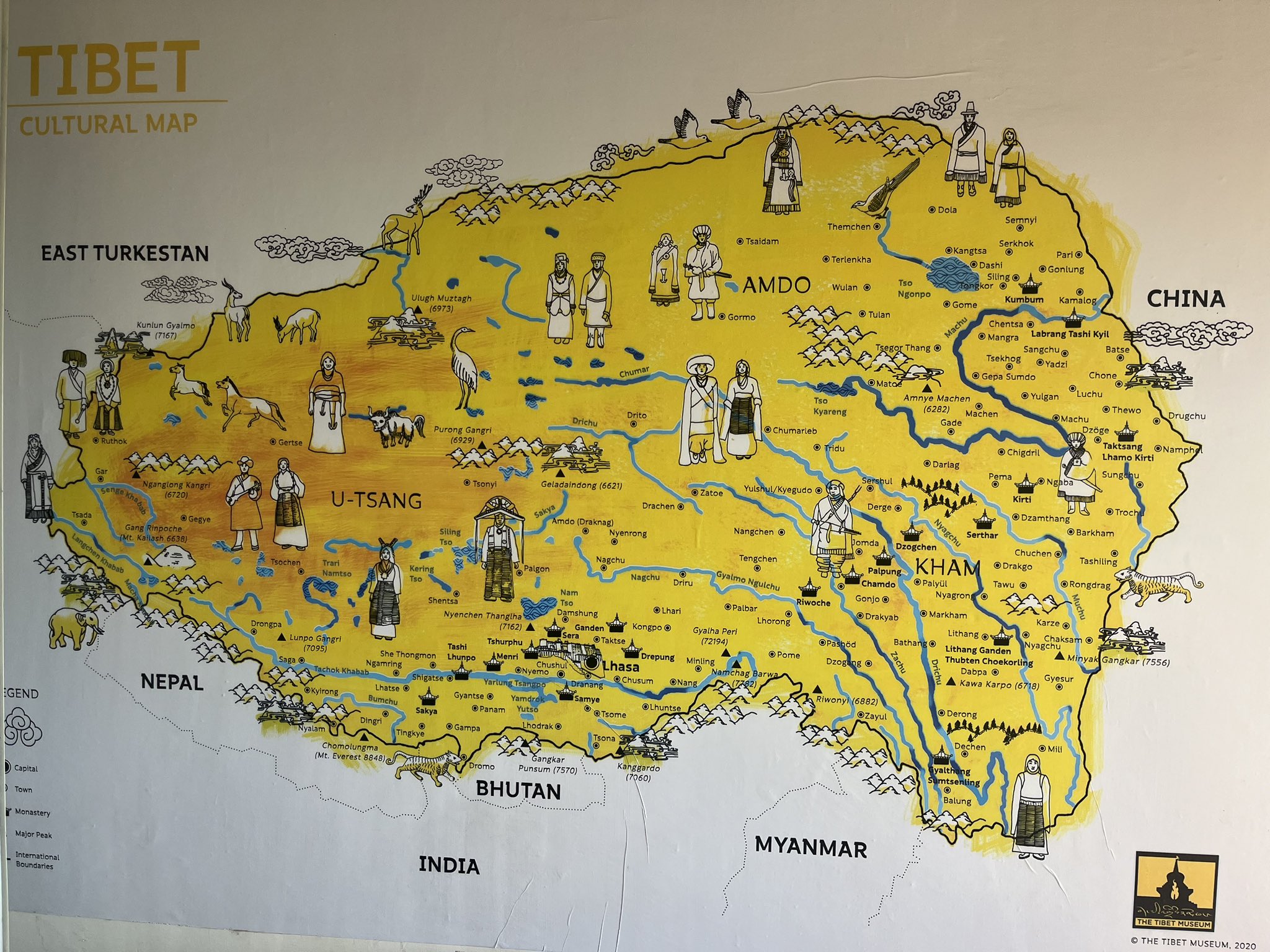


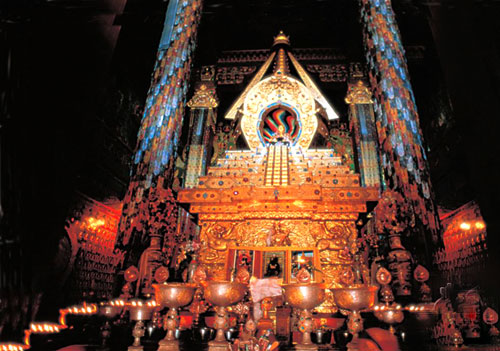


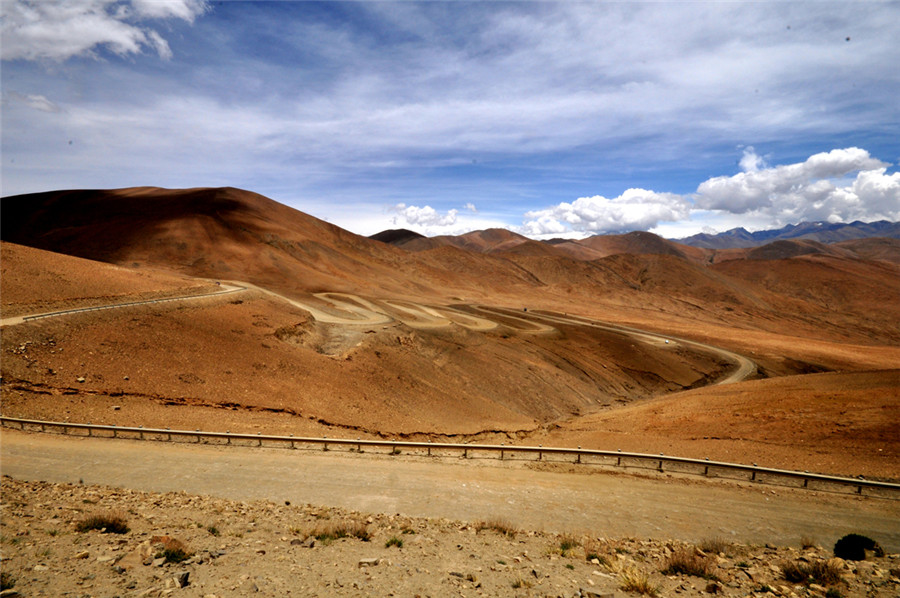
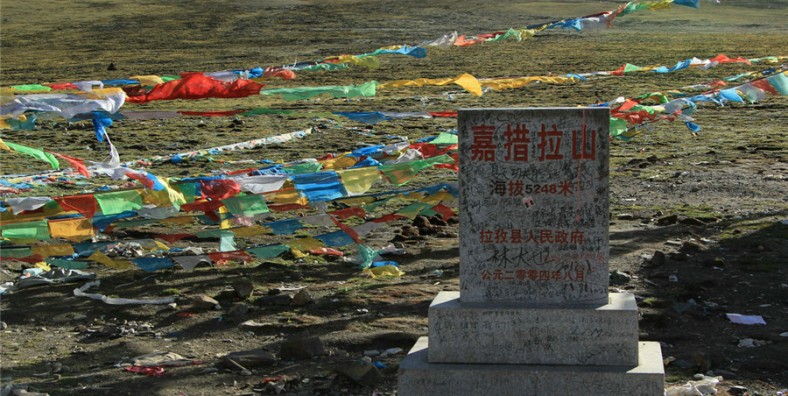


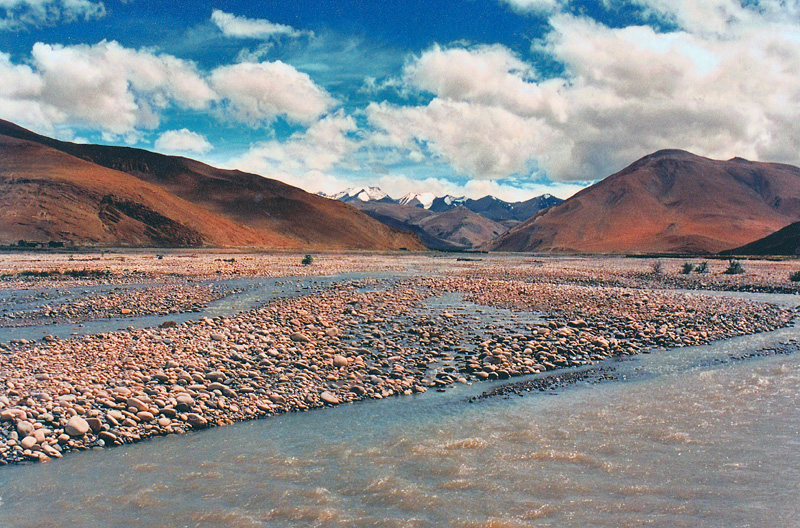





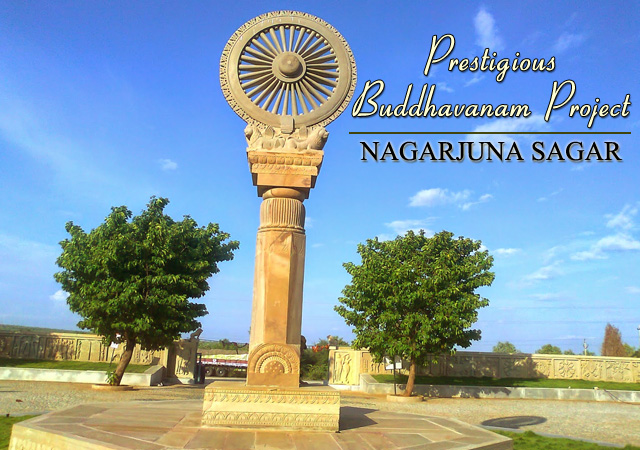


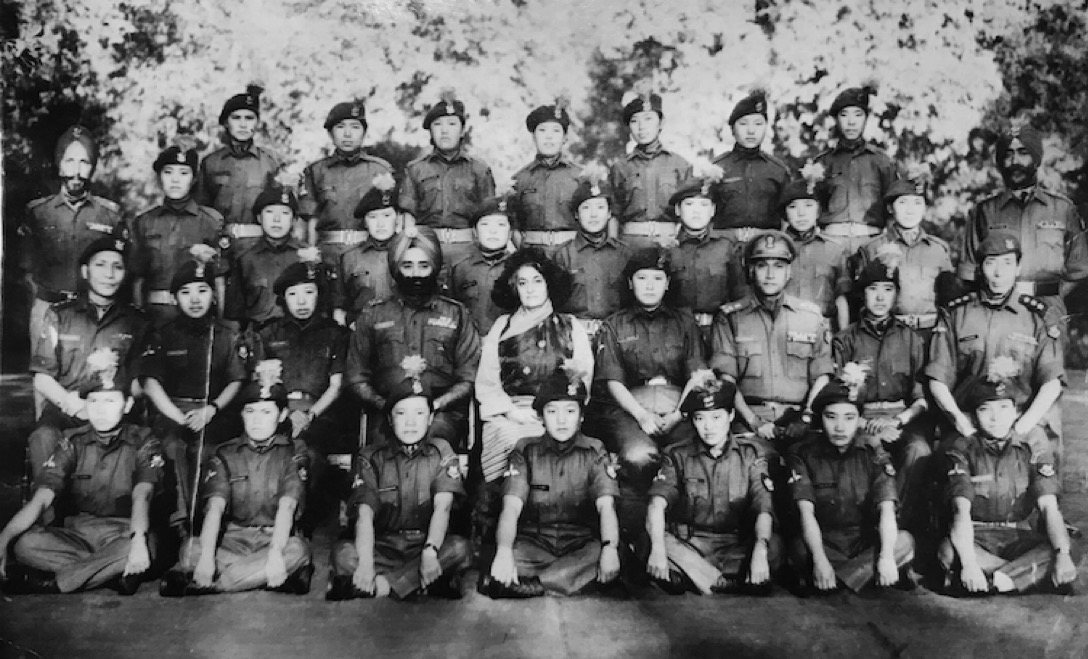

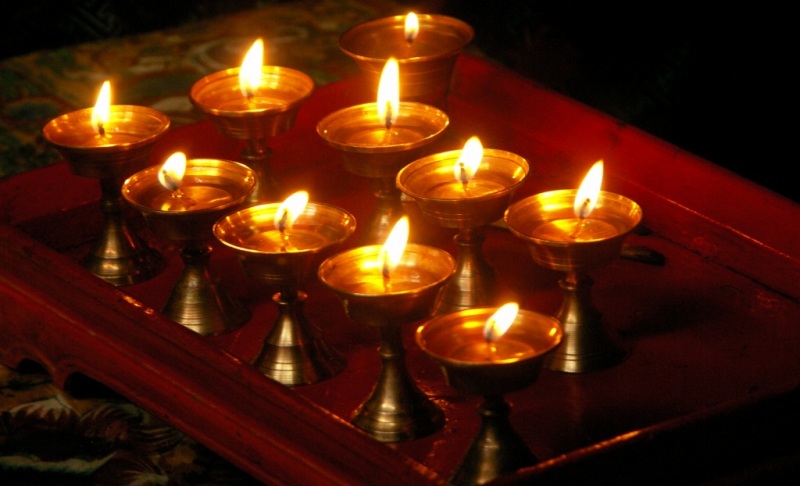
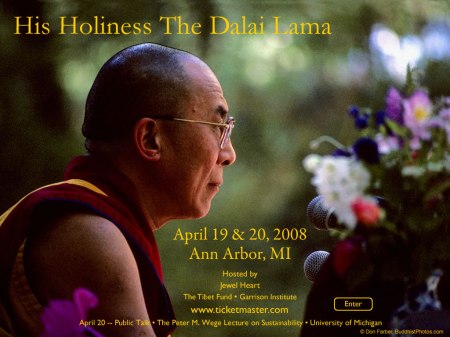


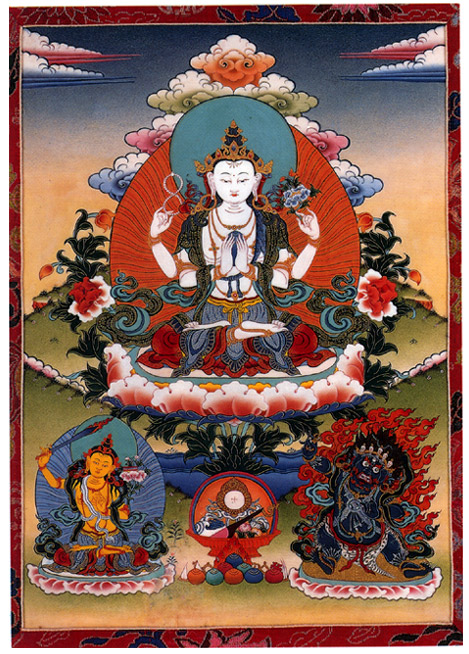
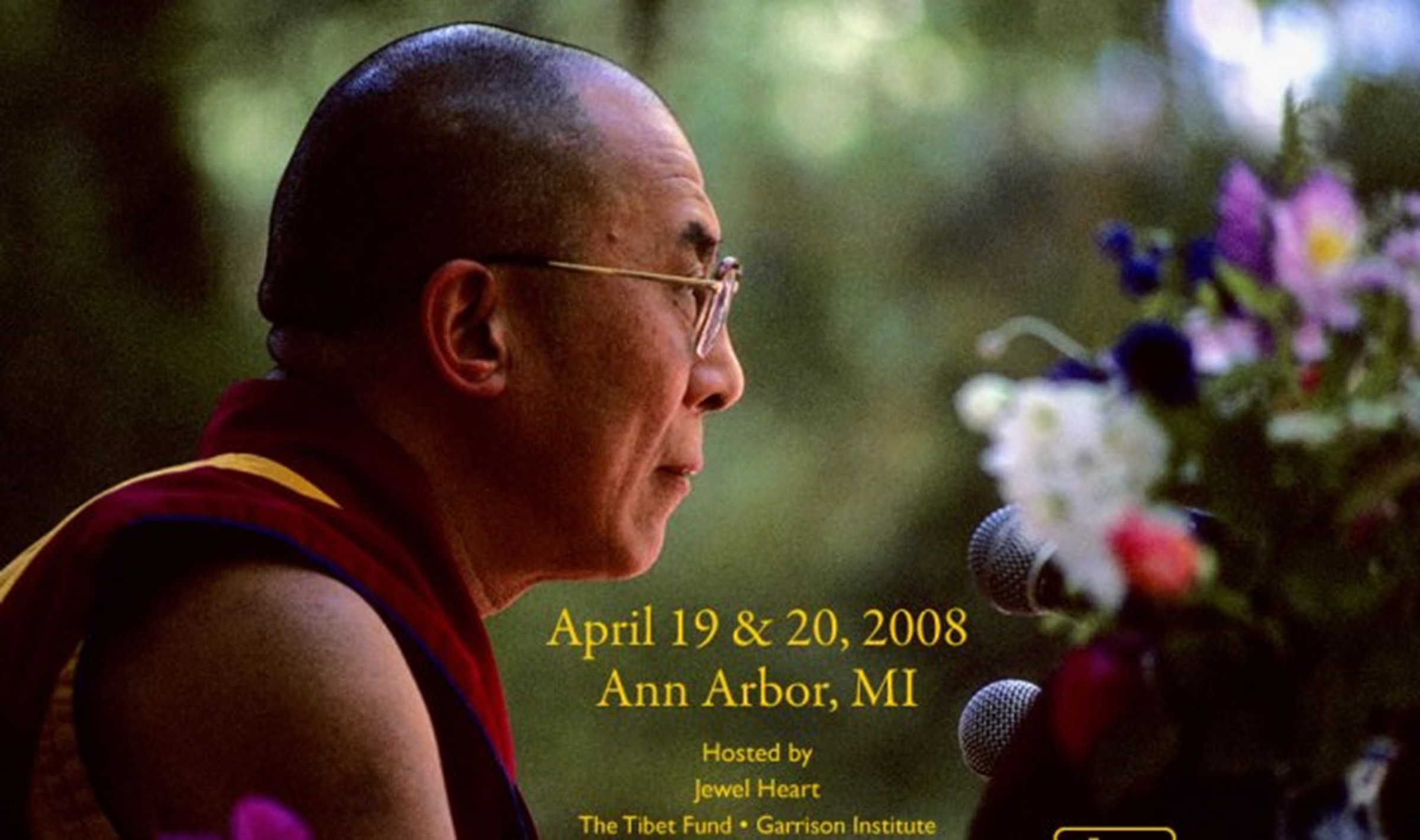


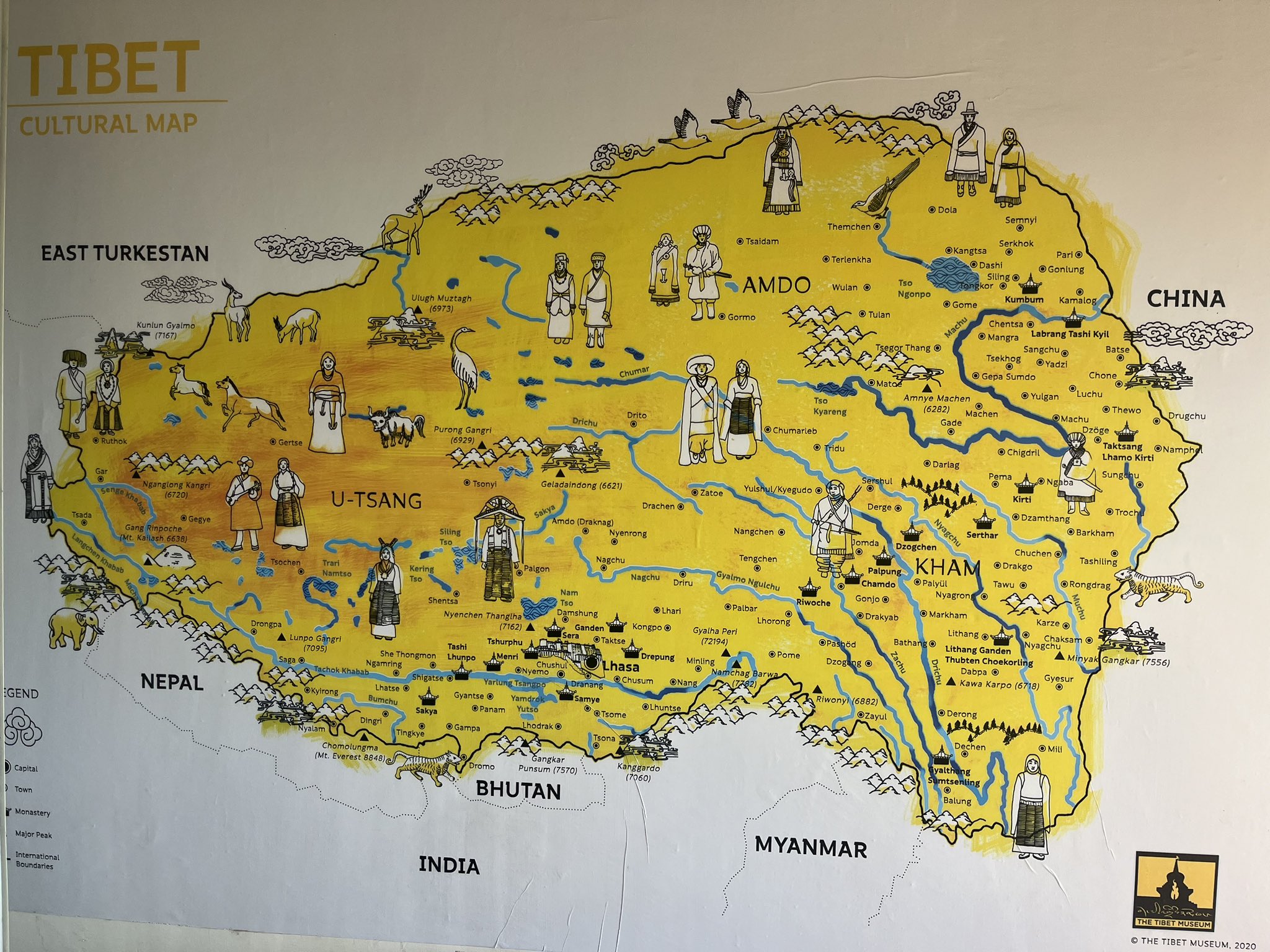


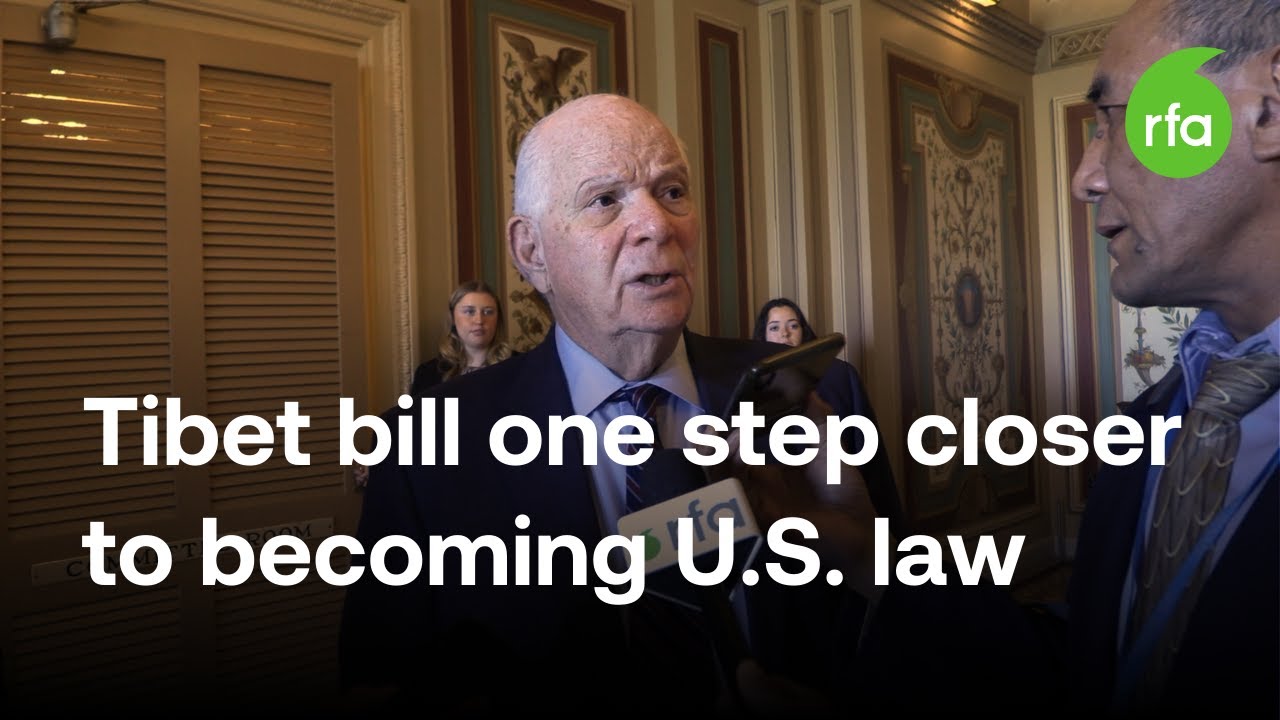
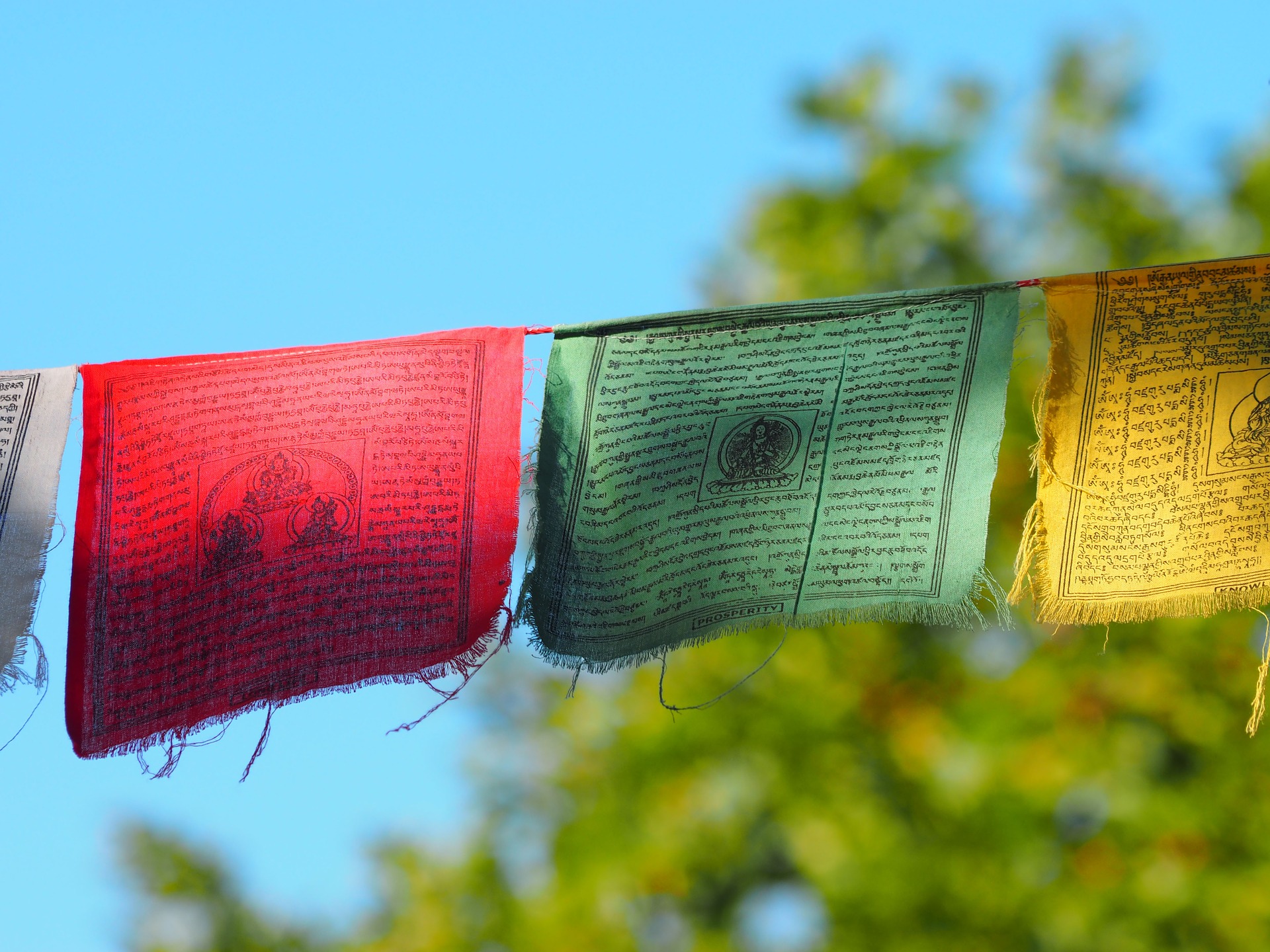
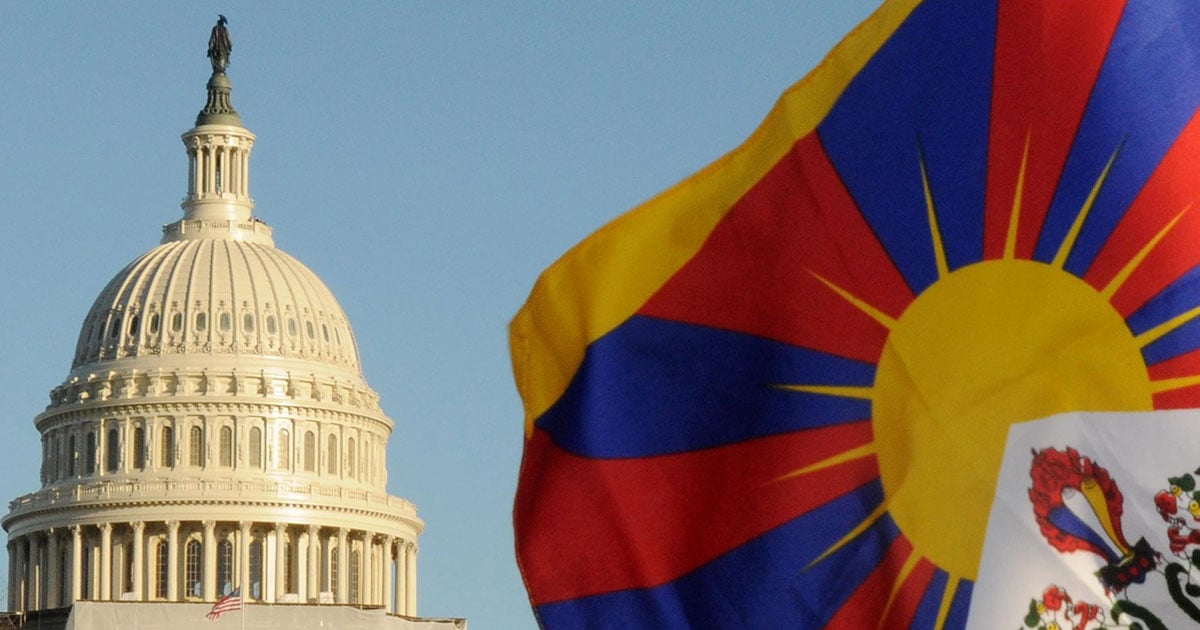
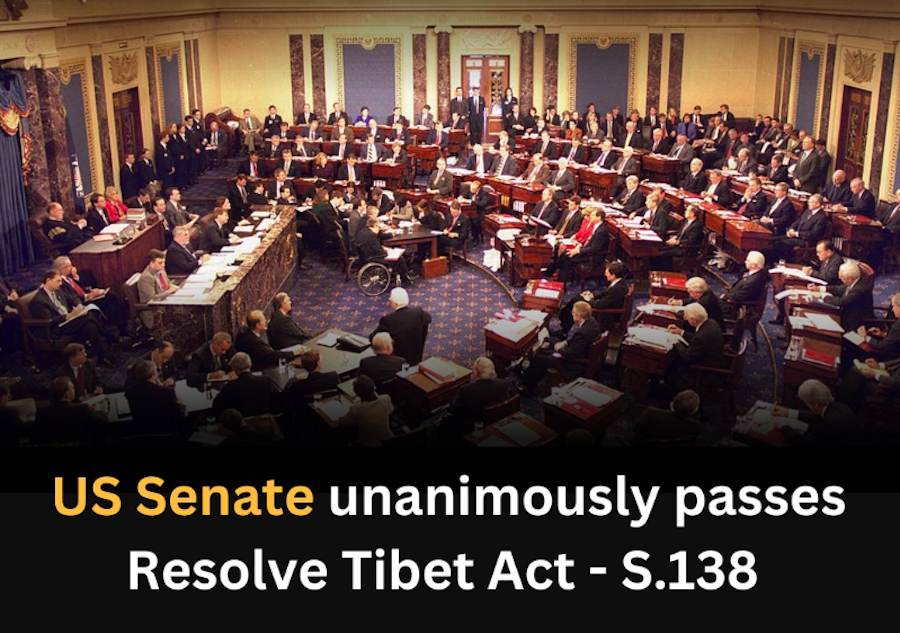
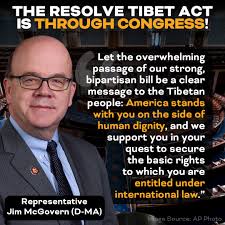
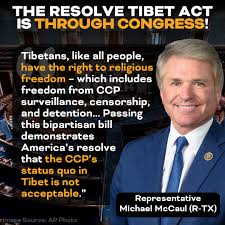
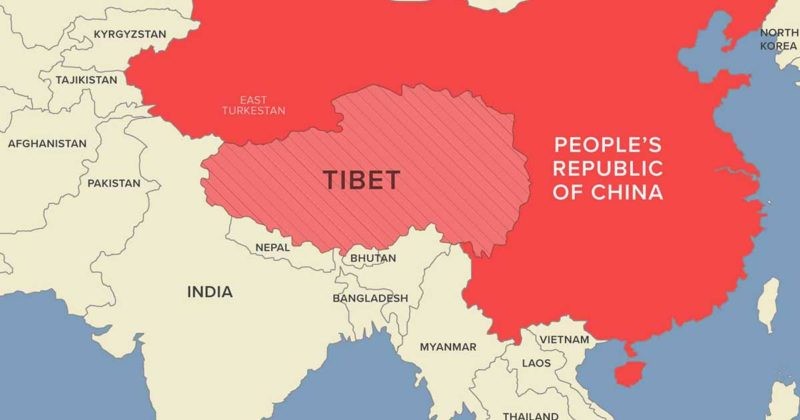


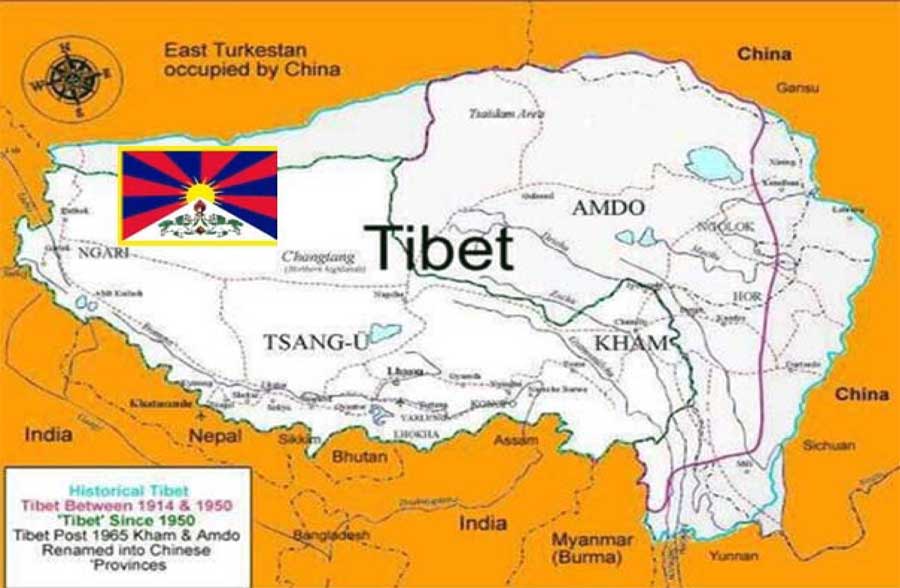
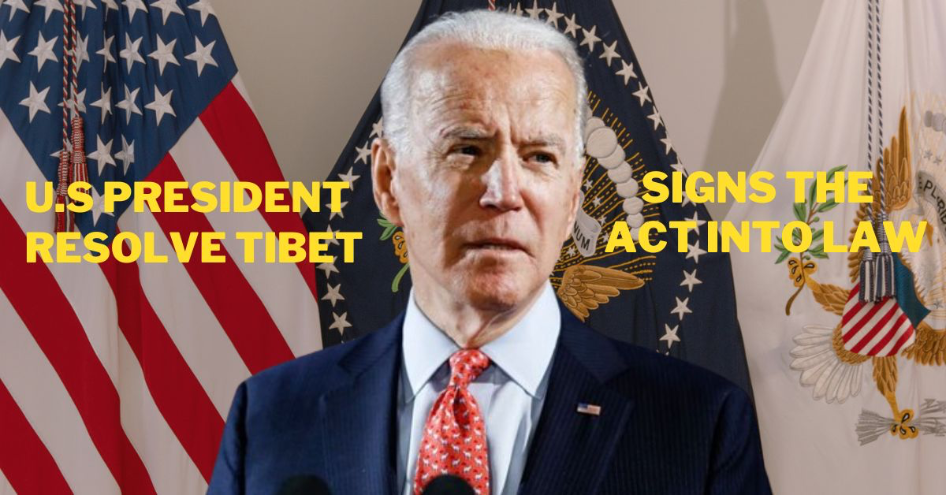
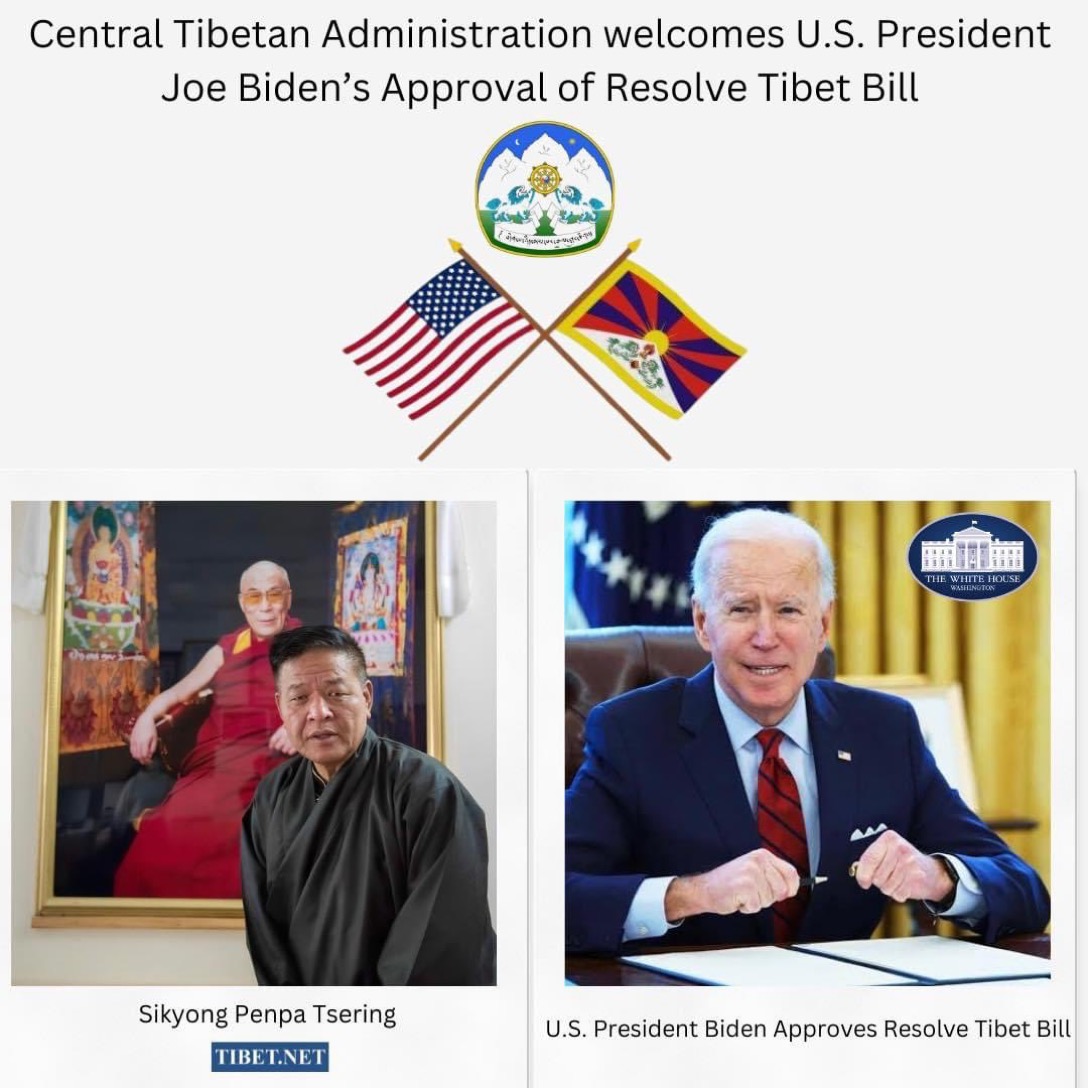
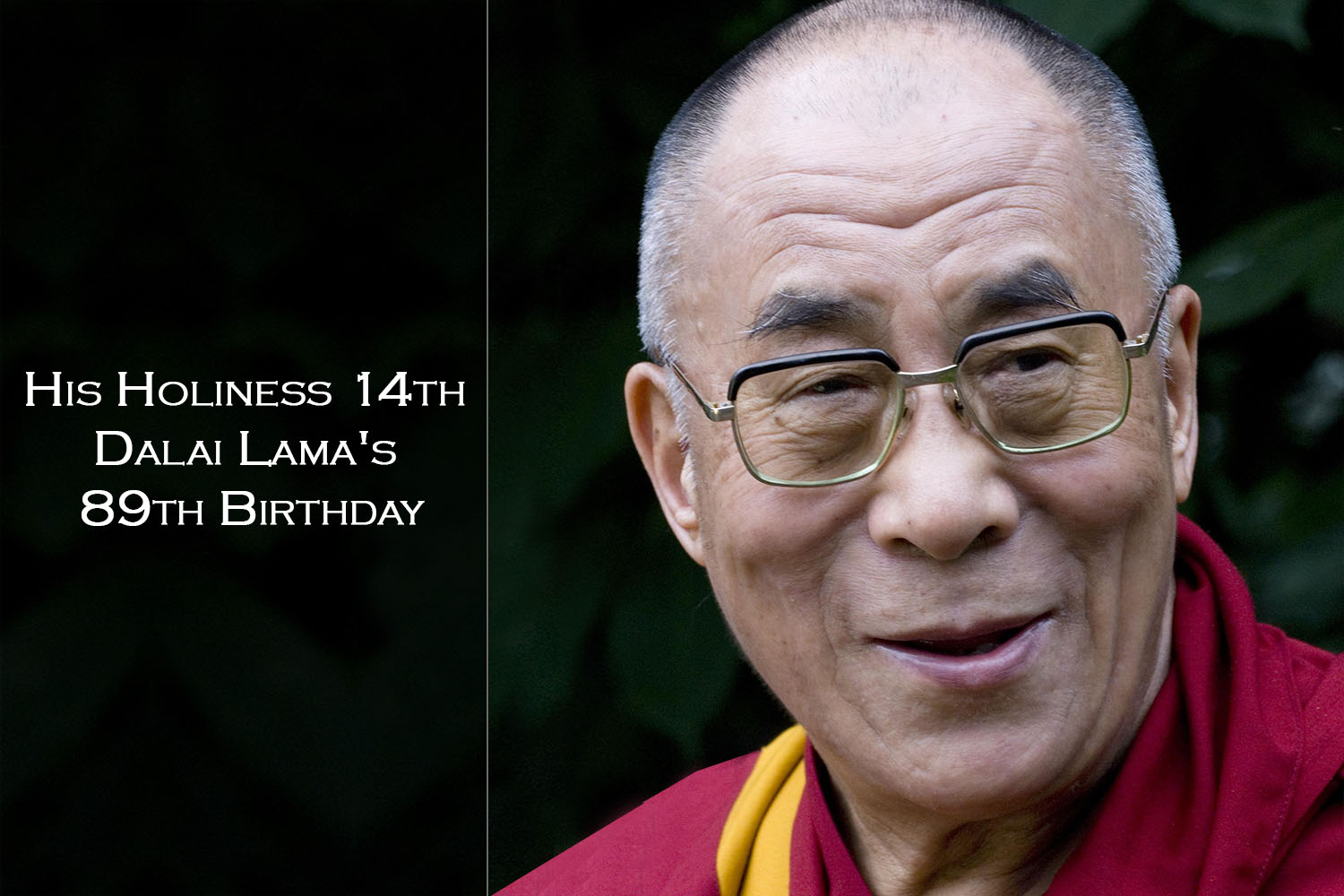


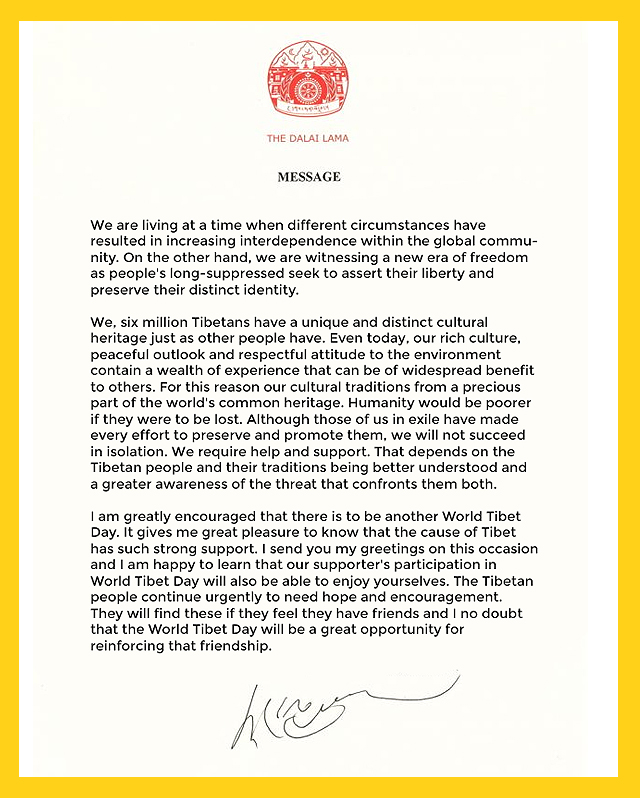

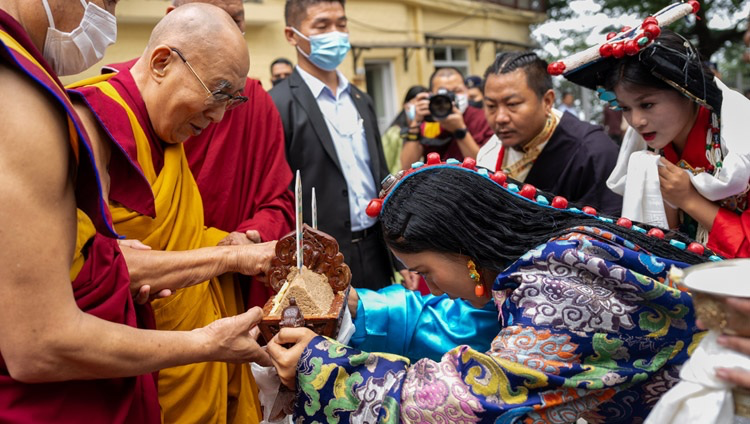
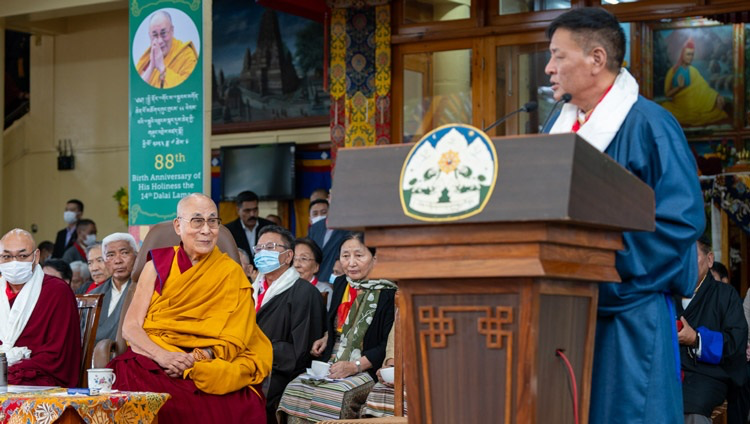
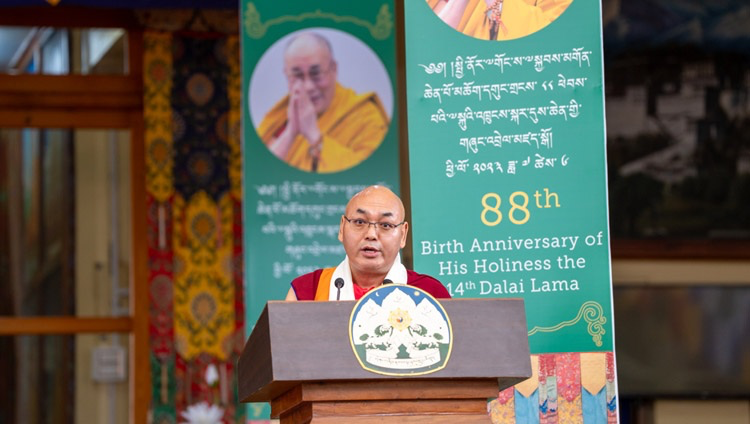
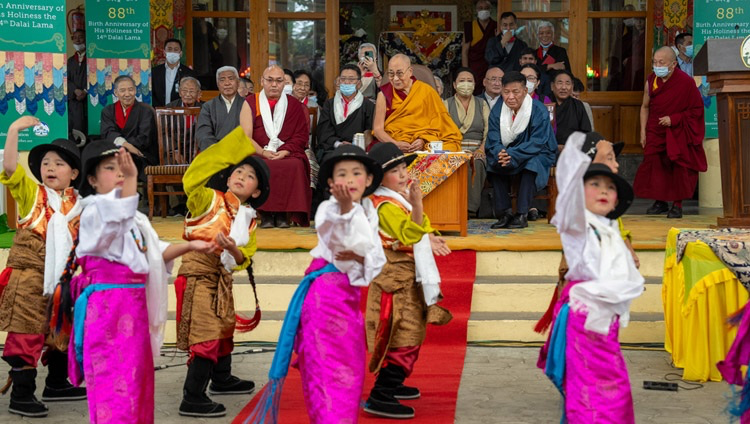
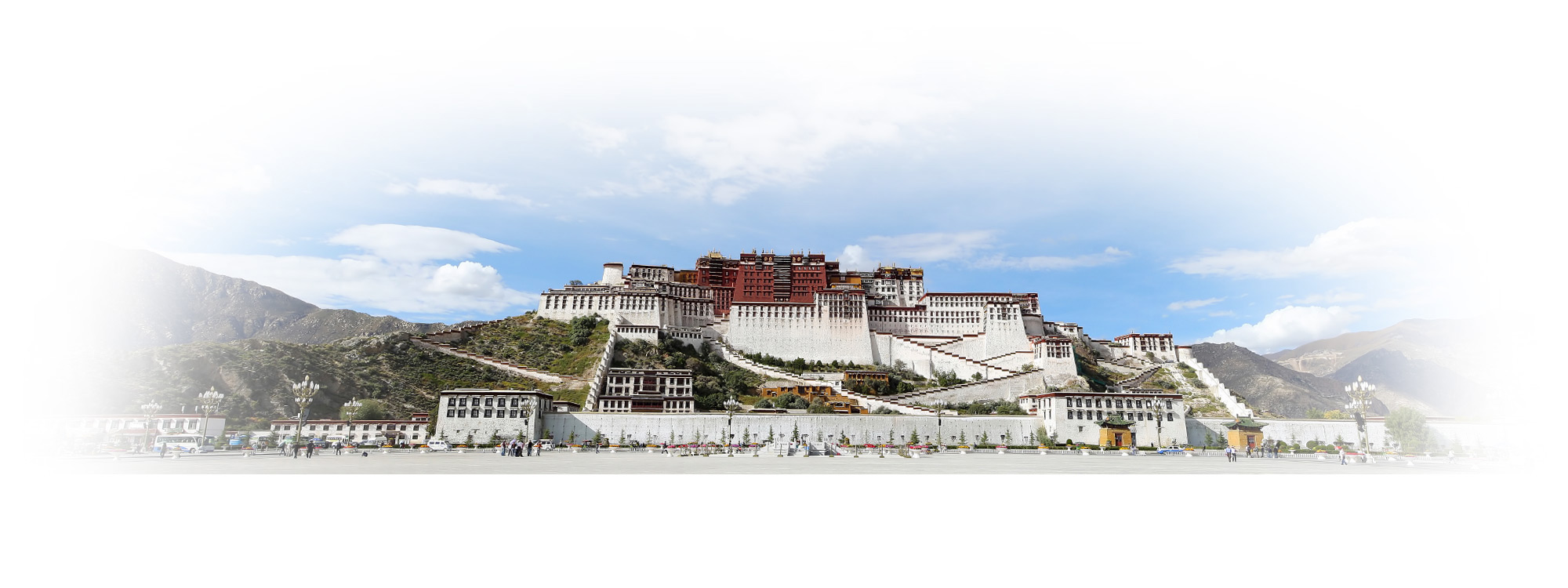


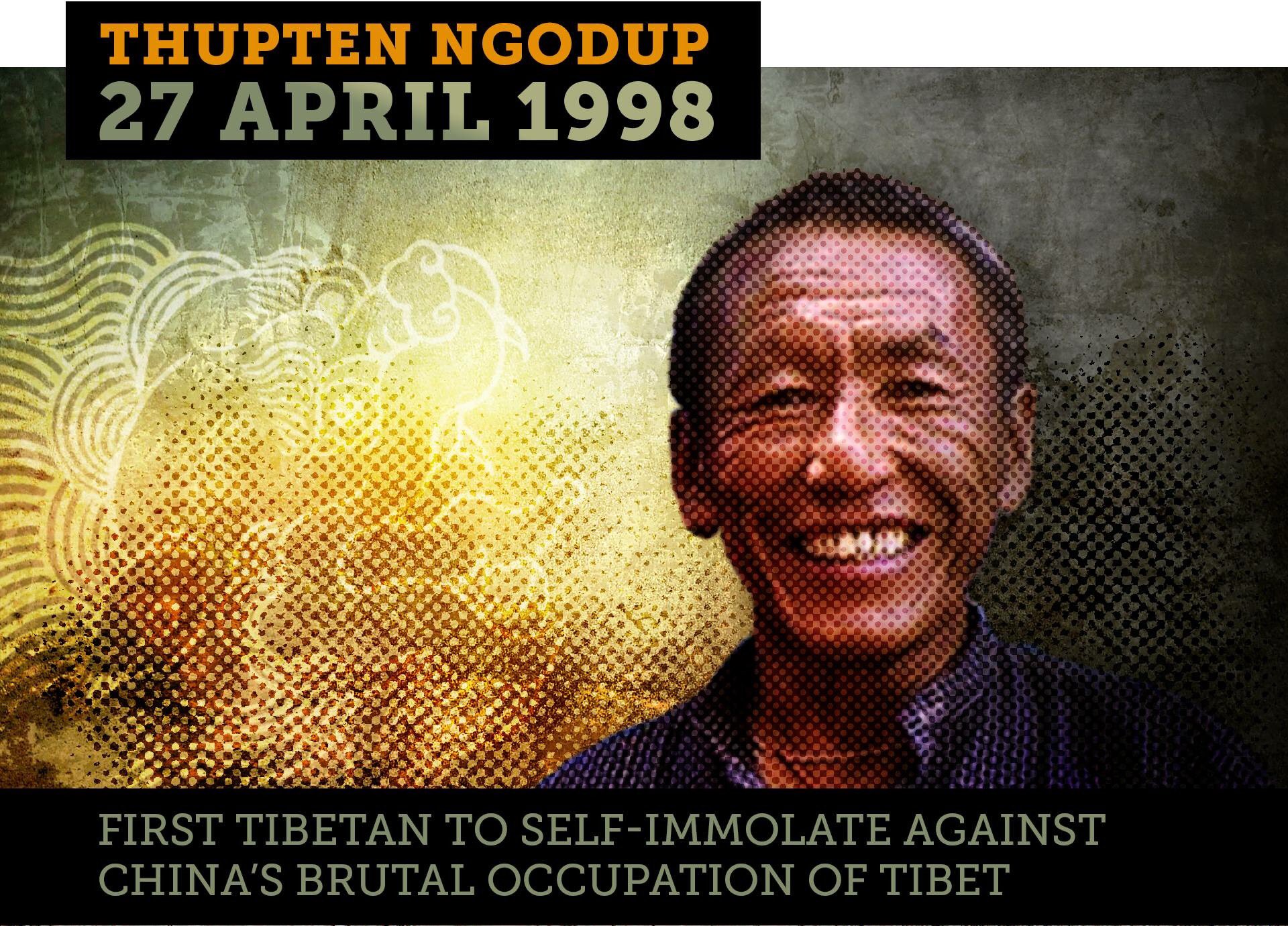


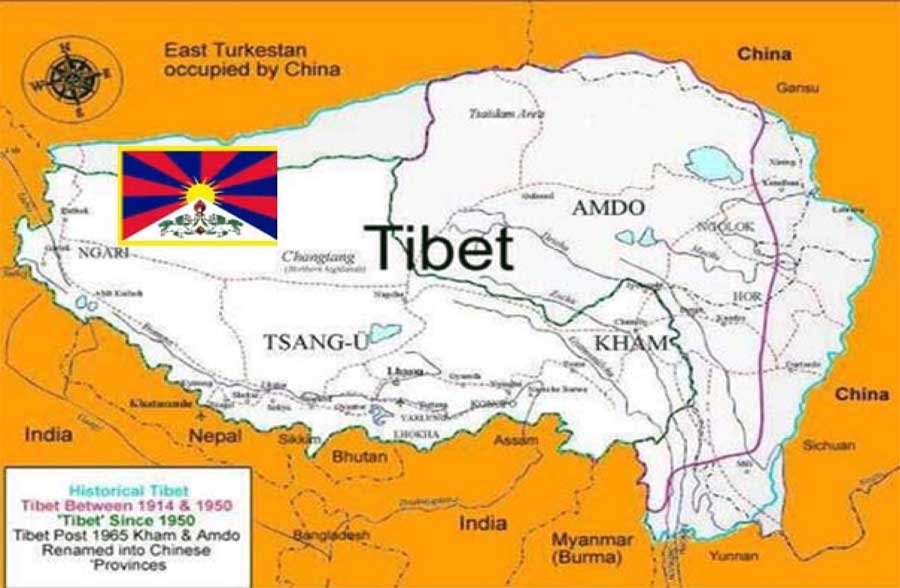
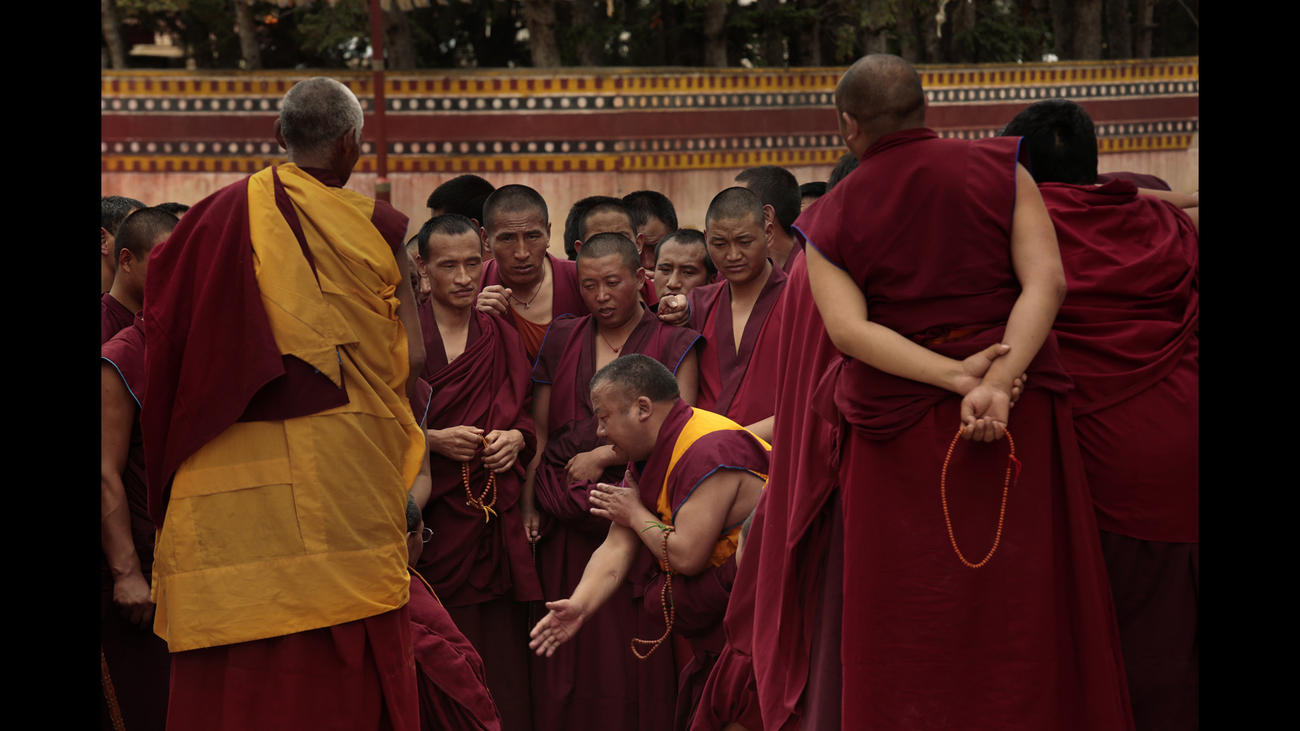
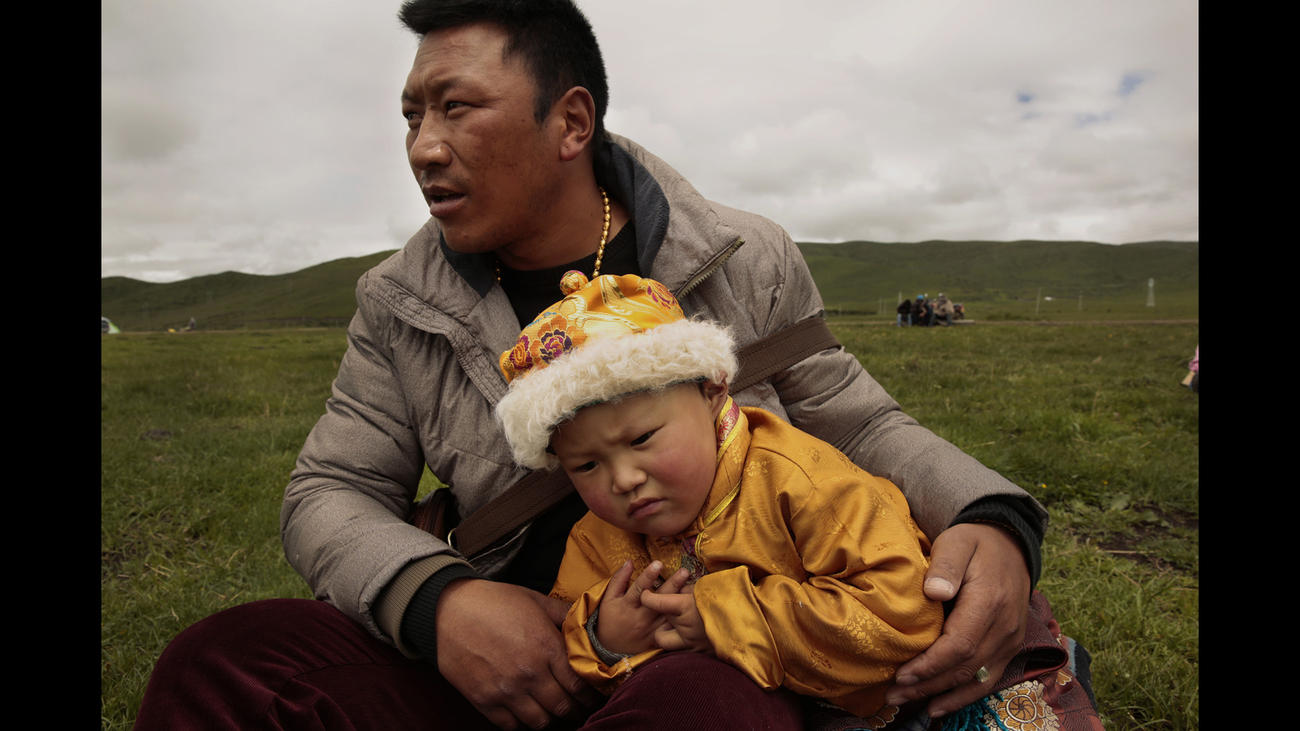

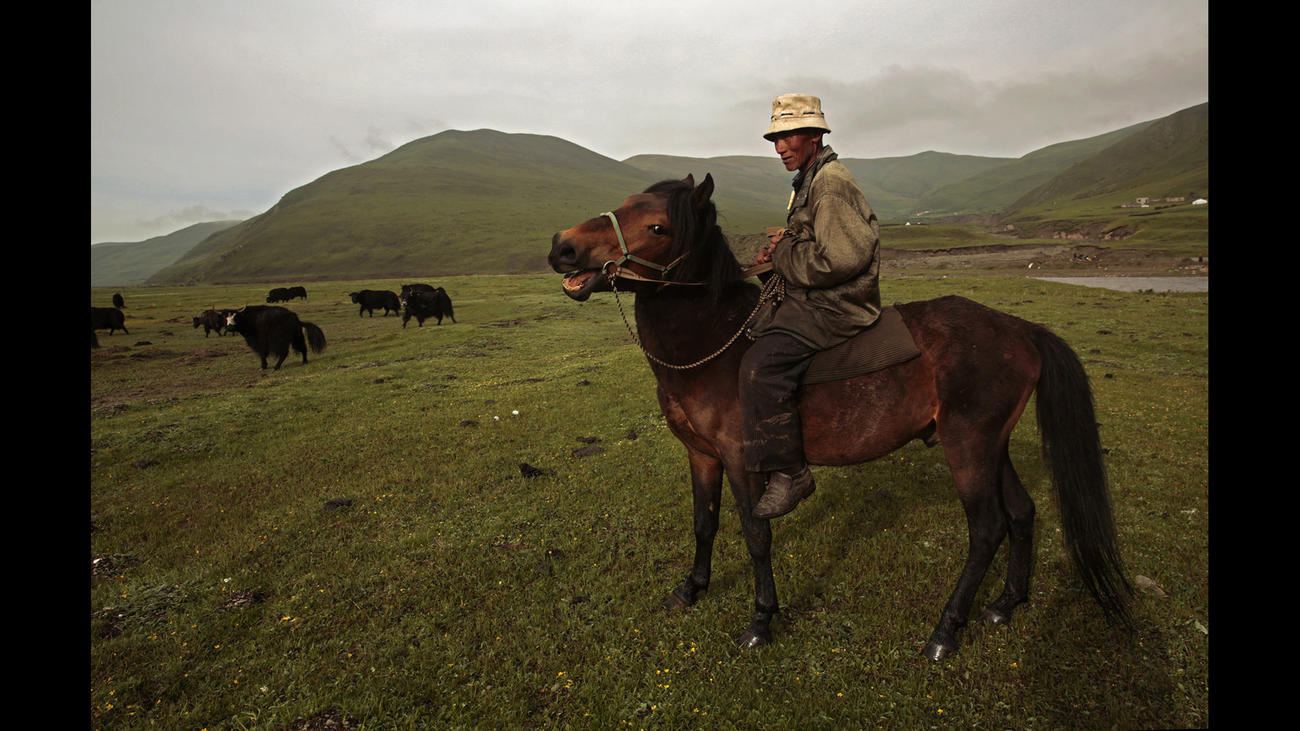
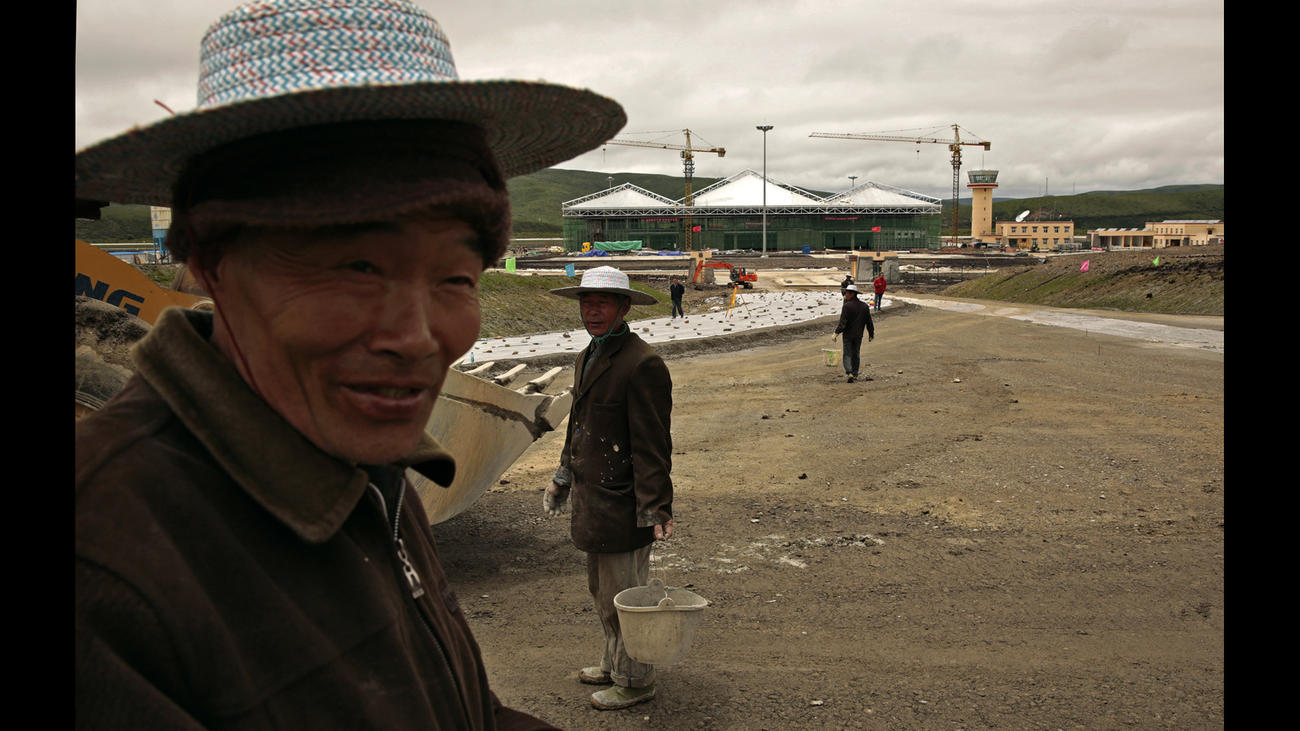
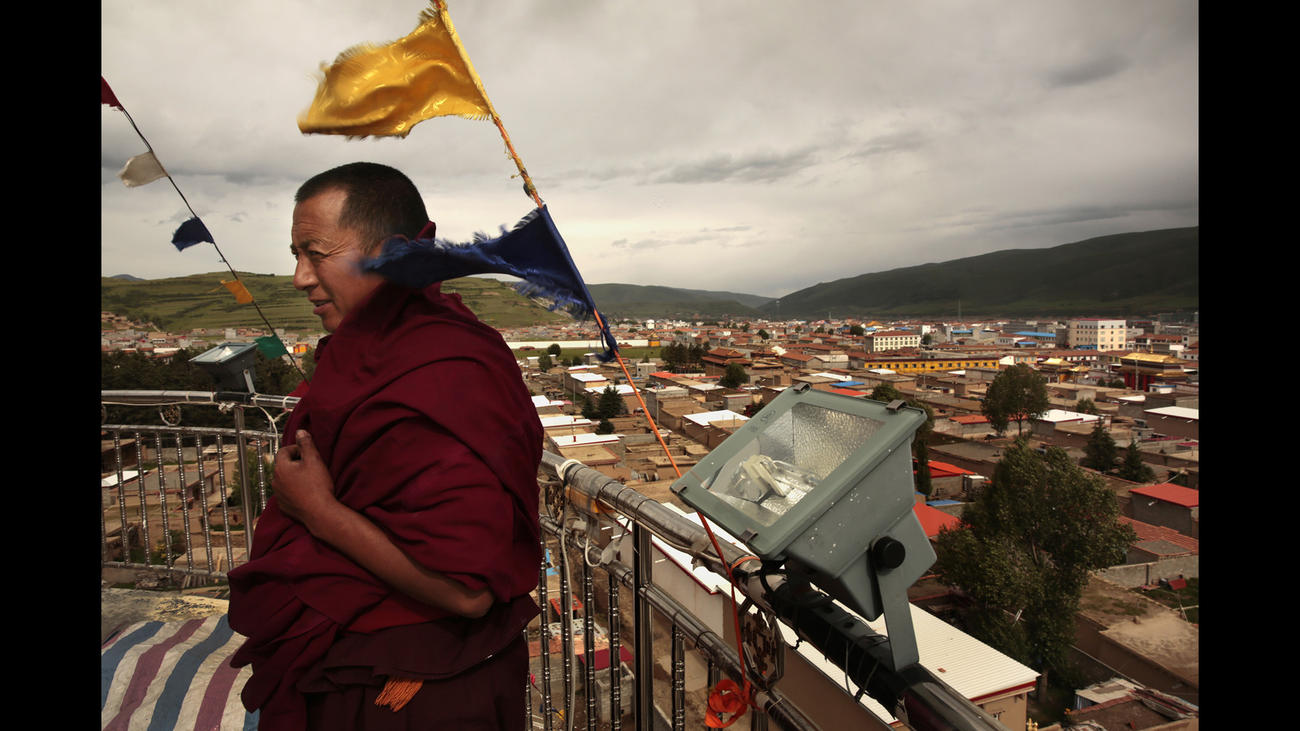
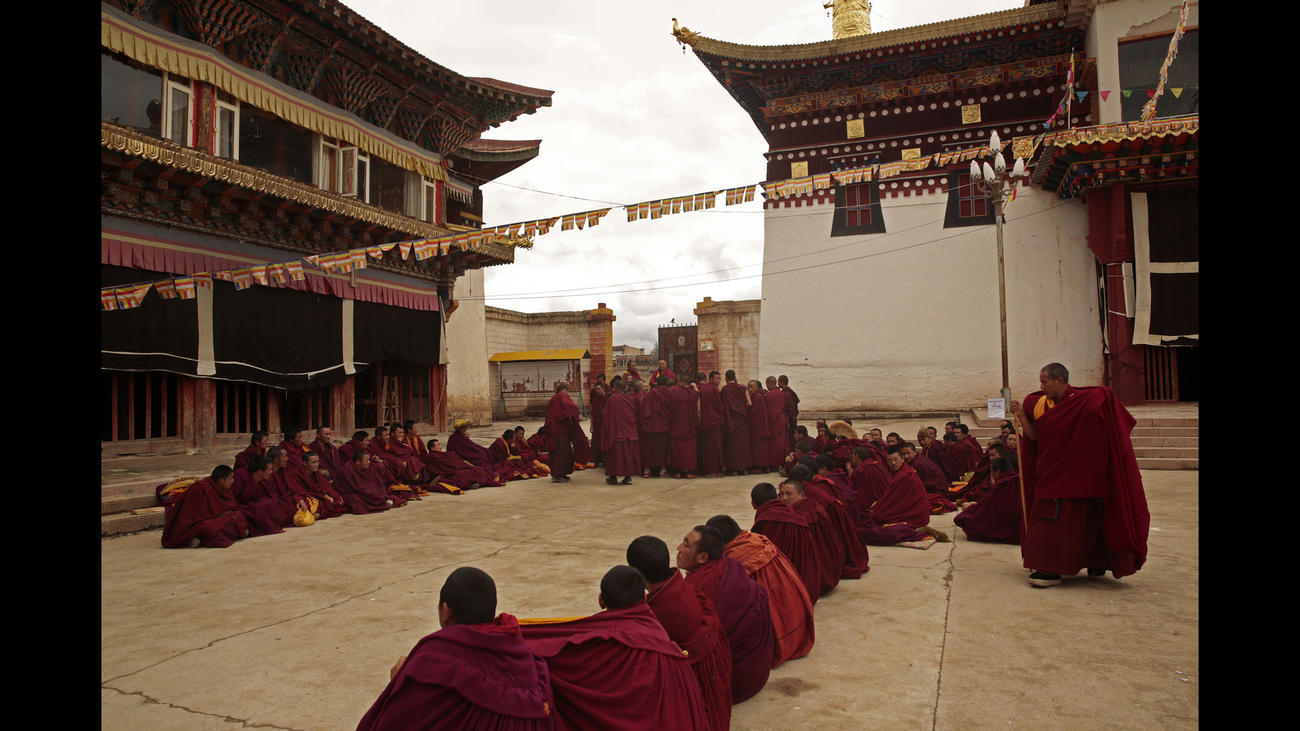
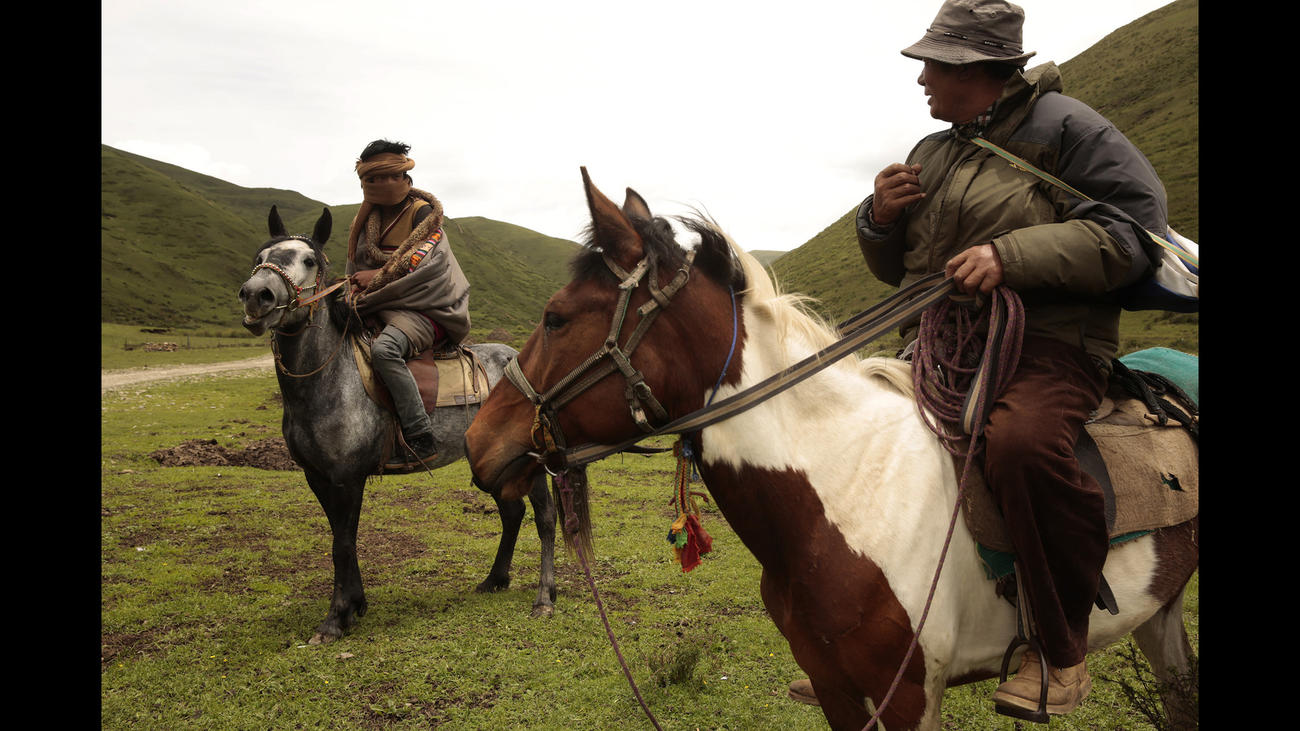

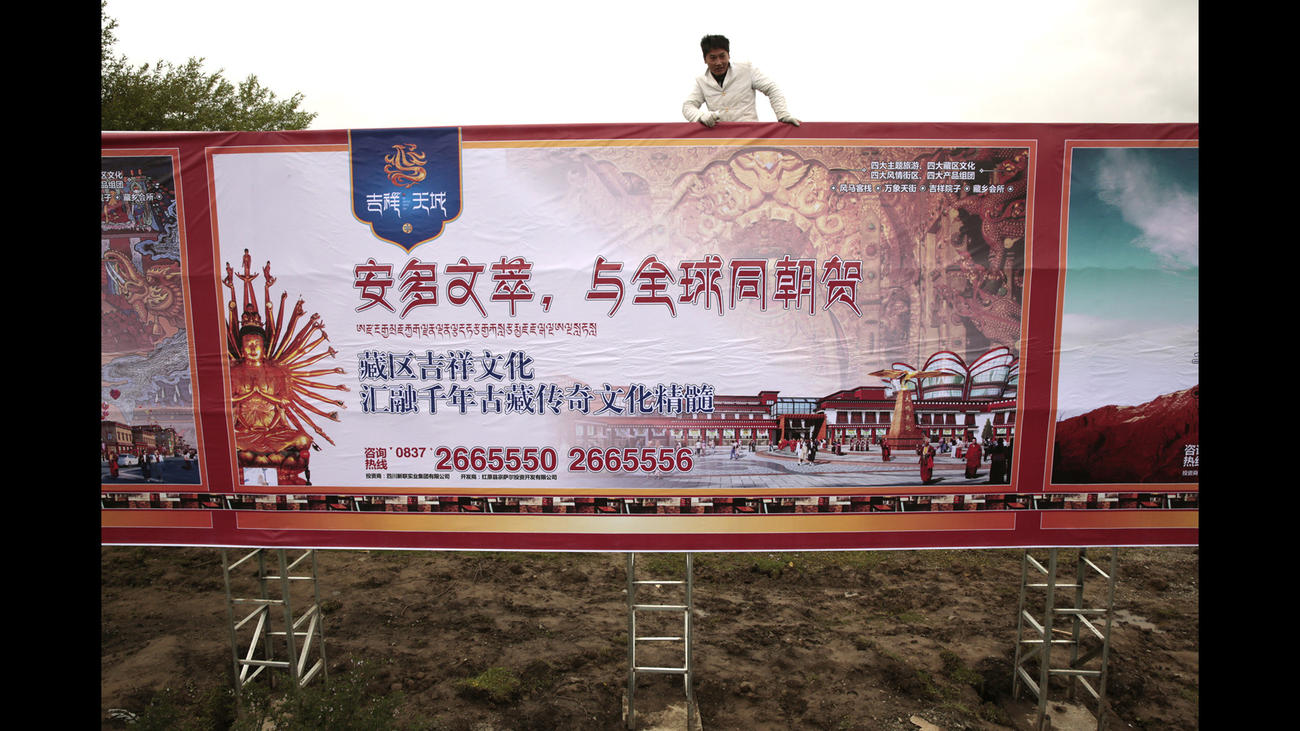
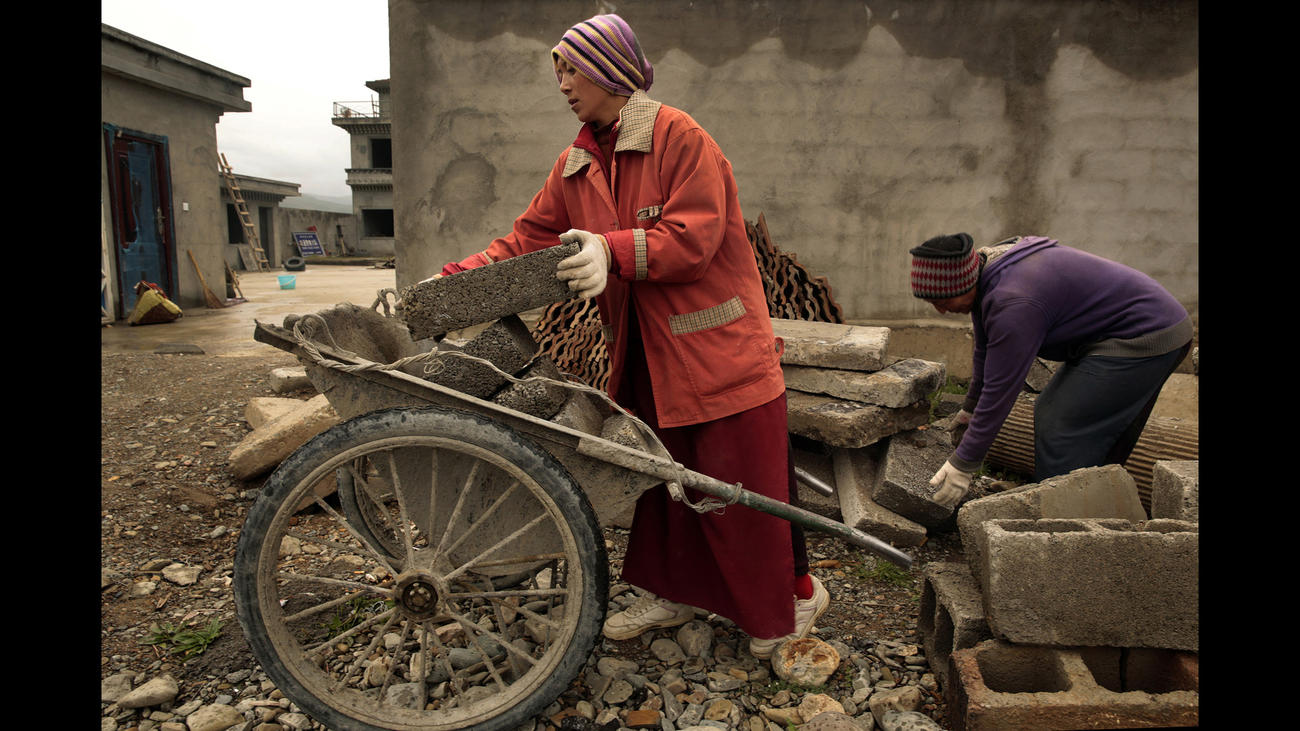
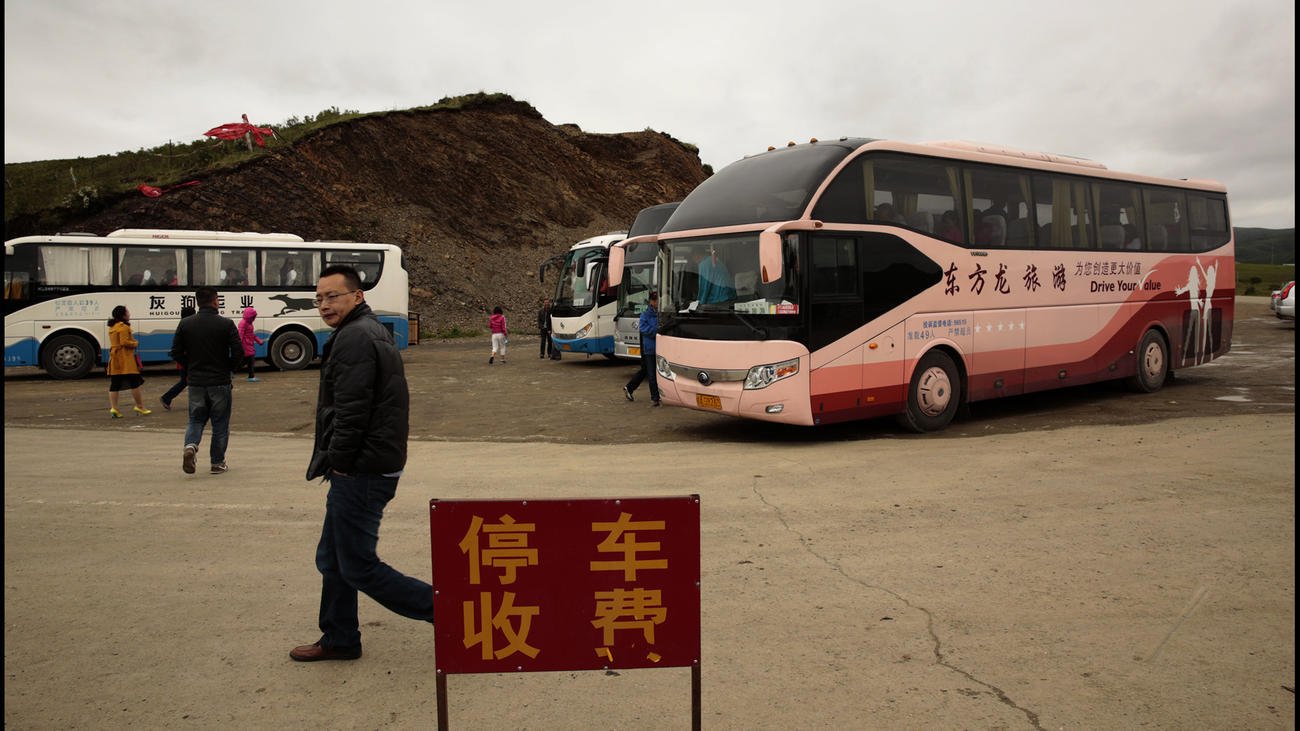
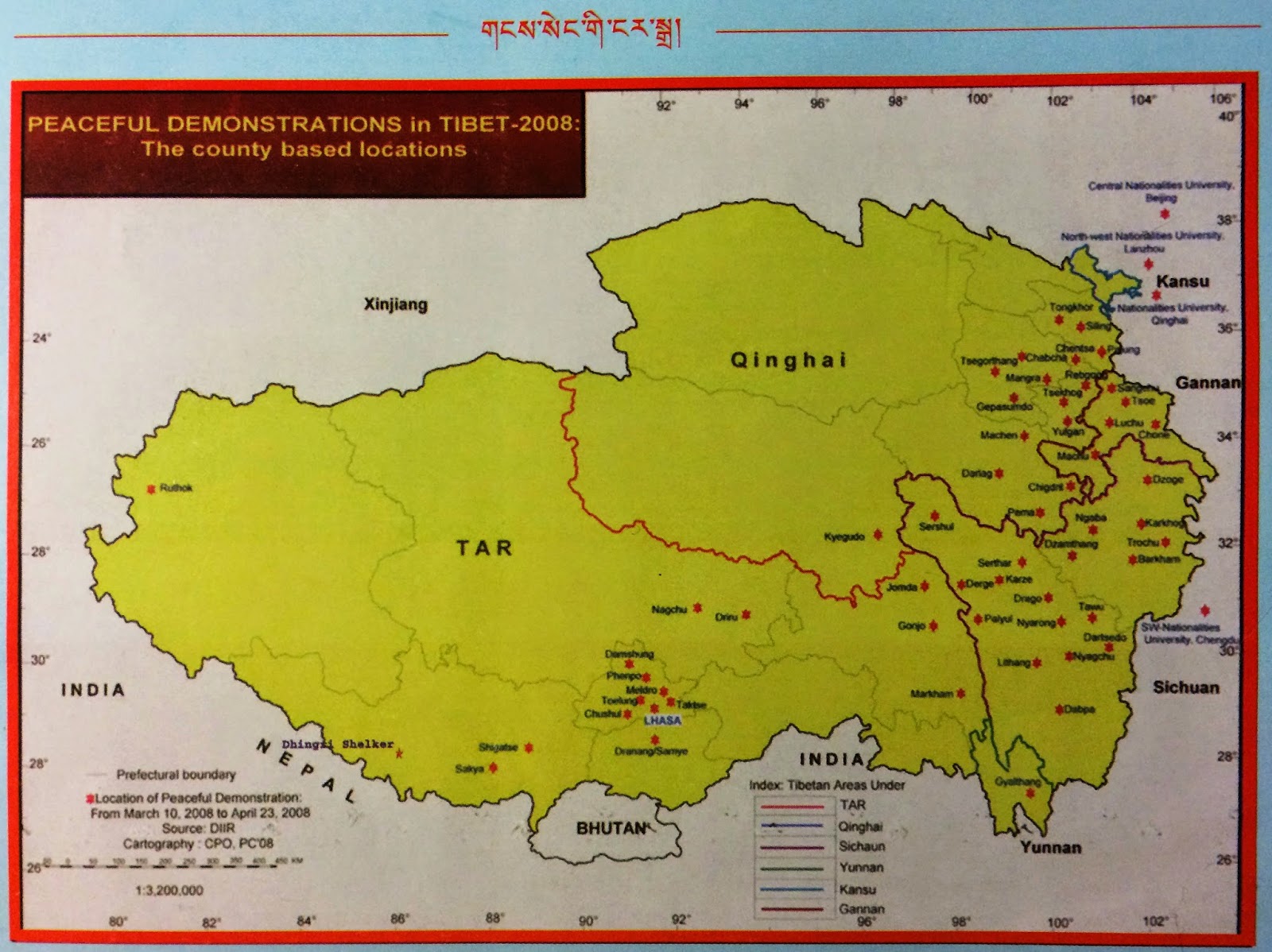

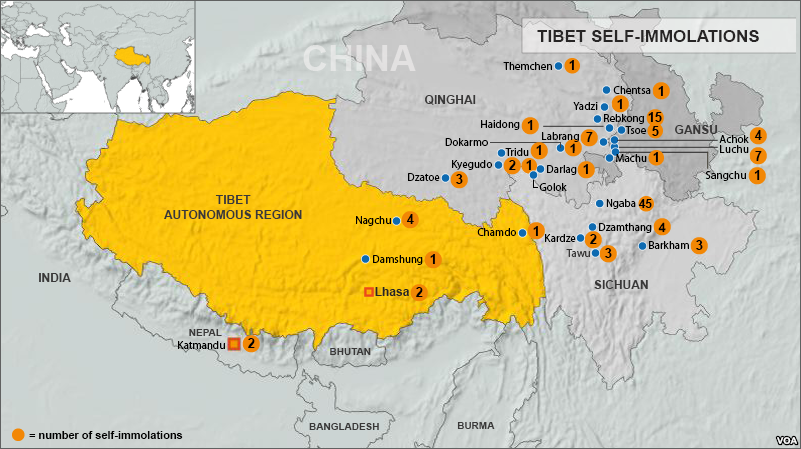
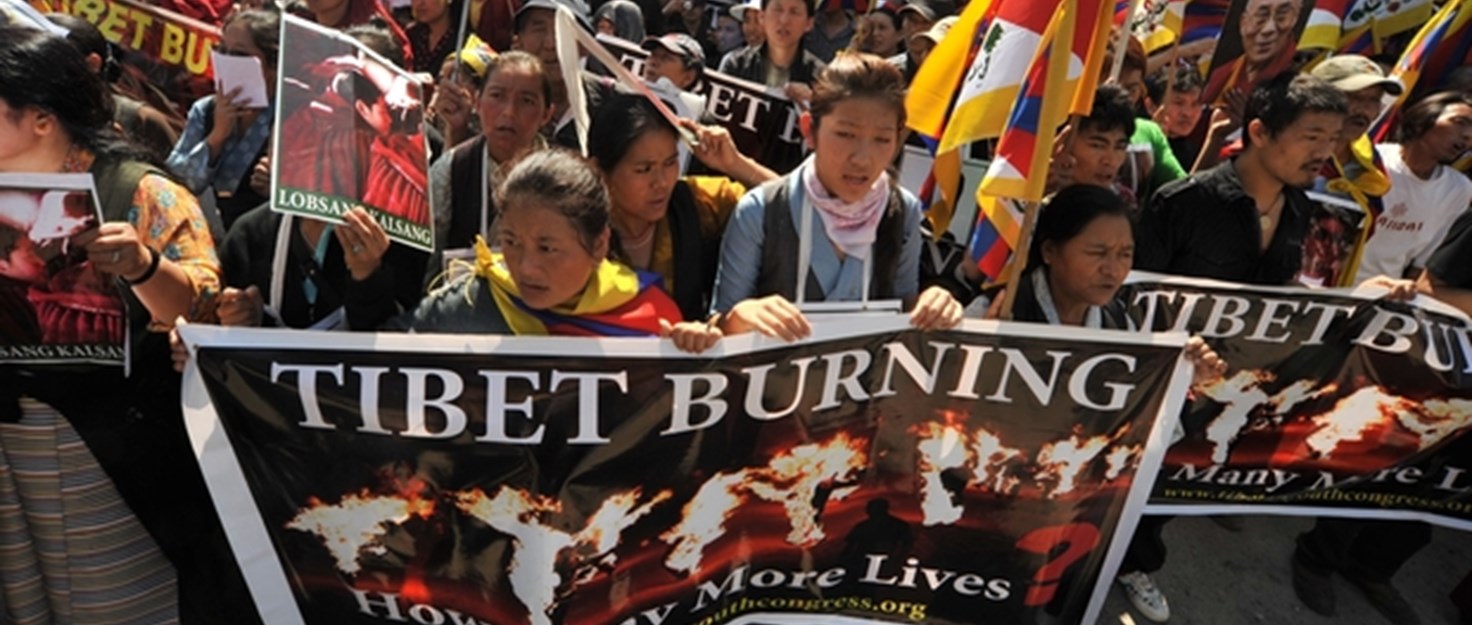
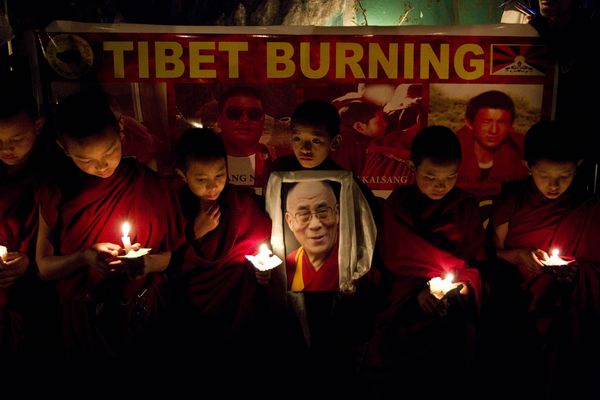
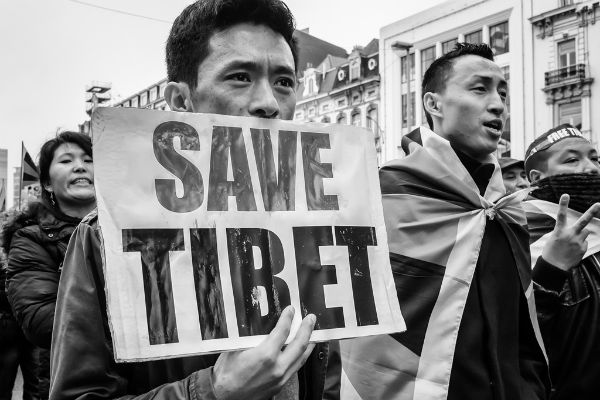


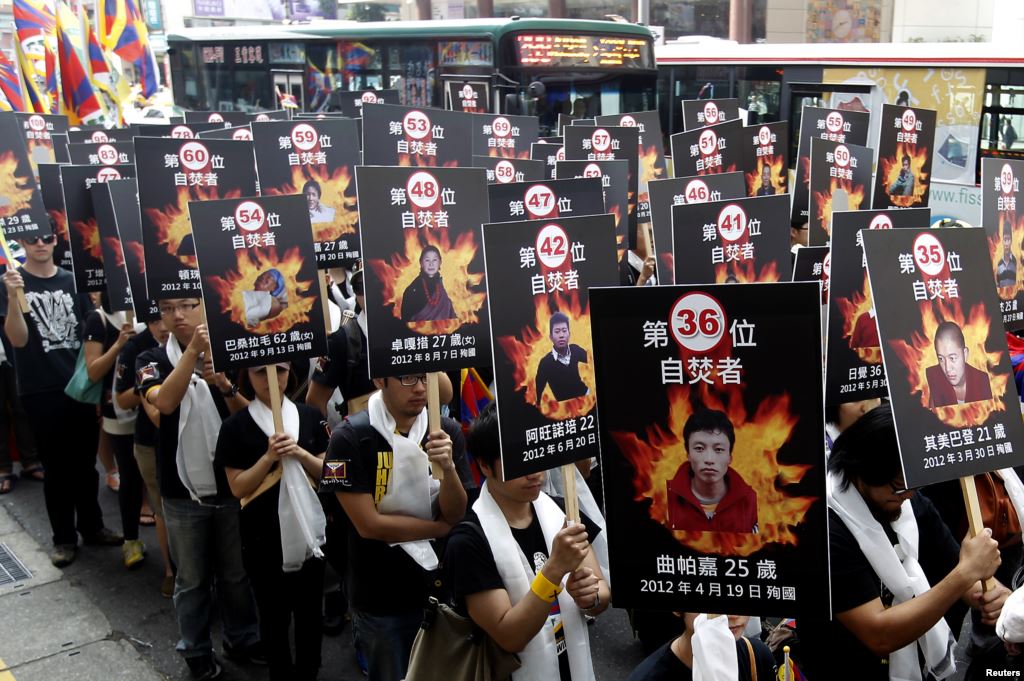
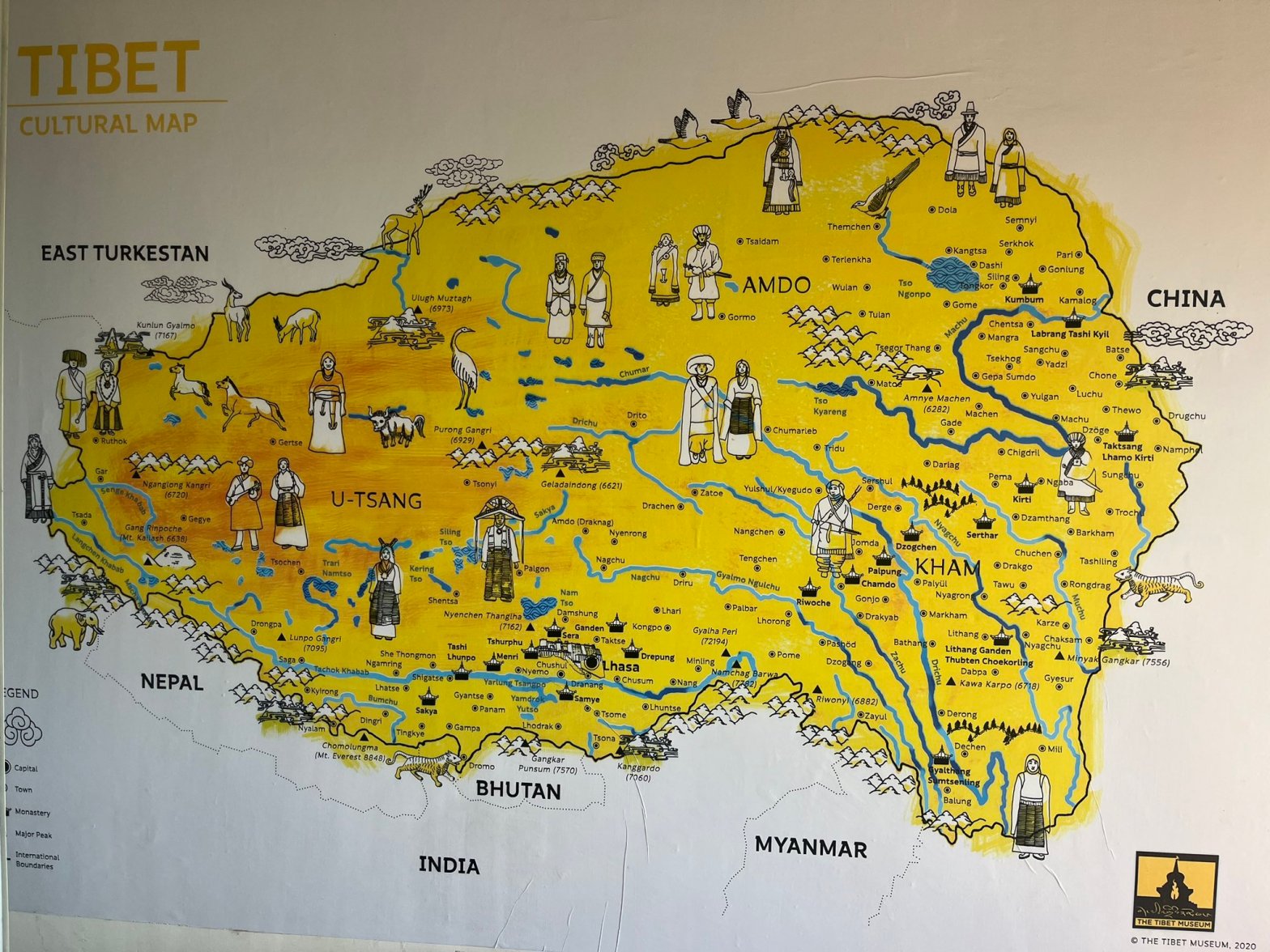


 Whole Dude - Whole Concept