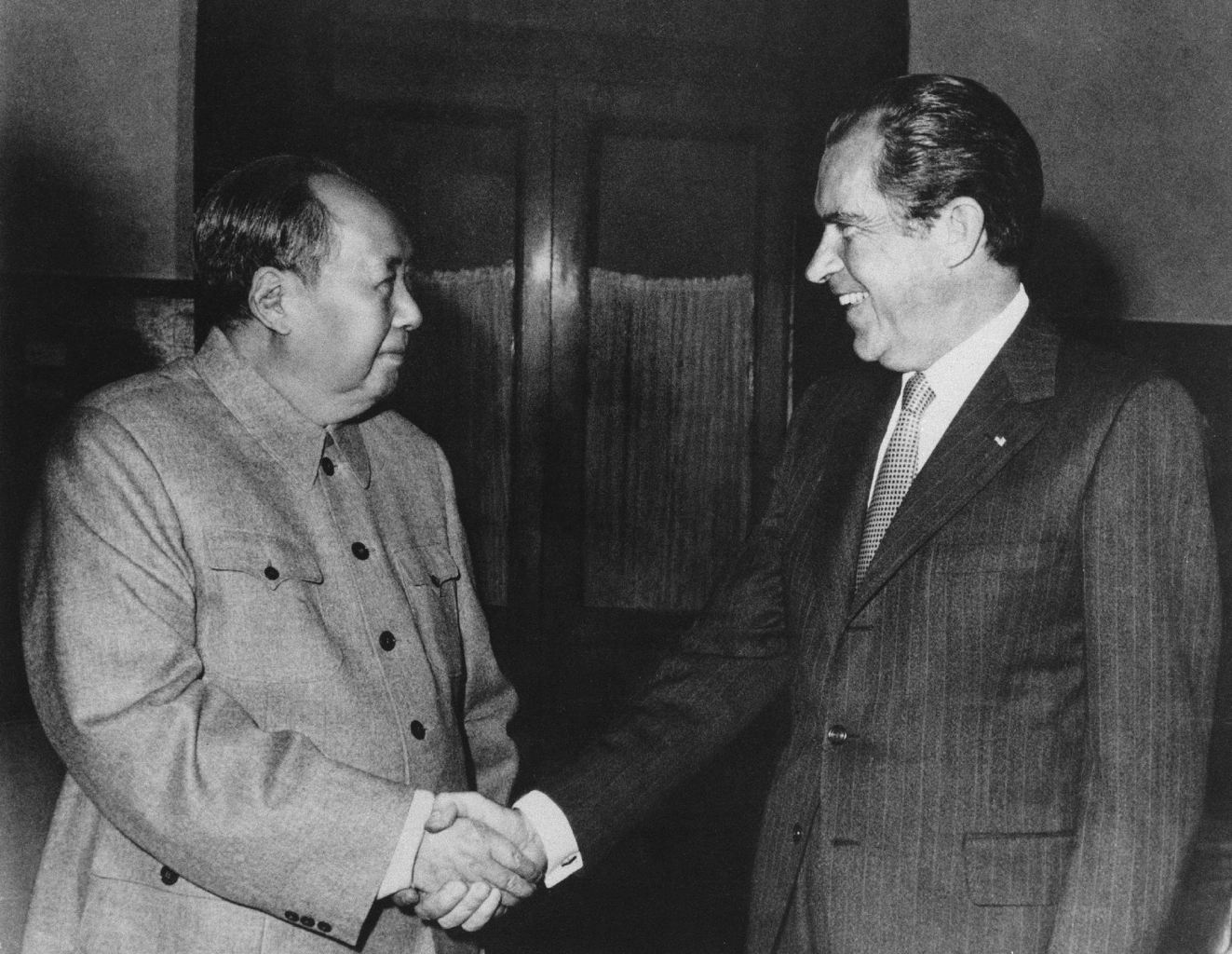
Nixon-Kissinger US administration in 1971-72 took advantage of the split between Soviet Union and Red China to formulate US foreign policy that initiated trade and commerce relations with Red China.
Red China openly confessed its sense of deep fear about Western Democratic Ideals. In her view, Internet poses a grave challenge to her one-party governance inspired by Communist ideology. This fear of Democracy, Freedom, and Individual Liberties shaped the split between Red China and Soviet Union during late 1950s.
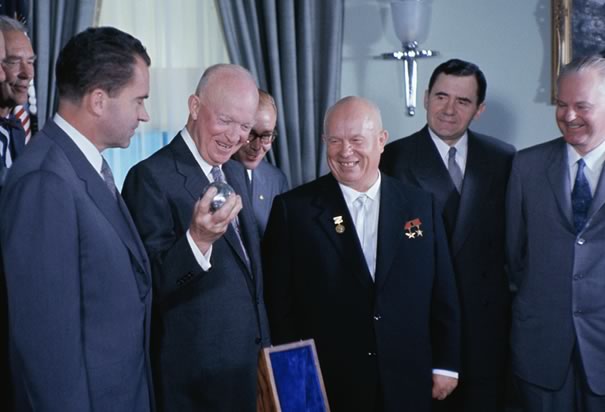
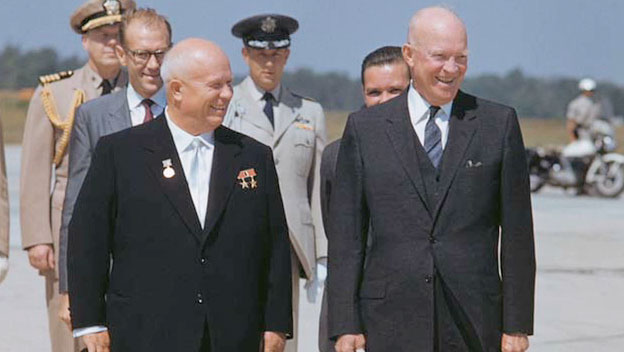
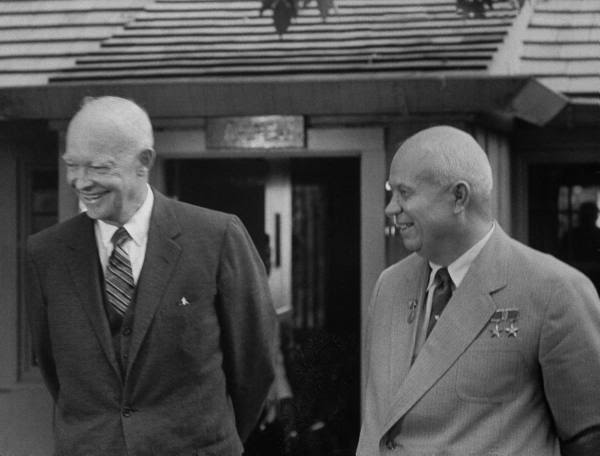
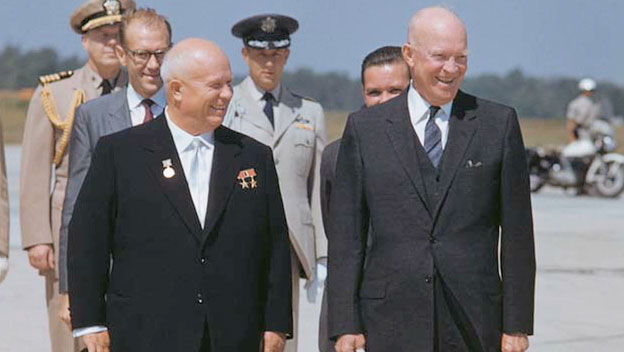
The Evil Red Empire – Red China – Whole Villain: President Eisenhower welcomes Premier Nikita Khrushchev. This Policy is important to contain and isolate Red China’s Imperialism.
Nikita Sergeyevich Khrushchev (April 17, 1894 – September 11, 1971), leader of the USSR from 1956 (Premier from 1958) to 1964 traveled to United States in 1959 and 1960. His insistence on “peaceful coexistence” with the West contributed to a rupture with Communist government of Red China. Khrushchev stopped assisting Chinese nuclear program on June 20, 1959. Red China’s Chairman Mao Tse-Tung criticized Khrushchev as a “palm-singing buffoon who underestimated the nature of Western Imperialism.”
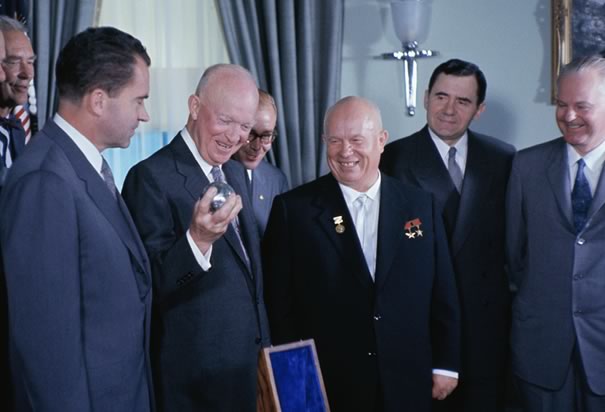
Nikita Sergeyevich Khrushchev (April 17, 1894 – September 11, 1971), leader of the USSR from 1956 (Premier from 1958) to 1964 traveled to United States in 1959 and 1960.Nikita Sergeyevich Khrushchev (April 17, 1894 – September 11, 1971), leader of the USSR from 1956 (Premier from 1958) to 1964 traveled to United States in 1959 and 1960.Khrushchev agreed for the first Nuclear Test-Ban Treaty of 1963. The Moscow Agreement banned testing nuclear weapons in the atmosphere, in outer space, and under water
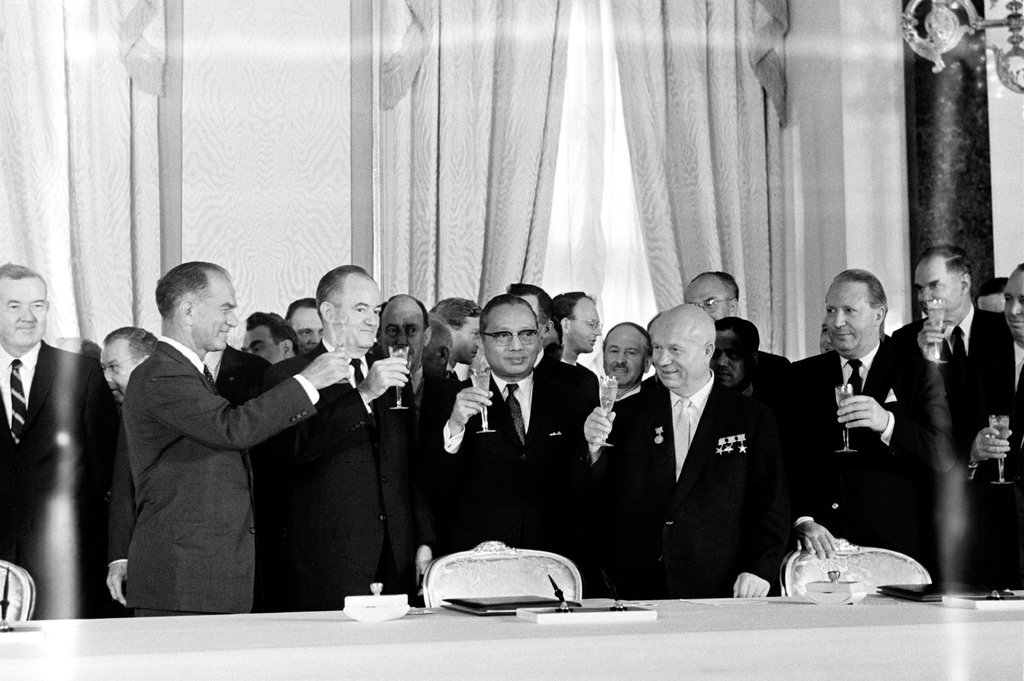
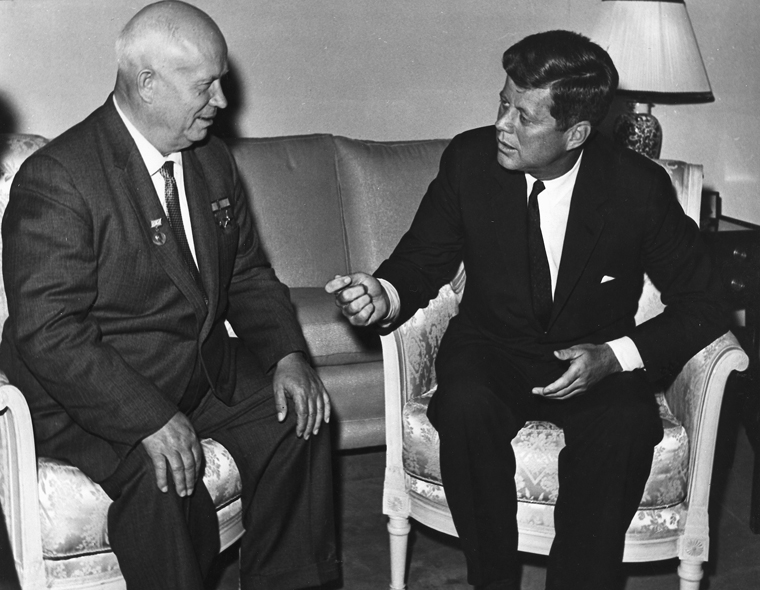
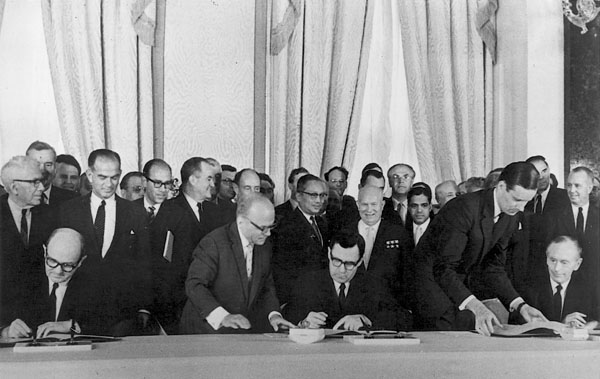
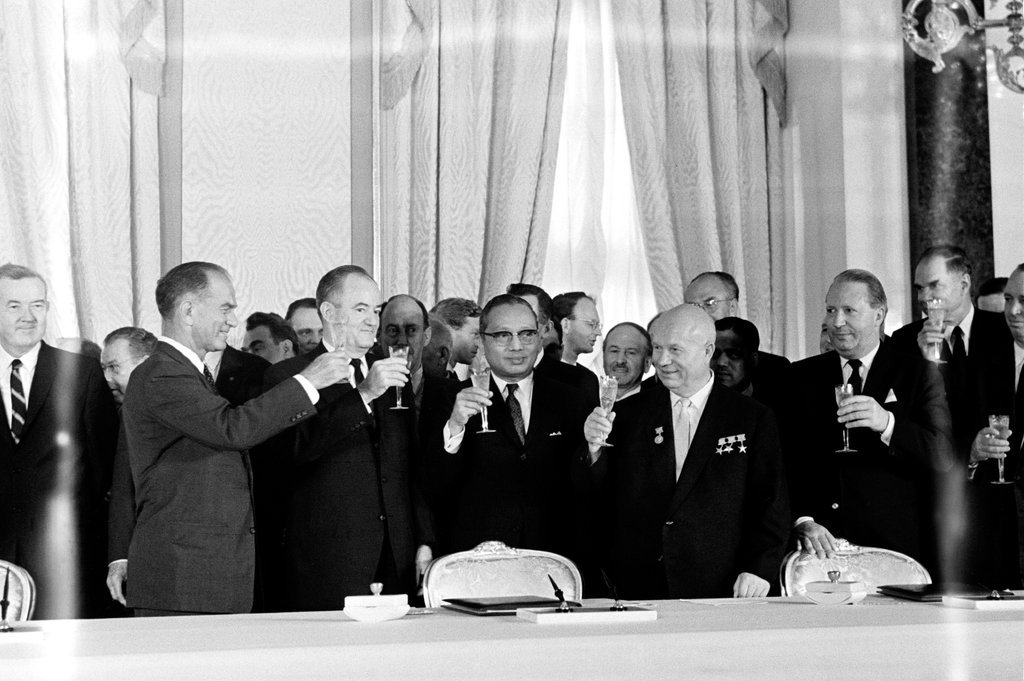
The Evil Red Empire – Red China – Whole Villian: Moscow, August 05 ,1963. It was a very good beginning that has full potential to curb Red China’s Expansionist Policy.
Khrushchev agreed for the first Nuclear Test-Ban Treaty of 1963. The Moscow Agreement banned testing nuclear weapons in the atmosphere, in outer space, and under water
Khrushchev agreed for the first Nuclear Test-Ban Treaty of 1963. The Moscow Agreement banned testing nuclear weapons in the atmosphere, in outer space, and under water. It paved the way to 1968 Nuclear Non-Proliferation Treaty or The Limited Test-Ban Treaty that tried to restrict the size of the “Nuclear Club.” Khrushchev further eased relations with the West by agreeing to limit central strategic forces. Strategic Arms Limitation Talks (SALT) began in 1969 and SALT I Treaty was signed in May 1972. Two arms-control agreements were made, 1. The Anti-Ballistic Missile (ABM) Treaty that agreed to limit antiballistic missiles, and 2. Interim Agreement on Offensive Nuclear Weapons that imposed freeze on long-range land- and sea-based ballistic missile launchers. Soviet Union did not violate provisions of these treaties.
Nixon-Kissinger US administration in 1971-72 took advantage of the split between Soviet Union and Red China to formulate US foreign policy that initiated trade and commerce relations with Red China. Nixon-Kissinger had clearly underestimated the nature of Red China’s Imperialism and failed to recognize threats posed to Peace and Freedom by Red China’s Policy of Expansionism.
The rupture between Soviet Union and Red China initiated by Premier Khrushchev in 1959 is in the interests of promoting Western Values of Democracy, Freedom, and Peace. The current US foreign policy of containing and isolating Russia is driving Russia to seek healing of rupture of 1959 and is forcing Russia to rebuild broken relations with Red China.
China has taken up Russia’s Deepest Fear
By Linette Lopez
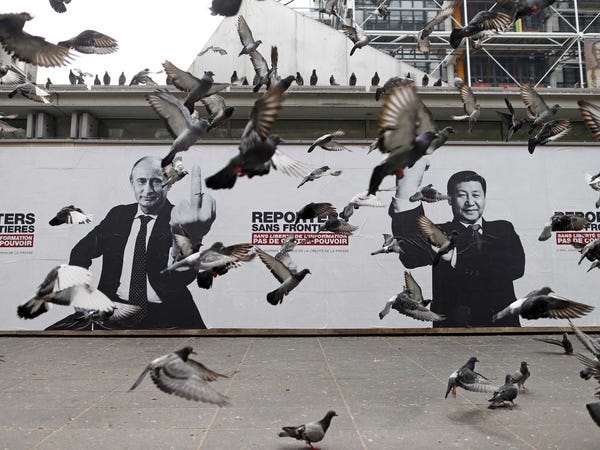
(Reuters) A poster depicting Russian President Vladimir Putin and his Chinese counterpart Xi Jinping pasted on the Brancusi Atelier by activists from Reporters Without Borders to mark the 20th annual World Press Freedom day in Paris in 2013.
(Reuters) A poster depicting Russian President Vladimir Putin and his Chinese counterpart Xi Jinping pasted on the Brancusi Atelier by activists from Reporters Without Borders to mark the 20th annual World Press Freedom day in Paris in 2013.
President Xi Jinping wants his people to know that the greatest threat to China is an insidious export from the West — ideas that could lead to a color revolution. “The one non-neglectable factor [in the development of] color revolutions in these countries is the spreading of Western ideology, especially from the US,” Xu Songwen of the Chinese Academy of Social Sciences wrote Sunday in The People’s Daily(via The South China Morning Post).
The People’s Daily is a Chinese Communist Party paper known to reflect the sentiments of Jinping’s regime. Songwen wasn’t alone either. In the same issue, four other academics also shared their thoughts on the dangers of color revolutions. The message was clear. There will be no nonviolent political movements in China. There will be no regime change. This will not be Lebanon or Ukraine in 2005. This will not be the Middle East in 2011.
Don’t even think about it.
That’s where the danger is, after all — in the thinking.
China has been systematically shutting out Western ideals from research centers, school curriculums, and higher learning for some time now, but this is the first time a government mouthpiece has made it clear that these thoughts are an intentional aggression from the West.
The basic gist of all of the papers in Sunday’s People’s Daily is fairly simple. It’s like this: The proliferation of Western democratic ideals are a Cold War tactic that helped bring about the end of the Soviet Union.
The ideas bring unrest and discontent to populations and ultimately lead to bloodshed. They also tend to end in failure (see: Arab Spring). Those who foment this kind of unrest are enemies of the state.
There is “a high price to pay for nations that fall into the trap of color revolutions,” one article said, according to the South China Morning Post. Besides, a People’s Daily commentary that ran Friday said, the Chinese Communist Party is “rigid enough to protect against threats, and resilient against internal problems and external shocks.”
So don’t even try it.
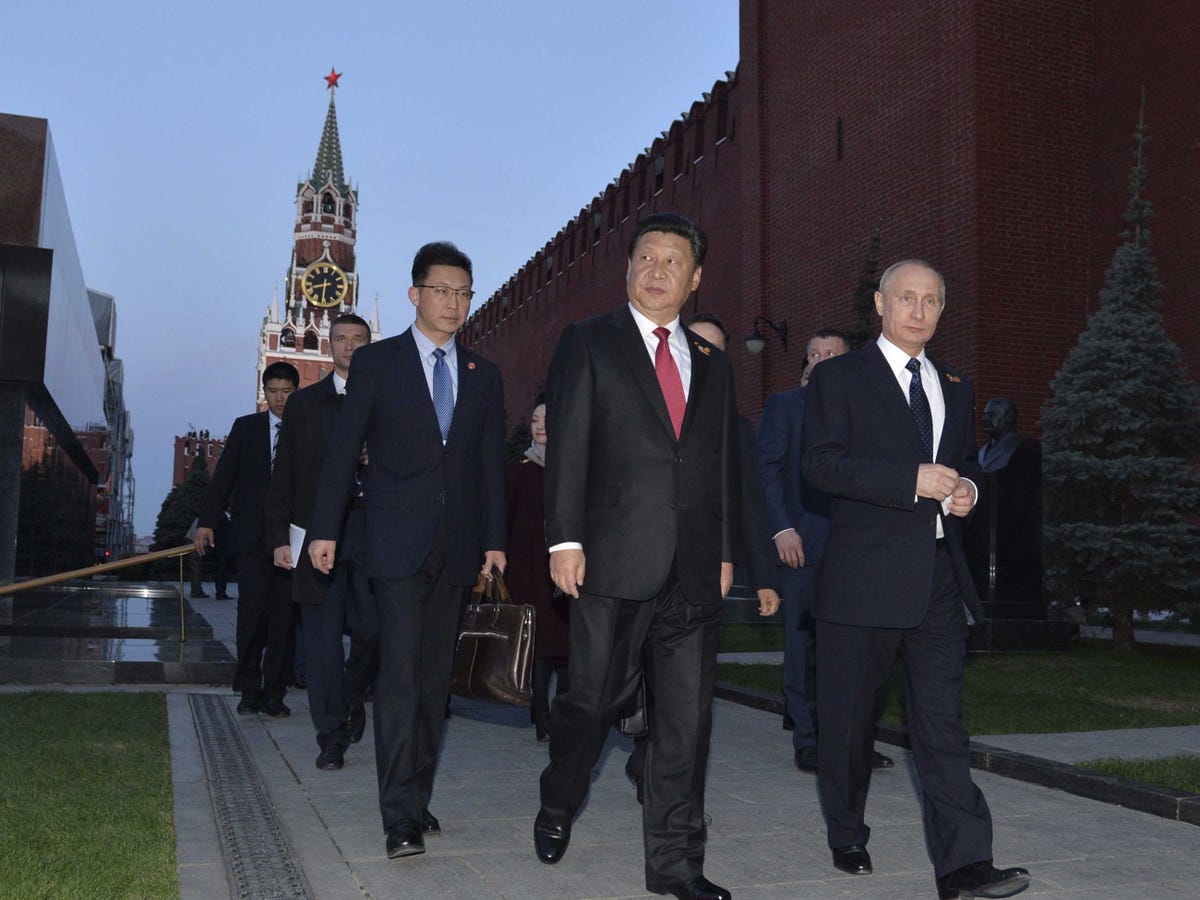
(Reuters) Putin and Xi arriving for a festive concert marking the 70th anniversary of the end of World War II in Europe, at Red Square in Moscow on May 9, 2015.
China is taking a play right out of Russia’s book with this one. In March, Security Council of Russia railed against the US security strategy, writing: “In relation to Russia, there is a high probability of the US using extensively advanced means for ‘color revolutions’ to eliminate unwanted political regimes.”
So where do color revolutions start?
Aside from schools and research centers, they start on the internet. The People’s Liberation Army knows that all too well, having released a chilling memo last month that said “the internet has become the main battlefront for struggle in the ideological area.”
Western hostile forces and a small number of “ideological traitors” in our country use the network, and relying on computers, mobile phones and other such information terminals, maliciously attack our Party, blacken the leaders who founded the New China, vilify our heroes, and arouse mistaken thinking trends of historical nihilism, with the ultimate goal of using “universal values” to mislead us, using “constitutional democracy” to throw us into turmoil, use “color revolutions” to overthrow us, use negative public opinion and rumours to oppose us, and use “de-partification and depoliticization of the military” to upset us.
Hours after these papers appeared in The People’s Daily, Hong Kong authorities said they had taken nine people into custody for potentially attempting to plan an attack on a legislative building on the island. Officials think they may advocate “localism,” or the belief that the mainland should stay out of Hong Kong affairs, according to The New York Times.
Bad timing.
Nixon-Kissinger US administration in 1971-72 took advantage of the split between Soviet Union and Red China to formulate US foreign policy that initiated trade and commerce relations with Red China.
The word “SUBJUGATE” means to bring under control, or subjection, conquer, to cause to become subservient, subdue, and to bring under yoke. Subjugation is the exact opposite of ‘Liberation’, or ‘Emancipation’. Subjugation is associated with tyranny, oppressive and unjust government, very cruel and unjust use of power or authority. Subjugation is the symptom of loss of Freedom. Red China with her military conquest of Tibet in 1950 imposed her authority with harshness, rigor, severity and uses her power in arbitrary manner using coercion. Red China is a Tyrant, one who seizes sovereignty of another nation illegally, Usurper, and a Subjugator of Tibet.
Red China – Subjugator of Tibet. The 17-point Plan signed on May 23, 1951 represents a plan for Subjugation of Tibet and not of Peaceful Liberation of Tibet.
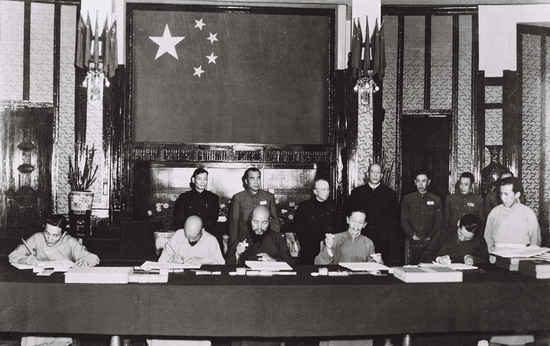
Very often, Red China makes reference to Seventeen-Point Agreement, or 17-Point Plan, or 17-Article Agreement between the Central People’s Government and the Local Government of Tibet on Measures for the Peaceful Liberation of Tibet. Five Tibetan delegates headed by Ngapoi Ngawang Jigmei and Representatives of the Central People’s Government met in Peking(Beijing) and signed an Agreement on May 23, 1951 in presence of Red China’s Vice President Zhu De, Vice President Li Jishena, and Vice-Premier Chen Yi. This 17-Point Plan promised that there should be no coercion on the part of the Central Government of China in implementing any of its measures. During the following years, 1951-1956, Tibet recognized Red China’s true ‘evil’ intentions to subject Tibetan people to her military occupation. Both Tibet, and Republic of India conducted a series of diplomatic negotiations with Red China to loosen her military grip over Tibet. By 1957, it became very apparent that Red China is using her authority to eliminate any opposition to her direct rule. Red China has taken measures to control every aspect of Tibetan Nation giving no chance or opportunity to Tibetan people to live their lives with a natural right to freedom, an independent way of living that Tibet enjoyed during centuries of foreign rule by Mongols, and Manchu China’s Qing Dynasty(1644-1911). Seventeen-Point Agreement of 1951 is a phony agreement with lies, empty assurances and it is evidence of Red China’s treachery, cunningness, craftiness, and wickedness for which I name Red China a ‘Jackal’.
Red China – Subjugator of Tibet. The military conquest of Tibet.
At Special Frontier Force, I recognized that Red China has violated 17-Article Agreement signed on May 23, 1951. The history of Tibetan Resistance Movement that formulated the finding of Special Frontier Force bears testimony to the fact of Tibet’s subjugation under a tyrannical rule imposed by Red China.
Top Chinese officer pays visit to US: Pentagon
Fan Changlong (R), vice chairman of China’s Central Military Commission, meets with U.S. Army Chief of Staff General Raymond Odierno in Beijing, capital of China, Feb. 21, 2014. (Xinhua/Li Tao)
US army Chief of Staff General Ray Odierno (L) meets with Fan Changlong, Deputy Chairman of the Central Military Commission at Bayi Building in Beijing on February 21, 2014 (AFP Photo/Lintao Zhang)
Washington (AFP) – A top Chinese military officer began a six-day visit to the United States on Monday amid rising tensions over Beijing’s assertive stance in the South China Sea.
General Fan Changlong, vice-chairman of China’s Central Military Commission, started his tour in San Diego with a stop at the USS Ronald Reagan aircraft carrier and will hold talks on Thursday at the Pentagon with US Defense Secretary Ashton Carter, officials said.
Carter and other top US officials have recently castigated China over its push to build artificial islands in the disputed waters of the South China Sea. At a recent security conference in Singapore, Carter called for an immediate end to land reclamation by countries in the region, and accused China of being out of step with international rules.
“Turning an underwater rock into an airfield simply does not afford the rights of sovereignty or permit restrictions on international air or maritime transit,” the Pentagon chief said at the International Institute for Strategic Studies conference.
President Barack Obama earlier this month also warned Beijing over its tactics, saying territorial disputes could not be solved by “throwing elbows.” Before heading to Washington, Fan was due to visit a Boeing factory in Seattle and a US Army base at Fort Hood in Texas.
Fan is considered a counterpart to Carter, US officials said.
The general’s visit is part of a years-long effort to build a regular dialogue between the American and Chinese armed forces to defuse potential tensions and avoid miscalculations. Carter’s predecessor, Chuck Hagel, paid a visit to China in 2014 in a trip that was marked by friction, with each side trading sharply worded criticism.
Mao Zedong proclaims the founding of the People’s Republic of China in Beijing on Oct. 1, 1949.THE EVIL RED EMPIRE – RED CHINA – SUBJUGATOR OF TIBET .Red China Subjugator of Tibet – May 23, 1951 – PEKING ( Beijing)Red China Subjugator of Tibet: 17-Point Plan of May 23, 1951.Red China Subjugator of Tibet. 17 Article Agreement of May 23, 1951Red China Subjugator of Tibet – Banquet in PEKING ( Beijing).Red China Subjugator of Tibet – 17- Point Agreement, May 1951 – PEKING( Beijing).Red China Subjugator of Tibet – Tibetan Uprising – March 12, 1959.Red China – Oppression in Tibet
The Seven Heads of Red China manifest as 1. Evil Power, 2. Expansionist, 3. Imperial State, 4. Aggressor Nation, 5. Neocolonialist, 6. Tyrant, and 7. Jackal. Nations that conduct business with Red China have to deal with the reality of this Seven-Headed Monster.
The Evil Red Empire – Red China – Seven-Headed Scarlet Beast
The Evil Red Empire – The Seven-Headed Scarlet Beast: The Seven Heads of Red China manifest as 1. Evil Power, 2. Expansionist, 3. Imperial State, 4. Aggressor Nation, 5. Neocolonialist, 6. Tyrant, and 7. Jackal. Nations that conduct business with Red China have to deal with the reality of this Seven-Headed Monster.
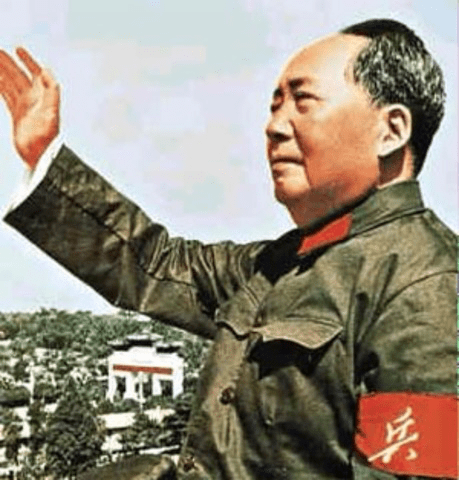
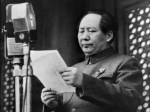
Red China’s Communist Party Chairman Mao Zedong or Mao Tse-Tung proclaimed the founding of People’s Republic of China on October 01, 1949. Red China joined the global community of nations with ‘evil’ intentions. Red China shared a vision for her own future growth and development, formally disclosed a plan for building an ‘Empire’ using the policy of ‘Expansionism’.
The Evil Red Empire – The Seven-Headed Scarlet Beast: The Seven Heads of Red China manifest as 1. Evil Power, 2. Expansionist, 3. Imperial State, 4. Aggressor Nation, 5. Neocolonialist, 6. Tyrant, and 7. Jackal. Nations that conduct business with Red China have to deal with the reality of this Seven-Headed Monster.
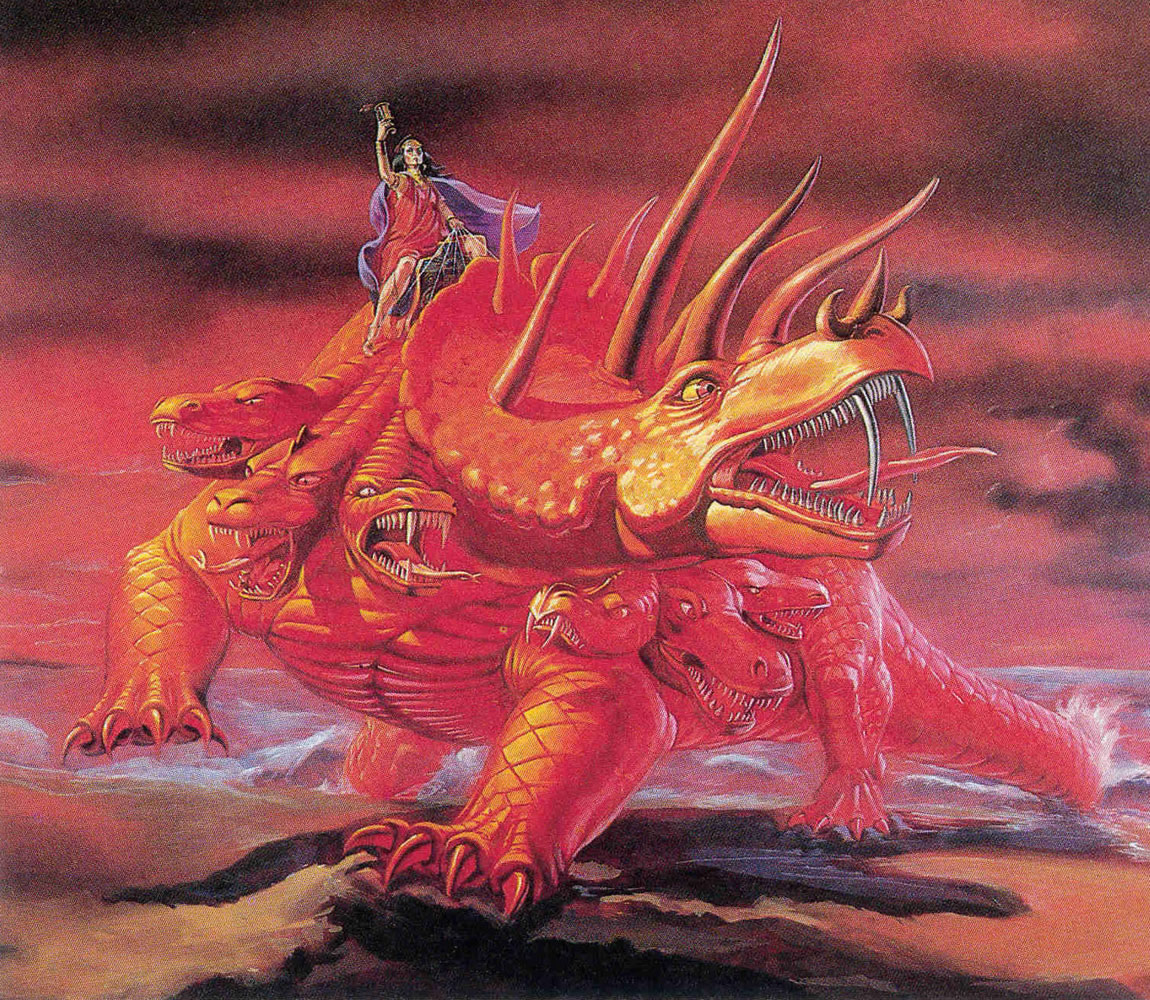
I monitored the growth of this Evil Empire and she symbolizes Seven-Headed Scarlet Beast described in The New Testament Book of Revelation, Chapter 17, verse 3.
Revelation 17:3
“So he carried me away in the spirit into the wilderness: and I saw a woman sit upon a scarlet colored beast, full of names of blasphemy, having seven heads and ten horns.”
Each head of this Scarlet Beast represents a particular trait or aspect of Red China and her behavior as a national entity. The Seven Heads of Red China manifest as 1. Evil Power, 2. Expansionist, 3. Imperial State, 4. Aggressor Nation, 5. Neocolonialist, 6. Tyrant, and 7. Jackal.
Nations that conduct business with Red China have to deal with the reality of this Seven-Headed Monster.
CHINA OFFICIAL SAYS AIR DEFENSE ZONE IN SOUTH CHINA SEA HINGES ON SECURITY
Reuters
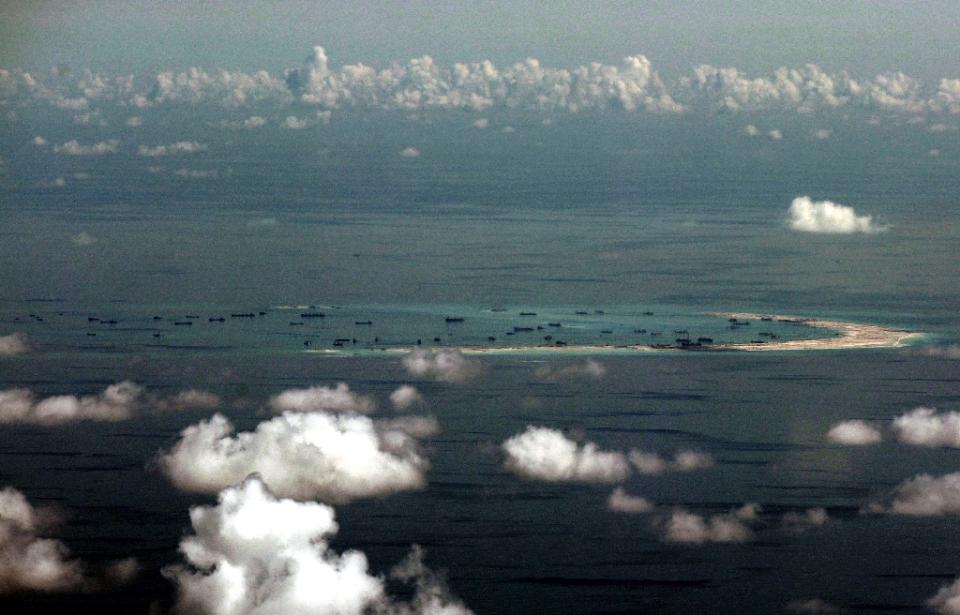
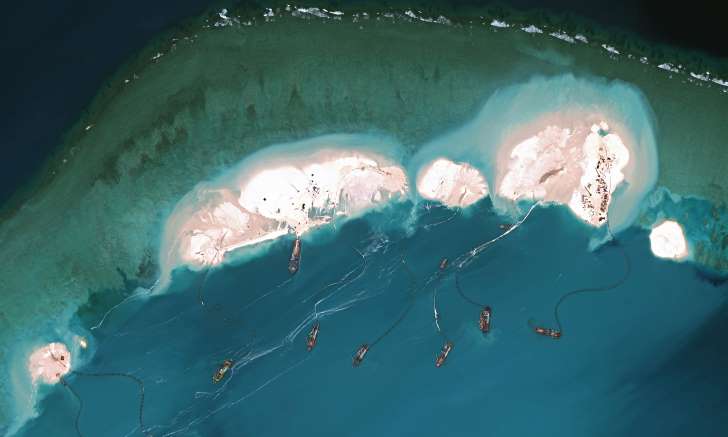
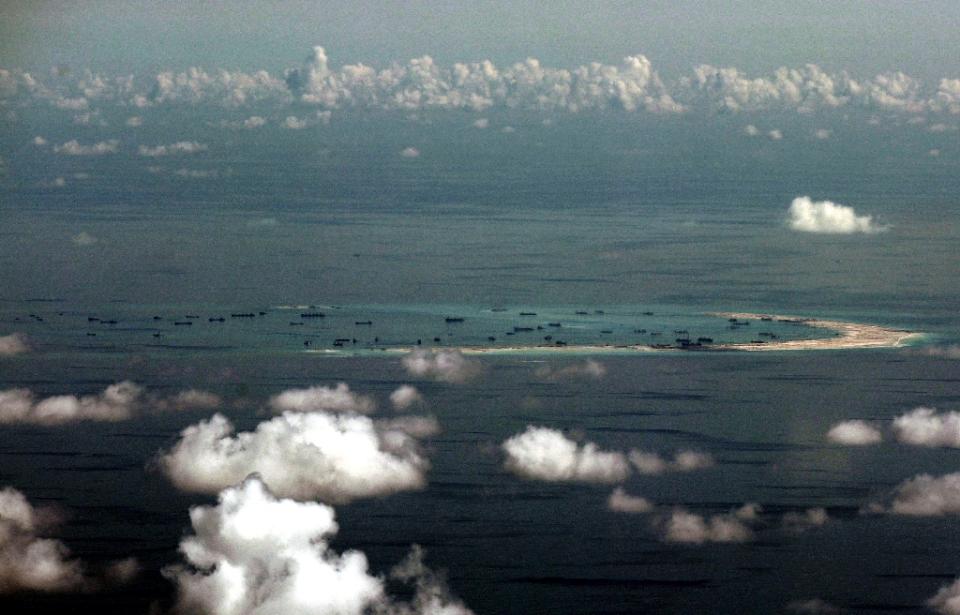
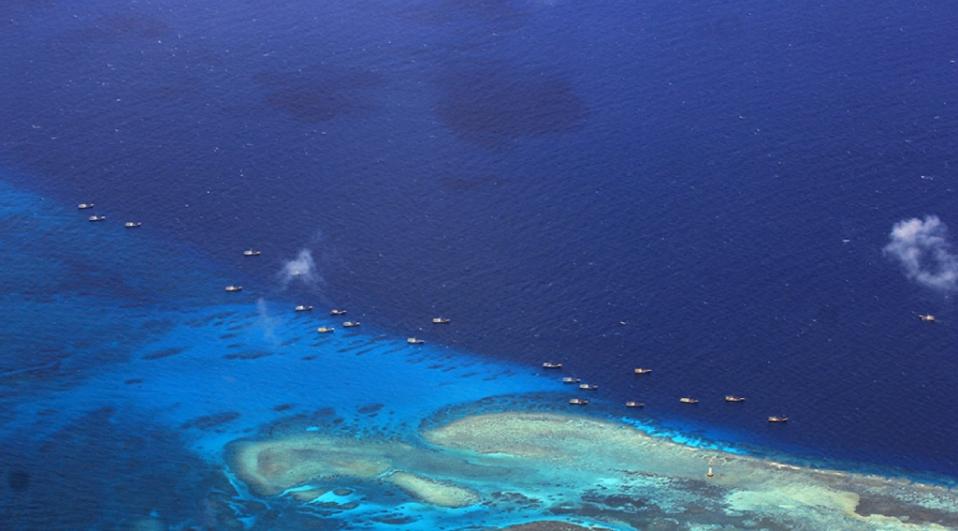
Mischief Reef in the Spratly Islands. Red China Land Reclamation .Photo image MAY 11, 2015. Nations that conduct business with Red China have to deal with the reality of this Seven-Headed Monster. Nations that conduct business with Red China have to deal with the reality of this Seven-Headed Monster.
China’s decision on whether to establish an air defense zone in the South China Sea depends on whether there is a threat to its air or maritime security in the region, a senior military official said on Saturday.
Extensive land reclamation work by China in the South China Sea has led to speculation that it will declare an Air Defense Identification Zone around the disputed waters.
Such a move “depends on whether our security in air and maritime will be threatened and extensive factors will be taken into consideration,” Admiral Sun Jianguo, a deputy chief of staff of China’s People’s Liberation Army, said at a security forum in Singapore.
(Reporting by Rachel Armstrong; Editing by Raju Gopalakrishnan)
The Washington Post
The Seven Heads of Red China manifest as 1. Evil Power, 2. Expansionist, 3. Imperial State, 4. Aggressor Nation, 5. Neocolonialist, 6. Tyrant, and 7. Jackal. Nations that conduct business with Red China have to deal with the reality of this Seven-Headed Monster.
Pentagon chief criticizes Beijing’s South China Sea moves
The Seven Heads of Red China manifest as 1. Evil Power, 2. Expansionist, 3. Imperial State, 4. Aggressor Nation, 5. Neocolonialist, 6. Tyrant, and 7. Jackal. China official says air defense zone in South China Sea hinges on security. Nations that conduct business with Red China have to deal with the reality of this Seven-Headed Monster.
China’s land reclamation in the South China Sea is out of step with international rules, and turning underwater land into airfields won’t expand its sovereignty, Defense Secretary Ash Carter told an international security conference Saturday, stepping up America’s condemnation of the communist giant as Beijing officials sat in the audience.
Associated Press
The Seven Heads of Red China manifest as 1. Evil Power, 2. Expansionist, 3. Imperial State, 4. Aggressor Nation, 5. Neocolonialist, 6. Tyrant, and 7. Jackal. China official says air defense zone in South China Sea hinges on security. Nations that conduct business with Red China have to deal with the reality of this Seven-Headed Monster.The Seven Heads of Red China manifest as 1. Evil Power, 2. Expansionist, 3. Imperial State, 4. Aggressor Nation, 5. Neocolonialist, 6. Tyrant, and 7. Jackal. Nations that conduct business with Red China have to deal with the reality of this Seven-Headed Monster.The Seven Heads of Red China manifest as 1. Evil Power, 2. Expansionist, 3. Imperial State, 4. Aggressor Nation, 5. Neocolonialist, 6. Tyrant, and 7. Jackal. Nations that conduct business with Red China have to deal with the reality of this Seven-Headed Monster.The Seven Heads of Red China manifest as 1. Evil Power, 2. Expansionist, 3. Imperial State, 4. Aggressor Nation, 5. Neocolonialist, 6. Tyrant, and 7. Jackal. Nations that conduct business with Red China have to deal with the reality of this Seven-Headed Monster.The Seven Heads of Red China manifest as 1. Evil Power, 2. Expansionist, 3. Imperial State, 4. Aggressor Nation, 5. Neocolonialist, 6. Tyrant, and 7. Jackal. Nations that conduct business with Red China have to deal with the reality of this Seven-Headed Monster.The Seven Heads of Red China manifest as 1. Evil Power, 2. Expansionist, 3. Imperial State, 4. Aggressor Nation, 5. Neocolonialist, 6. Tyrant, and 7. Jackal. Nations that conduct business with Red China have to deal with the reality of this Seven-Headed Monster.
Red China vs Tibet: Who decides the results of a battle? The outcome of the fight is not always controlled by the relative military strengths of the opposing parties.
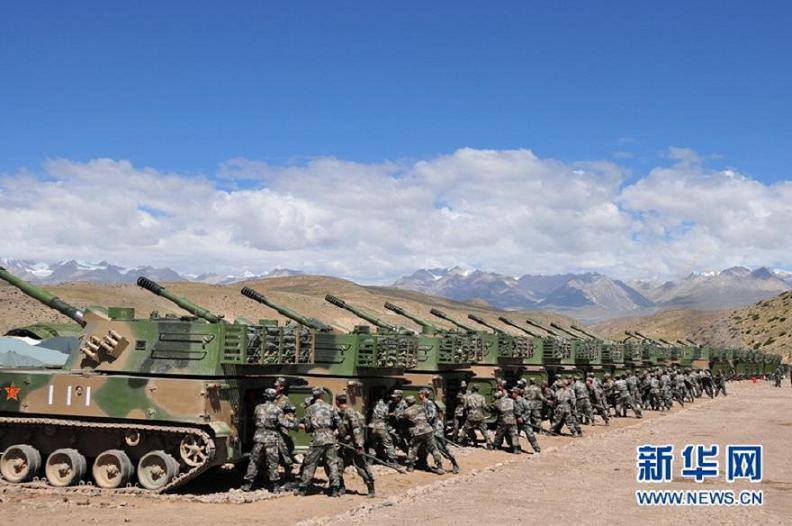
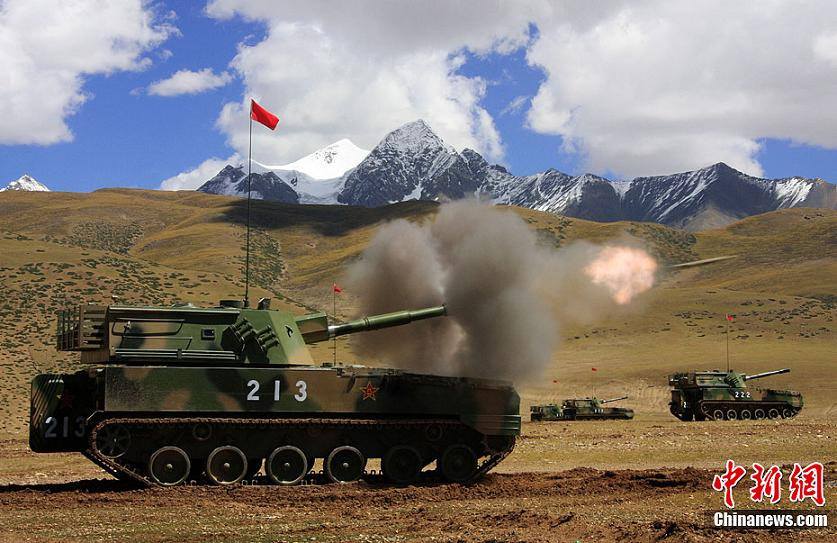
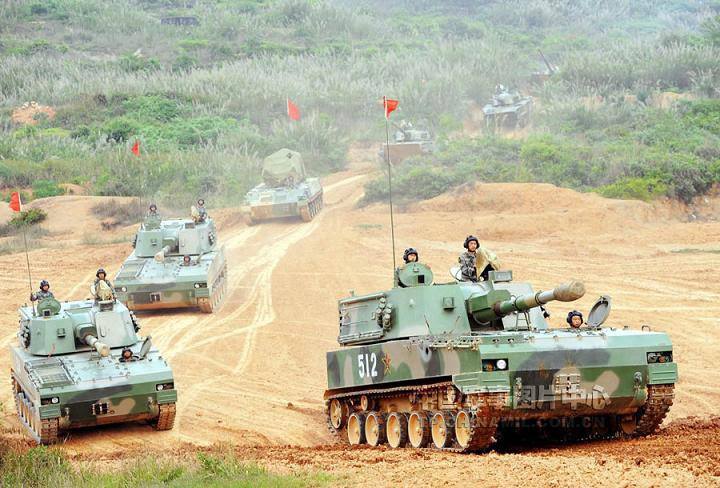
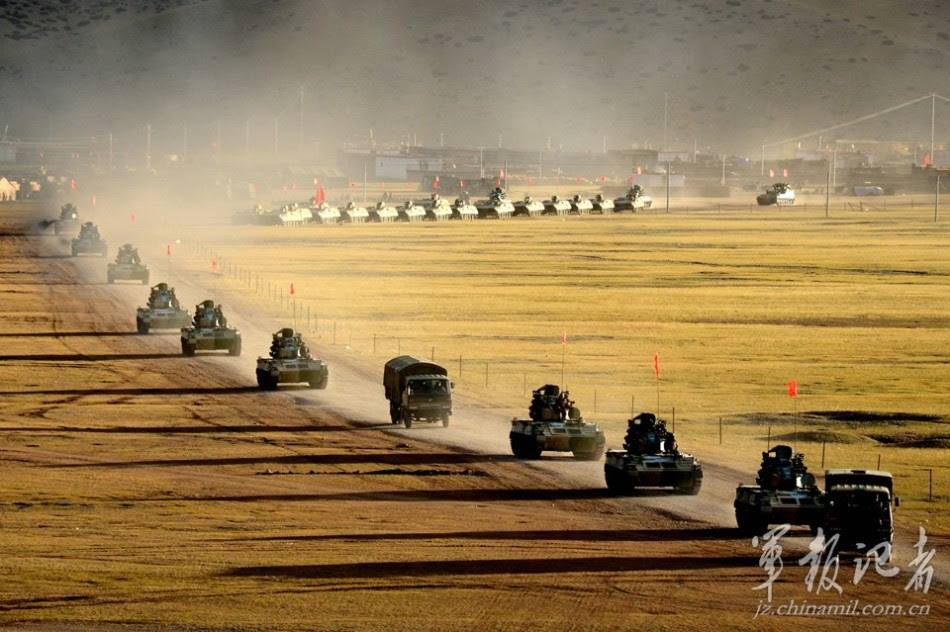
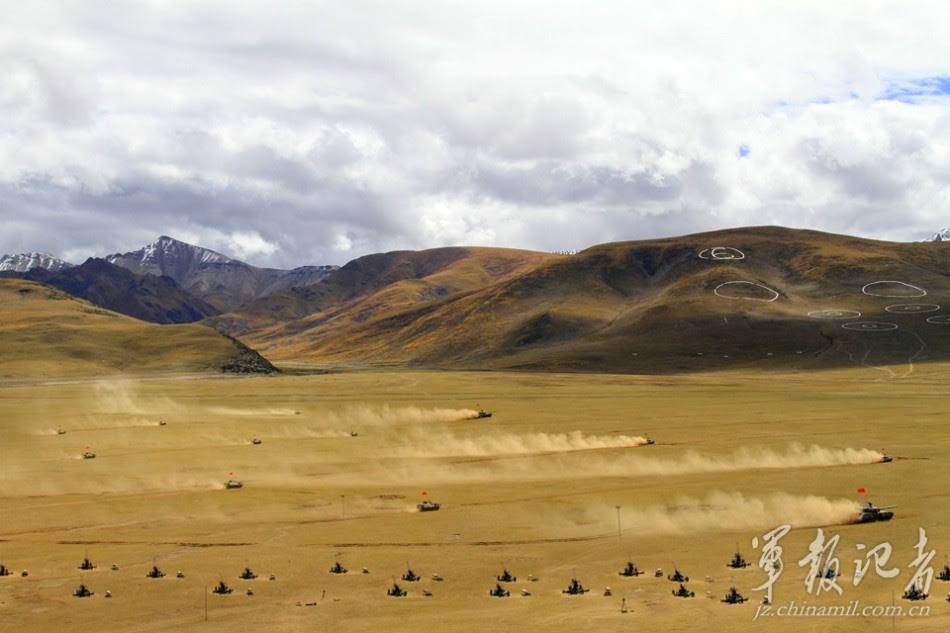
Red China has claimed that it is expanding its defense spending to increase its global military reach to defend its economic interests and territorial rights which includes Red China’s claim for territorial rights in Occupied Tibet. People’s Liberation Army maintains an impressive military force in Tibet with which it brutalized and represses people who offer Resistance to Red China’s occupation. Red China rules over Tibet with its Iron Fist.
Red China vs Tibet: Who decides the results of a battle? The outcome of the fight is not always controlled by the relative military strengths of the opposing parties.
Everyday deeds by ordinary folks can break the knuckles of the military grip over Tibet. Who decides the results of a battle? The outcome of the fight is not always controlled by the relative military strengths of the opposing parties.
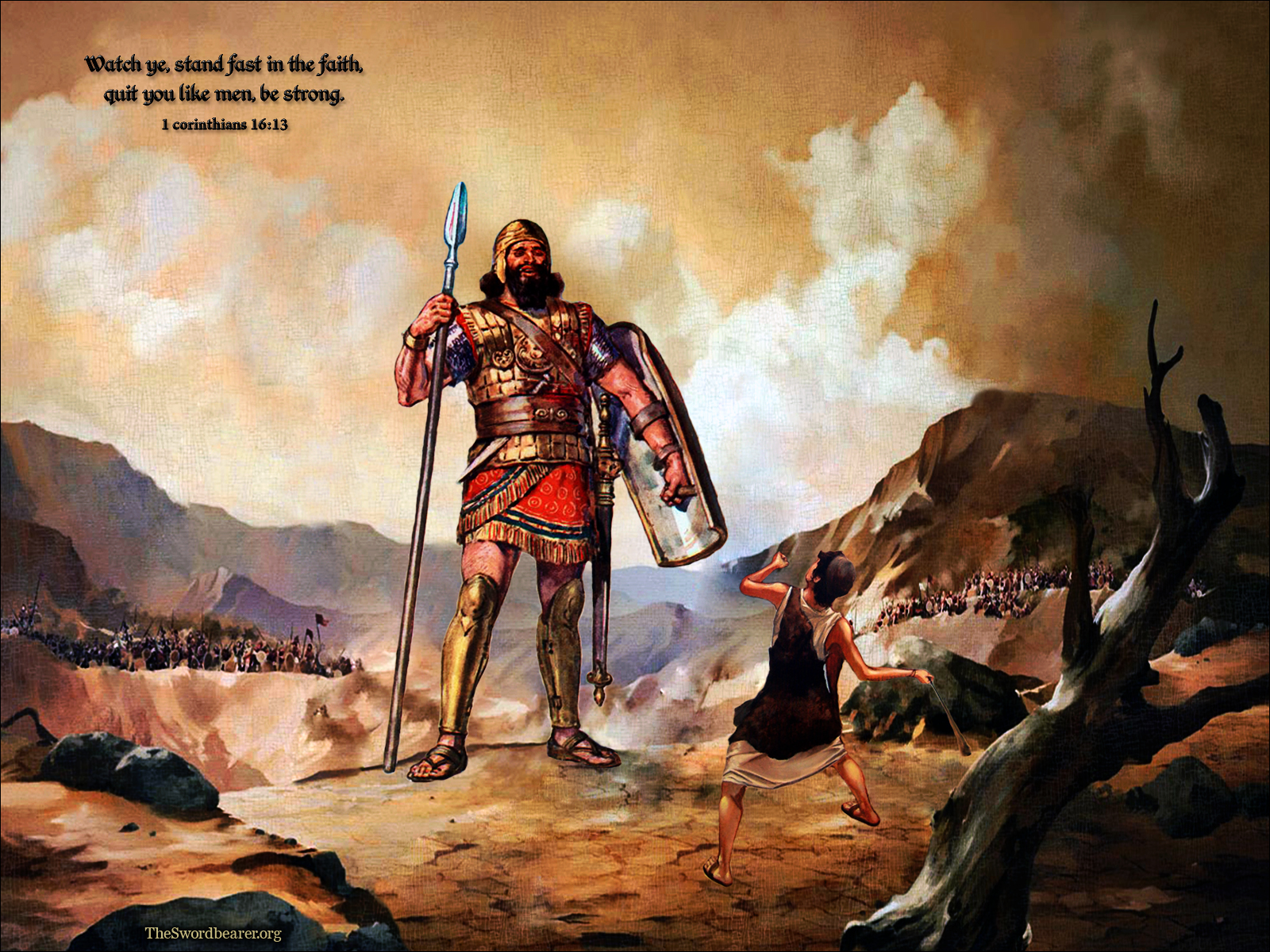
RED CHINA vs TIBET – THE FIGHT BETWEEN DAVID AND GOLIATH:
Red China vs Tibet: Who decides the results of a battle? The outcome of the fight is not always controlled by the relative military strengths of the opposing parties.
Wars in ancient times were sometimes decided by “representative combat”; Champions from each side would fight, and the results of their combat would determine the battle’s result. People believed the outcome of the fight was controlled by the warriors’ gods more than by the two sides’ military strength.The Old Testament Book of 1 Samuel, Chapter 17 described an interesting fight between David, a young Israeli shepherd and Goliath, a gigantic warrior of the Philistine army. David had no prior experience of warfare but was confident in his God. Whereas Goliath was an experienced soldier and was especially scornful of Israelites who openly proclaimed that they are God’s chosen people.
Red China vs Tibet: Who decides the results of a battle? The outcome of the fight is not always controlled by the relative military strengths of the opposing parties.
The Philistines had ventured into Israel’s territory and had taken a firm position on the slope of a hill, with Israel camped on the opposite hill. From the Philistine camp Goliath made daily challenges to personal combat, but after forty days no one accepted his challenge as Israelites were simply terrified and dismayed by the Philistine. Goliath’s size was extraordinary. He was over nine feet (or even over eleven feet) in height. Goliath had a bronze helmet on his head and wore a coat of scale armor of bronze, on his legs he wore bronze greaves, and a bronze javelin was slung on his back. He also held a sword and a spear. For forty days, Goliath came forward every morning and evening and took his stand demanding Israelites to send a soldier to fight him. David had been sent to Israeli camp to deliver some provisions to his three brothers who served as soldiers in Israeli army. When David heard Goliath’s challenge, he made repeated inquires about its meaning. After being told, David agreed to respond to Goliath’s challenge and demand for personal combat without any concern for his lack of war experience.
Red China vs Tibet: Who decides the results of a battle? The outcome of the fight is not always controlled by the relative military strengths of the opposing parties.
David took his staff in his hand, chose five smooth stones from the stream, put them in the pouch of his shepherd’s bag and with his sling in hand ,went to face Goliath. He approached him and said to Goliath, “You come against me with sword and spear and javelin, but I come against you in the name of the LORD Almighty, the God of the armies of Israel, whom you have defied…… All those gathered here will know that it is not b sword or spear that the LORD saves; for the battle is LORD’s, and He will give all of you into our hands.” (1 Samuel 17: 45-47)
Red China vs Tibet: Who decides the results of a battle? The outcome of the fight is not always controlled by the relative military strengths of the opposing parties.
As Goliath moved closer to attack David, he ran quickly toward the battle line to meet Goliath. David reached into his bag and took out a stone, slung it striking Goliath on his forehead. The stone found its mark, sank into Goliath’s forehead, and Goliath fell facedown on the ground.
Red China vs Tibet: Who decides the results of a battle? The outcome of the fight is not always controlled by the relative military strengths of the opposing parties.
So David triumphed over Goliath with a sling and stone without a sword in his hand; he struck down Goliath and killed him.
Red China vs Tibet: Who decides the results of a battle? The outcome of the fight is not always controlled by the relative military strengths of the opposing parties.
David took hold of Goliath’s sword and drew it from the scabbard and he cut off his head with the sword.
Red China vs Tibet: Who decides the results of a battle? The outcome of the fight is not always controlled by the relative military strengths of the opposing parties.
In my analysis, David overwhelmed Goliath, taking full advantage of a small portion of Goliath’s huge body to strike it at a most vulnerable spot in a very precisely executed attack.
Red China vs Tibet: Who decides the results of a battle? The outcome of the fight is not always controlled by the relative military strengths of the opposing parties.
I am not concerned about the religious beliefs of people who fight on behalf of Tibet or those of Red China. I visualize this as a ‘Battle of Right Against Might’. Military occupation of Tibet is illegal, unjust, and it reveals the evil intent of Red China. For Red China’s actions are evil, Red China has no choice other than that of experiencing the fruits of their own actions. For that reason, I predict that Beijing Is Doomed. Red China will come down, its downfall will be sudden and very quick as mentioned in The New Testament Book Revelation Chapter 18, Verse 21.
Red China vs Tibet: Who decides the results of a battle? The outcome of the fight is not always controlled by the relative military strengths of the opposing parties.
CHINESE MILITARY SETS COURSE TO EXPAND GLOBAL REACH AS ‘NATIONAL INTERESTS’ GROW
The Washington Post
Simon Denyer
Red China vs Tibet: Who decides the results of a battle? The outcome of the fight is not always controlled by the relative military strengths of the opposing parties.
BEIJING — China said Tuesday that it plans to extend its global military reach to safeguard its economic interests, while defending its territorial claims at sea against “provocative actions” by neighbors and “meddling” by the United States.
A policy document setting out China’s military strategy, issued by the State Council, or cabinet, underlined the dramatic growth of the country’s defense ambitions — especially its naval ambitions — in tandem with its rapid economic rise.
Beijing insisted in the document that its military is dedicated to “international security cooperation” and peaceful development. But it also said the navy will expand its focus from “offshore waters defense” to a greater emphasis on “open seas protection” as China aims to establish itself as a maritime power. The air force, meanwhile, will shift its focus from “territorial air defense to both defense and offense.”
Patrick Cronin, director of the Asia-Pacific Security Program at the Center for a New American Security, called the white paper “a blueprint for achieving slow-motion regional hegemony.”
“It asserts a confidence backed by growing capability on land and increasingly at sea,” he said. “While it calls for balancing China’s territorial ‘rights’ with ‘stability,’ there should be little doubt on the part of its neighbors that China is building a maritime force to assert the former.”
China’s officially disclosed defense budget was expanded by just over 10 percent this year, to $141 billion, marking two decades of nearly unbroken double-digit growth. The navy is reportedly building a second aircraft carrier and has invested heavily in submarines and warships.
“China has made it a strategic goal to become a maritime power,” Senior Col. Wang Jin said at a news conference Tuesday. “Therefore, we need to build a strong navy.”
He added that the development of long-range precision weapons means that the battlefield at sea is widening. “Offshore-waters defense alone can no longer provide effective defense of the country’s maritime interests,” he said.
In Washington, State Department spokesman Jeff Rathke said the administration was aware of the paper and continued to monitor China’s military developments carefully. “We also continue to urge China to exhibit greater transparency with respect to its capabilities and to its intentions,” he said.
According to a Pentagon report released this month, China is developing missiles designed to “push adversary forces — including the United States — farther from potential regional conflicts.”
The Chinese military is mainly focused on readying for possible conflict in the Taiwan Strait but also is investing to prepare for “contingencies” in the East China Sea and the South China Sea, where it is engaged in several territorial disputes, the Pentagon report said.
Chinese officials say that the country’s declared annual defense spending is significantly below the global average when compared with the size of its economy. Its actual defense spending is almost certainly higher than the declared number but is still far lower than the Pentagon’s fiscal 2015 budget of $560 billion, experts say.
In a move welcomed by other nations, China sent a 700-strong peacekeeping force in December to South Sudan, where it has extensive oil interests, marking the first time it has sent an infantry battalion on a U.N. mission.
Beijing also is negotiating with the strategic port nation of Djibouti to open a military base there to support anti-piracy naval escort missions in the Gulf of Aden and off the coast of Somalia, the Agence France-Presse news agency reported this month. The United States and France already have a military presence in the tiny Horn of Africa country.
Mapping Asia’s Chinese fears
“With the growth of China’s national interests, the security of our overseas energy and resources, strategic sea lines of communication and the safety of our overseas institutions, personnel and assets have become prominent issues,” Senior Col. Zhang Yuguo said at Tuesday’s news conference.
Zhang added, however, a note of outreach apparently aimed at the United States and other countries watching China’s military growth. “China will never seek hegemony or divide up spheres of power, nor will it engage in military alliances or expansion,” he said.
In addition to rattling its neighbors, China’s military growth has set the nation on a possible collision course with the United States.
This year in particular, the Obama administration has repeatedly condemned a program of rapid land reclamation and construction on disputed islands and reefs in the South China Sea. A U.S. surveillance plane was warned to leave the area by the Chinese navy last week, while Beijing lodged a formal diplomatic complaint.
Senior Col. Yang Yujun, a Defense Ministry spokesman, on Tuesday likened China’s construction activities on the islands to “everyday actions” such as the building of houses, roads and bridges. But he acknowledged that the facilities being constructed, including an airstrip and radar stations, will have both military and civilian uses.
[Chinese warships could one day outnumber U.S. fleet]
Rathke, the State Department spokesman, said the United States took a different view, saying that China’s land reclamation efforts in the South China Sea have “contributed . . . to rising tensions” and suggesting that other countries in the region share that view.
Yang said that the Chinese military was responding to increasingly frequent surveillance flights in a “legal and professional manner” but that the issue was being hyped up to “throw mud” at China.
“There’s no ruling out the possibility that some country is seeking an excuse for its potential action in the future,” he said. “I don’t think this is a new trick. It’s an old trick.”
On Monday, the state-owned tabloid the Global Times warned that battle is “inevitable” if the United States tries to prevent China from finishing its reclamation and construction work. It said the risks would be “still under control” if Washington accepts China’s peaceful rise.
Although not necessarily fully reflecting official thinking, the editorial shows China’s determination to continue its projects in the South China Sea.
Yang said Sino-U.S. relations are generally good and noted that both militaries have signed agreements to govern air and maritime encounters and prevent crises.
But the policy paper expressed concern about the United States’ “ ‘rebalancing’ strategy,” which has led China to enhance its military presence and strengthen military alliances in the Asia-Pacific region and worry about more assertive military and security policies in Japan. It accused China’s neighbors of provocative actions by reinforcing their military presence on “China’s reefs and islands that they have illegally occupied.”
“Some external countries are also busy meddling in South China Sea affairs,” it said, adding in a clear reference to the United States: “A tiny few maintain constant close-in air and sea surveillance and reconnaissance against China.”
Philippines President Benigno Aquino III was quoted as saying Monday that his nation will continue flying over disputed islands in the South China Sea, while Defense Minister Voltaire Gazmin said he was seeking a “stronger commitment” from the United States to help its ally, according to news agency reports.
China responded angrily.
“I would like to remind the Philippines that China will not bully small countries, but small countries must not ceaselessly and willfully make trouble,” Foreign Ministry spokeswoman Hua Chunying said at a news conference. “We hope the Philippines can cease its instigation and provocation and return to the correct path of resolving the problem through negotiation and consultation.”
On Tuesday, state media reported that China had held a groundbreaking ceremony for the building of two lighthouses on the disputed Spratly Islands, a move that Hua said was meant to fulfill the nation’s international obligations but that is unlikely to ease concerns about Beijing’s expanding influence.
The military strategy paper also outlined threats emanating from instability on the Korean Peninsula, from separatist forces in its western regions of Tibet and Xinjiang and from forces attempting to instigate a “color revolution” to overthrow the Communist Party. It also noted growing threats in outer space and cyberspace.
Xu Yangjingjing in Beijing and Dan Lamothe in Washington contributed to this report.
Red China vs Tibet: Who decides the results of a battle? The outcome of the fight is not always controlled by the relative military strengths of the opposing parties.Red China vs Tibet: Who decides the results of a battle? The outcome of the fight is not always controlled by the relative military strengths of the opposing parties.Red China vs Tibet: Who decides the results of a battle? The outcome of the fight is not always controlled by the relative military strengths of the opposing parties.Red China vs Tibet: Who decides the results of a battle? The outcome of the fight is not always controlled by the relative military strengths of the opposing parties.Red China vs Tibet: Who decides the results of a battle? The outcome of the fight is not always controlled by the relative military strengths of the opposing parties.Red China vs Tibet: Who decides the results of a battle? The outcome of the fight is not always controlled by the relative military strengths of the opposing parties.Red China vs Tibet: Who decides the results of a battle? The outcome of the fight is not always controlled by the relative military strengths of the opposing parties.Red China vs Tibet: Who decides the results of a battle? The outcome of the fight is not always controlled by the relative military strengths of the opposing parties.Red China vs Tibet: Who decides the results of a battle? The outcome of the fight is not always controlled by the relative military strengths of the opposing parties.Red China vs Tibet: Who decides the results of a battle? The outcome of the fight is not always controlled by the relative military strengths of the opposing parties.
Neocolonialism describes the revival of Colonialist exploitation by a foreign power of a region that has achieved independence. Colonialism is the system or policy by which a country maintains foreign colonies especially in order to exploit them economically. Colonization refers to extension of political and economic control over an area by an occupying state that has organizational or technological superiority. Imperialism has been a major colonizing force. The Colony’s population is subdued to assimilate them to the Colonizer’s way of life.
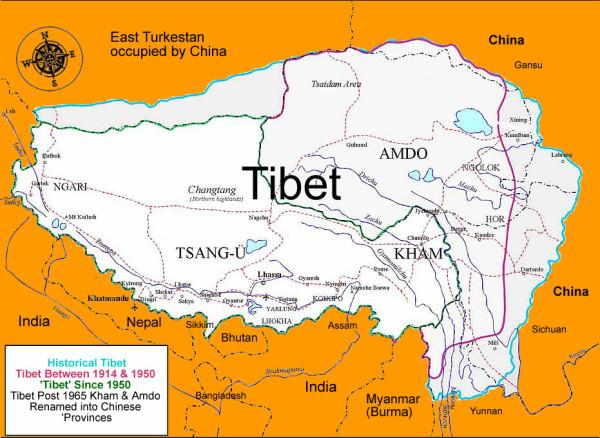
The Great 13th Dalai Lama of Tibet declared Tibet’s independence from Manchu China(Qing or Ch’ing Dynasty) on February 13, 1913. Tibet expelled Manchu China’s diplomats and its military contingent posted in Lhasa, Tibet’s Capital. For centuries, Tibet came under foreign conquests by Mongols and Manchu China but Tibet was never colonized. Red China’s military invasion of Tibet in 1950 describes the typical features of Colonialism. Tibet’s population is repressed by brutal force in an attempt to fully assimilate Tibetans to the Colonizer’s way of life. Red China’s Colonial Rule is a direct threat to the existence of Tibetan way of life shaped by centuries of Natural Freedom. Apart from wiping out Tibetan System of Governance known as Ganden Phodrang, The Institution of Dalai Lama at Potala Palace, Lhasa, the tyrannical rule of Red China is destroying every attribute of Tibetan Culture including Tibetan language, and Tibetan religious institutions putting Tibetan Identity at a great peril. Red China’s colonization of Tibet is defacing and degrading Tibetan territory and its fragile environment totally upsetting its delicate ecological balance. The Land of Tibet is scarred by Red China’s reckless mining activities, deforestation, diversion of rivers, and dumping of toxic chemical and nuclear wastes.
Colonization was the vehicle of European expansion from the 15th century into Africa, the Americas, and Asia. The Spanish, Portuguese, English, French, and Dutch established Colonies worldwide that have for the most part obtained independence from imperial system only in the 20th century.
Red China determines the economic development of other countries from which it extracts vast amounts of raw materials. With the sole exception of Tibet, Red China is able to get raw materials and flood world markets with Made in China products without the need to fight the wars of the previous Colonial Era. With threats of its muscle power, Red China has entered a new era of Colonialism. People of the World have to awaken to the threat imposed by Red China – Neocolonialist.
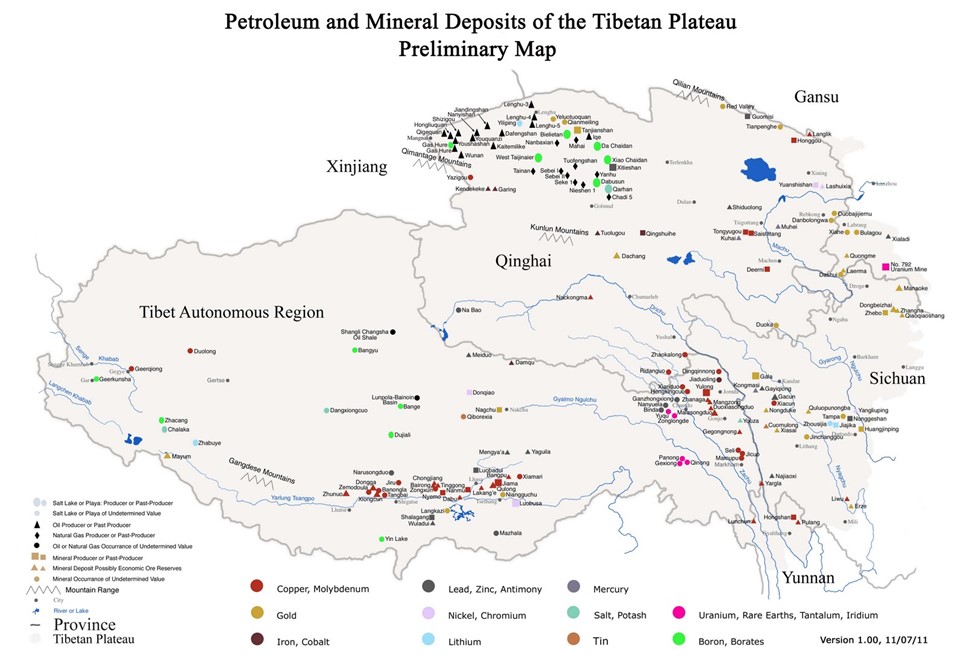
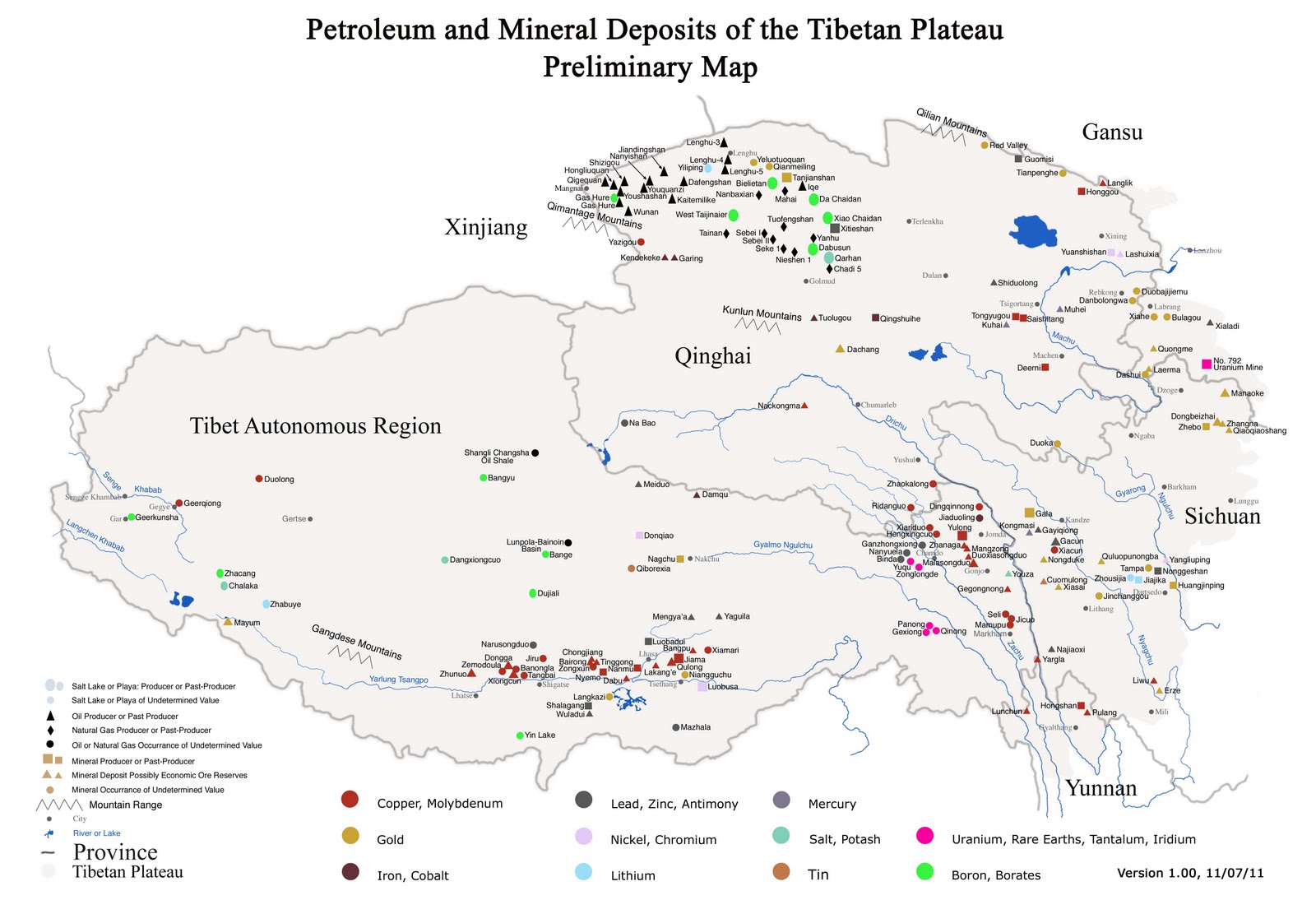
Whole Evil: Red China Neocolonialist exploiting mineral deposits in Tibet
I have been studying the aggressive nature of Red China since 1950s. The word ‘aggressor’ as a noun refers to a person or nation that is guilty of aggression or makes an unprovoked attack. Aggressive behavior, aggressive nature describe a mental inclination to start fights or quarrels, a readiness or willingness to take issue or engage in direct militant action. When I describe Red China as an “Aggressor Nation,” I am speaking about the practice or habit of being quarrelsome, destructively hostile to others, the use of unprovoked attacks or warlike acts. Red China is using her People’s Liberation Army violating her international obligations. Red China is aggressive for she displays boldness and because of her energetic pursuit of her own vested interests with a ruthless desire to dominate her weaker neighbors. Red China has formulated a State Policy called Expansionism which involves a vigorous, unrepentant espousal to use her military force or power to further her own ends.
I have been studying the aggressive nature of Red China since 1950s. The word ‘aggressor’ as a noun refers to a person or nation that is guilty of aggression or makes an unprovoked attack. Aggressive behavior, aggressive nature describe a mental inclination to start fights or quarrels, a readiness or willingness to take issue or engage in direct militant action. When I describe Red China as an “Aggressor Nation,” I am speaking about the practice or habit of being quarrelsome, destructively hostile to others, the use of unprovoked attacks or warlike acts. Red China is using her People’s Liberation Army violating her international obligations. Red China is aggressive for she displays boldness and because of her energetic pursuit of her own vested interests with a ruthless desire to dominate her weaker neighbors. Red China has formulated a State Policy called Expansionism which involves a vigorous, unrepentant espousal to use her military force or power to further her own ends.
Air Space Expansionism: I have been studying the aggressive nature of Red China since 1950s. The word ‘aggressor’ as a noun refers to a person or nation that is guilty of aggression or makes an unprovoked attack. Aggressive behavior, aggressive nature describe a mental inclination to start fights or quarrels, a readiness or willingness to take issue or engage in direct militant action. When I describe Red China as an “Aggressor Nation,” I am speaking about the practice or habit of being quarrelsome, destructively hostile to others, the use of unprovoked attacks or warlike acts. Red China is using her People’s Liberation Army violating her international obligations. Red China is aggressive for she displays boldness and because of her energetic pursuit of her own vested interests with a ruthless desire to dominate her weaker neighbors. Red China has formulated a State Policy called Expansionism which involves a vigorous, unrepentant espousal to use her military force or power to further her own ends.
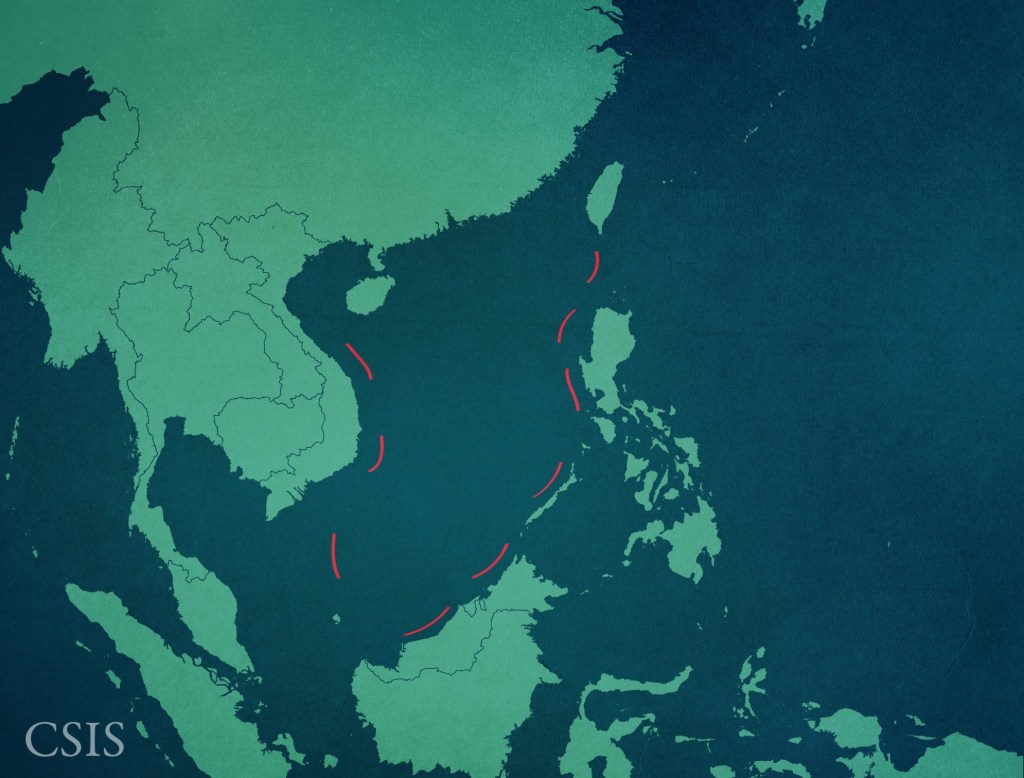
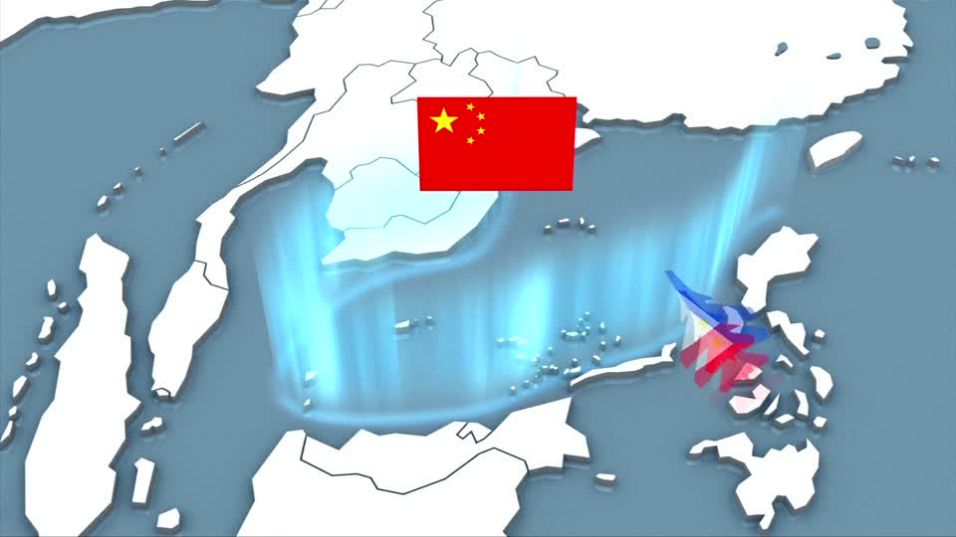
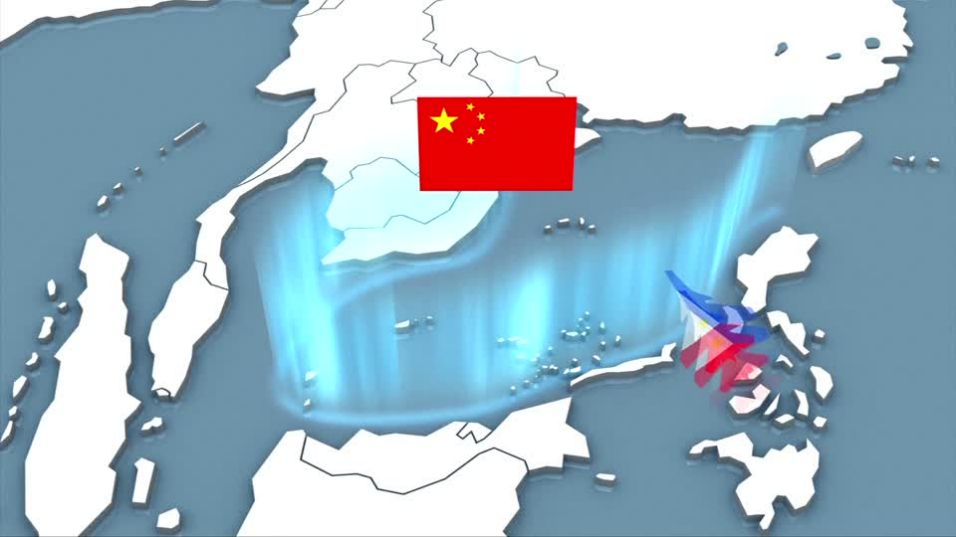
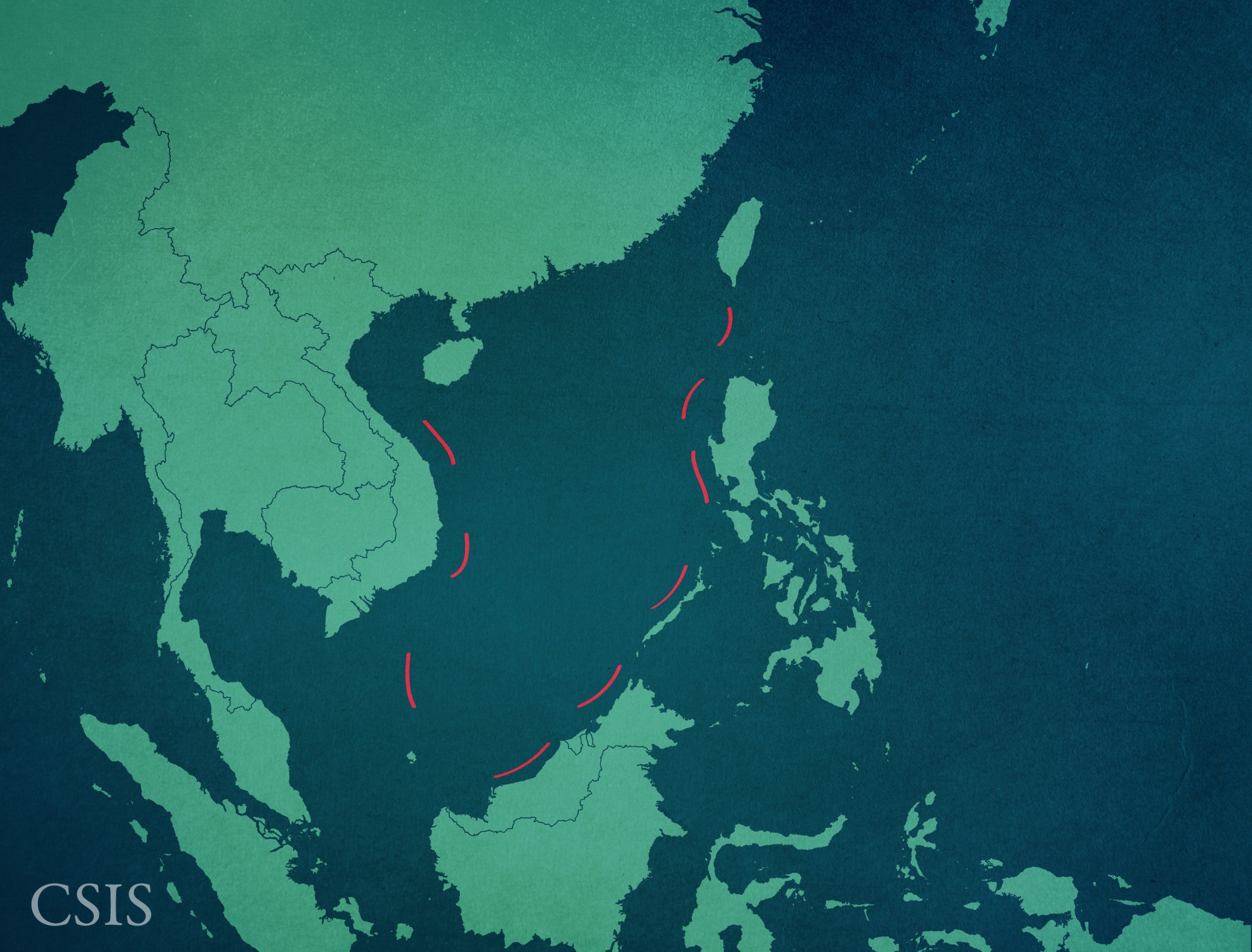
Most journalists reporting on recent events in the South China Sea have used the term “Assertive” to describe the actions of Red China. The word ‘assertive’ emphasizes self-confidence and a persistent determination to express oneself or one’s opinions. Red China is claiming ‘sovereignty’ over most of the South China Sea. In this behavior, Red China is not simply asserting its opinion or view. Red China is using her military muscle to implement her own opinion and is responding with the use of her military power to any challenge or any action that may compromise her opinion.
Territorial Expansionism: I have been studying the aggressive nature of Red China since 1950s. The word ‘aggressor’ as a noun refers to a person or nation that is guilty of aggression or makes an unprovoked attack. Aggressive behavior, aggressive nature describe a mental inclination to start fights or quarrels, a readiness or willingness to take issue or engage in direct militant action. When I describe Red China as an “Aggressor Nation,” I am speaking about the practice or habit of being quarrelsome, destructively hostile to others, the use of unprovoked attacks or warlike acts. Red China is using her People’s Liberation Army violating her international obligations. Red China is aggressive for she displays boldness and because of her energetic pursuit of her own vested interests with a ruthless desire to dominate her weaker neighbors. Red China has formulated a State Policy called Expansionism which involves a vigorous, unrepentant espousal to use her military force or power to further her own ends.
I witnessed Red China’s unprovoked attack on Tibet during 1950 and I witnessed Red China’s unprovoked attack on India during 1962.
I have been studying the aggressive nature of Red China since 1950s. The word ‘aggressor’ as a noun refers to a person or nation that is guilty of aggression or makes an unprovoked attack. Aggressive behavior, aggressive nature describe a mental inclination to start fights or quarrels, a readiness or willingness to take issue or engage in direct militant action. When I describe Red China as an “Aggressor Nation,” I am speaking about the practice or habit of being quarrelsome, destructively hostile to others, the use of unprovoked attacks or warlike acts. Red China is using her People’s Liberation Army violating her international obligations. Red China is aggressive for she displays boldness and because of her energetic pursuit of her own vested interests with a ruthless desire to dominate her weaker neighbors. Red China has formulated a State Policy called Expansionism which involves a vigorous, unrepentant espousal to use her military force or power to further her own ends.
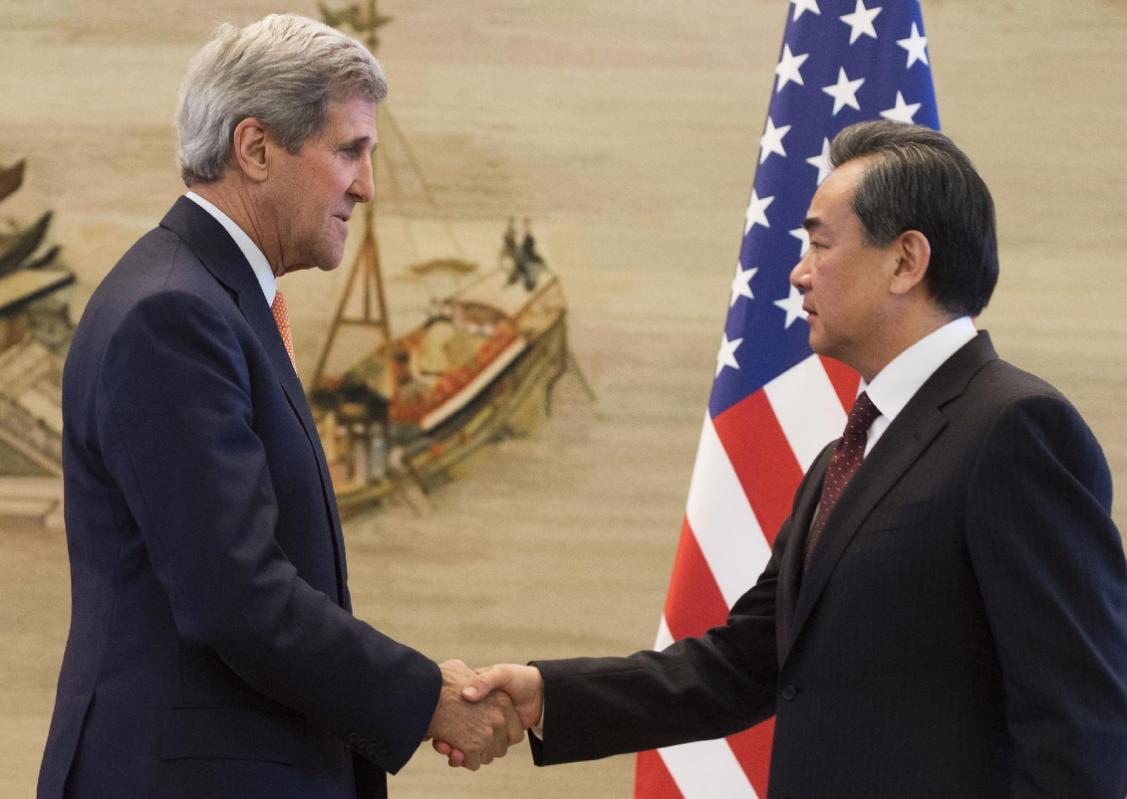
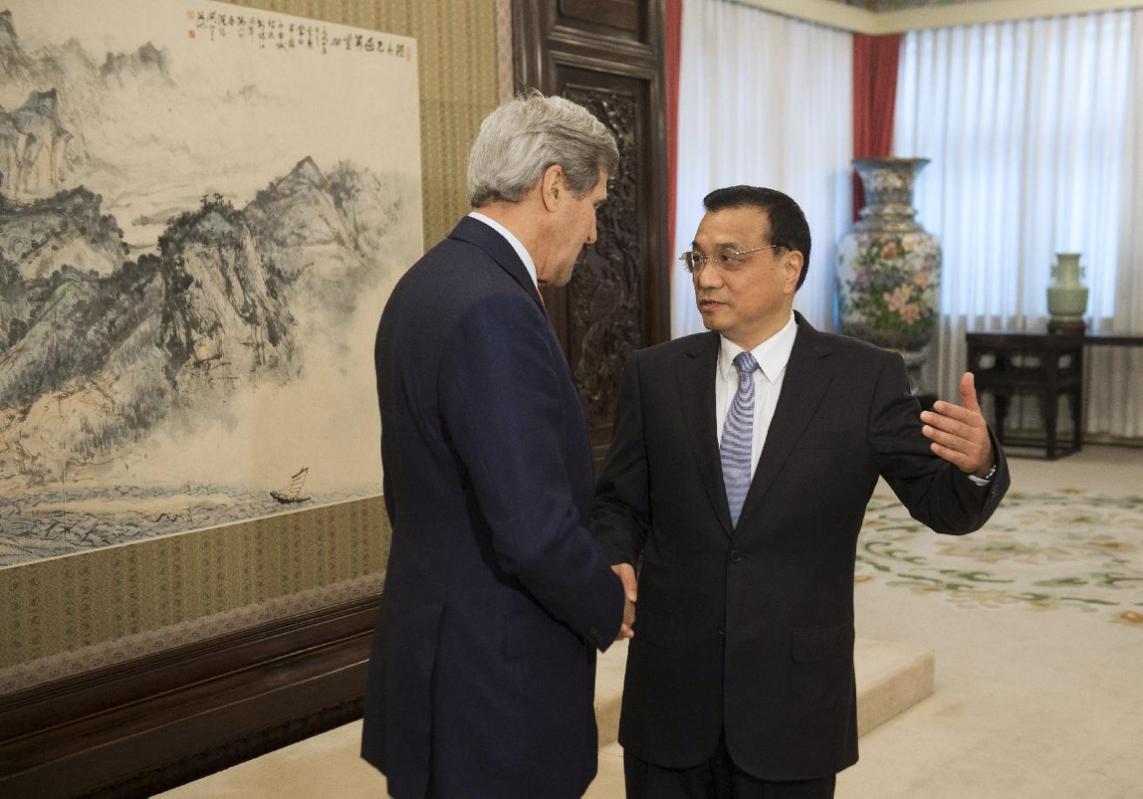
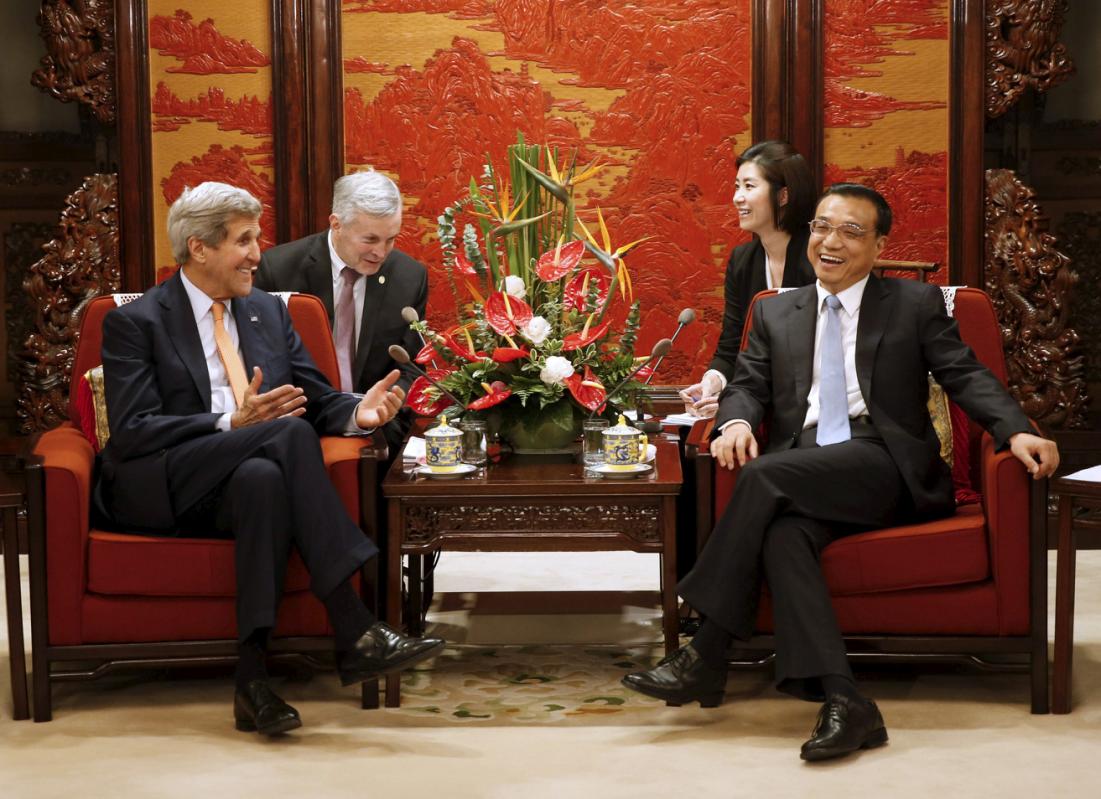
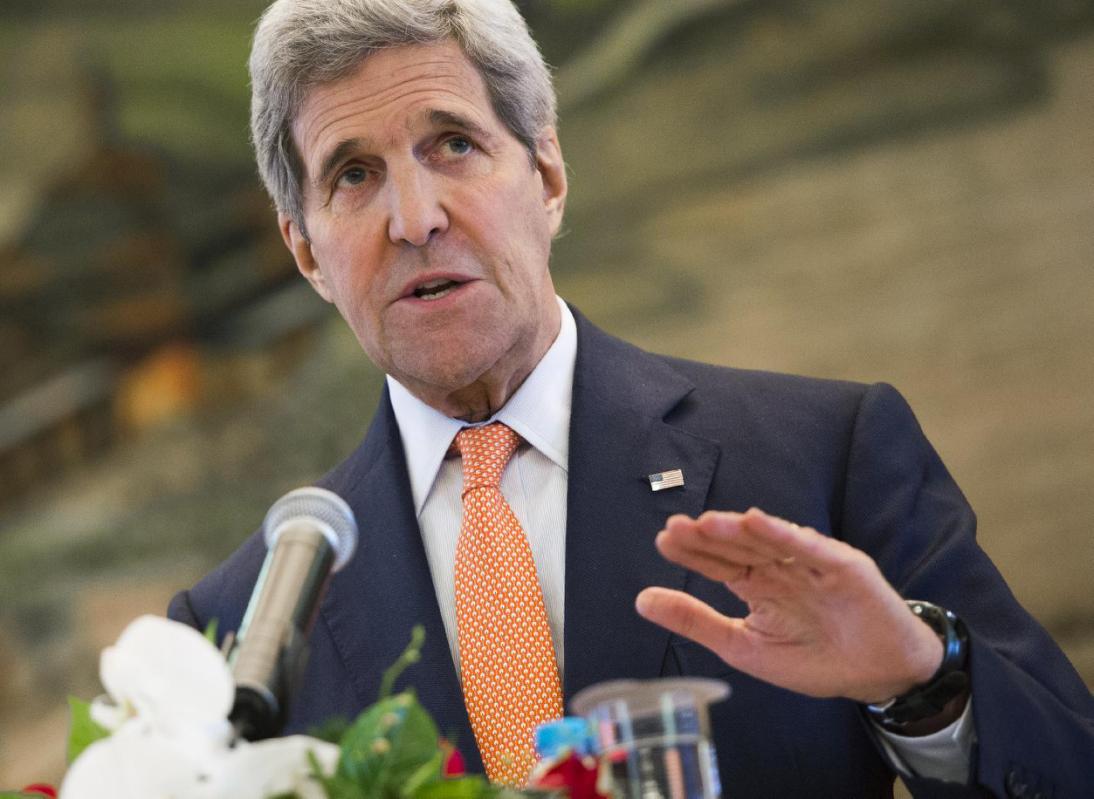
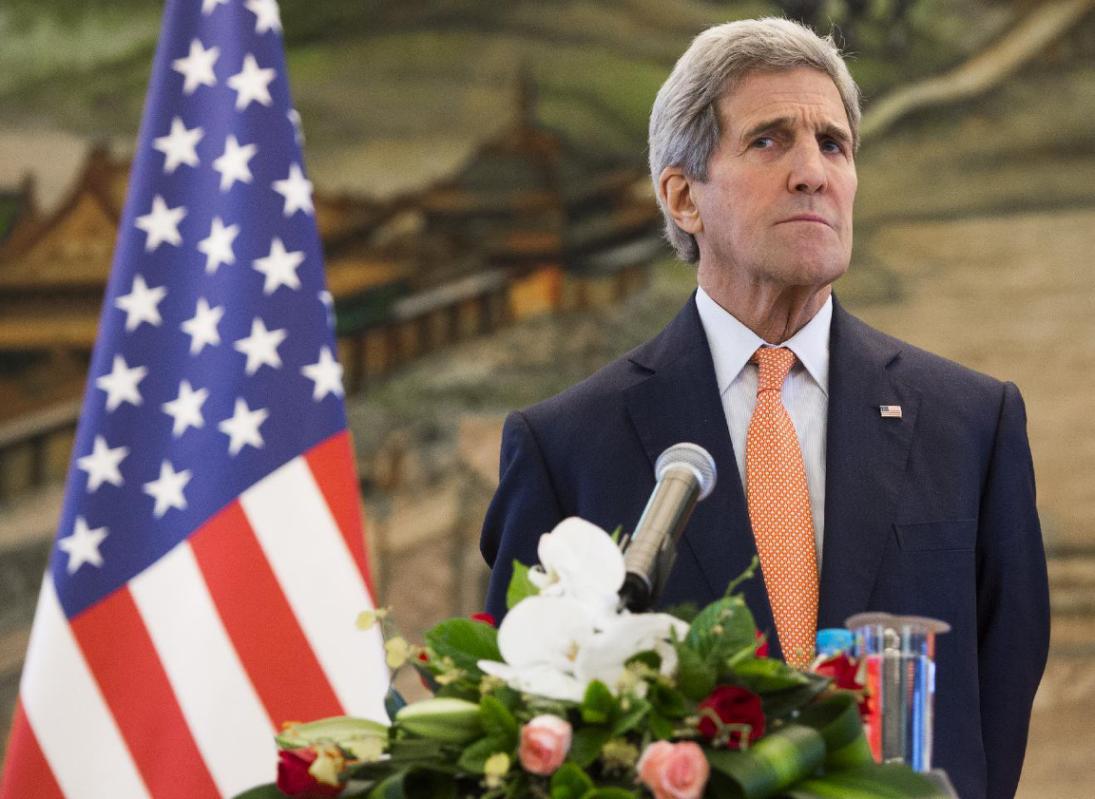
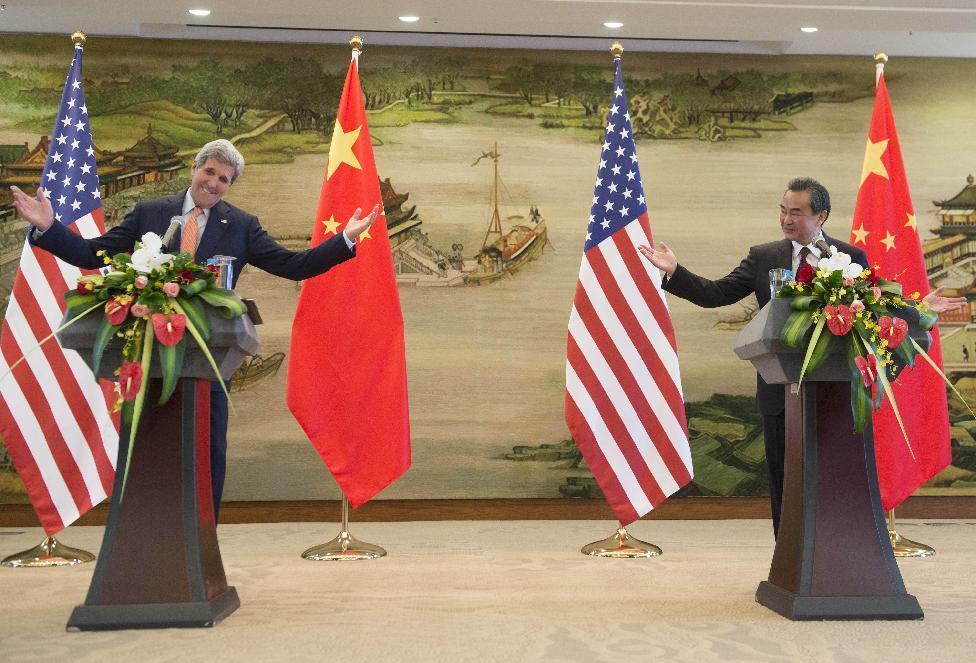
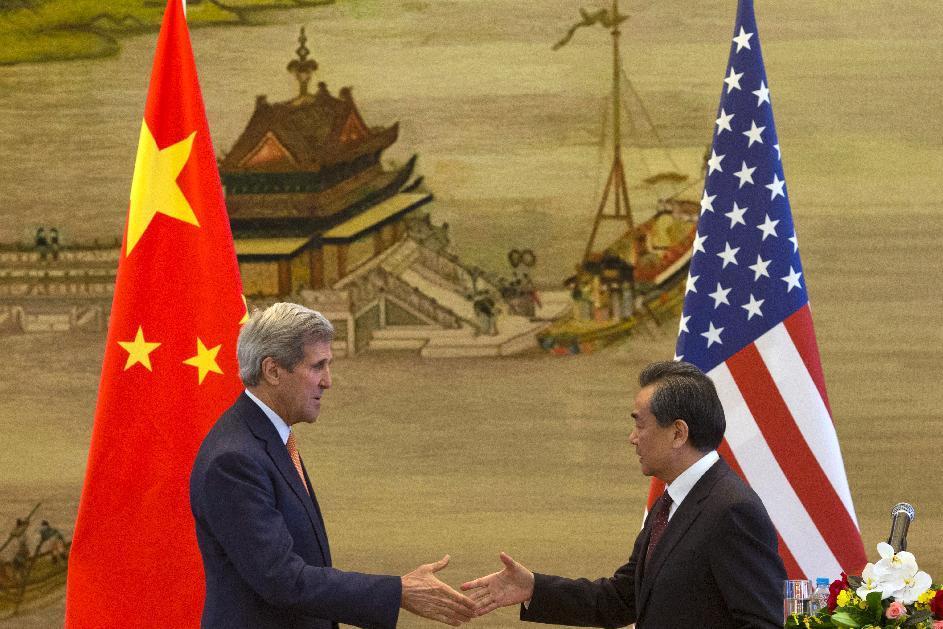
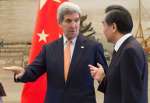
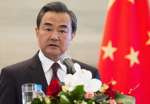
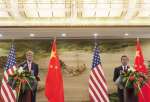
On May 16, 2015, US Secretary of State John Kerry visited Beijing and talked directly to Red China’s President, Prime Minister, and Foreign Minister expressing concerns about Red China’s use of its military muscle to exercise its control over much of the South China Sea. The latest encounter with US Navy Surveillance Plane clearly demonstrates Red China’s unwillingness to review her opinion of sovereignty claims.
I have been studying the aggressive nature of Red China since 1950s. The word ‘aggressor’ as a noun refers to a person or nation that is guilty of aggression or makes an unprovoked attack. Aggressive behavior, aggressive nature describe a mental inclination to start fights or quarrels, a readiness or willingness to take issue or engage in direct militant action. When I describe Red China as an “Aggressor Nation,” I am speaking about the practice or habit of being quarrelsome, destructively hostile to others, the use of unprovoked attacks or warlike acts. Red China is using her People’s Liberation Army violating her international obligations. Red China is aggressive for she displays boldness and because of her energetic pursuit of her own vested interests with a ruthless desire to dominate her weaker neighbors. Red China has formulated a State Policy called Expansionism which involves a vigorous, unrepentant espousal to use her military force or power to further her own ends.
Red China is an “Aggressor Nation” and using the words of Franklin Delano Roosevelt, I ask that she must be “Quarantined” until she recovers for her disease called “Aggression.”
U.S. vows to continue patrols after China warns spy plane
By David Brunnstrom
WASHINGTON (Reuters) – The United States vowed on Thursday to keep up air and sea patrols in international waters after the Chinese navy repeatedly warned a U.S. surveillance plane to leave the airspace over artificial islands China is creating in the disputed South China Sea.
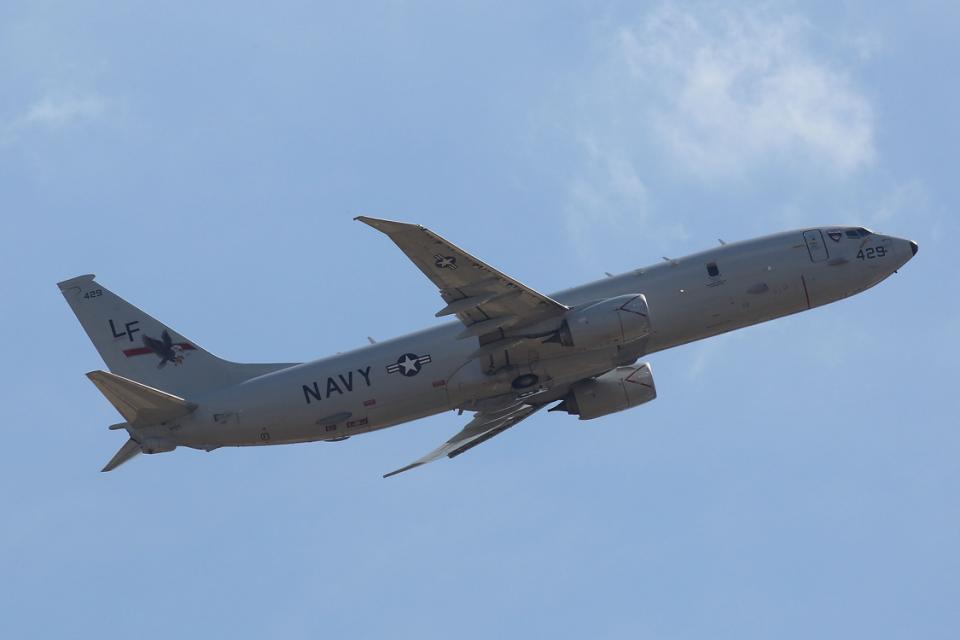
The Chinese navy issued eight warnings to the crew of a U.S. P8-A Poseidon, the U.S. military’s most advanced surveillance aircraft, when it conducted the overflights on Wednesday, according to CNN, which was aboard the U.S. aircraft.
PERTH, AUSTRALIA – MARCH 28: A US Navy P-8A Poseidon departs Perth’s International Airport on March 28, 2014 in Perth, Australia. The Australian Maritime Safety Authority (AMSA) announced today the search area for missing flight MH370 has shifted closer to the Western Australian Coast after receiving radar analysis suggesting the airliner did not travel as far south as originally thought. The Malaysian airliner disappeared on March 8 with 239 passengers and crew on board and is suspected to have crashed into the southern Indian Ocean. (Photo by Matt Jelonek/Getty Images)
When the American pilots responded by saying the plane was flying through international airspace, a Chinese radio operator said with exasperation: “This is the Chinese navy … You go!” The Poseidon flew as low as 15,000 feet (4,500 meters), CNN said, and video provided by the Pentagon appeared to have been taken from directly above one artificial island.
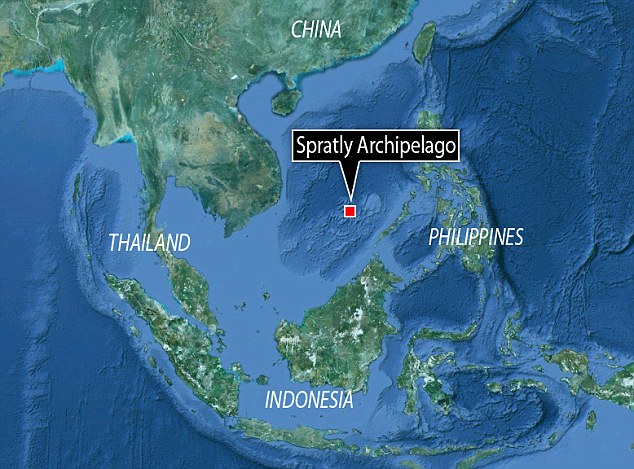
The incident, along with recent Chinese warnings to Philippine military aircraft to leave areas around the Spratly archipelago in the South China Sea, suggested Beijing is trying to enforce a military exclusion zone above its new islands there. Some security experts worry about the risk of confrontation, especially after a U.S. official said last week that the Pentagon was considering sending military aircraft and ships to assert freedom of navigation around the Chinese-made islands.
Maritime Expansionism: I have been studying the aggressive nature of Red China since 1950s. The word ‘aggressor’ as a noun refers to a person or nation that is guilty of aggression or makes an unprovoked attack. Aggressive behavior, aggressive nature describe a mental inclination to start fights or quarrels, a readiness or willingness to take issue or engage in direct militant action. When I describe Red China as an “Aggressor Nation,” I am speaking about the practice or habit of being quarrelsome, destructively hostile to others, the use of unprovoked attacks or warlike acts. Red China is using her People’s Liberation Army violating her international obligations. Red China is aggressive for she displays boldness and because of her energetic pursuit of her own vested interests with a ruthless desire to dominate her weaker neighbors. Red China has formulated a State Policy called Expansionism which involves a vigorous, unrepentant espousal to use her military force or power to further her own ends. Mischief Reef 05 11 2015
An aerial photo taken though a glass window of a Philippine military plane shows the alleged on-going island building at Mischief Reef, South China Sea.
The senior U.S. diplomat for the East Asia, Assistant Secretary of State Daniel Russel, told a media briefing in Washington the U.S. reconnaissance flight was “entirely appropriate” and that U.S. naval forces and military aircraft would “continue to fully exercise” the right to operate in international waters and airspace.
He said the United States would go further to preserve the ability of all countries to move in international waters and airspace. “Nobody in their right mind is going to try to stop the U.S. Navy from operating – that would not be a good bet,” he said.
“But it’s not enough that a U.S. military plane can overfly international waters, even if there is challenge or hailing query … We believe that every country and all civilian actors should have unfettered access to international waters and international airspace.”
A spokesman for China’s Foreign Ministry said he was not aware of the incident. “China has the right to engage in monitoring in the relevant airspace and waters to protect the country’s sovereignty and prevent accidents at sea,” ministry spokesman Hong Lei said in a regular briefing. “We hope the relevant country can earnestly respect China’s sovereignty in the South China Sea.” HIVE OF CONSTRUCTION
Footage taken by the P8-A Poseidon over the new islands, and aired by CNN, showed a hive of construction and dredging activity, as well as Chinese navy ships nearby. CNN said it was the first time the Pentagon had declassified video of China’s building activity and audio of challenges to a U.S. aircraft.
“We were just challenged 30 minutes ago and the challenge came from the Chinese navy,” Captain Mike Parker, commander of U.S. surveillance aircraft deployed to Asia, told CNN on the flight. “I’m highly confident it came from ashore, this facility here,” Parker said, pointing to an early warning radar station on Fiery Cross Reef.
Military facilities on Fiery Cross Reef, including a 3,000-metre (10,000-foot) runway, could be operational by year’s end, one U.S. commander recently told Reuters, and Washington is concerned China will use it to press its extensive territorial claims at the expense of weaker rivals.
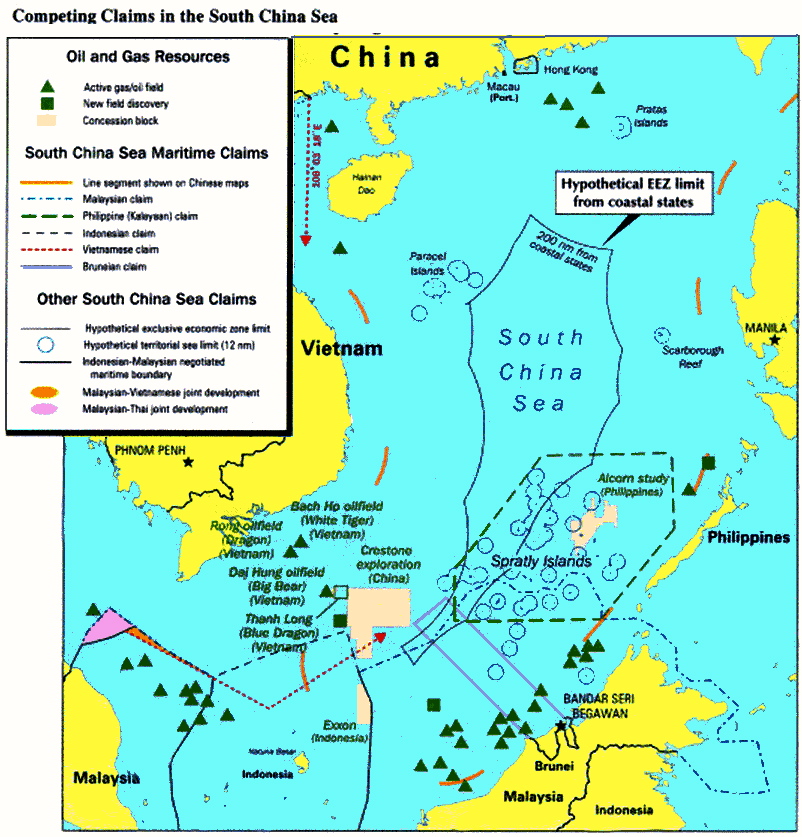
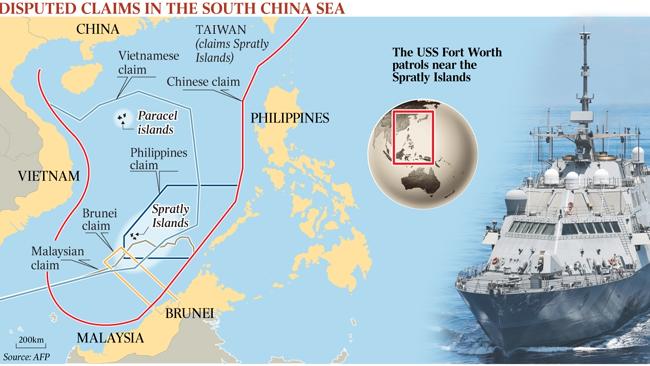
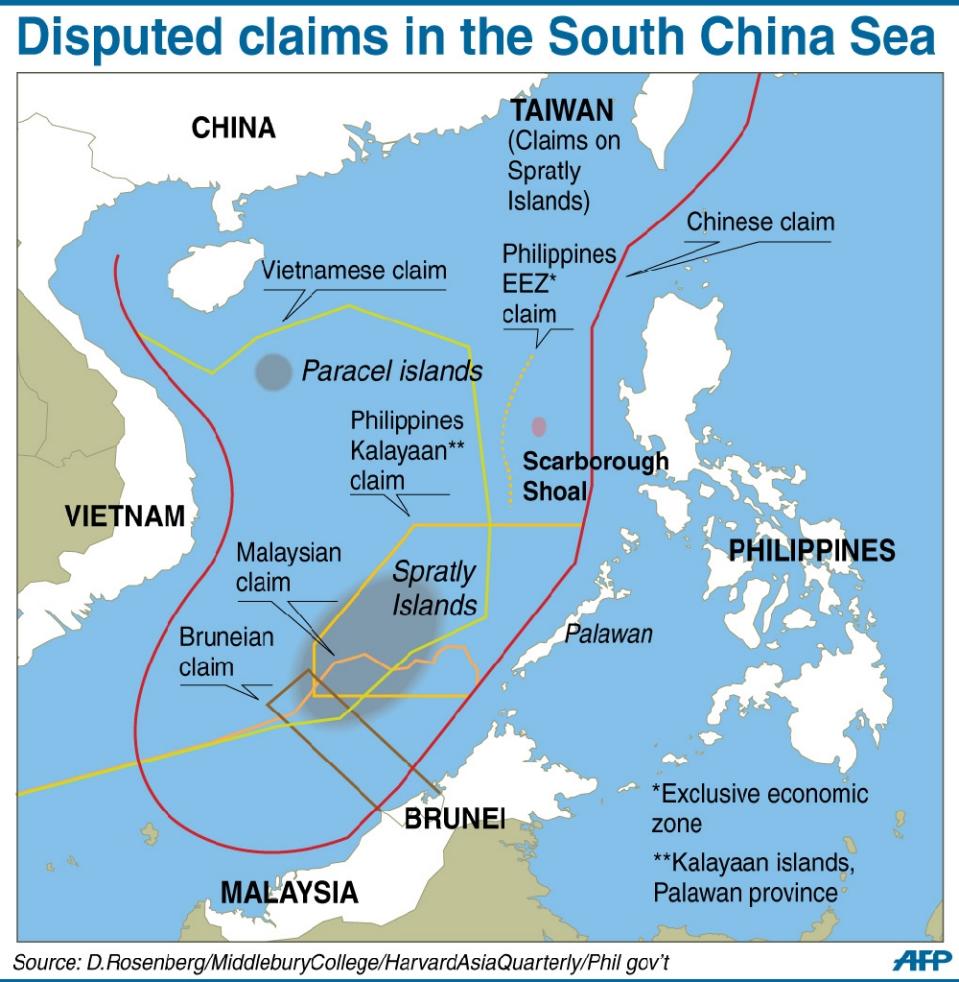
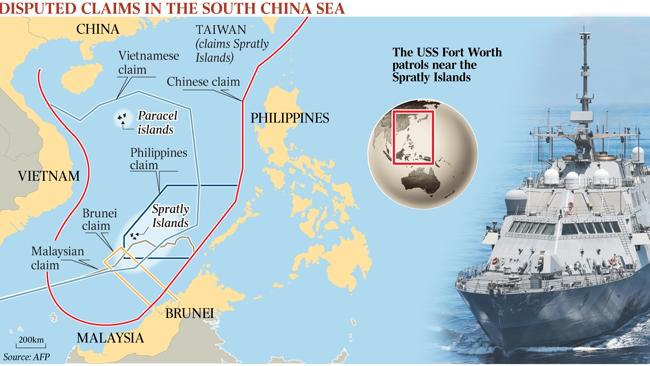
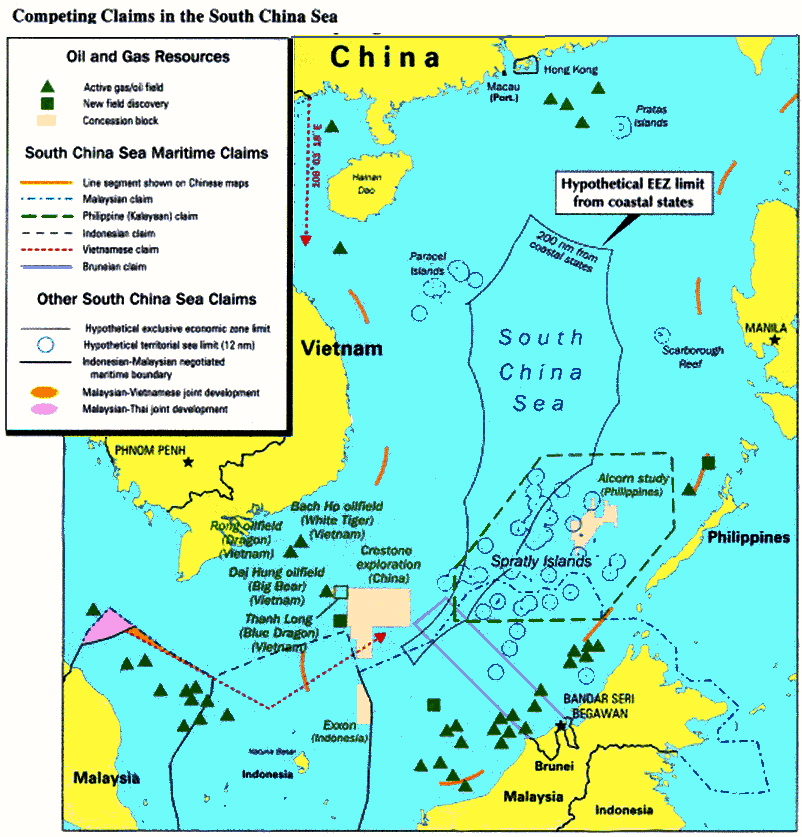
China claims sovereignty over most of the South China Sea, through which $5 trillion in ship-borne trade passes every year. The Philippines, Vietnam, Malaysia, Taiwan and Brunei also have overlapping claims. Chinese Foreign Minister Wang Yi last week asserted Beijing’s right to reclaim the reefs and said China’s determination to protect its interests was “as hard as a rock.”
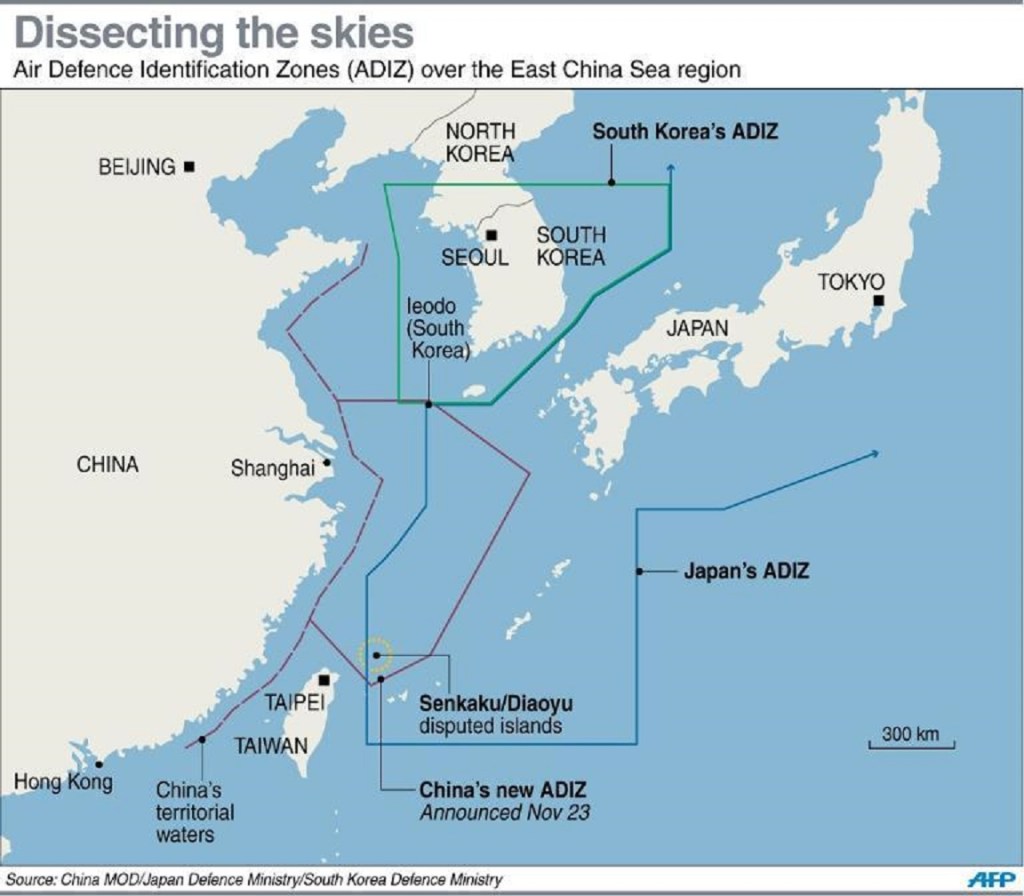
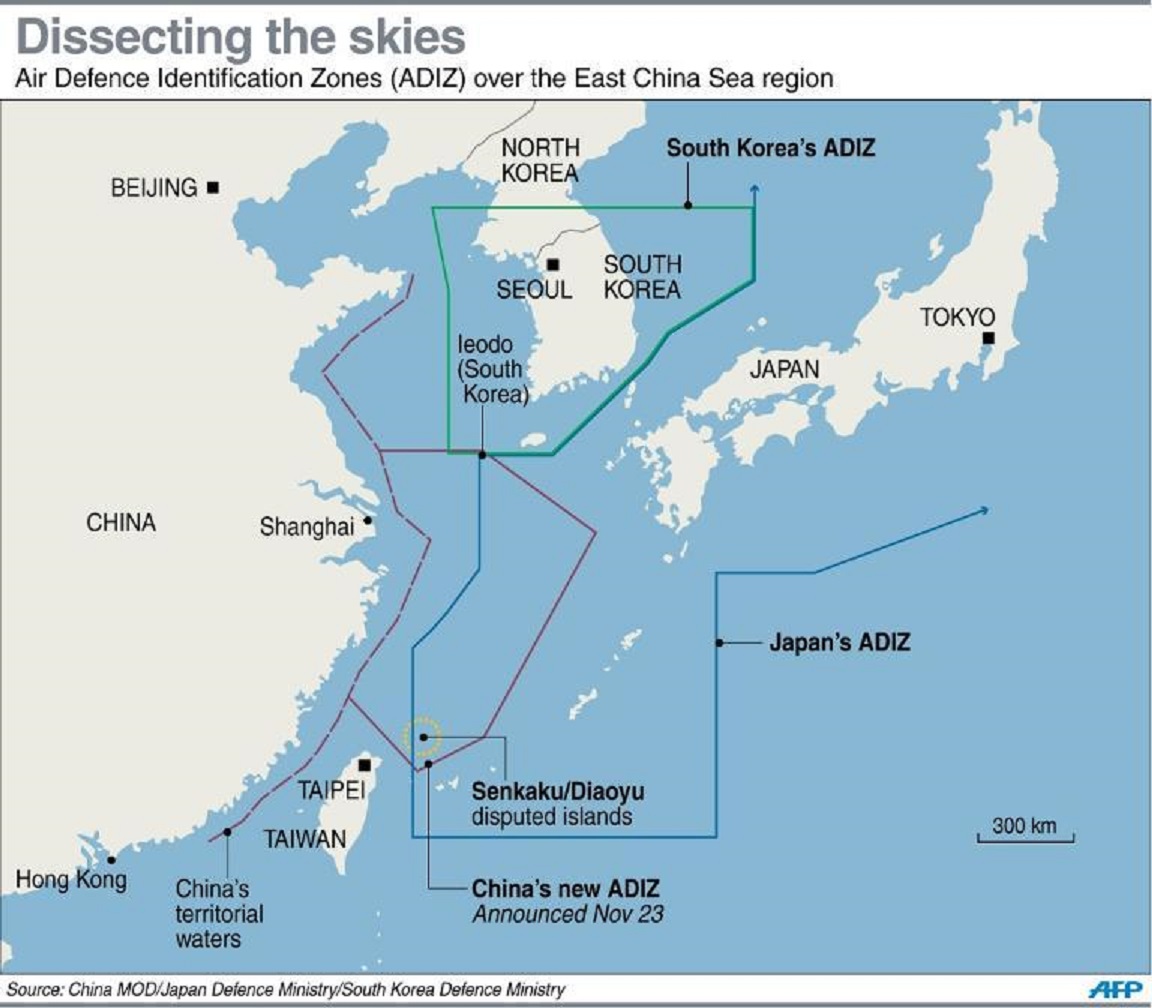
China has also said it had every right to set up an Air Defense Identification Zone (ADIZ) in the South China Sea but that current conditions did not warrant one. ADIZs are used by some nations to extend control beyond national borders, requiring civilian and military aircraft to identify themselves or face possible military interception.
During the P8-A Poseidon mission, the pilot of a Delta Air Lines flight in the area spoke on the same frequency after hearing the Chinese challenges and identified himself as commercial. The Chinese voice reassured the pilot and the Delta flight went on its way, CNN said.
Delta Airlines did not immediately respond to a request for comment.
(Writing by Dean Yates, additional reporting by Michael Martina in Beijing and David Brunnstrom in Washington; Editing by Paul Tait, Jonathan Oatis and Steve Orlofsky
(c) Copyright Thomson Reuters 2015.
Yahoo – ABC News Networks
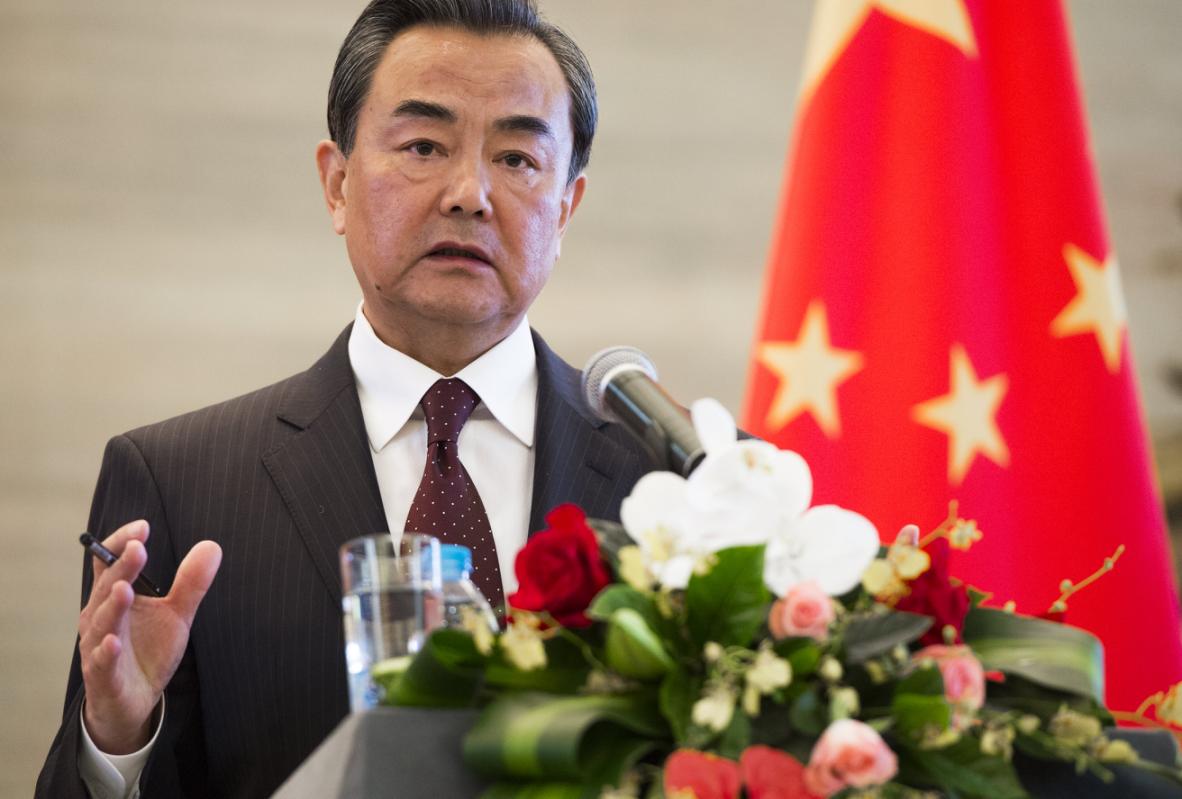
I have been studying the aggressive nature of Red China since 1950s. The word ‘aggressor’ as a noun refers to a person or nation that is guilty of aggression or makes an unprovoked attack. Aggressive behavior, aggressive nature describe a mental inclination to start fights or quarrels, a readiness or willingness to take issue or engage in direct militant action. When I describe Red China as an “Aggressor Nation,” I am speaking about the practice or habit of being quarrelsome, destructively hostile to others, the use of unprovoked attacks or warlike acts. Red China is using her People’s Liberation Army violating her international obligations. Red China is aggressive for she displays boldness and because of her energetic pursuit of her own vested interests with a ruthless desire to dominate her weaker neighbors. Red China has formulated a State Policy called Expansionism which involves a vigorous, unrepentant espousal to use her military force or power to further her own ends.Chinese Foreign Minister Wang Yi (R) and US Secretary of State John Kerry walk to a joint news conference following meetings at the Ministry of Foreign Affairs in Beijing May 16, 2015. The United States and China clashed over a territorial dispute in the South China Sea on Saturday, as China’s foreign minister asserted its sovereignty to reclaim reefs saying its determination to protect its interests is “as hard as a rock”.REUTERS/Saul Loeb/PoolU.S. Secretary of State John Kerry, left, shakes hands with Chinese Foreign Minister Wang Yi after their press conference following their meetings at the Ministry of Foreign Affairs in Beijing Saturday, May 16, 2015. Kerry is in China to press Beijing to halt increasingly assertive actions it is taking in the South China Sea that have alarmed the United States and China’s smaller neighbors. (Saul Loeb/Pool Photo via AP)U.S. Secretary of State John Kerry, left, and Chinese Premier Li Keqiang talk during a meeting at Zhongnanhai Leadership Compound in Beijing Saturday, May 16, 2015. The United States and China held firm Saturday to deep disagreements over increasingly assertive Chinese activity in disputed areas of the South China Sea, as Beijing politely but pointedly rejected U.S. Secretary of State John Kerry’s push for it to reduce tensions. (Saul Loeb/Pool Photo via AP)U.S. Secretary of State John Kerry (L) speaks with Chinese Premier Li Keqiang at the Zhongnanhai Leadership Compound in Beijing, China, May 16, 2015. The United States and China clashed over a territorial dispute in the South China Sea on Saturday, as China’s foreign minister asserted its sovereignty to reclaim reefs saying its determination to protect its interests is “as hard as a rock”. REUTERS/Kim Kyung-HoonU.S. Secretary of State John Kerry speaks during a joint press conference with Chinese Foreign Minister Wang Yi following their meetings at the Ministry of Foreign Affairs in Beijing Saturday, May 16, 2015. Kerry is in China to press Beijing to halt increasingly assertive actions it is taking in the South China Sea that have alarmed the United States and China’s smaller neighbors. (Saul Loeb/Pool Photo via AP)Chinese Foreign Minister Wang Yi (R) and US Secretary of State John Kerry speak following a joint news conference following meetings at the Ministry of Foreign Affairs in Beijing May 16, 2015. The United States and China clashed over a territorial dispute in the South China Sea on Saturday, as China’s foreign minister asserted its sovereignty to reclaim reefs saying its determination to protect its interests is “as hard as a rock”. REUTERS/Saul Loeb/PoolU.S. Secretary of State John Kerry attends a joint press conference with Chinese Foreign Minister Wang Yi following their meetings at the Ministry of Foreign Affairs in Beijing Saturday, May 16, 2015. Kerry is in China to press Beijing to halt increasingly assertive actions it is taking in the South China Sea that have alarmed the United States and China’s smaller neighbors. (Saul Loeb/Pool Photo via AP)U.S. Secretary of State John Kerry, left, and Chinese Foreign Minister Wang Yi hold a joint press conference following their meetings at the Ministry of Foreign Affairs in Beijing Saturday, May 16, 2015. Kerry is in China to press Beijing to halt increasingly assertive actions it is taking in the South China Sea that have alarmed the United States and China’s smaller neighbors. (Saul Loeb/Pool Photo via AP)U.S. Secretary of State John Kerry, left, and Chinese Foreign Minister Wang Yi shake hands after a press conference following meetings at the Ministry of Foreign Affairs in Beijing Saturday, May 16, 2015. U.S. Secretary of State John Kerry is urging China to halt increasingly assertive actions it is taking in the South China Sea. (AP Photo/Ng Han Guan, Pool)Chinese Foreign Minister Wang Yi speaks during a joint press conference following meetings with U.S. Secretary of State John Kerry at the Ministry of Foreign Affairs in Beijing, China, Saturday, May 16, 2015. Kerry is in China to press Beijing to halt increasingly assertive actions it is taking in the South China Sea that have alarmed the United States and China’s smaller neighbors. (Saul Loeb/Pool Photo via AP)Maritime Expansionism – South China Sea: I have been studying the aggressive nature of Red China since 1950s. The word ‘aggressor’ as a noun refers to a person or nation that is guilty of aggression or makes an unprovoked attack. Aggressive behavior, aggressive nature describe a mental inclination to start fights or quarrels, a readiness or willingness to take issue or engage in direct militant action. When I describe Red China as an “Aggressor Nation,” I am speaking about the practice or habit of being quarrelsome, destructively hostile to others, the use of unprovoked attacks or warlike acts. Red China is using her People’s Liberation Army violating her international obligations. Red China is aggressive for she displays boldness and because of her energetic pursuit of her own vested interests with a ruthless desire to dominate her weaker neighbors. Red China has formulated a State Policy called Expansionism which involves a vigorous, unrepentant espousal to use her military force or power to further her own ends.I have been studying the aggressive nature of Red China since 1950s. The word ‘aggressor’ as a noun refers to a person or nation that is guilty of aggression or makes an unprovoked attack. Aggressive behavior, aggressive nature describe a mental inclination to start fights or quarrels, a readiness or willingness to take issue or engage in direct militant action. When I describe Red China as an “Aggressor Nation,” I am speaking about the practice or habit of being quarrelsome, destructively hostile to others, the use of unprovoked attacks or warlike acts. Red China is using her People’s Liberation Army violating her international obligations. Red China is aggressive for she displays boldness and because of her energetic pursuit of her own vested interests with a ruthless desire to dominate her weaker neighbors. Red China has formulated a State Policy called Expansionism which involves a vigorous, unrepentant espousal to use her military force or power to further her own ends.I have been studying the aggressive nature of Red China since 1950s. The word ‘aggressor’ as a noun refers to a person or nation that is guilty of aggression or makes an unprovoked attack. Aggressive behavior, aggressive nature describe a mental inclination to start fights or quarrels, a readiness or willingness to take issue or engage in direct militant action. When I describe Red China as an “Aggressor Nation,” I am speaking about the practice or habit of being quarrelsome, destructively hostile to others, the use of unprovoked attacks or warlike acts. Red China is using her People’s Liberation Army violating her international obligations. Red China is aggressive for she displays boldness and because of her energetic pursuit of her own vested interests with a ruthless desire to dominate her weaker neighbors. Red China has formulated a State Policy called Expansionism which involves a vigorous, unrepentant espousal to use her military force or power to further her own ends.Air Space Expansionism: I have been studying the aggressive nature of Red China since 1950s. The word ‘aggressor’ as a noun refers to a person or nation that is guilty of aggression or makes an unprovoked attack. Aggressive behavior, aggressive nature describe a mental inclination to start fights or quarrels, a readiness or willingness to take issue or engage in direct militant action. When I describe Red China as an “Aggressor Nation,” I am speaking about the practice or habit of being quarrelsome, destructively hostile to others, the use of unprovoked attacks or warlike acts. Red China is using her People’s Liberation Army violating her international obligations. Red China is aggressive for she displays boldness and because of her energetic pursuit of her own vested interests with a ruthless desire to dominate her weaker neighbors. Red China has formulated a State Policy called Expansionism which involves a vigorous, unrepentant espousal to use her military force or power to further her own ends.Maritime Expansionism – South China Sea: I have been studying the aggressive nature of Red China since 1950s. The word ‘aggressor’ as a noun refers to a person or nation that is guilty of aggression or makes an unprovoked attack. Aggressive behavior, aggressive nature describe a mental inclination to start fights or quarrels, a readiness or willingness to take issue or engage in direct militant action. When I describe Red China as an “Aggressor Nation,” I am speaking about the practice or habit of being quarrelsome, destructively hostile to others, the use of unprovoked attacks or warlike acts. Red China is using her People’s Liberation Army violating her international obligations. Red China is aggressive for she displays boldness and because of her energetic pursuit of her own vested interests with a ruthless desire to dominate her weaker neighbors. Red China has formulated a State Policy called Expansionism which involves a vigorous, unrepentant espousal to use her military force or power to further her own ends.
The Evil Red Empire – Red China’s Nuclear Expansionism
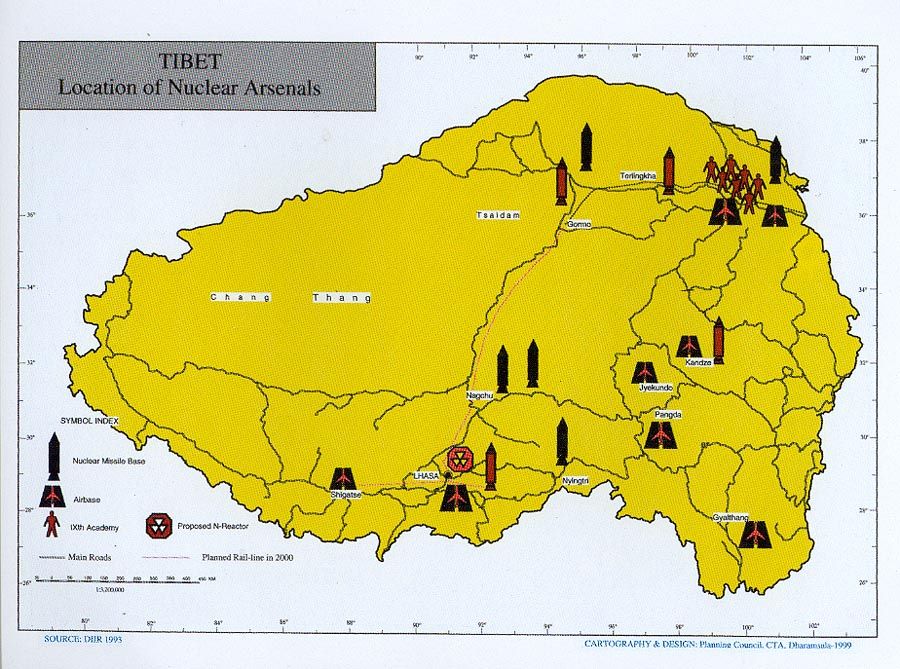
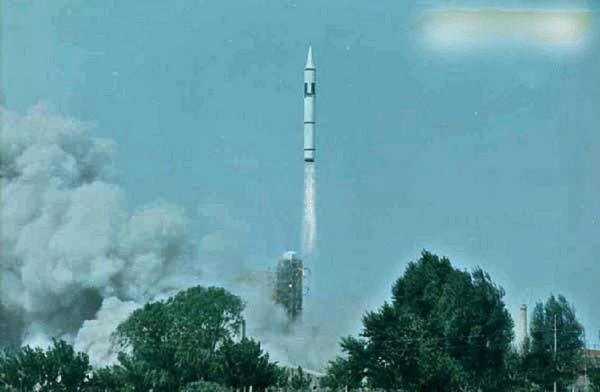
Whole Evil – Red China’s Nuclear Expansionism: MAO ZEDONG PROCLAIMS THE BIRTH OF PEOPLE’S REPUBLIC OF CHINA ON OCTOBER 01,1949. HE WAS ENRAGED BY MOSCOW’S DECISION TO SUSPEND ASSISTANCE TO RED CHINA’S NUCLEAR PROGRAM ON JUNE 20, 1959. FROM THAT TIME RED CHINA PURSUED A VERY AMBITIOUS NUCLEAR POLICY TO COMPETE AGAINST UNITED STATES AND SOVIET UNION .THE EVIL RED EMPIRE – NUCLEAR EXPANSIONISM: RED CHINA CONDUCTED ITS FIRST NUCLEAR TEST ON OCTOBER 16, 1964 AT LOP NOR, INSIDE OCCUPIED TIBET . FROM THAT TIME SPECIAL FRONTIER FORCE STARTED MONITORING RED CHINA’S NUCLEAR ACTIVITIES INSIDE TIBET .
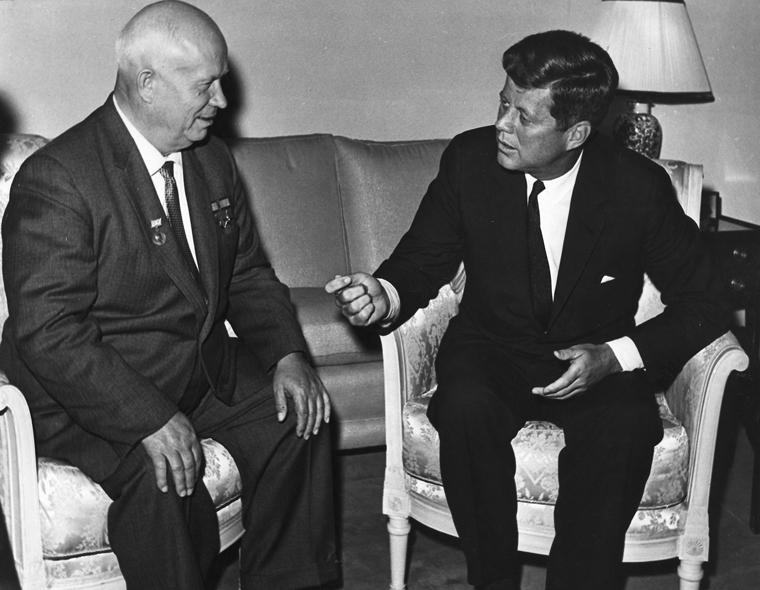
The US Department of Defense in its annual report of 2015 informed the US Congress on Red China’s nuclear capabilities apart from its advances in conducting conventional warfare. Special Frontier Force has been assisting US in monitoring Red China’s nuclear activities after it conducted its first Nuclear Test on October 16, 1964 at Lop Nor, inside Occupied Tibet. It is the only site Red China uses for its nuclear tests. It is important to remember that US President John F. Kennedy and Soviet Premier Nikita Khrushchev agreed for the first Limited or Partial Nuclear Test Ban Treaty during 1963. Since that time United States is making a steady progress on Nuclear Disarmament issue with full cooperation from the Soviet Union and later Russia.
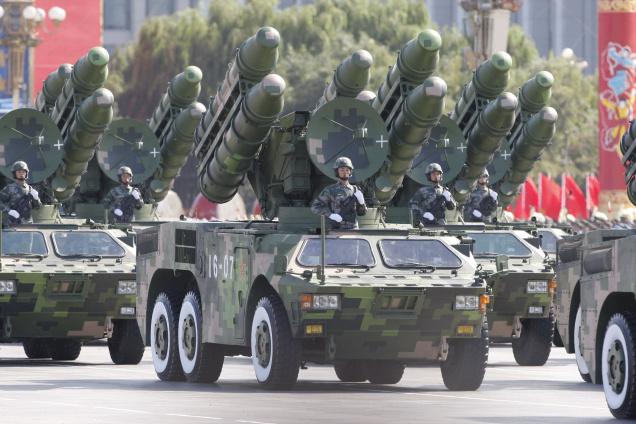
THE EVIL RED EMPIRE – NUCLEAR EXPANSIONISM – NUCLEAR STRATEGY. RED CHINA DEVELOPED AND DEPLOYED A VARIETY OF BALLISTIC MISSILES THAT CAN EASILY TARGET MOST PLACES IN THE UNITED STATES.
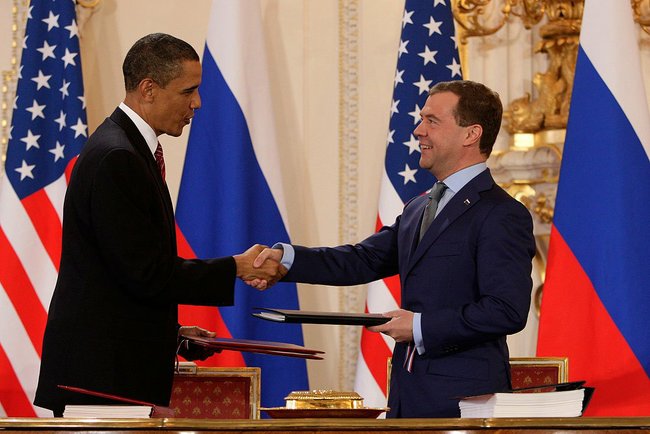
I ask my readers to recognize the role played by Soviet Premier Nikita Sergeyevich Khrushchev(April 17, 1894 to September 11, 1971) in curbing Red China’s nuclear ambitions. Khrushchev was the USSR Communist Party Secretary from 1956 and its Premier from 1958 to 1964. In 1956, in the 20th Communist Party Congress, he gave his famous six-hour “Secret Speech” denouncing “The Crimes of the Stalin Era.” After the US, Britain, France, and Soviet Union Geneva Summit Conference in July 1955, he formulated a policy of “Peaceful Coexistence” with the West. He traveled to the US in 1959 and 1960. He stopped assisting Red China’s Nuclear Program on 20 June 1959. His insistence on “Peaceful Coexistence” with the West contributed to a rupture with Red China’s Mao Tse-Tung or Mao Zedong. Khrushchev eased relations with the West but antagonized Red China. Nixon-Kissinger took advantage of this Sino-Soviet Split to formulate US-China Relations without any concern for Red China’s Nuclear ambitions. United States and Soviet Union held Strategic Arms Limitation Talks from 1969 to 1972 (SALT I), Strategic Arms Limitation Talks from 1972 to 1979 (SALT II), Strategic Arms Reduction Talks (START) from 1982, signed several treaties in 1972, 1987, 1991, 1993 and more recently in April 2010.
While US and Russia continue to make progress in reducing strategic offensive arms, Red China rapidly pursued a Nuclear Expansionism Policy to strengthen its nuclear offensive capabilities and to establish itself as a global superpower that can seriously challenge the US supremacy in both conventional and nuclear warfare. Nixon-Kissinger initiative to befriend Red China during 1970-72 has totally compromised the US Nuclear Strategy, a costly mistake that the US would regret forever. United States has underestimated the nature of Red China’s Imperialism.
Pentagon report: Chinese ballistic missiles can target nearly the entirety of the US
By Jeremy Bender
China now has dozens of nuclear-capable missiles that could target almost the entirety of the US, according to the Department of Defense’s 2015 report on the Chinese military.
The annual report to Congress focuses on China’s military modernization, possible invasion plans for the self-governing and US-allied island of Taiwan, advances in space technology, and Beijing’s rapidly advancing missile capabilities.
China’s conventional capabilities are improving. But Beijing also now has what could be considered the ultimate military asset for a rising superpower: the ability to deliver nuclear warheads nearly anywhere on earth (outside of South America, at least).
The following map from the report highlights the maximum missile ranges of China’s medium and intercontinental ballistic missiles (ICBMs). The longest-ranging of the missiles, the CSS-4, can target almost the entirety of the US (except for Florida).
THE EVIL RED EMPIRE – NUCLEAR EXPANSIONISM – NUCLEAR STRATEGY. RED CHINA DEVELOPED AND DEPLOYED A VARIETY OF BALLISTIC MISSILES THAT CAN EASILY TARGET MOST PLACES IN THE UNITED STATES.
(Screenshot/Department of Defense)
The CSS-4 has the largest range of any Chinese ICBM. The missile is nuclear-capable, according to the DoD report, and is housed in silos across the Chinese countryside. Beijing is estimated to have between 50 and 60 silo-based ICBMs.
The DF-31A has the second-longest range of any Chinese missile. It is capable of hitting the majority of the US’ Pacific coast in addition to portions of the mid-West. Unlike the CSS-4, the DF-31A is a road-mobile missile. This means Beijing can move the ICBM to various points throughout the country to better target various locations and avoid possible incoming strikes.
The DF-31, the CSS-3, and the CSS-5 are all also road-mobile and nuclear-capable. But unlike the CSS-4 or the DF-31A, these missiles are intended for regional deterrence against neighboring powers like Russia and India.
Unlike the other land-based missiles on the chart, the JL-2 is a sea-based nuclear-capable ballistic missile. According to the DoD, the JL-2 will be carried by China’s future JIN-class ballistic missile submarine as a nuclear deterrent. So far China has commissioned four JIN-class submarines with a fifth one under construction. The Pentagon report expects the JIN to begin patrols in 2015.
THE EVIL RED EMPIRE – JL-2 IS A SEA-BASED NUCLEAR-CAPABLE BALLISTIC MISSILE CARRIED BY RED CHINA’S JIN-CLASS BALLISTIC MISSILE SUBMARINE.
(Navy Office of Legislative Affairs) A Chinese JIN-class submarine
The improvement in China’s nuclear deterrent has been spurred by developments in countries that China might consider to be its strategic competitors.
China modernized its missile forces because of “continued advances in the US and, to a lesser extent, Russian strategic ISR [Intelligence, surveillance and reconnaissance], precision strike, and missile defense capabilities,” the report notes.
Likewise, India’s own nuclear force has put pressure on China to continuously update and better its own capabilities.
Red China’s Nuclear Expansionism since 1964 while the US and the Soviets/Russia were engaged in Arms Control Negotiations:
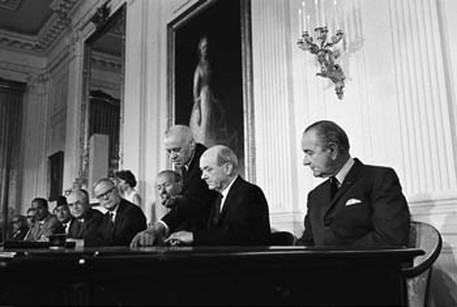
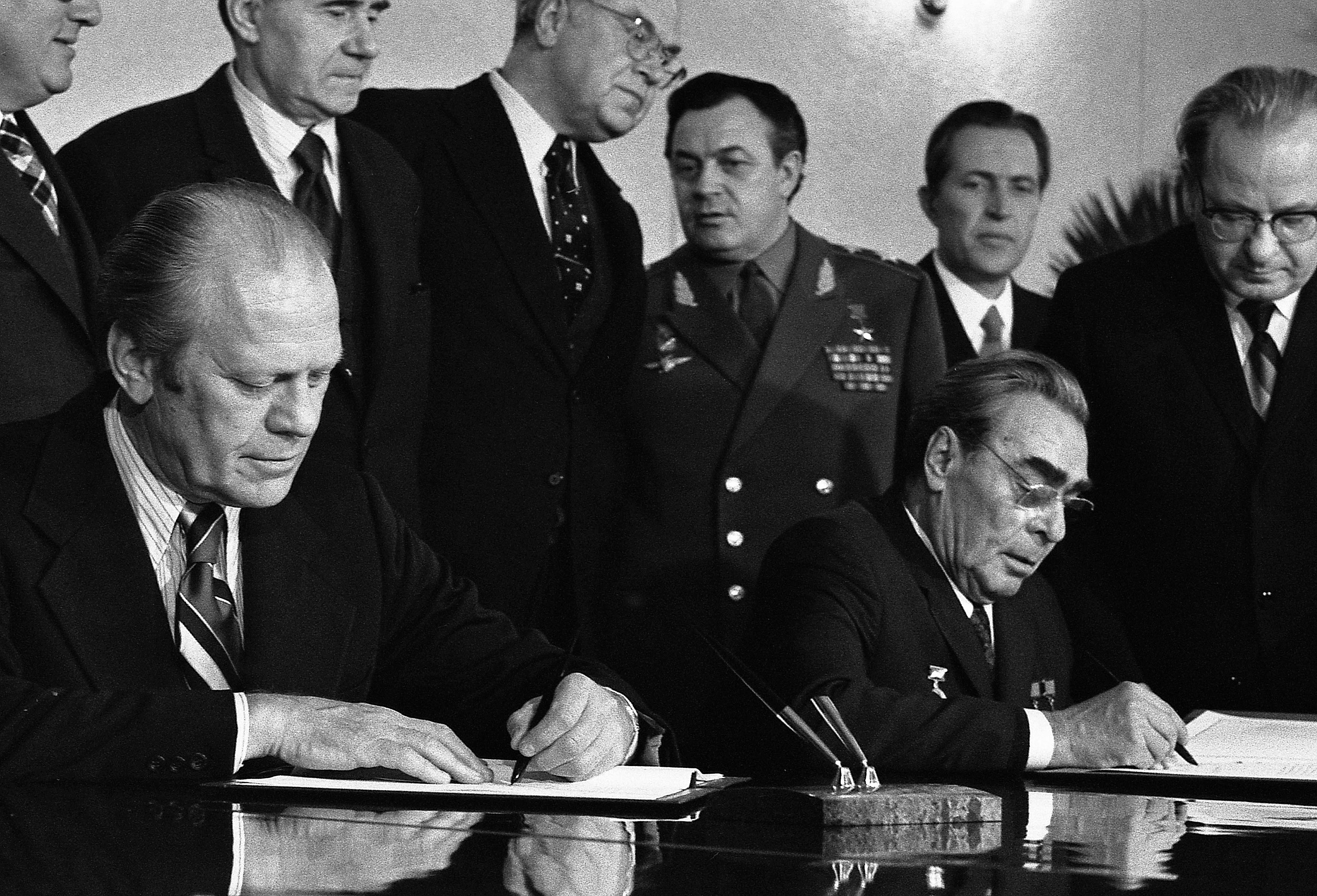
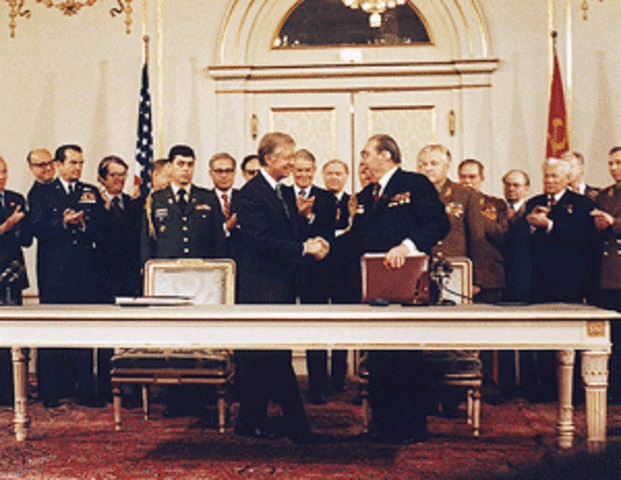
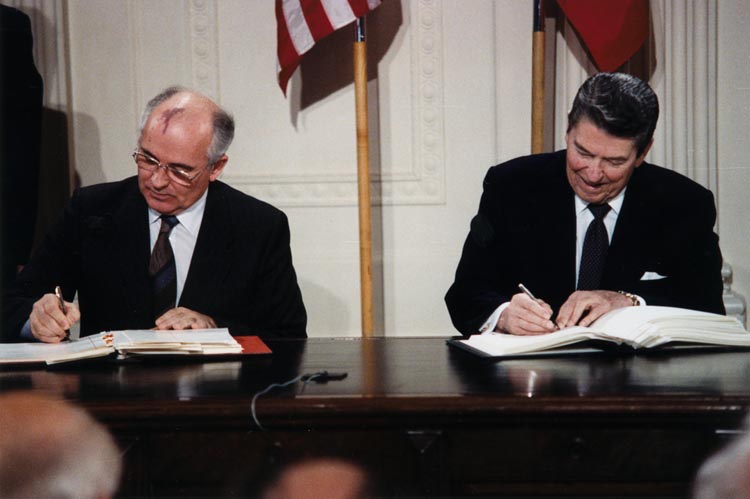
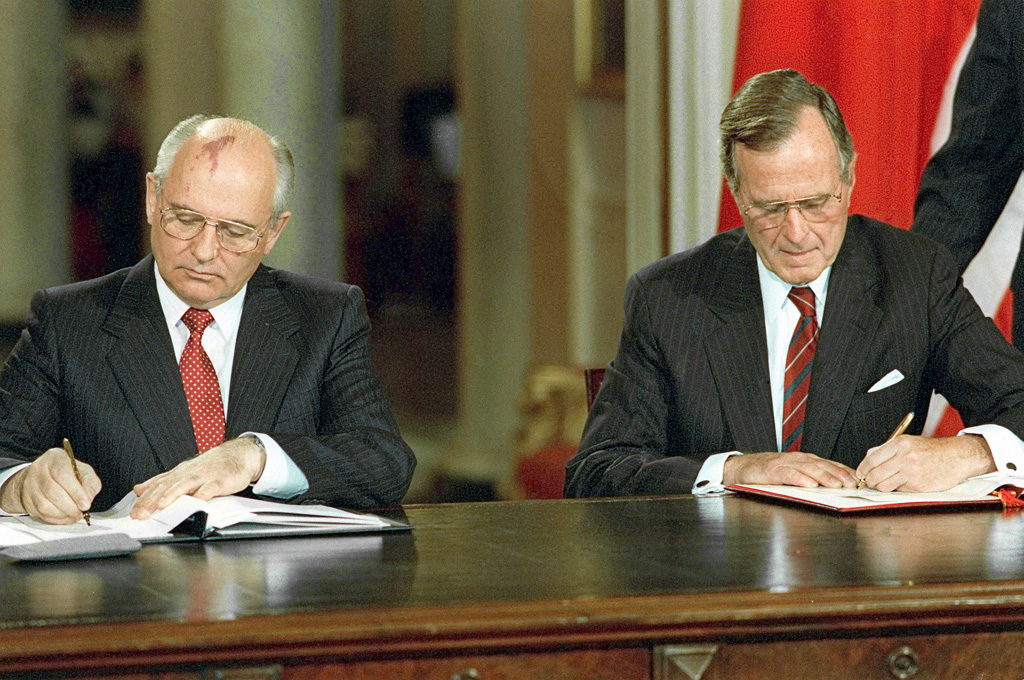
I included photo images of historical progress being made by US and Soviet Union to reduce nuclear tensions by limiting offensive nuclear weapons and limiting antiballistic missiles.
The Evil Red Empire – Red China – Imperialist. Mao Zedong proclaims the founding of the People’s Republic of China in Peking on Oct. 1, 1949.
The term ‘Imperialism’ refers to extension of rule or influence by one government or nation over another. From the dawn of the written history, local rulers extended their realms by conquering other states. Industrial Revolution introduced a form of Imperialism in which Imperial State pursued the policy and practice of forming and maintaining an Empire in seeking to control raw materials and world markets by the conquest of other countries. The British Empire represented Imperialist Power called Great Britain. Marxists argued that Imperialism was the ultimate state of Capitalism. It gave an impression that Communism is fundamentally opposed to the practice of forming and maintain an Empire to control raw materials and global markets. The Evil Red Empire proclaimed by Mao Zedong or Mao Tse-Tung slowly transformed itself into an Imperial State. Now, Red China exploits raw materials and vast quantities of natural resources from nations across the globe and it supplies manufactured products to the rest of the world including all nations in the West which take pride in their belief called Capitalism.
US Secretary of State John Kerry visited Beijing on Saturday, May 16, 2015 with the hope of resolving the problems posed by Red China’s Empire building.
US Secretary of State John Kerry visited Beijing on Saturday, May 16, 2015 with the hope of resolving the problems posed by Red China’s Empire building. He is soundly rebuffed while Red China’s President Xi Jinping announced that the US-China relations are stable. The economic and political influence of Red China give it the status of Imperialist State. Red China acts and behaves in a most assertive manner that signifies her full confidence of her military power to defend its Empire built since 1949 without fighting bloody battles that were common in the past.
Despite tension, Xi says U.S.-China relations are stable
China’s relations with the United States remain stable, Chinese President Xi Jinping said on Sunday, as he sought to defuse tension over a territorial dispute in the South China Sea that has pitted Washington against Beijing.
“I look forward to continuing to develop this relationship with President Obama and to bring China-U.S. relations to a new height along a track of a new model of major country relationship,” Xi told U.S. Secretary of State John Kerry at the end of Kerry’s two-day trip to China.
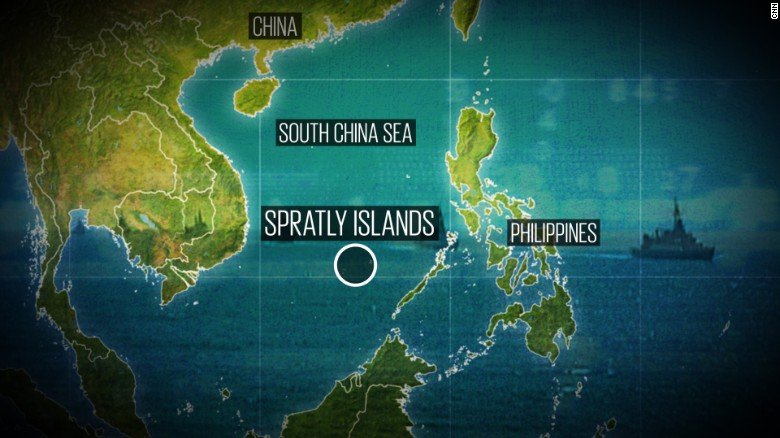
Kerry’s trip has been dominated by deepening security concerns about Beijing’s maritime ambitions in the South China Sea. China’s rapid reclamation effort around seven reefs in the Spratly archipelago of the South China Sea has alarmed claimants such as the Philippines and Vietnam.
Kerry’s trip is intended to prepare for the annual U.S.-China Strategic and Economic Dialogue next month in Washington and Xi’s expected visit to Washington in September, a trip that Xi said he looked forward to.
Xi has repeatedly told Obama of his desire for a “new model of major country relationship,” in which China would be viewed as an equal global player.
US Secretary of State John Kerry visited Beijing on Saturday, May 16, 2015 with the hope of resolving the problems posed by Red China’s Empire building.
But the model also outlines a respect for “each other’s sovereign and territorial integrity as well as political system and development path”.
“In my view the China-U.S. relationship has remained stable,” Xi told Kerry at Beijing’s Great Hall of the People at a session open to reporters. China claims about 90 percent of the 3.5 million sq km (1.35 million sq mile) sea. The Philippines, Taiwan, Malaysia, Brunei and Vietnam also claim large parts of it.
Recent satellite images have shown that since about March 2014, China has conducted reclamation work at seven sites in the Spratlys and is constructing a military-sized air strip on Fiery Cross Reef and possibly a second on another reef.
The Philippines, a U.S. treaty ally, has called for urgent action. Kerry said the United States had stated its concerns about the pace and scope of China’s land reclamation in the South China Sea.
On Saturday, China’s top diplomat, Yang Jiechi, urged Kerry to “properly control our differences and sensitive issues” as well as “view our strategic intentions objectively and rationally”, according to a report by state-run China News Service.
“I hope the United States can do more for peace and stability in the region,” Yang, who holds the title of State Councillor, was quoted as telling Kerry, referring to the South China Sea. China has expressed its concern about a possible U.S. plan to send military aircraft and ships to assert freedom of navigation in the South China Sea. China rejects U.S. involvement in the dispute and has blamed the United States for stoking tension by encouraging countries to engage in “dangerous behavior”.
(Additional reporting and writing by Sui-Lee Wee; Editing by Robert Birsel)
Mao Zedong proclaims the founding of the People’s Republic of China in Beijing on Oct. 1, 1949.
The Evil Red Empire called Red China or People’s Republic of China(Mandarin. Zhonghua Renmin Gongheguo) was proclaimed at Peking( now Beijing) by Communist Party Chairman Mao Zedong or Mao Tse-Tung on October 01, 1949. He formulated a vision of Empire building using a Policy of Expansionism during the late 1940s. Red China expanded its territory after the Communist victory in all of China. Apart from keeping territories gained by China in its historical past, Red China during 1950 attacked Tibet which had declared its independence after the downfall of Manchu China( the Ch’ing or Manchu dynasty) that ruled China from 1644 to 1912. The following Provinces and Autonomous Regions of Red China bear mute testimony to the great problem of its Territorial Expansionism:
The problem of Red China’s Expansionism in South China Sea must be studied in conjunction with the above problems of annexed territory. The United States will not succeed in its efforts to address the problem of Red China’s land reclamation activities in South China Sea without resolving The Great Problem of Tibet.
BEIJING — The United States and China held firm Saturday to deep disagreements over increasingly assertive Chinese activity in disputed areas of the South China Sea, as Beijing politely but pointedly rejected U.S. Secretary of State John Kerry’s push for it to reduce tensions.
After meeting in the Chinese capital, both Kerry and China’s Foreign Minister Wang Yi stressed the importance of dialogue to resolve the competing claims, but neither showed any sign of bending in their positions over Chinese land reclamation projects that have alarmed the United States and China’s smaller neighbors. The U.S. and most members of the Association of Southeast Asian Nations want a halt to the projects, which they suspect are aimed at building islands and other land features over which China can claim sovereignty.
“We are concerned about the pace and scope of China’s land reclamation in the South China Sea,” Kerry said, urging China to speed up talks with ASEAN on binding guidelines on how maritime activity in disputed areas should be handled. “And, I urged China, through Foreign Minister Wang, to take actions that will join with everybody in helping to reduce tensions and increase the prospect of diplomatic solutions.”
“I think we agree that the region needs smart diplomacy in order to conclude the ASEAN-China code of conduct and not outposts and military strips,” Kerry told reporters at a joint news conference with Wang.
But Wang signaled that while China was prepared to talk, it would not back down on the construction which he said “is something that falls fully within the scope of China’s sovereignty.”
“The determination of the Chinese side to safeguard our own sovereignty and territorial integrity is as firm as a rock, and it is unshakable,” he said. “It has always been our view that we need to find appropriate solutions to the issues we have through communications and negotiations that we have among the parties directly concerned with peaceful and diplomatic means on the basis of respecting historical facts and international norms. This position will remain unchanged in the future.”
Wang added that the differences between China and the U.S. could be managed “as long as we can avoid misunderstanding and, even more importantly, avoid miscalculation.”
The Chinese claims and land reclamation projects have rattled the region where South China Sea islands and reefs are contested by China and five other Asian governments and activities have led to clashes, accompanied by nationalistic protests and occasional serious diplomatic implications.
The U.S. says it takes no position on the sovereignty claims but insists they must be negotiated. Washington also says ensuring maritime safety and access to some of the world’s busiest commercial shipping routes is a U.S. national security priority.
China has bristled at what it sees as U.S. interference in the region and wants to negotiate with the ASEAN countries individually, something those much smaller nations fear will not be fair.
In one disputed area, the Spratly Islands, U.S. officials say China has reclaimed about 2,000 acres of dry land since 2014 that could be used as airstrips or for military purposes. The U.S. argues that man-made constructions cannot be used to claim sovereignty.
Obama administration officials have declined to comment on reports that it may deploy military assets, or that it is considering a demonstration of freedom of navigation within 12 nautical miles of the islands’ notional territorial zone. But they have said many of the features claimed by China in the disputed Spratlys are submerged and do not carry territorial rights, and said that China cannot “manufacture sovereignty.”
Despite the clear disagreements over the South China Sea, Kerry and Wang said they were on track to make progress in other areas, notably on climate change, the fight against violent extremism and preparations for the next round of the U.S.-China Strategic and Economic Dialogue in June and Chinese President Xi Jinping’s visit to Washington in September. They expressed pleasure with their cooperation in the ongoing Iran nuclear talks, their solidarity in trying to denuclearize North Korea and combat diseases such as the deadly Ebola virus.
Kerry will wrap up the China portion of his Asia trip in meetings with Xi, Chinese State Councilor Yang Jiechi and the country’s top military officer.
On Sunday, Kerry heads to Seoul where he will be meeting senior South Korean officials and deliver a speech on cyber security and related issues.
Kerry will return to Washington after delivering a speech on a proposed Trans-Pacific trade agreement in Seattle on Tuesday.
S. Secretary of State John Kerry, left, talks with Chinese Foreign Minister Wang Yi after their joint press conference at the Ministry of Foreign Affairs in Beijing Saturday, May 16, 2015. Kerry is in China to press Beijing to halt increasingly assertive actions it is taking in the South China Sea that have alarmed the United States and China’s smaller neighbors. (Saul Loeb/Pool Photo via AP)
S. Secretary of State John Kerry speaks during a joint press conference following meetings with Chinese Foreign Minister Wang Yi at the Ministry of Foreign Affairs in Beijing, China, Saturday, May 16, 2015. Kerry is in China to press Beijing to halt increasingly assertive actions it is taking in the South China Sea that have alarmed the United States and China’s smaller neighbors. (Saul Loeb/Pool Photo via AP)
S. Secretary of State John Kerry at the Ministry of Foreign Affairs in Beijing, China, Saturday, May 16, 2015. Kerry is in China to press Beijing to halt increasingly assertive actions it is taking in the South China Sea that have alarmed the United States and China’s smaller neighbors. (Saul Loeb/Pool Photo via AP)
S. Secretary of State John Kerry, left, and Chinese Foreign Minister Wang Yi hold a joint press conference following meetings at the Ministry of Foreign Affairs in Beijing Saturday, May 16, 2015. Kerry is in China to press Beijing to halt increasingly assertive actions it is taking in the South China Sea that have alarmed the United States and China’s smaller neighbors. (Saul Loeb/Pool Photo via AP)
S. Secretary of State John Kerry, left, and Chinese Vice Chairman of the Central Military Commission General Fan Changlong, right, shake hands prior to a meeting at the Ministry of
National Defense in Beijing Saturday, May 16, 2015. Kerry is in China to press Beijing to halt increasingly assertive actions it is taking in the South China Sea that have alarmed the United States and China’s smaller neighbors. (Saul Loeb/Pool Photo via AP)
5 of 5
the evil red empire kerry 11
the evil red empire kerry 21
the evil red empire kerry 31
the evil red empire kerry 41
the evil red empire map of tibet1
Mao Zedong proclaims the founding of the People’s Republic of China in Beijing on Oct. 1, 1949.
the evil red empire general fan changlong vice chairman central militray commission1
Mao Zedong proclaims the founding of the People’s Republic of China in Beijing on Oct. 1, 1949.
The term “The Evil Red Empire” describes the national entity founded by Communist leader Mao Zedong on October 01, 1949. To build an Empire, Mao Zedong formulated a Policy of Expansionism in late 1940s.
the evil red empire airspace expansionism
Airspace is the space extending up above an area of the earth’s surface; specifically, airspace refers to the space above a nation over which it can claim jurisdiction. Red China’s maritime expansionism in South China Sea poses a security threat as it involves the rights to use the airspace by other countries. With its land reclamation activities, Red China has expanded its claims to Land, Sea, and Airspace and is further willing to control that airspace by establishing its own Air Defence Identification Zone.
the evil red empire airspace nine dash expansionism
United States Navy and Air Force have no option other than that of challenging Red China’s illegal claim to sovereignty using land reclamation and building activity without any approval from its neighbors who have legitimate claims in that region.
the evil red empire airspace south china sea expansionism
By Greg Torode
.
An aerial photo taken though a glass window of a Philippine military plane shows the alleged on-going …
By Greg Torode
HONG KONG (Reuters) – When the U.S. navy sent a littoral combat ship on its first patrol of the disputed Spratly islands in the South China Sea during the past week, it was watching the skies as well.
The USS Fort Worth, one of the most modern ships in the U.S. navy, dispatched a reconnaissance drone and a Seahawk helicopter to patrol the airspace, according to a little-noticed statement on the navy’s website.
While the navy didn’t mention China’s rapid land reclamation in the Spratlys, the ship’s actions were a demonstration of U.S. capabilities in the event Beijing declares an Air Defence Identification Zone (ADIZ) in the area – a move experts and some U.S. military officials see as increasingly likely.
“It’s not inevitable but if we are betting paychecks I’ll bet that they will eventually declare one, I just don’t know when,” said a senior U.S. commander familiar with the situation in Asia.
ADIZs are not governed by formal treaties or laws but are used by some nations to extend control beyond national borders, requiring civilian and military aircraft to identify themselves or face possible military interception.
China sparked condemnation from the United States and Japan when it imposed an ADIZ in the East China Sea, above uninhabited islands disputed with Tokyo, in late 2013.
Chinese military facilities now under construction on Fiery Cross Reef in the Spratlys, including a 3,000-metre (10,000-foot) runway and airborne early warning radars, could be operational by the year-end, said the U.S. commander, who declined to be identified.
Recent satellite images also show reclamation work on Subi Reef creating landmasses that, if joined together, could make space for a similar sized airstrip.
Growing concern in Washington that China might impose air and sea restrictions in the Spratlys once it completes work on its seven artificial islands is likely to be on the agenda when U.S.
Secretary of State John Kerry meets Chinese leaders in Beijing this weekend for previously scheduled talks.
TOUGH TO ENFORCE
Asia’s rising power claims sovereignty over most of the South China Sea, through which $5 trillion in ship-borne trade passes every year. The Philippines, Vietnam, Malaysia, Taiwan and Brunei also have overlapping claims.
China has said it had every right to set up an ADIZ but that current conditions in the South China Sea did not warrant one.
Enforcing such an ADIZ would be difficult even with two airstrips capable of handling fighter planes in the Spratlys, as well as an expanded airstrip on Woody island in the disputed Paracel island chain further north because of the distances involved, regional military officials and experts said.
The Spratlys for example lie more than 1,100 km (680 miles) from the Chinese mainland, putting China’s well-equipped airbases along its coastline well out of reach.
“Even with the new reclamations, it is going to be a stretch for China to routinely enforce such a zone that far south,” said Richard Bitzinger, a regional security analyst at Singapore’s S. Rajaratnam School of International Studies.
The Japanese and U.S. military ignore the ADIZ above the East China Sea, as does Japan’s two major carriers, ANA Holdings <9202.T> and Japan Airlines <9201.T>.
A study produced by the independent U.S. Congressional Research Service earlier this year noted that while China’s air force actively monitors that zone with ground radar from its coastline, it had generally shown restraint in enforcement.
China’s planes were unlikely to maintain a constant presence over the East China Sea, the study noted, citing a U.S. air force assessment.
RISK OF ESCALATION
The South China Sea might prove more problematic for China given the complexity of the dispute and the possibility of challenges from the U.S. navy and air force.
Indeed, on Tuesday, a U.S. official said the Pentagon was considering sending military aircraft and ships to assert freedom of navigation around the Chinese-made islands.
China’s Foreign Ministry responded by saying Beijing was “extremely concerned” and demanded clarification.
On Friday it accused the Philippines of working together with the United States to “exaggerate the China threat” over the Spratlys.
China had recently warned Philippine air force and navy planes at least six times to leave the Spratlys, the Philippine military commander responsible for the region said last week. The planes refused.
Zhang Baohui, a mainland security expert at Hong Kong’s Lingnan University, said he was worried about the risk of confrontation from any U.S. show of force.
“It’s reckless,” he said, referring to Washington’s latest plans.
“It has a built-in dynamic for unintended escalation,” he added. “Are they willing to take the consequences of this escalation?”
At sea, tensions are already apparent.
The naval statement about the USS Fort Worth, which can also hunt submarines and support amphibious landings, noted the ship “encountered multiple People’s Liberation Army-Navy warships” during its patrol. It did not go into detail.
“Our interactions with Chinese ships continue to be professional and (the Code for Unplanned Encounters at Sea) helps clarify intentions and prevent miscommunication,” Commander
Matt Kawas, the Fort Worth’s commanding officer, said in the statement.
(Additional reporting by Tim Kelly and Nobuhiro Kobu in YOKOHAMA, Japan; Editing by Dean Yates)