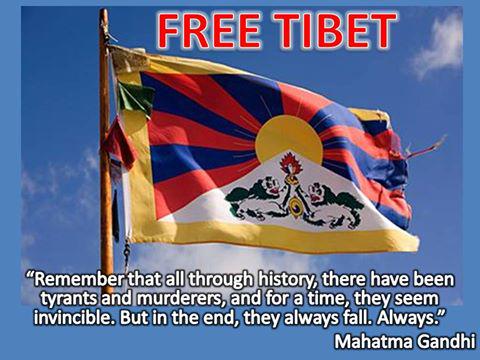
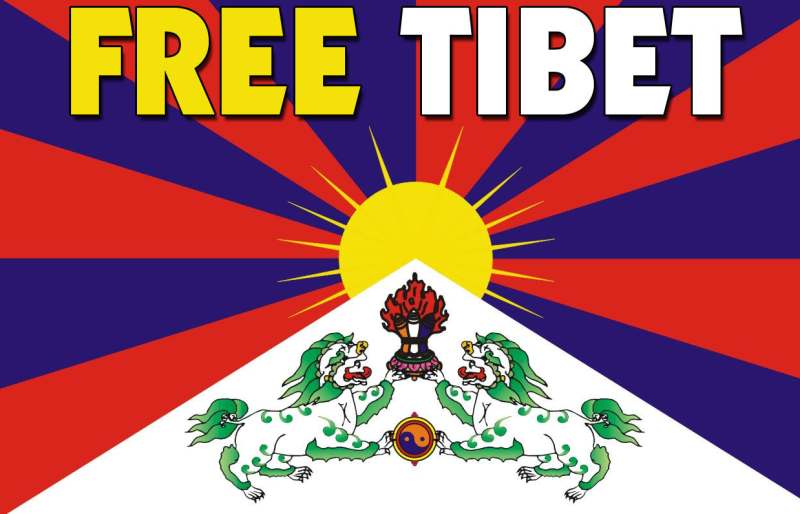
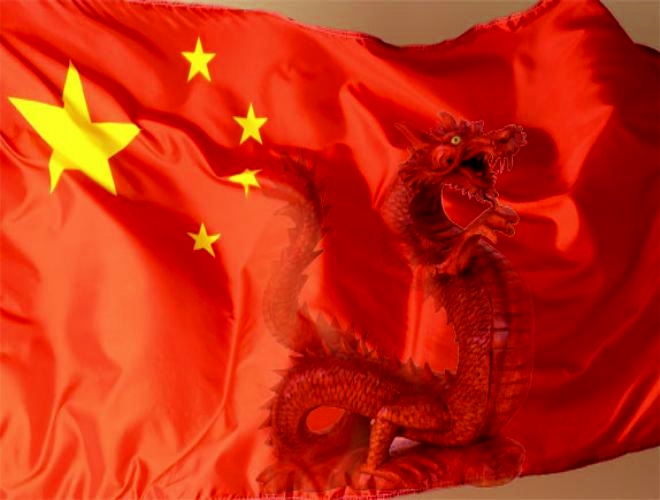
Red China’s acts of aggression in West Philippine Sea or South China Sea have to be examined in the context of Red China’s aggression in Tibet. Red China occupied 965, 000 square miles of Tibetan territory which represents one-quarter of Red China’s landmass. United States has no choice other than that of confronting all aspects of Red China’s aggression.
TIBET’S MILITARY OCCUPATION – THE GREAT TIBET PROBLEM
Historically Tibet came under military conquests by Mongol China and Manchu China and yet retained its independent way of living without any problem. The Evil Red Empire formulated by Red China’s Communist Party Chairman Mao Zedong unleashed a different kind of beast to rule over the lives of Tibetan people. During 1950s, both India and Tibet believed that the beast called ‘The Red Dragon’ can be appeased and treated her with patience, and tolerance seeking a peaceful resolution to the problem caused by Red China’s military invasion of Tibet in 1950. In 1959, Tibetans made an unsuccessful attempt to tame ‘The Red Dragon’ and their failure could be attributed to cunningness, craftiness of Red China which acts like a Jackal concealing her true intentions. Red China has become more confident over the years and thinks that there is no one besides her. Unlike in past, Tibet’s conquest by Red China has transformed Tibet into a colony from which China extracts all natural resources while maintaing a tight grip over the lives of people using her brute force. Red China developed road, rail, and air connections with Tibet to sustain its colonization denying Tibetans their natural rights to Freedom. I am expecting that Red China’s military grip over Tibet will slacken because of an unexpected strike that would bring The Red Dragon to her knees.
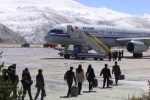
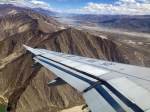
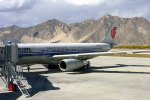
China is on an Airports and Infrastructure spree in Tibet
AUTHOR: CLAUDE APRI
AUGUST 4, 2015
Isn’t it strange that some of the most significant news are often missed in the cacophony of the ‘Breaking News’ channels?
On the same day, two game-changing pieces of information appeared in the Chinese media. Yet, they just looked innocuous.
The first one was about the 6th Tibet Work Forum. Was it held in Beijing or in the sea-resort of Beidaihe, where the top leaders escaped the unpleasant Beijing weather? I shall come back to it later.
The second information was the PLA/Civil integration for the management of the Lhasa airport; it has serious strategic implications for India, which is struggling to build some infrastructure in Arunachal and Ladakh.
Xinhua officially announced the vital airport integration to “strengthen aviation safety and combat support capabilities.”
A joint statement from the People Liberation Army Air Force (PLAAF) and General Administration of Civil Aviation (CAAC) said that the integration will include joint maintenance of airport support facilities, joint flight safety support and joint airport management.
Interestingly, the Lhasa Gongkar Airport in Tibet will be the first of the two pilot airports to implement the PLA/civil ‘integration’ (with the Sunan Shuofang Airport in Wuxi in Jiangsu province). The job should be completed during the second half of 2015.
The PLAAF/CAAC circular further affirms that “all the civil-military airports will conduct strengthened integration next year.”
To flood the Tibetan plateau with millions of Chinese tourists, a good infrastructure is required. Airports and the railway line are the backbones of a booming tourism in Tibet. The same infrastructure could be crucial in case of conflict with India; integration of the airport management was therefore required.
Once the Lhasa Gonggar Airport, located about 62 kilometres from the Tibetan capital has its joint PLA/Civil management, the other airports on the plateau will follow.
A couple of years ago, Xinhua had announced that the airport in Chamdo (known as the Bangda Airport) was reopened after major repairs. Xinhua reported then: “The Bangda Airport, the world’s highest-altitude civilian airport currently in use, is expected to resume operations.” It had temporarily been closed to repair a 19-year-old runway.
Also strategically important is the Nyingtri Mainling Airport, situated just north of the McMahon Line, the border with India; it serves Bayi, the main PLA garrison in the Tibetan Autonomous Region.
Ngari Gunsa Airport already used by the PLA posted opposite the Indian troops in Ladakh and Himachal Pradesh, started its operations in 2010, becoming the fourth civil airport in Tibet after Lhasa, Nyingchi and Chamdo airports.
Shigatse, the second city in Tibet is served by the railway line since August last year but also has the Shigatse Peace Airport, called Shigatse Air Base.
It was solely for military use until 2010, when a 100 million US $ expansion was completed.
The 4,411-metre-high Kardze Daocheng Yading airport, built in Kardze in Sichuan province was put into operation in 2014 (a year earlier than planned!). The Sichuan authorities planned to bring one million tourists to the area by 2015. But as important as tourism, the airport facilitates the transportation of fresh troops from the Military Area Command in Chengdu to Kardze prefecture. Kardze has been one of the most restive areas on the Tibetan plateau. With one stone, two birds are killed: the Tibetan protesters can be ‘pacified’ in no time and the deluge of Chinese tourists brings hefty revenues.
Another airport has come up in the Nagchu Prefecture of Tibet. Completed in 2014, the Nagchu Airport is now the highest airport in the world at 4,436 m.
The Modi Sarkar is aware of all this, but while China speedily builds Tibet’s infrastructure (using the perfect excuse of having to cater for millions of Han tourists), India develops its border areas at snail’s pace, struggling to create a semblance of infrastructure. It is true that the terrain is far more difficult in the Indian side, but so are the bureaucratic hurdles.
In Arunachal for example, the process indeed needs perseverance and an unshakable will to change the tide. Despite the declared resolve from the present Government, it may take years for proper roads to reach the remotest districts of Arunachal Pradesh…and stop the Chinese ‘visits’.
It is not an easy challenge, but Prime Minister Narendra Modi has realised that the North-East cannot be developed from Delhi. In his latest monthly radio programme Maan ki Baat, he announced that he was “deputing Central Government officials to find solutions to problems being faced by the region”.
One of the decisions taken by the Union Government has been to modify the guidelines of the Border Area Development Programme drafted some 10 years ago. According to the new notification,
“The main objective of the BADP is to meet the special developmental needs and well being of the people living in remote and inaccessible areas situated near the international border and to saturate the border areas with the entire essential infrastructure …(with a) participatory approach.”
I mentioned another information released by Xinhua the same day about the 6th Tibet Work Forum, which decides the fate of Tibet (as well as Tibet’s southern neighbours) for the next 5/10 years
The opening of the Forum just took place in Beidaihe, the sea-resort where the Communist leadership retires during the hot summer.
Xinhua reported that top Chinese leaders have met “to discuss economic and social development in Tibet, and how to ensure the autonomous region achieves prolonged stability.”
The statement of the Political Bureau of the Central Committee of the Communist Party of China (CPC) further noted: “Safeguarding national unity and strengthening ethnic unity should be highlighted in work involving Tibet.” The so-called stability is undoubtedly foremost in the mind of the leadership. The statement added:
“Efforts should be made to unswervingly carry out the anti-separatism battle, promote the region’s economic and social development, safeguard and improve people’s welfare, and enhance exchanges and integration of different ethnic groups.”
The Politburo (or probably an extended Politburo) is said to have agreed that “strengthening Tibetan infrastructure, helping it foster competitive industries while ensuring environmental protection are the means to achieve marked improvement in living conditions and more social cohesion,” were the priorities for the restive region.
The PLA/Civil integration of the airports in Tibet will certainly help Beijing to ‘strengthen the infrastructure’ and consolidate its presence on the Plateau.
To give an example of the seriousness of the situation for India, it is enough to quote the case of Metok, the last Tibetan village before the Yarlung Tsangpo/Brahmaputra enters Upper Siang district of Arunachal Pradesh.
China Tibet Online explains:
“The remoteness of the location, together with other reasons such as climate and geological condition, and economic development, led to the isolation of the region. Having no way linking it to the outside world until the end of 2013, Metok is the last county in China to have its road.”
Historically, this was a mythic place; only a very few intrepid pilgrims had visited the ‘hidden valley’. Now, Zhang Yuhui, an executive deputy director of Metok County affirmed that the income from tourism in Metok (which has 11,000 inhabitants only) has reached 1.6 billion US $, just in the matter of 2 years.
China Tibet Online says:
“Going to Metok had once been only the privilege of the ‘brave’ before the traffic was improved. After the opening of the road to Metok, self-driving travel became popular apart from hiking. Visitors from various places were attracted to this beautiful place.”
Can you believe that this tiny (though strategic valley) hosted 70,000 visitors in 2013, the first year the road was opened. It grew to 90,000 in 2014 and the Chinese government expects 130,000 visitors in 2015.
And this just a few kilometers north of the Indian border!
No other comment is required.
The Narendra Modi Sarkar has indeed to hurry up and undertake the development of the border on a war footing.
tibet military occupation airfields
tibet military occupation airport
tibet military occupation bangda airport
Chamdo Bamda Airport is the highest airport in the world, at an elevation of 4,334 metres (14,219 ft).
tibet military occupation daocheng yading airport garze sichuan province
tibet military occupation lhasa airport
tibet military occupation lhasa gonggar airport
OLYMPUS DIGITAL CAMERA
tibet military occupation qmado bangda airport
RED DRAGON – RED CHINA – OCCUPIER OF TIBET: ARCHAEOLOGICAL FINDINGS SUGGEST THAT PEOPLE OF ANCIENT TIBET HAD FACED THREATS OF FOREIGN CONQUESTS.
Whole Alert – Red China is guilty of Cultural Genocide in Tibet
I oppose Tibet’s military occupation, and support Freedom, Democracy, and Peace in occupied Tibet. I promote Tibet Awareness and I am asking my readers to give their kind attention to the problem of “Cultural Genocide” which has already destroyed the lives of over 140 Tibetan lives, victims of Red China’s brutal military occupation.
Whole Alert – Red China is guilty of Cultural Genocide in Tibet
TIBET’S TOUGH ROAD AHEAD
The Dalai Lama prepares to speak in Aldershot, southern England, in June. (Ben Stansall/Agence France-Presse/Getty Images)
By Carl Gershman July 5 at 7:06 PM
Carl Gershman is president of the National Endowment for Democracy.
The 80th birthday Monday of the Dalai Lama, Tibet’s spiritual leader, is an occasion to celebrate the life of an extraordinary individual. Since his flight from Tibet to India in 1959, the Dalai Lama has built religious, educational and political institutions to serve and unite the Tibetan community in exile. He has travelled the world to promote the Tibetan cause and expound the teachings of Tibetan Buddhism. And he has formulated a conciliatory “Middle Way Approach” to resolving the Sino-Tibetan conflict that respects China’s sovereignty and territorial integrity even as it seeks to preserve Tibet’s culture, religion and identity. These accomplishments, and the Dalai Lama’s infectious laugh and warmth, explain why he is such a beloved and respected figure throughout the world.
As joyful as the occasion of his 80th birthday is, however, it comes at a grim time for the Dalai Lama and the Tibetan freedom movement. The Chinese government has broken off negotiations on Tibet’s status, accusing the Dalai Lama of deceitfully trying to split China and of inciting the 2008 Lhasa uprising, charges that are offensive in addition to being entirely untrue. In April, it issued a white paper saying that talks would not be reopened until the Dalai Lama acknowledged that “Tibet has been an integral part of China since antiquity,” something he cannot agree to since it is contradicted by the historical record and overlooks the fact that Communist China invaded Tibet and illegally annexed it in 1959.
Having rejected compromise and dialogue as the way to end Tibetan resistance to its rule, the Chinese government has opted for harsh repression, forced assimilation and the systematic effort to destroy the Tibetan religion, language and distinct national identity. Tibet has been flooded with Han Chinese settlers; monasteries have been placed under direct government control; writers have been arrested and tortured; and more than 2 million nomads have been forcibly resettled in urban areas, destroying their traditional way of life and disrupting the fragile ecosystem of the Tibet Plateau.
In response to these and other harsh measures, which the Dalai Lama has called “cultural genocide,” more than 140 Tibetans have immolated themselves in desperate protest against Chinese oppression. This further enraged the regime, which called upon local security forces to “smash disorder, in order to maintain general harmony and stability.” But as 29 dissident Chinese intellectuals said in a call for dialogue with the Dalai Lama, “A country that wishes to avoid the partition of its territory must first avoid divisions among its nationalities.”
With the Dalai Lama turning 80, a contest is already developing over his succession. In Tibetan Buddhism, reincarnation is a fundamental tenet, and only the Dalai Lama has the authority to choose whether and through whom he will reincarnate. Yet Beijing has already approved guidelines giving the communist government control of the process. This contest takes place against the background of Chinese authorities having kidnapped in 1995 the 6-year-old boy identified by the Dalai Lama as the incarnation of the Panchen Lama, the second most important figure in Tibetan Buddhism, and replaced him with another boy.
The fact that the Chinese-imposed Panchen Lama continues to be categorically rejected by Tibetans should indicate how inflammatory it would be if Beijing tried to impose its choice for the next Dalai Lama. But that’s exactly what it intends to do, except that the Dalai Lama has hinted that he might not reincarnate at all. Zhu Weigun, a top Communist Party official dealing with Tibet, angrily called the Dalai Lama’s statement “a betrayal” of Tibetan Buddhism and accused him of taking “a frivolous attitude toward his own succession.” Such shameless impudence by a spokesman for an atheistic party would be laughable were his words not the official policy of the Chinese government.
The Dalai Lama has said that he will consult with the high Lamas of Tibetan Buddhism, as well as with the Tibetan public and other concerned people, before taking a decision on “whether the institution of the Dalai Lama should continue or not.” These words reflect a spirit of democratic inclusiveness that has characterized his leadership, including his decision to devolve political authority to a democratically elected exile government.
It is ironic that at a time of democratic malaise in the West, this “simple Buddhist monk,” as he calls himself, from a remote non-Western civilization has emerged as a fervent defender of democratic values and arguably the world’s leading exponent of nonviolence and religious freedom.
As we celebrate the Dalai Lama’s 80th birthday, let us remember the suffering of the Tibetan people and pray that it will come to an end.
RED CHINA – RED ALERT – TIBETAN LAMA TENZIN DELEK RINPOCHE DIES IN PRISON:
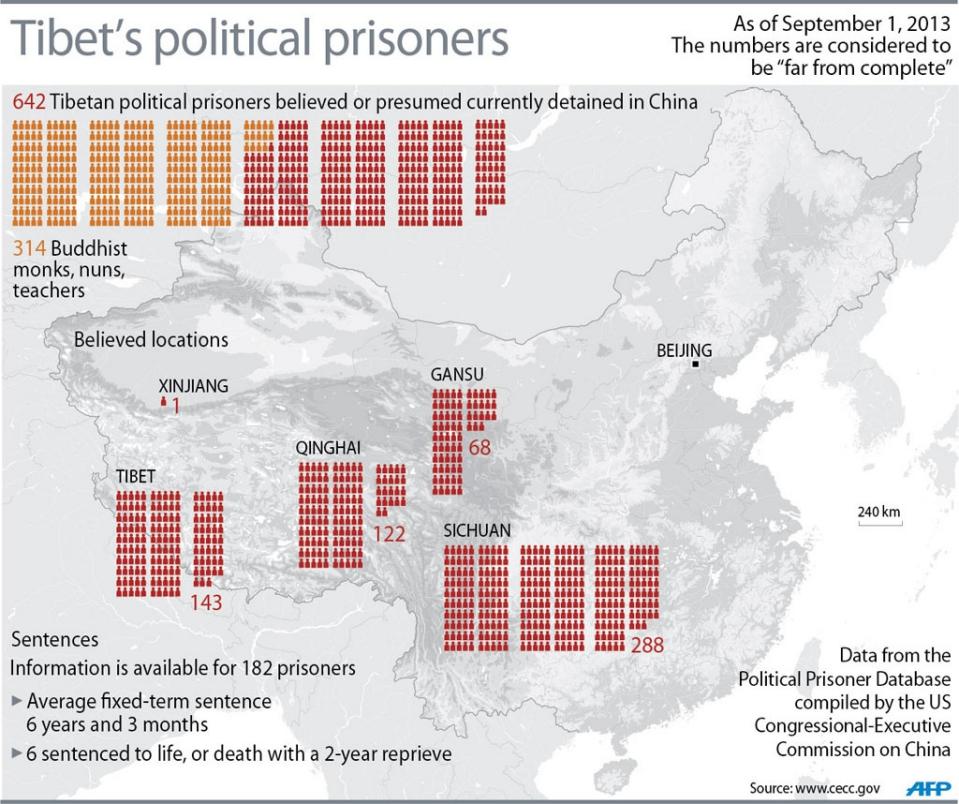
I regret to share this news about death of Tenzin Delek Rinpoche in a Chinese prison after he was denied medical parole. Red China fails to acknowledge the fact of detaining Tibetans for their political beliefs and this incident demands an independent inquiry by an international organization to investigate the living conditions of Tibetan political prisoners held in Chinese prisons.
Tibetan Buddhist master lama Tenzin Delek Rinpoche dies in Chinese prison
THE ASSOCIATED PRESS
Monday, July 13, 2015
AP
Tibetan lama Tenzin Delek Rinpoche in his home in Nyagqu County in 1999. Relatives of Tenzin Delek Rinpoche were informed Sunday that he has died in prison 13 years into serving a sentence.
BEIJING — Tibetan lama Tenzin Delek Rinpoche has died in prison 13 years into serving a sentence for what human rights groups say were false charges that he was involved in a bombing in a public park. He was 65.
Relatives were informed of the death Sunday, New York-based Students for a Free Tibet said Monday. Police in Sichuan province in southwestern China confirmed the death but declined to give further details.
Tenzin Delek was arrested in 2002 in relation to an April 3, 2002, blast in Chengdu city that injured three people. He was sentenced to death on charges of terror and incitement of separatism a few months later. His death sentence was commuted to life in prison in 2005, and later to 20 years’ imprisonment. He continued to maintain his innocence.
He was being held in a prison in Dazhu county in Sichuan province, which borders the Tibetan region.
A woman from the Public Security Bureau in Dazhu confirmed that Tenzin Delek died Sunday. She refused to identify herself.
Ashwini Bhatia/AP
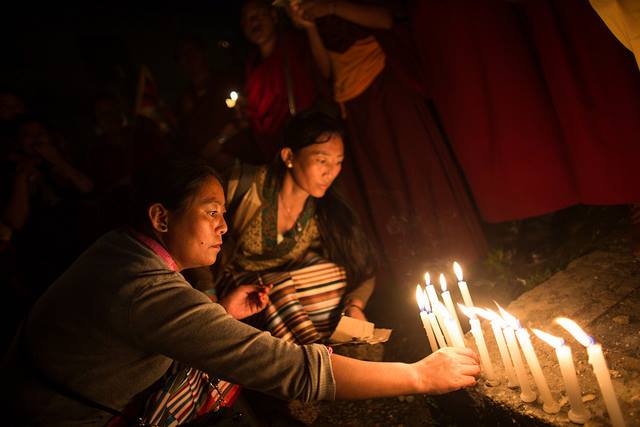
Exile Tibetans carry placards as they participate in a candlelit vigil Monday to remember Tibetan lama Tenzin Delek Rinpoche, in Dharmsala, India. Tenzin Delek has died in prison 13 years into serving a sentence.
Students for a Free Tibet said his family members had been informed by police in Chengdu city, the capital of Sichuan province, on Sunday, but were not told how he died.
Last year, they had applied for medical parole for him on the grounds that he suffered from a heart condition, high blood pressure, dizzy spells and problems with his legs that had caused him to fall on a number of occasions.
Born in 1950 in a Tibetan area of Sichuan, Tenzin Delek stayed in India from 1982 to 1987 to study under the Dalai Lama.
During that time, the Dalai Lama recognized Tenzin Delek as a tulku, or a reincarnated lama.
GAUTAM SINGH/AP
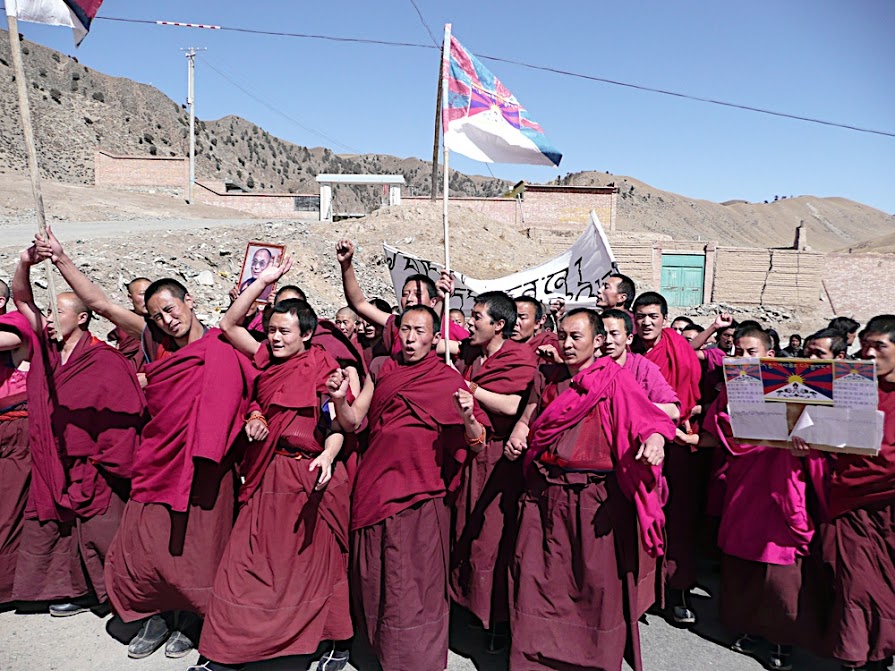
Activists of the Regional Tibetan Youth Congress shout slogans in 2004 demanding the release of Tibetan religious leader Tenzin Delek Rinpoche, in Bangalore, India.
In 1987 he returned to China, where he worked to establish monasteries, health clinics, small schools and orphanages, rising in prominence.
Human rights groups have said his relationship with Chinese officials took a turn for the worse when he rolled back attempts to clear forests and because of his support for the Dalai Lama, who is considered a separatist by the government.
In India, exiled Tibetans marched Monday in New Delhi and in Dharmsala, where the Dalai Lama has lived since fleeing Tibet in 1959, carrying placards reading, “We want justice,” and “Murdered in Prison.”
His family called for authorities to release his body.
Tsering Topgyal/AP
An exile Tibetan man lights butter lamps during a candle light vigil and prayer Monday to remember Tibetan lama Tenzin Delek Rinpoche, in New Delhi, India.
“Tenzin Delek Rinpoche was an innocent monk who suffered over 13 years of unjust imprisonment, torture and abuse in a Chinese prison for simply advocating for the rights and well-being of his people and for expressing his devotion to His Holiness the Dalai Lama,” his India-based cousin, Geshe Nyima, said in a statement released by Students for a Free Tibet.
“The Chinese government must immediately release his body so that our family and community may perform the last Buddhist religious rites,” the statement said.
The U.S. State Department said it was saddened to learn of the death of the political prisoner.
“The United States had consistently urged China to release Tenzin Delek Rinpoche, most recently out of concern for his health,” department spokesman John Kirby said in a statement. “We hope Chinese authorities will investigate and make public the circumstances surrounding his death.”
Red China – Red Alert – Sixth Protest Self-Immolation of 2015
Whole Sacrifice – Tibetans Resist Occupation by Self-Sacrifice
Tibetans continue to resist military occupation of Tibet. Self-Immolation is ultimate act of passive resistance in an attempt to convince an adversary to change his behavior. I am sharing the news about this Tibetan tragedy and offer my prayers for Peace, Harmony, and Tranquility in the Land of Tibet.
UNREPRESENTED NATIONS AND PEOPLES ORGANIZATION (UNPO)
RED CHINA – RED ALERT: SIXTH PROTEST SELF-IMMOLATION OF 2015 TO RESIST TIBET’S MILITARY OCCUPATION.
July 10, 2015
Tibet: Sixth Protest Self-Immolation of This Year Takes Place in Kyegudo
Tibet: Sixth Protest Self-Immolation of 2015 Takes Place in Kyegudo
An unidentified Tibetan monk set himself ablaze on Thursday [9 July 2015] in the central square of Kyegudo in the Yulshul Tibetan Autonomous Prefecture, China’s Qinghai province, in a protest against Beijing’s rule in the Tibetan region. It constitutes the sixth self-immolation this year and brings the total number of self-immolations by Tibetans since the beginning of open protests in 2009 to 142. The monk was taken to a hospital for treatment, but his current condition or whereabouts remain unknown. It also remains unclear whether he was taken away by bystanders or by the police.
Below is an article published by RADIO FREE ASIA
A Tibetan monk set himself ablaze on Thursday in northwestern China’s Qinghai province in an apparent challenge to Beijing’s rule in Tibetan areas in the sixth such protest this year, according to sources in the region and in exile.
The burning in the central square of Kyegudo in the Yulshul (in Chinese, Yushu) Tibetan Autonomous Prefecture brings to 142 the total number of self-immolations by Tibetans since the wave of fiery protests began in 2009.
The still unidentified monk was taken to hospital for treatment of his burns, but no word has been received on his current condition or whereabouts, sources said.
“On July 9, sometime between 5:00 and 6:00 p.m. [local time] a monk self-immolated in Kyegudo’s Gesar Square,” a Tibetan living in exile told RFA’s Tibetan Service on Thursday, citing contacts in the town.
“We still don’t know what his name is or which monastery he came from,” he said, adding that though sources said the monk was transported to a local hospital for treatment, it is unclear if he was taken there by bystanders or the police.
Kyegudo, the site of Thursday’s protest and Yulshul prefecture’s main town, was hit by a devastating earthquake on April 14, 2010 that largely destroyed the town and killed almost 3,000 residents by official count.
Thursday’s burning is the sixth Tibetan self-immolation to take place since the beginning of the year. It follows the May 27 protest of Sangye Tso, a Tibetan mother of two, who set herself ablaze and died outside Chinese police headquarters in Chone (Zhuoni) county in Gansu province’s Kanlho (Gannan) Tibetan Autonomous Prefecture.
The Subjugation of Tibet is a crime against humanity
THE SUBJUGATION OF TIBET: RED CHINA’S ILLEGAL, AND UNJUST OCCUPATION OF TIBET IS A CRIME AGAINST HUMANITY.
I am pleased to share this article authored by Patrick Boehler, “FROM THE ARCHIVES: DALAI LAMA’S ACCESSION TO THRONE AND FLIGHT TO INDIA” in The New York Times blog called ‘Sinosphere’ that includes dispatches from China. This blog post includes a series of news stories published by The New York Times. Just like India which was part of British Empire for several centuries, Tibet was part of Mongol, and later Manchu China Empires for several centuries. But, at no time India was a part of a national entity called Great Britain. Similarly, at no time Tibet is part of a national entity called China or People’s Republic of China. Red China’s Expansionist Policy and acts of aggression have no legitimacy. Red China’s illegal, unjust military occupation of Tibet is a Crime Against Humanity.
SINOSPHERE : DISPATCHES FROM CHINA
From the Archives: Dalai Lama’s Accession to Throne and Flight to India
BY PATRICK BOEHLER July 6, 2015 7:55 am July 6, 2015 7:55 am
Photo
THE SUBJUGATION OF TIBET: RED CHINA’S ILLEGAL, AND UNJUST OCCUPATION OF TIBET IS A CRIME AGAINST HUMANITY.
An op-ed by the Dalai Lama in The New York Times on Feb. 3, 1979.Credit John Faber
As the Dalai Lama celebrates his 80th birthday on Monday, here is a look at how The New York Times covered his early years as the spiritual leader of Tibet, a time when rare glimpses into the Himalayan territory’s politics came mostly from radio broadcasts from India and a few travelers and missionaries from war-torn China.
In December 1933, The Times reported the death of the Dalai Lama’s predecessor, the 13th in the line of spiritual rulers. That was followed by the start of a mission to find his reincarnation in a newborn child, and by international wrangling for influence in the capital, Lhasa.
“The question of succession has its ramifications in widely separated places,” The Times noted in 1934. “In the offices of the Indian government at Delhi; in the India office of London’s Downing Street; in the Kremlin of Moscow; at Kuomintang headquarters in Nanking; at the Japanese military headquarters in Manchuria; at the court of the Manchu Pu Yi; and in the inner councils of the militarists in Tokyo.”
Sir Francis Younghusband, who had led a British expedition to Lhasa 30 years earlier, described the search for a successor in an article for The Times in 1934. “What changes may come, who can say?” he wrote. “British influence may wane. Chinese influence may wax. Or the reverse may happen. In any case, the Tibetans will strive to preserve their soul.”
The current Dalai Lama was born a year later, in 1935. His discovery as the reincarnation of his predecessor seemingly went unreported. In 1940, The Times carried a report from Lhasa describing the child’s enthronement ceremony.
Photo
The first image of the 14th Dalai Lama to appear in The New York Times in 1940.Credit The New York Times
“Wearing a scarlet cloak and riding through reverent crowds in a great golden palanquin, a 6-year-old Chinese peasant boy today was enthroned as the 14th Dalai Lama, chief civil and religious ruler of this monastic kingdom,” The Times wrote.
“Monks from the hundreds of monasteries scattered throughout the kingdom blessed the boy as he passed,” the report added. “The entire city was perfumed by incense burners that lined the route.”
The report noted that a portrait of Sun Yat-sen, the founder of the Chinese republic, and Chinese flags were hung in the throne room to reflect acceptance of Chinese claims of sovereignty over Tibet. In Nanking, officials and monks kowtowed to the Dalai Lama’s image, The Times reported.
The first reports of Chinese Communist forces entering Tibet appeared in The Times in 1950, “blurred by cloudy gulfs of time and distance,” months after Mao Zedong proclaimed the People’s Republic in Beijing.
In November 1950, Indian government sources tole The Times that they had lost radio contact with Lhasa, “now under imminent threat of capture by the invading Chinese Communist forces.” The Dalai Lama had fled the capital, according to the report. A truce, with a reported assurance that Beijing would accept “internal autonomy in Tibet while the Chinese Communists take over the frontier patrol,” was reported on a Times front page in March 1951.
In August 1951, The Times reported the arrival of the Dalai Lama’s brother in the United States. In September, the People’s Liberation Army said it had entered Lhasa. “There is considerable opposition to the Communist regime in Lhasa, according to the latest news received at this border from the Tibetan capital,” a Times correspondent wrote from Kalimpong, in West Bengal, India.
“Resentment against the loss of their ancient freedom to the Chinese Communists smoulders angrily beneath the surface of the present apparent subservience of Tibet to Red occupation,” The Times’s longtime correspondent Robert Trumbull wrote in 1952. “It waits an opportune moment to burst into flame,” as it has always eventually done “in previous Chinese attempts to subjugate the Himalayan Lamaist state.”
Photo
The Dalai Lama seen next to Premier Zhou Enlai of China in Beijing in 1954.Credit The New York Times
The same year, it was reported that Soviet engineers planned to rapidly industrialize the territory, starting with a wool processing plant. “This will serve a twofold purpose of providing employment and to some extent reducing Tibet’s dependence on foreign countries, especially the United States, for marketing raw wool,” The Times wrote.
Mr. Trumbull reported that the Dalai Lama openly defied the Chinese authorities in 1953 by refusing to fly the Chinese flag. Still, he stayed in power. “It is known from a high Tibetan source available in India that the Dalai Lama’s position, as the highest spiritual and temporal authority in the Buddhist state, has been too secure with his people for the Communists to override entirely,” Mr. Trumbull wrote.
Photo
THE SUBJUGATION OF TIBET: RED CHINA’S ILLEGAL, AND UNJUST OCCUPATION OF TIBET IS A CRIME AGAINST HUMANITY.
The Chinese premier announced the end of the Dalai Lama’s rule over Tibet in a radio broadcast in 1959.Credit The New York Times Reports of clashes in Tibet and efforts by Beijing to control the territory increased in frequency during the years leading up to the rebellion of 1959. On March 21, Elie Abel reported the first fighting in Lhasa. “Virtually the entire population of Lhasa had joined rebellious Khamba tribesmen in an unequal struggle against Chinese troops,” Mr. Abel wrote from New Delhi.
In a message broadcast on March 28, Premier Zhou Enlai of China said the Panchen Lama would replace the Dalai Lama, who Mr. Zhou said was being held by rebels, The Times reported. A week later, the newspaper reported the Dalai Lama’s arrival in India, the beginning of the life in exile he has led ever since.
“An envoy of the young god-king had reached the border Sunday, stating that the Dalai Lama had requested political asylum,” The Times reported, adding that the State Department was “greatly pleased” at the news.
Sinosphere, the China blog of The New York Times, delivers intimate, authoritative coverage of the planet’s most populous nation and its relationship with the rest of the world. Drawing on timely, engaging dispatches from The Times’ distinguished team of China correspondents, this blog brings readers into the debates and discussions taking place inside a fast-changing country and details the cultural, economic and political developments shaping the lives of 1.3 billion people.
Copy right 2015 The New York Times Company
history of us india tibet relations h h dalai lama and indira gandhi september4 1959
history of us tibet relations the 14th dalai lama arrived in india 1959
history of us india tibet relations his holiness the dalai lama being received by indian officials at the indo tibet border in 1959
history of us india tibet relations his holiness the 14th dalai lama radhakrishnan nehru
la fg g tibet future 20150703
red china subjugator march12 1959
THE SUBJUGATION OF TIBET : RED CHINA’S ILLEGAL, AND UNJUST OCCUPATION OF TIBET IS A CRIME AGAINST HUMANITY.
ASTEROID DAY – DOOMSDAY PROPHECY – BEIJING IS DOOMED
ASTEROID DAY JUNE 30, 2015. DOOMSDAY PREDICTION . BEIJING THE SEAT OF EVIL EMPIRE IS DOOMED. ARTIST”S DEPICTION OF “TUNGUSKA EVENT.”
June 30, 2015 is designated as “ASTEROID DAY” to promote public awareness about asteroids and real possibility of impact by heavenly objects. Scientists report asteroid strike on June 30, 1908 at TUNGUSKA, Siberia in Russia. 40 metre-wide lump of space rock reached Siberia at a speed of 33, 500 miles per hour, exploded mid-air releasing energy of a large hydrogen bomb flattening 2000 square kilometres of Conifer forest.
Planet Earth has already experienced several such impacts by heavenly objects like comets, asteroids, and meteors which left behind evidence in the form of impact craters.
I identify myself as Doomsayer of Doom Dooma. My Doomsday Prophecy is from Bible’s The New Testament Book of REVELATION, Chapter 18. The Prophecy is about sudden downfall of Evil Empire in a calamity, disaster, and catastrophe that brings ruin in a very unexpected manner. Beijing is the seat of power of The Evil Red Empire. However, a heavenly object may strike at Red China’s largest city, SHANGHAI, world’s busiest seaport. Bible’s The Old Testament Book of ISAIAH, Chapter 47 shares a similar prediction of a future event that will destroy a major City:
“Disaster will come upon you, and you will not know how to conjure it away. A calamity will fall upon you that you cannot ward off with a ransom; a catastrophe you cannot foresee will suddenly come upon you.” (ISAIAH 47:11)
All nations and merchants who trade with Red China will be terrified at her torment. They will weep, mourn, and cry out:
“They will throw dust on their heads, and with weeping and mourning cry out: ‘Woe! Woe, O great City, where all who had ships on the sea became rich through her wealth! In one hour she has been brought to ruin’!” (REVELATION 18:19)
SEARCH FOR DEADLY ASTEROIDS MUST BE ACCELERATED TO PROTECT EARTH, SAY EXPERTS
THE GUARDIAN
Ian Sample, science editor
ASTEROID DAY JUNE 30, 2015. DOOMSDAY PREDICTION. CATASTROPHE TO STRIKE SHANGHAI CITY, RED CHINA.
An artist’s impression of a catastrophic asteroid strike. Campaigners say that 99% of asteroids that have the potential to crash into Earth are unknown to us.
The search for deadly asteroids that could slam into Earth must be speeded up 100-fold to help protect the future of life on Earth, according to an influential group of scientists, astronauts and rock stars.
The call for action comes as experts around the world take part in ASTEROID DAY, an event on Tuesday marked by a series of talks and debates aimed at raising awareness of the existential threat posed by hurtling rocks from the heavens.
Lord Rees, the astronomer royal, and Brian May, from the rock group Queen, added their names to the 100X Declaration, which calls for a rapid acceleration in human efforts to find and track potentially dangerous asteroids. Other signatories including Peter Gabriel, Richard Dawkins, Brian Cox and Eileen Collins, the first female commander of Nasa’s space shuttle.
“The aim is to ramp up public awareness and the awareness of governments to the fact that we are under threat from a meteor strike,” May told the Guardian. “It’s been made light of, and we’ve seen some great films, like Bruce Willis saving the day, but it is a very serious threat.”
Asteroid Day falls on the anniversary of an asteroid strike in 1908 that saw a 40 metre-wide lump of space rock enter the atmosphere over Tunguska in Siberia at about 33,500 miles per hour. The rock exploded mid-air and released the energy of a large hydrogen bomb, which flattened 2000 sq km of conifer forest.
Were an asteroid of the same size to slam into the atmosphere over London, the blast could destroy much of the capital within the M25. People in cities as far away as Oxford could be burned by the intense heat released in the explosion. In Scotland, the same blast would still have the force to blow peoples’ hats off.
From observations with ground-based telescopes, researchers know that of the million or so asteroids that could one day strike Earth, only about 10,000 are known and tracked. That means we are in the dark about 99% of the asteroids that have the potential to crash into the planet.
“They are clearly a threat and for the first time it is possible for us to do something to reduce that threat,” Lord Rees told the Guardian.
“It is now feasible to do a survey of all the potentially Earth-crossing asteroids above 50m in diameter, and objects like that impact Earth about once per century. One could then check their orbits to see if any are on a collision course with Earth and within 20-30 years have technology to divert any that are on course,” he added.
Huge asteroids several kilometres across are expected to hit Earth every ten million years or so. These can cause destruction on a global scale. A ten kilometre-wide space rock that crashed into what is now Mexico triggered a global catastrophe 68 million years ago which brought the reign of the dinosaurs to an end.
Since most of the Earth’s surface is covered by water, asteroids are more likely to arrive over the oceans. But these can be the worst impact sites for asteroids of about 300 metres wide. If one landed in the mid-Atlantic, it would produce a tsunami wave that could devastate cities on the east coast of the US, and along the coast of Europe.
“We know the rough numbers, we just don’t know when a particular asteroid is going to hit. If we are going to take precautions, we need to know the orbits of all of these bodies,” Rees said.
“The first thing is to do the survey to find out if there are any asteroids which seem to be on course with a high probability of hitting within the next 50 years. If we knew there was one on course to hit the Earth in next 50 years, that would focus minds on the technology.”
One mission, proposed by Nasa, aims to catalogue two-thirds of the asteroids and other “near earth objects” that are larger than 140m and come close to Earth’s orbit. The
NEOCam mission would use an infra-red camera to garner information on asteroid size, shape, rotation and composition. A private mission called Sentinel, which would put an another infra-red telescope in space, is being led by Ed Lu, a former space shuttle astronaut.
Scientists are actively looking at ways to protect Earth from any asteroids that do turn out to be on a collision course. One strategy is to crash a massive spacecraft into the asteroid and change its trajectory. Another option is a “gravity tractor”. In this scenario, a spacecraft flies along an inbound asteroid for long enough that its minuscule gravitational tug diverts the asteroid enough to pass Earth safely. Both could run into problems in a real situation, though: if the nudge does not work as expected, the asteroid may miss one city only to hit another.
The option to lob nuclear warheads at an incoming asteroid is appealing to Hollywood, but less so to many scientists, including May, who has a PhD in astrophysics.
“Blowing it up is probably not the greatest option, because you have a lot of fragments to deal with then, and it becomes rather random, but deflecting it one way or another seems to be an option,” he said.
“It’s absolutely possible there’s something out there of the magnitude that would wipe out a major city of the world, and that’s a very big thing: you’re talking about a human disaster on a vast scale.
“This is about saving us all. All the people on the planet, all the creatures on the planet, everything which we have built up and might be proud of. It’s a kind of insurance if you like,” he said.
ASTEROID DAY JUNE 30, 2015. CAN RED CHINA BUY INSURANCE TO SAVE SHANGHAI CITY FROM HEAVENLY STRIKE???
ASTEROID DAY JUNE 30, 2015. DOOMSDAY PROPHECY. CAN ANYBODY SAVE SHANGHAI???? SHANGHAI, China (Feb. 27, 2004 USS BLUE RIDGE (LCC 19) moors to Gaoyang road pier during a routine port visit in China. USS Blue Ridge (LCC 19) arrived here Feb. 24. While in Shanghai, Sailors and Marines from the ship and embarked staff took in the local culture and interacted with their counterparts from the People’s Liberation Army (Navy). The ship is forwarded deployed to Yokosuka, Japan. U. S. Navy photo by Photographer’s Mate 1st Class (Aviation Warfare/Surface Warfare) Novia E. Harrington.
Asteroid Day – Shanghai port – Yangshan port. CAN RED CHINA BUY INSURANCE TO WARD OFF HEAVENLY STRIKE???
ASTEROID DAY JUNE 30, 2015. TUNGUSKA EVENT. DOOMSDAY PROPHECY – BEIJING IS DOOMED.
ASTEROID DAY JUNE 30, 2015. DOOMSDAY PROPHECY. BEIJING IS DOOMED. REVELATION 18:21
ASTEROID DAY JUNE 30, 2015. DOOMSDAY PROPHECY. BEIJING IS DOOMED. REVELATION 18:21
ASTEROID DAY JUNE 30, 2015. DOOMSDAY PREDICTION . BEIJING THE SEAT OF EVIL EMPIRE IS DOOMED.
ASTEROID DAY JUNE 30, 2015. DOOMSDAY PROPHECY. CAN ANYBODY SAVE SHANGHAI????
SHANGHAI, China (Feb. 27, 2004 USS BLUE RIDGE (LCC 19) moors to Gaoyang road pier during a routine port visit in China. USS Blue Ridge (LCC 19) arrived here Feb. 24. While in Shanghai, Sailors and Marines from the ship and embarked staff took in the local culture and interacted with their counterparts from the People’s Liberation Army (Navy). The ship is forwarded deployed to Yokosuka, Japan. U. S. Navy photo by Photographer’s Mate 1st Class (Aviation Warfare/Surface Warfare) Novia E. Harrington.
Asteroid Day – Shanghai port – Yangshan port. CAN RED CHINA BUY INSURANCE TO WARD OFF HEAVENLY STRIKE???
ASTEROID DAY JUNE 30, 2015. DOOMSDAY PREDICTION. CATASTROPHE TO STRIKE SHANGHAI CITY, RED CHINA.
ASTEROID DAY JUNE 30, 2015. TUNGUSKA EVENT. DOOMSDAY PROPHECY – BEIJING IS DOOMED.
ASTEROID DAY JUNE 30, 2015. CAN RED CHINA BUY INSURANCE TO SAVE SHANGHAI CITY FROM HEAVENLY STRIKE???
Red China Poses Red Alert – Freedom in Tibet is at Extreme Danger
Whole Alert – Red China poses Red Alert – Freedom in Tibet is at Extreme DangerWhole Alert – Red China poses Red Alert -Freedom in Tibet is at Extreme Danger
On behalf of Special Frontier Force I share my concern about Tibet’s Freedom. Decades of military occupation and repressive rule by Red China could not wipe out Tibetan Identity. As long as Tibetan Identity lives, Tibetans will continue to resist military occupation and will continue to seek their natural rights. The problem is indeed about the loss of American Identity. Americans have lost connection with values that shaped founding of their nation. Democracy, Freedom, Human Rights, and Peace do not continue to inspire the minds of American people. Tibet’s Freedom is at risk as American Values have evaporated.
Whole Alert – Red China poses Red Alert – Freedom in Tibet is at Extreme Danger
Tibet Isn’t Free Yet; That Doesn’t Mean the Dalai Lama Has Failed
Freya Putt, Human rights activist & Deputy Director at Tibet Action Institute: Tibet Isn’t Free Yet; That Doesn’t Mean the Dalai Lama Has Failed
Posted: 06/25/2015 3:38 pm EDT
In recent years, I’ve noticed an increasing trend of articles and commentaries examining the Dalai Lama’s life and legacy that conclude Tibetans, and he as their leader, have failed in their cause to restore freedom to Tibet. Having worked for this movement for 18 years, I can understand having doubts about what the future holds. But really? Failed? It’s a done deal?
Tibet Isn’t Free Yet; That Doesn’t Mean the Dalai Lama Has Failed
Some voiced similar sentiments in the 1960s and 1970s, when most people had never heard of Tibet, and certainly no countries were bothering to advocate for Tibetan political prisoners or other rights. China had been “lost” by the west and Tibetans were unfortunate casualties.
But the gloom-and-doom analysis proved to be misguided then, as the mere handful of Tibetan refugees who had resettled globally built awareness and inspired activism. Huge protests in Lhasa in the late 1980s, as well as the Dalai Lama’s Nobel Peace Prize, Hollywood and the Tibetan Freedom Concerts, drove Tibet into international public consciousness. Likewise, this frame of analysis is misguided now.
Tibet Isn’t Free Yet; That Doesn’t Mean the Dalai Lama Has Failed
Perhaps I’m just too invested to acknowledge that the cause is lost. But I don’t think so.
First of all, it’s human nature that where there’s injustice, there’s struggle. People don’t just give up trying to make their lives better because the odds are against them; the daily effort to resist indignities and oppose oppression continues regardless of what the endgame might be. Tibetans demonstrate this constantly, showing their opposition to China’s occupation by wearing traditional clothes, patronizing Tibetan-owned shops, holding onto their language and fighting for its use in schools, deploying art, music and poetry to express themselves and rally each other, using blockades and other direct action to protect lands, and even making the extreme choice to light themselves on fire in defiance of Chinese rule.
In fact, while state oppression has increased in recent years, resistance in Tibet has grown and deepened. A decade ago, opposition to Chinese rule seemed to manifest mainly through small, unplanned protests, which though symbolically powerful, are easily countered by China. Today, resistance is constant, sophisticated, and waged on many fronts.
Tibet Isn’t Free Yet; That Doesn’t Mean the Dalai Lama Has Failed
And while our collective memory is short, it shouldn’t be too much of a stretch to remember that many — perhaps most — conflicts about rights, territory and self-governance have taken decades or centuries to resolve. Think slavery and civil rights in the U.S.A., Irish independence, the anti-apartheid struggle in South Africa, Indian independence and decolonization the world over.
The conditions affecting rights and freedom for Tibet are daunting, to say the least. China has steadily gained economic clout and countries increasingly react in fear when it flexes its economic muscle. Tibetans number roughly six million, Chinese 1.3 billion. Tibet’s high, mountainous plateau has kept it isolated and made it easier for China to severely limit both physical and virtual interaction between Tibetans and the outside world. And Tibet’s mineral and water resources and strategic location in the heart of Asia make it an economic and geopolitical prize.
Looking at these factors, it shouldn’t be a big surprise that the Tibetan struggle hasn’t yet been won.
But not having yet won a struggle is very different from having lost it. Bill Moyer, an American theorist and activist, developed a strategic model for explaining the progress of social movements and used case studies to illustrate eight distinct phases. He emphasized that after substantial gains, such as building a mass movement, achieving popular support and defining an issue as a problem on society’s agenda, movements often find themselves mired in a sense of despair and powerlessness based on a misperception of their progress.
Tibetan freedom movement has made significant strides toward its goals: establishing the legitimacy of Tibetans’ claims to freedom, building a mass base of popular global support, overpowering China’s propaganda factory in the media, and making Tibet a constant challenge to China’s reputation on the global stage. There is much more to be done, clearly, but the critical foundation has already been built.
Tibet Isn’t Free Yet; That Doesn’t Mean the Dalai Lama Has Failed
In fact, amidst all the tragedy, suffering and daily hardship that Tibetans face, there is much to celebrate. Far from having failed, the Dalai Lama should be recognized as one of the global leaders of the 20th and 21st century who has made an indelible, positive impact on the world.
The Dalai Lama brought the issue of Tibet to the world and inspired tens if not hundreds of thousands of people to support the cause. He bridged the various religious, regional and other divides within the Tibetan community to unify Tibetans behind a strategic approach to the struggle that included making it visible internationally — despite China’s constant objections and best efforts
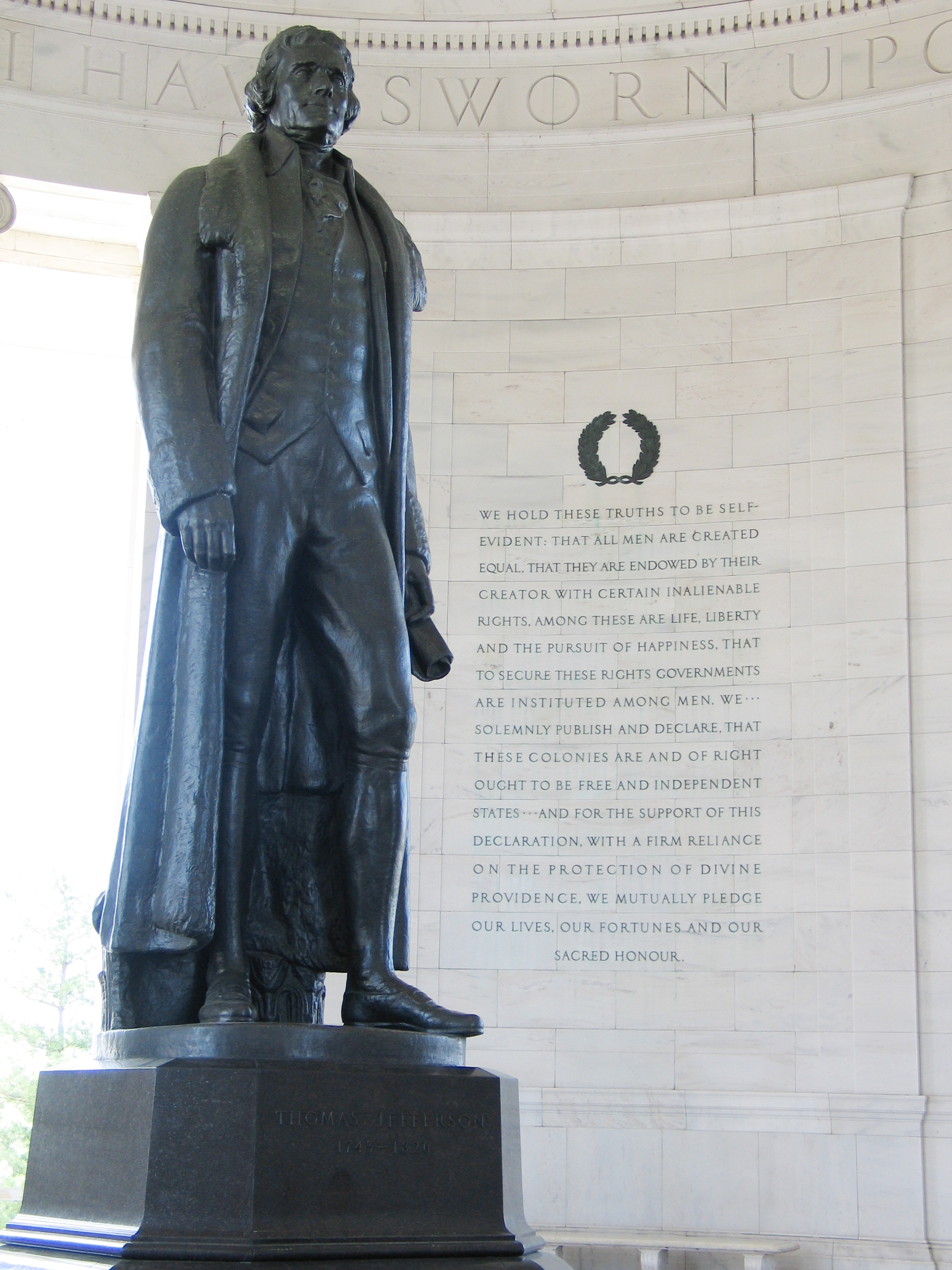
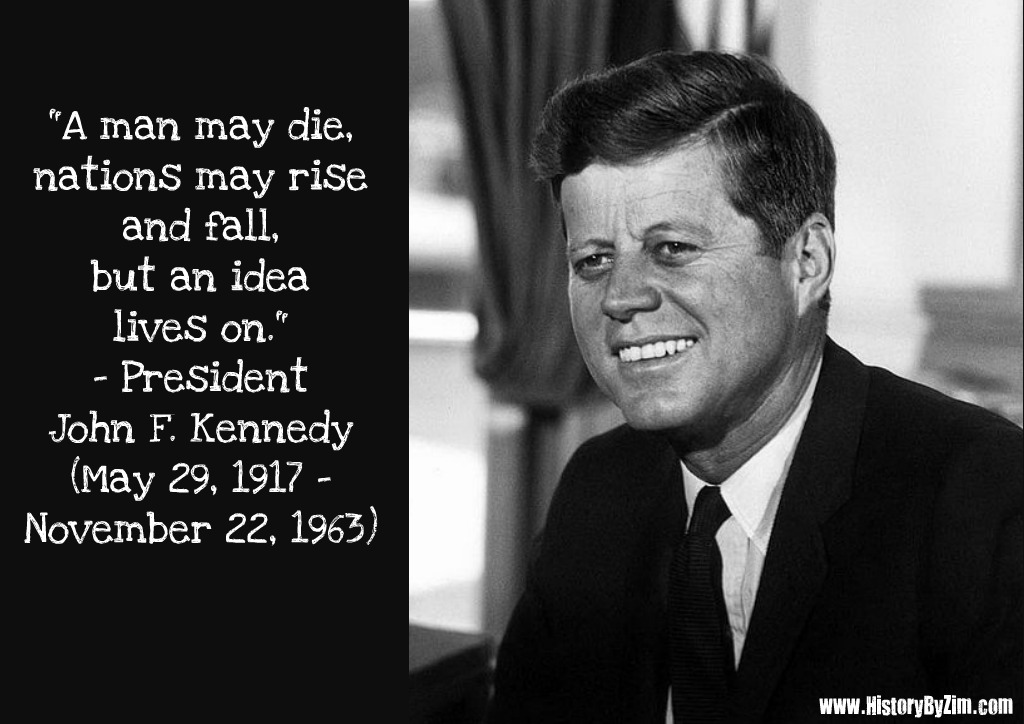
RED CHINA – RED ALERT – TIBET’S FREEDOM: TIBET’S NATURAL RIGHT TO FREEDOM IS AT RISK. WHERE ARE THOSE VALUES ENSHRINED IN THE DECLARATION OF INDEPENDENCE?RED CHINA – RED ALERT – TIBET’S FREEDOM : AMERICA HAS TO REDISCOVER HER OWN VALUES THAT DEFINE HER NATIONAL IDENTITY.RED CHINA – RED ALERT – TIBET’S FREEDOM: AMERICANS HAVE TO RECALL THEIR PAST TO REDISCOVER VALUES THAT DEFINE AMERICAN NATION.RED CHINA – RED ALERT – TIBET’S FREEDOM: I ASK AMERICANS TO RECALL PRESIDENT KENNEDY’S VITAL CONTRIBUTION TO TIBETAN RESISTANCE MOVEMENT.RED CHINA – RED ALERT – TIBET’S FREEDOM: TIBET’S FREEDOM IS AT RISK. IT IS TIME TO REVITALIZE AMERICANS.Whole Alert – Red China poses Red Alert – Freedom in Tibet is at Extreme Danger
RED DRAGON – RED CHINA – RED ALERT – HEGEMONIST : UNITED STATES IN RECOGNITION OF RED CHINA’S HEGEMONISM MUST COUNTERACT AND CONTAIN RED CHINA’S INFLUENCE OVER HER WEAK NEIGHBORS.
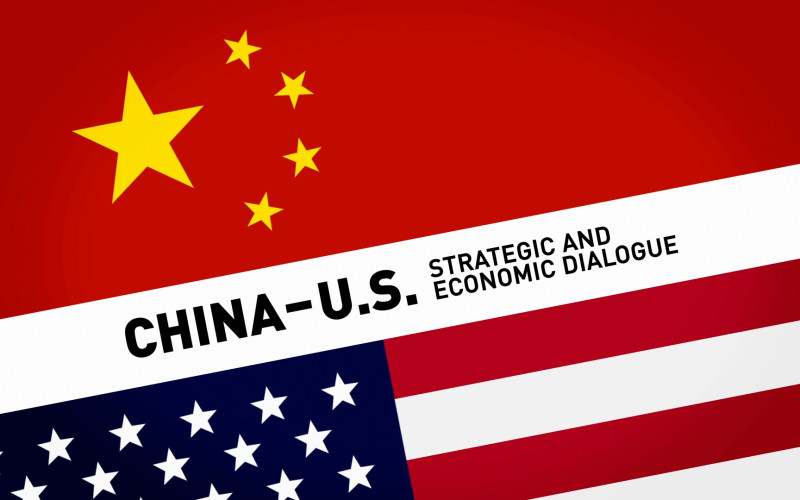
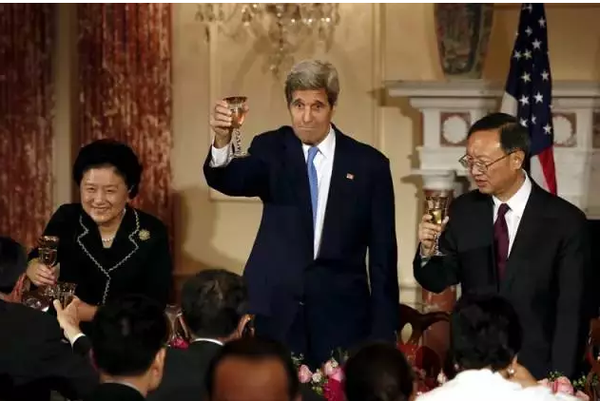
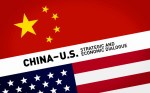
On behalf of Special Frontier Force I issuing a ‘RED ALERT’ to warn US citizens of imminent danger as United States holds three days of cabinet-level meetings with more than 400 Chinese officials. Under the wide-ranging Strategic and Economic Dialogue(S &ED)framework, eight US Cabinet Secretaries are involved in these talks and consultations with Chinese officials. The top Chinese officials meet US President Barack Obama at The White House on Wednesday, June 24, 2015.
RED DRAGON – RED CHINA – RED ALERT – HEGEMONIST : THIS SEVENTH STRATEGIC AND ECONOMIC DIALOGUE BETWEEN UNITED STATES AND CHINA MUST ADDRESS THE PROBLEM OF RED CHINA’S HEGEMONISM.
The term ‘HEGEMONY’ describes dominance of one state or nation over others. Hegemonism is the Policy or Practice of a nation in aggressively expanding its influence over other nations. Red China formulated her Hegemonistic Policy in 1950 when she conquered Tibet bringing Tibetan people under her control or subjection. Red China subdued Tibetan Government and forced Tibet’s Head of State to live in exile. Red China’s Hegemonic Practice forces Tibetan people to become subservient to Peking(or Beijing). United States has to recognize Red China as “HEGEMONIST” and counteract to contain Red China’s growing political, economic, military power which she uses to expand her influence over other nations of our world.
U.S. AND CHINA OPEN ANNUAL DIALOGUE WITH ‘CANDID, TO-THE-POINT’ TALKS
BY DAVID BRUNNNSTROM
The United States and China held “candid and to-the-point” talks at the start of three days of cabinet-level meetings aimed at managing the highly complex relationship between the world’s two biggest economies, a senior U.S. official said.
The U.S. side, led on Monday by Deputy Secretary of State Antony Blinken, reiterated U.S. concerns about China’s pursuit of territorial claims in the South China Sea, the official said.
U.S. worries about cybersecurity following massive attacks on government computers that U.S. officials have blamed on Chinese hackers would also be addressed “in very direct terms,” the official said.
RED DRAGON – RED CHINA – RED ALERT – HEGEMONIST: US and Chinese flags at Tiananmen Square President Obama’s Peking(Beijing) Visit.
More than 400 Chinese officials are in Washington for the annual talks under the wide-ranging Strategic and Economic Dialogue (S&ED) framework, which will involve eight U.S. cabinet secretaries.
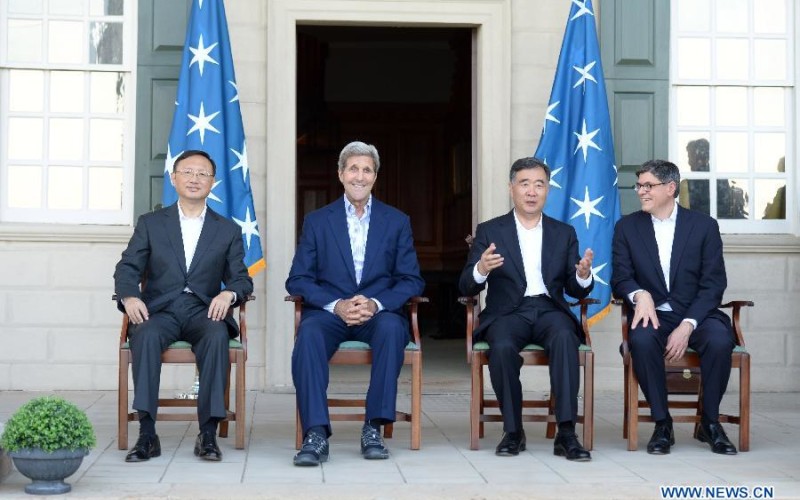
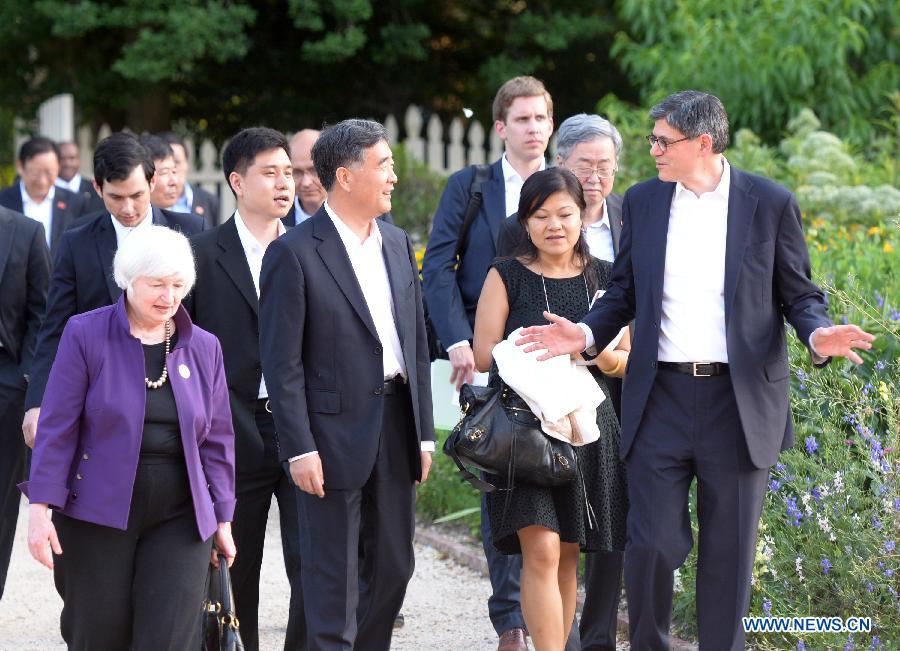
RED DRAGON – RED CHINA – RED ALERT – HEGEMONIST : RED CHINA’S VICE PREMIER WANG YANG IN MT VERNON, VIRGINIA.
The meetings come at a time of waning trust and widening differences between the two countries, even though they maintain robust economic ties worth $590 billion in two-way trade last year.
U.S. concerns have been mounting about Beijing’s challenge to its dominance of global finance and about restrictions on U.S. businesses in China.
U.S. President Barack Obama is struggling to secure backing from Congress for legislation needed to speed a 12-nation trade deal, which is the economic plank of his Asia policy intended as a counterweight to China’s growing influence.
The two sides will try to ease tensions by stressing areas of cooperation, including climate change, shared concerns about Iran and North Korea’s nuclear programs, the fight against Islamist militancy, and support for global development.
“We have agreed with the Chinese that we are going to try to expand those areas where our interests overlap and expand cooperation in those areas,” the U.S. official said. But the aim was not to “paper over” contentious issues, or to “agree to disagree,” but to narrow differences to avoid miscalculations.
Despite the considerable areas of tension, China is hoping for a smooth set of meetings to prepare for a visit to Washington by President Xi Jinping in September. Prospects for substantial outcomes from the cabinet-level meetings appeared slim, with any scant progress likely to be held over for announcement during Xi’s visit, analysts said.
The sides are expected to discuss a Bilateral Investment Treaty that has been seven years in discussion but has been held up by restrictions on both sides, while China is likely to press its bid to add the yuan to the International Monetary Fund’s basket of reserve currencies.
Blinken and Secretary of State John Kerry will chair the security side of the talks with State Councillor Yang Jiechi and Vice Foreign Minister Zhang Yesui on the Chinese side.
RED DRAGON – RED CHINA – RED ALERT – HEGEMONIST: BEAWARE OF RED CHINA’S HEGEMONISM.
U.S. Treasury Secretary Jack Lew and Chinese Vice Premier Wang Yang will chair the economic elements, and the top Chinese officials will meet Obama at the White House on Wednesday.
(Reporting by David Brunnstrom; Additional reporting by Jason Lange, Krista Hughes, Anna Yukhananov, Megan Cassella and Idrees Ali in Washington and Michael Martina in Beijing; Editing by Christian Plumb)
Red Dragon – Red Alert. US and Chinese flags at Tiananmen Square – President Obama -Peking-Beijing visit
Red Alert Chinese J- 11 Fighter jet flying near a us navy p 8 poseidon
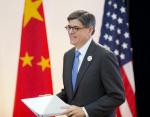
U.S. Treasury Secretary Jack Lew walks to the podium before speaking at the 7th US China Strategic and Economic Dialogue (S&ED) and 6th Consultation on People-to-People (CPE) at the U.S. State Department in Washington, Tuesday, June 23, 2015.(AP Photo/Pablo Martinez Monsivais)
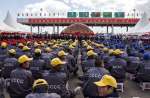
Red Alert- Ethiopian and Chinese workers – China Communication Construction Company- Addis Ababa – Adama toll road
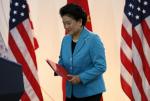
Chinese Vice Premier Liu Yandong arrives to speak at the Strategic and Economic Dialogue (S&ED) at the State Department in Washington June 23, 2015. More than 400 Chinese officials are in Washington for annual talks under the wide-ranging Strategic and Economic Dialogue (S&ED) framework, which will involve eight U.S. cabinet secretaries. REUTERS/Yuri Gripas
RED DRAGON – RED CHINA – RED ALERT – HEGEMONIST : UNITED STATES IN RECOGNITION OF RED CHINA’S HEGEMONISM MUST COUNTERACT AND CONTAIN RED CHINA’S INFLUENCE OVER HER WEAK NEIGHBORS.
RED DRAGON – RED CHINA – RED ALERT – HEGEMONIST : THIS SEVENTH STRATEGIC AND ECONOMIC DIALOGUE BETWEEN UNITED STATES AND CHINA MUST ADDRESS THE PROBLEM OF RED CHINA’S HEGEMONISM.
RED DRAGON – RED CHINA – RED ALERT – HEGEMONIST : RED CHINA’S VICE PREMIER WANG YANG IN MT VERNON, VIRGINIA.
RED DRAGON – RED CHINA – RED ALERT – HEGEMONIST: BEAWARE OF RED CHINA’S HEGEMONISM.
The Evil Red Empire – Who can make War against Red China?
The Evil Red Empire – Who can make War against Red China?
Red Dragon is impressing nations of this world by expanding her military power. The New Testament Book Revelation, Chapter 13 describes a scenario which is relevant to the rising power of Red Dragon. I am quoting verses 1,2, and 4 from Revelation, Chapter 13:
The Evil Red Empire – Who can make War against Red China?
1. And the Dragon stood on the shore of the sea. And I saw a Beast coming out of the sea. He had ten horns and seven heads, with ten crowns on his horns, and on each head a blasphemous name.
2. The Beast I saw resembled a leopard, but had feet like those of a bear and a mouth like that of a lion. The Dragon gave the Beast his power and his throne and great authority.
4. Men worshiped the Dragon because he had given authority to the Beast, and they also worshiped the Beast and asked, “Who is like the Beast? Who can make war against him?”
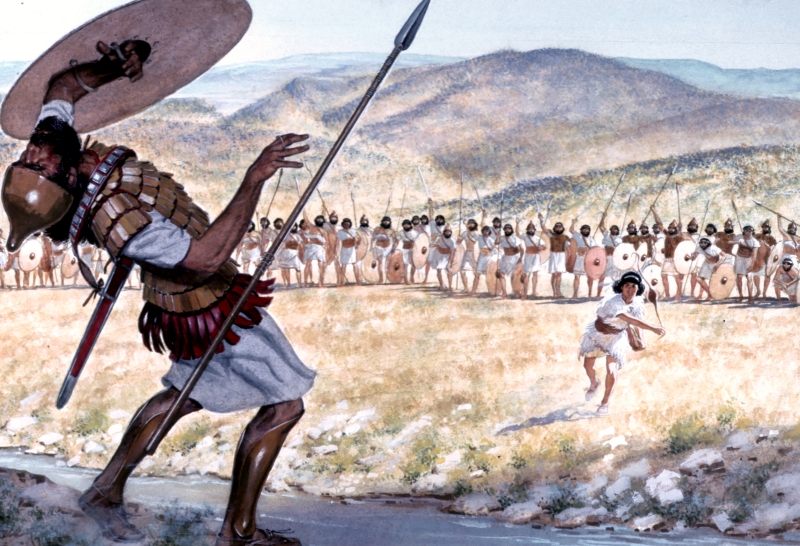
The Evil Red Empire – Who can make War against Red China? Red China vs Tibet – David vs Goliath – Who can make War against the Beast?The Evil Red Empire – Who can make War against Red China? Red China vs Tibet – David vs Goliath – Who can make War against the Beast?
At Special Frontier Force, we do not worship The Dragon or The. We are trained to recognize Red China, Red Dragon, Scarlet Beast, and The Beast as our Adversary, Opponent, or Enemy. We describe War against Red China as a ‘Battle of Right Against Might’. Red Dragon used her military power and great authority to illegally occupy Tibet, her weak neighbor. If a War against Red China is the only solution to wipe out injustice in Tibet, we will confront Red China just like David challenged Goliath with a sling and a smooth pebble as his weapon of War.
The Evil Red Empire – Who can make War against Red China? Red China vs Tibet – David vs Goliath – Who can make War against the Beast?The Evil Red Empire – Who can make War against Red China? Red China vs Tibet – David vs Goliath – Who can make War against the Beast?
China: Milestones in the Dragon’s Rise
BY JOSEPH V. MICALLEF
JOSEPH V. MICALLEF
Best Selling Military History and World Affairs Author and Keynote Speaker
Posted: 06/20/2015 8:29 am EDT Updated: 06/20/2015 1:59 pm
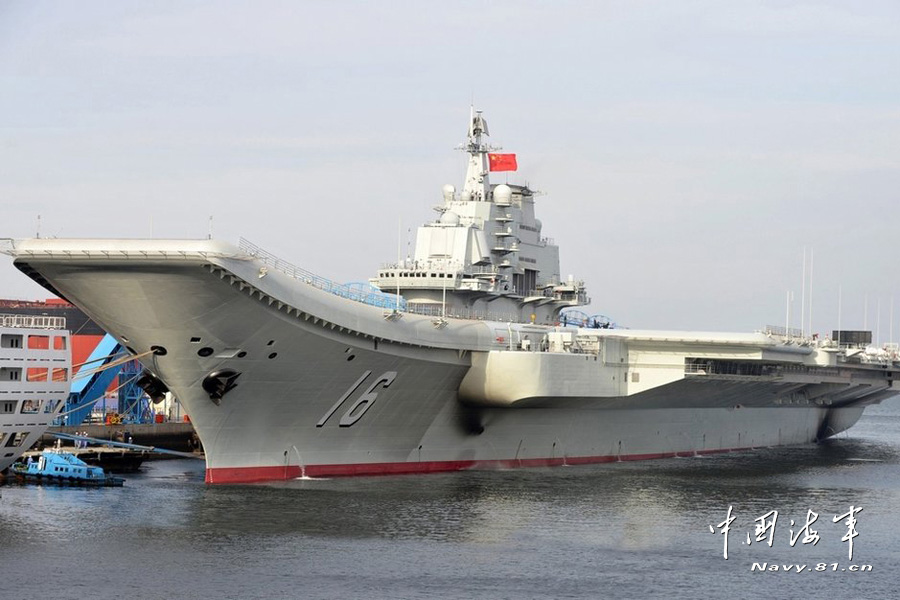
The Evil Red Empire – Who can make War against Red China? Red China vs Tibet – David vs Goliath – Who can make War against the Beast? China’s First Aircraft Carrier
The passage of history is often marked by milestones whose significance lies less in the events they commemorate then it does in the underlying trends that they confirm and validate. These last weeks, were punctuated by a series of such milestones. By themselves, these events mark noteworthy developments in China’s contemporary history. Collectively, they underscore the far reaching changes that are transforming China and its growing role on the international stage.
Last week, the collective valuation of China’s publicly traded equity exceeded 10 trillion dollars for the first time in its history. Considering that forty odd years ago China’s equity markets were moribund, the benchmark is astonishing.
The Amsterdam, now part of the Euronext, and London stock exchanges, the world’s oldest, both of which have been around since the seventeenth centuries, are well below this level. The combined European exchanges, at 15 trillion dollars in valuation, and the combined value of the U.S. stock exchanges at 20 trillion, however, still, at least for now, exceed the capitalization of China’s public equity market by a considerable margin.
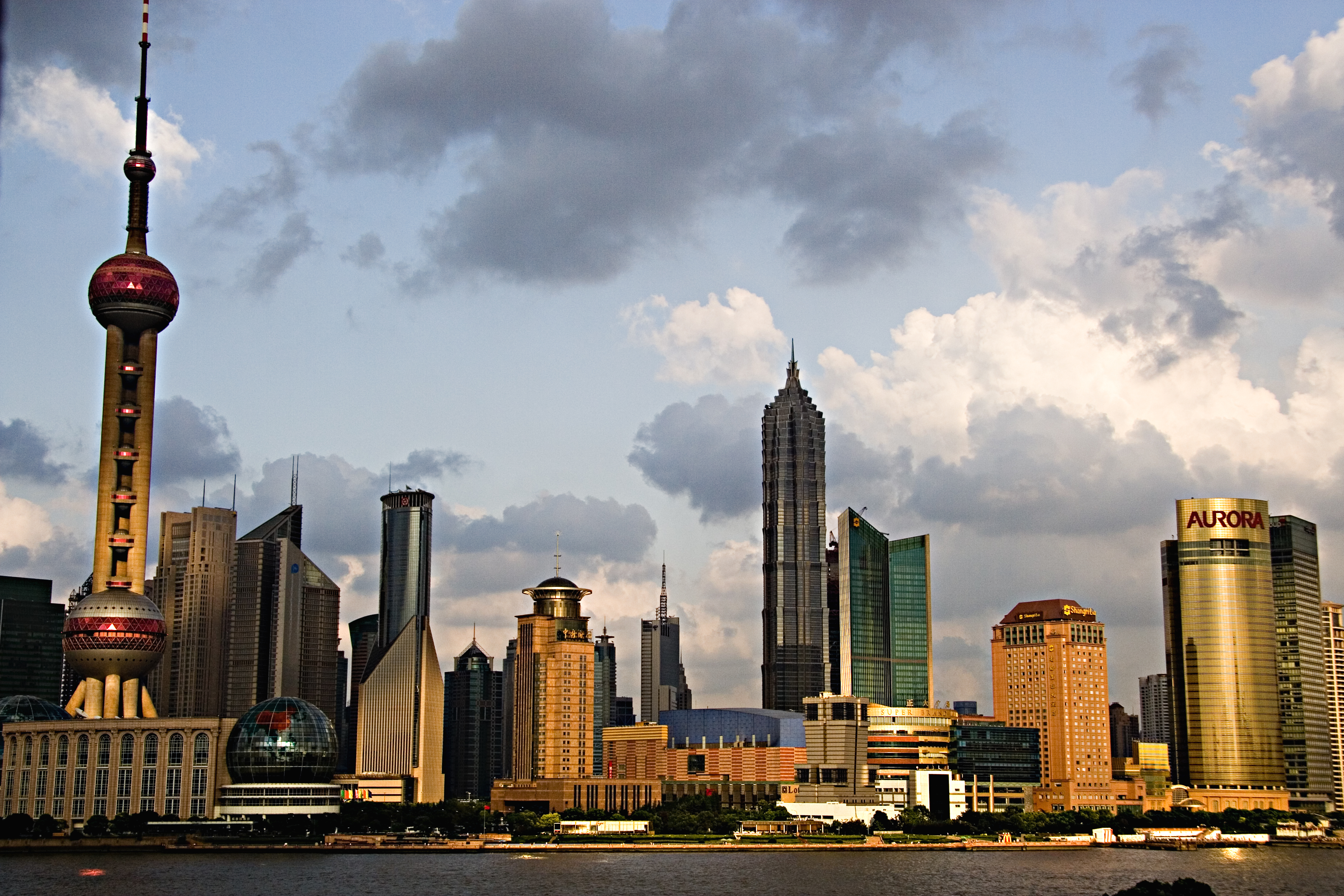
The Evil Red Empire – Who can make War against Red China? Red China vs Tibet – David vs Goliath – Who can make War against the Beast? Shanghai, Pudong Skyline
No doubt the “loose” monetary policies pursued by the major central banks has facilitated the rise in the value of China’s stock markets. Since the introduction of “quantitative easing” by the U.S. Federal reserve Bank in 2008 and similar policies by other central banks, the value of the world’s stock markets have doubled. China’s markets have more than quadrupled. Collectively, the world’s stock markets now represent about a quarter of the world’s combined financial assets.
In one sense the fact that China, the world’s second largest economy, should also have the world’s second highest valued equity market should not come as a big surprise. The two, while not inexorably linked, do tend to proceed in tandem. The rise in China’s economic power, which the rise in its stock markets underscore, however, has also fuelled a concomitant rise in China’s international military and political ambitions. Those ambitions and their consequences were driven home last week by a number of other events.
On June 6, Hungary became the first European nation to formally sign a cooperation agreement for China’s new “Silk Road” initiative to develop trade and transport infrastructure across Asia. The historic “silk road” was a system of overland caravan routes across central Asia that linked China, via the Black Sea and the Caspian Sea, with the Middle East, Russia and Europe. The trade route flourished in particular during the 13th and 14th century as a result of the Mongol conquest of much of Central Asia and China and resulted in the first significant and sustained contact between Medieval Europe and China.
This new initiative, first unveiled in 2014, represents a far more ambitious undertaking and consists of a number of far-ranging infrastructure projects including a network of railways, highways, oil and gas pipelines, power grids, Internet networks, maritime and other infrastructure links across Central, West and South Asia extending from the coastal cities of the South and East China Seas as far as Greece, Russia and Oman,
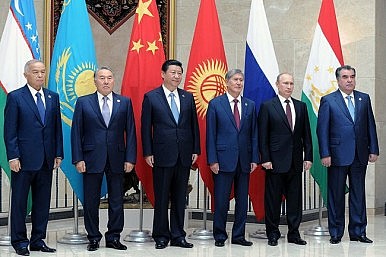
The Evil Red Empire – Who can make War against Red China? Red China vs Tibet – David vs Goliath – Who can make War against the Beast? Chinese Russian Summit, March 2015
This multi-trillion dollar investment program would represent an unprecedented expansion of Chinese political and economic influence across Central Asia resulting in trillions of dollars in trade and facilitate the expansion of Chinese exports to Europe. It would allow China to further cement its economic and trade relationships in the oil and mineral rich countries of Central Asia. Many of these nations, former Soviet Republics, are also being heavily wooed by Moscow to become part of Russia’s Eurasian Economic Union.
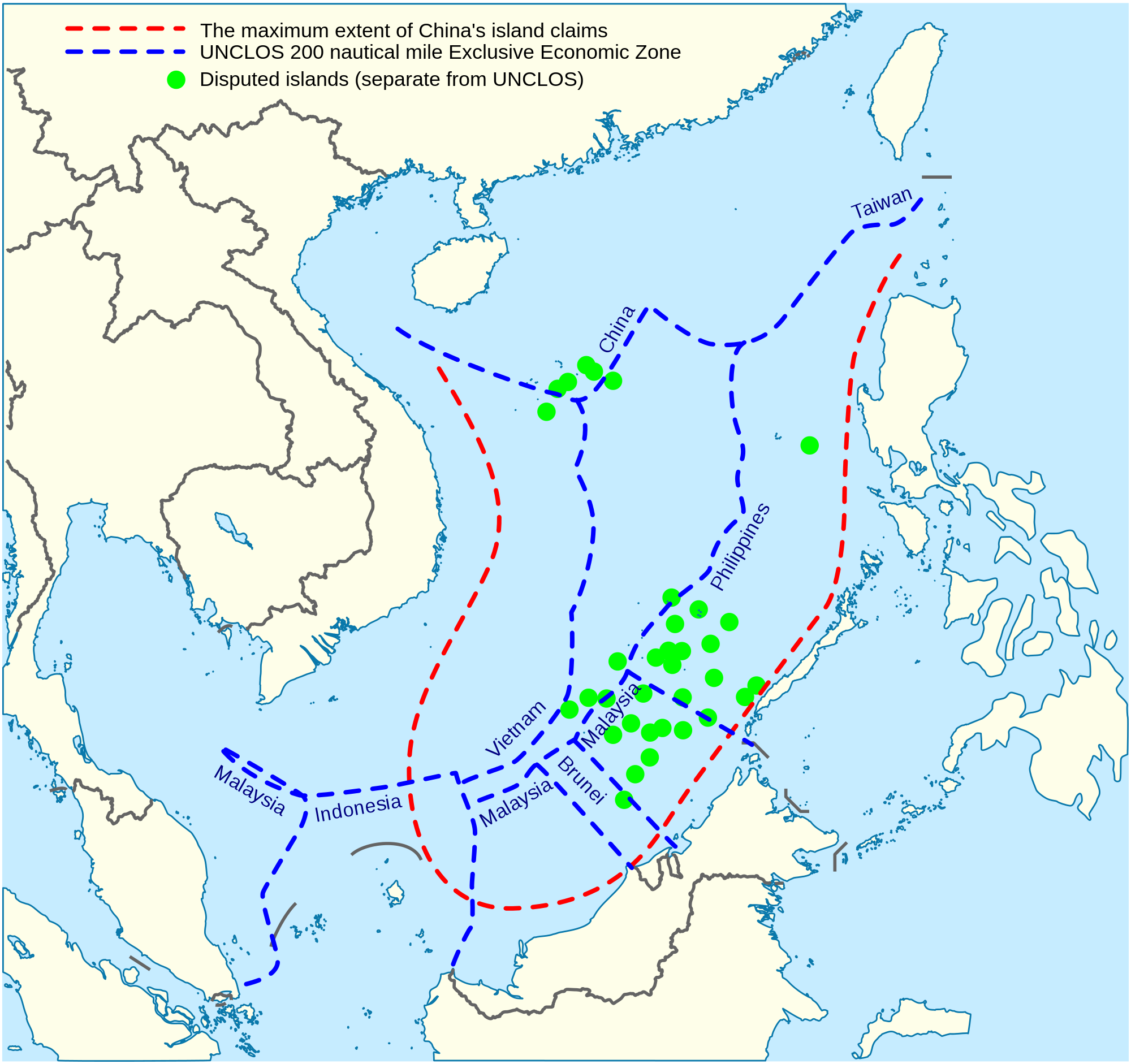
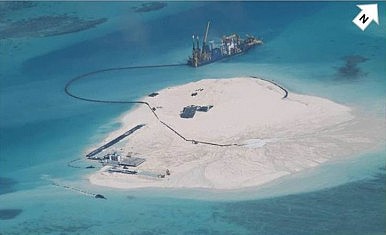
In the meantime along the South China Sea littoral, two other developments underscore the far reaching ripples of China’s ambitions. In recent months, Beijing has undertaken a massive land reclamation project designed to increase the surface area of a number of contested shoals in the South China Sea and allow the construction of air fields and permanent military facilities. The shoals are part of two island groups, the Paracel and the Spratly Islands.
Control of these islands has been disputed by the nations surrounding the South China Sea since at least the 3rd century BC. At stake, are fishing rights and the potential for vast untapped hydrocarbon reserves below the seafloor. The region also contains key maritime transit routes that are vital to the countries that border the South China Sea or its peripheral areas.
The Evil Red Empire – Who can make War against Red China? Red China vs Tibet – David vs Goliath – Who can make War against the Beast? Competing Territorial Claims in the South China Sea
Ironically, the practice of building up the shoals to allow permanent facilities was a practice that began with the Philippine and Vietnamese governments. China was late to the party but is now making up for its tardiness with an unprecedented program of land reclamation. Should Beijing succeed in enforcing its claims, the South China Sea would become a virtual Chinese lake and allow China to project military force from a string of newly created islands along its periphery.
China’s ambitions to control the South China Sea and its potential resources has raised concerns among the other countries that border the region. Two events in recent weeks, marking unprecedented cooperation among former enemies, underscore the gravity of those concerns.
On June 5, Japanese and Philippine media disclosed that from June 22 through the 26th Japan and the Philippines planned to hold a joint maritime drill in the South China Sea. This was the second such drill in as many months although Philippine government sources described this drill as the first “official” joint exercise between the two countries since the end of the Second World War.
The Evil Red Empire – Who can make War against Red China? Red China vs Tibet – David vs Goliath – Who can make War against the Beast? Japanese and Philippine Naval Forces Conduct Joint Drills in the South China Sea, May 2015
More significantly, in addition to pledging to strengthening security cooperation between the two countries and to concluding an agreement for the transfer of “defense equipment and technology and expanding bilateral and multilateral trainings and exercises”, the two countries also agreed to open discussions on a visiting forces agreement that would allow Tokyo access to Philippine military bases.
This is the first time that Japanese forces would have ongoing access to Philippine military facilities since the end of WW II. While the agreement stops short of a permanent Japanese military presence in the Philippines it does allow for a continuous rotation of Japanese Military Self Defense Forces (JMSDF) that would result in much the same thing.
The presence of Japanese military forces on the Philippines is not without some controversy. Eighty years of Philippine-Japanese cooperation have not entirely healed the scars of Japan’s brutal occupation of the Philippines during the Second World War.
In the meantime, on the opposite end of the South China Sea, two other historic enemies, Vietnam and the United States, announced that in July, Nguyen Phu Trong, the General Secretary of the Communist Party of Vietnam was expected to visit the United States.
The Evil Red Empire – Who can make War against Red China? Red China vs Tibet – David vs Goliath – Who can make War against the Beast? Chinese Island Building in the South China Sea
The visit caps a process of reconciliation between the two former combatants that began in 1995 when Washington finally opened diplomatic relations with Hanoi and which has seen the execution of a broad range of agreements between the two countries including, significantly, in 2014, the lifting of the U.S. embargo against supplying military hardware to Vietnam.
More significantly, Vietnam’s growing cooperation with the United States heralds a profound realignment of Hanoi’s foreign policy from an “unofficial” strategic partnership with China to a defacto strategic alignment with the United States. The fact that Hanoi is prepared to undertake such a realignment, notwithstanding its still broad ideological differences with Washington, underscores how significantly its attitude towards its former “strategic protector” and “big brother has changed.
Three events, none of which elicited more than a ripple of interest in the western media and which individually are unlikely to merit much more than a footnote in the broad sweep of China’s history. Collectively however, they underscore the profound, far-reaching changes that are realigning the political and strategic landscape of East Asia.
The Evil Red Empire – Who can make War against Red China? Red China vs Tibet – David vs Goliath – Who can make War against the Beast?The Evil Red Empire – Who can make War against Red China? Red China vs Tibet – David vs Goliath – Who can make War against the Beast?The Evil Red Empire – Who can make War against Red China? Red China vs Tibet – David vs Goliath – Who can make War against the Beast?The Evil Red Empire – Who can make War against Red China? Red China vs Tibet – David vs Goliath – Who can make War against the Beast?



![[IMG]](https://i0.wp.com/img.niticentral.com/2015/08/840x420xtibet-airlines-airbus-A319-115-fsx2-840x420.jpg.pagespeed.ic.inMKE02TwQ.jpg)









 AP
AP Ashwini Bhatia/AP
 GAUTAM SINGH/AP
 Tsering Topgyal/AP