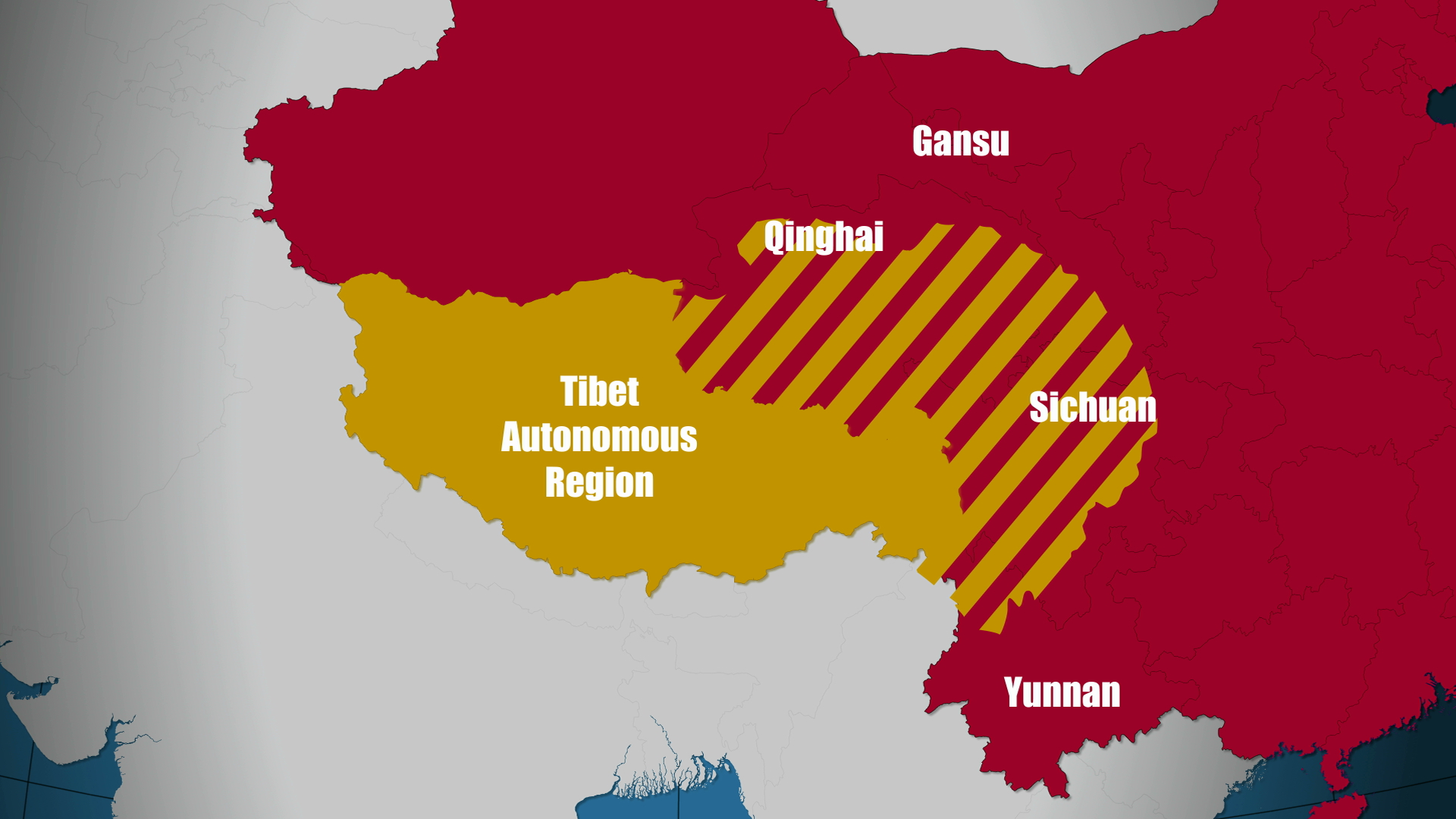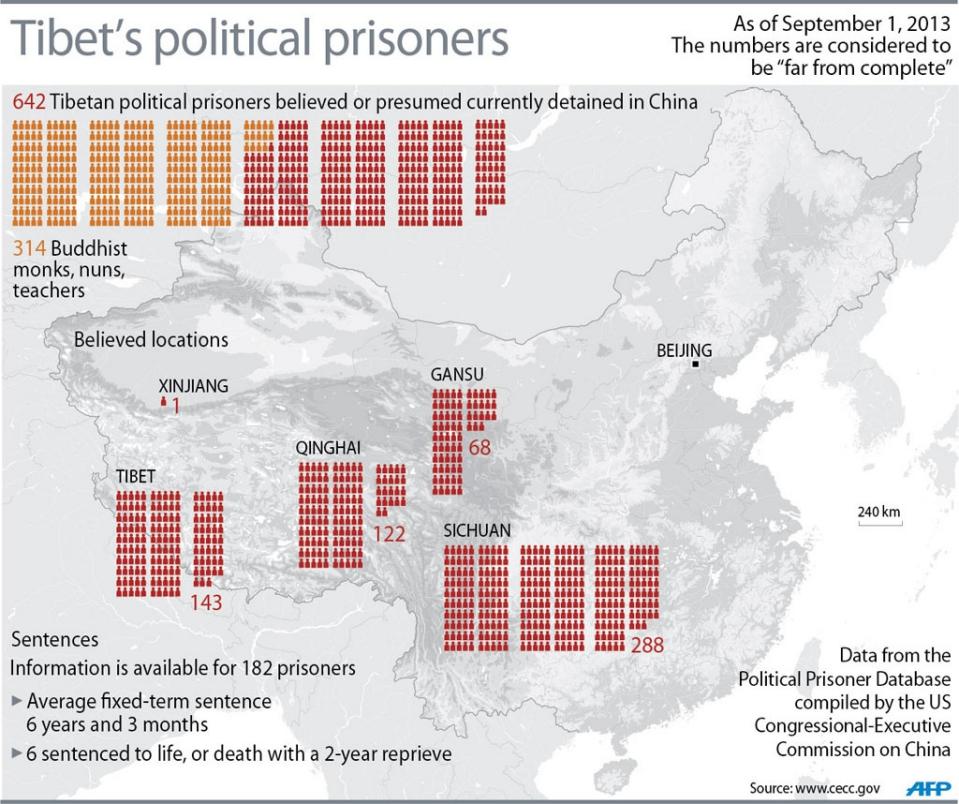
Red China’s acts of aggression in West Philippine Sea or South China Sea have to be examined in the context of Red China’s aggression in Tibet. Red China occupied 965, 000 square miles of Tibetan territory which represents one-quarter of Red China’s landmass. United States has no choice other than that of confronting all aspects of Red China’s aggression.
TIBET’S MILITARY OCCUPATION – THE GREAT TIBET PROBLEM
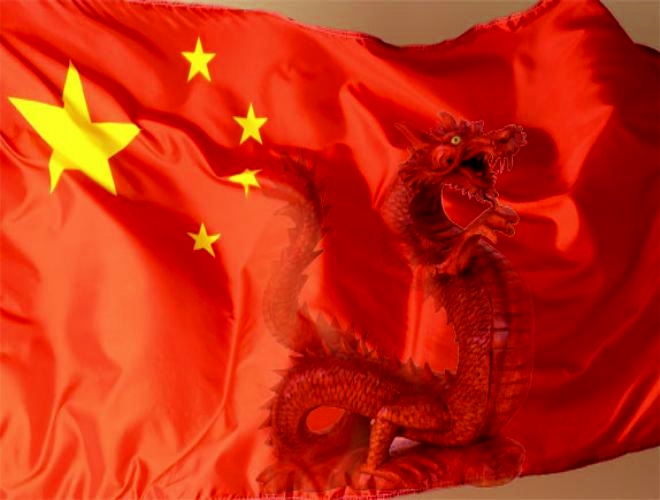
Historically Tibet came under military conquests by Mongol China and Manchu China and yet retained its independent way of living without any problem. The Evil Red Empire formulated by Red China’s Communist Party Chairman Mao Zedong unleashed a different kind of beast to rule over the lives of Tibetan people. During 1950s, both India and Tibet believed that the beast called ‘The Red Dragon’ can be appeased and treated her with patience, and tolerance seeking a peaceful resolution to the problem caused by Red China’s military invasion of Tibet in 1950. In 1959, Tibetans made an unsuccessful attempt to tame ‘The Red Dragon’ and their failure could be attributed to cunningness, craftiness of Red China which acts like a Jackal concealing her true intentions. Red China has become more confident over the years and thinks that there is no one besides her. Unlike in past, Tibet’s conquest by Red China has transformed Tibet into a colony from which China extracts all natural resources while maintaing a tight grip over the lives of people using her brute force. Red China developed road, rail, and air connections with Tibet to sustain its colonization denying Tibetans their natural rights to Freedom. I am expecting that Red China’s military grip over Tibet will slacken because of an unexpected strike that would bring The Red Dragon to her knees.
China is on an Airports and Infrastructure spree in Tibet
AUTHOR: CLAUDE APRI
AUGUST 4, 2015
Isn’t it strange that some of the most significant news are often missed in the cacophony of the ‘Breaking News’ channels?
On the same day, two game-changing pieces of information appeared in the Chinese media. Yet, they just looked innocuous.
The first one was about the 6th Tibet Work Forum. Was it held in Beijing or in the sea-resort of Beidaihe, where the top leaders escaped the unpleasant Beijing weather? I shall come back to it later.
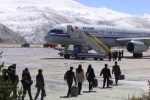
The second information was the PLA/Civil integration for the management of the Lhasa airport; it has serious strategic implications for India, which is struggling to build some infrastructure in Arunachal and Ladakh.
Xinhua officially announced the vital airport integration to “strengthen aviation safety and combat support capabilities.”
A joint statement from the People Liberation Army Air Force (PLAAF) and General Administration of Civil Aviation (CAAC) said that the integration will include joint maintenance of airport support facilities, joint flight safety support and joint airport management.
Interestingly, the Lhasa Gongkar Airport in Tibet will be the first of the two pilot airports to implement the PLA/civil ‘integration’ (with the Sunan Shuofang Airport in Wuxi in Jiangsu province). The job should be completed during the second half of 2015.
The PLAAF/CAAC circular further affirms that “all the civil-military airports will conduct strengthened integration next year.”
To flood the Tibetan plateau with millions of Chinese tourists, a good infrastructure is required. Airports and the railway line are the backbones of a booming tourism in Tibet. The same infrastructure could be crucial in case of conflict with India; integration of the airport management was therefore required.
Once the Lhasa Gonggar Airport, located about 62 kilometres from the Tibetan capital has its joint PLA/Civil management, the other airports on the plateau will follow.
A couple of years ago, Xinhua had announced that the airport in Chamdo (known as the Bangda Airport) was reopened after major repairs. Xinhua reported then: “The Bangda Airport, the world’s highest-altitude civilian airport currently in use, is expected to resume operations.” It had temporarily been closed to repair a 19-year-old runway.
Also strategically important is the Nyingtri Mainling Airport, situated just north of the McMahon Line, the border with India; it serves Bayi, the main PLA garrison in the Tibetan Autonomous Region.
Ngari Gunsa Airport already used by the PLA posted opposite the Indian troops in Ladakh and Himachal Pradesh, started its operations in 2010, becoming the fourth civil airport in Tibet after Lhasa, Nyingchi and Chamdo airports.
Shigatse, the second city in Tibet is served by the railway line since August last year but also has the Shigatse Peace Airport, called Shigatse Air Base.
It was solely for military use until 2010, when a 100 million US $ expansion was completed.
The 4,411-metre-high Kardze Daocheng Yading airport, built in Kardze in Sichuan province was put into operation in 2014 (a year earlier than planned!). The Sichuan authorities planned to bring one million tourists to the area by 2015. But as important as tourism, the airport facilitates the transportation of fresh troops from the Military Area Command in Chengdu to Kardze prefecture. Kardze has been one of the most restive areas on the Tibetan plateau. With one stone, two birds are killed: the Tibetan protesters can be ‘pacified’ in no time and the deluge of Chinese tourists brings hefty revenues.
Another airport has come up in the Nagchu Prefecture of Tibet. Completed in 2014, the Nagchu Airport is now the highest airport in the world at 4,436 m.
The Modi Sarkar is aware of all this, but while China speedily builds Tibet’s infrastructure (using the perfect excuse of having to cater for millions of Han tourists), India develops its border areas at snail’s pace, struggling to create a semblance of infrastructure. It is true that the terrain is far more difficult in the Indian side, but so are the bureaucratic hurdles.
In Arunachal for example, the process indeed needs perseverance and an unshakable will to change the tide. Despite the declared resolve from the present Government, it may take years for proper roads to reach the remotest districts of Arunachal Pradesh…and stop the Chinese ‘visits’.
It is not an easy challenge, but Prime Minister Narendra Modi has realised that the North-East cannot be developed from Delhi. In his latest monthly radio programme Maan ki Baat, he announced that he was “deputing Central Government officials to find solutions to problems being faced by the region”.
One of the decisions taken by the Union Government has been to modify the guidelines of the Border Area Development Programme drafted some 10 years ago. According to the new notification,
“The main objective of the BADP is to meet the special developmental needs and well being of the people living in remote and inaccessible areas situated near the international border and to saturate the border areas with the entire essential infrastructure …(with a) participatory approach.”
I mentioned another information released by Xinhua the same day about the 6th Tibet Work Forum, which decides the fate of Tibet (as well as Tibet’s southern neighbours) for the next 5/10 years
The opening of the Forum just took place in Beidaihe, the sea-resort where the Communist leadership retires during the hot summer.
Xinhua reported that top Chinese leaders have met “to discuss economic and social development in Tibet, and how to ensure the autonomous region achieves prolonged stability.”
The statement of the Political Bureau of the Central Committee of the Communist Party of China (CPC) further noted: “Safeguarding national unity and strengthening ethnic unity should be highlighted in work involving Tibet.” The so-called stability is undoubtedly foremost in the mind of the leadership. The statement added:
“Efforts should be made to unswervingly carry out the anti-separatism battle, promote the region’s economic and social development, safeguard and improve people’s welfare, and enhance exchanges and integration of different ethnic groups.”
The Politburo (or probably an extended Politburo) is said to have agreed that “strengthening Tibetan infrastructure, helping it foster competitive industries while ensuring environmental protection are the means to achieve marked improvement in living conditions and more social cohesion,” were the priorities for the restive region.
The PLA/Civil integration of the airports in Tibet will certainly help Beijing to ‘strengthen the infrastructure’ and consolidate its presence on the Plateau.
To give an example of the seriousness of the situation for India, it is enough to quote the case of Metok, the last Tibetan village before the Yarlung Tsangpo/Brahmaputra enters Upper Siang district of Arunachal Pradesh.
China Tibet Online explains:
“The remoteness of the location, together with other reasons such as climate and geological condition, and economic development, led to the isolation of the region. Having no way linking it to the outside world until the end of 2013, Metok is the last county in China to have its road.”
Historically, this was a mythic place; only a very few intrepid pilgrims had visited the ‘hidden valley’. Now, Zhang Yuhui, an executive deputy director of Metok County affirmed that the income from tourism in Metok (which has 11,000 inhabitants only) has reached 1.6 billion US $, just in the matter of 2 years.
China Tibet Online says:
“Going to Metok had once been only the privilege of the ‘brave’ before the traffic was improved. After the opening of the road to Metok, self-driving travel became popular apart from hiking. Visitors from various places were attracted to this beautiful place.”
Can you believe that this tiny (though strategic valley) hosted 70,000 visitors in 2013, the first year the road was opened. It grew to 90,000 in 2014 and the Chinese government expects 130,000 visitors in 2015.
And this just a few kilometers north of the Indian border!
No other comment is required.
The Narendra Modi Sarkar has indeed to hurry up and undertake the development of the border on a war footing.
tibet military occupation airfields
tibet military occupation airport
tibet military occupation bangda airport
Chamdo Bamda Airport is the highest airport in the world, at an elevation of 4,334 metres (14,219 ft).
tibet military occupation daocheng yading airport garze sichuan province
tibet military occupation lhasa airport
tibet military occupation lhasa gonggar airport
OLYMPUS DIGITAL CAMERA
tibet military occupation qmado bangda airport
RED DRAGON – RED CHINA – OCCUPIER OF TIBET: ARCHAEOLOGICAL FINDINGS SUGGEST THAT PEOPLE OF ANCIENT TIBET HAD FACED THREATS OF FOREIGN CONQUESTS.
RED DRAGON – RED CHINA – AGGRESSION IN WEST PHILIPPINE SEA. AGGRESSOR MUST BE QUARANTINED.
At Special Frontier Force, the fact of Red China’s aggression in Tibet is recognized since 1950. Now, Red China’s aggression in West Philippine Sea is attracting media attention unlike Red China’s prolonged military occupation of Tibet. Aggressor nation must be quarantined by placing diplomatic and economic sanctions. Aggression has to be treated like a disease and aggressor has to be isolated from rest of the global community for aggression poses dangers to peaceful existence of all people.
Protesters condemn China’s aggression in West Philippine Sea
RED DRAGON – RED CHINA – AGGRESSION IN WEST PHILIPPINE SEA : PROTEST ON JULY 25, 2015. RAFAEL ALUNAN WITH MARTIN DINO BELLE ENRIQUEZ AND DANTE JIMENEZ.
By LEO REYES Jul 25, 2015
The West Philippine Sea Coalition has condemned China’s aggression in the West Philippine Sea in a protest rally held along Roxas Boulevard (fronting the West Philippine Sea) in Manila Saturday morning.
Belle Enriquez of West Philippine Sea Coalition FB
The coalition members include the Volunteers Against Crime and Corruption (VACC), RAM, Anti-Drugs Advocate, Guardians, Motorcycle Philippines Federation, United Defense Manufacturing Corp., ProGun, SMX Phils and Predator Riders, among others. The event was the 3rd Annual Day of Protest against China’s bullying in the West Philippine Sea. Simultaneous protests have also been held in London, United States and other cities across the globe.
Anti-China Rally, Manila July 25, 2015 FB
Among others, the West Philippine Sea Coalition cited China’s territorial aggression when it reclaimed (and continues reclaim) reefs, shoals, islets, and other submerged rocks and corals for their exclusive use despite diplomatic intervention by the US, Japan and other ASEAN-member countries. On the environmental front, the coalition scored China for the massive destruction of the coral reefs in the disputed territories as a result of its ongoing reclamation and construction activities. The coalition also cited China’s invasion of the Scarborough Shoal, a rich fishing ground located within the 200-mile economic zone of the Philippines. China’s continued presence in what the Philippines claims as part of its territory had prevented hundreds of Filipino fishermen from traversing the rich fishing ground resulting in their family’s economic displacement. The coalition lambasted China for being a top source of illegal drugs that continues to be smuggled into the Philippines by Chinese drug lords. In their short talk during the rally, Top VACC officials Dante Jimenez and Martin Dino together with Anti-Drugs Advocate Jonathan Morales criticized China for having destroyed lives of hundreds of thousands of drug addiction victims in the country.
Former DILG Sec. Rafael Alunan with Nick Sotelo FB
Alunan and leaders of the coalition called on the public to support the case pending before the UN Arbitral Tribunal by educating the people on the merits of the case. At the same time, they also urged the public to call on the nation’s leaders to fast track the development of a credible external defense capability. Rep. Roilo Golez, who is supporting the coalition has called on the public to boycott made in China products especially garments and buy products that are made in the Philippines.
In London, Gene Alcantara, a longtime immigration adviser and social activist together with concerned Filipinos in UK joined the global protest with their placards denouncing the Chinese aggression at the Chinese Embassy despite heavy rain. Similar protest was also held in Ireland by the Filipino communities there
Gene Alcantara with friends at the Chinese Embassy in London Gene Alcantara FB
Filipino communities across the US have also participated in the Anti-China protest like the one shown here from the Filipino group in Guam and the Marianas.
Anti-China protest in Guam, July 25, 2015 Gene Alcantara-FB-Pacific News Center
The leaders of the West Philippine Sea Coalition have vowed to continue heightened protests against China’s aggression in the disputed territories through legal and peaceful means. As part of its campaign to educate the public on the country’s territorial claim, West Philippine Sea Coalition’s Belle Enriquez told Digital Journal that another forum will be held in late August to allow the public to view an ancient map showing the extent of the Philippine coastline.
Red Dragon – Red China aggressor nation – United Nations must act to stop China’s Aggression in Southeast Asia.
RED DRAGON – RED CHINA – AGGRESSION IN WEST PHILIPPINE SEA. AGGRESSOR MUST BE QUARANTINED.
Red Dragon – Red China aggressor nation – United Nations must act to stop China’s Aggression in Southeast Asia.
RED DRAGON – RED CHINA – AGGRESSION IN WEST PHILIPPINE SEA : PROTEST ON JULY 25, 2015. RAFAEL ALUNAN WITH MARTIN DINO BELLE ENRIQUEZ AND DANTE JIMENEZ.
KALA CHAKRA – CYCLICAL FLOW OF TIME – REJUVENATION OF TIBET
Just like individuals, nations have history of their own during which national life experiences effects under the powerful influence of time. The tides of Time were in favor of Tibet during 1911 when Manchu China’s power declined. Unfortunately, the good times that Tibet witnessed from 1911 to 1950 abruptly ended when The Communist Party of China declared the birth of a new nation called People’s Republic of China on October 01, 1949. This new nation from her inception is evil-minded, and evil-hearted. Red China lost no time to openly declare her Imperialist and Expansionist Policy and attacked her weak neighbor with no sense of shame. Tibetans are resisting military occupation with Patience and Perseverance as their weapons. I am hopeful that Time’s powerful influence called ‘Healing Power’ will cure this terrible disease called Occupation giving Tibet a chance to recover, regrow, regenerate, renew, rejuvenate and revitalize the lives of millions of Tibetans experiencing pain, suffering, and misery.
Tibetan spiritual leader performs Kalachakra as 150,000 devotees attend religious meet in India-administered Kashmir.
ALYS FRANCIS| 07 Jul 2014 12:20 GMT |Arts & Culture, India, Dalai Lama, Religion, Tibet
Tibetans snuck into India dodging Chinese border guards to see their spiritual leader, the Dalai Lama, perform the 33rd Kalachakra for world peace in Shey, a tiny town nestled 3,400m-high in the Himalayas.
The massive religious teaching, said to empower tens of thousands of his disciples to attain enlightenment, is a significant event for Buddhists.
About 150,000 devotees from around the world are flocking to the northern Ladakh district in India-administered Kashmir, which shares an eastern border with Tibet. The Dalai Lama also reiterated his plea to Buddhists in Myanmar and Sri Lanka to halt violence against Muslims, in a speech to tens of thousands of devotees to mark his 79th birthday.
China reportedly deployed extra troops and cracked down on Tibetans travelling to attend the 12-day gathering that began on July 3. Despite this, several Tibetans told Al Jazeera that they crept over the border at night.
The Dalai Lama fled China in the 1959 Tibetan uprising against Chinese rule, settling in Dharamshala in northern India, where he set up the Tibetan government in exile. He has since held Kalachakras every few years or so around the world – from India to New York.
The Tibetan spiritual leader remains a point of tension between India and China. Just days before the Kalachakra, Chinese troops reportedly showed their might at a disputed border between Tibet and Ladakh, repeatedly entering territory both countries claim.
Ladakh(***)s first Kalachakra in 38 years saw hotels in the main town of Leh booked out, with followers bedding down in thousands of tents, empty government buildings and schools.
Ladakh Buddhist Association President Dr Tondup Tsewang told Al Jazeera that the Kalachakra was of great importance to the region, which is home to numerous Tibetan refugees.
Dr Tsewang, who keeps a tattered fabric badge from attending Ladakh(***)s first Kalachakra in 1976, said that the whole community was involved in the event.
Nearly 80,000 local Ladakhis, 15,000 Tibetans from around the world, 9000 monks and nuns, 5000 foreigners and numerous Indians attended the first day(***)s teaching.
Many Ladakhis came dressed in traditional clothes: voluminous woollen goncha robes clinched at the waist, dupatta silk scarfs and top hats.
Monks of all ages couldn’t(***) contain their excitement, running to get a seat in the Kalachakra ground on the bank of the River Indus after passing security.
A vast shade-cloth was erected to protect followers from the sun, while nine LCD TV screens broadcast the Dalai Lama around the Kalachakra ground.
The event was also live-streamed online via a camera above the stage and translated into 11 languages.
Local police and army were called in to help secure the event, managing traffic and controlling the crowd outside.
The Dalai Lama resigned as leader of the Tibetan Parliament-in-exile in 2011 and has spoken of his desire to retire one day.
It is expected that the Tibetan spiritual leader will confer another Kalachakra initiation next year when he turns 80.
The Dalai Lama has long been calling for Tibet to be given autonomy to preserve its culture and religion, rather than full independence from China.
The Chinese authorities regard the Dalai Lama as a separatist.
Kalachakra is a Buddhist process that empowers tens of thousands of his disciples to attain enlightenment.
Whole Alert – Red China is guilty of Cultural Genocide in Tibet
I oppose Tibet’s military occupation, and support Freedom, Democracy, and Peace in occupied Tibet. I promote Tibet Awareness and I am asking my readers to give their kind attention to the problem of “Cultural Genocide” which has already destroyed the lives of over 140 Tibetan lives, victims of Red China’s brutal military occupation.
Whole Alert – Red China is guilty of Cultural Genocide in Tibet
TIBET’S TOUGH ROAD AHEAD
The Dalai Lama prepares to speak in Aldershot, southern England, in June. (Ben Stansall/Agence France-Presse/Getty Images)
By Carl Gershman July 5 at 7:06 PM
Carl Gershman is president of the National Endowment for Democracy.
The 80th birthday Monday of the Dalai Lama, Tibet’s spiritual leader, is an occasion to celebrate the life of an extraordinary individual. Since his flight from Tibet to India in 1959, the Dalai Lama has built religious, educational and political institutions to serve and unite the Tibetan community in exile. He has travelled the world to promote the Tibetan cause and expound the teachings of Tibetan Buddhism. And he has formulated a conciliatory “Middle Way Approach” to resolving the Sino-Tibetan conflict that respects China’s sovereignty and territorial integrity even as it seeks to preserve Tibet’s culture, religion and identity. These accomplishments, and the Dalai Lama’s infectious laugh and warmth, explain why he is such a beloved and respected figure throughout the world.
As joyful as the occasion of his 80th birthday is, however, it comes at a grim time for the Dalai Lama and the Tibetan freedom movement. The Chinese government has broken off negotiations on Tibet’s status, accusing the Dalai Lama of deceitfully trying to split China and of inciting the 2008 Lhasa uprising, charges that are offensive in addition to being entirely untrue. In April, it issued a white paper saying that talks would not be reopened until the Dalai Lama acknowledged that “Tibet has been an integral part of China since antiquity,” something he cannot agree to since it is contradicted by the historical record and overlooks the fact that Communist China invaded Tibet and illegally annexed it in 1959.
Having rejected compromise and dialogue as the way to end Tibetan resistance to its rule, the Chinese government has opted for harsh repression, forced assimilation and the systematic effort to destroy the Tibetan religion, language and distinct national identity. Tibet has been flooded with Han Chinese settlers; monasteries have been placed under direct government control; writers have been arrested and tortured; and more than 2 million nomads have been forcibly resettled in urban areas, destroying their traditional way of life and disrupting the fragile ecosystem of the Tibet Plateau.
In response to these and other harsh measures, which the Dalai Lama has called “cultural genocide,” more than 140 Tibetans have immolated themselves in desperate protest against Chinese oppression. This further enraged the regime, which called upon local security forces to “smash disorder, in order to maintain general harmony and stability.” But as 29 dissident Chinese intellectuals said in a call for dialogue with the Dalai Lama, “A country that wishes to avoid the partition of its territory must first avoid divisions among its nationalities.”
With the Dalai Lama turning 80, a contest is already developing over his succession. In Tibetan Buddhism, reincarnation is a fundamental tenet, and only the Dalai Lama has the authority to choose whether and through whom he will reincarnate. Yet Beijing has already approved guidelines giving the communist government control of the process. This contest takes place against the background of Chinese authorities having kidnapped in 1995 the 6-year-old boy identified by the Dalai Lama as the incarnation of the Panchen Lama, the second most important figure in Tibetan Buddhism, and replaced him with another boy.
The fact that the Chinese-imposed Panchen Lama continues to be categorically rejected by Tibetans should indicate how inflammatory it would be if Beijing tried to impose its choice for the next Dalai Lama. But that’s exactly what it intends to do, except that the Dalai Lama has hinted that he might not reincarnate at all. Zhu Weigun, a top Communist Party official dealing with Tibet, angrily called the Dalai Lama’s statement “a betrayal” of Tibetan Buddhism and accused him of taking “a frivolous attitude toward his own succession.” Such shameless impudence by a spokesman for an atheistic party would be laughable were his words not the official policy of the Chinese government.
The Dalai Lama has said that he will consult with the high Lamas of Tibetan Buddhism, as well as with the Tibetan public and other concerned people, before taking a decision on “whether the institution of the Dalai Lama should continue or not.” These words reflect a spirit of democratic inclusiveness that has characterized his leadership, including his decision to devolve political authority to a democratically elected exile government.
It is ironic that at a time of democratic malaise in the West, this “simple Buddhist monk,” as he calls himself, from a remote non-Western civilization has emerged as a fervent defender of democratic values and arguably the world’s leading exponent of nonviolence and religious freedom.
As we celebrate the Dalai Lama’s 80th birthday, let us remember the suffering of the Tibetan people and pray that it will come to an end.
RED CHINA – RED ALERT – TIBETAN LAMA TENZIN DELEK RINPOCHE DIES IN PRISON:
I regret to share this news about death of Tenzin Delek Rinpoche in a Chinese prison after he was denied medical parole. Red China fails to acknowledge the fact of detaining Tibetans for their political beliefs and this incident demands an independent inquiry by an international organization to investigate the living conditions of Tibetan political prisoners held in Chinese prisons.
Tibetan Buddhist master lama Tenzin Delek Rinpoche dies in Chinese prison
THE ASSOCIATED PRESS
Monday, July 13, 2015
AP
Tibetan lama Tenzin Delek Rinpoche in his home in Nyagqu County in 1999. Relatives of Tenzin Delek Rinpoche were informed Sunday that he has died in prison 13 years into serving a sentence.
BEIJING — Tibetan lama Tenzin Delek Rinpoche has died in prison 13 years into serving a sentence for what human rights groups say were false charges that he was involved in a bombing in a public park. He was 65.
Relatives were informed of the death Sunday, New York-based Students for a Free Tibet said Monday. Police in Sichuan province in southwestern China confirmed the death but declined to give further details.
Tenzin Delek was arrested in 2002 in relation to an April 3, 2002, blast in Chengdu city that injured three people. He was sentenced to death on charges of terror and incitement of separatism a few months later. His death sentence was commuted to life in prison in 2005, and later to 20 years’ imprisonment. He continued to maintain his innocence.
He was being held in a prison in Dazhu county in Sichuan province, which borders the Tibetan region.
A woman from the Public Security Bureau in Dazhu confirmed that Tenzin Delek died Sunday. She refused to identify herself.
Ashwini Bhatia/AP
Exile Tibetans carry placards as they participate in a candlelit vigil Monday to remember Tibetan lama Tenzin Delek Rinpoche, in Dharmsala, India. Tenzin Delek has died in prison 13 years into serving a sentence.
Students for a Free Tibet said his family members had been informed by police in Chengdu city, the capital of Sichuan province, on Sunday, but were not told how he died.
Last year, they had applied for medical parole for him on the grounds that he suffered from a heart condition, high blood pressure, dizzy spells and problems with his legs that had caused him to fall on a number of occasions.
Born in 1950 in a Tibetan area of Sichuan, Tenzin Delek stayed in India from 1982 to 1987 to study under the Dalai Lama.
During that time, the Dalai Lama recognized Tenzin Delek as a tulku, or a reincarnated lama.
GAUTAM SINGH/AP
Activists of the Regional Tibetan Youth Congress shout slogans in 2004 demanding the release of Tibetan religious leader Tenzin Delek Rinpoche, in Bangalore, India.
In 1987 he returned to China, where he worked to establish monasteries, health clinics, small schools and orphanages, rising in prominence.
Human rights groups have said his relationship with Chinese officials took a turn for the worse when he rolled back attempts to clear forests and because of his support for the Dalai Lama, who is considered a separatist by the government.
In India, exiled Tibetans marched Monday in New Delhi and in Dharmsala, where the Dalai Lama has lived since fleeing Tibet in 1959, carrying placards reading, “We want justice,” and “Murdered in Prison.”
His family called for authorities to release his body.
Tsering Topgyal/AP
An exile Tibetan man lights butter lamps during a candle light vigil and prayer Monday to remember Tibetan lama Tenzin Delek Rinpoche, in New Delhi, India.
“Tenzin Delek Rinpoche was an innocent monk who suffered over 13 years of unjust imprisonment, torture and abuse in a Chinese prison for simply advocating for the rights and well-being of his people and for expressing his devotion to His Holiness the Dalai Lama,” his India-based cousin, Geshe Nyima, said in a statement released by Students for a Free Tibet.
“The Chinese government must immediately release his body so that our family and community may perform the last Buddhist religious rites,” the statement said.
The U.S. State Department said it was saddened to learn of the death of the political prisoner.
“The United States had consistently urged China to release Tenzin Delek Rinpoche, most recently out of concern for his health,” department spokesman John Kirby said in a statement. “We hope Chinese authorities will investigate and make public the circumstances surrounding his death.”
The Evil Red Empire – Who can make War against Red China?
Red Dragon is impressing nations of this world by expanding her military power. The New Testament Book Revelation, Chapter 13 describes a scenario which is relevant to the rising power of Red Dragon. I am quoting verses 1,2, and 4 from Revelation, Chapter 13:
The Evil Red Empire – Who can make War against Red China?
1. And the Dragon stood on the shore of the sea. And I saw a Beast coming out of the sea. He had ten horns and seven heads, with ten crowns on his horns, and on each head a blasphemous name.
2. The Beast I saw resembled a leopard, but had feet like those of a bear and a mouth like that of a lion. The Dragon gave the Beast his power and his throne and great authority.
4. Men worshiped the Dragon because he had given authority to the Beast, and they also worshiped the Beast and asked, “Who is like the Beast? Who can make war against him?”
The Evil Red Empire – Who can make War against Red China? Red China vs Tibet – David vs Goliath – Who can make War against the Beast?The Evil Red Empire – Who can make War against Red China? Red China vs Tibet – David vs Goliath – Who can make War against the Beast?
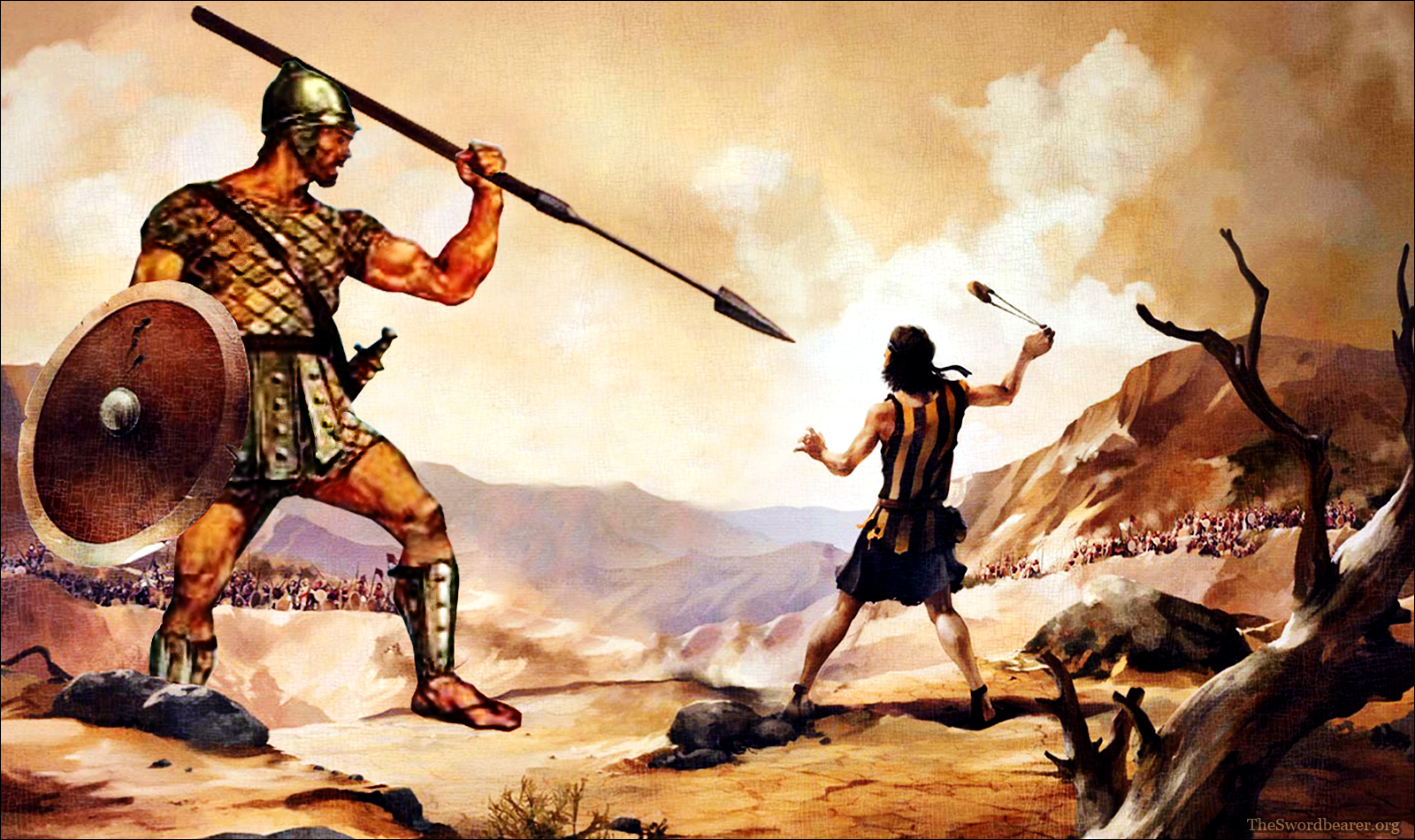
At Special Frontier Force, we do not worship The Dragon or The. We are trained to recognize Red China, Red Dragon, Scarlet Beast, and The Beast as our Adversary, Opponent, or Enemy. We describe War against Red China as a ‘Battle of Right Against Might’. Red Dragon used her military power and great authority to illegally occupy Tibet, her weak neighbor. If a War against Red China is the only solution to wipe out injustice in Tibet, we will confront Red China just like David challenged Goliath with a sling and a smooth pebble as his weapon of War.
The Evil Red Empire – Who can make War against Red China? Red China vs Tibet – David vs Goliath – Who can make War against the Beast?The Evil Red Empire – Who can make War against Red China? Red China vs Tibet – David vs Goliath – Who can make War against the Beast?
China: Milestones in the Dragon’s Rise
BY JOSEPH V. MICALLEF
JOSEPH V. MICALLEF
Best Selling Military History and World Affairs Author and Keynote Speaker
Posted: 06/20/2015 8:29 am EDT Updated: 06/20/2015 1:59 pm
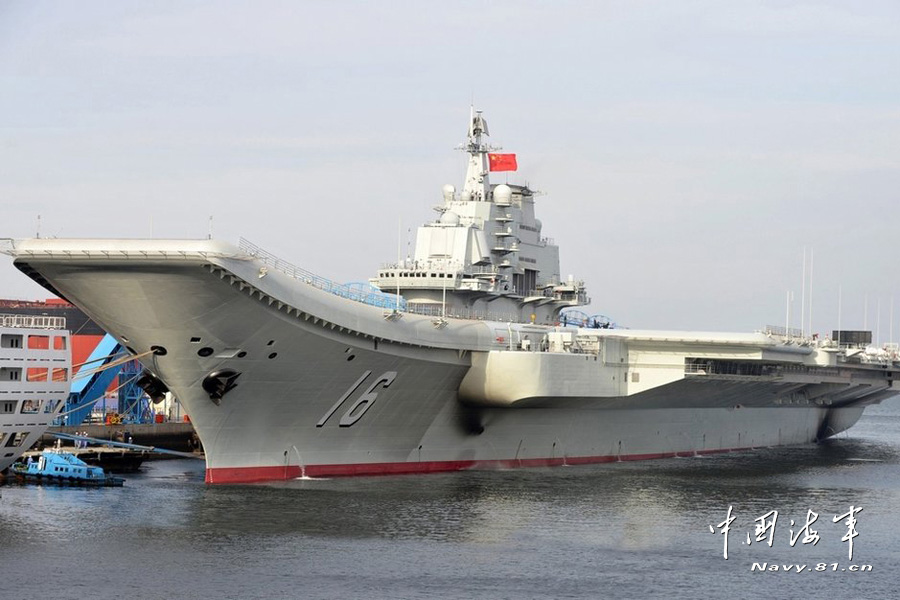
The Evil Red Empire – Who can make War against Red China? Red China vs Tibet – David vs Goliath – Who can make War against the Beast? China’s First Aircraft Carrier
The passage of history is often marked by milestones whose significance lies less in the events they commemorate then it does in the underlying trends that they confirm and validate. These last weeks, were punctuated by a series of such milestones. By themselves, these events mark noteworthy developments in China’s contemporary history. Collectively, they underscore the far reaching changes that are transforming China and its growing role on the international stage.
Last week, the collective valuation of China’s publicly traded equity exceeded 10 trillion dollars for the first time in its history. Considering that forty odd years ago China’s equity markets were moribund, the benchmark is astonishing.
The Amsterdam, now part of the Euronext, and London stock exchanges, the world’s oldest, both of which have been around since the seventeenth centuries, are well below this level. The combined European exchanges, at 15 trillion dollars in valuation, and the combined value of the U.S. stock exchanges at 20 trillion, however, still, at least for now, exceed the capitalization of China’s public equity market by a considerable margin.
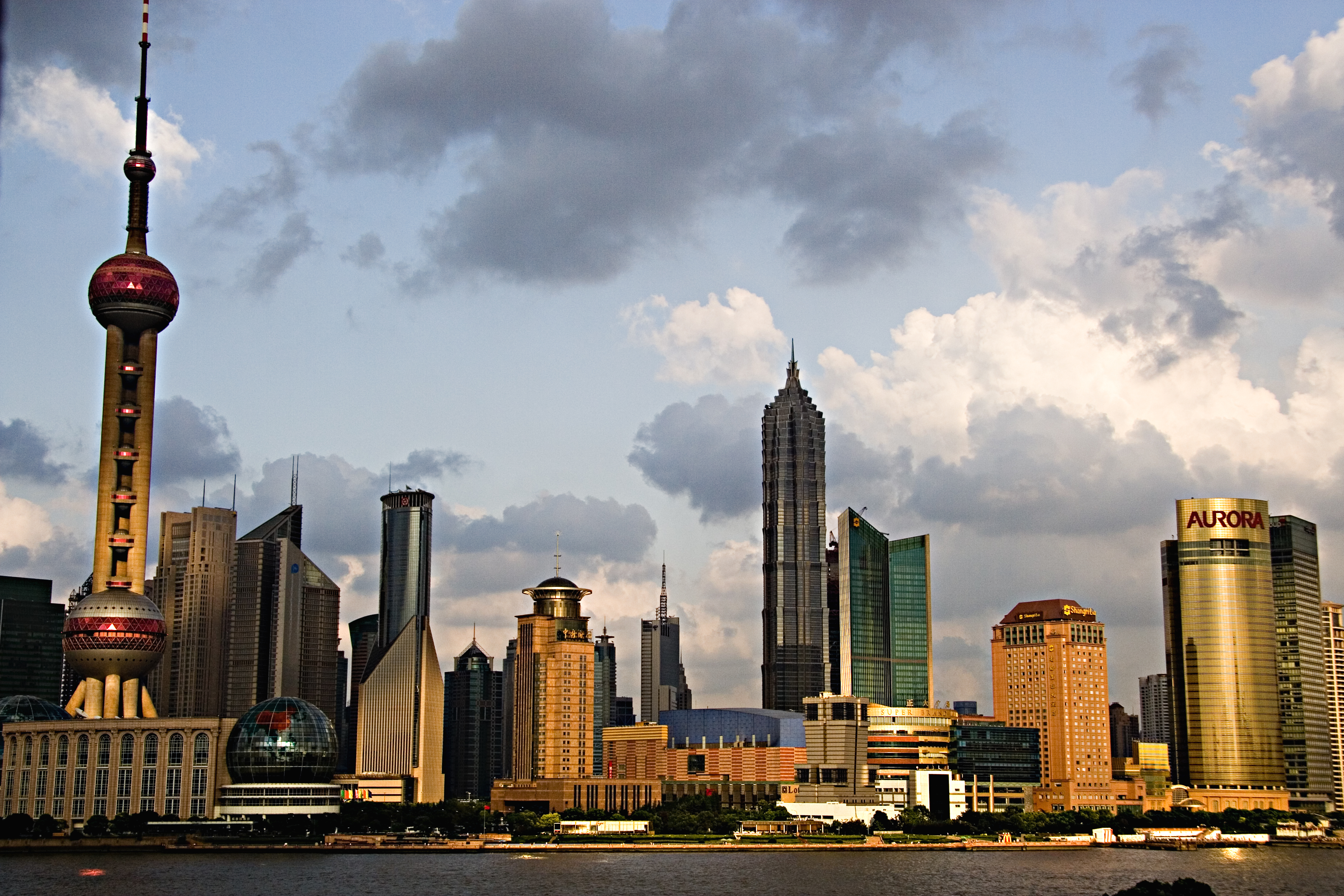
The Evil Red Empire – Who can make War against Red China? Red China vs Tibet – David vs Goliath – Who can make War against the Beast? Shanghai, Pudong Skyline
No doubt the “loose” monetary policies pursued by the major central banks has facilitated the rise in the value of China’s stock markets. Since the introduction of “quantitative easing” by the U.S. Federal reserve Bank in 2008 and similar policies by other central banks, the value of the world’s stock markets have doubled. China’s markets have more than quadrupled. Collectively, the world’s stock markets now represent about a quarter of the world’s combined financial assets.
In one sense the fact that China, the world’s second largest economy, should also have the world’s second highest valued equity market should not come as a big surprise. The two, while not inexorably linked, do tend to proceed in tandem. The rise in China’s economic power, which the rise in its stock markets underscore, however, has also fuelled a concomitant rise in China’s international military and political ambitions. Those ambitions and their consequences were driven home last week by a number of other events.
On June 6, Hungary became the first European nation to formally sign a cooperation agreement for China’s new “Silk Road” initiative to develop trade and transport infrastructure across Asia. The historic “silk road” was a system of overland caravan routes across central Asia that linked China, via the Black Sea and the Caspian Sea, with the Middle East, Russia and Europe. The trade route flourished in particular during the 13th and 14th century as a result of the Mongol conquest of much of Central Asia and China and resulted in the first significant and sustained contact between Medieval Europe and China.
This new initiative, first unveiled in 2014, represents a far more ambitious undertaking and consists of a number of far-ranging infrastructure projects including a network of railways, highways, oil and gas pipelines, power grids, Internet networks, maritime and other infrastructure links across Central, West and South Asia extending from the coastal cities of the South and East China Seas as far as Greece, Russia and Oman,
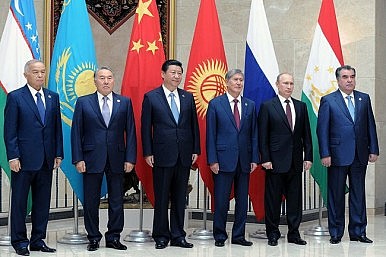
The Evil Red Empire – Who can make War against Red China? Red China vs Tibet – David vs Goliath – Who can make War against the Beast? Chinese Russian Summit, March 2015
This multi-trillion dollar investment program would represent an unprecedented expansion of Chinese political and economic influence across Central Asia resulting in trillions of dollars in trade and facilitate the expansion of Chinese exports to Europe. It would allow China to further cement its economic and trade relationships in the oil and mineral rich countries of Central Asia. Many of these nations, former Soviet Republics, are also being heavily wooed by Moscow to become part of Russia’s Eurasian Economic Union.
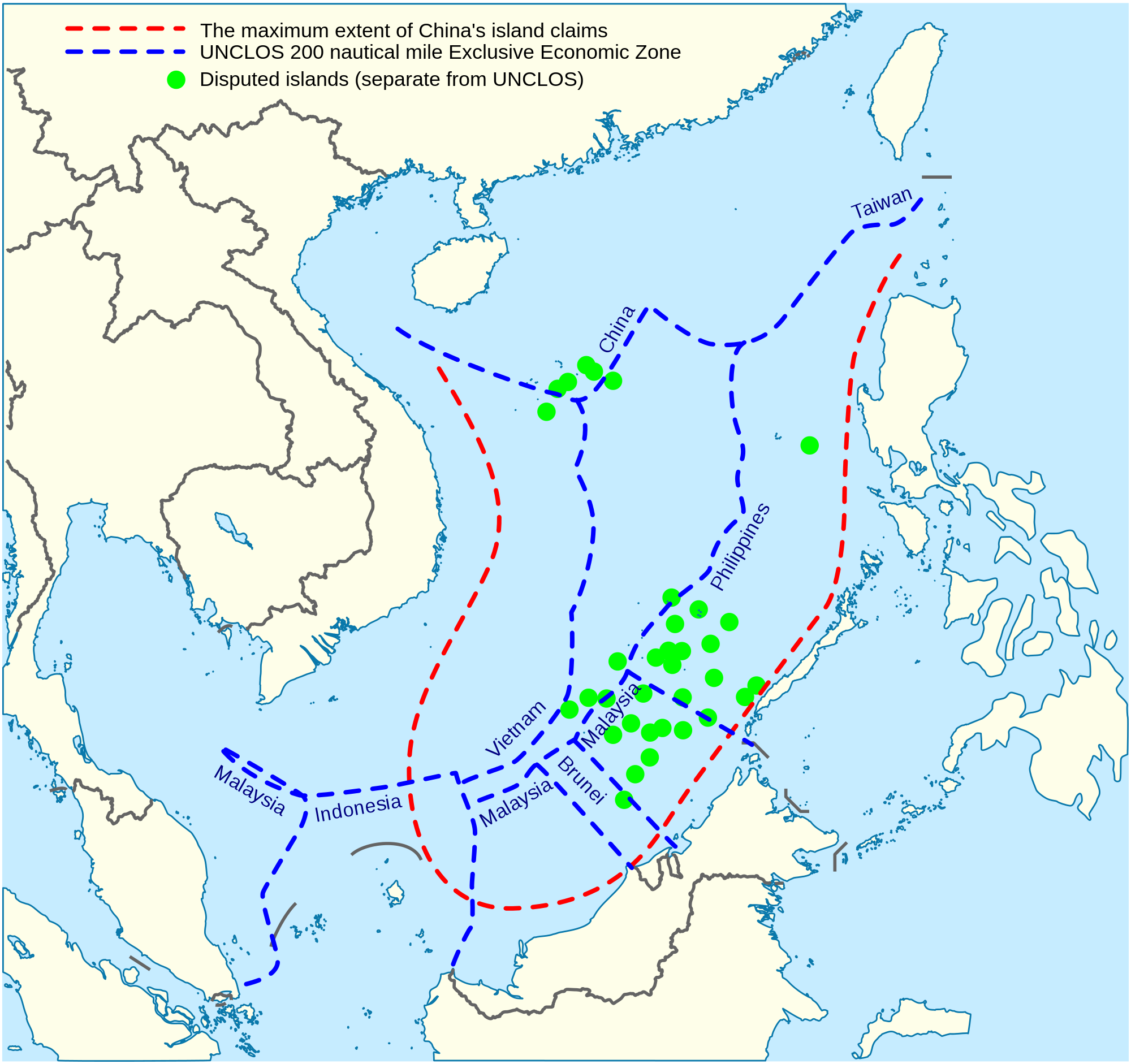
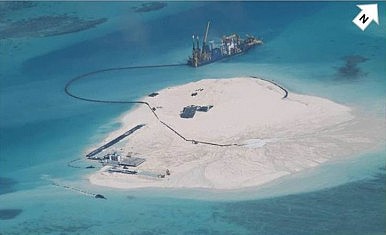
In the meantime along the South China Sea littoral, two other developments underscore the far reaching ripples of China’s ambitions. In recent months, Beijing has undertaken a massive land reclamation project designed to increase the surface area of a number of contested shoals in the South China Sea and allow the construction of air fields and permanent military facilities. The shoals are part of two island groups, the Paracel and the Spratly Islands.
Control of these islands has been disputed by the nations surrounding the South China Sea since at least the 3rd century BC. At stake, are fishing rights and the potential for vast untapped hydrocarbon reserves below the seafloor. The region also contains key maritime transit routes that are vital to the countries that border the South China Sea or its peripheral areas.
The Evil Red Empire – Who can make War against Red China? Red China vs Tibet – David vs Goliath – Who can make War against the Beast? Competing Territorial Claims in the South China Sea
Ironically, the practice of building up the shoals to allow permanent facilities was a practice that began with the Philippine and Vietnamese governments. China was late to the party but is now making up for its tardiness with an unprecedented program of land reclamation. Should Beijing succeed in enforcing its claims, the South China Sea would become a virtual Chinese lake and allow China to project military force from a string of newly created islands along its periphery.
China’s ambitions to control the South China Sea and its potential resources has raised concerns among the other countries that border the region. Two events in recent weeks, marking unprecedented cooperation among former enemies, underscore the gravity of those concerns.
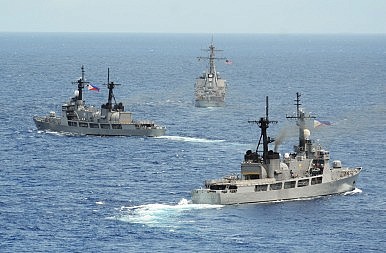
On June 5, Japanese and Philippine media disclosed that from June 22 through the 26th Japan and the Philippines planned to hold a joint maritime drill in the South China Sea. This was the second such drill in as many months although Philippine government sources described this drill as the first “official” joint exercise between the two countries since the end of the Second World War.
The Evil Red Empire – Who can make War against Red China? Red China vs Tibet – David vs Goliath – Who can make War against the Beast? Japanese and Philippine Naval Forces Conduct Joint Drills in the South China Sea, May 2015
More significantly, in addition to pledging to strengthening security cooperation between the two countries and to concluding an agreement for the transfer of “defense equipment and technology and expanding bilateral and multilateral trainings and exercises”, the two countries also agreed to open discussions on a visiting forces agreement that would allow Tokyo access to Philippine military bases.
This is the first time that Japanese forces would have ongoing access to Philippine military facilities since the end of WW II. While the agreement stops short of a permanent Japanese military presence in the Philippines it does allow for a continuous rotation of Japanese Military Self Defense Forces (JMSDF) that would result in much the same thing.
The presence of Japanese military forces on the Philippines is not without some controversy. Eighty years of Philippine-Japanese cooperation have not entirely healed the scars of Japan’s brutal occupation of the Philippines during the Second World War.
In the meantime, on the opposite end of the South China Sea, two other historic enemies, Vietnam and the United States, announced that in July, Nguyen Phu Trong, the General Secretary of the Communist Party of Vietnam was expected to visit the United States.
The Evil Red Empire – Who can make War against Red China? Red China vs Tibet – David vs Goliath – Who can make War against the Beast? Chinese Island Building in the South China Sea
The visit caps a process of reconciliation between the two former combatants that began in 1995 when Washington finally opened diplomatic relations with Hanoi and which has seen the execution of a broad range of agreements between the two countries including, significantly, in 2014, the lifting of the U.S. embargo against supplying military hardware to Vietnam.
More significantly, Vietnam’s growing cooperation with the United States heralds a profound realignment of Hanoi’s foreign policy from an “unofficial” strategic partnership with China to a defacto strategic alignment with the United States. The fact that Hanoi is prepared to undertake such a realignment, notwithstanding its still broad ideological differences with Washington, underscores how significantly its attitude towards its former “strategic protector” and “big brother has changed.
Three events, none of which elicited more than a ripple of interest in the western media and which individually are unlikely to merit much more than a footnote in the broad sweep of China’s history. Collectively however, they underscore the profound, far-reaching changes that are realigning the political and strategic landscape of East Asia.
The Evil Red Empire – Who can make War against Red China? Red China vs Tibet – David vs Goliath – Who can make War against the Beast?The Evil Red Empire – Who can make War against Red China? Red China vs Tibet – David vs Goliath – Who can make War against the Beast?The Evil Red Empire – Who can make War against Red China? Red China vs Tibet – David vs Goliath – Who can make War against the Beast?The Evil Red Empire – Who can make War against Red China? Red China vs Tibet – David vs Goliath – Who can make War against the Beast?
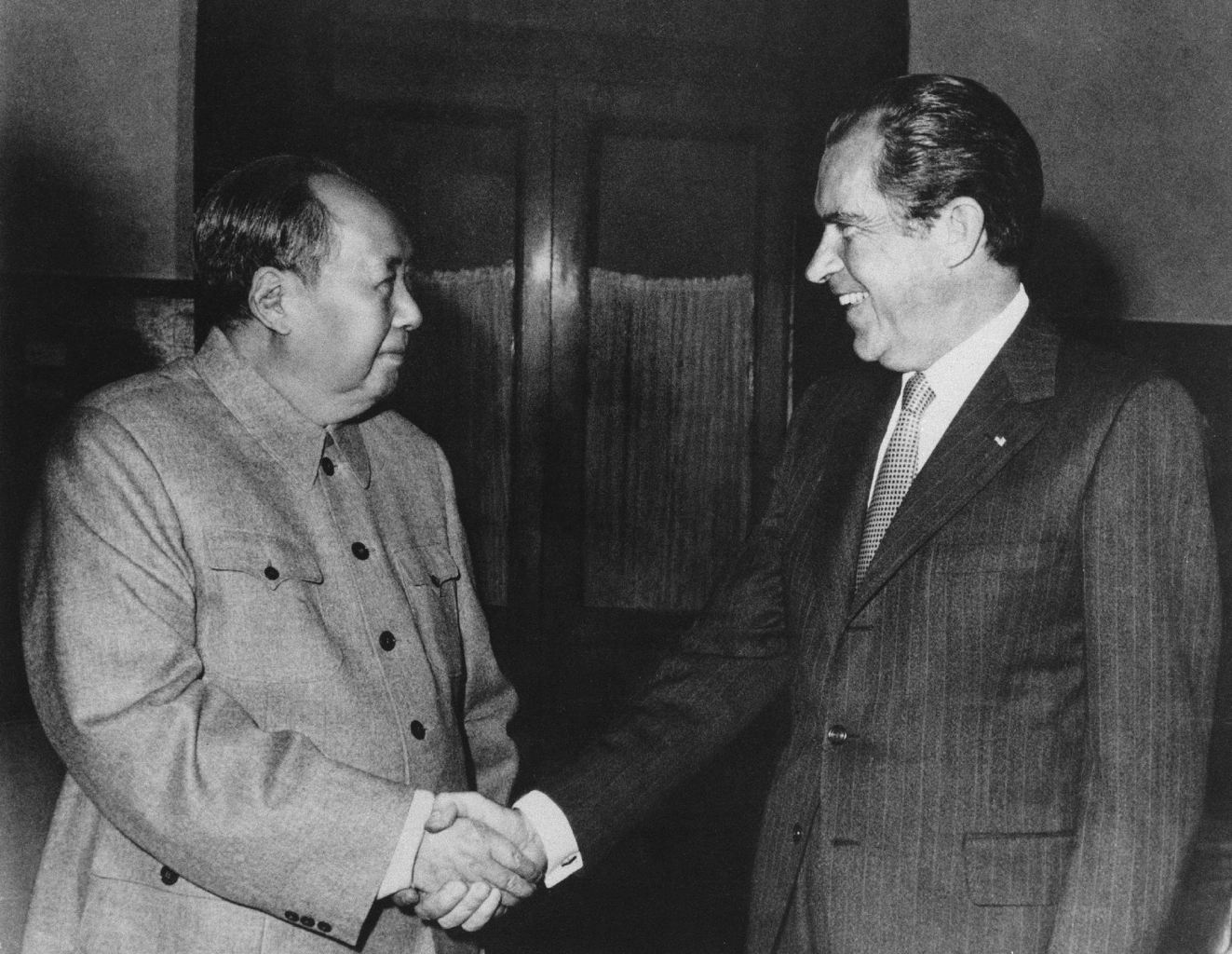
Nixon-Kissinger US administration in 1971-72 took advantage of the split between Soviet Union and Red China to formulate US foreign policy that initiated trade and commerce relations with Red China.
Red China openly confessed its sense of deep fear about Western Democratic Ideals. In her view, Internet poses a grave challenge to her one-party governance inspired by Communist ideology. This fear of Democracy, Freedom, and Individual Liberties shaped the split between Red China and Soviet Union during late 1950s.
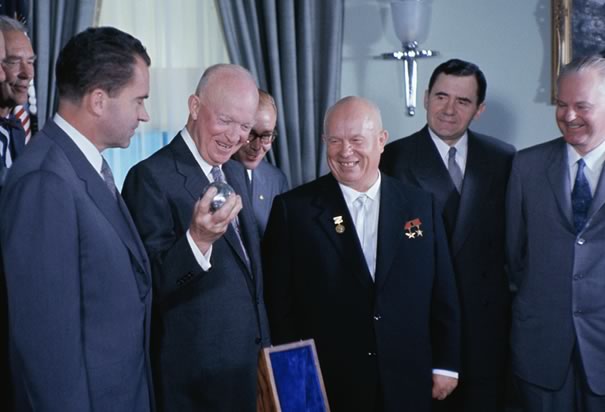
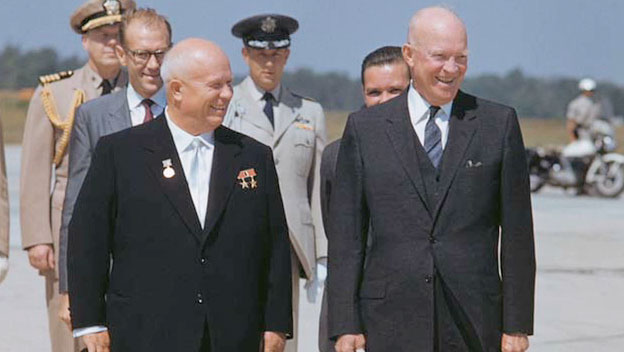
The Evil Red Empire – Red China – Whole Villain: President Eisenhower welcomes Premier Nikita Khrushchev. This Policy is important to contain and isolate Red China’s Imperialism.
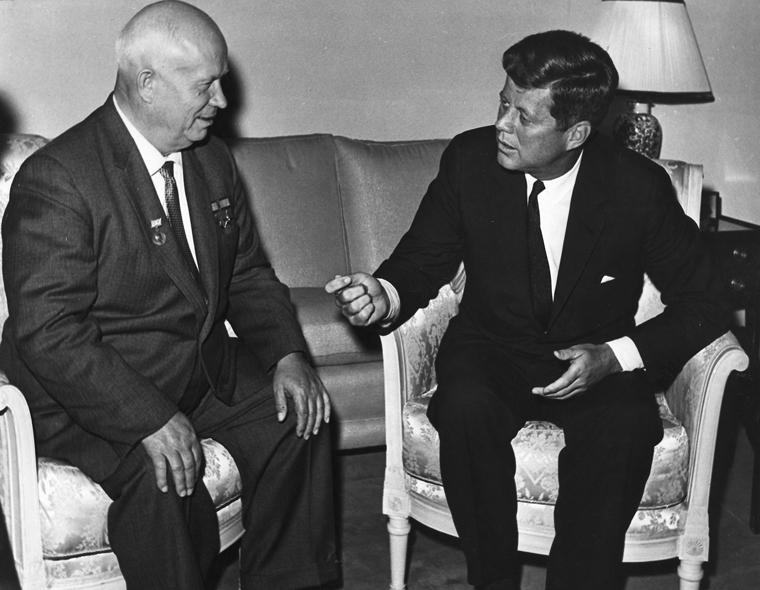
Nikita Sergeyevich Khrushchev (April 17, 1894 – September 11, 1971), leader of the USSR from 1956 (Premier from 1958) to 1964 traveled to United States in 1959 and 1960. His insistence on “peaceful coexistence” with the West contributed to a rupture with Communist government of Red China. Khrushchev stopped assisting Chinese nuclear program on June 20, 1959. Red China’s Chairman Mao Tse-Tung criticized Khrushchev as a “palm-singing buffoon who underestimated the nature of Western Imperialism.”
Nikita Sergeyevich Khrushchev (April 17, 1894 – September 11, 1971), leader of the USSR from 1956 (Premier from 1958) to 1964 traveled to United States in 1959 and 1960.Nikita Sergeyevich Khrushchev (April 17, 1894 – September 11, 1971), leader of the USSR from 1956 (Premier from 1958) to 1964 traveled to United States in 1959 and 1960.Khrushchev agreed for the first Nuclear Test-Ban Treaty of 1963. The Moscow Agreement banned testing nuclear weapons in the atmosphere, in outer space, and under water
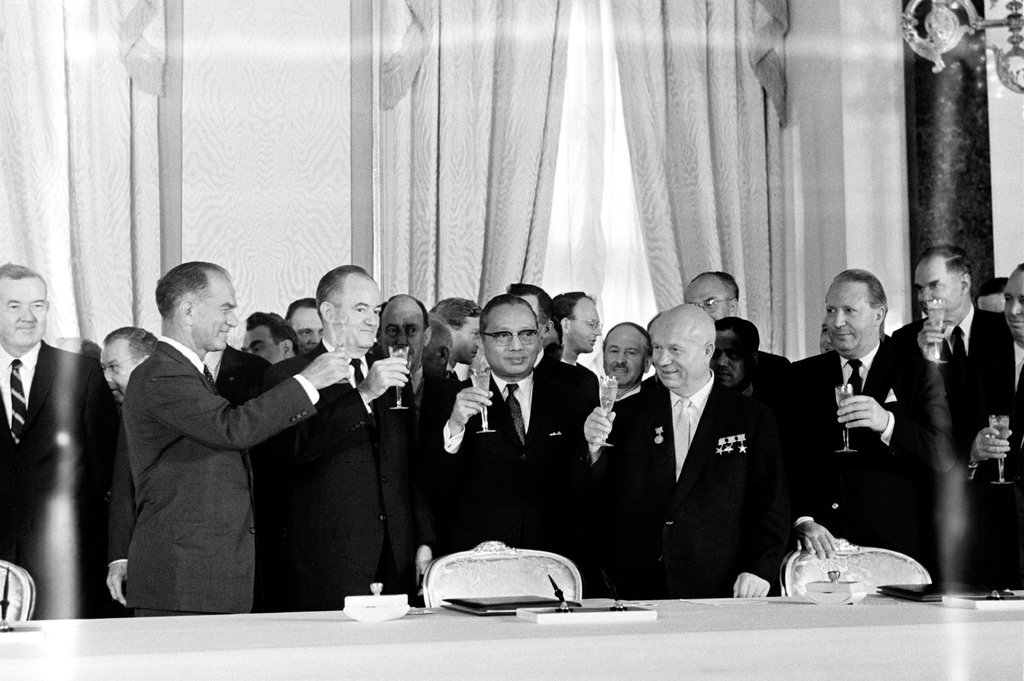
The Evil Red Empire – Red China – Whole Villian: Moscow, August 05 ,1963. It was a very good beginning that has full potential to curb Red China’s Expansionist Policy.
Khrushchev agreed for the first Nuclear Test-Ban Treaty of 1963. The Moscow Agreement banned testing nuclear weapons in the atmosphere, in outer space, and under water
Khrushchev agreed for the first Nuclear Test-Ban Treaty of 1963. The Moscow Agreement banned testing nuclear weapons in the atmosphere, in outer space, and under water. It paved the way to 1968 Nuclear Non-Proliferation Treaty or The Limited Test-Ban Treaty that tried to restrict the size of the “Nuclear Club.” Khrushchev further eased relations with the West by agreeing to limit central strategic forces. Strategic Arms Limitation Talks (SALT) began in 1969 and SALT I Treaty was signed in May 1972. Two arms-control agreements were made, 1. The Anti-Ballistic Missile (ABM) Treaty that agreed to limit antiballistic missiles, and 2. Interim Agreement on Offensive Nuclear Weapons that imposed freeze on long-range land- and sea-based ballistic missile launchers. Soviet Union did not violate provisions of these treaties.
Nixon-Kissinger US administration in 1971-72 took advantage of the split between Soviet Union and Red China to formulate US foreign policy that initiated trade and commerce relations with Red China. Nixon-Kissinger had clearly underestimated the nature of Red China’s Imperialism and failed to recognize threats posed to Peace and Freedom by Red China’s Policy of Expansionism.
The rupture between Soviet Union and Red China initiated by Premier Khrushchev in 1959 is in the interests of promoting Western Values of Democracy, Freedom, and Peace. The current US foreign policy of containing and isolating Russia is driving Russia to seek healing of rupture of 1959 and is forcing Russia to rebuild broken relations with Red China.
China has taken up Russia’s Deepest Fear
By Linette Lopez
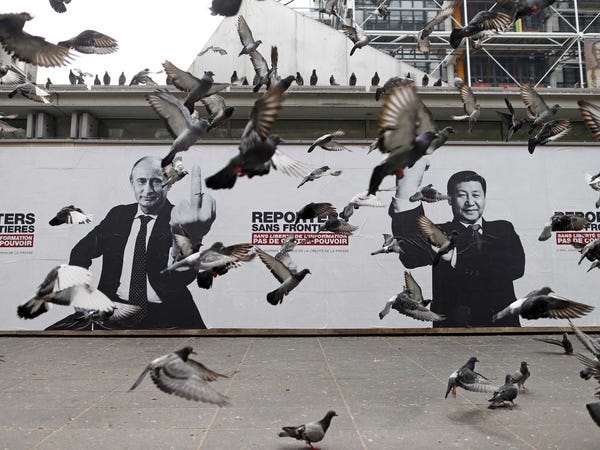
(Reuters) A poster depicting Russian President Vladimir Putin and his Chinese counterpart Xi Jinping pasted on the Brancusi Atelier by activists from Reporters Without Borders to mark the 20th annual World Press Freedom day in Paris in 2013.
President Xi Jinping wants his people to know that the greatest threat to China is an insidious export from the West — ideas that could lead to a color revolution. “The one non-neglectable factor [in the development of] color revolutions in these countries is the spreading of Western ideology, especially from the US,” Xu Songwen of the Chinese Academy of Social Sciences wrote Sunday in The People’s Daily(via The South China Morning Post).
The People’s Daily is a Chinese Communist Party paper known to reflect the sentiments of Jinping’s regime. Songwen wasn’t alone either. In the same issue, four other academics also shared their thoughts on the dangers of color revolutions. The message was clear. There will be no nonviolent political movements in China. There will be no regime change. This will not be Lebanon or Ukraine in 2005. This will not be the Middle East in 2011.
Don’t even think about it.
That’s where the danger is, after all — in the thinking.
China has been systematically shutting out Western ideals from research centers, school curriculums, and higher learning for some time now, but this is the first time a government mouthpiece has made it clear that these thoughts are an intentional aggression from the West.
The basic gist of all of the papers in Sunday’s People’s Daily is fairly simple. It’s like this: The proliferation of Western democratic ideals are a Cold War tactic that helped bring about the end of the Soviet Union.
The ideas bring unrest and discontent to populations and ultimately lead to bloodshed. They also tend to end in failure (see: Arab Spring). Those who foment this kind of unrest are enemies of the state.
There is “a high price to pay for nations that fall into the trap of color revolutions,” one article said, according to the South China Morning Post. Besides, a People’s Daily commentary that ran Friday said, the Chinese Communist Party is “rigid enough to protect against threats, and resilient against internal problems and external shocks.”
So don’t even try it.
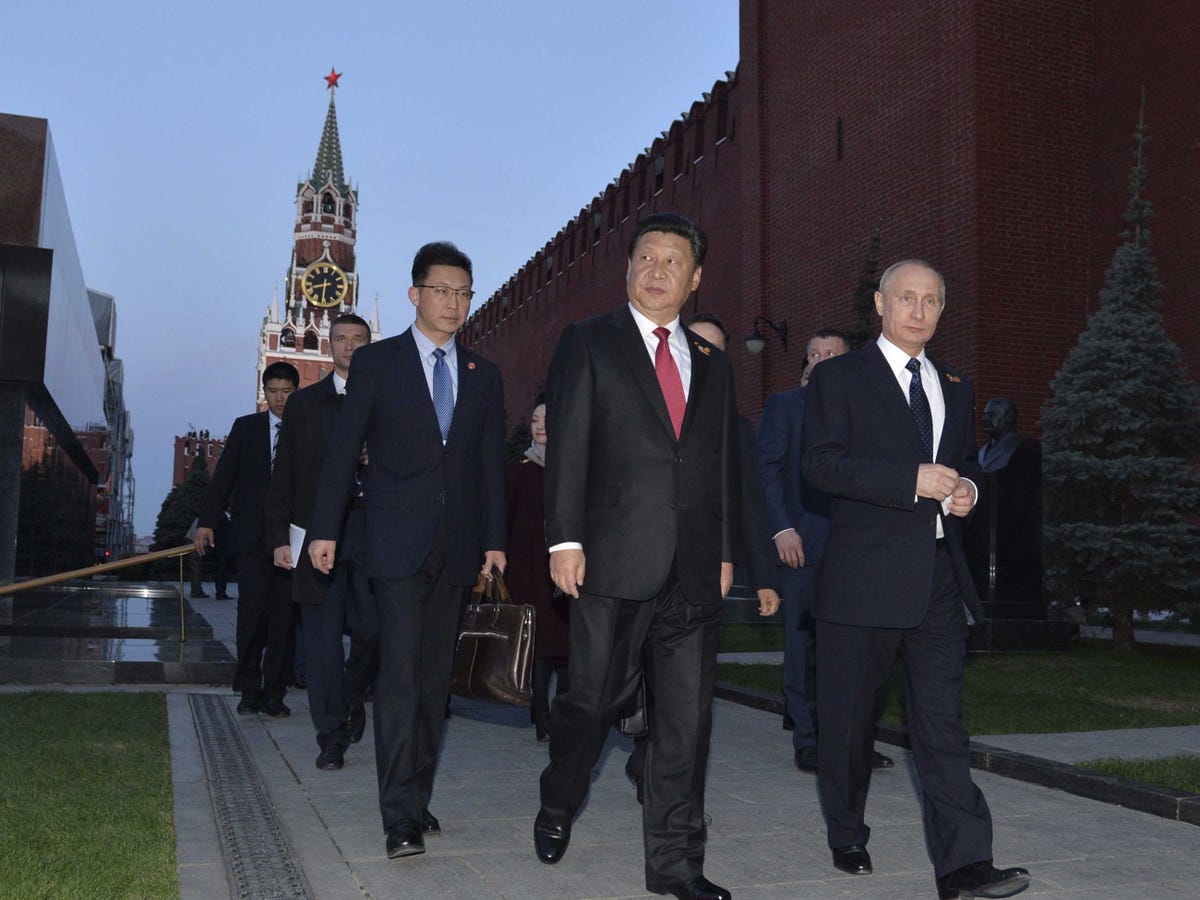
(Reuters) Putin and Xi arriving for a festive concert marking the 70th anniversary of the end of World War II in Europe, at Red Square in Moscow on May 9, 2015.
China is taking a play right out of Russia’s book with this one. In March, Security Council of Russia railed against the US security strategy, writing: “In relation to Russia, there is a high probability of the US using extensively advanced means for ‘color revolutions’ to eliminate unwanted political regimes.”
So where do color revolutions start?
Aside from schools and research centers, they start on the internet. The People’s Liberation Army knows that all too well, having released a chilling memo last month that said “the internet has become the main battlefront for struggle in the ideological area.”
Western hostile forces and a small number of “ideological traitors” in our country use the network, and relying on computers, mobile phones and other such information terminals, maliciously attack our Party, blacken the leaders who founded the New China, vilify our heroes, and arouse mistaken thinking trends of historical nihilism, with the ultimate goal of using “universal values” to mislead us, using “constitutional democracy” to throw us into turmoil, use “color revolutions” to overthrow us, use negative public opinion and rumours to oppose us, and use “de-partification and depoliticization of the military” to upset us.
Hours after these papers appeared in The People’s Daily, Hong Kong authorities said they had taken nine people into custody for potentially attempting to plan an attack on a legislative building on the island. Officials think they may advocate “localism,” or the belief that the mainland should stay out of Hong Kong affairs, according to The New York Times.
Bad timing.
Nixon-Kissinger US administration in 1971-72 took advantage of the split between Soviet Union and Red China to formulate US foreign policy that initiated trade and commerce relations with Red China.
The word “SUBJUGATE” means to bring under control, or subjection, conquer, to cause to become subservient, subdue, and to bring under yoke. Subjugation is the exact opposite of ‘Liberation’, or ‘Emancipation’. Subjugation is associated with tyranny, oppressive and unjust government, very cruel and unjust use of power or authority. Subjugation is the symptom of loss of Freedom. Red China with her military conquest of Tibet in 1950 imposed her authority with harshness, rigor, severity and uses her power in arbitrary manner using coercion. Red China is a Tyrant, one who seizes sovereignty of another nation illegally, Usurper, and a Subjugator of Tibet.
Red China – Subjugator of Tibet. The 17-point Plan signed on May 23, 1951 represents a plan for Subjugation of Tibet and not of Peaceful Liberation of Tibet.
Very often, Red China makes reference to Seventeen-Point Agreement, or 17-Point Plan, or 17-Article Agreement between the Central People’s Government and the Local Government of Tibet on Measures for the Peaceful Liberation of Tibet. Five Tibetan delegates headed by Ngapoi Ngawang Jigmei and Representatives of the Central People’s Government met in Peking(Beijing) and signed an Agreement on May 23, 1951 in presence of Red China’s Vice President Zhu De, Vice President Li Jishena, and Vice-Premier Chen Yi. This 17-Point Plan promised that there should be no coercion on the part of the Central Government of China in implementing any of its measures. During the following years, 1951-1956, Tibet recognized Red China’s true ‘evil’ intentions to subject Tibetan people to her military occupation. Both Tibet, and Republic of India conducted a series of diplomatic negotiations with Red China to loosen her military grip over Tibet. By 1957, it became very apparent that Red China is using her authority to eliminate any opposition to her direct rule. Red China has taken measures to control every aspect of Tibetan Nation giving no chance or opportunity to Tibetan people to live their lives with a natural right to freedom, an independent way of living that Tibet enjoyed during centuries of foreign rule by Mongols, and Manchu China’s Qing Dynasty(1644-1911). Seventeen-Point Agreement of 1951 is a phony agreement with lies, empty assurances and it is evidence of Red China’s treachery, cunningness, craftiness, and wickedness for which I name Red China a ‘Jackal’.
Red China – Subjugator of Tibet. The military conquest of Tibet.
At Special Frontier Force, I recognized that Red China has violated 17-Article Agreement signed on May 23, 1951. The history of Tibetan Resistance Movement that formulated the finding of Special Frontier Force bears testimony to the fact of Tibet’s subjugation under a tyrannical rule imposed by Red China.
Top Chinese officer pays visit to US: Pentagon
Fan Changlong (R), vice chairman of China’s Central Military Commission, meets with U.S. Army Chief of Staff General Raymond Odierno in Beijing, capital of China, Feb. 21, 2014. (Xinhua/Li Tao)
US army Chief of Staff General Ray Odierno (L) meets with Fan Changlong, Deputy Chairman of the Central Military Commission at Bayi Building in Beijing on February 21, 2014 (AFP Photo/Lintao Zhang)
Washington (AFP) – A top Chinese military officer began a six-day visit to the United States on Monday amid rising tensions over Beijing’s assertive stance in the South China Sea.
General Fan Changlong, vice-chairman of China’s Central Military Commission, started his tour in San Diego with a stop at the USS Ronald Reagan aircraft carrier and will hold talks on Thursday at the Pentagon with US Defense Secretary Ashton Carter, officials said.
Carter and other top US officials have recently castigated China over its push to build artificial islands in the disputed waters of the South China Sea. At a recent security conference in Singapore, Carter called for an immediate end to land reclamation by countries in the region, and accused China of being out of step with international rules.
“Turning an underwater rock into an airfield simply does not afford the rights of sovereignty or permit restrictions on international air or maritime transit,” the Pentagon chief said at the International Institute for Strategic Studies conference.
President Barack Obama earlier this month also warned Beijing over its tactics, saying territorial disputes could not be solved by “throwing elbows.” Before heading to Washington, Fan was due to visit a Boeing factory in Seattle and a US Army base at Fort Hood in Texas.
Fan is considered a counterpart to Carter, US officials said.
The general’s visit is part of a years-long effort to build a regular dialogue between the American and Chinese armed forces to defuse potential tensions and avoid miscalculations. Carter’s predecessor, Chuck Hagel, paid a visit to China in 2014 in a trip that was marked by friction, with each side trading sharply worded criticism.
Mao Zedong proclaims the founding of the People’s Republic of China in Beijing on Oct. 1, 1949.THE EVIL RED EMPIRE – RED CHINA – SUBJUGATOR OF TIBET .Red China Subjugator of Tibet – May 23, 1951 – PEKING ( Beijing)Red China Subjugator of Tibet: 17-Point Plan of May 23, 1951.Red China Subjugator of Tibet. 17 Article Agreement of May 23, 1951Red China Subjugator of Tibet – Banquet in PEKING ( Beijing).Red China Subjugator of Tibet – 17- Point Agreement, May 1951 – PEKING( Beijing).Red China Subjugator of Tibet – Tibetan Uprising – March 12, 1959.Red China – Oppression in Tibet
Red China vs Tibet: Who decides the results of a battle? The outcome of the fight is not always controlled by the relative military strengths of the opposing parties.
Red China has claimed that it is expanding its defense spending to increase its global military reach to defend its economic interests and territorial rights which includes Red China’s claim for territorial rights in Occupied Tibet. People’s Liberation Army maintains an impressive military force in Tibet with which it brutalized and represses people who offer Resistance to Red China’s occupation. Red China rules over Tibet with its Iron Fist.
Red China vs Tibet: Who decides the results of a battle? The outcome of the fight is not always controlled by the relative military strengths of the opposing parties.
Everyday deeds by ordinary folks can break the knuckles of the military grip over Tibet. Who decides the results of a battle? The outcome of the fight is not always controlled by the relative military strengths of the opposing parties.
RED CHINA vs TIBET – THE FIGHT BETWEEN DAVID AND GOLIATH:
Red China vs Tibet: Who decides the results of a battle? The outcome of the fight is not always controlled by the relative military strengths of the opposing parties.
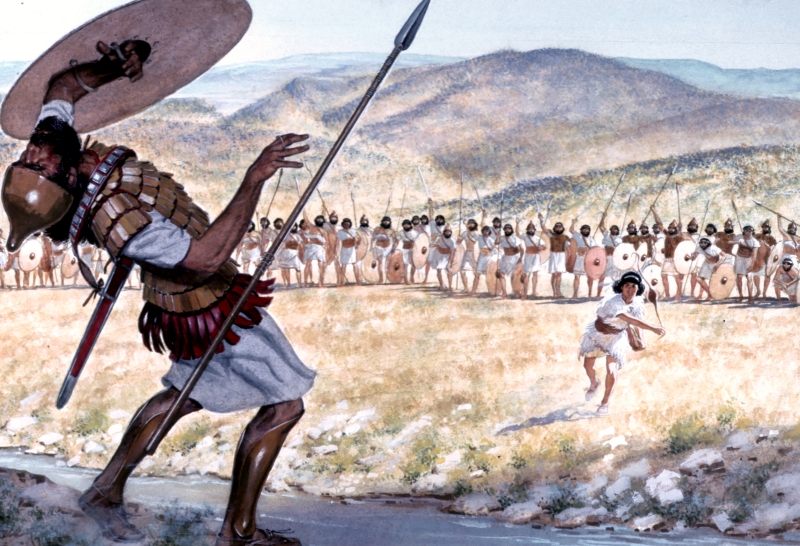
Wars in ancient times were sometimes decided by “representative combat”; Champions from each side would fight, and the results of their combat would determine the battle’s result. People believed the outcome of the fight was controlled by the warriors’ gods more than by the two sides’ military strength.The Old Testament Book of 1 Samuel, Chapter 17 described an interesting fight between David, a young Israeli shepherd and Goliath, a gigantic warrior of the Philistine army. David had no prior experience of warfare but was confident in his God. Whereas Goliath was an experienced soldier and was especially scornful of Israelites who openly proclaimed that they are God’s chosen people.
Red China vs Tibet: Who decides the results of a battle? The outcome of the fight is not always controlled by the relative military strengths of the opposing parties.
The Philistines had ventured into Israel’s territory and had taken a firm position on the slope of a hill, with Israel camped on the opposite hill. From the Philistine camp Goliath made daily challenges to personal combat, but after forty days no one accepted his challenge as Israelites were simply terrified and dismayed by the Philistine. Goliath’s size was extraordinary. He was over nine feet (or even over eleven feet) in height. Goliath had a bronze helmet on his head and wore a coat of scale armor of bronze, on his legs he wore bronze greaves, and a bronze javelin was slung on his back. He also held a sword and a spear. For forty days, Goliath came forward every morning and evening and took his stand demanding Israelites to send a soldier to fight him. David had been sent to Israeli camp to deliver some provisions to his three brothers who served as soldiers in Israeli army. When David heard Goliath’s challenge, he made repeated inquires about its meaning. After being told, David agreed to respond to Goliath’s challenge and demand for personal combat without any concern for his lack of war experience.
Red China vs Tibet: Who decides the results of a battle? The outcome of the fight is not always controlled by the relative military strengths of the opposing parties.
David took his staff in his hand, chose five smooth stones from the stream, put them in the pouch of his shepherd’s bag and with his sling in hand ,went to face Goliath. He approached him and said to Goliath, “You come against me with sword and spear and javelin, but I come against you in the name of the LORD Almighty, the God of the armies of Israel, whom you have defied…… All those gathered here will know that it is not b sword or spear that the LORD saves; for the battle is LORD’s, and He will give all of you into our hands.” (1 Samuel 17: 45-47)
Red China vs Tibet: Who decides the results of a battle? The outcome of the fight is not always controlled by the relative military strengths of the opposing parties.
As Goliath moved closer to attack David, he ran quickly toward the battle line to meet Goliath. David reached into his bag and took out a stone, slung it striking Goliath on his forehead. The stone found its mark, sank into Goliath’s forehead, and Goliath fell facedown on the ground.
Red China vs Tibet: Who decides the results of a battle? The outcome of the fight is not always controlled by the relative military strengths of the opposing parties.
So David triumphed over Goliath with a sling and stone without a sword in his hand; he struck down Goliath and killed him.
Red China vs Tibet: Who decides the results of a battle? The outcome of the fight is not always controlled by the relative military strengths of the opposing parties.
David took hold of Goliath’s sword and drew it from the scabbard and he cut off his head with the sword.
Red China vs Tibet: Who decides the results of a battle? The outcome of the fight is not always controlled by the relative military strengths of the opposing parties.
In my analysis, David overwhelmed Goliath, taking full advantage of a small portion of Goliath’s huge body to strike it at a most vulnerable spot in a very precisely executed attack.
Red China vs Tibet: Who decides the results of a battle? The outcome of the fight is not always controlled by the relative military strengths of the opposing parties.
I am not concerned about the religious beliefs of people who fight on behalf of Tibet or those of Red China. I visualize this as a ‘Battle of Right Against Might’. Military occupation of Tibet is illegal, unjust, and it reveals the evil intent of Red China. For Red China’s actions are evil, Red China has no choice other than that of experiencing the fruits of their own actions. For that reason, I predict that Beijing Is Doomed. Red China will come down, its downfall will be sudden and very quick as mentioned in The New Testament Book Revelation Chapter 18, Verse 21.
Red China vs Tibet: Who decides the results of a battle? The outcome of the fight is not always controlled by the relative military strengths of the opposing parties.
CHINESE MILITARY SETS COURSE TO EXPAND GLOBAL REACH AS ‘NATIONAL INTERESTS’ GROW
The Washington Post
Simon Denyer
Red China vs Tibet: Who decides the results of a battle? The outcome of the fight is not always controlled by the relative military strengths of the opposing parties.
BEIJING — China said Tuesday that it plans to extend its global military reach to safeguard its economic interests, while defending its territorial claims at sea against “provocative actions” by neighbors and “meddling” by the United States.
A policy document setting out China’s military strategy, issued by the State Council, or cabinet, underlined the dramatic growth of the country’s defense ambitions — especially its naval ambitions — in tandem with its rapid economic rise.
Beijing insisted in the document that its military is dedicated to “international security cooperation” and peaceful development. But it also said the navy will expand its focus from “offshore waters defense” to a greater emphasis on “open seas protection” as China aims to establish itself as a maritime power. The air force, meanwhile, will shift its focus from “territorial air defense to both defense and offense.”
Patrick Cronin, director of the Asia-Pacific Security Program at the Center for a New American Security, called the white paper “a blueprint for achieving slow-motion regional hegemony.”
“It asserts a confidence backed by growing capability on land and increasingly at sea,” he said. “While it calls for balancing China’s territorial ‘rights’ with ‘stability,’ there should be little doubt on the part of its neighbors that China is building a maritime force to assert the former.”
China’s officially disclosed defense budget was expanded by just over 10 percent this year, to $141 billion, marking two decades of nearly unbroken double-digit growth. The navy is reportedly building a second aircraft carrier and has invested heavily in submarines and warships.
“China has made it a strategic goal to become a maritime power,” Senior Col. Wang Jin said at a news conference Tuesday. “Therefore, we need to build a strong navy.”
He added that the development of long-range precision weapons means that the battlefield at sea is widening. “Offshore-waters defense alone can no longer provide effective defense of the country’s maritime interests,” he said.
In Washington, State Department spokesman Jeff Rathke said the administration was aware of the paper and continued to monitor China’s military developments carefully. “We also continue to urge China to exhibit greater transparency with respect to its capabilities and to its intentions,” he said.
According to a Pentagon report released this month, China is developing missiles designed to “push adversary forces — including the United States — farther from potential regional conflicts.”
The Chinese military is mainly focused on readying for possible conflict in the Taiwan Strait but also is investing to prepare for “contingencies” in the East China Sea and the South China Sea, where it is engaged in several territorial disputes, the Pentagon report said.
Chinese officials say that the country’s declared annual defense spending is significantly below the global average when compared with the size of its economy. Its actual defense spending is almost certainly higher than the declared number but is still far lower than the Pentagon’s fiscal 2015 budget of $560 billion, experts say.
In a move welcomed by other nations, China sent a 700-strong peacekeeping force in December to South Sudan, where it has extensive oil interests, marking the first time it has sent an infantry battalion on a U.N. mission.
Beijing also is negotiating with the strategic port nation of Djibouti to open a military base there to support anti-piracy naval escort missions in the Gulf of Aden and off the coast of Somalia, the Agence France-Presse news agency reported this month. The United States and France already have a military presence in the tiny Horn of Africa country.
Mapping Asia’s Chinese fears
“With the growth of China’s national interests, the security of our overseas energy and resources, strategic sea lines of communication and the safety of our overseas institutions, personnel and assets have become prominent issues,” Senior Col. Zhang Yuguo said at Tuesday’s news conference.
Zhang added, however, a note of outreach apparently aimed at the United States and other countries watching China’s military growth. “China will never seek hegemony or divide up spheres of power, nor will it engage in military alliances or expansion,” he said.
In addition to rattling its neighbors, China’s military growth has set the nation on a possible collision course with the United States.
This year in particular, the Obama administration has repeatedly condemned a program of rapid land reclamation and construction on disputed islands and reefs in the South China Sea. A U.S. surveillance plane was warned to leave the area by the Chinese navy last week, while Beijing lodged a formal diplomatic complaint.
Senior Col. Yang Yujun, a Defense Ministry spokesman, on Tuesday likened China’s construction activities on the islands to “everyday actions” such as the building of houses, roads and bridges. But he acknowledged that the facilities being constructed, including an airstrip and radar stations, will have both military and civilian uses.
[Chinese warships could one day outnumber U.S. fleet]
Rathke, the State Department spokesman, said the United States took a different view, saying that China’s land reclamation efforts in the South China Sea have “contributed . . . to rising tensions” and suggesting that other countries in the region share that view.
Yang said that the Chinese military was responding to increasingly frequent surveillance flights in a “legal and professional manner” but that the issue was being hyped up to “throw mud” at China.
“There’s no ruling out the possibility that some country is seeking an excuse for its potential action in the future,” he said. “I don’t think this is a new trick. It’s an old trick.”
On Monday, the state-owned tabloid the Global Times warned that battle is “inevitable” if the United States tries to prevent China from finishing its reclamation and construction work. It said the risks would be “still under control” if Washington accepts China’s peaceful rise.
Although not necessarily fully reflecting official thinking, the editorial shows China’s determination to continue its projects in the South China Sea.
Yang said Sino-U.S. relations are generally good and noted that both militaries have signed agreements to govern air and maritime encounters and prevent crises.
But the policy paper expressed concern about the United States’ “ ‘rebalancing’ strategy,” which has led China to enhance its military presence and strengthen military alliances in the Asia-Pacific region and worry about more assertive military and security policies in Japan. It accused China’s neighbors of provocative actions by reinforcing their military presence on “China’s reefs and islands that they have illegally occupied.”
“Some external countries are also busy meddling in South China Sea affairs,” it said, adding in a clear reference to the United States: “A tiny few maintain constant close-in air and sea surveillance and reconnaissance against China.”
Philippines President Benigno Aquino III was quoted as saying Monday that his nation will continue flying over disputed islands in the South China Sea, while Defense Minister Voltaire Gazmin said he was seeking a “stronger commitment” from the United States to help its ally, according to news agency reports.
China responded angrily.
“I would like to remind the Philippines that China will not bully small countries, but small countries must not ceaselessly and willfully make trouble,” Foreign Ministry spokeswoman Hua Chunying said at a news conference. “We hope the Philippines can cease its instigation and provocation and return to the correct path of resolving the problem through negotiation and consultation.”
On Tuesday, state media reported that China had held a groundbreaking ceremony for the building of two lighthouses on the disputed Spratly Islands, a move that Hua said was meant to fulfill the nation’s international obligations but that is unlikely to ease concerns about Beijing’s expanding influence.
The military strategy paper also outlined threats emanating from instability on the Korean Peninsula, from separatist forces in its western regions of Tibet and Xinjiang and from forces attempting to instigate a “color revolution” to overthrow the Communist Party. It also noted growing threats in outer space and cyberspace.
Xu Yangjingjing in Beijing and Dan Lamothe in Washington contributed to this report.
Red China vs Tibet: Who decides the results of a battle? The outcome of the fight is not always controlled by the relative military strengths of the opposing parties.Red China vs Tibet: Who decides the results of a battle? The outcome of the fight is not always controlled by the relative military strengths of the opposing parties.Red China vs Tibet: Who decides the results of a battle? The outcome of the fight is not always controlled by the relative military strengths of the opposing parties.Red China vs Tibet: Who decides the results of a battle? The outcome of the fight is not always controlled by the relative military strengths of the opposing parties.Red China vs Tibet: Who decides the results of a battle? The outcome of the fight is not always controlled by the relative military strengths of the opposing parties.Red China vs Tibet: Who decides the results of a battle? The outcome of the fight is not always controlled by the relative military strengths of the opposing parties.Red China vs Tibet: Who decides the results of a battle? The outcome of the fight is not always controlled by the relative military strengths of the opposing parties.Red China vs Tibet: Who decides the results of a battle? The outcome of the fight is not always controlled by the relative military strengths of the opposing parties.Red China vs Tibet: Who decides the results of a battle? The outcome of the fight is not always controlled by the relative military strengths of the opposing parties.Red China vs Tibet: Who decides the results of a battle? The outcome of the fight is not always controlled by the relative military strengths of the opposing parties.