THE BUSINESS OF PEACEMAKING-BLESSED ARE THE PEACEMAKERS

THE BUSINESS OF PEACEMAKING–BLESSED ARE THE PEACEMAKERS
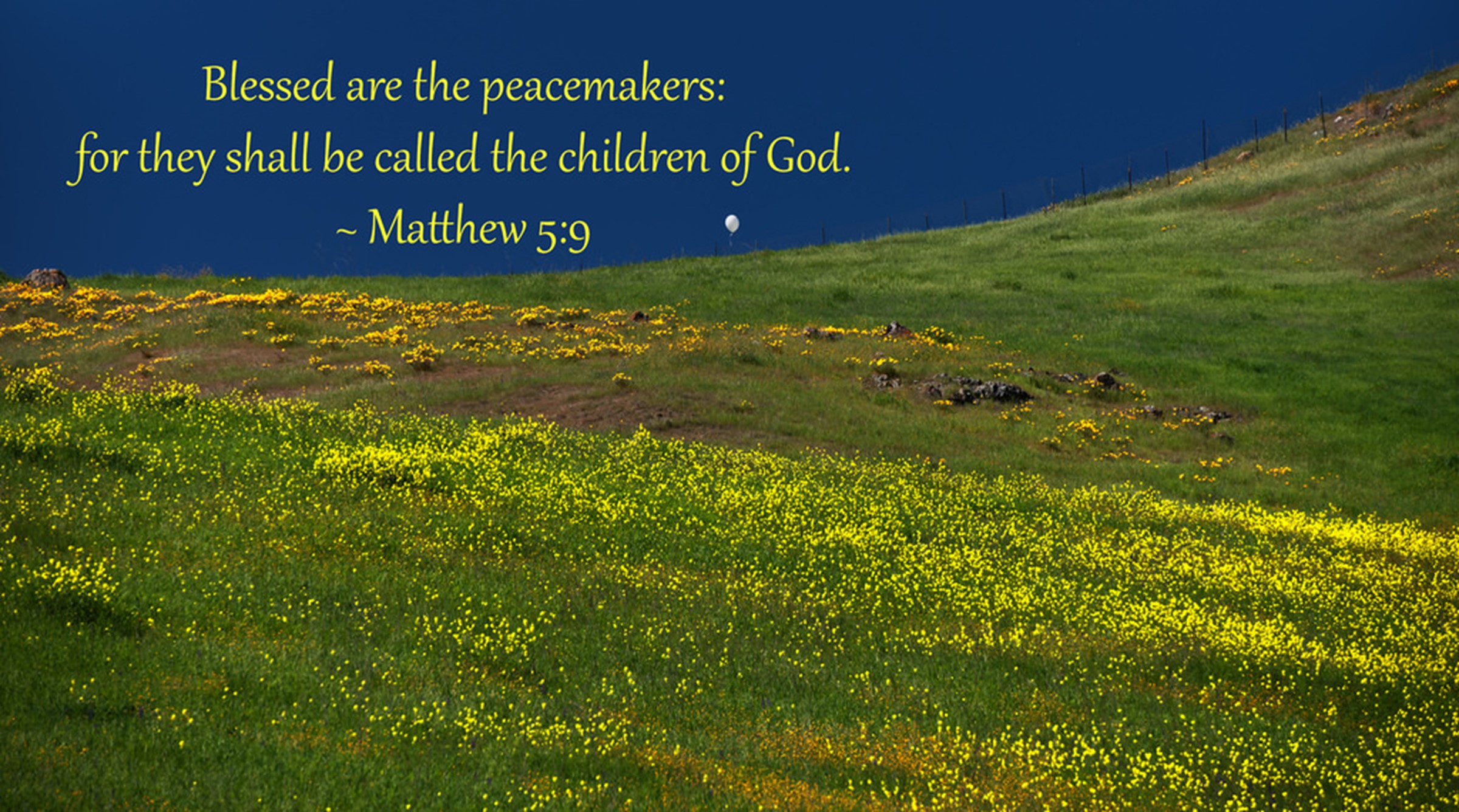
The Business of Peacemaking. Blessed are the Peacemakers.

I commend the U.S. Institute of Peace for organizing a two-day Peace Conclave in Dharamshala to give encouragement to 27 youth peace activists by directly meeting with His Holiness the Dalai Lama. I warmly congratulate these young participants for their efforts to promote Peace, Harmony, and Tranquility in the communities where they live.

Rudranarasimham Rebbapragada

SPECIAL FRONTIER FORCE

https://wholedude.com/2018/10/16/blessed-are-the-peacemakers-marching-for-peace-in-occupied-tibet/

Dalai Lama’s pep talk for young peacekeepers

The Business of Peacemaking. Blessed are the peacemakers.

Clipped from: https://www.usatoday.com/story/opinion/2018/12/27/dalai-lama-peace-change-youth-leaders-iraq-afghanistan-syria-column/2290021002/

The 14th Dalai Lama, a Tibetan spiritual leader, was self-deprecating and even playful to put his guests at ease, but peacemaking is serious business.
The Business of Peacemaking. Blessed are the peacemakers.

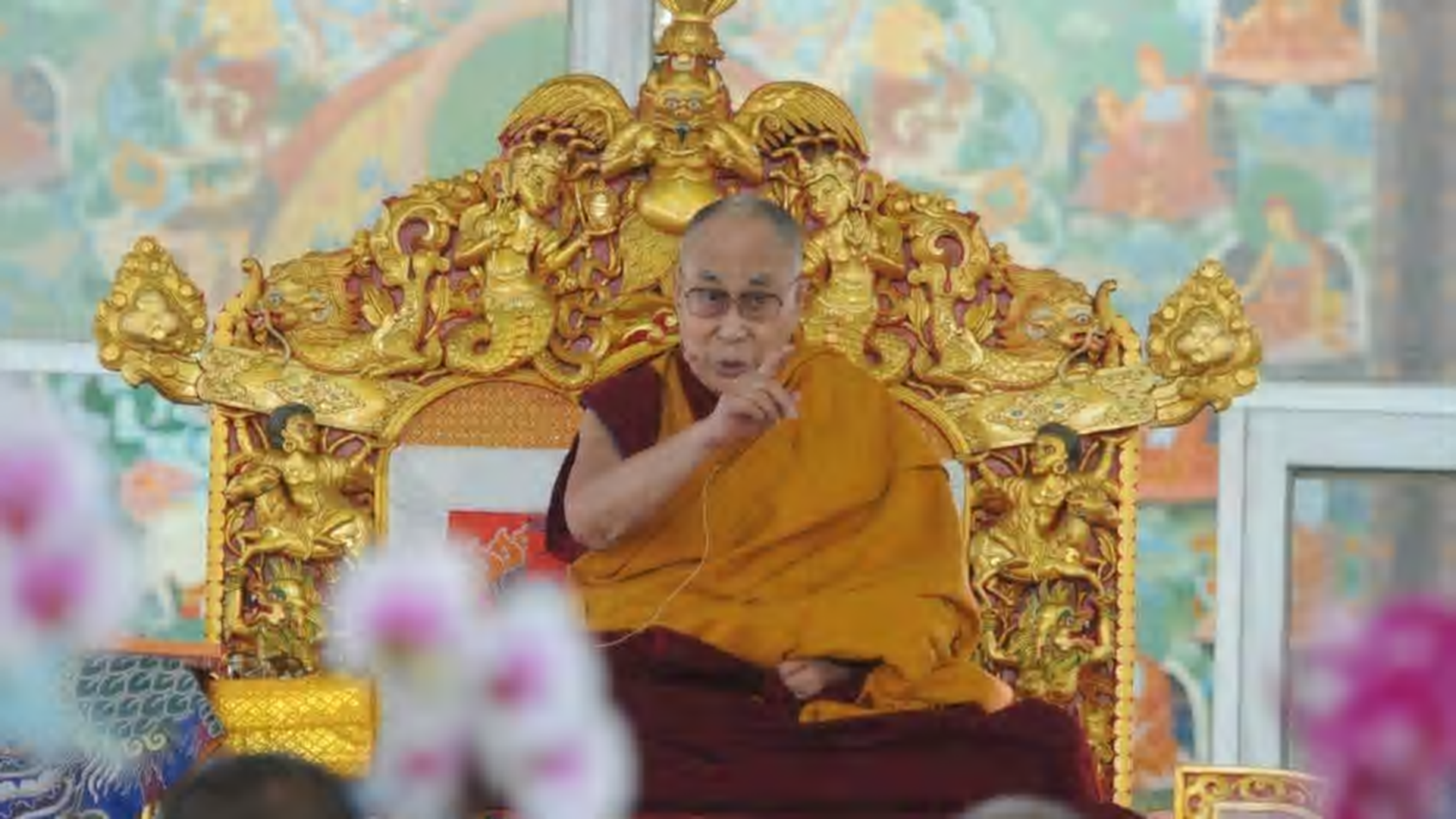
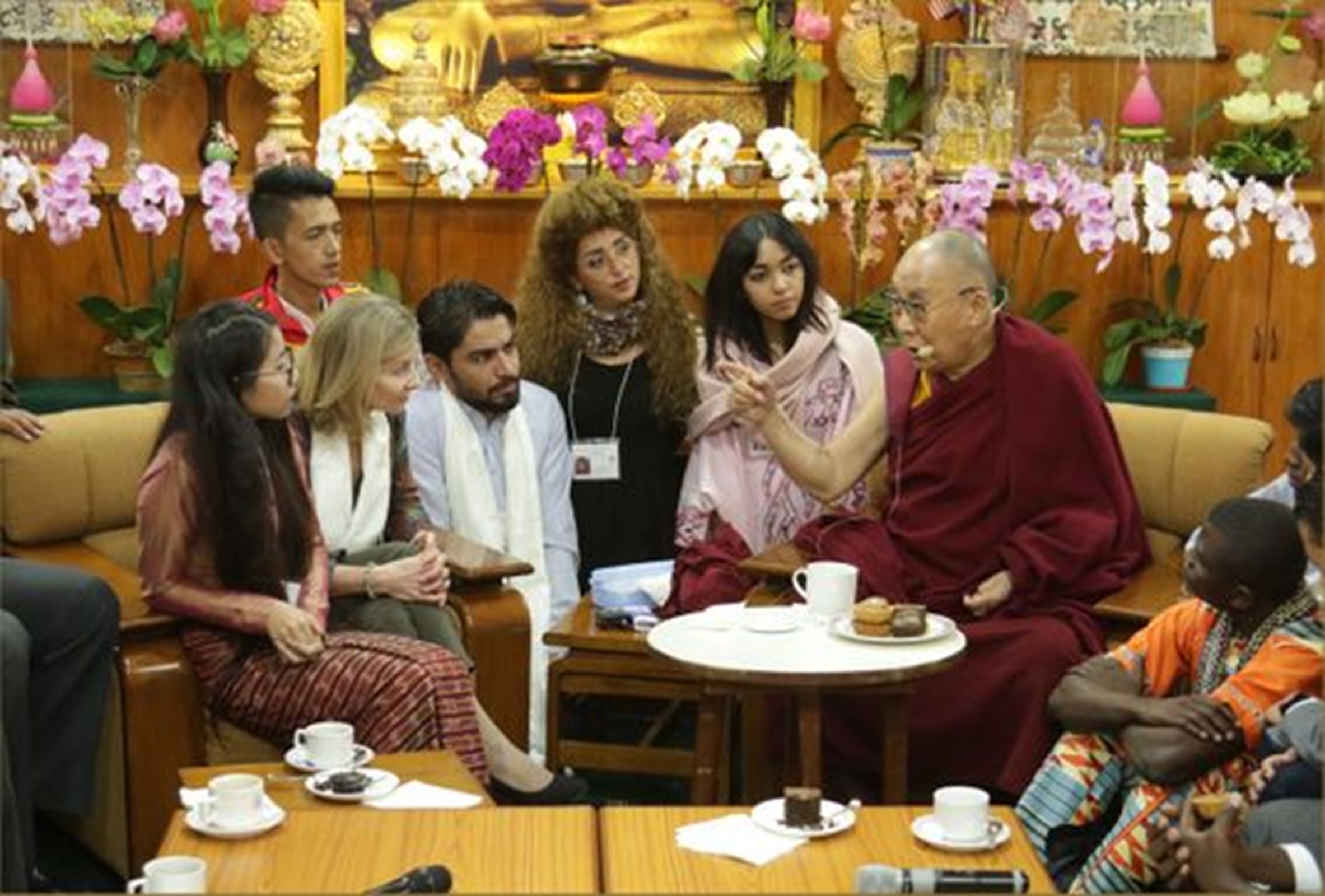
The Dalai Lama meets with young people in Dharamsala, India, in October 2018. (Photo: Rohini Das/U.S. Institute of Peace)

DHARAMSALA, India — For a few days this fall, more than two dozen educated and articulate young peacekeepers from some of the most dangerous countries in the world gathered at the feet of the Dalai Lama eager for solace, guidance and comfort.

They described experiences alien to anything that young Americans could understand: working to quell misery in places where governments are repressive, ethnic or tribal conflict is rife, or religious extremist groups such as the Islamic State or Boko Haram are savage.

One of them was Sulaiman Qauymi, 28, a journalist and co-founder of a conflict-resolution group in Afghanistan. “I’m living in a country where the people start the day talking about war, battle, conflict, suicide attack, terror and killing,” he told the Dalai Lama. “It’s a major topic of my life and my people each day until we go to bed.”

Su Su, 26, is a peace activist from strife-torn Myanmar. (She and a few others asked that their full names be withheld because of safety concerns.) “I want inspiration from you,” she told the 83-year-old Tibetan spiritual leader, the 14th Dalai Lama.

The U.S. Institute of Peace helped arrange the conclave in this nearly mile-high city in the foothills of the Himalayas. The theory was simple. The world-renowned spiritual leader who had led his Tibetan government into exile at age 24 six decades before, fleeing brutal Chinese communist aggression, could galvanize 27 youth leaders whose age averages 25.

I was one of a handful of older professionals invited to accompany the pilgrimage. The event lasted two days in a wood-paneled hall of the Dalai Lama’s residence as the young adults, against a backdrop of orchids and Buddha tapestries, implored the holy man for guidance.

Thrilling feminists

He was attentive and generous with his time, at moments self-deprecating and even playful to put his guests at ease. He thrilled feminists in the room one morning with the revelation that a female Dalai Lama could certainly be a reality one day.

But as the hours passed and the youth leaders unburdened themselves, the Dalai Lama would almost sag under the weight of their frustrations and doubts about resolve.

Kode Kenaime, 27, a peace activist with twin graduate degrees from the Central African Republic, where Muslim-Christian violence has left thousands dead, talked of slain family members and “darkness in my mind, my heart (and) full feelings of revenge. It’s not easy for me, but I keep working as a peace-builder.”

Meron Kocho, 28, an activist and ethnic Yazidi from northern Iraq, said Islamic State fighters made refugees of his family, turned girls into sex slaves and conscripted boys as soldiers. “We saw so much hate that we started to hate,” he told the Dalai Lama.

An end to empathy

Wadi Ben-Hirki, who at 21 has earned awards for her work educating children, seeking to empower women, and pushing to end child marriage and genital mutilation in her native Nigeria, talked of becoming inured to the depredations of the notorious Boko Haram terror group. “I’m scared of not being able to empathize anymore because I’m used to the pain,” she said.

Others — Mohamed Ahmed, 22, co-founder of a peace group in Somalia; Dalia Anez, 26, a Venezuelan lawyer who trains human rights leaders; and Hayder Ghanimi, 28, who leads a peace workshop in Baghdad — questioned the feasibility of success.

“Have you ever lost hope?” Hayder asked.

The Dalai Lama steered them back to basics. The paths they have chosen to educate, to promote dialogue, to build peaceful coexistence is long and difficult. “I don’t expect some overnight change is possible,” the Dalai Lama told them, hearkening back to his many decades of struggle. “A peaceful world within my lifetime will not be achieved.”

They must be patient, he told them. And the antidote to feelings of anger or despair is the compassion and optimism that gave seed to their commitment to peace. “Optimism is the source of success,” he said. “Pessimism is the source of defeat.”

Is change possible? “Yes, 100 percent.”

It was a pep talk one could only pray would succeed. Harsh realities awaited the youth leaders back in Iraq, Syria, Libya, and Tunisia; in Somalia, Nigeria, South Sudan and the Central African Republic; in Myanmar and Afghanistan; and in Venezuela and Colombia.

They seemed happy, fulfilled and inspired as they left Dharamsala and the Dalai Lama.

They were, without question, inspiring.

Gregg Zoroya is a USA TODAY editorial writer and author of “The Chosen Few: A Company of Paratroopers and Its Heroic Struggle to Survive in the Mountains of Afghanistan.”  Follow him on Twitter: @greggzoroya

The Business of Peacemaking. Blessed are the peacemakers.


CHOOSING THE DALAI LAMA SUCCESSOR IS NOT CHINA’S BUSINESS

CHOOSING THE DALAI LAMA SUCCESSOR IS NOT CHINA’S BUSINESS

Choosing the Dalai Lama Successor is not China’s Business.

The discovery of the Dalai Lama Successor is not China’s business. In fact, China’s Government and Communist Party officials are not even competent to discuss the subject of the Dalai Lama succession.

Rudranarasimham Rebbapragada

SPECIAL FRONTIER FORCE

https://wholedude.com/2018/11/07/the-dalai-lama-life-cycle-man-vs-nature/

Not my business to decide on a successor: Dalai Lama

Clipped from: https://www.hindustantimes.com/india-news/not-my-business-to-decide-on-successor-dalai-lama/story-pI7CFgqSFnmBg9ZSOvWMTP.html

In an interview with Hindustan Times, Dalai Lama said the dialogue process for reincarnation had not even started. He said that this should be decided through an international conference after his natural death.

Shishir Gupta

Choosing the Dalai Lama Successor is not China’s Business.

Tibetan spiritual leader Dalai Lama addresses a gathering at Kalachakra ground, in Bodh Gaya on Monday. (Parwaz Khan / HT Photo)

The temporal and spiritual world of Tibetan Buddhism seems headed for a period of uncertainty and possible turmoil in the near future with Lobsang Yeshi Tenzin Gyatso, the 14th Dalai Lama, leaving the question of his reincarnation and the continuation of the very institution of the Dalai Lama to Buddhists living in the Himalayan belt, Mongolia, and outside Tibet.

In an interview, he said this should be decided through an international conference after his natural death and that it is “not his business” to decide on his successor through either reincarnation or emanation. He admitted the dialogue process for reincarnation had not even started.

Talking exclusively to Hindustan Times, the Dalai Lama said that his anointed 17th Karmapa Ogyen Trinley Dorje “most probably” would return to India.

But that, he said, was a concern of the Karma Kagyu school head and the Indian government as he had no role to play in the matter.

While the highest lama and head of the Gelug school of Tibetan Buddhism called the meeting of Ogyen Dorje and co-claimant Trinley Thaye Dorje in France this year a “rightful beginning”, he said he did not want to play the mediator between the two reincarnations of the 16th Karmapa.

Thaye Dorje, who was anointed by rival regent Shamar Rinpoche, is currently preaching in Bodh Gaya to many foreigners from the US and Europe and has not met the 14th Dalai Lama.

Ogyen Trinley Dorje, supported by both the Dalai Lama and China, left for the US in May 2017, ostensibly for medical reasons. He then acquired a Dominican passport in March this year without informing India. He has been laying down conditions for his return – for instance, that he be allowed to visit the Rumtek Monastery in Sikkim which is the seat of the Karmapa outside Tibet and at the heart of the Karmapa controversy, with the two rival factions laying claim to its ownership – but New Delhi isn’t playing ball.

While he said that it was possible for the 16th Karmapa to have a few reincarnations, the Dalai Lama made it amply clear that there should be only one holder of the seat of the 17th Karmapa. The 14th Dalai Lama chose to remain quiet as to who will decide on the holder of the heads of Tibetan schools of Buddhism with the presence of two Panchen Lamas, two Karmapas and the Chinese government already initiating the process of anointing the 15th Dalai Lama.

The Dalai Lama confirmed that his anointed Panchen Lama Gedhun Choekyi was alive with another co-claimant. Gyaltsen Norbu is sponsored by the Chinese regime and said to be sitting on the throne in Shigatse and mostly stays in Beijing.

The Dalai Lama confirmed that there was only informal dialogue on with the Chinese government through retired officials and businessmen after all formal channels were closed in June 2010. He said that he did not want an independent Tibet since 1974 but wanted the protection of Tibetan people living even outside Tibetan Autonomous Region of China in terms of language, culture, religious affairs and environment. He said he was committed to “middle approach” when dealing with Beijing and admitted that the Tibetan people will gain financially from the rise of China.

The Dalai Lama dismissed news reports about Dr. Lobsang Sangay, President of the Central Tibetan Administration in Dharamshala, not heeding his advice as “small rumors” and said that the politically elected leader trusted and believed in him.

The 84-year-old head of Yellow Hat Gelug school of Buddhism confirmed that he had been successfully treated for what he called “traces of prostate cancer” through radiation but added that he is in good health.

First Published: Dec 25, 2018, 06:56 IST

Choosing the Dalai Lama Successor is not China’s Business.


Whole Curse – Clinton’s Immoral Social Security Policy

THE CLINTON CURSE – CLINTON’S IMMORAL SOCIAL SECURITY POLICY

The Clinton Curse. Clinton’s immoral Social Security Policy.

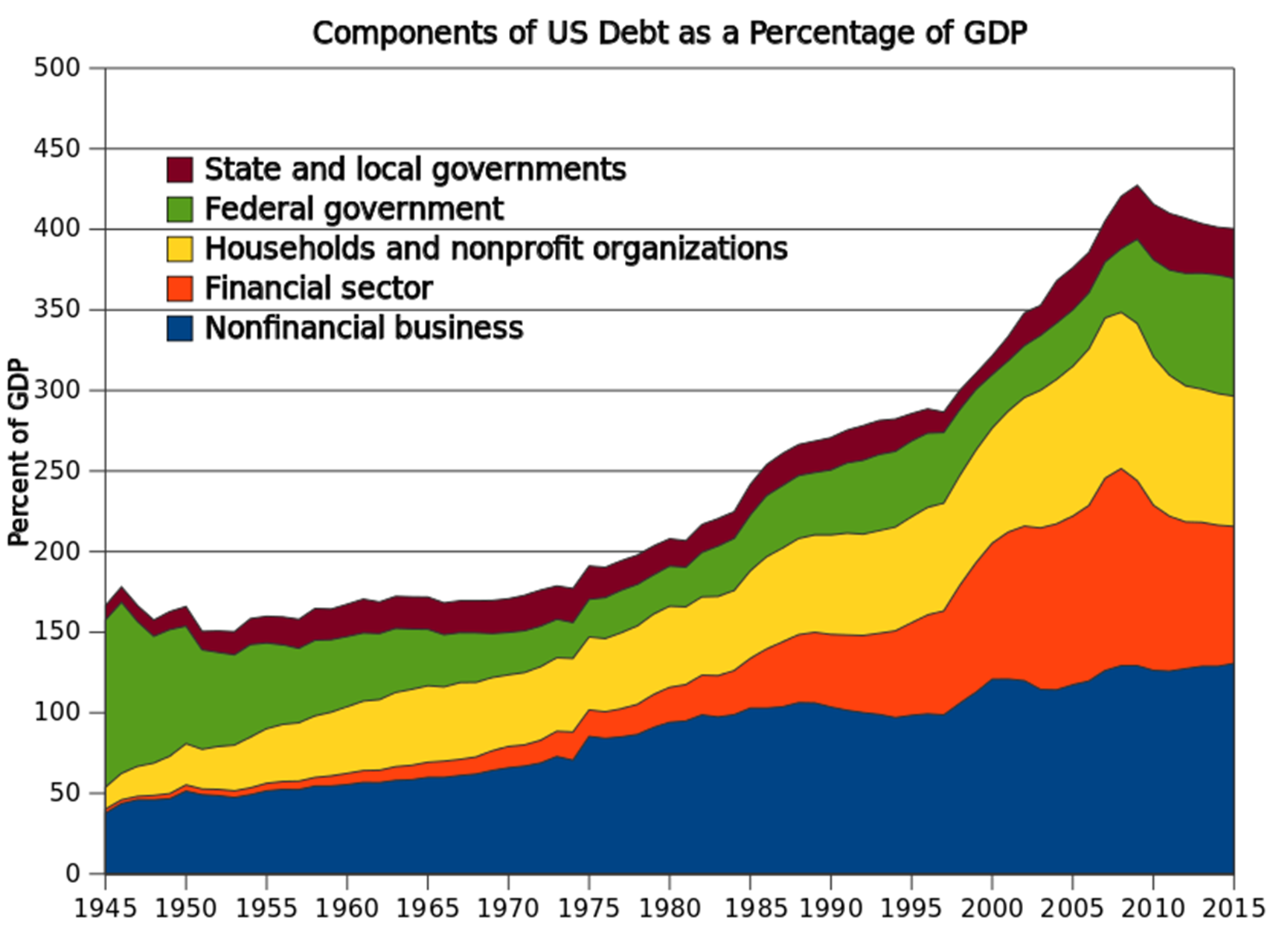
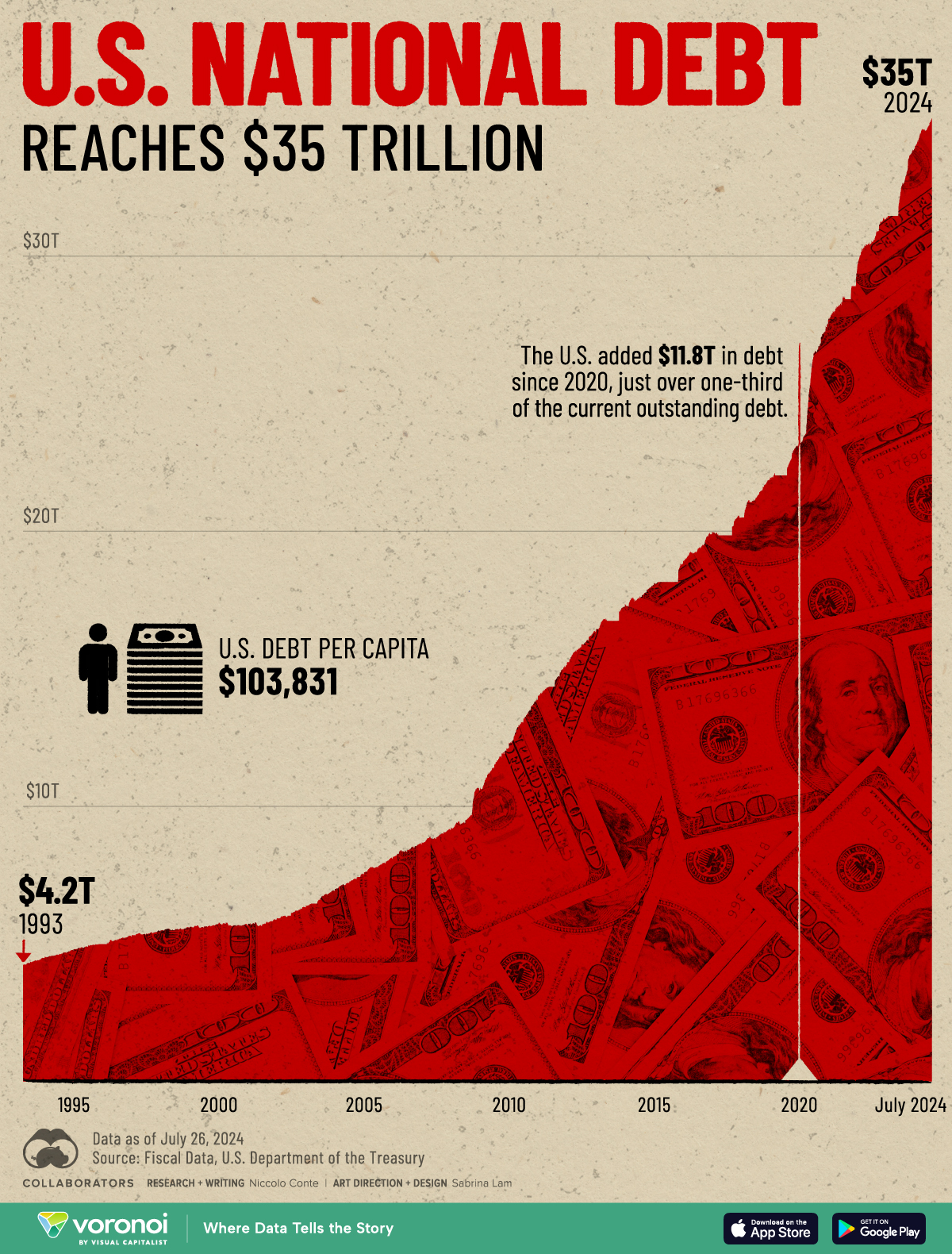
Social Security is the largest owner of the US Debt. In 1996, President Clinton amended the Social Security Act of 1945 by approving Public Law 104 – 193. President Clinton made an immoral choice to address the problem of mounting US Debt. His plan to reduce the US Debt by denying the payment of Old Age Retirement Income Benefits to senior alien workers has backfired. God has given His Promise. It delivers Blessings for the obedience of Commandments. Disobedience of God’s Commandments has consequences. The Clinton Curse reveals the consequences of President Clinton’s corrupt conduct. As of today, the US satisfies the government’s need for revenue by borrowing from foreign nations.

The Clinton Curse. Clinton’s immoral Social Security Policy.

WHO OWNS THE MOST U.S. DEBT?

Clipped from: https://www.forbes.com/sites/mikepatton/2014/10/28/who-owns-the-most-u-s-debt/#1557bdf8819c

To satisfy the U.S. government’s need for revenue, Washington collects taxes and fees. What happens if this isn’t enough? What happens if the federal government needs more? That is the subject of this article in which we’ll reveal who owns the most U.S. debt and how much of it is owned by foreign nations. We’ll begin by explaining, in simple terms, how the debt market functions.

Debt 101

An individual takes on debt when they finance a new car, house, etc. The U.S. government does so when it issues securities. Specifically, the federal government issues Treasury bills, notes, and bonds. The primary difference is in their maturity. For example, Treasury bills have a maturity of less than one year. Treasury notes mature in one to ten years. Treasury bonds have maturities greater than 10 years.

To issue its debt, the government holds periodic Treasury auctions. A successful auction indicates a strong demand for U.S. Treasury securities. If the auction doesn’t go well, it means demand for Treasuries is weak. Who owns the most Treasury’s?

Owners of U.S. Debt

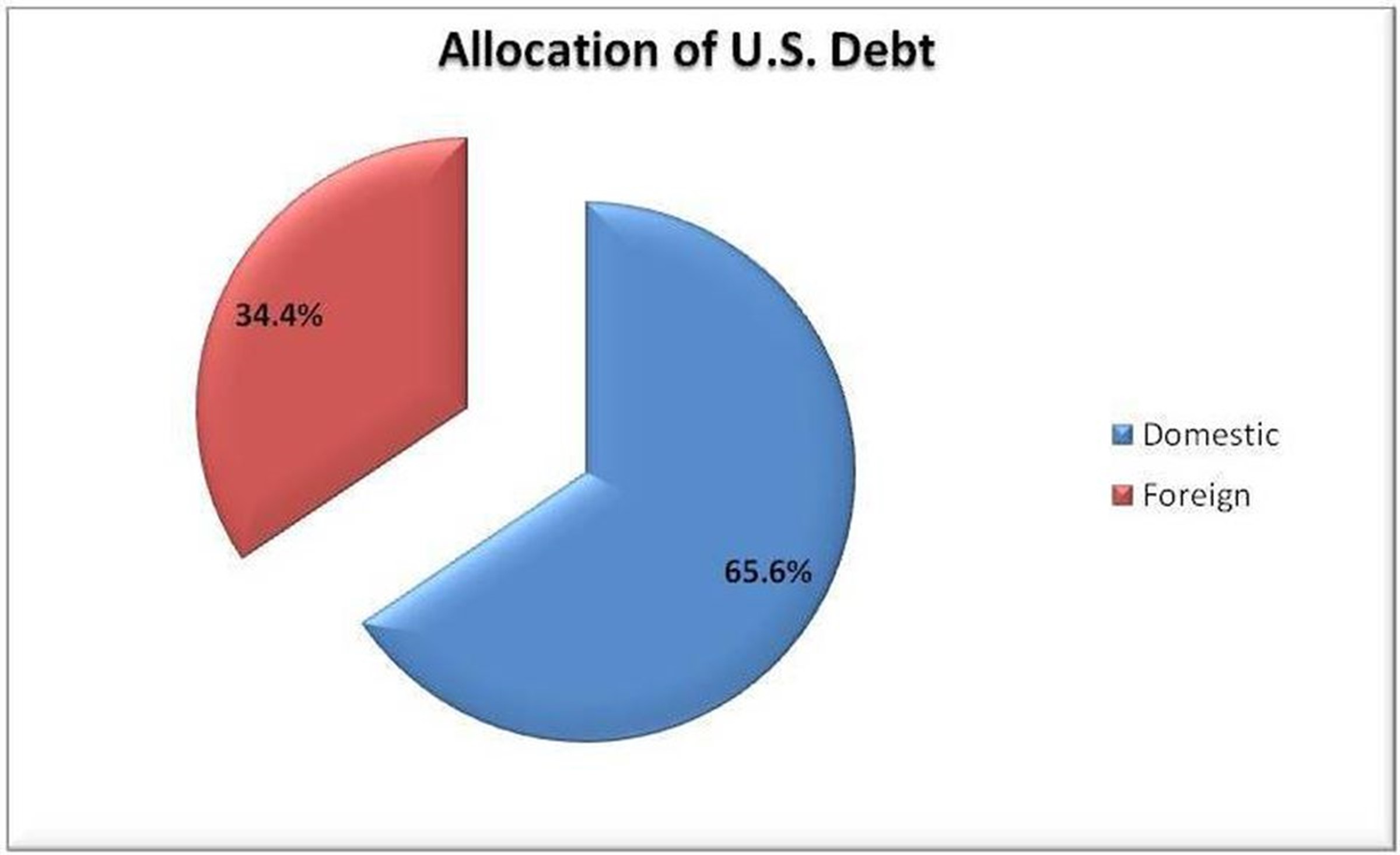
The largest owner of U.S. debt is Social Security. Since the Social Security system is a government entity, how can the government own its own debt? Good question. This is where the “house of cards” theory resides. Some believe the federal government is merely moving the IOUs from one shell to another, hoping to escape the watchful eye of its citizens. In any event, Social Security owns about 16% of the debt followed by other federal government entities (13%), and the Federal Reserve (12%). How much is owned by foreign governments? The following chart contains the answer.

The Clinton Curse. Clinton’s immoral Social Security Policy.

According to the U.S. Treasury Department, at the end of August 2014, more than a third of the debt was owned by foreign countries (34.4%). The largest foreign holders of U.S. debts are Mainland China (7.2%) and Japan (7.0%). What is the consequence of having such a large percentage of debt held by foreign nations? It depends. It depends on the relationship between the U.S. and the specific foreign country. It also depends on the global interest rate environment. Finally, it depends on the geopolitical climate and the degree of fear around the globe. This is the case because when fear rises money flows into U.S. Treasuries which is viewed as a safe place to invest. The percentage of debt owned by countries that are less friendly to America is about 10%. This includes China, several oil exporters (Ecuador, Venezuela, Iran, Iraq, Libya, etc.), and a few others. The worst case would materialize if the largest holders decided to sell their Treasury securities at the same time. This could potentially decrease demand which would push yields higher. If yields rose, the federal government would find it more difficult to service the debt, pushing the deficit higher. If the deficit rose, the total debt burden would accelerate and, unless demand for U.S. debt was to increase, it could get ugly. Will this transpire? It’s not too likely. At least not for the foreseeable future anyway.

Conclusion

Given the state of the global markets, the U.S. is still considered to be the best house in a bad neighborhood. Even though more than one-third of the debt is owned by foreign nations, as long as there are no safer places to invest, money will find its way here. Therefore, global turmoil would be in the best interest of the federal government. Anything which raises fear will bring money to the Treasury and allay the need for higher taxes. However, one day this unsustainable path we’re on will reach its day of reckoning. However, that’s probably not any time soon.

The Clinton Curse. Clinton’s immoral Social Security Policy.


Whole Curse – The US Economy on a Slippery Slope

THE CLINTON CURSE – THE US ECONOMY ON A SLIPPERY SLOPE

The Clinton Curse. The US Economy on a Slippery Slope.

Antislavery Campaign of 2018 demands the Repeal of PRWORA of 1996 as it triggered ‘The Clinton Curse’ placing the US economy on a slippery slope. In my analysis, President Clinton did not Balance the US Budget for he acted in violation of God’s Commandments.

President Clinton missed the opportunity to save the country from foreign debt because he denied the payment of the Old Age Retirement Income and Health Insurance Benefits to alien workers who fully subscribed to the Social Security and Medicare Plans by paying the necessary taxes. To the same extent, ‘The Clinton Curse’ invites Americans to live their lives paying taxes to repay the foreign debt.

How Bill Clinton’s Balanced Budget Destroyed The Economy – Business Insider

Clipped from: https://www.businessinsider.com/how-bill-clintons-balanced-budget-destroyed-the-economy-2012-9

The Clinton Curse. The US Economy on a Slippery Slope.

Bill Clinton is giving the keynote speech at the Democratic National Convention tonight.

The idea is to make people feel nostalgic for the last time when the economy was really booming, and hope that some of that rubs off on Obama.

However, in the New York Post, Charlie Gasparino uses the occasion to remind everyone that the seeds of our current economic malaise were planted during the Clinton years.

Basically, it was under Clinton that Fannie and Freddie really began blowing the housing bubble, issuing epic amounts of mortgage-backed debt.

The story that Gasparino tells is basically: Liberal Bill Clinton thought he could use government to make everyone a homeowner and so naturally this ended in disaster.

Gasparino specifically cites the controversial Community Reinvestment Act, a popular conservative bogeyman:

How did they do this? Through rigorous enforcement of housing mandates such as the Community Reinvestment Act, and by prodding mortgage giants Fannie Mae and Freddie Mac to make loans to people with lower credit scores (and to buy loans that had been made by banks and, later, “innovators” like Countrywide).

The Housing Department was Fannie and Freddie’s top regulator — and under Cuomo, the mortgage giants were forced to start ramping up programs to issue more subprime loans to the riskiest of borrowers.

That’s interesting. But the truth is far more complicated. And more interesting.

Clinton’s Budget Legacy

In addition to being remembered for a strong economy, Bill Clinton is remembered as the last President to preside over balanced budgets.

Given the salience of the national debt issue in American politics today, the surpluses are a major mark of pride for the former President (and arguably the entire country). They shouldn’t be.

“I think it is safe to say that we are still suffering the harmful effects of the Clinton budget surpluses,” says Stephanie Kelton, an economics professor at the University of Missouri Kansas City.

To understand why you first need to understand that the components of GDP look like this:

In the above equation, C is private consumption (spending). ‘I’ is investment spending. ‘G’ is government spending. And ‘X-M’ is exports-minus imports (essentially the trade surplus).

Here’s a chart of the government budget around the years during and right after Clinton, in case you need a reminder that the government was in surplus near the end of his tenure.

The Clinton Curse. The US Economy on a Slippery Slope.

Business Insider, Bloomberg

If the government is in surplus, it means that the government is taking in more cash than it is spending, which is the opposite of stimulus.

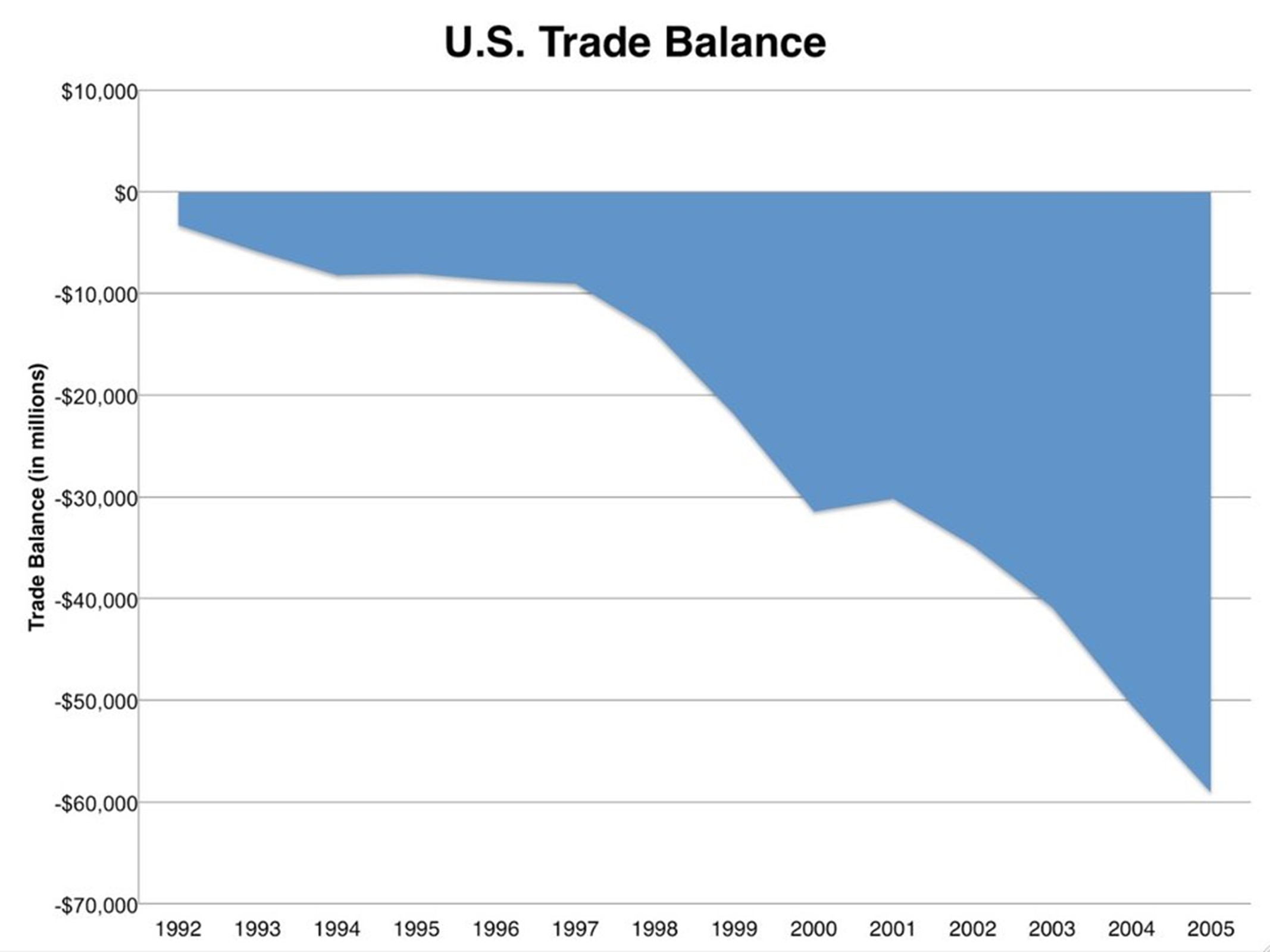
It’s also well-known that the US trade deficit exploded during the late 90s, which means that ‘X-M’ was also a huge drag on GDP during his years.

The Clinton Curse. The US Economy on a Slippery Slope.

Business Insider, Bloomberg

So the trade deficit was subtracting from GDP, and the government was sucking up more money from the private sector than it was pushing out.

There was only one “sector” of the economy left to compensate: Private consumption. And private consumption compensated for the drags from government and trade in two ways.

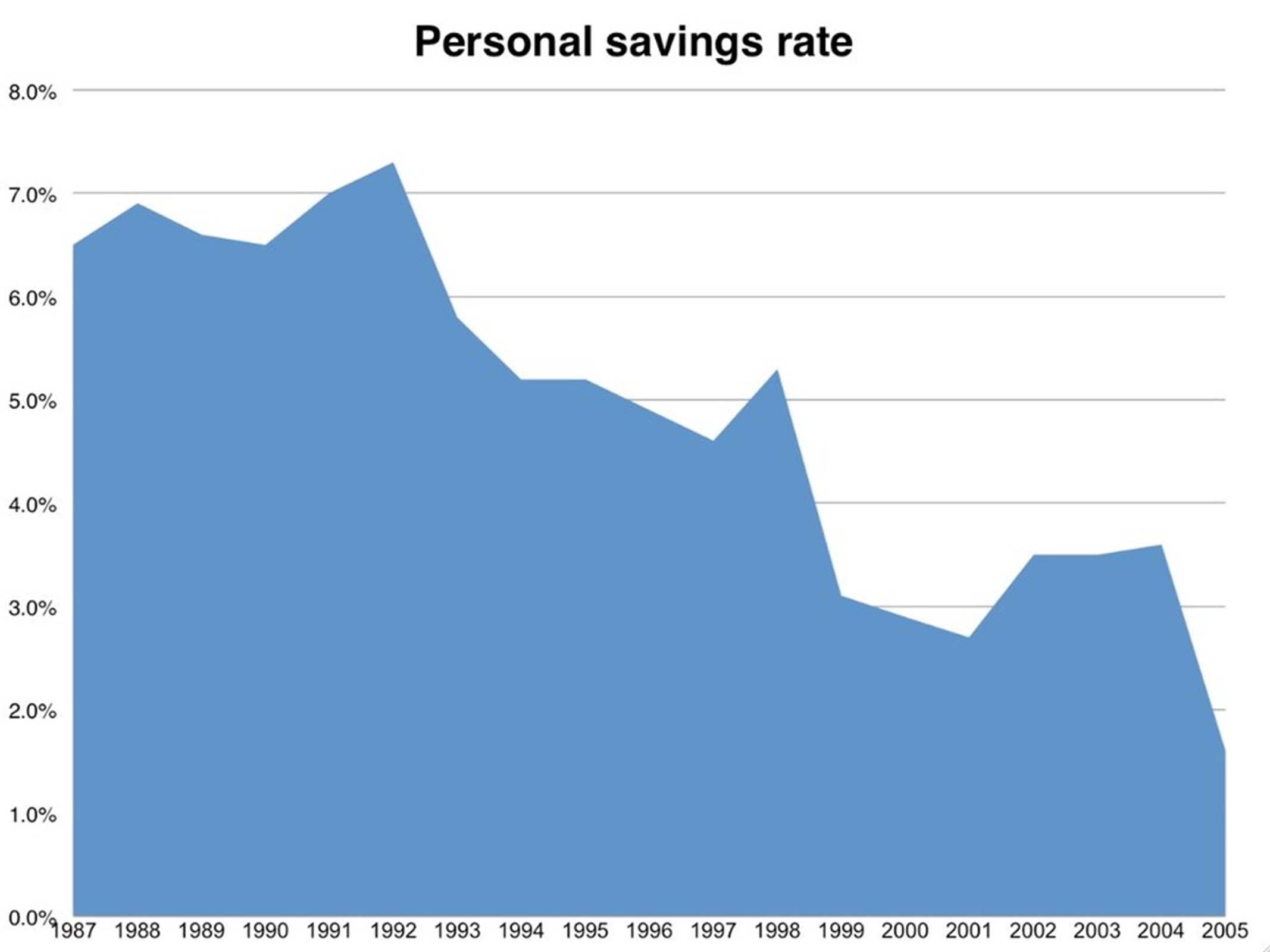
First, the household savings rate collapsed during the Clinton years.

The Clinton Curse. The US Economy on a Slippery Slope.

Business Insider, Bloomberg

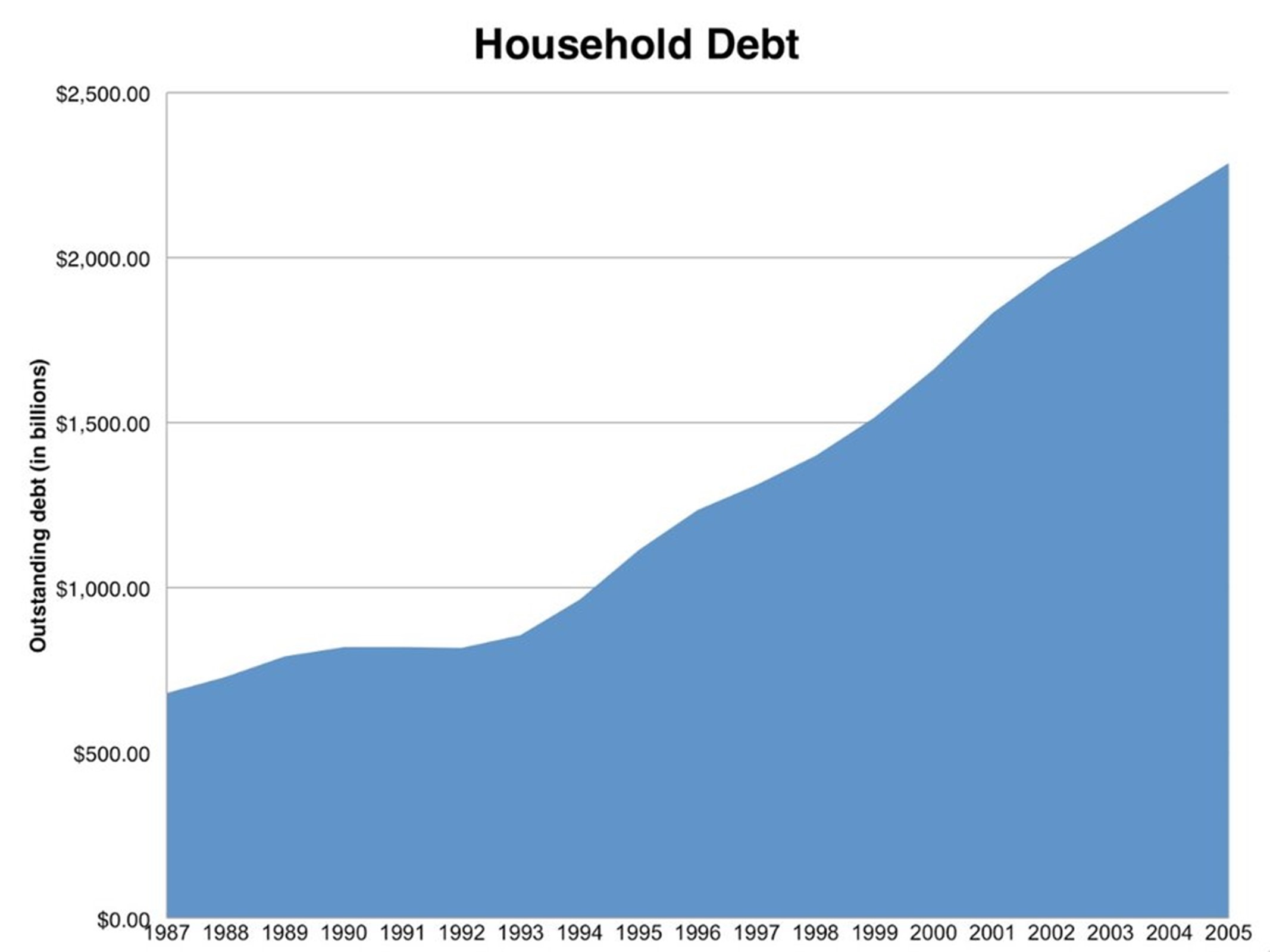
And even more ominously, household debt began to surge.

The Clinton Curse. The US Economy on a Slippery Slope.

Business Insider, Bloomberg

So already you can see how the crisis started to germinate under Clinton.

As his trade and budget policies became a drag on the economy, households spent and went into debt like never before.

Economist Stephanie Kelton expounded further in an email to Business Insider:

“Now, you might ask, “What’s the matter with a negative private sector balance?”. We had that during the Clinton boom, and we had low inflation, decent growth and very low unemployment. The Goldilocks economy, as it was known. The great moderation. Again, few economists saw what was happening with any degree of clarity. My colleagues at the Levy Institute were not fooled. Wynne Godley wrote brilliant stuff during this period. While the CBO was predicting surpluses “as far as the eye can see” (15+ years in their forecasts), Wynne said it would never happen. He knew it couldn’t because the government could only run surpluses for 15+ years if the domestic private sector ran deficits for 15+ years. The CBO had it all wrong, and they had it wrong because they did not understand the implications of their forecast for the rest of the economy. The private sector cannot survive in negative territory. It cannot go on, year after year, spending more than its income. It is not like the US government. It cannot support rising indebtedness in perpetuity. It is not a currency issuer. Eventually, something will give. And when it does, the private sector will retrench, the economy will contract, and the government’s budget will move back into deficit.”

But this is only part of the story. What about what Charlie Gasparino wrote about above?

The Fannie and Freddie Boom

When the government is running a surplus, it no longer has to issue much debt. But risk-free government bonds are a crucial component of portfolios for all kinds of financial institutions, and for mom & pop investors who like the safety of regularly Treasury payouts. The yield on the 10-year bond was over 5% back in those days… nothing to sneeze at for people planning for a retirement.

This created a bit of a crisis.

Bond trader Kevin Ferry, a veteran of the scene, told Business Insider about the panic that was unfolding over the government’s lack of debt.

“OMG, they were all saying… there wasn’t going to be any paper!”

How did the markets react?

“Lo and behold… [Fannie and Freddie] issuance “SURGED” in the late 90s,” said Ferry.

Everything changed. While the government dramatically slowed down the issuance of Treasuries, Fannie and Freddie picked up the baton and started selling debt like never before.

“Prior to those years, there were not regular [Fannie and Freddie] auctions.”

“The system wanted it.”

“The fear was that there wasn’t going to be any…. There were no bill auctions.”

“The brokers were calling up ma & pa and said there are no more T-Bill auctions!”

And the data bears this out.

Total agency issuance of mortgage-backed securities spiked in 1998 and 1999, and from then on they never looked back.

The Clinton Curse. The US Economy on a Slippery Slope.

Business Insider, Bloomberg

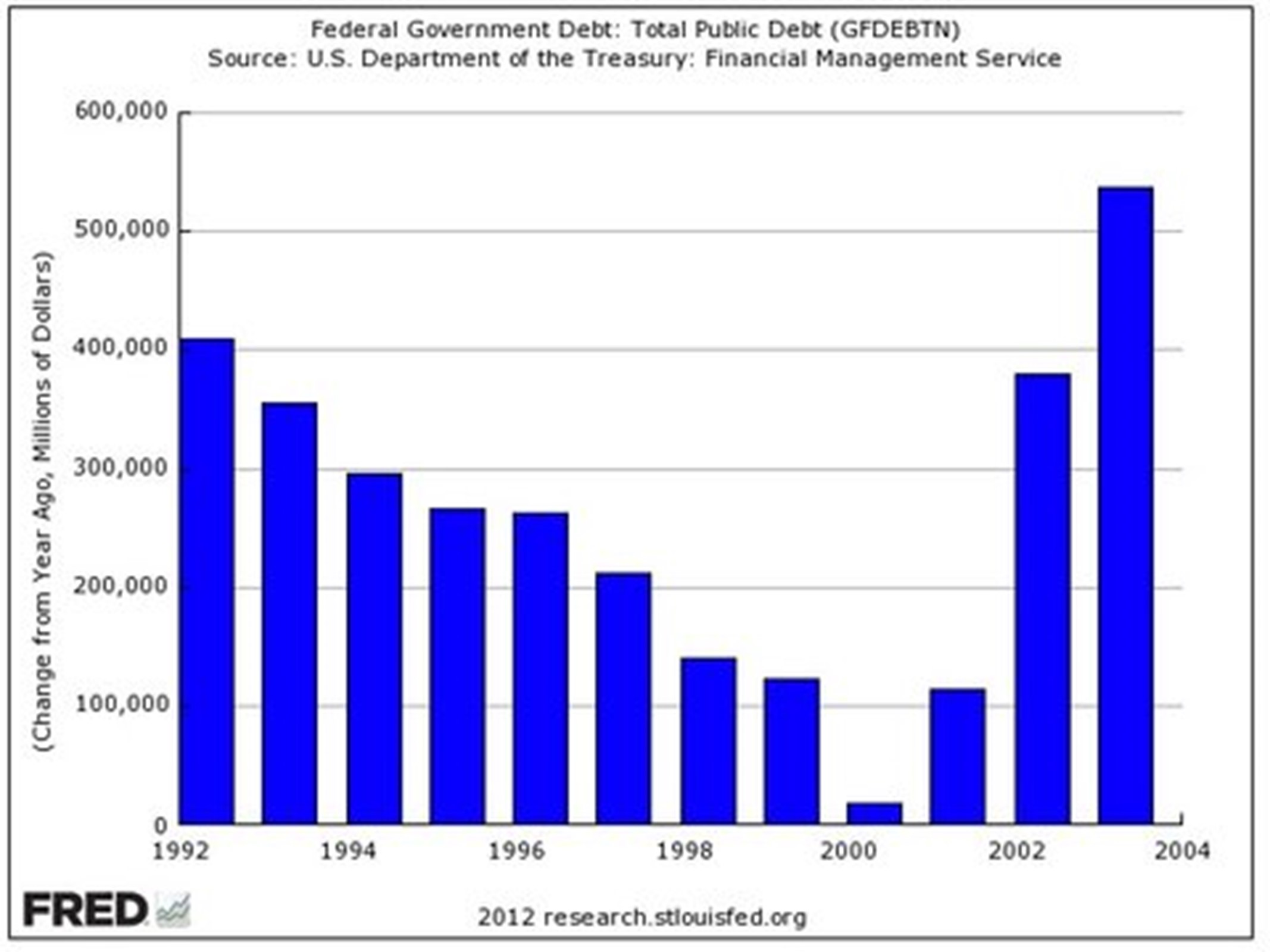
And just to drive home the point again, about how the 1998-1999 spike in issuance was the mirror image of the annual change in the size of the government debt.

The Clinton Curse. The US Economy on a Slippery Slope.

FRED

Note that both government debt and agency issuance spiked in the early 2000s, but that was during a recession when the private sector dramatically scaled back its activity form the late 90s.

How Clinton Destroyed The Economy

The bottom line is that the signature achievement of the Clinton years (the surplus) turns out to have been a deep negative. For this drag on GDP was being counterbalanced by low household savings, high household debt, and the real revving up of the Fannie and Freddie debt boom that had a major hand in fueling the boom that ultimately led to the downfall of the economy.

And that brings up a broader question that people who advocate balanced budgets must answer.

What’s the point of it?

Despite the budget surplus, interest rates were higher. And the surplus provided no protection of the coming slump. And if anything, it just weakened the most brittle part of the economy: households.

Furthermore, there is a pattern of this.

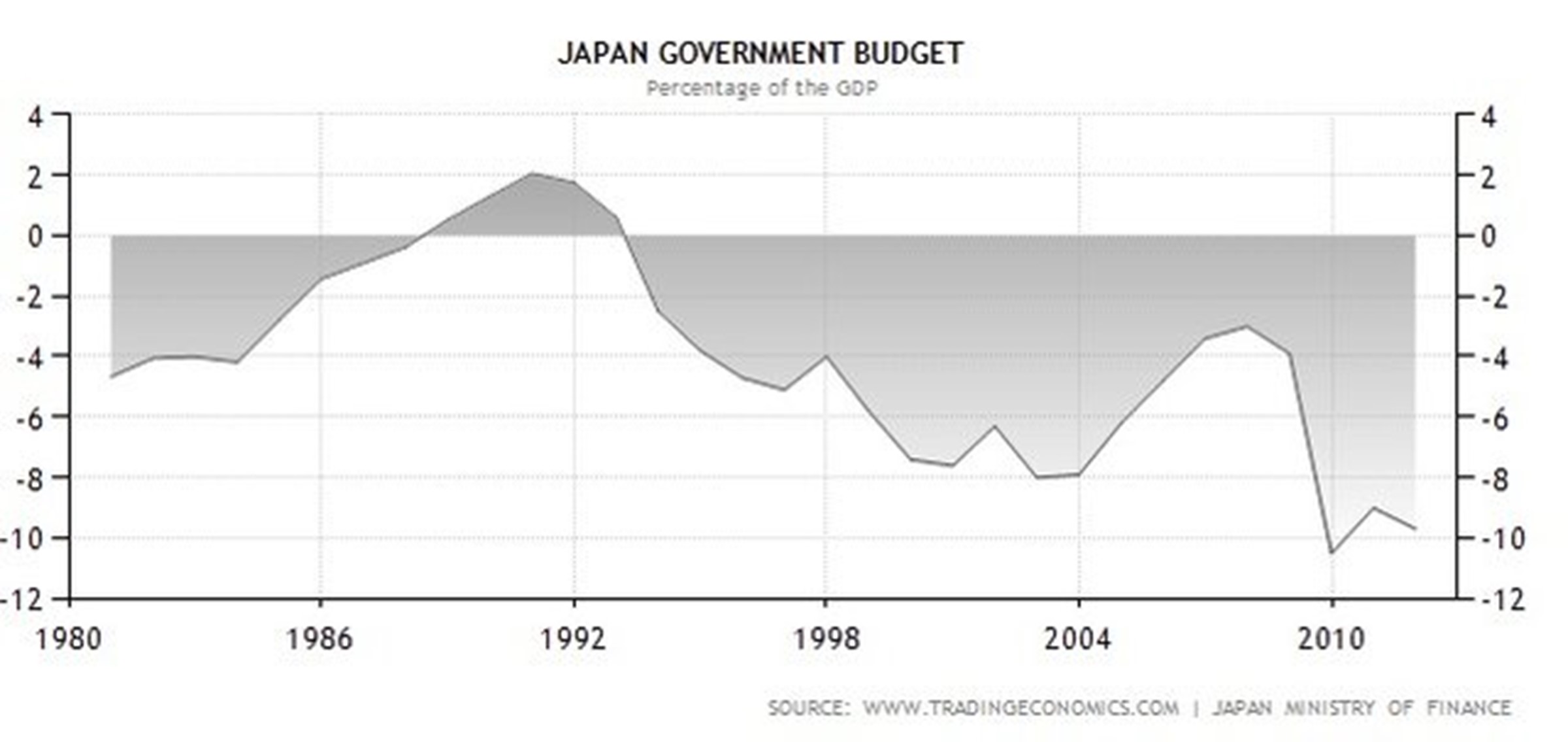
Japan ran a budget surplus in the year right before its economy went into terminal decline, as this chart from Trading Economics shows

The Clinton Curse. The US Economy on a Slippery Slope.

So while Clinton will be remembered nostalgically tonight, for both the performance of the economy and his government finances, they shouldn’t be remembered fondly.

The Clinton Curse. The US Economy on a Slippery Slope.

Whole Slave – The Clinton Curse – A Slave to Sin

ANTISLAVERY CAMPAIGN OF 2018 – THE CLINTON CURSE – A SLAVE TO SIN

Antislavery Campaign of 2018. The Clinton Curse. A Slave to Sin.

Antislavery Campaign of 2018 is not about giving citizenship rights to non-citizens. It is about upholding the Supreme Law of the Land to abolish bondage, servitude, and slavery. The Reconstruction of America is not yet over. Slavery re-appeared in this Land in a new form and remains hidden or unnoticed. I ask my readers to stop pretending. At least, admit that over 600, 000 Americans died in the most defining Struggle ever fought by Americans since Independence.

REPEAL PRWORA PROJECT – CAMPAIGN FOR SAVING ONE NATION UNDER GOD

Antislavery Campaign of 2018. The Clinton Curse. A Slave to Sin.

WHERE IS PROTECTION FOR MAN DURING GOLDEN YEARS OF HIS LIFE? HOW TO SURVIVE OPPRESSION?

Antislavery Campaign 2018. The Clinton Curse. A Slave to Sin.

THE GREAT AWAKENING MOVEMENT – SPIRITUAL WARFARE AGAINST OPPRESSION BY EVIL

Antislavery Campaign of 2018. The Clinton Curse. A Slave to Sin.

A NEW BEGINNING IN AUGUST 1996 – OPEN YOUR EYES – OPPRESSION OF ALL THOSE WHO WORK UNDER AMERICAN SUN:

Antislavery Campaign of 2018. The Clinton Curse. A Slave to Sin.

PRESIDENT CLINTON’S NEW BEGINNING IN 1996 – ECONOMIC OPPRESSION OF ALIEN WORKERS

On August 22, 1996, US President Bill Clinton (Democrat) signed into Law that reintroduced Slavery, Involuntary Servitude, Serfdom and Forced Labor in the pretext of making ‘A New Beginning’. Welfare Reform Act or Personal Responsibility and Work Opportunity Reconciliation Act (PRWORA) is unjust and unfair for it violates Constitutional Law that defends natural rights of all people living in United States. All US taxpayers must be treated as equals for receiving retirement income benefits for which they paid taxes. President Clinton’s action constitutes a transgression of President Abraham Lincoln’s Emancipation Proclamation that saved US Non-Citizens or Aliens from the indignity of Slavery.

GIVING VOICE TO HIDDEN PROBLEM – TRAVESTY OF EMANCIPATION PROCLAMATION

NATURAL LAW vs MAN MADE LAW – SLAVERY IS CONTEMPT OF OVER 600,000 AMERICANS WHO DIED BECAUSE OF SLAVERY

US CONGRESS SLAVE DRIVER

I ask my readers to review 43-word 13th Amendment and tell me if those words still govern, rule, and operate the lives of all people, wage earners who perform labour paying taxes.

My readers should not be surprised if I describe the US Congress as “Slave Driver.” The reason for my claim is based on PRWORA enacted by the US Congress in 1996 that amended The US Social Security Act of 1935. This legal provision enacted by 104th US Congress is incorporated as Section 202(y) of the Social Security Act. It mandates that no Retirement Income benefits shall be payable to registered alien(non-citizen) taxpayers in the United States without showing proof of lawful residency as determined by the Attorney General. In my view, unexpired Employment Authorization Document (EAD) must not be demanded if a worker has attained full retirement age as determined by law.

Social Security Act, Section 202(y) violates the principle enshrined in those 43 words called the 13th Amendment. This 1996 amendment to the Social Security Act is fundamentally flawed for it is unconstitutional. It takes away the property rights (earnings, wages, and retirement income) of individuals who paid Federal, State, Local, Social Security and Medicare Taxes working in this country to attain full retirement age.

The Emancipation Proclamation issued by President Abraham Lincoln (Republican) in September 1862 came into effect on January 01, 1863 freeing slaves in all territory still at War with the Union. These slaves were not citizens of the Land and had no political rights of their own. In Law, Servitude or Slavery refers to the burden imposed upon the property of a person by a specified right another has in its use. Servitude involves labour in which the person who performs labour has no right to his earnings from labour. The Emancipation Proclamation specifically protects, defends, preserves and safeguards rights of aliens or non-citizens residing in the United States.

The amended Social Security Act unconstitutionally gives power to Social Security Administration to withhold the property (wages, earnings, monthly retirement income benefits) of alien workers who are not convicted by US Court of Law. In my analysis, The Social Security Act of 1935 amended in 1996 fails to uphold the US Constitution as the Supreme Law of this Land.

I ask my readers to make the distinction between Social Security Tax and Monthly Retirement Benefit. The first represents tax paid to the government and the second represents earning or wage entitled to a retired person to provide income and security during old age.

Speaker.gov

Press Release

The 150th Anniversary of the 13th Amendment

December 9, 2015.|Speaker Ryan’s Press Office

WASHINGTON – Earlier today, at a ceremony in Emancipation Hall of the United States Capitol Visitor Center, President Obama and leaders of Congress commemorated the 150th anniversary of the 13th amendment to the Constitution. Following are House Speaker Paul Ryan’s (R-WI) remarks at the ceremony, as prepared for delivery:
The Thirteenth Amendment is just 43 words long. It is so short that, when you read it, you can almost miss the whole significance. You have to stop and remind yourself that 600,000 people died in the Civil War—600,000 died over 43 words. Or to be more precise, they died in a war that decided whether those 43 words would ever be written.

The Repeal movement exposes President Clinton’s contemptuous violation of Constitutional Principles of equal protection, equal justice and equal treatment under Law.

US Social Security Administration must either obtain a criminal conviction or designate septuagenarian Senior Alien as “SLAVE” to withhold the payment of his monthly retirement income.

Antislavery Campaign of 2018. The Clinton Curse. A Slave to Sin.

President Clinton’s Slavery Law of 1996 tramples upon fundamental freedoms and human dignity entitled to all human beings without any concern for their country of origin or citizenship status. The US Congress can levy taxes but cannot deprive any person of Life, Liberty and Property without due process of Law.

Antislavery Campaign of 2018. The Clinton Curse. A Slave to Sin.

WHOLE DUDE – WHOLE DANGER

Muhammad Ali Jinnah (محمد على جناح) (December ...
Image via Wikipedia

WHAT IS SECONDHAND SMOKE? :

When you breathe in smoke that comes from the end of a lit cigarette, cigar, or pipe ( often described as ‘sidestream smoke‘ ), or when you breathe in smoke that is exhaled by a smoker(often described as ‘mainstream smoke’ ), you are exposed to the risk of secondhand smoke. You will be inhaling almost the same amount of chemicals as the smoker breathes in. Tobbaco smoke contains more than 4,000 different chemical compounds, and more than 50 of them are known to cause Cancer. Some of these known carcinogens are Hydrogen Cyanide, Benzene, Formaldehyde, and Carbon monoxide. Involuntary or passive smoking can kill. There is no amount of exposure to secondhand smoke that is considered as a safe level of exposure. The more secondhand smoke that you breathe in, the more your health risk increases. Secondhand smoke exposure causes nearly 50,000 deaths per year in adult nonsmokers in the United States. 3,000 deaths are from Lung Cancer, and 46,000 deaths are from heart disease. Nonsmokers increase their risk of developing Lung Cancer by 20% to 30%, and heart disease by 25% to 30% when they are exposed to secondhand smoke. The risks of Breast Cancer and Cervical Cancer and other types of Cancer are also higher. Women who are exposed to secondhand smoke face a 69% higher risk of heart disease and a 56% higher risk of Stroke than those who are not exposed to smoke. Children are particularly vulnerable to the effects of secondhand smoke because of their bodies are still growing and they breathe at a faster rate than adults. The effects of smoking can be very significant especially for those who live or work with a smoker. In reality, most of the smoke from a burning cigarette doesn’t get sucked down into smoker’s lungs- it simply escapes into the air where it can be inhaled by anyone unfortunate enough to be nearby. Living under the shadow of a great person may give some benefits, protection, and a sense of security. But, life under the shadow of secondhand smoke is a prescription for death. There was such an unfortunate victim who had lived under the shadow of a great leader known as Mohammed Ali Jinnah.

MOHAMMED ALI JINNAH, QAID – E – AZAM – THE GREAT LEADER OF PAKISTAN :

Mohammad Ali Jinnah, Qaid-e-Azam, the great leader and founder of Pakistan. What is the risk of Living under the Shadow of a great leader?

 Jinnah, Indian Muslim politician was the founder and first Governor General of Pakistan (1947-1948). His parents arranged for an early marriage for him before he left for England at the age of 16. While in London, Jinnah suffered the loss of his wife and mother. In 1895, at the age of 19, he was called o the Bar on completion of his formal studies to become a barrister. He had supported the election of Dadabhai Naoroji, a Parsi leader, a leading Indian nationalist who ran for the English Parliamnet. Naoroji became the first Indian to sit in the British House of Commons. In 1896, Jinnah returned to Karachi and then moved to Bombay to start his legal practice. He met Ruttenbai, the daughter of Dinshaw Petit, a Bombay Parsi millionaire. Jinnah had married this young and beautiful lady over tremendous opposition from her parents and others. The great love and the marriage withered and proved to be an unhappy union. The stress imposed by exposure to secondhand smoke was not known and was not recognized those days. Jinnah’s addiction to Tobacco and the price paid by his wife describe the other side of Jinnah which many people in Pakistan and India tend to ignore.

The Other side of Mohammed Ali Jinnah :

Jinnah, a great leader with a simple addiction to Tobacco.


This young and beautiful lady had great feelings of love for Jinnah and those tender feelings withered while she had lived under the Shadow of Secondhand Smoke.


I would like to share the very interesting and powerful story about the life of Ruttenbai who had lived under the shadow of Mohammed Ali Jinnah . Unfortunatley, this story posted below my post fails to mention the nature of cancer that had killed this beautiful lady at such an young age. I am very sure about the nature of her illness. She died of Lung Cancer. She developed Cancer because of inhaling tobacco smoke and it is a very well recognized risk factor now. Secondhand Tobacco smoke kills people and even now the chances of survival are not good. I had personally witnessed a similar case and had narrated that story at my Home page of BhavanaJagat and the story is titled ‘Living Under the Shadow – A Prescription for Death’. A young, beautiful lady, the first wife of Chief of Army Staff (under Prime Minister Rajiv Gandhi), General K S Sundarji ( who is well-known for Operation Blue Star ) died of Lung Cancer in Army Hospital, New Delhi during 1978. The connection between smoking and Lung Cancer was well understood but at that time the
risk of Lung Cancer due to Secondhand Tobacco Smoke was not properly recognized.

The Chief of Army Staff, General Krishnaswamy Sundarrajan, PVSM - I had served under his Command while he was the General Officer Commanding of the First Armoured Division during 1976 to 1978. His first wife, Padma Sundarji had lived her life under the shadow of Secondhand Smoke.

http://bhavanajagat.wordpress.com/2010/05/01/living-under-the-shadow-a-prescription-for-death/

Dr. R. Rudra Narasimham, B.Sc., M.B.B.S.,
Kurnool Medical College, Kurnool, Andhra Pradesh, India,
M.B.B.S., Class of April, 1970.

 
The Softer Side of Mr. Jinnah

More than 61 years have passed since the death of founder of Pakistan , Quaid-i-Azam Mohammad Ali Jinnah. But even today, nothing about Jinnah seems ordinary —not his legal career, politics, personal life, his legacy and even the property he left behind.

The great South Asian intellectual Eqbal Ahmed once described Jinnah as an enigma of modern history. His aristocratic English lifestyle, Victorian manners, and secular outlook rendered him a most unlikely leader of India ’s Muslims. Yet, he led them to separate statehood, creating history, and in Saad R. Khairi’s apt phrase, “altering geography”.

Much has been written about Jinnah’s legal career, politics, his role as a founder of Pakistan and his vision, but even today, very little is known about Jinnah’s personal life. This was probably because Jinnah never had time to write a diary or an autobiography and whatever little he wrote was formal and matter of fact. For most of his life, he remained reserved, taciturn and secretive. He wrote his will in May, 1939, but it was only after his death that Liaquat Ali Khan, his close associate and the first Prime Minister of Pakistan, came to know that he was its trustee and executor.
His only child, Dina Wadia, has hardly ever spoken about her father in public. So furious was Jinnah with Dina that he disowned her after she married a Parsi man against his wishes, and yet he left two lacs for her in his will. Akbar Ahmed’s movie Jinnah had just ten to fifteen minutes on Jinnah’s personal life, which are nowhere near enough.

Jinnah’s first wife, fourteen year old Emibai from Paneli village, died just eight months after he left for London at age sixteen in 1892, to join Graham’s Shipping and Trading Company, which conducted business with his father in Karachi. It was a forced marriage, as Jinnah’s mother was afraid that if he went to England , he might end up marrying an English girl. He barely knew Emibai.

Jinnah’s second marriage with the most beautiful girl of Bombay – Ruttie: The Flower of Bombay – was like a fairy tale. It began in the summer of 1916 in Darjeeling or “Town of the Thunderbolt” (how appropriate considering what was to happen there).

Jinnah had established himself as a lawyer and a politician by then and had become friends with Sir Dinshaw Maneckjee Petit, the son of one of the richest and most devoutly orthodox Parsis of the 19th century.
The Petit`s chateau overlooked Mount Everest and it was there Jinnah met his only daughter Ruttenbai Petit or Ruttie as she was popularly called. Merely sixteen at that time, Ruttie was a charming young girl. Stanley Wolpert writes in Jinnah of Pakistan : “Precociously bright, gifted in every art, beautiful in every way. As she matured, all of her talents, gifts and beauty were magnified in so delightful and unaffected a manner that she seemed a fairy princess”.

A dazzling beauty and full of life, Ruttie had exquisite taste and affable manners. Quick-witted, she was easily one of the best dressed and most popular women among the elitist circles of Bombay . She was intellectually far more mature than other girls of her age, with diverse interests ranging from poetry (Oscar Wilde being her favorite, whom she often recited) to politics. Her large collection of books, which remained in Jinnah’s possession after her death, reflected her deep interest in poetry, literature, history, occultism, mysticism and sorcery. She was an excellent horse-rider. She attended all public meetings and was inspired by Annie Besant’s Home Rule League.

A fierce supporter of India for Indians, Ruttie was once asked about rumors of Jinnah’s possible knighthood and whether she would like to be Lady Jinnah. She snapped that she would rather be separated from her husband than take on an English title.
Jinnah on the other hand also had a special interest in acting and in Shakespeare’s dramas. While in London , he had acted in some Shakespearean plays and even considered seriously taking up acting as a profession. It was his dream to play Romeo at The Globe in London . Khwaja Razi Haider thinks it was probably Jinnah’s deep interest in Shakespeare that gave him insight into the intricacies of the human character, which he was to use for grasping the essentials of Indian politics. Jinnah was thirty-nine and Ruttie sixteen, but the age difference proved no obstacle in their love. Love has no logic.
He was enamored by her beauty and charm and she was awe- struck by “Jay”, as she called him. Jinnah asked Sir Dinshaw for Ruttie’s hand in marriage, who became furious and refused. Jinnah repeatedly pleaded his case but Dinshaw never gave in, as Jinnah had a different faith and he was more than twice Ruttie’s age. Their friendship ended and Dinshaw forbade Ruttie from meeting Jinnah while she lived in his house. He even got a court injunction restraining Jinnah from meeting her (a pity no biographer has yet traced the court papers).
The couple continued to meet secretly, and patiently waited for two years until February 1918 when Ruttie turned eighteen, and was free to marry. She walked out of her parental home to which she was never to return, and converted to Islam at Bombay ’s Jamia Mosque, under the Muslim Shiite doctrine, on April 18, 1918.

The very next day, Jinnah and Ruttie got married in a quiet ceremony at Jinnah’s Malabar Hill house in Bombay . Located in a most highly-priced area today, with Maharashtra’s Chief Minister as its next-door neighbor, Jinnah House remains a dispute between India , Pakistan and Dina Wadia. Jinnah owned another house at 10 Aurangzeb Road , Delhi , which he sold just before Partition for Rs 3 lacs. The Dutch Ambassador to India lives there now. The Raja Sahib of Mahmudabad, who signed as Jinnah’s witness, and a few other friends, attended the wedding. Maulana Muhammad Hasan Najafi was Ruttie’s witness. Jinnah presented the wedding ring to Ruttie, a gift from Raja Sahab, and paid Rs 125,000 as haq mehr . Nobody from Ruttie’s family attended the wedding. Interestingly, the Nikah Nama stated “Ruttenbai” as the bride’s name instead of Marium, her Islamic name. The honeymoon was first at Raja Sahab’s Nainitaal mansion, and then at the Maidens Hotel, a magnificent property just beyond the Red Fort.

Quaid’s Nikahnama


Quaid’s house in Bombay

Gandhi’s grandson Raj Mohan Gandhi writes about the wedding in his book Understanding the Muslim Mind: “For the first time in his life, a girl had absorbed Jinnah’s emotions. Living for sometime now in a large but somber Malabar Hill house, bowing to ladies (on occasional parties) and praising their sarees but otherwise keeping a distance from them, (he) fell in love with Ruttenbai. Joy and laughter entered Jinnah’s life. The Malabar Hill house became brighter.’ She presented him with a daughter, Dina. But, ‘Alas the happiness was not destined to last; Sarojni’s veiled prediction of trouble came true”.

Sarojni Naidu was a huge admirer of Jinnah, wrote several poems and prose pieces on him, and many historians believe she was in love with him.
She wrote this about the wedding in a letter to Sir Syed’s son, Syed Mahmud: “So Jinnah has at last plucked the Blue Flower of his desire. It was all very sudden and caused terrible agitation and anger among the Parsis; but I think the child has made far bigger sacrifices than she yet realises. Jinnah is worth it all – he loves her; the one really human and genuine emotion of his reserved and self-centred nature. And he will make her happy.”

The first few years of the marriage were a dream for Ruttie and Jinnah, the happiest time of their lives. They traveled across India , Europe and North America together. Ruttie watched with a great sense of pride the feverish political activity of her husband. She would be seen in the visitors’ gallery when Jinnah was due to speak, accompanied him to the High Court, and even attended the Nagpur session of the Congress in December 1920.
According to Wolpert: “They were a head- turning couple; he in his elegant suits, stitched in London , she with her long, flowing hair decked in flowers. There was no limit to their joy and satisfaction at that time. Their only woe was Ruttie’s complete isolation and ostracism from her family.”

Kanji Dwarkadas, a veteran leader of Congress and a close friend of the couple, who looked after Ruttie during her last days, wrote in his book Ruttie Jinnah: The story of a great friendship: “For Jinnah, who was not generous in many matters, no expense was too great to satisfy the extravagant claims of the baronet’s spoilt child. During a visit to Kashmir , she spent Rs 50,000 in refurnishing the boathouse and Jinnah gladly paid all the bills. He treated her wonderfully well, and paid without a murmur all the bills necessitated by the luxurious life she led. Ruttie’s fabulous beauty, spontaneous wit, and immense charm have been praised to the neglect of her serious interests.”

Even though Ruttie was much younger than Jinnah, she made him a very happy man. They had no separate existence and Jinnah found her a great source of inspiration.
He resigned from the Orient Club where he used to play chess and billiards. He was so deeply in love with Ruttie that he would return from the law courts on time each day and talk to her for hours on end.
Unfortunately, their happiness was short- lived and the marriage started to crack after 1922-3. What caused the ruination of the Jinnah-Ruttie marriage? Was it Jinnah’s busy political life and his inability to give enough time to Ruttie, their age difference, or their incompatibility of temperaments? He was cold, introverted and domineering. She was young, extroverted, glamorous. There is no clear answer but the fact remains that Ruttie and Jinnah still loved each other despite the rift in their marriage.
It is evident in every letter Ruttie wrote during that period, and every book written on their relationship. She moved to London with Dina in 1922 and from there too, her heart was still set on her life with Jinnah.
She wrote in a letter to Kanji in India :“And just one thing more – go and see Jinnah and tell me how he is – he has a habit of overworking himself and now that I am not there to tease and bother him, he will be worse than ever.”

After her return, the couple tried one more time to save their failing marriage and took a five-month tour to Europe and North America together. But the rift grew and by January 1928 they were virtually separated, when Ruttie became seriously ill with cancer. Shortly before her death, she wrote a letter to Jinnah from Marseilles , France where she had gone for treatment. It turned out to be her last letter to him (larger view of original hand-written letter with typed text here

S. S. Rajputana,
Marseilles 5 Oct 1928 Darling – thank you for all you have done. If ever in my bearing your once tuned senses found any irritability or unkindness – be assured that in my heart there was place only for a great tenderness and a greater pain – a pain my love without hurt. When one has been as near to the reality of Life (which after all is Death) as I have been dearest, one only remembers the beautiful and tender moments and all the rest becomes a half veiled mist of unrealities. Try and remember me beloved as the flower you plucked and not the flower you tread upon.

I have suffered much sweetheart because I have loved much. The measure of my agony has been in accord to the measure of my love. Darling I love you – I love you – and had I loved you just a little less I might have remained with you – only after one has created a very beautiful blossom one does not drag it through the mire. The higher you set your ideal the lower it falls.
I have loved you my darling as it is given to few men to be loved. I only beseech you that the tragedy which commenced in love should also end with it.

Darling Goodnight and Goodbye Ruttie

It is a pity that none of the letters that Jinnah wrote to Ruttie have ever been made public. M.C. Chagla, a former Chief Justice of the Bombay High Court and a diplomat at the UN, has described the last days of Ruttie and Jinnah’s marriage in his book “Roses in December”. Chagla knew the couple very well, as he assisted Jinnah at his chambers during that time. He idealized Jinnah but severed all ties when he began working on the idea of an independent state for the Muslims of India. He writes:
By 1927, Ruttie and Jinnah had virtually separated. Ruttie’s health deteriorated rapidly in the years after they returned from their final trip together. Ruttie lived at the Taj Hotel in Bombay, almost a recluse as she became more and more bed-ridden. Kanji continued to be her constant companion. By February 18, 1929 she had become so weak that all she could manage to say to him was a request to look after her cats. Two days later, Ruttie Petit Jinnah died. It was her 29th birthday.
She was buried on February 22 in Bombay according to Muslim rites. Jinnah sat like a statue throughout the funeral but when asked to throw earth on the grave, he broke down and wept. That was the only time when I found Jinnah betraying some shadow of human weakness. It’s not a well publicised fact that as a young student in England it had been one of Jinnah’s dreams to play Romeo at The Globe. It is a strange twist of fate that a love story that started like a fairy tale ended as a haunting tragedy to rival any of Shakespeare’s dramas.”

The second time Jinnah ever broke down was in August 1947 when he visited Ruttie’s grave one last time before leaving for Pakistan . The architect of Pakistan paid a high price for Partition by leaving two of his most beloved possessions on ‘the other’ side of the border, the Jinnah House on Malabar Hill where he had the happiest moments of his life, and his beloved wife Ruttie who remains buried in Bombay. Jinnah left India in August 1947, never to return again, but he left behind a piece of his heart in a little grave in a cemetery in Bombay .