WHOLE DUDE – WHOLE GIFT

A TIME FOR EVERY PURPOSE UNDER HEAVEN  :      

TIME HEALS ALL WOUNDS - DOES IT DESCRIBE THE POWER OF TIME?


THE BOOK OF ECCLESIASTES AND CONCEPTS ABOUT TIME  :      

The words of the Preacher, the son of King David, King in Jerusalem, Solomon the Wise.


King Solomon is believed to be the author of The Book of Ecclesiastes, The Old Testament Book of Holy Bible. These are his words from Chapter 3, verses 1-11 :      

To everything there is a season,      

A time for every purpose under Heaven:      

A time to be born,      

And a time to die;      

A time to plant,      

And a time to pluck what is planted;      

A time to kill,      

And a time to heal;      

A time to break down,      

And a time to build up;      

A time to weep,      

And a time to laugh;      

A time to mourn,      

And a time to dance;      

A time to cast away stones,      

And a time to gather stones;      

A time to embrace,      

And a time to refrain from embracing;      

A time to gain,      

And a time to lose;      

A time to keep,      

And a time to throw away;      

A time to tear,      

And a time to sew;      

A time to keep silence,      

And a time to speak;      

A time to love,      

And a time to hate;      

A time of war,      

And a time of peace.      

What profit has the worker from that in which he labors? I have seen the God-given task with which the sons of men are to be occupied. He has made everything beautiful in its time. Also He has put eternity in their hearts, except that no one can find out the work that God does from beginning to end.      

THE HEALING POWER OF TIME  :      

Human existence could be challenged by physical and psychological injuries. A physical injury could also cause a significant amount of psychological damage and to a similar extent, unhealed psychological wounds may impair physical health and wellbeing. A psychological insult or injury may impact the activities and the normal functioning of a person who is not otherwise physically diseased. Human body is naturally endowed with an ability to repair damage caused to body tissues by physical injuries and other insults. The Repair process by which body heals itself is described as Inflammation and Repair. Human existence is possible because of this valuable, and protective natural healing process. However, this healing process and mechanisms are not under man’s voluntary control. The inflammatory reaction and the repair process result in scars as remnants. Once inflammation has subsided, the body may heal by regeneration of original tissue or the original tissue could be replaced by fibrotic connective tissue leading to scarring; very often wounds heal by a combination of these two events. Different tissues in the human body have different regenerative capacities. Basing upon the ability of regeneration, three different types of cells make up the human body: 1. Labile Cells – have the ability to regenerate throughout life. The epithelial cells of skin surface are regenerated on a regular basis giving us the ability to sustain our physical appearance as long as we live. Several other cells particularly found in blood, lymph, and spleen have this ability. 2. Stable Cells – have the ability to multiply and proliferate throughout life but are dormant unless stimulated. The cells of liver, pancreas, kidney, smooth muscles such as found in the wall of intestines, and the cells of the inner lining of blood vessels belong to this category. If a part of liver is removed, the liver can regenerate new liver cells and the resected liver regains its original size. 3. Permanent Cells – these cells do not have the ability to replicate and when injured or damaged are always replaced by connective tissue that results in loss of function. Neurons, skeletal muscle cells, and cardiac muscle cells belong to this type. The injury of neurons may cause paralysis. The injury of cardiac muscle cells may cause heart failure or cardiac arrest.      

The natural process of Wound Healing is Time related.


The human body’s ability to heal itself also depends upon the nature of the insult and the agent causing the injury. Several physical, chemical, and biological agents have a great potential to cause severe damage and result in structural and functional impairment of the body from which recovery is not possible. Wound healing and restoration of function represent a process critical to the practice of Surgery. Surgeons are able to provide curative and restorative services because of the human body’s natural ability to heal itself.      

TYPES OF WOUND HEALING :      
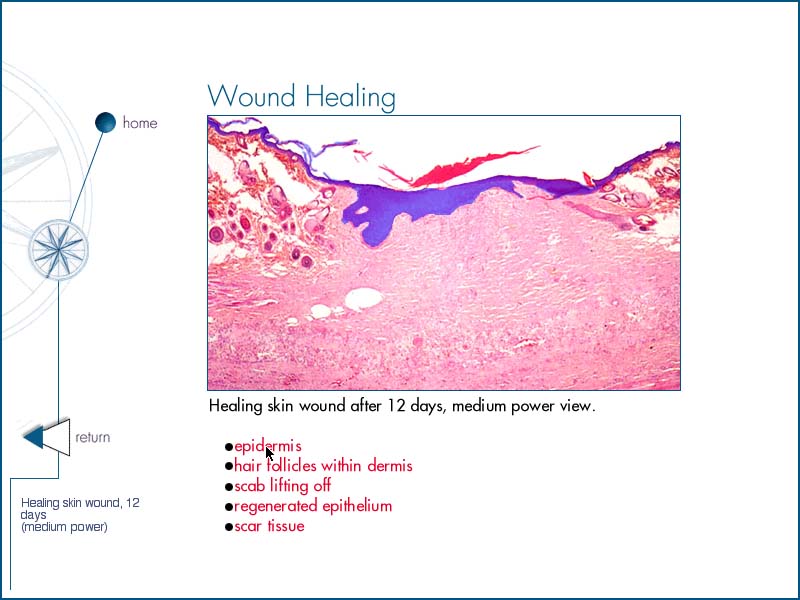
The Healing of Wounds takes Time and the Types of Wound Healing is also related to the Time Factor.


Wound Healing is the process in which a physical injury ( like a cut injury ) undergoes repair with restoration of intrinsic tissue strength and function and also with resistance to infection and other external influences. Wound Healing is affected by the type of the Wound. Clean, sterile wounds that are not at the risk of contamination by other body secretions from the gastrointestinal tract, the genitourinary tract, or the respiratory tract heal better. Infected wounds and contaminated wounds heal slowly. If a wound is suspected to be contaminated the wound is often left open to evaluate the problem and to control any infectious agent. There are three types of Wound Healing described.      

1. Primary Intention or First Intention Wound Healing – Primary Union occurs when there has been little tissue damage, the wound is clean and is not contaminated by foreign matter, the wound is not infected, and the wound edges are closely approximated and are in proper contact. The edges of a wound should be approximated as early as possible after the injury. The surgical procedure known as Primary Wound Closure allows the wound to heal by First Intention. These wounds heal rapidly with minimal amount of scarring. A Surgeon while operating inflicts clean incised wounds and closes the wounds at the end of the surgical procedure. Nature takes over the process of Healing which proceeds in a timely fashion.      

The Natural Wound Healing Process known as Inflammation and Repair involves several different kinds of body cells and chemical mediators. Macrophage is one such cell. It eats up dead tissue and devours harmful bacteria, and engulfs foreign matter present in the wound.


2. Second Intention Wound Healing – It will not be possible to close wounds immediately after an injury if the wound is large, and the two skin edges are not in contact; the wound contains a lot of dead tissue or foreign matter, or is infected. The wound could be intentionally left open until the surgeon could make it clean. Sometimes, the injured person arrives late after sustaining an injury. The time of injury is of critical importance in choosing a course of action for its healing. The surgical procedure known as Delayed or Secondary Closure brings about healing by Secondary Union. Apart from the delay in Wound Healing, the resulting scar tissue is also more extensive.      

3. Third Intention Wound Healing – Sometimes, the wound is left open and is observed for several days because of low-grade bacterial contamination. Eventually, when the wound looks healthy and the wound edges are healthy, the Surgeon would close the wound allowing it to heal by Third Intention. Depending upon the amount of loss in skin surface, and the size of the wound, skin grafts may be needed for Wound Healing and the process is delayed until suitable graft material is procured and the grafting process concludes successfully.      

Wound Healing is affected by several factors that affect human body. A healthy person recovers faster and better if he is injured. When the health is compromised, the recovery from the wounds would be unsatisfactory. Malnutrition, protein deficiency, iron deficiency, Vitamin-C ( Ascorbic acid ) deficiency, diseases of liver and kidneys delay the natural healing process. Conditions causing poor blood supply( Peripheral Arterial Disease ), diabetes, other severe systemic diseases and infections like Tuberculosis can affect wound healing. After Wound Healing, the tissue never regains its original strength that existed prior to the injury. An uncomplicated wound, six months after its healing has about 80 percent of its original strength. Most wounds continue to remodel for more than one year. First Intention healing would generally produce cosmetically acceptable scars. Some scars are unsightly with a raised surface but the scar lies entirely within the confines of the wound. These Hypertrophic scars eventually stabilize in about six months time and are amenable to further cosmetic surgical correction to improve the appearance and to restore the function of the affected body part. Scars known as ‘Keloids’ invade nearby normal tissue that was not previously involved in the wound. This type of scar continues to enlarge even after six months time and does not usually regress or soften. The Keloids cause cosmetic disfigurement which is not easily treatable. Time plays an important role in all the aspects of Wound Healing and Wound Management and exerts an unique influence of its own in the outcomes.      

THE EXPERIENCE OF PAIN AND THE EXPRESSION OF GRIEF  :      

The disfigurement caused by Leprosy is known to humanity for several centuries. This disfigurement is caused by the involvement of nerves and the loss of sensory functions.


We seek help and medical attention for our physical injuries and wounds because of our ability to experience pain.The experience of the physical sensation of pain is of utmost importance in defending and in preserving human existence. If the neurological function of pain perception is blunted or impaired for any reason, the recovery from physical wounds would be delayed and the body sustains further physical damage. Pain is of utmost importance in Clinical Medicine, both for diagnosing an underlying medical condition, to watch the progress, and in treating the condition. The human body that can not express pain or experience pain is at a great risk of harming itself. Psychological insults and injuries also cause pain and grief. To experience mental pain or grief is a natural protective, and defensive mechanism. Such ability to perceive pain from psychological attacks and insults is important to preserve the integrity and existence of the entire organism. By expressing grief, body initiates the natural healing process. While physical wounds need to be closed to help them heal faster, psychological wounds need to be exposed to bring about their healing. Emotional pain and grief must not be concealed. By properly expressing mental grievances, mind gets a chance to purge the negative emotions generated by the psychological assault. The grievance must be reported to a friend, a relative, a therapist, a priest, or to the Law Enforcement and if no such avenue is available it must be submitted to the God the person believes. Psychological wounds when hidden, fail to heal.      

Psychological Injuries and Insults Heal with passage of Time. The Pain is eased as the painful event becomes more distant and the memory of the event starts fading. Apart from memory function, Time may alter our perception of the Psychological Attack and the Injury.


Time exists even when there is no conscious entity with its awareness of past, present, and the future. Time exists not because of human memory of past events, awareness of present, and expectation of future. Time exerts an influence of its own which changes our perception of events and alters the course of consequences. A person with very good memory function would experience less pain with the passage of time after sustaining psychological trauma. The qualities of patience, tolerance, and forbearance increase our ability to withstand physical and mental pain. In the Sanskrit language, the qualities of patience, tolerance, and forbearance are described as ‘KSHAMA’. These qualities not only make the individual Stress Resistant and Resilient, they would also allow the Time’s Power of Healing to come into play. Indians seek the quality of KSHAMA to withstand the consequences of physical and psychological wounds and they believe in the concept of Time as a Healer of all Wounds.      

THE DIVINE HEALING POWER OF TIME  :      

Susruta, Surgeon of Ancient India - Surgical Care and intervention is possible only because of the body's intrinsic ability to heal its wounds. Surgery would be impossible without this Natural Gift of Inflammation and Repair.


By simply repeating and remembering the two letters, "RA", "MA" serves like a Medicine while man confronts the problems of Healing and the consequences of physical and psychological wounds. Indian Culture offers RAMA as a Medicine to all the illnesses and injuries that may afflict human existence and survival. The Indian Concept of Time describes its Divine Healing Potential and Rama provides KSHAMA, the patience, tolerance, and forbearance that is needed for Time to exert its Divine Healing Power.


Human body exists with an ability to recognize its own wounds and initiates its well synchronized response almost simultaneously and this timely response could only be described as a Divine Gift, a gift which humans have no ability to invent on their own. 

Please also view my blog post titled ‘Pain and Compassion – Philosophy of Medicine’ 

http://bhavanajagat.wordpress.com/2010/06/01/pain-and-compassion-philosophy-of-medicine/      

Dr. R. Rudra Narasimham,    

Kurnool Medical College, Kurnool, Andhra Pradesh, India,    

M.B.B.S.,  Class of  April, 1970.

WHOLE DUDE – WHOLE DIAGNOSIS

THIS PORTRAIT OF ADI SHANKARA DEPICTS HIM IN PERFECT, GOOD AND POSITIVE HEALTH.  

THE LEGEND ABOUT ‘BHAJA GOVINDAM’ : 

Adi Shankara, an Indian philosopher of 8th century CE, born in the southern Indian state of Kerala is well-known for his doctrine of Advaita Vedanta which he had established using Upanishads for reference. Shankara had established the ‘SMARTHA’ tradition to which I belong. He had recommended devotion to both Shiva and Vishnu and also the worship of other gods and goddesses. His poetic composition popularly known as ‘Bhaja Govindam’ deals with issues of human existence and the problem of death. Shankara had renounced the comforts associated with materialistic existence and had become a ‘Sanyasin'( Hindu ascetic) at a very young age and had walked across the length and breadth of India on foot. He had lived by accepting the offerings(‘biksha’) given by the community which often involved walking along the streets in places where he had lived. While he had lived in the city of Kashi also known as Benares or Varanasi, the legend claims that he had composed the twelve verses of Sanskrit poetry. He was accompanied by fourteen of his disciples who had also contributed a verse each and these songs are collectively known as ‘Bhaja Govindam’. The legend describes that Shankara had encountered a man teaching the rules of Sanskrit grammar to his students. In India, the teaching technique often involves learning by rote. A phrase is repeated several times to let the students put it into memory. As this Sanskrit Grammar teacher was repeating the phrase ‘Du krun kariney’, Shankara, a man of great spiritual insight, had instantly recognized that the Sanskrit teacher was actually facing the threat of death and the teacher himself was not aware of the threat to his physical existence. Shankara who had mastered Vedas and Upanishads was aware of the many sources both external and internal that endanger human physical existence. This particular ability of Shankara to diagnose the health of an individual interests me because of my educational experience and training in the ‘Art of Diagnosis’. Unfortunately, Shankara died at the very young age of 32. A mystery surrounds his death. The place of his death is disputed. He was always followed by his disciples. Some accounts claim that he had died in Kedarnath in the Himalayan mountains of Uttaranchal State. Others claim that he had died in the southern Indian city of Kanchi. What had contributed to his premature demise is not known. His portraits always depicted him in good and positive health. 

THE ART OF DIAGNOSING GOOD HEALTH : 

To diagnose ill-health is easy. The sick person may describe his ailments. In addition to a person’s subjective symptoms, ill-health shows objective manifestations. The art of clinical diagnosis in sickness and disease involves the use of signs and symptoms attributable to specific conditions that affect the state of health of an individual. However, the mere absence of ill-health does not necessarily mean that the person is positively healthy. Health, like beauty is often a matter of subjective impression. But, while beauty is in the eyes of the beholder, the diagnosis of perfect and positive health is a verdict rendered after a carefully executed medical examination. 

The important object of medical inspection and examination of Armed Forces personnel is to ensure that they are healthy and are able to perform the tasks assigned to them. As the medical officer providing medical cover to units in the Armed Forces of India and The Sultanate of Oman where I had served, I was responsible for assessment of health of all personnel under my care. To ensure that the troops are in good health, I was required to medically inspect all personnel under my care periodically and diagnose that they were in good health. Good health demands that a person should appear well nourished. In stature and build, a person should represent an average example of his race and class. The person should not present any evidence of emotional hyper-excitability. Temperamentally, the individual should exhibit reasonable aptitude and behavior consistent with the expectations of his occupation. Most importantly, the face of the person should reflect the bloom of vigorous health. A person in good health should appear cheerful and be full of vitality. The entire individual is carefully examined to assess the health status. I had acquired the practical skills of the ‘Art of Diagnosing Good Health’ by carefully carrying out regular, periodic health inspections of all men under my care. Armed Forces insists upon Medical Inspections for a variety of reasons and individuals who are subject to the Rules and Regulations that govern Service in Uniform cannot refuse the mandatory Medical Examinations. Medical Inspection of all the men including all food handlers of the Unit is done typically once every month. In addition, men newly posted to the Unit( New Arrivals), men before proceeding on and returning from Courses of Instruction/Leave of Absence/Temporary Duty, and after Hospital Discharge are Medically Inspected. Recruits posted to the Unit after completion of Recruit Training, and men joining their Units after serving abroad are subjected to Medical Inspections. Thorough, detailed and specific Medical Examinations of military personnel is required under the following conditions : 

1. All troops proceeding on ‘active service’ or troops proceeding overseas. 2. Individuals proceeding on permanent transfer to another Unit. 3. Men desirous of an extension of service or re-engagement. 4. Troops for transfer for the Reserve Duty. 5.Officers at the time of initiation of Annual Confidential Reports, entry to Staff College, any Course of Instruction, Fitness for Special Duty. 6. Men under arrest and undergoing sentence and before disciplinary action. 7. Men posted to serve at High Altitude. 8. Special examination at the outbreak of an infectious disease. Typically, I used to examine at least twenty known contacts of each case of Malaria or Viral Hepatitis. 

Medicine is not merely the Art of Diagnosing ill-health and it is equally the Art of Diagnosing Good and Positive Health. I had perfected this skill by meticulously repeating the task of conducting Medical Inspections thousands of times during the course of my service in the Armed Forces. This had also contributed to my ability to diagnose ill-health and in the next several posts I would narrate a few specific instances when I had diagnosed an impending outcome of death during my service and there are instances when I had diagnosed Good Health and made individuals to perform their assigned tasks and did not allow them to escape from the obligations of Military Duty. Sometimes, my acute power of observation was better than that of Physicians more qualified than me. During 1973, I was admitted to Military Hospital, ROORKEE for an intestinal infection. During my hospital stay as a patient,while I was standing in the lobby of the Officers’ Ward one particular evening, I had seen a young, male patient coming into the Ward after his admission. When I had looked at him from a distance, and the manner in which he was walking, particularly his gait and the position of his right hand over the right lower quadrant of his abdomen, I had suspected his medical problem. After he came into the Ward, from his facial appearance alone, I had recognized him as the younger brother of an Officer who was then serving with me in my Unit. Both of them belonged to the Corps of Engineers. I had introduced myself and he had confirmed his relationship to the Officer who was then serving at my Unit. I had asked him about his medical ailment. He was getting treatment from the Hospital Physician( Medical Specialist) over the last several days and was
already seen by the Physician twice in the Out-Patient Clinic and was not responding to the medicines that were prescribed. I had looked up at the Hospital Admission document. He was admitted to the Military Hospital with the provisional diagnosis of Fever Not Yet Diagnosed. I told him that Fever was not the real issue and that he was suffering on account of a common well-known surgical condition called Acute Appendicitis. I had confirmed this diagnosis by performing a simple test on this young Officer patient and told him that he would need immediate surgery and that his ‘APPENDIX’ should be removed without any delay. I proceeded to contact the Duty Medical Officer who had admitted and sent this individual to the Officers’ Ward. The Duty Officer had simply admitted this man based upon the written opinion given by the Physician. The Duty Medical Officer came over to the Officers’ Ward and he repeated the test I had performed earlier and the diagnosis was very clear. He immediately called the Duty Surgeon, who came over and repeated the test I had conducted and confirmed that Appendix should be removed. The appendix was removed and the Surgeon came back and told me that the appendix was highly inflamed and was at the risk of a RUPTURE which could pose a greater threat. While, Appendicitis is a common surgical emergency among young adults, Medical Specialists are not trained to treat this condition and sometimes they may fail to look for it. I was less qualified than the Medical Specialist but I had trained myself in the Art of Diagnosis which would be of use in diagnosis if not in delivering the special treatment a medical condition requires. Whatever may be the outcome, a Good Diagnosis is as relevant as a Good and proper Treatment. Roorkee was the hometown of this Officer patient. Later his father came to the Ward to meet me and was particularly excited with this chance coincidence ; I knew his first son and then I was in Roorkee at that precise moment and intervened as his second son was arriving at the Officers’ ward.
 

BHAJA GOVINDAM – PART-I : 

While the Art of Diagnosis interests me, I constantly remind myself that Good Health is due to the GRACE and MERCY of the LORD and Indians love to identify the LORD as GOVINDA. While we exist because of MERCY, when the existence is threatened, we have no choice other than remembering the LORD. 

Bhaja Govindam, Bhaja Govindam, 

Govindam Bhaja muudha matey, 

Sampraaptey Sannihitey kaaley, 

Nahi Nahi rakshati Du krun karaney. 

Dr. R. Rudra Narasimham,

Kurnool Medical College, Kurnool, A.P., India.,

M.B.B.S., Class of April, 1970.


WHOLE DUDE – WHOLE PRESERVATION

A PICTURE OF INDIA’S GRIEF OVER JIHADIST ATTACKS IN MUMBAI

TERROR ATTACKS ON INDIA  : 

Recent news reports are stating that the terror attacks on India have not seen its end and they are predicting the possibilities of more attacks similar to the Mumbai carnage on November 26, 2008. “India will continue to face a serious jihadist threat from Pakistan-based terrorist groups, and neither Indian nor U.S. policy is likely to reduce that threat in the near future”, said Angel Rabasa, lead author of the study and a senior Political Scientist with RAND, a non-profit think tank based in Santa Monica, California. According to RAND, the other extremist groups in Pakistan will find inspiration in the Mumbai attacks and there can be more attacks from groups with high body counts and symbolic targets.THE CONCEPT OF JIHAD  :  The term Jihad in Arabic means struggle and is often viewed as a religious duty. A person engaged in Jihad is called a ‘mujahid’, the plural is ‘mujahideen’. The Mumbai attackers identified themselves with the name of ‘Deccan Mujahideen’. The aim of Jihad includes the expansion and defense of the Islamic State and warfare against non-believers. Jihad ideology has historically inspired the conquest of non-Muslim population and the transformation of civil society which is viewed as corrupt, arrogant, and disobedient. The Holy Book of Quran, Surah 25, verse 52 states : “Therefore, do not obey the disbelievers, and strive against them with this, a great striving”. The objectives of armed warfare include uprooting unbelief and establishing supremacy of God, through Islam, in the world.”And fight them on until there is no tumult or oppression, and there prevail justice and faith in Allah altogether and everywhere.”

THE HISTORY OF JIHAD IN INDIA  :

Sir Jadunath Sarkar, a historian, and former Vice-Chancellor of Calcutta University had contended that several Muslim invaders waged a systematic Jihad against Indians. Sultan Mahamud of Ghazna(present day Ghazni city,Afghanistan) conducted more than twenty Jihadist attacks on North India between 1001 and 1027. In particular the records kept by al-Utbi, Sultan Ghazni’s secretary in the ‘Tarikh-i-Yamini’ document several episodes of bloody campaigns. Persian historian Ferishta records that Sultan Ghazni wants to “root out the worship of idols from the face of all Hindustan(India)”. He looked upon the destruction of temples as an act of Jihad. Mahamud Ghazni specifically directed his campaigns to temple towns of Nagarkot, Thanesar(1011), Mathura(1018), Kannauj(1019), Kalinjar(1023), and Somnath(1024). He had also destroyed temples at Varanasi, Ujjain, Maheshwar, Jwalamukhi, and Dwaraka. Mahmud Ghazni was of Turkic origin but had patronized the use of New Persian language and gave employment to writers such as al-Biruni, and Ferdowsi who gave detailed descriptions of the enormous booty and idols brought back to Ghazni city. Asaru-L-Bilad, a 13 th century geographer also described in great detail the destruction of Somnath. Apart from his regular troops, Mahmud Ghazni had assistance from 30,000 volunteer horsemen who had participated in the Jihad. To resist the attack on Somnath, Ghogha Rana at the age of 90 sacrificed himself and his clan. There are no census documents but after an analysis of all historical documents, historian K.S.Lal had estimated that about 2 million people died during Sultan Ghazni’s attacks on Indian temple towns.Similarly, Sikandar Lodhi of Delhi earned the epithet of ‘But Shikan’- the destroyer of idols. Babur the founder of Mughal empire in India in 1527 ordered a JIHAD against Rajputs at the battle of KHANUA. He had encouraged his men to fight the infidels and asked them to become either a Ghazi(soldier of Islam) or a Shaheed(Martyr of Islam). The Mughal Emperor Aurangzeb waged Jihad against Hindus as well as Shia Muslims whom he identified as heterodox. In South India, the Hindu kingdom of Vijaynagar came under repeated attacks of annual Jihad which had started in 1501 and each attack included destruction of temples. In the historical Third Battle of Panipat(January 1761), Ahmad Shah Abdali declared a Jihad against the Marathas. Estimates from historical documents indicate that about 60 to 80 million people in India died between 1000 and 1525 CE.INDIA’S RIGHT TO SELF-DEFENSE  : Indian traditions have clearly established the rules of warfare. A ‘JUST WAR’ or ‘DHARMA YUDDHA’ is a duty and is an obligation of the Ruler. We believe in the principles of protecting all non-combatants. They should not be touched or harmed in any manner. We recognize the right of self-protection, self-defense, and self-preservation. When an enemy attacks you, it would be an act of cowardice if the enemy is not engaged in a battle. In the context of defending people against Jihadist attacks, we are not only defending our territory, our property, our personal lives but also we are defending our right to think for ourselves and cherish the ideas and values that are important to our existence. We have a fundamental right to worship as we please and safeguard the traditional way of life. Since Jihadist attack is actually a war against our fundamental right to practice religion, the propagation of ideas of Jihadist warfare should be prohibited and violators should be punished. The term Self-Defense means defense of one’s rights, beliefs, and existence. The Right to defend oneself with whatever force is reasonably necessary against actual or threatened violence is universally recognized by Law. Self-Defense is a natural, inborn instinct. A National Entity has a Right and also a Duty to defend itself from attacks sponsored by an enemy or an Enemy State. The act of Self-Defense could be expressed in several different forms; a retaliation involving the use of military force, economic and trade sanctions, diplomatic sanctions, imposing travel restrictions, and other punitive or defensive actions as needed.   

Dr. R. Rudra Narasimham,  

Kurnool Medical College, Kurnool, Andhra Pradesh, India,  

M.B.B.S.,  Class  of  April,  1970.

Whole Dude – Whole Worship

"haviryajna done by a Nambudiri in Kerala...
Whole Dude – Whole Worship

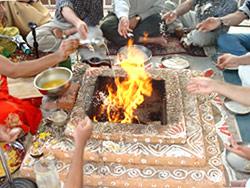
YAGNA, A VEDIC RITUAL OF SACRIFICE-‘HOTREE’ OR ‘YAGNA PERFORMER’ OFFERS ‘HAVIS’ TO FIRE (LORD AGNI)

THE UNIVERSE AS GOD’S BODY

The word ‘omnipresent’ is defined as present everywhere at the same time. The property of being present everywhere is one of the Divine attributes. In western theism it has attracted less attention and the idea of ‘omnipresence’ is explained in a bit unclear way. In Judeo-Christian, and Islamic Cultures, God is not immersed in the substance of creation even though He is able to interact with it as He chooses. They tend to the view that God is in “HEAVEN”, and that God is above and outside of all creation. They explain ‘omnipresence’ in terms of His ‘ESSENCE’ as He is present to all as the cause of their being, His ‘POWER’ as all things are subject to His power, and His ‘KNOWLEDGE’ as He constantly watches all that goes on in the world and all things are bare and open to His eyes and hence He is naturally present in every aspect of the natural order. Whereas Indian thinkers tend to believe that a thing is said to be substantially or essentially in that place in which its substance is. Hence, people in the Land of India traditionally hold the view that God is related to the universe as though it is His body. The entire creation is seen as a manifestation of the Supreme Person. The theory of transcendent(exists apart from material universe) and immanent(actually present throughout the material universe)’omnipresence’ explains the meaning of the word ‘BRAHMAN’, the Ultimate Reality. Indian people reflect this belief in their worship of creation, and the idea that God is immersed in the substance of His creation could be recognized as a core value, the foundation upon which the Cultural traditions of India are established over thousands of years of their continued existence. The rituals of temple worship and the Vedic rituals of Yagna always include aspects of Worship of Creation and the Scriptures reveal that the Gods also Worship Creation to the same extent and the Indian way of life could be stated as a quest for unity with the Divine.

A HYMN TO SEEK PROTECTION FROM THE CREATOR

Yaa srushti srashtu raadyaa vahiti vidhihutam, yaa havi ryaacha hotree

Ye dvey kaalam vidhatta, sruti vishaya gunaa, Yaa sthithaa vyaapya viswavam

Yaa maa hu sarva bhuta prakriti riti, Ya Yaa praanina praanavanta

Pratyakshaabhi prasanna stanubhi ravatu Vastaabhi rashtaabhi reesa.

We seek the protection of God who physically manifests Himself with the eight bodies of

1. WATER- Lord VARUNA who was created prior to the creation of all other creation(of living entities).

2. FIRE- Lord Agni who receives ‘HAVIS’, the oblations or offerings given to God.

3. HOTREE- the person who is performing ‘YAGNA’, the Vedic ritual of sacrifice.

4. SUN- Lord Surya, the marker of day time.

5. MOON- Lord Chandra, the marker of night-time.

6. SKY- or ETHER which helps in the propagation of SOUND and is spread across the entire universe.

7.EARTH- Mother Earth, Goddess Bhu Devi, who bears the burden of harboring all living entities.

8. WIND- Lord VAYU who is the ‘Breath of life'(or PRANA) of all living entities that breathe.

THE FUNDAMENTAL RIGHT TO WORSHIP CREATION

The act of Creation Worship defines Indian Identity. All other Cultural Traditions that are existing in India proceed from this foundational principle. Indians seek their well-being, prosperity, happiness and eventually salvation through acts of worship. The foreign forces that occupied and ruled India tried hard to take away this Right to Worship as per our belief that God is immanent. We need to recognize the Right to Worship Creation as a Fundamental Right. Citizens while they are free to profess their religion , should not be free to ‘PROPAGATE’ a religion or idea which basically interferes with a Fundamental Right. No person could have a Fundamental Right to PROPAGATE at the expense of denying and devaluing other core values. To that extent, we should seek an amendment to PART III, Article 25 of the Constitution of India which deals with Freedom of Religion. The Constitution of India must recognize the Worship of Creation as a Foundational Principle of the Land of India and hence should be considered a Fundamental Right and should prohibit PROPAGATION of religion which infringes upon this Core Value. Such an amendment is vital to defend the Freedom of Religion as religious doctrines of Islam and Christianity are opposed to the idea of divinity of all created objects. These religious faiths divide humanity into two categories; the believers, and the non-believers. They also further express the claim that they possess a divine sanction to punish or modify the beliefs of the non-believers. In the global community, the adherents of Hindu religious faith are only a minority and they need special protection to defend the Right to Freedom of Religion. 

Whole Dude – Whole Worship: The Lord God or the Principal Presiding deity at Malibu Hindu Temple is known as Lord Venkateshwara who represents the physical manifestation of the Supreme Being, Lord Vishnu in the material realm. Since the LORD is present in this terrestrial realm, He knows the Brahman Spirit that is in Prison.

Whole Dude – Whole Conviction

ca. 1940, Probably India --- Vallabhbhai Patel...
Whole Dude – Whole Conviction

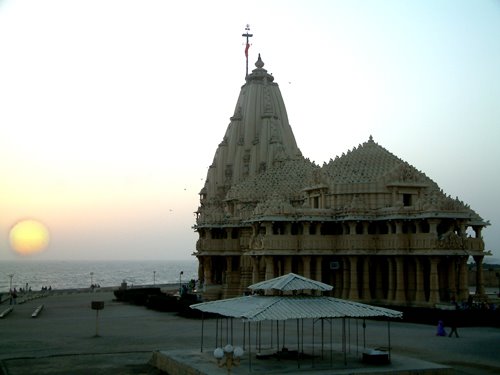
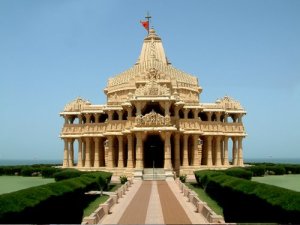
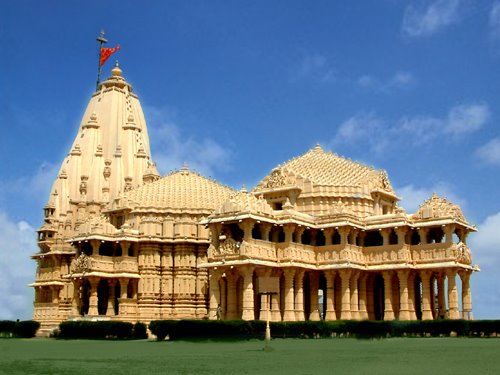
The Temple of Lord Somnath. The Battle between the Power of Creation and the Power of Destruction:

Kindly pay homage to Sardar Vallabhbhai Patel, India’s first Deputy Prime Minister who had recreated the Temple of Lord Somnath and vanquished the evil forces which visited Somnath repeatedly to utterly destroy this sacred place of Hindu worship.

Whole Dude – Whole Conviction
Kindly pay homage to Sardar Vallabhbhai Patel, India’s first Deputy Prime Minister who had recreated the Temple of Lord Somnath and vanquished the evil forces which visited Somnath repeatedly to utterly destroy this sacred place of Hindu worship.

Whole Dude – Whole Power

THE TEMPLE OF LORD SOMNATH IS THE EVIDENCE FOR THE POWER OF CREATION OVER THE POWER OF DESTRUCTION. 

This entry is dedicated to the memory of Sardar Vallabhbhai Patel, India’s first Deputy Prime Minister. 

THE SHRINE ETERNAL : 

Somnath Temple is in the ‘Prabhas Kshetra’, near the seaport city of Veraval in Junagadh District, Kathiawar Peninsula of Saurashtra , on the shores of Arabian Sea,the western coast of Gujarat, India. This holy place of pilgrimage is a place of great antiquity and recent excavations there have revealed a settlement dating from about 1500 B.C. As per Indian traditions, the place is of significance as it is considered as the place from where Lord Krishna departed from this world. The presiding deity of this temple is Lord Shiva and He is known by the name of SOMNATHA or the Lord of the Moon. The present temple as it exists today is known as ‘Kailash Mahameru Prasada and is built-in CHALUKYA style of temple architecture. The site lied in a state of ruin for centuries and the decision to rebuild it was made by Sardar Vallabhbhai Patel during his visit on 13 November, 1947. The temple was inaugurated on December 1, 1951 by Dr. Rajendra Prasad, the first President of the Republic of India. He had remarked that, “The Somnath temple signifies that the power of creation is always greater than the power of destruction”. The temple symbolizes the enduring fame of Sardar Patel who during the first three years of Indian independence after 1947, had served as Deputy Prime Minister, Minister of Home Affairs, Minister of Information, and Minister of States. He was considered as practical and decisive. He was the architect of the Indian Union and his greatest contribution was the achievement of the peaceful integration of over 535 princely states into the Indian Union. The principality of Junagadh, and the princely State of Hyderabad had initially resisted the offer to join the Indian Union. Having failed in his attempts to join Pakistan, the Nawab of Junagadh fled away from the country. Mr. Bhutto,( the father of Mr. Z.A. Bhutto, who served as Pakistan’s Prime minister) acting in his capacity of the ‘DEWAN’ of the court of Junagadh, had invited Lord Mountbatten to accept the accession of Junagadh to India. In the State of Hyderabad, a militant movement called the Razakars was launched seeking independence but Sardar Patel restored peace in September 1948 and the ruler Nizam had accepted the terms of accession to the Indian Union. This part of Indian history and the integration of princely states into Indian Union has again become relevant after the enemy’s brutal attack in Mumbai which I had mentioned in my previous entry. The enemy had described himself as ‘Deccan Mujahedeen’, and the media reports indicate that the enemy had specific designs to gobble Junagadh, and Hyderabad apart from encouraging insurgency in the border State of Kashmir. The enemy’s intentions will force us to defend SOMNATH in Junagadh District which is resurrected after repeated attacks over centuries. 

THE HISTORY OF SOMNATH :

Jyotirlinga Temple at Somnath is mentioned in Hindu prayers in praise and worship of Lord Shiva:”Sauraashtra dese visadeti ramye, Jyotirmayam Chandra Kalaa vatamsam, Bhakti pradaanaaya Krupaa vateernam, Tam Somanaatham Saranam prapadye.”
Somnath, the confluence of three rivers, River Sarasvati, River Hiranya, River Ilanki and Kapila is mentioned in ancient Hindu Scriptures known as Rig Veda.


LORD SOMNATH TEMPLE-THE SHRINE ETERNAL- TESTIMONY TO THE POWER OF CREATION OVER THE POWER OF DESTRUCTION.

 Somnath finds its mention in the ancient text of RIG VEDA. It is associated with the holy names of GANGA, YAMUNA, and SARASWATI, popularly known as ‘TIRTH DHAM’ where Indians traditionally offer worship by a practice described as ‘River Worship’. The ancient river of Saraswati may have merged into the Sea at Somnath apart from smaller rivulets known by the names of Hiranya, Kapila and Ilanki. The place is extensively described as a place of pilgrimage and its importance is narrated in the ancient texts of ‘SKANDA PURANA’, ‘BHAGAVATA PURANA’, and ‘SHIVA PURANA’. Lord Shiva in His radiant form known as ‘Jyotir Linga’ resides at Twelve different places in India and Somnath is listed as the first place of residence of ‘DWADASA JYOTIR LINGA’.Tradition claims that the original Temple of Somnath was built by Lord Moon, and was later built by King Ravana of Lanka who is a central figure in the story of Indian epic poem of RAMAYANA. The SINDH area of the Indian subcontinent came under Arab conquest in 7th century A.D. The Somnath Temple built by the YADAVA kings of Vallabhi of Saurashtra around 649 A.D. was destroyed in 725 A.D. by the Arab governor of Sindh. The Pratihara King Nagabhata II rebuilt it in red stone. Between 1001 A.D. and 1027 A.D. , the road to conquest of India was prepared by Sultan Mahmud of Ghazna( modern GHAZNI in Afghanistan) who conducted more than twenty raids into North India. His raids were mainly for plunder. They revealed the wealth of India and demonstrated the vulnerability of India to military attacks. During one of his raids, in 1024 A.D. , marching across India’s Thar Desert, Mahmud of Ghazna had plundered and destroyed the Somnath Temple. The amount looted was estimated at 20 thousand, thousand ‘Dinars’. The enormous treasures found at Somnath have been a theme of wonder for all who have written on that conquest. The Paramara King of Bhoj of Malwa, Solanki King Bhima of Anhilwara/Patan between 1026 A.D. and 1042 A.D. rebuilt the Temple. By 1297/98 A.D. , Gujarat was conquered by Ala-ud-Din Khalij, Sultan of Delhi and the Temple was razed.Solanki King Kumarapala built a Temple of stone and this was destroyed again in 1394 A.D. For the last time, the Temple was destroyed in 1706 A.D by the Mughal Emperor Aurangzeb and the site remained in ruins till India’s independence in 1947. The rebirth of the Temple on December 1, 1951 demonstrates the vitality of the Indian spirit. 

A HYMN IN PRAISE OF LORD SOMNATH : 

Saurashtra dese visadeti ramye 

Jyotirmayam, Chandra kala vatamsam 

Bhakti prada naya Krupa vatirnam 

Tam Somanatham saranam prapadye. 

Lord Somanatha is dwelling in His great splendor in the Province of Saurashtra. May this Lord Somanatha who is full of radiance, and the crescent-shaped Moon shines in His matted hair, with His extreme compassion grant me a great sense of devotion with which I would seek my protection and let Him be my refuge. 

Jyotirlinga Temple at Somnath is mentioned in Hindu prayers in praise and worship of Lord Shiva:”Sauraashtra dese visadeti ramye, Jyotirmayam Chandra Kalaa vatamsam, Bhakti pradaanaaya Krupaa vateernam, Tam Somanaatham Saranam prapadye.”

Whole Dude – Whole Threat

Kosovo’s Independence – A threat to India

Kosovo’s independence a threat to India.

KOSOVO-A TINY, ECONOMICALLY STAGNANT BREAKAWAY PROVINCE OF SERBIA

Kosovo’s independence – A threat to India

James Palmer is a student in the Fletcher School of Law and Diplomacy at Tufts University in Medford, Massachusetts, U.S.A.(james.palmer@tufts.edu) In a guest editorial titled ‘ U.S. blunders by recognizing Kosovo independence’ that was published in The Detroit Free Press on Monday, March 31, 2008, he claims that the decision to recognize Kosovo’s independence is foolish. In doing so, he states that the United States and its European allies have undermined international law and opened the door to separatist movements world wide to follow suit.

THE UNITED NATIONS AND THE INTERNATIONAL LAW:

Kosovo’s independence – A threat to India

The United Nations Charter enshrines the inviolability of state sovereignty. Mr. Palmer argues that in recognizing Kosovo without a UN Security Council Resolution, the United States and its European allies have weakened two of the fundamental principles of international law: that states are free to determine their internal composition and that their territorial integrity must be respected. Security Council Resolution 1244 placed Kosovo under the UN administration and provided for Kosovo’s autonomy within Serbia. Now, the administrative authority is transferred from the UN sanctioned mission in Kosovo to an EU mission that has no legal mandate in the province. The main problem is that Kosovo’s independence undermines a system of international law. Kosovo’s independence sets the precedent for ethnic enclaves within other sovereign states. As per Mr. Palmer, the dangerous precedent it has created is: the carving off of a sovereign state’s territory in favor of an ethnic and religious minority threatening violence – a model to be replicated elsewhere.

America has been making ill-fated decisions in the Balkans for at least a decade and a half. Kosovo’s unilateral declaration of independence has only re inflamed the divisions and enmities of the 1990s. Mr. Palmer warns that the ethnic Albanians in the states of Bosnia, Macedonia and Montenegro are emboldened and they are calling for creation of “greater Albania” which would result in a new round of ethnic cleansing and more violence.

KOSOVO AND KASHMIR – AMERICAN POLICY:

Kosovo’s independence – A threat to India

America and its European ally Great Britain have consistently worked to undermine the interests of India in the United Nations and the Security Council had passed resolutions which ignore India’s territorial integrity and India’s sovereignty over areas of Kashmir that Pakistan illegally occupied during its wars of aggression in 1947-48 (First Kashmir War).

Kosovo’s independence – A threat to India. Soviet Prime Minister Nikita Khrushchev in Srinagar, Kashmir in 1955.

India could protect its vital interests in the Security Council only on account of the help provided by the Soviet Union. Leaders of USSR, Nikita Khrushchev (1953-1964) and Leonid Brezhnev (1964-1982) played the role of a life savior and had helped India to defend its position with regard to Kashmir. At the end of the cold war, America to exercise its role as the world’s only Super Power had changed its attitude towards the basic principles of the United Nations Charter which govern international relations. America would now like to intervene on its own initiative without obtaining a mandate from the United Nations. American support to militant groups based in Kashmir clearly poses a great threat to India’s sovereignty over Kashmir and India should protect itself from the dangerous precedent created by the unilateral declaration of independence by Kosovo.

Kosovo’s independence threatens the Republic of India due to the threat posed by American interventionism.

Whole Dude – Whole Dismemberment

The Policy of Regime Change Dismantles the Republic of Yugoslavia

Driving the last nail into the coffin. The Dismembering of the Republic of Yugoslavia. NEHRU, NKRUMAH, NASSER, SUKARNO, TITO-THE FOUNDING LEADERS OF NON-ALIGNED MOVEMENT

NEHRU, NKRUMAH, NASSER, SUKARNO, TITO-THE FOUNDING LEADERS OF NON-ALIGNED MOVEMENT

THE INITIATIVE OF FIVE:

Driving the Last Nail into the Coffin – The Dismembering of the Republic of Yugoslavia. President Tito was the first Secretary General for the Non-Aligned Movement.

The term ” Non-Alignment ” was coined by Indian Prime Minister Nehru during his speech in 1954 in Colombo, Sri Lanka. The first official Non-Aligned Movement Summit was held in September 1961 in Belgrade at the initiative of Yugoslav President Tito and he was appointed as the first Secretary General for the Non-Aligned Movement. India, Yugoslavia, Egypt, Ghana and Indonesia became the leading advocates for this Movement and currently 55 percent of world’s population is represented by the Non-Aligned Movement.

I grew up in India and developed a sense of fondness for Yugoslavia and viewed it as a friend and a partner in a world that is divided into rival camps.

THE DISMEMBERING OF THE REPUBLIC OF YUGOSLAVIA:

Driving the Last Nail into the Coffin – The Dismembering of the Republic of Yugoslavia

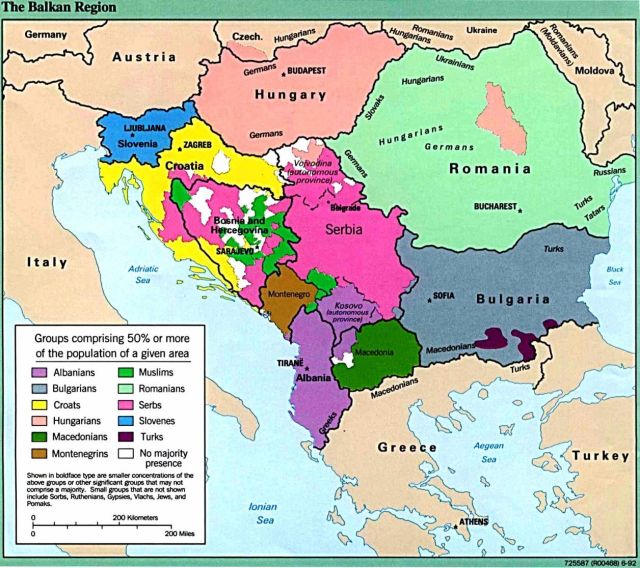
Yugoslavia is the largest of the Balkan countries of southeastern Europe, is bordered by Austria and Hungary in the north, Romania and Bulgaria in the east, Greece and Albania in the south, and Italy and the Adriatic Sea in the west. From the end of World War II until 1990, Yugoslavia was a Communist state. Hence, the West led by the United States targeted this nation for destruction. The death of Tito in 1980 provided an opportunity. Ethnic rivalries were encouraged and violent conflicts between various ethnic and religious groups were strongly supported by various outside forces and the country started falling apart into bits by 1991.

THE LAST NAIL IN THE COFFIN:

Driving the Last Nail into the Coffin – The Dismembering of the Republic of Yugoslavia

The unilateral declaration of independence on February 18, 2008 by Kosovo which is under occupation by U.S. led NATO forces is the final nail in the coffin and the West had successfully accomplished its mission of dismembering the State of Yugoslavia.

This event is of very great significance to India as the United States continues to support ethnic and religious rivalries in the Indian sub-continent. The United States over the last several decades is pursuing a policy that would assure the dismembering of the Republic of India and it openly funds, arms and equips the secessionist elements and provides political patronage in public events such as the Party Conventions.

Driving the Last Nail into the Coffin – The Dismembering of the Republic of Yugoslavia. Kosovo’s independence threatens the Republic of India due to the threat posed by American interventionism.
The US Policy of Regime Change – The Dismantling of the Republic of Yugoslavia