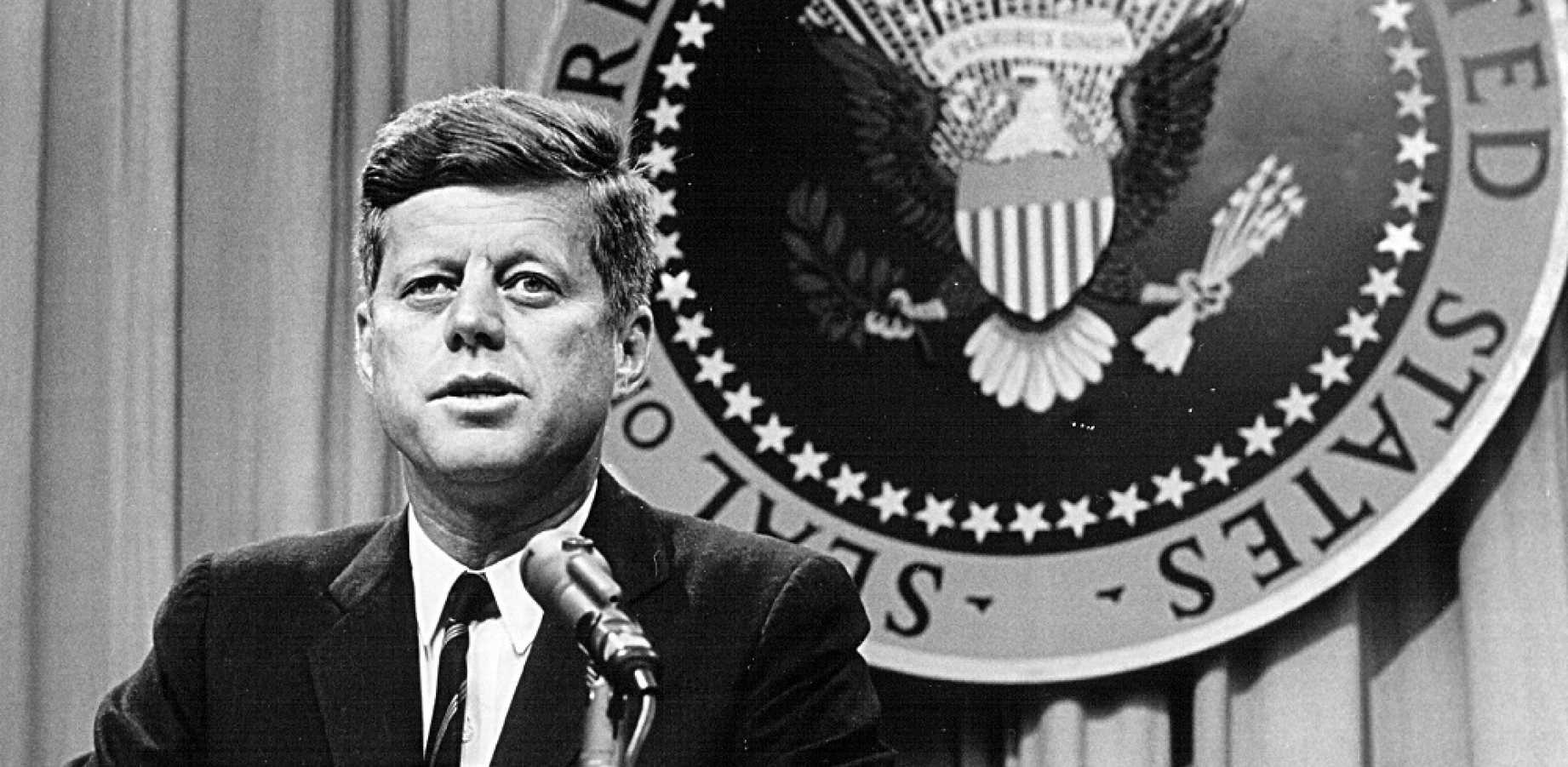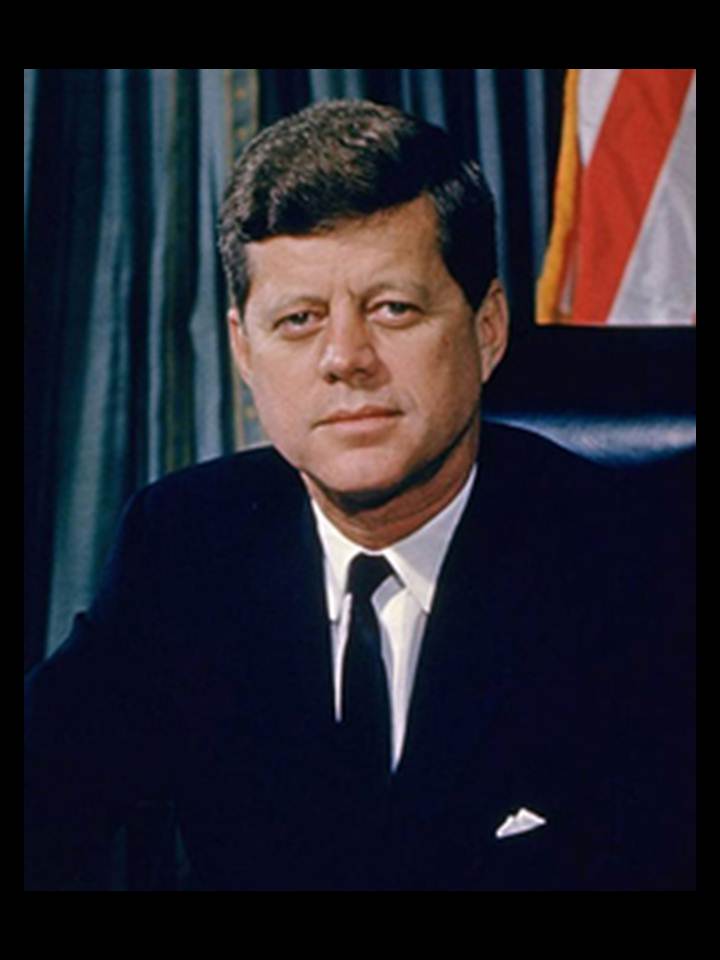
Whole Legacy – Special Frontier Force pays tribute to President John F. Kennedy

Special Frontier Force Pays Tribute to President John F. Kennedy

The History of Special Frontier Force-Establishment No. 22: People’s Republic of China could not alter the course of India’s foreign policy. The 1962 War launched by China ended very abruptly when China declared unilateral ceasefire and withdrew from the captured territory on November 21, 1962. President Kennedy played a decisive role by threatening to “NUKE” China.

While sharing an interesting story titled Cold War Camelot published by The Daily Beast which includes excerpts from the book JFK’s Forgotten CIA Crisis by Bruce Riedel, I take the opportunity to pay tribute to President John F. Kennedy for supporting the Tibetan Resistance Movement initiated by President Dwight David Eisenhower. Both Tibet, and India do not consider Pakistan as a partner in spite of the fact of Pakistan permitting the use of its airfields in East Pakistan. Red China has formally admitted that she had attacked India during October 1962 to teach India a lesson and to specifically discourage India from extending support to Tibetan Resistance Movement. Red China paid a huge price. She is not able to truthfully disclose the human costs of her military aggression in 1962. She failed to achieve the objectives of her 1962 War on India. President Kennedy threatened to “Nuke” China and forced her to declare unilateral cease-fire on November 21, 1962. China withdrew from territories she gained using overwhelming force. People’s Liberation Army (PLA) sustained massive casualties and their brief victory over India did not give them any consolation. Red China’s 1962 misadventure forged a stronger bonding between Tibet, India, and the United States.

Special Frontier Force, a military organization in India was established during the Cold War Era while the US fought wars in the Korean Peninsula and Vietnam. In my view, Special Frontier Force is the relic of Unfinished Vietnam War, America’s War against the spread of Communism in South Asia.

On behalf of Special Frontier Force, I feel honored to share John F Kennedy’s Legacy. Due to Cold War Era secret diplomacy, Kennedy’s role in Asian affairs is not fully appreciated both in the US and India. In 1962, during the presidency of Dr. Sarvepalli Radhakrishnan, the second President of Republic of India, Kennedy joined hands with India and Tibet to transform the Tibetan Resistance Movement into a regular fighting force.

Special Frontier Force, a military organization in India was established during the Cold War Era while the US fought wars in the Korean Peninsula and Vietnam. In my view, Special Frontier Force is the relic of Unfinished Vietnam War, America’s War against the spread of Communism in South Asia.

Cold War Camelot

SPECIAL FRONTIER FORCE PAYS TRIBUTE TO PRESIDENT JOHN K. KENNEDY. SUPPORTING TIBET WAS PRESIDENT KENNEDY’S MAIN REASON FOR HOSTING A STATE DINNER AT MOUNT VERNON ON JULY 11, 1961.

Bruce Riedel

11.08.1512:01 AM ET

JFK’s Forgotten CIA Crisis

During a spectacular dinner at Mount Vernon, Kennedy pressed Pakistan’s leader for help with a sensitive spy operation against China.

At Mount Vernon

The magic of the Kennedy White House, Camelot, had settled in at Mount Vernon. It was a dazzling evening, a warm July night, but a cool breeze came off the Potomac River and kept the temperature comfortable. It was Tuesday, July 11, 1961, and the occasion was a state dinner for Pakistan’s visiting president, General Ayub Khan, the only time in our nation’s history that George Washington’s home has served as the venue for a state dinner.

President John F. Kennedy had been in office for less than six months, but his administration had already been tarnished by the failed CIA invasion of Cuba at the Bay of Pigs and a disastrous summit with Soviet leader Nikita Khrushchev in Vienna, Austria. Ayub Khan wrote later that the president was “under great stress.” The Kennedy administration was off to a rocky start: It needed to show some competence.

The idea of hosting Ayub Khan at Mount Vernon came from Kennedy’s wife, Jacqueline Bouvier Kennedy, who was inspired by a dinner during the Vienna summit held a month earlier at the Schönbrunn Palace, the rococo-style former imperial palace of the Hapsburg monarchy built in the seventeenth century. Mrs. Kennedy was impressed by the opulence and history displayed at Schönbrunn and at a similar dinner held on the same presidential trip at the French royal palace of Versailles. America had no royal palaces, of course, but it did have the first president’s mansion just a few miles away from the White House on a bluff overlooking the Potomac River. The history of the mansion and the fabulous view of the river in the evening would provide a very special atmosphere for the event.

On June 26, 1961, the First Lady visited Mount Vernon privately and broached the idea with the director of the Mount Vernon Ladies’ Association, which manages the estate. It was a challenging proposal. The old mansion was too small to host an indoor dinner so the event would have to take place on the lawn. The mansion had very little electricity in 1961 and was a colonial antique, without a modern kitchen or refrigeration, so that the food would have to be prepared at the White House and brought to the estate and served by White House staff. But the arrangements were made, with the Secret Service and Marine Corps providing security, and the U.S. Army’s Third Infantry Regiment from Fort Myers providing the colonial fife and drum corps for official presentation of the colors. The National Symphony Orchestra offered the after-dinner entertainment. Tiffany and Company, the high-end jewelry company, provided the flowers and decorated the candlelit pavilion in which the guests dined.

The guests arrived by boat in a small fleet of yachts led by the presidential yacht, Honey Fitz, and the secretary of the navy’s yacht, Sequoia. They departed from the Navy Yard in Washington and sailed the fifteen miles down river to Mount Vernon past National Airport and Alexandria, Virginia; the trip took an hour and fifteen minutes. On arrival the most vigorous guests, such as the president’s younger brother, Attorney General Robert Kennedy, climbed the hill to the mansion on foot, but most took advantage of the limousines the White House provided.

Brookings Institution

The guest list was led by President Ayub Khan and his daughter, Begum Nasir Akhtar Aurangzeb, and included the Pakistani foreign minister and finance minister, as well as Pakistan’s ambassador to the United States, Aziz Ahmed, and various attaches from the embassy in Washington. Initially the ambassador was upset that the dinner would not be in the White House, fearing it would be seen as a snub. The State Department convinced Ahmed that having it at Mount Vernon was actually a benefit and would generate more publicity and distinction.
The Americans invited to the dinner were the elite of the new administration. In addition to the president, attorney general, and vice president and their wives, Secretary of State Dean Rusk, Secretary of Defense Robert McNamara, Secretary of the Navy John Connally, Chairman of the Joint Chiefs of Staff Lyman Lemnitzer, and their wives joined the party. Six senators, including J. W. Fulbright, Stuart Symington, Everett Dirksen, and Mike Mansfield were joined by the Speaker of the House and ten congressmen, including a future president, Gerald Ford, and their wives. The U.S. ambassador to Pakistan, William Roundtree; the chief of the United States Air Force, General Curtis Lemay; Assistant Secretary of State Phillip Talbott; Peace Corps Director Sargent Shriver; and the president’s military assistant, Maxwell Taylor, were also in attendance. Walter Hoving, chairman of Tiffany, and Mrs. Hoving, and a half-dozen prominent Pakistani and American journalists, such as NBC correspondent Sander Vanocur, attended from outside the government. In total more than 130 guests were seated at sixteen tables.

Perhaps the guest most invested in the evening, however, was the director of the Central Intelligence Agency, Allen W. Dulles. The Kennedys had long been friends of Allen Dulles. A few years before the dinner Mrs. Kennedy had given him a copy of Ian Fleming’s James Bond novel, From Russia, with Love, and Dulles, like JFK, became a big fan of 007. Dulles was also a holdover from the previous Republican administration. He had been in charge of the planning and execution of the Bay of Pigs fiasco that had tarnished the opening days of the Kennedy administration, but Dulles still had the president’s ear on sensitive covert intelligence operations, including several critical clandestine operations run out of Pakistan with the approval of Field Marshal Ayub Khan.

Before sitting down for dinner just after eight o’clock, the guests toured the first president’s home and enjoyed bourbon mint juleps or orange juice. Both dressed in formal attire for the occasion, Kennedy took Ayub Khan for a walk in the garden alone. At that time, the CIA was running two very important clandestine operations in Pakistan. One had already made the news a year earlier when a U-2 spy plane had been shot down over the Soviet Union by Russian surface-to-air missiles; this plane had started its top-secret mission, called Operation Grand Slam, from a Pakistani Air Force air base in Peshawar, Pakistan. The U-2 shoot down had wrecked a summit meeting between Khrushchev and President Eisenhower in Paris in 1960 when Ike refused to apologize for the mission. The CIA had stopped flying over the Soviet Union, but still used the base near Peshawar for less dangerous U-2 operations over China.

The history of Special Frontier Force-Establishment No. 22: 1957 was a turning point. India had recognized that its foreign policy of political neutralism was of no use and had started depending upon the United States to address the military threat posed by China’s occupation of Tibet. But, the effort was too modest and both India and the United States had grossly underestimated the strength of the People’s Liberation Army.

The second clandestine operation also dated from the Eisenhower administration, but was still very much top-secret. The CIA was supporting a rebellion in Communist China’s Tibet province from another Pakistani Air Force air base near Dacca in East Pakistan (what is today Bangladesh). Tibetan rebels trained by the CIA in Colorado were parachuted into Tibet from CIA transport planes that flew from that Pakistani air base, as were supplies and weapons. U-2 aircraft also landed in East Pakistan after flying over China to conduct photo reconnaissance missions of the communist state.

Ayub Khan had suspended the Tibet operation earlier that summer. The Pakistani president was upset by Kennedy’s decision to provide more than a billion dollars in economic aid to India.
Pakistan believed it should be America’s preferred ally in South Asia, not India, and shutting down the CIA base for air drops to Tibet was a quiet way to signal displeasure at Washington without causing a public breakdown in the U.S.-Pakistan relationship. Ayub Khan wanted to make clear to Kennedy that an American tilt toward India at Pakistan’s expense would have its costs. In his memoirs, Khan later wrote that he sought to press Kennedy not to “appease India.”

Before the Mount Vernon dinner, Allen Dulles had asked Kennedy to meet alone with Ayub Khan, thinking that perhaps a little Kennedy charm and the magic of the evening would change his mind. The combination worked; the Pakistani dictator told Kennedy he would allow the CIA missions over Tibet to resume from the Pakistani Air Force base at Kurmitula outside of Dacca.

Ayub Khan did get a quid pro quo for this decision later in his visit: Kennedy promised that, even if China attacked India, he would not sell arms to India without first consulting with Pakistan. However, when China did invade India the following year, Kennedy ignored this promise and provided critical aid to India, including arms, without consulting Ayub Khan, who was deeply disappointed.

The main course for dinner was poulet chasseur served with rice and accompanied by Moët and Chandon Imperial Brut champagne (at least for the Americans), followed by raspberries in cream for dessert. President Kennedy hosted a table at which sat Begum Aurangzeb, who wore a white silk sari. Khan enjoyed the beauty of a Virginia summer evening with America’s thirty-one-year-old First Lady; he sat next to Jackie, who wore a Oleg Cassini sleeveless white organza and lace evening gown sashed at the waist in Chartreuse silk. In his toast the Pakistani leader warned that “any country that faltered in Asia, even for only a year or two, would find itself subjugated to communism.” In turn Kennedy hailed Ayub Khan as the George Washington of Pakistan. After midnight the guests were driven back to Washington down the George Washington Parkway.

The CIA operation in Tibet had its detractors in the Kennedy White House, including Kennedy’s handpicked ambassador to India, John Kenneth Galbraith, who called it “a particularly insane enterprise” involving “dissident and deeply unhygienic tribesmen” that risked an unpredictable Chinese response. However, the operation did produce substantial critical intelligence on the Chinese communist regime from captured documents seized by the Tibetans at a time when Washington had virtually no idea what was going on inside Red China. The U-2 flights from Dacca were even more important to the CIA’s understanding of China’s nuclear weapon development at its Lop Nor nuclear test facility.

But Galbraith was in the end correct to be skeptical. The operation did have an unpredicted outcome: The CIA operation helped persuade Chinese leader Mao Zedong to invade India in October 1962, an invasion that led the United States and China to the brink of war and began a Sino-India rivalry that continues today. It also created a Pakistani-Chinese alliance that still continues. The contours of modern Asian grand politics thus were drawn in 1962.
The dinner at Mount Vernon was a spectacular social success for the Kennedys, although they received some predictable criticism from conservative newspapers over its cost. It was also a political success for both Kennedy and the CIA, keeping the Tibet operation alive. As an outstanding example of presidential leadership in managing and executing covert operations at the highest level of government, it is an auspicious place to begin an examination of JFK’s forgotten crisis.

From JFK’s FORGOTTEN CRISIS: TIBET, THE CIA, AND THE SINO-INDIAN WAR, by Bruce Riedel, Brookings Institution Press, November 6, 2015.

© 2014 The Daily Beast Company LLC

SPECIAL FRONTIER FORCE PAYS TRIBUTE TO PRESIDENT JOHN F. KENNEDY FOR HIS SUPPORT TO TIBET. DINNER HOSTED AT PRESIDENT GEORGE WASHINGTON’S MOUNT VERNON ESTATE ON JULY 11, 1961.On www.mountvernon.org
SPECIAL FRONTIER FORCE PAYS TRIBUTE TO PRESIDENT JOHN F. KENNEDY WHO HOSTED STATE DINNER AT GEORGE WASHINGTON’S MOUNT VERNON ESTATE ON JULY 11, 1961 TO GET SUPPORT FOR TIBET OPERATIONS FROM PRESIDENT AYUB KHAN OF PAKISTAN.
SPECIAL FRONTIER FORCE PAYS TRIBUTE TO PRESIDENT JOHN F. KENNEDY. A STATE DINNER HOSTED ON JULY 11, 1961 WAS USED TO GET SUPPORT FOR TIBET OPERATIONS FROM PRESIDENT AYUB KHAN OF PAKISTAN.On www.jfklibrary.org
SPECIAL FRONTIER FORCE PAYS TRIBUTE TO PRESIDENT JOHN F. KENNEDY FOR ENLISTING SUPPORT FOR TIBET OPERATIONS DURING THIS DINNER AT MOUNT VERNON ON JULY 11, 1961. On www.jfklibrary.org
SPECIAL FRONTIER FORCE PAYS TRIBUTE TO PRESIDENT JOHN F. KENNEDY FOR ENLISTING SUPPORT FOR TIBET OPERATIONS DURING THIS DINNER AT MOUNT VERNON ON JULY 11, 1961.On www.jfklibrary.org
SPECIAL FRONTIER FORCE PAYS TRIBUTE TO PRESIDENT JOHN F. KENNEDY FOR ENLISTING SUPPORT FOR TIBET OPERATIONS DURING DINNER AT MOUNT VERNON ON JULY 11, 1961.On www.jfklibrary.org
SPECIAL FRONTIER FORCE PAYS TRIBUTE TO PRESIDENT JOHN F. KENNEDY FOR GETTING PAKISTAN’S SUPPORT FOR TIBET OPERATIONS DURING DINNER AT MOUNT VERNON ON JULY 11, 1961.On www.jfklibrary.org
SPECIAL FRONTIER FORCE PAYS TRIBUTE TO PRESIDENT JOHN F. KENNEDY FOR GETTING PAKISTAN’S SUPPORT FOR TIBET OPERATIONS DURING DINNER AT MOUNT VERNON ON JULY 11, 1961.On www.mountvernon.org
SPECIAL FRONTIER FORCE PAYS TRIBUTE TO PRESIDENT JOHN F. KENNEDY FOR GETTING PAKISTAN’S SUPPORT FOR TIBET OPERATIONS DURING DINNER AT MOUNT VERNON ON JULY 11, 1961. On www.jfklibrary.org

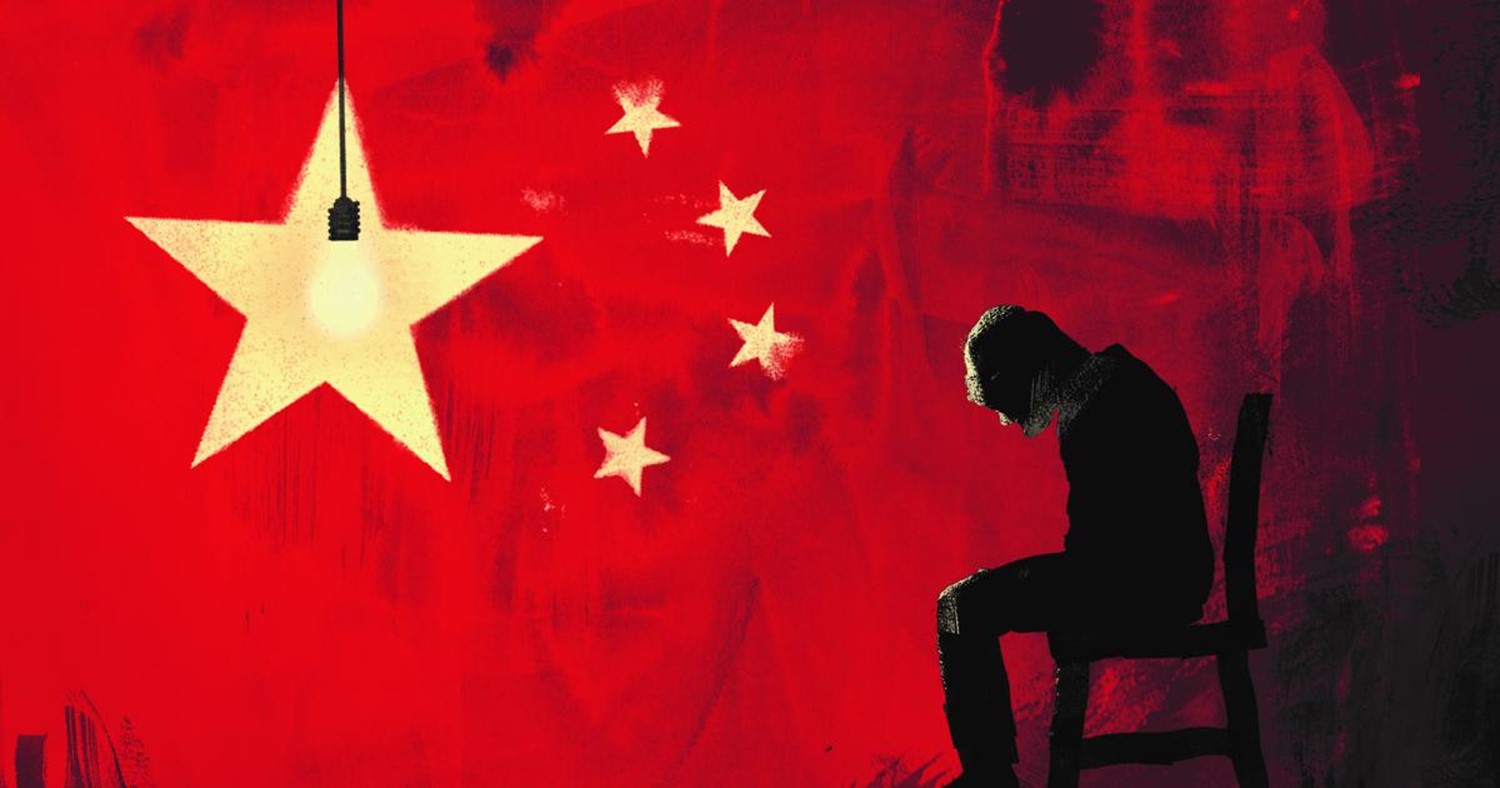
Whole Tyrant – Red China strangles Human Rights at Home and Abroad

COMMUNIST CHINA STRANGLES HUMAN RIGHTS AT HOME AND ABROAD

Whole Tyrant – Red China strangles Human Rights at Home and Abroad

The spread of Communism to mainland China compromised prospects of Freedom, Democracy, Peace, and Human Rights both inside China and in her occupied territories of Tibet, Inner Mongolia, and East Turkestan.

Whole Tyrant – Red China strangles Human Rights at Home and Abroad

CHINA’S MANIPULATION OF UN HUMAN RIGHTS EFFORTS MUST BE STOPPED

Clipped from: http://www.foxnews.com/opinion/2017/09/12/chinas-campaign-to-smother-human-rights-efforts-at-un-needs-to-be-stopped.html

SOPHIE RICHARDSON, HUMAN RIGHTS WATCH

Whole Tyrant – Red China strangles Human Rights at Home and Abroad

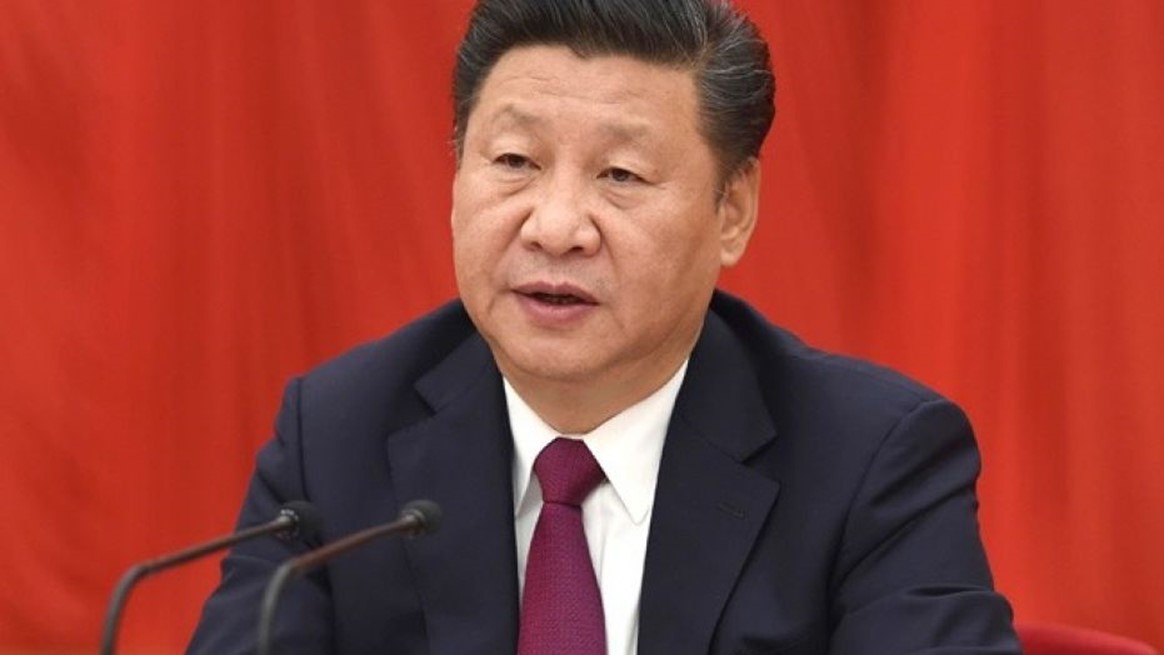
Chinese President Xi Jinping speaks during the opening ceremony of the BRICS Business Forum at the Xiamen International Conference and Exhibition Center in Xiamen in southeastern China’s Fujian Province, Sunday, Sept. 3, 2017.  (AP Photo/Mark Schiefelbein)

China’s growing appetite for global power isn’t hard to spot: military muscle-flexing in the South China Sea, the trillion-dollar New Silk Road development initiative, even its proliferation of Confucius Institutes, academic outposts to spread its version of history and politics.

What’s less easy to see is that worsening human rights violations at home are increasingly reflected in Beijing’s diplomatic agenda to undermine human rights protections abroad, including at the United Nations.

The U.N. human rights system exists to protect people whose own governments cannot or will not do that for them.  The system has many shortcomings, but even so it is a vital international forum for monitoring nations’ compliance with their human rights obligations, where critical independent voices can be heard and violators at times held accountable—or at least spotlighted. 

For activists who work on China human rights issues, this venue is all the more important because the country’s president, Xi Jinping, has steadily strangled domestic options for obtaining justice through the courts and engaging in peaceful dissent.

Chinese authorities have prevented mainland activists from reaching the U.N. Human Rights Council in Geneva and harassed them at U.N. headquarters in New York. Chinese officials in Geneva have even threatened foreign diplomats and UN. human rights experts who support scrutiny of Beijing’s record.

As a new Human Rights Watch report exposes, President Xi’s government is working hard to weaken these U.N. mechanisms. Chinese authorities have prevented mainland activists from reaching the U.N. Human Rights Council in Geneva and harassed them at U.N. headquarters in New York. Chinese officials in Geneva have even threatened foreign diplomats and U.N. human rights experts who support scrutiny of Beijing’s record. 

Reflecting its hostility to human rights monitoring generally, China has also blocked U.N. resolutions supporting human rights defenders globally—thus undermining protections for rights groups who do not even work on China.

Beijing is also trying to manipulate U.N. mechanisms to impose its political views on others. China—along with other countries hostile to human rights—sits on the U.N. committee that grants civil society groups accreditation needed to participate in U.N. meetings. Applicants have been told that getting approval means deleting from their organizations’ materials any reference to 2010 Nobel Peace Prize winner Liu Xiaobo. Any references to Taiwan or Tibet must reflect Beijing’s view that those territories are part of China. 

China has jailed activists who wanted to participate in U.N. activities, and even blocked a commemoration of one who died trying to do so. 

In September 2013, Chinese authorities detained Cao Shunli, a Beijing-based activist, prior to boarding a flight for Geneva, where she was going to participate in China-related U.N. training sessions.  While in detention Cao fell critically ill, but the authorities denied her adequate medical care. She died in March 2014.

At the next session of the U.N. Human Rights Council, nongovernmental organizations sought to hold a moment of silence in her honor, but China coolly and cruelly succeeded in getting enough other Council members—including Cuba, Russia, Iran, Saudi Arabia and Venezuela– to prevent the gesture.

U.N. officials have at times rejected Chinese efforts at intimidation and ensured that independent voices are heard.  Yet on other occasions they either fail to stand firm—allowing, for example, China to dictate that experts seen as critical of China not sit on key committees—or, worse, are complicit in abuses.

 In April 2017, U.N. security officers forced Dolkun Isa, an accredited activist for China’s persecuted Uyghurs, to leave the New York headquarters, where he was participating in a conference on minority rights.  When challenged about this incident, Secretary-General Antonio Guterres said he was “fully aware of the situation,” but failed to offer any explanation or plan of action to change things.

To be sure, China isn’t the only government that seeks to manipulate the U.N. human rights system for its own benefit.  But Beijing’s global power, ambitions, and its status as a permanent member of the U.N. Security Council make it a sinister role model for other authoritarian governments. 

China’s ability to block human rights initiatives is not absolute.  The U.N. remains a high profile venue for countries intent on promoting human rights and for working to hold abusive governments to account.  In March 2016, for example, the United States and 11 other countries issued an unprecedented joint statement condemning China’s arrest of human rights activists and attorneys. 

Nonetheless, the trend is moving in the wrong direction. As Human Rights Watch’s research has shown, unless the U.N., with help from rights-respecting governments, pushes back by insisting on compliance with established human rights practices, adopting new ones to prevent future abuses, and holding China and other bad-faith players accountable, the integrity of the vulnerable U.N. human rights system—and the people around the world it helps to protect—are at grave risk. 

Sophie Richardson is China director at Human Rights Watch. Follow her on Twitter at @SophieHRW.

Whole Tyrant – Red China strangles Human Rights at Home and Abroad

Whole Legacy – The Legacy of John F. Kennedy, the 35th US President

Special Frontier Force Remembers the Legacy of 35th US President

Special Frontier Force, a military organization in India was established during the Cold War Era while the US fought wars in the Korean Peninsula and Vietnam. In my view, Special Frontier Force is the relic of Unfinished Vietnam War, America’s War against the spread of Communism in South Asia.

On behalf of Special Frontier Force, I feel honored to share John F Kennedy’s Legacy. Due to Cold War Era secret diplomacy, Kennedy’s role in Asian affairs is not fully appreciated both in the US and India. In 1962, during presidency of Dr. Sarvepalli Radhakrishnan, the second President of Republic of India, Kennedy joined hands with India and Tibet to transform the Tibetan Resistance Movement into a regular fighting force.

On behalf of Special Frontier Force, I feel honored to share John F Kennedy’s Legacy. Due to Cold War Era secret diplomacy, Kennedy’s role in Asian affairs is not fully appreciated both in the US and India. In 1962, during presidency of Dr. Sarvepalli Radhakrishnan, the second President of Republic of India, Kennedy joined hands with India and Tibet to transform the Tibetan Resistance Movement into a regular fighting force.

Special Frontier Force, a military organization in India was established during the Cold War Era while the US fought wars in the Korean Peninsula and Vietnam. In my view, Special Frontier Force is the relic of Unfinished Vietnam War, America’s War against the spread of Communism in South Asia.

On behalf of Special Frontier Force, I feel honored to share John F Kennedy’s Legacy. Due to Cold War Era secret diplomacy, Kennedy’s role in Asian affairs is not fully appreciated both in the US and India. In 1962, during presidency of Dr. Sarvepalli Radhakrishnan, the second President of Republic of India, Kennedy joined hands with India and Tibet to transform the Tibetan Resistance Movement into a regular fighting force.

Remembering John F. Kennedy’s Legacy on his 100th birthday

SPECIAL FRONTIER FORCE REMEMBERS JOHN F KENNEDY’S LEGACY ON 35th PRESIDENT’S 100th BIRTHDAY.

Published May 29, 2017

Fox News

On behalf of Special Frontier Force, I feel honored to share John F Kennedy’s Legacy. Due to Cold War Era secret diplomacy, Kennedy’s role in Asian affairs is not fully appreciated both in the US and India. In 1962, during presidency of Dr. Sarvepalli Radhakrishnan, the second President of Republic of India, Kennedy joined hands with India and Tibet to transform the Tibetan Resistance Movement into a regular fighting force.

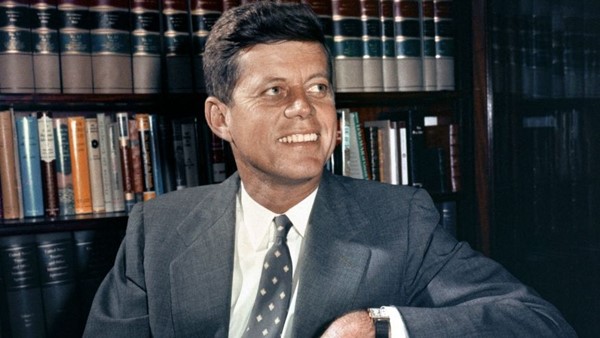
In this Feb. 27, 1959 file photo, Sen. John F. Kennedy, D-Mass., is shown in his office in Washington. Monday, May 29, 2017 marks the 100-year anniversary of the birth of Kennedy, who went on to become the 35th President of the United States. (AP Photo, File) (AP 1959)

As Americans celebrate this Memorial Day, they also will remember the life and legacy of President John F. Kennedy who was born 100 years ago this Monday.

While the 35th president left a mixed legacy following his assassination in Dallas in 1963, Kennedy remains nearly as popular today as he did during his time in office, and he arguably created the idea of a president’s “brand” that has become commonplace in American politics.

“President Kennedy and First Lady Jacqueline Kennedy worked hard to construct a positive image of themselves, what I call the Kennedy brand,” Michael Hogan, author of ‘The Afterlife of John Fitzgerald Kennedy: A Biography.’ “And because history is as much about forgetting as remembering, they made every effort to filter out information at odds with that image.”

In commemoration of JFK’s 100th birthday, Fox News has compiled a rundown on the life of the 35th president:

Born on May 29, 1917 in Brookline, Massachusetts to Joseph “Joe” Kennedy and Rose Elizabeth Fitzgerald Kennedy

In 1940, Kennedy graduated cum laude from Harvard College with a Bachelor of Arts in government

From 1941 to 1945, Kennedy commanded three patrol torpedo boats in South Pacific during World War II, including the PT-109 which was sunk by a Japanese destroyer

In 1946, Kennedy was elected to Congress for Massachusetts’s 11th congressional district and served three terms

Elected to the U.S. Senate to represent Massachusetts in 1952

Kennedy marries Jacqueline Bouvier, a writer with the Washington Times-Herald, in 1953

Receives the Pulitzer Prize in 1957 for his book “Profiles in Courage”

Elected President of the United States in 1960, becoming the youngest person elected to the country’s highest office, and the first Roman Catholic president.

He is credited with overseeing the creation and launch of the Peace Corps

Sent 3,000 U.S. troops to support the desegregation of the University of Mississippi after riots there left two dead and many others injured

Approved the failed Bay of Pigs invasion in April 1961 intending to overthrow Cuban leader Fidel Castro

In 1962, Kennedy oversaw the Cuban Missile Crisis — seen as one of the most crucial periods of the U.S.’s Cold War with the Soviet Union

Signed a nuclear test ban treaty with the Soviet Union in July 1963

Asked Congress to approve more than $22 billion for Project Apollo with the goal of landing an American on the moon by the end of the 1960s

Escalated involvement in the conflict in Vietnam and approved the overthrow of Vietnam’s President Ngô Đình Diệm. By the time of the war’s end in 1975, more than 58,000 U.S. troops were killed in the conflict

Assassinated by Lee Harvey Oswald in Dallas, Texas on November 22, 1963

The Associated Press contributed to this report.

On behalf of Special Frontier Force, I feel honored to share John F Kennedy’s Legacy. Due to Cold War Era secret diplomacy, Kennedy’s role in Asian affairs is not fully appreciated both in the US and India. In 1962, during presidency of Dr. Sarvepalli Radhakrishnan, the second President of Republic of India, Kennedy joined hands with India and Tibet to transform the Tibetan Resistance Movement into a regular fighting force.

Inserted from <http://www.foxnews.com/politics/2017/05/29/john-f-kennedys-life-and-legacy-remembered-on-35th-presidents-100th-birthday.html>

On behalf of Special Frontier Force, I feel honored to share John F Kennedy’s Legacy. Due to Cold War Era secret diplomacy, Kennedy’s role in Asian affairs is not fully appreciated both in the US and India. In 1962, during presidency of Dr. Sarvepalli Radhakrishnan, the second President of Republic of India, Kennedy joined hands with India and Tibet to transform the Tibetan Resistance Movement into a regular fighting force.

Bruce Riedel Reveals the Failed CIA Operations in Tibet and Cuba
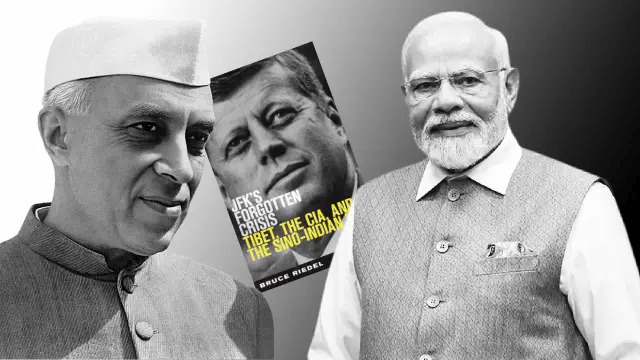
Whole Review – JFK’s Forgotten Crisis, Book by Bruce Riedel. I reject Prime Minister Narendra Modi’s interpretation of Prime Minister Nehru’s Policy since 1947. In fact, Bruce Riedel reveals the failed CIA operations in Tibet and Cuba.

U.S. President John F. Kennedy faced two great crises in 1962 – the Cuban missile crisis and the Sino-Indian War. While his part in the missile crisis that threatened to snowball into a nuclear war has been thoroughly studied, his critical role in the Sino-Indian War has been largely ignored. Bruce Riedel fills that gap with JFK’s Forgotten Crisis: Tibet, the CIA, and the Sino-Indian War. Riedel’s telling of the president’s firm response to China’s invasion of India and his deft diplomacy in keeping Pakistan neutral provides a unique study of Kennedy’s leadership. Embedded within that story is an array of historical details of special interest to India, remarkable among which are Jacqueline Kennedy’s role in bolstering diplomatic relations with Prime Minister Jawaharlal Nehru and Pakistan President Ayub Khan, and the backstory to the China-India rivalry – what is today the longest disputed border in the world.

Bruce Riedel is senior fellow and director of the Brookings Intelligence Project. He joined Brookings following a thirty-year career at the CIA. His previous books include The Search for al Qaeda: Its Leadership, Ideology, and Future; Deadly Embrace: Pakistan, America, and the Future of the Global Jihad; and Avoiding Armageddon: America, India, and Pakistan to the Brink and Back.

In my analysis, Indian Prime Minister Nehru and the US President John F. Kennedy are not accountable for the Failed CIA Operations in Tibet and Cuba. THE 1962 INDIA – CHINA WAR AND THE US FACTOR. PRESIDENT KENNEDY PLANNED TO NUKE CHINA IN 1962.

The great conspiracy hatched by the UK and the US to dismember India in 1947 is not mentioned in JFK’s Forgotten Crisis Book Review. The First Kashmir War of 1947-48 is not because of Nehru’s incompetence. Following this unfair and unjust attack on India in 1947, Nehru acted in the interests of India and obtained the Soviet support for Kashmir without any concern for his own policy of Non-Alignment. He was indeed a great diplomat who performed a balancing act. The Communist takeover of mainland China and Chairman Mao Zedongs’s Expansionist Doctrine compelled Nehru to visit Washington D.C. in 1949 to initiate the Tibetan Resistance Movement and Nehru kept it as a covert operation to avoid provoking the Soviets. Nehru offered the UN Security Council seat to Red China to please the Soviets for they are the only people who fully supported India on the Kashmir issue.

It is the US policy which helped Red China to occupy Aksai Chin area of Ladakh. The US claims Kashmir as the territory of Pakistan. The US policy does not recognize India’s right to Kashmir.

It is the US policy which helped Red China to occupy Aksai Chin area of Ladakh. The US claims Kashmir as the territory of Pakistan. Even today, the official maps of the US show Kashmir as Pakistan’s territory and the US continues to support Pakistan with an aim to dismember India. These covert operations have extended to Punjab and to the Northeast.
Nehru kept his cool and obtained the US support to defend the Northeast Frontier. Kennedy did not hesitate to use the Nuke threat and it forced Red China to declare unilateral ceasefire. India regained the full control of the Northeast Frontier while the Chinese still occupy Ladakh which clearly reveals the nature of the US policy which does not recognize India’s right to Kashmir.
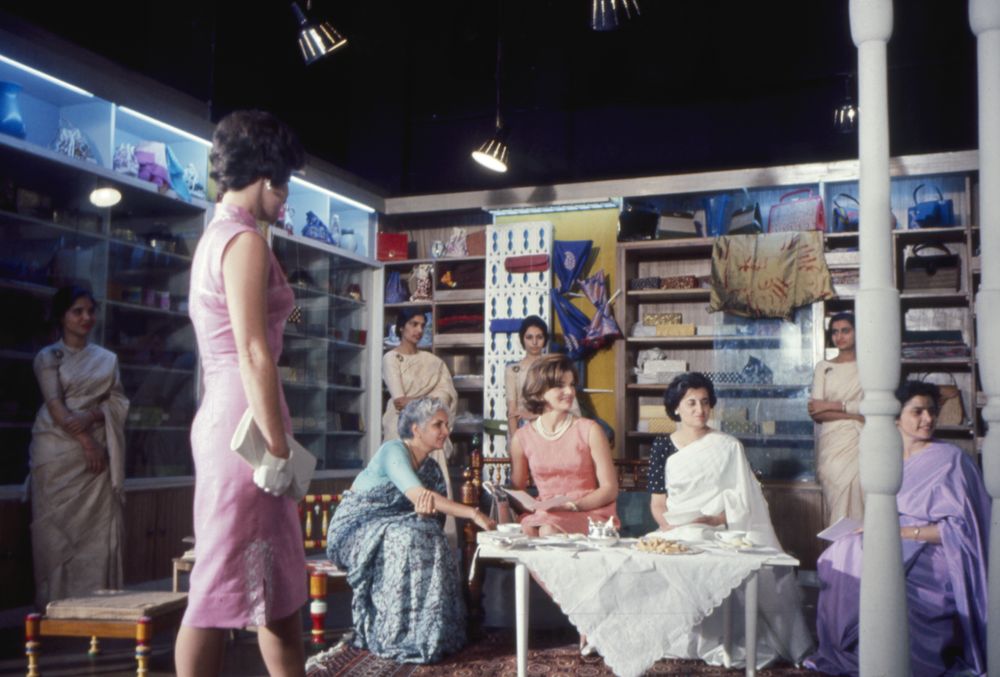
Too much attention is given by Indian readers to Mrs. Kennedy’s sleeping arrangements during her visit to New Delhi in March 1962. She came with two other ladies. I know the man who cleans the trash cans of that suite. She was experiencing her monthly period during her stay in New Delhi. Nehru may wear a Red Rose but he was not fond of mating women during their monthly periods. Feel free to ask the CIA or Bruce Riedel to refute my account. The evidence is in the trash can, the dust bin called History.
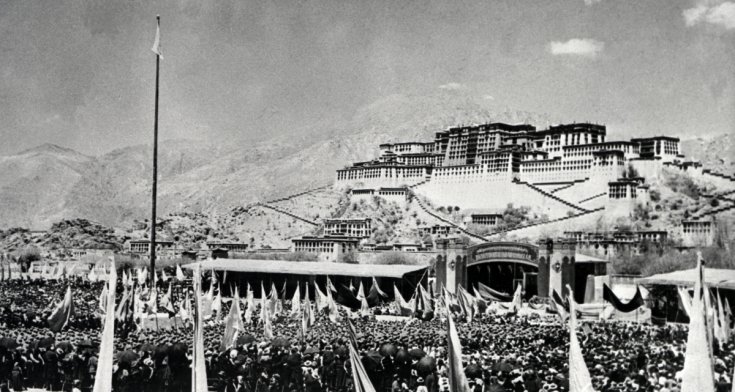
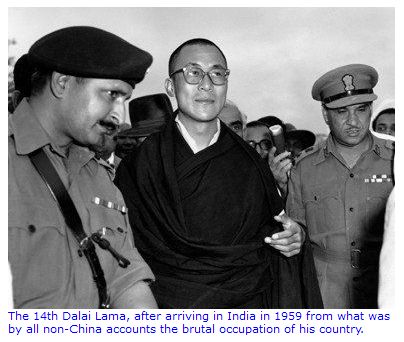
All said and done, the CIA failed in 1959 for they underestimated the capabilities of the Enemy in Tibet. The Tibet Uprising of 1959 was brutally crushed and CIA helped the Dalai Lama to find shelter in India. The CIA again failed in Cuba for they underestimated the capabilities of the Enemy in Cuba. Basically, the CIA lacks intelligence capabilities and gave false assurances to Nehru about China’s intentions and preparedness to wage a war across the Himalayan Frontier. Ask Chairman Mao Zedong as to why he attacked India in 1962. What did he say about his own attack?
Indians keep repeating the false narrative shared by Neville Maxwell, a communist spy. What about Indian Army Chief? What was his name? Was he related to Nehru clan? Who appointed him to that position? Was there any favoritism? India honored all the military leaders who defended Kashmir.

Tell me about the Battlefield casualties. How many killed and wounded during the 1962 War? Ask Red China to give me its numbers. What is the secret about it? Ask Red China to declassify its War Record to get a perspective on the Himalayan Blunders of Nehru.

Whole Review – JFK’s Forgotten Crisis, Book by Bruce Riedel. On behalf of Special Frontier Force – Vikas Regiment, I reject Prime Minister Narendra Modi’s interpretation of Prime Minister Nehru’s Policy since 1947.

Rudra Rebbapragada

Special Frontier Force/Establishment 22/Vikas Regiment

The Himalayan Blunders of Nehru

As Stated In ‘JFK’s Forgotten Crisis’

Jaideep A Prabhu

Feb 06, 2025,

https://swarajyamag.com/books/the-failure-of-nehru-the-initiative-of-jfk
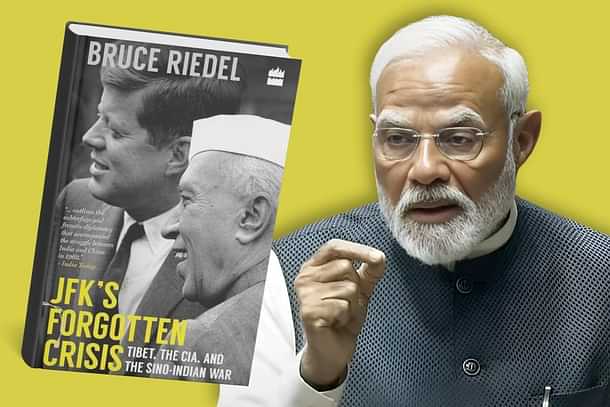
Whole Review – JFK’s Forgotten Crisis, Book by Bruce Riedel. I reject Prime Minister Narendra Modi’s interpretation of Prime Minister Nehru’s Policy since 1947.

PM Modi urged the MPs to read ‘JFK’s Forgotten Crisis’ in his Parliament speech.

JFK’s Forgotten Crisis: Tibet, the CIA, and the Sino-Indian War, Bruce O. Riedel, Brookings Institution, 2015

Bruce Riedel’s book is written in an accessible style and adds considerably to our understanding of the limitations of Nehru, the India-friendliness of JFK, and the Sino-Indian War of ’62.

Occurring in the shadows of the Cuban Missile Crisis, the Sino-Indian War of 1962 is a forgotten slice of history that is remembered vividly only in India.

With it is buried an important episode of US president John Fitzgerald Kennedy’s diplomacy, an intriguing ‘what-if’ of Indo-US relations, and perhaps the most active chapter in the neglected history of Tibet’s resistance to China’s brutal occupation.

The war, however, brought about significant geopolitical changes to South Asia that shape it to this day. Bruce Riedel’s JFK’s Forgotten Crisis: Tibet, the CIA, and the Sino-Indian War is a gripping account of the United States’ involvement in South Asia and Kennedy’s personal interest in India.

In it, he dispels the commonly held belief that India was not a priority of US foreign policy in the early 1960s and that Kennedy was too preoccupied with events in his own backyard to pay any attention to a “minor border skirmish” on the other side of the world.

Except perhaps among historians of the Cold War, it is not widely known that the United States cosied up to Pakistan during the Eisenhower administration not to buttress South and West Asia against communism but to secure permission to fly reconnaissance missions into the Soviet Union, China, and Tibet.

Initiated in 1957, the US-Pakistan agreement allowed the Central Intelligence Agency (CIA) to operate U-2 reconnaissance planes from Lahore, Peshawar, and other airbases in West Pakistan over Communist territory. Airfields in East Pakistan, such as at Kurmitola, were also made available to the United States. Some of the missions were flown by the Royal Air Force as well.

These overflights provided a wealth of information about the Soviet and Chinese militaries, economies, terrain, and other aspects important to Western military planners. Particularly useful was the information on China, which was otherwise sealed off to Western eyes and ears.

Ayub Khan, the Pakistani president, claimed his pound of flesh for the agreement – Washington and Karachi signed a bilateral security agreement supplementing the CENTO and SEATO security pacts that Pakistan was already a member of and American military aid expanded to include the most advanced US jet fighter of the time, the F-104.

In addition to intelligence gathering, the United States was also involved – with full Pakistani complicity – in supporting Tibetan rebels fight the Chinese army.

The CIA flew out recruits identified by Tibetan resistance leaders, first to Saipan and then on to Camp Hale in Colorado or to the Farm – the CIA’s Virginia facility – to be trained in marksmanship, radio operations, and other crafts of insurgency. The newly-trained recruits were then flown back to Kurmitola, from where they would be parachuted back into Tibet to harass the Chinese military.

No one in Washington had any illusion that these rebels stood any chance against any professionally trained and equipped force, especially one as large as the People’s Liberation Army, but US policymakers were content to harass Beijing in the hope of keeping it off balance.

Jawaharlal Nehru knew of US activities in Tibet, for his Intelligence Bureau chief, BN Mullick, had his own sources in Tibet. It is unlikely, however, that he knew of Pakistan’s role in the United States’ Tibet operations.

In any case, Nehru did not believe that it was worth antagonising the Chinese when there was no hope of victory; India had to live in the same neighbourhood and hence be more cautious than the rambunctious Americans.

Furthermore, it was the heyday of non-alignment and panchsheel, and the Indian prime minister did not wish to upset that applecart if he could help it. In fact, Nehru urged US President Dwight Eisenhower during their 1956 retreat to the latter’s Gettysburg farmhouse to give the UN Security Council seat held by Chiang Kai-shek’s Nationalist China to Mao Zedong’s Communist China.

As Nehru saw it, a nation of 600 million people could not be kept outside the world system for long, but Ike, as the US president was known, still had bitter memories of the Chinese from Korea fresh in his mind. Yet three years later, when Ike visited India and Chinese perfidy in Aksai Chin had been discovered, the Indian prime minister’s tone was a contrast.

To most, Cuba defines the Kennedy administration: JFK had got off to a disastrous start in his presidency with the Bay of Pigs fiasco in Cuba, an inheritance from his predecessor’s era.

His iconic moment, indisputably, came two years later in the showdown with Nikita Khrushchev over Soviet nuclear missiles in Cuba. Less well known is the president’s interest in South Asia and India in particular.

Riedel explains how, even before assuming the presidency, Kennedy had made a name for himself in the US Senate with his powerful speeches on foreign policy.

In essence, he criticised the Eisenhower government for its failure to recognise that the era of European power was over; Kennedy wanted to fight a smarter Cold War, embracing the newly liberated peoples of Asia and Africa and denying the Communists an opportunity to fan any residual anti-imperialism which usually manifested itself as anti-Westernism.

Riedel points to a speech in May 1959 as a key indicator of the future president’s focus:

In May 1959, JFK declared, “…no struggle in the world today deserves more of our time and attention than that which now grips the attention of all Asia. That is the struggle between India and China for leadership of the East…” China was growing three times as fast as India, Kennedy went on, because of Soviet assistance; to help India, the future president proposed, NATO and Japan should put together an aid package of $1 billion per year that would revitalise the Indian economy and set the country on a path to prosperity.

The speech had been partially drafted by someone who would also play a major role in the United States’ India policy during Kennedy’s presidency: John Kenneth Galbraith.

Riedel shows how, despite his Cuban distraction, Kennedy put India on the top of his agenda. A 1960 National Intelligence Estimate prepared by the CIA for the new president predicted a souring of India-China relations; it further predicted that Delhi would probably turn to Moscow for help with Beijing.
However, the border dispute with the Chinese had shaken Nehru’s dominance in foreign policy and made Indian leaders more sympathetic of the United States. The NIE also projected the military gap between India and China to increase to the disadvantage of the former.

The PLA had also been doing exceedingly well against Tibetan rebels, picking them off within weeks of their infiltration. By late 1960, a Tibetan enclave had developed in Nepal; Mustang, the enclave was called, became the preferred site for the CIA to drop supplies to the rebels.

Galbraith, the newly appointed ambassador to India, disapproved of the CIA’s Tibetan mission, which had delivered over 250 tonnes of arms, ammunition, medical supplies, communications gear, and other equipment by then.

Like Nehru, he thought it reckless and provocative without any hope of achieving a favourable result. There were, however, occasional intelligence windfalls coming from Tibet and Kennedy overruled Galbraith for the moment.
JFK’s Forgotten Crisis shows how Galbraith was far more attuned to India than he is usually given credit for. He is most famously remembered – perhaps only among Cold War historians – for nixing a Department of Defence proposal in 1961 that proposed giving India nuclear weapons.

Then, he predicted – most likely accurately – that Nehru would denounce such an offer and accuse the United States of trying to make India its atomic ally. Now, the Harvard professor pushed for Nehru and Kennedy to meet.

This would give the Indian prime minister, Galbraith hoped, an opportunity to remove any lingering suspicions he may have had about US foreign policy in South Asia. The large aid package Washington had planned for India would only sweeten the meeting.

This was not to be: Nehru remained most taciturn and almost monosyllabic during his visit to Jacqueline Kennedy’s home in Newport. However, he was quite enamoured by the First Lady, and Jackie Kennedy later said that she found the Indian leader to be quite charming; she, however, had much sharper things to say about the leader’s daughter!

Washington’s outreach to Delhi annoyed Karachi. Though ostensibly the US-Pakistan alliance was to fight communism, the reality was that Pakistan had always been preoccupied with India.

Ayub Khan felt betrayed that the United States would give India, a non-aligned state, economic assistance that would only assist it in developing a stronger military to be deployed against Pakistan. Riedel’s account highlights the irresistible Kennedy charm – when Pakistan suspended the Dragon Lady’s flights from its soil, JFK was able to woo Khan back into the fold.

However, the Pakistani dictator had a condition – that Washington would discuss all arms sales to India with him. This agreement would be utterly disregarded during the Sino-Indian War and Pakistan would start looking for more reliable allies against their larger Hindu neighbour.

Riedel reveals how Pakistan had started drifting into the Chinese orbit as early as 1961, even before China’s invasion of India, an event commonly believed to have occurred after India’s Himalayan humiliation.

When India retook Goa from the Portuguese, a NATO country, it caused all sorts of difficulties for the United States.

On the one hand, Kennedy agreed with the notion that colonial possessions should be granted independence or returned to their original owners but on the other, Nehru and his minister of defence, Krishna Menon, had not endeared themselves to anyone with their constant moralising; their critics would not, now, let this opportunity to call out India’s hypocrisy on the use of force in international affairs pass.

The brief turbulence in relations was set right, oddly, by the First Lady again. On her visit to India, she again charmed the prime minister and he insisted that he stay with him instead of the US embassy and had the room Edwina Mountbatten had often used on her visits readied. The play of personalities, an often ignored facet of diplomacy, has been brought out well by Riedel.
Ironically, China believed that the Tibetan resistance movement was being fuelled by India with US help. India’s granting of asylum to the Dalai Lama did not help matters either, even though it was Nehru who had convinced the young Dalai Lama to return to Tibet in 1956 and have faith in Beijing’s promises of Tibetan autonomy.

Although Indian actions did factor into the Chinese decision to invade India in October 1962, records from Eastern European archives indicate that the Sino-Soviet split was also partly to blame. Humiliating India served two purposes for Mao: first, it would secure Chinese access to Tibet via Aksai Chin, and second, it would expose India’s Western ties and humiliate a Soviet ally, thereby proclaiming China to be the true leader of the communist world.

Riedel’s treatment of the war and the several accounts makes for interesting reading, though his belief that there is rich literature on the Indian side about the war is a little puzzling.

Most of what is known about the Sino-Indian War comes from foreign archives – primarily the United States, Britain, and Russia but also European archives as their diplomats recorded and relayed to their capitals opinions they had formed from listening to chatter on the embassy grapevine.

There is, indeed, literature on the Indian side but much of it seeks to apportion blame rather than clarify the sequence of events. Records from the Prime Minister’s Office, the Ministry of External Affairs, or the Ministry of Defence are yet to be declassified, though the Henderson-Brooks-Bhagat Report was partially released to the public by Australian journalist Neville Maxwell.

Chinese records, though not easily accessible, have trickled out via the most commendable Cold War International History Project. The Parallel History Project has also revealed somewhat the view from Eastern Europe.

Riedel dispels the notion of Nehru’s Forward Policy as the cassus belli. According to Brigadier John Dalvi, a prisoner of war from almost the outset, China had been amassing arms, ammunition, winter supplies, and other materiel at its forward bases since at least May 1962.

This matches with an IB report Mullick had provided around the same time. Furthermore, the Indian forces were outnumbered at least three-to-one all along the border and five-to-one in some places. The troops were veterans of the Korean War and armed with modern automatic rifles as compared to Indian soldiers’ 1895 issue Lee Enfield.

Though Riedel exonerates Nehru on his diplomacy, he does not allow the prime minister’s incompetence to pass: the political appointment of BM Kaul, the absolute ignorance of conditions on the ground, and the poor logistics and preparation of the troops on the border left them incapable of even holding a Chinese assault, let alone breaking it.

JFK’s Forgotten Crisis brings out a few lesser known aspects of the Sino-Indian War. For example, India’s resistance to the PLA included the recruitment of Tibetan exiles to harass the PLA from behind the lines. Nehru was approached by the two men most responsible for the debacle on the border – Menon and Kaul – with the proposal which Nehru promptly agreed.

A team, commanded by Brigadier Sujan Singh Uban and under the IB, was formed. A long-continuing debate Riedel takes up in his work is the Indian failure to use air power during the conflict in the Himalayas.

It has been suggested that had Nehru not been so timid and fearful of retaliation against Indian cities but deployed the Indian air force, India may have been able to repel or at least withstand the Chinese invasion. One wonders how effective the Indian Air Force really might have been given the unprepared state of the Army.

In any case, Riedel points out that the Chinese air force was actually larger than the IAF – the PLAAF had over 2,000 jet fighters to India’s 315, and 460 bombers to India’s 320. Additionally, China had already proven its ability to conquer difficult terrain in Korea.

Throughout the South Asian conflict, the United States was also managing its relationship with Pakistan. Despite the Chinese invasion, the bulk of India’s armies were tied on the Western border with Pakistan and Ayub Khan was making noises about a decisive solution to the Kashmir imbroglio; it was all the United States could do to hold him back.

However, Ayub Khan came to see the United States as a fair-weather friend and realised he had to look elsewhere for support in his ambitions against India: China was the logical choice. Thus, the 1962 war resulted in the beginning of the Sino-Pakistani relationship that would blossom to the extent of Beijing providing Islamabad with nuclear weapon and missile designs in the 1980s.

The Chinese had halted after their explosive burst into India on October 20. For a full three weeks, Chinese forces sat still while the Indians regrouped and resupplied their positions. On November 17, they struck again and swept further south. The Siliguri corridor, or the chicken neck, was threatened , and India stood to lose the entire Northeast.

In panic, Kaul asked Nehru to invite foreign armies to defend Indian soil. A broken Nehru wrote two letters to Washington on the same day, asking for a minimum of 12 squadrons of jet fighters, two B-47 bomber squadrons, and radar installations to defend against Chinese strikes on Indian cities.

These would all be manned by American personnel until sufficient Indians could be trained. In essence, India wanted the United States to deploy over 10,000 men in an air war with China on its behalf.

There is some doubt as to what extent the United States would have gone to defend India. However, that November, the White House dispatched the USS Kitty Hawk to the Bay of Bengal (she was later turned around as the war ended).

After the staggering blows of November 17, the US embassy, in anticipation of Indian requests for aid, had also started preparing a report to expedite the process through the Washington bureaucracy.
On November 20, China declared a unilateral ceasefire and withdrew its troops to the Line of Actual Control. A cessation of hostilities had come on Beijing’s terms, who had shown restraint by not dismembering India.

Riedel makes a convincing case that Kennedy would have defended India against a continued Chinese attack had one come in the spring of the following year, and that overt US support may have influenced Mao’s decision.

In the immediate aftermath of the war, the United States sent Averell Harriman of Lend-Lease fame to India to assess the country’s needs. Washington had three items on its agenda with India:

1. Increase US economic and military aid to India;

2. Push India to negotiate with Pakistan on Kashmir as Kennedy had promised Ayub Khan; and

3. Secure Indian support for the CIA’s covert Tibetan operations.

The first met with little objection, and though Nehru strongly objected to talks with Pakistan, he obliged. Predictably, they got to nowhere. On the third point, Riedel writes that India agreed to allow the CIA to operate U-2 missions from Char Batia.
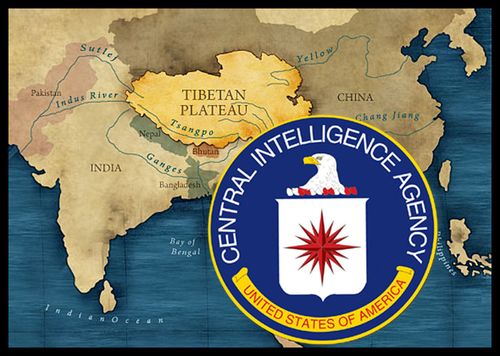
This has usually been denied on the Indian side though one senior bureaucrat recently claimed that Nehru had indeed agreed to such an arrangement but only two flights took off before permission was revoked.
Nonetheless, the IB set up a Special Frontier Force of Tibetans in exile and the CIA supported them with equipment and air transport from bases in India. All this, however, withered away as relations again turned sour after the Indo-Pakistan War of 1965 and the election of Richard Nixon.

Most of the sources JFK’s Forgotten Crisis uses are memoirs and prominent secondary sources on South Asia and China. Riedel also uses some recently declassified material from the John F. Kennedy Presidential Library that sheds new light on the president’s views on South Asia.

Despite the academic tenor of the book, it is readily accessible to lay readers as well; personally, I would have preferred a significantly heavier mining of archival documents and other primary sources but that is exactly what would have killed sales and the publisher would not have liked!

Overall, Riedel gives readers a new way to understand the Kennedy years; he also achieves a fine balance in portraying Nehru’s limitations and incompetence. The glaring lack of Indian primary sources also reminds us of the failure of the Indian government to declassify its records that would inform us even more about the crisis.

As Riedel notes, the Chinese invasion of India created what they feared most and had not existed earlier: the United States and India working together in Tibet. This was largely possible also because of the most India-friendly president in the White House until then.

Yet Pakistan held great sway over American minds thanks to the small favours it did for the superpower. It was also the birth of the Sino-Pakistani camaraderie that is still going strong. The geopolitical alignment created by the Sino-Indian War affects South Asian politics to this day. Yet it was a missed opportunity for Indo-US relations, something that had to await the presidency of George W. Bush.

There are two things Indian officials would do well to consider.

First, Pakistan’s consistent ability to extract favours from Washington is worth study: if small yet important favours can evince so much understanding from the White House, it would be in Indian interests to do the same.

Second, Jaswant Singh’s comment to Strobe Talbott deserves reflection: “Our problem is China, we are not seeking parity with China. we don’t have the resources, and we don’t have the will.” It is time to develop that will.

Special Frontier Force Pays Tribute to President John F. Kennedy
The History of Special Frontier Force-Establishment No. 22: People’s Republic of China could not alter the course of India’s foreign policy. The 1962 War launched by China ended very abruptly when China declared unilateral ceasefire and withdrew from the captured territory on November 21, 1962. President Kennedy played a decisive role by threatening to “NUKE” China.

While sharing an interesting story titled Cold War Camelot published by The Daily Beast which includes excerpts from the book JFK’s Forgotten CIA Crisis by Bruce Riedel, I take the opportunity to pay tribute to President John F. Kennedy for supporting the Tibetan Resistance Movement initiated by President Dwight David Eisenhower. Both Tibet, and India do not consider Pakistan as a partner in spite of the fact of Pakistan permitting the use of its airfields in East Pakistan. Red China has formally admitted that she had attacked India during October 1962 to teach India a lesson and to specifically discourage India from extending support to Tibetan Resistance Movement. Red China paid a huge price. She is not able to truthfully disclose the human costs of her military aggression in 1962. She failed to achieve the objectives of her 1962 War on India. President Kennedy threatened to “Nuke” China and forced her to declare unilateral cease-fire on November 21, 1962. China withdrew from territories she gained using overwhelming force. People’s Liberation Army (PLA) sustained massive casualties and their brief victory over India did not give them any consolation. Red China’s 1962 misadventure forged a stronger bonding between Tibet, India, and the United States.

Special Frontier Force, a military organization in India was established during the Cold War Era while the US fought wars in the Korean Peninsula and Vietnam. In my view, Special Frontier Force is the relic of Unfinished Vietnam War, America’s War against the spread of Communism in South Asia.

On behalf of Special Frontier Force, I feel honored to share John F Kennedy’s Legacy. Due to Cold War Era secret diplomacy, Kennedy’s role in Asian affairs is not fully appreciated both in the US and India. In 1962, during the presidency of Dr. Sarvepalli Radhakrishnan, the second President of Republic of India, Kennedy joined hands with India and Tibet to transform the Tibetan Resistance Movement into a regular fighting force.

Special Frontier Force, a military organization in India was established during the Cold War Era while the US fought wars in the Korean Peninsula and Vietnam. In my view, Special Frontier Force is the relic of Unfinished Vietnam War, America’s War against the spread of Communism in South Asia.

Cold War Camelot

SPECIAL FRONTIER FORCE PAYS TRIBUTE TO PRESIDENT JOHN K. KENNEDY. SUPPORTING TIBET WAS PRESIDENT KENNEDY’S MAIN REASON FOR HOSTING A STATE DINNER AT MOUNT VERNON ON JULY 11, 1961.

Bruce Riedel

11.08.1512:01 AM ET

JFK’s Forgotten CIA Crisis

During a spectacular dinner at Mount Vernon, Kennedy pressed Pakistan’s leader for help with a sensitive spy operation against China.

At Mount Vernon

The magic of the Kennedy White House, Camelot, had settled in at Mount Vernon. It was a dazzling evening, a warm July night, but a cool breeze came off the Potomac River and kept the temperature comfortable. It was Tuesday, July 11, 1961, and the occasion was a state dinner for Pakistan’s visiting president, General Ayub Khan, the only time in our nation’s history that George Washington’s home has served as the venue for a state dinner.

President John F. Kennedy had been in office for less than six months, but his administration had already been tarnished by the failed CIA invasion of Cuba at the Bay of Pigs and a disastrous summit with Soviet leader Nikita Khrushchev in Vienna, Austria. Ayub Khan wrote later that the president was “under great stress.” The Kennedy administration was off to a rocky start: It needed to show some competence.

The idea of hosting Ayub Khan at Mount Vernon came from Kennedy’s wife, Jacqueline Bouvier Kennedy, who was inspired by a dinner during the Vienna summit held a month earlier at the Schönbrunn Palace, the rococo-style former imperial palace of the Hapsburg monarchy built in the seventeenth century. Mrs. Kennedy was impressed by the opulence and history displayed at Schönbrunn and at a similar dinner held on the same presidential trip at the French royal palace of Versailles. America had no royal palaces, of course, but it did have the first president’s mansion just a few miles away from the White House on a bluff overlooking the Potomac River. The history of the mansion and the fabulous view of the river in the evening would provide a very special atmosphere for the event.

On June 26, 1961, the First Lady visited Mount Vernon privately and broached the idea with the director of the Mount Vernon Ladies’ Association, which manages the estate. It was a challenging proposal. The old mansion was too small to host an indoor dinner so the event would have to take place on the lawn. The mansion had very little electricity in 1961 and was a colonial antique, without a modern kitchen or refrigeration, so that the food would have to be prepared at the White House and brought to the estate and served by White House staff. But the arrangements were made, with the Secret Service and Marine Corps providing security, and the U.S. Army’s Third Infantry Regiment from Fort Myers providing the colonial fife and drum corps for official presentation of the colors. The National Symphony Orchestra offered the after-dinner entertainment. Tiffany and Company, the high-end jewelry company, provided the flowers and decorated the candlelit pavilion in which the guests dined.

The guests arrived by boat in a small fleet of yachts led by the presidential yacht, Honey Fitz, and the secretary of the navy’s yacht, Sequoia. They departed from the Navy Yard in Washington and sailed the fifteen miles down river to Mount Vernon past National Airport and Alexandria, Virginia; the trip took an hour and fifteen minutes. On arrival the most vigorous guests, such as the president’s younger brother, Attorney General Robert Kennedy, climbed the hill to the mansion on foot, but most took advantage of the limousines the White House provided.

Brookings Institution

The guest list was led by President Ayub Khan and his daughter, Begum Nasir Akhtar Aurangzeb, and included the Pakistani foreign minister and finance minister, as well as Pakistan’s ambassador to the United States, Aziz Ahmed, and various attaches from the embassy in Washington. Initially the ambassador was upset that the dinner would not be in the White House, fearing it would be seen as a snub. The State Department convinced Ahmed that having it at Mount Vernon was actually a benefit and would generate more publicity and distinction.
The Americans invited to the dinner were the elite of the new administration. In addition to the president, attorney general, and vice president and their wives, Secretary of State Dean Rusk, Secretary of Defense Robert McNamara, Secretary of the Navy John Connally, Chairman of the Joint Chiefs of Staff Lyman Lemnitzer, and their wives joined the party. Six senators, including J. W. Fulbright, Stuart Symington, Everett Dirksen, and Mike Mansfield were joined by the Speaker of the House and ten congressmen, including a future president, Gerald Ford, and their wives. The U.S. ambassador to Pakistan, William Roundtree; the chief of the United States Air Force, General Curtis Lemay; Assistant Secretary of State Phillip Talbott; Peace Corps Director Sargent Shriver; and the president’s military assistant, Maxwell Taylor, were also in attendance. Walter Hoving, chairman of Tiffany, and Mrs. Hoving, and a half-dozen prominent Pakistani and American journalists, such as NBC correspondent Sander Vanocur, attended from outside the government. In total more than 130 guests were seated at sixteen tables.

Perhaps the guest most invested in the evening, however, was the director of the Central Intelligence Agency, Allen W. Dulles. The Kennedys had long been friends of Allen Dulles. A few years before the dinner Mrs. Kennedy had given him a copy of Ian Fleming’s James Bond novel, From Russia, with Love, and Dulles, like JFK, became a big fan of 007. Dulles was also a holdover from the previous Republican administration. He had been in charge of the planning and execution of the Bay of Pigs fiasco that had tarnished the opening days of the Kennedy administration, but Dulles still had the president’s ear on sensitive covert intelligence operations, including several critical clandestine operations run out of Pakistan with the approval of Field Marshal Ayub Khan.

Before sitting down for dinner just after eight o’clock, the guests toured the first president’s home and enjoyed bourbon mint juleps or orange juice. Both dressed in formal attire for the occasion, Kennedy took Ayub Khan for a walk in the garden alone. At that time, the CIA was running two very important clandestine operations in Pakistan. One had already made the news a year earlier when a U-2 spy plane had been shot down over the Soviet Union by Russian surface-to-air missiles; this plane had started its top-secret mission, called Operation Grand Slam, from a Pakistani Air Force air base in Peshawar, Pakistan. The U-2 shoot down had wrecked a summit meeting between Khrushchev and President Eisenhower in Paris in 1960 when Ike refused to apologize for the mission. The CIA had stopped flying over the Soviet Union, but still used the base near Peshawar for less dangerous U-2 operations over China.

The history of Special Frontier Force-Establishment No. 22: 1957 was a turning point. India had recognized that its foreign policy of political neutralism was of no use and had started depending upon the United States to address the military threat posed by China’s occupation of Tibet. But, the effort was too modest and both India and the United States had grossly underestimated the strength of the People’s Liberation Army.

The second clandestine operation also dated from the Eisenhower administration, but was still very much top-secret. The CIA was supporting a rebellion in Communist China’s Tibet province from another Pakistani Air Force air base near Dacca in East Pakistan (what is today Bangladesh). Tibetan rebels trained by the CIA in Colorado were parachuted into Tibet from CIA transport planes that flew from that Pakistani air base, as were supplies and weapons. U-2 aircraft also landed in East Pakistan after flying over China to conduct photo reconnaissance missions of the communist state.

Ayub Khan had suspended the Tibet operation earlier that summer. The Pakistani president was upset by Kennedy’s decision to provide more than a billion dollars in economic aid to India.
Pakistan believed it should be America’s preferred ally in South Asia, not India, and shutting down the CIA base for air drops to Tibet was a quiet way to signal displeasure at Washington without causing a public breakdown in the U.S.-Pakistan relationship. Ayub Khan wanted to make clear to Kennedy that an American tilt toward India at Pakistan’s expense would have its costs. In his memoirs, Khan later wrote that he sought to press Kennedy not to “appease India.”

Before the Mount Vernon dinner, Allen Dulles had asked Kennedy to meet alone with Ayub Khan, thinking that perhaps a little Kennedy charm and the magic of the evening would change his mind. The combination worked; the Pakistani dictator told Kennedy he would allow the CIA missions over Tibet to resume from the Pakistani Air Force base at Kurmitula outside of Dacca.

Ayub Khan did get a quid pro quo for this decision later in his visit: Kennedy promised that, even if China attacked India, he would not sell arms to India without first consulting with Pakistan. However, when China did invade India the following year, Kennedy ignored this promise and provided critical aid to India, including arms, without consulting Ayub Khan, who was deeply disappointed.

The main course for dinner was poulet chasseur served with rice and accompanied by Moët and Chandon Imperial Brut champagne (at least for the Americans), followed by raspberries in cream for dessert. President Kennedy hosted a table at which sat Begum Aurangzeb, who wore a white silk sari. Khan enjoyed the beauty of a Virginia summer evening with America’s thirty-one-year-old First Lady; he sat next to Jackie, who wore a Oleg Cassini sleeveless white organza and lace evening gown sashed at the waist in Chartreuse silk. In his toast the Pakistani leader warned that “any country that faltered in Asia, even for only a year or two, would find itself subjugated to communism.” In turn Kennedy hailed Ayub Khan as the George Washington of Pakistan. After midnight the guests were driven back to Washington down the George Washington Parkway.

The CIA operation in Tibet had its detractors in the Kennedy White House, including Kennedy’s handpicked ambassador to India, John Kenneth Galbraith, who called it “a particularly insane enterprise” involving “dissident and deeply unhygienic tribesmen” that risked an unpredictable Chinese response. However, the operation did produce substantial critical intelligence on the Chinese communist regime from captured documents seized by the Tibetans at a time when Washington had virtually no idea what was going on inside Red China. The U-2 flights from Dacca were even more important to the CIA’s understanding of China’s nuclear weapon development at its Lop Nor nuclear test facility.

But Galbraith was in the end correct to be skeptical. The operation did have an unpredicted outcome: The CIA operation helped persuade Chinese leader Mao Zedong to invade India in October 1962, an invasion that led the United States and China to the brink of war and began a Sino-India rivalry that continues today. It also created a Pakistani-Chinese alliance that still continues. The contours of modern Asian grand politics thus were drawn in 1962.
The dinner at Mount Vernon was a spectacular social success for the Kennedys, although they received some predictable criticism from conservative newspapers over its cost. It was also a political success for both Kennedy and the CIA, keeping the Tibet operation alive. As an outstanding example of presidential leadership in managing and executing covert operations at the highest level of government, it is an auspicious place to begin an examination of JFK’s forgotten crisis.

From JFK’s FORGOTTEN CRISIS: TIBET, THE CIA, AND THE SINO-INDIAN WAR, by Bruce Riedel, Brookings Institution Press, November 6, 2015.

© 2014 The Daily Beast Company LLC

SPECIAL FRONTIER FORCE PAYS TRIBUTE TO PRESIDENT JOHN F. KENNEDY FOR HIS SUPPORT TO TIBET. DINNER HOSTED AT PRESIDENT GEORGE WASHINGTON’S MOUNT VERNON ESTATE ON JULY 11, 1961.On www.mountvernon.org
SPECIAL FRONTIER FORCE PAYS TRIBUTE TO PRESIDENT JOHN F. KENNEDY WHO HOSTED STATE DINNER AT GEORGE WASHINGTON’S MOUNT VERNON ESTATE ON JULY 11, 1961 TO GET SUPPORT FOR TIBET OPERATIONS FROM PRESIDENT AYUB KHAN OF PAKISTAN.
SPECIAL FRONTIER FORCE PAYS TRIBUTE TO PRESIDENT JOHN F. KENNEDY. A STATE DINNER HOSTED ON JULY 11, 1961 WAS USED TO GET SUPPORT FOR TIBET OPERATIONS FROM PRESIDENT AYUB KHAN OF PAKISTAN.On www.jfklibrary.org
SPECIAL FRONTIER FORCE PAYS TRIBUTE TO PRESIDENT JOHN F. KENNEDY FOR ENLISTING SUPPORT FOR TIBET OPERATIONS DURING THIS DINNER AT MOUNT VERNON ON JULY 11, 1961. On www.jfklibrary.org
SPECIAL FRONTIER FORCE PAYS TRIBUTE TO PRESIDENT JOHN F. KENNEDY FOR ENLISTING SUPPORT FOR TIBET OPERATIONS DURING THIS DINNER AT MOUNT VERNON ON JULY 11, 1961.On www.jfklibrary.org
SPECIAL FRONTIER FORCE PAYS TRIBUTE TO PRESIDENT JOHN F. KENNEDY FOR ENLISTING SUPPORT FOR TIBET OPERATIONS DURING DINNER AT MOUNT VERNON ON JULY 11, 1961.On www.jfklibrary.org
SPECIAL FRONTIER FORCE PAYS TRIBUTE TO PRESIDENT JOHN F. KENNEDY FOR GETTING PAKISTAN’S SUPPORT FOR TIBET OPERATIONS DURING DINNER AT MOUNT VERNON ON JULY 11, 1961.On www.jfklibrary.org
SPECIAL FRONTIER FORCE PAYS TRIBUTE TO PRESIDENT JOHN F. KENNEDY FOR GETTING PAKISTAN’S SUPPORT FOR TIBET OPERATIONS DURING DINNER AT MOUNT VERNON ON JULY 11, 1961.On www.mountvernon.org
SPECIAL FRONTIER FORCE PAYS TRIBUTE TO PRESIDENT JOHN F. KENNEDY FOR GETTING PAKISTAN’S SUPPORT FOR TIBET OPERATIONS DURING DINNER AT MOUNT VERNON ON JULY 11, 1961. On www.jfklibrary.org

Whole Review – Movie TE3N Reveals My Tibet Connection by grouping four photo images in a single screenshot

MOVIE TE3N REVEALS MY TIBET CONNECTION

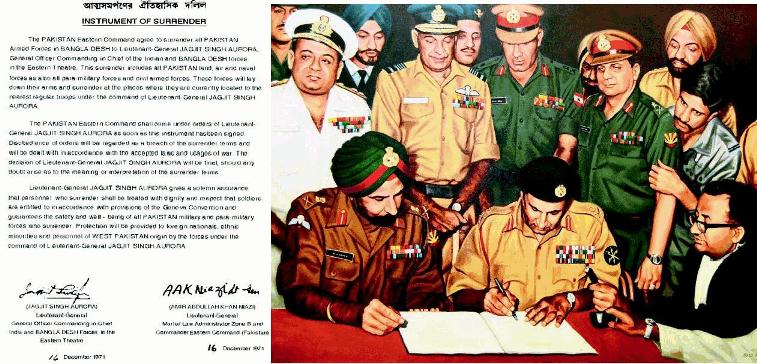
Whole Review – Movie TE3N Reveals My Tibet Connection by grouping four photo images in a single screenshot: SURRENDER AGREEMENT SIGNED IN DHAKA ON DECEMBER 16, 1971.
Whole Review – Movie TE3N Reveals My Tibet Connection by grouping four photo images in a single screenshot: LIBERATION OF BANGLADESH ON DECEMBER 16, 1971.
Whole Review – Movie TE3N Reveals My Tibet Connection by grouping four photo images in a single screenshot: Pakistan Surrenders on December 16, 1971.
Movie TE3N Reveals my Tibet Connection by using Four Photo images grouped together in a single screenshot. Liberation of Bangladesh on December 16, 1971.
Movie TE3N Reveals my Tibet Connection by grouping four photo images in a single screenshot. Surrender Agreement in Dhaka on December 16, 1971.
TE3N Movie Reviews my Tibet Connection by grouping together four photo images. Pakistan surrenders in Dhaka on December 16, 1971.

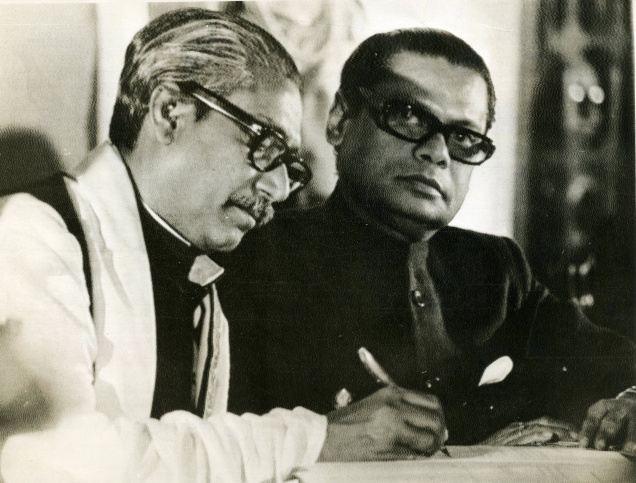
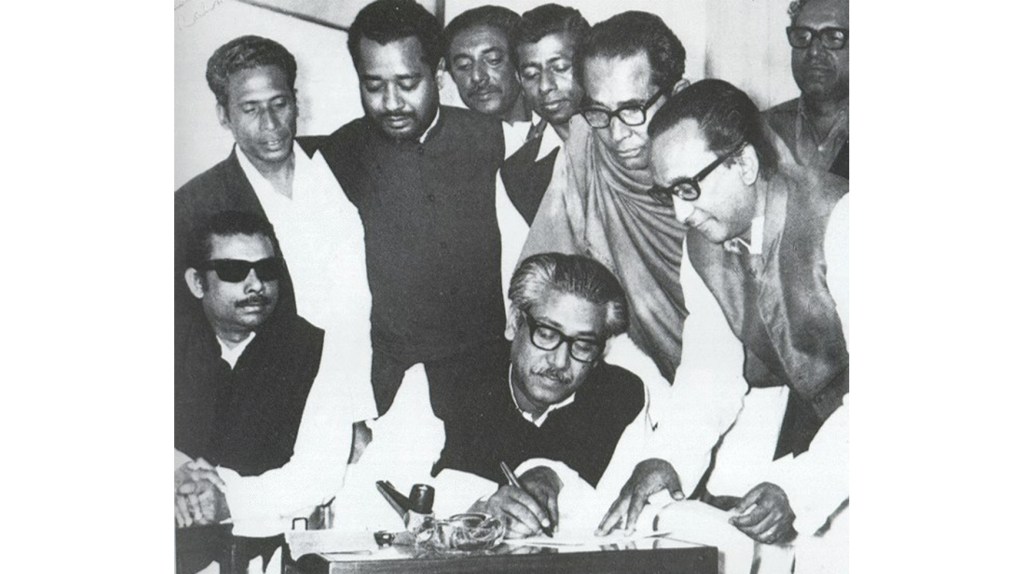
TE3N Movie Producer Sujoy Ghosh and Director Ribhu Das Gupta imaginatively created a screenshot grouping four different photo images to describe my Tibet Connection; These are,

1. Surrender Agreement signed in Dhaka on December 16, 1971 leading to creation of independent nation of Bangladesh,

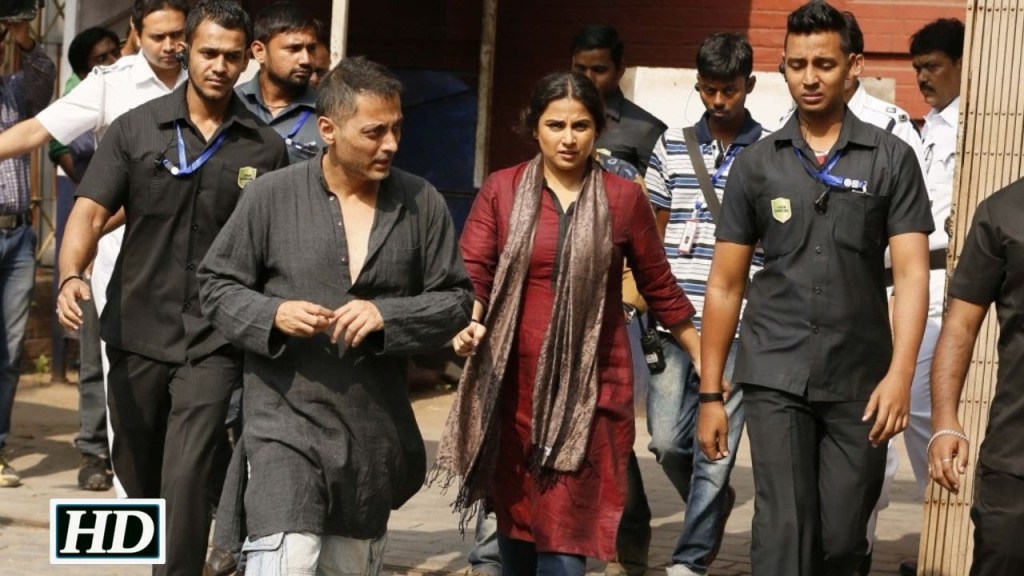
Lieutenant General Dalbir Singh AVSM VSM, General Officer-in-Command, Eastern Command of Indian Army had served as the Inspector General of Special Frontier Force prior to his promotion to the rank of Lieutenant General. He served in the rank of Brigadier during the 1971 War but Movie TE3N chose this photo image.

2. Lieutenant General Dalbir Singh Suhag, General Officer Commanding-in-Chief, Headquarters Eastern Command, Kolkata, who actually participated in the 1971 War while serving in the rank of Brigadier,

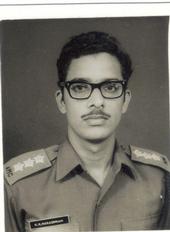
TE3N Movie Reviews my Tibet Connection by grouping four photo images in a single screenshot. My Indian Army Picture ID photo image of 1972 taken at Doom Dooma, Tinsukia District, Assam, India. In reality, I participated in the 1971 War wearing the badges of rank of Lieutenant and not Captain

3. My Indian Army Picture ID photo image of 1972 taken in Doom Dooma while I was posted to D Sector, Establishment 22 after the 1971 War, and

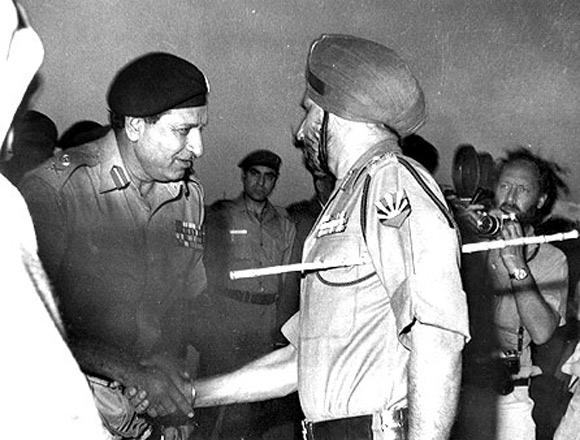
Lieutenant General T S Oberoi, the Southern Army Commander during 1983, the former Inspector General of Special Frontier Force is seen in this photo wearing a helmet. The photo was taken during 1982 while he visited Army Service Corps Centre, Bangalore. In reality, he served as my Brigade Commander during the 1971 War.

4. Lieutenant General Thirath Singh Oberoi PVSM VrC, General Officer Commanding-in-Chief, Headquarters Southern Command Pune while he visited Army Service Corps Centre in Bangalore in 1982. In reality, T S Oberoi served in the rank of Brigadier during the 1971 War.

Photo images 2, 3, and 4 are related for they relate to our military service at Special Frontier Force, Establishment 22 now known as Vikas Regiment. In November 1971, Special Frontier Force initiated Liberation of Bangladesh with military action in the Chittagong Hill Tracts and so, these images relate to the photo image of the Surrender Agreement signed in Dhaka on December 16, 1971.

Beijing is Doomed – Revelation Unsealed

TE3N Movie explores my Tibet Connection. Beijing is Doomed – Revelation Unsealed. Strike by Heavenly Object.

I kept silent about my participation in Operation Eagle, Bangladesh Ops for a very long time and none of you heard that word from me until 2010 when I started my demand for gallantry award after His Holiness the Dalai Lama’s visit to Ann Arbor, Michigan on March 03/04, 2008. I did not invite him to visit Ann Arbor, and I had no time to meet him. I read news media coverage, particularly the story published by The Ann Arbor News of this event. Prior to this date, I did not speak or write about him. I realized that the time has come to describe my Tibet Connection. If I had really cared about getting Gallantry Award, I would have reacted in January 1972 when my Unit Commander informed me that the Indian Army Medical Directorate did not forward my gallantry award citation on time to Army Headquarters, MS Branch. The citation was not lost. It was not sent in time for its consideration. I raised the issue in 2010, for it is important to disclose my Tibet Connection.

I want to receive Gallantry Award recommended in 1971 War. However, it is not an acknowledgment of my service in Indian Army. The award was recommended by my Unit Commander who knew that I deliberately chose to enter Enemy territory without carrying my service weapon. Under Army Act, the refusal to carry personal weapon, the concealing or disposal of personal weapon, or not using weapon against Enemy are punishable offenses. My Unit (South Column, Op Eagle, Establishment 22 – Special Frontier Force) is not subject to Army Act. They have not threatened to discipline me. Rather, they have shown appreciation for my determination to work without my personal weapon. I made that decision because of my Tibet Connection.

While most of you may have read about speeches or quotes from speeches given by the Dalai Lama, may not be knowing about an assurance the Dalai Lama has given to his followers. Dalai Lama lives on the hope that China’s Communist Regime would experience sudden downfall. Many in the Tibetan Exile community share this hope as they believe or have faith in his words. I acknowledge my Tibet Connection, but I am not follower of the Dalai Lama. So, I had to investigate his statement and subject it to my rational analysis, a scientific method which I call Devotional Inquiry. I use the term Devotion not in the context of any kind of worship service or prayerful thought. I don’t look inwards. I look for answers examining the reality of external world.

For example, many Christians believe in the Future Coming of Christ or Advent. This hope comes from The New Testament Book of Revelation. Over 2,000 years have passed, many believers lived and died and yet the prophecy has not come true. I looked at various possibilities to account for Dalai Lama’s hope for the sudden, unexpected downfall of China. He has not shared or further explained the mechanism to trigger a sudden downfall of Communist China. World War II came to an abrupt stop when US bombed Hiroshima and Nagasaki. Japan surrendered in August 1945. I ruled out the possibility of China surrendering in World War III. Regimes have changed after public revolts like American Revolution, French Revolution, Red Revolution, and October Revolution of China. In fact, Tibet formally declared Full Independence on February 13, 1913 after the downfall of Manchu China following 1911 Revolution. We have seen some protests in China during 1989, protests in Hong Kong, and signs of severe labor unrest in China. But, I am not expecting a Great Proletarian Revolution to cause China’s downfall. If not political unrest, I considered the possibility of economic meltdown and severe or Great Depression. It is a good possibility as their Communist – Capitalist Economy will fail and is currently failing.

Historically, we have records of great empires rising and falling. People have given a variety of reasons to account for rise and fall of empires. Diseases like Malaria may account for fall of Roman Empire. Apart from health and sickness, people have cultural beliefs. Jews may believe in Messiah, Christians believe in the Kingdom of Heaven, Buddhists believe in Reincarnation of Compassionate Buddha (Maitreya), and Hindus may believe in Reincarnation of Lord Vishnu to change World Order to restore Peace and Justice.

Being student of Biology, I looked at Natural Causes and Natural Mechanisms that can significantly impact life on Earth. Natural calamities like floods, earthquakes, and hurricanes can have devastating effect. But, most major and minor mass extinction events have extraterrestrial causes such as Radiation or impact or collision by celestial objects like comets or asteroids. Planet Earth experienced several such collision events. At K-T Junction, about 65 million years ago, the entire Dinosaur population got wiped out while Life on Earth continued to multiply. In most recent times, during Geological Epoch called Holocene, entire species of Hominin Family got wiped out with the exception of Anatomically Modern Man leaving no surviving prehistoric man such as Neanderthal, Denisova, or Cro-Magnon. But, in terms of Science, these are all random, unguided events that can be interpreted as accidents and are not purposeful actions.

I account for human life as series of guided, goal-oriented, sequential, purposeful actions which demand synchronization with events in external environment such as periods of light and darkness, and Conservation of Mass, Energy, and Momentum. While planet Earth is spinning at great speed and is moving all the time, I sleep and get up in Ann Arbor as if Earth is a stationary object. I am not predicting a random, spontaneous event or natural calamity that may cause sudden downfall of China.

I looked at Book of Revelation written by Prophet John who most Christian theologians think of as Apostle John, one of Jesus Christ’s Twelve Disciples. Apparently, he wrote this Book while imprisoned in a small island far away from Babylon. But, that is not important. Historical Babylonian Empire had fallen several centuries before birth of Jesus Christ. There was no Evil Babylon when John wrote his Revelation Prophecy. Babylon is thought of a ‘code’ name for some unknown Evil Empire. Some think, that the term ‘Evil Empire’ or ‘Babylon’ may refer to Rome or even China in the East which was not a great empire at the time of writing that Book.

Chapter 18, Book of Revelation, that describes sudden downfall of Babylon was inspired by The Old Testament Book of Isaiah, a Hebrew Prophet. His prophecy came true when Persian Emperor Cyrus defeated and vanquished Babylon and graciously permitted rebuilding of Second Temple in Jerusalem long before the birth of Jesus Christ. So John has no reason to make prophecy about Babylon while he lived during the lifetime of Jesus and His Crucifixion.

I accept the scenario described in Chapter 18, Book of Revelation. I am not claiming a new prophetic vision. I am simply unsealing the mystery of Babylon. When I state, “Beijing is Doomed,” I am not visualizing natural accident or natural calamity. China’s downfall will come by guided, goal-oriented, purposeful, sequential actions following its strike by a heavenly object such as asteroid, large stone which will collide with China’s largest City of Shanghai.

Doomsayer of Doom Dooma – Revelation – Photo Image in Bollywood Movie – TE3N

TE3N MOVIE EXPLORES MY TIBET CONNECTION BY GROUPING TOGETHER FOUR PHOTO IMAGES IN A SINGLE SCREENSHOT.

TE3N is a suspense thriller set in Kolkata. Industry’s best actors Amitabh Bachchan, Vidya Balan and Nawazuddin Siddiqui coming together in one film.

Story in detail:

It’s been 8 years since John Biswas (Amitabh Bachchan) lost his granddaughter, Angela, in a tragic kidnapping incident that scarred him & his wife Nancy forever. But eight years later, while the world has moved, John hasn’t given up his relentless quest for justice.

He continues to visit the police station where he’s shunned & ignored every day. The only person whose help he seeks is Martin Das (Nawazuddin Siddiqui), an ex-cop turned priest who has one thing in common with John – the death of Angela had a life altering impact on both men.

But then, 1 day, 8 years after that tragic incident, there’s another kidnapping & everything about it echoes of similarity with the kidnapping of Angela. Father Martin is once again dragged into the investigation by cop Sarita Sarkar (Vidya Balan).

Doomsayer of Doom Dooma – Beijing is Doomed: In 1972, a Chinese spy who infiltrated my military camp in Doom Dooma sent my photo image to Peking (Beijing).

It comes as a big surprise to find my stolen Indian Army Photo ID image from 1972 is revealed in a brief screenshot of this Movie.

Doomsayer of Doom Dooma – Revelation

TE3N Movie explores my Tibet Connection. Beijing is Doomed.

I use my Indian Army Photo ID image of 1972 to describe my connection with City of Doom Dooma, Tinsukia District, Assam, India. I unsealed the prophecy shared by Book of Revelation, Chapter 18 that gives detailed account of sudden, unexpected, downfall of Evil Empire in one single day.

TE3N Movie explores my Tibet Connection using photo image taken at Doom Dooma in 1972. Beijing is Doomed.
TE3N Movie explores my Tibet Connection using single screenshot of photo image taken at Doom Dooma, Tinsukia District, Assam. Beijing is Doomed.
TE3N Movie explores my Tibet Connection. Beijing is Doomed.
TE3N Movie explores my Tibet Connection. Beijing is Doomed. Mystery of Revelation 18: 1-24 Unsealed.
TE3N Movie explores my Tibet Connection. Mystery of Babylon Unsealed. Beijing is Doomed.

My Indian Army Photo ID image taken in 1972 at Doom Dooma serves just one purpose; it unseals Revelation Prophecy and it helps me to announce, “BEIJING IS DOOMED.”

Whole Review – Movie TE3N Reveals My Tibet Connection by grouping four photo images in a single screenshot. Special Service Award presented by all Officers D Sector, Establishment 22, at Doom Dooma, Tinsukia District, Assam, India.

Whole Revelation – Prophetic Revelation made by Photo Image in Bollywood Movie TE3n

Doomsayer of Doom Dooma – Prophecy revealed by Photo image in TE3N

Doomsayer of Doom Dooma – Revelation – Photo Image in Bollywood Movie TE3N.

TE3N is a suspense thriller set in Kolkata. Industry’s best actors Amitabh Bachchan, Vidya Balan and Nawazuddin Siddiqui coming together in one film.

My Indian Army Photo ID image taken in 1972 at Doom Dooma serves just one purpose; it unseals Revelation Prophecy and it helps me to announce, “BEIJING IS DOOMED.”

Story in detail:
It’s been 8 years since John Biswas (Amitabh Bachchan) lost his granddaughter, Angela, in a tragic kidnapping incident that scarred him & his wife Nancy forever. But eight years later, while the world has moved, John hasn’t given up his relentless quest for justice.

My Indian Army Photo ID image taken in 1972 at Doom Dooma serves just one purpose; it unseals Revelation Prophecy and it helps me to announce, “BEIJING IS DOOMED.”

He continues to visit the police station where he’s shunned & ignored every day. The only person whose help he seeks is Martin Das (Nawazuddin Siddiqui), an ex-cop turned priest who has one thing in common with John – the death of Angela had a life altering impact on both men.

My Indian Army Photo ID image taken in 1972 at Doom Dooma serves just one purpose; it unseals Revelation Prophecy and it helps me to announce, “BEIJING IS DOOMED.”

But then, 1 day, 8 years after that tragic incident, there’s another kidnapping & everything about it echoes of similarity with the kidnapping of Angela. Father Martin is once again dragged into the investigation by cop Sarita Sarkar (Vidya Balan).

My Indian Army Photo ID image taken in 1972 at Doom Dooma serves just one purpose; it unseals Revelation Prophecy and it helps me to announce, “BEIJING IS DOOMED.”
Doomsayer of Doom Dooma – Revelation – Photo Image in Bollywood Movie TE3N. I use my Indian Army Photo ID image of 1972 to describe my connection with City of Doom Dooma, Tinsukia District, Assam, India. I unsealed the prophecy shared by Book of Revelation, Chapter 18 that gives detailed account of sudden, unexpected, downfall of Evil Empire in one single day.

It comes as a big surprise to find my stolen Indian Army Photo ID image from 1972 is revealed in a brief scene shot of Bollywood Movie TE3N released in June 2016.

Doomsayer of Doom Dooma – Revelation

Doomsayer of Doom Dooma – Revelation – Photo Image in Bollywood Movie TE3N. Beijing is Doomed. I use my Indian Army Photo ID image of 1972 to describe my connection with City of Doom Dooma, Tinsukia District, Assam, India. I unsealed the prophecy shared by Book of Revelation, Chapter 18 that gives detailed account of sudden, unexpected, downfall of Evil Empire in one single day.

I use my Indian Army Photo ID image of 1972 to describe my connection with City of Doom Dooma, Tinsukia District, Assam, India. I unsealed the prophecy shared by Book of Revelation, Chapter 18 that gives detailed account of sudden, unexpected, downfall of Evil Empire in one single day.

Doomsayer of Doom Dooma – Revelation – Photo Image in Bollywood Movie TE3N. Beijing is Doomed. My Indian Army Photo ID image taken in 1972 at Doom Dooma serves just one purpose; it unseals Revelation Prophecy and it helps me to announce, “BEIJING IS DOOMED.”
Doomsayer of Doom Dooma – Revelation 18:1-24 – Photo Image in Bollywood Movie TE3N. Beijing is Doomed. My Indian Army Photo ID image taken in 1972 at Doom Dooma serves just one purpose; it unseals Revelation Prophecy and it helps me to announce, “BEIJING IS DOOMED.”
My Indian Army Photo ID image taken in 1972 at Doom Dooma serves just one purpose; it unseals Revelation Prophecy and it helps me to announce, “BEIJING IS DOOMED.”
Doomsayer of Doom Dooma – Revelation Chapter 18:1-24 – Beijing is Doomed. Photo Image in Bollywood Movie TE3N. My Indian Army Photo ID image taken in 1972 at Doom Dooma serves just one purpose; it unseals Revelation Prophecy and it helps me to announce, “BEIJING IS DOOMED.”
Doomsayer of Doom Dooma – Revelation Chapter 18:1-24 inspired by Prophet Isaiah Chapter 47 – Beijing is Doomed. Photo Image in Bollywood Movie TE3N. My Indian Army Photo ID image taken in 1972 at Doom Dooma serves just one purpose; it unseals Revelation Prophecy and it helps me to announce, “BEIJING IS DOOMED.”

My Indian Army Photo ID image taken in 1972 at Doom Dooma serves just one purpose; it unseals Revelation Prophecy and it helps me to announce, “BEIJING IS DOOMED.”

My Indian Army Photo ID image taken in 1972 at Doom Dooma serves just one purpose; it unseals Revelation Prophecy and it helps me to announce, “BEIJING IS DOOMED.”

Whole Facts – Bollywood Movie TE3N relates to Three interesting Facts of my Life Journey

Three interesting facts about Bollywood Movie TE3N:

Bollywood Movie TE3N inspires me to recount my 1972 Journey from Kaptai to Kolkata

Bollywood Movie TE3N is a suspense thriller set in Kolkata. Industry’s best actors Amitabh Bachchan, Vidya Balan and Nawazuddin Siddiqui coming together in one film. There are three interesting facts about Movie TE3N which refers to the numerical number 3. 1. As the movie is set in Kolkata, it reminds me of my lifetime’s first journey, a maiden Sea Voyage of Three Days to the City of Kolkata. 2. Interestingly, this movie features a scene in which a framed portrait of my Indian Army Photo ID Card is displayed. The Indian Army Photo ID I had on Tuesday, January 25, 1972, the day I visited Kolkata and during the Liberation War of Bangladesh was different from the photo image featured in movie TE3N. The photo image shown in movie TE3N in June 2016 was from photo image of February 1972 that was taken after my posting to Doom Dooma, Tinsukia District, Assam. 3. As a survivor of childhood abduction, the theme of movie TE3N is of great interest to me for it involves the suspense associated with the effort to find the child abductor.

TE3N Movie inspires me to review my 1972 Journey from Kaptai, Bangladesh to Kolkata, India

TE3N Movie inspires me to review my 1972 Journey from Kaptai, Bangladesh to Kolkata, India
TE3N Movie inspires me to Review My Journey From Kaptai To Kolkata. I was at Kaptai, Rangamati Hill District, Bangladesh on January 10, 1972, while Bangabandhu Shiek Mujibur Rehman arrived at Palam Airport, New Delhi.
TE3N inspires me to reviews My Journey From Kaptai to Kolkata. I was at Kaptai, Rangamati Hill District, Bangladesh on January 10, 1972 when Bangabandhu Shiek Mujibur Rehman arrived as Palam Airport, New Delhi.

TE3N Movie produced by Sujoy Ghosh and directed by Ribhu Das Gupta inspires me to Review My Three Days or “TEEN (3) Din”  Journey to Kolkata ( formerly known as Calcutta) in January 1972. I was camping at Kaptai, Rangamati Hill District of Chittagong Division during January 1972. On January 10, 1972, Bangabandhu Shiek Mujibur Rehman arrived at Palam Airport, New Delhi. He returned to Dhaka and assumed office as the first Prime Minister of independent Bangladesh on January 12, 1972.

TE3N Movie inspires me to Review My Journey From Kaptai to Kolkata. On January 10, 1972, I was at Kaptai, Rangamati Hill District, Bangladesh while Bangabandhu Shiek Mujibur Rehman arrived at Palam Airport, New Delhi. He was appointed as the first Prime Minister of independent Bangladesh on January 12, 1972.
1975 Bangladesh coup: What India knew » Indian Defence Review
TE3N Movie inspires me to Review My Journey From Kaptai to Kolkata. On January 10, 1972, I was camping at Kaptai, Rangamati Hill District, Bangladesh while Bangabandhu Shiek Mujibur Rehman arrived at Palam Airport, New Delhi. Later, during February 1972, he visited Kolkata.

Operation Eagle concluded its Bangladesh Operations on January 22, 1972. Special Frontier Force contracted Indian Merchant Navy Cargo Vessel to arrange our departure from Port of Chittagong to Port of Kolkata, a distance of about 361 nautical miles. Our ship may have traveled at a speed of about 5 knots/hour and my maiden Sea Voyage took 3 days (Teen =3 in Hindi). We arrived in Kolkata on Tuesday, January 25, 1972.

1871 and 1971, One Hundred Years Apart, Southern Column vs South Column. The Military Expeditions to Demagiri, Mizo Hills. On Saturday, January 22, 1972, the South Column departed from Chittagong Sea Port after their successful execution of the military expedition to the Chittagong Hill Tracts launched from Demagiri, Tlabung, Lushai, Mizo Hills.
1871 and 1971, One Hundred Years Apart, Southern Column vs South Column. The Military Expeditions to Demagiri, Tlabung, Lushai, Mizo Hills. On Saturday, January 22, 1972, the South Column boarded a hired Indian Merchant Vessel to depart from Chittagong Sea Port.

Port of Chittagong, Bangladesh to Port of Kolkata, India

My Journey to Kolkata – Past is not Dead – It’s Not Even Past

The Fifth Army – The Untold Story from the Chittagong Hill Tracts: In 1971, Special Frontier Force initiated Liberation of Bangladesh with military action in the Chittagong Hill Tracts with Battle Plan Code-named Operation Eagle. This Operation is not governed by Army Act 1950.

My Past is not Dead for I survived my childhood abduction. My Past is not even Past for it just resurfaced in Kolkata.

This Movie takes me back to Kolkata which I visited for the first time in my life when I sailed from Chittagong Harbor on Saturday, January 22, 1972  to arrive at Kidderpore(?) Docks in Calcutta on Tuesday, 25 January, 1972 still wearing the badges of rank of a Lieutenant in spite of my promotion to the rank of Captain on July 26, 1971. After disembarking at Kolkata port, there were no formalities, and we quickly proceeded to military vehicles that were waiting to take us to Howrah Railway Station, the oldest railway station in India. I received information that the Train is not ready to depart giving me several hours to spend in Kolkata.

TE3N Movie inspires me to Review My Journey From Kaptai, Bangladesh to Kolkata, India during January 1972. My maiden Sea Voyage took Three (3) days or ‘Teen Din’. We immediately proceeded to Howrah Railway Station (Howrah Junction).
TE3N Movie inspires me to Review My Journey From Kaptai to Kolkata in January 1972. My maiden Sea Voyage took Three (3) Days or ‘Teen Din’. I was at this Howrah Station on January 25, 1972.
TE3N Movie inspires me to Review My Journey From Kaptai to Kolkata in January 1972. My maiden Sea Voyage took Three (3) Days or ‘Teen Din’. I was at this Howrah Station on January 25, 1972
TE3N Movie inspires me to Review My Journey From Kaptai to Kolkata in January 1972. My maiden Sea Voyage took Three (3) Days or ‘Teen Din’. I was at this Howrah Station on January 25, 1972.

I took a ride in Cycle Rickshaw to reach Purna Das Road, Gariahat, via Rash Behari Avenue after crossing Howrah Bridge for the first time in my life. My eldest brother lived in Gariahat and was working in Hindustan Lever Company (Unilever of India) factory famous for its Lipton Tea. It was a long road journey but the ride was pleasant. Myself and my brother walked over to my uncle’s house for he lived in the same neighborhood. My uncle served in Indian Airlines as a Pilot. I returned to Howrah Station using the City Bus Service to continue my train journey to Dehradun.

TE3N Movie inspires me to Review My Journey From Kaptai to Kolkata, my maiden Sea Voyage of Three (3) Days or ‘Teen Din’ in January, 1972. On January 25, 1972, I crossed Howrah Bridge riding in a Cycle Rickshaw or pedicab.
TE3N Movie asks me to Review my Journey From Kaptai to Kolkata of Three (3) Days or ‘Teen Din’ in January, 1972. I visited Gariahat, Calcutta on January 25, 1972.

I never expected that I would serve in Assam – North East Frontier Agency (NEFA) or Arunachal Pradesh or D Sector (Delta Sector) of Special Frontier Force. I was keen to visit Leh, Ladakh or A Sector (Alpha Sector) of Special Frontier Force. In my debriefing interview held in January 1972, I expressed my desire to serve in Ladakh Sector and eventually visit the entire Himalayan Frontier from West to East. Ignoring my desire to be dispatched to Ladakh or “Alpha Sector”, Special Frontier Force Headquarters in New Delhi decided to post me to Assam/NEFA or “Delta Sector.” To my surprise, I took a flight provided by Aviation Research Centre (ARC) at Sarsawa Airfield to reach Doom Dooma town, a name I never heard before. However, it is famous for its Tea Gardens and it seems Hindustan Lever had a large factory to process tea leaves. I had no time to visit that place. But, my camp is surrounded by Tea estate with plenty of Orange trees used to provide cover apart from fruits. It was again, a pleasant surprise as they used to sell us fresh fruit across our barbed wire fence. We used to buy bucketfuls of fresh oranges for our Officers Mess as they were so cheap. As water in that area is not very good, we used to drink freshly squeezed orange juice all the time. We used to visit Tea plantations where lot of friends known to my Unit Officers worked as managers. Many of them served in Army or Police before.

A PHOTO ID PICTURE TAKEN IN 1972 AFTER THE LIBERATION WAR.
The Fifth Army – The Untold Story from the Chittagong Hill Tracts. I joined the Indian Army Medical Corps in the rank of Lieutenant and was issued an Army Photo ID at AMC Centre, Lucknow. On July 26, 1971, I was promoted to the rank of Captain and as my Unit could not verify the Gazette of India Notification, I continued to wear the badges of rank of a Lieutenant until February 1972. The Passport photo with the badges of rank of Captain for the above Army Photo ID was taken in a photo studio in Doom Dooma, Tinsukia District, Assam.

My picture image that appears in TE3N Movie was taken in a photo studio at Doom Dooma and I still have two copies of the same. I lost that Picture ID Card when my belongings (suitcase) got stolen. This is the only photo image of my Army ID that still lives today and I have not saved copies of others.

In this picture, I have no medal ribbons to display. The medals for participation in the India-Pakistan War of 1971 had arrived later.

My lifetime’s first journey to the City of Kolkata. Poorvi Star was awarded for my Service in the Eastern Sector during India-Pakistan War of 1971
My lifetime’s first journey to the City of Kolkata. Sangram Seva Medal was awarded for my Service during India-Pakistan War of 1971.

It surprises me to find Bollywood Movie ‘TE3N’ includes a scene in which my Indian Army Photo ID picture is revealed. This Army ID along with my army uniform and other belongings contained in a black leather suitcase that I purchased in Kaptai of Bangladesh during 1971 Liberation War got stolen at Cuttack railway station while I was traveling to Tinsukia, after my 1972 annual leave at Rajahmundry. I tried to contact a person who was proceeding to the Aviation Research Centre (ARC), Charbatia Air Base which was a clear mistake I made.

Whole Facts – Bollywood Movie TE3N relates to Three interesting Facts of my Life Journey. My Indian Army Picture ID Card was stolen at Cuttack Railway Station as I got distracted by making an attempt to contact a person proceeding to Aviation Research Centre (ARC), Air Base at Charbatia.

I lodged a complaint with Cuttack Railway Police and could not get immediate assistance from duty Police Constable. For I missed my train journey to Tinsukia, Assam, I was left with no alternative and had to call the Aviation Reserach Centre (ARC), Charbatia to provide me with assistance to travel to Doom Dooma Air Base. ARC Charbatia provided me with immediate assistance and provided air lift to reach Doom Dooma Air Field. For the loss of my Indian Army Picture ID Card in 1972, my Commandant at Head Quarters Establishment 22 at Chakrata punished me on January 10, 1973 with an official, verbal Reprimand that entered into my Service Record in ‘Blue Ink’. This disciplinary action taken on January 10, 1973 lives in my memory for it also revealed the problem of Espionage at Chakrata that ultimately impacted my career in Indian Army.

In recent months, when I reviewed that theft, it aroused a suspicion of some unknown enemy agent who may have stolen my Army Photo ID Card at Cuttack Railway Station as I got distracted by my desire to find a person who was proceeding to Charbatia and was in the same train that I was traveling. Since TE3N movie is entirely shot in Kolkata, the stolen Army ID Card may have resurfaced in Kolkata to get included with three other photo images in a scene imaginatively created by the Movie Director. I will be happy to recover my Army Picture ID Card if the film company found it in Kolkata. I have noticed increased site visits to my blog post in which I included this photo, and now I think this movie released on June 10, 2016 could be the reason.

Special Frontier Force – Operation Eagle – Liberation War of Bangladesh 1971:

Major General Sujan Singh Uban, the Commander of Special Frontier Force.
Major General Sujan Singh Uban, the Commander of Special Frontier Force.The Commander of the ‘Fifth Army’ in Chittagong Hill Tracts.

General Sujan Singh Uban had narrated his story in his book titled ‘The Phantoms of Chittagong : The Fifth Army in Bangladesh.

Lieutenant Governor of Andaman & Nicobar Islands (December 1985 to December 1989) – Lieutenant General TS Oberoi, PVSM, VrC., former General Officer Commanding-in-Chief, Headquarters Southern Command, Pune, former Inspector General, Special Frontier Force, former Commandant, Headquarters Establishment No. 22. He is the tall person in this photo wearing dark brown turban. I knew him since 1971. Under his able leadership, the Liberation of Bangladesh had commenced in the year 1971 during the Indo-Pak War.Apart from his military wisdom, he took a good care of all men under his Command. While I was proceeding to the Chittagong Hill Tracts, he had individually greeted all the members of my team and had delayed the departure of aircraft to ensure that a hot breakfast was served to all the men boarding the aircraft. He paid personal attention to all the aspects of the military mission to ensure the wellbeing of men apart from achieving success in accomplishing the military task. The sense of warmth he radiated is easily felt when we meet him in person. His grandson provided me the link to this photo. Photo Credit – Trishna-Ajay-Picasa Web Album.
A VIEW OF INDIAN MIZO HILLS FROM CHITTAGONG HILL TRACTS
The Fifth Army – The Untold Story from the Chittagong Hill Tracts. A VIEW OF INDIAN MIZO HILLS FROM CHITTAGONG HILL TRACTS
Rivers and streams flow throughout the region of Chittagong Hill Tracts.
The Fifth Army – The Untold Story from the Chittagong Hill Tracts. Rivers and streams flow throughout the region of Chittagong Hill Tracts.
Early morning dense fog and mist in Chittagong Hill Tracts.
The Fifth Army – The Untold Story from the Chittagong Hill Tracts Early morning dense fog and mist in the Chittagong Hill Tracts.
I used a large waterproof poncho to get protection from early morning mist and dew.
The Fifth Army – The Untold Story from the Chittagong Hill Tracts. I used a large waterproof poncho to get protection from early morning mist and dew.
The Fifth Army operated in the Chittagong Hill Tracts.
The Fifth Army – The Untold Story from the Chittagong Hill Tracts. The Fifth Army operated in the Chittagong Hill Tracts.
Chittagong Hill Tracts is sparsely populated with isolated dwellings.
The Fifth Army – The Untold Story from the Chittagong Hill Tracts. Chittagong Hill Tracts is sparsely populated with isolated dwellings.
The Fifth Army – The Untold Story from the Chittagong Hill Tracts
The Simplicity of Chakma Existence.
The Fifth Army – The Untold Story from the Chittagong Hill Tracts. The Simplicity of Chakma Existence.
The CHAKMA posed no threat but we had avoided direct contact.
The Fifth Army – The Untold Story from the Chittagong Hill Tracts. The Chakma posed no threat but we had avoided direct contact. The Chakma Ruler or King had earlier announced his support of Pakistan’s military regime.
I had camped at Kaptai Lake and it is memorable.
The Fifth Army – The Untold Story from the Chittagong Hill Tracts. I had camped at Kaptai Lake and it is memorable.
I had regularly visited men deployed in Kaptai Lake Area.
The Fifth Army – The Untold Story from the Chittagong Hill Tracts. I had regularly visited men deployed in Kaptai Lake Area.
We had never planned to blow up the dam over Karnaphuli River at KAPTAI.
The Fifth Army – The Untold Story from the Chittagong Hill Tracts. We had never executed the plan to blow up the dam over Karnaphuli River at Kaptai; we have indeed carried some explosives and as the Enemy withdrew his forces, we had no need to blow up the Dam on Karnaphuli River.
For brief moments during 1971, messages in TELUGU language had appeared in the radio waves transmitted across Chittagong Hill Tracts.
The Fifth Army – The Untold Story from the Chittagong Hill Tracts. For brief moments during 1971, messages in Telugu language had appeared in the radio waves transmitted across the Chittagong Hill Tracts.
We had operated in an area under the operational control of IV CORPS.
The Fifth Army – The Untold Story from the Chittagong Hill Tracts. We had operated in an area under the operational control of IV CORPS but did not provide the details of our operation to either IV Corps or HQ Eastern Command.
In the history of Indian Army Medical Corps for the first time during 1971 I had provided the services of a Medical Officer, a Nursing Assistant, and an Ambulance Assistant.
I was trained in the use of a 9 mm SMG or Sten Gun. I had chosen to march into enemy territory without my personal weapon to defend myself. I did not throw away my weapon and I did not surrender my weapon to the enemy which are crimes under law. War is a team effort. My contribution to this team effort is not based upon firing bullets from my Sten Gun. I had totally discarded any concerns about my personal safety and worked for the success of the team. I have shown Courage by not carrying this Sten Gun and in following my team like a shadow and confronting the enemy as a Team.
The Indo-Pak War of 1971 and the Birth of Bangladesh are very significant achievements of Prime Minister Indira Gandhi. As I was then serving in an Establishment under the Cabinet Secretariat, I had direct and personal understanding of her Foreign Policy Initiatives. She had personally approved the ‘Fifth Army’s military Operation in Chittagong Hill Tracts. In the conduct of this War, we had faced a very critical moment and it needed her personal intervention and a decision that she alone could make. I rendered my services and had overcome the challenge posed by that critical situation. The importance of this situation could be understood as it needed an intervention from the Prime Minister. I am now asking the Government of India to recognize my GALLANT response in enemy’s territory without any concern for my personal safety.

I am pleased to claim that I had established an entirely new record in providing medical support to the battle wounded in an operational area of Chittagong Hill Tracts during Operation Eagle 1971, Liberation War of Bangladesh. To provide medical support to the battle casualties, I reached the casualties at the enemy post that we had just captured. I was the only Army Medical Corps person on the ground. We had no stretchers, blankets, and resuscitation fluids. The casualties could not be airlifted as per the prior Medical Evacuation Plan. The men felt outraged. I comforted them with my assurance that I would accompany them to the nearest helipad that was located over forty miles away at the  Border Security Force outpost of Bonapansuria near the border in the Indian Mizo Hills. The men prepared improvised stretchers. We had no Infantry Officer to accompany us. A party of about 65 men, a Bangla Refugee as a guide, carried all the battle casualties in stretchers and had camped overnight in the forest and had reached the helipad at Bonapansuria the next day morning. I had acted as the Medical Officer, the Nursing Assistant, and an Ambulance Assistant for the battle wounded during this foot journey through the difficult hilly and forest terrain. My patients reached the Field Hospital in Lungleh in very good spirits and in a stable condition in spite of being critically wounded.

Lungleh, or Lunglei, was the destination for my battle wounded patients.
THE FLAG OF INDIAN ARMY MEDICAL CORPS.
The Flag of the Indian Army Medical Corps.

The sense of resolve, determination, and confidence with which I had accompanied my patients and had performed a foot journey walking over forty miles through the forests of Chittagong Hill Tracts during Operation Eagle 1971 had given the sense of comfort and reassurance the men needed to boost up their morale. In the medical evacuation of battle casualties from the battle field, Army Medical Corps typically uses several Nursing Assistants and Ambulance Assistants who perform a variety of tasks. I had the unique privilege to perform their duties for I have a true sense of appreciation for the valuable services they render in providing patient care and comfort. I had actually self-learned the tasks they perform and knew it would be of a great value and an asset for my success as a Medical officer of Indian Army.
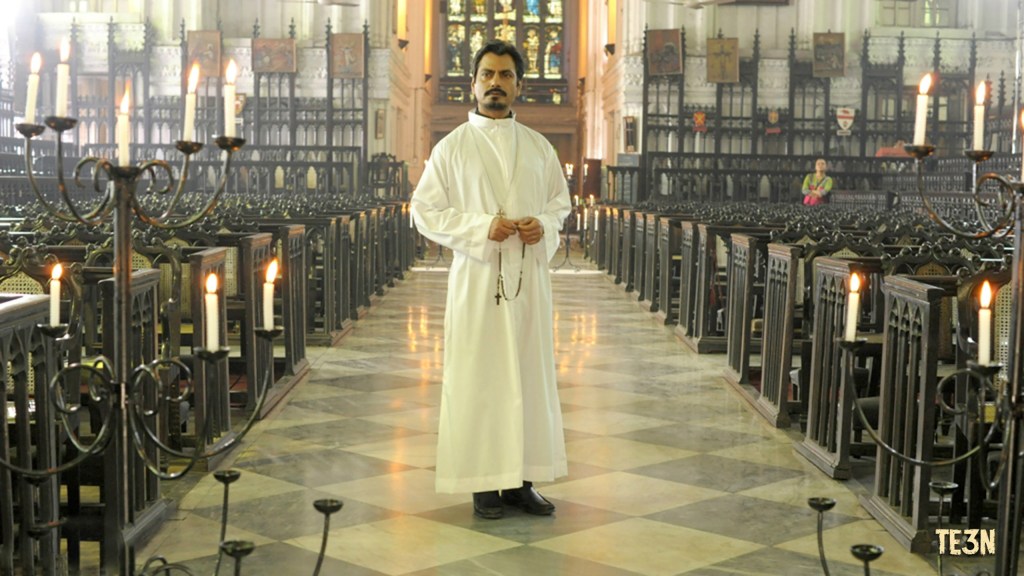
The Fifth Army – The Untold Story from the Chittagong Hill Tracts: In 1971, Special Frontier Force initiated Liberation of Bangladesh with military action in the Chittagong Hill Tracts with Battle Plan Code-named Operation Eagle. This Operation is not governed by Army Act 1950.
TE3N Movie asks me to Review My Journey From Kaptai To Kolkata. My Photo Image of 1972 resurfaced in Calcutta in June 2016. The Past is Never Dead for I survived my childhood abduction.
TE3N Movie asks me to Review My Three (3) Days or ‘Teen Din’ Journey From Kaptai to Calcutta during January 1972. I visited my eldest brother living in Gariahat on Tuesday, January 25, 1972.

Whole Psychology – TE3N Movie issues a Public, Nonverbal Death Threat in 2016

TE3N MOVIE REVIEW – VICTORY OVER DEATH. Reliance Big Entertainment Pvt Ltd is distributing TE3N Movie exhibiting my portrait in Section.15 of DVD – Bollywood Movie TE3N.

To Whomsoever it may concern:

This letter informs of my legal right to distribute some contents of TE3N Movie DVD distributed by Reliance Big Entertainment Pvt Ltd., Mumbai – 400055, India.

TE3N MOVIE REVIEW – VICTORY OVER DEATH. Reliance Big Entertainment Pvt Ltd is distributing TE3N Movie exhibiting my portrait in Section.15 of DVD.

TE3N Movie Review – Victory Over Death – Psychology of Warfare

TE3N MOVIE REVIEW - VICTORY OVER DEATH. Reliance Big Entertainment Pvt Ltd is distributing TE3N Movie exhibiting my portrait in Section.15 of DVD.
TE3N MOVIE REVIEW – VICTORY OVER DEATH. Reliance Big Entertainment Pvt Ltd is distributing TE3N Movie exhibiting my portrait in Section.15 of DVD.

Reliance Big Entertainment Private Ltd,
Grandeur,
8th Floor, Veera Desai Road Extension,
Oshiwara, Andheri (West),
Mumbai – 400053, India. And
Reliance Big Entertainment Private Ltd,
502, Plot No. 91/94, Prabhat Colony,
Santacruz (E), Mumbai – 400053, India.

Dear Sir,

Subject: TE3N Pre-recorded DVD, PKD: July/2016, Section.15, Photo Images
Reference: Electronic mail dated July 26, 2016 sent to customercare

1. Reliance Big Entertainment Pvt.Ltd is distributing TE3N Movie DVD exhibiting my portrait in Section.15 of DVD.

TE3N MOVIE REVIEW – VICTORY OVER DEATH: Reliance Big Entertainment Private Ltd is distributing TE3N Movie DVD that exhibits my Photo Image of 1972 in Section.15 of DVD.

TE3N MOVIE REVIEW - VICTORY OVER DEATH. Reliance Big Entertainment Pvt Ltd is distributing TE3N Movie DVD that exhibits my Photo Image of 1972 in Section.15 of DVD.
TE3N MOVIE REVIEW – VICTORY OVER DEATH. Reliance Big Entertainment Pvt Ltd is distributing TE3N Movie DVD that exhibits my Photo Image of my stolen Indian Army Picture ID of 1972 in Section.15 of DVD.
2. In the Indian traditions of my Telugu or Andhra Family, such a framed portrait seen mounted on a wall in a living room is often used to show respect to a deceased person. TE3N Movie used my stolen Indian Army Picture ID photo image to prepare this framed portrait in a manner to indirectly claim the death of the person shown in the image. It is reasonable to assume that TE3N Movie Producer and Director have counted me among War Dead while knowing that I am a living person. In other words, the display of a portrait of a living person on a wall implies a non-verbal death threat or death wish.

3. I inform you that I have a legal right to distribute a few contents of TE3N Movie DVD to counteract the impression given to TE3N Movie DVD viewers.

Special Frontier Force – Operation Eagle – Liberation War of Bangladesh 1971:

The Victory Over Death – The Psychology of Warfare. The Connection between the Fruit and the Vine. To overcome the Fear of Death, the man is encouraged to sever the attachment to the Cycle of Life and Death which separates man from his true or real immortal essence. OPERATION EAGLE IS THE CODE NAME FOR MILITARY ACTION THAT INITIATED THE LIBERATION OF BANGLADESH ON NOVEMBER 03, 1971 WITH STRIKES ON THE ENEMY MILITARY POSTS IN THE CHITTAGONG HILL TRACTS.

Indira Gandhi, Prime Minister of India initiated the Liberation of Bangladesh during 1971 with military action in the Chittagong Hill Tracts. The battle plan of this military action is known as Operation Eagle. This blog post is related to the war experience obtained by conducting the military operation in the Chittagong Hill Tracts.

The Victory Over Death – The Psychology of Warfare. The Connection between the Fruit and the Vine. To overcome the Fear of Death, the man is encouraged to sever the attachment to the Cycle of Life and Death which separates man from his true or real immortal essence. Kachumbar/Cucumber, Cucumis sativus, a native of India.
THE VICTORY OVER DEATH – BREAK THE PEDICLE OF ATTACHMENT – Man is attached to his life by a pedicle or attachment called ‘the fear of death’. Man conquers Death and can declare his Victory over Death by simply severing this attachment that arouses the sense of fear of Death. Spiritualism is the potency that brings man’s Essence and Existence to come together to establish the subjective reality of man in the physical world or the material realm. This hymn called ‘Mrityunjaya Maha Mantra’in praise of Lord Shiva known as ‘Triyambaka appears in the ancient Vedic Book of Rig Veda.’

This hymn in praise of Lord Shiva also known as ‘Triyambaka’ appears in the ancient Vedic Book of Rig Veda. It expresses a very unique idea or concept about conquering death. This idea has originated in India as this idea relates to a plant that is a native of India. Man is mortal, and just like a fully ripened fruit falls off from a tree, a man ripe in his age, even when not afflicted by any disease or sickness, would meet natural physical death. This Mantra suggests that a man can become immortal (a person who has consumed the divine nectar known as ‘Amrita’) and conquer physical death (Mrityu) by simply severing his psychological attachment to his own life and liberating (Mukshiya) himself from bondage. This Mantra compares the act of cutting attachments to free oneself (Mukti) to secure victory (Jaya) over physical death (Mrityu) to the act of harvesting Cucumbers (Urvaru). The pedicle (Kamiva or the stalk of the fruit) should be severed to separate the fruit from its attachment (Bandhan) to the Vine.

The Victory Over Death – The Psychology of Warfare. The Connection between the Fruit and the Vine. To overcome the Fear of Death, the man is encouraged to sever the attachment to the Cycle of Life and Death which separates man from his true or real immortal essence.

Cucumber, Cucumis sativus is a vine fruit. It is a member of the Cucurbitaceae family. It is native to northwestern India and is being cultivated for thousands of years. The fruit is harvested in the immature stage and is eaten in its unripe, green form. The ripe fruit turns bitter and is not eaten. The fruit is firmly attached to the vine by its stalk or pedicle. The unripe, green fruit would not naturally fall off from the vine. The farmer harvests the Cucumber by cutting off the pedicle( Kamiva).

'DOSA KAI', A POPULAR CUCUMBER OF TELUGU PEOPLE.
The Victory Over Death – The Psychology of Warfare. The Connection between the Fruit and the Vine. To overcome the Fear of Death, the man is encouraged to sever the attachment to the Cycle of Life and Death which separates man from his true or real immortal essence. Dosakayi, a popular Cucumber of Telugu people.

This analogy of severing the connection and freeing the Cucumber also implies that man should not wait until he reaches a very ripe age to conquer physical death. A man who is still at an unripe age or still young in years, just like the unripe and green fruit of Cucumber, should plan to overcome death or his ‘liberation’ from death, by cutting away the stalk or pedicle which symbolizes attachment (bandhan). The attachment in the context of man and his mortality could be described as his ‘Fear of Death’. By overcoming his ‘Fear of Death’, a man’s attachment to the ‘Vine of Life’ is severed and he is ‘Liberated’ (Mukshiya) from Death (Mrityu). As long as the ‘Fear of Death’ is alive, man cannot win his battle against Death and mortality. To achieve ‘immortality’, man must conquer his ‘Fear of Death’. Indians seek to praise (Yajamahe) the Lord known as ‘Triyambaka’ for He had declared His victory over Death (Mrityu) by burning away all of His desires and had become Free from all Attachments. Lord Shiva physically demonstrates His Freedom from Attachments by covering His entire body with ashes (Bhasma), the burnt residue of His desires.

The Psychology of Warfare:

An Infantry soldier to ‘attack’ his enemy’s position has to physically ‘advance’ towards the entrenched enemy and directly confront the enemy. The assault on the enemy’s position or site is carefully planned and the Infantry soldier is physically, and psychologically ready for his task which exposes him to the threat of death. The soldier loosens the attachment called the ‘Fear of Death’ in his march towards the enemy. A man who is tied down by the ‘Fear of Death’ cannot physically move towards his enemy who symbolizes the threat of death.

Victory over Death – The Psychology of Warfare: We helped the Bangla Muslims to regain their freedom and dignity. The India-Pakistan War of 1971 and the Birth of Bangladesh are very significant achievements of Prime Minister Indira Gandhi. As I was then serving in an Establishment under the Cabinet Secretariat, I had direct and personal understanding of her Foreign Policy Initiatives. She personally approved our military Operation in the Chittagong Hill Tracts. In the conduct of this War, we faced a very critical moment and it needed her personal intervention and a decision that she alone could make. I rendered my services and had overcome the challenge posed by that critical situation. The importance of this situation could be understood as it needed an intervention from the Prime Minister. I am now asking the Government of India to recognize my Gallant response to conduct a rescue mission in enemy’s territory without any concern for my personal safety.

I participated in the 1971 War of Liberation of Bangladesh. The men of my Unit did not recite the ‘Mrityunjaya Maha Mantra’, but they used its concept in their psychological preparation for War and in their attack on their enemy’s positions. Our success in 1971 over the enemy demonstrates that the concept of breaking the stalk or pedicle is useful to gain victory over the ‘Fear of Death’ before we actually meet the threat of Death.

Psychology of Warfare – Victory over Death: To defend her true nature, to preserve her essence, to resist the violation of her personal dignity and honor, Rani Padmini of Chittorgarh, India courageously responded to a difficult and challenging life situation by an act of self-immolation. Her physical being was destroyed by the fire which she had willingly embraced and yet her spirit has survived. She has declared Victory over Death and she lives as an immortal person in the hearts of Indians and gives them a sense of Pride and Identity. Indian Culture and Tradition glorify the act of giving life to resist the Enemy.

In my blog post titled “Proud to be an Indian”, dated Monday, September 17, 2007, I described the ability to conquer fear as Courage. Courage does not mean the absence of Fear. Rani Padmini has truly immortalized herself by her victory over the Fear of Death. She defeated her enemy’s intention to violate her personal dignity and honor. She could embrace fire for she had overcome the Fear of Death. She lives in our hearts today as a truly “Immortal” person. She is described as a person who declared Victory over Death (Mrityun Jaya).

Psychology of Warfare – Victory over Death: To defend her true nature, to preserve her essence, to resist the violation of her personal dignity and honor, Rani Padmini of Chittorgarh, India courageously responded to a difficult and challenging life situation by an act of self-immolation. Her physical being was destroyed by the fire which she had willingly embraced and yet her spirit has survived. She has declared Victory over Death and she lives as an immortal person in the hearts of Indians and gives them a sense of Pride and Identity. Indian Culture and Tradition glorify the act of giving life to resist the Enemy.

Whole Failure – The Failure of the Intelligence Gathering Mission of the US, India, and Tibet

Vikas Regiment, Special Frontier Force, Establishment 22 – The Problem of Espionage:

Special Frontier Force-The Problem of Espionage: The Chinese military philosopher in a military treatise known as PING-FA(The Art of War) written c. 400 BC mentions the use of secret agents and the importance of good intelligence.

The term ‘intelligence’ is used to describe government operations that involve evaluation of information concerning the strength, activities, and probable course of action of its opponents. Espionage involves the gathering of ‘intelligence’ information which is further used in evaluation to design a political or a military course of action to deter the enemy. Radug Ngawang had exposed his participation in espionage by releasing the following photo images that were taken at Establishment No. 22/Special Frontier Force during 1971-1975 prior to his dismissal from Service in 1976. He clearly understands that the possession of these images is illegal and he is fully aware of the fact that the people shown in the images had no clue that they were being secretly photographed and did not know that the photo images will be released without official permission.

Special Frontier Force-The Problem of Espionage: Establishment No. 22 or Special Frontier Force represents a military alliance/pact between the United States, India, and Tibet to confront the military threat posed by the Communist Red Dragon's occupation of Tibet since 1950. It is no surprise that at Special Frontier Force we have constantly experienced the problem of espionage orchestrated by the People's Republic of China.
Special Frontier Force-The Problem of Espionage: Establishment 22 or Special Frontier Force represents a military alliance/pact between the United States, India, and Tibet to confront the military threat posed by the Communist Red Dragon’s occupation of Tibet since 1950. It is no surprise that at Special Frontier Force we have constantly experienced the problem of espionage orchestrated by the People’s Republic of China.

To obtain knowledge of the enemy’s intentions intelligence systems have been in use from ancient times. The concept of intelligence is not new. The military treatise “PING-FA” (The Art of War) written c. 400 BC by the Chinese philosopher Sun-Tzu mentions the use of secret agents and the importance of good intelligence. The intelligence service of the People’s Republic of China is known as the Social Affairs Department. The term espionage describes the process of obtaining information using spies, secret agents, and involves the use of illegal monitoring devices. At Vikas Regiment, Establishment 22 or Special Frontier Force the evidence for espionage conducted by the People’s Republic of China is revealed by the photo images obtained by spies and secret agents. After an investigation, the Department of Security of Central Tibetan Administration had dismissed from Service its top military leader/Political Leader/Dapon Radug (or Ratuk) Ngawang during 1976. Another Senior Political Leader Jamba Kalden had voluntarily retired from Service during 1977 after admitting that he had failed to stop or prevent the acts of espionage. It is very interesting to mention that Dapon Ratuk Ngawang had actually escorted His Holiness the 14th Dalai Lama on his way to India after the failed National Uprising Day (March 10, 1959 ) in Lhasa, Tibet. Ratuk Ngawang, is currently 85-years old (in 2013, the original date of this article), is not formally charged for any crime or illegal activity by the Government of India or Tibetan Government-in-Exile. After his retirement, he was permitted to live in India in the Capital City of New Delhi and he draws a modest amount of pension for the years he spent in Service. I worked with him at Establishment 22/Special Frontier Force from September 1971 to December 1974. His wife was in charge of the camp where we trained the female paratroopers of SFF. She released some of the prohibited, illegal photo images captured by the enemy agents sheltered by Ratuk Ngawang. I am fully convinced that he supported espionage activity at my military organization. It is not surprising to find Communist China is always ahead of the combined Intelligence Gathering Mission of the United States, India and Tibet.

Special Frontier Force – The Problem of Espionage. January 21 is Squirrel Appreciation Day. My reflections on “Chakrata Karma” with the help of a Squirrel Story. During January 1974, there was an attempt on my life at the Military Hospital Wing, Chakrata. This type of Charcoal burner was placed in my duty room in an attempt to poison me. I suspect the involvement of Political Leader Ratuk Ngawang and his wife who could have used a Tibetan female nurse to place this burner in the small duty room.
Special Frontier Force - The Problem of Espionage: Chinese Intelligence correctly guessed that the 14th Dalai Lama had escaped from Lhasa to seek asylum in India after the failed Day of National Uprising in Tibet. Peking(Beijing) had announced that the 14th Dalai Lama had arrived in India, a day before New Delhi could make a formal announcement. The Chinese intelligence always remained ahead of the United States, India, and Tibet.
Special Frontier Force-The Problem of Espionage: Chinese Intelligence correctly guessed that the 14th Dalai Lama had escaped from Lhasa to seek asylum in India after the failed Day of National Uprising in Tibet. Peking (Beijing) announced that the 14th Dalai Lama had arrived in India, a day before New Delhi could make a formal announcement. Chinese intelligence always remained ahead of the United States, India, and Tibet.
Special Frontier Force - The Problem of Espionage: 54 years ago, His Holiness the 14th Dalai Lama had arrived in India on March 31, 1959. A Guard of Honor was presented by the Assam Rifles after he crossed into India's North East Frontier Agency(Arunachal Pradesh) at Chutangmu/Khenzimani in TAWANG sector.  The Chinese intelligence pursued him constantly monitoring his movements and activities all these years.
Special Frontier Force-The Problem of Espionage: 54 years ago, His Holiness the 14th Dalai Lama had arrived in India on March 31, 1959. A Guard of Honor was presented by the Assam Rifles after he crossed into India’s North East Frontier Agency(Arunachal Pradesh) at Chutangmu/Khenzimani in TAWANG sector. The Chinese intelligence pursued him constantly monitoring his movements and activities all these years.
Special Frontier Force-The Problem of Espionage: Dapon/Political Leader Radug Ngawang had served at Establishment No. 22 or Special Frontier Force after arriving in India along with His Holiness the 14th Dalai Lama. The Tibetan Government-in-Exile had simply dismissed him from Service and had spared him from punitive retaliatory action even after knowing that he had harbored Communist spy or spies. His Holiness had treated him with mercy and compassion in due recognition of his past performance before falling prey to Chinese influence.
Special Frontier Force-The Problem of Espionage: Dapon/Political Leader Radug Ngawang served in Establishment No. 22 or Special Frontier Force after arriving in India along with His Holiness the 14th Dalai Lama. The Tibetan Government-in-Exile had simply dismissed him from Service and had spared him from punitive retaliatory action even after knowing that he had harbored Communist spy or spies. His Holiness treated him with mercy and compassion in due recognition of his past performance before his falling prey to Chinese influence.
Special Frontier Force-The Problem of Espionage: This is the photo image of Ratuk or Radug Ngawang at 84-years of age. While giving interviews to Indian news media and other writers, Ngawang had shared photo images that were illegally taken at Establishment No. 22 or Special Frontier Force where such photography is strictly forbidden. I have no hesitation to identify him as a Communist Agent who had supported espionage activity.
Special Frontier Force-The Problem of Espionage: This is the photo image of Ratuk or Radug Ngawang at 84-years of age. While giving interviews to Indian news media and other writers, Ngawang had shared photo images that were illegally taken at Establishment No. 22 or Special Frontier Force where such photography is strictly forbidden. I have no hesitation to identify him as a Communist Agent who supported espionage activity.

The term ‘intelligence’ is used to describe government operations that involve evaluation of information concerning the strength, activities, and probable course of action of its opponents. Espionage involves the gathering of ‘intelligence’ information which is further used in evaluation to design a political or a military course of action to deter the enemy. Radug Ngawang had exposed his participation in espionage by releasing the following photo images that were taken at Establishment No. 22/Special Frontier Force during 1971-1975 prior to his dismissal from Service in 1976. He clearly understands that the possession of these images is illegal and he is fully aware of the fact that the people shown in the images had no clue that they were being secretly photographed and did not know that the photo images will be released without official permission.

Special Frontier Force-Operation Eagle-Battle Plan
Special Frontier Force-The Problem of Espionage-Photo provided by Dapon/Political Leader Ratuk Ngawang. In this illegally taken photo image, Gyalo Thondup, the 14th Dalai Lama’s elder brother is seen addressing the Tibetan men who serve in Establishment No. 22/Special Frontier Force and had encouraged them to join the War of Liberation of Bangladesh 1971. From right to left the persons seated is 1. Brigadier T S Oberoi, Commandant Establishment No. 22, 2. Mr. R. N. Kao, the Secretary, Directorate General of Security and RAW(Research and Analysis Wing), and 3. Major General Sujan Singh Uban, the Inspector General Special Frontier Force. None of us were aware that this photo was taken. Photography was strictly forbidden.
The Failure of Intelligence Gathering Mission at Vikas Regiment, Special Frontier Force, Establishment 22. THE PROBLEM OF ESPIONAGE. DAPON/POLITICAL LEADER RATUK NGAWANG OF ESTABLISHMENT 22 DIED ON FEBRUARY 07, 2016 AT AGE 90. HE SHARED THIS PHOTO IMAGE WITH INDIAN NEWS MEDIA. This photo image was illegally captured without the knowledge of Gaylord Thondup, the elder brother of His Holiness the 14th Dalai Lama who is seen standing next to Dapon Ratuk Ngawang.
Exile-Tibet-Establishment 22
Special Frontier Force-The Problem of Espionage: This is an illegal photo image shared by Political Leader Ratuk Ngawang who is at far left. His Holiness the 14th Dalai Lama (right), Major General Sujan Singh Uban, the Inspector General Special Frontier Force (second from right), and Senior Political Leader Jamba Kalden (third from right). A Chinese spy (later discovered in the robes of a Buddhist monk) secretly took this photo on June 03, 1972 when His Holiness visited Establishment No. 22 for the very first time after its inception in November 1962. These Political Leaders lost their jobs because of the problem of espionage.
Spirits of Special Frontier Force-A Chinese Spy in the Camp
Special Frontier Force-The Problem of Espionage: Political Leader Ratuk Ngawang is seen standing at right looking towards the photographer. This illegal photo image was shared by Ratuk Ngawang and it helps me to identify him as a Communist Agent who had harbored Chinese spy/spies at Establishment No. 22. Other people, Major General Sujan Singh Uban Inspector General Special Frontier Force (second from right), Mr. R. N. Kao Secretary Directorate General of Security-Research and Analysis Wing-RAW (third from right), and Brigadier T S Oberoi Commandant Establishment No. 22 (far left). I served with these people including Ratuk Ngawang from September 1971 to December 1974 and I can very easily confirm that this photo is the evidence of the problem of espionage.
The Spirits of Special Frontier Force-Establishment No.22
Special Frontier Force-The Problem of Espionage: For the first time in the history of our military pact and alliance with Tibet, His Holiness the 14th Dalai Lama, the Head of Tibetan Government-in-exile had accepted our invitation to visit Establishment No. 22. This was entirely a private visit and it was kept as a ‘top secret’. Photography during this visit on June 03, 1972 was strictly forbidden. However, Political Leader Ratuk Ngawang had a copy of this photo and he had shared the same with a news reporter who had interviewed him at his house in New Delhi several years after his dismissal from Service during 1976. Senior Political Leader Jamba Kalden had become a victim of this espionage and had to retire from Service for he had failed to prevent this crime.
Special Frontier Force-Establishment No. 22 - The Problem of Espionage - Illegal photo image taken on June 03, 1972.
Special Frontier Force-Establishment No. 22 – The Problem of Espionage – Illegal photo image was taken on June 03, 1972. His Holiness the 14th Dalai Lama maintained a safe distance from the activities of Establishment No. 22/Special Frontier Force. However, during 1971-72 he had to make an exception as he had granted his permission to train his men by allowing their participation in the Liberation War of Bangladesh 1971. I participated in this military action known as ‘Operation Eagle’. In an attempt to stall this military operation, Dr. Henry Alfred Kissinger, the US Secretary of State had personally urged China’s Prime Minister Zhou Enlai to attack India across the Himalayan frontier(North East Frontier Agency-NEFA-Arunachal Pradesh). China did not comply with that request as China gave a high priority to secure the defeat of the US Army in Vietnam.
Special Frontier Force - Establishment No. 22 - The Problem of Espionage - Illegal photo image taken on June 03, 1972.
Special Frontier Force – Establishment No. 22 – The Problem of Espionage – Illegal photo image was taken on June 03, 1972. This was a historical moment and yet it was not expected to be captured in a photo image. A Chinese spy dressed in the robes of a Buddhist monk was later arrested at Establishment No. 22. I was informed about the death of this spy on January 10, 1973. I do not know the exact date of death. The body was cremated according to Buddhist rites and the cause of death was not confirmed by an autopsy. Indian Intelligence Bureau official had expressed his sense of indignation and was totally dismayed by the attitude of Political Leader Ratuk Ngawang who had failed to deliver the spy to Indian Intelligence Bureau for their interrogation and investigation of the problem of espionage. The fact that this photo image exists is the clearest evidence of the Chinese espionage at Establishment No. 22-Special Frontier Force.
Special Frontier Force – Establishment No. 22 – The Problem of Espionage – Illegal photo image was taken during Prime Minister Indira Gandhi’s visit to recognize the female paratroopers of SFF. This was a historical moment and yet it was not expected to release this photo image. I can easily identify Political Leader/Dapon Ratuk Ngawang (seated at extreme Left and his wife seated Third from Right, next to Major General T S Oberoi, the Inspector General of SFF.
Special Frontier Force – Establishment No. 22 – The Problem of Espionage – Illegal photo image was taken during Secretary R N Kao’s visit to recognize the female paratroopers of SFF. This was a historical moment and yet it was not expected to release this photo image. I can easily identify Political Leader/Dapon Ratuk Ngawang standing at extreme Left with his wife in front of him.

While I served in Special Frontier Force-Establishment No. 22 from September 1971 to December 1974, I interacted with Political leader Ratuk Ngawang on numerous occasions during our routine training activities. I never had the opportunity to medically examine him or interview him at my Medical Inspection Room/Hospital Wing of Establishment No. 22. I am not surprised to know about his dismissal from Service during 1976 after the Tibetan Government-in-Exile had decided not to frame any charges against him. I have no doubt in my mind that he is not fit to be a member of the Tibetan Resistance Movement. He lost his desire to resist the Enemy.

Rudra N. Rebbapragada, Ann Arbor, Michigan, USA.,

Organization: The Spirits of Special Frontier Force.

The Failure of Intelligence Gathering Mission at Establishment 22. This photo image of a Screen Shot from Movie TE3N released in 2016 is the evidence for espionage activity at Establishment 22. The image is obtained from my stolen Indian Army Picture ID.

In the Indian traditions of my Telugu or Andhra Family, such a framed portrait seen mounted on a wall in a living room is often used to show respect to a deceased person. TE3N Movie used my stolen Indian Army Picture ID photo image to prepare this framed portrait in a manner to indirectly claim the death of the person shown in the image. It is reasonable to assume that TE3N Movie Producer and Director have counted me among War Dead while knowing that I am a living person. In other words, the display of a portrait of a living person on a wall implies a non-verbal death threat or death wish.

The photo evidence for my affiliation and service at a secret military organization known as Vikas Regiment, Special Frontier Force and Establishment 22. Silver Plate presented by all Officers, D-Sector, Establishment 22 in appreciation of my Service in the North East Frontier Agency/Arunachal Pradesh in January 1973.
Establishment No. 22 – Operation Eagle: This badge represents a military alliance/pact between India, Tibet, and the United States of America. Its first combat mission was in the Chittagong Hill Tracts which unfolded on 03 November 1971. It was named Operation Eagle. It accomplished its mission of securing peace in the region that is now knownas Republic of Bangladesh.

Whole Karma – Service rendered to non-elected US President

The Doomed Presidency of Nixon-Ford US administration

Revisting Chakrata Karma of August 09, 1974 – The doomed presidency of Nixon-Ford US administration. The M14 Service Rifle was issued to me in October 1971 while I served in Special Frontier Force, Establishment 22, Vikas Regiment.

Yes indeed, Life is Complicated. My Nixon – Ford Connection dates back to September 1971. My Journey to arrive in Ann Arbor, Michigan, USA started on July 26, 1970 and the journey was predestined for I inherited the doomed presidency of the Nixon-Ford US administration.

This Day in History: 08/08/1974 – Nixon Announces His Resignation 

Whole Dude – Whole Karma – August 09, 1974. I served the first non-elected Vice President and non-elected President in my quest for Freedom and Democracy in Occupied Tibet.

On August 08, 1974, on an evening televised address, President Richard M. Nixon announces his intention to become the first president in American history to resign. With impeachment proceedings underway against him for his involvement in the Watergate affair, Nixon was finally bowing to pressure from the public and Congress to leave the White House. “By taking this action,” he said in a solemn address from the Oval Office, “I hope that I will have hastened the start of the process of healing which is so desperately needed in America.”

REMEMBERING AUGUST 09, 1974 – NIXON RESIGNS

Whole Dude – Whole Karma – August 09, 1974. I served the first non-elected Vice President and non-elected President in my quest for Freedom and Democracy in Occupied Tibet.

On August 09, 1974, I was stationed in India at the Military Hospital Wing, Headquarters Establishment Number. 22, C/O 56 APO, Special Frontier Force (Vikas Regiment). Because of my lifetime regimental affiliation to Special Frontier Force, Nixon/Kissinger/Ford live in my memory for their actions providing aid and comfort to the Enemy while we dedicated our lives to secure Democracy, Freedom, Peace, and Justice in Occupied Tibet.

This Day in History – August 09, 1974

Whole Dude – Whole Karma – August 09, 1974. I served the first non-elected Vice President and non-elected President in my quest for Freedom and Democracy in Occupied Tibet.

August 09 is the unique day of my life. On August 09, 1974 I was serving in Special Frontier Force, Establishment 22, Vikas Regiment, at Chakrata, India. I was involved in the Tibetan Resistance Movement, the struggle of Tibetan refugees for Freedom, Peace, and Justice in Occupied Tibet. In American History, Ford becomes President due to unusual succession on 9th Day of August 1974.

Whole Dude – Whole Karma – August 09, 1974. I served the first non-elected Vice President and non-elected President in my quest for Freedom and Democracy in Occupied Tibet. On August 09, 1974, I had never imagined that I would be visiting Gerald R. Ford Presidential Library in Ann Arbor.

On August 09, 1974, I never expected or imagined that I will live my life in a City called Ann Arbor. I never expected or anticipated that the Antislavery Campaign (Repeal PRWORA Project) will become the central focus of my life while living on the US soil. My Struggle for Freedom and Democracy in Occupied Tibet continued under the Ford presidency but his succession is not consistent with the basic principles of democratic governance.

Whole Dude – Whole Karma – August 09, 1974. I served the first non-elected Vice President and non-elected President in my quest for Freedom and Democracy in Occupied Tibet.

UNUSUAL SUCCESSION MAKES FORD PRESIDENT ON AUGUST 09, 1974

Clipped from: https://www.history.com/this-day-in-history/unusual-succession-makes-ford-president

This Day In History: 08/09/1974 – Ford Becomes President

Whole Dude – Whole Karma – August 09, 1974. I served the first non-elected Vice President and non-elected President in my quest for Freedom and Democracy in Occupied Tibet.

In accordance with his statement of resignation the previous evening, Richard M. Nixon officially ends his term as the 37th president of the United States at noon. Before departing with his family in a helicopter from the White House lawn, he smiled farewell and enigmatically raised his arms in a victory or peace salute. The helicopter door was then closed, and the Nixon family began their journey home to San Clemente, California. Richard Nixon was the first U.S. president to resign from office.

Minutes later, Vice President Gerald R. Ford was sworn in as the 38th president of the United States in the East Room of the White House. After taking the oath of office, President Ford spoke to the nation in a television address, declaring, “My fellow Americans, our long national nightmare is over.”

Ford, the first president who came to the office through appointment rather than election, had replaced Vice President Spiro Agnew only eight months before. In a political scandal independent of the Nixon administration’s wrongdoings in the Watergate affair, Agnew had been forced to resign in disgrace after he was charged with income tax evasion and political corruption. In September 1974, Ford pardoned Nixon for any crimes he may have committed while in office, explaining that he wanted to end the national divisions created by the Watergate scandal.

Whole Dude – Whole Karma – August 09, 1974. I served the first non-elected Vice President and non-elected President in my quest for Freedom and Democracy in Occupied Tibet.

Ford is inaugurated

Whole Dude – Whole Karma – August 09, 1974. I served the first non-elected Vice President and non-elected President in my quest for Freedom and Democracy in Occupied Tibet.

On this day in 1974, one day after the resignation of President Richard M. Nixon, Gerald R. Ford is sworn in as president, making him the first man to assume the presidency upon his predecessor’s resignation. He was also the first non-elected Vice President and non-elected President, which made his presidency unique.

Nixon leaves office

Having announced his resignation the day before, Richard M. Nixon steps down from the presidency of the United States and is succeeded by Vice President Gerald R. Ford. Nixon had resigned rather than face almost certain impeachment because of the Watergate Scandal.

In my analysis, Nixon-Kissinger Vietnam Treason predetermined my slave status while I live in a Free Nation.

Whole Dude – Whole Karma – August 09, 1974. I served the first non-elected Vice President and non-elected President in my quest for Freedom and Democracy in Occupied Tibet. On August 09, 1974, I had never imagined that I would be visiting Gerald R. Ford Presidential Library in Ann Arbor. President Ford’s Fraternity House building on East William Street, Ann Arbor.
Whole Dude – Whole Karma – August 09, 1974. I served the first non-elected Vice President and non-elected President in my quest for Freedom and Democracy in Occupied Tibet. On August 09, 1974, I had never imagined that I would be visiting Gerald R. Ford Presidential Library in Ann Arbor.President Ford’s Fraternity House building on East William Street, Ann Arbor.
Whole Dude – Whole Karma – August 09, 1974. I served the first non-elected Vice President and non-elected President in my quest for Freedom and Democracy in Occupied Tibet. On August 09, 1974, I had never imagined that I would be visiting Gerald R. Ford Presidential Library in Ann Arbor.President Ford’s Fraternity House building on East William Street, Ann Arbor. A brick donated by former President Gerald Ford sits in the ground outside the Shant, the traditional gathering house for members of Delta Kappa Epsilon’s Omicron chapter at the University of Michigan. Ford was a member of DKE. Angela Cesere | AnnArbor.com
Whole Dude – Whole Karma – August 09, 1974. I served the first non-elected Vice President and non-elected President in my quest for Freedom and Democracy in Occupied Tibet. My Nixon-Ford Connection. Gerald R. Ford Presidential Library on University of Michigan Campus in Ann Arbor speaks of my Nixon-Ford Connection since 1970s.
Whole Dude – Whole Karma – August 09, 1974. I served the first non-elected Vice President and non-elected President in my quest for Freedom and Democracy in Occupied Tibet. On August 09, 1974, I had never imagined that I would be visiting Gerald R. Ford Presidential Library in Ann Arbor.

Whole Trust – I am a Refugee Nailed to the Cross

I am a refugee nailed to the Cross in a Nation that Trusts in God

Whole Dude – Whole Trust – Whole Refugee: Special Service Award presented by all Officers, D-Sector, Establishment 22 on January 19, 1973
Whole Dude – Whole Trust – Whole Refugee: I am nailed to the Cross to get to the Final Destination. Who am I? Why am I Like This? My physical identity keeps changing during all the phases of my Life. But, my Individuality remains the same and is not related to my Belief or Disbelief which is predestined.
Whole Dude – Whole Trust – Whole Refugee: I am nailed to the Cross to get to the Final Destination. I am Simon Cyrene, the Twelfth disciple who took the place of Judas Iscariot during the earthly mission of Jesus Christ. The discipleship is always predestined by the Sovereign Grace and not by belief or disbelief, or free will.

I describe myself as Simon a Cyrenian bearing the burden of the cross under compulsion and following Jesus. I am drawn to follow Jesus and there is no free will involved. There are no exceptions to this rule.

Whole Dude – Whole Trust – Whole Refugee: I am nailed to the Cross to get to the Final Destination

I describe myself as the alien who carries the burden of the cross as Jesus slowly moves to reach His earthly destination. Jesus is spared from the burden of carrying the cross on the day of His crucifixion. My discipleship is predestined by the Sovereign Grace and not by my belief or disbelief, or free will.

I am in the City of Jerusalem and yet I am an alien for I am not a citizen of Rome, not a citizen of Israel, not a citizen of Judea, and not a citizen of Galilee. I follow Jesus but I have not yet entered the Kingdom of Heaven on Earth to claim the citizenship status.

Whole Dude – Whole Trust – Whole Refugee: I am nailed to the Cross to get to the Final Destination

For I describe myself as an alien, I bear the burden of the Cross as I painfully march towards my earthly destination and when the struggle finally reaches its conclusion, at the ninth hour, I ask myself, “My God, my God, Why have You forsaken me.”

Whole Dude – Whole Trust – Whole Refugee: I am nailed to the Cross to get to the Final Destination

“In God We Trust” – On JULY 30, 2024, I admit that I am a Refugee without a Refuge

On July 30, 2024, I reflect upon the National Motto that inspired my Journey to the United States. I arrived in the United States during the Presidency of Ronald Reagan.

Yes indeed, Life is Complicated. The complexities of the Life involve the complex political boundaries erected by people while the LORD God Creator is the One and Only One Owner of the Whole Planet.

On July 30, 2024, I reflect upon the National Motto that inspired my Journey to the United States.
Tibet Awareness – Project Circus. The quest for freedom in Occupied Tibet. A military training camp known as Camp Hale was established in Colorado under the supervision of CIA officers Roger E. McCarthy and John Reagan. On Saturday, July 30, 2024, I reflect on the National Motto to declare, “I am a Refugee without a Refuge.”
“In God We Trust.” The Tibetan Resistance Movement trusts President Eisenhower. Mutual Trust, Respect, and Commitment formulate the US-India-Tibet Relations. On Tuesday, July 30, 2024, I reflect on the National Motto to declare, “I am a Refugee without a Refuge.”

On July 30, 1956, US President Eisenhower signs “In God We Trust” into Law. The same year, President Eisenhower initiated action in support of the Tibetan Resistance Movement which contributed to the creation of a military organization known in India as the Special Frontier Force during the presidency of John F. Kennedy.

"In God We Trust." - Special Frontier Force Trusts President Eisenhower.
“In God We Trust.” – Special Frontier Force Trusts President Eisenhower. Trust, Respect, and Commitment formulate Relations between the US, India, and Tibet. On Tuesday, July 30, 2024, I reflect on the National Motto to declare, “I am a Refugee without a Refuge.”

President Eisenhower signs “In God We Trust” into law
On this day in 1956, two years after pushing to have the phrase “under God” inserted into the pledge of allegiance, President Dwight D. Eisenhower signs a law officially declaring “In God We Trust” to be the nation’s official motto.

On July 30, 2024, I reflect upon the National Motto that inspired my Journey to the United States.

The law, Public Law. 84-140, also mandates that the phrase be printed on all American paper currency. The phrase had been placed on U.S. coins since the Civil War when, according to the historical association of the United States Treasury, religious sentiment reached a peak. Eisenhower’s treasury secretary, George Humphrey, had suggested adding the phrase to paper currency as well.

On July 30, 2024, I reflect upon the National Motto that inspired my Journey to the United States.

Although some historical accounts claim Eisenhower was raised a Jehovah’s Witness, most presidential scholars now believe his family was Mennonite. Either way, Eisenhower abandoned his family’s religion before entering the Army and took the unusual step of being baptized relatively late in his adult life as a Presbyterian. The baptism took place in 1953, barely a year into his first term as president.

On July 30, 2024, I reflect upon the National Motto that inspired my Journey to the United States.

Although Eisenhower embraced religion, biographers insist he never intended to force his beliefs on anyone. In fact, the chapel-like structure near where he and his wife Mamie are buried on the grounds of his presidential library is called the “Place of Meditation” and is intentionally inter-denominational. At a Flag Day speech in 1954, he elaborated on his feelings about the place of religion in public life when he discussed why he had wanted to include “under God” in the pledge of allegiance: “In this way we are reaffirming the transcendence of religious faith in America’s heritage and future; in this way we shall constantly strengthen those spiritual weapons which forever will be our country’s most powerful resource in peace and war.”

On July 30, 2024, I reflect upon the National Motto that inspired my Journey to the United States.

The first paper money with the phrase “In God We Trust” was not printed until 1957. Since then, religious and secular groups have argued over the appropriateness and constitutionality of a motto that mentions “God,” considering the founding fathers’ dedication to maintaining the separation of church and state.

A U.S. Marine with “In God We Trust” printed on his helmet, waits in a bunker at Con Thien, two miles south of the demilitarized zone, Oct. 15, 1967. The Leathernecks have come under daily bombardment from Communist mortar and rocket positions in the DMZ. The Marine’s bunker is surrounded by sandbags, soggy from monsoon rains. (AP Photo/CJ). On July 30, 2024, I reflect upon the National Motto that inspired my Journey to the United States.
"In God We Trust" - Special Frontier Force Trusts President Eisenhower.
“In God We Trust” – Special Frontier Force Trusts President Eisenhower. CIA Director Allen Welsh Dulles forged Trust derived relationships. On July 30, 2024, I reflect upon the National Motto that inspired my Journey to the United States.
"In God We Trust" - Special Frontier Force Trusts President Eisenhower.
“In God We Trust” – Special Frontier Force Trusts President Eisenhower. CIA Director Allen Welsh Dulles, and President John F. Kennedy promoted national interests forging relationships. On July 30, 2024, I reflect upon the National Motto that inspired my Journey to the United States.
The history of Special Frontier Force – Establishment No. 22 – Vikas Regiment: 1957 was a turning point. India had recognized that its foreign policy of political neutralism was of no use and had started depending upon the United States to address the military threat posed by China’s occupation of Tibet. But, the effort was too modest and both India and the United States had grossly underestimated the strength of the People’s Liberation Army. On July 30, 2024, I reflect upon the National Motto that inspired my Journey to the United States.
"In God We Trust" - Special Frontier Force Trusts President Eisenhower. Trust in God is Foundational Principle to formulate Foreign Relations.
“In God We Trust” – Special Frontier Force Trusts President Eisenhower. Trust in God is the Foundational Principle to formulate Foreign Relations. On July 30, 2024, I reflect upon the National Motto that inspired my Journey to the United States.
"In God We Trust" - Special Frontier Force Trusts President Eisenhower. Trust in God is Foundational Principle to define Foreign Policy.
“In God We Trust” – Special Frontier Force Trusts President Eisenhower. Trust in God is the Foundational Principle to define Foreign Policy. On July 30, 2024, I reflect upon the National Motto that inspired my Journey to the United States.
"In God We Trust" - Special Frontier Force Trusts President Eisenhower. Trust is Foundational Principle to define Relations.
“In God We Trust” – Special Frontier Force Trusts President Eisenhower. Trust is the Foundational Principle to define Relations. On July 30, 2024, I reflect upon the National Motto that inspired my Journey to the United States.
"In God We Trust" - Special Frontier Force Trusts President Eisenhower. Belief in God, and Trust in Leadership.
“In God We Trust” – Special Frontier Force Trusts President Eisenhower. Belief in God, and Trust in Leadership. On July 30, 2024, I reflect upon the National Motto that inspired my Journey to the United States.
"In God We Trust"
“In God We Trust” – Special Frontier Force Trusts President Eisenhower. Trust survived the Test of Times. On July 30, 2024, I reflect upon the National Motto that inspired my Journey to the United States.
“In God We Trust” – Special Frontier Force Trusts President Eisenhower for his principled Belief in God. On July 30, 2024, I reflect upon the National Motto that inspired my Journey to the United States.
SPECIAL FRONTIER FORCE AT NATIONAL PRAYER BREAKFAST: THE HISTORY OF NATIONAL PRAYER BREAKFAST. IT WAS ORIGINALLY KNOWN AS PRESIDENTIAL PRAYER BREAKFAST. 34th US PRESIDENT EISENHOWER WITH 35th US PRESIDENT KENNEDY MET AT CAMP DAVID, MARYLAND ON APRIL 22, 1961. THEY FORMULATED THE US, INDIA, AND TIBET RELATIONS THAT CREATED SPECIAL FRONTIER FORCE. On July 30, 2024, I reflect upon the National Motto that inspired my Journey to the United States.
"In God We Trust"
“In God We Trust” – Special Frontier Force Trusts President Eisenhower who initiated Trusting Partnership between the US, India, and Tibet. On July 30, 2024, I reflect upon the National Motto that inspired my Journey to the United States.
"In God We Trust" - Special Frontier Force Trusts President Eisenhower. December 16, 1956 witnessed Trusting Relationship.
“In God We Trust” – Special Frontier Force Trusts President Eisenhower. December 16, 1956, witnessed a trusting relationship. Vice President Richard M. Nixon is my Witness. On July 30, 2024, I reflect upon the National Motto that inspired my Journey to the United States.
"In God We Trust" - Special Frontier Force Trusts President Eisenhower. December 16, 1956. The US-India-Tibet Relation endures for it is built upon Trust.
“In God We Trust” – Special Frontier Force Trusts President Eisenhower. December 16, 1956. The US-India-Tibet Relations endure reflecting Trust. On July 30, 2024, I reflect upon the National Motto that inspired my Journey to the United States.
"In God We Trust" - Special Frontier Force Trusts President Eisenhower. Relations derive Spiritual Strength from Belief in God.
“In God We Trust” – Special Frontier Force Trusts President Eisenhower. Relations derive Spiritual Strength from a Belief in God. On July 30, 2024, I reflect upon the National Motto that inspired my Journey to the United States..
On July 30, 2024, I reflect upon the National Motto that inspired my Journey to the United States.