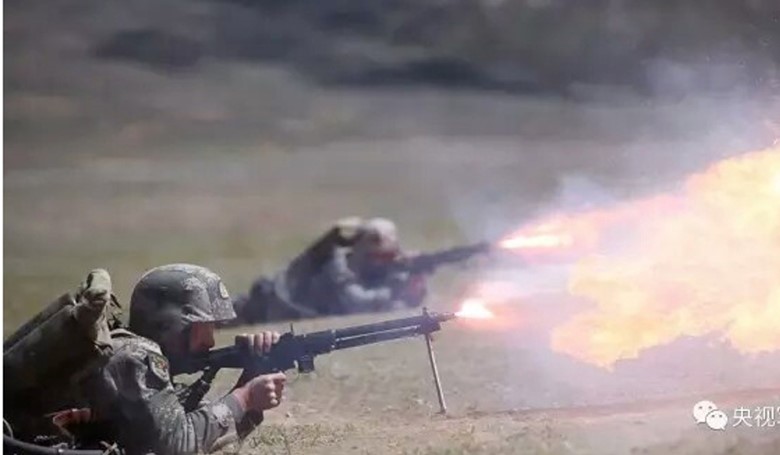
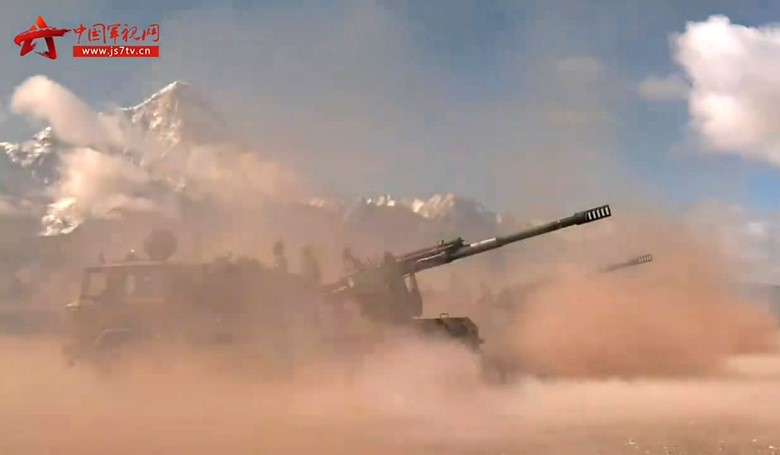
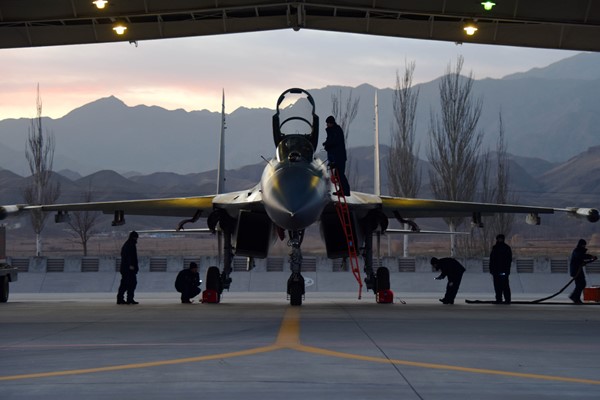
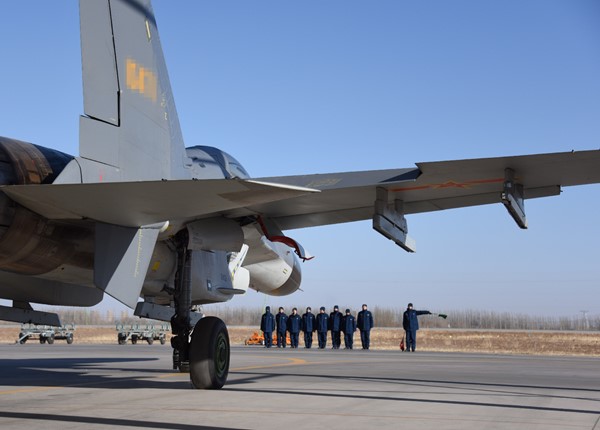
RED CHINA ON SLIPPERY SLOPE – OPENS FIRST OVERSEAS MILITARY BASE

RED CHINA ON SLIPPERY SLOPE – OPENS FIRST OVERSEAS MILITARY BASE


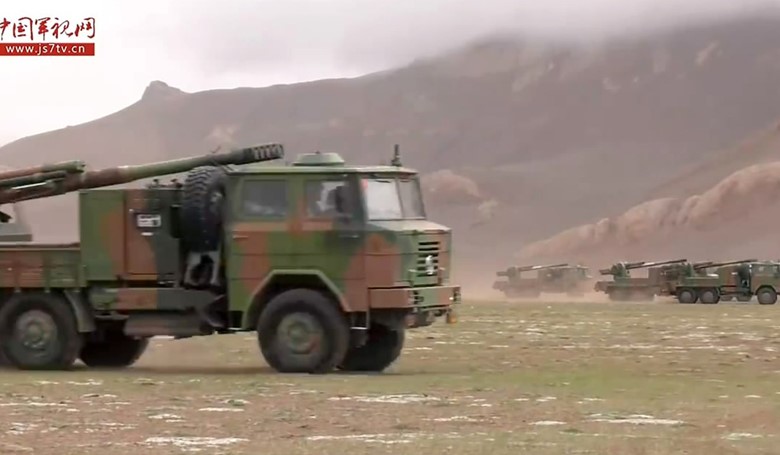
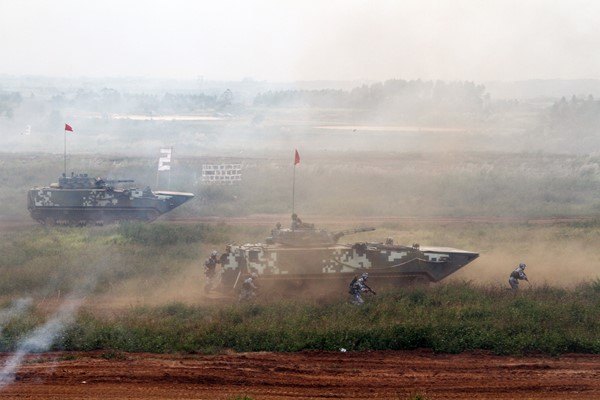
In my analysis, Red China placed herself on Slippery Slope by opening her first overseas military base in Djibouti. Red China’s military adventurism cannot ward off natural disaster, natural calamity, and natural catastrophe that is waiting, for Beijing invited her own Doom with her evil actions.


Soviet Union failed in the past due to military adventurism. It is too late for Red China to learn and plan to avoid sudden Downfall.


Rudranarasimham Rebbapragada

DOOMDOOMA DOOMSAYER


China sends troops to Djibouti, establishes first overseas military base

By Brad Lendon and Steve George, CNN


Wed July 12, 2017


  • “This base can support Chinese Navy to go farther,” Chinese paper says
  • Djibouti has become host to several foreign military powers

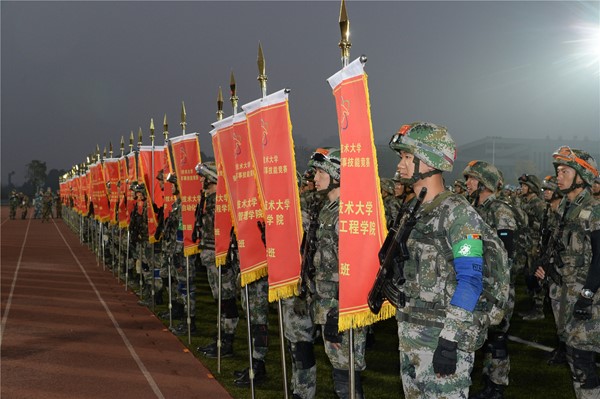
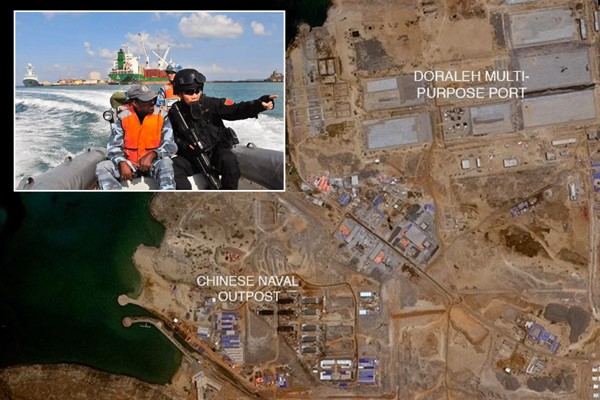
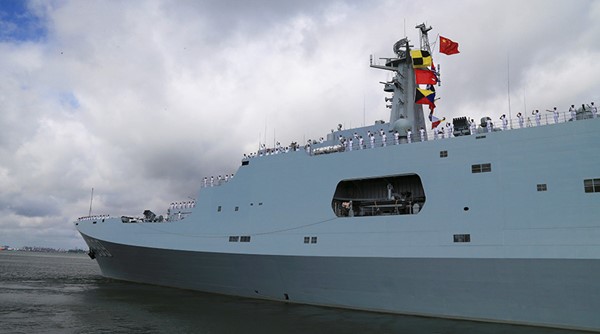
    (CNN)China has dispatched troops to Djibouti in advance of formally establishing the country’s first overseas military base.

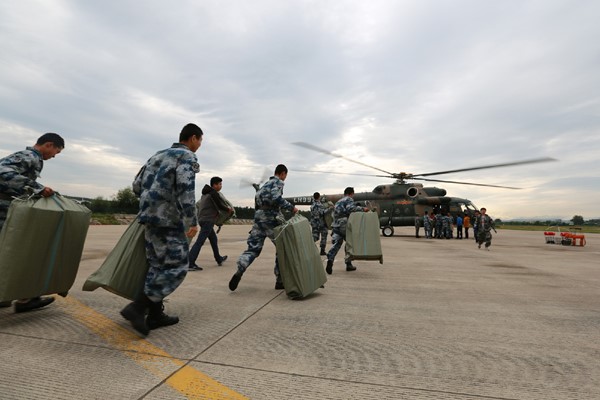
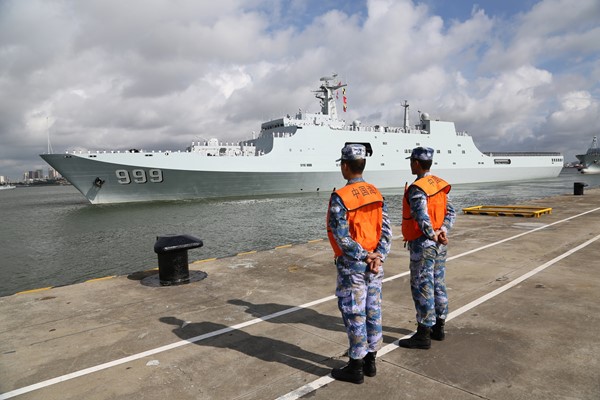
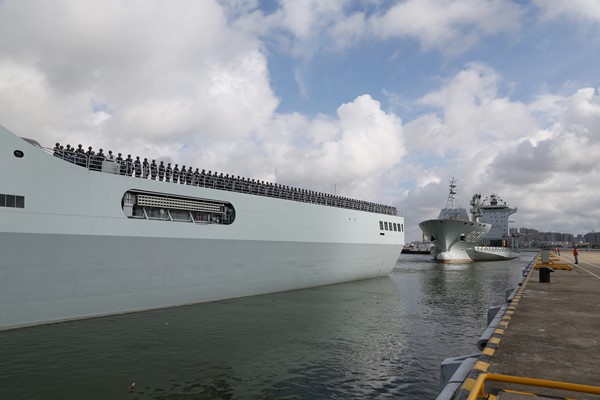
    Two Chinese Navy warships left the port of Zhanjiang on Tuesday, taking an undisclosed number of military personnel on the journey across the Indian Ocean.

    An editorial Wednesday in the state-run Global Times stressed the importance of the new Djibouti facility — in the strategically located Horn of Africa — to the Chinese military.


    “Certainly this is the People’s Liberation Army’s first overseas base and we will base troops there. It’s not a commercial resupply point… This base can support Chinese Navy to go farther, so it means a lot,” said the paper.

    The Global Times said the main role of the base would be to support Chinese warships operating in the region in anti-piracy and humanitarian operations.

    “It’s not about seeking to control the world,” said the editorial.


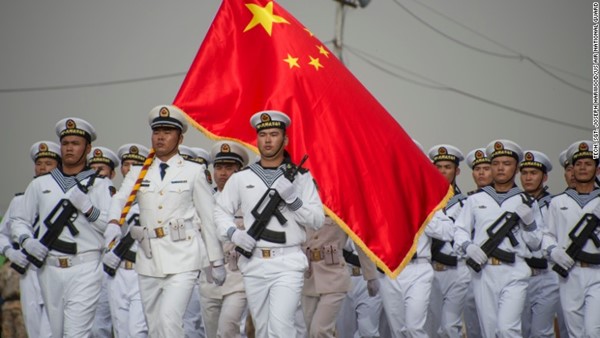
    Chinese People’s Liberation Army-Navy troops march in Djibouti’s Independence Day parade on June 27, marking 40 years since the end of French rule in the Horn of Africa country.

    Chinese military presence


    At a regular press briefing Wednesday, Chinese Foreign Ministry spokesman Geng Shuang described the base as part of ongoing efforts to help bring peace and security to the region.

    “China has been deploying naval ships to waters off Somalia in the Gulf of Aden to conduct escorting missions since 2008,” said Geng. “The completion and operation of the base will help China better fulfill its international obligations in conducting escorting missions and humanitarian assistance … It will also help promote economic and social development in Djibouti.”

    China has expanded its military ties across Africa in recent years. According to a report by the European Council on Foreign Relations (ECFR), cooperation with Africa on peace and security is now an “explicit part of Beijing’s foreign policy.”

    In 2015 Chinese President Xi Jinping committed 8,000 troops to the UN peacekeeping standby force — one fifth of the 40,000 total troops committed by 50 nations — China also pledged $100 million to the African Union standby force and $1 billion to establish the UN Peace and Development Trust Fund.

    More than 2,500 Chinese combat-ready soldiers and police officers are now deployed in blue-helmet missions across the African continent, with the largest deployments in South Sudan (1,051), Liberia (666), and Mali (402), according to the ECFR.

    “Blue-helmet deployments give the PLA a chance to build up field experience abroad — and to help secure Chinese economic interests in places such as South Sudan,” said the ECFR report.

    Africa is home to an estimated one million Chinese nationals, with many employed in infrastructure projects backed by the Chinese government.

    “China’s involvement in African security is a product of a wider transformation of China’s national defense policy. It is taking on a global outlook … and incorporating new concepts such as the protection of overseas interests and open seas protection,” said the ECFR report.


    US ‘strategic interests’

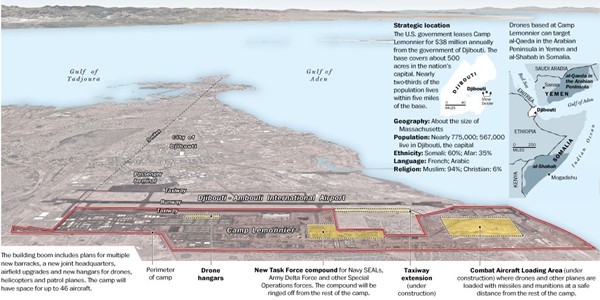
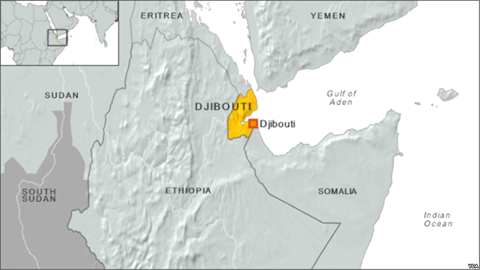
    China joins the US, France and Japan, among others, with permanent bases in Djibouti, a former French colony with a population of less than one million residents.

    Though small in both population and size, Djibouti’s position on the tip of the Horn of Africa offers strategic access to the Bab el-Mandeb Strait.

    The strait, which is only 18 miles wide at its narrowest point, connects the Mediterranean Sea via the Suez Canal and the Red Sea to the Gulf of Aden and the Indian Ocean beyond.

    One of the world’s most important sea lanes, millions of barrels of oil and petroleum products pass through the strait daily, according to GlobalSecurity.org.

    US Marine Corps Gen. Thomas Waldhauser, the head of the Pentagon’s Africa Command, stressed Djibouti’s location during a visit to the US Camp Lemonnier garrison there earlier this year.

    “This particular piece of geography is very, very important to our strategic interests,” Waldhauser said in joint appearance with US Defense Secretary James Mattis.

    The US military has some 4,000 troops at Camp Lemonnier, a 100-acre base for which it signed a 10-year, $630 million lease in 2014, according to media reports.

    Elsewhere in Djibouti, the US military operates the Chabelley Airfield, from which the Pentagon stages drone airstrikes, likely into Somalia and across the Bab el-Mandeb Strait into Yemen, according to the Center for the Study of the Drone at Bard College in New York. The Pentagon is investing millions in the base, and satellite photos show several construction projects, the center reported last year.


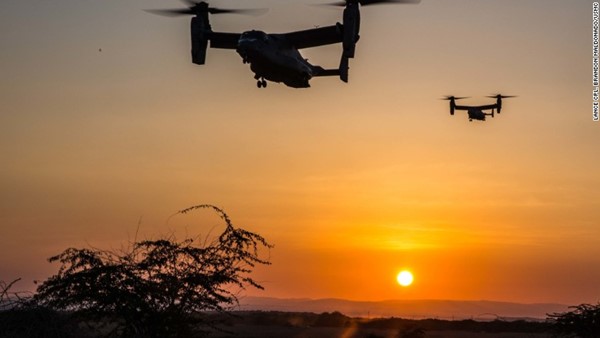
    US Marine Corps MV-22 Ospreys prepare to land at a landing zone during training conducted in Djibouti on January 10.


    ‘Get-rich-quick scheme’


    Japan, which has seen tense relations with China over disputed islands in the East China Sea, has established what it calls an “activity facility” to support its anti-piracy efforts there.

    A spokesperson for the Japan Self Defense Forces said 170 troops are at its 30-acre facility in Djibouti.

    Lease terms would not be released, but Japan will spend about $9 million to operate the facility this fiscal year, the spokesperson said.

    Edward Paice, director of the London-based Africa Research Institute, said a base in Djibouti makes a lot of sense for China, just as it does for Japan or the US.

    “It (China) has cited its desire to play a greater role in peacekeeping, and it has combat troops in both South Sudan and Mali. It’s logical that it needs an actual base somewhere in Africa, which is really no different from the Americans saying that they need Camp Lemonnier as a headquarters for operations in Africa, whether in peacekeeping or counterterror or whatever,” Paice said on The Cipher Brief website.



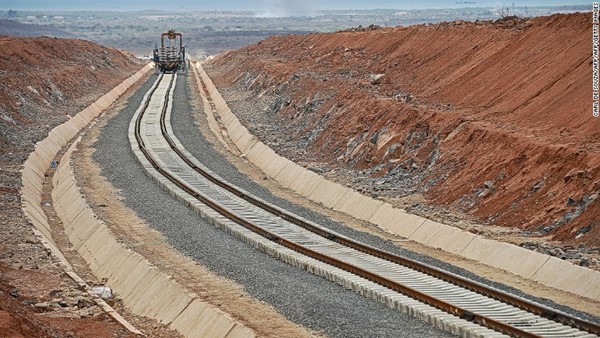
    Picture taken on May 5, 2015, shows work in progress on the new railway tracks linking Djibouti with Addis Ababa.

    Paice points out that China made a substantial investment in Djibouti — about $500 million, according to reports — to build the Djibouti portion of a rail line to the capital of neighboring Ethiopia.

    “It’s a confluence of these factors — trade, military, and stability in the host country’s government” that brought China to Djibouti, Paice said.

    Meanwhile, for Djibouti, it’s all about money, Paice said. “This is a fantastic get-rich-quick scheme — to rent bits of desert to foreign powers. It’s as simple as that.”

    CNN’s Serenitie Wang, Daisy Lee and Junko Ogura contributed to this report.

  •  
    © 2017 Cable News Network. Turner Broadcasting System, Inc. All Rights Reserved.

    CNN Sans ™ & © 2016 Cable News Network.

    Inserted from <http://www.cnn.com/2017/07/12/asia/china-djibouti-military-base/index.html>


WORLD TIBET DAY – PRAYERS AT PANG GONG LAKE FOR TIBET EQUILIBRIUM

WORLD TIBET DAY – PRAYERS AT PANG GONG LAKE FOR TIBET EQUILIBRIUM

WORLD TIBET DAY – PRAYERS AT PANG GONG LAKE TO DELIVER BLESSINGS OF FREEDOM TO TIBETANS IN OCCUPIED TIBET.
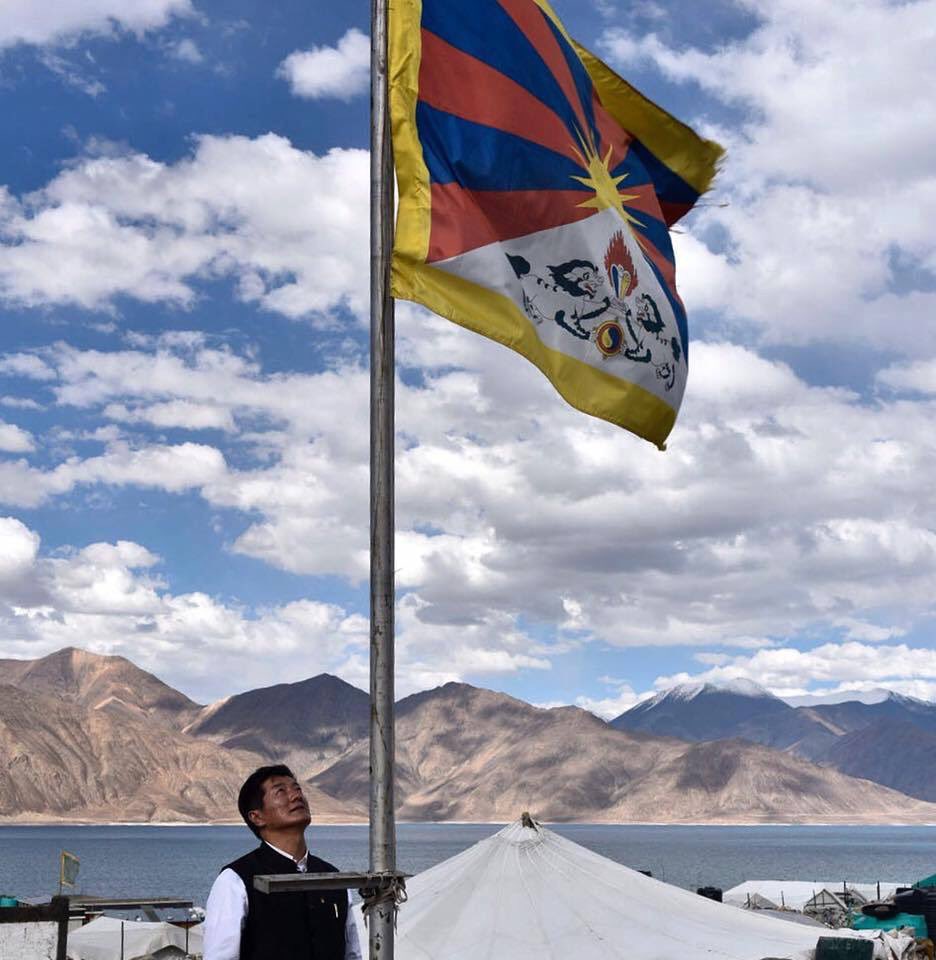
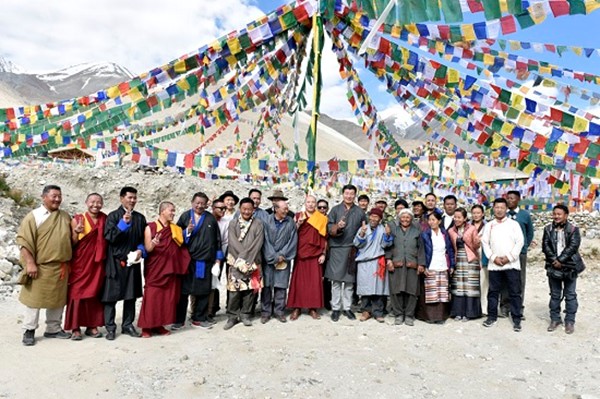
World Tibet Day – Prayers at Pang Gong Lake for Tibet Equilibrium. Tibetan President Dr. Lobsang Sangay at Pang Gong Lake on July 05, 2017.
World Tibet Day – Prayers at Pang Gong Lake for Tibet Equilibrium.

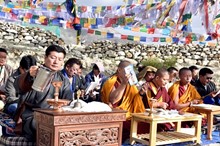
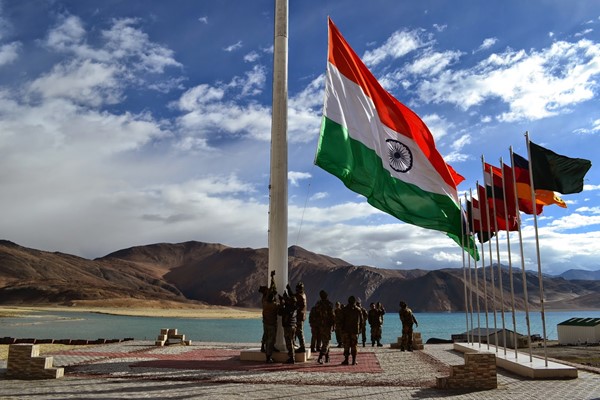
Tibetan President Dr. Lobsang Sangay hoisted Tibetan National Flag and held special Prayer Service on Wednesday, July 05, 2017 at Pang Gong Lake near India-Tibet Border in preparation for celebration of World Tibet Day on Thursday, July 06, 2017. The Prayer seeks blessings of Freedom for all Tibetans in Occupied Tibet.

World Tibet Day – Tibetan President, Dr. Lobsang Sangay at Pang Gong Lake.

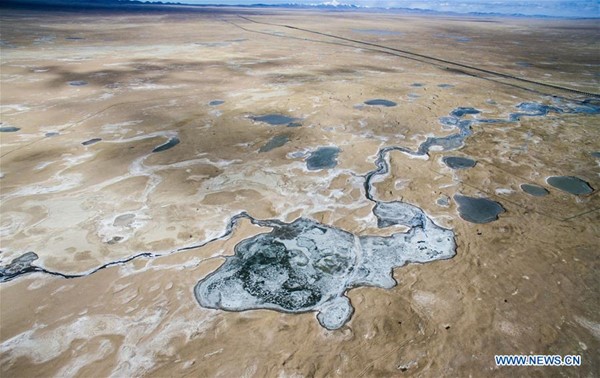
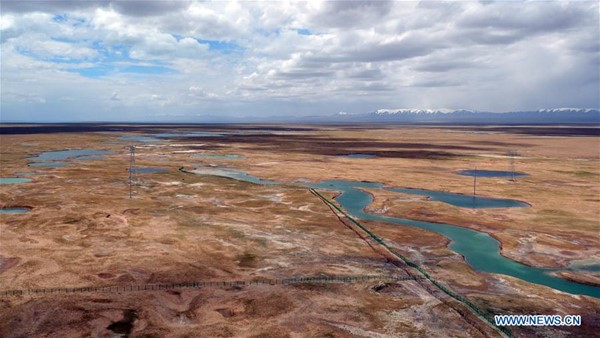
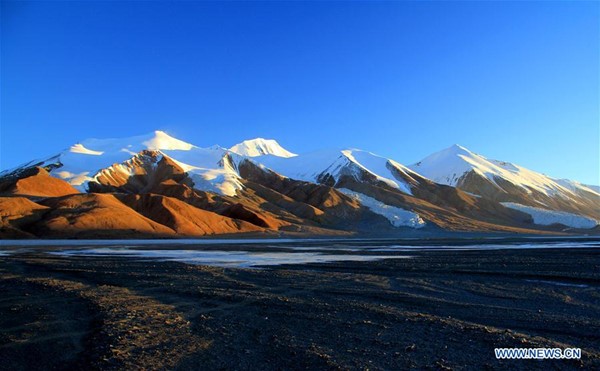
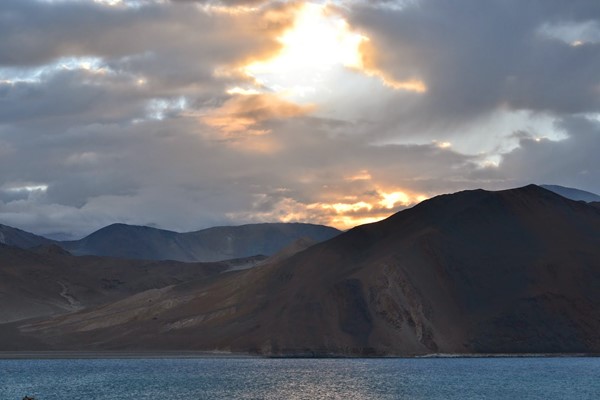
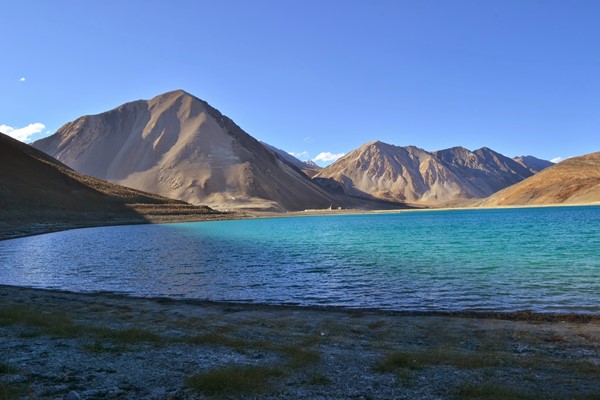
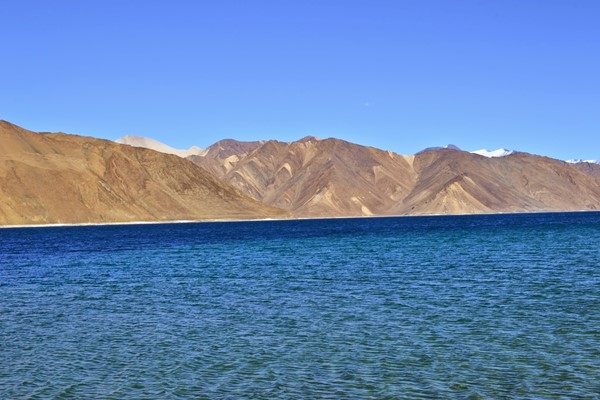
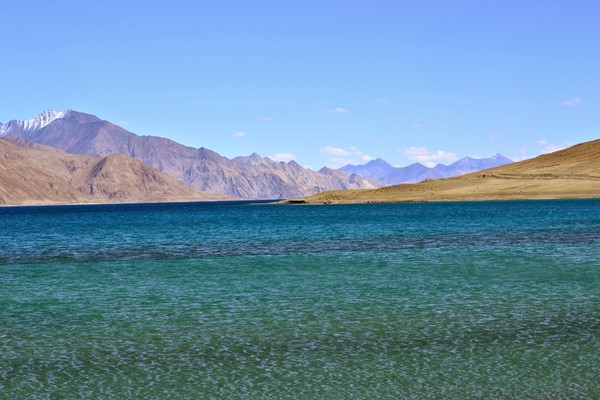
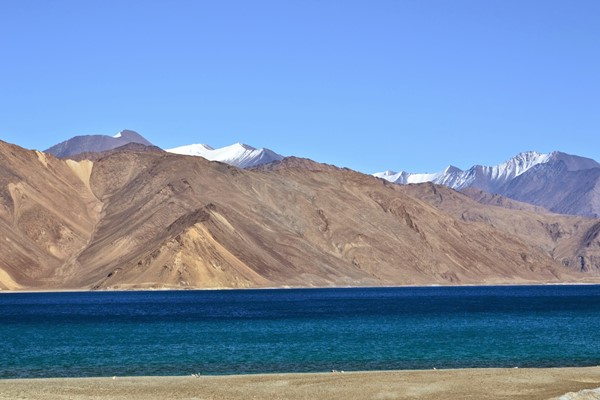
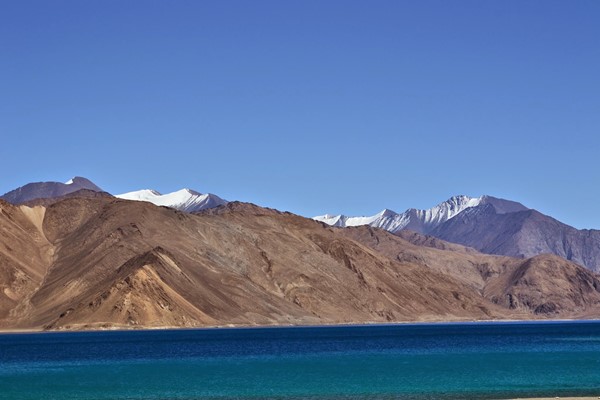
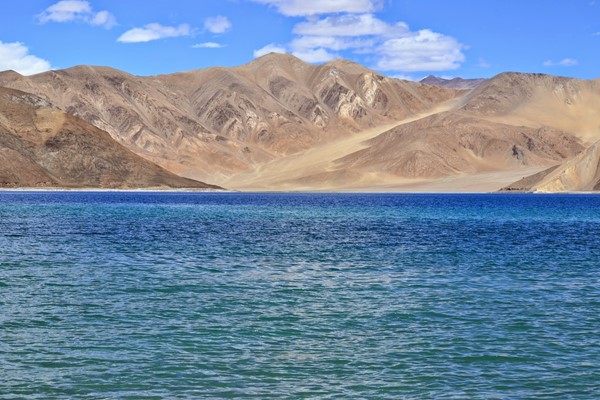
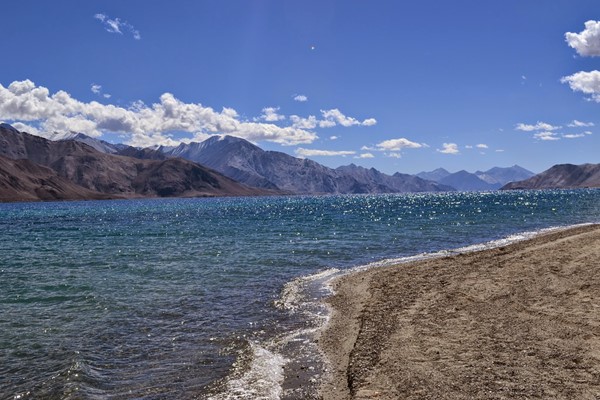
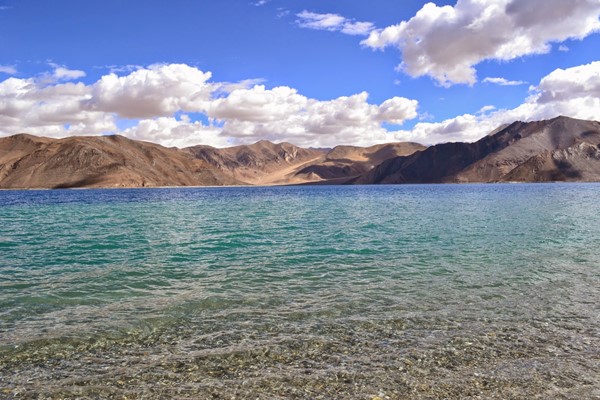
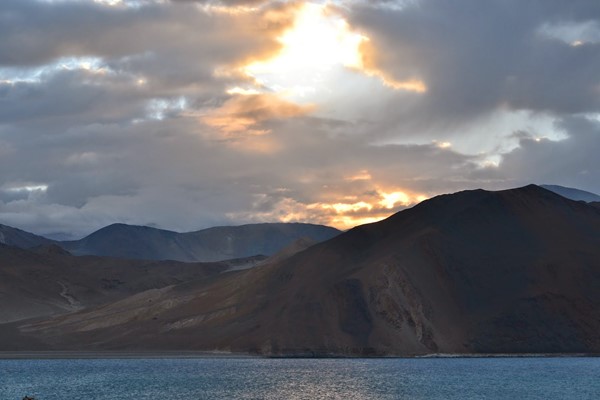
I invite my readers to view photo images to enjoy ‘Natural Beauty’ of Pang Gong Lake between India and Tibet.

World Tibet Day – Prayers at Pang Gong Lake for Tibet Equilibrium.

Rudranarasimham Rebbapragada

DOOM DOOMA DOOMSAYER

‘TIBET CARD’ ADDED TO INDIA-CHINA BORDER MIX AS TIBETAN FLAG IS HOISTED AT PANG GONG LAKE – INDIAN DEFENCE FORUM

World Tibet Day – Prayers at Pang Gong Lake for Tibet Equilibrium on July 05, 2017. Tibetan President Dr. Lobsang Sangay at Namgyal Monastery.

Clipped from: http://indiandefence.com/threads/tibet-card-added-to-india-china-border-mix-as-tibetan-flag-is-hoisted-at-pang-gong-lake.62429/

BY DEVIRUPA MITRA ON  JULY 08, 2017 • 

Coming amid the ongoing stand-off between India and China in Doklam, the hoisting of the Tibetan flag on Indian territory could be seen as political activity.

World Tibet Day – Prayers at Pang Gong Lake for Tibet Equilibrium. Tibetan President Dr. Lobsang Sangay hoisted Tibetan National Flag on July 05, 2017.

Lobsang Sangay, head of the Tibetan government-in-exile, seen after hoisting the Tibet flag on Pangong Lake. Courtesy: Central Tibetan Administration website

New Delhi: Even as the stand-off between Indian and Chinese soldiers continued in one part of the Himalayas, Lobsang Sangay, head of the Tibetan government-in-exile, unfurled the Tibetan national flag on the shores of Pang Gong lake in Ladakh.

The lake, located at over 14,000 feet, sits astride India and China, with the Line of Actual Control passing through it.

Speaking to The Wire, Sonam Norbu Dagpo, spokesperson of the Central Tibetan Administration (CTA), said that this was the first time that the independent Tibet flag had been unfurled by the head of the government-in-exile at that important location.

“This is the first visit by the CTA president to Ladakh and, therefore, the first time that the national flag has been unfurled near the lake,” he said.

Dagpo pointed out that the location has special meaning for the Tibetan community. “As you know, half the lake is in India, and half the Tibet,” he added. Consequently, he said that the hoisting of the national flag has “political and personal significance”.

When asked if any go-ahead signal was taken from authorities, Dagpo asserted, “I don’t think any permission is required to hoist the Tibetan national flag”.

Sangay was in Ladakh on the invitation of the Ladakhi community to celebrate the birthday of the Dalai Lama on July 6, Dagpo added.

According to a report on the lake shore ceremony published on the CTA website, Sangay had a brief audience with the Dalai Lama before leaving for the lake on the morning of July 5.

The report noted that Sangay poured “blessed grains” received from the Dalai Lama into the lake in the hope that “these grains will reach Tibet and bless Tibetans inside Tibet as well”.

“Physically, I may be standing just a few meters from Tibet today. However, in terms of political freedom and views, I am still far away from the situation inside Tibet,” Sangay said, according to the report.

Speaking to The Wire, a former MEA secretary, R.S. Kalha said, “The unfurling of the Tibetan flag is a political act, especially at this time”.

For the last 22 days, Indian and Chinese soldiers have been watching each other warily on a clearing called the ‘Turning Point’ in Doklam. Indian soldiers had stopped Chinese soldiers from constructing a road within Bhutanese territory, which would have serious security implications for the tri-junction and the ‘chicken neck’ Siliguri corridor.

China has been on a media blitzkrieg claiming that India violated a 1890 treaty and asserting that Indian soldiers were on Chinese territory. India and Bhutan have both said that China had changed the status-quo by building a road and asked it to return to the previous position.

Indian Prime Minister Narendra Modi and Chinese President Xi Jinping had a five-minute conversation on Friday on the sidelines of a meeting of BRICS leaders gathered in Hamburg for the G20 summit. However, no details were given of the “wide range of issues” discussed.

Meanwhile, even as the two leaders met in Hamburg, the Chinese embassy in India issued an advisory for its nationals to “pay close attention to personal safety”.

Observer Research Foundation’s Manoj Joshi agreed that the flag hoisting by Sangay “assumes importance due to the timing”. “This is a very significant gesture, given that it has happened for the first time at this location which has emotional and political symbolism.”

Both Kalha and Joshi pointed out that the flag was hoisted on Indian territory, which could be interpreted as political activity.

A former Indian diplomat, who has been a practitioner in India-China bilateral ties, claimed that it was unlikely that India would have “encouraged” Sangay to go to the lake. “So far, I do not see any signs of the Indian government interested in escalating the issue,” said the diplomat, who did not want to be named. He also pointed to the Indian statement on the Doklam stand-off, which he said was “very measured and sober”.

Joshi asserted that the NDA government has a history of trying to play up the Tibet issue. “Ever since this government took office, it has given more visibility to the Tibetan cause, right from swearing-in day. This has not gone unnoticed in Beijing,” he said.

When Modi was sworn in as prime minister, Sangay was among the special invitees in the audience, sitting right next to then Uttar Pradesh chief minister Akhilesh Yadav. Sangay’s presence led to speculation of new government policy on Tibet. Sangay’s presence didn’t go unnoticed, with China lodging a protest. A few months later, Modi and Xi were sitting together on a swing alongside the river Sabarmati – but that was probably the biggest high in India-China bilateral relations till now.

In April 2016, India allowed a US-based Chinese dissident organization to organize a seminar of pro-democracy activists in Dharamshala, but later cancelled the visa of an Uighur activist on the grounds that he gave wrong information in his visa application. The visas of three other participants to the conference were also cancelled. However, the seminar went ahead, but without the media being allowed in.

The permission for the conference had come in the wake of China putting on hold – yet again – the listing of Jaish-e-Mohammed chief Maulana Masood Azhar by the 1267 al-Qaeda and Taliban sanctions committee of the UN Security Council.

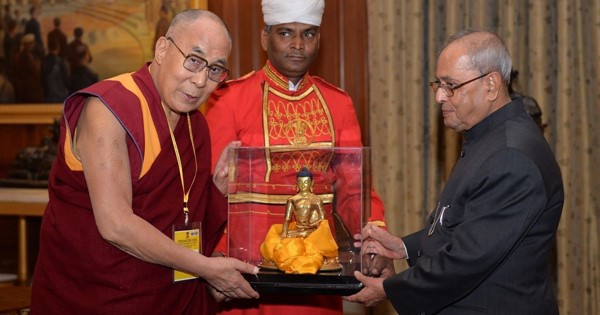
In December 2016, China warned India to respect Beijing’s “core interests” after Dalai Lama visited Rashtrapati Bhawan to attend a conference of Nobel laureates and shared the dais with the Indian president. This was the first contact between the Tibetan spiritual leader and the head of the Indian state in decades. India had played down the incident, stating that Dalai Lama had been invited for a “non-political event”.

A few months earlier in October 2016, Beijing had also protested the first ever visit by an US ambassador to India to Arunachal Pradesh.

This year, China was again upset by the visit of the Dalai Lama to Arunachal Pradesh. The language used by the Chinese foreign ministry on Dalai Lama’s visit was so sharp that India issued a list of previous trips of the Tibetan spiritual leader to the north-eastern state, which is claimed by China. The foreign ministry spokesperson also clarified that there was a “no change” in Indian government’s policy towards China’s Tibet or to the boundary question.

https://thewire.in/155657/lobsang-sangay-central-tibetan-administration-tibet-flag-india-china/

World Tibet Day – Prayers at Pang Gong Lake for Tibet Equilibrium.
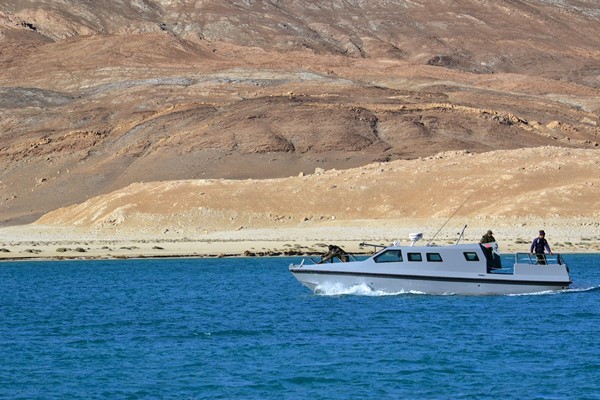
World Tibet Day – Prayers at Pang Gong Lake for Tibet Equilibrium. Indian Armed Forces keeping watch at India-Tibet Border.
World Tibet Day – Prayers at Pang Gong Lake for Tibet Equilibrium. The Lake is at India-Tibet Border.
WORLD TIBET DAY – PRAYERS AT PANG GONG LAKE FOR TIBET EQUILIBRIUM.

Whole Trouble – Red China invents Border disputes to justify Occupation

Red China invents Border Disputes to perpetuate Tibet’s Occupation

Red China invents these Border Disputes to legitimize illegal Occupation of Tibet

The root cause of territorial disputes in Himalayan Plateau is an Unnatural event called ‘Occupation’ that shattered Tibet’s experience of Natural Balance, Natural Order, Natural Equilibrium, Natural Harmony, Natural Peace, and Natural Freedom. India and Bhutan must primarily focus upon return of Tibet to its Natural State or Condition, a condition that never threatened the existence of its immediate neighbors. Red China invents these Border Disputes to legitimize illegal Occupation of Tibet

Red China invents these Border Disputes to legitimize illegal Occupation of Tibet

Clipped from: https://www.washingtonpost.com/world/asia_pacific/china-pushes-hard-in-border-dispute-with-india/2017/07/06/52adc41e-619b-11e7-80a2-8c226031ac3f_story.html?utm_term=.9bc54d806201

Red China invents these Border Disputes to legitimize illegal Occupation of Tibet

China pushes hard in border dispute with India

The Washington Post

Red China invents these Border Disputes to legitimize illegal Occupation of Tibet


This photo from 2008 shows a Chinese soldier, left, next to an Indian soldier at the Nathu La border crossing between India and China. (Diptendu Dutta/Agence France-Presse via Getty Images)
NEW DELHI — Their meeting is likely to be all smiles and polite handshakes, as world leaders look on. But as Indian Prime Minister Narendra Modi and his Chinese counterpart Xi Jinping left for Friday’s Group of 20 summit in Hamburg, tensions between the rising Asian powers had escalated over a patch of disputed territory claimed by both China and the tiny Himalayan kingdom of Bhutan.

Border scuffles between India and China have simmered in the past, but analysts from both sides said the latest spat has the potential to spiral into conflict between the two nuclear-armed nations. So far, the countries’ troops, who are usually unarmed to avoid provocation, have engaged in what is known as “jostling,” when soldiers attempt to physically push rivals back.

The standoff began at the end of June, while Modi was meeting President Trump, prompting some Indian analysts to wonder whether the timing had anything to do with China’s disdain for India’s increasingly close ties to the United States.

“The Chinese are making their unhappiness clear on India and America’s relationship,” said Sameer Patil, director at an India-based foreign policy think tank called Gateway House.

The dispute started after Chinese construction trucks, accompanied by soldiers, rolled south in the disputed region of Doklam to build a road. India and Bhutan consider the region to be Bhutanese territory; China claims the land as its own. The countries disagree on the exact location of the “tri-junction,” where the three borders meet.

Red China invents these Border Disputes to legitimize illegal Occupation of Tibet

The argument bears some of the hallmarks of China’s efforts to fortify islands in the disputed South China Sea, where it has riled the Philippines and Vietnam and risked confrontation with the U.S. Navy.

India and Bhutan have traditionally been close allies; India often provides the small country with financial and military assistance. It was the first country Modi visited after being elected.

Indian analysts say China’s move in Doklam threatens a narrow sliver of strategically important land, known as the “chicken’s neck,” which connects central India to its remote northeast. In response to what it believed was extraterritorial Chinese road-building, New Delhi sent reinforcements supporting Bhutan — according to ex-Indian army officials, at Bhutan’s request.

Chinese officials say India’s intervention amounted to a provocation, violating an 1890 treaty with Britain that appears to grant China access to the region. According to Chinese Foreign Ministry spokesman Geng Shuang, the pact was affirmed by Indian leaders after independence.

“As to the boundary negotiation between China and Bhutan,” he said Wednesday, “we have repeatedly stated that Doklam has always been part of China’s territory and under China’s effective jurisdiction without disputes.”

The government’s messages were bolstered by stern statements in China’s state-run media. The Global Times newspaper printed a furious editorial warning India of China’s military might. “The Indian military can choose to return to its territory with dignity, or be kicked out of the area by Chinese soldiers,” it said.

Wang Dehua, from the Shanghai Municipal Center for International Studies, said, “By continuing to increase deployment of troops at the border, India once again underestimates China’s capability and determination to safeguard its territory. It also fails to estimate the cost of confrontation.”

Hopes for a discussion between Modi and Xi on the Doklam dispute on the sidelines of the G-20 summit were scuppered after Indian media reported that the government had not requested a one-on-one meeting. Instead, Xi and Modi will meet among leaders from other G-20 countries to discuss international issues.

“China has taken a very stubborn attitude, and there is little appetite in India to accommodate China’s behavior,” Patil said.

Modi had come into office with high hopes of building Sino-
Indian relations; experts called him the most pro-China prime minister since the two countries’ 1962 border war. Xi met Modi in India in 2014 shortly after the latter was elected, in the first visit by a Chinese leader in eight years.

Instead, the two nations have become increasingly suspicious of one another. During Modi’s recent visit to the United States, a deal was struck to buy surveillance drones that could be used to monitor Chinese naval activity in the Indian Ocean. In April, China fulminated over the Dalai Lama’s tour of Arunachal Pradesh in northeast India, known in China as south Tibet. China considers the Dalai Lama an opponent and a separatist whose power threatens its control over Tibet.

India also refused to join China’s “One Belt, One Road” program, a massive infrastructure project involving 70 countries aimed at reviving old Silk Road trade routes. Plans include an improved connection between China and Pakistan and would allow Pakistan access to other countries in Central Asia.

China, on the other hand, blocked efforts to designate a Pakistan-based militant outfit, Jaish-e-Muhammad, as a terrorist organization. It has also stood in the way of India’s bid for membership in the Nuclear Suppliers Group, an organization of countries that supply — and control — the export of nuclear materials, equipment and technology.

China has billions of dollars in investment deals with Sri Lanka and Nepal and this year took part in a joint military training exercise with Nepal. India considers both neighbors to be allies.

“I think the root cause is that the Chinese feel that their moment has arrived and that they do not need to accommodate Indian interests in any way, given the huge power differential in their favor,” said India expert Ashley Tellis, senior fellow at the Carnegie Endowment for International Peace. “Chinese suspicion that India was casting its lot entirely with the United States has only intensified Beijing’s determination to be even less accommodative towards New Delhi.”

Politically, neither Modi nor Xi can be seen to be giving in to the other’s demands. Modi’s nationalist government has insisted upon maintaining the integrity of Indian borders, banning maps and representations of disputed regions in the north. Xi, too, cannot be seen to be relenting on what the Global Times called “unruly provocations” from India, as he prepares to face a Chinese Communist Party conference in the fall.

Denyer reported from Beijing.

China demands India leave Himalayan plateau in rising spat

Red China invents these Border Disputes to legitimize illegal Occupation of Tibet

TIBET EQUILIBRIUM – 66 YEARS AND COUNTING – TIBET AND CHINA

TIBET EQUILIBRIUM – 66 YEARS AND COUNTING – TIBET AND CHINA

TIBET EQUILIBRIUM – 66 YEARS AND COUNTING – TIBET AND CHINA.

American China Fantasy is Doomed. The reason is that of America’s Unfinished War in Asia. The Cold War in Asia is not about Tibet’s Independence or Autonomy. The Cold War is about engaging, containing, confronting, opposing, and resisting the threat posed by Communism and its influence in Asia.

Rudranarasimham Rebbapragada
DOOM DOOMA DOOMSAYER

TIBET EQUILIBRIUM – THE COLD WAR IN ASIA IS NOT ABOUT TIBET’S INDEPENDENCE OR AUTONOMY. ITS ABOUT SPREAD OF COMMUNISM.

TIBET EQUILIBRIUM – MAN vs NATURE

TIBET EQUILIBRIUM – MAN vs NATURE

TIBET EQUILIBRIUM – MAN vs NATURE. NATURAL FORCE OR NATURE IN THE ROLE OF THE “BALANCER” OR “HOLDER OF THE BALANCE IN PHYSICAL WORLD.

Man has been shaping face of Earth by creating political boundaries to define the extent of territory under his domination. Man uses his physical power or military force to subdue his opponents while he expands his territory. Red China describes her military conquest of foreign territory as ‘Liberation’. In Man’s History, Empires have risen and fallen reshaping political boundaries.

Nature is also at work reshaping Earth from its beginning. Earth’s Natural History is full of remarkable events such as Continental Drift. Himalaya Mountain range came into existence due to force of collision generated by Indian Landmass thrusting against Asia. Apart from creating Himalaya Mountains, collision of Indian Plate caused uplift of Tibetan Plateau which began about 45 million years ago. This force is still acting slowly pushing Nepal towards Tibetan Plateau.

Tibet Equilibrium – Man vs Nature. Promoting global awareness of suppression, oppression, and repression in Occupied Tibet. How to reset Balance of Power?

Nature causes Major and Minor ‘Extinction Events’ altering shape of Earth and the lifeforms that live on Earth. Natural History records several episodes of heavenly objects striking Earth with devastating consequences. Earth witnessed on June 30, 1908 an event called Tunguska Event caused by asteroid collision.’Asteroid Day’ promotes global awareness of such collision events.

In my analysis, such Heavenly Strike is natural remedy for Man’s Pride and Arrogance with which Man desires domination of planet Earth.

Tibet Equilibrium – Man vs Nature. Natural Balance of Power instituted by Nature.

I use the term or phrase ‘Tibet Equilibrium’ to describe Natural Balance of Power instituted by Natural Factors, Natural Mechanisms, Natural Conditions, Natural Forces that act together to restore Natural Freedom in Tibet, the Freedom that prevailed before Red China’s military conquest of Tibet.

Rudranarasimham Rebbapragada

DOOM DOOMA DOOMSAYER

DEFENCE NEWS: TIBET IS CHINA’S RIGHT HAND AND LADAKH, NEPAL, SIKKIM, BHUTAN AND ARUNACHAL ARE ITS FINGERS – MAO ZEDONG

Clipped from: http://defencenews.in/article/Tibet-is-Chinas-Right-Hand-and-Ladakh,-Nepal,-Sikkim,-Bhutan-and-Arunachal-are-its-Fingers—Mao-Zedong-262888

TIBET EQUILIBRIUM – MAN vs NATURE. MAO ZEDONG’S EXPANSIONIST DOCTRINE RESULTS IN POWER IMBALANCE IN ASIA.

China’s legendary revolutionary leader Mao Zedong, standing in front of Beijing’s Tiananmen Square in the 1950s, talked about Tibet and the Himalayas: “Xizang (Tibet) is China’s right hand’s palm, which is detached from its five fingers — of Ladakh, Nepal, Sikkim, Bhutan and Arunachal (formerly NEFA). As all of these five are either occupied by, or under the influence of India, it is China’s responsibility to ‘liberate’ the five to be rejoined with Xizang (Tibet).”

Beijing and New Delhi are two capitals of two of the most populated nations of the world, with the Himalayas forming the most formidable barrier to an extensive interaction between them. The Himalayas, however, have much more to do with Hindu history, culture and the traditions of South Asia than that of China owing to its remote distance from China. Beijing owes its glorious rice culture more to the Hwang Ho and Yangtze rivers than to the Himalayan rivers of the Sindhu, Ganga and Brahmaputra.

Just like Jerusalem is the cradle of both Christianity and Judaism, and Mecca and Medina the Centre of Islam, the Himalayas and its waters have played a seminal role in the rise, growth and development of Hinduism, Buddhism, Jainism and Sikhism. The Chinese owe the origin and development of their glorious civilization more to the twin non-Himalayan river valleys of the Hwang Ho and Yangtze than to the remote Himalayas, the abode of snow. The name originates from the combination of two Sanskrit words “him (snow)” and “alaya (abode)”.

Let’s study the distance of the Himalayan “five fingers” from the two capitals of New Delhi and Beijing. Leh (Ladakh) is 1,258 km by road from Delhi and 3,490 km from Beijing; Kathmandu (Nepal) is 1,160 km from Delhi and 3,160 km from Beijing; From Nathula (Sikkim) to Delhi is 1,636 km, while to Beijing it is 2,888 km; Thimphu (Bhutan) is 1,782 km from Delhi and 2,820 km from Beijing; and lastly, from Tawang (Arunachal) Delhi is 2,315 km, while Beijing is 2,640 km from there.

Indeed, the “five fingers” of Beijing are rather too far when compared to the distance thereof from Delhi. Nevertheless, let us see things from Beijing’s point of view as well, in the light of its BRI/CPEC and SCO objectives. Several of its “economic” projects have been given different names to keep the non-Chinese guessing. That is the Chinese way, which could be to look different without being different. Why? Because the goal is always fixed. It’s the way to the acquisition of land and money, in the old Chinese tradition of kowtowing by rivals. Even when things do not exist, there is a need to make them “exist”. Almost like that of Voltaire’s logic: “Even if God did not exist, it would be necessary to invent him”. The belief has to prevail. If not today, in the long term and in the long run. The Chinese can go on hammering. The wall is bound to crack and crumble inevitably one day.

Ladakh is still with India, forced Chinese part-occupation notwithstanding. Nepal is independent and pursues its policy with great élan, despite its abolition of the monarchy and the tag of being a Hindu state. Sikkim joined India on its own volition in 1975, and there doesn’t seem to be any sign of a reverse gear. Bhutan too can’t be penetrated, as it is too steadfast in its approach. The proposed Chinese embassy in Thimphu is still a long way off. Arunachal Pradesh is one of the 29 states of India, and there is little to suggest that it can be anything other than that.

Therefore, the direct approach to “liberate” the “five fingers” of Xizang needs to change to an indirect one. How? By the application of “economics”. Development, investment, people-to-people contacts, profit, infrastructure, connectivity and corridor are alluring words. The Chinese aim to entice them, cajole them, as they are all landlocked terrain. All are “helpless” at the mercy of others. They need “liberation” by or under someone. Dissatisfaction and resentment is the key to their changing sides.

To begin with, a country has to have proximity to sea outlets. Five landlocked fingers cannot operate from Gwadar Port on the Arabian Sea. It is remote and turbulent. It has to be the Bay of Bengal, with its six ports of Kolkata, Haldia, Khulna, Chalna, Cox’s Bazar and Chittagong. Nathu-La to Kolkata is 727 km, Dhaka 640 km, Chittagong 900 km.

No wonder China is anxious to open its embassy in Bhutan to balance New Delhi’s influence and to breach Siliguri’s “Chicken’s Neck” of less than 80 km to reach the shoreline of the Bay of Bengal. It does not matter what it takes to achieve the so-called economic goal. It matters little whether or not turbulence is created to breach the established polity of India and reach the beaches of West Bengal and Bangladesh. It is simply “economics”!

One of the priorities is the Sino-Bhutan border “issue”. The year 2017 has seen hectic Chinese activity in Bhutan — with very little effect though. They are trying hard in the Chumbi Valley tri-junction of Bhutan, Sikkim and Tibet. The Yadong railway will also reach Kathmandu via Gyirong (Tibet). The Chinese want a railway line through Bhutan, West Bengal and Bangladesh as well. Not too soon, it appears, as tension and turbulence go on increasing in the highly vulnerable Chicken’s Neck area of India, that in turn may well contaminate all four nations in the neighborhood — Bangladesh, Bhutan, India and Nepal. Paradoxically, however, the adverse effect on these four nations is likely to be advantageous to China.

The Chinese hopes still revolve around Mao Zedong’s unfulfilled dreams. Hence, the renewed Chinese keenness to go to the east as well as the Northeast in Indian territory. India is the gateway to all the five (landlocked) fingers. The gate must be prized open — the sooner the better. It is the all-embracing “Chinese economics”: which Beijing sees as the only way to “liberate the “five fingers”.

TIBET EQUILIBRIUM – MAN vs NATURE. ON FEBRUARY 13, 1913 TIBET DECLARED FULL INDEPENDENCE AFTER DOWNFALL OF CH’ING OR QING CHINESE DYNASTY.


Whole Awareness – The Burden of Tibet’s Unequal Yoking

The Burden of Tibet’s Unequal Yoking

TIBET AWARENESS – UNEQUAL YOKING. TIBET IS SUBJECT TO BURDEN IMPOSED BY UNEQUAL YOKING WITH A MONSTROUS BEAST, UNEQUAL IN SIZE AND POWER.

Red China, using military force, yoked with Tibet. To perform farm work, farmers generally use two animals of same type, size, and strength to get work done without imposing unequal burden on animals yoked together. Red China is a huge, monstrous beast, and her Unequal Yoking with Tibet imposes burden called Subjection, Bondage, Servitude, Enslavement, Hardship, Trouble, Pain, and Suffering upon Tibetans.

TIBET AWARENESS – UNEQUAL YOKING. TIBET IS SUBJECT TO BURDEN IMPOSED BY UNEQUAL YOKING WITH A MONSTROUS BEAST, UNEQUAL IN SIZE AND POWER.

Tibet is under the Yoke of Burden, Control, Subjugation to become subservient to Red China’s Doctrine of Neocolonialism.

THINGS THAT SURPRISED ME ABOUT TIBET – FUN AND INTERESTING FACTS

Clipped from: https://www.onceinalifetimejourney.com/once-in-a-lifetime-journeys/9-things-surprised-tibet/

Tibet Awareness – Unequal Yoking. The Burden of Military Occupation.

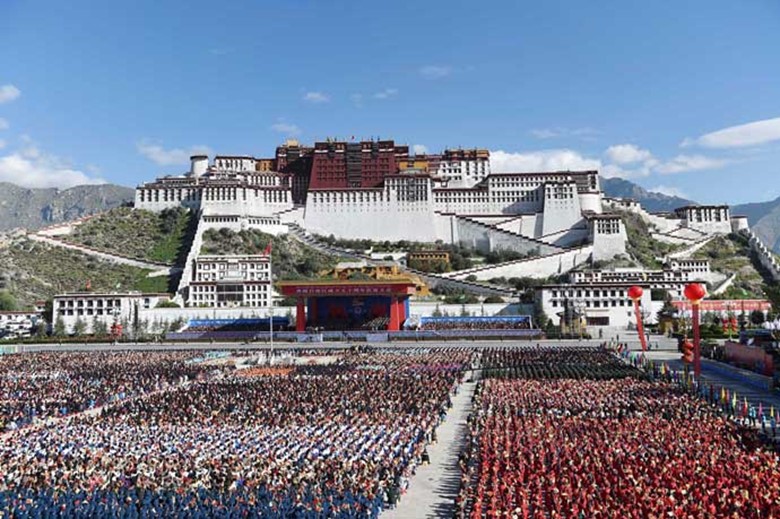
The country at the roof of the world, was very different from what I expected. Tibet, often considered the spiritual center of the world has more Buddhist monks, stupas and gods than any other place, yet it was anything but the peaceful and calm realm I had envisioned. Not that the available online resources lie about it, but more that there is a general lack of information beyond the Dalai Lama and the Chinese-Tibetan political situation, so my mind veered towards red-robed monks and the magical image of the Potala Palace. The list of things that surprised me about Tibet is quite long, but I will attempt to highlight the most relevant, the top 17 things that most people don’t know about Tibet or that will surprise any traveler to the oft-called Shangri-la.

1. Tibet facts – Tibet is developed and it has incredible infrastructure

Tibet Awareness – Unequal Yoking. Red China’s Subjugation of Tibet.

I visited with the utopian idea in my head that Tibet was going to be a peaceful and isolated place resembling Bhutan. But Tibet, or the Tibetan Autonomous Region, is a Chinese occupied territory that became part of China in 1950 and, as a result, for good or for bad, infrastructure has developed dramatically. Even the road that leads to the world’s highest mountain, Everest, is paved almost all the way, a far cry from the 9-14 day trek from Lukla Airport (the world’s most dangerous airport) to reach the Nepalese equivalent. In fact, we drove all the way to 5,200m to the tourist Everest Base Camp. Roads throughout the country are smooth and paved, including the Friendship Highway that links Shanghai with Kathmandu and runs for 5,900km, practically crossing Tibet.

Countless electricity lines crisscross the arid landscapes, at times, several electricity posts slashed my photographs. Even the most remote of villages have electricity and solar panels. Why? Tibet is China’s richest province, with deep reserves of gold, copper and other precious and valuable resources and infrastructure is essential to mine and exploit this natural wealth. As our train to Lhasa glided through the middle of nowhere, high up in the Tibetan Plateau, the lights of trucks carrying minerals to processing factories provided a continuous source of light in the darkest of nights. Those factories lit the horizon in sudden outbursts. Next to them, nomad villages built to accommodate the workers supporting the factories sprung as if mushrooming from the rocks and sand. There were many, and we were to see even more across Tibet.

2. Tibet facts – The issue of the Dalai Lama and the Panchen Lama

Tibet Awareness – Unequal Yoking. The Great Problem of Tibet.

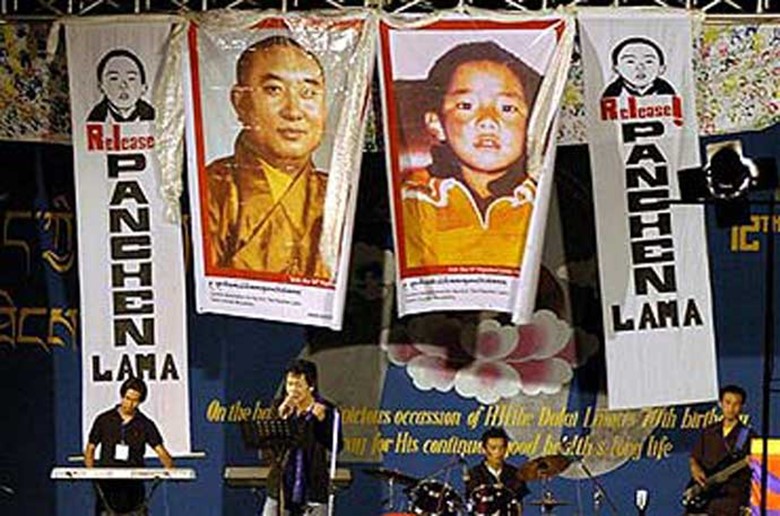
The 14th Dalai Lama left Tibet after disagreement with the Chinese government about his successor, which made it too dangerous for him to stay and has lived in exile in Dharamsala, India, ever since. This shows his opposition to the occupation and his demands for true autonomy (not independence) for Tibet. The Chinese government recognizes Buddhism, a religion that is widely spread in the country despite communism, but nominated their own Panchen Lama, the successor to the Dalai Lama, in 1995, six years after the death of the previous Panchen Lama, following a traditional process using a golden urn that was used for the 10th, 11th and 12th Dalai Lamas. Their choice did not match that of the current Dalai Lama, whose successor has been kept in an unknown location in China ever since.

The Panchen Lama nominated by the Chinese Government has been receiving education in Buddhism and Tibetan culture since his enthronement at the Panchen Lama’s seat in Xigatse. His photograph can be seen across Tibet whereas having a photo of the 14th Dalai Lama is illegal and can carry fines or imprisonment. Tibetans often claim this misalignment about who the next Dalai Lama will be as the main attempt by the Chinese to eradicate Tibetan culture and identity.

3. Tibet facts – The highest country on the planet

Tibet Awareness – Unequal Yoking. Natural Freedom violated by Unnatural Occupation.

When I visited Bhutan I thought I was high. High on life, high on spirituality and high up in the mountains! One of the country’s nickname, “The Kingdom in the clouds”, clearly reflects its high altitude, with the capital at 2,300m and several peaks above 7,000m. Bhutan ranks as the highest country in the world when average altitudes are taken, despite some of the lowest parts are almost at sea level.

But that is just because Tibet is not officially recognized as a country by the UN because of Chinese veto, so it is just a region of China. Before Chinese occupation, Lhasa was the highest capital in the world as per the Guinness World Book of Records, but La Paz in Bolivia has taken that prize since Tibet became a part of China.

What makes Tibet’s altitude extra special is that, not only does it have the highest mountain in the world (Mount Everest), but also the highest average altitudes at 4,575m above sea level, the highest road, the highest toilet, the highest town (Whenzuan), the highest monastery and the highest train. Everything in Tibet is made of superlatives. We drove up mountain passes that are at 5,200m, we used the highest toilet in the world, located on the same mountain pass top, we took the train to Lhasa, which climbs to 4,500m and visited the world’s highest monastery, Rongbuk, at the foot of Everest Base Camp. Altitude is an undetachable synonym with Tibet.

4. Tibet facts – 40% less oxygen

Tibet Awareness – Unequal Yoking. Natural Conditions, Natural Factors, Natural Mechanisms, and Natural Events produce Natural Freedom in Tibet.

Tibet’s high altitude is the cause for the traveler’s worst nightmare: Altitude sickness. Because it is so high, the pressure is lower giving the sensation that there is less oxygen. I have extensively covered the topic of altitude sickness, because we felt it and felt it badly, but what I found most interesting is that it is not possible to descend in Tibet, the lowest altitude is already a whooping 3,500m above sea level.

5. Tibet facts – Permits, permits, permits

Tibet Awareness – Unequal Yoking.

Getting to Tibet is not particularly difficult. Travel restrictions have been lifted and you can go on a small private tour like I did with WildChina, without issues. It was a similar process to that for North Korea. You cannot travel independently, but you can pretty much visit anything as long as you are entering with a tour company. And, unlike North Korea, you can freely wander the streets or explore anything without a chaperon.

However, visiting Tibet does require a lot of planning ahead. You will need a Chinese visa first, which is required by almost all citizens and can take up to two weeks to process depending on your country of residence and which can be very costly (US$100 in Singapore). With a photocopy of that in hand, the travel agent will apply for a Tibetan permit which will be linked to your detailed itinerary. The permit can take anything from a week to 3 weeks so you should start the entire process about two months ahead to ensure everything is done on time as the processing timelines vary vastly from country to country (e.g. one of my friends took 2 weeks for the Chinese visa and 3 days for the Permit whereas I took 3 days for the visa and 3 weeks for the permit).

The permit is your passport into the Tibetan Autonomous Region and will be checked and rechecked a million times throughout the trip. Your guide will keep the permit with him or her throughout your stay. Every time you reach a new village the guide will be registering you, even for just one night, with the local Police, so your whereabouts are being monitored at all times. There were also 20 road checks through our 9 day journey and we were thoroughly scrutinized at the train station and airport before boarding. If you plan to visit Everest Base Camp, then you will need an additional permit and to go through a Military check-point at the park’s entry.

6. Tibet facts – Big Brother is watching

Tibet Awareness – Unequal Yoking.

The controls of visitors extend to the cars as well. All cars that take tourists around the country are owned by the government and kitted with two cameras and a radio system that communicates a central office to all the drivers. The cameras are constantly monitoring the driver and making sure that he is not doing anything against the Chinese rules. Every time the speed went above the marked limit, a message came through on the radio speakers to slow down. The speakers also shared a regular amount of updates and reminders about safety on the road. It was a constant reminder that our every move was being watched.

7. Tibet facts – Cold and high, but without snow

Tibet Awareness – Unequal Yoking.

I was expecting the landscapes to be rocky, mountainous and majestic and for the snow to cap all mountain tops but Tibetan landscapes are rather brown and grey with very little snow. In fact, although we saw some snowflakes as we traversed the highest pass, at 5,200m, the majority of the mountains were devoid of that delicate white veil that tops other mountain ranges. Our guide confirmed that it does snow very little in Tibet and that pretty much all the snow we were seeing was permanent. The glaciers, receding as a result of global warming, were also perennial. The lack of snow is caused by the high Himalayan mountains that stop the clouds from emptying their bowels and providing rain or snow.

8. Tibet facts – Tibet was not always a peaceful nation

Tibet Awareness – Unequal Yoking.

I associated Tibet with peace, not least because the Dalai Lama has been an example of opposition to the Chinese occupation, something which got him the Nobel Peace Prize. But Tibet’s past wasn’t always as spiritual and peaceful as Buddhism advocates. Tibetan Kings fought and defended Tibet from assailants for centuries. Remnants of Medieval fortresses, city walls and castles can be seen across the country. Unlike Bhutan, who was never occupied by an international power, the English had several incursions in Tibet, as did the Mongols, Indians, Afghans, Nepali and various Chinese dynasties. So monks, and the Tibetan Kings, were a fearless army defending their territory since the 17th century until the Chinese occupation in the 1950s.

9. Tibet facts – Yak meat, yak butter, yak hair

Tibet Awareness – Unequal Yoking.

Tibet’s high altitudes and harsh conditions make life extremely hard and yaks are the lifeline for most Tibetans. Yak meat, leaner and lighter than beef, is ever present. Yaks are also used for milk and butter and their hair is used to make rugs and clothes, even to weave the cover ups that protect the Potala Palace – delicate paintings and carvings from the sun. Even yak dung is collected and dried to be used as fuel in the winter months. However, yaks are an endangered species and most of the animals seen roaming the fields are actually a blend between yak and cow.

10. Tibet facts – Photos of the Dalai Lama are illegal

Tibet Awareness – Unequal Yoking.

Almost everyone has a clear image in their heads of the current Dalai Lama. However, carrying or having his photo in Tibet could lead to imprisonment and punishment. None of the houses or temples we visited had any. Instead, the Panchen Lama, nominated by the Chinese Government, is to be displayed in homes and businesses. The prohibition extends to the Tibetan Flag, which does not fly anywhere in the country. Bright Chinese flags are hung on rooftop of houses, next to the colorful prayer flags.

11. Tibet facts – Shangri-la is the result of a misspelling

Tibet Awareness – Unequal Yoking.

Tibet is often referred to as the Shangri-la. The word has no meaning in Tibetan, although La does mean mountain pass and is attached to the end of all passes in Tibet. The word was first coined by the writer of the most famous novel about Tibet, Lost Horizon, in 1933. James Hilton probably misunderstood the word Shambala, which has a similar meaning in Tibetan Buddhism, and wrote Shangri-la instead. Since then, the word has been assimilated to a mythical place somewhere high in the mountains, a Heaven of sorts, a paradise on Earth, and is even the brand name of a luxury hotel chain whose eponymous Lhasa hotel I stayed at during my visit.

12. Tibet facts – The prostrations

Tibet Awareness – Unequal Yoking.

I had seen some images of devout Buddhists prostrating in key Buddhist temples and landmarks but nothing could prepare me for the absolute devotion and extreme prostrations that some engage in. Some people would spend their entire day prostrating and praying, continuously kneeling down and lying flat on the floor then standing up again. Most will be dressed appropriately, with hand and knee protection to allow them to glide. At some particularly holy places, like in front of the Jokhang Monastery or the Potala Palace, some extreme devotees would prostrate in the middle of the pavement and receive donations from passers-by.

13. Tibet facts – The toilets

I cannot talk about things which surprised me about Tibet and not mention the toilets. Although there are public toilets across the cities and main road stops, they smelled so bad and were so dirty at times that we opted for the nature toilet: behind a rock (because there are no trees in the mountains). Bringing wet wipes and tissue is not enough, one needs to bring a sort of perfume to put a couple of drops under the nose to enter some of the public toilets. All of Tibet’s toilets, barring the hotels, are squat toilets consisting of a hole on the floor with a drop which may sometimes not be very long. There are no doors to the public toilets which often times will have more than one hole next to each other. You may do your thing next to someone who is doing her thing, in the open. And if that was not enough, many people miss and the toilets are never cleaned. You get the picture. This remained the main topic of discussion among my group, a source of constant jokes and laughter, as we hunted for the cleanest, least smelling holes. I will leave it there.

14. Tibet facts – Kora

Tibet Awareness – Unequal Yoking.

Tibetans go on walking and praying pilgrimages around main landmarks and monasteries. Much like the Camino de Santiago or the trip to Mecca, only shorter and more frequent. These walks are called Kora and can be taken around any monastery. The most common one is the one in Lhasa, around the Potala Palace or the Sera Monastery. Locals pray as they walk around, many of them will spin prayer wheels like in Bhutan. Some of the Kora can take up to a full day and the elderly may repeat them every day.

15. Tibet facts – Temple smell

Tibet Awareness – Unequal Yoking.

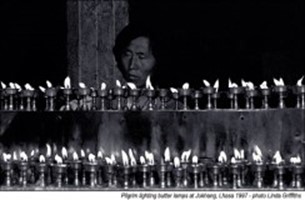
All temples and monasteries in Tibet have the same common smell of yak butter used in the butter lamps and fresh incense also burned across the country in houses and burners that can be found in public places.

16. Tibet facts – Paying for photographs

Tibet Awareness – Unequal Yoking.

In Bhutan taking photos of temples and monasteries is simply not allowed. The interiors of the Buddhist buildings are usually covered from floor to ceiling with paintings and offerings in bright colors and gold and they are incredible to see and experience and provide a deep sense of spirituality. In Tibet you can photograph almost every landmark and interior as long as you pay a donation. At first we were surprised but relaxed as the money seemed more like a voluntary donation which we diligently dropped in bowls. But in some monasteries the monks would chase us for the donation, making us drop cameras for those who did not pay to avoid any photos being taken, and the initially innocuous amount started to amount to a small fortune as some temples started to ask for up to US$350 per hall for video, like in Shigatse. At US$2-4 per hall and an average of 3-5 halls worthwhile per monasteries I probably spent upwards of US$100 in photo donations, on top of the entry tickets. Considering these were religious places that were already filled with pilgrim donations (and stacks of money were stuffed inside God’s enclosures), the additional donation started to feel a bit much.

17. Tibet facts – Commercialized Everest Base Camp

Tibet Awareness – Unequal Yoking.

I can speak for myself, who paid a handsome amount to take a helicopter to the Nepali Base Camp well before this was a commercial venture offered to tourists. But on the Tibetan side, thanks to very good infrastructure, the Base Camp has been commercialized extensively. We slept 8km from the climber’s Base Camp in a tourist tented camp which advertised free WiFi and was filled with souvenir stalls albeit it offered very basic accommodation at sub-zero temperatures without heating. The Chinese government has announced plans to build a resort, museum and helipad a few kilometers from Base Camp, in Gangkar, to offer greater comfort and drive more tourism dollars into the country, although most visitors to Tibet are still local Chinese from other provinces. Serious trekkers no longer consider Everest a hard climb since so many people are attempting and reaching the summit every year. I can tell you the acclimatization to 5,200m was very tough.

18. Tibet facts – Speed limits

Tibet Awareness – Unequal Yoking.

We regularly saw cars stopped in the middle of the road. The Chinese authorities control speed limits in a very comical and questionable way: By putting road controls and checking how long it took you to get from one to the next. The speed limits on the road are low, about 35 km/h for many roads, making the trips longer than they should take given the great infrastructure. I already discussed before that the tourism vehicles cannot surpass the speed limit and if you do, the driver gets an announcement through the radio system. But, in addition, most roads have controls. You will get a stamp on a paper with the time you crossed the previous one and the policeman will check that it took you the stipulated amount of time to cover the distance. This was not an issue for us because we were not in a rush and were making plenty of photo stops. But the locals had to stop by the side of the road to waste some time before going through controls or speed cameras.

Tibet Awareness – Unequal Yoking.


DOOMED AMERICAN CHINA FANTASY – CIA’S UNFINISHED WAR IN ASIA

DOOMED AMERICAN CHINA FANTASY – CIA’S UNFINISHED WAR IN ASIA

DOOMED AMERICAN CHINA FANTASY – CIA’S UNFINISHED WAR IN ASIA.

I speak of Doomed American China Fantasy in context of ‘The Cold War in Asia’ introduced by spread of Communism from Soviet Union to China.

Doomed American China Fantasy – CIA’s Unfinished War in Asia.

On January 01, 1949, People’s Republic of China posed a lesser threat as compared to today. Most surprisingly, the United States refused to learn from conflicts in Korea and Vietnam. Bumbling United States has yet to review fate of CIA’s Unfinished War in Asia.

Rudranarasimham Rebbapragada

DOOM DOOMA DOOMSAYER

BUMBLING Ex-CIA OFFICER CHARGED WITH SELLING SECRETS TO CHINA

Doomed American China Fantasy – CIA’s Unfinished War in Asia. McLean Building n Virginia.

Clipped from: http://foreignpolicy.com/2017/06/23/bumbling-ex-cia-officer-charged-for-selling-secrets-to-china/

A prestigious Chinese think tank provided cover for the intelligence operation that ensnared Kevin Mallory.

  • By Bethany Allen-Ebrahimian. Bethany Allen-Ebrahimian is an assistant editor at Foreign Policy. She spent four years in China before joining Foreign Policy and holds a master’s degree in East Asian studies from Yale University., Elias Groll. Elias Groll is a staff writer at Foreign Policy, covering cyberspace and its conflicts and controversies. He has written for the magazine since 2012 and is a graduate of Harvard University.
  • June 23, 2017

Doomed American China Fantasy – CIA’s Unfinished War in Asia.

Caught with a bag of cash and an electronic device used to communicate with his handlers, a former government official with years of military and intelligence experience is accused of spying for China.

Kevin Mallory of Leesburg, Virginia is charged with providing defense-related information to a foreign government and lying to federal agents.

Mallory allegedly provided several classified government documents to a Chinese contact, who initially claimed affiliation with a prestigious Shanghai think tank, in exchange for cash. Documents filed by federal prosecutors depict Mallory, an experienced Chinese-speaking former operative, as a bumbling spy who executed his treason clumsily.

Mallory’s career spanned decades and multiple government agencies. After graduating from Brigham Young University in 1981, he served as active duty military and then an Army reservist for several years. From 1987 to 2013, he worked for different government agencies and U.S. defense contractors — as well as the CIA, according to a report in the Washington Post. He held a top secret security clearance for much of that time and was posted to regions including Iraq, China, and Taiwan.

It was only this year that Mallory allegedly began to stray from the straight and narrow, according to court documents. A Chinese handler posing as an employee of the Shanghai Academy of Social Sciences (SASS) made contact with Mallory during trips to China in March and April.

The SASS is a reputable and internationally known think tank. But it also maintains a close working relationship with the Shanghai State Security Bureau, a regional office of the Ministry of State Security, China’s intelligence arm.

In the following weeks, Mallory allegedly provided classified documents to Chinese intelligence officials in exchange for $25,000.

The FBI’s affidavit describing Mallory’s espionage activity appears to indicate that the former CIA officer tried to cover up his crimes. After he was stopped at Chicago’s O’Hare airport returning from Shanghai with $16,500 in undeclared cash in one of his bags, Mallory approached American intelligence agencies to describe his meetings in Shanghai with individuals he described as Chinese intelligence officers.

Having been caught with a payment that investigators believe was in exchange for classified government information, Mallory disclosed his contacts with the Chinese intelligence officers and may have offered his services as a double agent in order to conceal his alleged espionage on behalf of Beijing. The FBI affidavit never claims he offered to serve as a double agent, but in approaching an unspecified government agency with a communications device provided to him by the Chinese, Mallory appears to have made an overture to an American intelligence agency.

“He had a security clearance, he had apparently also worked at CIA, so he knew what he was doing,” said Peter Mattis “He had a security clearance, he had apparently also worked at CIA, so he knew what he was doing,” said Peter Mattis, a former government analyst and now a fellow at the Jamestown Foundation’s China Program.

But then Mallory made what Mattis called a “stupid mistake.”

The FBI affidavit filed in a Virginia federal court this week paints a picture of extraordinary technical incompetence by Mallory and his alleged Chinese handlers. Mallory’s Chinese contacts supplied him with a communications device — likely a smart phone — to exchange messages and allegedly transfer classified documents.

In a May 24 meeting with FBI agents, Mallory showed off the device and demonstrated how to move from a “normal” to “secure” messaging mode. When he toggled over to the secure mode, he was surprised to find that it displayed a history of his secure messages. Mallory seems to have assumed they would be deleted.

Mallory voluntarily turned the device over to the bureau for a forensic analysis. When the bureau’s technical experts dug into it, they were able to recover additional secure messages exchanged between Mallory and his Chinese contacts.

In an exchange of messages on May 3, 2017, Mallory’s handler asked why the documents had been blacked out at the top and bottom. “The black was to cross out the security classification (TOP SECRET//ORCON//,” Mallory replied. “I had to get it out without the chance of discovery. Unless read in detail, it appeared like a simple note.”

Two days later, Mallory discussed his motives with his handler: “Your object is to gain information, and my object is to be paid.” Two days later, Mallory discussed his motives with his handler: “Your object is to gain information, and my object is to be paid.” His handler replied: “My current object is to make sure your security and try to reimburse you.”

The FBI analysis also discovered four documents on the phone, three of which are described in court documents as government materials. One is top secret; the other two are classified as secret. The affidavit provides no hint as to what the documents contain.

Mattis told Foreign Policy that the “scope, scale and potential impact of Chinese intelligence operations” has been of primary concern to U.S. national security agencies for years.

Chinese think tanks, including SASS, often work closely with the Ministry of State Security. China’s spy arm prefers to meet sources inside China, and social science academies provide a useful front for intelligence and influence operations.

“Chinese think tanks can be used to invite someone over who is either a person of interest or a source,” said Mattis. “That person comes over and gives a talk, and they’ll be met and have meetings with the local state security element or the People’s Liberation Army.”

But some intelligence-linked Chinese think tanks also maintain a known presence in Washington. One of those is the China Institutes of Contemporary International Relations, which bills itself as a “comprehensive research institution” but which is also an official numbered bureau of the Ministry of State Security, functioning rather like the CIA’s Open Source Center.

The institute actively engages in the Washington think tank ecosystem and also invites U.S. officials and academics for events in Beijing. The Center for Strategic and International Studies, a nonpartisan Washington think tank, has co-hosted numerous cybersecurity dialogues with the Chinese institute in recent years.

For more than two decades, the institute has sent a fellow to Washington, who stays for a year or two, according to Mattis. “I guess some people find value in talking with them,” he said. “I have mixed feelings on that score.”

BRENDAN SMIALOWSKI/AFP/Getty Images

Doomed American China Fantasy – CIA’s Unfinished War in Asia.

Doomed American China Fantasy – CIA’s Unfinished War in Asia.

Doomed American China Fantasy – The Presidential Daily Briefing on CIA’s Unfinished War in Asia.

Doomed American China Fantasy – Unchanging Communist Party in China from 1949 to 2017. CIA’s Unfinished War in Asia.

Doomed American China Fantasy. CIA’s Unfinished War in Asia.

DOOMED AMERICAN CHINA FANTASY – NIXON-KISSINGER BACKSTAB TIBET

DOOMED AMERICAN CHINA FANTASY – NIXON-KISSINGER BACKSTAB TIBET

DOOMED AMERICAN CHINA FANTASY – NIXON-KISSINGER BACKSTAB TIBET. PLIGHT OF TIBETANS IN INDIA.

In February 1972, Nixon-Kissinger Backstab Tibet to win Communist China’s Friendship. The plight of Tibetan refugees in India is the result of Doomed American China Fantasy.

Rudranarasimham Rebbapragada

DOOM DOOMA DOOMSAYER

DECADES AFTER FLEEING TIBET, REFUGEES STILL HAVE LIMITS ON RIGHTS IN INDIA

Doomed American China Fantasy – Nixon-Kissinger Backstab Tibet. Plight of Tibetans in India.

Clipped from: https://www.voanews.com/a/decades-after-fleeing-tibet-refugees-still-have-limits-rights-india/3911014.html

Doomed American China Fantasy – Nixon-Kissinger Backstab Tibet. Plight of Tibetans in India.

A Tibetan exile carries her child as she walks toward the Tsuglagkhang temple in Dharamsala, India, March 19, 2016.

DHARAMSALA / NEW DELHI — 

Event organizer Lobsang Wangyal has to travel overseas often, but as a Tibetan refugee born in India, he did not have a passport and sometimes had to wait days to get the mandatory permits every time he went abroad.

So Wangyal, whose parents fled Tibet as teenagers, went to court to demand his right to an Indian passport.

In response to his petition, the Delhi High Court said authorities must abide by an earlier ruling that all Tibetans born in India between January 1950 and July 1987 are Indian citizens by birth, and can be issued passports.

The order came into effect in March, and Wangyal got his Indian passport shortly thereafter, using it to go to Thailand.

For the first time, he was spared the additional scrutiny that his documents always got from immigration officials.

“I feel like a real person now, having obtained a passport,” said Wangyal, 47, who was born in a Tibetan settlement in eastern Odisha state and now lives in the hill town Dharamsala.

Doomed American China Fantasy – Nixon-Kissinger Backstab Tibet. Plight of Tibetans in India.

Pema Kyi, a 40-year-old exile Tibetan, sells Tibetan bread by the roadside in Dharmsala, India, June 20, 2017.

“Tibetans are seen as refugees and as stateless in India. Being seen that way after having been born and lived our whole lives in India is unfair and impractical,” he said.

‘Emotional turmoil’

Tibetans have been seeking asylum in India since the Dalai Lama fled Lhasa in 1959 after a failed uprising against Chinese occupation.

The Tibetan spiritual leader has since lived mostly in Dharamsala in the northern state of Himachal Pradesh, where his supporters run a small government in exile and advocate for autonomy for Tibet by peaceful means.

More than 100,000 Tibetans live in 39 formal settlements and dozens of informal communities across India. They generally arrive via Nepal, after a perilous trek across the Himalayas.

The Indian government has funded schools to provide free education for Tibetans, and reserved seats in medical and engineering colleges. Those eligible can get voter identification cards.

But Tibetans do not have citizenship rights, which limits their access to government jobs and freedom of movement within and outside India. They cannot own land or property.

Doomed American China Fantasy – Nixon-Kissinger Backstab Tibet. Plight of Tibetans in India.

Passang Topgyal, a 38-year-old exile Tibetan, tests a Tibetan stringed musical instrument called a piwang at his instrument shop in Dharmsala, India, June 20, 2017.

In some states, they cannot get driving licenses or bank loans. Those without identity documents are at risk of harassment, arrests and deportation to China.

“The status of statelessness is demoralizing and frustrating. There’s a lot of emotional turmoil,” said Tenzin Tselha, an activist with Students for a Free Tibet, whose father served in the Indian army.

“Sometimes I eat rice and daal [lentils] more than thukpa [Tibetan noodle soup], but I never feel Indian; I am Tibetan. It drains my energy, this struggle to always prove who I am and where I am from,” she said.

Foreigners by law

India is not a signatory to the 1951 Refugee Convention, which spells out refugee rights and state responsibilities to protect them.

Nor does it have a domestic law to protect the more than 200,000 refugees it currently hosts, including Tibetans, Sri Lankans, Afghans, Bangladeshis and Rohingyas from Myanmar. They are all considered foreigners by law.

Tibetan refugees get “enough rights and benefits,” and not everyone wants citizenship, said Sonam Norbu Dagpo, a spokesman for the Central Tibetan Administration, the government in exile.

“Even those Tibetan refugees who qualify for Indian citizenship do not apply for citizenship,” he said.

Doomed American China Fantasy – Nixon-Kissinger Backstab Tibet. Plight of Tibetans in India.

A young Tibetan exile stands backstage as she waits to perform during celebrations marking the 80th birthday of exiled Tibetan spiritual leader Dalai Lama, at Majnu Ka Tila, a Tibetan refugee camp in New Delhi, India, July 6, 2015.

While the number of refugees across the world has risen in recent years, the number of Tibetans arriving in India has fallen significantly since 2008, following a crackdown by China, which considers Tibet a renegade province.

Only 87 Tibetans registered in Dharamsala in 2015, compared with about 2,500 each year before 2008.

“India’s policy towards refugees has always been dictated by geopolitical compulsions,” said Saurabh Bhattacharjee, a professor at the National University of Juridical Sciences in Kolkata.

But beyond ensuring basic protections and civic amenities for all refugees, India must consider the status of Tibetan refugees more carefully, he said.

“Will they always remain refugees,” he said, “or should they be given some sort of permanent resident status, as they have been here for so long and have little chance of being repatriated?”

More rights

Recent court orders and the Tibetan Rehabilitation Policy of 2014 promise more rights and benefits.

The policy proposes, for the first time, to give refugees welfare benefits on par with Indians, subsidies for some college courses, more job options and greater ease in getting documents.

Doomed American China Fantasy – Nixon-Kissinger Backstab Tibet. Plight of Tibetans in India.

Young Buddhist monks wait to serve cooked rice to the attendees of the Jangchup Lamrim teachings conducted by the exiled Tibetan spiritual leader the Dalai Lama (unseen) at the Gaden Jangtse Thoesam Norling Monastery in Mundgod in the southern Indian state of Karnataka, Dec. 28, 2014.

It does not address property ownership, getting government jobs, or traveling freely within and outside India.

But the issue of rights and citizenship is also an emotional one that divides the community.

“I don’t think it’s important to have citizenship rights or to have an Indian passport,” said Dorjee Tsering, 28, who works in a store in Dharamsala selling Free Tibet T-shirts and sweatshirts. “We may face some problems, but we should sacrifice a little to preserve our heritage and identity.”

But for Wangyal, who fought for a passport, more rights are necessary.

“I would like the right to own property. A little house and a small business would be good to live a decent life,” he said. “Tibetans will fight on for Free Tibet, but at the same time we have to live our lives now.”

Doomed American China Fantasy – Nixon-Kissinger Backstab Tibet. Plight of Tibetans in India.

CHINA’S TIBET POLICY – RECIPE FOR NATURAL DISASTER

CHINA’S TIBET POLICY – RECIPE FOR NATURAL DISASTER

CHINA’S TIBET POLICY – RECIPE FOR NATURAL DISASTER. ONE BELT, ONE ROAD POLICY OF NEOCOLONIALISM. GEOGRAPHY OF SILK ROAD.

Red China’s Tibet Policy is driven by Expansionist Doctrine proclaimed by Communist Party Chairman Mao Zedong in 1949. China’s Neocolonialism includes Territorial Expansionism, Military Expansionism, Economic Expansionism, Political Expansionism, and Cultural Expansionism. Red China accomplishes her Mission using tools of Oppression, Repression, and Suppression to subjugate people in all occupied territories.

In my analysis, China’s Tibet Policy in Tibet and Xinjiang is Recipe for Natural Disaster. Nature designed its own plan for this geographical region and for thousands of years, the denizens of this region lived in harmony with Nature’s Plan. I claim, “Beijing Doomed,” for in my expectation, Nature has Plan for Change of Regime in Beijing.

Rudranarasimham Rebbapragada

DOOM DOOMA DOOMSAYER

CHINA’S TIBET POLICY IS RECIPE FOR NATURAL DISASTER. ONE BELT, ONE ROAD POLICY – NEOCOLONIALISM.

CHINA’S ‘TIBET RECIPE’ IN XINJIANG SHOULD PUT INDIA ON ALERT

Clipped from: http://www.dailyo.in/politics/china-tibet-xinjiang-uyghurs-belt-and-road-initiative-obor/story/1/17965.html

The stability of the Muslim region is vital for Beijing and its gigantic BRI project.

At the end of August 2016, Wu Yingjie takes over as party secretary of the Tibetan Autonomous Region (TAR) from Chen Quanguo who is sent to “pacify” the Xinjiang Uyghur Autonomous Region (XUAR). The Politburo of the Chinese Communist Party has taken this crucial decision during the annual closed-door meeting in the summer resort of Beidaihe.

Chen replaces Zhang Chunxian as XUAR party secretary. It is indeed a promotion for Chen, given the fact that Xinjiang’s party secretaries often serve in the politburo.

Infrastructure

His selection is linked to the “Tibet Recipe”, the way Chen managed to “pacify” the TAR. Once in Urumqi, Chen immediately started applying the formula that he used in Tibet to Xinjiang. But what is this recipe?

First, Chen transformed the Roof of the World into a vast Disneyland. In 2006, the arrival of the train on the plateau changed everything for Beijing and unfortunately for the Tibetans. Wave after wave of Chinese tourists could be poured into Tibet to experience the “Paradise on Earth” with its blue sky, pristine lakes and rivers, its luxuriant forests and deep canyons (the latter in Southern Tibet).

In 2016, 25 million tourists, mainly from the Mainland, are said to have visited the Land of Snows. For this, infrastructure needed to be developed, airports opened, four-way highways constructed, hotels and entertainment parks built; this was done in Tibet on a war-footing.

China’s Tibet Policy – Recipe for Natural Disaster. One Belt, One Road Policy – Neocolonialism.

Wave after wave of Chinese tourists poured into Tibet.

In passing, the Tibetan intangible heritage had to be preserved, often with Chinese characteristics. The same formula has now to be replicated in Xinjiang.

Second, in order to “stabilize” the plateau, Chen imposed restrictions on the local population like never before. Similar policies will be used in Xinjiang. Human Rights Watch (HRW), an organization based in the US, just released a “glossary” of special slogans or “formulations” (tifa) used by the Chinese officials and the media when referring to party policies on the plateau.

HRW explains: “China’s authorities place extraordinary emphasis on the importance of ‘propaganda’ in sustaining their rule. This phenomenon is particularly evident in Tibet, where there has been a long history of human rights violations, extreme hostility towards political rights, and heavy restrictions on the rights to freedom of expression and access to information.”

“Poetic” tifas such as Social Management, Comprehensive Rectification, Preventive Control, Eliminate-Unseen-Threats, Nets-in-the-Sky-Traps-on-the-Ground or Copper-Ramparts-Iron Walls, are recurrently used. The latter one for example, translates into “an impenetrable public security defense network consisting of citizen patrols, border security posts, police check posts, surveillance systems, internet controls, identity card monitoring, travel restrictions, informant networks, and other mechanisms.”

The implementation of these tifas, which originated during Chen’s tenure in Tibet, is often dreadful… but efficient for Beijing.

Rights

Chen has taken these tifas with him to Xinjiang and started making good use of them. The “stability” of the Western province is vital for China, as it is the geographical hub for the Belt and Road Initiative: it will connect the New Silk Road (Central Asia) to the China Pakistan Economic Corridor.

Chen now plans to bring millions of tourists to Xinjiang in order to “dilute” the Uyghur characteristics. In a “White Paper on Xinjiang” recently published by Beijing, the Communist Party hides its failure by saying: “Legitimate rights of religious organizations have been effectively safeguarded. Xinjiang has published translations of the religious classics of Islam, Buddhism, and Christianity in multiple languages,” adding 1.76 million copies of the Quran have been printed and distributed.

But on the ground the situation is different. To take just one example, Beijing has decided to collect DNA samples from all Xinjiang’s residents. This week, Xinhua reported China’s decision to dispatch 10,000 teachers to the restive XUAR and TAR “to support local education could help solve the educational problems.”

Stability

Beijing says that the main problem is the lack of eligible bilingual teachers in the regions, but will the teachers from the mainland teach the Turkish language of the Uyghurs or Mandarin? Not difficult to guess. Language, in Tibet or Xinjiang, is an instrument of assimilation.

Chen is also working hard to improve the infrastructure. Last week, Xinhua announced the construction of 10 new airports to be built in Xinjiang by 2020; further, six older airports will be renovated and expanded. It has implications for India. One of these airports will be built in Yutian (also known as Keriya), a county of Hotan Prefecture not far from the disputed Aksai Chin.

Located south of the Taklamakan desert and north of the Kunlun range, Keriya has always been a major stopover on the ancient Silk Road. In view of the proximity of the Indian border, it makes sense for China to have a new “civil” airport at Keriya, considering that there is no such thing as a “civil” airport in China, especially so close to the Indian border.

Keriya airport is designed to annually handle 1,80,000 passengers and 400 tons of cargo; it will have a 3,200-meter runway, a 3,000-square-meter terminal building and cost 104 million US dollars, says Xinhua. There is no doubt that Chen has been mandated to apply the “Tibet Recipe” in Xinjiang. Will he succeed is another question.

It is however certain that the stability of the Muslim region is vital for the Middle Kingdom and its gigantic BRI “linking” project; India needs to watch and be prepared.

(Courtesy: Mail Today)

China’s Tibet Policy – Recipe for Natural Disaster. One Belt, One Road Policy – Neocolonialism.

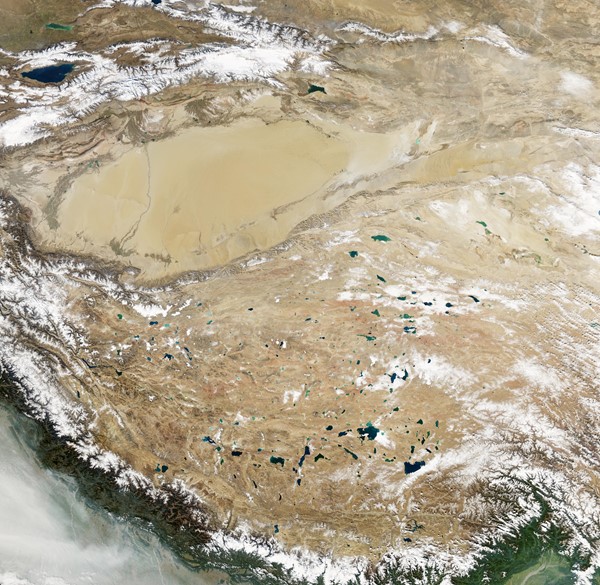
China’s Tibet Policy – Recipe for Natural Disaster. One Belt, One Road Policy – Neocolonialism. Taklamakan Desert, Silk Route.

China’s Tibet Policy – Recipe for Natural Disaster. One Belt, One Road Policy – Neocolonialism. Satellite images of Keriya River changing courses.

China’s Tibet Policy – Recipe for Natural Disaster. One Belt, One Road Policy – Neocolonialism.

China’s Tibet Policy – Recipe for Natural Disaster. One Belt, One Road Policy – Neocolonialism. Keriya River.

China’s Tibet Policy – Recipe for Natural Disaster. One Belt, One Road Policy – Neocolonialism.

CHINA’S TIBET POLICY – RECIPE FOR NATURAL DISASTER. NATURE’S PLAN FOR REGIME CHANGE IN BEIJING.

ZERO FUNDING FOR TIBET – NATURAL MECHANISM FOR REGIME CHANGE IN BEIJING

ZERO FUNDING FOR NATURAL FREEDOM IN TIBET – NATURAL MECHANISM FOR REGIME CHANGE IN BEIJING. THE SWORD OF DAMOCLES HANGING OVER THE NECK OF BEIJING. 

ZERO FUNDING FOR TIBET – NATURAL MECHANISM FOR REGIME CHANGE IN BEIJING

President Trump’s 2018 Budget provides no funding in support of Natural Freedom in Tibet.

I am presenting view shared by Ms. Olivia Enos in which she appeals to President Trump not to forget Tibet. In her view, it appears that Natural Order is always determined by choices and actions performed by Man.

As student of Natural Science, I examine Natural Factors, Natural Conditions, Natural Mechanisms, and Natural Events that impact, or reset Natural Balance, Natural Order, and Natural Equilibrium that underlies human experience called Natural Freedom. For example, Natural Event called K-T Extinction Event totally wiped out ruling clan of Dinosaurs from face of planet Earth to introduce new clan of rulers called Anatomically Modern Man.

In Natural History of Man, powerful, mighty Empires have risen and fallen altering political boundaries imposed by Man over Natural Boundaries that define terrestrial life. Man brings about Regime Change using physical force using tools invented by Man. However, to expect Regime Change through Natural Event such as Bolide Collision cannot be dismissed as figment of human imagination.

In fact, Saint John describes, Book of REVELATION, Chapter 18, a mechanism for Regime Change in Evil Empire code-named Babylon. He visualizes heavenly strike such as Bolide Collision that destroys Evil Empire Babylon. Man may interpret sudden, unexpected Downfall of Babylon as Natural Disaster, Natural Calamity, Catastrophe, Cataclysm, Doom, or Apocalypse.

I am not concerned about President Trump’s Budget Plan with Zero Funding for Natural Freedom in Tibet. In my Natural Expectation, Evil Red Empire will experience Natural Downfall triggered by Natural Event called Bolide Collision. I seek Tibet Equilibrium to restore Balance of Power in South Asia that grants Natural Freedom to Tibetans. The Sword of Damocles is hanging over the neck of Beijing.

Rudranarasimham Rebbapragada

DOOM DOOMA DOOMSAYER

PRESIDENT TRUMP, DON’T FORGET ABOUT TIBET

Clipped from: https://www.forbes.com/sites/oliviaenos/2017/06/09/president-trump-dont-forget-about-tibet/#105138fd7f9a

Zero Funding in President Trump’s 2018 Budget in support of Natural Freedom in Tibet. Natural Mechanism may restore Tibet Equilibrium.

Olivia Enos ,  

Contributor

I write on international human rights and national security.

I am a researcher in the Asian Studies Center at The Heritage Foundation where I write on international human rights issues including human trafficking, transnational crime, religious freedom, and democratic freedoms, among other social issues in Asia. I also work on human rights challenges facing the Middle East including ISIS genocide and U.S. refugee policy. My work has been featured in The National Interest, RealClearWorld, Providence: A Journal of Christianity and Foreign Policy, and Georgetown Journal of International Affairs, among other publications. I received my BA from Patrick Henry College and am completing my MA in Asian Studies at Georgetown University. I live with my husband Zach on Capitol Hill in Washington, D.C.

The author is a Forbes contributor. The opinions expressed are those of the writer.

President Trump’s 2018 Budget provides Zero Funding in support of Natural Freedom in Tibet. Natural Mechanism for Regime Change in Beijing.

UNSPECIFIED, CHINA – APRIL 23: Tibetan Buddhist monks use the iPhone in the courtyard of the Kumbum Monastery on April 23, 2017 in Xining, Qinghai Province. Kumbum was founded in 1583 in a narrow valley close to the village of Lusar in the Tibetan cultural region of Amdo. (Photo by Wang He/Getty Images)

President Trump’s proposed 2018 budget would zero out funding critical to advancing freedom in Tibet. Proposed budget cuts would eliminate all USAID programming for Tibet and funding for the Ngawang Choephel Fellows program, which finances educational and cultural exchanges for Tibetan refugees. What might happen with efforts to protect Tibetan refugees in South Asia is unclear.

The State Department said that many “tough choices” were made during budget negotiations. Economic development programs in Tibet will take the most significant hit. In addition to the cuts outlined above, there is a question as to how much funding—if any—will be allocated for the Tibet Fund. Nor does the budget proposal outline how cuts to the National Endowment for Democracy (NED) will impact programs toward Tibet.

Defunding efforts to empower Tibetans sends the signal that the U.S. no longer cares about advancing liberty in places like Tibet and Xinjiang where China today uses human rights abuse to maintain control over these territories.

Just last year, the Chinese government began demolishing one of the world’s largest Tibetan Buddhist academies, the Larung Gar, reducing the population of monks and nuns from 12,000 to less than 5,000 after its partial destruction in 2016. Additionally, at least 150 Tibetans have self-immolated since February 2009.

At a recent event at The Heritage Foundation, Dr. Lobsang Sangay, president of the Central Tibetan Administration, reaffirmed Tibet’s commitment to the “Middle Way” approach. This policy approach seeks freedom for Tibetans within the framework of the Chinese constitution.

“The Middle Way approach” explained Sangay, “is in the middle of seeking separation or independence from China but at the same time ending the present repressive policies of the Chinese government.”

It is a peaceful initiative, one that embraces dialogue with the Chinese government. The last two U.S. administrations affirmed that policy, but it remains to be seen whether it will be supported by the Trump administration which has said little to nothing on Tibet.

U.S policy toward Tibet has historically been led by Congress and is enshrined in the 2002 law, the Tibetan Policy Act, which initiated or affirmed the programs the Trump administration plans to cut. If budget cuts are solidified, members of Congress should take steps to reaffirm U.S. support for Tibet.

One of the other ways Sangay suggests the U.S. can support Tibet is by meeting with the Dalai Lama. Sangay highlighted that on his first international trip, President Trump visited Saudi Arabia, Israel and the Vatican traveling to “all three major sacred places of three major traditions.” Sangay continued, “If he can meet with all leaders of major traditions, I think it’s just logical that he meet with the most prominent Buddhist leader”.

Advancing freedom in Asia – and around the world, for that matter – is in the interest of the U.S. China is not the only country to use human rights violations or the threat of abuse to keep the population in check and maintain their grip on power. These authoritarian tendencies are encouraged when actors like the U.S. refrain from supporting freedom where they can. The U.S. should not grant de facto impunity to China by abandoning the Tibetan people in their time of need. Secretary of State Rex Tillerson in a recent speech to the State Department said that human rights would factor into the Trump administration’s foreign policy paradigm. To make good on that promise, the Trump administration should consider ways to promote human rights and norms in China. The effort can begin with protecting rights and freedom in Tibet.

President Trump’s 2018 Budget provides Zero Funding in support of Natural Freedom in Tibet. Natural Mechanism for Regime Change in Beijing may restore Tibet Equilibrium. The Sword of Damocles hanging over the neck of Beijing.

Zero Funding in support of Natural Freedom in Tibet. Natural Mechanism for Regime Change in Beijing. The Sword of Damocles hanging over the neck of Beijing.

Zero Funding in support of Natural Freedom in Tibet. Natural Mechanism for Regime Change in Beijing. The Sword of Damocles hanging over the neck of Beijing.

Zero Funding in support of Natural Freedom in Tibet. Natural Mechanism for Regime Change in Beijing. The Sword of Damocles hangs over the neck of Beijing.