TIBETAN NATIONAL IDENTITY BLESSED BY LAKE MANASAROVAR
Tibetan National Identity Blessed by Lake Manasarovar.
Tibetan National Identity is blessed by Lake Manasarovar.
Rudranarasimham Rebbapragada
SPECIAL FRONTIER FORCE
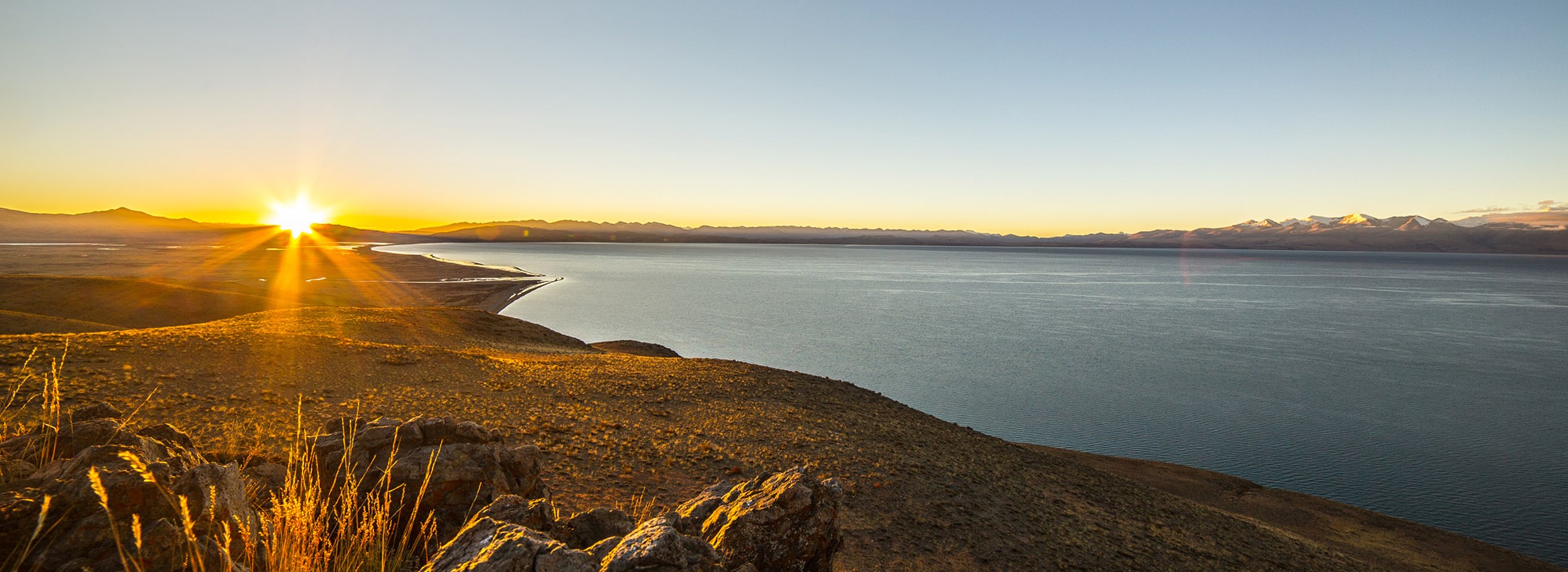
The scenery of Lake Manasarovar, Tibet
Tibetan National Identity Blessed by Lake Manasarovar.
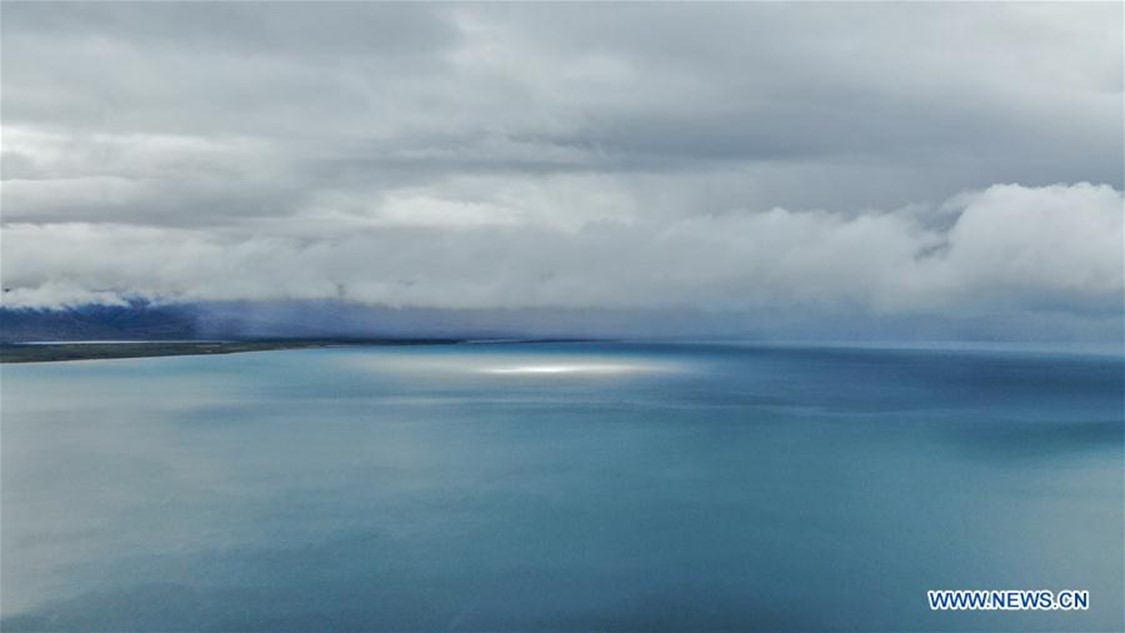
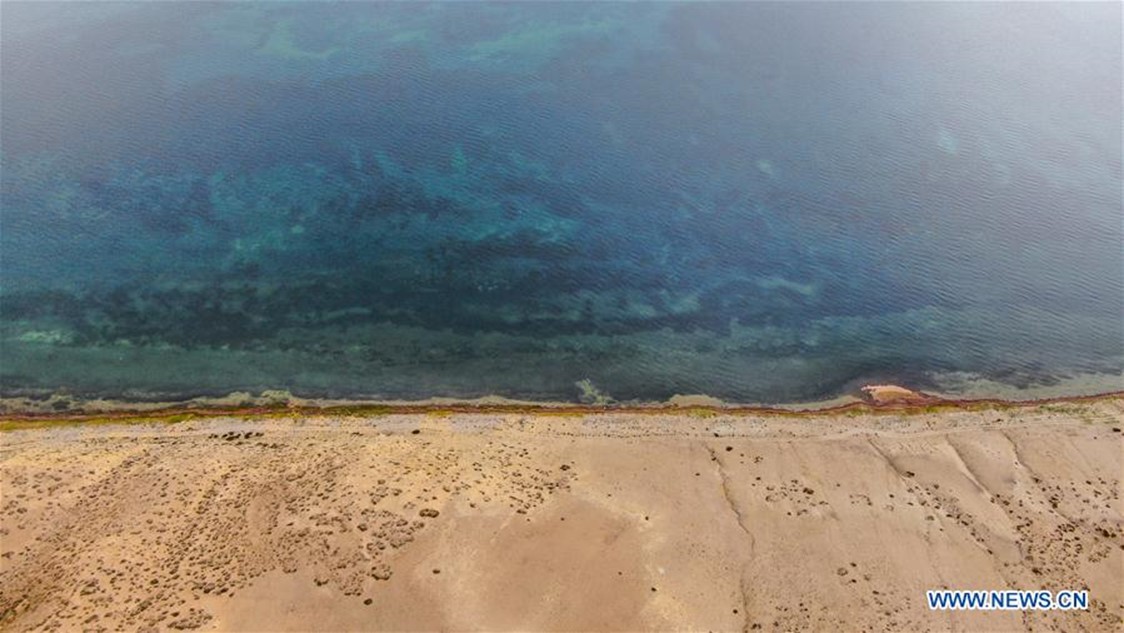
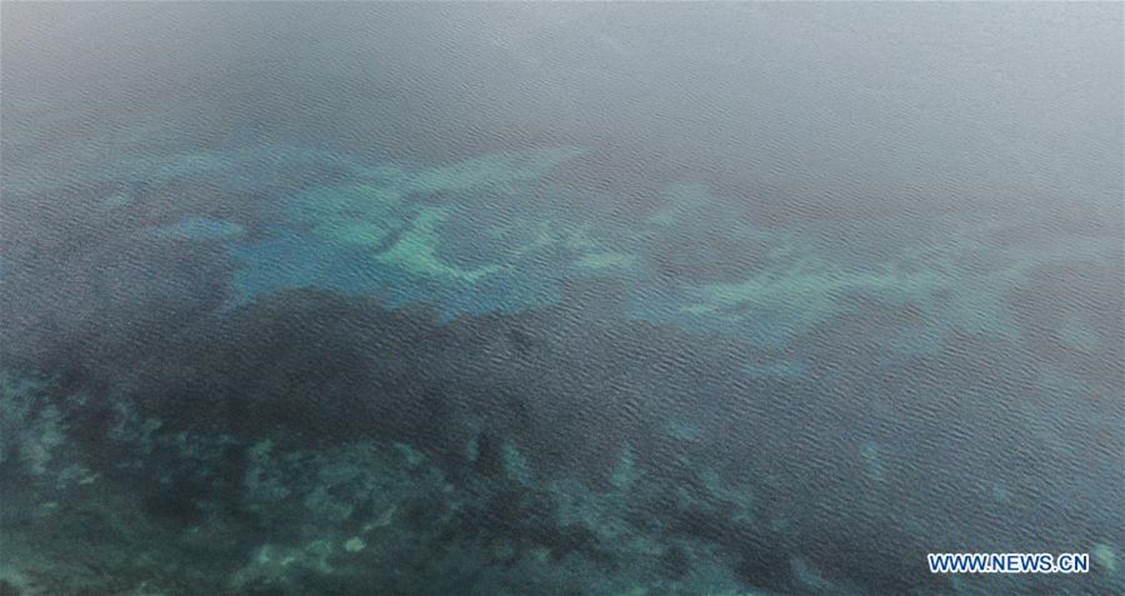
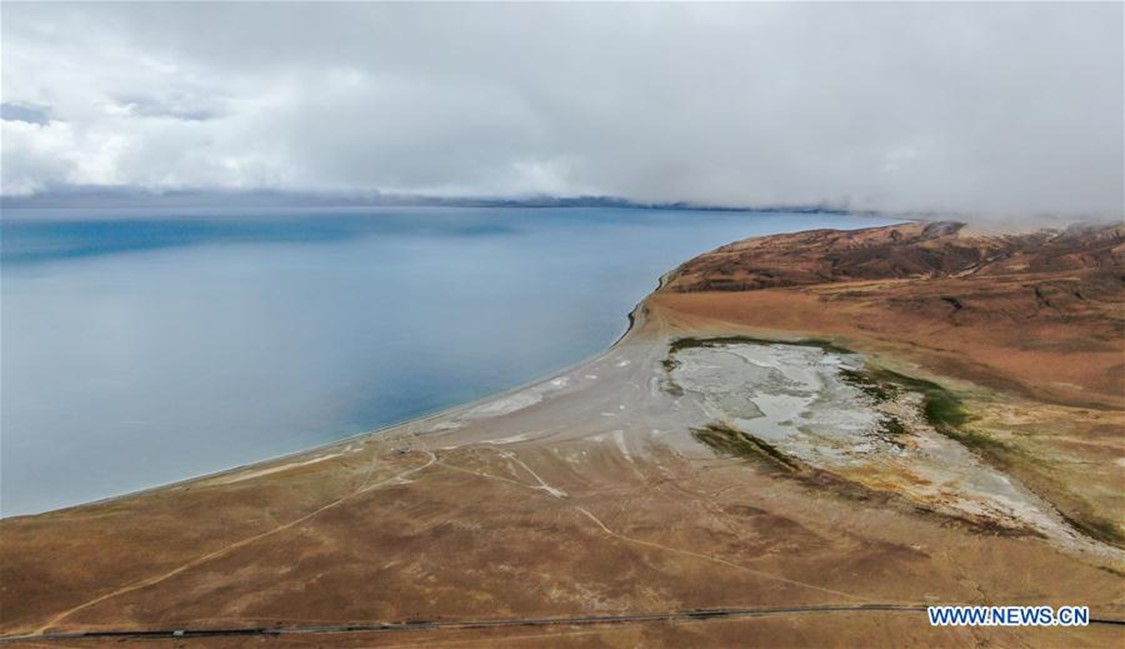
The aerial photo was taken on July 27, 2019, shows Lake Manasarovar, a holy lake, in Ali Prefecture, Tibet. Lake Manasarovar, along with Lake Namtso and Lake Yamzhog Yumco, is regarded as the three holy lakes of Tibet. (Xinhua/Jigme Dorje)
Tibetan National Identity Blessed by Lake Manasarovar.
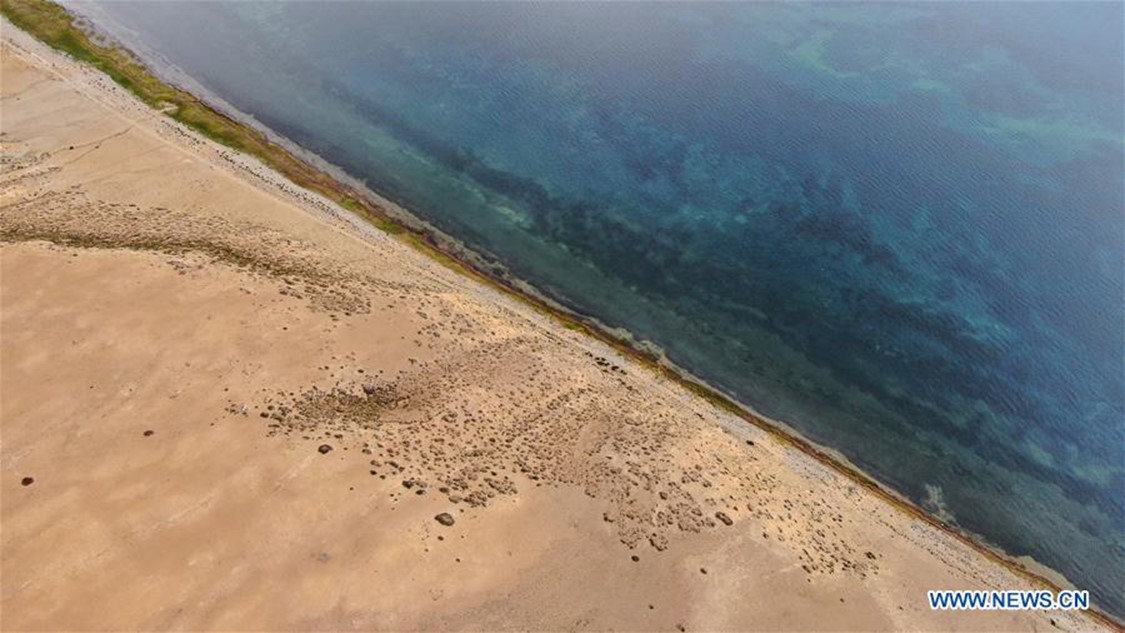
The aerial photo was taken on July 27, 2019, shows Lake Manasarovar. (Xinhua/Jigme Dorje)
Tibetan National Identity Blessed by Lake Manasarovar.
The aerial photo was taken on July 27, 2019, shows Lake Manasarovar, a holy lake, in Ali Prefecture, Tibet. Lake Manasarovar, along with Lake Namtso and Lake Yamzhog Yumco, is regarded as the three holy lakes of Tibet. (Xinhua/Jigme Dorje)
Tibetan National Identity Blessed by Lake Manasarovar.
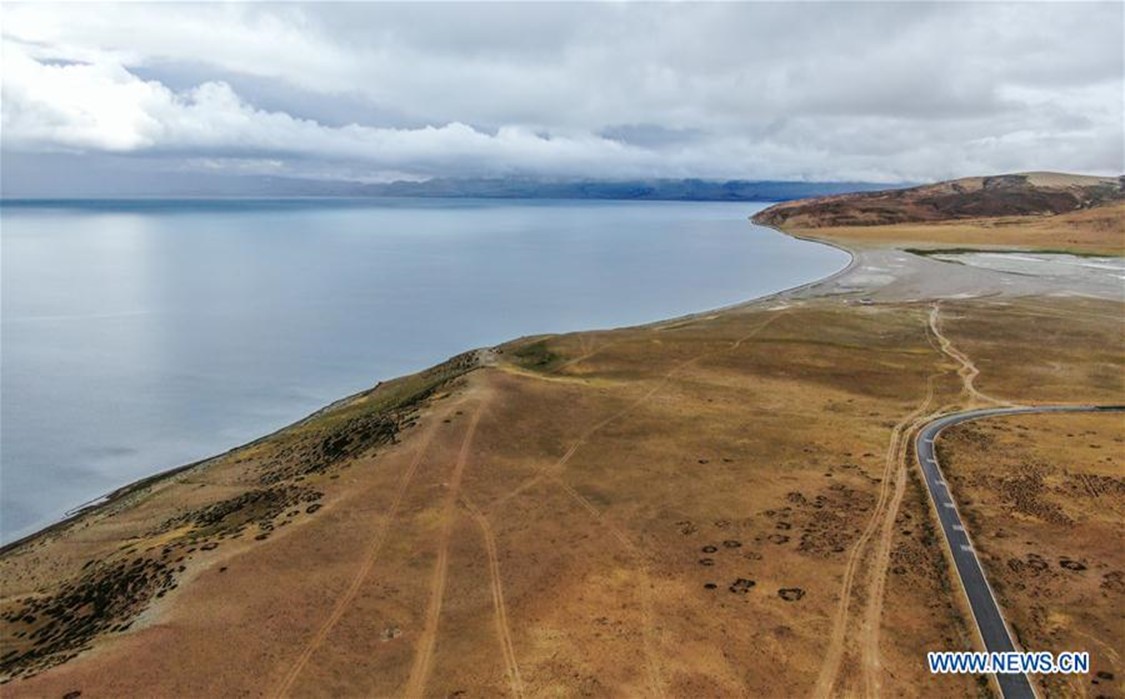
The aerial photo was taken on July 27, 2019, shows Lake Manasarovar, a holy lake, in Ali Prefecture, Tibet. Lake Manasarovar, along with Lake Namtso and Lake Yamzhog Yumco, is regarded as the three holy lakes of Tibet. (Xinhua/Jigme Dorje)
Tibetan National Identity Blessed by Lake Manasarovar.
The aerial photo was taken on July 27, 2019, shows Lake Manasarovar, a holy lake, in Ali Prefecture, Tibet. Lake Manasarovar, along with Lake Namtso and Lake Yamzhog Yumco, is regarded as the three holy lakes of Tibet. (Xinhua/Jigme Dorje)
Tibetan National Identity Blessed by Lake Manasarovar.
The aerial photo was taken on July 27, 2019, shows Lake Manasarovar, a holy lake, in Ali Prefecture, Tibet. Lake Manasarovar, along with Lake Namtso and Lake Yamzhog Yumco, is regarded as the three holy lakes of Tibet. (Xinhua/Jigme Dorje)
Tibetan National Identity Blessed by Lake Manasarovar.
The aerial photo was taken on July 27, 2019, shows Lake Manasarovar, a holy lake, in Ali Prefecture, Tibet. Lake Manasarovar, along with Lake Namtso and Lake Yamzhog Yumco, is regarded as the three holy lakes of Tibet. (Xinhua/Jigme Dorje)
Tibetan National Identity Blessed by Lake Manasarovar.
LAKE MANASAROVAR-THE SWEET WATERS OF TIBETAN NATIONALISM
Tibetan Nationalism springs from the fresh waters of Lake Manasarovar.
The photo was taken on July 21, 2019, shows a herd of cattle by the Mapam Yumco Lake in Burang County of Ngari Prefecture, Tibet. Located on an altitude of 4,588 meters at the Qinghai-Tibet Plateau, the 412-square-kilometer lake is a sacred Hindu and Buddhist site as well as a renowned tourist attraction. (Xinhua/Chogo)
Tibetan Nationalism springs from the fresh waters of Lake Manasarovar.
The photo was taken on July 21, 2019, shows a white pagoda by the Mapam Yumco Lake in Burang County of Ngari Prefecture, Tibet. Located on an altitude of 4,588 meters at the Qinghai-Tibet Plateau, the 412-square-kilometer lake is a sacred Hindu and Buddhist site as well as a renowned tourist attraction. (Xinhua/Chogo)
Tibetan Nationalism springs from the fresh waters of Lake Manasarovar.
The photo was taken on July 21, 2019, shows the engraved stones by the Mapam Yumco Lake in Burang County of Ngari Prefecture, Tibet. Located on an altitude of 4,588 meters at the Qinghai-Tibet Plateau, the 412-square-kilometer lake is a sacred Hindu and Buddhist site as well as a renowned tourist attraction. (Xinhua/Chogo)
Tibetan Nationalism springs from the fresh waters of Lake Manasarovar.
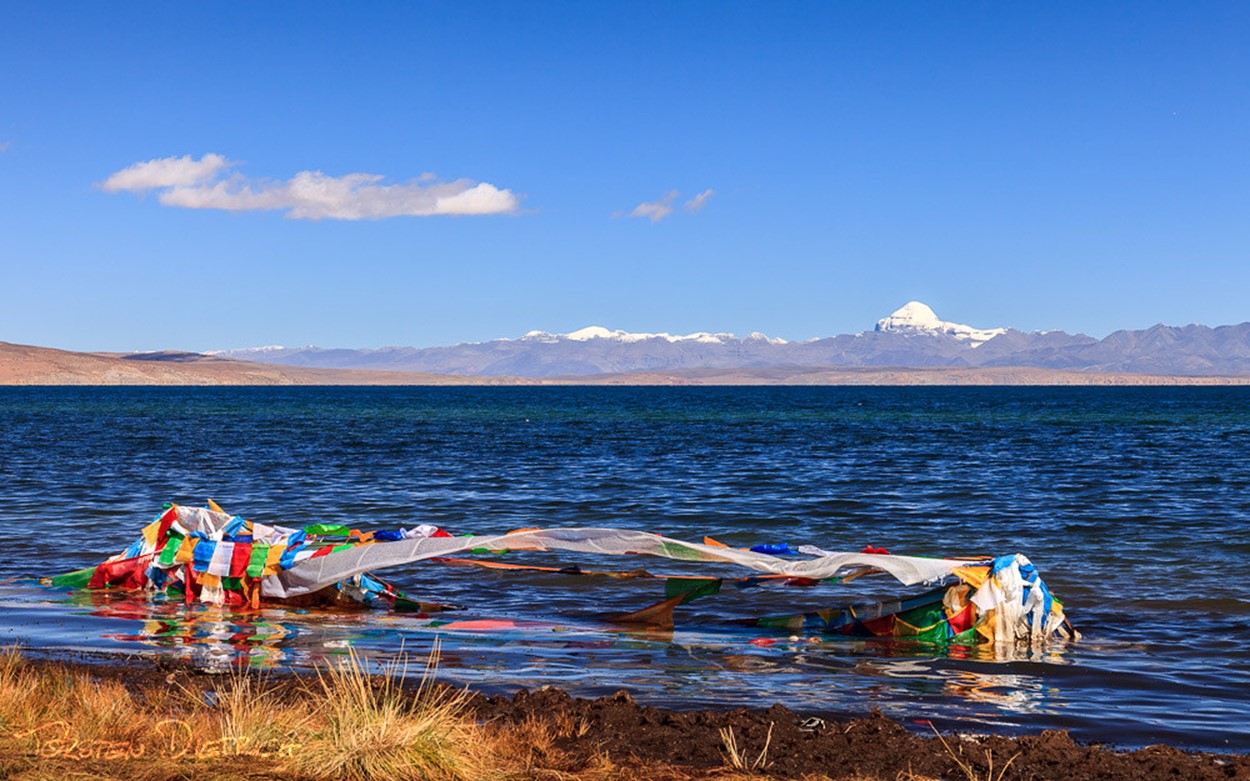
The photo was taken on July 21, 2019, shows the scenery of Mapam Yumco Lake in Burang County of Ngari Prefecture, Tibet. Located on an altitude of 4,588 meters at the Qinghai-Tibet Plateau, the 412-square-kilometer lake is a sacred Hindu and Buddhist site as well as a renowned tourist attraction. (Xinhua/Chogo)
Tibetan Nationalism springs from the fresh waters of Lake Manasarovar.
The photo was taken on July 21, 2019, shows a white pagoda and a lama by the Mapam Yumco Lake in Burang County of Ngari Prefecture, Tibet. Located on an altitude of 4,588 meters at the Qinghai-Tibet Plateau, the 412-square-kilometer lake is a sacred Hindu and Buddhist site as well as a renowned tourist attraction. (Xinhua/Chogo)
BEIJING DOOMED: 3 Giant Asteroids Zip Past Earth On Wednesday
Beijing Doomed.
On Wednesday, July 24, 2019 NASA detected three massive asteroids currently headed for Earth.
In my analysis of Chapter 18, The Revelation, the Doom of Babylon is near. But, Babylon remains a Mystery. Where is Babylon? In my view, Shanghai City, the largest City of the world could be “BABYLON” described in the Doomsday Prophecy.
Rudranarasimham Rebbapragada
SPECIAL FRONTIER FORCE
Beijing Doomed.
NASA Asteroid Tracker: 3 Giant Asteroids Zip Past Earth On Wednesday
Beijing Doomed. 3 massive asteroids getting closer to Earth.
NASA has detected three massive asteroids that are currently headed for Earth. According to the agency’s Center for Near Earth Object Studies (CNEOS), one of the approaching asteroids will fly closer than the Moon.
The first asteroid that will visit Earth on Wednesday is 2015 HM10. This asteroid is currently traveling at a speed of 21,273 miles per hour and is about 360 feet long. At its current size, the asteroid is bigger than the Statue of Liberty.
2015 HM10 is expected to fly past Earth on July 24 at 6:00 am ST. It will approach the planet from a distance of 0.03135 astronomical units or around 2.9 million miles away.
This asteroid was first observed on April 18, 2015. According to its trajectory record, 2015 HM10 is a frequent visitor to Earth and Jupiter’s vicinity.
Trailing behind 2015 HM10 is the asteroid known as 2019 OD. This near-Earth object is also 360 feet long. It is traveling at a much faster speed compared to 2016 HM10 at 43,000 miles per hour.
Out of the three asteroids that will fly past Earth on Wednesday, 2019 OD will approach the closest. According to CNEOS’ data, the asteroid will only be about 0.00239 astronomical units or around 222,160 miles from Earth on July 24 at 1:31 pm ST. This means 2019 OD will be flying much closer than the distance between the Earth and the Moon, which is around 238,900 miles.
Shortly after 2019 OD’s close-Earth approach, the asteroid will fly near the Moon at around 1:44 pm ST.
The last asteroid that’s set to zip past Earth on Wednesday is 2019 OE. According to CNEOS, this asteroid has a velocity of around 20,000 miles per hour. Compared to the first two asteroids, 2019 OE is much smaller with an estimated diameter of 174 feet.
2019 OE is will approach Earth on July 24 at 2:36 pm ST. Like 2019 OD, 2019 OE will also zip past the planet at a close distance. Based on the data collected by CNEOS, the asteroid will be about 0.00646 astronomical units or around 600,500 miles from the planet’s center during its approach.
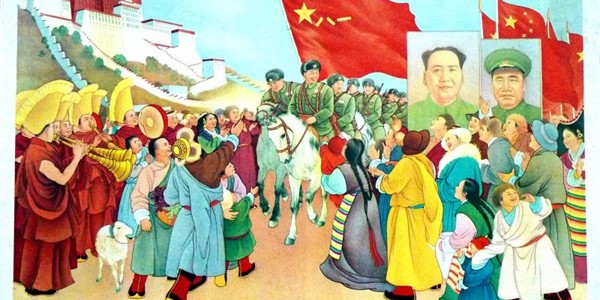
After invading Tibet with brute military force, Chinese Propaganda is using the native Tibetan Culture as a façade to attract tourists and to promote tourism related commercial enterprises.
Rudranarasimham Rebbapragada
SPECIAL FRONTIER FORCE
Tibetan Culture Survives in Chinese Propaganda.
From language to medicine, Tibet’s ancient culture thrives in Chinese Propaganda
Tibetan Identity Survives in Chinese Propaganda.Tibetan Identity Survives in Chinese Propaganda.
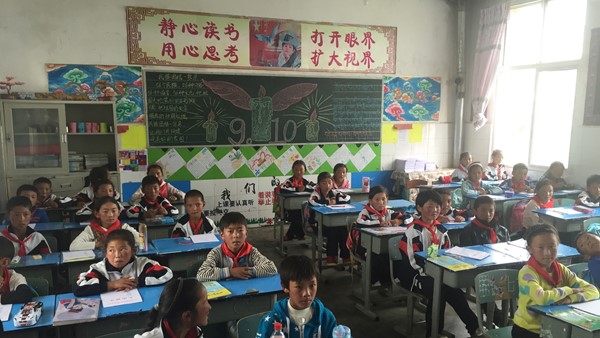
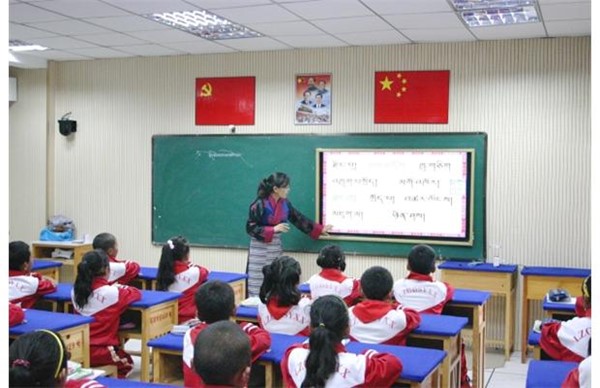
Respect for local culture: more than half the classes at this primary school are taught in Tibetan Credit: Wang Jing / China Daily
Tibet has seen rapid growth in its cultural and related industries
As a part of Chinese culture, Tibetan culture has been well preserved and developed by a sophisticated system covering many areas.
The Tibetan language in the written form, for instance, is an alphabetic system. It has a long history and is widely used in the Tibet autonomous region.
Qumig Yudron is a teacher from the No 2 Primary School of Nyingchi, who teaches the Tibetan language in grade 3.
In Tibet, the language is taught through primary school to university, Qumig Yudron said.
Tibetan culture has been well preserved and developed by a sophisticated system covering many areas
“The language should be learned and passed down as it is the essence of the local culture and the basic way of communication of the people.”
The primary school currently has a total of 44 classes with 24 taught in Tibetan and 20 in Mandarin Chinese. It has also set up courses related to Tibetan culture including dancing and music.
Traditional Tibetan medicine is also a major part of the Tibetan culture. Historical documents showed that the medicine has a history of at least 1,300 years. Nowadays, there are Tibetan medical hospitals in each city, prefecture and county within Tibet. The region has more than 90 Tibetan medicine clinics.
Tseten Namgyal is an attending physician at the traditional therapy centre of the Hospital of Traditional Tibetan Medicine. He said traditional Tibetan medicine consists of 18 main techniques including diagnosis and therapy.
The theoretical basis of Tibetan medicine is all in the Tibetan language. Traditional Tibetan medical methods are passed down through traditional therapies, he said.
Established in 1916, the hospital has more than 60 Tibetan medical professionals. It has introduced modern facilities including laboratories and medical equipment.
“I knew about Tibetan medicine in my childhood and have studied the course in university,” he said.
With the support of the State, many traditional techniques have been preserved and inherited, he said.
In 2018, Tseten Namgyal was selected as one of the national- level Tibetan medical inheritors, which requires three years of study and training.
“Tibetan medicine has unique advantages with its long history and profound theories,” Tseten Namgyal said.
In 2018, the autonomous region had more than 6,000 cultural companies with about 50,000 employees
“We have also innovated and developed the medicines by improving equipment and formulas,” he said.
The autonomous region has also seen rapid growth in its cultural and related industries.
Norbu Tsering, head of the industrial and resources development at the Tibet Culture Department, said Tibetan culture attracts worldwide attention with its distinct features.
In 2018, the autonomous region had more than 6,000 cultural companies with about 50,000 employees. The annual output value of the cultural industry reached 4.6 billion yuan (£532.25 million), according to Norbu Tsering.
“We are committed to developing more creative cultural products in a bid to adapt Tibetan culture to an innovative growth path,” he said.
This article was originally produced and published by China Daily. View more articles at chinadaily.com.cn
Inside Tibet: The Growth and Development of Colonial Power
Inside Tibet: A fast-Developing Colonial Power is set to obliterate the Identity of Tibet, the Land and, People.Inside Tibet: A Fast-Developing Colonial Power is set to obliterate the Identity of Tibet, the Land, and People.
Inside Tibet, the Occupying Colonial Power is growing and expanding her influence obliterating the Identity of Tibet, the Land and, People.
Rudranarasimham Rebbapragada
SPECIAL FRONTIER FORCE
Inside Tibet: A Fast-Developing Colonial Power is set to obliterate the Identity of Tibet, the Land, and People.
Inside Tibet: foreign journalists meet local people
Inside Tibet: A Fast-Developing Colonial Power is set to obliterate the Identity of Tibet, the Land, and People.
Princess Wencheng
Prince Wencheng is a Tang Dynasty (618-907AD) Chinese princess who travelled thousands of miles to ancient Tibet to marry the great Tibetan King Songtsen Gampo. It was an amicable political affiliation of two great regional powers at the time. The story later became an important component of Tibetan folklore.
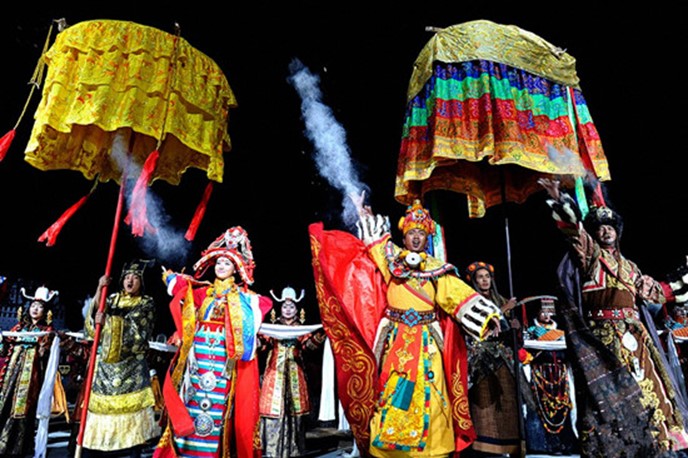
World stage: a performance of Princess Wencheng entertains guests at the Forum on the Development of Tibet Credit: Wang Jing / China Daily
Liang Kaiyan, China Daily
18 July 2019 • 9:00am
Ahead of the 2019 Forum on the Development of Tibet, 69 foreign guests from 37 countries and regions were invited to visit the cities of Nyingchi and Lhasa and hold talks with citizens
Fast and dynamic development in the Tibet autonomous region has impressed a group of recent foreign visitors.
Ahead of the 2019 Forum on the Development of Tibet, which opened in mid-June in Lhasa, 69 foreign guests from 37 countries and regions including the United Kingdom, Italy and Argentina were invited by the State Council Information Office and the government of the Tibet autonomous region to visit the cities of Nyingchi and Lhasa and hold talks with people from various walks of life.
The four-day tour helped the reporters learn about Tibet’s development in fields including environmental protection, social development and culture.
Italian journalist Rita Fatiguso, of II Sole 24 Ore, has been to Tibet three times. A lot has happened in the nine years since she first came, she said.
Tibet is in a challenging geographical environment, but the Chinese government has invested heavily to make changes
People have become more affluent, not just in the abundance of food, but in their social lives as well, she said.
Tibet is in a challenging geographical environment, but the Chinese government has invested heavily to make changes. Great progress has been made as a result of huge input into infrastructure, she said.
In Nyingchi, a city in the Southeast part of Tibet, the delegation visited a local primary school and the villages of Xiga Monba and Tashigang. “I used to think Tibetan villages were all simple rural villages, but the villages we visited have more houses and facilities, and are totally different from what I had imagined,” said Zied Moumni, a French professor at Northwestern Polytechnical University in Xi’an, Shaanxi province.
“When I see the modern facilities and the local traditions, the word that comes to me is harmony,” Moumni said.
With the advantages of ecology — the city has the largest forest coverage in Tibet — Nyingchi has also developed its tourism industry with the Lunang International Tourism Town and the Lunang Maker Space, a platform also engaged in selling local specialties and creative cultural products.
Tourists coming from Europe want to see beautiful nature, said Liz McLeod, creative director of Meridian Line Films in the UK.
“I think that I understand that the local government is trying to make a very comprehensive plan to make sure tourism is developed in the way that is in harmony with nature and doesn’t damage the environment,” McLeod said.
“To me, that is incredibly important, not just because the natural environment is essential for human survival, but also because Tibet is one of the places in the world where the natural environment is still in a good condition.”
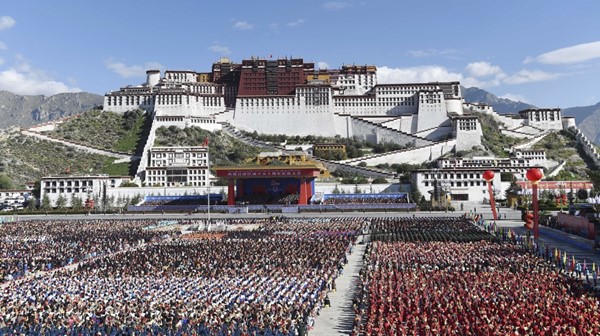
In Lhasa, the delegation visited the Hospital of Traditional Tibetan Medicine, the Potala Palace, the Jokhang Temple and Barkor Street, as well as other places.
Xinhua contributed to this story.
This article was originally produced and published by China Daily. View the original article at chinadaily.com.cn
Inside Tibet: The Fast-Developing Colonial Power is obliterating the Identity of Tibet, the Land, and People.
TIBETAN NATIONALISM. THE LAND DESCRIBES TIBETAN IDENTITY
Tibetan Nationalism. The Land describes Tibetan Identity.
The Tibetan Identity arises from the Land and all its denizens. The Spirit of Independent Lifestyles is ingrained into the Tibetan Psyche on account of Natural Forces, Natural Factors, Natural Conditions, Natural Causes, and Natural Mechanisms that shape Tibet’s Geography and give meaning to the Tibetan Existence.
Rudranarasimham Rebbapragada
Special Frontier Force
Tibetan Nationalism. The Land describes Tibetan Identity.
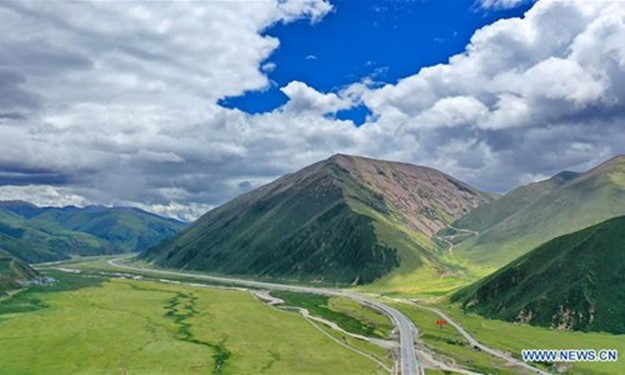
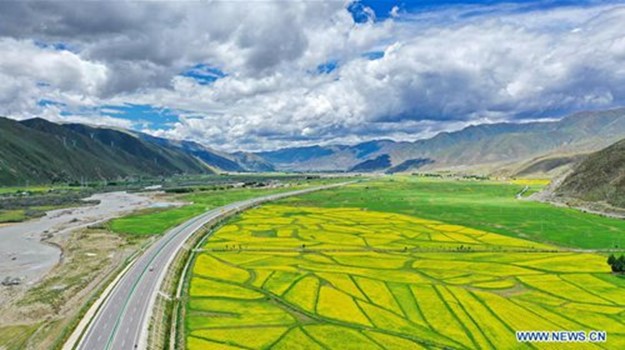
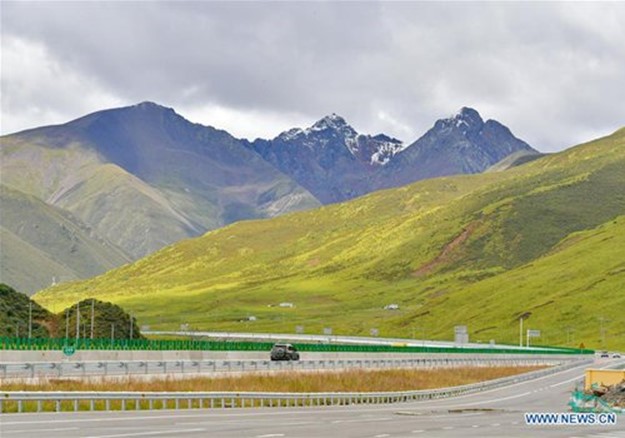
Scenery along highway linking Lhasa with Nyingchi in Tibet
Tibetan Nationalism. The Land describes Tibetan Identity.
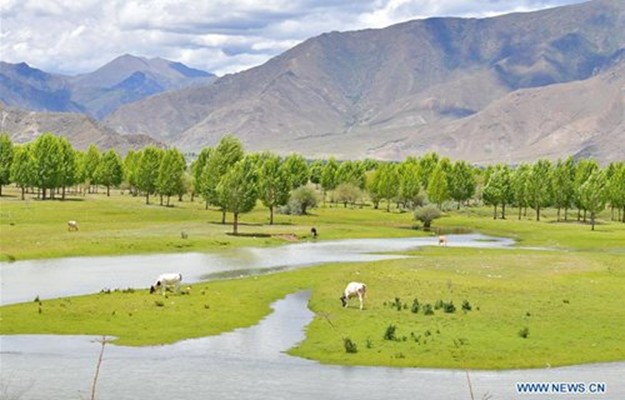
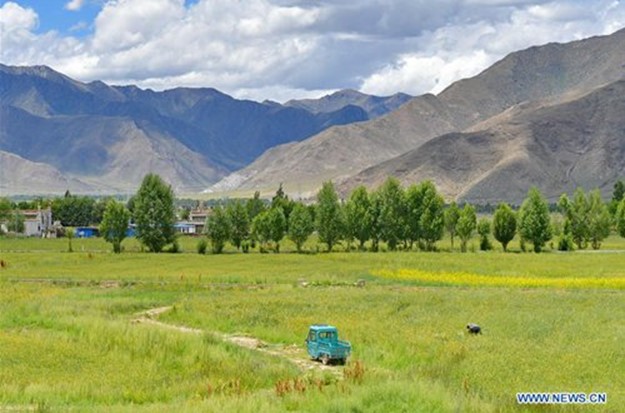
Photo taken on July 16, 2019 shows a scenery along the highway linking Lhasa with Nyingchi in southeast Tibet. (Photo: Xinhua)
Tibetan Nationalism. The Land describes Tibetan Identity.
Photo taken on July 16, 2019 shows a scenery along the highway linking Lhasa with Nyingchi in southeast Tibet. (Photo: Xinhua)
Tibetan Nationalism. The Land describes Tibetan Identity.
Photo taken on July 16, 2019 shows a scenery along the highway linking Lhasa with Nyingchi in southeast Tibet. (Photo: Xinhua)
Tibetan Nationalism. The Land describes Tibetan Identity.
Photo taken on July 16, 2019 shows a scenery along the highway linking Lhasa with Nyingchi in southeast Tibet. (Photo: Xinhua)
Tibetan Nationalism. The Land describes Tibetan Identity.
Photo taken on July 16, 2019 shows a scenery along the highway linking Lhasa with Nyingchi in southeast Tibet Autonomous. (Photo: Xinhua)
Tibetan Nationalism. The Land describes Tibetan Identity.
Chat for Tibet. I Chat, You Chat, and We Chat For Free Tibet.
Jamyang Palden, a 30-year-old Tibetan Buddhist monk uses the WeChat app on his iPhone to leave a voice message for a friend in Tibet, in Dharmsala, India, Nov. 10, 2014.
Image Credit: AP Photo/Ashwini Bhatia
Tibetans know the surveillance risks, but many choose to give up privacy for convenience.
The digital revolution has emerged as a key factor in the rapid dissemination of news and broadcasting views. Within the last decade, social media has replaced print media, signaling a paradigm shift in how we consume and convey information. Due to advances in science and technology, sharing news and information has become less time-consuming, more convenient, and more decentralized.
But many people don’t realize that convenience has cost them their privacy. As you flow through your daily routine on a smartphone, you inadvertently share more data than you realize. This tradeoff between convenience and privacy illuminates the case of WeChat with respect to Tibetans and the larger Tibetan issue. In my research, I have found that Tibetan netizens generally give up privacy for the sake of convenience when using WeChat, operated by the Chinese company Tencent.
WeChat, the world’s largest standalone messaging app, is constantly refining their technology to monitor — and censor — content from its more than 963 million monthly active users. But still, 70 percent of Tibetans in the diaspora use the application. Overseas Tibetans or anyone with family or relationships associated with Tibet tend to download the messaging app to stay in contact, since other global social media applications are banned in the region. Tibetans who want to communicate with their relatives have no other choice but to use this means of contact.
In the eight years since Tencent debuted WeChat, it has become the dominant social networking platform in China as a whole, including in Tibet. The app has grown into an internet behemoth with over 1 billion registered users worldwide and 902 million daily users. Last year, 45 billion messages were being sent on the platform every day, 18 percent more than in 2017. The reason behind this meteoric rise is the official ban on global social media platforms in China, aided both by censorship of foreign apps – WeChat’s competitors — and subsidies from the Chinese government. This also means that WeChat’s information technology services and software are fundamentally insecure. The Chinese government claims sweeping powers over any matter considered relevant to China’s national security and pressures Chinese firms not only to censor content but, when needed, hand over user data.
Yet for many Tibetans, mobile apps like WeChat have become indispensable in their social life. News and information spreads like wildfire on WeChat and Facebook feeds, even as the mainstream media struggles to catch up with the pace.
In an interview with Tibetans recently arrived in India, one woman told me, “WeChat is set to become more obligatory in the daily lives of many Tibetan people.” At the same time, there is scrutiny of WeChat, which has been linked to an alarming rise in arrests of Tibetans. That, combined with the implementation of the recent cybersecurity laws, makes many Tibetans practice self-censorship on WeChat: discussing more about social matters and reposting and forwarding messages that are nonpolitical.
This Tibetan told me that she realized her phone was tapped, and her calls and text messages were under surveillance. Before she left Tibet, the Internet Security Bureau surprised her with their ability to repeat her words and voice messages precisely when they called her in for interrogation.
WeChat in Exile
In every nook and corner of Tibetan communities in India, many Tibetans are becoming addicted to Tencent apps, which they use extensively. People glued to their phone screens are a common sight, and many are sending voice or video messages, playing PubG, or using other functions to communicate.་ The popularity of WeChat stems from the ease of use, as well as the fact that voice messages do not require literacy in Tibetan. This means that Tibetans who may not be able to read Tibetan can still participate in groups and share their views and ideas confidently.
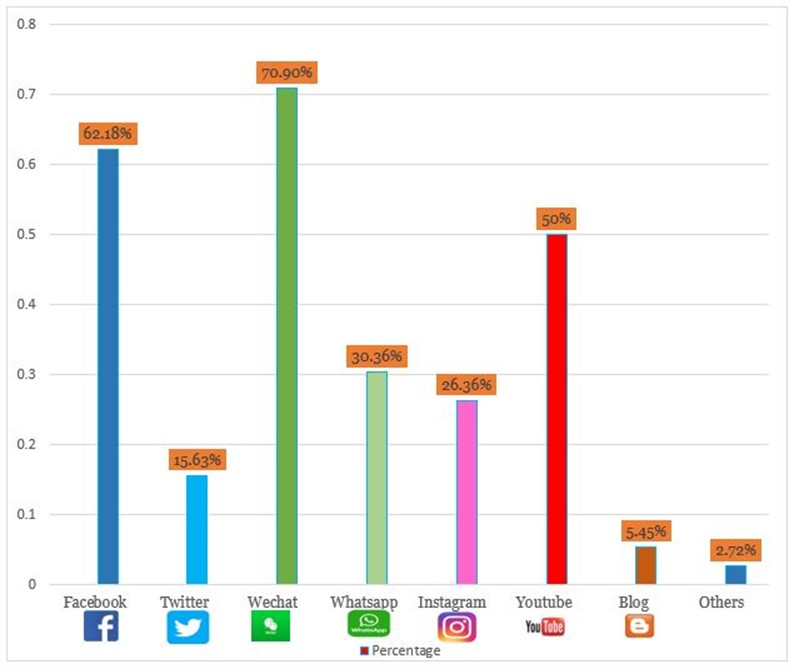
In a field survey with 550 participants from across India conducted by the author in 2018, 70.90 percent of Tibetans reported using the WeChat app extensively to connect with their family in Tibet, diaspora and abroad. And WeChat is reportedly only gaining popularity in Tibetan communities in exile.
Chat for Tibet. I Chat, You Chat, and We Chat For Free Tibet.
Fig 1. The most popular social media platforms among Tibetans. Data from author field survey.
A Tibetan roadside vendor at McLeodganj explains:
My parents are in Tibet and calls are expensive. Being deprived of formal education, I was introduced to a software called WeChat by my friend in 2012. I found it is just user friendly and does not necessarily require a fast internet connection and literacy. Since then I have been using this application. I can hold a button and talk to my family and relatives in any way at any time. I can get updates on many news and information. I even joined some chat groups and actively participated during the 2016 Tibetan election by airing my views.
But I strongly believe that I am under surveillance since the application is made in China. I rarely talk about and post any political related messages and images on my feed.
Another Tibetan man I spoke to explained to me how his family in Tibet would talk with him on WeChat almost daily. But surprisingly, one day he found that he had been removed from the family group chat, and that his parents had blocked him without any further explanation. He was notified that they were changing their profile pictures and status on WeChat but was unable to send a message or get in touch with them thereafter. This incident has left him with questions — he assumes that the Chinese cyber police might have warned his family against contacting someone outside of Tibet.
WeChat and Beijing
Tencent has officially denied any government involvement in privacy matters several times. It is, however, an accepted reality that Chinese officials censor and monitor WeChat users. WeChat also states in its privacy policy that it may share users’ data with “government, public, regulatory, judicial and law enforcement bodies or authorities” to “comply with applicable laws and regulations.” On a technical level, thus, WeChat does not offer users much protection against government surveillance. Cases of Tibetans being arrested for circulating messages that have been deemed politically sensitive evince this.
As a company based in China, WeChat is subject to state laws on content control, and while WeChat claims to be end-to-end encrypted, there is a significant evidence to suggest that client-side censorship based on keyword and surveillance is prevalent, including erasing messages that are deemed politically sensitive issues.
One Tibetan girl, who went from Lhasa to study abroad in Europe, told me why she quit WeChat. When she was at home, she created a chat group and invited 30 of her classmates on it for a dinner party. Soon after, to her horror, she was called in by government officials for severe interrogation and warned against creating any future chat groups for classmates. Later, out of frustration with the lack of privacy, she eventually quit WeChat. She further explains, “I felt insecure after the interrogation and became very cautious. I realized that the Chinese apps are absolutely not safe.”
The problem is larger than WeChat. In some villages in Tibet, police are taking away people’s phones and secretly installing an app that extracts data from emails, texts messages, and contacts. The surveillance app searches for information on a range of material, including literature by the Dalai Lama and messages that are deemed politically sensitive.
Tibet continues to witness a severe clampdown on WeChat, part of a broader crackdown on social media throughout China. Users face the threat of imprisonment if they are found responsible for “online rumors.” China has been cracking down hard on WeChat users who demonstrate sympathy and support for the Tibetan cause and blocking any avenues for the spread of relevant information. Restrictions and fines have thus been on rise for sharing “illegal” content on WeChat.
In addition to the notorious firewall, the government can censor specific words to try and control the narrative of any given incident by pushing their own agenda and restricting citizens’ freedom of expression. However, many Tibetan and Chinese netizen use images and memes to portray a serious topic in a lighthearted manner, and further increase the spread of information.
“Fake News”
The influx of information has led to a preponderance of news about conditions in Tibet. However, the catch is that false rumors are hard to tell apart from real news. Due to the security risks involved, it is difficult to validate news on Tibet, which primarily comes by way of social media.
The spread of “fake news” has become a global concern. False, misleading, or confusing online content created by fake accounts can harm the unity and harmony of any society. Unfortunately, lies and rumors are often taken seriously, and baseless allegations among Tibetans have the serious potential to affect the struggle to advocate the cause of Tibet.
Through my research, I found that some of the key factors behind growing paranoia and possible divisions in the Tibetan movement are lies and unverified rumors created by many fake accounts on popular social media outlets like WeChat and Facebook. These platforms raise concerns surrounding the dissemination of false or misleading information, as they lack the gatekeeping and verification processes that traditional media have. The convergence of traditional and new media as a means of information dissemination has raised questions regarding where to draw the line between regulation and censorship, and how to balance freedom of expression with inflammatory and provocative speech.
While enjoying the benefits of WeChat, we should be wary of the negative effects. In short, while WeChat has become and continues to be a popular medium for social interaction and bridging private and public lives, the safety of the application and security of shared content remains a legitimate concern for everyone.
Tenzin Dalha is a research fellow at the Tibet Policy Institute, doing research on Chinese cybersecurity policy and the social media landscape of Tibetan society.
Chat For Tibet. I Chat, You Chat, and We Chat For Free Tibet.
THE BEAUTY AND ATTRACTION OF GOD LIE IN THE EYE OF BELIEVER
Beauty and Attraction of God lie in the eye of the believer.
The Successor of the Dalai Lama will be decided by the Dalai Lama. The Successor, Male or Female will be the embodiment of Truth, Bliss, and Beauty described in the Indian Tradition as Satyam, Shivam, and Sundaram. The Beauty and Attraction of God always lie in the Eye of Believer.
Rudranarasimham Rebbapragada
SPECIAL FRONTIER FORCE
Beauty and Attraction of God lie in the eye of the believer.
Will myself decide on my successor: Dalai Lama
Beauty and Attraction of God lie in the eye of the believer.
Dharamshala, July 15 (IANS) Tibetan spiritual leader the Dalai Lama, respected by millions as a living god, who has been caught in a controversy over his recent joke that his successor a female Dalai Lama would have to be “more attractive”, has clarified that his reincarnation is to be decided by him.
The Buddhist monk had apologized for his “attractive” female successor remark, saying he genuinely meant no offence and offered his sincere apologies if people were hurt by what he had said.
However, aides in his private office in this northern Indian town on Monday clarified there is no question of search for his successor as the Dalai Lama, 84, announced in 2011 that he would decide at 90 whether he should have a successor.
The issue of reincarnation is his personal right, an aide in the Dalai Lama’s office told IANS.
At the same time, the globe-trotting monk warned that any candidate chosen for political ends by anyone, including China, should not be recognized or accepted.
The aide said still there is no certainty that whether the institution of the Dalai Lama should continue or not after the 14th and current Dalai Lama, Tenzin Gyatso.
“My reincarnation is to be decided by myself, nobody has the right to decide about that,” he often said in his remarks.
“One day you will hear that the Dalai Lama has passed away, but I will come back, even if the institution of Dalai Lama is no longer recognized. I will be back,” a post on his website quoting the Dalai Lama said.
But who is next after the Dalai Lama?
Now, the Dalai Lama’s institution is useful to the Tibetan culture and the Tibetan people.
“Thus, if I were to die today, I think the Tibetan people would choose to have another Dalai Lama. In the future, if the Dalai Lama’s institution is no longer relevant or useful and our present situation changes, then the Dalai Lama’s institution will cease to exist,” the monk said in a post.
“Personally, I feel the institution of the Dalai Lama has served its purpose. More recently, since 2001 we now have a democratically elected head of our administration, the Kalon Tripa.
“The Kalon Tripa runs the daily affairs of our administration and oversees our political establishment. Half-jokingly and half seriously, I state that I am now in semi-retirement.”
In August 2011 when Lobsang Sangay took over the reins of the government-in-exile from monk and scholar Samdhong Rinpoche, who held the post for 10 years but was overshadowed by the Dalai Lama, the Dalai Lama announced: “When I am about 90, I will consult the high lamas and re-evaluate whether the institution of the Dalai Lama should continue or not.”
On his birthday on July 6 this year, he said, “I am now 84, but I hope to be able to celebrate the occasion with all of you for many more years to come.”
Clarifying this month on his remark during a BBC interview that have caused disquiet, the Dalai Lama recalled the conversation on the physical appearance of a female successor with the then Paris editor of Vogue magazine, who had invited him in 1992 to guest-edit the next edition.
She asked if a future Dalai Lama could be a woman. His Holiness replied, “Certainly, if that would be more helpful,” adding, as a joke, that she should be attractive, said a statement by his office.
The Dalai Lama was at least partially responding to the unfamiliar ambience of working with a team whose prime focus was the world of high fashion.
On the Chinese stating that the next Dalai Lama will be born in Tibet and chosen by them, he said: “If the present situation regarding Tibet remains the same, I will be born outside Tibet away from the control of the Chinese authorities. This is logical. The very purpose of a reincarnation is to continue the unfinished work of the previous incarnation.”
His Holiness the 14th Dalai Lama, Tenzin Gyatso, describes himself as a simple Buddhist monk.
In 1989, the Dalai Lama won the Nobel Peace Prize for his non-violent struggle for Tibet. He was awarded the US Congressional Gold Medal in October 2007, even in the face of protests by China.
The Dalai Lama now lives in exile along with some 140,000 Tibetans, over 100,000 of them in different parts of India. Over six million Tibetans live in Tibet.
(Vishal Gulati can be reached at vishal.g@ians.in)
–IANS
vg/in
(This story was auto published from a syndicated feed. No part of the story has been edited by The Quint.)
Beauty and Attraction of God lie in the eye of the believer.
“The reincarnation of the Dalai Lama is a historical, religious and political issue. There are established historical institutions and formalities for the reincarnation of the Dalai Lama,” Wang Neng Sheng, an official in the rank of vice minister in Tibet, told a small group of Indian journalists in Lhasa.
The Right to grant asylum to the next Dalai Lama.
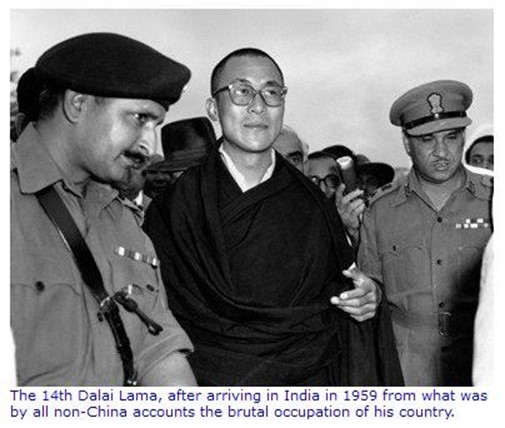
The 14th Dalai Lama fled to India in 1959 following a crackdown on an uprising by the local population in Tibet. (IE photo)
The successor of the Dalai Lama must be decided within China and any interference by India on the issue will impact bilateral ties, Chinese authorities have said. In first clear assertion on the sensitive issue, senior Chinese officials and experts said the reincarnation of the Dalai Lama must be approved by the Chinese government and the selection should take place within the country based on an over 200-year old historical process.
“The reincarnation of the Dalai Lama is a historical, religious and political issue. There are established historical institutions and formalities for the reincarnation of the Dalai Lama,” Wang Neng Sheng, an official in the rank of vice minister in Tibet, told a small group of Indian journalists in Lhasa. “The Dalai Lama’s reincarnation is not decided by his personal wish or by some group of people living in other countries,” he added.
Wang, the director general at the government of Tibet Autonomous Region, said the current Dalai Lama was recognized by Beijing and his successor must be found through the “draw of lots in golden urn process” within China. Echoing Wang’s views, Zha Luo, director at Beijing-based China Tibetology Research Centre, a government-run influential think tank, said any refusal by India to recognize the next Dalai Lama to be chosen within China will impact bilateral ties.
The 14th Dalai Lama fled to India in 1959 following a crackdown on an uprising by the local population in Tibet. India granted him political asylum and the Tibetan government-in-exile is based on Dharamsala in Himachal Pradesh since then.
The Dalai Lama is 84 years old now and the issue of his successor has gained prominence in the last couple of years. “It will be a major political difference that would impact bilateral relations and any wise political leader wouldn’t do that,” said Zha whose team advises central government on policy issues for Tibet said. He was asked what will happen if India refuses to recognize the next Dalai Lama chosen by China. “Since the reincarnation of the Dalai Lama is an important issue for China any friendly country or friend of China would not interfere or meddle on the issue,” he added. Zha, however, called it a hypothetical answer to a hypothetical question. India has maintained its stand on the Dalai Lama.
“Government of India’s position on His Holiness the Dalai Lama is clear and consistent. He is a revered religious leader and is deeply respected by the people of India. There is no change in that position. His Holiness is accorded all freedom to carry out his religious activities in India,” Ministry of External Affairs spokesperson had told a media briefings in March last year.
Wang said the process of selecting the next Dalai Lama must follow two clear steps: “It must go to draw of lots in the golden urn and the reincarnation must be recognized by the central government.” He said the “centrality” of the central government must be recognized and that any personal move by the current Dalai Lama on the issue is not going to be recognized by Chinese government or religious followers in Tibet.
“It was with the central government’s recognition that the Dalai Lama became the 14th Dalai Lama. Otherwise, he wouldn’t have been in that position,” Wang said. He alleged that the Dalai Lama has been “inciting” and “misguiding” young Tibetan people for his political motives.
Asked about the Dalai Lama’s comments that he was ready to accept Tibet as part of China, Wang said he has been resorting to political rhetoric without taking any action. “He still believes that Tibet is an independent country. Without any concrete moves from his side, his words do not mean anything,” he added. He said there were around 10 rounds of discussions between private representatives of the Dalai Lama and Beijing. The last round took place in 2011 in Beijing.
“The discussions were about the future of the Dalai Lama and did not include or touch on the topic of future of Tibet as a part of China’s sovereign territory,” Wang said. The Indian government had issued a note nearly a year back to senior officials, asking them not to attend events organized by the Tibetan government-in-exile. India has also been supporting the ‘One China’ policy, which states that Taiwan and Tibet are part of China’s mainland. Beijing made the ‘One-China’ policy a prerequisite for countries to establish diplomatic ties with it.
TIBETAN IDENTITY AND NATIONALISM BELONG TO THE LAND AND ITS DENIZENS
Tibetan Identity and Nationalism belong to the Land and all of its denizens.
I examine Tibetan Identity and Nationalism by exploring the geography of the region for they developed together over thousands of years under the influence of Natural Causes, Natural Forces, Natural Conditions, and Natural Factors that condition the Tibetan Existence.
Rudranarasimham Rebbapragada
SPECIAL FRONTIER FORCE
PLATEAU PIKAS ARE SEEN BY THE LAKESIDE ON QINGHAI-TIBET PLATEAU
Tibetan Identity and Nationalism belong to the Land and all of its denizens.
A plateau pika (Ochotona curzoniae) forages by a lakeside on the Qinghai-Tibet plateau in Maizhokunggar County, Tibet. July 6, 2019. (Photo: Xinhua)
Tibetan Identity and Nationalism belong to the Land and all of its denizens.
A plateau pika (Ochotona curzoniae) is pictured by a lakeside on the Qinghai-Tibet plateau in Maizhokunggar County, Tibet. July 6, 2019. (Photo: Xinhua)
Tibetan Identity and Nationalism belong to the Land and all of its denizens.
Two plateau pikas (Ochotona curzoniae) frolic by a lakeside on the Qinghai-Tibet plateau in Maizhokunggar County, Tibet. July 6, 2019.(Photo: Xinhua)
Tibetan Identity and Nationalism belong to the Land and all of its denizens.