The Living SpiritWhat is My Relationship With Myself?The Rudi-Grant Connection is derived from the Service in Army Medical Corps.
The Cap Badges and the Insignia of the British Royal Medical Corps and the Indian Army Medical Corps reveal the Rudi-Grant Connection. The Indian Army Medical Corps was created from the British Royal Army Medical Corps.
The Rudi-Grant Connection investigates my relationship with myself. Who am I?
In 1965, while I was a student of Human Anatomy at Kurnool Medical College, I had the opportunity to know about Dr. J. C. B. Grant (1886-1973), the author of Grant’s Atlas of Anatomy. The 5th Edition of his Atlas was published in 1962 and was available in India in our Medical College Library.
Born in Loanhead (south of Edinburgh) in 1886, Grant studied medicine at the University of Edinburgh Medical School and graduated with an M.B., Ch.B. degree in 1908. While at Edinburgh, he worked under the renowned anatomist Daniel John Cunningham. Grant became a decorated serviceman of the Royal Army Medical Corps during the First World War before moving to Canada. He established himself as an ‘anatomist extraordinary’ at the University of Toronto, publishing three textbooks that form the basis of Grant’s Anatomy. The textbooks are still used in anatomy classes today, and made unforgettable memories for those who found themselves in his classes nearly a century ago. One of Grant’s many accomplishments was establishing a division of histology within the department.
The Rudi-Grant Connection investigates my relationship with myself. Who am I?
As a medical student, I used Grant’s Atlas of Anatomy, the seminal work of Scottish-born Dr. John Charles Boileau Grant, who would become the chair of Anatomy at the University of Toronto in 1930 and retired in 1965.
Students continue to use Grant’s textbooks today, and for the more artistic anatomist there’s even a Grant’s Anatomy Coloring Book, published in 2018.
The Rudi-Grant Connection investigates my relationship with myself. Who am I?
At the University of Toronto, Dr.McMurrich, Chair of Anatomy was succeeded as chairman in 1930 by Dr. John Charles Boileau Grant. Dr. Grant wrote three text books, of which “An Atlas of Anatomy” (published in 1943) rapidly gained international prominence and is still, one of the most widely used anatomical atlases in the world. It is now known as “Grant’s Atlas of Anatomy” and is in its tenth edition. The atlas was based on a series of elegant dissections done either by Grant or by others under his supervision. Many of these dissections are currently housed in Grant’s Museum at the University of Toronto.
The Rudi-Grant Connection is about knowing the man, the building blocks and the structural units and organization of the human body. To defend the human existence, the Rudi-Grant Connection lays the emphasis on knowing the person who is at risk apart from knowing the agent posing the risk.
THE IDENTITY OF MULTICELLULAR HUMAN ORGANISM:
The Rudi-Grant Connection investigates my relationship with myself. Who am I?Dr John Daniel Cunningham (b. April 15, 1850, d. July 23, 1909), Scottish physician and professor of Anatomy. Cunningham’s Manual of Practical Anatomy has provided me the learning tools to know and understand Man’s External and Internal Reality and its Identity as described by Cells, Tissues, Organs,and Organ Systems.
Daniel John Cunningham was born on 15 April 1850 in Scotland. After his initial schooling at his home town, Crieff, he took up the study of medicine at the University of Edinburgh and passed with honours. He is best known for the excellent series of dissection manuals, namely Cunningham’s Dissection Manuals. Cunningham’s Manual of Practical Anatomy has provided me the learning tools to know and understand Man’s External and Internal Reality and its Identity as described by Cells, Tissues, Organs,and Organ Systems.
The Rudi-Grant Connection investigates my relationship with myself. Who am I?Dr John Daniel Cunningham (b. April 15, 1850, d. July 23, 1909), Scottish physician and professor of Anatomy. Cunningham’s Manual of Practical Anatomy has provided me the learning tools to know and understand Man’s External and Internal Reality and its Identity as described by Cells, Tissues, Organs,and Organ Systems.The Rudi-Grant Connection investigates my relationship with myself. Who am I?Dr John Daniel Cunningham (b. April 15, 1850, d. July 23, 1909), Scottish physician and professor of Anatomy. Cunningham’s Manual of Practical Anatomy has provided me the learning tools to know and understand Man’s External and Internal Reality and its Identity as described by Cells, Tissues, Organs,and Organ Systems.The Rudi-Grant Connection investigates my relationship with myself. Who am I?Dr John Daniel Cunningham (b. April 15, 1850, d. July 23, 1909), Scottish physician and professor of Anatomy. Cunningham’s Manual of Practical Anatomy has provided me the learning tools to know and understand Man’s External and Internal Reality and its Identity as described by Cells, Tissues, Organs,and Organ Systems.
I learned about the human body while dissecting the body in a systematic manner. The Manual of Practical Anatomy which guides us through this entire process was published in England. The author Dr. Daniel John Cunningham prepared the Manual while dissecting cadavers of British or Irish citizens. He had never encountered cadavers of Indian citizens. At Kurnool Medical College, Kurnool, Andhra Pradesh, India, where I was a student, the Department of Anatomy obtains dead bodies from Government General Hospital Kurnool and most of the deceased are the poor, illiterate, and uneducated people of that region. None of the deceased had the chance to know this man called Cunningham and Cunningham had no knowledge about the existence of these people who arrive on our dissection tables. But, as the dissection of the human body proceeds, inch, by inch, we recognize the anatomical parts as described by Cunningham. The manual also lists some anatomical variations and we very often exchange information between various dissection tables and recognize the variations mentioned. The dissections also involve slicing the organs and studying them, both macroscopically, and microscopically. We did not miss any part of the human body. So what is the Identity of this Human person or Human subject? How does the living Human organism maintain its Identity and Individuality? Apart from the Cultural Traditions of India, several Schools of Religious Thought claim that the Human Individual and its Identity is represented by Human Soul. Where does this soul exist in the human body? What is the location if the soul is present in the living person? Does man have a soul?How does the human organism acquires Knowledge about its own structures and the functions they perform?
What is my relationship with myself?
The problem of human identity. What is my relationship with myself?
What is my relationship with myself ? I have forgotten all other relationships. How many mirrors that I have looked into, yet I have forgotten my face.
The above lines are an attempt by me to translate into English the ‘ghazal’ titled “MUJH SE MERA KYA RISHTA HAI” by Mumtaz Rashid. The ‘ghazal’ is included in the music audio cassette (11/98), “RUBAYEE“ (Volume 1). The singer is India’s famous ghazal singer PANKAJ UDHAS. The cassette was released by Music India, Polygram India Ltd. The cassette includes “Rubayees” of Hakim Omar Khayyam translated into Indian language Urdu by Janab Zameer Kazmi and Janab Irteza Nishat. I would particularly invite all Farsi speakers to listen to these songs and appreciate the connection between Persian language and Urdu. This melodious Indian language Urdu represents a bridge that connects the people of IRAN with the people of INDIA.
Mujh Se Mera Kya Rishta Hai Lyric
Imaan ko bekaar na kar du ya rab Is jeene ko dushwar na kar du ya rab Is khauf se har shaam ko pee leta hu Main khud se bhi inkaar na kar du ya rab
Peene de mujhe bhar de mera paimana Duniya to hain ek uljha hua afsaana Jab tak mujhe maalum na ye ho jaaye Main aaya kahan se hu Kahan hain jaana
Mujh se mera kya rishta hai Mujh se mera kya rishta hai Har ek rishta bhul gaya Itne aaine dekhe hain Apna chehra bhul gaya Mujh se mera kya rishta hai
Ab to ye bhi yaad nahi hai Farq tha kitna dono me Ab to ye bhi yaad nahi hai Farq tha kitna dono me Us ki baatein yaad rahi Us ki baatein yaad rahi Aur uska lehja bhul gaya Itne aaine dekhe hain Apna chehra bhul gaya Mujh se mera kya rishta hai
Pyasi dharti ke hothon per Mera naam nahi to kya Pyasi dharti ke hothon per Mera naam nahi to kya Main wo baadal ka tukda hu Main wo baadal ka tukda hu Jis ko dariya bhul gaya Itne aaine dekhe hain Apna chehra bhul gaya Mujh se mera kya rishta hai
Duniya wale kuch bhi kahein Rashid apni majburi hain Duniya wale kuch bhi kahein Rashid apni majburi hain Uski gali jab yaad aayi hain Uski gali jab yaad aayi hain Ghar ka rasta bhul gaya Itne aaine dekhe hain Apna chehra bhul gaya Mujh se mera kya rishta hai Har ek rishta bhul gaya Mujh se mera kya rishta hai Har ek rishta bhul gaya Mujh se mera kya rishta hai
Who am I? From where I have arrived? Where am I going?
What is my relationship with myself? Rubaiyat of Persian poet Hakeem Omar Khayyam.
Human existence raises some fundamental questions about individual’s identity, the purpose in life and the nature of human relationships. I love Hakeem Omar Khayyam for he had asked himself these questions. Does the image I see in the mirror describe my true identity ? Unless I define my identity, how it would be possible to describe my relationship with others. If I do not know as to who I am, why should I contemplate on issues such as my purpose in life and my destination? Self-Knowledge is the key to answer questions about existence.
Sir, Who are you?
Guru Adi Shankaracharya has described his own identity.”Mano budhyaHankara, Chittani naaHam; Na karnam, na jihvaa, na cha gharana neytrey; Na cha vyoma bhumeerna tejo, na vaayuH; Chidananda roopaH, Shivo aHam, Shivo aHam.” His identity does not pertain to the four functions of the brain, the five organs of special sense, and also the Five Elements of Mother Nature. Sir, who are you? I am Shiva and Shiva alone whose identity is described as Sat+Chit+Ananda.
JAGADGURU’ Sri Adi Shankaracharya answers the above question. In six verses described as ” NIRVANA SHATKAM “, he states what he is not and as to what he could be.
I have no death, I have no fear; I do not belong to a category, the differences that we accrue as a result of caste, creed or occupation do not belong to me; I have no father, I have no mother and in fact, I am not born (it implies that I am an eternal entity), I have no relatives, I have no friends, I have no ‘GURU’, and I am not a disciple of anyone. But, I am the reflection of the image of ‘SAT+CHIT+ANANDA, I am that SHIVA and I am SHIVA.
I read that response from SHANKARA to acquire a sense of direction in my search for my identity. If I know, who I am, I could live in a relationship with myself. First of all, I need to forget that image, that reflection that I may have seen in the mirror.
The problem of human identity. What is my relationship with myself?
The Living SpiritThe Rudi-Grant Connection is derived from the Service in Army Medical Corps.The Cap Badges and the Insignia of the British Royal Medical Corps and the Indian Army Medical Corps reveal the Rudi-Grant Connection. The Indian Army Medical Corps was created from the British Royal Army Medical Corps.
The Cap Badges and the Insignia of the British Royal Medical Corps and the Indian Army Medical Corps reveal the Rudi-Grant Connection. The Indian Army Medical Corps was created from the British Royal Army Medical Corps.
The Rudi-Grant Connection reviews the Book Matrudevobhava by Dr. R. Anjaneyulu, M.D., D.G.O., FCPS
In 1965, while I was a student of Human Anatomy at Kurnool Medical College, I had the opportunity to know about Dr. J. C. B. Grant (1886-1973), the author of Grant’s Atlas of Anatomy. The 5th Edition of his Atlas was published in 1962 and was available in India in our Medical College Library.
Born in Loanhead (south of Edinburgh) in 1886, Grant studied medicine at the University of Edinburgh Medical School and graduated with an M.B., Ch.B. degree in 1908. While at Edinburgh, he worked under the renowned anatomist Daniel John Cunningham. Grant became a decorated serviceman of the Royal Army Medical Corps during the First World War before moving to Canada. He established himself as an ‘anatomist extraordinary’ at the University of Toronto, publishing three textbooks that form the basis of Grant’s Anatomy. The textbooks are still used in anatomy classes today, and made unforgettable memories for those who found themselves in his classes nearly a century ago. One of Grant’s many accomplishments was establishing a division of histology within the department.
The Rudi-Grant Connection reviews the book Matrudevobhava by Dr. R. Anjaneyulu, M.D., D.G.O., FCPS
As a medical student, I used Grant’s Atlas of Anatomy, the seminal work of Scottish-born Dr. John Charles Boileau Grant, who would become the chair of Anatomy at the University of Toronto in 1930 and retired in 1965.
Students continue to use Grant’s textbooks today, and for the more artistic anatomist there’s even a Grant’s Anatomy Coloring Book, published in 2018.
The Rudi-Grant Connection reviews the book Matrudevobhava by Dr. R. Anjaneyulu, M.D., D.G.O., FCPS
At the University of Toronto, Dr.McMurrich, Chair of Anatomy was succeeded as chairman in 1930 by Dr. John Charles Boileau Grant. Dr. Grant wrote three text books, of which “An Atlas of Anatomy” (published in 1943) rapidly gained international prominence and is still, one of the most widely used anatomical atlases in the world. It is now known as “Grant’s Atlas of Anatomy” and is in its tenth edition. The atlas was based on a series of elegant dissections done either by Grant or by others under his supervision. Many of these dissections are currently housed in Grant’s Museum at the University of Toronto.
The Rudi-Grant Connection is about knowing the human person, male and female, the building blocks and the structural units and organization of the human body. To defend the human existence, the Rudi-Grant Connection lays the emphasis on knowing the person who is at risk apart from knowing the agent posing the risk.
THE IDENTITY OF MULTICELLULAR HUMAN ORGANISM:
The Rudi-Grant Connection reviews the book Matrudevobhava by Dr. R. Anjaneyulu, M.D., D.G.O., FCPS. Dr. Cunningham’s Manuals of Practical Anatomy provide the understanding of the multicellular human organism, both male and female.
Daniel John Cunningham was born on 15 April 1850 in Scotland. After his initial schooling at his home town, Crieff, he took up the study of medicine at the University of Edinburgh and passed with honours. He is best known for the excellent series of dissection manuals, namely Cunningham’s Dissection Manuals. Cunningham’s Manual of Practical Anatomy has provided me the learning tools to know and understand the human body’s external and internal reality and its identity as described by Cells, Tissues, Organs,and Organ Systems that constitute the multicellular human organism.
The Rudi-Grant Connection reviews the book Matrudevobhava by Dr. R. Anjaneyulu, M.D., D.G.O., FCPS. Cunningham’s Manual of Practical Anatomy describes the structural organization of human male and female.The Rudi-Grant Connection reviews the book Matrudevobhava by Dr. R. Anjaneyulu, M.D., D.G.O., FCPS. Cunningham’s Manual of Practical Anatomy guides me in the investigation of man and woman.The Rudi-Grant Connection reviews the book Matrudevobhava by Dr. R. Anjaneyulu, M.D., D.G.O., FCPS. What is man? What is woman? Practical Anatomy provides accurate information about the reality of the multicellular human organism.The Law of Biogenesis states that organisms arise only by the reproduction of other organisms. This cell known as Oocyte develops into Human Ovum or Egg Cell which begins the life of a new human organism after an event called Fertilization. The Rudi-Grant Connection reviews the Book Matrudevobhava. This cell is generated using a creative process called Meiosis.The Human Egg Cell is conscious of its state of existence. It is goal-oriented and it serves the purpose of the Whole Organism (Mother) and displays functional subordination. If the Egg Cell is not fertilized, it has no further purpose, and it gets expelled from the body. It displays no tendency towards implantation or getting embedded into the maternal tissue to continue its existence. The Rudi-Grant Connection reviews the Book Matrudevobhava.Human life begins at conception. Father is the Originating Principle and Mother, the source of life, energy, and knowledge is the Providing Principle.When Knowledge is implanted in this Egg Cell, it becomes Conscious and aware of its own Existence and begins to grow and develop performing a variety of living functions. Hence, Life could be defined as “Knowledge in Action.” The Rudi-Grant Connection reviews the Book Matrudevobhava.SPIRITUALITY SCIENCE – CELLULAR BASIS OF SPIRITUAL FUNCTIONS – HUMAN OVUM, STRUCTURE AND FUNCTIONS. The Rudi-Grant Connection reviews the book Matrudevobhava.Fertilization of an egg by a sperm, conception occurs in the oviduct. Cleavage (cell division) begins in the oviduct. as the embryo is moved. toward the uterus. by peristalsis and the. movements of cilia. 3. Cleavage continues. By the time the embryo. reaches the uterus, it is a ball of cells. It floats in the uterus for. several days, nourished by. endometrial secretions. It. becomes a blastocyst. 4. Ovary. Uterus. Endometrium. From ovulation to implantation. Inner cell mass. Cavity. Blastocyst. Trophoblast. (a) Implantation of blastocyst. (b) Fertilization occurs. A sperm. enters the oocyte; meiosis of. the oocyte finishes; and the. nuclei of the ovum and sperm. fuse, producing a zygote. 2. Ovulation releases a. secondary oocyte, which. enters the oviduct. 1. The blastocyst implants. in the endometrium. about 7 days after conception. 5.The developmental stages of ovulated egg after fertilization. 2 cells, 4 cells, Morula, and Blastocyst. Fertilization occurs within the uterine tube. Sperm and Egg on Day 0. The blastocyst implants in the uterus Day 7. Ovary. Ovulated Egg. Muscle layer of Uterine wall and its inner lining Endometrium. (a) The first week of development.SPIRITUALITY SCIENCE – ESSENCE – IDENTITY – UNITY – EXISTENCE: THIS FERTILIZED HUMAN OVUM OR EGG CELL BEGINS THE LIFE JOURNEY OF MAN. FROM THE BEGINNING, THERE IS UNITY BETWEEN, BODY, MIND, SOUL, AND GOD. The Rudi-Grant Connection reviews the Book Matrudevobhava.Man’s life journey begins as an Embryo which gets implanted into the maternal tissues by about 6 days after its conception. Thus, mother is the source of Food and Energy to establish human life. Man has no existence in the absence of this positive Intraspecific Interaction between Embryo and Mother. The Rudi-Grant Connection reviews the Book Matrudevobhava.The Rudi-Grant Connection reviews the book Matrudevobhava by Dr. R. Anjaneyulu, M.D., D.G.O., FCPS. What is creation? What is creative potency? God and Mother Nature are not the same. God and the human Mother are not the same. Lord Krishna provides the clarification.The Rudi-Grant Connection reviews the book Matrudevobhava by Dr. R. Anjaneyulu, M.D., D.G.O., FCPS. The man is created with the Superior Energy of the LORD who provides the capacity to exploit matter and energy provided by Mother Nature. And yet, man and God are always separate while they are united for the purpose of mortal existence.Animate vs Inanimate Dualism. Man, Body, and Soul are united by LORD God or ‘PRABHU’ who still remains aloof, disinterested, or separate from both Animate and Inanimate Matter. GOD is a separate order distinct from Animate and Inanimate Matter. Fundamental Dualism is the reality of Creation. The Rudi-Grant Connection reviews the book Matrudevobhava.Spiritualism: The Rebbapragadas Family Photo. Dr. R. Anjaneyulu, M.D. former Professor of Gynaecology & Obstetrics, B.J. Medical College and Sassoon General Hospitals, Dean Faculty of Medicine, Pune University (Seated far Right) with his brothers and sister. The Rudi-Grant Connection reviews the Book Matrudevobhava.
M A T R U D E V O B H A V A
Ethical, Moral and Philosophical Aspects of
OBSTETRICS & GYNAECOLOGY
An Indian Perspective
By
DR R. ANJANEYULU, MD, DGO, FCPS
Emeritus Professor of Obstetrics and Gynaecology
B.J. Medical College and Sassoon Hospitals, Pune
Maharashtra State, India
Foreword by
Dr. K. Bhasker Rao, M.D., F.R.C.O.G., F.M.S.
Emeritus Professor of Obstetrics and Gynaecology
Madras Medical College
(Formerly Director, Institute of Obstetrics and Gynaecology,
Govt. Hospital for Women and Children, Egmore, Madras)
In my analysis, the book Matrudevobhava has failed to understand the concept called Parthenogenesis described in Reproductive Biology. It will be factually wrong to suggest that Parthenogenesis could account for the generation of human males such as Jesus, and the Pandava princes known as Karna, Dharmaraja, Bhima, Arjuna, Nakula, and Sahadeva. The book also fails to recognize the generation of the human form using a very creative reproductive process called Meiosis and the generation of variation in the inherited traits as explained by the Mendel’s Laws of Inheritance. The book does not address the issue of Fundamental Dualism, the distinction between God and Man or Woman. While celebrating the divinity of Motherhood, the book fails to acknowledge the Superior Energy mentioned by Lord Krishna that formulates all existence.The book fails to acknowledge the spiritual nature of intraspecific biotic interactions while describing the role of Immunological Tolerance and Immunological Enhancement that serve the purpose of the developing human embryo.
Byramjee Jeejeebhoy Medical College Pune. Dr. R. Anjaneyulu, M.D., D.G.O., FCPS. The Dean Faculty of Medicine, Pune University, the Emeritus Professor of Obstetrics & Gynaecology, B. J. Medical College and Sassoon Hospitals Pune. The Rudi-Grant Connection reviews the Book Matrudevobhava.The Rudi-Grant Connection reviews the book Matrudevobhava by Dr. R. Anjaneyulu, M.D., D.G.O., FCPS. Sassoon General Hospital, Pune, India.
R. Anjaneyulu; M.D., D.G.O.; F.C.P.S.
M A T R U D E V O B H A V A
Mother
The Universal Mother is in the form of Bhoomata who bears all of us ! She is the Prakriti or Shakti or energy without whom the world cannot exist. She is the same Shakti in the form of Goddess of Learning; Saraswati who helpsLord Brahma to create this world; in the form of Goddess Lakshmi; Goddess of wealth who helps Bhagwan Vishnu to protect the world bestowing health, happiness, prosperity and well-being of the people; in Goddess Parvati; she gave Shakti or energy to Lord Shiva to destroy the world.
She is the same Mother to whom we also pray as Durga during Navaratri, to destroy the evil forces and cut the knot of ignorance in our heart and also the quality of Ahamkara in us and bestows upon us knowledge and wisdom!
`The Universal Mother has many other manifestations – in the form of Gayatri – she protects us; as Ganga Bhavani – she gives us water for survival; as Gomata (cow) – she gives us milk for health the nourishment and as Mother Geeta(Bhagavadgeeta)whose door is open to any one who knocks and seeks refuge in distress in her bosom. Stree or Ammai is the incarnation of Shakti Swaroopa. Mother gives herself to the development of the child and works hard and sacrifices for the safety and survival of her children. It is this spirit of Tyaga or sacrifice that makes the value of motherhood great! In this world, no other person deserves to be more respected than MOTHER.
It is to the feet of all mothers of the world and the Supreme Mother that offer my Pranam and salutations while attempting to write this book.
SARVAMANGALA MANGALYE, SHIVE SARVARTHA SADHIKE
SHARANYE TRIAMBAKE GAURI, NARAYANI NAMOSTUTE
Oh Mother Durga, wife of Lord Shiva looking after the welfare of everybody and fulfilling all the desires, cherished by one and all, I am under your shelter and offer my Namaskarams to you!
Sarvasya ca ham hrudi Samnivisto
(Geeta Chapter 15)
I am seated in the hearts of all.
“Call the Lord by any name, Allah, Jesus, Rama or Krishna – One is referring only to the Divinity. Even the meaning of the words points to the same divinity. The word Allah Al-Divinity, Lah – to become laya or merge in it; Similarly Jesus (Yesu) means Ye – One and Su – Divinity. Rama constitutes three components of sounds Ra Aa Ma. Ra signifies Twam i.e. Brahma or Divinity, Ma signifies Twam; i.e., Thou, the Jiva or the individual and Aa connotes the kinship of identity of the two i.e., the Jiva and Brahma. The Lord is also secular in that the responds to anyone meditating on his name with purity and devotion in any language or religion. Thus Divinity is only one and the paths to reach Him are different”.
I have quoted quite often from the Divine messages of Bhagvan Sri Satya Sai Baba in this book including the above paragraph. His teachings are so lucid and simple that even a lay man like myself can understand and comprehend the essence or core of what is written in Geeta, Upanishads or Vedas. “One sees in his preaching’s a combination of Hindu concept of Vedic cosmic awareness, the Islamic concept of Allah as universe, the one who sustains us all and the Buddhist and Christian compassion”. Truly a great teacher and in the real sense, Guru, (one who removes ignorance from everyone’s mind). President Shankar Dayal Sharma said that ‘Bhagwan’s mission is to bring change in Naitika, Dharmika and Adhyathmic thoughts so that all of us strive to realise our own true nature; i.e. That Thou Art.” I pray and seek Bhagwan’s Blessings in writing this book.
Late Shri SAL Narayana Row, erstwhile Chairman Board of Direct Taxes was always a friend philosopher and guide to me. My brother-in-law, Dr B Dayananda Rao, is not only an eminent neurosurgeon but an erudite scholar of English Literature. I have had the good fortune of his having gone through the entire manuscript of this book and the benefit of his advice.
Dr Banoo Coyaji has, since he time I came to Pune been a source of great inspiration. A true karmayogi, her pioneering work in all aspects of maternal health and Safe Motherhood have throughout been the cardinal example to follow.
I have gained immensely from the discussions I have had with Pandit KL Gautam, a renowned Sanskrit and Hindi scholar and Dr Padmakar Vartak, who has an indepth knowledge and understanding of our traditions, philosophy and medicine. Both of them gave me valuable advice and information which I have duly incorporated in the book.
I have also had fruitful discussions with Doctors Sudhikumar, Mrs Rajlaxmi, Mrs Asha Joshi and Mrs Rashmi Gapchup. Mrs Jyotsna Apte had very kindly undertaken to make the line drawings. Dr Nishikant Shrotri and Dr Mrs Aparna Shrotri have given me valuable help and advice in printing the book. My grateful thanks to all of them.
Immunological Tolerance
Trophoblast is of foetal origin and has antigens of paternal type. In the blood flowing through the chorio-decidual space there are both foetal cells from the trophoblast and the maternal cells. Yet the antigens on the trophoblast are either masked, shed, or modified at the cell surface and do not express their antigenicity. On the part of the mother (as described above) the maternal cells in decidua do not produce immune response in spite of the production of the specific antibodies (humoral or cellular).
In short, maternal cells and foetal cells develop tolerance to each other and this is classically known as Immunological Tolerance of Pregnancy. In this way no antigen antibody reaction occurs thereby preventing rejection of the graft foetus by the host mother, which in fact accepts the foetus.
Immunological Enhancement.
The other important phenomenon that occurs in normal pregnancy is that the humoral antibodies (LGG) unite with the helper T-cells and blocks and protects the placental antigens and renders them immune from the T-cells (killer cells) attack. These antibodies are known as blocking antibodies and the phenomenon as Immunological Enhancement. Such protection from blocking antibodies is not observed in abnormal reproductive states like abortion or toxaemias of pregnancy.
HETEROLOGOUS ARTIFICIAL INSEMINATION OR ‘AID’ – ADOPTION : ETHICAL CONSIDERATIONS
‘If in the course of investigations an irremediable barrier for fertilization is found in the husband, the gynaecologist should explain the hapless predicament to the barren couple and in a sympathetic way, guide the couple to adjust their married philosophy to that of a childless union. There are of course two alternatives – neither of which should be suggested by the gynaecologist. They may decide to adopt a child or have the wife to submit to heterologous artificial insemination (AID).’
WHAT DO OUR SHASTRAS SAY REGARDING HETEROLOGOUS ARTIFICIAL INSEMINATION OR ‘AID’?
It is interesting to know the view prevalent in our Puranas and scriptures. It was a regular accepted procedure to call some male to fertilize the woman in case the man was impotent and this is called Niyoga. This applied even to kings. In Mahabharata King Santanu’s wife Satyavati requested Vedavyasa to impregnate Amba, Ambika and Ambalika, when their husbands died without leaving any progeny. That was how Dhrutarashtra and Panduraja were born. Unfortunately Panduraja was cursed by a Rishi couple (when he mistakenly killed them) that he would die the moment he tries to enjoy with his wives Kunti and Madri. Pandu told Kunti to have children from whomsoever she desired. Kunti was given five boons (varas) by Rishi Durvasa Mahamuni when she served the Rishi before her marriage. In her ignorance Kunti wanted to test the boons or varas. She thought of Bhagwan Surya and when the Lord really came she was stunned. Karma was born then. It was written by Vedavyasa in Mahabharata that Karna was born not of consummation of marriage but by Parthenogenesis or self fertilization. It is the solar energy that was responsible. In the same way, after marriage, when Pandu told Kunti to have children from someone else, she refused. Keeping in mind the boons she prayed to Yama Dharma Raja; i.e. lord of Death. He typifies the energy which hold the universe and is protector of Dharma like Lord Brahma. That was how Dharmaraja was born. Kunti then prayed to Lord Vayu Deva the energy which is blowing and present everywhere just like electromagnetic waves and Bhima was born. Arjuna was born from the blessings of Lord Indra who represents the Atman. Lord said He is Indra among all devatas. Then Kunti requested Ashwini Devatas to bless Princess Madri. Ashwini Devatas are twins who represent energy one as a positive charge and other as a negative charge, without which current cannot pass through. By the blessings these Devatasi Madrigave birth to Nakula and Sahadeva. It must be emphasied again that Pandavs as well as Karna were Varaputras and also born by parthenogenesis. In his sankalpa to be born again and again whenever there is a deterioration of Dharma Lord Almighty takes birth on the earth, as He has promised’……Sambhavami Yuge Yuge.’ He had taken the birth of Lord Jesus again through Parthenogenesis. So Kunti, Madri and Virgin Mary are all incarnations of purity and virtue.
What is Parthenogenesis?
The Rudi-Grant Connection reviews the book Matrudevobhava by Dr. R. Anjaneyulu, M.D., D.G.O., FCPS. What is creation? Human reproduction involves the creative mechanism called Meiosis that leads to the creation of new human genomes all the time.The Rudi-Grant Connection reviews the book Matrudevobhava by Dr. R. Anjaneyulu, M.D., D.G.O., FCPS. What is creation? The creative process called Meiosis always ensures the generation of a new human genome that never existed before and will never exist again in the future.The Rudi-Grant Connection reviews the book Matrudevobhava by Dr. R. Anjaneyulu, M.D., D.G.O., FCPS. What is Parthenogenesis? Human male baby always needs both male and female parents.The Rudi-Grant Connection reviews the book Matrudevobhava by Dr. R. Anjaneyulu, M.D., D.G.O., FCPS. What is Parthenogenesis? Male baby always needs two parents.The Rudi-Grant Connection reviews the book Matrudevobhava by Dr. R. Anjaneyulu, M.D., D.G.O., FCPS. What is Parthenogenesis? Human male baby always needs both male and female parents.The Rudi-Grant Connection reviews the book Matrudevobhava by Dr. R. Anjaneyulu, M.D., D.G.O., FCPS. What is Parthenogenesis? The production of human male baby requires the Y chromosome apart from the X chromosome.The Rudi-Grant Connection reviews the book Matrudevobhava by Dr. R. Anjaneyulu, M.D., D.G.O., FCPS. What is creation? Mendel’s Laws account for the magic of creation. Every newborn arrives with a new, unique genome.The Rudi-Grant Connection reviews the book Matrudevobhava by Dr. R. Anjaneyulu, M.D., D.G.O., FCPS. What is creation? Mendel’s Laws account for the magic of creation. Every newborn baby arrives as an original member of the human species.
The Laws of Creation: Bhagavad Gita: Chapter 7, Verse 5
BG 7.5: Such is My inferior energy. But beyond it, O mighty-armed Arjun, I have a superior energy. This is the jīva śhakti (the soul energy), which comprises the embodied souls who are the basis of life in this world.
Commentary
Shree Krishna explains that beyond the eight-fold prakṛiti, the material energy, which He says is inferior; there exists another that is far more superior. This energy is completely transcendental as compared to the lifeless matter. It is His spiritual energy, the jīva śhakti, which includes all the living souls of the world. Now, He has moved from explaining material science toward the spiritual realm.
Many great philosophers of India have given their perspectives and described the relationship between God and the jīva, the individual soul. For example, the non-dualists state: jīvo brahmaiva nāparaḥ “The soul itself is God.” But this concept gives rise to several questions, such as:
How can the soul itself be God? God is most powerful, and Maya is His subservient energy. The souls are always overpowered by; Maya. Then is Maya stronger than God?
The individual soul is always; gripped by ignorance and misery. It needs a continuous reminder from the saints and scriptures, even about its existence and purpose. How can God, who is all-knowing, be considered a soul which is subject to ignorance?
The Vedas repeatedly state that God is all-pervading in this world and beyond. Similarly, individual souls should also be able to exist anywhere at any given time. Then what about the question of going to heaven or hell after death?
There is only one God, but the souls are countless. If the soul itself is God, then there should be many Gods. Therefore, the claims by non-dualistic philosophers that the soul itself is God are inconclusive.
The dualist philosophers’ state that the souls and God are separate. Even though it may answer some of the above questions, yet it is still an incomplete philosophy in light of what Shree Krishna states in this verse. He says that the soul is a part of jīva śhakti God’s spiritual energy. And as explained earlier, Maya, the material energy, is also His subservient. Thus, God is supreme; He is the governor of both the lower material and the higher spiritual energies. Now let us see what the scriptures and various saints have said:
“Just as the sun resides in one place but its sunlight pervades; the entire solar system. Similarly, there is one God, who by His infinite powers pervades the three worlds.”
“The soul is the energy of God, while He is the Supreme Energetic.”
Once we understand and accept that the soul is a small part of God’s infinite energy, the concept of non-duality of the entire creation becomes clear. Energies can exist concurrently within the same energetic. For example, fire contains both heat and light, which are different entities and have different properties. But they are part of the same fire which emits them. Likewise, God as the Energetic and the souls His energy can be considered one. At the same time, due to their distinct properties, both entities are different from each other. Jagadguru Kripaluji Maharaj has encapsulated and perfectly expressed Shree Krishna’s statement in this and the previous verse:
jīvu’ ‘māyā’, dui śhakti haiñ, śhaktimān bhagavān śhaktihiñ bheda abheda bhī, śhaktimān te jān (Bhakti Śhatak verse 42)
“The soul and Maya are both energies of God. Hence, they are both one with God and also different from God.”
Considering the unison of both; the Energetic and His energies, it is stated that God and His creation are non-different. The entire world is a veritable form of God.
sarvaṁ khalvidaṁ brahma (Chhāndogya Upaniṣhad 3.14.1) “All is Brahman.”
īśhāvāsyam idam sarvaṁ (Īśhopaniṣhad 1) “Everything that exists in the world is God.”
puruṣha evedaṁ sarvaṁ (Śhwetāśhvatar Upaniṣhad 3.15) “The Supreme Divine Personality is everything that exists.”
According to these Vedic verses, there is only one God and nothing else. Yet, when we consider the Energetic and energy concept, there is diversity within this unity and an incredible variety. God, the souls, and matter, all three are different entities with different properties. God is Supremely sentient; He is the source of both the souls and the matter. Yet, souls are sentient, and the inanimate matter insentient.
The scriptures also state the existence of three entities in creation:
“There are three entities in existence: 1) Living Matter with Forms and the Forms are perishable. 2) Non Living Matter or Chemical Elements and the individual souls (Jeev Atman) who are imperishable. 3) God, who is the controller of both matter and the souls. By meditating upon God, uniting with Him, and becoming more like Him, the soul is free from the world’s illusion.”
The Vedas have expounded on both dualistic and non-dualistic concepts. Jagadguru Shree Kripaluji Maharaj has upheld the concepts of concurrent coherence, yet variance between the soul and God. This means God and the soul are one because of unity and not identity; yet, separate from each other as God, the Supreme Controller keeps Himself aloof, distant and even disinterested in His own Creative actions and activities.
The Rudi Connection at Whole Foods joins the Maha Navratri Celebration of the Divine Mother
The Rudi Connection at Whole Foods joins the Maha Navratri Celebration of the Divine MotherThe Rudi Connection at Whole Foods joins the Maha Navratri Celebration of the Divine Mother. Navratri Celebration From Monday, September 26 to Wednesday, October 05, 2022.The Material Basis of Spirituality Science. Spiritual Optics. The earthly manifestation of the Divine Mother. Navratri Celebration from September 26 to October 05, 2022. God both Male and Female.The Material Basis of Spirituality Science. Spiritual Optics. The earthly manifestation of the Divine Mother. Navratri Celebration from September 26 to October 05, 2022 – NINE-NIGHT CELEBRATION OF DIVINE POWER, LOVE, MERCY, GRACE, AND COMPASSION TO SECURE HEALTH, WEALTH, WISDOM, AND PERFECT WELL-BEING OF MANKIND.
In Physics, Power/Energy/Force is not associated with gender. But, when living things exist as male and female, the description of Power/Energy/Force may have gender association. In the Indian tradition, ‘Deva’ means God and ‘Devi’ means Goddess. Devi in Indian tradition is the personification of God’s Supreme Power/Force/ Energy or ‘Shakti’. To fully account for the human existence, the man needs two distinct or separate Principles that come together to produce the harmonious singular identity of the man. The issue is not about God’s gender. Father Principle is called the Originating Principle. Mother Principle is called the Source Principle, for Mother is the Source of Matter, Energy, and Knowledge to establish Life of a Living Thing. Father provides Identity to the human form, Mother provides Substance, the structural and functional basis of the human form.
The Material Basis of Spirituality Science. Spiritual Optics. The earthly manifestation of the Divine Mother. Navratri Celebration from September 26 to October 05, 2022. GOD AS MALE AND FEMALE. GOD IS THE SUPREME BEING AND DESCRIBED AS OMNIPOTENT. THIS POTENCY OR POWER IS CALLED ‘SHAKTI’ IN THE SANSKRIT LANGUAGE. DEVI IS THE PERSONIFICATION OF ‘SHAKTI’. SHE DISPLAYED THIS GREAT POWER IN SLAYING OF A DEMON KING CALLED “MAHISHASURA.”The Material Basis of Spirituality Science. Spiritual Optics. The earthly manifestation of the Divine Mother. Navratri Celebration from September 26 to October 05, 2022. Shardiya Navratri refers to the Navratri Celebration during the Sharad Ritu or Autumn Season.
During 2022, Indians celebrate ‘DEVI NAVRATRI’ or ‘SHARAD NAVRATRI’ from Monday, September 26, to Wednesday, October 05. The term ‘Nav’ or ‘Nava’ means Nine. ‘Ratri’ means Night. This celebration happens in the lunar month called ‘ASVAYUJA’ (or ASHWAYUJA – September – October), the month in which Full Moon Day is associated with the first star (Tithi) called ‘ASVINI’ in Indian Astrology. Sharad Navratri commences on the first and ends on the tenth day of the bright half of the 7th Lunar month, Ashwin. The name “SHARADIYA” refers to the name of the Season or “RITU” called Sharad Ritu or Autumn.
The Material Basis of Spirituality Science. Spiritual Optics. The earthly manifestation of the Divine Mother. Navratri Celebration from September 26 to October 05, 2022 – GOD AS MALE AND FEMALE. DEVI OR SHAKTI IS OFTEN CALLED ‘DURGA’ FOR SHE IS EMBODIMENT OF GREAT STRENGTH. SHE IS ALSO CALLED BHADRAKALI, JAGADAMBA, ANNAPURNA, SARVA MANGALA, BHAIRAVI, CHANDIKA, LALITA, BHAVANI, AND MOOKAMBIKA.
Devi or Shakti is often called ‘DURGA’ for She is the embodiment of great strength. She is also called BHADRAKALI, JAGADAMBA, ANNAPURNA, SARVA MANGALA, BHAIRAVI, CHANDIKA, LALITA, BHAVANI, AND MOOKAMBIKA. During the 9-Night or Navratri festival, Indians worship nine different forms of Goddess Durga with 1,000 names. She is simply adored as Divine Mother and often addressed as ‘MOTHER’ (“MATA” or “MAA”) whatever may be the name or form She assumed on different occasions.
The Material Basis of Spirituality Science. Spiritual Optics. The earthly manifestation of the Divine Mother. Navratri Celebration from September 26 to October 05, 2022. DEVI NAVRATRI – SHARAD NAVRATRI – GOD AS MALE AND FEMALE. NINE DIFFERENT FORMS OF MOTHER DURGA OR SHAKTI ARE REMEMBERED WITH DEVOTION AND ADORATION.
Goddess Shakti has three Supreme Forms called DURGA, SARASVATI, and LAKSHMI. In India, the traditions vary from region to region. First 3 – days of Navratri are dedicated to Goddess Durga, following 3-days are dedicated to Goddess Lakshmi and concluding 3-days are dedicated to Goddess Sarasvati or Goddess of Knowledge, Wisdom, and Speech. Saturday, October 01, 2022, the Sixth Day or Shashti is dedicated to Goddess called ‘KATYANI’ (legendary daughter of a devotee by name ‘KATA’). On this day, Goddess Sarasvati is also worshiped for this day is associated with a Nakshatra (Star) called ‘MOOLA’.
DEVI NAVRATRI CELEBRATION-SEPTEMBER 26 TO OCTOBER 04, 2022 CALENDAR:
The Material Basis of Spirituality Science. Spiritual Optics. The earthly manifestation of the Divine Mother. Navratri Celebration From October 07 TO 15, 2021
Monday, September 26, Day 1 – Pratipada, Ghatasthapana, Shailputri Puja
Tuesday, September 27, Day 2 – Dvitiya, Chandra Darshana, Brahmacharini Puja
Wednesday, September 28, Day 3 – Tritiya, Sindoor Tritiya, Chandraghanta Puja
Thursday, September 29, Day 4 – Chaturthi, Kushmanda Puja, Vinayaka Chaturthi, Upang Lalita Vrat
Friday, September 30, Day 5 – Panchami, Skandamata Puja, Sarasvati Avahan
Saturday, October 01, Day 6 – Shashthi, Katyayani Puja.
Sunday, October 02, Day 7 – Saptami, Kalaratri Puja
Monday, October 03, Day 8 – Ashtami, Durga Ashtami, Sarasvati Puja, Mahagauri Puja.
Tuesday, October 04, Day 9 – Navami, Ayudha Puja, Navami Homa, Navratri Parana.
Wednesday, October 05, Day 10 – Dashami, Durga Visarjan, Vijaya Dashami.
The Material Basis of Spirituality Science. Spiritual Optics. The earthly manifestation of the Divine Mother. Navratri Celebration from September 26 to October 05, 2022. GOD AS MALE AND FEMALE – FIRST NIGHT OF NAVRATRI IS CALLED PRATIPADA. DEDICATED TO GODDESS SHAILAPUTRI, DAUGHTER OF RULER OF MOUNTAINS. SHE IS ALSO KNOWN AS PARVATI, HEMAVATI, SATI BHAVANI AND OTHERS.The Material Basis of Spirituality Science. Spiritual Optics. The earthly manifestation of the Divine Mother. Navratri Celebration from September 26 to October 05, 2022. GOD AS MALE AND FEMALE. FIRST NIGHT OF NINE-NIGHT CELEBRATION.The Material Basis of Spirituality Science. Spiritual Optics. The earthly manifestation of the Divine Mother. Navratri Celebration from September 26 to October 05, 2022. CELEBRATION OF DIVINE POWER. NAVRATRI, Second Night, OR DVITIYA, DEDICATED TO GODDESS BRAHMACHARINI.The Material Basis of Spirituality Science. Spiritual Optics. The earthly manifestation of the Divine Mother. Navratri Celebration from September 26 to October 05, 2022. Third Night, Tritiya, DEDICATED TO GODDESS CHANDRAGHANTA. The Material Basis of Spirituality Science. Spiritual Optics. The earthly manifestation of the Divine Mother. Navratri Celebration from September 26 to October 05, 2022. GOD AS MALE AND FEMALE. THE FOURTH NIGHT IS CALLED CHATURTHI. GODDESS KUSHMANDA REPRESENTS CREATIVE POWER, AND SHE EXPRESSES A SENSE OF JOY FOR HER OWN CREATION. The Material Basis of Spirituality Science. Spiritual Optics. The earthly manifestation of the Divine Mother. Navratri Celebration from September 26 to October 05, 2022. GOD AS MALE AND FEMALE. GODDESS OF FOURTH NIGHT OR CHATURTHI IS KNOWN AS KUSHMANDA.The Material Basis of Spirituality Science. Spiritual Optics. The earthly manifestation of the Divine Mother. Navratri Celebration from September 26 to October 05, 2022. GOD AS MALE AND FEMALE. GODDESS OF FIFTH NIGHT OR PANCHAMI IS KNOWN AS SKANDAMATA, MOTHER OF SKANDA OR KARTIKEYA. The Material Basis of Spirituality Science. Spiritual Optics. The earthly manifestation of the Divine Mother. Navratri Celebration from September 26 to October 05, 2022. GOD AS MALE AND FEMALE. GODDESS OF SIXTH NIGHT IS KNOWN AS KATYAYANI.The Material Basis of Spirituality Science. Spiritual Optics. The earthly manifestation of the Divine Mother. Navratri Celebration from September 26 to October 05, 2022. GODDESS SARASVATI PUJA OR WORSHIP ON THE EIGHTH NIGHT, ASHTAMI, MONDAY, OCTOBER 03, 2022. The Material Basis of Spirituality Science. Spiritual Optics. The earthly manifestation of the Divine Mother. Navratri Celebration from September 26 to October 05, 2022. GOD AS MALE AND FEMALE. GODDESS OF SEVENTH-NIGHT OR SAPTAMI IS KNOWN AS KALRATRI (BLACK OR DARK NIGHT), AND SUBHANKARI FOR SHE GIVES PROTECTION FROM TROUBLE.The Material Basis of Spirituality Science. Spiritual Optics. The earthly manifestation of the Divine Mother. Navratri Celebration from September 26 to October 05, 2022. GOD AS MALE AND FEMALE. GODDESS OF EIGHTH NIGHT OR ASHTAMI IS KNOWN AS MAHA GAURI. The Material Basis of Spirituality Science. Spiritual Optics. The earthly manifestation of the Divine Mother. Navratri Celebration from September 26 to October 05, 2022. GOD AS MALE AND FEMALE. GODDESS OF NINTH NIGHT OR MAHARNAVAMI IS KNOWN AS SIDDHIDATRI FOR SHE BESTOWS ASHTA SIDDHIS.The Material Basis of Spirituality Science. Spiritual Optics. The earthly manifestation of the Divine Mother. Navratri Celebration from September 26 to October 05, 2022. The Ninth Night is dedicated to Goddess Siddhidatri.The Material Basis of Spirituality Science. Spiritual Optics. The earthly manifestation of the Divine Mother. Navratri Celebration from September 26 to October 05, 2022. GOD BOTH MALE AND FEMALE. DEVI OR GODDESS HAS THREE SUPREME FORMS CALLED SARASVATI, LAKSHMI, AND PARVATI. THESE NAMES DESCRIBE DIFFERENT ATTRIBUTES OF GOD’S OMNIPOTENCE.The Material Basis of Spirituality Science. Spiritual Optics. The earthly manifestation of the Divine Mother. Navratri Celebration from September 26 to October 05, 2022. GOD BOTH MALE AND FEMALE. GODDESS DURGA IS PERSONIFICATION OF GOD’S OMNIPOTENCE.The Material Basis of Spirituality Science. Spiritual Optics. The earthly manifestation of the Divine Mother. Navratri Celebration from Monday, September 26, following the New Moon Day on Sunday, September 25. and concludes on Wednesday, October 05, 2022.The Material Basis of Spirituality Science. Spiritual Optics. The earthly manifestation of the Divine Mother. Navratri Celebration from Monday, September 26 to Wednesday, October 05, 2022. HINDU CALENDAR OR PANCHANGA.The Material Basis of Spirituality Science. Spiritual Optics. The earthly manifestation of the Divine Mother. Navratri Celebration from Monday, September 26 to Wednesday, October 05, 2022. DEVI NAVRATRI – PHASES OF MOON ASSOCIATED WITH FORMS OF GODDESS SHAKTI.The Material Basis of Spirituality Science. Spiritual Optics. The earthly manifestation of the Divine Mother. Navratri Celebration from Monday, September 26 to Wednesday, October 05, 2022. GOD AS MALE AND FEMALE. NINE DIFFERENT FORMS OF WORSHIP CALLED TARA – TARINI SHAKTI.The Material Basis of Spirituality Science. Spiritual Optics. The earthly manifestation of the Divine Mother. Navratri Celebration from Monday, September 26 to Wednesday, October 05, 2022. GOD AS MALE AND FEMALE. NAVA DURGA, NINE-FORMS OF ADORATION.The Material Basis of Spirituality Science. Spiritual Optics. The earthly manifestation of the Divine Mother. Navratri Celebration from Monday, September 26 to Wednesday, October 05, 2022. GOD AS MALE AND FEMALE. NINE REASONS TO CELEBRATE GODDESS DURGA.The Material Basis of Spirituality Science. Spiritual Optics. The earthly manifestation of the Divine Mother. Navratri Celebration from Monday, September 26 to Wednesday, October 05, 2022. GOD AS MALE AND FEMALE. A HYMN IN PRAISE AND WORSHIP OF GODDESS DURGA DEVI.The Material Basis of Spirituality Science. Spiritual Optics. The earthly manifestation of the Divine Mother. Navratri Celebration from Monday, September 26 to Wednesday, October 05, 2022. NINE-NIGHT CELEBRATION, DAY – 9, MAHA NAVAMI, AYUDHA PUJA, WORSHIP OF ALL WEAPONS, TOOLS, EQUIPMENT USED BY MAN TO ACCOMPLISH ACTION.The Material Basis of Spirituality Science. Spiritual Optics. The earthly manifestation of the Divine Mother. Navratri Celebration from Monday, September 26 to Wednesday, October 05, 2022. NINE-NIGHT WORSHIP OF DIVINE POWER, LOVE, GRACE, AND COMPASSION TO ACCOMPLISH VICTORY OF GOOD OVER EVIL FORCES. 10th DAY, DASAMI IS KNOWN AS VIJAYA DASAMI OR DUSSEHRA.The Rudi Connection at Whole Foods joins the Maha Navratri Celebration of the Divine Mother.
The Rudolf-Rudi Connection at Whole Foods. The concept of Whole Inheritance
The Rudi-Grant Connection reviews the book Matrudevobhava by Dr. R. Anjaneyulu, M.D., D.G.O., FCPSSPIRITUALITY SCIENCE – THE KNOWER – THE KNOWING-SELF: MALE OR FEMALE, THE ENTIRE HUMAN ORGANISM IS DERIVED FROM A SINGLE FERTILIZED EGG CELL . HOW IS THE IDENTITY AND INDIVIDUALITY IS ESTABLISHED AND IS KNOWN IN THIS COMPLEX MULTICELLULAR ORGANISM?
What is inheritance?
The Rudolf-Rudi Connection at Whole Foods. The Concept of Whole Inheritance goes beyond the Mendel’s Laws of Inheritance.
Inheritance is the process by which genetic information is passed on from parent to child. This is why members of the same family tend to have similar characteristics.
We actually have two genomes each
We get one copy of our genome from each of our parents
Inheritance describes how genetic material is passed on from parent to child.
How is genetic material inherited?
The Rudolf-Rudi Connection at Whole Foods. The Concept of Whole Inheritance.
Most of our cells contain two sets of 23 chromosomes (they are diploid).
An exception to this rule are the sex cells (egg and sperm), also known as gametes, which only have one set of chromosomes each (they are haploid).
However, in sexual reproduction the sperm cell combines with the egg cell to form the first cell of the new organism in a process called fertilization.
This cell (the fertilized egg) has two sets of 23 chromosomes (diploid) and the complete set of instructions needed to make more cells, and eventually a whole person.
Each of the cells in the new person contains genetic material from the two parents.
This passing down of genetic material is evident if you examine the characteristics of members of the same family, from average height to hair and eye colour to nose and ear shape, as they are usually similar.
What is Cytoplasmic Inheritance?
The Rudolf-Rudi Connection at Whole Foods. The Concept of Whole Inheritance.
Cytoplasmic inheritance is a type of inheritance which involves DNA of cytoplasmic organelles. In this inheritance, the offspring receives genes from the cytoplasmic organelles (plasma genes or extranuclear genes). Mitochondria and chloroplasts contain genomes composed of DNA. This organelle DNA travels from the mother egg cell to zygote. However, compared to nuclear inheritance, a small number of genes are inherited by the cytoplasmic inheritance. Moreover, it does not follow the Mendelian inheritance pattern, unlike nuclear inheritance.
The Rudolf-Rudi Connection at Whole Foods. The Concept of Whole Inheritance.
What is Nuclear Inheritance?
The Rudolf-Rudi Connection at Whole Foods. The Concept of Whole Inheritance. The term Nuclear Inheritance refers to the inheritance of genetic traits such as Blood Type A, B, and O
Nuclear inheritance occurs due to the genes present on the chromosomes. Therefore, the mother nucleus and father nucleus equally contribute to nuclear inheritance. Moreover, the offspring inherits millions of genes from parents via nuclear inheritance.
WHOLE MENDELISM-ORIGIN OF LIFE: Human interest in Coloration lead Gregor Mendel to conduct his famous studies that established the science called Genetics. He conducted experiments studying the white or pinkish flowers of Pea (Pisum sativum) plants.
I coined the phrase ‘Whole Mendelism’ to interpret the information about Biogeneration and Propagation using the mechanism of reproduction. Mendel’s Laws of Inheritance describe the transmission of hereditary traits from parent species to offspring. However, the story of Inheritance as described in Biology is not ‘Whole’ or complete for it fails to include other important aspects of ‘Inheritance’.
Cells are the building blocks of life. Each living Cell has three basic components, 1. Nucleus or genetic material, 2. Corporeal substance, living matter called protoplasm, cytoplasm, or cytosol which has several kinds of intracellular organelles with membranes, and 3. Limiting Membrane called Cell Membrane, Plasma Membrane or Biological Membrane with which a living Cell separates itself from its surrounding environment including other living cells.
Modern Evolutionary Biologists interpret Theory of Evolution chiefly as that of transmission of genetic traits giving attention to genes and alterations of genetic information or mutation. They do not give attention to the Maternal Cytoplasmic Inheritance and Inheritance of Biological Membrane when a Mother Cell reproduces to develop Daughter Cells.
I account for my human existence coining the phrase Whole Inheritance which includes the contributions of the Divine Providence, the Father or Paternal Inheritance, and the Mother or Maternal Inheritance. The term inheritance must include the inheritance of Matter and Knowledge apart from the genes which are involved in the inheritance of genetic traits as the fact of existence needs the support from an external environment at any given time and place.
The Rudolf-Rudi Connection at Whole Foods. The Concept of Whole Inheritance.
The Divine Providence ensures the creation of the newborn who arrives in a physical and social environment to exist as an Individual with Individuality, an original, one of its own kind of object even if the birth involves the use of reproductive technology such as the production of genetically identical clones.
The Concept of Whole Inheritance
The Rudolf-Rudi Connection at Whole Foods.. The Concept of Whole Inheritance. The Human Genome is just one dimension of the 3-dimensional inheritance.
The establishment of the human existence primarily involves three kinds of inheritance. 1. The Inheritance of the Human Genome, 2. The Cytoplasmic Inheritance which includes the inheritance of the Cell, Plasma, or Biological Membrane apart from cytoplasmic organelles containing DNA such as the mitochondria, and 3. The Inheritance of Physical and Social Environment that supports the existence
The Rudolf-Rudi Connection at Whole Foods. The Concept of Whole Inheritance. The Divine attribute of Motherhood is the Maternal Cytoplasmic Inheritance. The Rudi or Rudolf Connection at Whole Foods. The Concept of Whole Inheritance.
The Inheritance of Cell or Plasma Membrane:
Living cells have a corporeal substance called Protoplasm that has the ability of Spiritual Biotic Interactions. The Biological Membrane or Cell Membrane separates the cell from its environment and other living cells present in the environment. Cells use unique proteins, biological molecules and receptor sites to recognize the other living cells and use chemical signals to facilitate the interactions. Such interactions between living cells have the characteristics of consciousness or awareness.
The Functions of Cell Membrane or Biological Membrane:
The Rudolf-Rudi Connection at Whole Foods. The Concept of Whole Inheritance.
1. Protection: It protects the cell from its surroundings or extracellular environment. Plant cell possess wall over the plasma membrane for extra protection and support.
2. Holding cell contents: Plasma membranes hold the semi fluid protoplasmic contents of the cell intact; thus keeping the individuality of the cell.
3. Selective Permeability: Cell membrane allows only selected or specific substances to enter into the cell and are impermeable to others.
Gases like O2 and CO2 can diffuse rapidly in solution through membranes.
Small compounds like H2O and methane can easily pass through where as sugars, amino acids and charged ions are transported with the help of transport proteins.
The size of the molecules which can pass through the plasma membrane is 1-15 A0. This property is responsible for keeping a cell ‘as a cell’, an individual unit.
4. Shape: It maintains form and shape of the cell. It serves as site of anchorage or attachment of the cytoskeleton; thus providing shape to the cell (especially in animal cells without cell wall).
5. Organelles: Cell membrane delimits or covers all sub-cellular structures or organelles like nucleus, mitochondria, plastids, Golgi apparatus, endoplasmic reticulum, microbodies etc. thus protecting them form the surroundings and also helps in maintaining a constant internal environment.
6. Compartmentalization: Cell membrane separate the cells from their external environment and cell organelle from cytosol. It help the cells and their organelles to have their own microenvironments, structural and functional individuality.
7. Cell Recognition: With the help of glycolipids and glycoproteins on its surface, cell membranes are able to differentiate similar cells from dissimilar ones, foreign substances and cells own materials. Cell recognition is useful for tissue formation and defence against microbes.
8. Antigens: Cell membranes possess antigens which determine blood grouping, immune response, acceptance or rejection of a transplant (graft rejection by MHC’s on plasma membrane).
9. Microvilli: They are microscopic finger like projections of plasma membrane present on some cells like intestinal epithelial cells, which are involved in a wide variety of functions, including increasing surface area for absorption, secretion, cellular adhesion etc.
10. Sheaths of cilia and flagella: Cilia and flagella are projections from the cell; made up of microtubules which are covered by an extension of the plasma membrane.
11. Cytoplasmic bridges in plasmodesmata and gap junctions: Plasmodesmata in plant cells and gap junctions in animal cells; meant for intercellular transport and communication, form cytoplasmic bridges between adjacent cells through plasma membrane.
12. Endocytosis and Exocytosis: Bulk intake of materials or endocytosis occurs through development of membrane vesicles or invagination and engulfing by plasma membrane.
Exocytosis: It is reverse of endocytosis that provides for releasing waste products and secretory materials ot of the cells with the help of plasma membrane.
13. Impulse transmission in neurons: The transmission of a nerve impulse along a neuron from one end to the other occurs as a result of electrical changes across the plasma membrane of the neuron
14. Cell metabolism: Cell membranes control cell metabolism through selective permeability and retentivity of substances in a cell.
15. Electron transport chain in bacteria: In bacteria; Electron transport chain is located in cell membrane.
16. Osmosis through cell membrane: It is movement of solvent molecules (generally water) from the region of less concentrated solution to the region of high concentrated solution through a semi permeable membrane. Here the semi permeable membrane that helps in osmosis is the cell membrane. Eg: Root cells take up water from the soil by osmosis
17. Carrier proteins for active transport: They occur in the cell membranes and control active transport of substances. Example, GLUT1 is a named carrier protein found in almost all animal cell membranes that transports glucose across the bilayer or plasma membrane.
18. Plasma Membrane enzymes: Many enzymes are present on the plasma membrane with wide variety of catalytic activity. Example: Red blood cell plasma membranes contain a number of enzymes such as ATPases, anion transport protein, glyceraldehyde 3-phosphate dehydrogenase, protein kinases, adenylate cyclase, acetylcholinesterase.
19. Cell Membrane Receptors: Receptor on the plasma membrane performs signal transduction, converting an extracellular signal into an intra-cellular signal. Membrane possess receptors for hormones, neurotransmitters, antibodies and several other biochemicals.
20. Plasma membrane assisted Cell movements: Undulation and pseudopodia are cell membrane phenomenon involved in cell movement. Amoeba, macrophages and WBCs move with the helps of temporary organelles like pseudopodia. Pseudopods are temporary cytoplasmic projections of the cell membrane in certain unicellular protists such as Amoeba. Some mammalian cells such as fibroblasts can move over a solid surface by wave like undulations of the plasma membrane.
The Divine Principle has to be both male and female and in this article, I present the feminine aspect of Divine Principle as “Whole Angel”, the harmonious blending or coming together of Angel of Beauty, Angel of Mercy, and Angel of Knowledge. My understanding of Mother and Motherhood comes from the study of the building blocks of Life. The most important building block of human life is the fertilized Egg Cell.
The Rudolf-Rudi Connection at Whole Foods. The Concept of Whole Inheritance. The newborn baby upon separation from its mother begins life as an independent living entity by initiation of its vital, living functions such as Respiration and Circulation. To survive in physical world, the baby needs the ability to breathe on its own and circulate the vital supply of Oxygen to all tissues and organs of the entire body.
The Father and the Mother – The Principles governing Life:
Lord Shiva and Goddess Parvati – The Indian Tradition describes them as the First Couple or ‘Adi Dampatulu’ or the Original Father and Mother of humans. The Tradition recognizes the existence of a Father and a Mother Principle.
Father is described as the male parent, an ancestor, an originator, and as a Controller. Very often, God is considered as both the Father and the Mother of all life forms. Mother is described as the female parent and something that is regarded as a ‘Source’. Father may be viewed as the ‘Prime Cause’ and Mother is the Source of ‘Prime Energy’. Mother is the source of energy in performance of all kinds of actions and in accomplishment of all kinds of work. The Mother Principle represents the Endeavor/Work/Effort that makes action possible. If Life is defined as function at the level of biological molecules, Mother represents the Source or the Origin of these organic molecules; Mother is the Source of Energy for the synthesis of these organic molecules; and Mother is the Source of Knowledge that provides the ability of recognition and the ability to use the molecules in a sequential manner to manage the biochemical reactions of these organic molecules to function as Life.
MOTHER – SOURCE OF LIFE:
BHARAT DARSHAN – DEVI NAVRATRI – GOD BOTH MALE AND FEMALE. DEVI OR GODDESS HAS THREE SUPREME FORMS CALLED SARASVATI, LAKSHMI, AND PARVATI. THESE NAMES DESCRIBE DIFFERENT ATTRIBUTES OF GOD’S OMNIPOTENCE.
The complex, multicellular human organism begins as a single cell. That single cell is the source of life, energy, and knowledge.
The Rudolf-Rudi Connection at Whole Foods. The Concept of Whole Inheritance. The Divine attribute of Motherhood is the Maternal Cytoplasmic Inheritance. The Biological Dictum states “EX OVO OMNIA” – Everything comes from the Egg.The Rudolf-Rudi Connection at Whole Foods. The Concept of Whole Inheritance. The Divine attribute of Motherhood is the Maternal Cytoplasmic Inheritance.The Biological Dictum – “OMNIS CELLULA E CELLULA” means all cells from cells.The Rudolf-Rudi Connection at Whole Foods. The Concept of Whole Inheritance. The Divine attribute of Motherhood is the Maternal Cytoplasmic Inheritance of Life, Energy, and Knowledge.The Law of Biogenesis states that organisms arise only by the reproduction of other organisms. This cell known as Oocyte develops into Human Ovum or Egg Cell which begins the life of a new human organism after an event called Fertilization.
I, as a human organism exist in this world as I arrived from a previously existing ‘Mother Cell’. By repeated cell growth and cell division or replication known as ‘Mitosis’, the human organism grows and develops into a form containing thousands of billions of cells. This process of development is called ‘Morphogenesis’ which involves not only cell growth but differentiation into specialized types of cells. All the tissues and organs of which the human body is composed have originally developed from a microscopic cell known as ‘Ovum’ or the ‘Egg Cell’. This Ovum or Egg Cell may be regarded as a perfect cell and could be described as ‘Mother Cell’. All the solid tissues in the human body can be shown to consist largely of similar cells; it is true that they may differ, but they are essentially similar to an Ovum. The Ovum is a reproductive cell that is adapted to meet the nutritional requirements of the early developmental stages of the embryo. It is always a large cell because it contains sufficient cytoplasmic substance for the development of a self-sufficient embryo. Some of the substance which is packaged in yolk particles contains cell components; typically an Ovum contains sufficient quantities of components for many cells. Thus the Ovum need not grow as it divides; as the nuclei divide, the cytoplasm subdivides until the Ovum consists of a large number of normal-sized cells. By contrast, the male reproductive cells known as ‘Spermatozoa’ contain very little cytoplasm and they cannot further divide into new cells.
THE SOURCE OF LIFE – PROTOPLASM:
The Rudolf-Rudi Connection at Whole Foods. The Concept of Whole Inheritance. The Divine attribute of Motherhood is the Maternal Cytoplasmic Inheritance of Life, Energy, and Knowledge.There is similarity between the cells of a man and that of his Mother Cell or Egg Cell called Ovum.The Rudolf-Rudi Connection at Whole Foods. The Concept of Whole Inheritance.The Rudolf-Rudi Connection at Whole Foods. The Concept of Whole Inheritance.The Rudolf-Rudi Connection at Whole Foods. The Concept of Whole Inheritance.
The most significant feature of the similarity between the cells of a man and that of the ‘Mother Cell’ from which he had arrived is presence of a soft gelatinous, semi-fluid, granular material inside the cell. This substance known as ‘Protoplasm’ is similar to that found in the Ovum. The Ovum consists of this viscous, translucent, colloidal substance enclosed in a membrane called Plasma Membrane. A small spherical body called nucleus is embedded in the protoplasm. The protoplasm could also be differentiated into cytoplasm and nucleoplasm based upon its location. Cytoplasm refers to protoplasm located outside the nucleus. Nucleoplasm refers to protoplasm located inside the nucleus. The two essential features of any living cell in the human body are that of presence of protoplasm and the nucleus.
The Rudolf-Rudi Connection at Whole Foods. The Concept of Whole Inheritance. SPIRITUALISM AND CONSCIOUSNESS: Amoeba proteus is a conscious, living organism as it has the ability to perform vital, living functions.
The most striking characteristics of protoplasm are its vital properties of “Motion” and “Nutrition”. Protoplasm has the intrinsic power to change its shape and position. Motion of protoplasm is called ‘amoeboid movement’ as it resembles the movements observed in the Amoeba proteus animalcule. Nutrition is the power which protoplasm has of attracting itself the materials necessary for its growth and maintenance from surrounding matter and environment. The Egg Cell or the Ovum is the Source or the Mother of Life. This living matter, living substance, or corporeal material has divine attributes. It is conscious, it is aware, and it performs cognitive functions to sustain its own living condition.
THE LAW OF INDIVIDUALITY- HEREDITY AND VARIATION:
The Rudolf-Rudi Connection at Whole Foods. The Concept of Whole Inheritance. The Divine attribute of Motherhood is the Maternal Cytoplasmic Inheritance of Life, Energy, and Knowledge. Identity and Individuality. Two-Sides of the same Coin.The Rudolf-Rudi Connection at Whole Foods. The Concept of Whole Inheritance. The Divine attribute of Motherhood is the Maternal Cytoplasmic Inheritance. A child is always a created object even when it derives its life from a Mother Cell. Life always comes into existence as a new, original object and displays variation from other members of the same or different species.
Heredity is the sum of all biological processes by which particular characteristics are transmitted from parents to their offspring. A child inherits a genetic constitution from its biological parents. This hereditary endowment, the total of the genes that the child has received from both parents is called the genotype. The genotype of an individual is formed from the constituents of the genotypes of his parents. The genotype in a fertilized Egg Cell influences the developmental pattern of the child. Progeny is not exact duplicates of their parents and usually vary in many traits. Heredity and Variation are two sides of the same coin. The outward appearance of an organism is called the phenotype. The same individual shows different phenotypes in childhood, in adulthood, and in old age. The genotype, on the other hand, does not change during an individual’s life. Each cell in the human body contains the same total genetic information that was present in the fertilized Egg. However, the cells are not identical. In different types of cells, groups of genes are controlled (in effect switched on and off) by various biochemical processes, so that each cell manufactures the proteins and structures needed for it to function. Cells are regulated by the DNA in the nucleus and by the transfer of selected portions of the DNA information to the cytoplasm through the intermediate molecules of ‘Messenger RNA’. It is estimated that, on average, only about 10 percent of the genes of any cell are functional; selection of functional genes varies with the type of cell. This biological phenomenon of selective gene functioning may contribute to what I term as ‘The Law of Individuality’. Deoxyribonucleic acid or DNA accounts for the ability of all living matter to replicate itself exactly and to transmit genetic information from parent to offspring. The child maintains its individuality by selectively switching the inherited DNA on and off. The Law of Individuality applies to all living organisms. Despite the basic biological, chemical, and physical similarities found in all living things, diversity of life exists not only among and between species but also within every natural population.
The Rudolf-Rudi Connection at Whole Foods. The Concept of Whole Inheritance. The Divine attribute of Motherhood is the Maternal Cytoplasmic Inheritance.Despite the basic biological, chemical, and physical similarities found in all Living cells, a Diversity of Life exists within every natural population to establish The Law of Individuality
The Mother Cell is the Source of Life for its child and yet the child comes into existence as a brand new and original product with its own Identity and Individuality. The Mother Cell does not manufacture the new multicellular organism called child. A child is always a created object even when it derives its life from a Mother Cell.
MOTHER – SOURCE OF ENERGY:
Goddess Shakti, a Protector, a Defender, and a Personification of all Material Energies present in Nature or Prakriti. Man exists as an Energy Seeker, a heterotroph and human existence is possible because of an Energy Provider. Mother is the Source of Energy for man’s physical and mental work.Adenosine triphosphate or ATP is a Nucleotide; the monomeric unit of Nucleic Acid,contains a Purine or Nitrogenous base called Adenosine, a Sugar called Ribose and three Phosphate groups.In most Chemical Reactions of all cells in which transfer of energy occurs, the nucleotide ATP is involved. It functions as a Coenzyme in many enzyme-catalyzed reactions and helps in the performance of chemical, electrical, and osmotic work in animals, plants, and microorganisms.
To maintain life an organism not only repairs or replaces (or both) its structures by a constant supply of the materials of which it is composed but also keeps its life processes in operation by a steady supply of energy.
Living systems must be supplied energy for continual synthesis of new organic molecules and to replace or to repair broken organic molecules. This functional activity; the processes of synthesis and breakdown of organic molecules by a living cell, is known as metabolism. Metabolism involves a living system’s continual exchange of some of its materials with its surroundings, principally in the process of building up or destroying its protoplasm. growth involves a higher rate of synthesis of protoplasm than a rate of breakdown of that matter.
ACQUISITION OF ENERGY:
The Rudolf-Rudi Connection at Whole Foods. The Concept of Whole Inheritance. The Divine attribute of Motherhood is the Maternal Cytoplasmic Inheritance.Plant Life acquires useful free energy from the energy of Sunlight and hence described as Photoautotrophs.The Rudolf-Rudi Connection at Whole Foods. The Concept of Whole Inheritance. The Divine attribute of Motherhood is the Maternal Cytoplasmic Inheritance. Plants are known as Photoautotrophs as they have ability to use free energy from the energy of Sunlight. The Divine Mother is the Source of all Material Energies.The Rudolf-Rudi Connection at Whole Foods. The Concept of Whole Inheritance. The Divine attribute of Motherhood is the Maternal Cytoplasmic Inheritance. Chloroplasts act like Solar Panels to capture Solar Energy, and all terrestrial life forms depend upon energy from an extraterrestrial or Cosmic Source of Energy.
Organisms acquire energy for their metabolism by two general methods and could be classified as autotrophs or self feeders and heterotrophs or feeders of other organisms. Plants are known as Photoautotrophs as they acquire useful free energy from the energy of Sunlight. In a process known as Photosynthesis, plants use Sunlight to break water into Oxygen and Hydrogen. Hydrogen is then combined with Carbon dioxide to produce such energy-rich molecules as Adenosine triphosphate (ATP) and carbohydrates and the Oxygen is released back into the atmosphere. Humans and most other animals are known as heterotrophs – these organisms acquire energy by the controlled breakdown of pre-existing organic molecules ( food ) supplied by other organisms. Humans utilize the atmospheric Oxygen ( released by plant life ) to combine chemically with organic matter ( food ) they have eaten and release Carbon dioxide and water as waste products. Metabolic processes do not occur in one step. It is not similar to burning sugar in air.
KREB’S TRICARBOXYLIC ACID CYCLE:
The Rudolf-Rudi Connection at Whole Foods. The Concept of Whole Inheritance. The Divine attribute of Motherhood is the Maternal Cytoplasmic Inheritance. Most cells derive their energy from a series of reactions involving Oxygen. In the course of Oxidation, three molecules of energy-rich ATP are generated for each Oxygen atom used to form a molecule of water. The Mitochondria is the cellular site of this respiratory Combustion.
The glucose, a simple sugar is broken down by a series of successive and coordinated steps, each mediated by a particular and specific enzyme. The human organism extracts useful energy by a metabolic process described as Oxidation-Reduction Reactions. The glucose is broken down in a series of about 71 enzymatically catalyzed steps. The first 11 of these biochemical reactions do not involve the use of Oxygen. These Oxidation-Reduction Reactions occur in intracellular organelles known as Mitochondria in the cytoplasm of cells.
MITOCHONDRIA – THE POWERHOUSE OF CELLS:
The Rudolf-Rudi Connection at Whole Foods. The Concept of Whole Inheritance. The Divine attribute of Motherhood is the Maternal Cytoplasmic Inheritance.In Mitochondria, many substances are oxidized and ATP, the energy-storing chemical of the cell is produced. This energy is utilized in a variety of cellular functions and activities.
Mitochondria are typically sausage-shaped particles about 0.5 to one micron wide and about 5 to 10 microns long. They are surrounded by an outer unit membrane which controls the passage of material into and out of the mitochondria and govern their internal environment. The inner membrane is the site of the respiratory functions that make the mitochondria the so-called Powerhouse of the Cell. The inner membrane is folded repeatedly into shelf like folds called cristae which contain the enzymes that play an essential role in conversion of the energy of foodstuffs into the energy used for cellular activities.
MITOCHONDRIA AND CHLOROPLASTS – A DIVINE SOURCE FOR ENERGY ACQUISITION:
The Rudolf-Rudi Connection at Whole Foods. The Concept of Whole Inheritance. The Divine attribute of Motherhood is the Maternal Cytoplasmic Inheritance. Both Mitochondria and the Chloroplasts are semi-independent and self-reproducing parts of the Living Cells. It is a Divine Mechanism to provide Energy for Metabolism the characteristic of Living Matter.The Rudolf-Rudi Connection at Whole Foods. The Concept of Whole Inheritance. The Divine attribute of Motherhood is the Maternal Cytoplasmic Inheritance.The Mitochondria have a degree of “AUTONOMY” and they are unlike the other components of cells.
Mitochondria and Chloroplasts found in the green plant cells perform the same fundamental processes. The Chloroplasts contain the green colored pigment known as Chlorophyll. The Chloroplasts convert the energy of Sunlight into energy-rich ATP and use ATP to convert Carbon into specific organic substances. The most important equations for living things are mutually inverse. Respiration of human organisms represents the reverse of Photosynthesis of Green Plants. Both Mitochondria and the Chloroplasts are semi-independent and self-reproducing parts of the living cells. They have a degree of autonomy and they are unlike the other components of cells. Mitochondria contain DNA in the form of a Chromosome arranged in a ring. The DNA of Mitochondria has different distribution of bases from that of the DNA found in the Chromosomes present in the nucleus. Mitochondria carry the genes for their own replication and for the enzymes found in them. They can synthesize some of their own proteins and reproduce by themselves. In one respect the mitochondria function as the parts of the cells and in another respect, they behave like independent organisms that reproduce on their own.
The Rudolf-Rudi Connection at Whole Foods. The Concept of Whole Inheritance. The Divine attribute of Motherhood is the Maternal Cytoplasmic Inheritance. A group of Mitochondria – Computer artwork. Who has “Designed” the Mitochondria? Do they represent a Divine Mechanism to provide Energy to Energy Dependent Living Organisms?
The Mother Cell is the source of Mitochondria found in all the cells of my human body. During the Growth and Development of Human Embryo and Fetus, all the newly formed cells contain Mitochondria derived from the Egg Cell. Hence, mother as a biological parent represents the Source of Energy for all the Living Functions and activities of her children. I cannot move a muscle in my body without drawing energy supplied by the maternal Mitochondria which continue to live and replicate establishing my mother as the Source of Energy for my existence during my entire Life’s Journey.
MOTHER – SOURCE OF KNOWLEDGE:
Goddess Sarasvati is the Divine Mother of Knowledge. Indian Tradition recognizes Mind, and Intellect as aspects of Material Energies. Life functions with Knowledge implanted into Living Organisms which display the characteristics of awareness, responsiveness, alertness, and consciousness.What is Life? Life is Knowledge in Action. A living cell performs a variety of functions that are characteristic of its life. The Cell Structure known as Nucleus is the Seat of Knowledge. In structures known as Chromosomes it stores hereditary, and biological information for its growth, development, replication, reproduction, and metabolic functions such as protein synthesis for its growth and maintenance. Protein Synthesis takes place in structures known as Ribosomes that are located in Cytoplasm outside the Nucleus. Nucleus transfers information to Ribosomes by using Transfer RNA. Nucleus provides only information and to use that information for its function of Protein Synthesis, the Ribosome derives Energy from another Cell Structure known as Mitochondrion. This process of Cellular Function describes Knowledge in Action.
Life is the state of an individual characterized by the capacity to perform certain functional activities including the ability of responsiveness. Life is further characterized by presence of complex transformation of organic molecules and by organization of such molecules into the successively larger units of protoplasm, cells, organs, and tissues. Hence, I have defined Life as “Knowledge in Action.”
Responsiveness represents the ability of an organism to change in response to alteration in its environment. Responsiveness, alertness, awareness, and consciousness separates living from nonliving matter and defines life’s underlying principle. Living cells are aware or conscious of the environment in which they exist as well as the state of their own internal environment. The one very important part of environment of a cell is other cells. The ability called awareness and responsiveness is important for recognition, association, and cooperation between cells. Cells function together by exchanging chemical signals.
THE BIOLOGICAL MEMBRANE – AN ORGAN OF SENSE PERCEPTION:
The Rudolf-Rudi Connection at Whole Foods. The Concept of Whole Inheritance. The Divine attribute of Motherhood is the Maternal Cytoplasmic Inheritance.The Biological Membrane or Plasma Membrane functions like an Organ of Sense Perception and it maintains cell’s internal environment and establishes contact with cell’s external environment.
Cell is the most elementary unit of Life. Cell is bounded by a Plasma Membrane which is more correctly described as a Biological Membrane. It separates the cell from the environment and from other cells. It helps to maintain a constant milieu in which intracellular reactions occur. The Biological Membrane allows a highly controlled exchange of matter across the barrier it poses, some compounds are able to pass through the membrane easily, others are blocked. Cells contain various internal structures such as the nucleus, and mitochondria, each of which is enclosed by a Membrane. Both the Biological Membrane and some of the intracellular membranes are parts of a continuous Membrane System that extends through much of the body of the cell. It serves two purposes. A compartmentalization of cell is required for many cellular activities, including uptake and conversion of nutrients, synthesis of new molecules, production of energy, transportation, and release of cell products, and regulation and coordination of metabolic sequences. The cellular organelles are protected from one another’s enzymatic activities, and those of the cytoplasm. The Biological Membrane System functions like an Organ of Sense Perception and maintains the responsiveness of the cell.
THE CYTOPLASMIC OR MATERNAL INHERITANCE:
The Rudolf-Rudi Connection at Whole Foods. The Concept of Whole Inheritance.Mitochondria areinherited from maternal cytoplasm.
Deoxyribonucleic acid or DNA accounts for the ability of all living matter to replicate itself exactly and to transmit genetic information from parent to offspring. While offspring inherit a genetic constitution and hereditary traits from both parents, some characteristics are inherited through the maternal line only. For example, there are no Chlorophyll containing Chloroplasts in pollen grains of (male) flowers. The act of Pollination does not contribute this most important characteristic known as Chloroplasts. Chloroplasts are found only in the Egg Cells of (female) flowers. Similarly, humans inherit the Powerhouses called Mitochondria only from Maternal cytoplasm. A Cytoplasmic Inheritance is entirely Maternal. Human functions that involve Sensory Perception, Mental Cognition, Learning, and the functions of Memory and Consciousness should be viewed as functions of the cytoplasm. Cytoplasm represents the Seat of Knowledge. Man begins Life as a single cell with its cytoplasm and cell membrane. The cell grows and divides while building more of its cytoplasm. Knowledge is the Fact of Knowing, the State of Knowing, and the Act of Knowing a range of information. The Mother or the Source of Knowledge is the Maternal Cytoplasm and the Cell Membrane inherited from the Egg Cell, Ovum, or the Mother Cell.
The Rudolf-Rudi Connection at Whole Foods. The Concept of Whole Inheritance.
Rudolf is reborn as Rudi to describe the spiritual connection between the Cell and its Energy Provider
Rudolf is reborn as Rudi to describe the spiritual connection between Cell and its Energy Provider.
Rudi acknowledges his German heritage at Whole Foods when he discovered the spiritual connection between man, food, and Providence. Whole Foods, Whole People, and Whole Planet are connected by a material substance called Protoplasm, a divine plan to provide nourishment to Life.
The Rudolf and Rudi Connection. The Discovery of Whole Spirituality at Whole Foods, Ann Arbor.
The Rudolf and Rudi Connection at Whole Foods, Ann Arbor can be best described as the concept of Whole Spirituality, the three dimensional spiritual relationship between the multicellular human organism, food, and the Divine Providence.
Rudolf is reborn as Rudi to describe the spiritual connection between Cell and its Energy Provider. The 3-Dimensional Spiritual Relationship between Man, Food, and God.
SPIRITUALISM – THE CELL THEORY OF SPIRITUALITY:
The Rudolf and Rudi Connection. The Discovery of Whole Spirituality at Whole Foods, Ann Arbor.
In Biology, cell is the basic or fundamental unit of structure, function, and organization in all living things or it is the building block of life. Let me begin with my respectful tribute to some of the people who contributed to ‘The Cell Theory’, one of the foundations of Biological Sciences. Cells were first observed in the 17th century shortly after the discovery of the microscope. Robert Hooke, british curator of instruments at The Royal Society of London, during 1665 coined the word cell. Dutch microscopist Antonie Van Leeuwenhoek (1632-1723) made over 247 microscopes and examined microorganisms and tissue samples. He gave the first complete descriptions of bacteria, protozoa (which he called animalcules), spermatozoa, and striped muscle. He also studied capillary circulation and observed Red Blood Cells.
Robert Hooke, british curator of instruments at The Royal Society of London coined the term cell during 1665.Dutch microscopist Antonie Van Leeuwenhoek (1668-80) studied capillary circulation and observed Red Blood Cells
Improvements in microscopy during early 19th century permitted closer observation and the significance of cells had received better understanding. Matthias Jakob Schleiden (1838), german botanist, Theodor Schwann (1839), german physiologist, and Rudolf Virchow (1855), german pathologist, and others made important contributions to the Cell Theory that describes cell as the building block of all Life.
Schleiden, Professor of Botany, The University of Jena studied plant structure under the microscope, published “Contibutions to Phytogenesis”(1838). He had also published the two-volume text of ‘Principles of Scientific Botany’.Schwann founder of modern Histology extended the Cell Theory of Plants to animals in his ‘Microscopic Researches into Accordance in the Structure and Growth of Animals and Plants(1839).Schwann discovered Myelin Sheath covering peripheral axons, now termed Schwann Cells. He coined the term ‘Metabolism’ for the chemical changes that take place in living tissues.Rudolf Virchow,german pathologist in 1855 coined the biological dictum “OMNIS CELLULA E CELLULA” – All living cells arise only from pre-existing living cells.
The Cell is the smallest unit in the living organism that is capable of carrying on the essential life processes of sustaining metabolism for producing energy and reproducing. Many simple, small, single-celled organisms like Protozoa perform all life functions. In higher, complex, bigger, multicellular organisms, groups of cells are structurally and functionally differentiated into specialized tissues and organ systems. Thus, the Cell Theory includes the following foundational principles of the Biological Sciences:
1. All living things are made up of cells. Cell is the most elementary or basic unit of Life.
2. Cell is a fundamental unit of structure, function, and organization in all living things including plants and animals.
3. Cells only rise from division of previously existing cells.
4. All cells are similar in composition, form, and function. All cells are basically the same in chemical composition (in spite of variations) in organisms of similar species. For example, all the solid tissues in the human body can be shown to consist largely of similar cells; differing it is true, but that are essentially similar to an Ovum.
5. The cells exhibit functional autonomy. The activity of an organism depends on the total activity of ‘INDEPENDENT’ cells.
6. Energy flow (metabolism and biochemistry) occurs within cells.
7. Cells contain hereditary, biological information (DNA) which is passed from cell to cell during cell division.
THE CELL THEORY OF SPIRITUALITY:
The Rudolf and Rudi Connection. The Discovery of Whole Spirituality at Whole Foods, Ann Arbor.
The basic or fundamental unit of life in the human organism is derived from the fertilized egg cell that eventually develops into a complete organism. The most significant feature of similarity between the cells of the human body is the presence of a soft, gelatinous, semi-fluid, granular material inside the cell. This substance known as Protoplasm or Cytoplasm, or Cytosol is similar to the ground substance found in the Ovum or the Egg Cell.
Human Ovum Structure – The Cell Theory of Spirituality is based upon the Substance, Structure, Form, Organization, Function, Action and Interactions of this Single Fertilized Egg Cell that eventually develops into a complete human organism.
This viscous, translucent, colloidal substance is enclosed in a membrane called Cell Membrane, Plasma Membrane or Biological Membrane. A small spherical body called nucleus is embedded in the Protoplasm of the cell. The three essential features of any living cell in the human body are that of the presence of protoplasm, the nucleus, and the cell membrane.
PROTOPLASM – THE GROUND SUBSTANCE OF SPIRITUALISM AND SPIRITUALITY:
I seek the existence of Soul or Spirit in a substance that is basic to life activities, and in a material that is responsible for all living processes. I, therefore, propose that the understanding of the true or real nature of this ground substance of all living matter will help man to discover peace, harmony, and tranquility in all of his internal and external relationships while man exists in a physical environment as a member of a social group, social community, and Society. In this blog post, I would like to pay my respectful tribute to Jan Evangelista Purkinje and Hugo Von Mohl for their great contribution to the scientific understanding of the living substance, living material, and living matter.
Jan Evangelista Purkyne(Czech name), Jan Evangelista Purkinje(German name)also known as Johannes Evangelist Purkinje, b. December 17, 1787, d. July 28, 1869. The pioneer Czech experimental Physiologist whose investigations in the fields of Histology, Embryology,and Pharmacology helped create a modern understanding of the eye and vision, brain and heart function, mammalian reproduction, and the composition of cells.
Purkinje conducted his research on human vision at the University of Prague and later on, he served there as a Professor of Physiology (1850-69). He went to Germany and was appointed the Chair of Physiology and Pathology (1823-50) at the University of Breslau, Prussia. There Purkinje created the world’s first independent Department of Physiology (1839) and the first Physiological Laboratory (Physiological Institute, 1842). He is best known for his discovery of large nerve cells with many branching extensions found in the cortex of Cerebellum of the brain (Purkinje Cells, 1837). He discovered the fibrous tissue that conducts electrical impulses from the ‘pacemaker’ called Atrioventricular node or A-V node along the inside walls of the ventricles to all parts of the heart to help in Cardiac contractile function (Purkinje Fibers, 1839). In 1835, he invented and introduced the scientific term ‘Protoplasm’ to describe the ground substance found inside young animal embryo cells. He discovered the sweat glands of the skin (1833); he discovered the nine configuration groups of Fingerprints used in biometric identification of man (1823); he described the germinal vesicle or nucleus of the unripe ovum that now bears his name (1825), and he noted the protein digesting power of pancreatic extracts (1836).
Hugo Von Mohl, b. April 08, 1805, d. April 01, 1872, German Botanist noted for his research on the anatomy and physiology of plant cells.
Hugo Von Mohl named the granular, colloidal material that made up the main substance of the plant cell as “Protoplasm” in 1846. Purkinje invented the word, but Hugo gave more clarity, understanding, and knowing the nature of this ground substance. He viewed cell as an “elementary organ” and in Physiology he explained Protoplasm as an organ of Motion or Movement, Nutrition, and Reproduction. It is the preliminary material in cellular generation. He was the first to propose that new cells are formed by division of preexisting cells and he had observed this process of Cell Division in the algal cells of Conferva glomerata. His observations are very important to understand the Cell Theory that explains cells as the basic building blocks of Life. He was the first to investigate the phenomenon of the stomatal openings in leaves.
The Ground Substance of Spiritualism and Spirituality. The vital characteristics, the animating principles of Protoplasm could be known by observing Amoeba proteus. The Living Substance works as an organ of Motion or Movement, as an organ of Nutrition, and as an organ of Reproduction to generate new cells which have a life span of their own. In these physiological functions, I describe the characteristics such as Cognition, Consciousness, Memory, and Intelligence which have a Spiritual role as they bring functional unity and harmony in the interactions between different parts of the same individual organism while it exists in an environment as a member of a biological community.
Protoplasm is a complex, viscous, translucent solution of such materials as salts and simple sugars with other molecules, mostly proteins and fats, in a colloidal state, that is dispersed but not dissolved in one another. Carbon, Hydrogen, Oxygen, and Nitrogen constitute more than 90 percent of Protoplasm. It exhibits properties such as Protoplasmic Streaming or Cytoplasmic Streaming or Motion that is called “Amoeboid Movement.” It has the intrinsic power to change its shape and position. It has the power of Nutrition by which it can attract and obtain the materials necessary for its growth and maintenance from surrounding matter/environment. These functions involve acquiring, processing, retaining, and using information to perform tasks in a sequential manner for a predetermined purpose and hence describe Consciousness, Memory, and Intelligence. The terms Soul and Spirit belong to the materialistic realm where the Physical Reality of man’s biological existence is established. I have not yet discovered any good reason to use the terms Soul and Spirit as a metaphysical or transcendental Reality.
The Ground Substance of Spiritualism and Spirituality. The vital characteristics, the animating principles of Protoplasm could be known by observing Amoeba proteus. The Living Substance works as an organ of Motion or Movement, as an organ of Nutrition, and as an organ of Reproduction to generate new cells which have a life span of their own. In these physiological functions, I describe the characteristics such as Cognition, Consciousness, Memory, and Intelligence as spiritual attributes of Life as they bring functional unity and harmony in the interactions between different parts of the same individual organism while it exists in an environment as a member of a biological community.
THE SPIRITUALITY OF SUBSTANCE, FUNCTION, ORGANIZATION, ACTION, AND INTERACTIONS:
The Rudolf and Rudi Connection. The Discovery of Whole Spirituality at Whole Foods, Ann Arbor.
To establish the biological existence of the human organism, I add the concept of Spiritualism and Spirituality to the Cell Theory. The Single Fertilized Egg Cell has ground substance that is of Spiritual nature and the Spiritualism and Spirituality consists of the following functional, and organizational characteristics:
The Rudolf-Rudi Connection at Whole Foods. The Concept of Whole Inheritance. Spirituality Science. What do you do for Living? THE PROCESS, THE MECHANISM CALLED CELLULAR RESPIRATION IS NOT LEARNED OR ACQUIRED EXPERIENCE. NO SPIRITUAL TEACHER, NO SPIRITUAL MASTER, AND NO SPIRITUAL GUIDE CAN IMPLANT THIS KNOWLEDGE IN MAN.
1. The Cell is Conscious of its own existence and knows its internal condition and knows it external environment.
2. The Cell is intelligent and it has the cognitive abilities like perception and memory to acquire information, to retain information, to recall information, and to use information in the performance of its complex tasks in a sequential manner.
3. The Cell has the ability to show characteristics such as mutual cooperation, mutual tolerance, and display functional subordination and subservience while being independent.
4. The Cell grows, divides, and develops into a complete organism while it acquires substances and energy from an external environment. The power of Protoplasm/Cytoplasm to attract matter found in its external environment is called Nutrition. The Cell continuously transforms matter to build matter of its own kind for its own benefit to sustain its existence with its own identity and individuality. The Organism represents a social group or a biological community of Cells. The Spiritual nature of Protoplasm/Cytoplasm brings this functional harmony and unity in the Social Group or Biotic Community of Cells by bringing together its Essence and Existence.
5. The Cell Theory is incomplete for it does not describe the conditioned nature of the Cell’s existence. The Cell represents a Living System that is thermodynamically unstable. It requires a constant supply of matter and energy from its external environment to sustain its living functions. The concept of Whole Spirituality formulates the connection between the Cell and its external source of matter and energy.
The Rudolf and Rudi Connection. The Discovery of Whole Spirituality at Whole Foods, Ann Arbor. The Bone Marrow smear from a patient of Leukemia or Blood Cancer helps to illustrate the nature of Biotic Interactions in the Social Group or Biotic Community that represents the singularity called man. The true or real man can only be discovered by the microscopic study of the Cells that constitute the Organism.
The theoretical claims about Spirit and Soul, the religious and philosophical doctrines of Spiritualism and Spirituality must be verified using the Cell Theory that defines the human organism. To describe Soul or Spirit as nonmaterial or immaterial Self will not help man to know the real or true man.
The Rudolf and Rudi Connection. The Discovery of Whole Spirituality at Whole Foods, Ann Arbor.
Whole Foods, Whole People, and Whole Planet come together in a Wholesome Relationship as God is the Energy Provider, the Original Source of Matter and Energy for Life.
Rudolf is Reborn as Rudi to describe the spiritual connection between the Cell and its Energy Provider. THE LIVING CELL IS THERMODYNAMICALLY UNSTABLE. TO EXIST, THE LIVING CELL NEEDS CONTINUOUS SUPPLY OF MATTER AND ENERGY FROM ITS EXTERNAL ENVIRONMENT. PROTOPLASM OR CYTOPLASM USES THE POWER OF NUTRITION TO ACQUIRE MATTER AND ENERGY FROM ITS EXTERNAL ENVIRONMENT AND ENABLES THE LIVING CELL TO PERFORM A VARIETY OF LIVING FUNCTIONS CALLED METABOLISM.The Rudi Connection at Whole Foods joins the Maha Navratri Celebration of the Divine Mother.
The Rudolf-Rudi doctrine of Spiritualism describes the Debt Addiction as a symptom of Spiritual Sickness
Yes Indeed, Life is complicated. The complexity of Life involves the fiscal policy chosen by man in support of his economic well being. God’s Providence is the fundamental basis of man’s material well being.
The Rudolf-Rudi doctrine of Spiritualism describes the Debt Addiction as a symptom of Spiritual Sickness
The man made fiscal policy must follow the instructions given by God to follow the principles of fair and just treatment of all people. The US National Debt is a symptom of the spiritual sickness introduced by the US President Bill Clinton in 1996-97. The Nation is now addicted to Debt.
The Rudolf-Rudi doctrine of Spiritualism describes the Debt Addiction as a symptom of Spiritual Sickness. The Yoke of Slavery called Foreign Debt.
US starts fiscal year with record $31 trillion in debt
By FATIMA HUSSEIN, AP News, October 4, 2022
The Rudolf-Rudi doctrine of Spiritualism describes the Debt Addiction as a symptom of Spiritual Sickness. The US President Joe Biden may have to pray for the Blessings promised by God.
WASHINGTON (AP) — The nation’s gross national debt has surpassed $31 trillion, according to a U.S. Treasury report released Tuesday that logs America’s daily finances.
Edging closer to the statutory ceiling of roughly $31.4 trillion — an artificial cap Congress placed on the U.S. government’s ability to borrow — the debt numbers hit an already tenuous economy facing high inflation, rising interest rates and a strong U.S. dollar.
And while President Joe Biden has touted his administration’s deficit reduction efforts this year and recently signed the so-called Inflation Reduction Act, which attempts to tame 40-year high price increases caused by a variety of economic factors, economists say the latest debt numbers are a cause for concern.
Owen Zidar, a Princeton economist, said rising interest rates will exacerbate the nation’s growing debt issues and make the debt itself more costly. The Federal Reserve has raised rates several times this year in an effort to combat inflation.
Zidar said the debt “should encourage us to consider some tax policies that almost passed through the legislative process but didn’t get enough support,” like imposing higher taxes on the wealthy and closing the carried interest loophole, which allows money managers to treat their income as capital gains.
“I think the point here is if you weren’t worried before about the debt before, you should be — and if you were worried before, you should be even more worried,” Zidar said.
The Congressional Budget Office earlier this year released a report on America’s debt load, warning in its 30-year outlook that, if unaddressed, the debt will soon spiral upward to new highs that could ultimately imperil the U.S. economy.
In its August Mid-Session Review, the administration forecasted that this year’s budget deficit will be nearly $400 billion lower than it estimated back in March, due in part to stronger than expected revenues, reduced spending, and an economy that has recovered all the jobs lost during the multi-year pandemic.
In full, this year’s deficit will decline by $1.7 trillion, representing the single largest decline in the federal deficit in American history, the Office of Management and Budget said in August.
Maya MacGuineas, president of the Committee for a Responsible Federal Budget said in an emailed statement Tuesday, “This is a new record no one should be proud of.”
“In the past 18 months, we’ve witnessed inflation rise to a 40-year high, interest rates climbing in part to combat this inflation, and several budget-busting pieces of legislation and executive actions,” MacGuineas said. “We are addicted to debt.”
A representative from the Treasury Department was not immediately available for comment.
Sung Won Sohn, an economics professor at Loyola Marymount University, said “it took this nation 200 years to pile up its first trillion dollars in national debt, and since the pandemic we have been adding at the rate of 1 trillion nearly every quarter.”
Predicting high inflation for the “foreseeable future,” he said, “when you increase government spending and money supply, you will pay the price later.”
The Rudolf-Rudi doctrine of Spiritualism describes the Debt Addiction as a symptom of Spiritual Sickness. President Bill Clinton’s fiscal policy violates the principle of Equal Justice Under Law.
Presidents’ Day 2022. The Nation must wake up to the reality of the Clinton Curse.
Presidents’ Day 2022. The Nation must wake up to the reality of the Clinton Curse.
Presidents’ Day is a federal holiday celebrated on the third Monday in February; Presidents’ Day 2022 occurs on Monday, February 21.
Presidents’ Day 2022. The Nation must wake up to the reality of the Clinton Curse.
Originally established in 1885 in recognition of President George Washington, the holiday became popularly known as Presidents’ Day after it was moved as part of 1971’s Uniform Monday Holiday Act, an attempt to create more three-day weekends for the nation’s workers. While several states still have individual holidays honoring the birthdays of Washington, Abraham Lincoln and other figures, Presidents’ Day is now popularly viewed as a day to celebrate all U.S. presidents, past and present.
The story of Presidents’ Day date begins in 1800. Following the death of George Washington in 1799, his February 22 birthday became a perennial day of remembrance.
Presidents’ Day 2022. The Nation must wake up to the reality of the Clinton Curse.
The Uniform Monday Holiday Act also included a provision to combine the celebration of Washington’s birthday with that of Abraham Lincoln, which fell on February 12. Lincoln’s Birthday had long been a state holiday in places like Illinois, and many supported joining the two days as a way of giving equal recognition to two of America’s most famous statesmen.
Washington and Lincoln still remain the two most recognized leaders, but Presidents’ Day is now popularly seen as a day to recognize the lives and achievements of all of America’s chief executives. Some lawmakers have objected to this view, arguing that grouping George Washington and Abraham Lincoln together with less successful presidents minimizes their legacies.
In its modern form, Presidents’ Day is used by many patriotic and historical groups as a date for staging celebrations, reenactments and other events. A number of states also require that their public schools spend the days leading up to Presidents’ Day teaching students about the accomplishments of the presidents, often with a focus on the lives of Washington and Lincoln.
Presidents’ Day 2022. The Nation must wake up to the reality of the Clinton Curse. Presidential Term: January 20, 1993 – January 20, 2001
On Monday, February 21, 2022, while celebrating the Presidents’ Day, I remind the Nation about the legacy of William Jefferson Clinton, the 42nd US President. Bill Clinton’s Presidential Term: January 20, 1993 – January 20, 2001.
1995-1999
Outstanding debt in 1995: $4.97 trillion
Debt adjusted for inflation: $8.39 trillion
Outstanding debt in 1999: $5.66 trillion
Debt adjusted for inflation: $8.72 trillion
Change in debt between 1995-1999: 13.72% Change in debt adjusted for inflation: $337.54 billion
2000-2004
Outstanding debt in 2000: $5.67 trillion
Debt adjusted for inflation: $8.47 trillion
Outstanding debt in 2004: $7.38 trillion
Debt adjusted for inflation: $10.04 trillion
Change in debt between 2000-2004: 30.05% Change in debt adjusted for inflation: $1.57 trillion
Bill Clinton rejected the Promises of Prosperity and embraced the Curses of Indebtedness the LORD imposed for acts of Disobedience.
U.S. National Debt Clock February 2022
An Overview of the United States National Debt
The Current Outstanding Public Debt of the United States is:
Of the $5.1 trillion dollars of US debt that is owned by foreign governments, China and Japan own nearly half, as evidenced by this chart:
America’s national debt surpasses $30 trillion for the first time
Presidents’ Day 2022. The Nation Must Wake Up to the Reality of the Clinton Curse.
Skyrocketing pile of debt
The federal government now owes almost $8 trillion to foreign and international investors, led by Japan and China. Eventually, that will need to be paid back, with interest.
“That means American taxpayers will be paying for the retirement of the people in China and Japan, who are our creditors,” said Kelly.
The $30 trillion national debt figure is somewhat inflated by the fact that a chunk of the money is owed by the government to itself. This is debt held in Social Security and other government trust funds. So-called intragovernmental holdings total more than $6 trillion.
Presidents’ Day 2022. The Nation must wake up to the reality of the Clinton Curse.
The United States must reflect upon the actions of the 42nd President that violate the LORD’ s Commandments. The Welfare Reform Act of 1996 enacted by President Bill Clinton reintroduced Slavery into the United States nullifying President Abraham Lincoln’s Proclamation that abolished Slavery.
Presidents’ Day 2022. The Nation must wake up to the reality of the Clinton Curse. A Balanced Budget vs Foreign Debt. The Rudolf-Rudi doctrine of Spiritualism describes the Debt Addiction as a symptom of Spiritual Sickness. The Economic Fallout of The Clinton Curse. The United States needs the Blessings of the LORD God Creator.
The Rudolf-Rudi doctrine describes the spiritual dimension of photoperiodism
What it is to be a Substance? and What it is to Exist? We need to establish knowledge about the man and the world on a firm basis and the information it provides must be tested for its accuracy and consistency with an external reality. We have to make the fundamental distinction between the living and the non-living matter. The scientific advances of the 19th and 20th centuries reinforced the materialistic position concerning the basic similarity of organic living and inorganic physical matter. The man is viewed as a product of natural evolution and is thought to be subject to the same laws of Physics and Chemistry or mechanistic principles.
We need a methodology to study philosophy and to understand philosophical statements. Logical Positivism, also known as Scientific Empiricism aims to clarify concepts in both everyday and scientific language. It describes analysis of language as the function of philosophy. This analysis of language and of concepts is important to understand questions of belief and ideology which affect what we think we ought to do individually and socially. I would use this method of ‘Applied Philosophy’ to analyze the concept of Spiritual Optics, the Spiritual dimension of biological coloration, and the phenomenon of changing Seasons and the behavior of organisms described as Photoperiodism.
.The Rudolf-Rudi doctrine describes the spiritual dimension of photoperiodism
The fall equinox arrives on Thursday, September 22, 2022, at 9:04 P.M. EDT. The equinox occurs at the same moment worldwide. Fall begins in the Northern Hemisphere and Spring begins in the Southern Hemisphere.
The Rudolf-Rudi doctrine describes the spiritual dimension of photoperiodism
The word “equinox” comes from Latin aequus, meaning “equal,” and nox, “night.” On the equinox, day and night are roughly equal in length.
The Rudolf-Rudi doctrine describes the spiritual dimension of photoperiodism
During the equinox, the Sun crosses what we call the “celestial equator”—an imaginary extension of Earth’s equator line into space. The equinox occurs precisely when the Sun’s center passes through this line. When the Sun crosses the equator from north to south, this marks the autumnal equinox; when it crosses from south to north, this marks the vernal equinox.
SPIRITUAL OPTICS – PHOTOPERIODISM – SEPTEMBER EQUINOX OR AUTUMNAL EQUINOX:
The Rudolf-Rudi doctrine describes the spiritual dimension of photoperiodism.The Rudolf-Rudi doctrine describes the spiritual dimension of photoperiodism. Thursday, September 22, 2022. The Magical Spell of Seasons.
SPIRITUALITY SCIENCE – PHOTOPERIODISM – SEPTEMBER EQUINOX. SPRING OR VERNAL EQUINOX AND AUTUMNAL EQUINOX ARE TWO POINTS ON THE CELESTIAL SPHERE WHERE THE PATH OF SUN’S APPARENT MOTION IN SKY OR ECLIPTIC AND THE CELESTIAL EQUATOR INTERSECT. BUT THE SEASONAL CHANGE IS NOT INFLUENCED BY SUN’S REAL MOTION AROUND MILKY WAY GALACTIC CENTER.
The Rudolf-Rudi doctrine describes the spiritual dimension of photoperiodism. Thursday, September 22, 2022. The Magical Spell of Seasons. Reflections on Autumnal Equinox. The changes called Day and Night, and the changes called Autumn, Winter, Spring, and Summer Seasons manifest while the Sun is shining with its full brightness at all times.
In my view, all natural phenomena require the operation of an unchanging condition that gives the opportunity to experience the change that is manifested. The change called Day and Night, and the changes called Autumn, Winter, Spring, and Summer Seasons are manifested because of an unchanging condition; the fact of Sun shining with its full brightness 24-hours, and at all times. The rhythmically recurring phenomena called biological rhythms are manifested for living functions operate under the influence of an unchanging, vital, animating principle called Soul, or Spirit.
The Rudolf-Rudi doctrine describes the spiritual dimension of photoperiodism. Thursday, September 22, 2022. The Magical Spell of Seasons. Reflections on Autumnal Equinox.
Photoperiodism is described as the behavioral or physiological reaction of an organism to changes of duration in daily, seasonal, or yearly periods of light and darkness. The changes in activities occur on daily basis as well as with a consistent pattern when the seasons change. For example, the Autumn or Fall season in the Northern Hemisphere includes the months of September, October, and November. Fall is the season of the year in which many trees change in their appearance; the color of their leaves changes and then trees lose their leaves. Autumn is the season that comes between Summer and Winter seasons. In the astronomical year, the Fall season is the period between the Autumnal Equinox and the Winter Solstice.
The Rudolf-Rudi doctrine describes the spiritual dimension of photoperiodism. Note that fall foliage isn’t due to current weather conditions. This is a common misconception. Leaves change color because of the amount of daylight and photosynthesis.
The characteristic of Fall is the beginning of a decline in activities of several living organisms to prepare for subsequent changes expected to come in future. Daily periods of light and darkness determine to a great extent when seasonal activities occur. An important prerequisite to the response to light that occurs in Winter and Spring is exposure to short days or long nights in Autumn. This phase of the annual cycle is called the Preparatory Phase. This preparation is important for the subsequent response. Under experimental conditions, it is shown that the failure to complete the Preparatory Phase will undermine the organism’s subsequent response to changes in the next phase. Hence, Autumn is a season of preparation for the arrival of Winter and Spring seasons. This preparation has the characteristics of planning and designing the responses of organisms to forthcoming events in the future.
This ability to connect the activities of past and present with activities that occur in the future requires the operation of an unchanging principle that is not influenced by changes of time. The colorful changes that we witness during the Autumn season relate us to works of a Whole Designer, a Whole Architect, a Whole Planner, and a Whole Artist.
The Rudolf-Rudi doctrine describes the spiritual dimension of photoperiodism. Thursday, September 22, 2022. The Magical Spell of Seasons. Reflections on Autumnal Equinox.
Daily periods of light and darkness determine to a great extent when seasonal activities among living organisms occur. The man exists on the surface of planet Earth experiencing the daily alternating periods of light and darkness and marks his calendar as seasons bring changes with marked regularity.
Photoperiodism was first reported in 1920 when the flowering of certain plants was demonstrated to be controlled by the daily duration of light. The photoperiodic response of plants may actually depend on the duration of the darkness. Some of the conspicuous activities of animals closely correlated with certain seasons of the year or with changes in day length are bird migration, reproduction, and changes in coat and plumage. In most birds, mammals, and other vertebrates, breeding is seasonal. For species such as brook trout, deer, sheep, and goats breeding begins in Autumn. The light stimulates the release of special hormones from the brain which in turn stimulate the pituitary gland which secretes the hormones that function to control the growth of the reproductive organs. The length of the dark period and the ratio of light to darkness are important factors in determining the reproductive response. Practical applications of knowledge of photoperiodism are common in poultry management, for the length of daylight affects laying, sperm production, and the bodyweight of the fowl.
The Rudolf-Rudi doctrine describes the spiritual dimension of photoperiodism. The phenomenon of Photoperiodism and Poultry management. Thursday, September 22, 2022. The Magical Spell of Seasons. Reflections on Autumnal Equinox.
The most conspicuous seasonal change in coat and plumage occurs in those mammals and birds that are white in Autumn and Winter and brown in Spring and Summer.
The Rudolf-Rudi doctrine describes the spiritual dimension of photoperiodism. Thursday, September 22, 2022. The Magical Spell of Seasons. Reflections on Autumnal Equinox.
The seasonal change in the coat is conspicuous in this hare which is brown during Spring and Summer, and changes to white during Autumn, and Winter.
The Rudolf-Rudi doctrine describes the spiritual dimension of photoperiodism. Thursday, September 22 2022. The Magical Spell of Seasons. Reflections on Autumnal Equinox.
PHOTOPERIODISM–BIOLOGICAL RHYTHMS AND BIOLOGICAL CLOCK:
The Rudolf-Rudi doctrine describes the spiritual dimension of photoperiodism. Thursday, September 22, 2022. The Magical Spell of Seasons. Reflections on Autumnal Equinox.
Organisms have synchronized their living functions to their rhythmic environments and have become periodic in diverse aspects of their physiology and behavior. Periodic biological phenomena fall into two distinct, different categories: 1. Those correlated with periodic changes of the planet or geophysical correlates, and 2. Those correlated to an internal timing mechanism often called the ‘Biological Clock’.
The Rudolf-Rudi doctrine describes the spiritual dimension of photoperiodism. How does Time flows?
The living things to some extent behave like ‘Living Clocks’; 1. A timing capacity geared to the rhythmic variations of the natural environment, the alternating periods of light and darkness called day and night, and 2. A timing capacity that operates in response to the flow of time as the planet Earth spins and moves without providing sensory stimuli of its motions. Timing information continuously flows in from the environment and no organism can exist under constant conditions of life. All life exists on planet Earth which exists in a constant state of motion as a member of the Solar System which also exists in a constant state of motion. The biological rhythm results in part as a direct response to the environment and in part as an indirect response via the complex clock-timed organization.
The Rudolf-Rudi doctrine describes the spiritual dimension of photoperiodism. Thursday, September 22, 2022. The Magical Spell of Seasons. Reflections on Autumnal Equinox.
There are two kinds of biological responses or rhythms. 1. The activities like Sleep and Wakefulness are related to the fluctuations of the physical environment such as darkness, and light, or night and day variation, and 2. The rhythms such as heartbeat and respiratory rate occur without external geophysical correlates as a consequence of the movements of the Earth.
The man’s biological functions are influenced by Earth’s Rotational Spin. A man has the sensory awareness of an environmental change called Day/Night. Otherwise, man is blissfully unaware of Earth’s Motion that happens all the time. The man is always influenced by the flow of time and his existence is measured as if there is a precise internal clock.
SPIRITUALITY SCIENCE – EARTH’S ROTATIONAL SPIN – REALITY vs ILLUSION:
The Rudolf-Rudi doctrine describes the spiritual dimension of photoperiodism. Thursday, September 22, 2022. The Magical Spell of Seasons. Reflections on Autumnal Equinox.
Earth’s Rotational Spin is a unique mechanism that is indissociable from Life itself. While the Sun shines with all its brightness 24-hours all the time, Earth’s Spin allows the man to experience alternating periods of light (Day), and darkness (Night) to plan his physiological functions and activities in the external environment. There is this equally important aspect of Earth’s Spin; the man’s existence on the surface of planet Earth depends upon the lack of direct sensory awareness of the linear and angular speed/velocity of Earth’s motions.
Biological Clocks time the Solar Day, the period of Earth’s spin or rotation relative to the Sun. While Earth spins or rotates, man experiences the illusion of Sun’s apparent motion across the path called Ecliptic and exists on the surface of Earth in a state of blissful ignorance of Earth’s Angular Speed, and Linear Velocity. The daily rhythm of about 24 hours’ duration makes it appear as though the organism is keeping track of each day and behaves as if it is a Living Clock. Light appears to be the dominant Phase Setter as it synchronizes activity pattern during the 24-hour cycles. The 24-hour rhythms are called Solar Day, Circadian, Diel, Daily, Diurnal (day-active), and Night-Active rhythms. Plants show their daily rhythm in sleep movements such as the daytime raising and nighttime lowering of their leaves, and the timing of flowering activity. In man, the daily alternation of sleep and wakefulness is accompanied by many chemical and physiological changes that include the activities of the nervous, endocrine systems, and the liver and kidneys. Daily variations occur in the body temperature, in the heart and respiratory rates, and in blood pressure and composition of blood. There are daily variations in chemical syntheses and in cell divisions. The Living Systems display a timing capacity and behave as if they contain a highly dependable clock. The specialized properties of this clock suggest that it involves some unique biological mechanism indissociable from life itself.
The Rudolf-Rudi doctrine describes the spiritual dimension of photoperiodism. Thursday, September 22, 2022. Reflections on the first day of the Autumn Season. The world or ‘JAGAT’ exists in a constant state of motion. Fundamentally, there is no possibility of the infinite repetition without alteration of each and every moment. Every instant is a new instant as the planet is changing its location all the time.
The ‘immutability’ of Soul or Spirit can be observed as its operations are not influenced by time or external geophysical correlates.
What is Matter? and What is Spirit? What is the Color of Money? If materialism is about the influence of material wealth, I would like to use the Power/Force/Energy called Money to talk about Life and Death. The Laws of Conservation are applicable to both the living, and the non-living matter. Hence, it can be stated that “Life can neither be created nor destroyed.” If any person can refute my claim using valid, scientific information, I would offer the person a US $1,000 bill as a rewardThe Rudolf-Rudi doctrine describes the spiritual dimension of photoperiodism. Thursday, September 22, 2022. Autumnal Equinox brings longer nights starting from today.
The Rudolf-Rudi doctrine of Spiritualism describes Photoreception by Plants as the perception of Spiritual Light
Yes Indeed, Life is Complicated. The complexity of Life involves the Four Fundamental Forces operating in Nature. Fundamental interactions are irreducible forces that act between the elementary particles composing all matter. Physicists have distinguished four fundamental interactions: gravitational, electromagnetic, weak nuclear, and strong nuclear.Physics fails to account for the Fundamental Interaction between Living Matter and Electromagnetic Energy.
The Rudolf-Rudi doctrine of Spiritualism describes Photoreception by Plants as the perception of Spiritual Light
The Four Fundamental Interactions described by Physics do not account for the existence of Life on planet Earth. The Rudolf-Rudi doctrine of Spiritualism describes Photoreception by Plants as a Fundamental Spiritual Interaction.
The Rudolf-Rudi doctrine of Spiritualism describes Photoreception by Plants as the perception of Spiritual Light. Spiritual Optics.
What it is to be a Substance? and What it is to Exist? We need to establish knowledge about the man and the world on a firm basis and the information it provides must be tested for its accuracy and consistency with an external reality. We have to make the fundamental distinction between the living and the non-living matter. The scientific advances of the 19th and 20th centuries reinforced the materialistic position concerning the basic similarity of organic living and inorganic physical matter. The man is viewed as a product of natural evolution and is thought to be subject to the same laws of Physics and Chemistry or mechanistic principles.
We need a methodology to study philosophy and to understand philosophical statements. Logical Positivism, also known as Scientific Empiricism aims to clarify concepts in both everyday and scientific language. It describes analysis of language as the function of philosophy. This analysis of language and of concepts is important to understand questions of belief and ideology which affect what we think we ought to do individually and socially. I would use this method of ‘Applied Philosophy’ to analyze the concept of Spiritual Optics, the Spiritual Connection between Energy and Life. The Laws of Thermodynamics are important unifying principles of Biology. The First Law of Thermodynamics, also known as the Law of Conservation of Energy, states that Energy can neither be created nor destroyed. Spiritual Optics accounts for the capacity of photoreception and the term Spiritual Light refers to the creation of Light by God to begin the designing of Matter.
WHOLE DUDE – WHOLE DESIGNER – PHOTORECEPTION:
Whole Dude – Whole Designer – Photoreception: Photoreception is the biological response of organism to stimulation by light. Such responses to environmental stimuli demonstrate the presence of consciousness, the awareness of an organism of the fact of its own existence in a given external environment.
Photoreception is the biological response of an organism to stimulation by light. It is not the same as the Photoelectric Effect which non-living matter such as metals can exhibit. Among living things, the presence of consciousness is displayed by their biological responses to environmental stimuli. In plants the primary photoreceptive response is described as photosynthesis, a photobiological process which leads to the conversion of carbon dioxide and water to the essential nutritive elements of all life using the energy of the Sun. Photoreception is the mechanism by which animals receive sensory information transmitted by light of different qualities and wavelengths. Just like photosynthesis, the function called vision is a vital photobiological process that is required to support existence. At a fundamental level, the visual function is concerned with supporting existence. Visual clues assist in finding food, to avoid threats to existence, and help to achieve reproductive success. Almost all organisms derive their food directly, or indirectly from the organic compounds formed within plants during photosynthesis. The stored chemical energy in those organic compounds is essential for growth, repair, reproduction, movement, and other vital functions. In animals, the ability of photoreception is dependent upon the chemical energy provided by organic molecules called Adenosine triphosphate or ATP that is produced by intracellular organelles called mitochondria which use the chemical reaction called oxidation-reduction to oxidize the organic molecules created by plants using photosynthetic energy. Thus photoreception is the fundamental photobiological process that maintains life on planet Earth. If God is viewed as the Creator of Light, Photoreception could be stated as the most important feature of a Whole Design to establish life on planet Earth. For the man has the capacity called vision, he should be able to visualize the Whole Design used by the Whole Designer, or Whole Architect, or a Whole Artist. The man gained insights about photoreception and the photosynthetic process over several centuries of careful observations and scientific experimentation.
PHOTORECEPTION AND PLANT GROWTH:
Whole Dude – Whole Designer – Photoreception: Aristotle, 384-322 B.C. Greek philosopher and Father of Science thought that plants grow by obtaining all the components from the soil. For several centuries this view remained unopposed.
It will be interesting to note that Aristotle, 384-322 B.C. Greek philosopher held the view that the plants grow by obtaining all the components from the soil.
Whole Dude – Whole Designer – Photoreception: Jan Baptist van Helmont (1579/1580-1644), Belgian chemist, physiologist, and physician identified the gas carbon dioxide. He conducted experiments and proved that water provided the material for growth of plants.
Johannas (Jan) Baptista van Helmont (1580-1644), Belgian chemist, physiologist, and physician conducted experiments to show that water provided the growth material to plants. He studied gases, and identified carbon dioxide.
Whole Dude – Whole Designer – Photoreception: Stephen Hales (1677-1761), English botanist, physiologist, clergyman pioneered quantitative experimentation in plant and animal physiology. First to note the relationship between plant growth and Sunlight.
Stephen Hales studied plant growth, plant transpiration, and found that air is necessary to the food-making process in plants. He was the first to note the relationship between the process of plant growth and Sunlight.
Whole Dude – Whole Designer – Photoreception: Joseph Priestly(1733-1804)English theologian and scientist used techniques to study gases. He discovered that plants release “dephlogisticated” air, the gas that Lavoisier later named as Oxygen.
Joseph Priestly, during 1774 studied gases and found that plants produced a gas that he called “dephlogisticated” air. He stated that the most important equations for living things are mutually inverse. In terms of gases exchanged, the respiration of humans represented the reverse of what plants do. He had concluded that some of the mass of plants comes from the air.
Whole Dude – Whole Designer – Photoreception: Antoine Laurent Lavoisier (1743-1794), French chemist & physicist, Founder of Modern Chemistry named the gas discovered by Priestly as Oxygen. Lavoisier discovered the chemical composition of water and discovered the concept of Oxidation, a fundamental chemical reaction that characterizes living functions.
Antoine Laurent Lavoisier had correctly identified oxygen and discovered the chemical composition of water. He had described the role of oxygen in respiration.
Whole Dude – Whole Designer – Photoreception: Jan Ingenhousz (1730-1799), Dutch-born British physician is best known for his discovery of the process of Photosynthesis.
Jan Ingenhousz discovered that light plays a major role in the process by which green plants in Sunlight absorb carbon dioxide and release oxygen. In 1779 he published his study on the chemical effects of plant physiology: “Experiments Upon Vegetables, Discovering Their Great Power of Purifying the Common Air in Sun-shine and of Injuring It in the Shade and at Night. He found that light is necessary for the restoration of air quality, only the green parts of the plant actually perform photosynthesis while all living parts of the plant damage the air by respiration.
Whole Dude – Whole Designer – Photoreception: Jean Senebier (1742-1809), Swiss botanist, and naturalist. He had confirmed the findings of Jan Ingenhousz. Green plants consume carbon dioxide and release oxygen under the influence of Sunlight.
Jean Senebier had published several papers on plant physiology: 1782 – Physico-Chemical Memoirs on the influence of Light; 1783 – Research on the Influence of Sunlight; 1788 – Experiments on the Action of Sunlight on Vegetation; and 1800 – Plant Physiology. He had established that Light is the agent responsible for the fixation of carbon dioxide and that oxygen is liberated only in the presence of carbon dioxide.
Whole Dude – Whole Designer – Photoreception: Nicolas Theodore de Saussure (1767-1845), Swiss chemist and plant physiologist proved Stephen Hale’s theory that plants absorb water and carbon dioxide in Sunlight and increase in weight.
Nicolas Theodore de Saussure was a student of Jean Senebier. His published articles include; 1797 – Articles on carbonic acid and its formation in plant tissues; 1804 – Chemical Research on Vegetation; and 1808 – Biochemical Reactions in Plant Cells. He proved Stephen Hale’s theory that plants absorb water and carbon dioxide in Sunlight and increase in weight. He had also demonstrated that plants are dependent upon the absorption of nitrogen from soil.
Whole Dude – Whole Designer – Photoreception: Hugo von Mohl (1805-1872), German botanist did research on the anatomy and physiology of plant cells. In 1837 he had observed tiny, green organelles called chloroplasts that are found in the plant cells.Whole Dude – Whole Designer – Photoreception: Julius Robert von Mayer (1814-1878), German Surgeon and scientist recognized that plants convert solar energy into chemical energy. Oxidation is the primary source of energy.Whole Dude – Whole Designer – Photoreception: Julius von Ferdinand Gustav Sachs (1832-1897), German botanist had greatly advanced the knowledge of Plant Physiology. He had discovered that Starch is produced in Chloroplasts which were exposed to Sunlight.
Julius von Sachs during 1865 proved that Chlorophyll was not generally diffused in all the tissues of a plant but instead was confined to special bodies within the cell which were later named Chloroplasts. His research during 1862-64 proved that the starch present in the chloroplasts is a product that results from the absorption of carbon dioxide, and starch is the first visible product of Photosynthesis.
Whole Dude – Whole Designer – Photoreception: Richard Martin Willstatter (1872-1942), German chemist received the 1915 Nobel Prize for Chemistry. He studied the structure of plant pigments and found that Chlorophyll is a mixture of Chlorophyll a and Chlorophyll b. He had discovered the similarity between blood pigment Heme and Chlorophyll.
Richard Martin Willstatter studied the structure of Chlorophyll and other plant pigments. He found that the blood pigment Heme bears a structural resemblance to the Porphyrin compound found in Chlorophyll. He had also discovered the structure of many of the pigments of flowers and fruits.
Whole Dude – Whole Designer – Photoreception: Robert Hill also known as Robin Hill (1899-1991), British plant biochemist demonstrated “Hill Reaction” of Photosynthesis proving that oxygen evolved during the ‘Light’ phase of photosynthesis.
Robert Hill made significant contribution to the understanding of the photosynthetic process. During 1937, he had established the concept of light-activated electron-transporting photosynthetic chain to release oxygen from water.
The Rudolf-Rudi doctrine of Spiritualism describes Photoreception by Plants as the perception of Spiritual Light.Whole Dude – Whole Designer – Photoreception: Otto Heinrich Warburg (1883-1970), German chemist won the 1931 Nobel Prize for Medicine or Physiology. He had the unique distinction of getting recommended for a second Nobel Prize during 1944. He researched cellular respiration and also studied Photosynthesis.
In this story on Photoreception, I must mention the name of Otto Heinrich Warburg who investigated Photosynthesis and demonstrated that the process consists of several distinct steps and found that a variety of molecules are involved in the photoreaction.
Whole Dude – Whole Designer – Photoreception: Melvin Ellis Calvin (1911-1997), American chemist received the 1961 Nobel Prize for Chemistry. He discovered the Path of Carbon in the entire cycle of Photosynthesis.
Melvin Elvis Calvin worked with Andrew Benson, and James Bassham to trace the path of carbon molecule during the entire process of Photosynthesis.
Whole Dude – Whole Designer – Photoreception: Starting from 1930s attention is focused upon the nature of biological electron-transport molecules involved in Photochemical reactions.Whole Dude – Whole Designer – Photoreception: The membrane proteins are important to make use of the function called Photoreception. Chloroplast is 4 to 6 microns in length, 1 to 2 microns in width, discoid or ellipsoid in shape. It is surrounded by two lipoprotein membranes. Inside the membranes form lamellae in a granular fluid known as stroma. The lamellae form disk-like structures called Thylakoids which are stacked to form structures called grana. The two phases of photosynthesis, 1. Light phase (absorption of light energy) and 2. Dark phase (Carbon fixation) take place inside the Chloroplast. Whole Dude – Whole Design – Photoreception: Electron micrograph of Chloroplast.Whole Dude – Whole Designer – Photoreception: Electron Transfer System of the Photosynthetic Photochemical Reaction.WholeDude – WholeDesigner – Photoreception: Light Harvesting System to establish Photoreception as a biological function.Whole Dude – Whole Designer – Photoreception: The membrane proteins of pigments involved in Photoreception involve the characteristics of intelligent functions or immanent actions that are distinct from mechanical actions.
PHOTORECEPTION – VISION:
The Rudolf-Rudi doctrine of Spiritualism describes Photoreception by Plants as the perception of Spiritual Light.
The photochemical events in vision involve the protein Opsin and the isomers of Retinal. Nerve impulses are generated by changes in the shape of proteins. The activation of visual pigment called Rhodopsin causes the nerve impulse. The photoreceptor cells of eye absorb light through a layer of pigment and convert it into a stimulus directed toward the nervous system where it is recognized. The pigment responsible for nerve excitation consists of the chemical compound Chromophore which absorbs light, and a protein complex known as Opsin. The Chromophore contained in all visual pigments is nearly identical. Variations in the range of wavelength reception by different pigments are the result of differences in the structure of animal proteins. To describe very briefly, the process of photo or light reception involves the conversion of the light stimulus into a nerve response which is caused by changes in the electrochemical equilibrium of cell membranes.
Whole Dude – Whole Designer – Photoreception: Photoreception by human eye requires energy and the energy is acquired by oxidation of organic molecules created during the Photosynthetic process. Plants have the ability called Photoreception and yet they do not have the capacity called Vision. Man has the ability called Photoreception and performs the sensory function called Vision and yet he directly, or indirectly depends upon the photoreceptive abilities of plants that cannot see the products of their photosynthetic function.
Photoreception is an intelligent function that leads to immanent actions in which the living thing senses, grows, and develops performing those actions. Photoreception in living things is unlike the mechanical action performed by a camera made by man. Photoreception is created to synchronize the existence of the two major systems of life; plants and animals perform their living functions to complement the functions and actions of each other. Hence Photoreception could be described as the spiritual basis for all kinds of existence on planet Earth.
Who is the Artist? Who is the Designer?
The Rudolf-Rudi doctrine of Spiritualism describes Photoreception by Plants as the perception of Spiritual Light. Chlorophyll formulates the Spiritual Connection between Energy and Life. Who is the Artist? Who is the Designer? An artist uses colors with imagination to create forms and to generate a desired visual effect. A “Whole Artist” is a person who creates his own canvas, his own tools, his own pigments, and creates the desired visual effects while the forms that are created have no such creative and cognitive abilities.
No single function can explain the coloration of living things. We need a comprehensive theory that predicts the lines and patterns of coloration of plants and animals. An artist’s palette containing only three properly chosen colors is entirely adequate under most circumstances to produce the various visual effects of color that is observed. The optical mechanisms involved in the production of color are complex. Coloration is a dynamic and complex characteristic and the term must be clearly distinguished from the term ‘color’ which only refers to the spectral qualities of emitted or reflected light. It is apparent that plants, and animals have no cognitive abilities to produce the coloration by which they are recognized. However, the coloration displayed gives us a clue about the nature of the “Whole Artist” who could be using imagination, has feelings for the forms created and seeks satisfaction from the visual effects that he produced.
The Rudolf-Rudi doctrine of Spiritualism describes Photoreception by Plants as the perception of Spiritual Light.
If a man has the ability called visual perception, he must use the ability to visualize the “Whole Artist” who is at work. I ask my readers to give attention to the three dimensions of Color Perception. These are, 1. The Designer or the Artist, 2. The Object of Perception, and 3. The visual capacity of the Viewer.
The Rudolf-Rudi doctrine of Spiritualism describes Photoreception by Plants as the perception of Spiritual Light
The Rudolf-Rudi doctrine presents the spiritual dimension of the Blue Sky Experience on planet Earth
Yes Indeed, Life is complicated. The complexity of Life involves the complex nature of the living experience. It is rather easy to explain as to Why is the Sky Blue and yet the explanation is not sufficient to account for the existence of the entity who has the capacity to record the sensory experiencedescribed as the Blue Sky.
The Rudolf-Rudi doctrine presents the spiritual dimension of the Blue Sky Experience on planet Earth
Rayleigh Scattering- The Coming Together of the Man, Earth, Sky, and Light
The Rudolf-Rudi doctrine presents the spiritual dimension of the Blue Sky Experience on planet Earth. Spiritual Optics. The Coming Together of the Man, Earth, Light, and the Sky by accounting for Rayleigh Scattering.
What it is to be a Substance? and What it is to Exist? We need to establish knowledge about the man and the world on a firm basis and the information it provides must be tested for its accuracy and consistency with an external reality. We have to make the fundamental distinction between the living and the non-living matter. The scientific advances of the 19th and 20th centuries reinforced the materialistic position concerning the basic similarity of organic living and inorganic physical matter. The man is viewed as a product of natural evolution and is thought to be subject to the same laws of Physics and Chemistry or mechanistic principles.
The Rudolf-Rudi doctrine presents the spiritual dimension of the Blue Sky Experience on planet Earth
We need a methodology to study philosophy and to understand philosophical statements. Logical Positivism, also known as Scientific Empiricism aims to clarify concepts in both everyday and scientific language. It describes analysis of language as the function of philosophy. This analysis of language and of concepts is important to understand questions of belief and ideology which affect what we think we ought to do individually and socially. I would use this method of ‘Applied Philosophy’ to analyze the concept of Spiritual Optics, the Spiritual dimension of biological coloration.
WHAT IS COLOR AND WHAT IS COLORATION?
The Rudolf-Rudi doctrine presents the spiritual dimension of the Blue Sky Experience on planet Earth. Spiritual Optics. The Coming Together of the Man, Earth, Light, and the Sky by accounting for Rayleigh Scattering: The wave propagation of Light and the visible spectrum.
The term ‘color’ refers to the spectral qualities of emitted or reflected light. The term ‘coloration’ is a dynamic and complex characteristic that has captured human interest and attention for a long time. The human interest to coloration ranges from purely aesthetic to the rigidly pragmatic.
The comprehensive understanding of biological coloration demands a study of Physics, Chemistry, Physiology, Biology, Psychology and other subjects. It is equally important to pay tribute to people who have contributed to a better understanding of the principles involved in color production. I am happy to introduce Lord John William Strutt Rayleigh, 3rd Baron, 1842-1919, British physicist, professor and Superintendent at the Royal Institution, London (1887-1905) to my readers.
WHOLE DUDE – WHOLE DESIGNER – RAYLEIGH:
The Rudolf-Rudi doctrine presents the spiritual dimension of the Blue Sky Experience on planet Earth. Spiritual Optics. The Coming Together of the Man, Earth, Light, and the Sky by accounting for Rayleigh Scattering: Lord John William Strutt Rayleigh, 3rd baron, 1842-1919, English Physicist, Professor at Royal Institution, London(1887-1905). He provided the theoretical explanation for Sky’s Blue Color.
John Tyndall stated that Sky’s Blue color results from the scattering of the Sun’s rays by molecules in the atmosphere. Lord Rayleigh provided the theoretical explanation for Sky’s Blue color. Lord Rayleigh conducted research in Sound (Acoustics), and Light (Optics). He stated the Theory of Wave Propagation of Light. He received the 1904 Nobel prize in Physics for the discovery of Argon, inert atmospheric gas. During 1871, Lord Rayleigh published paper about dispersion of electromagnetic radiation by particles that have a radius less than approximately 1/10th wavelength of radiation.
THE COLOR OF THE SKY:
The Rudolf-Rudi doctrine presents the spiritual dimension of the Blue Sky Experience on planet Earth. Spiritual Optics. The Coming Together of the Man, Earth, Light, and the Sky by accounting for Rayleigh Scattering.The Rudolf-Rudi doctrine presents the spiritual dimension of the Blue Sky Experience on planet Earth. Spiritual Optics. The Coming Together of the Man, Earth, Light, and the Sky by accounting for Rayleigh Scattering: The wave propagation of Light. The scattering effect of submicroscopic particles of the atmosphere.
The atmosphere consists of air molecules, dust particles, and water droplets, most of which are small in size by comparison with the wavelength of visible light. The submicroscopic particles of the atmosphere scatter part of the Sun light.
Rayleigh Scattering occurs when light interacts with particles smaller than 1/10th of the light’s wavelength (visible light has a wavelength between ~400nm for blue light and ~700nm for red light). Any sufficiently small particles will do, but the most common will be molecules of nitrogen and oxygen (which make up about 78% and 21% of the atmosphere, respectively).
The probability of scattering is inversely proportional to the 4th power of the wavelength. Since red light has a wavelength about 1.75 times longer than blue light, blue light is about 9.4 times more likely to scatter than red light.
The scattering is elastic, which means that the photon of light does not gain or lose any energy – it only changes direction.
The Rudolf-Rudi doctrine presents the spiritual dimension of the Blue Sky Experience on planet Earth. Spiritual Optics. The Coming Together of the Man, Earth, Light, and the Sky by accounting for Rayleigh Scattering.
Light reaching us from the sun travels in a straight line. If there was no Rayleigh Scattering, then the sky would appear black (as it does on the moon – which has no atmosphere). Because of Rayleigh Scattering, the sky is filled with scattered light – most of which is blue because it scatters the most.
The Rudolf-Rudi doctrine presents the spiritual dimension of the Blue Sky Experience on planet Earth. Spiritual Optics. The Coming Together of the Man, Earth, Light, and the Sky by accounting for Rayleigh Scattering: A view of Planet Earth from Lunar surface. Photo image by Apollo-8 astronaut taken on December 25, 1968. When viewed from the surface of Moon, the Sky appears dark, and Black.
Violet light whose wavelength is 400nm is scattered more effectively than Red light whose wavelength is 700nm. The color of the Sky is caused by this selective scattering; the scattered light reaching the observer being predominantly Blue.
The Rudolf-Rudi doctrine presents the spiritual dimension of the Blue Sky Experience on planet Earth. Spiritual Optics. The Coming Together of the Man, Earth, Light, and the Sky by accounting for Rayleigh Scattering.
The sky appears reddish around sunrise and sunset because the light has to travel a greater distance through the atmosphere. This results in much of the shorter wavelengths of light (blue and green) scattering long before they reach us, leaving only the longer red wavelengths reaching our eyes. At Sunrise, and Sunset, the light from the Sun loses its short wavelength components by selective scattering before reaching the observer; and the Sky is therefore Yellow, Orange, or even Red at Sunrise, and Sunset. f you observe the sky very carefully during sunrise or sunset, when the top part of the sky is blue and the bottom part is red, you may observe a thin yellow and green band between them. All the colors are a result of Rayleigh Scattering.
The Rudolf-Rudi doctrine presents the spiritual dimension of the Blue Sky Experience on planet Earth. Spiritual Optics. The Coming Together of the Man, Earth, Light, and the Sky by accounting for Rayleigh Scattering: Interference colors from an oil film on water can be related to the thickness of the film. The color seen depends upon the angle of view. The index of refraction of the oil is greater than that of the water.
About 99% of the Earth’s atmosphere is contained between sea level and an altitude of about 18 miles. Above 18 miles, there is very little Rayleigh Scattering and the sky above appears very dark. Rayleigh Scattering still occurs in the atmosphere below and it appears blue.
The Rudolf-Rudi doctrine presents the spiritual dimension of the Blue Sky Experience on planet Earth. Spiritual Optics. The Coming Together of the Man, Earth, Light, and the Sky by accounting for Rayleigh Scattering.The Man is conditioned to exist under the influence of Earth’s Atmosphere.
The appearance of Sky’s color when viewed by an observer on planet Earth is Blue, and yet this appearance is not common in the vast universe that man has explored. It may be suggested that planet Earth is unique, original, distinct, and one of its own kind of celestial object and it meets the criteria that are required to name an object as a designed object.
The Rudolf-Rudi doctrine presents the spiritual dimension of the Blue Sky Experience on planet Earth. Spiritual Optics.The Coming Together of the Man, Earth, Light, and the Sky by accounting for Rayleigh Scattering. Beauty is in the Eye of Beholder.
The fact of Planet Earth’s creation as a designed object could be revealed by the appearance of the color of the Sky when it is viewed from Earth’s surface. The chance of discovering a similar Earth-like Planet appears to be very remote as man has already discovered thousands of planets that exist beyond our Solar System.
The Rudolf-Rudi doctrine presents the spiritual dimension of the Blue Sky Experience on planet Earth
Artist’s rendition of the relationship between the composition of the atmosphere and transmitted colors of light. Top: If the sky has a clear, upward-extended, hydrogen-dominated atmosphere, Rayleigh scattering disperses a large portion of the blue light from the atmosphere of the host while it scatters less of the red light. As a result, a transit in blue light becomes deeper than the one in red light. Middle: If the sky has a less extended, water-rich atmosphere, the effect of the Rayleigh scattering is much weaker than in a hydrogen-dominated atmosphere. In this case, transits in all colors have almost the same transit depths. Bottom: If the sky has extensive clouds, most of the light cannot be transmitted through the atmosphere, even though hydrogen dominates it. As a result, transits in all colors have almost the same transit depths. (Credit: NAOJ)This explanation does not specify if the reality of the Color Experience called Blue can exist without the Observer of the Color Experience.
The Rudolf-Rudi doctrine presents the spiritual dimension of the Blue Sky Experience on planet Earth
The man is conditioned to exist on the surface of Earth under the influence of Earth’s atmosphere. Rayleigh Scattering accounts for the coming together of the man, Earth, Light, and the Sky.
Who is the Artist? Who is the Designer?
The Rudolf-Rudi doctrine presents the spiritual dimension of the Blue Sky Experience on planet Earth. Spiritual Optics. The Coming Together of the Man, Earth, Light, and the Sky by accounting for Rayleigh Scattering. The Designing of Natural Colors. Tyndall Effect. Who is the Artist? Who is the Designer? An artist uses colors with imagination to create forms and to generate a desired visual effect. A “Whole Artist” is a person who creates his own canvas, his own tools, his own pigments, and creates the desired visual effects while the forms that are created have no such creative and cognitive abilities.
No single function can explain the coloration of living things. We need a comprehensive theory that predicts the lines and patterns of coloration of plants and animals and of the World in which they exist. An artist’s palette containing only three properly chosen colors is entirely adequate under most circumstances to produce the various visual effects of color that is observed. The optical mechanisms involved in the production of color are complex. Coloration is a dynamic and complex characteristic and the term must be clearly distinguished from the term ‘color’ which only refers to the spectral qualities of emitted or reflected light. It is apparent that plants, and animals have no cognitive abilities to produce the coloration by which they are recognized. However, the coloration displayed gives us a clue about the nature of the “Whole Artist” who could be using imagination, has feelings for the forms created and seeks satisfaction from the visual effects that he produced. If man has the ability called visual perception, he must use the ability to visualize the “Whole Artist” who is at work. I ask my readers to give attention to the three dimensions of Color Perception. These are, 1. The Designer or the Artist, 2. The Object of Perception, and 3. The visual capacity of the Viewer.
The Rudolf-Rudi doctrine presents the spiritual dimension of the Blue Sky Experience on planet Earth. Spiritual Optics. The Coming Together of the Man, Earth, Light, and the Sky by accounting for Rayleigh Scattering.
The Rudi doctrine of Detached Devotion. Sun is the original source of Life on planet Earth and yet the man and Sun are eternally separated.
Yes Indeed, Life is Complicated. The complexity of Life involves comprehending the problem of separation, estrangement, alienation, and even disinterest that keeps the Original Source of Life aloof from all Living Things while the fact of existence is operated by the principle of Unity between Life and the Original Source of Life.
Spirituality Science – The Concept of Detached Devotion:
Whole Devotion – The Rudi doctrine of Detached Devotion
I carefully examine the Indian Schools of Thought and in general they recommend preparing a seeker’s mind as the first step to commence study of Self or Adhyatma Vidya. The preparation the tradition recommends is that of severing attachments. In my analysis, breaking of attachments involves removal of all desires which includes the desire for Moksha, Mukti, Vimochan, Liberation, Salvation, Eternal Life, Everlasting Life, or Afterlife. The desire for Transcendence or reward of Life in Heaven/Paradise, the desire to avoid punishment of Life in Hell have to be discarded. To some extent, the concept of Nirvana demands not to desire even Higher or Perfect Knowledge.
Whole Devotion – The Rudi doctrine of Detached Devotion
It is apparent to most investigators to find God is in Creation and yet God is Detached. If God is Detached, it is impossible for me to get or seek attachment to God.
Whole Devotion – The Rudi doctrine of Detached Devotion
The entire creation abides in God and yet the Creator does not abide in His own creation. While God is detached, there is still Yoking, Joining, Coming Together, or Partnership, Association, and Bonding between Creation and Creator. I show Devotion for I lead conditioned or dependent Earthly Existence. I am not seeking my emancipation from my Dependence for it is operated by the Principle of Unity called “ASMI”, the Everlasting Principle in the Sanskrit Language. For I recognize my Unity, I have no other desires and I have no desire for some kind of mental attachment to God. The Concept of Personal God of Ramanuja, or of Surrender to God, or Saranagati of Madhva do not call for Attachment to God. In my view, devotional service to God is absence of all Attachments.
Whole Devotion – The Rudi doctrine of Detached Devotion
I accept the above concept of “ISLAM” for it does not demand Attachment to God to receive Higher Reward of Life in Paradise and does not impose the threat or Fear of Life in Hell while the holy scripture Quran speaks extensively about rewards and punishments.
Regulative and Constitutive Principles of Pure Reason:
Whole Devotion – The Rudi doctrine of Detached Devotion
Regulative Concepts & Principles, Constitutive Concepts & Principles are central to Kant’s philosophy. In the Critique of Pure Reason, this distinction marks the division between the Faculty of Reason and the Faculty of Understanding.
Whole Devotion – The Rudi doctrine of Detached Devotion
The Understanding is constitutive of the possibility of Experience. All Experience must conform to the Concepts & Principles of the Understanding, which are realized or instantiated in Experience; Experience contains Substances, Causal Connections and so on.
The Faculty of Reason, by contrast, is merely Regulative in relation to Experience. Although Reason too plays an indispensable role in Experience, the Concepts proper to it – the so-called ideas of Reason, such as the idea of God, or the idea of the World as a complete Totality cannot be realized or instantiated in Experience at all. Nevertheless, ideas of Reason still function legitimately to guide empirical inquiry into the objects that can be given in Experience.
We declare, for example, that the Things in the World must be so considered as if they had their existence from a Highest Intelligence. It indicates not how an Object is Constituted but rather, how we, under its guidance, are to seek the Constitution and Connection of the Objects of Experience in general. Thus, Regulative Concept & Principle helps in complete Understanding of the Constitution and Connection of the Objects of Experience.
In its regulative use, Reason guides our work in striving for Knowledge, helping us to correct errors and arrive at more comprehensive insights.
Regulative Principles govern the Existence of Appearance. Such Principles may not be proven since Existence cannot be constituted. For example, man has no ability to constitute Living Matter called Protoplasm while man has general understanding of its constituents. Man may not be able to prove and verify all the Regulative Principles of Human Existence for he cannot constitute Living Matter.
Kant discusses the Regulative Principles of Reason, which determine the limits of Reason.
Whole Devotion – The Rudi doctrine of Detached Devotion
The Principles that objectively state what is present in the Object itself, that is, what is the Constitution of Appearance. These Principles of Pure Understanding describe standard and necessary Constituents of the World of Appearance. Regulative Principles play no part in determining the Objective Character of the World of Appearance. They are maxims, neither provable nor disprovable and are not to be understood as true or false. They serve to guide our inquiry within Experience and lead us to transgress the limits of Reason from the Conditioned to the Unconditioned. For example, I mentioned several times in the past as to how Human Existence is possible only under the influence of Illusion and not that of Reality of Earth’s Speed.
What is “Pancha Prana?”
Whole Devotion – The Rudi doctrine of Detached Devotion. Cellular respiration is a set of metabolic reactions and processes that take place in the cells of organisms to convert biochemical energy from nutrients into adenosine triphosphate (ATP), and then release waste products.
In the Indian Tradition, Pancha Prana (Breath of Life or VAYU) is described as Vyana, Samana, Udana, Apana and Prana. The term or phrase ‘PRANA’ refers to air that is in the heart, and the word is generally used to describe the act of breathing or respiration, as a sign or mark of Life. In reality, this air or breath, or VAYU exists in the molecules of Hemoglobin contained in Red Blood Cells.
Whole Devotion – The Rudi doctrine of Detached Devotion
No religious doctrine mentions about Cellular Respiration. But, understanding of Existence and Life will be impossible without examining the Connection between Air, Breath, Vayu, Respiration and Food that sustains Life by providing Matter and Energy drawn from an external source. In Medical Science, the understanding of man involves study of Human Anatomy (Structure and Constitution of Cells, Tissues, Organs, and Organ Systems of Human Body), and Human Physiology (Regulation of Functions of various Cells, Tissues, Organs, and Organ Systems of Human Body).
When Does Life Begin?
Whole Devotion – The Rudi doctrine of Detached DevotionWhole Devotion – The Rudi doctrine of Detached Devotion
The understanding of Spirit or Soul begins with knowing as to When Life begins.
Whole Devotion – The Rudi doctrine of Detached Devotion
I ask my readers to begin their inquiry by studying the Single, Fertilized Egg Cell which initiates a man’s Life Journey. This Cell has Life, has ‘PRANA’ for it performs the vital function called ‘Cellular Respiration’.
The Rudi Doctrine of Detached Devotion: The existence of Life on planet Earth depends upon an external source of energy. But, Life is eternally separated from its original source of energy. What is the “Connection” between man and Sun? Does man have the physical and intellectual ability or capacity to harness Solar Energy to maintain his living functions?
WholeDude-Whole Designer: Biological Coloration. Hyacinthine Macaws – Anodorhynchus hyacinthinus. The visual, sensory experience of this color is a dynamic, complex event.
Yes Indeed, Life is Complicated. The complexity of Life involves the Coloration of Living Things. Physics can easily explain that the White Light is indeed a Spectrum of Seven Colors. But, there is no single function that can fully account for Biological Coloration. Even the Creator of Light has chosen the Rainbow as His Sign of the Everlasting Covenant with all the Living Things He created.
Whole Doctrine – Biological Coloration is a spiritual function of Life. Celebrate the Everlasting Covenant between God and all Living Things
SPIRITUALISM-THE COLORS OF LIFE:
Spiritualism – The Colors of Life: Sir Isaac Newton (1642-1727),English mathematician, physicist, and natural philosopher was the first to explain what he called “the permanent colours of natural bodies.”
I would like to begin with a special tribute to Sir Isaac Newton who discovered that white light is composed of every color in the spectrum. No single function can fully explain the coloration of living things. We need to integrate the optical, visual, physiological functions of biological coloration. I propose that the understanding of color must include its spiritual dimension. The concept of Natural Selection cannot account for Biological Coloration. Color plays an important role in every aspect of life. Most of us are familiar with coloration changes; the physiological, seasonal, age-related changes in color that are regulated by environmental stimuli such as light and temperature, coloration change due to emotions like excitement, and hormonal changes that are related to color function. Graying hair is a familiar badge of the elderly. The brilliant colors produced by a prism is an optical phenomenon caused by diffraction or dispersion, or interference of light. However, the understanding of color involves not only physics, but physiology and psychology as well. The term ‘Optics’ describes the scientific study of light. Physical Optics is concerned with the genesis, nature, and properties of light. Geometrical Optics is concerned with the Geometry involved in the reflection and refraction of light as encountered in the study of mirror, lens, and prism. Physiological Optics is concerned with the role of light in causing visual sensation. I would like to add the dimension that I often describe as ‘Spiritualism’ to obtain a greater understanding of color as a function of living things.
Whole Doctrine – Biological Coloration is a spiritual function of Life. Celebrate the Everlasting Covenant between God and all Living Things
The New Testament Book John, Chapter 1, verses 3 and 4 reads: ” Through Him all things were made, without Him nothing was made that has been made. In Him was life, and that life was the light of men.” There is a direct relationship between life and light and hence there is a need to describe Spiritual Optics and know the coloration of living things as a spiritual function.
Whole Doctrine – Biological Coloration is a spiritual function of Life. Celebrate the Everlasting Covenant between God and all Living Things – Richard Gere in 2013. We are most familiar with changes in man’s coloration that is related to age. In several cultures, people with silvery gray hair are treated with respect as the color symbolizes maturity, and wisdom.
WHAT IS COLOR?
Whole Dude-Whole Colors: White light is perceived as colorless as only a neutral color sensation is aroused by it. White light is composed of every color in the spectrum. Human civilization has developed taste in color and has attached names, values and functions to the colors it visualizes. A sense of fitness has been acquired concerning the use of color.
Color is a sensation that is aroused when light falls on the retina of the eye. Color is the visual effect resulting from the eye’s ability to distinguish the different wavelengths or frequencies of light. The apparent color of an object depends on the wavelength of the light that it reflects. Light may originate directly from a light source or as reflected light. Color perception depends on the different degrees to which various wavelengths of light stimulate the eye. In white light, an opaque object that reflects all wavelengths appears white and the object that absorbs all wavelengths appears black. White light is perceived as colorless as only a neutral sensation is aroused by it. Any three primary or spectral colors can be combined in various proportions to produce any other color sensation. The ‘additive mixing’ involves combining colored lights. A painter uses a process called ‘subtractive mixing’ to generate colors when pigments are combined to produce the desired visual effect. It must be noted that a strict definition of color is difficult as different observers attach different meanings. The chemist is conscious of color as a quality concerning a pigment or a dye. The psychologist describes color in terms of visual perception, and this perception is further modified by human civilization that attached meanings, qualities, feelings, moods, and other special values to the colors perceived. The physicist may describe color in terms of qualities such as the wavelength of light, its intensity or brightness, and its hue, a particular shade or tint of a given color.
Spiritualism-The Colors of Life: What is Color? The answer depends upon the perspective of the person who may provide the answer to that question. But, it is important to know that colors are generated by either ‘Additive’, or ‘Subtractive Mixing. Additive mixing involves combining colored lights as done in generating color movie pictures. An artist combines dyes or pigments where the pigment absorbs or subtracts certain wavelengths and reflects some wavelengths.Spiritualism-The Colors of Life: What is Color? Munsell Color System. Munsell developed a system to describe a color using three criteria; hue, chroma, and value.Spiritualism-The Colors of Life-What is Color? Munsell System may provide a great understanding of color, but a biologist has to understand the role and purpose of color in relation to a living thing’s ability to survive in nature by defending its existence and through reproductive success and by adapting to variable environmental conditions and factors that are peculiar to its biological community with which it constantly interacts.
BIOLOGICAL COLORATION:
Whole Dude-Whole Colors: What is Color? Color performs a protective function. This insect resembles a twig which is an unrelated species Does this insect have the ability to predetermine its own color and its own appearance in its given environment?
Animals have distinctive color patterns that seem to play an important role to support their existence in a given ecological community that shares a common physical environment. The color may serve the purpose of protection by concealing the organism from predators or its own prey. The term ‘protective coloration’ describes coloration or color pattern that facilitates escape from observation by predators or prey. The color may help reproductive success and is used to attract mates, or to get recognized by the members of its own group. The color may constitute a warning to its natural enemies. Plants extensively use attractive colors to assist the process called pollination.
CRYPTIC COLORATION:
The most widespread form of coloration is called cryptic resemblance or cryptic coloration in which the coloration and pattern on the skin of the animal enables it to blend in with the coloration of its natural habitat. This kind of coloration may conceal the animal from its predator or prey and it involves the use of colors that have general resemblance with its surroundings. The advantageous resemblance of one species to another, often unrelated species or to a feature of its own habitat is predetermined by its own genetic endowment.
Spiritualism-The Colors of Life: What is Color? The purpose of cryptic coloration is that of concealment. because of background resemblance.
IMITATIVE COLORATION:
Coloration is an adaptive mechanism and an animal can conceal its presence by imitating the appearance of a natural object present in its environment.
Whole Dude-Whole Colors: What is Color? The purpose of Coloration could be an adaptive mechanism and this insect very closely imitates the color and appearance of the leaves.Whole Dude-Whole Colors: What is Color? Marine animals often imitate the appearance of Corals or rocks to conceal their presence.
WARNING COLORATION AND BATESIAN MIMICRY:
Warning coloration consists of bold markings that warn predators away from inedible or poisonous animals. Mimicry is a deceptive coloration in which the animal resembles or mimic a warning-colored animal or predator.
Spiritualism-The Colors of Life: What is Color? Color may serve as a warning sign and it involves the use of bold markings. Mimicry involves deceptive coloration in which the animal deceptively uses the warning coloration of another animal.Monarch butterfly/The Viceroy butterfly: The North American Monarch is poisonous and is distasteful and is protected by its Warning Coloration which the Viceroy uses for its Mimicry.
SUDDEN CHANGES IN COLORATION:
Chameleon is famous for its ability to change its color suddenly to express anger or fright. The change is caused by movement of pigment called chromatophores within the cells.
Spiritualism-The Colors of Life: What is Color? The purpose of color could be that of expressing sudden mood changes like that of anger, or excitement. Chameleon is known for such Sudden Change in Coloration.
SEASONAL CHANGES IN COLORATION:
The Snow Hare is white in winter and is Brown during Summer and Autumn.
Spiritualism-The Colors of Life: What is Color? The purpose of Color may relate to change in temperatures, environmental changes associated with changing Seasons. The Snow Hare is white in Winter and is Brown during Summer and Autumn.
COLORATION FOR REPRODUCTIVE SUCCESS:
The use of color may serve the purpose of getting recognition from other members of its own group and it may specifically attract the attention of mates during the reproductive season. Many plants use colors to aid pollination by bees and moths.
Spiritualism-The Colors of Life: What is Color? The purpose of color could be that of promoting reproductive success. A male, marine Stickleback, tiny Bony Fish( 3 to 10 cm long) in reproductive condition with complete armour plates develops special red coloration to attract its mate during breeding season.Spiritualism-The Colors of Life: What is Color? Bees are active during day and are attracted by brightly colored flowers such as the flowers of Milkweed.Spiritualism-The Colors of Life: What is Color? Flowers and Pollination. Flowers may have often bright color markings called ‘honeyguides’ to attract pollinating insects.Spiritualism-The Colors of Life: What is Color? Plants that depend upon moths for pollination generally produce white or dull-colored flowers that open late afternoon or night. Moths are active at dusk or night. These Mayapple white flowers produce ample nectar and carry heavy fragrance to attract the moths.
THE PROBLEM OF ALBINISM:
Albino describes animal or plant lacking normal pigmentation. The albino body covering such as skin, eyes, hair, and feathers lack pigment. Melanin is the pigment found in human skin, hair, and eyes. The amino acid tyrosine is required for melanin synthesis. An inherited lack of enzyme required for melanin synthesis results in one form of albinism. This defect is inherited as a recessive trait.
Whole Dude-Whole Colors: What is Color? The problem of Albinism helps in the understanding of the purpose of Biological Coloration. The Tiger with stripes and color has a better ability to conceal itself from its prey before attacking the unsuspecting prey.Whole Dude-Whole Colors: What is Color? This is definitely a pretty sight. This albino Peacock would not have the advantage of attracting its mate during the mating season as compared to its normal colored partner.
Biological Coloration is genetically determined and the living organism does not voluntarily select the colors it may display. Human beings could be an exception as man uses colors for purposes other than those designed by Nature for human existence.
WHAT IS THE COLOR OF MAN?
Whole Dude-Whole Colors: What is Color? What is the Color of Man? All newborn babies of all human races appear pinkish-red when they are just born. A process of maturation that extends over weeks is needed for the development of skin pigmentation.Spiritualism-The Colors of Life: What is Color? Man uses the tactic called ‘Camouflage and Concealment’ to fight a battle against his enemy.Spiritualism-The Colors of Life: What is Color? This man has used the military tactic called Camouflage and Concealment. What is the true Color of Man?
WHAT IS THE TRUE COLOR OF MAN?
To explore the spiritual basis of biological coloration, in my next post, I would discuss as to how living things generate colors that play a vital role in biochemical reactions such as photosynthesis, maintenance of thermal balance and other physiological functions.
Whole Dude-Whole Artist: An artist uses colors with imagination to create forms and to generate a desired visual effect. A “Whole Artist” is a person who creates his own canvas, his own tools, his own pigments, and creates the desired visual effects while the forms that are created have no such creative and cognitive abilities. Whole Doctrine – Biological Coloration is a spiritual function of Life.
The Rudi Connection at Whole Foods defines the Concept of Whole Medicine
Yes indeed, Life is Complicated. The complexity of Life includes not only the complicated problems of shopping for healthy foods but also the problems of shopping for Wholesome Health Care.
Spirituality Science – The Art of Medicine
Spirituality Science – The Art of Medicine
The Art of Medicine in its essence is a spiritual practice. It aims to restore the experience of Peace, Harmony, and Tranquility in the living condition of the Man. The fundamental concepts of Medical Theory reflect the Philosophy of Nature and of Man. The term Physician describes the person who practices ‘The Art of Medicine’. This term is derived from the medieval English word ‘PHYSIC'(Latin. physica; Greek. physike which means nature) which is used to describe Natural Science, Medicine, and Nature. This archaic usage of the English word “Physic” as the name for the art, science, practice and profession of Healing suggests what the word’s Greek root signifies, namely that the physician is a student of Nature.
SPIRITUALITY SCIENCE – THE ART OF MEDICINE: Hippocrates, the Greek physician(c.460 – 377 B.C.), the Father of Medicine stated that, The Art of Medicine consists in three things, 1. The Disease, 2. The Patient, and 3. The Physician.
Natural Science provides systematized knowledge of the physical world and its branches include Zoology, Botany, Chemistry, Physics, and Geology. The Faculty of Medicine represents Biological Sciences that are concerned with knowledge bearing on the relation of man to nature. Medical Science as a Natural Science must be concerned with the following two questions:
1. What is the Status of Man in Nature?
2. What is the true or real Nature of Man?
The first question deals with man’s relationship with the physical world in which man exists. The physical world represents the total of all things in Time and Space or the entire physical universe. The term Nature includes the Power, Force, and Laws that regulate or operate in the physical world. In Biology, the Theory of Evolution proposes a view about the origin of species and it describes that things in Nature change under the influence of Time. It opposes various cultural, and religious beliefs about the origin of man and his Status as a Created Being. The second question is about the essential characteristics or qualities that makes or describes man’s essence as a Human Being. The Nature of Man deals with the inborn character, innate disposition, and inherent tendencies of the Whole Person and it includes the instincts, desires, appetites, drives etc., of the Person apart from the vital functions of specialized organs. Man’s Nature could be detected from the activities of the human organism and from the forces that operate and influence these activities.
The Medical Theory – Atomism, Mechanism vs Spiritualism:
SPIRITUALITY SCIENCE – THE ART OF MEDICINE: GALEN, CLADIUS GALENUS(c. 130 – c.200 A.D.), Greek physician who served the Roman Emperors provided a synthesis of the Medicine of the ancient Greek world. In his view, “The true Art of Medicine borrows its method from Nature’s Art.”
There is tremendous increase in our knowledge of the specific diseases and man developed a vast store of well-tested remedies and still the problems of medical practice essentially remain the same. According to Galen, the Art of Healing consists in imitating the health-giving and healing powers of nature itself.
Spirituality Science – The Art of Medicine
Galen thinks of human body as an organic unity and not as a simple aggregation of atoms or a system of interlocking parts. Galen had opposed the views of Atomism, or Mechanism that views the human body as a mechanical assembly of tiny, individual parts. In Galen’s view, Nature works not by the external impact of part upon part, but by its faculties or powers for the performance of natural functions and the production of natural effects. “Nature is not posterior to the corpuscles( small, constituent parts), but a long way prior to them…” writes Galen. “Therefore it is nature which puts together the bodies of both plants and animals; and this she does by virtue of certain faculties which she possesses – these being on the one hand, attractive and assimilative of what is appropriate, and on the other, expulsive of what is foreign. Further, she skillfully moulds everything during the stage of genesis; and she also provides for the creatures after birth employing her other faculties again.”
Spirituality Science – The Art of Medicine
Galen calls Nature the Artist for it produces effects according to its powers and in conformity to its needs. Nature seems to work with intelligence and for an end, not blindly and by chance. Galen stated it as a maxim, “Nothing is done by Nature in Vain.” An Art like Medicine seems to imitate Nature by cooperating with natural process. The Art of Medicine involves following the course of nature, and thereby it enables the natural result to emerge by overcoming the chances of adverse outcome. The interior nature is the Principal cause of Healing with the physician providing exterior or external help. The physician strengthens nature and employs food and medicine to assist the natural mechanism( such as the “Repair and Inflammation” described in the Science called Human Pathology) to achieve the intended end. The subordination of The Art of Medicine to Nature appears to be the keystone of the whole structure of Medical Practice. The patient is guided to regulate and control the various aspects of diet, exercise, and the lifestyle and medicines or drugs perform an auxiliary function. Surgery is used in the treatment of injuries and to resolve problems where medication by itself will not yield good results. However, it is important to remember that surgical procedures and interventions work by cooperating with nature and natural healing process called Repair and Inflammation. In other words, the physician is a servant , not a master of Nature. Medicine as an Art can be compared to Agriculture which helps a natural result to come about but this effect would never occur without the work of the Artist. Plants may grow and reproduce without the help of farmers. A person may regain some health without the care of physicians. But, in reality, it is impossible to raise a crop or to grow an orchard by simply depending upon nature and natural mechanisms.
Spirituality Science – The Spiritual Basis for Health and Wellbeing:
Spirituality Science – The Art of Medicine
If the term Soul or Spirit describes the vital, animating principle that governs and operates the existence of the human organism, its nature and functions can be derived from studying the structure and functions of the Red Blood Cell or Erythrocyte which simply exists to integrate and to harmonize the functions of trillions of individual cells, tissues, and the organ systems that constitute the Whole Person who exists as an Individual with Individuality. Health is that condition of the body in which the physiological elements are in balance and in which the various parts function harmoniously with one another. Health represents harmony or good order, or equilibrium in the body. I describe Spirituality as the operating Principle that generates this functional unity, good order, and equilibrium among the cells, tissues, organs, and the organ systems that comprise the human organism and the human Individual who exists because of these functions experiences Peace, Harmony, and Tranquility in his living condition.
SPIRITUALITY MEDICINE – THE ART OF MEDICINE: The integration of Structure and Function describes the Spiritual Basis for Health and Human Existence. By knowing the structure and function of the Red Blood Cell or Erythrocyte, we can establish the facts of Blood Circulation, the reason for the structure of the Heart and Lungs, their motions and their relation to each other and their relation to the Human Being who exists as an Individual with Individuality.
The Theory of Medicine will determine the nature of The Art of Medicine that is practiced to establish the Physician – Patient Relationship. If The Art of Medicine is based upon Spirituality Science, the Physician – Patient Relationship will have a Spiritual basis. I would ask my readers to give attention to the problems of modern medical practice and we need a Medical Theory that would have a bearing on the following three aspects of The Art of Medicine:
1. Is Health better served by the General Practitioner treating the Whole Man or by a Specialist treating a functionally differentiated Special Organ or Organ System?
2. What should be the nature of the Physician-Patient relationship? Is there a therapeutic factor in the relationship that underlines the effectiveness of the Physician’s skills in all other respects?
3. What is the interaction between mind and body in the origin and in the cure of disease?
SPIRITUALITY SCIENCE – THE ART OF MEDICINE: Sir William Osler(1849-1919) who taught at McGill, the University of Pennsylvania, Johns Hopkins, and Oxford thinks that a Doctor of Medicine is of value to the society even when all medicines are abolished.
Spirituality Science – Holistic Medicine:
SPIRITUALITY SCIENCE – HOLISTIC MEDICINE: The Concept of ‘Holistic Medicine’ is fundamentally flawed. It fails to describe the term “WHOLE PERSON.” If the Person is not known, the concept cannot promote the Health and Well-Being of that Person. The central issue would be about knowing the True or Real Man.
Holistic Medicine is a system of health care based on a concept of the “WHOLE” person as one whose body, mind, spirit, and emotions are in balance with the environment. It is a movement within Medicine that emphasizes the need to perceive patients as “WHOLE” persons and to treat them accordingly. Holistic Medical Care follows three basic tenets; 1. Recognition of the psychological, environmental, and social contributions to disease, 2. Active involvement of the patient in the treatment process, and 3. Emphasis on preventive medicine and on life-styles that lessen the probability of developing disease. Holistic Care stresses the importance of personal responsibility for health without accounting for man’s existence in the physical world. Apart from conventional Medicine, Holistic health care may recommend alternative medicine such as Chiropractic, Acupuncture, Biofeedback, Faith Healing, Folk Medicine like “AYURVEDA”, Megavitamin therapy, Meditation and Yoga. It may avoid Surgery and Prescription Drugs. Holistic Health practitioners may encourage their patients to establish self-regulated regimes to control such illness-related factors as poor diet, smoking, alcohol intake, and stress. It may be noted that the concept of Holistic Medicine and Holistic Health Care is not officially recognized by the American Medical Association.
American Holistic Medical Association – AHMA:
SPIRITUALITY SCIENCE – HOLISTIC MEDICINE: American Holistic Medical Association must define the words it uses in the description of the concept of the “WHOLE” Person. What is Spirit? Where is Spirit in the multicellular Human Organism? What is the Structure and What are the Functions of the Spirit? AHMA must clarify the Biological Basis for Human Existence before sharing its views about the factors that contribute to Human Illness, Sickness, or Disease. IF MEDICINE OR MEDICAL INTERVENTION WORKS, AHMA MUST ALSO EXPLAIN AS TO WHY THE MEDICINE WORKS.
American Holistic Medical Association, AHMA founded in 1978 is serving as the leading advocate for the use of Holistic and Integrative Medicine. AHMA defines Holistic Medicine as the Art and Science of Healing that addresses care of the “WHOLE PERSON” – Body, Mind, and Spirit. It integrates conventional and complementary therapies to promote optimal health, and prevent and treat disease by addressing contributing factors. Holistic Health Care practitioners strive to meet the patient with grace, kindness, acceptance, and “spirit” without condition as Love is Life’s most powerful healer. Each person is seen as a unique individual rather than an example of a particular disease. AHMA states that disease must be understood to be the result of physical, emotional, “spiritual”, social, and environmental imbalance. AHMA concludes that healing takes place naturally when the physical, emotional, “spiritual”, social, and environmental aspects of Life are brought into proper balance. AHMA does not mention as to how the physical, emotional, “spiritual”, social, and environmental aspects of Life establish the reality of the Human Being who may exist in the physical world because of the interaction of these factors that are involved in the causation of Disease.
The Concept of Whole Person, Whole Man, Whole Self, and Whole Dude:
SPIRITUALITY SCIENCE – HOLISTIC MEDICINE: THE DEFINITION OF WHOLE PERSON. 1. CONSCIOUS BEING, 2. PHYSICAL BEING, 3. MENTAL BEING, 4. SOCIAL BEING, 5. MORAL BEING, and 6. SPIRITUAL BEING. This entire Human Organism is derived from a Single, Fertilized Egg Cell.SPIRITUALITY SCIENCE – HOLISTIC MEDICINE: THE WHOLE PERSON, THE WHOLE MAN, THE WHOLE BODY, MIND, AND SPIRIT, THE WHOLE DUDE, OR THE ENTIRE HUMAN ORGANISM IS DERIVED FROM THIS SINGLE, FERTILIZED EGG CELL, OR “THE WHOLE CELL.”
I would ask my readers to give due consideration to the definition of the ‘WHOLE PERSON’. I suggest that the ‘WHOLE PERSON’ is derived from the Single, Fertilized, Egg Cell or Ovum which always comes into existence with a unique Genome that is Original, distinctive, one of its own kind, and a Genome that has not existed in the Past, and will not exist again in the Future. Hence, I claim that the ‘WHOLE PERSON’ always arrives in the World as a Created Being even if man uses the latest reproductive technology to use a fertilized Egg Cell that is cloned. Man always exists as a Created Being with Identity and Individuality without any exceptions. This Person is a Conscious Being and hence is distinct from all other physical matter and all other Living Matter. The Person is Conscious of the fact of his own Existence at any given time, place, and environment. Every aspect of the ‘WHOLE PERSON’ is derived or contributed by this Single, Fertilized Egg Cell which I would like to recognize as the ‘WHOLE CELL’. To promote the health and well-being of man at any stage of his human existence; at any age, any place, any environment, and as a member of any social community, I submit that, the factors that contribute to the establishment of the ‘WHOLE CELL’ and its transformation and existence as the ‘WHOLE PERSON’ must be explained.
Spirituality Science – Holistic Medicine
Spirituality Science – Wholistic Medicine
SPIRITUALITY SCIENCE – WHOLISTIC MEDICINE: THE CELEBRATION OF LIFE. A SPECIAL TRIBUTE TO PROFESSOR RENE JULES DUBOS(February 20, 1901 to February 20, 1982) of The Rockefeller University, a Microbiologist, Humanist-Philosopher.
Holism is described as the view that an organic or integrated whole has an independent reality which cannot be understood simply through understanding of its parts. The term or phrase “HOLISTIC” deals with a view that is concerned with whole or integrated systems rather than with their parts.
SPIRITUALITY SCIENCE – WHOLISTIC MEDICINE: THE CELEBRATION OF LIFE OF PROFESSOR RENE DUBOS AND HIS CONTRIBUTION TO THE DEVELOPMENT OF HOLISTIC OR WHOLISTIC MEDICINE.
I am indeed pleased to write this blog post in Celebration of Life, the life of Professor Rene Jules Dubos of The Rockefeller University, the French-American Microbiologist who had advocated the need to perceive man as a Whole Person. The term ‘Whole’ means auspicious, sound, uninjured, healthy, entire, complete, intact, containing all the elements or parts or constituting the entire amount, extent, and number. When the term ‘Whole’ is applied to a human being, it must state all aspects of one’s being that are instrumental to the establishment of the existence of that Living Being.
SPIRITUALITY SCIENCE – WHOLISTIC MEDICINE: Professor Rene Dubos won the Pulitzer Prize for his work titled “SO HUMAN AN ANIMAL – HOW WE ARE SHAPED BY SURROUNDINGS AND EVENTS” during 1969.
Professor Rene Dubos is credited for discovering the first commercially produced antibiotic, Tyrothricin-Gramicidin, an antibiotic that is effective against Gram-Positive bacteria. He isolated the antibiotic from soil microorganisms. He laid the basis for chemotherapy. Rene Dubos played a great role in promoting our understanding of environmental and social determinants of human health and disease. In his book, ‘Mirage of Health’ (1959) he had expressed the view that man will never be free from disease because man has to continuously adapt to environmental changes. Disease results from the dynamic process of life, a process of adaptation to constant changes, both in the internal living condition, and in the external environment in which man physically exists. In his book, ‘So Human An Animal’, Rene Dubos contends that each human being is unique, unprecedented, and unrepeatable. For the same reasons that Dubos had shared, I describe man as a ‘Created Being’, the being that exists with unique, one of its own kind, original Genome which has never existed in the past, and will never again exist in the future. Rene Dubos expresses the concern that each person faces the critical danger of losing this very humaneness to his mechanized surroundings: “People spend their days in a confusion of concrete and steel, trapped in the midst of noise, dirt, ugliness, and absurdity.”
SPIRITUALITY SCIENCE – WHOLISTIC MEDICINE: Professor Rene Dubos in his book, ‘MAN ADAPTING'(1965) speaks about the man who has to continuously adapt to environmental changes.
The medical term ‘Etiology’ describes the causes or origins of disease. Professor Rene Dubos had promoted the understanding of the disease as a consequence of the relationships between the host, the etiological agents such as the disease-causing bacteria, and parasites under the influence of social, and environmental conditions that demand man to adapt to constant changes in his living conditions.
SPIRITUALITY SCIENCE – WHOLISTIC MEDICINE: In his book, ‘A GOD WITHIN'(1972), Professor Rene Dubos speaks about the importance of developing richness and diversity in Life at various levels. It provides a perspective on Ecological Crisis.
Professor Rene Dubos provides a perspective on Ecological Crisis and seeks positive values in man’s relationship to Nature. He sees hope in Benedictine stewardship. He speaks of “The Demon within”..”The thrust of technology and institutions that may run counter to living in harmony with nature.”
SPIRITUALITY SCIENCE – WHOLISTIC MEDICINE: Professor Rene Dubos in his book, ‘REASON AWAKE : SCIENCE FOR MAN(1970) describes the impact of scientific knowledge and advancement on humanity and civilization.SPIRITUALITY SCIENCE – WHOLISTIC MEDICINE: In his book, ‘THE WOOING OF EARTH'(1980), Professor Rene Dubos stated his famous dictum, “THINK GLOBALLY AND ACT LOCALLY.” He developed a Philosophy of Man in his Environment.SPIRITUALITY SCIENCE – WHOLISTIC MEDICINE: Professor Rene Dubos shared a Philosophy of Man in his Environment. Man always exists in a given physical environment, and lives as a biological member participating in biotic interactions with his biological community.
In various books that Professor Rene Dubos had authored, he developed a Philosophy of Man in his Environment. He stressed the importance of man’s relationship to the natural environment. Some of his works include, ‘Health and Disease'(1965), ‘Man, Medicine, and Environment'(1968), and ‘Beast or Angel'(1974). He described human choices and interventions to shape life, environment, and civilization. He paved the way for social action to combat environmental problems and to prevent environmental degradation that have health consequences.
In his final book, ‘The Celebration of Life'(1981), Professor Rene Dubos stressed the importance of understanding life in the context of the entire web of ecological relationships. The famous dictum of this book is: “WHEREVER HUMAN BEINGS ARE INVOLVED, TREND IS NOT DESTINY.” I am hopeful that this ‘Destiny’ of man will be shaped by God’s Unconditioned Love that flows Beyond the Good and Evil Behavior of Man.
WholeChrist – WholeLove – Nietzsche: “That which is done out of Love always takes place beyond Good and Evil.” Man with his Good or Evil actions and behavior cannot control the flow of God’s Unconditioned or ‘WholeLove’.
Spirituality Science – Whole Medicine:
SPIRITUALITY SCIENCE – WHOLE MEDICINE: The birth of Aesculapius. The Healing Art of Ancient Greece.
Medicine is among the most ancient of human occupations. Evidences of the practice of ritual healing, combining religion, and primitive science, are found in the earliest traces of human society and communal living. The Healing Art of ancient Greece was associated with the worship of Apollo who taught Medicine to Chiron and it was passed on to Aesculapius who could be a real person that lived in Greece around 1,200 B.C. The term ‘Asclepiad’ describes a physician and it was used to designate physicians belonging to a family that had produced well-known physicians for generations.
SPIRITUALITY SCIENCE – WHOLE MEDICINE: While the physician in ancient Greece was called Aesculapius, the place of Healing was known as the Temple of Aesculapius. Healing was considered to be a Divine Function or it involved Divine Mechanisms.
In ancient Greece, the knowledge of Medicine was imparted at Medical Schools and such institutions of Learning were known as ‘Askleipion’.
SPIRITUALITY SCIENCE – WHOLE MEDICINE: This ancient School of Medicine is called the ‘Askleipion’ and this could be the Hippocratic Medical School of Kos, Greece.
Hippocrates – The Father of Medicine:
SPIRITUALITY SCIENCE – WHOLE MEDICINE: Hippocrates, Greek physician of antiquity is traditionally regarded as the Father of Medicine. He belonged to the Greek Island of Kos.
Hippocrates, c. 460 – 377 B.C. was undoubtedly a historical figure in spite of the fact that most accounts about his life could be imaginative. Little is known about him, but a great tradition surrounds his name. Apart from practising his art, he presumably taught at the Medical School at Kos.
SPIRITUALITY SCIENCE – WHOLE MEDICINE: Hippocrates exercised a permanent influence on the development of Medicine and on the ideals and ethics of the medical profession.
Greek philosopher Plato called Hippocrates, “The Asclepiad of Kos.” Greek philosopher Aristotle said that, Hippocrates was called “The Great Physician.” Hippocrates had a philosophical approach to Medicine. He regarded the body as a “WHOLE” – that is, as an Organism. His medical practice resulted from his collection of information regarding parts of the body into an embracing concept and thereafter, the division of the “WHOLE” into its parts. He had promoted Medicine based on objective observation and deductive reasoning.
SPIRITUALITY SCIENCE – WHOLE MEDICINE: Hippocrates stressed the importance of relying on facts, clinical observation, and experiment.
Hippocrates stated that it is more important to know what sort of person has a disease than to know what sort of disease a person has. In a quote attributed to Hippocrates, he claimed that wherever the art of Medicine is loved, there is also a love of humanity. Hippocrates may not have authored the so-called “Hippocratic Oath”, but he could have stressed the ethical code for the medical profession. He had also stressed the importance of diet and hygiene.
SPIRITUALITY SCIENCE – WHOLE MEDICINE: Hippocrates stressed the importance of human nutrition, the role of diet in the causation of disease and the use of food in treating disease.
The principles taught by Hippocrates are, 1. a physician should work not for personal gain but for love of humanity, 2. disease should be studied by meticulous observation, and cases should be carefully recorded and studied to establish a prognosis, 3. disease is often the result of environmental forces, diet, climate, and occupation, and 4. a physician should emphasize simple treatment supplemented with careful diet and surgical intervention when necessary. In spite of the breathtaking rapidity of developments in modern Medicine, the basic concepts are still the same.
THE PHILOSOPHY OF MEDICINE – THE CONCEPT OF WHOLE MEDICINE:
SPIRITUALITY SCIENCE – WHOLE MEDICINE: If man is viewed as a “WHOLE” Organism, the organism is derived by the growth, multiplication, and development of this “Whole Cell”, the fertilized Ovum. I am advocating a systematic study of the Physical, Mental, Moral, Social, and Spiritual aspects of man’s well-being in relation to health and disease. Such as study must include the concept of this “WHOLE CELL” which has all the attributes that can be observed in man.
Medicine is the Science and Art of Diagnosing, Curing, and Preventing Disease and it includes the relief of pain, minimizing of disabilities, improving, preserving and maintaining health. The term ‘Medicine’ is also used to describe any drug or other substance used in treating disease, healing, or relieving pain. In several native traditions across the globe, Medicine may include any object, spell, rite, etc., supposed to have natural or supernatural powers as a remedy, curative, preventive, or protective. The idea of ‘Take One’s Medicine describes the requirement to endure just punishment or accepting the results of one’s action. In my view, Medicine must be concerned with the status of man in the universe, in his natural environment, in his social community while the man exists as an individual with individuality. In other words, Medicine as a Science must primarily be concerned with the biological basis for the reality of man’s physical existence in the world. A systematic study of the biological basis of human existence would demand the study of Soul and Spirit as the vital, animating principle found in all living things. I seek the existence of Soul and Spirit in a substance that is basic to life activities. Spirit or Soul must be found in a living material substance that is responsible for all living processes. The term Soul and Spirit belong to the materialistic realm where the physical reality of man’s biological existence is established. Further, I do not intend to use the term Soul or Spirit as a metaphysical or transcendental reality independent of the living organism. I would define the phrase “Whole Medicine” as a systematic study of the Physical, Mental, Moral, Social, and Spiritual aspects of Man’s Well-Being in relation to health and disease while the man exists as a Created Being.
The Rudi Connection learns the doctrine of predestination to play the Game of Chess.
Yes indeed, Life is Complicated. The complexity of Life involves the moves the man makes to live his life as if he is playing a game of chess. But, everything depends upon the opponent against whom the man is playing his game of chess.
The Rudi Connection learns the doctrine of predestination to play the Game of Chess
Human existence could be viewed as a game of chess. Depending upon the nature of the opponent, human existence faces challenges from several directions which may not be anticipated and man may or may not be able to escape from the danger posed to his existence.
The Rudi Connection learns the doctrine of predestination to play the Game of Chess
The popular game of Chess is played on a Chessboard by two players each with 16 pieces. The game pieces have varying abilities of movement over the Chessboard. The piece identified as ‘King’ can move in all directions but can only move by one space during a given move.
The Rudi Connection learns the doctrine of predestination to play the Game of Chess. Human Existence could be viewed as a Game of Chess. If I am the player, who would be my opponent?The Rudi Connection learns the doctrine of predestination to play the Game of Chess. In the Game of Chess, the King moves one space in any direction.The Rudi Connection learns the doctrine of predestination to play the Game of ChessThe Queen is the most powerful piece on the board. While you can win without her, she will do the most damage and has the most maneuverability of all the pieces. She can move as many moves in ANY direction. forward or backward. The Rudi Connection learns the doctrine of predestination to play the Game of Chess.The Rudi Connection learns the doctrine of predestination to play the Game of ChessThe Rudi Connection learns the doctrine of predestination to play the Game of Chess. The move is known as ‘Checkmate’ – Its relevance to Human Existence
The object of the Game of Chess is to ‘Checkmate’ the opponent player’s King. The move that is known as ‘Checkmate’ wins the Chess game by checking the opponent’s King so that it cannot be protected. The condition of the King after such a move indicates complete defeat or that the King is dead.
The Rudi Connection learns the doctrine of predestination to play the Game of Chess. CHRIST – THE DIVINE CHESS PLAYER
Human Existence could be compared to the Game of Chess. A variety of physical, chemical, and biological factors constantly challenge human existence. The man learns to survive by making the necessary moves and by deploying all of his defensive mechanisms and resources. During his life’s journey, the man eventually finds himself in a position without any escape route. Just like the ‘Checkmated’ King, the man may get cornered in a situation that is beyond his control. The Chess game pieces have no ability other than the movement that is allowed by the rules of the Game. Unlike the Chess Game, the man whose existence is ‘Checkmated’, the man whose existence is undefended; the man who is not capable of making any more moves to protect his own existence, may get rescued by an Uplifting Power; and such an ‘Upward’ move is not described in the Game of Chess.
Man vs God. The Joy of getting Checkmated:
The Rudi Connection learns the doctrine of predestination to play the Game of Chess. MAN vs GOD – THE JOY OF GETTING ‘CHECKMATED’.The Rudi Connection learns the doctrine of predestination to play the Game of Chess. IN HIS AUTOBIOGRAPHICAL SKETCH ‘SURPRISED BY JOY, C.S. LEWIS DESCRIBES A GAME OF CHESS.
Clive Staples Lewis (1898 – 1963), Oxford and Cambridge Scholar, novelist, writer of stories for children, and Literary Critic, in his Autobiographical Sketch titled ‘Surprised by Joy’ visualizes his existence as that of a ‘Divine Pursuit’. It is not the man who searches and eventually finds God. It is rather God who pursues the man throughout his life’s moves. God is the one who searches for man and not vice versa. God goes about seeking the souls that are His. If a man wanders off, God goes to the man in order to reconcile him. God’s searching for man is serious and is not ostensible. If life could be described as Man vs God Chess Game; God skillfully places the man in a position which gives no option of escape and finally God captures the man. C.S. Lewis has entitled the penultimate chapter of his Autobiography as “Checkmate”. Lewis describes God as the Divine Chess player who gradually maneuvers him into an impossible position. “All over the board, my pieces were in the most disadvantageous positions. Soon I could no longer cherish even the illusion that the initiative lay with me. My Adversary began to make His final moves.” When God is the Divine Chess player, getting ‘Checkmated’ is only a moment of great Joy. The man who is defeated, the man who is pursued, and the man who is outmaneuvered, is saved by the ‘Uplifting Power’ of Mercy, Grace, and Compassion of the Divine Chess player.
The Uplifting Power of the Divine Chess Player:
The Rudi Connection learns the doctrine of predestination to play the Game of Chess. THE UPLIFTING POWER OF CHRIST
In the New Testament Book John, Chapter 10, Jesus describes Himself. In verse 11, He states: “I am the Good Shepherd, the Good Shepherd lays down his life for the sheep.” And He further clarifies in verses 14 and 15 by stating: “I am the Good Shepherd; I know my sheep and my sheep know me – just as the Father knows me and I know the Father – and I lay down my life for the sheep.”
The Rudi Connection learns the doctrine of predestination to play the Game of Chess .THE BOOK OF LUKE, CHAPTER 19, VERSE 10: “FOR THE SON OF MAN CAME TO SEEK AND TO SAVE WHAT WAS LOST.”
The Shepherd and His Flock:
As the shepherd marches ahead, the sheep of his flock follow him from behind and recognize him by the commands of his voice. In the Book Matthew, Chapter 18, verses 12 to 14, Jesus describes the Parable of the Lost Sheep: “What do you think? If a man owns a hundred sheep, and one of them wanders away, will he not leave the ninety-nine on the hills and go to look for the one that wandered off? And if he finds it, I tell you the truth, he is happier about that one sheep than about the ninety-nine that did not wander off.” God is not really willing that any of us should be lost. In case we choose to wander off, He is willing to search for us, find us and take us back to His Home. And after saving the lost sheep, Jesus tells about the shepherd: “Rejoice with me; I have found my lost sheep.” (Book of Luke, Chapter 15, verses 3 – 7). God actually delights Himself by finding the lost among us.
The Problem of Black Sheep:
The Rudi Connection learns the doctrine of predestination to play the Game of Chess. BLACK SHEEP – WHAT IS THE PROBLEM ?
The problem of “Black Sheep” is not about its color. The word ‘black’ reflects the discredited status of the sheep. Black Sheep means a member of a family or group regarded as not so respectable or successful as the rest. The flock rejects one of its own, and the discredited member is described as the “Black Sheep”. The Shepherd tends to His flock of sheep who recognize Him and follow Him. In the Book John, Chapter 10, verse 9, Jesus describes Himself as the Gate of His sheep pen, and said: “If anyone enters by Me, he will be saved, and will go in and out and find pasture.” What happens to the “Black Sheep” who is not a member of His flock? The non-member could be described as a disbeliever. Who would rescue the “Black Sheep” that has wandered off? As a discredited member of my community and my country, the concept of “Black Sheep” and its “Uplift” is of great interest and concern to me.
The Rudi Connection learns the doctrine of predestination to play the Game of Chess. THE PROBLEM OF “BLACK SHEEP” – WOULD THE GOOD SHEPHERD LOOK FOR LOST “BLACK SHEEP”?
Jesus assures us that He is aware of the existence of sheep that may not belong to His sheep pen. In the Book John, Chapter 10, verse 16, He gives a sense of great hope to others who may not know Him and may not live under His protection: “I have other sheep that are not of this sheep pen. I must bring them also. They too will listen to My voice, and there shall be One flock and One Shepherd.
The Rudi Connection learns the doctrine of predestination to play the Game of Chess. JESUS WOULD ALSO FIND THE OTHER SHEEP THAT ARE NOT OF HIS SHEEP PEN. THERE SHALL BE ONE FLOCK AND ONE SHEPHERD.
The Joy of getting Checkmated:
The Rudi Connection learns the doctrine of predestination to play the Game of Chess
The Joy of playing the Game of Chess against my Divine Opponent comes from the fact that God knows you, and He takes pleasure in finding you and He gets you back into His Protection even if you have wandered away from Him and got lost. He is aware of the sheep that are not in His sheep pen. Even the “Black Sheep” belong to His sheep pen and He would rejoice when He rescues one lost sheep.
Life is like Chess. I am predestined to lose my Queen and lose the Game:
The Rudi Connection learns the doctrine of predestination to play the Game of Chess
Life is like Chess. I am predestined to lose my Queen and lose my Game. The Divine Player allowed me to make my moves and choose a Queen as per my ideals. But, my ideals lack the uplifting power of grace, mercy, and compassion. My ideal Queen got sidelined and I had no defender, and no protector to make the final push to block my opponent’s Game.
The Rudi Connection learns the doctrine of predestination to play the Game of Chess
But, losing the Game, opened the Door to my salvation. My salvation is not a matter of personal choice. I am saved because my salvation is predestined.
The Rudi Connection learns the doctrine of predestination to play the Game of ChessThe Rudi Connection learns the doctrine of predestination to play the Game of Chess.





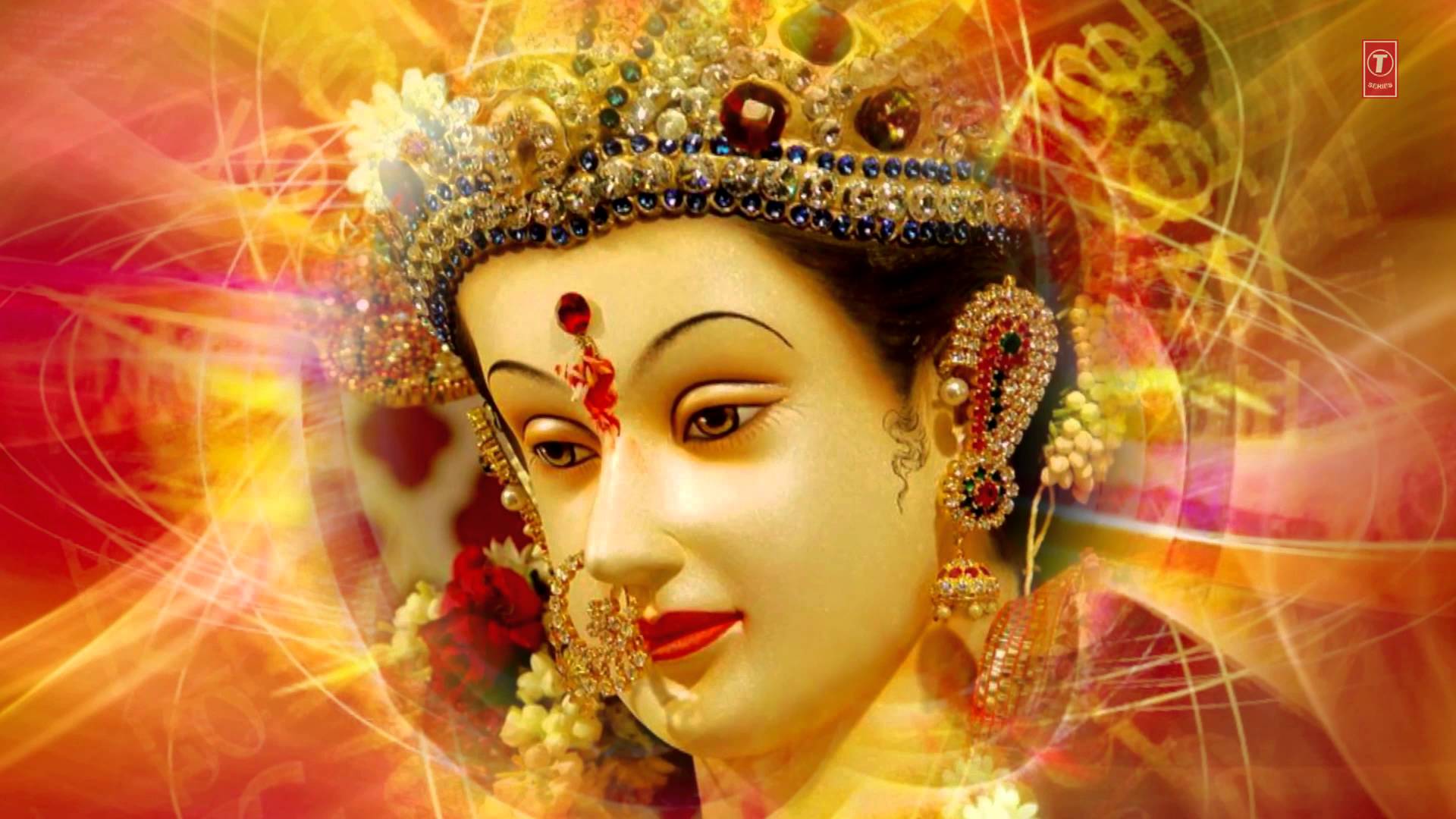

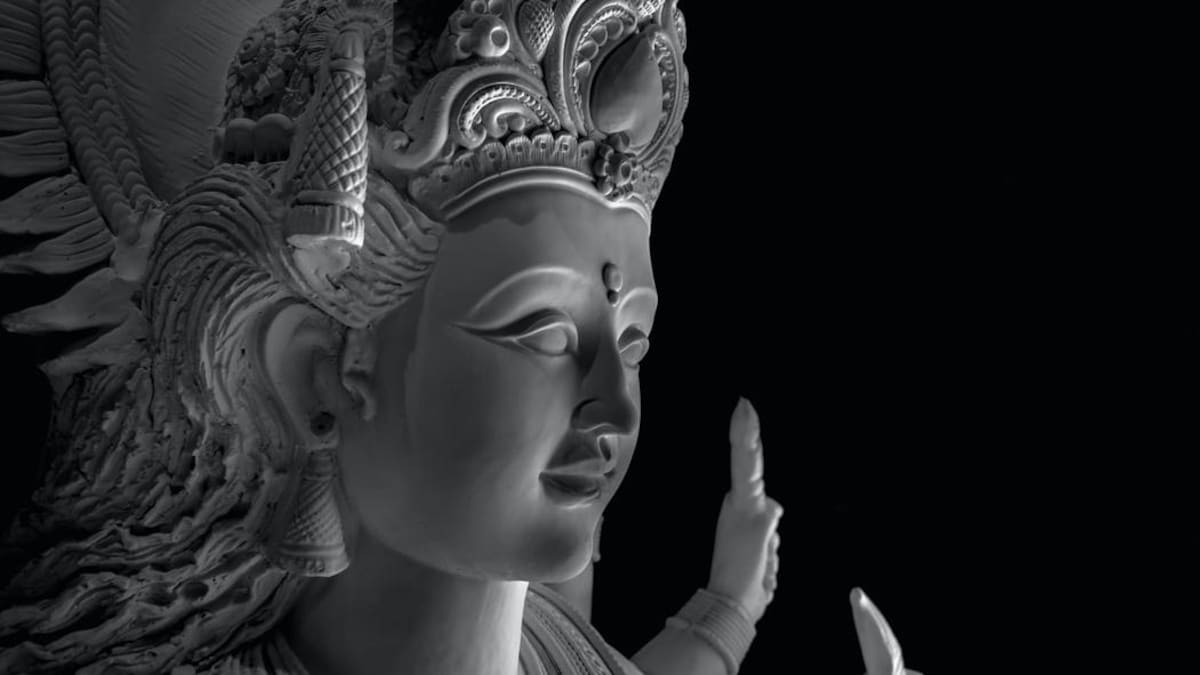


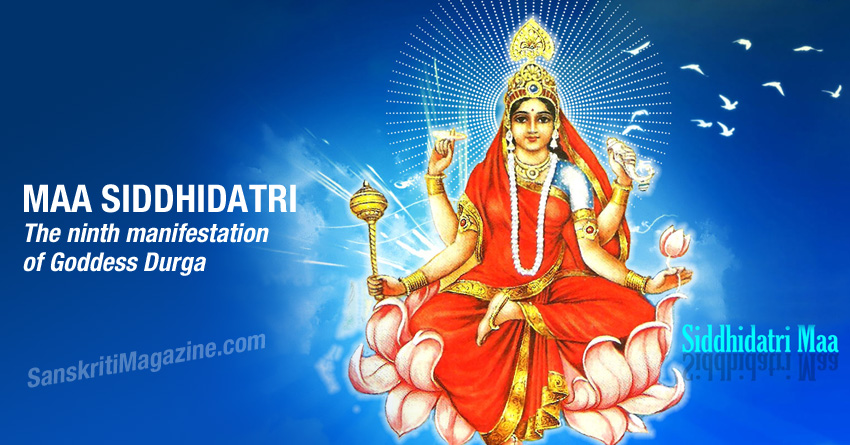


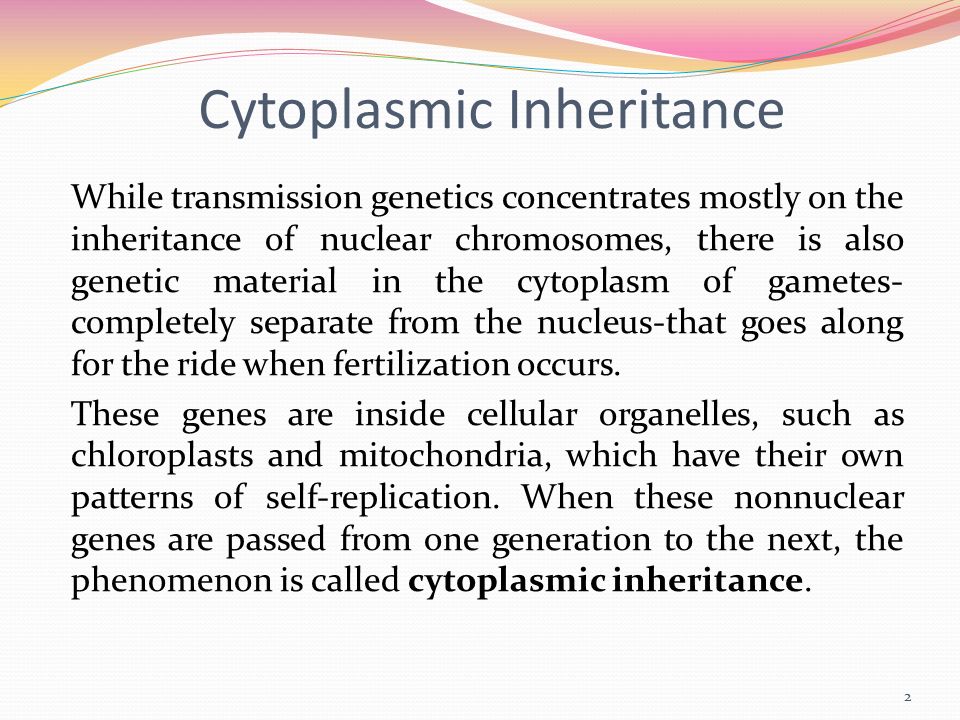


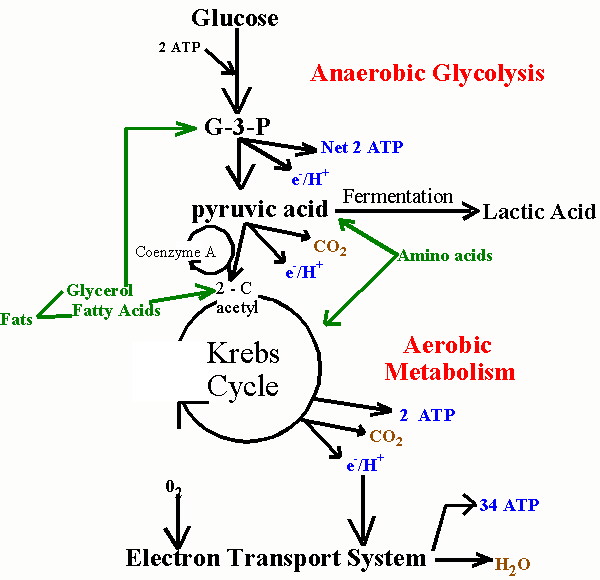


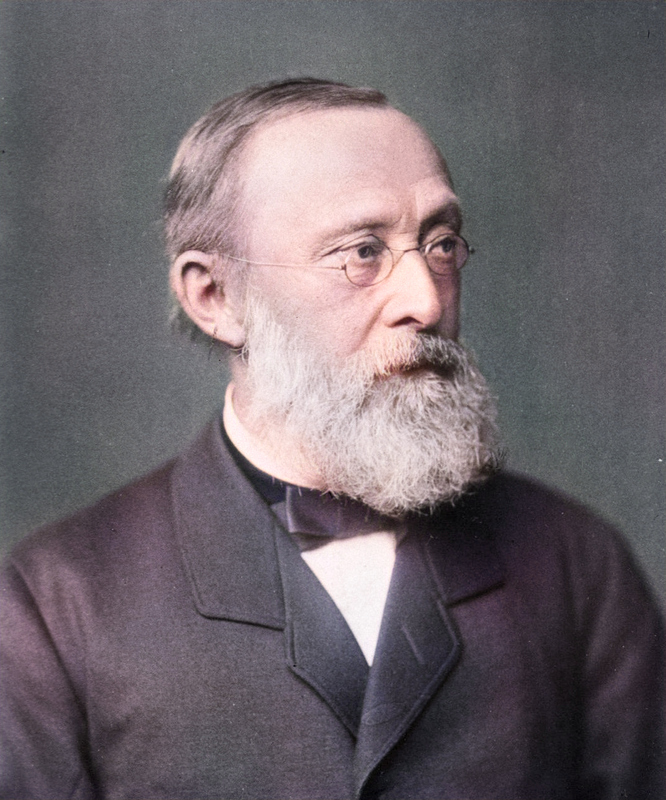


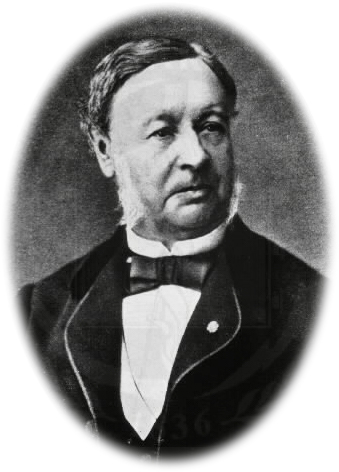


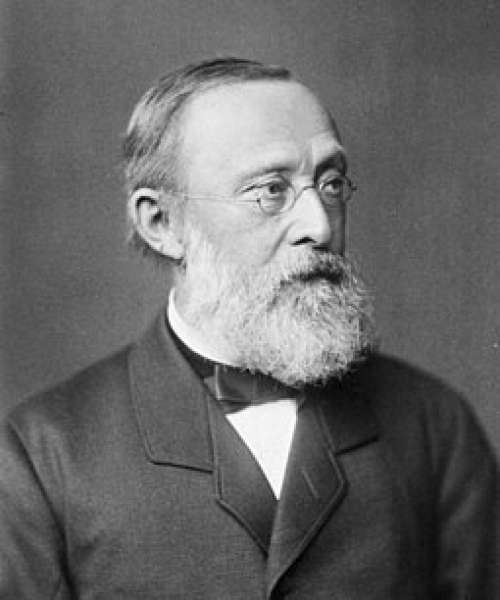


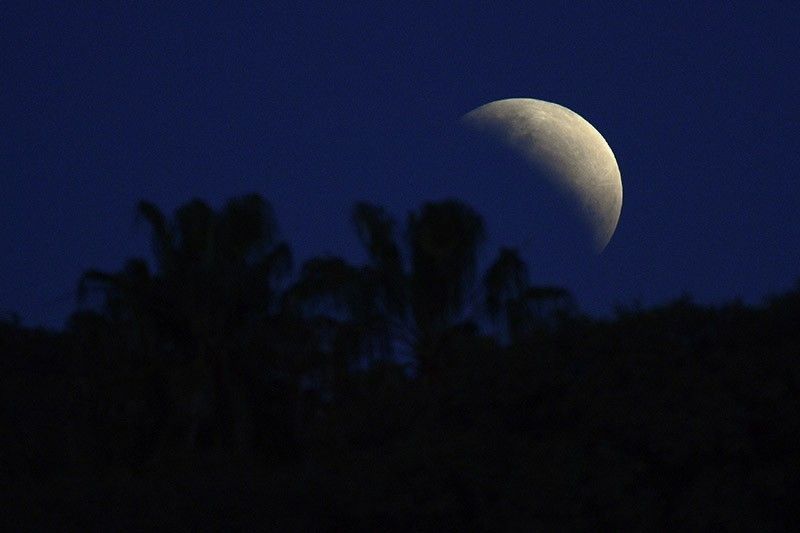


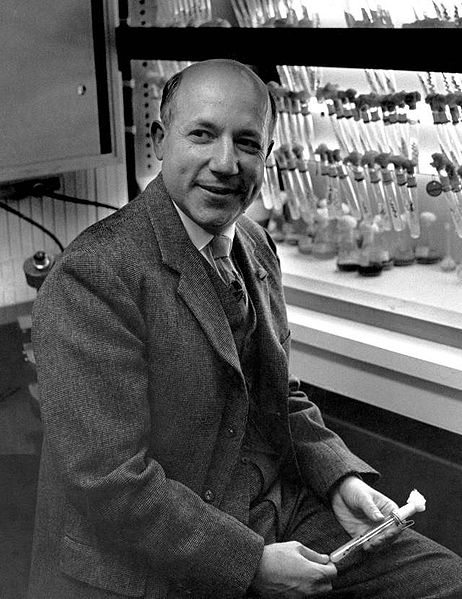


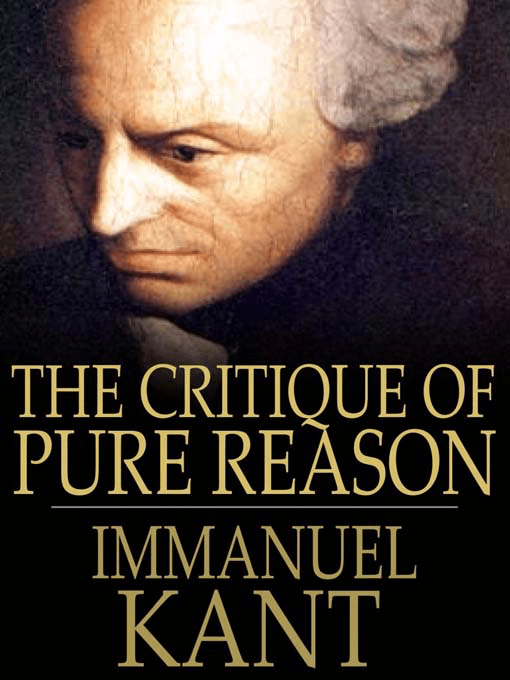








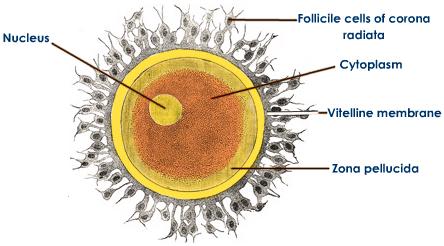


 Whole Dude - Whole Concept

