Whole Regret – JUNE 04, 1989

Vikas Regiment regrets Tiananmen Massacre on June 04, 1989

Vikas Regiment regrets Tiananmen Massacre on June 04, 1989.

I ask my readers to remember the events of June 04, 1989. Beijing Doomed because of her own evil actions.

On Wednesday, June 4, 2025, the 36th Anniversary of Tiananmen Square Massacre, The Living Tibetan Spirits revisit the past; the spread of Communism to mainland China in 1949.

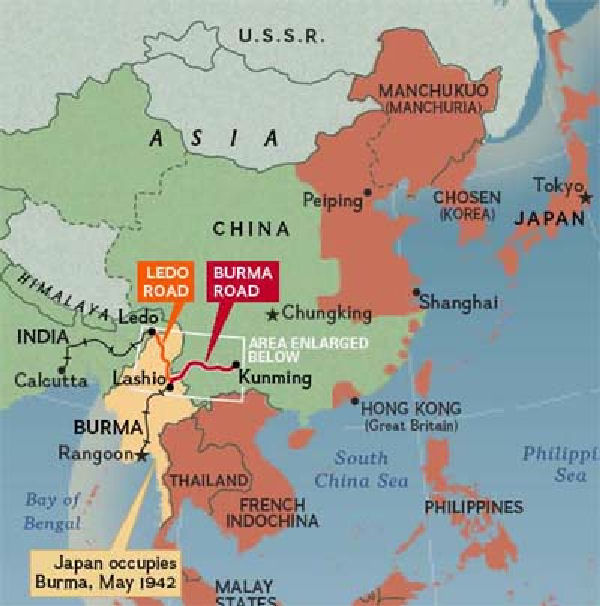
Special Frontier Force Reviews Hump Airlift Operation 1942-1945. The Legacy of the Hump Operation lives to this day.

Today, on Wednesday, June 04, 2025 The Living Tibetan Spirits regret Tibet’s decision to pursue the policy of Isolationism while confronting the grave threat posed by Communist takeover of mainland China. In 1943, Tibet had the opportunity to establish formal diplomatic relationships with the United States and other countries of Free World to prevent the spread of Communism to Asia.

Tibet’s unwillingness to openly resist Communism in 1943 is a crucial factor contributing to the loss of human rights in mainland China apart from the misery and suffering imposed on the lives of Tibetan people.

Rudra Narasimham Rebbapragada

DOOM DOOMA DOOMSAYER

Vikas Regiment regrets Tiananmen Massacre on June 04, 1989

Learn from us on Democracy, Taiwan tells China on Tiananmen Anniversary

Sun Jun 4, 2017, | 8:49am EDT

NEVER FORGET JUNE 04, 1989 – TIANANMEN ANNIVERSARY – BEIJING DOOMED.

A paramilitary policeman keeps watch underneath the portrait of former Chinese Chairman Mao Zedong in Beijing’s Tiananmen Square, China June 4, 2017. REUTERS/Thomas Peter

By J.R. Wu and Katy Wong
| TAIPEI/HONG KONG

Taiwan’s president on Sunday offered to help China to transition to democracy, on the 28th anniversary of China’s bloody crackdown on pro-democracy protests in and around Beijing’s Tiananmen Square, as thousands gathered in Hong Kong for an evening vigil.

Nearly three decades after Beijing sent tanks and troops to quell the 1989 pro-democracy, student-led protests, Chinese authorities ban any public commemoration of the subject on the mainland and have yet to release an official death toll.

Hong Kong, a former British colony that returned to Chinese rule in 1997, is the only place on Chinese soil where a large-scale commemoration takes place, symbolizing the financial hub’s relative freedoms compared with the mainland.

This year’s events are especially politically charged, coming just a month before an expected visit of President Xi Jinping to mark 20 years since Hong Kong was handed back to China.

“When Xi Jinping comes, he’ll know the people of Hong Kong have not forgotten,” said Lee Cheuk-yan, a veteran democracy activist and an organizer of the annual candlelight vigil.

“The students who died still haven’t got what they deserve. They fought for their future, in the same way, we’re fighting for our future,” 17-year-old Yanny Chan, a high school student, said.

In Taiwan, President Tsai Ing-wen said that the biggest gap between Taiwan and China was democracy and freedom, needling Beijing at a time when relations between China and the self-ruled island are at a low point.

“For democracy: some are early, others are late, but we all get there in the end,” Tsai said, writing in Chinese on her Facebook page and tweeting some of her comments in English on Twitter.

“Borrowing on Taiwan’s experience, I believe that China can shorten the pain of democratic reform.”

Beijing distrusts Tsai and her ruling Democratic Progressive Party because it traditionally advocates independence for Taiwan. Beijing says the island is part of China and has never renounced the use of force to bring it under its control.

After nearly 40 years of martial law, the island in the late 1980s began its own transition to democracy with presidential elections being held since 1996.

On Friday, Chinese Foreign Ministry spokeswoman Hua Chunying said China had long ago reached a conclusion about June 4.

“I hope you can pay more attention to the positive changes happening in all levels of Chinese society,” she said without elaborating.
In Beijing, security was tight as usual at Tiananmen Square, with long lines at bag and identity checks. The square itself was peaceful, thronged with tourists taking photos.
One elderly resident of a nearby neighborhood, out for a stroll at the edge of the square, said he remembered the events of 28 years ago clearly.

“The soldiers were just babies, 18, 19 years old. They didn’t know what they were doing,” he told Reuters, asking to be identified only by his family name, Sun.

While some search terms on China’s popular Twitter-like microblog Weibo appeared to be blocked on Sunday, some users were able to post cryptic messages.

“Never forget,” wrote one, above a picture of mahjong tiles with the numbers 6 and 4 on them, for the month and day of the anniversary.

(Reporting by J.R. Wu; Additional reporting by Ben Blanchard and Philip Wen in BEIJING; Venus Wu and James Pomfret in HONG KONG; Editing by Tony Munroe, Kim Coghill, and Jane Merriman)

Reuters is the news and media division of Thomson Reuters. Thomson Reuters is the world’s largest international multimedia news agency, providing investing news, world news, business news, technology news, headline news, small business news, news alerts, personal finance, stock market, and mutual funds information available on Reuters.com, video, mobile, and interactive television platforms. Learn more about Thomson Reuters products:

Inserted from <http://www.reuters.com/article/us-china-tiananmen-idUSKBN18V06C>

Vikas Regiment regrets Tiananmen Massacre on June 04, 1989

Whole Regret – The Missed Opportunity to resist the spread of Communism

On the 36th Anniversary of Tiananmen Square Massacre, the Living Tibetan Spirits regret Tibet’s Policy of Isolationism

The Living Tibetan Spirits revisit the past on the 36th Anniversary of Tiananmen Square Massacre. Tibet’s unwillingness to openly resist Communism in 1943 is a crucial factor contributing to the loss of human rights in mainland China.

On Wednesday, June 4, 2025, the 36th Anniversary of Tiananmen Square Massacre, The Living Tibetan Spirits revisit the past; the spread of Communism to mainland China in 1949.

The Living Tibetan Spirits revisit the past on the 36th Anniversary of Tiananmen Square Massacre. Tibet’s unwillingness to openly resist Communism in 1943 is a crucial factor contributing to the loss of human rights in mainland China.

Today, on Wednesday, June 04, 2025 The Living Tibetan Spirits regret Tibet’s decision to pursue the policy of Isolationism while confronting the grave threat posed by Communist takeover of mainland China. In 1943, Tibet had the opportunity to establish formal diplomatic relationships with the United States and other countries of Free World to prevent the spread of Communism to Asia.

The Living Tibetan Spirits revisit the past on the 36th Anniversary of Tiananmen Square Massacre. Tibet’s unwillingness to openly resist Communism in 1943 is a crucial factor contributing to the loss of human rights in mainland China.

Tibet’s unwillingness to openly resist Communism in 1943 is a crucial factor contributing to the loss of human rights in mainland China.

The Living Tibetan Spirits revisit the past on the 36th Anniversary of Tiananmen Square Massacre. Tibet’s unwillingness to openly resist Communism in 1943 is a crucial factor contributing to the loss of human rights in mainland China.

Special Frontier Force-Establishment No. 22-Vikas Regiment regrets Tibet’s Policy of Isolationism in 1943

The Living Tibetan Spirits revisit the past on the 36th Anniversary of Tiananmen Square Massacre. Tibet’s unwillingness to openly resist Communism in 1943 is a crucial factor contributing to the loss of human rights in mainland China.

CALLS FOR CHINA TO FACE GHOSTS OF ITS PAST ON TIANANMEN ANNIVERSARY

Clipped from: https://www.voanews.com/a/calls-for-china-to-face-ghosts-of-its-past-on-tiananmen-anniversary/4423377.html

The Living Tibetan Spirits revisit the past on the 36th Anniversary of Tiananmen Square Massacre. Tibet’s unwillingness to openly resist Communism in 1943 is a crucial factor contributing to the loss of human rights in mainland China.

FILE – A Chinese man stands alone to block a line of tanks heading east on Beijing’s Cangan Boulevard in Tiananmen Square, June 5, 1989.

BEIJING —

The United States has added its voice to international calls for China’s communist-led government to give a full public accounting of those who were killed, detained or went missing during the violent suppression of peaceful demonstrations in and around Tiananmen Square on June 4, 1989.

In a bold statement from Washington to mark the 29th anniversary of a bloody crackdown that left hundreds — some say thousands — dead, Secretary of State Mike Pompeo called on Chinese authorities to release “those who have been jailed for striving to keep the memory of Tiananmen Square alive; and to end the continued harassment of demonstration participants and their families.”

The Living Tibetan Spirits revisit the past on the 36th Anniversary of Tiananmen Square Massacre. Tibet’s unwillingness to openly resist Communism in 1943 is a crucial factor contributing to the loss of human rights in mainland China.

University students place flowers on the “Pillar of Shame” statue, a memorial for those injured and killed in the Tiananmen crackdown, at the University of Hong Kong, June 4, 2018.

To this day, open discussion of the topic remains forbidden in China and the families of those who lost loved ones continue to face oppression. Chinese authorities have labeled the protests a counter-revolutionary rebellion and repeatedly argued that a clear conclusion of the events was reached long ago.

In an annual statement on the tragedy, the group Tiananmen Mothers urged President Xi Jinping in an open letter to “re-evaluate the June 4th massacre” and called for an end to their harassment.

“Each year when we would commemorate our loved ones, we are all monitored, put under surveillance, or forced to travel” to places outside of China’s capital, the letter said. The advocacy group Human Rights in China released the open letter from the Tiananmen Mothers ahead of the anniversary.

“No one from the successive governments over the past 29 years has ever asked after us, and not one word of apology has been spoken from anyone, as if the massacre that shocked the world never happened,” the letter said.

The Living Tibetan Spirits revisit the past on the 36th Anniversary of Tiananmen Square Massacre. Tibet’s unwillingness to openly resist Communism in 1943 is a crucial factor contributing to the loss of human rights in mainland China.

FILE – A woman reacts during a candlelight vigil to mark the 28th anniversary of the crackdown of the pro-democracy movement at Beijing’s Tiananmen Square in 1989, at Victoria Park in Hong Kong, China June 4, 2017.

In his statement, Pompeo also said that on the anniversary “we remember the tragic loss of innocent lives,” adding that as Liu Xiaobo wrote in his 2010 Nobel Peace Prize speech, “the ghosts of June 4th have not yet been laid to rest.”

The Living Tibetan Spirits revisit the past on the 36th Anniversary of Tiananmen Square Massacre. Tibet’s unwillingness to openly resist Communism in 1943 is a crucial factor contributing to the loss of human rights in mainland China.

FILE – Liu Xia, wife of deceased Chinese Nobel Peace Prize-winning dissident Liu Xiaobo and other relatives attend his sea burial off the coast of Dalian, China, in this photo released by Shenyang Municipal Information Office July 15, 2017.

Liu was unable to receive his Nobel prize in person in 2010 and died in custody last year. The dissident writer played an influential role in the Tiananmen protests and was serving an 11-year sentence for inciting subversion of state power when he passed.

At a regular press briefing on Monday, Foreign Ministry spokeswoman Hua Chunying said China had lodged “stern representations” with the United States over the statement on Tiananmen.

“The United States year in, year out issues statements making ‘gratuitous criticism’ of China and interfering in China’s internal affairs,” Hua said. “The U.S. Secretary of State has absolutely no qualifications to demand the Chinese government do anything,” she added.

In a statement on Twitter, which is blocked in China like many websites, Hu Xijin, the editor of the party-backed Global Times, called the statement a “meaningless stunt.”

In another post he said: “what wasn’t achieved through a movement that year will be even more impossible to be realized by holding whiny commemorations today.”

Commemorations for Tiananmen are being held across the globe to mark the anniversary and tens of thousands are expected to gather in Hong Kong, the only place in China such large-scale public rallies to mark the incident can be held.

The Living Tibetan Spirits revisit the past on the 36th Anniversary of Tiananmen Square Massacre. Tibet’s unwillingness to openly resist Communism in 1943 is a crucial factor contributing to the loss of human rights in mainland China.

A man wipes the face of a statue of the Goddess of Democracy at Hong Kong’s Victoria Park Monday, June 4, 2018.

Exiled Tiananmen student protest leader Wu’Er Kaixi welcomed the statement from Pompeo.

However, he added that over the past 29 years western democracies appeasement of China has nurtured the regime into an imminent threat to freedom and democracy.

“The world bears a responsibility to urge China, to press on the Chinese regime to admit their wrongdoing, to restore the facts and then to console the dead,” he said. “And ultimately to answer the demands of the protesters 29 years ago and put China on the right track to freedom and democracy.”

Wu’er Kaixi fled China after the crackdown and now resides in Taiwan where he is the founder of Friends of Liu Xiaobo. The group recently joined hands with several other non-profit organizations and plans to unveil a sculpture in July — on the anniversary of his death — to commemorate the late Nobel laureate. The sculpture will be located near Taiwan’s iconic Taipei 101 skyscraper.

In Taiwan, the self-ruled democracy that China claims is a part of its territory, political leaders from both sides of the isle have also urged China’s communist leaders to face the past.

On Facebook, Taiwan’s President Tsai Ing-wen noted that it was only by facing up to its history that Taiwan has been able to move beyond the tragedies of the past.

“If authorities in Beijing can face up to the June 4th incident and acknowledge that at its roots it was a state atrocity, the unfortunate history of June 4th could become a cornerstone for China to move toward freedom and democracy,” Tsai said.

Tsai’s predecessor, Ma Ying-jeou, a member of the opposition Nationalist Party or KMT, who saw close ties with China while in office, also urged Beijing to face up to history and help heal families’ wounds.

“Only by doing this can the Chinese communists bridge the psychological gap between the people on both sides of the [Taiwan] Strait and be seen by the world as a real great power,” Ma said.

The Living Tibetan Spirits revisit the past on the 36th Anniversary of Tiananmen Square Massacre. Tibet’s unwillingness to openly resist Communism in 1943 is a crucial factor contributing to the loss of human rights in mainland China.

The Living Tibetan Spirits revisit the past on the 36th Anniversary of Tiananmen Square Massacre. Tibet’s unwillingness to openly resist Communism in 1943 is a crucial factor contributing to the loss of human rights in mainland China. Special Frontier Force Reviews Hump Airlift Operation 1942 – 1945. The Legacy of the Hump Operation lives to this day.

Whole Dude – Whole Regret

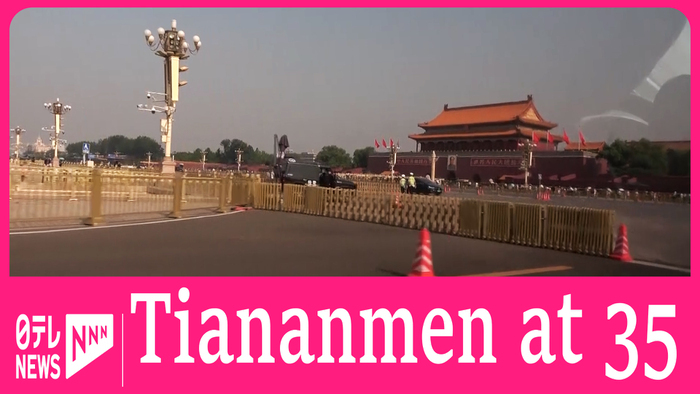
On the 35th Anniversary of Tiananmen Square Massacre, the Living Tibetan Spirits regret Tibet’s Policy of Isolationism

Bharat Darshan revisits the past on the 35th Anniversary of Tiananmen Square Massacre

On Tuesday, June 4, 2024, the 35th Anniversary of Tiananmen Square Massacre, The Living Tibetan Spirits revisit the past; the spread of Communism to mainland China in 1949.

Bharat Darshan revisits the past on the 35th Anniversary of Tiananmen Square Massacre

Today, on Tuesday, June 04, 2024 The Living Tibetan Spirits regret Tibet’s decision to pursue the policy of Isolationism while confronting the grave threat posed by Communist takeover of mainland China. In 1943, Tibet had the opportunity to establish formal diplomatic relationships with the United States and other countries of Free World to prevent the spread of Communism to Asia.

Bharat Darshan revisits the past on the 35th Anniversary of Tiananmen Square Massacre

Tibet’s unwillingness to openly resist Communism in 1943 is a crucial factor contributing to the loss of human rights in mainland China.

Special Frontier Force-Establishment No. 22-Vikas Regiment regrets Tibet’s Policy of Isolationism in 1943

Bharat Darshan revisits the past on the 35th Anniversary of Tiananmen Square Massacre

CALLS FOR CHINA TO FACE GHOSTS OF ITS PAST ON TIANANMEN ANNIVERSARY

Clipped from: https://www.voanews.com/a/calls-for-china-to-face-ghosts-of-its-past-on-tiananmen-anniversary/4423377.html

Bharat Darshan revisits the past on the 35th Anniversary of Tiananmen Square Massacre

FILE – A Chinese man stands alone to block a line of tanks heading east on Beijing’s Cangan Boulevard in Tiananmen Square, June 5, 1989.

BEIJING —

The United States has added its voice to international calls for China’s communist-led government to give a full public accounting of those who were killed, detained or went missing during the violent suppression of peaceful demonstrations in and around Tiananmen Square on June 4, 1989.

In a bold statement from Washington to mark the 29th anniversary of a bloody crackdown that left hundreds — some say thousands — dead, Secretary of State Mike Pompeo called on Chinese authorities to release “those who have been jailed for striving to keep the memory of Tiananmen Square alive; and to end the continued harassment of demonstration participants and their families.”

Bharat Darshan revisits the past on the 35th Anniversary of Tiananmen Square Massacre

University students place flowers on the “Pillar of Shame” statue, a memorial for those injured and killed in the Tiananmen crackdown, at the University of Hong Kong, June 4, 2018.

To this day, open discussion of the topic remains forbidden in China and the families of those who lost loved ones continue to face oppression. Chinese authorities have labeled the protests a counter-revolutionary rebellion and repeatedly argued that a clear conclusion of the events was reached long ago.

In an annual statement on the tragedy, the group Tiananmen Mothers urged President Xi Jinping in an open letter to “re-evaluate the June 4th massacre” and called for an end to their harassment.

“Each year when we would commemorate our loved ones, we are all monitored, put under surveillance, or forced to travel” to places outside of China’s capital, the letter said. The advocacy group Human Rights in China released the open letter from the Tiananmen Mothers ahead of the anniversary.

“No one from the successive governments over the past 29 years has ever asked after us, and not one word of apology has been spoken from anyone, as if the massacre that shocked the world never happened,” the letter said.

Bharat Darshan revisits the past on the 35th Anniversary of Tiananmen Square Massacre

FILE – A woman reacts during a candlelight vigil to mark the 28th anniversary of the crackdown of the pro-democracy movement at Beijing’s Tiananmen Square in 1989, at Victoria Park in Hong Kong, China June 4, 2017.

In his statement, Pompeo also said that on the anniversary “we remember the tragic loss of innocent lives,” adding that as Liu Xiaobo wrote in his 2010 Nobel Peace Prize speech, “the ghosts of June 4th have not yet been laid to rest.”

Bharat Darshan revisits the past on the 35th Anniversary of Tiananmen Square Massacre

FILE – Liu Xia, wife of deceased Chinese Nobel Peace Prize-winning dissident Liu Xiaobo and other relatives attend his sea burial off the coast of Dalian, China, in this photo released by Shenyang Municipal Information Office July 15, 2017.

Liu was unable to receive his Nobel prize in person in 2010 and died in custody last year. The dissident writer played an influential role in the Tiananmen protests and was serving an 11-year sentence for inciting subversion of state power when he passed.

At a regular press briefing on Monday, Foreign Ministry spokeswoman Hua Chunying said China had lodged “stern representations” with the United States over the statement on Tiananmen.

“The United States year in, year out issues statements making ‘gratuitous criticism’ of China and interfering in China’s internal affairs,” Hua said. “The U.S. Secretary of State has absolutely no qualifications to demand the Chinese government do anything,” she added.

In a statement on Twitter, which is blocked in China like many websites, Hu Xijin, the editor of the party-backed Global Times, called the statement a “meaningless stunt.”

In another post he said: “what wasn’t achieved through a movement that year will be even more impossible to be realized by holding whiny commemorations today.”

Commemorations for Tiananmen are being held across the globe to mark the anniversary and tens of thousands are expected to gather in Hong Kong, the only place in China such large-scale public rallies to mark the incident can be held.

Bharat Darshan revisits the past on the 35th Anniversary of Tiananmen Square Massacre

A man wipes the face of a statue of the Goddess of Democracy at Hong Kong’s Victoria Park Monday, June 4, 2018.

Exiled Tiananmen student protest leader Wu’Er Kaixi welcomed the statement from Pompeo.

However, he added that over the past 29 years western democracies appeasement of China has nurtured the regime into an imminent threat to freedom and democracy.

“The world bears a responsibility to urge China, to press on the Chinese regime to admit their wrongdoing, to restore the facts and then to console the dead,” he said. “And ultimately to answer the demands of the protesters 29 years ago and put China on the right track to freedom and democracy.”

Wu’er Kaixi fled China after the crackdown and now resides in Taiwan where he is the founder of Friends of Liu Xiaobo. The group recently joined hands with several other non-profit organizations and plans to unveil a sculpture in July — on the anniversary of his death — to commemorate the late Nobel laureate. The sculpture will be located near Taiwan’s iconic Taipei 101 skyscraper.

In Taiwan, the self-ruled democracy that China claims is a part of its territory, political leaders from both sides of the isle have also urged China’s communist leaders to face the past.

On Facebook, Taiwan’s President Tsai Ing-wen noted that it was only by facing up to its history that Taiwan has been able to move beyond the tragedies of the past.

“If authorities in Beijing can face up to the June 4th incident and acknowledge that at its roots it was a state atrocity, the unfortunate history of June 4th could become a cornerstone for China to move toward freedom and democracy,” Tsai said.

Tsai’s predecessor, Ma Ying-jeou, a member of the opposition Nationalist Party or KMT, who saw close ties with China while in office, also urged Beijing to face up to history and help heal families’ wounds.

“Only by doing this can the Chinese communists bridge the psychological gap between the people on both sides of the [Taiwan] Strait and be seen by the world as a real great power,” Ma said.

Bharat Darshan revisits the past on the 35th Anniversary of Tiananmen Square Massacre