Whole Theory – Whole Dude at Whole Foods defines Man

Whole Dude’s Whole Theory of Man

Whole Dude’s WholeTheory of Man, The Spectrum of Seven Colors: These Colors or Dimensions are, 1. The Physical, 2. The Mental, 3. The Social, 4. The Moral, 5. The Spiritual, 6. The Creative, and 7. The Rational

Whole Dude’s Whole Theory of Man defines Man as the ‘Spectrum of Seven Colors’. Isaac Newton could easily verify his ‘Theory of Light’ by conducting his critical experiment in which he used two prisms to breakdown and to reconstitute white light rays. In case of Man, such experimental verification is not possible as Science does not have the capability to breakdown the man and reconstitute him. However, Science provides verified information about the building blocks of life and about basic living functions such as ‘Metabolism’ which essentially involve making, breaking, and repairing ‘Molecules of Life’.

Whole Dude’s WholeTheory of Man, The Spectrum of Seven Colors: These Colors or Dimensions are, 1. The Physical, 2. The Mental, 3. The Social, 4. The Moral, 5. The Spiritual, 6. The Creative, and 7. The Rational

Man–The Spectrum of Seven Colors

Whole Dude’s WholeTheory of Man, The Spectrum of Seven Colors: These Colors or Dimensions are, 1. The Physical, 2. The Mental, 3. The Social, 4. The Moral, 5. The Spiritual, 6. The Creative, and 7. The Rational

For purposes of defining Man the concept of Light Spectrum is useful. Light Spectrum appears continuous with no distinct boundaries. The ‘Singularity’ called Man can be easily witnessed at conception at the stage of Single, fertilized Egg Cell. The study of Man during all stages of his physical existence provides information about Man’s Seven Dimensions or Seven Colors. These are, 1. The Physical, Mortal Being, 2. The Mental Being, 3. The Social Being, 4. The Moral Being, 5. The Spiritual Being, 6. The Created Being, and 7. The Rational Being. Science called Cell & Molecular Biology can account for biomolecules of life and yet do not explain or account for the constitution of Man as a Rational Being.

NEWTON’S THEORY OF LIGHT

Clipped from: http://www.thestargarden.co.uk/Newtons-theory-of-light.html

3.1 Newton’s crucial experiment

Whole Dude’s WholeTheory of Man, The Spectrum of Seven Colors: These Colors or Dimensions are, 1. The Physical, 2. The Mental, 3. The Social, 4. The Moral, 5. The Spiritual, 6. The Creative, and 7. The Rational

English natural philosopher Isaac Newton bought his first prism in 1666, one year after Italian natural philosopher Francesco Grimaldi’s work on diffraction was published.[1]

Newton claimed that Grimaldi’s diffraction was simply a new kind of refraction. He argued that the geometric nature of the laws of reflection and refraction could only be explained if light was made of particles, which he referred to as corpuscles, since waves don’t tend to travel in straight lines.

After joining the Royal Society of London in 1672, Newton stated that the 44th trail in a series of experiments he had previously conducted had proven that light is made of particles and not waves.[2,3]

Advocates of the wave theory had previously stated that light waves are made of white light, and that the color spectrum that can be seen through a prism is formed because of corruption within the glass. This means that the more glass the light travels through, the more corrupt it will become.

In order to prove that this was false, Newton passed a beam of white light through two prisms, which were held at such an angle that it split into a spectrum when passing through the first prism and was recomposed, back into white light, by the second prism (as shown in Figure 3.1). This showed that the color spectrum is not caused by glass corrupting the light. Newton claimed this was a ‘crucial experiment’.

A crucial experiment is any experiment devised to decide between two contradictory theories, where the failure of one determines the certainty of the other. Since almost everyone agreed that light must be composed of either particles or waves, Newton used the failure of the wave theory to prove that light is made of particles. Newton concluded that light is composed of colored particles that combine to appear white.[4]

3.2 Newton’s color spectrum

Newton introduced the term ‘color spectrum’ and although the spectrum appears continuous, with no distinct boundaries between the colors, he chose to divide it into seven: red, orange, yellow, green, blue, indigo, and violet. Newton chose the number seven because of the Ancient Greek belief that seven is a mystical number.[5]

Newton showed that every color has a unique angle of refraction that can be calculated using a suitable prism. He saw that all objects appear to be the same color as the beam of colored light that illuminates them, and that a beam of colored light will stay the same color no matter how many times it is reflected or refracted. This led him to conclude that color is a property of the light that reflects from objects, not a property of the objects themselves.[2]

3.3 Criticism from the Royal Society

Despite Newton’s confidence that his theory had been proven, it still faced several problems and was not accepted straight away. Within a year of his announcement, fellow Royal Society member, English natural philosopher Robert Hooke, published similar results to Grimaldi. He argued that diffraction is not a new type of refraction, as Newton had claimed, and that it could only be explained by assuming that light is composed of waves.[1,6]

Many other members joined Hooke in criticizing Newton’s particle theory. Some denied that Newton’s color spectrum existed at all and others denied that his 44th trial really proved that light is not composed of waves. Those that tried to replicate Newton’s experiment often failed.

Prisms were still not commonly accepted as scientific instruments. They were sold as simple forms of entertainment, and there was little technical work on their design or improvement. Venetian glass was regarded as the standard against which other glasses were compared but even this was full of air bubbles and flaws. Newton did not help matters by concealing the details of his trials. He did not explain how to produce a spectrum from the first prism or specify the size or geometry of the second.[1]

It was not until 1676, four years after Newton’s initial publication, that he performed more trials and gave people enough information to be able replicate them. Newton finally stated that the best prisms to use were those made in London, not Italy, as these were the clearest. Newton stated that those who failed to replicate his experiments must have been using bad prisms, but this was often seen as an excuse and Newton eventually withdrew from debate on the subject.[1]

3.4 Huygens’ wave theory

In 1678, Dutch natural philosopher Christiaan Huygens claimed to have disproved Newton’s theory by showing that the laws of reflection and refraction can be derived from his wave theory of light.[7]

Huygens argued that diffraction occurs because of the interference of wavefront. When light is pushed through a small slit, waves are pushed together at different angles and this creates fringes of light and dark shadows, an interference pattern. This is how water waves behave when they pass through a small gap.

Huygens believed that light waves differ from water waves in one respect: water waves are transverse, the waves move up and down like a sine wave while the water moves forwards. Huygens thought that light waves were longitudinal, moving in a parallel direction to the beam.[8]

Sound is an example of a longitudinal wave because sound waves move forwards by periodically displacing molecules in the air, but the molecules themselves do not move forwards, they simply vibrate.

In order for light to move through space as either type of wave, it must have a medium to propagate through. This means that Huygens’ theory, like all theories of light before it, was reliant upon the idea that the universe is filled with Aristotle’s fifth element, the ether.

Whole Dude’s WholeTheory of Man, The Spectrum of Seven Colors: These Colors or Dimensions are, 1. The Physical, 2. The Mental, 3. The Social, 4. The Moral, 5. The Spiritual, 6. The Creative, and 7. The Rational
Figure 3.4The direction of oscillation and propagation of longitudinal and transverse waves.

3.5 Bartholin’s calcite crystals

In 1669, three years before Newton first presented his particle theory of light, Danish natural philosopher Erasmus Bartholin had begun experimenting with transparent calcite crystals, which had been discovered in Iceland. He found that when an image is placed behind a crystal it’s duplicated, with one copy appearing slightly higher than the other.[8,9]

When Bartholin rotated the crystal, he saw that one image disappeared while the other rotated with it. This led him to conclude that something in the crystal had split the beam of light into two different rays. Bartholin referred to this as “one of the greatest wonders that nature has produced”, and saw it as advocating Huygens’ wave theory of light.[10]

Whole Dude’s WholeTheory of Man, The Spectrum of Seven Colors: These Colors or Dimensions are, 1. The Physical, 2. The Mental, 3. The Social, 4. The Moral, 5. The Spiritual, 6. The Creative, and 7. The Rational
Figure 3.5Double refraction within a calcite crystal.
Whole Dude’s WholeTheory of Man, The Spectrum of Seven Colors: These Colors or Dimensions are, 1. The Physical, 2. The Mental, 3. The Social, 4. The Moral, 5. The Spiritual, 6. The Creative, and 7. The Rational

Huygens suggested that Bartholin’s findings could be explained if the crystal contained two different materials, one that produced spherical waves, and one ellipsoidal. Huygens continued Bartholin’s experiments and found that if he placed two crystals next to each other, then the number of images varied, depending on whether the crystals were placed parallel or perpendicular to each other. This was something that his wave theory of light could not explain[11] (discussed further in Chapter 5).

3.6 Newton’s Opticks

Newton did not contribute to the debate until after Hooke’s death, 32 years after his original publication. In 1704, he was elected President of the Royal Society and published Opticks, his most comprehensive theory of light. In the opening sections of the book, Newton showed how to reconstruct his prism experiments in more detail. This led to many more successful reconstructions.[1,5]

Newton interpreted Huygens’ findings in terms of his own particle theory of light. He suggested that the experiments with the calcite crystals showed that light has ‘sides’, something that could easily be understood in terms of particles.

Newton also used the publication of Opticks to defend his stance on diffraction. In order to do so he had to appeal to wave-like properties, and argued that particles of light create waves in the ether. After the publication of Opticks, Newton’s theory gained considerable popularity but some of his critics remained unconvinced.[1]

There was one way to experimentally determine which theory was correct: if light is composed of particles then it should travel faster in a denser medium, but if it’s composed of waves then a denser medium should slow it down. This experiment would not be conducted for another 150 years, but by the end of the 1800s, both theories would be proven wrong.

Whole Dude’s WholeTheory of Man, The Spectrum of Seven Colors: These Colors or Dimensions are, 1. The Physical, 2. The Mental, 3. The Social, 4. The Moral, 5. The Spiritual, 6. The Creative, and 7. The Rational


Whole Analysis – Knowing the depths of your own Soul

Spiritualism vs Psychoanalysis – Know Your Soul:

Spiritualism – Psychoanalysis and Human Nature. The structure and behavior of things contribute to their individual being and function. To understand human behavior, we may have to know the structure and behavior of the human living matter or substance to which we attach human identity and recognize it as the human person

What is Mental Health?

Spiritualism – Psychoanalysis and Human Nature. The structure and behavior of things contribute to their individual being and function. To understand human behavior, we may have to know the structure and behavior of the human living matter or substance to which we attach human identity and recognize it as the human person

Mental health includes our emotional, psychological, and social well-being. It affects how we think, feel, and act, and helps determine how we handle stress, relate to others, and make choices.

Mental health is important at every stage of life, from childhood and adolescence through adulthood. Over the course of your life, if you experience mental health problems, your thinking, mood, and behavior could be affected.

Spiritualism – Psychoanalysis and Human Nature. The structure and behavior of things contribute to their individual being and function. To understand human behavior, we may have to know the structure and behavior of the human living matter or substance to which we attach human identity and recognize it as the human person

Psychoanalysis in modern mental health practice

Spiritualism – Psychoanalysis and Human Nature. The structure and behavior of things contribute to their individual being and function. To understand human behavior, we may have to know the structure and behavior of the human living matter or substance to which we attach human identity and recognize it as the human person

By Jessica
Like any discipline, psychoanalysis has evolved considerably since its inception by Freud over a century ago, and a multitude of different psychoanalytic traditions and schools of theory and practice now exist. However, some of Freud’s original ideas, such as the dynamic unconscious, a developmental approach, defence mechanisms, and transference and countertransference remain essential tenets of psychoanalytic thinking to this day.

Introduction
Freud’s vision for psychoanalysis was ambitious. Psychoanalysis was not merely a mode of treatment, but a metapsychology—a new scientific discipline in its own right—based on its “procedure for the investigation of mental processes that are almost inaccessible in any other way”.1 Although Freud did not discover the unconscious, 2 one of his greatest achievements was to make it the main object of investigation. This unconscious is dynamic, comprised of shifting feelings, fantasies, conflicts, memories, and desires that motivate our conscious thoughts and manifest behaviour, and which can be glimpsed through the window of dreams, but are kept out of consciousness by the force of repression because of their unacceptability to the social, moral, and ethical values of civilized thought. Although its nature has been much debated, the existence of a dynamic unconscious continues to constitute one of the fundamental underpinnings of psychoanalytic theory and practice to this day.

Man’s Essence and Man’s Existence:

The Vitruvian Man c. 1492. The painting by Leonardo da Vinci displays the spirit of scientific inquiry. Could we know and understand the human nature or the man’s essence by investigating the man’s mind using the psychoanalytic principles? How does the man exist? What is the basis for the man’s Existence? If there are hidden mental entities, how could they help or support the man’s existence? How could the man display his essence if his existence is not supported? Spiritualism is that potency that sustains the human existence and is reflected as human nature in the structures and functions of the human being.

What is man? The tradition of knowing oneself is a longer tradition than any other Science. This is a study in which the Knower and the Known are one. The object of the scientific inquiry is the nature of the scientist. The motivation to know man comes from a statement expressed in the Sanskrit language, “Sarvesham Svastir Bhavatu” which seeks the well-being of all the men of all races, of all cultures, of all religions, and of all nations.
Spiritualism – Psychoanalysis and Human Nature. The structure and behavior of things contribute to their individual being and function. To understand human behavior, we may have to know the structure and behavior of the human living matter or substance to which we attach human identity and recognize it as the human person

Our efforts to support the well-being of man would be affected by our ability to discover the universal principles that describe the ‘real’ or ‘true’ nature of man. All human literary, philosophical, religious, and scientific traditions make assumptions about human nature. The basic assumption about human nature is that of finding it displayed in feelings, thoughts, moods, and mental states of the human individual from where human actions and behavior proceed. All such actions and behaviors that emanate from mental states show individualistic variations.

It will not be easy to discover universal principles that could clearly establish the basis of true and real human nature by simply studying human mind and its functions.

The structure and behavior of things contribute to their individual being and function. To understand human behavior, we may have to know the structure and behavior of the human living matter or substance to which we attach human identity and recognize it as the human person.

I describe the human nature from the functional characteristics that are observable in biotic interactions of cells, tissues, organs and organ systems formed and developed by the human living matter and constitute the human organism. If a man is viewed as a multicellular organism, I discover the human nature of a subject who objectively exists because of the living functions of cells, tissues, organs and organ systems that provide the biological basis for that existence. In this context, I have explored the theories shared by biologist Konrad Lorenz, psychologist Dr. B.F. Skinner, philosopher Jean Paul Sartre and now I would like to review the Theory of psychoanalysis formulated by Dr. Sigmund Freud. It must be noted that all of them and several others have explained the human nature without explaining the connection between the nature that is observed and the biological basis for the existence of the human individual whose behavior and actions they have studied.

Psychoanalysis and the Principle of Determinism:

Dr. Sigmund Freud (1856 to 1939) claims, “No knowledge can be obtained from Revelation, Intuition, or Inspiration.” However, he reasons that knowledge could be obtained from unseen and unobservable mental entities whose existence cannot be tested empirically.

Dr. Sigmund Freud is known as the creator of Psychoanalysis. He is the author of several books; The Interpretation of Dreams (1900), The Psychopathology of Everyday Life (1901), Three Essays on the Theory of Sexuality (1905), Five Lectures on Psycho-Analysis (1909), Introductory Lectures on Psycho-Analysis (1915 -1917), Beyond the Pleasure Principle (1920), The Ego and the Id (1923), The Future of an Illusion (1927), An Outline of Psycho-Analysis (1938), and others. He assumes that all phenomena are determined by the laws of Physics and Chemistry. He considers that man is a product of Natural Evolution and is subject to the same laws of mechanistic principles.

Spiritualism – Psychoanalysis and Human Nature. The structure and behavior of things contribute to their individual being and function. To understand human behavior, we may have to know the structure and behavior of the human living matter or substance to which we attach human identity and recognize it as the human person

According to Freud, every event has preceding sufficient causes within the realm of the mind. He investigated for hidden causes in a person’s mind. Freud suggests that there are uncontrollable causes in every individual’s mind that determine the choices the individual makes. Freud contends that the mind includes ‘unconscious’ items of which the person has no ordinary knowledge. Freud postulates that the ‘unconscious’ mental state is dynamic in nature and that it actively exerts pressures and influences on what a person is and what he does. Freud coined the term Psychoanalysis to describe both the theories of Personality and the method of treating mental illness. Freud profoundly influenced man’s view of himself. Psychoanalysis involves the possibility of ‘unconscious’ mental states which have causal effects on people’s mental life. Psychoanalysis is based upon the idea that people could suffer from some idea or memory or emotion of which they are not conscious, but from which they could be cured by somehow bringing it into consciousness. Freud applied Psychoanalytic theory to the whole of normal mental life, not just to pathological conditions. He evolved a method of treatment to address the problems of neurotic mental disorders. The Freudian concept thus describes the powerful influence of the ‘unconscious’ mind on conscious thought and behavior and the equally powerful influence of the apparently forgotten past on the present.

Apart from using terms such as ‘unconscious’, ‘preconscious’, and ‘conscious’, he distinguished three major structural systems within the human mind or personality; the ‘id’ which contains all the instinctual drives seeking immediate satisfaction, the ‘ego’ which deals with the real world outside the person, mediating between ‘ego’ and the ‘id’, and the ‘superego’, a special part of the ‘ego’ which contains the conscience, the social norms acquired in childhood. Whatever can become ‘conscious’ or items that could be ‘preconscious’ is in the ‘ego’ and everything in the ‘id’ is permanently ‘unconscious’. Freud’s concept of man includes his theory of the ‘instincts’ or ‘drives’, the motive forces within the mind. Freud also shares the historical theory of individual human character and the adult character depends upon the experience of infancy and childhood. Freud says that individual well-being or mental health depends on a harmonious relationship between the various parts of the mind and between the person and the real world in which man has to live.

When we apply the Psychoanalytic theory to verify the contents of man’s ‘conscious’ or ‘unconscious’ mind, the basic assumption of Freud that man is governed by laws of Physics and Chemistry gets disproved. Human beings are vastly different from the entities studied by Physics and Chemistry. Psychoanalysis could only have individualistic applications. Psychoanalysis does not provide data that could be further tested empirically. We cannot test the usefulness or judge the efficacy of Psychoanalytic treatment in the same manner that is used to evaluate other therapeutic interventions.

Spiritualism and Consciousness:

Dr. Sigmund Freud uses terms such as ‘preconscious’, ‘conscious’, and ‘unconscious’ without explaining the anatomical and physiological basis to describe the mental function. Consciousness has two components, 1. The Contents of Consciousness, and 2. The Capacity of Consciousness. Freud is concerned with only consciousness that is projected to the cortical areas of the brain and ignores as to how consciousness is composed by the Reticular Formation and other nuclei in the Brain Stem. Apart from being a neurological function, each living individual cell is conscious and is aware of the fact of its existence, it knows its internal condition and it reacts and responds to the conditions of its external environment.

I explain ‘Spiritualism’ as the potency that is observed by the presence of consciousness in any given living organism or living cell. It is the chief biological characteristic of living matter. Spiritualism is the power that causes consciousness and awareness that is exhibited in the biological properties of living matter; biological properties such as Motion, Nutrition, and Reproduction by Cell Division. Spiritualism is the biological basis for human existence and it explains human nature which is expressed as an internal, mutually beneficial partnership, relationship, association, connection, and bonding between the cells, the tissues, and the organ systems of the human organism and the Whole Organism that represents the Human Person in the world he lives. Clinical Medicine provides the opportunities to promote the well-being of all people as it includes the principle of verification of the objective, biological basis of human existence.

Dr. Freud may explain as to why a man may choose to drink alcohol or use tobacco. But, his Psychoanalysis will not determine the behavior, action, and response of the man’s liver, heart, lungs, blood vessels and other cells, tissues, and organ systems to the choices that the man makes. While man makes mental choices for his actions and behavior, he has no freedom, no free will to make choices on behalf of his cells, tissues, and organ systems. While Freud lays the emphasis on a harmonious relationship between the various parts of the mind and between the person, I speak about harmonious relationships in the Whole Person and not simply between a few unobservable mental entities.

We need a theory that recognizes the spiritual nature of man’s living matter and the spiritual relationships that it formulates while developing and building the very complex multicellular human organism.

 Simon Cyrene

Spiritualism – Psychoanalysis and Human Nature. The structure and behavior of things contribute to their individual being and function. To understand human behavior, we may have to know the structure and behavior of the human living matter or substance to which we attach human identity and recognize it as the human person
The Ground Substance of Spiritualism and Spirituality. The vital characteristics, the animating principles of Protoplasm could be known by observing Amoeba proteus. The Living Substance works as an organ of Motion or Movement, as an organ of Nutrition, and as an organ of Reproduction to generate new cells which have a life span of their own. In these physiological functions, I describe the characteristics such as Cognition, Consciousness, Memory, and Intelligence which have a Spiritual role as they bring functional unity and harmony in the interactions between different parts of the same individual organism while it exists in an environment as a member of a biological community.

Whole Dude – Whole Education

I ask Michigan Medicine and University of Michigan to share its educational experience and publish its Theory of Man

Whole Dude – Whole Education: Michigan Medicine asks, “How many years you have spent in the School?” I ask Michigan Medicine and University of Michigan to share its educational experience and publish its Theory of Man

Excerpt: The Michigan Medicine AHEAD study is examining the efficacy of a medication aimed at preventing Alzheimer’s Disease in individuals at increased risk of developing the disease. The study has, however, faced criticism regarding its focus on years of schooling and its lack of a research protocol to verify the identity and individuality of the human organism. Critics assert that biological processes like the flow of biological information and protein synthesis are not influenced by education level and that individuality should not be tied to factors such as race and ethnicity. The conceptualization of “life as knowledge in action” and that it is an interplay of cellular function and knowledge must be explored.

Whole Dude – Whole Education: Michigan Medicine asks, “How many years you have spent in School?” I ask Michigan Medicine and University of Michigan to share its educational experience and publish its Theory of Man.

The AHEAD Study is researching the safety and effectiveness of an investigational medication in people who might be at increased risk for developing memory loss associated with Alzheimer’s Disease. The study is looking for participants age 55-80 years old, who have generally normal memory function in daily life, and who are not being treated for memory problems. For individuals age 55-64 years old, an additional risk factor is required, such as a parent or sibling with Alzheimer’s Disease or previous biomarker testing showing increased risk for developing Alzheimer’s Disease. This study sees participants in Ann Arbor. Contact Lauren Mackenzie at spearsl@med.umich.edu or 734-232-2415.

Whole Dude – Whole Education: Michigan Medicine asks, “How many years you have spent in the School?” I ask Michigan Medicine and University of Michigan to share its educational experience and publish its Theory of Man.

On Tuesday, December 05, 2023, at the Michigan Clinical Research Unit (MCRU) at the Cardiovascular Center (CVC), I was interviewed for participating in the AHEAD Study and I completed the Stage 1A of the Screening process. I am asked to provide information about the most important occupation of my life, my sexual orientation, my race and ethnicity in the context of my place of birth and the country of origin, the total number of years I spent in the School to register my personal identity for participation in the Medical Research Project.

Whole Dude – Whole Education: Michigan Medicine asks, “How many years you have spent in the School?” I ask Michigan Medicine and University of Michigan to share its educational experience and publish its Theory of Man.

The AHEAD Study Research Protocol has not identified the basis for discovering the identity of a multicellular human organism. I can answer the questions I am asked. Do I have the ability to communicate my answers to the cells of my own body and reflect that identity in the living functions they perform to keep me alive?

Theory of Man precedes Theory of Health

Whole Dude – Whole Education: Michigan Medicine asks, “How many years you have spent in the School?” I ask Michigan Medicine and University of Michigan to share its educational experience and publish its Theory of Man. The Rudolf-Rudi Connection Supports the Doctrine of Static Taxonomy of Immutable Species

In my analysis, there can be no ‘Theory of Health’ without sharing a ‘Theory of Man’. The question, “What is health?” cannot be asked without raising the question, “What is man?”

Whole Dude – Whole Education: Michigan Medicine asks, “How many years you have spent in the School?” I ask Michigan Medicine and University of Michigan to share its educational experience and publish its Theory of Man. The Rudolf-Rudi Connection Supports the Doctrine of Static Taxonomy of Immutable Species

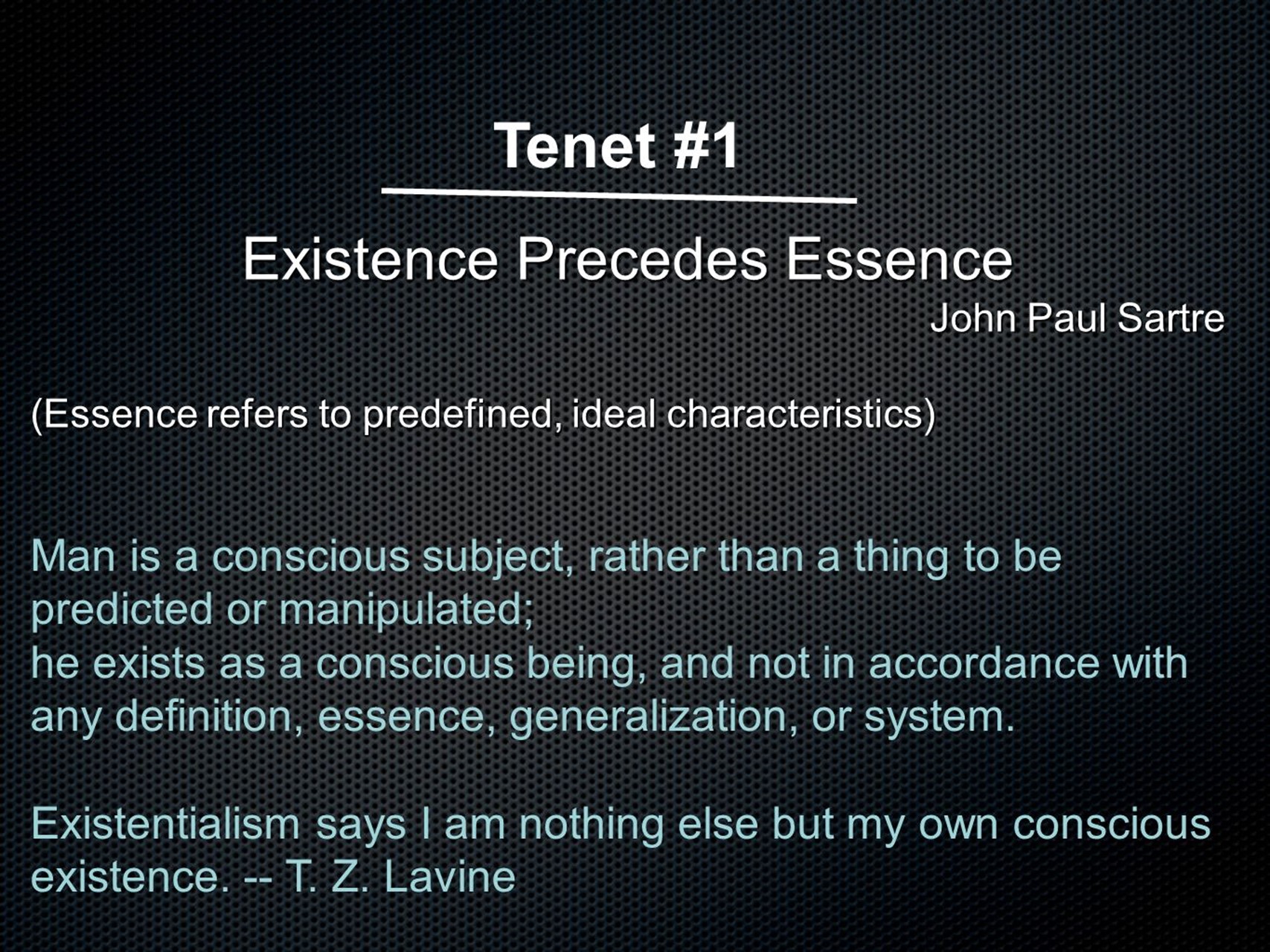
In my view, ‘ the existence of a man always precedes the essence of the man’. For that reason, the biological basis of the man’s existence must be identified to define the living entity called man. The natural event called ‘death’ precedes the natural event called ‘birth’ which heralds the arrival of newborn Life. The newborn always arrives after several programmed cellular death events.

Whole Dude – Whole Education: Michigan Medicine asks, “How many years you have spent in the School?” I ask Michigan Medicine and University of Michigan to share its educational experience and publish its Theory of Man. The Rudolf-Rudi Connection Supports the Doctrine of Static Taxonomy of Immutable Species

The man’s existence in any condition, good health or ill-health, at any age, at any given time and place, depends upon Divine Providence characterized as Mercy, Grace, and Compassion (Sanskrit. Krupa) of LORD God Creator. The man does not exist in the natural world because of his physical and mental work. The man needs input of matter and energy, from an external source, from the moment of conception to the conclusion of his entire life journey. The man’s existence is always conditioned as he cannot regulate, control, operate, rule, or govern either internal, or external factors that determine the fact of his existence.

The Medical Science fails to define the term ‘health’ for it fails to define the term ‘man’. To attach meaning to health, I must attach meaning to the word called ‘man’. I categorically inform Michigan Medicine and University of Michigan not to withhold their educational experience as a professional secret.

Whole Dude – Whole Education: Michigan Medicine asks, “How many years you have spent in the School?” I ask Michigan Medicine and University of Michigan to share its educational experience and publish its Theory of Man. The Rudolf-Rudi Connection Supports the Doctrine of Static Taxonomy of Immutable Species

The man represents a biological or biotic community of trillions of individuals; independent, living cells with individuality. The Man is also a natural host to trillions of microbes. Human life must be defined in terms of biotic interactions; both intraspecific, and interspecific biotic interactions.

I ask Michigan Medicine and University of Michigan to apply the principles of Clinical Medicine not only to diagnose ill health but also to diagnose good and perfect or ‘Whole Health’ for the man is created by entity called God who is always Perfect and Whole.

Theory of Man–The Spectrum of Seven Colors

Whole Dude – Whole Education: Michigan Medicine asks, “How many years you have spent in the School?” I ask Michigan Medicine and University of Michigan to share its educational experience and publish its Theory of Man. The Rudolf-Rudi Connection Supports the Doctrine of Static Taxonomy of Immutable Species

My ‘Theory of Man’ defines the Man as the ‘Spectrum of Seven Colors’. Isaac Newton could easily verify his ‘Theory of Light’ by conducting his critical experiment in which he used two prisms to breakdown and to reconstitute white light rays. In case of Man, such experimental verification is not possible as Science does not have the capability to breakdown the man and reconstitute him. However, Science provides verified information about the building blocks of life and about basic living functions such as ‘Metabolism’ which essentially involve making, breaking, and repairing ‘Molecules of Life’.

Whole Dude – Whole Education: Michigan Medicine asks, “How many years you have spent in the School?” I ask Michigan Medicine and University of Michigan to share its educational experience and publish its Theory of Man. The Rudolf-Rudi Connection Supports the Doctrine of Static Taxonomy of Immutable Species

Man – The Spectrum of Seven Colors

Whole Dude – Whole Education: Michigan Medicine asks, “How many years you have spent in the School?” I ask Michigan Medicine and University of Michigan to share its educational experience and publish its Theory of Man. The Rudolf-Rudi Connection Supports the Doctrine of Static Taxonomy of Immutable Species

For purposes of defining Man the concept of Light Spectrum is useful. Light Spectrum appears continuous with no distinct boundaries.

Whole Dude – Whole Education: Michigan Medicine asks, “How many years you have spent in the School?” I ask Michigan Medicine and University of Michigan to share its educational experience and publish its Theory of Man. The Rudolf-Rudi Connection Supports the Doctrine of Static Taxonomy of Immutable Species

The ‘Singularity’ called Man can be easily witnessed at conception at the stage of Single, fertilized Egg Cell.

Whole Dude – Whole Education: Michigan Medicine asks, “How many years you have spent in the School?” I ask Michigan Medicine and University of Michigan to share its educational experience and publish its Theory of Man. The Rudolf-Rudi Connection Supports the Doctrine of Static Taxonomy of Immutable Species.Theory of Man precedes the Theory of Health. Spirituality Science. Spiritual Functions of Human Ovum or Egg Cell. Is it conscious?

The study of Man during all stages of his physical existence provides information about Man’s Seven Dimensions or Seven Colors. These are, 1. The Physical, Mortal Being, 2. The Mental Being, 3. The Social Being, 4. The Moral Being, 5. The Spiritual Being, 6. The Created Being, and 7. The Rational Being. Science called Cell & Molecular Biology can account for biomolecules of life and yet do not explain or account for the constitution of Man as a Rational Being.

Whole Dude – Whole Education: Michigan Medicine asks, “How many years you have spent in the School?” I ask Michigan Medicine and University of Michigan to share its educational experience and publish its Theory of Man. The Rudolf-Rudi Connection Supports the Doctrine of Static Taxonomy of Immutable Species.Theory of Man precedes the Theory of Health.

Whole Dude – Whole Substance

Whole Dude – Whole Substance: Greek Philosopher Aristotle, Father of Science brings Religion, Philosophy, and Science to come together to know and understand Man as a Whole Person with Form and Matter. Whole Dude comprises of Whole Substance and is not divisible into Body and Soul.

Aristotle states that corporeal substances are composite of two principles; 1. Form, and 2. Matter. What is called Form is actuality, and what is called Matter is potentiality.

We often tend to understand the actuality of human form without giving much attention to the potentiality of its matter or its living substance. Aristotle did not regard the human body and soul as  separate as the soul is merely a set of defining features. He states that the structure and behavior of things contribute to their individual being and function. In his opinion, “There is a science which investigates Being as Being and the attributes which belong to Being in virtue of its own nature.”

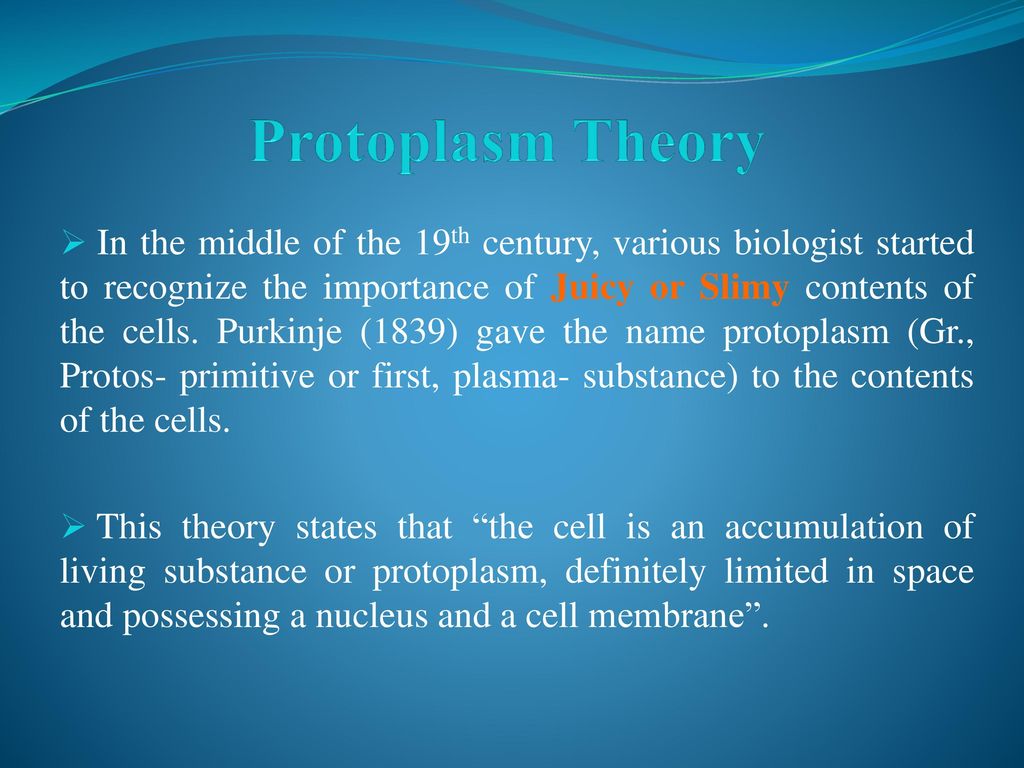
Whole Dude – Whole Substance: In the middle of the 19th century, various biologist started to recognize the importance of Juicy or Slimy contents of the cells. Purkinje (1839) gave the name protoplasm (Gr., Protos- primitive or first, plasma- substance) to the contents of the cells. This theory states that the cell is an accumulation of living substance or protoplasm, definitely limited in space and possessing a nucleus and a cell membrane .

Whole Dude or Whole Person is composed of Whole Substance and that Substance is of Spiritual Nature. Hence, Whole Dude or Whole Person is not divisible into Body and Soul. Whole Dude or Whole Person is not an embodied Soul and is a Living Soul.

Whole Dude – Whole Substance: Whole Dude or Whole Person is composed of Whole Substance and that Substance is of Spiritual Nature.

Whole Dude – Whole Self

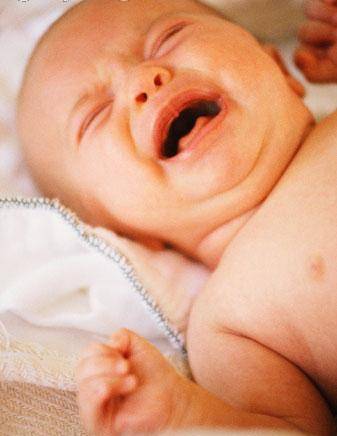
Whole Dude- Whole Self: SPIRITUALISM : THE UNITY OF MAN IN BODY, MIND, AND SOUL. Spiritualism describes the relation between a changing object and its unchanging spiritual nature. This baby which started its existence as a single, fertilized Egg-Cell will continue to grow and develop undergoing a series of changes in physical appearance or Identity and yet will retain the same Individuality during the entire course of Life’s Journey.

“EKAM EVA ADVITIYAM” – This statement in Sanskrit language is from Chandogya Upanishad (6:2:1) and it means: “I, one alone and there is no second.” The original intent of this statement is that of seeking the unity of the Objective Reality of Man known as ‘ATMA’ (the Individual Soul) and the Ultimate Reality known as ‘PARAMATMA’ or Supersoul. There is no Duality between the two and there is no disunity between Man and God.

However, God is not an object which is under Man’s control and the views about God are subjective opinions. I am quoting this statement to find the Unity of Man in body, mind, and soul. Man’s greatest need is not only to know the world around him but also to know himself better. Man must understand what it is to be a substance and what it is to exist. We need to establish knowledge about Man on a firm basis and the information it provides must be tested for its accuracy and consistency with external reality. Dr. William James in his book, The Principles of Psychology, has observed: “True ideas are those we can assimilate, validate, corroborate, and verify.” The separation of man into body, mind, and soul is not supported by scientific study of man.

Whole Dude – Whole Self: It is impossible to describe the concept called “SOUL”, or “SPIRIT” if it is never associated with its human body. If “SOUL” is defined as the vital, animating, Life Principle, Spiritualism demands the existence of a Living Soul or Spirit.

Man comes into existence from a single fertilized Egg Cell. This Man cannot be separated into two distinct entities like insentient material being and sentient spiritual being. The physical being and the conscious being are one and the same. The division of Man into a physical substance and a thinking substance or that of a physical body and a thinking mind is not valid as they have no independent existence of their own. The division of Man into physical body and an immortal, non-material or immaterial Soul is not also valid as the Soul is described as the vital, animating principle that is the chief characteristic of Life.

Whole Dude – Whole Self: The Egg Cell is the source of Man’s Life. The Spiritual Nature of Man could be discovered and could be described from the biological properties, characteristics and nature of the corporeal substance found in the Egg Cell.

The Spiritual Nature of Man is not a mental function. The Spiritual Nature of Man could be discovered and could be described from the biological properties, characteristics and nature of Man’s corporeal substance found in the fertilized Egg Cell. This substance is Conscious. This Single Egg Cell grows, divides, develops, and builds the cells, the tissues, and the organ systems that constitute the Human Individual. The Spiritual Nature of the substance present in the Single, fertilized Egg Cell brings the functional unity of all the cells, tissues, and organ systems to establish the Physical Reality called Man.

Whole Dude – Whole Self: Human Embryo Implantation at about six days after Conception. The Single, fertilized Egg Cell and the Human Embryo that develops from it is Conscious of its existence reflecting its Spiritual Nature.

 About six days after Conception, the developing Human Embryo implants itself into maternal tissues by establishin an anatomical connection called Placenta. The implantation of Human Embryo does not involve any human thought and the Mother has no cortical awareness of the fact of implantation. The implantation demonstrates the Consciousness of the Human Embryo which is aware of the fact of its own existence. Spiritualism defines the internal, mutually beneficial relationship, partnership, association, and connection between the cells, tissues, and organ systems for the benefit of the Human Person who exists because of their living functions. The Subject that is born from the Single, fertilized Egg Cell is always a new, original, distinctive, unique, one of its own kind of Object that exists because of the innate Spiritual Nature of the material substance. Being born relates Man to the Subjective and Objective Realities of his biological existence. There is structural and functional unity between Man and his Body, Mind, and Soul. There is no Life, and there is no Human Existence if these entities are separated. Spiritualism is the potency that brings Man’s Essence and Man’s Existence to come together to provide Man the Subjcetive and Objective Reality of his own biological existence in the physical, and material world. Man is not an embodied Soul and Man is a Living Soul. 

What is Man?

Whole Dude – Whole Self: This painting the Vitruvian Man (c. 1492) by Leonardo da Vinci displays a spirit of scientific inquiry. What is Man? The understanding of human nature will help to promote man’s well-being.

I will be repeatedly asking this same question in several of my blog posts on the subject of Spiritualism. I want to remind myself that the motivation for asking this question comes from a statement expressed in Sanskrit language: “Sarvesham Swastir Bhavatu”, a statement which seeks the well-being of all humans, of all races, of all cultures, of all religions, and of all nations. The meaning and purpose of human life are affected by whatever we think is the real or true nature of man. It is more important to recognize that our efforts to support the well-being of man would require correct understanding and knowledge of the real or true man.

Self and The Knowing-Self:

Whole Dude – Whole Self: FACIAL RECOGNITION-IDENTITY AND INDIVIDUALITY-THE SELF and THE KNOWING-SELF: Identity describes the external reality of man and it helps to know the man as a specific Individual. This Individual exists with unchanging Individuality which describes the internal reality of man. Identity provides awareness of the Self and Individuality involves the Knowledge of the Knowing-Self.

To know about Man, we can observe the various activities that describe the Man. The Physical being known as Man is known from the living functions performed by the tissues and organ systems of his body. This Physical being has Identity or identifying features such as age, gender, race, ethnicity and other biometrical information to know the person as a specific Individual. Factors like language, religion, culture, education, social occupation, nationality, and sexual orientation are also used to describe the Man. The Mental being known as Man is described from mental functions such as intellect, thoughts, moods, feelings, cravings, and self-pride. Man, the Social being is known from his social interactions and much of human action and behavior involves interacting with other individuals present in his social environment. Man, the Moral being is known from the choices he makes in the performance of his actions where discernment plays a role to distinguish right from wrong, and good from evil. Man, the Spiritual being is known from the nature of his existence seeking peace, harmony, and tranquility within himself and with others in his environment and community. I designate the term ‘SELF’ to describe Man as a Physical, Mental, Social, Moral, and Spiritual being. I have also observed that the Physical being is in reality consists of about 100 trillion individual living cells that show complex structural differentiation and functional organization. The corporeal substance is of spiritual nature and hence Man, the Physical being has no choice other than that of existing as a Spiritual being. The question is not that of, How Man knows himself? The question that I would like to ask is, How does the body know the Identity of the Man who lives? If the body knows its Owner, there is an anatomical structure that is associated with the function called Knowing-Self.

The Function of Knowing-Self:

Whole Dude – Whole Self: Self and The Knowing-Self

The Reticular Formation (RF) is located in the central Brain Stem and extends from Medulla to Thalamus. It consists of more than about 100,000 Brain Stem nuclei. It is estimated that a single neuron in this network may have synapses with as many as 25,000 other neurons. The RF has connections  with almost all other parts of the Central Nervous System including Spinal Cord, Cranial Nerve nuclei, Cerebellum, Hypothalamus, Thalamus, Corpus Striatum, Limbic System, and Cerebral Cortex. Thus, the RF helps to coordinate and integrate actions of different parts of the Central Nervous System such as 1. regulation of muscle and reflex activity, 2. central transmission of sensory impulses, 3. respiration, 4. cardiovascular responses, 5. behavioral Arousal, and 6. Alert/Sleep Cycle.

Whole Dude – Whole Self: Self and The Knowing-Self.

There are two distinct aspects of human Consciousness namely, 1. the Capacity for Consciousness and 2. the Content of Consciousness. When Consciousness is viewed as a psychological or strictly as a mental function, it is represented by the Content of Consciousness called Cortical Awareness which is a function of the Cerebral Cortex. When Consciousness is understood as a biological function that includes the maintenance of vital functions like respiration, and circulation apart from various homeostatic mechanisms to preserve a constant internal environment, it is represented by the aspect of Capacity for Consciousness.

Whole Dude – Whole Self: Self and The Knowing-Self

The Knowing-Self is located in the Reticular Formation of the Brain Stem and its functions are of critical importance in the clinical diagnosis of Brain Death. During Life, the cells, tissues, and various organ systems of the human body work together for the benefit of ‘SELF’ which is known and recognized by this Knowing-Self.

Man is a Mortal Being:

Man’s greatest need is not only to know the world around him but also to know himself better. Man must understand what it is to be a substance and what it is to exist. Man is a physical being or thing with matter and form. The corporeal body of man is composite of two principles; matter, and form. What is called matter is potentiality, and what is called form is actuality. The corporeal substance called protoplasm becomes actuality and is recognized as a living person because of the uniqueness of its genome that operates its living functions and defines its size, shape, color, and external form or morphological appearance. However, life comes into existence only when matter or substance has the ability to acquire energy from its external environment. The human being comes to life when his corporeal substance uses its potential ability and power called ‘Nutrition’ to acquire energy and material from its environment. Life begins with fertilization, the union of sperm with egg cell, and this event called conception proceeds to develop a human being after an important event called implantation. The life journey after conception continues if there is a connection between the energy seeking embryo and its maternal energy provider. To exist means that the substance is maintaining a relationship, a partnership, a connection, or association with its source of energy. Man leads energy dependent existence deriving energy and material from nature which supports other living forms with a similar corporeal substance called protoplasm. The mortality of man must be understood as the dissolution of man’s physical form. The dissolution of living man into non-living molecules and physical elements would not alter that potentiality of protoplasm to acquire energy and material to create its own substance. Things in Nature change with Time; but what is called Nature remains unchanged even under the influence of Time. As per The Laws of Conservation of Mass and Energy as described in classical Physics, mass or energy remain constant. The potentiality of living substance to acquire energy and material to form its own kind of substance has remained unchanged or unaffected by major natural calamities and other cataclysmic events. Life forms perish and yet life continues as new life forms. During the billions of years of existence, planet Earth has experienced several minor, and major Extinction Events described in its geological history. The Science of Paleontology offers scientific evidence to support an argument based upon theoretical and practical grounds to propose that the substance called protoplasm could be eternal, immovable, immutable, and indestructible. At a fundamental level, it could be stated that man is a mortal or materialistic being who derives his physical form because of its association with an imperishable substance. During any stage of his existence, the form called man cannot be separated from the eternal nature of its substance.

Identity and Individuality:

Whole Dude – Whole Self: The Eternal Reality of Soul’s Immortality is described in The Bhagavad Gita, Chapter II, verse 12. Lord Krishna spoke to the Pandava Prince Arjuna :”Na tv evaham jatu nasam na tvam neme JanadhipaH;Na chaiva na bhavisyamaH, sarve vayam ataH param.” For each of us our Individuality existed in the past and our Individuality will continue in the future without interruption. Certainly, never at any time did I not exist, nor you, nor all these Kings and certainly never shall we cease to exist in the future.

The issue of spirituality, the nature of Soul and consciousness must be explored in the context of arriving at an understanding of man’s Identity and Individuality.

If man is viewed as an association of trillions of cells, we need to know the Identity of that Subject who lives because of the functions of the trillions of cells. The purpose of consciousness at cellular level is to foster functional unity of the multicellular organism and to establish it as an Individual. In a multicellular organism, cells have short lives as individuals. The Subject or the whole organism has a life span of its own and it has effects on individual cells. Multicellularity is accompanied by adaptive subordination of all cells to the requirements of the organism as a whole. To achieve proper numerical balance between functionally related cell groups, the death of many cells is necessary for other cells to reach maturity. This programmed cell death plays an important role in embryological development. Such programmed cell death events are essential if the organism as a whole is to develop its normal final form. Waves of genetically driven cell deaths are critical to the proper modeling of organs and organ systems.

We need to know and understand that death of cells is a must to establish the Identity and to sustain the Individuality of the human being. The dying process helps man to understand his Individuality. The Individuality is preserved while death is a daily event at the cellular level. The phenotype or the morphological appearance of the human Subject undergoes constant change during the Life journey and yet the Individuality remains unchanged. We recognize the death of this human Subject when his Soul departs from his body. Soul may be stated as an entity which is regarded as being immortal or spiritual part of the person. The Spirit of a dead person generally refers to a principle separate from the body and leading an existence of its own. If Soul is viewed as a Non-thing or Nothingness, it comes into the world of existence by entering the physical being at its conception which becomes conscious or aware of its existence. This consciousness has also existed in a previously existing Living Egg Cell which is the Mother of Life, Energy, and Knowledge.

Consciousness by its very nature is immortal, it is eternal, and it has no birth or death. We recognize the arrival and departure of the new product during the Life-Death continuum where the Individuality is unaffected by the changes that are caused by the powerful influence of Time.

Whole Dude – Whole Self: The Rudi-Grant Connection examines the complex issues of identity and individuality in the multicellular human organismTHE NEWBORN BABY ALWAYS ARRIVES INTO THE WORLD WITH AN ORIGINAL, UNIQUE, DISTINCT, AND ONE OF ITS OWN KIND OF GENOME THAT HAS NEVER EXISTED IN THE PAST AND WILL NEVER EXIST AGAIN IN THE FUTURE.