Time to Trust All-Powerful God – The Fall of Evil Red Empire
For I trust in All-powerful God, I can expect ‘The Fall of Evil Red Empire’ as per the prophecy shared by Isaiah, Chapter 47, and Revelation, Chapter 18.
US President Donald Trump and China’s President Xi Jinping could be among the ‘Most-Powerful’ men in the world. However, I will not recognize any mortal human being as “All-Powerful.”
For I trust in All-powerful God, I can expect ‘The Fall of Evil Red Empire’ as per the prophecy shared by Isaiah, Chapter 47, and Revelation, Chapter 18.
For I trust in All-powerful God, I can expect ‘The Fall of Evil Red Empire’ as per the prophecy shared by Isaiah, Chapter 47, and Revelation, Chapter 18.
Rudra Narasimham Rebbapragada
Doom Dooma Doomsayer
For I trust in All-powerful God, I can expect ‘The Fall of Evil Red Empire’ as per the prophecy shared by Isaiah, Chapter 47, and Revelation, Chapter 18.
TIME FOR TRUMP TO TEST THE ALL-POWERFUL XI JINPING
By Henry M. Paulson Jr., – OPINION, THE WASHINGTON POST
For I trust in All-powerful God, I can expect ‘The Fall of Evil Red Empire’ as per the prophecy shared by Isaiah, Chapter 47, and Revelation, Chapter 18.
President Trump and Chinese President Xi Jinping. (Alex Brandon/Associated Press)
Henry M. Paulson Jr., treasury secretary from 2006 to 2009, is chairman of the Paulson Institute and author of “Dealing With China: An Insider Unmasks the New Economic Superpower.”
Many have crowned Chinese President Xi Jinping the most powerful man in the world following the 19th Chinese National Congress of the Communist Party. And, indeed, Xi is a dynamic leader who is transforming China. He has swiftly consolidated his authority to drive an ambitious domestic and international effort to establish China as a modern superpower.
Our preoccupation with Xi’s grand ambitions, however, has led us to neglect the scope of the challenges he and his country face. Simply put, ambition and power are not a substitute for deep and enduring reform, and a leader is only as powerful as the country he leads. As Xi knows all too well, China has serious and growing vulnerabilities. When President Trump visits China next week, he may well find he can leverage these emerging dynamics to advance U.S. interests.
In recent years, Xi has moved to address these challenges with a bold strategy aimed at consolidating the tools he needs to govern. Although he has crafted ambitious economic reform policies, he could not assure that they were implemented on a consistent basis in the provinces. And some of his most important and difficult goals have not been attempted.
During his first term, Xi tightened and made sweeping reforms to the Chinese legal system; took control of, cleaned out and started professionalizing the military; and restructured, centralized and, through an anti-corruption campaign, moved to shore up the domestic credibility of the Communist Party as the country’s primary means of governance.
As the party and the central government take power from the provinces, he has begun strengthening the Beijing bureaucracy’s capacity to manage a nation of 1.4 billion people. At the same time, he has neutralized his opposition and positioned trusted advisers to help implement his agenda.
Thus, Xi enters his second term better able to govern, but serious challenges stand in his way. He faces four major economic risks: overreliance on debt to finance growth; a failing state-owned sector; excess capacity across a range of industries, particularly steel; and the real prospect that markets will be closed to China in the United States and elsewhere if the country does not move more quickly to open its economy to foreign competition.
Xi must address China’s unsustainable accumulation of sub-national debt — much of it created by hundreds of thousands of failed firms kept alive by the state to preserve jobs. China won’t be able to grow out of its debt problem.
If China is to avoid a hard landing, it will need to stem the flow of credit and accept slower growth. The government has indicated its intention to do that, but it will require significant political will. Importantly, it must subject failing firms to the discipline of the marketplace. The longer China waits to deal with these problems the riskier and costlier it will get.
Xi will be increasingly pressed by the United States and other major economies to demonstrate that his government intends to uphold its pledge to lift restrictions blocking foreign competition. And he drags his feet at his own peril because the United States and others are reexamining their open-door policies and demanding greater reciprocity in China. This new attitude will put pressure on China just as Xi most needs the world’s export and investment markets. But competition from the private sector is ultimately the best way for him to address the inefficiencies with China’s state-owned enterprises and its massive overcapacity in steel, which, when exported, will increasingly lead to trade disputes.
Xi, however, seems undaunted and remains confident he can manage all the challenges in front of him. Trump and Xi have developed a good personal relationship. Xi’s new consolidation of power — and ability to use it now to get difficult things done — means Trump may have a greater opportunity on his trip to achieve breakthroughs in the security and economic arenas.
Progress on the most important economic issues has potential to build the mutual trust that would make it easier to achieve what is by far our top priority: a denuclearized Korean Peninsula. But no nation should trade away its vital interests; North Korean and economic negotiations should proceed at their own pace.
Trump should be strategic and forceful in defense of America’s industries of the future. It is essential that he fight to open markets and achieve a level playing field in sectors where the United States is most competitive — technology, financial services, the Internet, agribusiness, health care, environmental goods and services, autos, and movies. This has the potential to benefit both countries, particularly in the financial services, where China’s underdeveloped financial markets would clearly benefit from some world-class participants.
The United States should also focus on expanding our economic relationship with China to include direct investment, which creates U.S. jobs and ties our economies together in enduring and positive ways. Without increased market access, the path we are on could lead to important parts of the global economy being walled off from competition and trade. This risks hurting both the United States and China, which are the biggest beneficiaries of a rules-based economic order.
Xi’s new platform presents risks for the United States in an era in which there will be increasing security and economic competition. But it also has the potential for further collaboration with a leader who now has greater ability to deliver. It has always been as big a risk to overestimate China’s power as it is to underestimate its potential. Now the same could be said of Xi. Trump should test Xi’s new position of power by pressing China hard for movement on U.S. priorities.
For I trust in All-powerful God, I can expect ‘The Fall of Evil Red Empire’ as per the prophecy shared by Isaiah, Chapter 47, and Revelation, Chapter 18.For I trust in All-powerful God, I can expect ‘The Fall of Evil Red Empire’ as per the prophecy shared by Isaiah, Chapter 47, and Revelation, Chapter 18.
Tibet Awareness – Communist China on a Slippery Slope
By adamantly refusing to consider the generous proposal called ‘Middle Way” offered by His Holiness the 14th Dalai Lama, Red China placed herself on a slippery slope and no one can save the Evil Red Empire from downfall.
By adamantly refusing to consider the generous proposal called ‘Middle Way” offered by His Holiness the 14th Dalai Lama, Red China placed herself on a slippery slope and no one can save the Evil Red Empire from downfall.
Rudra Narasimham Rebbapragada Ann Arbor, MI 48104-4162, USA Special Frontier Force-Establishment 22-Vikas Regiment
By adamantly refusing to consider the generous proposal called ‘Middle Way” offered by His Holiness the 14th Dalai Lama, Red China placed herself on a slippery slope and no one can save the Evil Red Empire from downfall.
September 12, 2015
After 50 years in Tibet, China sees no ‘middle way’
Beijing’s Tibet policies point to legacy of distrust of religious groups
Thousands of people gather in front of the iconic Potala Palace in the regional capital Lhasa on September 8, 2015, for an event billed as marking 50 years since the founding of the administrative area of Tibet. China on September 8 stressed Communist party control over Tibet, with a senior official denouncing the Dalai Lama at a giant ceremony condemned by rights groups. AFP PHOTO CHINA OUT
Thousands of people gather in front of Lhasa’s Potala Palace on Sept. 8 for an event billed as marking 50 years since the founding of the administrative area of Tibet. (Photo by AFP)
ucanews.com reporters, Beijing and Hong Kong
September 11, 2015
Late on Aug. 27, frantic villagers tried to extinguish flames engulfing 55-year-old mother Tashi Kyi. By 3 a.m., on Aug. 28, she was dead. Tashi self-immolated after authorities bulldozed houses that failed to provide the right paperwork in a small Tibetan village in China’s Sangchu County.
Ten other Tibetans in Sangchu have self-immolated over the past three years, including Tashi’s 18-year-old nephew, Sangay Tashi. In 2012, Sangay called for the return of Tibet’s spiritual leader, the Dalai Lama, before setting himself ablaze.
“His self-immolation was also an act of protest against the actions and brutalities of the Chinese government,” Sangay’s brother, Jamyang Jinpa, wrote in a letter published online in early September.
Tibet has been both the testing ground and the blueprint for Beijing’s strategies for dealing with religious minorities in other parts of the country — from Muslim Uighurs, to its long-running campaign against Christianity. And as China marks 50 years of governance in Tibet this week, Beijing continues to ignore complaints over its heavy-handed rule.
On Sept. 8, Beijing staged a huge set-piece anniversary event outside Lhasa’s Potala Palace — the former residence of the Dalai Lama. As part of the event, a 65-member government delegation warned of an even tougher stance against Tibet’s exiled spiritual leader.
“Tibet has entered a new stage of sustained stability after people of all ethnic groups together fought against separatism, successfully foiling attempts by the 14th Dalai Lama group and international hostile forces,” Politburo member Yu Zhengsheng said in a speech at the ceremony where he dished out gifts, including electric blenders for making Tibetan yak butter tea. All week, the Communist Party has presented a positive, unified message on Tibet.
Yu spoke of guaranteeing religious freedom. A new government white paper issued on Sept. 6 offered assurances that the Tibetan people would have the right “to participate equally in the management of state affairs”.
State broadcaster CCTV screened a documentary juxtaposing Tibetan children studying in modern classrooms with the region’s pristine, snow-capped landscape.
And a new museum exhibition, opened in Lhasa on Sept. 7, which displayed photos of development projects and one key economic statistic from Beijing: gross domestic product multiplied almost 300 times in Tibet since the Communist Party took over in 1965. GDP was valued at 92 billion yuan (US$14.4 billion) last year.
By adamantly refusing to consider the generous proposal called ‘Middle Way” offered by His Holiness the 14th Dalai Lama, Red China placed herself on a slippery slope and no one can save the Evil Red Empire from downfall.
Muslim Uighur men walk toward a mosque in Kashgar, in China’s western Xinjiang region. China’s strategy for dealing with Tibetans is reflected in its treatment of other religious groups, including Muslims and Christians. (Photo by Greg Baker/AFP)
Opaque development
Beijing has long justified its heavy-handed development in Tibet as a program that has raised living standards. But separating fact from fiction in Tibet has been difficult. Access to Tibet is restricted — foreigners require special permits to travel to the area and are required to stay in groups, as in North Korea. And foreigners are not allowed in at all during March, the anniversary of one of many Tibetan uprisings under Communist Party rule.
After 50 years of Chinese rule, it’s still “impossible” for outsiders to gain independent access to Tibet, said Michael Buckley, one of just a handful of overseas journalists to spend extended periods there.
“[You are] still blocked off from contact with Tibetans unless you have an interpreter and it’s highly risky for Tibetans to be interviewed,” he said.
Buckley’s book, “Meltdown in Tibet,” published in December 2014, paints a damning picture of the impact of China’s development on the fragile environment, contradicting Beijing’s upbeat narrative.
While party officials speak of the schools built-in Tibet, Buckley counters that China spent more on the railway line to Lhasa completed in 2006 than on the entire health care and education budgets since invading Tibet in 1950.
“The railway is now expanding east and west of Lhasa,” said Buckley. “These railways enable large numbers of Chinese migrant workers to come into Tibet, and enable large-scale exploitation of Tibet’s resources economically.”
Finding out whether the slew of hydropower dams and copper, iron and lead mines built in Tibet in recent years have benefited normal Tibetans is, again, challenging. Tibet Mineral Development Company and China Gold International Resources Corp — both of which operate mines in Tibet — did not respond to emailed questions.
Similarly, campaign groups have complained that the more than one dozen Canadian mining companies operating in Tibetan areas have failed to give feedback on how their operations contribute to the livelihoods of Tibetans.
Often, only when tragedies occur has it has been possible to pin down how many ethnic Tibetans work on the big infrastructure projects that dominate Beijing’s GDP figures for the region. Of 83 miners killed in a huge landslide in March 2013 at a site operated by a state-owned company, just two were ethnic Tibetans. The rest were Han Chinese. Anecdotal evidence suggests infrastructure projects in the world’s highest region have devastated the environment, as noted in Buckley’s book. But again, few independent studies exist separating China’s impacts from the effects of global pollution.
Changing landscape
A Chinese priest who declined to be named for security reasons said the negative impacts on Tibet’s environment were evident on repeat visits in recent decades. “When I visited a Tibet county above 5,000 feet [1,500 meters] two years ago, it had changed so much. The snow on the mountain had melted and the water level had dropped,” the priest said.
Like many visitors to Tibet, he noted that Chinese development remains dominated by projects that destroy the environment, raising tensions with ethnic Tibetans who consider the landscape sacred, a part of their Buddhist faith. In the half-century that China has ruled Tibet, similar policies have been instituted in cycles targeting ethnic minorities and religions.
Elsewhere, the government has long suppressed the Muslim Uighur minority. A “strike-hard” campaign initiated in May has triggered a period of intense persecution against Uighurs. In Zhejiang province, Christians have been devastated by a two-year cross-removal campaign. While the actions against Zhejiang Christians have been pushed by local authorities, many observers believe such a long-standing campaign must have tacit approval from Beijing.Taken together, such actions underscore the Communist Party’s fear of organized religion as a potential alternative power base to the party itself. The severity of these actions has depended on the threat level perceived by Beijing, notes Fenggang Yang, director of Purdue University’s Center on Religion and Chinese Society. “At the minimum, the Chinese Communists in their gut have deep suspicion and distrust in religious leaders even if they seem to be amicable toward religious believers and leaders during the good times,” he said.
By adamantly refusing to consider the generous proposal called ‘Middle Way” offered by His Holiness the 14th Dalai Lama, Red China placed herself on a slippery slope and no one can save the Evil Red Empire from downfall.
Exiled Tibetan spiritual leader the Dalai Lama delivers a lecture in Sydney on June 8. (Photo by Saeed Khan/AFP)
Direct control For Tibetans, this week’s anniversary marking Chinese rule only brings more uncertainty. In its Sept. 6 white paper, Beijing rejected a “middle way” approach, put forward by the Dalai Lama, which proposed more autonomy for Tibet.
While sidelining Tibet’s exiled spiritual leader, Chinese authorities have further eroded religious freedoms, said Tsomo Tsering, director of the Tibet Center for Human Rights and Democracy in Dharamsala, northern India.
“It’s ridiculous. Sometimes Tibetans will keep images of the Dalai Lama, and the simple act of keeping pictures of their own spiritual leaders is criminalized,” said Tsomo, who works with informants on the ground in Tibet.
Since 2011, authorities have replaced members of monastery management committees with officials who work directly for the government. Small police stations have been built inside some monasteries. This year, authorities ordered all Buddhist monasteries to fly Chinese flags and display pictures of party leaders. “The problem is that the whole of religion is now directly controlled by the Chinese government,” Tsomo said.
By adamantly refusing to consider the generous proposal called ‘Middle Way” offered by His Holiness the 14th Dalai Lama, Red China placed herself on a slippery slope and no one can save the Evil Red Empire from downfall.
Tibet Awareness – A New Model for US-China Relations
Whole Sin – The Model for Great Power Relations: Red China is on a slippery slope and marching towards her self-destruction which no other nation can stop or intervene to help her.
Red China is on a slippery slope and marching towards her self-destruction which no other nation can stop or intervene to help her.
Whole Sin – The Model for Great Power Relations: Red China is on a slippery slope and marching towards her self-destruction which no other nation can stop or intervene to help her.
Rudra Narasimham Rebbapragada Ann Arbor, MI 48104-4162, USA Special Frontier Force-Establishment 22-Vikas Regiment
Whole Sin – The Model for Great Power Relations: Red China is on a slippery slope and marching towards her self-destruction which no other nation can stop or intervene to help her.
China seeks ‘new model’ for relations with US
CARRIE GRACIE CHINA EDITOR 21 September 2015 From the section CHINA
Whole Sin – The Model for Great Power Relations: Red China is on a slippery slope and marching towards her self-destruction which no other nation can stop or intervene to help her.
Image copyright Getty Images
Do you have expectations of this week’s summit between President Obama and President Xi? If so, I suggest you lower them.
The sombre fact is that despite the enormous range and complexity of the US-China relationship, it is becoming ever harder to manage. The smiles and ceremony of a 21-gun salute and state dinner will conceal gritted teeth and crossed fingers.
A game of brinkmanship is afoot and on cyber-hacking and contested atolls, it would need a reclamation project bigger and swifter than the one under way in the South China Sea for guest and host to find a piece of common ground to stand on.
But spin it another way and there should be something to celebrate.
Four and a half decades, five Chinese communist leaders, eight American presidents, and a transition from a world in which China is isolated and marginal to one in which it is increasingly able to meet the United States on equal terms.
And through it all, the US-China relationship has broadly held to the course that President Nixon set out in 1972 as he prepared to travel to Beijing to end two decades of enmity:
“The government of the People’s Republic of China and the government of the United States have had great differences. We will have differences in the future. But what we must do is to find a way to see that we can have differences without being enemies in war.”
Whole Sin – The Model for Great Power Relations: Red China is on a slippery slope and marching towards her self-destruction which no other nation can stop or intervene to help her.
Image copyright Getty Images Image caption Richard Nixon shares a toast with Chinese PM Zhou Enlai in Beijing in 1972 during the first visit by a US president to the People’s Republic of China
Forty-three years later an ambitious Chinese leader is coming for his first state visit in the opposite direction and the challenge is still the same. But now the stakes are even higher for this relationship and it has all the advantages of experience and proven resilience. What makes it so hard then?
‘Properly manage differences‘
Only last week, President Obama issued a blunt warning to China on cyber-hacking: “There comes a point at which we consider this a core national security threat… we can choose to make this an area of competition, which I guarantee you we’ll win if we have to.”
Only a scrambled visit by China’s security chief for what the White House described as “candid, blunt discussions” seems to have averted American sanctions.
Meanwhile, in the South China Sea, the latest satellite imagery from this month suggests that even during a summit countdown, Beijing is ready to defy American warnings and possibly even renege on its own promises to continue reclamation work to turn contested atolls into military outposts.
Is President Xi about to waste a huge opportunity? Ahead of the state visit he said: “Both sides must accommodate each other’s core interests, avoid strategic miscalculation, and properly manage and control differences.”
TIBET AWARENESS – UNITED STATES – CHINA RELATIONS. PRESIDENTIAL CANDIDATE DONALD TRUMP CLAIMED THAT CHINA IS STEALING JOBS.
Image copyright Getty Images Image caption Donald Trump has spoken of China stealing American jobs.
But he needs a much, much better speech writer if he is to get heard amid the US media frenzy of a presidential campaign and a papal visit. Already Republican candidates led by DonaldTrump are lining up to complain that China is stealing American jobs and some have said President Xi’s visit should be cancelled or downgraded. US public opinion is increasingly negative on China. President Obama told the media China’s peaceful, orderly rise is in the US’s interest and good for the world.
But President Xi urgently needs to reach out to American politicians and public to explain how it is in the US’s interest. A mix of reassurance, vision and rigour are required, and a measure of charm would no doubt help.
But with a schedule focused on closed-door sessions with big business and tightly choreographed photo opportunities with tame members of the American public, it looks as if President Xi has opted for a risk-averse strategy with minimal substance and candour.
Return to form
Don’t forget this is the man with the Chinese Dream, a plan for what he calls “the great rejuvenation of the Chinese nation”. Implicit is the argument that a great China is not a novelty but a return to form.
For most of the past 2,000 years, China’s economy has accounted for between a quarter and a third of world output and after traumatic shocks delivered by outsiders in the 19th and 20th Centuries, China is on track to overtake the US within the decade and regain its status as the world’s biggest economy.
Whole Sin – The Model for Great Power Relations: Red China is on a slippery slope and marching towards her self-destruction which no other nation can stop or intervene to help her.
Image copyright Reuters Image caption China wants a foreign policy that reflects its economic rise.
What’s more, China is intent on building military force and diplomatic clout to match its economic might. The swiftest, surest and cheapest way to all three is through US co-operation, and, sound and fury notwithstanding, it has come to count on that co-operation, at least in the economic sphere.
Without American help, how could China have become the world’s largest manufacturing and trading nation in such breathtakingly short order? Without American help how can China confront the daunting economic challenges it faces today?
But expect no warm speeches on that score from President Xi in Washington.
Model v dream
Deaf to American concerns about market access or technology theft, the Chinese narrative of the relationship presents a version of itself as a much-maligned partner, uncomplainingly creating wealth and bankrolling spendthrift American consumers. China does not export its ideology or send troops abroad, it points out.
President Xi’s preferred slogan for the relationship involves not a dream but a model. He raised it again on the eve of the summit, “the new model of great power relations”. This is shorthand for a future in which the US assists China’s inexorable advance in order to avoid the wars and convulsions which have accompanied the rise of other great powers in world history.
Seen from inside his model, the US record is far from benign. Instead, the US threatens China’s political system by pushing democracy, undermines its territorial integrity by supplying arms to Taiwan and schemes to contain China by surrounding it with American alliances and military deployments.
Whole Sin – The Model for Great Power Relations: Red China is on a slippery slope and marching towards her self-destruction which no other nation can stop or intervene to help her.
Image copyright Reuters Image caption Activists want President Obama to call on President Xi to halt the crackdown on Tibetans and Uighurs, and civil society in China.
In fact, part of Mr Xi’s dream is that a rejuvenated China will no longer need to put up with an American security order in Asia at all. But Americans are famous dreamers too.
And especially since China’s opening up and integration into the world economy, many have hoped that in Beijing they might one day have a democratic partner and “responsible stakeholder in keeping the world safe”.
Hostilities
That American version of the Chinese dream is an affront to Mr Xi’s own and as he goes through the protocol motions on the American red carpet, it is no exaggeration to say that he sees his hosts as outright ideological enemies.
He is at least as hostile to their politics as Chairman Mao was in the days of Nixon’s visit, probably more so because of the close and present danger those politics present in a globalised world.
In his first three years in power, President Xi has used anti-corruption and ideological campaigns to stiffen the sinews of the Communist Party and buttress one-party rule. He has censored the discussion of universal values like democracy and freedom of speech, locking up academics, human rights lawyers, civil society activists, journalists, Christians and bloggers.
President Barack Obama meets with His Holiness the Dalai Lama in the Map Room of the White House, Feb. 18, 2010. (Official White House Photo by Pete Souza) This official White House photograph is being made available only for publication by news organizations and/or for personal use printing by the subject(s) of the photograph. The photograph may not be manipulated in any way and may not be used in commercial or political materials, advertisements, emails, products, promotions that in any way suggests approval or endorsement of the President, the First Family, or the White House.
Image copyright The White House Image caption Chinese media has been critical of President Obama’s meetings with the Dalai Lama
Chinese propaganda teaches that the US is just the latest in a long line of hostile foreign powers trying to keep China down with a range of ideological weapons including meddling in Hong Kong and befriending the Dalai Lama.
President Xi makes no apology for his politics. “Shoes do not have to be the same but simply to fit the wearer,” he says. He is an authoritarian by conviction who believes China needs discipline and a sense of shared mission to realize its “great rejuvenation.” All of this is admittedly a difficult message to articulate for an American public. But some truths should be attempted for the sake of candour and connection.
President Xi could say that China still has enormous challenges at home and will avoid clashes with the US where possible. But that at the same time he wants a foreign policy that reflects the reality of China’s rise. And that on a range of issues, including rules for investment and climate change, he will co-operate with the US to the advantage of both countries.
He would be wise to attempt a much more nuanced and persuasive case on areas of competition like cybersecurity and the South China Sea. And he needs to show that he can listen and respond to the concerns of Americans. If not always with agreement, at least with understanding.
Now that would truly be powerful and might even presage a “new model of great power relations”.
Whole Sin – The Model for Great Power Relations: Red China is on a slippery slope and marching towards her self-destruction which no other nation can stop or intervene to help her.
Doomed American China Fantasy – The Cold War in Asia
DOOMED AMERICAN CHINA FANTASY – THE COLD WAR IN ASIA 1949 TO 2025. THE SPREAD OF COMMUNISM IN ASIA.
The Cold War in Asia is the product of Communism that spread from Europe to Asia. Nixon-Kissinger in 1971-72 initiated Policy of Doomed American China Fantasy without concern for lessons learned in Korean Peninsula and Vietnam. There is no hope and there is no future for America’s China Fantasy as Communist Party in China survives unchanged and unaffected by changing fortunes of the US Political Parties.
Rudra Narasimham Rebbapragada
DOOM DOOMA DOOMSAYER
Doomed American China Fantasy – The Cold War in Asia 1949 to 2025Doomed American China Fantasy – The Cold War in Asia 1949 to 2025Doomed American China Fantasy – The Cold War in Asia 1949 to 2025
AMERICA’S CHINA FANTASY
DOOMED AMERICAN CHINA FANTASY – THE COLD WAR IN ASIA 1949 TO 2025. THE SPREAD OF COMMUNISM IN ASIA.. President Nixon’s Doomed Journey to Peking in February 1972.
America has been operating with the wrong paradigm for China. Day after day, U.S. officials carry out policies based upon premises about China’s future that are at best questionable and at worst downright false.
The mistake lies in the very assumption that political change — and with it, eventually, democracy — is coming to China, that China’s political system is destined for far-reaching liberalization. Yet the Bush administration hasn’t thought much about what it might mean for the United States and the rest of the world to have a repressive one-party state in China three decades from now. For while China will certainly be a richer and more powerful country in 30 years, it could still be an autocracy of one form or another. Its leadership (the Communist Party, or whatever else it calls itself in the future) may not be willing to tolerate organized political opposition any more than it does today.
That is a prospect with profound implications for the United States and the rest of the world. And it is a prospect that our current paradigm of an inevitably changing China cannot seem to envision.
The notion of a China on the road to political liberalization has taken hold in the United States because it has served certain specific interests within American society. At first, in the late 1970s and the 1980s, this idea benefited the U.S. national-security establishment. At the time, the United States was seeking close cooperation with China against the Soviet Union, so that the Soviet Union would have to worry simultaneously about both countries; the Pentagon wanted to make sure the Soviet Union tied down large numbers of troops along the Sino-Soviet border that might otherwise have been deployed in Europe. Amid the ideological struggles of the Cold War, though, cooperation with China’s Communist regime was politically touchy in Washington. And so the notion that China was in the process of opening up its political system helped smooth the way with Congress and the American public.
In the 1990s, after the Soviet collapse, the idea of a politically changing China attracted a new constituency, one even more powerful than the Pentagon: the business community. As trade and investment in China became ever more important, American companies found themselves repeatedly beset with questions about why they were doing business with such a repressive regime. The paradigm of inevitable change offered multinational corporations the answer they needed. Not only was China destined to open up its political system, but trade, the theology held, would be the key that would unlock the door. It would lead to political liberalization and to democracy, with or without the support of the Chinese leadership. Accordingly, no one outside China needs to do anything, or even think much about the subject. Why bother to protest a crackdown or urge China to allow political opposition if you know that democracy, by the inexorable laws of history, is coming anyway?
The trouble is, the entire paradigm may turn out to be wrong.
What should the U.S. strategy be for dealing with China’s Leninist regime? If you ask our established political leaders, foreign-policy experts, or sinologists what the United States should do about China, you will undoubtedly get some version or another of this approach. It is called the strategy of “integration.”
The United States, the thinking goes, should try to integrate the Chinese leadership into the international community. It should seek to help China gain admission into the world’s leading international organizations. According to this logic, the nature of the Chinese regime will change after China becomes a member of international bodies such as the World Trade Organization, which it has now joined. China’s Communist Party leadership will gradually behave more like other governments; it will become more open in dealing with the Chinese people and with the rest of the world. Richard Haas, the president of the Council on Foreign Relations, has written of “the existing opportunity to integrate China into a U.S.-led world order.”
This strategy of integration dates back to the Clinton administration. In 1994, President Clinton abandoned his attempt to use trade as a lever for improving human rights in China, then needed to divert attention away from this embarrassing reversal. He did not wish to concede that that he had just downgraded the cause of human rights in China; instead, he sought a new, positive-sounding description of his policy. “Integration” gradually became the label of choice, invoked by the president and his top advisers in press conference after press conference. Integration became, above all, the justification for unrestricted trade with China. “We believe it’s the best way to integrate China further into the family of nations and to secure our interests and our ideals,” declared Clinton in one typical speech.
George W. Bush and his advisers, without ever admitting they were doing so, have perpetuated most of the essentials of Clinton’s China policy, including the avowed commitment to integration. When Secretary of State Condoleezza Rice gives a speech about China, she sooner or later calls for integrating China into the international community.
“Integration” has thus become another catchphrase like “engagement,” the earlier slogan for America’s China policy, which originated somewhat earlier, during the administration of George Bush Senior. With both words, however, the suggestion is the same: that is, with enough engagement, with sufficiently vigorous integration, the United States may succeed in altering the nature of the Chinese regime — although it is not clear exactly how this is supposed to happen. In a way, the American approach is a bit patronizing to China: It sounds as if the United States is a weary, experienced trainer bringing China to a diplomatic version of obedience school.
The fundamental problem with this strategy of integration is that it raises the obvious question: Who’s integrating whom? Is the United States now integrating China into a new international economic order based upon free-market principles? Or is China now integrating the United States into a new international political order where democracy is no longer favored, and where a government’s continuing eradication of all organized political opposition is accepted or ignored?
This is not merely a government issue. Private companies — including Internet firms like Yahoo, Google, and Microsoft — often use slogans like “engagement” and “integration” to explain why they have decided to do business in China despite Chinese rules and laws that allow continuing censorship. “I think [the Internet] is contributing to Chinese political engagement,” Bill Gates told one business gathering. Yet if Microsoft is altering its rules to accommodate China, once again the question is: Who’s changing whom?
Will it have been a success for the U.S. policy of integration if, 30 years from now, the world ends up with a Chinese regime that is still a deeply repressive one-party state but is nevertheless a member of the international community in good standing? If so, that same China will serve as a model for dictators, juntas, and other undemocratic governments throughout the world — and in all likelihood, it will be a leading supporter of these regimes. Pick a dictator anywhere today and you’ll likely find that the Chinese regime is supporting him. It has rewarded Robert Mugabe, the thug who rules Zimbabwe, with an honorary professorship, and his regime with economic aid and, reportedly, new surveillance equipment. It has been the principal backer of the military regime in Burma. And when Uzbek President Islam Karimov ordered a murderous crackdown on demonstrators in 2005, China rushed to defend him.
If China maintains its current political system over the next 30 years, then its resolute hostility to democracy will have an impact in places like Egypt, Syria, and Saudi Arabia. A permanently authoritarian China could also undermine Russia’s already diminishing commitment to democracy.
Thus, when America’s leading officials and CEOs speak so breezily of integrating China into the international community, listeners should ask: If China remains unchanged, what sort of international community will that be? Will it favor the right to dissent? Will it protect freedom of expression? Or will it simply protect free trade and the right to invest?
But wait, say the defenders of America’s existing China policy. We believe in democracy, too. There is no real disagreement here on our ultimate goals. This is all just a question of tactics. The strategy of integration (or of engagement) is designed to change China’s political system and, over the long term, to end China’s one-party state.
These arguments sound in some ways similar to claims made by the Chinese regime itself. Because Chinese Communist Party leaders don’t like to acknowledge that they intend to maintain their monopoly on power, they sometimes tell visitors that they, too, believe in democracy, that this is the ultimate goal for China, and that it is all merely a question of timing. These claims are designed for the hopelessly gullible; by its actions, day after day, the regime makes clear its tenacious hostility to the idea of political pluralism in China.
Generally, the U.S. proponents of a strategy of integration are not so cynical. To be sure, a few of them may be antidemocratic; there have always been Americans who admire, even revere, the simplicity and convenience of autocracy. However, other proponents of integration seem to believe quite sincerely that if the United States continues its current approach toward China, Chinese leaders eventually will be willing to abandon the monopoly on political power they have maintained since 1949. Yet these same proponents fail to explain how or why, given the current U.S. strategy, China’s political system will change.
The examples of reforms that they have invoked so far have served to divert attention away from the core issue of China’s one-party state. The promotion of village elections has proved to be largely unsuccessful, both because the Chinese leadership can confine this experiment exclusively to the villages and because in the villages themselves, authorities have resorted to a variety of methods, including the use of violence, to forestall democracy.
Nor is there evidence that the American promotion of the rule of law will by itself transform the political system. So long as there is no independent judiciary and China remains a one-party regime in which judges are selected by the Communist Party, promoting the rule of law won’t bring about fundamental change. Instead, it simply may lead to a more thoroughly legalized system of repression. Indeed, those lawyers in China who attempt to use the judicial system to challenge the Communist Party or to defend the rights of political dissidents have themselves been subject to persecution, including the loss of their jobs or even time in prison.
The strongest impetus for establishing the rule of law comes from the corporations and investors who are putting their money into China. They need bona fide procedures for resolving financial disputes, just as companies and investors require everywhere else in the world. It is in the interest of the Chinese regime to keep the investment dollars, euros, and yen flowing into the country, and so Chinese officials are willing to establish some judicial procedures for the foreign companies. However, the result could well be a Chinese legal system that offers special protection for foreign investors but not to ordinary Chinese individuals, much less to targets of the regime such as political dissidents or Tibetan activists.
And that raises the larger question about America’s current strategy of integration: Whom does it benefit? Above all, it enriches the elites in both China and the United States. The strategy is good for the American business community, which gets to trade with China and invest in China, and for the new class emerging in Chinese cities — the managers and entrepreneurs, many of them former party cadres or the relatives of cadres — that is getting rich from the booming trade and investment in its country. But it has not been nearly so beneficial for working-class Americans — particularly the tens of thousands who have lost their jobs in the United States as the end result of this “integration” policy.
The American people were told many years ago that bringing China into the international economic system would help change the Chinese political system. Now, American workers may well wonder whether this argument was merely a cruel hoax. Nor has the strategy of integration been such a blessing for ordinary Chinese. To be sure, China as a whole is more prosperous than it has ever been, but this new prosperity is enjoyed mostly by the urban middle class, not by the country’s overworked, underpaid factory laborers or by the hundreds of millions of peasants in the countryside.
Indeed, it is precisely because the regime knows how restive and disenchanted the Chinese people are that it refuses to open up to any form of democracy. The Chinese leaders know that they could be thrown out of office if there were free and open elections. Democracy, or even an organization calling for future democracy, is a threat to the existing political and economic order in China. That is why the regime continues to repress all forms of organized dissent and political opposition. It is also why China’s new class of managers and executives, who profit from keeping wages low, support the regime in its ongoing repression.
A few years ago, the New York Times columnist Nicholas D. Kristof gave voice to one of the most common American misconceptions about China’s political future. Reflecting on how China had progressed and where it was headed, Kristof wrote, “[Hard-liners] knew that after the Chinese could watch Eddie Murphy, wear tight pink dresses and struggle over what to order at Starbucks, the revolution was finished. No middle class is content with more choices of coffees than of candidates on a ballot.”
Once people are eating at McDonald’s or wearing clothes from The Gap, American writers rush to proclaim that these people are becoming like us, and that their political system is therefore becoming like ours. But will the newly enriched, Starbucks-sipping, condo-buying, car-driving denizens of China’s largest cities in fact become the vanguard for democracy in China? Or is it possible that China’s middle-class elite will either fail to embrace calls for a democratic China or turn out to be a driving force in opposition to democracy?
China’s emerging urban middle class, after all, is merely a small proportion of the country’s overall population — far smaller than its counterparts in Taiwan or South Korea. There are an estimated 800 million to 900 million Chinese peasants — most of them living in rural areas, although 100 million or more are working or trying to find jobs as migrants on the margins of Chinese cities. If China were to have nationwide elections, and if peasants were to vote their own interests, then the urban middle class would lose. The margin would not be close. On an electoral map of China, the biggest cities — Shanghai, Beijing, Tianjin, Guangzhou, and the others — might look something like the small gold stars on the Chinese flag: They would be surrounded by a sea of red. Add together the populations of China’s 10 largest cities and you get a total of some 62 million people. That number is larger than the population of France or Britain or Italy. But it is still only about 5 percent of China’s overall population of 1.3 billion.
If you are a multinational company trying to sell consumer products, then the rapid rise in spendable income in China’s largest cities is of staggering importance. When it comes to any national elections, however, that new Chinese middle class is merely a drop in the bucket. Those in China’s urban avant-garde have every reason to fear that they would be outvoted.
China’s urban residents have an even greater reason to fear democracy: The Communist Party has not exactly been evenhanded in its treatment of urban residents vis-à-vis peasants. On the contrary: Its policies have strongly favored the cities over the countryside. This is why there has been a wave of protests in the countryside, arising out of land seizures, local taxes, disputes over village elections, and similar controversies. It is also why the Chinese regime has been, in recent years, particularly fearful of mass movements that might sweep through the countryside and undermine the Communist Party’s control. Looking at Falun Gong, the quasi-religious movement that began to take hold during the 1990s, the Chinese leadership was haunted by a specter from the past: the Taiping Rebellion, which swept out of middle China in the 19th century and shook the Qing Dynasty to its foundations.
What lies behind the Chinese Communist Party’s monopoly on power and its continuing repression of dissent? The answer usually offered is the Communist Party itself — that the party and its more than 70 million members are clinging to their own power and privileges. This is certainly part of the answer, but not all of it. As China’s economy has thrived in recent years, strong economic and social forces have also emerged in Chinese society that will seek to protect the existing order and their own economic interests. The new middle class in Chinese cities is coming to favor the status quo nearly as much as does the Communist Party itself.
Why do we assume that what follows the Chinese Communist Party’s eventual fall will necessarily be political liberalization or democracy? One can envision other possibilities. Suppose, for example, that the party proves over the next decade to be no better at combating the country’s endemic corruption than it has been over the past decade. Public revulsion over this corruption reaches the point where the Chinese people take to the streets; leaders find they cannot depend on troops to quell these demonstrations; the Communist Party finally gives way. Even then, would the result be Chinese democracy? Not necessarily. China’s urban middle class might choose to align itself with the military and the security apparatus to support some other form of authoritarian regime, arguing that it is necessary to do so in order to keep the economy running.
The underlying premise of the U.S. integration strategy is that we can put off the question of Chinese democracy. But two or three decades from now, it may be too late. By then, China will be wealthier, and the entrenched interests opposing democracy will probably be much stronger. By then, China will be so thoroughly integrated into the world financial and diplomatic systems that, because of the country’s sheer commercial power, there will be no international support for any movement to open up China’s political system.
What should the United States do to encourage democratic change in China? A detailed list of policies can emerge only after we first rid ourselves of the delusions and the false assumptions upon which our China policy has long been based.
Above all, we have to stop taking it for granted that China is heading inevitably for political liberalization and democracy. President Bush has continued to repeat the American mantra about China, every bit as much as did his predecessors. “As China reforms its economy, its leaders are finding that once the door to freedom is opened even a crack, it cannot be closed,” Bush declared in one typical speech. Such words convey a heartwarming sense of hopefulness about China, but they do not match the reality of China itself, where doors are regularly opened by more than a crack and then closed again.
America’s political and corporate leaders also need to stop spreading the lie that trade will bring an end to China’s one-party political system. This fiction has been skillfully employed, over and over again, to help win the support of Congress and the American public for approval of trade with China. Trade is trade; its benefits and costs are in the economic sphere. It is not a magic political potion for democracy, nor has it brought an end to political repression or to the Chinese Communist Party’s monopoly on power, and there is not the slightest reason to think it will do so in the future. In fact, it is possible that our trade with China is merely helping the autocratic regime to become richer and more powerful.
America’s current China policy amounts to an unstated bargain: We have abandoned any serious attempt to challenge China’s one-party state, and in exchange we have gotten the right to unfettered commerce with China.
What we need now, above all, are political leaders who are willing to challenge America’s stale logic and phraseology concerning China. We need politicians who will call attention to the fact that America has been carrying out a policy that benefits U.S. and Chinese business interests far more than it helps ordinary working people in either country.
The reexamination should apply to both U.S. political parties and to both poles of the ideological spectrum. On the Democratic left, we need people who will question the assumptions that it is somehow “progressive” to say that democracy doesn’t matter or that it will automatically come to China some day. Such views aren’t in the least bit progressive, liberal, or enlightened. Rather, they were developed by the Clinton administration to justify policies that would enable Bill Clinton to win corporate support. During the 1990s, there were other views concerning China within the Democratic Party — those of Nancy Pelosi, for example, and George Mitchell, who took strong stands on behalf of human rights in China. The Democrats rejected those alternative approaches a decade ago. They would do well to reexamine them now.
Within the Republican Party, we need political leaders willing to challenge the Business Roundtable mentality that has dominated the party’s thinking on China for so long. If Republicans really care about political freedom, then why should they allow U.S. policy toward China to be dominated by corporate interests while the world’s most populous country is governed by a single party that permits no political opposition? President Bush has been able to conceal his business-oriented approach to China behind a facade of hawkish rhetoric. Republicans should not allow this to happen again.
Once the United States finally recognizes that China is not moving inevitably toward democracy, we can begin to decide what the right approach should be. On the one hand, it’s possible that America may seek new measures to goad the Chinese leadership toward democratic change. America also might want to reconsider its doctrinaire adherence to free trade in dealing with China. On the other hand, it’s possible that the American people may decide that there’s absolutely nothing that the United States can or should do about a huge, permanently undemocratic, enduringly repressive China. Such an entity, a Chinese autocracy persisting into the mid-21st century, would cause large problems for U.S. policy elsewhere in the world. Nevertheless, after weighing the costs and benefits of trying to push for democracy in China, the United States could opt for a policy of sheer acceptance of the existing order.
The American people are not being given such options now, however, because the choices are not being laid out. American politicians of both parties talk regularly as if liberalization and democracy are on the way in China. But what if China remains an autocracy? At the moment, that possibility seems to be outside our public discourse. We need to change that in order to figure out what we want to do.
It would be heartening if China’s leaders proceed along the lines that America’s political leaders predict. It would be wonderful if China opens up, either gradually or suddenly, to a new political system in which the country’s 1.3 billion people are given a chance to choose their own leaders. While wishing for such an outcome, however, I will not hold my breath.
James Mann, from whose new book, The China Fantasy, this article is adapted, is author-in-residence at Johns Hopkins University’s School of Advanced International Studies.
DOOMED AMERICAN CHINA FANTASY – THE COLD WAR IN ASIA 1949 TO 2025. THE SPREAD OF COMMUNISM IN ASIA.Doomed American Fantasy – The Cold War in Asia 1949 to 2025. Communist Party of People’s Republic of China remains unaffected and unchanged by changing fortunes of the US Political Parties.
Tibet Equilibrium – The Future of the Evil Power in Occupied Tibet
THE FUTURE OF RED CHINA’S EVIL POWER IN OCCUPIED TIBET – I SHARE THE PROPHECY OF BEIJING’S DOOM.TIBET EQUILIBRIUM – BALANCE OF POWER – THE FUTURE OF RED CHINA’S EVIL POWER. DOOMSAYER OF DOOM DOOMA SHARES PROPHECY OF ISAIAH 47:10 & 11.
Red China wants to sustain her military occupation of Tibet by controlling and manipulating Tibetan cultural practices that play a role in the selection of the next Dalai Lama. In my analysis, the future of Red China’s Evil Power is already decided by prophecy shared by Prophet Isaiah in The Old Testament Book, Isaiah, Chapter 47, verses 10 and 11:
“You have trusted in your wickedness and have said, ‘No one sees me.’ Your wisdom and knowledge mislead you when you say to yourself, ‘I am, and there is none beside me.’
Disaster will come upon you, and you will not know how to conjure it away. A calamity will fall upon you that you cannot ward off with a ransom; a catastrophe you cannot foresee will suddenly come upon you.”
At Special Frontier Force, I am known as ‘Doomsayer of Doom Dooma’ for I predict Beijing’s Doom. There is no one to save Red China when this catastrophe suddenly comes upon her.
Rudra Narasimham Rebbapragada Ann Arbor, MI 48104-4162 USA
BROWN POLITICAL REVIEW
RULE BY REINCARNATION : CHINA AND THE NEXT DALAI LAMA
BY MILI MITRA, NOVEMBER 1, 2015
TIBET EQUILIBRIUM – BALANCE OF POWER – FUTURE OF RED CHINA’S EVIL POWER. RED CHINA WANTS TO PERPETUATE HER RULE OVER TIBET BY CONTROLLING AND MANIPULATION REINCARNATION OF DALAI LAMA. BEIJING IS DOOMED FOR HER INTENTIONS ARE EVIL.
In the last decade, China has become a juggernaut in international politics. It is undoubtedly the dominant force in Asia and faces scant challenge from other regional powers. However, Beijing still faces internal opposition from dissidents, especially in Xinjiang Province and Tibet. The autonomous region of Tibet in particular is known for its robust and lasting resistance to Chinese rule. The Chinese Communist Party (CCP) has attempted to control the region since 1951. Now, China’s most recent efforts have taken an unexpected form: They are relying on the reincarnation of the Dalai Lama. Beijing seems to subscribe to the belief that a more cooperative Dalai Lama would help undercut Tibetan opposition and gain hegemony over the region. Needless to say, this plan is as unrealistic as it is absurd.
Beijing’s historical relationship with Tibet is conflicted and troubled. Tibet was incorporated into CCP-led China in 1951. CCP leader Mao Zedong wished to unite China after a turbulent century of weak Qing emperors, feuding warlords and the Japanese invasion. In October 1950, the Chinese army crossed into Tibet and defeated its Tibetan counterparts. Tenzin Gyatso, the current Dalai Lama, sent representatives to Beijing to negotiate, leading to the signing of the 17-Point Agreement for the Peaceful Liberation of Tibet. The pact made Tibet a part of China but gave it a measure of autonomy. There was some oversight from the national government, but the Tibetan government had more power than any other provincial government.
The Tibetan aristocracy and government were funded in part by China. The CCP also funded the development of infrastructure and organized land reforms. It seemed to be a mutually beneficial treaty, but many of these advantages failed to materialize for Tibet due to Chinese duplicity. Despite these promises, the CCP remained uncomfortable with Tibet’s partial autonomy and unique cultural heritage. Chinese leaders feared that Tibetan spirituality — and indeed, loyalty to the Dalai Lama — would undermine their own power. They endeavored to dilute the local culture, a process now known as the “Sinicization of Tibet.” Rituals and traditions are integral to Tibetan society, but the Chinese government worked to suppress local festivals and religious customs.
To counter the dominance of Tibetan Buddhists in the region, Beijing also sent thousands of Han Chinese, the largest ethnic group in the country, to intermarry with Tibetans. As one would expect, these decisions only exacerbated cultural tensions. Overall, the CCP’s overbearing attempts to control Tibet won them few supporters and antagonized the majority of the local population. Ultimately, the Tibetan people tired of these oppressive tactics and launched the 1959 Tibetan Uprising. The rebellion failed, resulting in at least 10,000 deaths and the exile of the Dalai Lama to northern India.
Ever since, China’s rule in Tibet has been fraught with instability and local opposition. The Chinese government has tried a variety of tactics to win Tibetan support but has finally come to the conclusion that it needs the support of the Dalai Lama. And since it can’t win the approval of the current Dalai Lama, it wants to collaborate with his next incarnation. This plan may sound far-fetched, but China’s schemes are based on a shrewd — if misguided — premise. Beijing has long realized that the Dalai Lama holds an unparalleled sway over the Tibetan people, even in exile. His influence as a spiritual and political leader cannot be overstated. The current Dalai Lama would never agree to cooperate with Beijing; he has long demanded Tibetan independence and is a figurehead for dissidents in the region. Even in exile, the Dalai Lama is an omnipresent figure in the Tibetan cultural and political consciousness. But as he ages, the Chinese government believes his successor might be more compliant.
Since China can’t win the approval of this Dalai Lama, they want to collaborate with his next incarnation.
In fact, China is reluctant to leave this to chance. The boy selected to be the next Dalai Lama will be reared in Tibetan Buddhist traditions and will likely feel the same way as the present Dalai Lama. To ensure that the next spiritual leader will align with its goals, Beijing wishes to oversee the selection process; in other words, it wants to select a Dalai Lama more sympathetic to its goals. In a morbid twist, it sees the Dalai Lama’s passing as an opportunity to instate a puppet leader, a figurehead who would be raised in Beijing and taught to adhere to the party line.
The process to identify the next Dalai Lama is complex and intriguing. A group of senior monks, called High Lamas of the Gelugpa tradition, and the Tibetan government are responsible for identifying their next spiritual leader. The search begins with the High Lamas interpreting their dreams or visions. If the previous Dalai Lama was cremated, as is generally the case, the smoke from his cremation might indicate the direction in which they should look. They then use these signals to find boys born around the time of death of the previous leader. The boys are then asked to identify objects that belonged to the former Dalai Lama. If several boys are found who satisfy the conditions, as is typically the case, they consult the servants of the former Dalai Lama. In the rare case when there are still multiple boys that pass all these tests, they place the names in an urn and hold a public draw.
The Dalai Lama — along with the majority of Tibetans — believes that Beijing’s involvement in the selection process would undermine the sanctity of the religion and lead to further conflict. This is substantiated by a similar case in 1995: the selection of the Panchen Lama. The Panchen Lama is the second highest ranking in Tibetan Buddhism and is “found” in much the same way as the Dalai Lama. The committee of high monks had selected a candidate, Gedhun Choekyi Nyima, and the Dalai Lama endorsed their decision. However, the Chinese government insisted on holding a draw after which Gyaincain Norbu was chosen as the 11th Panchen Lama. Gedhun Choekyi Nyima was immediately taken away by Chinese officials and has been missing ever since. Tibetans were horrified by the Chinese ploy and have refused to accept Gyaincain Norbu as the Panchen Lama. There are still calls from the international community to free Gedhun Choekyi Nyima, but China has disregarded these requests. As a result of Chinese intervention, Tibet’s “true” Panchen Lama has not been seen in over 20 years.
Perhaps with an eye on the past, the current Dalai Lama once again chose to defy the Chinese government. He has announced that he will consider whether he will reincarnate and continue the tradition in 2024. As he told the BBC, he would rather have no Dalai Lama than a “stupid” one. He went on to explain that it might be better to dissolve the influential position rather than to wait for a future Dalai Lama who could “disgrace” himself. His comments imply that he is aware of the prospect of Chinese intervention in selecting his successor and is reluctant to leave his legacy in such hands. He also acknowledged that his role might become less relevant in time. In response, Beijing has hit out at his statements, claiming his attitude was “frivolous.” Not one to shy away from a war of words, the Dalai Lama pointed out, “Chinese officials [seem] more concerned with the future Dalai Lama than me.” The Chinese government’s fixation with the next Dalai Lama is certainly questionable, but it is wrong to assume that the Dalai Lama has not given the matter much thought. He is a shrewd political player and knows how to bring out the worst in the Communist Party. There are several possible motivations behind the Dalai Lama weighing whether or not to reincarnate. Some see it as a means of ensuring the position’s prestige and spiritual authority is not tainted by dirty politics. Others, including Jia Xiudong of the China Institute of International Studies in Beijing, believe he is “playing a political game.” They see his announcement as a way to put pressure on China and ensure that it respects Tibetan traditions and autonomy.
Nonetheless, the Chinese government has emerged from this episode looking ridiculous — a common outcome in their dealings with the Dalai Lama. Regardless of whether the Dalai Lama decides to reincarnate or not, it will be interesting to see how the Free Tibet movement — and indeed, Tibet-China relations — progresses without the Dalai Lama leading the international conversation. Despite his apparent humility, he has shaped Tibetan identity over the last half-century and has become virtually synonymous with the Free Tibet movement. His passing would leave a power vacuum in Tibetan politics for at least a decade, simultaneously making the region more vulnerable to Chinese influence and more volatile to shocks and triggers.
If Beijing wants to maintain regional peace, it should tread very carefully in its positions with the current and future Dalai Lama. A senior Obama Administration official predicted that this process of transition would be reminiscent of the Avignon Papacy, a period of conflict between different Catholic authorities that almost destabilized all of Europe in the fourteenth century. If Beijing intervenes and selects its own candidate, it will likely cause widespread dissent and conflict in Tibet. The Tibetan people are wary of Chinese involvement and will distrust any decision in which Beijing has the upper hand. The Communist Party might believe that they would reduce hostility by choosing a cooperative Dalai Lama, but their intrusion could quite well incite outright rebellion. Either way, the selection of the next Dalai Lama, if it takes place at all, will undoubtedly be a dramatic turning point in Tibetan history. All we can do is wait and watch as the spectacle unfolds.
Copyright 2015 Brown Political Review
TIBET EQUILIBRIUM – BALANCE OF POWER – FUTURE OF RED CHINA’S EVIL POWER. BEIJING IS DOOMED. NO ONE INCLUDING THE NEXT DALAI LAMA CAN SAVE RED CHINA.TIBET EQUILIBRIUM – BALANCE OF POWER – FUTURE OF RED CHINA’S EVIL POWER. BEIJING IS DOOMED. BODHISATTVA AVALOKITESVARA IS UNWILLING TO SAVE RED CHINA FOR SHE IS EVIL.Tibet Consciousness – Red China Slays Tibet with the Sword – Red China Must be Killed with the Sword. No Exceptions to the Golden Rule – The Book of Revelation 13:10THE FUTURE OF RED CHINA’S EVIL POWER IN OCCUPIED TIBET – I SHARE THE PROPHECY OF BEIJING’S DOOM.THE FUTURE OF RED CHINA’S EVIL POWER IN OCCUPIED TIBET – I SHARE THE PROPHECY OF BEIJING’S DOOM.THE FUTURE OF RED CHINA’S EVIL POWER IN OCCUPIED TIBET – I SHARE THE PROPHECY OF BEIJING’S DOOM.THE FUTURE OF RED CHINA’S EVIL POWER IN OCCUPIED TIBET – I SHARE THE PROPHECY OF BEIJING’S DOOM.
Doomsayer of Doom Dooma – Prophecy revealed by Photo image in TE3N
Doomsayer of Doom Dooma – Revelation – Photo Image in Bollywood Movie TE3N.
TE3N is a suspense thriller set in Kolkata. Industry’s best actors Amitabh Bachchan, Vidya Balan and Nawazuddin Siddiqui coming together in one film.
My Indian Army Photo ID image taken in 1972 at Doom Dooma serves just one purpose; it unseals Revelation Prophecy and it helps me to announce, “BEIJING IS DOOMED.”
Story in detail: It’s been 8 years since John Biswas (Amitabh Bachchan) lost his granddaughter, Angela, in a tragic kidnapping incident that scarred him & his wife Nancy forever. But eight years later, while the world has moved, John hasn’t given up his relentless quest for justice.
My Indian Army Photo ID image taken in 1972 at Doom Dooma serves just one purpose; it unseals Revelation Prophecy and it helps me to announce, “BEIJING IS DOOMED.”
He continues to visit the police station where he’s shunned & ignored every day. The only person whose help he seeks is Martin Das (Nawazuddin Siddiqui), an ex-cop turned priest who has one thing in common with John – the death of Angela had a life altering impact on both men.
My Indian Army Photo ID image taken in 1972 at Doom Dooma serves just one purpose; it unseals Revelation Prophecy and it helps me to announce, “BEIJING IS DOOMED.”
But then, 1 day, 8 years after that tragic incident, there’s another kidnapping & everything about it echoes of similarity with the kidnapping of Angela. Father Martin is once again dragged into the investigation by cop Sarita Sarkar (Vidya Balan).
My Indian Army Photo ID image taken in 1972 at Doom Dooma serves just one purpose; it unseals Revelation Prophecy and it helps me to announce, “BEIJING IS DOOMED.” Doomsayer of Doom Dooma – Revelation – Photo Image in Bollywood Movie TE3N. I use my Indian Army Photo ID image of 1972 to describe my connection with City of Doom Dooma, Tinsukia District, Assam, India. I unsealed the prophecy shared by Book of Revelation, Chapter 18 that gives detailed account of sudden, unexpected, downfall of Evil Empire in one single day.
It comes as a big surprise to find my stolen Indian Army Photo ID image from 1972 is revealed in a brief scene shot of Bollywood Movie TE3N released in June 2016.
Doomsayer of Doom Dooma – Revelation
Doomsayer of Doom Dooma – Revelation – Photo Image in Bollywood Movie TE3N. Beijing is Doomed. I use my Indian Army Photo ID image of 1972 to describe my connection with City of Doom Dooma, Tinsukia District, Assam, India. I unsealed the prophecy shared by Book of Revelation, Chapter 18 that gives detailed account of sudden, unexpected, downfall of Evil Empire in one single day.
I use my Indian Army Photo ID image of 1972 to describe my connection with City of Doom Dooma, Tinsukia District, Assam, India. I unsealed the prophecy shared by Book of Revelation, Chapter 18 that gives detailed account of sudden, unexpected, downfall of Evil Empire in one single day.
Doomsayer of Doom Dooma – Revelation – Photo Image in Bollywood Movie TE3N. Beijing is Doomed. My Indian Army Photo ID image taken in 1972 at Doom Dooma serves just one purpose; it unseals Revelation Prophecy and it helps me to announce, “BEIJING IS DOOMED.” Doomsayer of Doom Dooma – Revelation – Photo Image in Bollywood Movie TE3N. Beijing is Doomed. My Indian Army Photo ID image taken in 1972 at Doom Dooma serves just one purpose; it unseals Revelation Prophecy and it helps me to announce, “BEIJING IS DOOMED.” Doomsayer of Doom Dooma – Revelation – Photo Image in Bollywood Movie TE3N. Beijing is Doomed.My Indian Army Photo ID image taken in 1972 at Doom Dooma serves just one purpose; it unseals Revelation Prophecy and it helps me to announce, “BEIJING IS DOOMED.” Doomsayer of Doom Dooma – Revelation – Photo Image in Bollywood Movie TE3N. Beijing is Doomed. My Indian Army Photo ID image taken in 1972 at Doom Dooma serves just one purpose; it unseals Revelation Prophecy and it helps me to announce, “BEIJING IS DOOMED.” Doomsayer of Doom Dooma – Revelation – Photo Image in Bollywood Movie TE3N. Beijing is Doomed. My Indian Army Photo ID image taken in 1972 at Doom Dooma serves just one purpose; it unseals Revelation Prophecy and it helps me to announce, “BEIJING IS DOOMED.”Doomsayer of Doom Dooma – Revelation 18:1-24 – Photo Image in Bollywood Movie TE3N. Beijing is Doomed. My Indian Army Photo ID image taken in 1972 at Doom Dooma serves just one purpose; it unseals Revelation Prophecy and it helps me to announce, “BEIJING IS DOOMED.” My Indian Army Photo ID image taken in 1972 at Doom Dooma serves just one purpose; it unseals Revelation Prophecy and it helps me to announce, “BEIJING IS DOOMED.” My Indian Army Photo ID image taken in 1972 at Doom Dooma serves just one purpose; it unseals Revelation Prophecy and it helps me to announce, “BEIJING IS DOOMED.” Doomsayer of Doom Dooma – Revelation Chapter 18:1-24 – Beijing is Doomed. Photo Image in Bollywood Movie TE3N. My Indian Army Photo ID image taken in 1972 at Doom Dooma serves just one purpose; it unseals Revelation Prophecy and it helps me to announce, “BEIJING IS DOOMED.” Doomsayer of Doom Dooma – Revelation Chapter 18:1-24 – Beijing is Doomed. Photo Image in Bollywood Movie TE3N. My Indian Army Photo ID image taken in 1972 at Doom Dooma serves just one purpose; it unseals Revelation Prophecy and it helps me to announce, “BEIJING IS DOOMED.” Doomsayer of Doom Dooma – Revelation Chapter 18:1-24 inspired by Prophet Isaiah Chapter 47 – Beijing is Doomed. Photo Image in Bollywood Movie TE3N.My Indian Army Photo ID image taken in 1972 at Doom Dooma serves just one purpose; it unseals Revelation Prophecy and it helps me to announce, “BEIJING IS DOOMED.”
My Indian Army Photo ID image taken in 1972 at Doom Dooma serves just one purpose; it unseals Revelation Prophecy and it helps me to announce, “BEIJING IS DOOMED.”
My Indian Army Photo ID image taken in 1972 at Doom Dooma serves just one purpose; it unseals Revelation Prophecy and it helps me to announce, “BEIJING IS DOOMED.”My Indian Army Photo ID image taken in 1972 at Doom Dooma serves just one purpose; it unseals Revelation Prophecy and it helps me to announce, “BEIJING IS DOOMED.”
Richard Nixon’s flight to Peking on February 21, 1972 changed the World for Worse. The Most Unfortunate Week in the US History
The most unfortunate week in the US history-February 21-27, 1972.
While the US troops fight the biggest battle on February 25, 1972, near Saigon in Vietnam, the US President Richard Nixon spent time in Peking befriending the adversary, giving care and comfort to the Enemy while Americans bled on the battlefield.
Monday, February 21, 1972
At 7 a.m., Guam time, the President and Mrs. Nixon left Guam International Airport for Shanghai, their first stop in the People’s Republic of China. They arrived, after a 4-hour flight, at Hung Chiao (Rainbow Bridge) Airport, Shanghai, at 9 a.m., China time, where they were greeted by officials of the People’s Republic, headed by Vice Minister of Foreign Affairs Ch’iao Kuan-hua. After refreshments and a tour of the terminal, the Presidential party again boarded the Spirit of ’76, accompanied by Vice Minister Ch’iao, Chang Wen Chen and Wang Hai-jun of the Foreign Ministry, a Chinese navigator, radio operator, and three interpreters, for the final leg of the flight to Peking.
At about 11:30 a.m., China time, the party arrived at Capital Airport near Peking. Premier Chou En-lai greeted the President and members of his party, stood with the President for the playing of the national anthems of the two countries, and accompanied the President in a review of the troops.
The Premier then accompanied the President in a motorcade to Peking, to Tiao Yu Tai (Angling Terrace), the guest house where the President and Mrs. Nixon would stay during their visit.
In the afternoon, the President met for an hour with Chairman Mao Tse-tung at the Chairman’s residence and for an hour with Premier Chou and other officials in plenary session at the Great Hall of the People.
The President and Mrs. Nixon were guests of Premier Chou at a banquet in the Great Hall of the People in the evening.
Tuesday, February 22, 1972
After a morning of staff meetings and attention to other White House business, the President met for 4 hours with Premier Chou in the Great Hall.
The First Lady visited the kitchen of the Peking Hotel, where she toured food preparation and cooking areas, and talked with cooks and helpers. She was accompanied by Mme. Lin Chia-mei, wife of Vice Premier Li Hsien Nien, Mme. Chi Peng-fei, wife of the Minister of Foreign Affairs, and Sun Hsin-mang, head of the revolutionary committee of the hotel. During the tour, Mrs. Nixon told reporters of plans for the People’s Republic to present to the people of America two giant pandas, in appreciation for the two musk oxen which were to be given to the Peking Zoo on behalf of the people of the United States.
In the afternoon, Mrs. Nixon visited the Sununer Palace, an imperial residence and garden during the Ching Dynasty. She toured rooms used by the Empress Tzu Hsi and walked in the gardens, viewing the lake Kunming and Longevity Hill. She then went to the Peking Zoo and saw the zoo’s pandas.
In the evening, the President and First Lady attended a cultural program with Premier and Madame Chou and Chiang Ch’ing, the wife of Chairman Mao Tse-tung. They saw a performance of the ballet, “The Red Detachment of Women.”
Wednesday, February 23, 1972
The President and Premier Chou met in the afternoon for four hours of discussions at the guest house where the President was staying.
The First Lady visited the Evergreen People’s Commune on the west edge of Peking. In her hour-long tour, she visited the commune’s clinic, where she observed acupuncture treatments, second- and third-grade classrooms, a commune home, agricultural areas and greenhouses, and a dri goods store.
In the afternoon, Mrs. Nixon visited the Peking Glassware Factory and talked with workers making glass flowers and animals.
In the evening, with Premier Chou En-lai, the President and Mrs. Nixon attended a public exhibition of gymnastics, badminton, and table tennis at the Capital Gymnasium.
Thursday, February 24, 1972
The President and Mrs. Nixon, accompanied by Vice Premier Li Hsien-nien, drove 35 miles north of Peking to visit the Ba Da Ling portion of the Great Wall of China, and then the tombs of the emperors of the Ming Dynasty.
In the afternoon, the President and Premier Chou met again for three hours of discussion. The President and Mrs. Nixon later attended an informal private dinner hosted by Premier Chou in the Great Hall.
Friday, February 25, 1972
In the morning, the President and Mrs. Nixon went to the Forbidden City, the site in Peking of the residence of the emperors for some 8oo years prior to the early 20th century. They were accompanied by Marshal Yeh Chien-ying, Vice Chairman of the Military Affairs Commission.
In the afternoon, the President met again with Premier Chou for an hour.
The First Lady toured the Peking Children’s Hospital.
Marking the final evening of their Peking, stay, the President and the First Lady hosted a banquet honoring Premier Chou and other Chinese officials in the Great Hall.
Saturday, February 26, 1972
At the Peking Airport, the President and Premier Chou and other officials of the United States and the People’s Republic met in plenary session for approximately one hour.
The President and the First Lady, with Premier Chou, then boarded the Premier’s plane for the flight to Hangzhou, People’s Republic of China. From Hangzhou Airport, they drove to a guest house on West Lake, a park and recreational site. where they were to spend the night.
In the afternoon, they joined in a walking tour of Flower Fort Park and a boat tour of West Lake, stopping briefly at the Island of Three Towers Reflecting the Moon. Mrs. Nixon also visited the Temple of the Great Buddha.
They were entertained in the evening at a banquet given by the Chekiang Province Revolutionary Committee.
Sunday, February 27, 1972
With Premier Chou, the President and the First Lady flew in the Premier’s plane from Hangzhou Airport to Shanghai. From Shanghai Airport, they motorcaded to the Shanghai Industrial Exhibition, where, with Premier Chou, they toured exhibits of heavy machinery and electronic equipment, handicrafts, surgical techniques, textiles, light industry, musical instruments, toys, and arts and crafts.
Mrs. Nixon also visited the Shanghai Municipal Children’s Palace, where she watched demonstrations of dancing, gymnastics, a puppet show, theatrics, swordplay, and art by students at the center. Her guide was Chang Hong, a fifth-grade student.
In the late afternoon, the joint communique agreed upon by the President and Premier Chou was released.
In the evening, the President and First Lady were guests at a banquet in the Shanghai Exhibition Hall hosted by the Shanghai Municipal Revolutionary Committee. Premier Chou and Committee Chairman Chang Ch’un-ch’iao then accompanied the President and Mrs. Nixon to a cultural program of acrobatics in the Exhibition Hall.
Monday, February 28, 1972
Premier Chou visited with the President for an hour at the Ching Kiang guest house and then accompanied the Presidential party to the airport for official farewells before the takeoff for the return flight at 10 a.m.
Crossing the International Date Line, the Spirit of ’76 arrived at Elmendorf Air Force Base, Anchorage, Alaska, at midnight on Sunday, February 27, Alaska time. The President and the First Lady spent the night at the residence of the Commanding General and left for the final leg of the flight to Washington at 9:40 a.m. on Monday, February 28, Alaska time.
The official party arrived at Andrews Air Force Base near Washington at 9:15 p.m, E.S.T.
U.S. troops fight the biggest battle in nearly a year
The most unfortunate week in the US history-February 21-27, 1972. Black Day to Freedom. Vietnamese soldiers survey the ruins of An Loc during a lull in the two-month battle for the province town in Vietnam on June 28, 1972. The North Vietnamese used armor in the siege of the major rubber town, but failed to take An Loc.
U.S. troops clash with North Vietnamese forces in a major battle 42 miles east of Saigon, the biggest single U.S. engagement with an enemy force in nearly a year. The five-hour action around a communist bunker line resulted in four dead and 47 wounded, almost half the U.S. weekly casualties.
The most unfortunate week in the US history-February 21-27, 1972. Black Day to FreedomThe most unfortunate week in the US history-February 21-27, 1972. BLACK DAY TO FREEDOMThe most unfortunate week in the US history-February 21-27, 1972. TIBET CONSCIOUSNESS – HOPE FOR FREEDOM. US PRESIDENT NIXON’S VISIT TO COMMUNIST CHINA IS BLACK DAY TO FREEDOM.The most unfortunate week in the US history-February 21-27, 1972. BLACK DAY TO FREEDOM – JULY 15, 1971. US PRESIDENT RICHARD M NIXON ANNOUNCES HIS TRIP TO COMMUNIST CHINA. NIXON-KISSINGER DECISION TO BACKSTAB TIBET TO PLAY A DIRTY SINFUL GAME IN THE NAME OF “REALPOLITIK.” The most unfortunate week in the US history-February 21-27, 1972.
RICHARD NIXON’S FLIGHT TO PEKING. THE WEEK THAT CHANGED THE WORLD FOR WORSE.
Richard Nixon Visits Peking. The Week That Doomed My World. The most unfortunate week in the US history-February 21-27, 1972
My arrival at the US built airfield in Doom Dooma, Tinsukia District, Assam, India during the Week of February 1972 marks an event that Doomed my World.
Richard Nixon Visits Peking. The Week That Doomed My World. The most unfortunate week in the US history-February 21-27, 1972Black Day to Freedom – Whole Villain – Nixon – Mao cartoon. The most unfortunate week in the US history-February 21-27, 1972
I live in the United States, the Leader of the Free World, a Free Nation which gives me no sense of hope for my future Life. I constantly experience the Misery, the Despair, the Frustration, the Disappointment, the Pain, and the Feelings of Hopelessness that describe the lives of Tibetans living in Occupied Tibet.
Richard Nixon visits Peking
The Year 1972
President Richard Nixon visits the People’s Republic of China. After arriving in Peking, the president announced that his breakthrough visitto China is “The week that changed the world.” In meeting with Nixon, Prime Minister Zhou Enlai urged early peace in Vietnam but did not endorse North Vietnam’s political demands. North Vietnamese officials and peace negotiators took a dim view of Nixon’s trip, fearing that China and the United States would make a deal behind their backs. Nixon’s promise to reduce the U.S. military presence on Taiwan seemed to confirm North Vietnam’s fears of a Chinese-American sellout-trading U.S. military reduction in Taiwan for peace in Vietnam.
Despite Hanoi’s fears, China continued to supply North Vietnam levels of aid that had increased significantly in late 1971. This aid permitted the North Vietnamese to launch a major new offensive in March 1972.
1972
Richard Nixon makes the first U.S. presidential visit to Peking
President Richard M. Nixon arrives in Peking, the capital of the People’s Republic of China, on the first presidential visit to the world’s most populous nation. The U.S. federal government had formally opposed China’s communist government since it took power in 1949,
1848
Karl Marx publishes the Communist Manifesto
On February 21, 1848, The Communist Manifesto, written by Karl Marx with the assistance of Friedrich Engels, is published in London by a group of German-born revolutionary socialists known as the Communist League.
Vietnam War
1970
Kissinger begins secret negotiations with North Vietnamese
National Security Advisor Henry Kissinger begins secret peace talks with North Vietnamese representative Le Duc Tho, the fifth-ranking member of the Hanoi Politburo, at a villa outside Paris.
1972
Nixon arrives in Peking for talks
In an amazing turn of events, President Richard Nixon takes a dramatic first step toward normalizing relations with the communist People’s Republic of China (PRC) by traveling to Peking for a week of talks.
Richard Nixon Visits Peking. The Week My World Doomed. The most unfortunate week in the US history-February 21-27, 1972The most unfortunate week in the US history-February 21-27, 1972. The Vietnam War Memorial reminds me of the Unfinished Korea-Vietnam War.
Whole Doom – Doomsayer of Doom DoomaWhole Dude – Whole Doom: Predicting the Sudden Downfall of The Evil Red Empire.
Excerpt: President Reagan suggests that the answers for all the problems men face are found within the covers of The Bible. The problems of man do not always need human interventions like insurrection, rebellion, warfare, and other forms of physical force that man uses to resolve conflicts. President Reagan shares a hope that human struggle for Freedom, Fairness, and Justice could be resolved without using bombs, rockets, armies, or military might. In the last book of The New Testament called ‘Revelation’ I discovered a hidden prophecy that graphically describes the downfall of The Evil Red Empire.
Doom Dooma Doomsayer predicts heavenly strike by asteroid – Beijing is doomedDoom Dooma Doomsayer predicts heavenly strike by asteroid – Beijing is doomed
At Establishment 22, Special Frontier Force, I am known as ‘Doom Dooma Doomsayer’ for I predict Evil Red Empire’s Downfall because of a cataclysmic event which she cannot ward off by paying a ransom.
Doom Dooma Doomsayer predicts heavenly strike by asteroid – Beijing is doomed
My predisposition is inherited at a place known as Doom Dooma, Assam, in Northeast India. I am not a prophet and I am not claiming that I am making a new prophetic revelation.
Doom Dooma Doomsayer predicts heavenly strike by asteroid – Beijing is doomed
By divine guidance, I received the opportunity to read the Book of Isaiah, and the Book of Revelation to learn that the term Evil is always associated with Calamity, Disaster, Downfall, Catastrophe, Cataclysm, Trouble, and Woe for evil action always brings its own punishment as a consequence. Evildoer is judged, condemned, and is punished. Evil moves towards its own end of self-destruction.
Doom Dooma Doomsayer predicts heavenly strike by asteroid – Beijing is doomed
The term ‘apocalypse’ means unveiling or revelation; it depicts destruction of ‘Evil’ and triumph of Good. Apocalypse often refers to a striking disclosure of something not previously realized.
Doom Dooma Doomsayer predicts heavenly strike by asteroid – Beijing is doomed
The term ‘prophecy’ means declaration or prediction of something under the influence of divine guidance. In Bible, the term ‘Prophet’ describes person who speaks for God as though under divine guidance, and Prophet often predicts future events.
Doom Dooma Doomsayer predicts heavenly strike by asteroid – Beijing is doomed
The term ‘Doom’ means ‘what is laid down’,decree, judgment, sentence of condemnation, destiny, tragic fate, ruin, and to ordain as penalty. I am named ‘Doomsayer’ for I am predisposed to predicting catastrophe or disaster, calamity, or ‘The Deluge’.
Doom Dooma Doomsayer predicts heavenly strike by asteroid – Beijing is doomed
Evil Red Empire, Red Dragon, Red China embraced self-destruction for her evil actions. Hence, with no further doubt, I pronounce, “Beijing Doomed.”
Doom Dooma Doomsayer predicts heavenly strike by asteroid – Beijing is doomed
I am not predicting a random, spontaneous, purposeless strike or impact by an asteroid. I am predicting Heavenly Strike that is Precise, Selective, Guided, Goal-Oriented and Purposeful for it delivers Justice while destroying Evil.
Doom Dooma Doomsayer predicts heavenly strike by asteroid – Beijing is doomed
A prophecy revealed by Ronald Reagan, 40th President of the US (1981 – 1989). DOOMSAYER OF DOOM DOOMA – BEIJING IS DOOMED
I respectfully dedicate this post to the memory of Ronald Wilson Reagan, 40th President of the United States.
A prophecy revealed by Ronald Reagan, 40th President of the US (1981 – 1989).
President Reagan suggests that the answers for all the problems men face are found within the covers of The Bible. The problems of man do not always need human interventions like insurrection, rebellion, warfare, and other forms of physical force that man uses to resolve conflicts. President Reagan shares a hope that human struggle for Freedom, Fairness, and Justice could be resolved without using bombs, rockets, armies, or military might. In the last book of The New Testament called ‘Revelation’ I discovered a hidden prophecy that graphically describes the downfall of The Evil Red Empire.
A prophecy revealed by Ronald Reagan, 40th President of the US (1981 – 1989).
Trusting in God, I made my journey to the United States in 1986 during the presidency of Ronald Reagan.
I identify myself as Doomsayer of Doom Dooma and my prediction about the sudden downfall of Beijing (Beijing Doomed) is revealed to me by Ronald Wilson Reagan, 40th President of the US (1981-89).
I want to share my connection to Doom Dooma (Dum Duma), Beijing (Peking), and the United States and I shall describe the reason for predicting a catastrophic event that will destroy Beijing’s power and wealth in an apocalyptic event.
A prophecy revealed by Ronald Reagan, 40th President of the US (1981 – 1989). DOOMSAYER OF DOOM DOOMA – BEIJING IS DOOMED : THIS IS A GOOGLE MAP IMAGE OF DOOM DOOMA WHERE I WAS STATIONED FROM 1972 TO 1973 . A CHINESE SPY LIVED IN MY MILITARY CAMP AT DOOM DOOMA AIRFIELD BUILT BY US ENGINEERS DURING WORLD WAR II .
Doom Dooma, Tinsukia District, Assam, is in Northeast India, popularly known as the Tea City.
A prophecy revealed by Ronald Reagan, 40th President of the US (1981 – 1989). DOOM SAYER OF DOOM DOOMA – BEIJING IS DOOMED :Whole Dude – Whole Secret: The US military support to Tibet began during Hump Airlift Operation. I served at Dum Duma (Doom Dooma, Assam). Some flights delivered weapons and ammunition to Tibet. Special Frontier Force Reviews Hump Airlift Operation 1942 – 1945. A prophecy revealed by Ronald Reagan, 40th President of the US (1981 – 1989).
I was stationed at D Sector of Establishment 22, a military camp at Doom Dooma (Dum Duma) airfield built by US Engineers who came to India during World War II to prevent the spread of Communism to Asia and to checkmate Imperial Japan’s invasion of India .
A prophecy revealed by Ronald Reagan, 40th President of the US (1981 – 1989). DOOM SAYER OF DOOM DOOMA – BEIJING IS DOOMED : Special Service Award presented by all Officers, D-Sector, Establishment 22 in appreciation of my Service in the North East Frontier Agency/Arunachal Pradesh in January 1973.
My affiliation with the United States was discovered by a Chinese spy who lived in our Special Frontier Force military camp. He reported my presence to Beijing and my photo image was shared with China’s Intelligence Agency. At Doom Dooma during 1972, Beijing registered my existence and my affiliation with a military organization called Special Frontier Force or Establishment No. 22.
A prophecy revealed by Ronald Reagan, 40th President of the US (1981 – 1989). DOOMSAYER OF DOOM DOOMA – BEIJING IS DOOMED: IN 1972, A CHINESE SPY IDENTIFIED ME AND SENT MY PHOTO IMAGE TO BEIJING .
My affiliation with Special Frontier Force is based on values which defined the national character of the United States.
A prophecy revealed by Ronald Reagan, 40th President of the US (1981 – 1989). DOOMSAYER OF DOOM DOOMA – BEIJING IS DOOMED: US PRESIDENT DWIGHT EISENHOWER TOOK ACTION TO DEFINE VALUES THAT ESTABLISH MY CONNECTION WITH THE UNITED STATES THROUGH MY AFFILIATION WITH SPECIAL FRONTIER FORCE .
President Reagan shares his belief in God using terms that I can easily understand. The United States proclaims its national motto, “In God We Trust”, and I share that feeling of trust in making decisions about my life’s journey.
A prophecy revealed by Ronald Reagan, 40th President of the US (1981 – 1989). DOOMSAYER OF DOOM DOOMA – BEIJING IS DOOMED : FOR WE TRUST IN GOD, WE ARE ONE NATION UNDER GOD .
President Reagan clearly articulated the core values which are pillars on which the national entity called the United States proudly stands.
A prophecy revealed by Ronald Reagan, 40th President of the US (1981 – 1989). DOOMSAYER OF DOOM DOOMA – BEIJING IS DOOMED .A prophecy revealed by Ronald Reagan, 40th President of the US (1981 – 1989). DOOMSAYER OF DOOM DOOMA – BEIJING IS DOOMED .A prophecy revealed by Ronald Reagan, 40th President of the US (1981 – 1989). DOOMSAYER OF DOOM DOOMA – BEIJING IS DOOMED .A prophecy revealed by Ronald Reagan, 40th President of the US (1981 – 1989). DOOMSAYER OF DOOM DOOMA – BEIJING IS DOOMED .
President Reagan suggests that the answers for all the problems men face are found within the covers of The Bible. The problems of man do not always need human interventions like insurrection, rebellion, warfare, and other forms of physical force that man uses to resolve conflicts.
A prophecy revealed by Ronald Reagan, 40th President of the US (1981 – 1989). DOOMSAYER OF DOOM DOOMA – BEIJING IS DOOMED :A prophecy revealed by Ronald Reagan, 40th President of the US (1981 – 1989). DOOMSAYER OF DOOM DOOMA – BEIJING IS DOOMED: I RESPECT PRESIDENT REAGAN FOR HE WAS ANTI-NIXON/KISSINGER . REAGAN WAS A STRONG ADVOCATE OF PERSECUTED PEOPLE .A prophecy revealed by Ronald Reagan, 40th President of the US (1981 – 1989). DOOMSAYER OF DOOM DOOMA – BEIJING IS DOOMED :A prophecy revealed by Ronald Reagan, 40th President of the US (1981 – 1989). In Man’s Plan, I exist as a mere Pawn used in War on Communism, the Legacy of Cold War Era Geopolitics. What is God’s Plan?A prophecy revealed by Ronald Reagan, 40th President of the US (1981 – 1989). DOOMSAYER OF DOOM DOOMA – BEIJING IS DOOMED
President Reagan shares a hope that human struggle for Freedom, Fairness, and Justice could be resolved without using bombs, rockets, armies, or military might. In the last book of The New Testament called ‘Revelation’ I discovered a hidden prophecy that graphically describes the downfall of The Evil Red Empire.
In human history, mighty empires have risen and mighty empires have fallen.
A prophecy revealed by Ronald Reagan, 40th President of the US (1981 – 1989). The Rise and the Fall of Mighty Empires. Beijing is Doomed.A prophecy revealed by Ronald Reagan, 40th President of the US (1981 – 1989). DOOMSAYER OF DOOM DOOMA – BEIJING IS DOOMED : THE WOMAN ON THE SCARLET BEAST. THE WOMAN I SAW IS BEIJING .
The Book of Revelation describes in great detail the downfall of an Evil Empire which it code-named as “BABYLON.” In present day world, there is no evil empire called Babylon for it got wiped out long before The Book of Revelation was written by Saint John. Revelation, Chapter 18 describes the scenario of a catastrophic event which is very similar to the K-T Event, a major extinction event that wiped out existence of Dinosaurs that ruled planet Earth over millions of years.
A prophecy revealed by Ronald Reagan, 40th President of the US (1981 – 1989). Beijing is Doomed. Revelation Chapter 18 reveals a catastrophic event similar to the K-T EventA prophecy revealed by Ronald Reagan, 40th President of the US (1981 – 1989). Beijing is Doomed. Revelation Chapter 18 reveals a catastrophic event similar to the K-T EventA prophecy revealed by Ronald Reagan, 40th President of the US (1981 – 1989). Beijing is Doomed. Revelation Chapter 18 reveals a catastrophic event similar to the K-T EventA prophecy revealed by Ronald Reagan, 40th President of the US (1981 – 1989). Beijing is Doomed. Revelation Chapter 18 reveals a catastrophic event similar to the K-T EventA prophecy revealed by Ronald Reagan, 40th President of the US (1981 – 1989). Beijing is Doomed. Revelation Chapter 18 reveals a catastrophic event similar to the K-T EventA prophecy revealed by Ronald Reagan, 40th President of the US (1981 – 1989). Beijing is Doomed. Revelation Chapter 18 reveals a catastrophic event similar to the K-T EventA prophecy revealed by Ronald Reagan, 40th President of the US (1981 – 1989). Beijing is Doomed. Revelation Chapter 18 reveals a catastrophic event similar to the K-T Event
The Book of Revelation reveals Beijing’s sudden downfall and the Scripture, Chapter 18, Verse 21 reads:
Then a mighty angel picked up a boulder the size of a large millstone and threw it into the sea, and said:
“With such violence the great city of Babylon will be thrown down,
Never to be found again.”
A prophecy revealed by Ronald Reagan, 40th President of the US (1981 – 1989). Beijing is Doomed. Revelation Chapter 18 reveals a catastrophic event similar to the K-T Event
This is a Prophecy that will come true in the history of Red China which I describe as The Evil Red Empire.
A prophecy revealed by Ronald Reagan, 40th President of the US (1981 – 1989). Beijing is Doomed. Revelation Chapter 18 reveals a catastrophic event similar to the K-T Event

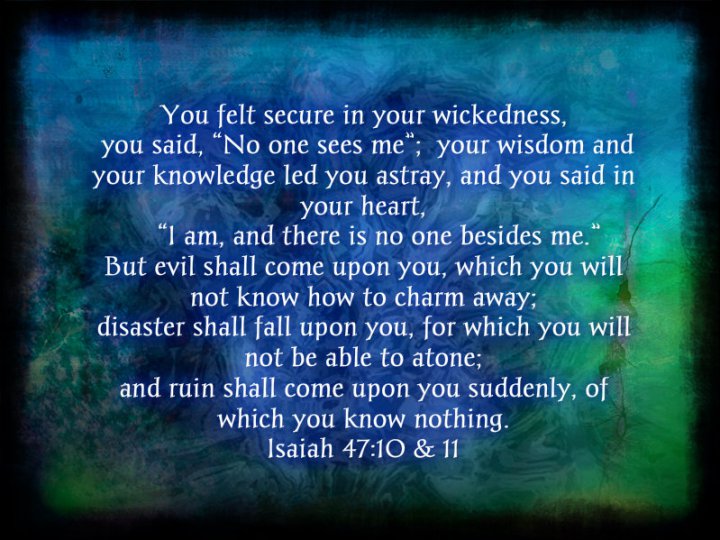

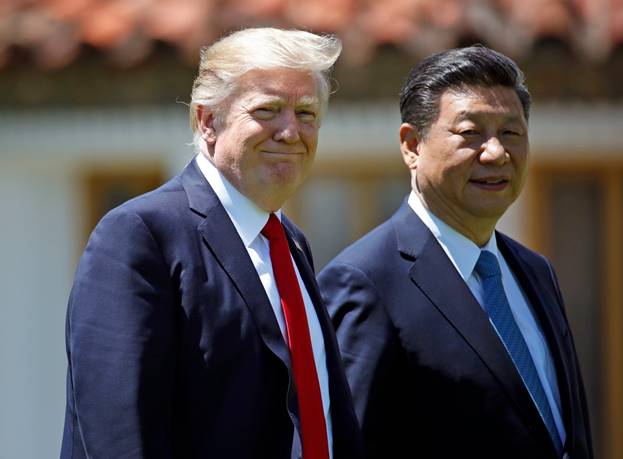


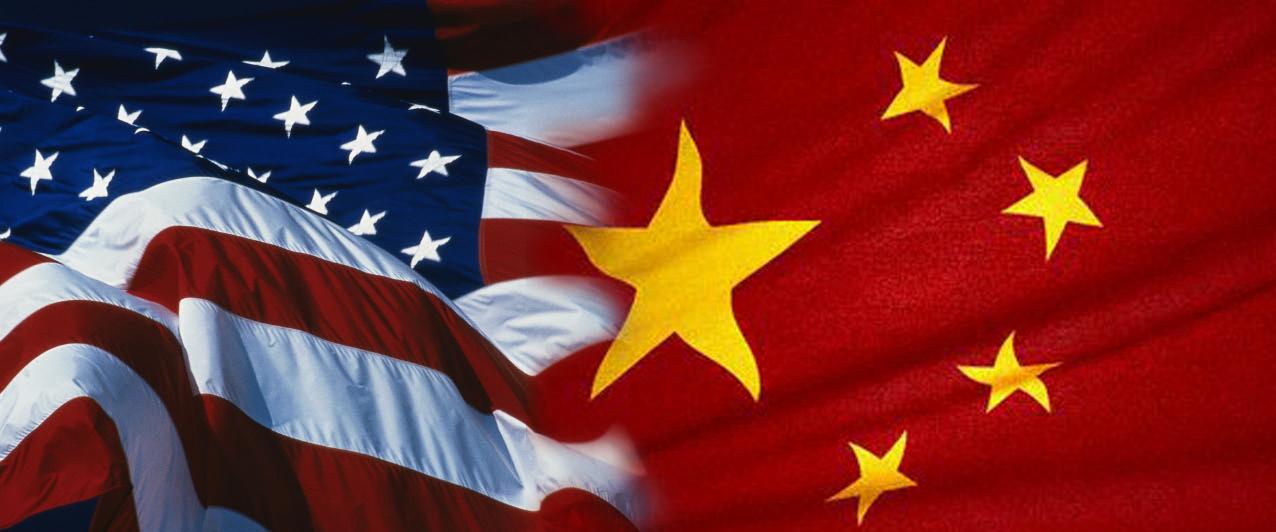

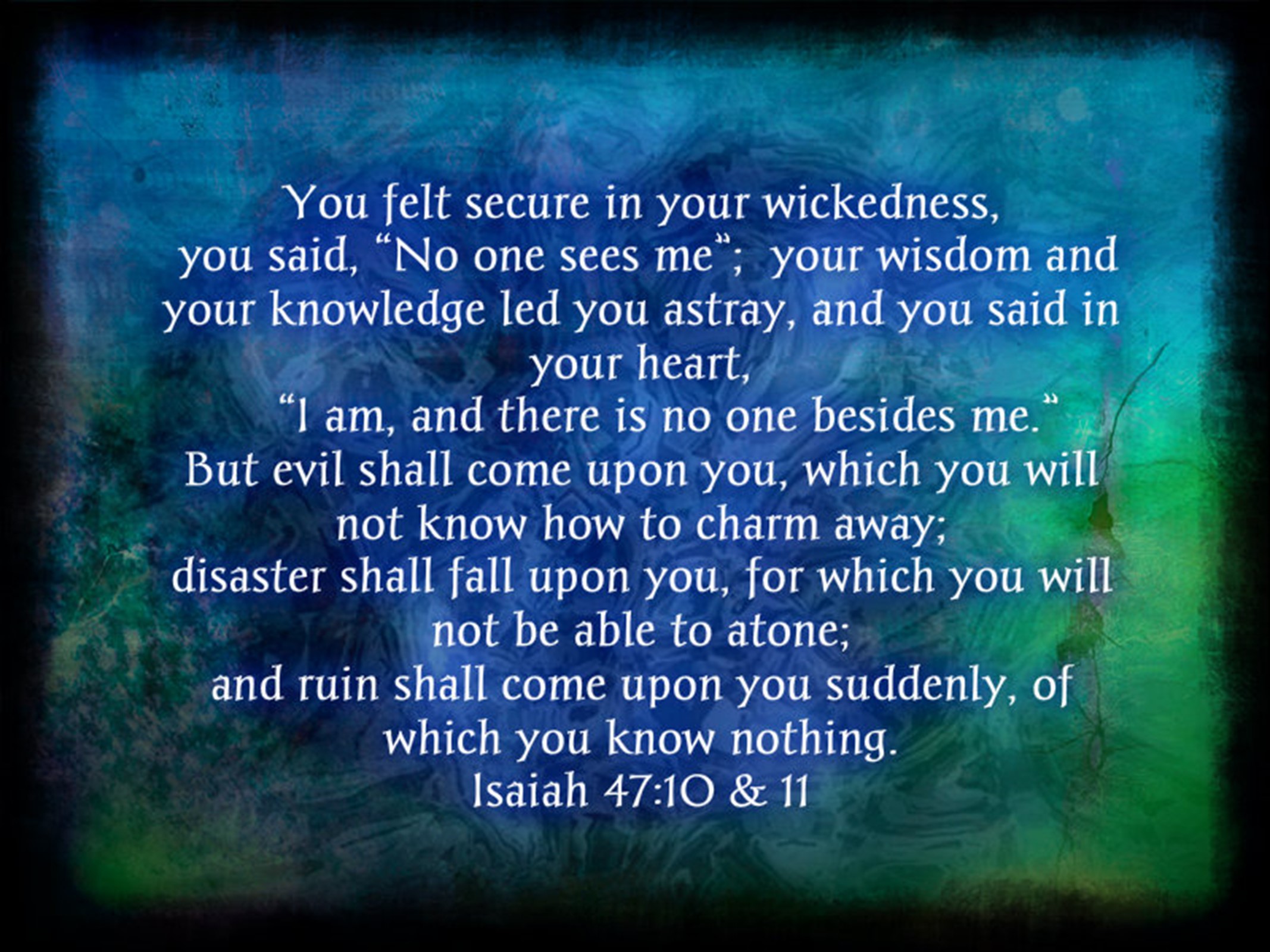
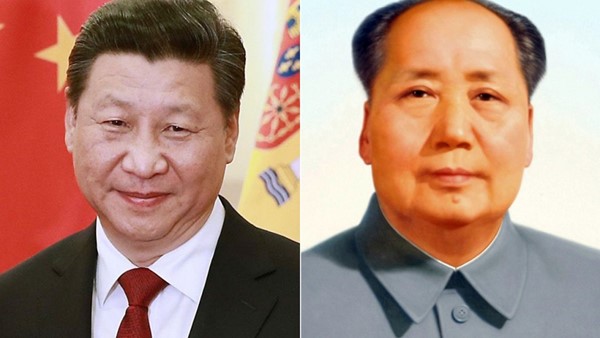


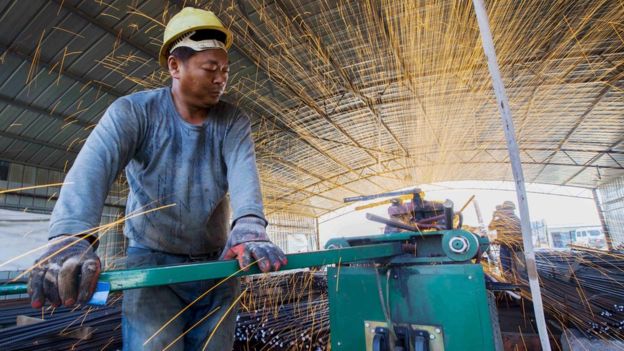

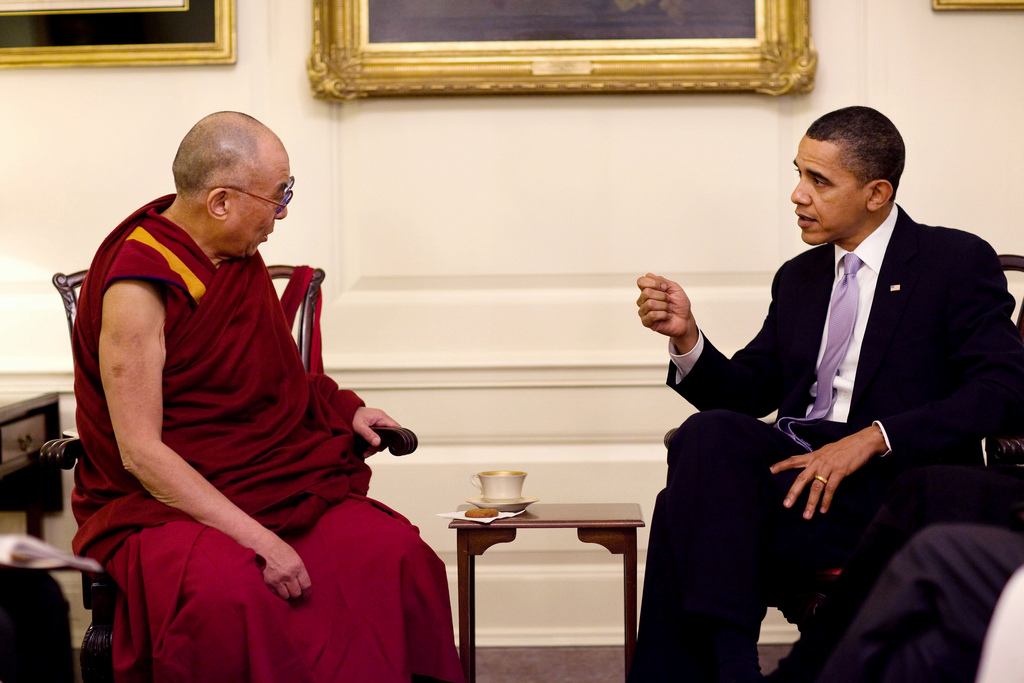
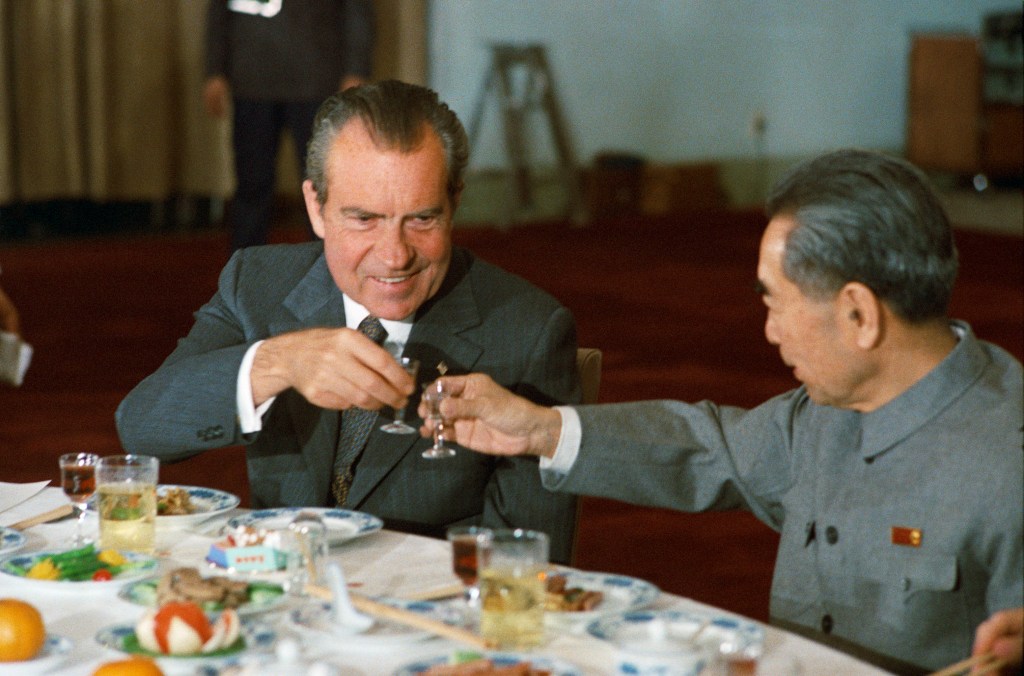


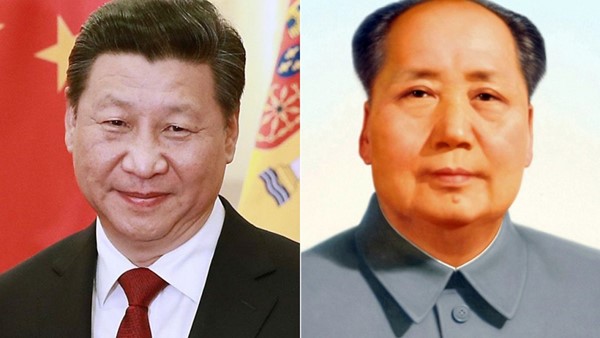

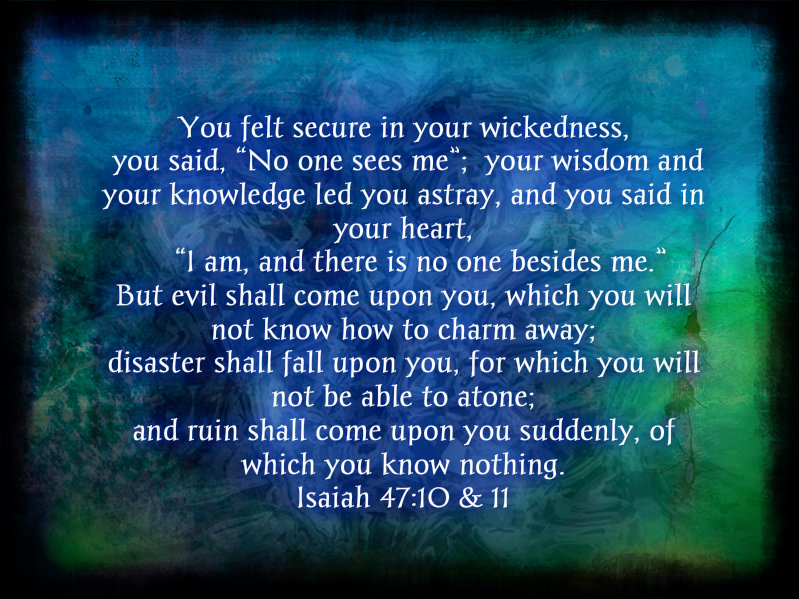


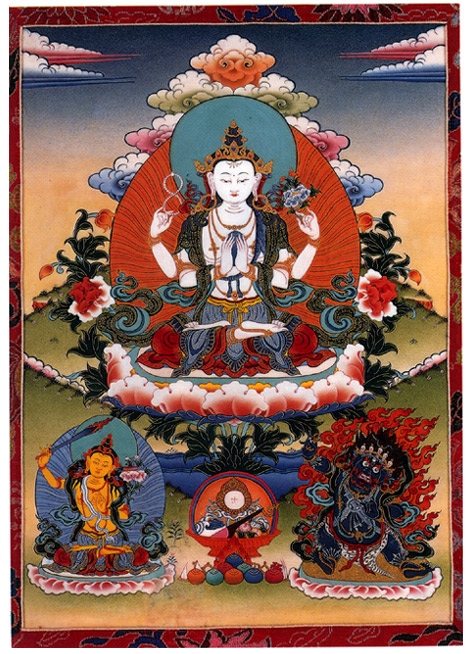



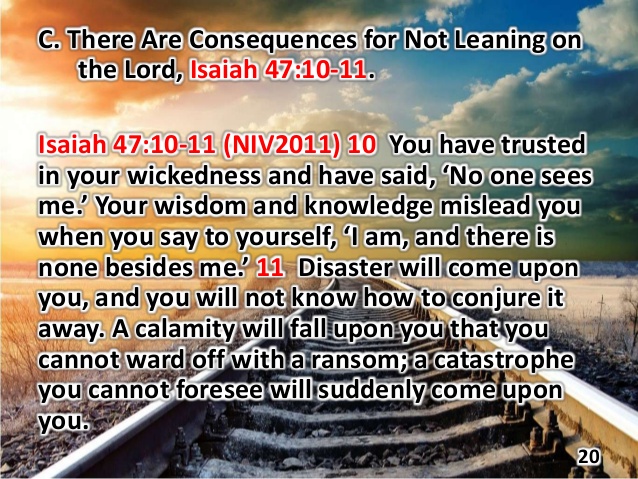




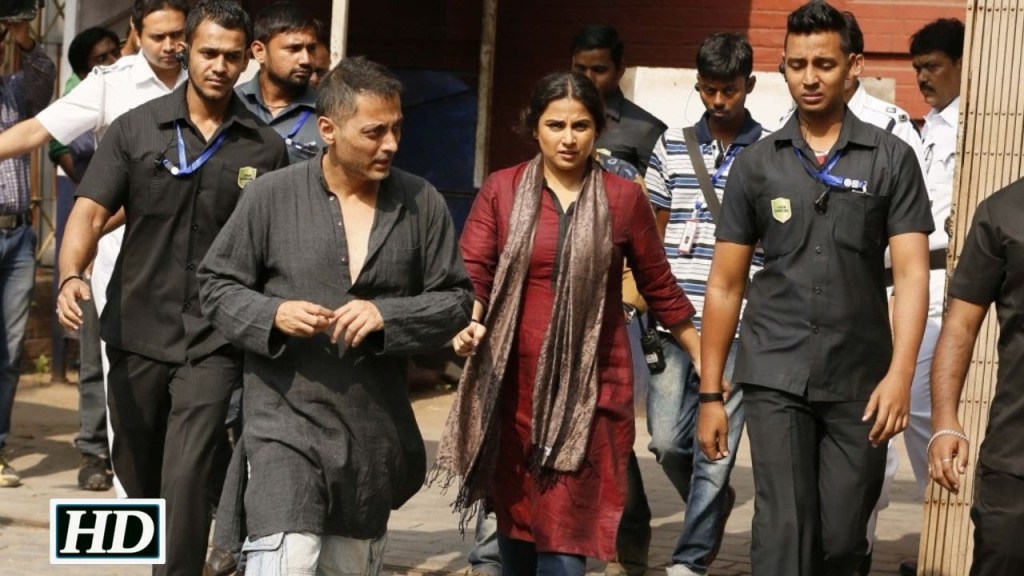
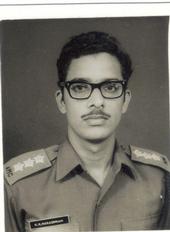





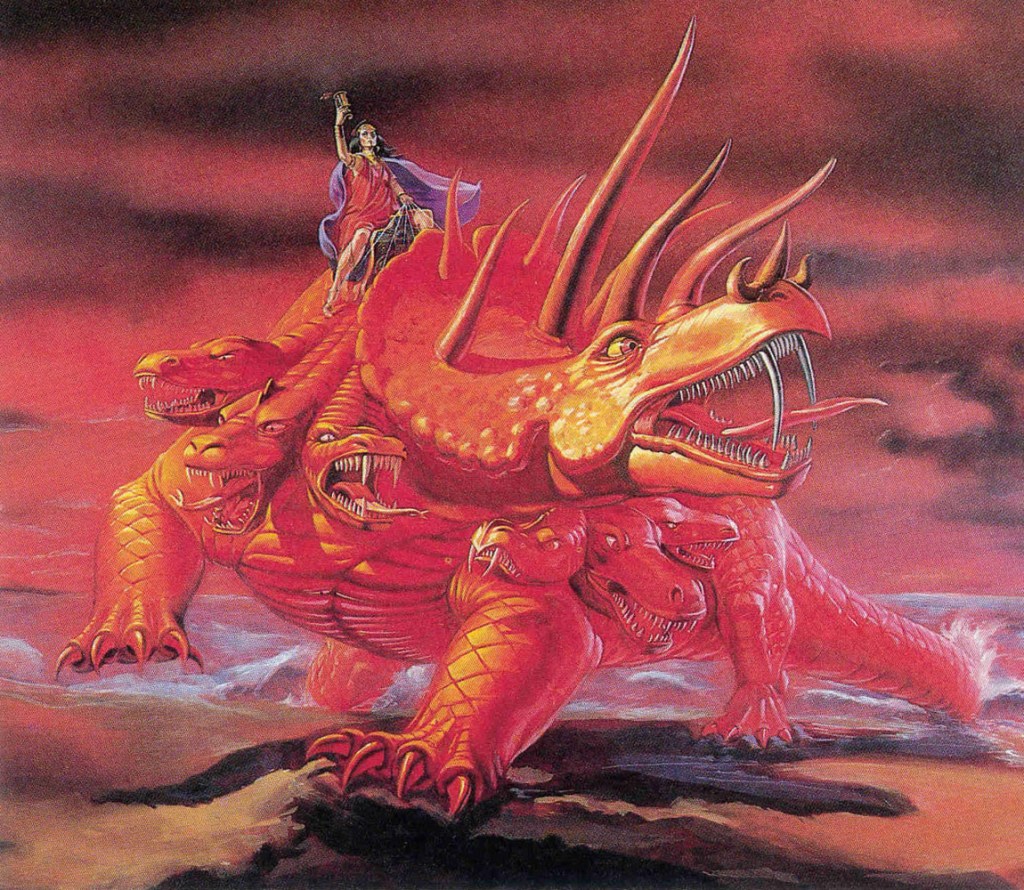



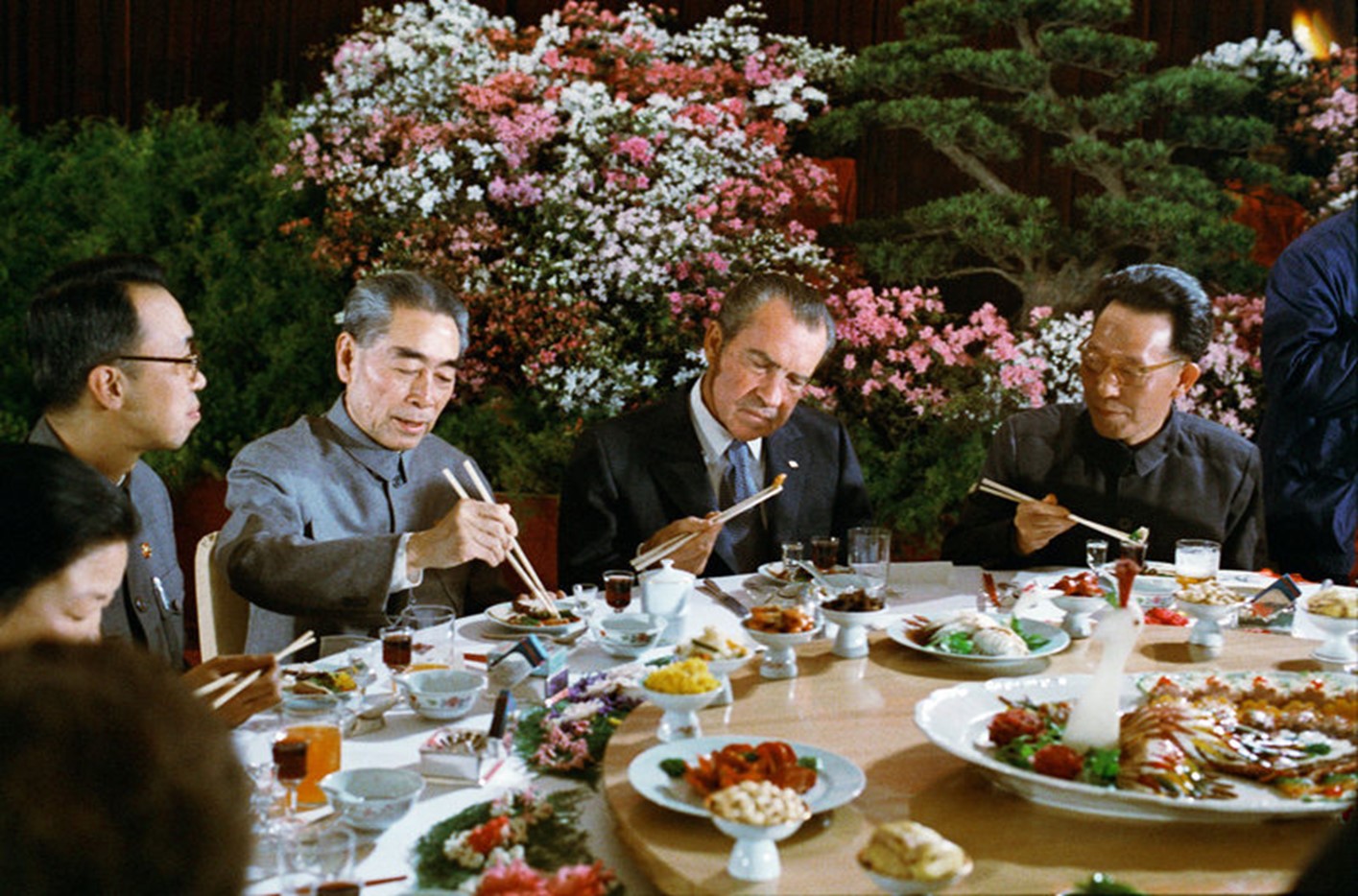

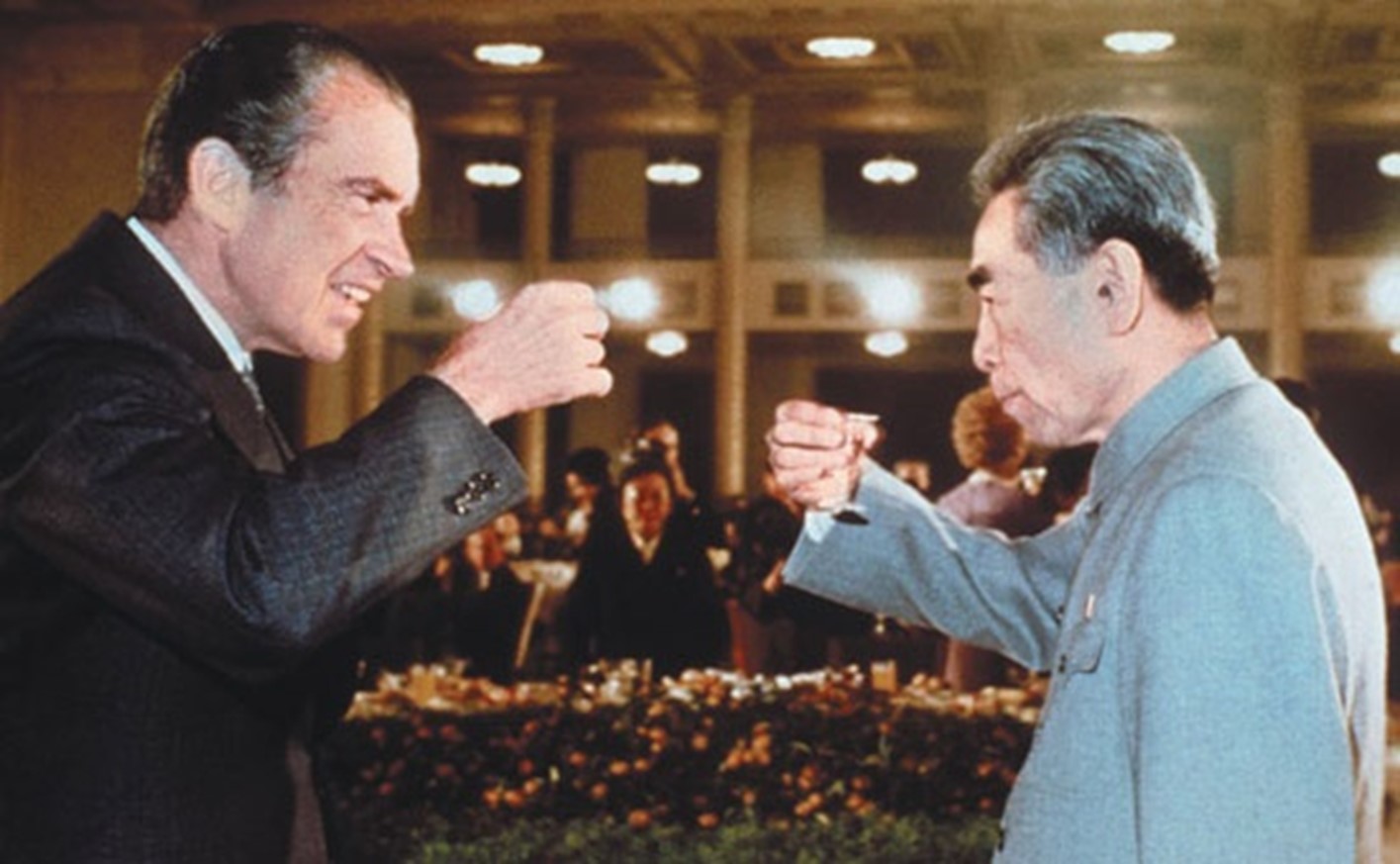

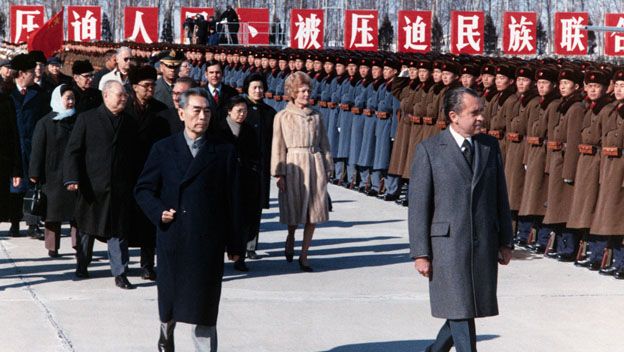

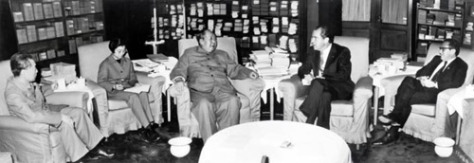


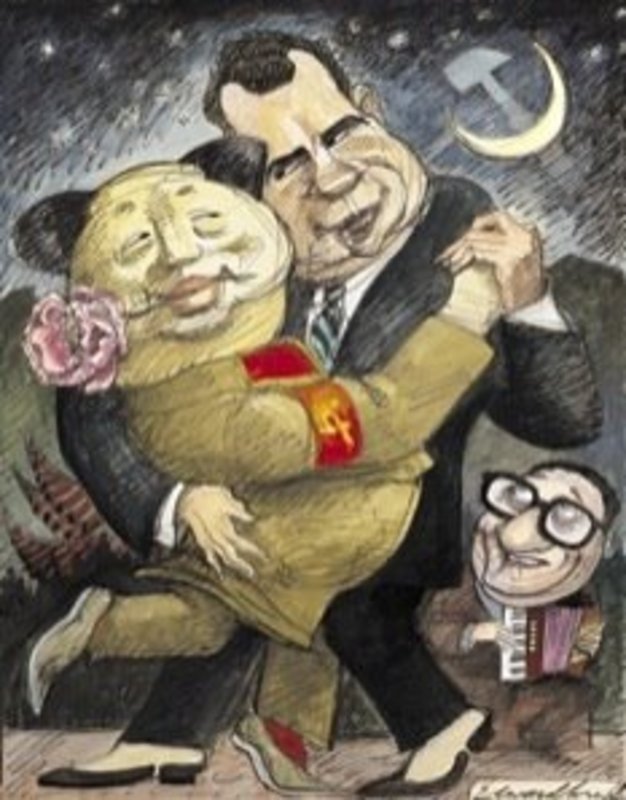

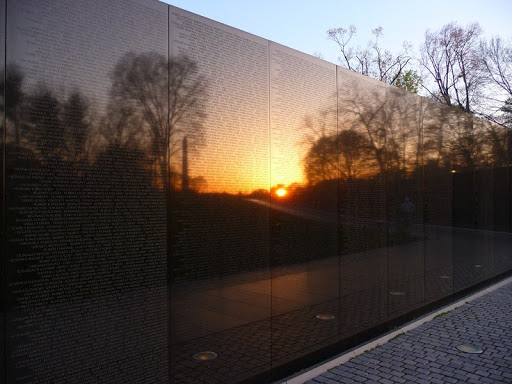


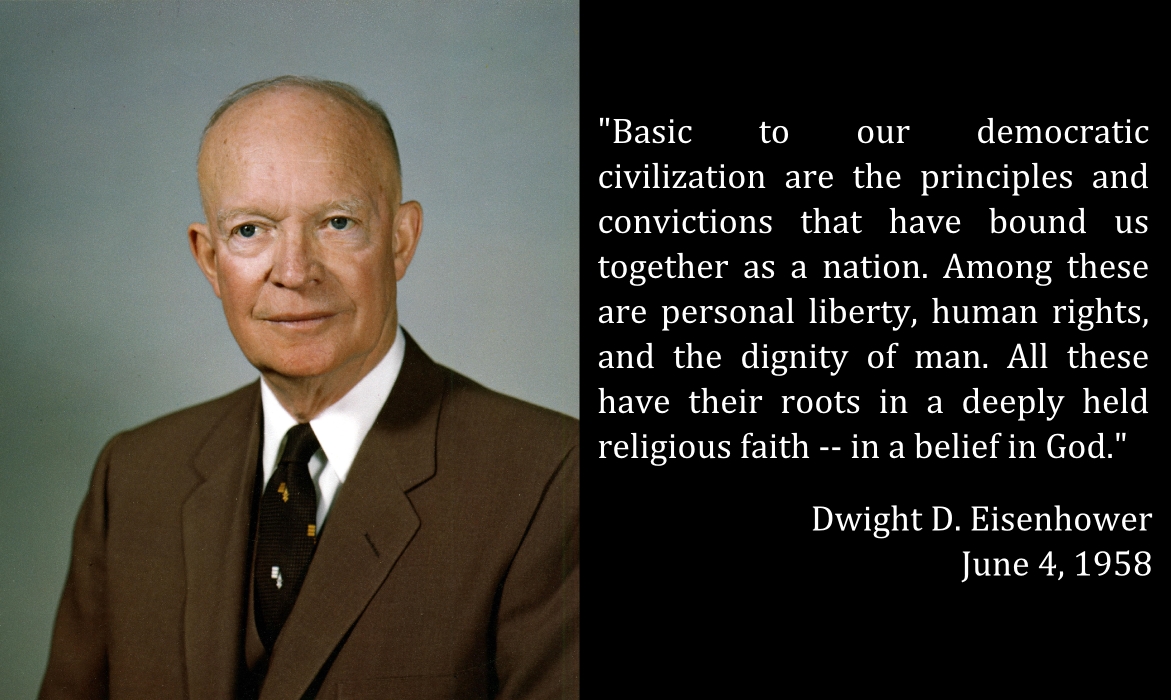






 Whole Dude - Whole Concept